“We left Biskra with Corporal Dewoitine as a mechanic, and took hours to reach Touggourt, averaging 50kph, despite a trail of frightful ruts. Our arrival was all the more sensational than in an airplane because I drove right down the main street in a torrent of dust, skimming past walls and passers-by with with my propeller, causing burnous, guenours and chèches to fly in all directions. It was a beautiful panic!
The two adventurers quickly left Touggourt in a cloud of dust, heading for Ouargla, but the infernal locust began to show its first signs of fatigue: sand gnawed the leading edge of the propeller and the engine dropped to half power. De La Fargue ordered Dewoitine to head for Square Bresson, a junction and small oasis 50km away.”
Just before WWI, at the motor era matured on land sea and air, various self-propelled contraptions came to be tested as a means of penetrating France’s vast Saharan territory. Lacking the railways which by then traversed America and southern Asia, up to that time columns of men had to trudge alongside huge camel caravans, making them vulnerable to still hostile desert tribes.
An ingenious combination of airplane landing gear with a cab stuck on top, the distinctive propeller car was one short-lived solution to enable rapid communication across the desert. Invented by Corporal Gustave Cros, the chassis was an elongated triangle on three axles, each carrying twin wheels, while a propeller directly fixed to a 50-hp motor thrust the vehicle forward. It’s said an ingenious form of highly articulated independent suspension allowed each of the wheels to track the terrain, however rough.
This curious but surely deafening machine proceeded in a series of jumps which supposedly allowed it to cross large sand dunes, hence the name Sauterelle or ‘grasshopper’. You’d hope seat belts were mandatory, less an unexpected lurch while climbing a steep dune launched you backwards…
Early models, like the one right, were considered too light to be stable but nevertheless progressed from two to four to six blades. Capable of 60kph, in the summer of 1914 the Sauterelle left the rail terminus at Biskra for a 200-km test run to Touggourt. The main difficulty was said to be slowing down and stopping, but that didn’t stop a chap called De La Fargue modifying a 60-hp Brasier car; his six-bladed ‘Aerosable’ hopped its way to Touggourt in just two hours. Encouraged by this achievement, he went on to consider an amphibious vehicle whose wheels could be replaced by a wooden hull for sliding over the salty Saharan chotts where even camels feared to tread.
You do wonder what they were thinking. Presumably it was a solution to the problem of powered axles digging in to soft terrain. Perhaps pneumatic tyres were crude and couldn’t reliably be run at low pressures to elongate the footprint and so increase flotation, or that idea was not yet known (in Libyan SandsRalphBagnold wrote of discovering this technique in the 1920s). Hence, doubled wheels all round, like the Renault (above left), or the Citroen half-track desert taxis (right) which were also used on epic trans-continental proving expeditions, long after the Sauterelle had hopped itself into the scrapheap of automotive dead-ends.
By the end of the 1920s, this period of wacky inventions had run its course while several esteemed French Saharans died in lonely desert plane crashes, But from as early as 1916, on the other side of the Sahara, the British Light Car Patrols were successfully deploying conventional but stripped-down Model T Fords deep across the Libyan Desert, and all without trailing a deafening sandstorm wherever they went.
Translated and adapted from this postby Oliver Boulwhere you’ll find lots more interesting stuff.
Half a century ago when the Sahara was more accessible, lateral crossings, all of them west to east, used to capture the imagination of adventurists, both private and corporate. Although such transits aren’t what it’s about to me, I wrote a box for the final edition of Sahara Overlandabout the four best-known vehicular transits which, broadly speaking, set out with this goal in mind, and expand on this page:
As I suggested in the book, a true, unbroken, all-desert lateral crossing of the Sahara with vehicles had yet to be achieved and as things stand, never will be in our time. If you combined the British route across Mauritania and Mali, then follow the French or Germans to Dirkou in Niger and the French or Belgians east of there, you have a pretty good line. As it is, even with a lot of road-driving in Algeria, I’d say from Tan Tan 9000km east to Port Safaga near Hurghada on the Red Sea, the Belgies get the nod (map below but note the oddly misaligned borders, not least Niger-Chad).
The chances of achieving a true Saharan traverse are currently about as slim as they’ve ever been. Much of the Sahara of Mali, southern Libya, northern Niger and Egypt are unsafe or off-limits. Eastern Far western Mauritania is said to be the same, and much of southern Algeria between Bordj east towards Djanet (as we did in 2006) is now restricted.
Unimog in Faya, 1965
Northern Chad always presented difficulties from the mountainous terrain, let alone permissions and security issues. Meanwhile, people smuggling convoys still roll into Libya across northern Sudan above Darfur and are preyed on by bandits.
One Hanomag burned out in the Gilf or thereabouts.
JSE 1975 route
In southern Egypt the Gilf has so many access regulations that few bother any more. Even in the west-east expedition era, permissions heavily restricted access: the Belgians had to enter Algeria from Spanish Sahara, not Morocco; the Brits couldn’t enter Algeria at all which kiboshed their plans and they went via Nigeria (left). Meanwhile the Hanomagers bounced for over 16,000km between the Maghreb and the Sahel like pinballs, but did a whole lot of classic desert routes; and the French seemed to dodge Algeria and Chad.
British Joint Services 101s in Sudan, 1975. More here
The Saviems of 1997 made a pretty good job of it once they left Mali, planting at least 25 of their distinctive blue and white balises across the desert is a bid to establish a new lateral trade route across the width of the Sahara. The value of that is clearly rather dubious, but it was a good excuse to promote the lorries and have a big Sahara nadventure, using trials bikes and even parascenders to help recce the route ahead.
In my travels I’ve come across remnants of Saviem #16 in Niger, as well as an intact Saviem #22 east of the Gilf Kebir (below). And there’s a photo here of Saviem #10 just a couple of years after it was installed.
Saviem balise #22 in Egypt’s Libyan DesertSaviem TP3 vans and SM8 trucks spinning down in southern Egypt, 1977, below the final balise #25, somewhere south of Kharga on the Darb el Arbain around here.
Of the four expeditions mentioned here, the three continental ones produced illustrated books in French and German (below). If you don’t read either language any better than me, the big-format Croisiere des Sables is a good one to get – mostly pictures and under a tenner on abebooks last time I looked.
Coup d’Eclat au Sahara, Jean Stasse (2011, available new) Trans Sahara – vom Atlantik zum Nil, Gerd Heussler (1978) Croisiere des Sables, Christian Gallissian (1977)
Even though Tom Sheppard has published a couple of lavish Sahara picture books on his own travels, it looks like we’ll never get a full account of the JSE 101 crossing (but see below). There was an appropriately dry expedition report for the Geographical Journal in 1976 which you can read on JSTOR (map below).
Tom Sheppard also wrote a well illustrated summary in the winter 2016 issue of Overland Journal (right). In 2022 I received an email from a reader who’d just acquired the full and exceedingly rare 150-page report which was being auctioned here. Looking further, it seems there may be a hard copy at the National Archives in Kew, too. Watch an interview with Tom here.
My own lateral crossings
A while back, before things really got bad in the Sahara (right) it occurred to me that, with one small effort I could link up my own lateral crossing of the Sahara between the Nile and Atlantic. Of course it would have taken me several years, but mainly across three trips: Libya 1998 (researchingSahara Overland);Egypt 2004 and our big SEQ 2006 crossing (below) I’ve covered all bar around 800km of the distance.
Part of my informal west -east crossing
All that remained was a short, 70-km gap in the far eastern Algerian oilfields near In Amenas to the Algerian Tree (visible on Google sat and pictured left in 1998). It was whereRoute L2 from Sahara Overland (below right) strayed briefly into Algerian territory to avoid the worst of the Idehan Ubari’s dunes. Some may recall Michael Palin visited this very tree for his Sahara TV show in 2002 and on arriving proclaimed:
‘this spare, uncluttered, beautiful spot was one of my favourite places in the Sahara‘. Well, he’s easy to please!
And in fact, I’ve since realised that when we treked with mules to Sefar on the Tassili plateau in 2013, I was within sight our 1998 route into the Libyan Akakus.
Up until the gas plant attack at Tigantourine that year, I could probably have knocked out my crossing to the Algerian Tree at any time. Either driving down to Edjeleh oil camp right on the Libyan border then scooting over the dunes as shown below).
I recall making contact with an oil worker based in Edjejeh one time, asking him about civilian access in the area but he wasn’t very forthcoming. Alternatively, one could just nail it 100km east from the N3 highway south of Erg Bourharet. The stony reg thereabouts is criss-crossed with oil exploration tracks, but, post-Tigantourine that area will now be closely watched.
Then there’s a much more substantial missing section to get my West-East certificate in eastern Libya: from Waw Namus crater which we visited in 1998 (below) …
I remember that Christmas well; we had more trouble than normal getting Mahmoud’s Toyota-engined Series III running, dragging it to life with the Land Cruiser (below) after setting a fire under the chilled engine. With us that time was Toby Savage (my Desert Driving dvd co-presenter) who in 2012 travelled through the Gilf with WWII-era Jeeps, while possibly outnumbered by escorts and soldiers.
Staaaart you bastard!
No tourist has driven in southern Libya since the fall of Gaddafi in 2011. The south was now controlled by the Tuareg (with a bit of AQIM and IS) and the Tubu who battle it out for the control of lucrative people-trafficking and other commodities coming up from Niger. As things stand now in Libya, ticking off that final 720-km stage from Waw crater to Xmas Camp may have to wait for a rainy day in the Sahara.
The desert is ruthless It strips you of your vanities Your illusions Gives you the opportunity to see yourself for who you really are Character addressing Jesus figure in The Last Days in the Desert (2016)
More than other wilderness environments, the desert is commonly seen as a place for spiritual rebirth or just some contemplation. Some speculate that it’s no coincidence the world’s great monotheistic religions originated in the desert. Or perhaps it was the other way round: the Fertile Crescent along with timely wheat mutations and climatic cycles spawned great civilisations from which monotheism evolved. Anyway, just being in the desert it’s commonly thought one can be purged, cleansed and reborn. When striped of familiar surroundings and associations, you commonly hear travellers professing an awareness of their insignificance in the great scheme of things. Whatever, it’s always been seen as a good place to get away from it all, including other people.
Another one of those periodic ‘I want to cross the Sahara by camel’ posts popped up on the forum the other month. The OP ‘…thought to myself ‘I want to have a life changing experience’ and thought this would be just that adventure.’ Across the width of the Sahara from Atlantic to Red Sea. There followed some clarification, good advice and some scorn, and within a few days the thread blew itself out. What is it about crossing the Sahara? Why do ordinary individuals get fixated on the idea of ‘crossing the Sahara’ at all costs? I know when I first went there the Sahara was something that was on the way to where I thought I was going, but so was France and the Mediterranean. I didn’t see crossing the Sahara as a life-affirming achievement or any sort of event – I was more looking forward to the simple challenge of some desert biking. Perhaps the words ‘cross’ + ‘sahara’ add up to a compelling soundbite that anyone anywhere will get instantly, like ‘climbing Everest’ or ‘rowing the Atlantic’, but perceived as a whole lot easier. I received a similar enquiry. A chap wanted to cross the Sahara with camels – it didn’t really matter where, it was the crossing that mattered. He suggested some catchy start and end points like Casablanca to Dakar without really thinking it through – padding alongside Morocco’s busy N1 highway with a troop of dromedaries strung out nose to tail. I made what I thought were some better suggestions that would give a real sense of travelling in the desert with camels while dodging the worst of the current political complications. I even sent him the camel chapter from the book (short version of this). I never heard back.
Above is my answer to another enquiry which boldly stated the intention to pull off a hare-brained scheme so I’d have no doubt of the total commitment. ‘Nothing is impossible!’ Never heard from her again, either. Maybe I am too blunt but I keep these emails as evidence of ‘well, I did warn them’ should they ever crop up in the news. It seems that people hungry for adventure lose something of their reason when it comes to crossing the you-know-what. They’re carried away by the concept which ignites the dream and set about with a steely determination to make it happen. To my mind camel crossing the Sahara north to south and especially laterally requires a solid background of experience which is why I respect the achievement of Michael Asher and Mariantonietta Peru when they did it in the 80s and went on to write Impossible Journey. At least they had a good idea of what they were taking on. These days the journey is a whole lot more impossible.
There must be something about camel trekking across the Sahara that makes it sound relatively uncomplicated and easily done alone. You traverse the wilderness with the unspoken companionship of your caravan and maybe a nomad guide whose language you don’t speak: ‘horses with no names’ who won’t question insecurities or flakey motivation.
Aside from the practicalities or logistics of such a monumental task, what irks me is that very often there’s little curiosity about the environment or the cultures they’re passing through. The conquest trounces all, and the empty Sahara is just a backdrop for a monumental vanity project, as it was for Geoffrey Moorhouse back in the 70s and several others before or since. As I was told recently by an individual who came close to death in his quest: It was a bad time and I made poor decisions. I desperately wanted it to be “me and the desert” and to have my own experience in solitude. I’m wiser now.
Once I get used to it and feel comfortable I like to be alone out there too, and in the desert that’s not hard to do. If anything it helps you re-evaluate human companionship which may be part of the catharsis some seek out there. But I find there’s no need to go to extremes to do this. One memorable desert camp is all that’s required to consolidate a feeling of well being. For me the image below sums it up nicely. Only a mile off the track to Djanet in 1988. For the moment the bike was running well and so was I. It was nice spot for the evening – comfortably alone. There have been many more nights like that out in the Sahara, with or without other people.
Usually though I’ve found travelling alone with a vehicle tends to extinguish any mystical retrospection. On a bike you’re totally preoccupied with keeping upright, not getting lost and all the rest – and in a car it’s the same plus the noise and the shaking. It is the evenings that are a blessed respite from the task, the heat and the wind and when the appeal of the desert is easily felt. In a group, walking with camels and crew is a far more satisfying way to enjoy the desert day or night, most probably because there’s so very little to worry about. You don’t have to know any more than how to walk, sleep and eat. It’s the very simplicity of such desert travels that strikes the chord, even if this is a fantasy enabled by the hired crew of desert nomads. The actual practicalities of making it happen and sustaining camelling independently get quite complex as many accounts that I’ve read have shown. And now you have to account for the unglamorous and unromantic political overlay.
I suppose the hope is that when one gets to the Other Side one is reborn or cleansed or at the very least feels a sense of achievement which ought to trump all insecurities. But no account I’ve ever read has admitted to that. Or perhaps midway through the journey there is some sort of epiphany with a closure and acceptance and an understanding that life must go on, at which point the epic challenge may lose its purpose.
After nine days, I let the horse run free, ‘Coz the desert had turned to sea.
Me, I just like being in wild places including the desert. It doesn’t have to get complicated.
Some time ago someone kindly gave me the official ASO roadbook from the 2007 Lisbon-Dakar Rally, the last one to be held in the Sahara.
Following the murder of a French family in Mauritania just before the Rally (actually thought to be criminals not terrorists), additional threats saw the 2008 event cancelled at the last minute. The following year the Rally moved to South America where it continued to thrive with less controversy until it moved again to Saudi in 2020.
The longest stage in 2007 was across the top of Western Sahara from Tan Tan on the Atlantic to the Mauritanian mining town of Zouerat – 817km via Smara with a tea break at Bir Mogrein. The shortest stage was still 500km long, through the light jungles of western Mali and Senegal where I limped over the border into Senegal some thirty years earlier on two flat tyres (right). I passed plenty of Dakar racers that year too, and eventually ended up in Dakar myself (above left), but not on any sort of podium. Below some snapshots from the Last Roadbook from what many still feel was the last real Dakar.
Oxford, Portsmouth, Le Havre, Marseille, Tunis, Taleb Larbi, El Oued, Hassi Massoud, Illizi, Djanet, Mt Tiska, Erg D’Admer, Oued Sersouf, Mt Tazat, Amadror, Garet El Djenoun, Tefedest East, Tam, Ain Salah, Ghardaia, Taleb Larbi, Tunis, Marseille, Oxford.
Land Rover Series 2A 1970 109 Petrol 2.25 • December 2007 – January 2008
Richard Washington
The last time I was in Algeria was in late 2002 on a round trip of the south in the fuel-dump stage of the Desert Riders trip. The kidnappings in March 2003 in the Algerian Sahara led to a bit of a wait-and-see approach for me but provided the opening for desert trips to the Gilf (2003/4), Chad (2005) and Morocco (2005/6). The combination of time-elapsed-since-kidnappings and a relative disappointment (I was warned) with Morocco’s desert (though not the country), resulted in a return to Algeria. To be fair, the decision was more than helped along by our extended Australian family’s curiosity with the Sahara and their idea that we all get together there in the winter of 2007/8. Happily we did, making it my 6th visit to Algeria. The desert there is better than ever.
Our Route and Our Group We followed the usual route down to Djanet in the south-east via the sealed roads from the Tunisian-Algerian border at Taleb Larbi, taking about 4 days from the Tunisian border. There’s more on this part of the trip, including the state of the road, status of the check points and so on later in this S-File. We spent a good two weeks knocking around the Djanet region, including both day and overnight trips. Djanet is a great setting for this sort of thing – the landscape within 100 km is astonishingly varied. We went up the Tassili escarpment on an overnight walk with donkeys, out to Mount Tiska a couple of times – including a brief visit to the great northern Tenere plain, several nights in the canyons west of Djanet (Sersouf), a day in the Erg D’Admer as well as a few evening braais (South African for bbq) in scenic spots around Djanet. During this time we either camped out in the desert or stayed in the Hotel Tenere – a break from the usual Hotel Zeriba. Actually we did spend a couple of nights there. The Zeribas are all but gone and the nights pretty noisy (dogs go from 11-2, chickens from 2-5, and then the Mosque wakes up the truck drivers). But Zeribas is still a nice location in the heart of town. Hotel Tenere was a pleasant surprise. Working out at about 10 euros per person for a 4 person bungalow, we enjoyed the peace and quiet, awesome views on the breakfast balcony, and freedom to cook up our suppers in the quiet hotel gardens. The place had always been a ghost town when I passed by on previous trips. It was this time too, apart from the nights when aircraft landed in Djanet – then it was fully booked for a few hours (the flights arrive after midnight).
Our Djanet to Tam route took in the pass just north of Mount Tazat on A7 in Sahara Overland, two nights at a beautiful spot just west of Tazat, a day driving up the old truck piste from Djanet (A7 in Sahara Overland) and on to the centre of the Amadror plain (a striking camp in the middle of nowhere), on through to the Tefedest East valley, a couple of days on a detour north to Garet El Djenoun from where we headed south to Hirafok back along the Tefedest east and then west across the corrugated piste to the sealed road to Tam. It was a purposefully slow drive, taking a full 7 nights to do what many parties would want to cover in three days. But this part of the Algeria trip was the highlight of the holiday and, increasingly, the pace at which I enjoy moving through the desert. On the days when we did drive we got going at 10am and finished by 2 or 3pm – some days a lot earlier.
For the leg from Marseille to Djanet I was joined by Spook. Meg, our two children, Josh (7) and Kate (4) flew into Djanet via Paris and Algiers, along with Meg’s sister (Clare), her husband (Mike) and their children James (about to start uni), Nic (16) and Rob (12). The age range coupled with it being Clare and Mike’s family’s first desert trip made me wonder how we’d fair, especially for things like the Tassili escarpment walk.
Kate and Josh are probably amongst the younger tourists to have made it up the Tassili escarpment. Josh made sure he walked up and down while Kate took advantage of Meg’s fitness with long piggy back rides. Kids this young tend to focus on the very small scale. This became obvious to us when looking through the extremely detailed diary that Josh kept during the trip. He seldom commented on the grand views or the expanse of the desert but wrote a lot about our camp sites, cooking on the fire, the Algerians who were with us and so on. Josh was absorbed for hours looking for bones, old pottery, fossils and unusual rocks around the camps and, towards the end, went off with Kate on longer walks up surrounding hills. Having a camera also kept him busy. We also took a rugby ball and cricket bat which kept us all entertained for hours. Kate was perhaps less interested in the desert itself. For her, having the company of an extended family for 24 hours a day was a great treat. One indulgence we took with us was a portable DVD player. Kate watched the Sound of Music often enough to learn the words to most of the songs. There is no doubt that this helped us through some of the longer driving days. The children slept some nights in a tent, some nights under the stars and many nights on the mattress in the back of the Land Rover. This provided them with a cosy and familiar setting which was marginally warmer and certainly less windy than outside. There was never any hint in the time we were there that the children were not having a great time. Without exception, the Algerians were simply great with the kids, and Mike and Clare as uncle and aunt, were very helpful and attentive which no doubt helped.
A question the people I work with always ask when they hear I am heading for Algeria goes along the lines of “so what do you do all day when you’re in the desert?” I think there is a general concern that you’ll be bored out of your mind. Funnily enough, we were all too busy in Algeria for the question to arise. The desert just seems to soak up your time in a nicely passive kind of way.
Roads, Borders and Ferries The sealed roads through Tunisia were excellent, better than I remember them on previous trips when there was a lot of construction going on either side of Gafsa, The good roads allowed us to reach the Algerian border from the port in Tunis on the same day.
We arrived at Taleb Larbi (Algerian border) at about 10:30 pm having docked in Tunis shortly after noon. That night we slept near the Algerian immigrations building having exited through the Tunisian border. Unusually, the Tunisians kept us waiting about an hour before stamping our exits. They checked and re-checked our papers while heading off to the Land Rover a few times without doing very much when they got there. It wasn’t ever clear what the problem was though we speculated that arriving in Tunis port and then checking out of Tunisia a few hours later had scared the horses a bit – especially when we’d asked for a 12 day stay – as you do in case the Land Rover wrapped itself round a camel on the way passed Gafsa.
Processing through the port in Tunis wasn’t too bad – taking just under 2 hours, slower than it might have been because Spook needed to get a visa for his S African passport. It continues to amaze me though, that there is no readily apparent system for dealing with immigrations and customs in Tunis port. The ensuing madness of cars, converging lanes and hooting makes it seem like its all happening for the first time. That said, getting on to the Ferry in France was little different. First we were sensibly shuffled into two lines, one for Algiers and one for Tunis. A little later on the lines converged from 10 to 1 as we went through immigration but not before the cars were put through an S-bend carefully calculated to be too tight for most 4X4s. Its not easy reversing in an S-bend with 5 lanes converging to one. Getting off the ferry from Tunis in Marseille on the way back had its own surprises too. Lanes of cars were dealt with in order by immigration officials in booths – a sensible approach given that cars at least stay in order that way. A key problem at the Tunis end is that drivers are processed away from their cars. Needless to say, people from the back of the car queue can be dealt with before those whose cars are ahead of them in the queue – so lines of cars tend to become a jam of angry drivers who can’t move in any direction because many of the drivers are still on foot in the queues. It was good to see that the French had this part of the production line sorted out. But French customs instead had something in the pipeline for us. They were stopping cars in the lanes and searching through them so that the entire queue of cars had to wait until the cars in front had been cleared. We watched in amazement as a panel van was unloaded in front of us and every bag and hiding place in the van thoroughly searched. After that we were waived through in a second. But why not pull these cars out of the queue first – and then dismantle them? That would save everyone a couple of hours and there was plenty of room to do so.
Algerian sealed roads are a mixed bag. The Taleb Larbi to Djanet and Tam to Taleb Larbi (trans-Sahara highway) sealed roads seemed to be in a much worse state than in any of my previous visits to Algeria. In particular, the road at the south end of the Fadnoun plateau (between Illizi and Djanet to within about 50km of Djanet) is badly broken up and cost us a good tyre and tube, even with slow and careful driving. I was also surprised at the condition of the road south of Hassi Massoud to Hassi Bel Gebour. This stretch takes a lot of oil traffic now and is a pretty poor state. With the oil price having trebled since I was last in Algeria and with the industry making heavy use of these roads, one wonders where the cash is going.
Likewise, the sealed road between Tam and Ain Salah, apart from a new section 100 km north of Tam, is full of deep pot holes. It is particularly bad around Arak where the problem of the river and the road sharing the same valley still hasn’t been sorted out. It looks like they are having a serious go now though, with some complicated elevated sections under construction. But then they were busy with this in 2002.
Our drive north took us from Ain Salah to Ghardaia and from there on to El Oued and Taleb Larbi. At Dahaj (from Tanezrouft’s) recommendation, we took the road 40km north of Ghardaia before turning east through a string of pretty Berber towns via Guerrara on a smooth, quiet and very scenic alternative to the Ouargla route through from the Trans Saharan Highway to El Oued and Taleb Larbi. This route is not only more interesting but cuts out that demoralising southward dogleg west of Ouargla on the way to El Oued. There were also no military checkpoints between Ghardaia and Toggourt.
Its still all Toyota, Toyota in Algeria. The shops in Djanet and Tam seem to have more spares than ever. Fuel queues in Tam were back – or never went away. Luckily we had the range to get north to Arak on Djanet fuel otherwise it would have been about 2 hours or more of waiting for us.
A marked change from 2002 is the amount of traffic on the roads at night. We slept about 3km off the road about 15 km south of Hassi Massoud but could hear the trucks on the road throughout the night. I remember the traffic pretty much stopping at sunset on these stretches before. We also drove at night, leaving Ain Salah at midnight (for reasons that I will explain later) and arriving in Ghardaia at about 9am. This all seemed OK with the checkpoints along the way and we passed traffic throughout the night.
SNCF are running a new ferry on the Marseille to Tunis line – the Danielle Casanova. She’s not exactly new, having served on some other route for a few decades – probably the run out to Corsica. But she’s bigger, most likely faster and quite a bit grander than the Liberte which used to ply the crossing to Tunis. A ‘new’ line is also running from Portsmouth to Le Havre (LD Lines) with fewer crossings per day (just one) compared with P&O.
Tanezrouft Voyages The invitations, permits, two Toyotas (for the Djanet to Tam leg), drivers and guides necessary for an Algerian trip these days were all arranged by Tanezrouft Voyages. Our itinerary was complicated. It included two arrival dates for our party, one in our own car, three departure dates and several unique groups of names for the various legs (two arriving in Taleb Larbi, one leaving in Djanet, 8 arriving in Djanet, 7 leaving in Tam, 2 leaving in Taleb Larbi!). The paper work was taken care of by Yves at Tanezrouft and any changes, including a few that we had to make late in the day, were resolved very promptly. The Tanezrouft drivers (Dahaj and Moktar) were the best you get for these kinds of trips. Their outlook and temperament are very well suited to desert driving and desert trips. They obviously enjoyed being in the desert, were ever patient and unhurried, good with the kids, and sensitive to us wanting to drive slowly and take ages over the piste from Djanet to Tam. They were not once late. Srouffi, the guide provided by Tanezrouft, stayed with us from Taleb Larbi to Tam. Srouffi is a lovely man who knows the pistes extremely well. He went the extra mile in looking after us in the camps, especially around the fire on cold nights. He is quite a character. Overall it would be a priority for us to work with Tanezrouft on our next visit to Algeria.
Cars We took my old 1970 Series 2A 109 Land Rover (petrol 2.25L) from the UK but also had two Toyotas from Tanezrouft for the Djanet to Tam leg. The Toyotas were a pair of Landcruisers, a GX 80 series with 400 000+ km on the odo and an 80 VX with about 250 000 miles.
The VX did the job in a comfortable VX kind of way. It does sit like a frog when loaded though. The extremely cold weather led to an oil leak near the front pulley which was active for a few days but went away once the weather eventually warmed.
The Land Rover went fine, covering the 10 000 km return trip without any majors. Only the routine manifold gasket job half way through the trip in Tam caused us to get the big box of tools out. I say routine because this bug crops up every 4 000 km or so – the back exhaust outlet burns through on the manifold gasket and it starts to sound like a Merlin engine after that. Anyone who knows what could be the cause, do let me know. I’ve changed the inlet and exhaust manifold itself (not just the gasket) twice now and three different people have been involved in doing the job. Anyway, its easy enough to do and gave us a bit of street cred at camping Dassine in Tam when our sleeves were rolled up.
We had two punctures on the Land Rover – the first on the Fadnoun plateau which ruined the tyre too. The second in the middle of the Amadror which we fixed that night. Like many others I have thought long and hard about the number of spares to take. For the last three Saharan trips in the Land Rover I have settled on one made up spare and one additional tyre with no rim (plus a few tubes). The reasoning is that its easy enough to fix punctures (providing one has some levers, patches and so on) but its very unlikely that a rim will become impossible to repair – especially steel rims. I carried 2 made up spares on over 70 000 km of piste on previous trips in the Land Rover, but never needed them.
The Land Rover had a couple of interesting and unique tricks too. One was a potent smell of petrol which was beginning to strip the last of the blue paint work off the doors it was so strong. The issue had started in Morocco on an earlier trip and I thought I had it sorted after changing the back tank (which was obviously leaking) and adding some additional seals to the fuel caps (the Land Rover has 3 on-board fuel tanks). Everything smelt like roses when I did the test drives round Oxford in the summer, but by Hassi Massoud it was clear that Spook’s eyes were starting to water in the passenger seat. We by-passed the complicated fuel delivery set up (involving tank switch and independent fuel pumps and filters) with new fuel line all the way from the rear fuel pump to the carb – and still it stank! We finally diagnosed the problem in Sersouf canyon near Djanet where we noticed that the stink was a lot stronger with a closed throttle than an open throttle – a bit counter intuitive really. It turned out that the new replacement Weber carb had some kind of an ill-fitting adapter collar where the air filter pipe joins it. When hot enough, the adapter collar becomes loose, allowing the entire air filter pipe to detach along with the collar from the carb top. Removing the collar made for the simple fix. It probably never got warm enough round Oxford in the summer for the problem to develop. So we’d spent all our efforts looking for leaks in the fuel line when the problem actually lay in the air feed. There’s something new on every trip and, as they say, its never over in a rover.
The Land Rover also developed a leak in the exhaust pipe just short of the silencer box. This was sorted out in Tam by the first set of fixers on the right hand side on the way in to Tam from camping Dassine. They are worth a mention because they took the pipe and silencer box apart, welded in a replacement piece of pipe (found on the roof of a house nearby) and welded it all up again over the course of 2 hours, asking only 8 euros for the job. There is nowhere I know of near Oxford that will do anything other than throw away as many sections of exhaust pipe as they can and bolt on new parts while some gum- chewing youngster with spots and a bolt through his eye rubs runs up an outrageous bill. No one welds exhausts where I live anymore. So hats off to the guys in Tam. That’s where I’m going next time the exhaust develops a leak and I find myself in the UK.
While the Land Rover threw up minor niggles to keep us entertained on the long sections, the GX had a more spectacular episode coded up in its DNA and ready to be unleashed at 426,515 km. About 100 km out from Djanet the GX transfer box shaft opted for its very last rotation. The car stopped so suddenly in front of us that we nearly absorbed the Toyota’s spare tyre in our front grill – it was all we could do to miss it. The box was terminal – actually Moktar had been struggling to find both first and second gear ever since the aging GX had arrived in Djanet. I was a bit surprised that it was the transfer box that finally finished it off. After we had disconnected the front and back props – which hilariously involved Srouffi – not much of a mechanic on a good day – as chief conductor and interpreter using all the 11 French words the team had by then worked up in common, the VX towed its work-horse counterpart to Djanet on a very short 4m strap I’d dug out of the Land Rover. With a delay of a week likely to replace the box (which eventually came via Tam from Ouargla), Dehaj set about finding a replacement car. This is where Isak from Djanet (not his real name) with a newer GX belonging to his brother, stepped in to help and Moktar, sadly, vanished from the scene for a couple of weeks. I have to say that Dahaj and Moktar alike did nothing but reassure us that everything would be fine and that our schedule would be unaffected – more than I would be capable of if my transfer box had just jammed solid such a long way from home. The substitution of cars and drivers led to a bit of an unusual situation because Isak was not in the employ of Tanezrouft, other than in an ad hoc sub-contract kind of way –as far as we could tell that was- and the car belonged to someone in his family. So when, during the rest of the trip, the day’s driving was done, he felt as though he was free to do what he liked with is families car. Which, in fairness, he was. At least until an event on the Amadror plain changed things a little.
Isak had been on a number of ‘drives’ on his own to go and ‘fetch firewood’ since he joined us in Djanet. He normally came back to camp with firewood although it had never been necessary to fetch any as we’d always camped next to trees where firewood was plentiful– as you so often do on these trips. We knew it wasn’t the real reason he went off, but it never resulted in anything more than a topic of curiosity amongst us. We arrived in the Amadror plain campsite at about 4pm – one of our longer drives. Within 5 minutes of getting there, Isak went off to find firewood. Anyone who has crossed the Amadror plain knows that there just isn’t any. We hadn’t seen a tree in about 100 km and the landscape is flat, empty and stark. When he wasn’t back 3 and a bit hours later, Srouffi began to worry in as much as Srouffi ever worried about things. Also James and Nic were without some of their kit as they’d been travelling with Isak that day and he’d left so smartly that it hadn’t occurred to them to remove everything from the GX. Now that it was dark, Srouffi walked a few 100 meters from the camp and waved a dying-yellow head torch about a bit, hoping that if Isak was lost, the head torch would draw him home. I also switched on my Thuraya sat phone, having swapped numbers with Isak before setting off on the trip. Round about this time we spotted a number of vehicles, about 10 km away moving towards our camp. It was then that I decided to SMS our GPS position to third parties as we really weren’t sure what was going on. It turned out that Isak hadn’t been able to find our campsite in the darkness – he only found it when I switched on the headlights of the VX. Looking back, the cars we’d seen must have been on the piste from Illizi to Tam which crosses the Amadror (its not one I’d known about before). Over the days we got to know Isak better and he turned out to be a likeable guy that Josh and Kate, the youngsters in the group, were especially fond of. He didn’t come across as anything like the usual piste driver with his smart clothes, shades and leather Thuraya case. But he did help us out of a spot in Djanet at a moments notice and for that we were grateful.
Taking a car down to southern Algeria from the UK is, when you add up the costs of a guide from the border, the ferries and the fuel through Europe, only marginally less expensive than spending 130 euros a day on a local vehicle. Given the wear and tear to your own vehicle, it probably works out to be a lot more expensive. But a number of things make it attractive to drive down. First, one can take a lot of things with you that are nice to have. We took camping chairs, a table, tents for nights when the wind was strong, food that you can’t get in the south (including coffee, tea, savoury biscuits, packet soup), Christmas presents for the kids, balls to mess about with, medical kit, water containers for the piste, a cooking stove, GPS, satellite phones, books for the children to read. All these things helped to smooth out the bumps but would have been difficult to include in the 20kg baggage allowance. Also, as mentioned earlier, the Land Rover was a home away from home for the youngsters. They really enjoyed sleeping in the back.
Algerian Security Situation It was the Algerian consulate in Canberra who rang Clare up in Sydney and asked her if she knew what she was doing taking her children to Algeria. The London office was a bit more detached but a bomb killing nearly 70 people at the UNHCR in Algiers did manage to get on the news just before the party of 8 flew through the capital on the way to Djanet. Sleepy Djanet had its own share of action a few weeks before when a group of insurgents in 3 Toyotas fired RPGs at an Algerian military plane before fleeing on foot into the hills. All of this is good news when you are about to head off because the effort needed by the insurgents to mount such complicated raids normally means that the ensuing months will be much quieter while they regroup – and the security situation heightened. To be honest it didn’t seem to be round Djanet. The night Meg and the others flew in to Djanet, we took our 3 cars and cooked supper on a fire in the desert just 5 km from the airport fence. We might well have been the return party eyeing out the Mi-17s that sit on Djanet runway. No one seemed to be very bothered and we stayed there from sunset till the plane landed at about 3am.
Compared with 2002 there are certainly more barrages (military road blocks) on the sealed roads, although our passage through them was faster than before owing to the paper work (names, passport numbers, date of birth etc of all in the party) Tanezrouft dished out at every stop.
Our time in Tam coincided with the President’s visit and sharp shooters on street corners and roof tops. We’d thought we’d escaped the fuss in Tam but rolling in to Ain Salah we noticed the familiar flags and hurried look on the painters tarting up the town. Our afternoon in Ain Salah on the way north was meant to be followed by an early exit the next morning but later that night rumours spread around town that the road either way out of Ain Salah was closed for 24 hours. This made me think for the first time about my own timing (having been carefully aware of everyone else’s flight dates) and it soon occurred to me that my 30 day visa was to expire in 24 hours time. A trip to the Police (guys with the blue cars) with Dahaj confirmed the road closure as well as the fact that they weren’t willing to give us a letter explaining that the road had closed and that we’d been delayed by the official Presidential visit. Whilst on the phone to Yves that night from Dahaj’s family’s house, Yves recounted the story of a party of tourist who had overstayed their visa and ended up in court. So we visited the Gendarmerie (the guys with the green cars) who explained that the road was closed but would open 100 km from Ain Salah (the big checkpoint on the way up the Tademait plateau) at 5am. This sounded unlikely given that a hit and run/bomb planter was designed to be delayed by the road closure until the president had safely left town, but it was enough of an opening for us and Dahaj kindly agreed that we could leave town at midnight on the Monday/Tuesday change over. I felt bad because he’d been away from his family and home town for weeks and here we were snatching him away a few hours later. That night was a real stinker with a blistering northerly gale, dust storms and temperatures near freezing. But we were waived through the check point 100 km from Ain Salah and all others that night too. In the end I drove from Arak (250 km north of Tam) to Nefta in Tunisia in one go. A 37 hour stretch at the wheel of the old Land Rover was enough for reality to parse through my head in strange, interrupted packets of information rather than the normal steady stream we know. It was like the jangly world had adopted a 1-3-4-2 firing order on a point gap that was way too big. Tunisian immigration were unusual helpful that night. Just as well.
Weather Mid-winter in southern Algeria normally brings warm, cloud free days and cold to cool nights. We had some of those. But almost all the nights in the south were below freezing and many nights much more windy than average. Several of the days were very dusty too. A cold, northerly wind tended to spin up the dust.
On Guides I have already commented on how pleasant Dahaj, Moktar, Isak (once we got to know him) and Srouffi were in the desert. And just how helpful Tanezrouft were. So these comments go beyond Tanezrouft to the general case of guides in the desert and come, in part, from the fact that I’ve been to the Algerian desert several times on my own trips without guides, sometimes into uncharted territory well off piste.
There certainly are times when having a guide adds to ones enjoyment of the desert substantially. An example is the pass west through mount Tazat which we’d done once on our own by accident a few years before. I had the GPS points for the route as well as those in ‘Sahara Overland’ (part of A7). But that afternoon we were in the mood to hand over to Srouffi and set sail for the pass knowing that he’d find the smoothest way through – which he did. Yet other times I was up for a bit of my own exploring and that becomes difficult to do because the guide loses the mojo for a while and doesn’t like not being in charge or understand what we are trying to do. It is genuinely difficult to explain an intended route to someone who doesn’t do maps, route descriptions or a GPS. Exploring is a very real part of the enjoyment of a trip like this and I keenly felt the loss of what is an important component for me. Perhaps its possible to strike a deal with a tour company in the beginning where one pays for a guide that is happy enough to take a back seat (literally and figuratively) for the trip. On the other hand maybe Saharan guides are just part of the irreversible shift towards the taming of the desert and removal of the isolation that draws one to the desert in the first place. The trips I’ve done where the desert was the closest companion for us all was when we went off-piste in one vehicle with no satellite phone or GPS. The days of heading off without a GPS or sat phone are over now but there may be a way round the personality of the guide.
Best campsites: Mount Tazat (couldn’t leave – stayed two days), Mnt Tiska (always a favourite of mine) Worst days: Figuring out Isak’s antics on the Amadror Best days: Climbing mount Tiska with Spook and just about all the days with family. Wish I’d brought: a blanket – those seriously cold nights would have been better with a blanket both round the fire and over a frozen sleeping bag. Didn’t need: used just about everything bar a fairly long list of spares (water pump, alternator, carb, distributor, fuel pump….) Cheapest supper: Chicken and chips for 9 in Tam: 24 euros.
It’s only the middle-west side of Algeria that is widely open to unrestricted off-highway driving at the moment. Just as well as it coincided with my interest in that area, having done most of the canyon-bound routes in the Tassili N’Ajjer. Great though the Tassili is, the more open Ahnet and western Tefedest also have their attractions, primarily the granite monoliths and the surrounding glare of the white sands shed by those rounded outcrops. You can pretty much point your car in any direction and drive to that place across a trackless, sugary sand sheet.
My group was composed of 7 Scottish off-roaders who’d done a self-organised trip in Libya as well as the usual Morocco. The fifth car was a Dutch guy and mate who were going to come on a similar tour I’d pulled a year earlier in what was probably an over-reaction to security worries at that time. Now, things aren’t looking so good in southern Algeria while the Maghreb goes through political upheavals.
A different last-minute panic this time: big changes in obtaining Algerian visas in London (full details here). Luckily the guy there recognised me from previous years so I got our visas in days rather than weeks and the passports got delivered to the Brit contingent as they headed for the Eurotunnel while I lay in a bed with an ear infection, throwing up, dizzy and unable to walk straight. A week later it had mostly cleared and I caught to group up in Adrar, four days in, flying in over the Grand Erg – you would not want to drive in there. On this trip I was sitting in the agency escort’s Hilux. There’s an 8-minute movie above, a gallery at the bottom of the page and a write up in the July 2011 issue of 4×4 magazine.
Click to enlarge and see the route
ORAN FERRY
I wanted to try the Oran crossing as an alternative to petty shake downs in Tunis, slow processing in Algiers and high prices on both routes. Of course you pay more in fuel to get down to Alicante, but my route in Algeria was down the west side through Taghit, Timimoun and Adrar; so it seemed worthwhile.The El Djazair II ferry works out around £700 for 2 people in an en suite first class cabin with dinner and breakfast included, and driving a <2.3-metre high 4×4. The ferry is comparable with any sub-Carthage ferry serving Tunis or Algiers. It leaves Alicante 7pm 2-3 times a week and returns from Oran at 6pm. Of course you can count on it leaving from 2 to 5 hours late, but on both stages it arrived on time about 7am. Oran is about the size of Ceuta and once there, it’s a police form per person and one for the car, a TVIP, customs declaration, money exchange (10eu = 1 dinar official) and insurance – 3000d for a month. All listed here. On the way back they asked about diesel but those with up to 4 jerries got away with it. Either play dumb or say it’s only 60L, no big deal. In Alicante a token bag per car was put through a scanner but there was no jerry grief. In both directions we were the only 4×4 tourists on a half-full boat of Algerians.
NORTH ALGERIA Calais to Alicante is 1000 miles; it’s the same distance from Oran to In Salah before you can get on the piste. The Tanezrouft agency car was 2 hours late arriving in Oran and without me there to reassure the police and so on, the group speculated that this delay may have given the police the idea that they needed an escort. Then again, there had been rioting in Oran a few weeks earlier and perhaps as a result of the whole North African situation, the group ended up with escorts all the way to Adrar where I caught up with them. And on that day the news of the Italian woman’s kidnapping hit the local papers which made things worse. On the way down the group stayed in Saida (rough hotel) then late to Taghit camping, short village tour next morning then slow gendarmerie green & white (G&W) escort to Beni Abbes (overpriced hotel), then Timimoun camping, then very slow escort to Ardar where they met me for lunch, by now all thoroughly fed up with Algeria. We carried on to Aoulef where we met Mohamed and our desert guide but were then told we had to go on to In Salah, another 160km, to get permission from the brigade to go into the desert. It was arriving in In Salah in the dark or camp by the Aoulef police station in the cold wind. Luckily Mohamed had a mate with an auberge for the night (see below). I had heard that there were G&W escorts around Adrar with slow and frequent change overs, but to get led down 1000 miles from Oran for 5 days and told where to stay was not in the plan and was not helped by me not being there to at least try and manipulate things in our favour. Unfortunately the group never got over it.
Coming back, the plan was always TSH from In Salah up to Ghardaia (8+hr), town tour then off to Laghouat and back roads via Aflou to Tiaret overnight (6hr) for Oran next day (5hr). Plenty of checkpoints (CPs), and up north, plus more traffic and speed humps at each village make it slow, but it took 2.5 days with only a few awkward CPs requiring a stack of fiches. My advice: use Oran port if you like, but stay clear of the Bechar-Adrar axis. Instead, take our return route from Oran via Tiaret to the TSH at Laghouat.
Driving through north Algeria is pretty grim or just agriculturally dull. Don’t kid yourself that the appeal of this country is anything other than the desert in the deep south, far from half-built towns swamped in their own rubbish.
ACCOMMODATION (that I used) Algiers airport Ibis hotel, £80 booked online from Expedia (same rate posted in reception). Free unmarked shuttle van for the 10-min drive to/form the airport. Room like anything in Europe for £50. Breakfast an extra 900d! The Mercure rates next door (same shuttle) are nearly double.
Aoulef. Unmarked auberge north end of town 26°58.568′ 1°05.159′ Walled compound, dorms, OK ablutions, 200d per car and about 200d? per person. Tidy enough.
Tamanrasset Camping Dassine southeast end of town over the newly bridged oued. My usual place since 1982 and still a good spot. Plain, two-bed cabins are 1000d a night with nice breakfast next day in the salle. Car RTT camping 500d. Hot showers get hit and miss, sit down toilets and all clean enough. Good grocer 10 mins walk to town opposite a cheap cafe. Town itself is 25 mins walk. Traffic and parking is getting worse in central Tam.
Assekrem Dorms at the auberge 600d pp. Toilets pretty good. No food to spare do we DIY’d. Tea and bikkies served at dawn from the monks up top.
In Salah Camping Palmerie. The same place it was in the 80s but with 30 years of added neglect; a semi-derelict scrap heap for 300d pp or 1000d for a 2-child bedded a/c cell. Smelly toilets, junk all around, but the auberge in town is always full I’m told and the Hotel Tidikelt on the highway is 6-7000ds. IS itself is not exactly Palm Springs; the only reason you’d stay here is that it’s hundreds of kms to anywhere else, the desert around is pretty exposed and Tanezrouft agency are based here, change drivers and may offer a free dinner.
Ghardaia Hotel Atlantide in the town centre. 32°29.215′ 3°40.678′. A lovely old tiled joint from 1800ds or a bit more for en suites, all with TVs and heating. Small breakfast room plus plenty of restos on the street below. Secure garage parking 10 mins walk away for 100d a night (32°29.473′ 3°40.907‘). Good unmarked resto leaving Ghardaia to the north at 32°31.501′ 3°40.237′ by a roundabout.
Tiaret Hotel Bouazza (35°21.284′ 1°20.252′). Five storey, south end of town, can’t miss it. Single occupancy en suite with TV and wi-fi from 2020d. Resto dinner for 900d, breakfast buffet included and secure parking round the back. Probably the best value place we stayed in – almost normal but still with plumbing issues. Allow 4-5 hours for the 220km to Oran port.
OTHER PRICES Diesel still 13.7d, petrol 22-25d. A one-way flight to Adrar with an overnight in Algiers cost about £320 booked a week before with Trailfinders. At the airport btw, I was not asked for my escort as I’ve been done before, and walked straight through. Exchange was 100 dinar to a euro, or 113d to a pound.
Despite the talk of riots over ‘food prices’ up north, they seemed much the same down south as a year or three ago. In Tam imported things can cost more than in Europe. Up north not so bad. Lots of fresh fruit and veg in In Salah market (oranges 70d a kilo), bread 10d (great bakery in In Salah with more than the usual baguettes). Interestingly with desert bread, sealed in a bag it just goes dry but never moulds like bread back home which ironically is full of ‘preservatives’. Desert bread can last for up to 5 days sealed in a roll top dry bag.
Meals: omelette frites with loubia (chick peas in sauce) plus drinks was <200d pp, roadside in Outoul. Chicken and chips 400d in a ‘workers’ café in Tam – all with bread. Same price for an evening meal in Tam with drinks and salad – and meat stew or chops with pasta or rice or potatoes in Ghardaia. Salad in Ghardaia 150d. The Brits in my group were very enterprising with cooking and bought frozen chickens and meat to make great stews. We even had bruscetta one night with dry bread – as well as dry bread soaked in eggs (250d for a tray of 30) and fried for breakfast – a trick I picked up on the camel tours. A young goat bought from desert nomads was 3000d and lasted the guides a few days. Internet. From In Salah south don’t bother. In Ghardaia it was 50d an hour of which at least 15 mins was waiting.
WEATHER We had it all. The group had snow over the Atlas, then we had windy nights, days up to 30° and nights down to -2°, an all-day dust storm from In Ziza with viz down to 20m. There was a 10-minute dawn shower in Tam which did not quite clean the cars, and a howling gale up at Assekrem as well as pristine clear blue wind-free days. On the way back there was usual dust haze near Laghouat, more rain over the Atlas and a lot of wind in general. The guides said March and April were the worst months for winds.
WILDLIFE We spotted gazelles on at least three occasions up to four at a time. Then driving up one canyon in the Ahnet we came close on four mouflons. Two managed to dash vertically up the cliff side and the other two along it, giving me a chance to shoot some pics. We also saw a few small lizards here and there, on another occasion one of the group came across a small snake and one night by a dry well was pierced by the howl of jackals. The feral donkeys are still there in the Hoggar. There is a running joke in south Algeria right now that the Chinese pipeline builders are eating them all. lls mangez tout, tout! The drivers joked that they’d offer to fix up the Hirafok-Assekrem track for free just to get to the donkeys.
SECURITY & ESCORT EVASION Recent events across North Africa including Algeria did not seem to make the police jumpy down south, but the announcement of the Italian kidnapping did not help us, especially as we were probably one of very few self-drive tourist groups in the country. I arrived on that day and most of the group seemed to appreciate it was a single event on the far side of a very big country. Our planned route through the Ahnet and western Tefedest was as good as it could be in terms of safety while following an unobvious itinerary. I had visions of sleeping with a SPOT and Thuraya in hand, but though kidnapping worries were soon forgotten, getting bogged down with more escorts and being told to stick to the highway would have ruined the tour. In Aoulef we could not head into the Ahnet until we got permission from the brigade in In Salah. Another 2-hour escorted drive next morning, but at least IS was Tanezrouft agency’s home town with presumably good relations with the G&Ws and the Ahnet was their home turf. Eventually permission was granted without any conditions. G&W tourist escorts off road are unknown – these guys are not set up for desert camping and are more a highway and frontier patrol while police cover the towns and the army does the rest. A week later, once back in mobile range at Abalessa I got a text that the kidnappers were after a group (of Italians) not a single person so we decided to spend only one night in Tam and walk- not drive around. As it was, arriving at lunchtime and leaving same time next day for Assekrem was enough to catch up on chores. Anyway, a grab in Tam would be pretty hard to pull off, packed as it is with various barracks and compounds and with choppers stationed at the airport. Doing the same south of Djanet – 10 times smaller than Tam – gives a fast run to the unmanned Niger border in 2 hours. The same goes for the run up and down from Assekrem – predictable sure, but a hard place to set up an ambush unnoticed. And beyond the Hoggar we were making it up day by day and often off piste, so even if we’d been spotted we’d be hard to find.
Checking in with the brigade was required in either Ideles or In Amguel on the TSH. I chose In Amguel to save having the group wait for the guide to do Ideles. In retrospect maybe not a good decision as at least in Ideles we were far from the TSH and so could not be told to stay on it (though they may have asked where we were going which would have been awkward – I had an off piste stage in the western Tefedest lined up).
In In Amguel the driver was formally instructed to stay on the TSH all the way to In Salah (via Arak) but had his own ideas about that, and after a fill up and a staggered dash up the highway, he found a gap in the water pipeline (which limits entry points to the west) and we headed back into Ahnet for another great week, avoiding Arak. There were no consequences of doing this once we got to In Salah, so it seems the G&W brigades are not in serial contact with each other up the road; it’s just a commander playing it safe.
Back on the highway north of In Salah some police or G&W CPs let us though, some asked a few questions, some called someone for confirmation that we could proceed and some sour-faced jobsworths asked where was out escort. All wanted a copy of our fiche. The good thing was we were leaving the ‘dangerous desert’ so got away with it right the way into Oran which showed no signs of any post riot tension.
With fewer and fewer tourists heading to Algeria, the biggest restriction on self drivers is not so much the risk of kidnapping. As things stand now the danger areas are well known. It’s the possibility of escorts limiting you to highways, as well as further regional closures which could ruin your holiday. With a 1000-km range, a maze of routes can be followed in the relatively secure Ahnet for up to a week. and out here there is no one. Until AQIM start coming up deep from Mali, you’re safe from a chance grab and safe from the G&Ws too. My original route had us going down to Tim Missao and even Tin Rerhoh, but was pulled back months ago. Just as well, the piste to Bordj Moktar from Tam has recently proven to be no longer safe.
To reassure the group’s people back home I used aSpot Tracker on this trip, sending in locations twice daily which appeared on a password-protected Google Map as well as alerting selected contacts by email and SMS. Short version: it was unreliable in sending an SMS even when a location appeared on the map and it became inconsistent in even logging locations on the online map. If you need to reliably record a daily position with someone back home, just call them on a sat phone or mobile where possible, with a waypoint read off a GPS. With a Thuraya you can get a lat/long on the phone and forward it as an SMS. Of course this means work for someone at home to spread the word. The good thing with a SPOT is it’s easy to use and is automated – but it can’t be relied on. I go on more about it in this interesting discussion on GPS tracking devices.
ROUTE See the big map up top for the off-highway stage. Basically we took a 1000-km run out of in Salah to Abalessa as far at 2°W and via in Ziza canyon, making it up with the help of the guide day by day and more or less as fuel and water required. From Tam we went up to Assekrem (track missing on the big map) – piste in the usual condition – and down to Hirafok – piste in as good condition as it gets, with clearly defined deviations around the many wash outs. Hirafok to the TSH looks like it may be getting sealed as far as Ideles. North of In Amguel we went back into Ahnet via, Tesnou, Assouf Melloul and the back of Erg Mehajebat. All great but undemanding off roading through some fantastic landscapes.
We only saw one other tourist car – a Swiss couple in Tam with a Santana who I’d met before in Algeria – and also travelling with Tanezrouft.
VEHICLES (oldest first, all vehicles had high mileages)
Early TLC 80 on big tyres and heavy bumpers, no RTT
Discovery 1 manual (since sold for £400). Most economical with Colombus RTT
Discovery 1 auto, Jap import, with Colombus RTT
Late 24v TLC 80 with canvas RTT
Suped-up Land Rover Td5 110 with canvas RTT
Hilux 2.8D aspirated (2005). The agency car which I rode in.
No serious vehicle problems – a split PAS hose on the old 80 at Assekrem took a couple of hours to fix, mostly due to difficult access. At Abalessa it was calculated that after some 950km the manual Discovery was the most economical at 7.8kpl/22.5mpg and the old TLC was worst at 5.2kpl/15mpg (pretty bad but as the driver expected). The other three were within 5 litres of each other at around 6.9kpl/20mpg. The Hilux was not measured but may have been more economical still, doing the trip on the tank plus 40 litres (100L in total? = 9.5kpl/27mpg).
“It’s never over till it’s over” I’ve learned to say to myself over the years but it had barely begun when at Tunis port they whipped away my newly illegal GPS “telephone” unless I chose to arse about getting a permit from the Ministry of Stupid Ideas. I deposited it in a room full of CB radios (fair enough) while others did the same, a bit stunned about how to navigate down south. Luckily my real sat phone (which I had the presence of mind not to declare) had a rudimentary GPS.
Coming off the boat I’d met the famous David Lambeth coming back from supporting a bike rally – he was not keen on lending me his bells and buzzers Garmin 5, but another departee in a pink 110 kindly lent me an eTrex to back up the untried Thuraya sat phone navigator.
Then, trying to call g-friend down the road it turned out my PAYG Thuraya had expired its SIM (don’t use it much in London). This undermined the security of my solo route plans somewhat until my rendezvous with Prof. Nimbus in Djanet in ten days time. I was beginning to wonder was this going to be “one of those” trips – after all, all had gone remarkably to plan these past couple of years …
A fax to g-friend from Nefta saw some new SIMs on the way to Nimbus. Until then I was out of comms. Part of my job on this trip – my first solo car venture into the desert it transpired – was to dump food and fuel for my upcoming Desert Riders caper, scheduled for early 2003. D. Rider Jon had gone shopping for food just before I left and had been called by DR Andy asking him to buy one more of everything. I then spent a night by the Grand Erg scoffing at their tasty food choices and sorting the stuff out into packages we’d be able to carry on a bike from the fuel drops.
Next morning more problems. After fueling up for 1500km plus half a dozen petrol jerries to bury, HbG checkpoint made me take a soldier to Bordj Omar Driss but failed to tell me the piste from there was closed to Amguid (otherwise I’d not have bothered with the lift of course!). I’d heard this piste had been closed (due to smugglers he told me on the way back) and a barrier was pushed up against the piste at Quatre Chemins. It was the direct route to my planned fuel dump south of Amguid but anyway the weather was oddly hot, windy, hazy and even spitting rain. If nothing else my three Algerian trips this year have confirmed the unpredictability of Saharan weather. It boded ill for our much-postponed filming of Desert Driving in a couple of weeks…
I’d half expected a closed piste so had plans to hit Amguid from the Djanet side. I had a hot/cold, windy/rainy night near Ohanet in the back of the car, and with time to kill before meeting Nimbus, soon got to savour the relaxed non-tour-leading pace while driving alone in the desert. I checked out the hotel at In Amenas (a dump, fyi) and explored Erg Bouharet as a great location for some planned DD scenes. We camped here in 1988 on my first bike tour (described in Desert Travels) and I was amazed to see my so-called “apostrophe dune” pictured on my g-friend’s wall unchanged in 14 years. As I suspected, the myth of dune mobility is much exaggerated, especially if part of an erg rather than stranded on a plain.
That night I popped out to Oued Djerat east of Illizi, the site for much rock art, it is said. Clear tracks lead into the canyon and after it got narrow I parked up but found nothing but a quiet night out. Next morning a Tuareg cameleer creeped up on me as they do while I was finishing off Michael Palin‘s book. I’d left a colourful array of kids’ clothes hanging from the nearby trees. He helped himself to the booty and told me the art was a bit further up the canyon where I’d spotted an encampment earlier on. Now that I knew where, it was one for next time.
Over the Fadnoun the weather was still hot and windy from the south. I washed the car in a guelta and recced a D Riders route along which we planned to emerge from Oued Samene (to Ifni). It looked good, as the TPC map suggested. Down the road at Afara junction I headed right onto the piste. I rode this route in 1990 with Steve in his car and some images remained: the nice dune/outcrops where I camped that night and a very steep descent to the Afara plain which I managed to negotiate without a scrape next morning, despite the half ton of fuel on board. I even had the presence of mind to film the undercarriage with a bullet cam taped to the chassis to use in the Desert Driving film later.
Afara
Afara north is pretty amazing – like Monument Valley but without Navajo souvenirs, and the southern bit coming onto the ‘Borne’ plain is nice too, but in between it’s a basalt bashing butt-jabber (something that had not affected me on a bike in 90). Still, at least the weather was now as blue as it gets.
More Afara
I came off this slow route in mid-afternoon trying to find the sandy pass on Route A7 KM195 (link below) with my sat phone GPS (I couldn’t work it out how to get the eTrex to do a “go to”). I’d been here a few months earlier on a tour, but still stumbled around until I found the pass. Then, again I got off track not concentrating on the compass or GPS, but finally picked up A7 and with the sun setting, dumped six cans for Amguid on a outcrop for collection later with Nimbus. I then retraced the route back east, enjoying the 120kgs missing off the roof.
Camping behind a fin of rock just past the KM195 pass, I decided to re-erect a fallen balise (steel post) to assist others. Even first time last March it had been tricky finding our way here. I excavated an old truck tyre and dragged the fallen balise over to the pass “gateway”. The balise had three sticky-out feet and by hoicking the truck tyre over the balise, it rested on the feet and, once filled with sand, held up the balise, sort of, now at KM 195 on A7.
Afara? Yes
That night I was freaked out by a car coming off the pass at 2am. It didn’t spot me behind my fin, but seeing the ‘new’ balise, circled it and swept me in its lights. By then I was already dressed and poised for a locked-in get-away, but the Patrol carried on back the way it came …. phew … and then came back! I was now slinging stuff into the car and ready to move out when it turned north before reaching me. I watched it trundle away for half an hour to make sure. Turns out they were probably as lost as I’d been earlier. Maybe a lot of night driving goes on in Ramadan. Or maybe it was connected with the mass kidnappings that were to occur near here a few months later.
On the way back to Djanet I explored north of Tazat, looking for the pass to Bordj el Haous (Zaoutallaz) as indicated on the TPC map. Climbing an outcrop and surveying the supposed Tehe-N-Essegh pass. it was all sanded up, no way from this side but maybe coming from the east with a slide down. I then slipped through the regular Tazat back corridor and followed a clear track almost all the way to Bordj, dumping the rest of my stash of old clothes with some hyena-like Tuareg kids.
With the plateau to the left and the dunes to the right, the run from Bordj El H’ to Djanet is one of the loveliest drives in the Sahara, even if it’s now sealed. Even though I’d done it several times over the years it still looks amazing and I enjoyed doing most of it on the sands north of the road, looking for new camps and generally marvelling at the scenery.
Move over hi-lift jackers; we’re air bagging
A couple of days later Prof. Nimbus, laden with Thuraya SIMs arrived at Djanet airport and I gave him the news: our double deep-southern run to Tam and back had been changed to a loop: up to Amguid then down to Tam and then back to Djanet, dropping fuel and food all along the way. Naturally, he was not bothered, it was all desert to him. We camped below Tazat that night, on the way trying out my airbag jack for the first time when I got sunk on a knoll of soft stuff. “I’ve never seen a car sink so deep” observed Nimbus without sarcasm. Turns out his petrol 2A hasn’t got the poke to sink itself like my tractor-engined TLC. I found this out for myself a few years later with an old Hilux, it’s an interesting benefit of a modestly powered 4×4, but at the time not enough to p-ex my 61 for a Series 2A. The airbag was nifty in the extreme, as you can see in the Desert Driving dvd which is now on youtube.
Next day we tried to climb Tazat mountain (2165m), but things got as complicated as they looked near the summit, so we satisfied ourselves with some low-angled shots that looked as good. Far below, ribbons of oueds rolled off towards the hazy horizon and the portly Tojo was but a speck. A smashing picture Nimbus took out there turned out to be the cover of the blue edition of Sahara Overland.
Tazat mountain
We carried on along A7, eventually locating the jerries I’d dumped a few days ago without needing a GPS (all hillocks don’t look the same it seems…). Then carried on up a new track to me – A5 up past Toukmatine ridge and Tiodane Erg. We lost the balises for a while but it was fast going until the complicated hills and knackered tracks which jam the entrance to the Amguid valley. Clouds rolled in that night and a mini sandstorm hit next day as we emerged onto the valley and set course for Foum el Mahek on the other side of the big valley. What a trucking slog this former route to Djanet would have been in the old – pre-Fadnoun – days!
The Foum emerged from the haze, bigger than I’d imagined and – bollocks – a family of Tuaregs camped by the mouth. Not a good spot to dump fuel then, so we blundered around and that night – 28°C at 8pm – crawled up a stony hill to stash 120 litres and a bottle of Dubonet, followed by a hot, windy night.
Sli Edrar 1982
Sli Edrar On my very first trip to the desert in 1982 I’d photographed a distinctive cluster of cone mountains (left) near Moulay Lahsane on the Trans Sahara highway, and always vowed to go back one day for a look around. Nimbus reckoned he’d visited Sli Edrar last year, so we set course alongside Tefedest westside. Other granite inselbergs proved to be decoys, but when we finally rolled up it was getting clearer that my 20-year old aspiration was about to be fulfilled. The flies were a pain and caterpillars were crawling all around, dying in the sands. I went for a wander and found some Neolithics in the crunchy granite sands, including a nice bone cruncher, and for sunset we climbed up to spot an unnoticed old camp in our hidden valley below.
On Sli Edrar’s granite flanks, View from above…
… view from below
Sli Edrar is just a few clicks off the highway, but hearing of fuel probs in Tam, we turned north 100km to Arak and tanked up there with 250 litres of diesel, plus another 120 of petrol and rolled down the highway to Tam, arguing bitterly whether In Ecker mountain was visibly shaken by its nuking in the early 1960s (below). In Tam cars where indeed queuing out into the hills for fuel – not due to washed-out supply routes but local politics.
Nuking ‘In Ecker’ mountain in 1962. Yes it did accidentally blow the doors off.
Spend too long near In Ecker and this happens
From Tam we were taking on an ambitious route back east to Djanet – 900kms via Erg Killian in the deep south, using a 20-year-old route description (RD) in German including five NavStar (pre-Garmin GPS) waypoints. Nimbus was worried about my fatalistic attitude to spares and safety “I can’t believe you wrote that book!” he said in horror as he trapped me in an arm lock and forced me to buy an engine’s worth of motor oil. It began an interesting branch to the erstwhile LR/TLC debate. Nimbo carries a complete change of undies for his antediluvian Series 2A. Me, I’ve long forgotten what I stashed in the back wings of my Eocene HJ61 many years ago. Radiator hoses and some Haribos perhaps?
Seriously though, we were much encouraged by our Thurayas. If the Tojo soiled itself we could ring any agency in south Alg or even get a message on the web for an eventual rescue. A pre-departure check revealed the 61’s front wheel bearings were pretty floppy. I’m sure I had them done once – or was that the TLC before? We tried to tighten them but some annoying ‘cone washers’ in the hub made it too hard. Destiny it seems wanted them left untouched. Anyway, the other 60s in Moktar’s stable were all as loose and in the end the car got all the way here with only a tad of shimmy @ 101kph.
The famous In Azaoua sign south of Tam on the way to the Niger border. One of two in 400km. Many missed it and inadvertently strayed left to their doom.
We’d used a lot of water on the Amguid truck piste and with no known wells till Djanet, four unknown days away, we stocked up with plenty and some fizzy drinks besides. Down out of town, past the south fuel station queues, people were running amok. Good tarmac led to bad and then none at all right up to the ancient In Azaoua sign right on cue.
Heading east towards Killian
From here it was fast SE, past a Dakar truck wreck down to a hook where we crossed a pass into the Taghrera (green sign) and headed north over grassy power-sapping sands with the classic Taghrera mushroom outcrops beyond. With half a mind to check out In Ebeggui well, we eventually found a little outcrop of our own, changed the TLCs oil for Algerian honey and enjoyed a nice desert camp.
Next day, into the unknown. We weaved through some barchans and got stuck in a nasty sandy/rocky pass (our old RD was not too specific) where you have to choose soft sand or tyre-shredding rocks. Further south we found a better crossing (which I was to use again with the MAN in 2007) and headed east from ridge to ridge to ridge – very nice driving cutting across masses of north-south tracks (some even corrugated!) used by what must be contrabanders. A full RD will follow (this is Route A14) but several passes later we rocked up at Killian Erg and headed for a good spot to dump a barrel of nosh and a pile of jerries for us to dig up in February 2003.
With the cache buried, we rode on east over the Taffassasset oued towards the bailse line. It was was eerily fast until we spotted some striking mountains unnamed on any map I’ve got of the area (the TPC J3B is particularly crap). Were they the insignificant-looking Monts Gautiers? Who knows, we tucked up under the cliff in this spectacular setting, satisfied that we’d broken the back of the Deep South link from Tam to Djanet.
Heading for the Niger Balise Line (Route A15) we got stuck again, filmed it for posterity and hit the Line (over a 1000 markers planted every half km all the way to Chirfa!) just below Berliet 21. If anyone’s still reading, I left a Special Object in the drum at Balise 112, a bit south of Berliet 21. Retrieve it or present evidence of it and you can claim a prize.
Hitting the Balise Line after so many years trying was another seminal Saharan experience. Nimbus had rolled down this way and into a whole lot of bother a couple of years back and at the famous Berliet Balise 21 we took some commemorative pics and met a tooled-up Austrian G-Wagen with a nice 16mm Bolex retracing our route to Tam. It even had a laptop displaying a live position on a scanned IGN map.
Nim had buried water along the Line in 2000 and we were interested to see if his GPS location worked 40 paces east off the balise. No such luck, After much prodding at two locations, we decided in a featureless area like to north Tenere (as some like to call it!) you need a discreet stone marker or something to pull off a fuel dump with any hope of retrieval. This I’d done yesterday with the cache at Erg Killian.
We eased past Adrar Mariaou checkpoint without being machine gunned to bits and hit the very soft sands near Djanet which, I like to think, killed the kpl down to a pretty poor 5.8 (16.5mpg) since topping up at Killian. We blundered around all sorts of unknown back tracks (including Djanet’s clandestine bitumen depot) until we hit the Libyan Piste and rolled into Djanet for some calamari and chips.
With a couple of days to spare, we organised a day out to Jabbaren with the Zeriba guys – only 30 euros and well worth it. A pre-dawn drive to the foot of the Tassili is followed by a lung-stretching slog up to the plateau – leaving smoking bikers Ahmed and Ian T (and the guide) far below. We shared the path with sub-Saharan migrant workers being guided along a short-cut to Ghat in Libya. I’d never actually been on the plateau but some of the rock art at Jabbaren (let alone the weird rock shapes) is quite amazing – even if you do get “cattled out” after a couple of hours. More here from a decade later.
Nimbus flew back to his day-job and I rolled back out to the Tassili plateau, exploring some nice canyons and slowly over the Fadnoun to Erg Bouharet camp (below), south of In Amenas, where I was set to meet Toby Savage and Rich to film the long-awaited sequel to Lawrence of Arabia: Desert Driving.
My mission this time: to hand over a desirable 80 series Land Cruiser to Mohamed in return for guiding and other duties on my forthcoming big Sahara crossing. He can’t buy the car in Algeria, even by shifty means – no one outside le pouvoir can. So it needed me the overseas owner, to drive it just over the border into Mali where it could get ringed and brought back into Algeria under some other Algerian documentation. Selling cars is an old game in West Africa, though not quite like this. I’d joined a similar run flogging old Mercedes in Mauritania a decade ago. With me along for the ride to Mali, Zander and Martin.
At Algiers port they were a bit bemused by a tourist car (we were the only foreigners on the boat), but despite 4-5 hours queuing, we got to In Salah the next afternoon and from there took a great run along the Old Hoggar piste east of the TS highway, past old Hassi el-Khenig to a camp and a splash at the lovely guelta of Tiguelguemine (right). Next morning a little scorpion ran out from under the mattress to be nabbed in seconds by a pair of moula moula birds.
Just down the track is Tadjemout fort and source, (left), a place I’d use to launch camel tours a few years later. Then on to Arak Gorge (below) where I got in trouble in 1984 and which now has a bridge or two over the creek. Down the TSH to Elephant Rock behind Tesnou then past In Ecker and into Tam.
We’d missed a whole lot of rain by a couple of days and only on one night among some Tanezrouft dunes did the night-time temperature drop below 24°C. Even though I expected a humdrum run along mostly known routes, as always the desert delivered and we saw many unusual things and had some interesting encounters.
We took the high route to Bordj BM out via Abalessa, through the still-muddy oued and out onto the wide open Tanezrouft, passing a pre-Islamic tomb (below) on an isolated hill. It’s funny how I can spot these easily now. On my first Sahara trips just hanging onto the bike was hard enough and I noticed nothing. The hot run out across the Tanezrouft unrolled, and a day later dusty Bordj didn’t seem to have changed much over the years. We checked out of Algeria. We’d be checking back in shortly, but – ahem… sans voiture.
A few clicks south of BBM, Ikhalil (In Kalil; El Khalil; not on any paper map) is home of the Ambassade, a chummy contrabanders compound – one of a few here in No Man’s Land which was then seemingly tolerated by the nearby towns. Goods pass in and out of here: fuel, cigs and other subsidised commodities from Algeria southwards. And from Mali goat meat and cloth comes north. As for the serious stuff, it seemed impolite to ask.
Ikhalil looked like a Van Damme movie set where, if you let your imagination off the leash, a dusty cover gets pulled back off a Merc truck to reveal a shiny Russian Vympel A-350 missile for sale to the highest bidder. The guys here were all Mohamed’s mates, Berabish traders from Timbuktu doing direct runs there and back, and even across to Zouerat (Mauritania) with cigs and other contraband. Their welcome was warm and we discussed my forthcoming crossing of northern Mali from Mauritania. To get bossman Bou on my side I’d brought him a nice solar panel and a couple of Thuraya sat phones – the ‘iPhones’ of the Sahara. He and his cohorts will prove to be a useful contacts if we got in trouble in Mali next month [we did and they were…] as well as being a source of much-needed fuel after our 2000-km crossing from Atar. Ikhalil 2010 – not so rosey
Tessalit (left) also looked the same after 15 years or more. Apparently it was ransacked and abandoned during the 1990s Tuareg rebellion and never really recovered. I let the guides sort out the laisser passez with the help of a big box of dates for the police chief. But up on the hill fort, the chef de poste could not wait to get his bite out of our cake and played all the usual power games once he clocked what was going on (flash car; quick sale).
“Ou est moncadeau!” he roared as he feigned an inspection of the back of the car. The nearest thing to hand was a jar of Bertolli sauce which he snatched disinterestedly. Back then Bertolli was good stuff, the Cirio of its day.
Back up on the terrace we sweated it out; it was a relief to leave most of the grubby negotiations to Omar who was taking the Tojo away to recondition its identity. In the end, despite a visit to the mayor, Tessalit proved too greedy for Omar to complete the transfer so I signed a bit of paper back up at the Ambassade next day and left it with Omar to take down to his home town of Gao to get re-registered. We turned back for Tam in his 600,000-km-old Tojo 60 which I soon christened Le Chien. And that was before I even drove it…
On the way back through Bordj, the Algerian police sort of knew what had gone on but could do nothing about it as my car had left Alg legitimately. As we waited, some shifty-looking foreign guys with beards turned up off a Timbuktu truck and put me in mind of a GSPC desert training camp, probably not so far fetched. Nearby, a week earlier some GSPC had reportedly been shot up by Malian Tuareg. These were the days when the Kel Iforghas Tuareg put up a fight against the incoming jihadists. Kidal continued to be tense after the events of the summer and now is a war zone. Of course the beardos at Bordj may have been nothing more than devout students coming back from some Koranic school, but these days this is how the mind whirs away on seeing bearded South Asians at an outback Saharan border post.
Out of Bordj we spent the night among the dunes near Ilafegh wells where we saw a huge camel train leaving after being watered. As always, Mohamed couldn’t resist his nomad’s instincts and chatted up the camel herders to see what and where and who. I never imagined camels out in the utterly barren Tanezrouft, but the recent rains (there were pools here and there) had driven the nomads down in anticipation of a feed. It was to be our only cool night and a real tonic after the unrelenting heat and associated locusts, mozzies, small scorpions and other irksome bugs. Hot days are fine I decided, but hot nights are a drag.
On the way up we came across an old M.A.N tanker and ever-chummy Mohamed got out for a chat, having run such a lorry himself back in the day. The shady guys were taking Algerian fuel down to Ikhalil or somewhere like that, and when I got out to stretch my legs and eye up the front of the truck, the edgy driver gunned the engine and slipped the clutch as a warning to clear off and get back in the car. We spent the next night among some granite hills near Abalessa where I finally got round to experimenting with making bread in preparation for SEQ. And for a first go it turned out pretty well, a very passable combination of burned dough cooked in a tin on the embers.
Next morning we visited a crater hill. Years ago I remember reading an article by Tom Sheppard about his quest to reach a curious crater formation he’d spotted northwest of Tam. ‘Journey to the Round Mountain‘ he called it, riding there on his XT600 Tenere. That was probably Adrar Tihaliouine to the northeast, and this similar crater reminded me of it. A good place to stash rustled camels!
In Abalessa Mohamed led us to the tomb on Queen Tin Hinan (left). Interesting little museum with the rocky tomb round the back, but only pics of the treasures remain; everything was pinched by Prorok and his cohorts in the 1920s (his book, Mysterious Sahara reviewed).
All that remained was a bone shaking ride back into Tam in the no-brakes, clockwise-only power steering Chien, followed by two days idling in the old Camping Dessine, the original campsite I used to use in the 1980s. It’s still home of the old Trans Saharienne bus (below), rusty away slowly by the reception.
We killed time by following the shade, watching our clothes dry before our eyes, waiting for Ramadan cafes to open up and cruising around town in the Chien, logging a GPS map for future use. Then, when the time came we flew up to Algiers, Europe and home.
October 2006. Some pics by Martin and Zander.
A round mountainLeaving MarseilleGhardaiaShopping in In SalahTiguelguemine GueltaOld French colonial sign Sahara shoe shopDeadly effelellah plantTadjemout oasisMuddy goingArak car washOn the piste to MaliHot lunch on the TanezrouftPre-Islamic tombQuick wash by the beachHot night on the TanezrouftHand showerIkhalil compoundDodgy dealingsScorpion camp at Tig gueltaChai at IkhalilPlanning the big crossingBou testing out his new ThurayaTessalitMore dodgy dealings at Ikhalil‘You can take a nomad out of the desert but…’Le ChienMohamedZan, me, MartinMohamed and Le ChienDesert Bake OffGranite camp neat AbalessaTin Hinan tombThe old bus at Camping DessineRound Mountain, Adrar Tihaliouine
Getting routed: As the track was clearly visible, I traced the route I’m logging above (MW7) off Google Earth the previous evening (internet required), saved and exported the kml then imported it (as a gpx) into my Montana via BaseCamp. This was pushing the outer limits of my tech ability with this sort of stuff. GPS digital maps not really needed as I had the largely accurate self-drawn tracklog on the screen to follow, while recording my own live tracklog. Years later I used this same system (pre-trace route off Google Earth) again while logging MH23. The great thing with satellite is WYS is usually WYG, whereas with maps (paper or digi) WYS can be nothing at all.

“We left Biskra with Corporal Dewoitine as a mechanic, and took hours to reach Touggourt, averaging 50kph, despite a trail of frightful ruts. Our arrival was all the more sensational than in an airplane because I drove right down the main street in a torrent of dust, skimming past walls and passers-by with with my propeller, causing burnous, guenours and chèches to fly in all directions. It was a beautiful panic!
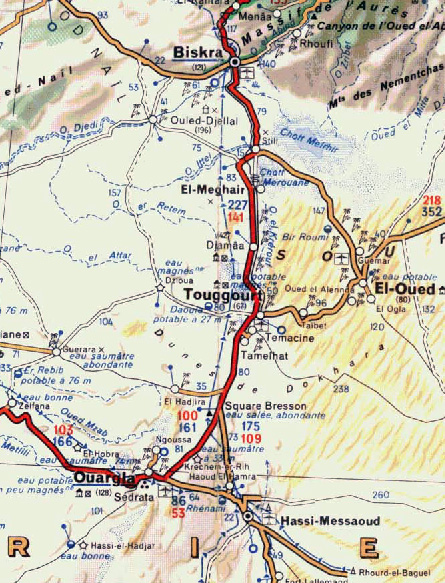

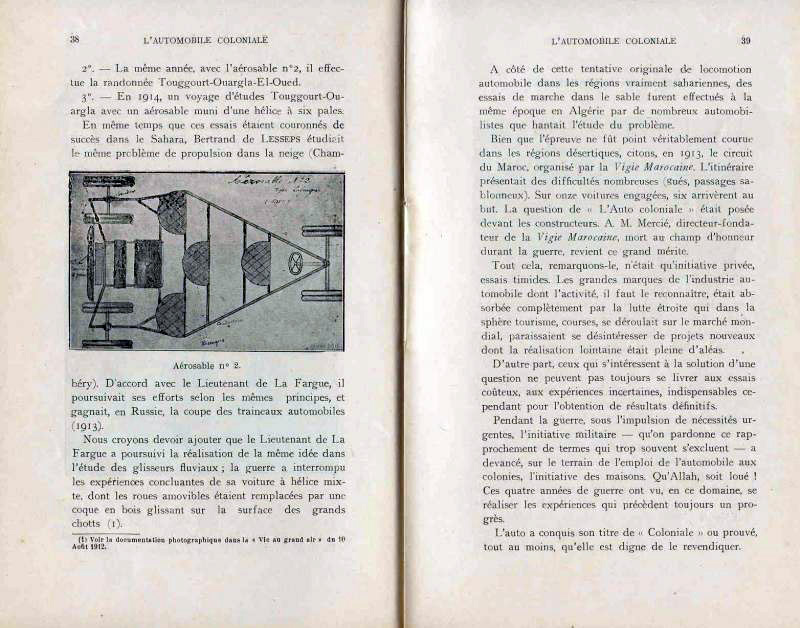
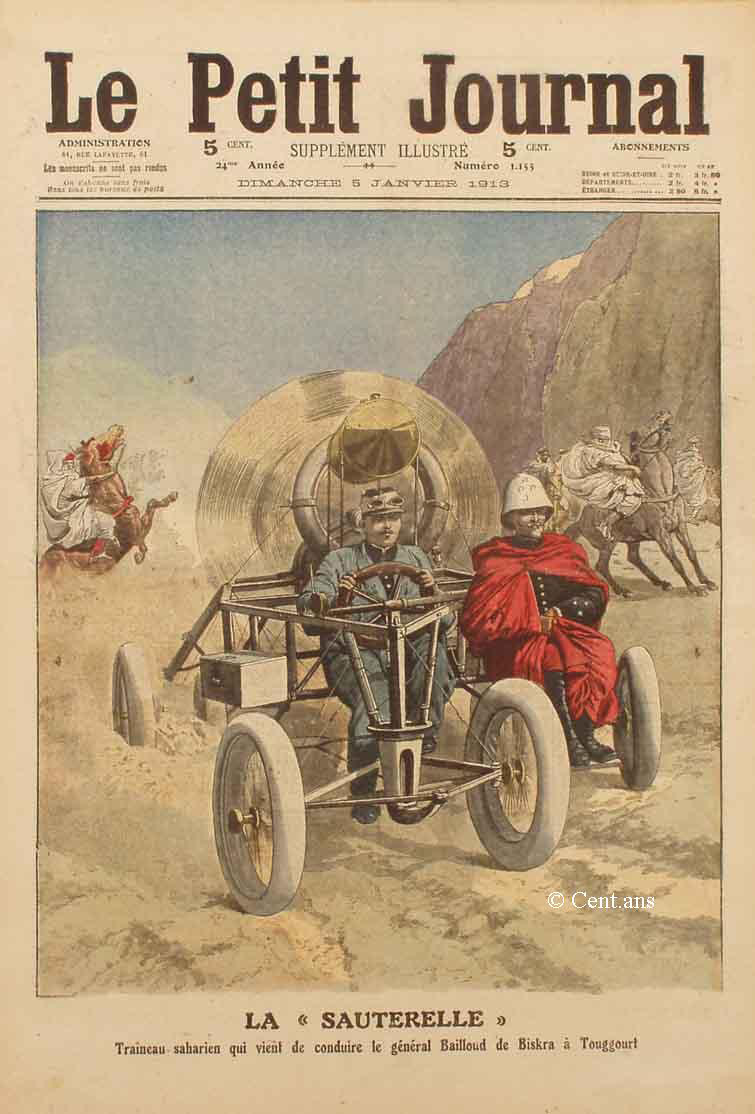
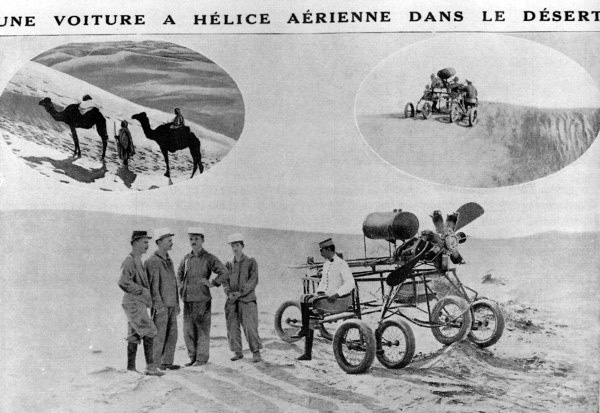
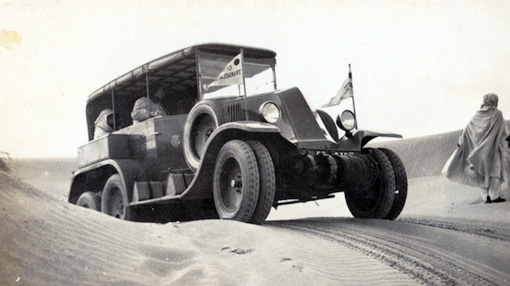
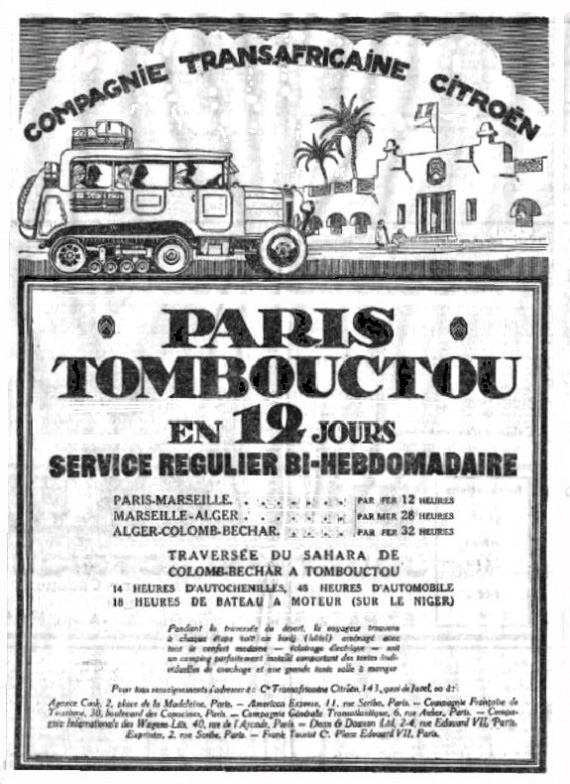
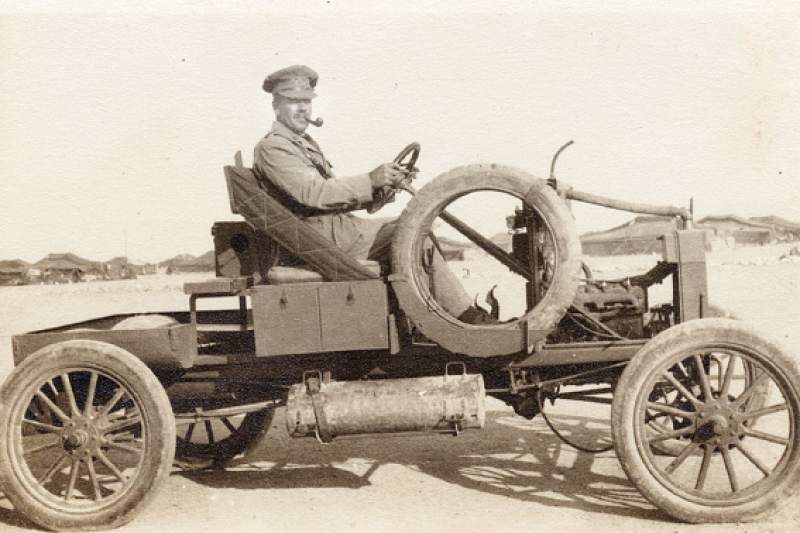


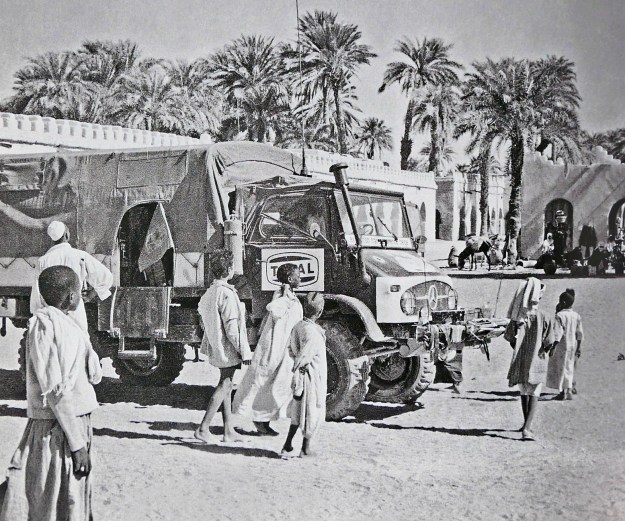
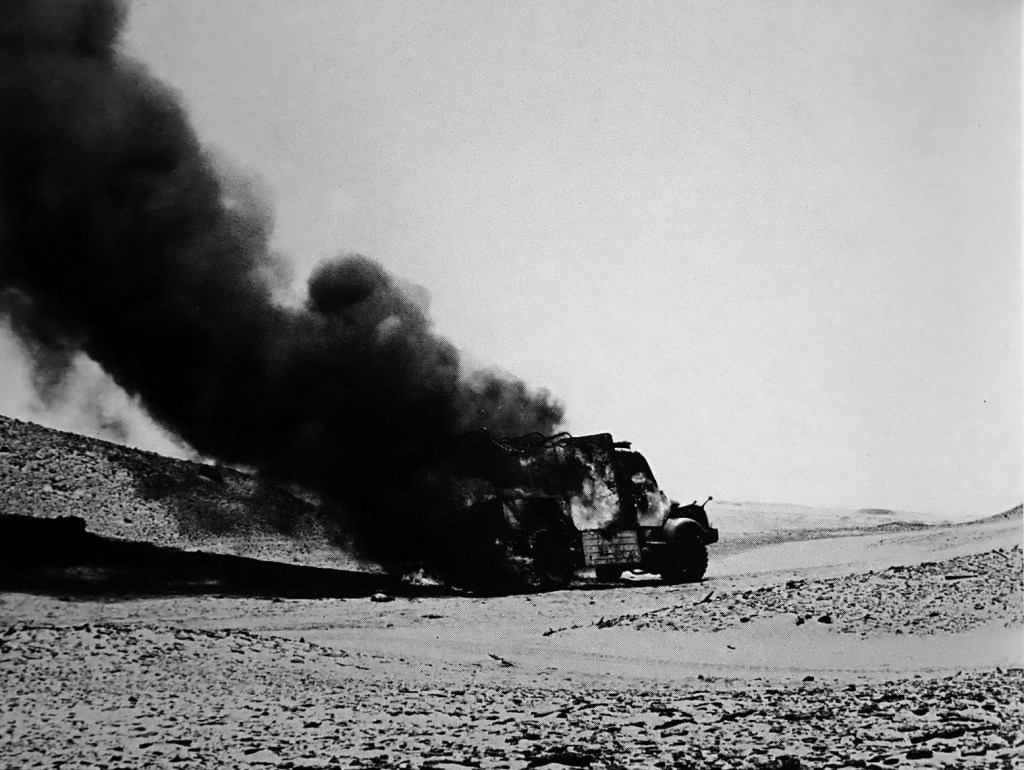

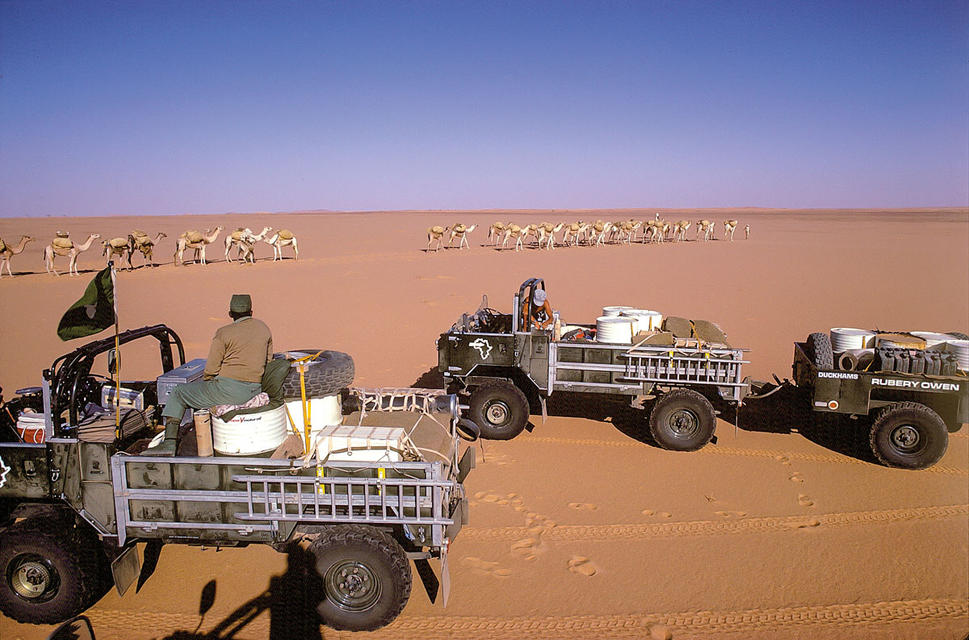
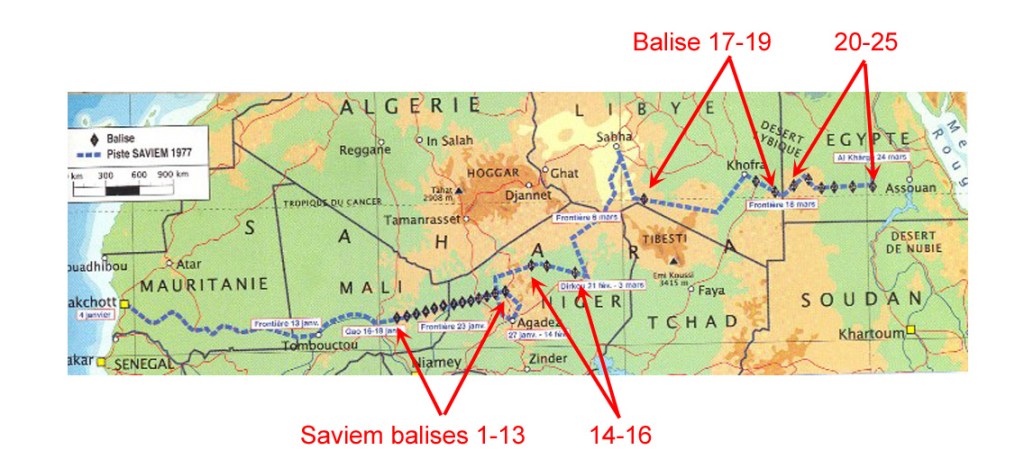
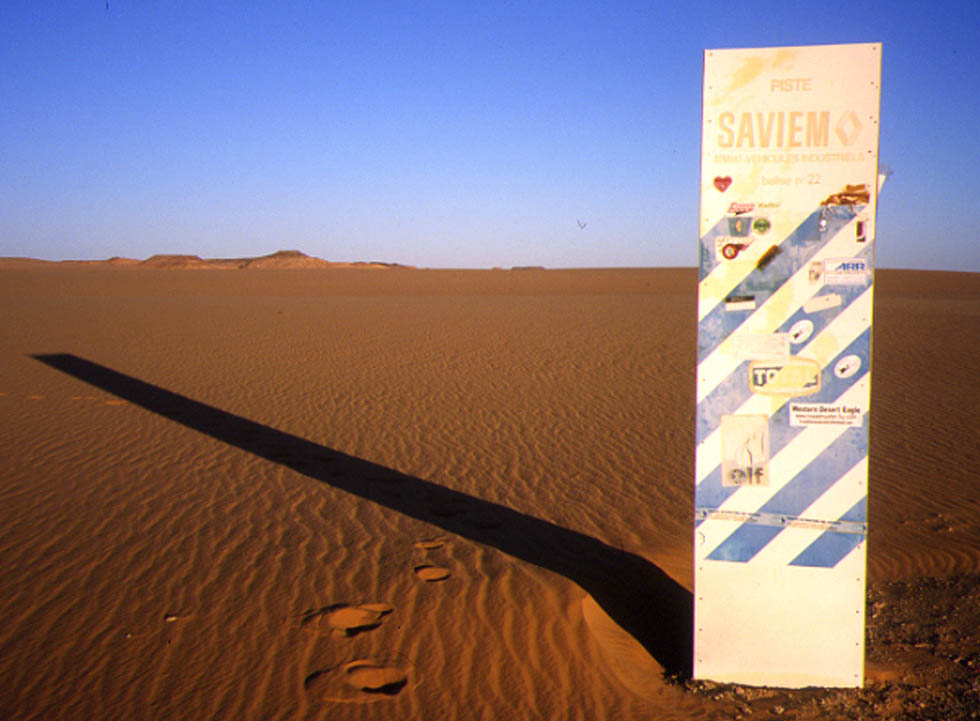
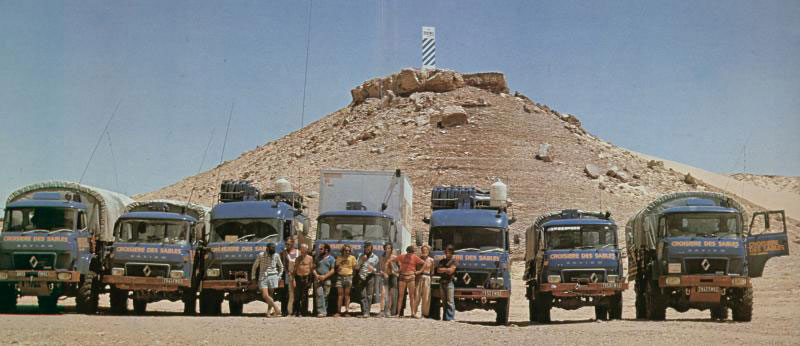
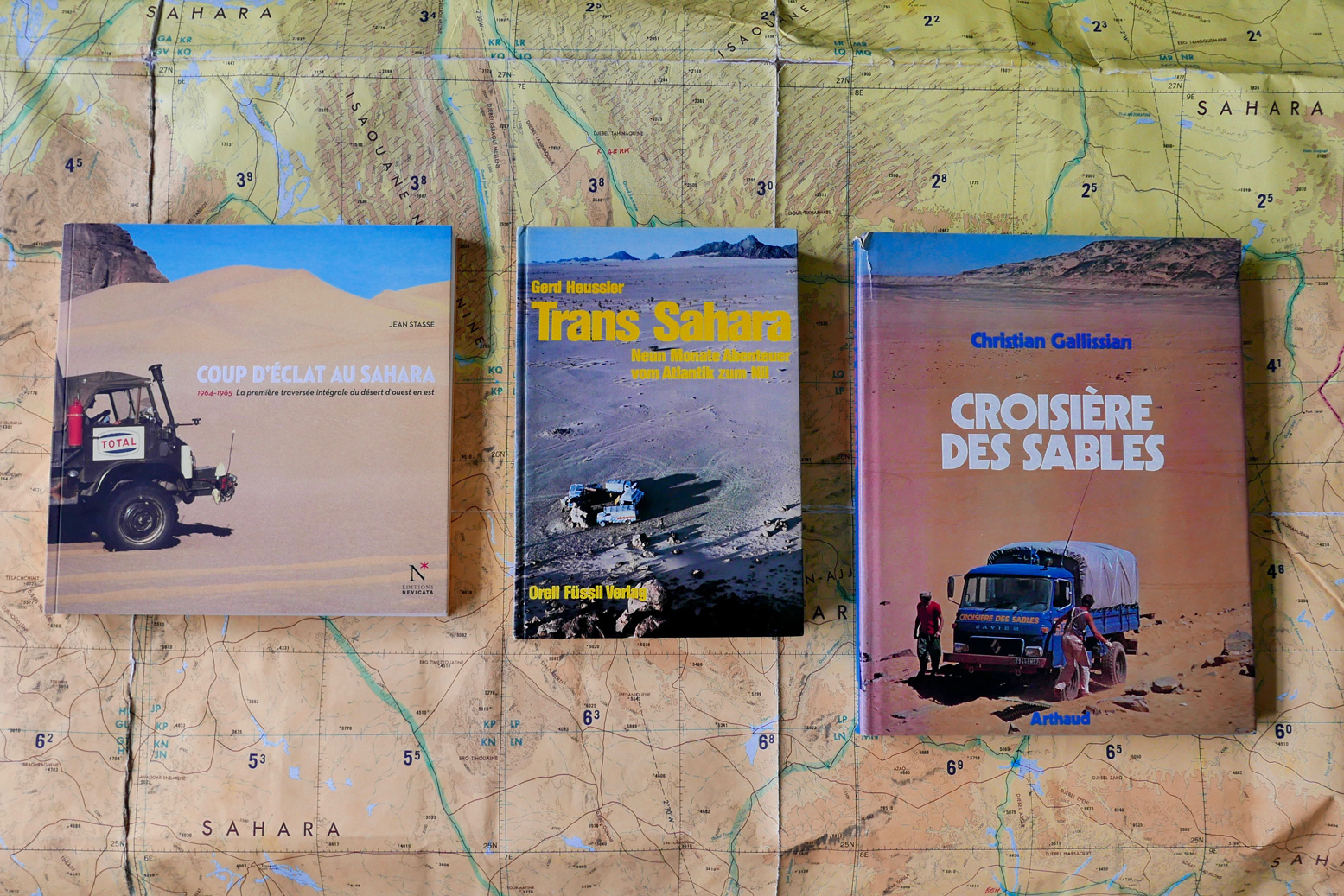
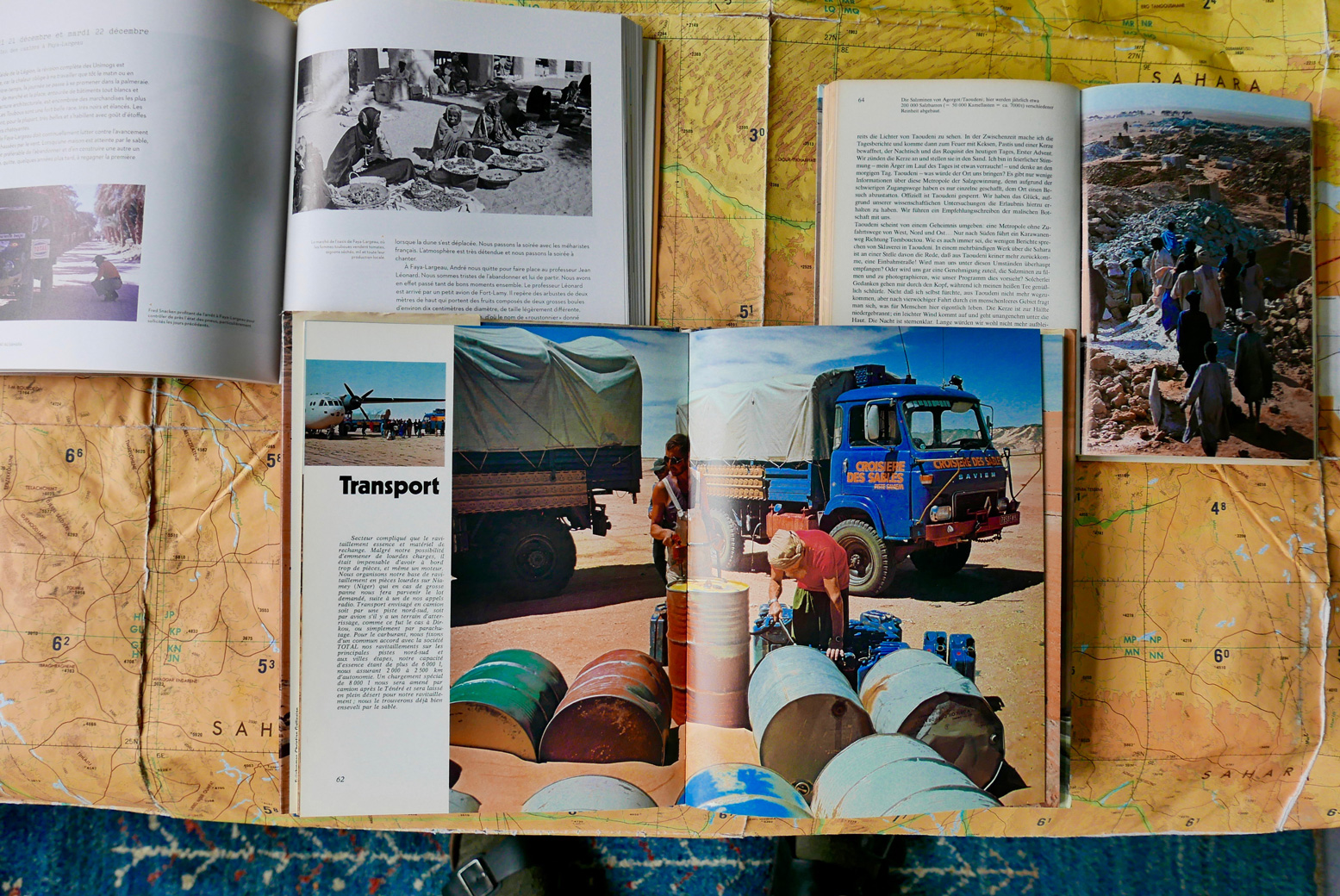
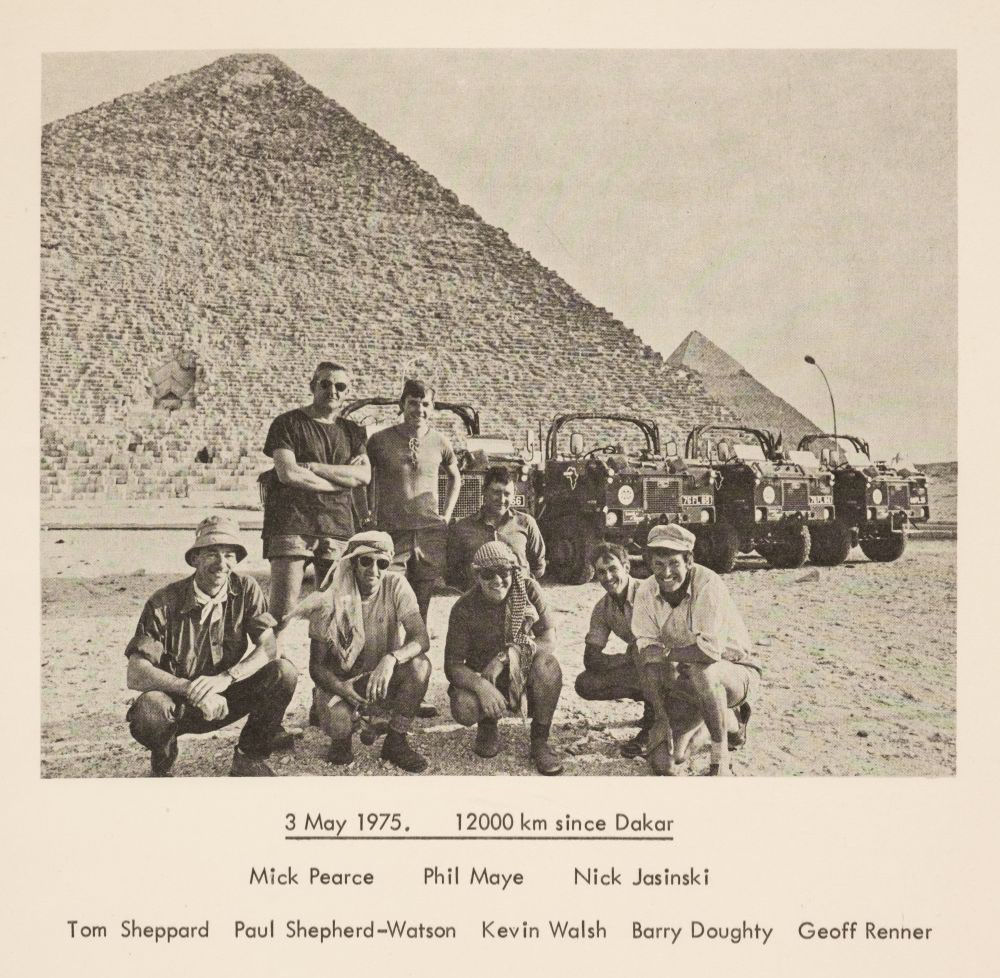
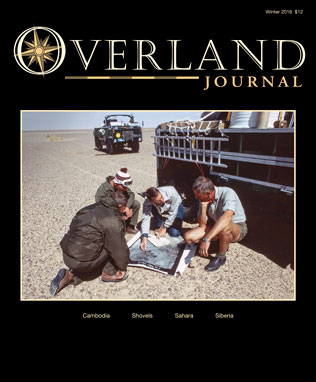
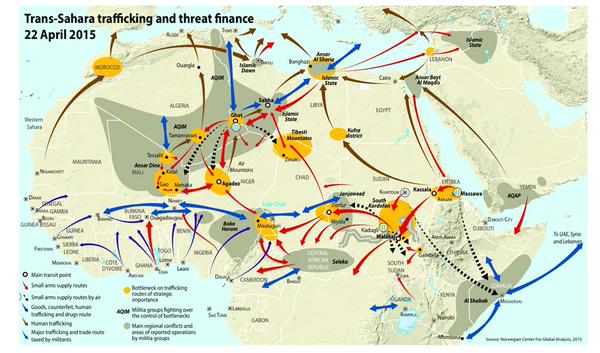
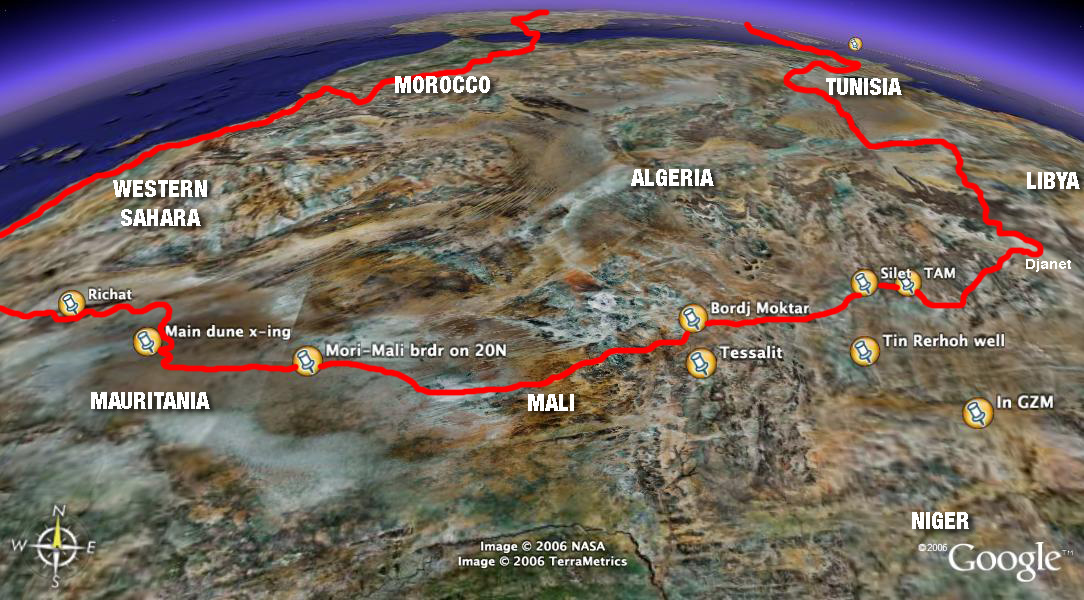
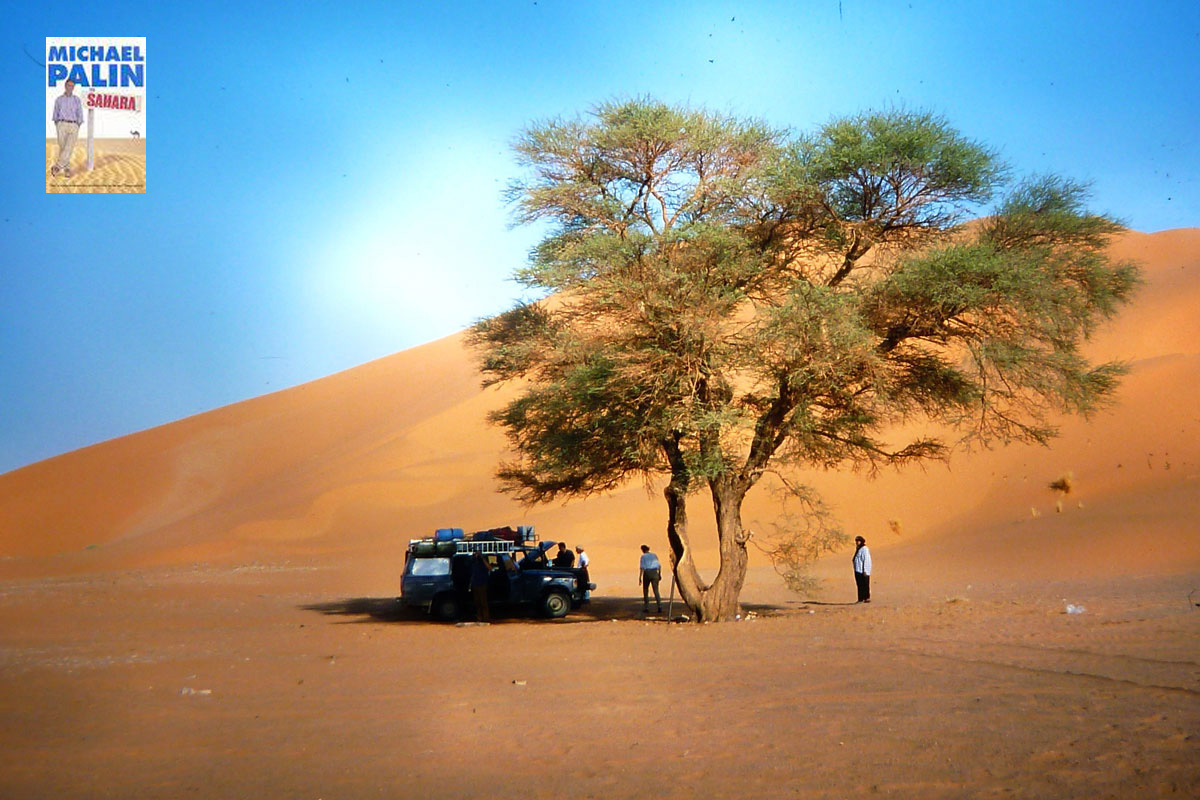
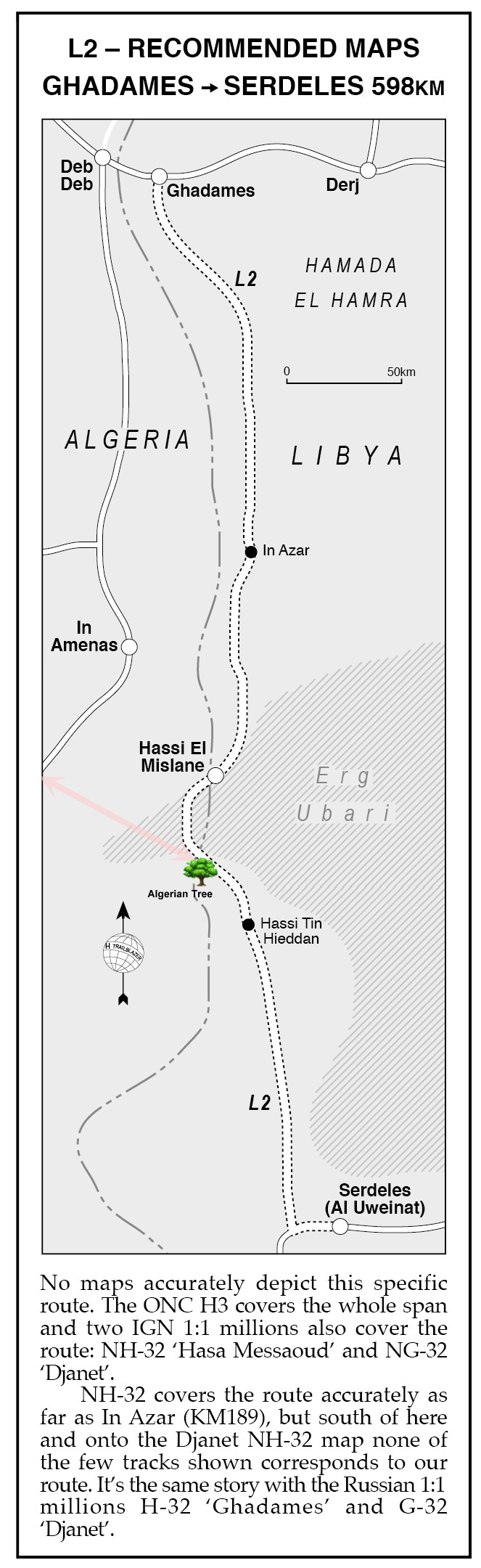
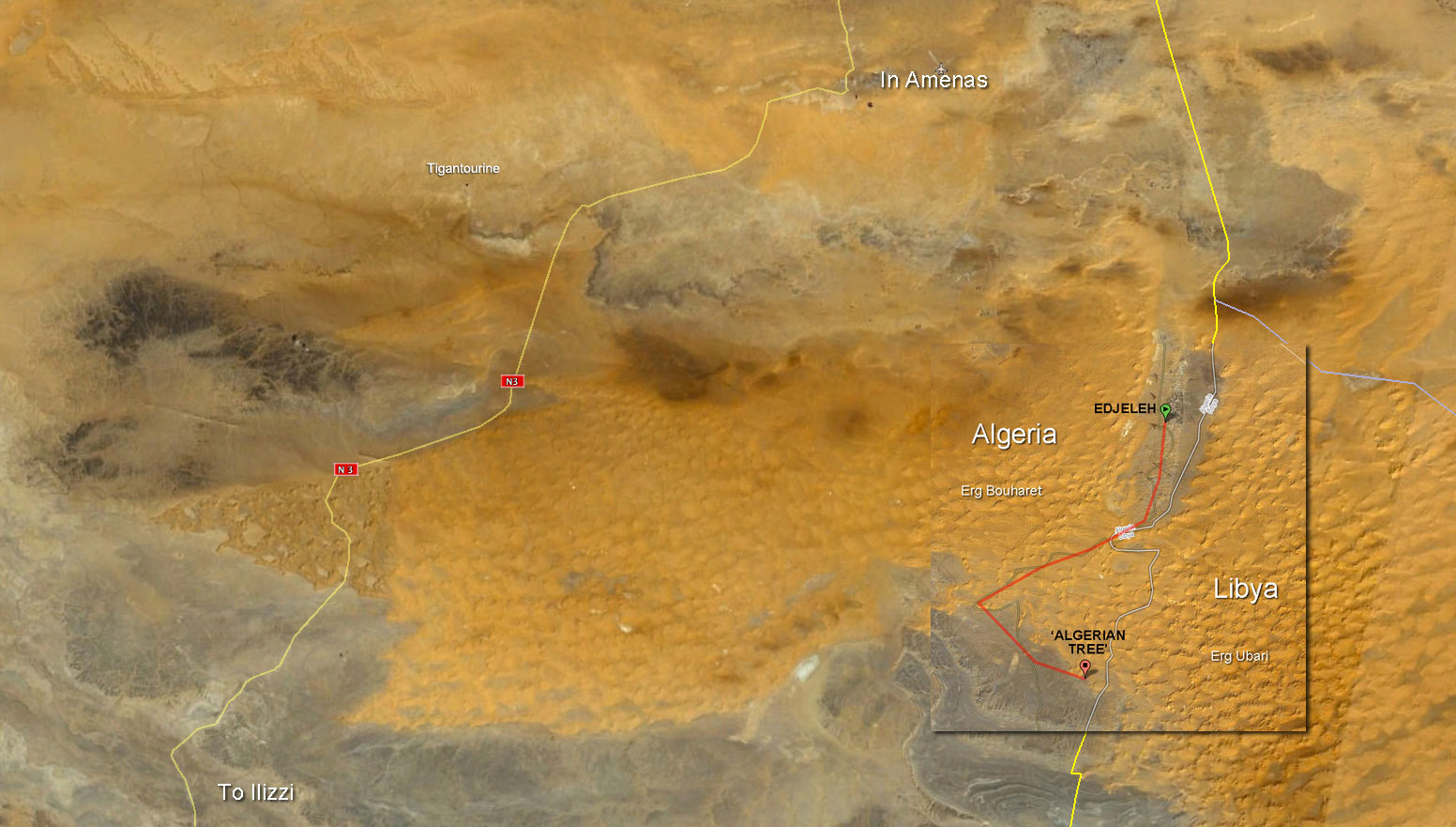
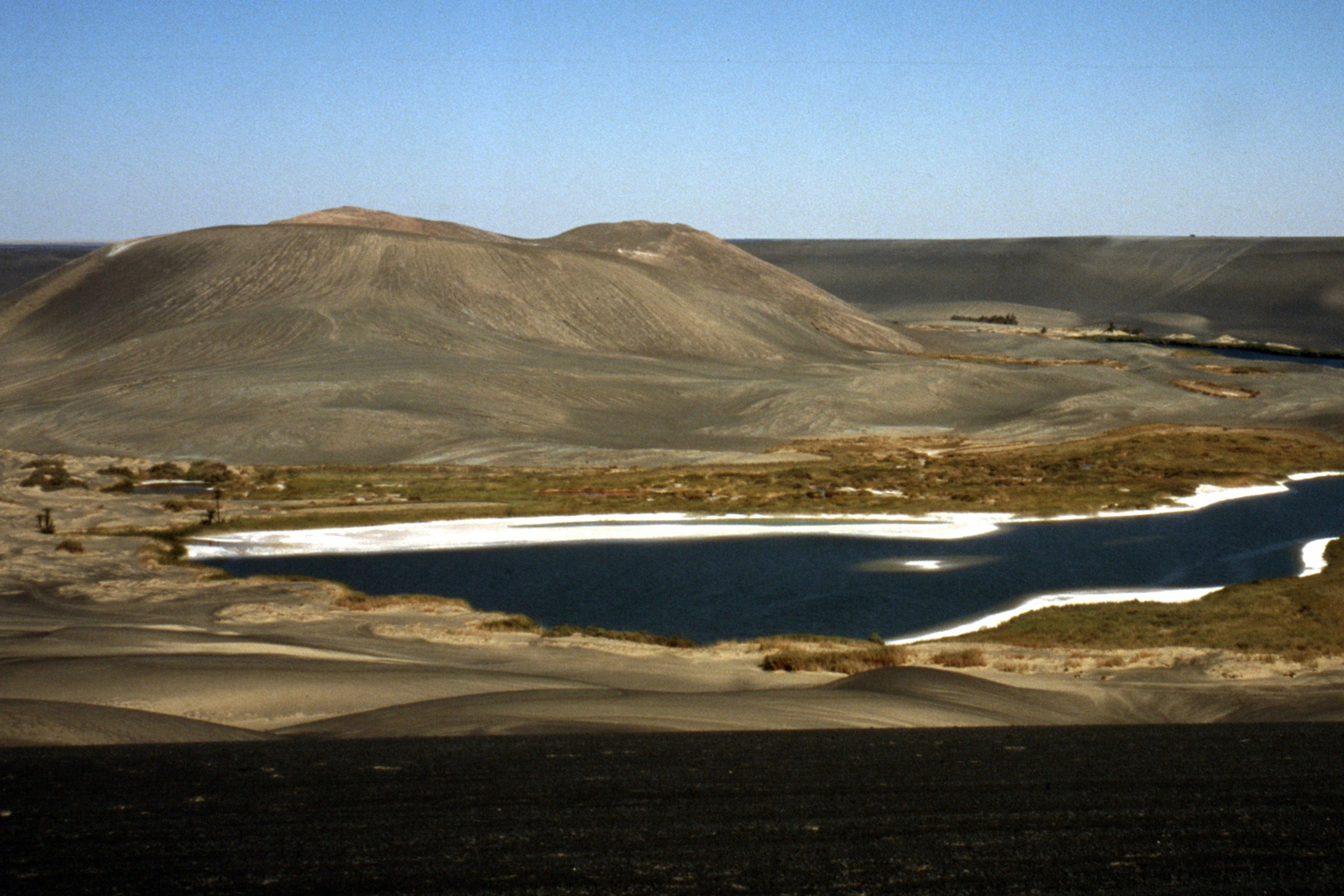
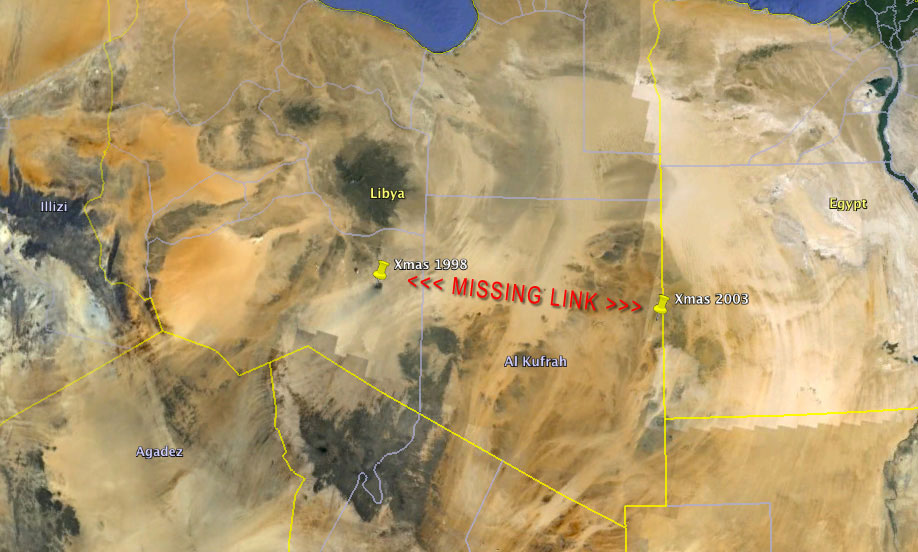
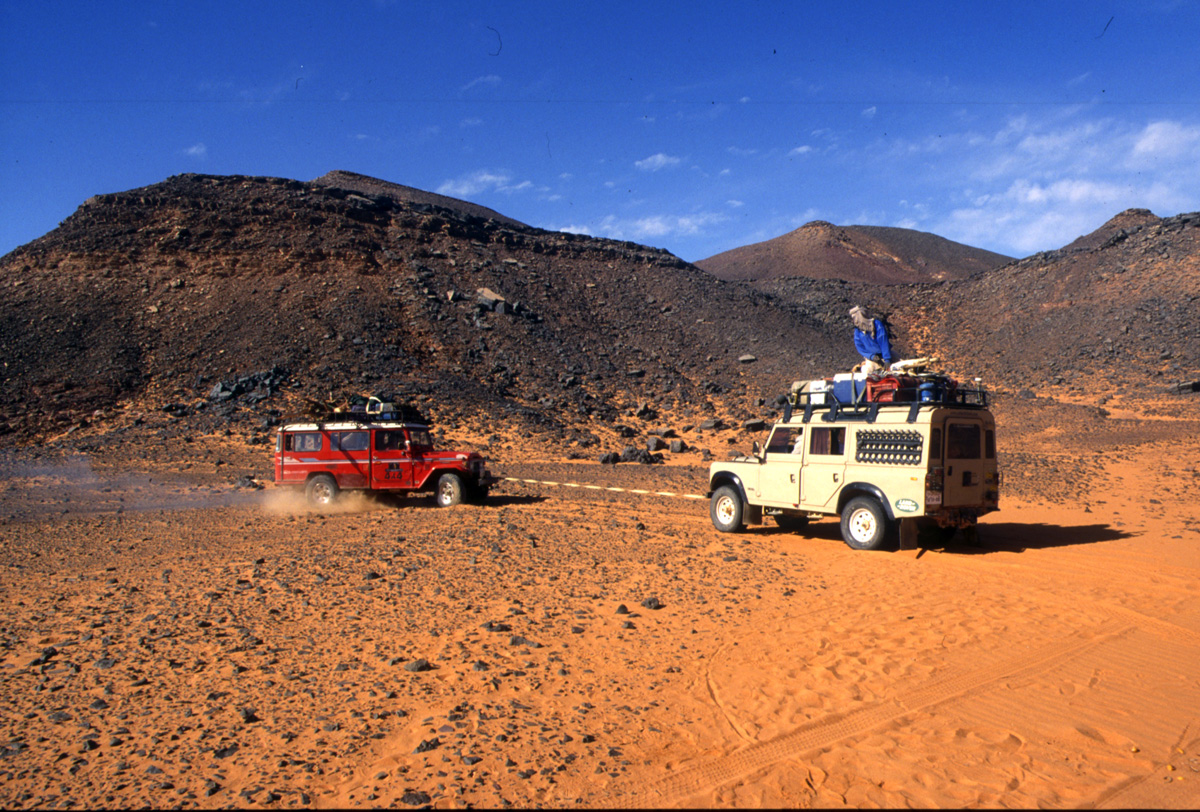
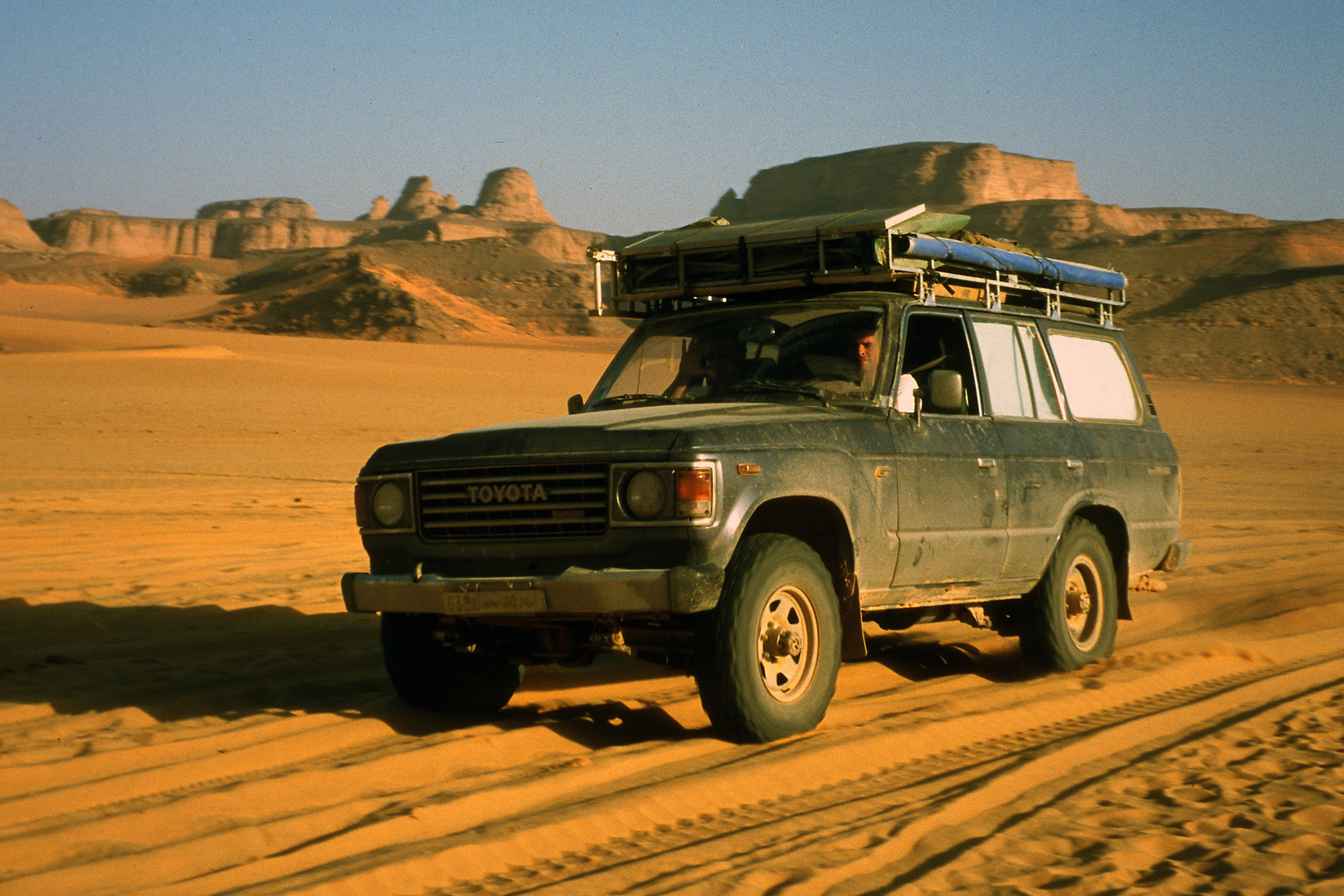
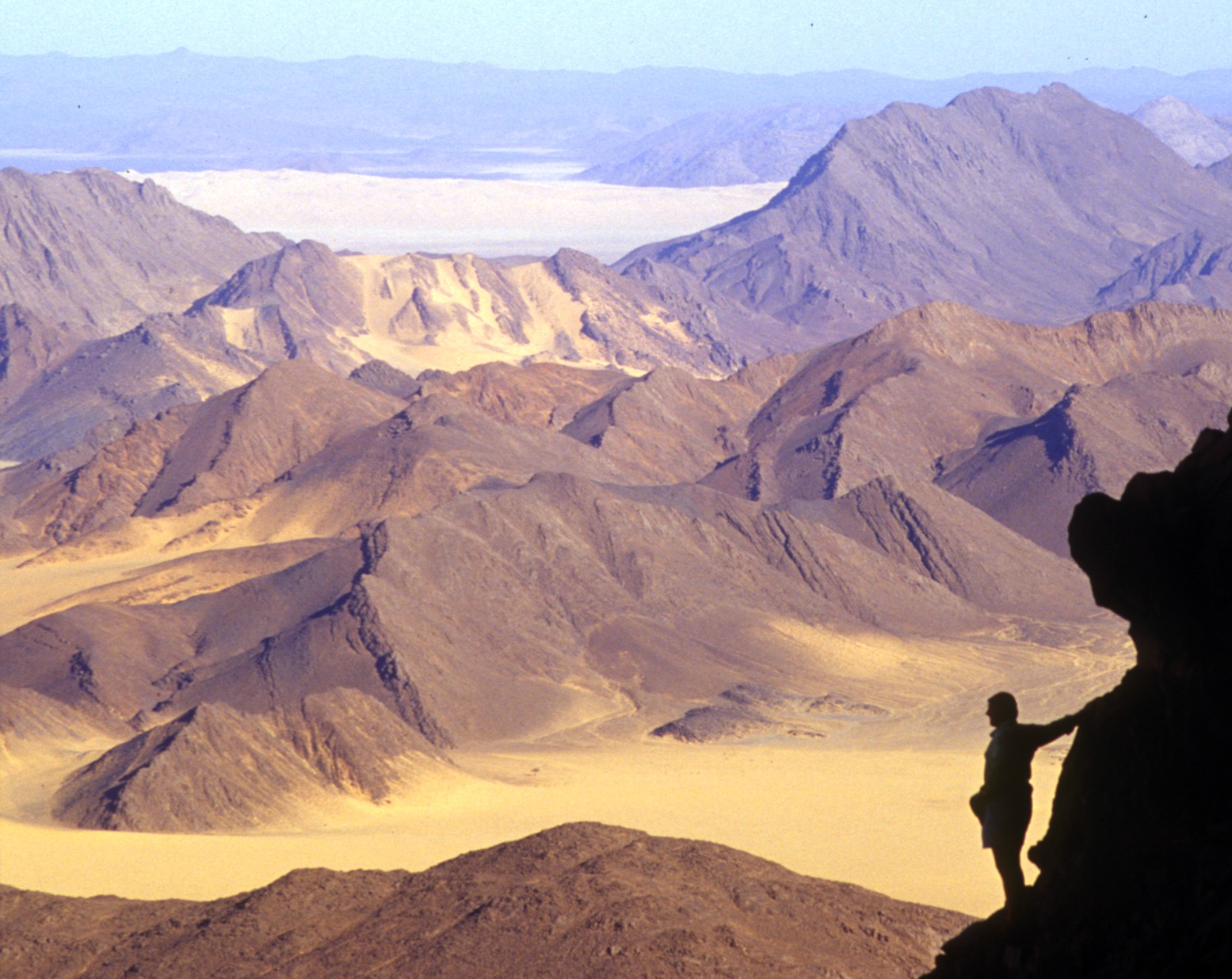
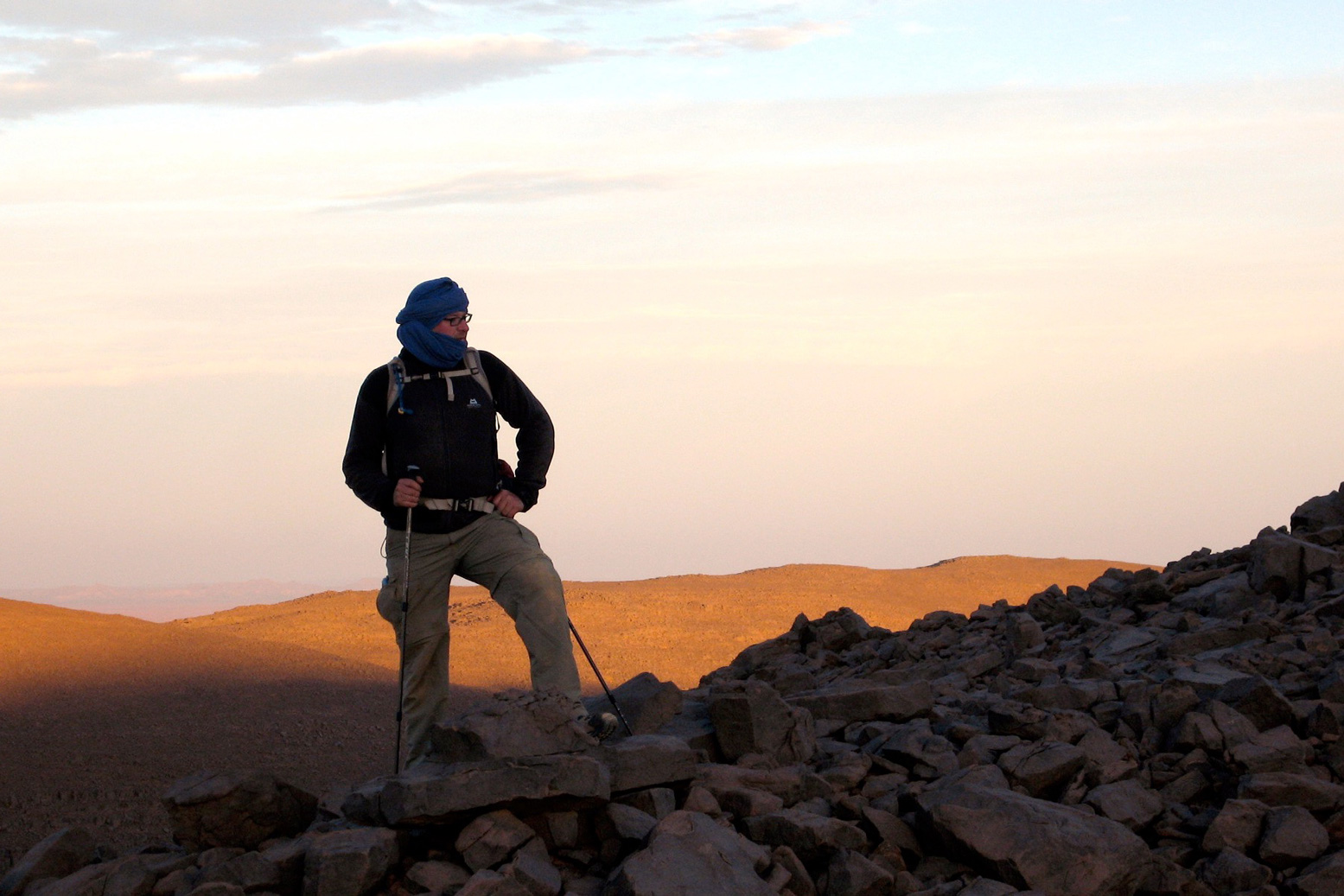
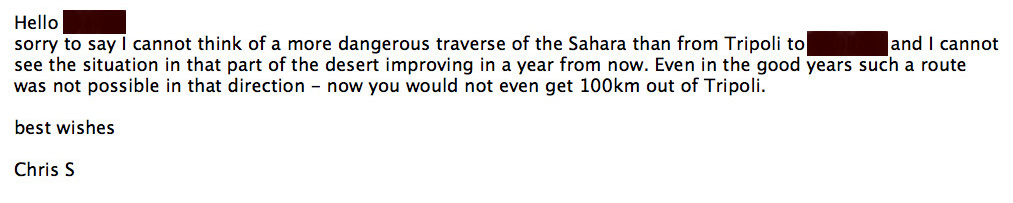
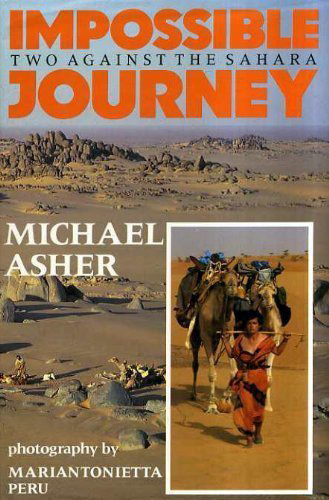
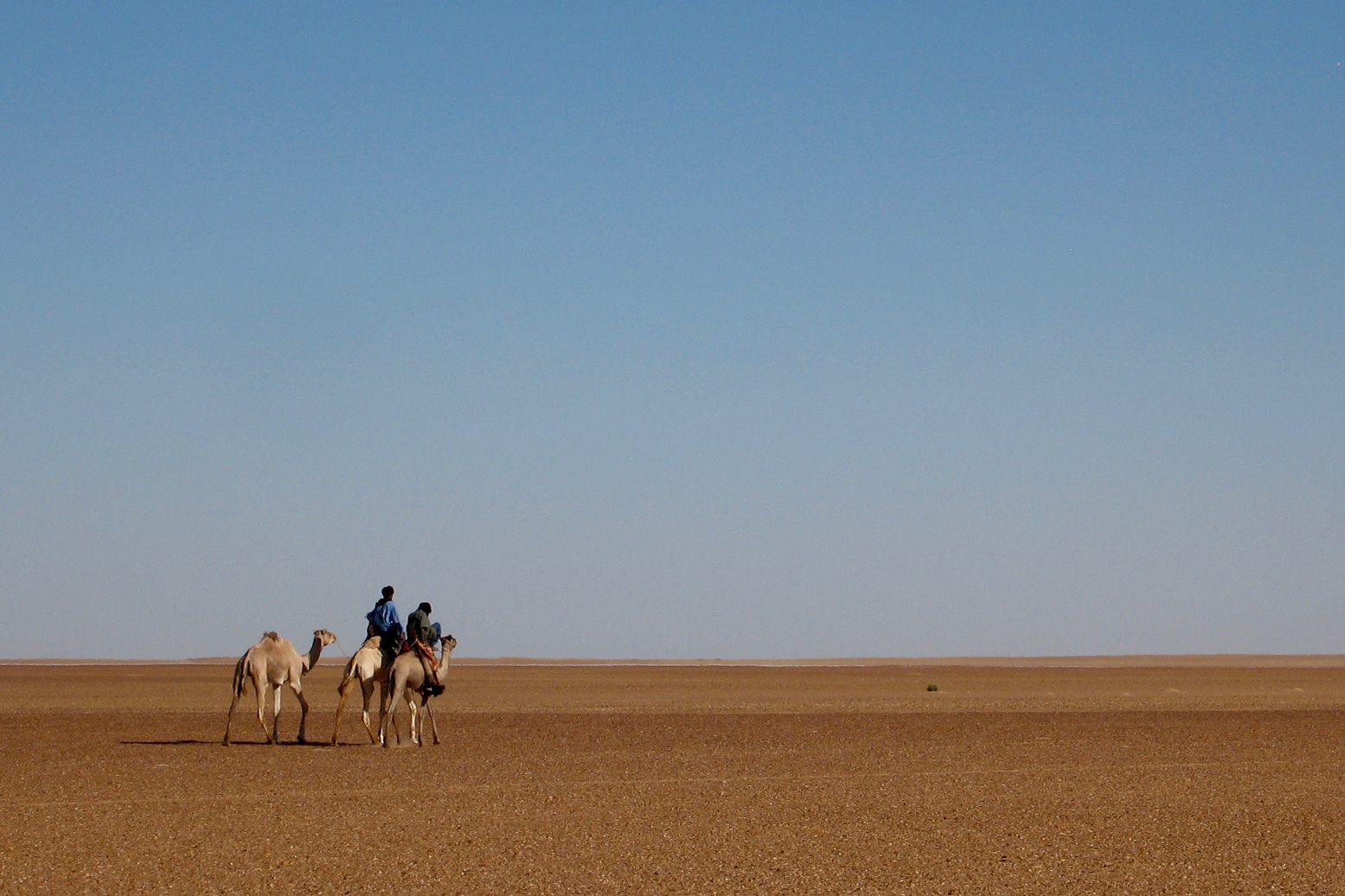
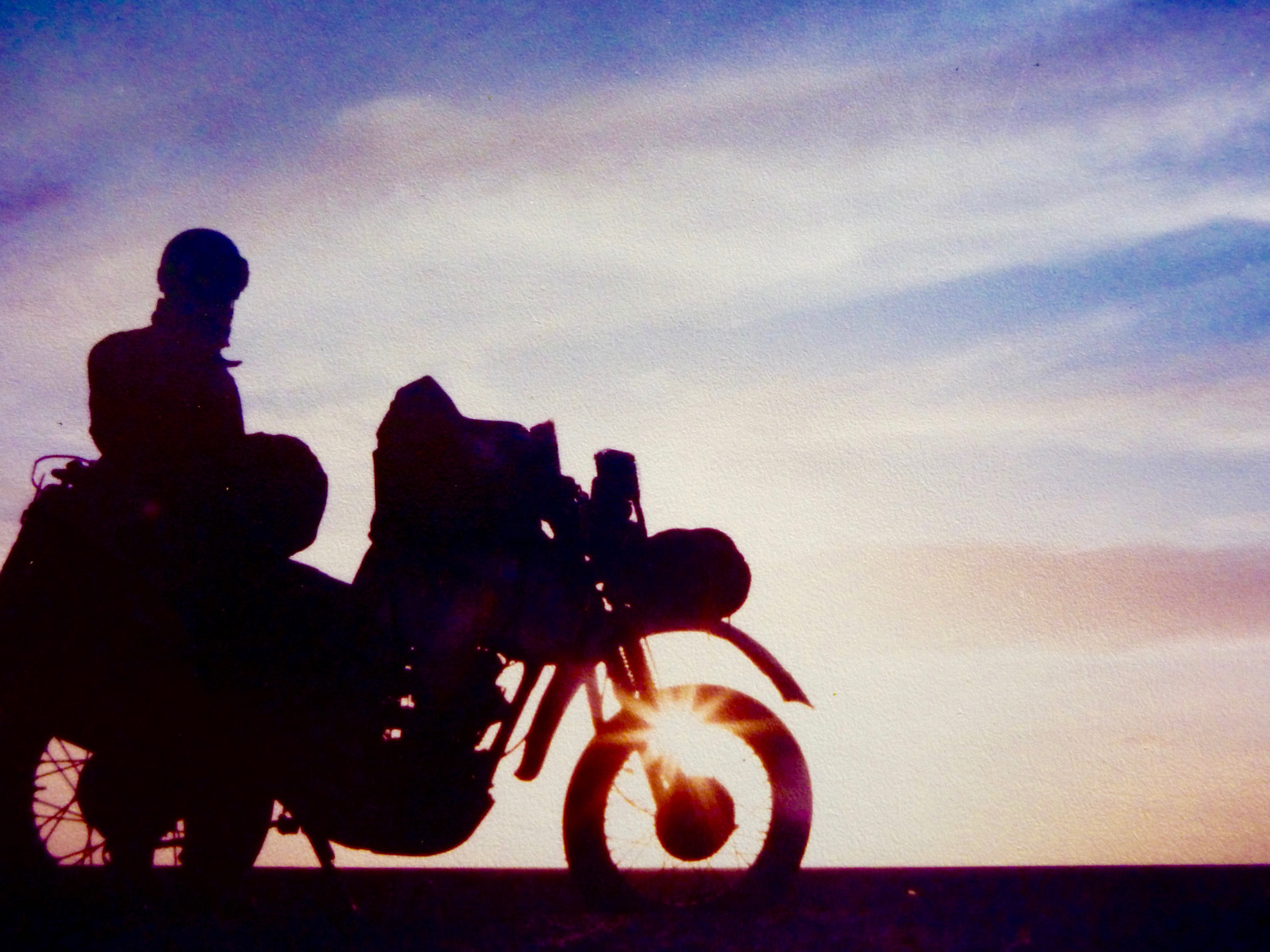
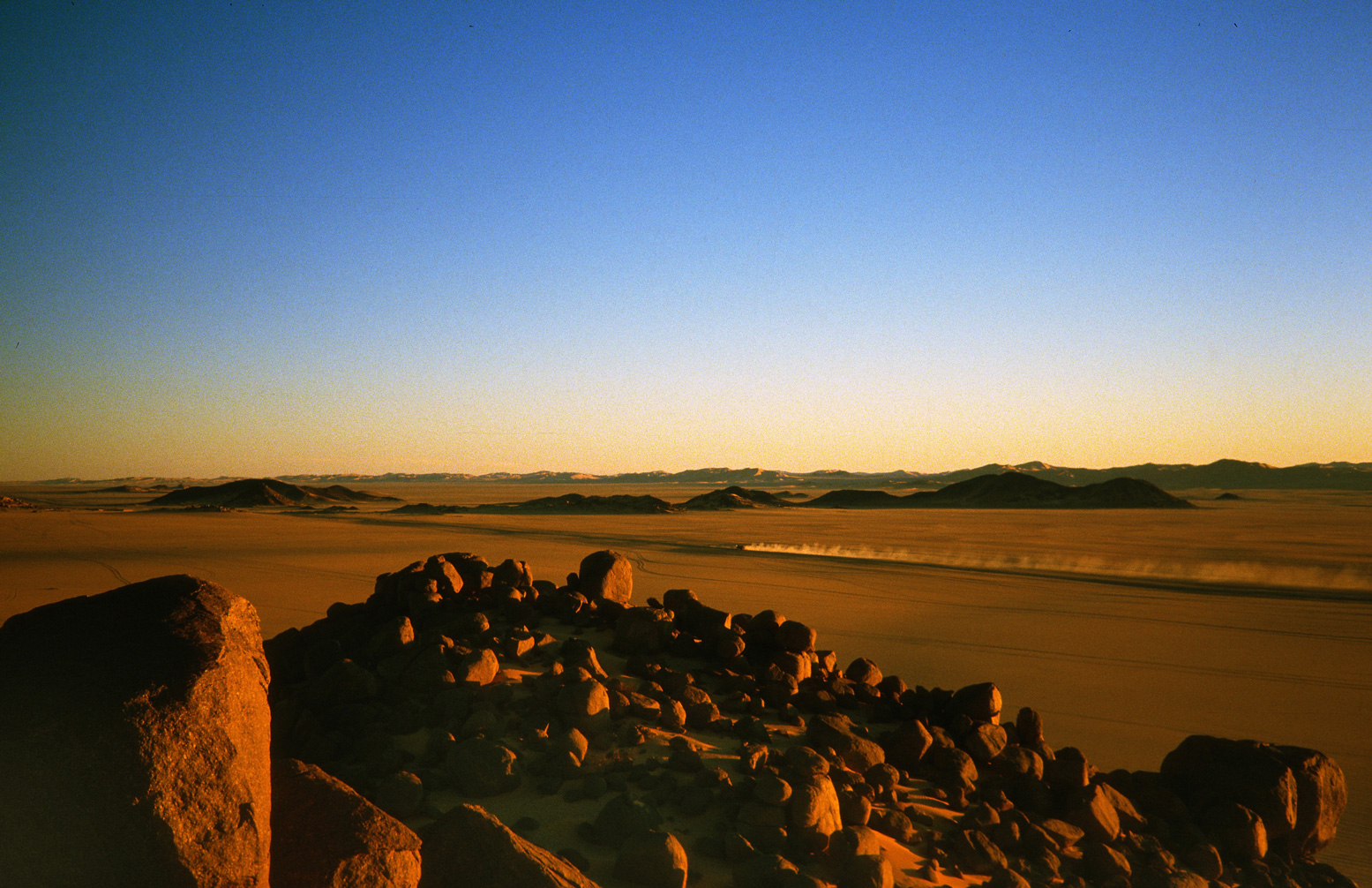
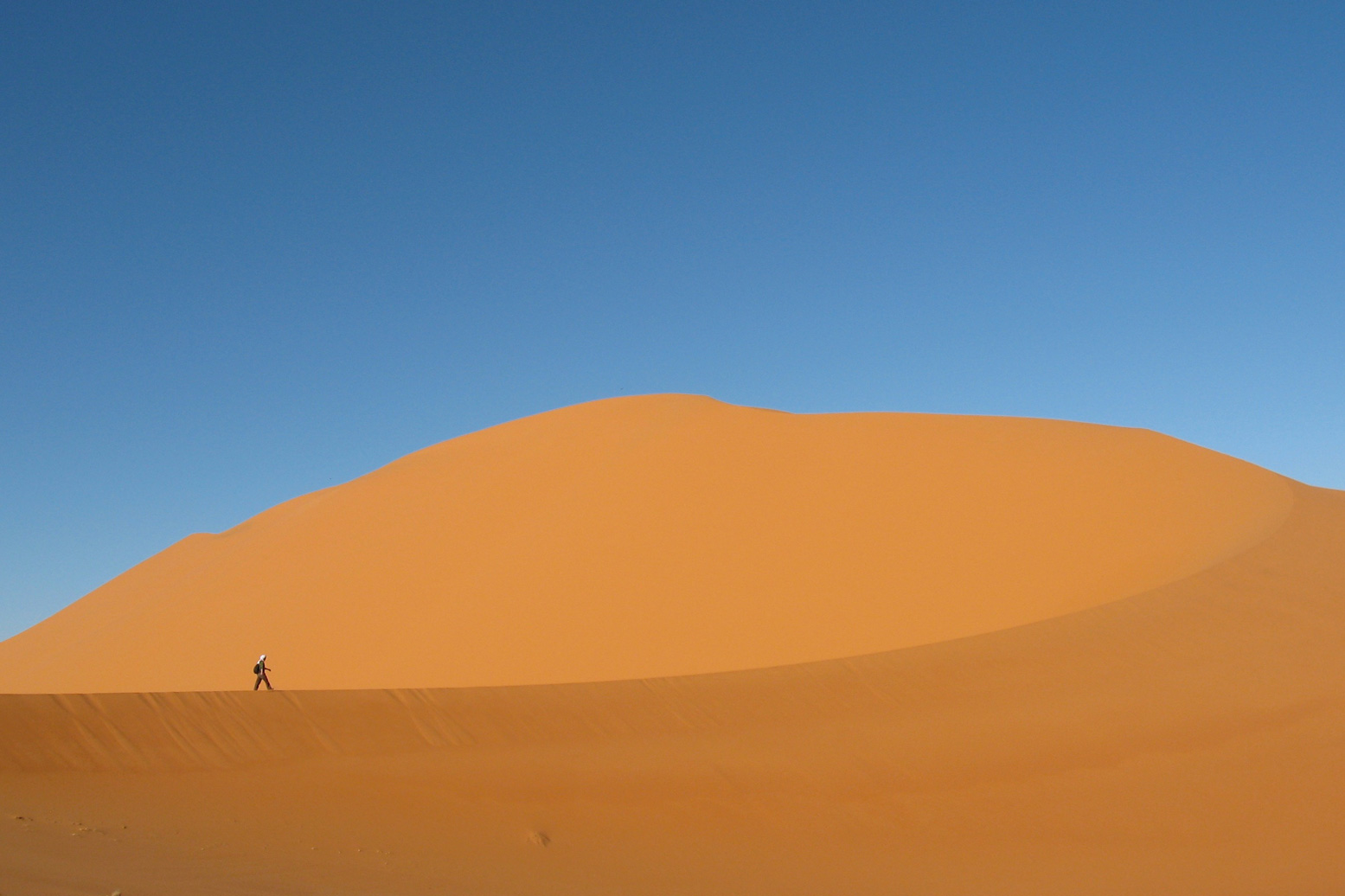
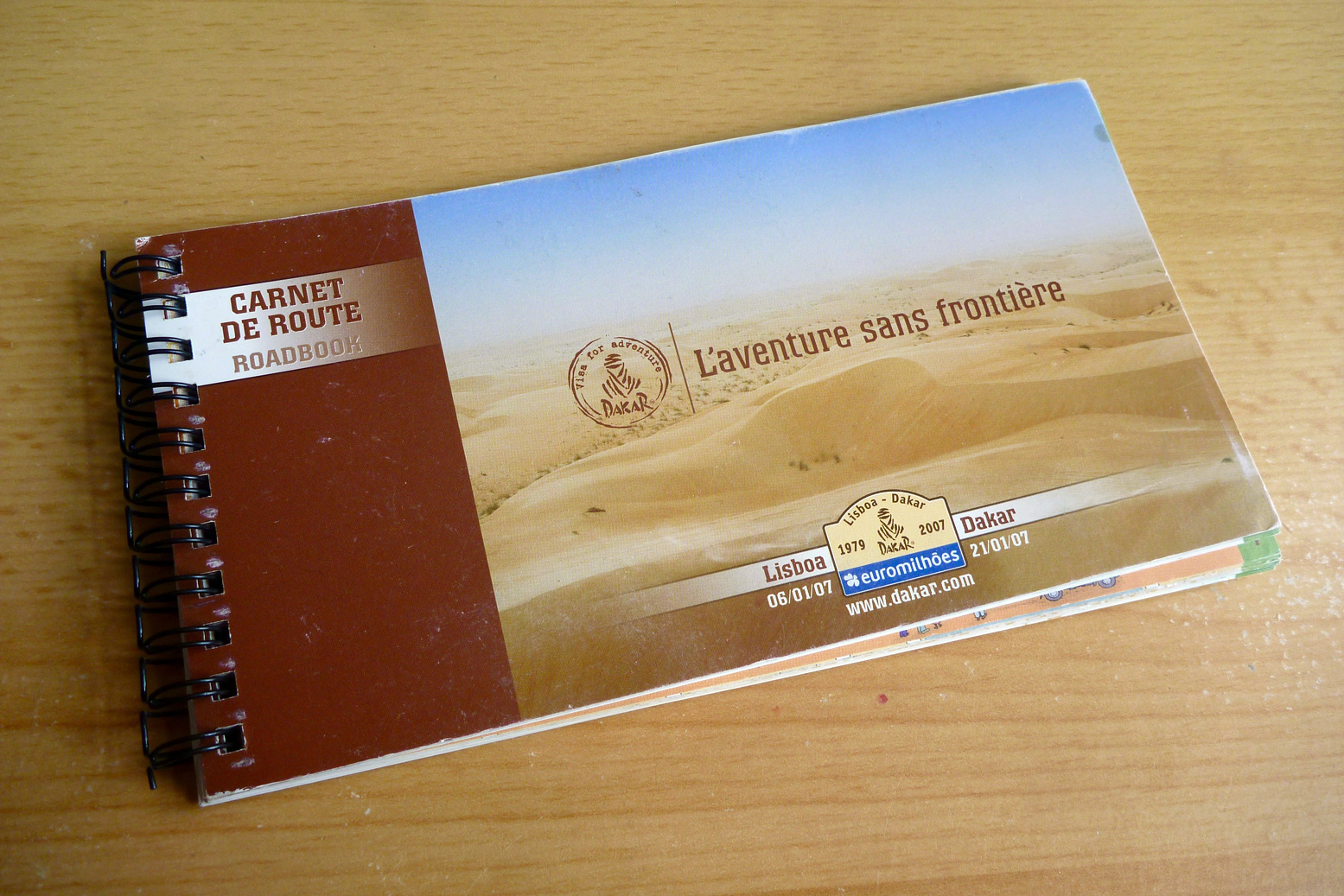
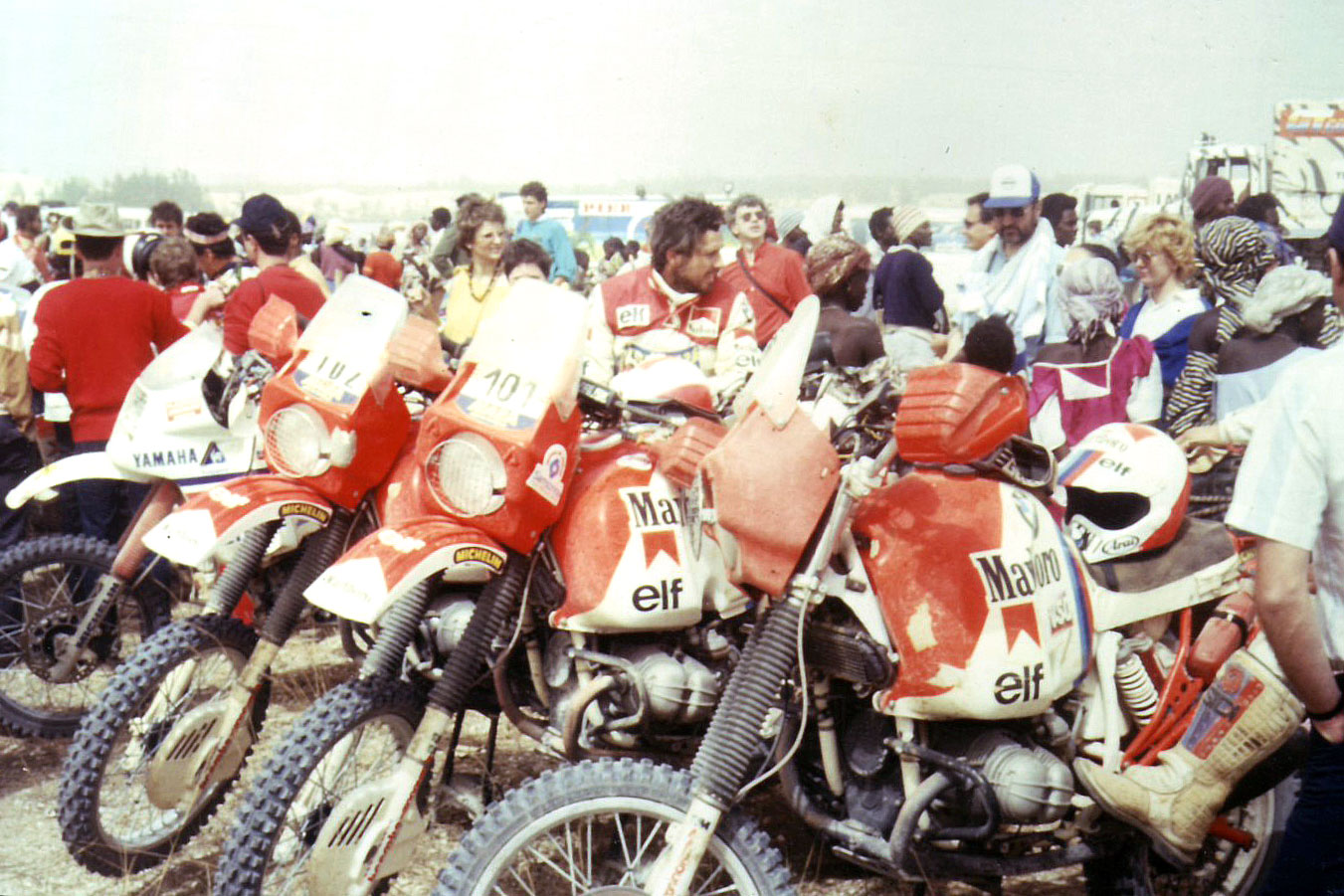
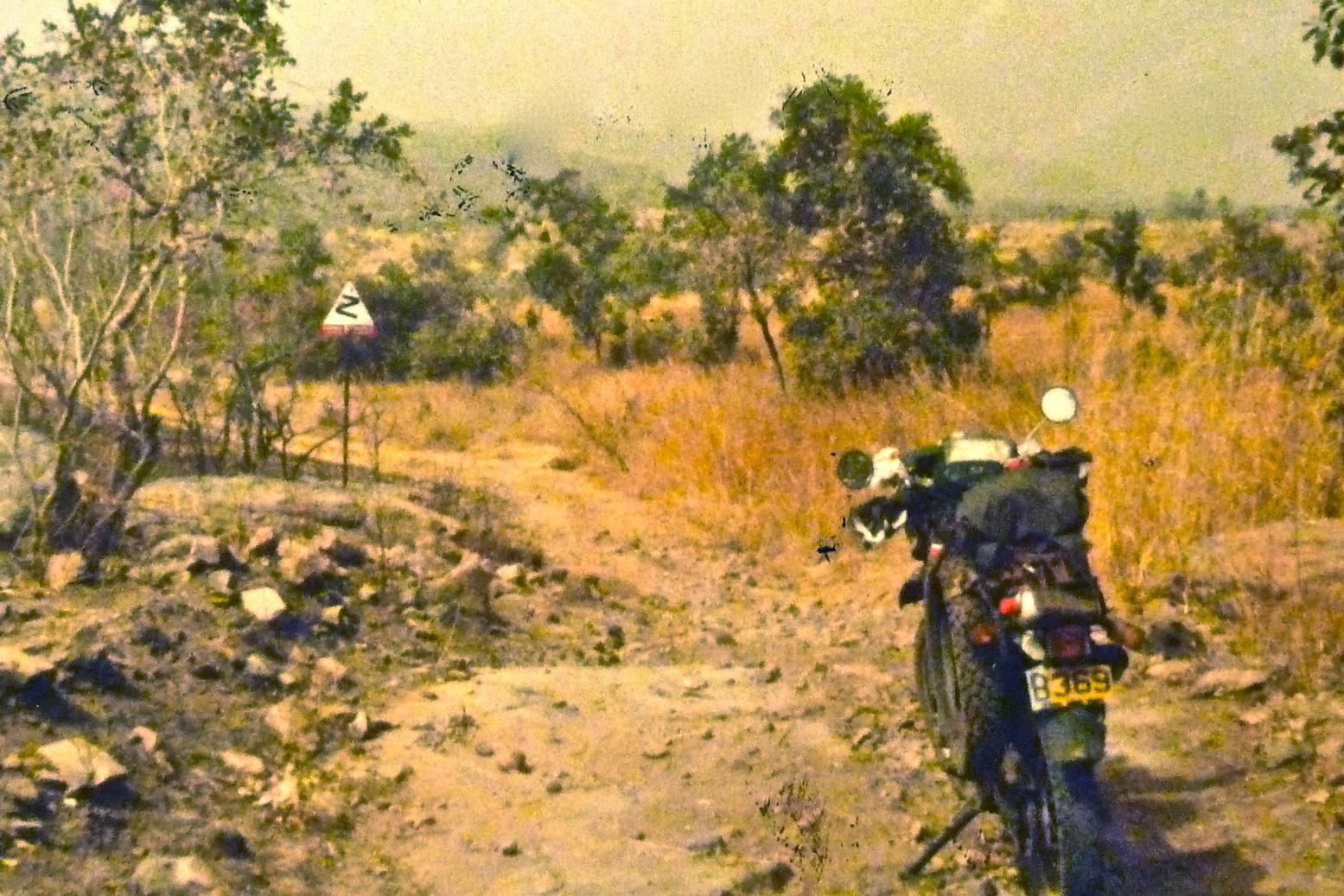

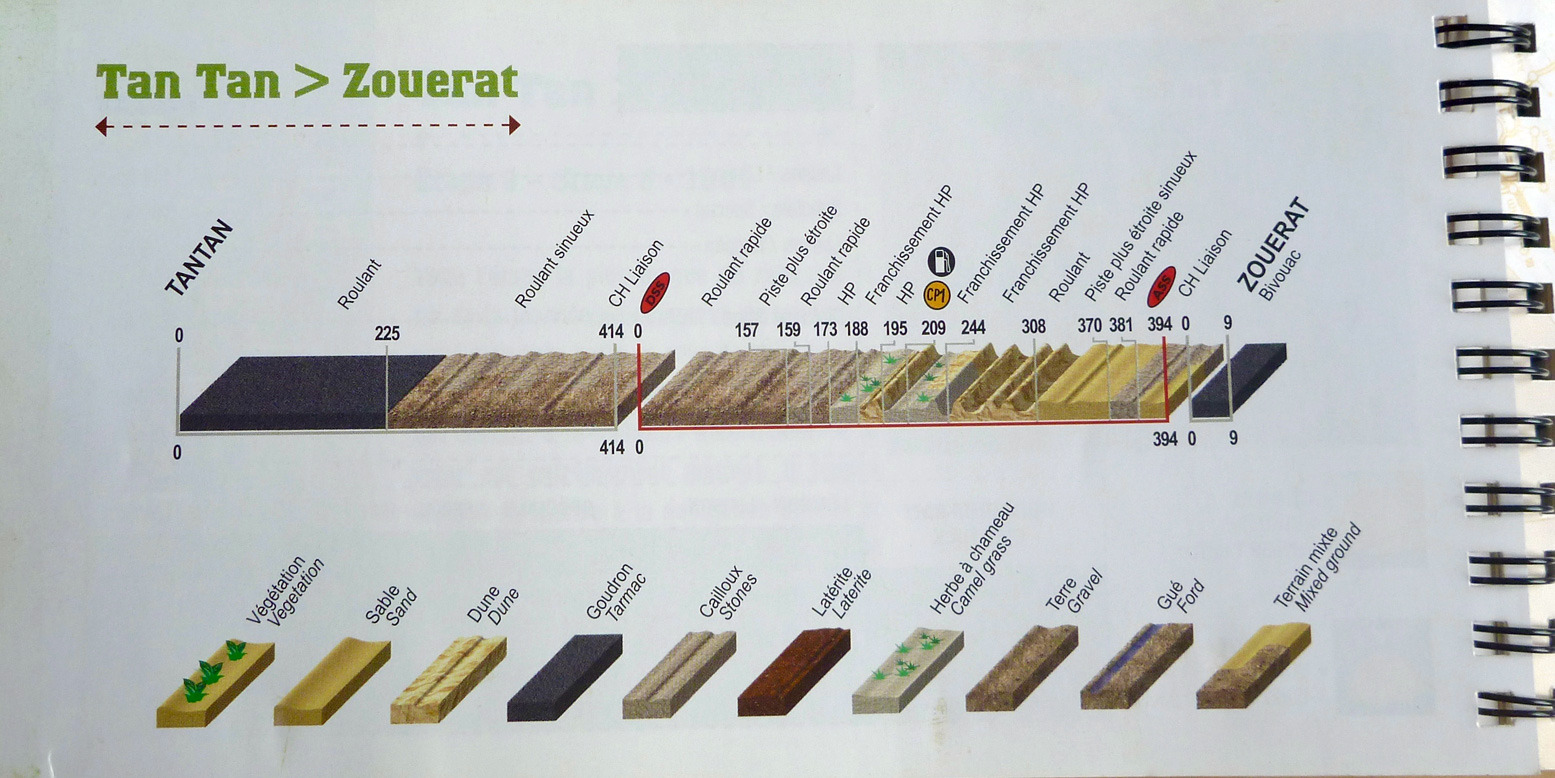
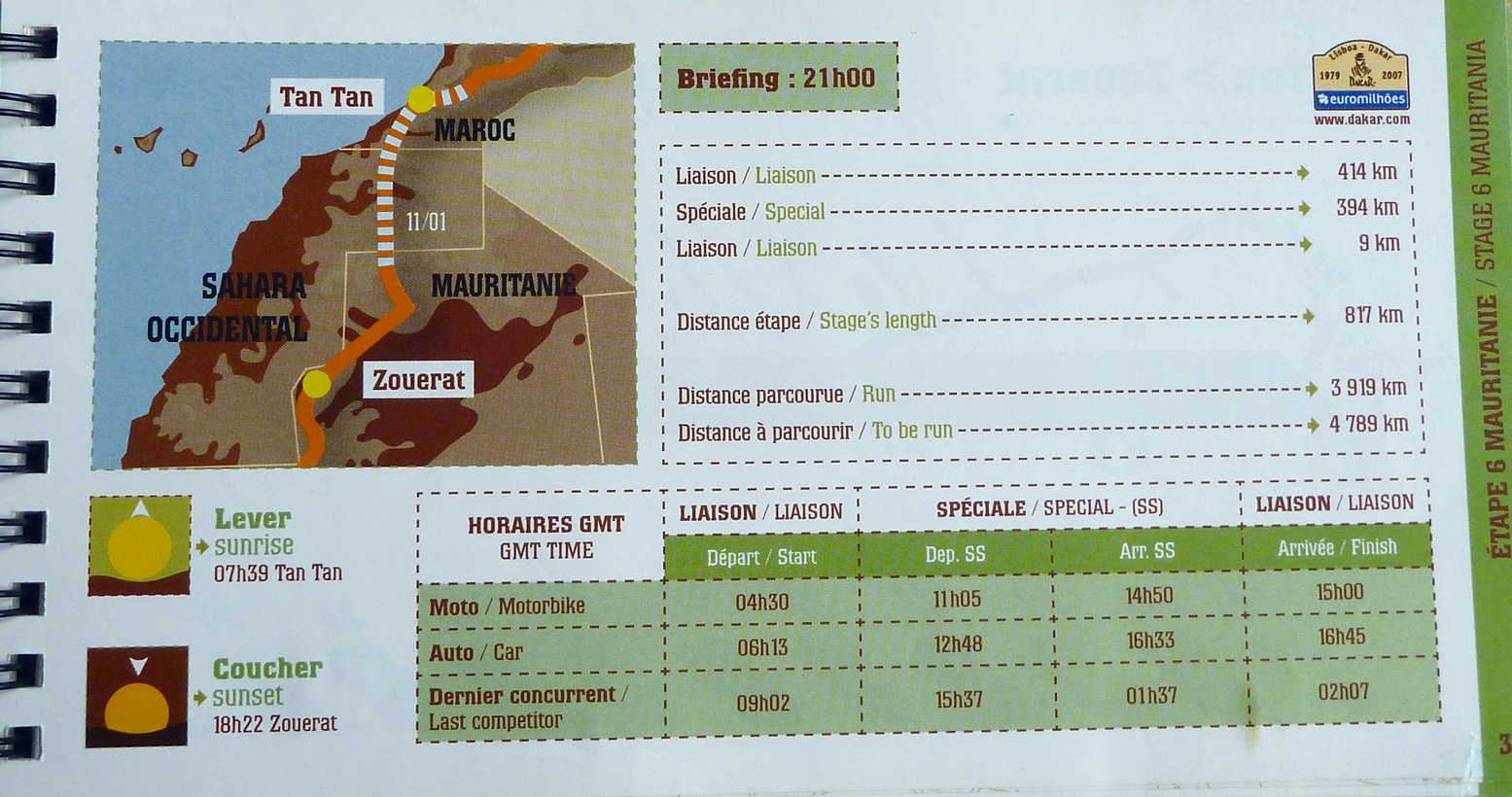
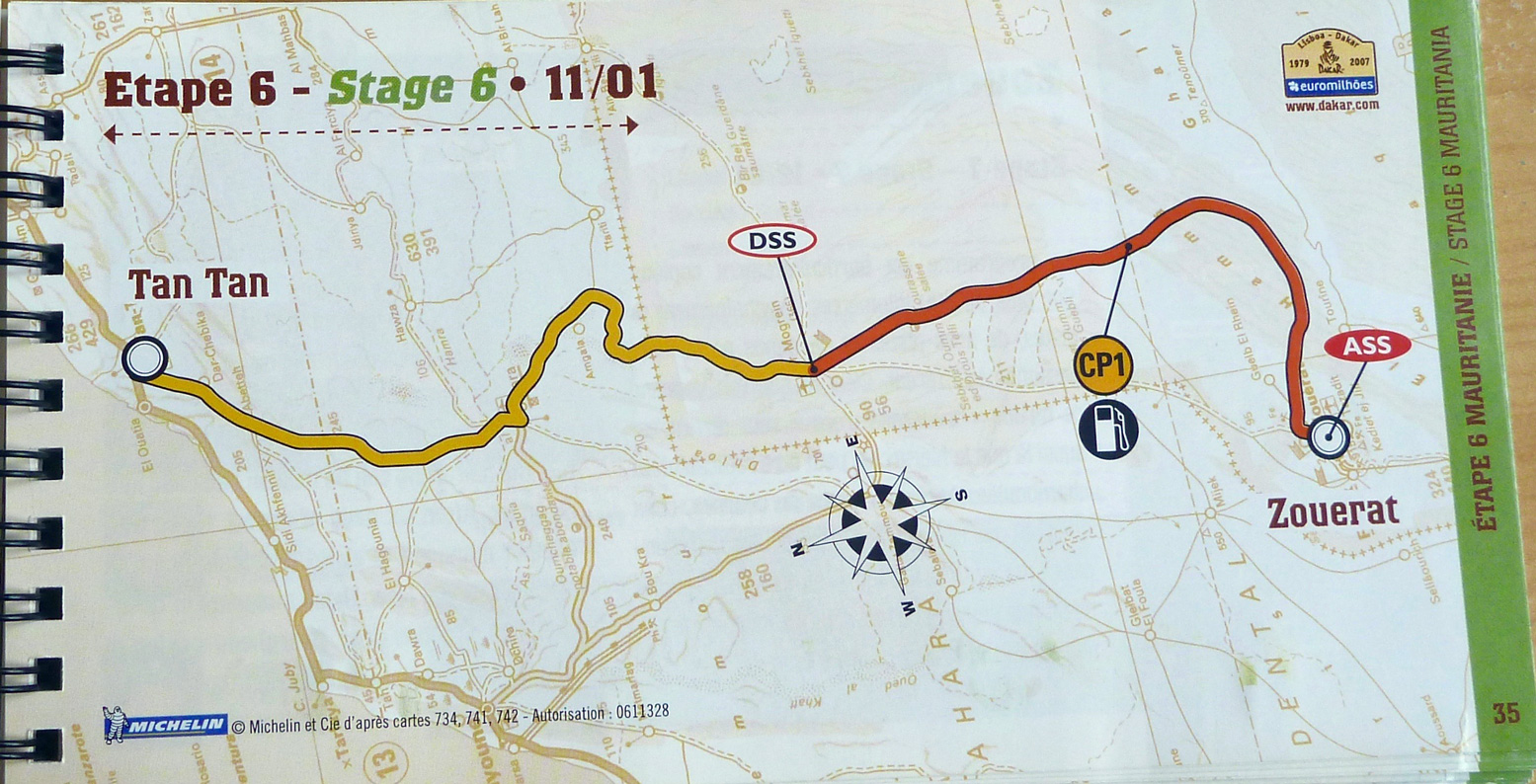
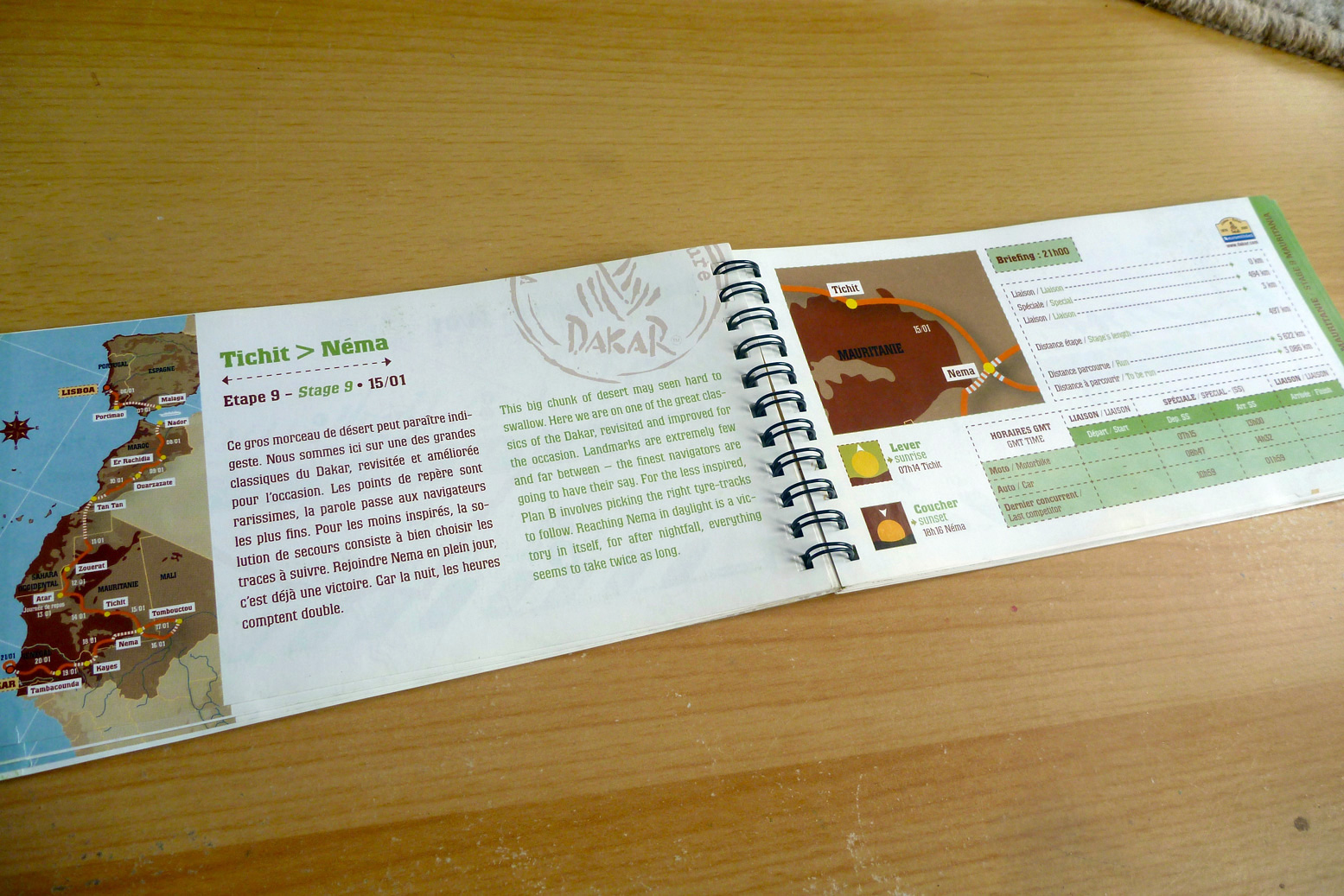
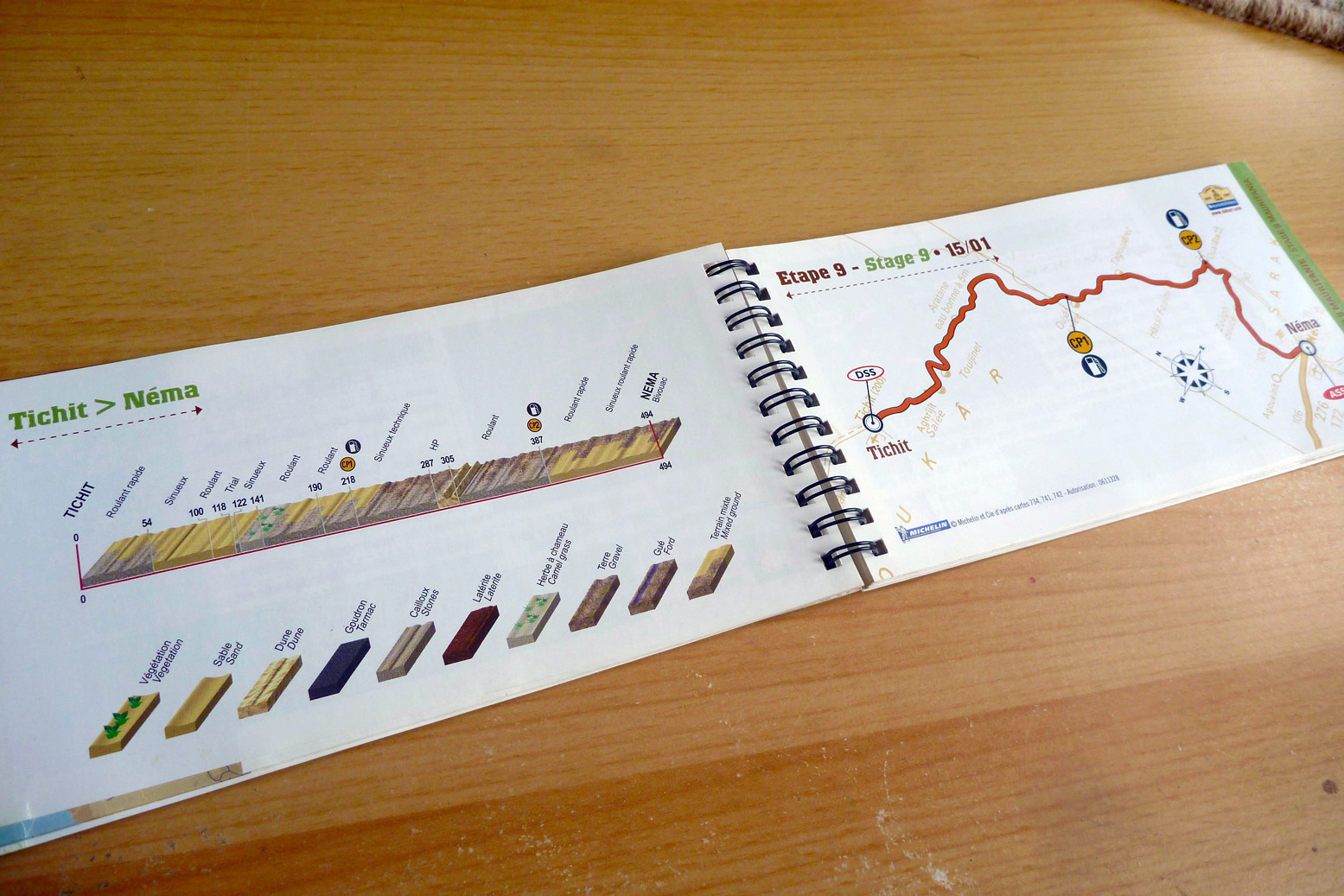
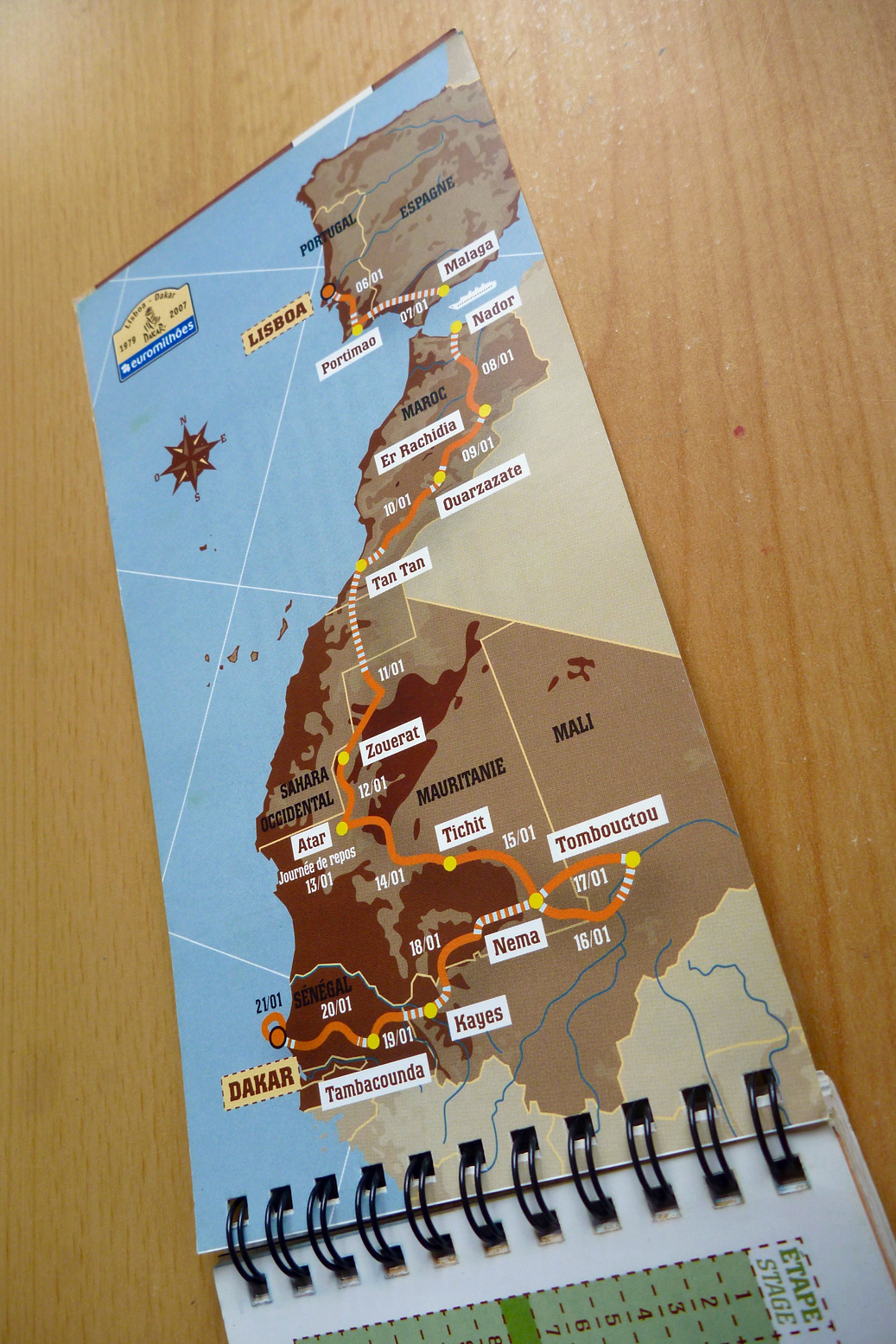
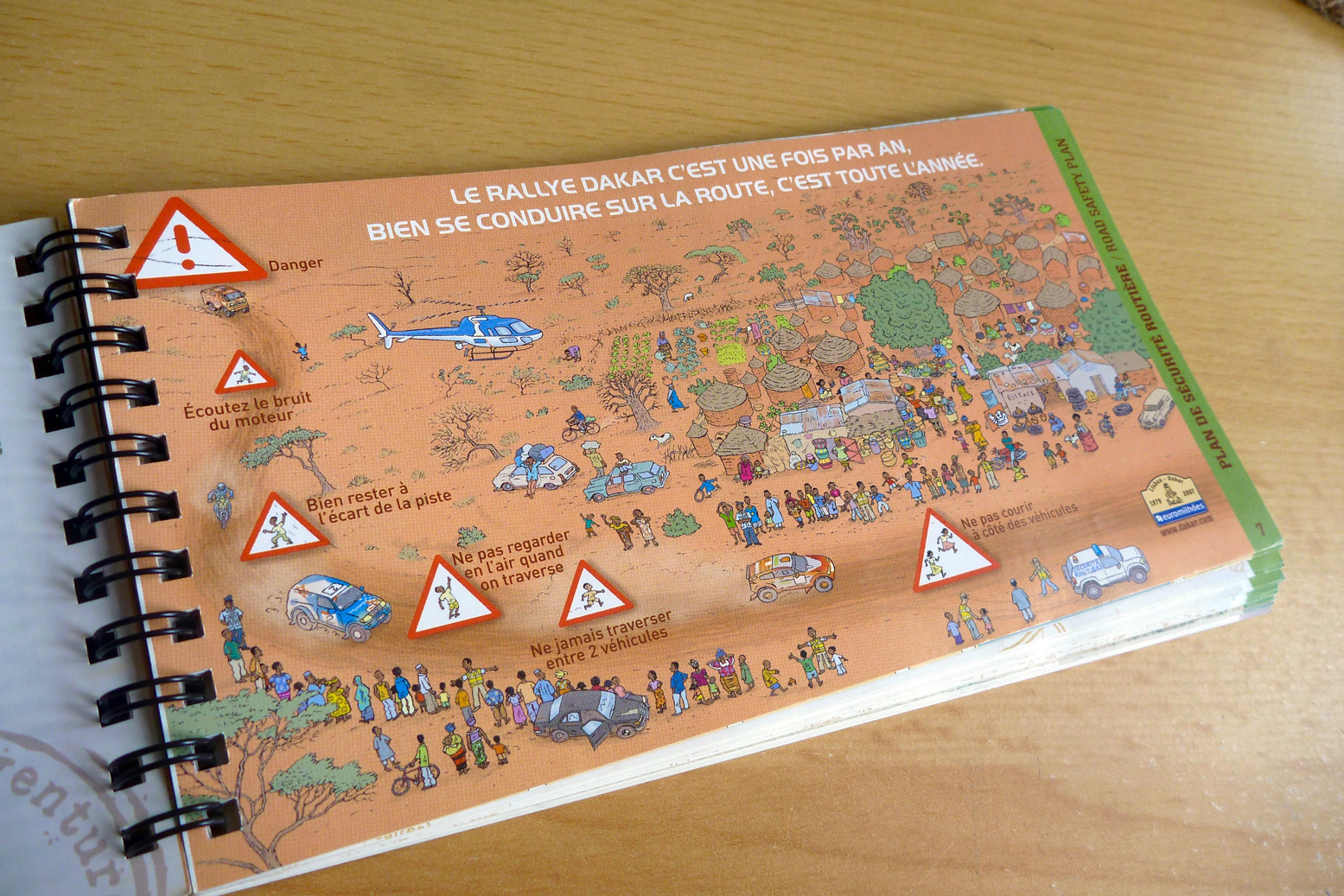
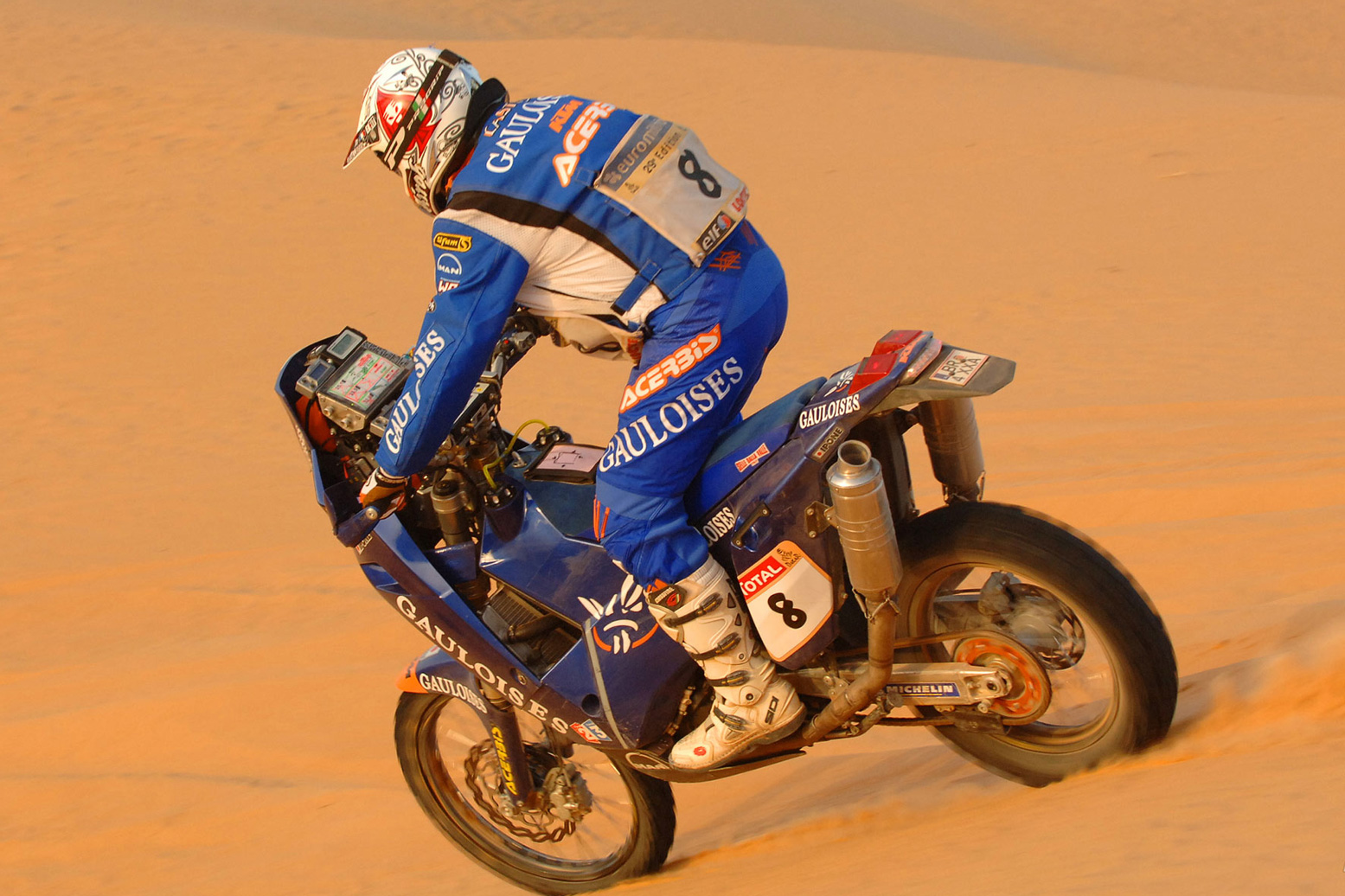
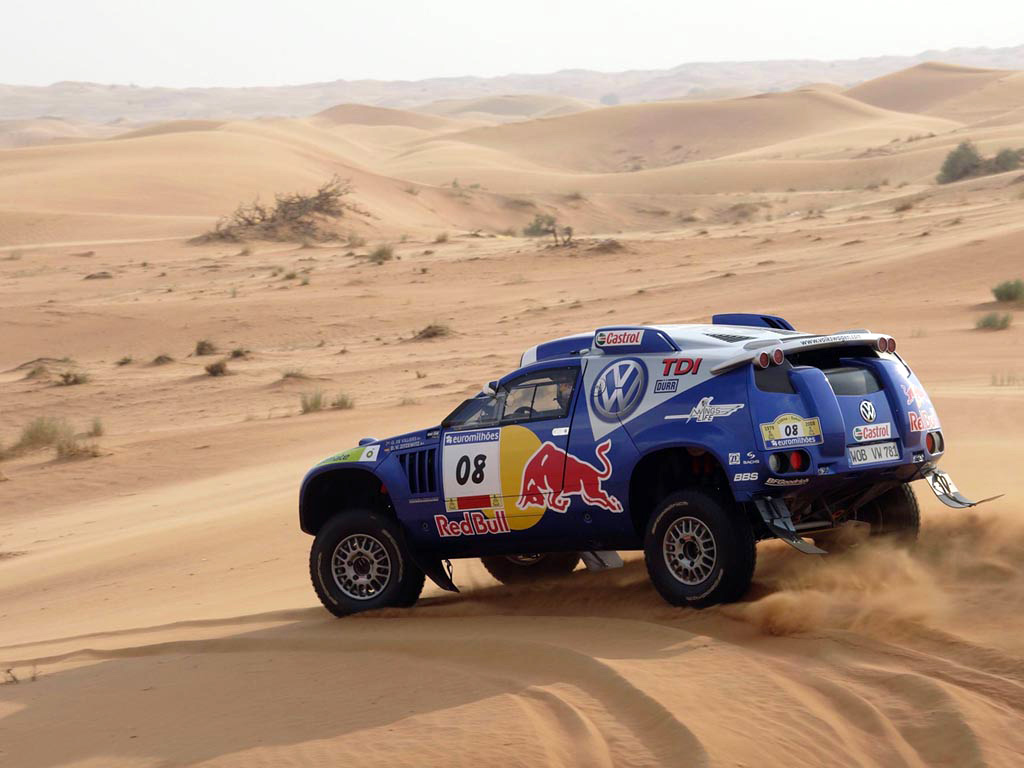
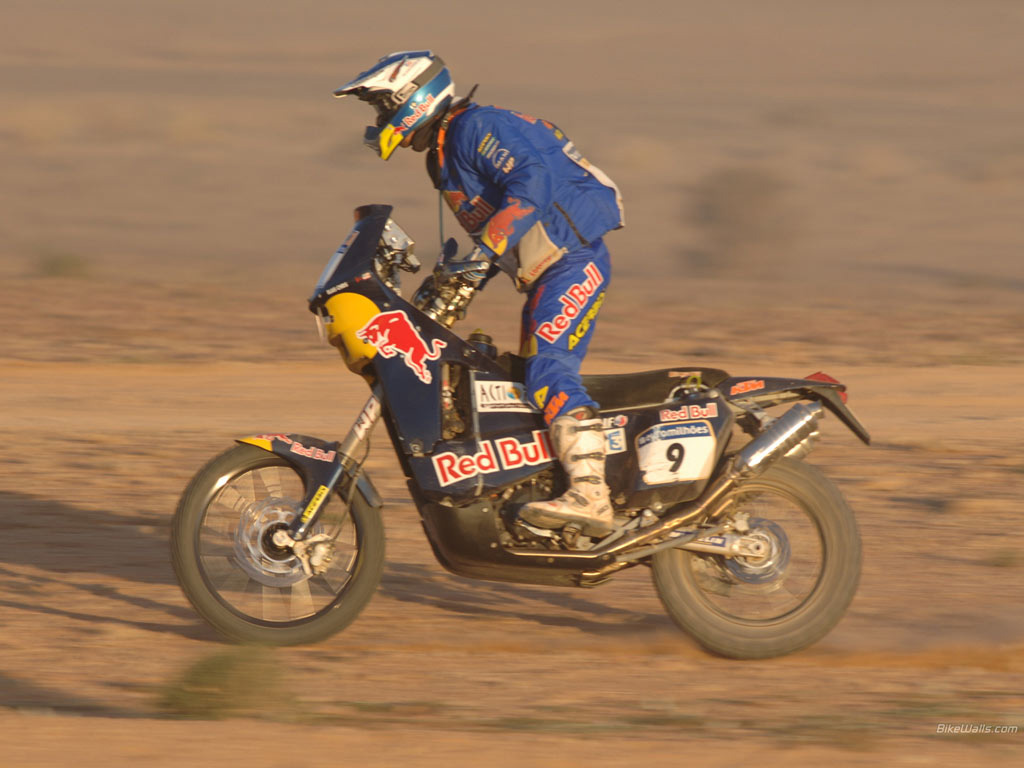
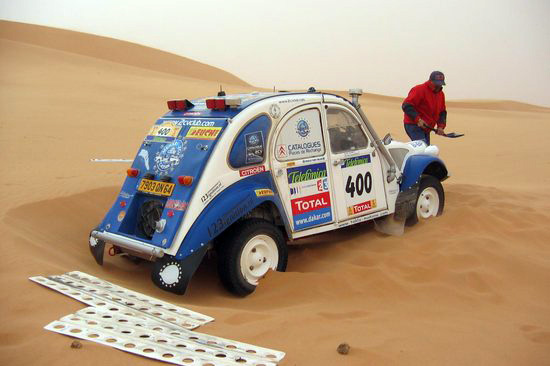

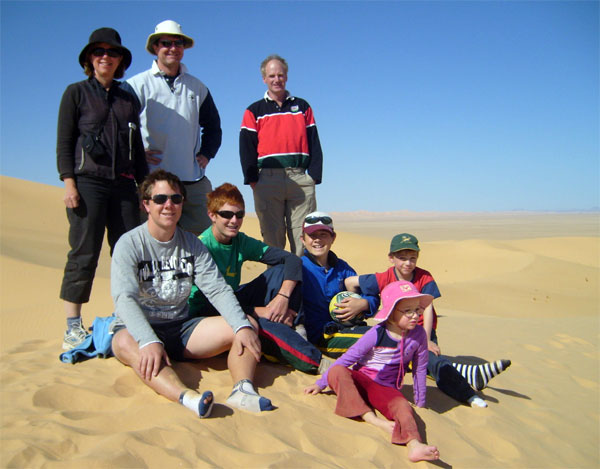
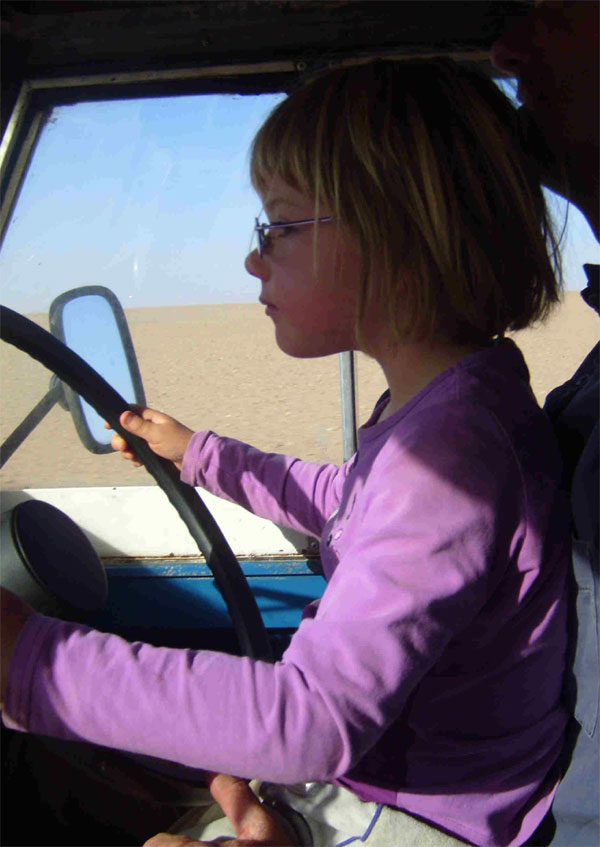
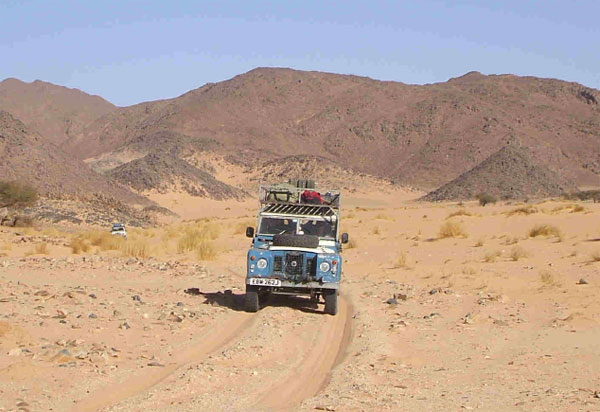
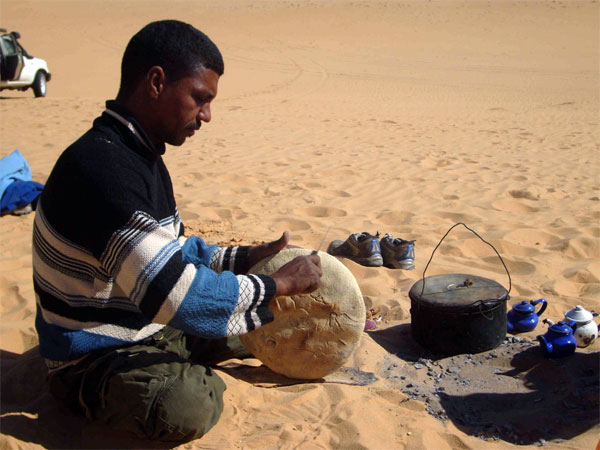


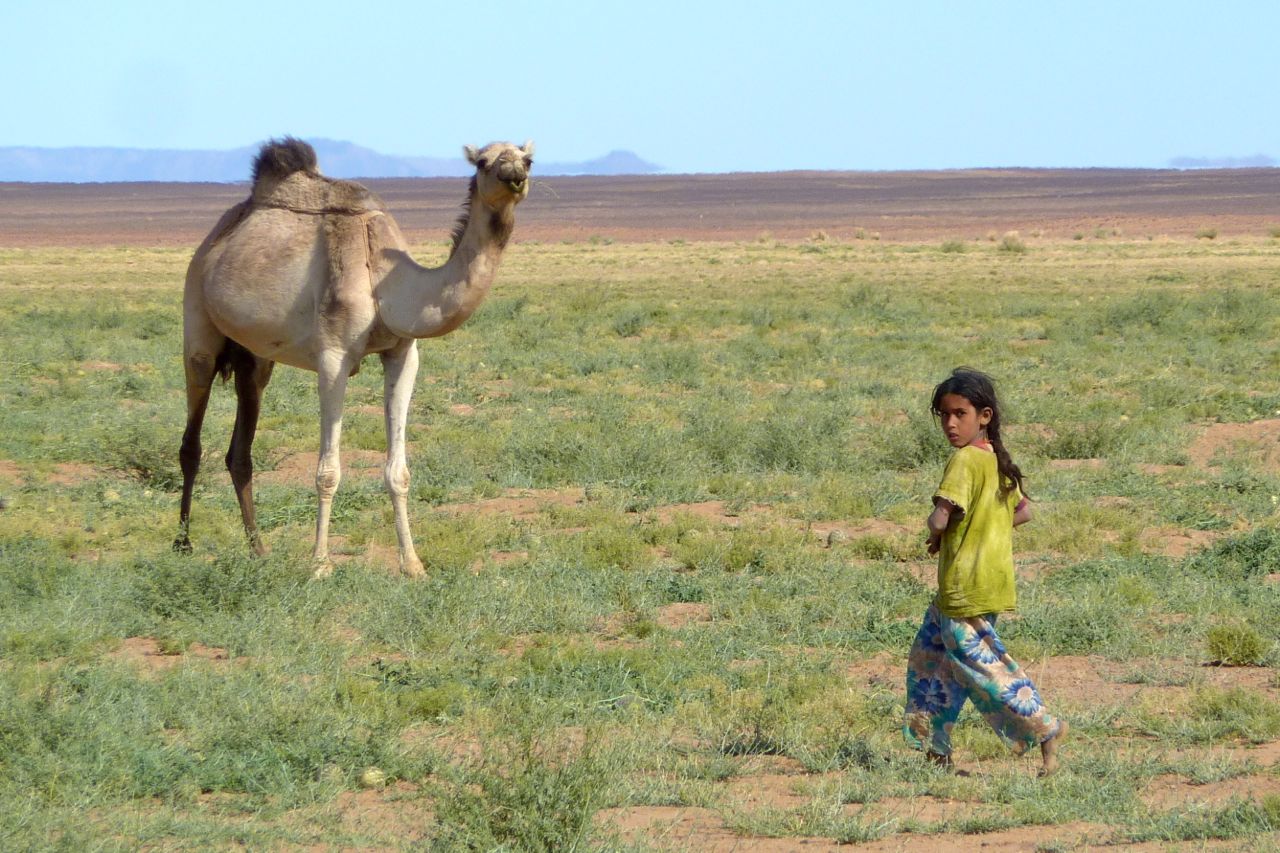
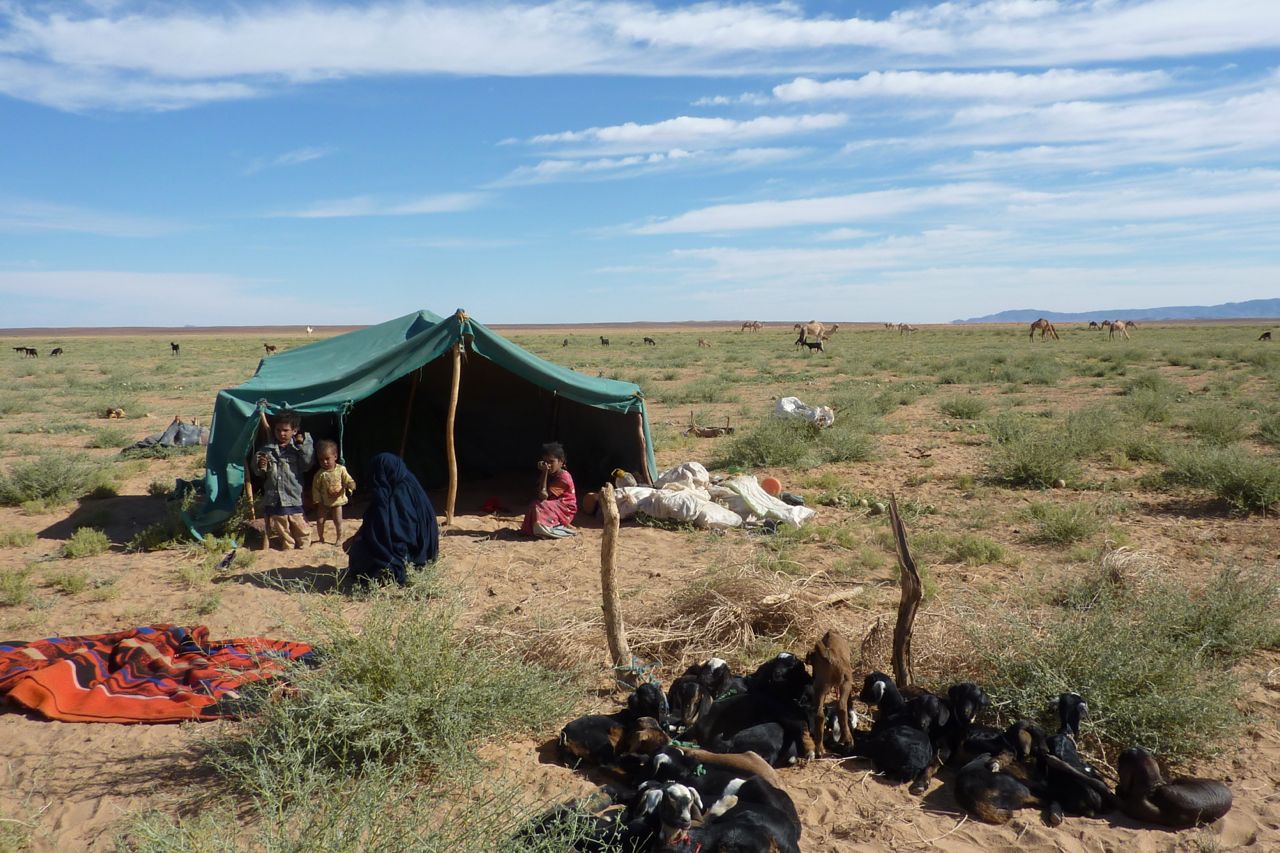
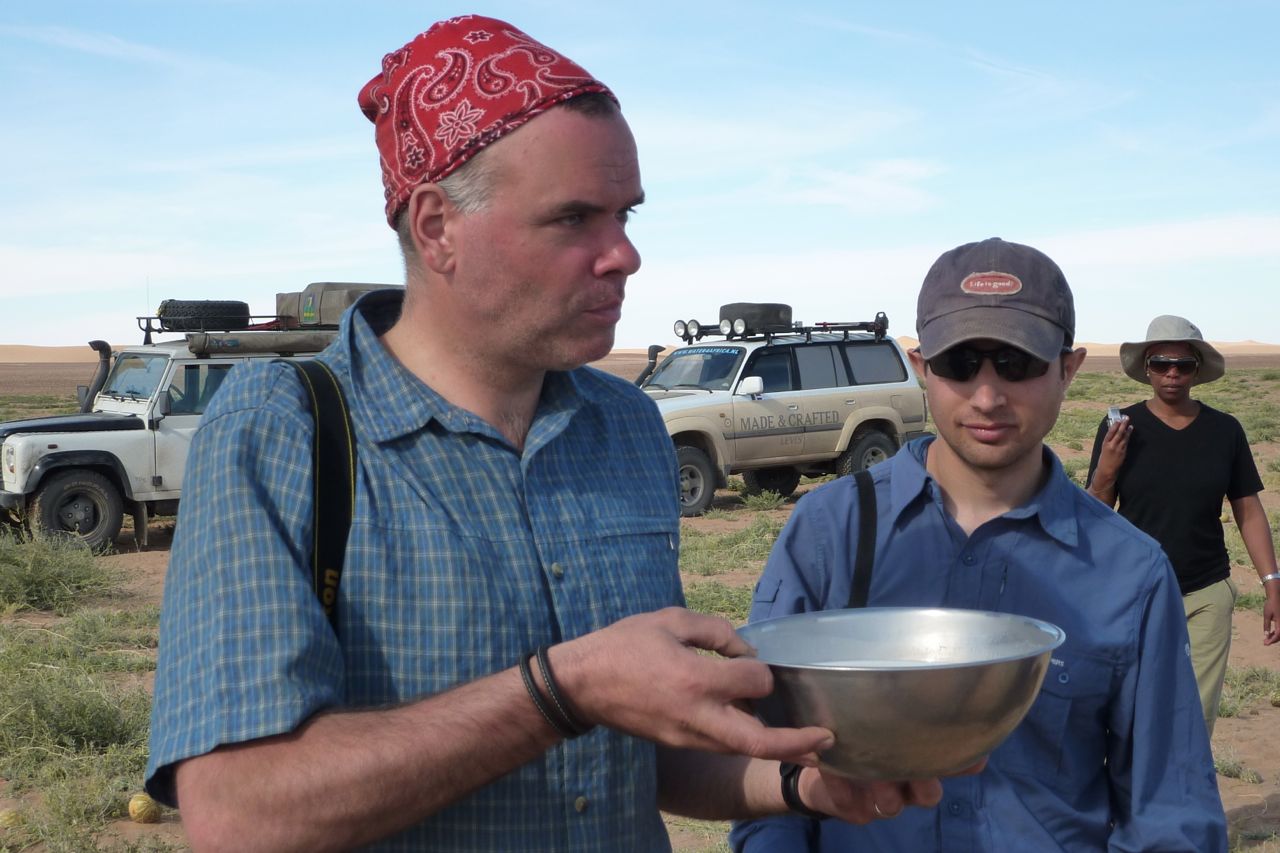
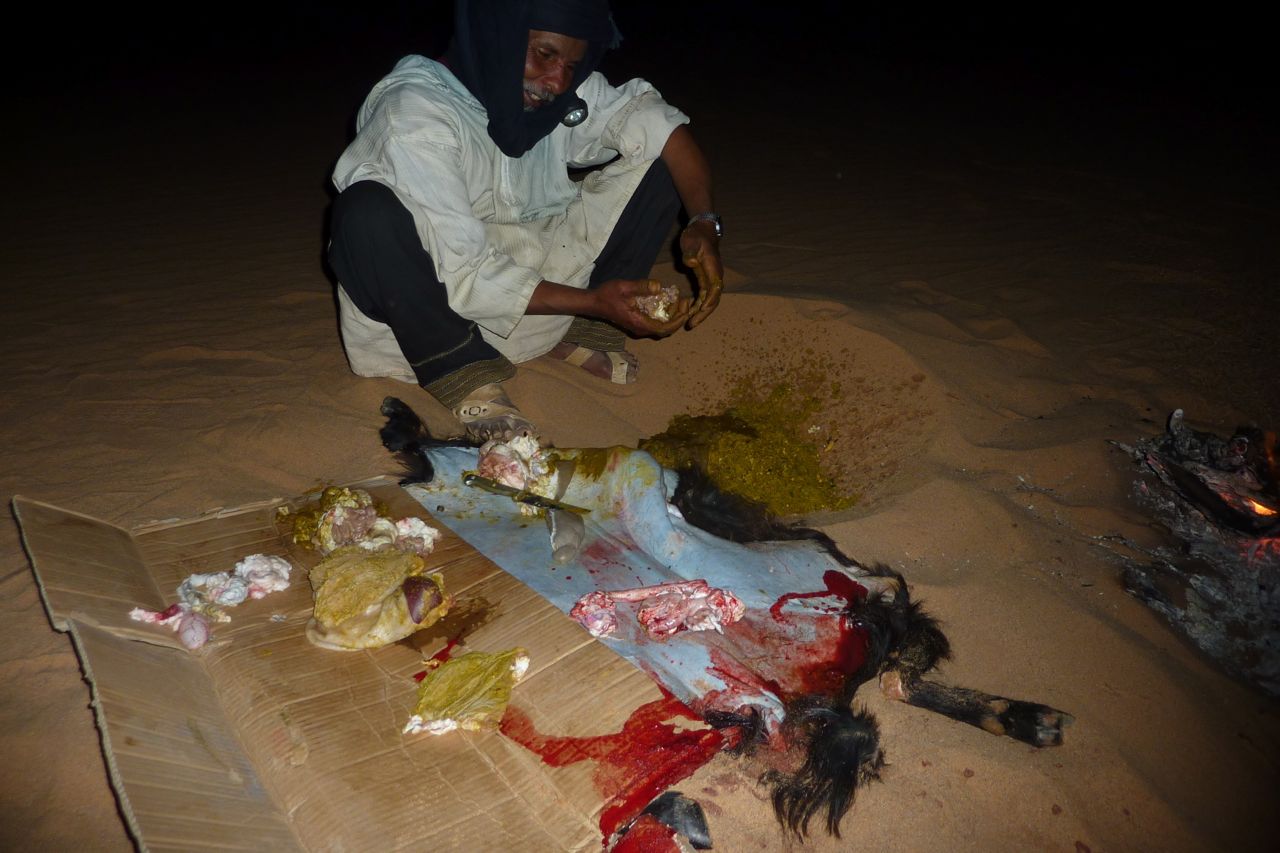
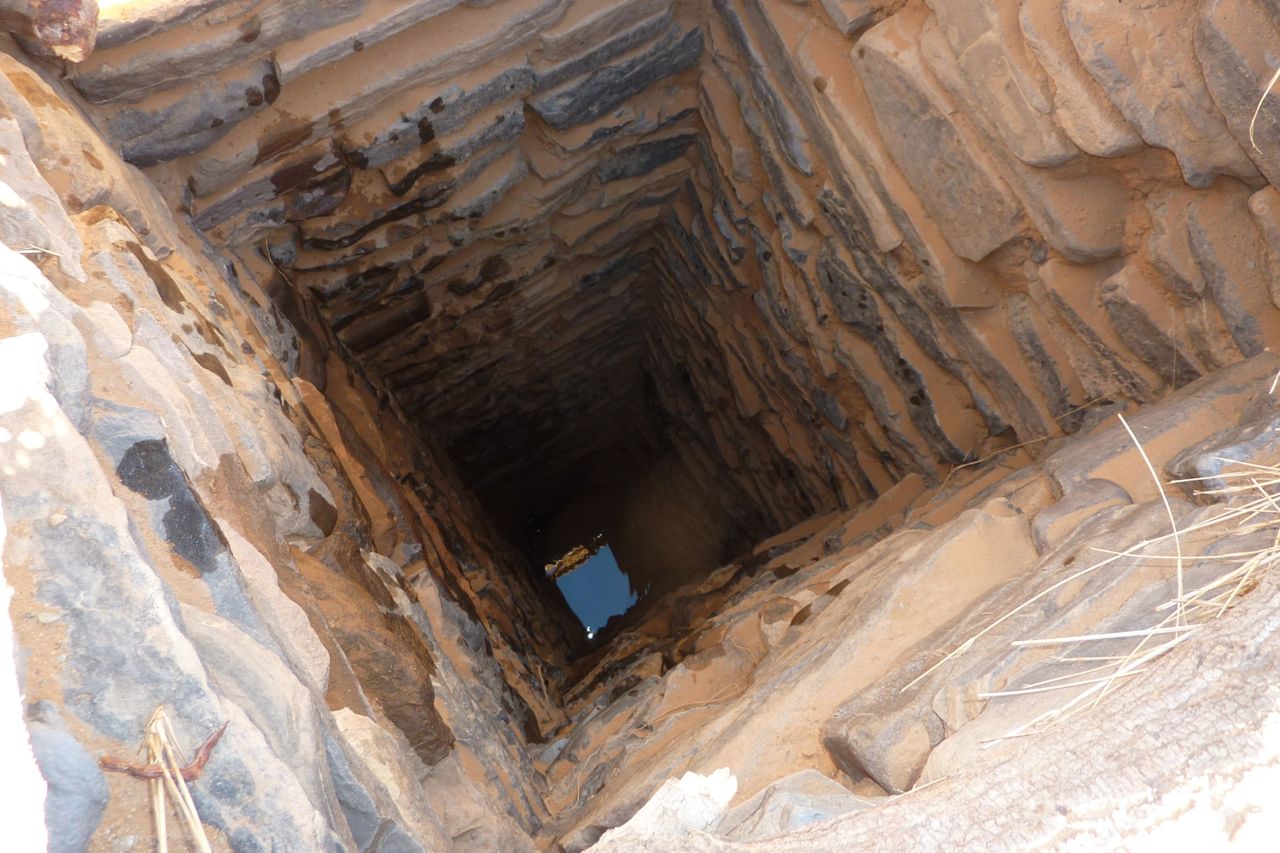
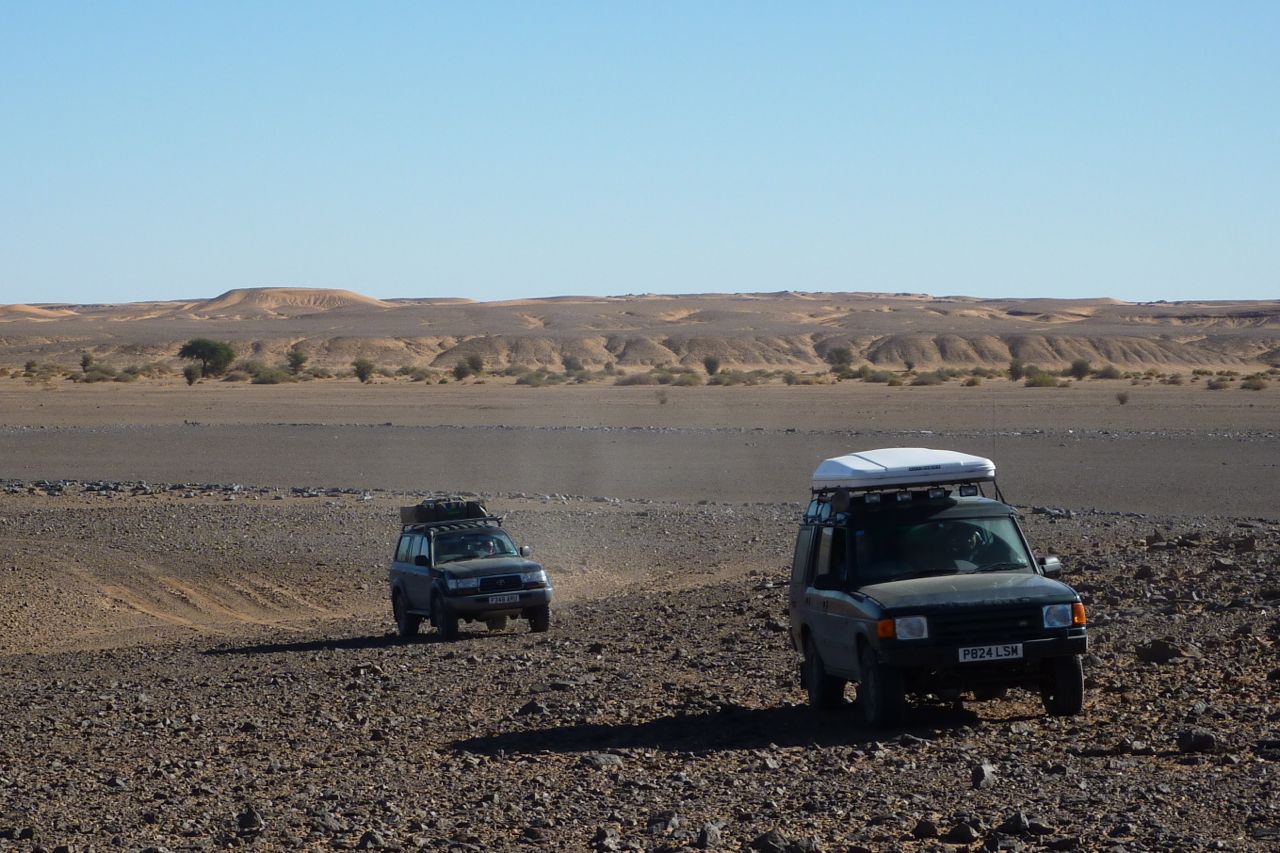
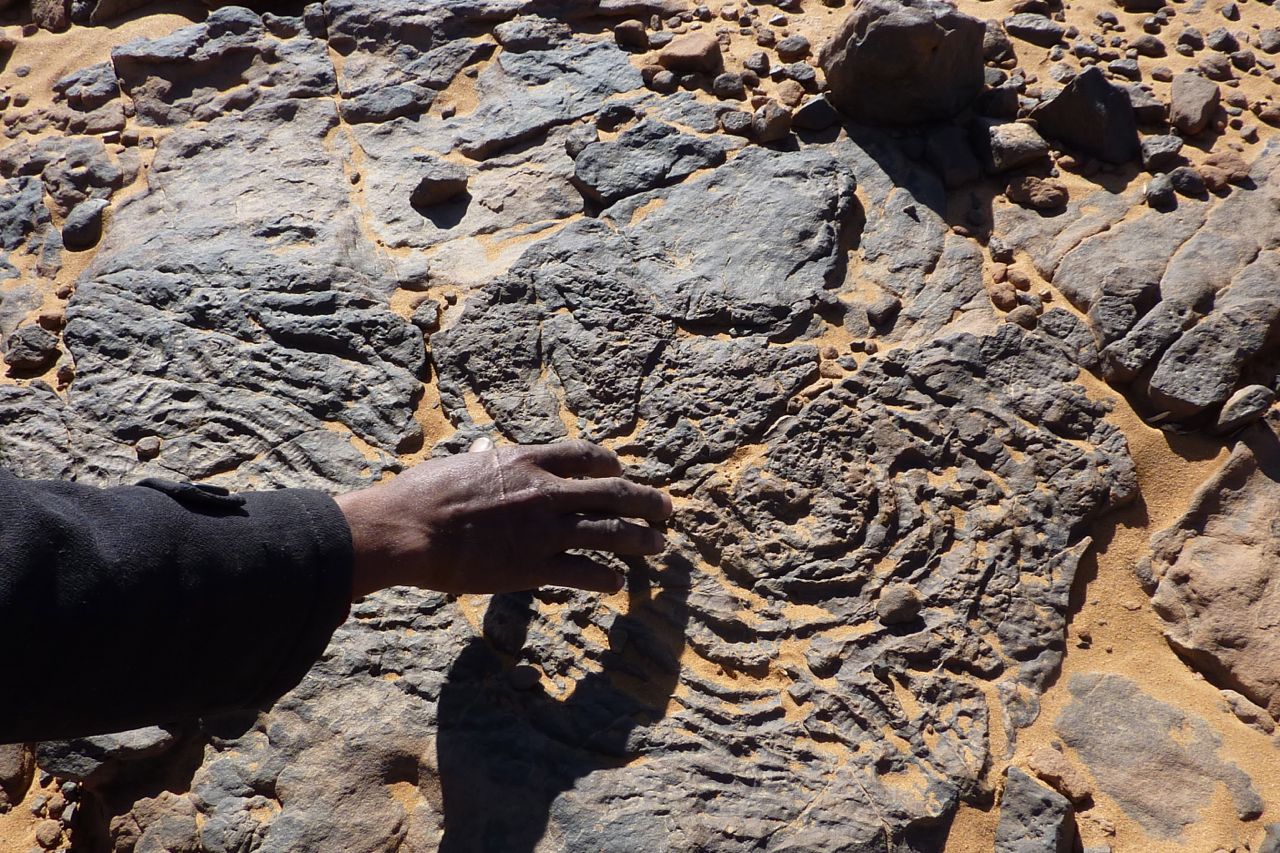
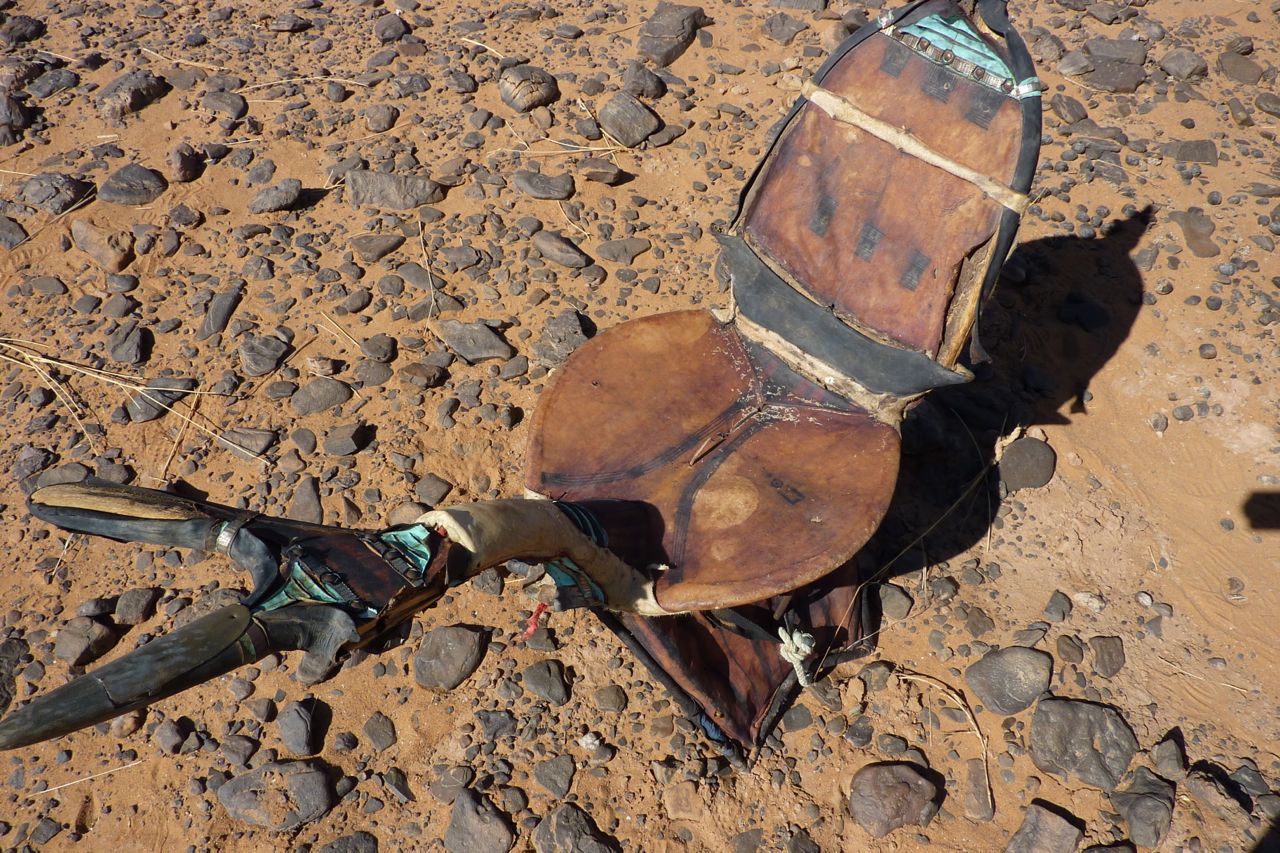
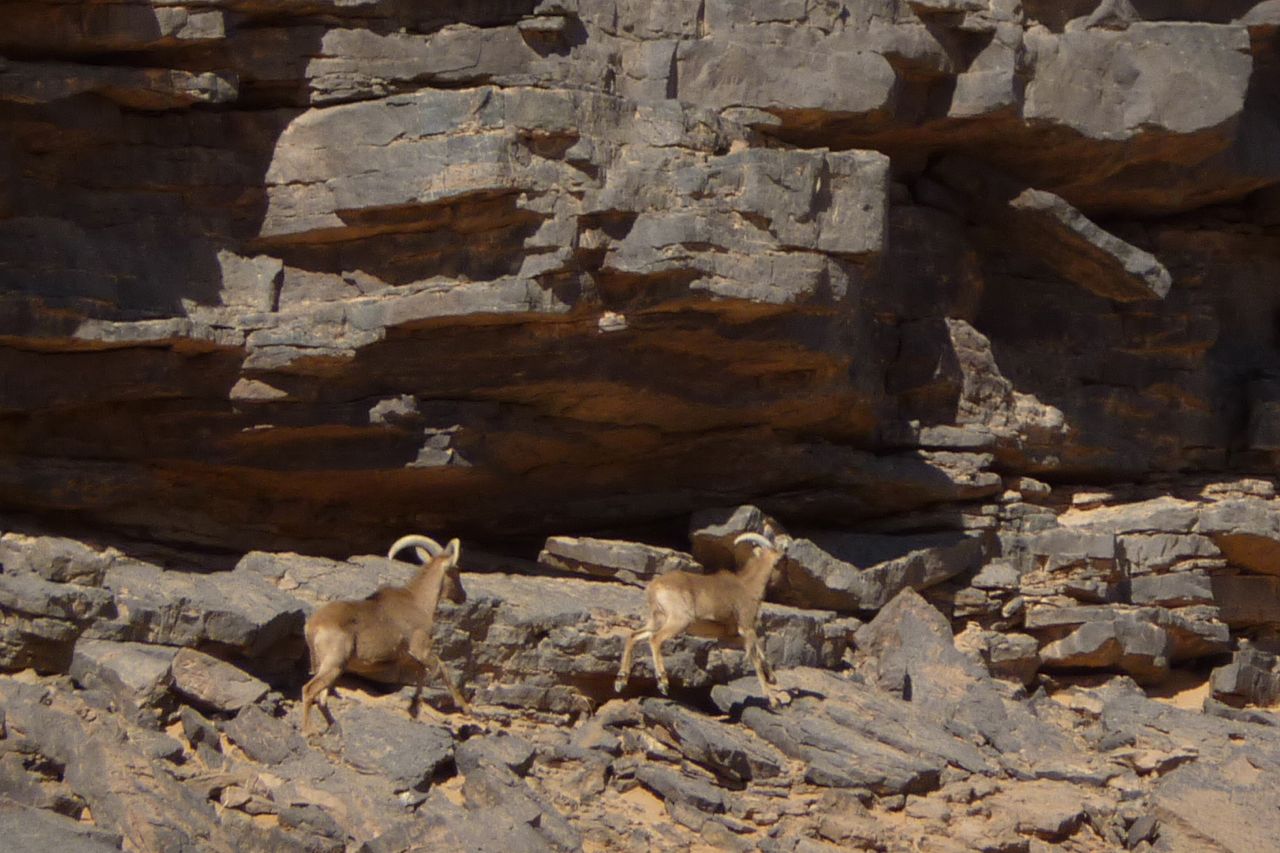

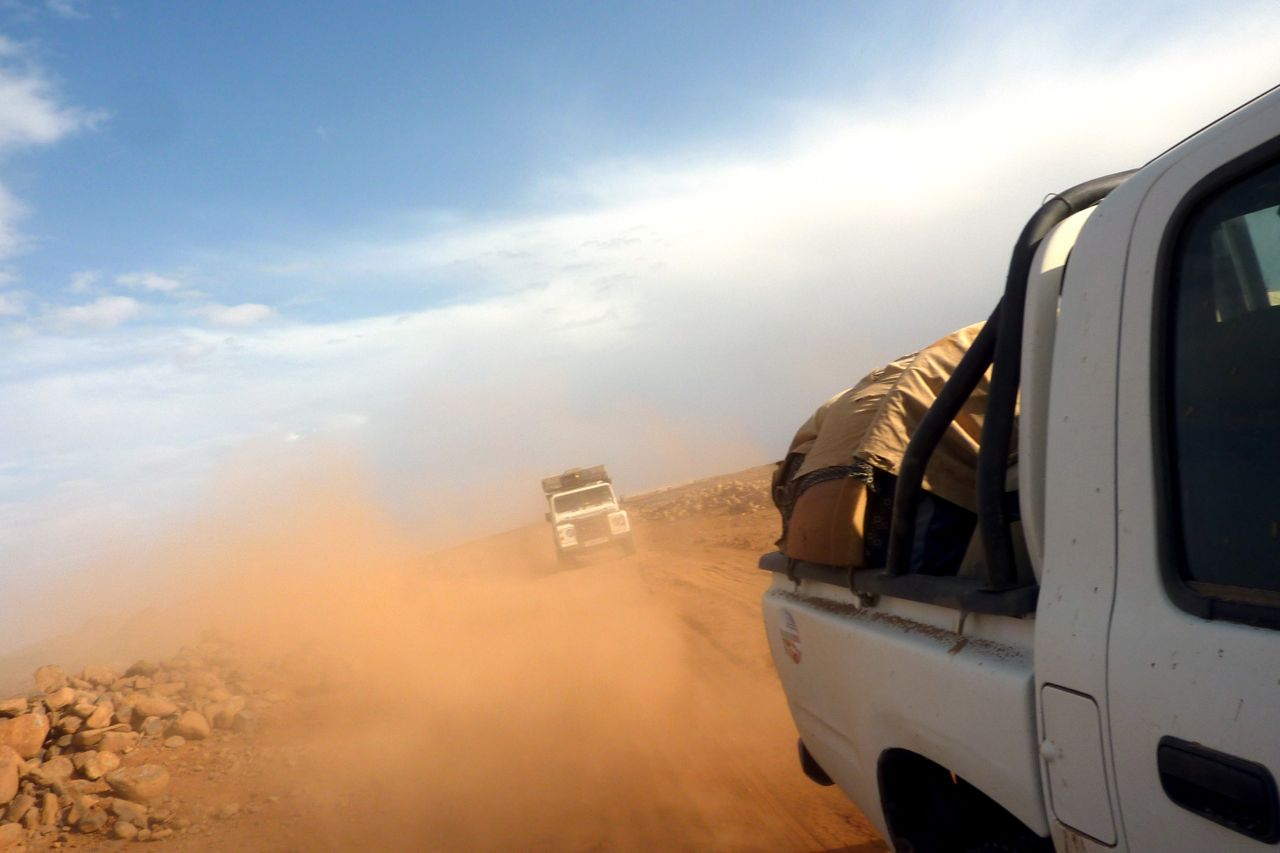
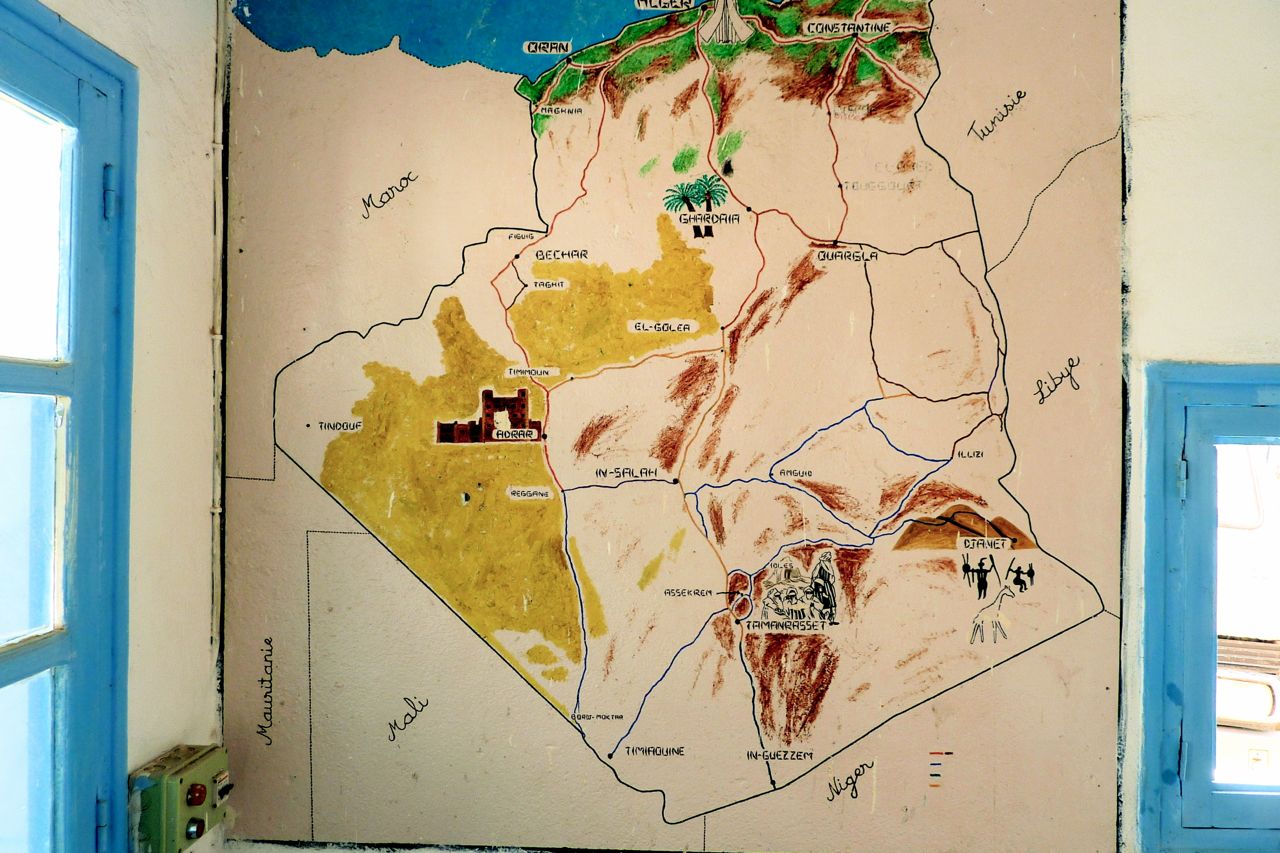
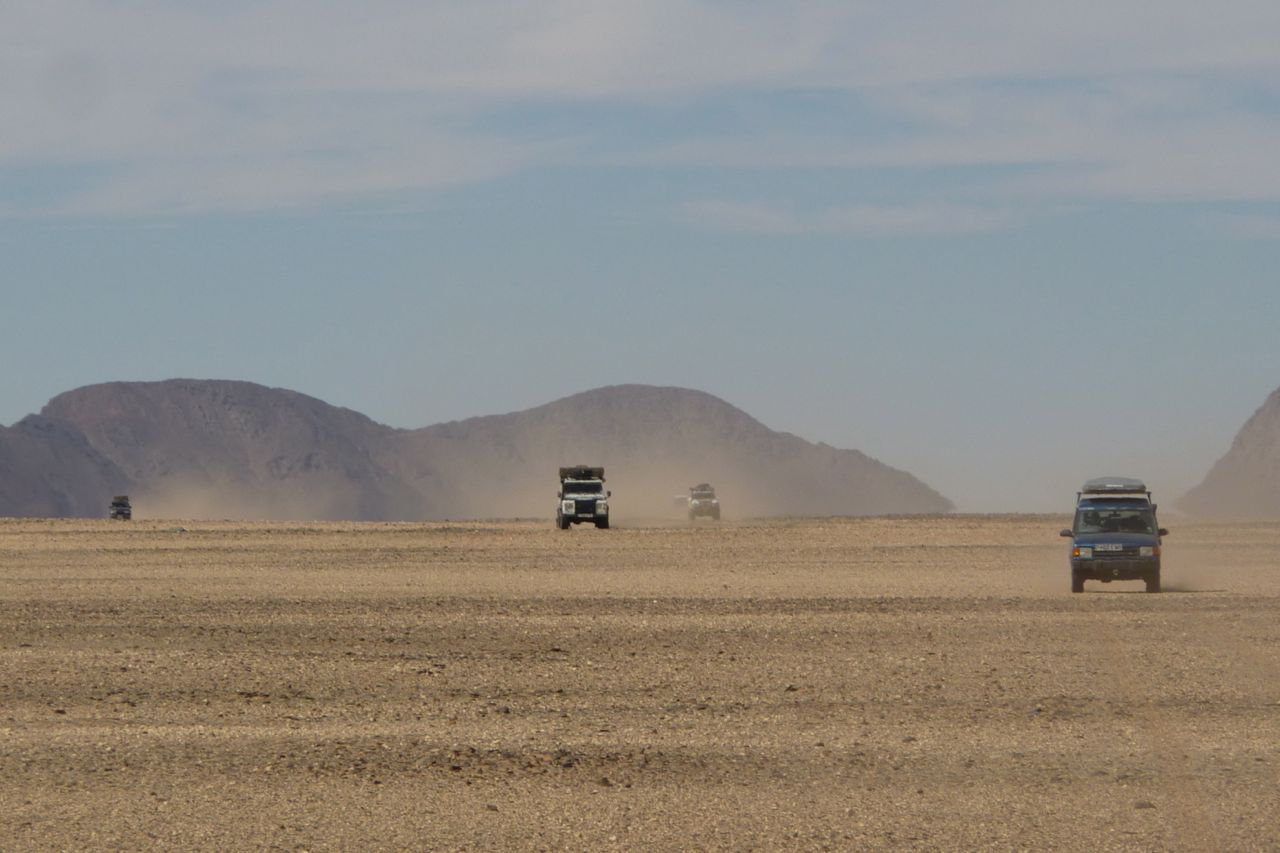
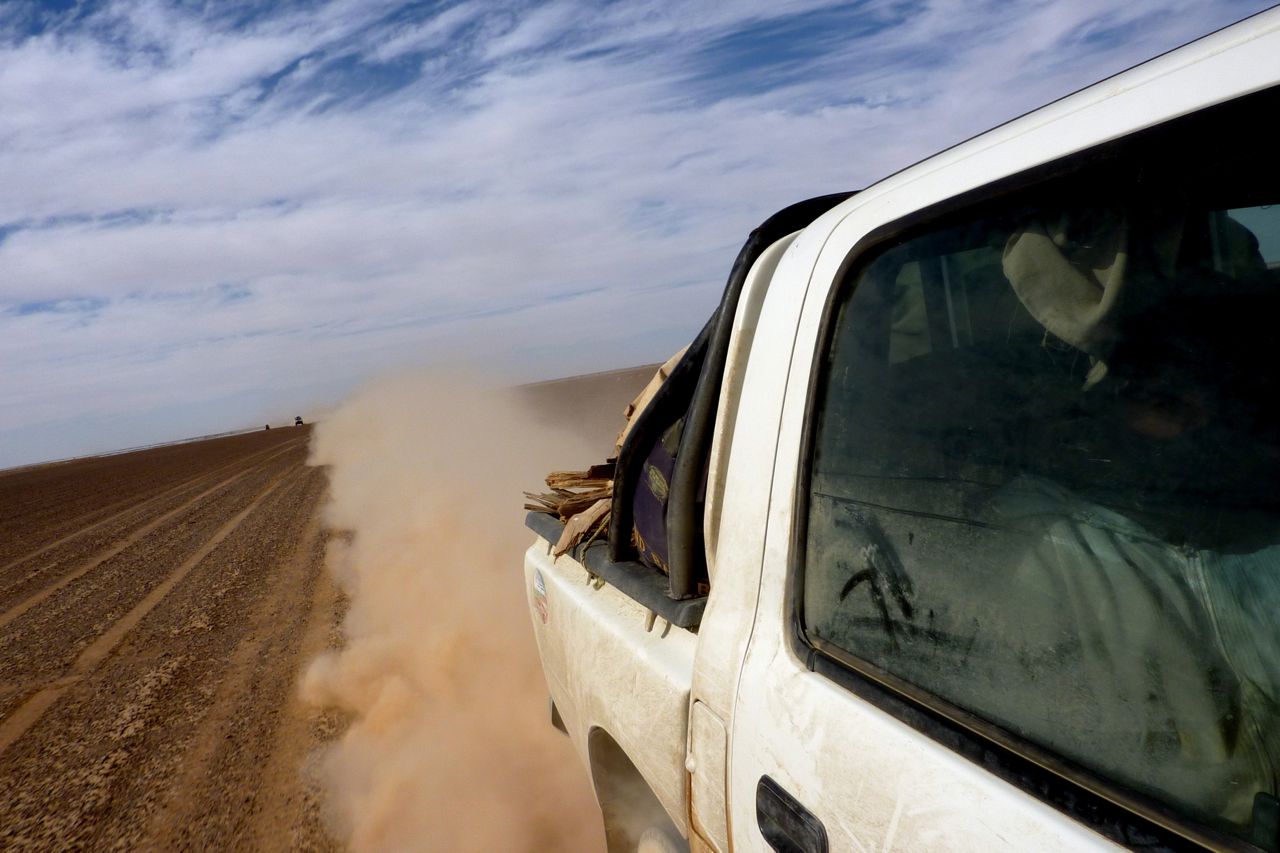
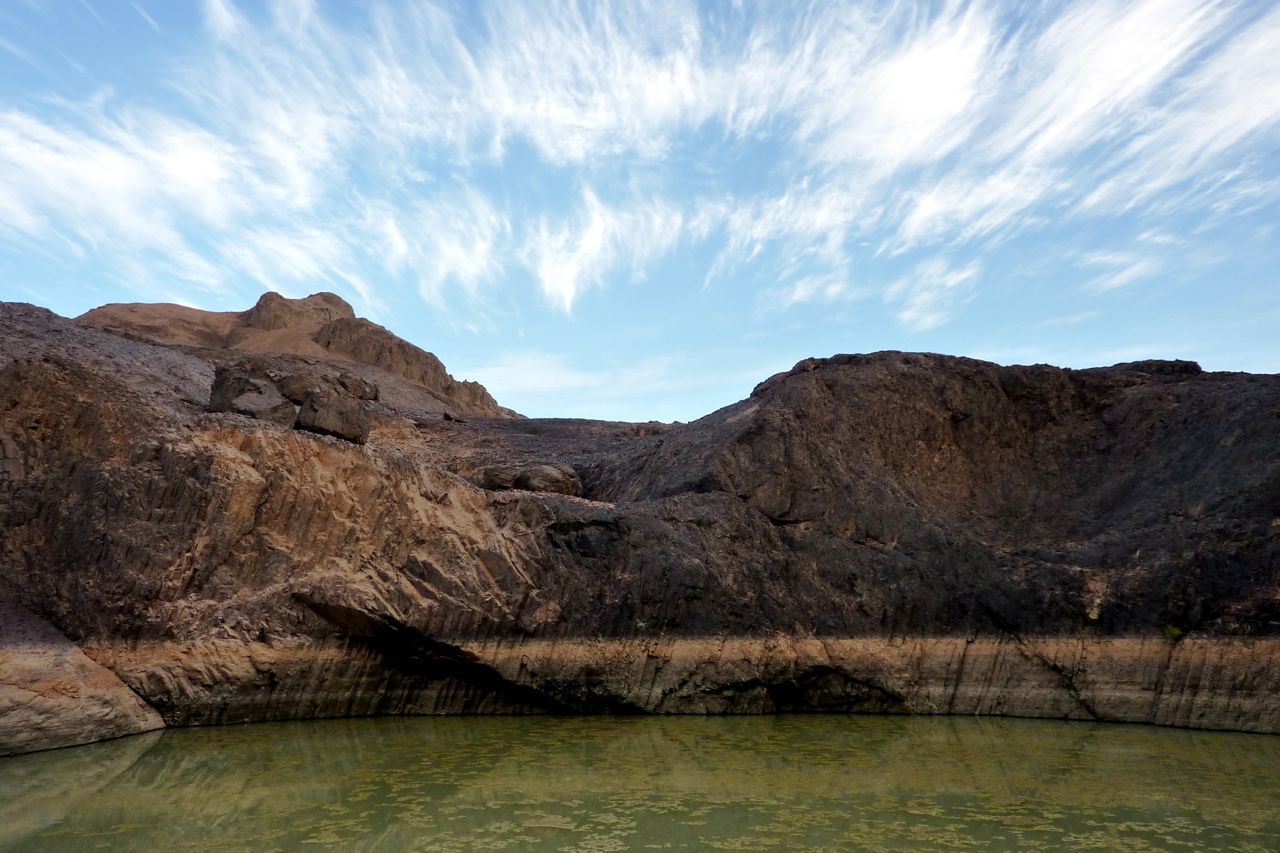
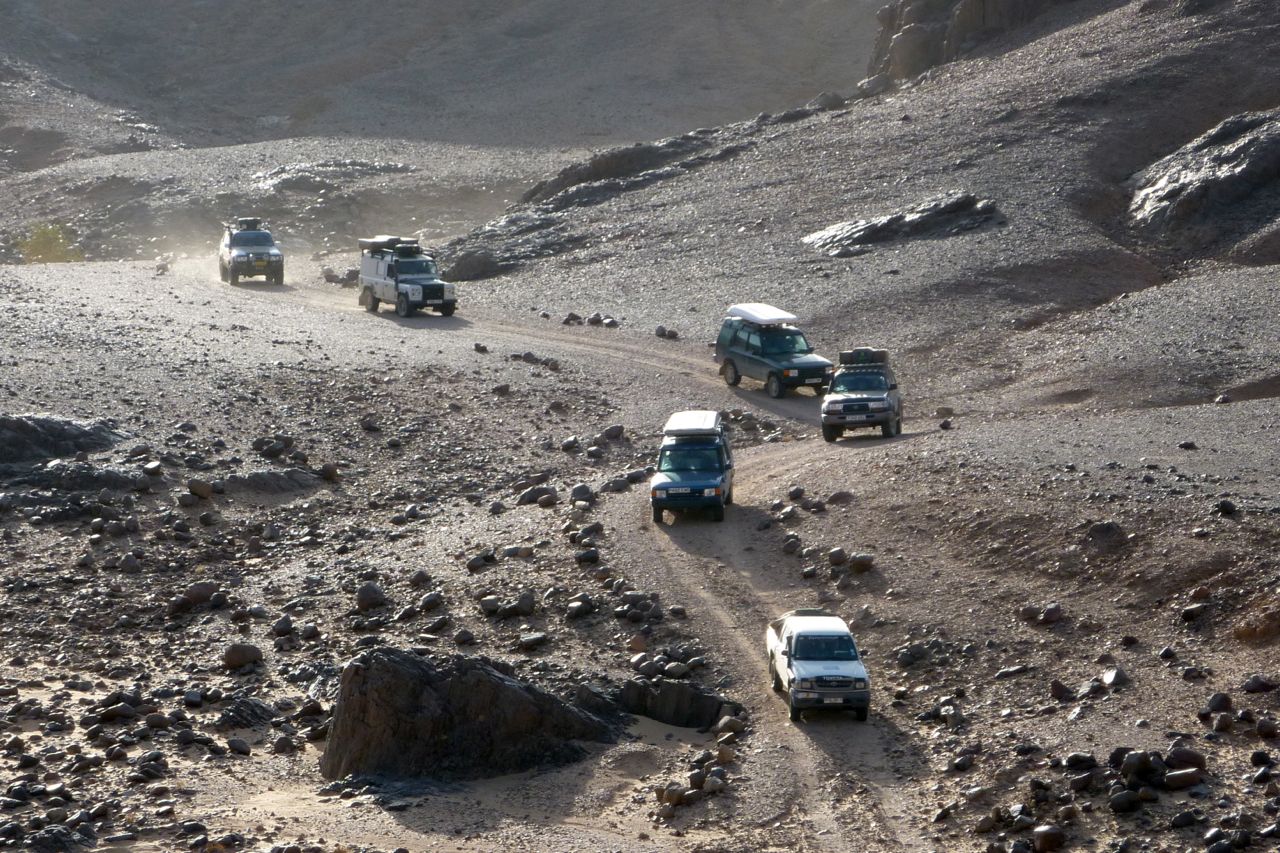

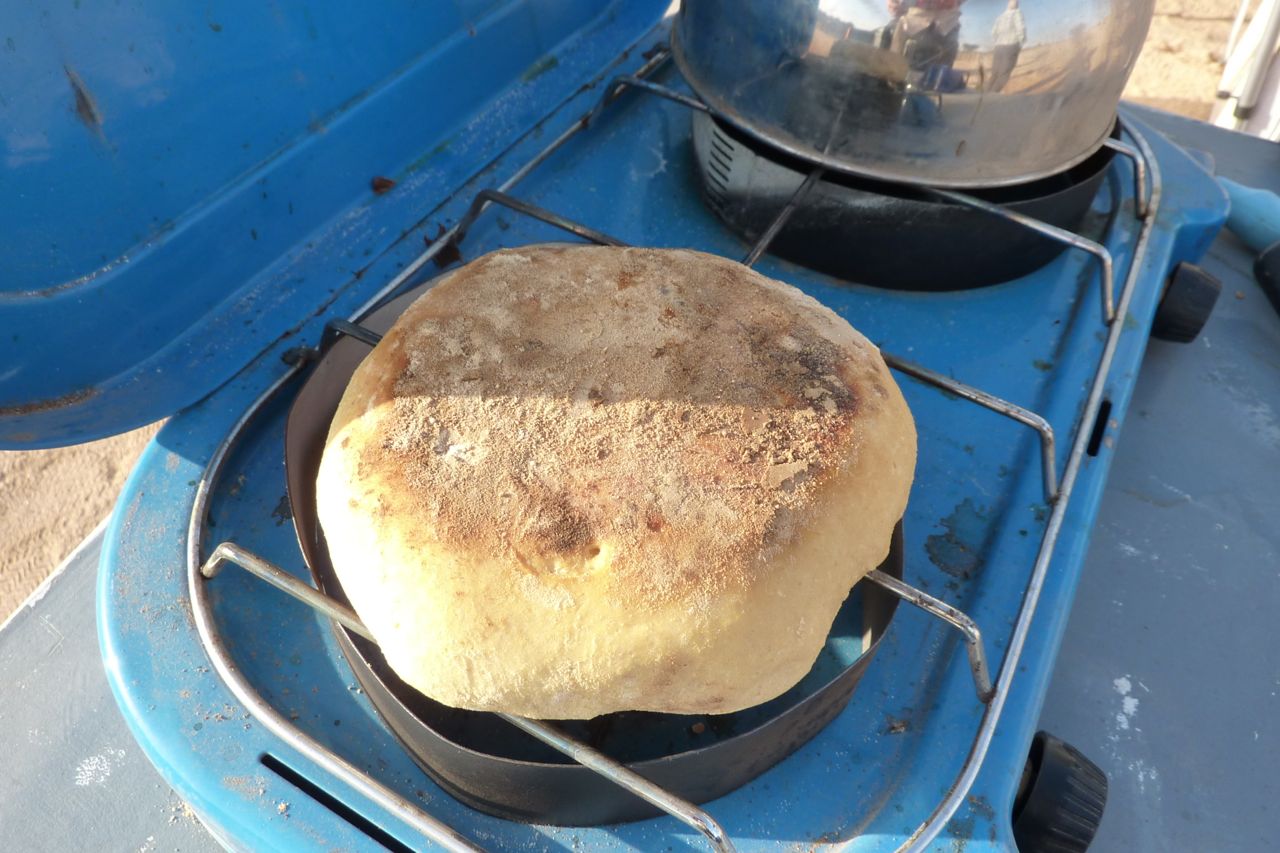
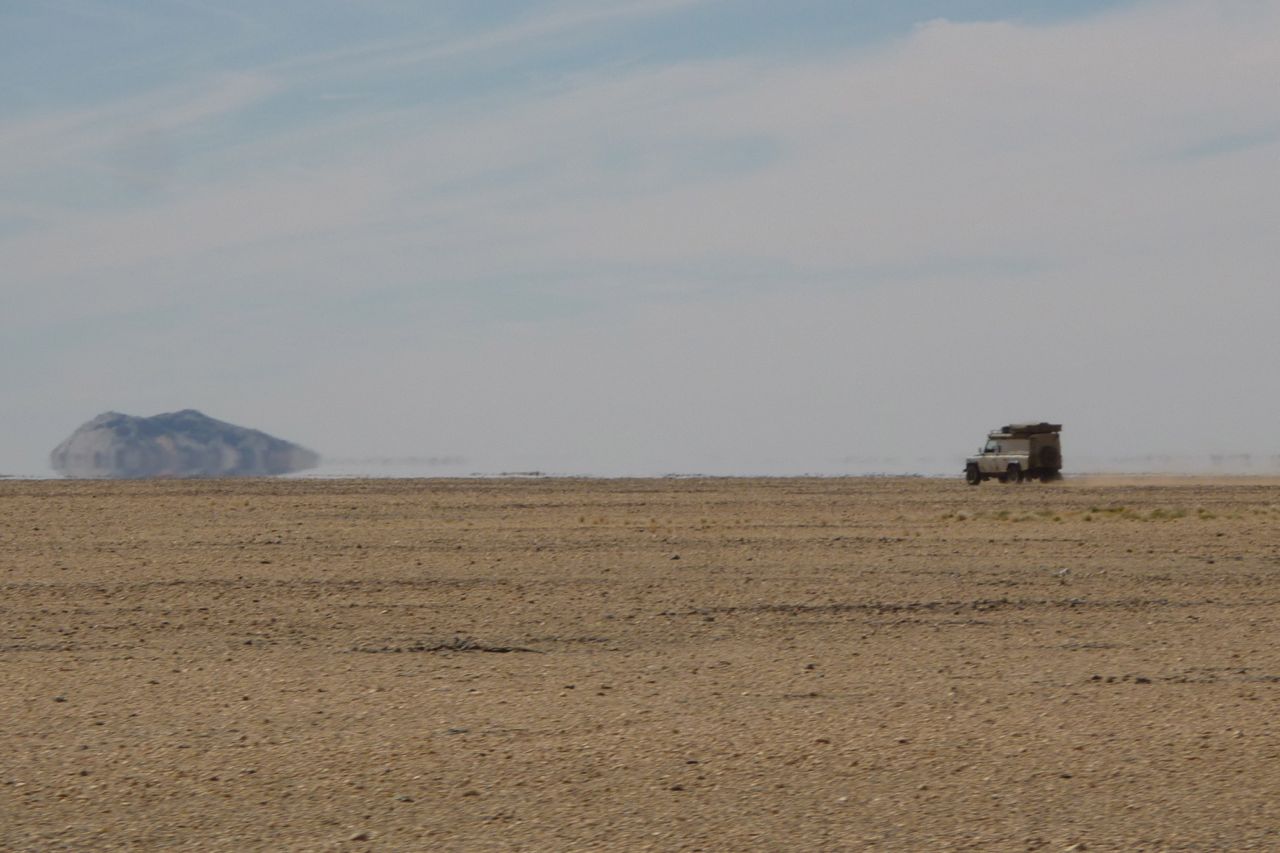
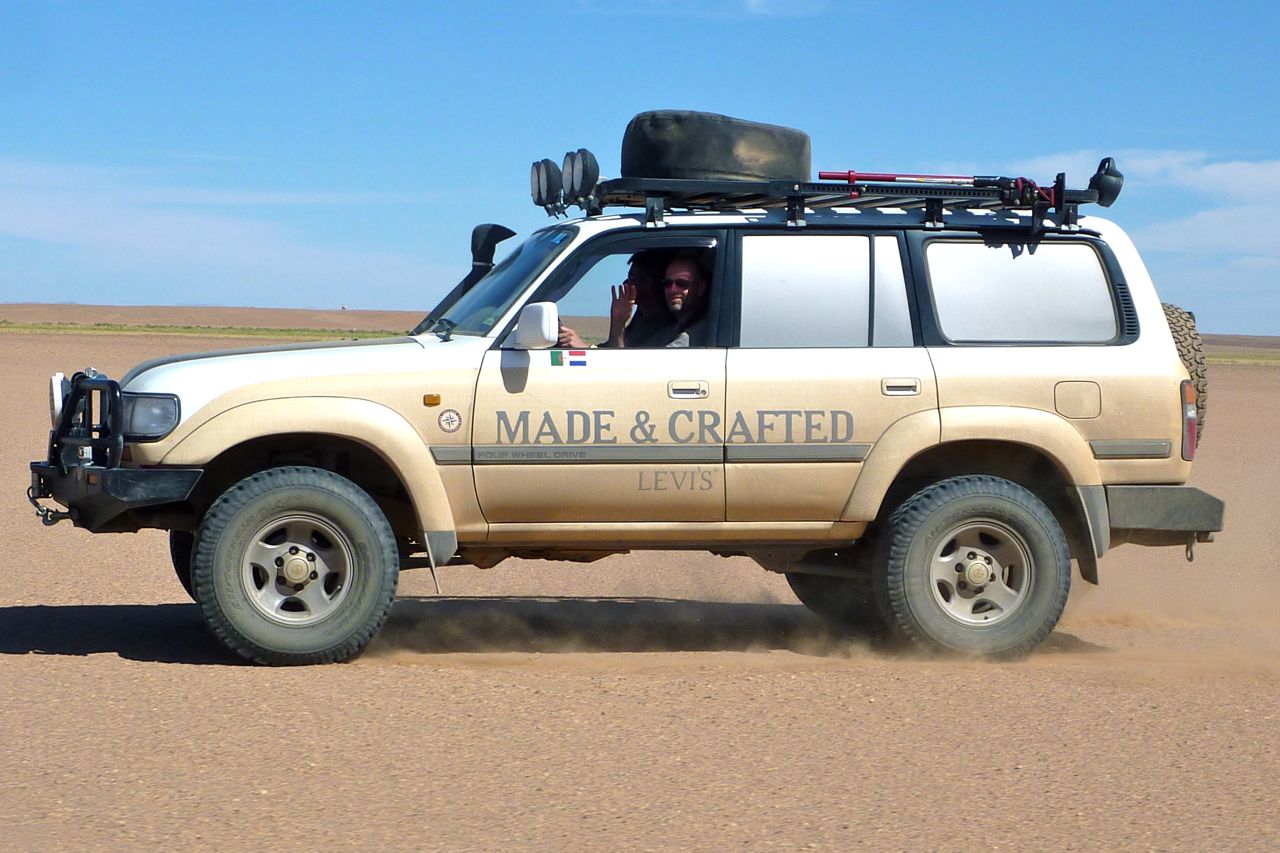
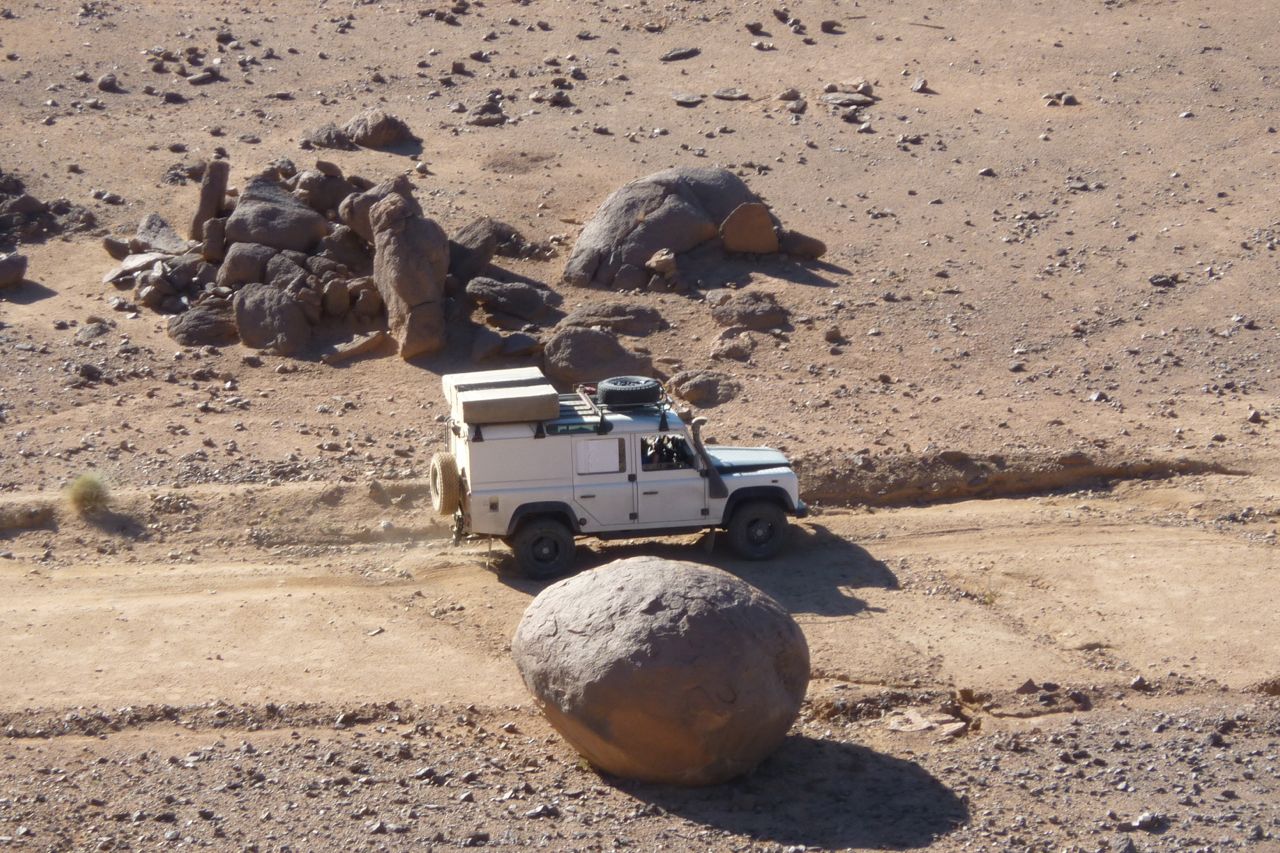
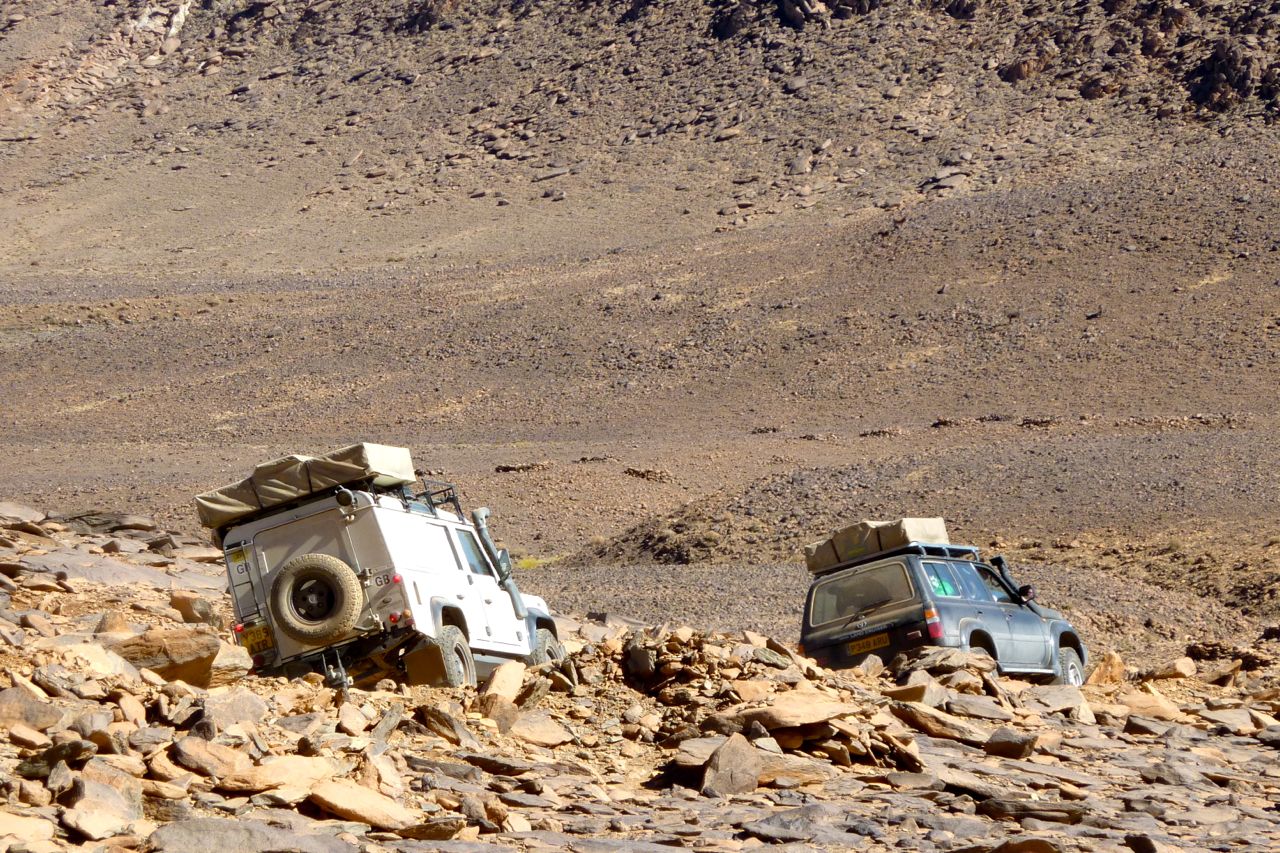
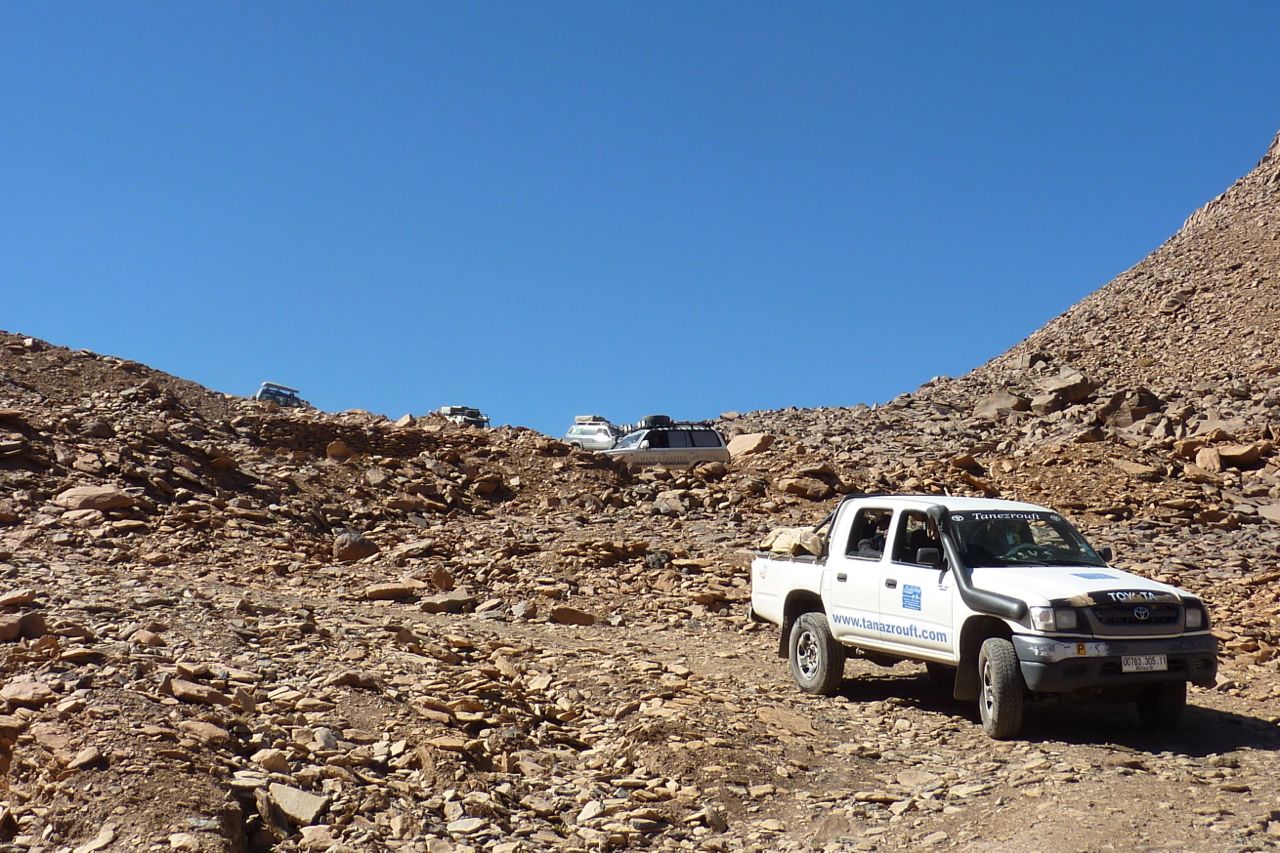
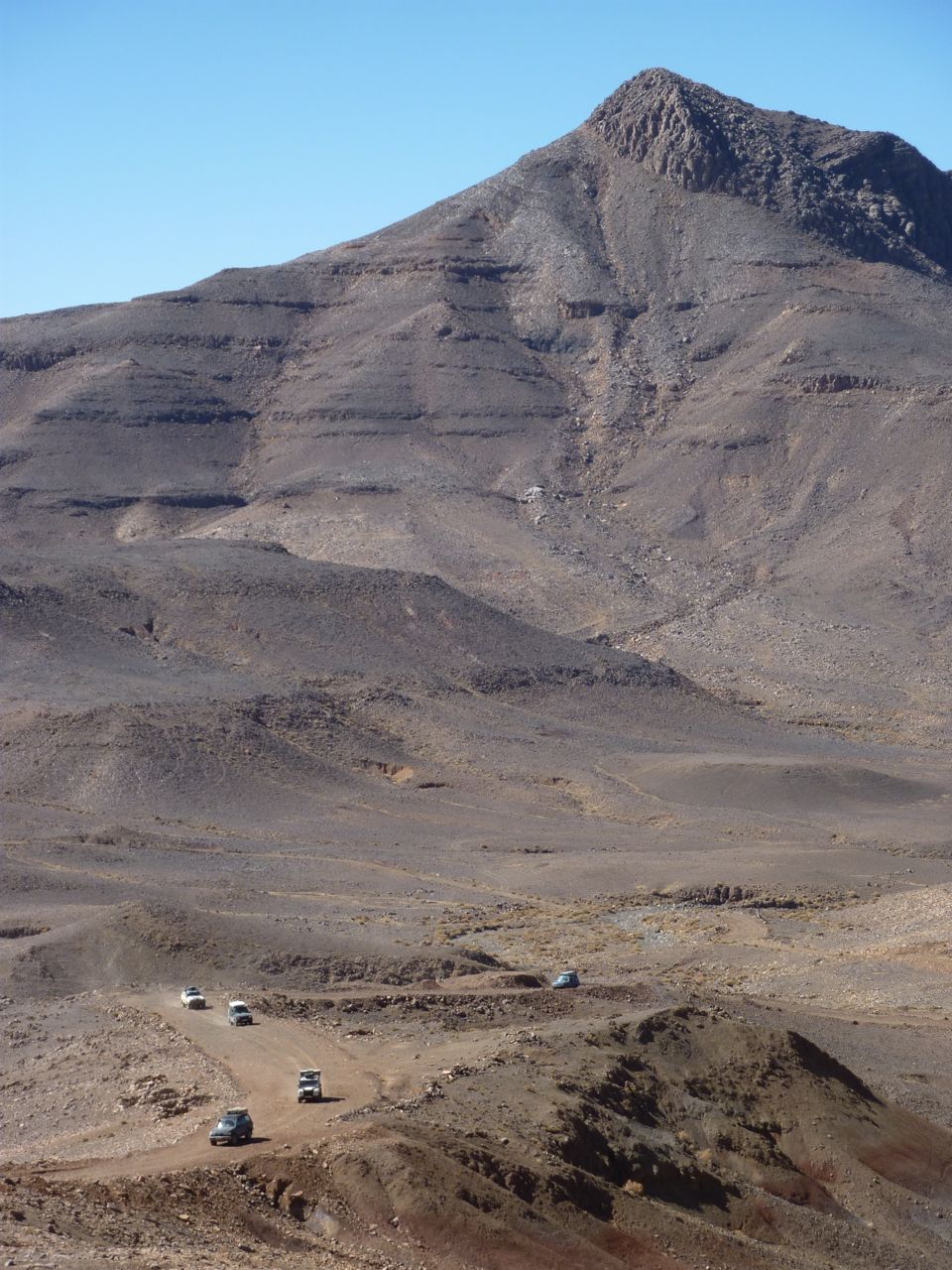
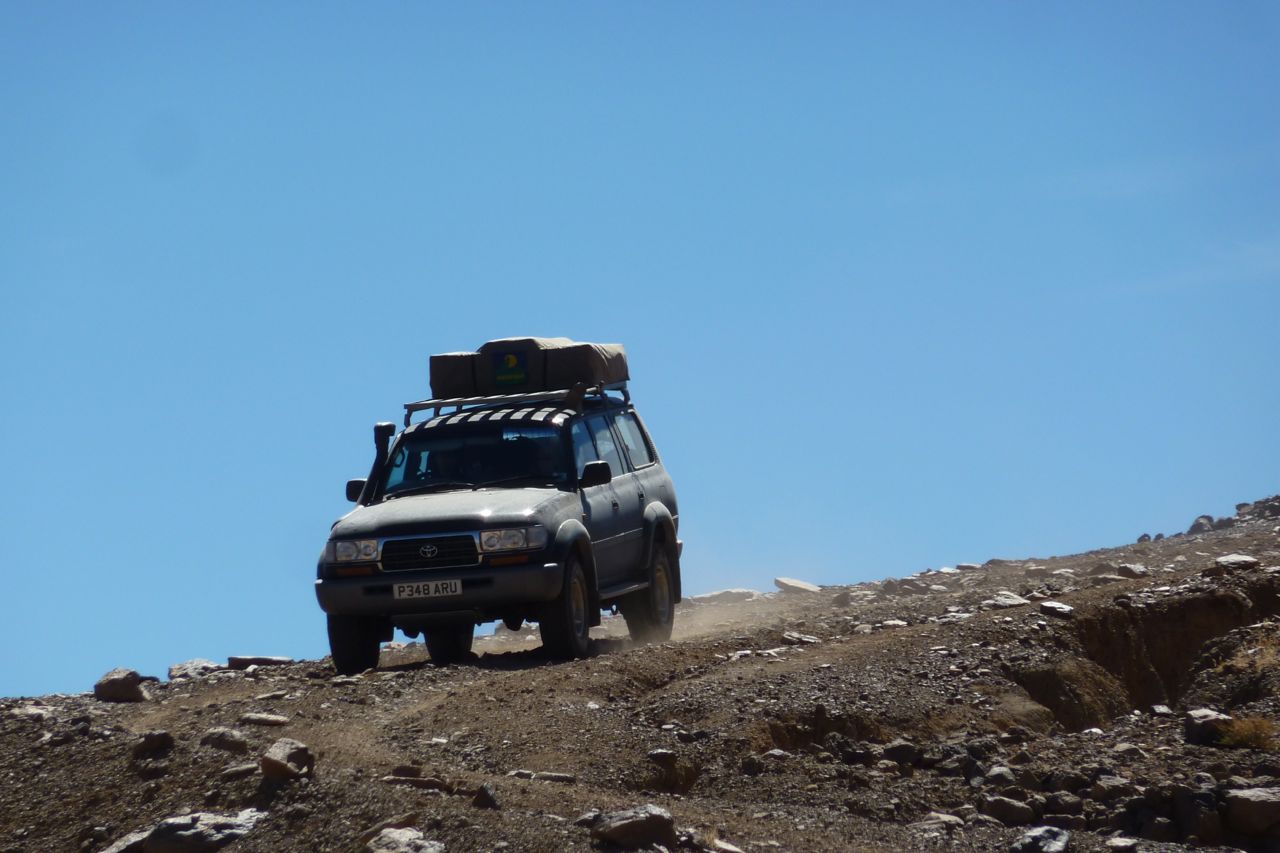
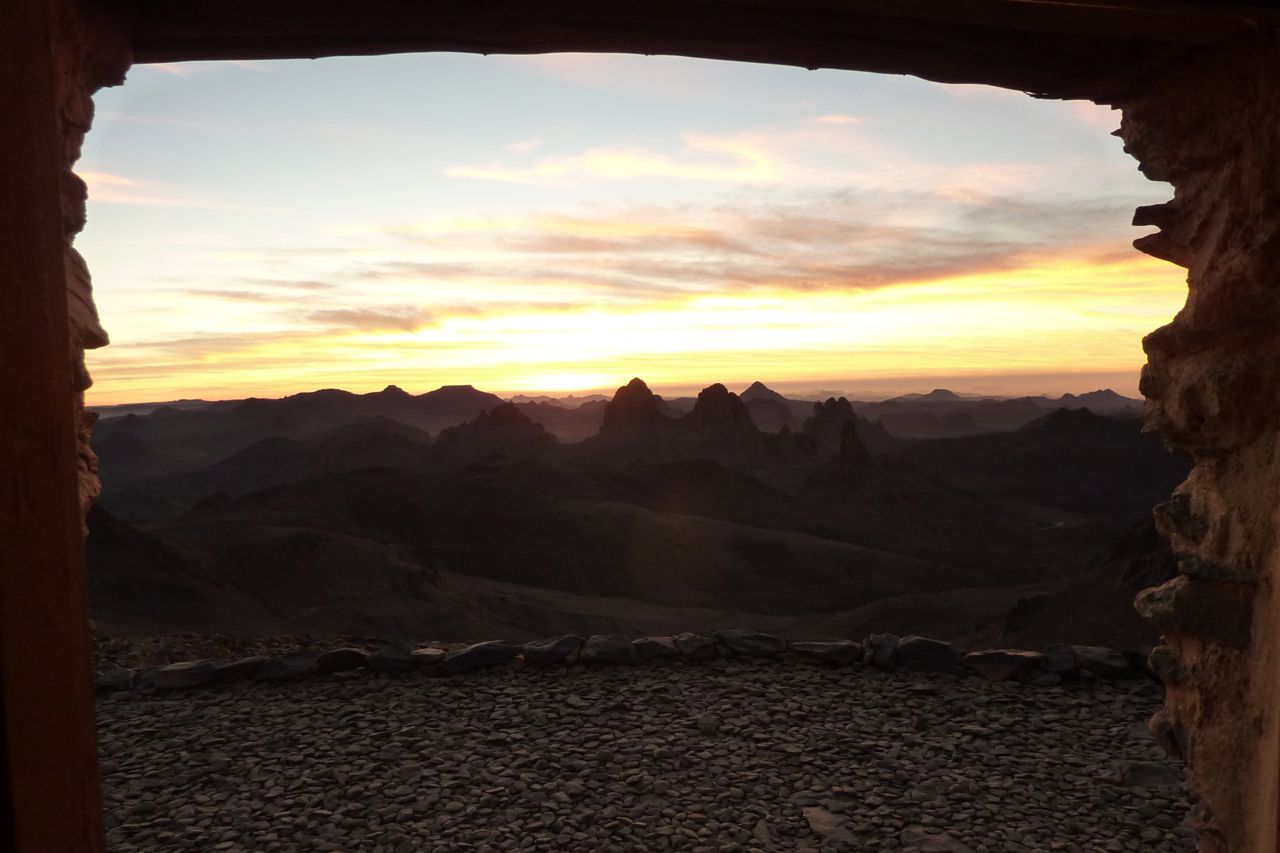
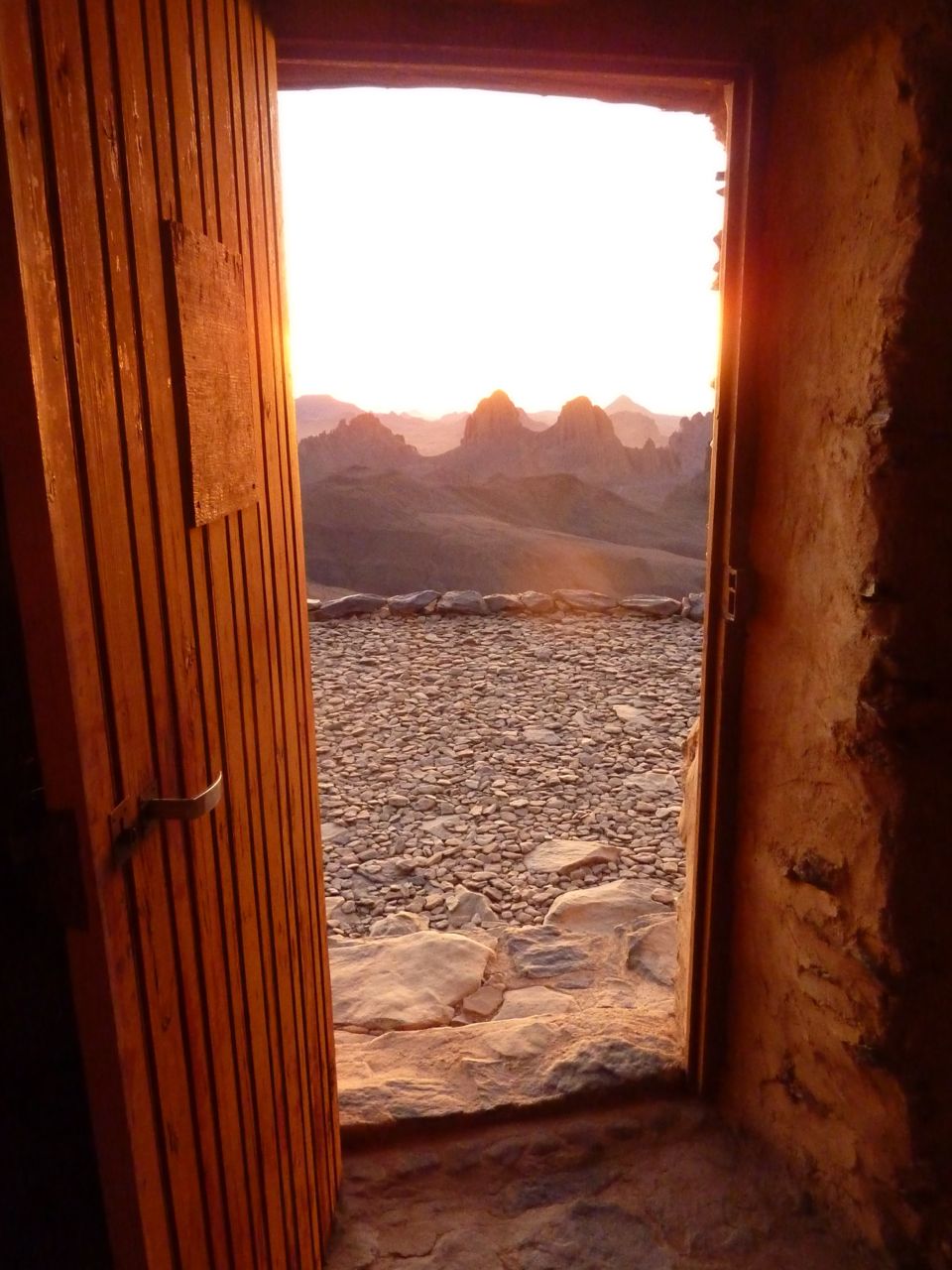
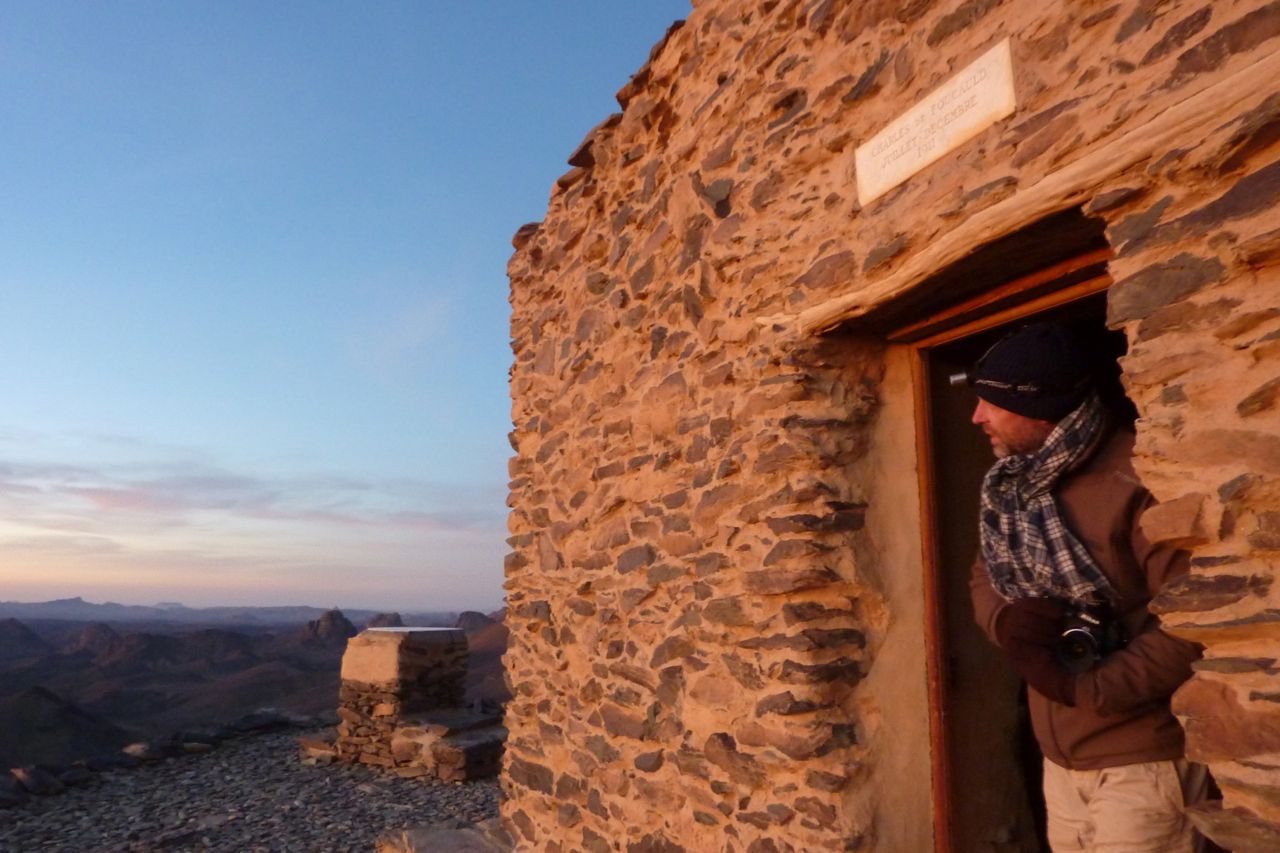
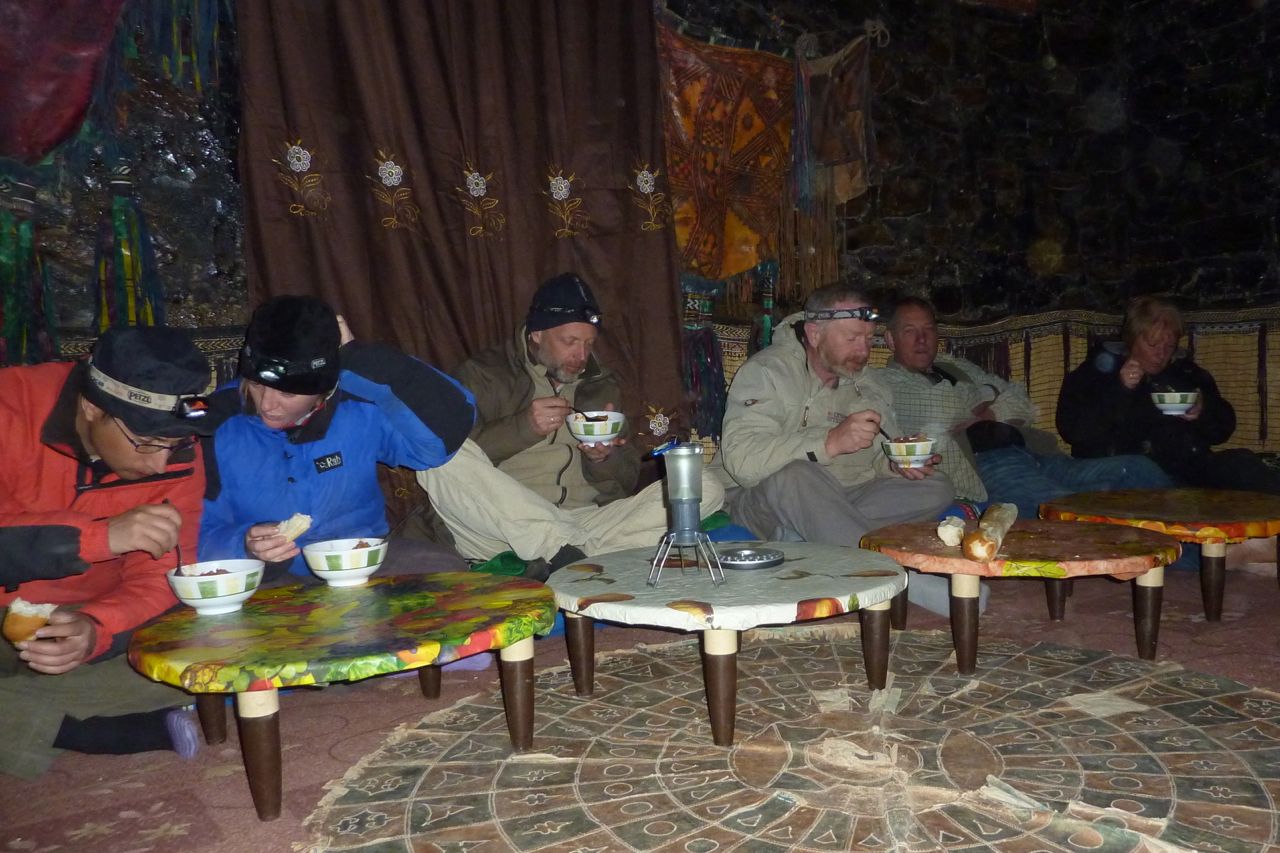
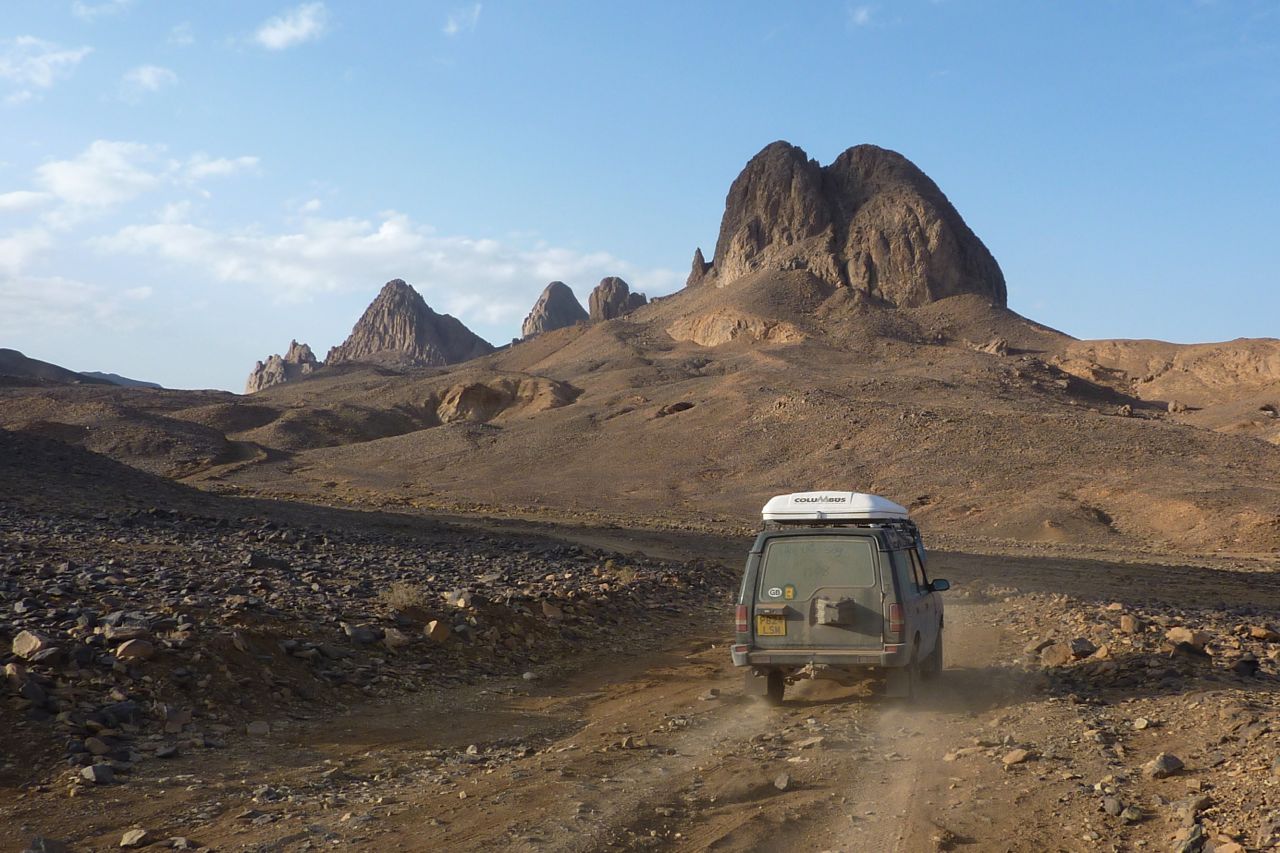
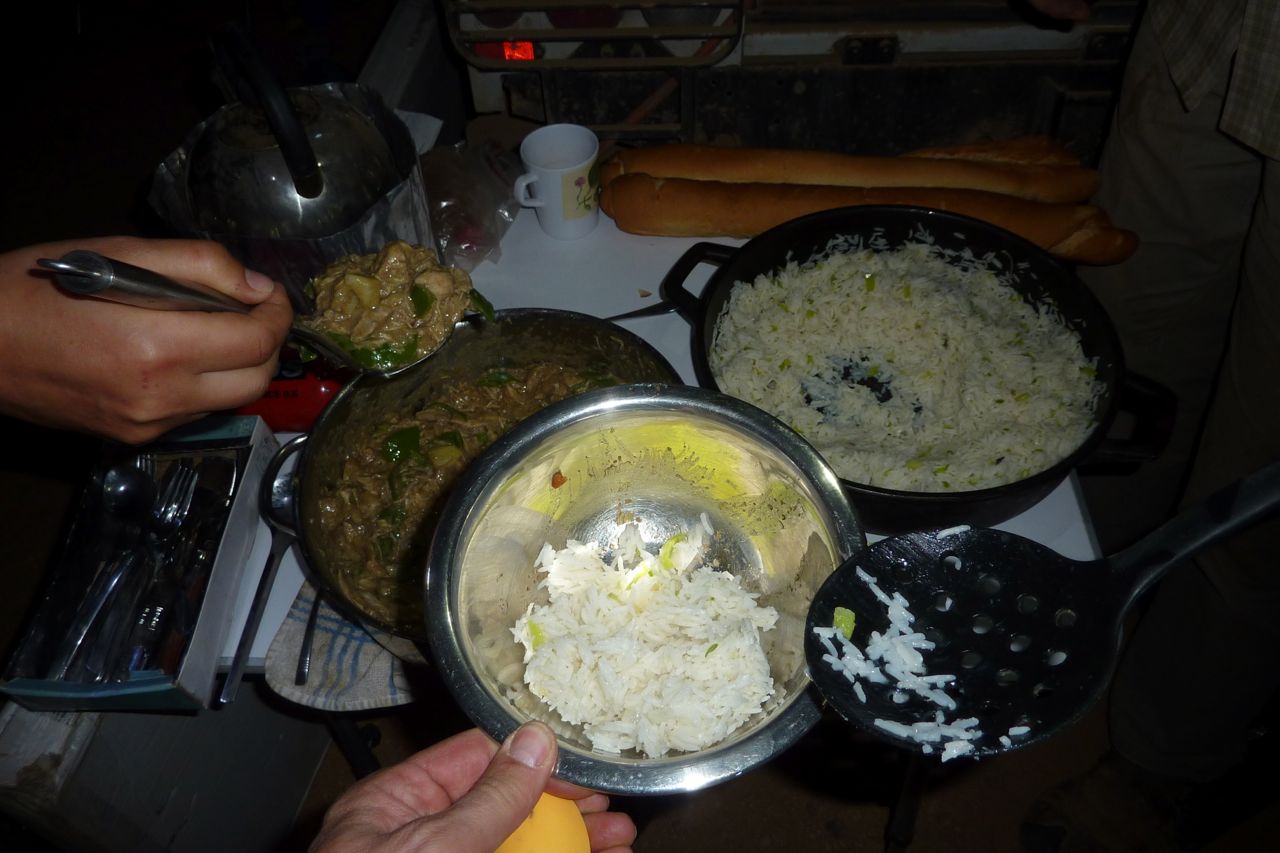
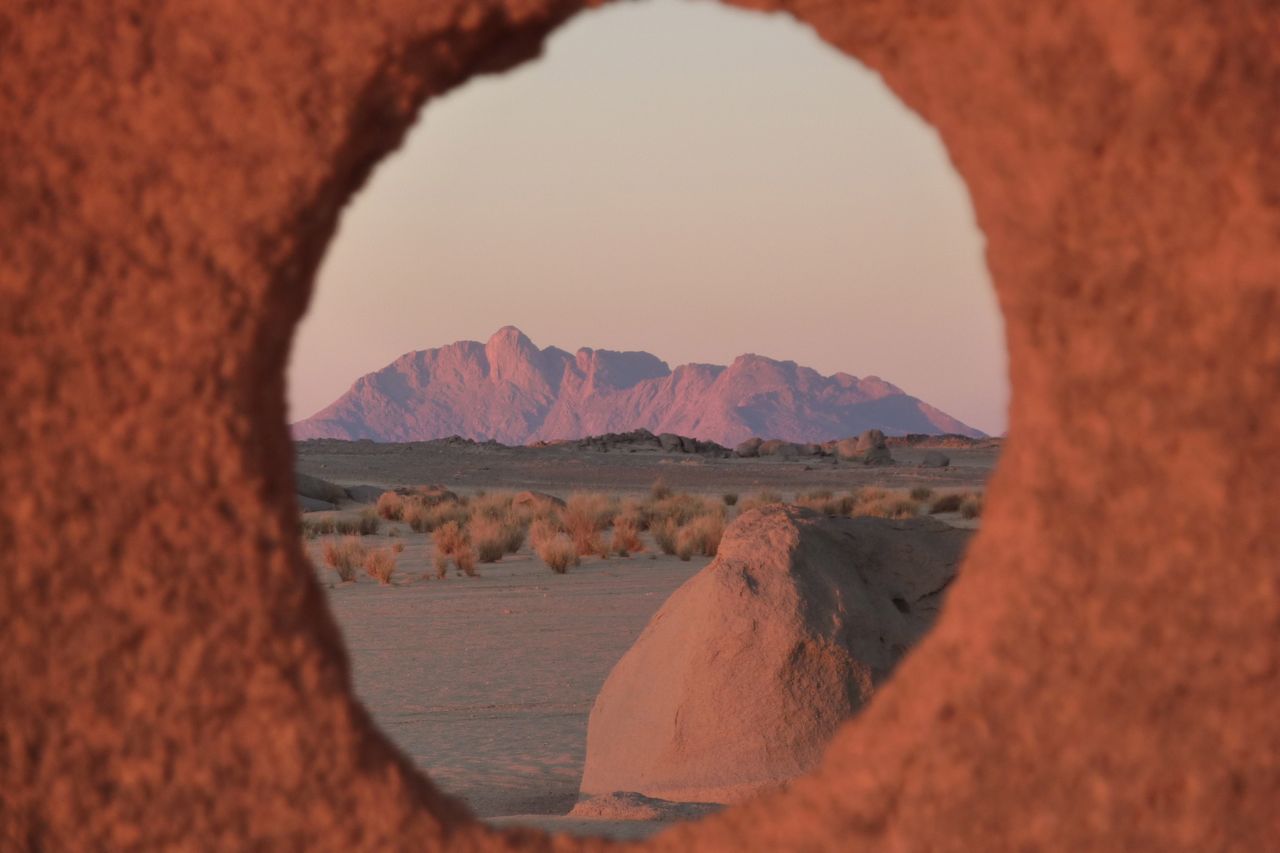
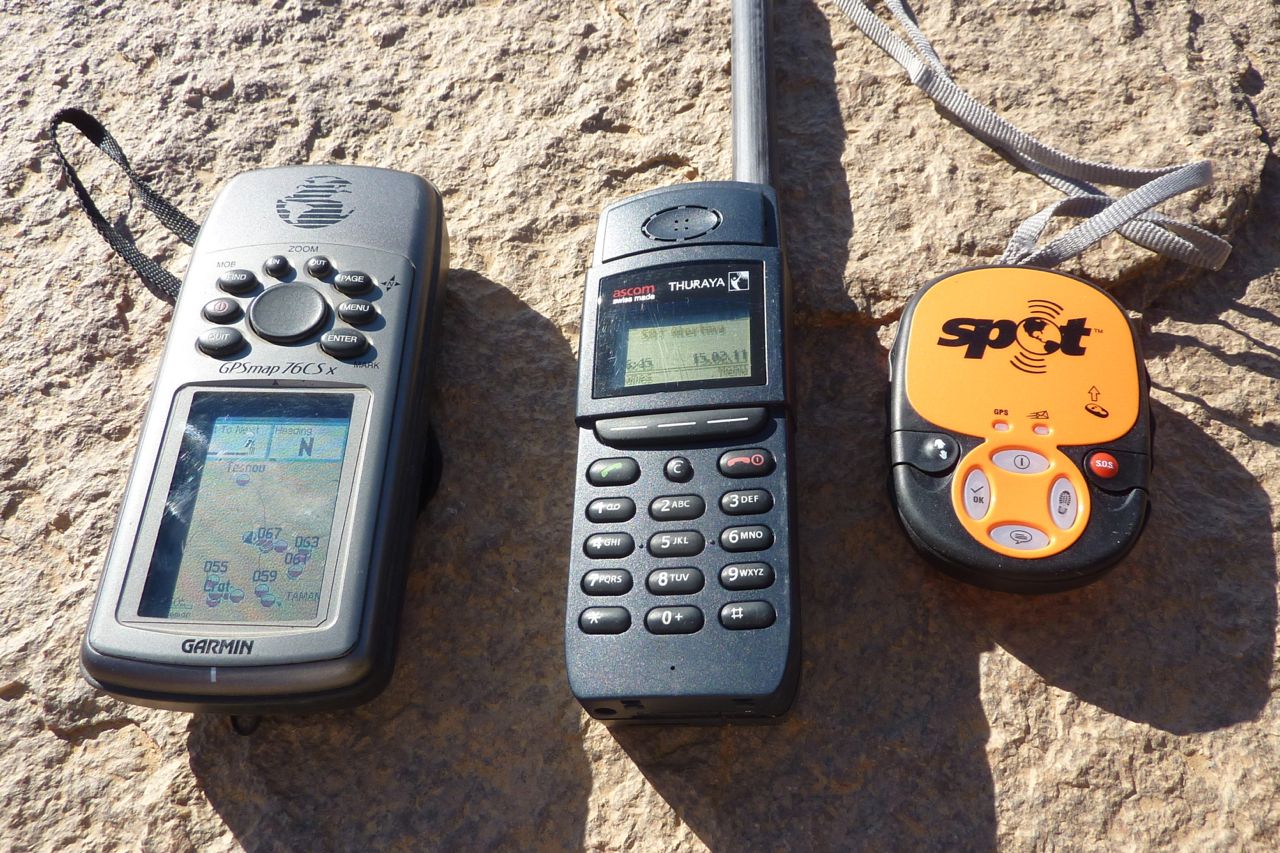
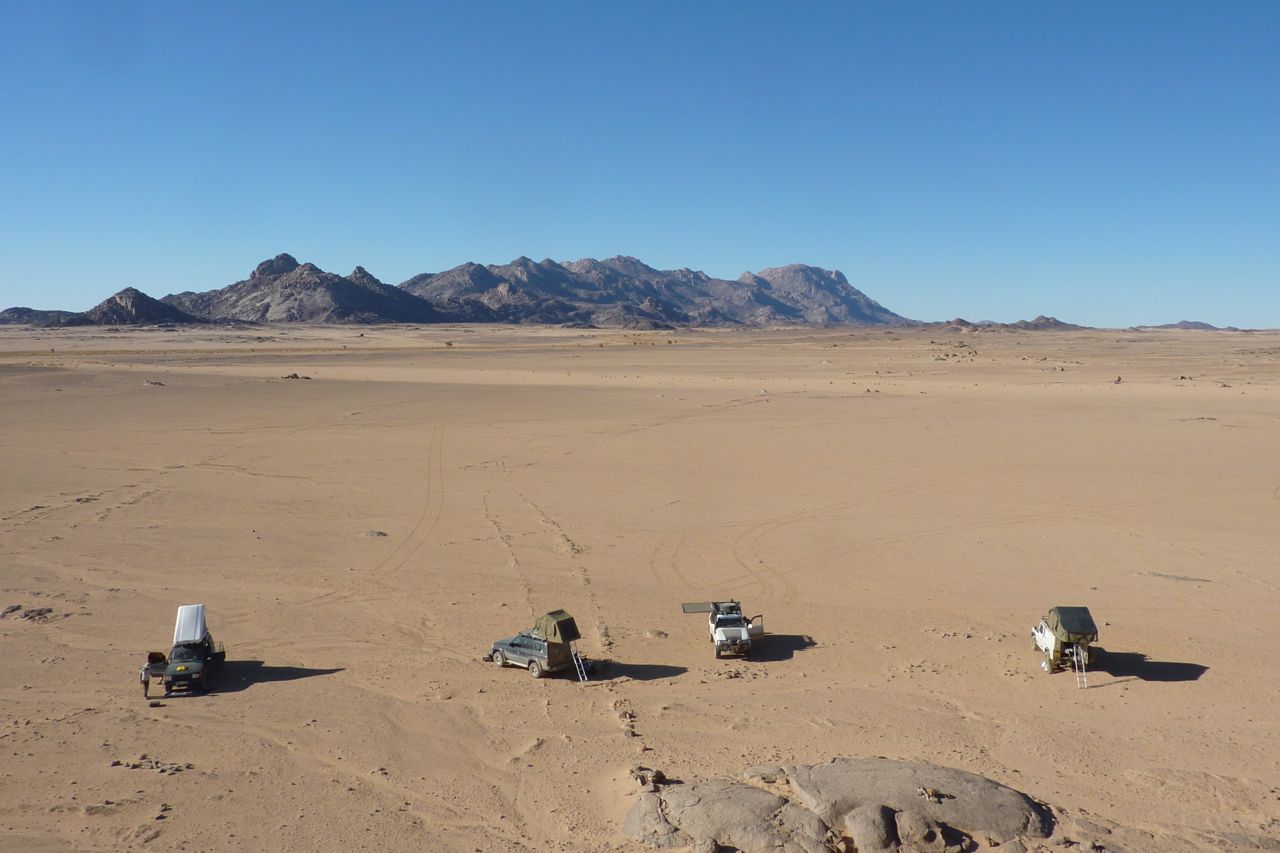
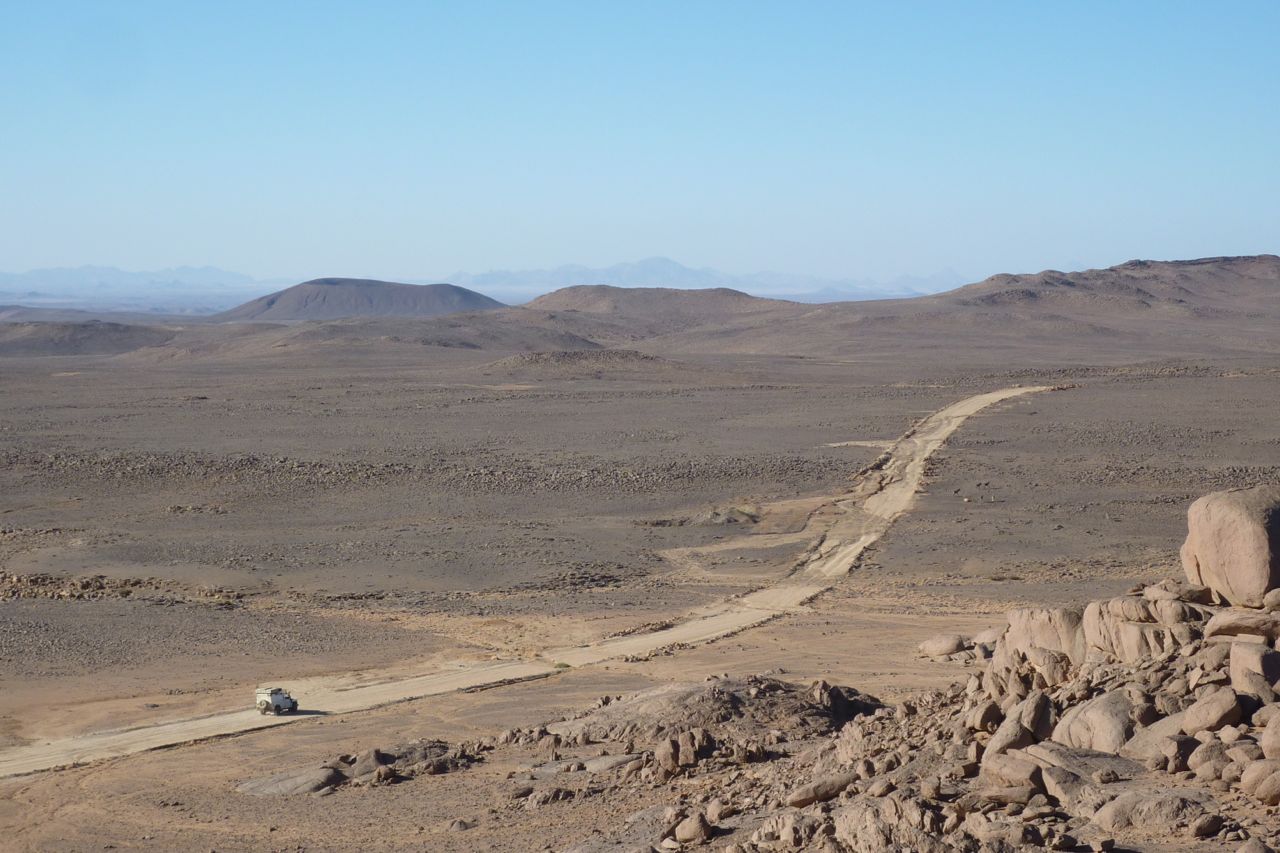
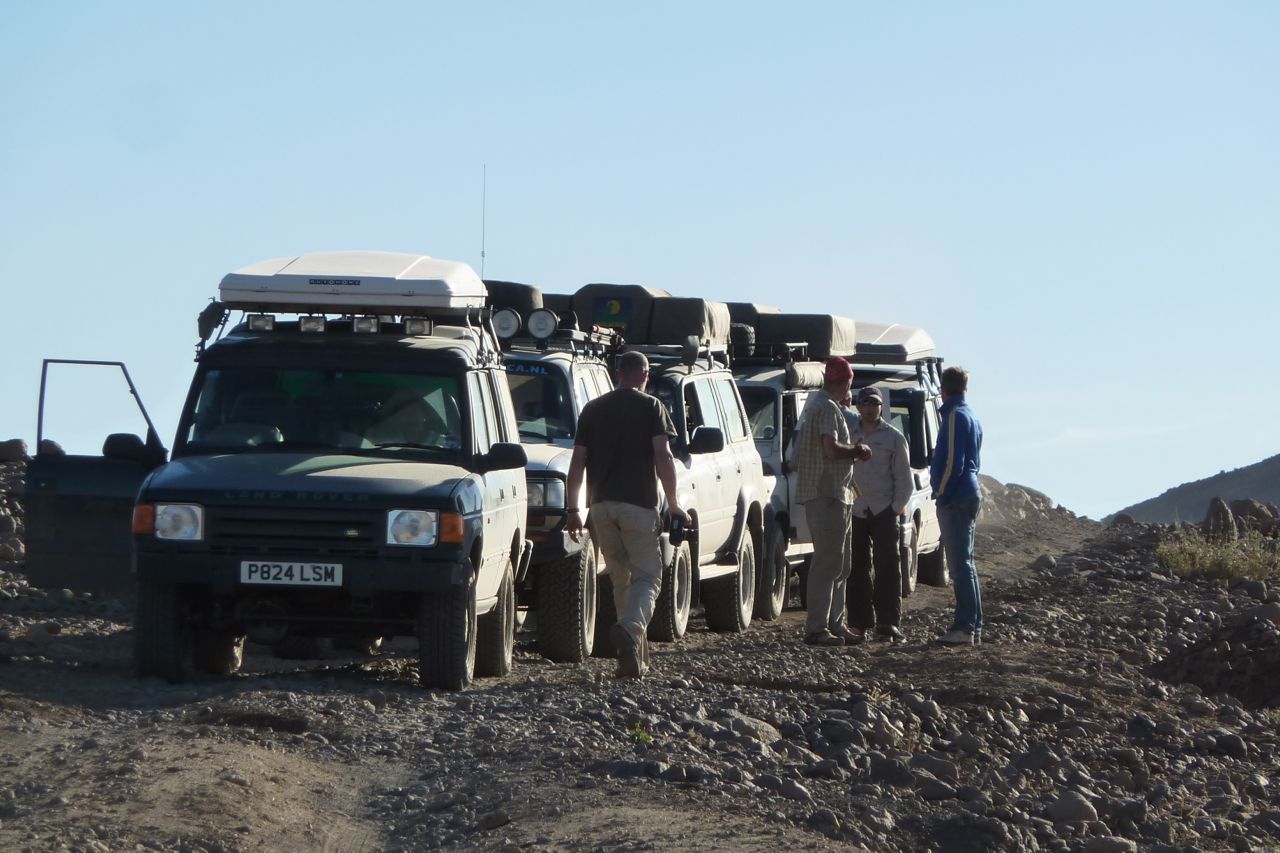
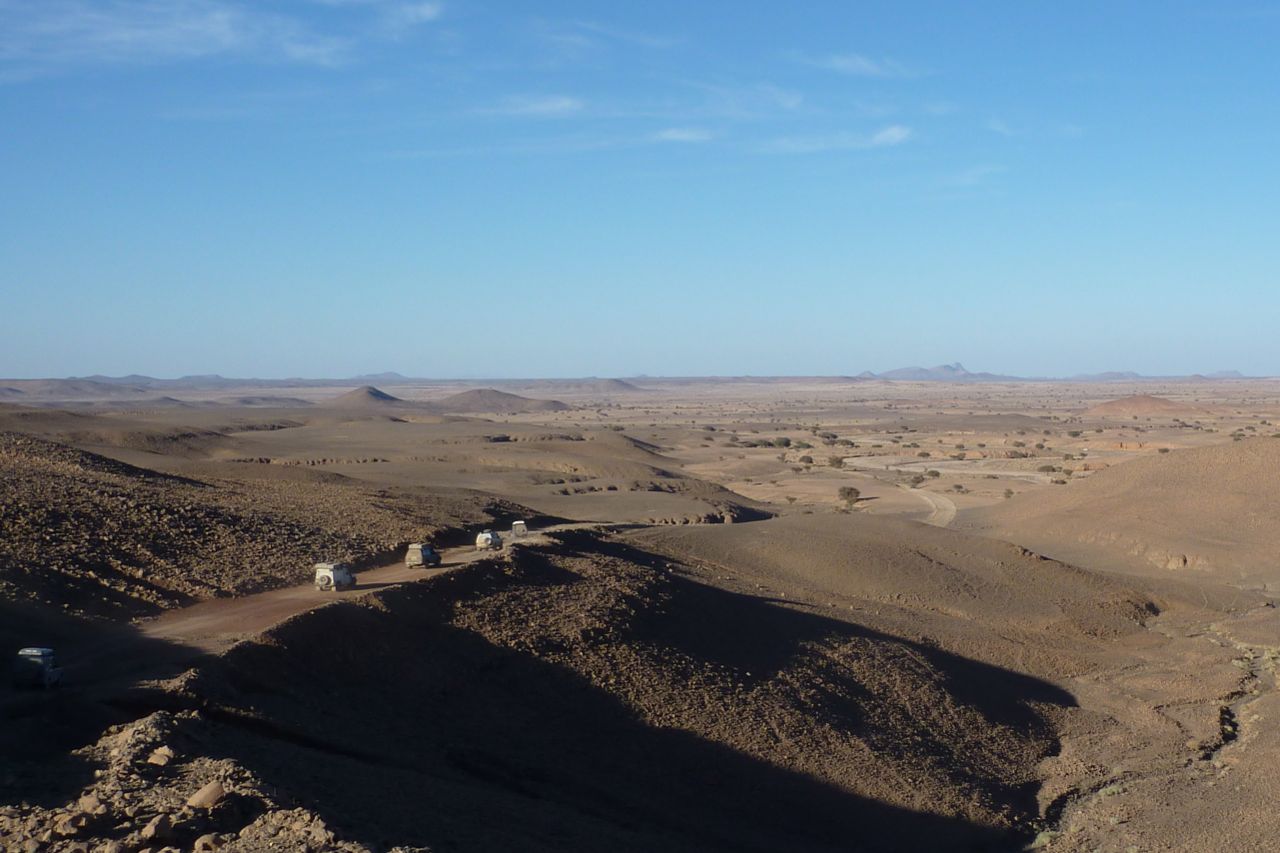
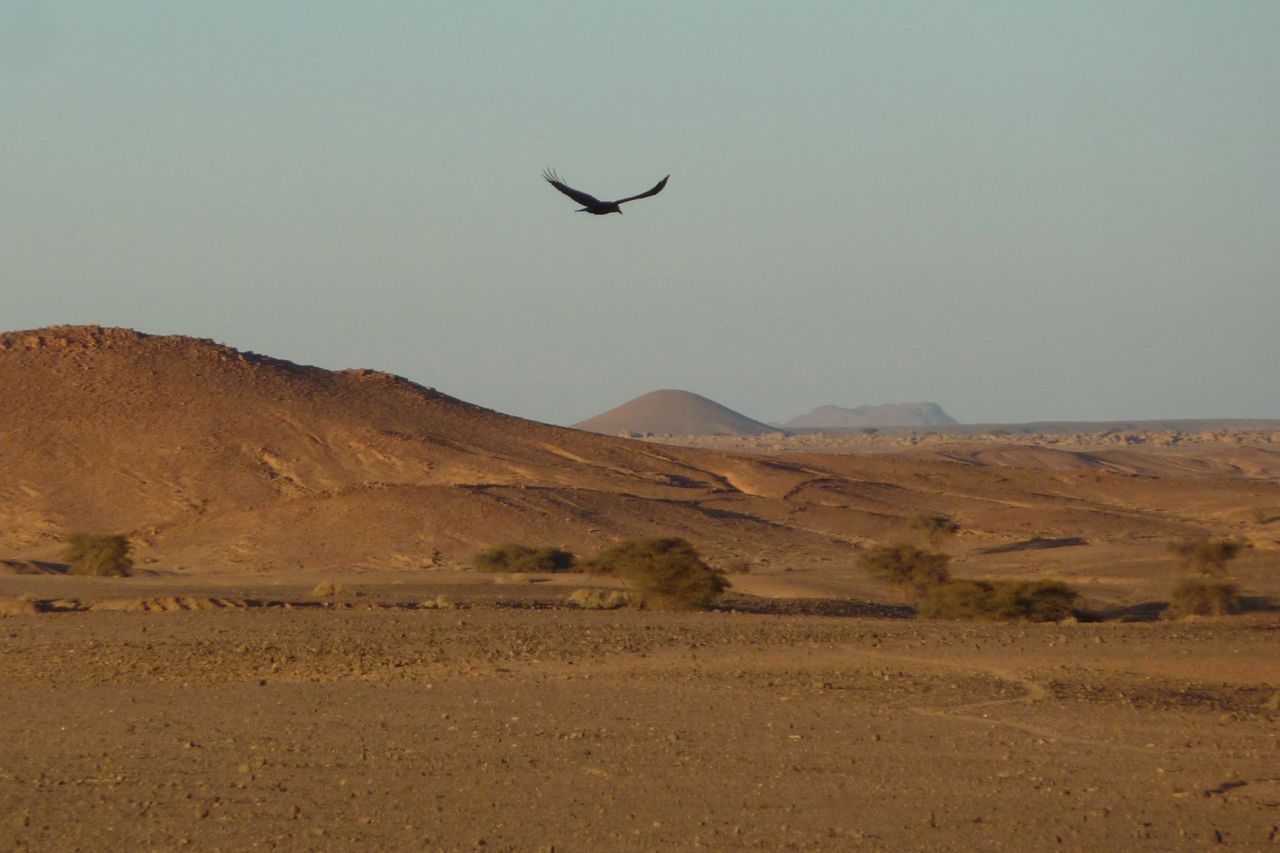
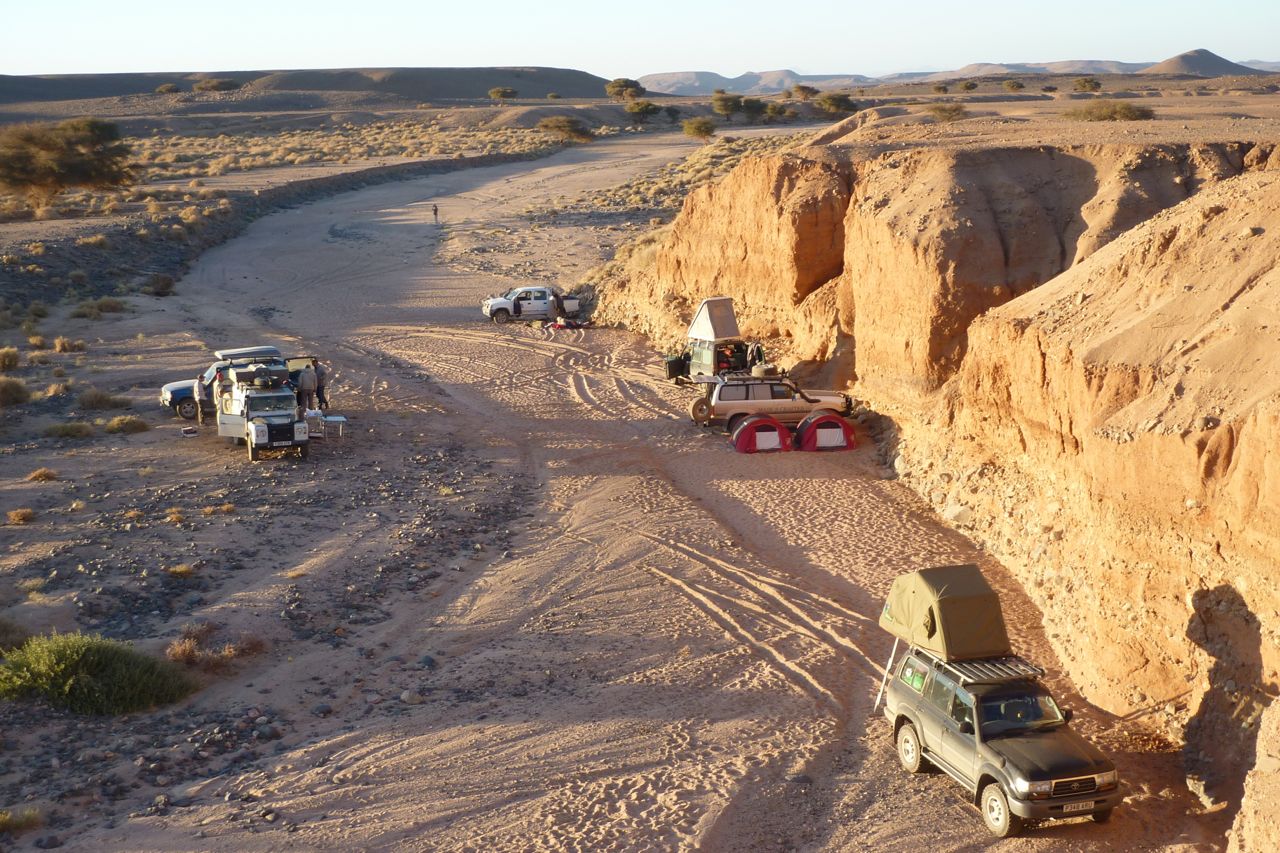
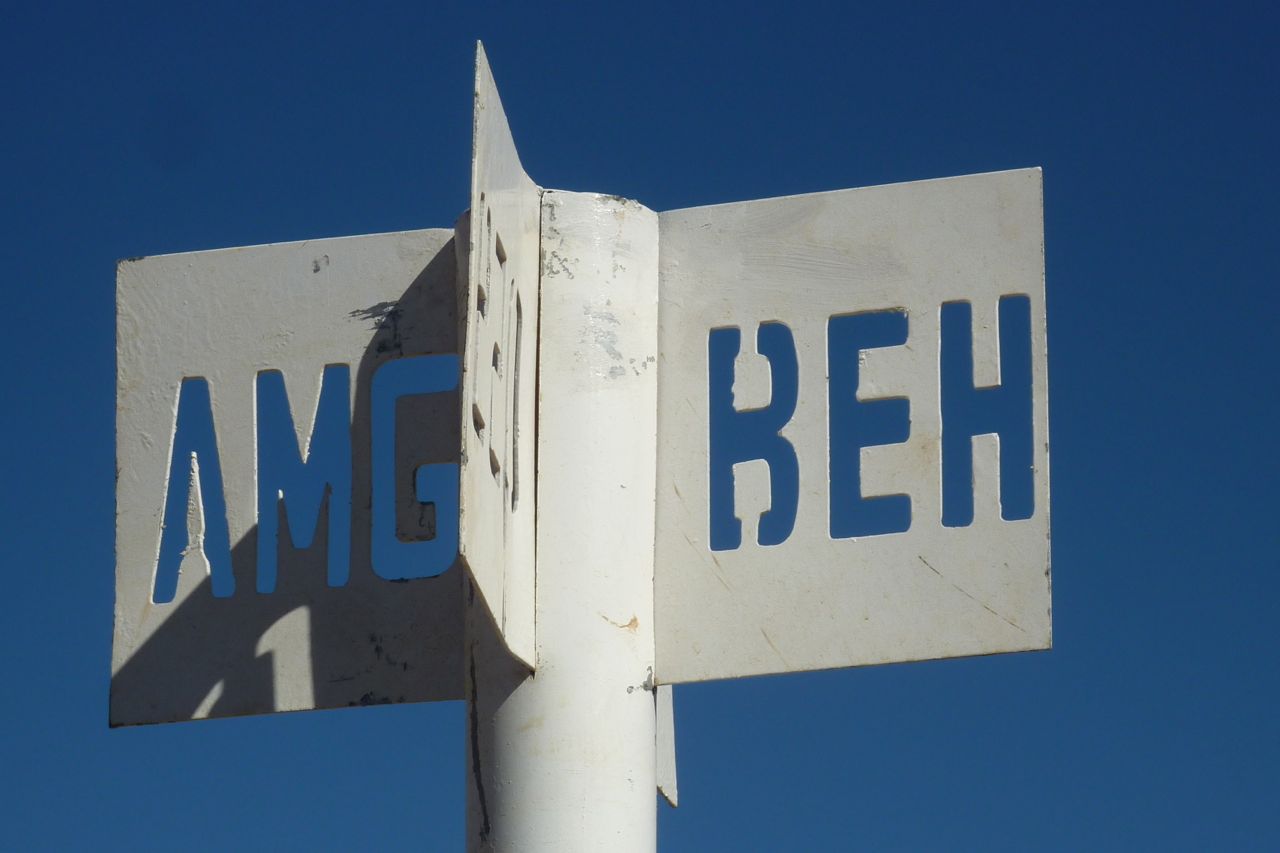
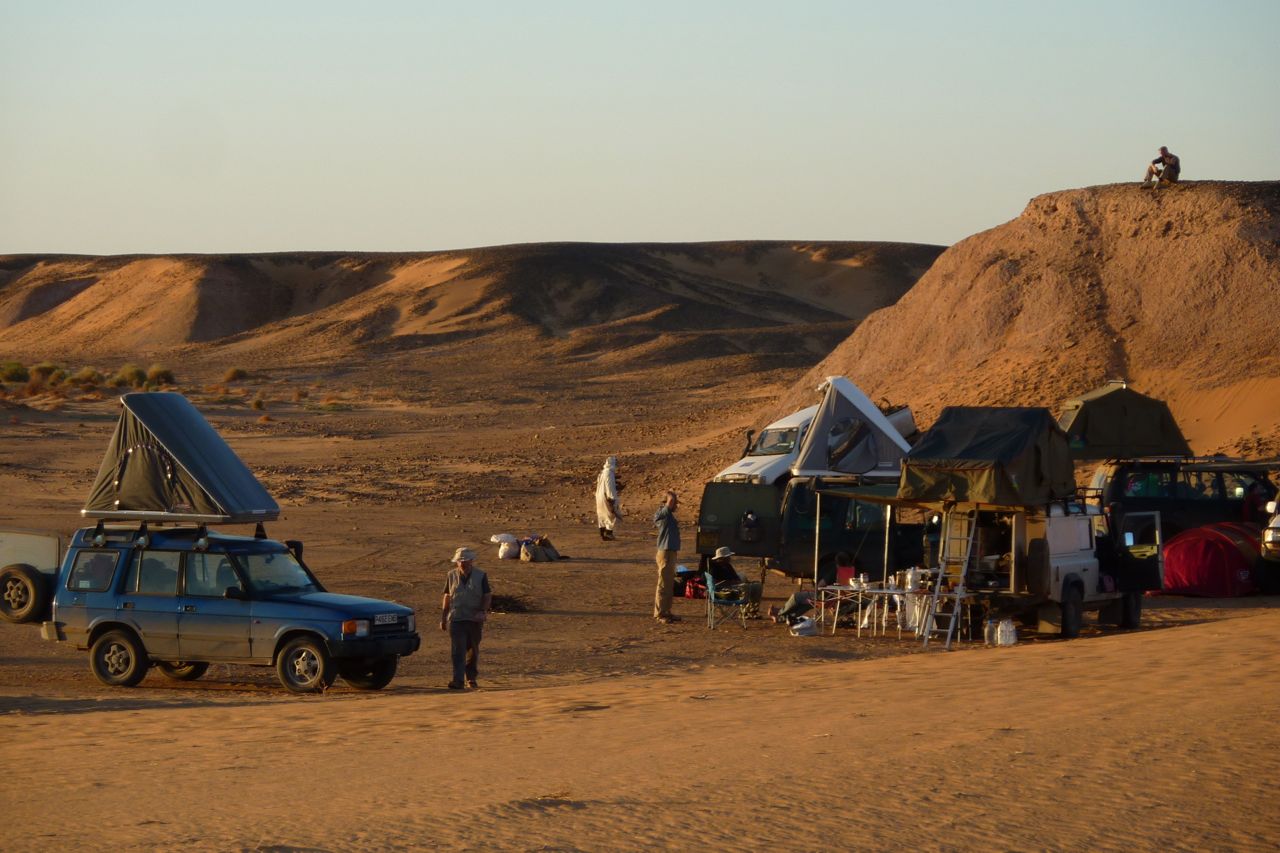
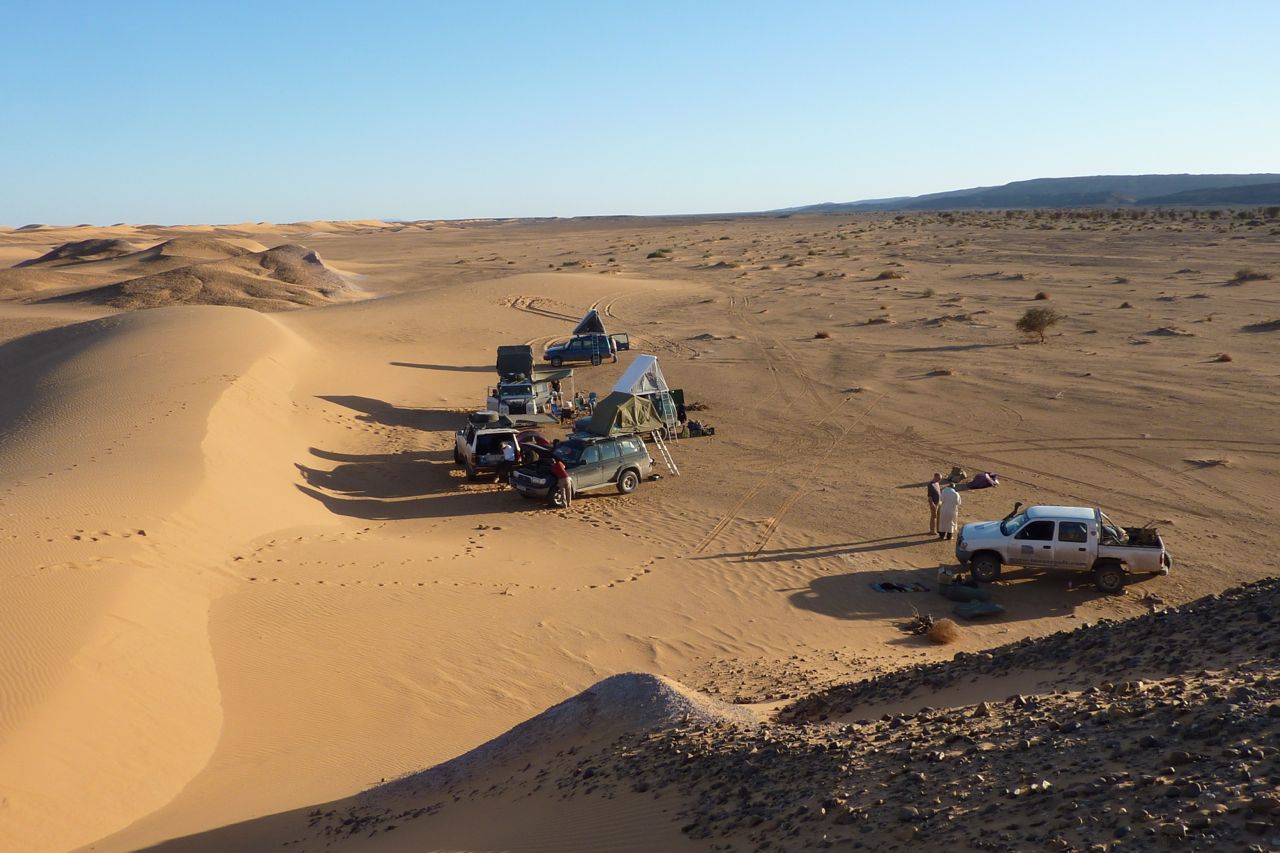
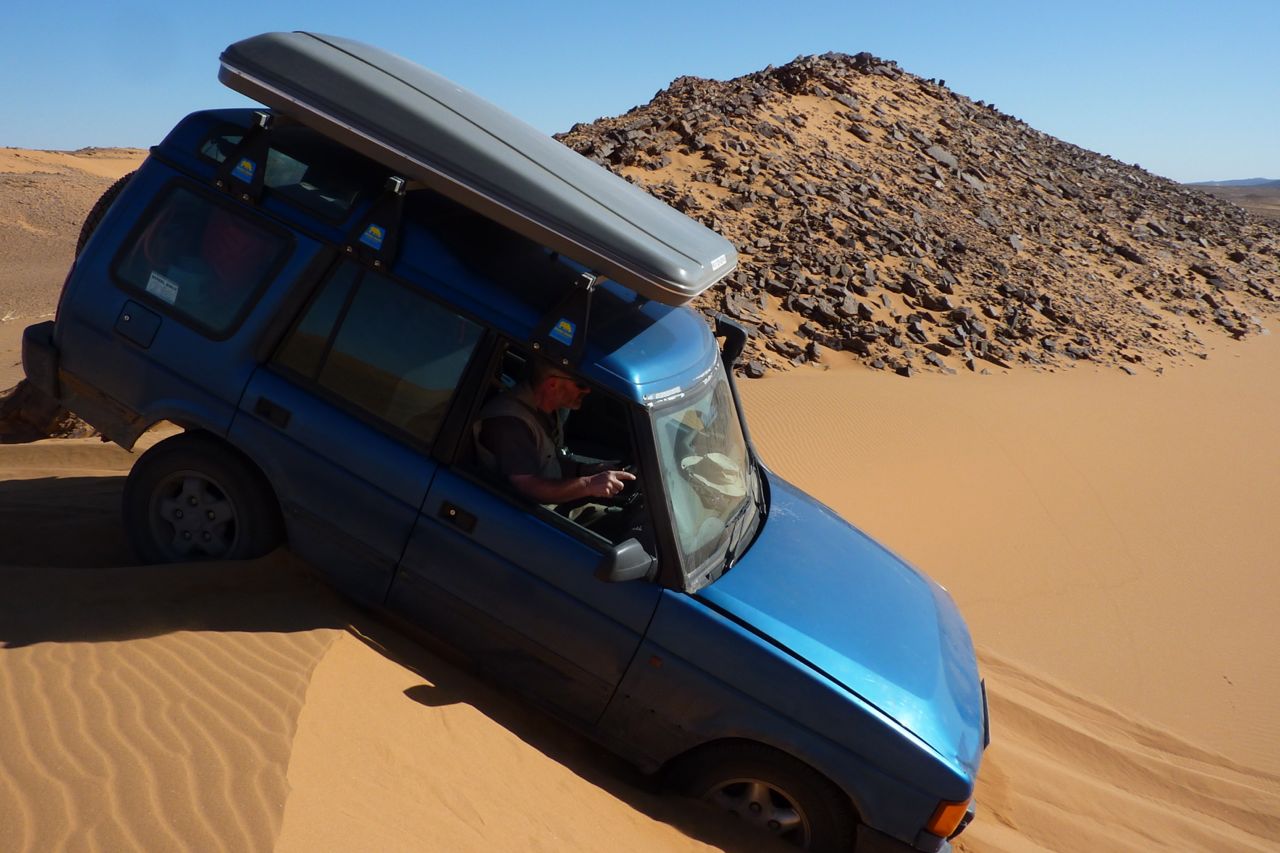
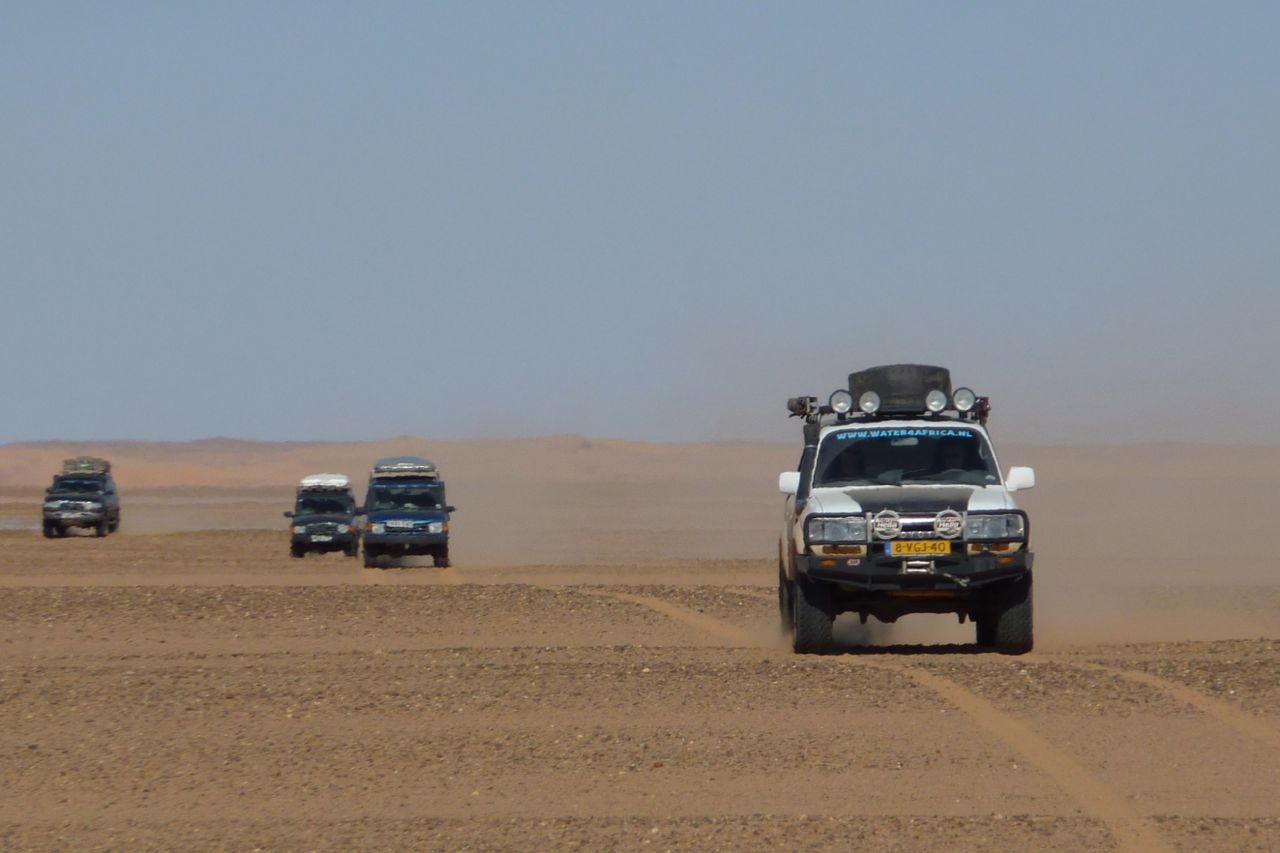
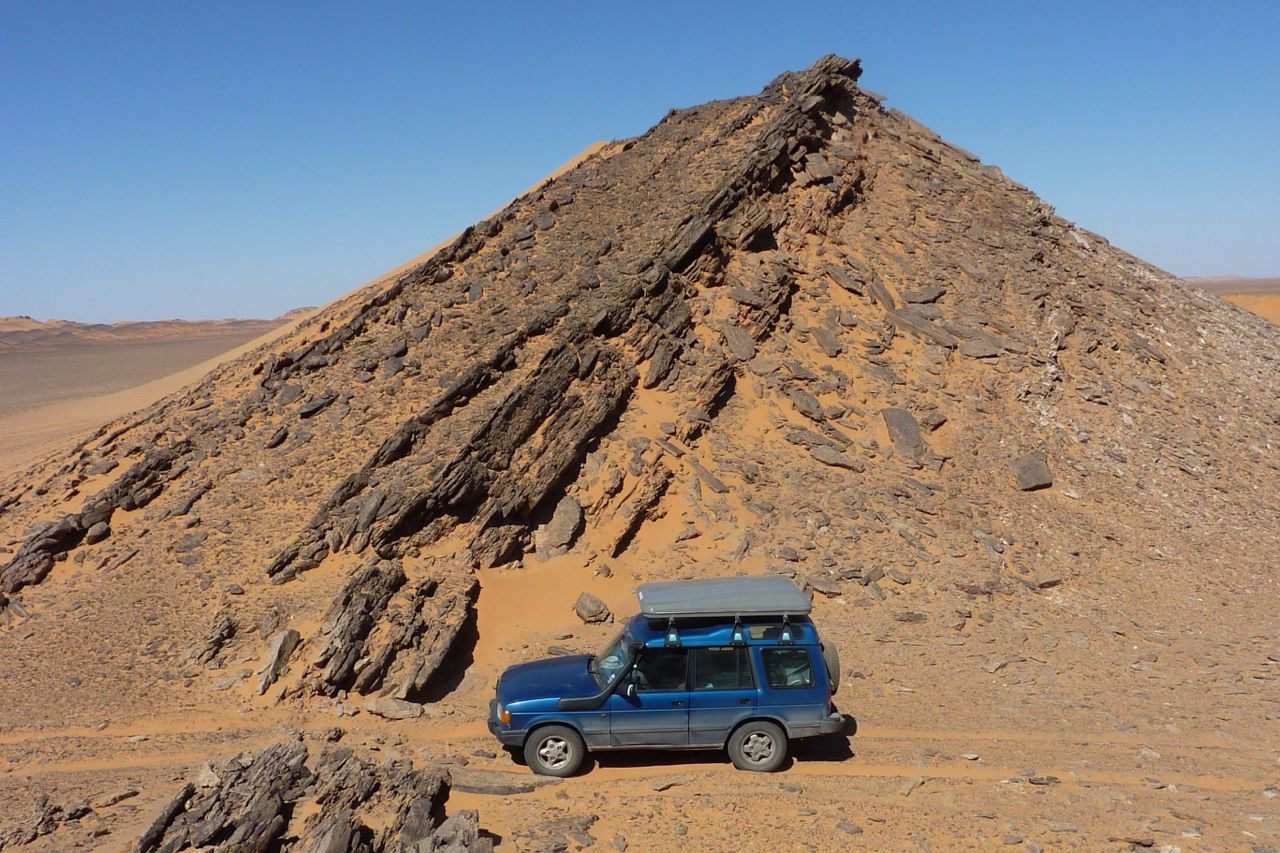
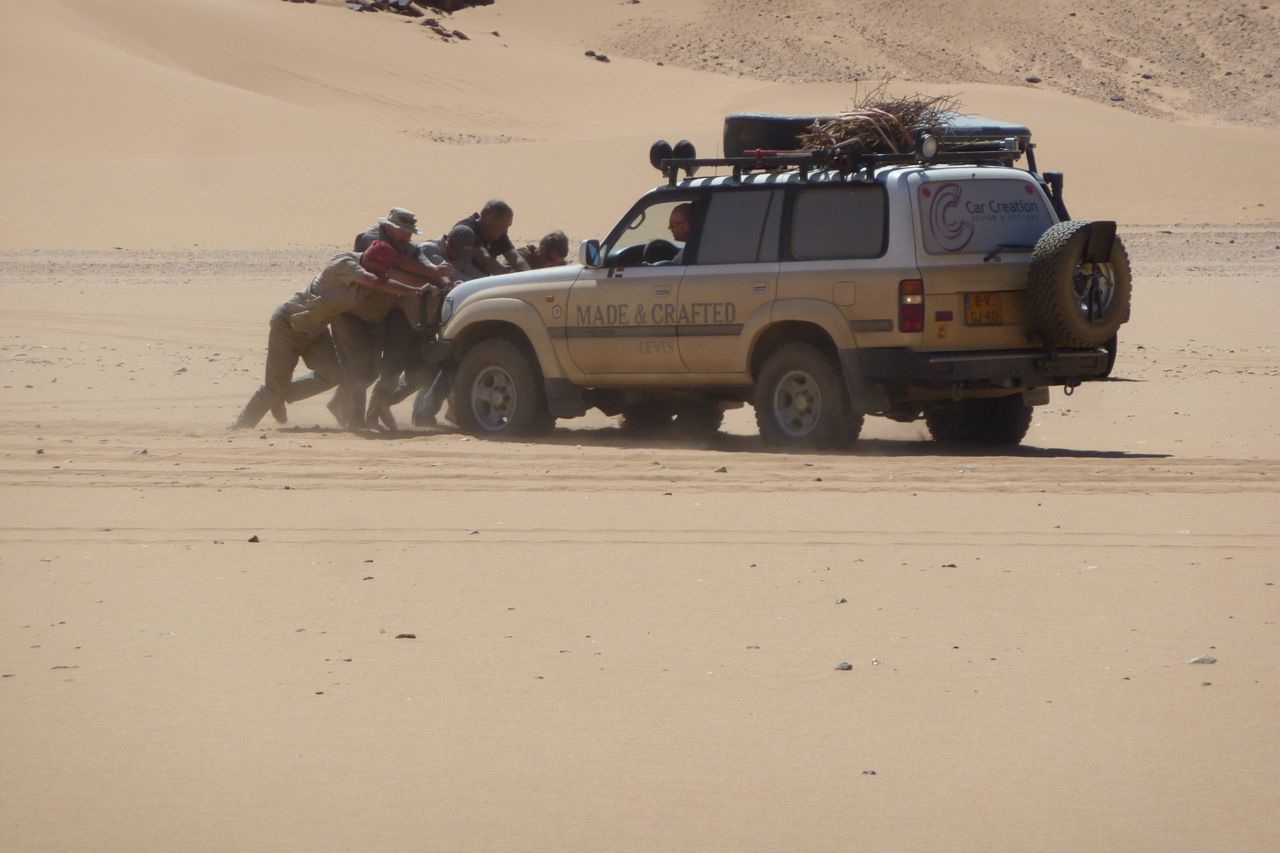

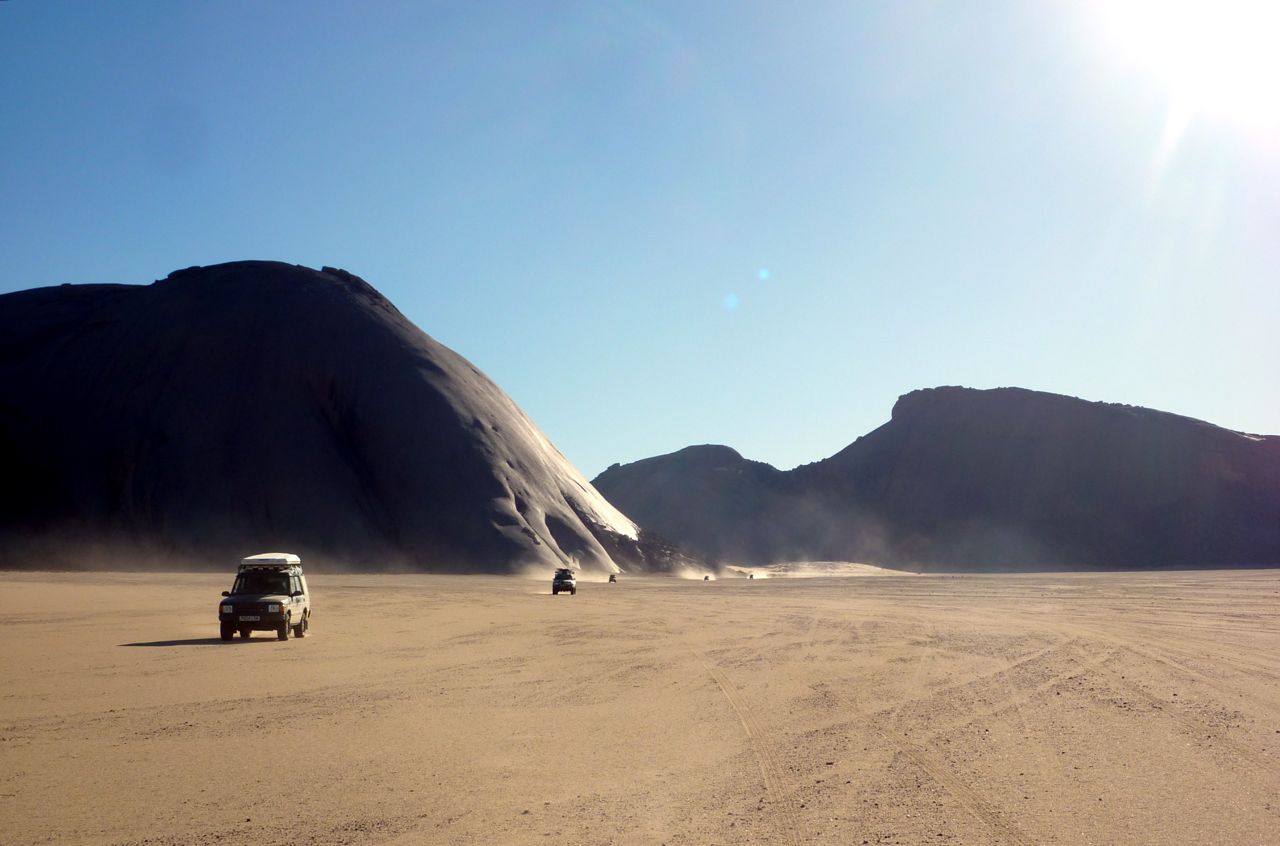
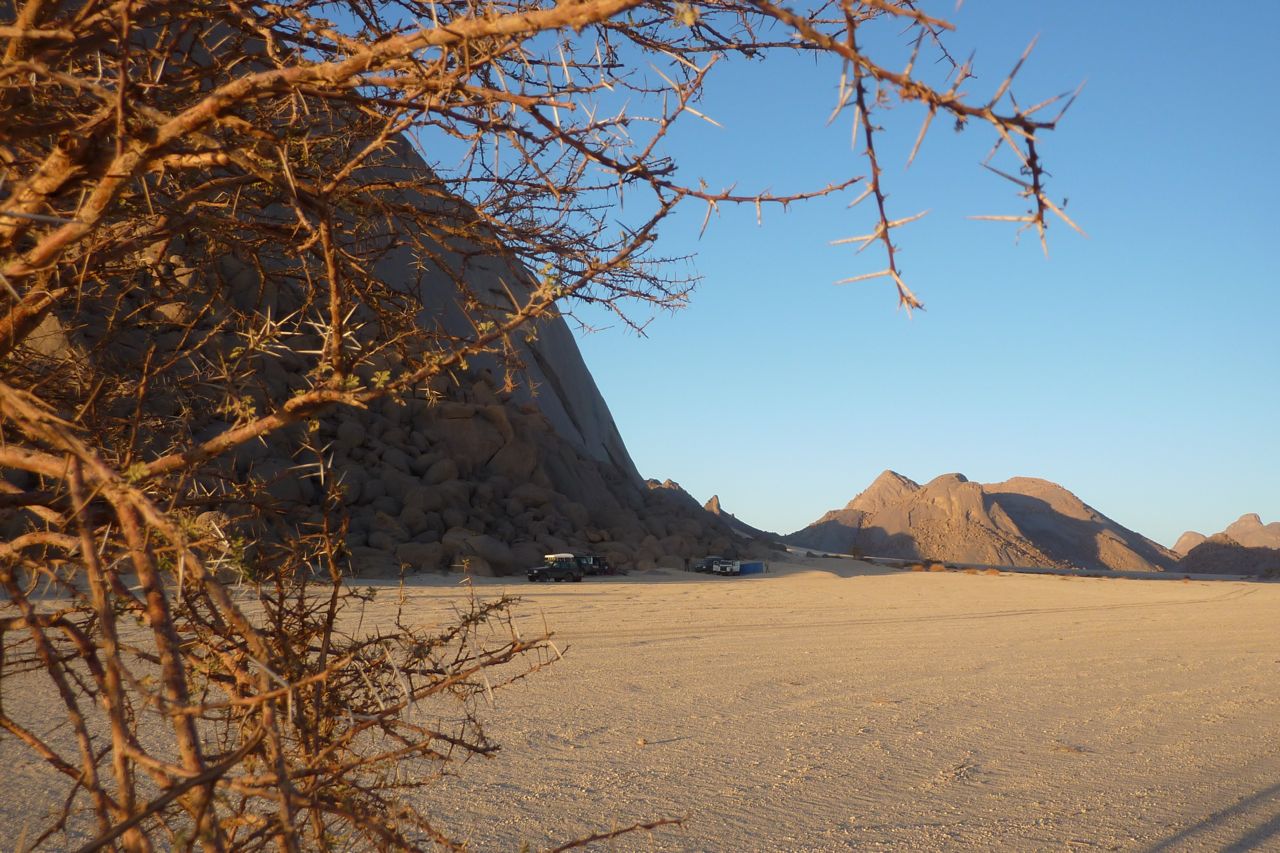
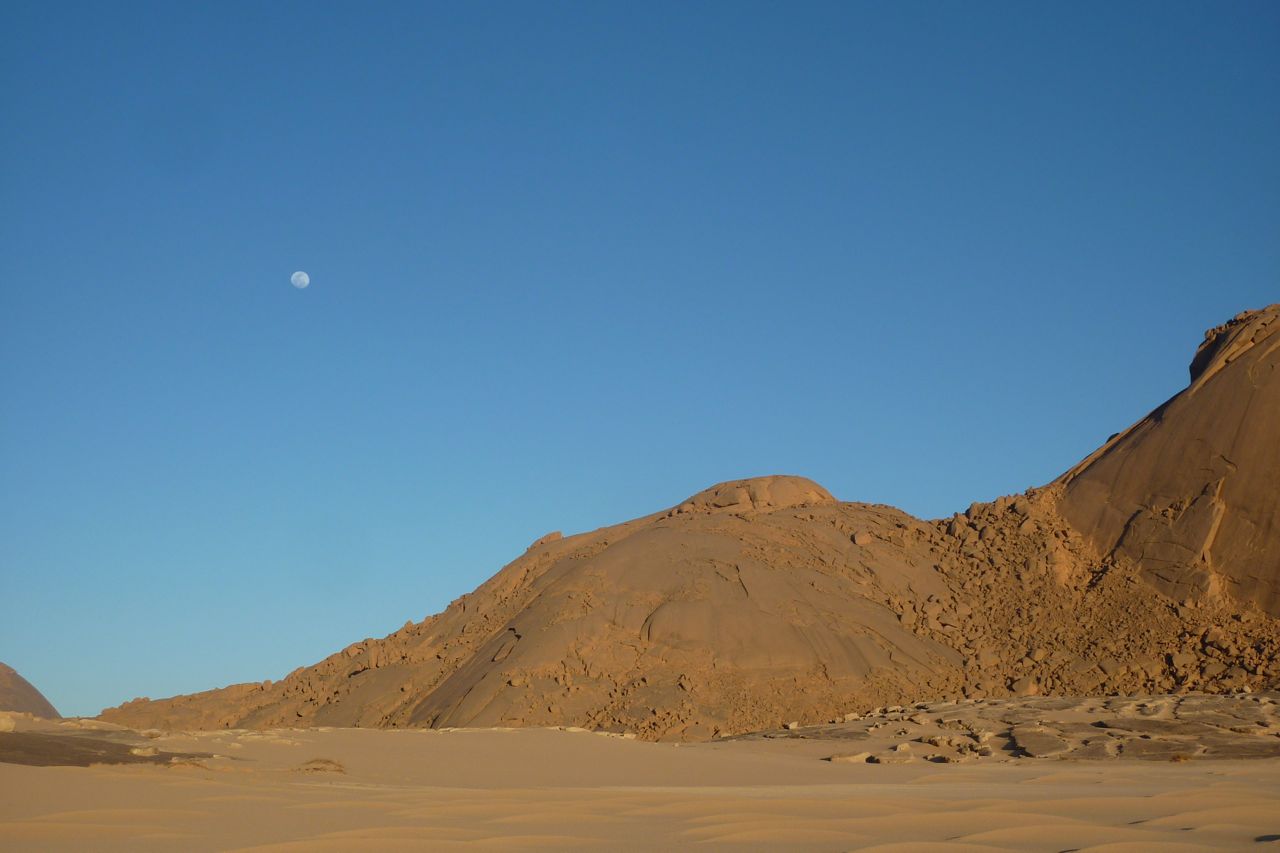
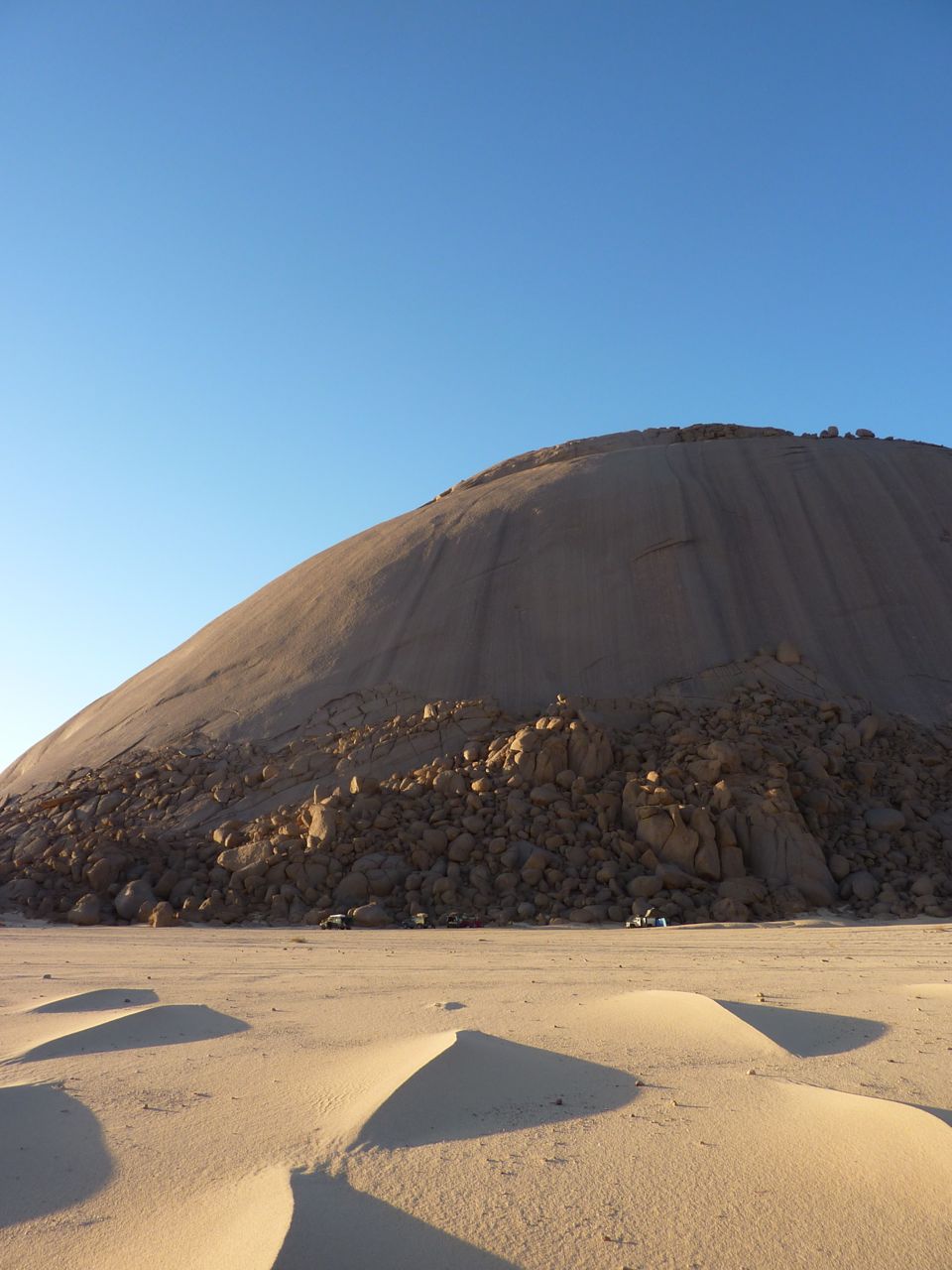
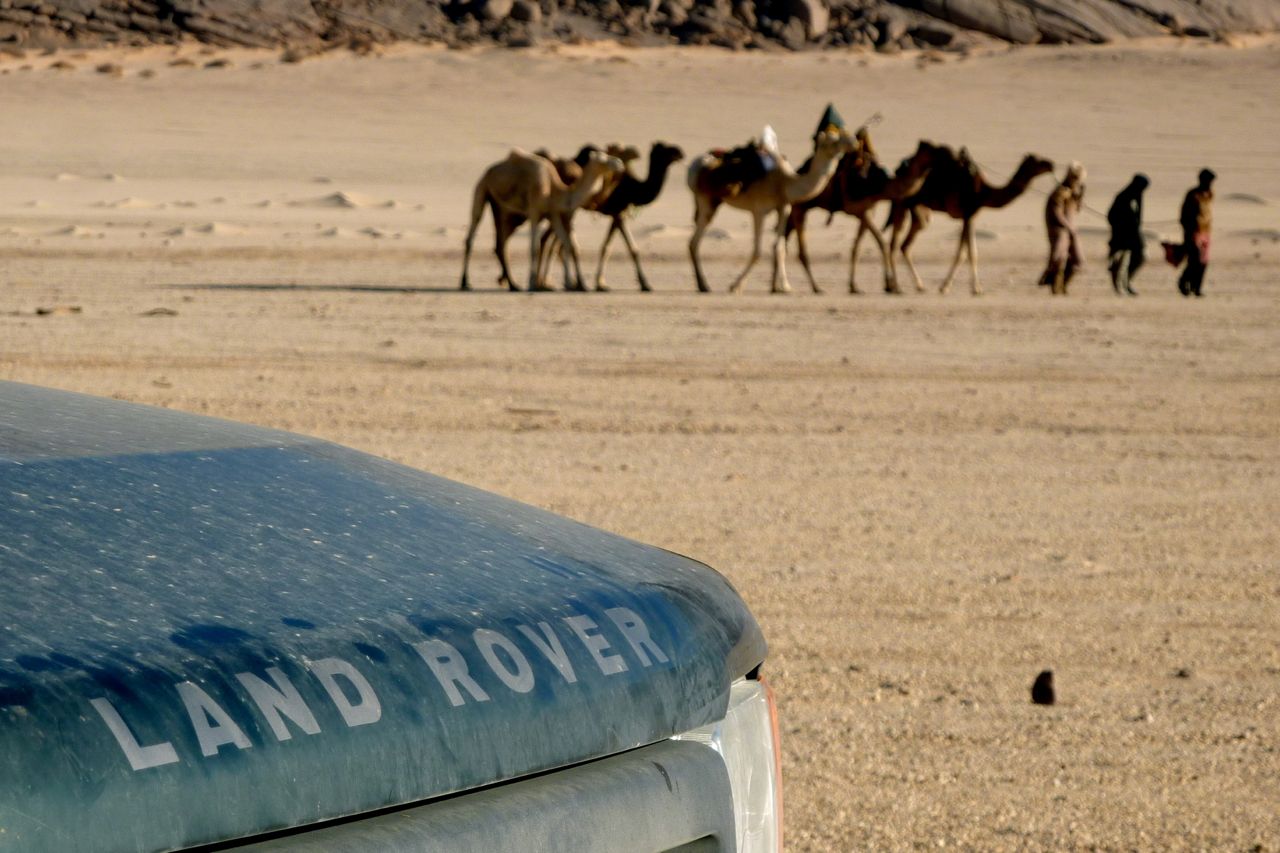
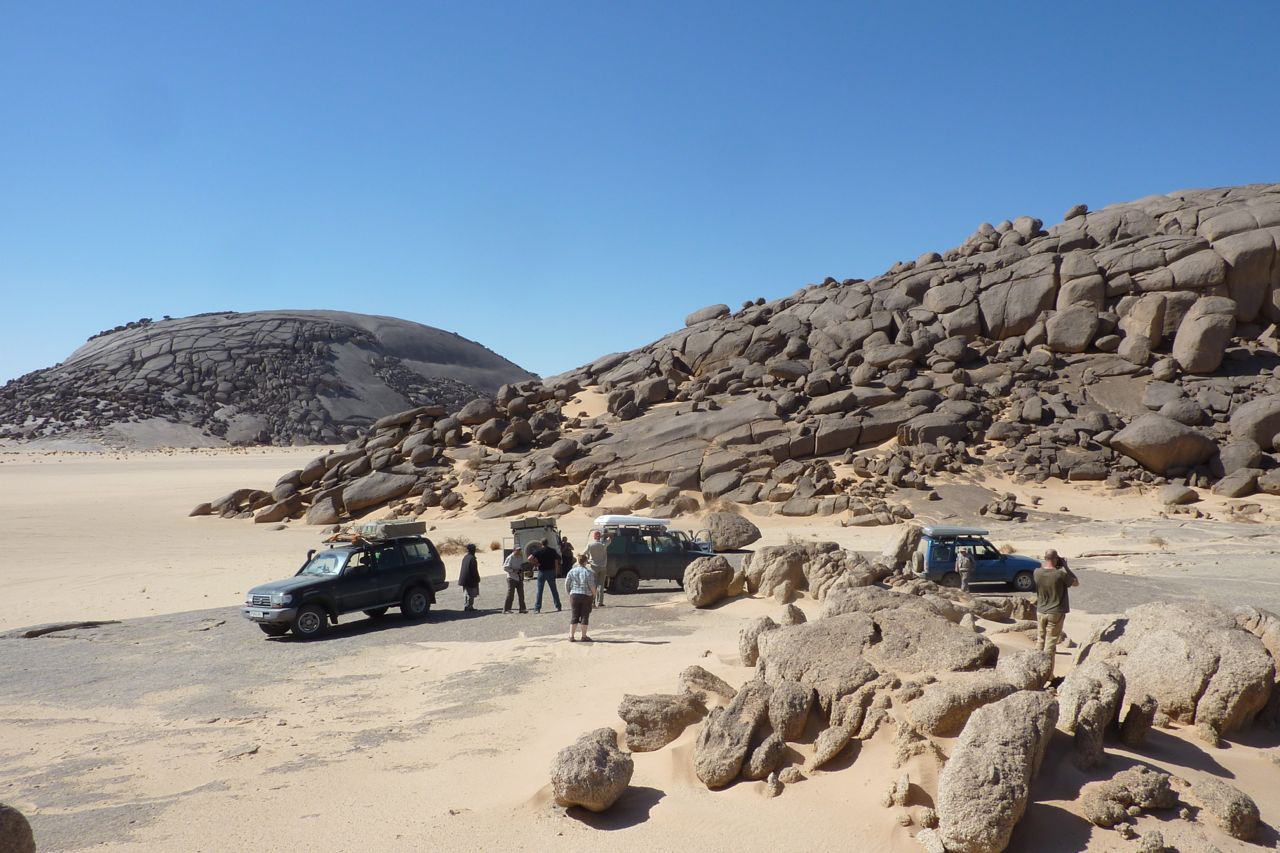
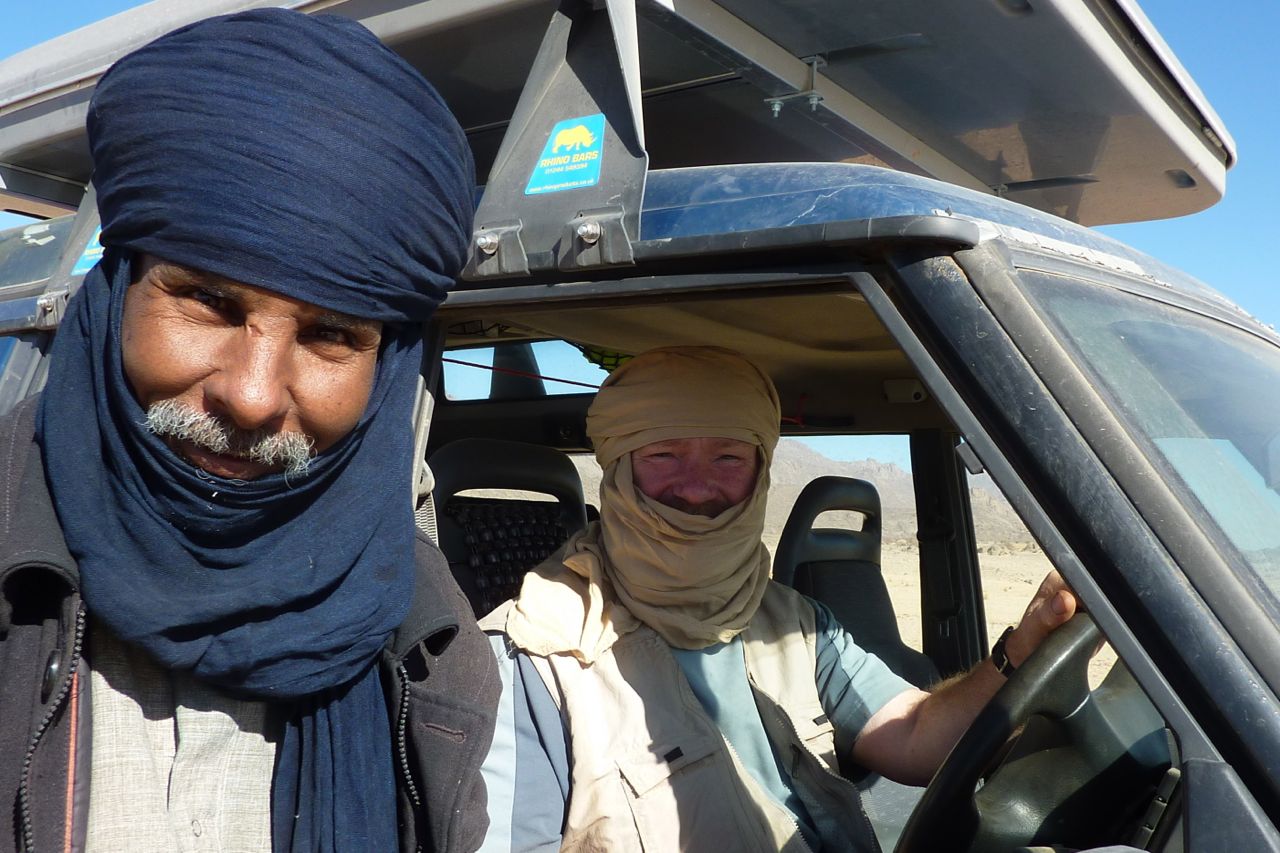
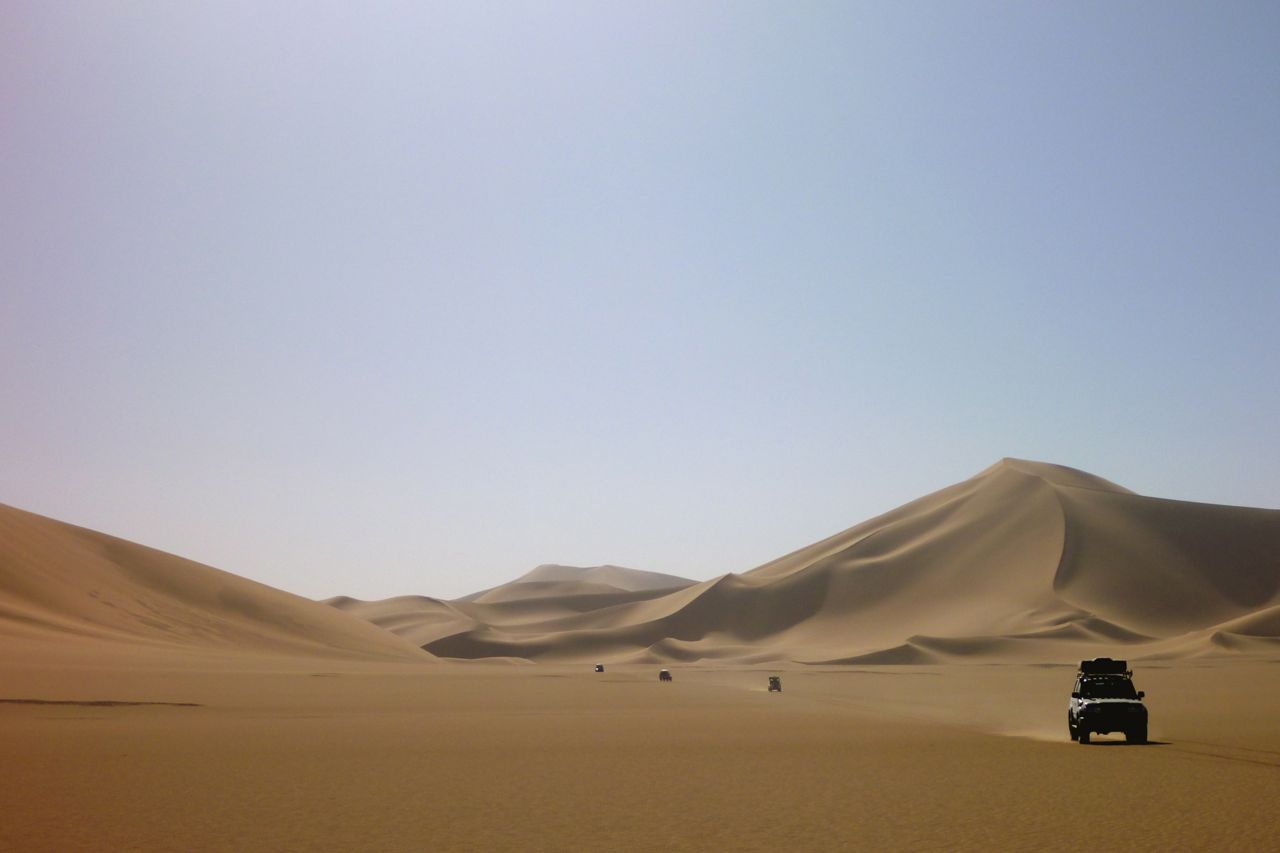
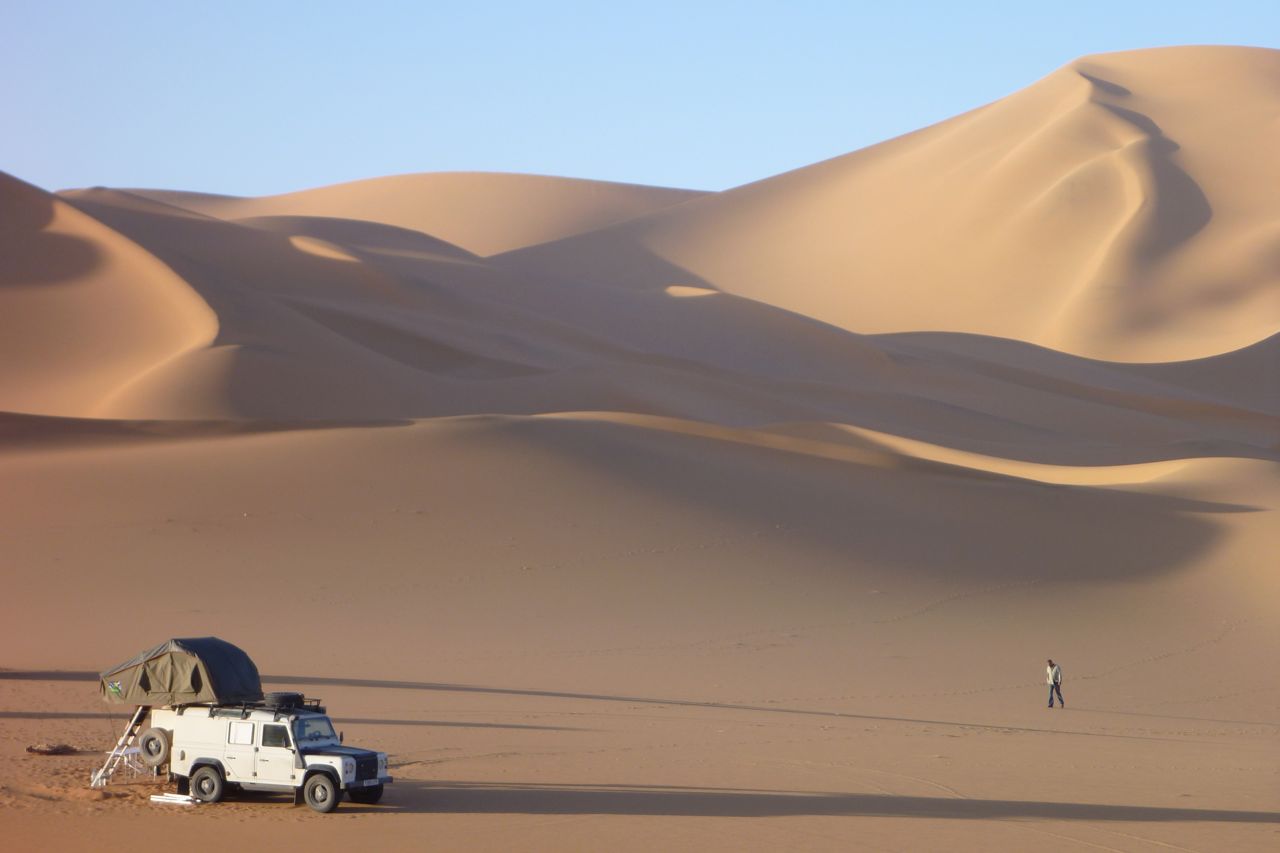
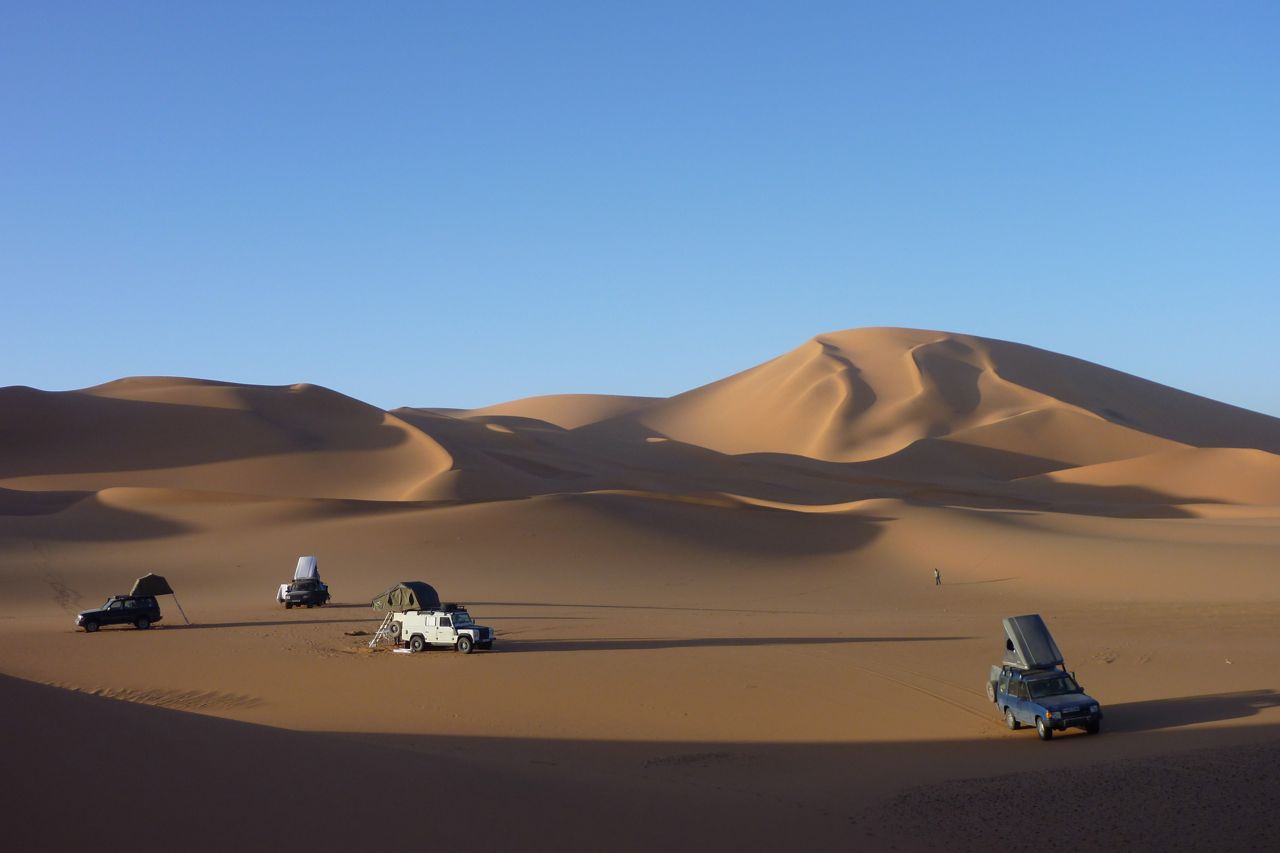
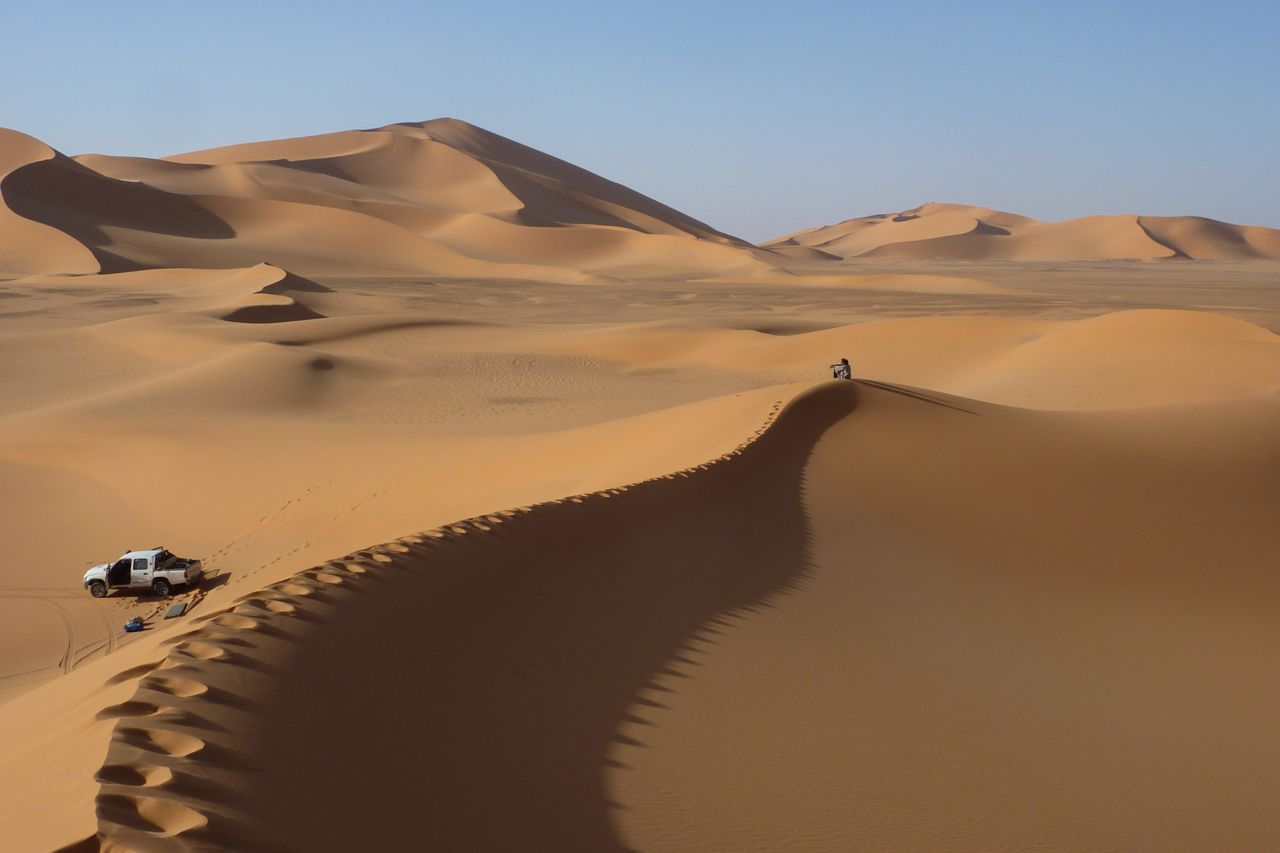

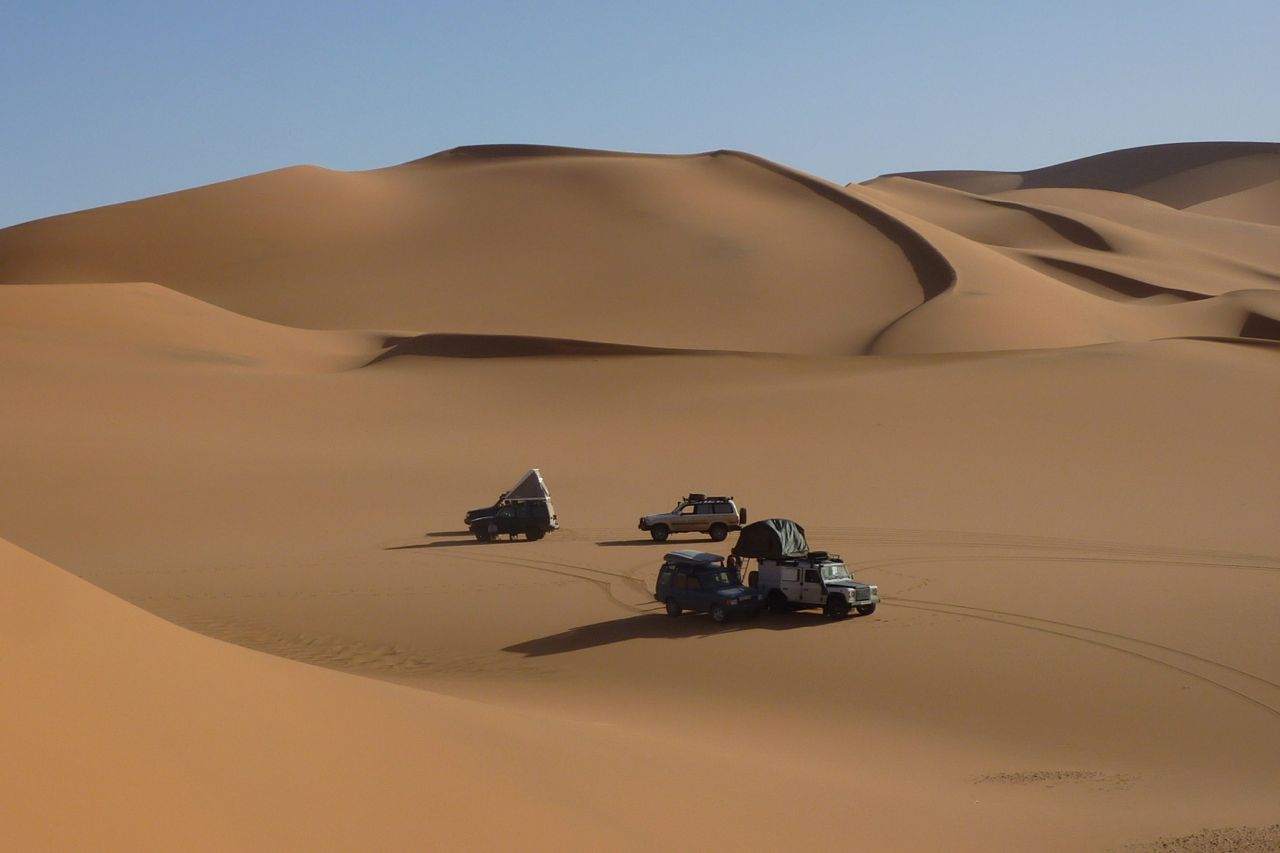
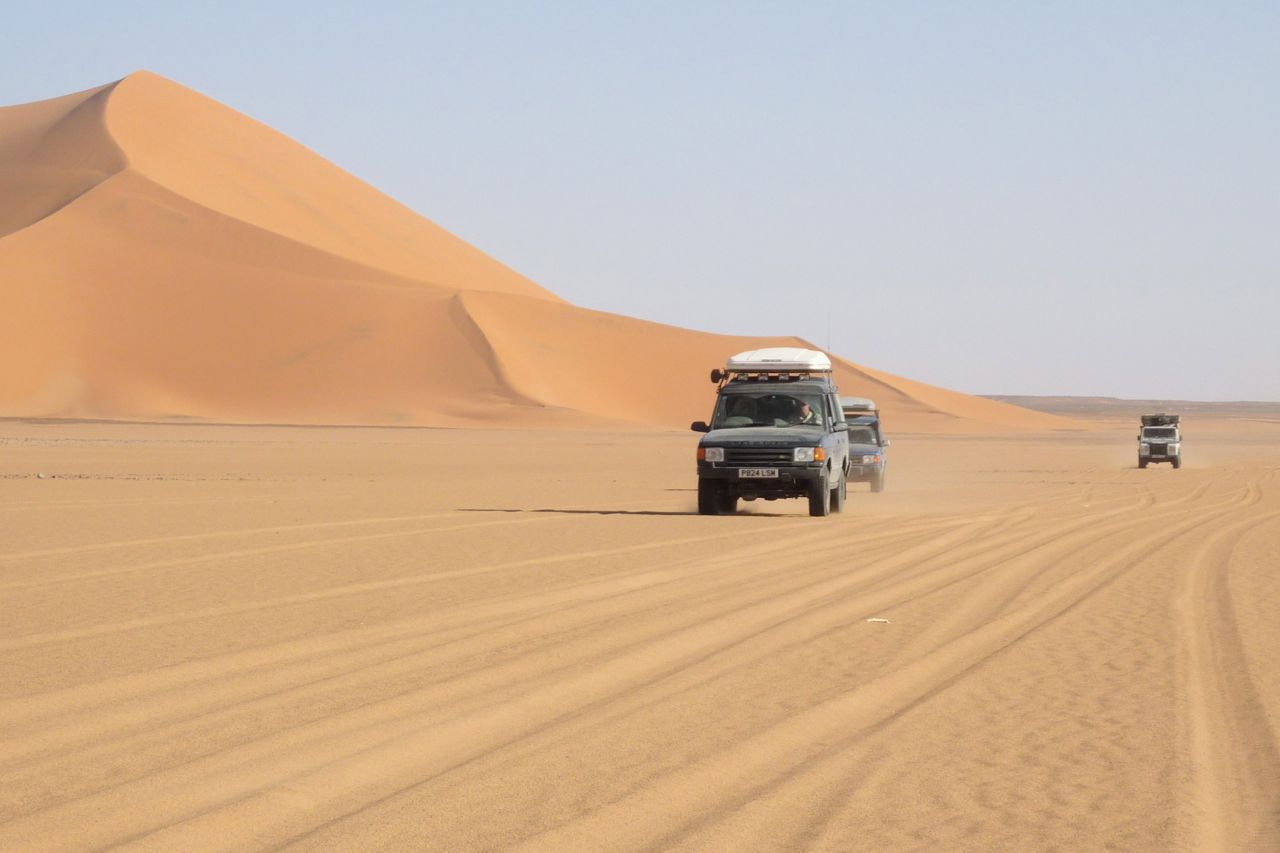
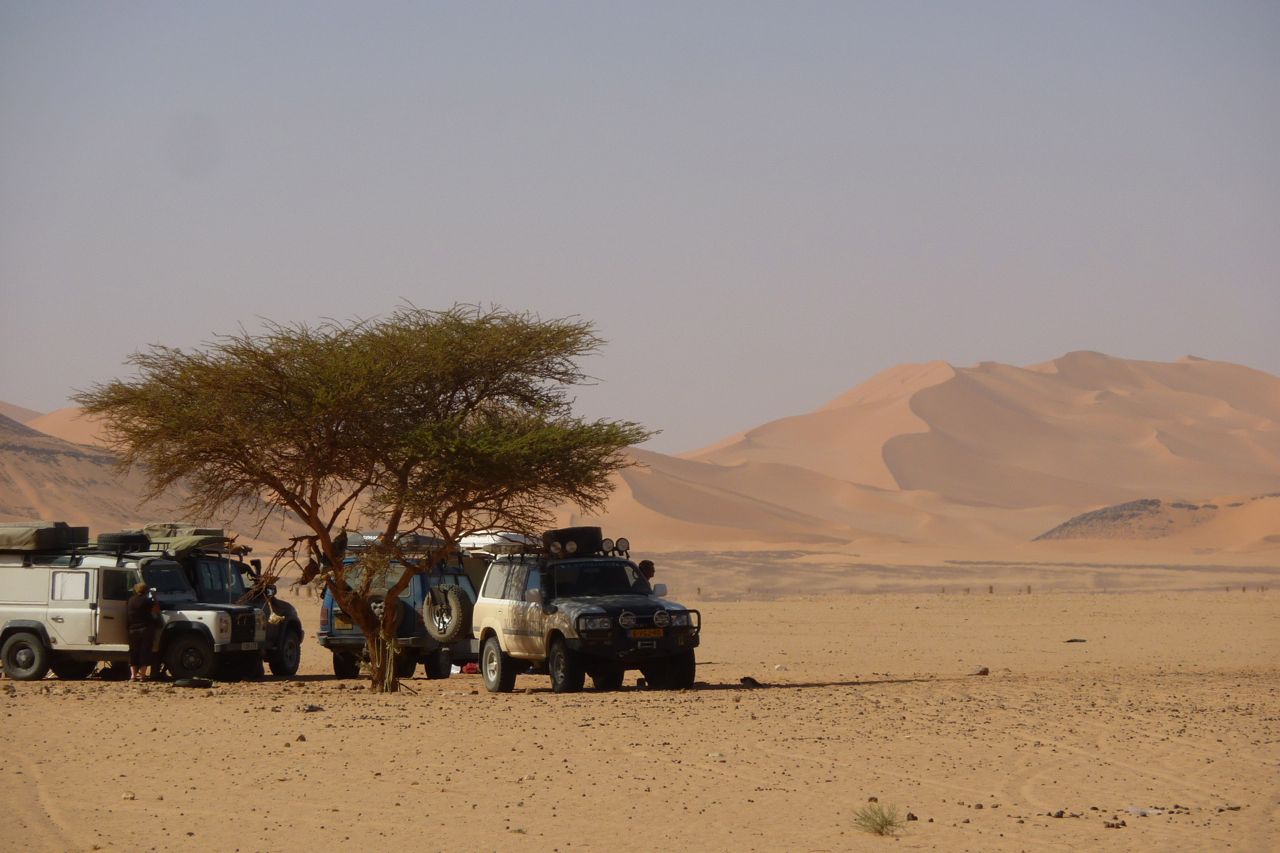


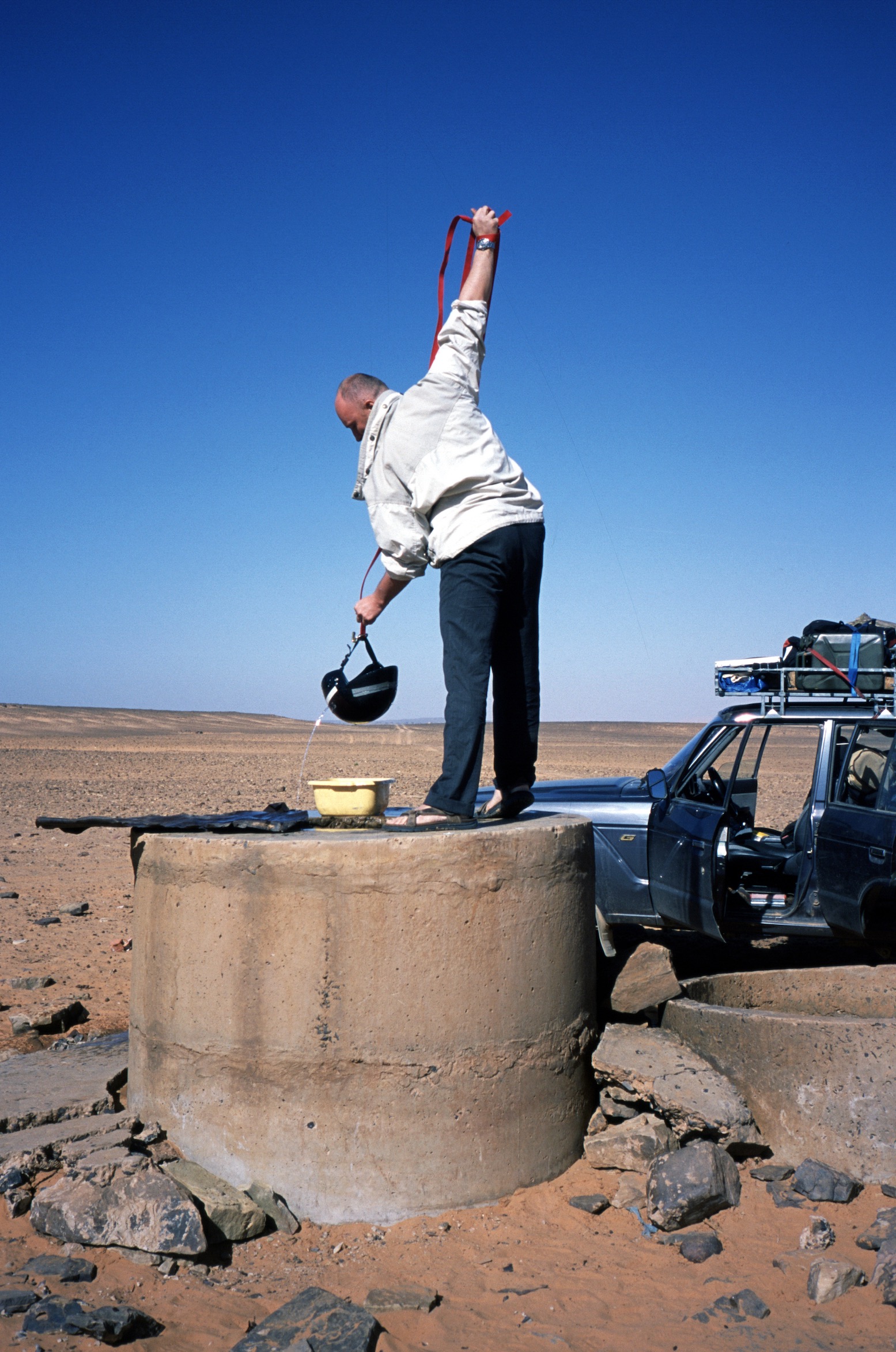
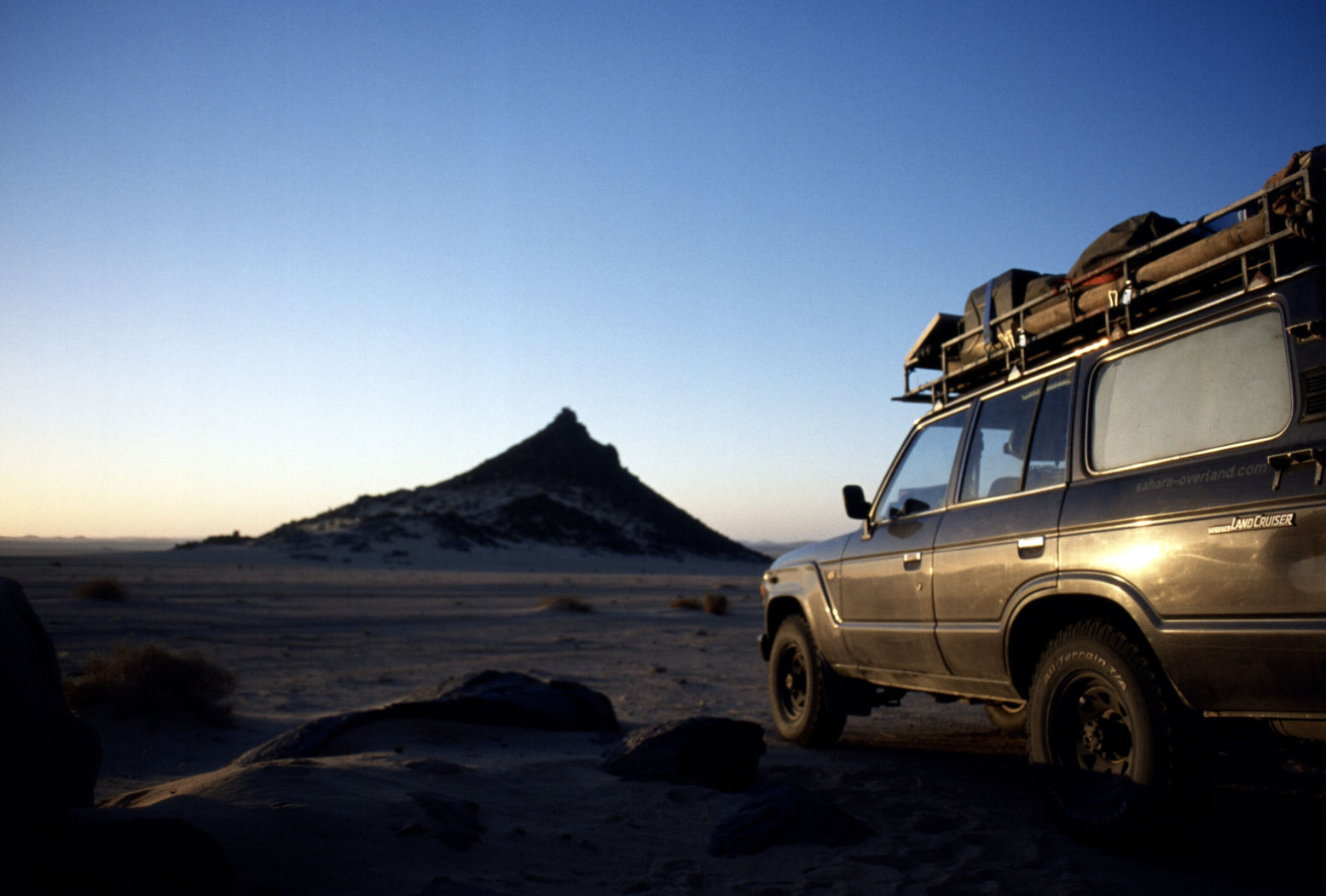
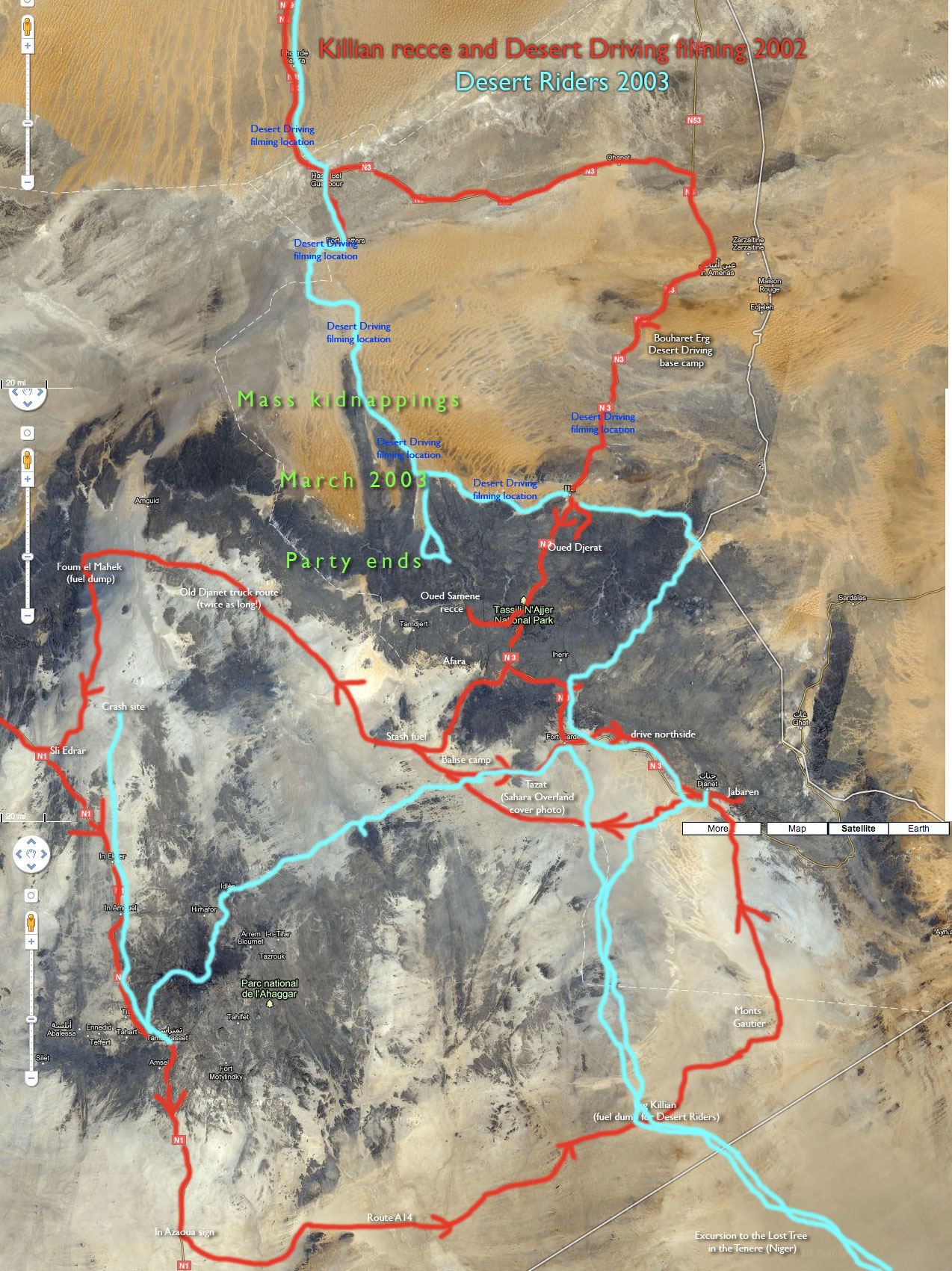
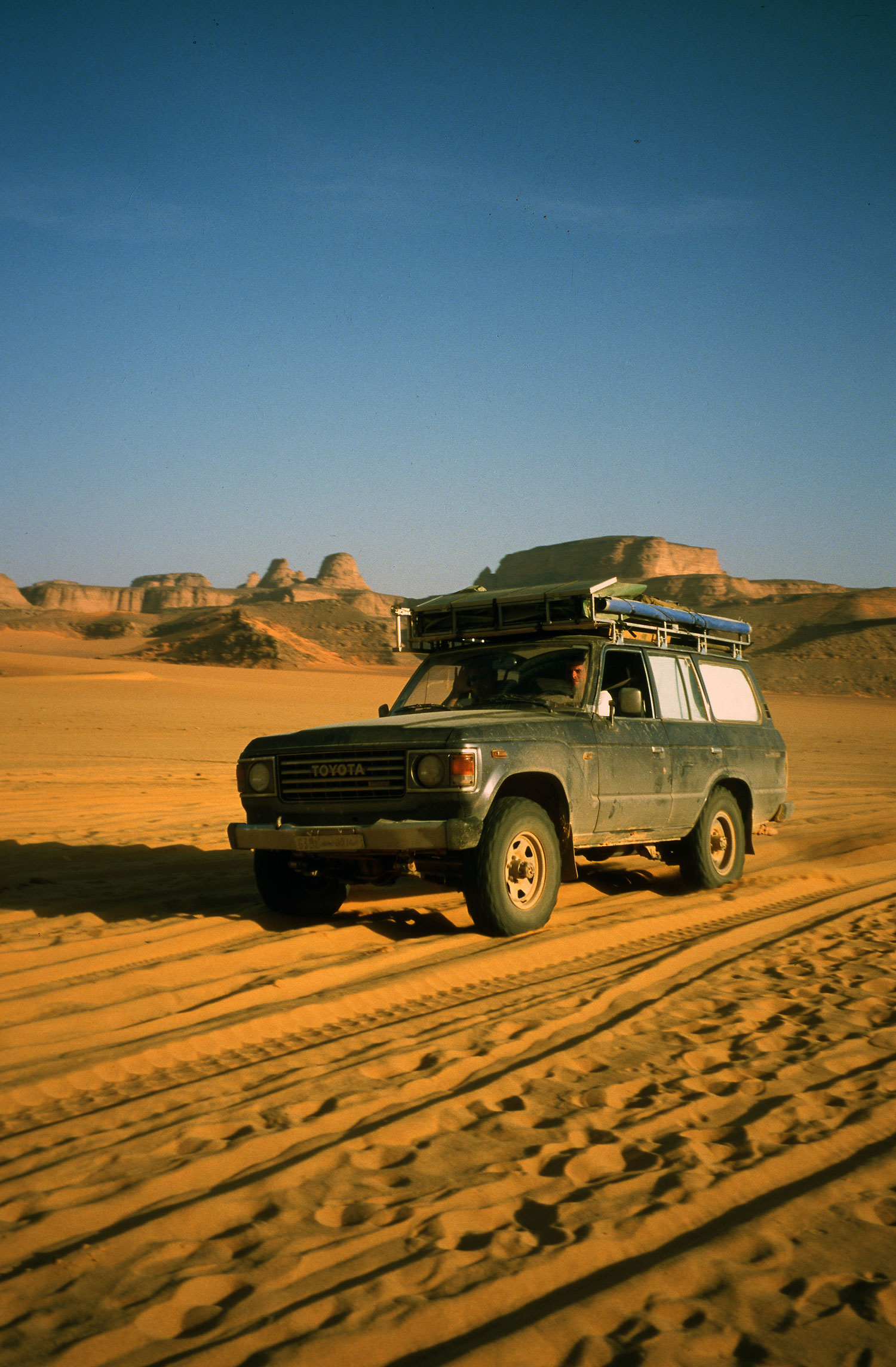
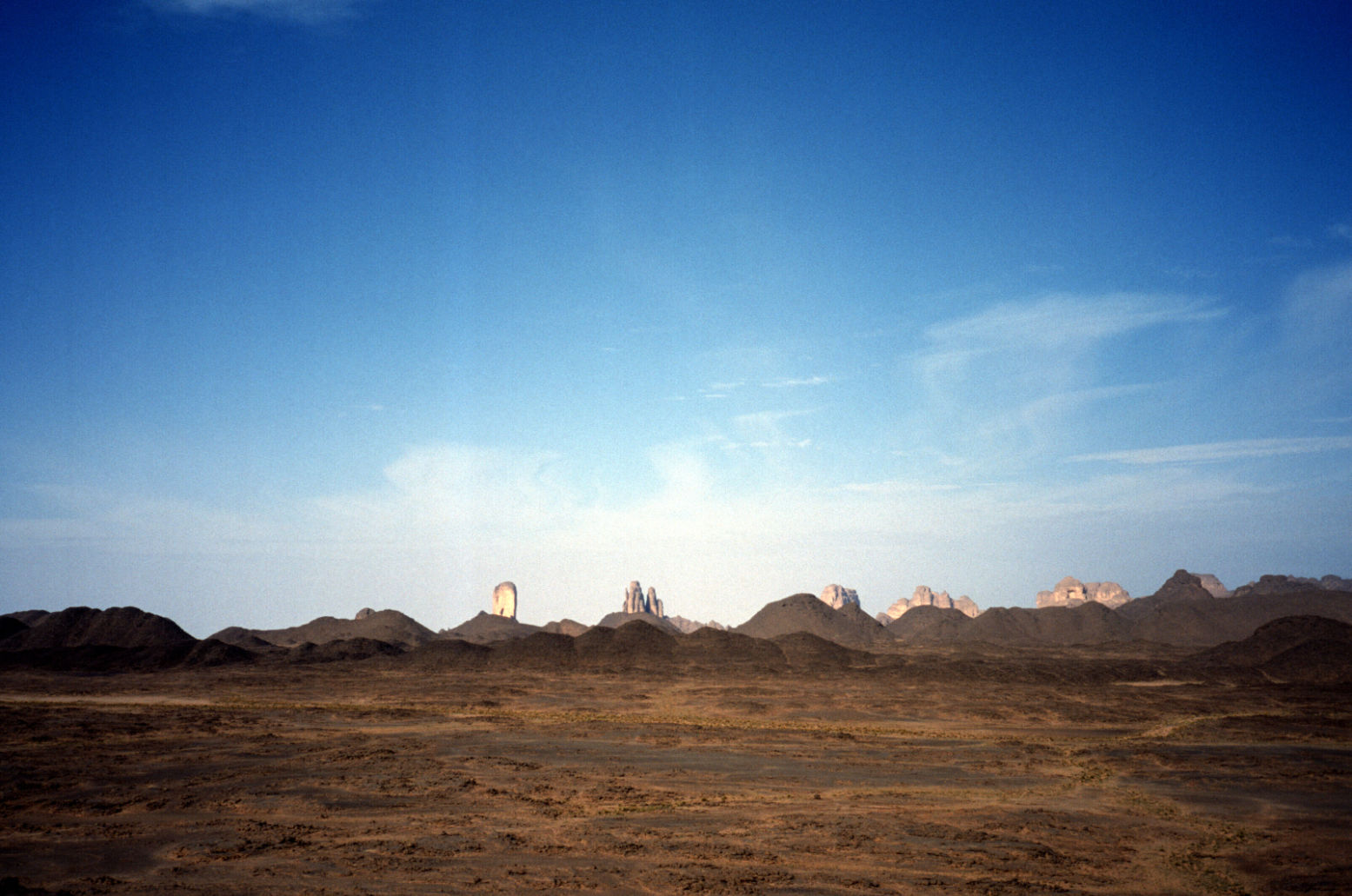
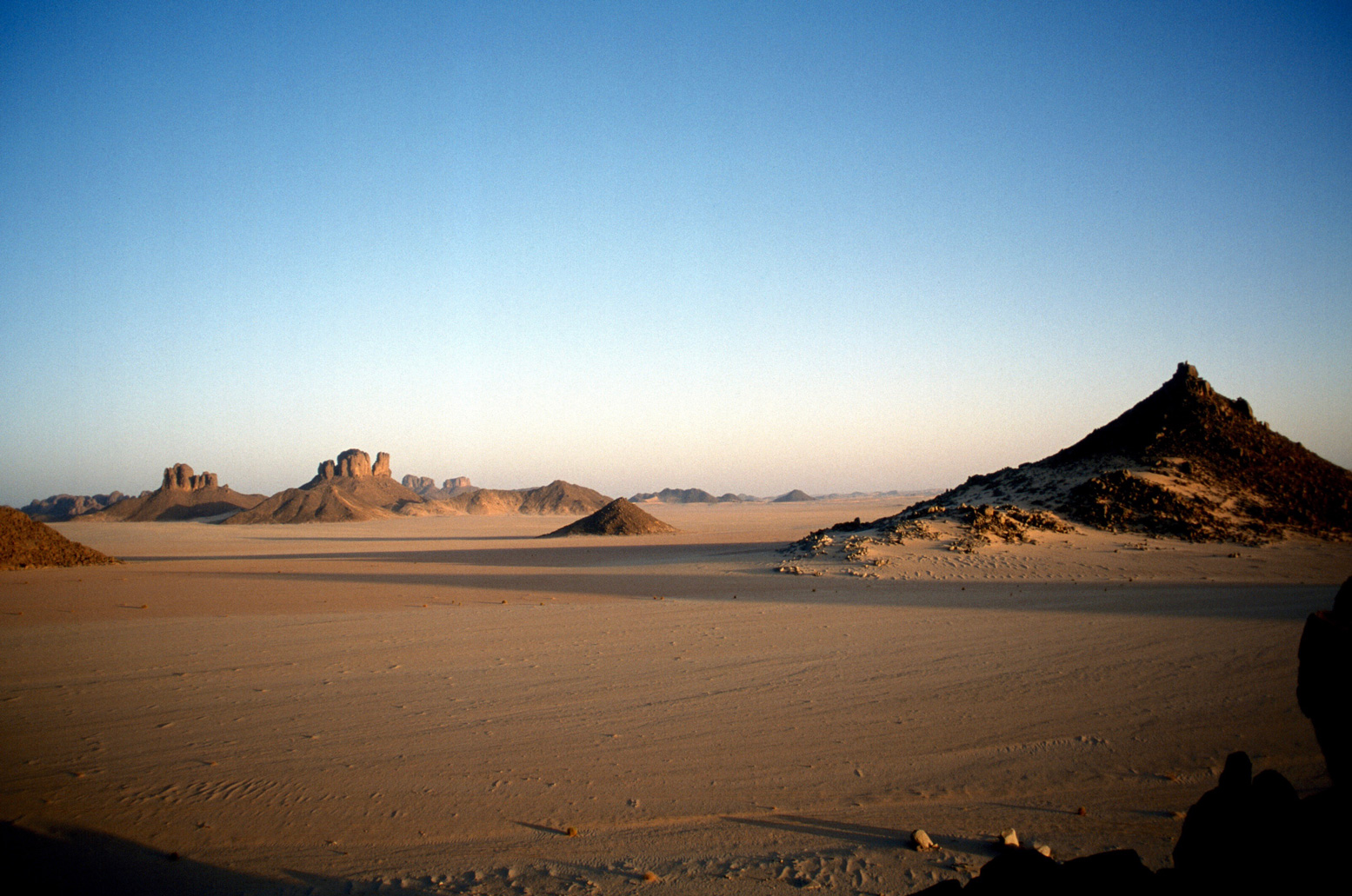
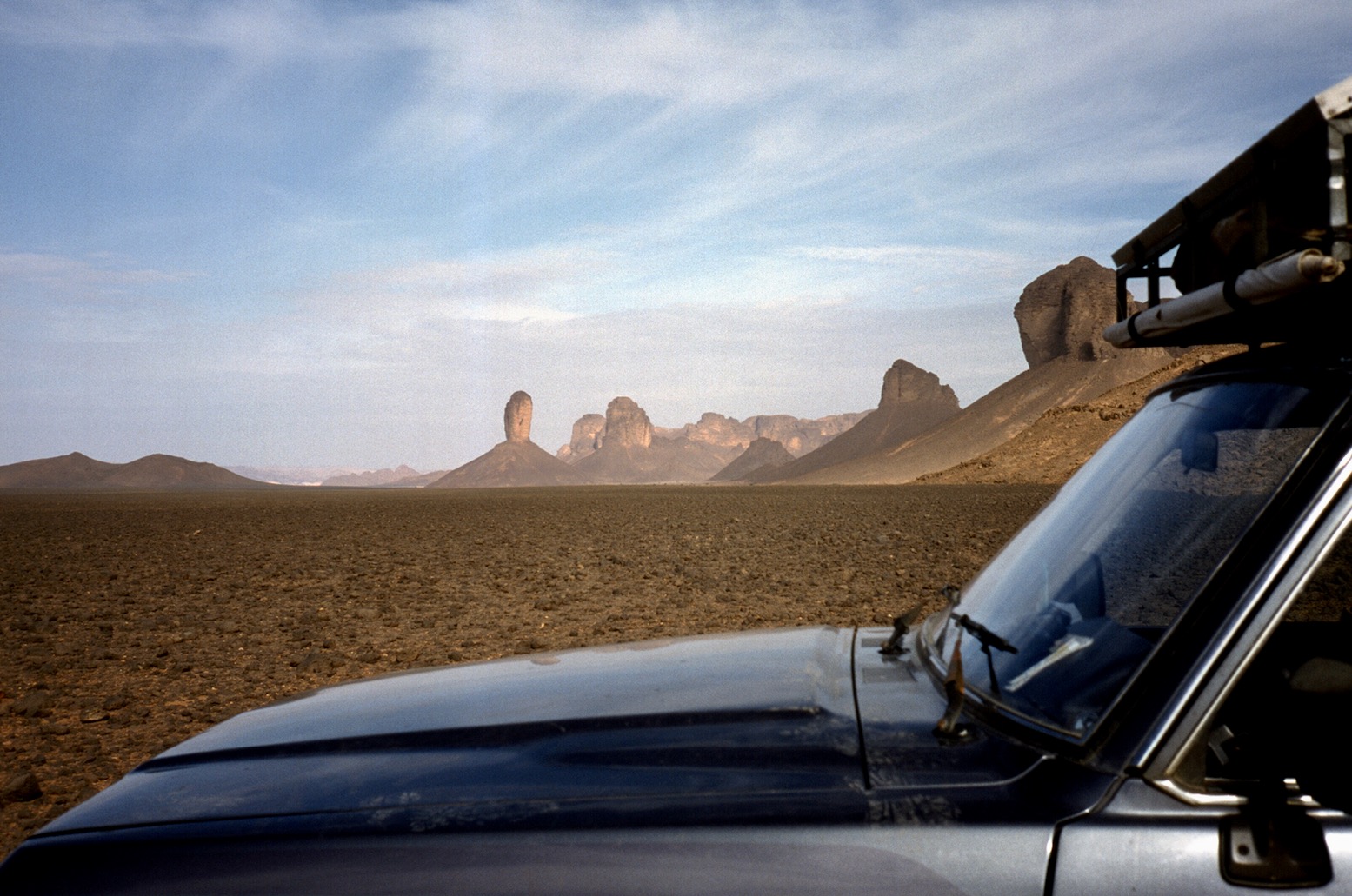
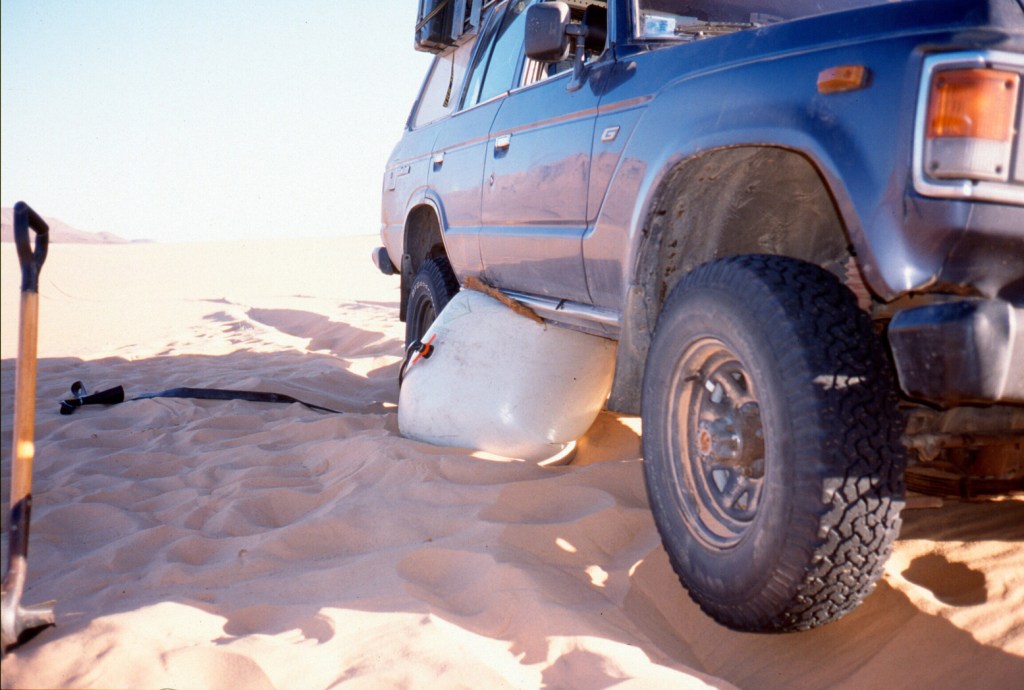
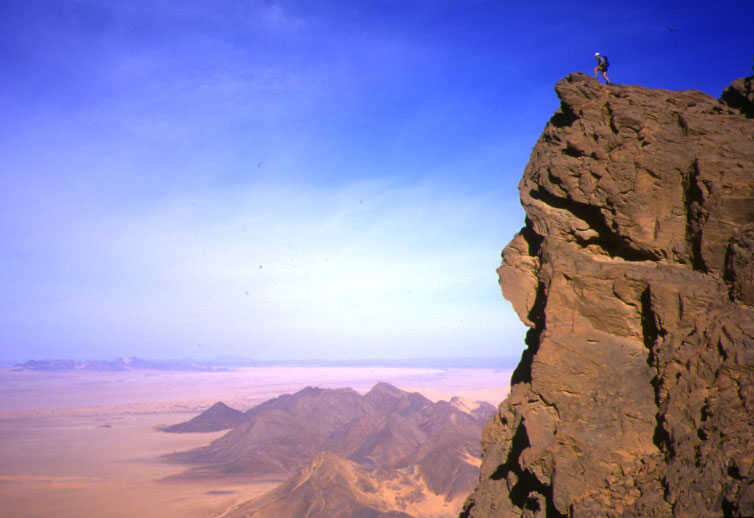
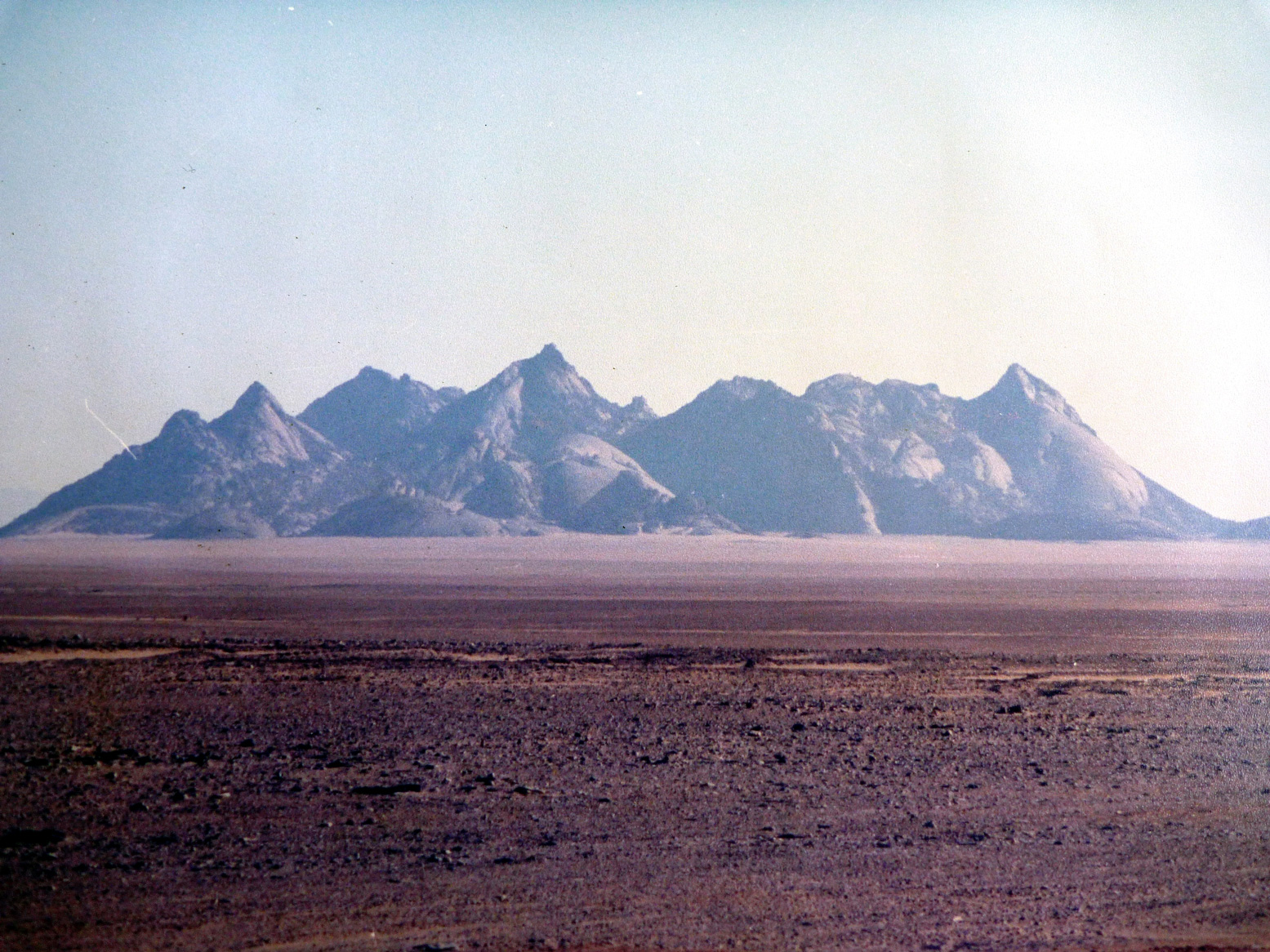
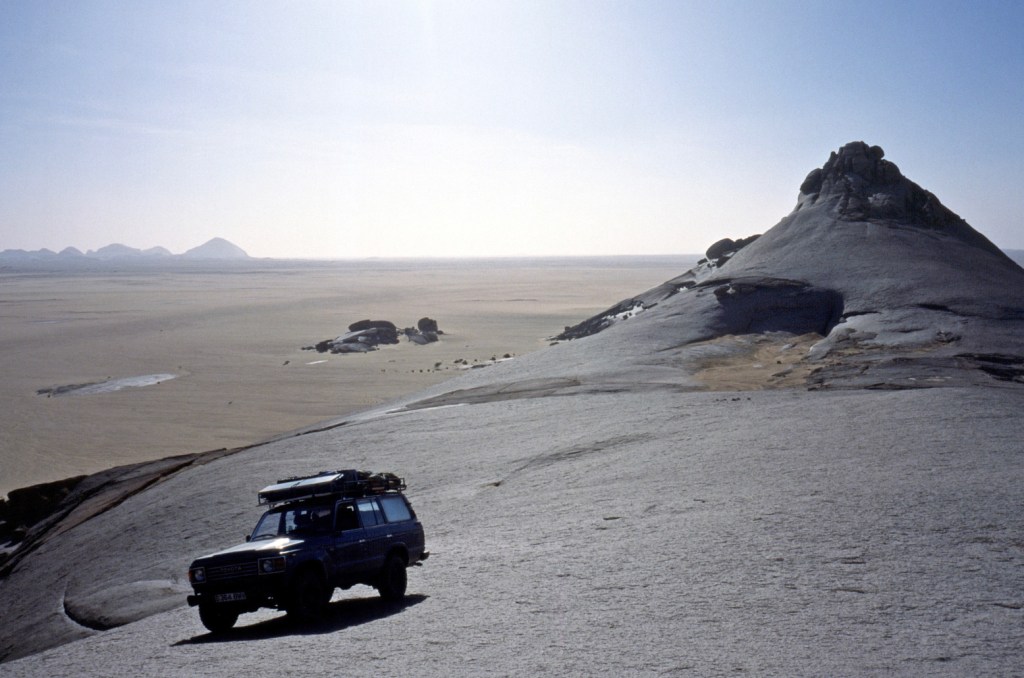
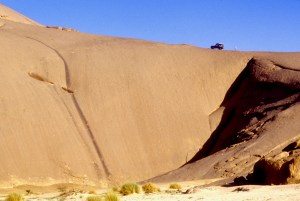
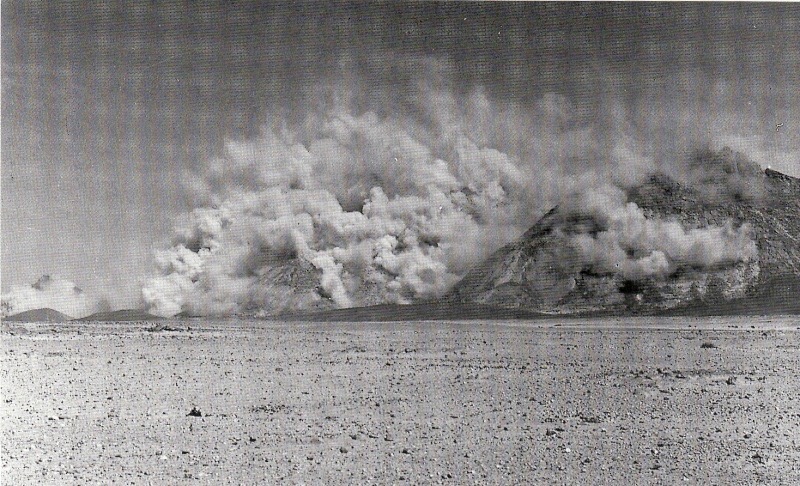
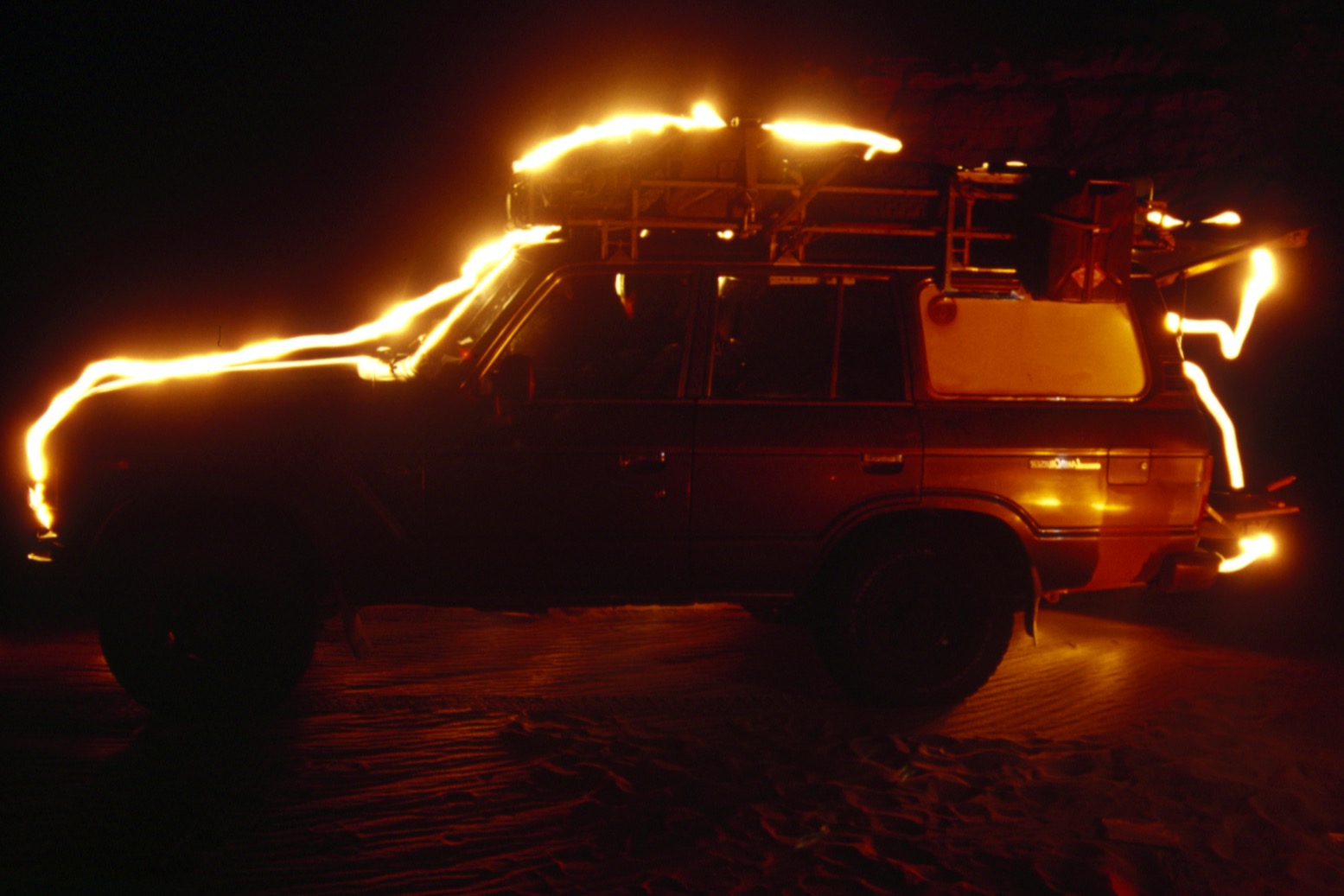
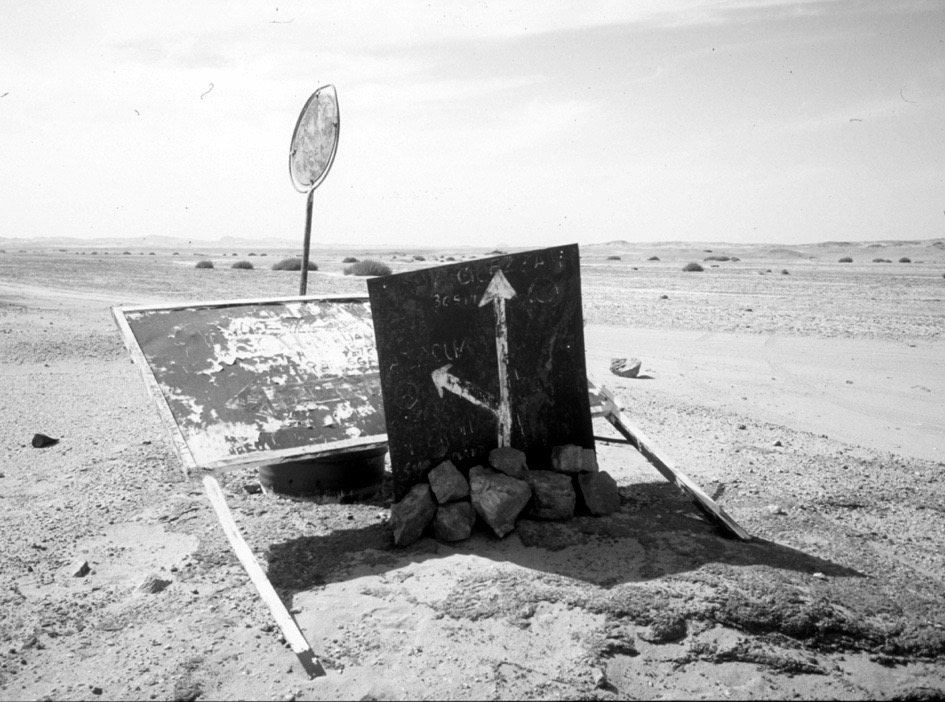
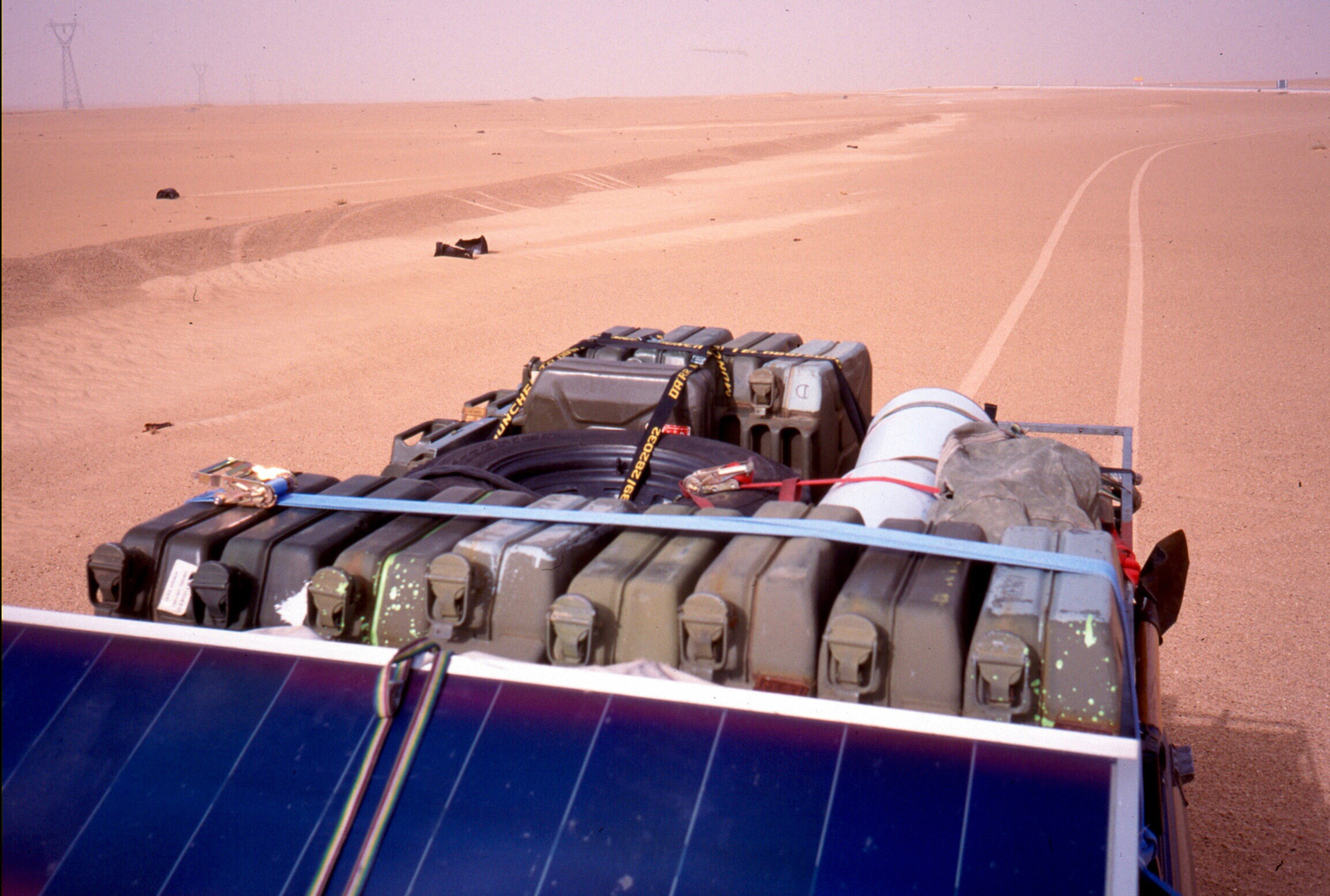
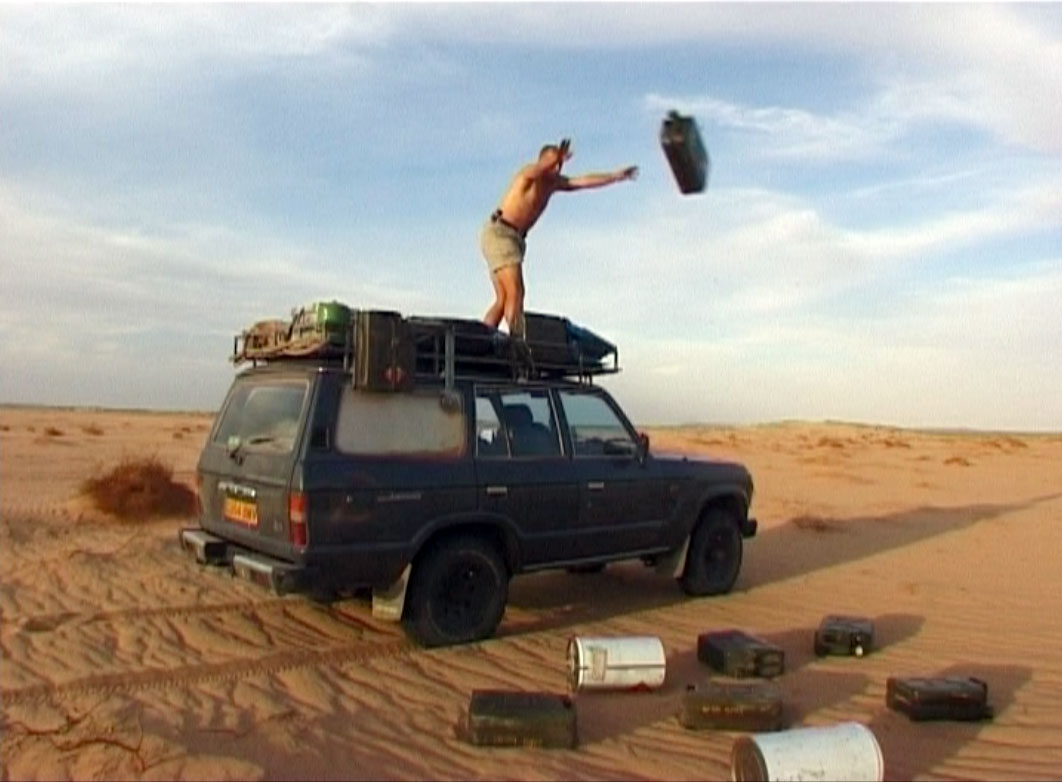
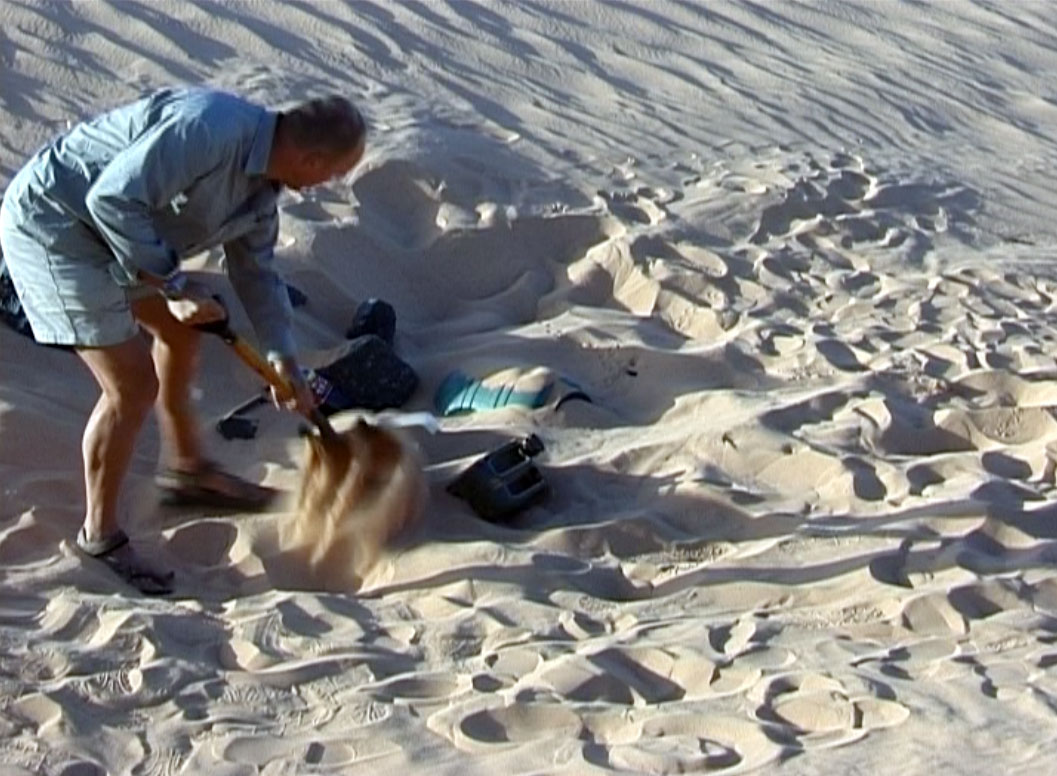
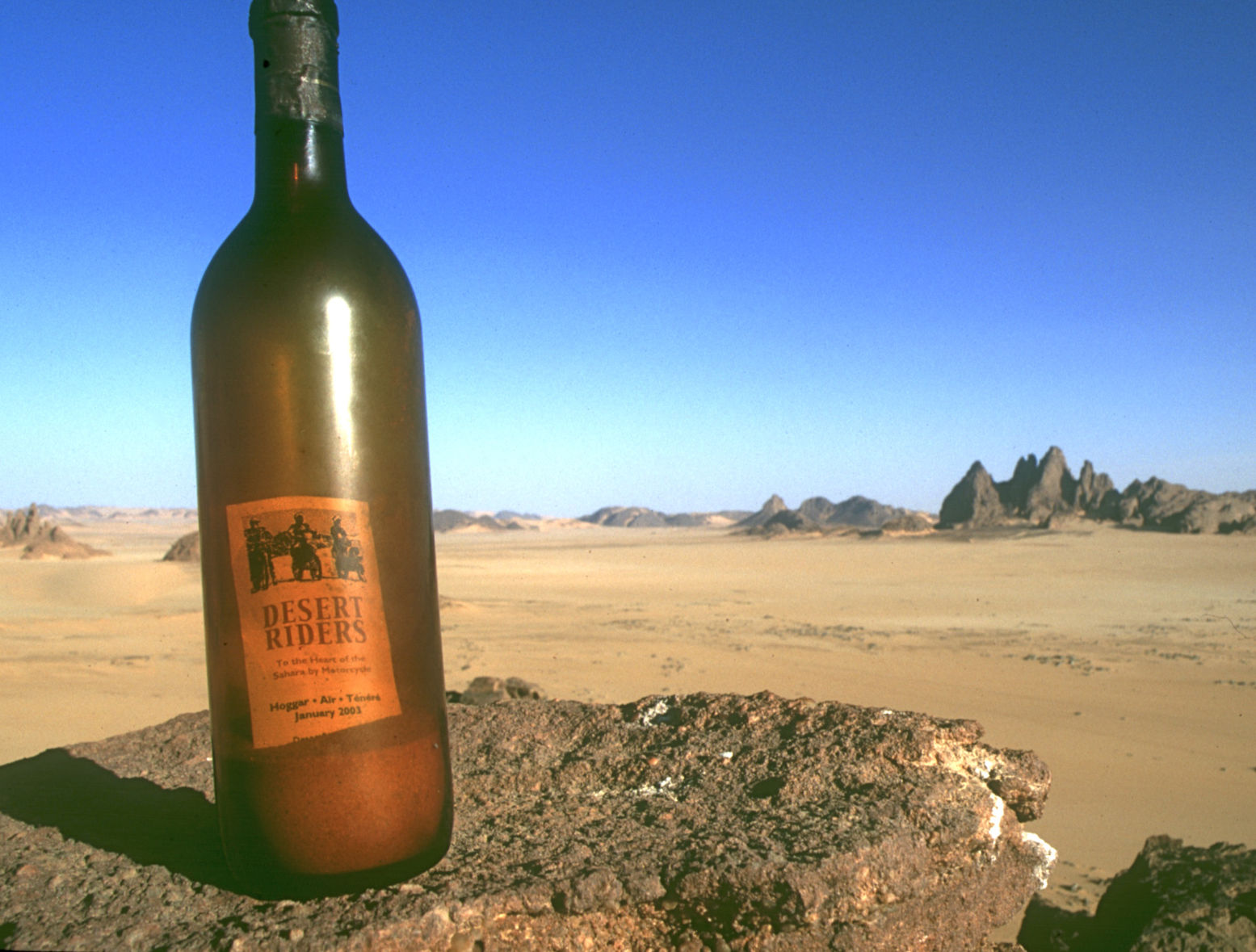
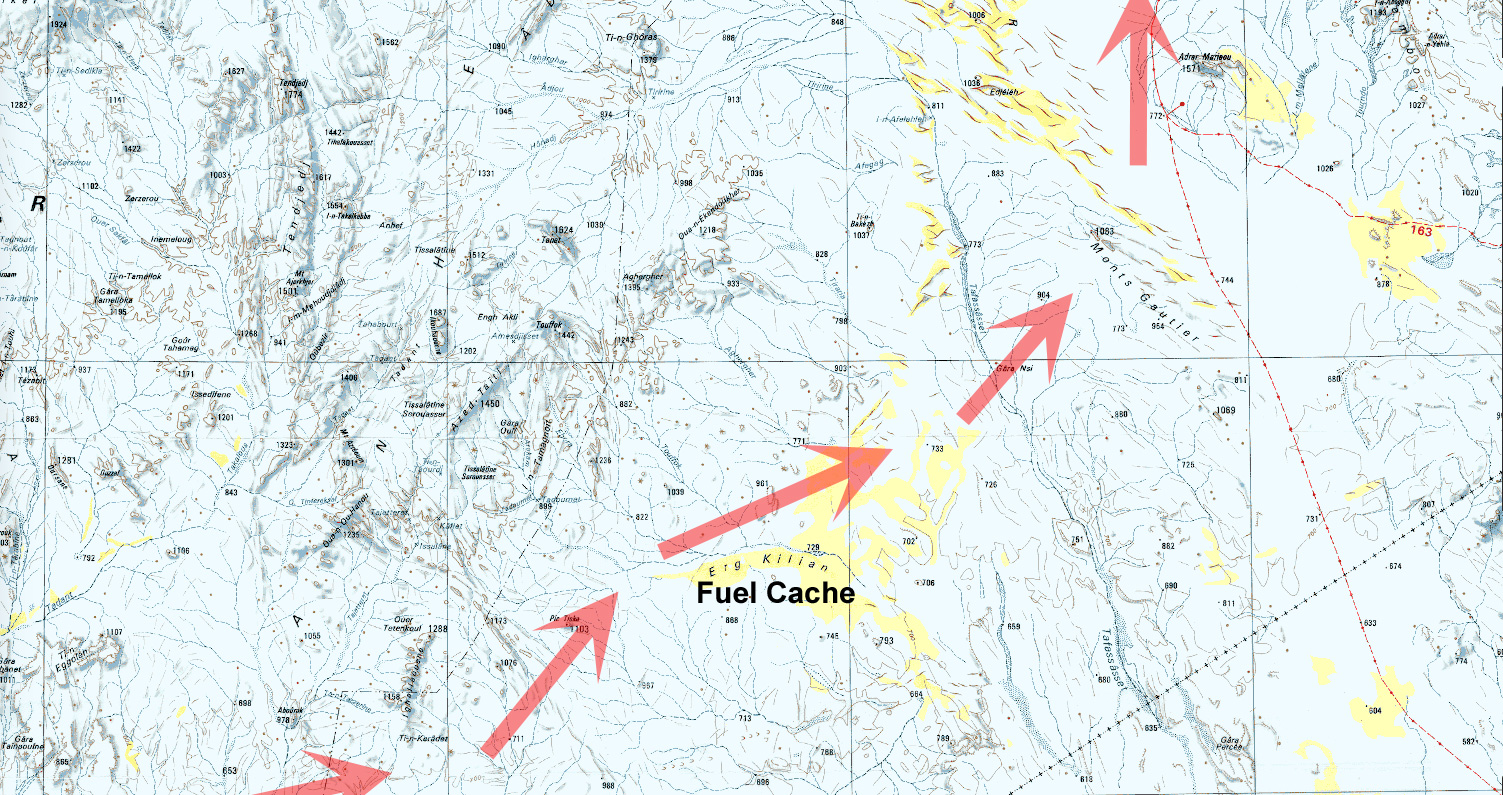
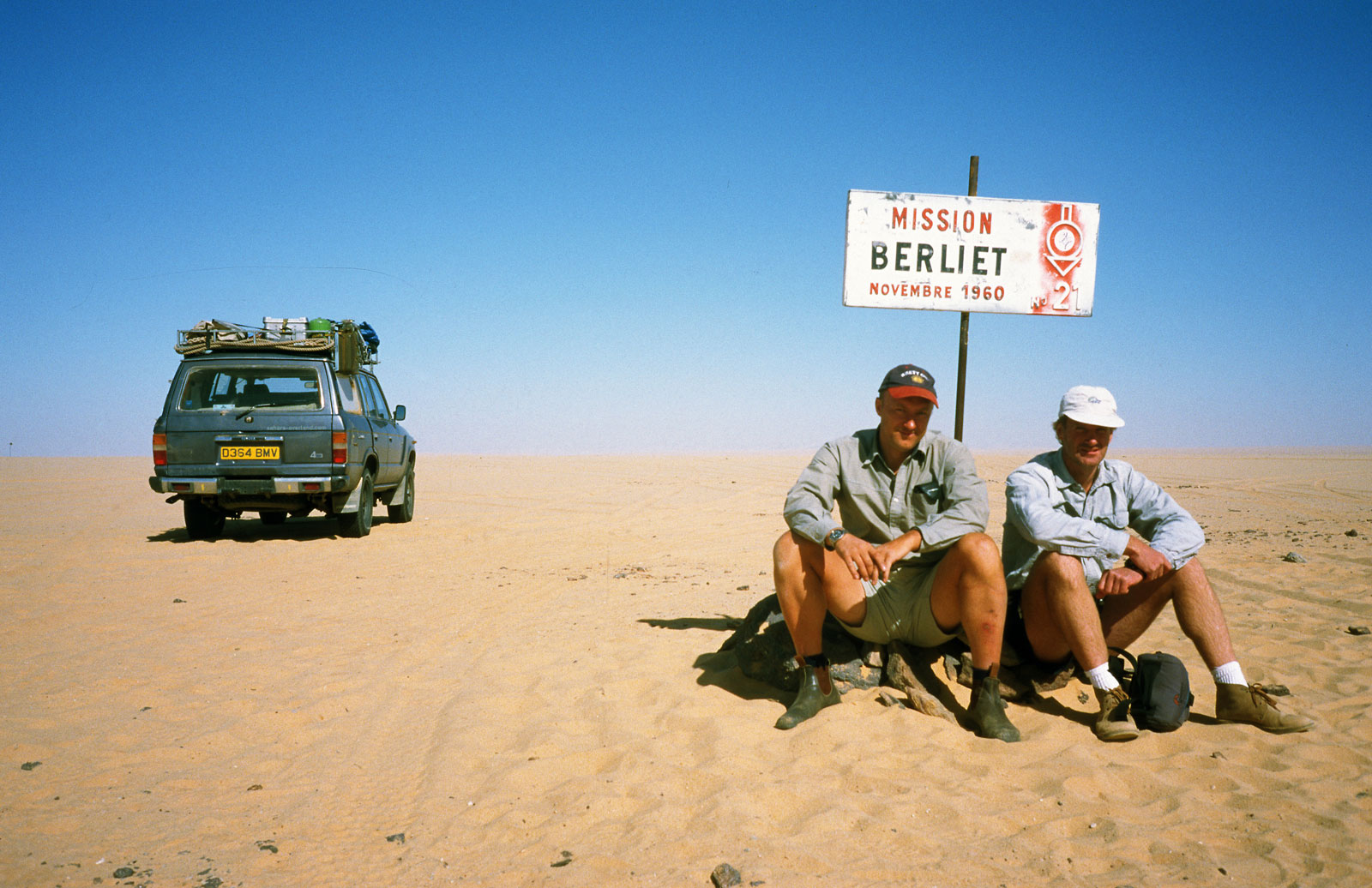
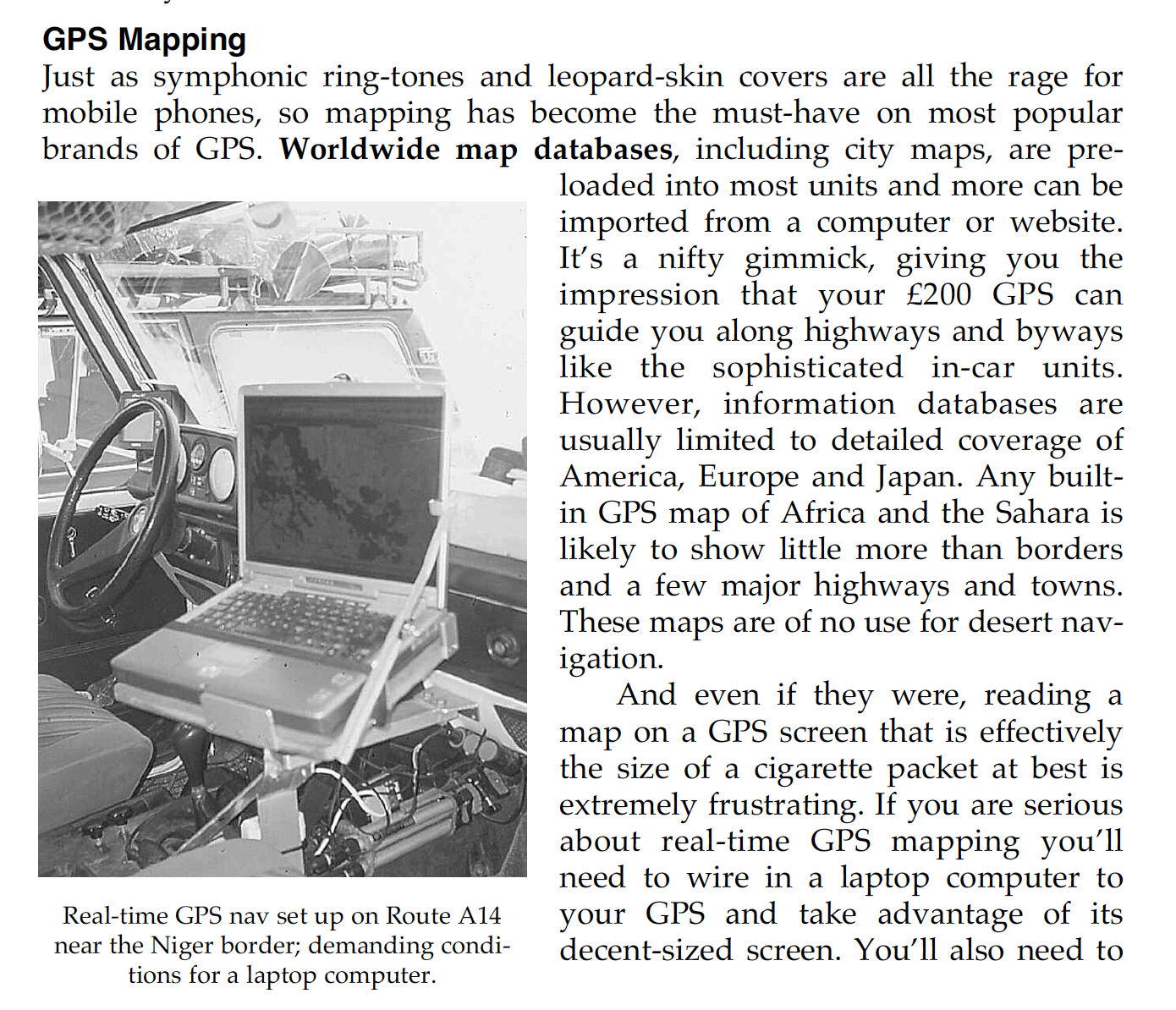
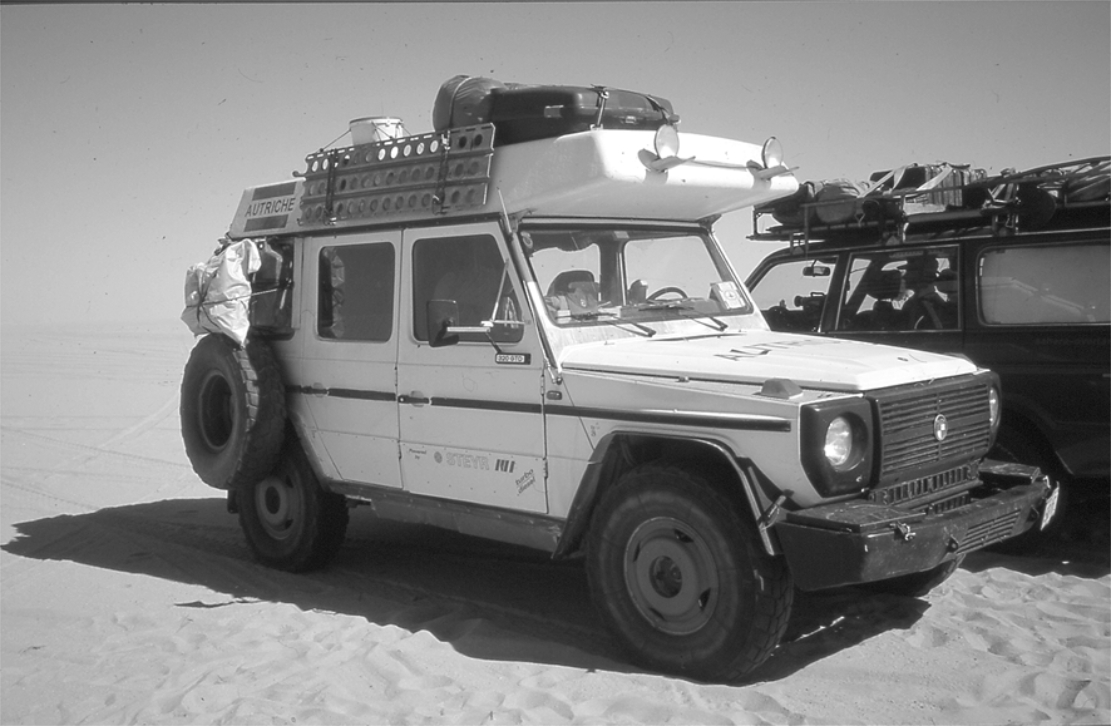
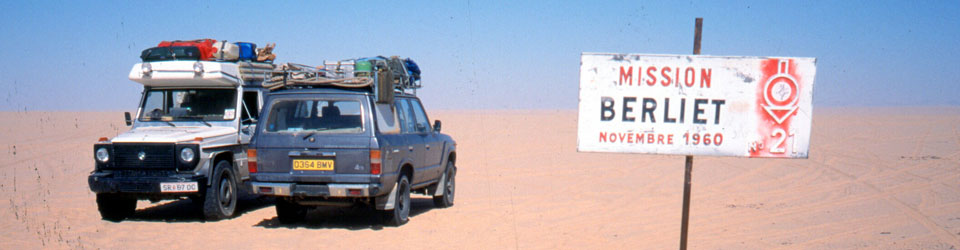
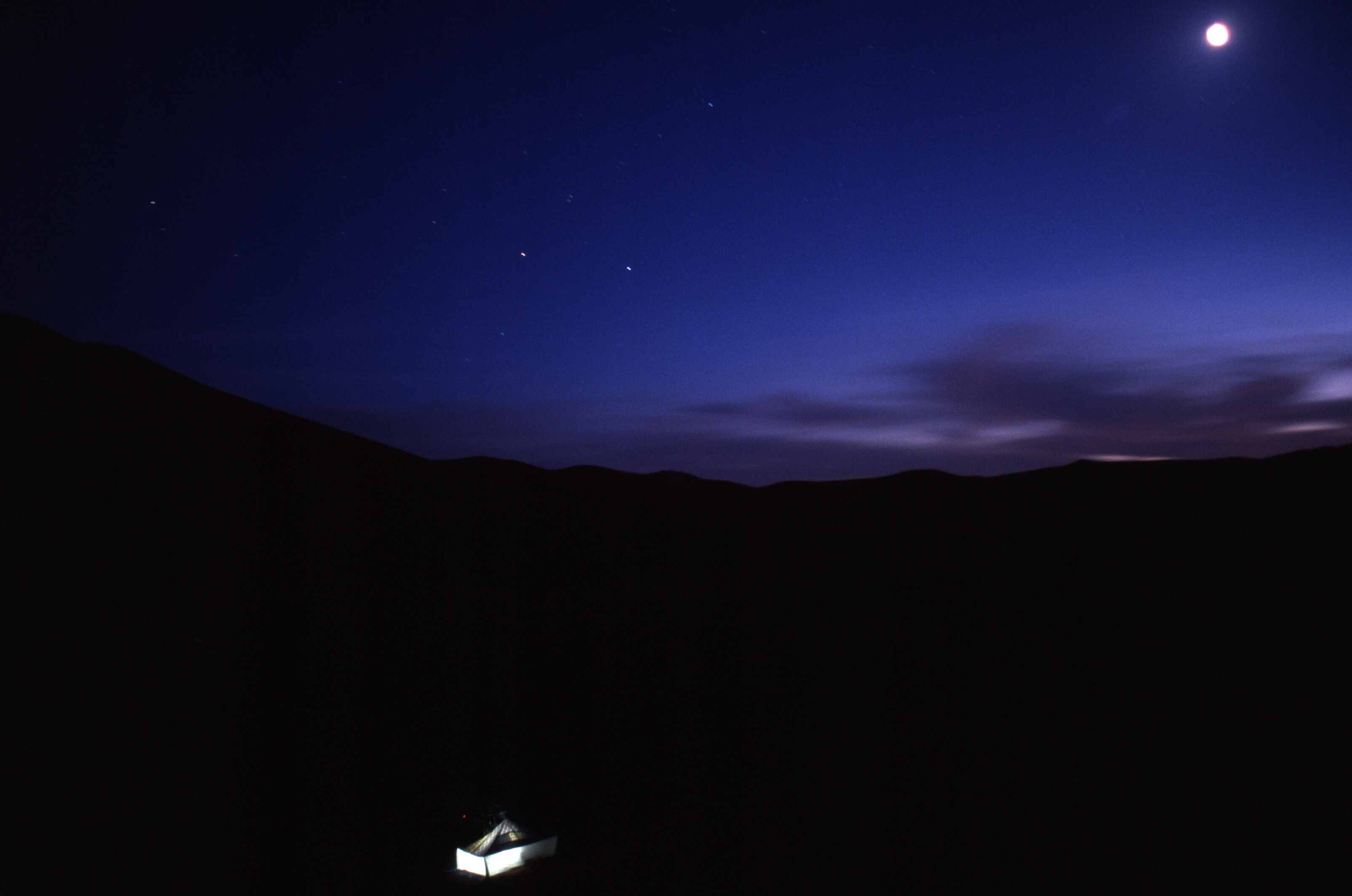
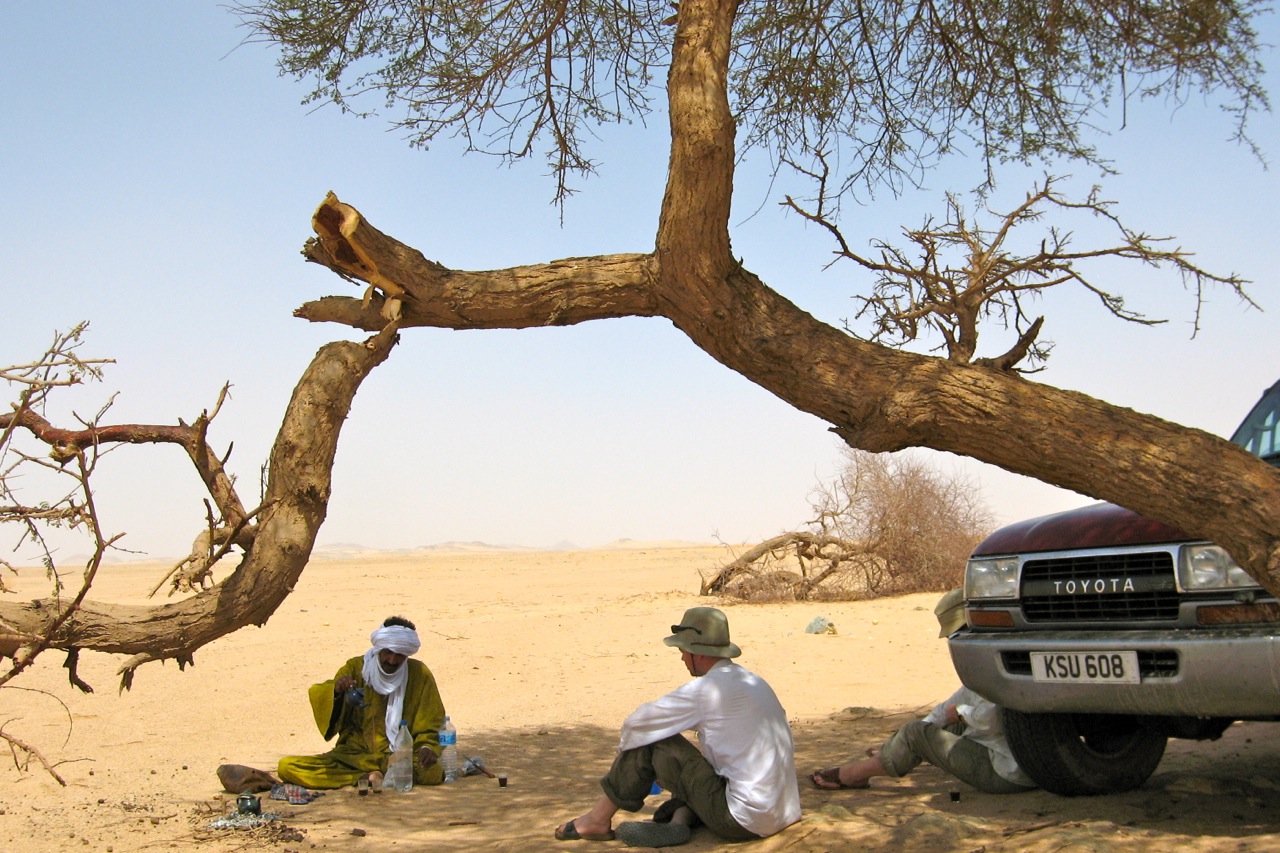
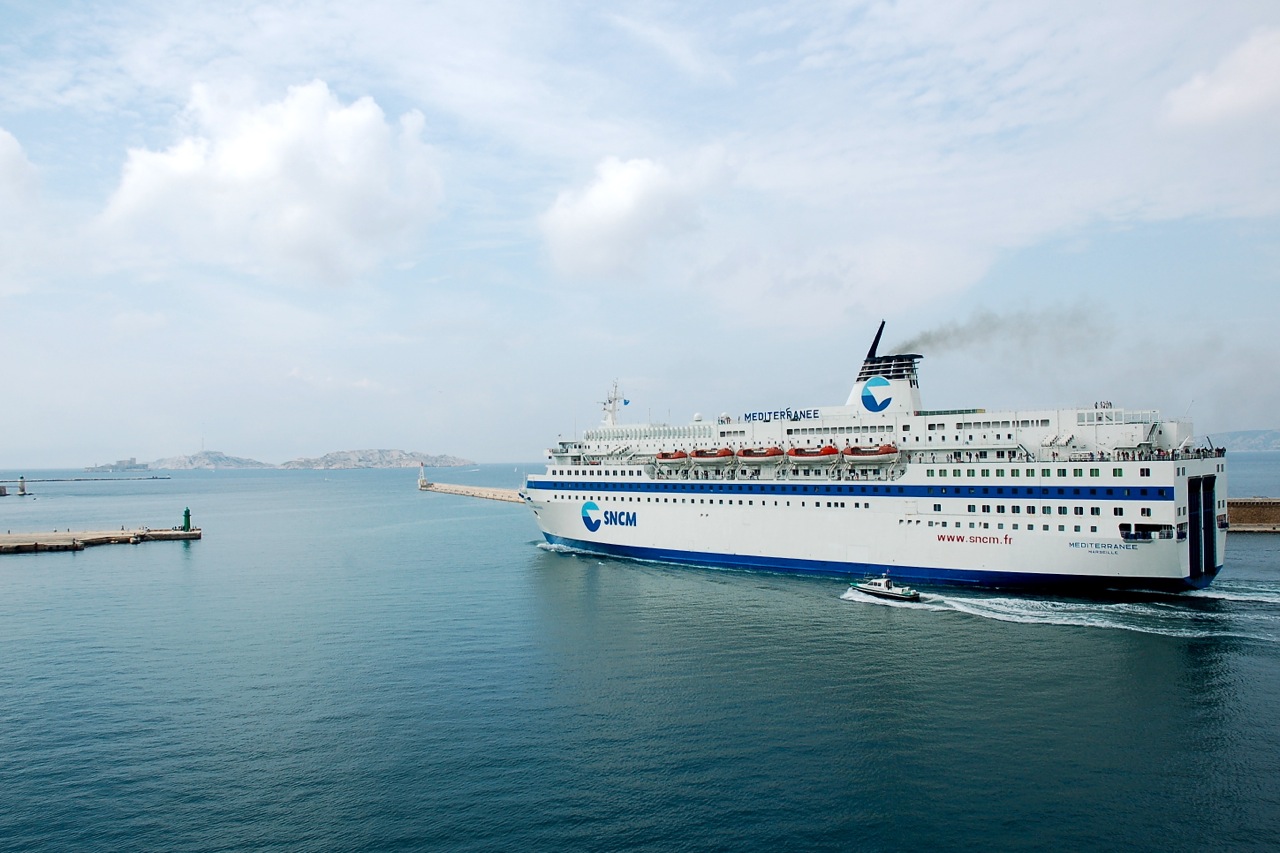
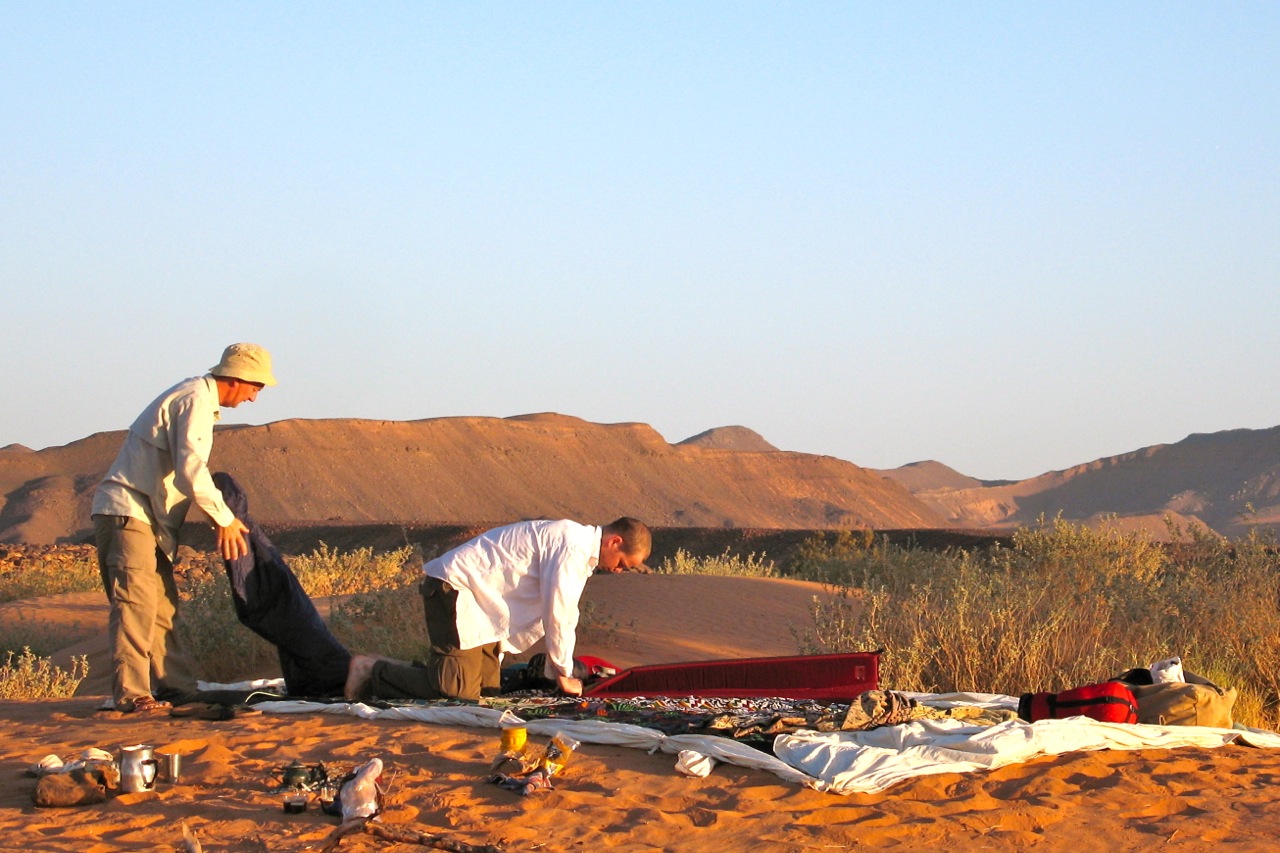
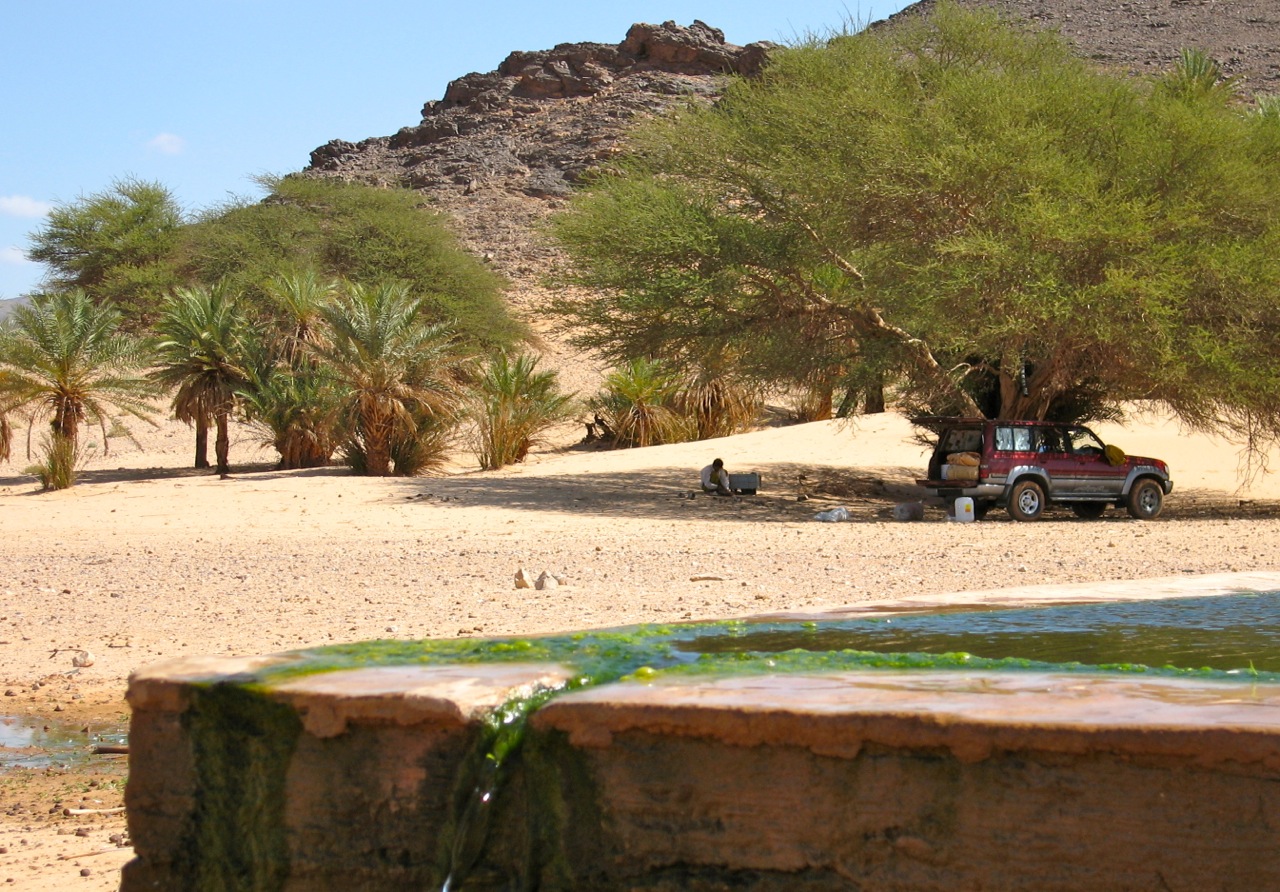
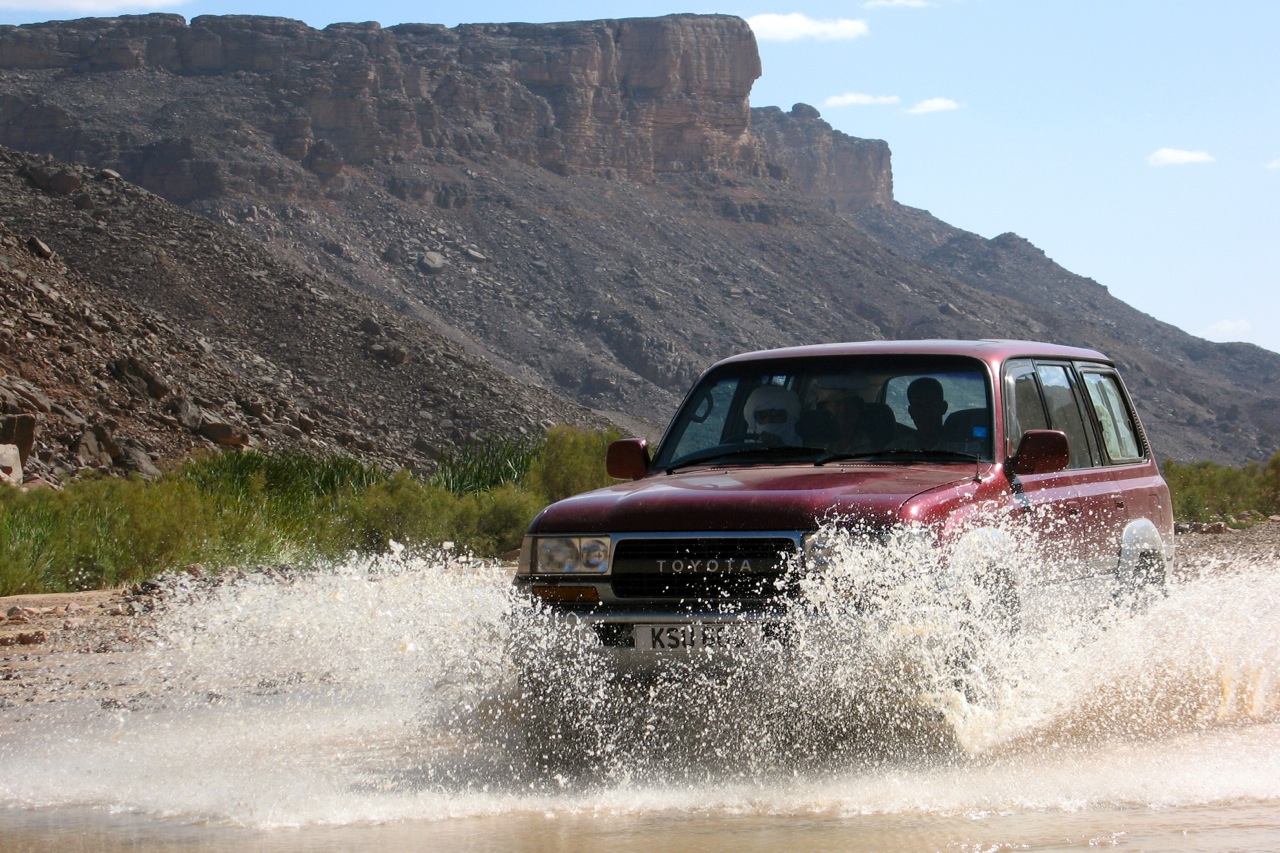
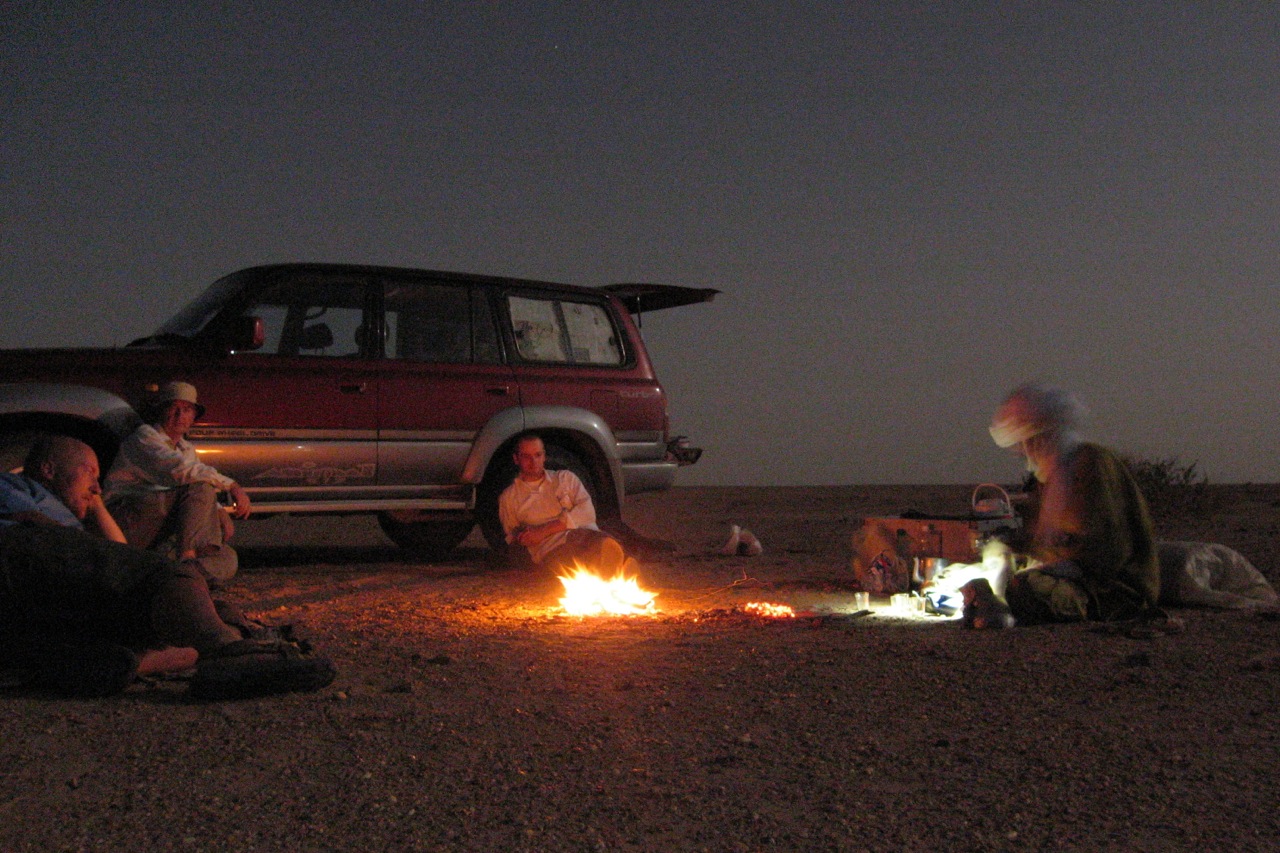
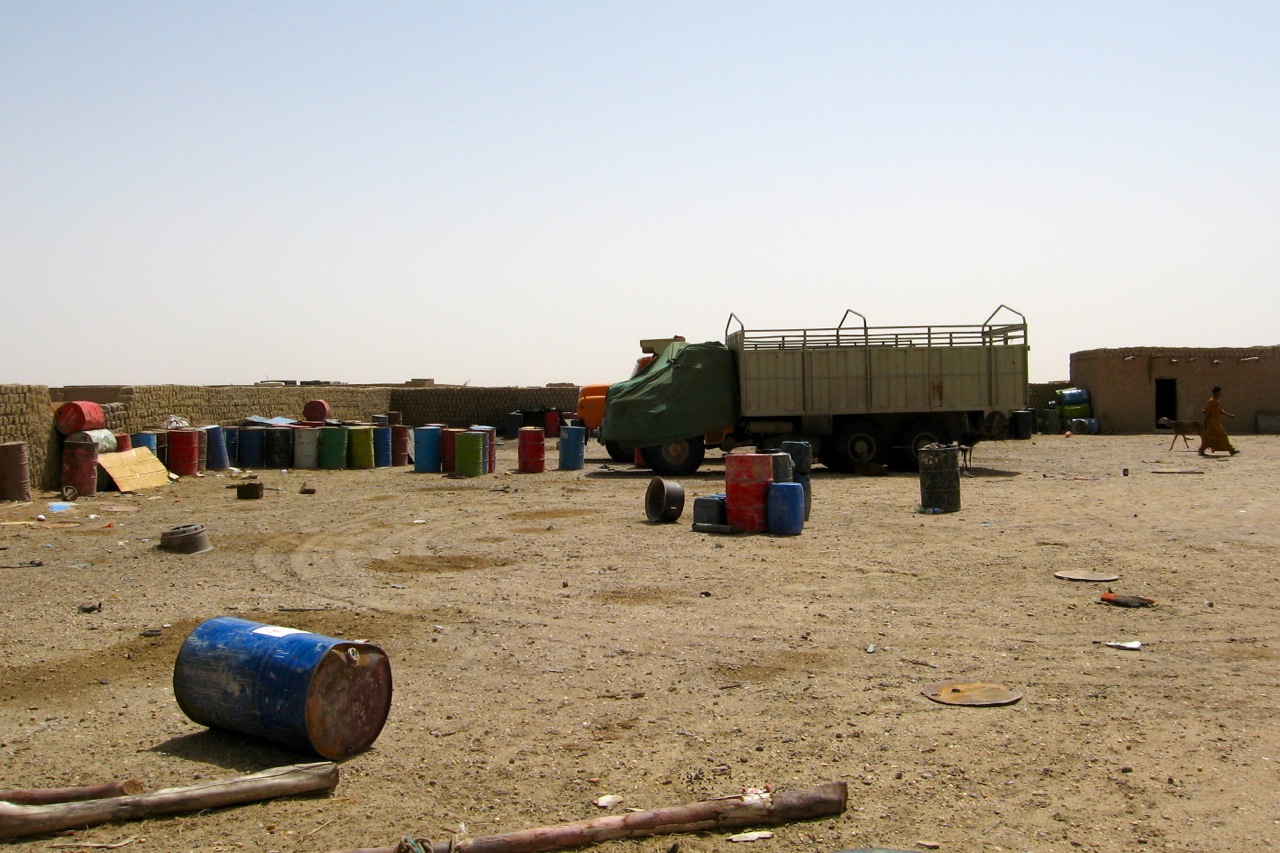
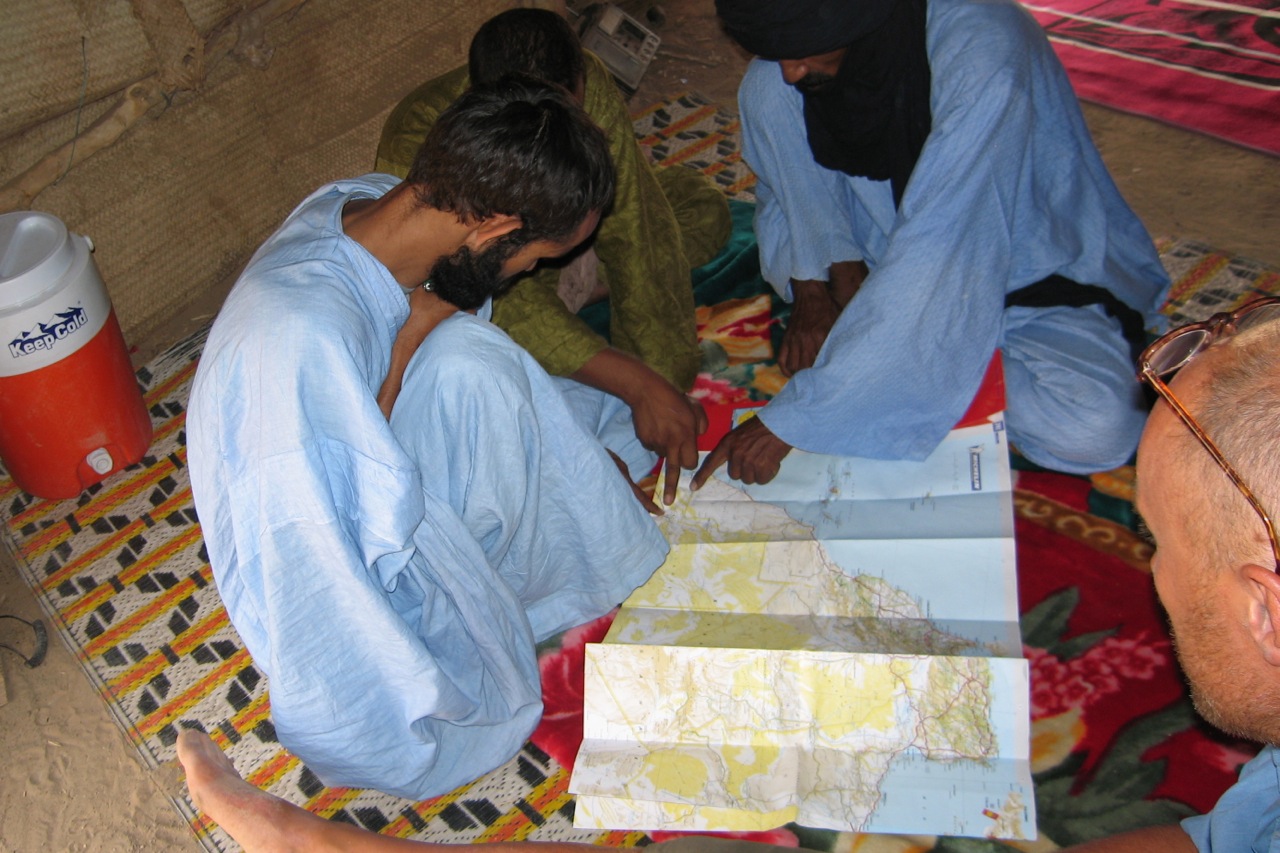
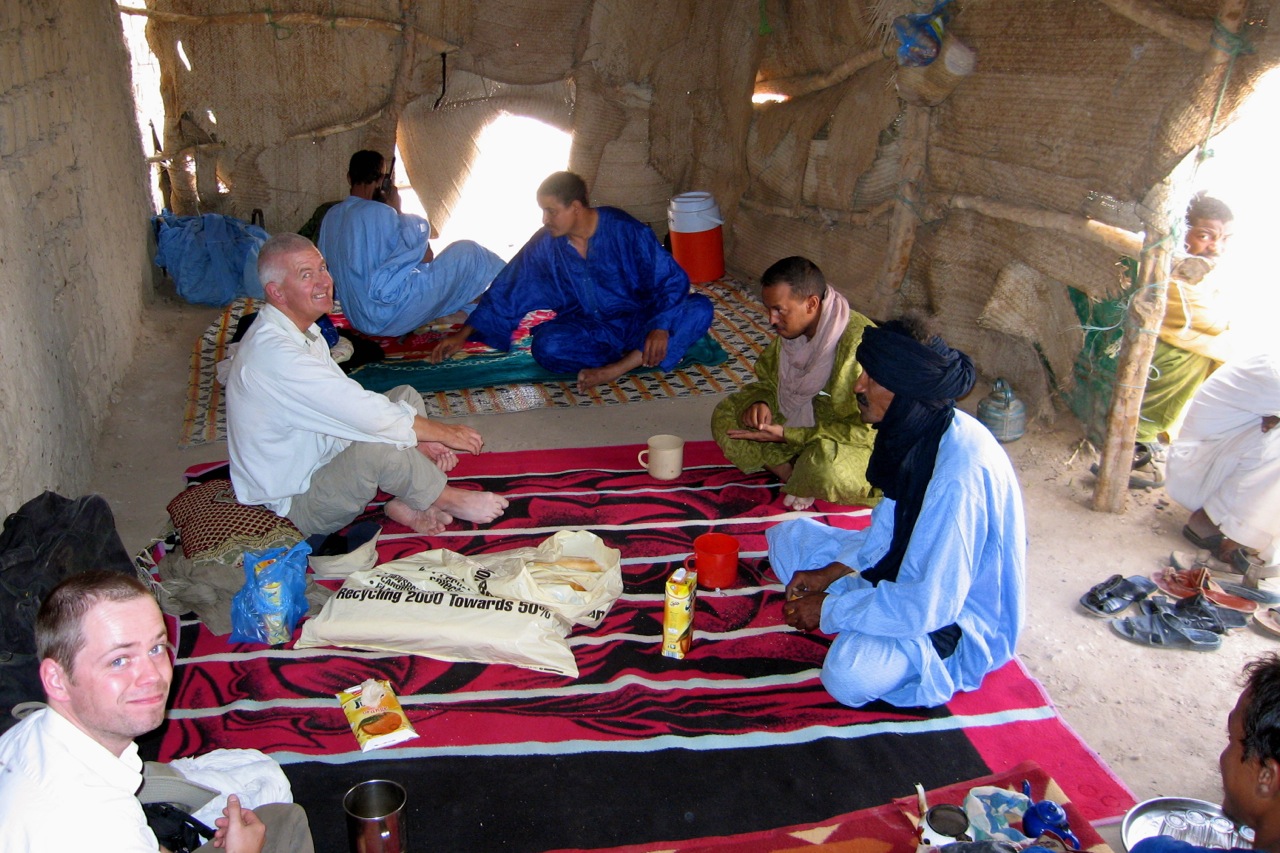
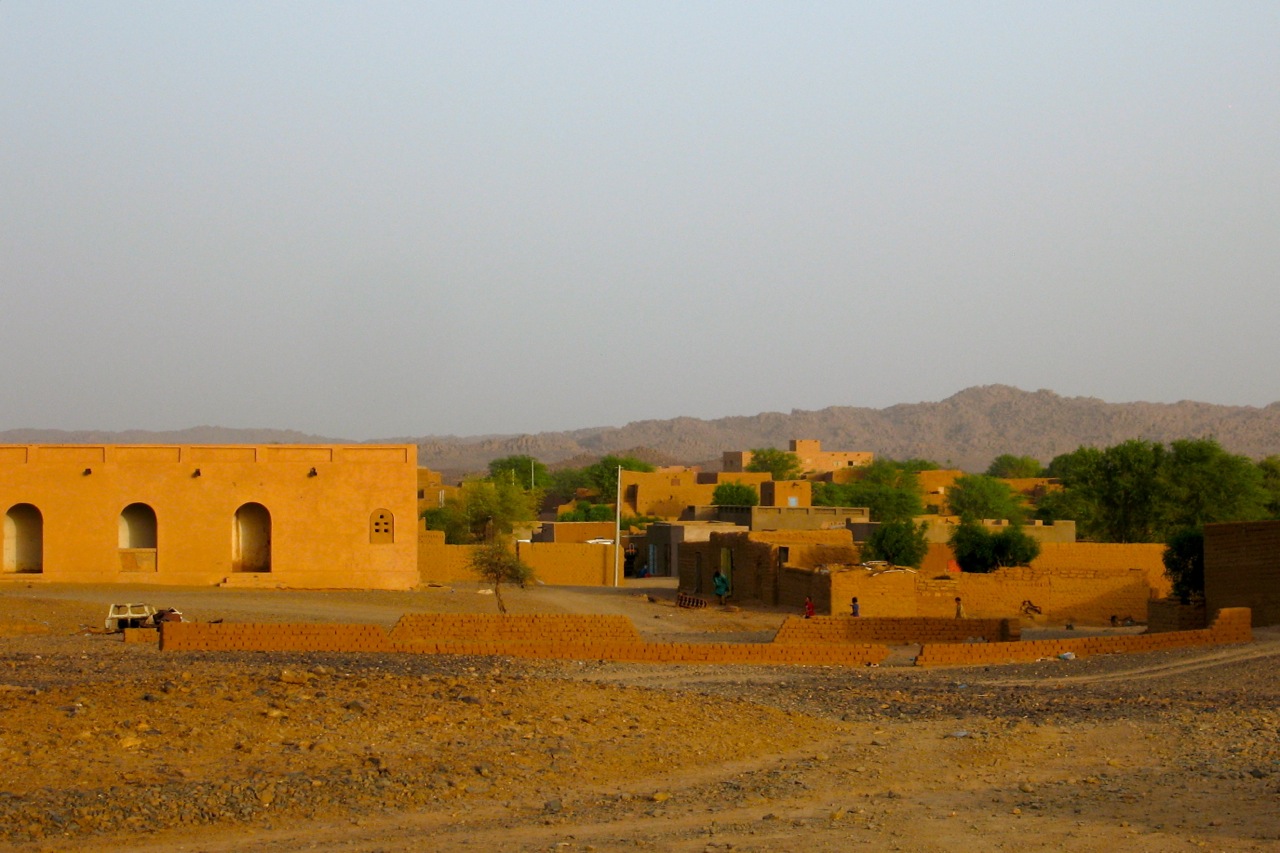

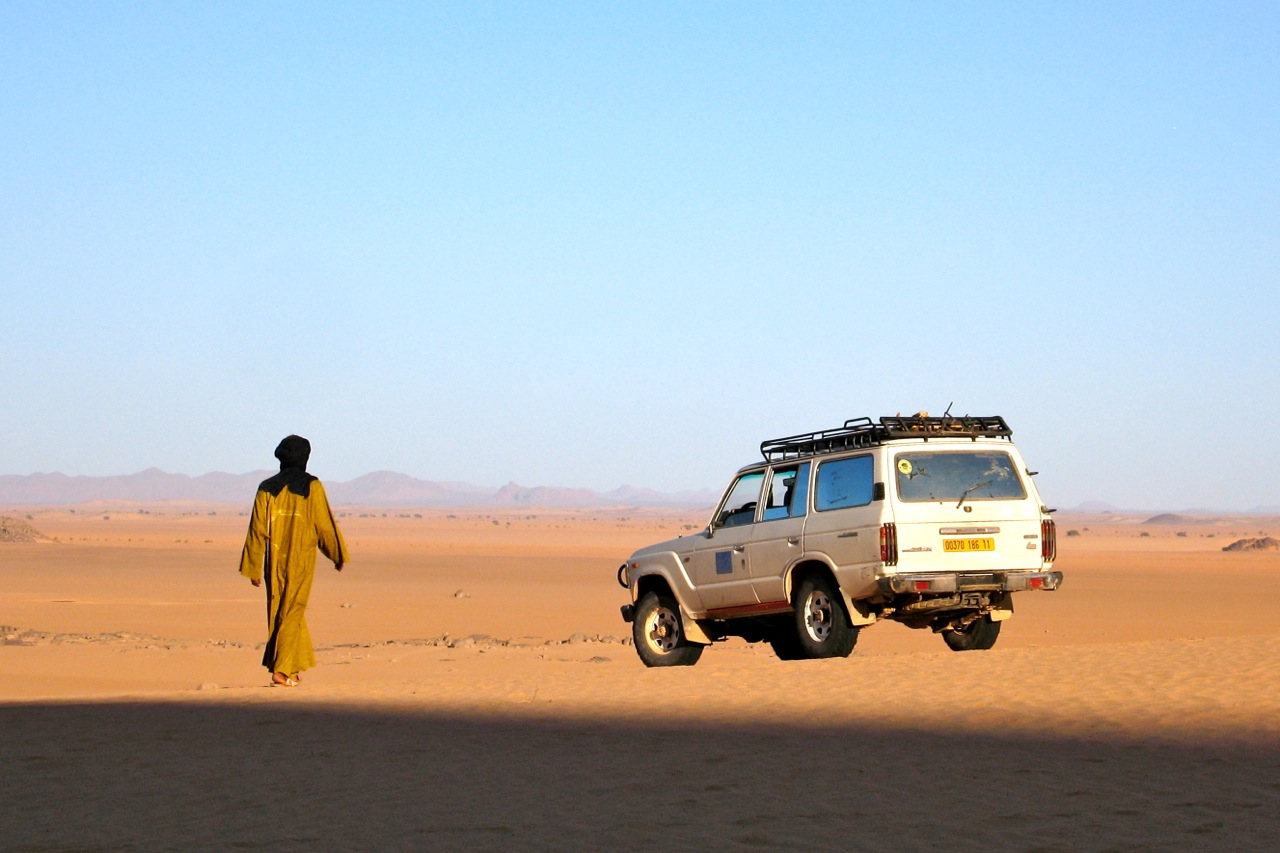
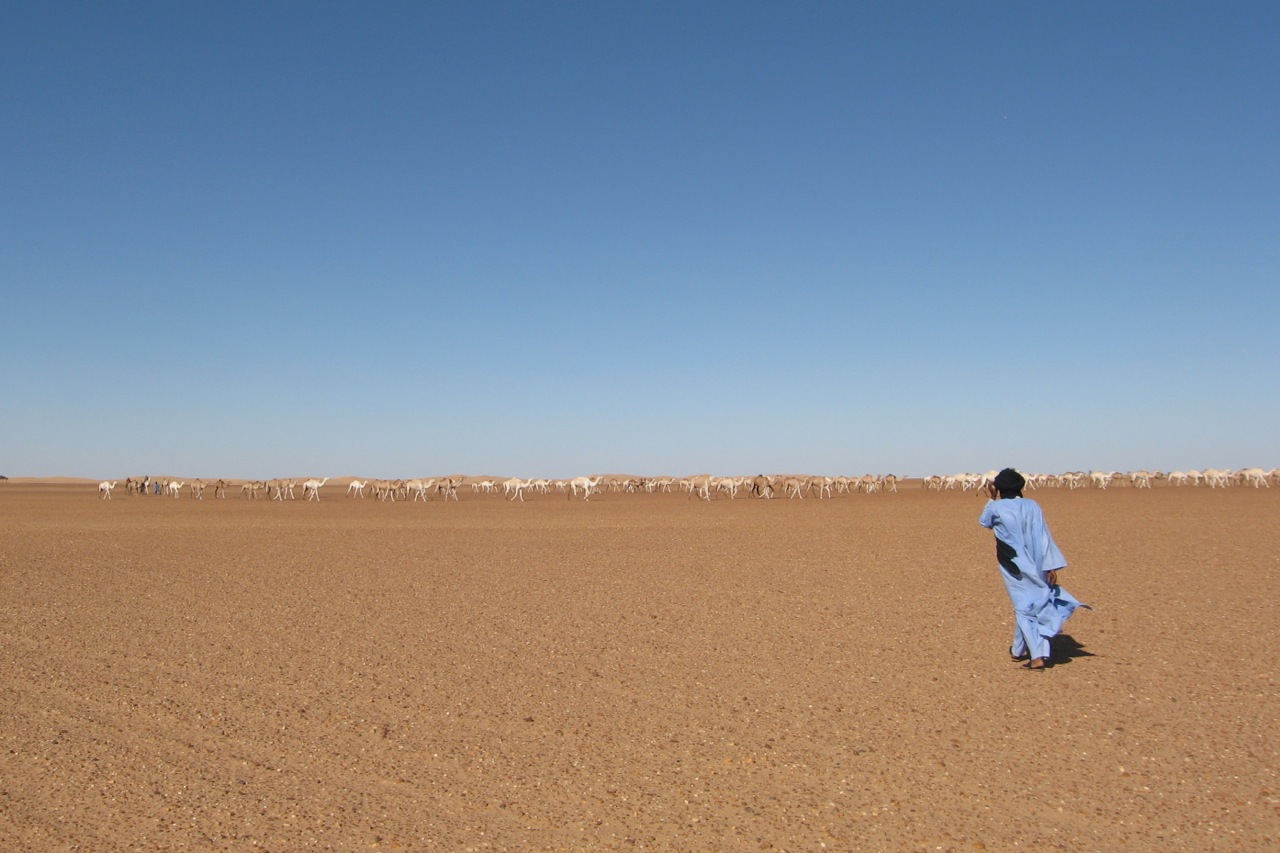
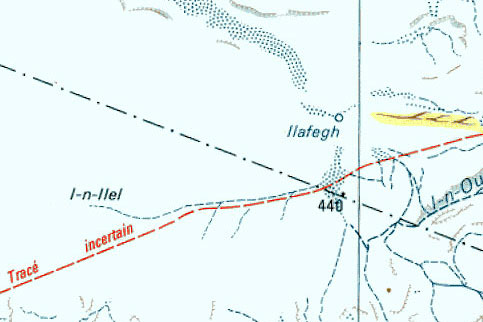
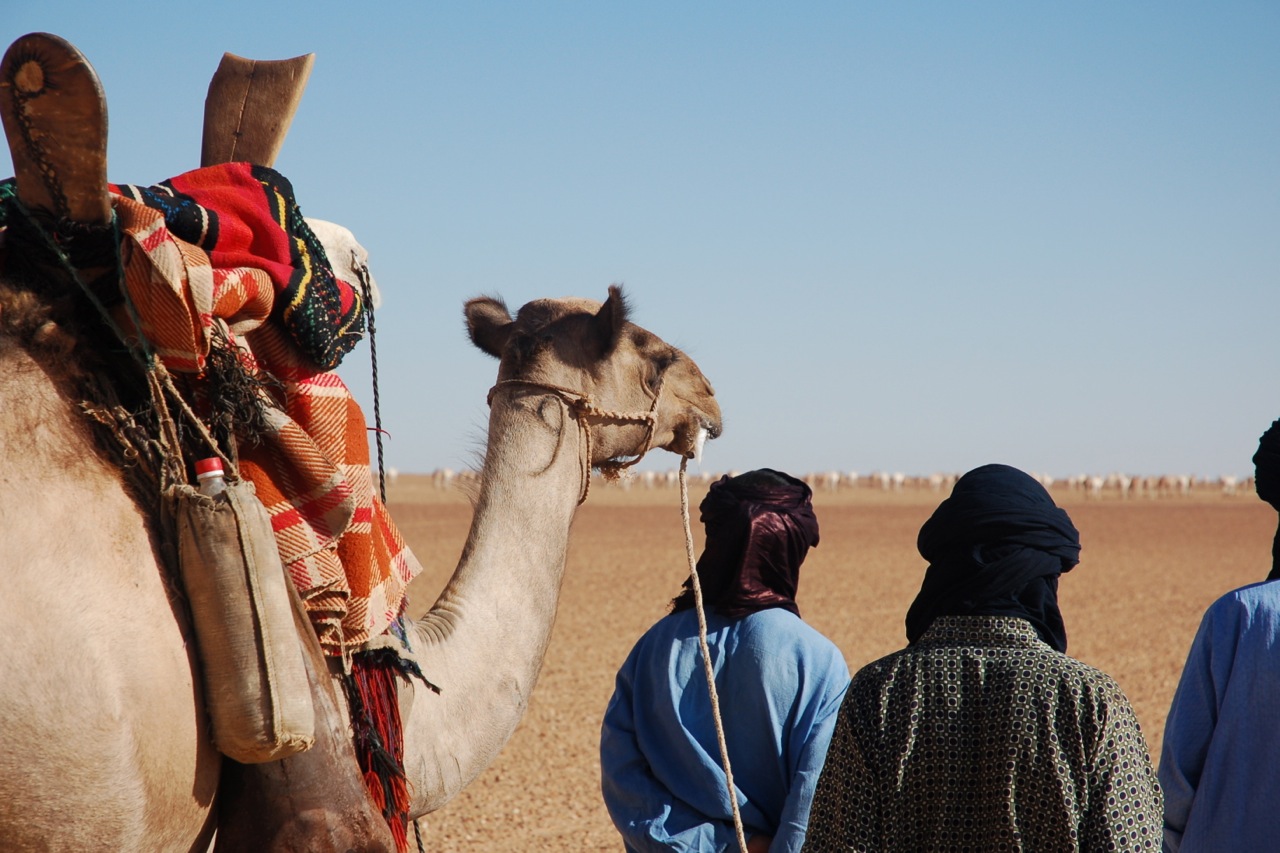
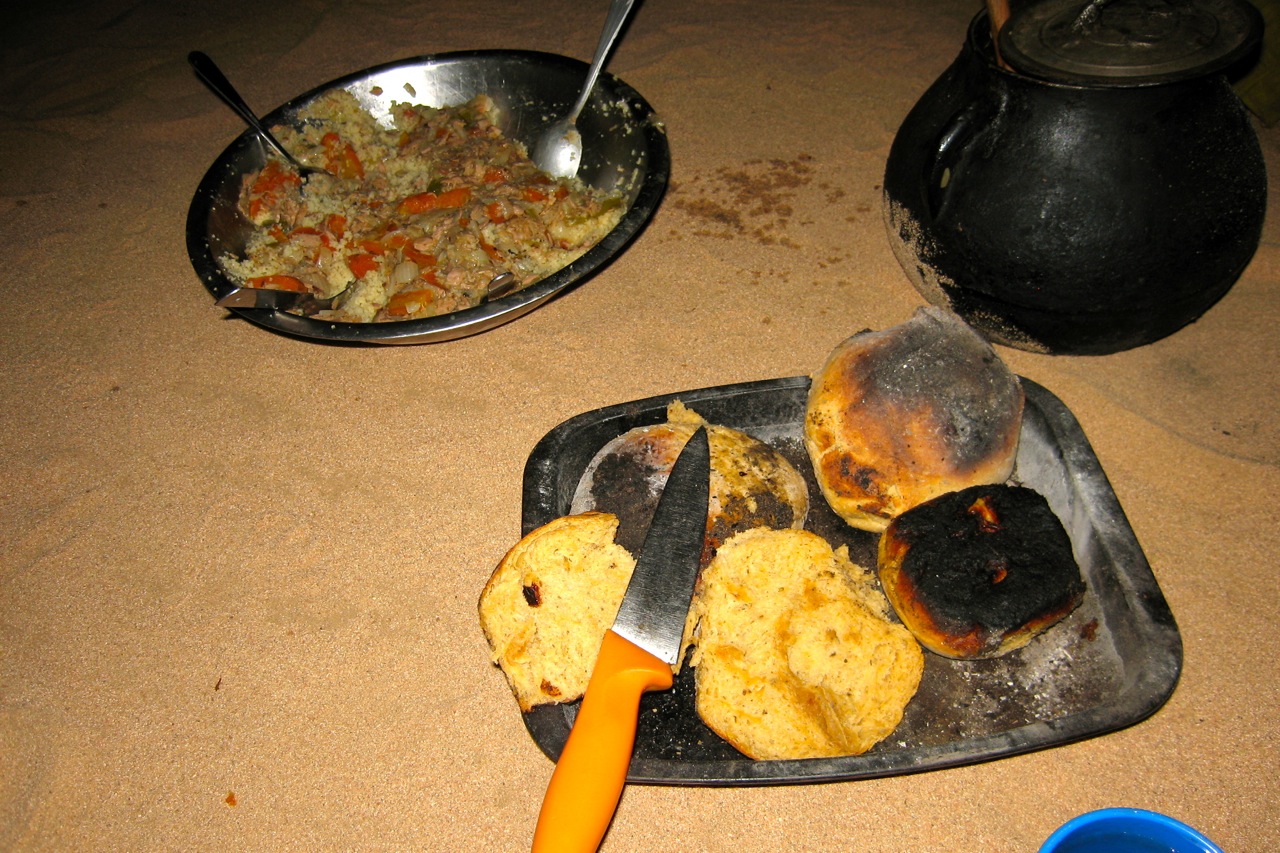
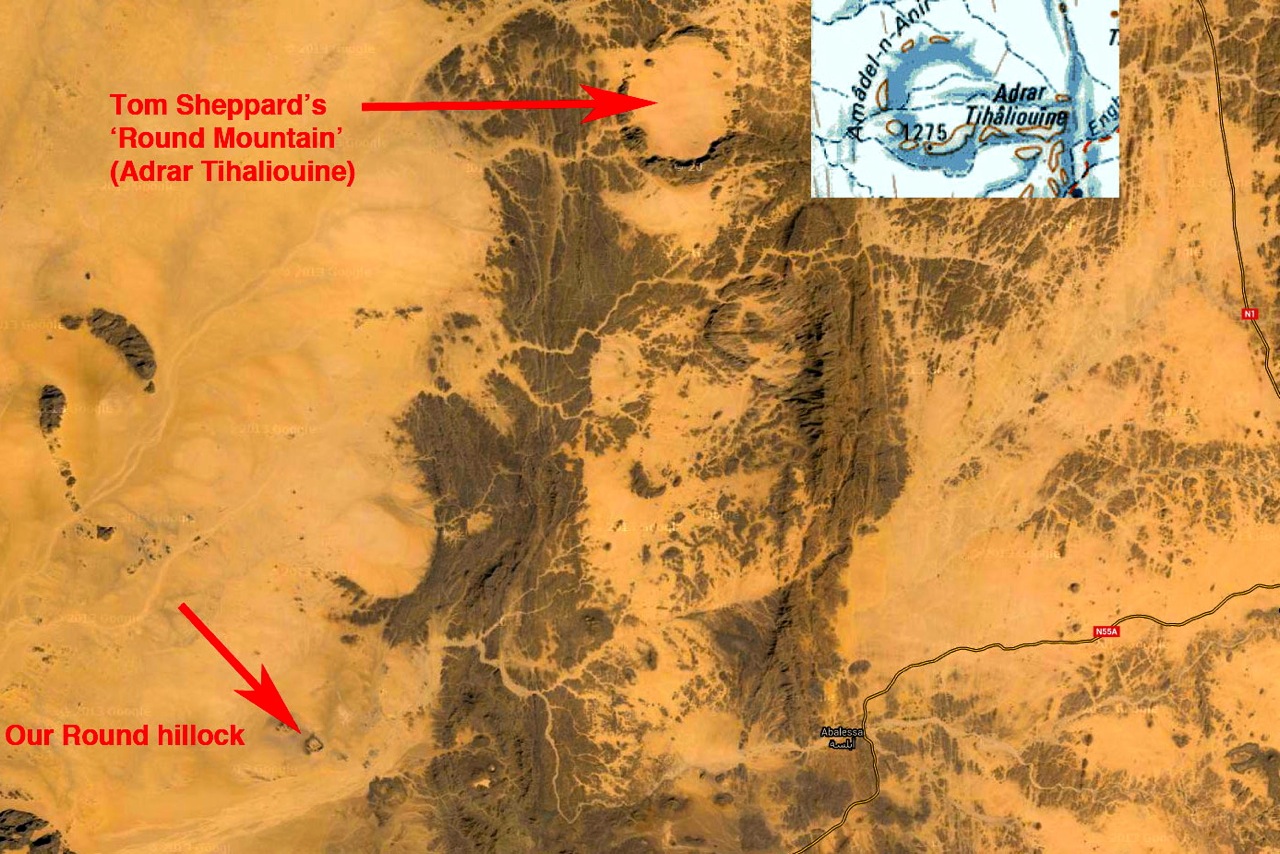
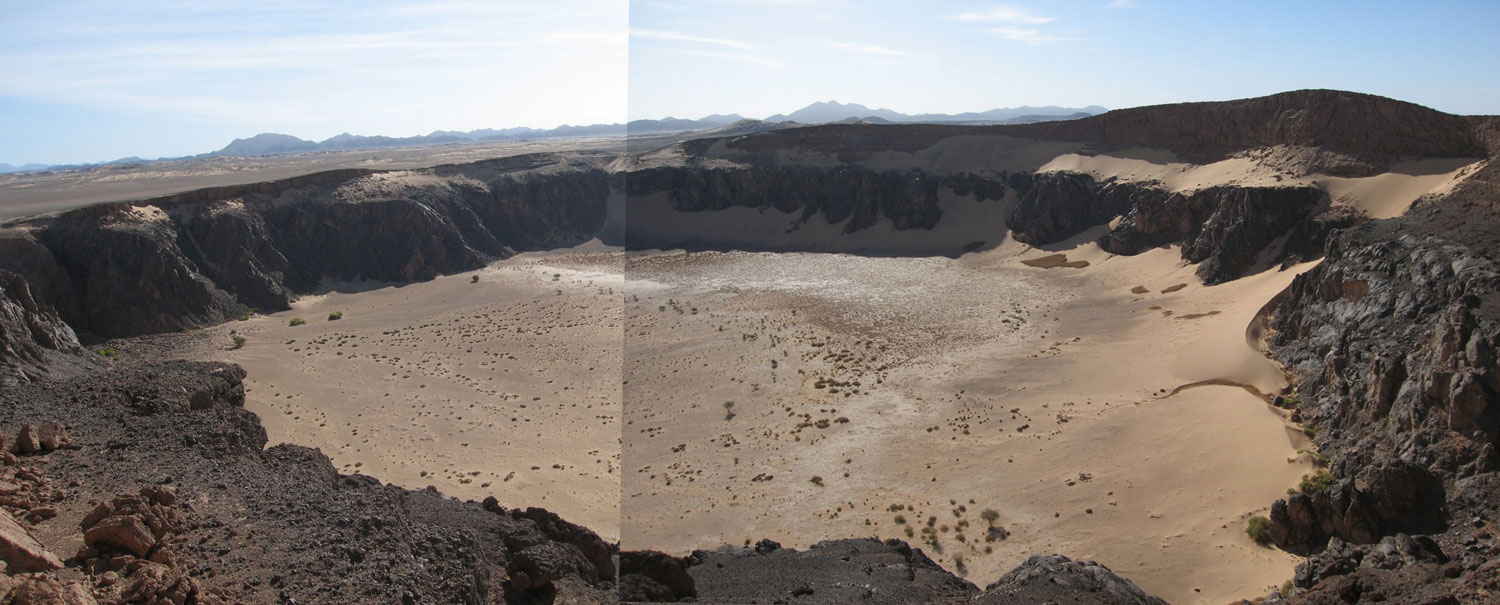
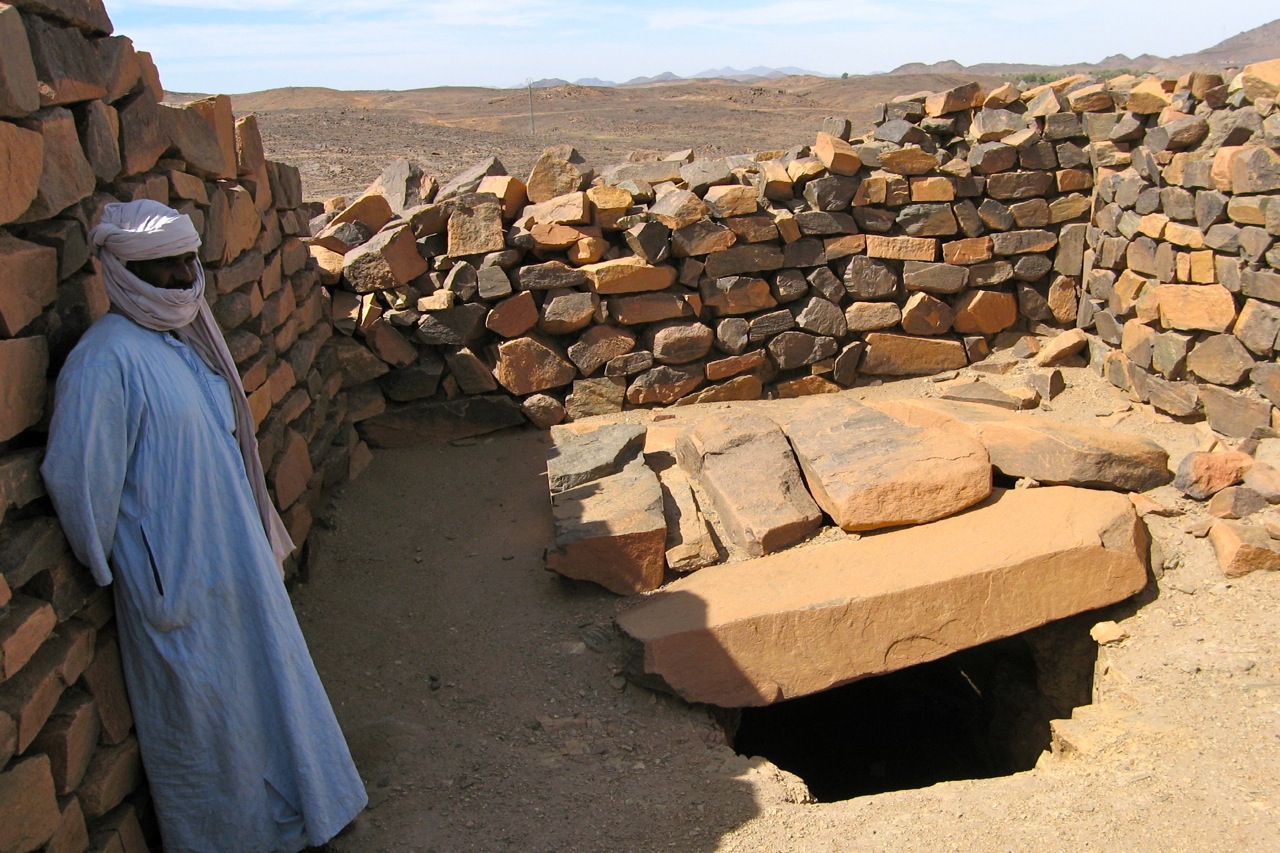
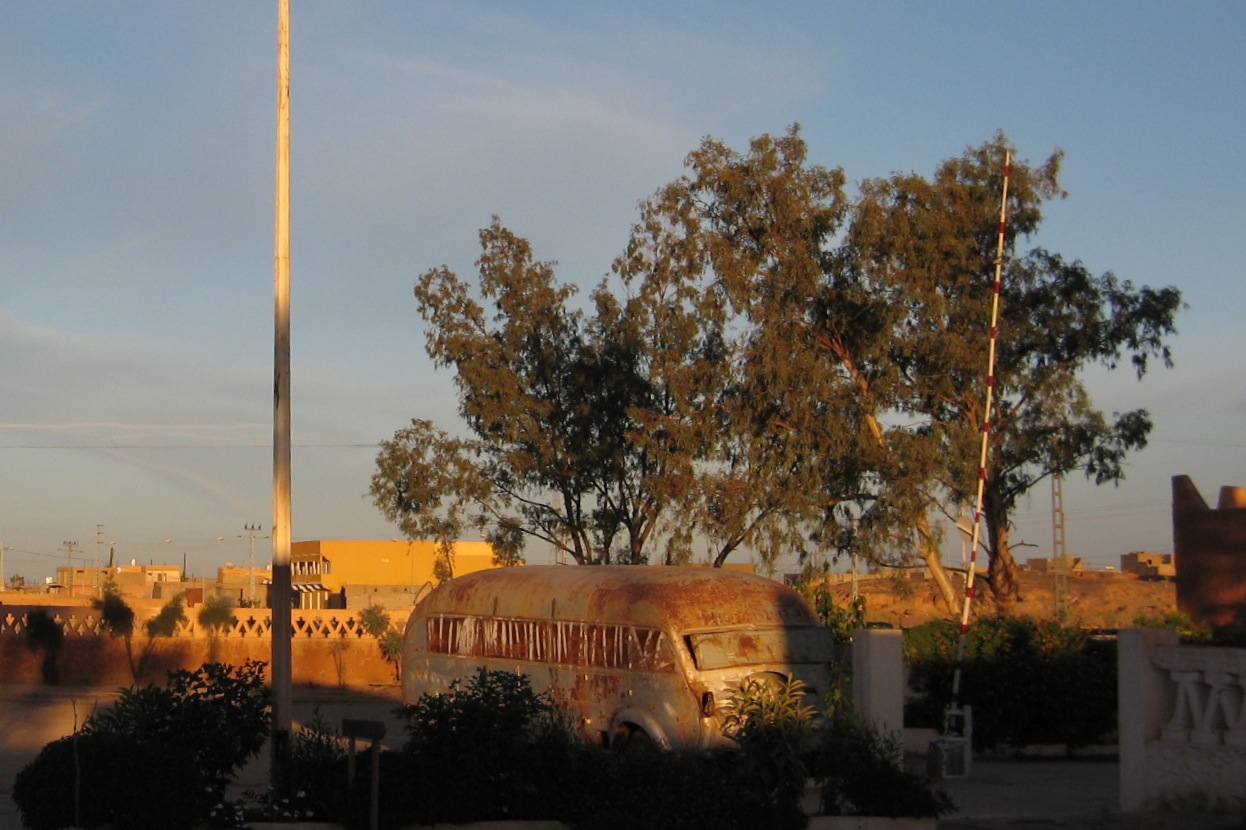
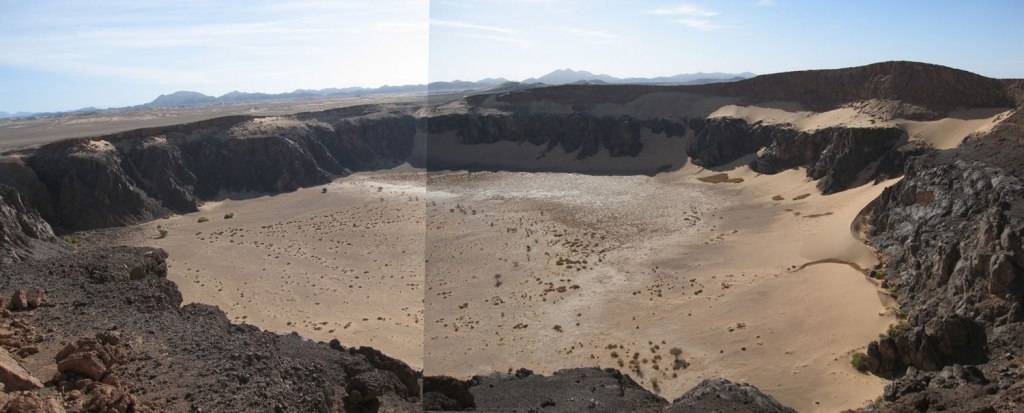
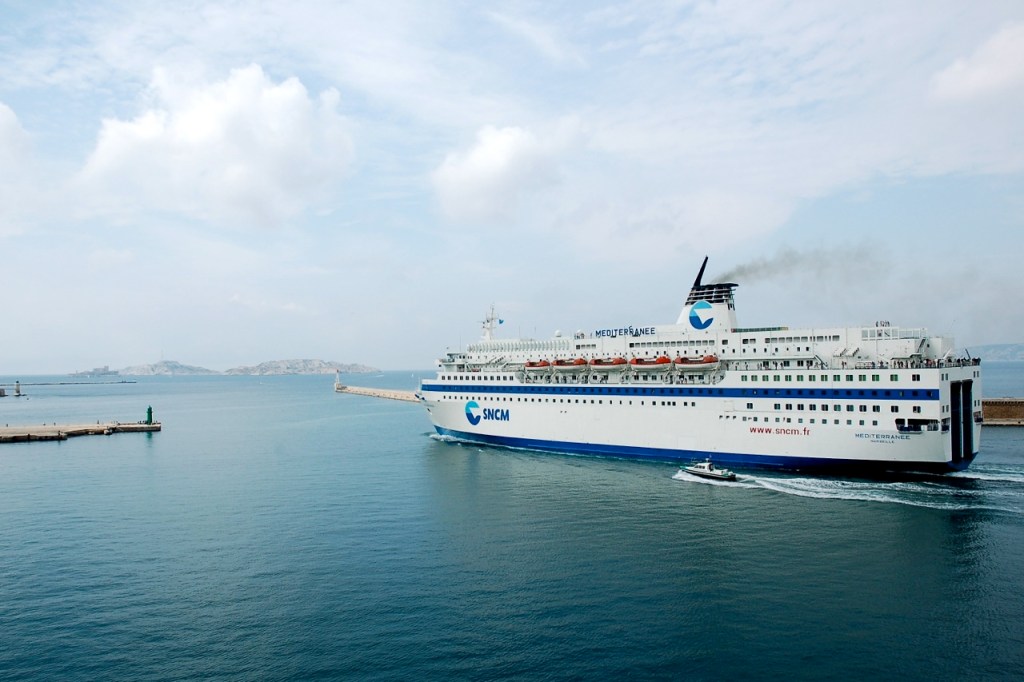
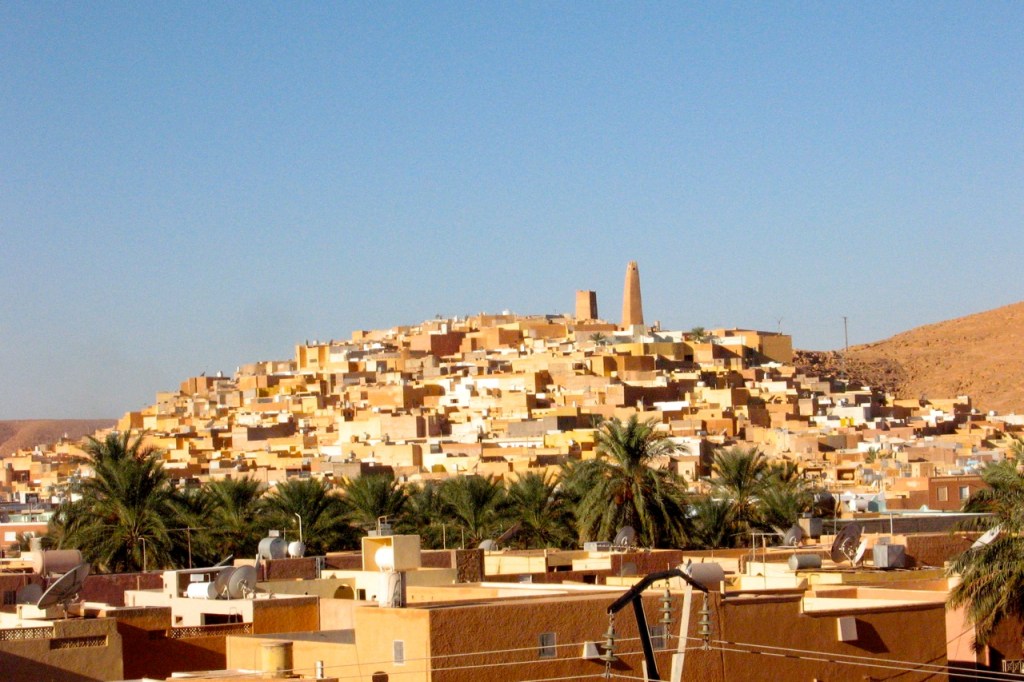
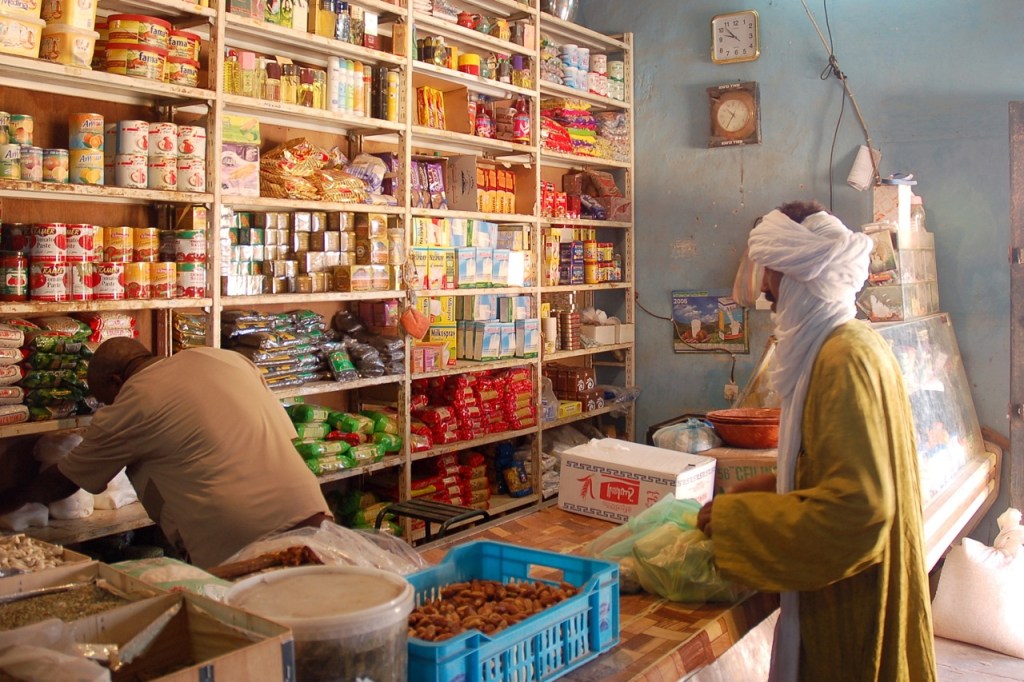
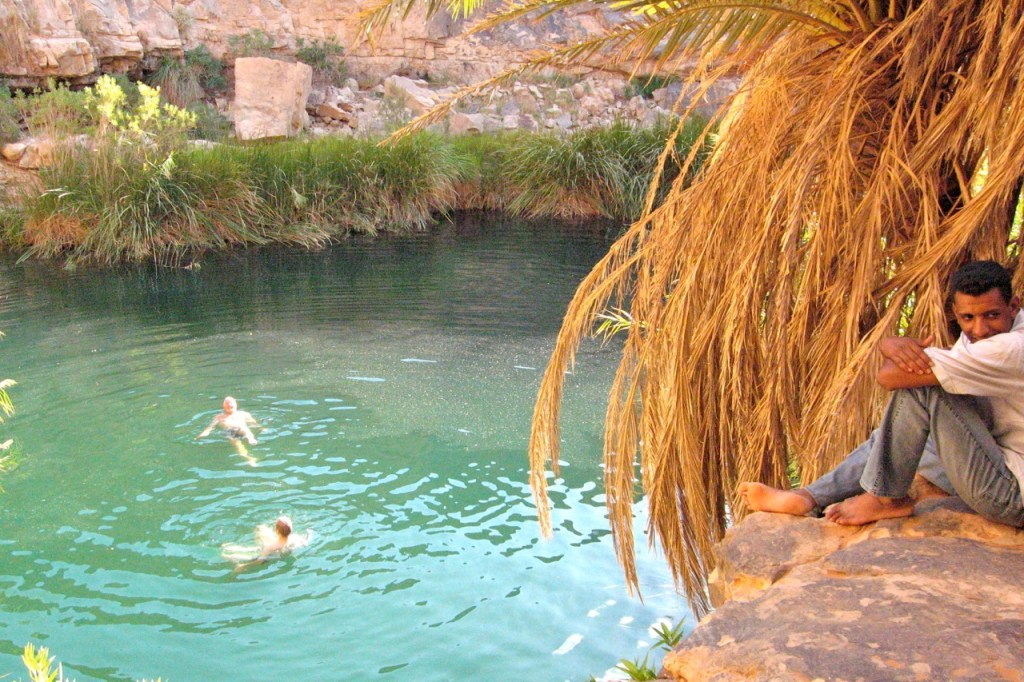
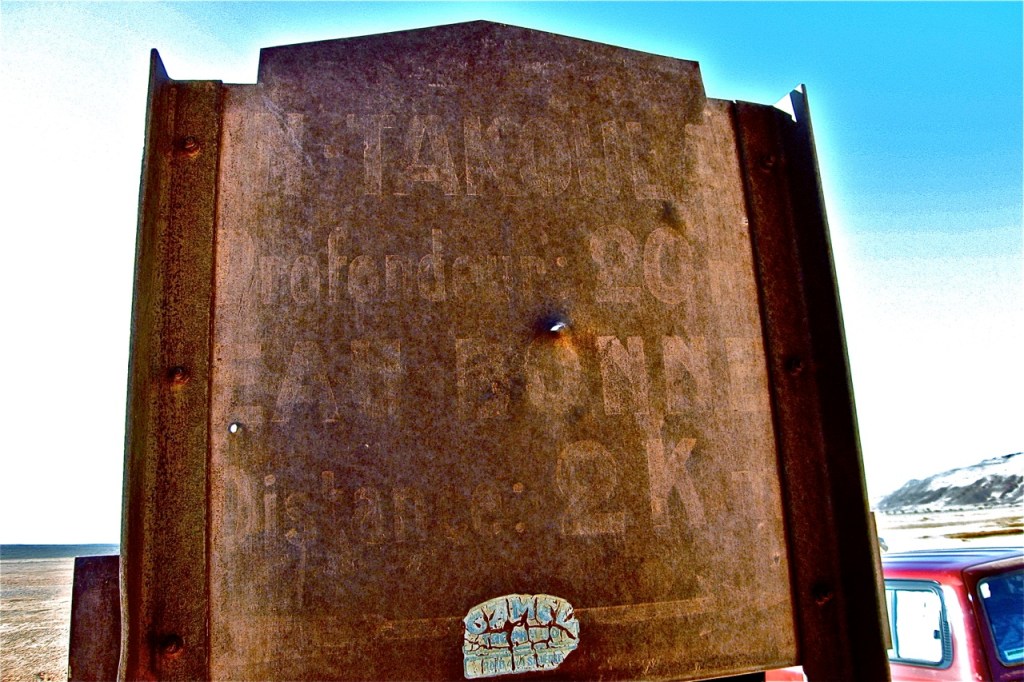
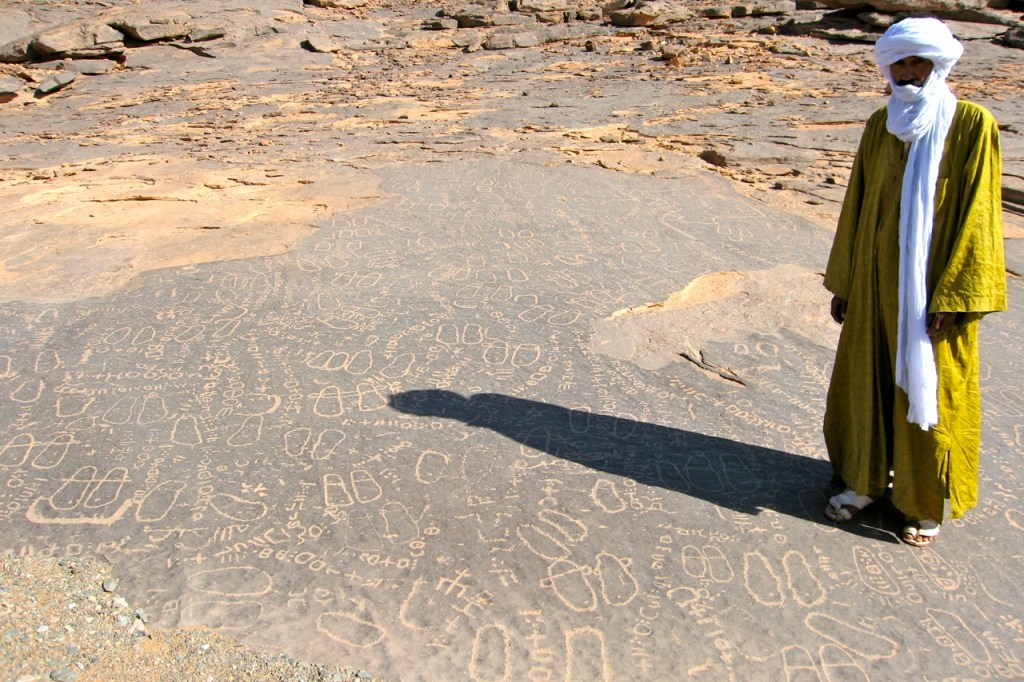
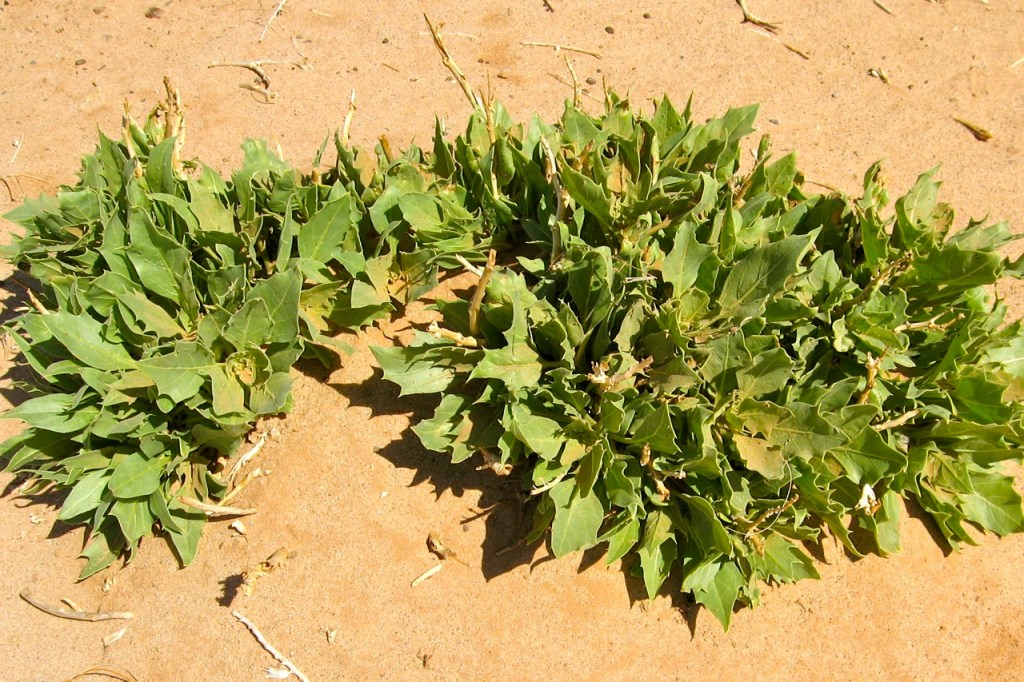
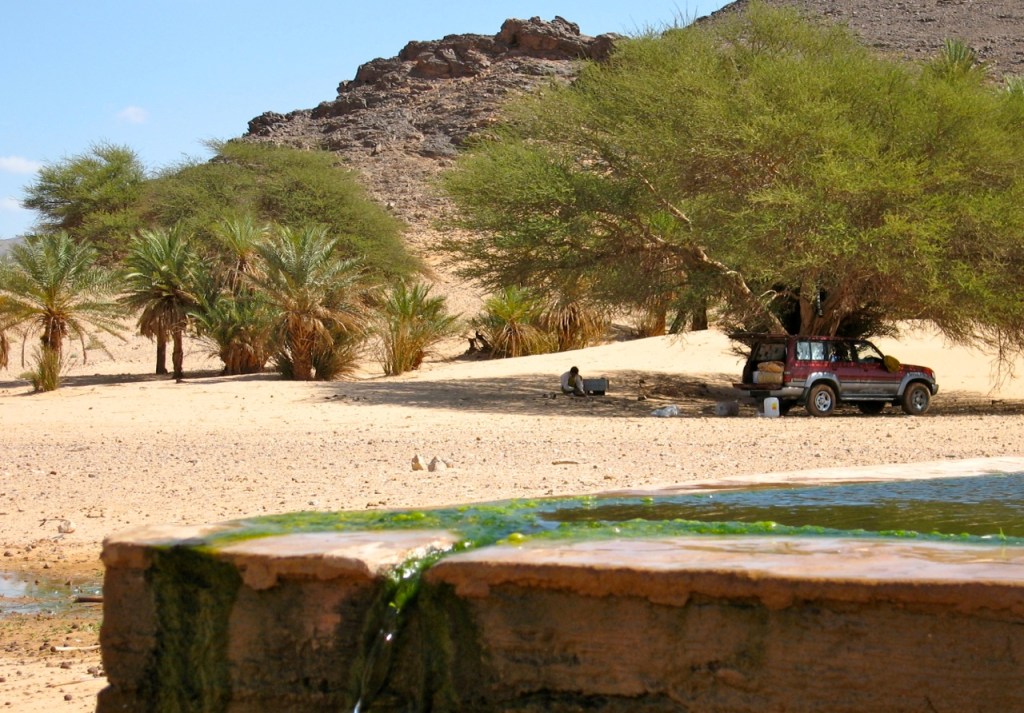
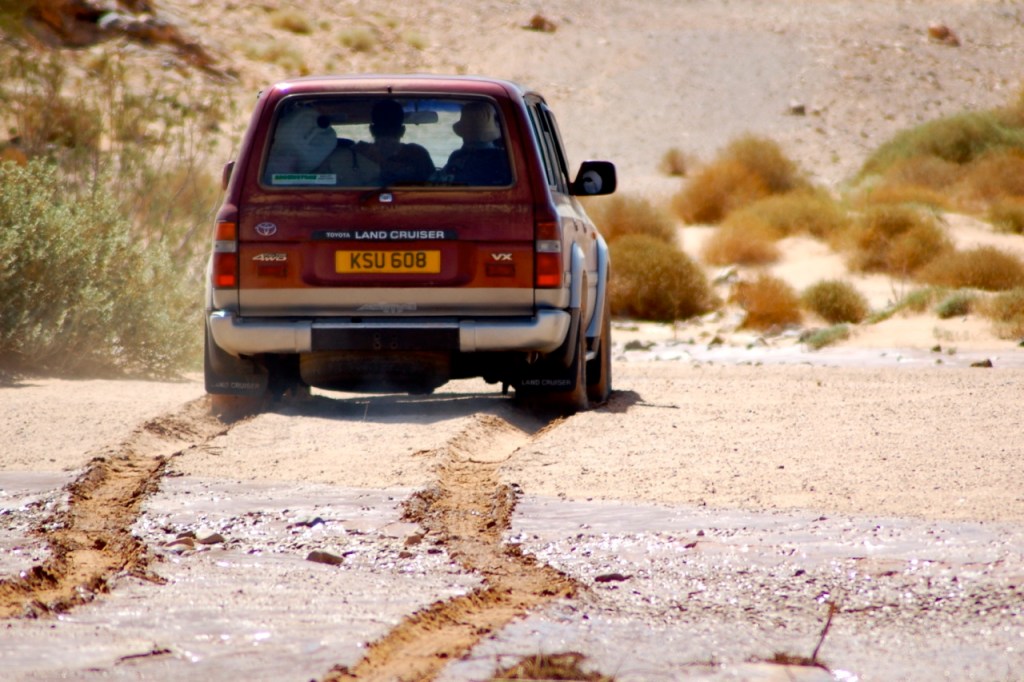
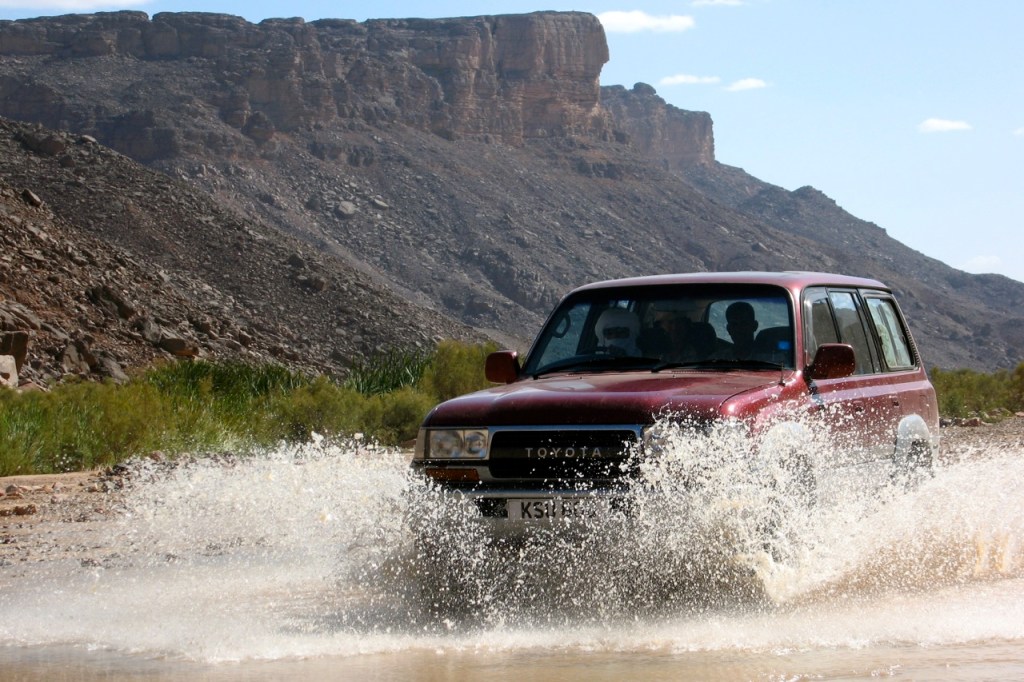
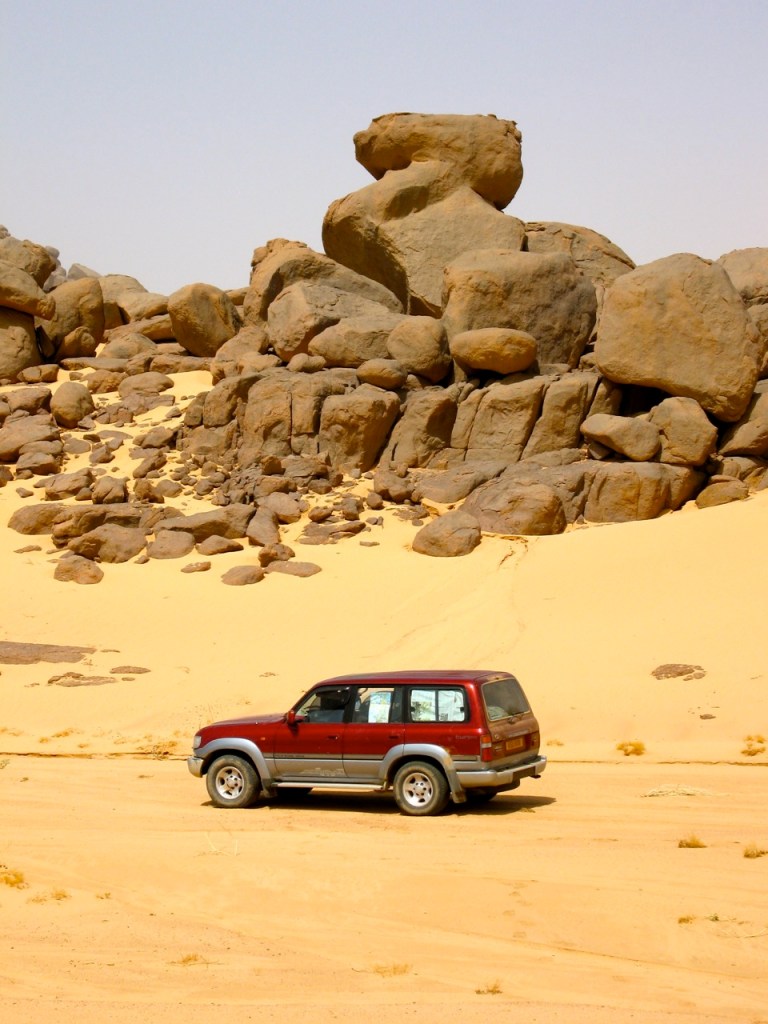
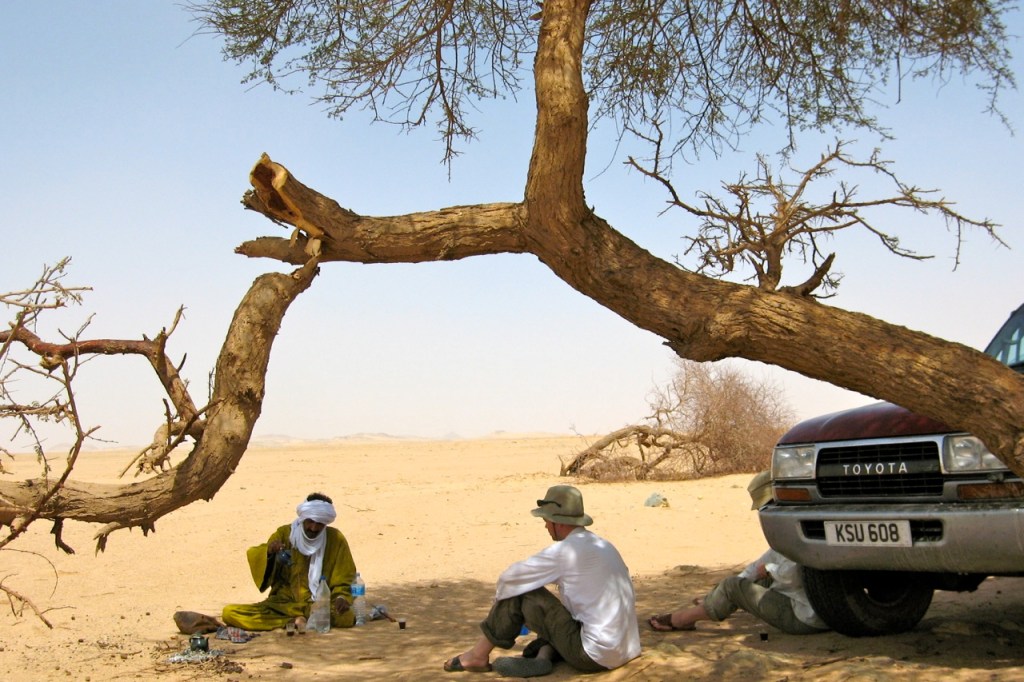
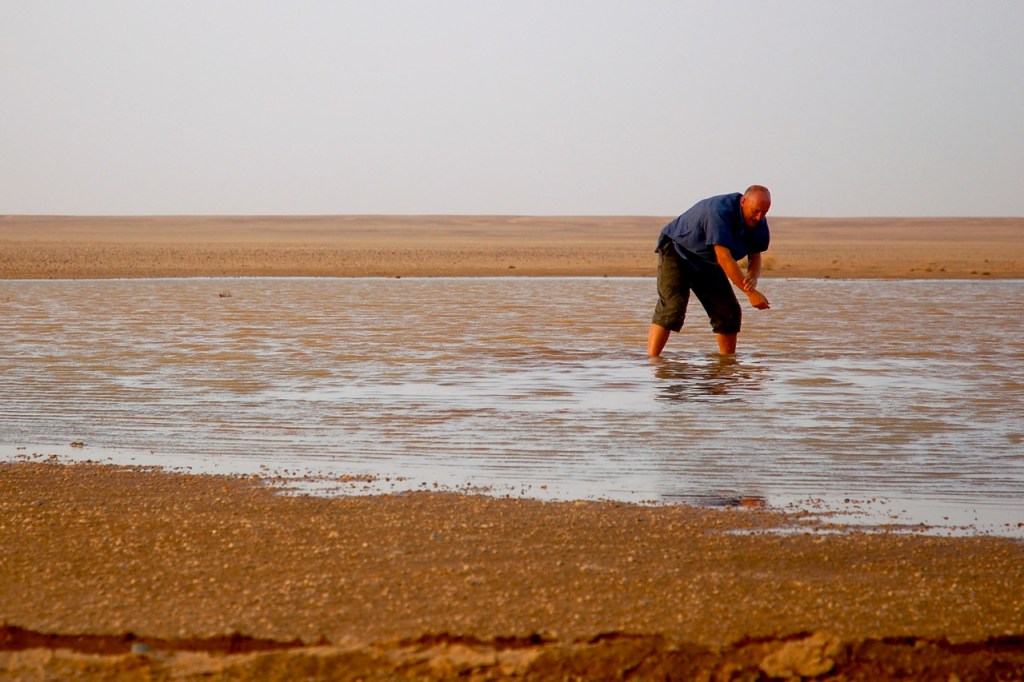
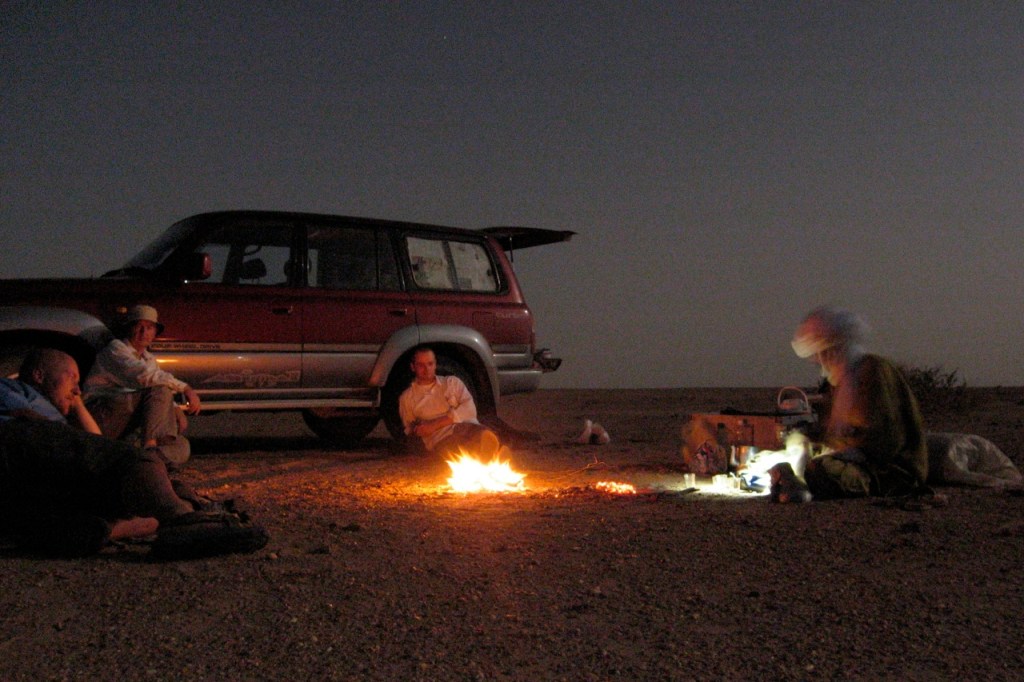
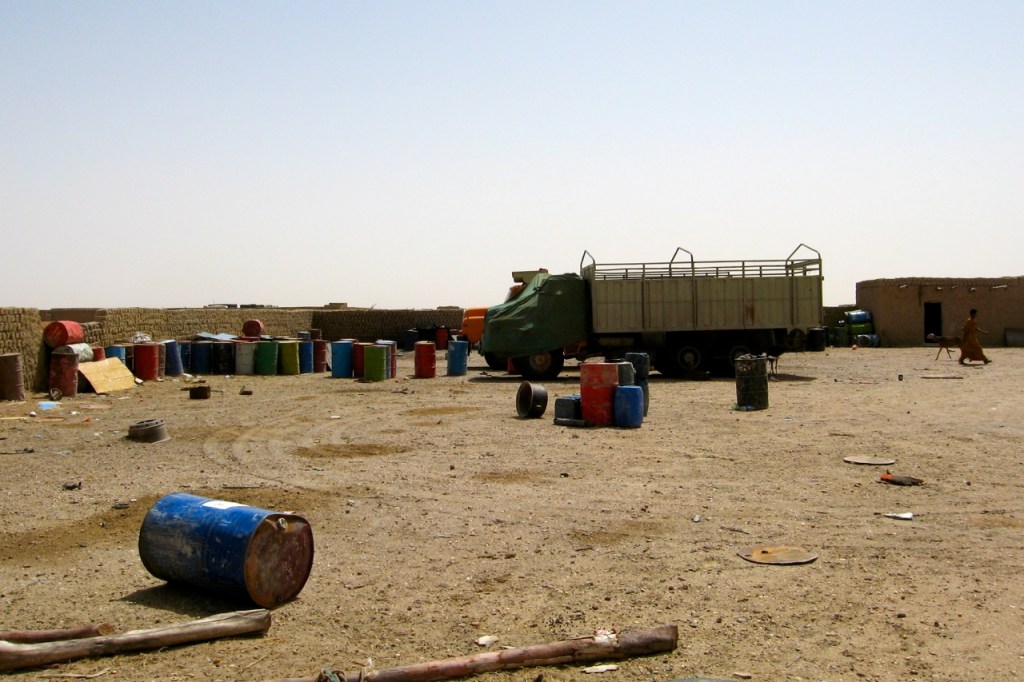
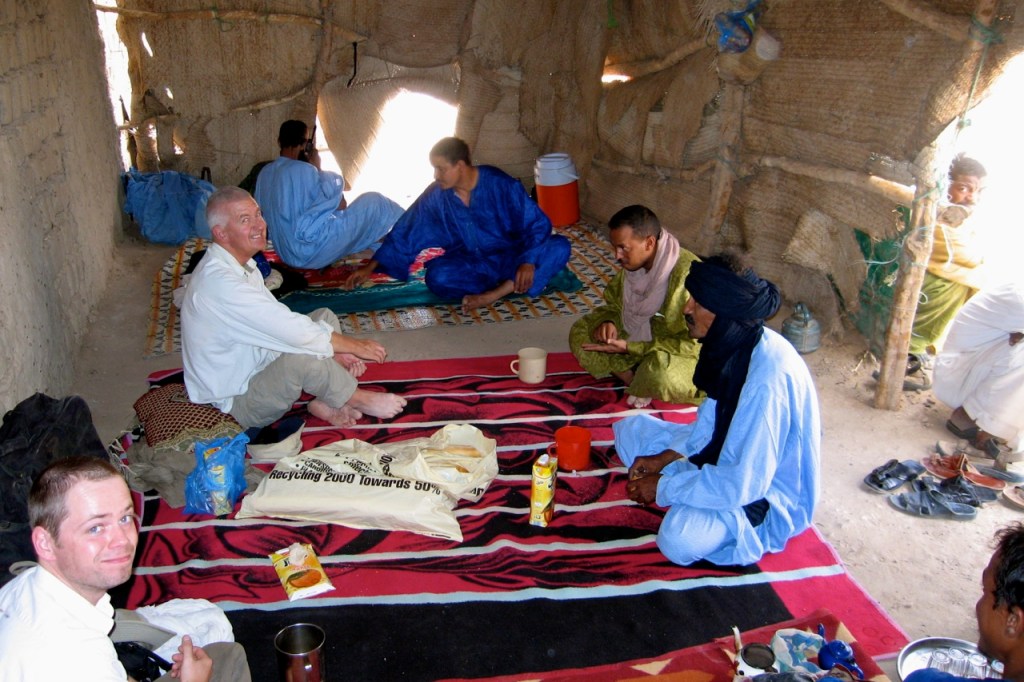
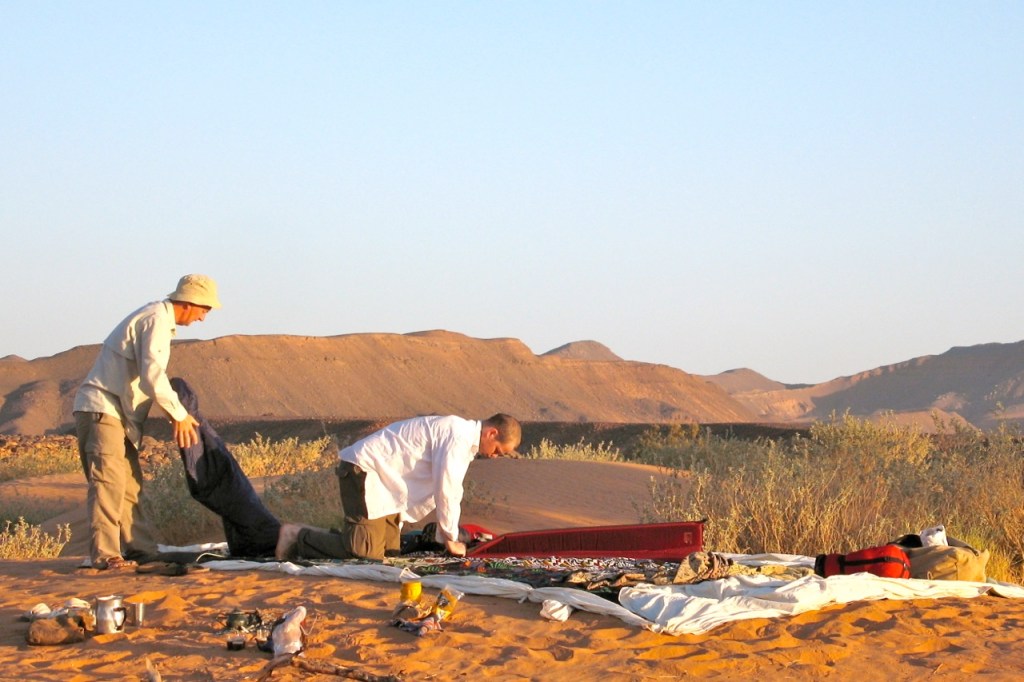
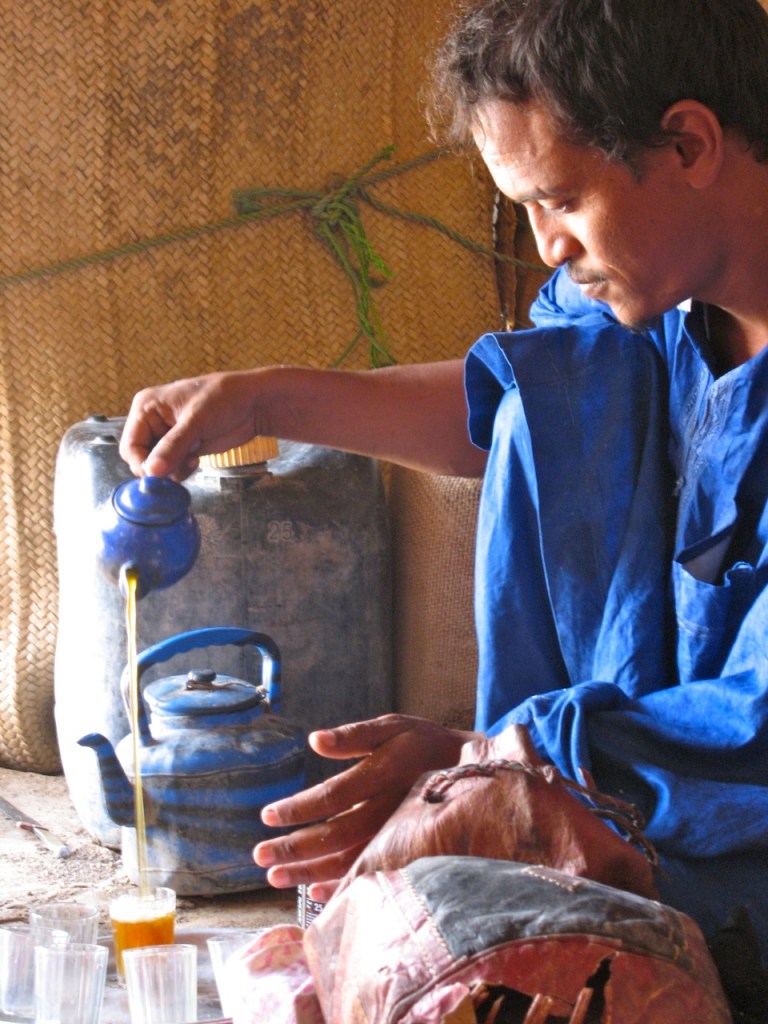
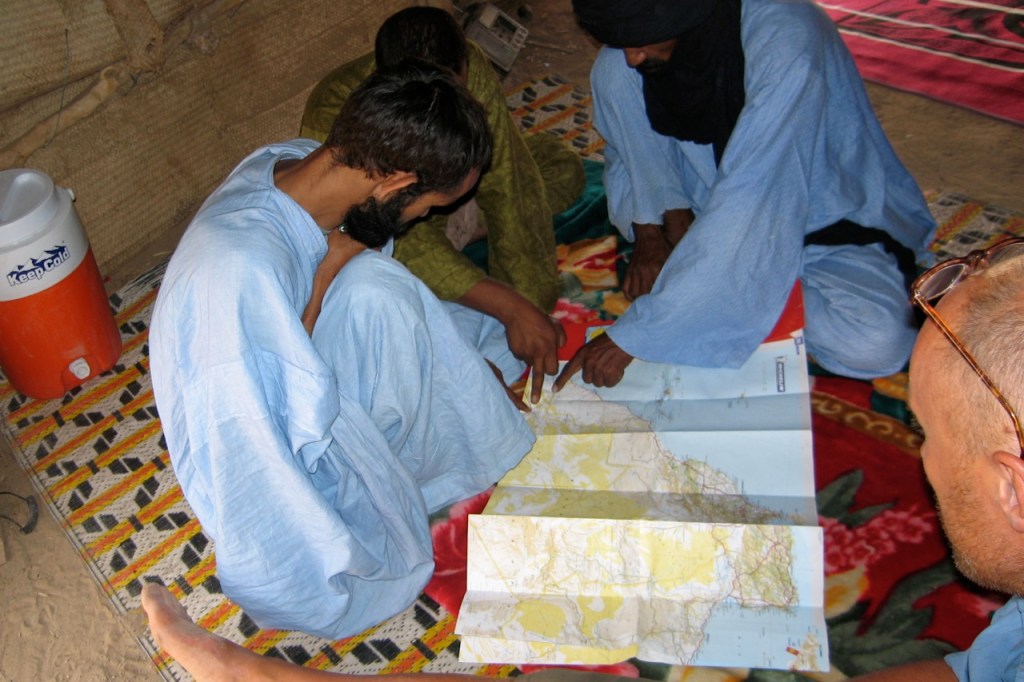
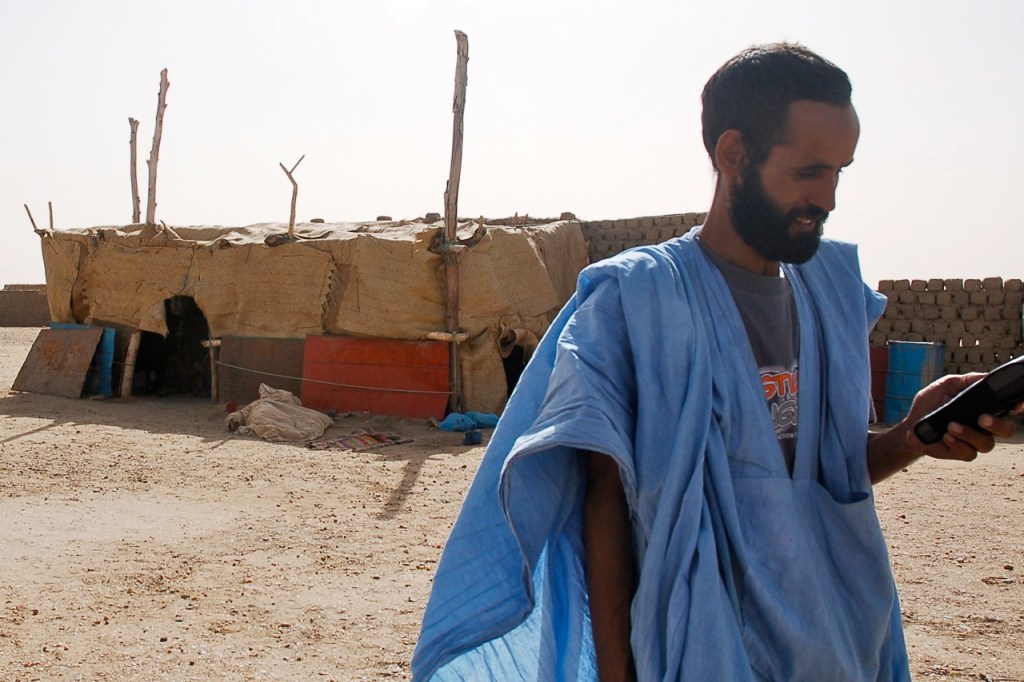
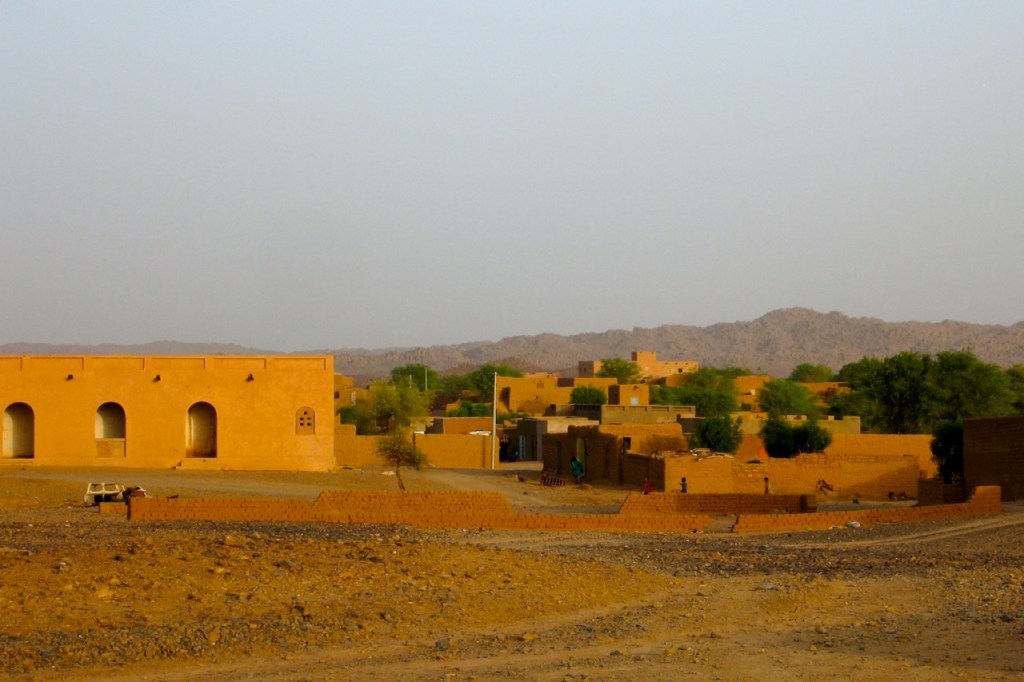
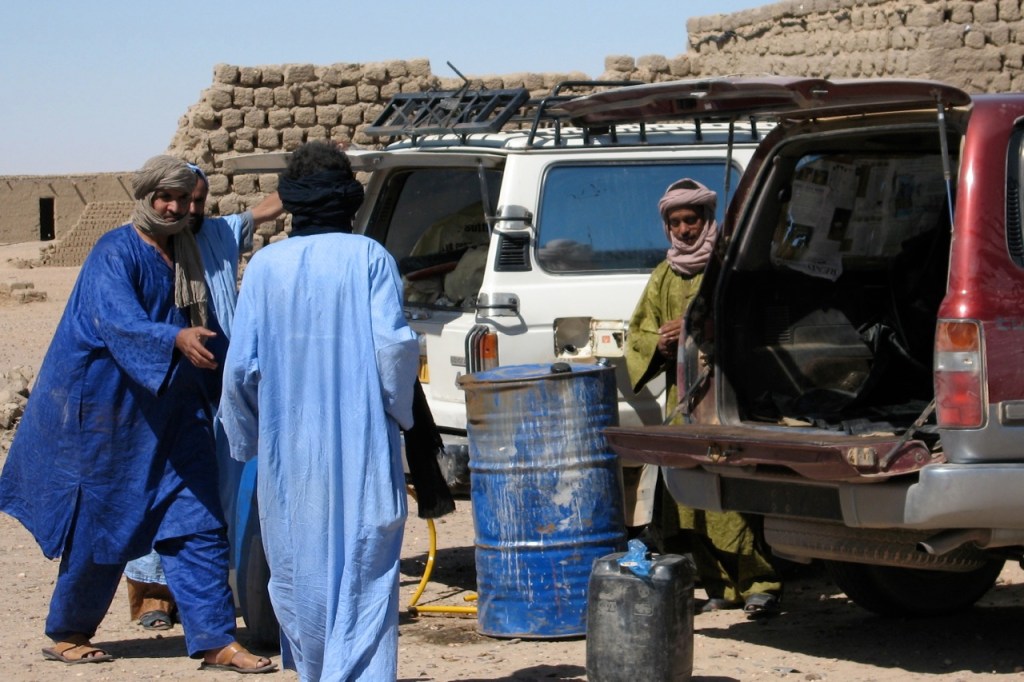
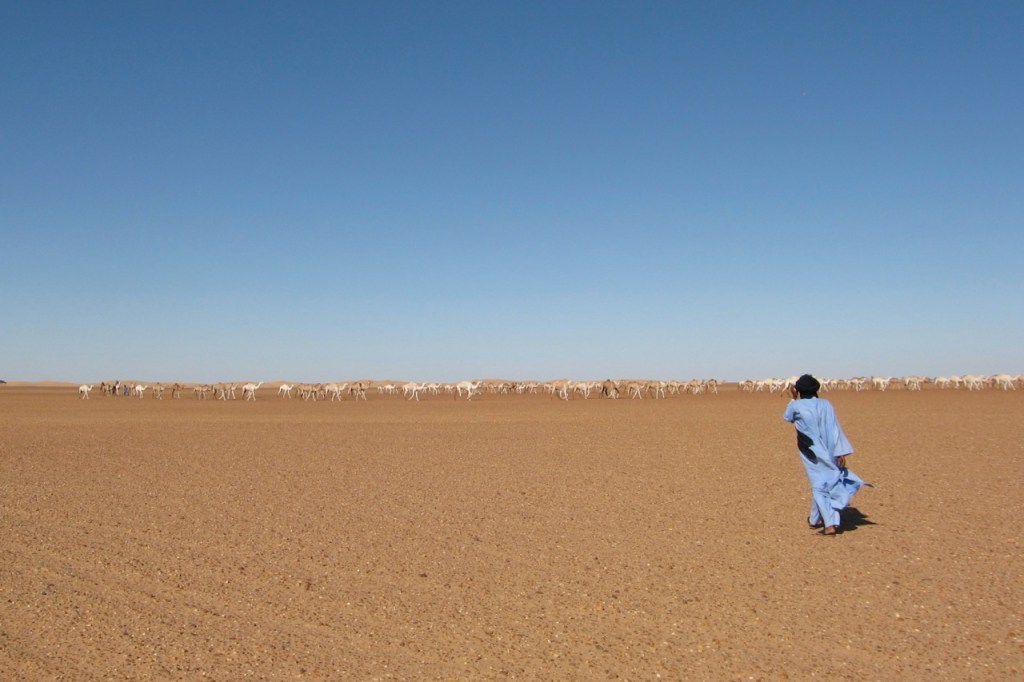
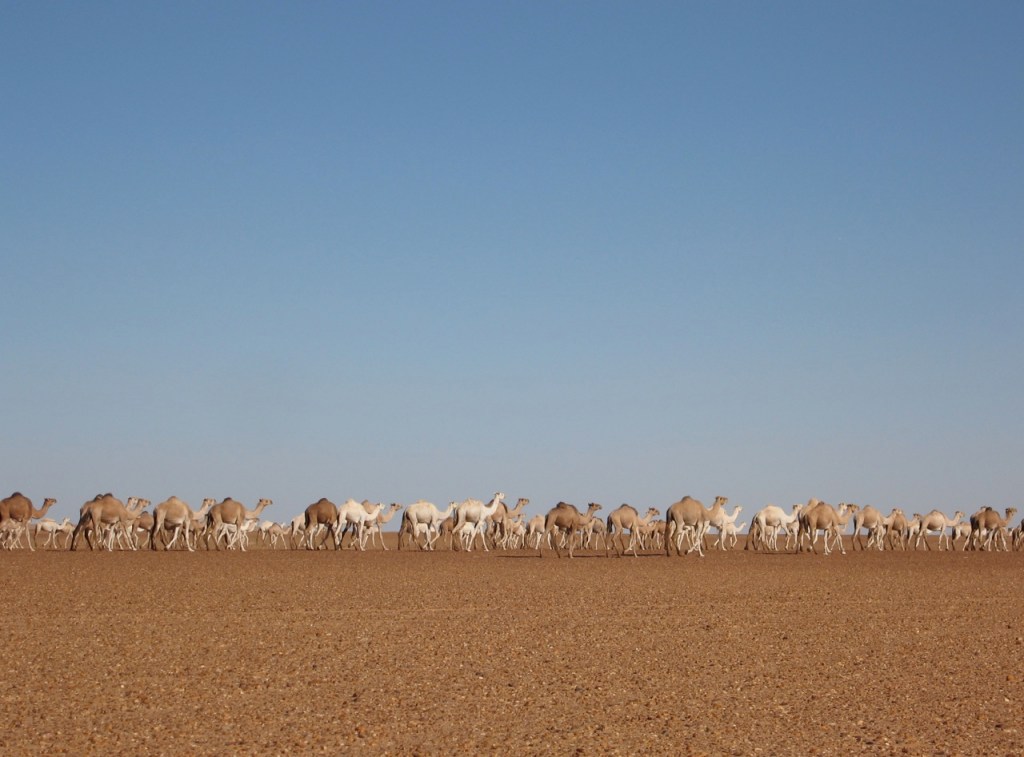
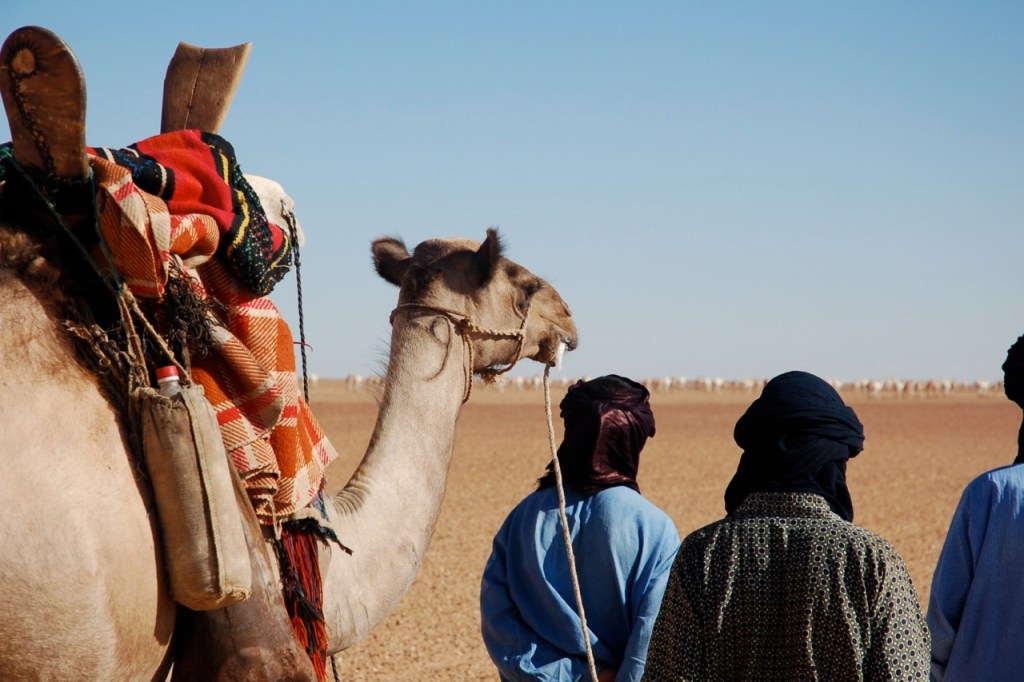
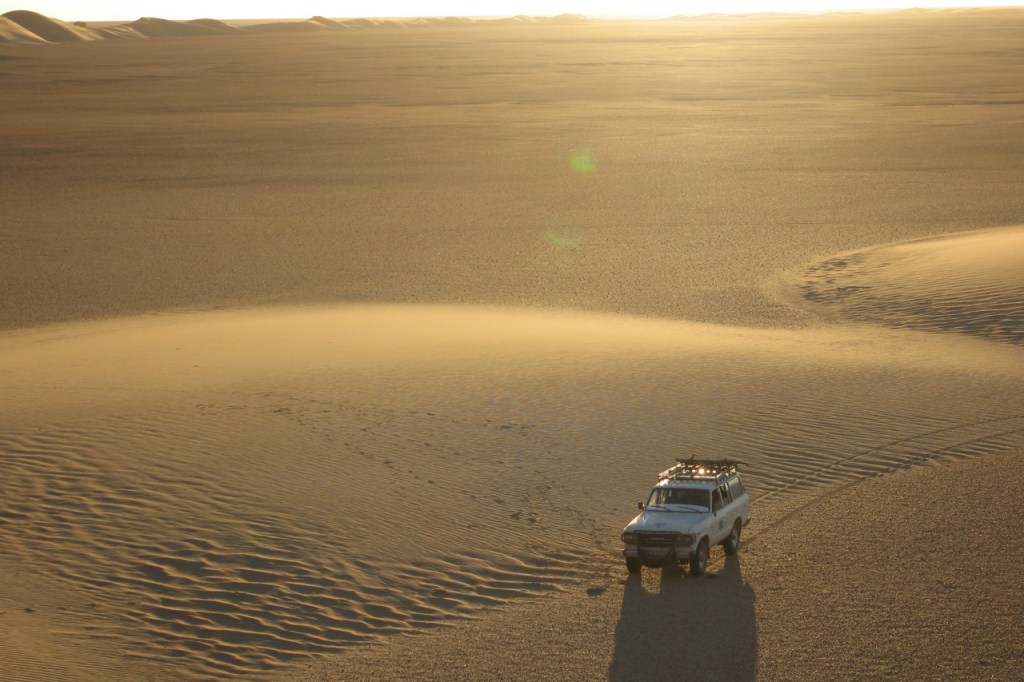
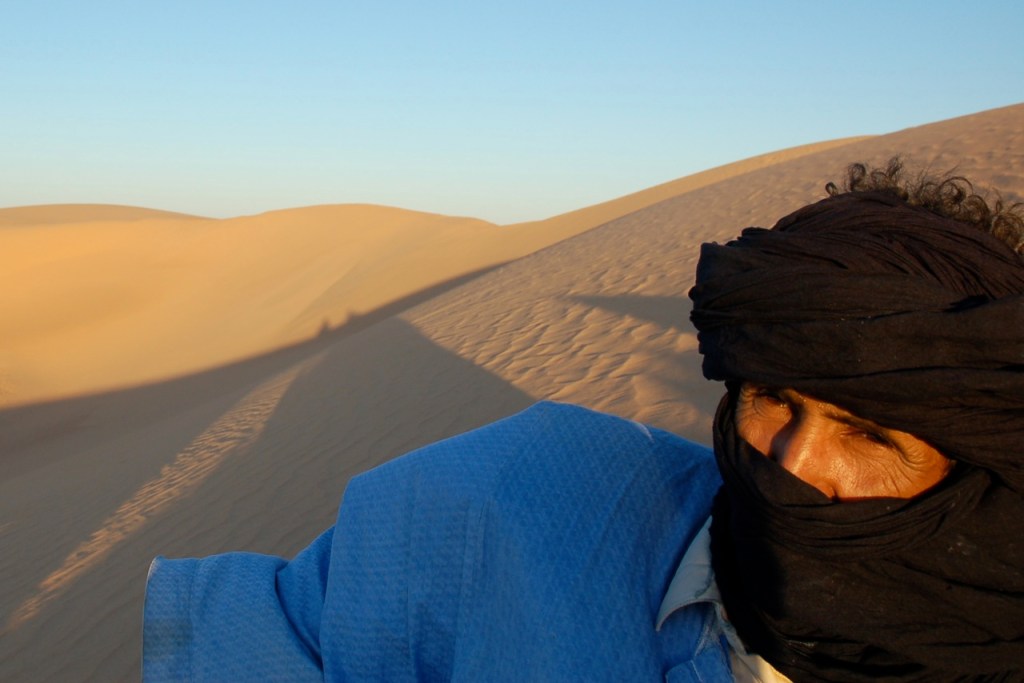
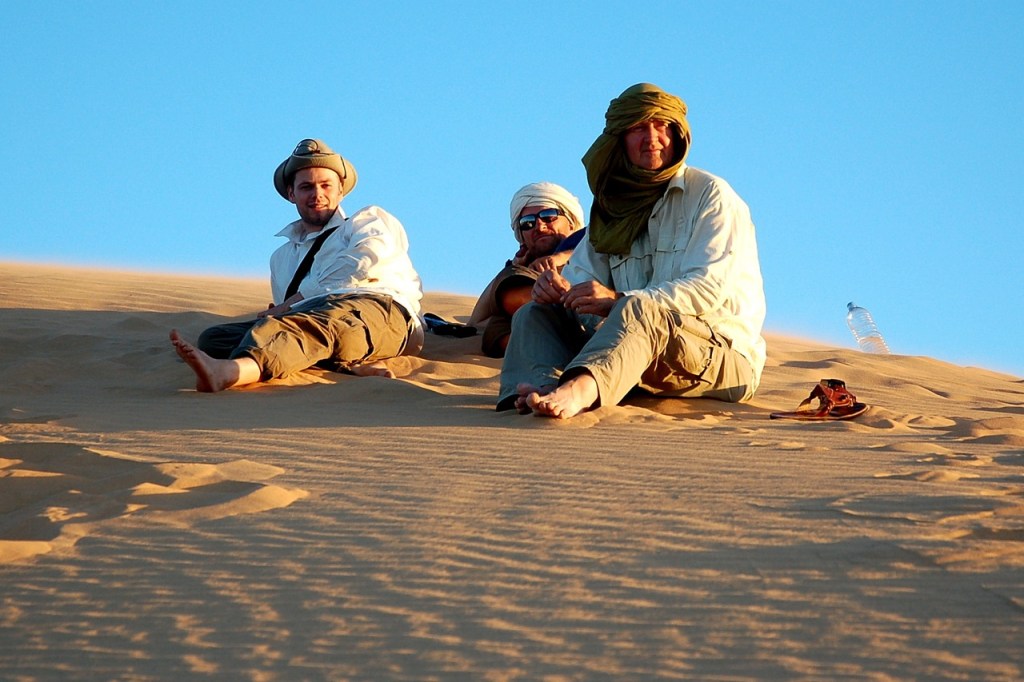
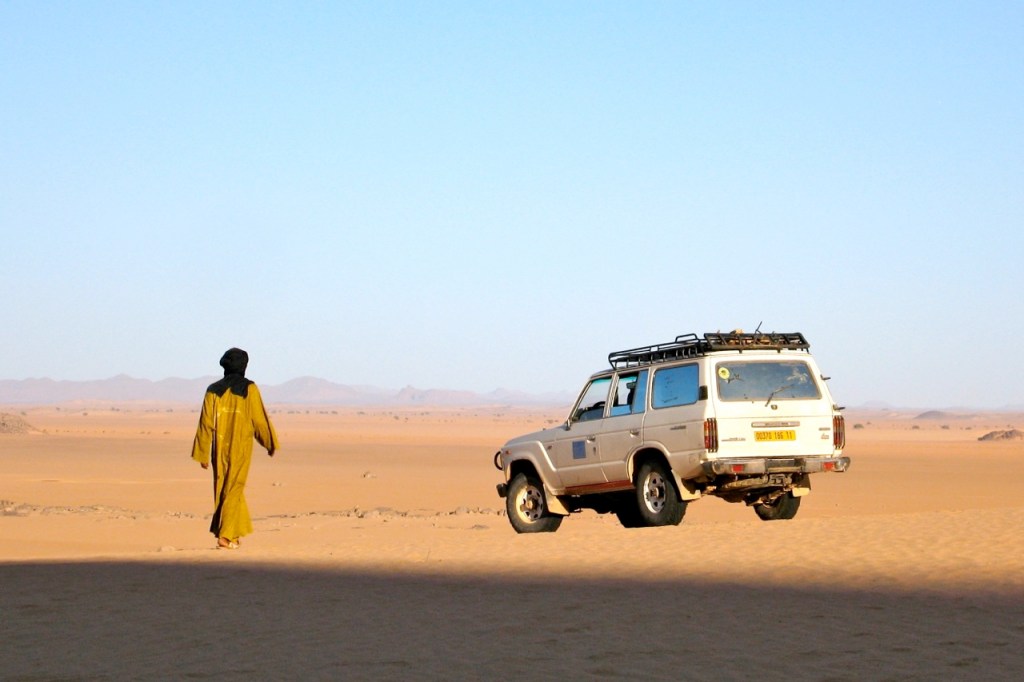
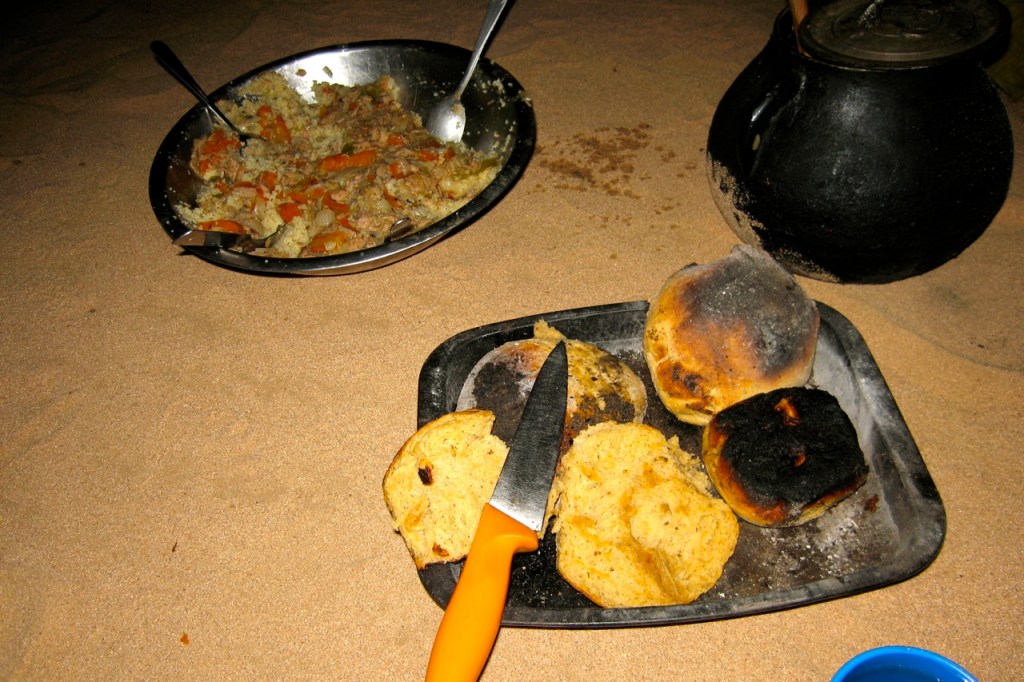
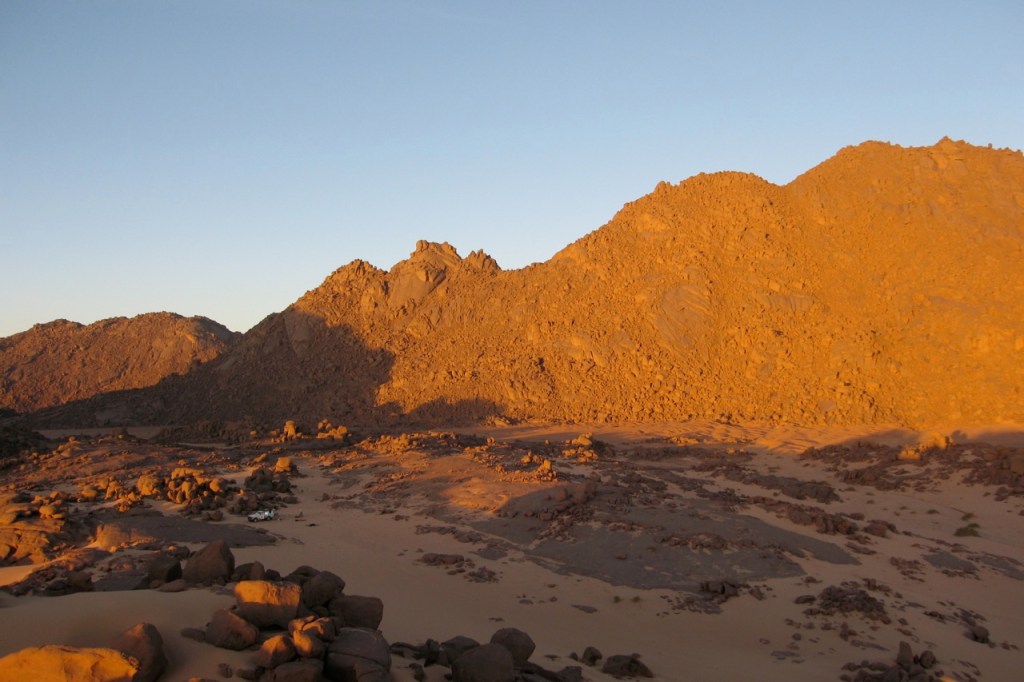
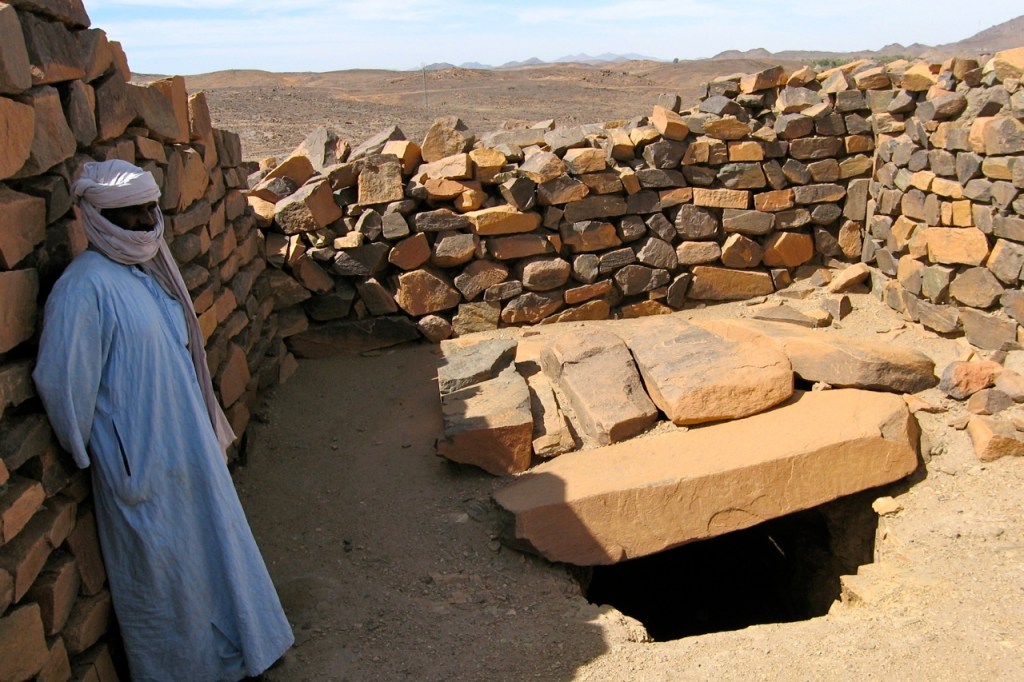
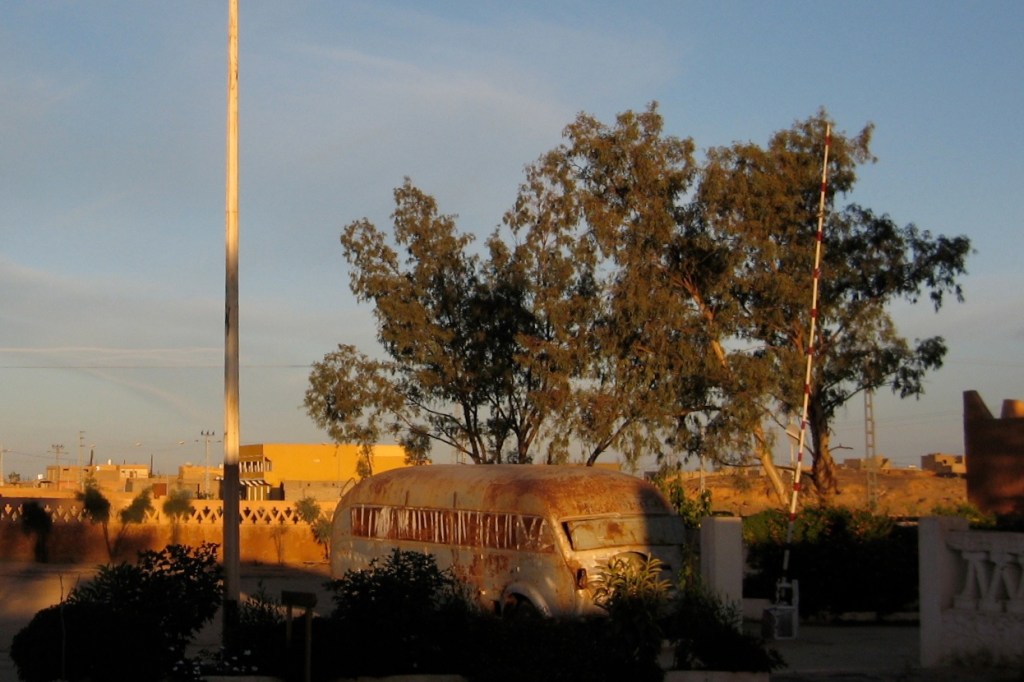
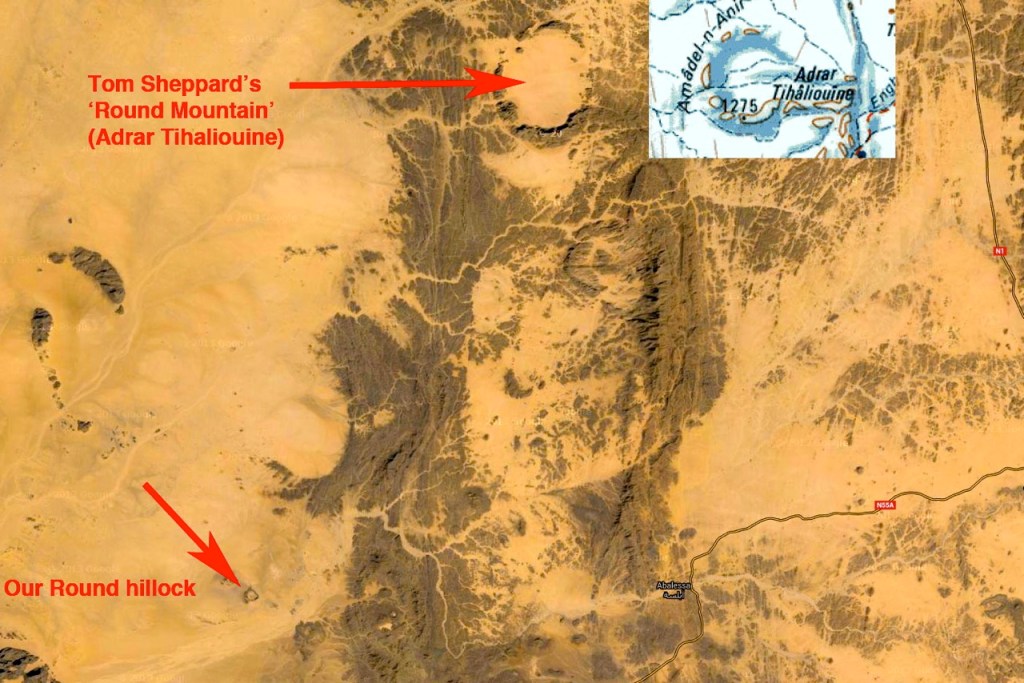
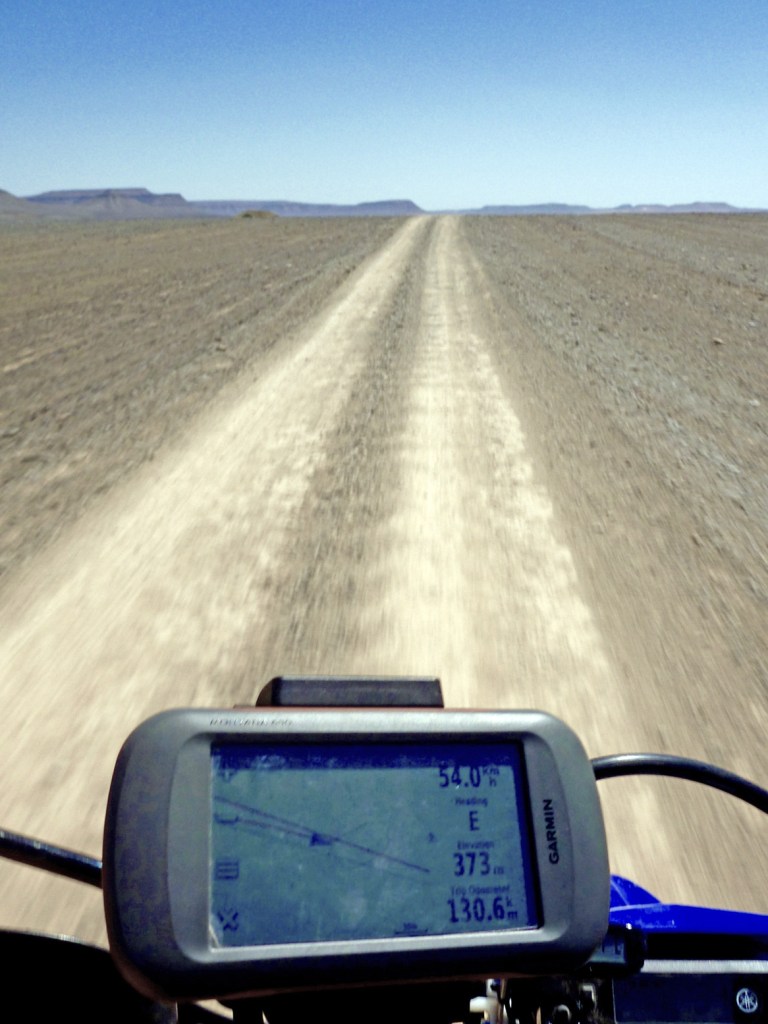
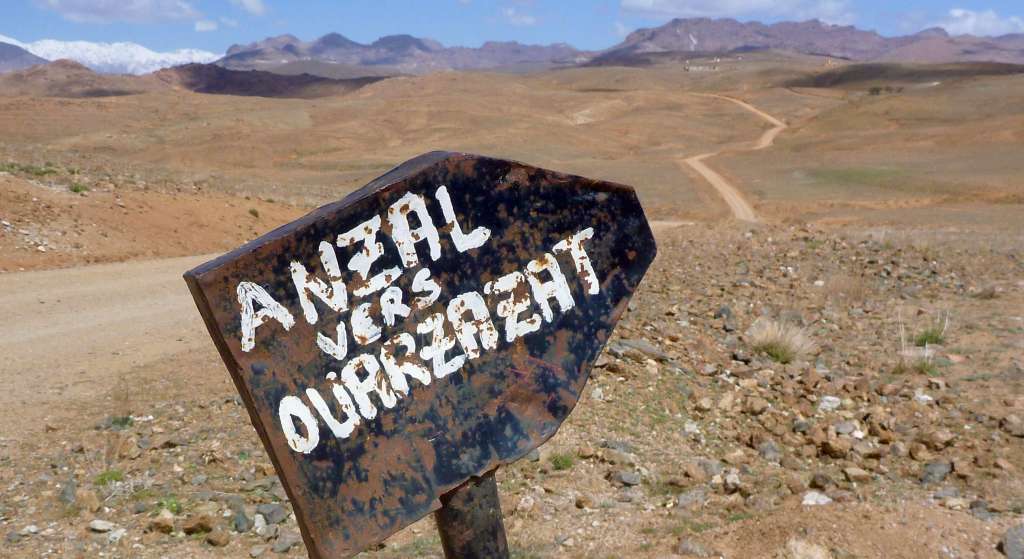
 Sahara Overland
