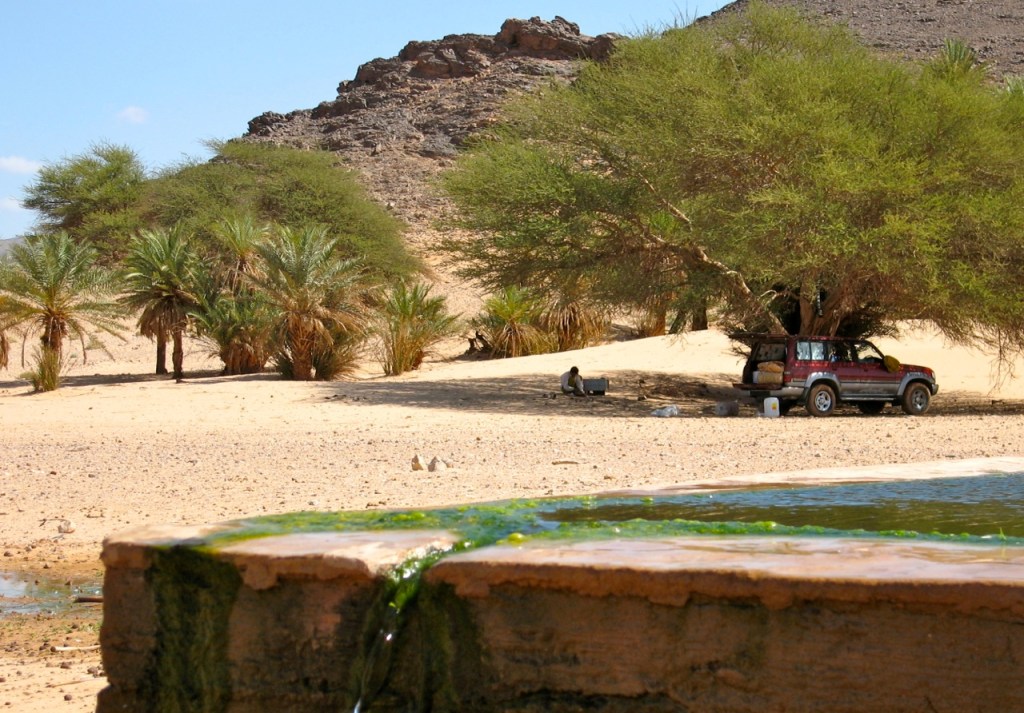
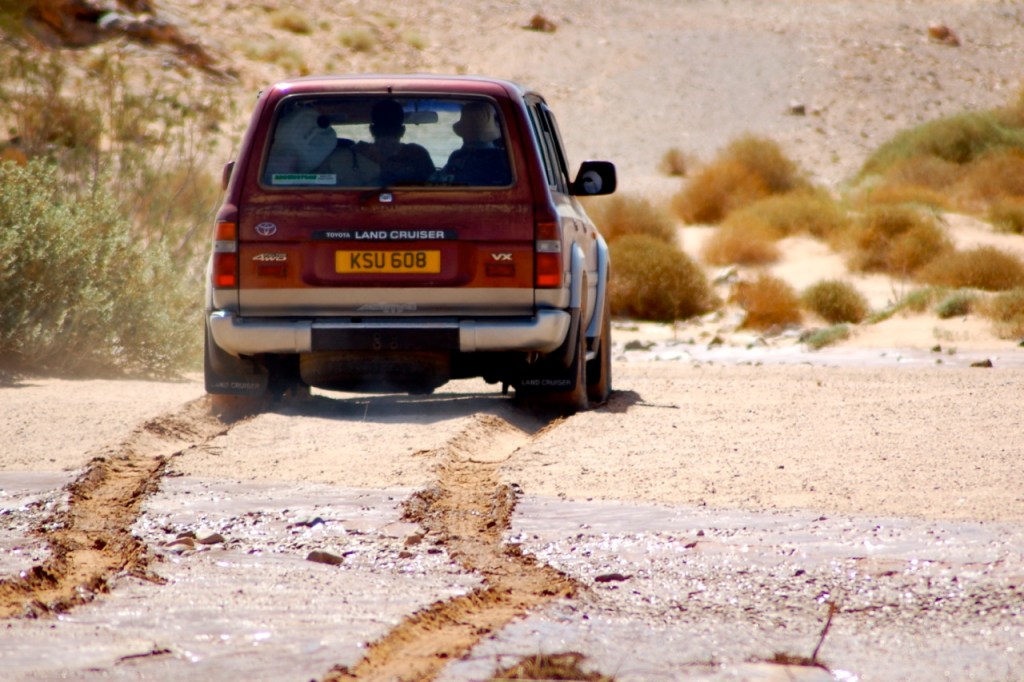
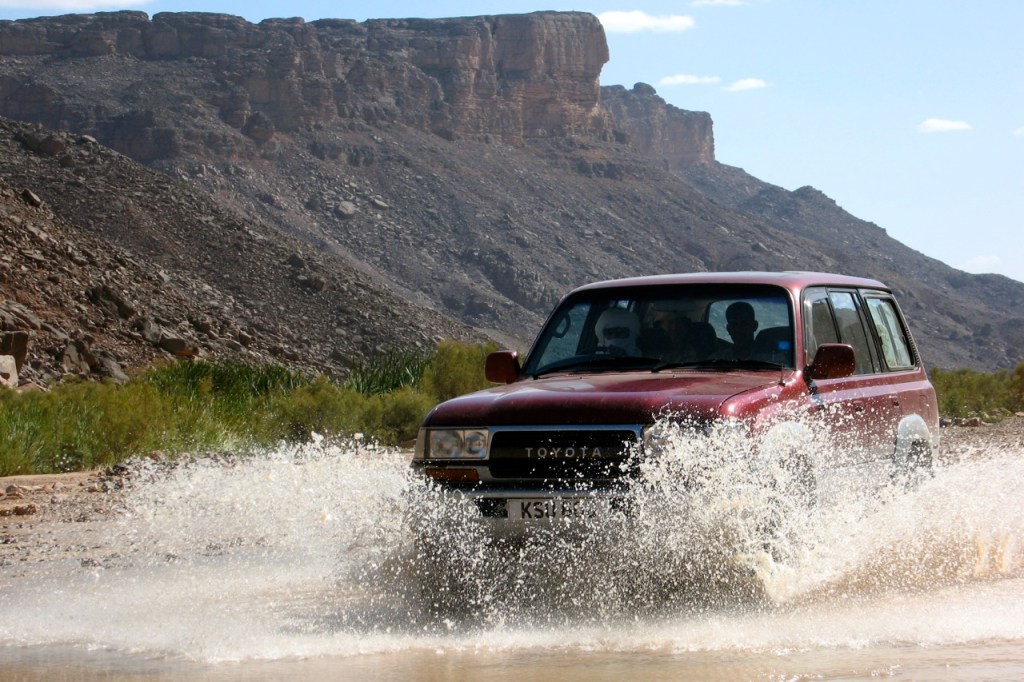
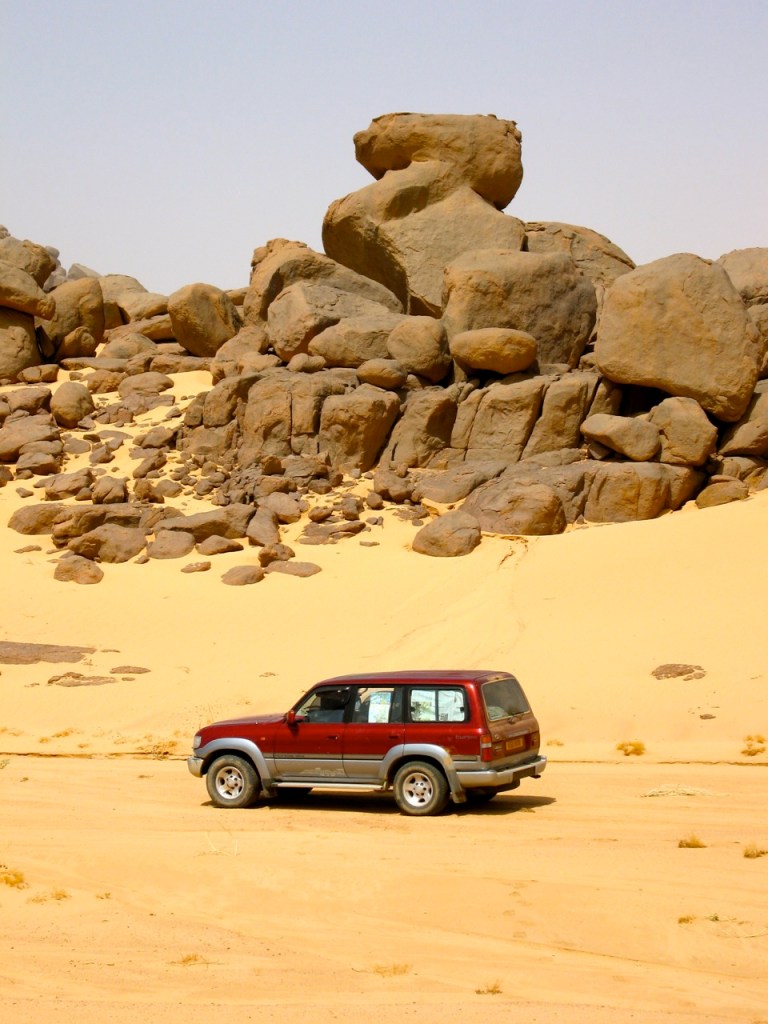
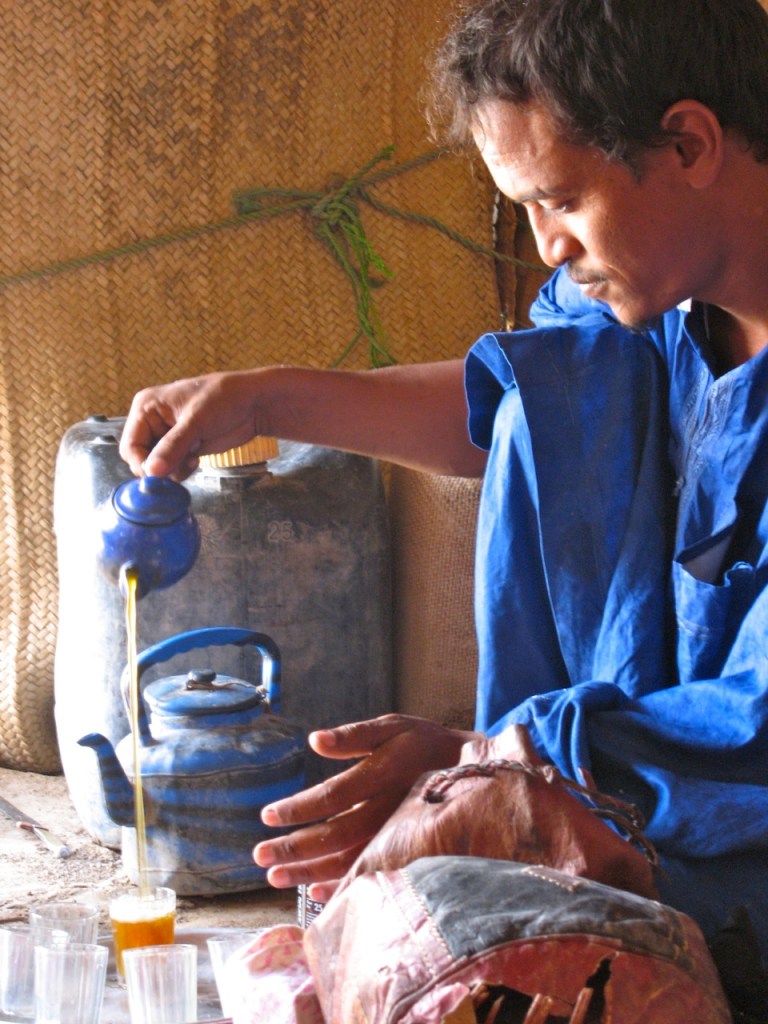
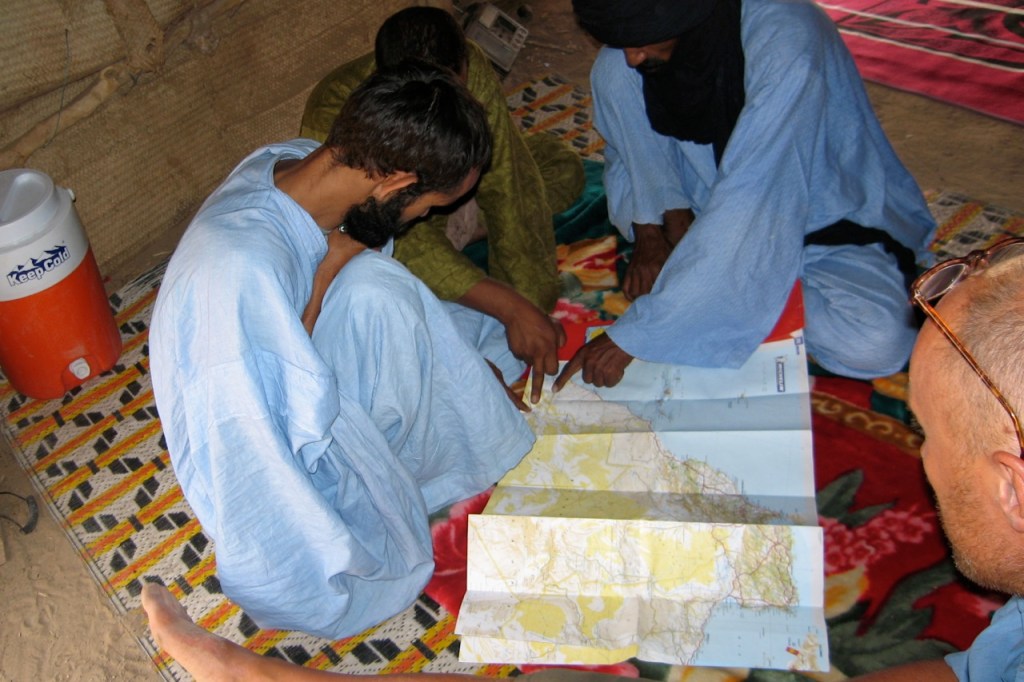
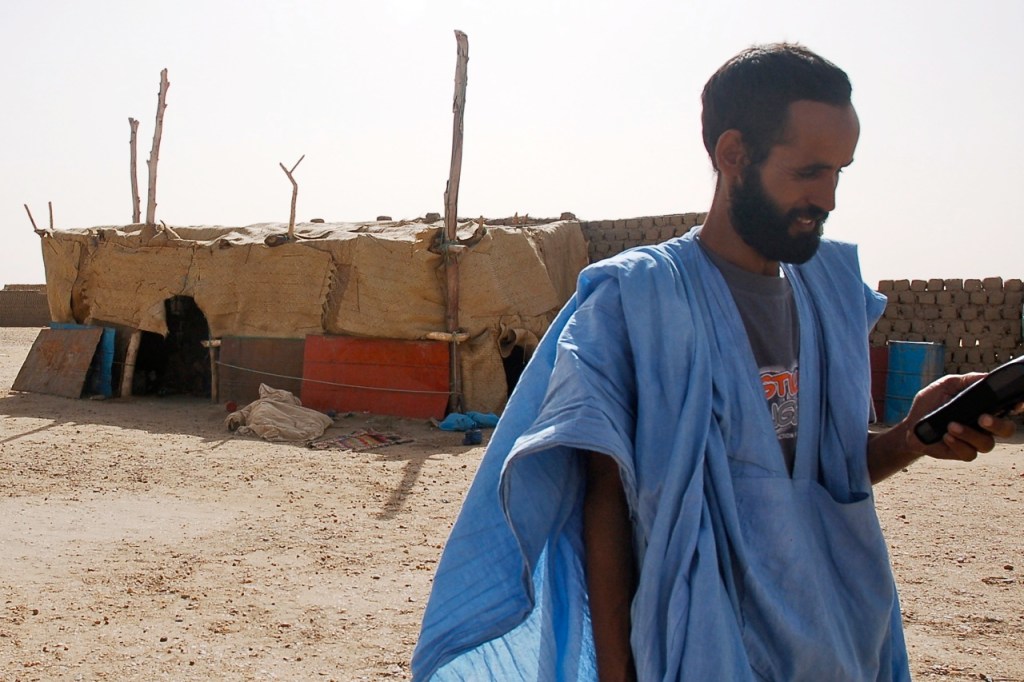
Tag Archives: El Khalil

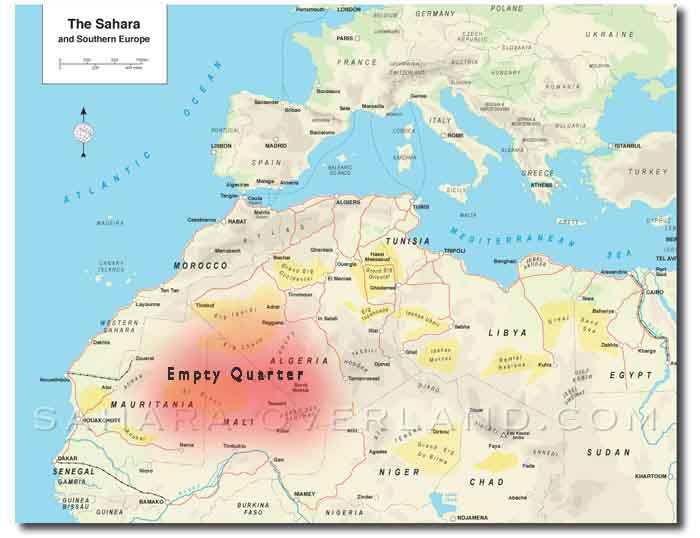
Sahara • The Empty Quarter • Part 2

Originally published in Overland Journal

See also:
VW Taro build (soon)
Intro
Part 1
Many times during my decade of despatching in London I’d longed for the irritatingly reliable engine of some middleweight Honda I’d ridden day-in, day-out for years to explode into a thousand pieces. Nothing less than a terminal meltdown with conrods rupturing the block and cogs spitting out of the muffler.

Now, a long way from the interminable Clerkenwell Road, I was faced with the inevitability of my VW Taro’s imminent demise. The engine knock might last for days, but in reality I knew its sudden escalation meant this car would not see another dawn.
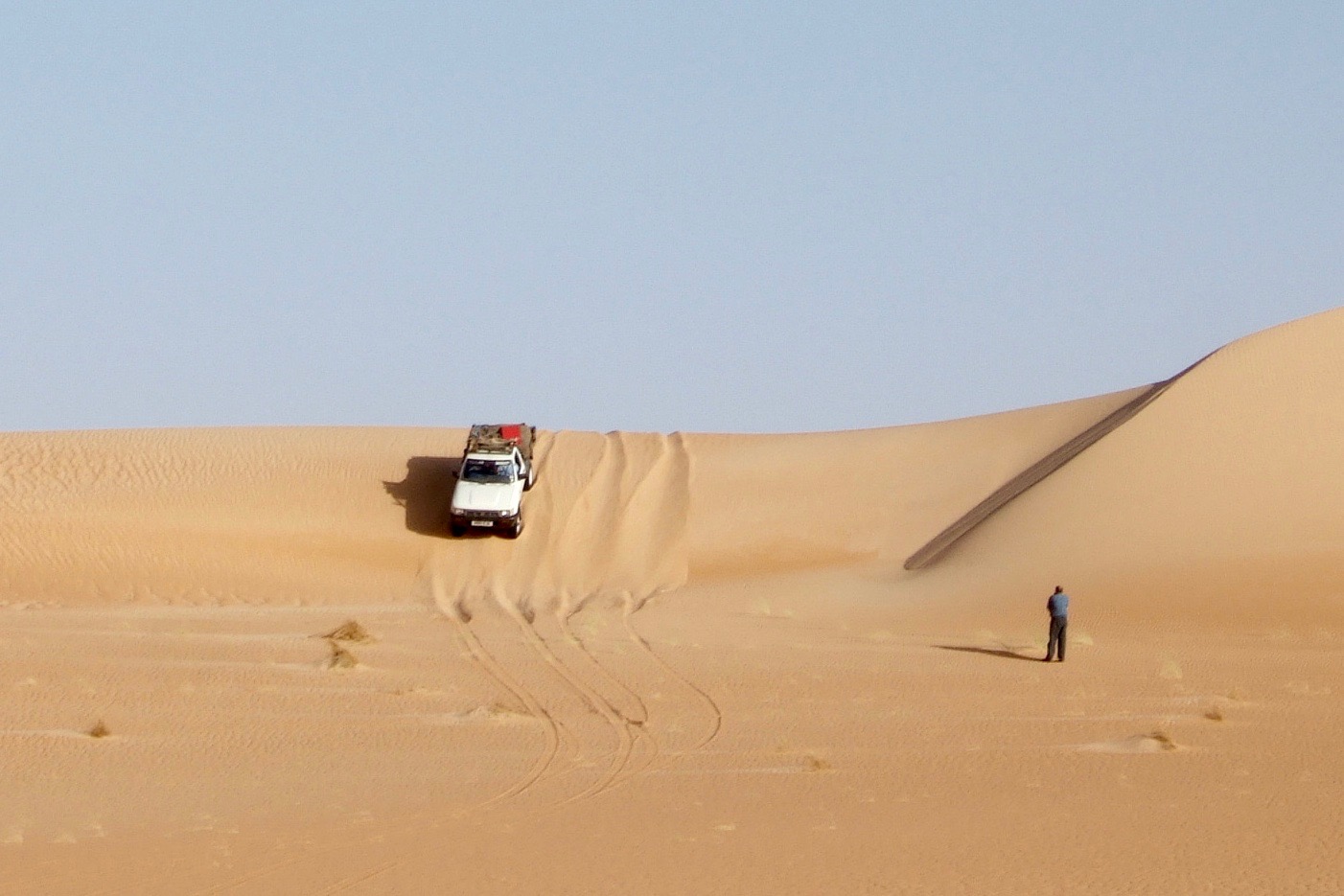
Ouarane sand sea

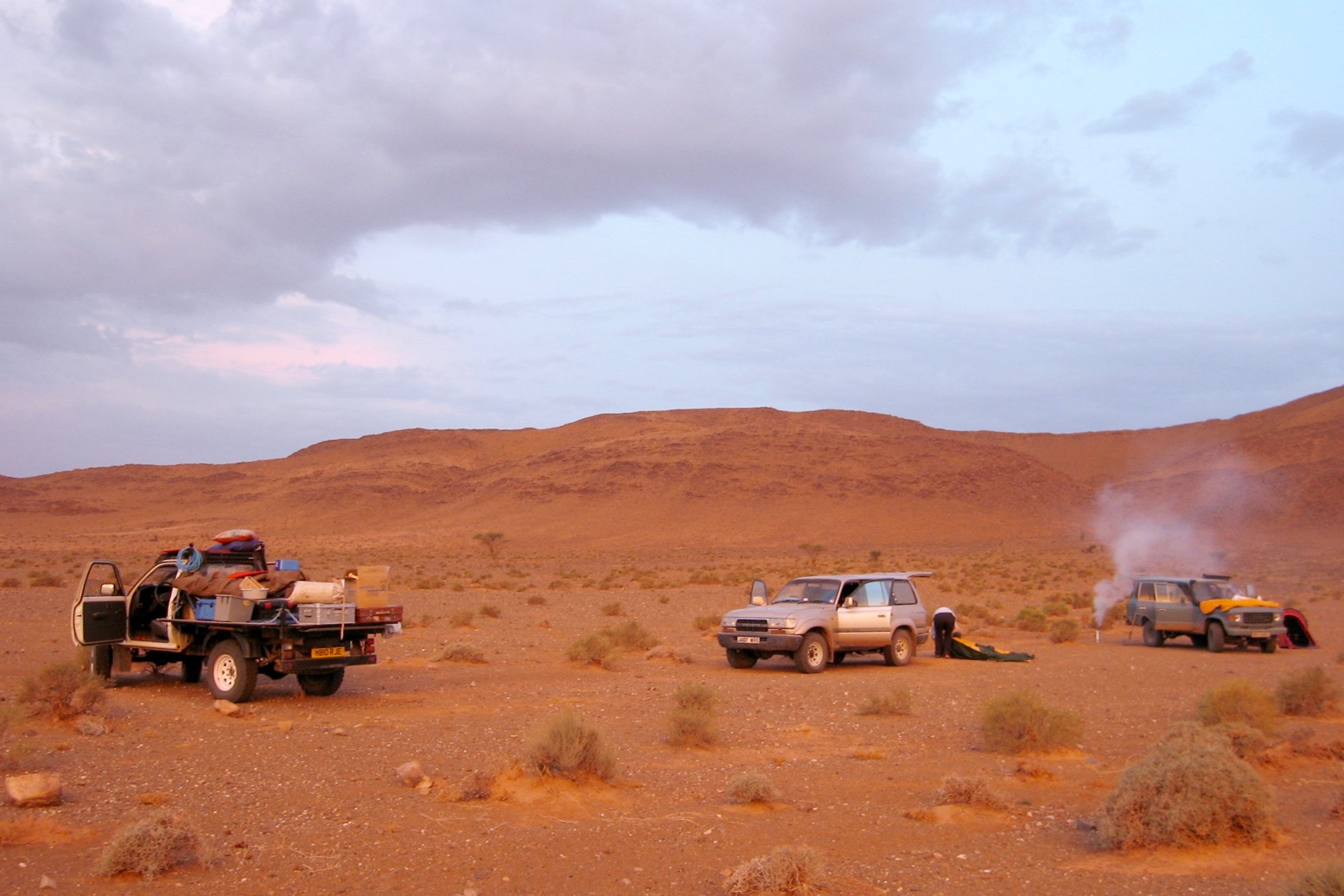
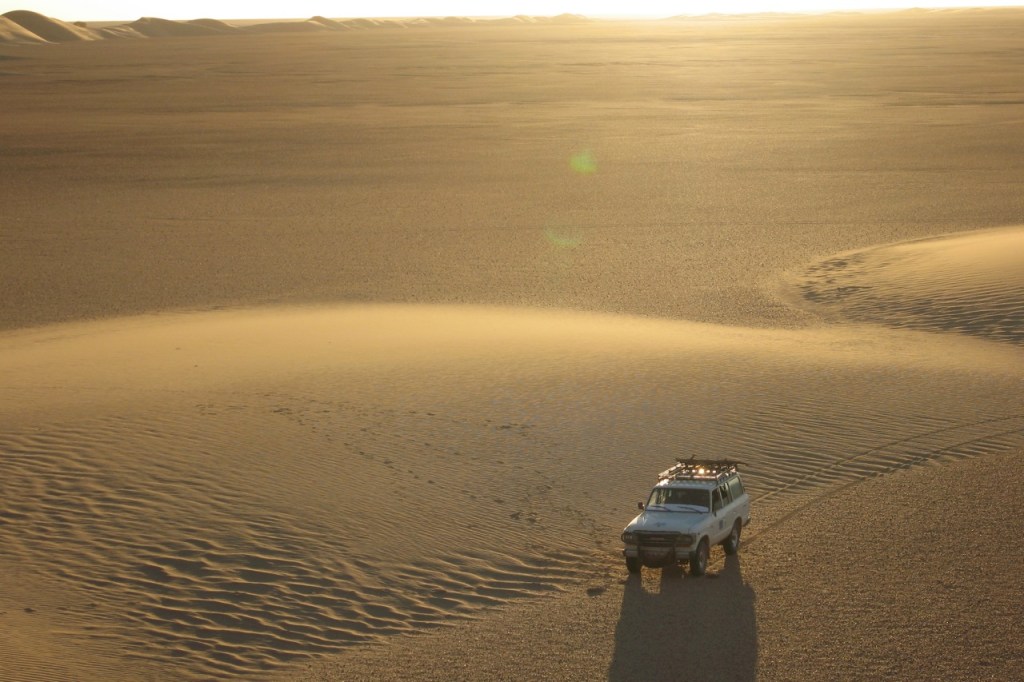
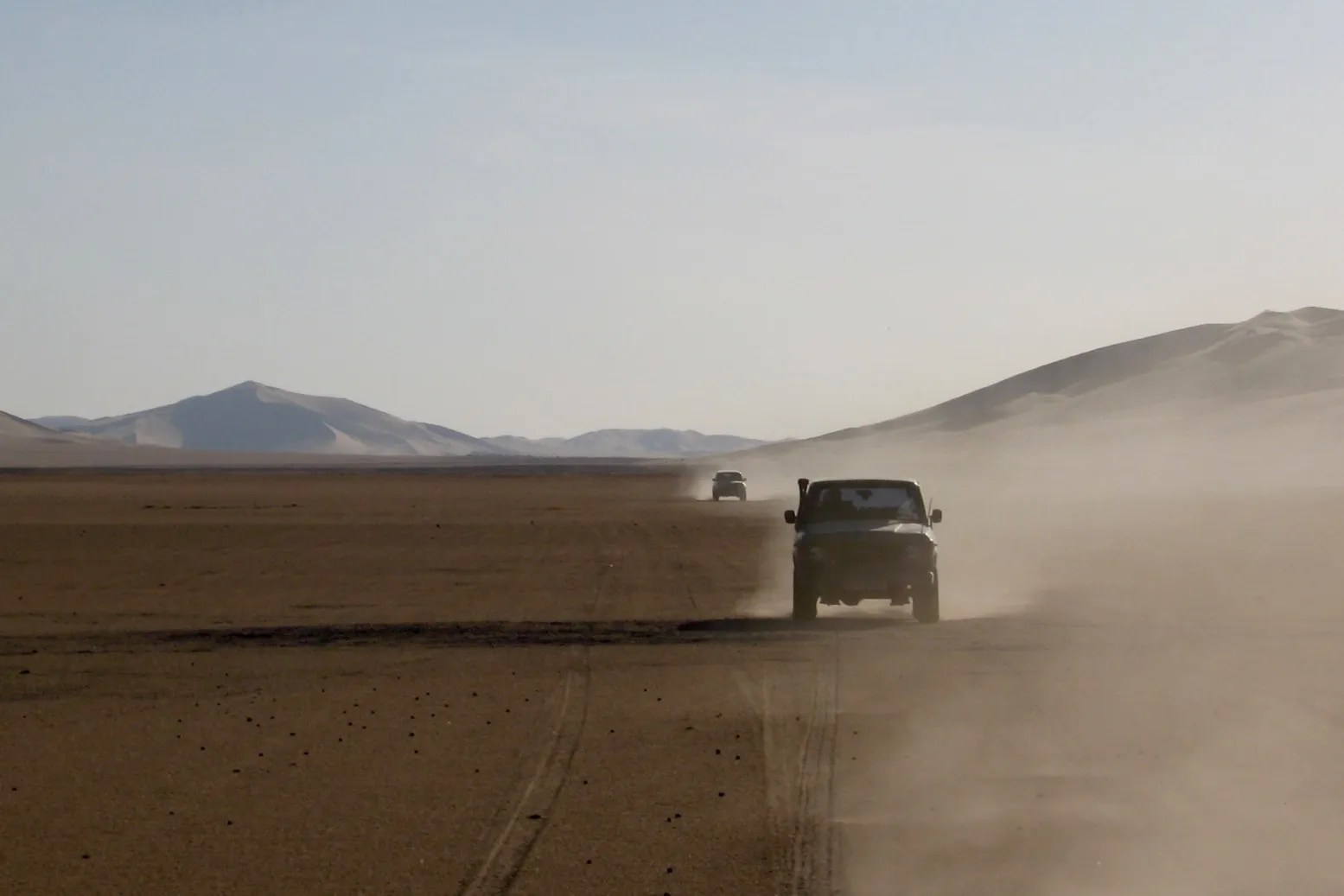
At least the dreaded dune crossing had turned out to be an anticlimax. It was all over before we realized and ahead of us the ridges subsided into a rolling sand sheet. We could now resume our easterly course towards the Malian border.

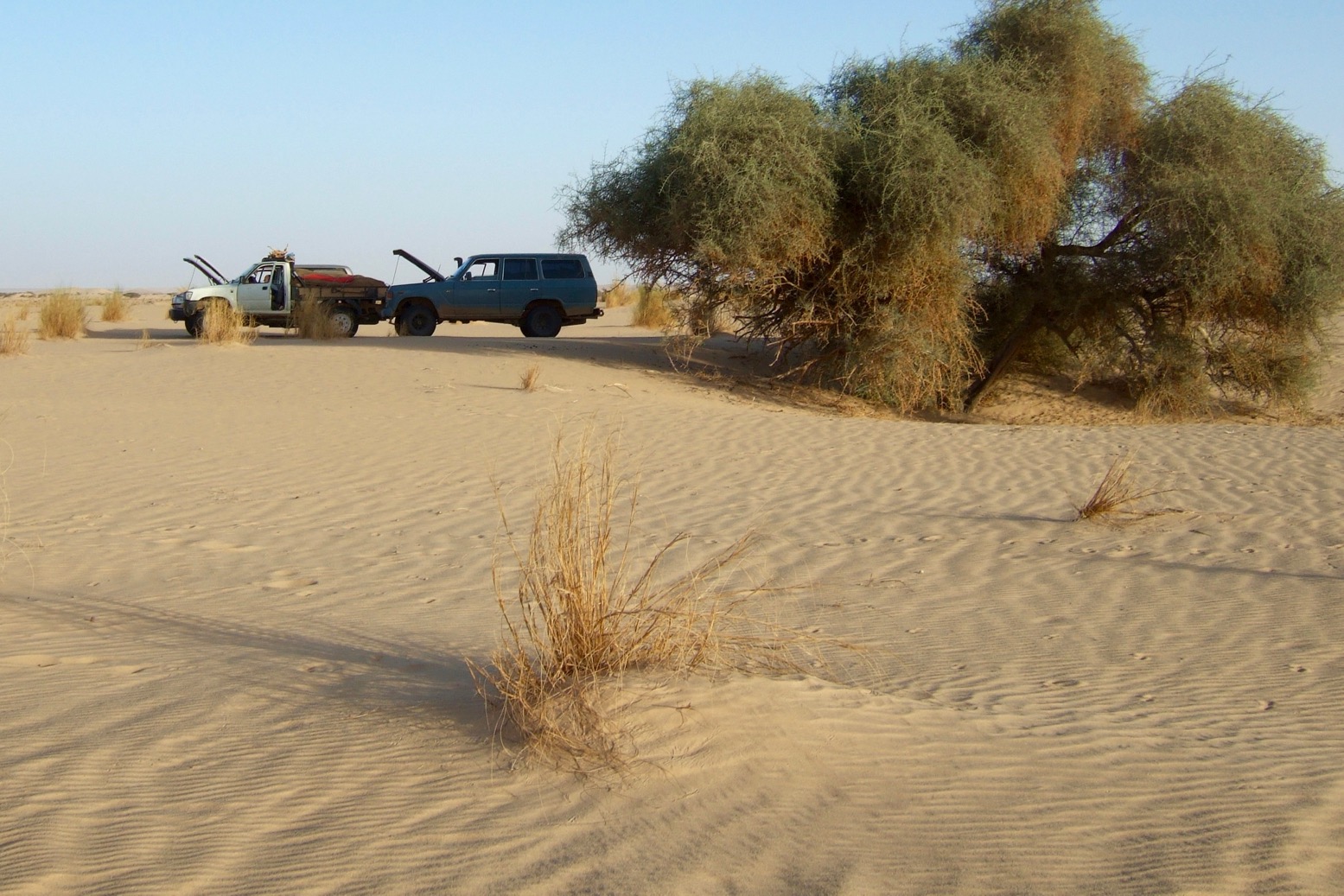
Our convoy followed me as I nursed the VW along, keeping the revs low and the load light. For a while I thought it might make it, but make it where? We were just at the start with a thousand vacant kilometres of Empty Quarter to cross. Mile by mile the ear-wincing clatter grew louder until a hideous hammering suddenly filled the cab as I tiptoed out of a shallow sandy bowl. I stamped on the clutch pedal and cut the engine, but of course this engine had just switched itself off, big time. We’d reached the VW’s grave.
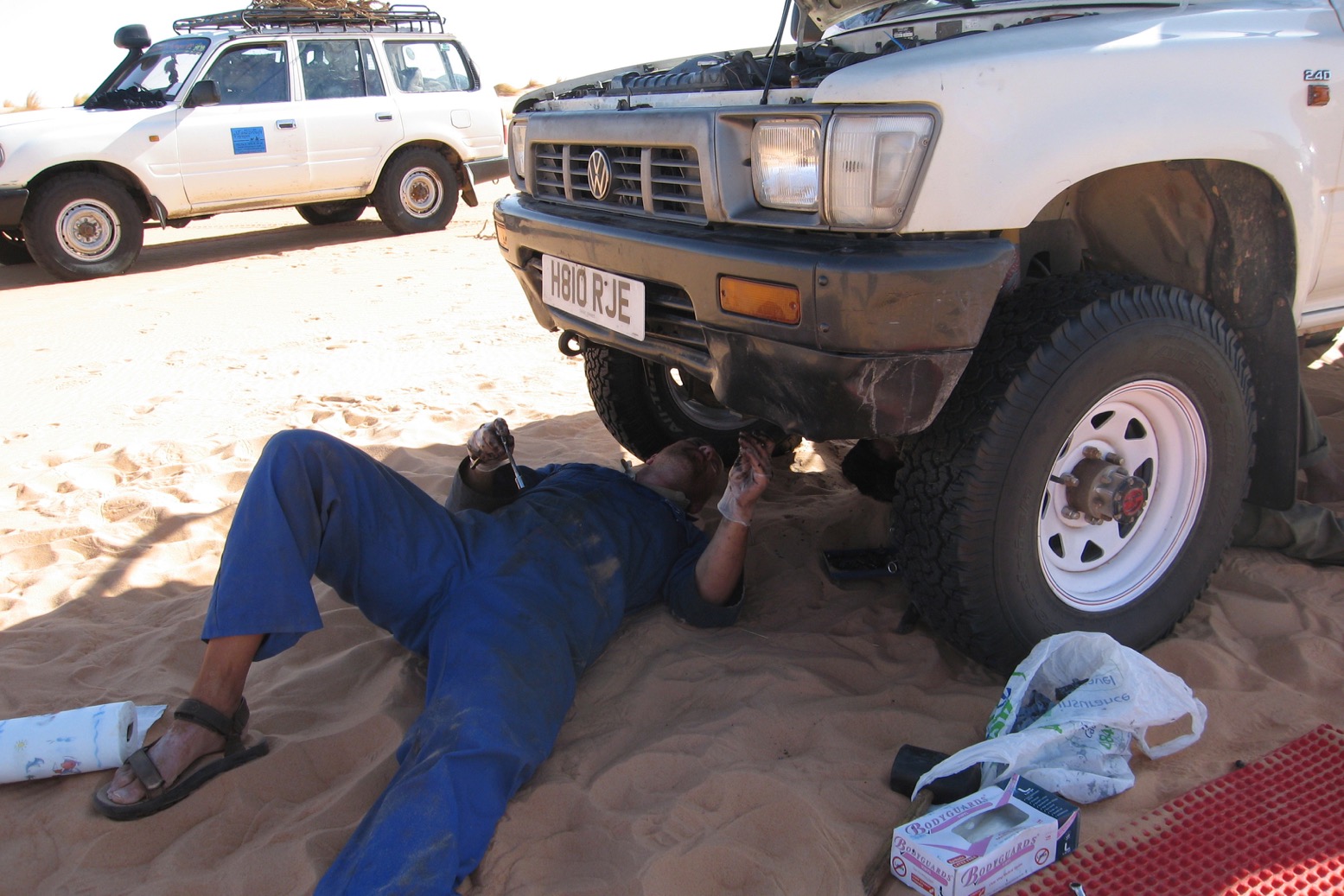
Nothing to see here, unfortunately

If you’d asked me to point out the least desirable place to have a serious breakdown on this trip I would have guessed somewhere beyond the dune crossing but before the full traverse of Mali; somewhere like N20°03′ W08°00′, give or take a hundred clicks. From this point the nearest towns of Nema, Chinguetti or Timbuktu in Mali were as far as they could be: the better part of a week’s round trip.

I rolled back down into the dip where we hitched up the front end and pulled off the sump, expecting to find it full of shrapnel. No such drama although a bit of prodding revealed #4 big end was definitely shot. I had no spares of course; these days if you think you ought to carry new big end shells for a Sahara trip, what you really need is a better car.

We cleaned ourselves up and considered my options. We could wait here for a week, eating into our supplies while someone headed off to track down a big end. With the right part I might be able to limp on before making a proper repair in Algeria. But judging by the sudden, pre-terminal racket the crankshaft could have snapped – a distinct possibility as the engine was locked solid. Establishing this would be a lot of heavy work in the middle of the desert; dumping the car or trying to recover the remains made more sense.

The problem with dumping it was there was literally no space for me in the other cars, let alone my gear, which now had a value greater than the pickup. And with a replacement engine from somewhere, the VW – which was otherwise in great shape – could ride again.

We got on the Bat Phone to the Ambassade on the far side of the Quarter. A truck had just left Timbuktu but with a full load, while an empty up north near Taoudenni was having gearbox problems. They’d have a think and call back in a couple of hours.

Presently the phone rang. There was a MAN in the yard but the 2000-kilometre round trip would cost as many euros. It would take a couple of days to track down enough fuel for the round-trip too; after that they’d meet us in three days. It was marginal but I figured along with the convenience of getting my gear to somewhere useful, there was a chance of getting the pickup re-engined or sold on. Calling in a recovery from Timbuktu was not an option; we’d blow our cover in Mali with who knows what consequences, most likely with the waste of a lot of time and money while losing our chance to finish the crossing of the Empty Quarter.
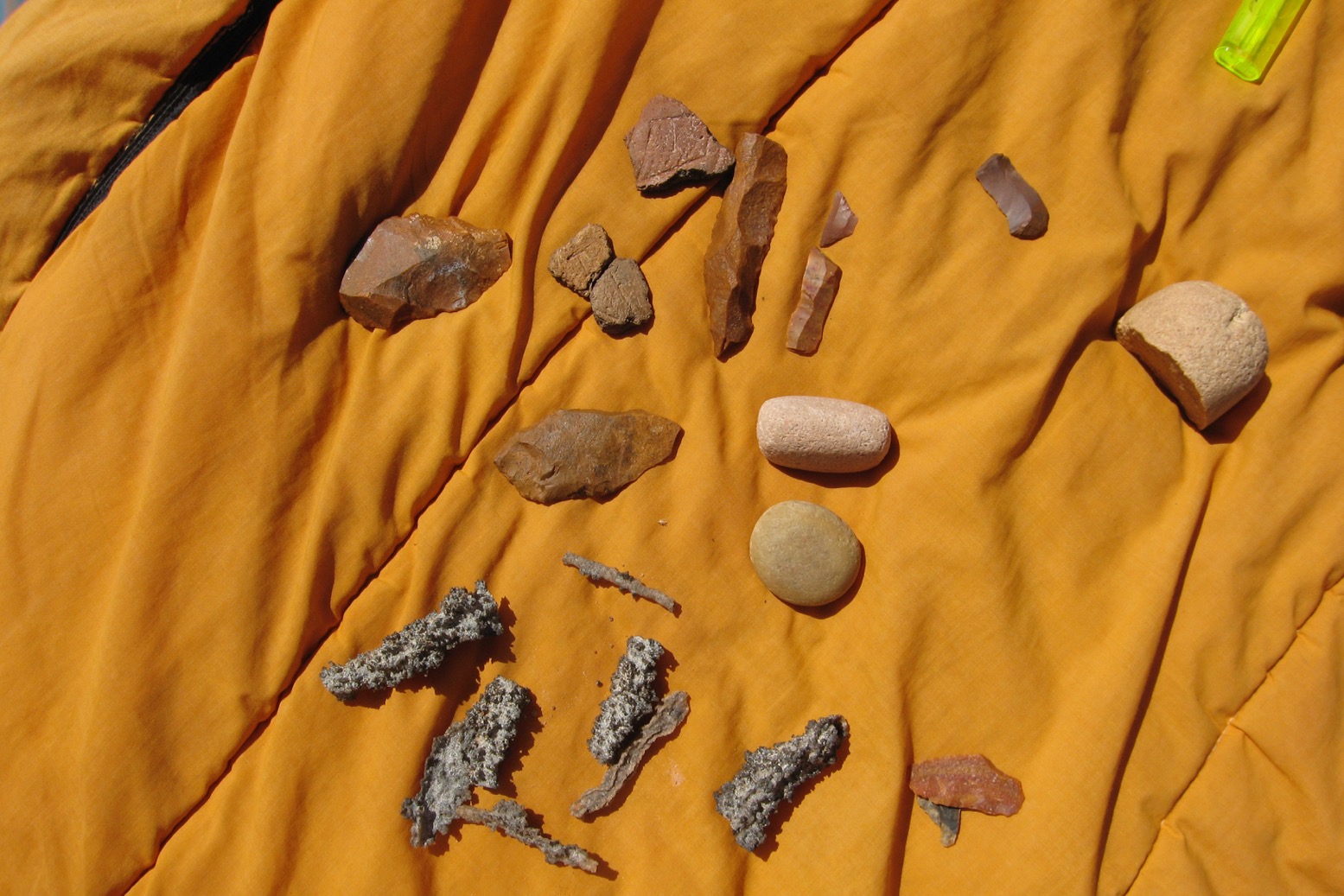
Neolithics and fulgarite everywhere

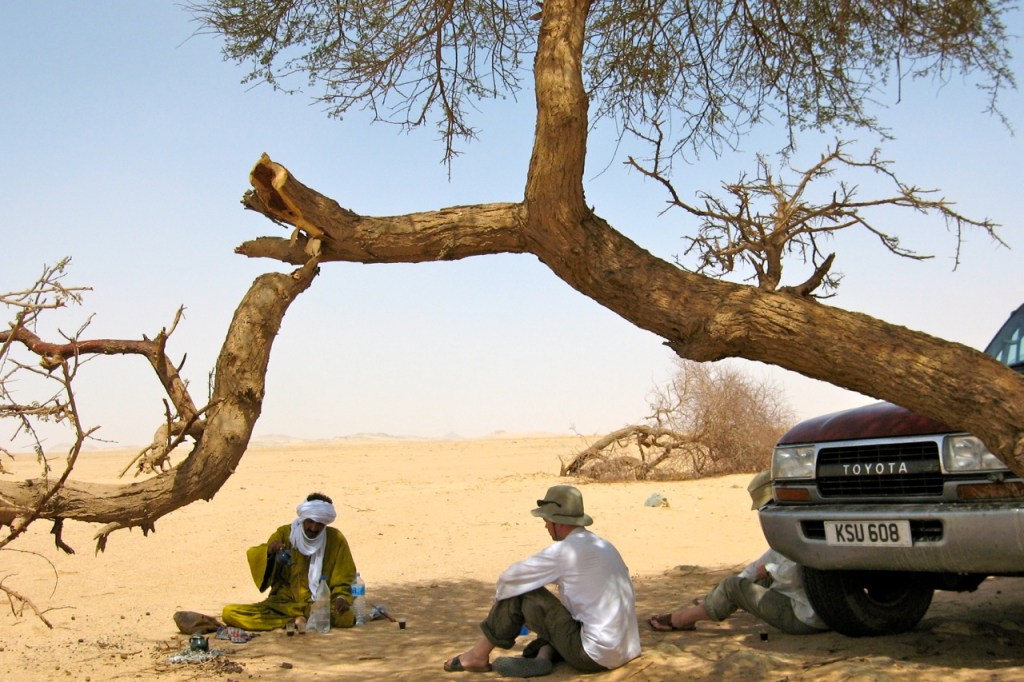
With the recovery underway we put on a brew. A little later Ron came back from a wander, having found various Neolithic trinkets: flint knifes and hand axes from several thousand years ago when hunter-gatherers roamed what would have then been a grassy savanna teeming with game.
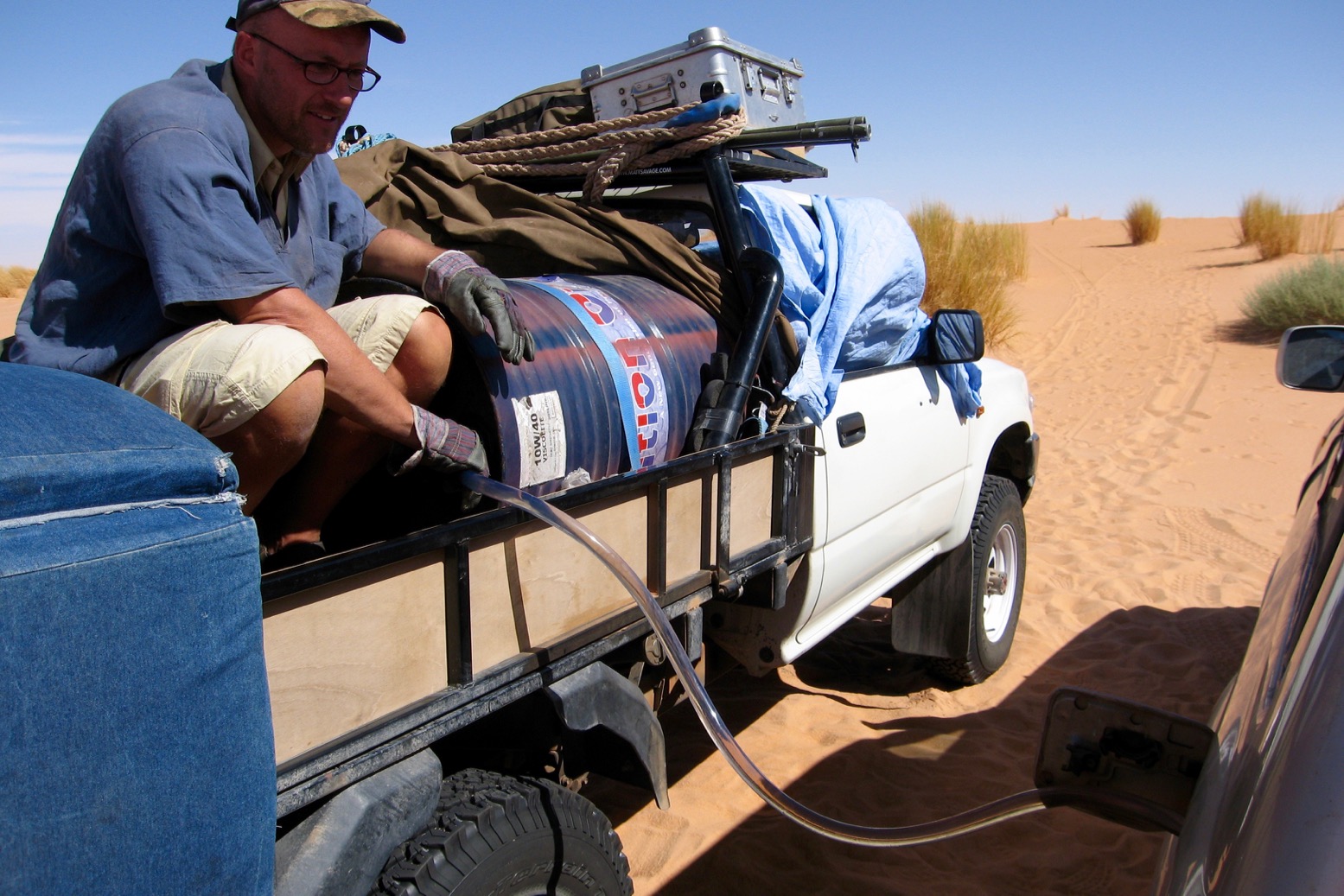
Free fuel; form an orderly queue

Did the disaster bother me? Not really. Vehicles are best treated as expendable in the Sahara, on this trip more than most. My desert travels had gone rather well these past few years so I was due a calamity; it just wasn’t the one I was expecting out here. The crux was not being alone and having back-up plan from a place like the Ambassade. It was a shame to waste all the work and money put into building up the Taro, but it had got this far and, for a gutless old ute, the gazelle had proved itself up to the point when it croaked.

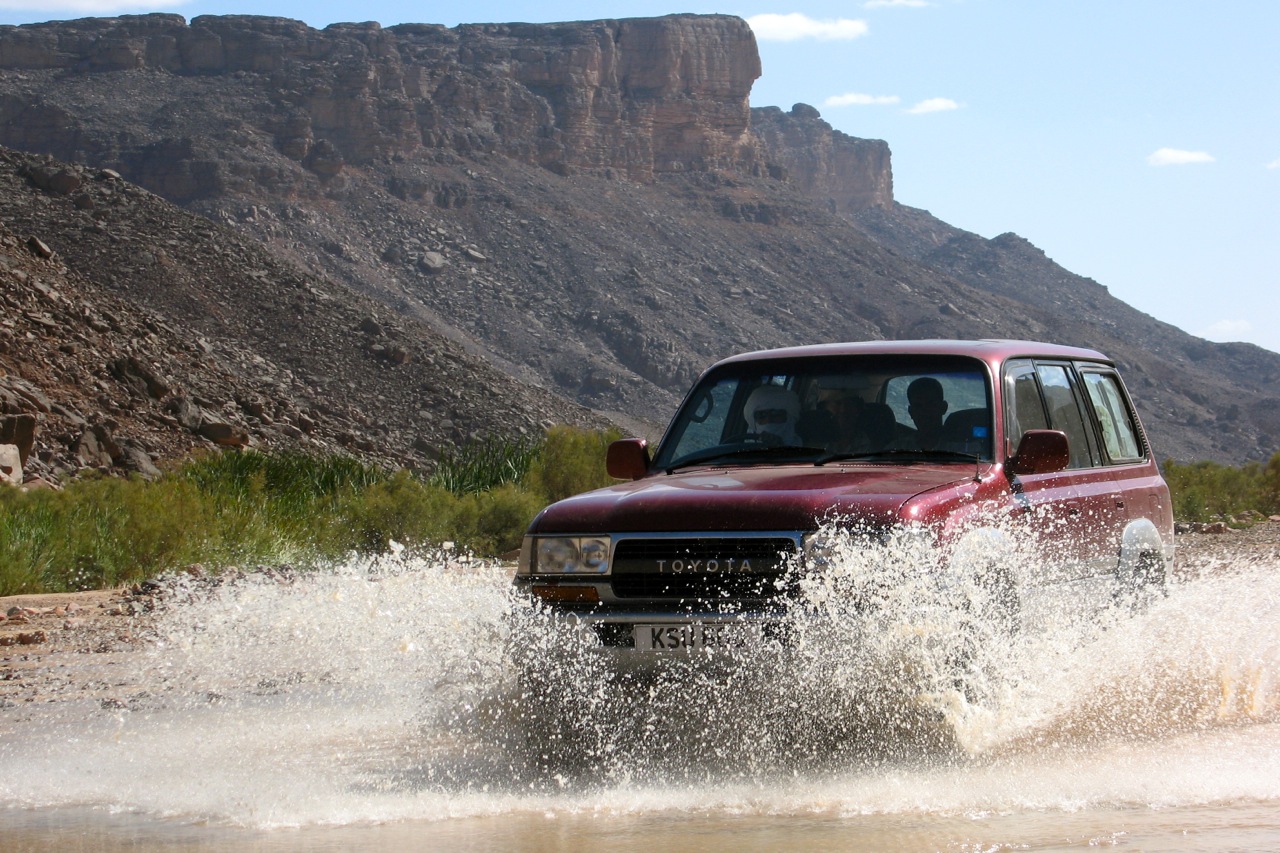
By next morning we were already getting restless, and with the thought of a week’s waiting for the lorry to trundle over the eastern horizon, the tricky topic of towing re-emerged. It was clear that only the VX was capable of it: Sue didn’t mind but Roger was less keen. I saw his point; towing even the lightened ‘gazelle’ across unknown terrain for a thousand kilometres was a shortcut to prematurely ageing the transmission; I knew desert travellers who’d found this out the hard way. In the end though, the call to action prevailed and a fee of a euro per kilometre was agreed. I dished out the masses of fuel I had left and divided my kit for burning or portage. With the pickup as light as it could get, we roped a kinetic line to the VX and set off.
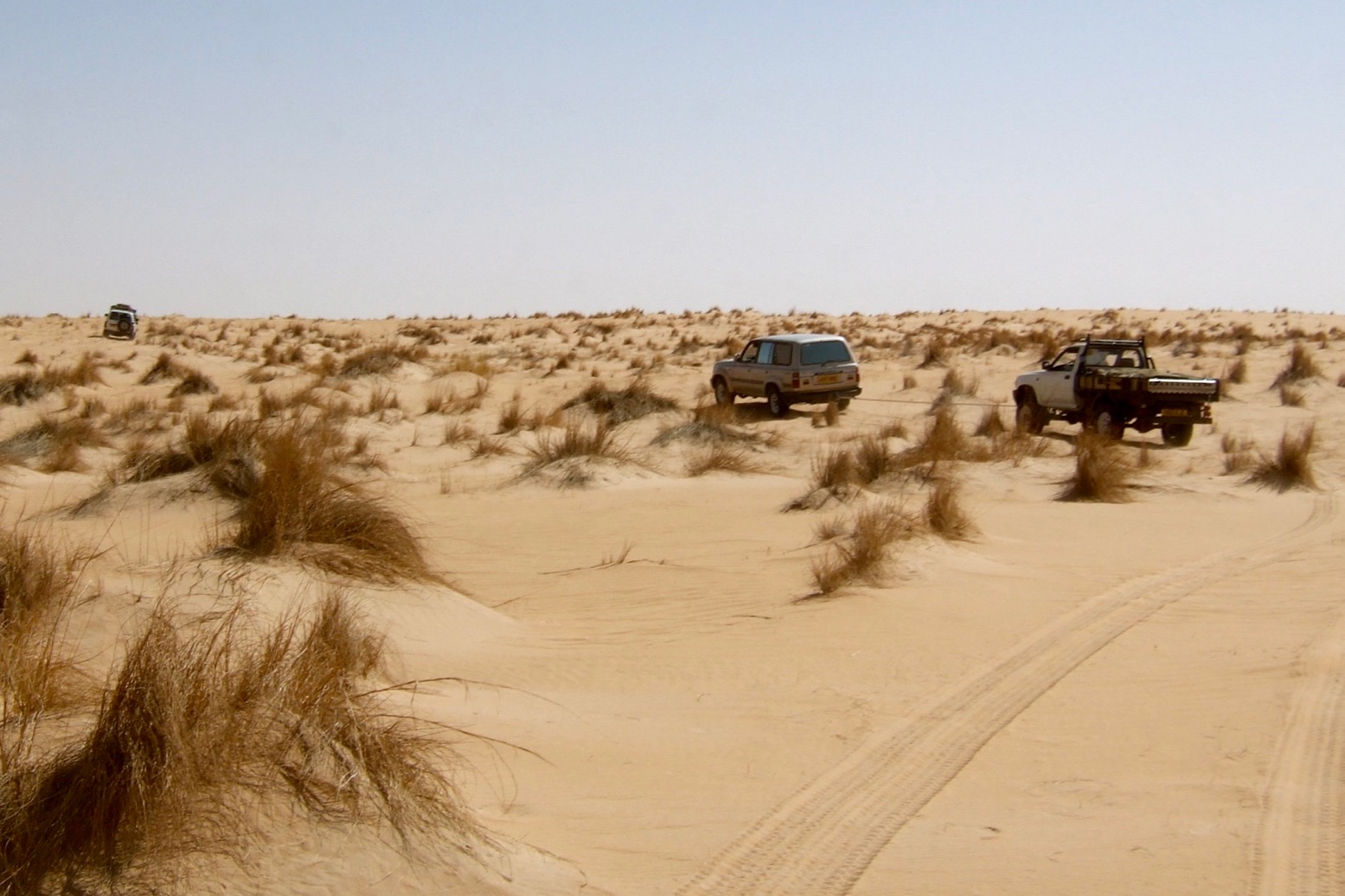
Tussocks! One thing you don’t get in Algeria

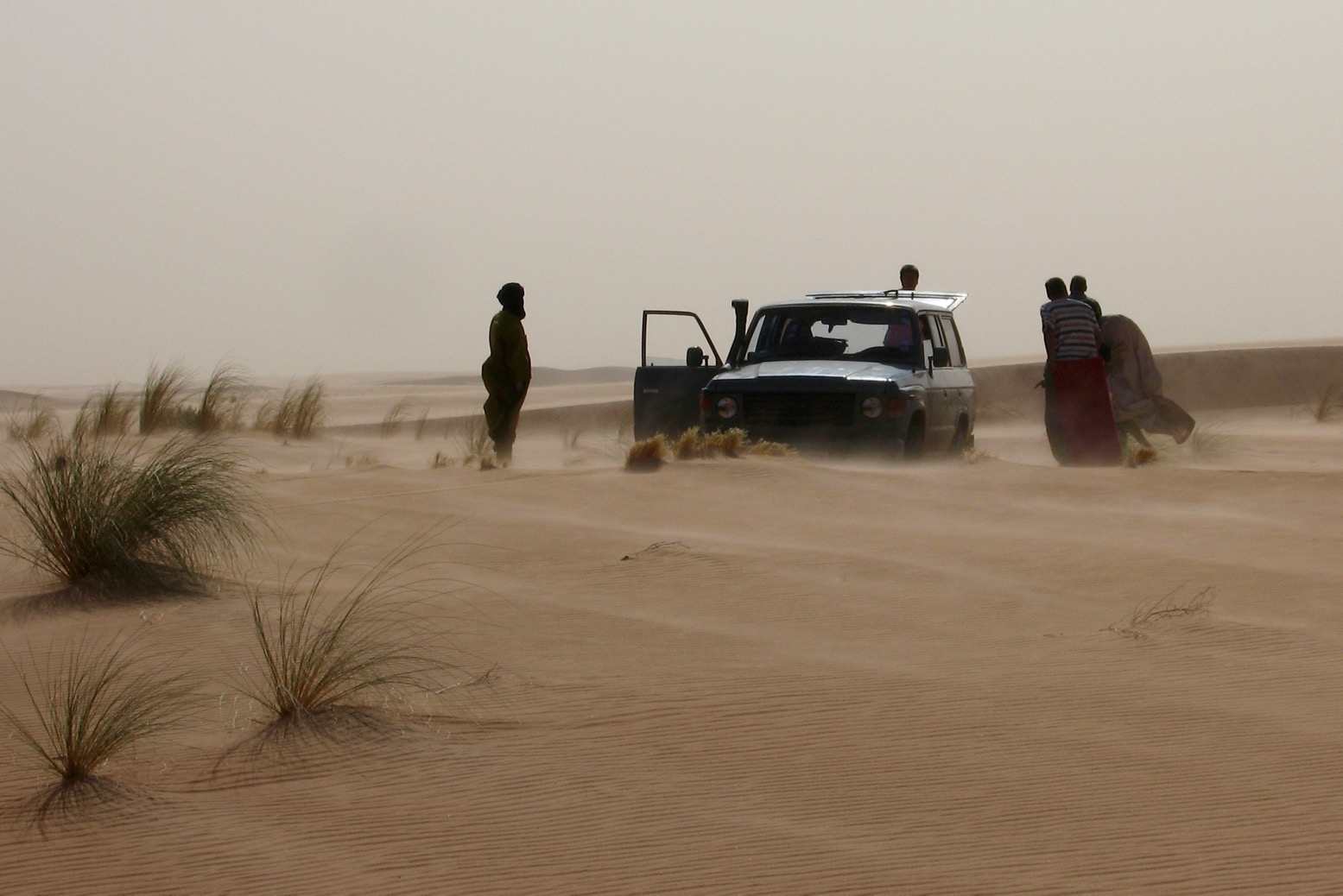
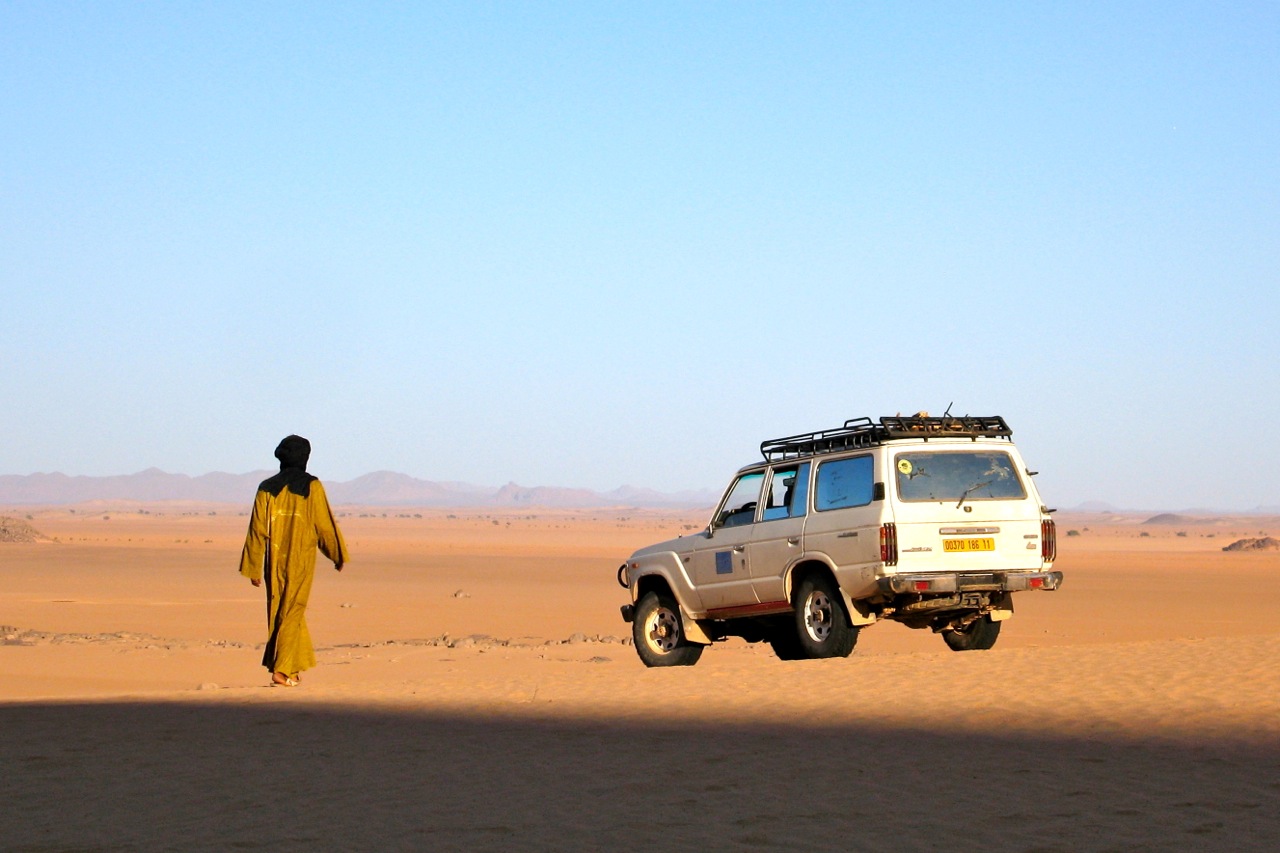
They say never tow with a KERR, it will ruin the rope, but I can tell you the elasticity is most welcome when a torquey VX is yanking you from one tussock to another hard enough to give you whiplash. Unless you’re a lost camel with an appetite, these tussock fields, stretching for miles at a time, are the bane of this part of the Sahara. In between them I relaxed on the rolling sand sheet and even had a chance to shoot some video reports. As we alternately cruised and bounced along I was surprised to see fennecs (desert foxes) dashing out from their holes.
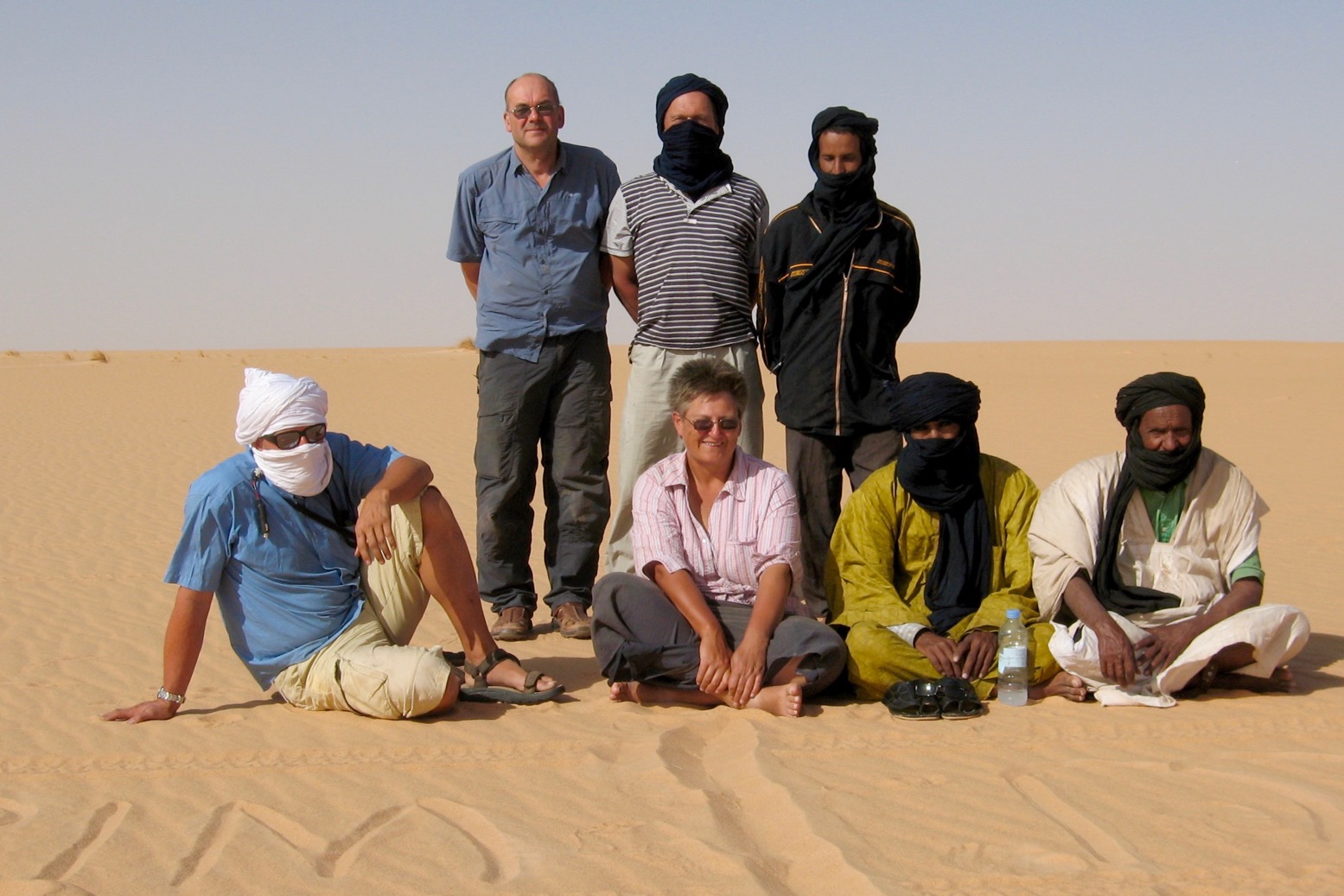
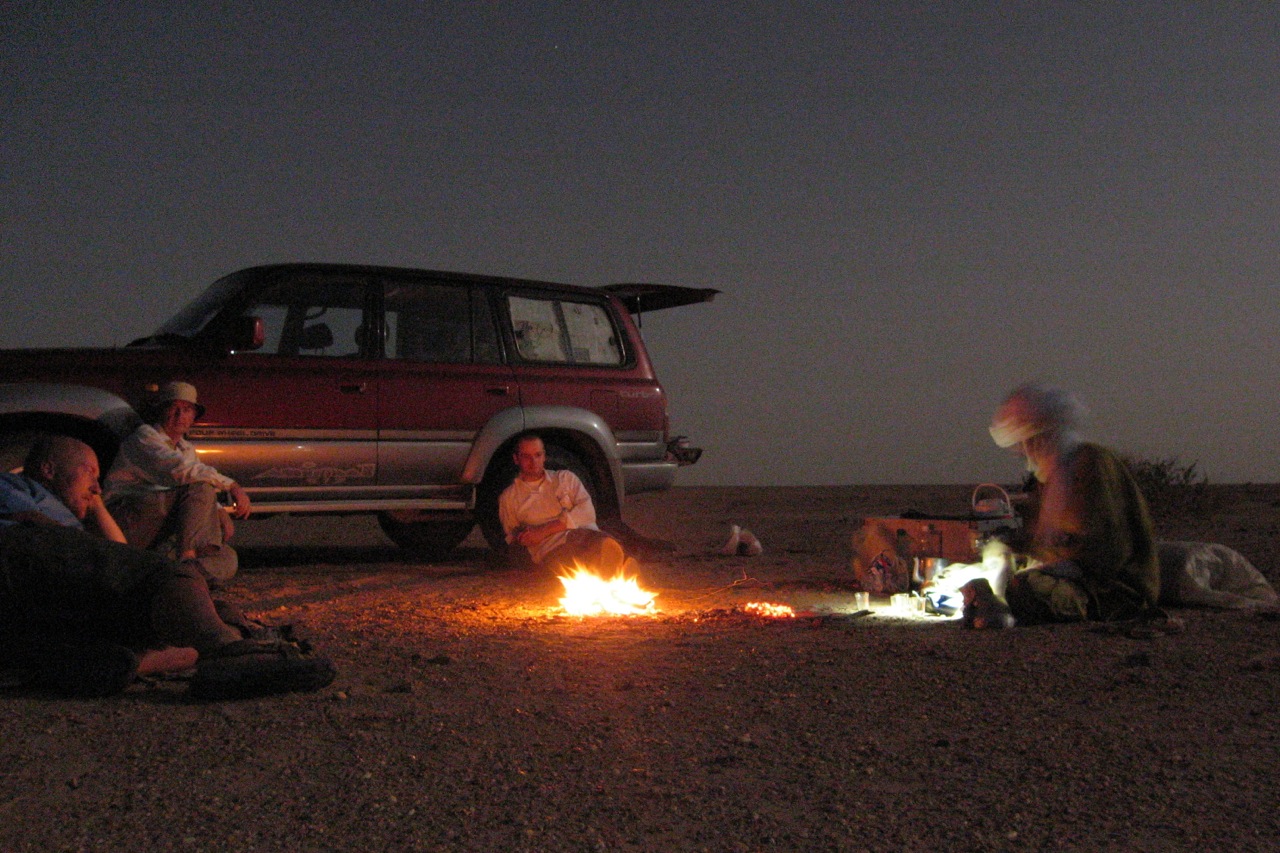
The Empty Gang at 20, -6
From the back left Roger, Ron, Mohamed mechanic, me, Sue, Mohamed H, Mauritanian guide
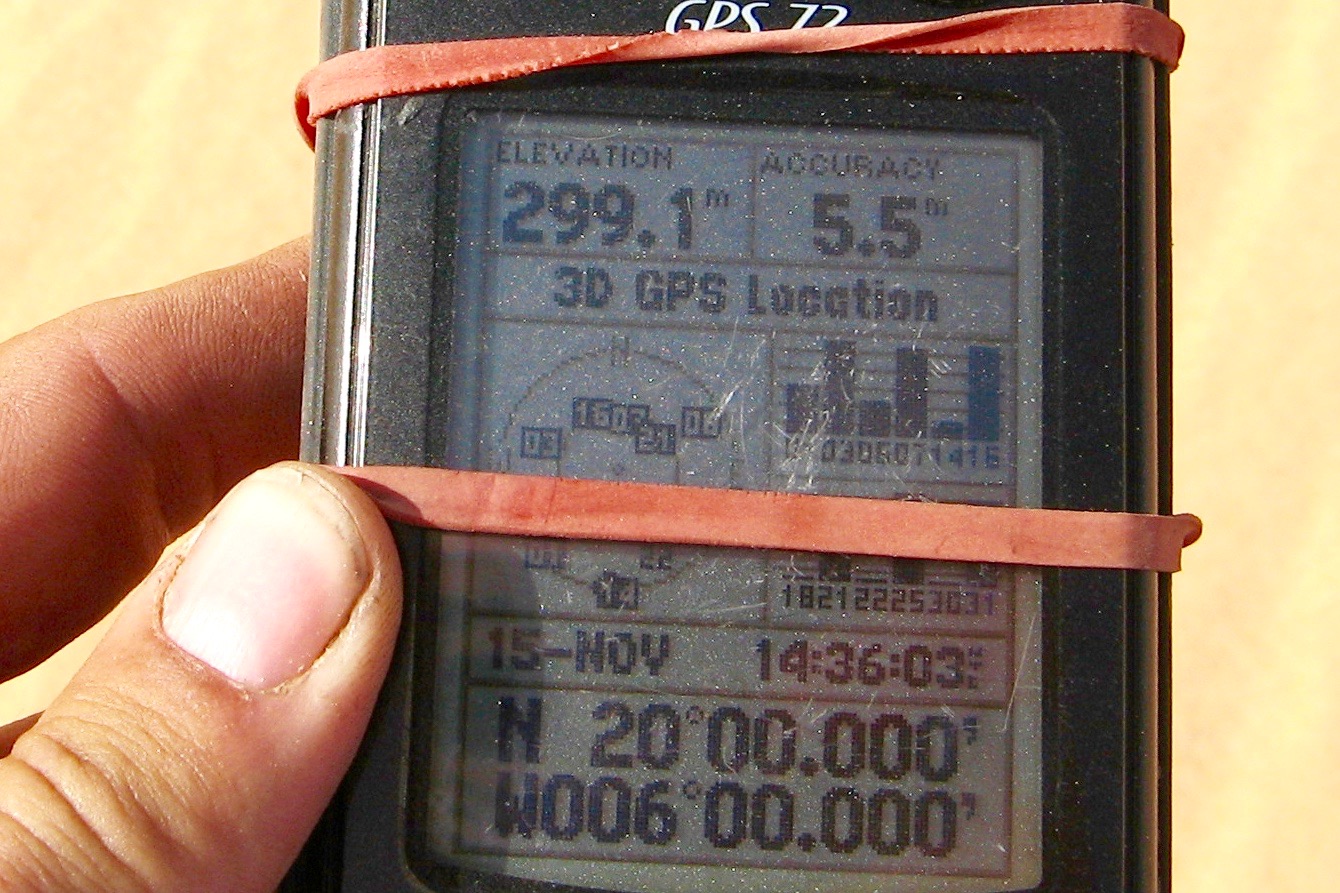
Online confluencer

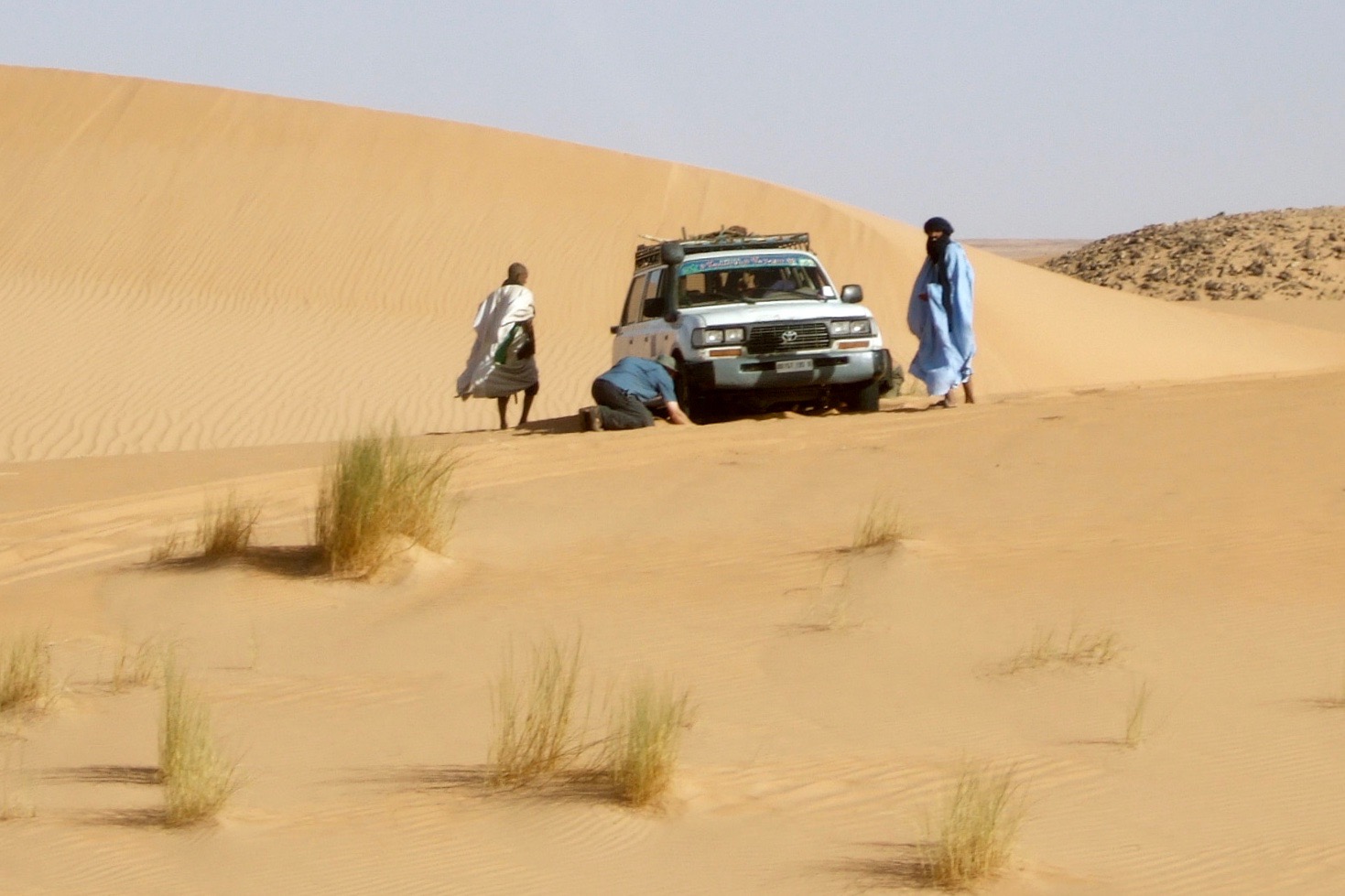
Inevitably we hit a soft patch and spent half an hour getting the running cars out before we could even turn our attention to the dead pickup with much digging and all the tow ropes joined together.
But progress was good and by lunchtime next day we pulled up at 20°N 6°W to record the point for confluence.org, a website that’s collecting images and descriptions from every terrestrial longitude and latitude confluence on earth. Our shots to the four points of the compass were all interchangeable: blue sky over flat sand sheet whichever way you looked.
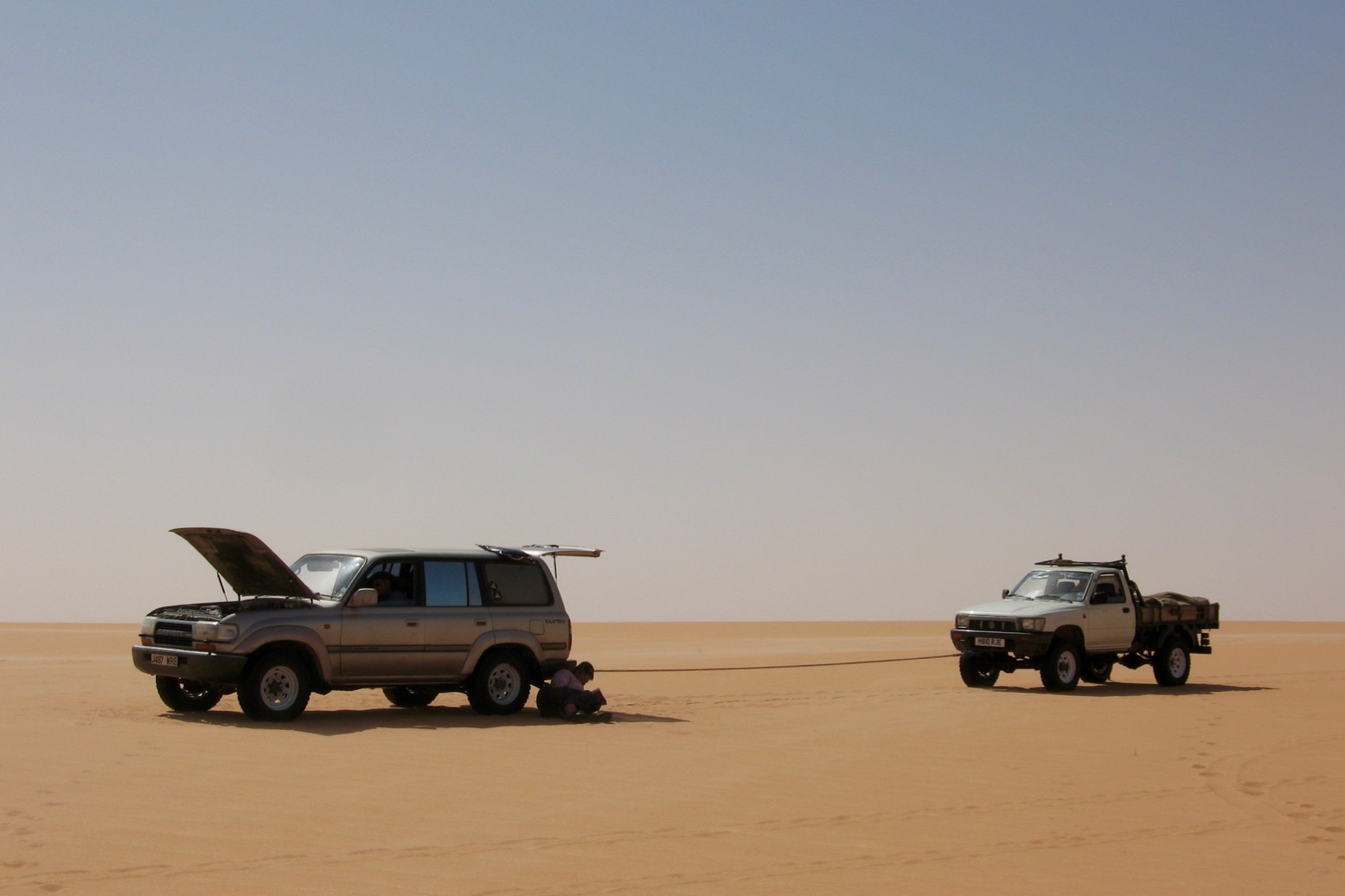
Eric takes a breather

This point also marked, near enough, the border with Mali and our entry into the badlands of the ungovernable far north. Sure enough we soon crossed the fresh tracks of a single vehicle heading north far off any recognised route. Whoever they were, like us, they didn’t want to be seen. That night we camped out on the wide open sand sheet with no lights.
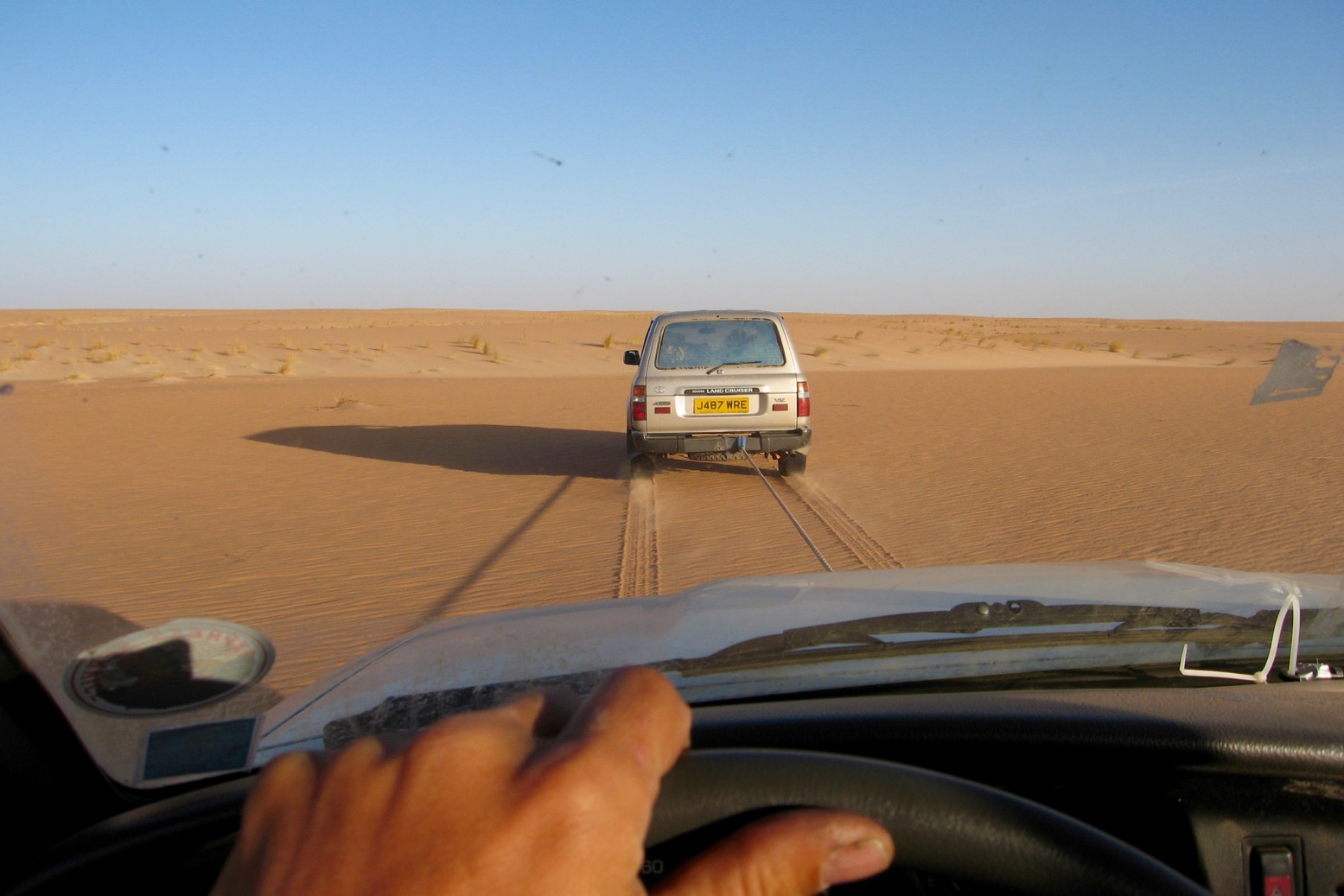
On the end of a rope for two days

The next couple of days would be tense. At one point around 3° 40’W we would have to cross the widely braided Timbuktu-Taoudenni salt route. Although its meagre traffic would probably be legitimate, it would be a whole lot better not to have our incongruously eastbound convoy seen by anyone. If we did get hijacked the raiders would have quite a jackpot; and as we were soon to find out, they were closer than we thought.
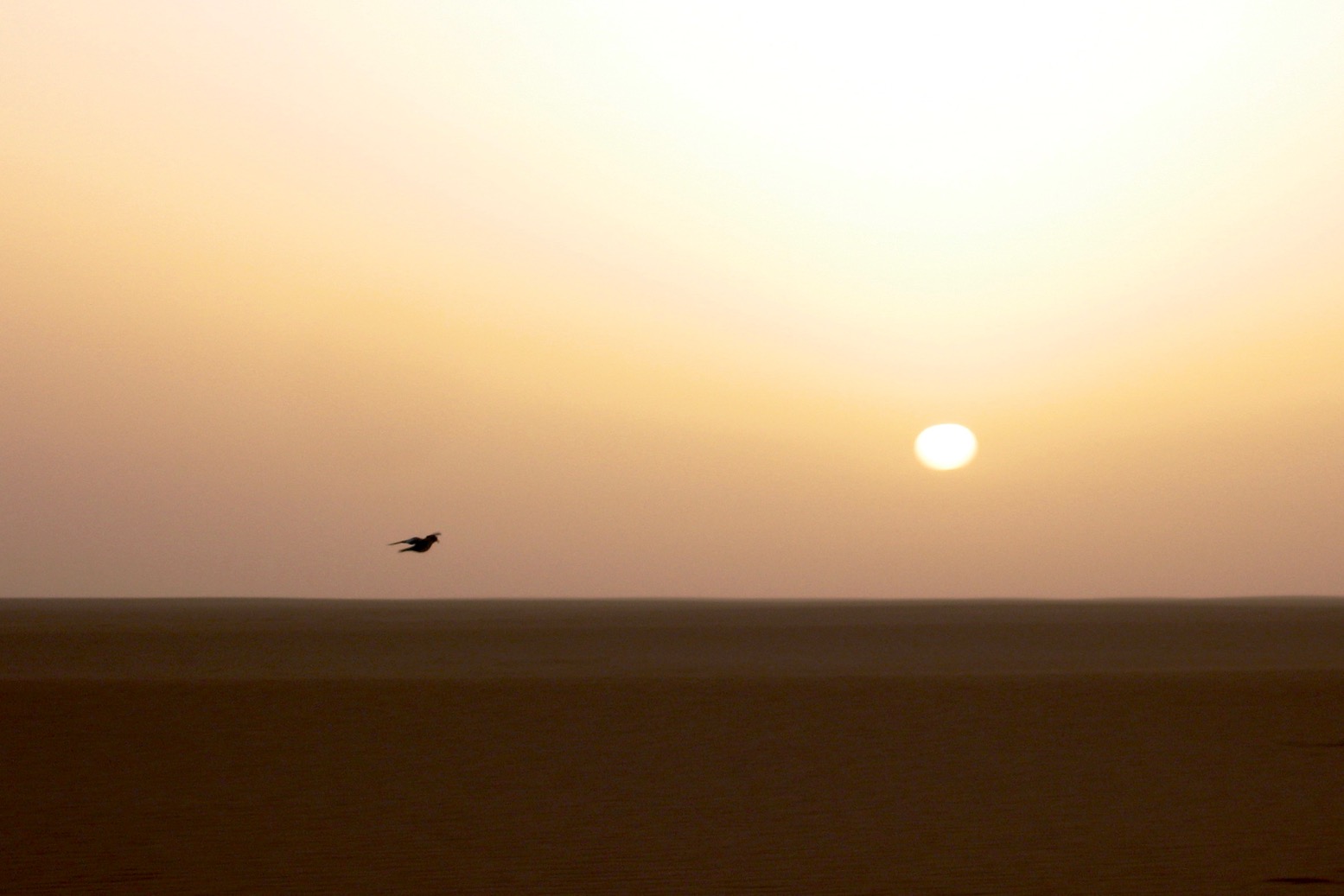
Lonesome dove

As the sun rose next morning a lone dove flew into our camp and staggered around. A bad omen? I’d encountered such bird behaviour before in the desert and presumed they were stragglers, weakened during the southward migration and close to death. But once we got going again all thoughts of the lost dove were shaken out of me as we hit another interminable band of tussocks. The problem was when the VX steered around a lump, the pickup got towed on a direct line. Result? Head-shaped dents in the roof of my cab.

By mid-morning Mohamed received a text that the lorry was already in the area. Amazed by its swift progress but preferring not to use voice calls in case it set off any alarms down south, we texted back our position and waited.
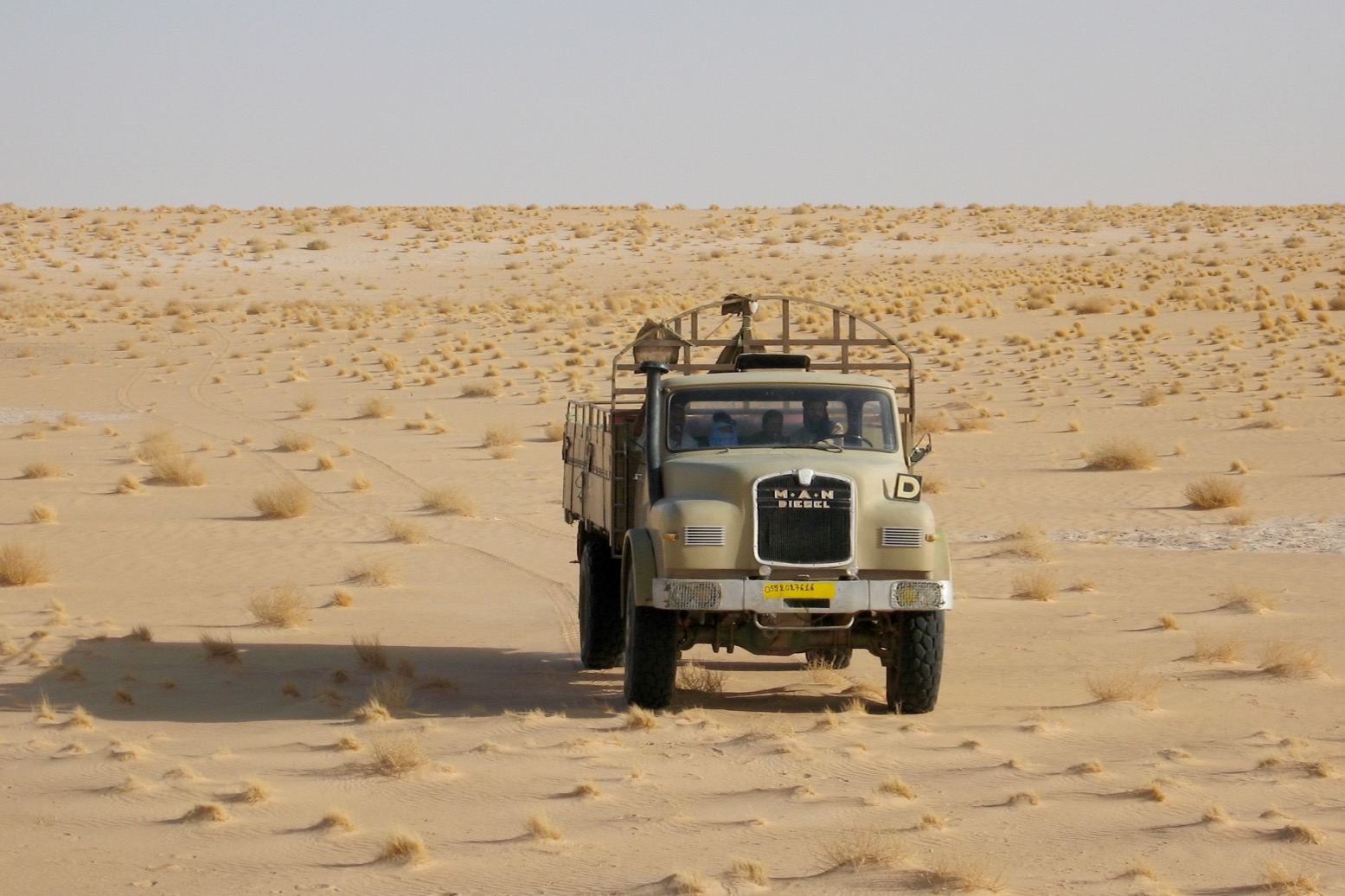
Here comes the cavalry, a 6-cylinder, 11.4 litre M.A.N 19-tonner.
More grunt than the Bay of Pigs on New Year’s Eve

For hours we listened intently over the wind for the growl of the big engine. What was taking them so long? After a few false alarms we finally spotted the sand-coloured M.A.N trundling past a couple of miles away. Ron hopped into his 60 and dashed out after them.

Their own transit of northern Mali had not been uneventful. The previous evening they’d been held up by gunmen in a lone Cruiser and relieved of a drum of fuel and the power lead for their Garmin. Once the batteries had expired they’d had to locate us with the basic GPS in their sat phone which had no handy ‘go to’ feature. The two drivers, truck owner Hassan and his mechanic didn’t seem too perturbed by the robbery. Luckily they were empty and had wisely not disclosed the nature of the mission. They still had the truck, an M.A.N 19/240 troop carrier specially built for Algerian desert forces in the 1980s, and now the long-range desert smugglers’ choice over the more complicated and expensive Mercedes.
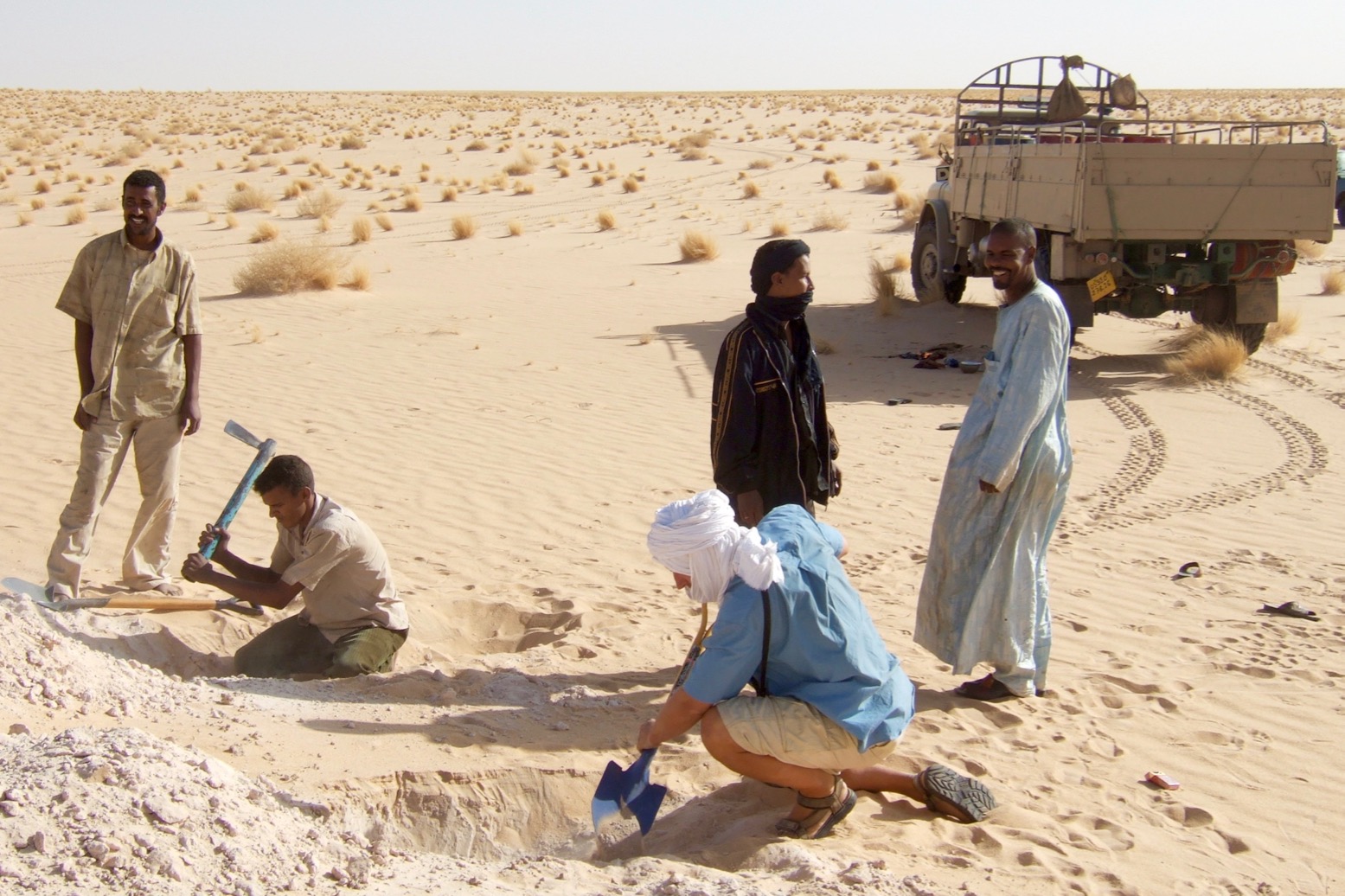
Digging wheel ruts to make an anti-ramp

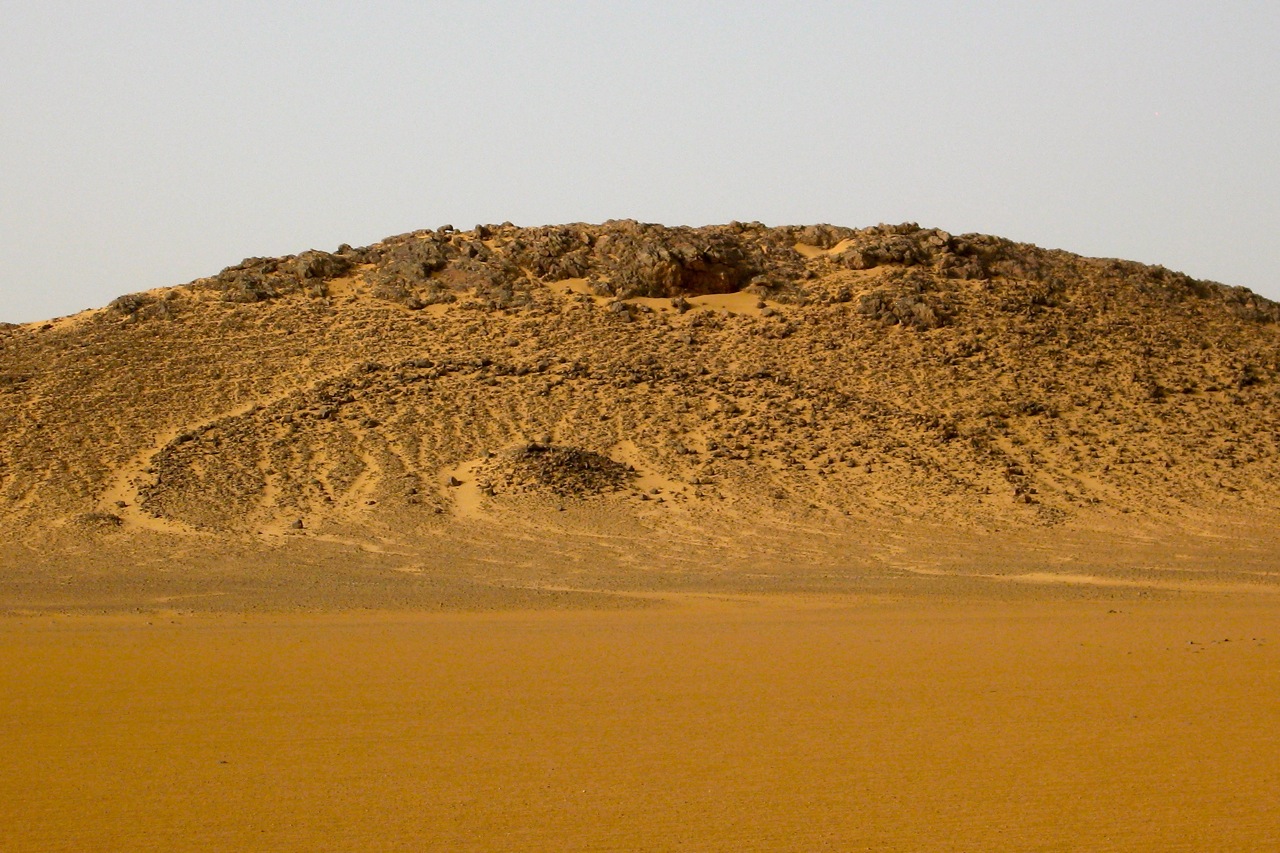
We set about finding a way to load the VW. A mile or so away we found a hardened platform of calcrete – the weathered remains of what geologists call duricrust which here had one edge exposed by the wind a couple of feet proud of the desert floor. By digging two wheel channels into the crumbly edge, the lorry could back up almost level with the car positioned up on the pan.
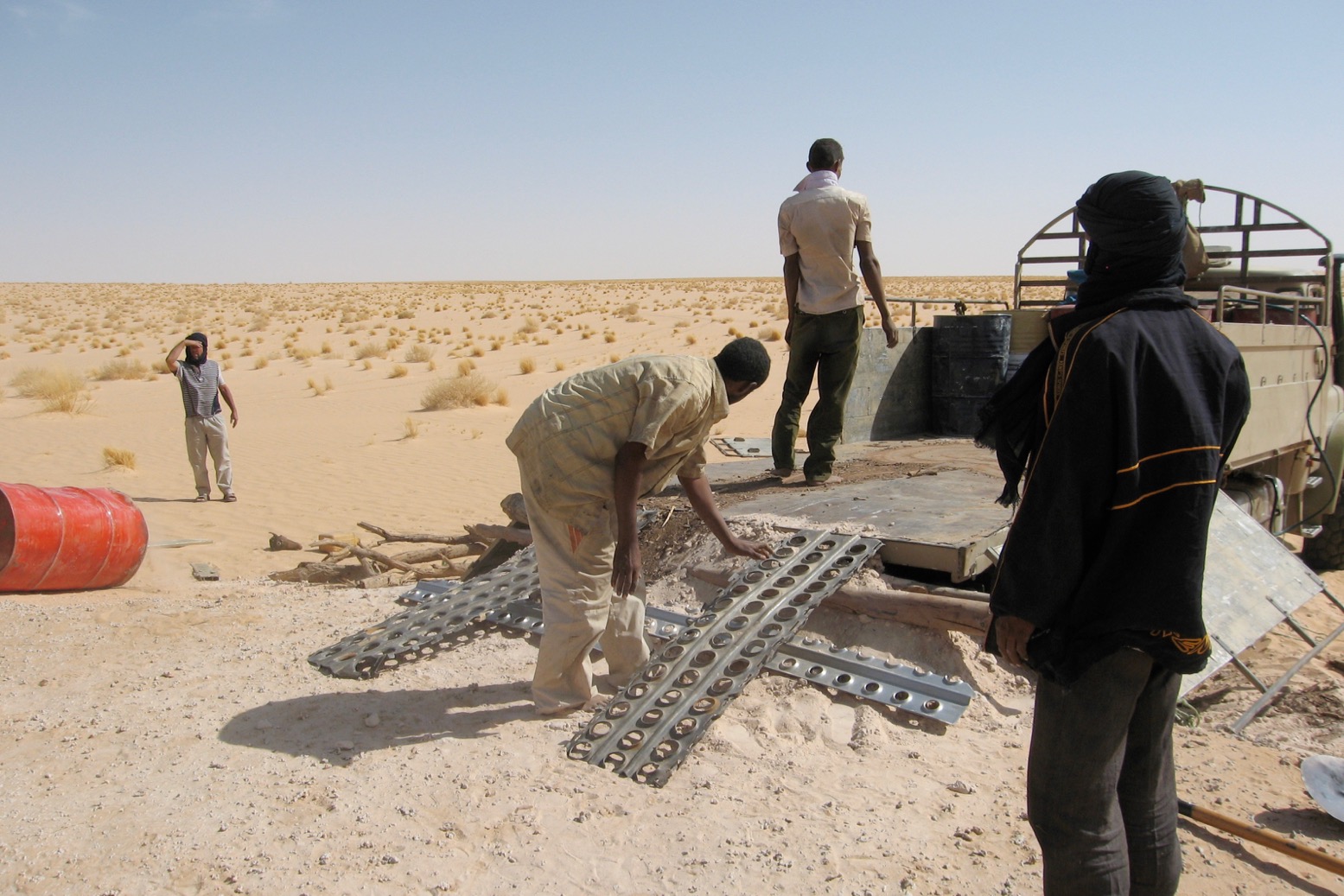
Nearly there

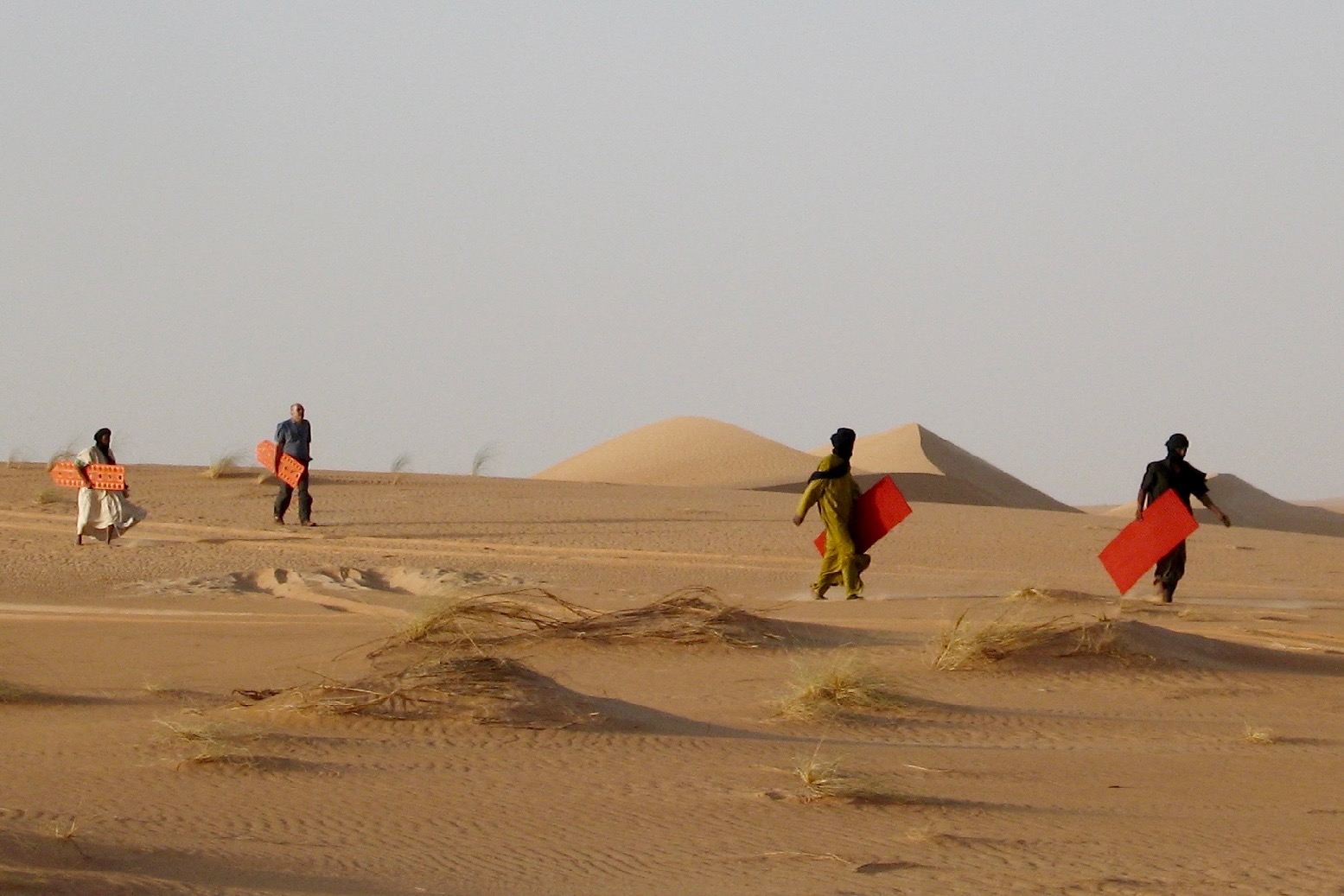
A couple of hours later we’d all taken our spell with the picks and the levels were closing up. Some firewood and sand plates made a ramp and with a run-up the pickup rolled into the back.
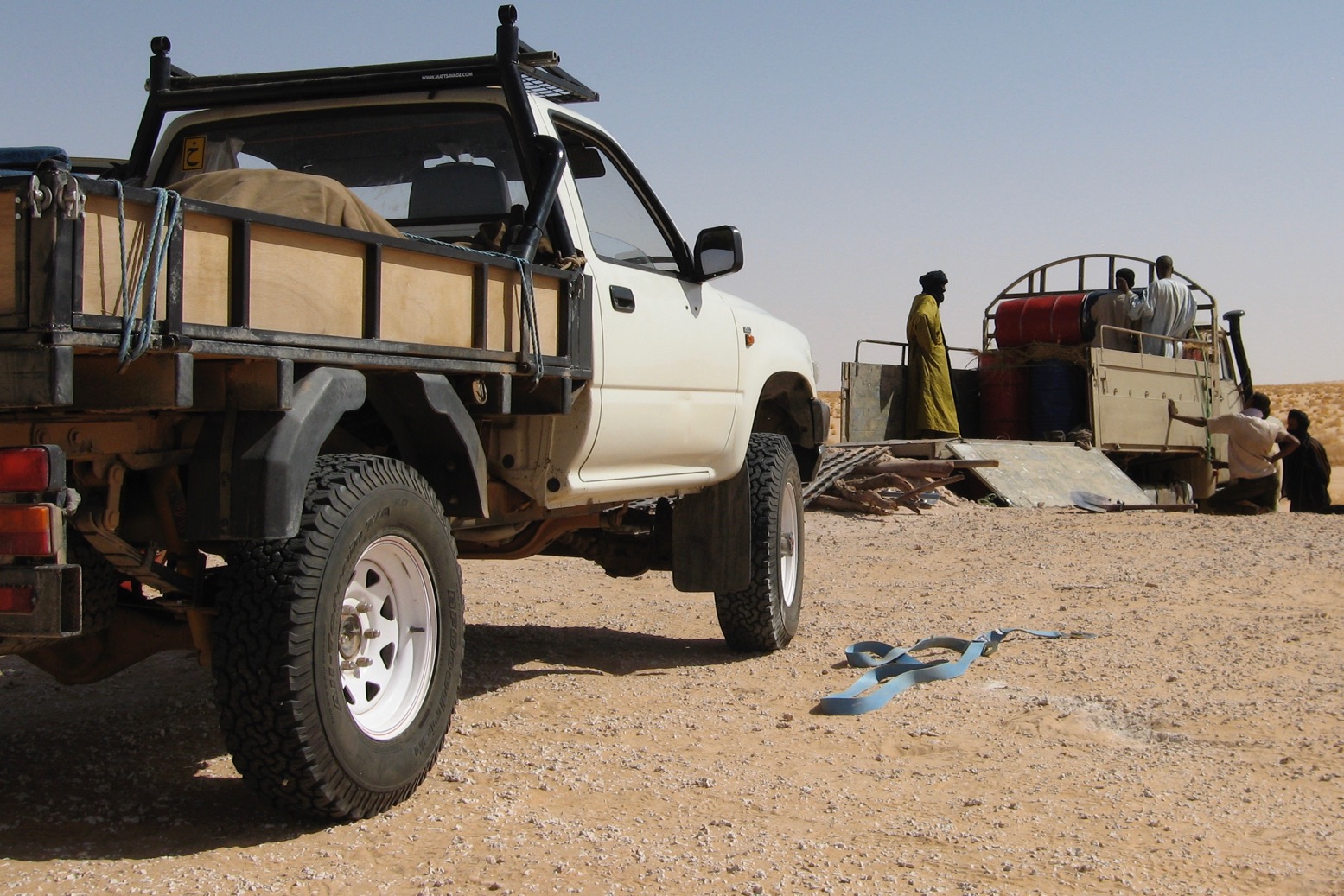
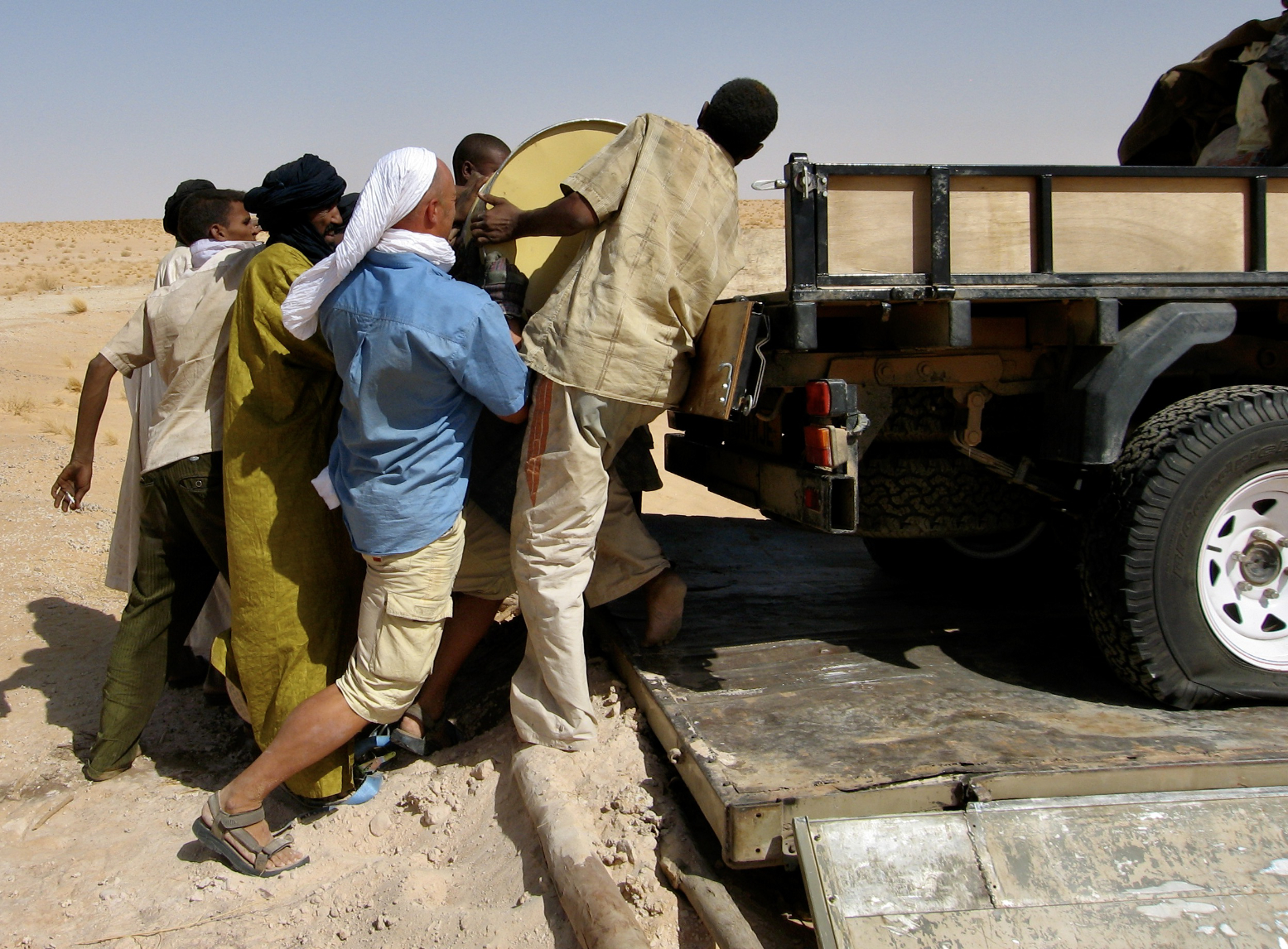
When it came to lashing down you’d think these guys knew their business. It didn’t look like it. My tyres were deflated (to reduce rolling I presume), heavy fuel drums were then piled on the Taro which was then secured over the lorry’s flexing side gates which was to do a lot of unnecessary damage to both machines over the next few days. No one listened.
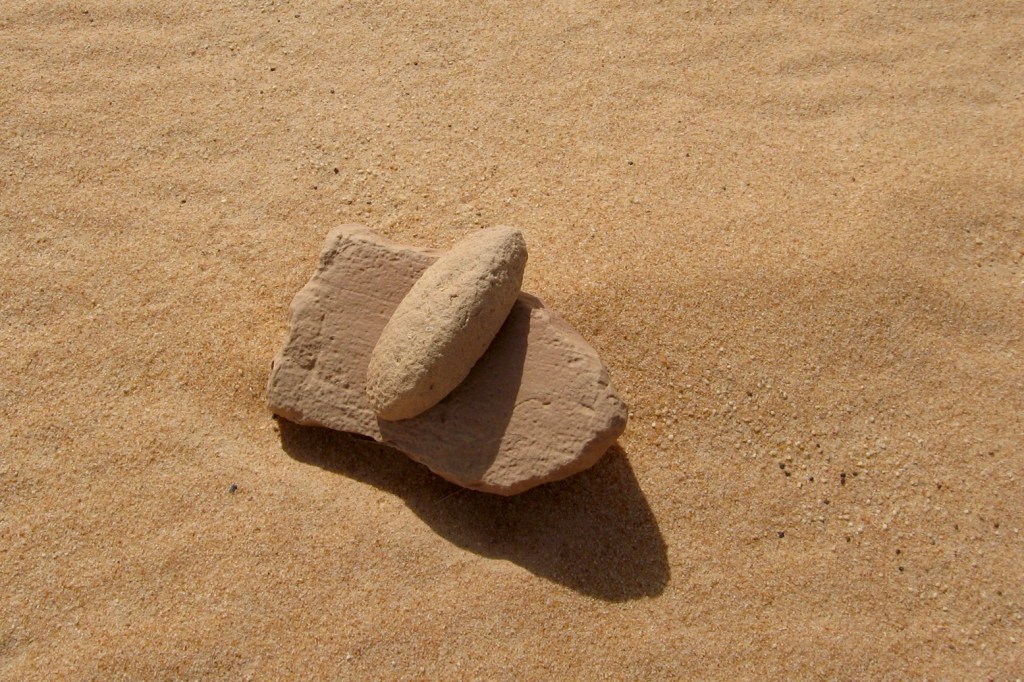
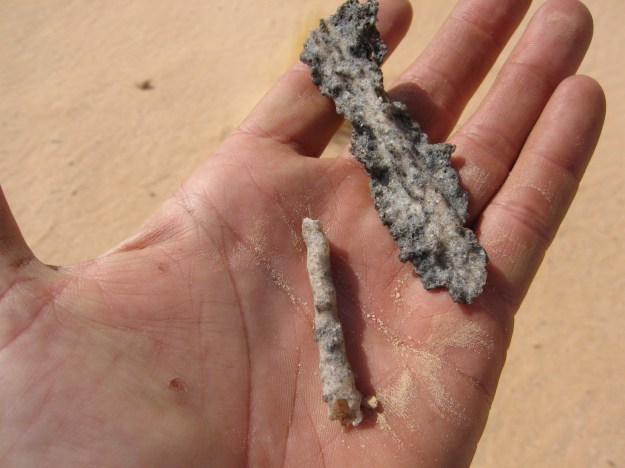
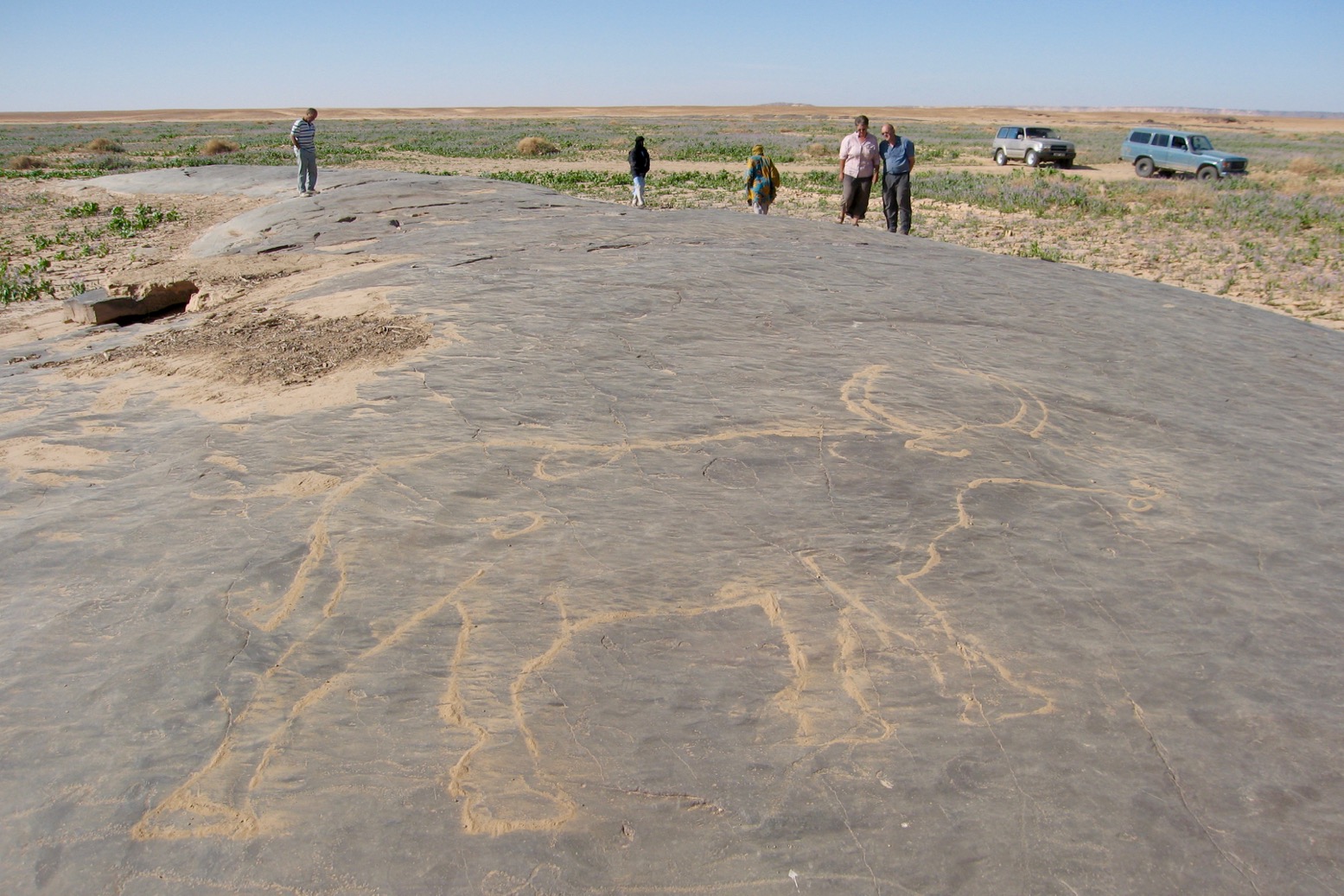
At just about every stop within the Empty Quarter, we easily found prehistoric artefacts and geological oddities lying near the camp. Among them were pieces of fulgarite – sand fused into delicate coral-like tubes or flakes of glass by lightening strikes. It’s something that never ceases to amaze me – solidified lightening. In Egypt we once found a rod of fulgarite as thick as my arm twisting deep into the sand in a shallow helix form created as the charge earthed itself.
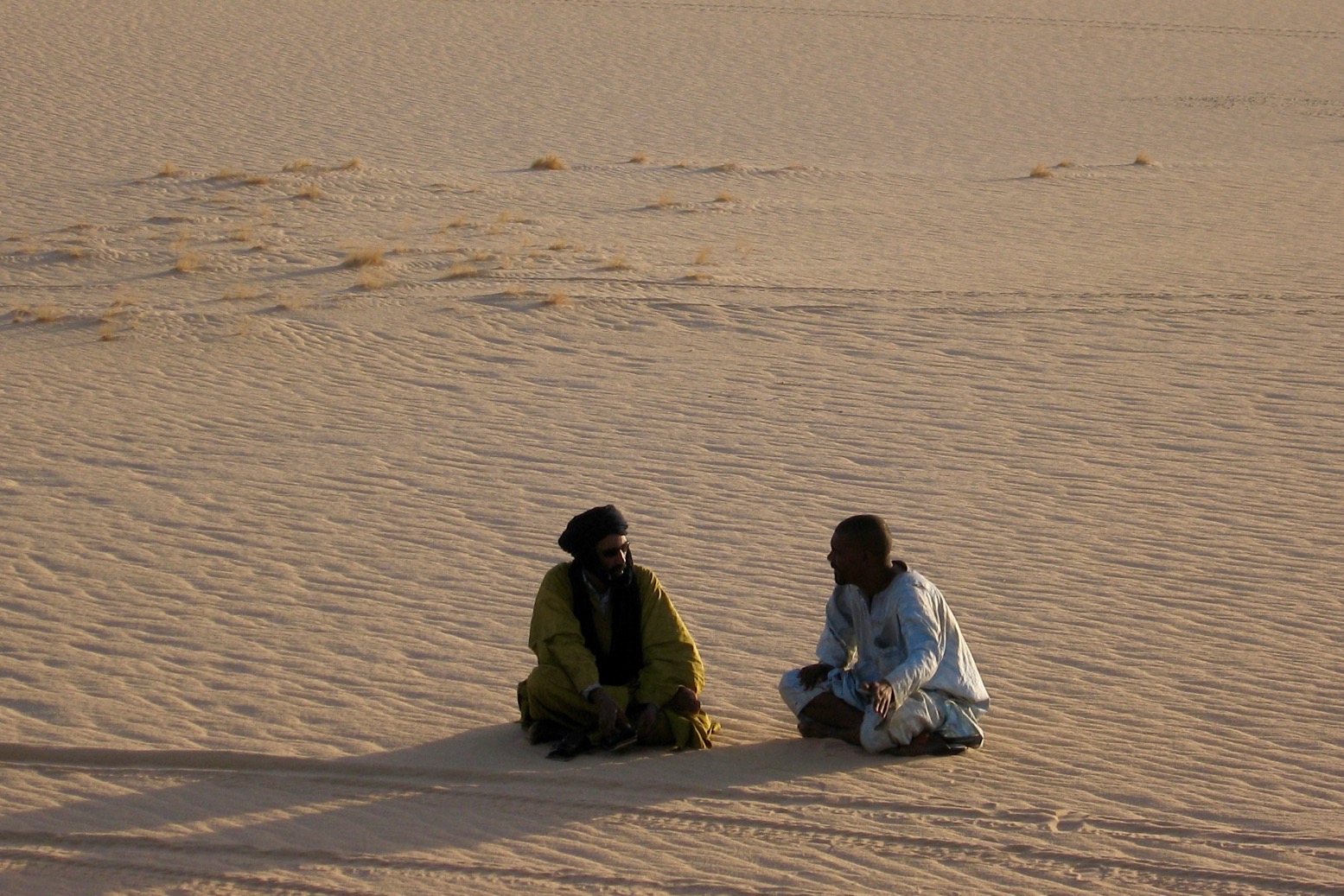
Mohamed and Hassan negotiate

By towing from Mauritania we’d saved the truck a good 800 kilometres and a few days so Mohamed was working on Hassan to try and reduce the price. It wasn’t looking too promising. Like Mohamed, Hassan was a Berabish, the little-known Arab tribe from around Timbuktu, descended from the tail end of the Islamic conquest which had whipped across northern Africa in the 8th century. Essentially Moors, and notoriously sharp in their business dealings, the Berabish run much of the bush commerce in that region. Unlike the better-known Tuareg (whose ethnicity Mohamed feigned as it was good for business in Algeria), they have no time for either playing up to tourists or making rebellions, unless there’s good money in it. Getting a financial break from Hassan would cost the proverbial pound of flesh.
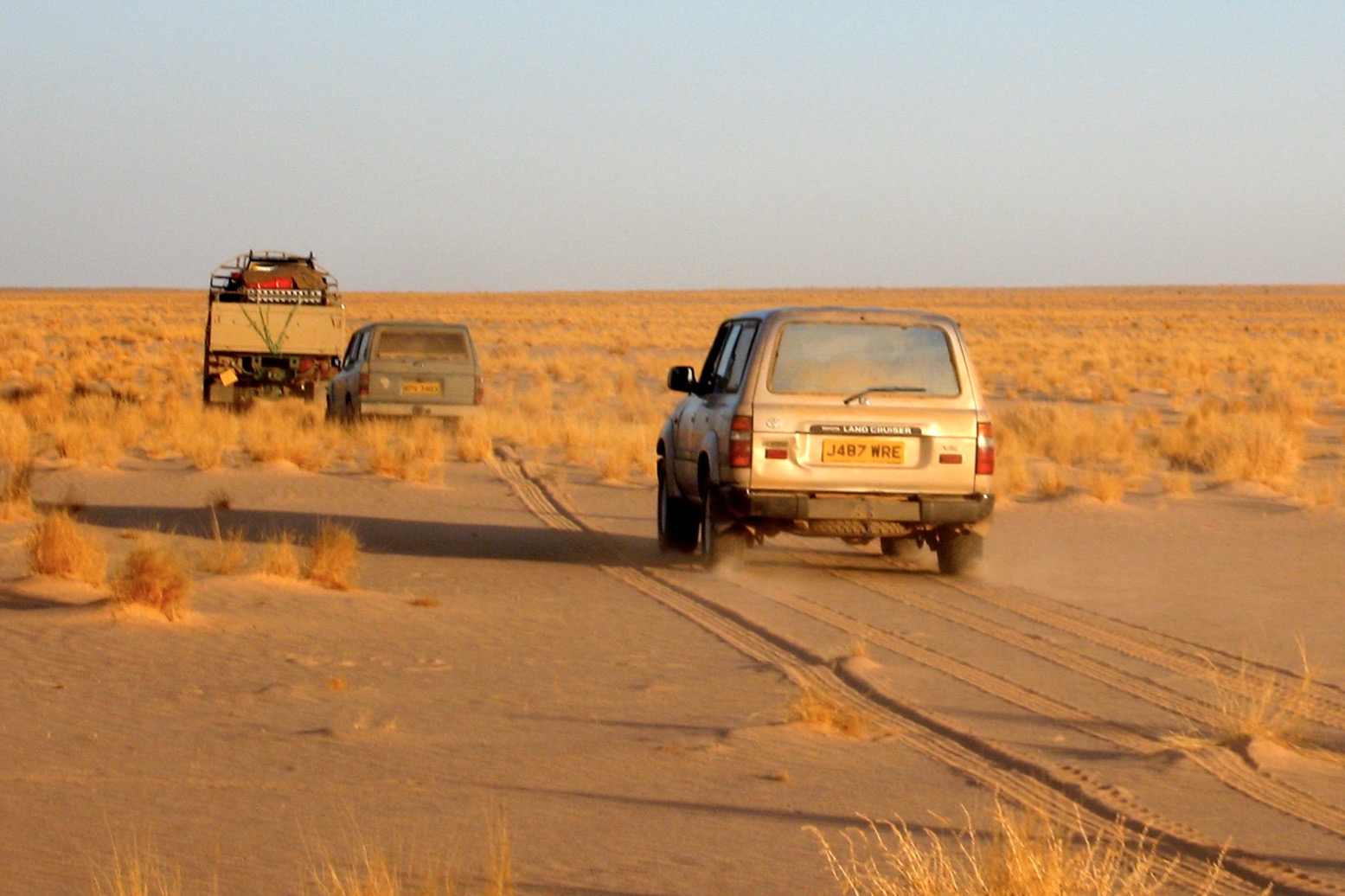
Desert grasslands in northern Mali

One of the truck drivers was particularly aggressive at the wheel so I took to sitting in my car to try and limit the damage. Leaking diesel drums had the pickup sliding around on its flattened tyres, the sidewalls getting further pounded by the rims’ edges as the VW bashed against MAN’s sides.

I persuaded them to part re-inflate the tyres but all my gear was getting either crushed by the drums or soaked in diesel. As the side gates bent inward, the ropes slackened and the car beat itself up. I’d have to crawl out of the window, edge over to the MAN’s cab like Indiana Jones and thump on it until they stopped. They’d hop out and hang off the ropes to get them good and tight against the creaking side gates. It was painful to watch, but on the move the grunt of the 240-hp truck was something to behold. Rated at 19 tons but carrying next to nothing and running singles on the dual rear axle, it ground its way over small dunes like a digger.
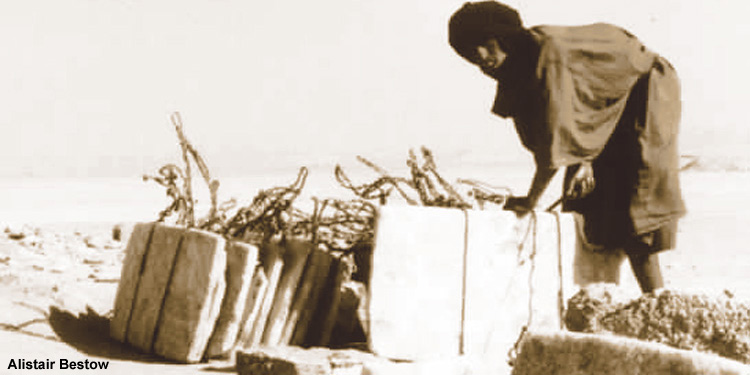
Taoudenni salt mine

Presently we started bisecting the Taoudenni salt route’s countless north–south tracks, the only piste we’d see in the Empty Quarter. An hour later as they began to peter out I spotted a distant M.A.N on the southern horizon, probably heading back to Timbuktu with a cargo of hand-hewn salt slabs from the pits at Taoudenni.
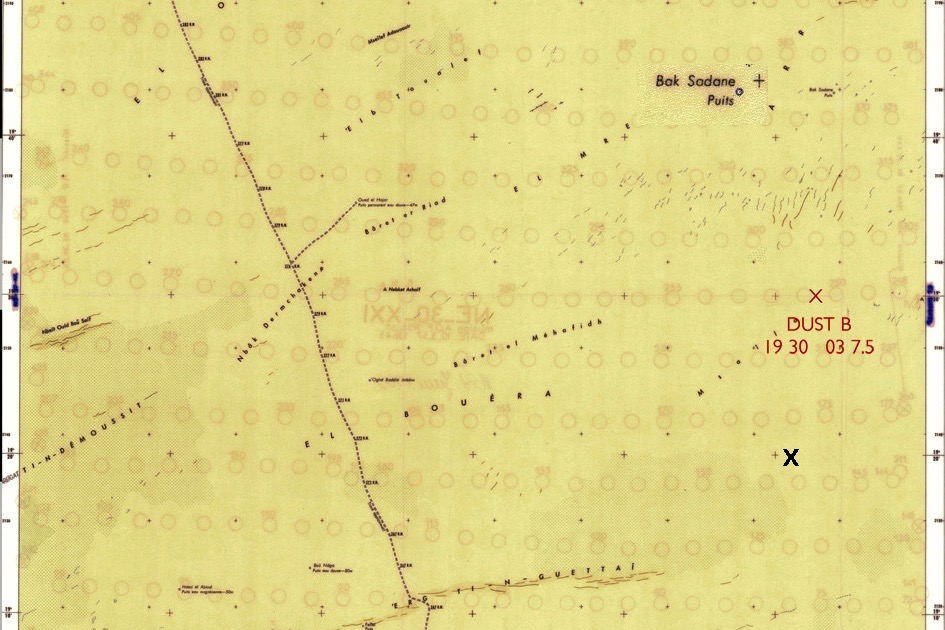
Dust point east of the Taoudenni piste

Despite my troubles we had not forsaken our commitment to the advancement of climate research. Learning of our plans to cross this remote region, a scientist friend back at Oxford University had asked if I could collect dust samples from a couple of ‘hot spots’, the darker red patches above.

The Sahara is the world’s biggest source of dust which, when launched up into the atmosphere by seasonal windstorms, is thought to have a significant effect on global climate, including Atlantic hurricanes. After western Chad, much of this dust comes from the Empty Quarter but samples had never been obtained before. As we passed through one of the hotspots, composed of the same calcrete we’d dug into a loading ramp, Sue interpreted my gesticulating from the cab and stopped to collect some samples.
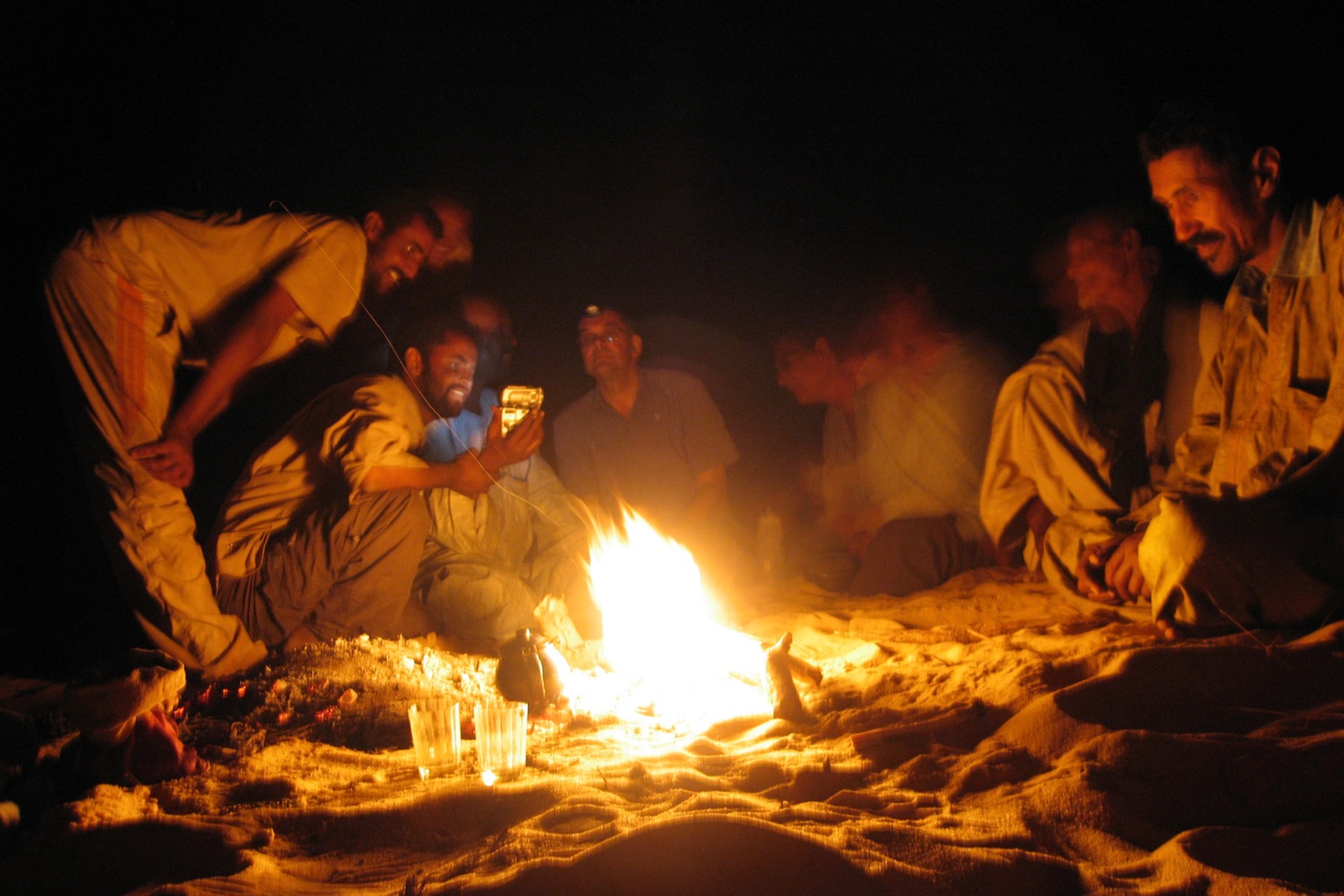
Watching vids with the crew while break baked

Next afternoon we passed the place where the truck had been ambushed on its way out, and later spotted our first tree since Ouadane in Mauritania. Soon rocky hills rose out of the unending sand sheet, heralding the outliers of the Jebel Timertine, where European hostages had been held for months at a time and where France had it out with AQIM in 2013, after one hostage escaped.
One of the truck crew was a particularly creepy guy, a skinny Tunisian brimming with resentment. He tried to chat me up, but could not help pointed comments about us rich Europeans. I would not be at all surprised if he ended up with AQIM in the coming years and I was glad to see the back of him, and all of them, to be honest.
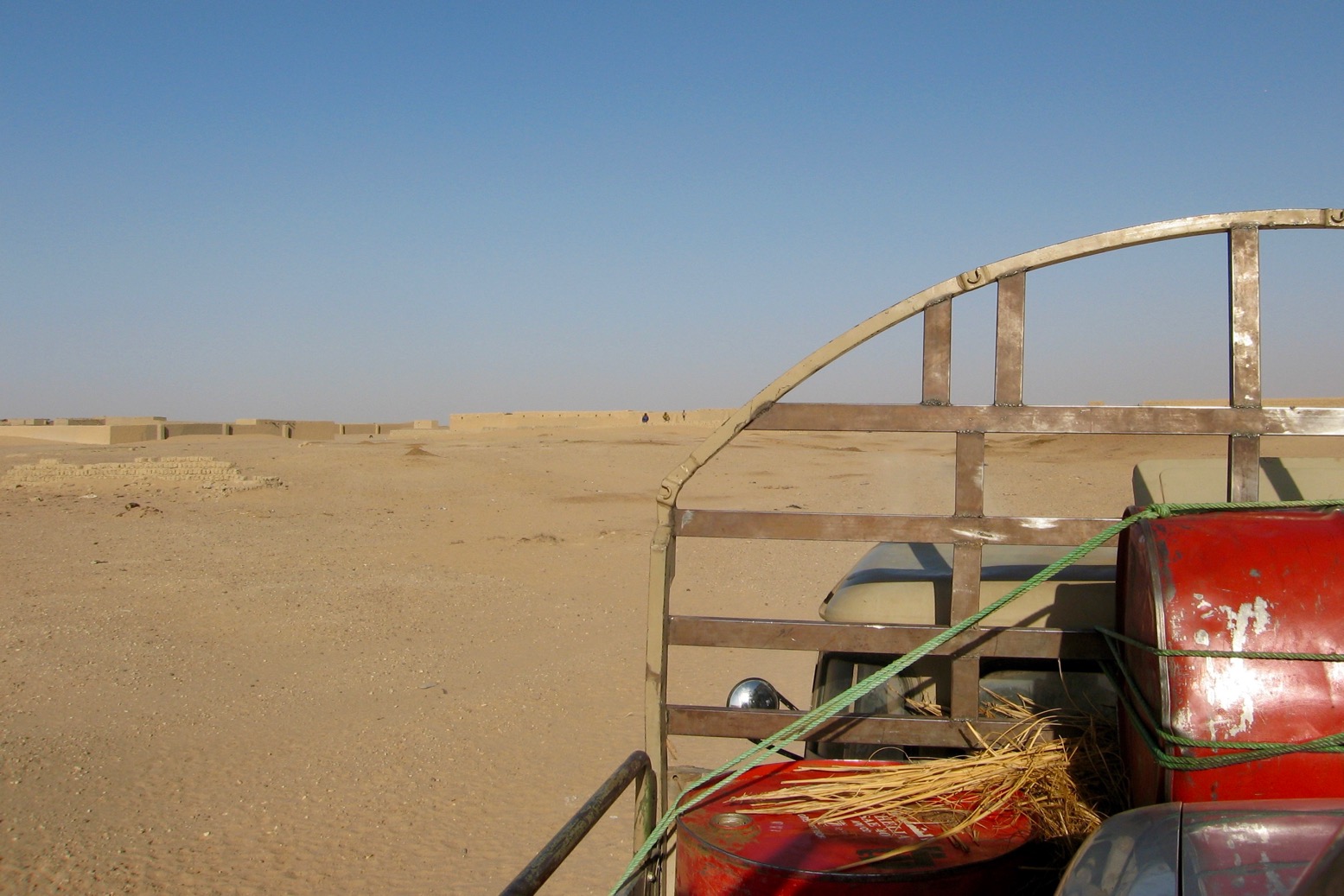
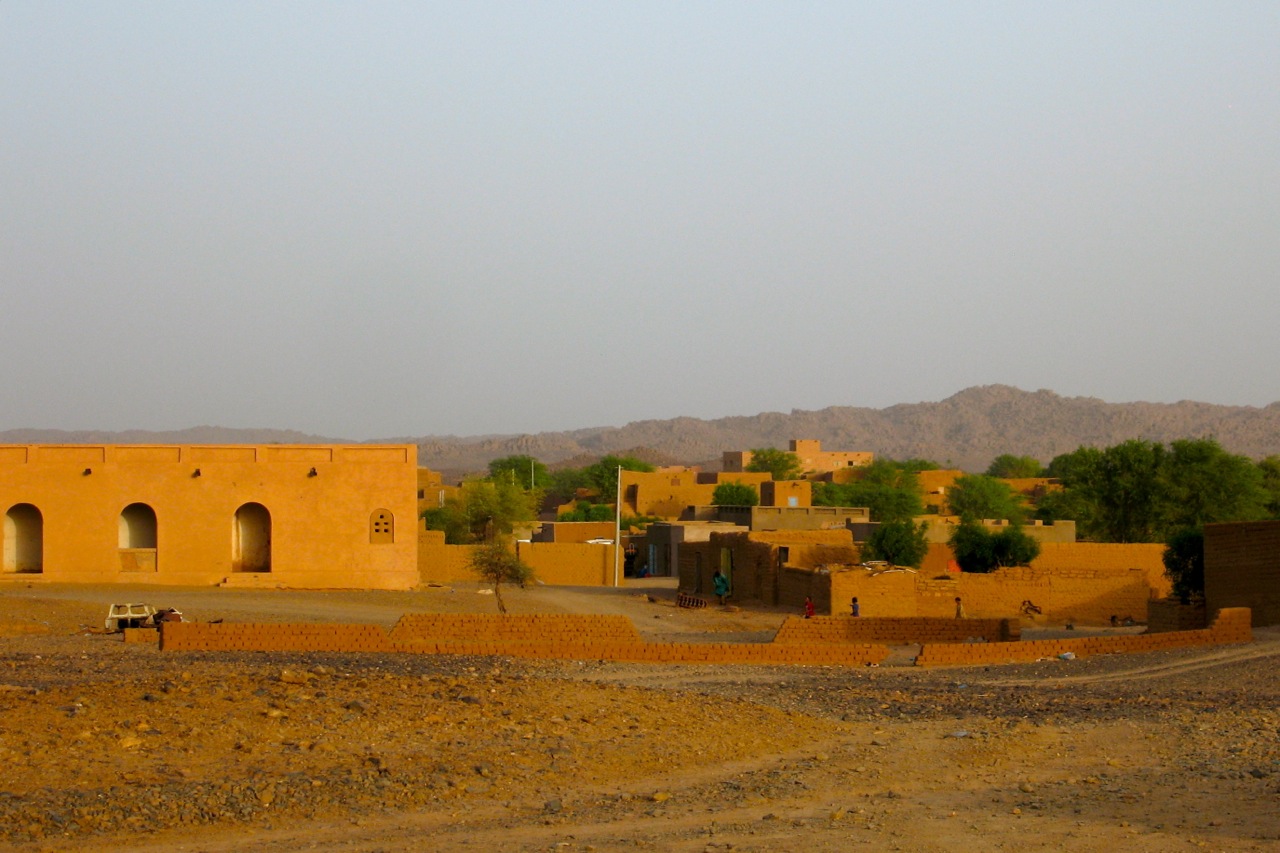
Approaching El Khalil

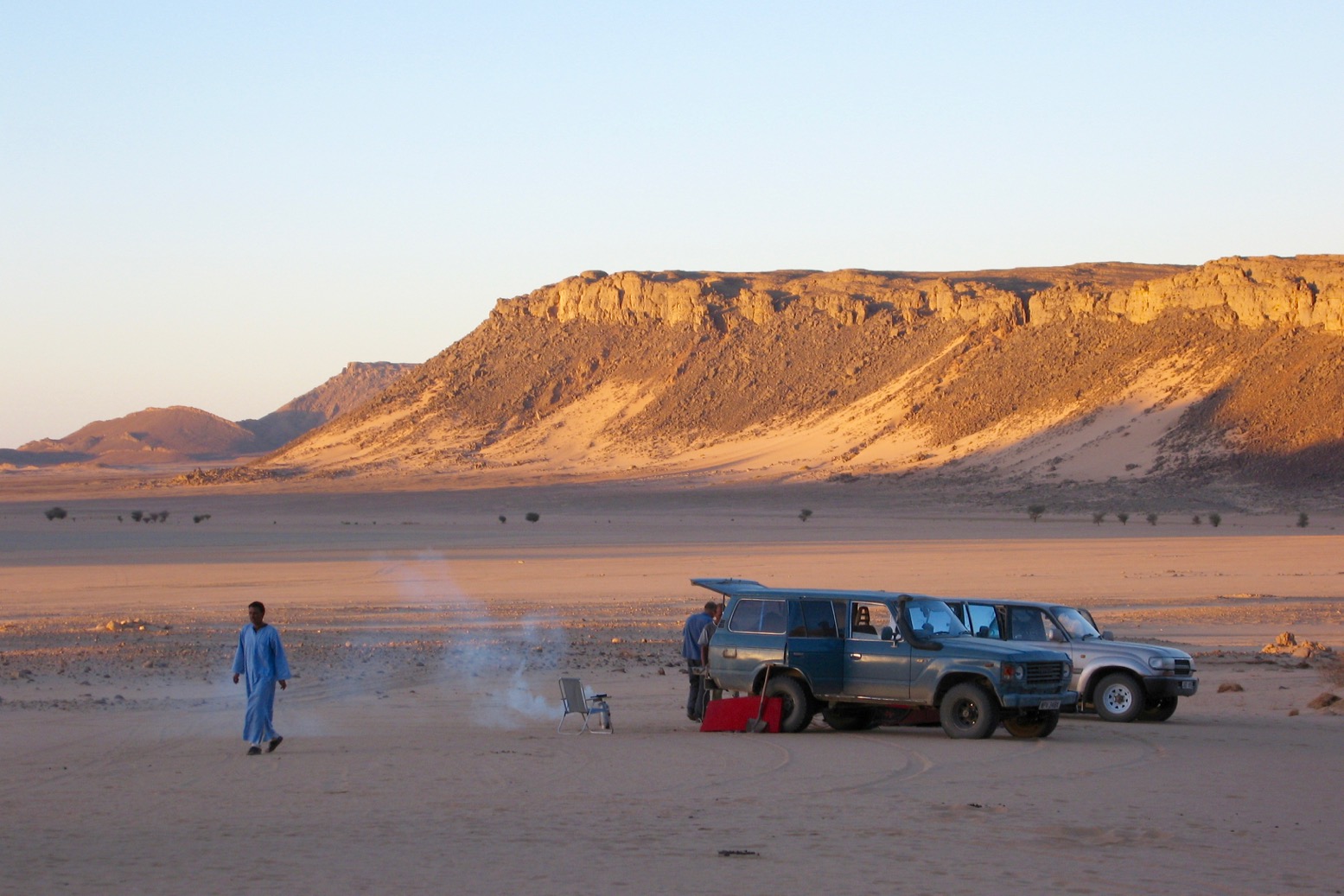
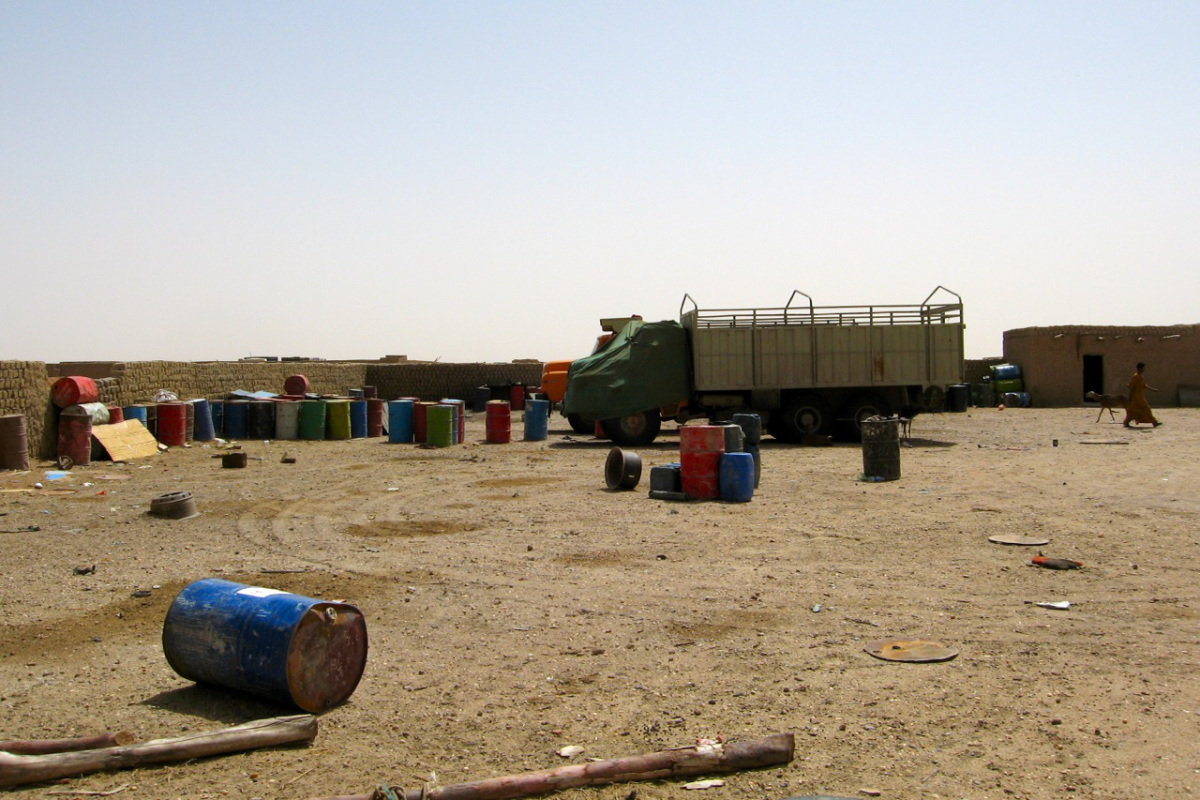
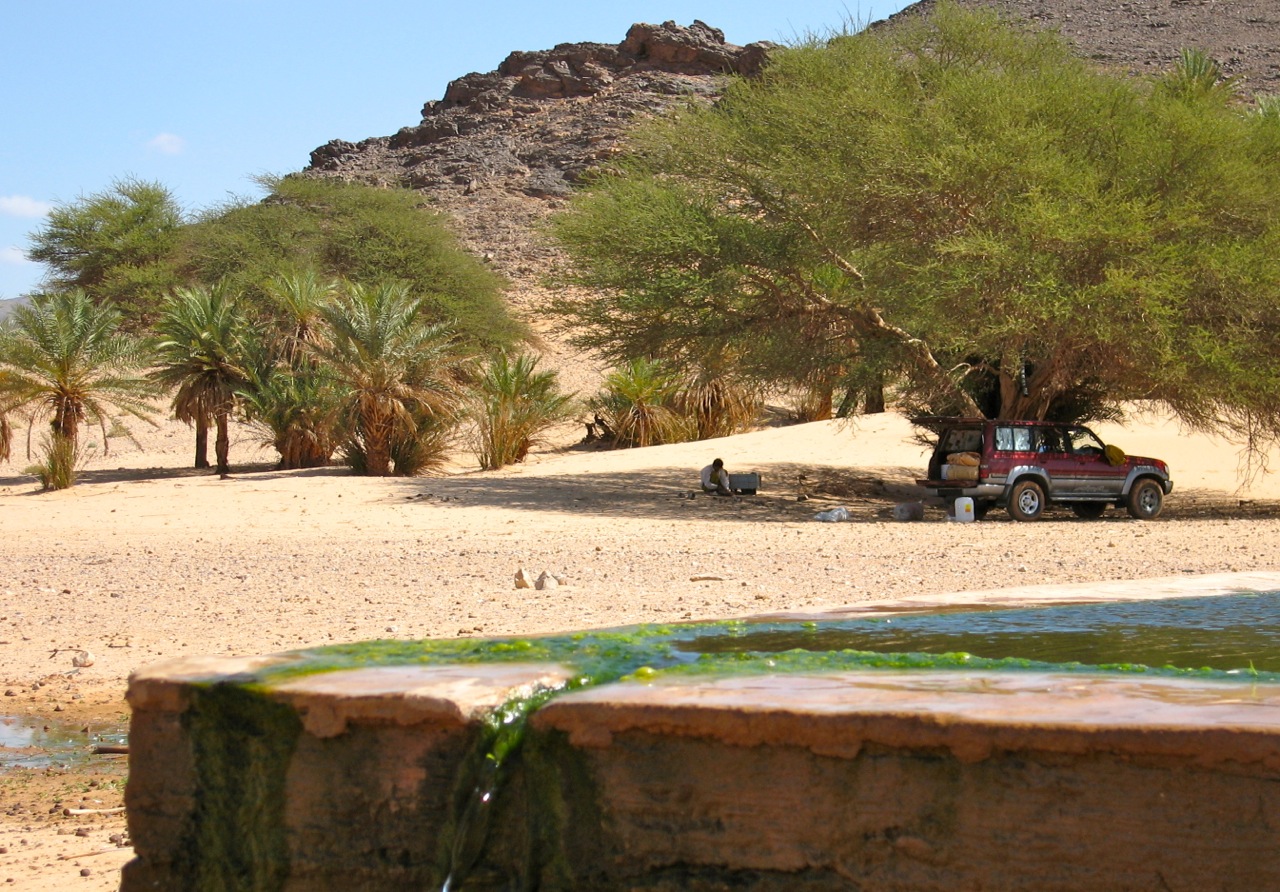
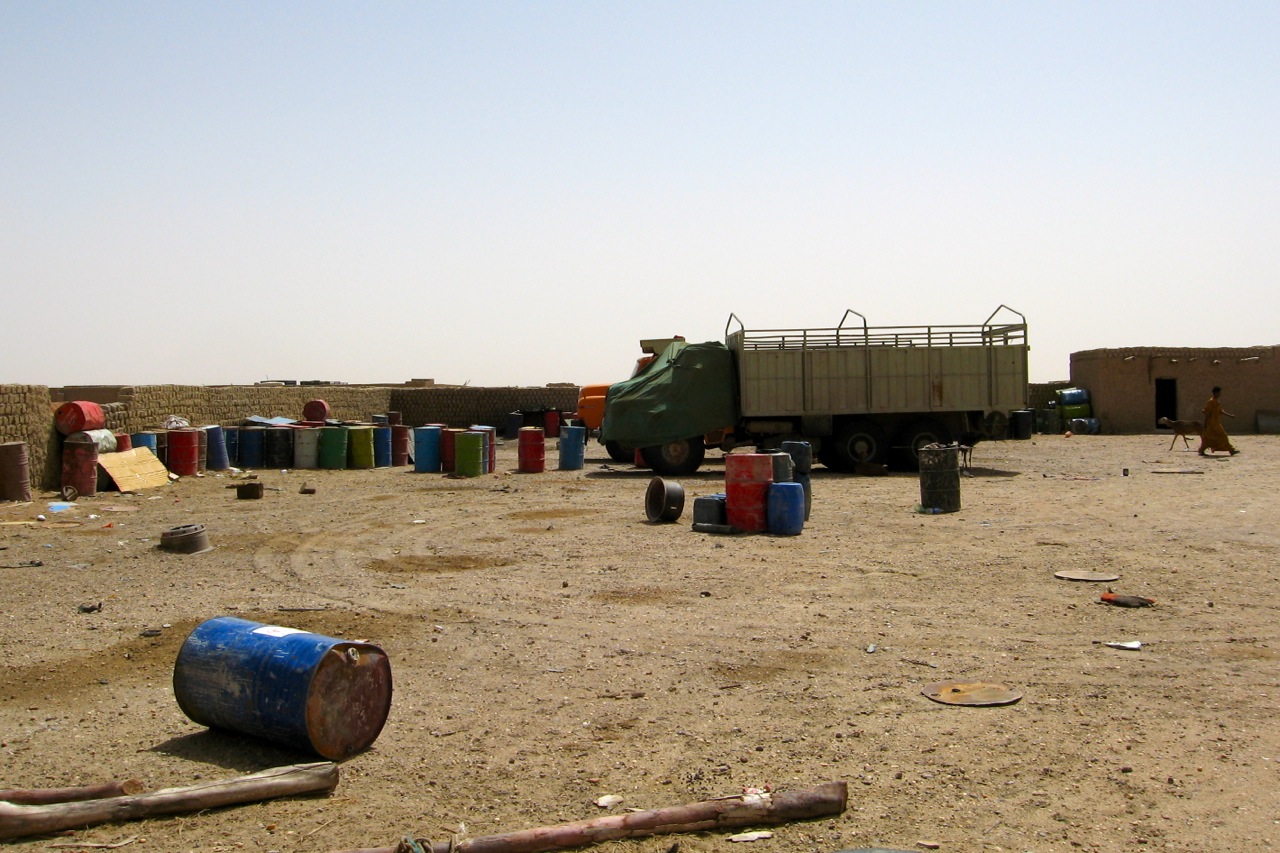
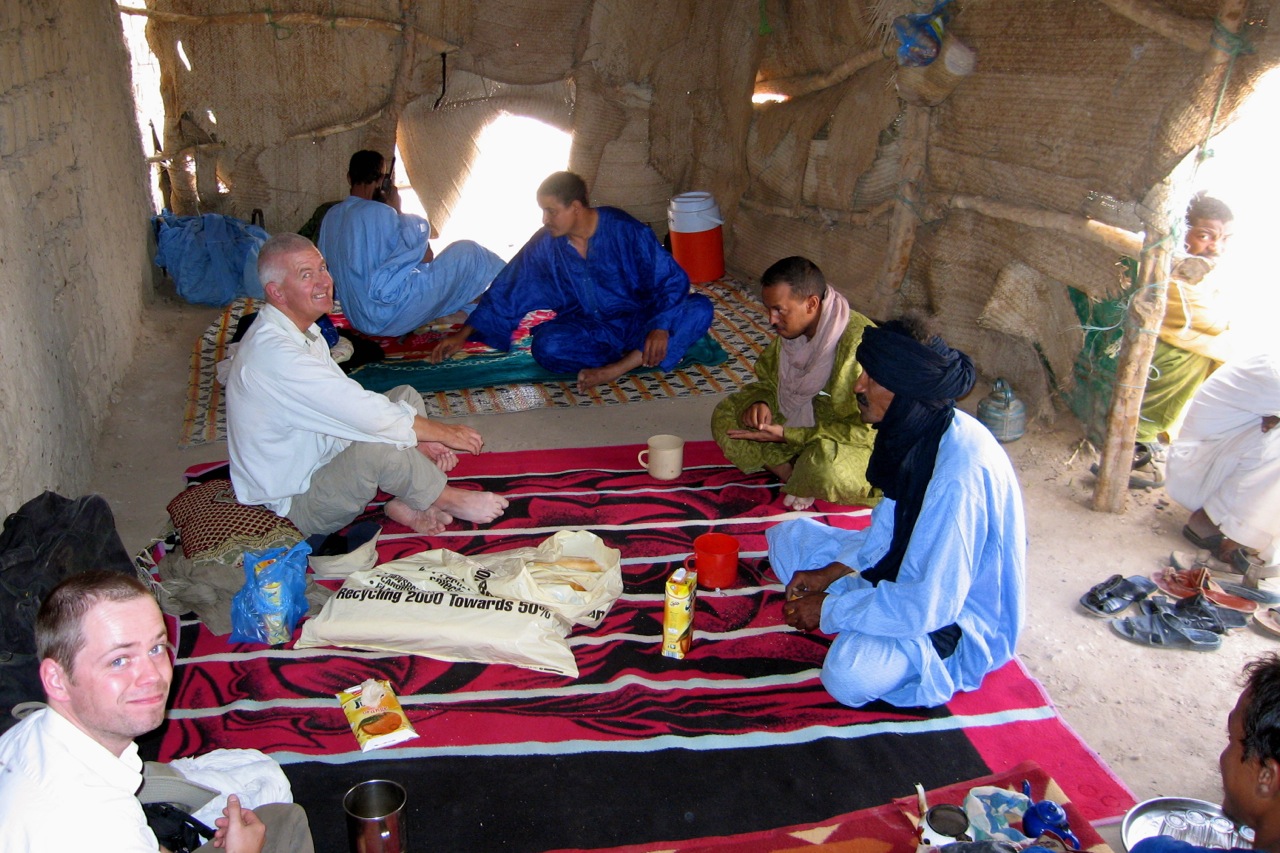
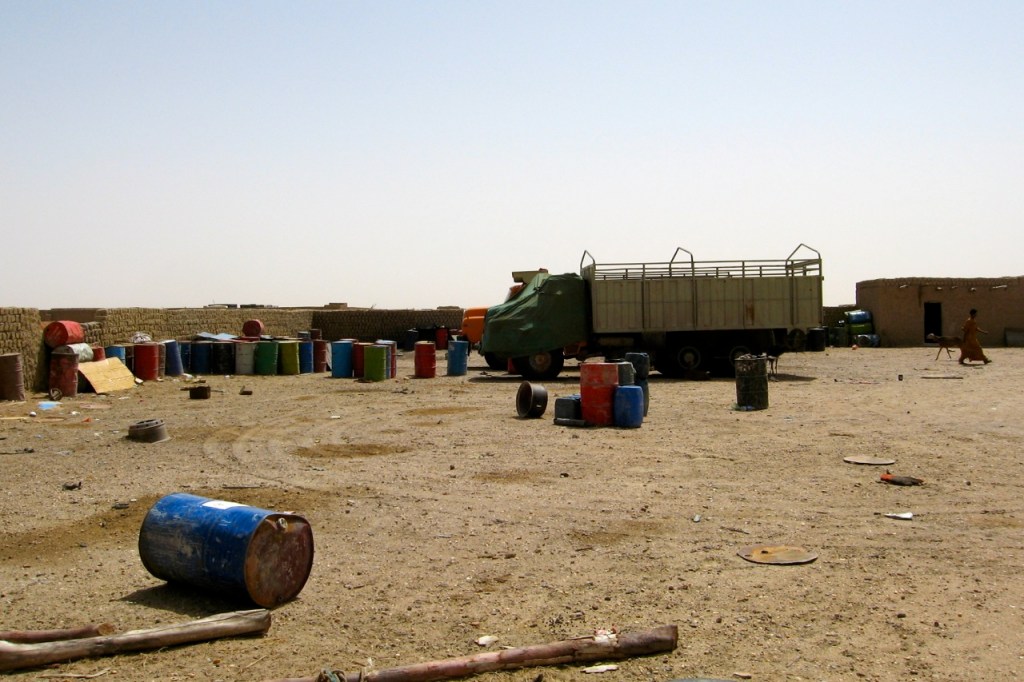
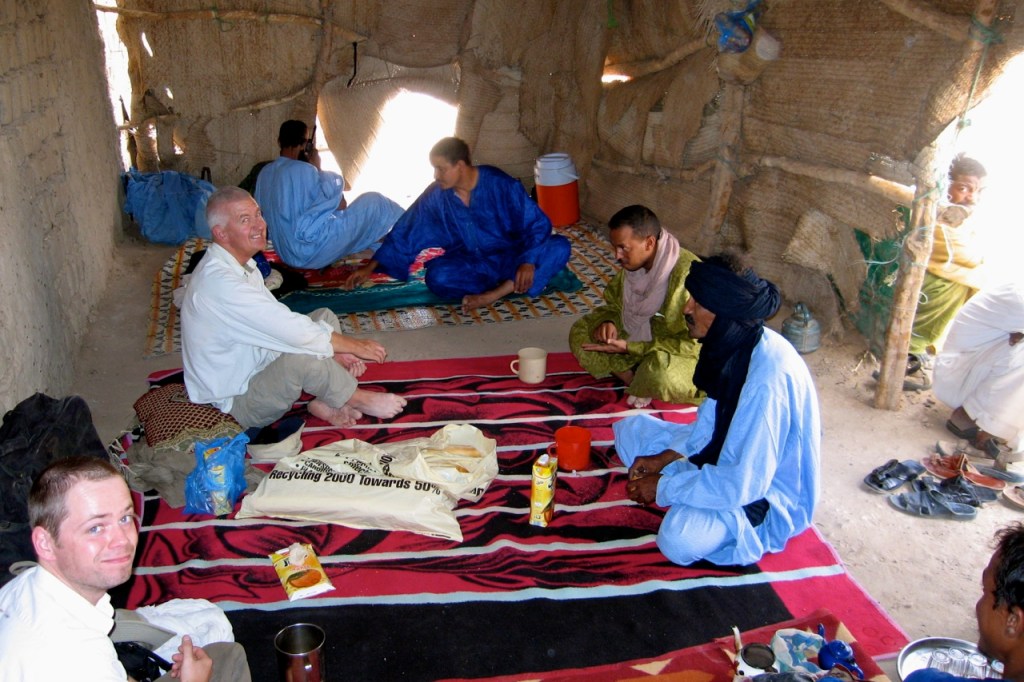
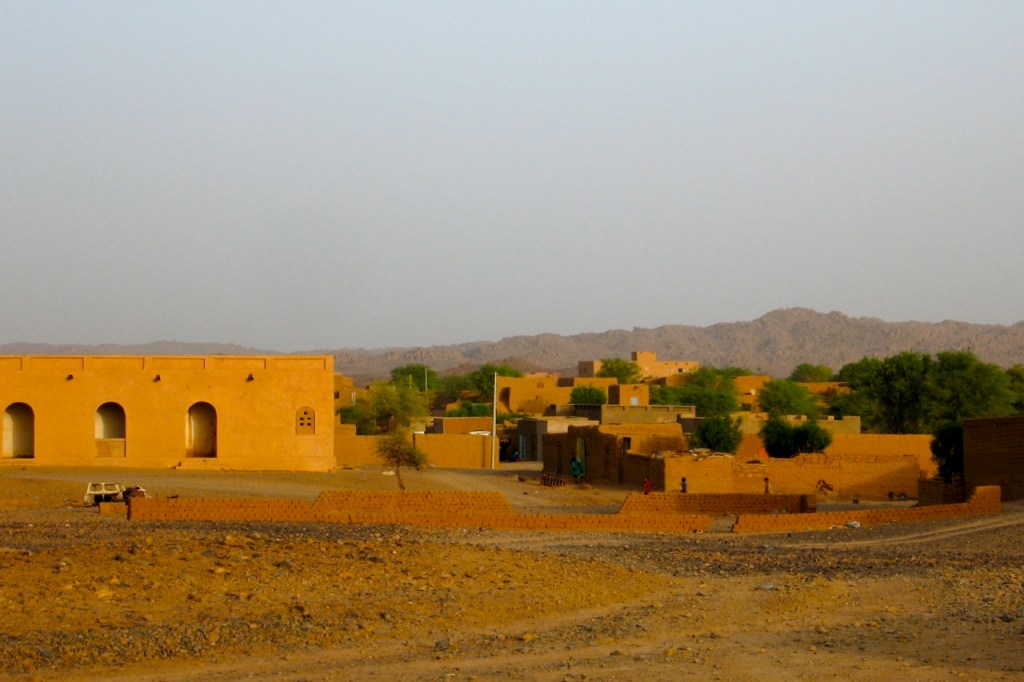
We joined a piste and as the sun dropped behind us we rolled into the compound known as l’Ambassade in the No Man’s Land trading post of El Khalil. Bou who managed the place gave me a warm welcome, especially when I handed over a solar panel and some Garmin 72s I’d promised him.
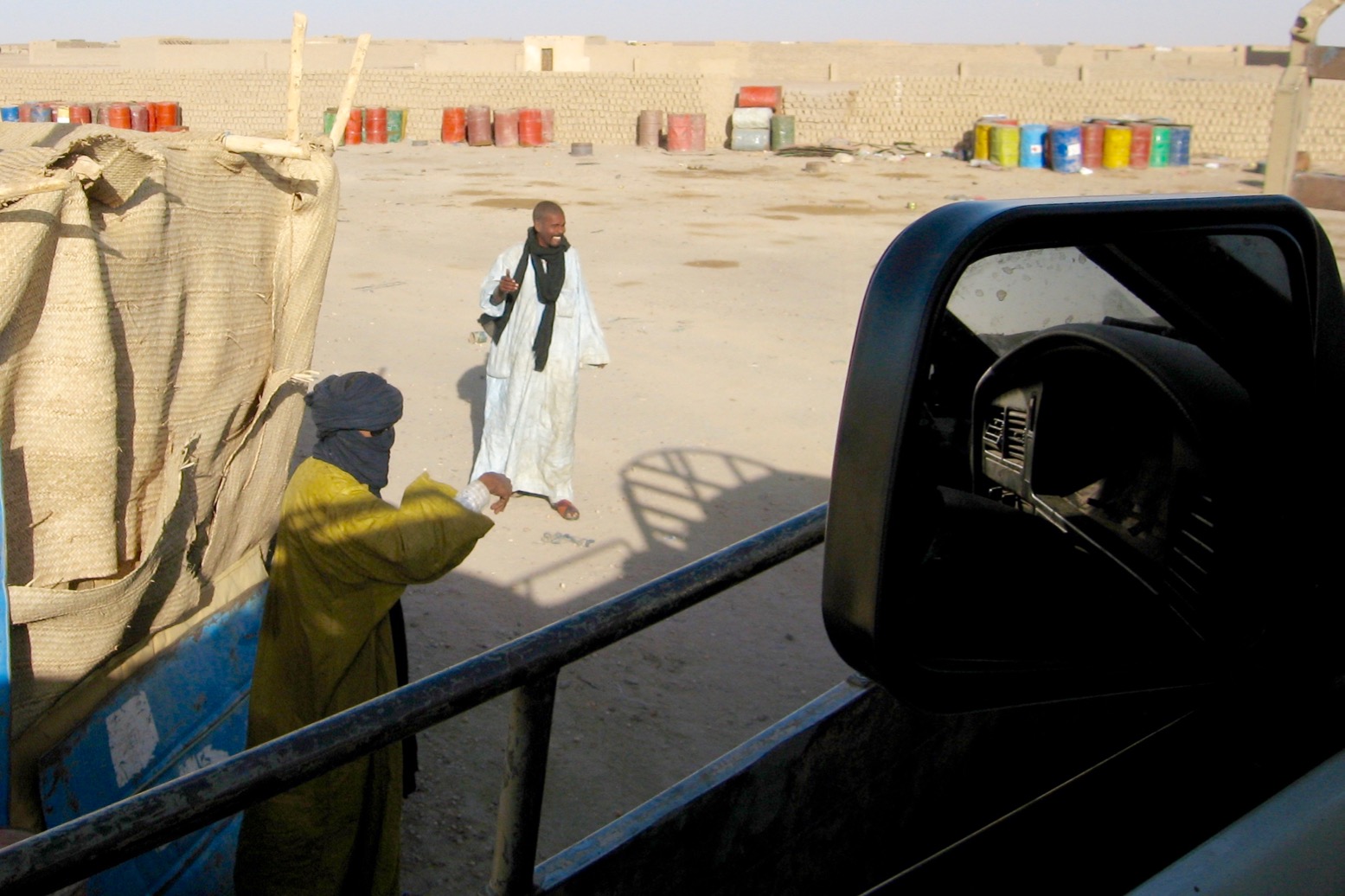
Salaam aleikum, bro!

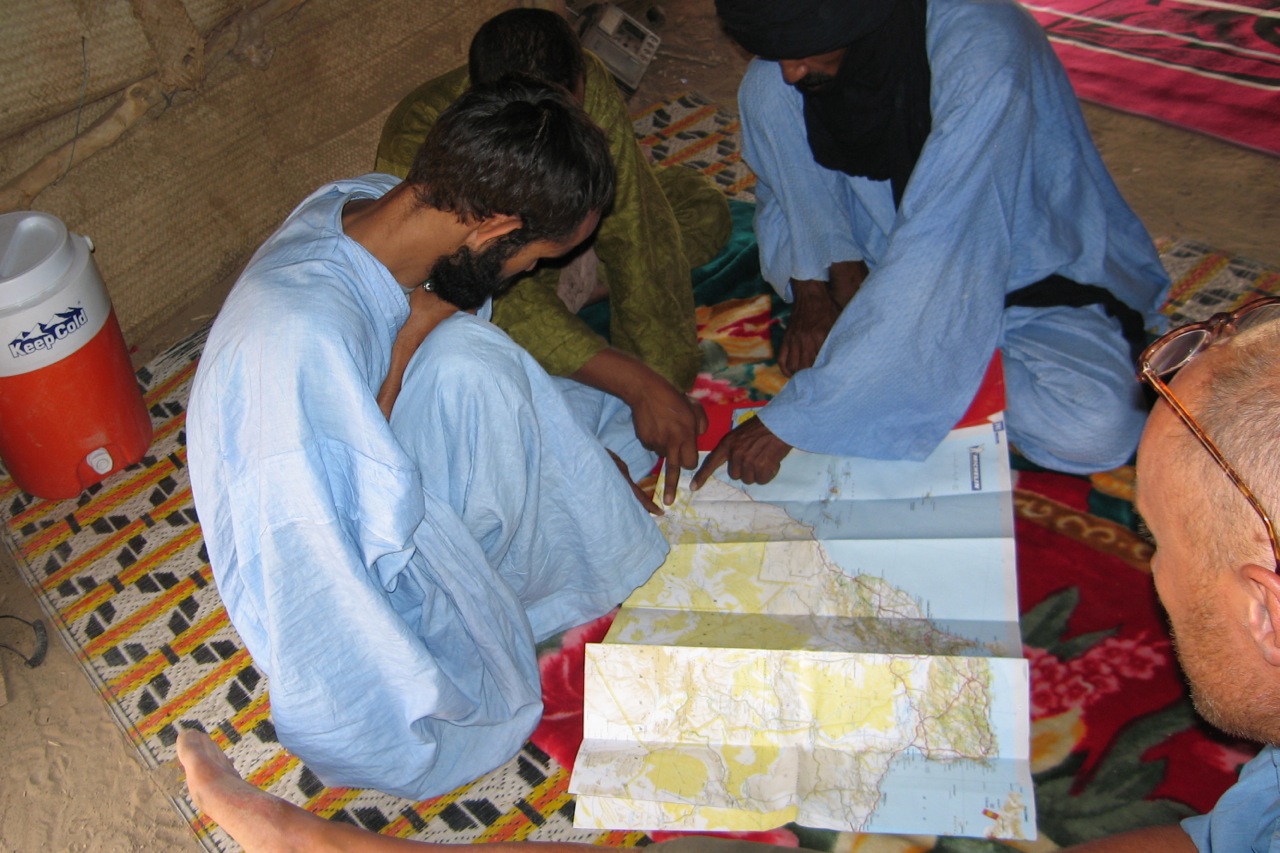
New big end shells had been ordered in from Algeria and gritty negotiations with Hassan got underway. The Taro was now in a sorry state but Hassan was unapologetic – it’s the Berabich way. Nevertheless both he and Mohamed were interested in buying it. In no mood to do Hassan any favours, I let Mohamed have it for the combined cost of the recovery, Rog and Sue’s towing fee and a haircut in Tamanrasset. A total loss in other words, but better than expected considering my helpless position.
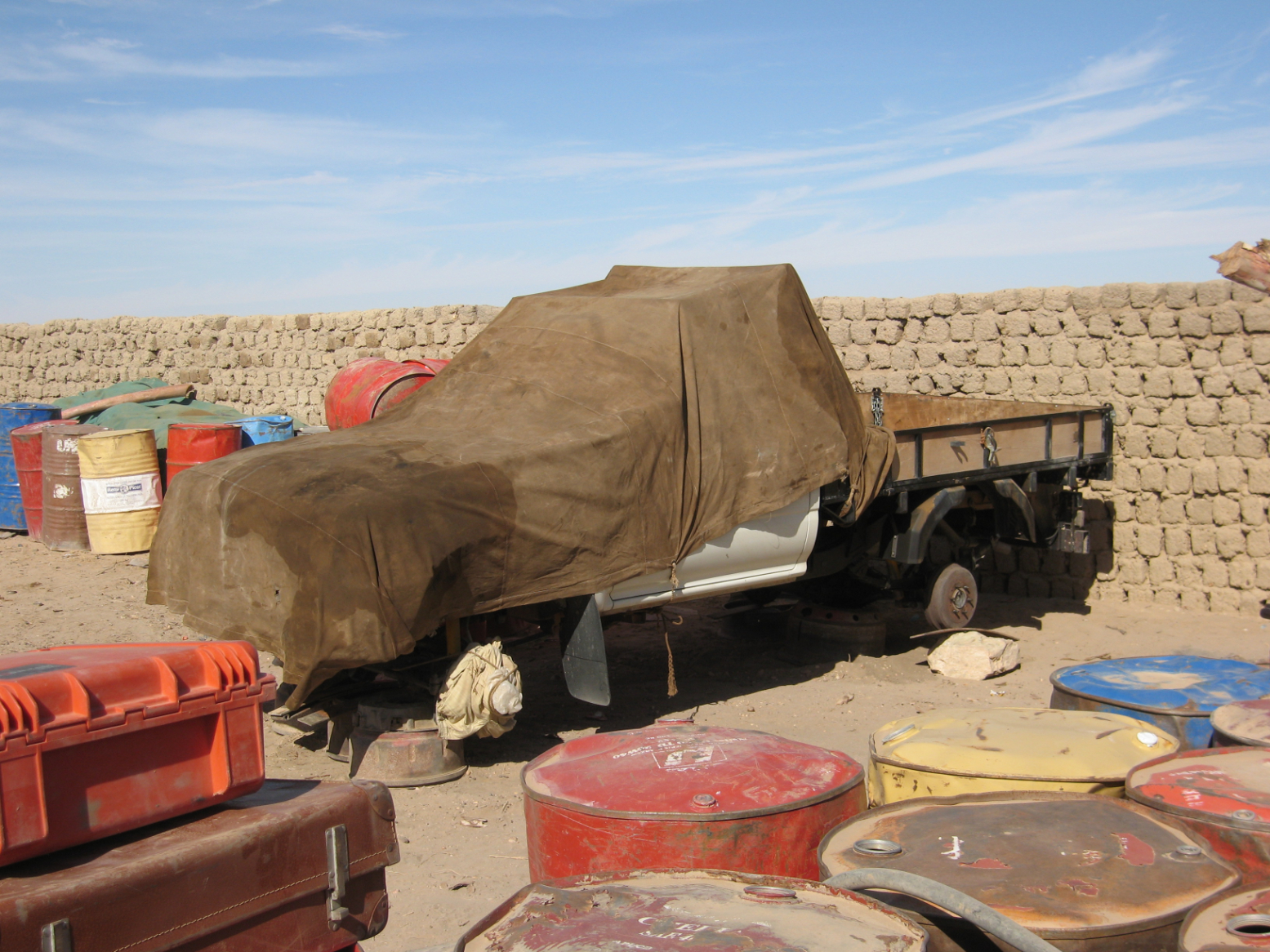
A sad ending for la gazelle, in many ways a perfect lightweight desert car

The VW was shoved into a corner, had its tasty wheels striped off and locked in the storehouse, and was covered in an oily sheet. It’s probably still there today, but full of bullet holes, as El Khalil ended up on the front line of Operation Barkane and got bombed by the French.

As ever, the chirpy Bou was full of business ideas. Could I ship a container full of Land Cruiser or old Land Rover parts out to Togo, or maybe we could slip a brace of Renault prime movers up into Algeria. How much are they in France anyway? And what about three double-cab Hiluxes? I said I’d find out and get back to him.

We’d crossed the Majabat, some more successfully than others. The Mauritanian guide who’d been out of his depth got paid off, and I took his place in Mohamed’s 80 as we headed for the Algerian frontier at Bordj Moktar.
After their epic crossing, in 1975 the JSE had been turned back near here or maybe Tessalit and were sent down into the Sahel to continue their eastward traverse to the Red Sea. We weren’t going that far but hoped to range a little further across the width of the Sahara.
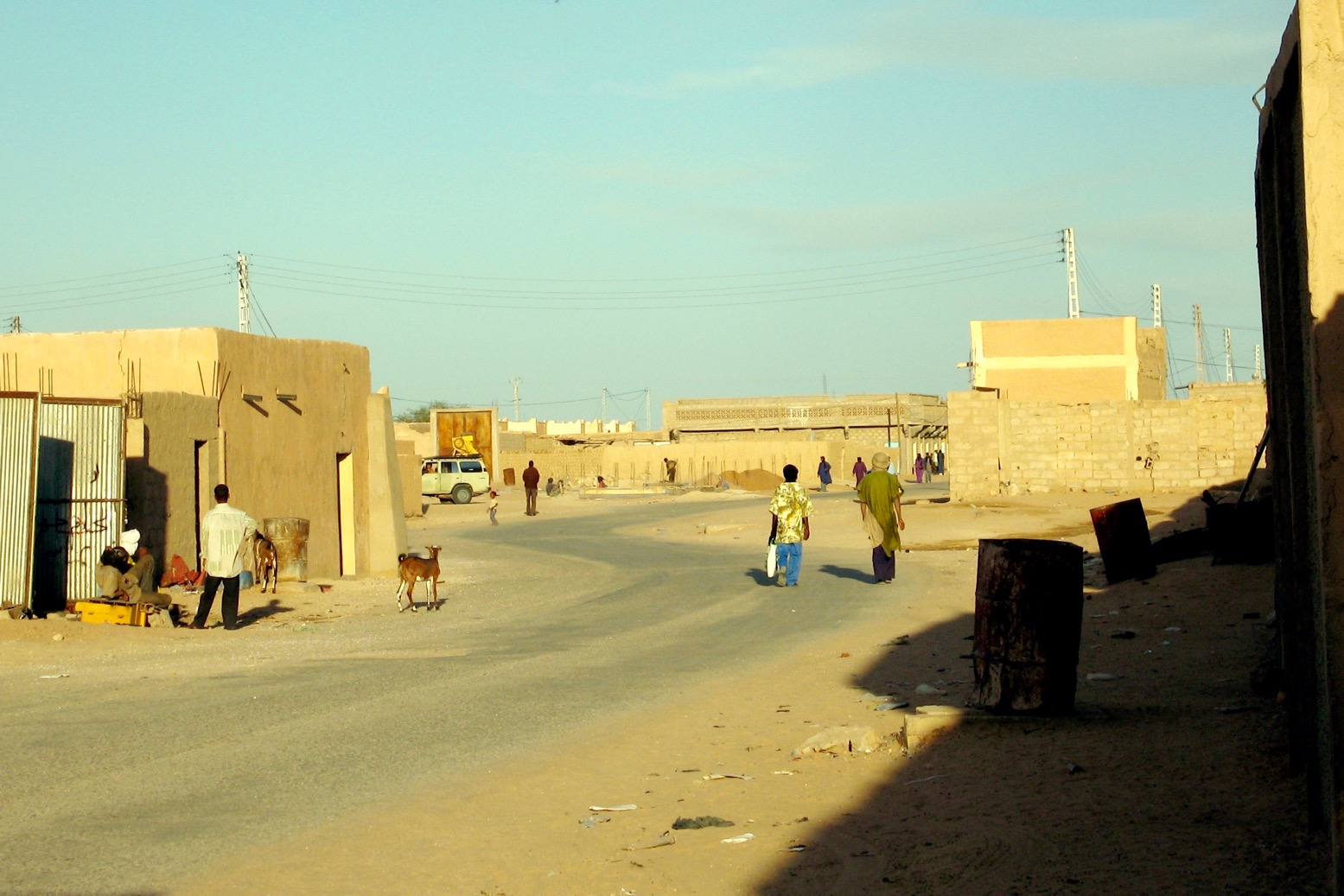
Bordj Badji Moktar

But our entry into Algeria was no forgone conclusion. How were we to explain our unused Malian visas? I’d already considered this and figured the worst they might do is send us down to Tessalit, the nearest Malian entry post 120km away and, with Tuareg bandits on the prowl, a risky proposition according to the Ambassade’s travel advice unit.
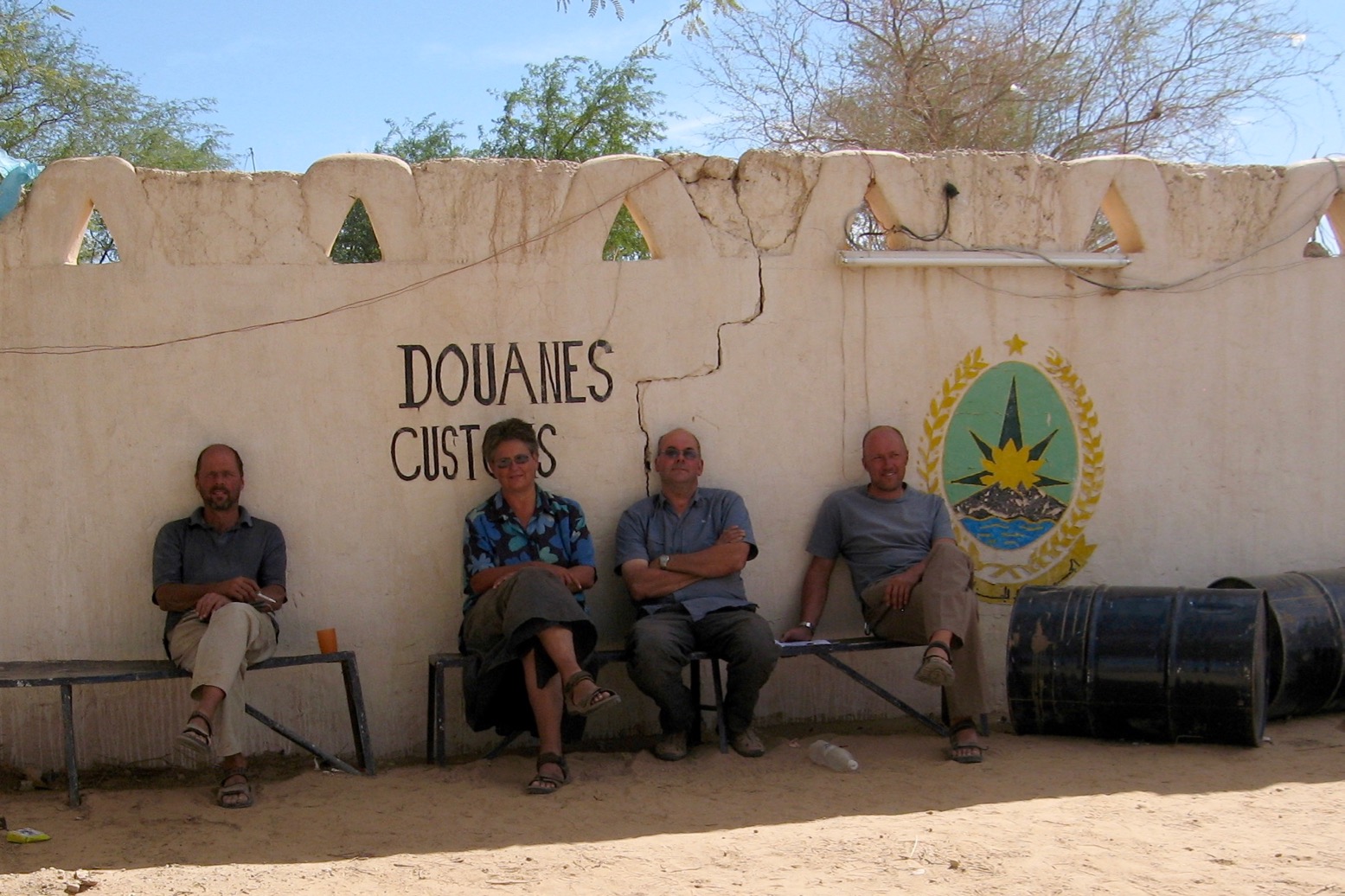
Wairtng it out at BBM

It was time to face the music so we rocked up at the police post at Bordj, handed over our passports and let Mohamed schmooze the cops. He knew well it was the best way to get the better of the countless ‘Men in Hats’ you have to deal with in Algeria, but it didn’t look good. Under orders from the Free World to seal its massive, porous southern borders as best they could, what were they to make of a bunch of tourists blithely roaming across Moktar ben Moktar’s territory? The brigade commander was already on the phone to Tamanrasset, 600km away, when by chance Mohamed recognised an officer from In Salah, his home town. The guy was swiftly persuaded to vouch for Mohamed’s peerless credentials as a renowned desert guide and with, as far as Algeria was concerned, all the correct paperwork and permits in place, we were grudgingly let off the hook.

It had been a lucky break and an example of why it had been worth hiring Mohamed. In sub-Saharan countries like Mali and Niger a tourist might pay their way out of situations like this, but in Algeria I knew well (and have found out again since) that bribing small-time border officials is not done. It’s actually one of the things I like about Algeria.

‘Al hamdullilai!’ (‘Allah be praised’) exclaimed Mohamed, delighted to be back home after his fraught round trip to Mauritania. We had crossed Le Quartier Vide, evaded the attentions of soon-to-be AQIM’s top commander, Moktar ben Moktar and his henchmen (well, almost) and were safely back in the land of milk, honey and cheap diesel.

But I do remember seeing a bunch of shifty looking ‘bearded Pakistanis’ at BBM, of the kind you rarely saw in the Sahara back then. They may well have been devout Muslims coming back from studying at a madrasa somewhere in Mali. Or they may have been associated with AQIM or any of the other jihadist groups roaming the outlands of northern Mali.

After a celebratory feast at a friend’s house in BBM (for which we’d all start paying very soon), we headed northwest for Tamanrasset and the Hoggar, retracing the route I’d taken with the burgundy VX a few weeks earlier.
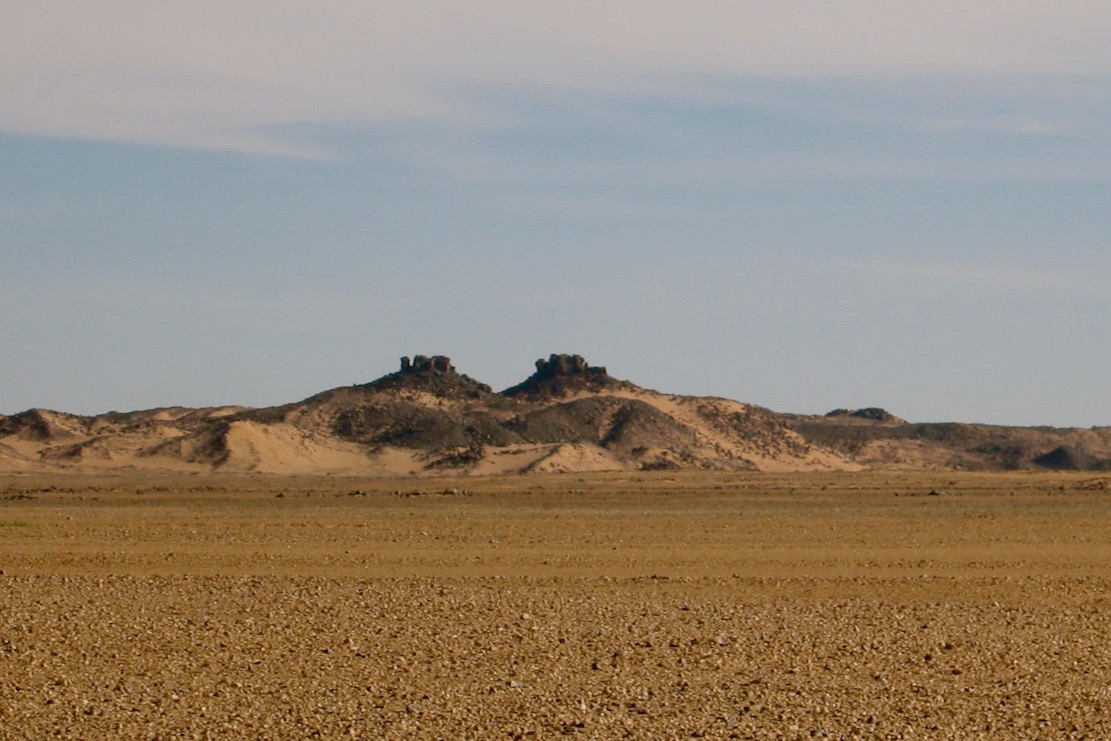
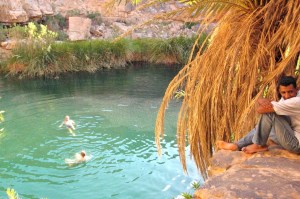
Tim Missao well
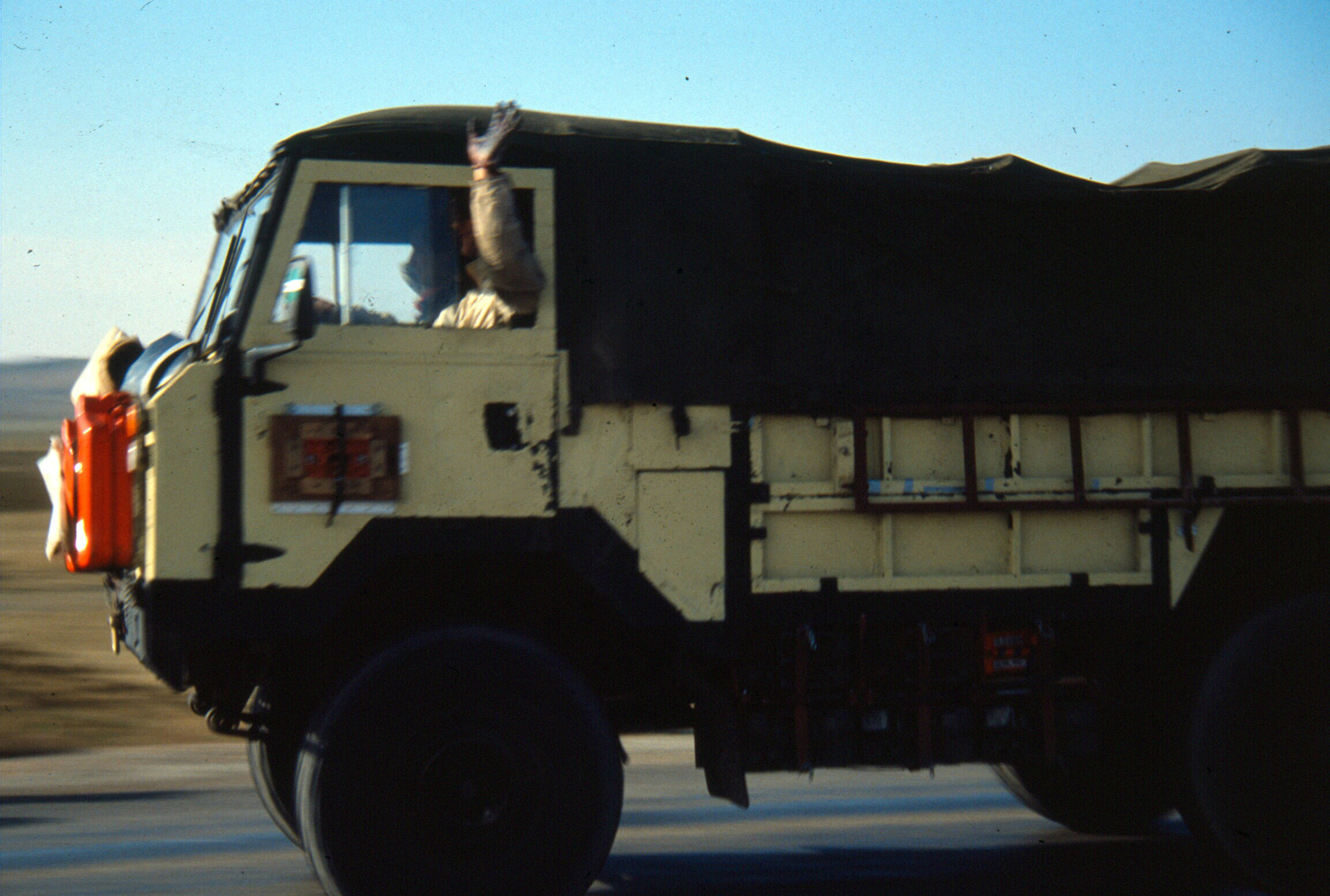
101

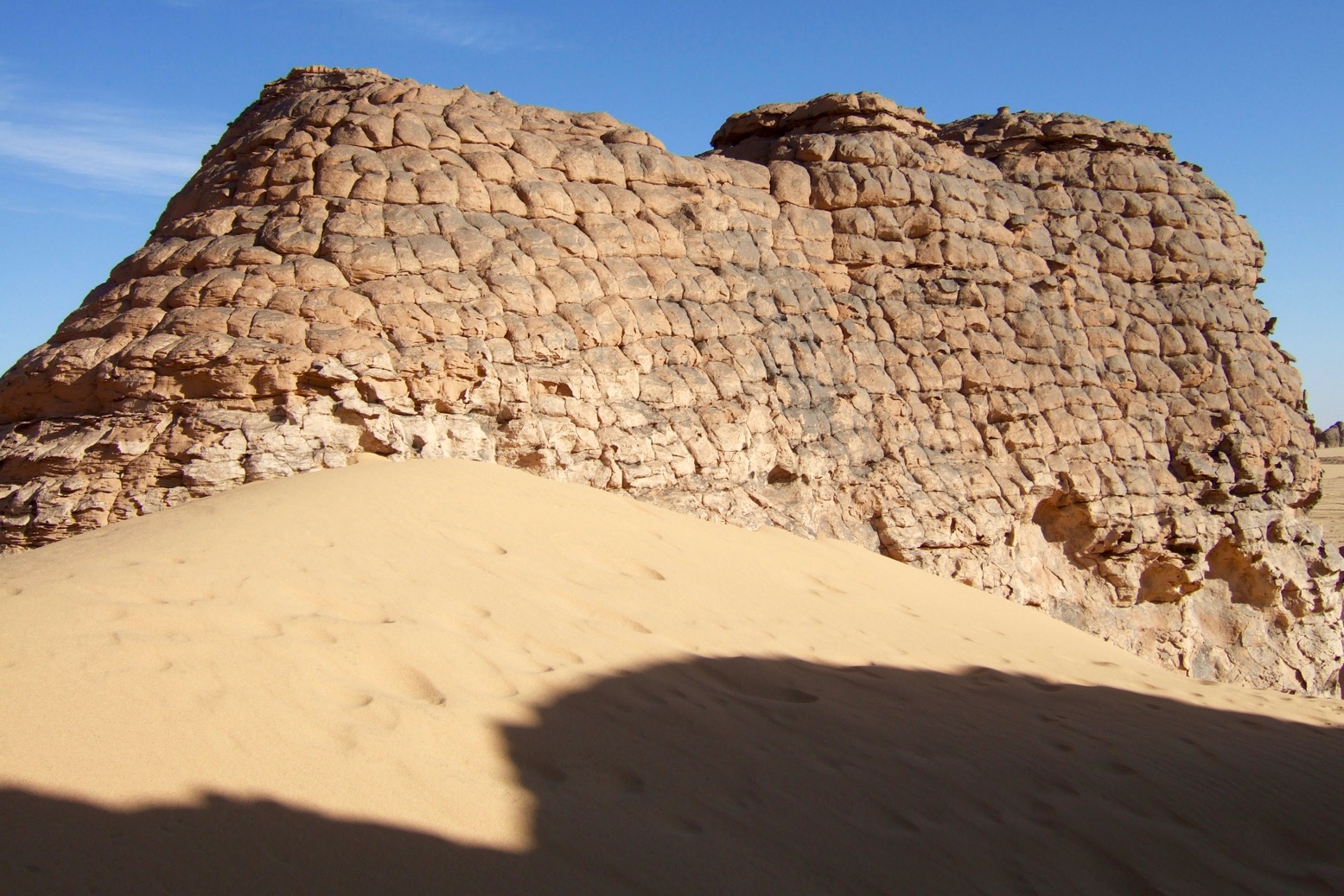
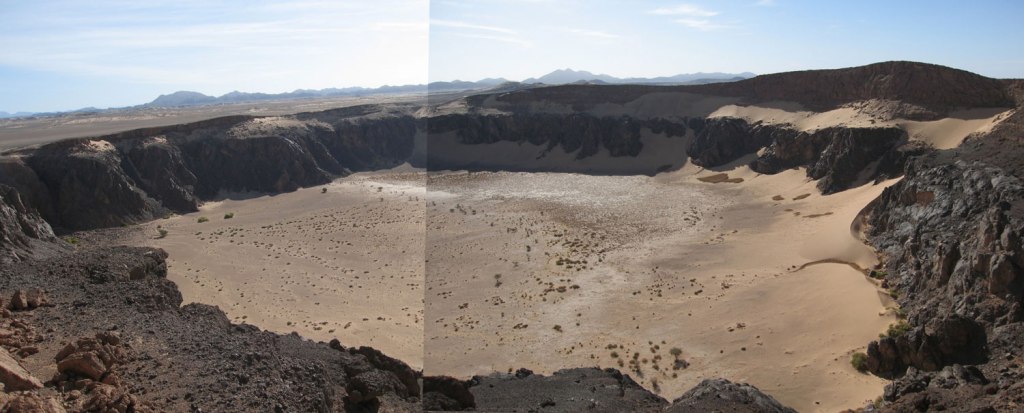
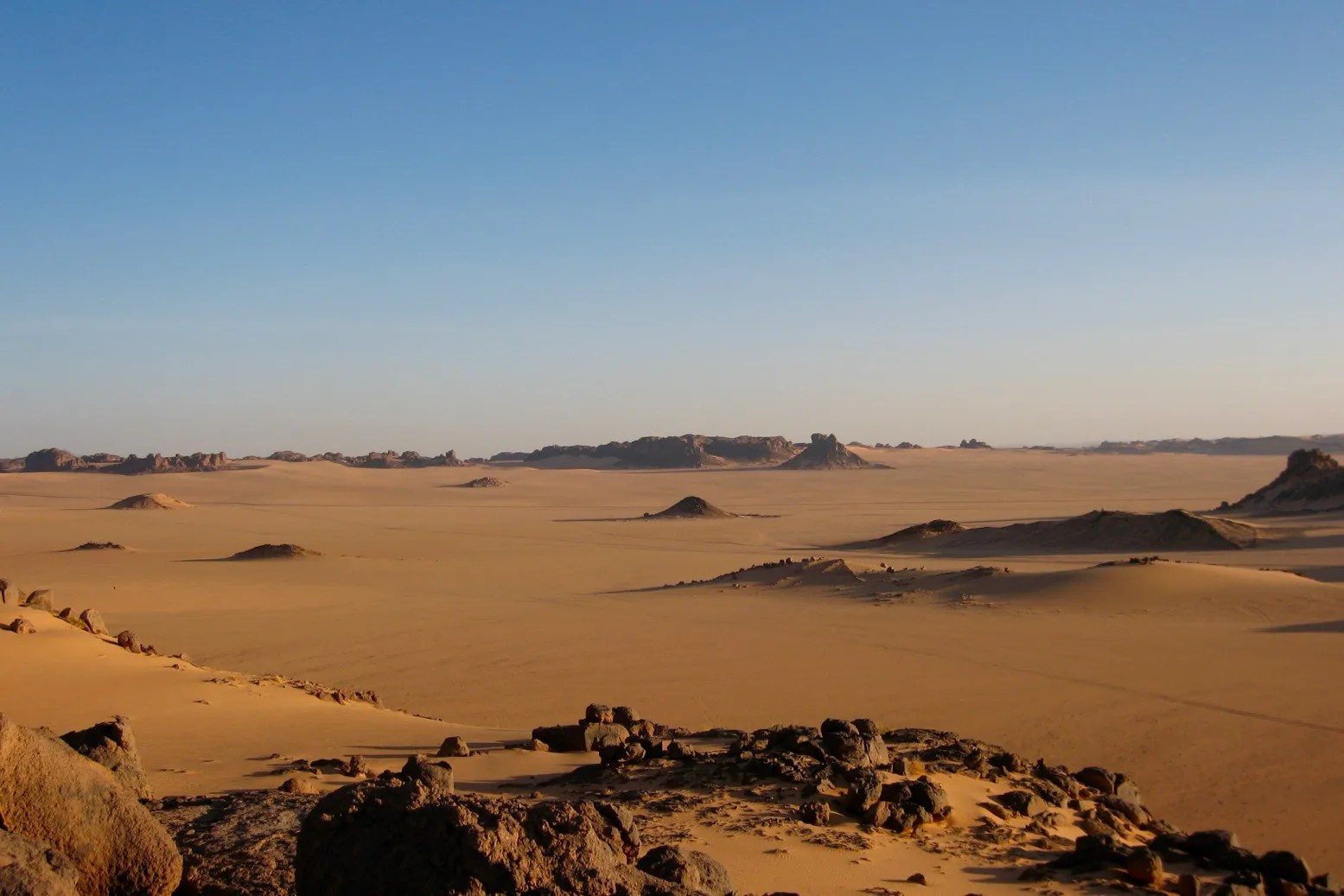
On the way we diverted to the gorge of Tim Missao (above) which I’d not visited since the 1980s in my 101 (left). The gorge is a lovely spot and represented the most animated topography we’d seen since the Guelb near Ouadane. We decided the Empty Quarter was aptly named. It made up one of the biggest sand sheets in the Sahara, void of trees, outcrops any higher than my knee and even significant sand seas. Algeria on the other hand was full of diverse landscapes: smooth granite monoliths, gnarly volcanic ranges, eroded sandstone escarpments lapped by sand banks, and of course sand seas that would cover Belgium.
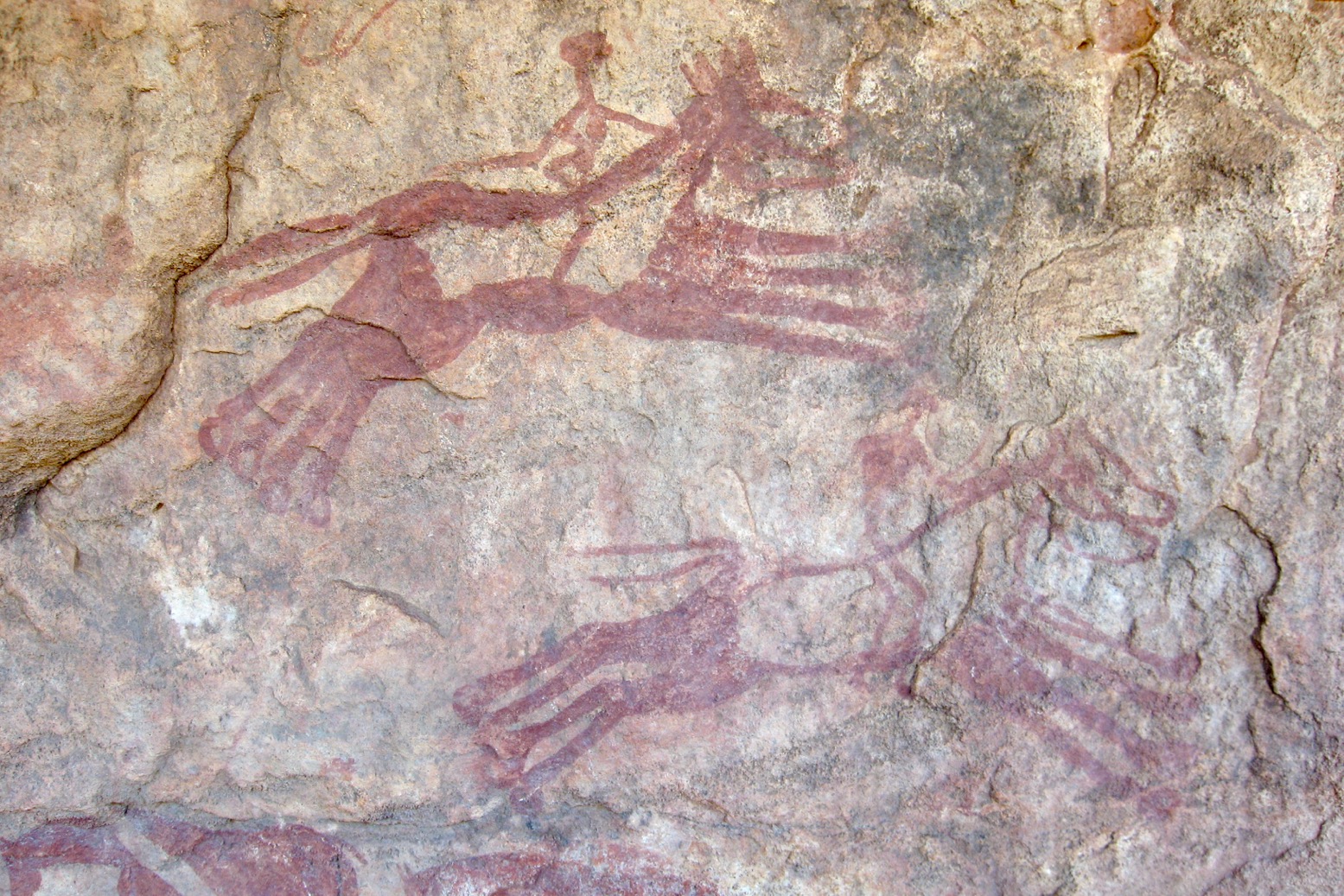
Garamantean horse chariots far from Germa in southern Libya

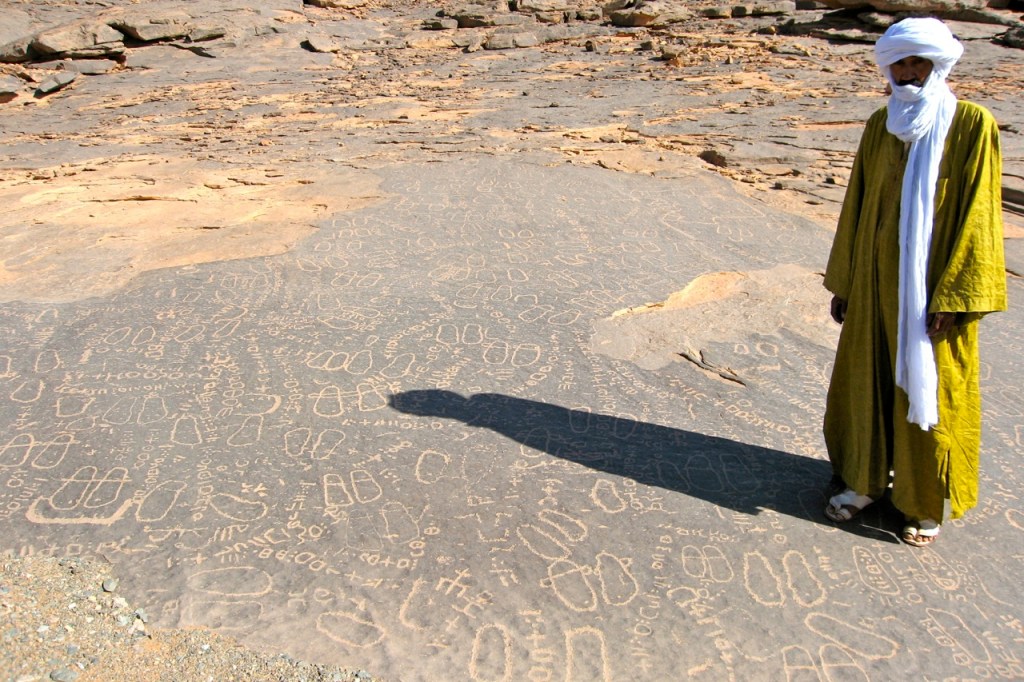
It was one reason why I returned here again and again. Another was that while exploring the gorge, the ever-observant Ron easily found the paintings of Garamantean horse-drawn chariots I’d missed on previous visits. The ancient rock art suggested that some two millennia ago traders from this mysterious civilisation based in southwestern Libya may have ranged much further across the Sahara than previously thought. In late 2007 similar discoveries near Jebel Uweinat in the far northwest of Sudan may do the same for the hitherto Nile-bound Ancient Egyptians.

Whether it was the stress relief or what we ate in Bordj, for us Tamanrasset passed by in a three-day blur of dozing and scurrying back and forth to the toilet block. Once the worst was over, Mohamed headed back north to In Salah and we got a change of crew for our final leg, east to Djanet.
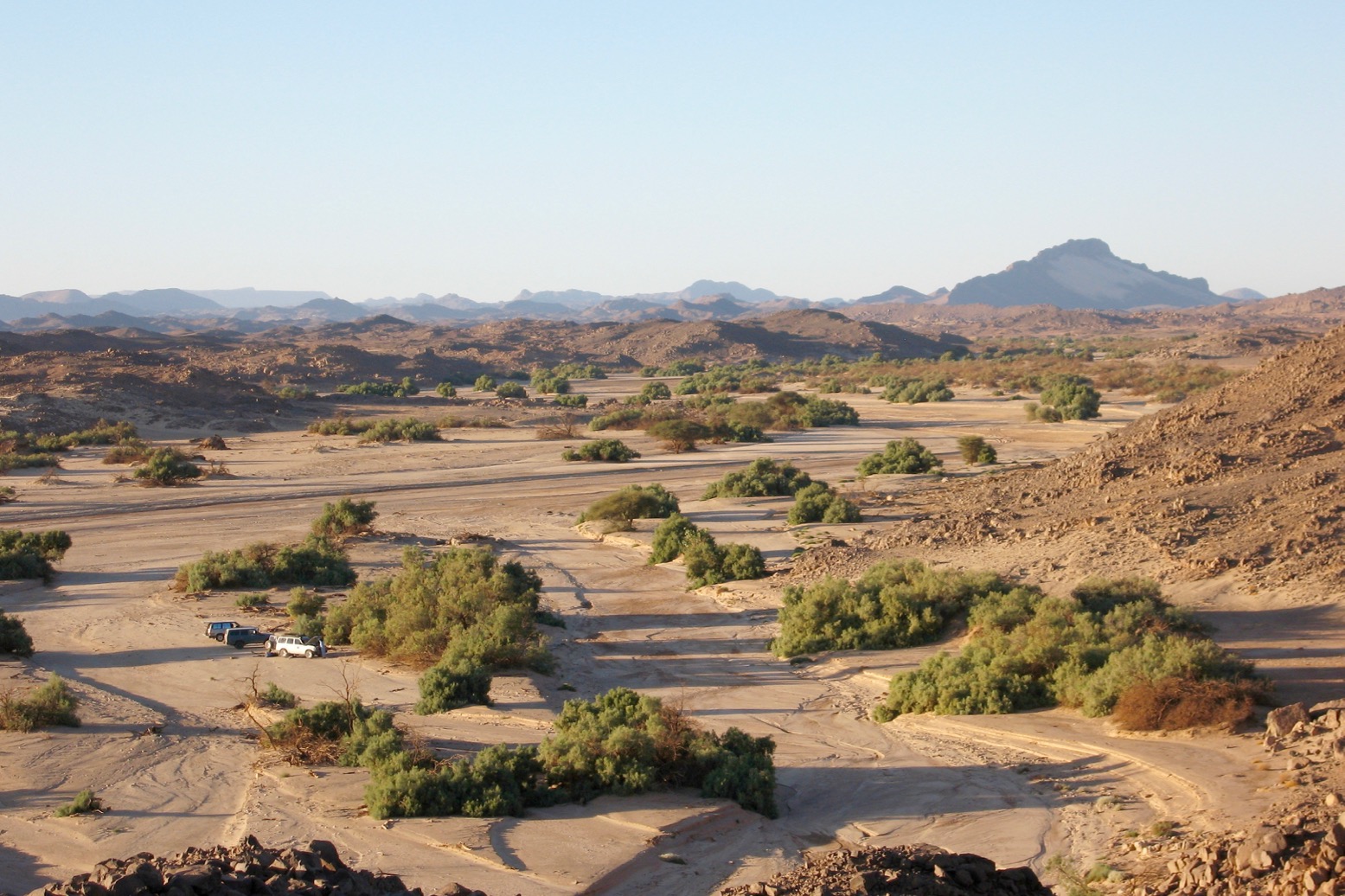
The two new guys made me realise how lucky I was with Mohamed. To them, and many other guides, Mohamed’s crossing of the Quarter with us was seen as madness. Why risk your car out there when you could earn safe money transporting regular tour groups along the Hoggar and Tassili N’Ajjer tram lines? For all his faults and bullshit, Mohamed enjoyed a true adventure much like ourselves. We may never choose to go there again, but with his help we’d seen it for ourselves.
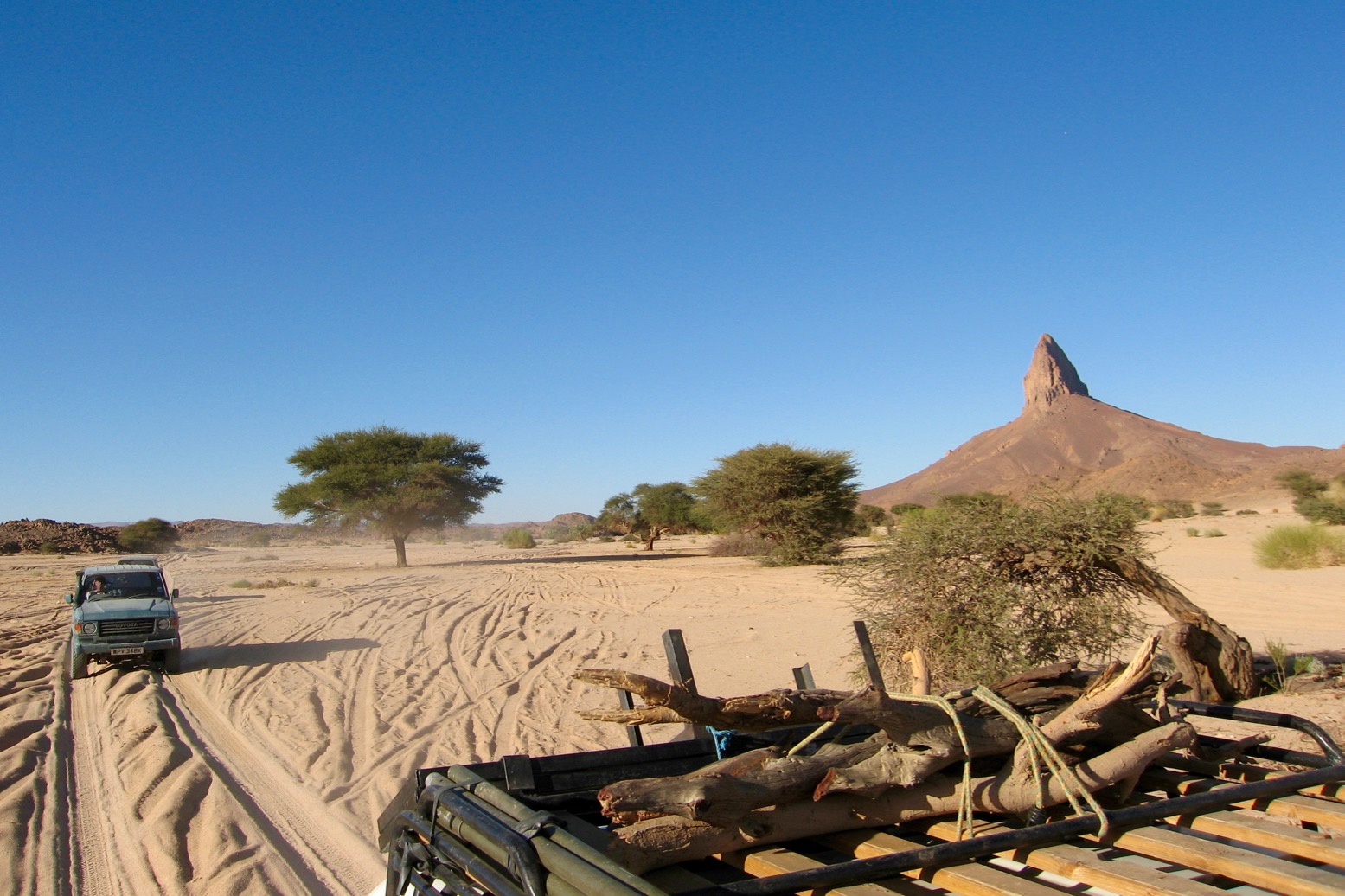
Already a warm, retrospective rosey view of northern Mali’s barren sand sheet was setting in. Now it felt frustrating to be hemmed in along washboard tracks.
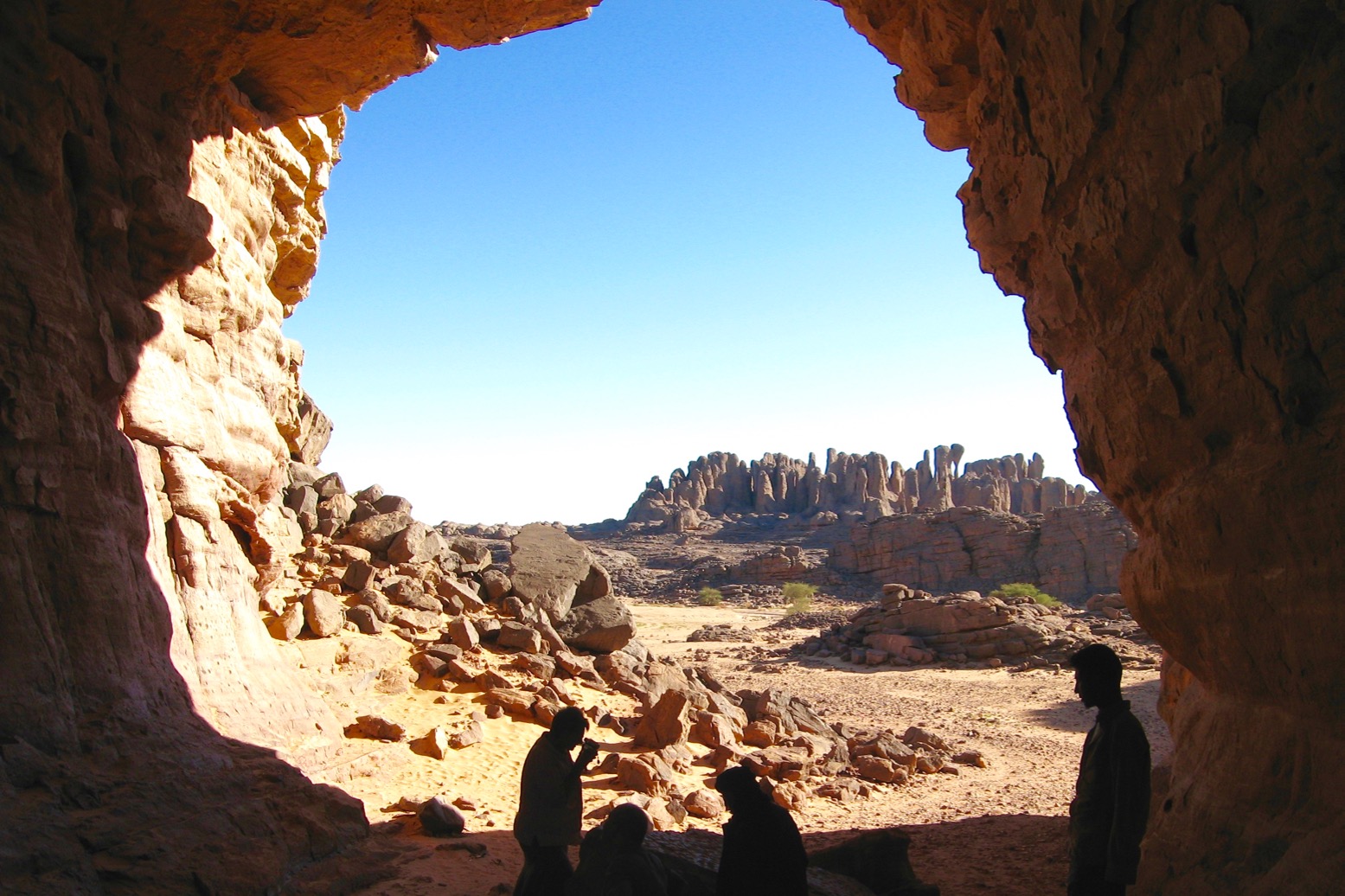
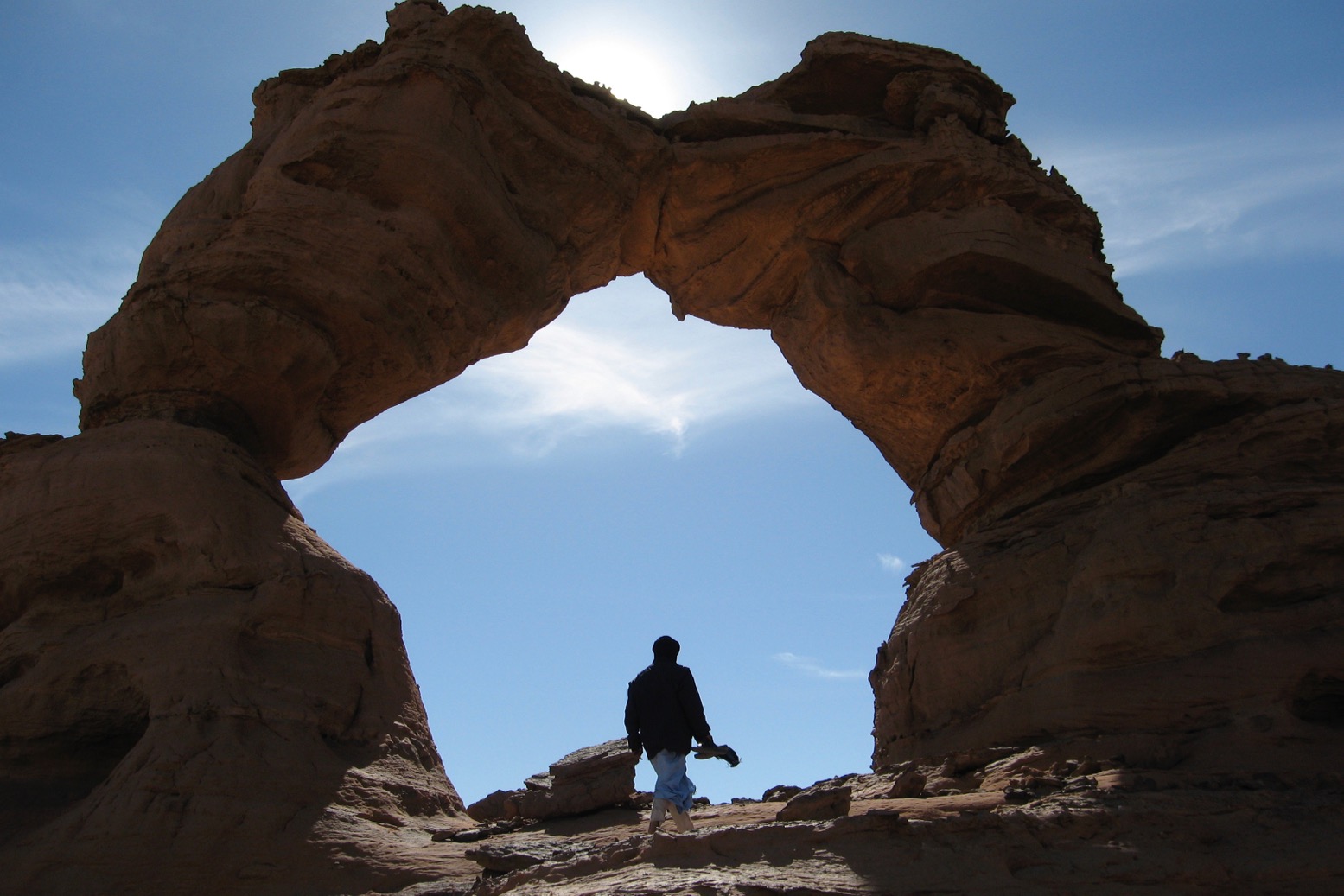
El Ghessour

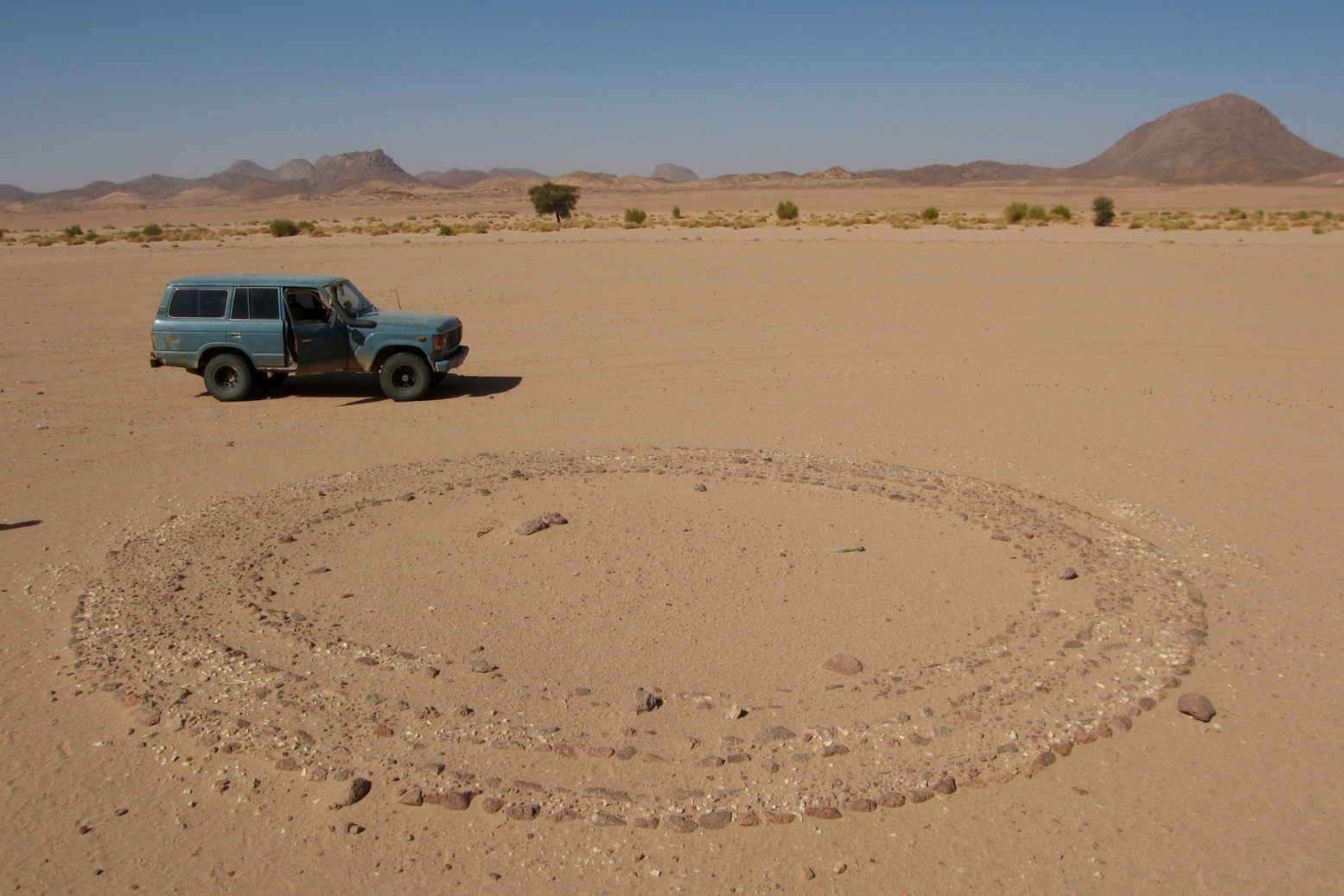
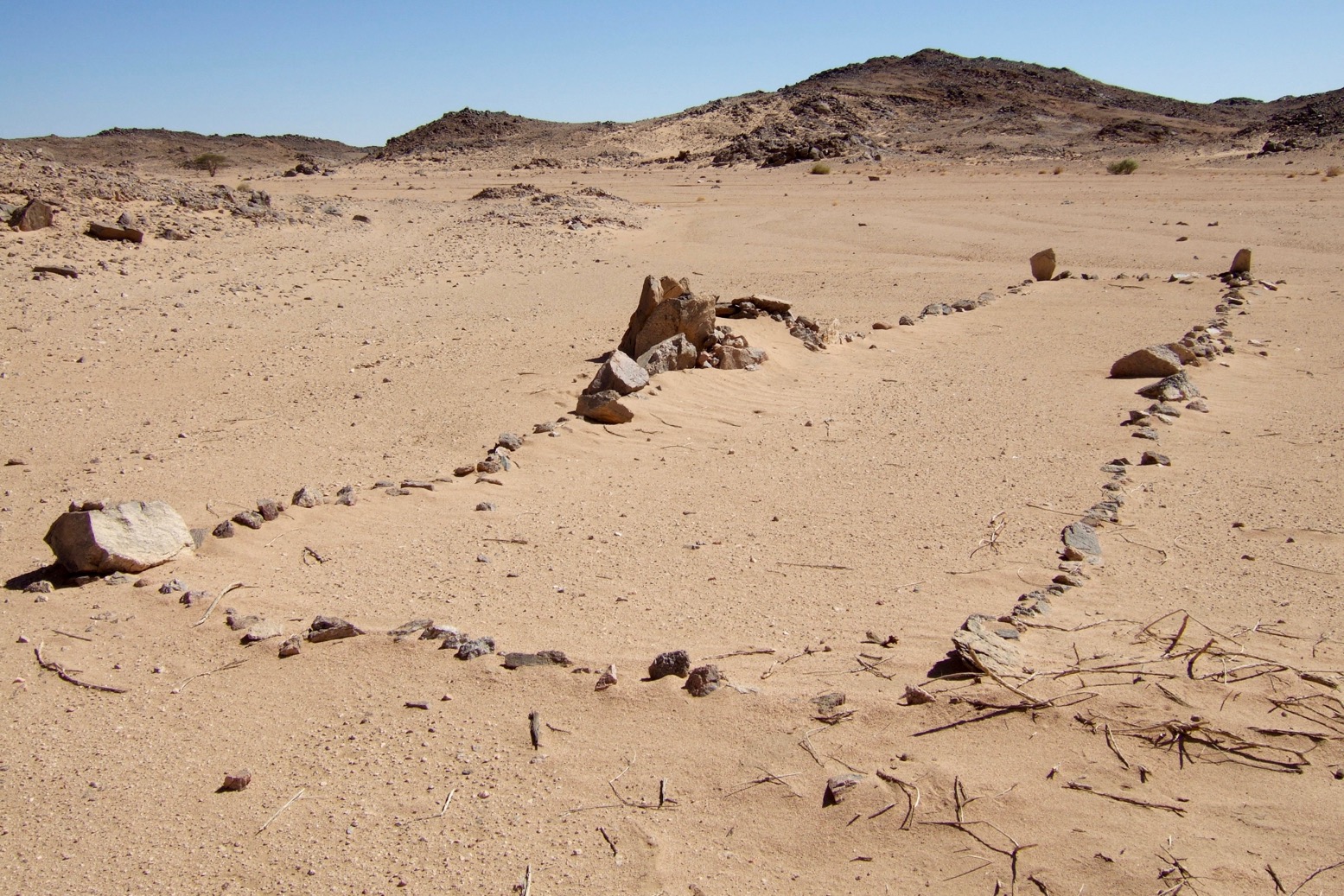
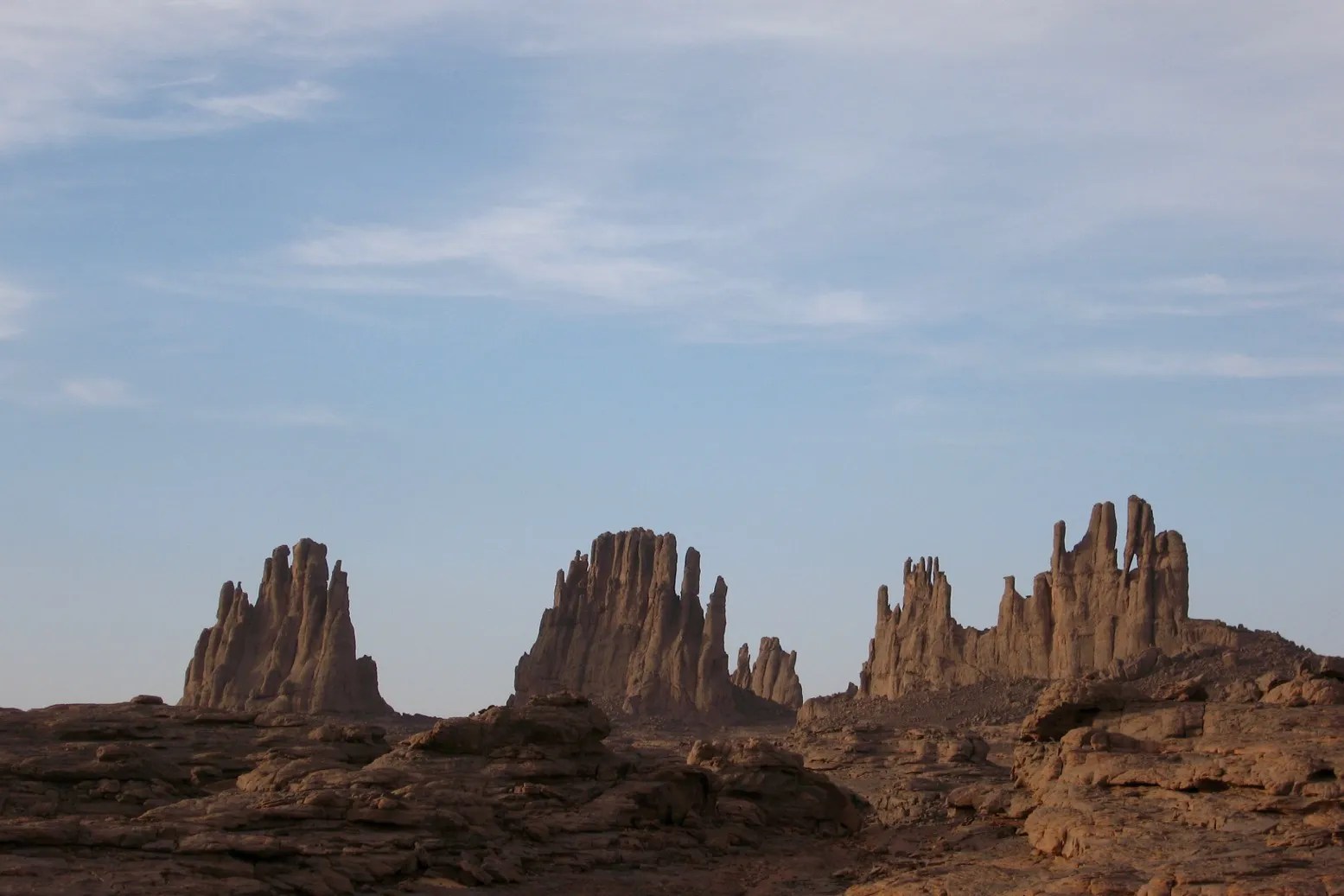
Still, one look out of the window made up for it: the shark’s fin blade of Areggane mountain, the sand-swept canyons and rock arches of Tagrera, El Ghessour rock art, and the amazing Youf Ehakit. Wer also passed circular paved pre-Islamic tombs I’d never noticed before, and steps carved eons ago into a rocky sentinel that Ron had discovered on a previous trip. Our drivers had to be persuaded to make the deadly 20-kilometre diversion off the track into the unknown and once there, feigned indifference.
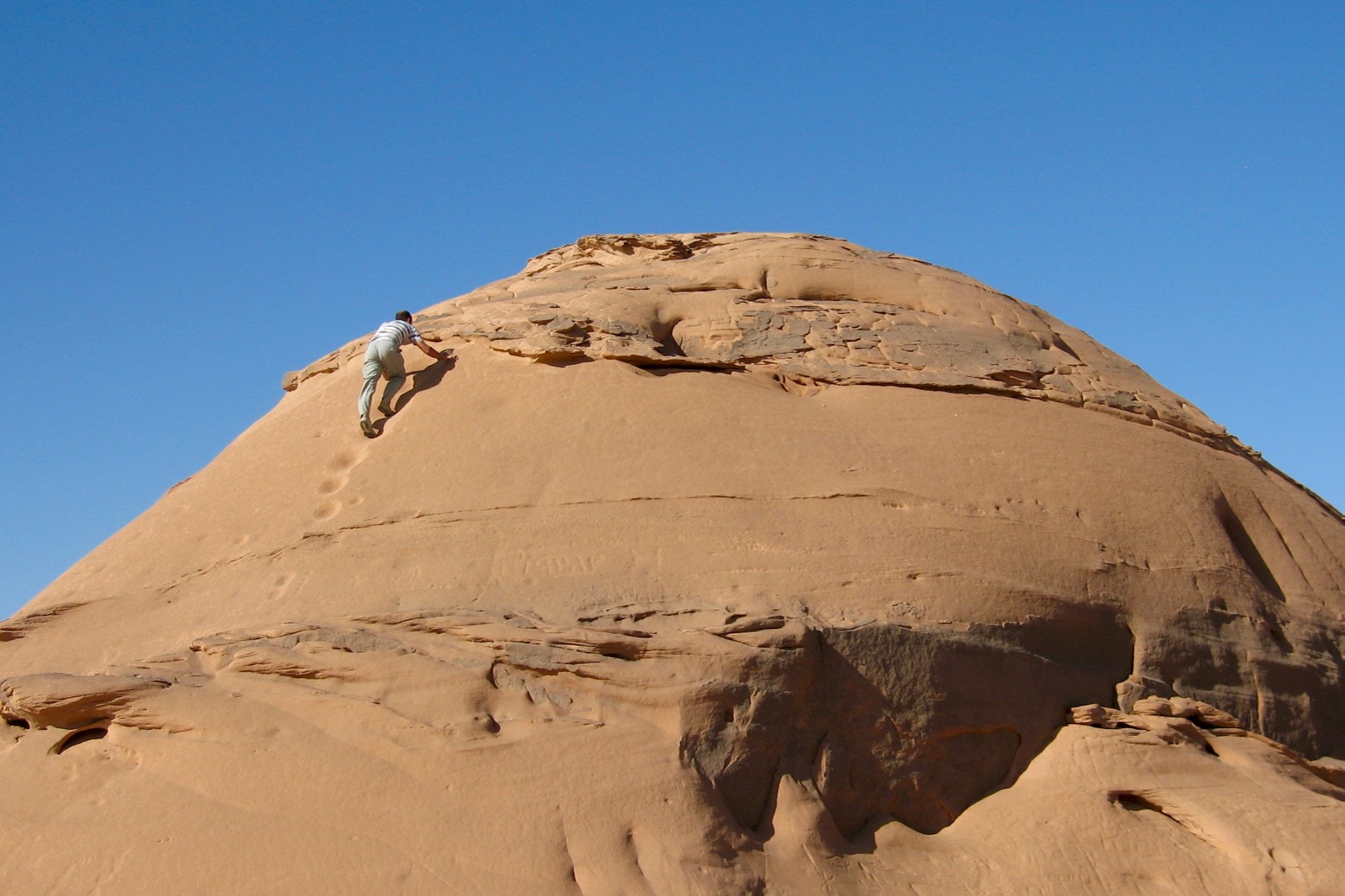
Stepped sentinal

It was early December now and the weather was turning. Frost coated my sleeping bag after a night beside the Erg Admer dune passage which led to the oasis town of Djanet.
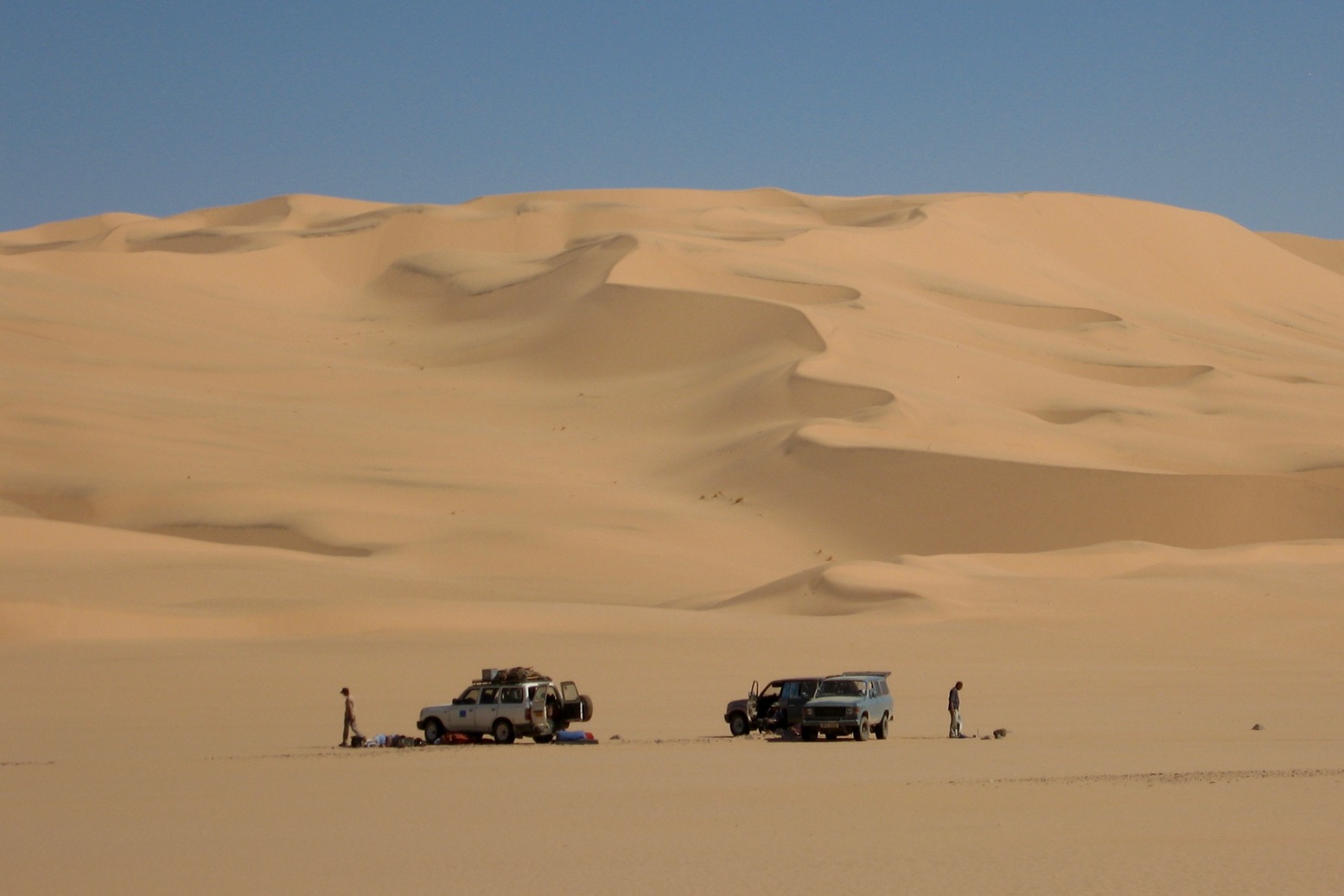
Ready to cross the Erg Admer

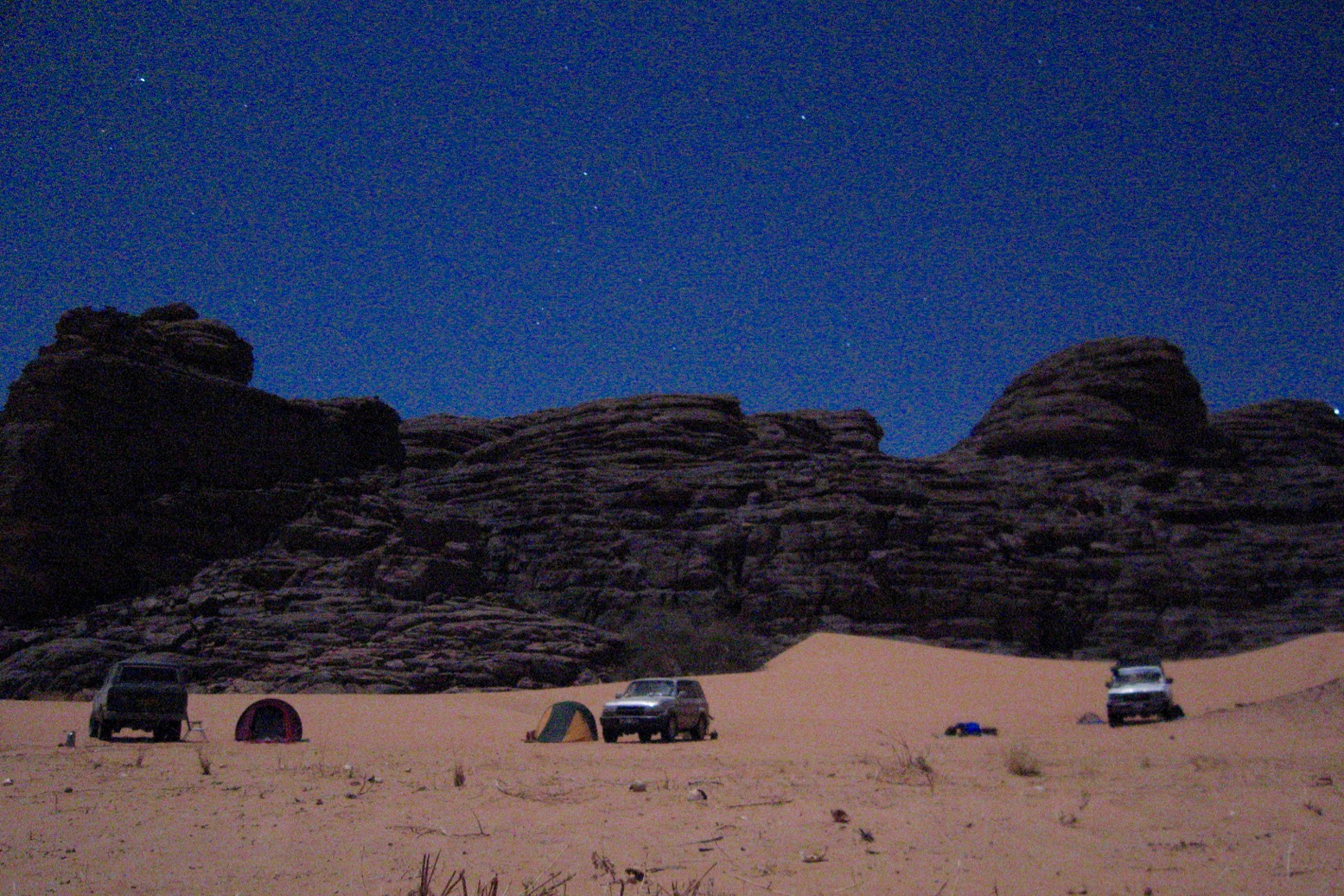
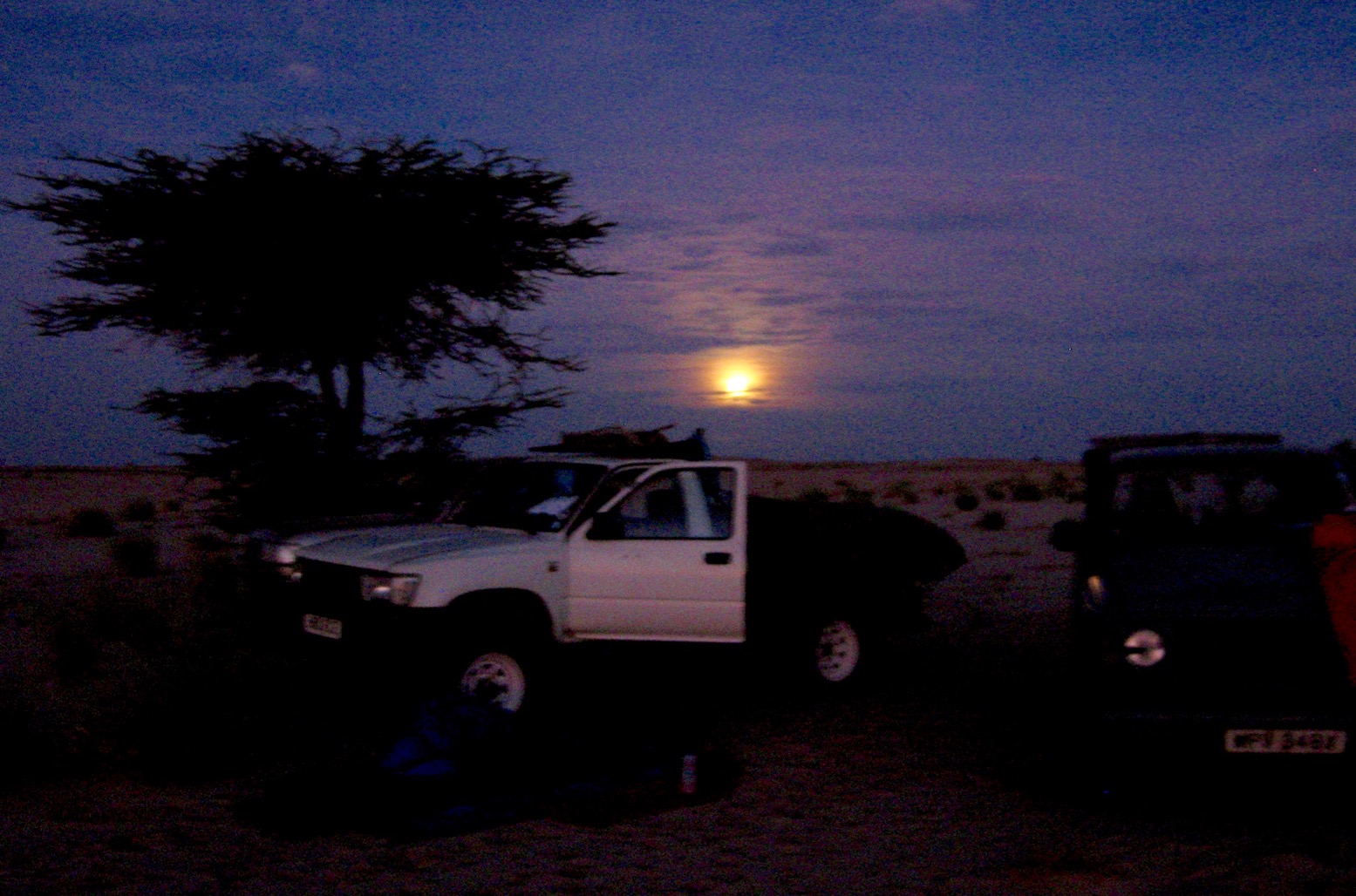
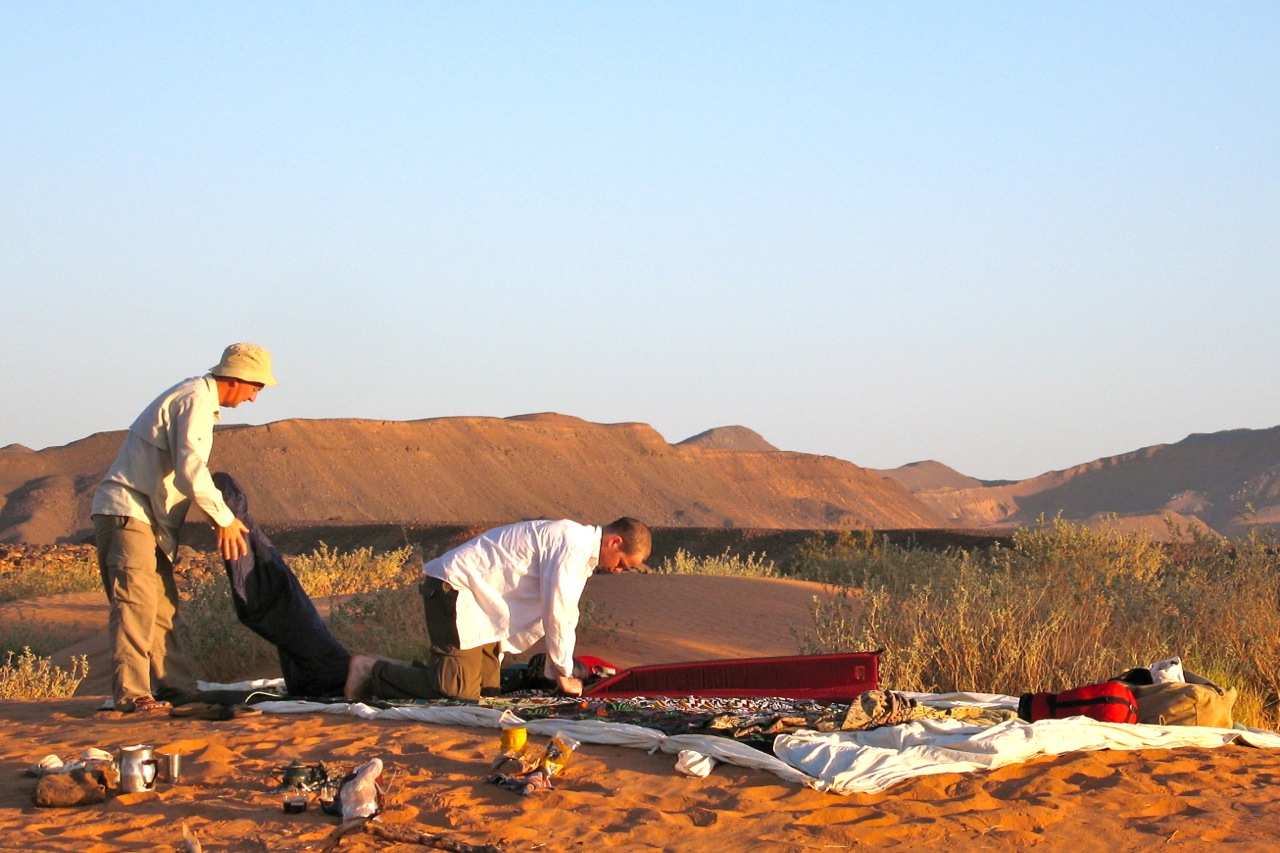
By early afternoon the cars had clawed their way onto the dune slopes to the crest from where the tawny Tassili N’Ajjer escarpment unrolled across the northern horizon. In no hurry to reach town, we camped early below the cliffs, cooked up the best of our remaining food and watched the same full moon rise as it had done over our first camp together in Morocco, four weeks and nearly as many thousand miles ago.
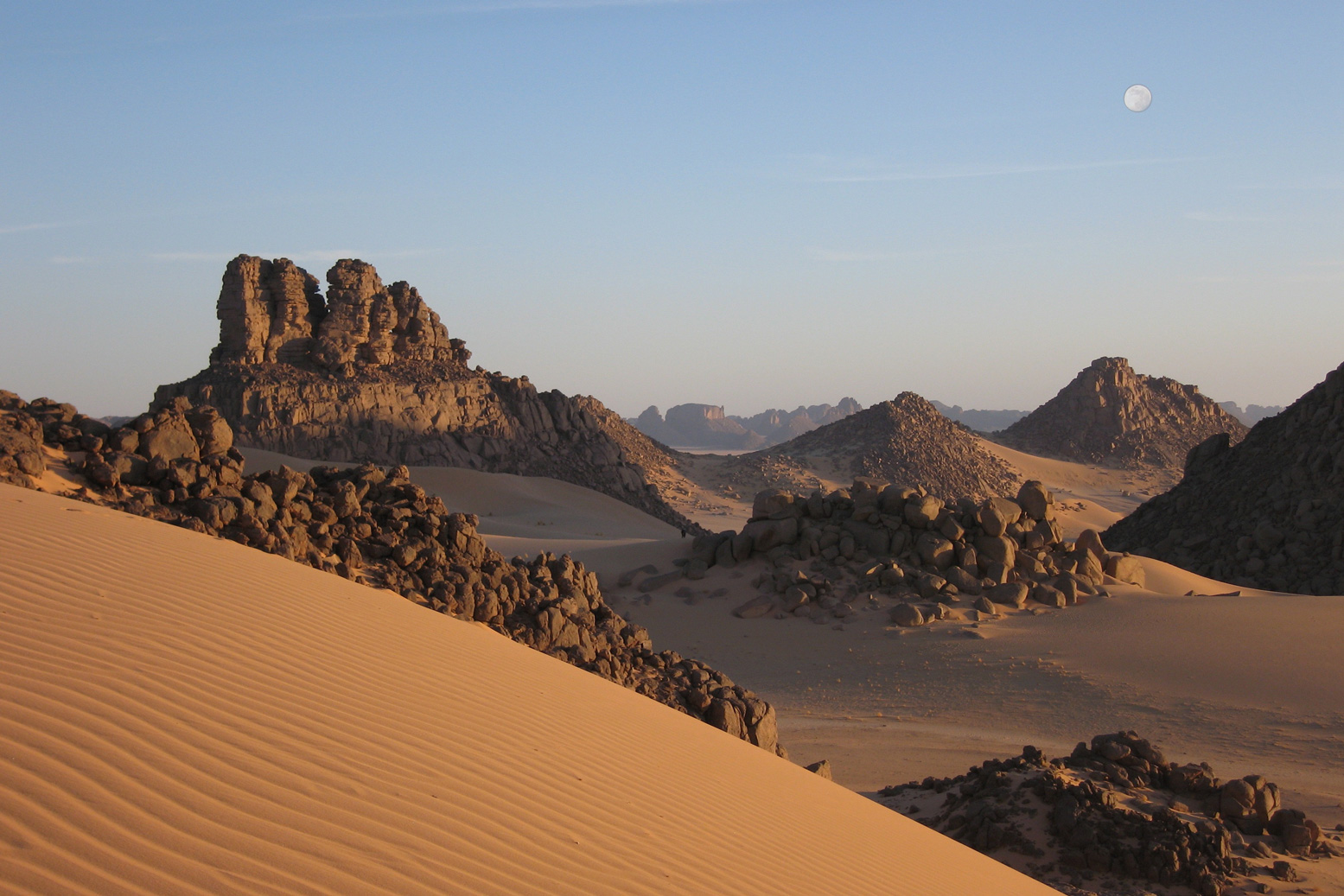
Moonrise on the Tassili

In Djanet next day we organised a day trip up to the Jabbaren rock art site up on the plateau. A car collected us before dawn and as the sun lit up the Erg Admer dunes behind us, we were already panting steadily up the goat track that led to the plateau top. As we trudged up, a lone figure scampered down with a cheery salaam.
Behind us a hoard of bedraggled ‘illegals’ from sub-Saharan Africa had emerged from the rocks, following our path uphill. Dropped there overnight by who knows who, they’d been instructed to wait for the guide who’d lead them across to Ghat in Libya, two days away. From there they were expecting to get to Malta and mainland Europe, but likely as not would get deported in one of Libya’s periodic purges or trapped as slave workers. Less than a decade later Gaddafi had fallen with other North African despots and the trickle of migrants became a tsunami.
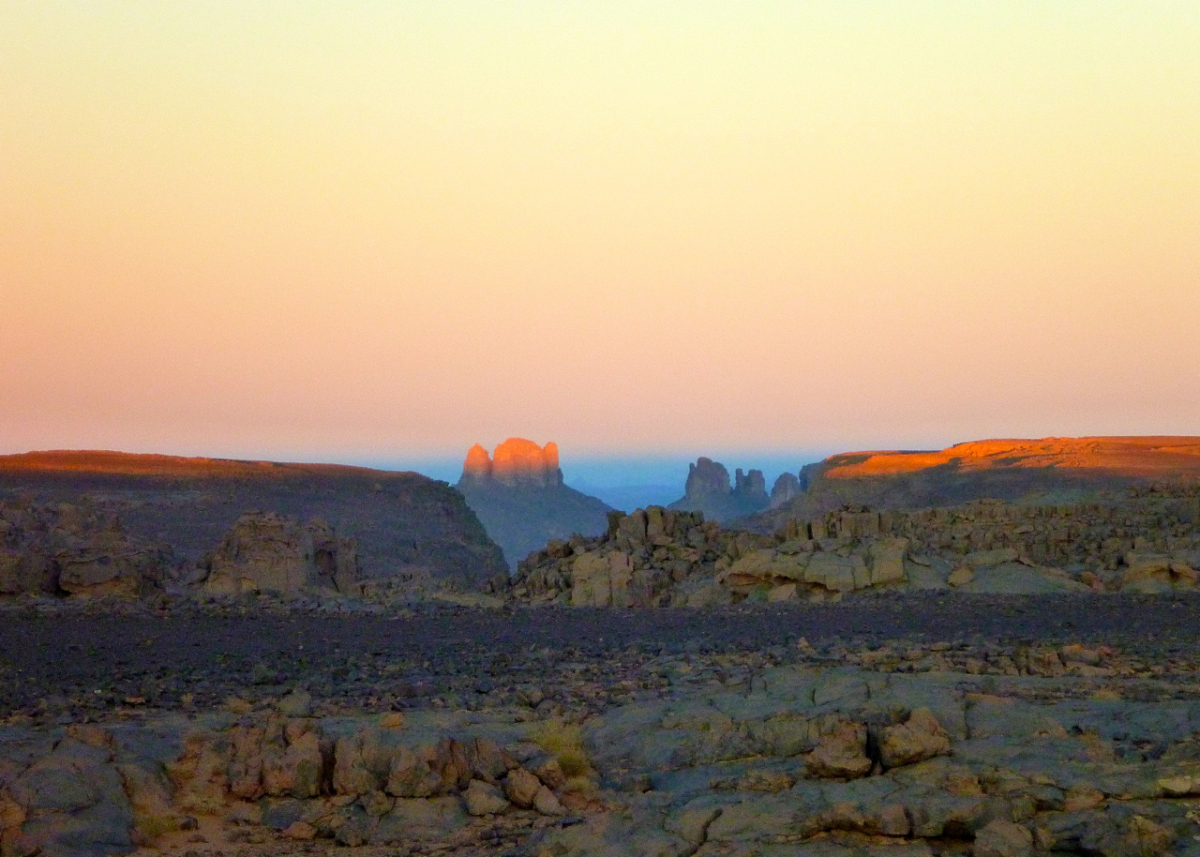
Even back then, it all put our own adventurous caper into perspective, but we were still pleased with ourselves. We’d driven laterally across as much of the Sahara as was possible without ensuring serious trouble and our own deportation. That done, now it was time to head north.
Sahara • The Empty Quarter • Part 1

Originally published in Overland Journal 2007

See also: VW Taro pickup (soon)
SEQ Intro
Part 2

As with most of us, the blanks on the map have a certain attraction; who knows what you’ll find in the places nobody goes. And though I’ve been traveling in the Sahara since the early 1980s, the desert there stills holds plenty of blanks for me. Most Saharan travel occurs in the centre, a spectacular region of plateaux, sand seas and mountain ranges filling most of Libya, Algeria and Niger; the homeland of the Tuareg nomads. To the east was the so-called Libyan Desert covering parts of Libya, Sudan and Egypt. I’d been there too.

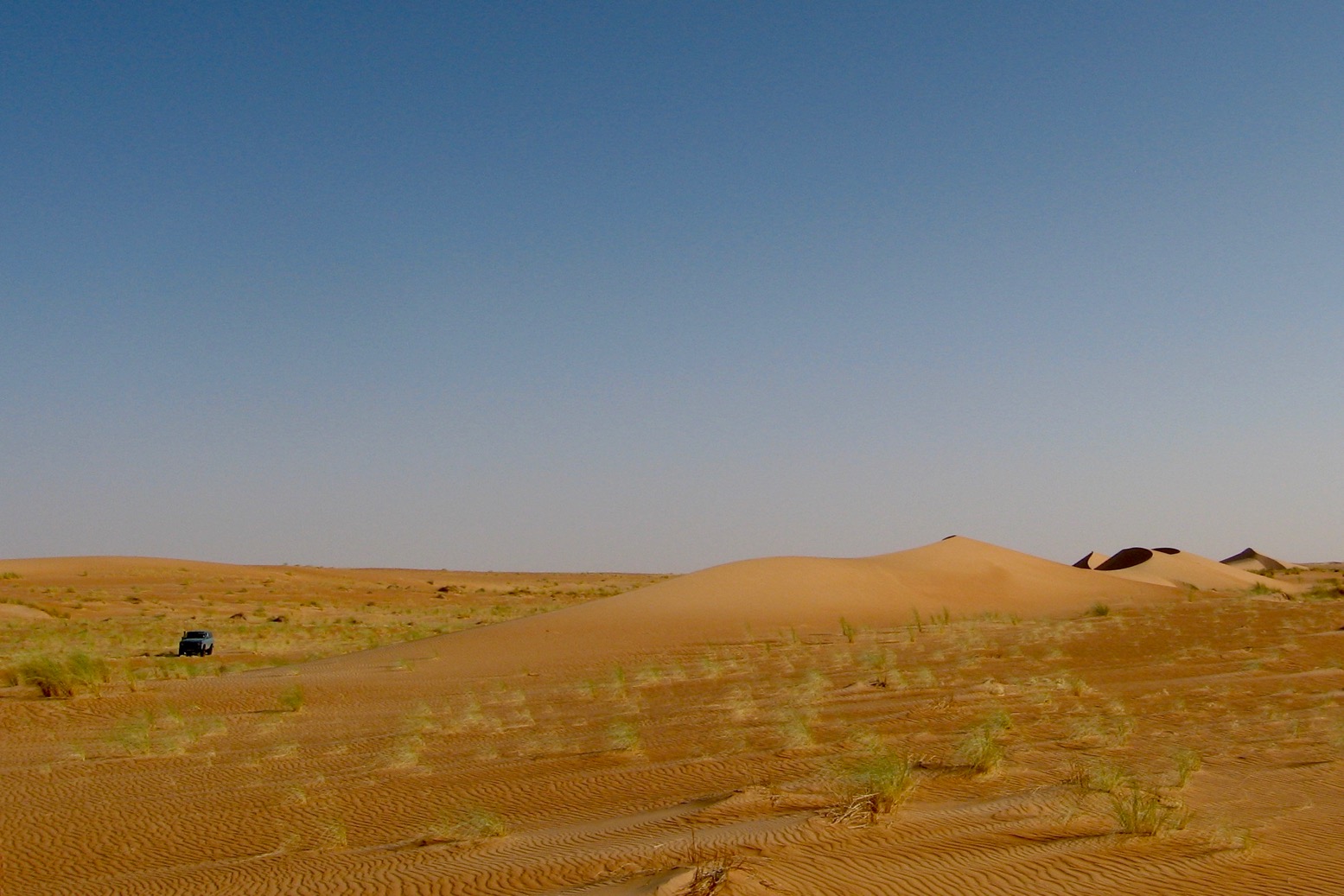
Dunes of the Ouarane – and nemesis for my pickup

But there was one region where no one went, which no tracks crossed and where even wells could be counted on the fingers of one hand. Among other names it’s known as the Majabat al-Koubra or ‘Empty Quarter’ and it spills over the Mauritanian, Malian and Algerian borders a hyper-arid half -a-million square miles of not much at all.Part of the reason Saharan travellers avoid it these days was the higher-than-average chance of getting robbed. The Malian part of the Empty Quarter had in the last two decades become a runway for smugglers taking drugs, cigarettes, arms and lately kidnapping tourists. A German guy I knew who’d led an expedition across the Quarter had his group cleaned out by bandits in Mauritania, while unrest by the Kel Iforhas Tuareg in the northeast meant travellers were at risk on even the regular route south to the Niger River.

At this time banditry was a relatively new, or revisited phenomenon in the Sahara and I’d heard of or had my share of tense or close encounters since the nomadic rebellions and Islamicist activities disrupted Saharan tourism. But smugglers usually avoid all contact on the move, while bandits tend to prey in areas where they can be sure to make a hit: recognised tracks or events like the Dakar Rally, natural bottlenecks or border areas where they can make a quick getaway. By travelling off-piste in an uncommon orientation we should stay below their radar.

Mohamed H. Up for an adventure!

Nevertheless without local knowledge the run would still be too risky as we had to bend a few immigration rules to make it happen. What I needed was a local guy with good but not necessarily legitimate connections; a guide unlike most Saharan guides who was happy to get out of his comfort zone rather than follow the well-worn tourist tramlines.

I had my eye on a guy who ran an agency in Algeria and during a trip with him I put the question: how did he feel about joining me on a 1300-mile traverse across ‘Le Quartier Vide’ from Atar in Mauritania across northern Mali to Bordj Moktar in southern Algeria?

Delivering Mohamed’s car – payment for the SEQ guiding to come later

Mohamed sucked in his cheeks, raised his eyebrows and with a nomad’s typical understatement replied “C’est loin…” [it’s a long way]. He maintained good connections out there from his own smuggling days but such a trip wouldn’t be cheap, there were ‘lots of mouths to feed’. How about nice European spec turbo-diesel 80 series Land Cruiser which were then unknown in Algeria, I asked? That would do nicely. We had a deal.Ten months later I blasted across Algeria in a burgundy 80VX, from Algiers 1000 miles south to a semi-abandoned mud-brick trading post in No-Mans-Land along the north Malian frontier called In Khalil. You won’t find it on any map, even Google Earth barely picked it up, but here at a depot nicknamed L’Ambassade (below left) fuel, flour and other ‘soft’ contraband slipped out of much-subsidized Algeria into remote northern Mali.

Making contacts at El Khalil a smugglers’ entrepot in far north Mali.
It paid off when the crank hit the fan.

The introduction was made and with the help of sat phones the guys at the Ambassade would offer a key supporting role if we got in trouble in northern Mali. The 80 got picked up to have it’s identity reprofiled and I flew home to get ready for the main event.

I’d never tried to pull off anything like this before – something I might have once dismissed as a stunt. But part of the appeal of pursuing adventurous goals is to push yourself a little further every time, as your experience and confidence grows.

To help subsidise the cost I invited a couple of others to join me. Roger and Sue’s ageing 80VX nicknamed ‘Eric’ were up for it. They’d joined me on my first tour to Algeria in 2000 following the turbulent 90s. Meanwhile gardener Ron with an old 60 had a bit of desert previous too and was up for it. A few other parties I turned away, some rather too attracted to the clandestine nature of the trip, while another wrote himself out by asking if we could pick up any good ganja along the way!

Both parties understood clearly that their vehicles and, at worst, their liberty were up for grabs, but recognized that actually getting shot was as likely back home in the UK unless we too produced guns – a dumb idea even if we could get them. Instead, Mohamed would be our negotiator, something which on a good day the genial former nomad could manage well.

On my recommendation Mohamed decided not to risk the plush VX I’d paid him with, but planned to use an old, ex-police Land Cruiser which he’d had converted to take the ‘African’ IHZ diesel engine. We planned to meet up in Atar, Mauritania in early November 2006.

What a great car that was!

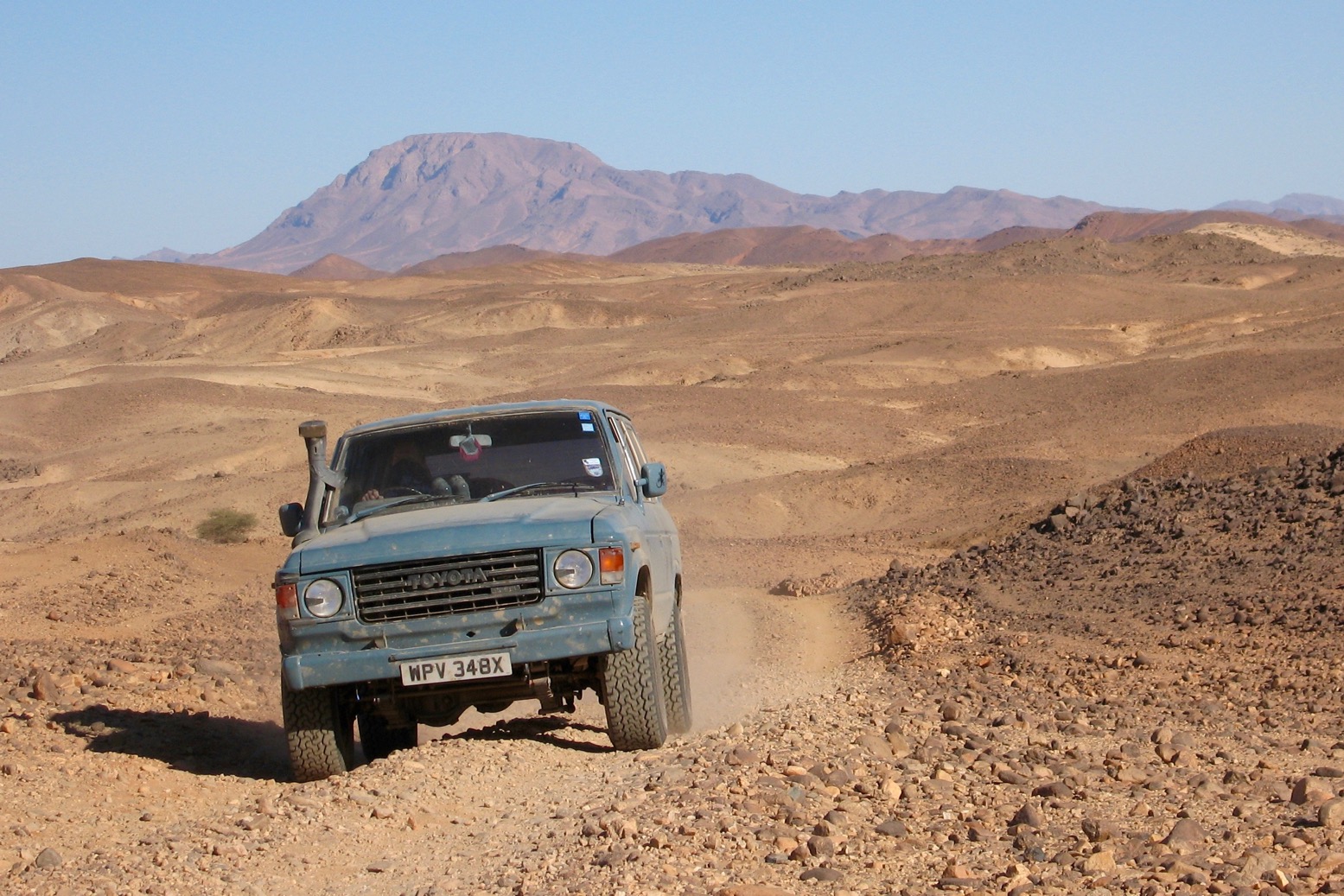
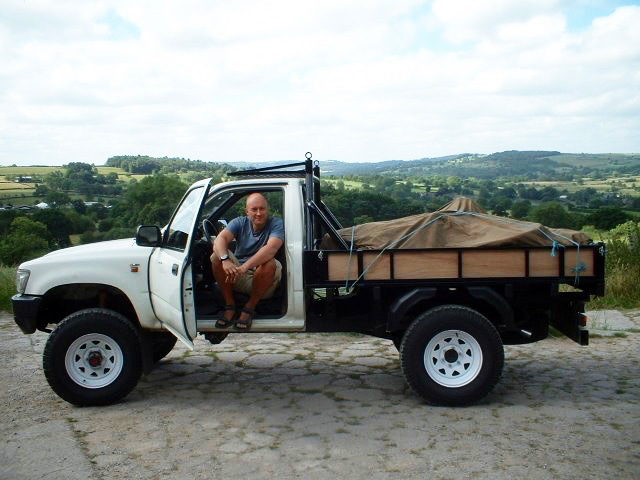
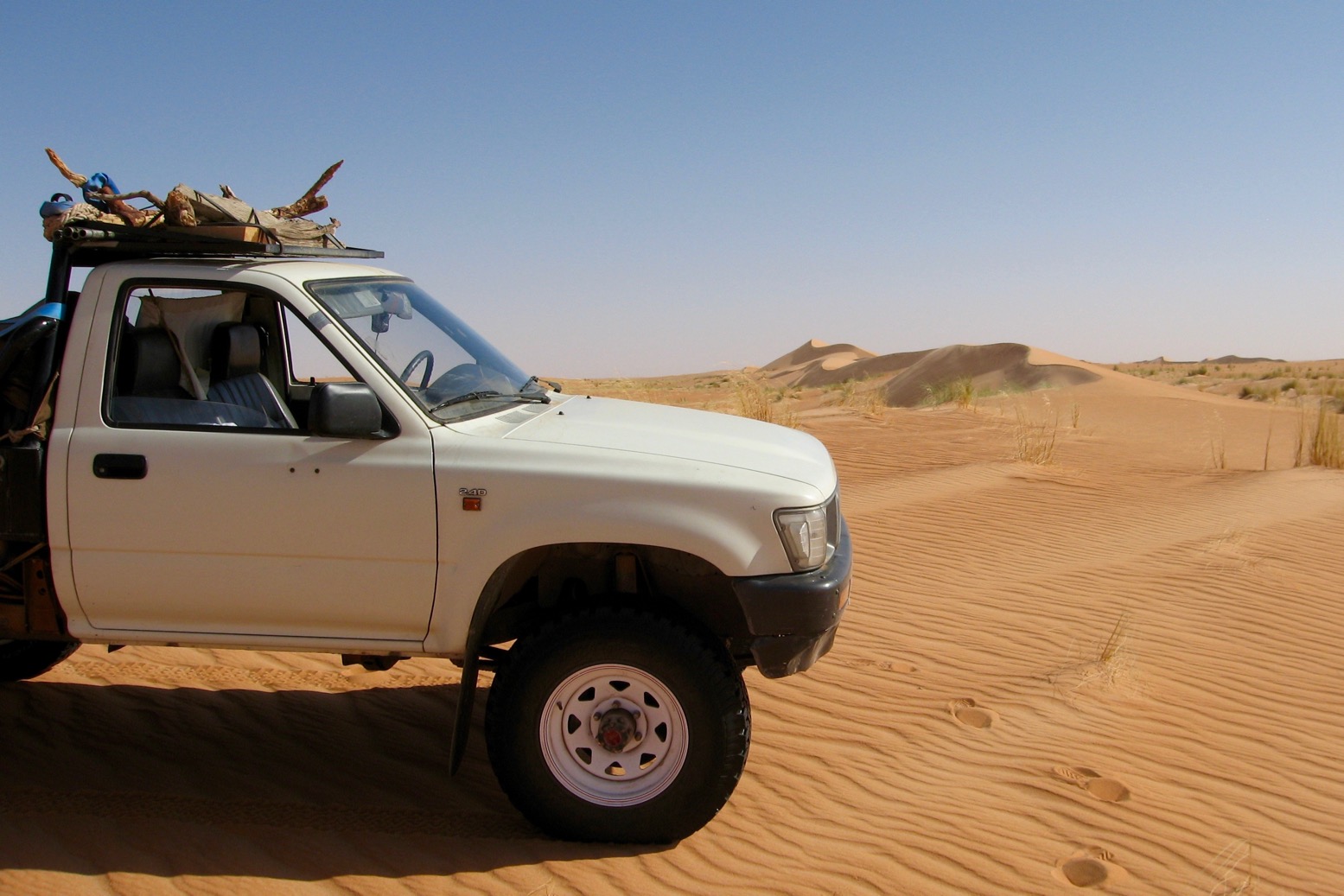
Always liking to try something new, for this trip I’d bought myself a Volkswagen Taro – basically a badged Hilux 2.4 D from the early 90s. After several Cruisers the Taro was a very light ride and with 80,000 kms on the clock was in great shape. The original tray was missing so I got a mate to build a steel-framed plywood flat bed, cleverly modify the chassis to hold two spare tires, fit some BFGs, a Kenlowe fan and a set of OMEs all round to help carry the massive fuel and water payloads across the Quarter.

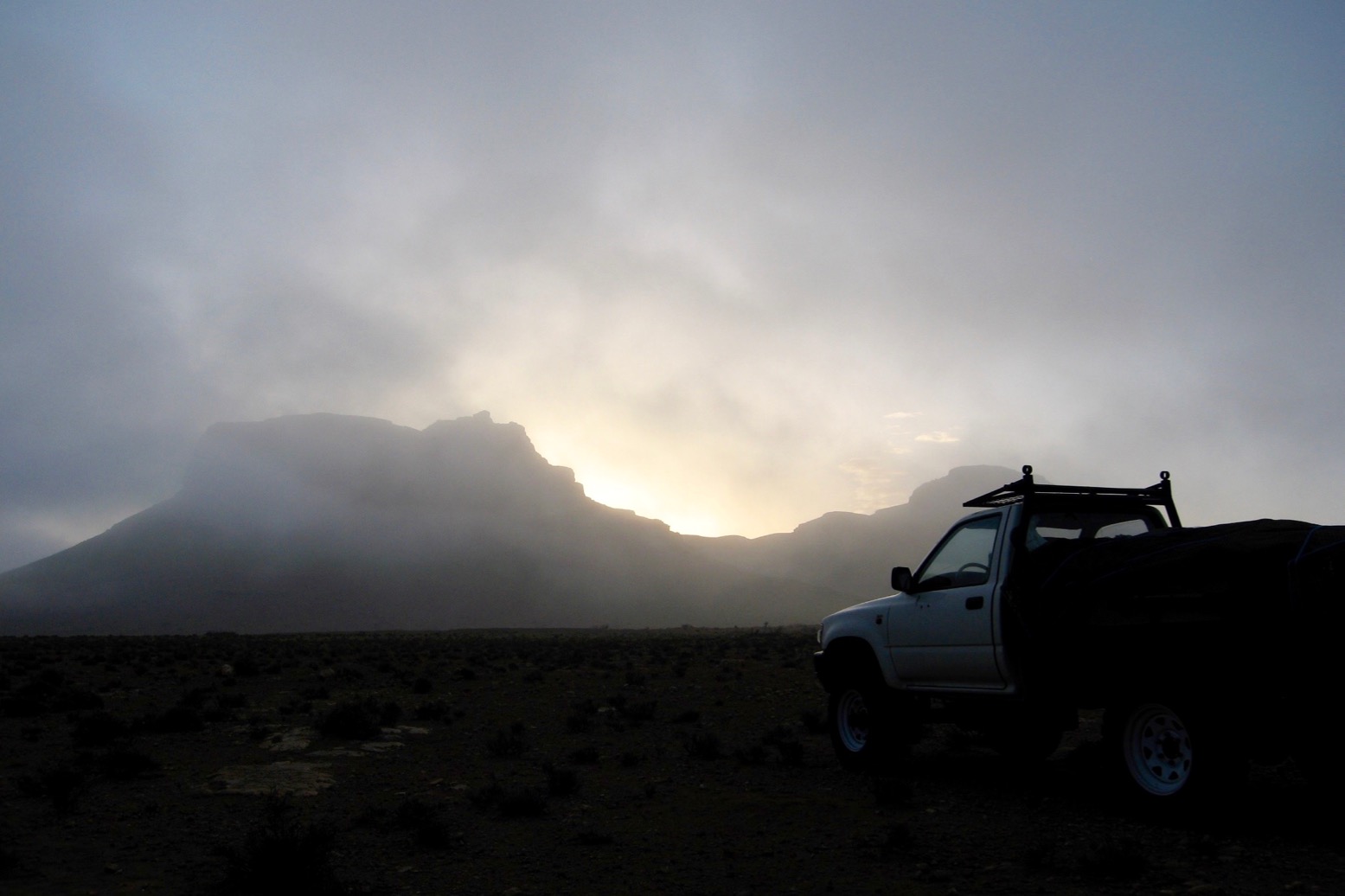
Foggy morning on the Rekkam

I set off for Morocco as confident as I could be that my untried rig was up to the task. But when venting a thick black plume of soot while pegged out in second gear over Spain’s 10,000-foot Sierra Nevada, I did wonder if the little Taro would budge once faced with the Ouarane Sand Sea and an extra half ton on board.

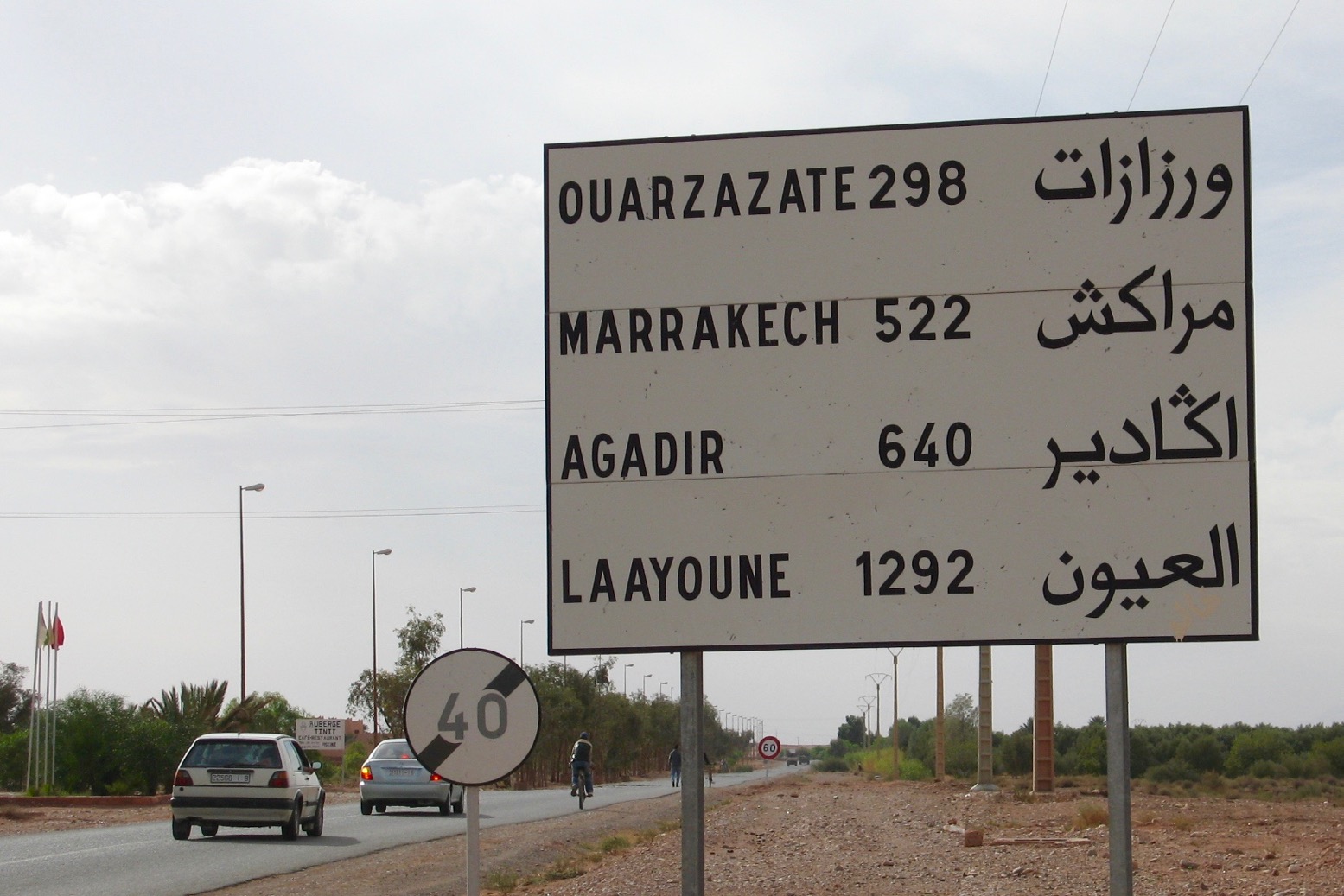
Ron, Sue and Roger turned up a day late at out rendezvous in the southern Morocco country town of Tata, having been pushed back by mud slides and floods taking a high route over the Atlas. After a quick chicken and chips we set of south towards the Atlantic Highway and Mauritania.

Halfway down Sue suddenly had an idea for a protocol we should set up should we hit trouble. A mutual friend of ours back in the UK had contacts in the security services and so we tracked down a working fax and explained how we’d text him at each key stage of the trip. We’d been advised not to use our sat phones in Mali which we would be crossing ‘unofficially’ for fear of the calls being picked up by spy satellites and resulting in the dispatching of an unwanted patrol or drone. It may all sound very ‘James Bond’ but a year earlier the US had launched operations like ‘Enduring Freedom – Trans Sahara’ (OEF-TS) and the ‘Trans-Sahara Counterterrorism Initiative’ (TSCTI) to try and ‘protect borders, track movement of people, combat terrorism, and enhance regional cooperation and stability’.

Meeting the others near Tata

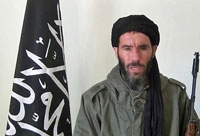
One particular guy they were after (and we were hoping to avoid) was Moktar ben Moktar (left), an Algerian-born emir holed up in northern Mali running a smuggling operation of not-so-soft goods. More brigand labeled a terrorist back then and as damned elusive as the Scarlet Pimpernel, his smuggling heyday was on the wane but as we were to find out, events in northern Mali were to set him right in our path.

Big refuel in Dakhla
Ron and his cans

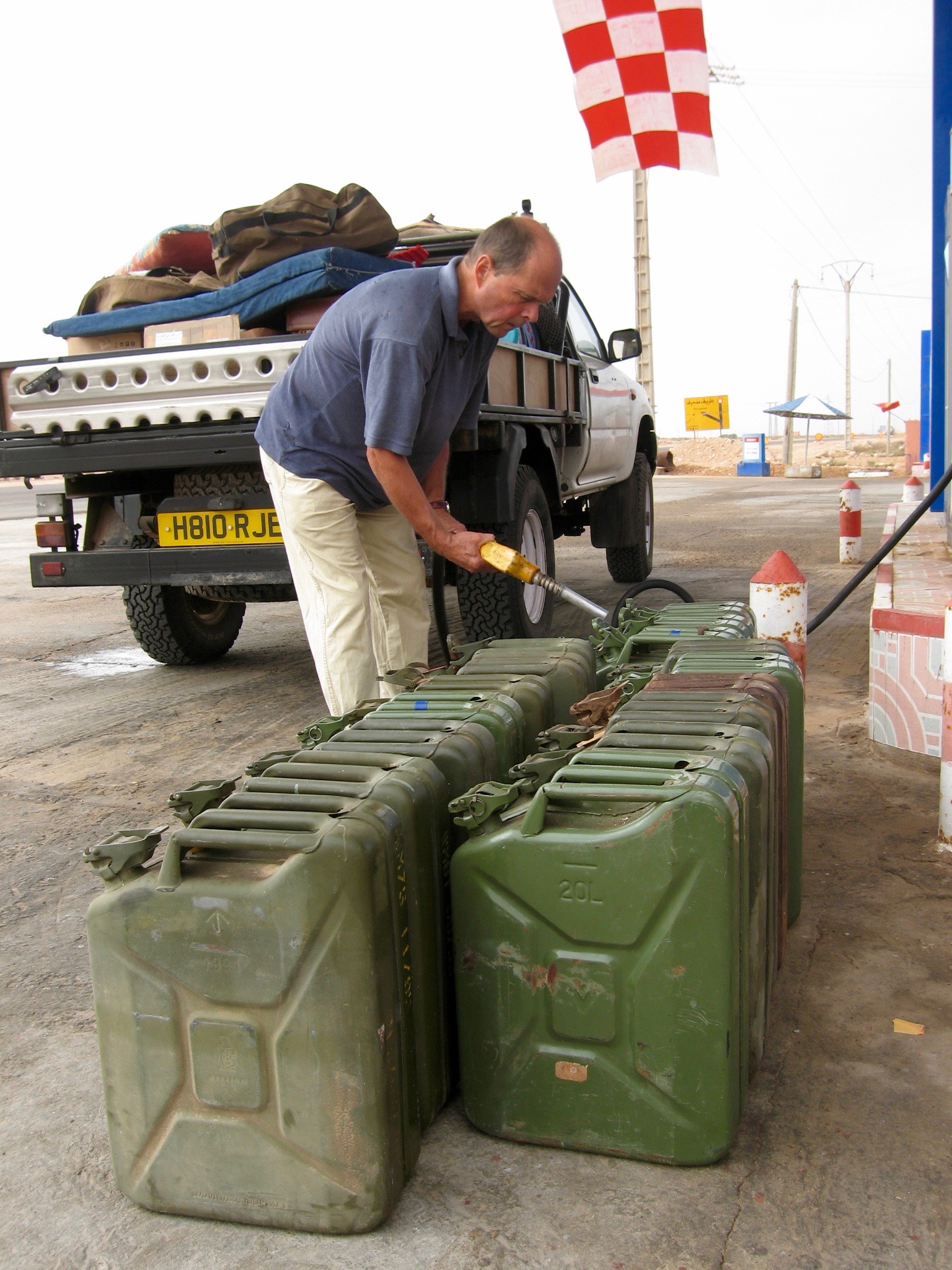
With out man in the UK on standby we settled back for the long drive to the Mauritanian border. Just south of Layounne we filled all our tanks with the last cheap fuel from Moroccan-controlled Western Sahara.

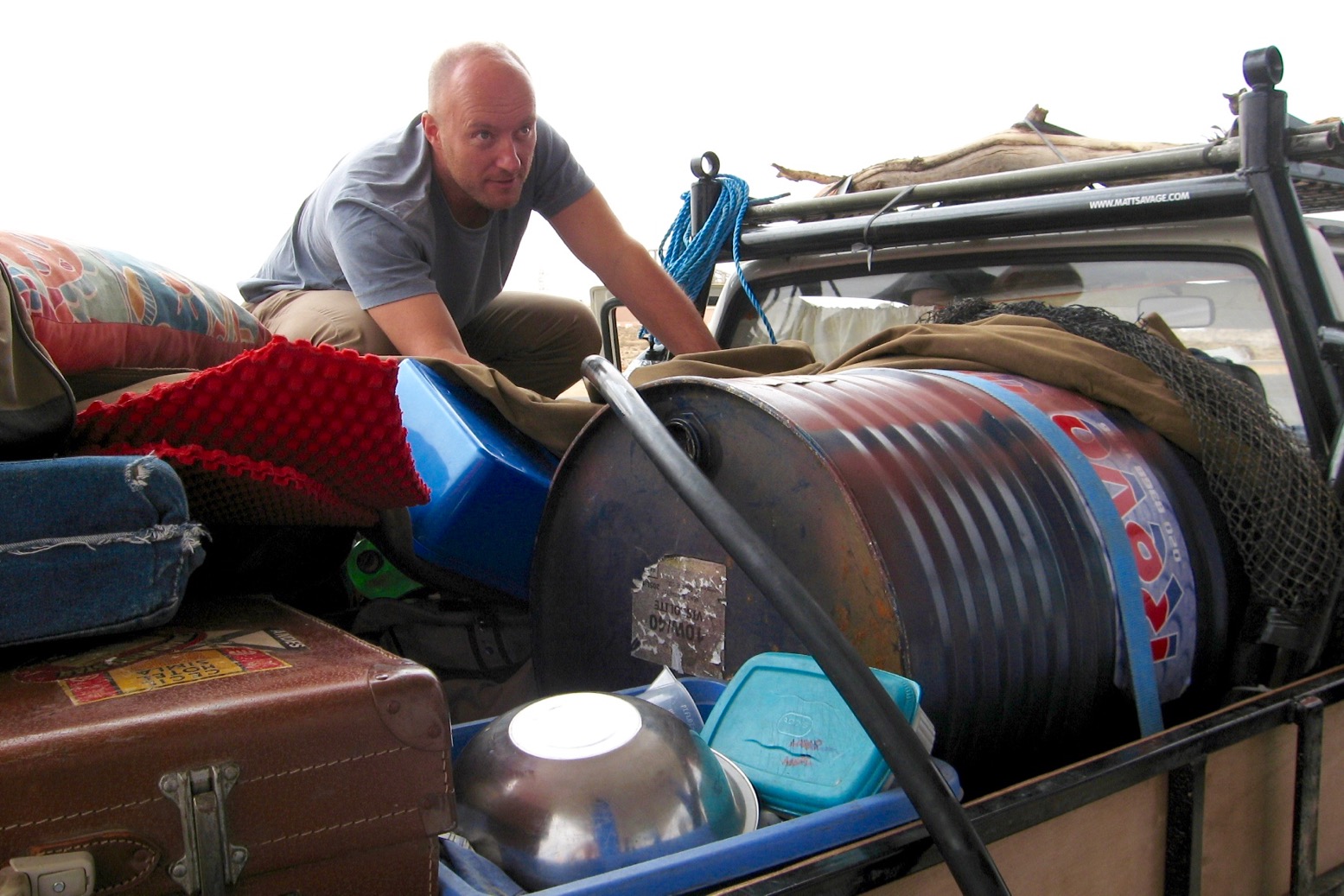
I’d picked up an 200-litre drum for nothing while Ron had ‘tiled’ his 60 with a carpet of jerricans. Roger and Sue had a built-in 400-litre set up. If the pump attendant was on a commission he was having a pretty good day, while for us it was an opportunity to find out how our rides performed at near-maximum payload.

With relief my Taro still managed to pull up the odd incline without protest. Perhaps the Sand Sea would not be the death of it after all…

A year or two ago the Chinese – the new best friends of many African nations – had blitzed a new coastal road from the south ‘Moroccan’ border to the Mauritanian capital of Nouakchott, so completing the first sealed north-south route across the Sahara. That meant border formalities between the two countries had eased up (it wasn’t to last) and we slipped out of one country and into the other in just a couple of hours.

Hot cars

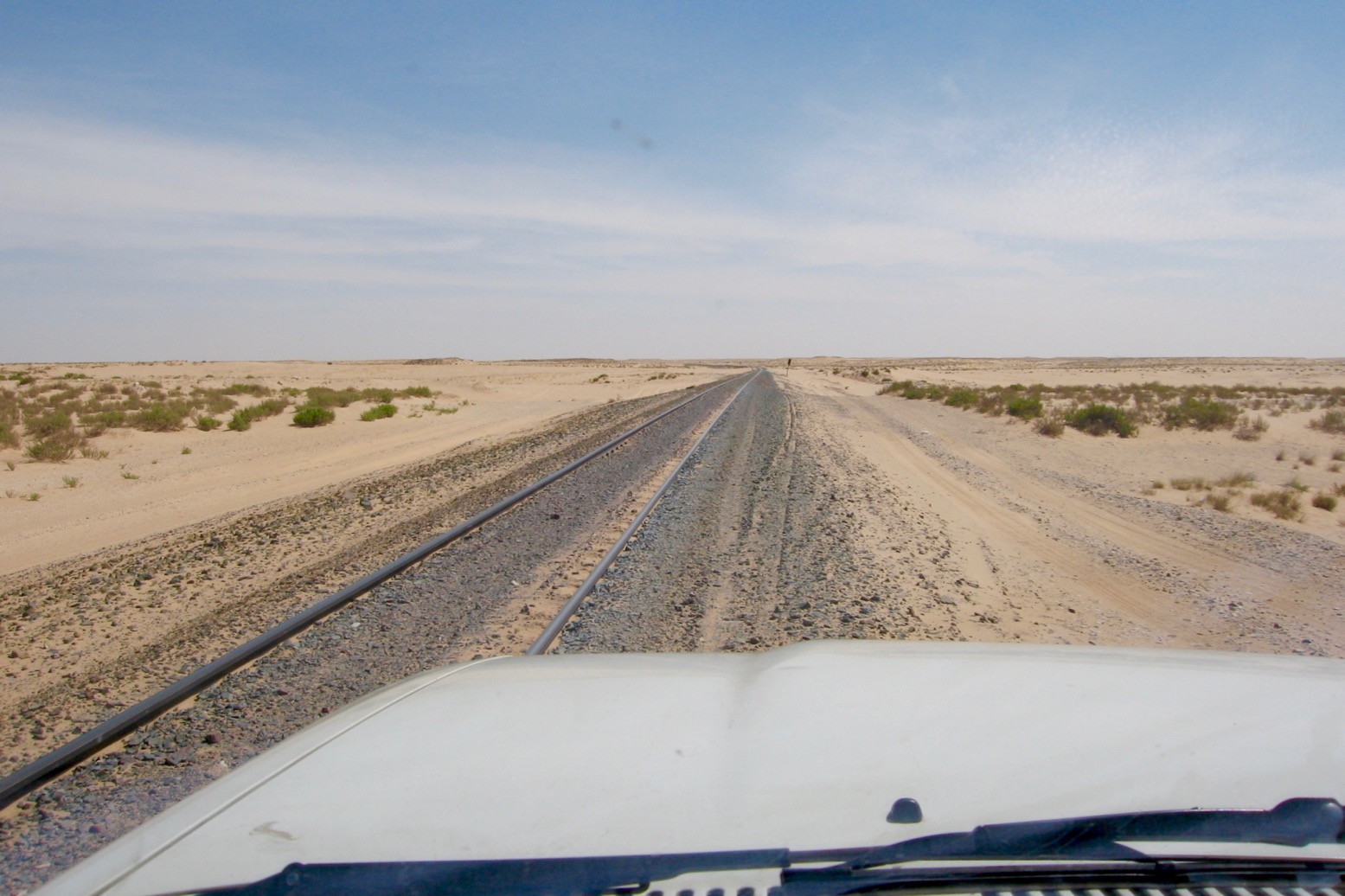
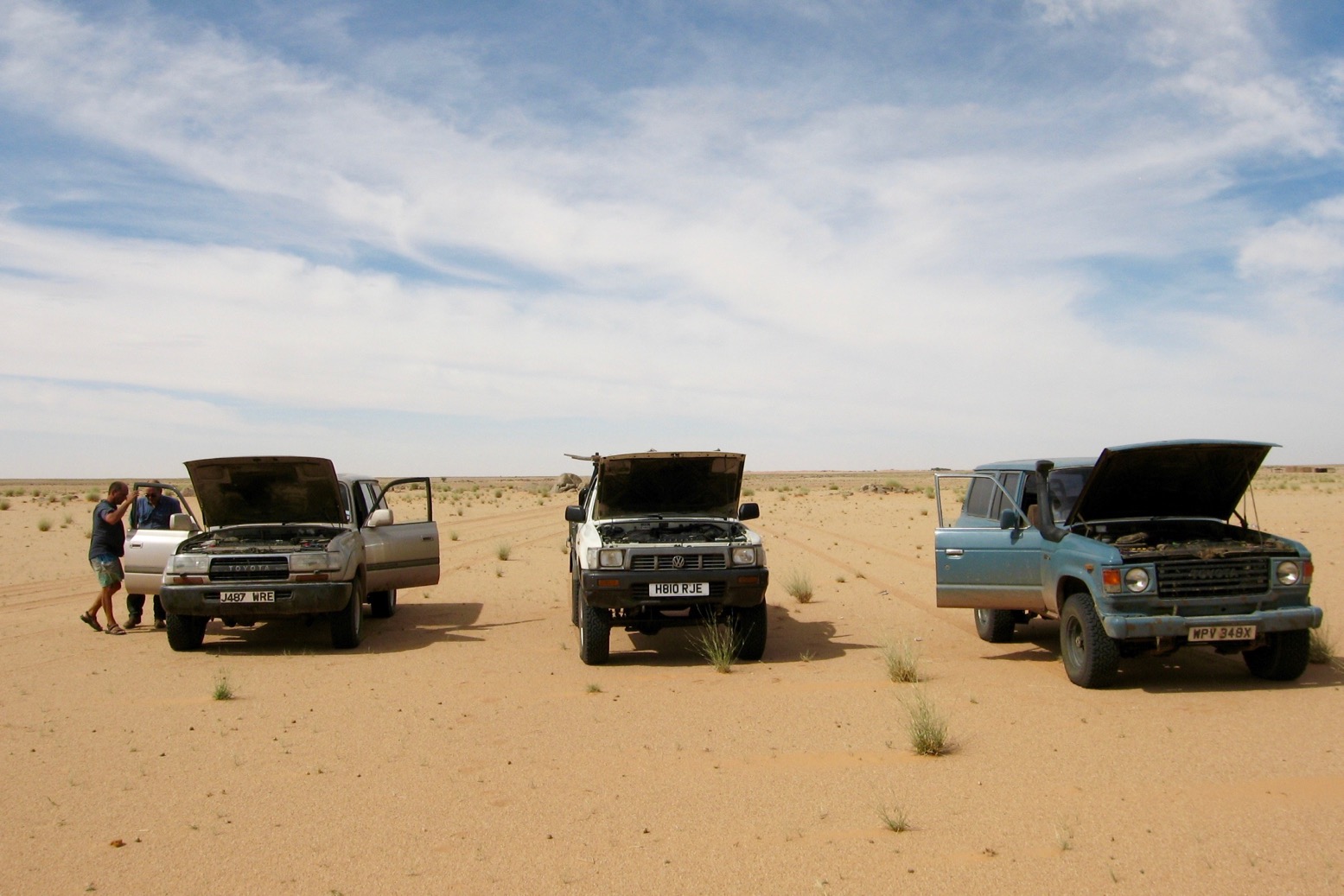
Now in Mauritania, we set ourselves a 550km off-road run to Atar over small bands of dunes alongside the iron ore railway. As is often the way, no matter what your experience or tire pressures, you often get stuck on the first dune day until you re-acquire a feel for the machine. For some reason too, crossing the border saw temperatures jump into the 30s. Luckily the wind was in our face (as it would be for the entire crossing) and I at least drove my VW on the temperature gauge with the Kenlowe whirring away. With our half-ton loads, all our vehicles were working hard and after traversing each bands of dunes we’ll pull up the hoods to give them a breather.

Hot night in Mauritania

Expecting my little 60hp four-cylinder to be getting a thorough wringing, I’d bought some 50W oil and one hot evening set about changing it. One time years ago a chronically overheating Land Rover 101 had been transformed by running the engine on axle oil. This time the Taro’s gauge didn’t register much of a difference but every little bit helped.We took a cross-country excursion to cut a corner – always a thrill – and by rejoining the main piste and crossing a couple of escarpments arrived in heat-struck Atar at the base of the Adrar plateau in time for our rendezvous with Mohamed.

Atar. We meet Mohamed

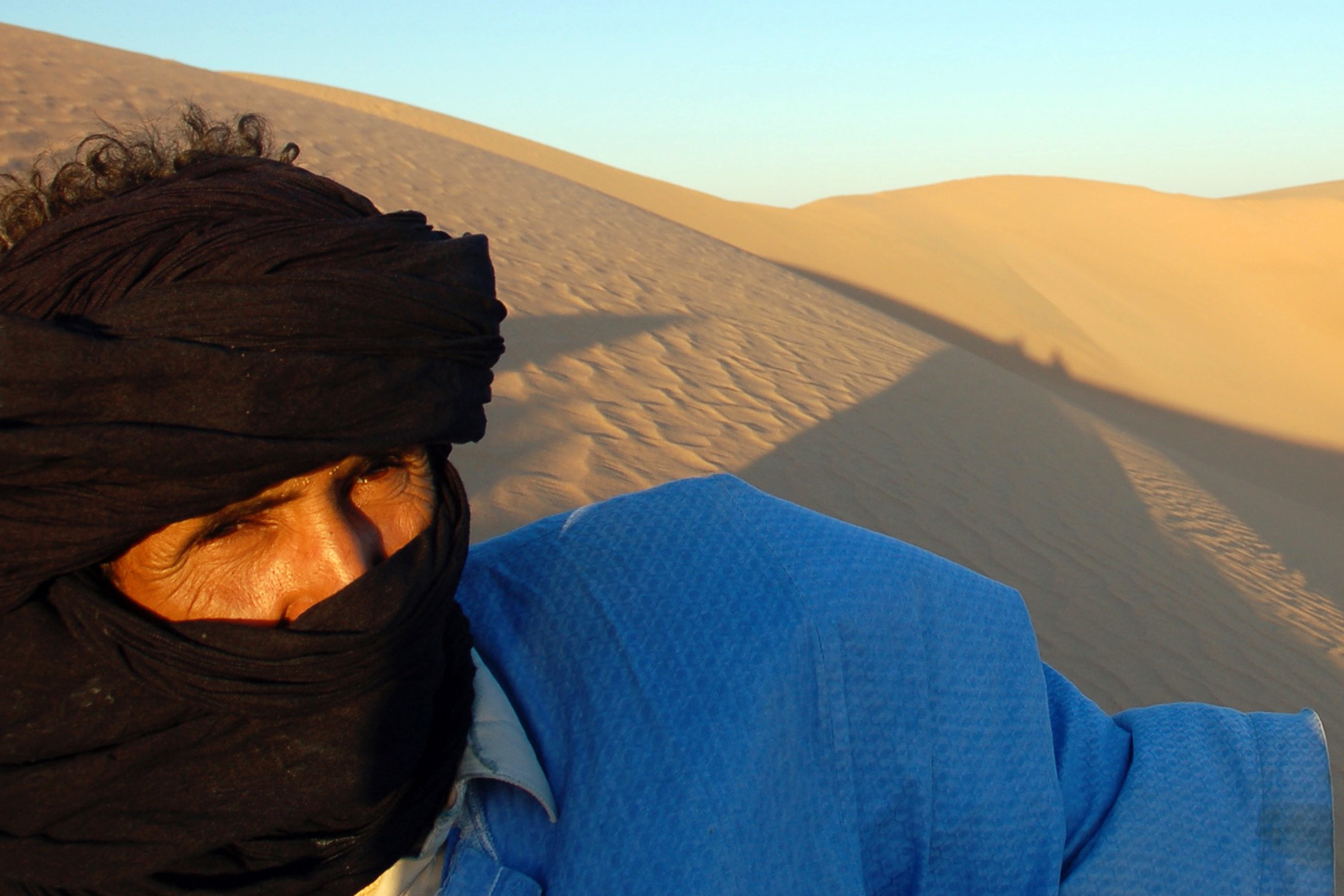
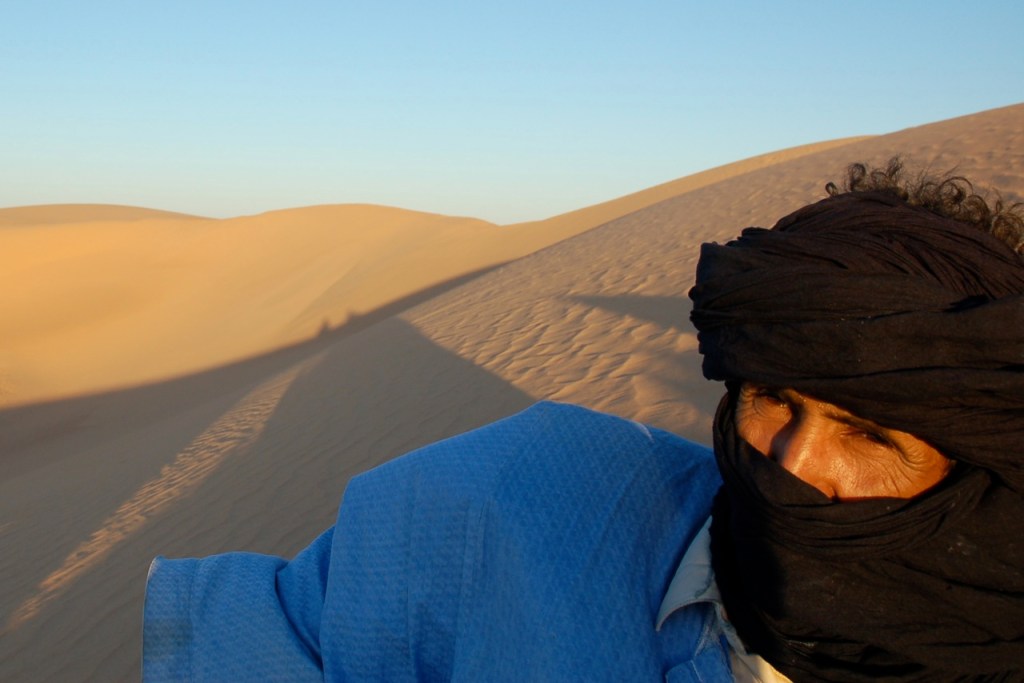
He turned up a day later outside town but too scared to come in. Despite adopting the shaven-headed Moorish appearance and ubiquitous blue robe, Mohamed’s Algerian ID had given him a rough time through southern Mauritania. And that wasn’t all. Following rains and tyre-destroying double punctures he’d also knocked out his low range and subsequently stressed his clutch on the way past Timbuktu. Then the guide he’d lined to lead us across eastern Mauritanian had been recognized as a former rebel and was ejected from Mauritania where he was wanted for a raid. Successive checkpoints had cleaned Mohamed out forcing him to drive by night to avoid the bribery, but the replacement guide he’d hired to get him to Atar was out of his depth. Or so the story went… Back home many had warned him that the crossing was not worth the risk, even for a free VX, but to his credit Mohamed too saw the simple appeal of a desert adventure.

Heavy loads up the Ebnou pass

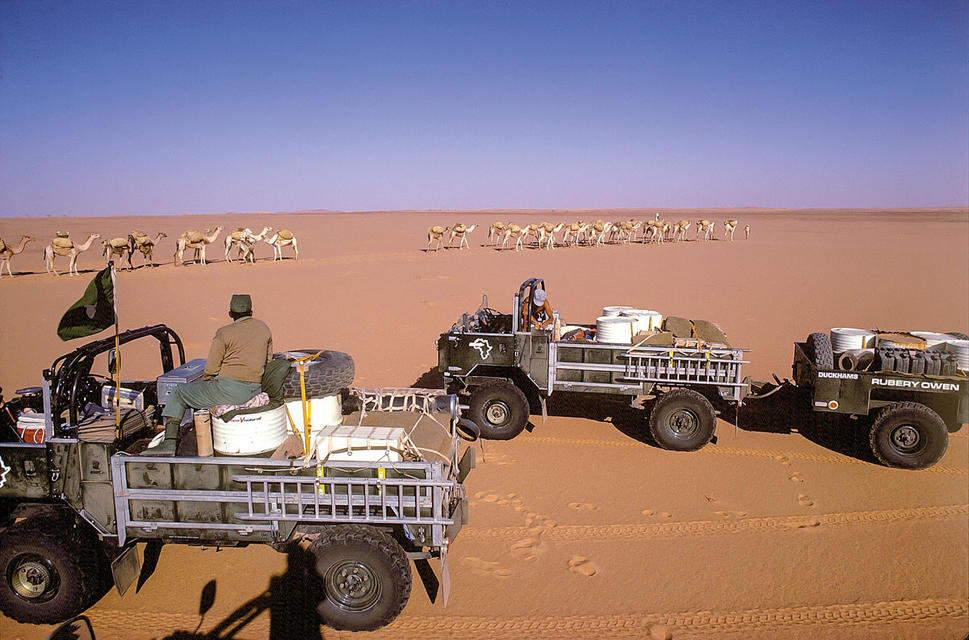
Next morning we did the Big Fill Up – fuel, water and food to last us two weeks and up to 2500km across trackless and waterless desert; an extreme range even by Saharan standards. Ron’s old 60 was cooking on the ascent onto the Adrar plateau, Mohamed’s brakes were seizing on, cone washers were falling out of his rear hub and my Taro was not setting any land speed records on the upgrades either. Only ‘Eric’, carefully maintained by Roger over 15 years or more trundled quietly along.

The JSE 1975

We were not the first to attempt this particular traverse; we were probably the second. Clued up Landynistas will know that in 1975 Tom Sheppard led the Joint Services West East Sahara Expedition (‘JSE’; above).
A couple of months earlier I’d spent half a day at the Royal Geographical Society’s library studying the expedition report, jotting down their waypoints laboriously gathered with sextants and almanacs twenty years before GPS came on the scene. Back then, running the Rover V8s down to 4mpg, the JSE had to carry huge fuel loads all the way from the coast. With our diesels we were expecting more like 14mpg at worst which dispensed with the need for the JSE’s trailers or air support.

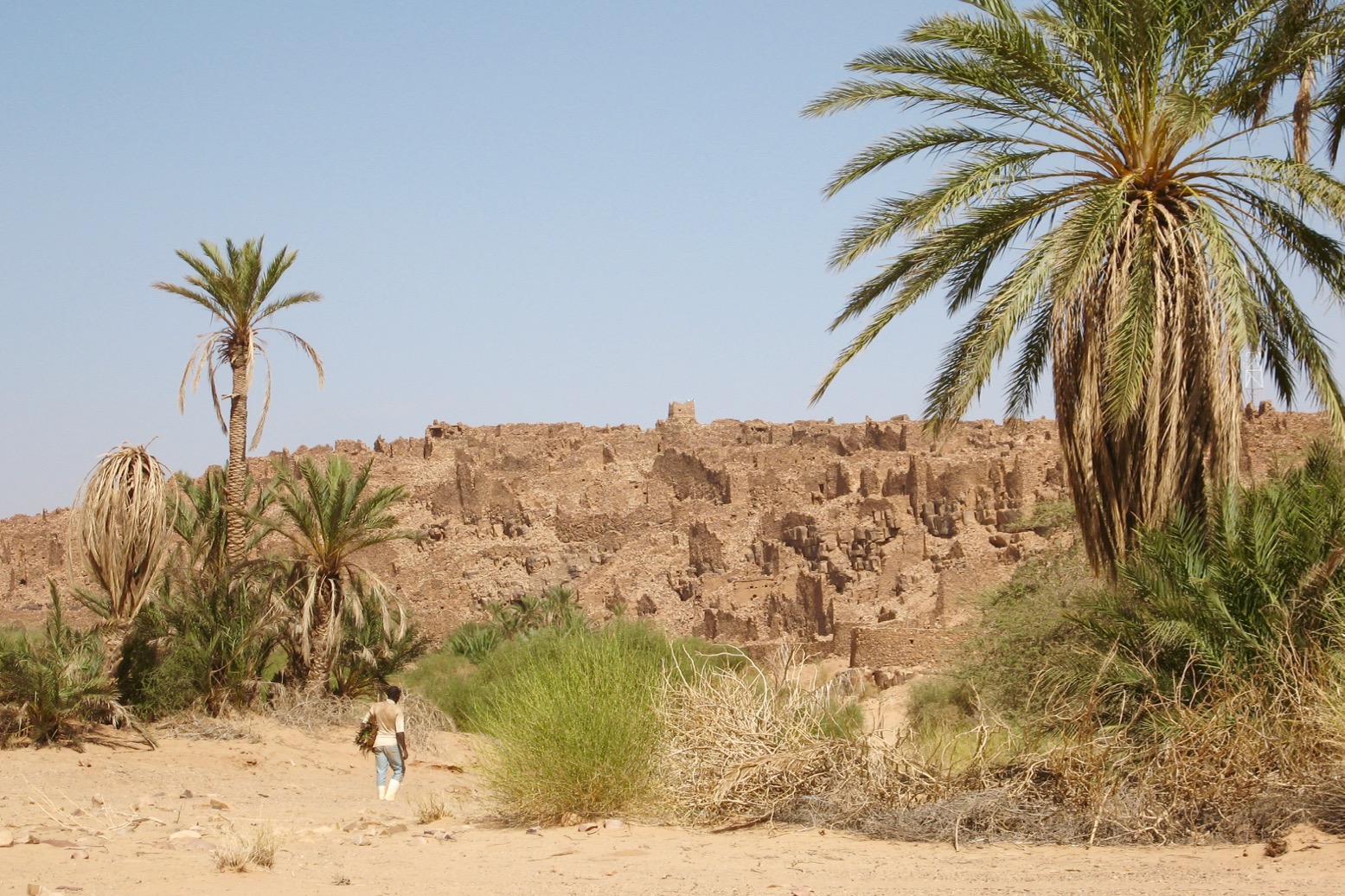
Ouadane. the last village for 2000km

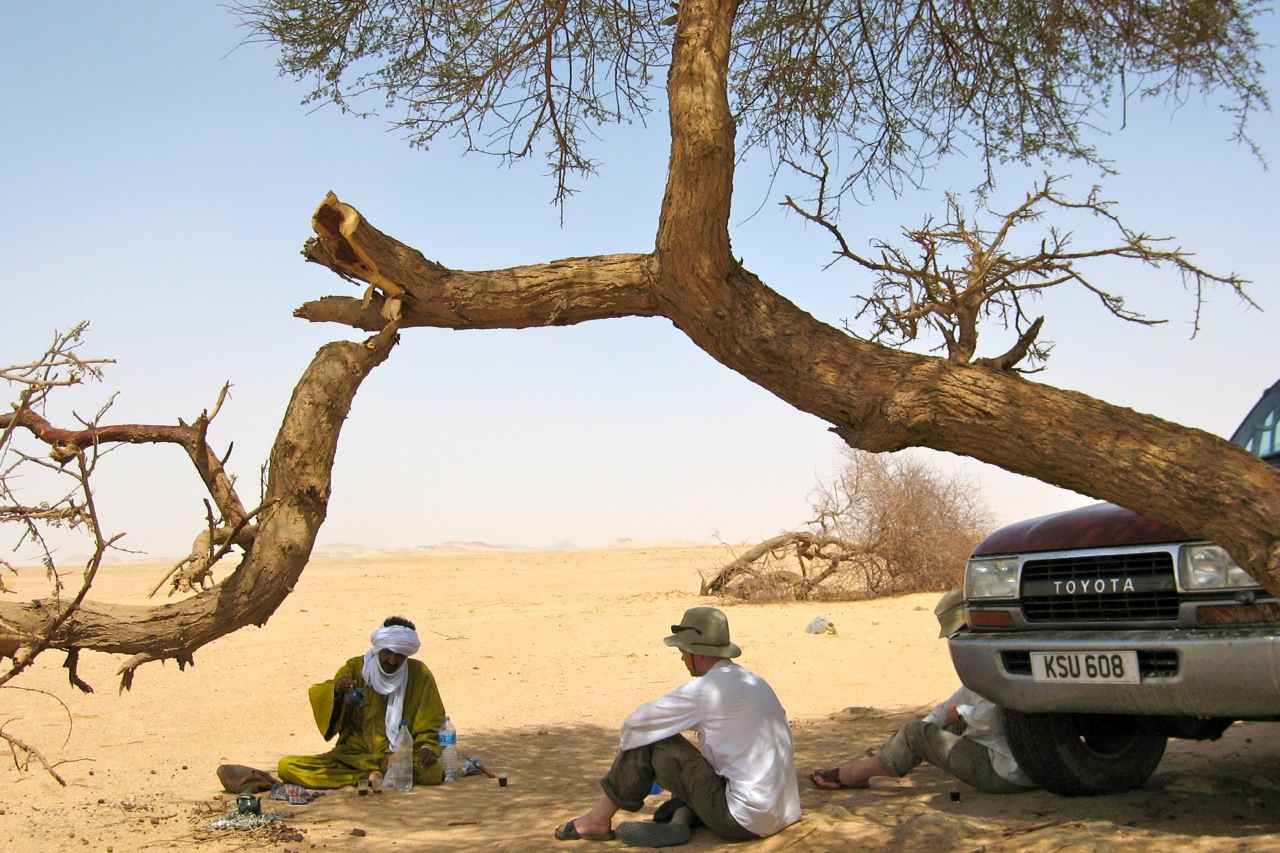
A hundred miles from Atar ruined medieval dwellings spilled down the escarpment at Ouadane, the last town. While taking lunch under the last trees, Mohamed placated the soldiers at the nearby checkpoint, telling them we were on an innocent day trip out from Atar. In fact we were heading the other way, east into the Majabat and out of Mauritania without any formalities. This sort of persuasion was exactly the reason I’d hired Mohamed, a nd it wouldn’t be the last time he’d help us out on this trip.

Heading east from the rings of Richat

I’d kept our exact route quiet as I knew well that both the Dakar Rally and fellow travellers had been ambushed in remote areas when detailing their intentions too clearly. In fact, for want of anything better I planed to follow the JSE’s tracks into the Ouarane Sand Sea. This initial combination of dunes coupled with maximum payload would be the crux of the trip but however daunting, if the JSE had managed it with towing 101s, then so could we.

First camp near Richat

About an hour from Ouadane we left vehicle tracks for good and camped on the virgin sands, on the south side of the huge Guelb er Richat formation. Viewed from sat pics people often assume the Eye of Africa’s concentric rings thirty miles across to be a huge impact structure. In fact Guelb is merely an uplifted and eroded dome pushed up by a magma plume from below, a sort of low-energy volcano.

Climbing out of Richat’s rings

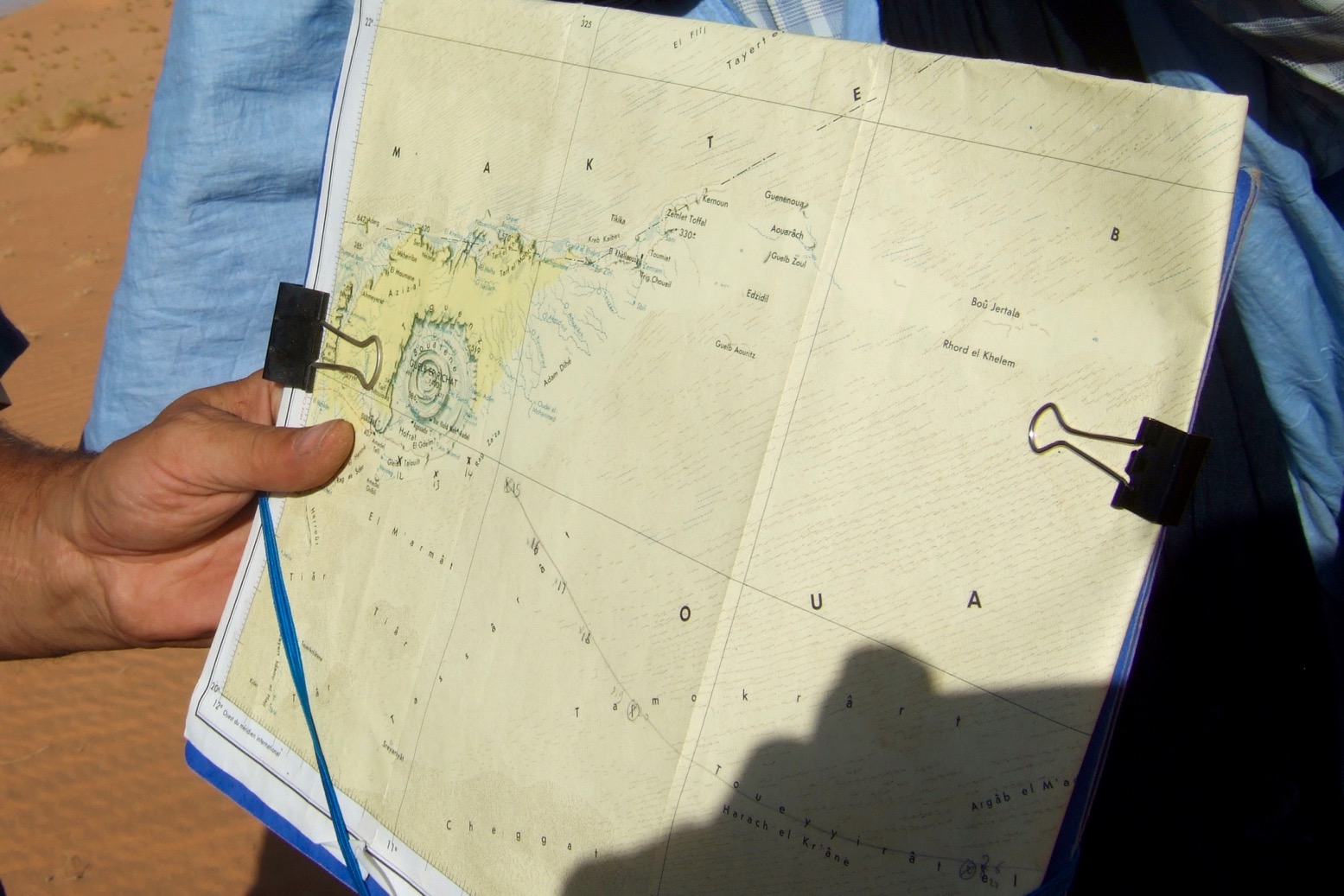
Studying the maps and sat images yet again that evening, I realized I’d made a small navigational error. In a hurry to get going eastwards I’d not led us far enough south as the JSE had done to escape the outer rings of the Guelb. It underlined the meticulous attention to detail they’d made back then and how lazy we can get simply linking up the lines between GPS waypoints.

Ensablé

Were the outer rings truly mini-escarpments as depicted on the aged French maps, or could we find a passage through? How much fuel would it consume? And what about the unseasonably high temperatures which would reduce our water range, or the 30km dog-leg we’d have to take through the dunes that had taken the JSE two days? After all that, Mali had a whole different set of potential dangers. In Atar we’d received bad news. Backed by Algerian and probably US support, the Malian Tuareg in northeast Mali had turned on Moktar ben Moktar and his crew, pushing them back west in a series of skirmishes directly into our path.

Into the Ouarane

These thoughts gnawed at me that night with troubled dreams, a measure of the pressure I was under as we stood at the rocky shore of an ocean of sand. I hadn’t had it this bad for years, but dawn brought the unavoidable need for action and we drove into the sun as it rose over the outermost rings of the Guelb, bound for a distant JSE waypoint. We rode the undulating terrain, sometimes sand, sometimes rock, sometimes soft car-trapping sebkha or claypans where transient rains had pooled in the depressions between the ringed ridges of the crater.

The sand mat dance

Up ahead a power-sapping sand slope rose up 40 metres to a rocky cliff the height of my car; no way through there. I turned south to run clockwise around the vast crater rim, looking leftward for a gap. A few foot recces proved fruitless but eventually the terrain gave way; Mohamed spotted a car-wide ramp and went for it, accelerating hard to pop out onto the sands, free at last of the Guelb’s clutches. We snicked into low range and followed him up.

Ahead of use lay the sands of the Ouarane; low intermittent dunes aligned around 60° east of north and which rolled unbroken for 500km to the Mali border. The sand ridges were separated by easily navigable corridors. The technique would be to follow a corridor ENE while taking the chance to hop over any navigable passes between the dunes to the south to maintain an easterly bearing, the most direct route. At first I was too preoccupied chasing JSE waypoints, figuring they were the key to the maze, while also half hoping to come across 30-year-old traces of their passing. But after a while I saw, as Tom might put it ‘the big picture’ and figured any way east was good: navigate ‘ground to map’ not the other way round.

Traversing the rolling sands in the corridors we all had our share of boggings, most usually when the lead car mired in an unseen soft patch which the rest steered round, or when we took our southward hops over the dunes. Mohamed’s 80 seemed particularly prone, due we decided later, to the diesel conversion not being well matched to a petrol transmission. The over-geared wagon lacked the torque at key revs to pull itself through. In the meantime we’d christened my VW El Ghazal; the gazelle. For the first time I discovered the blessings of modest horsepower. The four-litre Cruisers all had the power to get well and truly stuck; the Taro, probably half-a-ton lighter and with half the power, baulked early and could be backed out to find another way. No one was more surprised than I when I was able to lead the heavy Cruisers over and around the crests from one ridge to the next.

The thrill of trackless sands

A wind stirred up from the northeast, finally cooling temperatures but also reducing visibility and as always, bringing the worry of an all-out sand storm. After a while banks of grass covered the sands, making for rough going over the tussocks. Anywhere else this place would have long ago been grazed to a dust bowl but out here, far beyond the range of the nomads’ camels, the thick grass grew unseen, withered and died.

Somewhere along our route a Comanche aircraft had dropped in on the JSE to replenish their fuel. The report detailed how they crew had laid out an 1100-metre runway in a dune corridor. Wherever it was, the winds of three decades had long since blown away any traces and not so much as a half-buried oil drum remained.

After two days we reached our first goal: N20 43.5’ W08 50.7’. It didn’t look much different from anywhere else around here; a corridor of undulating sand between higher but now more spaced out lines of seif dunes.

Dune descent

This was the point where on the 9th of February 1975 the JSE had decided to make their run ‘across the grain’ of the dunes; 20-miles as the crow flies to the southern edge of the Ouarane Sand Sea and the flat sand sheet beyond. On top of the demanding terrain, vehicle problems meant it had taken them over two days to make that crossing, taking a zig-zag course around the dune peaks.

After months of trying to visualize the scene, our Saharan Rubicon did not look too bad. Some dunes were high it was true, but big dunes usually take linear formations with clearly defined passes and wide corridors. Small dunes like Algeria’s Grand Erg were much worse; a dense chaotic mass of crests and pits like storm-tossed waves.

Bogged again.

Inspired by our good progress so far we checked the tires were down to one bar and set off in the cool after dawn towards the first ridge, paused and turned left and then right to slip between the wind-carved summits. Another corridor, another sand slope and, always keeping to the high banks to keep a decent in hand should the sand soften, I worked my way around the barriers. When stuck I backed out while someone else went off to explore an alternative route. We worked out way south with surprisingly little drama but as I hopped from dune to dune a light mechanical knock I’d dismissed as axle play became increasingly prominent. Revving in neutral proved that is wasn’t some worn CV. I called Mohamed over for a listen. Tapping the throttle his face dropped, it was a sound he knew too well: a crankshaft bearing about to meet its end.

Ominous knocking

Part Two soon

Desert Dealers 2 • Mali

qwik-01

My mission this time: to hand over a desirable 80 series Land Cruiser to Mohamed in return for guiding and other duties on my forthcoming big Sahara crossing. He can’t buy the car in Algeria, even by shifty means – no one outside le pouvoir can. So it needed me the overseas owner, to drive it just over the border into Mali where it could get ringed and brought back into Algeria under some other Algerian documentation. Selling cars is an old game in West Africa, though not quite like this. I’d joined a similar run flogging old Mercedes in Mauritania a decade ago. With me along for the ride to Mali, Zander and Martin.

qwik-04

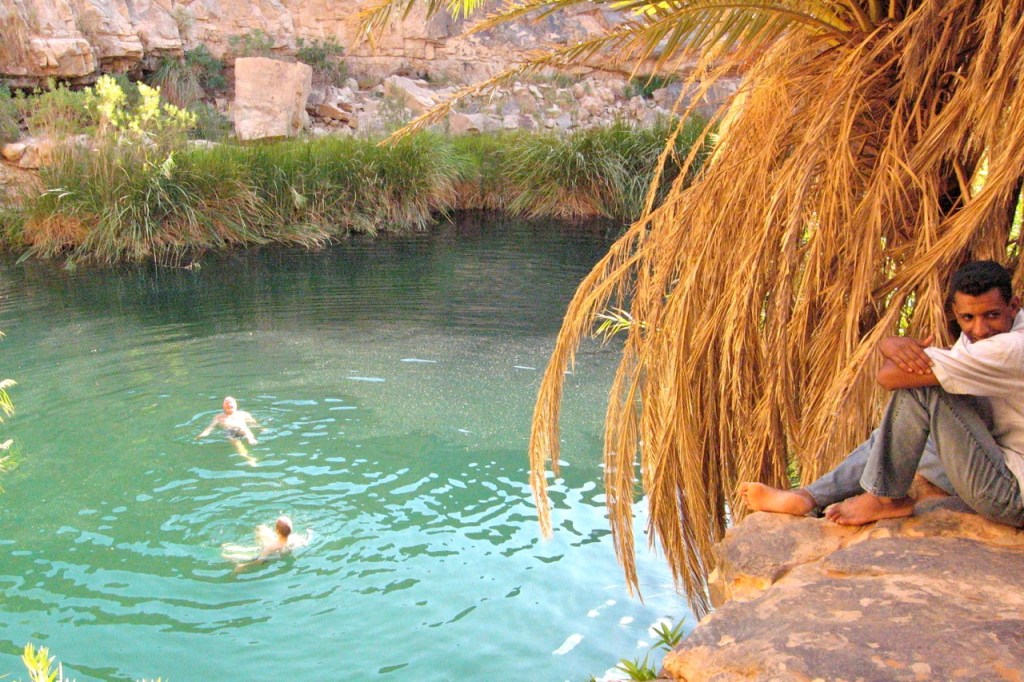
At Algiers port they were a bit bemused by a tourist car (we were the only foreigners on the boat), but despite 4-5 hours queuing, we got to In Salah the next afternoon and from there took a great run along the Old Hoggar piste east of the TS highway, past old Hassi el-Khenig to a camp and a splash at the lovely guelta of Tiguelguemine (right). Next morning a little scorpion ran out from under the mattress to be nabbed in seconds by a pair of moula moula birds.

qwik-05
qwik-09

Just down the track is Tadjemout fort and source, (left), a place I’d use to launch camel tours a few years later. Then on to Arak Gorge (below) where I got in trouble in 1984 and which now has a bridge or two over the creek. Down the TSH to Elephant Rock behind Tesnou then past In Ecker and into Tam.

qwik-11

We’d missed a whole lot of rain by a couple of days and only on one night among some Tanezrouft dunes did the night-time temperature drop below 24°C. Even though I expected a humdrum run along mostly known routes, as always the desert delivered and we saw many unusual things and had some interesting encounters.

qwik-16

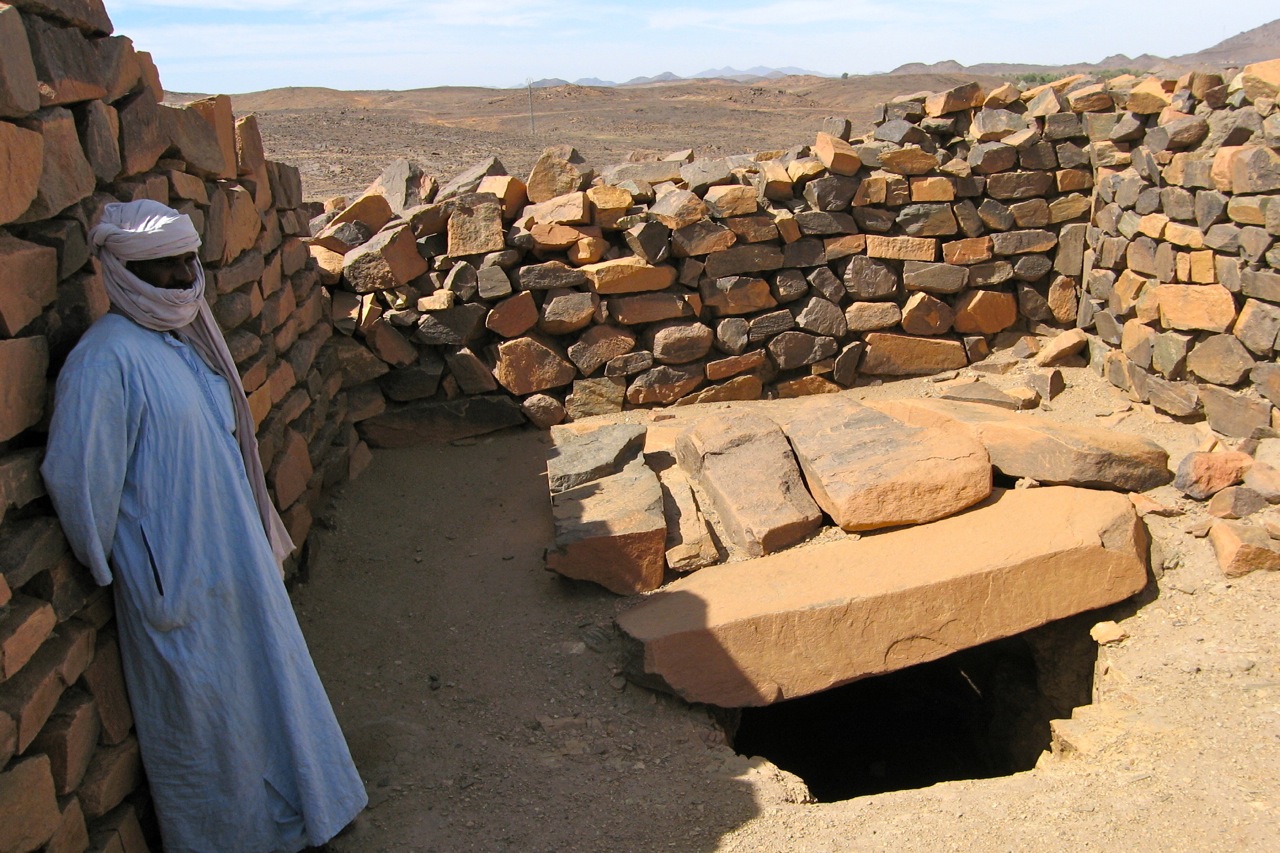
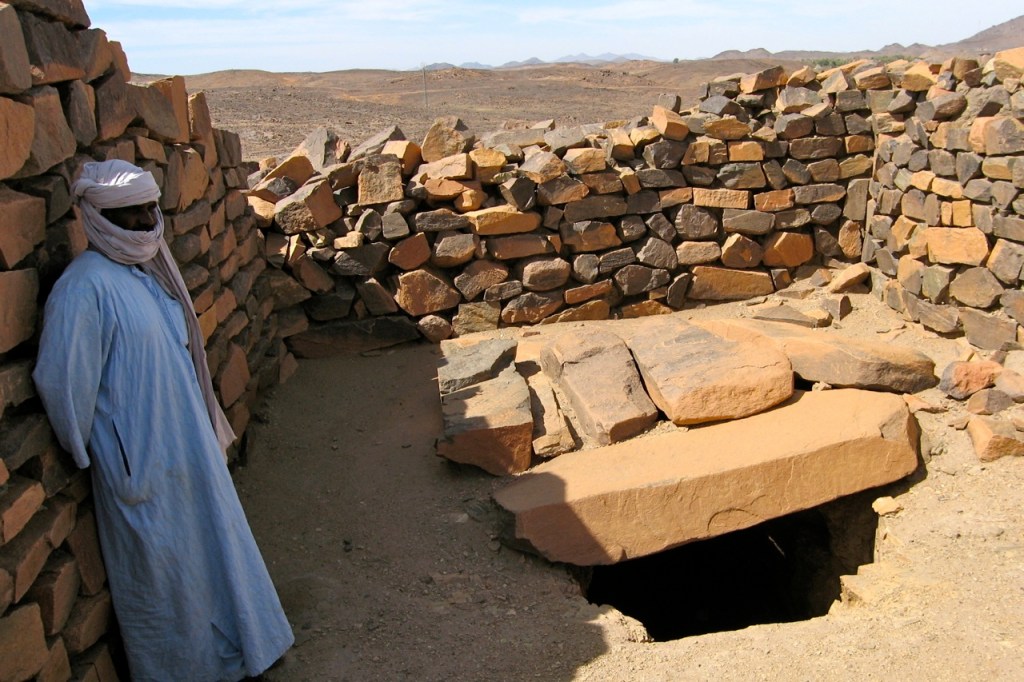
We took the high route to Bordj BM out via Abalessa, through the still-muddy oued and out onto the wide open Tanezrouft, passing a pre-Islamic tomb (below) on an isolated hill. It’s funny how I can spot these easily now. On my first Sahara trips just hanging onto the bike was hard enough and I noticed nothing. The hot run out across the Tanezrouft unrolled, and a day later dusty Bordj didn’t seem to have changed much over the years. We checked out of Algeria. We’d be checking back in shortly, but – ahem… sans voiture.

qwik-14

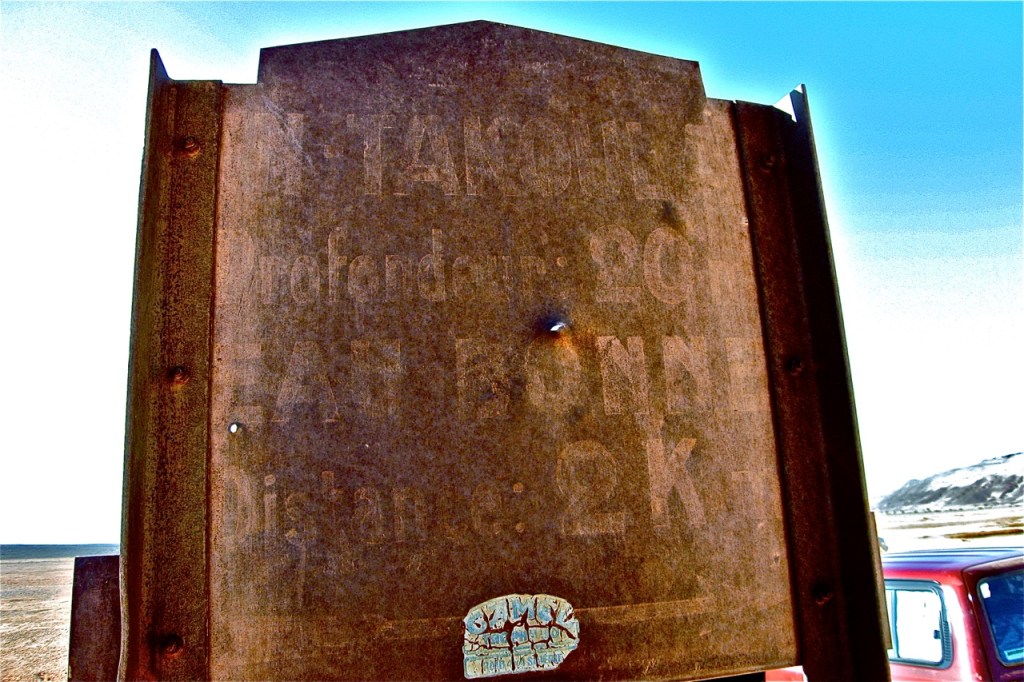
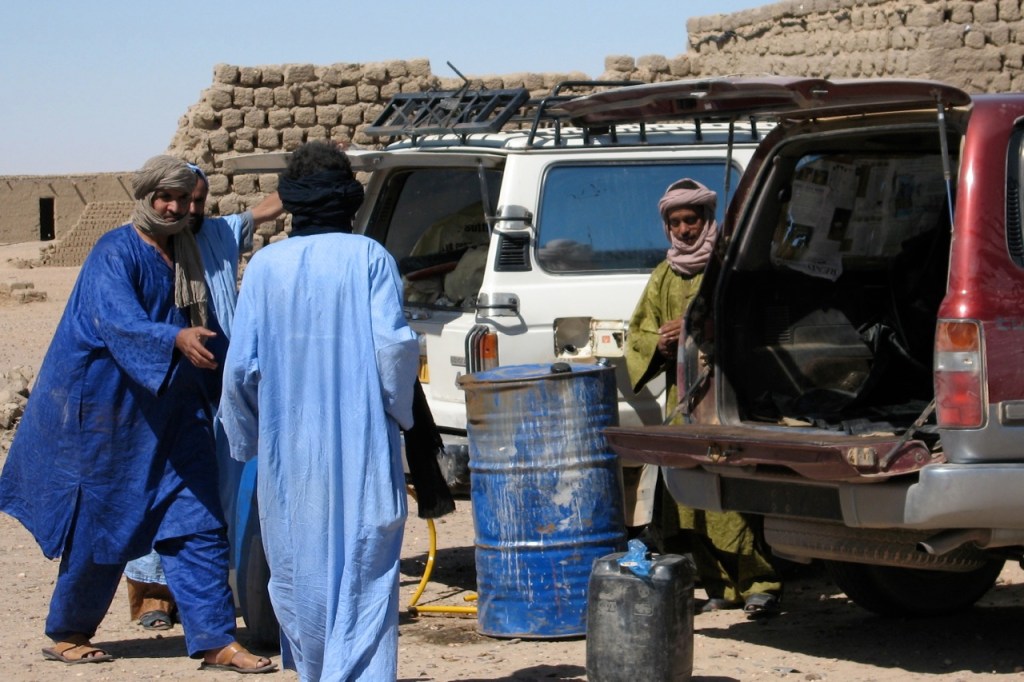
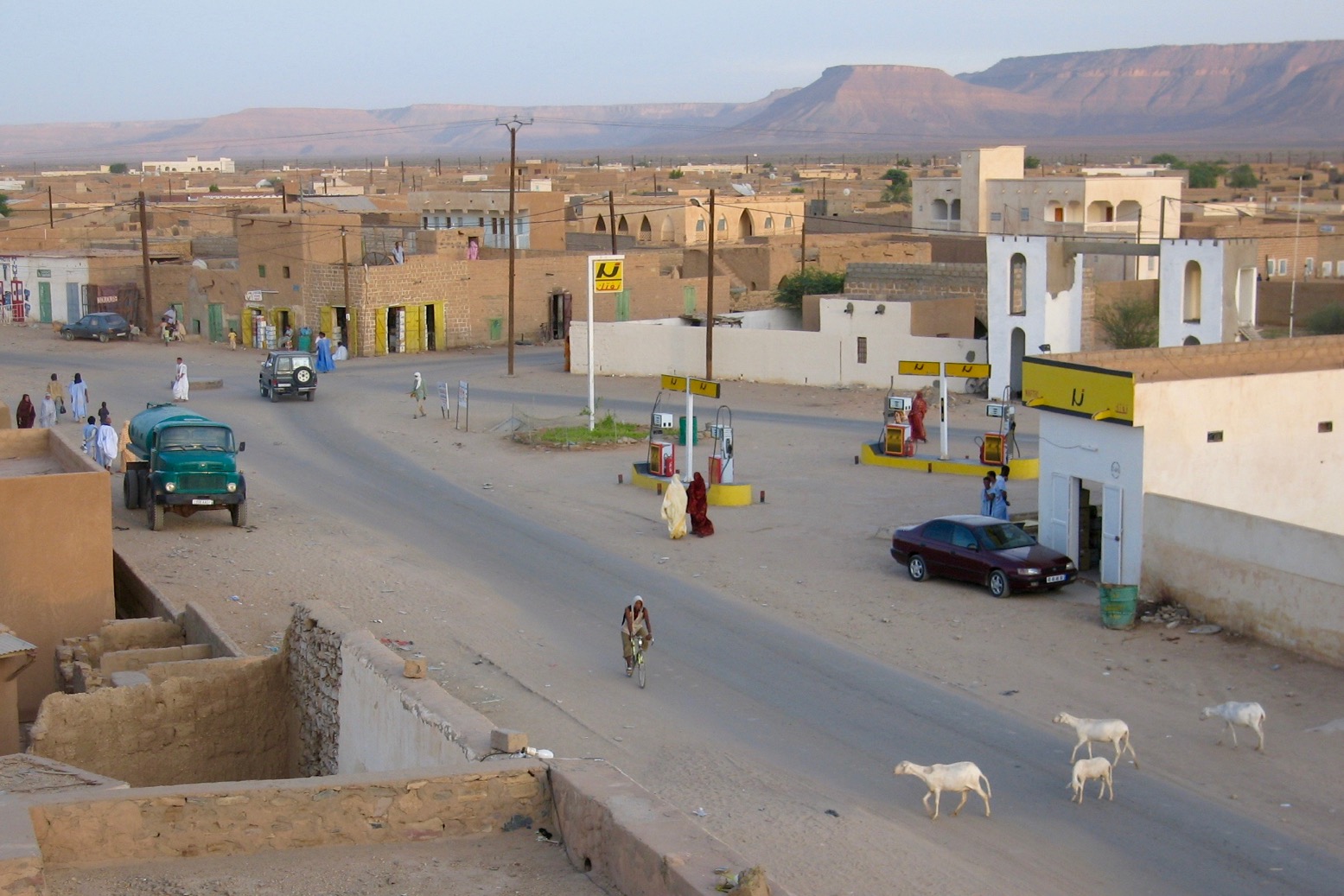
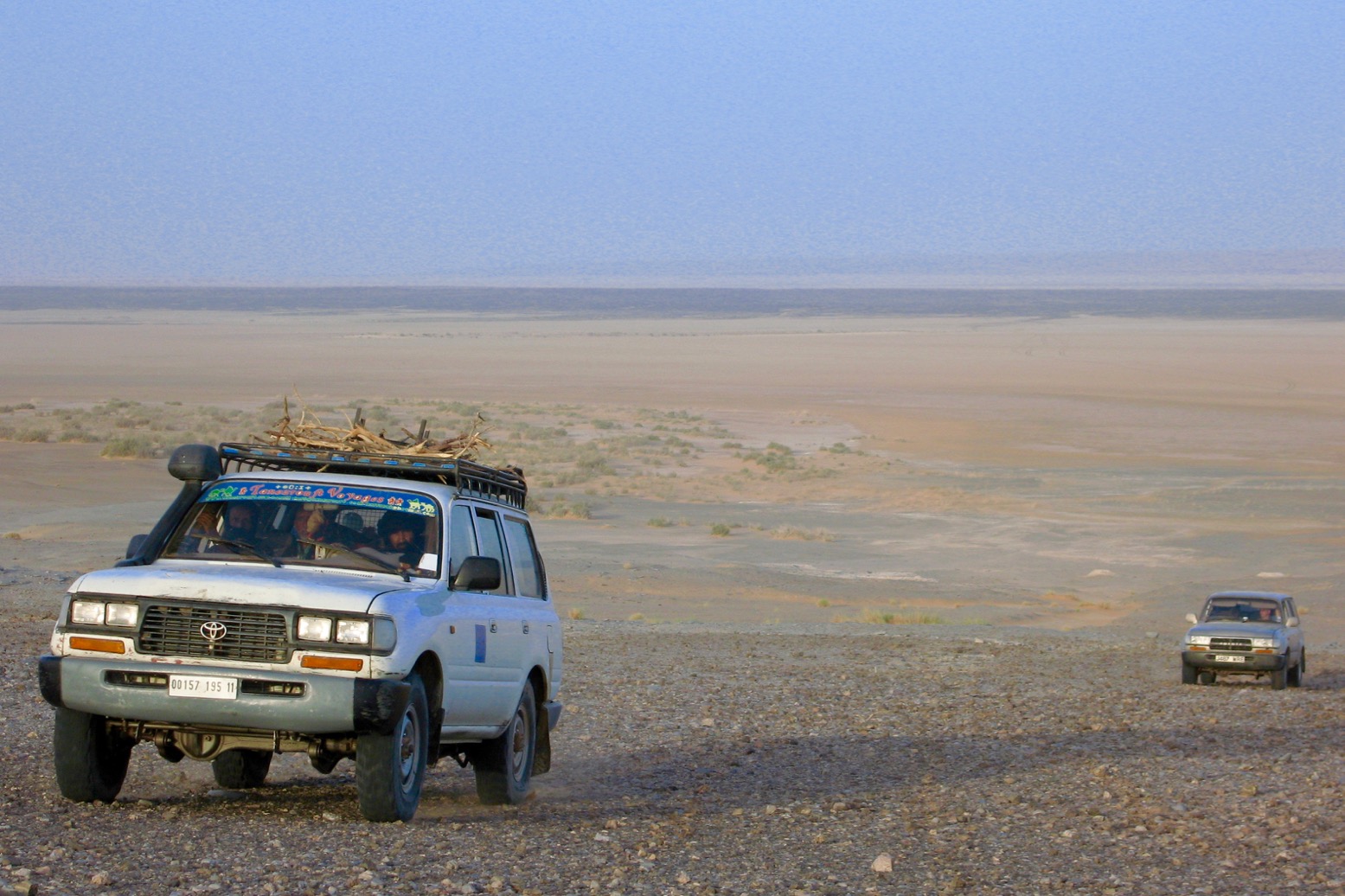
A few clicks south of BBM, Ikhalil (In Kalil; El Khalil; not on any paper map) is home of the Ambassade, a chummy contrabanders compound – one of a few here in No Man’s Land which was then seemingly tolerated by the nearby towns. Goods pass in and out of here: fuel, cigs and other subsidised commodities from Algeria southwards. And from Mali goat meat and cloth comes north. As for the serious stuff, it seemed impolite to ask.
qwik-18
qwik-21

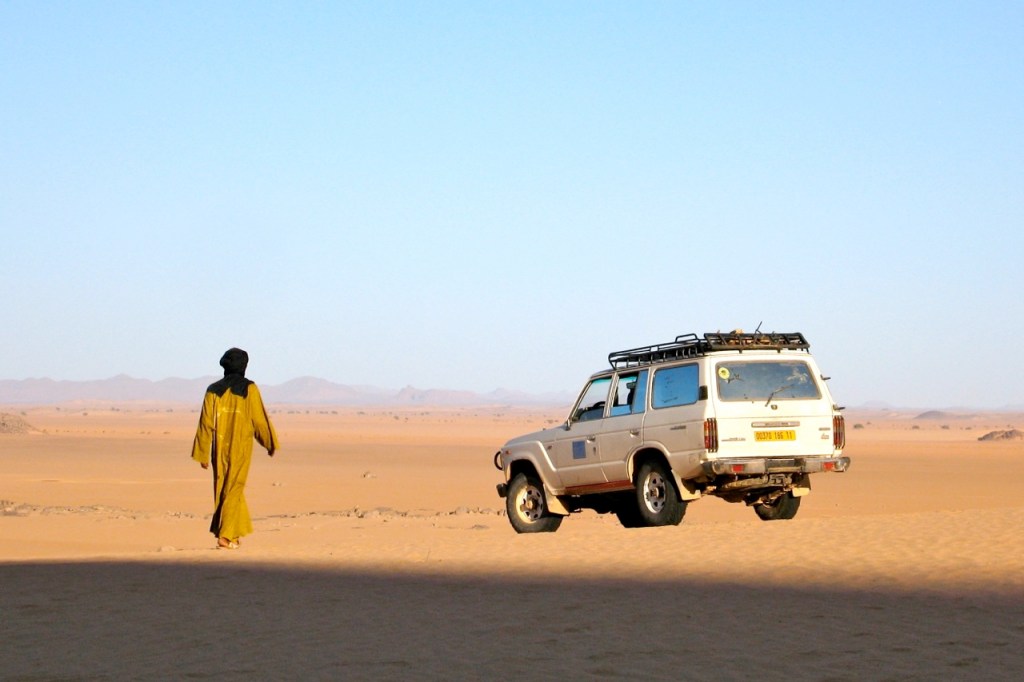
Ikhalil looked like a Van Damme movie set where, if you let your imagination off the leash, a dusty cover gets pulled back off a Merc truck to reveal a shiny Russian Vympel A-350 missile for sale to the highest bidder. The guys here were all Mohamed’s mates, Berabish traders from Timbuktu doing direct runs there and back, and even across to Zouerat (Mauritania) with cigs and other contraband. Their welcome was warm and we discussed my forthcoming crossing of northern Mali from Mauritania. To get bossman Bou on my side I’d brought him a nice solar panel and a couple of Thuraya sat phones – the ‘iPhones’ of the Sahara. He and his cohorts will prove to be a useful contacts if we got in trouble in Mali next month [we did and they were…] as well as being a source of much-needed fuel after our 2000-km crossing from Atar. Ikhalil 2010 – not so rosey
qwik-19
qwik-23

Tessalit (left) also looked the same after 15 years or more. Apparently it was ransacked and abandoned during the 1990s Tuareg rebellion and never really recovered. I let the guides sort out the laisser passez with the help of a big box of dates for the police chief. But up on the hill fort, the chef de poste could not wait to get his bite out of our cake and played all the usual power games once he clocked what was going on (flash car; quick sale).

berto

“Ou est mon cadeau!” he roared as he feigned an inspection of the back of the car. The nearest thing to hand was a jar of Bertolli sauce which he snatched disinterestedly. Back then Bertolli was good stuff, the Cirio of its day.

Back up on the terrace we sweated it out; it was a relief to leave most of the grubby negotiations to Omar who was taking the Tojo away to recondition its identity. In the end, despite a visit to the mayor, Tessalit proved too greedy for Omar to complete the transfer so I signed a bit of paper back up at the Ambassade next day and left it with Omar to take down to his home town of Gao to get re-registered. We turned back for Tam in his 600,000-km-old Tojo 60 which I soon christened Le Chien. And that was before I even drove it…

qwik-31

On the way back through Bordj, the Algerian police sort of knew what had gone on but could do nothing about it as my car had left Alg legitimately. As we waited, some shifty-looking foreign guys with beards turned up off a Timbuktu truck and put me in mind of a GSPC desert training camp, probably not so far fetched. Nearby, a week earlier some GSPC had reportedly been shot up by Malian Tuareg. These were the days when the Kel Iforghas Tuareg put up a fight against the incoming jihadists. Kidal continued to be tense after the events of the summer and now is a war zone. Of course the beardos at Bordj may have been nothing more than devout students coming back from some Koranic school, but these days this is how the mind whirs away on seeing bearded South Asians at an outback Saharan border post.

qwik-25
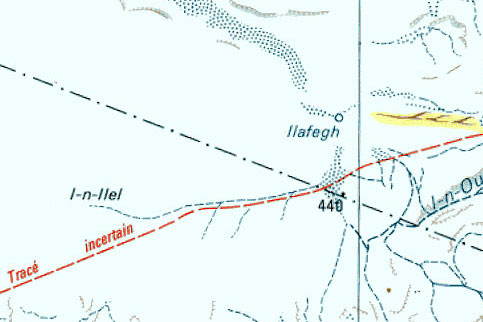
ifalegh

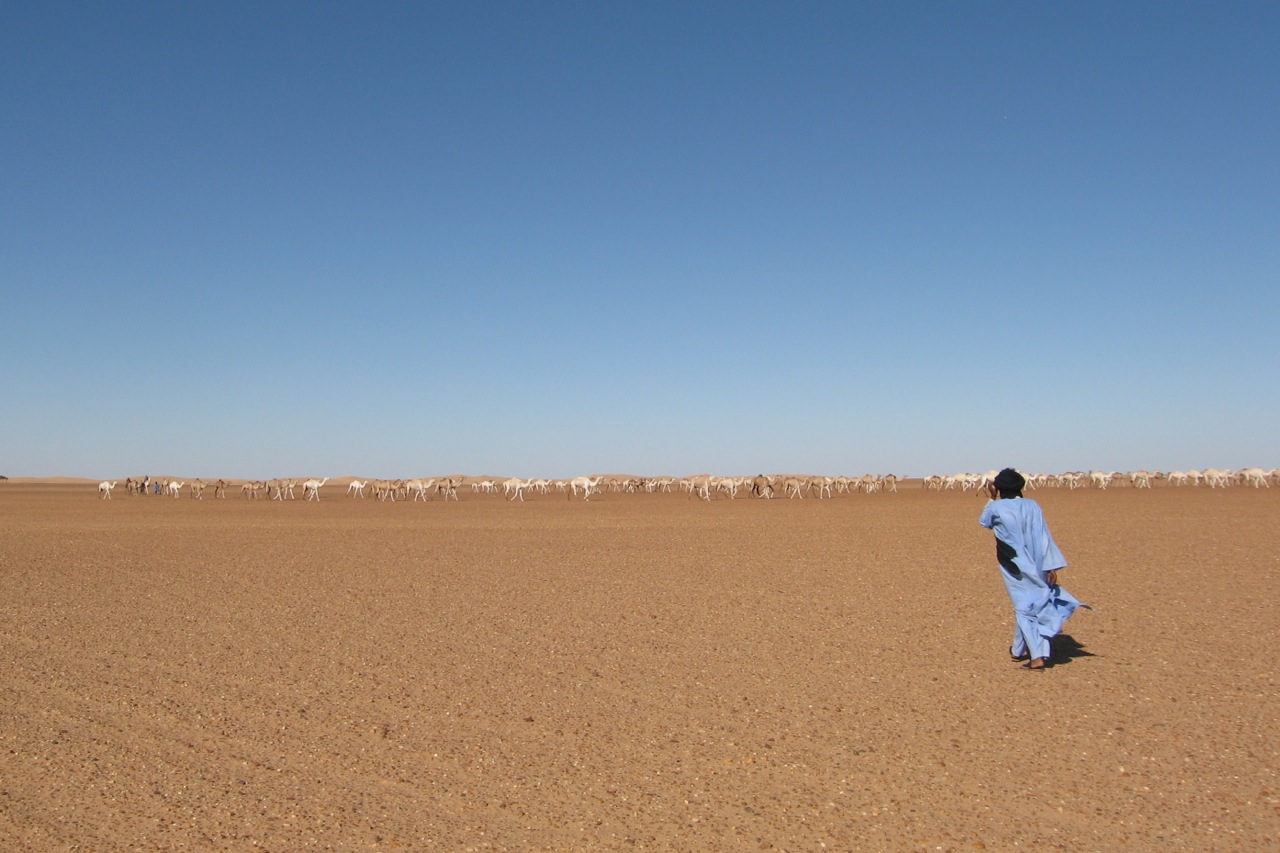
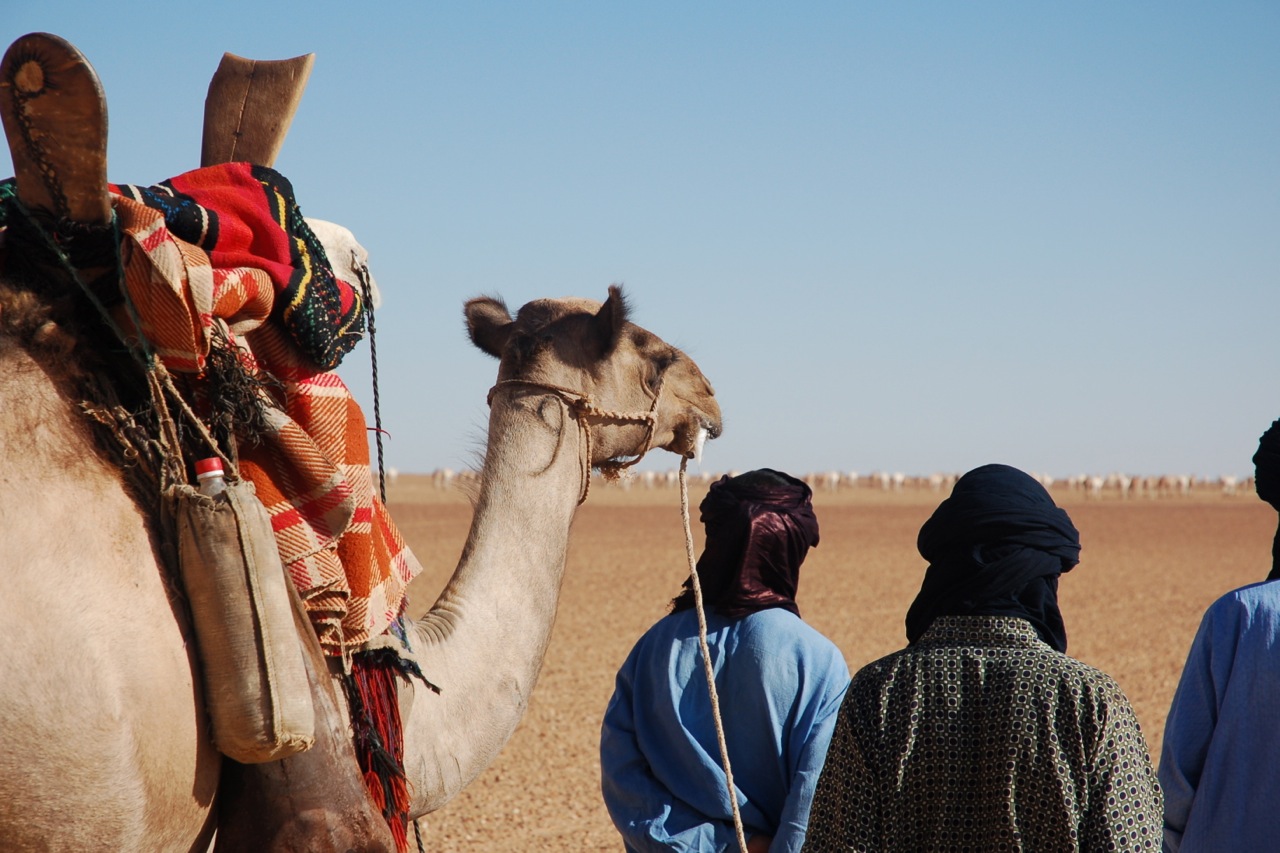
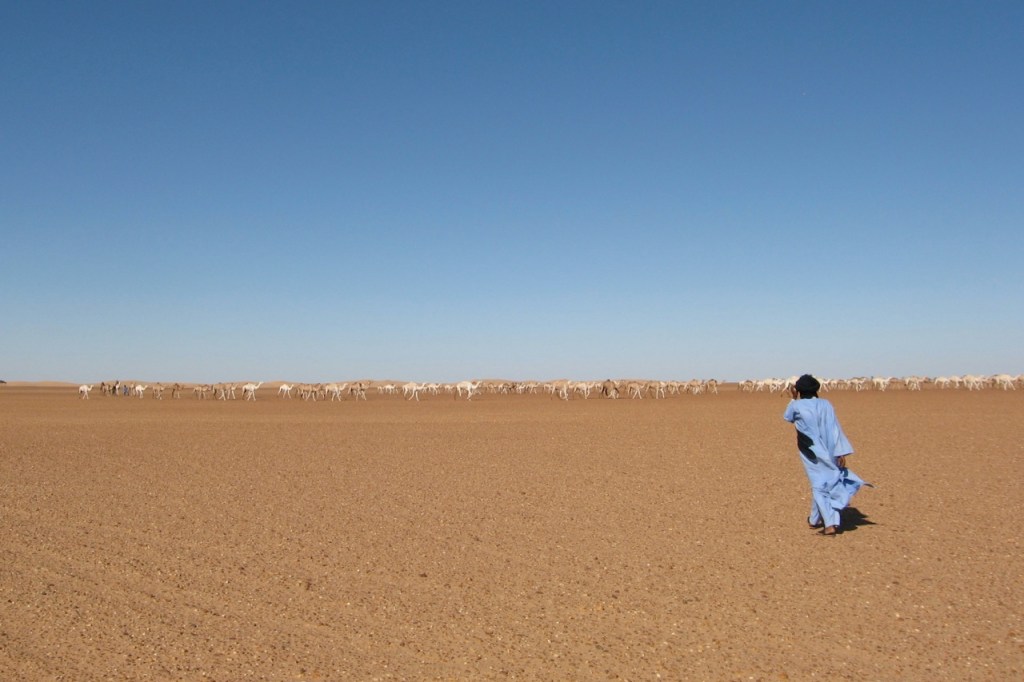
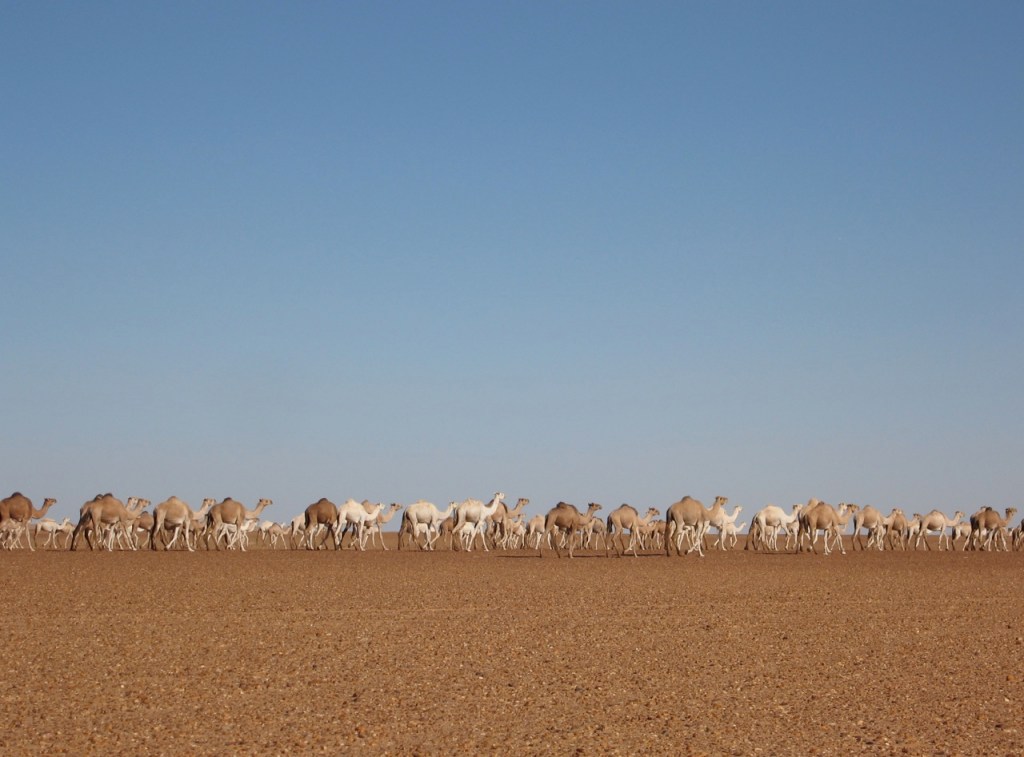
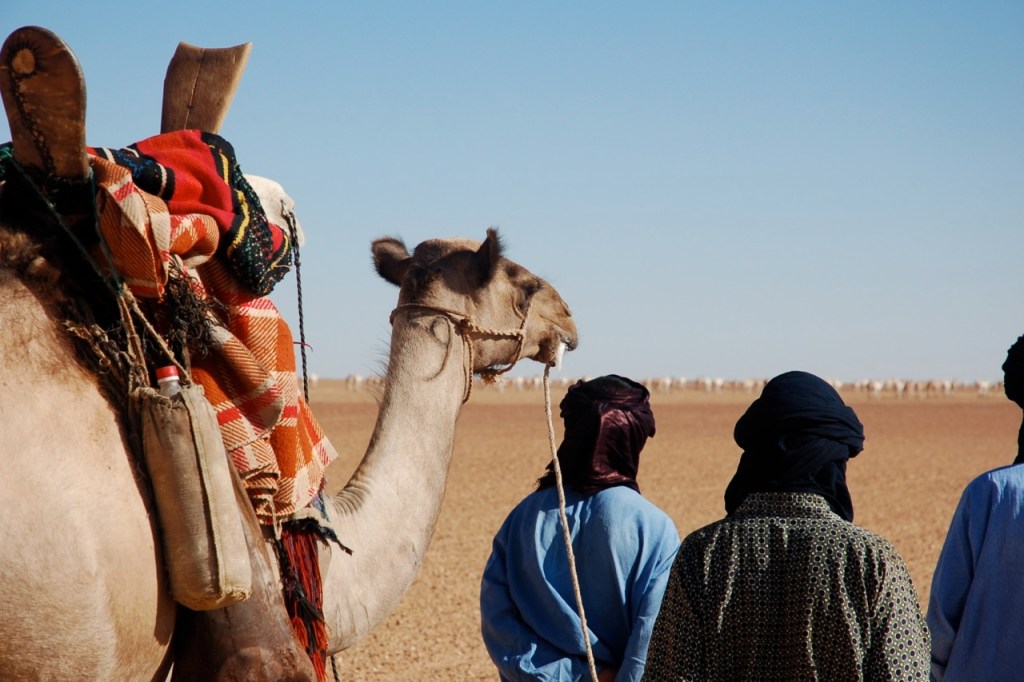
Out of Bordj we spent the night among the dunes near Ilafegh wells where we saw a huge camel train leaving after being watered. As always, Mohamed couldn’t resist his nomad’s instincts and chatted up the camel herders to see what and where and who. 
I never imagined camels out in the utterly barren Tanezrouft, but the recent rains (there were pools here and there) had driven the nomads down in anticipation of a feed. It was to be our only cool night and a real tonic after the unrelenting heat and associated locusts, mozzies, small scorpions and other irksome bugs. Hot days are fine I decided, but hot nights are a drag.

qwik-27
qwik-32

On the way up we came across an old M.A.N tanker and ever-chummy Mohamed got out for a chat, having run such a lorry himself back in the day. The shady guys were taking Algerian fuel down to Ikhalil or somewhere like that, and when I got out to stretch my legs and eye up the front of the truck, the edgy driver gunned the engine and slipped the clutch as a warning to clear off and get back in the car.
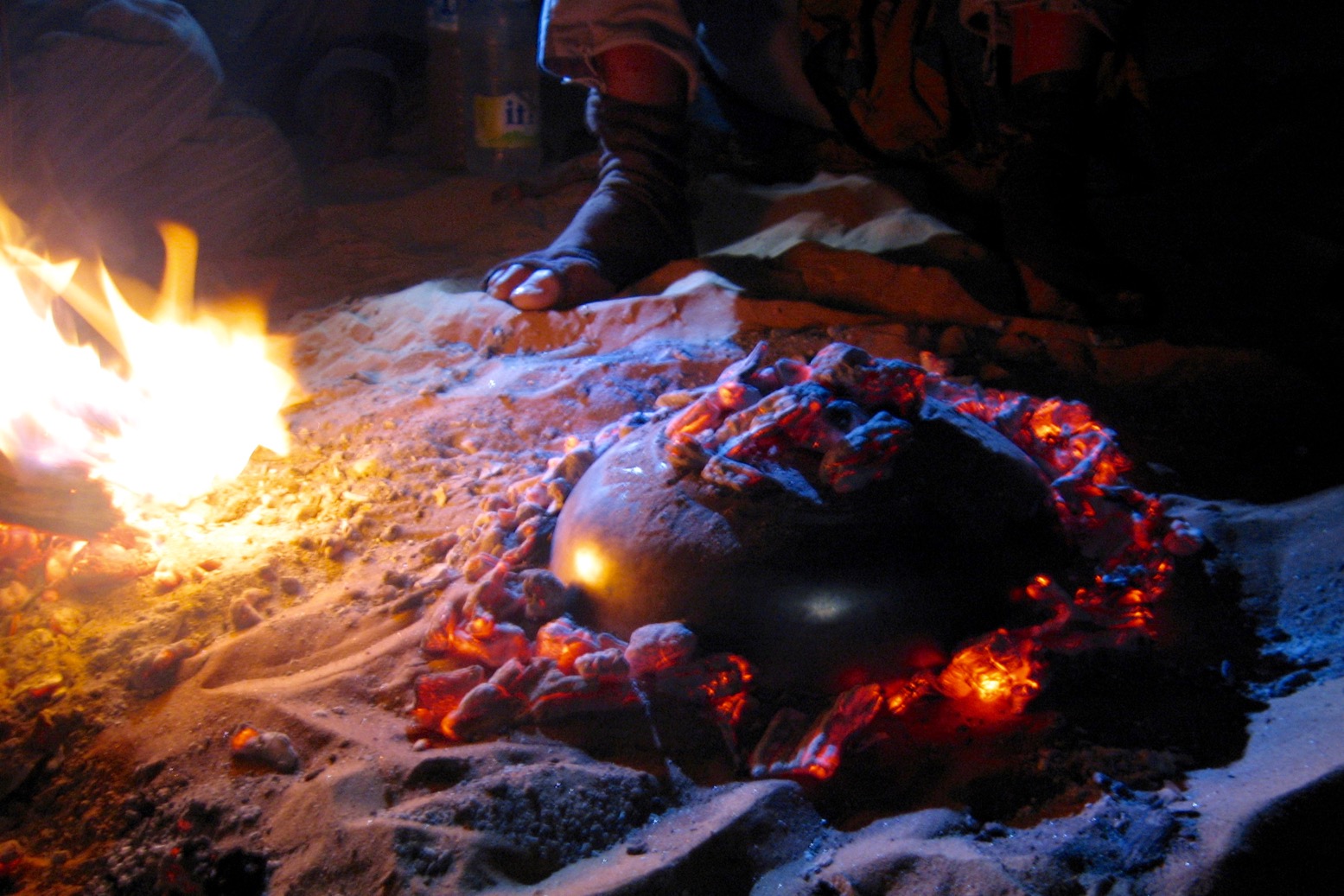
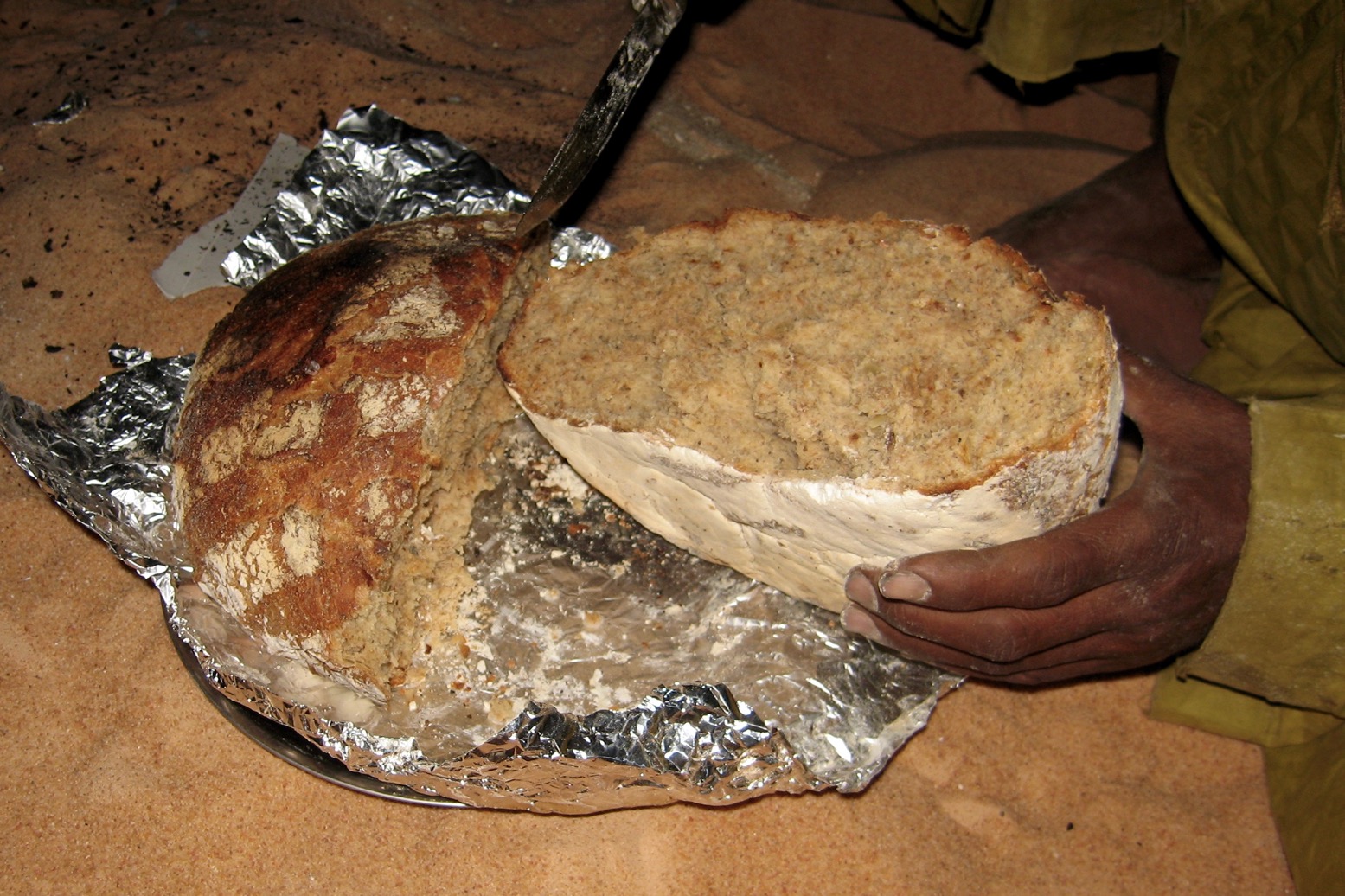
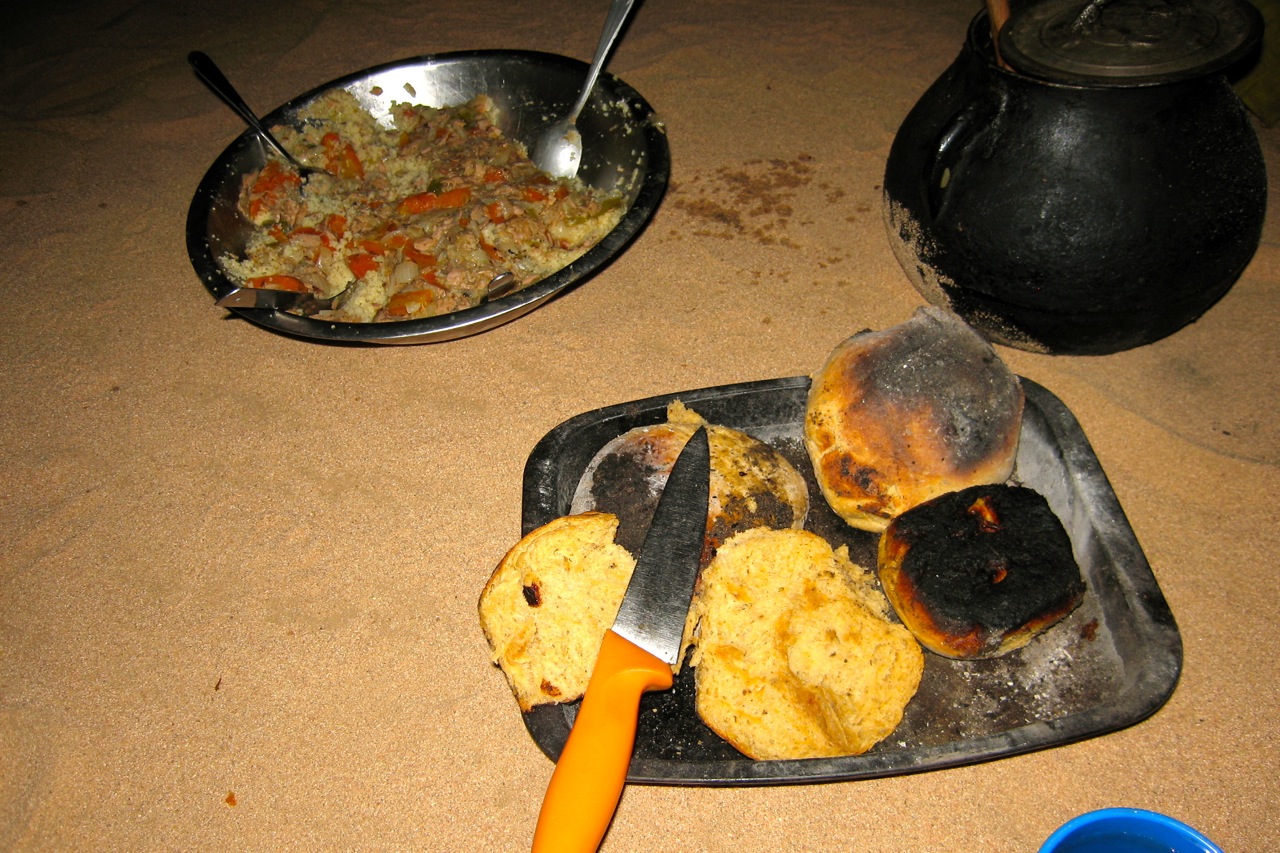
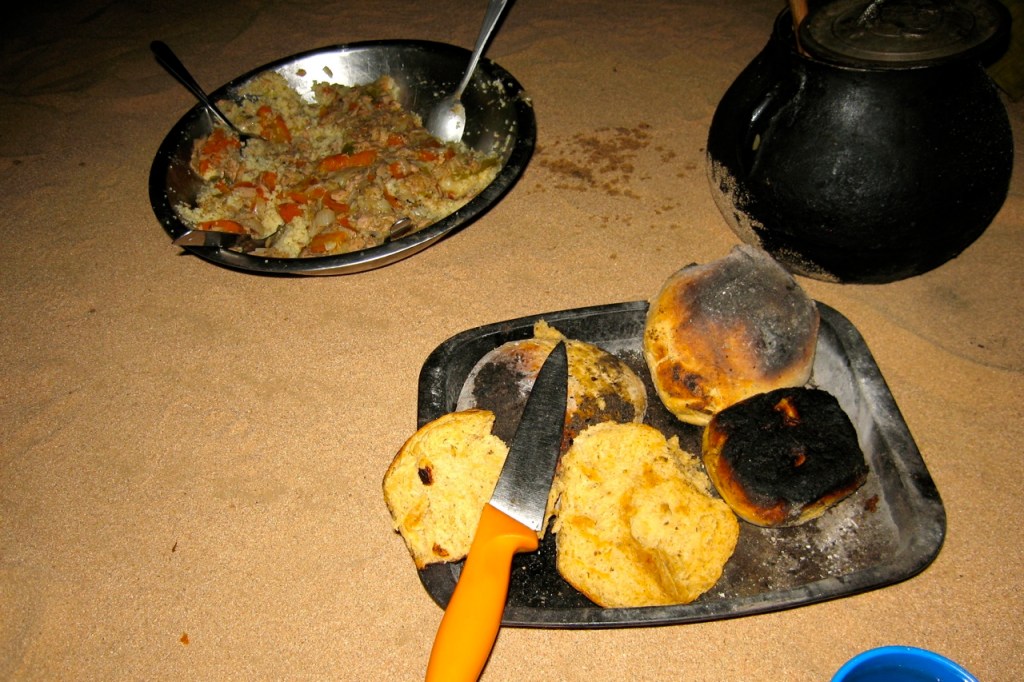
We spent the next night among some granite hills near Abalessa where I finally got round to experimenting with making bread in preparation for SEQ. And for a first go it turned out pretty well, a very passable combination of burned dough cooked in a tin on the embers.

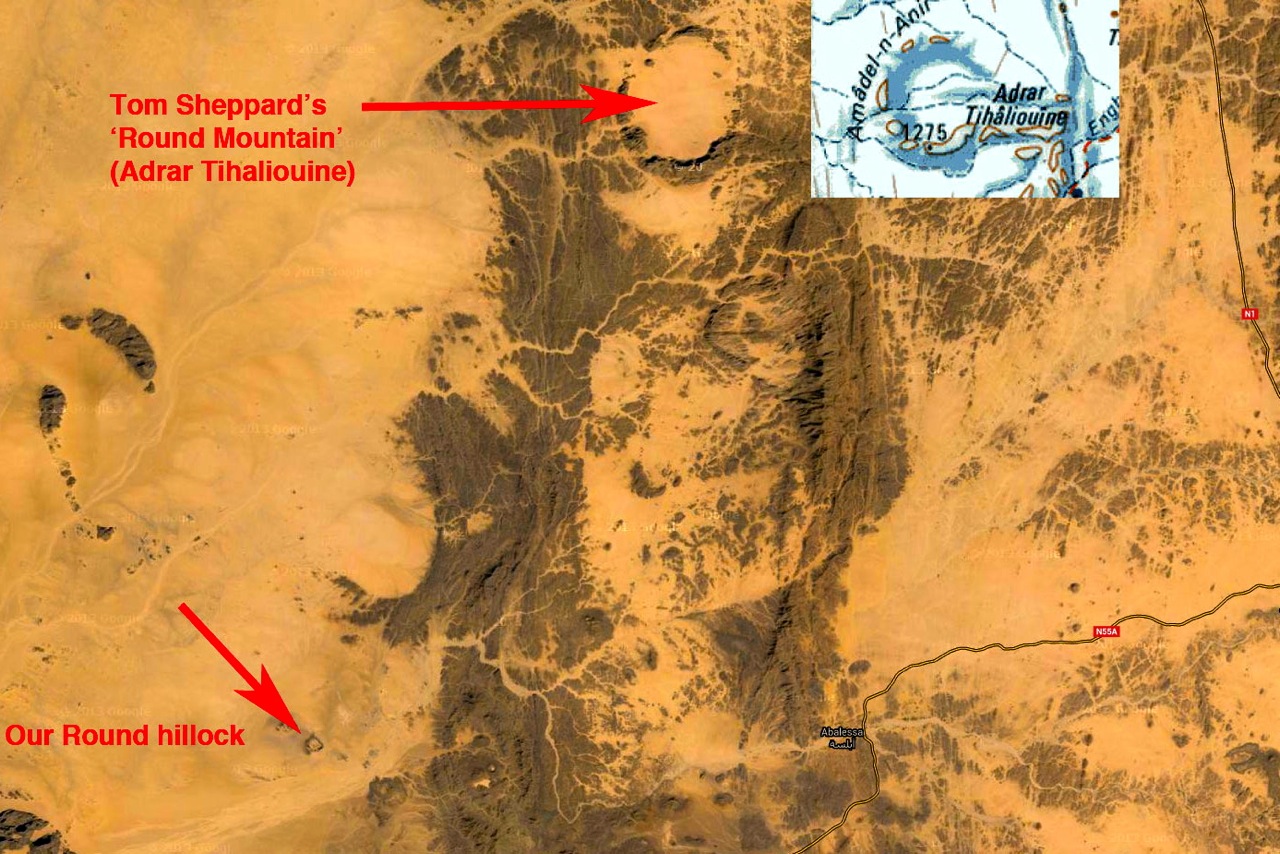
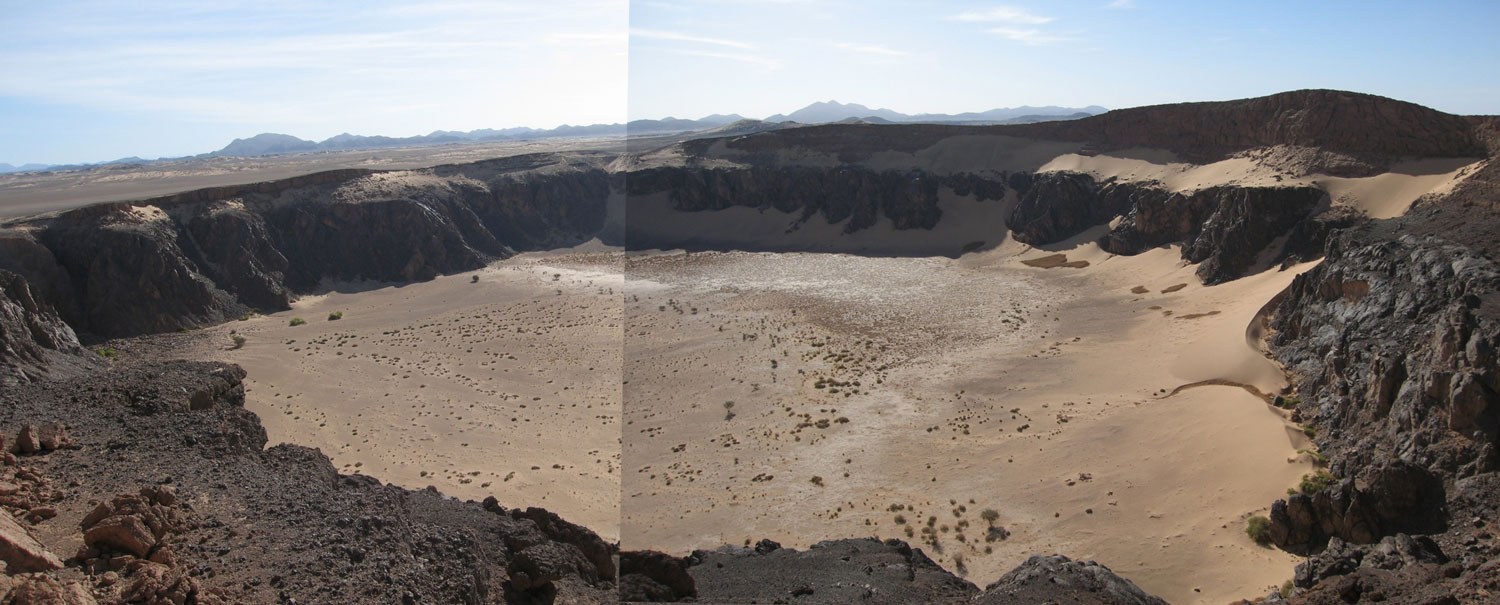
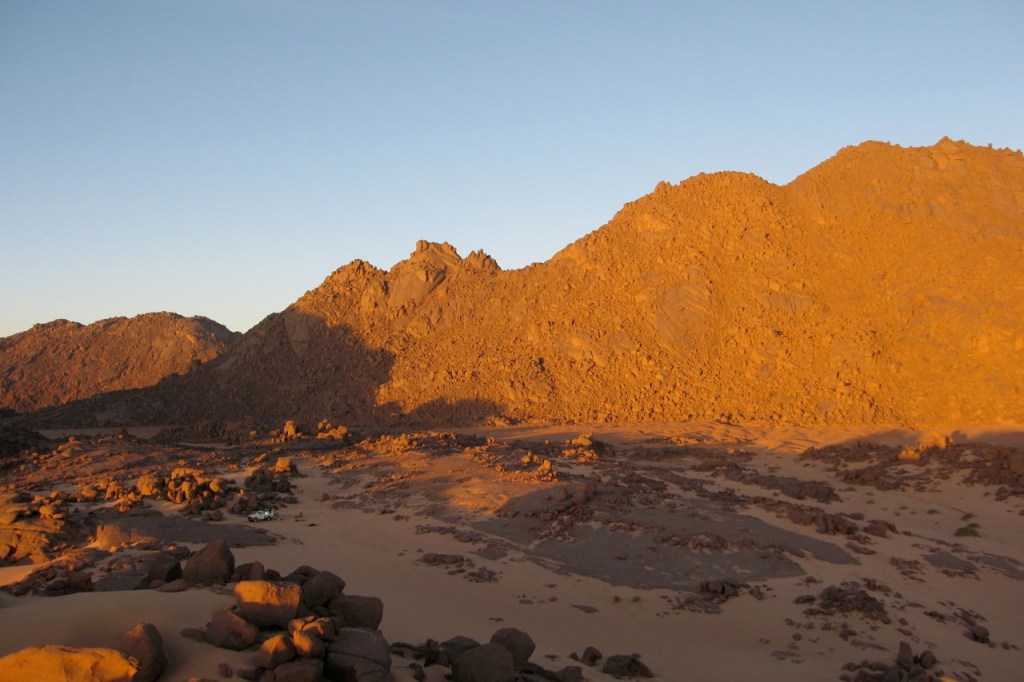
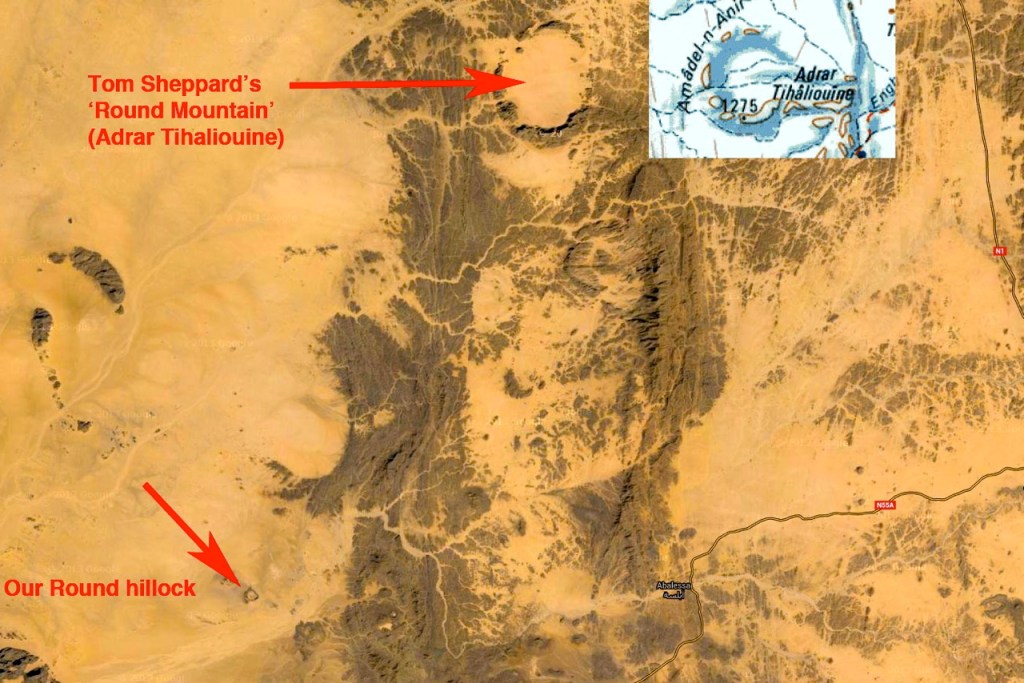
Next morning we visited a crater hill. Years ago I remember reading an article by Tom Sheppard about his quest to reach a curious crater formation he’d spotted northwest of Tam. ‘Journey to the Round Mountain‘ he called it, riding there on his XT600 Tenere. That was probably Adrar Tihaliouine to the northeast, and this similar crater reminded me of it. A good place to stash rustled camels!

qwik-34
qwik-36

In Abalessa Mohamed led us to the tomb on Queen Tin Hinan (left). Interesting little museum with the rocky tomb round the back, but only pics of the treasures remain; everything was pinched by Prorok and his cohorts in the 1920s (his book, Mysterious Sahara reviewed).

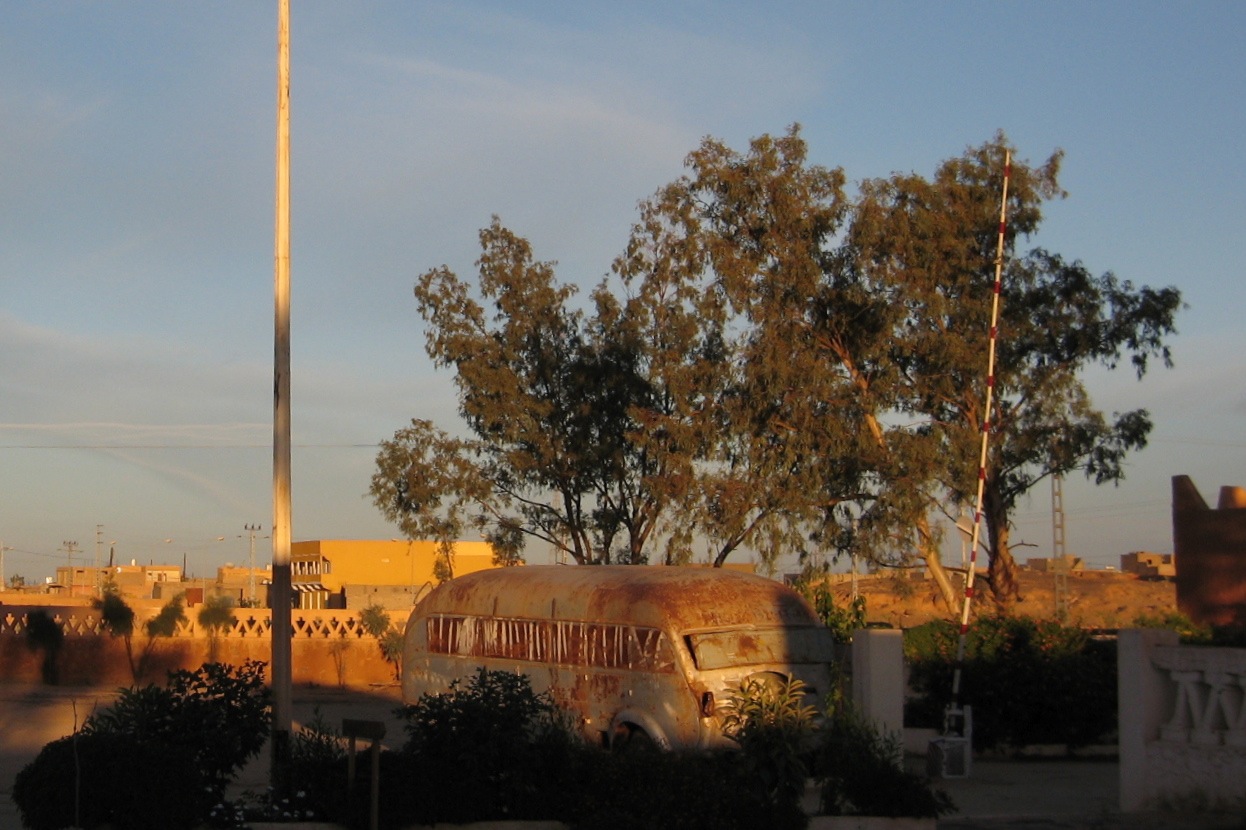
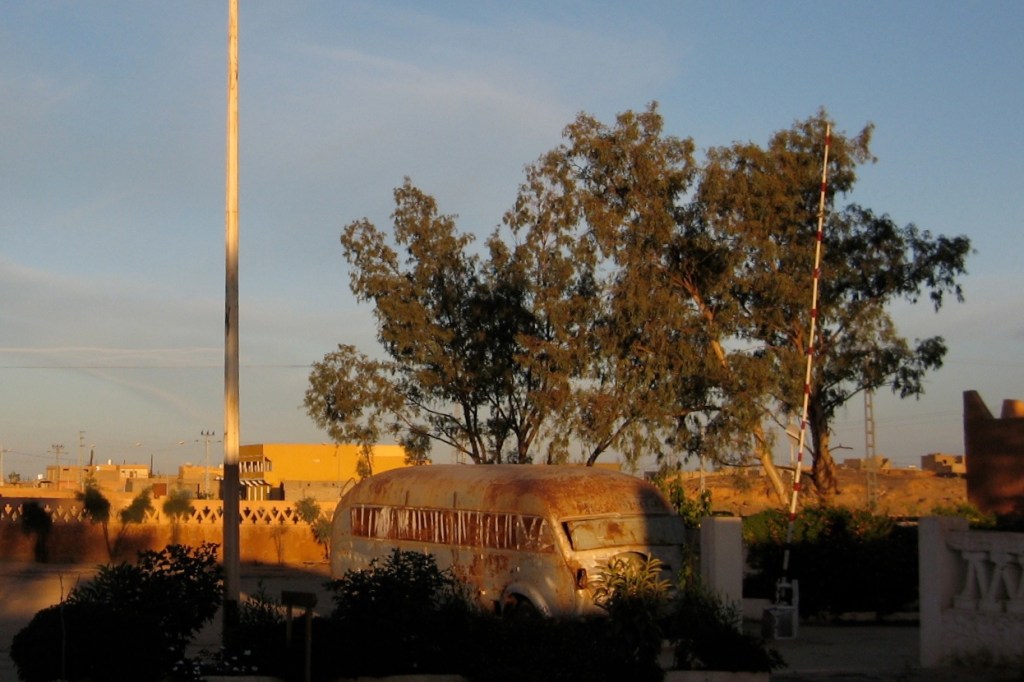
All that remained was a bone shaking ride back into Tam in the no-brakes, clockwise-only power steering Chien, followed by two days idling in the old Camping Dessine, the original campsite I used to use in the 1980s. It’s still home of the old Trans Saharienne bus (below), rusty away slowly by the reception.

qwik-37

We killed time by following the shade, watching our clothes dry before our eyes, waiting for Ramadan cafes to open up and cruising around town in the Chien, logging a GPS map for future use. Then, when the time came we flew up to Algiers, Europe and home.

October 2006. Some pics by Martin and Zander.