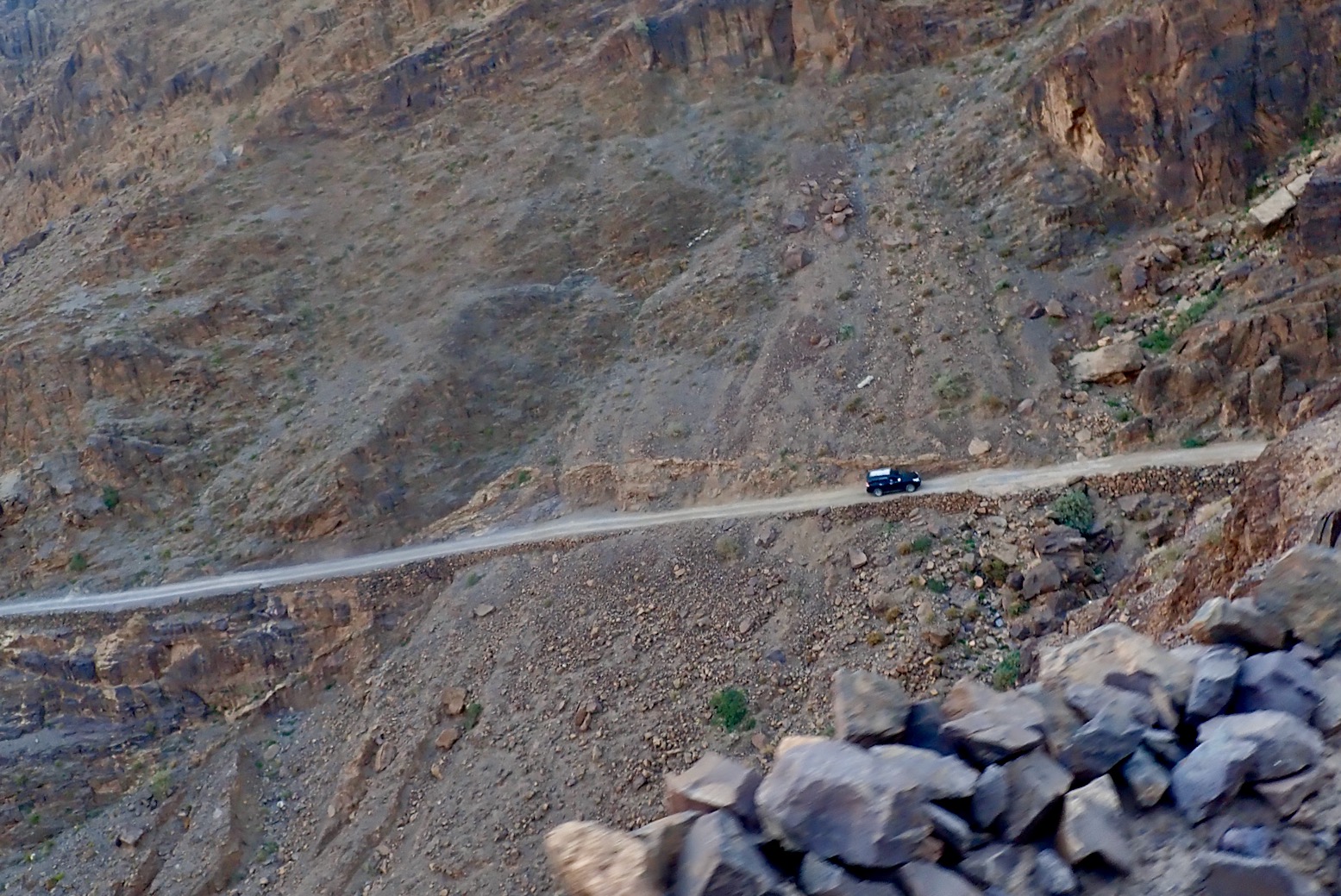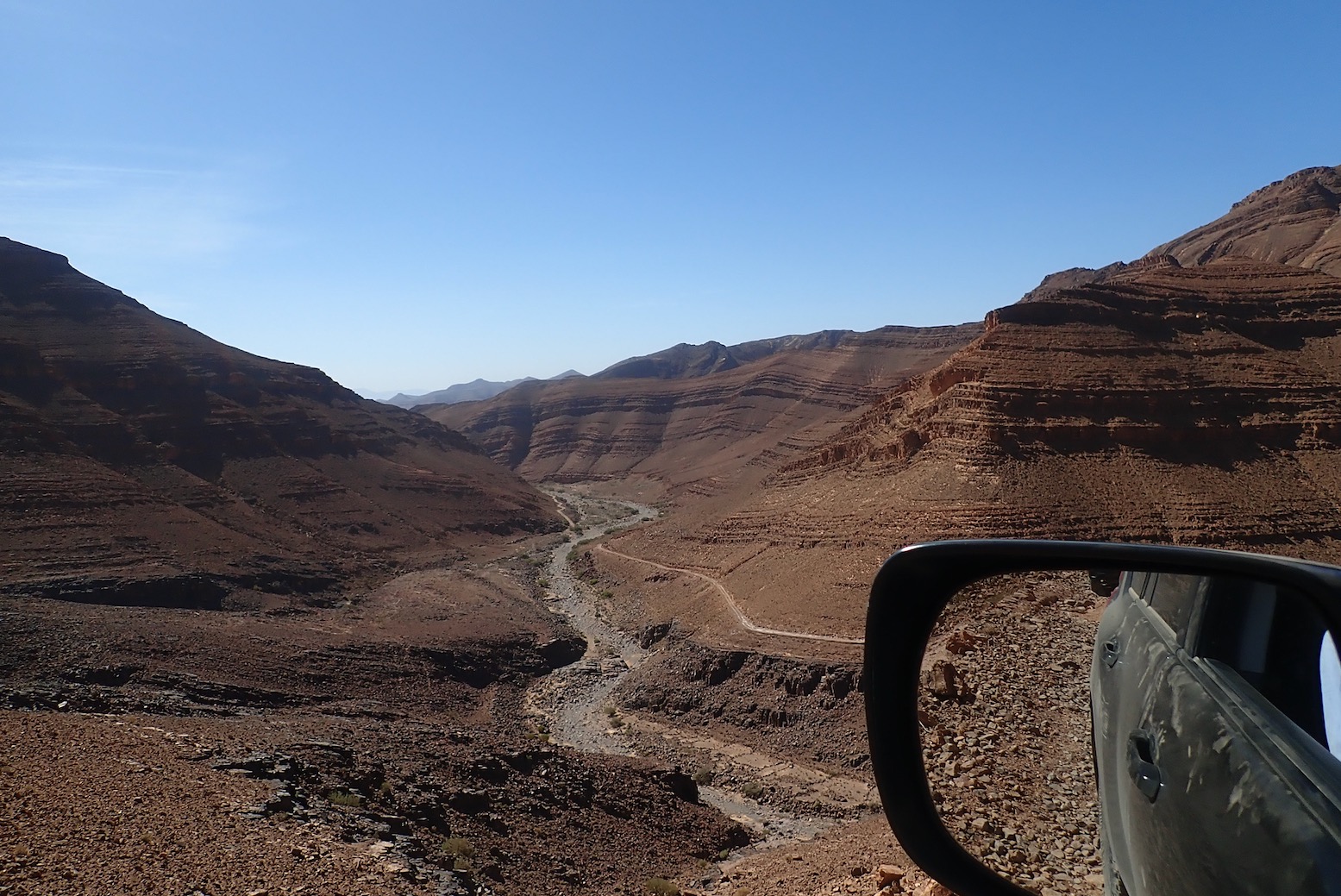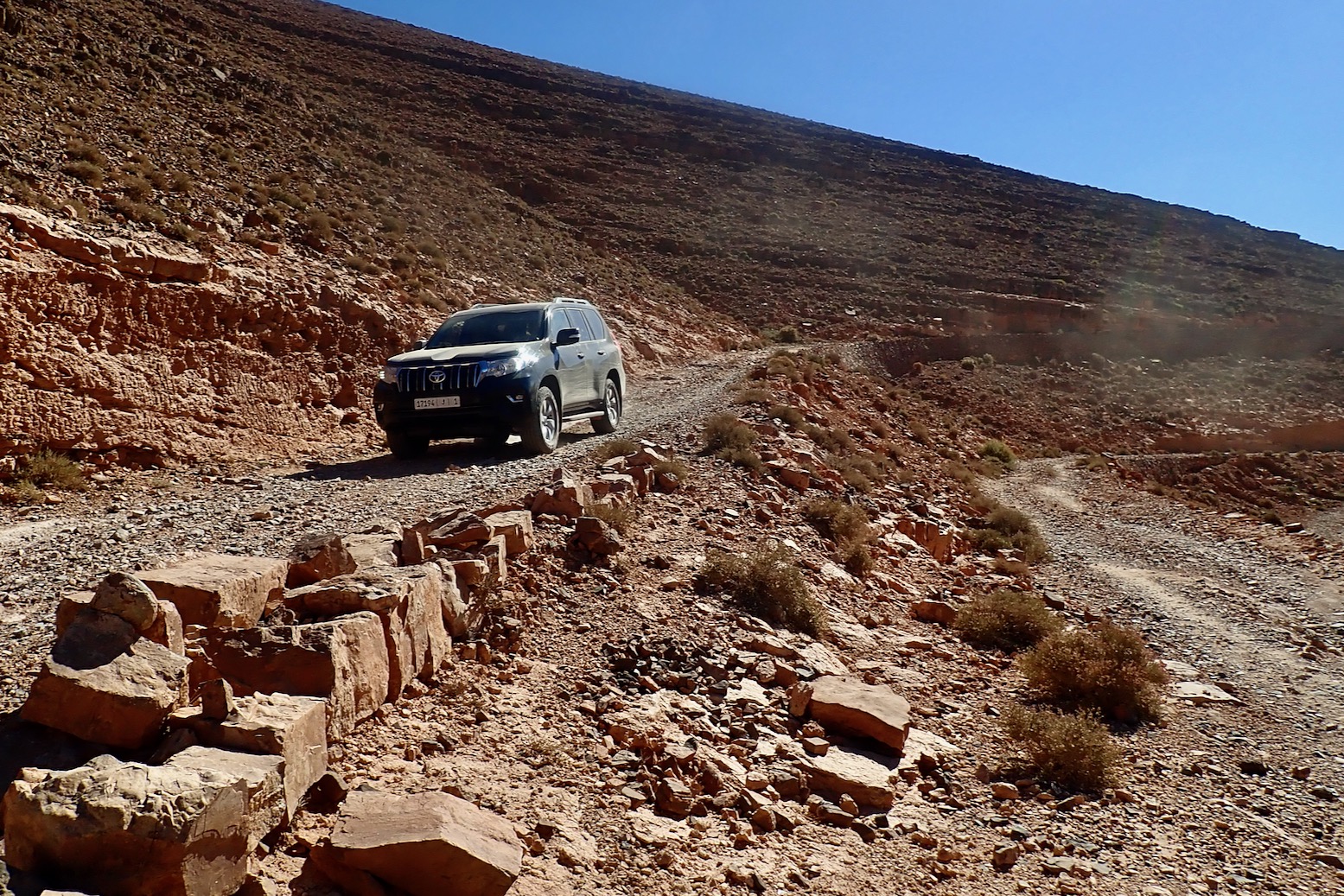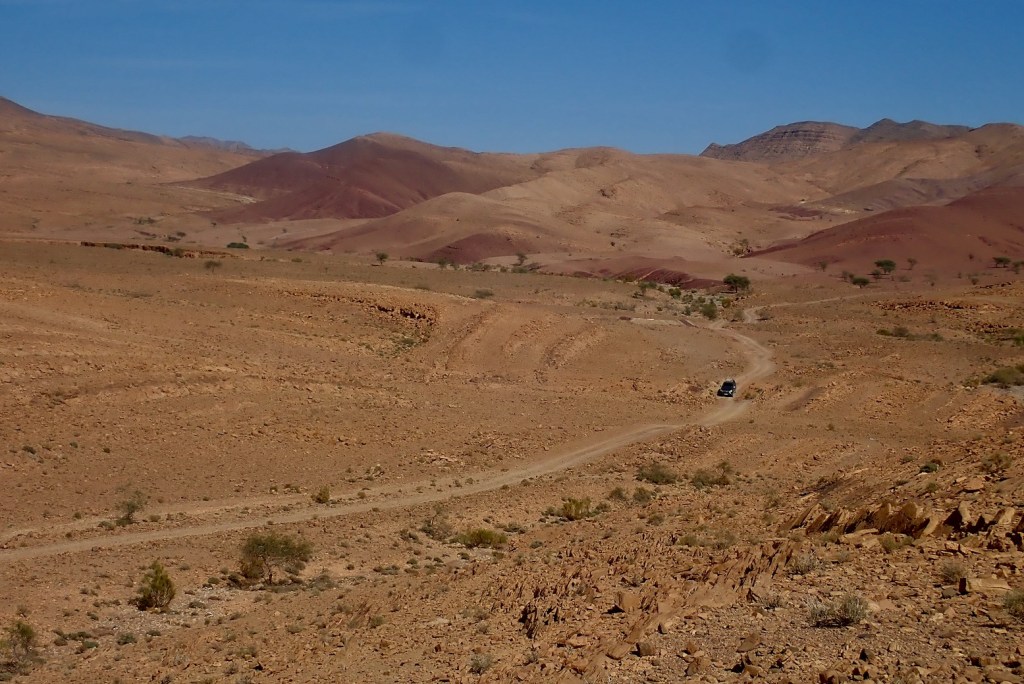
Category Archives: Cars, Trucks & 4WD

Time for my Tablet: Samsung Tab + Gaia GPS vs Garmin Montana

With added info from Duncan B and Grant @HU
See also:
Morocco Maps
Time for my Tablet: Samsung Tab + Gaia GPS vs Garmin Montana
How to trace a tracklog
Michelin 742 Morocco (2024) map review
Map review: Reise Know-How Morocco 1:1m (2023)

Updated September 2025

Short version: Gaia detailed mapping on big tablet screen better for following, but Garmin 680 better for easy and reliable recording with minimal tapping faff.
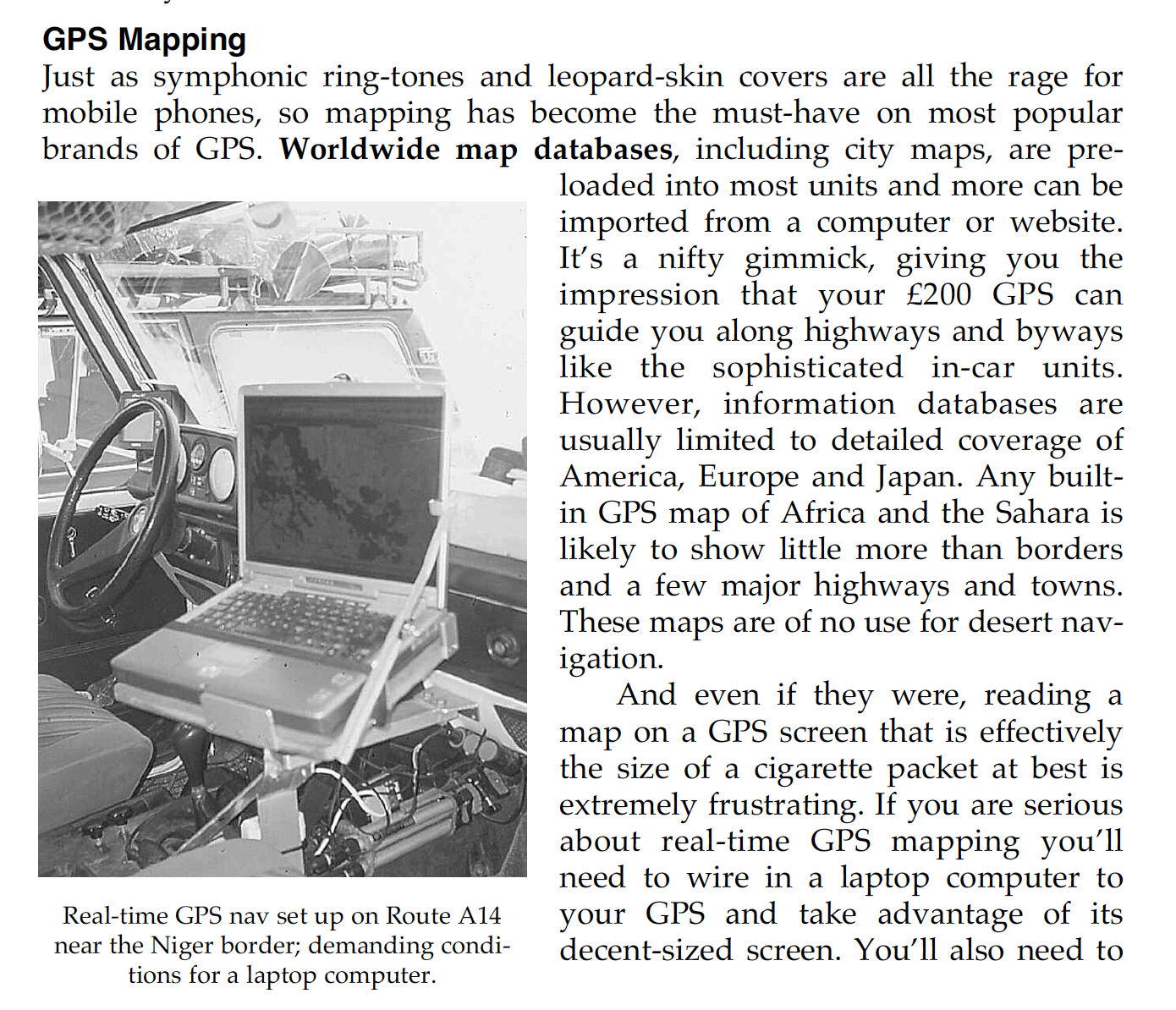
In the early Noughties I recall meeting a lone G-Wagen near the Monts Gautier in far southeastern Algeria (Route A14). They’d hooked up their GPS to a laptop for big screen nav. It was the only sensible way to do it in a car if you wanted that sort of thing, but would have been hard on the spinning HDD drives of that era.
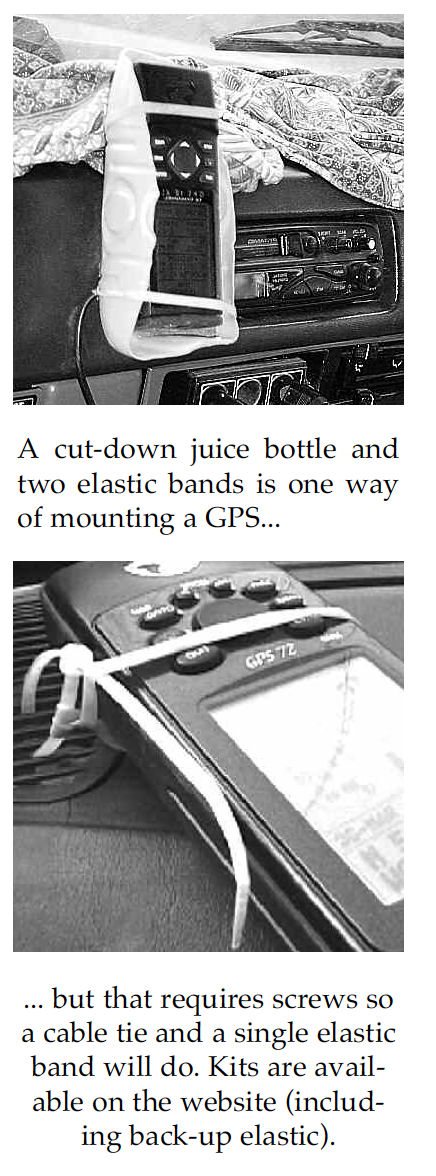
I’m not sure I even owned a laptop at that time. Instead we managed to research and log the scores of routes in Sahara Overland with a hardback jotter and a Garmin 12 or a ‘big screen’ 76 mounted in a sawn-off juice bottle and an elastic band. When needed, I transposed the lat/long reading to the then still excellent IGN 1 million maps using a ruler or a more accurate roamer grid (below).

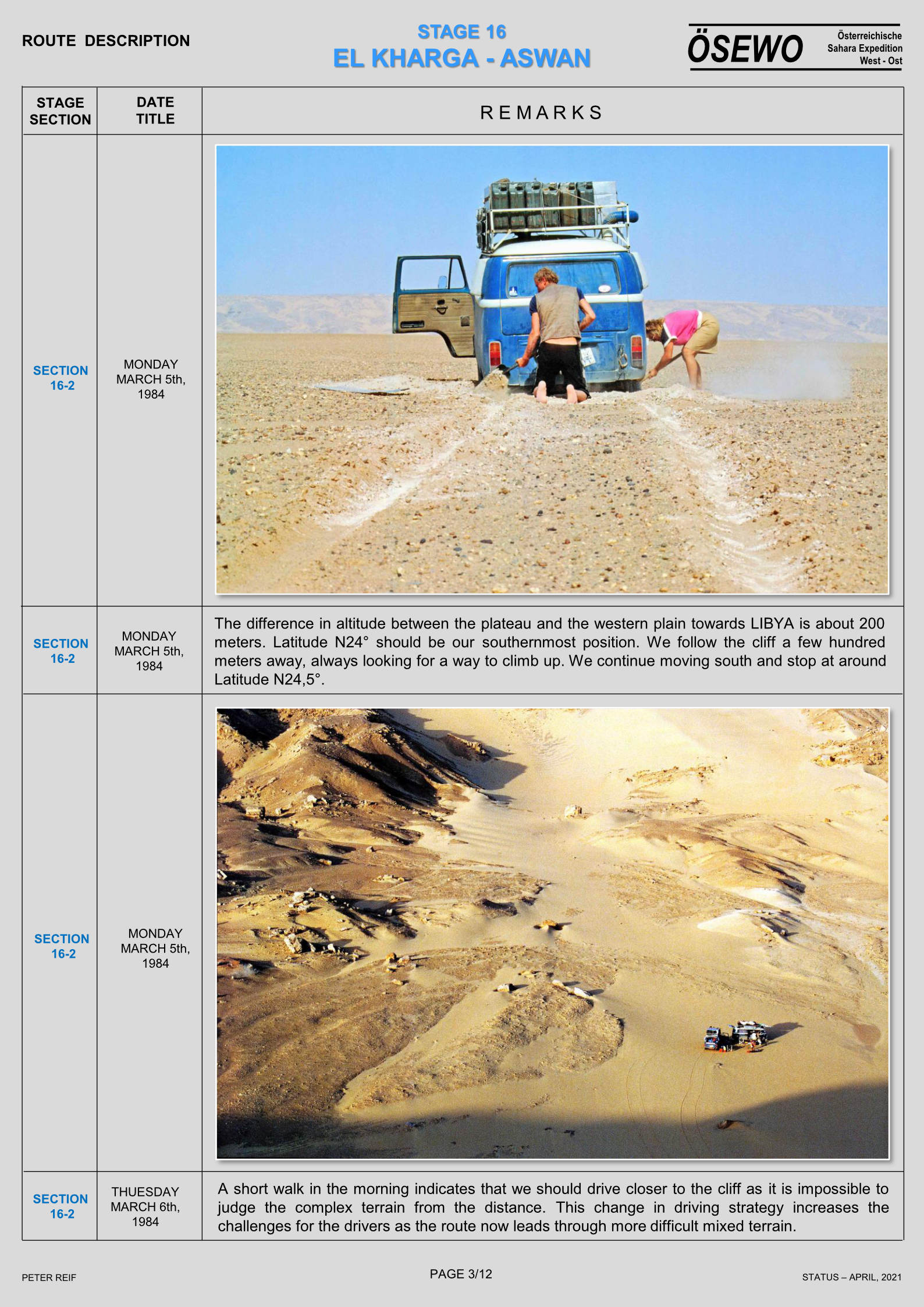
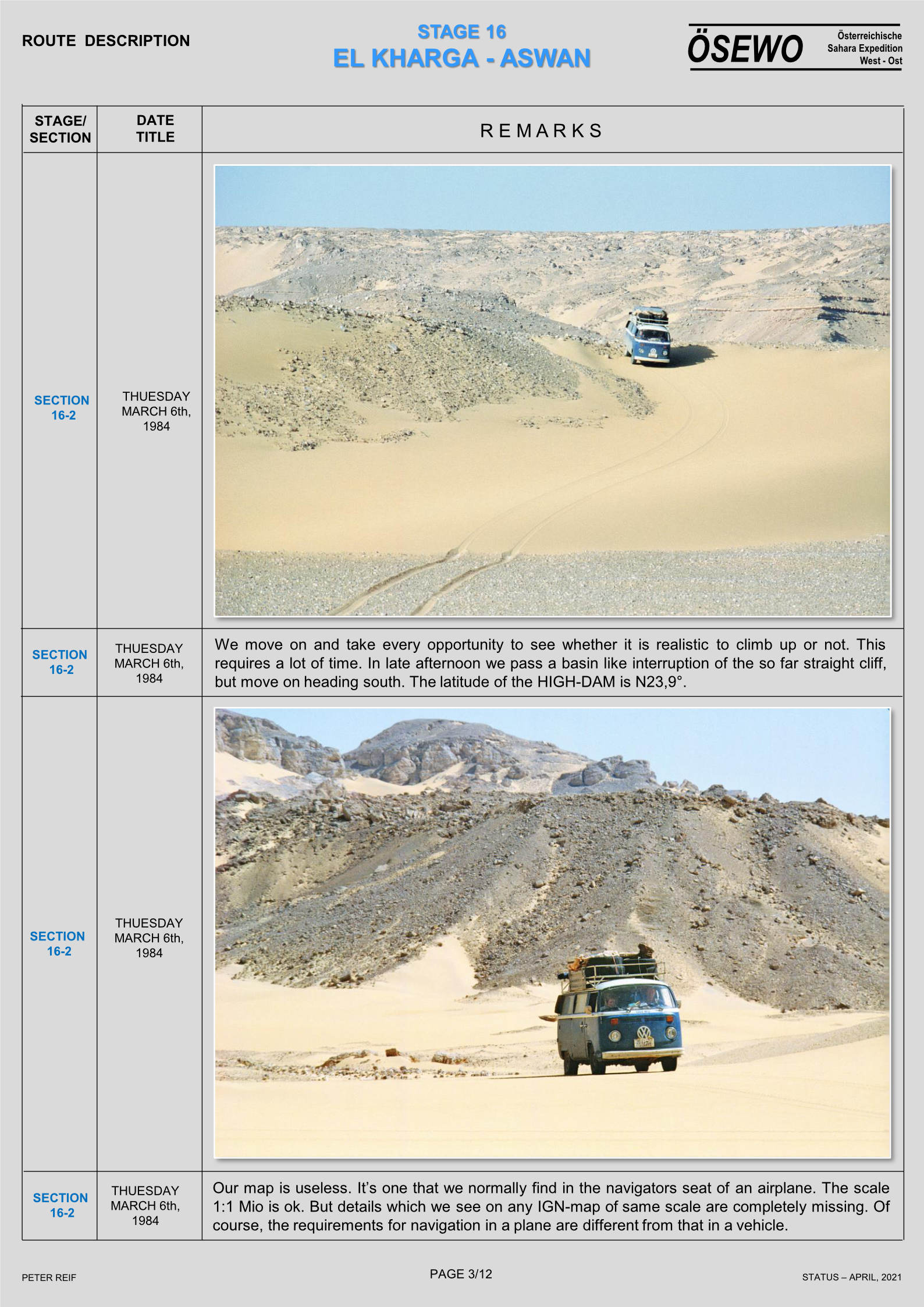
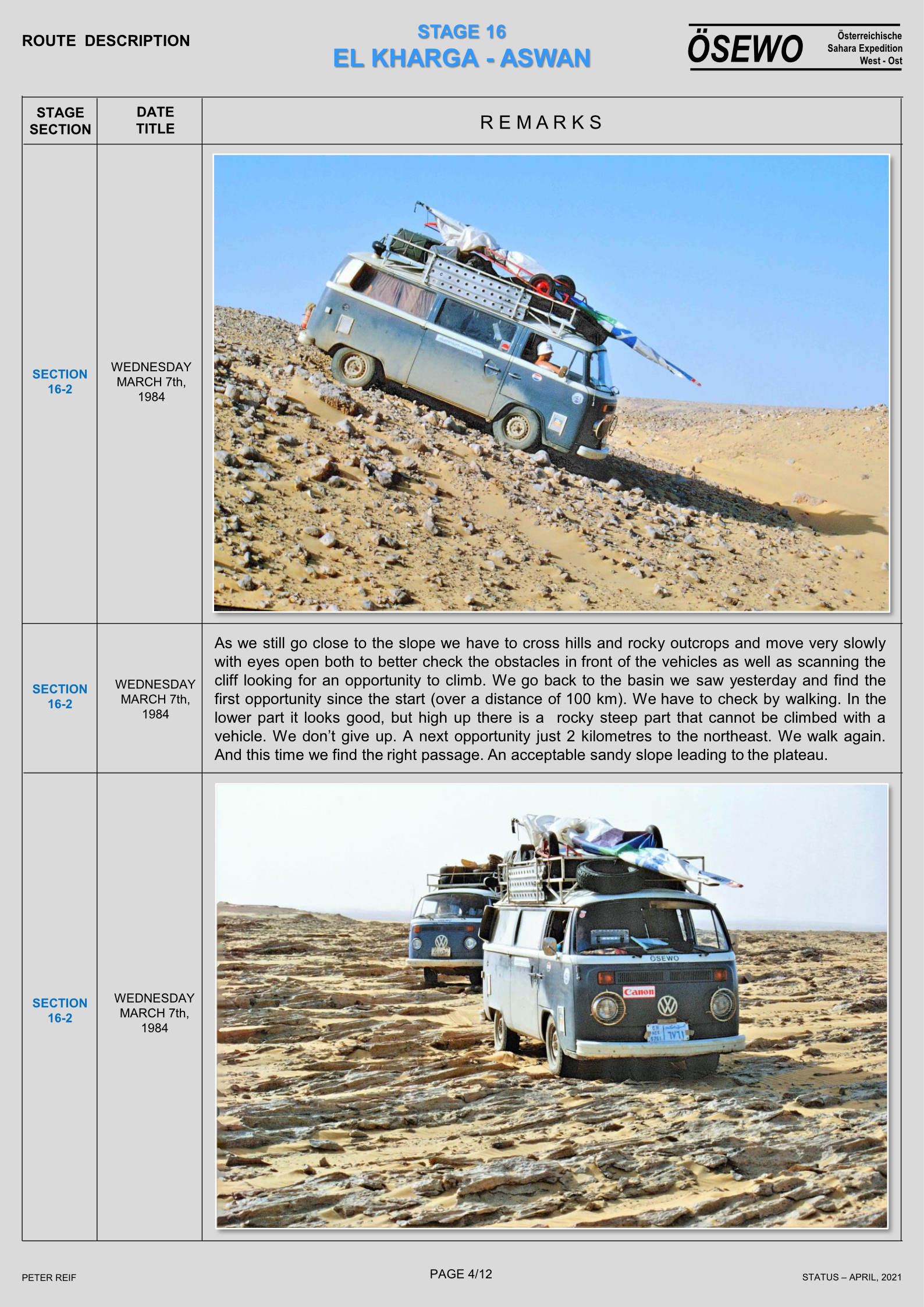
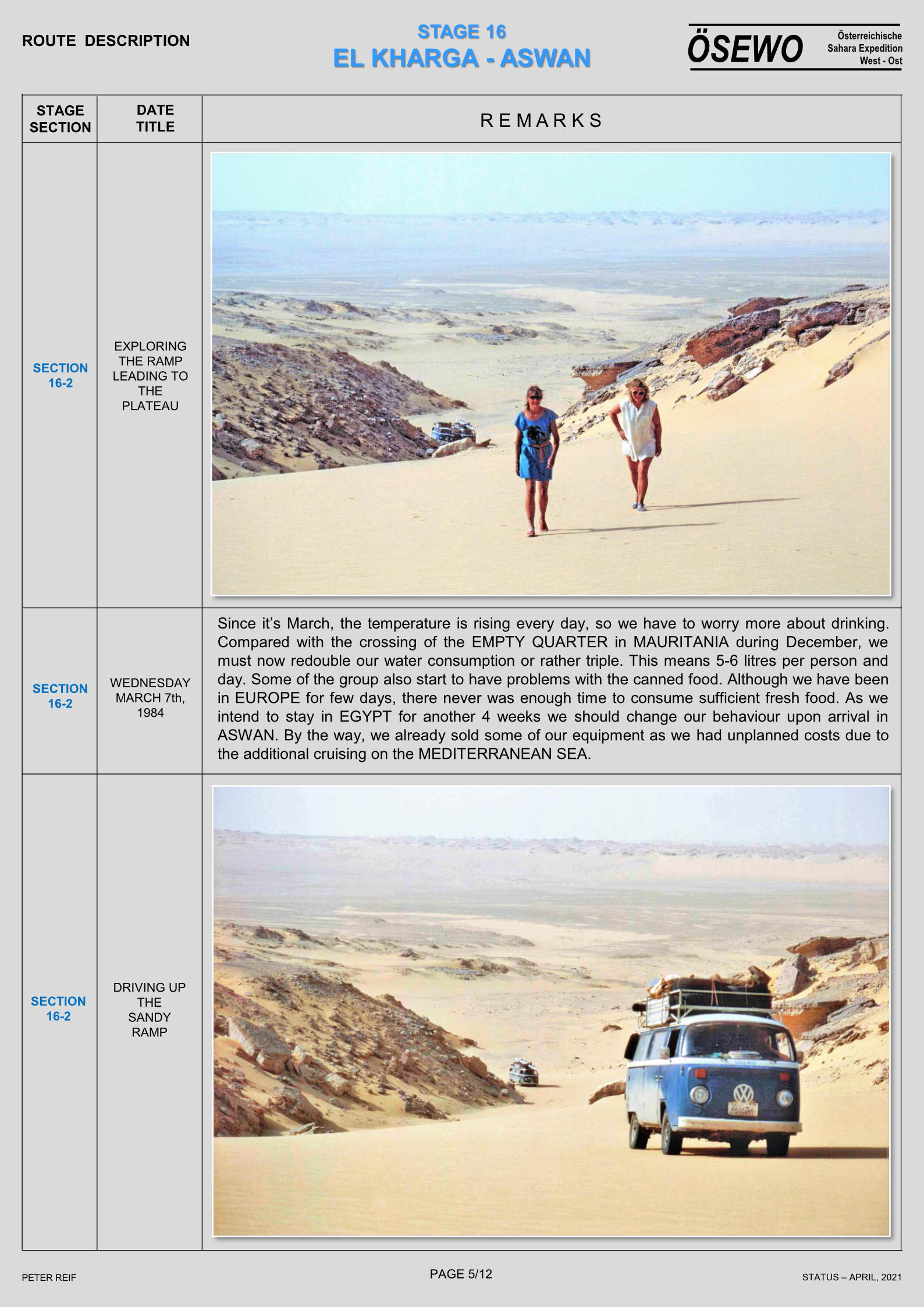
You could then pinpoint your position with adequate accuracy for the expansive Sahara because, unless you were looking for a cache (which we’d buried the previous day for Desert Riders), that was good enough to locate yourself. Otherwise, as the Austrian guys had done, you had to scan and carefully calibrate your paper maps (taking into account the map’s projection format) so that the moving cursor dot would mark your precise location.


Fast forward 2.2 decades
… and I was driving Duncan Barbour on a recce job in Morocco (more of which later) while he logged our convoy’s route on an iPad. I had my hands full and so assumed his setup was off his phone but in these phablet days, his SIM- enabled iPad was all he needed, along with an app like Gaia GPS. In the meantime a couple of others confirmed it was no longer possible to mirror a Garmin GPS onto a larger screen, be it laptop or tablet. Perhaps because Garmin want you to buy their 5 or 10-inch Tread series from £500 to well over a grand + subscriptions.
I already owned some 400 quid’s worth of 680T Montana, the Garmin handhelds which in 2010 changed the game by being able to load several increasingly better base maps and not just record tracklogs and waypoints on what in the Sahara had hitherto been an essentially blank screen.
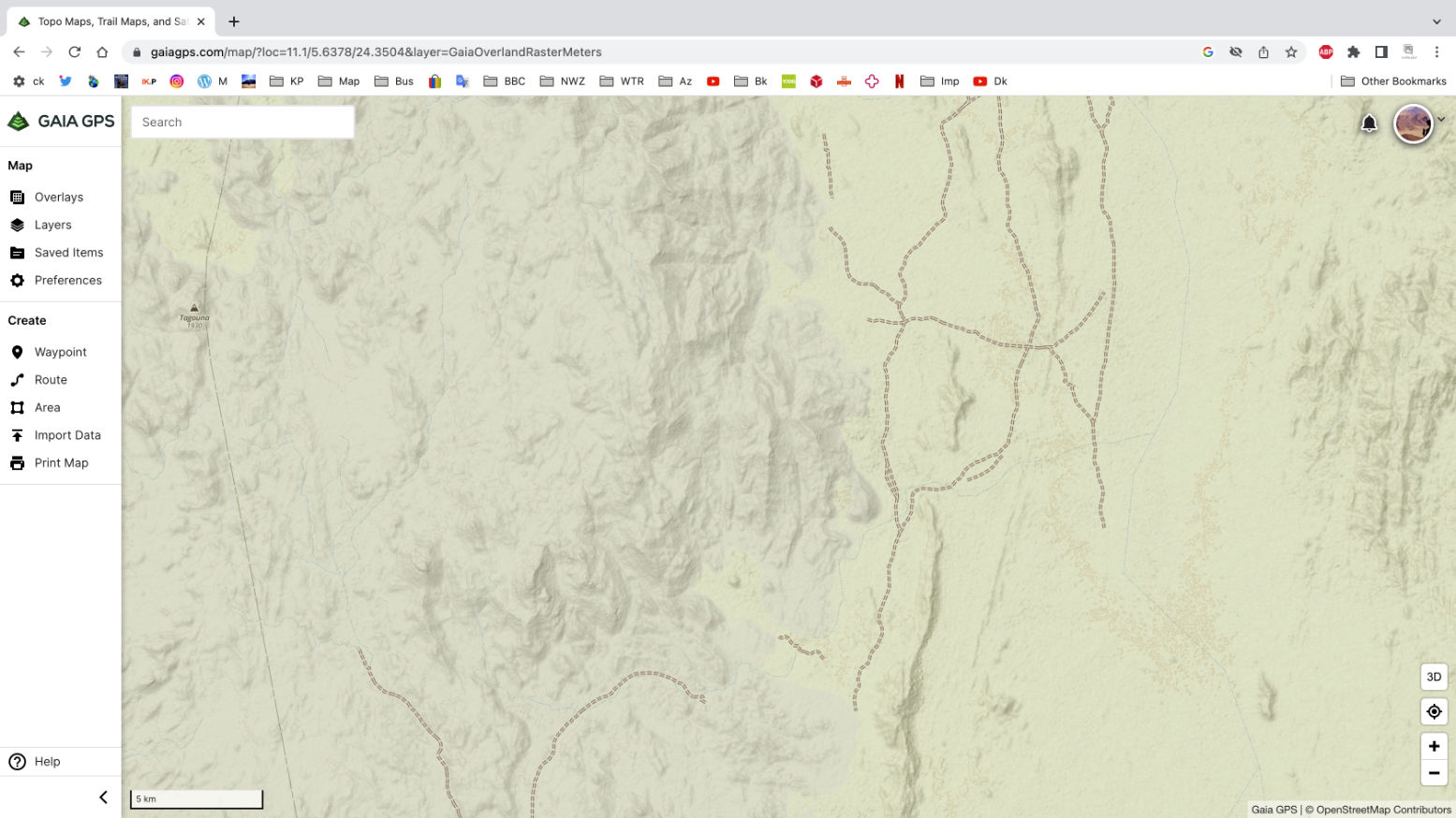
Tefedest (Algeria). Scraps of tracks on the ‘Overland’ map layer. Not helpful (like old TPC aero maps).
(Don’t start me on this ‘scraps’ thing on the OSM database…)

Since then digital mapping has improved to the point where there are topo maps based on OSM of the middle of the Sahara nearly matching the classic IGNs. Problem is, unlike the paper maps, these OSM-supported maps have been in part automatically rendered – the discontinuous scraps of tracks are a dead give away, as above (southern Tefedest, Algeria).
A year later and I see I was quite wrong about this. These disconnected tracks and paths – some less than a hundred metres long, have actually been added – presumably remotely from aerial imagery – by over-zealous OSM contributors whose understanding of ‘ground truth’ is… different. I have since found them all over southern Morocco on the OSM database, often with no path visible on any of the aerial layers and very often the work of one contributor who just does not get it. It can sure make it hard to see the main track among all the clutter.
Anyway, even with the on and off lifting restrictions on overlanding in this part of Algeria, such maps will still take forever to be completed with genuine tracklogs while the IGNs show it how is was (and still is). But with Gaia GPS Premium it’s also possible to download high-res WYSIWYG satellite imagery to use offline (see bottom of page). Plus there’s nothing to stop you travelling with paper IGNs or similar, or scan of them on your device.

Tablet + Gaia GPS app vs Garmin Montana GPS

  • Tablet + Gaia good
  • Cheap to buy/lose/break
  • Can do internet/phone/camera etc
  • Big bright 8″ screen
  • Loads of Gaia maps (once subscribed)
  • The desktop app is much easier to navigate (keyboard/mouse)
  • ESRI (or non-Google) sat imagery downloadable too
  • Masses of memory (1TB)
  • One tap track recording
  • Loads of (messy) public tracklogs on the Gaia map (can be ‘muted’)
  • Works on my iPhone 7 (but not Android phone)
  • Gaia GPS free Topo map is nicely rendered for an OSM
  • Samsung tablet/Gaia less good
  • Gaia GPS requires subscription for good stuff
  • Freezes or take ages to fire up (could be my tablet CPU?)
  • Gaia takes ages to get a fix
  • Tablets (and phones) can overheat
  • Baffling organisation of saved Gaia files in folders
  • Hard to tap and manage on the move
  • Hard to save precise waypoint easily
  • Screen decentres after inputs
  • Battery life: must be plugged in unless dimmed
  • Proper car mounts are expensive but needed
  • Gaia GPS app froze on my Android phone
  • Samsung A7 fried 2 motherboards in 2 years. Replaced with cheaper A9.
  • Garmin Montana + OSM Topo good
    Rugged
    build (good for motos)
  • If needed, li-ion battery lasts all day (or takes AAs)
  • Once customised and familiar, interface easy to manage
  • Fits in a pocket
  • Will do routing like a car satnav (Gaia may too)
  • Won’t overheat
  • Garmin less good
  • Expensive to buy
  • Small and dim screen
  • Limited miniSD capacity (32GB)
  • Freezes/crashes occasionally
  • Needs BaseCamp and other (free) Garmin apps on a computer
  • Easy to forget tracking, zero the trip meter, etc
  • Keyboard‘ is comparatively excruciating
  • It’s only a GPS + a rubbish camera

Samsung A7 Lite
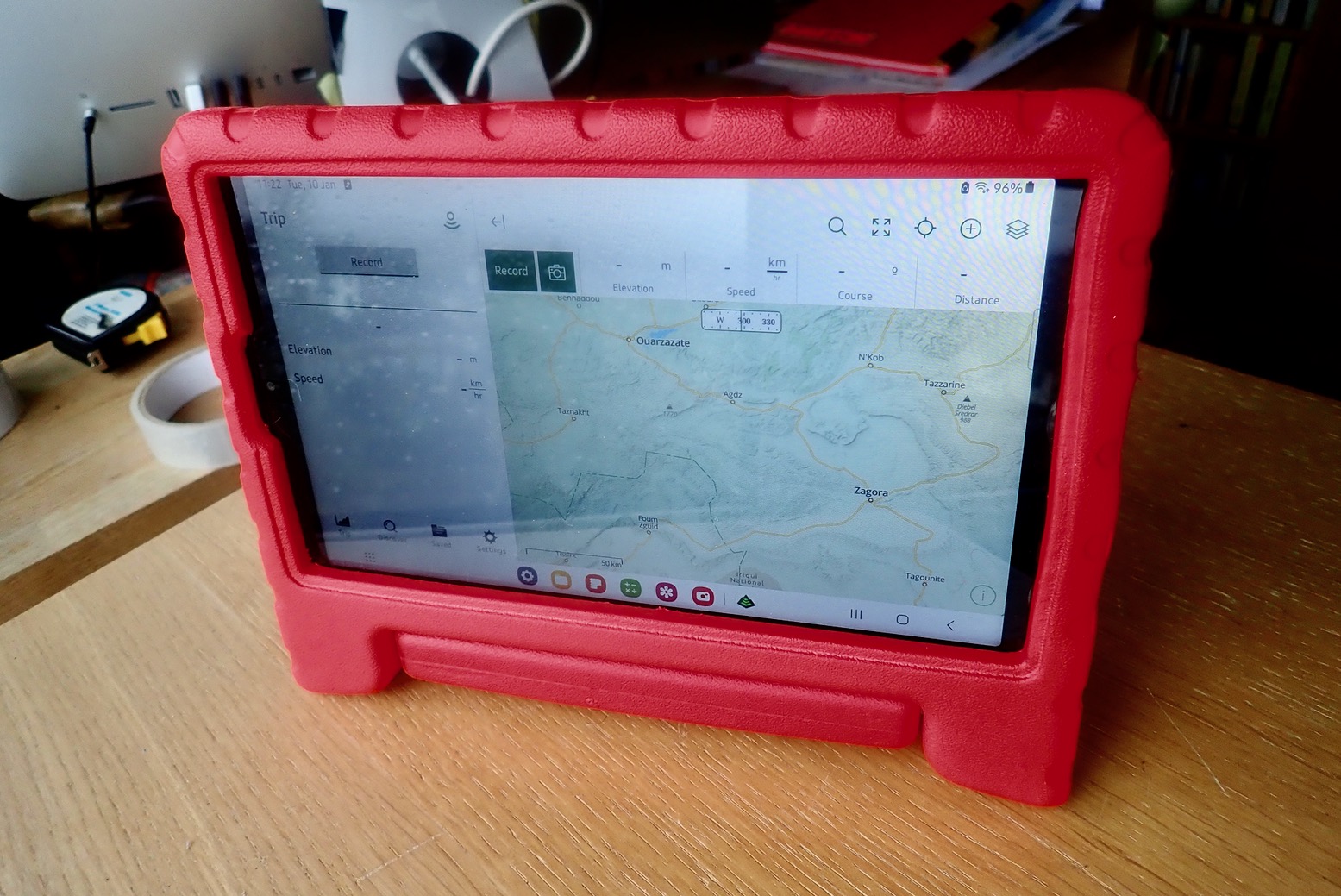
I decided to try Gaia GPS on my own car recce and settled on a Samsung A7 8.7 incher; £120 from Argos. It has a metal case, takes up to 1TB microSD and weighs 330g when fully charged. CPU speed is 2.3GHz, 1.8GHz Octa-Core; I don’t know if that’s a lot, but 18 months in it fried its motherboard, got repaired on warranty, then did the same at 25 months, just out of warranty. Is that normal for a lightly used Samsung tablet? Don’t know but I replaced it with a near identical A9 for just £85. If that packs up too I guess I’ll just get an iPad. My laptop and desktop have always been Macs, but an equivalent new iPad Mini starts at a staggering £750.
I owned a crappy old Samsung mobile once; the A7 has the same interface so the A7’s Android learning curve was pleasingly pruned. Best of all, I was able to flog my Kindle Fire for 40 quid and remain ‘gadget neutral’ in line with current government advisories.
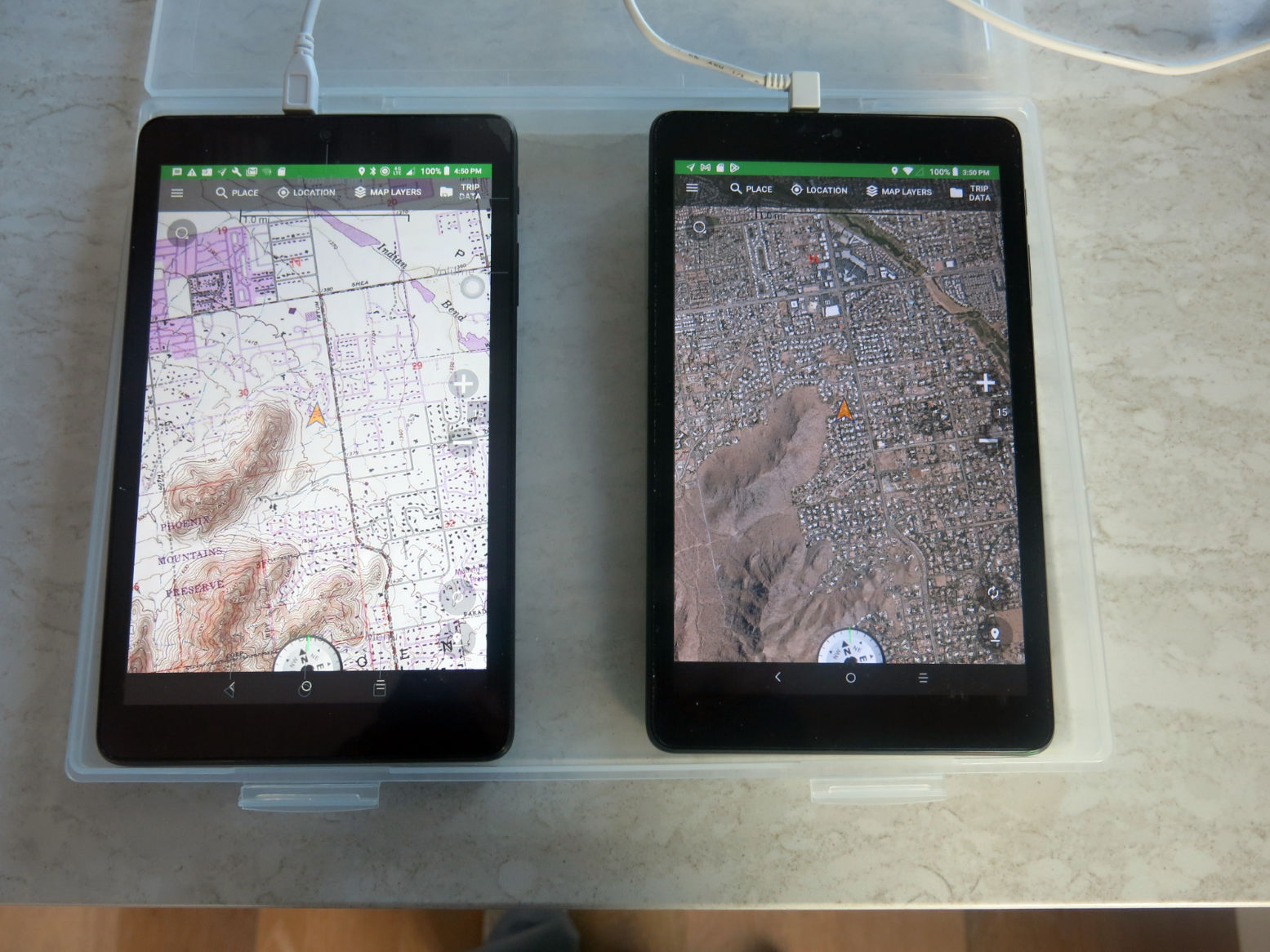
From fourbie driver CW in Arizona: a twin-tablet set up to save flipping from maps to satellite or playing with opacity due to bright sun visibility issues.

The A7 got fitted with a screen protector out of the box but the all-metal body is very slippery so needs something better to handle it. I have a RAM windscreen sucker and flange mount but was shocked at A7 RAM ‘Tough Dock’ prices which easily exceeded the cost of the tablet.
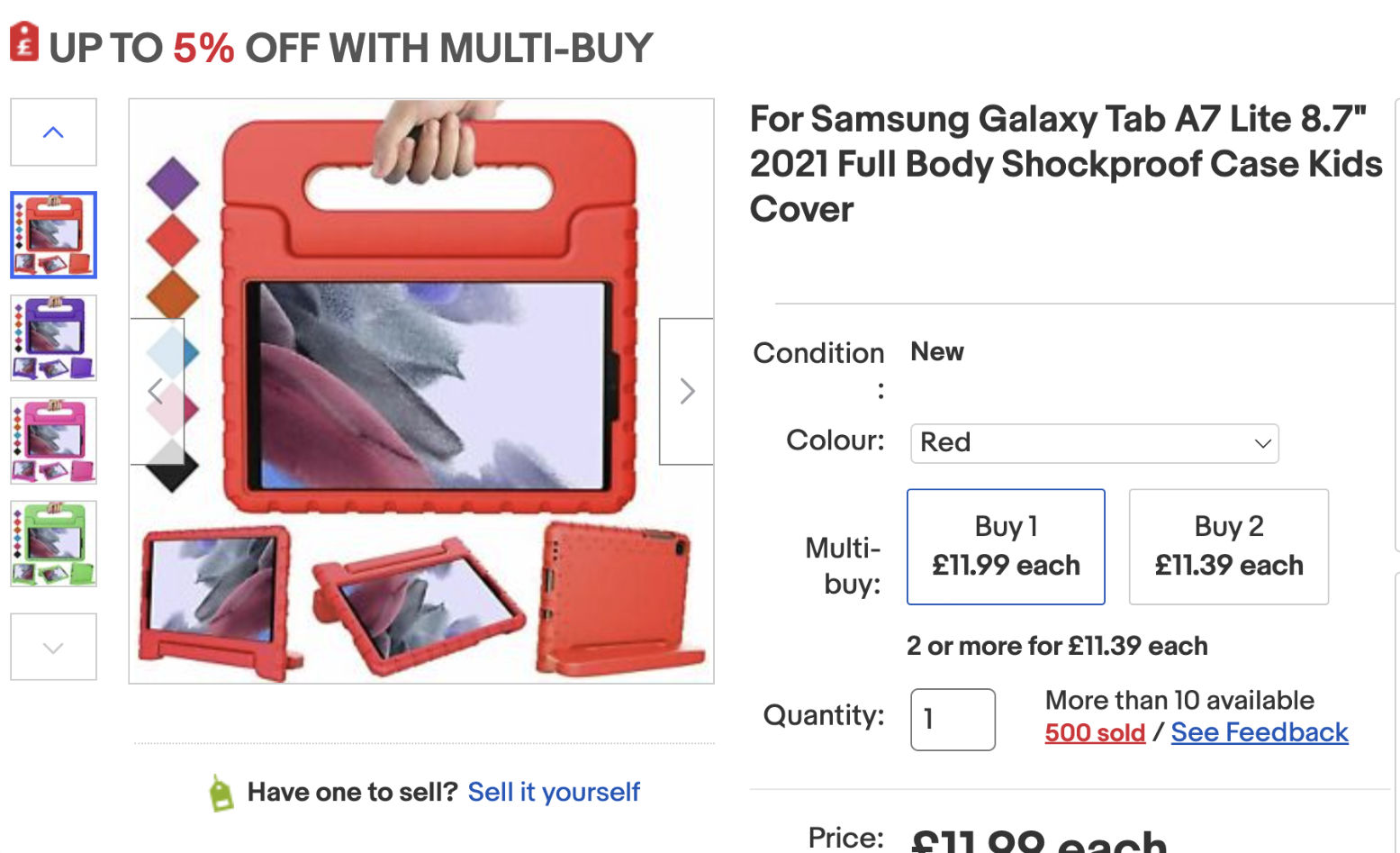
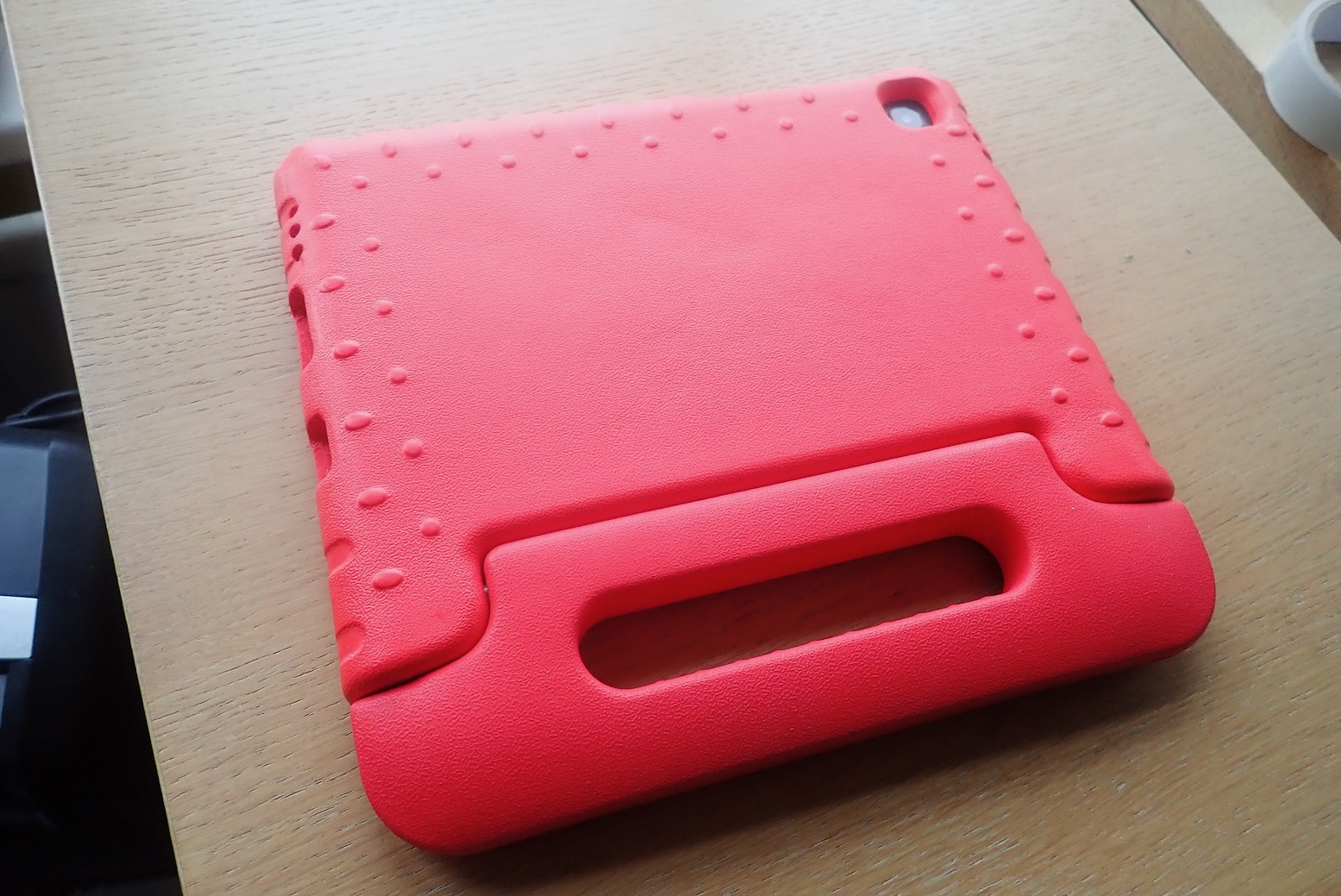
In a car it’s not going to get run over and smashed, like on a bike, and I’m not rallying, so I bought child’s foam case off ebay for £12, complete with vomit-proof standle. I ended up zip tying it to a handle or rear view mirror
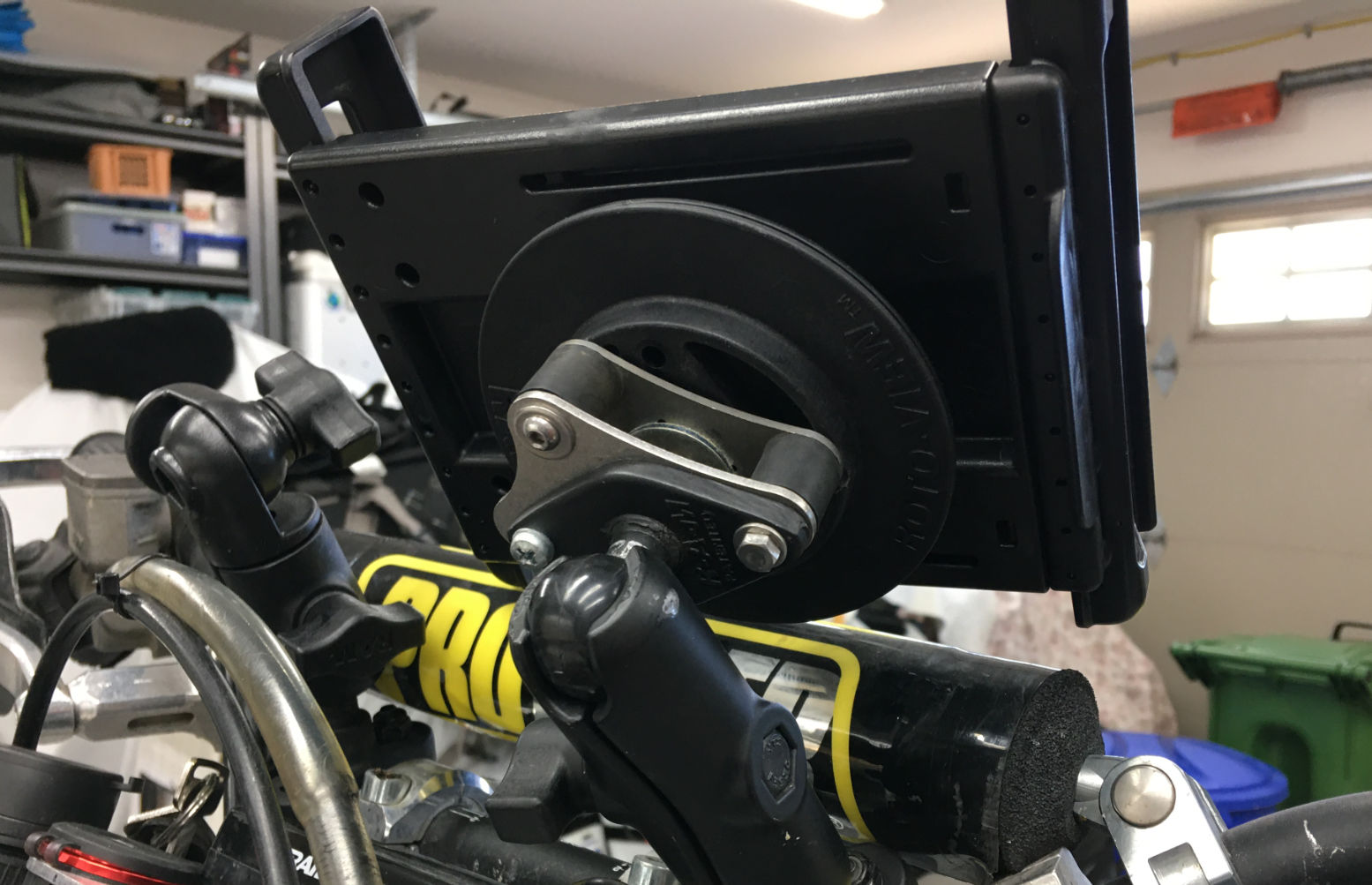
Touratech RAM mount

Adult mounts and other options
One the left, the DR400 of Grant from Horizons, based in BC: another A7 on a RAM Tough Dock mount. Grant says the unit tends to droop on rough terrain, which is why people end up with Rally towers. Waterproof cases like Otters can be hit and miss he says (this is a benefit of Garmin’s Mil-810-spec Montana), though there are ruggedised tablets, like the Carpe Iter. “It runs DMD2 software launcher, which is also  available for any Android device. Their unit is also excellent in sunlight, whereas the standard tablets are crap. I’m running the software now on mine, and it’s good. It launches GaiaGPS which is what I use the most.” says Grant. I do notice it has 128GB but will only take another 128. Still on bikes, Thork Racing (see YT vids) do bike-ready mounts and even roadbook-like thumb controllers to avoid trying to jab the screen with the chequered flag in sight.
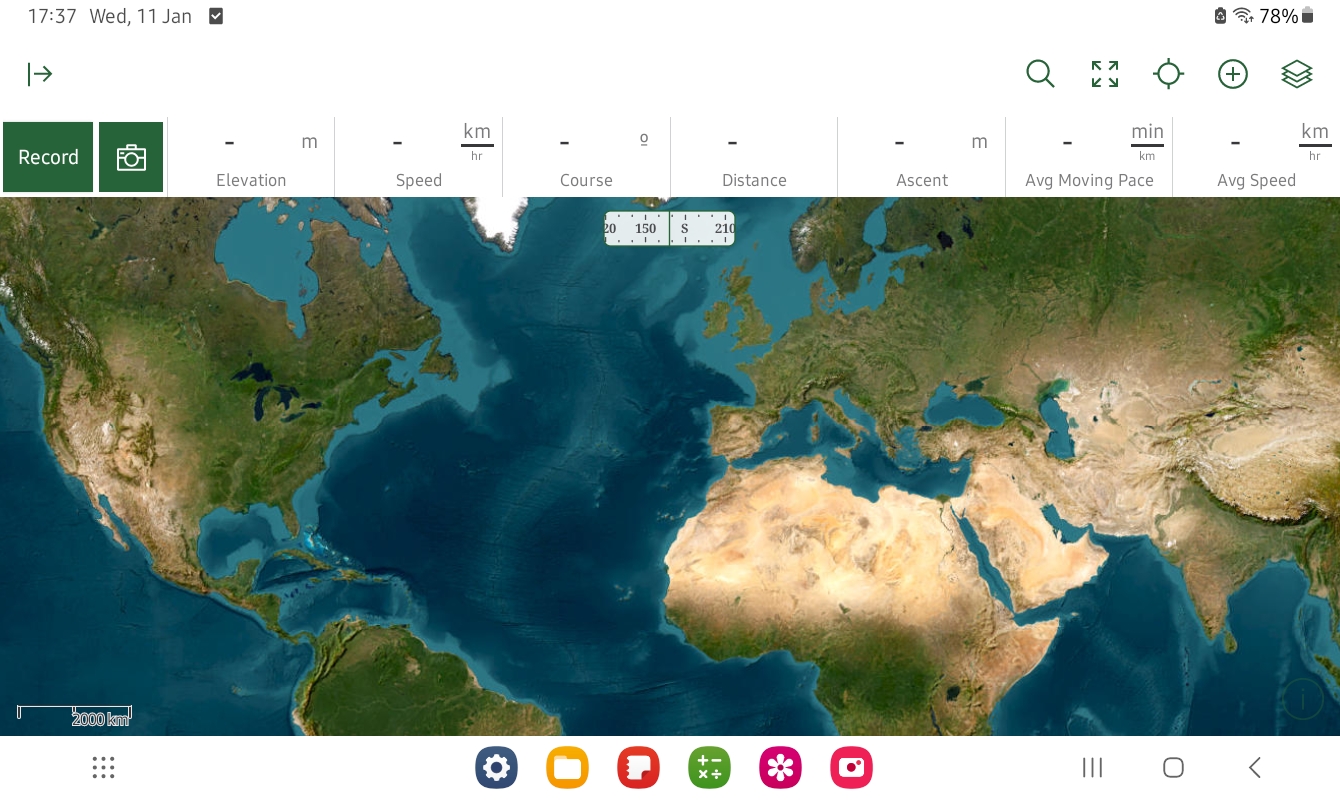
Luscious sat imagery offline – who’d have thought

Using Gaia
Note: it is possible I’ve yet to fully get to grips with Samsung and Gaia. I worked all this out by diving in and flailing around like a beached haddock; a good way to test how intuitive it all is. Pay your Gaia GPS subscription, log in and browse maps by one of four activities from the ‘Layers’ tab top right: Hiking, Overlanding, Pushbiking, Weather & Misc; there are at least a dozen maps for each. The selection is inevitably US-centric: see which best suits you. All you really need for Sahara is one good topo map and a satellite layer.
I chose the promisingly named. OSM-like Gaia Overland (metres) and World Imagery (© ESRI) satellite (find it under the ‘Hiking’ tab. I know ESRI often trounces Google in the desert). The other three sat imagery options looked less good. Sat is the layer you might want to zoom in on because, as mentioned above, the topo maps won’t be WYSIWYG, just an array of tracks added by OSM contribs with an inevitably sketchy hierarchy. The track you want may be in there among the clutter.
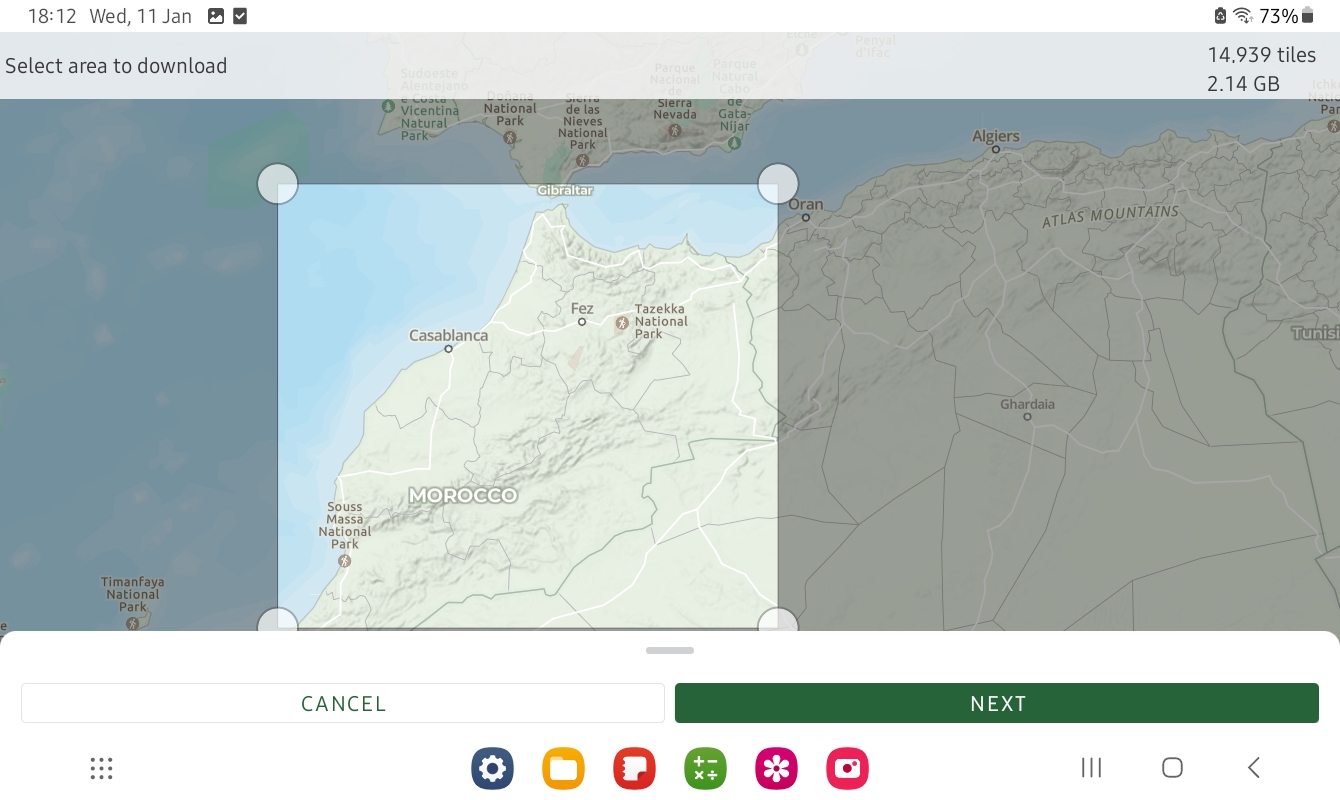
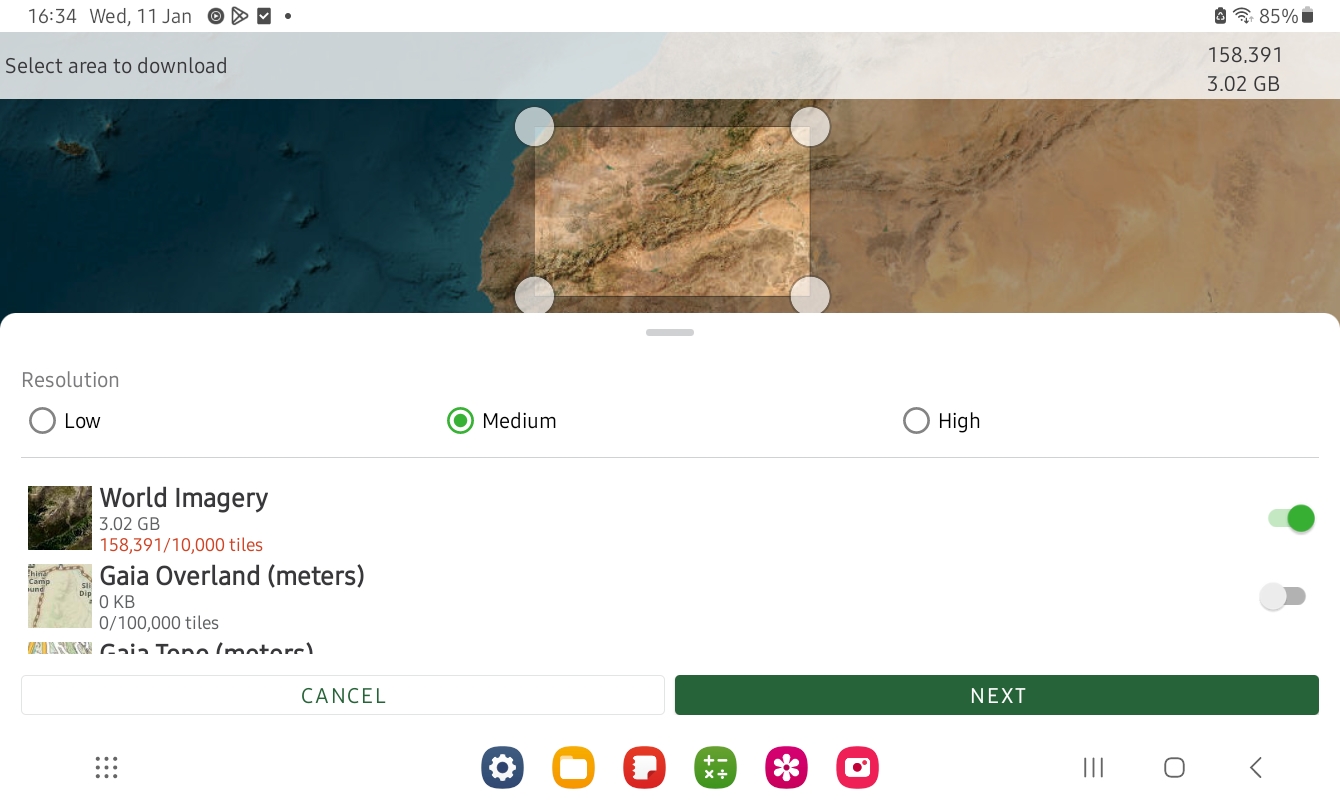
Then choose what maps you want to download so you can use your device offline in the hills. That is they key. Tap the ⊕ icon top right, choose ‘Download Map’, select a rectangular area and import, ideally into a folder if you plan to have loads of maps. As you can see in the examples above, the whole of Morocco in ‘Gaia Overland’ is just over 2GB, while a smaller area of ESRI covering about 15% of the topo map is 3GB. Full res ESRI covering the good bit of Morocco would have been getting on for 1TB. It really couldn’t be easier.
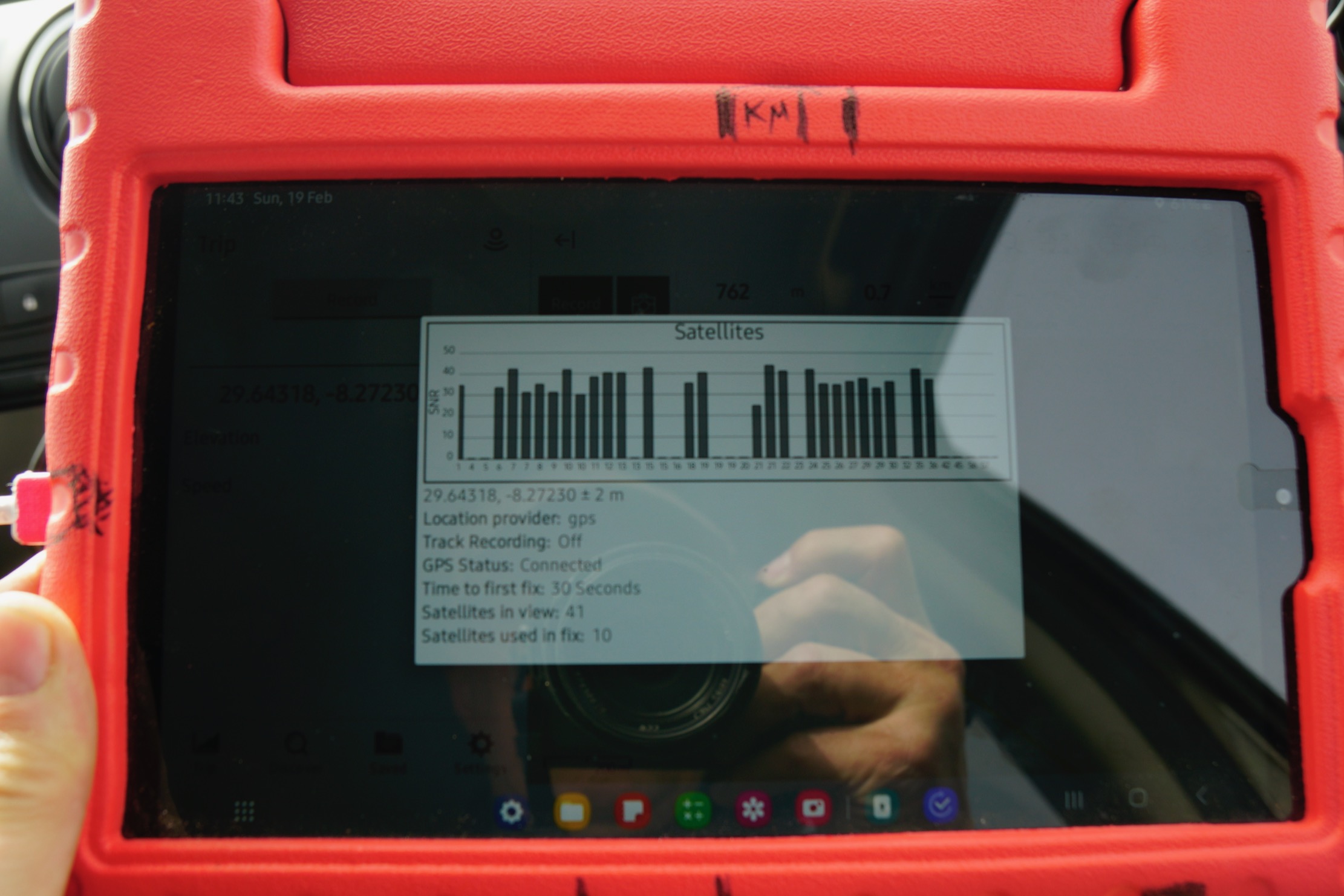
Satellites thicker than bugs on a bumper

Recording and saving a tracklog
I laboriously emailed myself ~50 pre-traced tracklogs to and picked them up off the tablet to import into Gaia. This and especially sorting them out took quite some time.
I was warned getting to grips with Gaia’s folders is the thing; it’s so much easier on a desktop computer. Loading the Garmin with the same was easier, providing all the .gpxs have been index-accessibly named. I know we’re all supposed to be smartphone savvy now, but around this time you realise what a great invention the keyboard and mouse were.
For most travellers that will do: pick up the tracklog you want and follow it; the Gaia Overland map is pretty good in Morocco. I’m a bit different in that I’m over-recording a new, live track plus adding waypoints with distances and take notes.
Recording a track is dead easy on Gaia: hit the prominent ‘Record’ tab. The Garmin’s track recording is another page so is more easily overlooked when you’re trying to get your shit together at the start of a new route. But in the Gaia app saving a waypoint for your exact current location requires pressing and holding the position arrow on the map; hard to do accurately with fat fingers and the car shaking about. On Montana you back up to Home Page, hit Mark Waypoint for where you are that second, then Save (and jot down the number). Map > Home > Mark > Save and back to map in just 4 taps.
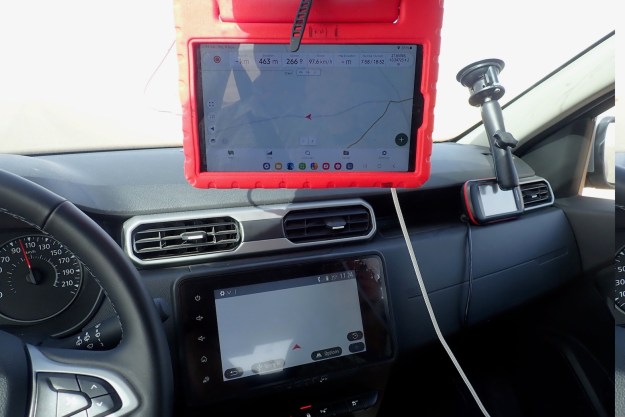
Gaia waypoints are annoyingly recorded as long (but I suppose unique) date and precise time, though I suppose they’ll all display chronologically somewhere. Also, I found a Montana suckered to the windscreen was easier to grab and tap than the propped up Samsung. I know with Duncan at times I had to stop driving so he could save and jot down. This can break the flow but is the age-old problem in doing this in a jolting fourbie. (Yes, I have thought of voice recordings).
Another drag on the Gaia is having to re-centre your location and the full screen map every time you do an input. And I wish the map scale bottom left could be made less opaque, or not opaque at all; same with the zoom buttons, though of course you can spread two fingers to do the same. Occasionally Gaia freezes and needs a restart, but my Montana freezes often and need the battery removing.
Later in 2023 I did two more scouting trips in 4x4s and found the Gaia detailed map on big tablet screen better for following, but Garmin 650 better for easy and reliable recording with minimal tapping faff. I recorded data with my trusty Montana, as I did on several moto trips, when also scouting tracks.
It took me a while to fully get the key differences between these two devices (see red/green comparisons above). One just does nav (plus a crumby camera), the other is an internetable phablet that does everything a smartphone can do, but nearly as easily as a laptop. Feet up, when the navigating is over, a phablet can come into its own. And once you’re back on wifi or 4G your recorded and saved nav data shoots off to you Gaia cloud automatically. Then catch up on the news, other emails, twitter off your photos or watch a movie.
Duncan said initially he took both Montana and Gaia iPad on his nav jobs, now he relies on the iPad. I suppose alone and travelling at my own pace, I could rely just on the tablet too, though on a bike it would need a secure or shake-proof mount somewhere.
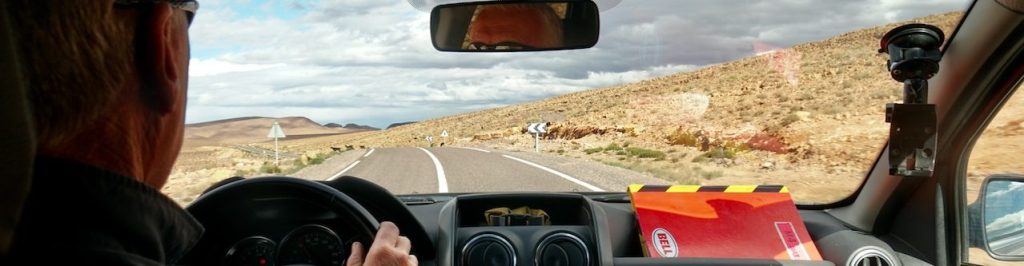
Update Algeria 2025 with Tablet and Gaia
On this trip I was passengering in a car, following roads mostly, but doing some off road and off piste nav to new places.
As always, loading and labelling your data beforehand (below) saves teeth gnashing in the field. I renewed my sub and downloaded huge slabs of Topo (1.25GB) and low-res Sat (250mb) mapping for offline use (below).
I also borrowed an InReach2 to display our position for those back home
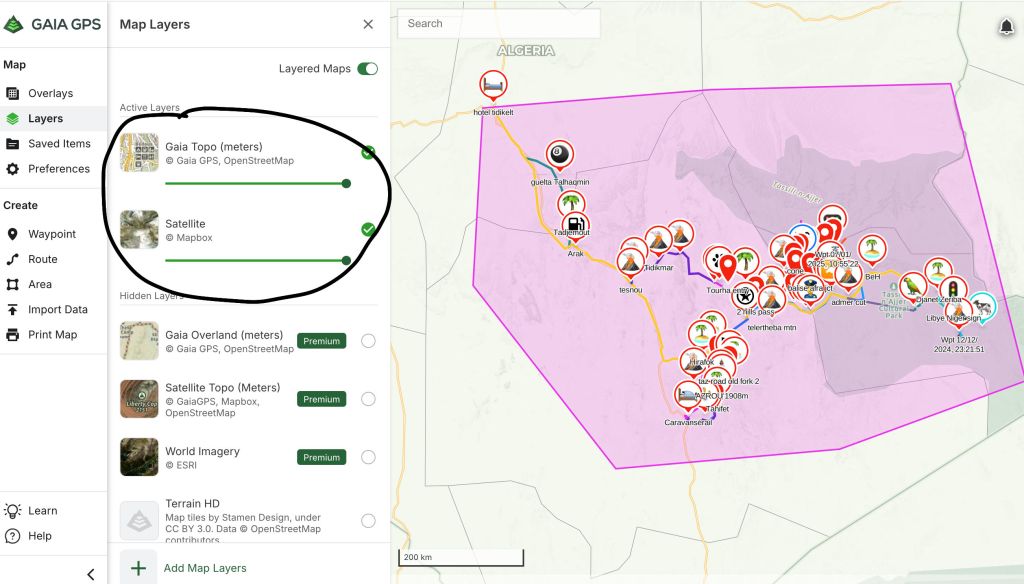
Screenshot

Gaia/tablet conclusions
• Can take 20 mins to work properly some mornings (not just getting a fix). A combo of tablet CPU and huge offline maps – or is it just Gaia? I suspect the latter
• Stops track recording out of the blue – could be me but annoying
• Great to use offline sat mapping – and the Topo map layer is pretty good for Algeria
• Imported track gets broken up into several segments. Annoying
• Next time will use a proper windscreen mount
• Would a Garmin 710i be the answer? Sat tracking/messaging included (so InReach not needed), plus a bit bigger and much brighter screen than 650 but still with good battery life? Only £700

For the moment the Montana is a reliable recorder, the Gaia tablet is much nicer to nav off.

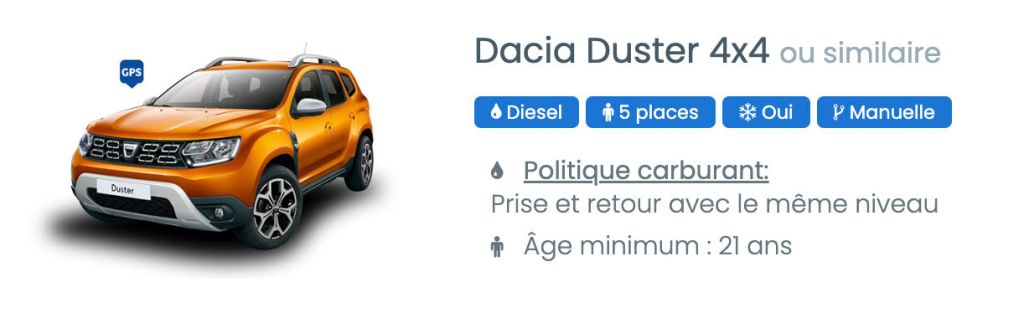
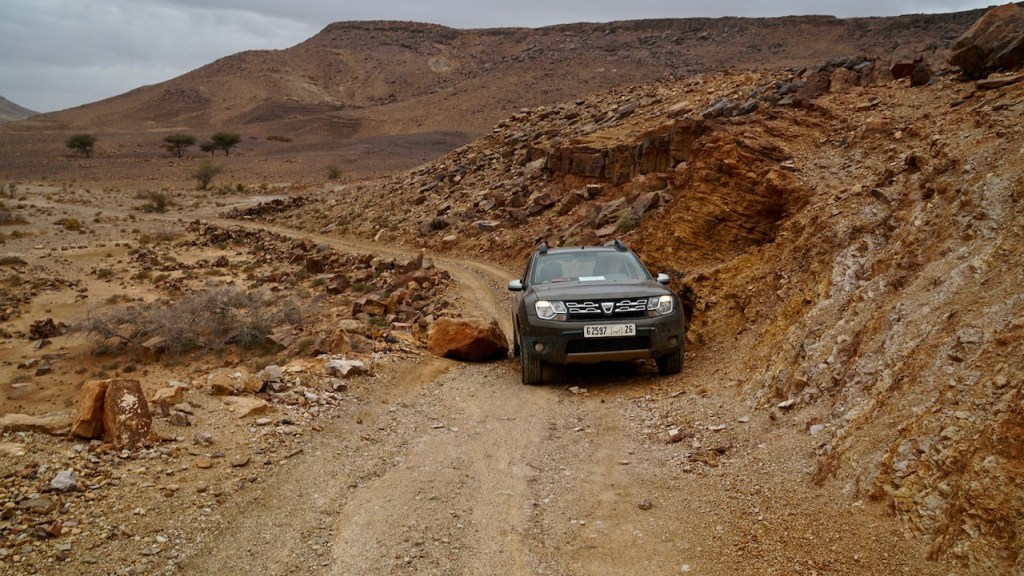
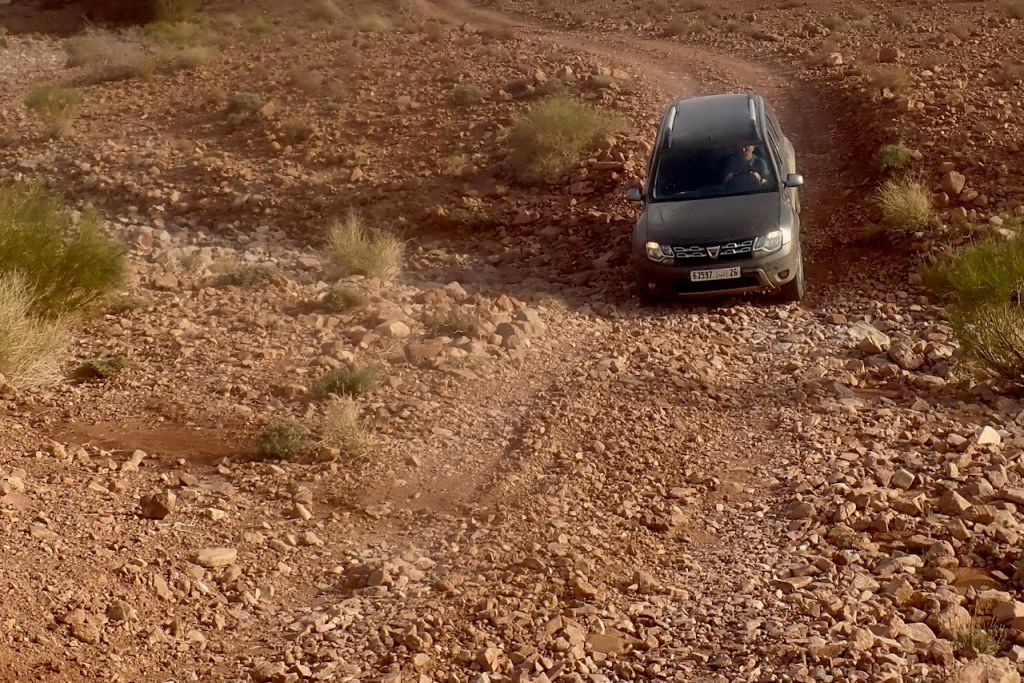
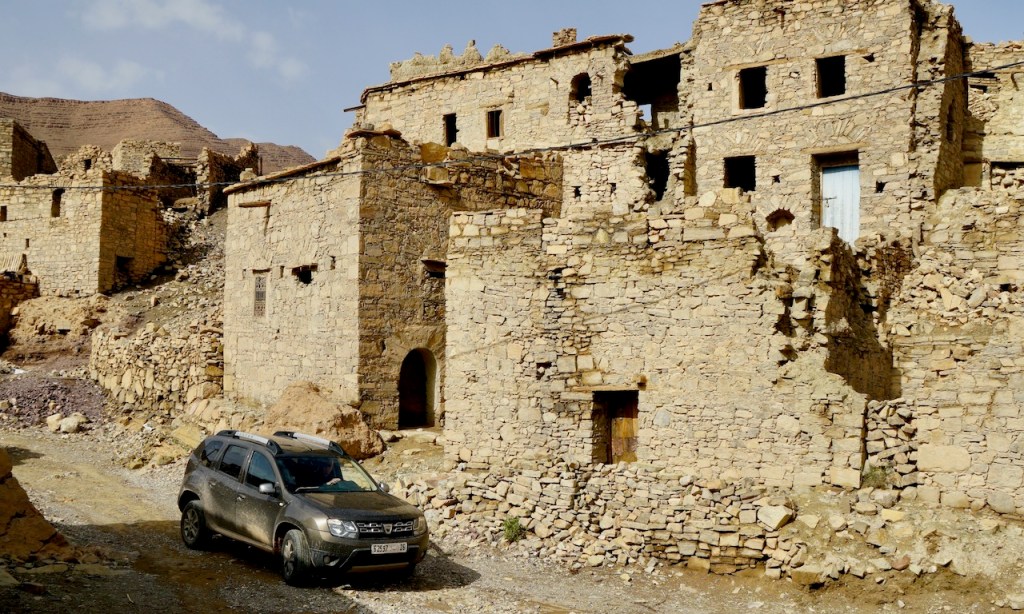
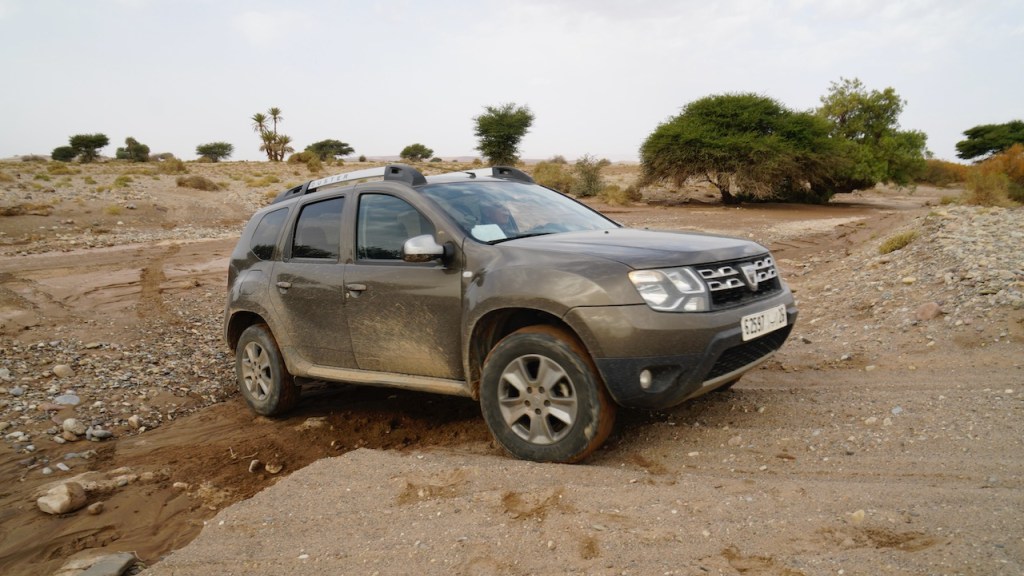
Morocco with Dacia Duster 4×4 rental

See also:
Toyota Prado TX rental
Duster 2 a few months later

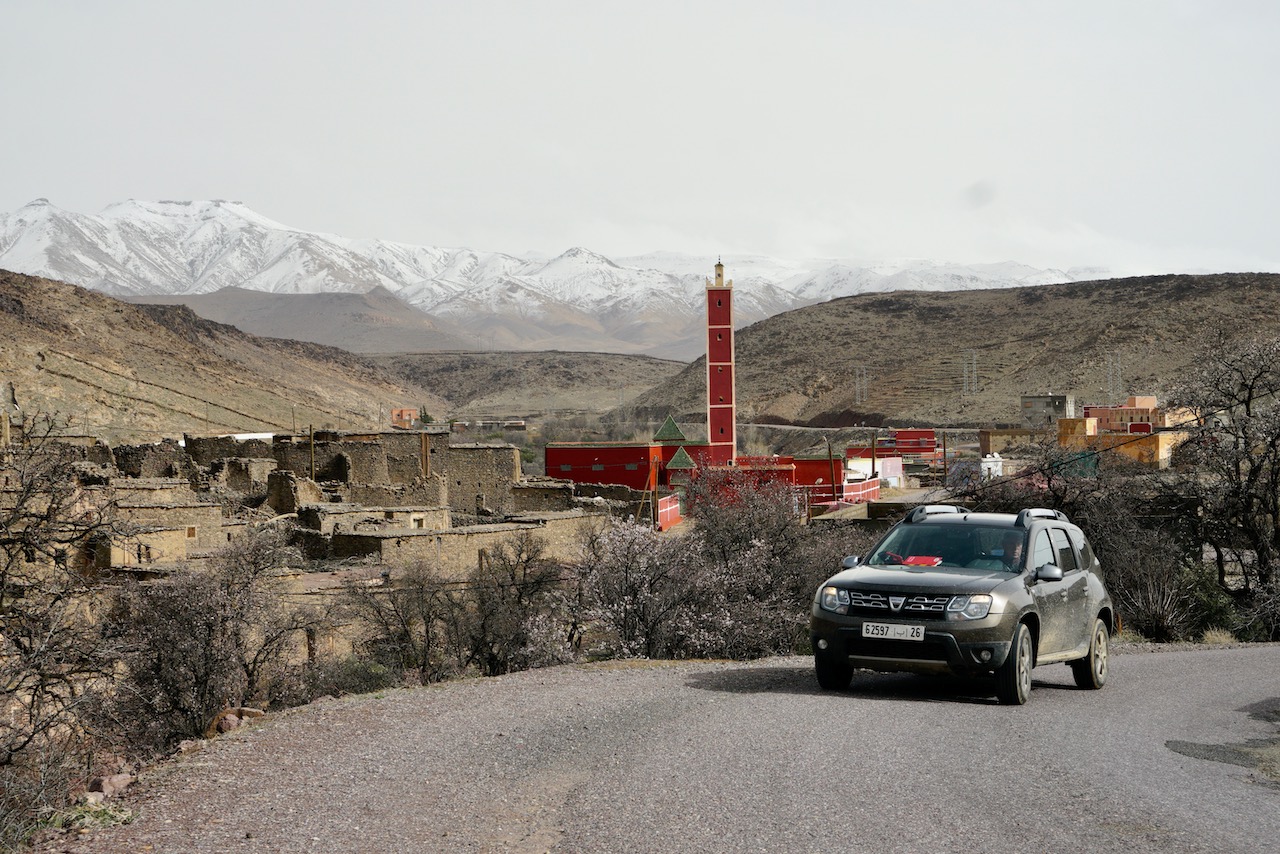
Drive around southern Morocco and you’ll see loads of Dacia Dusters. The Renault-owned Romanian brand has a factory in Tangier where Docker vans and Lodgy MPV taxis are also assembled. You’ll see those everywhere too.
After spending a week in a Prado TX (right; more about that job here), I rented a Duster from Medloc to start work on Morocco Overland IV with a pal.

Coupé, mon ami. Reculez-vous

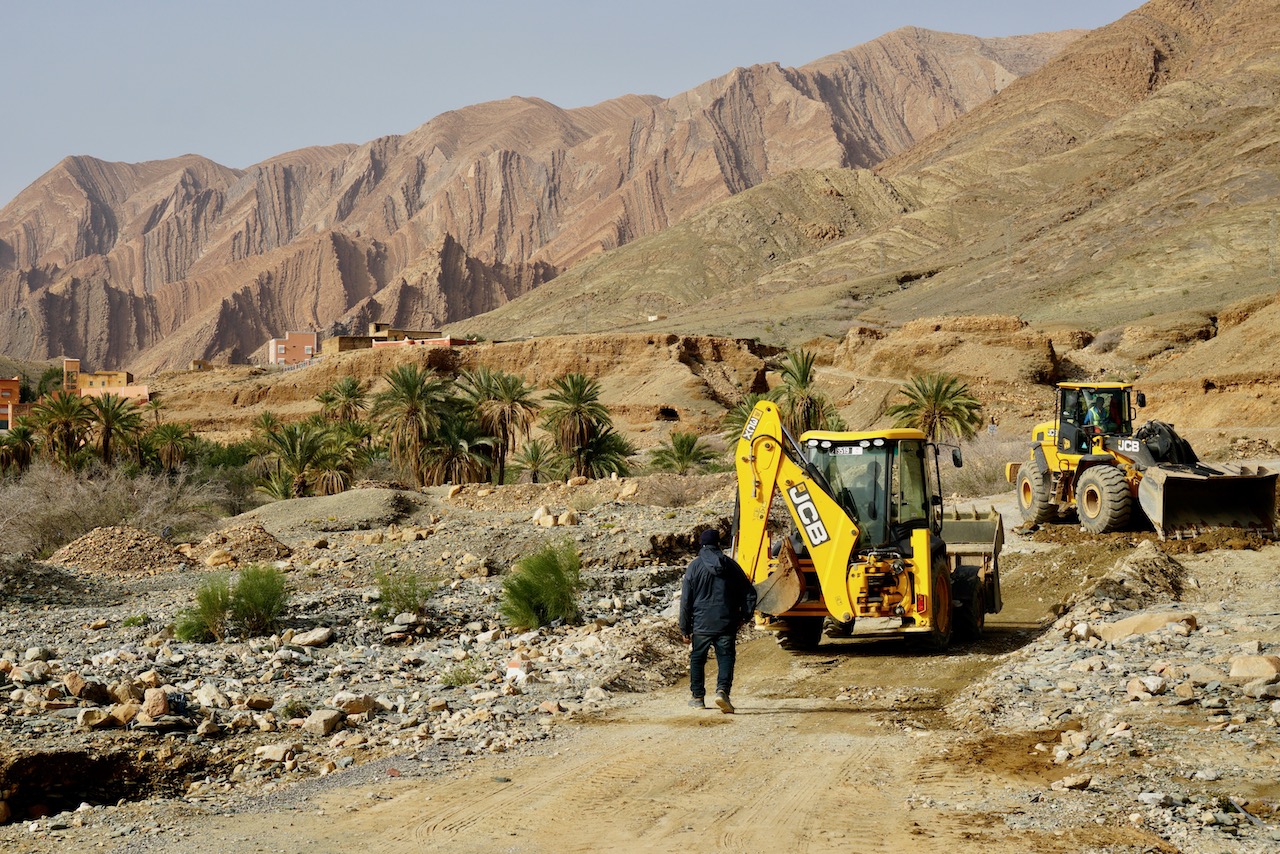
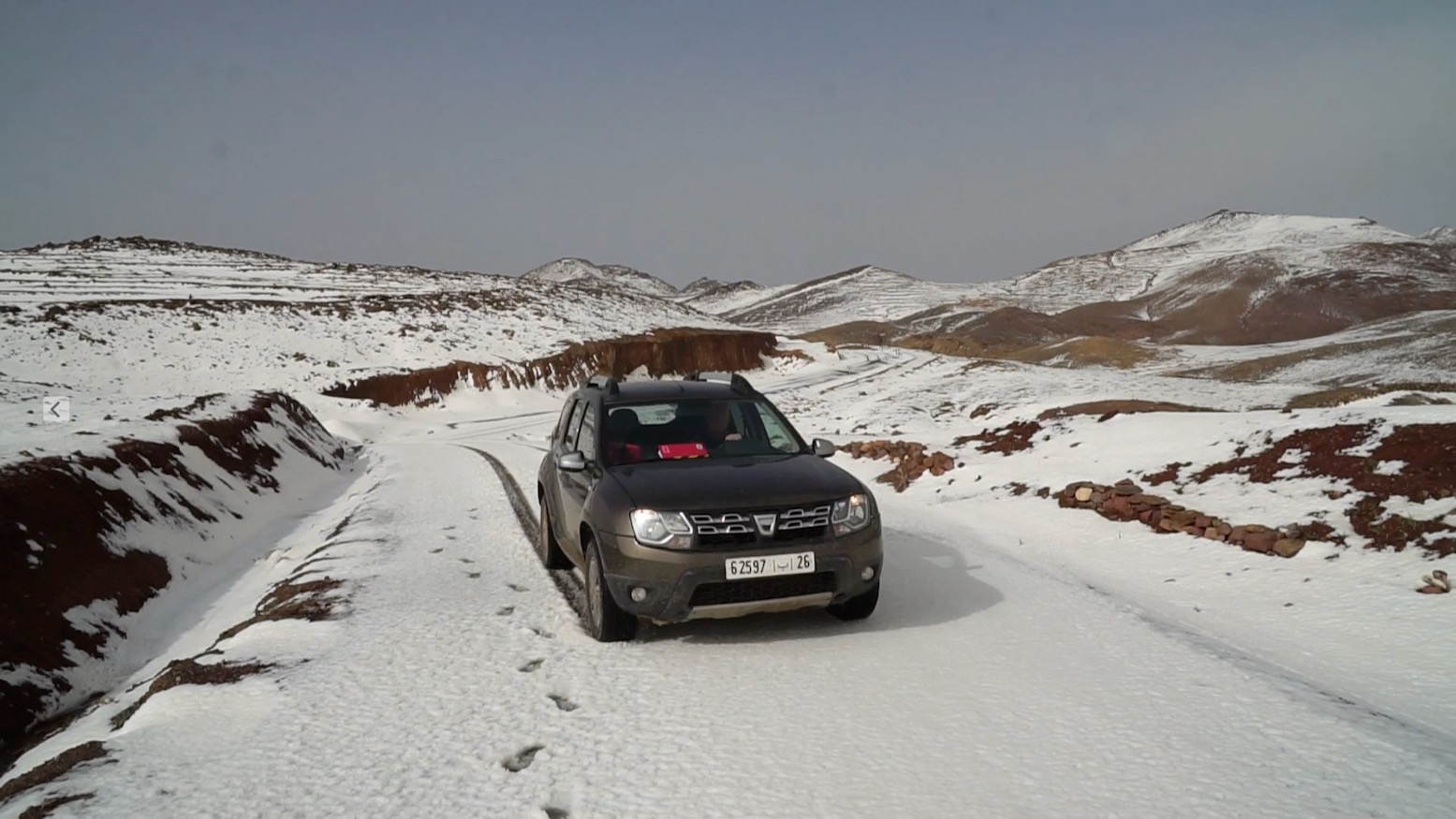
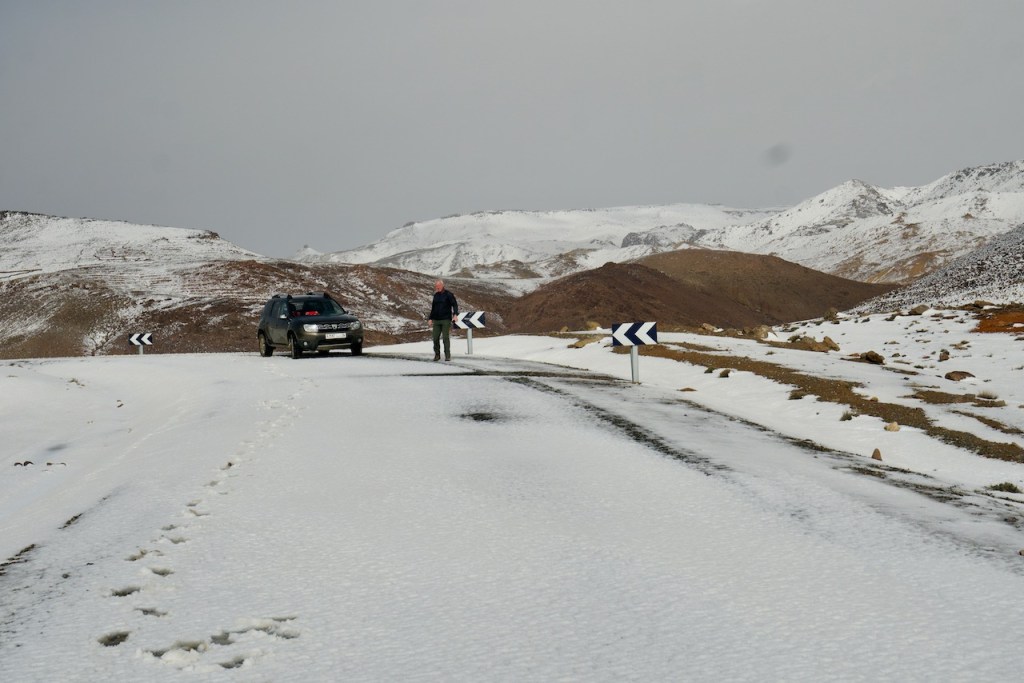
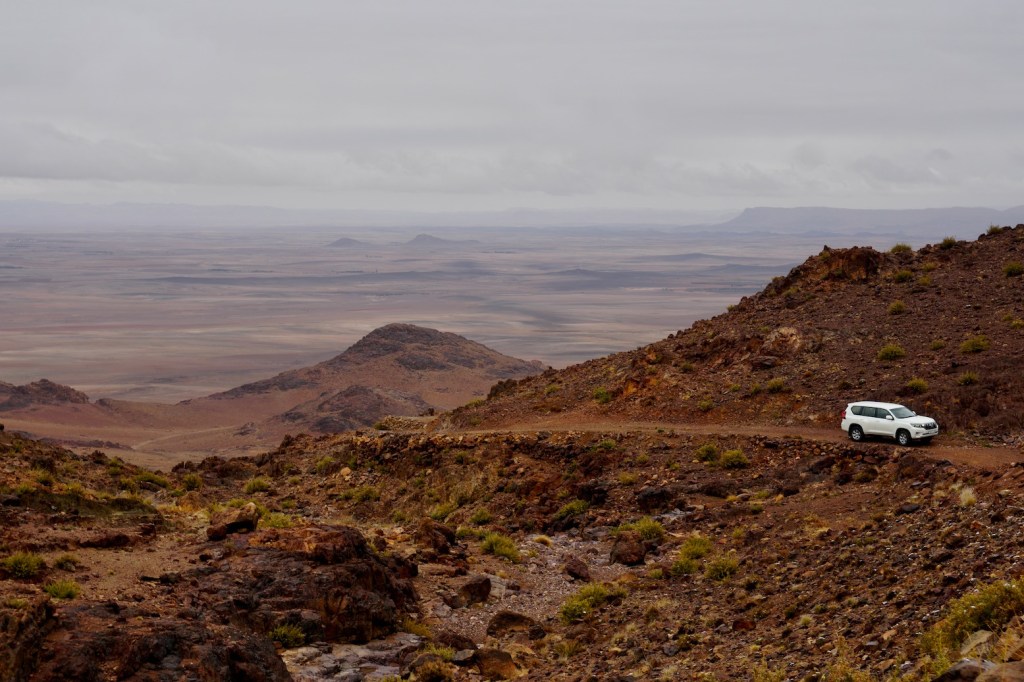
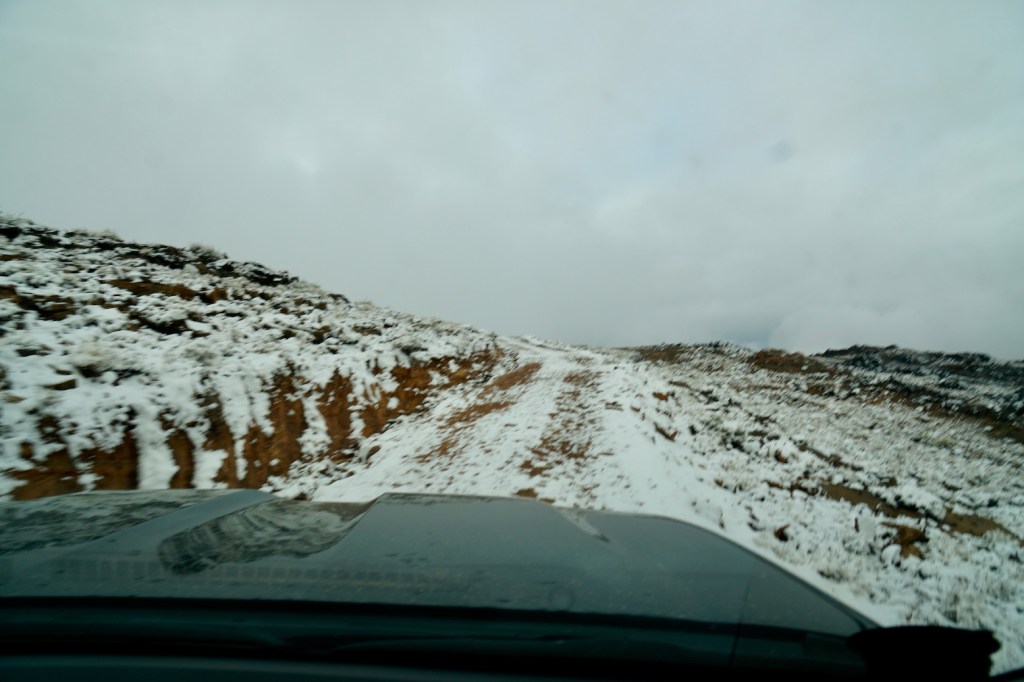
I’d spent the preceding weeks on Google Maps, Bing and BaseCamp, extracting a whole new tangle of routes right across southern Morocco, way more than I’d manage to cover in 12 days driving. Sadly my tally turned out to be even less than hoped when the weather turned during the Ineos job, ruining their route, snowing up passes down to 1800m and wreaking flood damage, landslides and transient floods across the land.

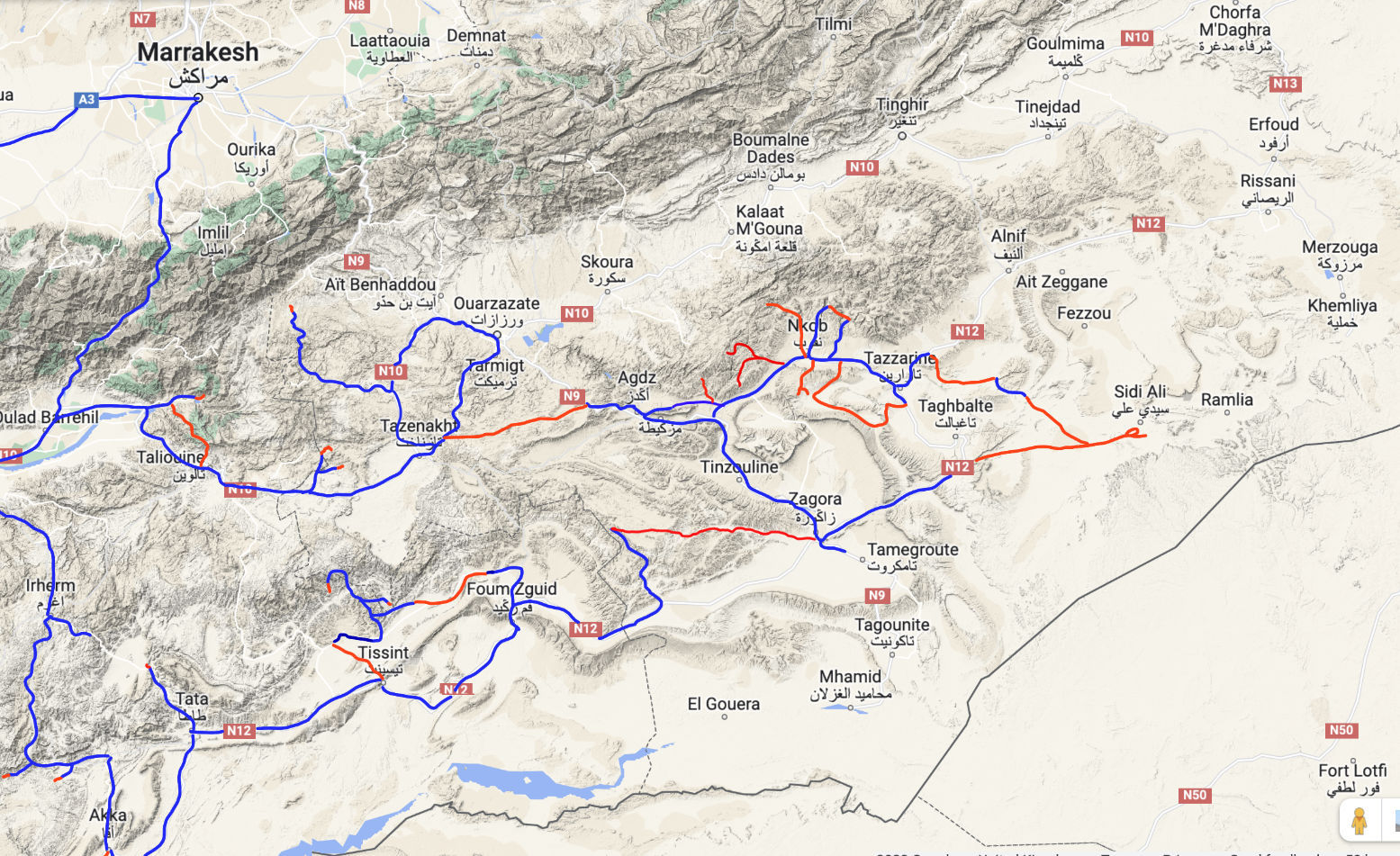
A network of discontinuous lines – c’est la vie.

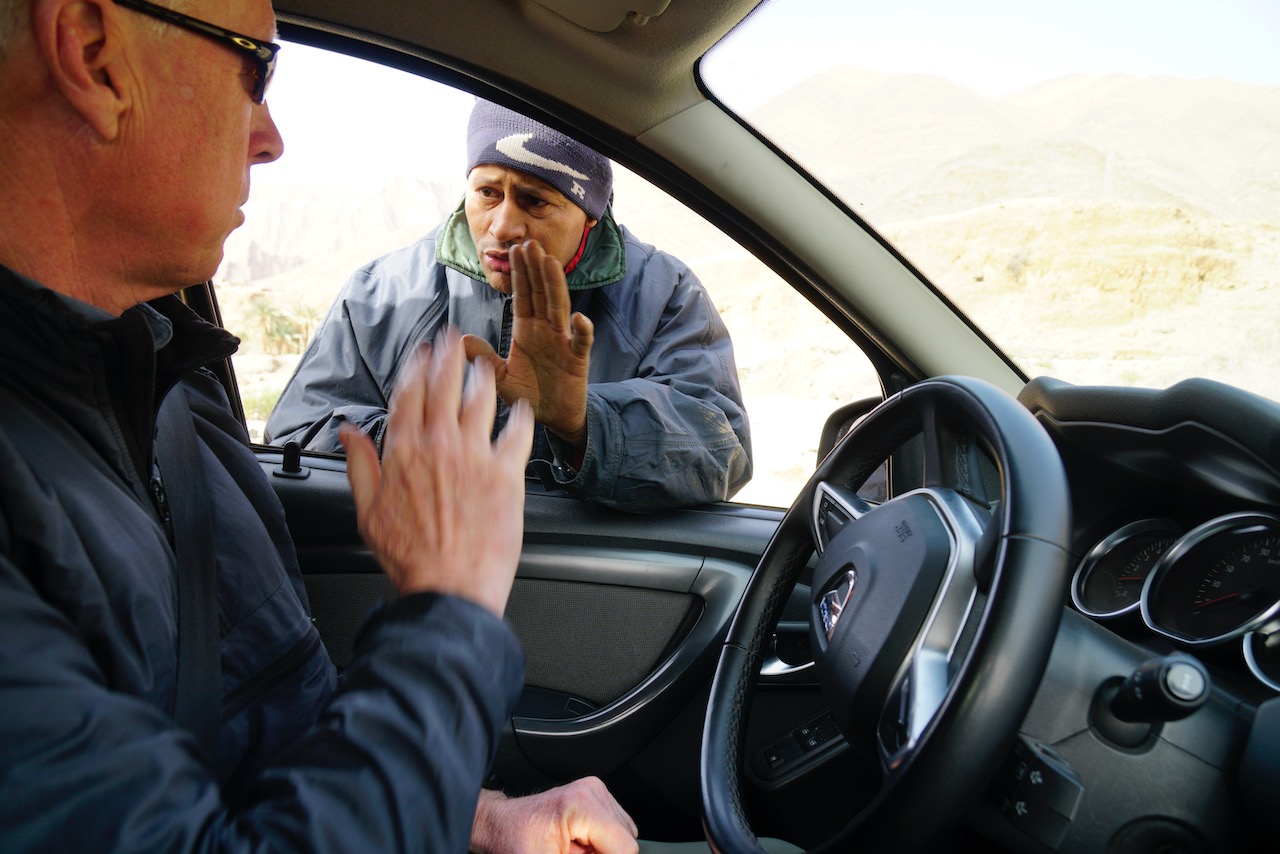
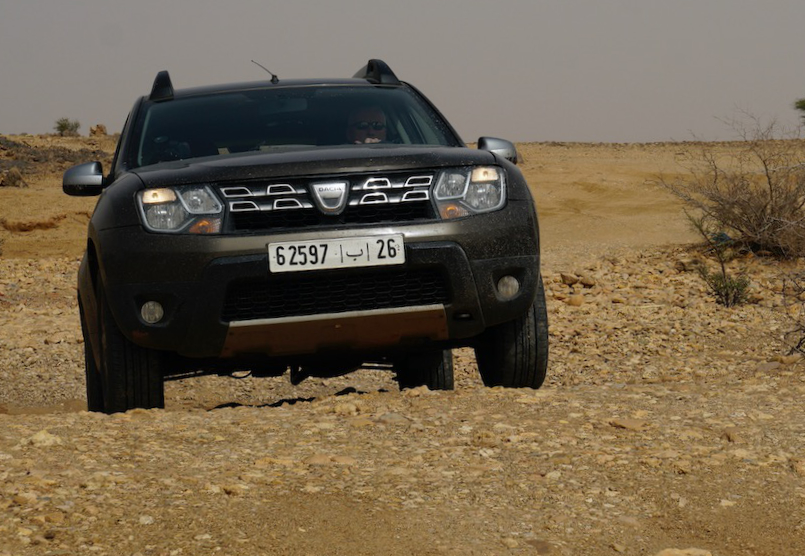
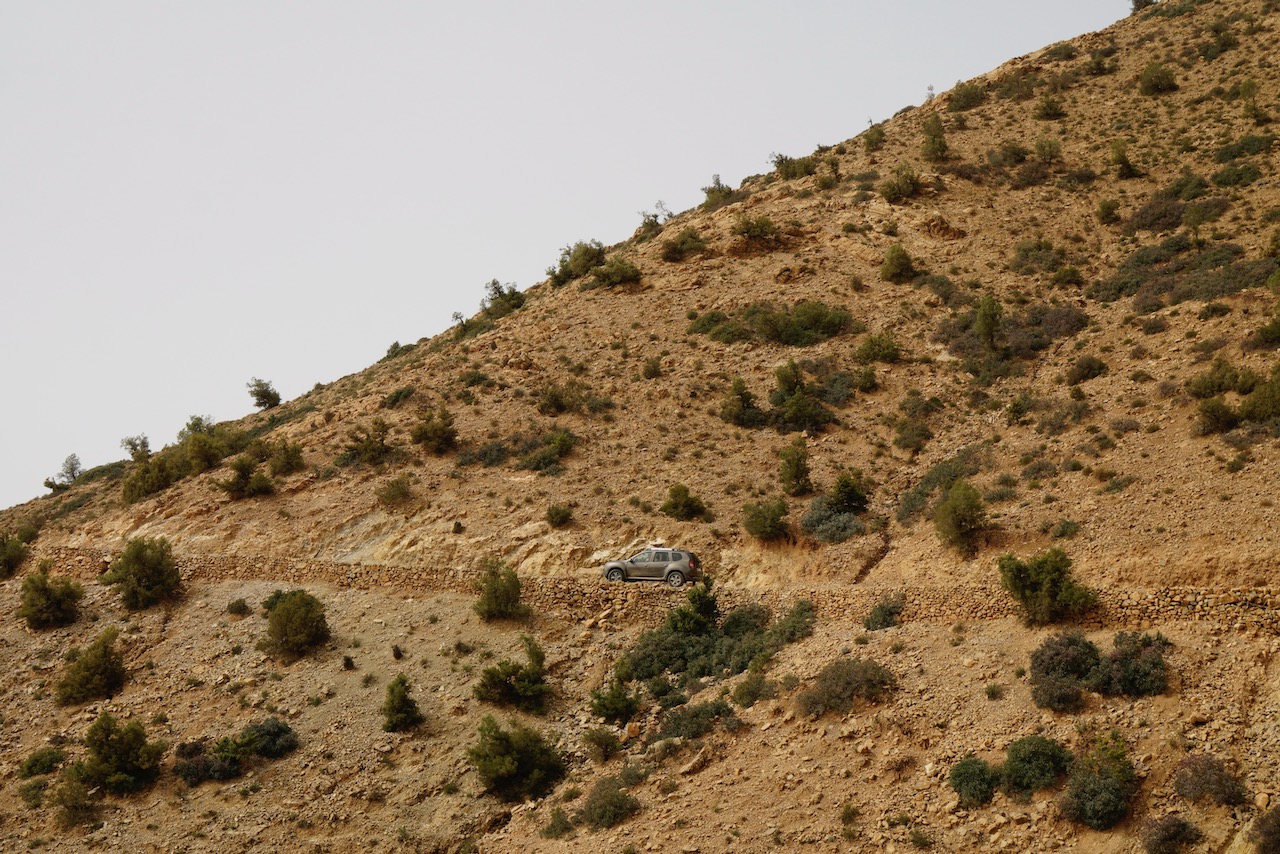
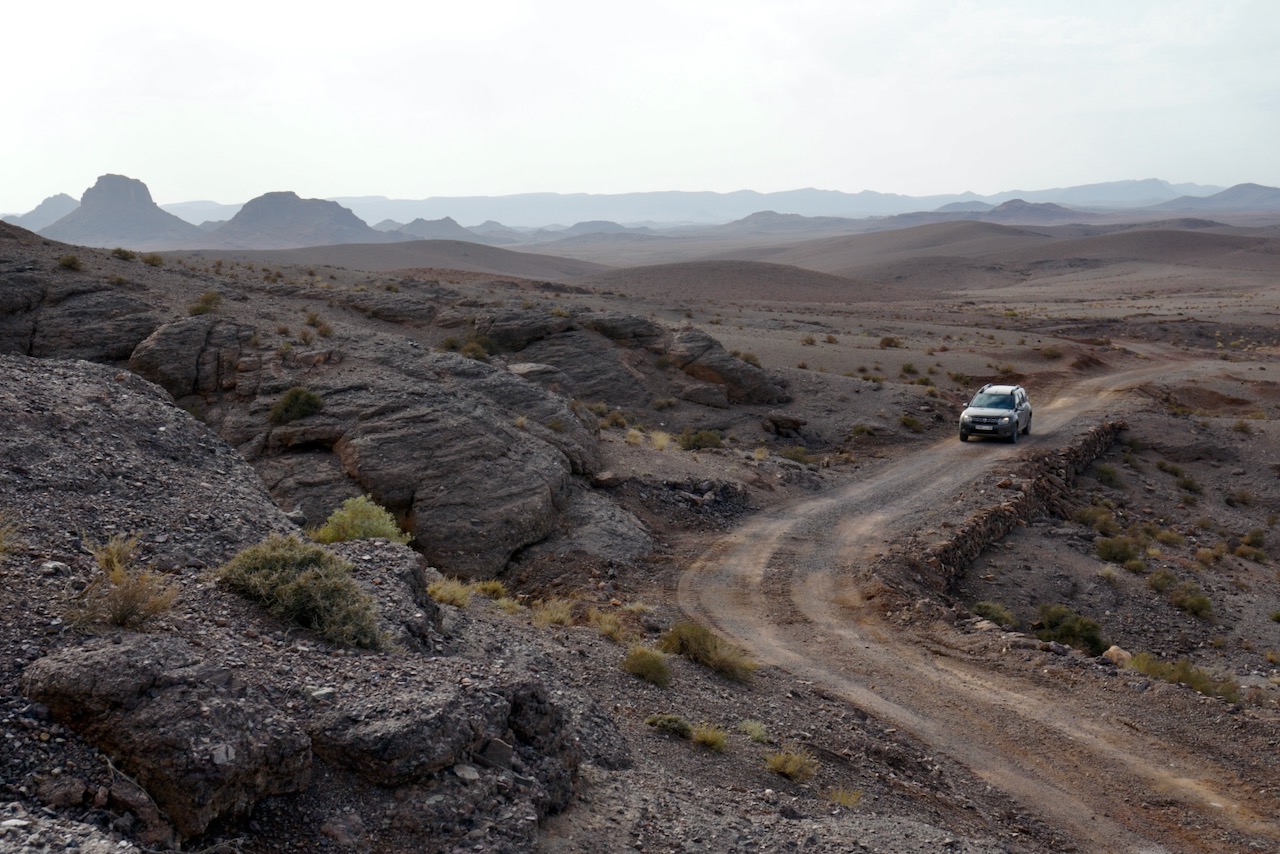
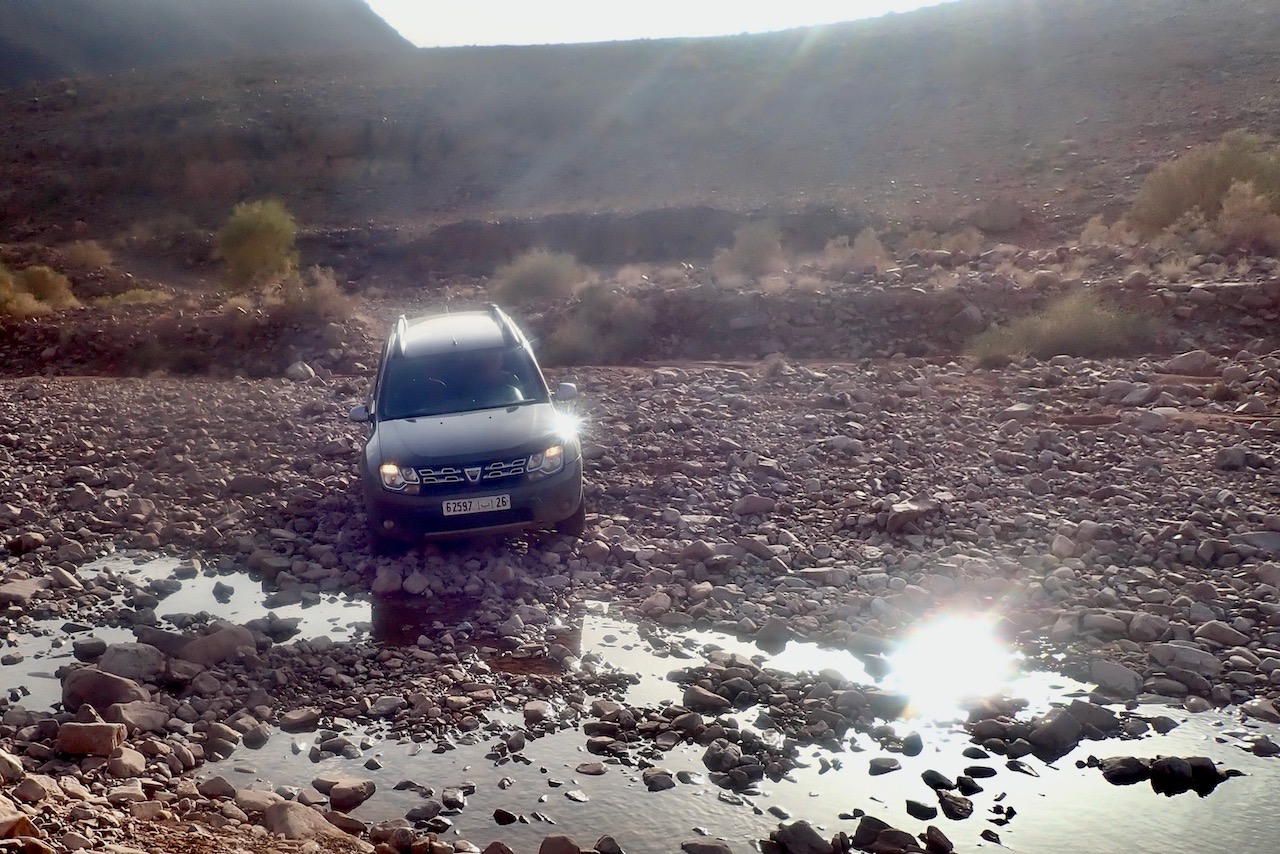
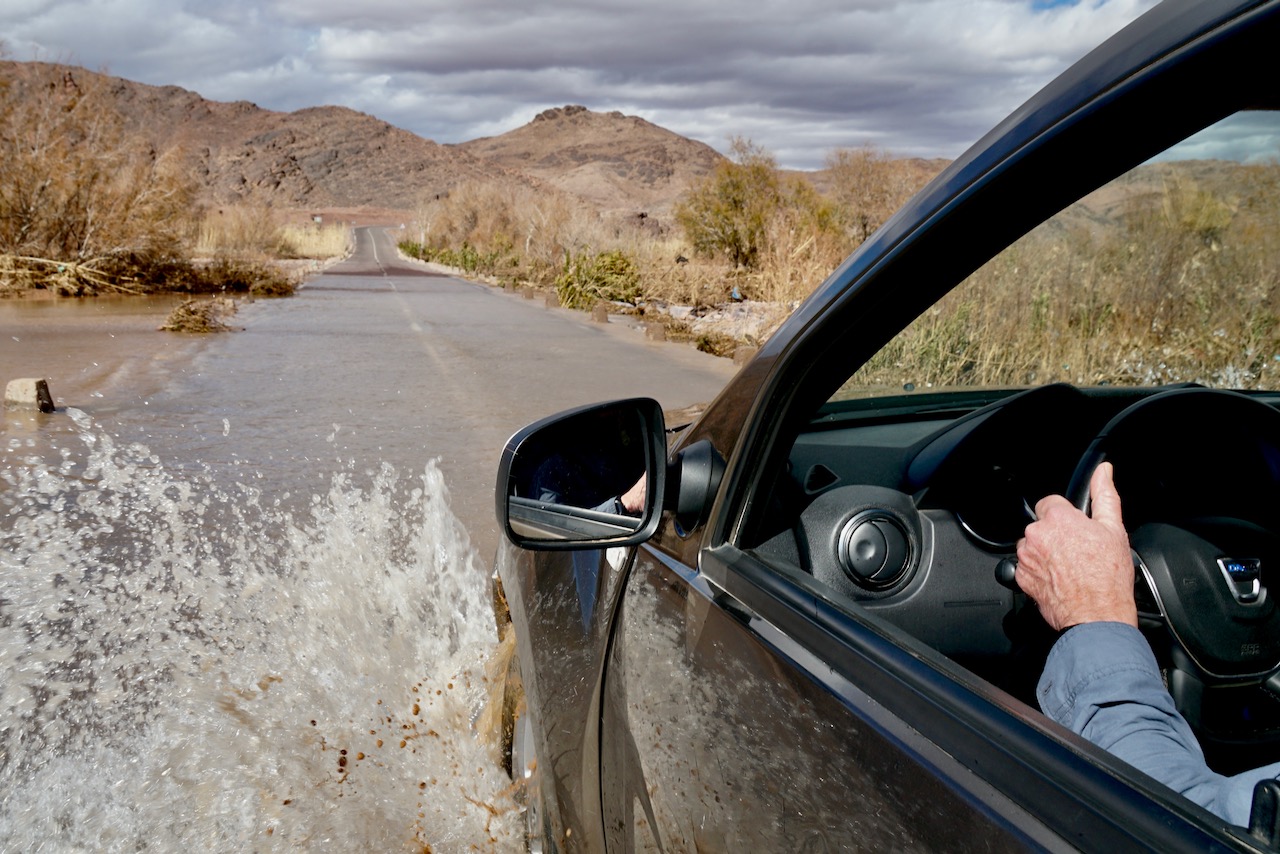
With many normally bone-dry rivers still flowing I knew we wouldn’t achieve much in the Dacia but we went ahead anyway; no recce is totally wasted. On the very first day we were snowed back then blocked by a churned up oued and rerouted by a closed mountain road. On the second day (left) we had to turn back three times before lunchtime! We settled into this pattern for the next week or so, probing, turning back and covering about 3500km (map above).

Renting a Duster in Marrakech Airport [RAK]
I’d rented from Medloc in Marrakech years ago but it can still feel a bit sketchy to a first-timer. Unlike Avis, Hertz, etc, Medloc and other Moroccan rental agencies don’t have a cabin office in the Menara airport car park, a 3-minute walk from the terminal. Nor might they meet you with a sign as you come out of Arrivals (not me at least, but I was there already). I had to call them and tell them where I was, using a car park place number.

Next: do not expect your freshly valeted car to be there waiting for you. Two guys rocked up after I called but it was about a hour before our actual car, booked for 11am, turned up. It’s not just me; the week before a ‘executive/prestige’ rental outfit dicked us about for even longer sourcing a second Prado which had been booked well in advance. And this was a multi-car job worth tens of thousands. Note that Dusters come as 2WDs too; make sure you book the right one!
Our car was a little dinged and repaired here and there but with seemingly good tyres (as requested), a similar spare and the all-important jack and wheel-changing tools (always check these; half the Prados’ jacks were missing). I’d make a show of checking the oil level while they watched
too; it shows conscientiousness (ours looked like Brent crude).
I paid the rental fee on a portable card reader: €65/day plus a deposit of €1500, same as we do when renting bikes from Loc. Basic 3rd party insurance is included; no other damage waiver insurance was offered. I signed various forms, the pouch of documents went back in the glove box and we were asked to return the car with the same four bars on the fuel gauge.
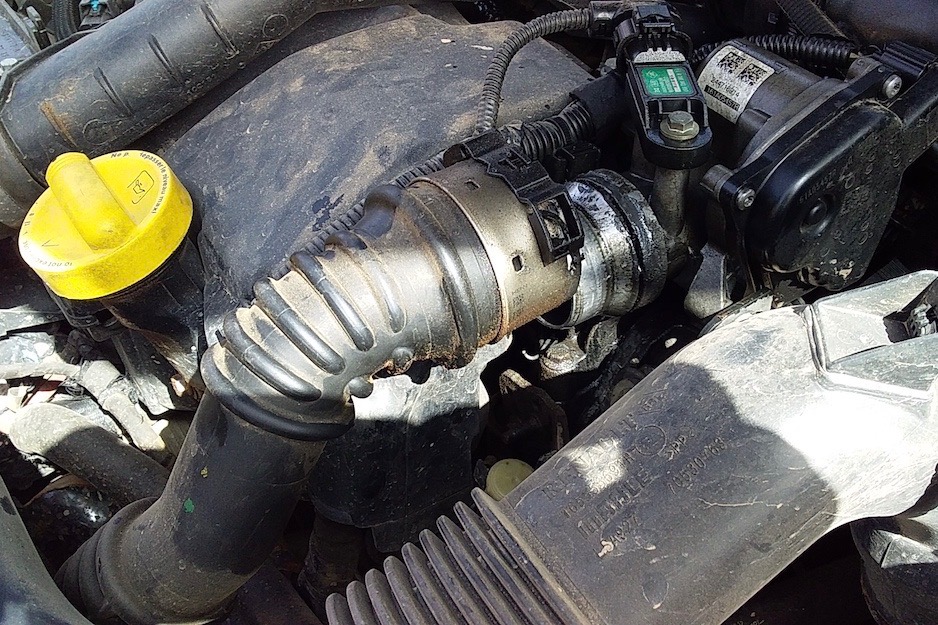
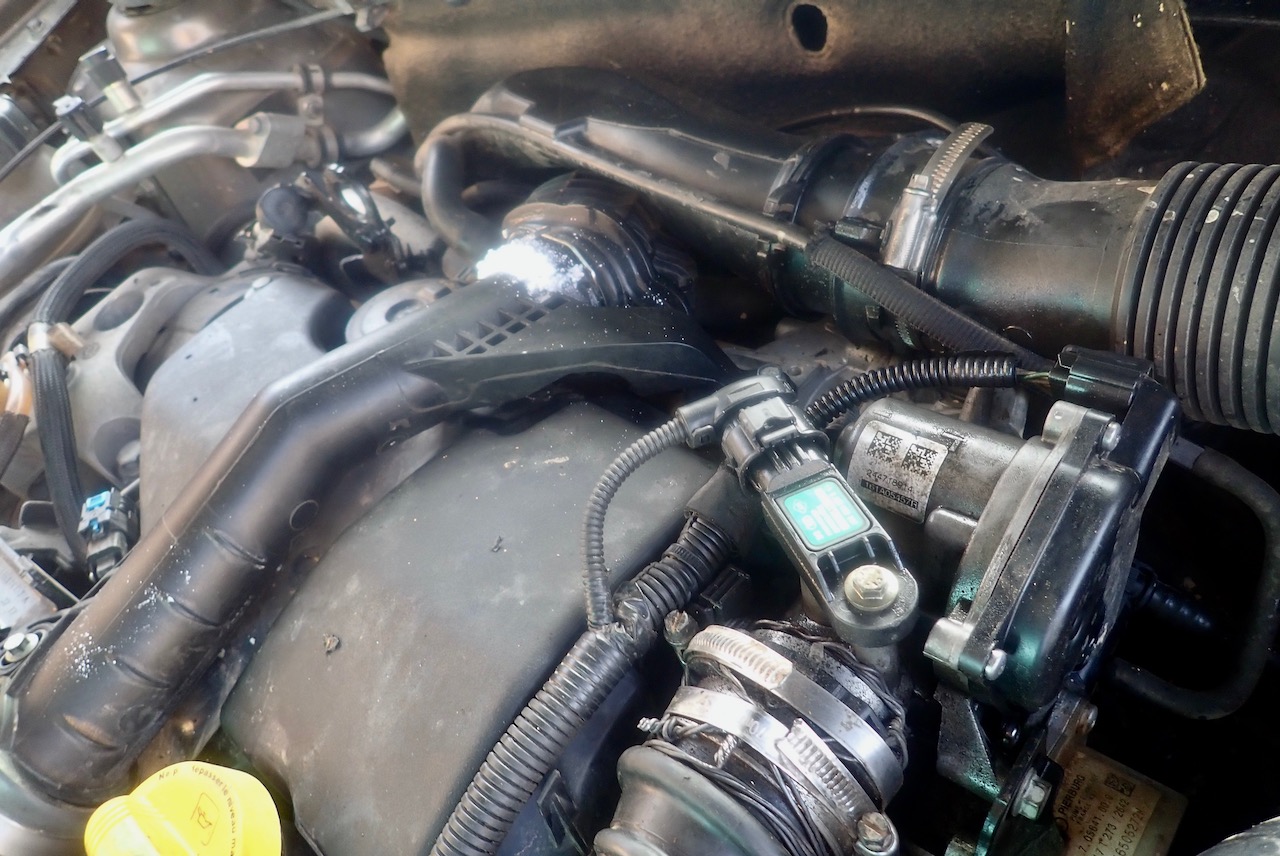
On returning the car another call identified my location in the airport car park. People turned up fairly swiftly; checked around the car, asked about the bodged repair to the turbo hose (see below), made some calls and unexpectedly even
refunded me the 200D I’d paid for the repair with no receipt then signed the car off. There was no cancellation of the €1500 deposit; he said he’d email me later with it (he didn’t). This was unnerving but checking my bank statement that evening, it seemed it had never been taken in the first place while the full rental fee had. This was similar to a moto I’d once rented off a trailer by the roadside in central Marrakech from M2R using a wifi card reader. It all felt sketchy as hell but panned out too. Even where possible I try to avoid using my card in Africa – cash for the rental and deposit is an option with Medloc.

Lessons learned: go ahead and use your 4×4 to its full ability on Moroccan tracks but make sure you have a number to call and try it before you get in trouble. Alone in a smoking Duster with over 100,000 rental kms, you may want to constrain your off-roading ambitions. Some places we drove would have been a near impossible recovery but don’t assume they’ll come down with a replacement if you car breaks down. They may suggest you try and get it fixed locally. I’d also bring a good tyre compressor. I’d also considered blagging a couple of planks somewhere for bridging as well as traction, although rearranging rocks, kicking away oued banks and on soft terrain
stopping early and deflating did the trick.
I note that Hertz at RAK also rent Dusters. Renting with Hertz ought to feel more reassuring, but only if you get a proper 4×4 Duster (which don’t come as automatics in Morocco).

In a line
Prepare to be surprised with what you can manage in this light, all-terrain SUV.

 • You can feel how lightness helps
• Great end clearances – never touched on some steep banks
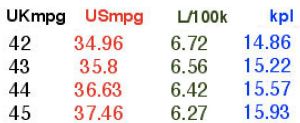
• Recorded up 45mpg (16 kpl), that’s a 750-km range
Nippy enough on southern Moroccan roads
• Suspension pretty good for what it is
• Had air-con and sat nav (but not the best)
• I didn’t miss Low Range much
• Road tyres worked fine up to a point when ATs wouldn’t have been much better. No punctures
• There is some underside protection
• There were fewer electrical faults (none, in fact) on our Duster than some of the Prados with similarly high rental mileages

 • Underbody clearance is lower than it looks over central track humps
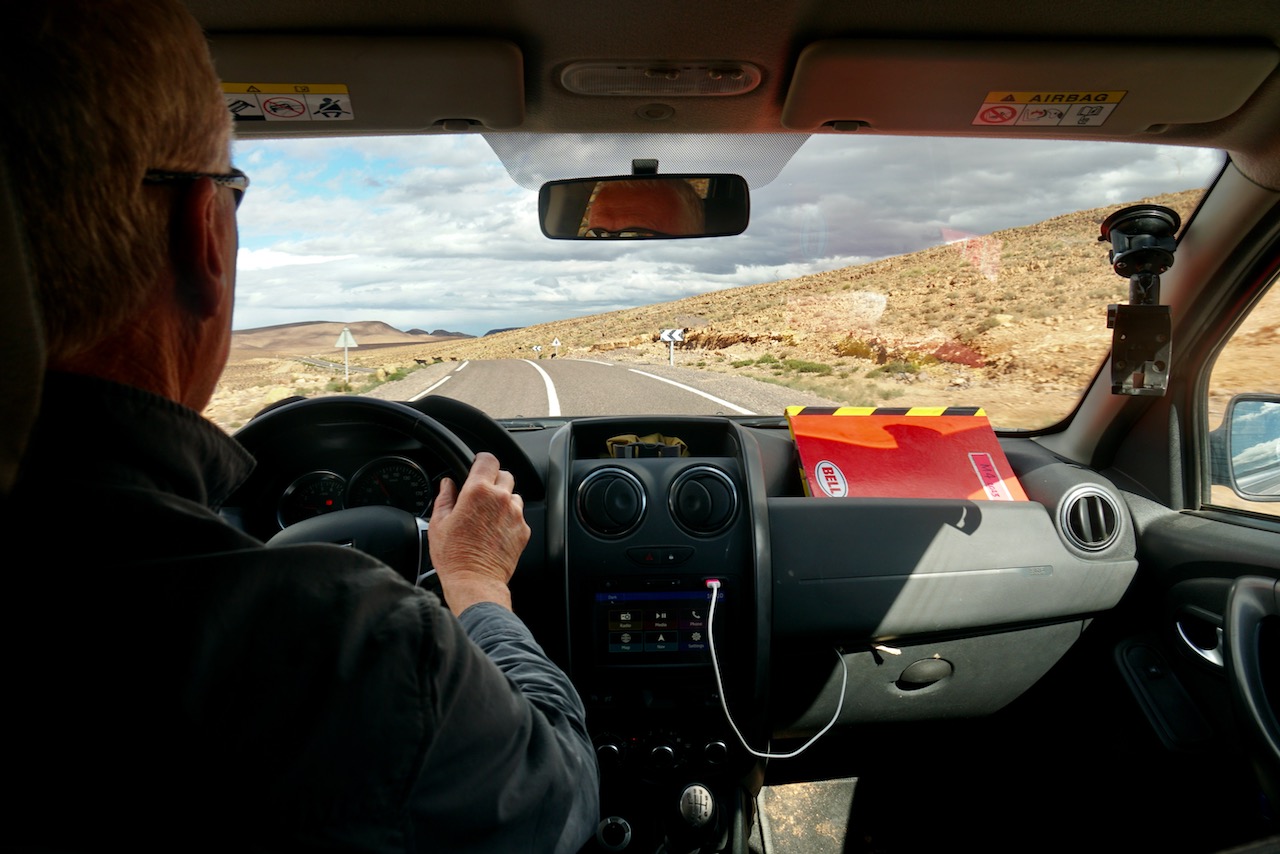
Lame air-con and hard to see sat-nav
Clicking noises under power from the back diff on loose surfaces; an LSD working or transmission wear?

DACIA DUSTER
Le Doustaire is a budget SUV going from an amazing £15k new in the UK. I’ve long been impressed by its unusually functional angles and clearance – as good if not better than a stock Prado. In my experience, along with appropriate tyres, for off-roading good clearance is the first priority, followed by 4WD and good articulation (suspension range) or traction control, and finally low range. Plus a snorkel.

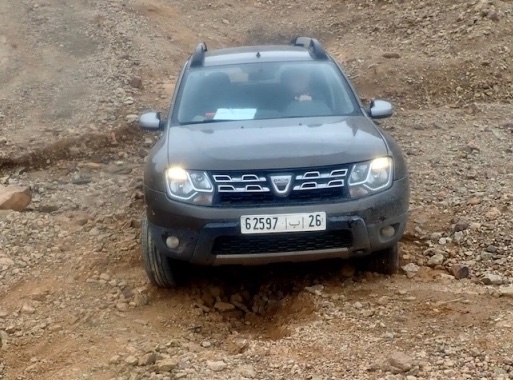
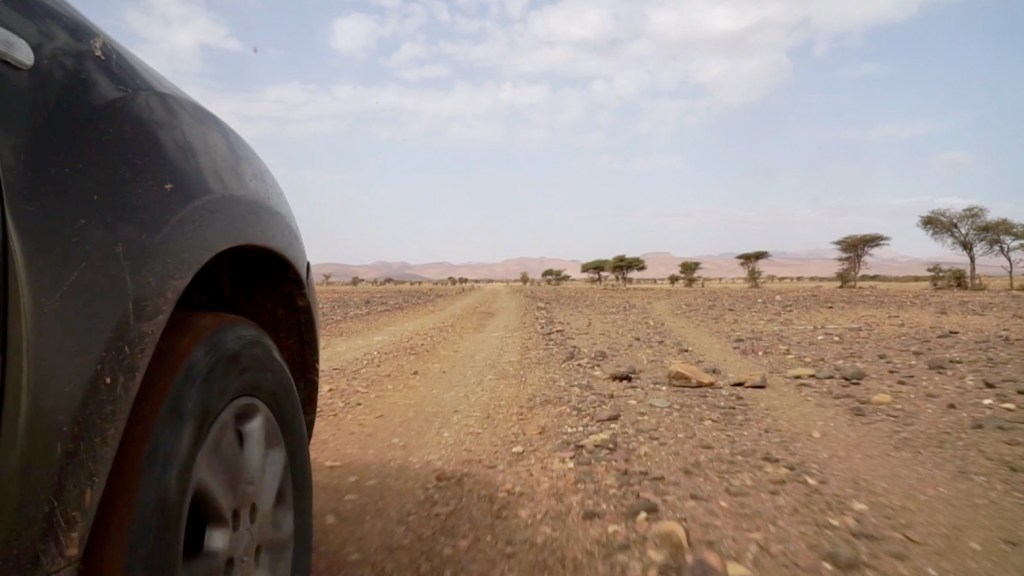
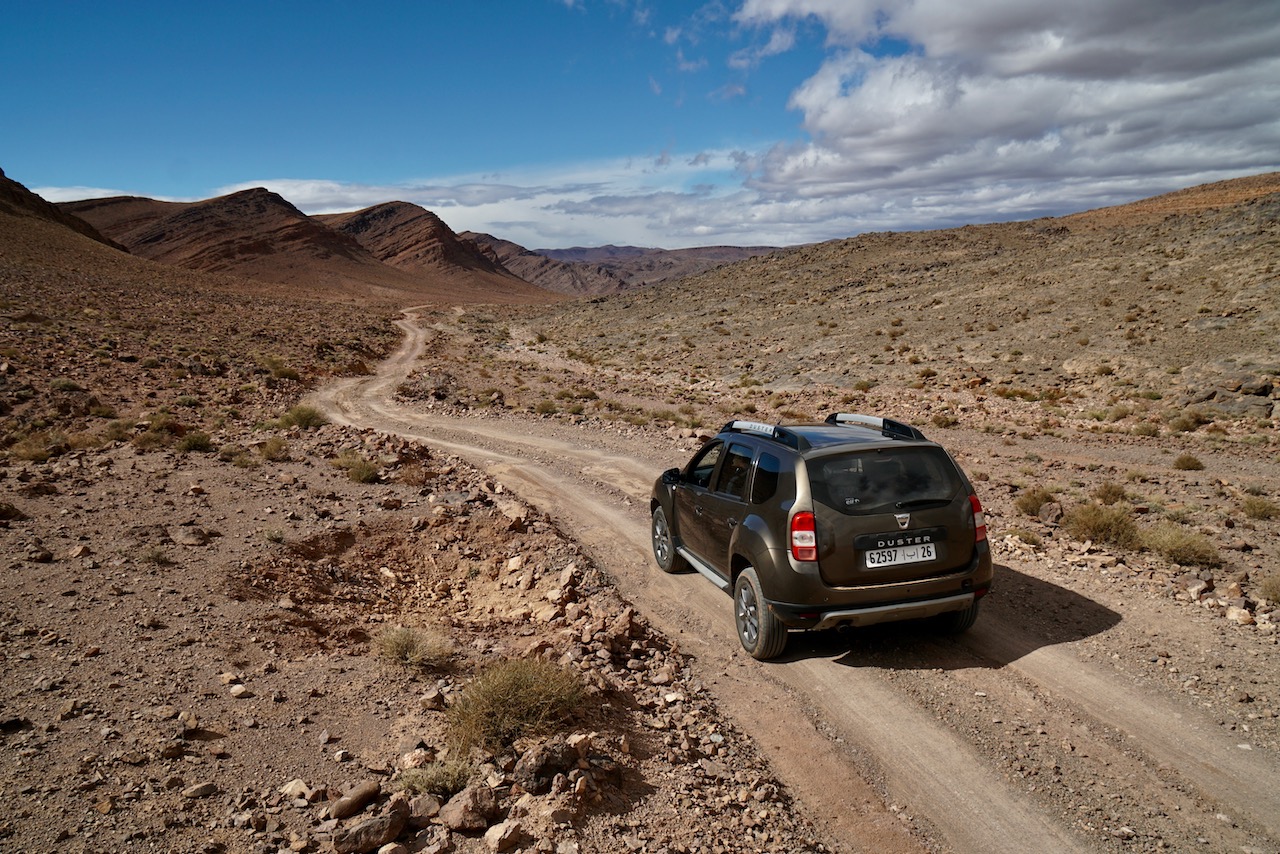
The 4WD Duster has six speeds but no low range, just a low first gear – though it doesn’t feel that low to me. I’d outlined my intended use to Medloc and asked for good tyres and that I didn’t mind a well-used example so long as it wasn’t black. At Menara we picked up a bronze 1st generation Duster a few years old with a Renault K9K 1.5dci, 85hp TD in 6-speed manual and 117,000km on the clock.

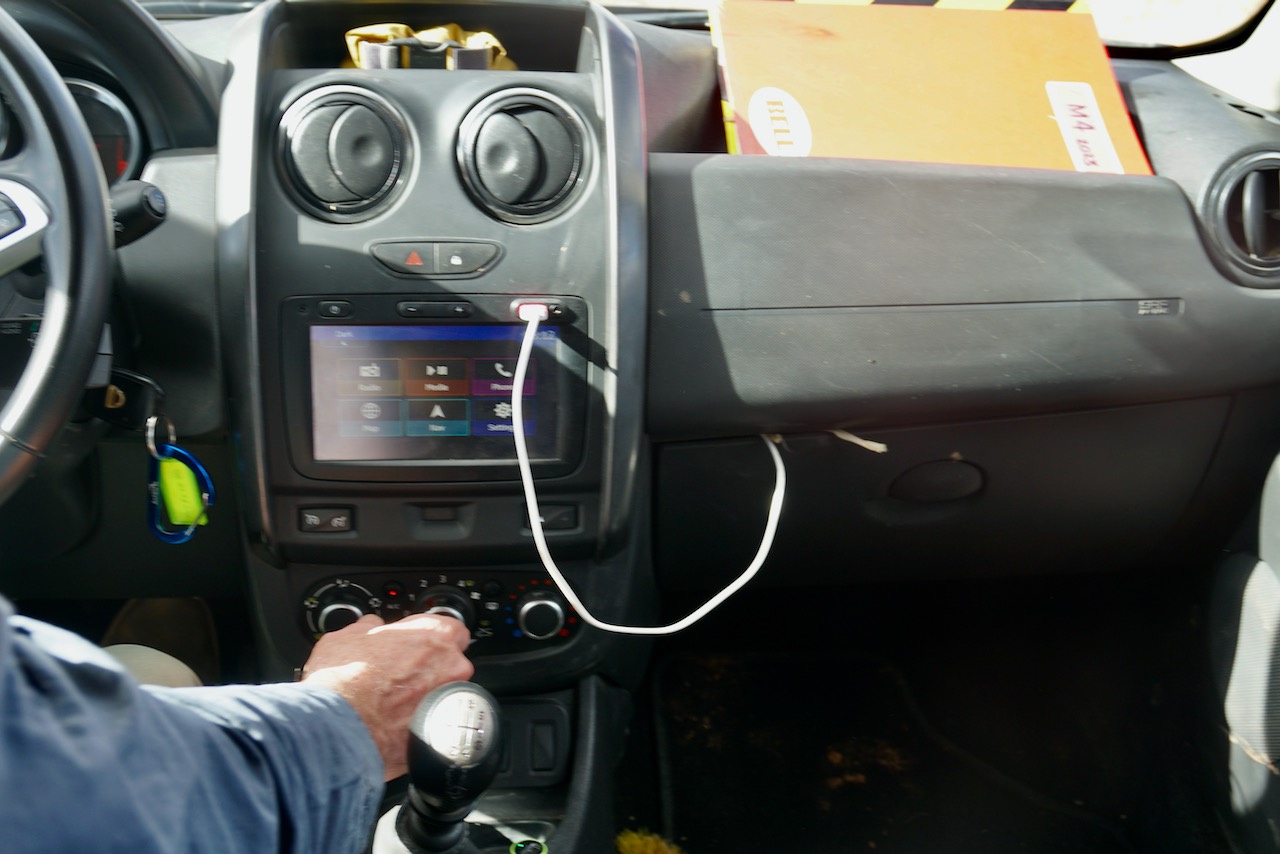
Our car had a sat nav which actually worked for routing once you’d got the better of the interface, but the matt LCD screen was hard to read and was set too low for the driver. There was also air-con but it was pretty poor at pumping cool air around. I don’t know if low pressure in the system does that.
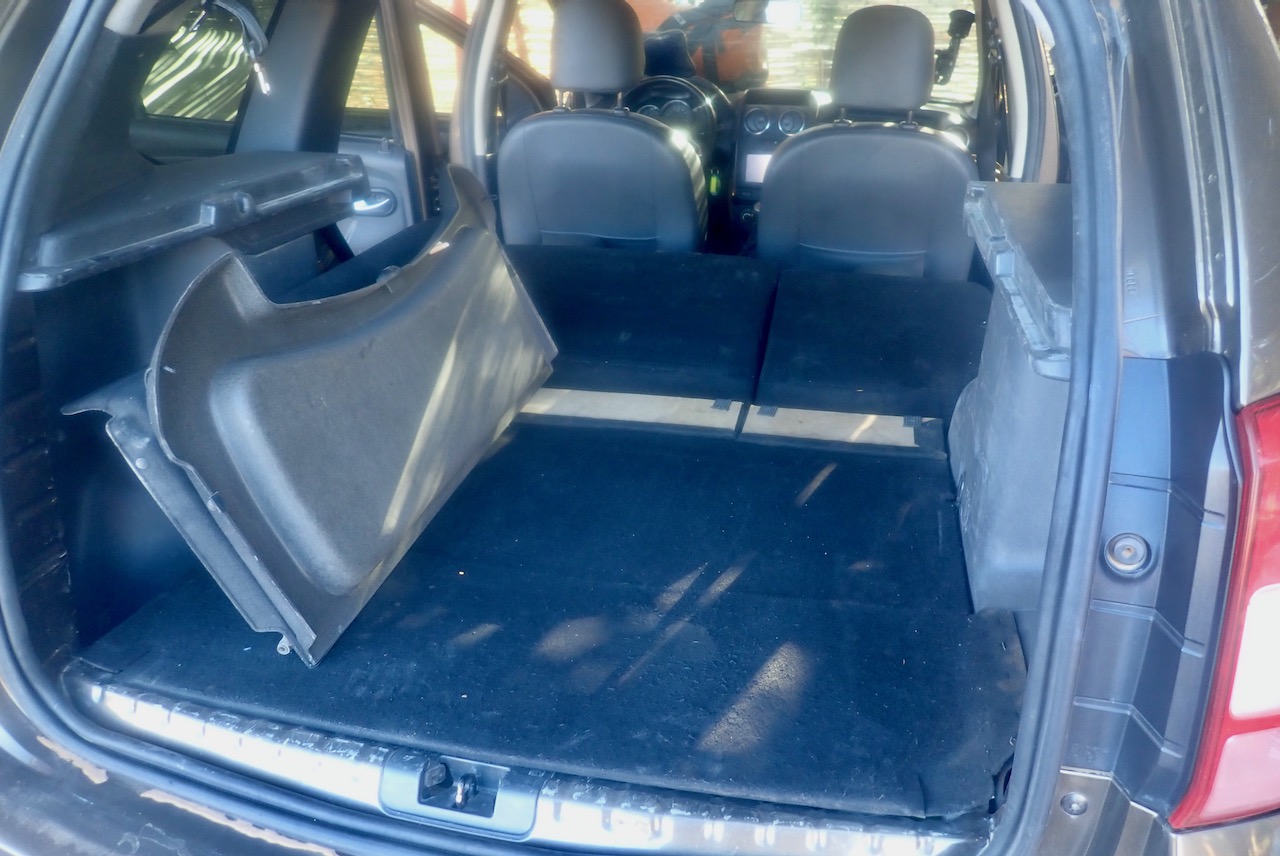
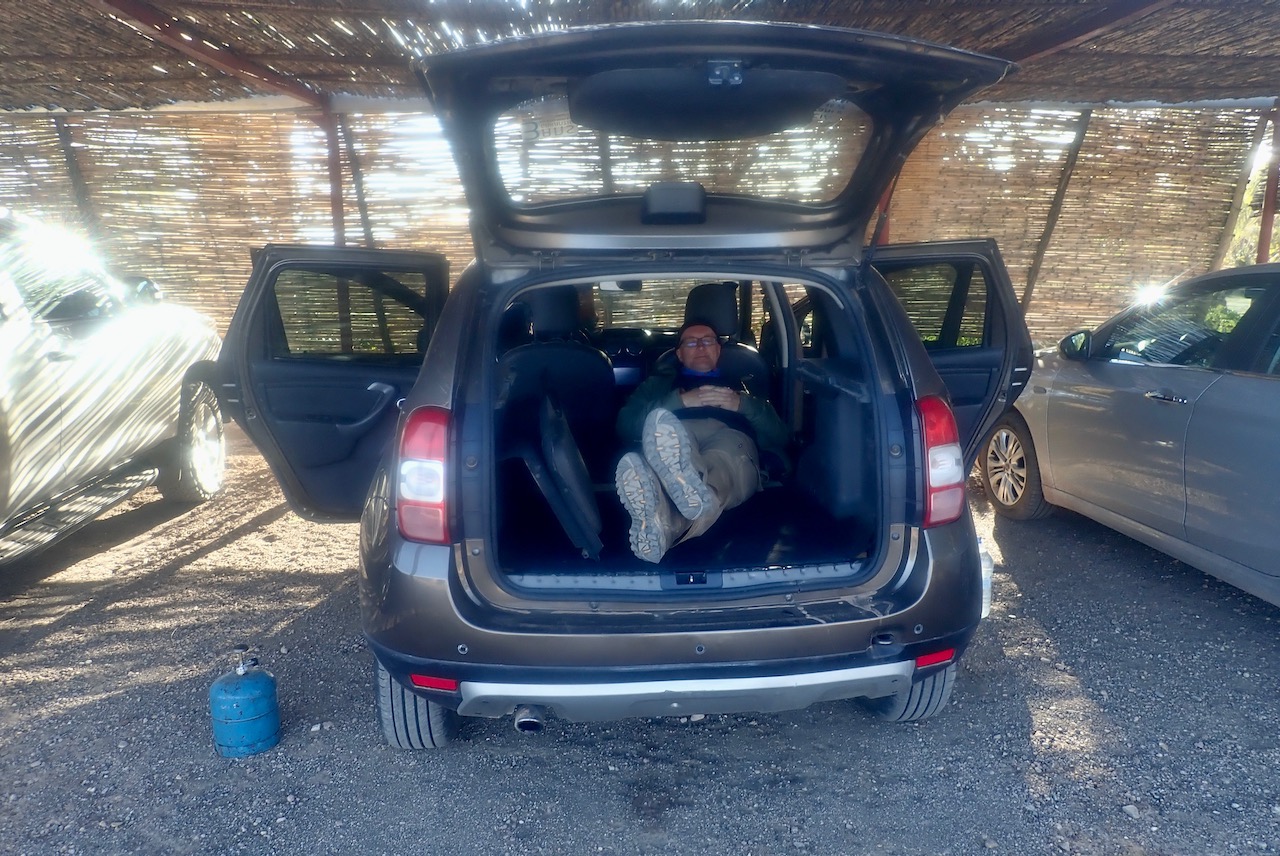
With the back seats down (left and below right) there’s almost enough room for two to sleep on the near-flat surface, if needed. The brakes were OK (non ABS) and so were the lights. I should get a job at Top Gear!

4WD system
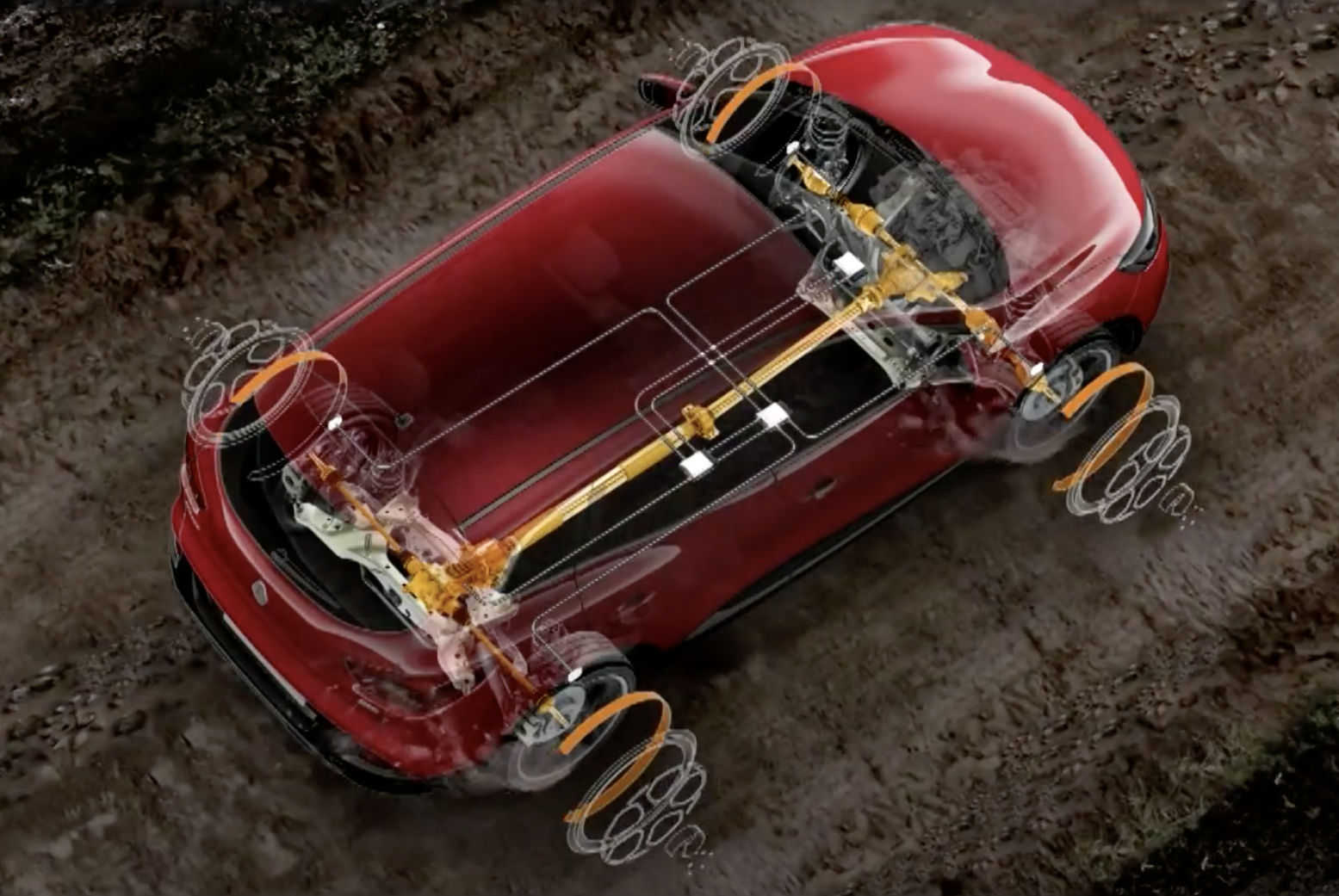
The Duster runs FWD until you turn a low-reach dial to ‘AUTO’ at which point the rear axle engages on demand, activated by front wheel slip. Another 90° turns the dial to ‘LOCK’ presumably engaging a central diff lock (up to 40- or 60kph) to split torque 50/50 for a bit more traction. I don’t think our car had ABS, nor did it have ‘ESP’ which includes traction control. Later models have more acronyms. This Renault video may help demystify things, or this page where there’s talk of the system overheating if used hard, so there must be something slipping somewhere.

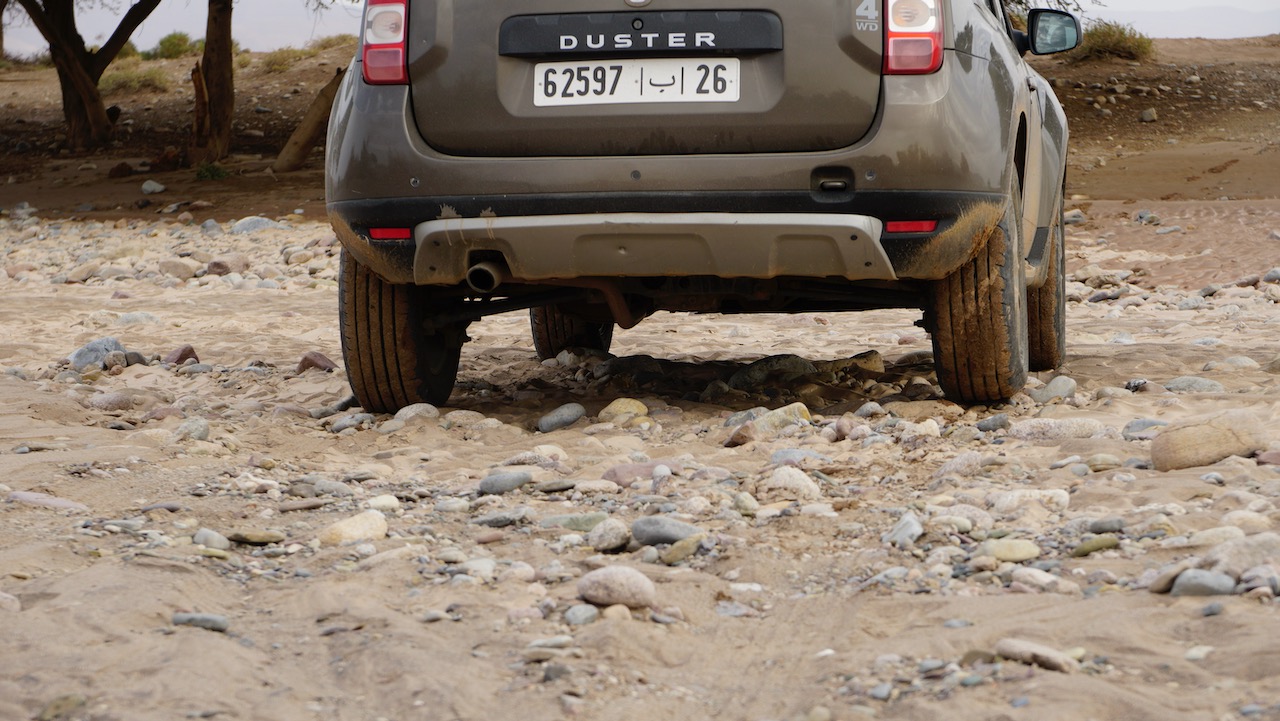
It all feels a bit opaque compared to the old-school mechanical lever and lock systems I’m used to, but we only struggled twice; once when the articulation and so the traction was on the limit crossing a wash-out (left). That ditch took a bit to rocking/momentum (not ideal and how lurching, non-low-range cars get damaged). The other time was wet sand under a crust between low dunes where I wasted no time in stopping early, clearing the wheels, lowering the tyres and foot recce’ing a way out.

As I know well, on the piste you can manage with 2WD 97.3% of the time, but there’s no harm leaving it in AUTO which won’t wind up the transmission and ought only intervene when needed, though might create some drag and higher fuel consumption. It did feel like the steering stiffened reassuringly in LOCK so something was happening below, but a couple of times when turning on loose surfaces under power the back diff clicked as if there was a mechanical LSD in there, or something was slipping and would soon eventually strip splines or snap.
This is the risk in using lightly built ‘4WD’ SUVs on remote desert tracks where occasionally you might have to ask a lot of the transmission. There’s a reason why Land Cruisers and the like are relied on by aid agencies, despite their weight, cost and fuel. consumption. They are over-built to handle the task and last, but are of course still prone to failures.

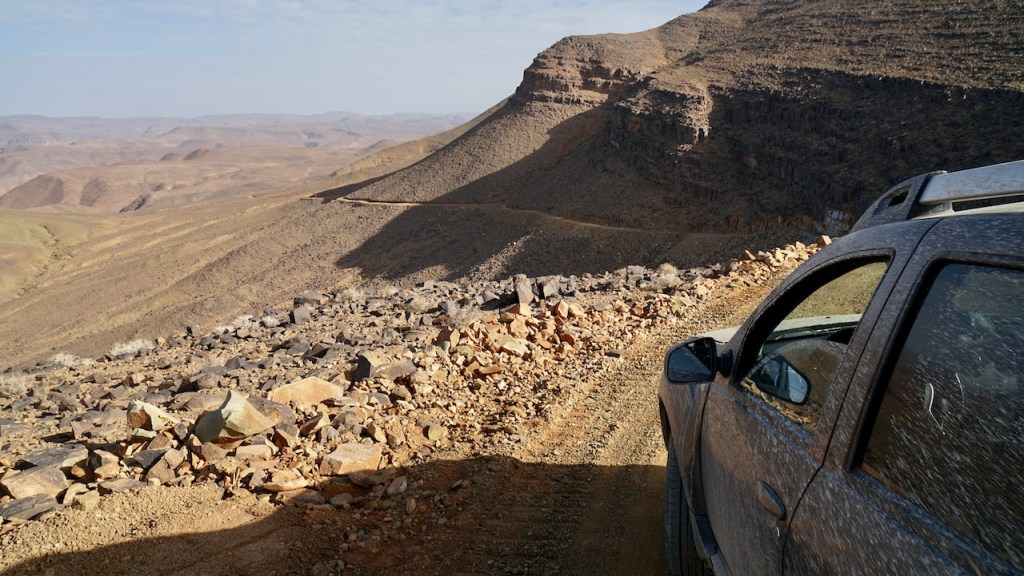
This was why, again and again in our aged Dacia we backed away from terrain which we might have tackled in a stouter Prado with Low Range or with another vehicle present. And it was why we didn’t cross something which we weren’t confident we could reverse, if needed. Nor on this occasion did we intend to venture into the remote desert south of Rissani. The nature of flood damaged tracks: wash-outs, landslides, fallen rocks, boulder-filled river beds or actual rivers and slimy claypans (we encountered all these), is that a track can be perfectly drivable for miles, then virtually impassable, then fine for miles again to become completely impassable. It takes some experience of desert off-roading and a vehicle’s abilities to know how far to push it while also knowing what you can tackle without risk.

Camping fuel with fly-in rentals
Flying in to rent a vehicle then camp, you’re limited with what stoves or fuel you can carry on a plane. For boiling water a harmless volcano kettle will work but current models can be slow and fiddly. I managed to transport solid fuel ethanol blocks in my hold bag (they can be classed as ‘disinfectant gel’) to use on a compact gimp stove, and also thoroughly aired off my reliably powerful old Coleman petrol stove but ran up against the weight limit so left it. At the last minute I bought a Trangia burner which, using the same stand as a gimp stove, will work with alcohol that you can buy readily from pharmacies in Morocco.
In fact, in any small town it’s easy to buy a 5kg bottle of butane for just 60D (£5), as well as a cheap burner head for around 40D in a hardware store. From previous experience in North Africa a bottle this size will last a month and is of course dead easy to use once out of the wind.
While faff-free, one thing we noticed is that Moroccan butane is of a lower quality than what you’d get in Europe. You won’t get a crisp blue flame but it got there in the end, probably no quicker than a v-kettle, Trangia or a gimp stove.

Soon things got worse, then deteriorated

The independent coils all round give pretty good articulation and as mentioned, if nothing else, the clearances lapped up the piste. On the road the car was nippy in southern Moroccan traffic, didn’t roll much in bends and the brakes were OK. Six gears was a new one on me but if you don’t rush it you got it right most of the time. I’ve not driven a manual for over a decade but had I not read it before, I’d not have noticed first was extra low. Sixth is definitely an overdrive that drops the revs and noise.

Chunky 50L plastic tank

The Duster’s clearance is nearly as impressive as it looks; not once did we scrape either bumper; more than I can say for the stock Prado I used last October (The Prados we used just before this trip were notably lifted).
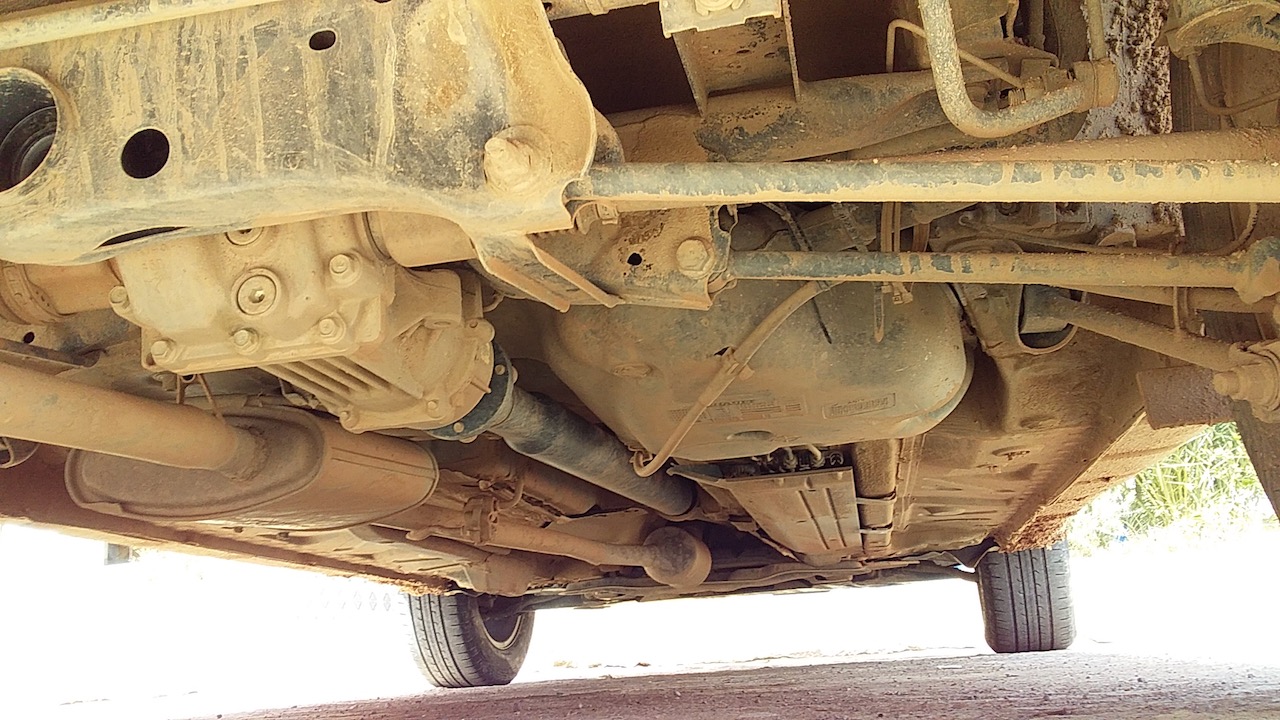
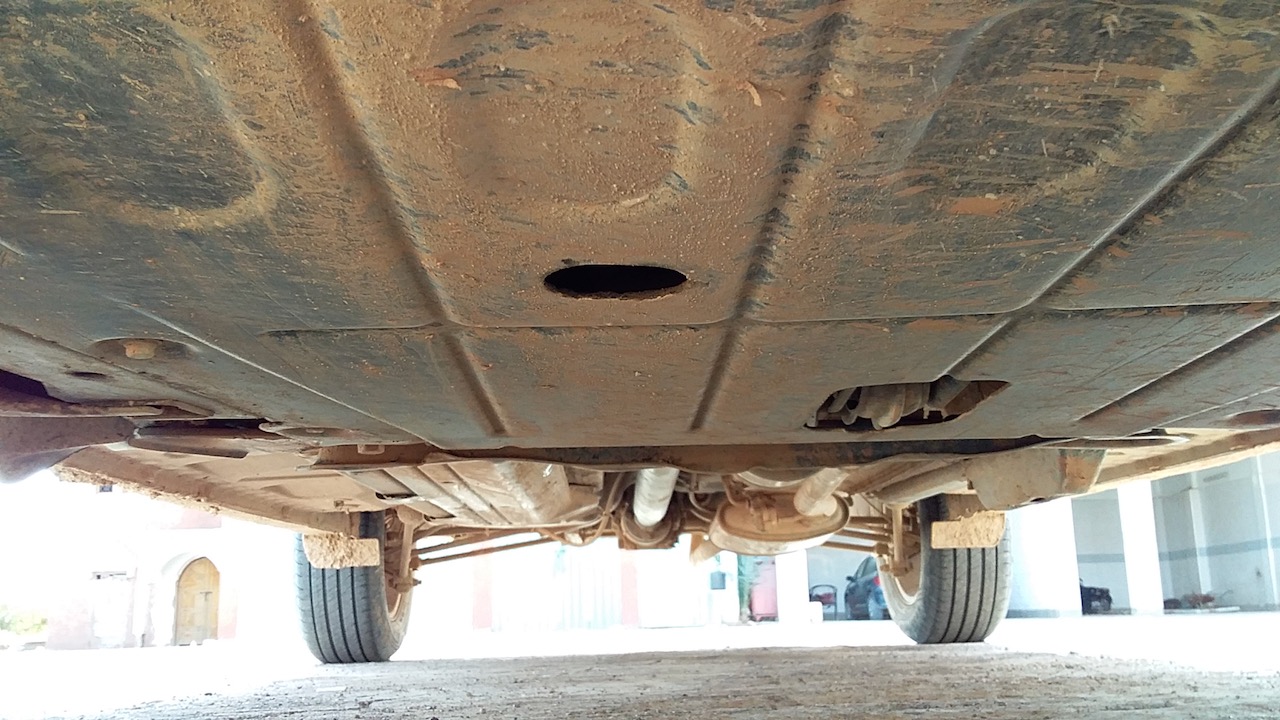
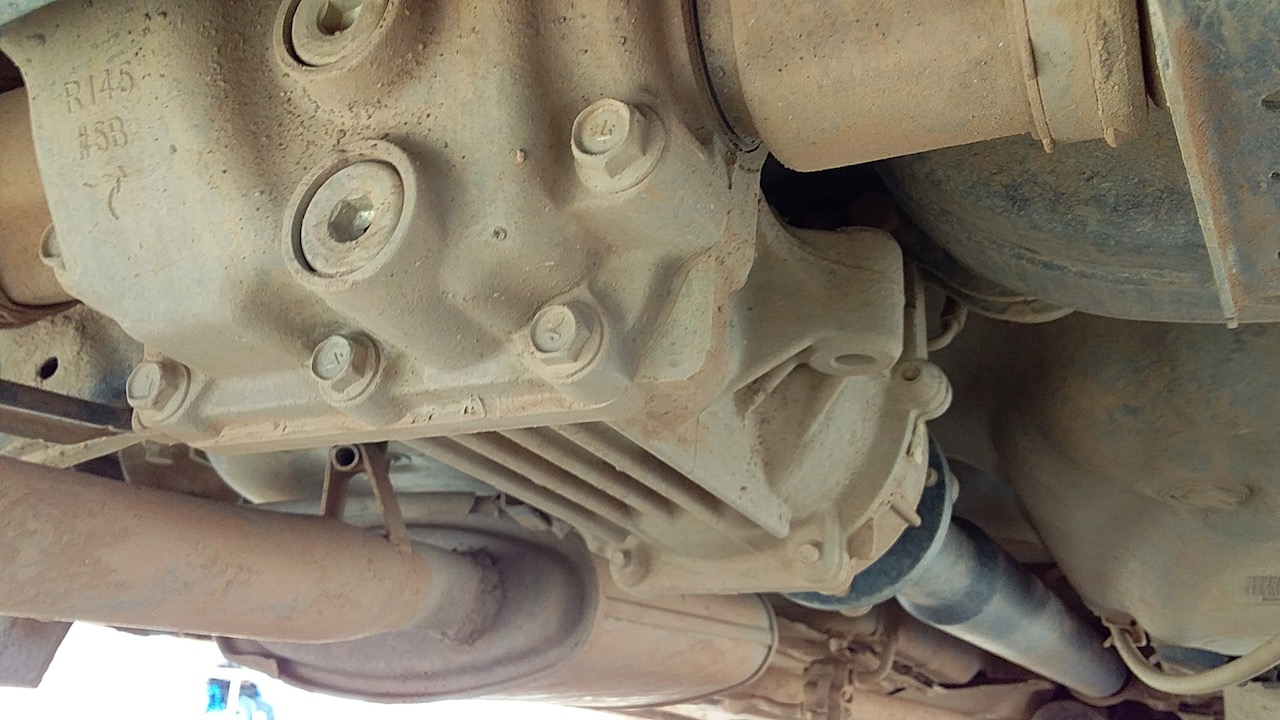
So we were surprised when the undercarriage scraped, grounded and thumped on deeper twin-rut central humps. Looking underneath there is actually some steel protection, but the full-width bashplate under the engine (below left) seemed to be the Duster’s point of contact, along with maybe the forward edge of the rear diff housing (below right). Seeing that neither was getting pulverised made the occasional scrapes and thumps easier to endure, but it was irritating to have to drive deep ruts off-centre like a regular 2WD car to avoid excessive contact.
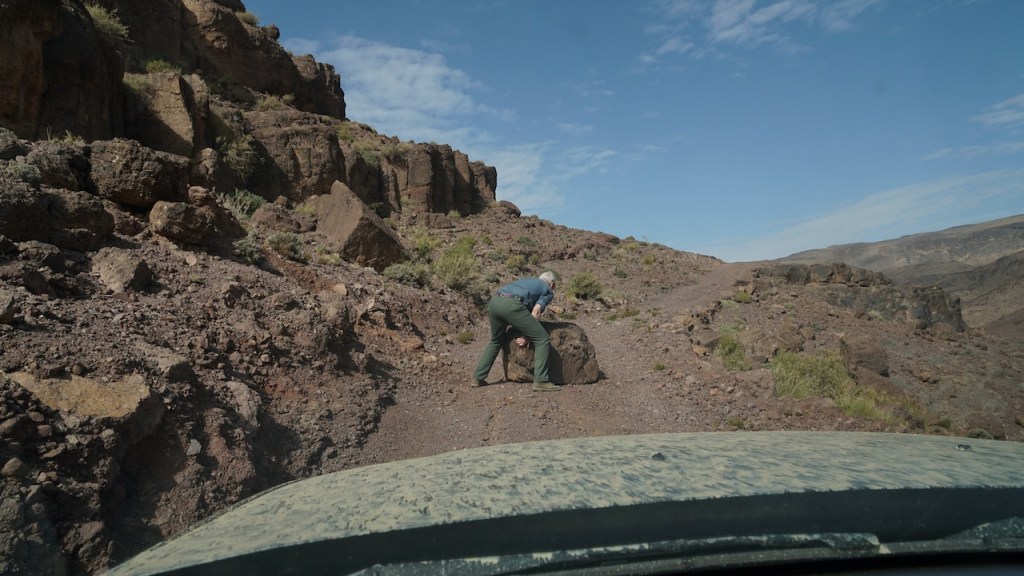
As it was, on many occasions one of us hopped out to either move rocks and/or guide the driver over tricky ground to avoid needlessly bashing the undercarriage.

Duster fuel consumption range

A switch on the end of the wiper stalk I’d have never found toggles a nifty read-out on the dash which includes remaining range, live and average L/100km, odometer and outside temps. The Duster has a centrally mounted 50-litre tank and averaged the low to mid 40s mpg (6.5L/100km; 15kpl) which was pretty good. I doubt the hefty Tojo Prado ever exceeded 30. Accelerating the Toyota you could almost hear the gush of fuel pouring out of the pipe as the 3-litre engine heaved the 2.5-ton car into motion.

Turbo alert or something else?

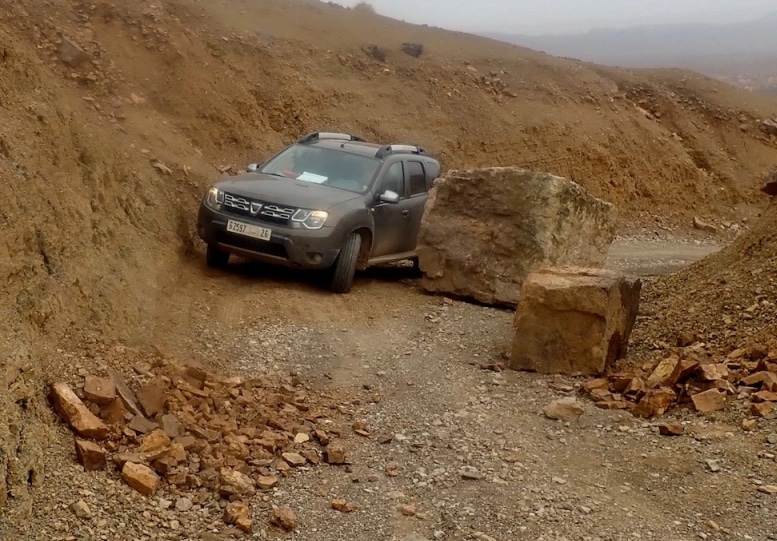
We did get caught out on one little used track which we started late, had it turn unexpectedly gnarly (above), and with us low on water and with no signal. The fuel range dived under harder use, compounded when a dash warning light came on (left) and power dropped off. Limp-home mode?
From day one Barry thought the turbo was playing up; not knowing the car I wasn’t so sure. But we couldn’t decipher the warning icon on the dash as the only handbook in the glove box was for the sat nav (it needed one). We checked for drips underneath and under the bonnet and carried on into the night. It was a tense couple of hours.
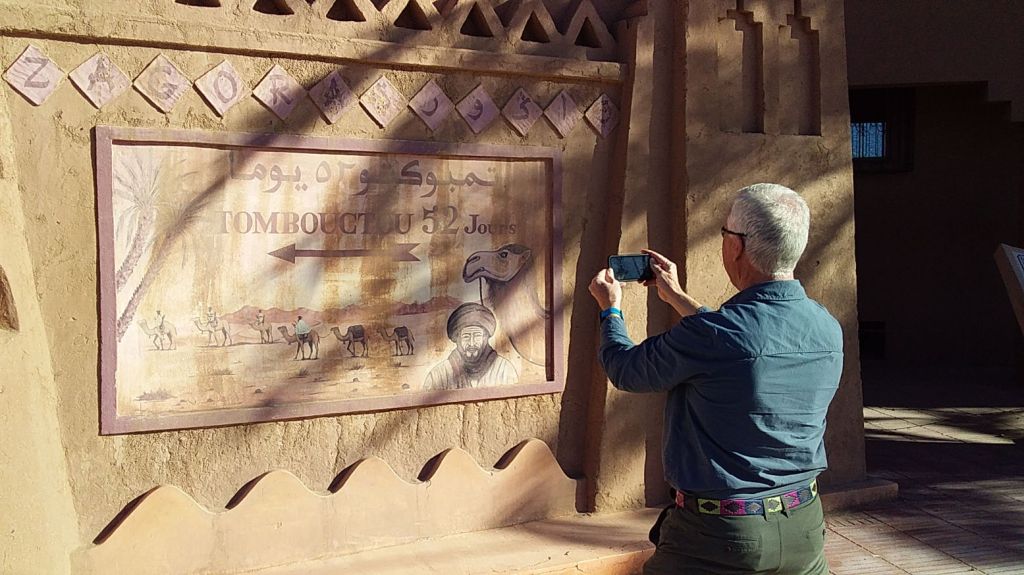
Never thought I’d be pleased to see the twinkling lights of Zagora.
A typical Agdz ‘Kwik-Fit’

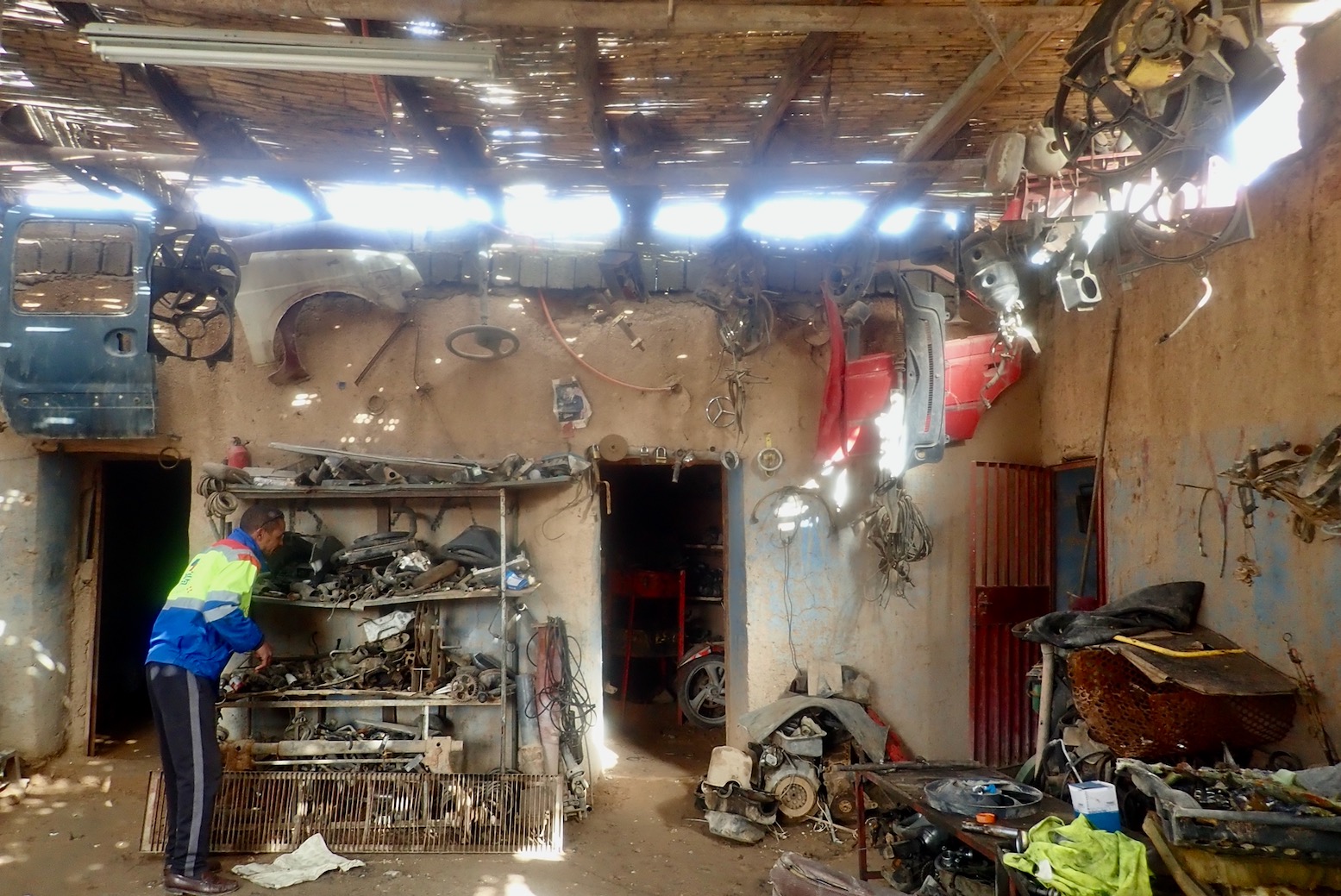
It wasn’t till next day in Tamnougalte when we got online to find that orange warning lights are less critical than red. We also got a tip to check the turbo inlet hose. Up to that point we’d assumed the turbo had gone (Barry’s failed on his Defender at just 14k). But Medloc did not respond to detailed emails explaining our problem, or requests for a replacement car. Calling was the answer (trickier for me with shakey French) to which they suggested we buy a new turbo and get it fitted (for 1000D we were advised; one could have come down from Ouarzazate next day).

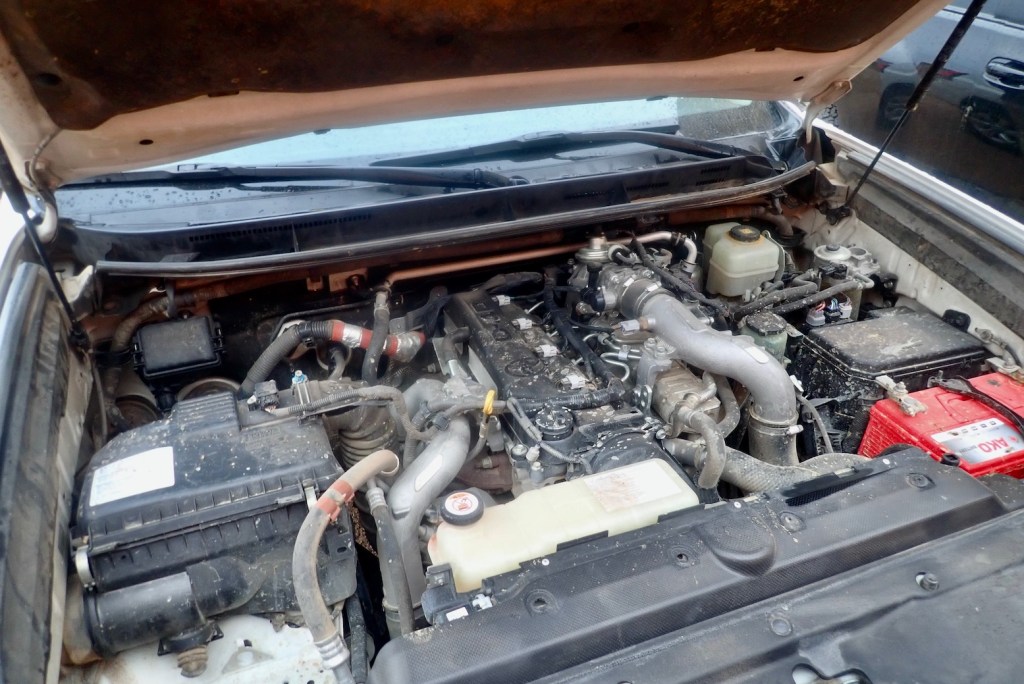
We should have spotted the loose hose on the piste; rev the engine and it blew off and remained displaced, producing black smoke so common to many older diesel bangers in Morocco. But the plastic hose (as opposed to more flexible rubber) wouldn’t push back onto the turbo and stay there; some attachment/clip was broken, caused I presume by old age plus the engine rocking on the chassis mounts over rough ground. I’ve had this engine-wobble/hose-strain problem before with the Land Rover 101 and other vehicles. Once our spliff-tooting mechanic had firmly lashed the hose back on with bailing wire and two jubilee clips, normal performance resumed and stayed. Was the turbo whining more? Hard to tell.

Quick rinse

Above all, what impressed me with the Duster was its lightness – or how little it took to get the combined 1500kg mass moving with very little throttle or a relatively high gear. Often you could trickle along a piste in third. And when things got a little rough this lack on mass translated into non-self destructing impacts where the mass of a proper 2-ton 4WD would have either broken something or bashed you against the insides. This really was a revelation in the Duster and why I’d rent one again. Just maybe not such an aged banger. A few months later I did – read here

Westbound for Tazenacht

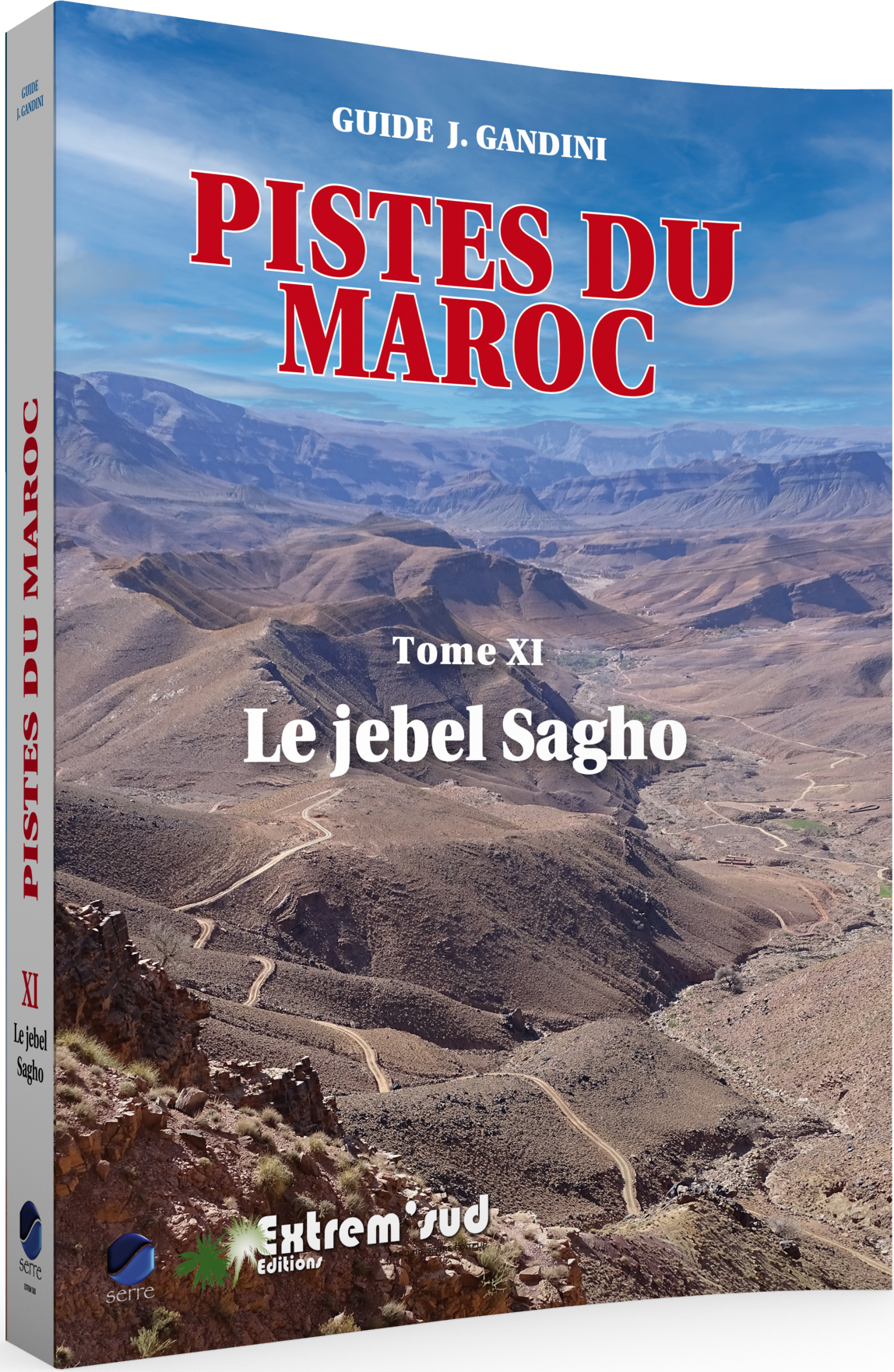
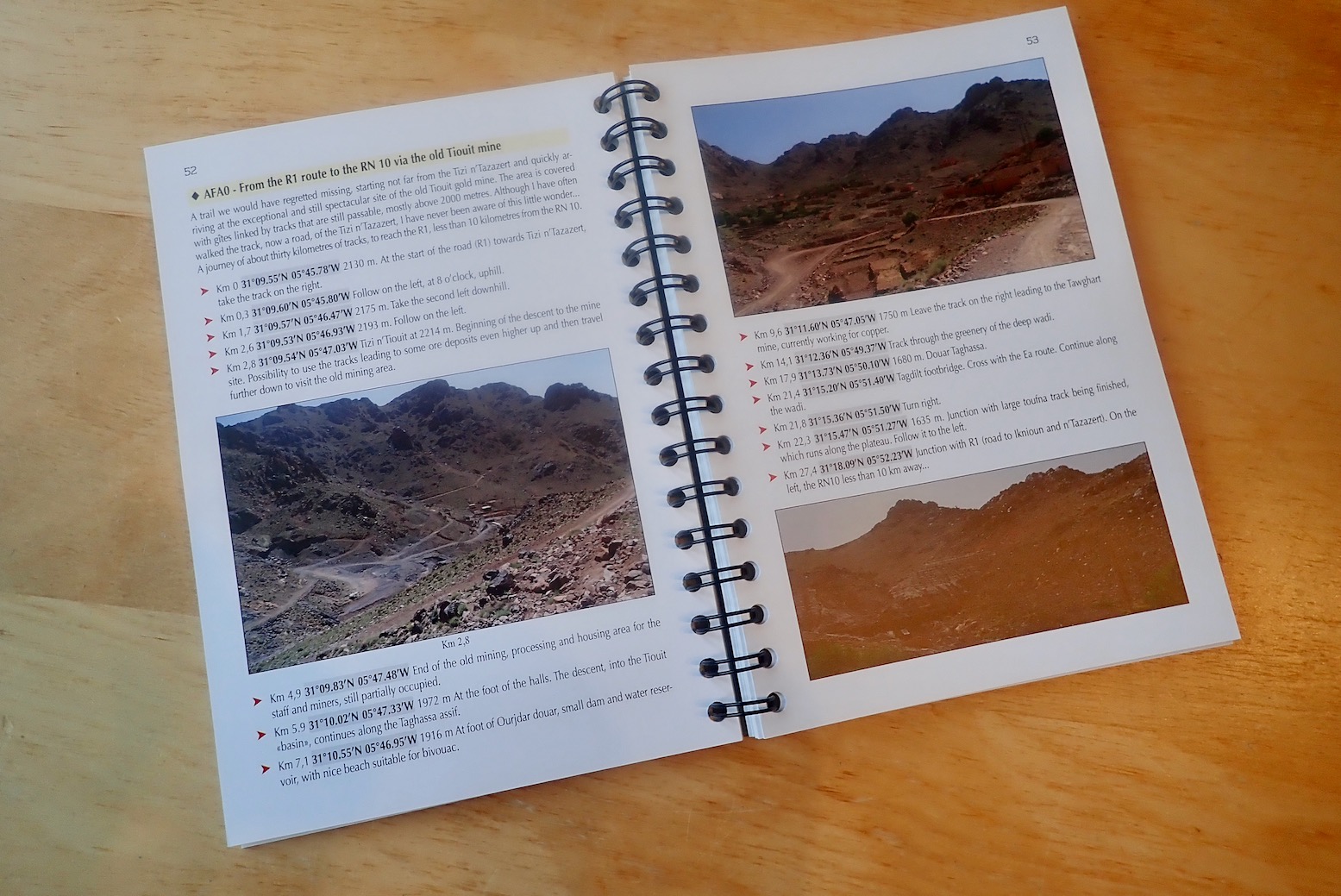
Book review: ‘The Sagho Djebel’ by J.Gandini

See also
How to trace off and save a .gpx track off Google Earth

In a line or two
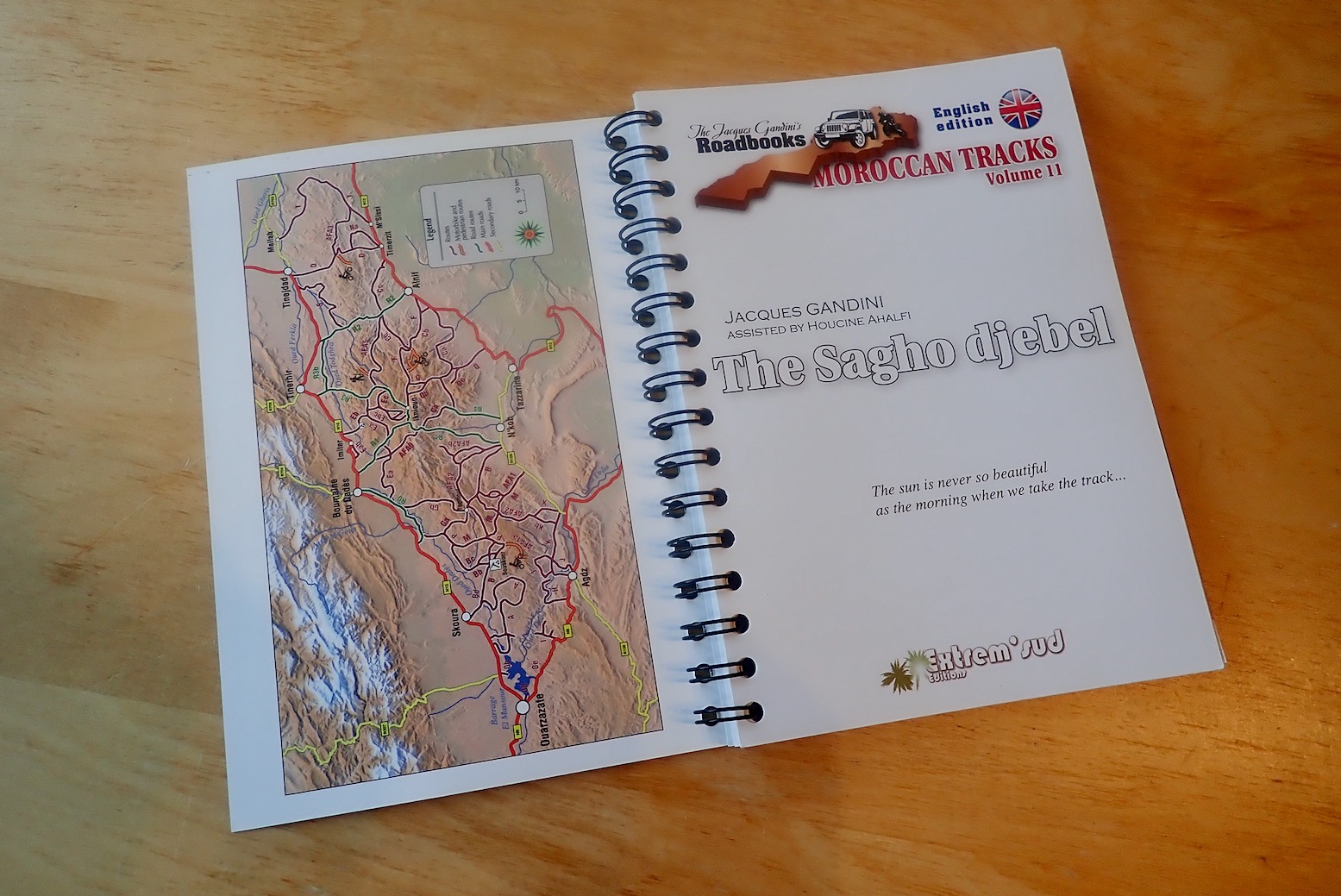
Packed with intriguing routes to amazing vistas, but unapologetically expensive and hard to visualise the potential from the single, one-page map unless you download the tracklogs (another €20).

  • Price and description
  • £43 on amazon today
  • Jaques Gandini with Houcine Ahalfi
  • 140 pages with loads of colour and one map.
  • Extrem’ Sud Editions; 2022
  • ISBN 9782864106746

What they say
The “Jacques Gandini [Jebel Sagho] Roadbook” [is a] lighter version[s] of the French ” Guides 4×4 J. Gandini” (without the historical or ethnographic boxes present in the French edition): all the itineraries, all the waypoints and their comments are included. Abundantly illustrated, they are printed on strong 170g/m2 paper and bound with a metal spiral for better handling on the trail. They are published in 4 languages: Spanish, English, German and Italian.

Jacques Gandini and Hoceine Ahalfi have explored in detail the Jebel Sagho, this magnificent wild region of southern Morocco, with its breathtaking landscapes, situated to the east of Warzazat and to the south of the Dades valley, and have put together 59 itineraries totalling 2,500 kilometres and 1,100 waypoints.

  • Thick, quality paper and spiral bound
  • There can’t be many routes left on Saghro!
  • The author is not without an SOH
  • Some historical and cultural background seeps in from the full-fat French edition
  • As with previous Gandinis, it’s an effort to engage with the book’s content, even in English
  • Design/format too dense and basic
  • Jam packed with pictures, but many are just space fillers
  • A guidebook with just one map!?
  • Expensive, even for a specialist guide
  • Scores of extraneous waypoints for every passing creek, etc
  • Probably better off downloading the tracklogs for €20 instead
2500km, 1100 waypoints, 1 map

Review
I first came across Jacques Gandini’s Sahara guides 25 years ago when that was all that was available for Libya (apart from German). The books were loaded with well researched historical and cultural background but as practical piste guides for the early GPS era, I found them hard work. I may have bought one of his early Morocco books too, but was further put off.
Since that time I’ve written similar books like Sahara Overland (op) and Morocco Overland, and like to think I know what it takes to make a piste guide user-friendly for two- and four-wheelers. In the meantime the prolific JG has concentrated mostly on Morocco, producing 11 routes guides to various regions as well as other travel books and histories, assisted by his Berber-speaking local guide, Houcine Ahalfi. The books were all in French until this English edition for Jebel Sagho was released in 2022 (also in Spanish, Italian and German), alongside the new French version. A sign that more translations will follow?
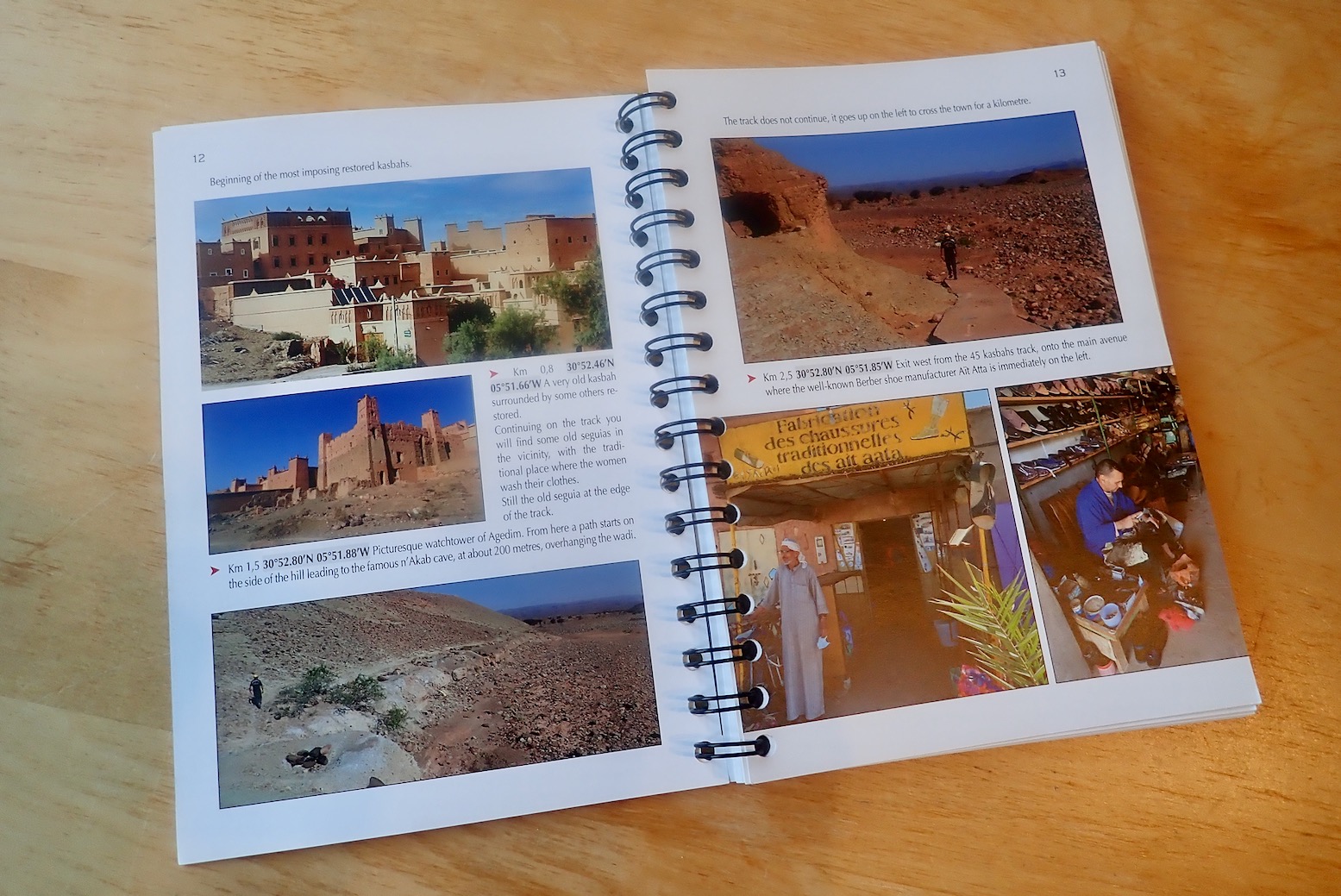
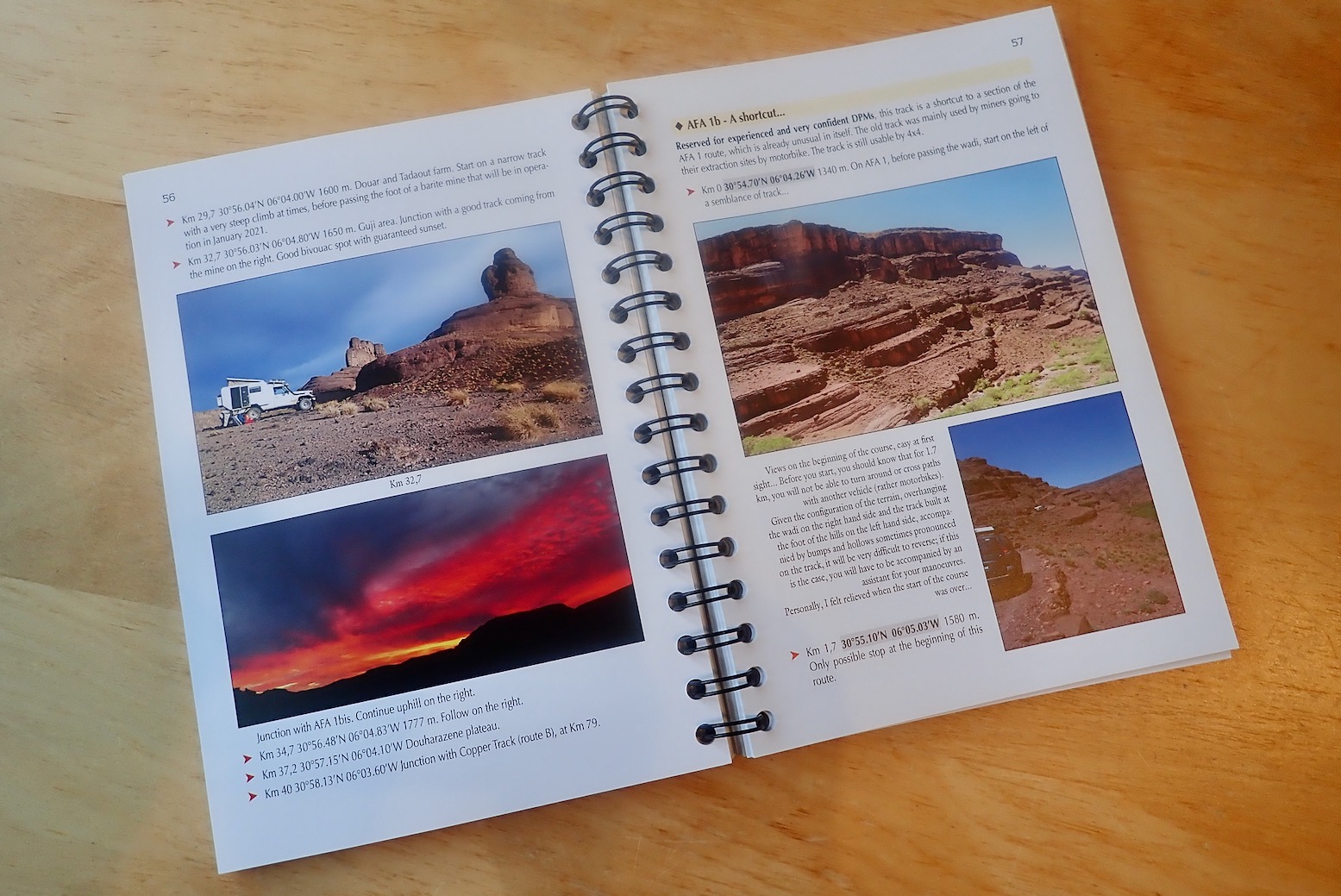
The blurb clearly states this is a ring-bound, stripped down ‘roadbook’ of the full French version which is well over twice as long. And they’re not exaggerating. You usually get one line intros for routes squeezed between masses and masses of photos. A few of these are amazing (not hard on Jebel S), some a bit so-what-y, as if filling space.

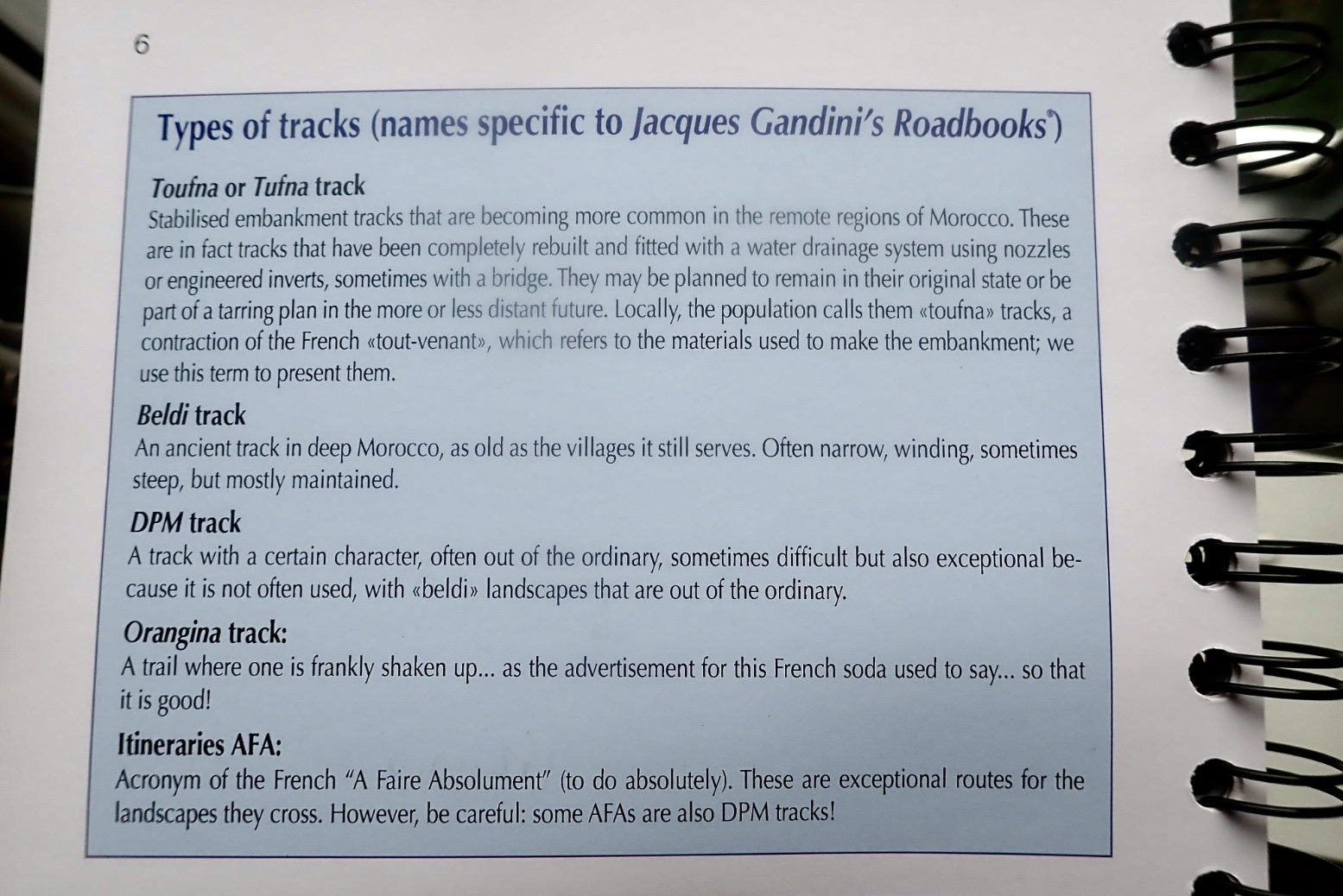
The pistes are categorised using Gandini’s scale, shown left. ‘Tufna’ are easy, well-maintained tracks like MZ1, ‘Beldi’ are ancient winding village routes, some possibly abandoned for regular use (though young locals on 125s can go anywhere); ‘DPM’ I think is meant to signify ‘Dedicated Piste Merchant’ or somesuch. ‘Orangina’ is a bone shaker and ‘AFA’ is Absolutely F-ing Amazing.
Most are listed from A to T but these refs are scattered all over the hard-to-read map (tip: don’t used dark red text on a brown background). In between are sub-routes Ba, Cd, etc, plus the aforementioned five AFAs. Confused yet?

Can’t see the route for the waypoints

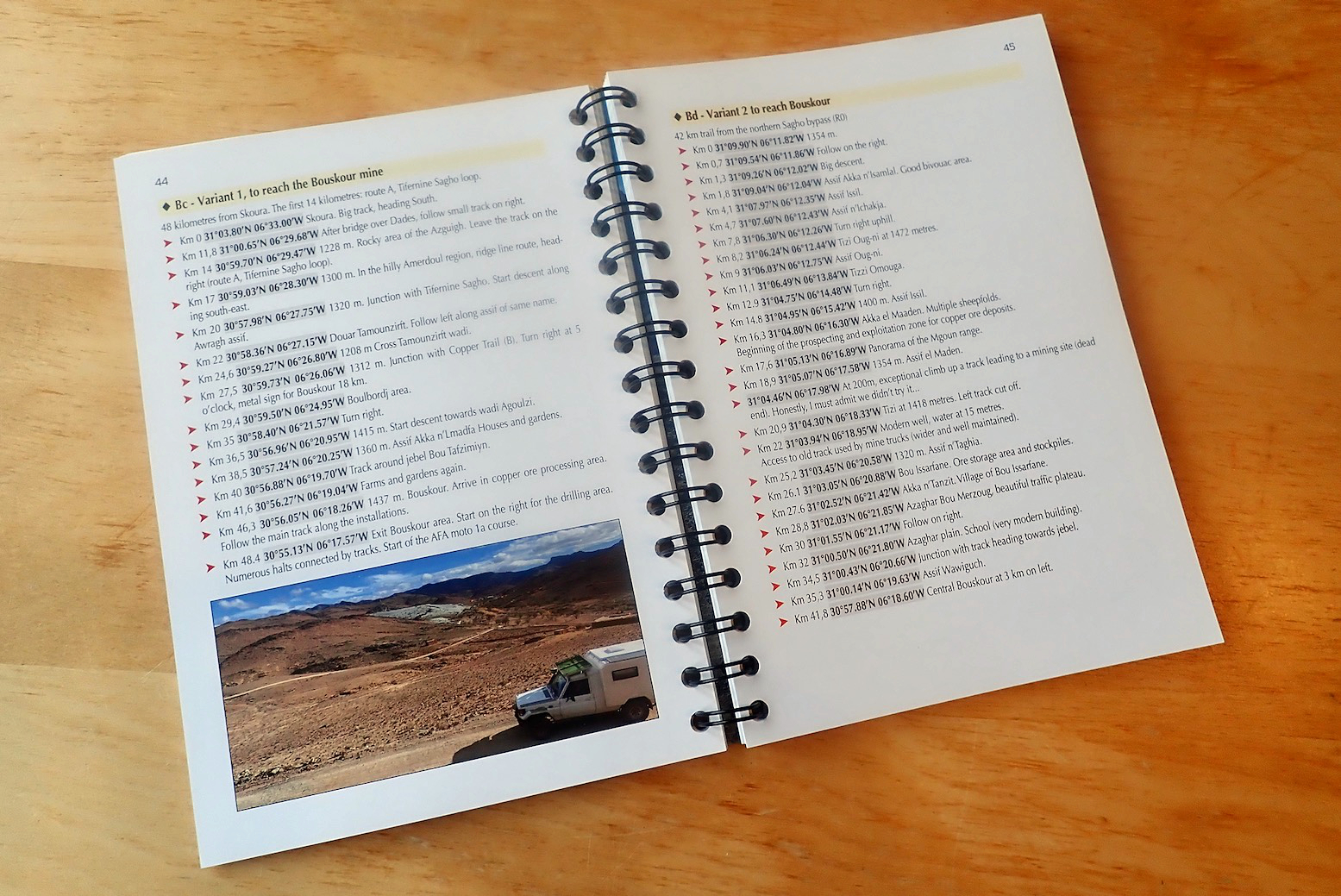
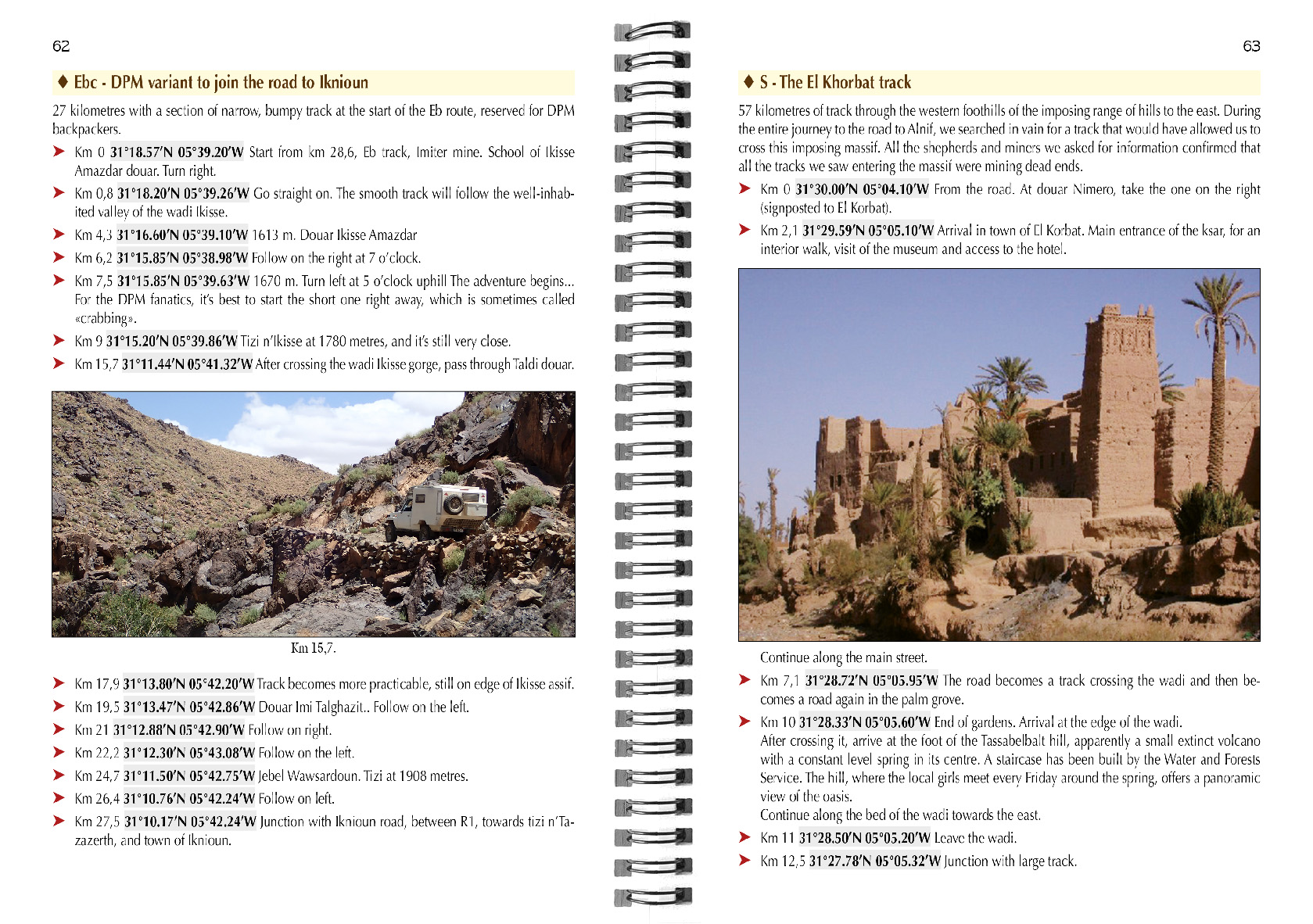
Page upon page is packed with distances, waypoints, short descriptions and photos. According to the blurb, with over 59 routes there is on average a waypoint every 2700 metres. Many of these waypoints seem to be unimportant names of passing creeks extracted from a local shepherd or off an old map. In the picture left, the right page has just six directional waypoints. I think this is too much distracting, unnecessary information. Perhaps Gandini is a writer who likes to throw in everything (a common flaw with many ‘under-edited’ self-published books): loads of waypoints, loads of photos. But loads of routes too. Also, I believe we’re now in the era of the less error-prone decimal degrees (DD) format: simply 00.0000, -00,0000, not N00° 00.00′, W00° 00.00′, let alone N00° 00″ 00′ W00° 00″ 00′. My next Morocco edition will use DD which I believe is the default in mobile phones.
You’d do well scrutinising the book or prefered routes with a highlighter and marking the waypoints that actually matter. In my Morocco book I decided ages ago that waypoints weren’t needed for every single passing feature which may be simply noted with a distance, especially when on a section of track you can’t get lost on. I have to add the condensed font is not to my taste either. For me, when on the piste and with the Orangina fit to burst, you have enough on your plate should the time come when you need to refer to your guidebook, and so legibility and ease of use are key.

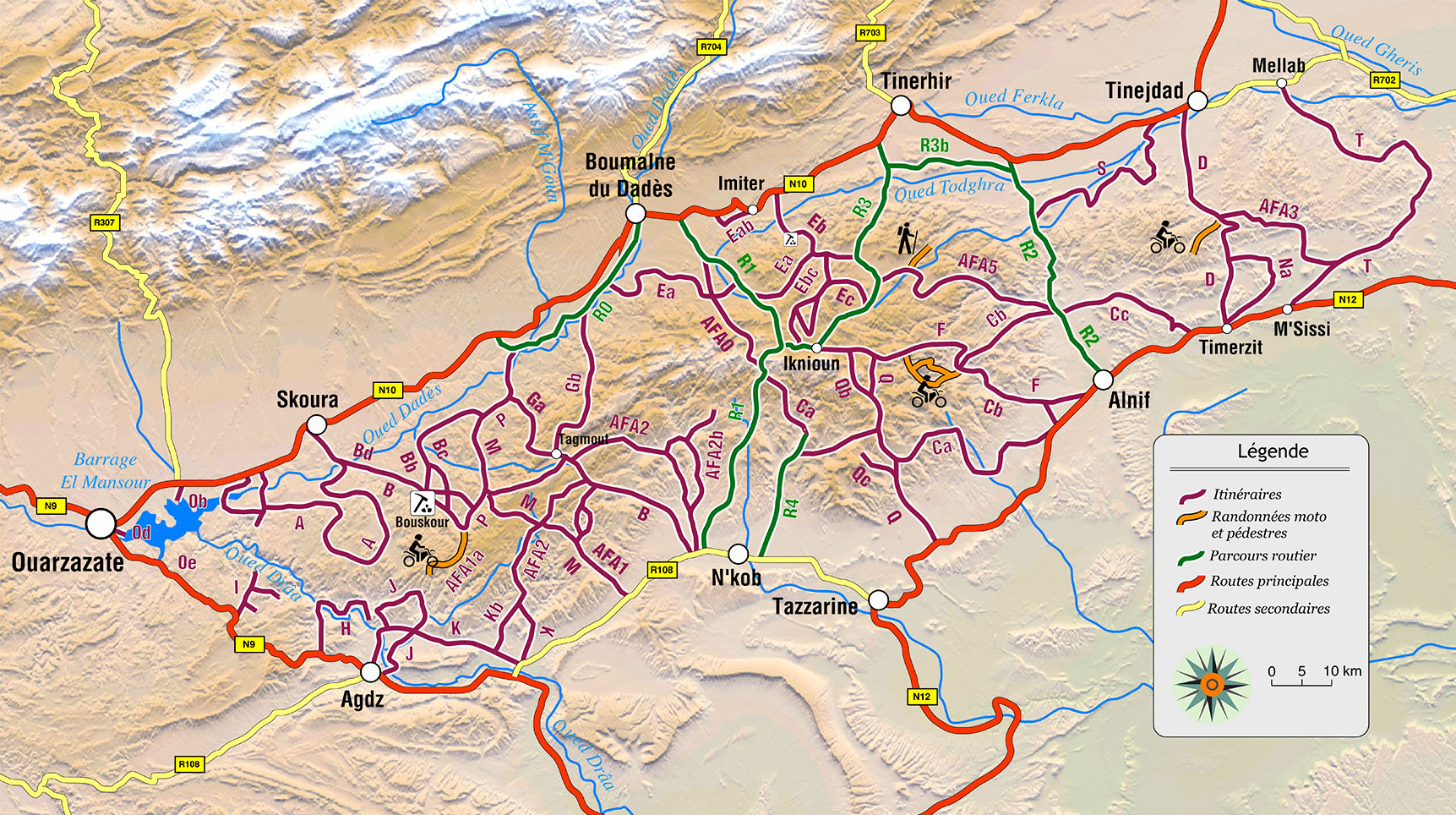
It can’t be a mere oversight or issue of space that the book has just one overview map on the inside front cover (above and online), tightly packed in the 2500 kilometres of routes. I feel that in books like this, additional maps are an essential part of breaking down long lists of waypoints or tangled routes into something you can visualise. You get the feeling you’re being pushed into buying the tracklogs for another €20 (but of course not share them beyond your immediate family on pain of the guillotine). This is a current quandary over copyright with all publishers of similar content. As it is, a canny user of Google Maps could easily locate the pistes shown above and trace them off satellite imagery to make their own tracklogs.
Finding online ‘OSM’ maps maddeningly unreliable and inconsistent, that’s what I’ve been doing these last few weeks in search of new routes in southern Morocco. There are many places I’ve long wondered ‘Hmm, where might that go?’. The best answer is on a high resolution WYSIWYG aerial image; zoom in close enough and you’ll find a dense lattice of tracks leading to lonely homesteads and hamlets all over southern Morocco; just don’t expect these tracks to all be passable. That is the value of guidebooks; the routes have been systematically ‘curated’ for you.

Some anomalies I chanced upon: he calls my MH14 route ‘new’ which seems odd. Yes there are new mines up here but I was told of this piste way back in 2011, it’s a long-established Sagho route. I also note he draws 120km out of my MZ1 route, when my tracklogs record at around 102km. That’s quite a discrepancy on a route which must be identical.
Other than that, there’s masses of information based on years of experience, it’s just a shame Gandini hasn’t got better at laying it all out because it’s hard to easily take in what you actually need to know. Maybe, like any new guidebook, spending more time with it will make it easier to use.

Toyota Prado TXL in Morocco 1

See also:
Dacia Duster 4×4 rental
Land Cruiser TXL 2

In October I had a recce job in Morocco and ended up driving a Toyota Prado TX. It’s been some time since I’ve driven a 4×4 – 2008 in fact: my Mazda in Algeria. Luckily I had an off-road instructor alongside to remind me what to do. I drove a similar route again twice, in February 2023.

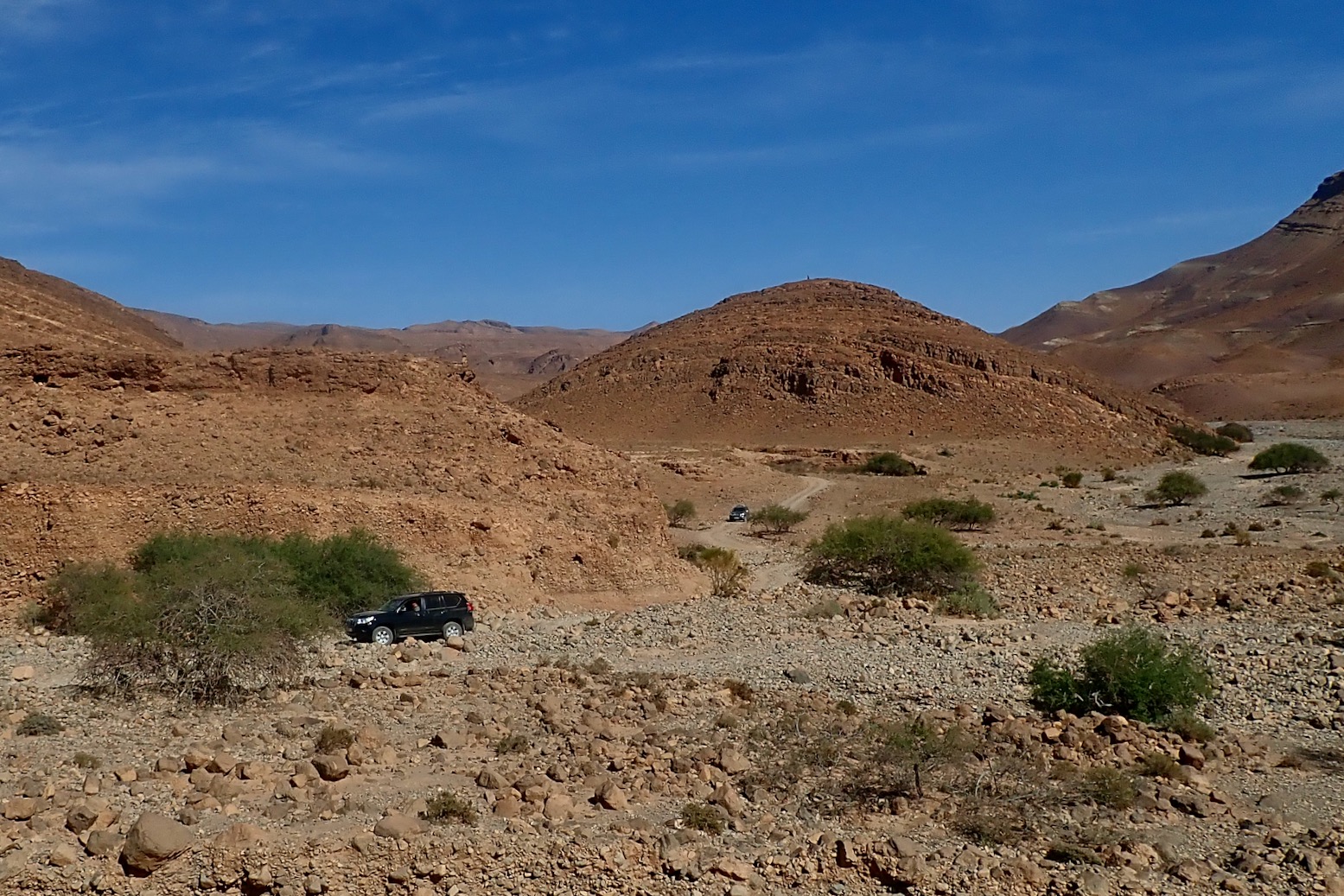
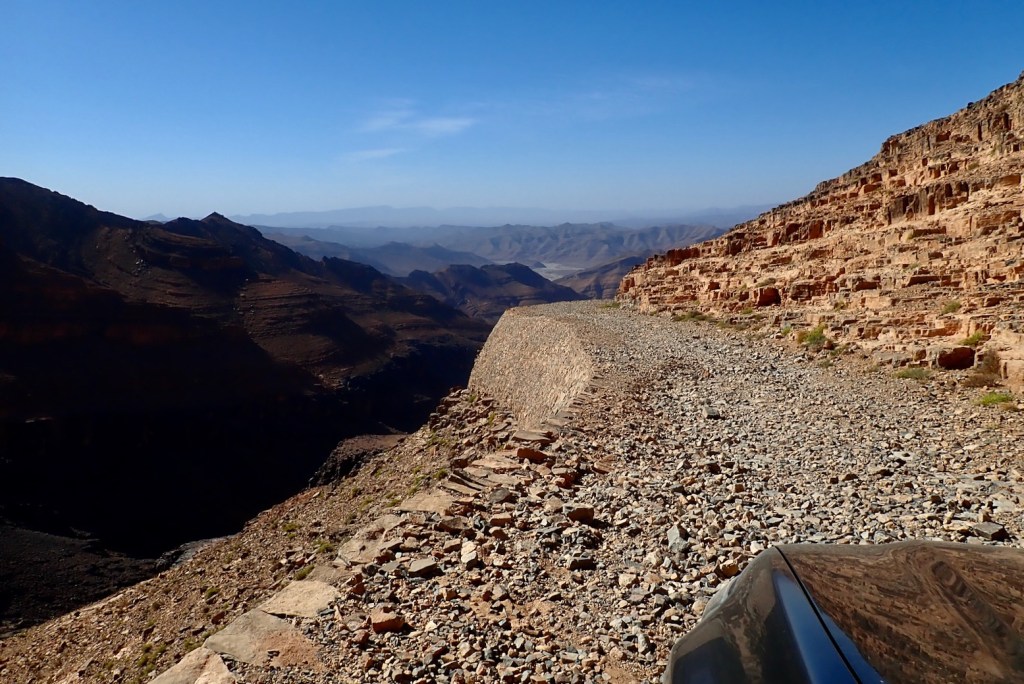
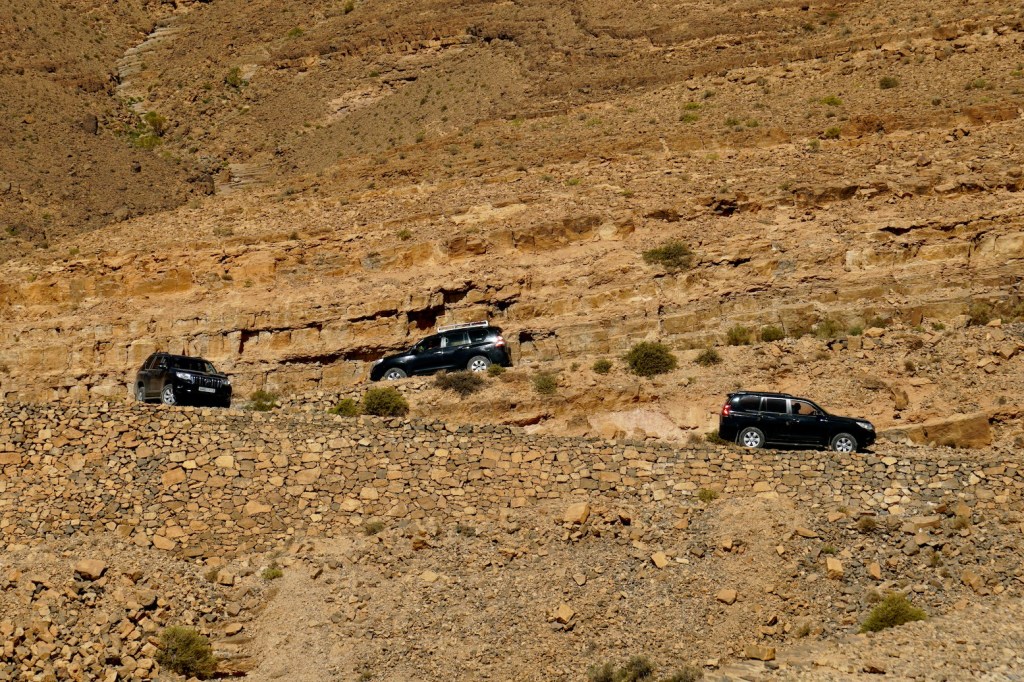
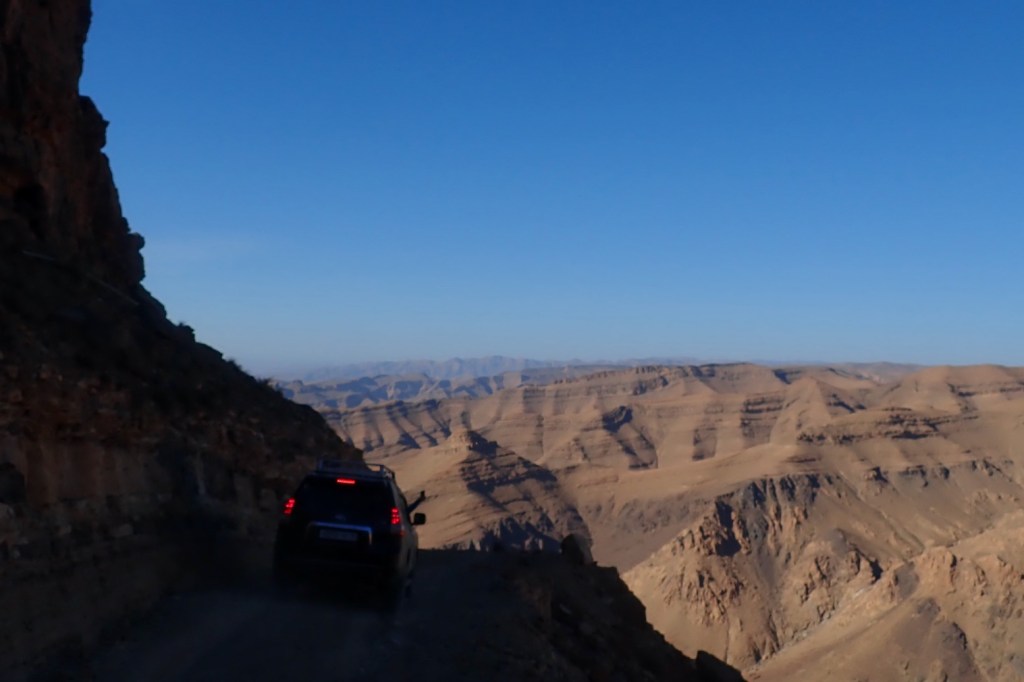
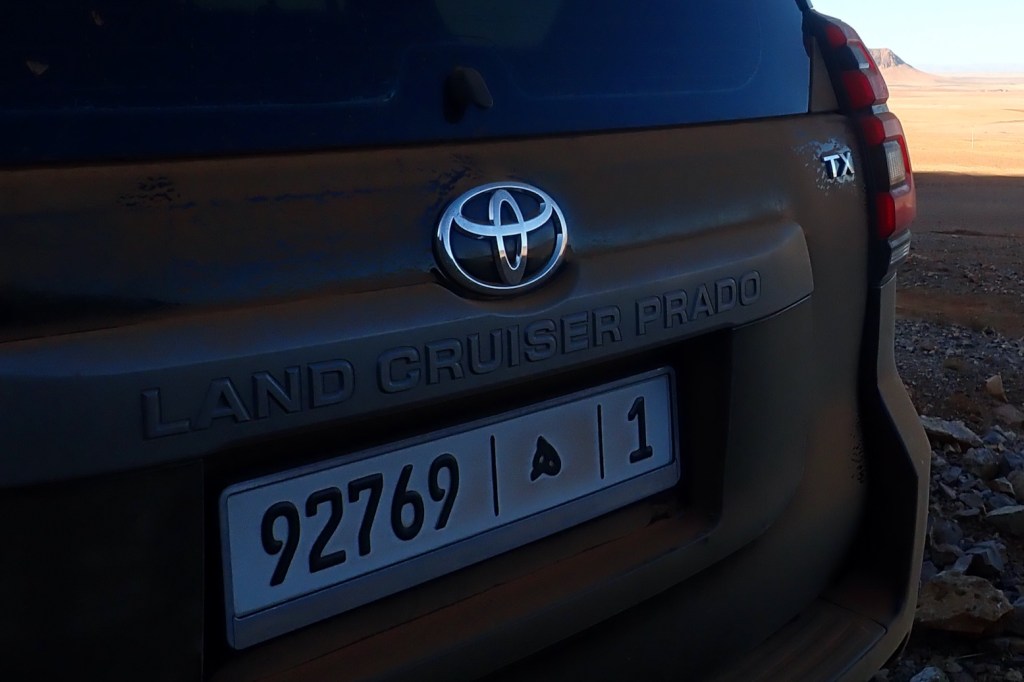
The Prado TX is a commonly rented vehicle in Morocco – a 3-litre diesel €120/day for a manual or €165 for an auto as here. Auto diesels were very rare in my day but make sense as rental vehicles. The cars had around 100,000km on the clocks but looked in good shape. Part of the brief was to find some challenging tracks which I expected would get too much for the heavy, well-used and softly sprung TXs.

An auto fourbie is a new thing for me, but a great idea in that there’s no clutch to fry or gearbox to hammer. The Prado feels heavy and on the road is a bit of a sluggish overtaker, but off-road that ability to concentrate on wheel placement and braking is a better way of doing things.

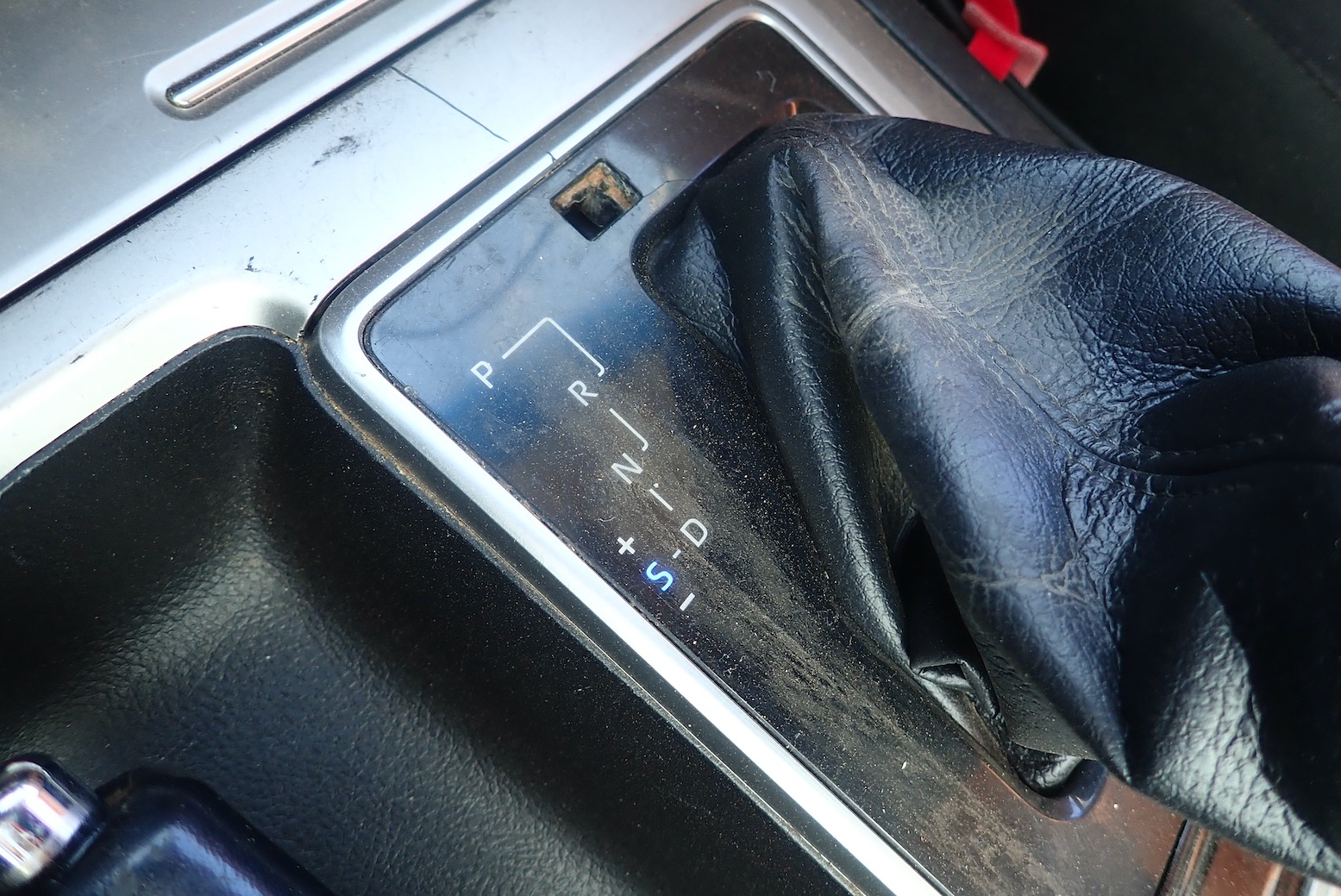
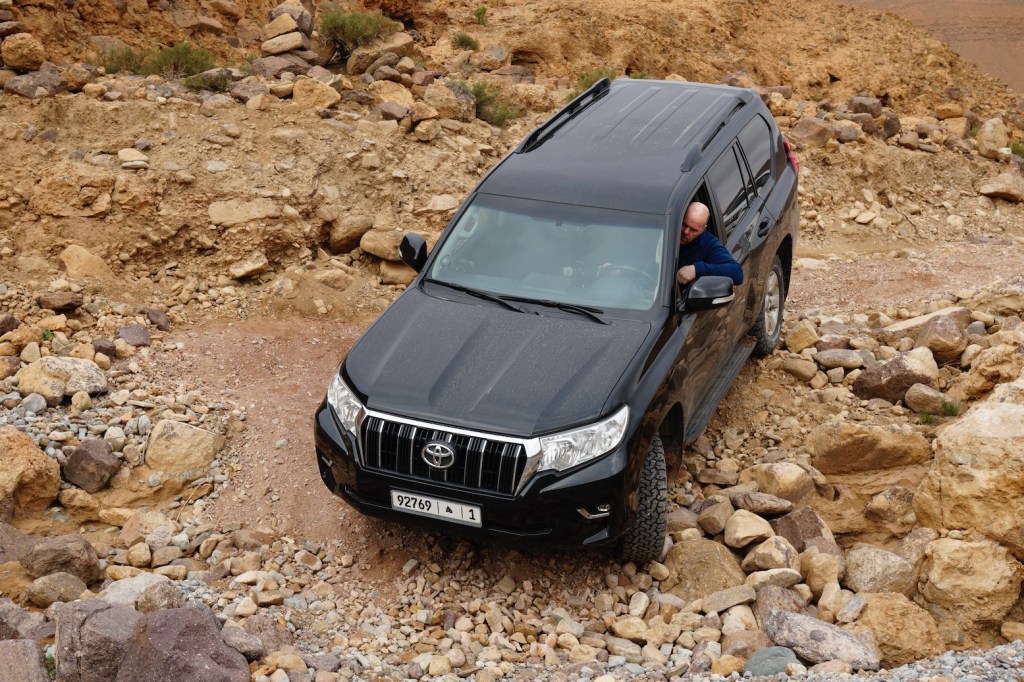
One thing I did find was that Low Range 1st was still too high while coming down Route MA6 on Jebel Timouka. It was over patches of rocky terrain more than the steepness which needed easing over, but I constantly had to dab the brakes. I think I should have tried Hill Descent Control (or some such) to slow the car down, though that may have been excruciatingly slow. The gearbox could also be slotted across into manual – ‘S’ – which also helped with control.

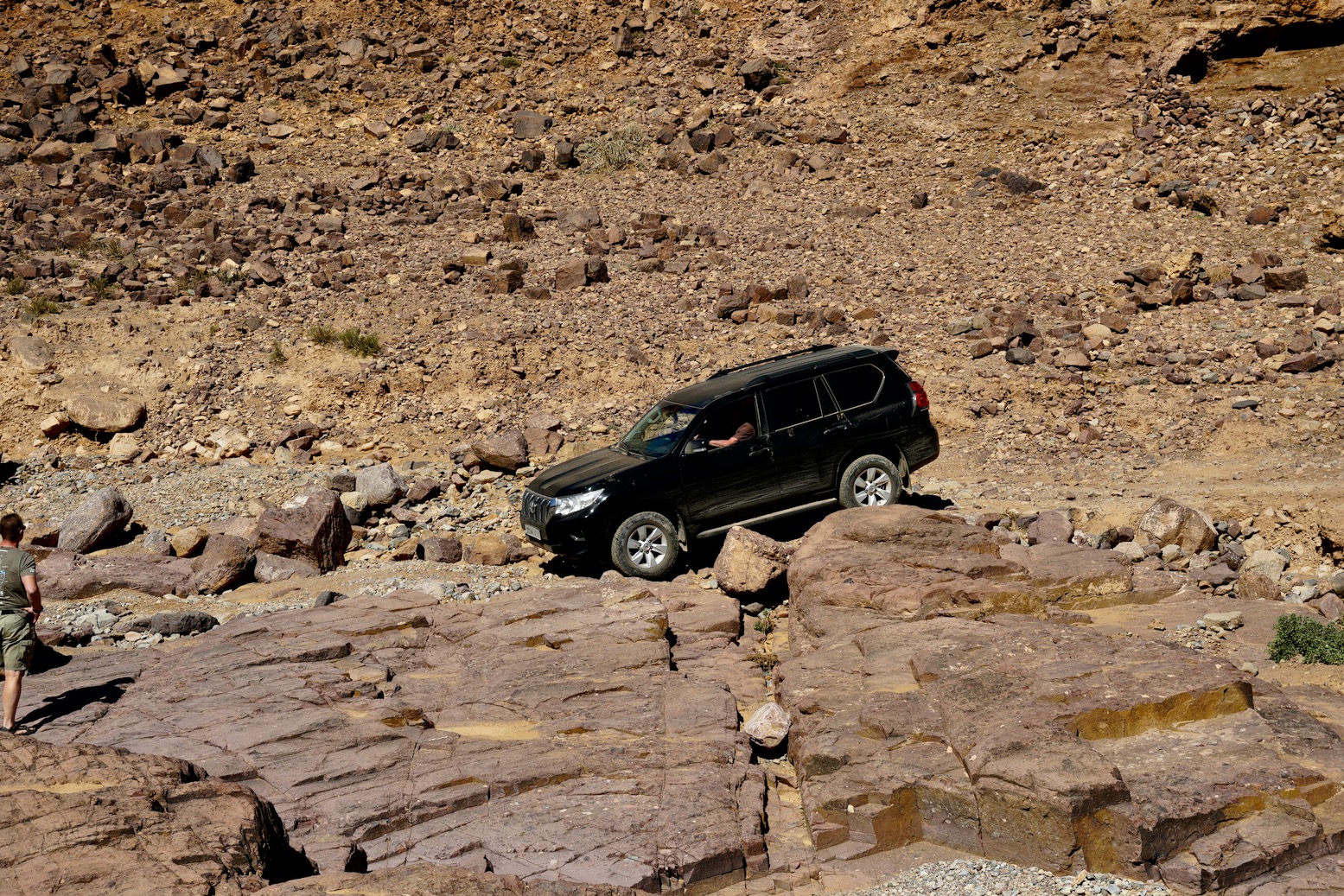
I’ve never scraped or thumped a 4×4’s underside so much as I did coming down MA6 in the TX at 5kph for two hours. They were all non-damaging hits but it’s not a good sound. The dash dial would also not lock the central diff the one or two times we thought we might need it. It was probably a faulty ABS sensor but traction-wise, the car managed fine thanks to the fat tyres on soft springs and dry conditions.

I heard later that a couple of months back an HZJ78 Troopy fell over at the bottom end of this route where a wash-out requires driving steeply up/down the river bank. On a few occasions I had to be marshalled over rocks; following the guide’s hand signals to inch left or right. Not done that for years but it’s a system that works very well. Taking it easy, front and rear bumper clearance were not issues.

At one point I had a ‘Specsavers’ moment when a rock jumped out of nowhere and caught the nearside front wheel while driving out along MS9’s riverbeds towards Anezal. We stumbled across that route from another direction and which I’ve also not done since 2008 on an XT660. I’m pretty sure that thump tweaked the steering wheel 5° to the left, though there seemed no damage to the linkages or subsequent vibration in the steering. We also had the age-old problem of dust playing up with the tailgate release locks.

All up, while it was fun to off-road in the Prado and the auto box make light work of the trails, it’s still a big fat, lumbering 4×4 which I’d have no use for elsewhere. I’d sooner do Morocco in a jacked up Audi estate or maybe a rented Duster.

In February 2023 I was back in a Prado, re-recceing the new version of the route above and then driving one the following week on the actual event. Again, one with over 150K on the clock did not light up the diff lock when selected an on this occasion we needed it. The newer Prado on the recce and the one I drove the following week (<20k on the clock) worked fine.
Notably these two cars appeared to have been lifted a couple of inches which made a huge difference to the scraping experienced in October. If you rent one of these for off roading, consider asking whether it has been lifted and hope that the delivered vehicle matches what was requested.

Algeria Timbuktu Mauritania 1990

Desert Travels Index Page

Buy Desert Travels 2021 on Amazon

Book Chapters:

Chapter 23: Battle of the Saharans

In Chapter 10 of Desert Travels the cantankerous 101 leading my first desert bike tour was stranded at the Tin Taradjeli pass (above). As so often happens in the Sahara, the next person to turn up happened to be a diesel mechanic.
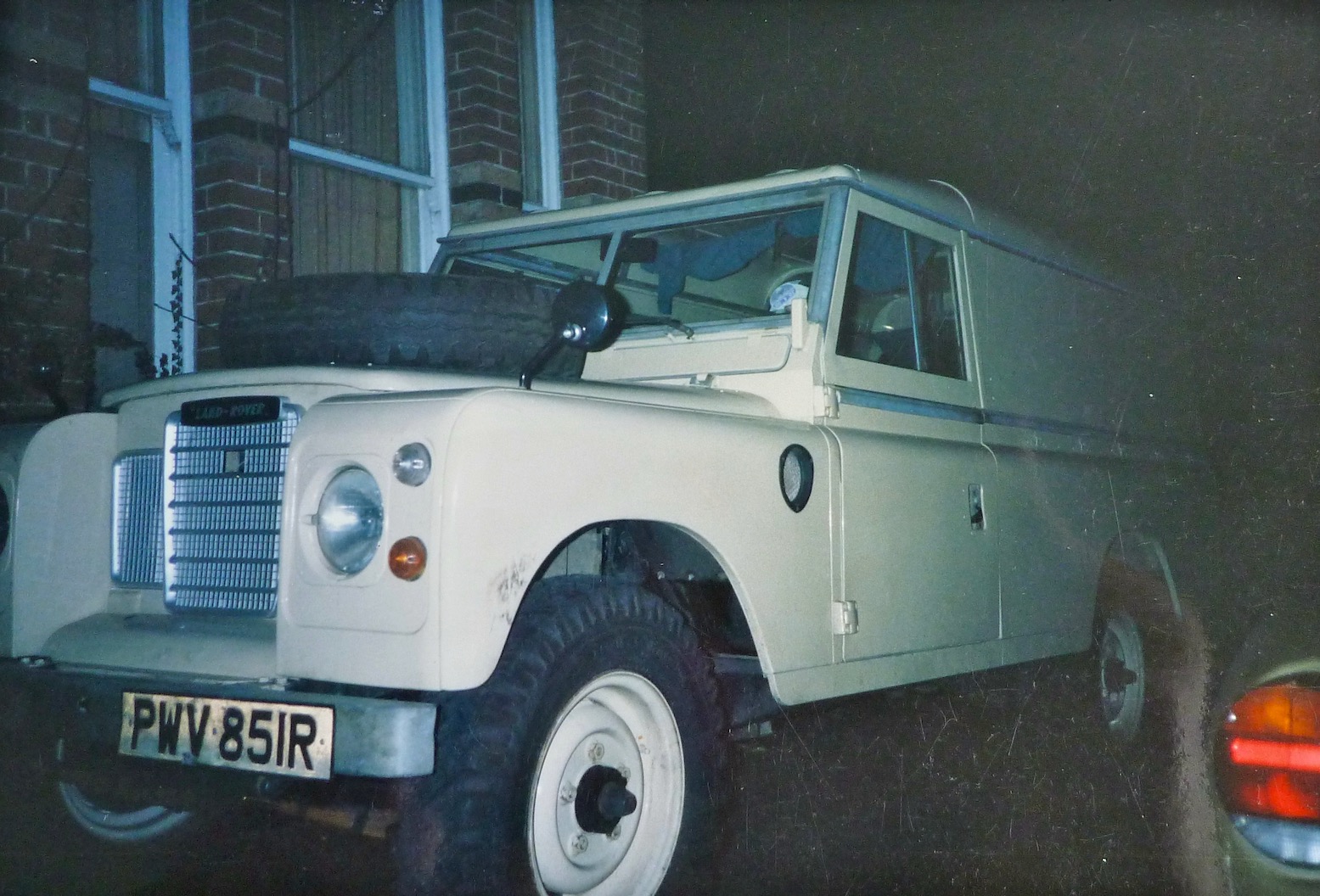
Steve soon got the 101 running and, long story short, the following year we decided to team up and do a big Sahara trip together: him in his Land Cruiser, me in an old Land Rover 109.

For both of us this was the desert trip we’d each been planning in our heads for years. When travelling together briefly with my bike tour the previous year, we’d quickly established a shared passion for exploring the Sahara and set about doing a big trip together, each with his own 4×4. Though I’d been keen to head for the Ténéré Desert in Niger, we’d settled on keeping off the tarmac where possible and decided to head down to the Guinea’s highland jungles and the Mauritanian Sahara. 

Nineteen ninety was not such a good year for me: post bike-tour debt, a bad crash leading to hospitalisation, followed by homelessness, a smaller bike crash which at least put an end to my dozen years of despatching. And finally my Land Rover, all set for a desert adventure with Steve, blew up in darkest Sussex at 2am, while I was doing some late deliveries.

As a way of keeping the tip on the rails Steve invited me to ride his XT600Z instead. I wasn’t that keen on bikes by that time, plus it would leave me dependent on him. But I accepted his offer and we met up in France, the bike towed on its back wheel with a similar arrangement I’d used on the 101.

Unfortunately, as so often happened in those days, all my films were lost on a flight in Mauritania. Since then I’ve learned: do not put things you cannot afford to lose in the hold baggage. What few photos I have were shot by Steve.

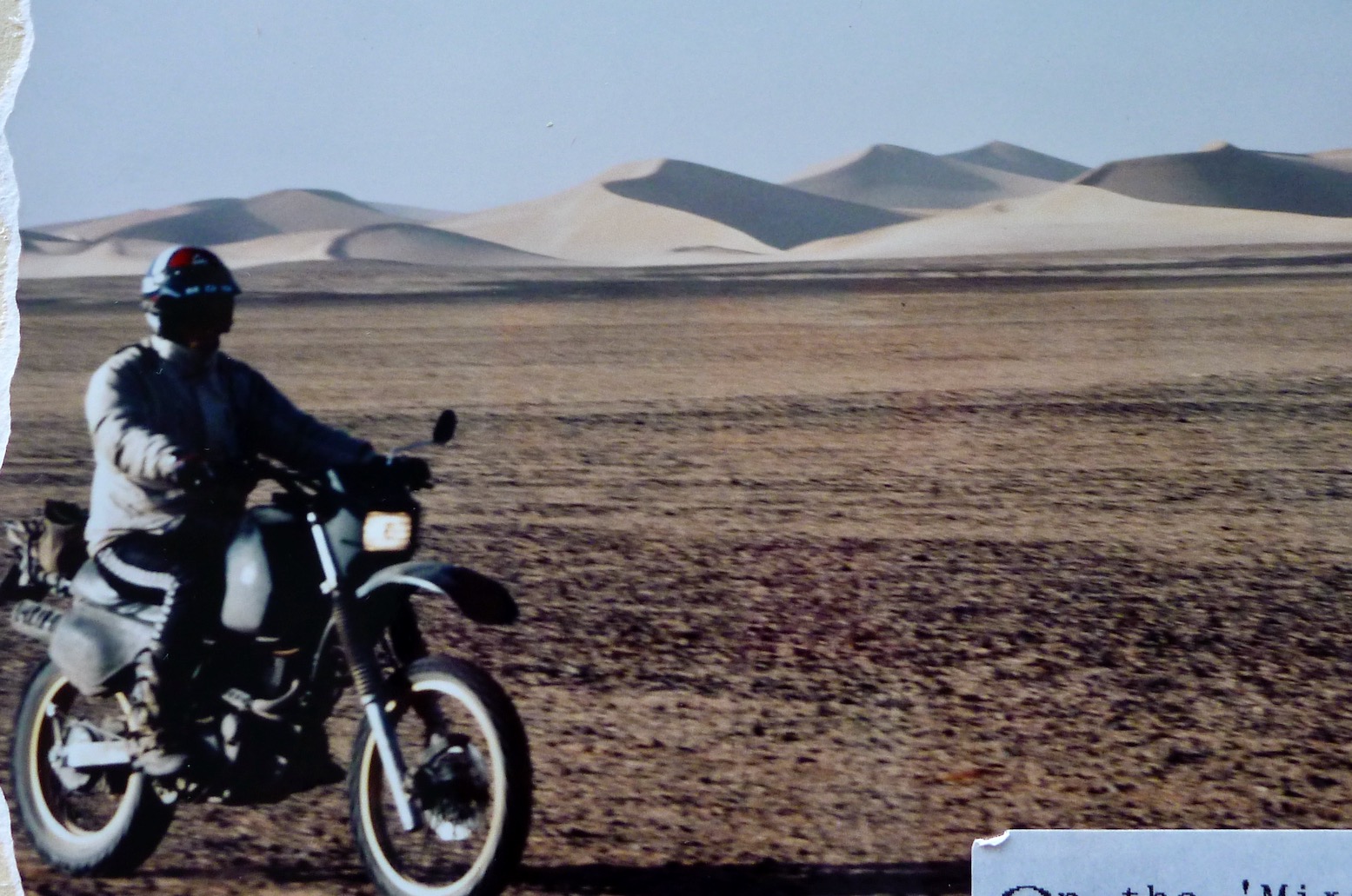
On the ‘closed’ piste between Fort Mirabel and Hassi bel Guebbour.
Steve’s XT was nicely set up and of course all the essential gear was carried by the car.
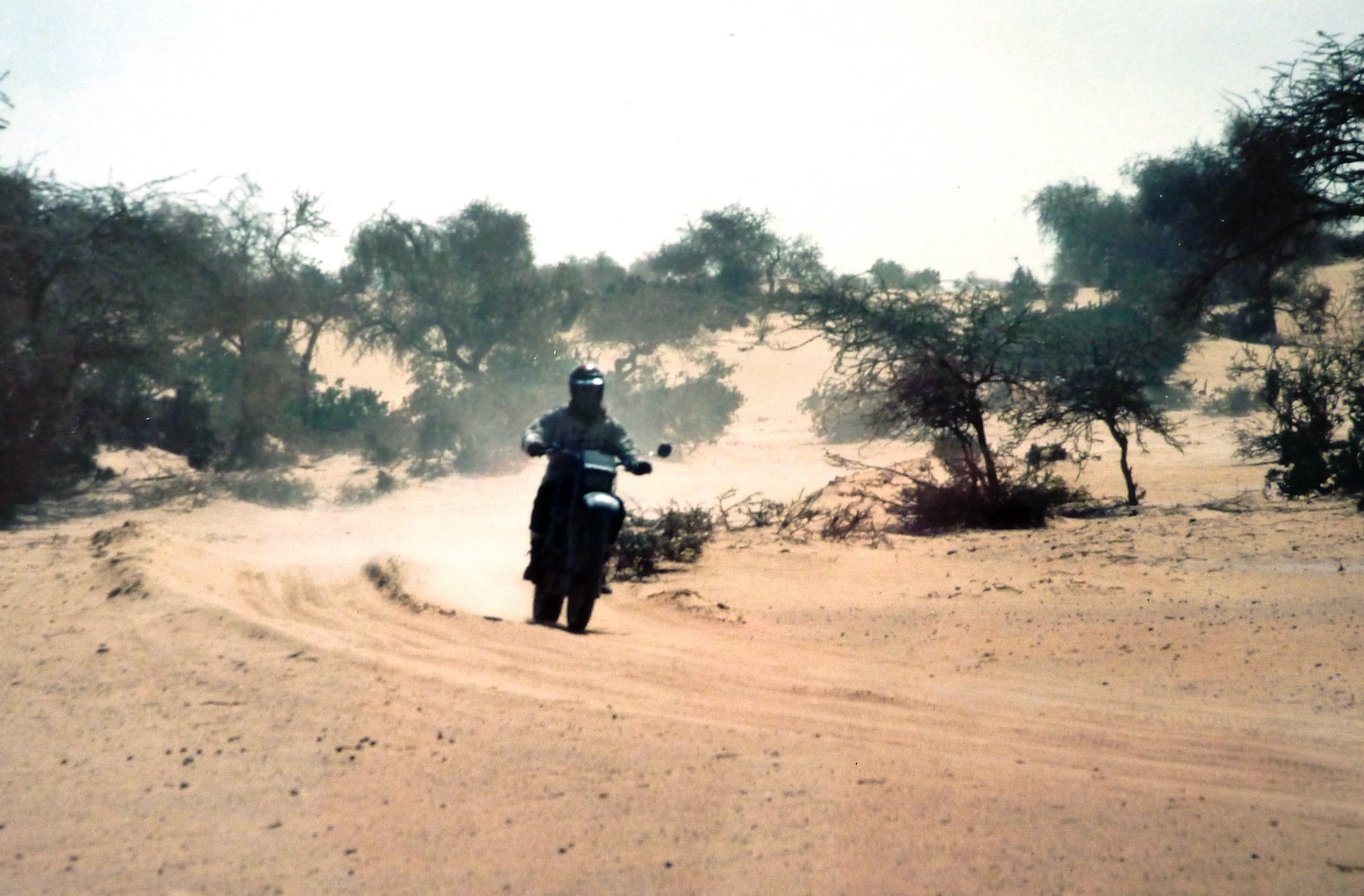
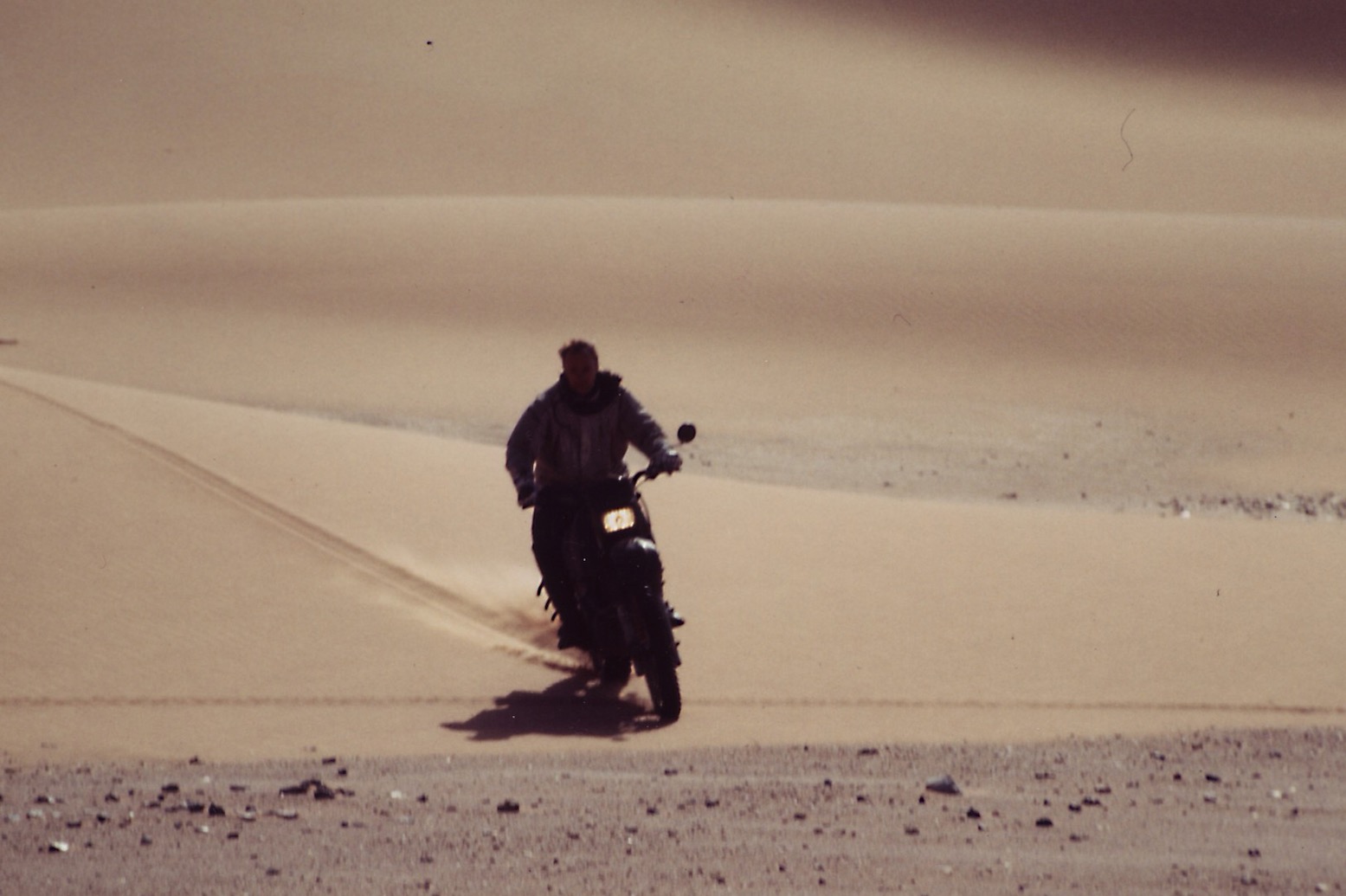
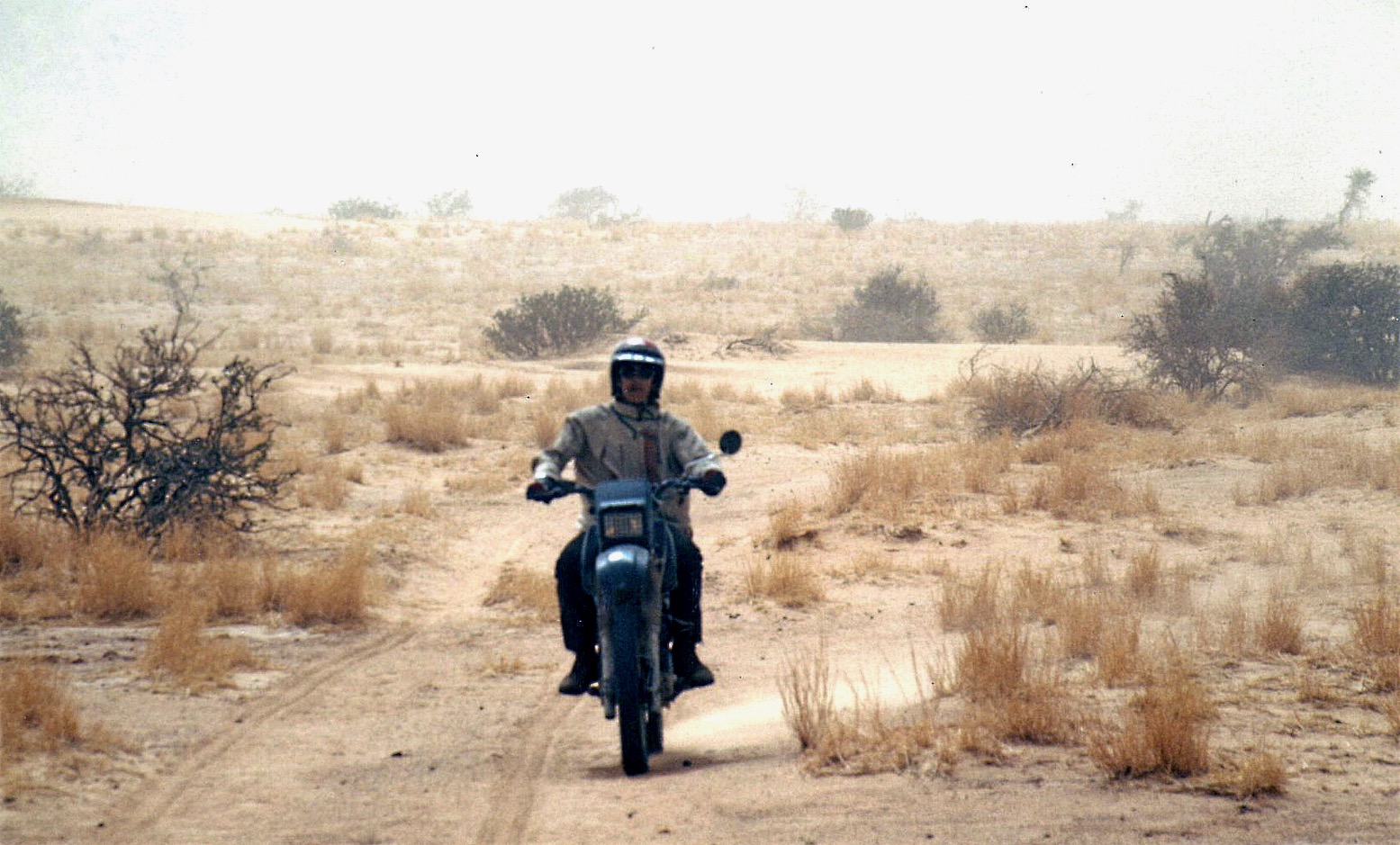
I’m wearing my airey, paper-thin Swedish Tenson jacket. Beyond wearing a lid, gloves and boots, the idea of wearing any sort of armour never occurred to me.
On the gnarly piste up from Hirhafok to Assekrem deep in the Hoggar.
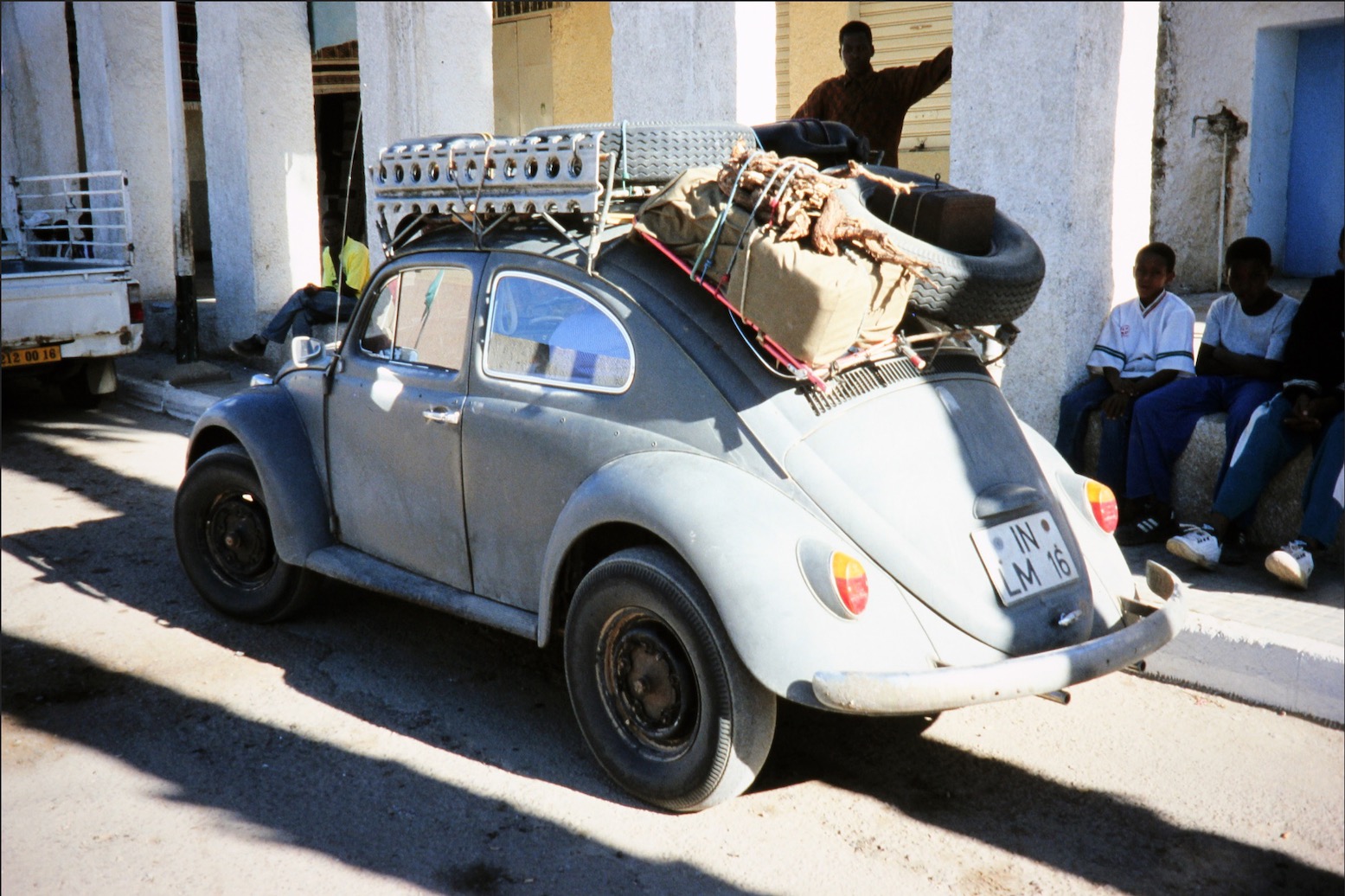
I found this picture recently on the internet and am pretty sure it’s the same ancient Beetle we saw at Hassi Tabelbalet, just after the Gara Khanfoussa dune crossing on the Graveyard Piste.

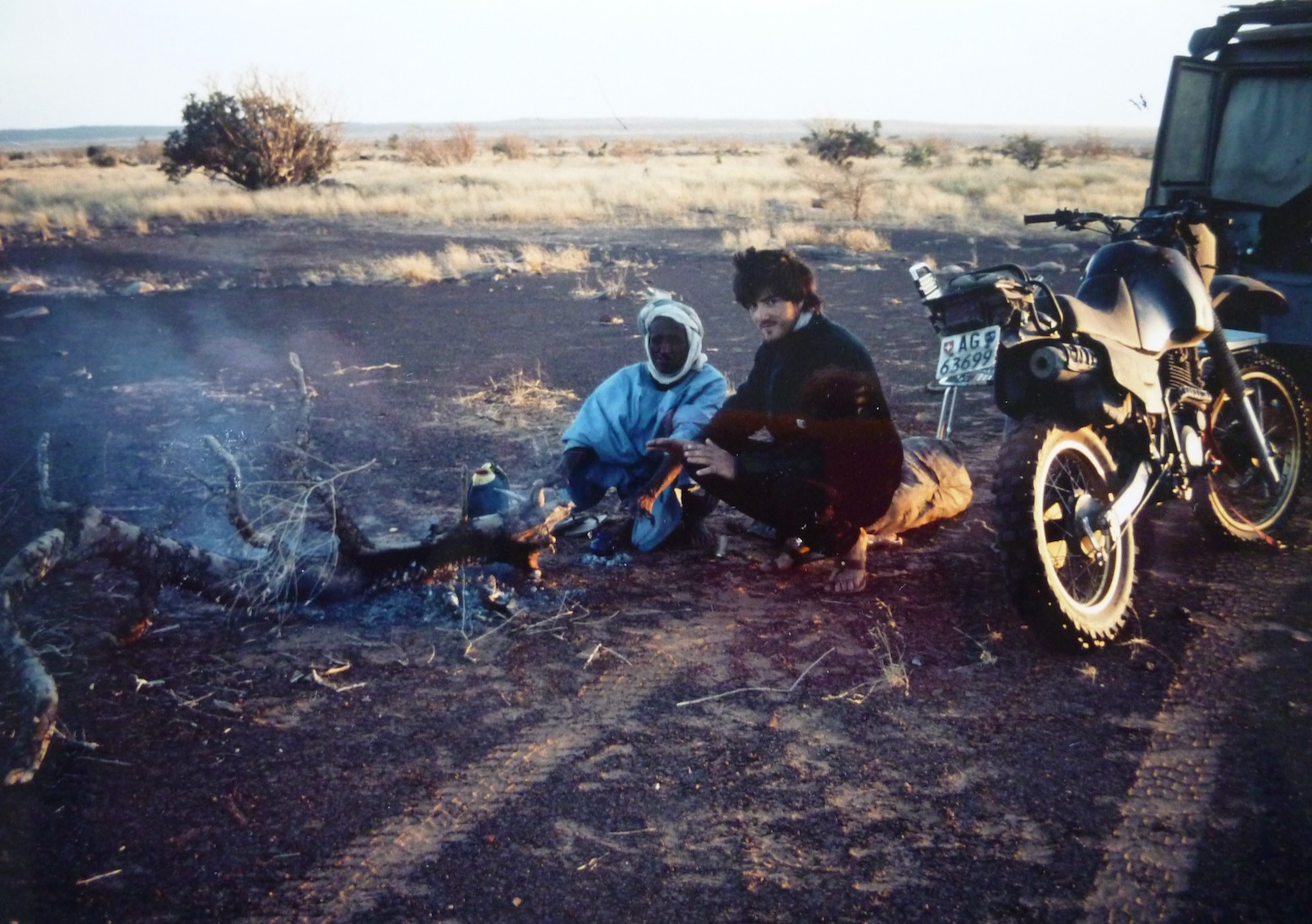
“… A couple of hours later we reached Tabelbalet well on the far side of the erg and were dumbfounded to come across an eccentric German father and son in a ratty VW Beetle. Amazed that a forty-year-old 2WD had made it through the dunes, Steve confessed later that the Germans’ presence had soured his crossing…” 
One of the easier sections on the sandy trail along the Niger river from Bourem to Timbuktu.
Tooling around in the dunes somewhere near Timbuktu where our trip was about to unravel.

‘I think I’ll head off when we get to Ségou [the next major town]. I’m not really enjoying all this riding around after you. I want to go off and do my own thing.’
I was determined to salvage the trip for my own ends. The shared driving had not materialised, the pace was ridiculous (we’d done around 4000 kilometres in less than two weeks) and everything I did was wrong or not enough. I didn’t see such a separation as a failure, it was merely the right thing to do if I was not to end up feeling resentful. 
Somewhere near Timbuktu. Too much vegetation for my liking
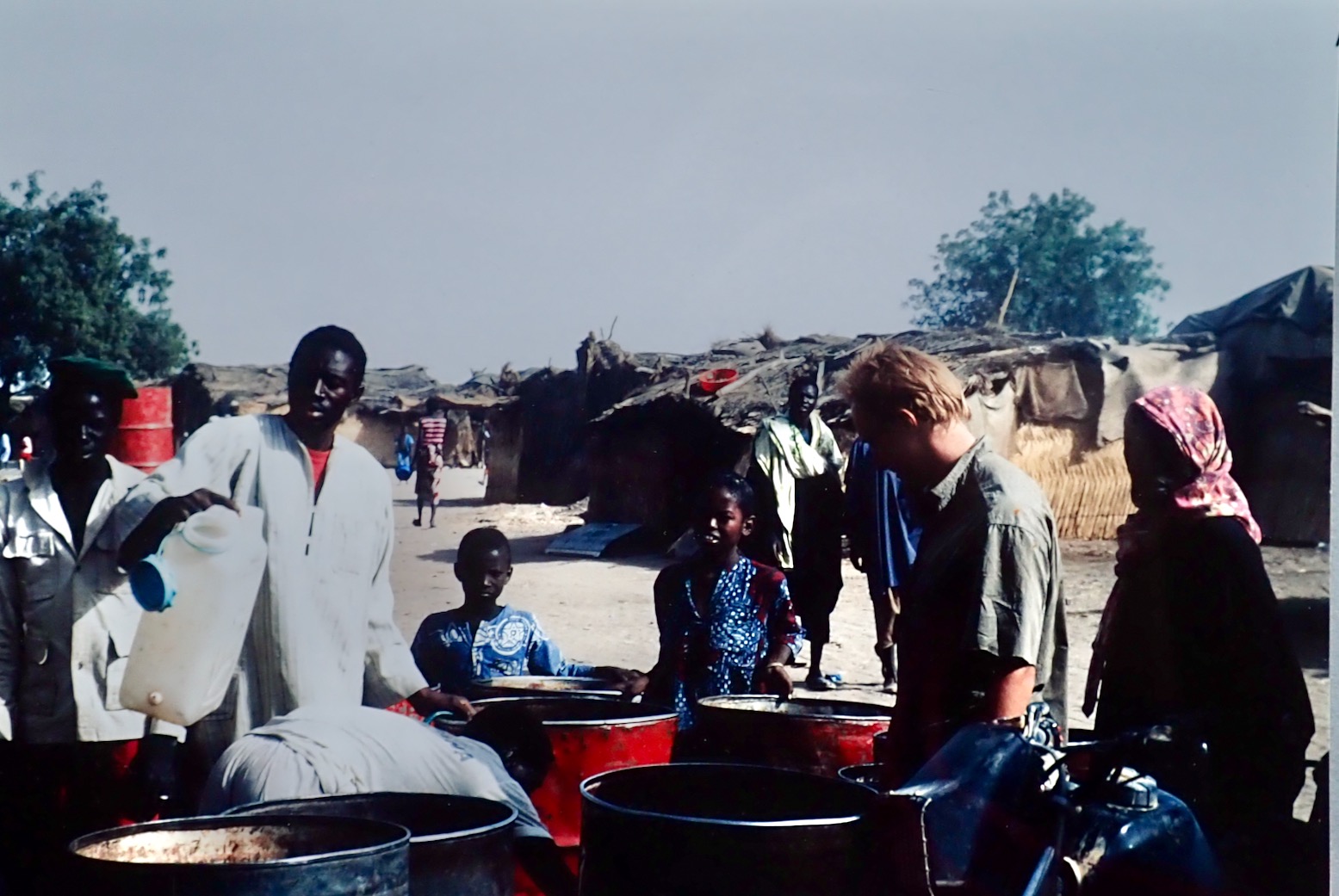
Getting water in a village in the Malian Sahel.
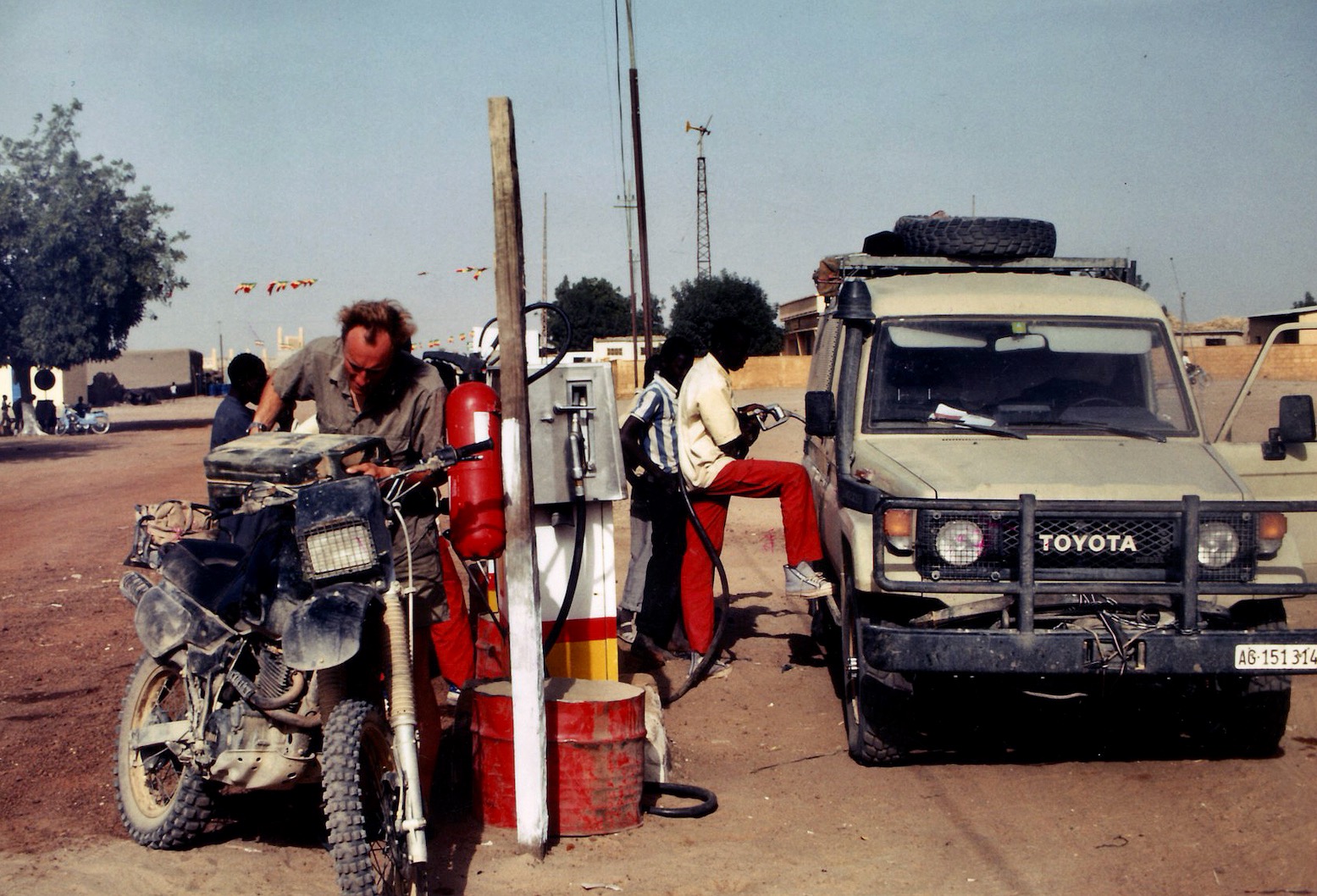
Fuelling up in Nara, just before the Mauritanian border.
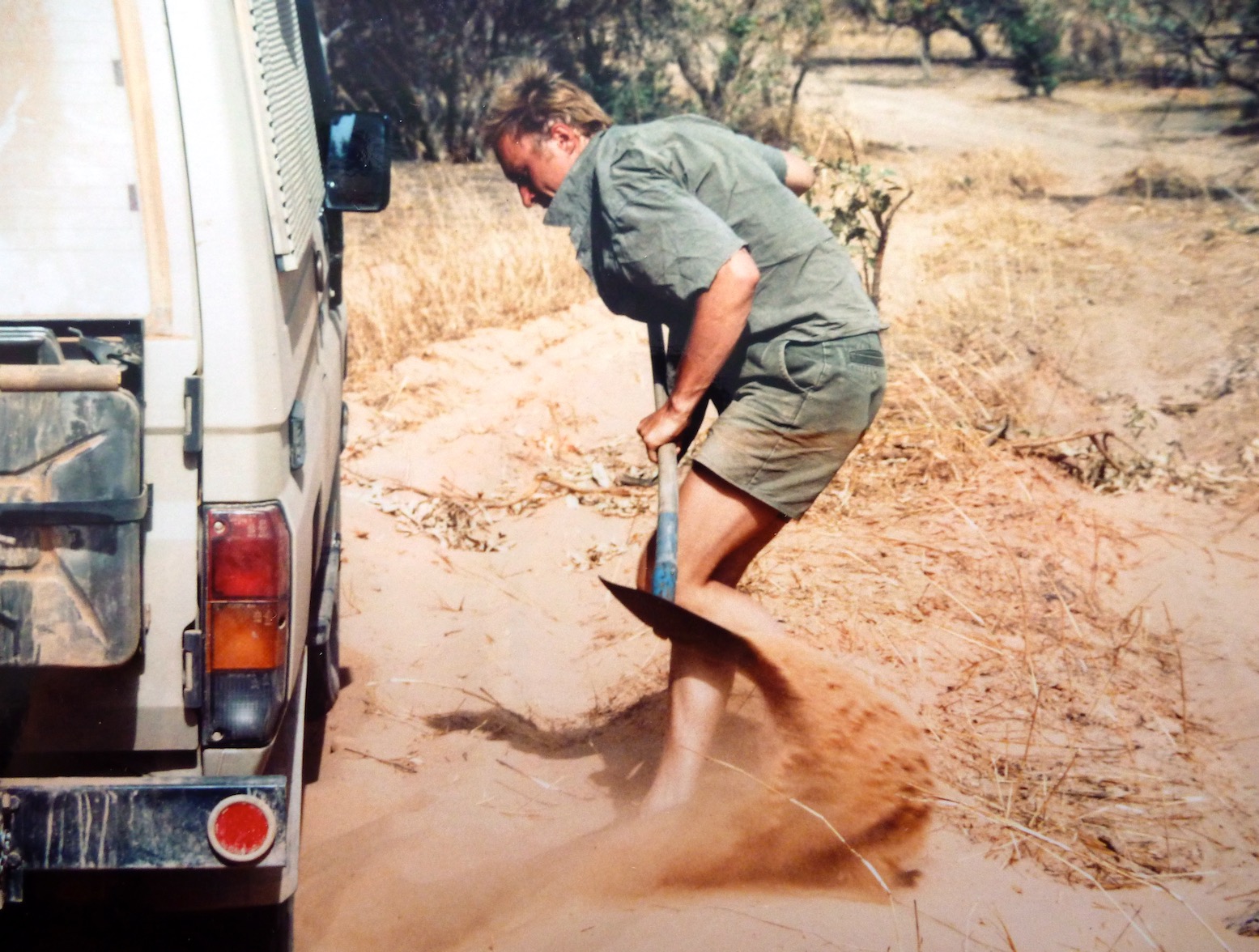
Digging out on the way to Adel Bagrou, the Mauritanian border post where we managed to talk our way in without a Carnet de Passages.
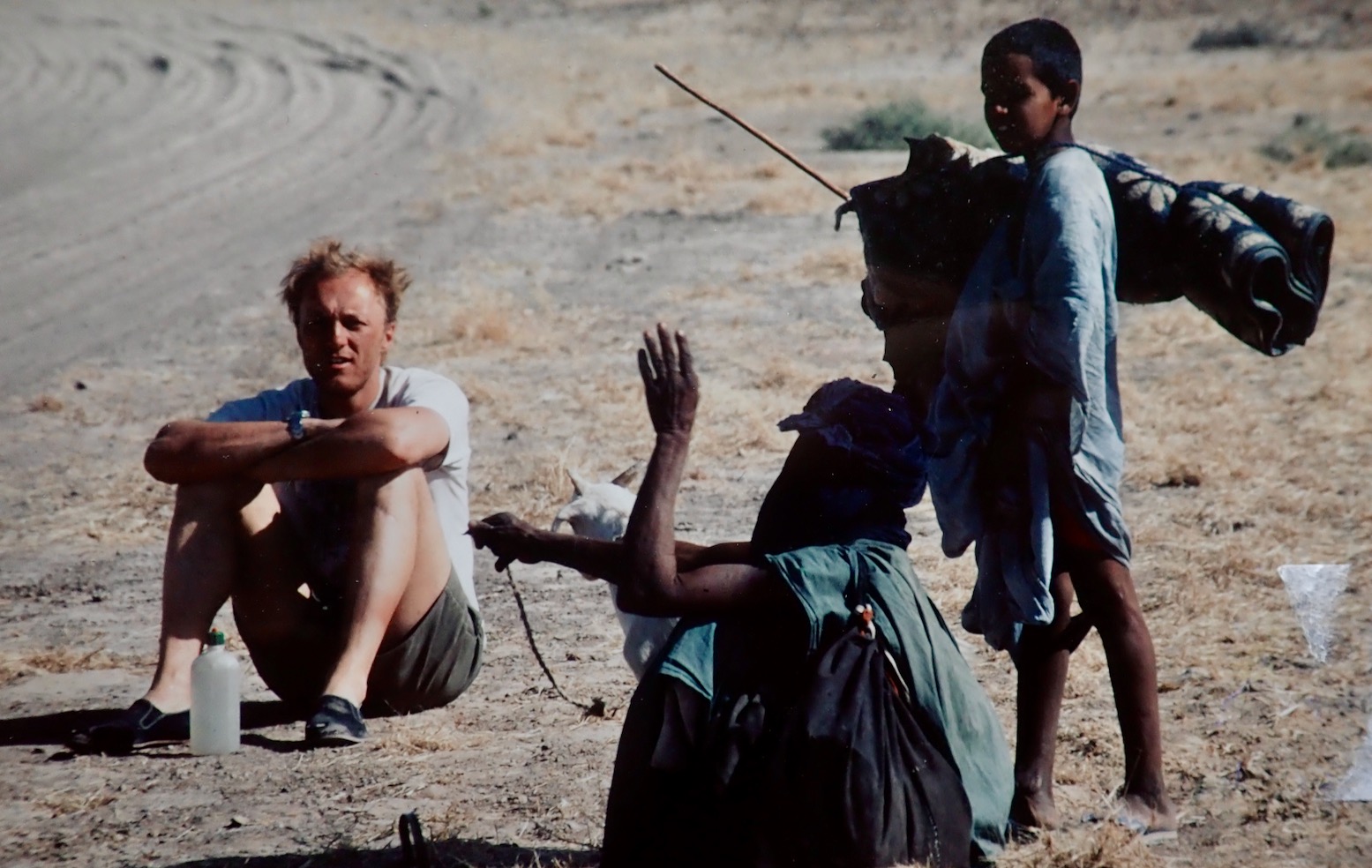
Trackside break on the way to Nema.
In Nema we picked up the Ghandi-like guide called Nani for the 800-km crossing to Tichit. Just as well; there is no way we could have found the way without him as most of the time there was no track (or he rarely followed it).
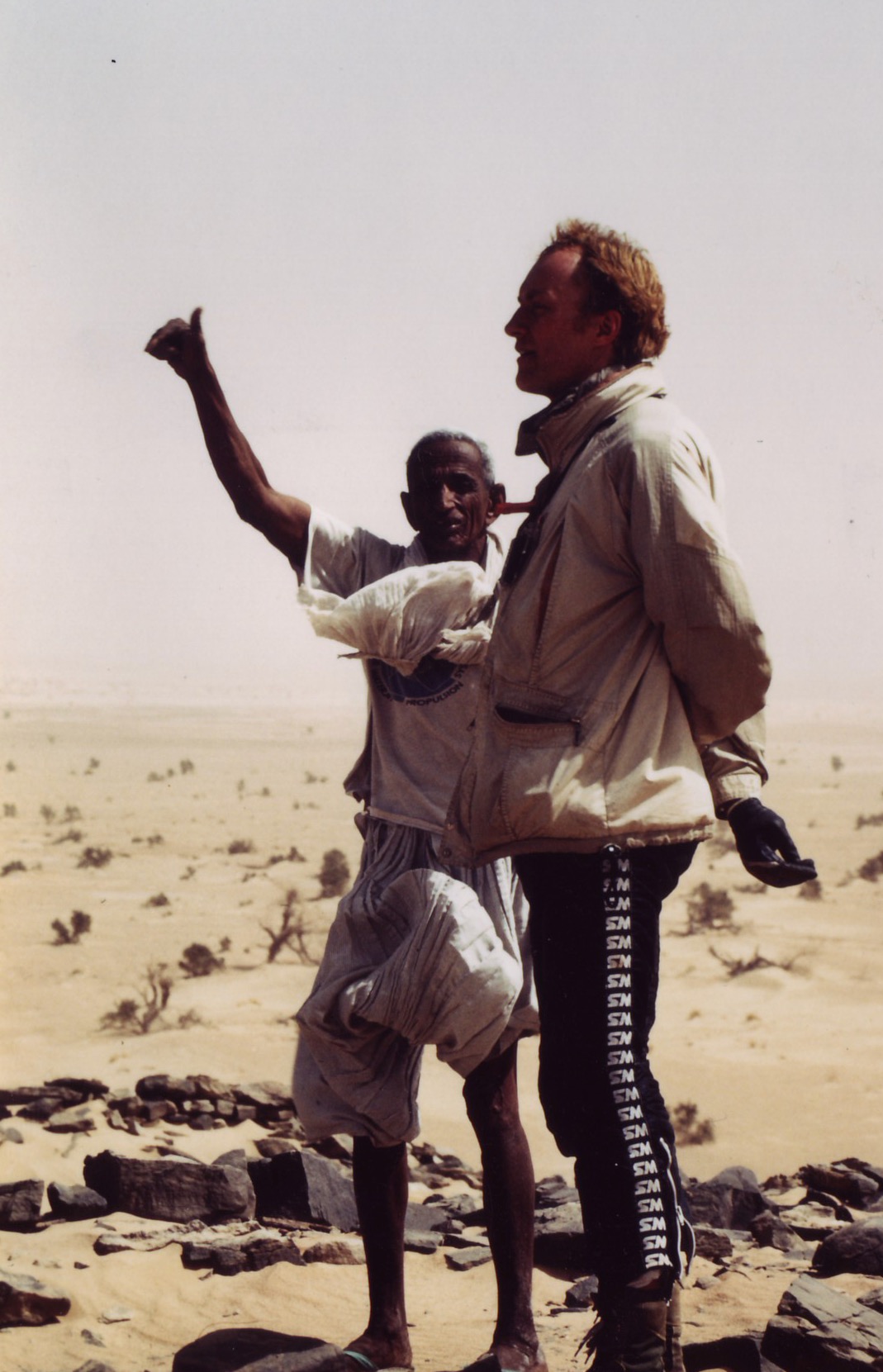
Steve and Nani have a brew near Oualata.
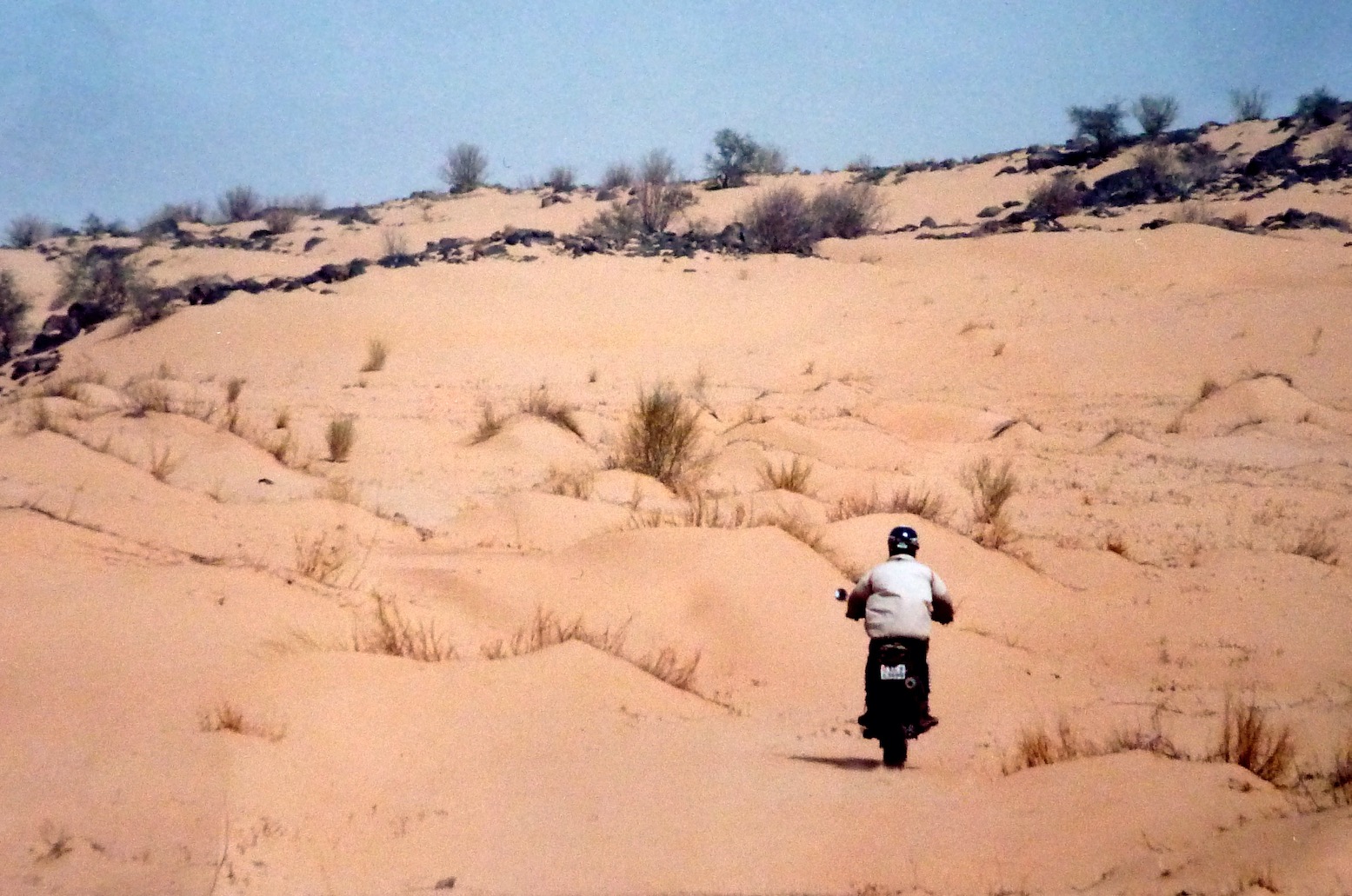
I remember this bit well – a steep sandy pass called ‘Enji’ about 300km from Nema by which time I was riding the unladen XT like a Dakar vet. When you’re good it feels like ski-ing.

Enji is the plateau at the bottom right. This 1960s map shows a track, but in 1990 most of the time there was nothing but sand and annoying tussocks.
Sunk down to the axle in the soft sands west of Tichit.

As agreed near Timbuktu, in Tidjika Steve went his way towing the XT, and I went mine. I met some American Peace Corps Volunteers and my travels in Mauritania took on a whole new direction.

Once in Tidjikja, I flogged my crash helmet to a delighted policeman. This time Steve didn’t even try to persuade me and drove off towards Nouakchott. 

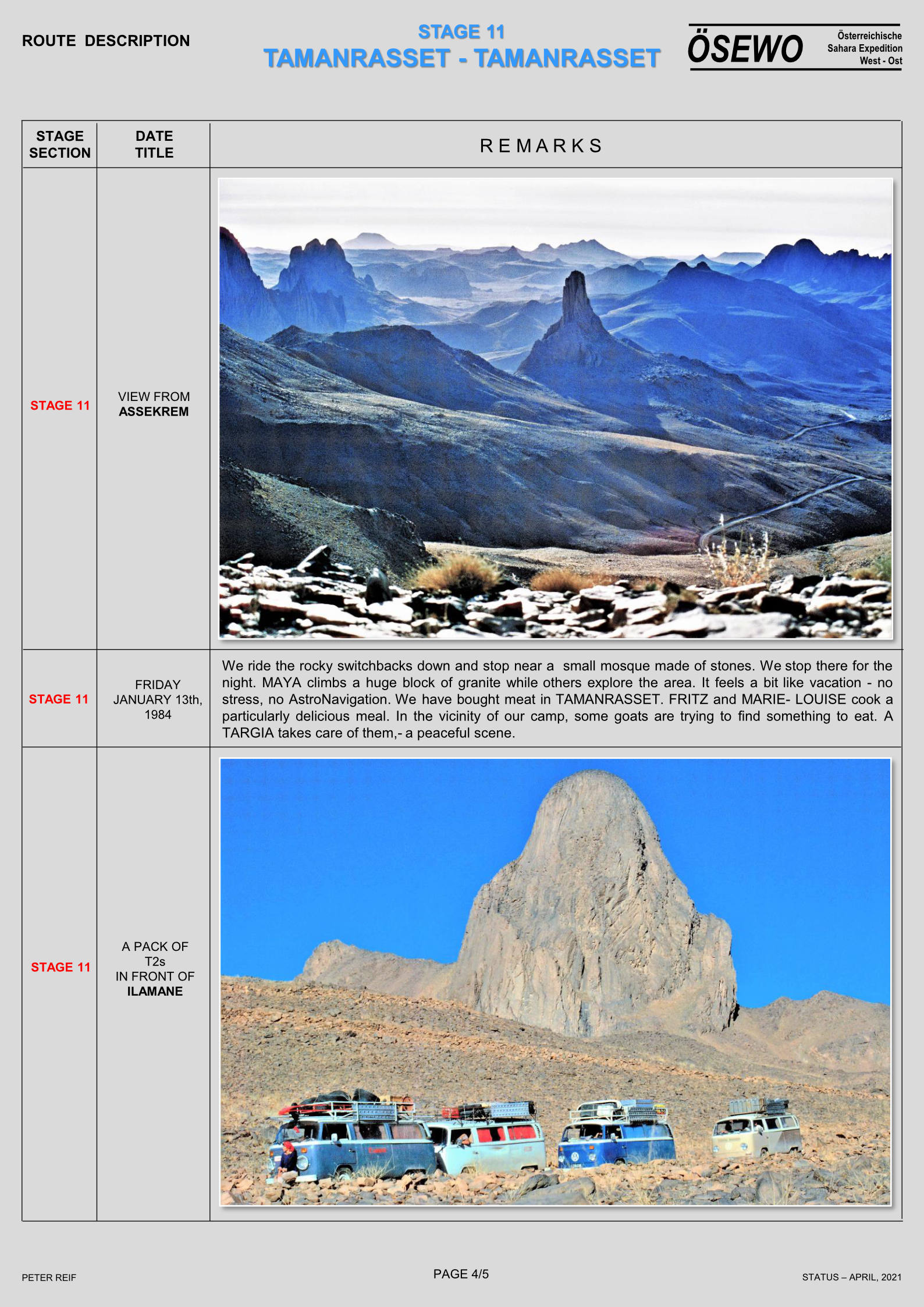
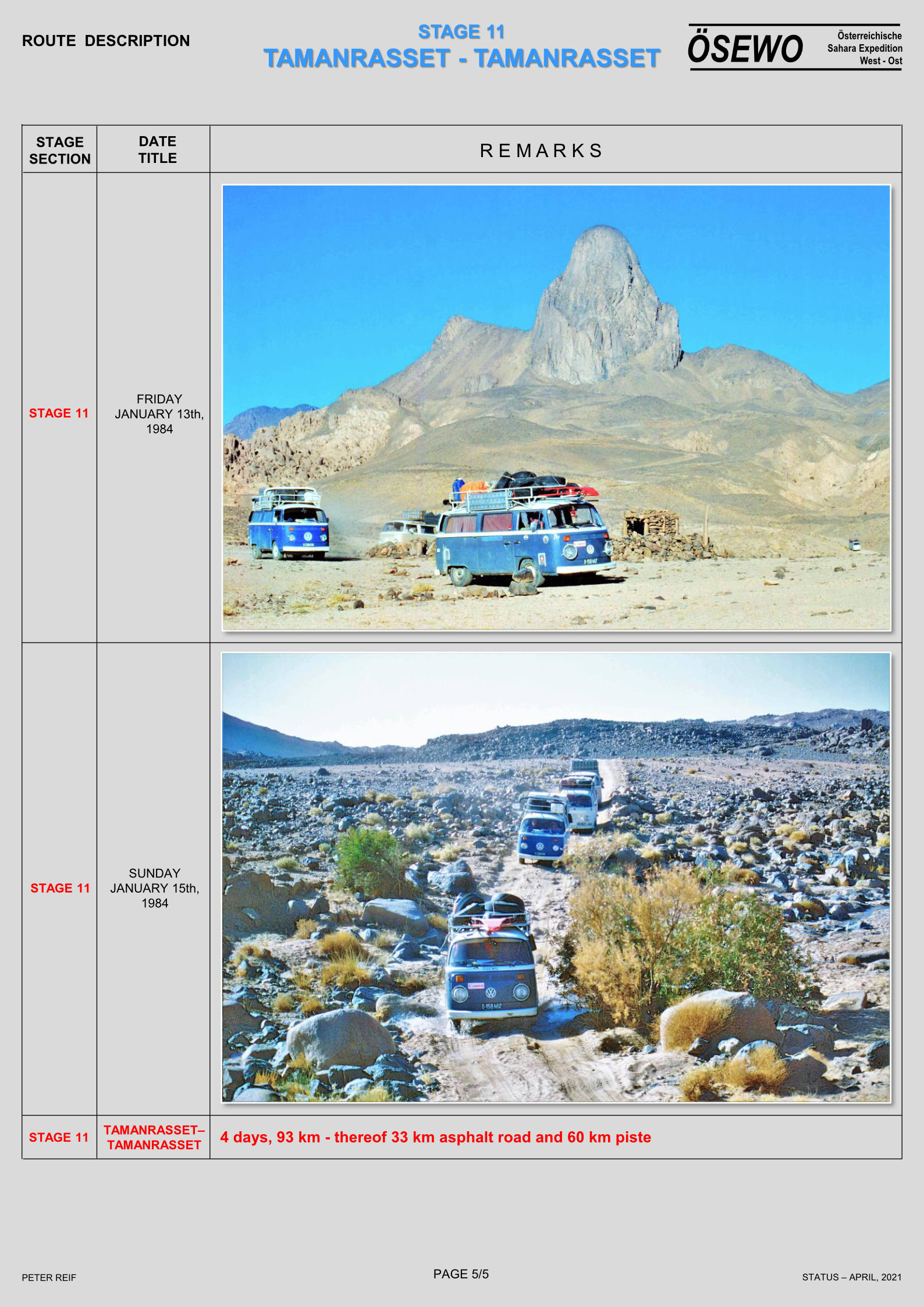
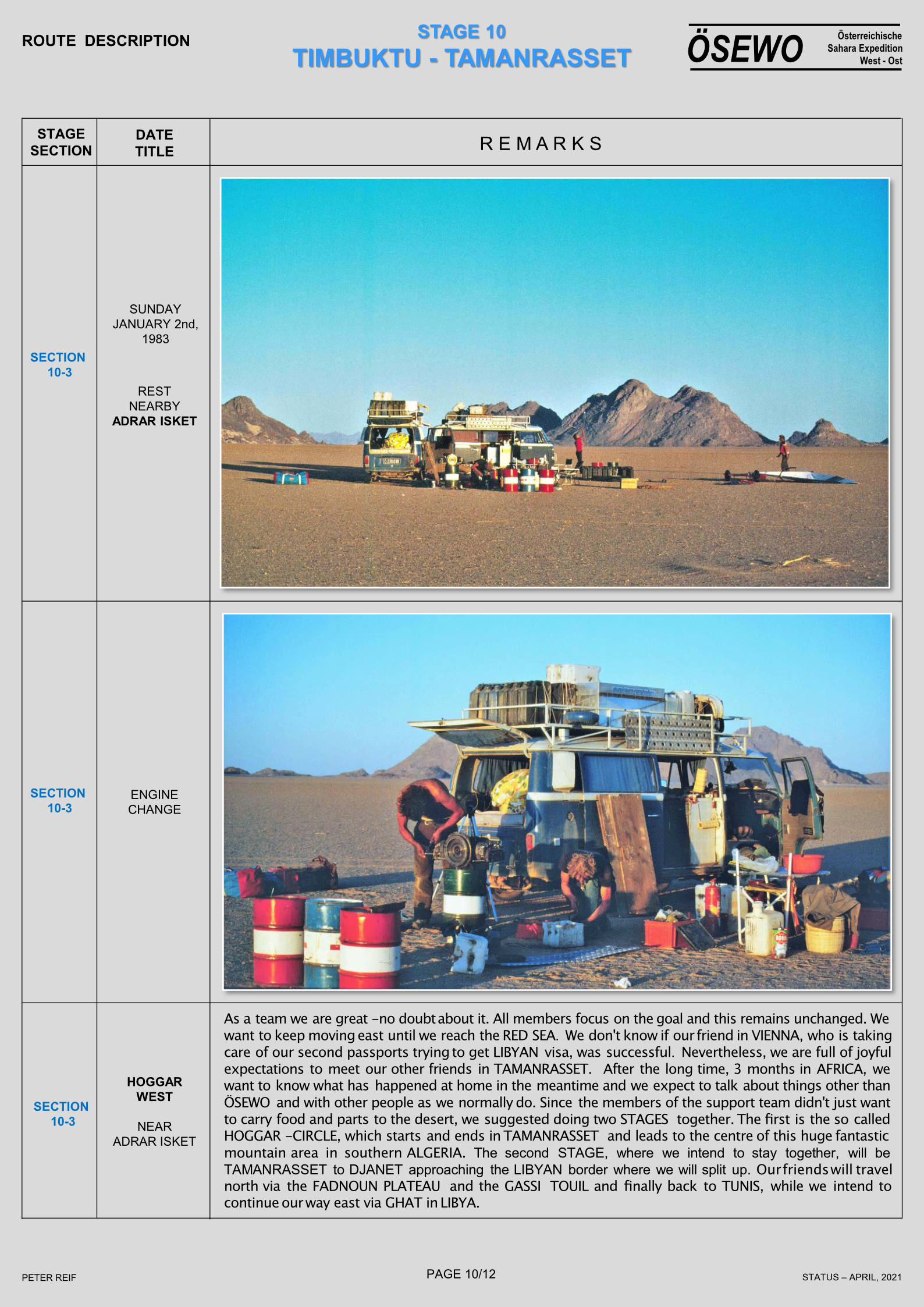
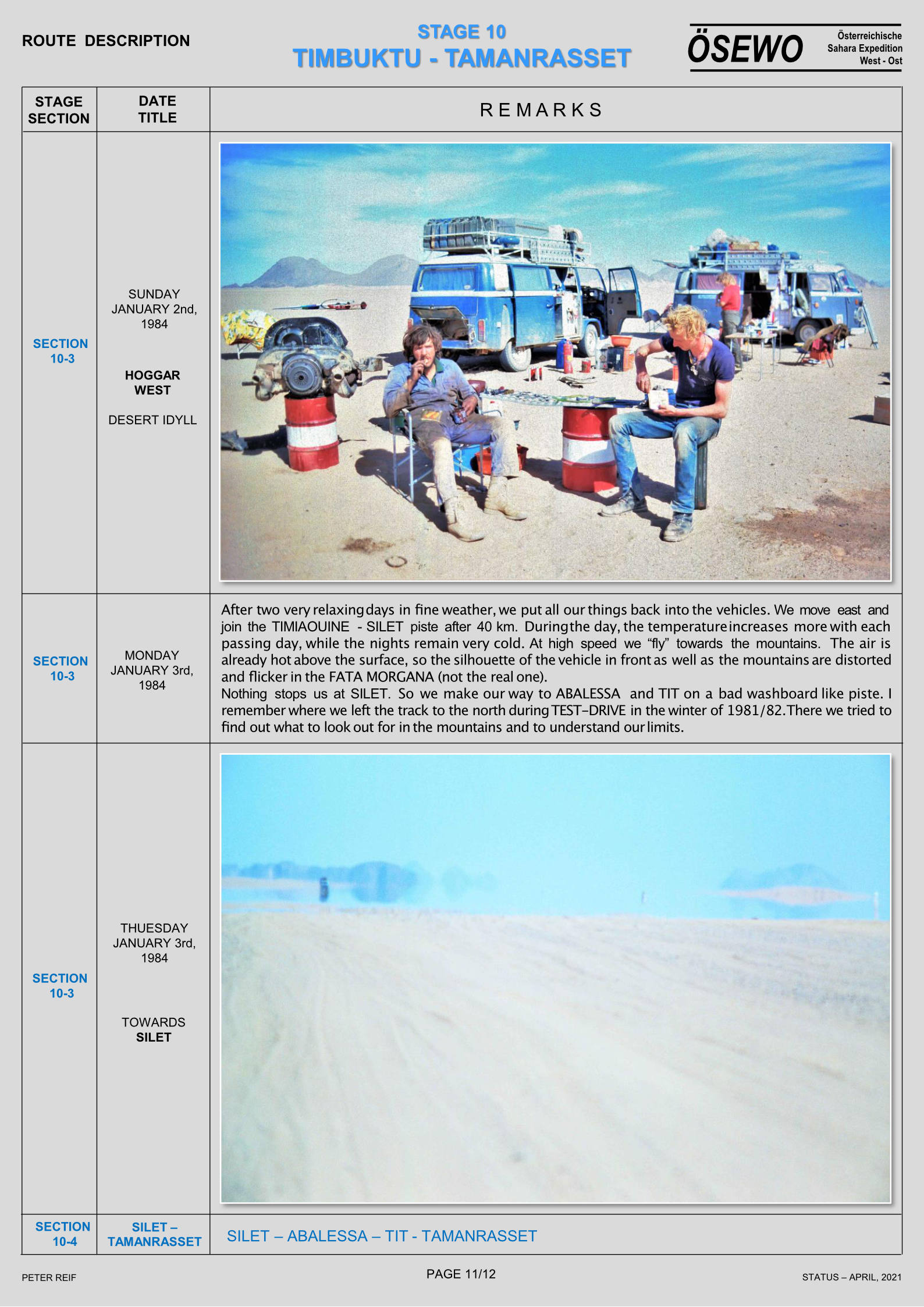
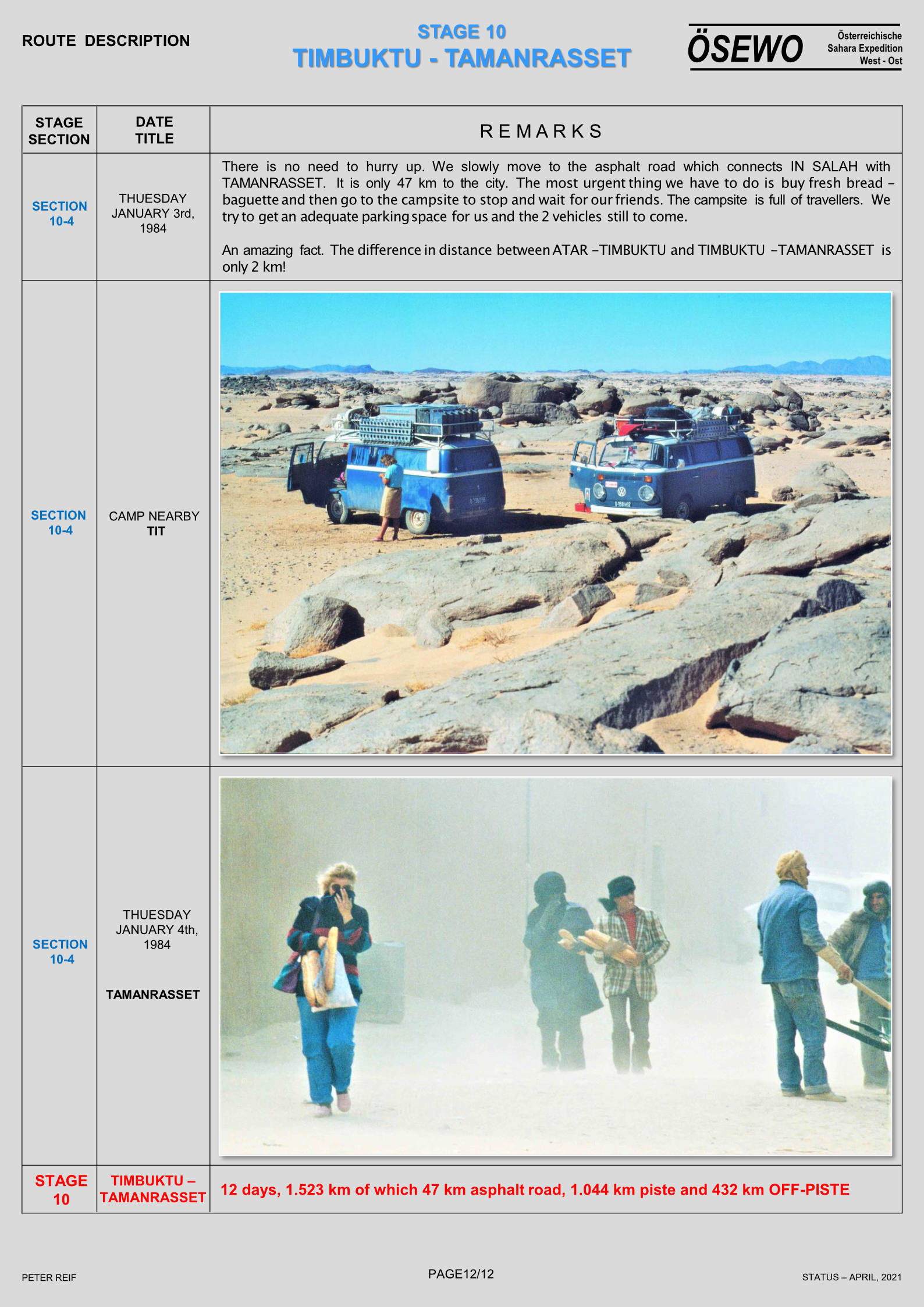
Sahara West–East with VW Vans, 1984 • Part 8/8

See also:
Sahara West-East Crossings
Astro Navigation in the Sahara

Reports by Peter Reif
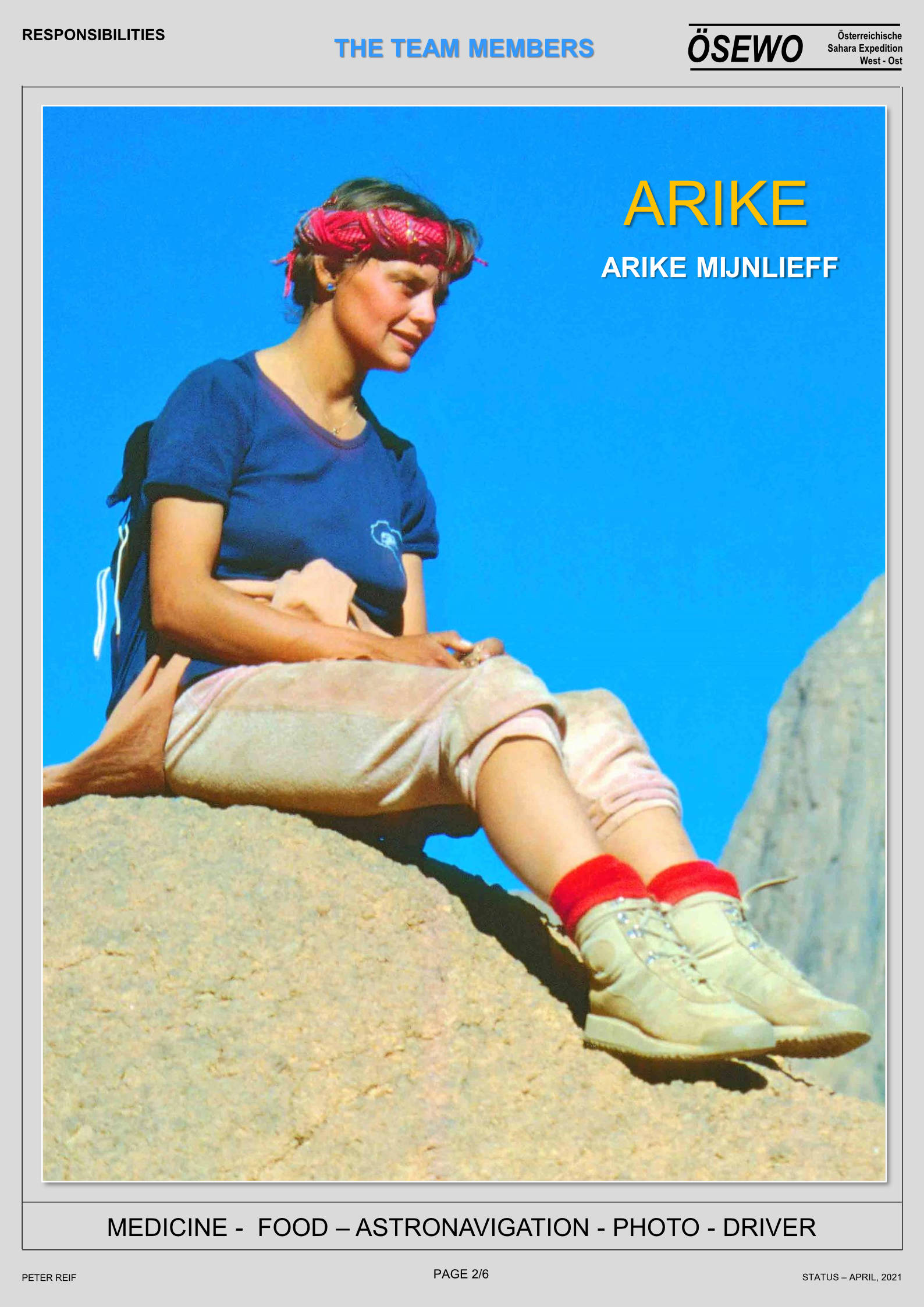
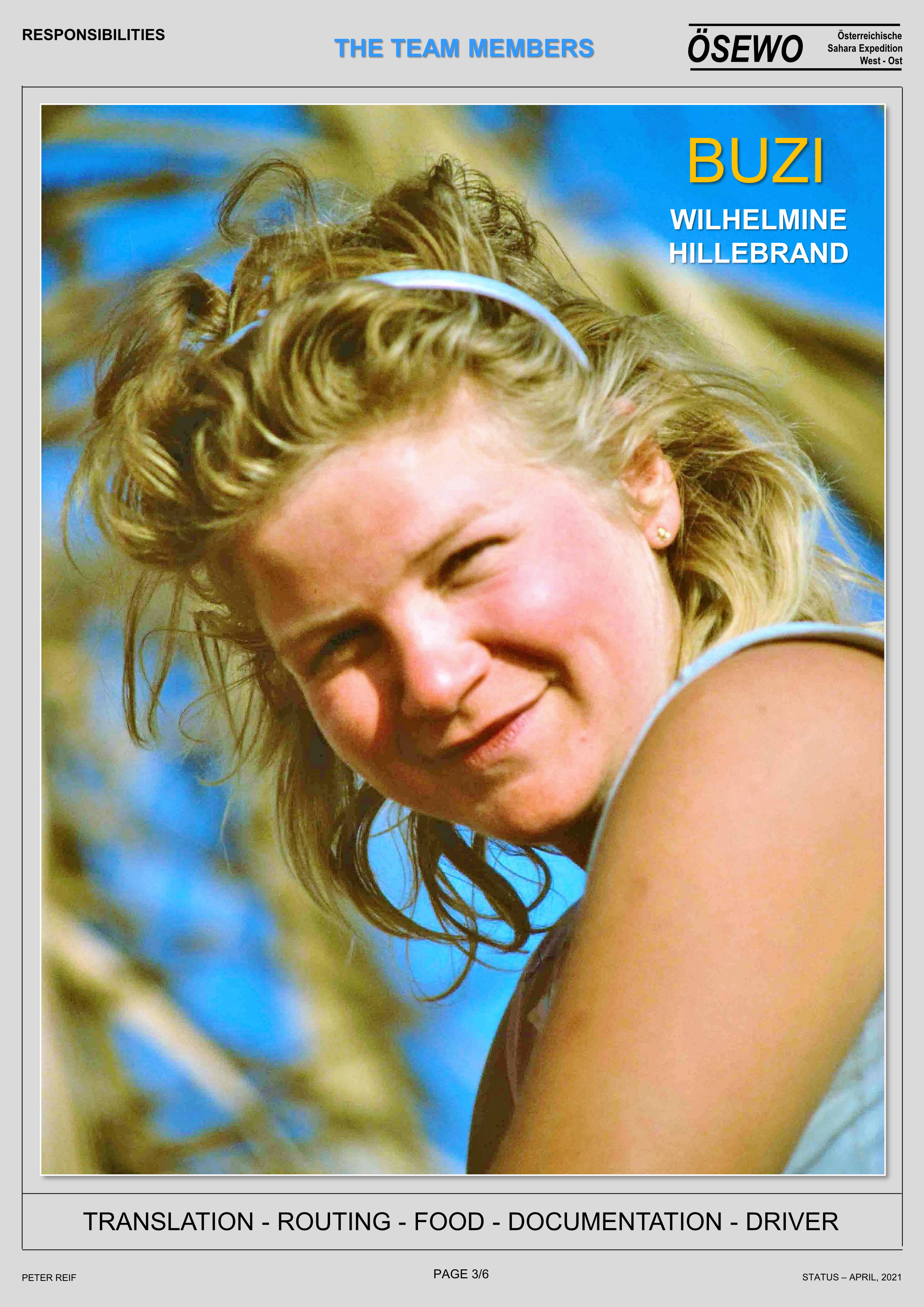
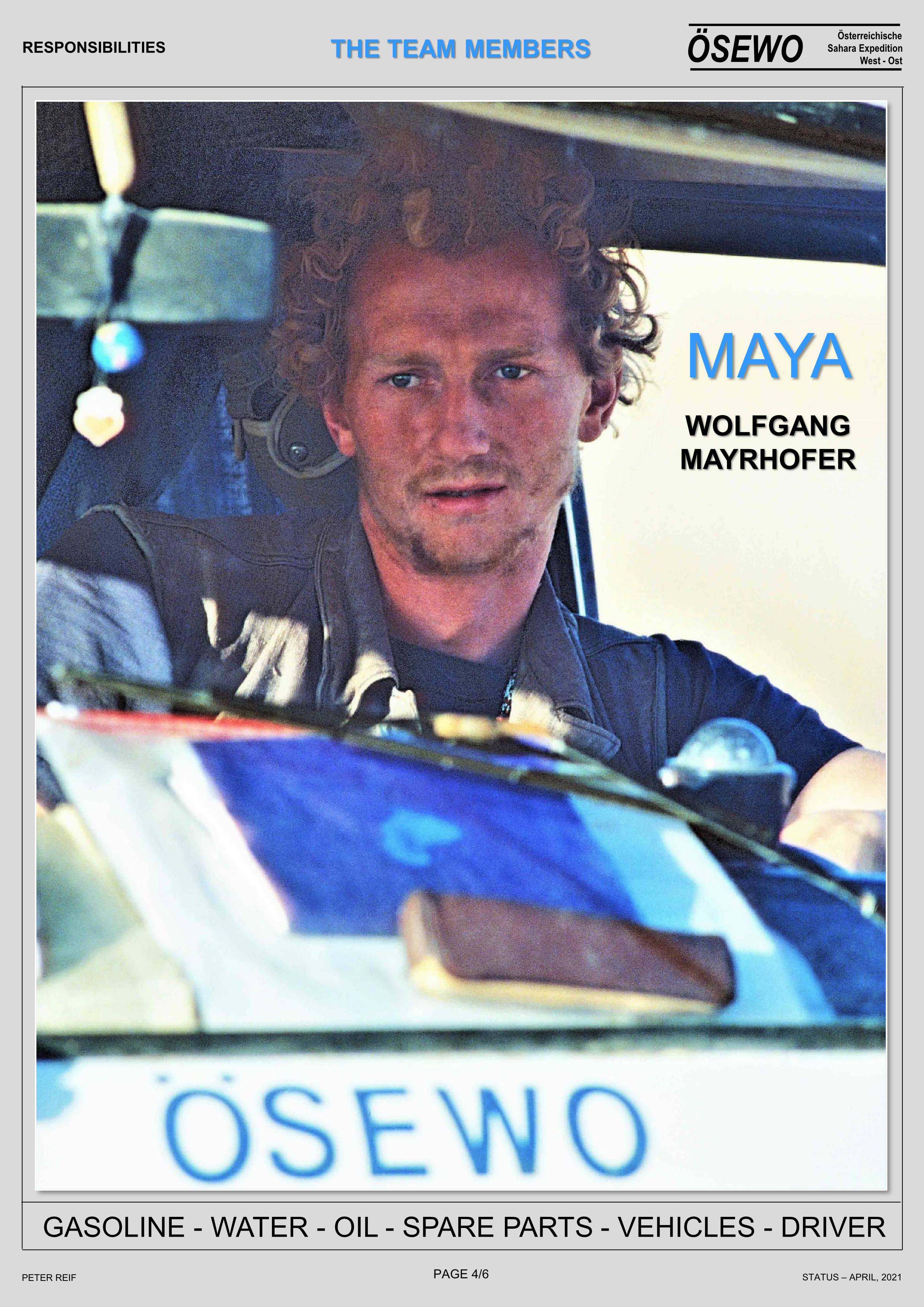
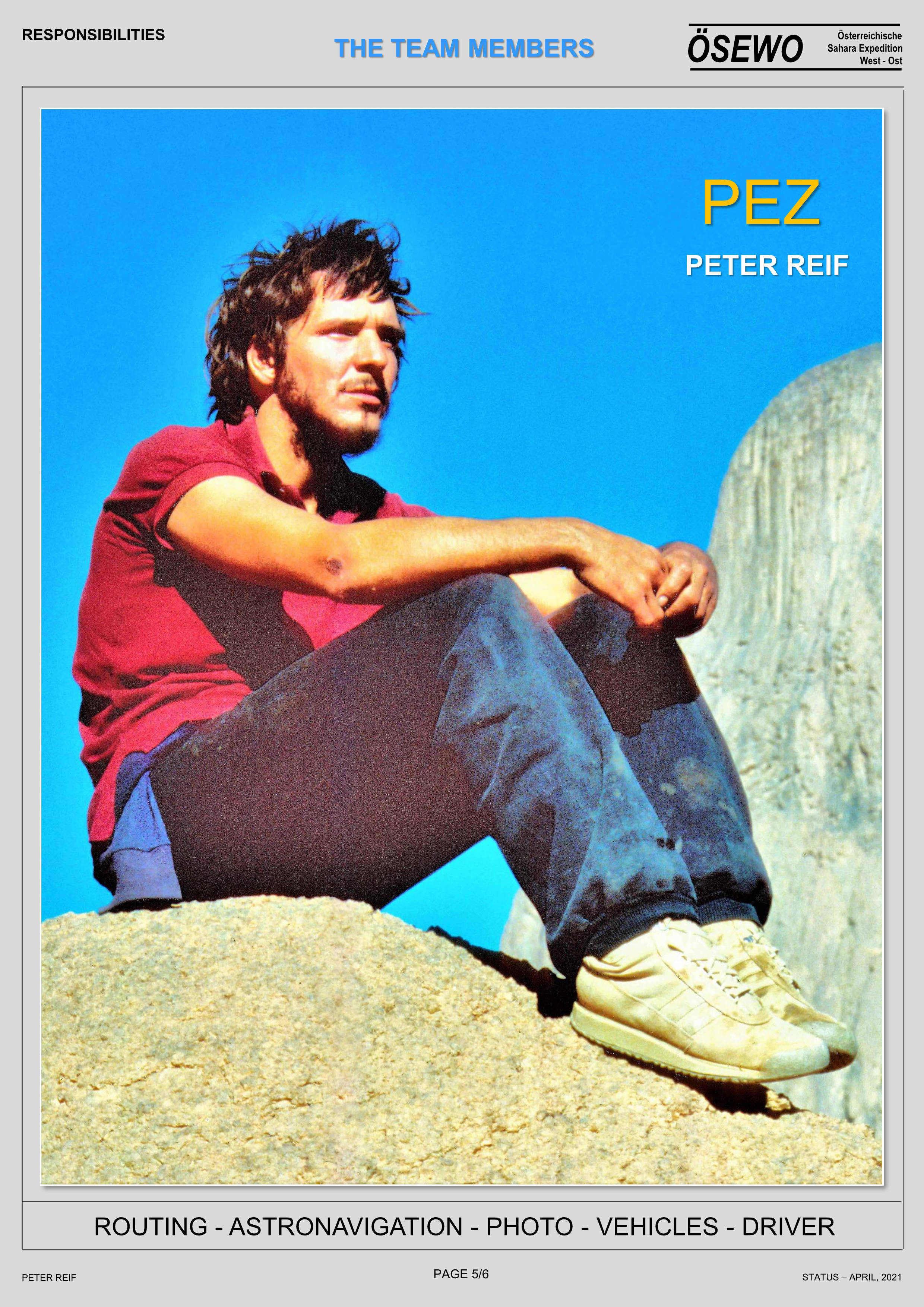
Photos by Peter Reif and Arike Mijnlieff

OSEWO Index Page

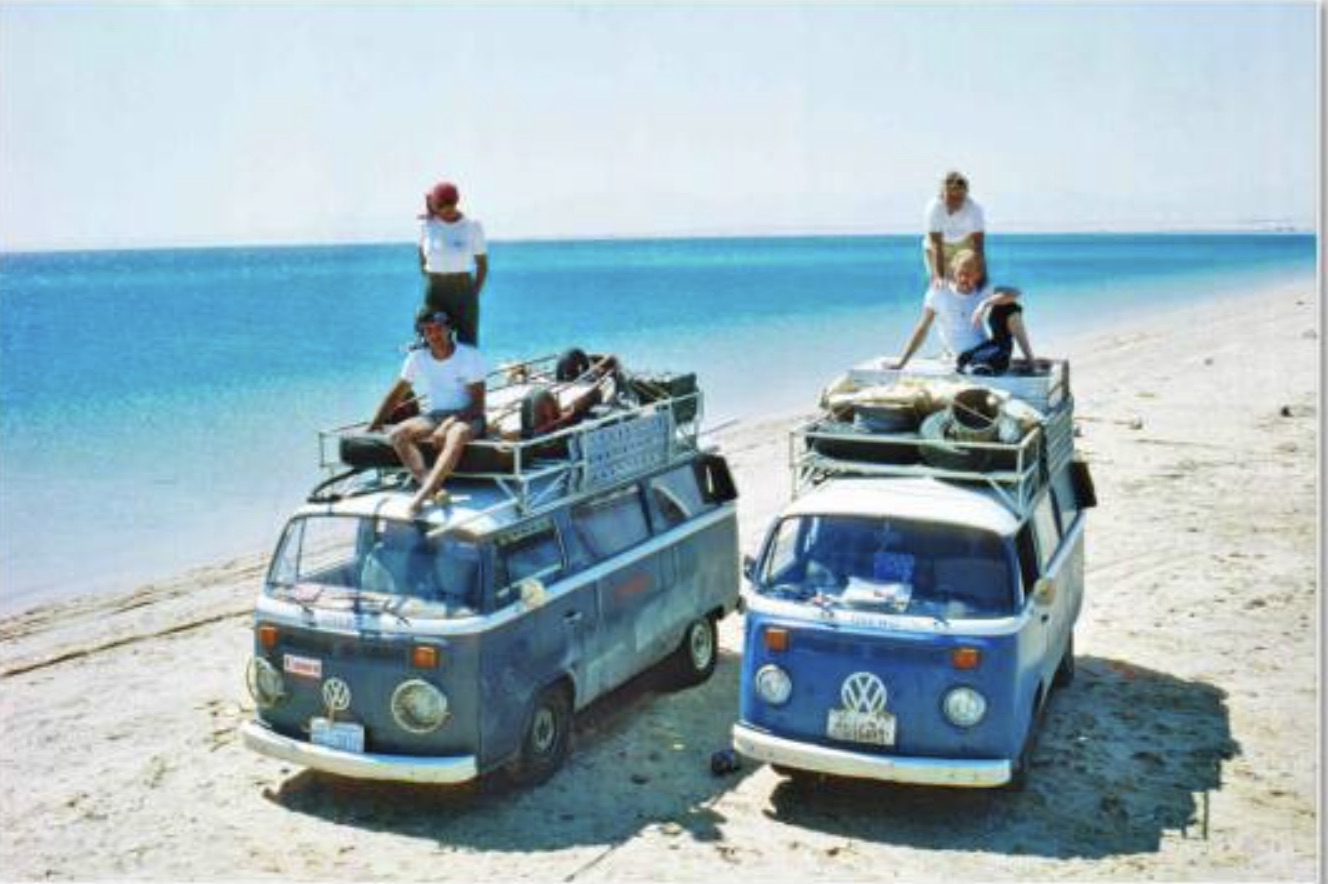
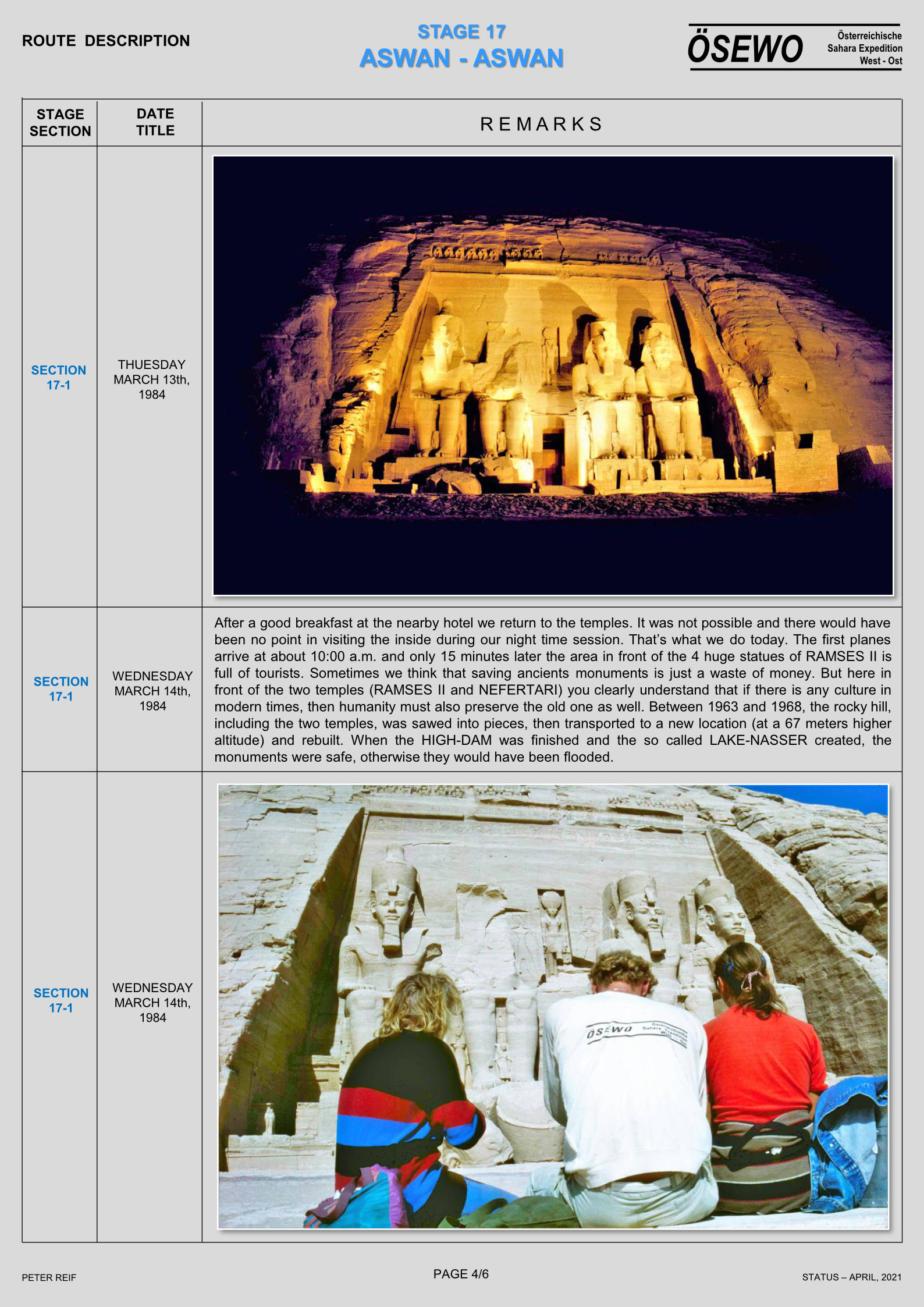
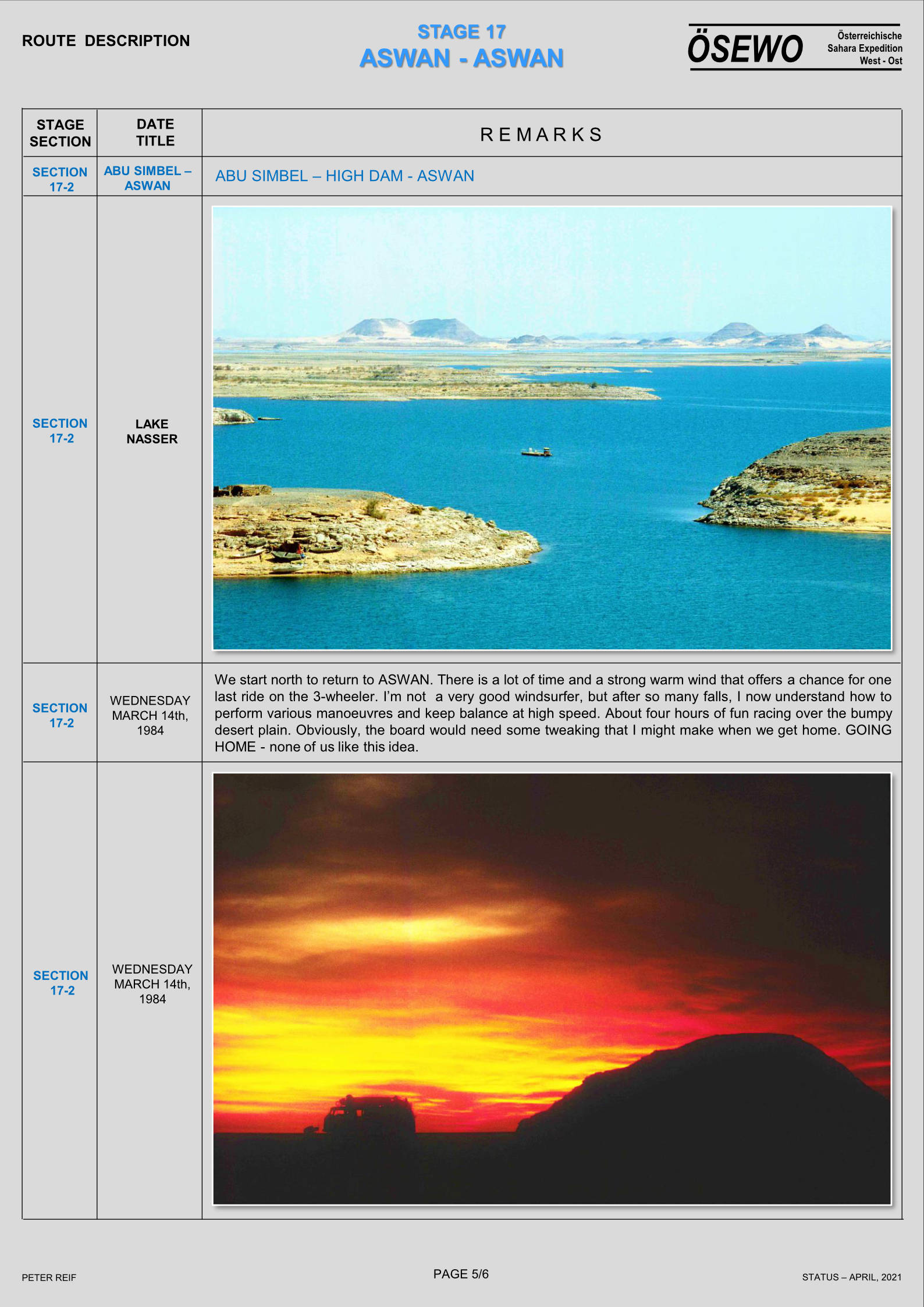
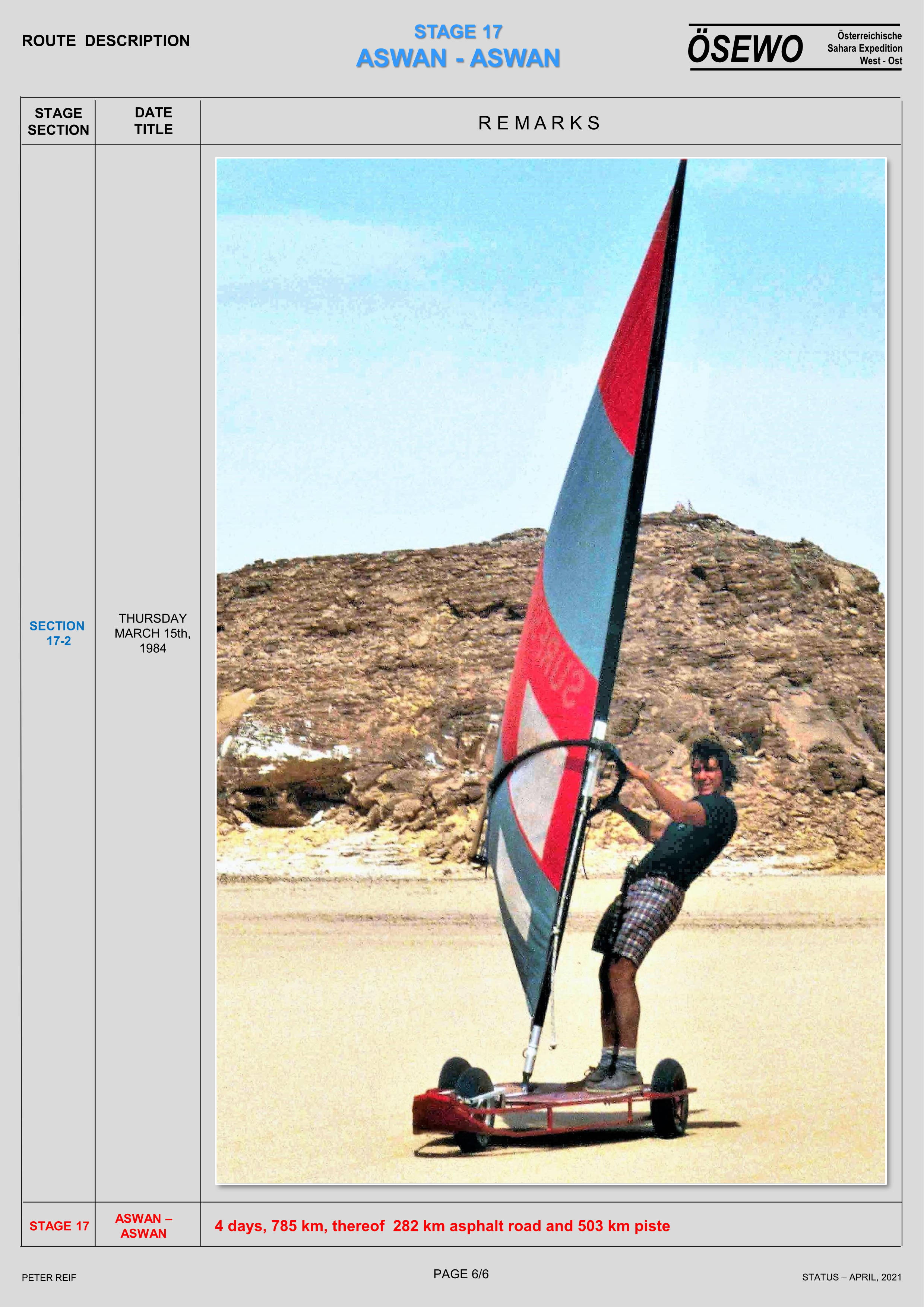
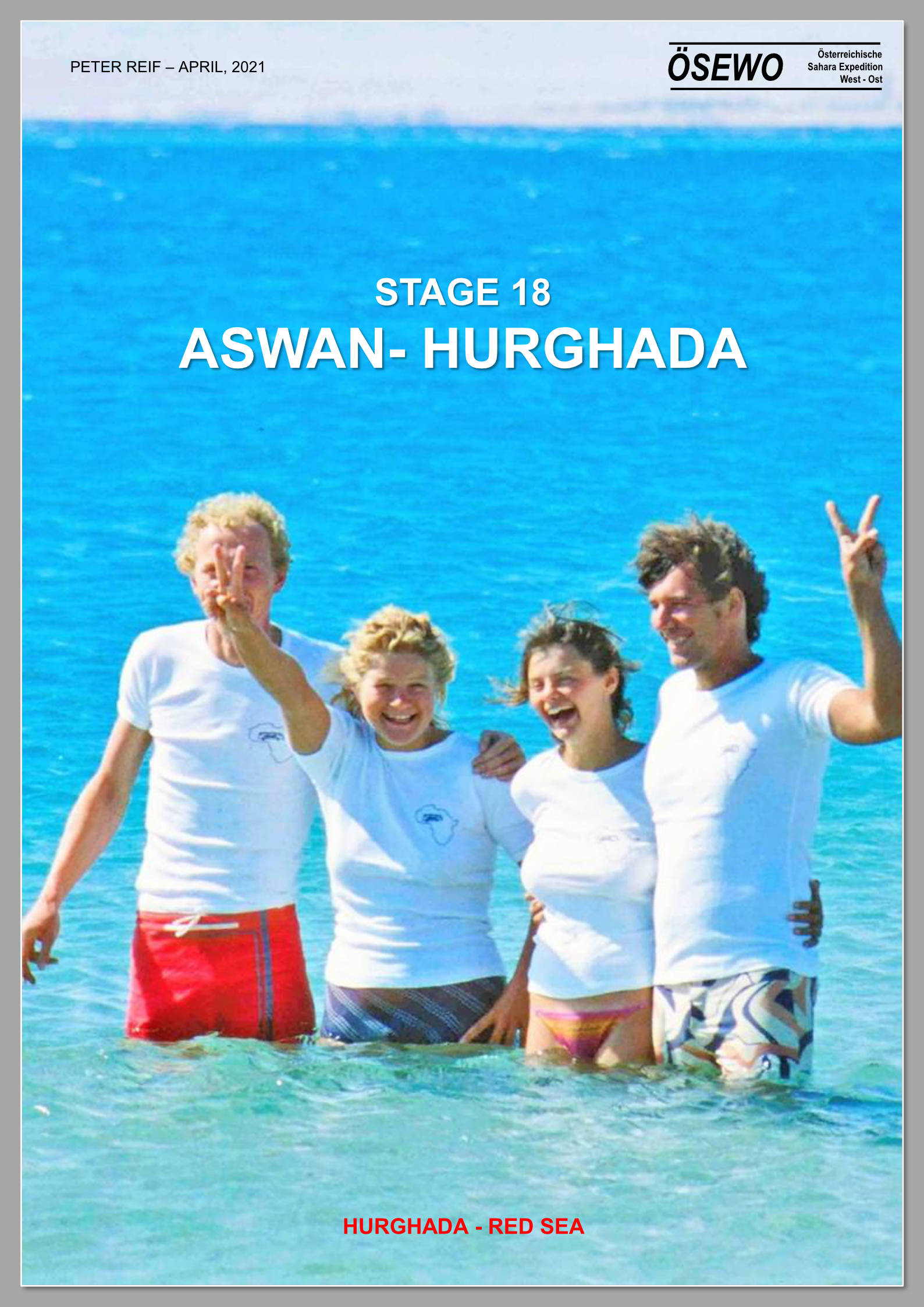
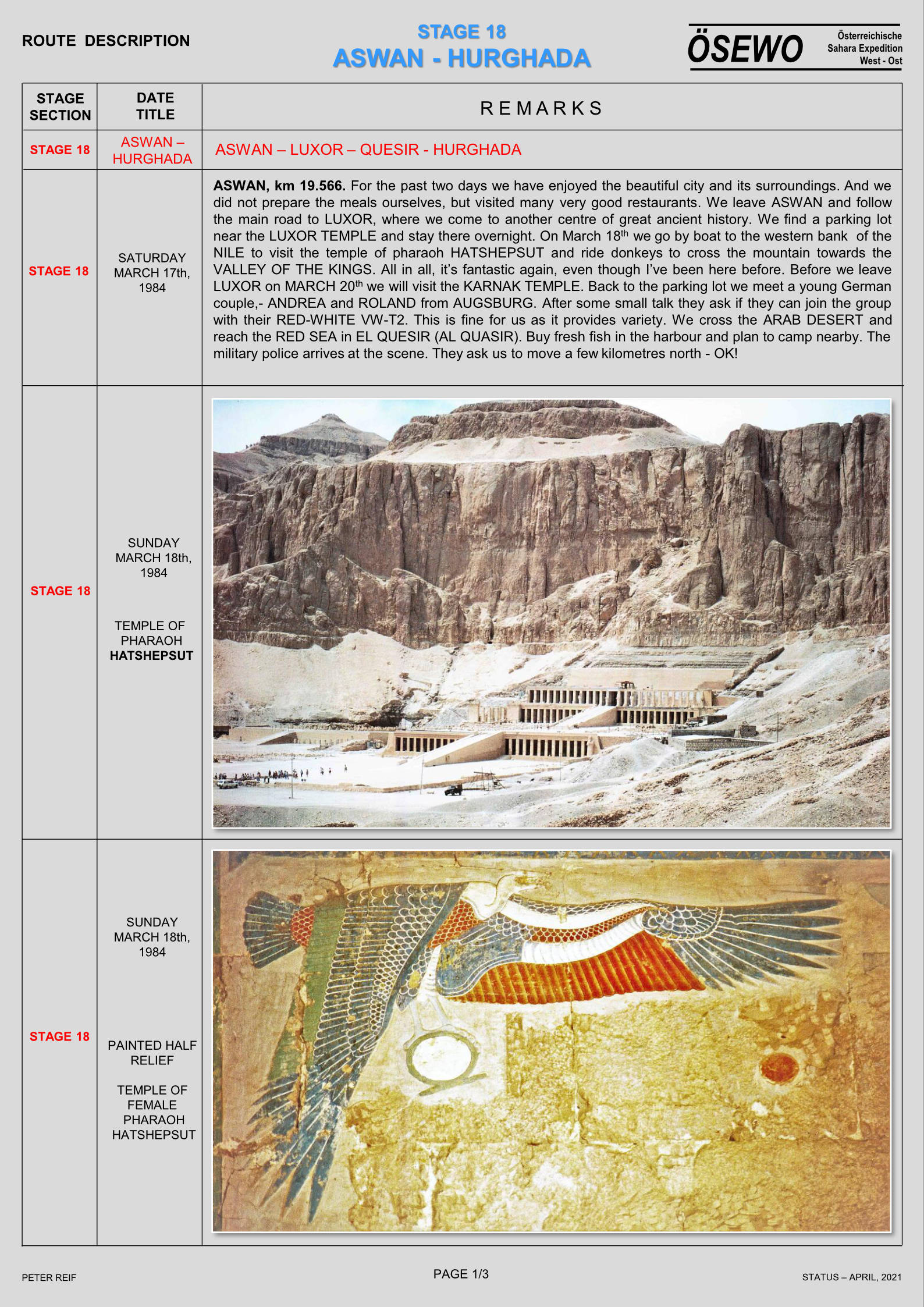
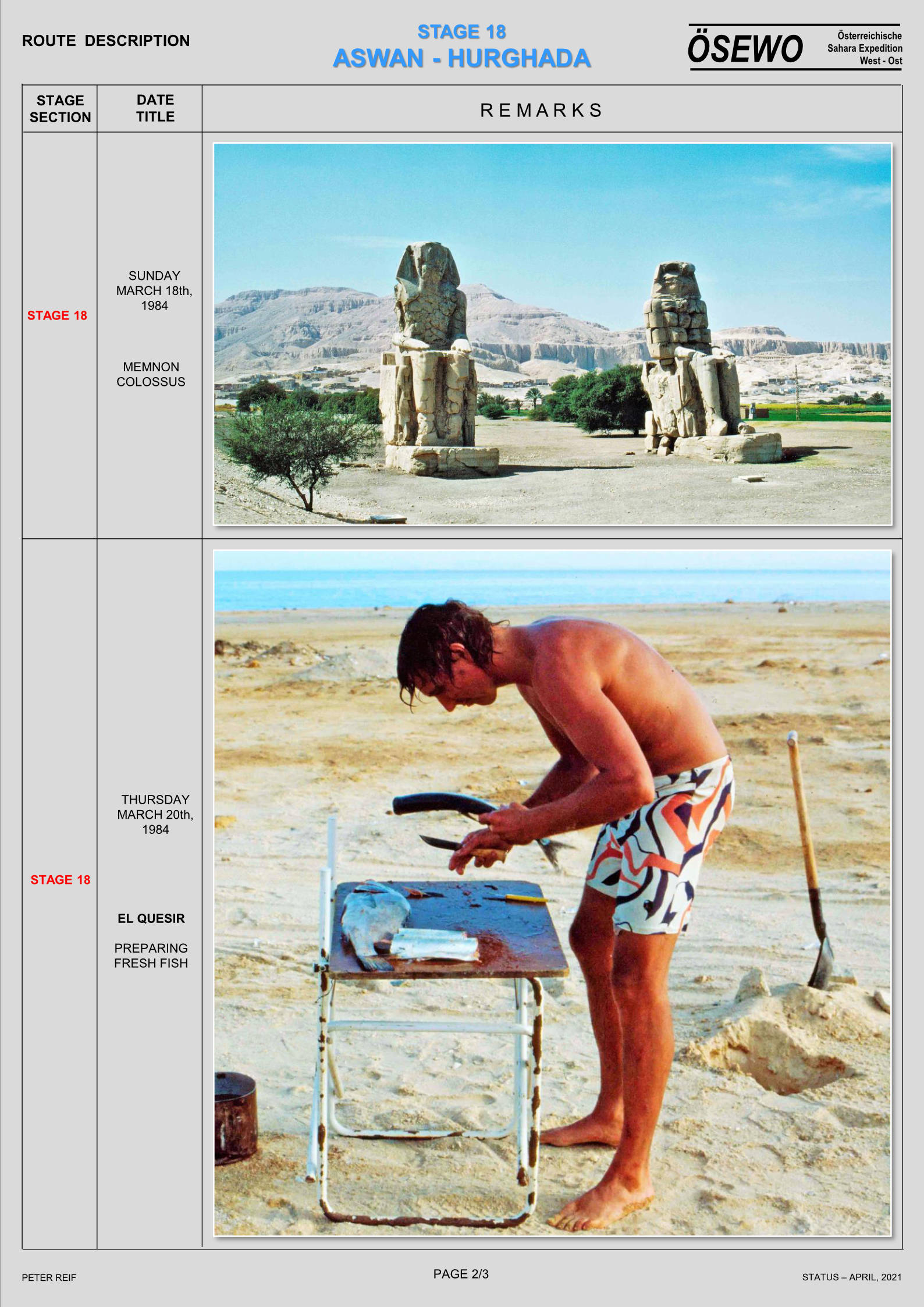
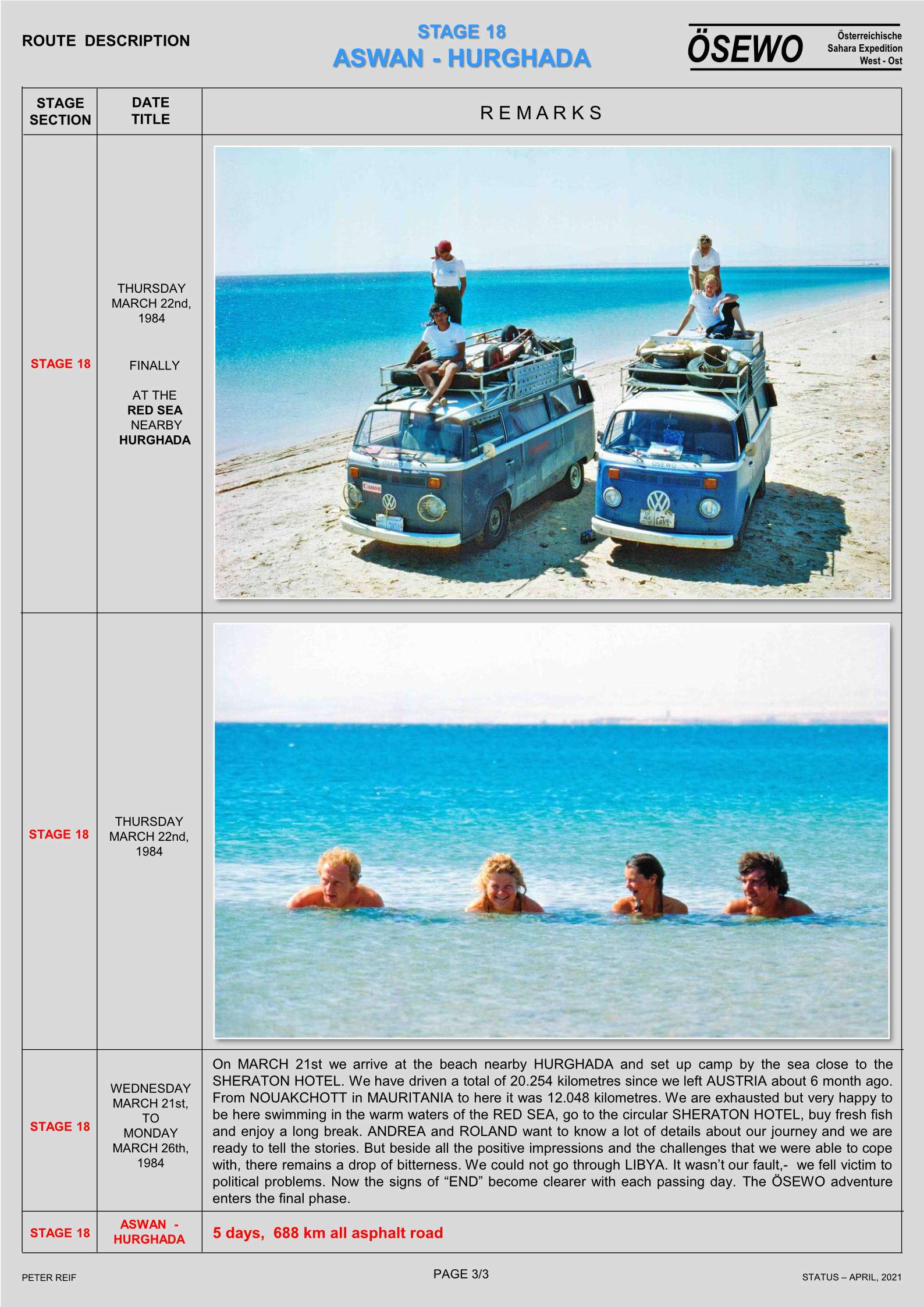
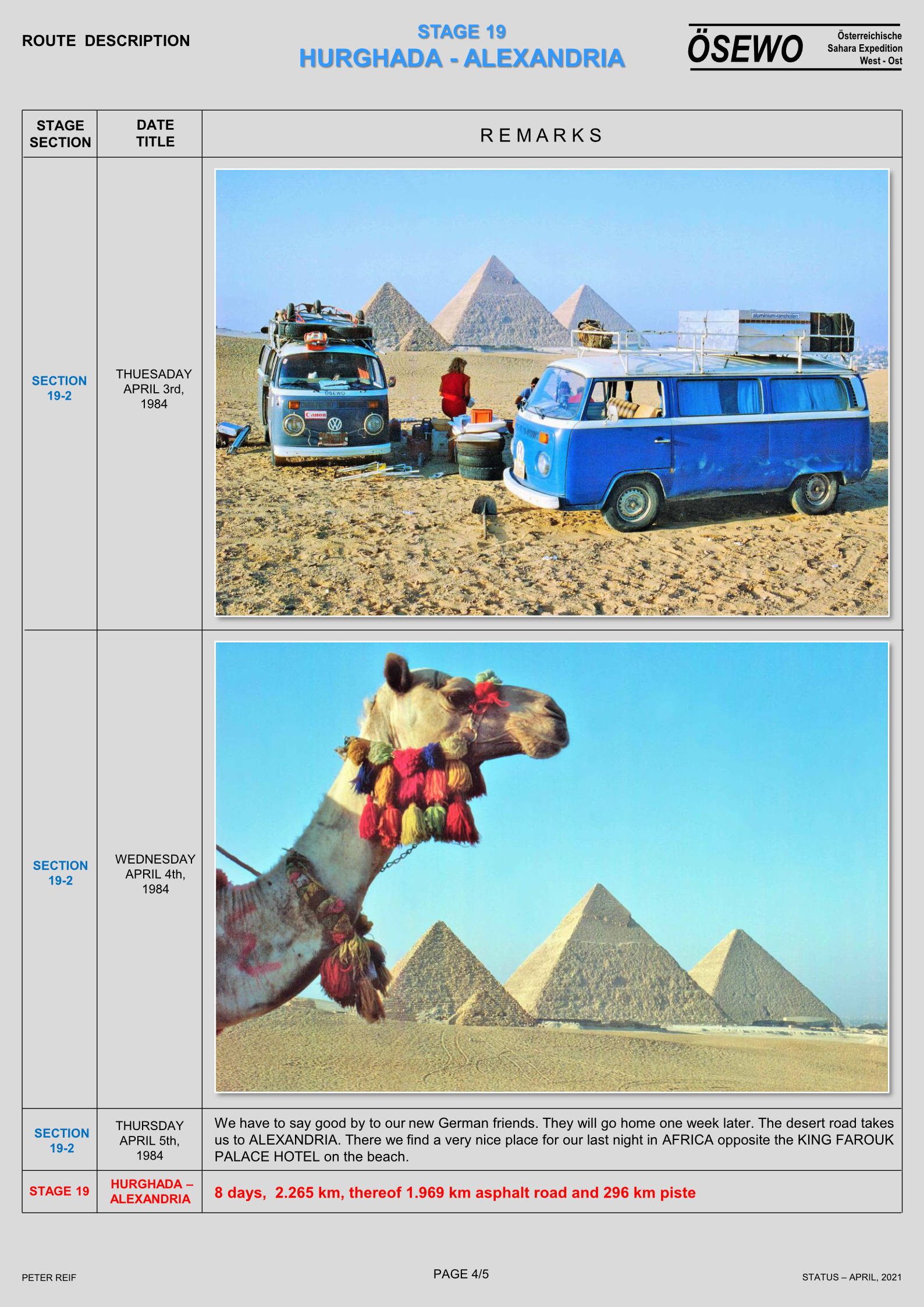
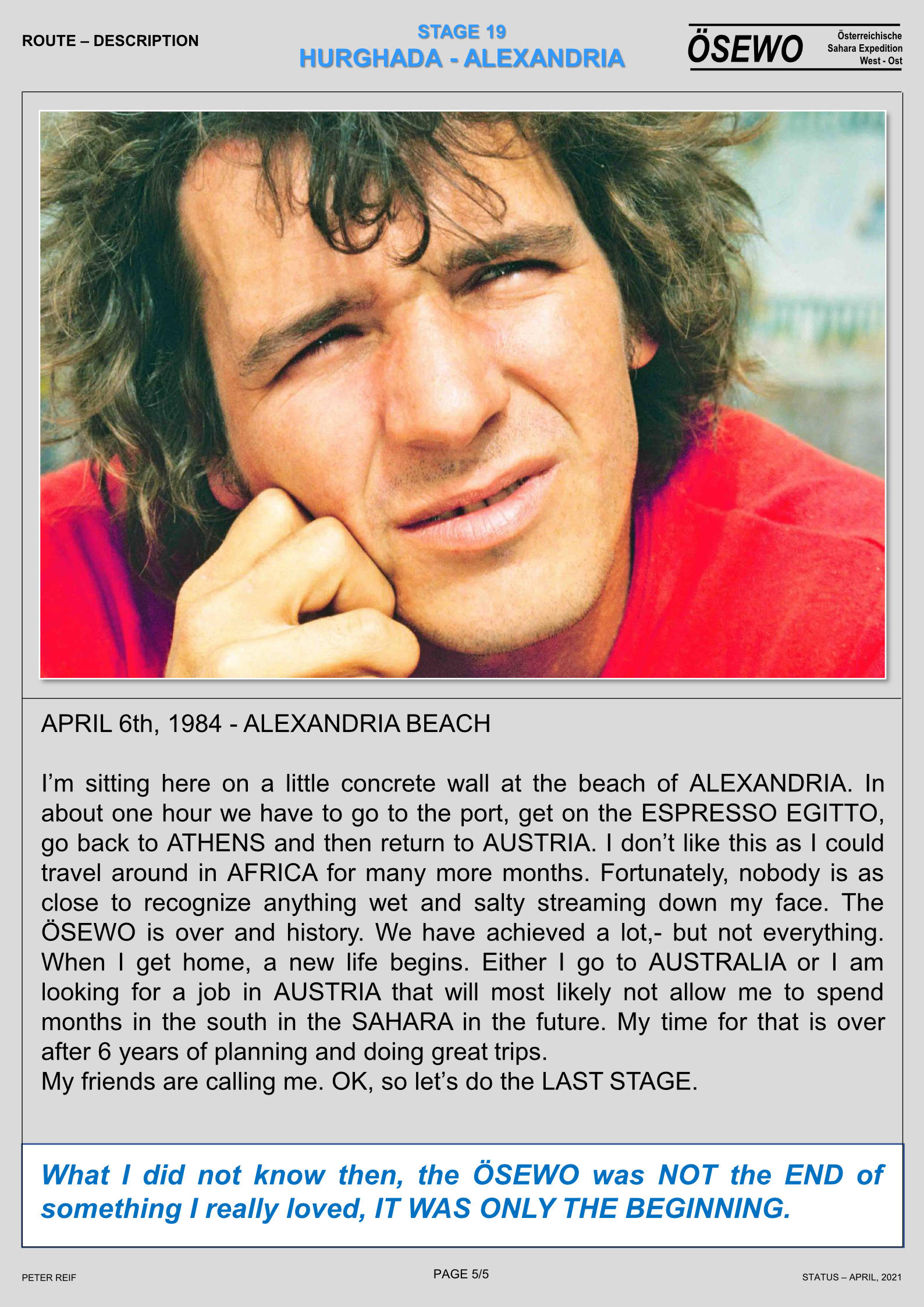
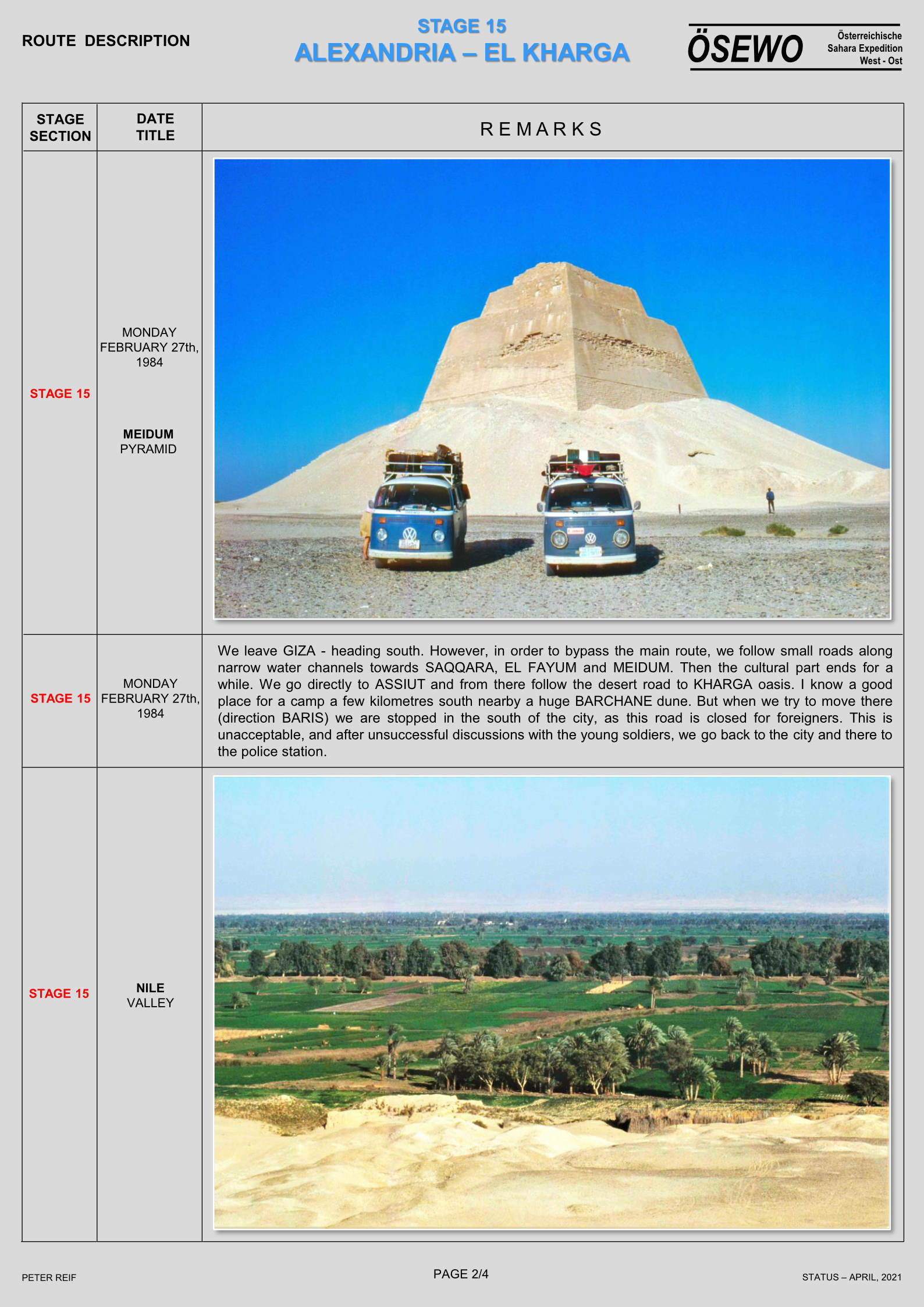
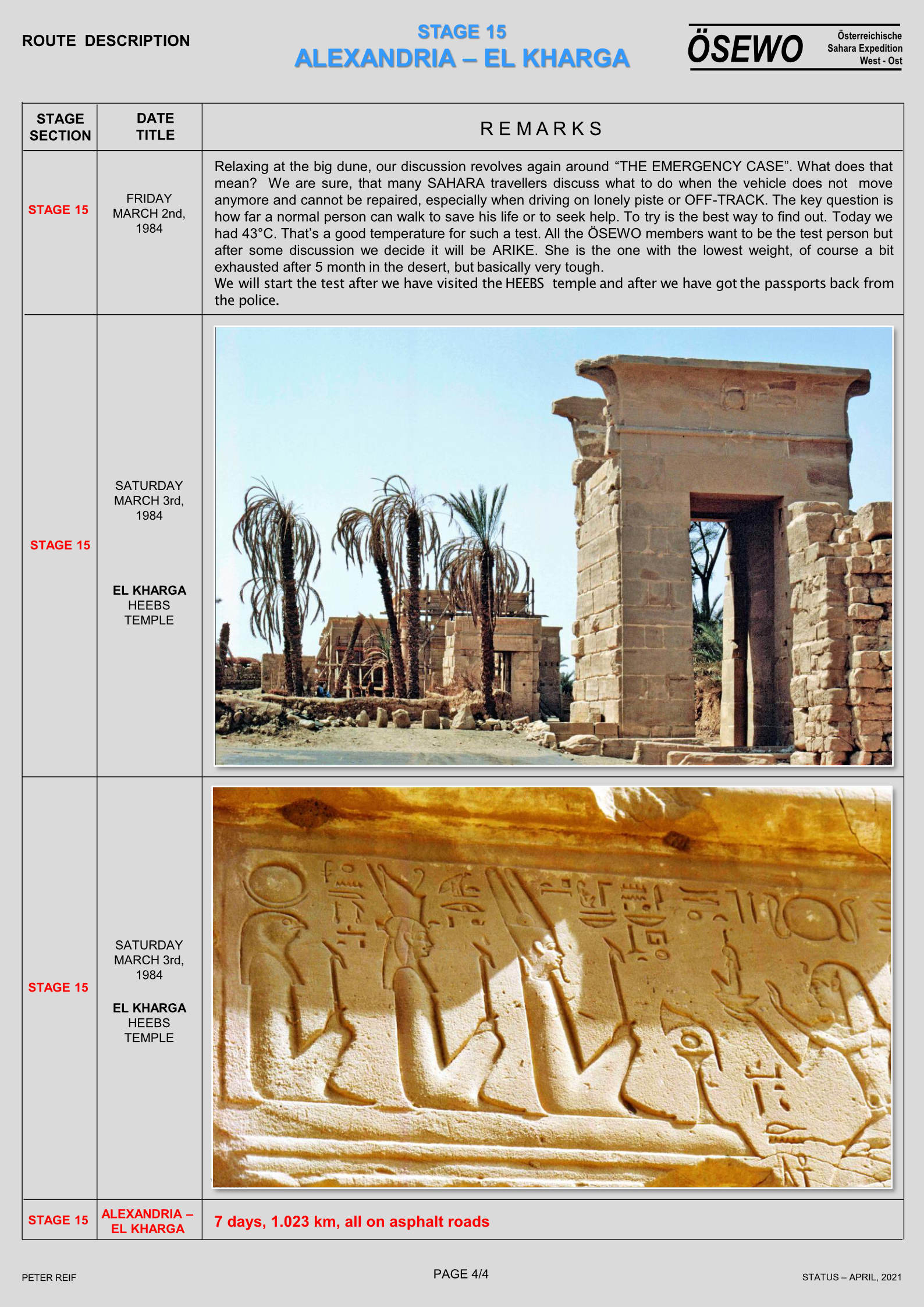
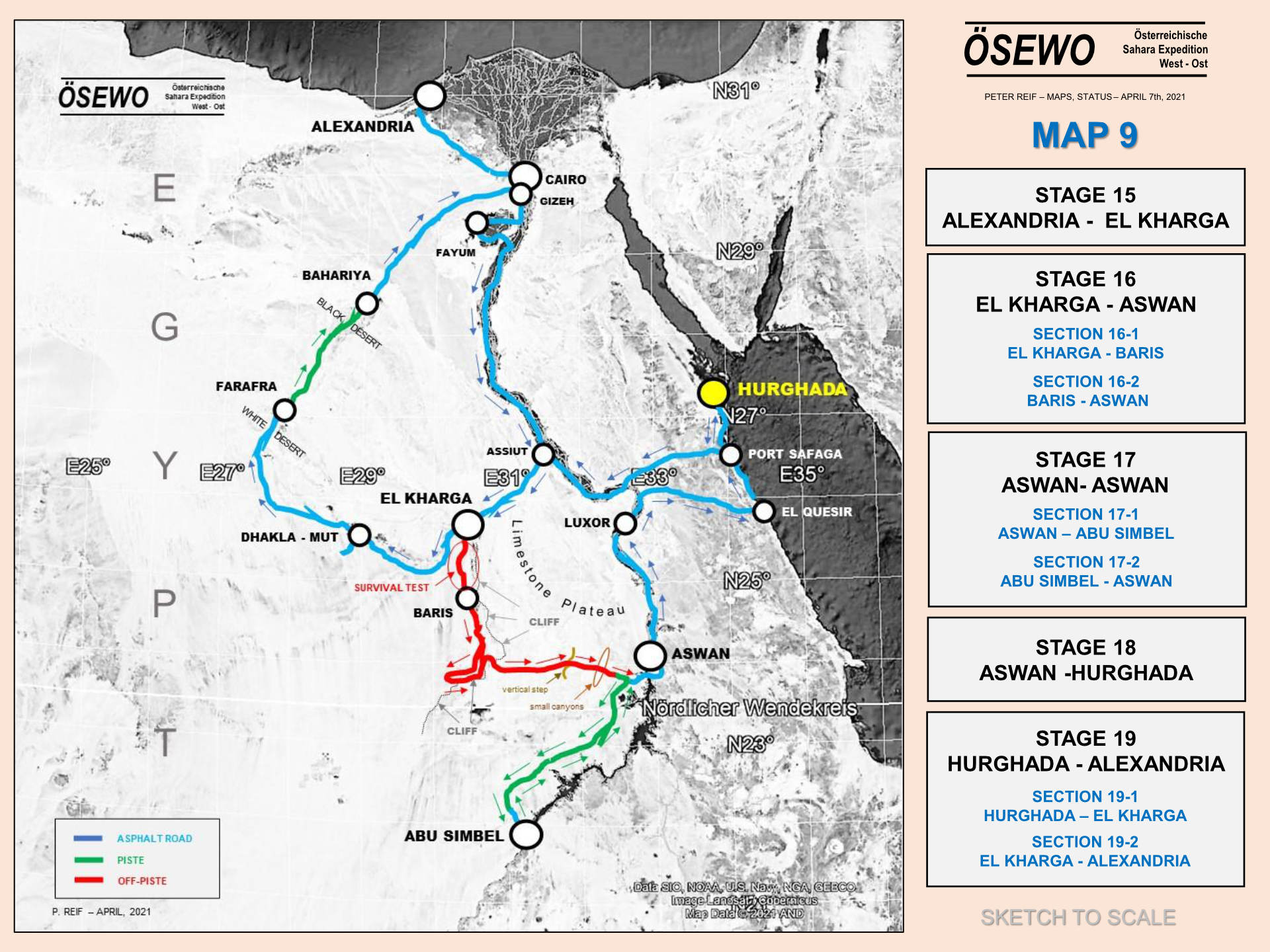
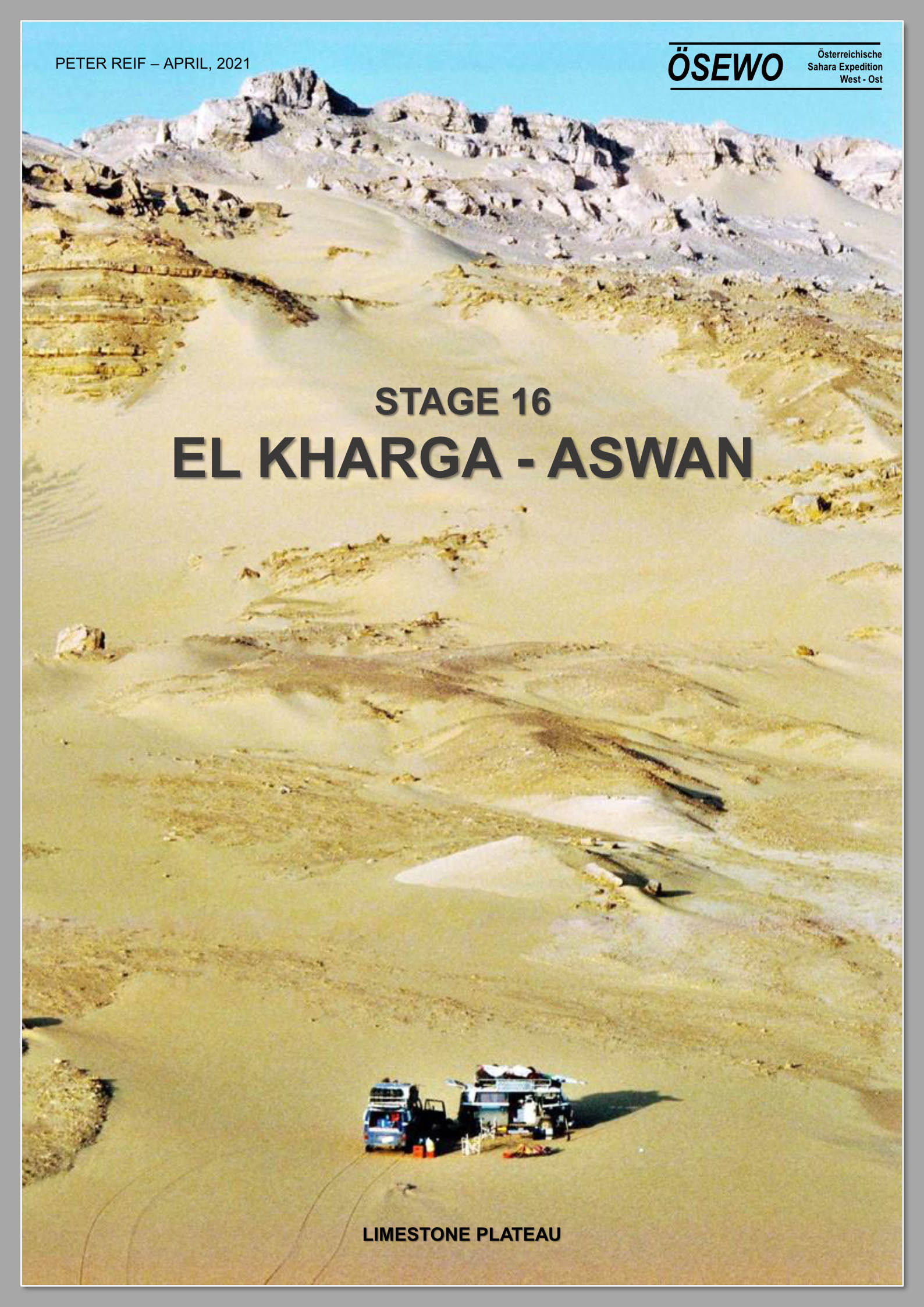
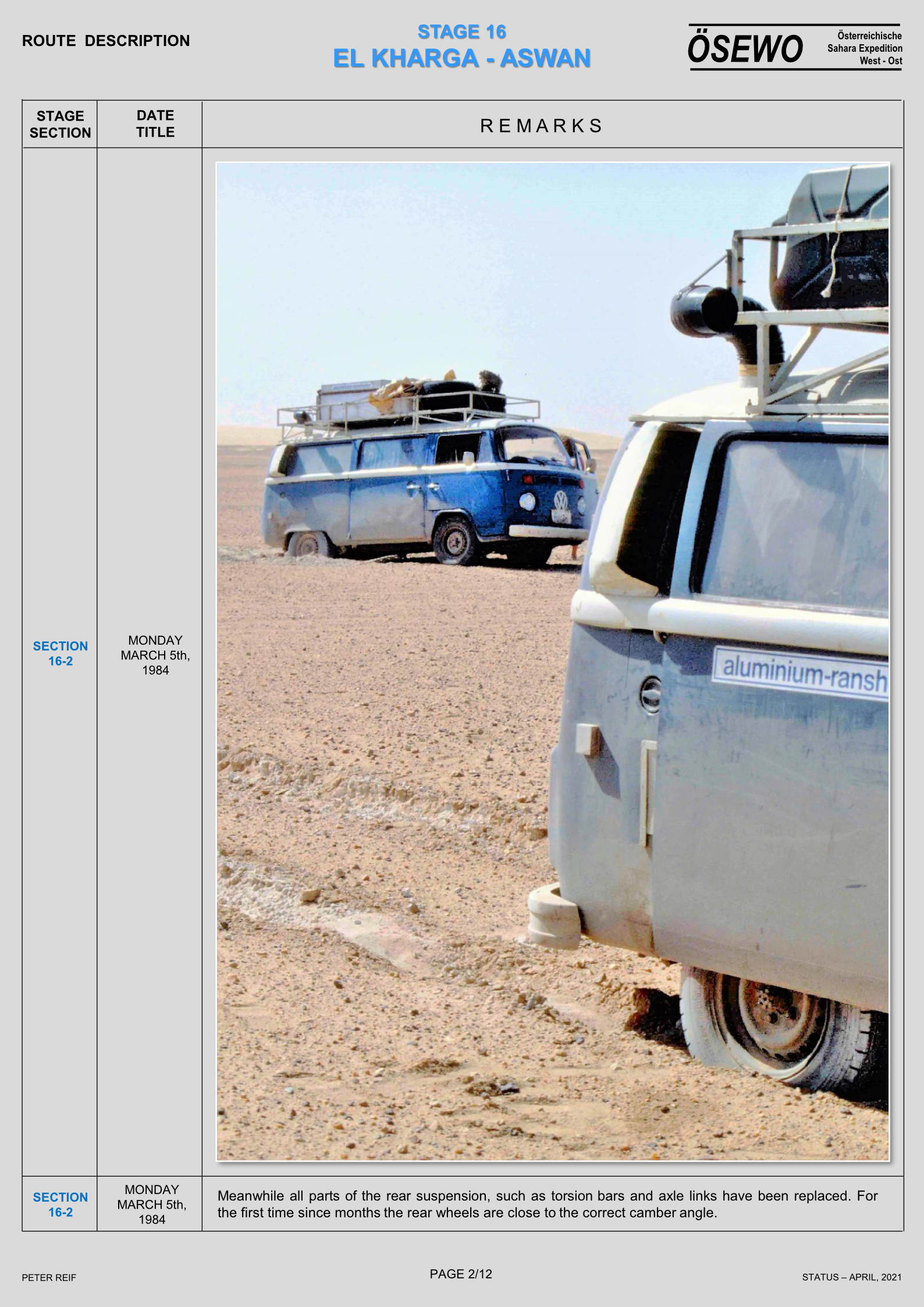
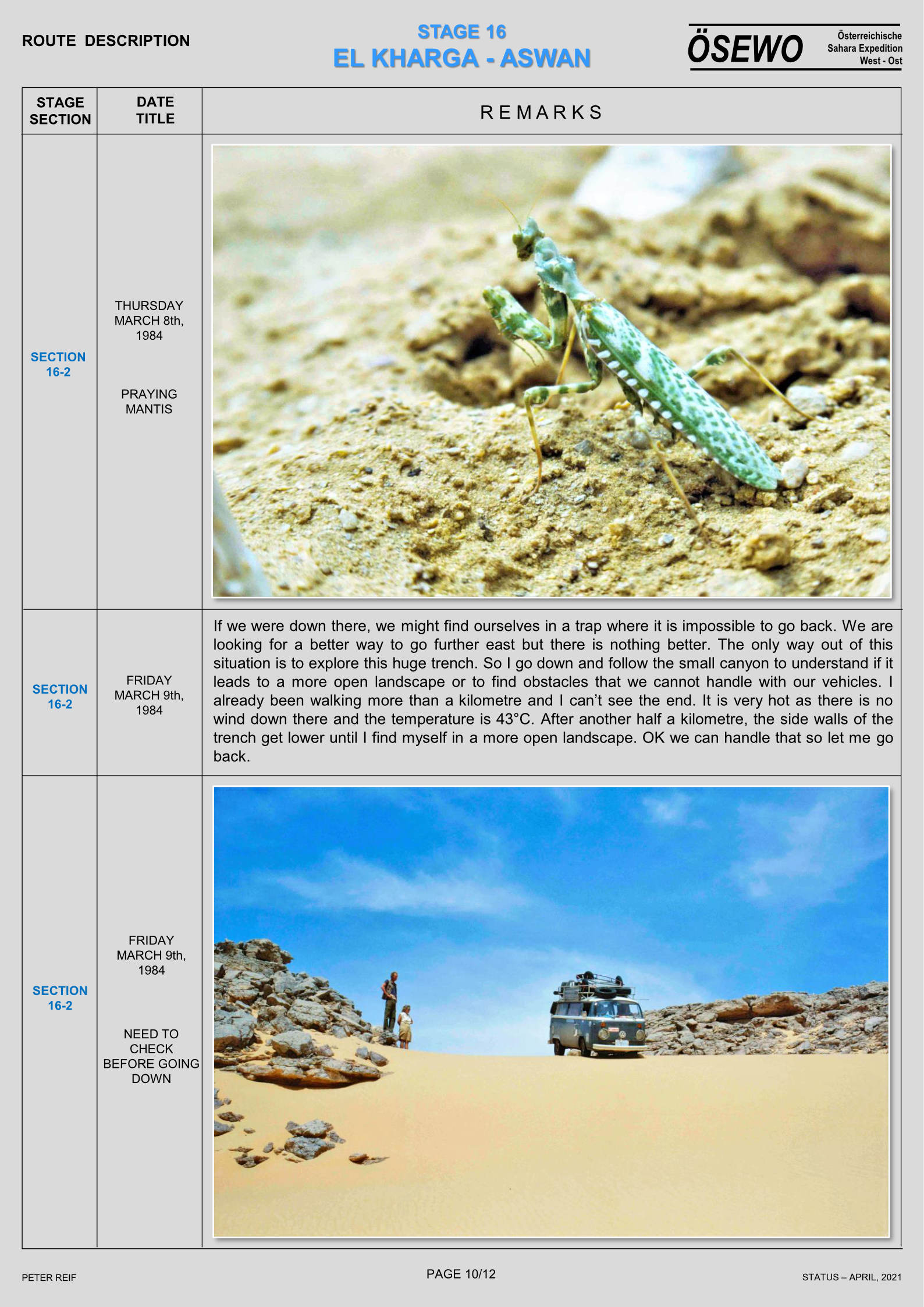
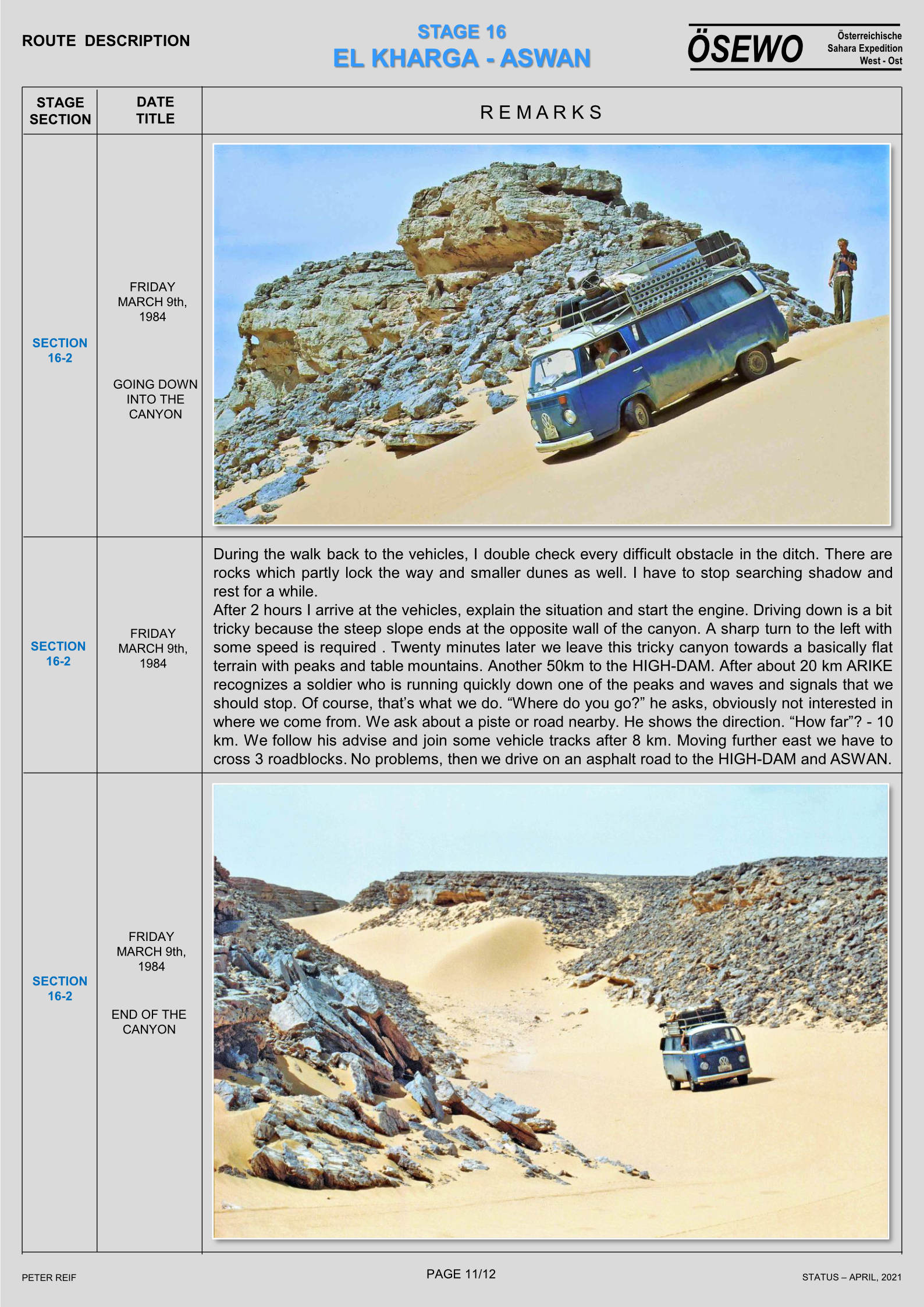
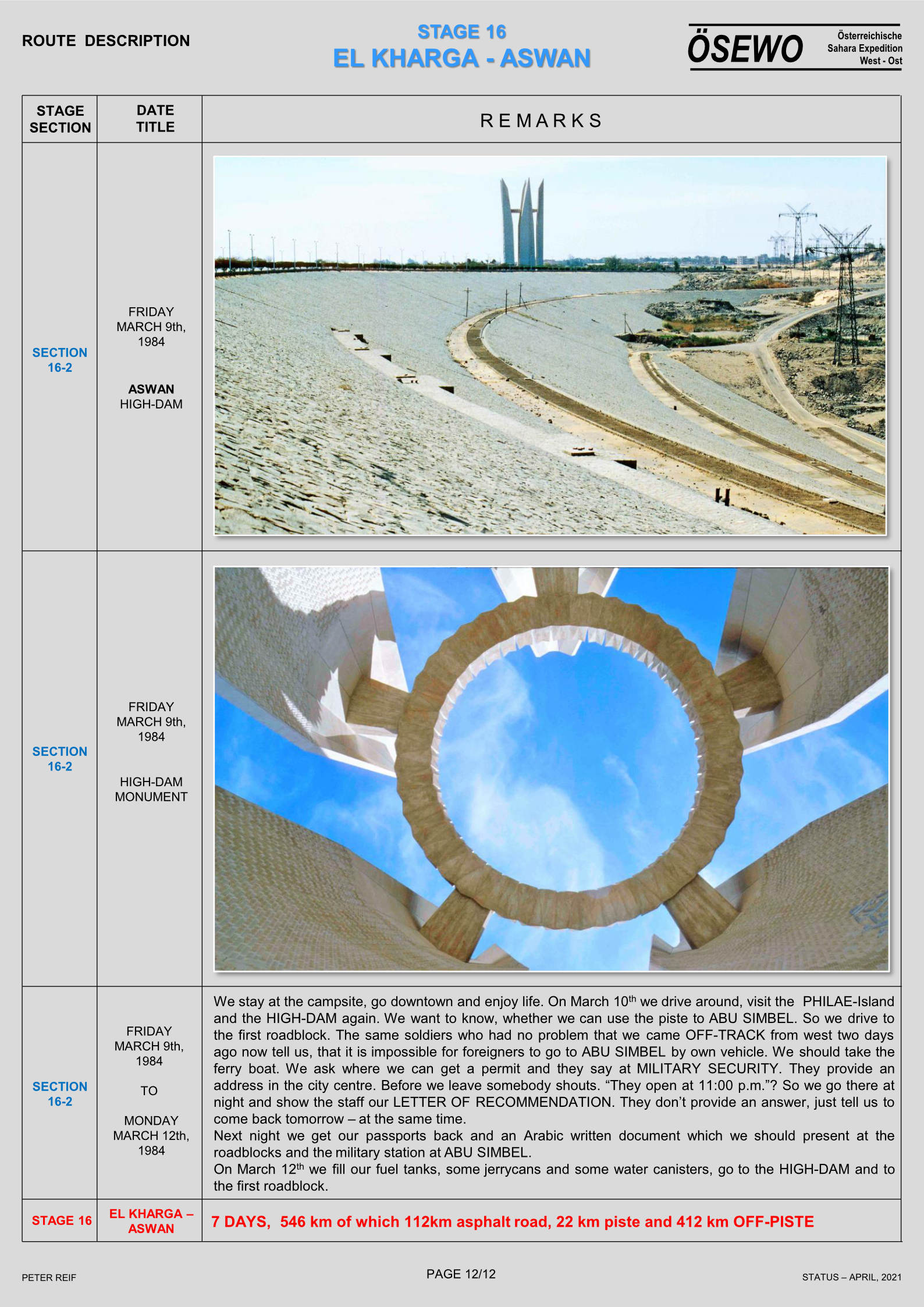
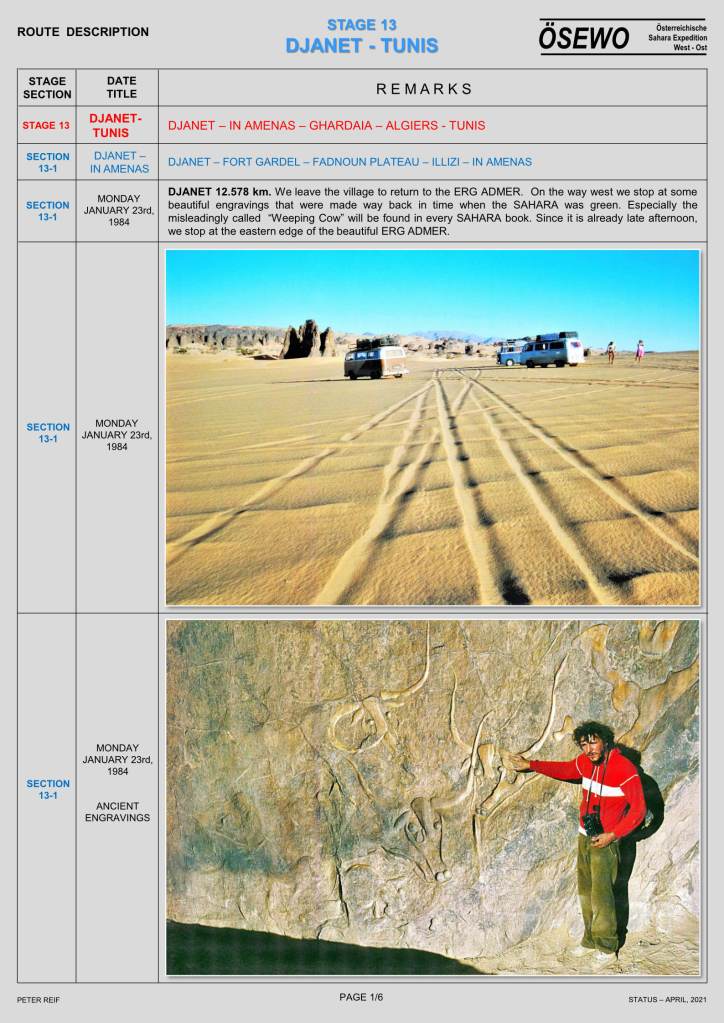
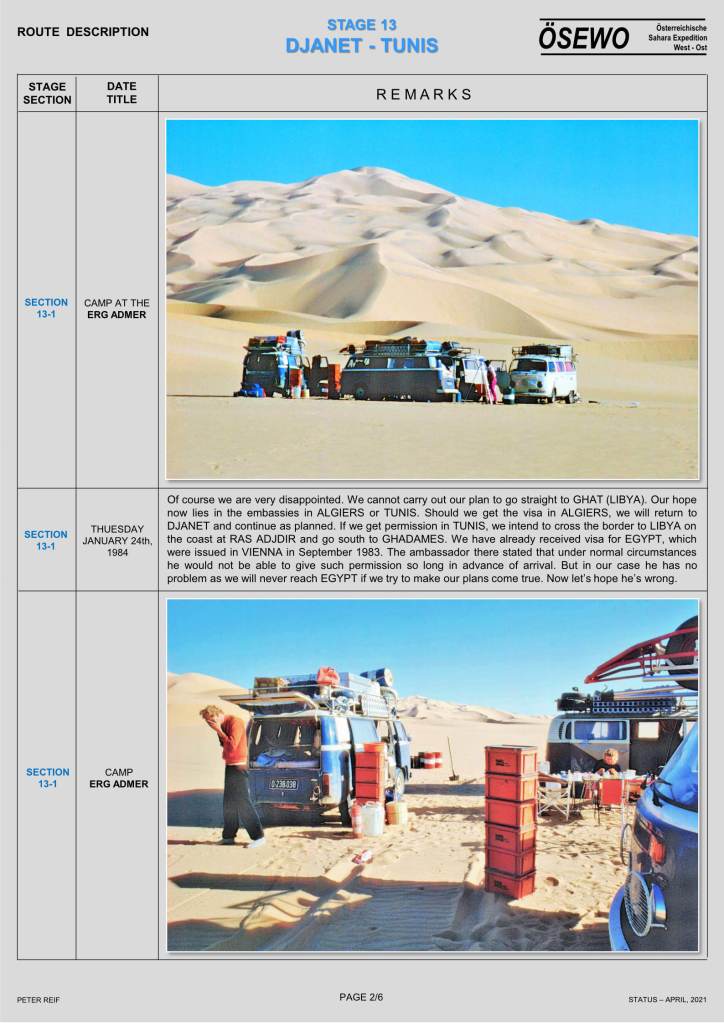
The final instalment of Peter Reif’s report and maps recalling ÖSEWO: an Atlantic-to-Red Sea crossing of the Sahara in 1983-4 with VW T2 Kombis. From Aswan the foursome visit the temple of Abu Simbel, passing Sudanese camel meat caravans on the way. Then, after six months and some 12,000km from the Atlantic, they cross the Nile and take a well-earned dip in the Red Sea.
For earlier parts, click the Index Page.

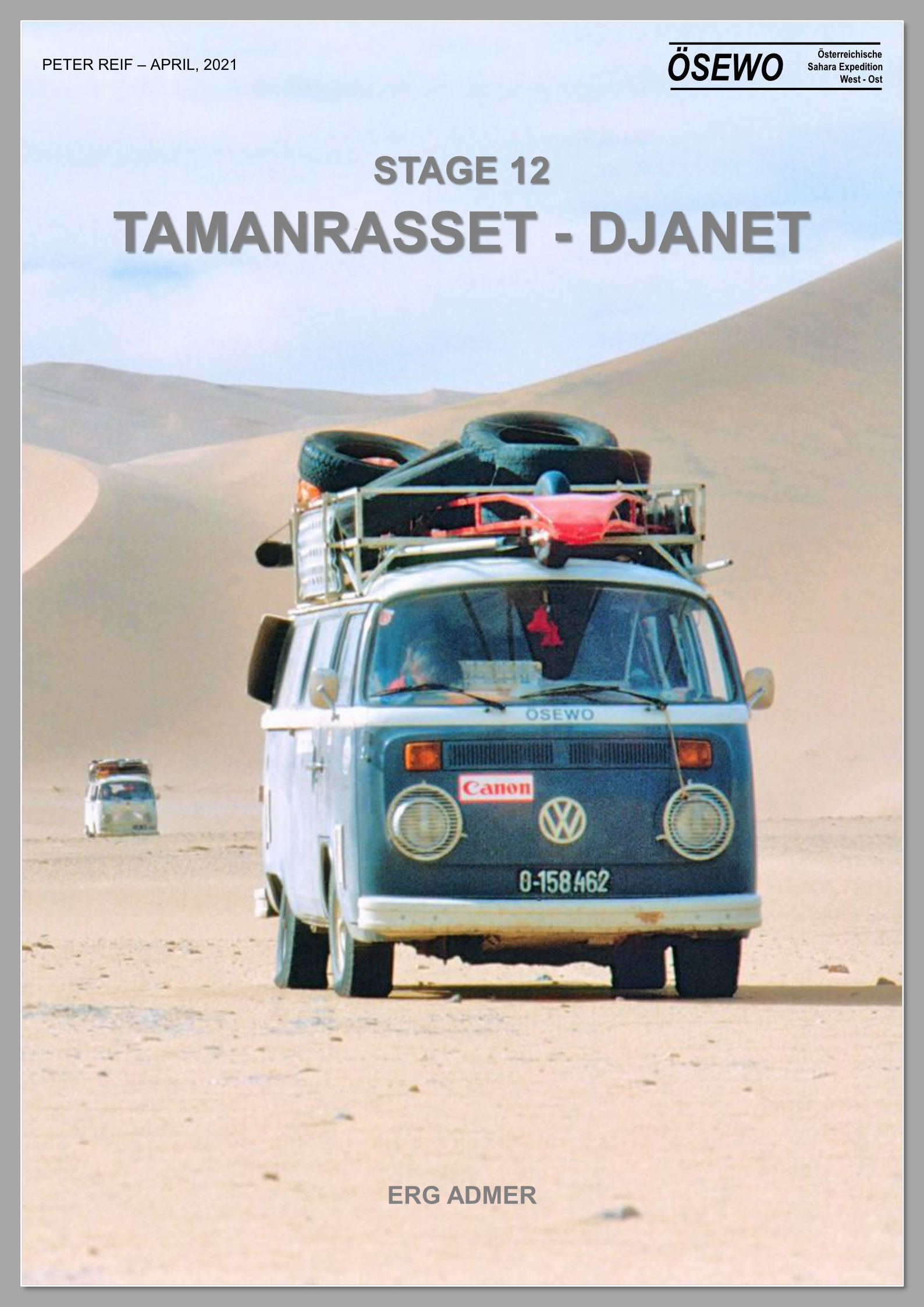
Sahara West–East with VW Vans, 1984 • Part 7/8

See also:
Sahara West-East Crossings
Astro Navigation in the Sahara

Reports by Peter Reif
Photos by Peter Reif and Arike Mijnlieff

OSEWO Index Page

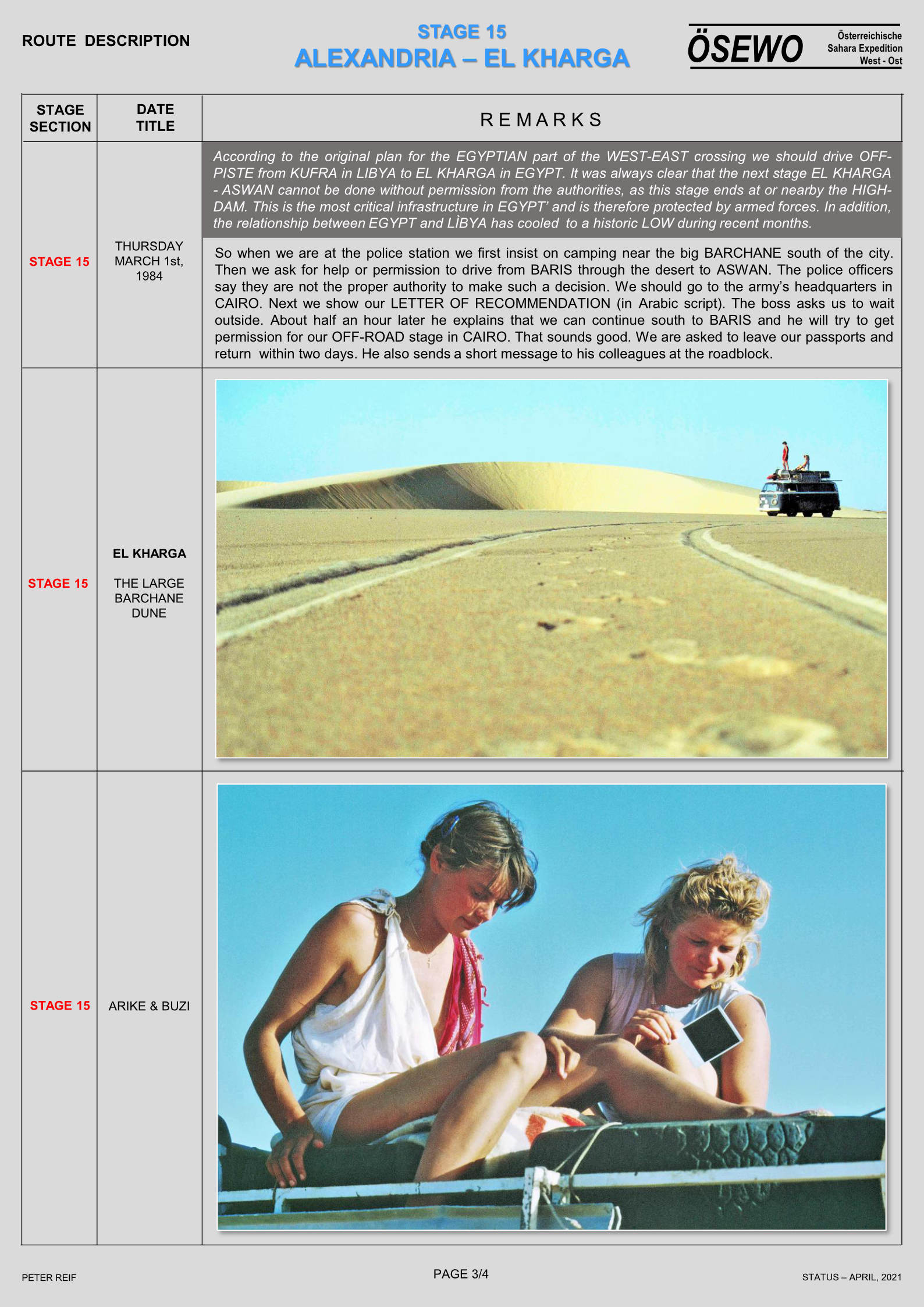
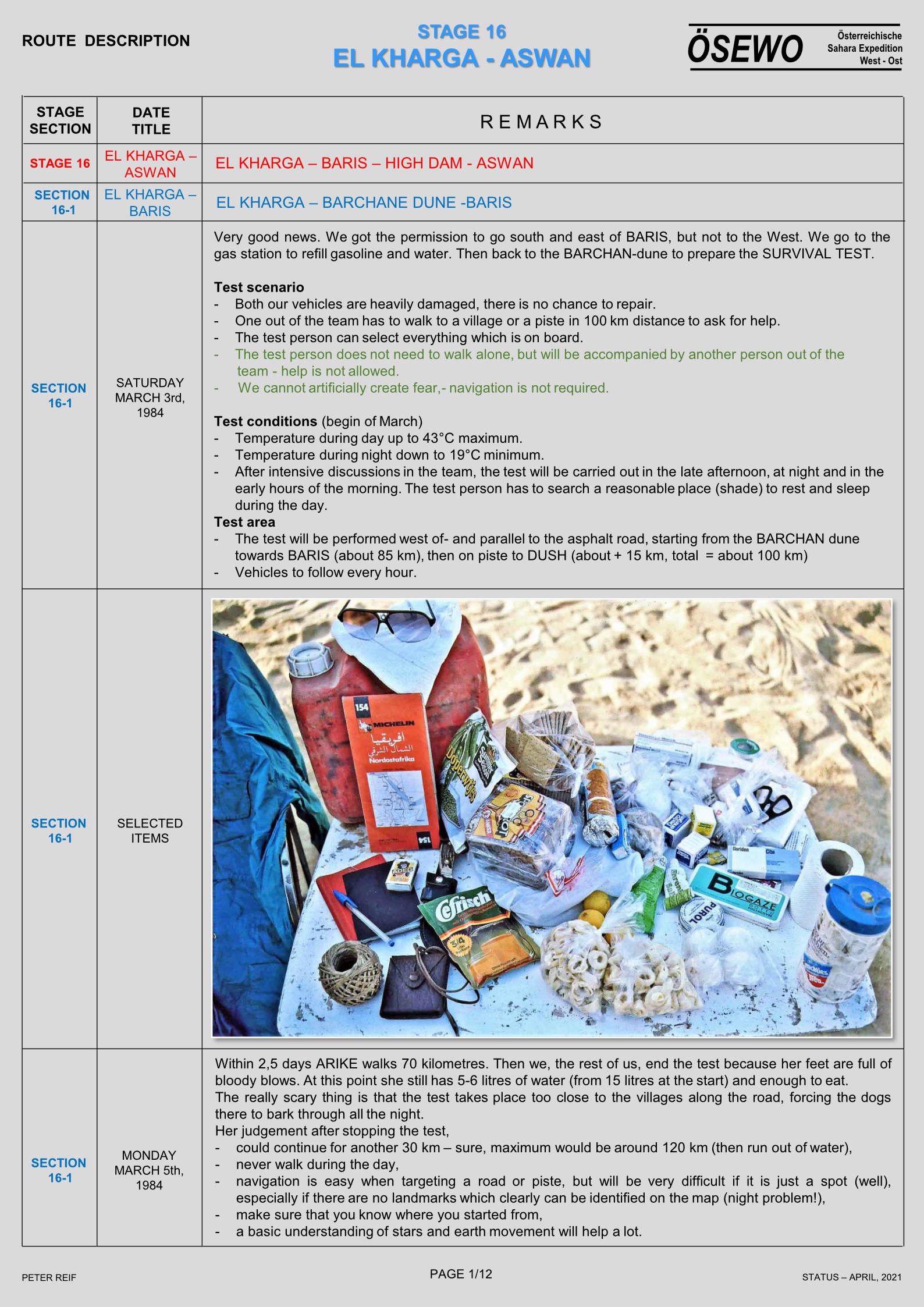
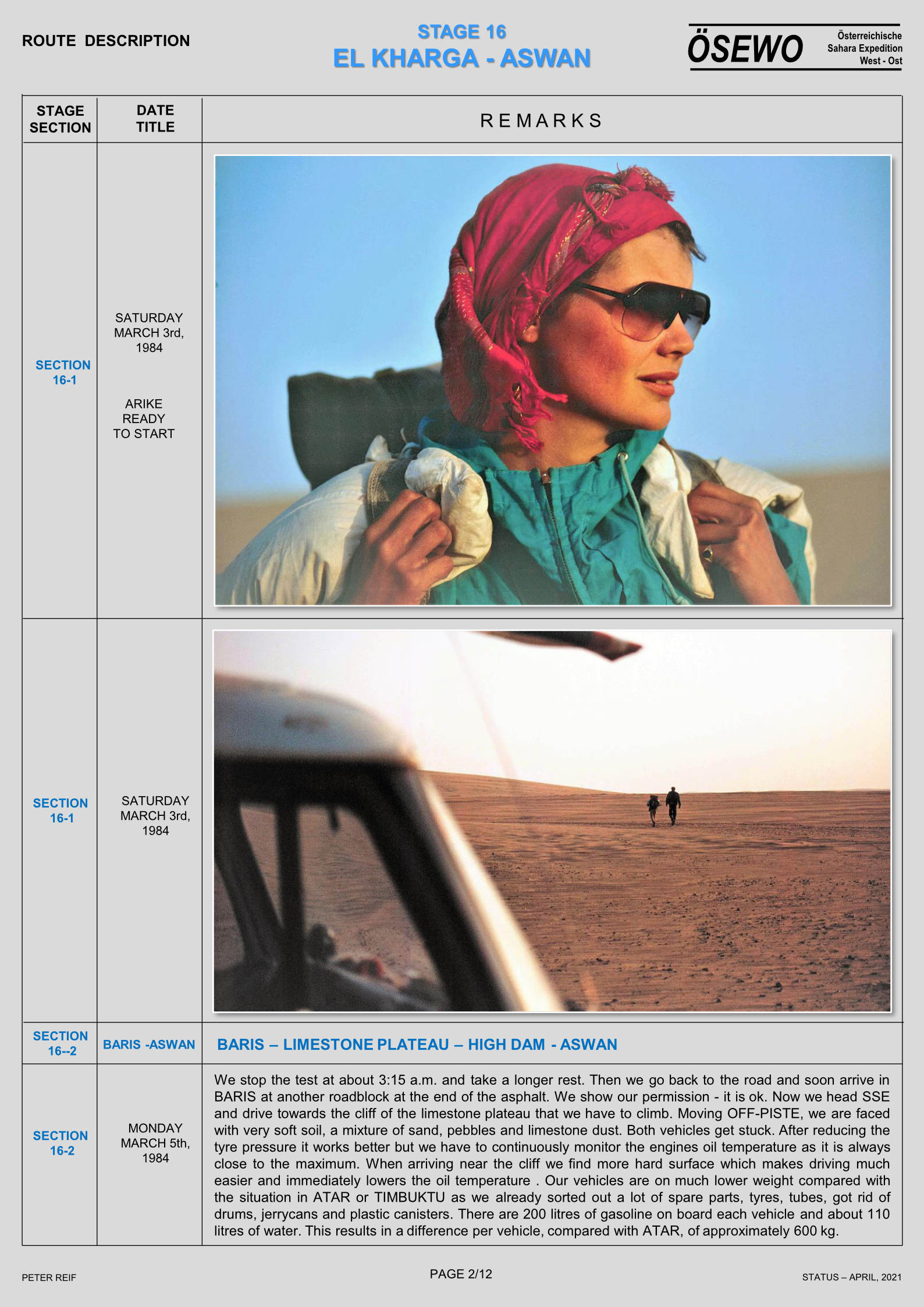
Part Seven of Peter Reif’s report and maps recalling ÖSEWO: an Atlantic-to-Red Sea crossing of the Sahara in 1983-4. After having to divert around Libya via the Mediterranean, the flat-four foursome are back in the desert to tackle on of the hardest stages so far. But not before they conduct a desert survival experiment to see how far one of the team can walk with what they can carry (above left).
For other parts, click the Index Page.

Final instalment

Sahara West–East with VW Vans, 1984 • Part 6/8

See also:
Sahara West-East Crossings
Astro Navigation in the Sahara

Reports by Peter Reif
Photos by Peter Reif and Arike Mijnlieff

OSEWO Index Page

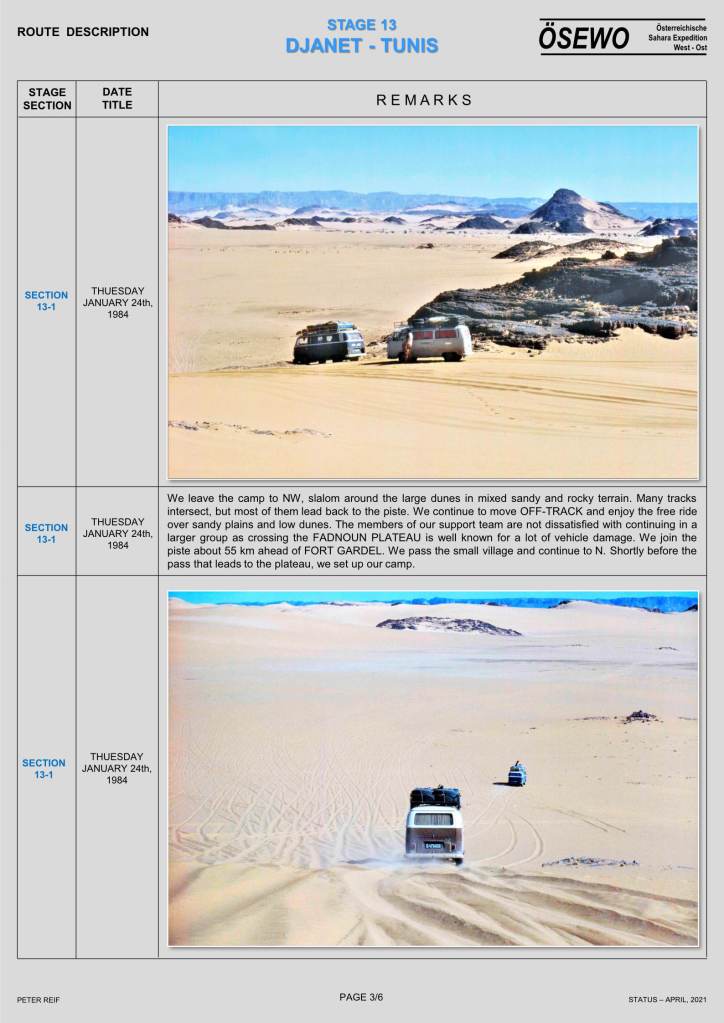
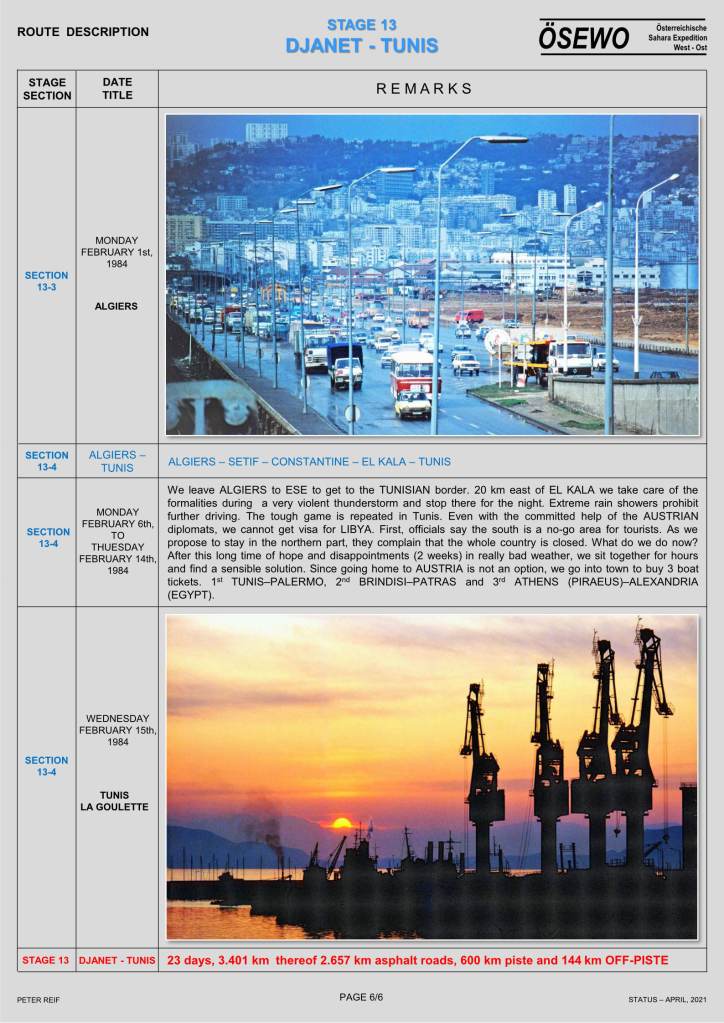
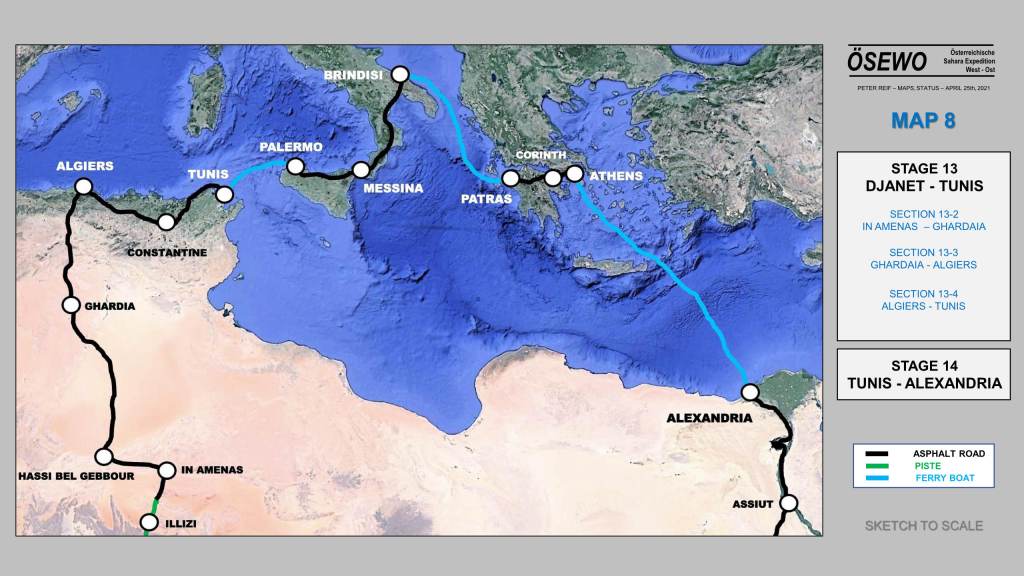
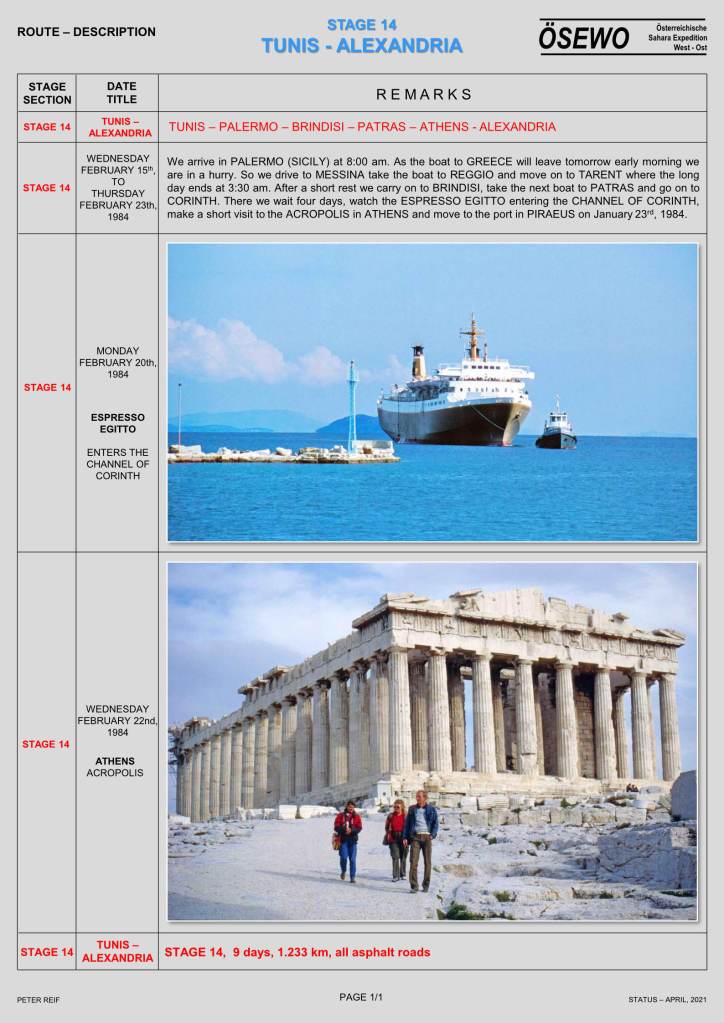
Part Six of Peter Reif’s report and maps recalling ÖSEWO: an Atlantic-to-Nile crossing of the Sahara in 1983-4. Despite their best efforts to acquire Libyan visas in Djanet, Algiers and Tunis, an escalation in the Libyan war with Chad means they can’t cross overland to Egypt and so have to ferry around across the Mediterranean.
For other parts, click the Index Page.

Next stage

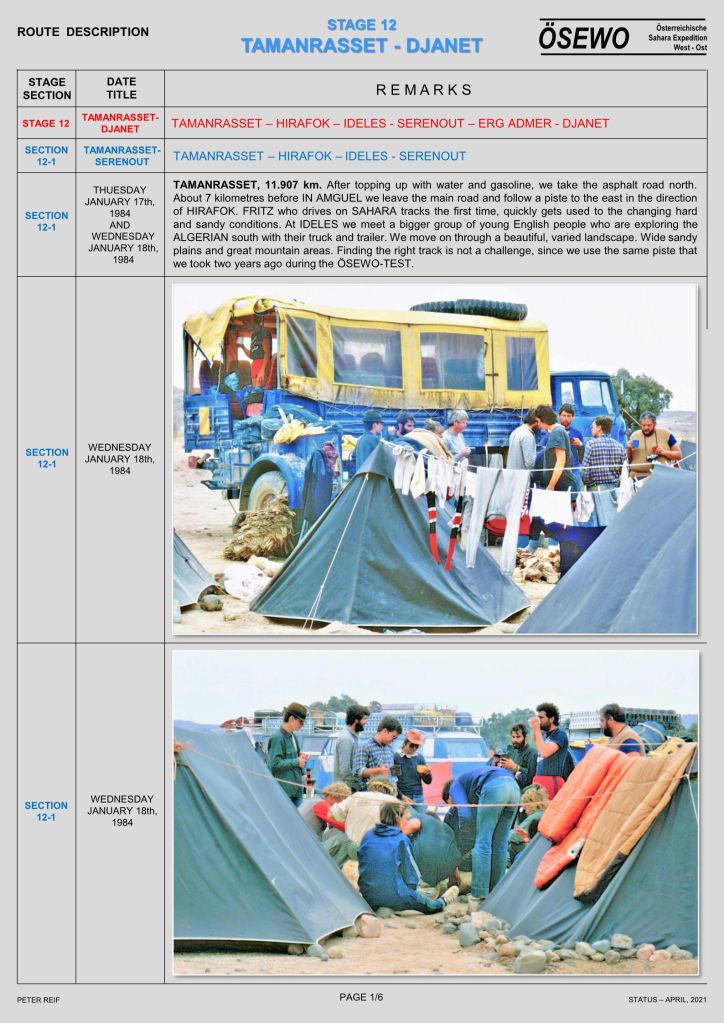
Sahara West–East with VW Vans, 1984 • Part 5/8

See also:
Sahara West-East Crossings
Astro Navigation in the Sahara

Reports by Peter Reif
Photos by Peter Reif and Arike Mijnlieff

OSEWO Index Page

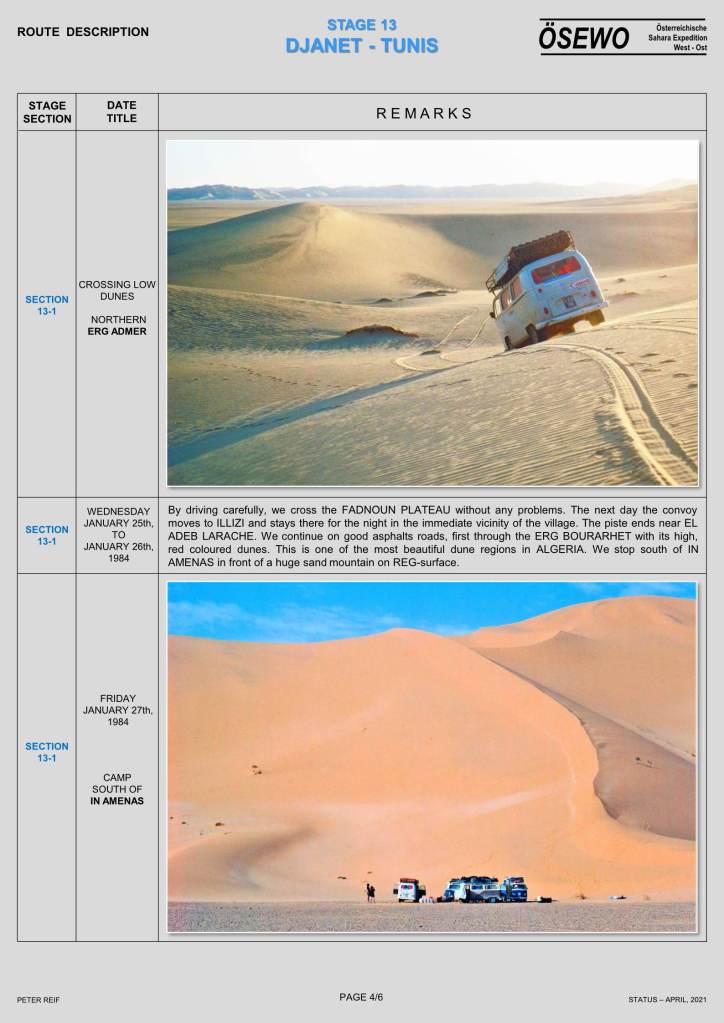
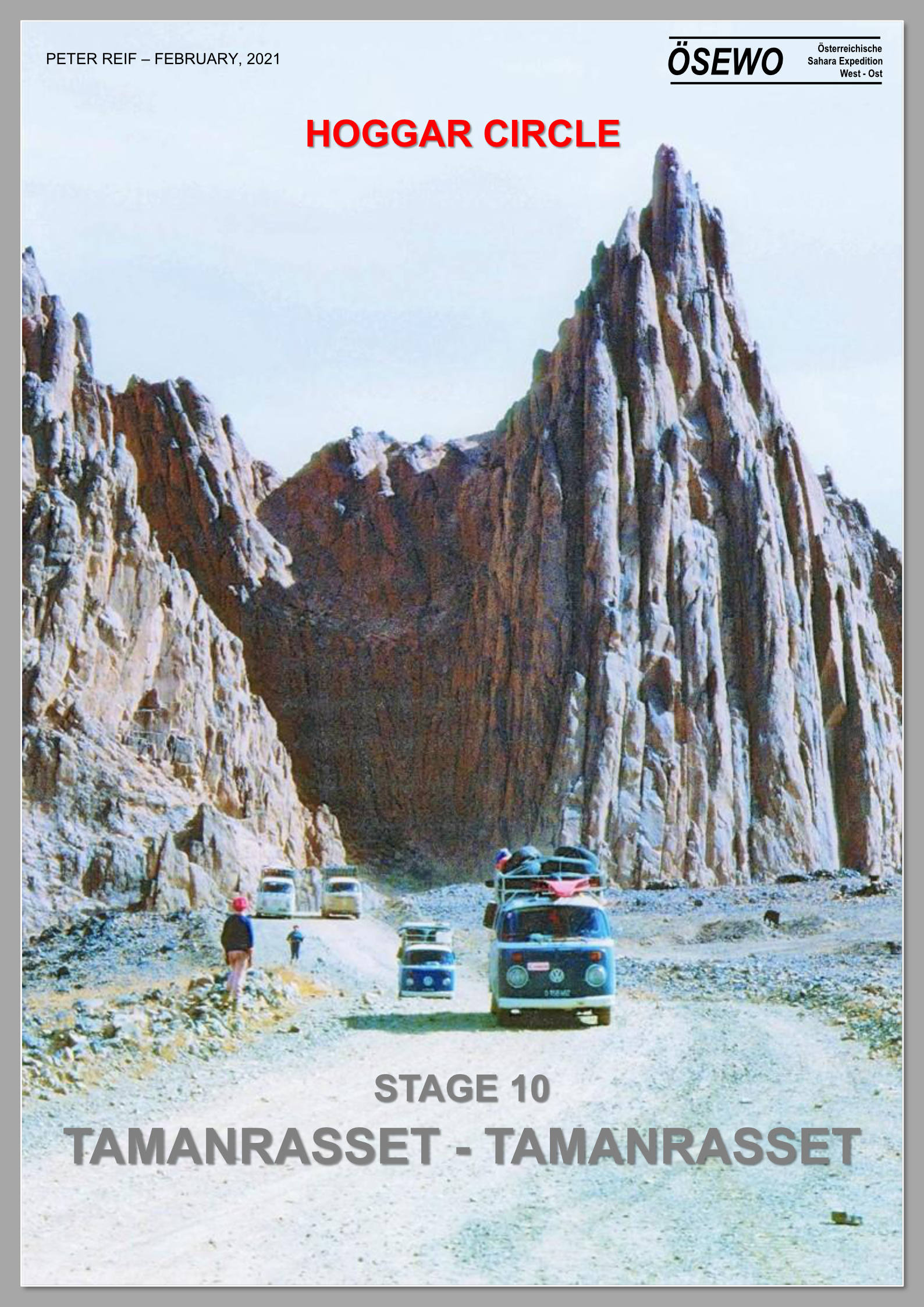
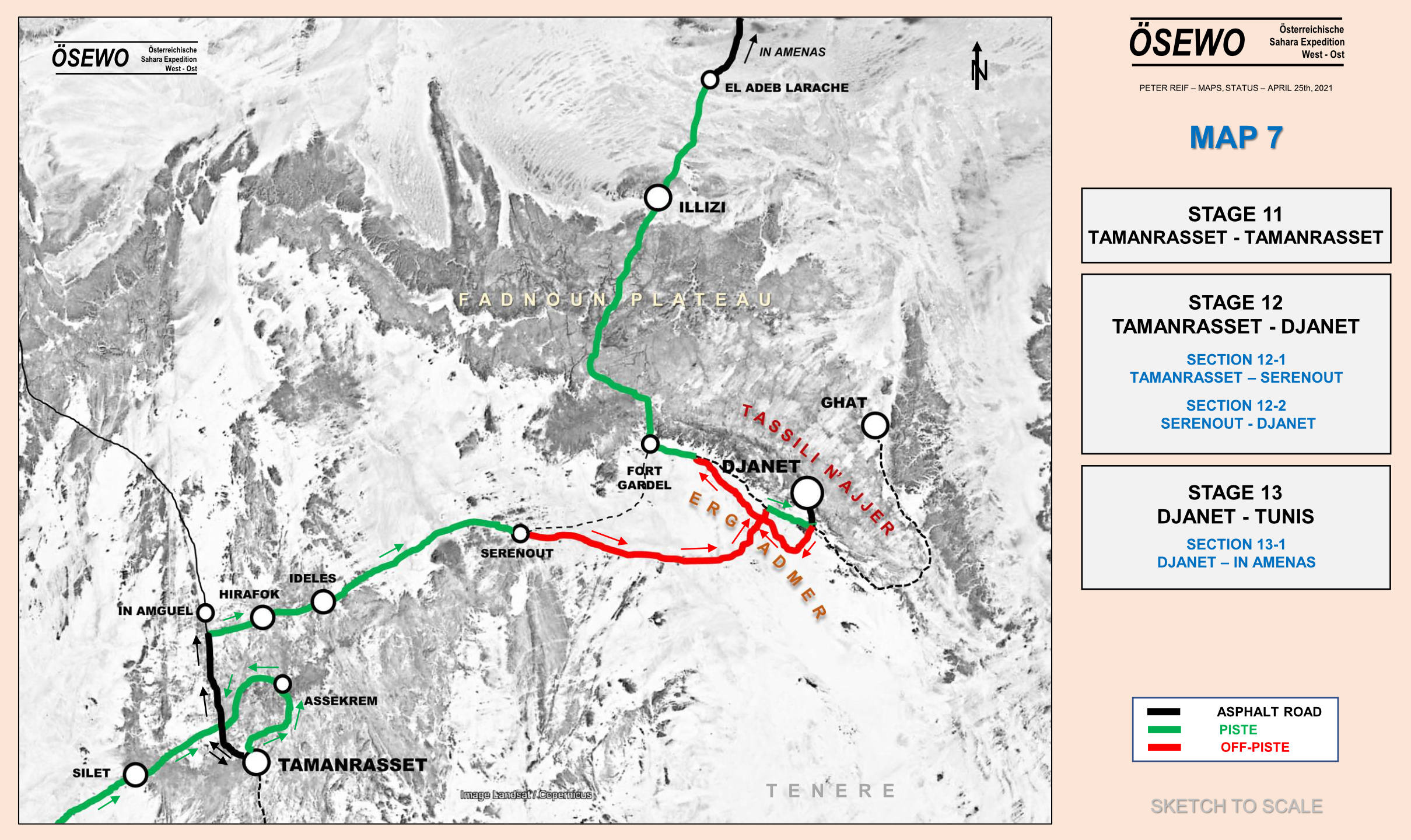
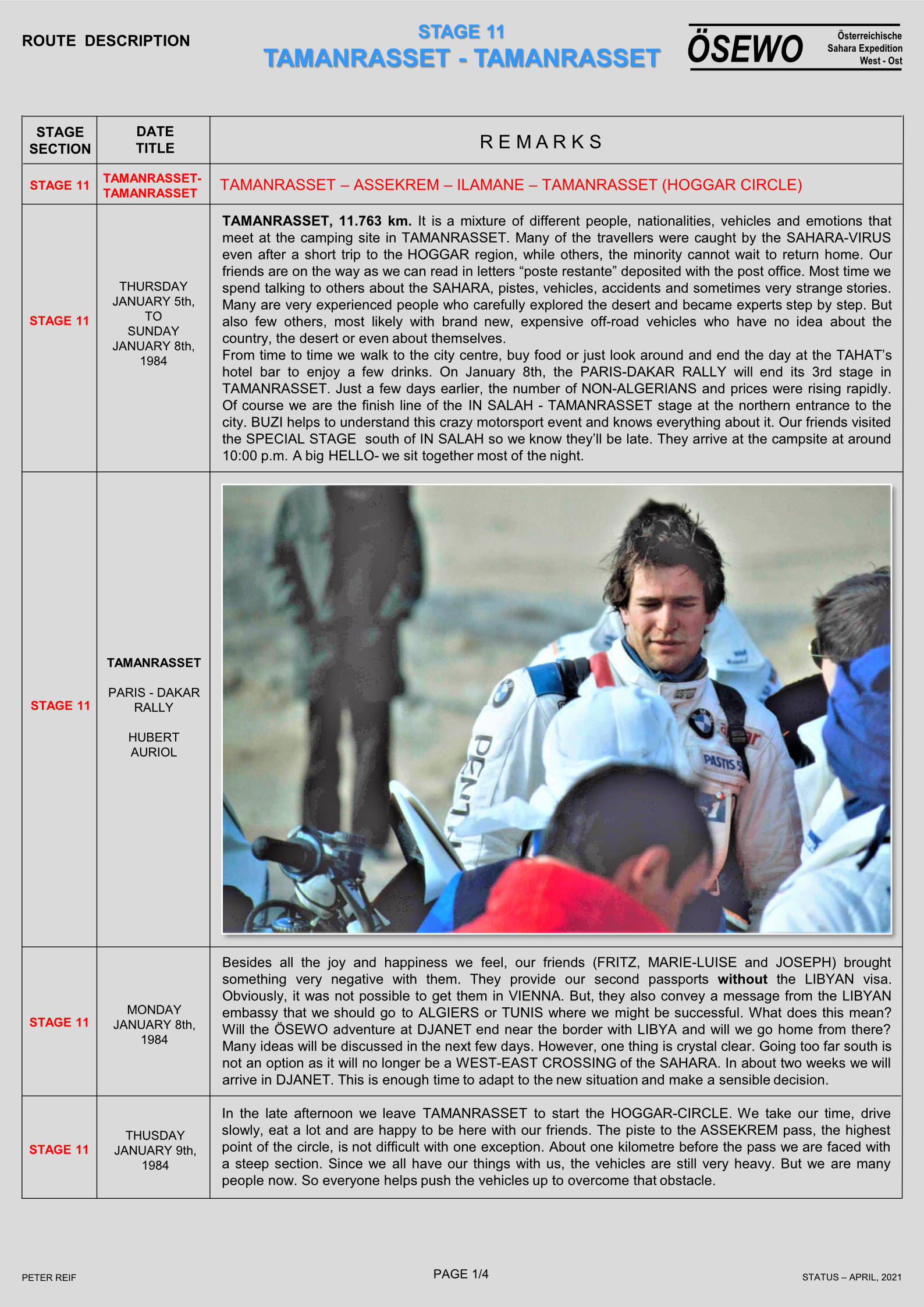
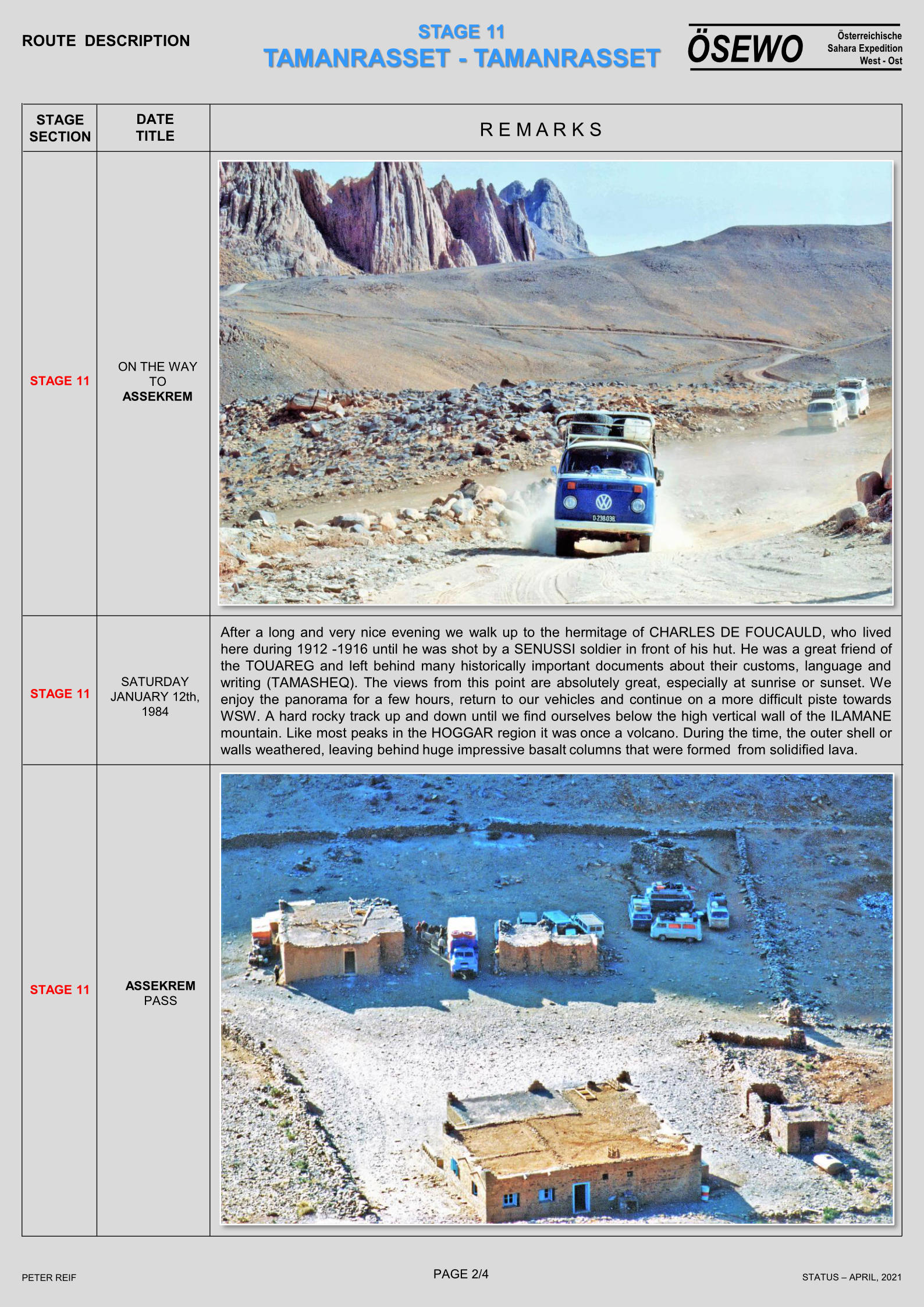
Part Five of Peter Reif’s report and maps recalling ÖSEWO: an Atlantic-to-Red Sea crossing of the Sahara in 1983-4. The team have arrived in Tamanrasset where they meet many other desert overlanders, as well as the Dakar Rally and three VW friends from Austria who’ve brought spare passports for Libya.
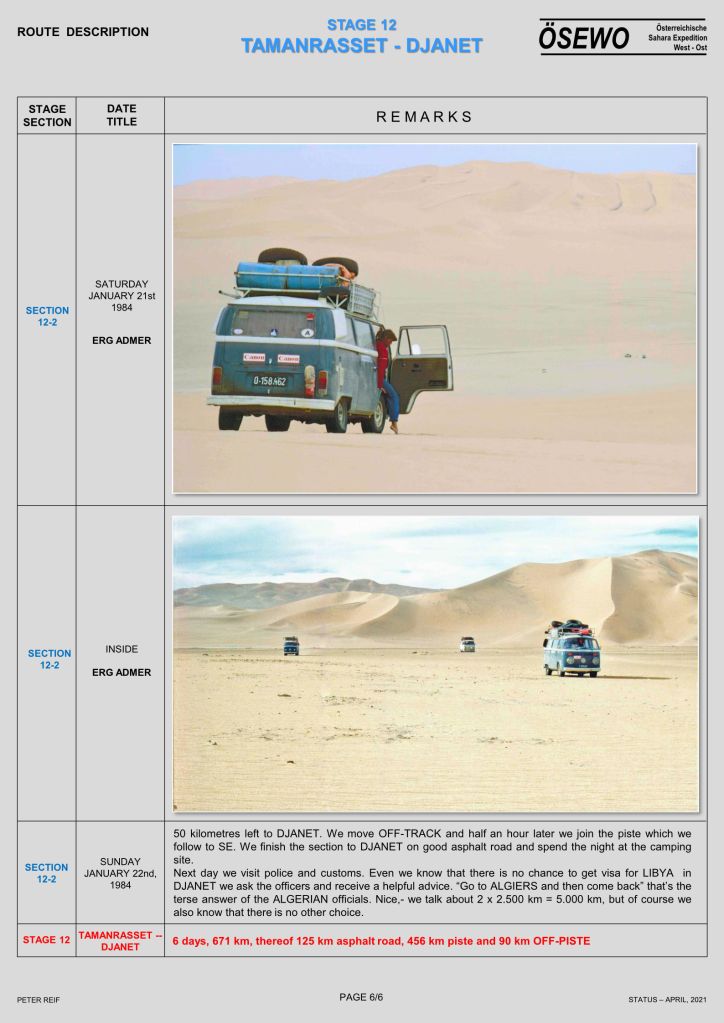
The four vans tick off the Hoggar Loop, then headed east for Djanet, close to the Libyan border.
For other parts, click the Index Page.

East to Djanet

Next stage

Sahara West–East with VW Vans, 1984 • Part 4/8

See also:
Sahara West-East Crossings
Astro Navigation in the Sahara

Reports by Peter Reif
Photos by Peter Reif and Arike Mijnlieff

OSEWO Index Page

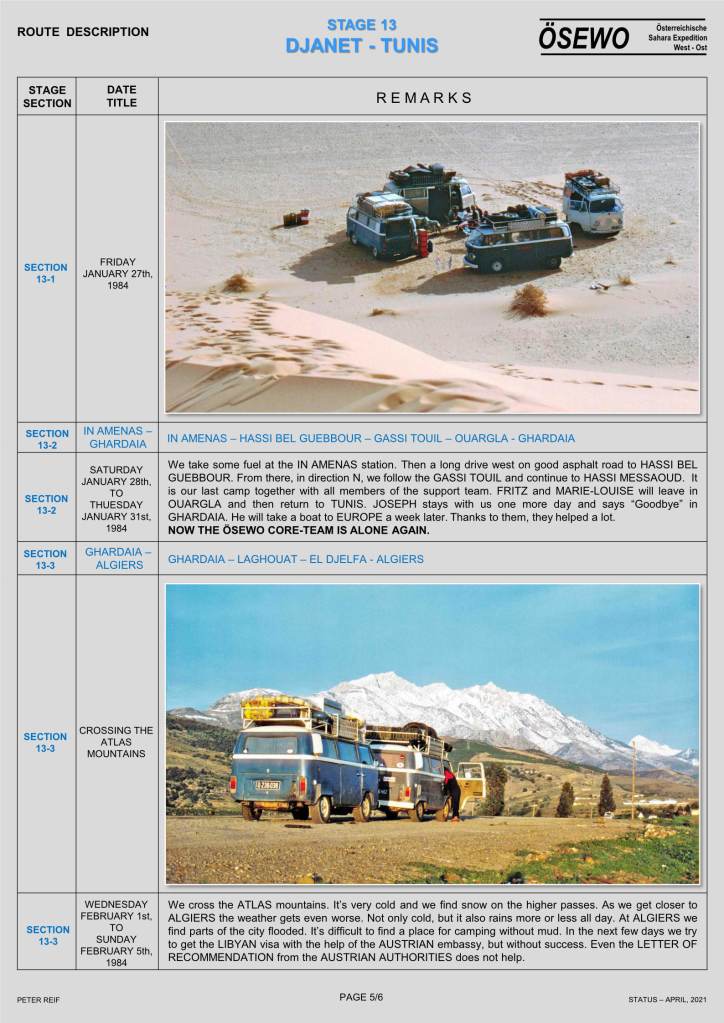
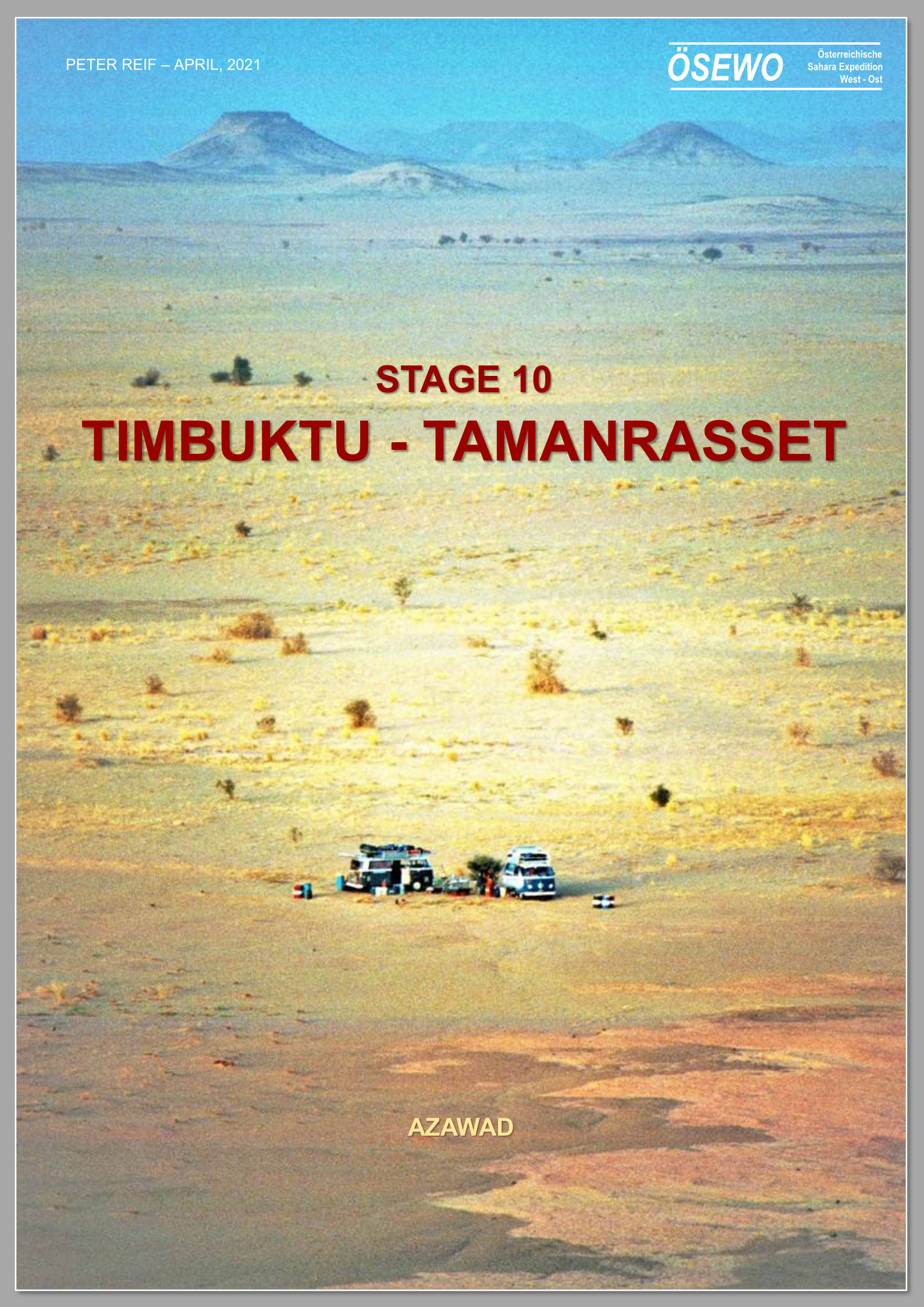
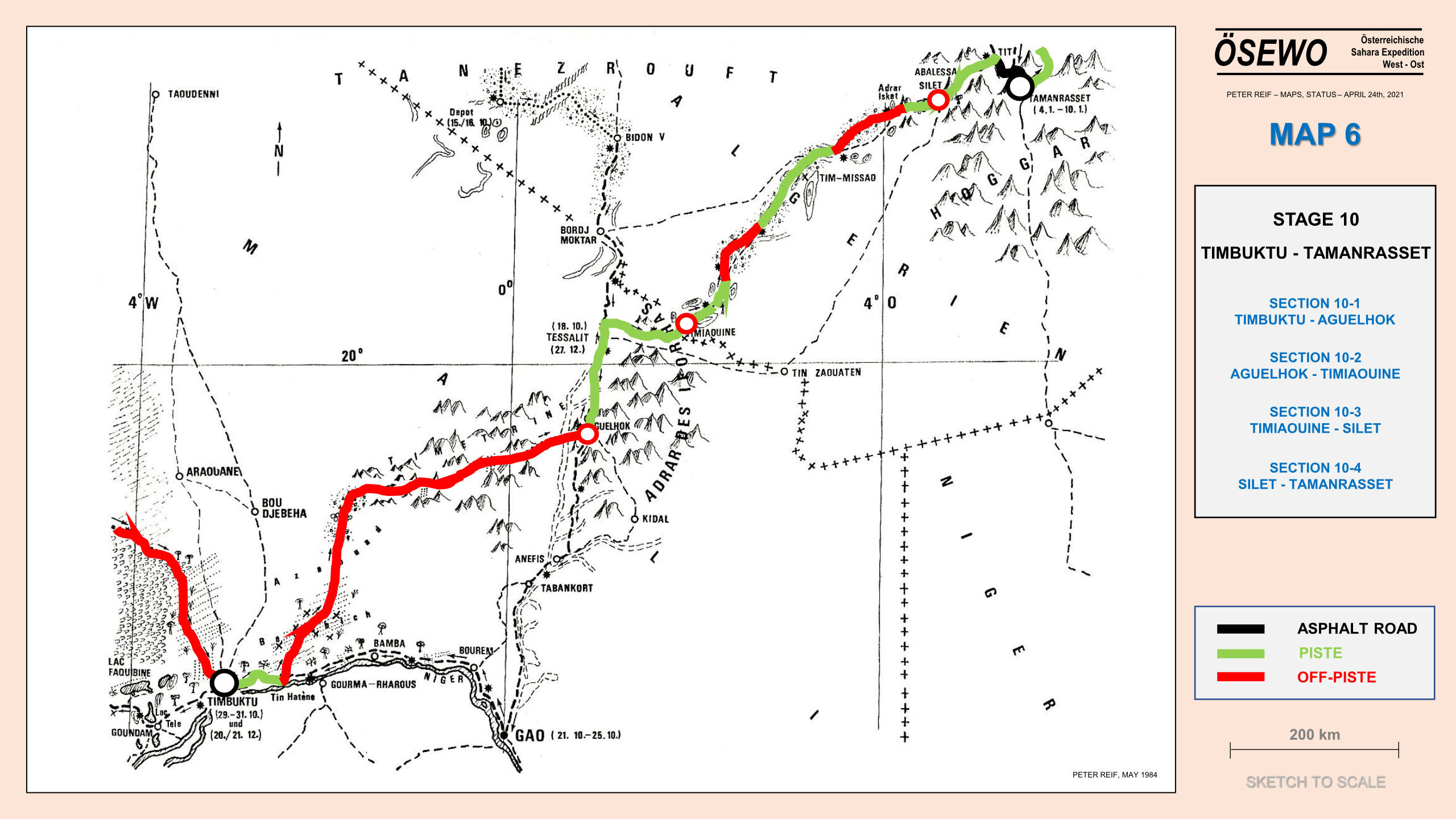
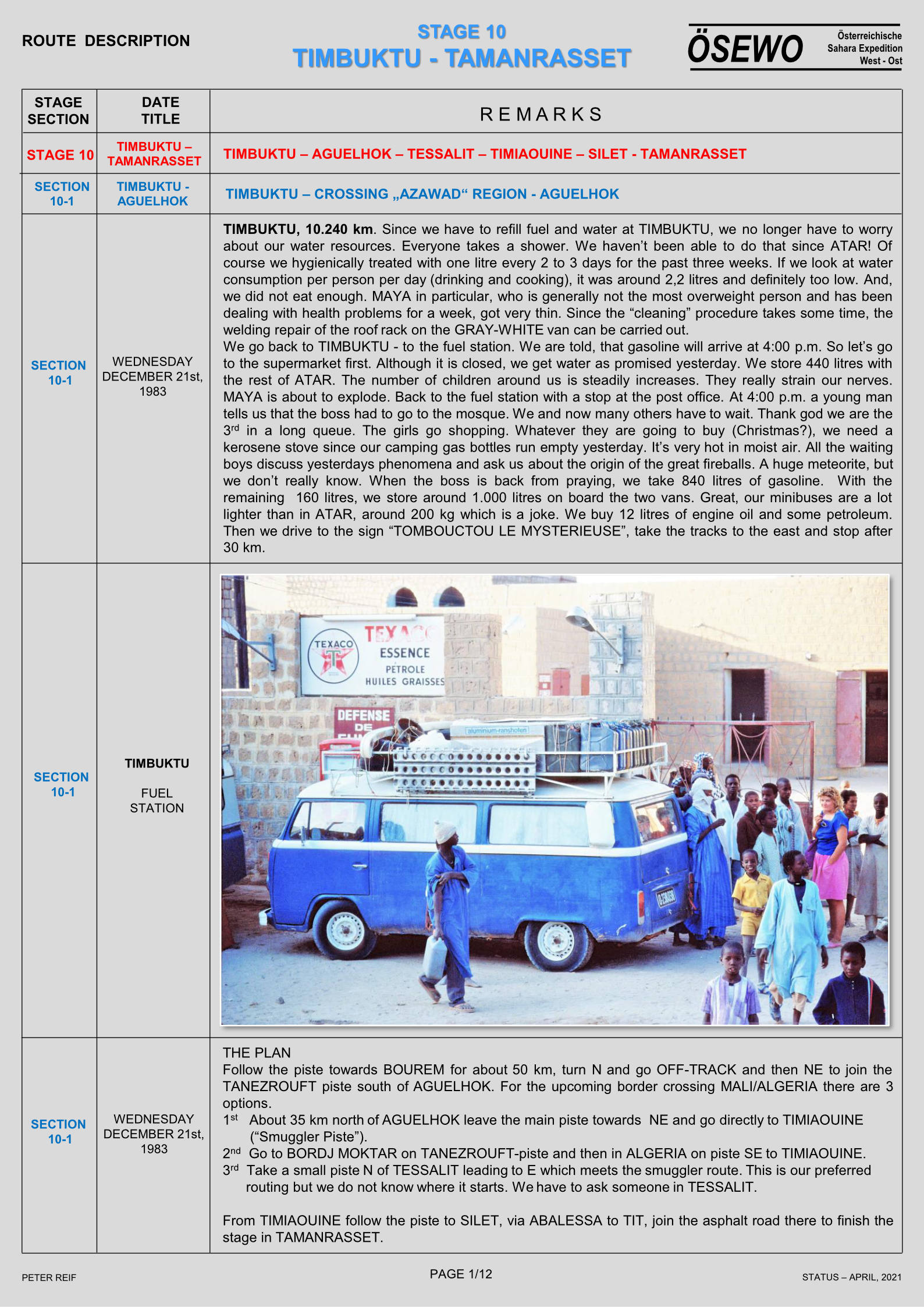
Part Four of Peter Reif’s report and maps recalling ÖSEWO: an Atlantic-to-Red Sea crossing of the Sahara in 1983-4. Following the tough, three-week crossing of the Majabat al Koubra to Timbuktu, the two VWs head northeast back into the desert for the Algerian border they crossed two months earlier on the way down.
For other parts, click the Index Page.

Next stage