Part Two of Peter Reif’s report and maps recalling ÖSEWO: an Atlantic-to-red Sea crossing of the Sahara in 1983-4. The team get in position for the first big desert crossing. For other parts, click the Index Page.
Austrian, Peter Reif spent his Lockdown formatting a series of detailed reports and maps recalling ÖSEWO: an Atlantic-to-Red sea crossing of the Sahara in 1983-4. Volkswagen’s T2 Kombi was an unorthodox choice, especially as much of the route was off-piste, but as you’ll read over the next few posts, the vehicles managed better than you’d expect.
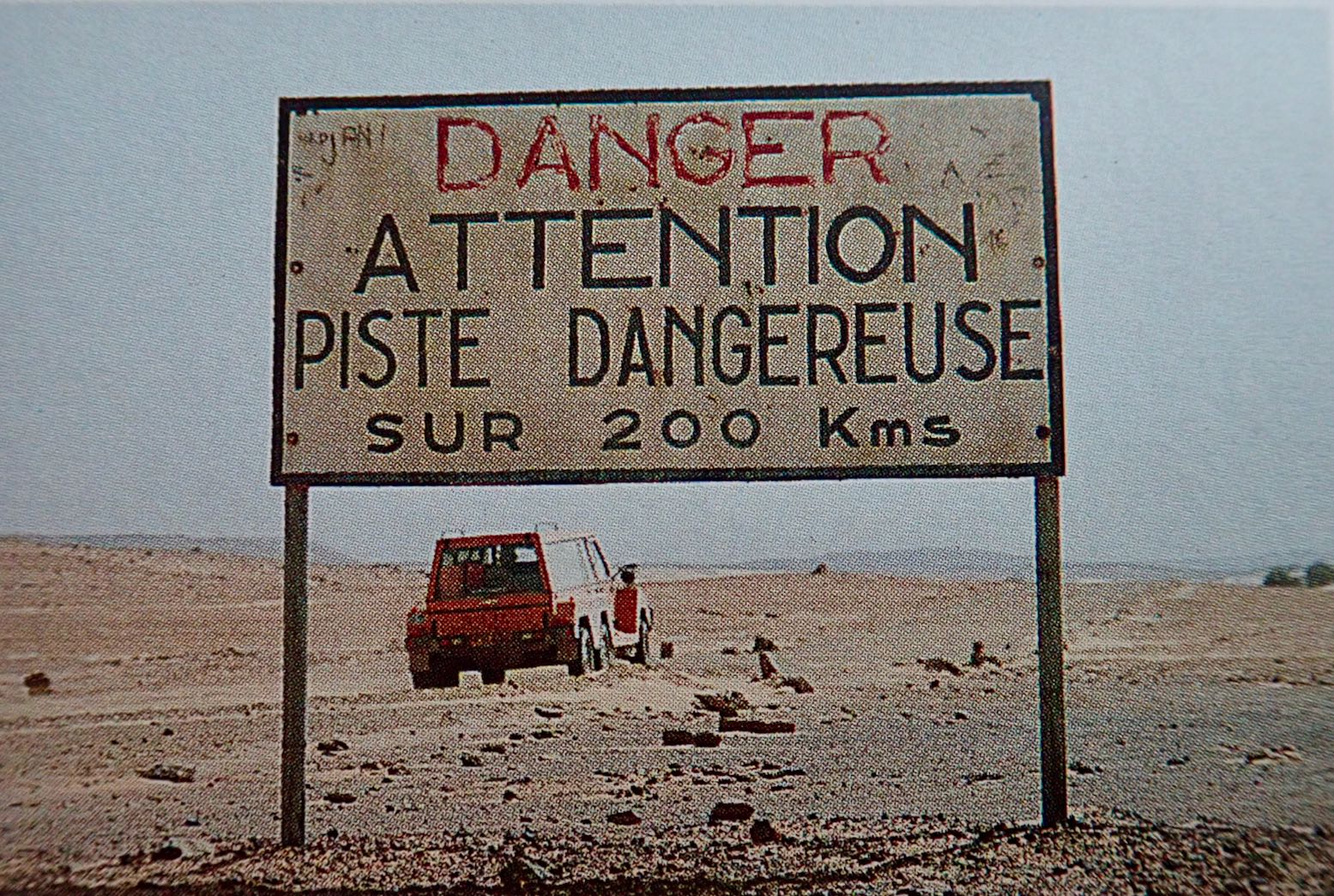
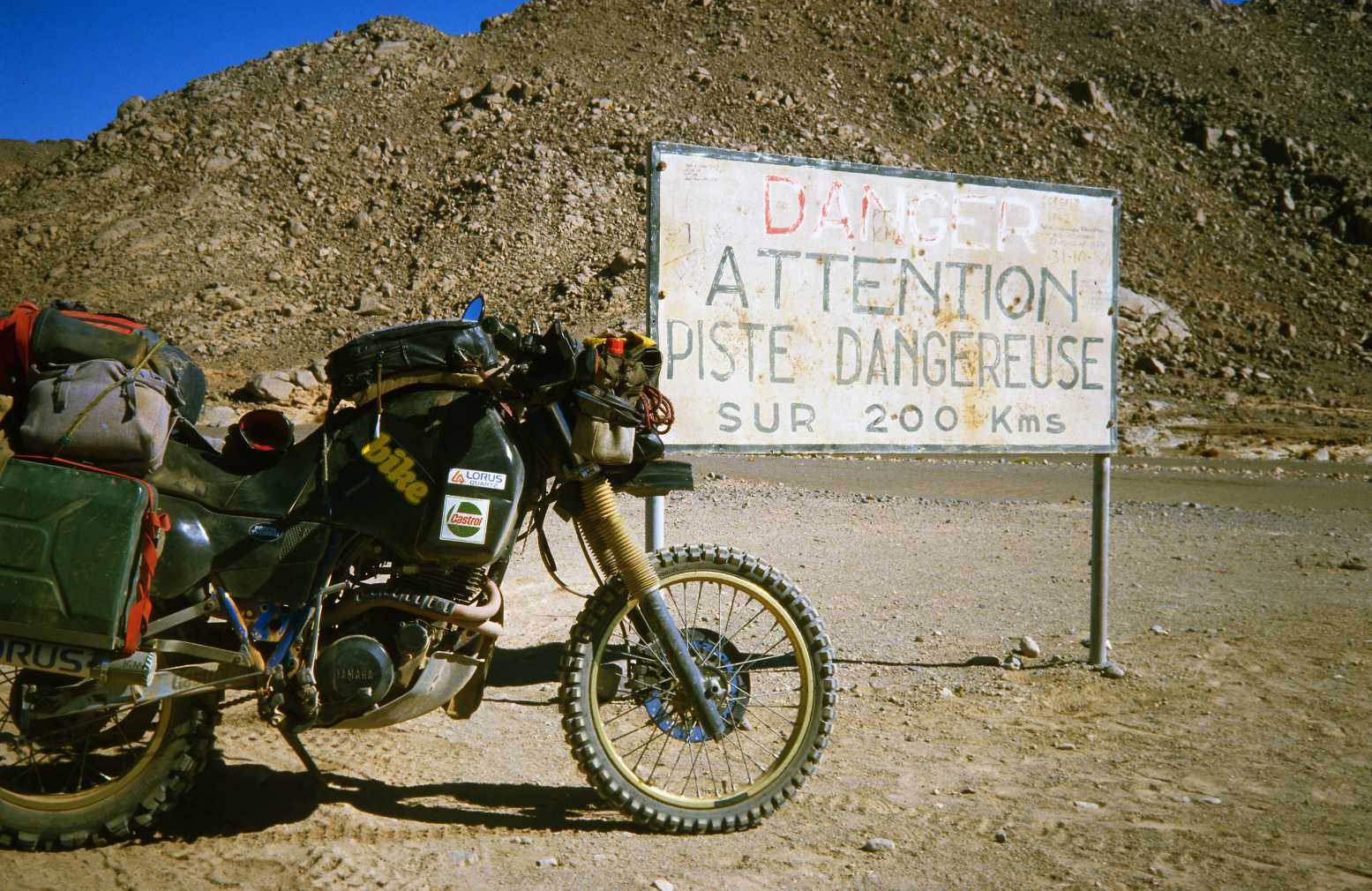
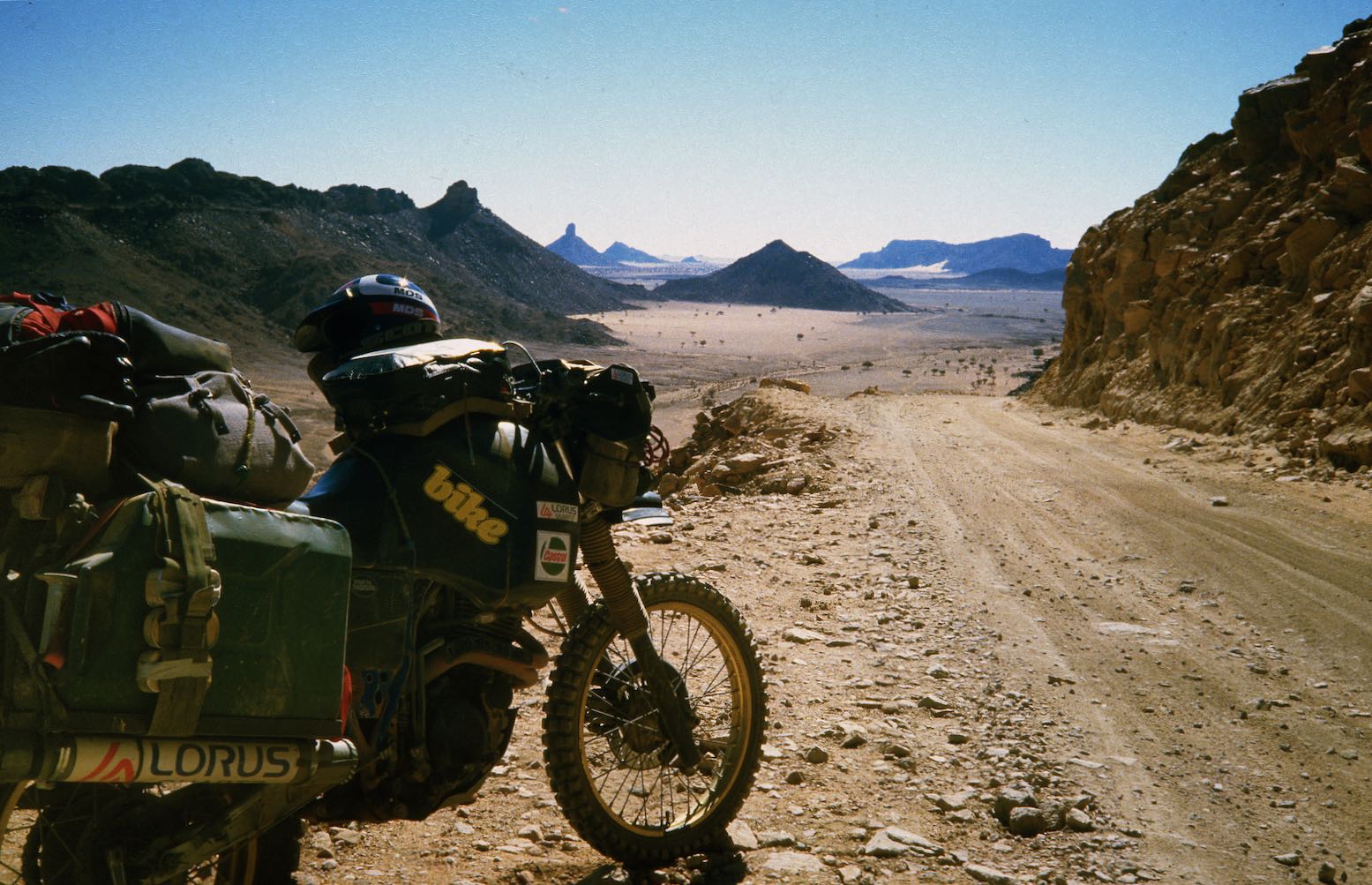
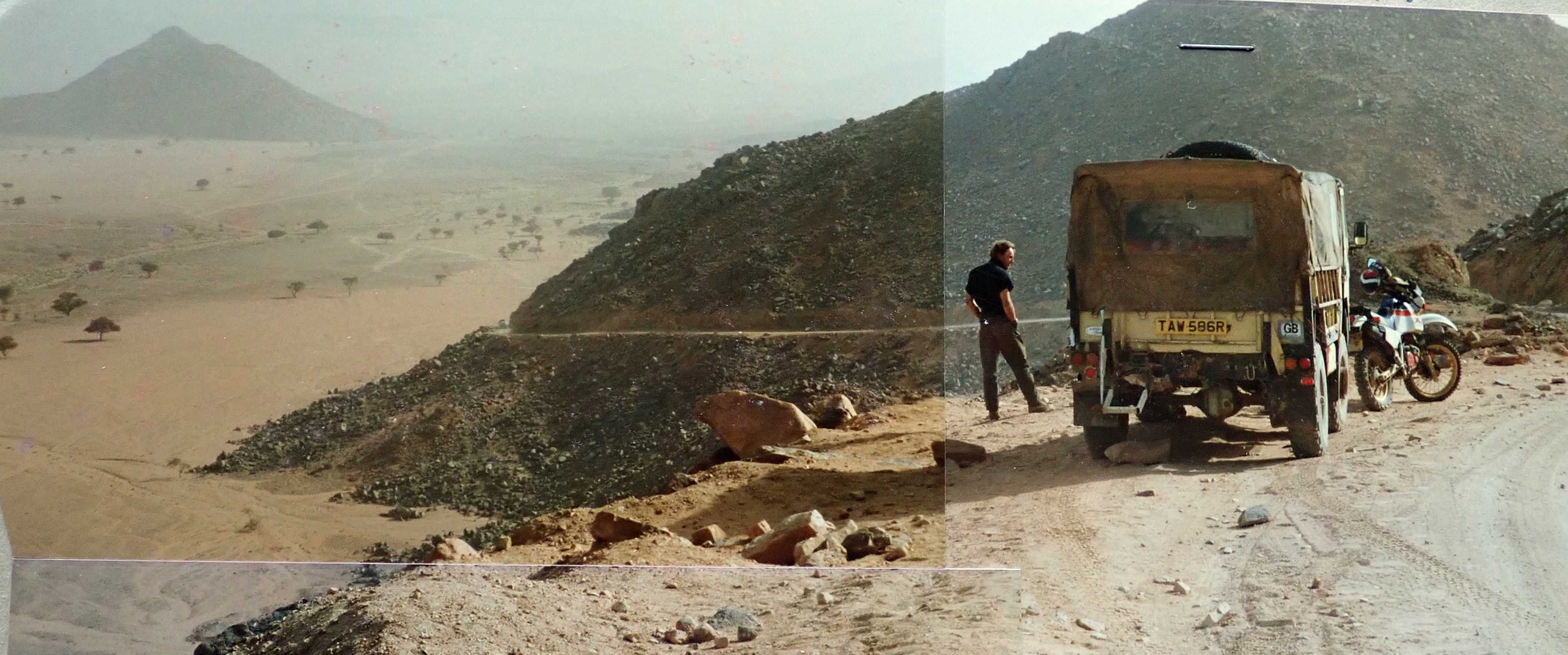
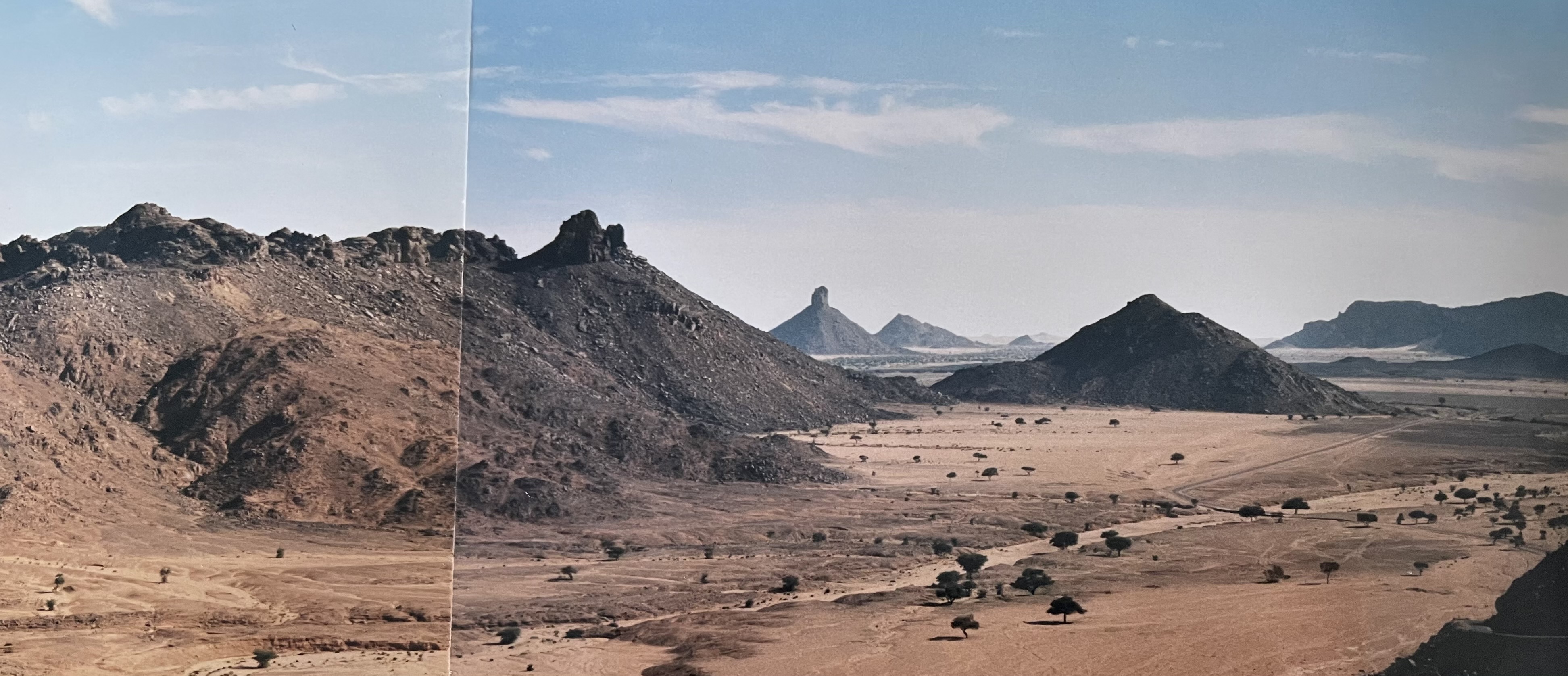
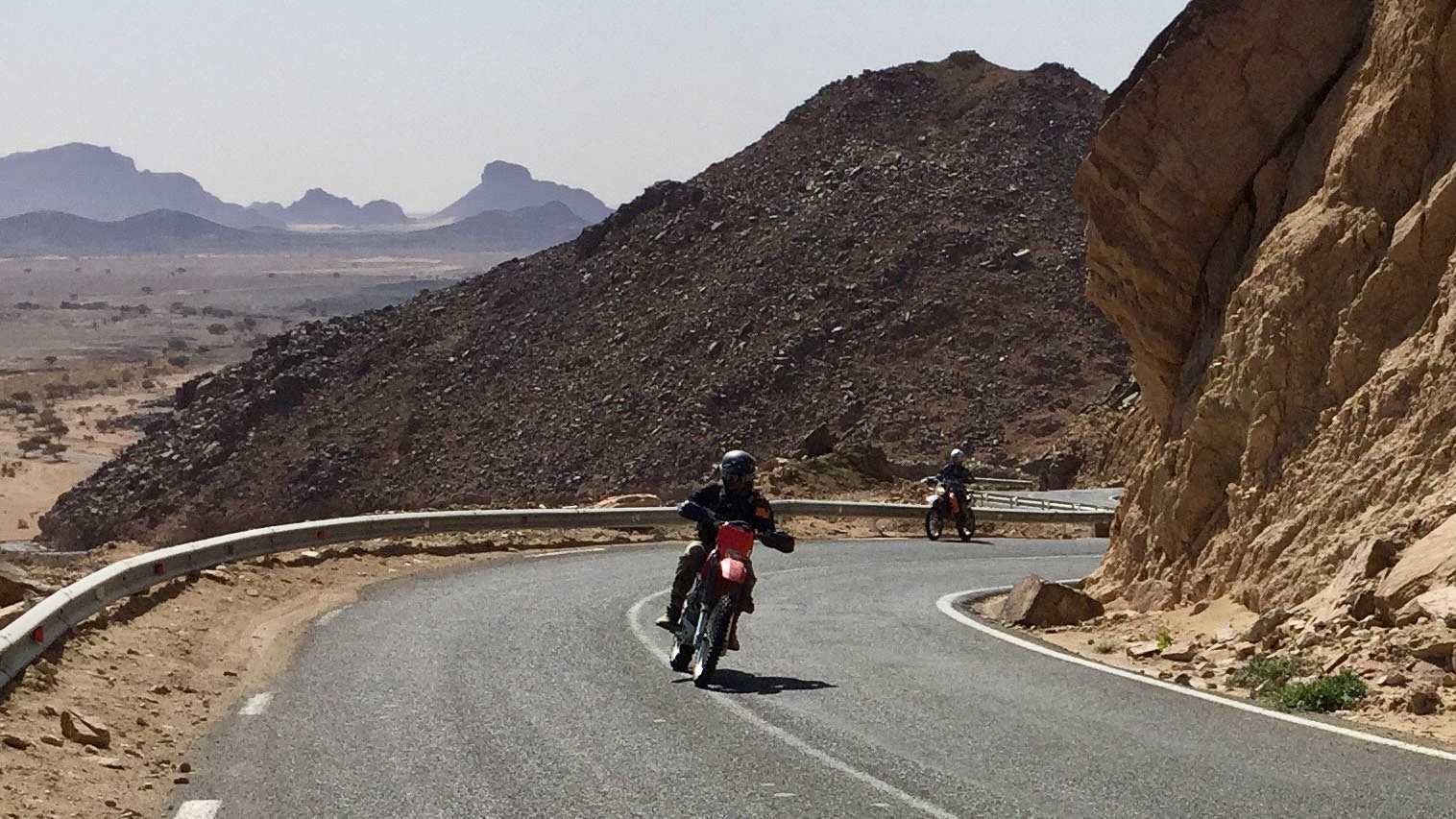
Anyone who’s taken the RN3 down to Djanet in southeastern Algeria will remember the Tin Taradjeli Pass. By the mid-1980s the tarmac may have reached Illizi, but from here a bone-shaking 200-km crossing of the Fadnoun plateau was so rough, steep and bendy, bigger trucks had to take a long detour and there were warning signs at each end of the plateau: Attention; Dangerous Track.
Illizi (from Africar book)
Part of the Tassili N’Ajjer escarpment which stretches over into the Libyan Akakus, the Fadnoun was a notorious, vehicle-wrecking barrier. Suspension problems were common and on various trips I came across a 2CV and a Hilux which were gradually breaking in half and needed the chassis braced.
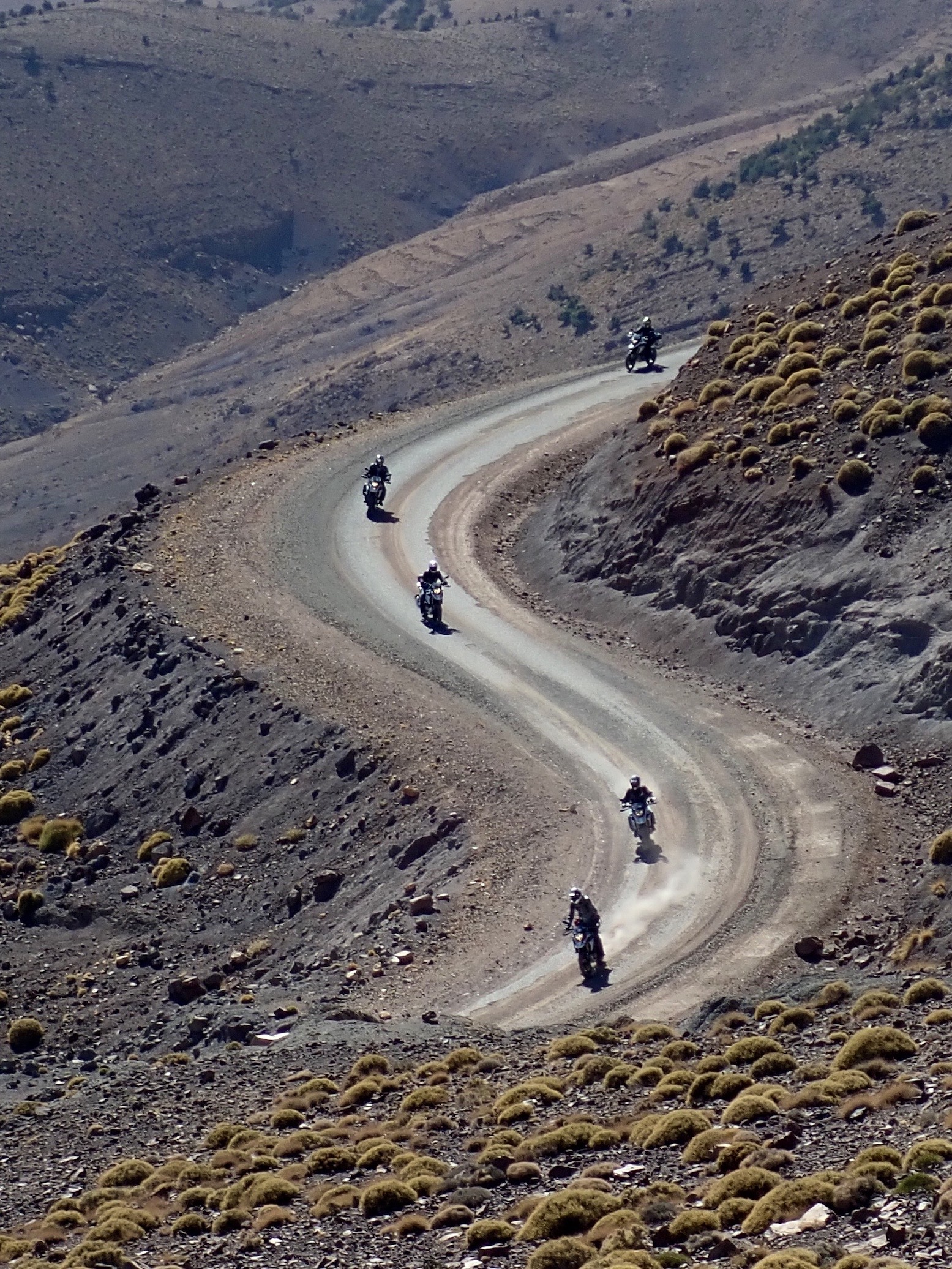
As I write in Desert Travels, crossing the Fadnoun with a Landrover 101 and a group of bikes in 1989, they’d ride for an hour and then wait hours for me to catch up.
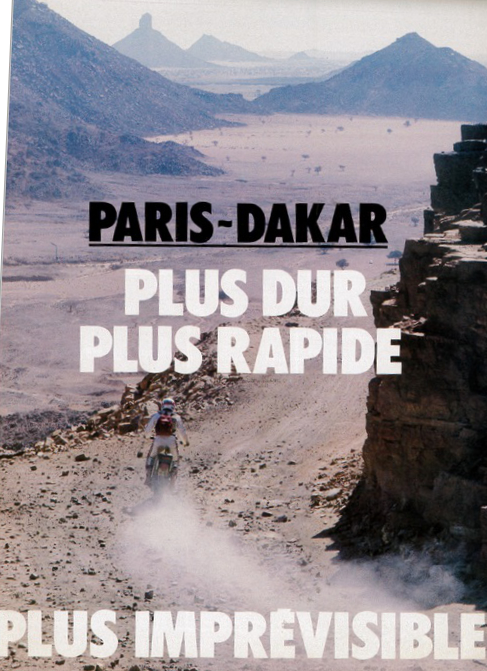
On the left, the 1983 edition of the Paris-Dakar crossed the Fadnoun on its way to Djanet and the Tenere beyond.
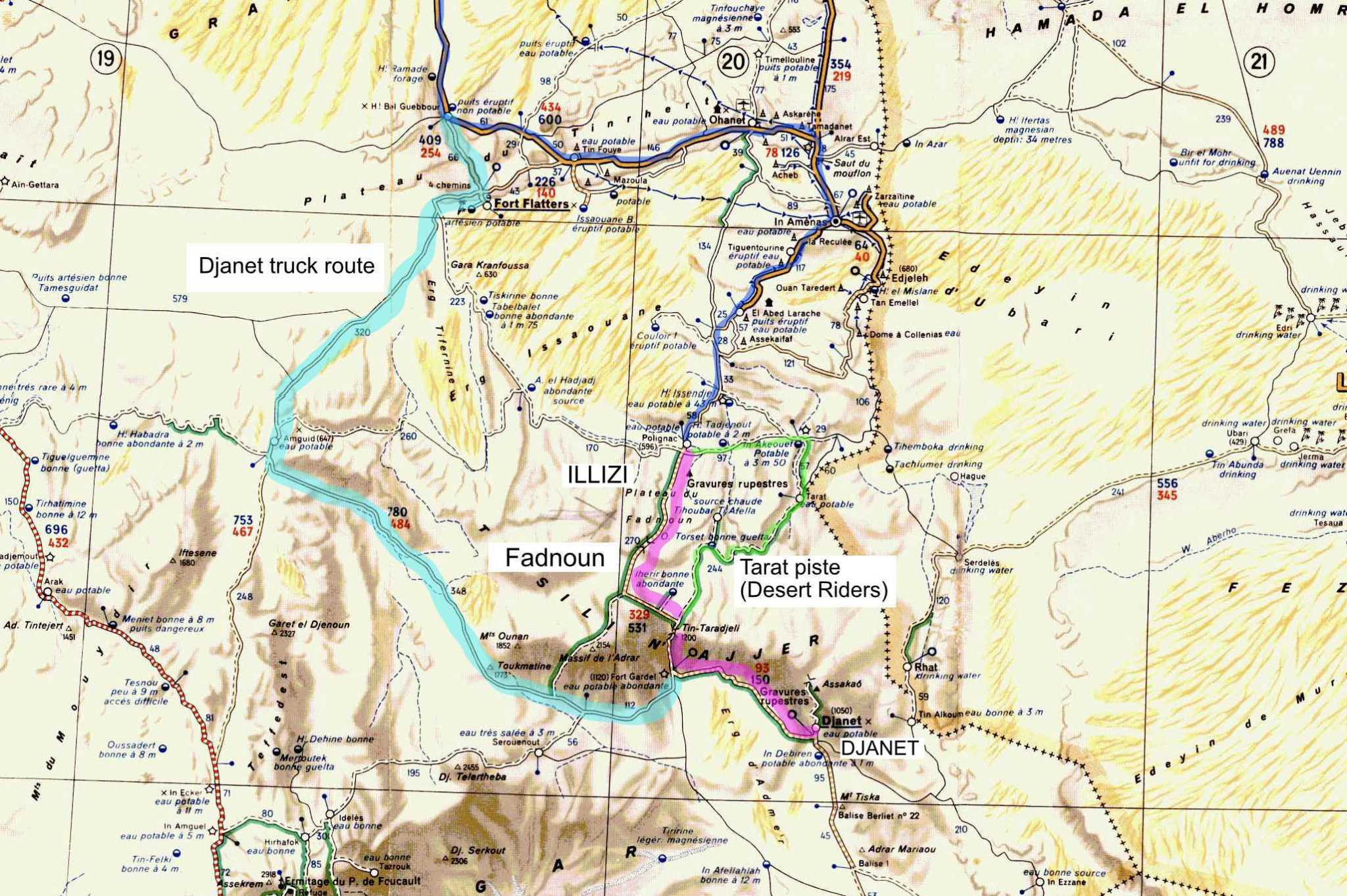
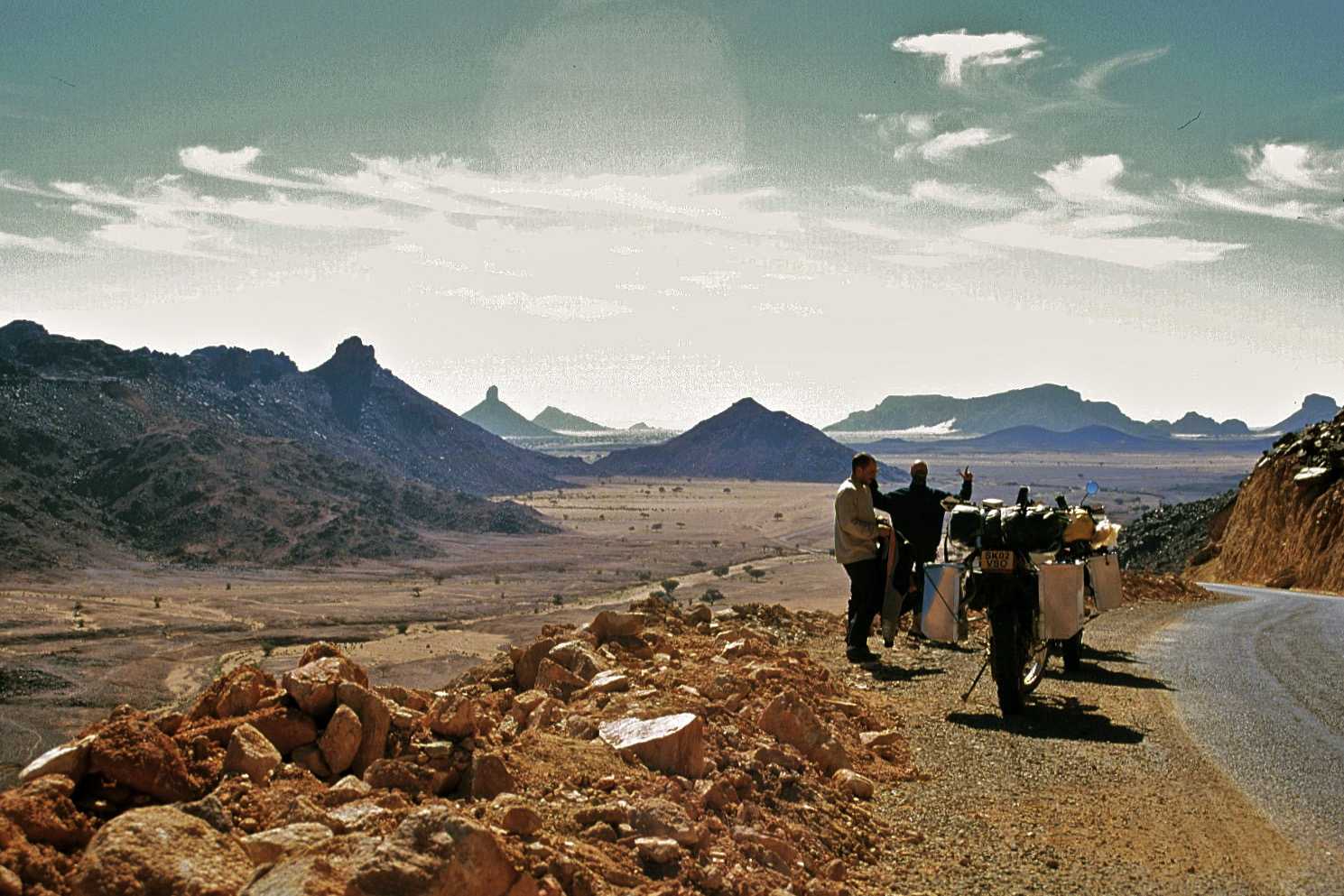
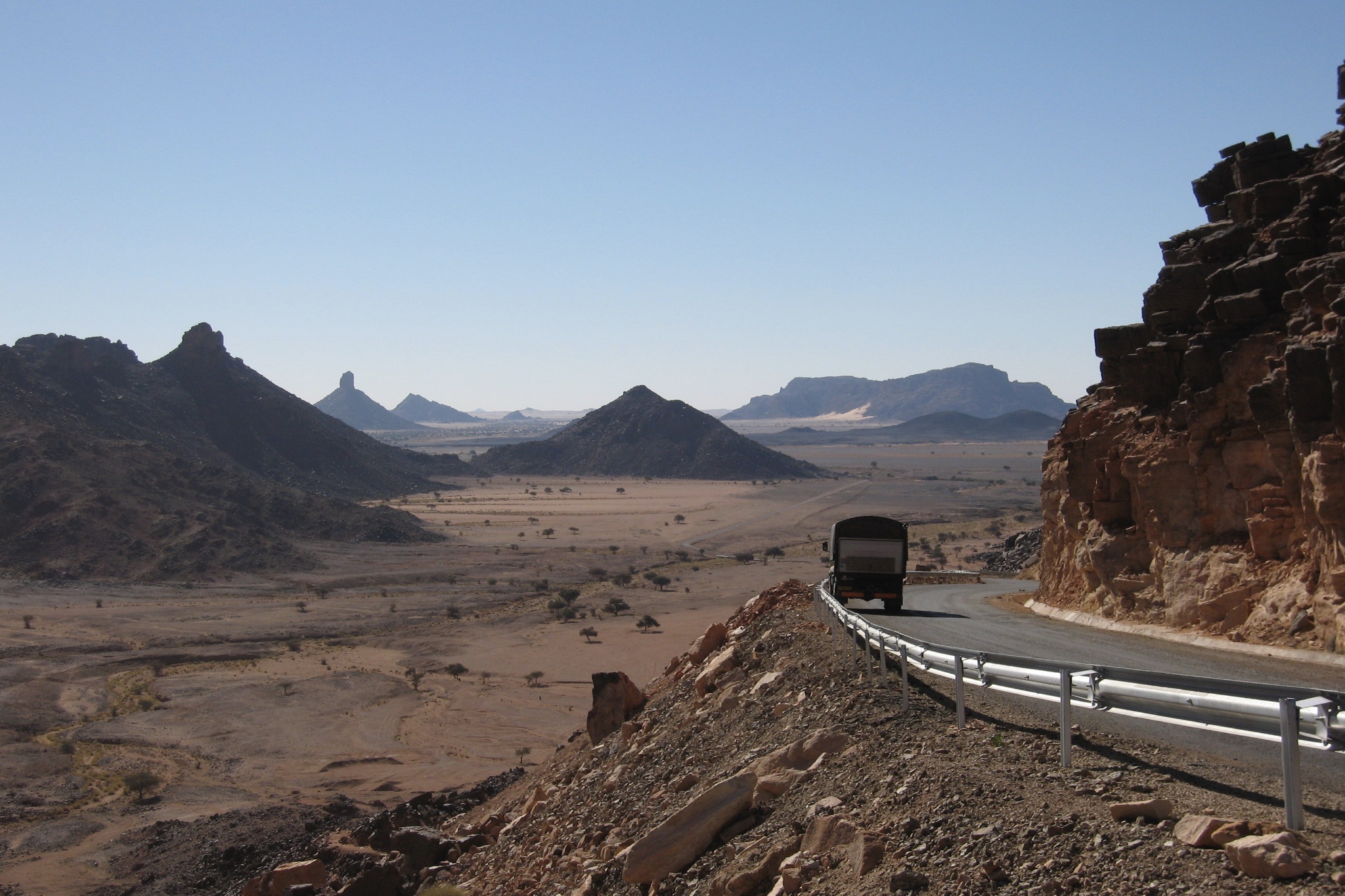
A map and few shots of Tin Taradjeli over the years.
Tin Taradjeli: where the green line meets the pink in the middle of the map.
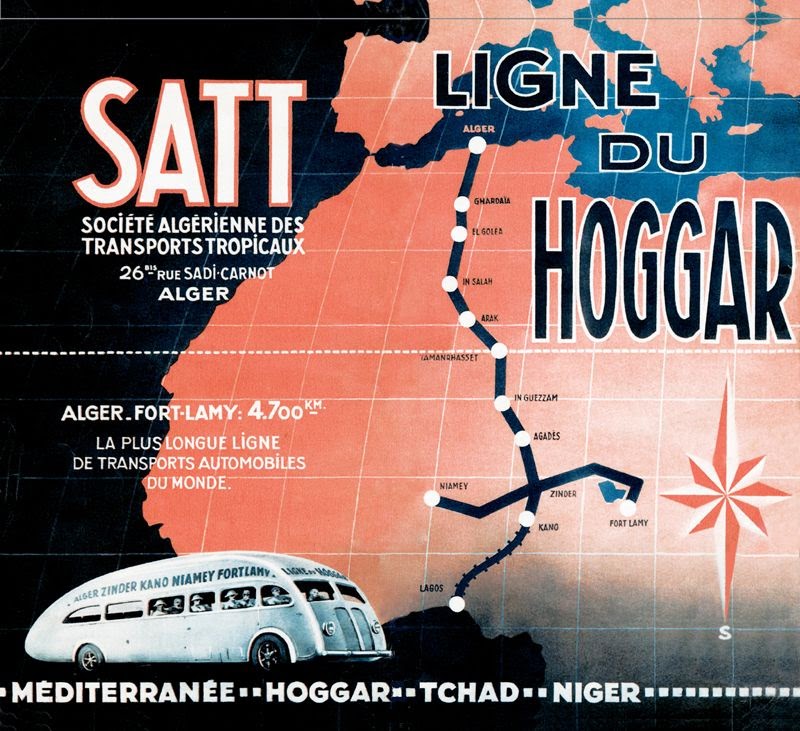
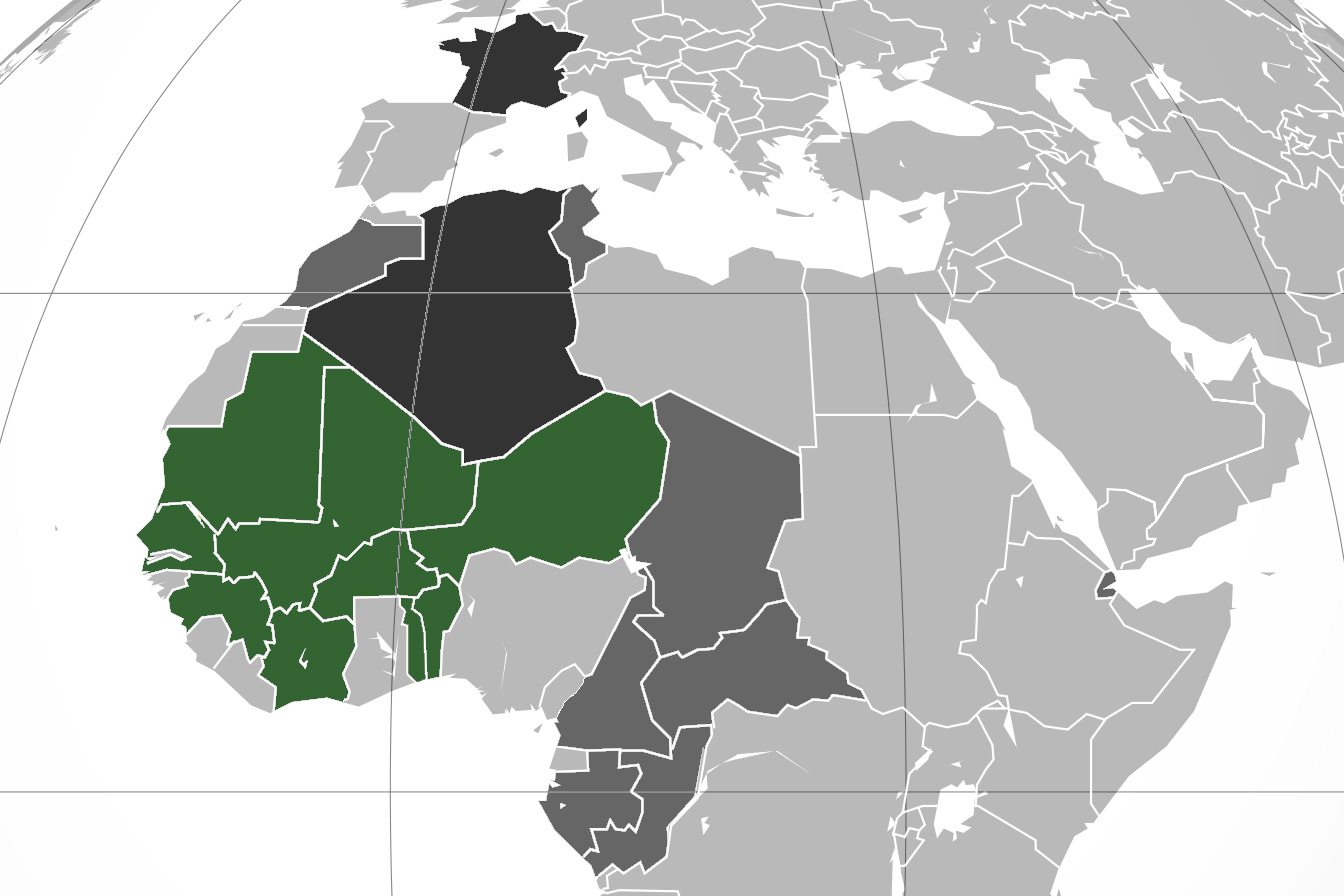
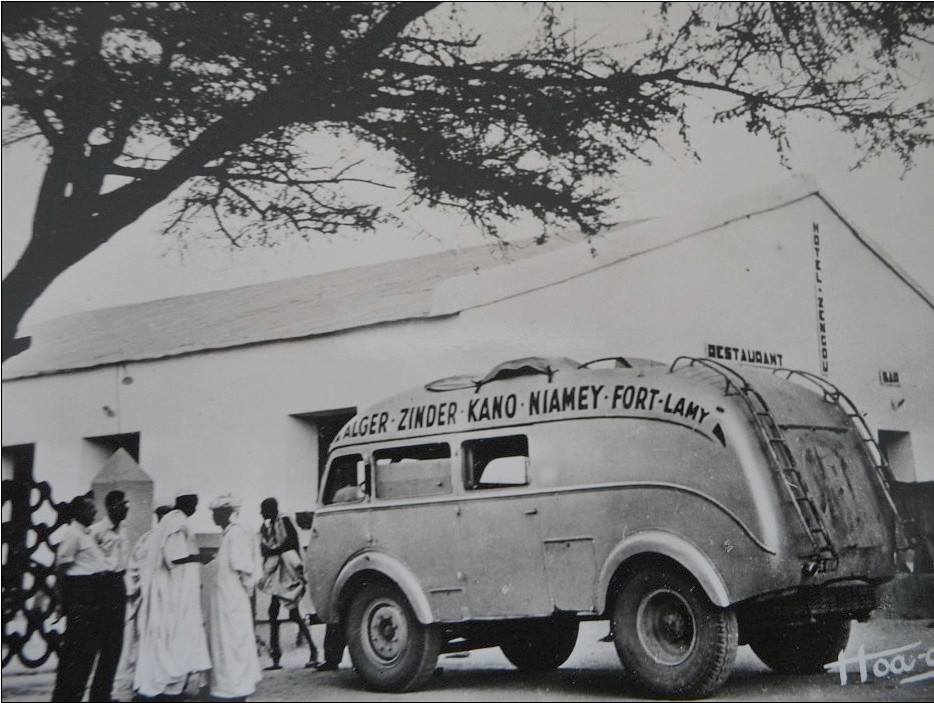
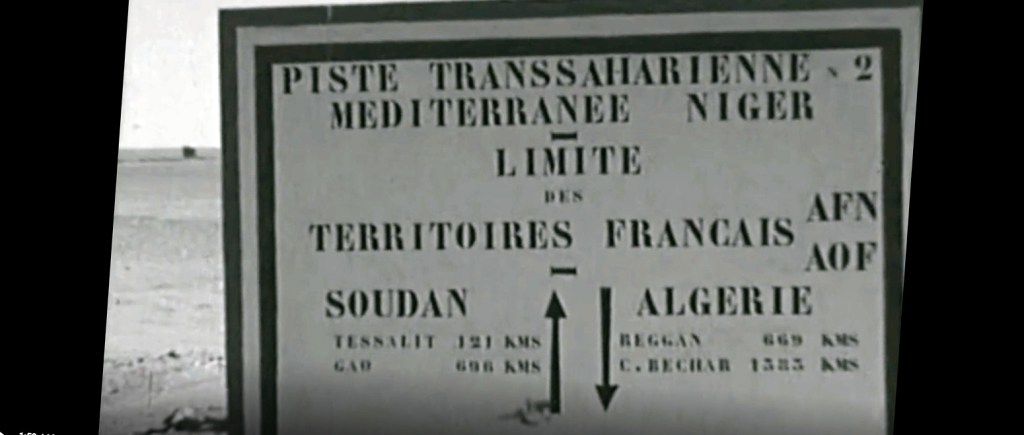
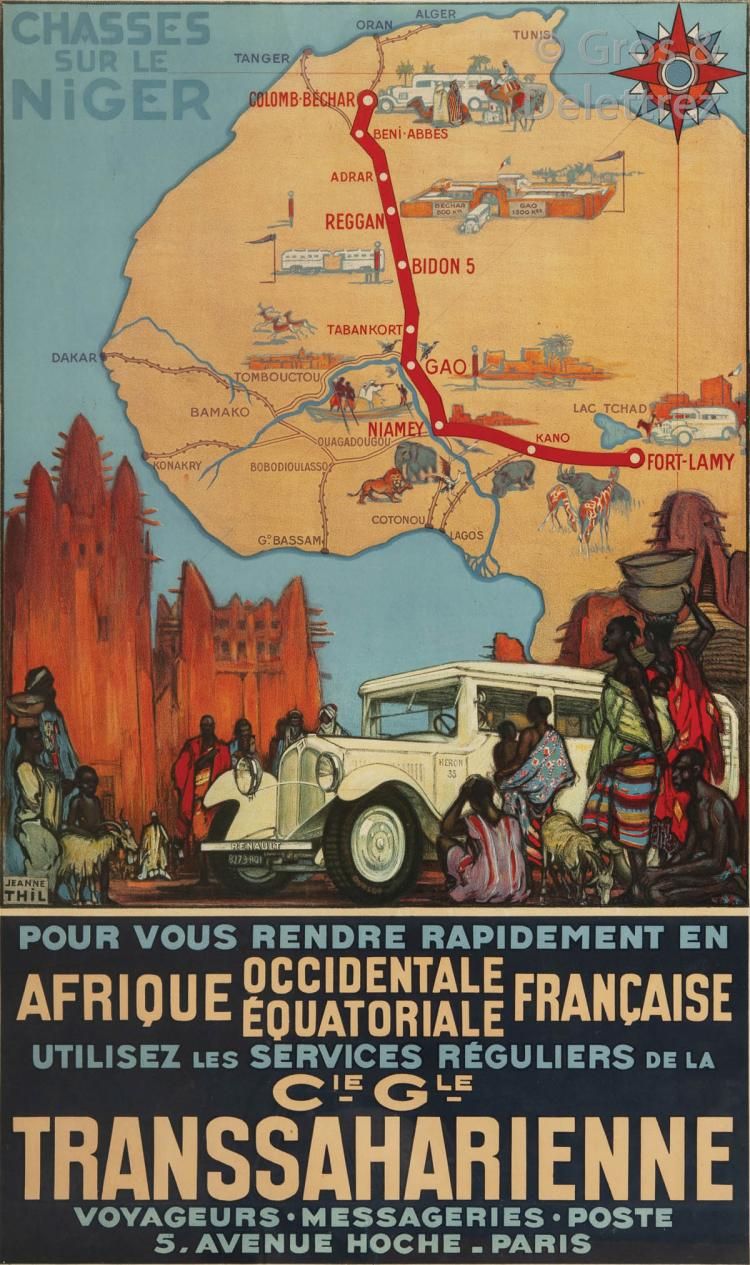
In the last decade of France’s colonial presence in North Africa, their part of Sahara was divided between three territories: Algeria, Tunisia and Morocco (‘AFN’), ‘AOF’ (French West Africa) from Mauritania to Niger, and ‘AEF’ or French Equatorial Africa which included present-day Chad. One could travel the pistes across the desert between the Mediterranean coast and the Sahel, and even scheduled bus services traversed these ‘Imperial Routes’ to the sub-Saharan capitals.
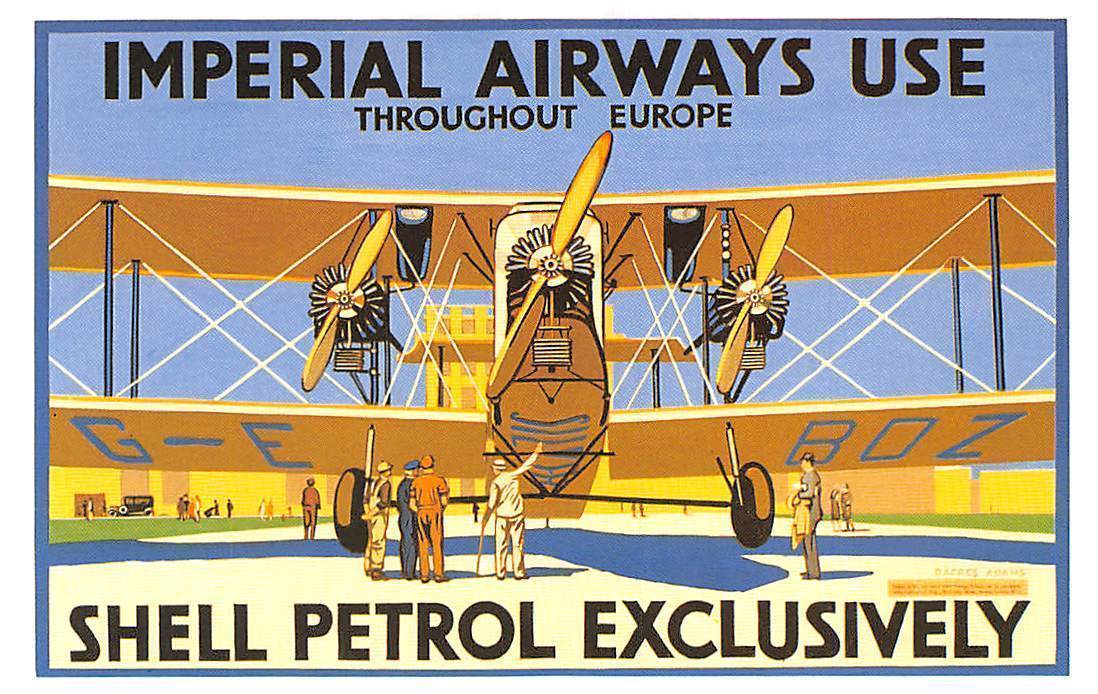
Pre-war editions were more aviation based
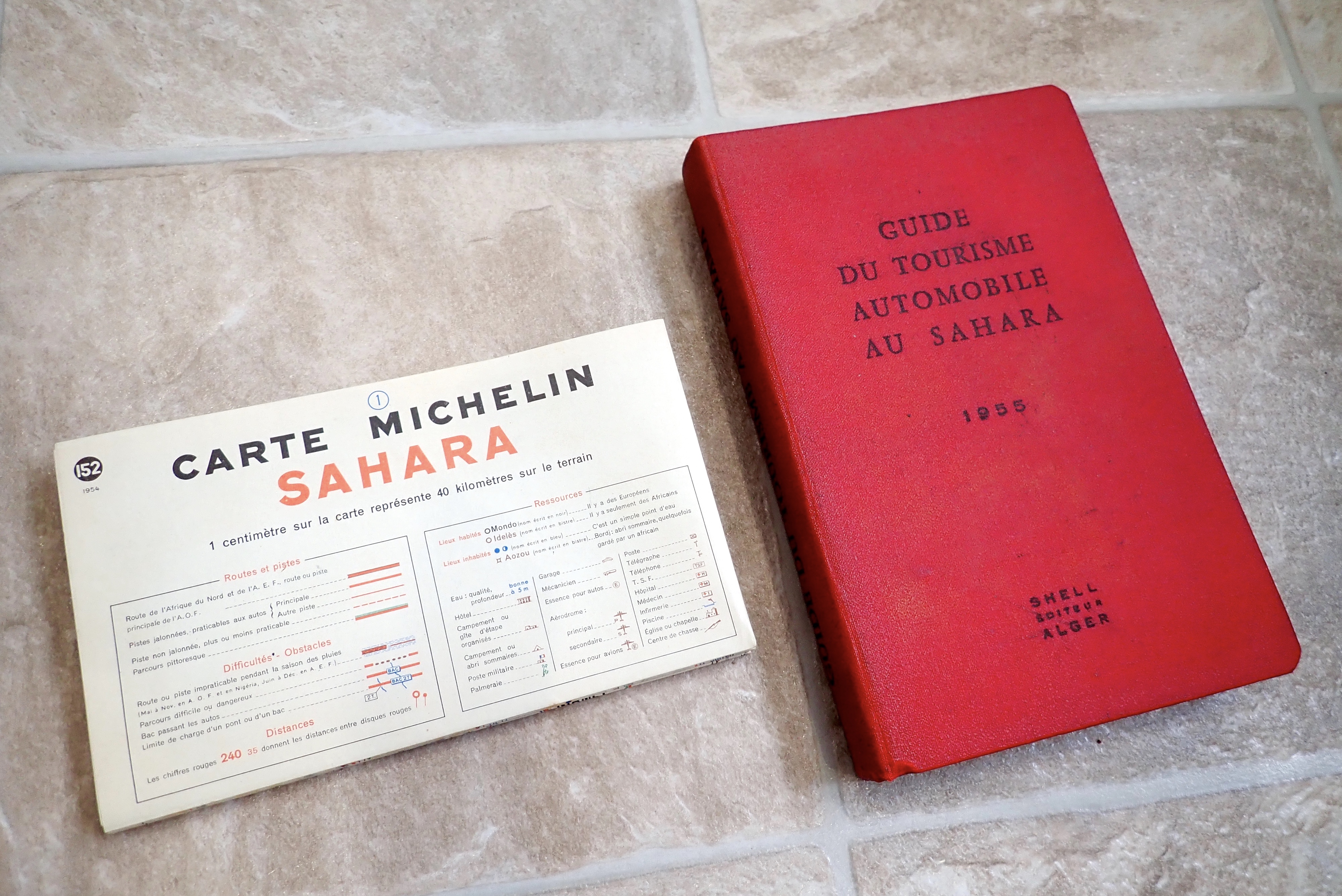
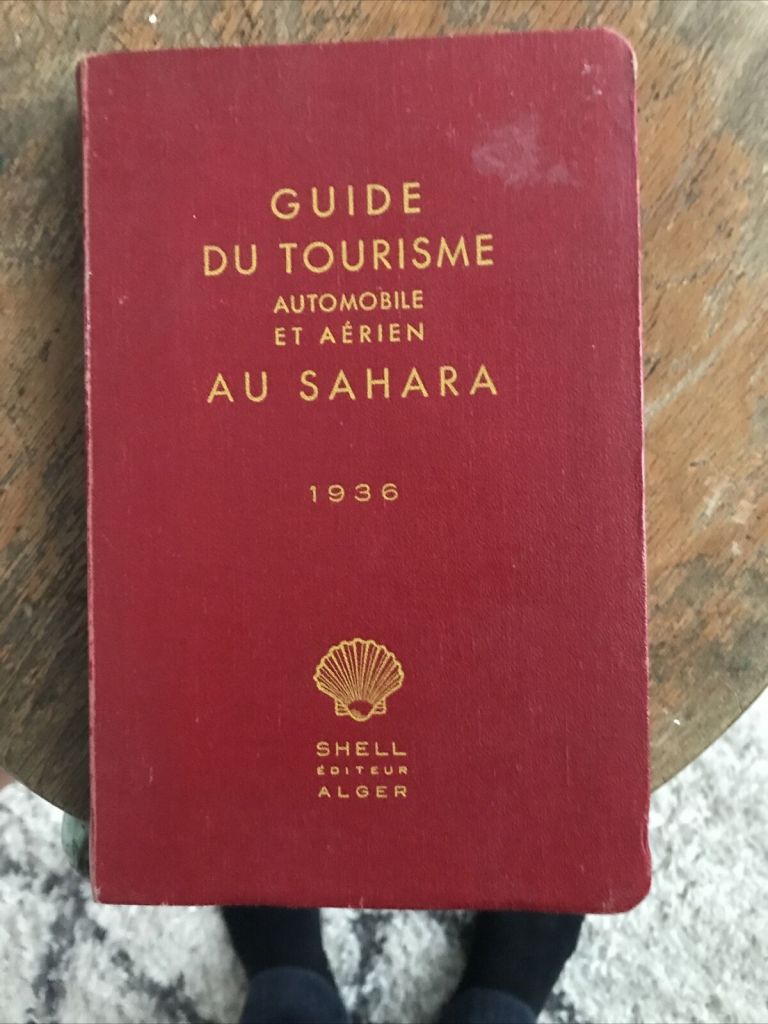
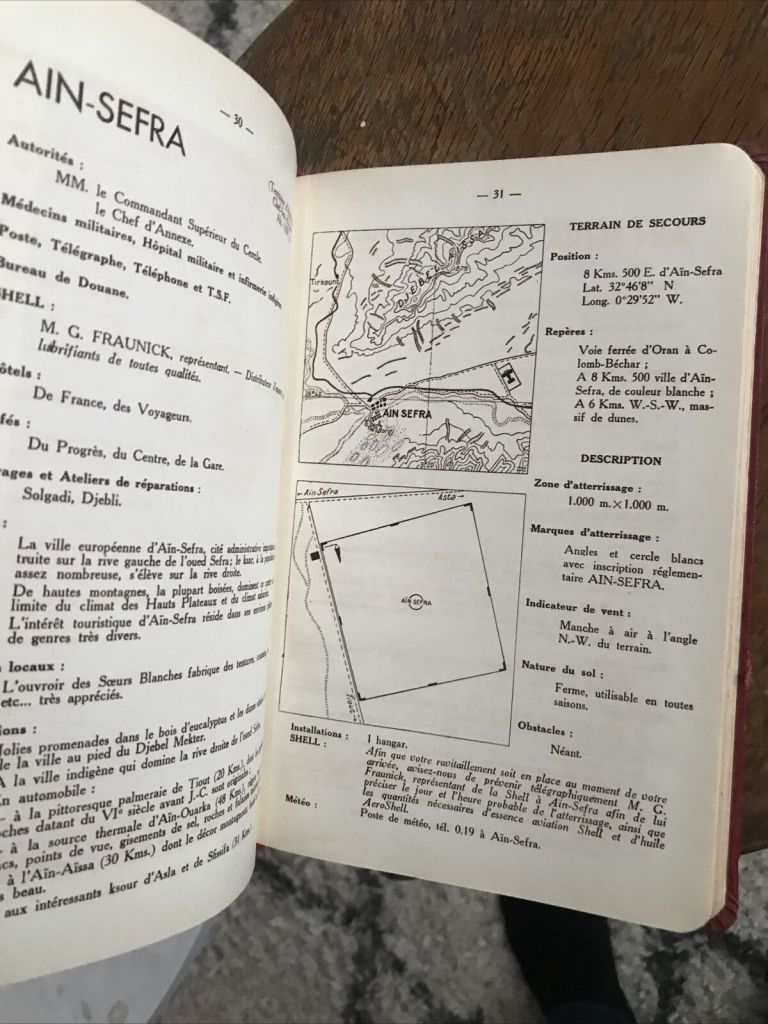
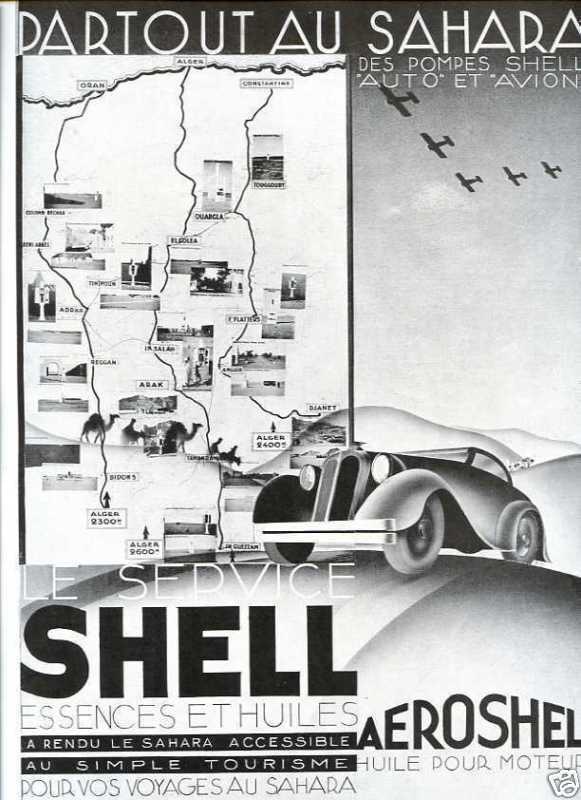
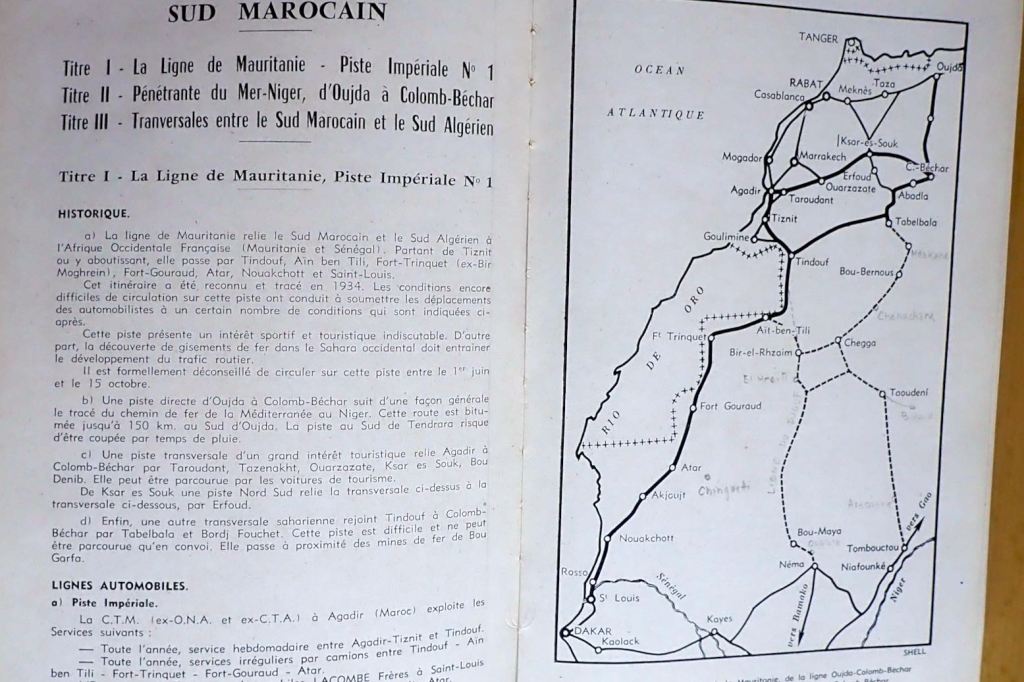
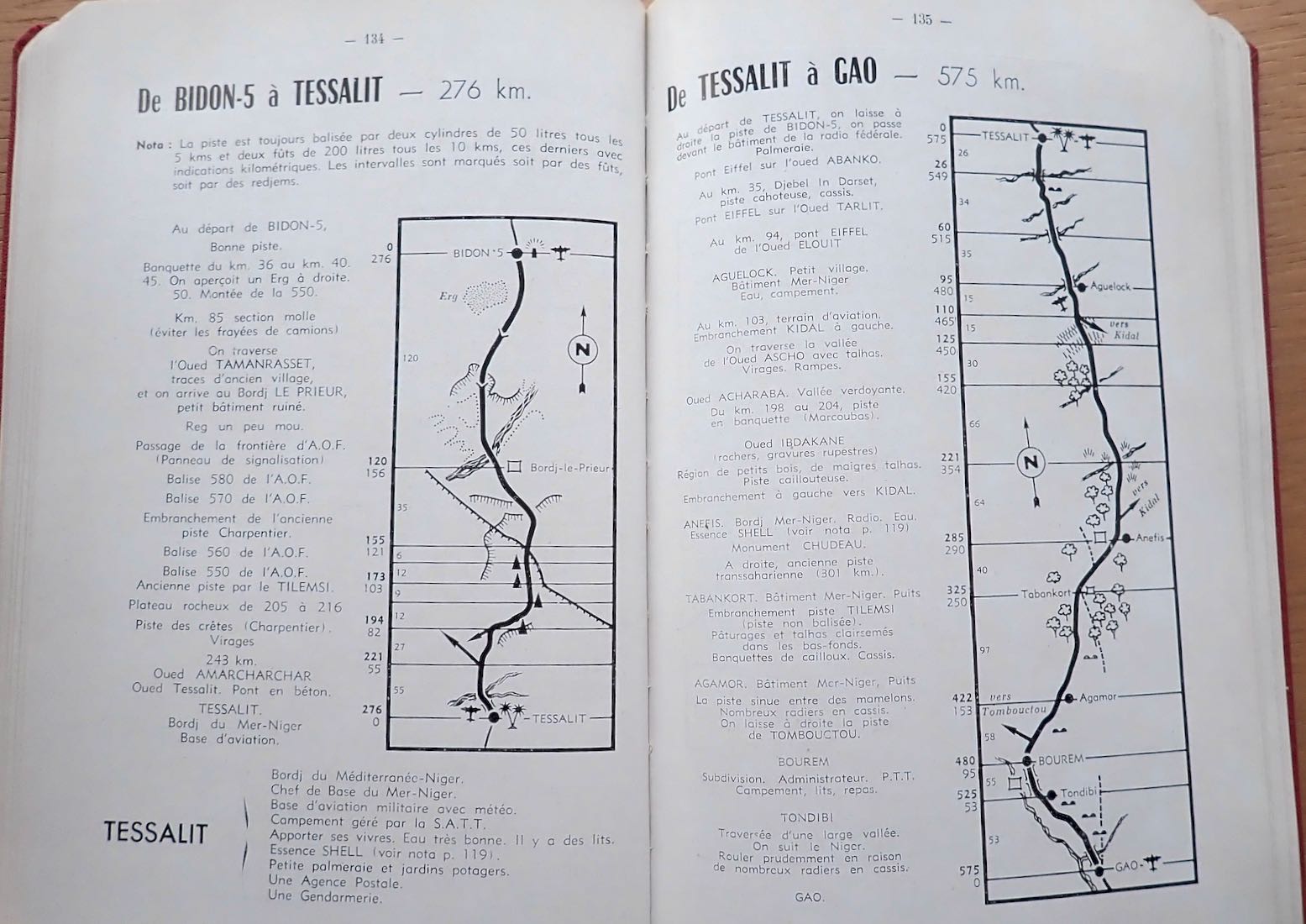
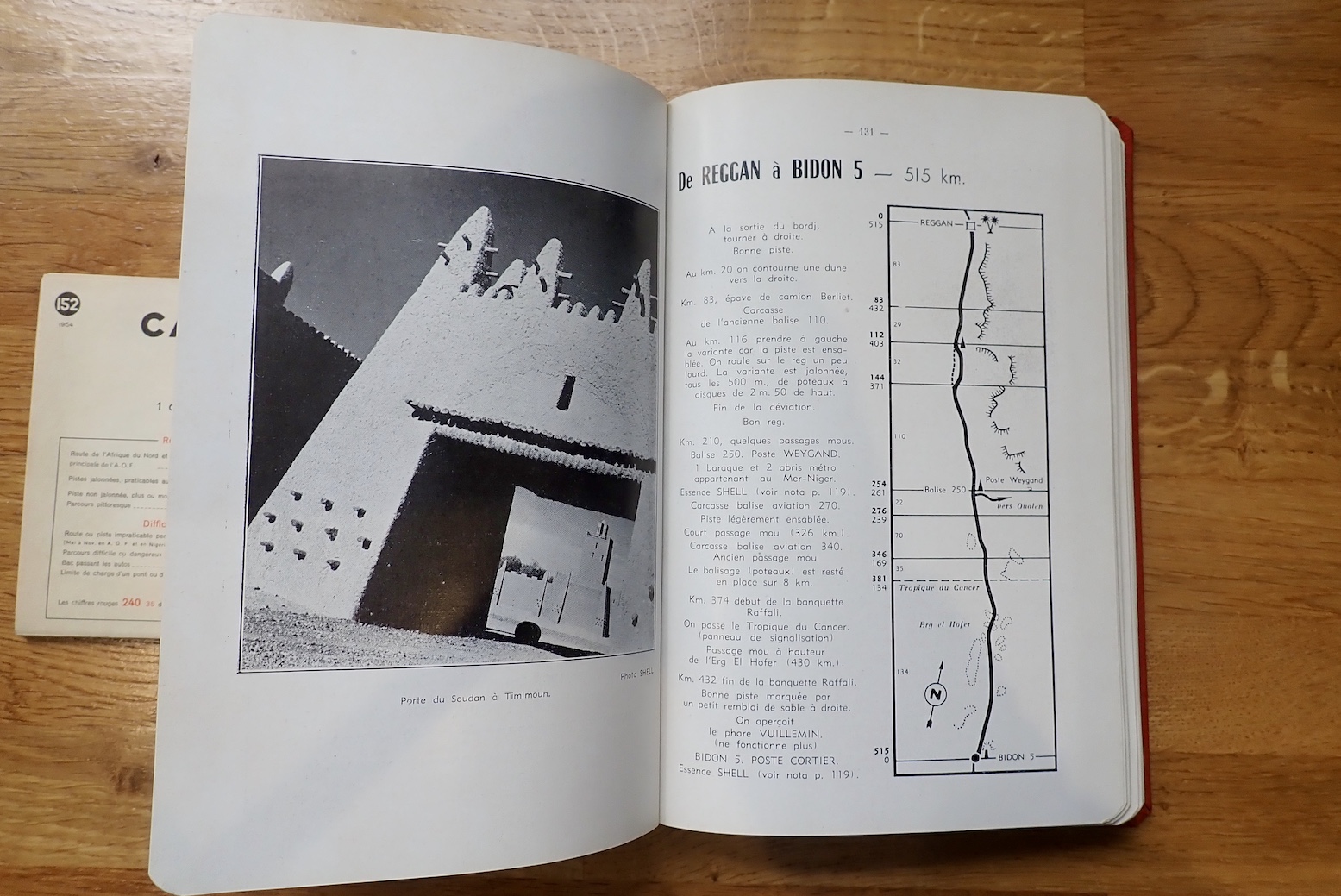
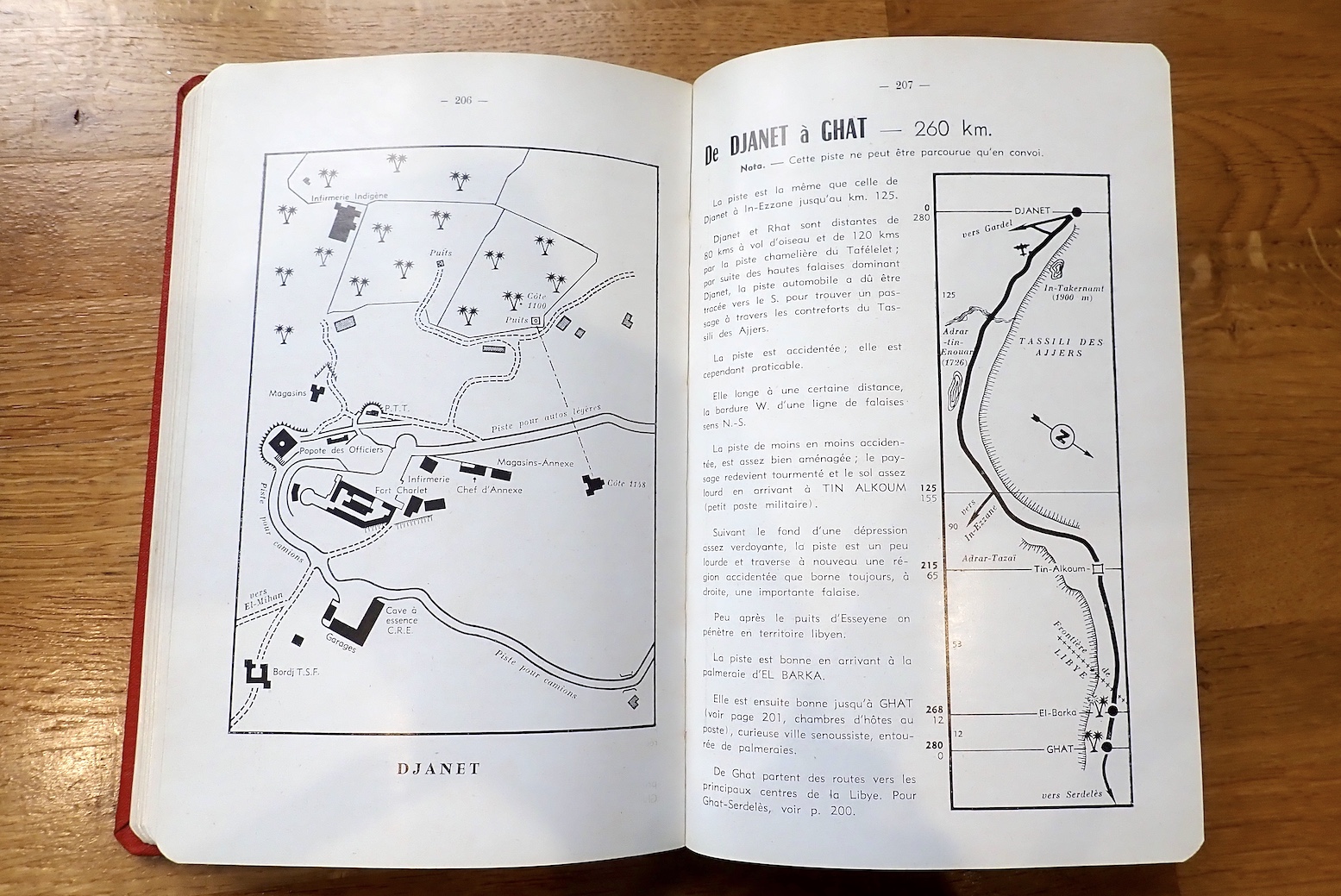
Just a couple of years before these colonies were dissolved and became the independent countries we know today, Shell released its fifth and final edition of the Guide du Tourisme Automobile au Sahara. The 345-page book is in French and there are still plenty around; mine cost me €25 from France, althpugh make sure you get the lovely map inside the back cover sleeve. Originally published way back in 1934 (link to pdf) and just seven years after Shell started distributing fuel in Algeria, it must have been the first guidebook of its kind, preceding my own Sahara Overland by nearly seven decades.
The three pre-war editions (1934-5 pdf; 1936 below and 1938) were thinner books but also covered aerial tourism: fuel and landing strip information. Perhaps back then private planes were still seen as comparable or superior to with cars for getting to remote places. By the mid-50s commercial flying had taken off across the world, and flying around the desert was no longer a thing, unless you were very rich.
1936 2nd aero edition
Even if it was nothing more than fully funded exercise in self-promotion, it’s still odd that an Anglo-Dutch oil company produced such a presumably prestigious project to showcase an important French colony, especially as it had the feel of an official handbook. In the 1930s Shell became well known for their illustrated guidebooks to Britain; perhaps publishing was not a thing that interested French oil companies like Total and Elf. Only Shell produced guidebooks, although road mapswere widely branded by some of the oil companies of the era.
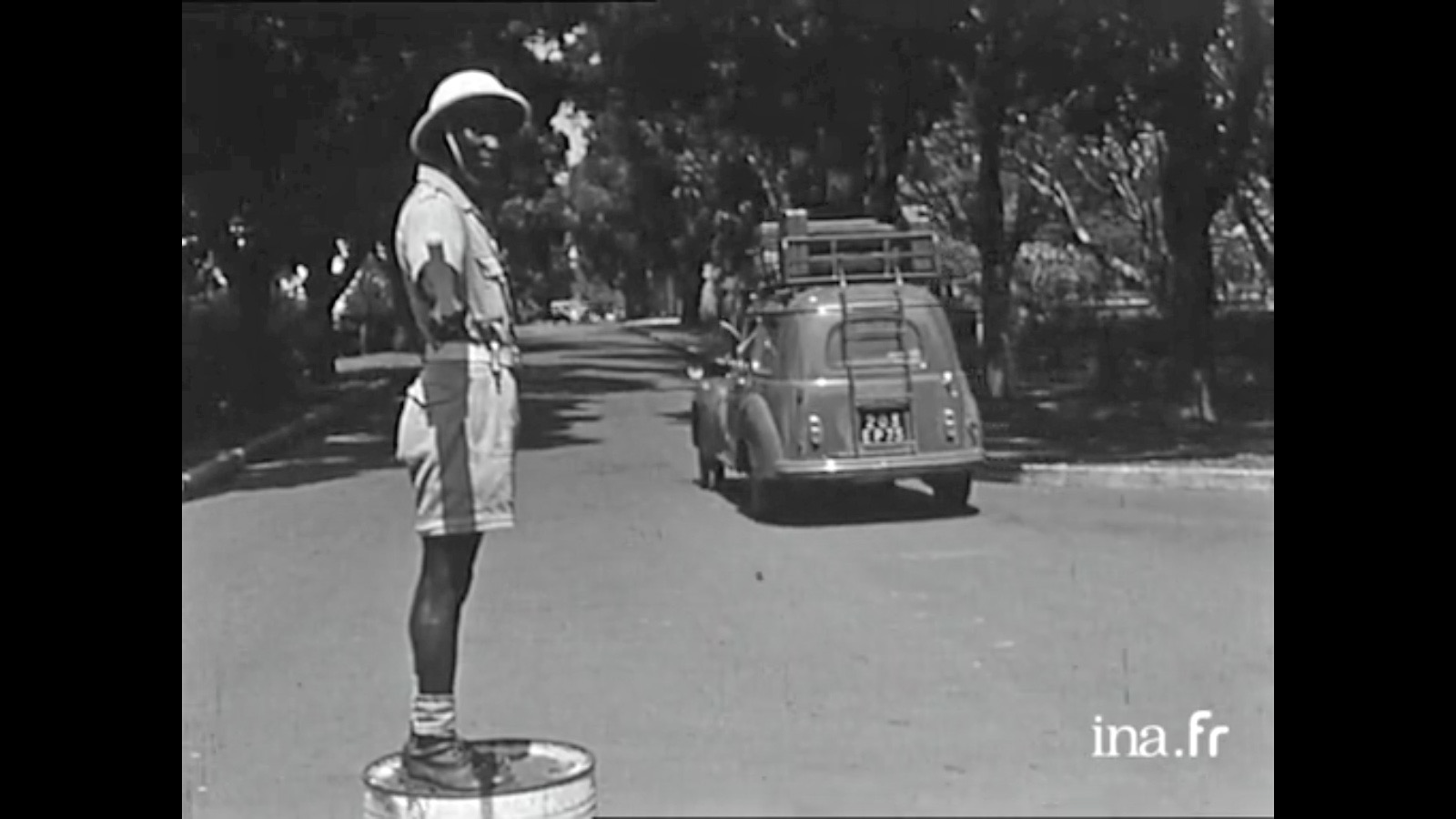
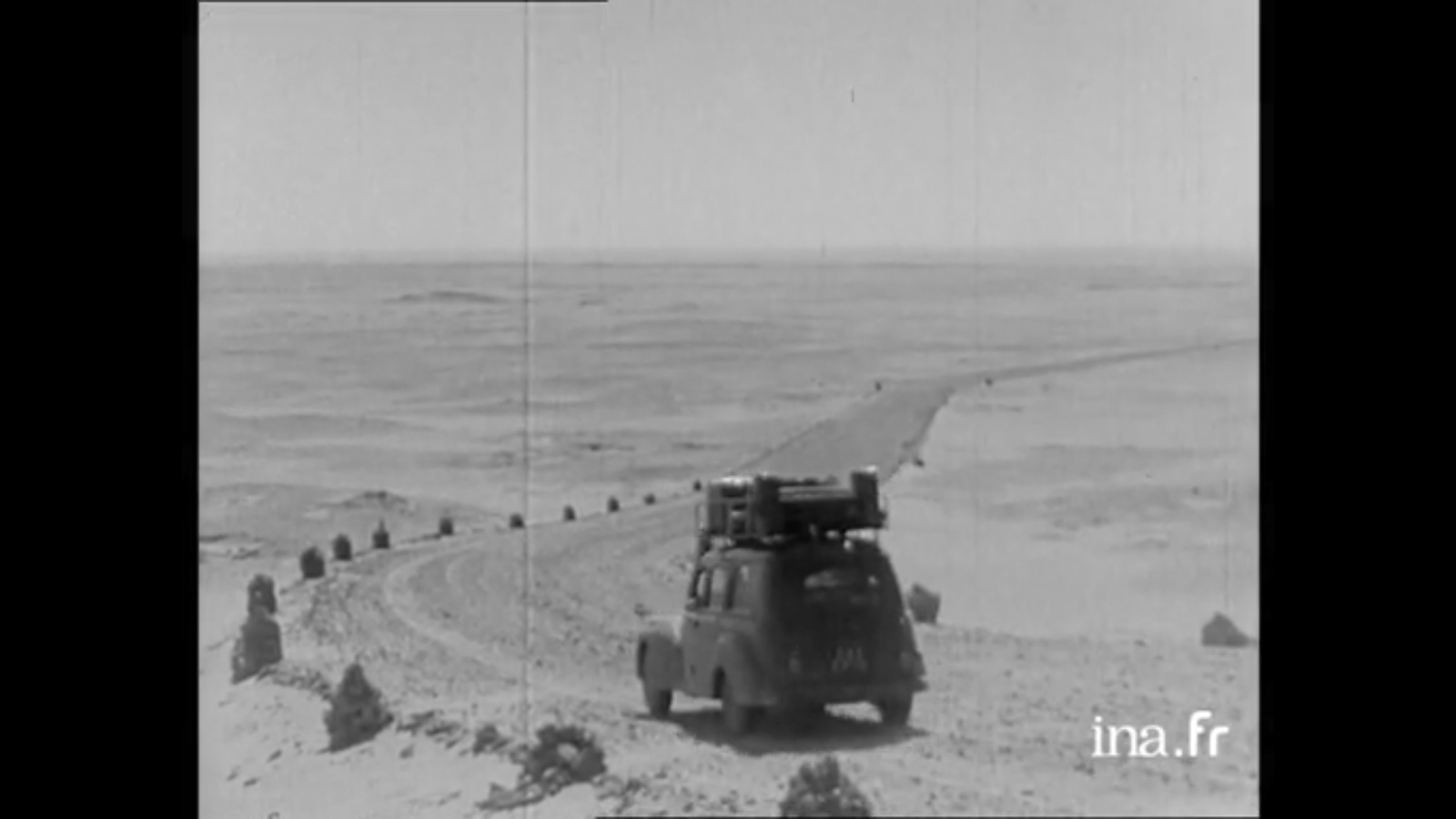
You can imagine the three French women (France Degand, Janine Delbert and Michèle Cancre d’Orgeix) had a copy of a Shell in the glovebox of their Peugeot 206 wagon before setting out their double crossing of the Sahara in 1956 (video below).
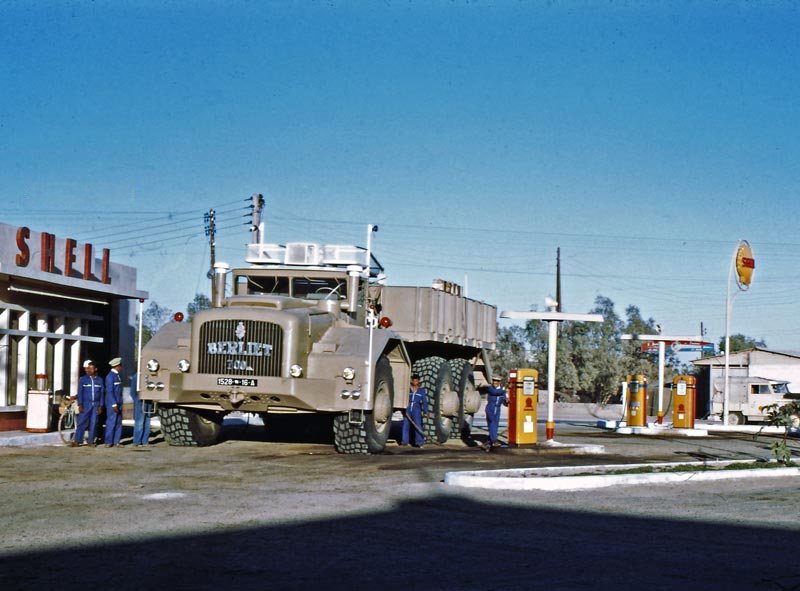
The 1950s were the apogée of the colonial era when, even in the Belgian Congo, trains ran through the jungle on time and roads drivable by regular cars snaked over the equatorial escarpments. In the Sahara pistes were well maintained, regularly patrolled and for the most part, well marked too. The Sahara still had its rough edges and expansive voids, but had been effectively tamed by the colonial administration, including a desert-wide network of Shell stations: ‘In the Sahara, as in your garage‘ the guidebook boasts. It was the vestiges of this investment in desert infrastructure which we inherited in the 1970s and 80s by which time the whole region had seen 15-20 years of independent rule. The Shell emblem was long gone, replaced by nationalised fuel companies distributing the commodity with had become integral with global progress and development.
The Guidebook
Until 1939… the book starts… conditions for the harmonious development of winter tourism were coming together in the Sahara. Excellent temperatures, admirable sites, distant horizons, interesting populations, verdant palmeries [and] distinctive architecture: behold the country.
It then goes on to introduce the Sahara, using a flowery style which I’ve seen in more recent French guides to the Sahara. The book doesn’t miss a chance to include an exposition of the magnificent French achievements in the Sahara since 1919.
A year after this edition was published, after decades of searching (during which time French explorer and geologist Conrad Killian mysteriously met his death) prospectors finally struck oil in Edjeleh near In Amenas, and a short time later in Hassi Messaoud. By the end of the next decade Algeria became a major oil producer in North Africa.
It’s interesting to see how the content of the guidebook conforms with a modern day equivalent: a geographical breakdown of the desert’s geology, relief and topography, river courses and wells; ethnicities add up to either Arab or Berber, with pre-colonial history leading to exploration, colonisation and pacification right up to the period of the automobile and the aeroplane.
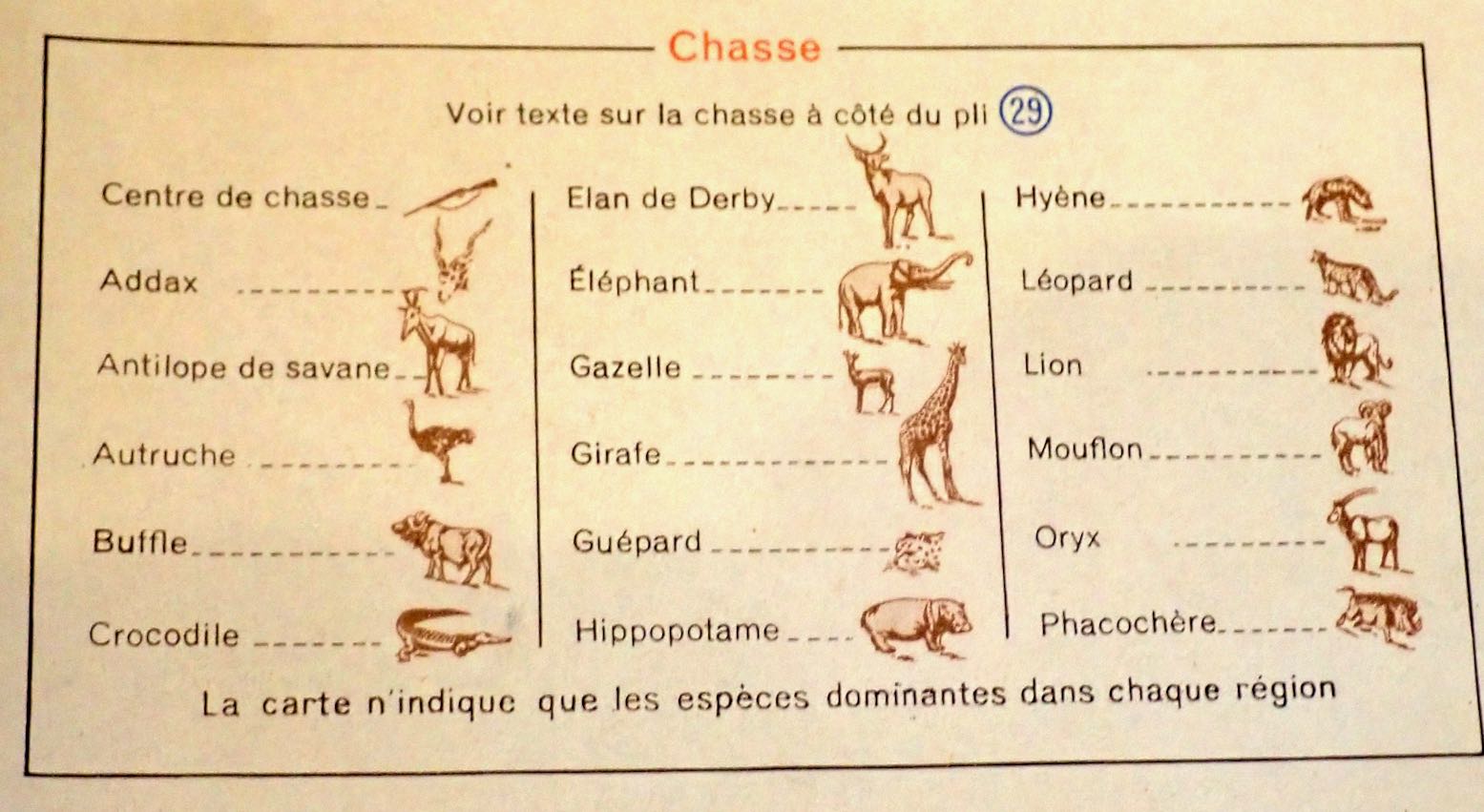
Short sections cover local artisans and the souvenirs they made, a bibliography, recreation and sports and not least hunting for hides, heads, horns and ivory. Happy days!
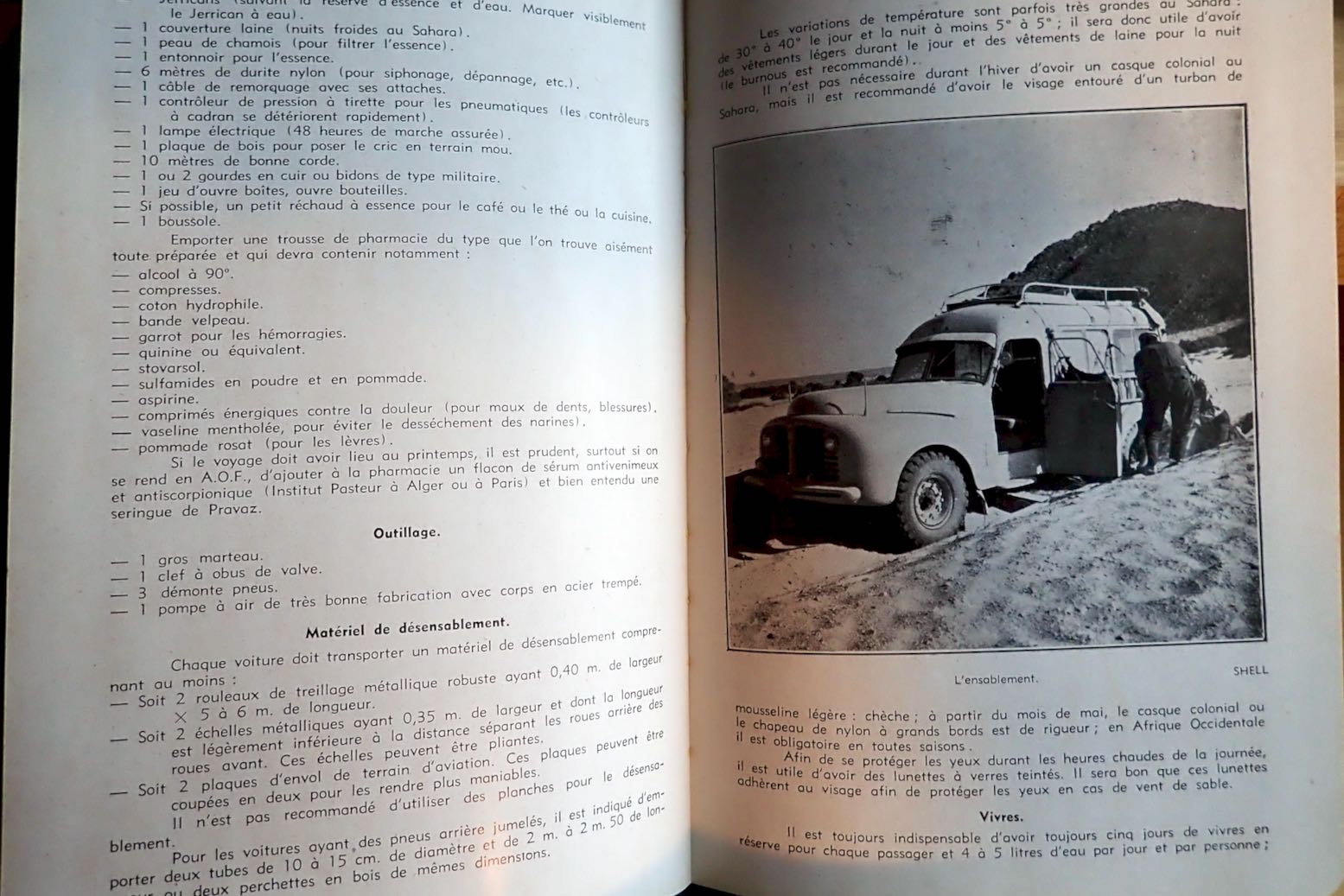
As for vehicle choice, the guide advised not to worry about using touring cars, by which I think then meant a regular RWD sedan or estate, like the Peugeot 206, above. Rightly it said the 4x4s of the time: Land Rover, Jeep, Willys and the near identical Delahaye V.L.R were significantly less comfortable.
It’s worth recalling that many regular cars of that era had bigger wheels and better ground clearance – garde du sol – ‘an important factor in vehicle choice‘… ‘Consider fitting bigger tyres, but not too much or you’ll stress the transmission and steering.’ ‘Power to weight is also a factor for tackling soft passages.’ …’avoid dual rear wheels…’ It’s interesting to see all these strategies were well known, even back then. It does however list a long and very heavy list of spare parts. Durability must be one thing that’s improved over the decades. In a way today’s SUVs have similar characteristics, but of course no one would consider taking one somewhere as outlandish as the Sahara, not least because 4x4s have improved to become much less utilitarian.
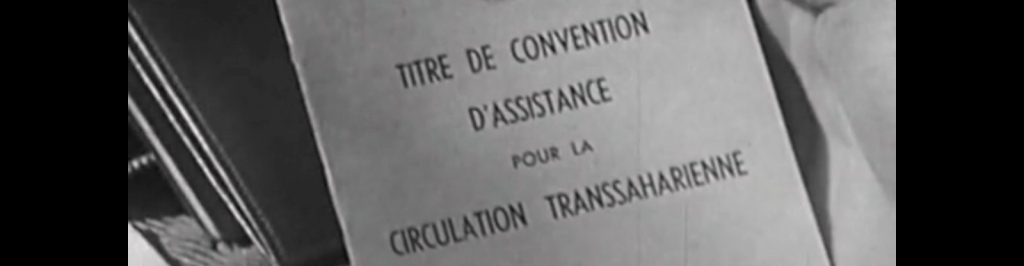
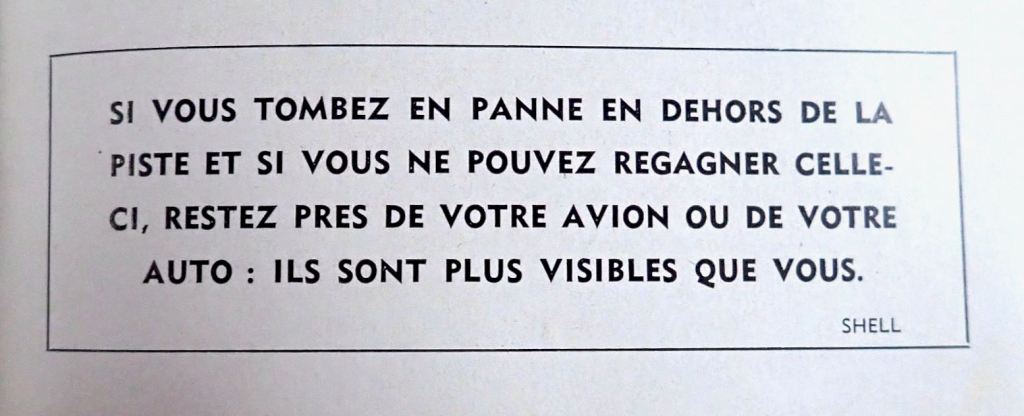
Code Saharien de la Route In that time of French control a detailed list of safety protocols needed to be followed before before setting off along a piste. ‘Pour votre securite‘ as they used to say to us in Algeria where the system endured into the 1980s (but without any actual back-up or support; you were on your own). The Code was a check on whether you were equipped to tackle what lay ahead, followed by the requirement to check on on arrival. If you followed the rules and were overdue, they’d come and look for you. You also needed some sort of contract with a local recovery service in case of a breakdown. The last 40 pages of the book detail the full list of these requirements for each of the three territories.
You might be able to see someone pencilled in additional points along the hyper-remote Ligne du Djouf to Nema.
The Itineraries
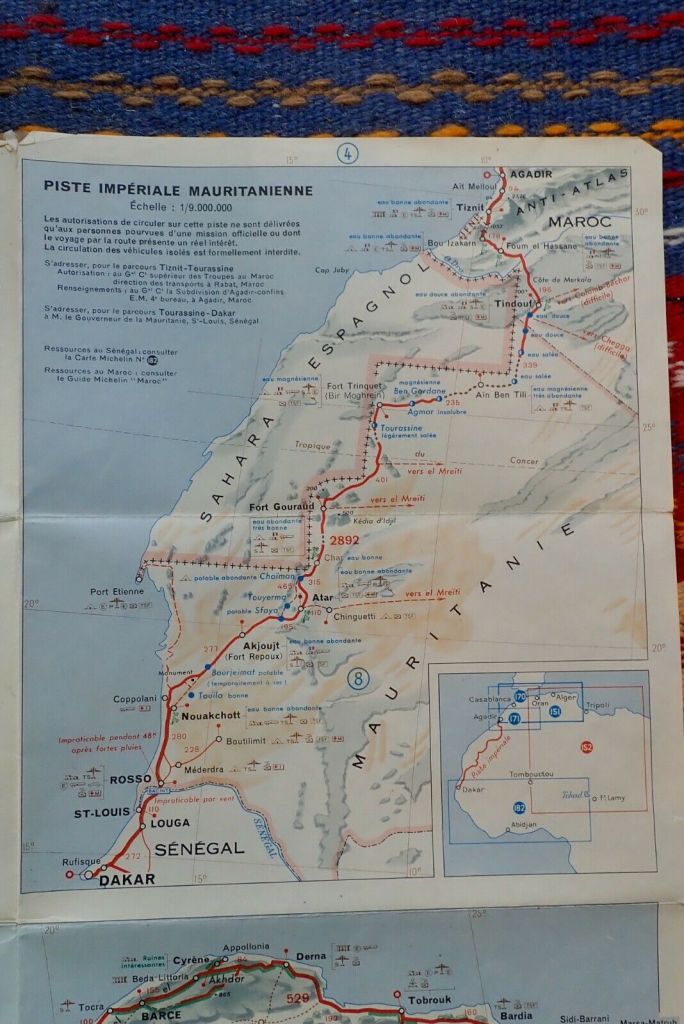
The route guide breaks down the Sahara into four sections: southern Morocco along tracks which are now mostly roads. Then came the grandly named Imperial Tracks, starting with N°1: the Mauritania Line (above) which was recently reopened by Algeria. Back then, this was the direct route through all-French territory from Tiznit in Morocco or Colomb Bechar in Algeria, to St Louis or Dakar which circumvented the Spanish Rio de Oro colony on the Atlantic coast. Closed between June and mid-October, this was also the ‘Forgotten Path‘ which David Newman followed in his Ford Corsair touring car in 1959, just as the territories were breaking up.
The route description for the 2550km from Tiznit to St Louis goes on for 15 pages including a few photos and plain maps. It left Moroccan territory south of today’s Foum el Hassan, a small town between Akka and Assa on what I call the Desert Highway in the Morocco guide. I noted a passing reference to ‘Merkala‘; an escarpment watchtower marking the border between Morocco and Algeria which still survives as the enigmatic ‘Tour de Merkala’ on the Michelin 741 map. In Tindouf we learn that prior to the French establishing a garrison in 1934, the settlement, had been abandoned for three decades due to persistent raids by the nomadic Reguibat. The Berbers must have welcomed a bit of law and order. From here the lonesome track led to Ait ben Tili on the Spanish Sahara (today’s PFZ) border, with balises (marker posts) every 5km, but plenty of tole ondulee: ‘corrugated iron’ or washboard/corrugations to you and me. Like today, there’s nothing much for the traveller at AbT. Back then wild game added up to gazelles and long-gone ostriches. Once you got to Fort Trinquet (Bir Mogrein) you could add moufflon and leopards to that list.
From here it was 405km south to Fort Gouraud (Fderik) and the piste was poorly marked, sandy and rutted. The old route ran for another 310km from Fort Gouraud via Char fort to Atar didn’t get any less sandy, and the iron ore railway was still another 8 years away. Maybe a touring car, even with good clearance, wasn’t such a good idea after all.
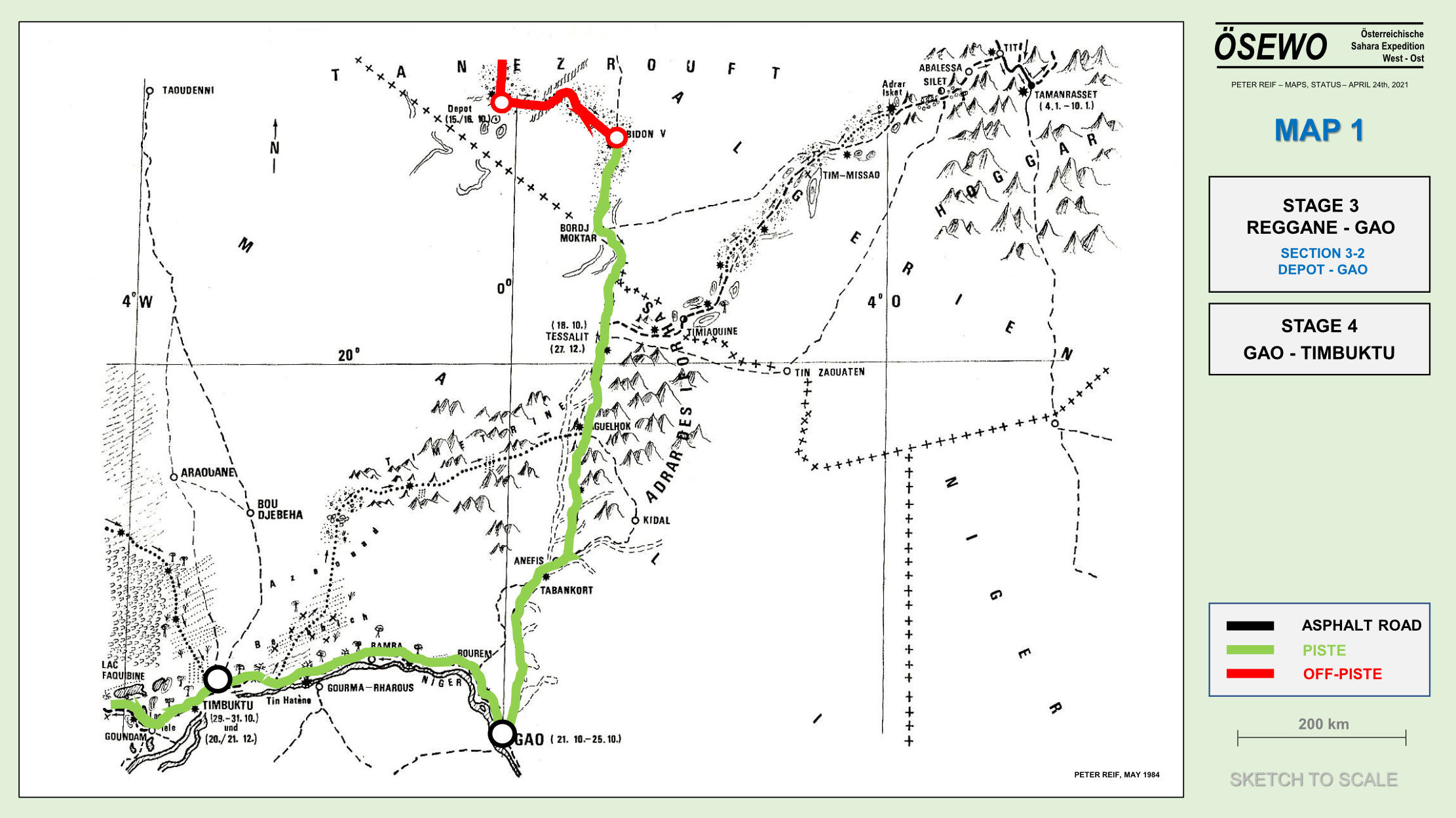
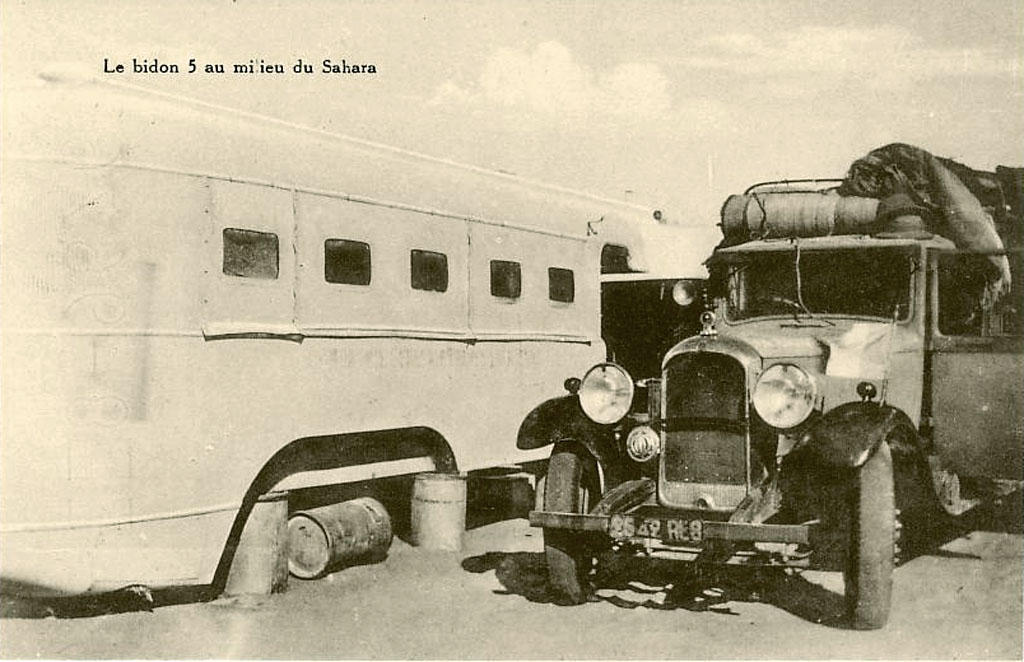
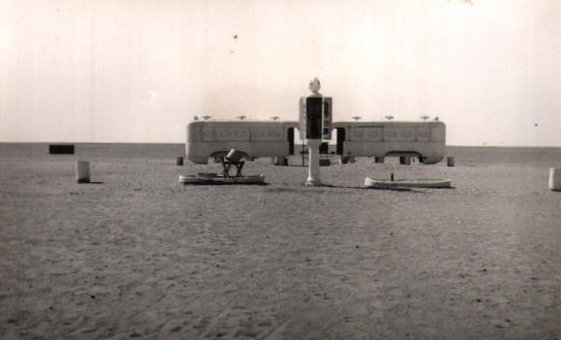
Imperial Track N°2 was the Tanezrouft Line from Colomb-Bechar to Gao on the Niger river. This was the route chosen by the first cars to cross the Sahara in the early 1920s. It’s interesting to see how quickly the commercial drive towards tourism follows what was once terra incognita. You could say we’re seeing the same today in space; something which would have been hard to imagine in the middle of the Apollo programme. It was on this desolate route that Bidon V (‘Oil drum 5’, below) made a name for itself as a desolate travellers way-station between Reggane and Tessalit in present day Mali. At one point the lighthouse shone into the night, planes could land for a refuel and a couple of bus bodies where parked up on oil drums to provide lodgings for passengers the Mer-Niger bus route.
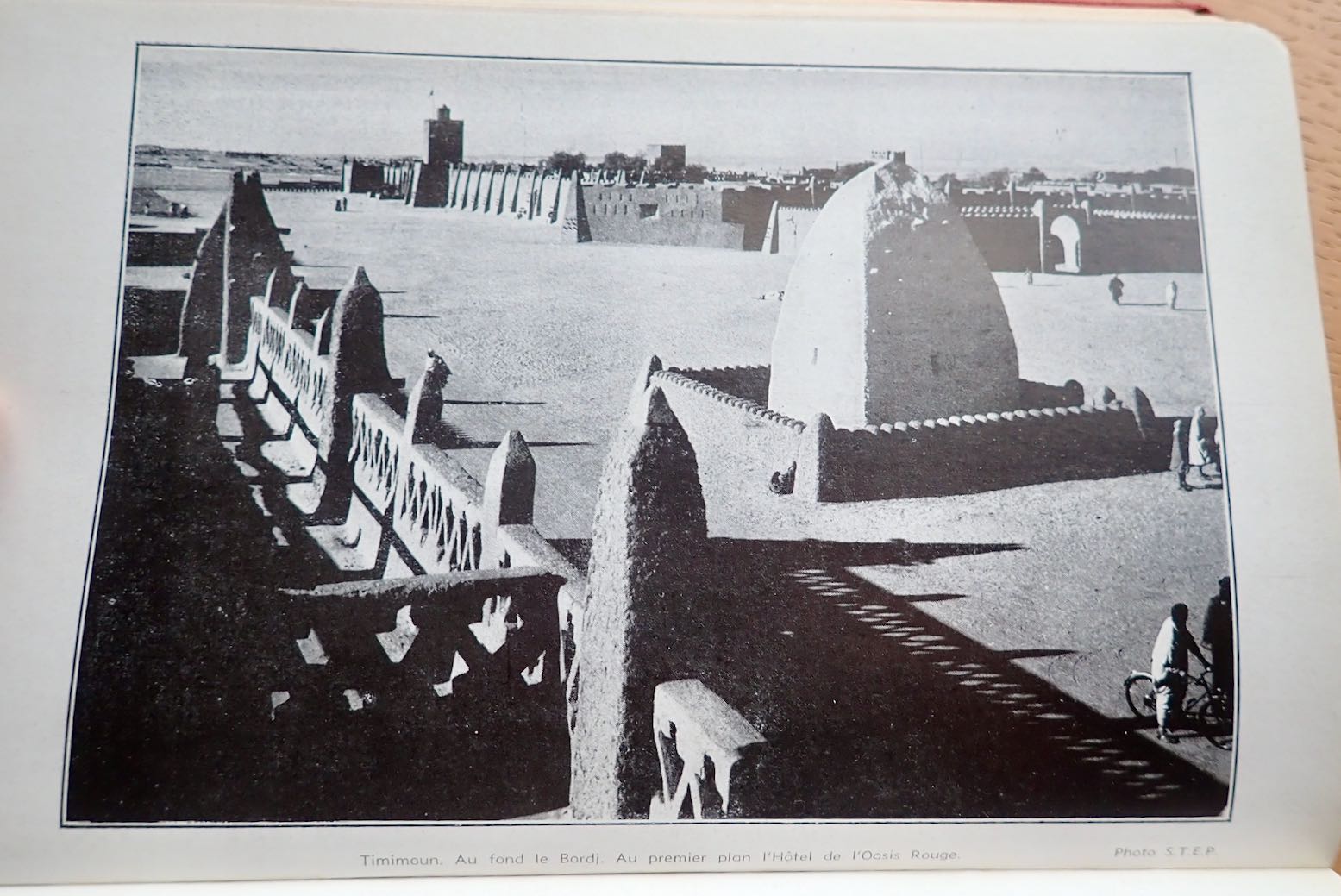
Timimoun
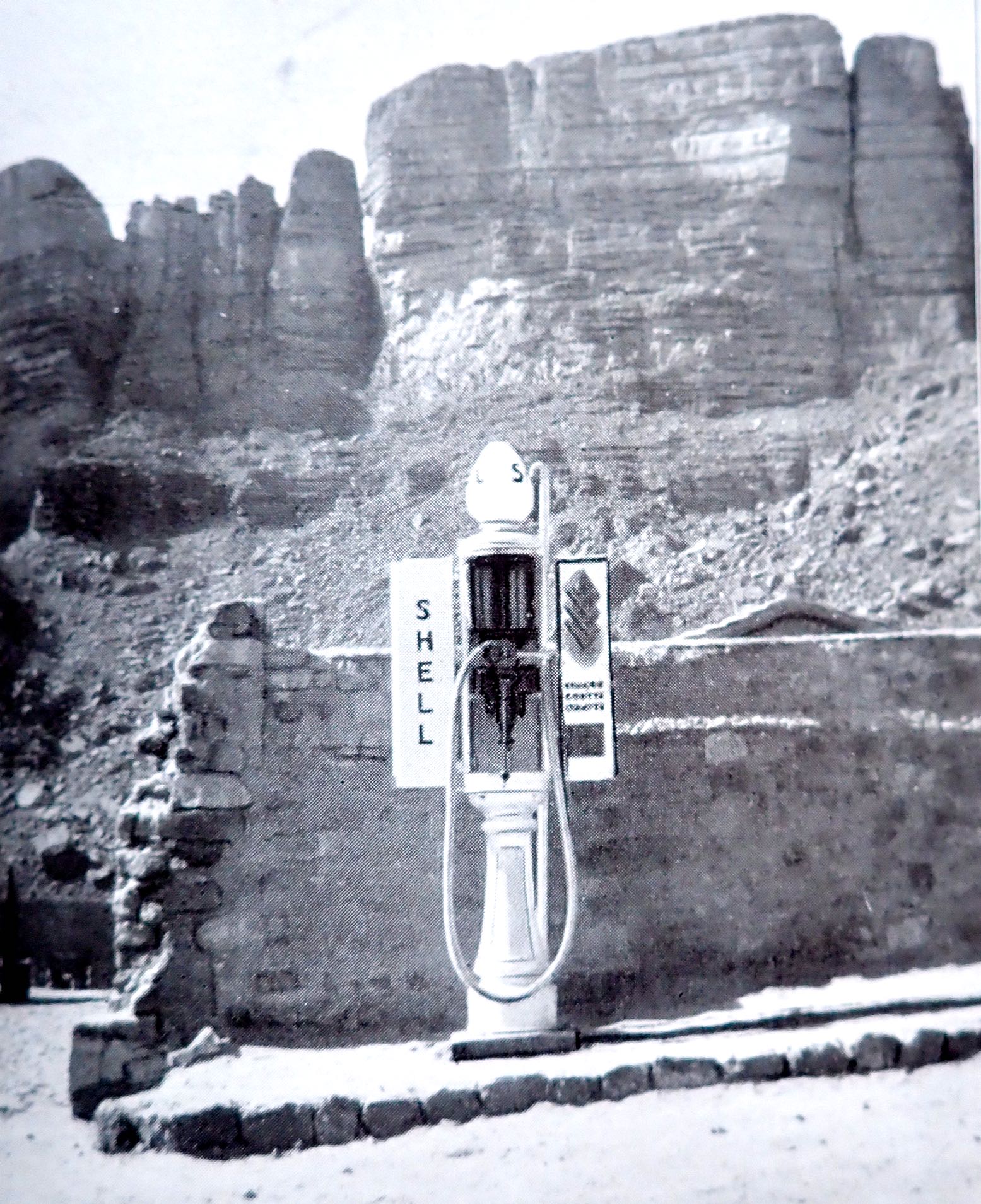
The book continues with other well known routes in the Algerian Sahara, though not exactly what we have today. Imperial Route 3; the Hoggar Line – today’s Trans Sahara Highway – ran further east between El Golea to In Salah, and again on to the Arak Gorge where a friendly Shell bowser (left) stood by at your service.
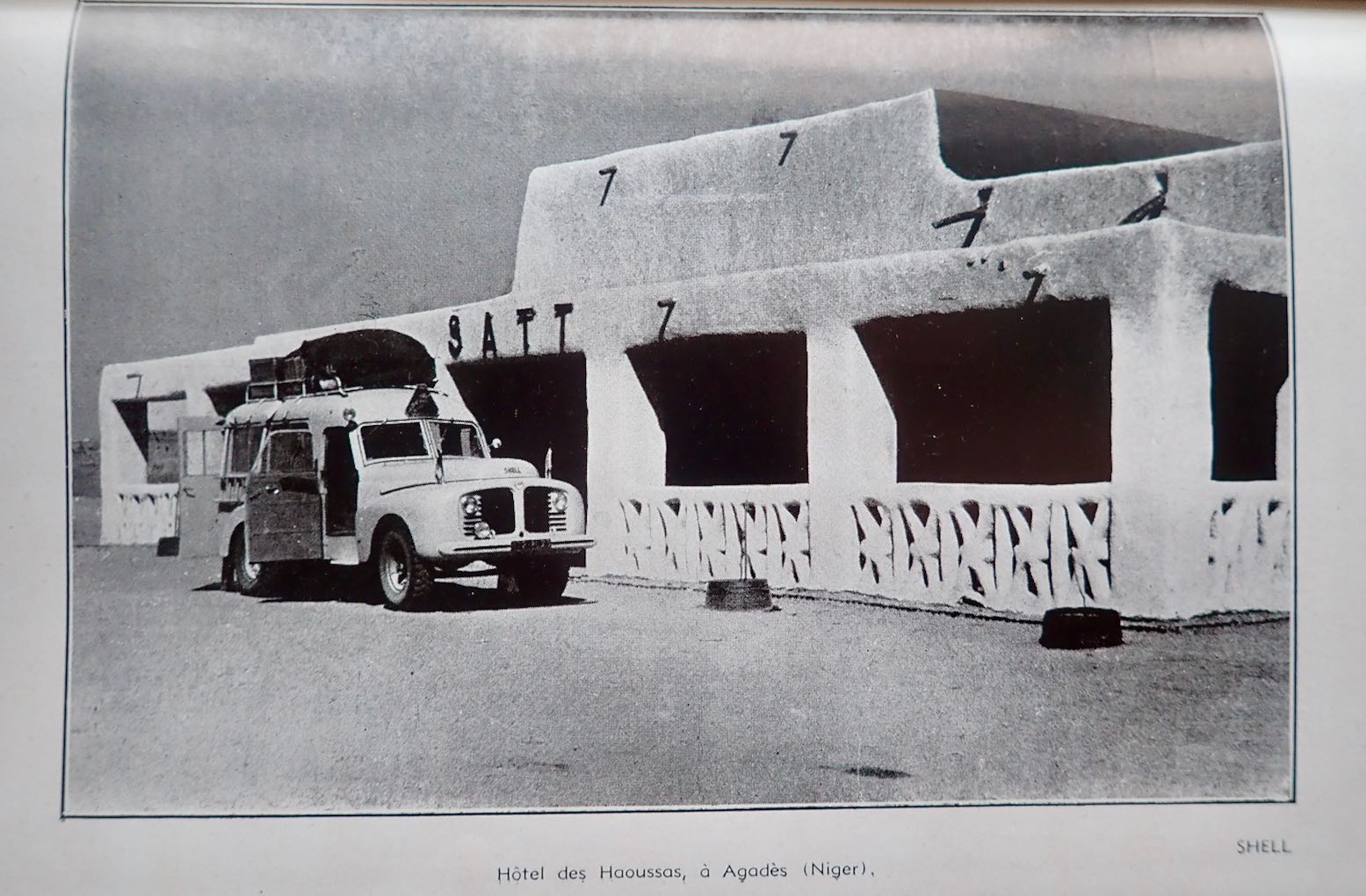
From Tamanrasset, excursions up to Assekrem along today’s route were already established (fold out map included), and the now paved track to the border via Laouni was the same, but once in AOF, the track went straight to Agadez via In Abangarit to the south. It was on this route that the drama vividly described in Trek, met its climax. There was no Arlit until uranium was discovered there about 15 years later. Zinder, close to the Nigerian border, was the end of that road.
The Ajjer and Tibesti Line was Imperial Route 4: from Biskra all the way to Fort Lamy (N’djemana) in Chad. From Djanet the route dropped down to Bilma, the long established administrative capital of the eastern Tenere, before you back-tracked north to Seguedine to head east for Zouar, Faya and even Fada before turning down to Abeche and Fort Lamy. This was the route which the lavishly equipped Berliet expeditions of 1960 sought to open up for trade, just as France’s overt control over the Sahara slipped away.
Back then getting to Djanet meant dodging the Fadnoun Plateau (Tassili N’Ajjer). From Fort Flatters (today’s Bordj Omar Driss) you headed out over the sands southwest to Amguid, then southeast along the base of the plateau. Right up to the 1980s this was truck route to Djanet until they sealed the winding road over the Fadnoun which to this day still catches some truckers out.
If you could get to Fort Polignac (Illizi), a car route did actually cross the Fadnoun. You left Polignac to the east then either pitted yourself against the very sandy Imirhou gorge (left) , or all the way to Tarat fort on the Libyan border, before turning south to join today’s route at Dider. On bikes for Desert Riders in 2003 (the full movie is on YouTube), this was a tough but epic ride across the tumbled escarpments of the Tassili which took us two hard days. But the time we reached the final descent from the plateau at the Tin Taradjeli Pass, we couldn’t wait for the sands of the wide open Tenere.
From 1943 up to 1951 the French administered the Fezzan province of Libya and may have had had hopes of annexing it. But by the time this edition was published, growing calls for independence put an end to that idea. Meanwhile. the northern deserts of Chad remained as obscure and little visited as they are today.
The Map
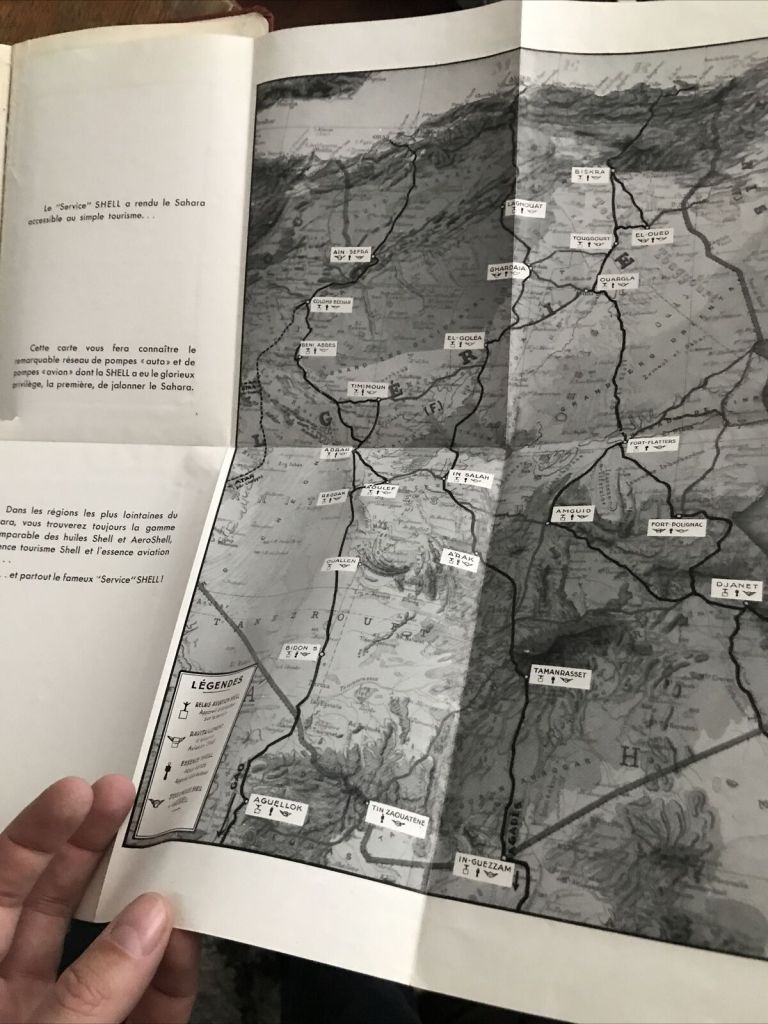
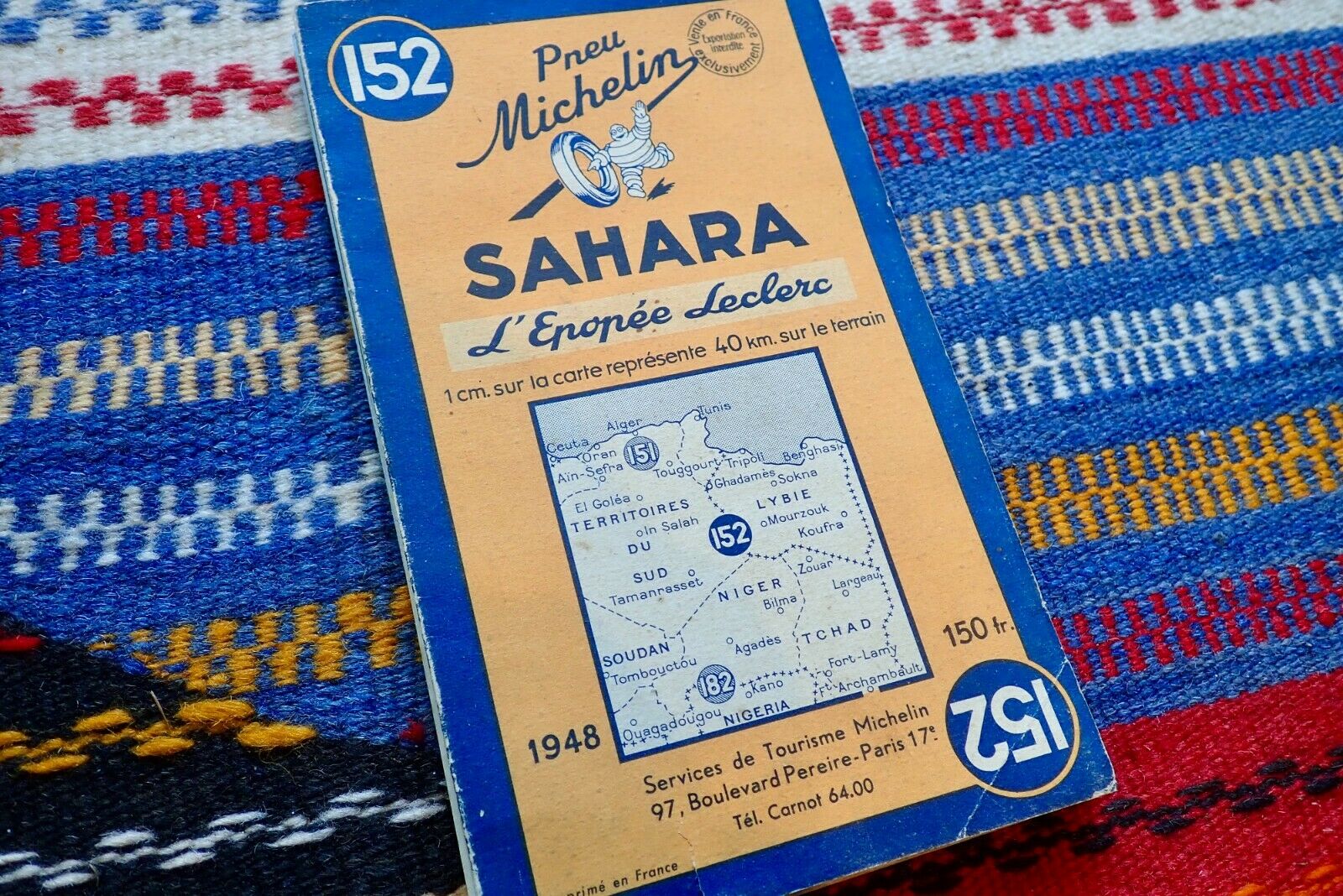
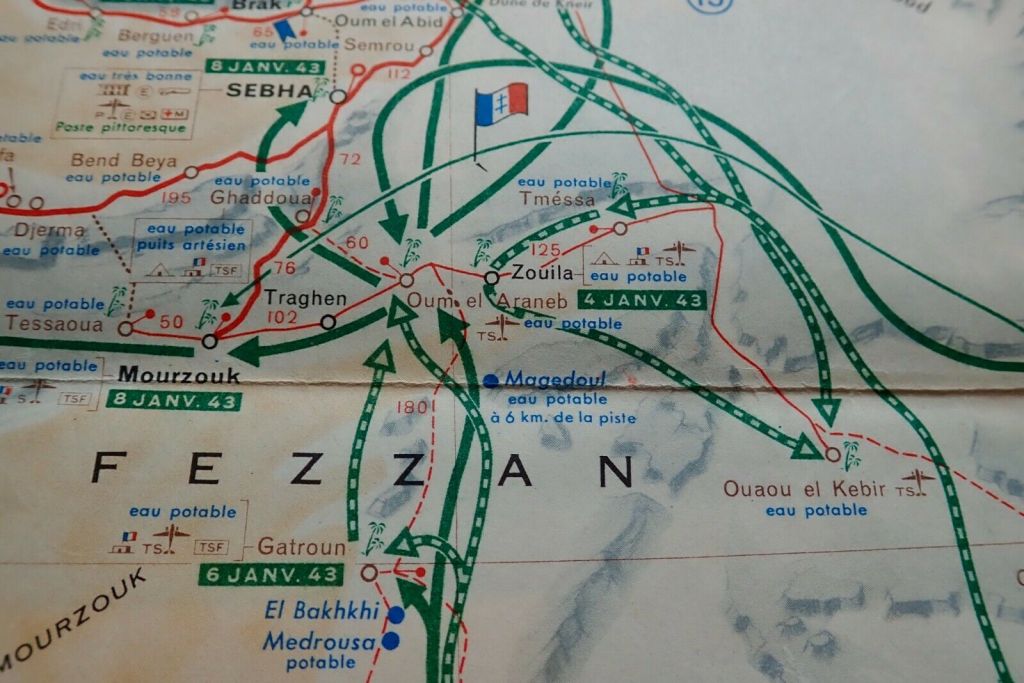
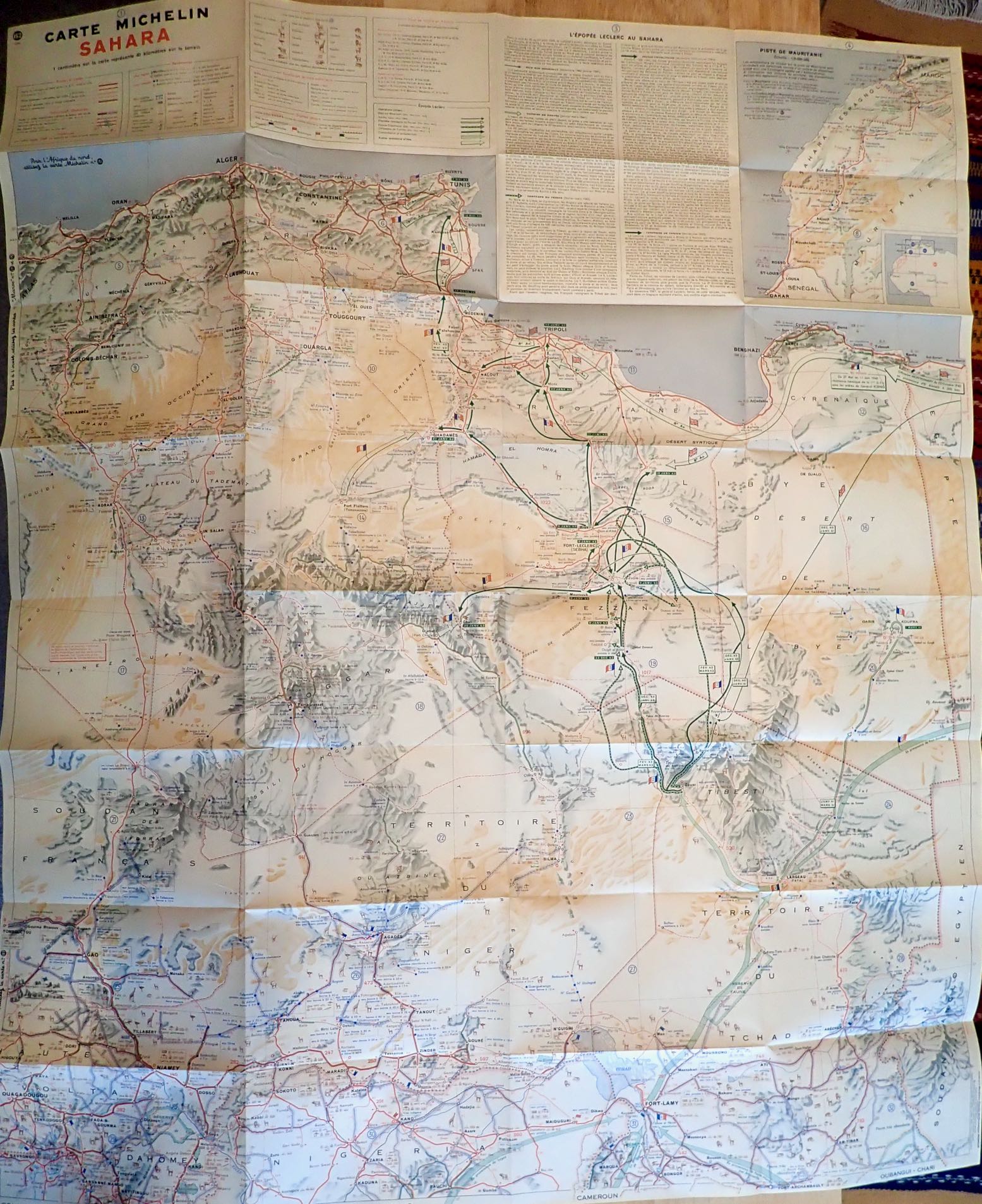
The Shell guide includes a 1:4m scale map folded into the back cover. It’s more or less Michelin’s 152 of 1948 which to some may alone be worth it the price of the guide. It doesn’t have the full coverage of the 153 North & West Africa which came later, but shows the routes described, and much more. This detail has long made the Michelin map indispensable in the Sahara, even if it is a rather skimpy navigation aid to setting off along one of the Imperial routes. The Mauritanian Line gets a 1:9m inset (below left) while in Libya (never a French territory) the map proudly shows the routes of General Leclerc’s desert campaign during WW2 which ended in the famous raid on Murzuk in co-ordination with the Long Range Desert Group.
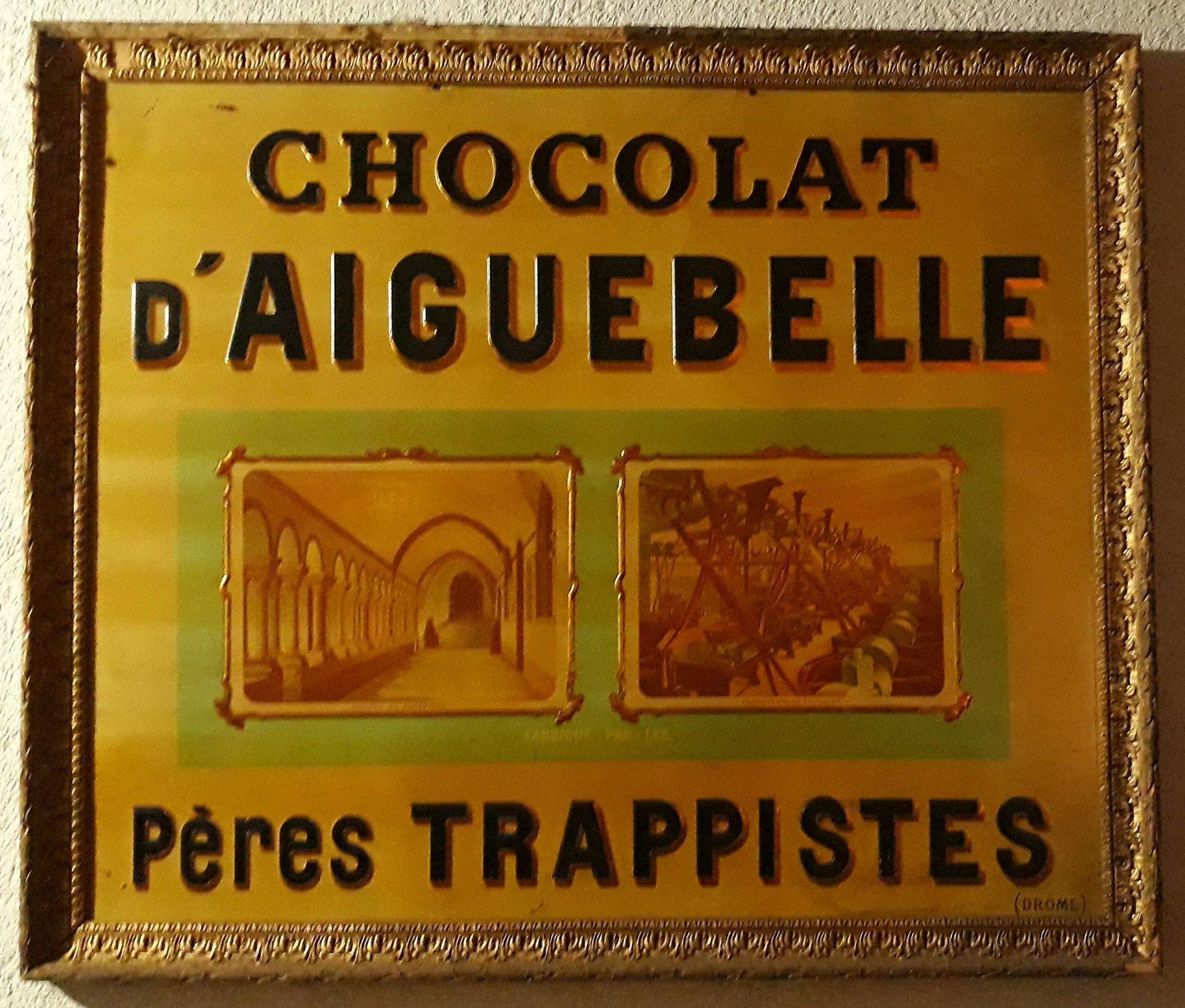
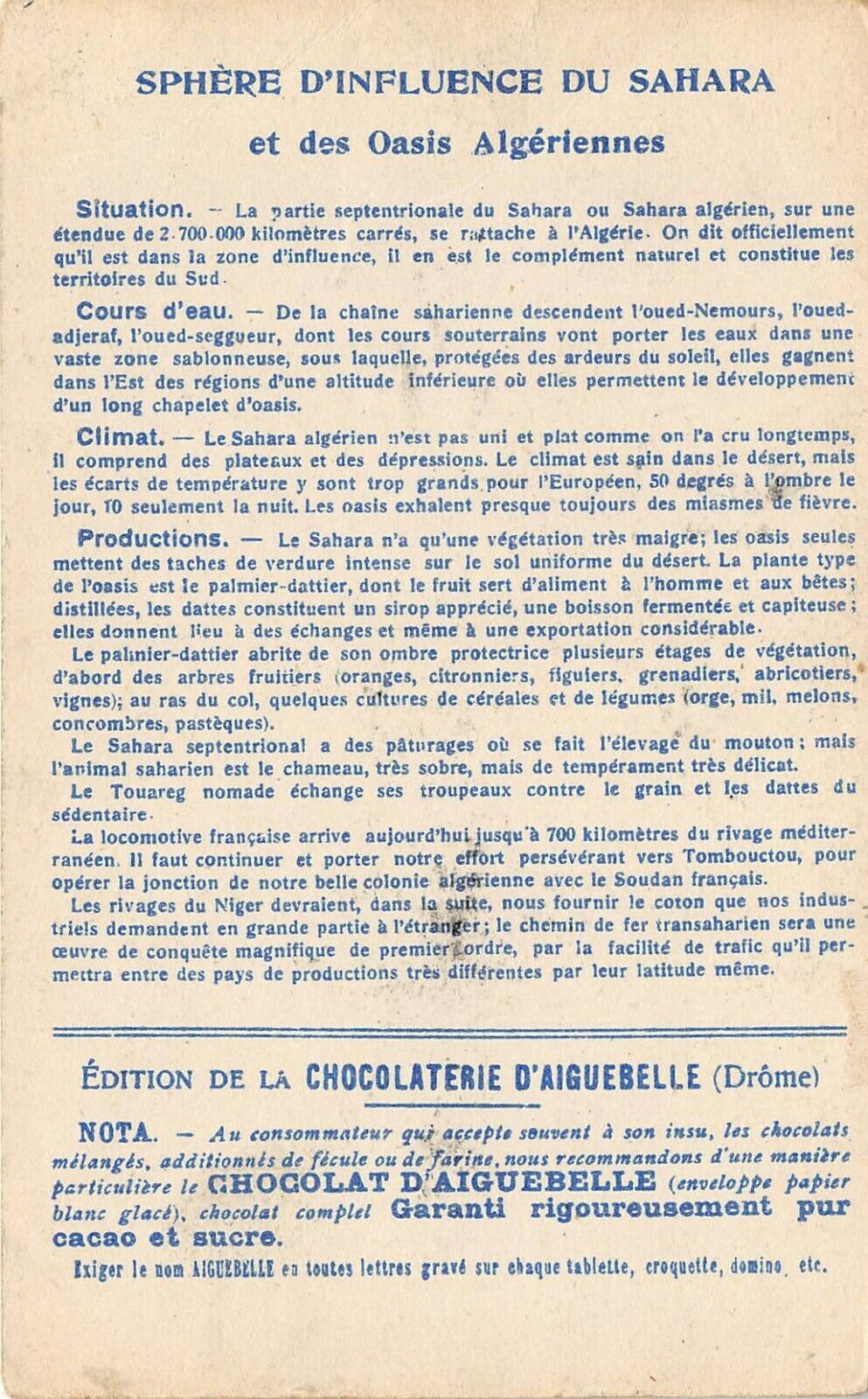
With the help of the internet I can affirm that the Chocolaterie Aiguebelle was founded by a medieval order of French Trappist monks in the mid 19th century to make a bit of money on the side. As explained here, they also got into producing advertising cards to entertain, educate and inform. It’s unclear whether these cards came with your chocolates or were distributed from hot air balloons. Probably the former, as that’s what drove me to collect inducements in the 60s and 70. You”l find loads of Chocolaterie Aiguebelle cards on ebay.
The operation shipped out to North Africa at some point where it’s still around today and which may explain the card below. Yes it’s another interesting map of the Sahara. No date is given but it looks like the state of colonial expansion in the late 19th century.
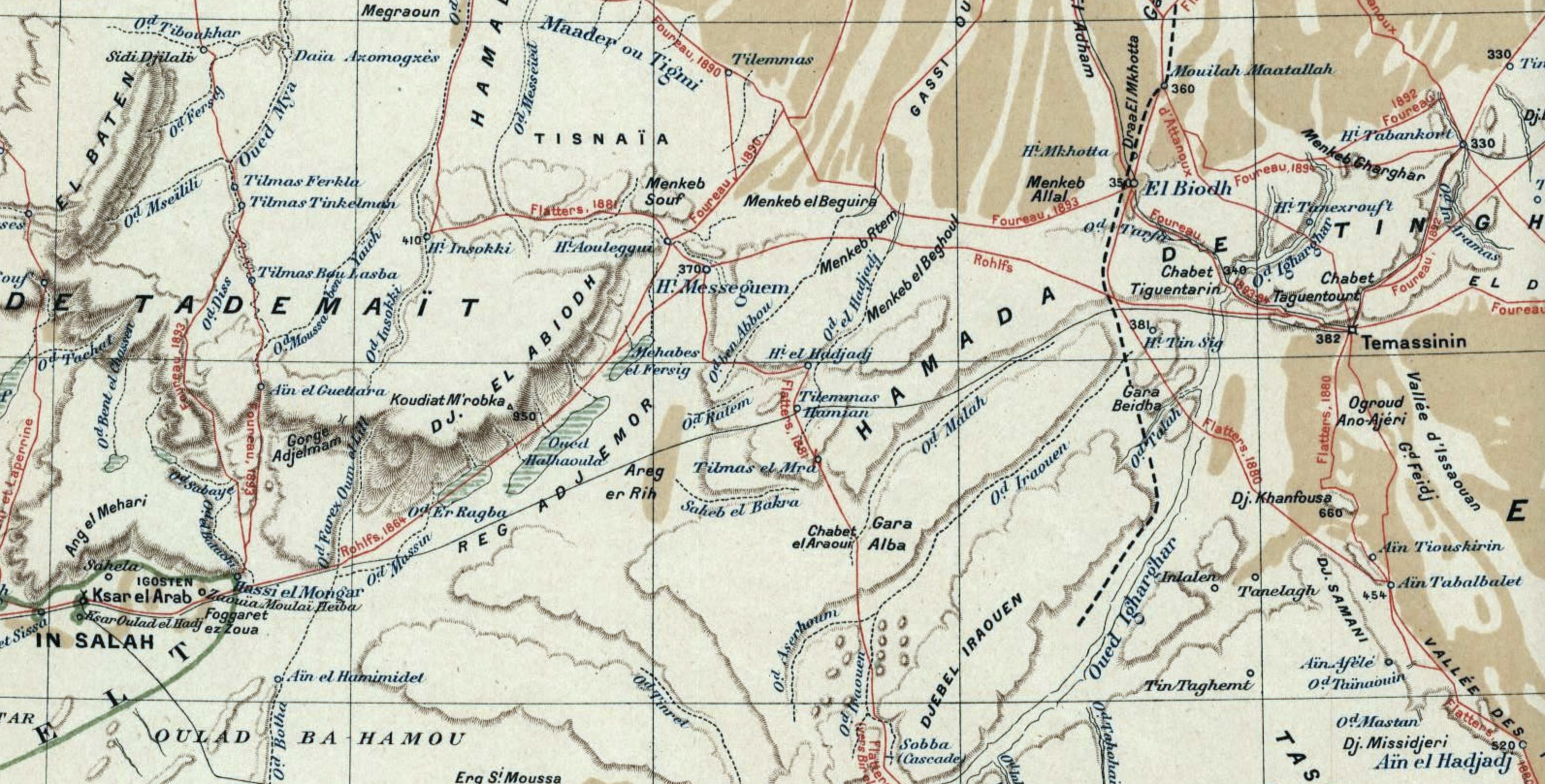
As always it’s interesting to see what is shown and what is not. Ancient Timbuktu seems an odd omission (though it’s mentioned on the back as a worthwhile destination for the trans-Sahara railroad). Tamanrasset was just a village at this time so gets skipped and Timassin is Timassinin, later Fort Flatters under the French and today Bordj Omar Driss (BoD). Not far to the west, Messagem and El Biodh were nothing but wells on the caravan route from In Salah to Ghadames, but it seems if early European explorers were led through these places by their guides, then they acquired a cartographic life of their own. They’re all on the map below from 1898. In the late 1980s we travelled this ‘forbidden’ piste from Fort Mirabel to below the westernmost ribbons of the Grand Erg, coming out at the checkpoint of Hassi bel Guebbour, just north of BoD. By the post war era these obscure wells had slipped off the maps and back into obscurity.
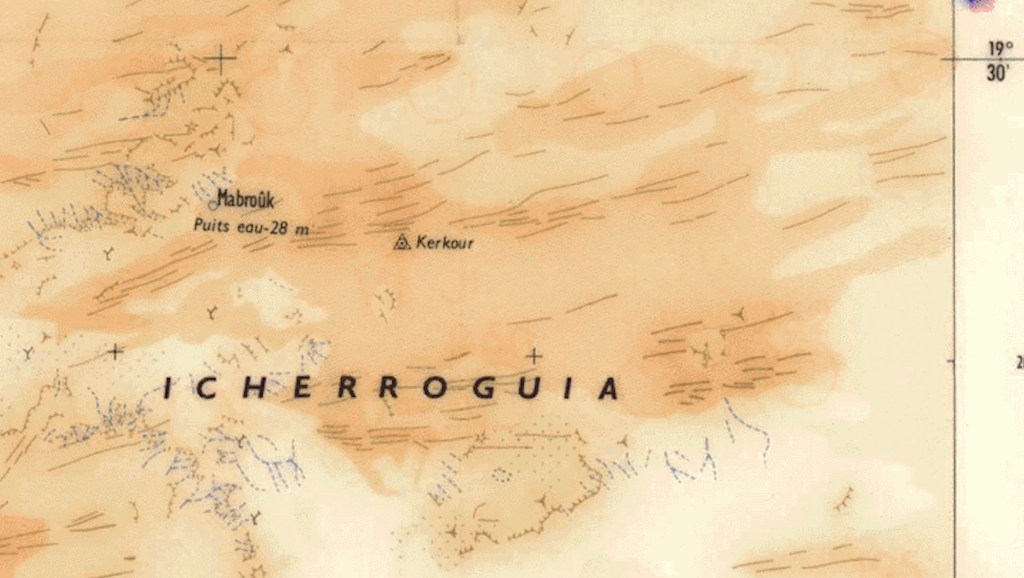
Interesting that remote In Zizawaterhole features, even though it’s not on any trade route, while Taoudenis was then still an important point on the 52 Days Road between Morocco and Timbuktu. East of there, it’s hard to think of today’s lonely well of Mabrouk being any sort of piste junction. Although the wiki waypoint matches the map below, today there aren’t any tell tale vehicle tracks, even though it’s not far from Timetrine where western hostages got shuffled around during their long captivities with AQIM.
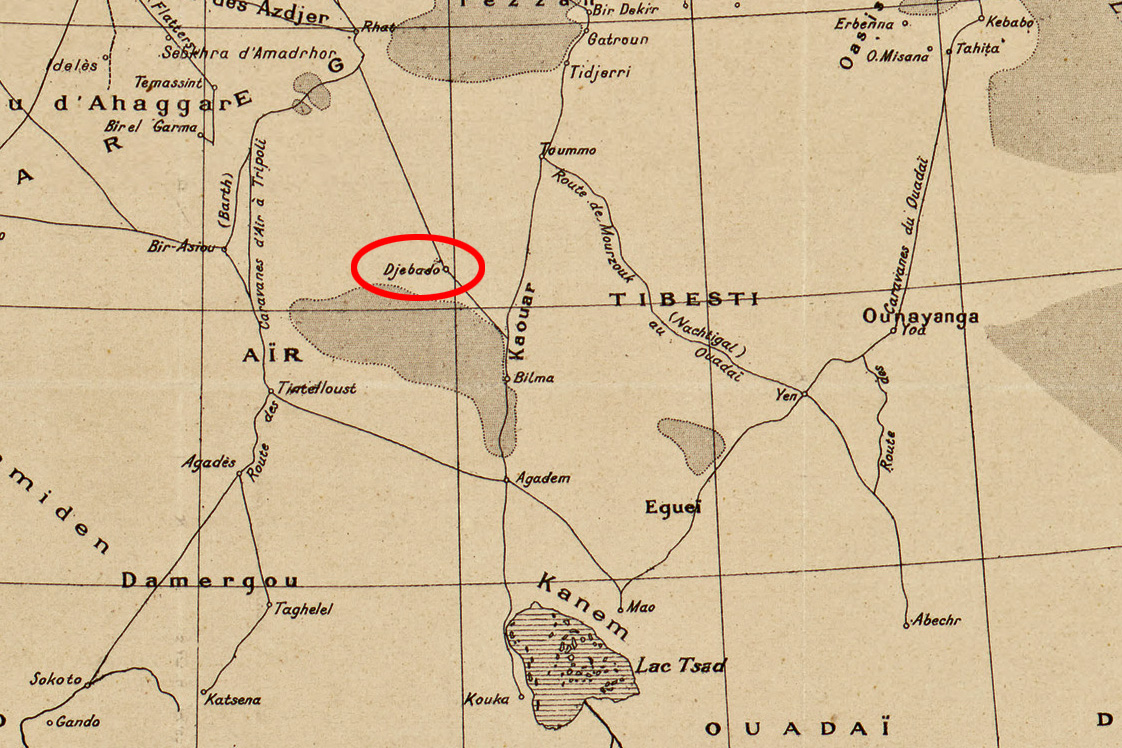
On the Atlantic coast Tarfaia is there with more about it here. Never heard of Groha near or maybe Smara, not Djorf el Asfar near present day Bir Lehlou in the PF Zone. Further east in present day Niger, the Oasis of Djebado is the old name for Djado looks as important as Bilma and the other Kaour oases, but not enough get a marker point. It’s hard to know what Yat might be other than Seguedine or a misplaced and misspelt Ghat, or Tao which appears on other old maps (maps often repeat their predecessors mistakes).Maybe it’s Dao Timni, today a military base in the middle of nowhere.
‘Le ksar de Djado. Mont Saint Michele du Tenere‘ (see vid below)
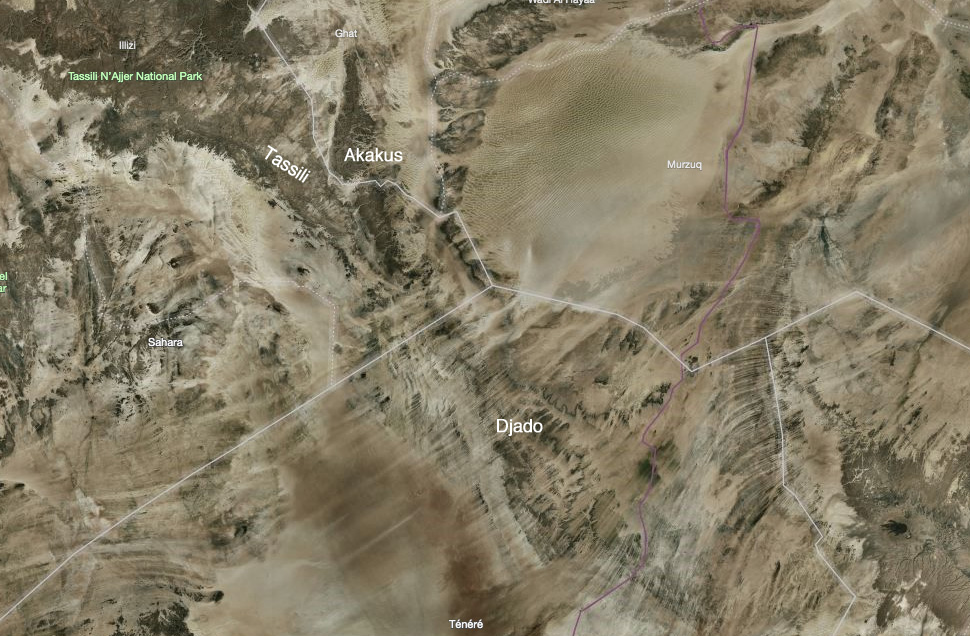
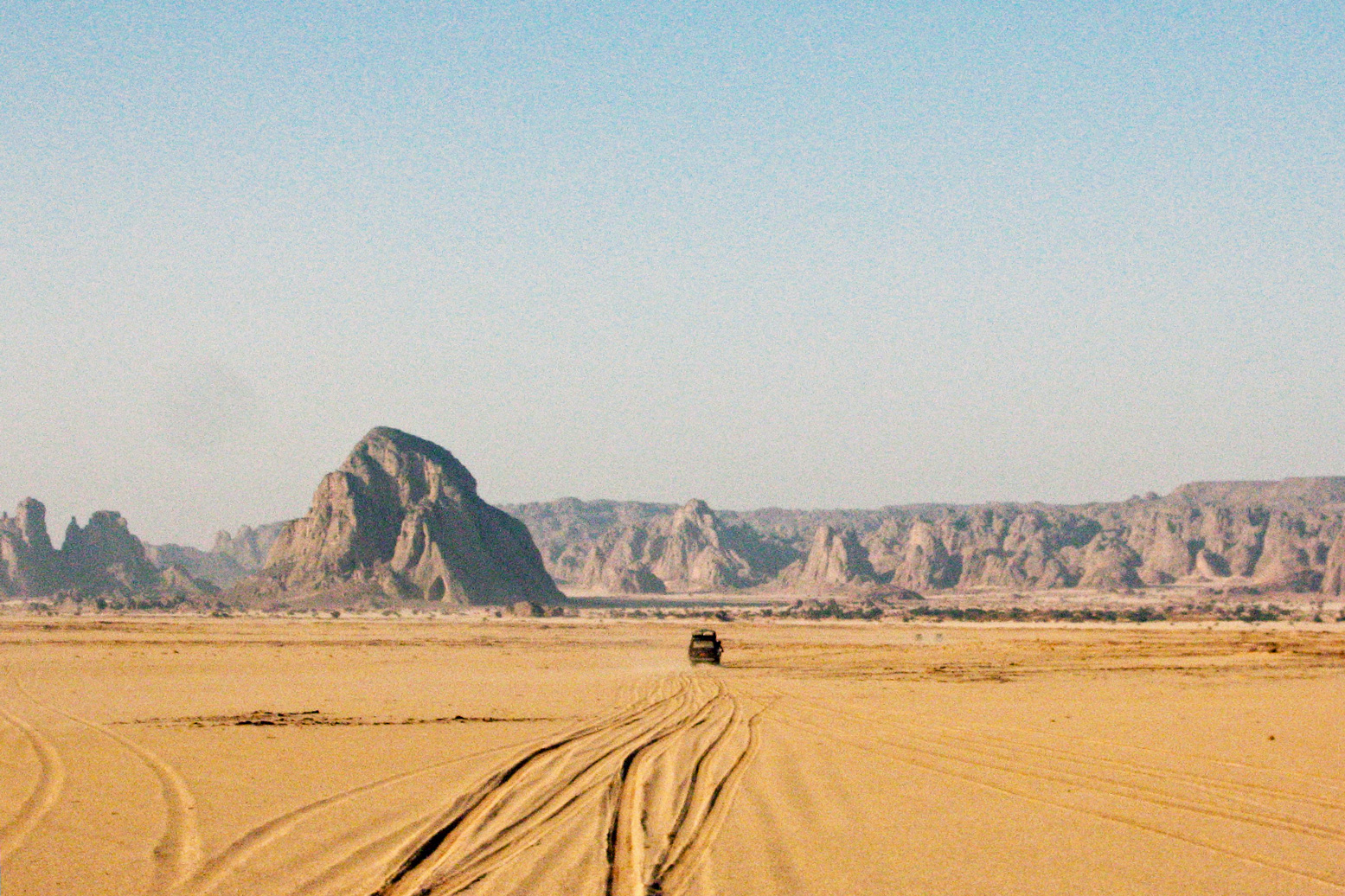
On the far side of Niger’s Tenere Desert lies the Djado Plateau, a frayed maze of low escarpments, sand-choked canyons and wind-carved outcrops, geologically contiguous with Algeria’s Tassili N’Ajjer and Libya’s Akakus (right).
Approaching Orida from the Col des Chadeliers.
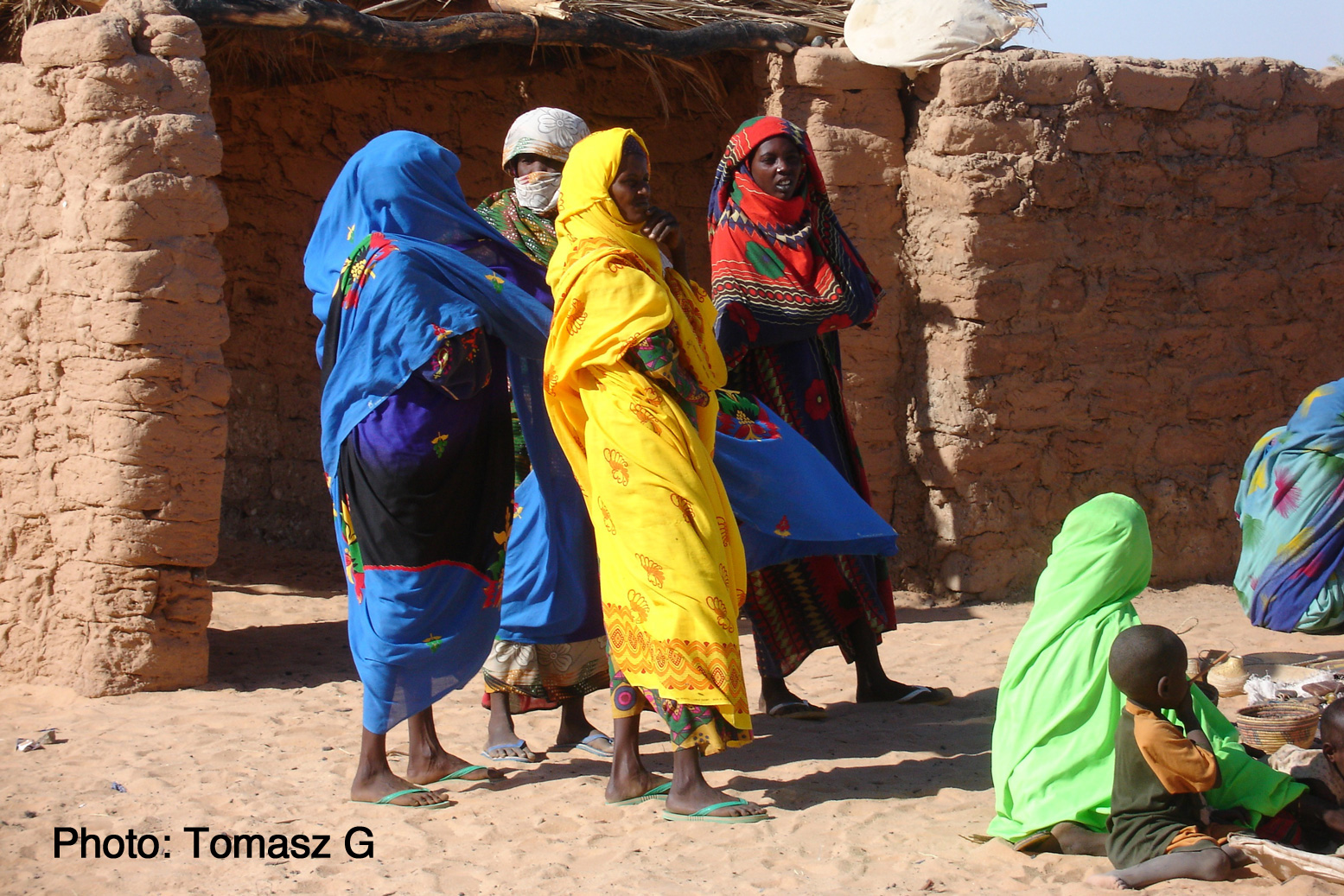
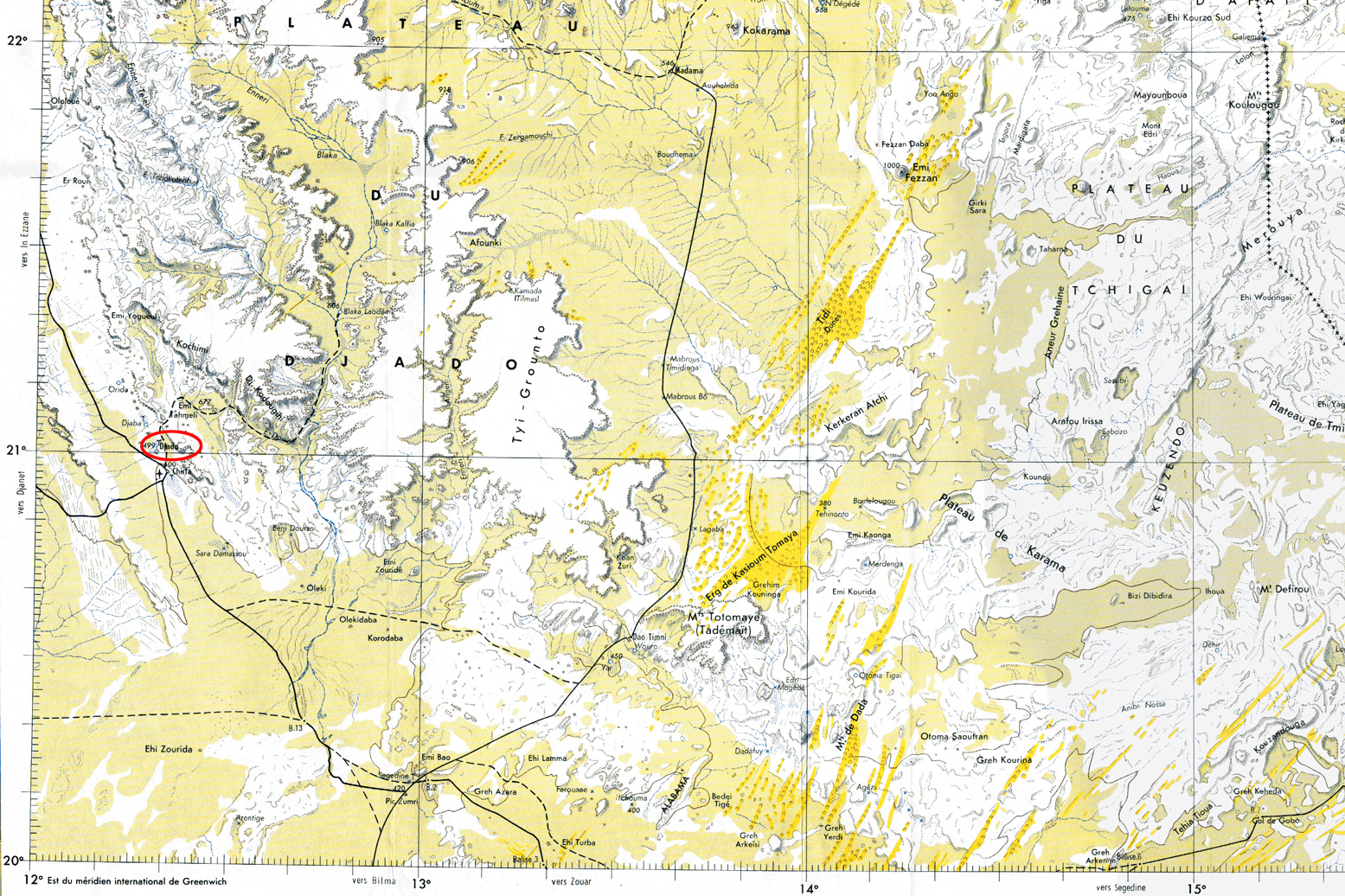
This is Tubu and Kanuri country. The latter are an ethnically related group originating from Kanem or Kano in northeastern Nigeria. Tubu nomads are best known in northern Chad and, unlike the arriviste Tuareg, are the Sahara’s original inhabitants. When I first visited this area the Tubu of far-eastern Niger where in revolt and a ‘checkpoint’ at Orida took tribute from passing tour groups, all led by Tuareg from Agadez. East of here was a no-go area and was mined, by either the rebels or the Niger army. On old IGN maps the topographic names are derived from the Tuburi language: a peak or hill is ‘Emi’ rather than the Tuareg ‘Adrar’ or Arabic ‘Jebel’, and ‘Enneri’ is a valley, like a ‘oued’ or ‘wadi’.
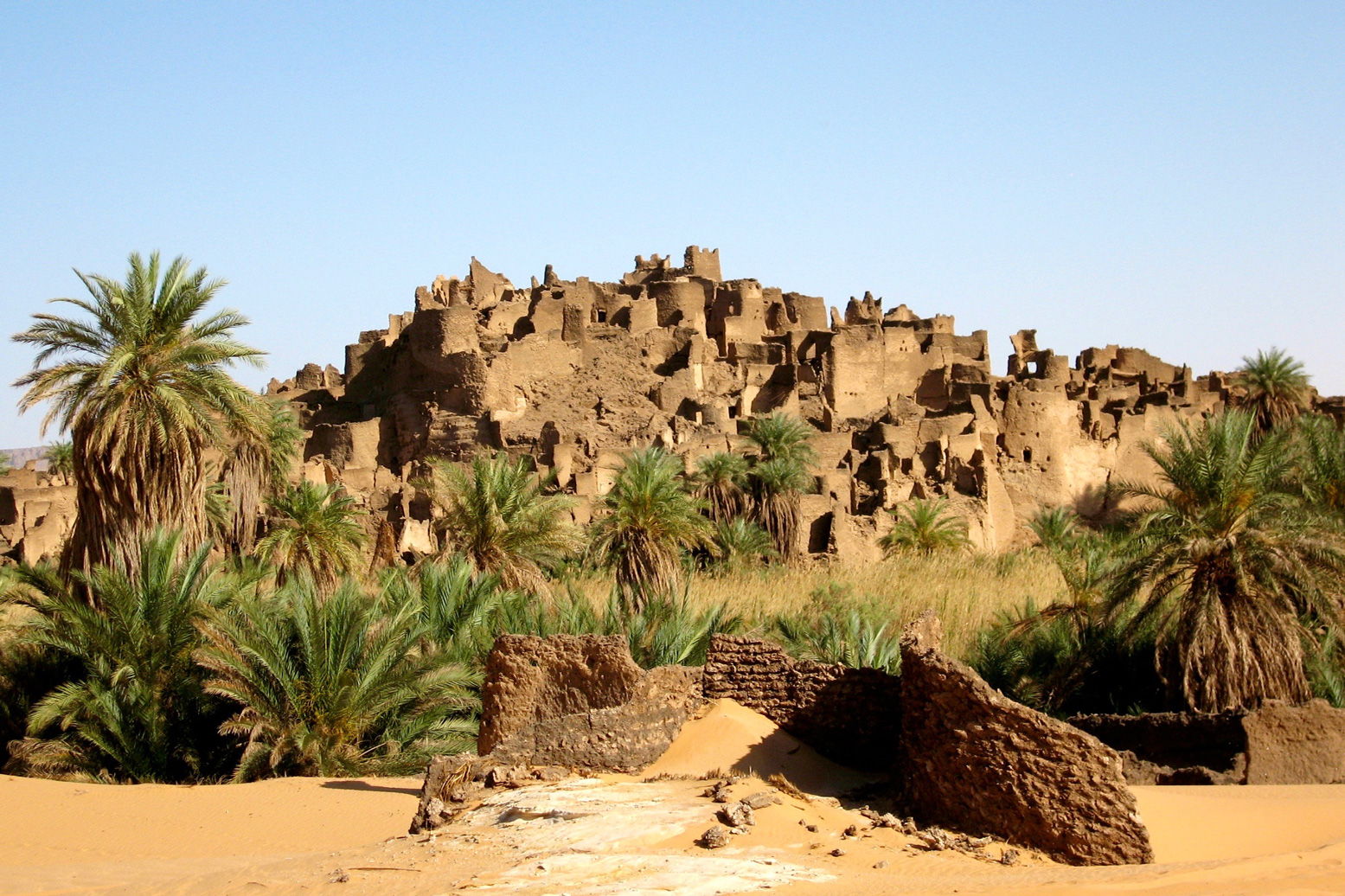
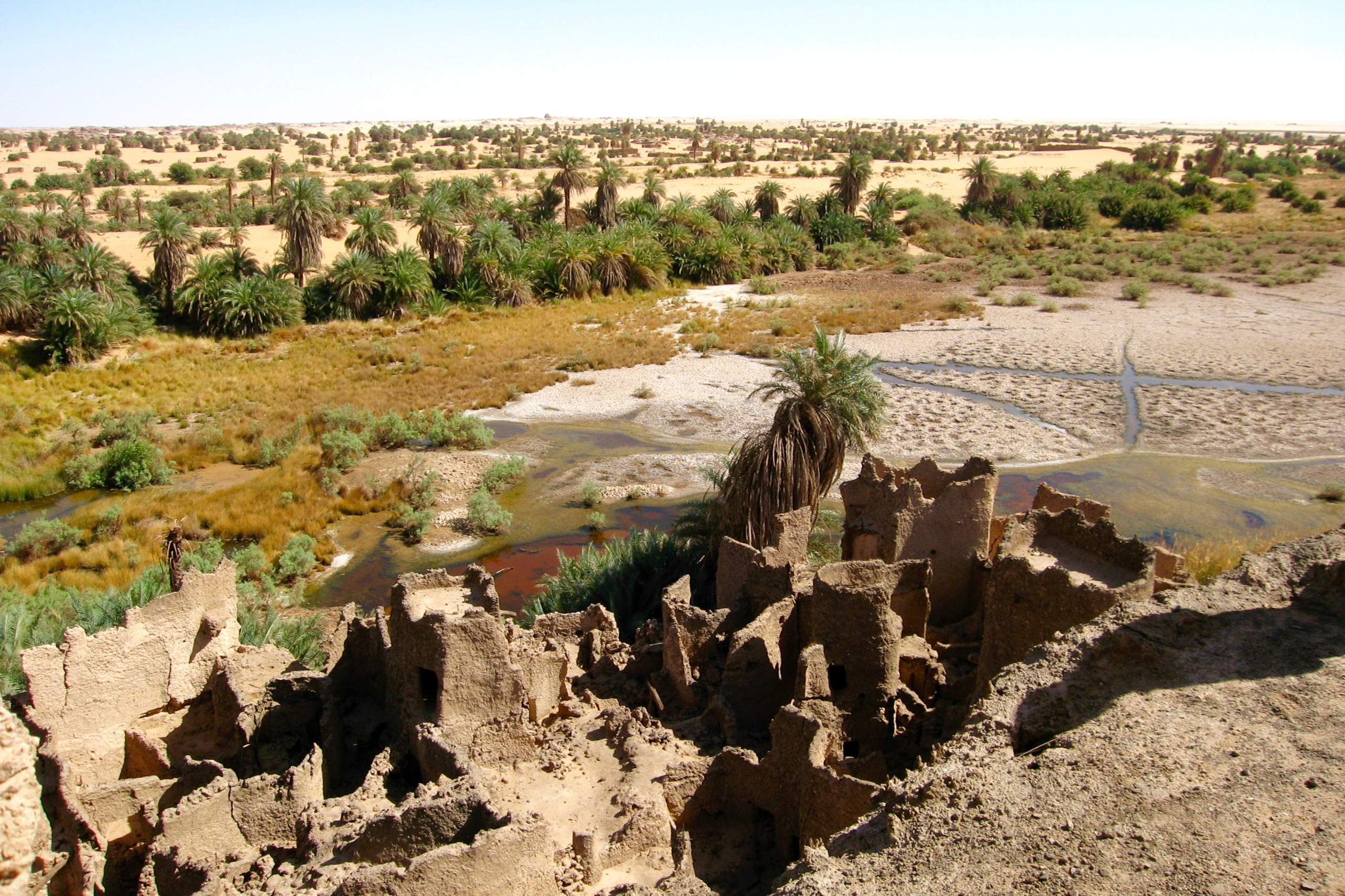
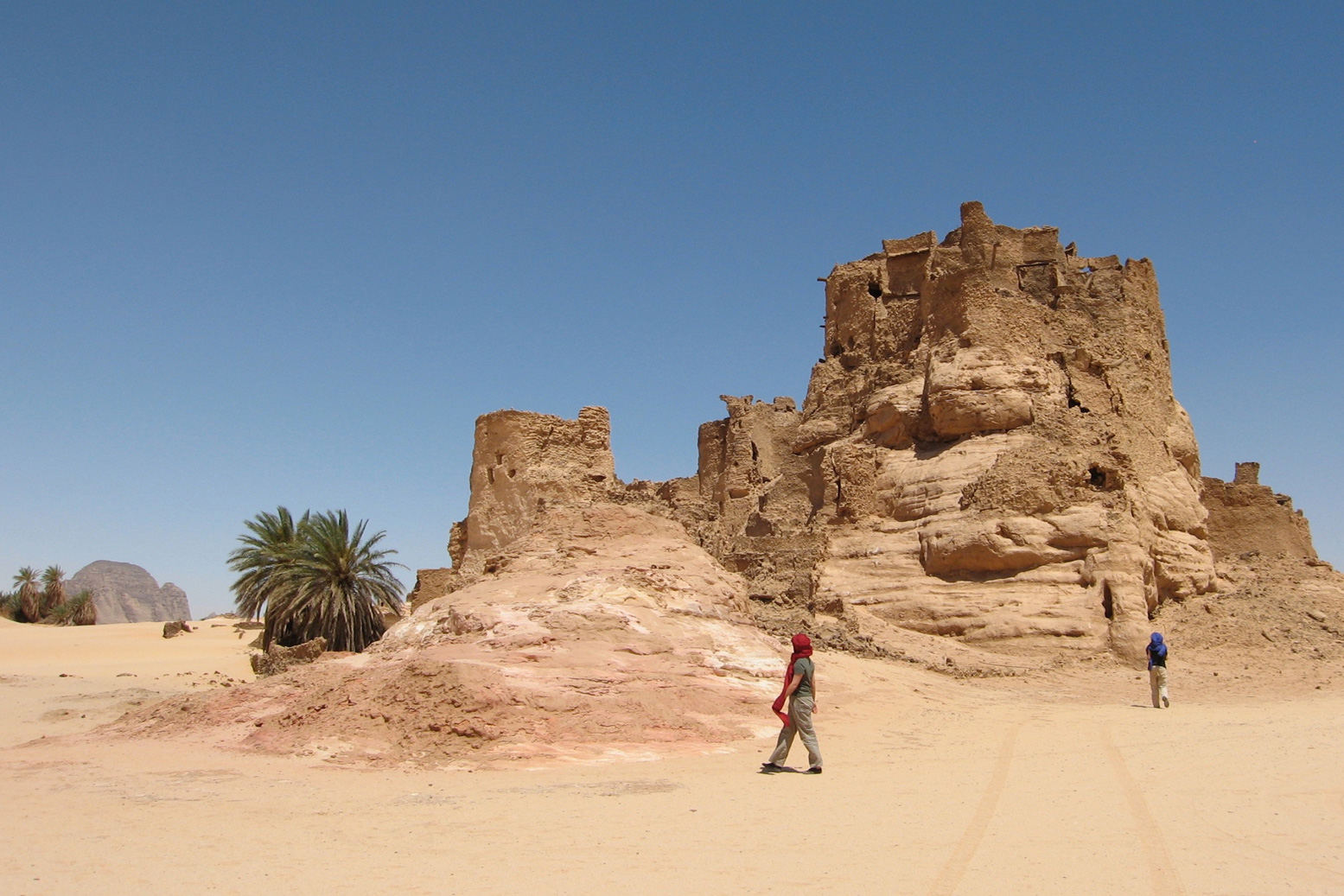
Perched on an outlying outcrop at the plateau’s edge, like something out of a Tolkein novel is the ruined citadel of Djado (21.016 12.308), a mudbrick warren of passages and collapsed chambers worn ragged by the weathering of passing centuries. Below the fortress, a shallow seasonal pool of brackish water is ringed by reeds and palms.
Such fortified ksars are not unusual in many old Sahara towns like Djanet, Ghat, Dakhla in Egypt and Ouadane in Mauritania. But all are adjacent to a modern town which has since grown up around them. That such a large citadel should located hundreds of miles from the nearest town appears an enigma. Djado personifies the Sahara’s romantic mystique, a Lost City crumbling into the sands. Who lived here, what did they do and where did they all go?
It’s origin may well date back to the late Kanem-Bornu Empire as a station on the trans-Sahara trade route which evolved between Lake Chad and Tripoli. Any place in the Sahara where the groundwater reaches the surface becomes important. By the 17th century, Tripoli – the capital of Ottoman Tripolitania – became the Mediterranean’s busiest slave market. From Lake Chad a line of wells and oases run north via Agadem to the salt mines of Bilma, Aney and on to the smaller salines of Seguedine. Here the route split: the busier arm led northeast to Tumu and the famed slave trading post of Murzuk. The other branched northwest towards Ghat. All of these places would have had a fortified ksar similar to Djado, though not so dramatically isolated.
Around the 18th century it’s probable the inhabitants of ‘Djebado’ (as it’s called on the 1888 map, above) either gradually lost out to the dominant Murzuk trade route, were harassed by Tuareg or Tubu raiding parties, or just succumbed to the growing infestations of malarial mosquitoes which still inhabit the reedy lake today.
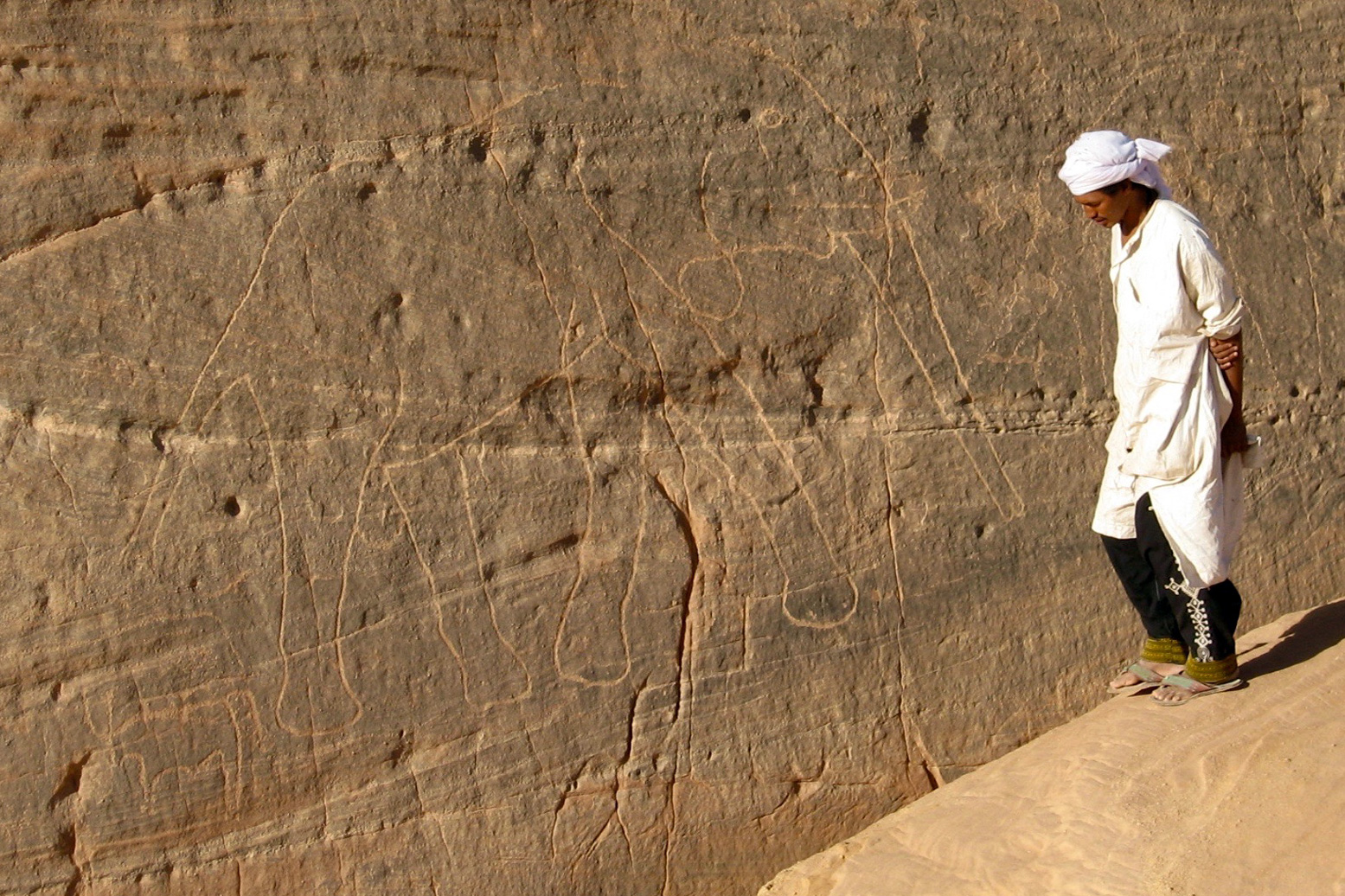
The Djado plateau, and more especially the Aïr mountains on the far side of the Tenere, are rich with ancient petroglyphs (left) and other rock art, some 6-8000 years old. At this time the Sahara was a savannah widely populated by the last of the nomadic hunters or early pastoralists. Many show animals long since extinct in the desert: bovids, crocodiles, giraffes or elephants (left). But it is a mistake to conflate the medieval ruins of Djado with the relics of the prehistoric era. The ksar is no more than a 1000 years old and much more likely, half that. To the north is a smaller are more intact ruins of Djaba (below) and beyond that, the well at Orida, 500km from Ghat.
Today the Kanuri whose ancestors were said to have inhabited Djado, live out on the desert plain in the nearby village of Chirfa, though annually they return to harvest the dates which grow alongside the ruins.
Below: an excerpt from the film of the 1960 Berliet Tenere Expedition. An accompanying helicopter surveys ‘Le Mont Saint Michele du Tenere’.
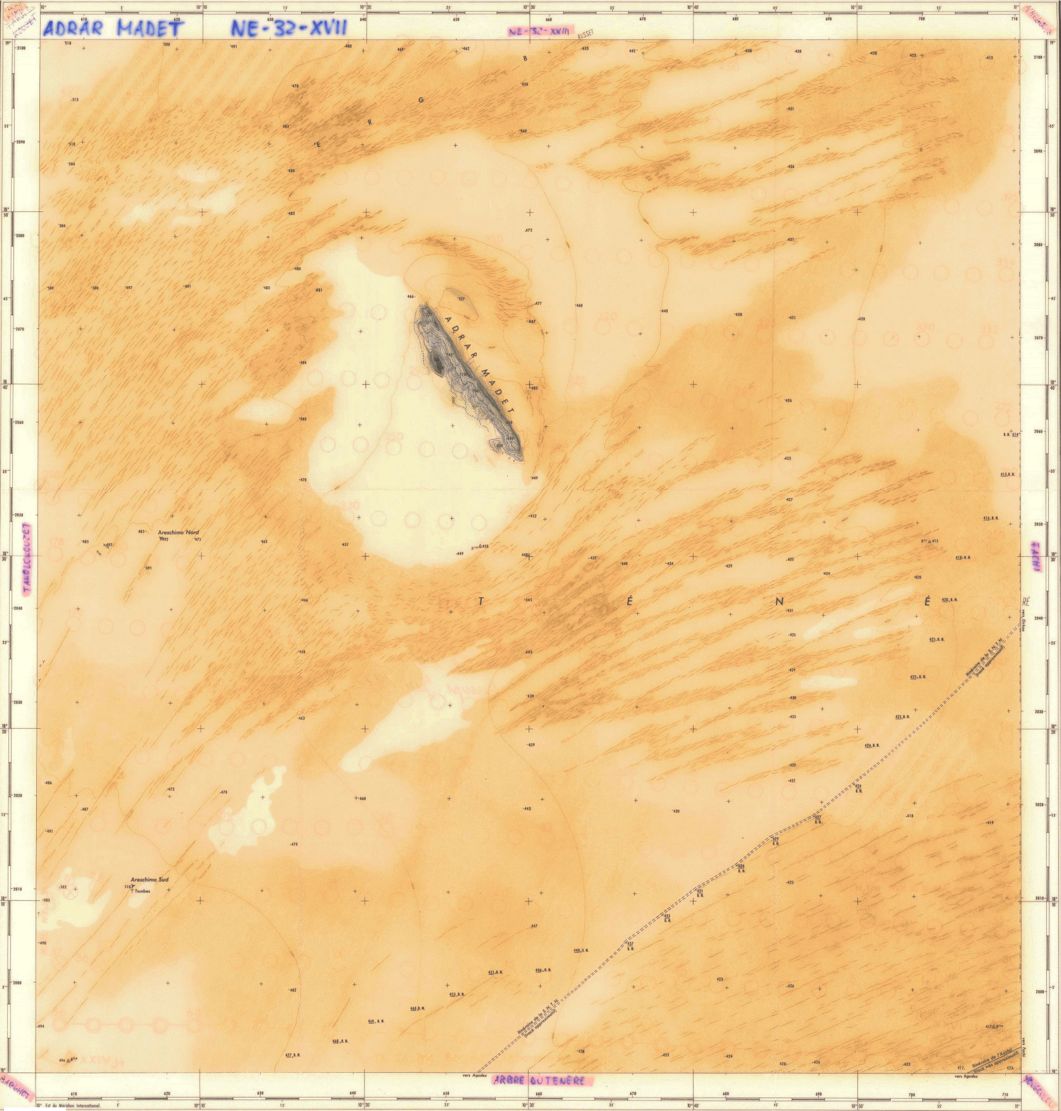
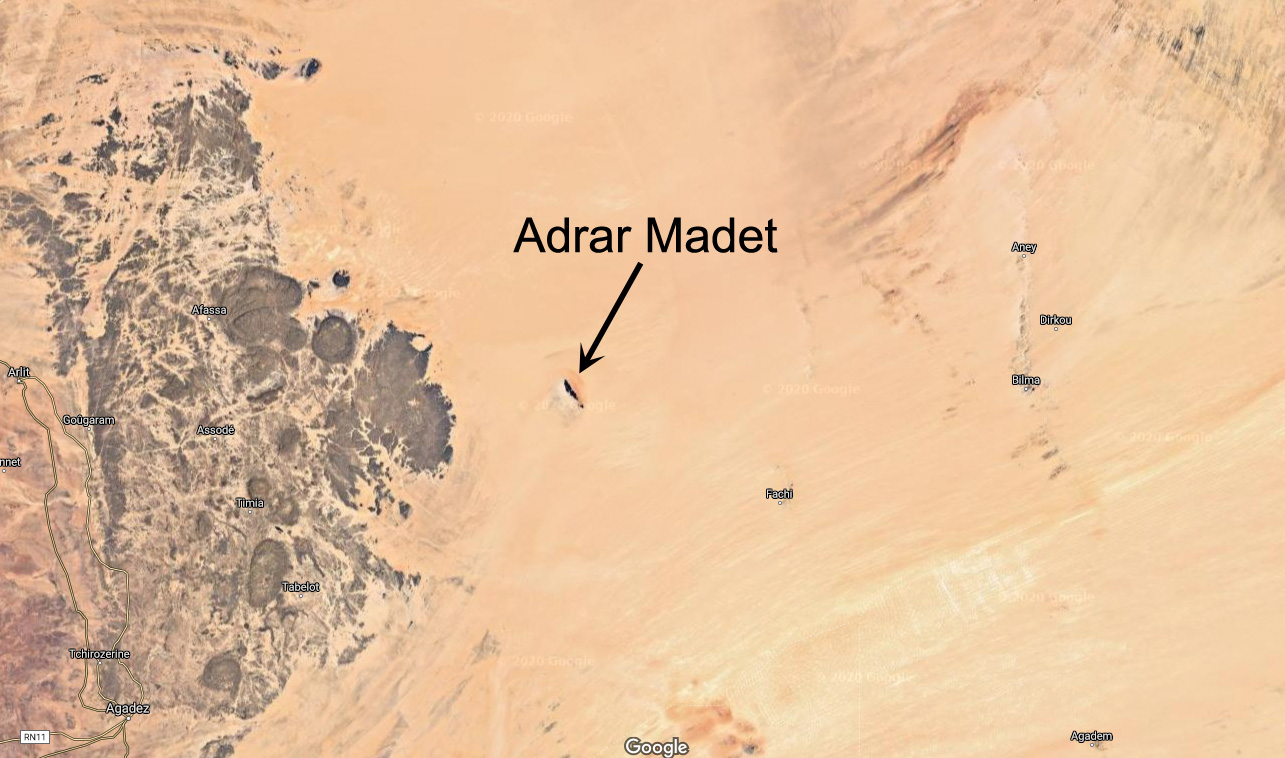
Out in Niger’s Tenere desert, east of the Aïr mountains lies the isolated massif of Adrar Madet (see map below). About 2.5 kilometres directly west of the 20-km long massif’s northern tip, a perfect stone circle lies in the sand. The circle is about 20m in diametre and some 600m from the circle and more or less at each cardinal point is a small arrow. You can see all five points here on Bing. You won’t see them on Google last time I looked.
The lone ridge of Adrar Madet (and it’s northeasterly wind shadow), north of the Arbre du Tenere
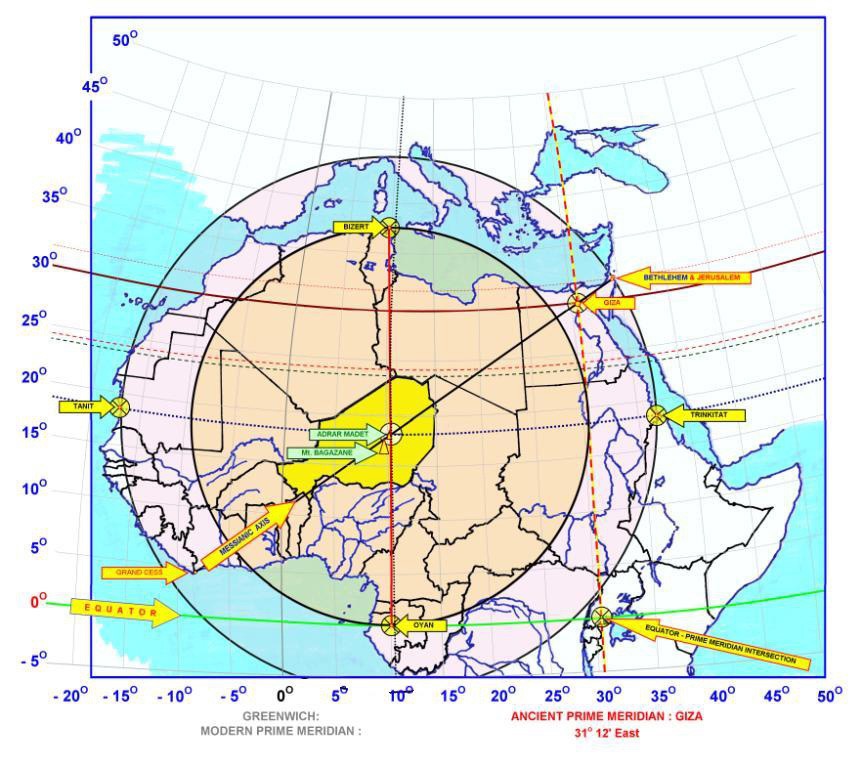
I’ve not been there but have known about it for years. Some speculate that it could a sacred pre-historic marker associated with prime meridians and ancient Egyptian knowledge, marking the ‘middle of North Africa’ (left). It is a huge coincidence that the circle is – within a few kilometres – exactly halfway between the equator and Ras Angela near Bizerte in Tunisia, the northernmost point of Africa. And it’s nearly directly south (178.4°) of Ras Angela, too. (Fwiw, it’s 64km west to the actual point directly south of Ras Angela, just south of Arakao on the edge of the Aïr.)
I err more towards the theory of a much less ancient aviation landmark from the French colonial era, one of many located in the Sahara and still being found, including less ambiguous examples where names of nearby outposts are stencilled inside the circles. Fellow Saharaholic, Yves Rohmer confirms this fact. Rubbish from that era: tin cans, bottles of Pastis, berets, garlic and so on, littered the Madet site. A similar circle exists in nearby Fachi, with that name stencilled in it and close to an old airstrip. Another plausible explanation made in the discussion linked above was a drop zone for parachute or dummy bomb training.
Not so mysterious after all then, but you do wonder, with the distinctive and isolated 20-km-long Madet ridge angled NW/SE and the Aïr massif to the west, what value the tiny 20-m stone compass actually added to aerial navigation? And why put an airstrip there if anywhere flat in this part of the Sahara can be an ’emergency airstrip’. And would they have spent days building a parachute or bomb drop zone circle when a ring of smoking oil drums would have sufficed? Trop mystérieuse…
Another possibility I like to entertain is of a playful or geographically inclined Colonel stationed in the Sahara. He’d spent his lovelorn honeymoon in Bizerte near Cap Angela and, looking at his Michelin map one hot day, noticed Adrar Madet’s central position. He decided it would be a good morale-building (or time-killing) exercise to have the circle and cardinal points marked in the desert for posterity. But as Adrar Madet is far from any route or useful resource, the purpose and meaning of his enigmatic earth sculpture has been lost in the sands of time.
That’s as may be, but what about the other similar but smaller cobbled stone circles I’ve seen in the mountains of southern Algeria (below)? Neither could be described as aviation markers. Rock art hunter, Andras Zboray, found another in 2023 by the Oued Torset in the central Tassili, northwest of Dider. ‘Tombs’ said the guides, but they’re not like the usual pre-Islamic tombs one sees in the desert.
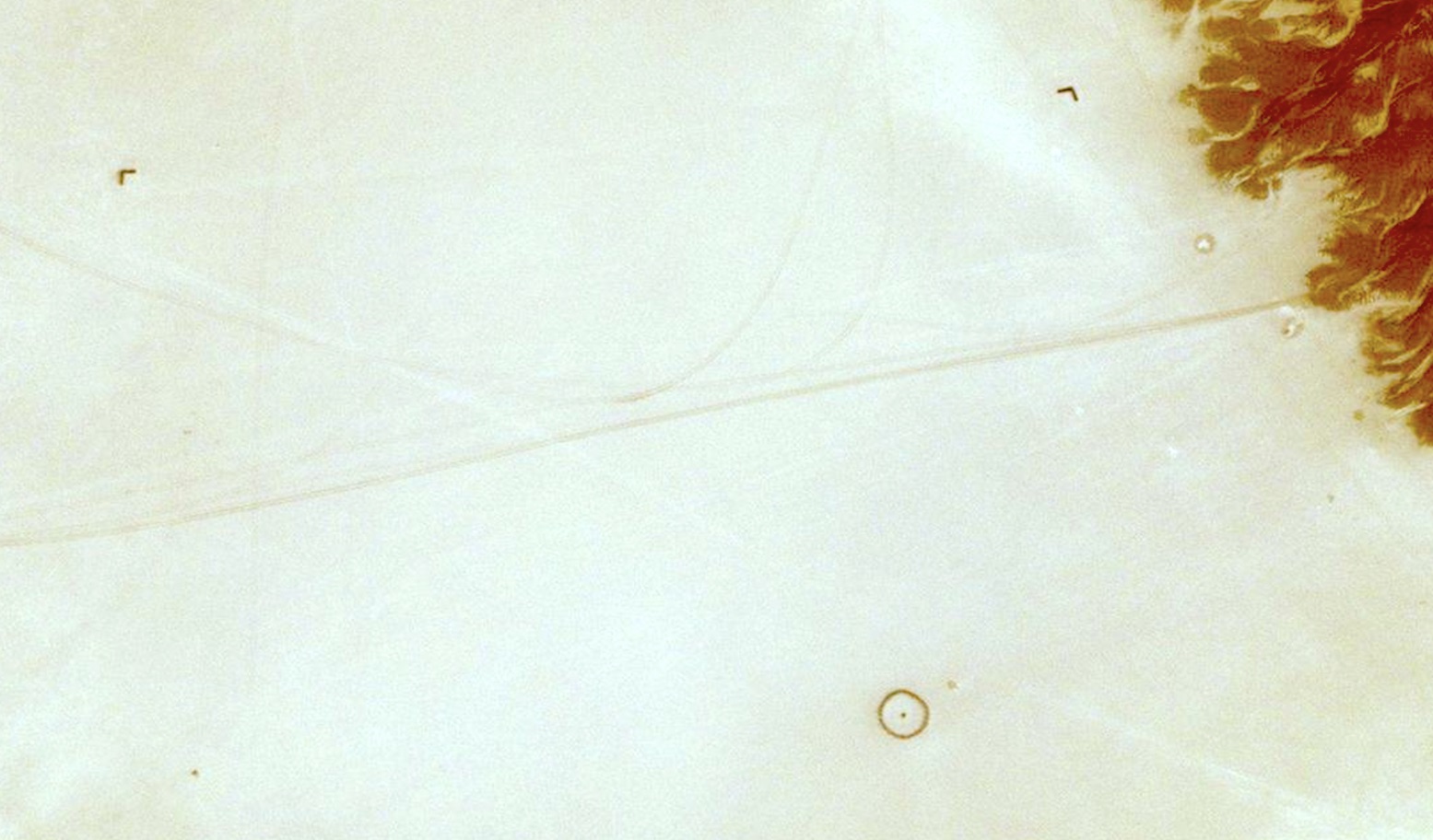
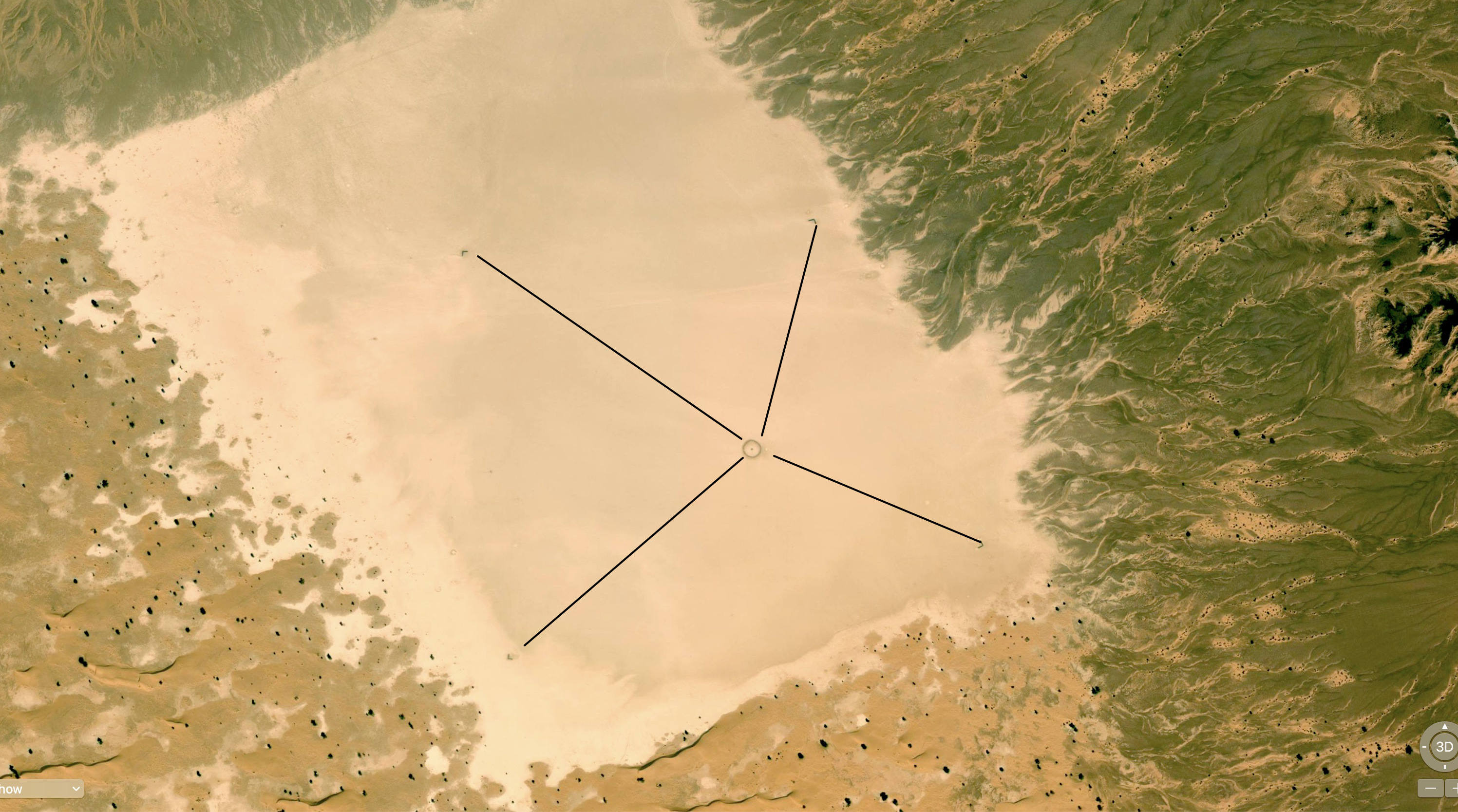
Here’s another curious circle, spotted by a mate in the remote wastes of Timetrine, northern Mali, coincidentally one place where AQIM kept European hostages up to a few years ago.
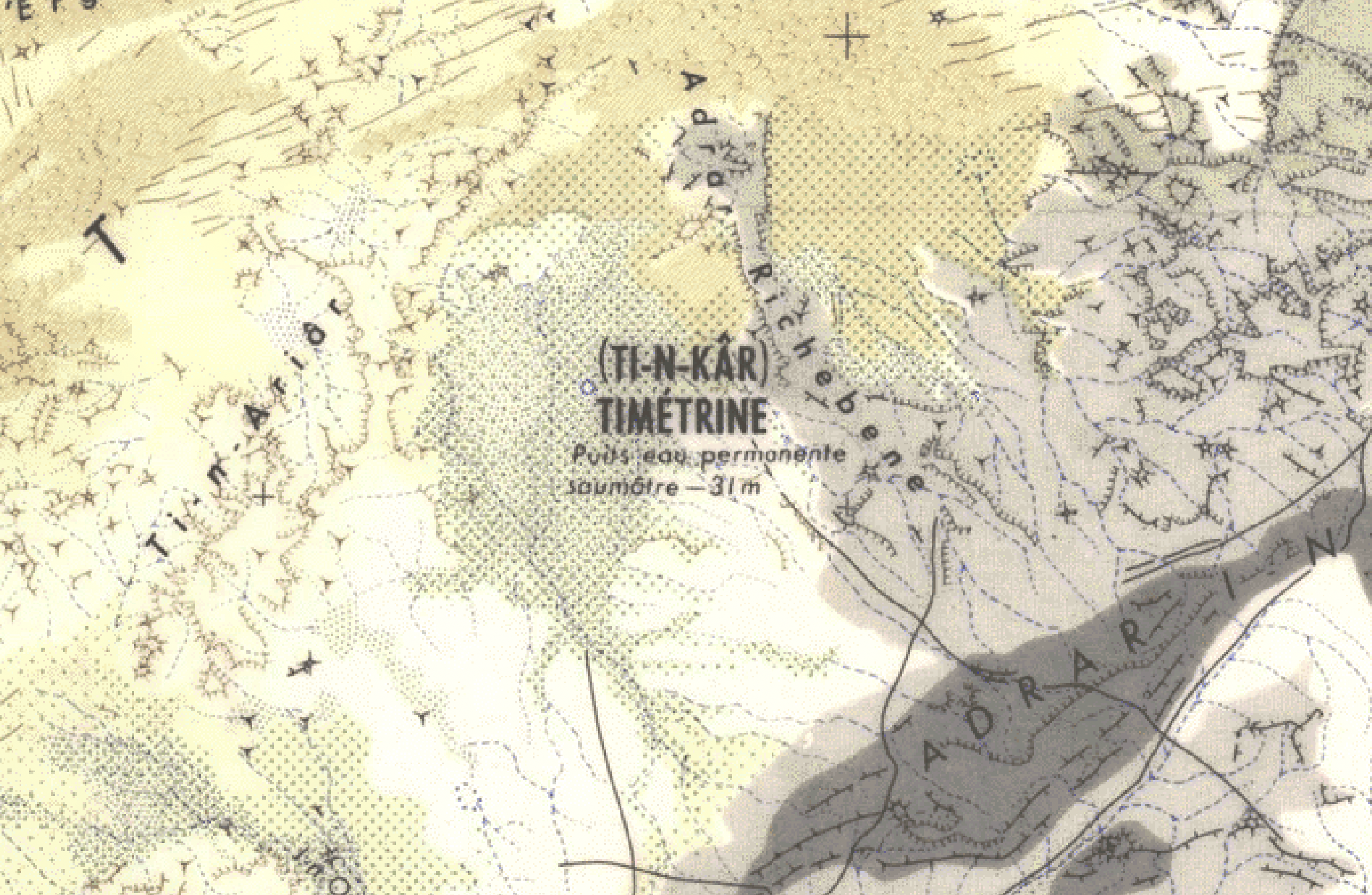
19.455065, -0.422889; It’s a lot clearer on Bing Maps than Google (LTIL). According to the old 200k IGN map, this is actually the brackish (saumâtre) well of T-in Kar (wrongly positioned on Bing), so marking it for pilots may make sense for emergencies.
You will see four points a couple of hundred metres from the circle set in the middle of a distinctively rectangular clay pan covering about half a square kilometre. But they seem so vaguely positioned as to be pointless. Some have speculated the four points may mark the fringes of a smooth landing strip.
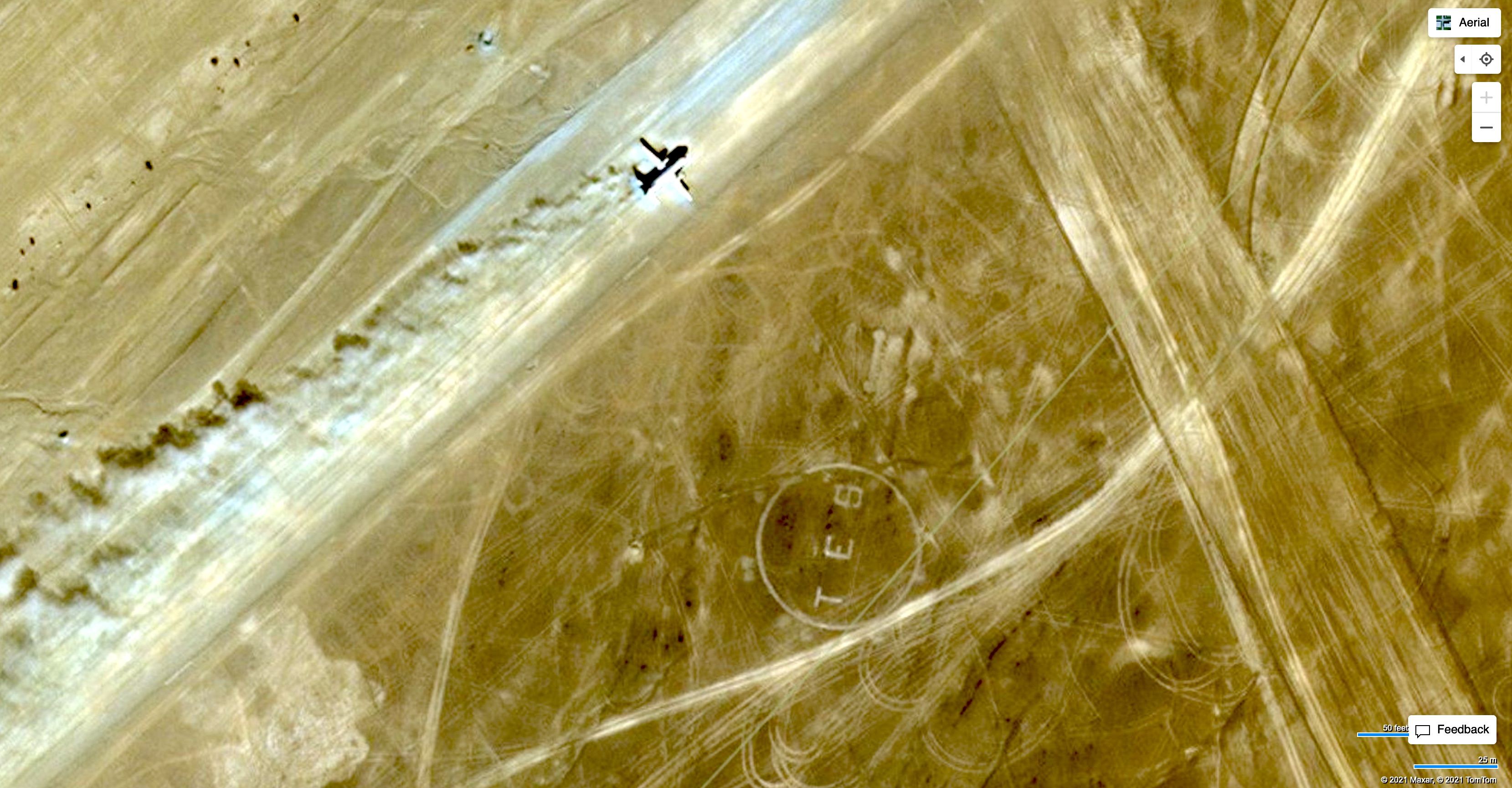
The clay pan is on a more-or-less direct line between Timbuktu and Tessalit where there is also a ‘TES’ marker by the current airfield (left). In those days (pre-War) they would have navigated as much by landmarks as a bearing. Since around 2013 this whole area has been a war zone between French force having it out with AQIM, ISGS and the like. This intervention has proved as successful as similar operations in Iraq and Afghanistan. By 2023 they’d left and Russian state mercenaries took over.
In 2000 I joined a two-week tour visiting the Egyptian part of the Libyan Desert, or the ‘Western Desert’. The trip was organised by Andras Zboray and his new FJ Expeditions. He’s since become an expert on this fascinating region and back then contributed the ‘Egypt’ section to my Sahara Overland book. Even though I’d only just come back from Libya researching the book, part of the appeal of Egypt was that this was then a very rarely visited corner of the Sahara. FJ had problems with permits to visit this ‘military’ or more correctly border area, but once there, we saw no one, let alone a well or a regular piste for the entire two weeks.
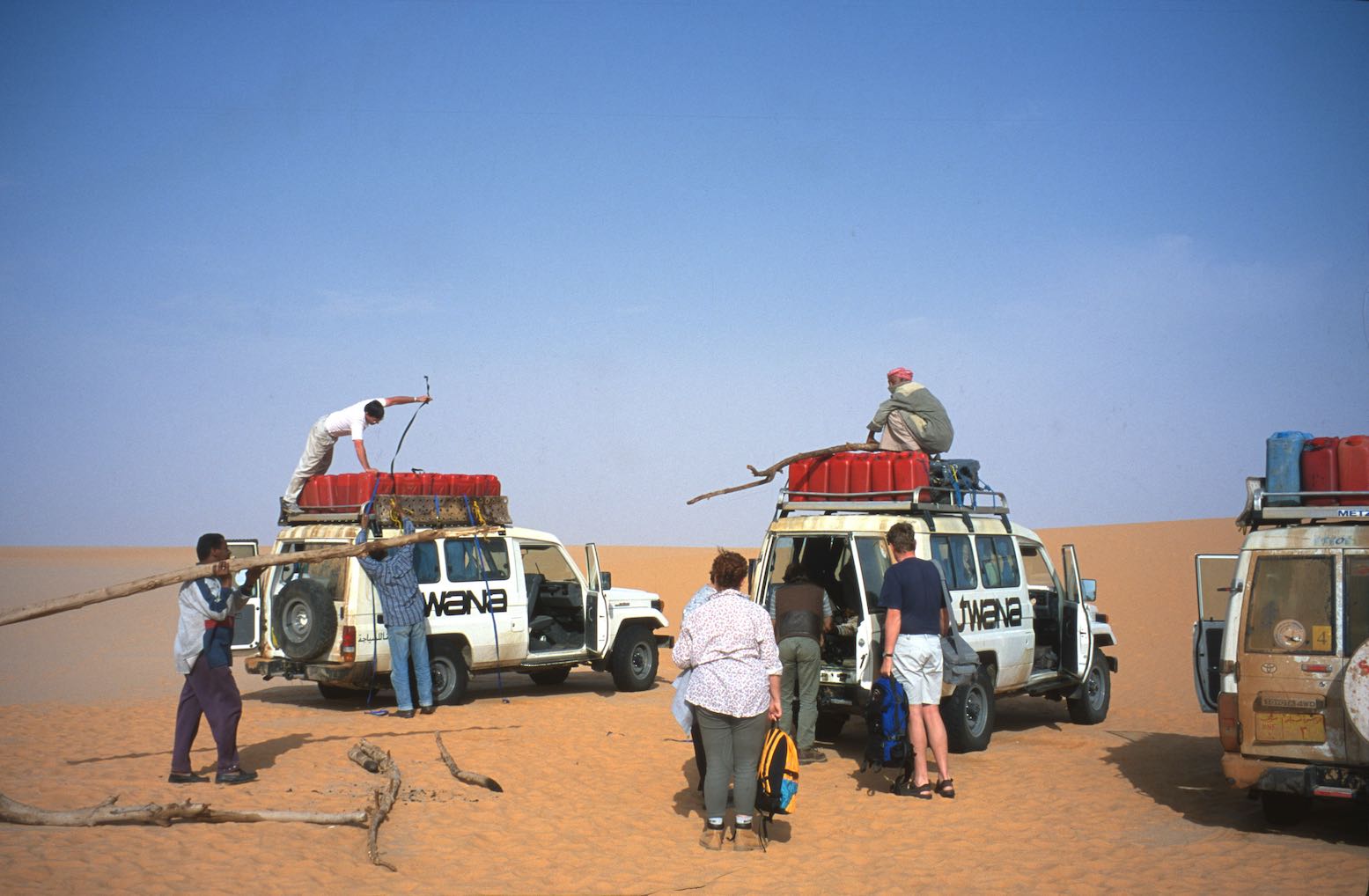
Our three locally hired Toyota Troop Carriers left Cairo sharing a ton of water and half a ton of food, along with fourteen (mostly German) passengers and three Egyptian drivers. Two days later we left Dakhla with another half-ton of fuel on each car’s roof. Amazingly the Toyota 75s handled this mind-bending payload without a whimper.
Shell tin
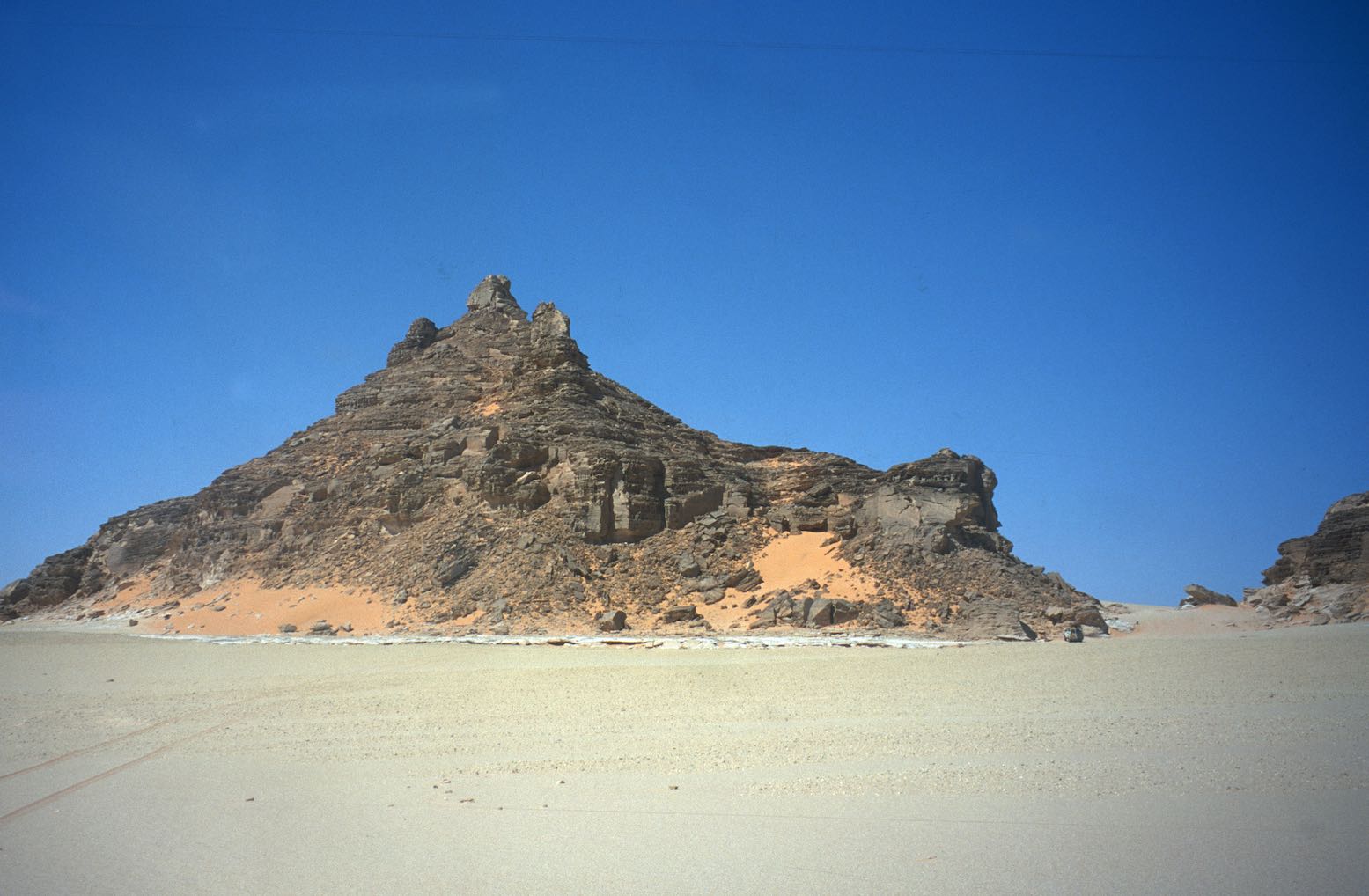
On reaching Bir Terfawi we left the tarmac and set off west across the Selima Sand Sheet, arriving at the isolated landmark of Jebel Kamil after a day and a half. This cone-shaped hill was a wartime fuel dump from the Sudan Defence Force convoys supplying Kufra from the Nile, and is still littered with Shell petrol tins. I was invited to drive one of the 75s, Andras having had not such good experiences with local drivers off road. I was told under no circumstances to use the air-con; there being some urban myth about revs rising dramatically as the pump kicks in. But the risk of an overburdened, 130-hp 70-series lurching uncontrollably off a dune lip seemed far fetched.
Shaw’s Cave
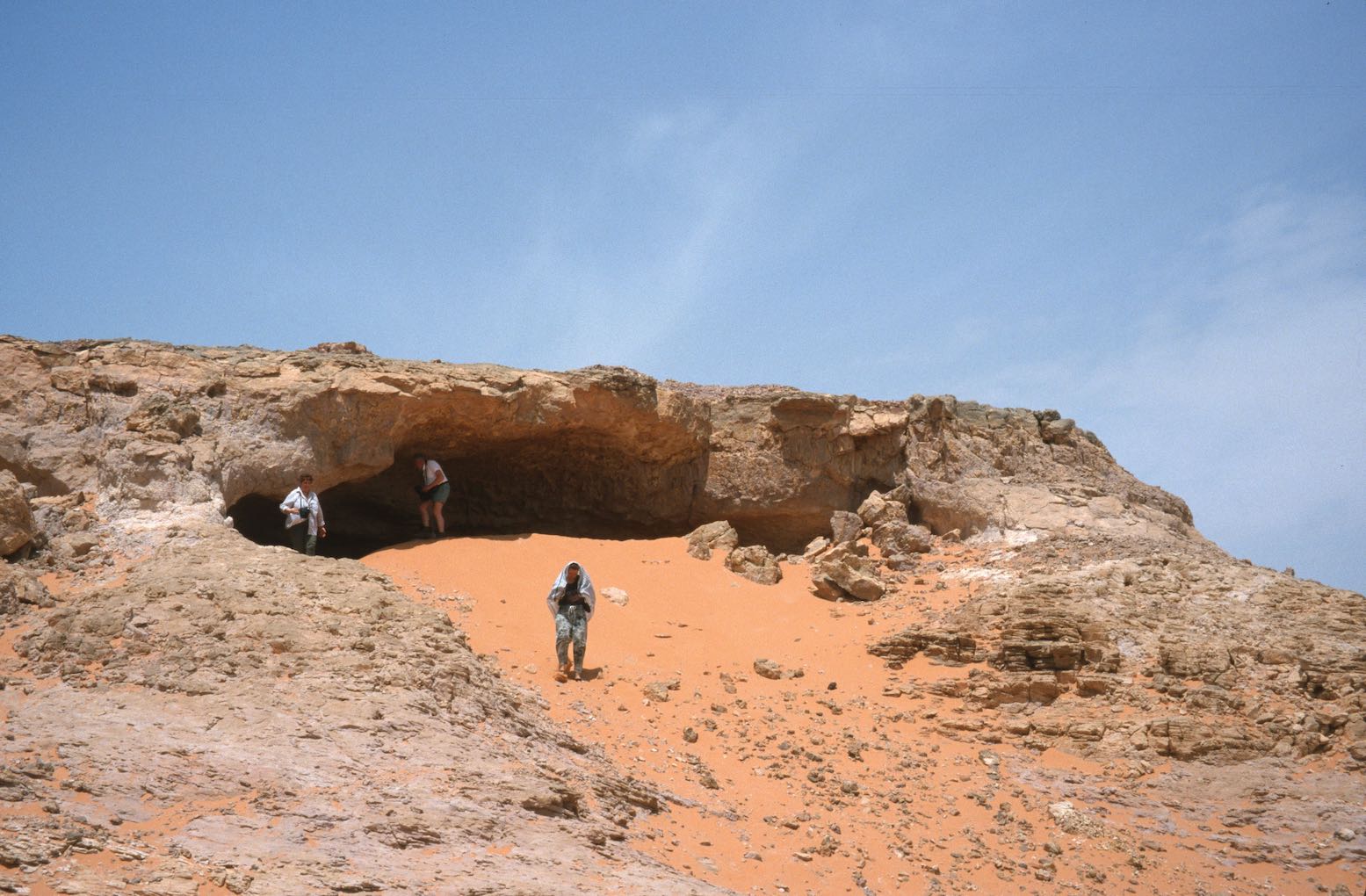
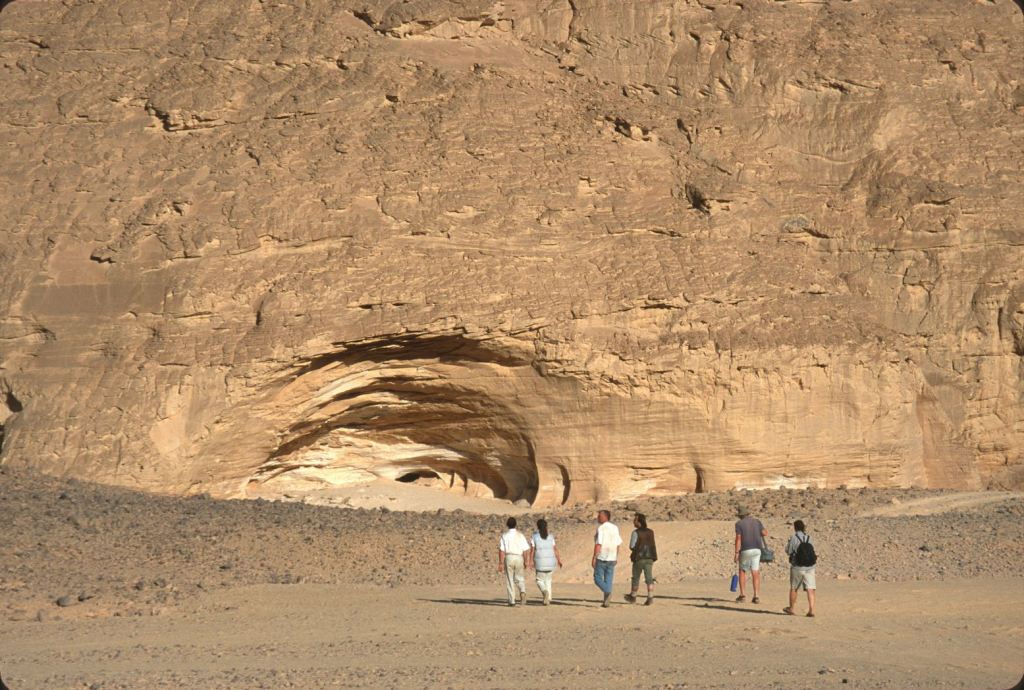
From Jebel Kamil we headed northwest on a GPS bearing to Eight Bells on the eastern edge of the Gilf Kebir from where Andras had a written description to a cave of paintings discovered by Shaw in the 1930s. We drove over a pass into the stunning Wadi Wassa and followed it west, crested another pass with little difficulty.
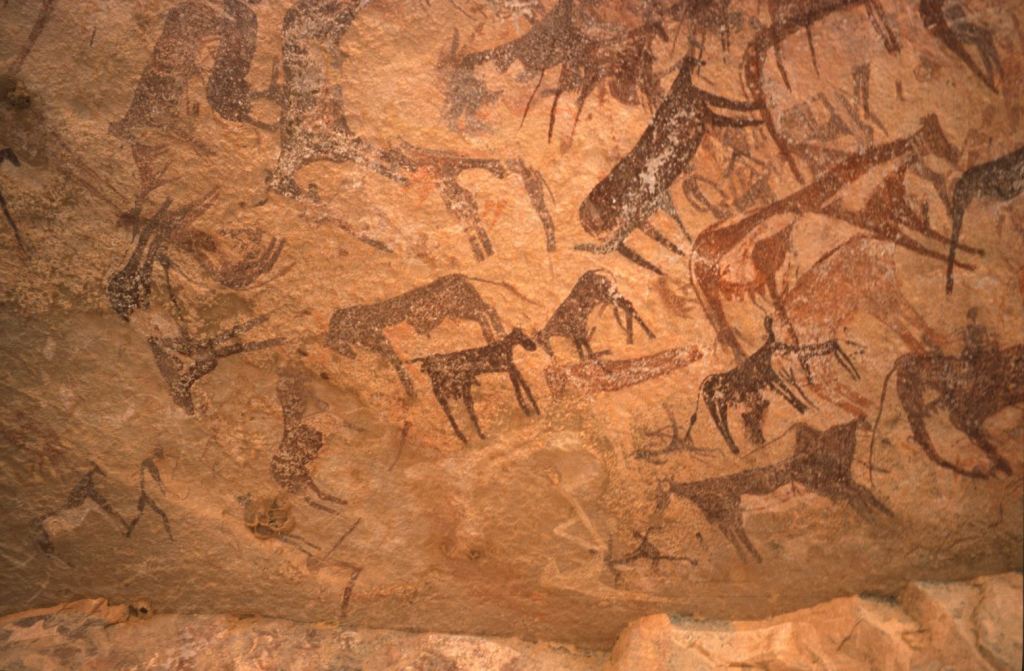
After locating the cave, we continued cross-country into a hot south wind over broken country to Karkur Talh, a clearly mined wadi which cuts into the 1934-metre-high massif of Jebel Uweinat. That evening, on a tip from Bagnold, Andras located some beautifully preserved Cattle Period paintings on the west side of the well-known cove. The quality was the best I’ve encountered (which isn’t much!) and showed similarities to the ‘Cave of the Swimmers’ or Wadi Sora style, we were to see a few days later.
The next day we continued further down Karkur Talh on foot, over the Sudanese border (passing a spoof CCTV camera, left) and, with the aid of Rhotert’s ‘The Rock Art of the Jebel Uweinat’ (Graz, 1978), soon found an rich trove of engravings and paintings spread along the walls of the wadis first discovered by Ahmed Hassanein in the 1920s and fully recorded by a Belgian expedition in the 1960s. It’s unlikely many other tourists have got this far since that time, and for all of us this wonderful day of discovery was the highlight of the trip.
Cows
Giraffes
Grinder
Waddan
We enjoyed it so much we came back into Sudan next day to find more rock art, including an amazing tableaux dubbed ‘Red Cow Cave’. We also spotted an amusing engraving possibly showing man’s failed attempt in giraffe domestication as mentioned in the Lutz’s book on the Libyan Messaks, as well as the foundations of Tubu dwellings who lived here up until the 1930s. A few very old waddan (mouflon, or Barbary sheep) horns were spotted, as well as a perfectly preserved cadaver tucked under an overhang. Tools were very rare, but right on top of our campsite back in Egypt, I found a milling stone, grinder and pottery.
Left Google (years later)’ right, in real life
From Karkur Talh we headed back north, overnighting at Clayton’s Craters where an afternoon was spent climbing or circumnavigating the barren craters. Out of the big wadis the Libyan Desert really is utterly bereft of vegetation to an extent you rarely see in the Sahara further west. I spotted more Stone Age tools, another milling stone and just as I’d hoped, a very worn biface or hand axe, the original multi-tool which may be tens of thousands of years old.
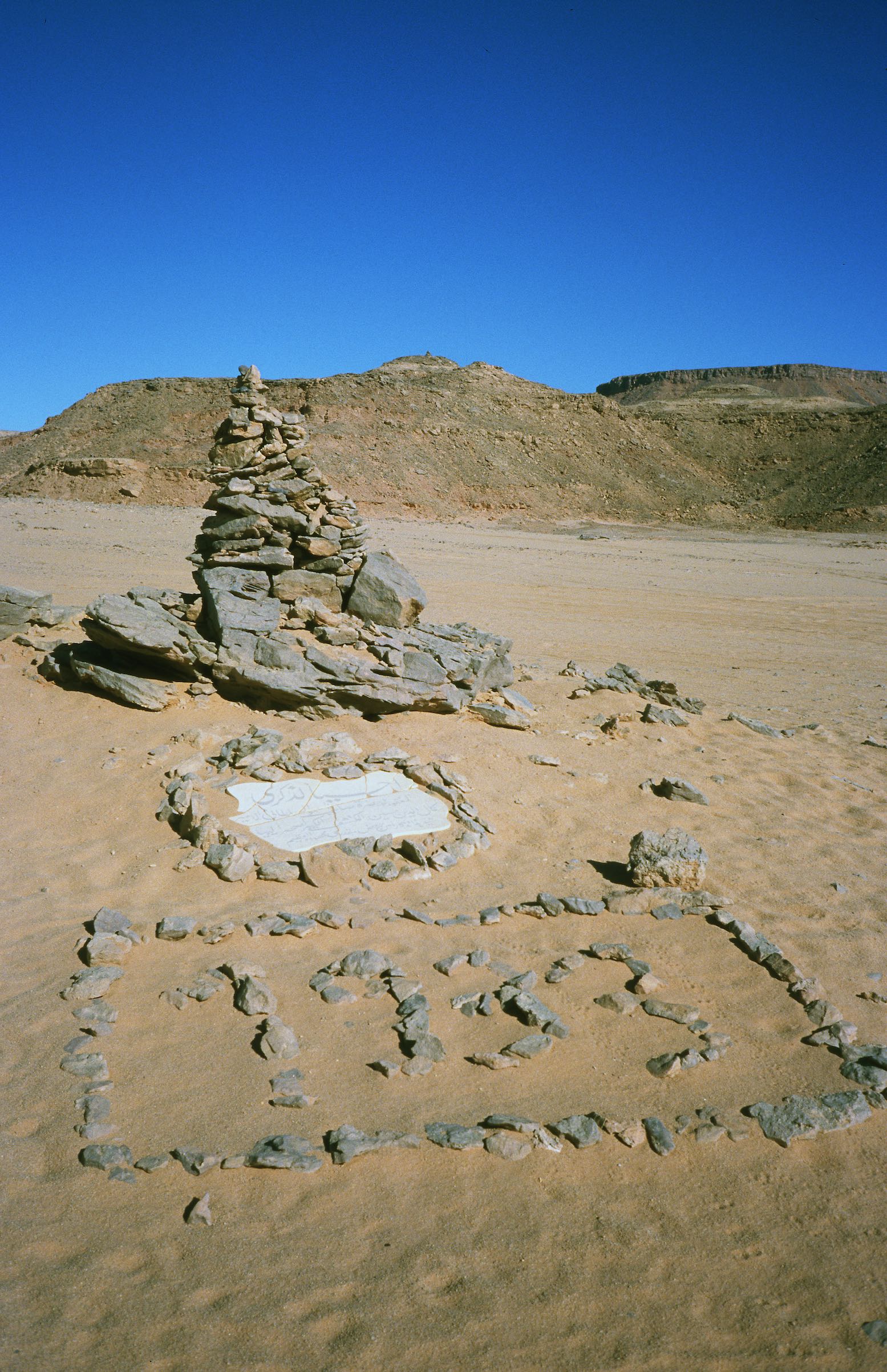
We moved north again, making the obligatory pilgrimage to the Kamal El Din monument (left) built by Almasy on the southern tip of the Gilf. Messages are still left in a bottle by passing travellers; a custom started by Rohlfs at the cairn of Regenfeld, further north. We now followed the southern edge of the Gilf to the northwest, past an old American SDF truck from the war and more Shell tins. We stopped at the Three Castles landmark where one of the group found one of Almasy’s water tins as accurately described in his ‘Unknown Sahara’ book. In case you don’t know Laszlo Almasy was the basis of the ‘English Patient’ character in that very fictional book and movie, and a contemporary of Bagnold, Shaw and Clayton. For me the famous Wadi Sora discovered by Almasy and romanticised in the movie was nothing special; the ‘cave’ has flaked badly but the swimming figures are still very distinctive.
Cave of
the Swimmers
We headed back east to the dreaded Aqaba Pass, an unmined five kilometre sand ramp providing access into the central rift of the Gilf. Foot on the floor in Low 2nd and rocking hard on the steering wheel, I just scraped through to the summit, much to my surprise. Werner, driving the other heavy car got himself mired near the top and we all made a meal of getting the ‘fuel mule’ to the summit. Along with the other-worldly panoramas surrounding Clayton’s Craters, the central Gilf north of the Pass was one of the most beautiful landscapes we encountered – we’d obviously hit it at the right time of day.
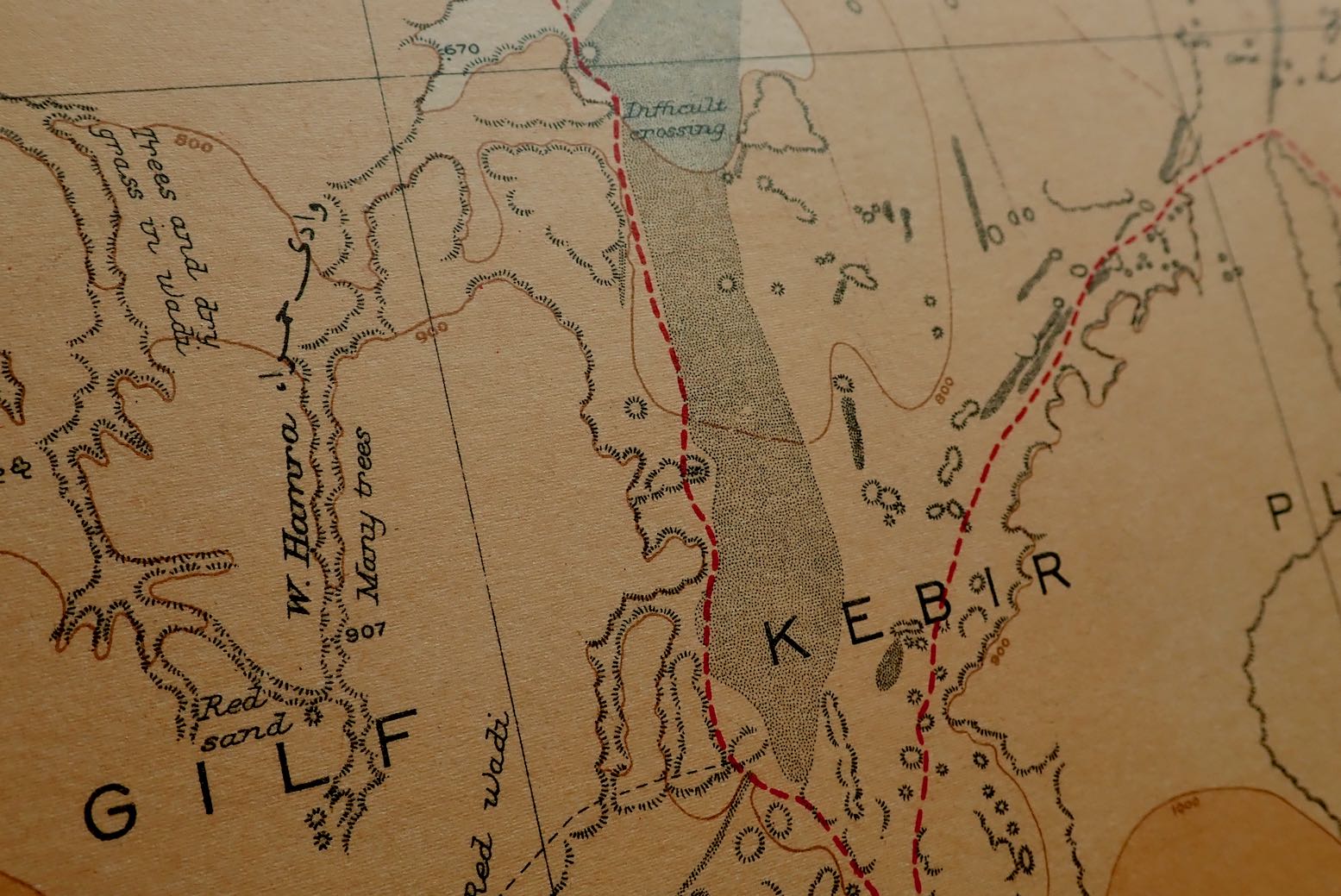
We camped in a valley bizarrely dammed by a perfectly dune of sand 200 feet high and now clearly visible online. We rose early next day to attempt to cross the cordon of dunes blocking access to the northwestern Gilf valleys, dryly annotated as ‘Difficult Crossing’ on the 1942 British Survey map, still one of the best for the area. They were first crossed in 1935 by WB Kennedy Shaw and his group using Model A Ford.
Using from NASA satellite imagery [this was all pre-Google Earth] and the British Survey map, Andras led us through the erg’s seven-kilometre width in six hours, notwithstanding a freak out by one of the Egyptians who, along with a wheel brace, grabbed the keys from two cars and yelled “We’re all going to die if we go there”. Discussing this with Reinhart Mazur on my return, he observed that most Egyptians are river dwellers very much not ‘of the desert born’, unlike the Tubu, Tuareg or Moors further west. Ahmed was eventually calmed but later, navigating the Sand Sea, this was to be a recurring problem. Exhausted after the digging and pushing of the crossing, we headed south deep into Wadi Hamra, then spent another very enjoyable day walking over the tool-scattered plateau to the adjacent Wadi Abdel Malik, spotted by Almasy and others from a biplane in the early 1930s and named after the last Tubu grazer who lived there. Almazy also believed this to be a most likely location of the ‘lost oasis’ of Zerzura, used by Tubu raiders who set off to attack Dakhla oasis.
The Lost Oasis of Zerzura?
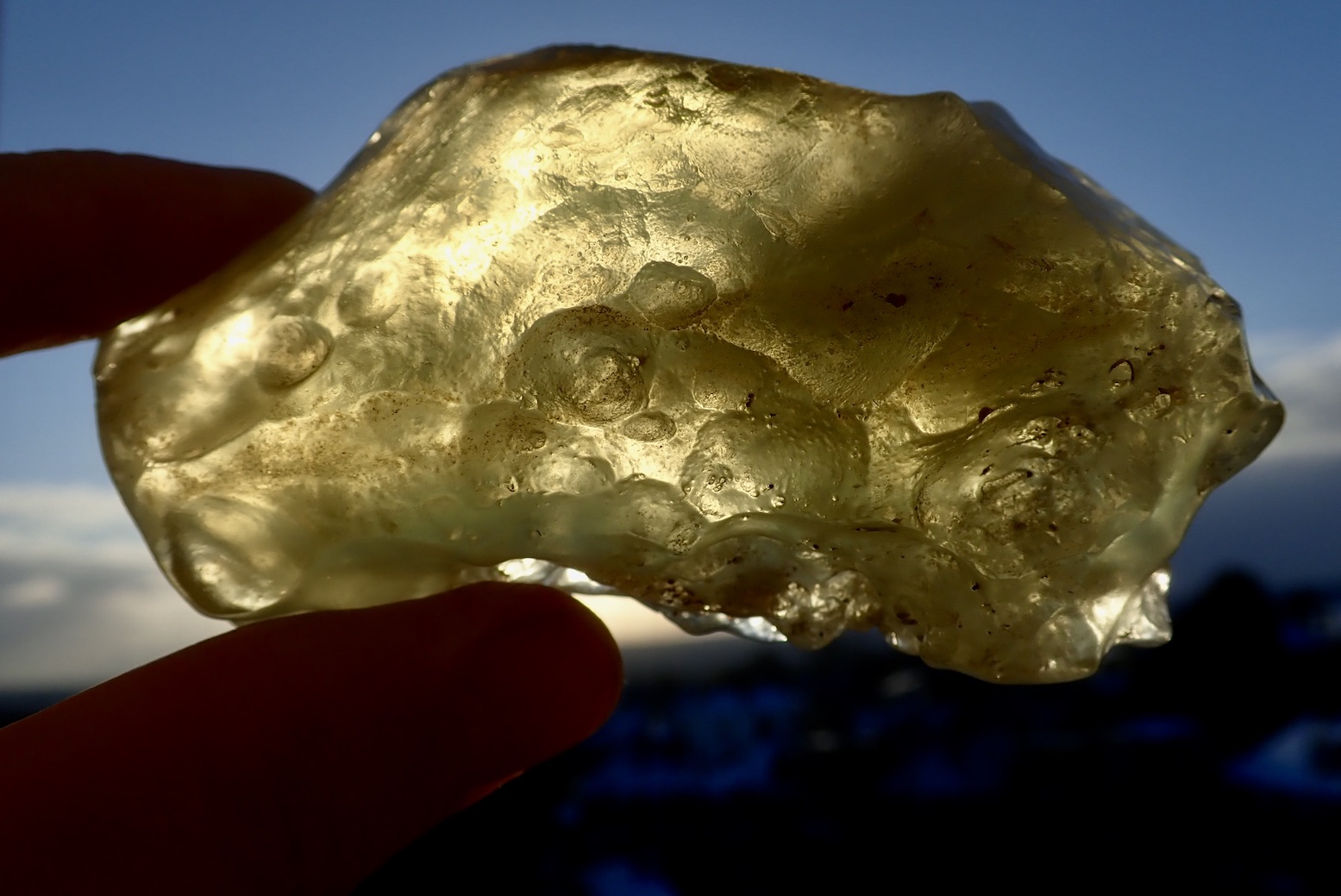
Our next destination was the Silica Glass Field located in a 100km circle around N25° 18′ E25° 32′, among the parallel dune lines of the Great Sand Sea. We all spent a satisfying few hours picking out pieces of this clear green glass, ranging from the size of a penny to a grapefruit. I also found some Palaeolithic nick-nacks and on a dune crest one of the others found several pencil-thin tubes of fulgarite: sand grains vitrified by lightening.
For me, our fossiking was overshadowed by the long dune lines running north-south alongside the pebbly flats. An inspection on foot confirmed that these were not simple ‘up and down’ barchans but a complex, weaving band of crests and troughs a few hundred metres wide and clearly beyond the ability of the still heavy Land Cruisers. The original plan to drive up to Siwa had been abandoned, but a no less ambitious decision was taken to try and cross the dunes to the northeast up to Ammonite Hill and on to the well at Ain Dalla, near Farafra, just as Bagnold, Shaw and there chums used to do in the 1930s with stripped-down 2WD Fords.
In Werner’s and my opinion, such a task is best left to lighter vehicles and, lacking a decent compressor, proper tyre deflation was not allowed, leading to inevitable boggings. I‘d let mine down at Shaw’s Difficult Crossing a few days earlier, but even then, every eastbound cordon was hard won, with the aid of hand held radios, foot recces and passengers strung out as markers to guide the white-knuckle driving around the soft spots. After an exhausting day, more arguments and attempted sabotage of the tyre valves by the nervous Egyptians, the idea was dropped and we headed back south towards the northern banks of the Gilf to pick up the track to Abu Ballas. All of us were very relived to be out of the dunes.
Abu Ballas
‘Pottery Hill’
Apart from the food, for me the trip was a great experience. It was the first time I’d driven entirely off piste which I found surprising easy. I was merely following a lead car of course, but the almost complete lack of wadis in the hyper arid Libyan Desert makes cross country travel using GPS and maps or satellite imagery straightforward. Day walks away from the car where also a novelty to me. Near pistes I’d always been nervous about leaving the ‘mother ship’, be it car or bike. But here there was no one for hundreds of kilometres in any direction and there’s no doubt that the desert is best appreciated at walking pace. Interestingly Werner and I both recognised that even though we were as a far out as we’d ever been in the Sahara (certainly for me), we didn’t feel the remoteness. The fact that the organisation was Andras’ responsibility reduced the impression of deep wilderness experienced when you do it independently, at of course, some cost to your nerves. In this instance we were both happy that someone else – and better still, someone else’s car – where carrying that heavy loads.
In just about the geographical centre of the Sahara lie the Hoggar mountains. Compared to the tawny sandstone of the Tassili N’Ajjer further east or the granite domes of the Tefedest and Tesnou, it’s a bleak, harsh landscape of basalt buttes erupting vertically from the barren landscape.
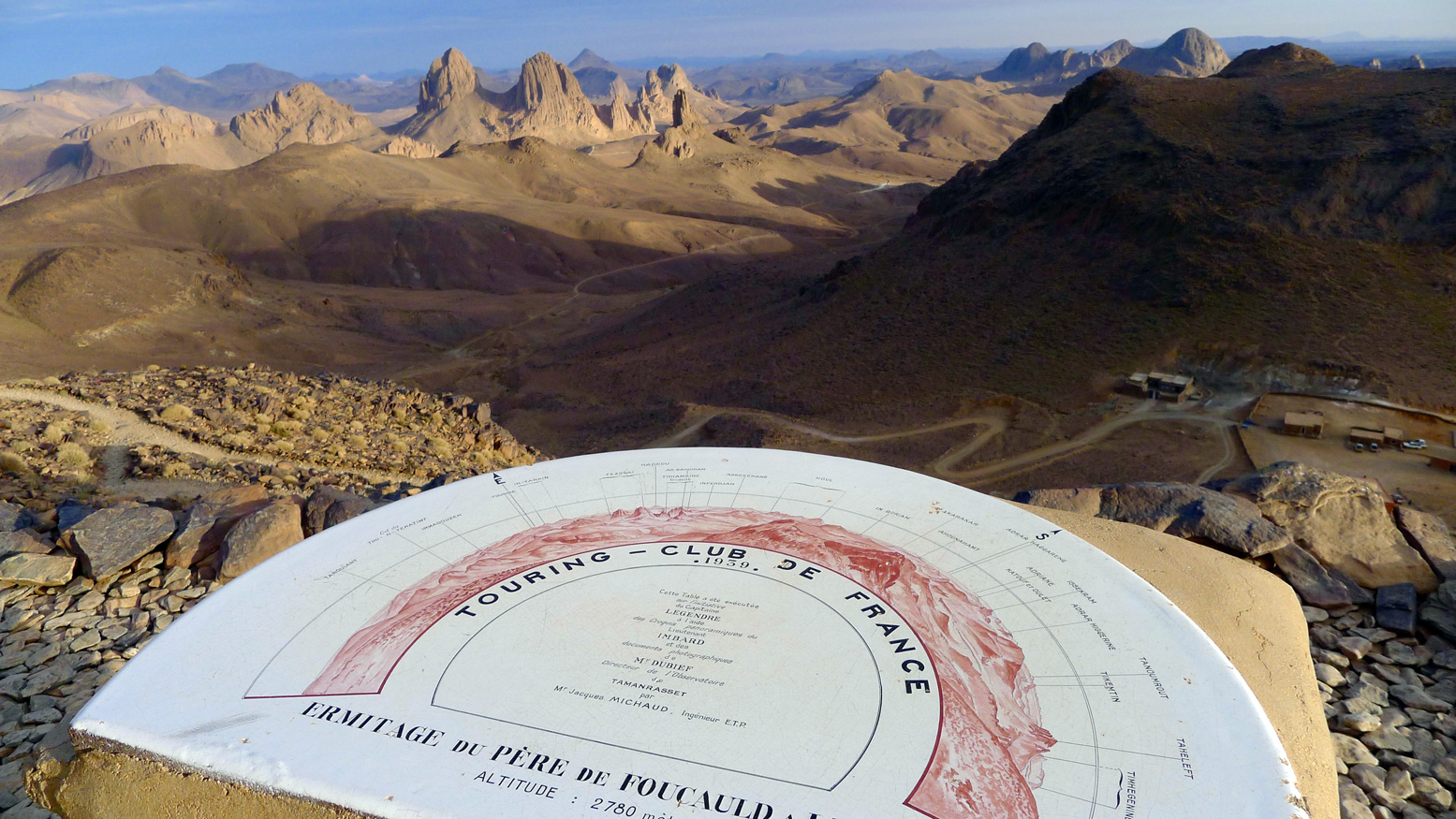
In the heart of the Hoggar massif is a dramatic cluster of eroded volcanic cores overlooked by the 9000-foot high Assekrem Pass, part of the Ahaggar National Park. Some maps call it the Atakor.
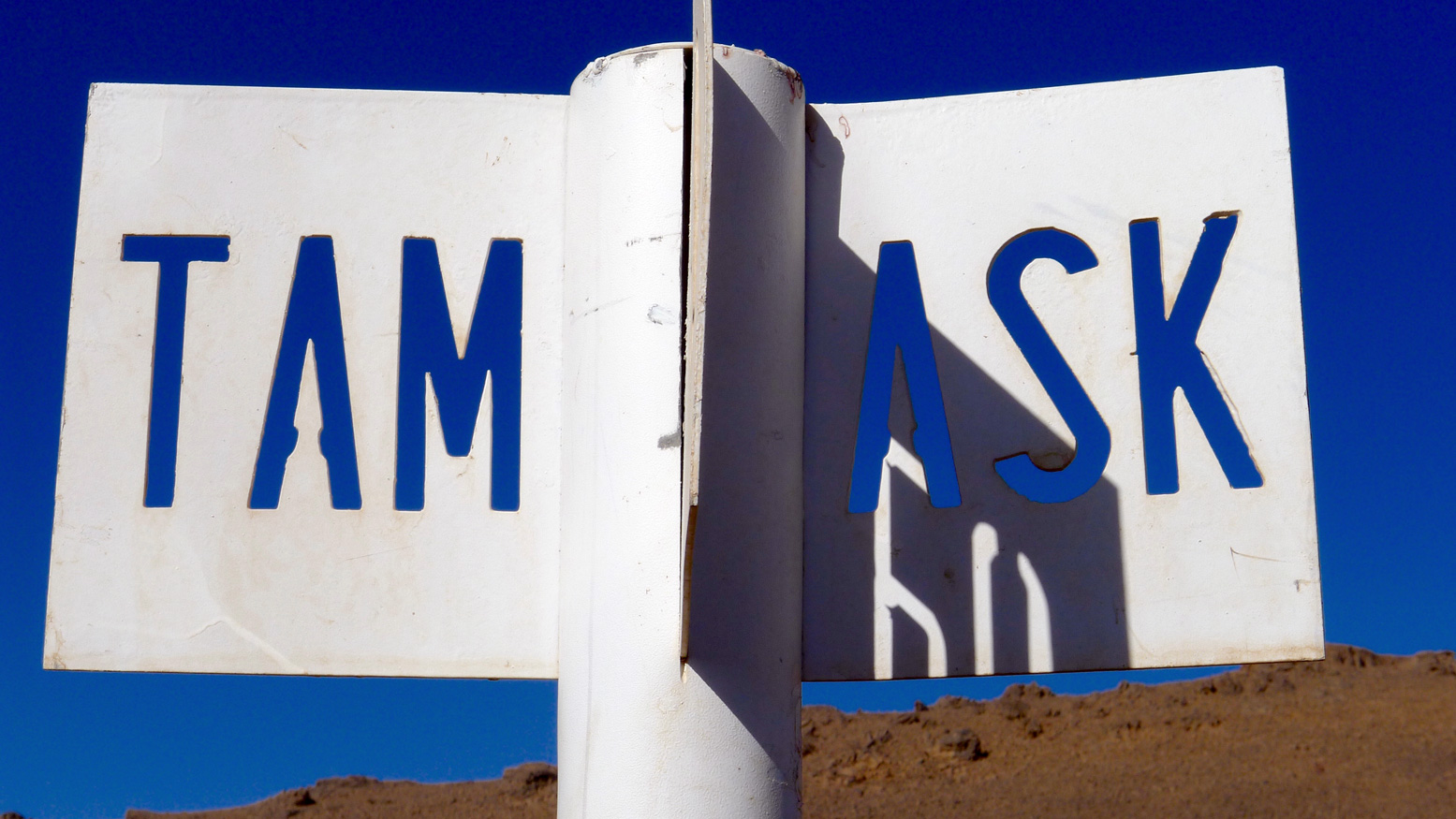
There are three ways to get to Assekrem: the regular 85-km eastern route up from Tam via Iharen peak. A gnarlier and slightly shorter western route which starts near the airport, then passes Terhenanet, though is usually taken as the descent from Assekrem to make a loop back to Tam as it’s easier to manage going down. Another route comes in from the north from Hirafok over the Tin Teratimt Pass (above).
Or you can follow a network of camel tracks (above). It takes a week or more, depending where your start.
Assekrem is the best known of the many wonders of southern Algeria. A lodge sits on the saddle of the pass (above) where tourists spend the night to enjoy the stunning sunset and sunrise across the brooding volcanic monoliths from the plateau above the Pass.
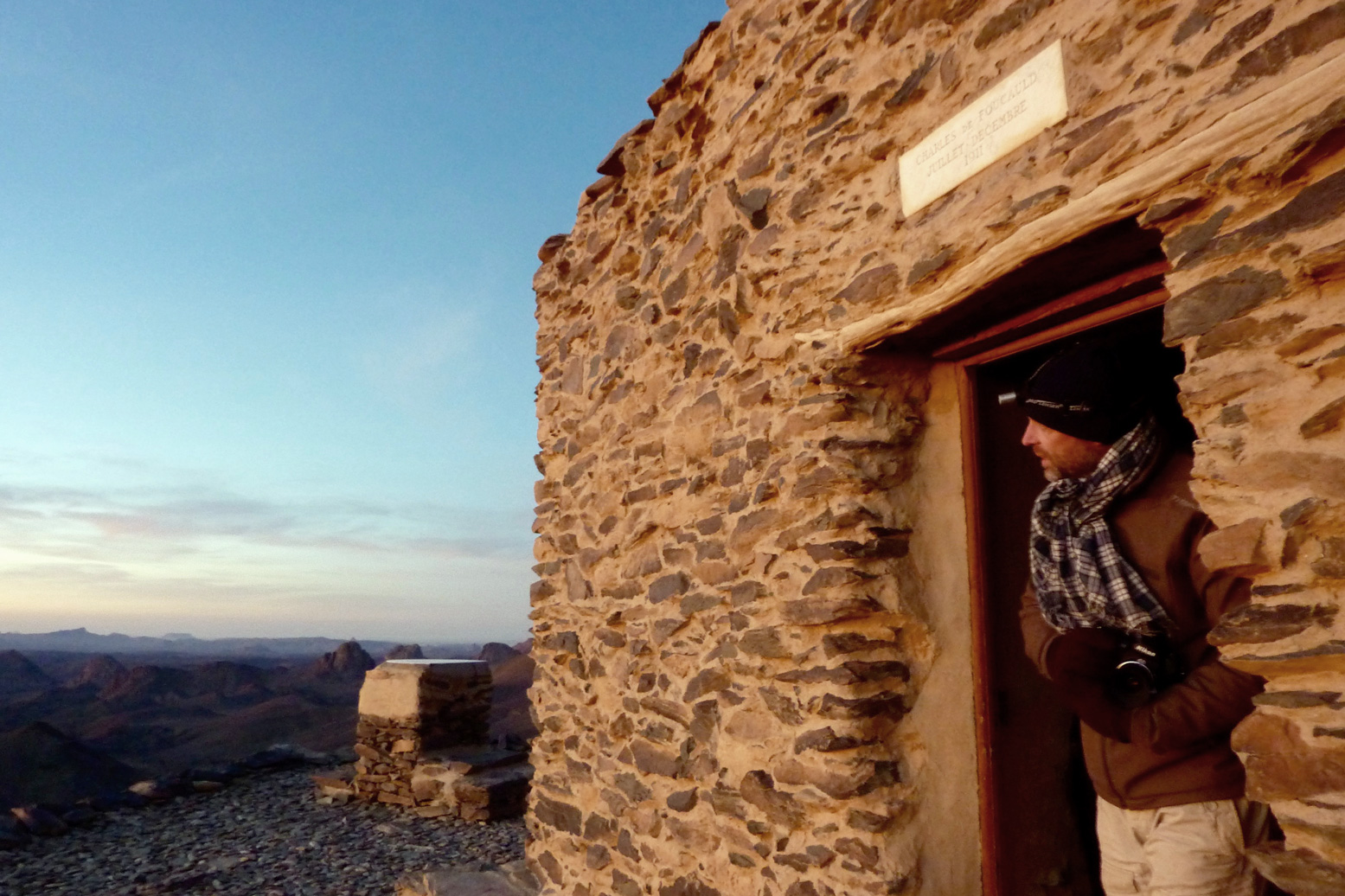
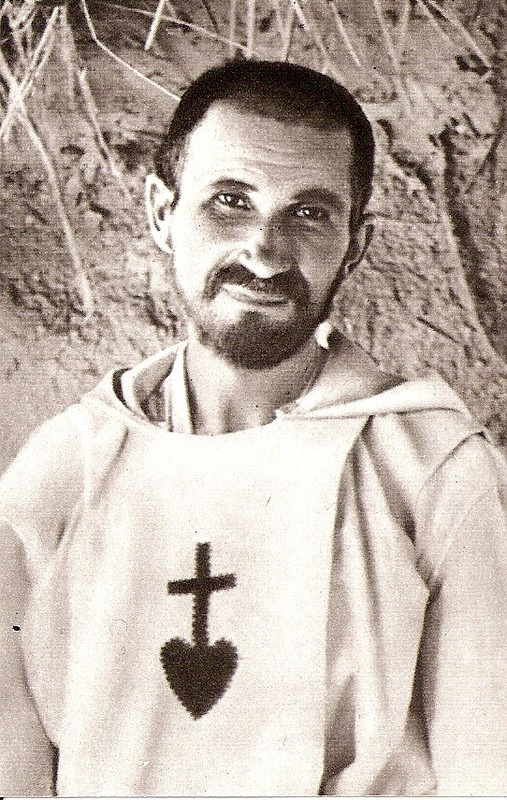
Though he spent most of his time in Tam, early in the early 20th century Charles de Foucauld, a French bon viveur and soldier turned missionary, built a crude stone hermitage on this plateau (above).
Among other things, Foucauld was responsible for the first Tamachek-French dictionary, and his house still stands in Tam. It was here in 1916 that Foucauld was assassinated as a suspected French spy, during the Senussi uprisings in Libya and Egypt. He was beatified in 2005 and the hermitage is still tended today by a couple of aged members of the order of Les Petites Frères de Jésus, who were inspired by Foucauld’s life.




















 Sahara Overland