Author Archives: Chris S

Trans-Sahara from Uganda – 1954

Knud and Svend’s two-month journey to Europe

Thanks to Danish journalist, Anders Nielsen (a friend of one of the protagonists) for passing on this fascinating article and photos. I tidied up a Google translation and added [my annotations] for added clarity. 
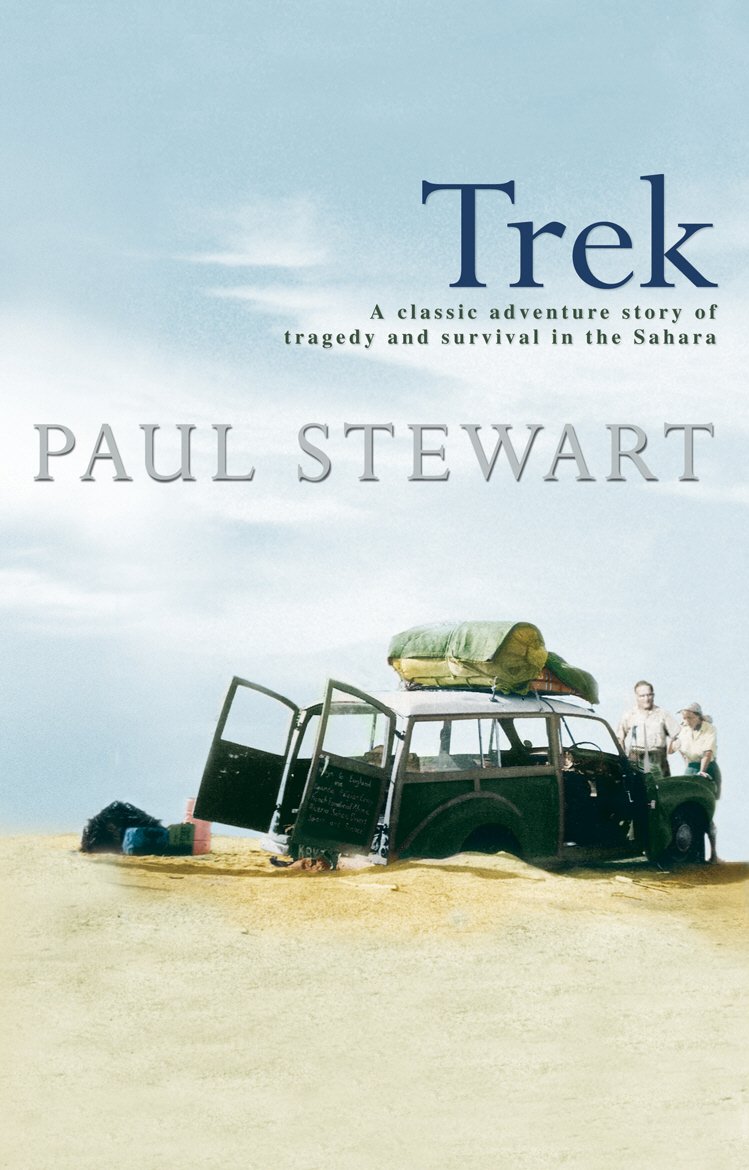
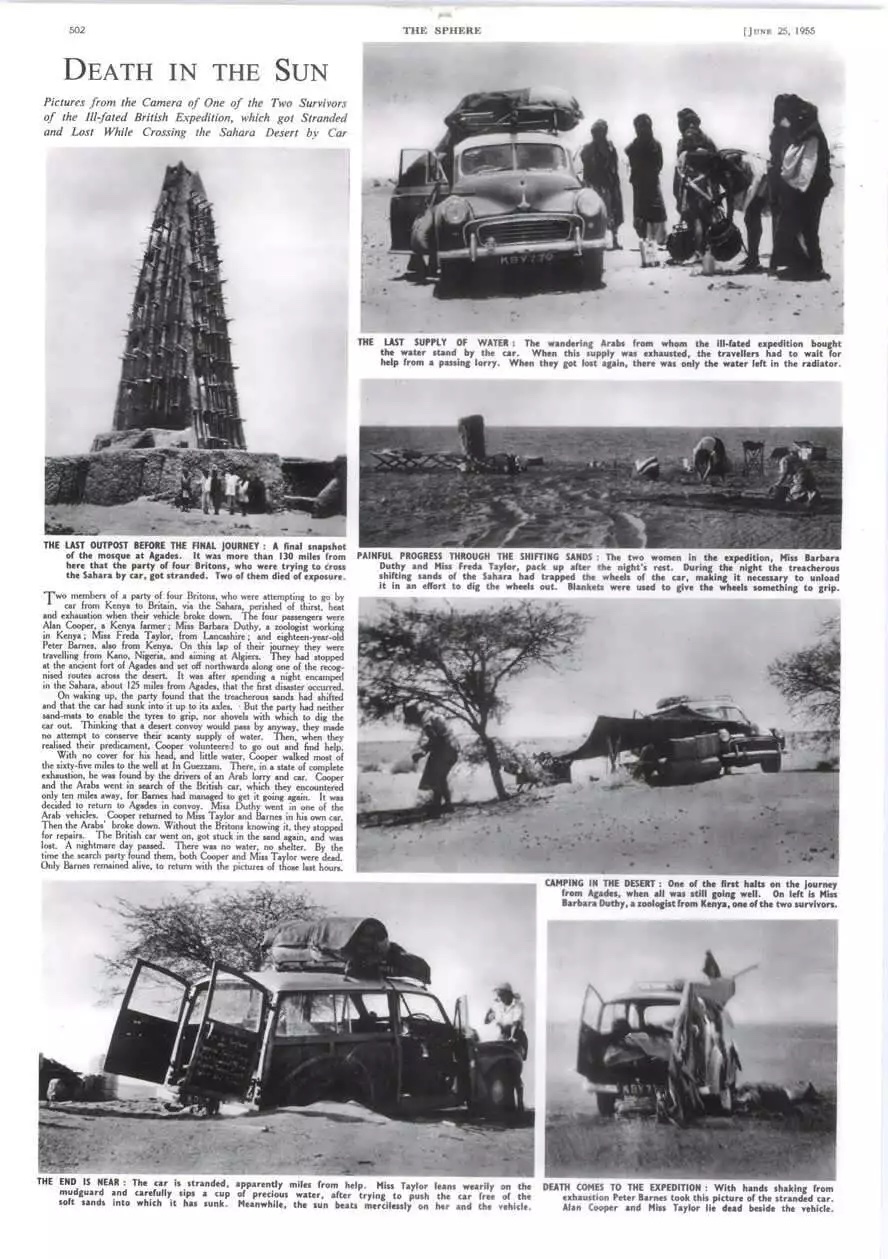
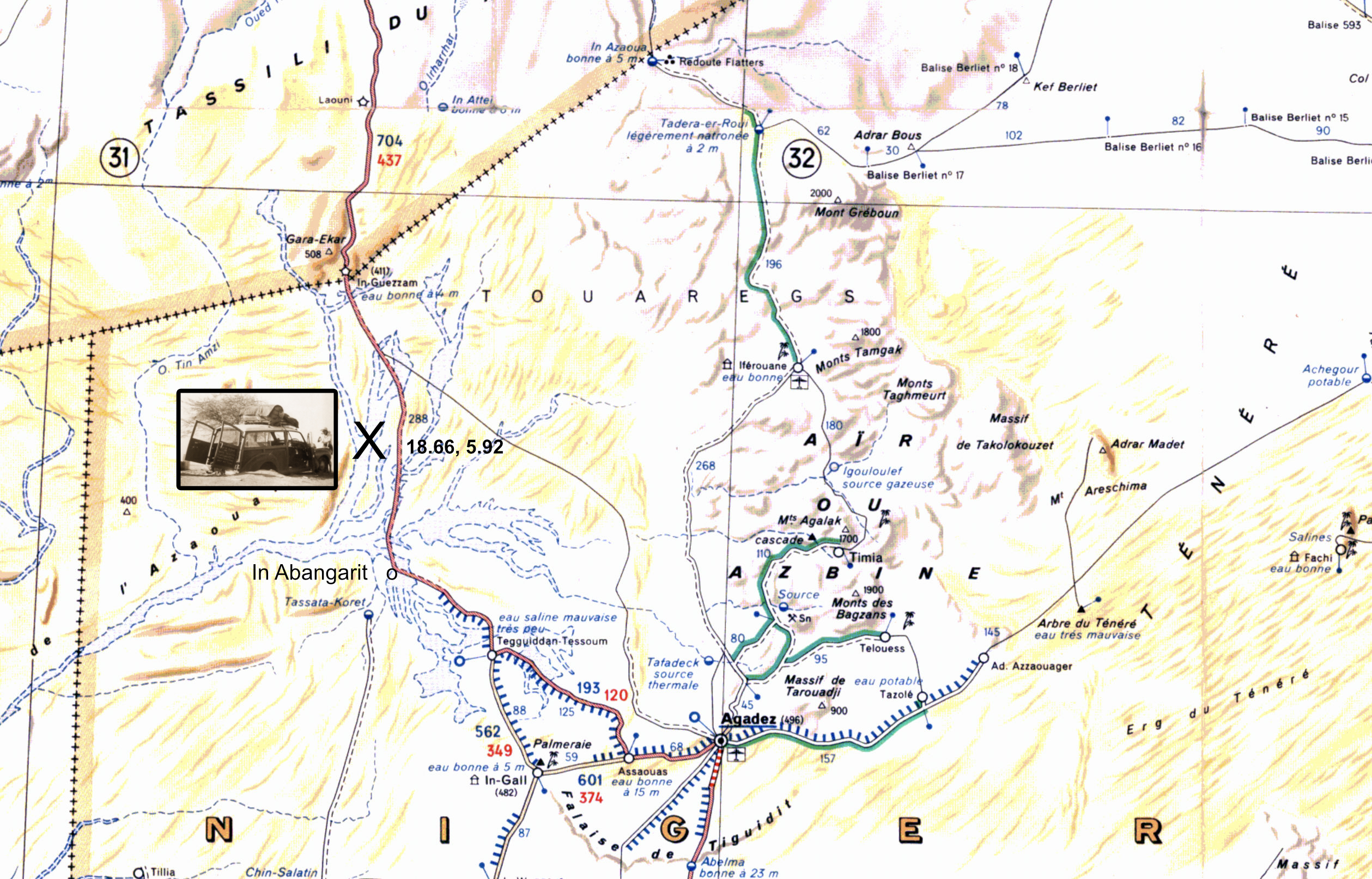
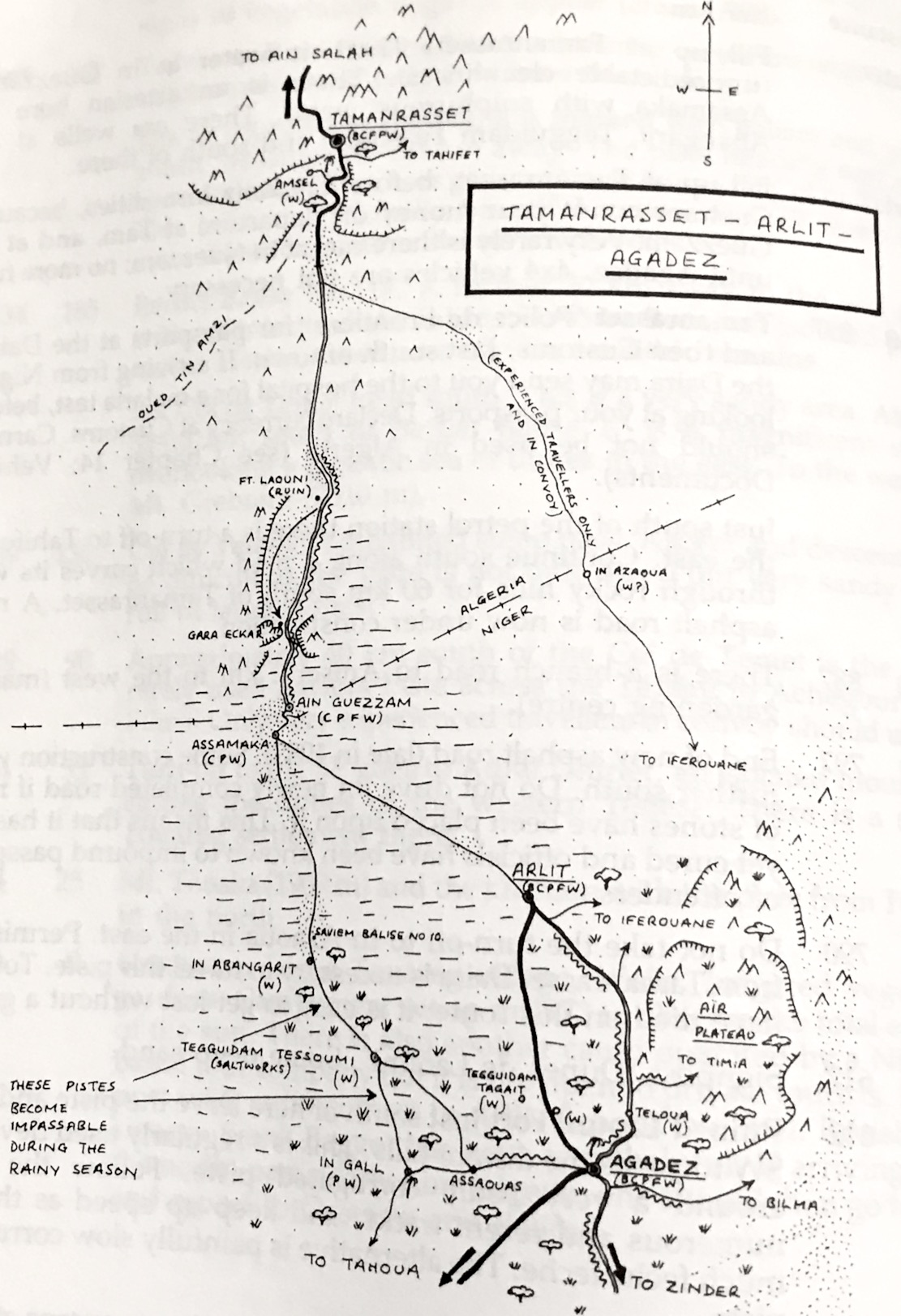
Seventy years ago, on finishing a lengthy contract in the late-colonial sub-Saharan Africa, taking on such trans-African adventures was not uncommon. It was assumed a regular car might manage as in many colonies parts of the road network were well maintained and superior to what exists today. But as you’ll read, the near-new Morris Oxford still got quite a beating. The yarn reminds me of Paul Stewart’s Trek (below right; to be reviewed), also in a Morris just a year later, but which ended in tragedy north of Agadez in the Sahara. And of course David Newman’s demented The Forgotten Piste a few years later. 

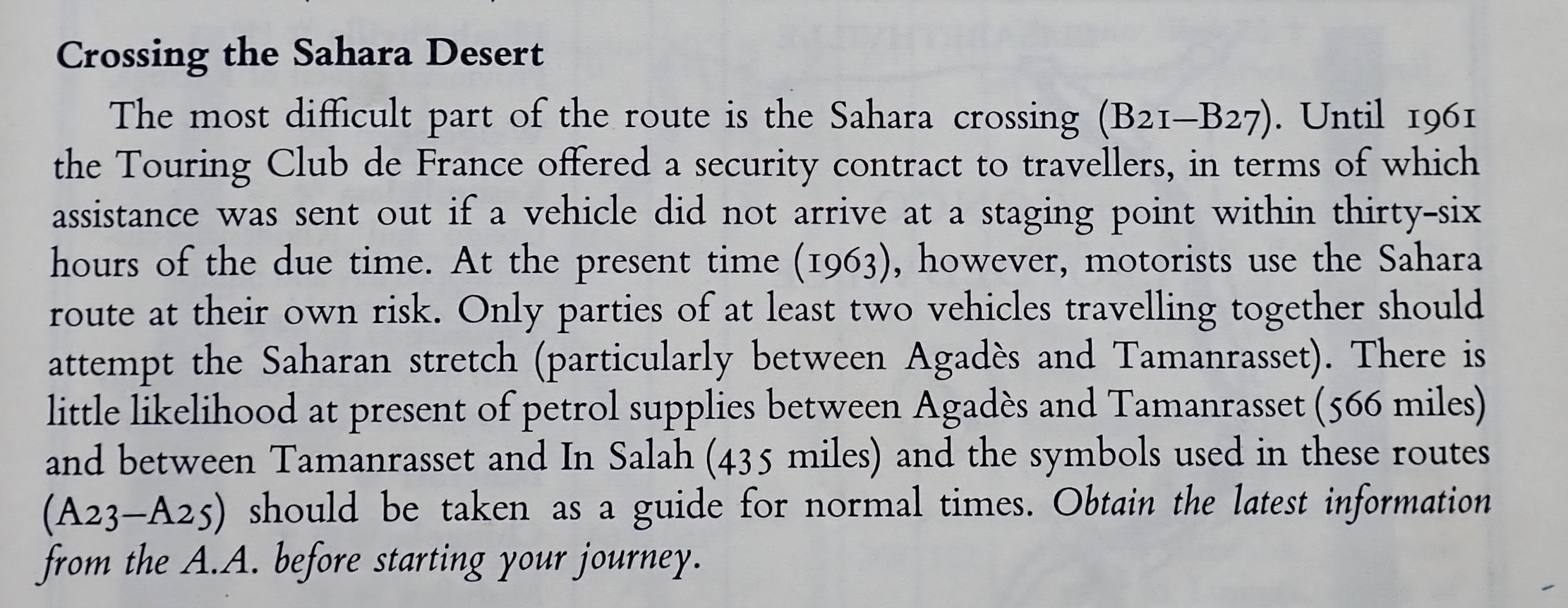
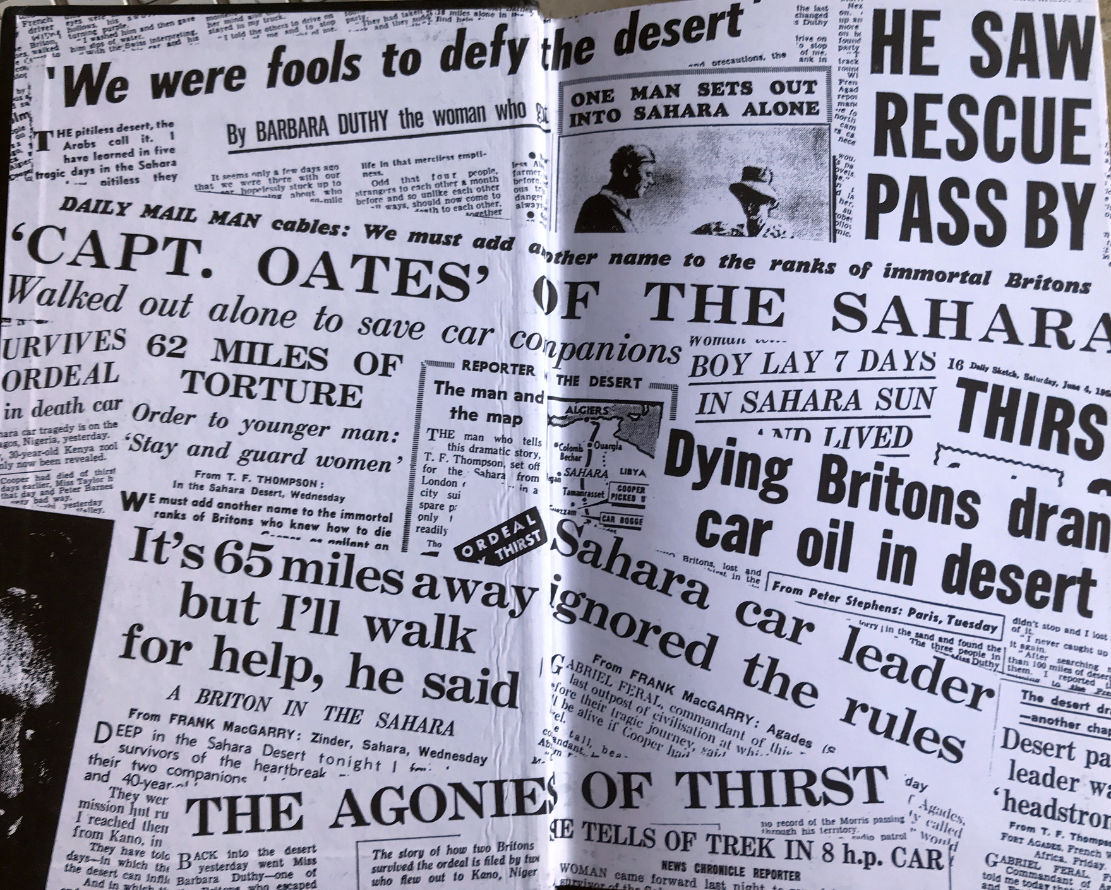
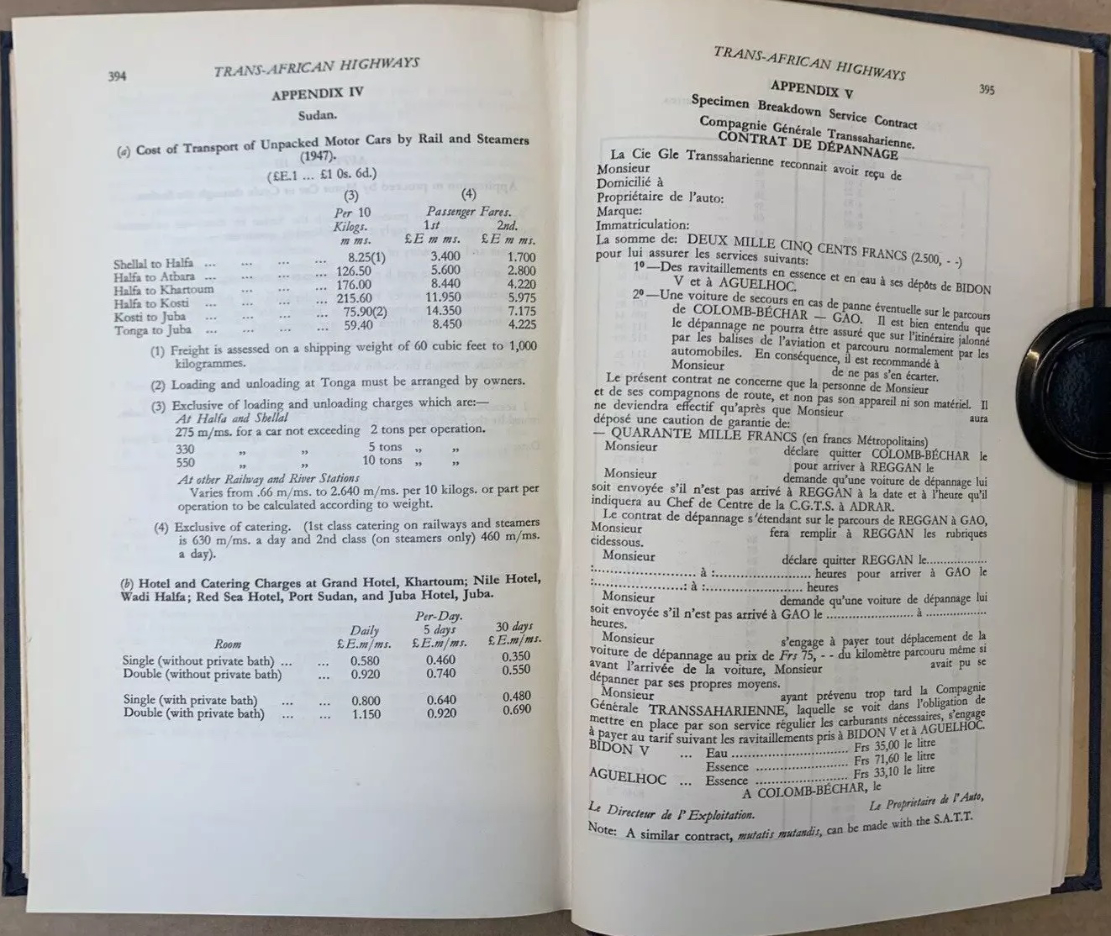
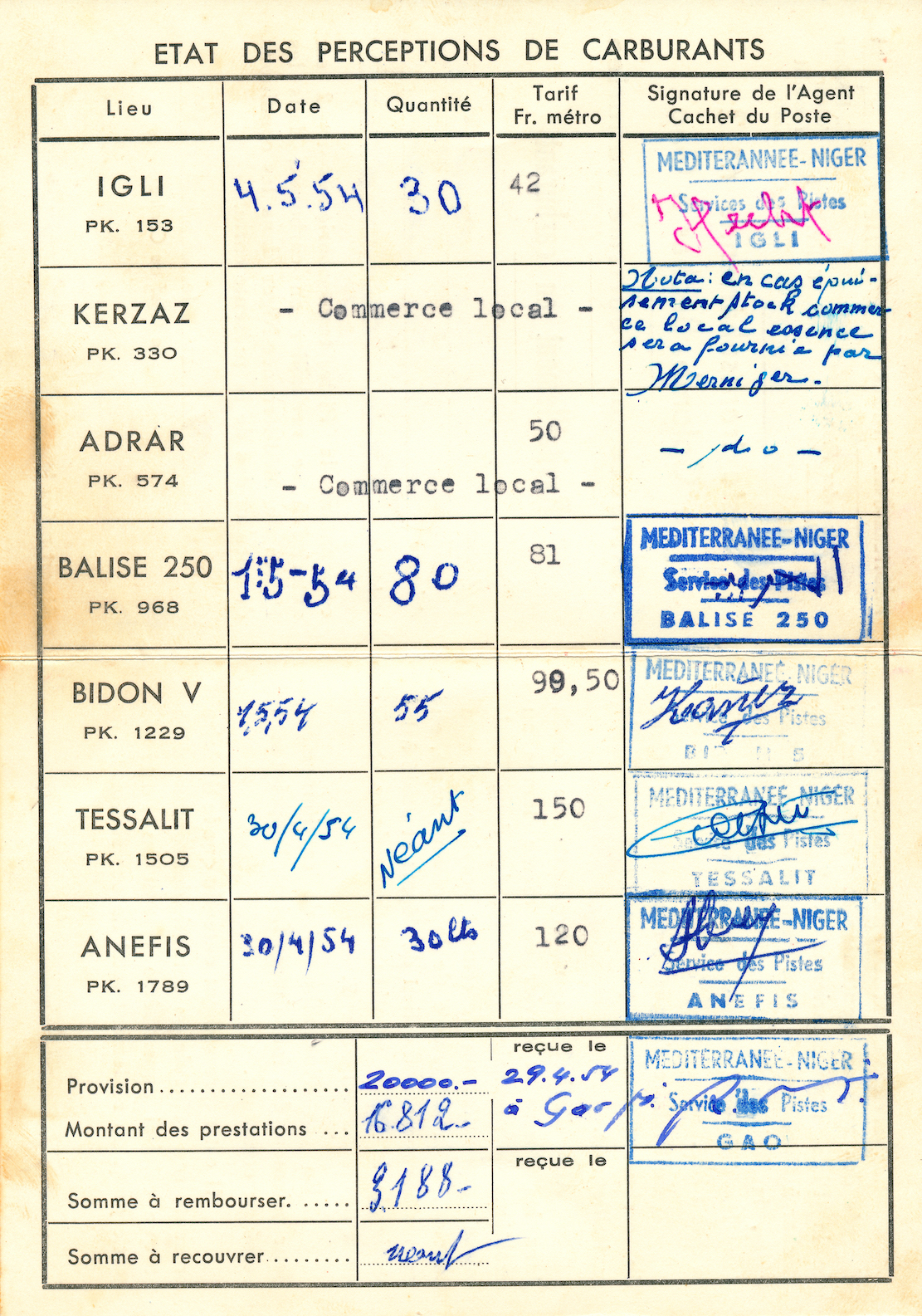
From Kenya to Morocco you’re reminded this era was marked by widespread anti-colonial unrest. It’s also interesting to learn of the huge £1000 bond (2500F + 40,000F) for the Contrat de Depannage (assistance) required to cross the French-controlled Sahara to cover the cost of possible rescues.
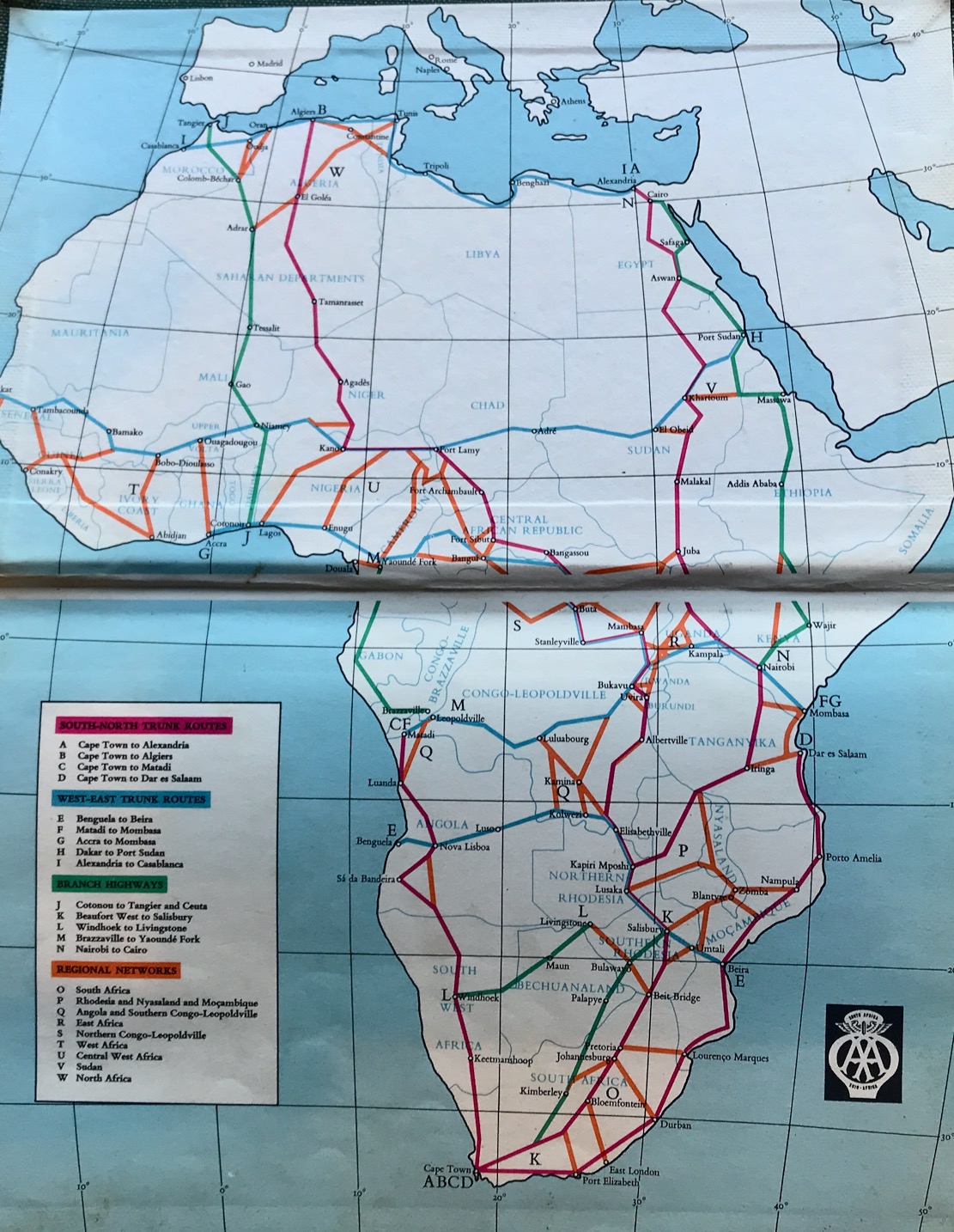
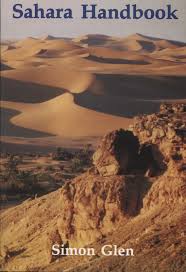
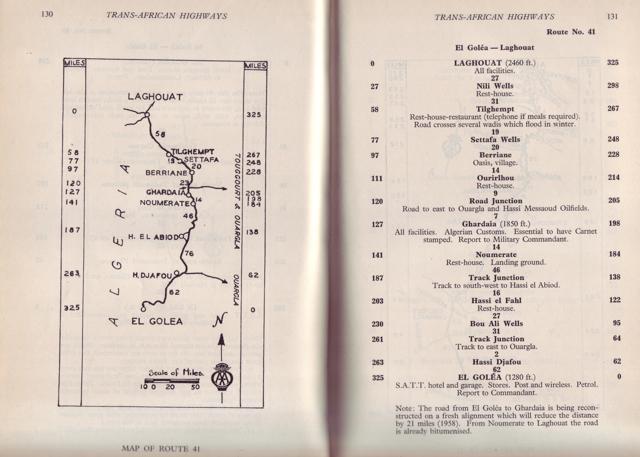
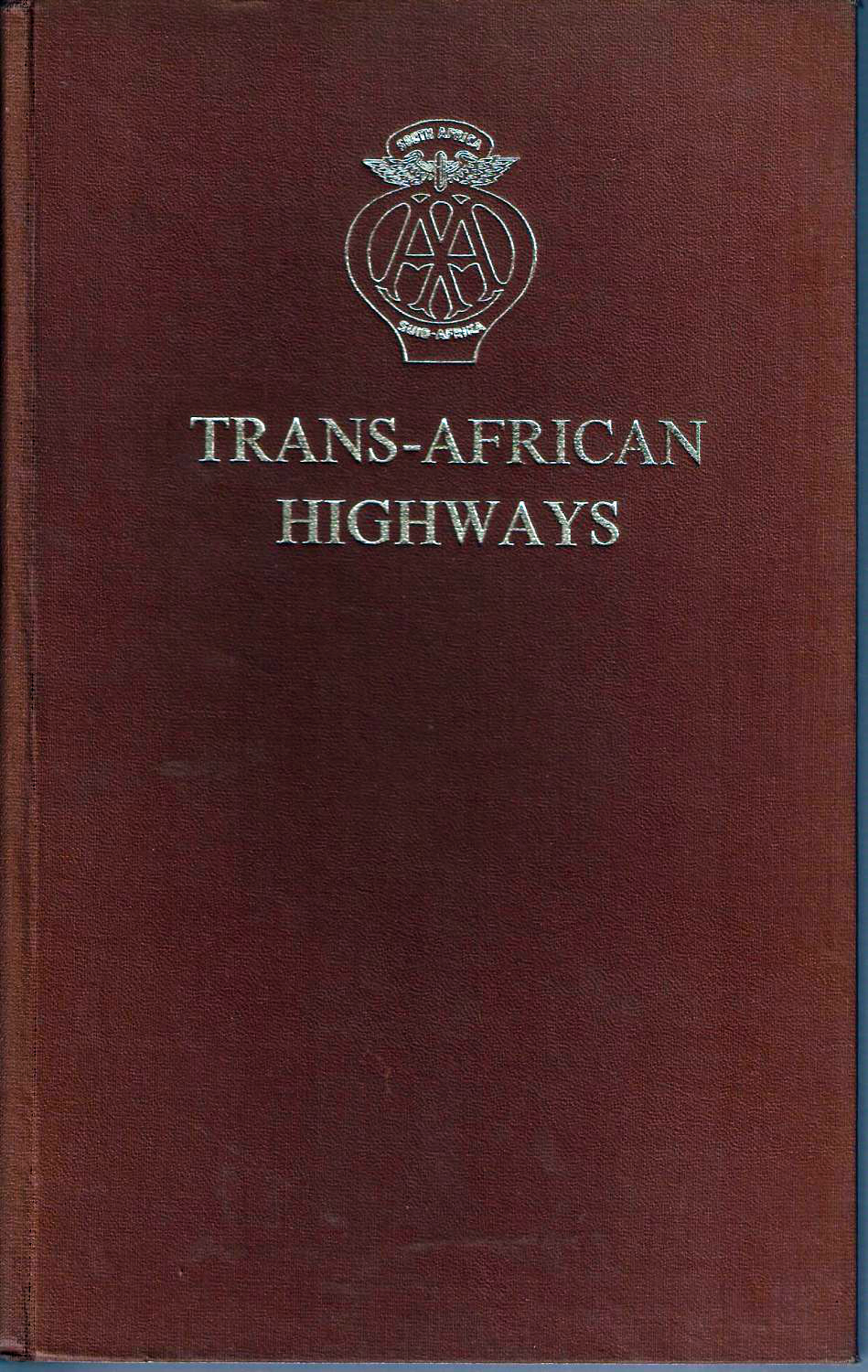
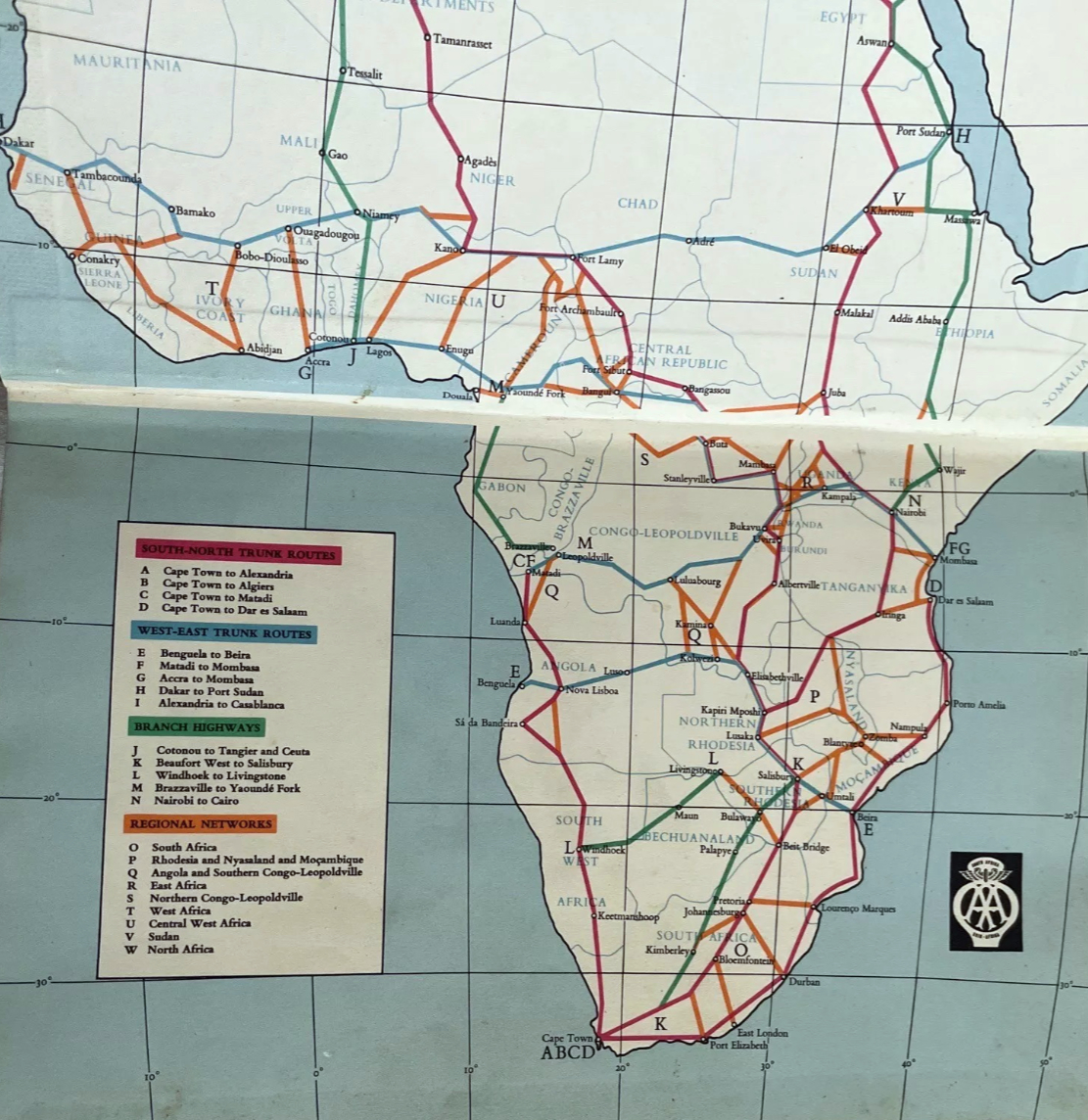
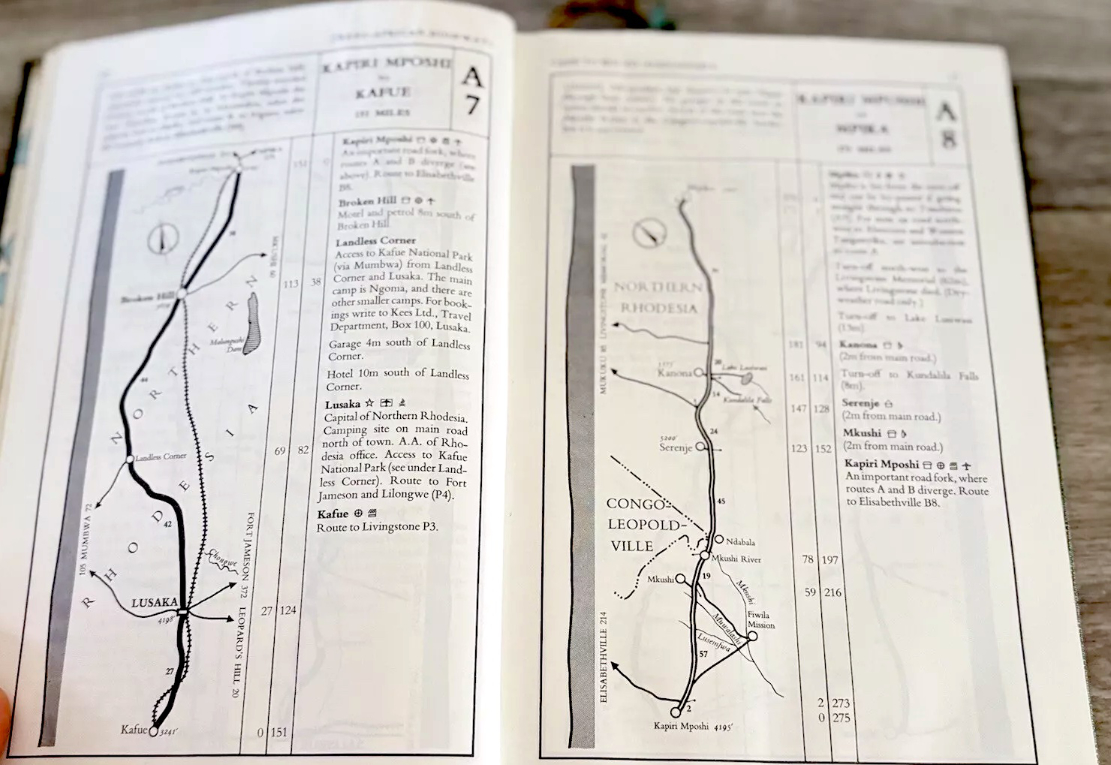
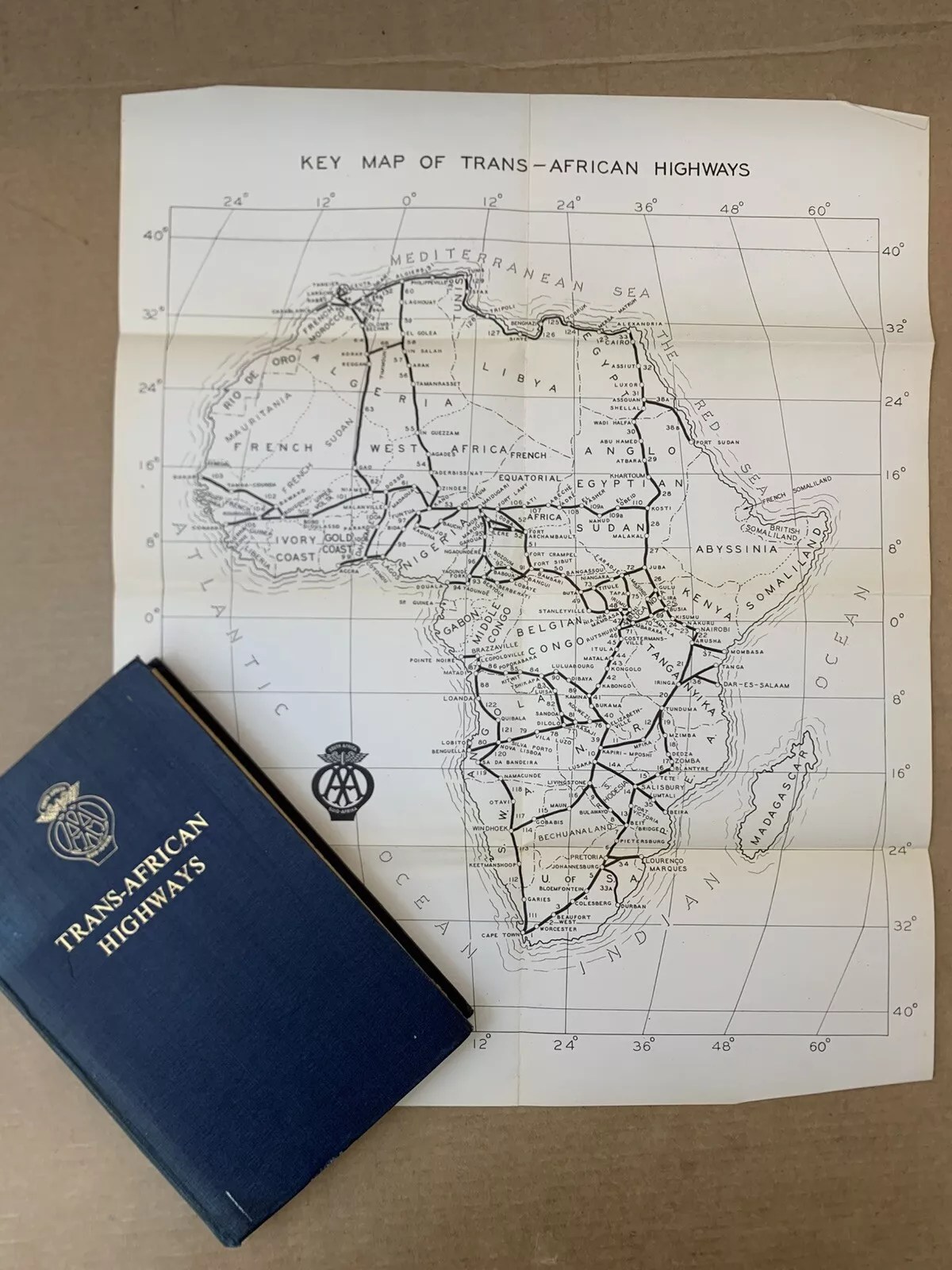
The Trans-Africa Highways route guide (below) was first published in 1949 by the Automobile Association of South Africa. There are loads of copies online from £25: I bought the final, 5th edition published in 1963, by which time the vast majority of the European colonies (list with dates) were independent. The preface to the 5th edition explained the laborious task of redrawing all the guide’s maps to conform with the new nations. The guide closely resembles the French Shell Guide to the Sahara published since the mid-1930s: page after page of annotated strip maps along a given route. Knud and Svend used the 1949 edition of Trans-African Highways which Anders still owns.

In 1954 two Danes, Knud Jensen and Svend Nielsen, drove a Morris Oxford from Kampala Uganda through equatorial Africa and across the Sahara to Kvistgård in Denmark. The 14,373 kilometre adventure nearly cost the lives of all three.

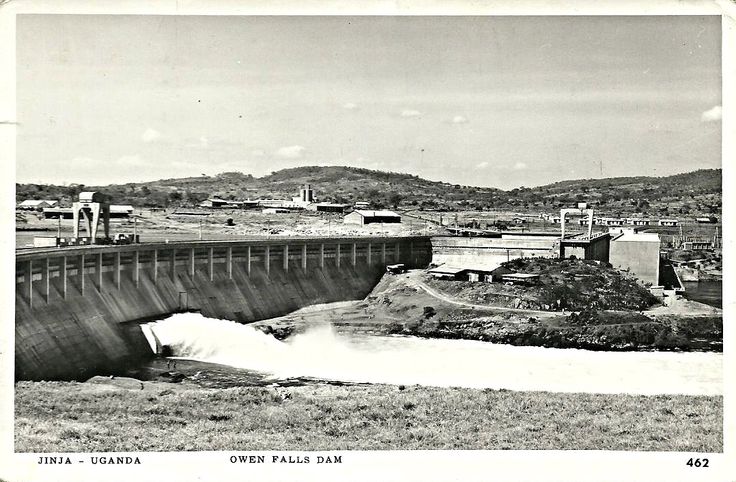
Owen Falls Dam

For three years, Knud and Svend had worked as carpenters for Christiani & Nielsen on the construction of the Owen Falls Dam (left) in Jinja, Uganda. This is where the Nile flows out of Lake Victoria to continue north to the Mediterranean. [An old treaty between Uganda and Egypt endured the Nile’s flow was unaffected, though during the 1956 Suez Crisis the Brits considered cutting the flow so to oust Nasser, even at the cost of flooding around Lake Victoria.]

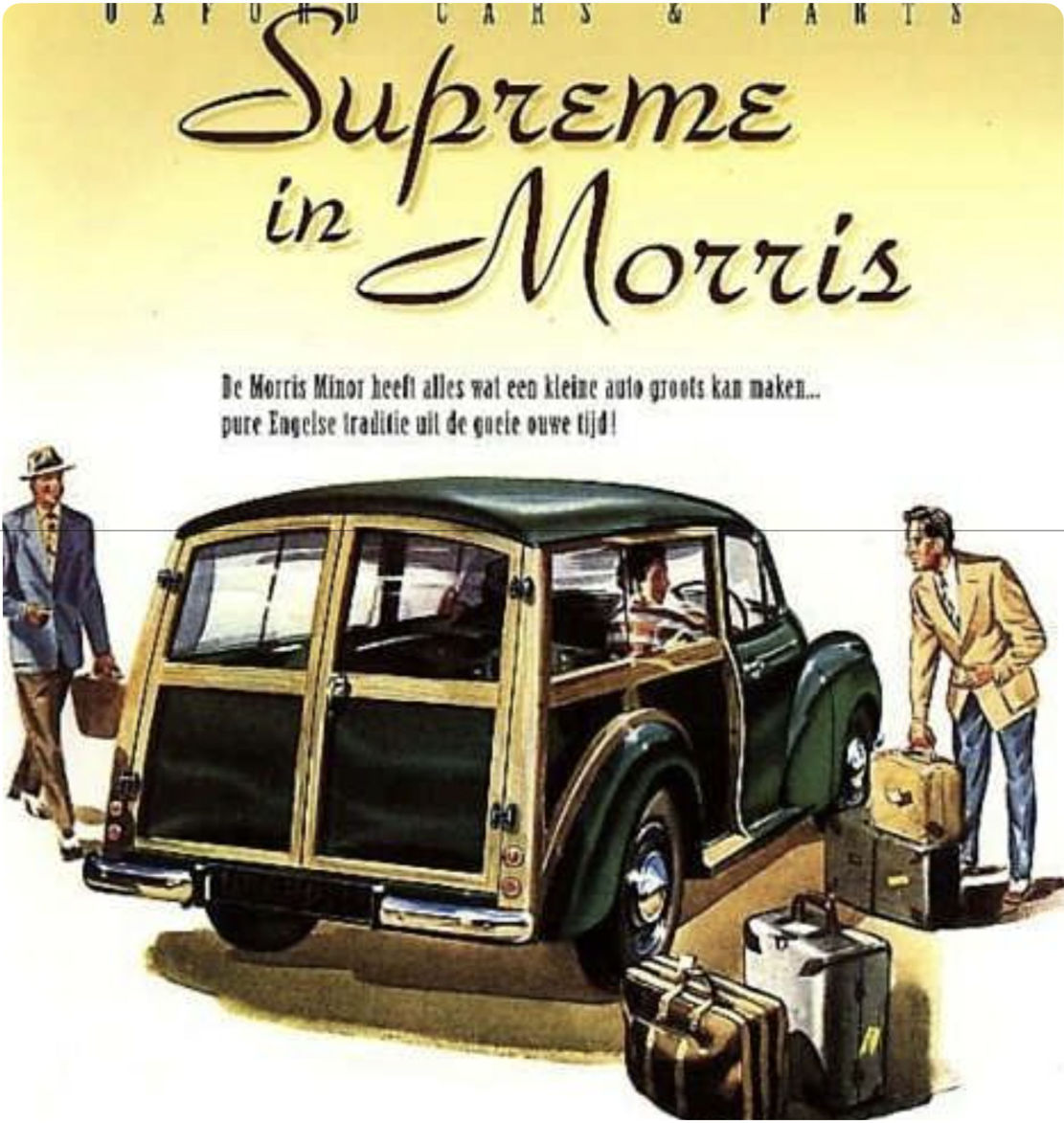
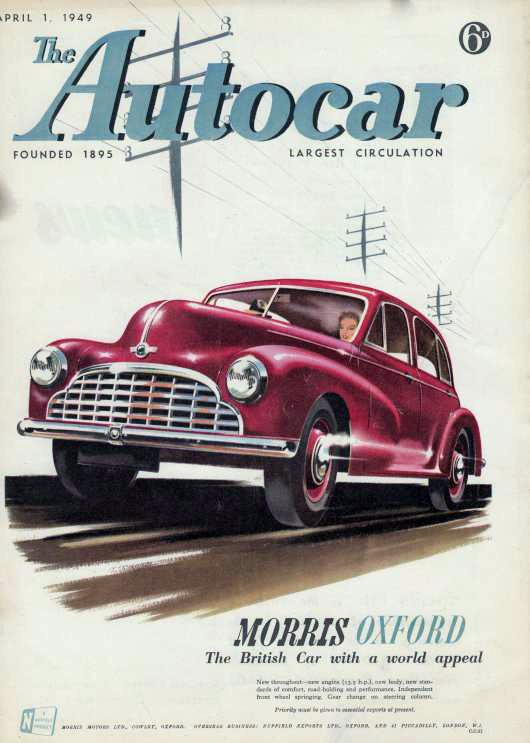
Morris Oxford

Along with their last salary, they received two plane tickets back home to Denmark, but they chose to cash these in instead. The two young men decided to drive home to Denmark. Knud had an almost new Morris Oxford [Series MO, left] and when you’re young, the spirit of adventure trounces reason. 

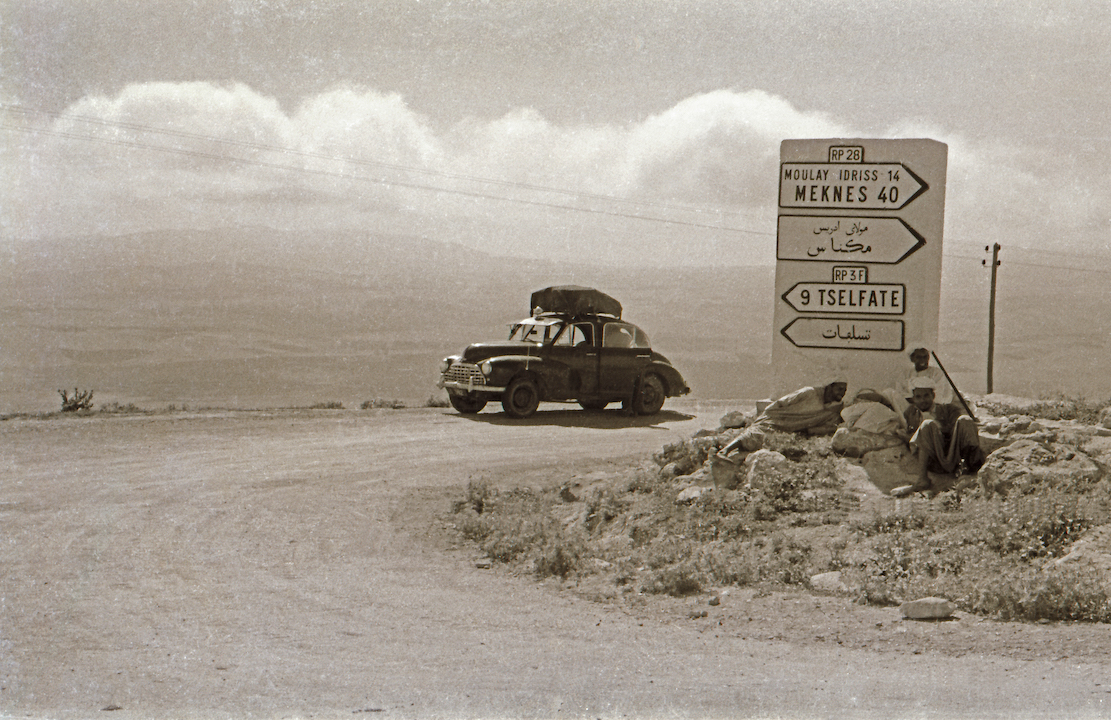
The direct route was via Sudan and Egypt [with the option of putting the car on a train across the desert from Khartoum to Wadi Halfa], but Egyptian President Nasser was in the process of kicking the British out (the Suez Crisis occurred in 1956). Meanwhile Sudan was also wearying of the British and refused permission to transit the country. The only alternative led west across the Belgian Congo [today’s DRC] and on through French Equatorial Africa [CAR, Cameroon], British Nigeria, French West Africa [Niger] to Algeria and Tangier in Morocco. 

First, 1949 edition of Trans-African Highways as used by Knud and Svend

The expedition required a huge amount of planning. Were there reliable maps? What were the roads like? When would the rainy season flood the rivers? What documents would be needed? Would the Morris even survive the trip and what spare parts would be needed? The 406-page guidebook, Trans-African Highways (left), published by the Automobile Association of South Africa, provided many answers.
The rainy season in central Africa began in April, and the route through the Sahara would be closed from June to October due to sandstorms and intense heat. This still gave the pair a few months to get organised. Costly permits to pass through French territories were obtained in Nairobi, Kenya – a round trip of nearly 1500km along wretched roads. In Kenya, the Mau-Mau uprising was underway, resulting in a driving ban after sunset. Knud recalled stayed overnight in a small hotel in Nukuru, where the white guests were hanging out in the bar with rifles close at hand. In another town, the police station had been burned down.

Leaving Kampala, April 1954

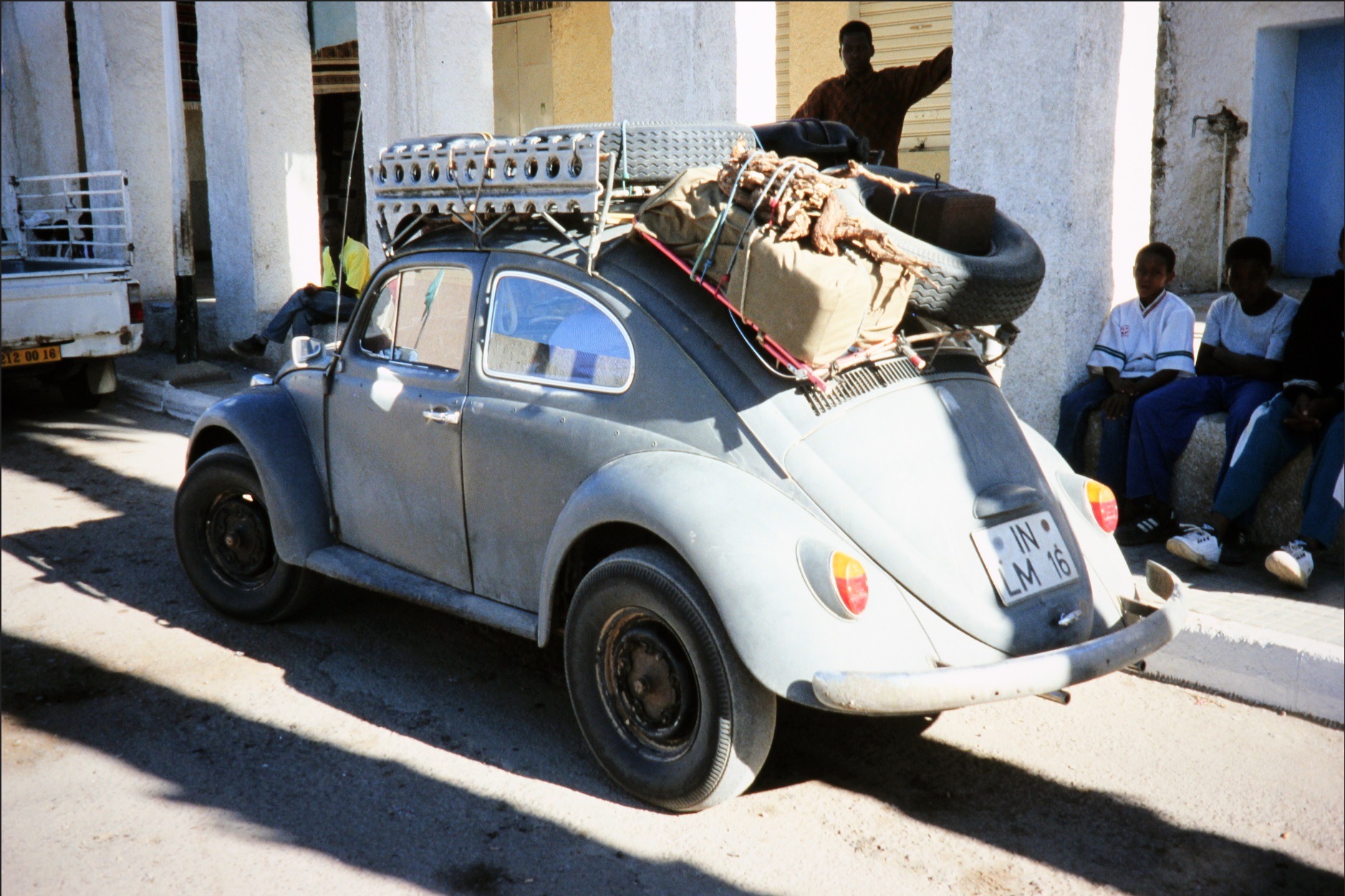
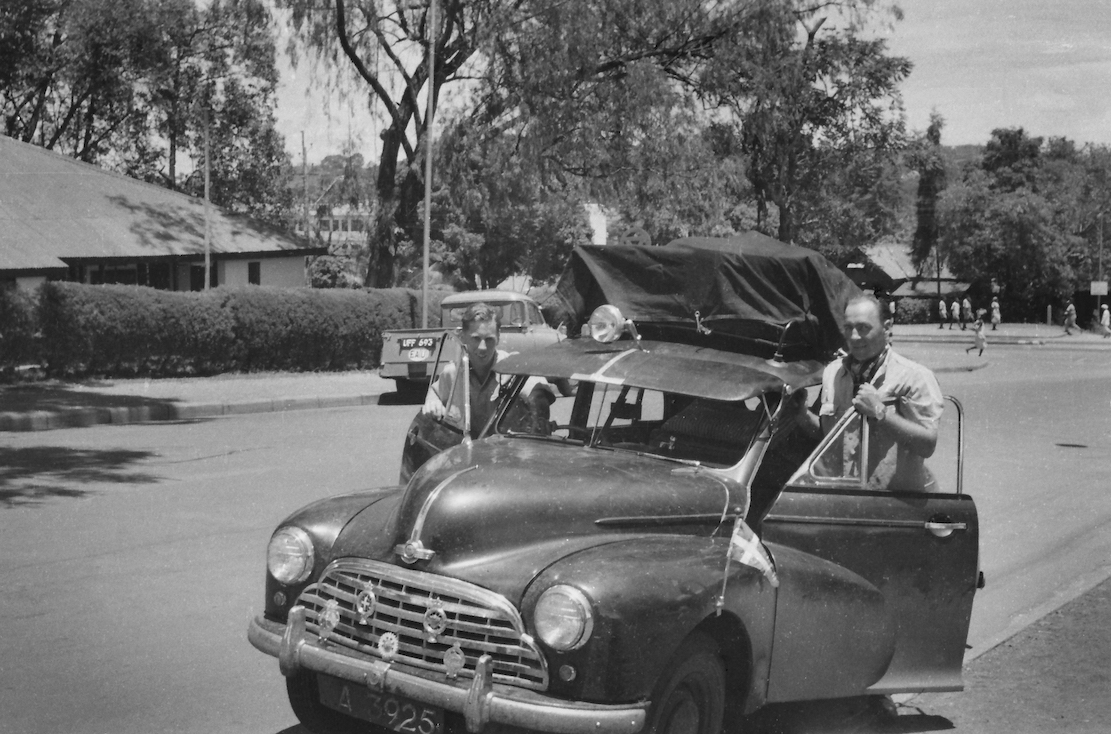
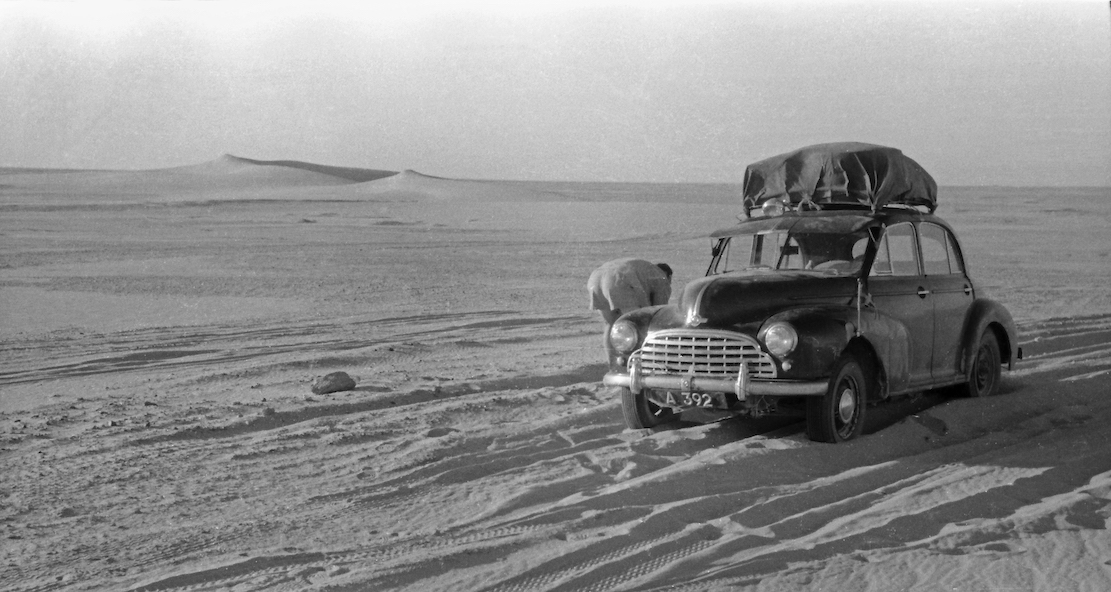
Back in Kampala, the Oxford was given a major makeover, and many spares were thrown into a back-up engine sump, which produced a metallic clatter all the way to Denmark. The spare sump served as insurance against a possibility of damage on rutted tracks. An auxiliary petrol tank was fitted in the spare wheel well, and four spare wheels were lashed to the roof rack. Typically, the car did not get a single flat, even though they didn’t see asphalt until they reached Morocco, 8000km later. With a Danish pennant on the left front fender, Knud and Svend left Kampala on 3 April 1954. Ahead awaited massive rivers, equatorial jungle, harsh desert, isolated tribes and miles of rough tracks. 

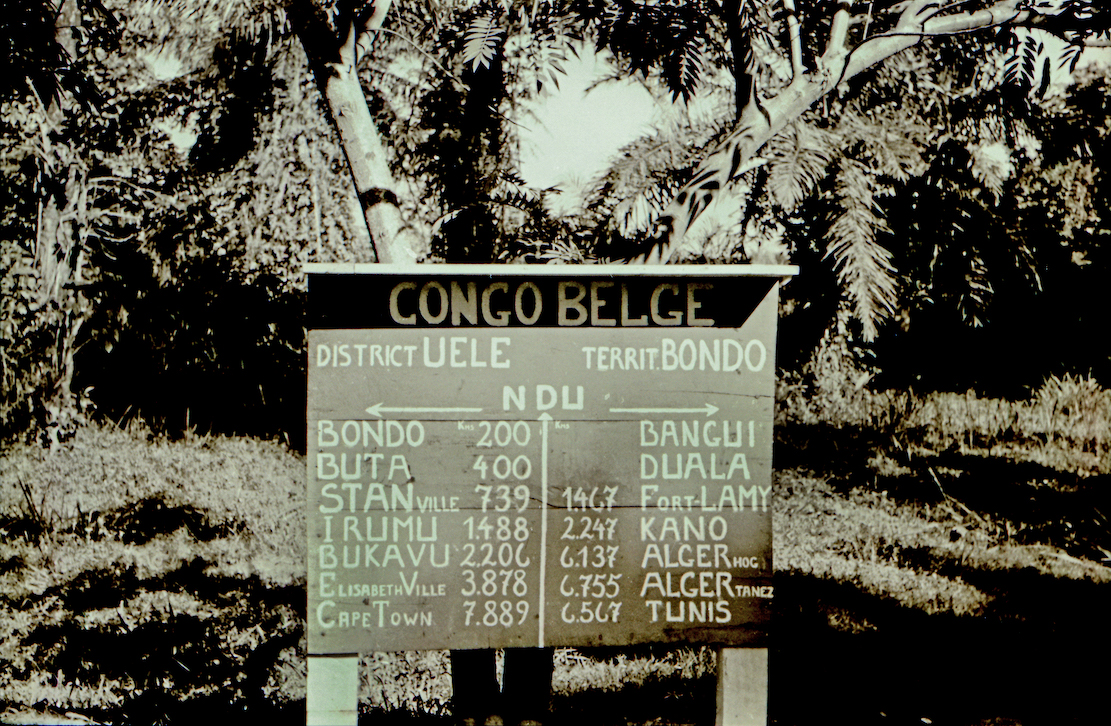
Ndu junction in the northern Congo

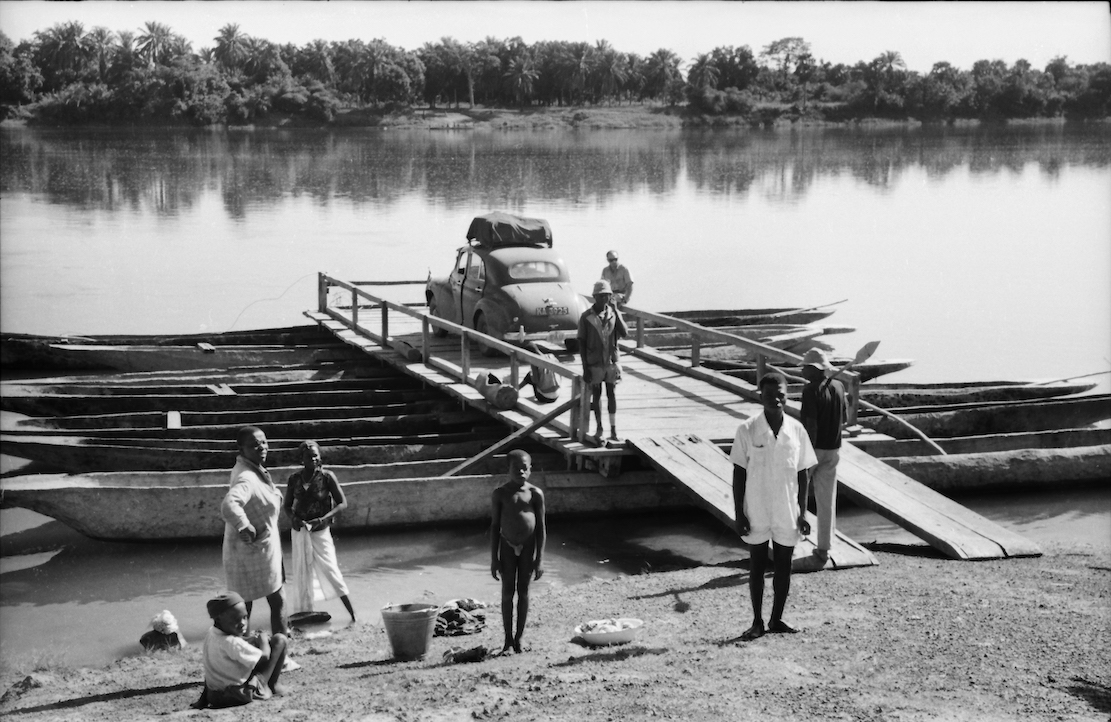
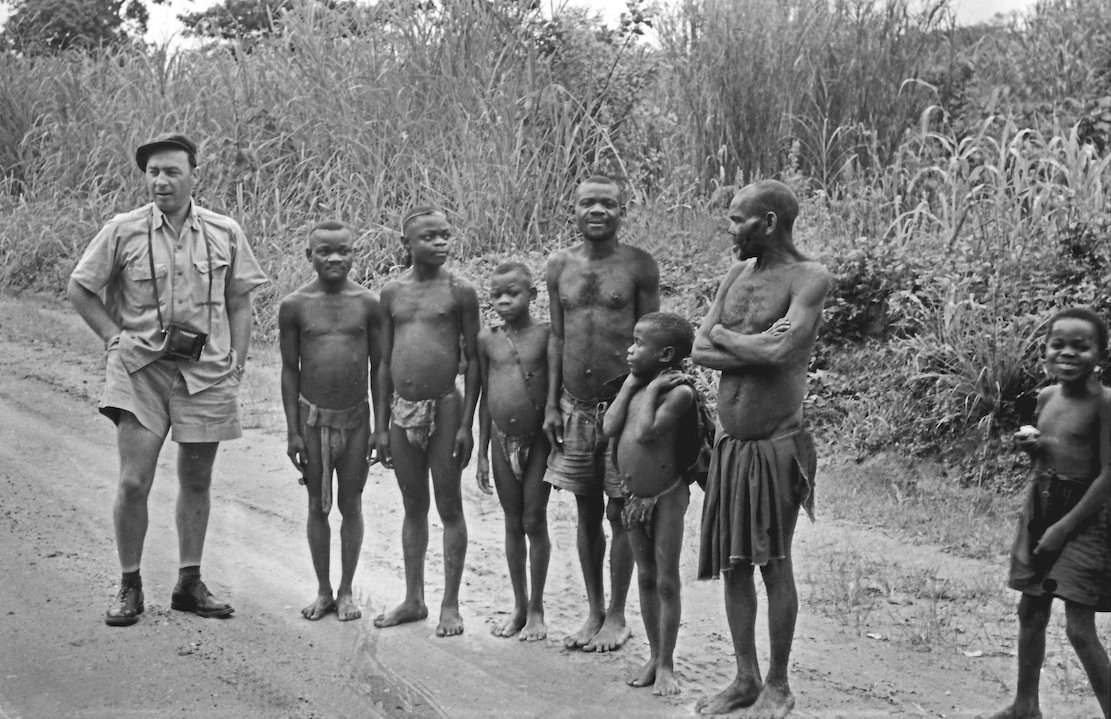
Soon they entered the Congo, where a rebellion against the Belgian colonial rule was already smouldering. But Knud and Svend were more concerned by the Pygmies’ evil glances. The road passed through dense jungle, and several rivers were crossed on small barges made of joined-up dugouts (below). The propulsion was a rower in a canoe on each side, directed rhythmically by the captain’s drum. 

Kudu encounter
While still in the Congo, one of the Oxford’s front axles broke. The two had agreed they’d take turns in getting help so with the axle under his arm, Svend got a lift to the nearest town, while Knud set up camp in a clearing. The natives gestured loudly to move the tent, but Knud refused, assuming they were trying to lure him away from the stranded car. That night he found himself camped in the middle of a forest full of snorting, growling and unnerving brushing against the tent, but otherwise the parade of unseen beasts passed without incident. The next day the locals returned to see if he was still alive. Knud emerged from the tent in good form. 

Pygmies in the Congo

A few days later the Morris hit a kudu (a large, spiral horned antelope). The kudu trotted off unharmed, but they did not. The collision had shoved the fan back into the radiator leaving them to repair the damaged cells ‘the African way’. Being carpenters, they figured out how to knock some wooden plugs into the radiator at the bottom and squeeze the cells together at the top so water still flowed through. Miraculously, the repair lasted until they replaced the radiator in Spain. 

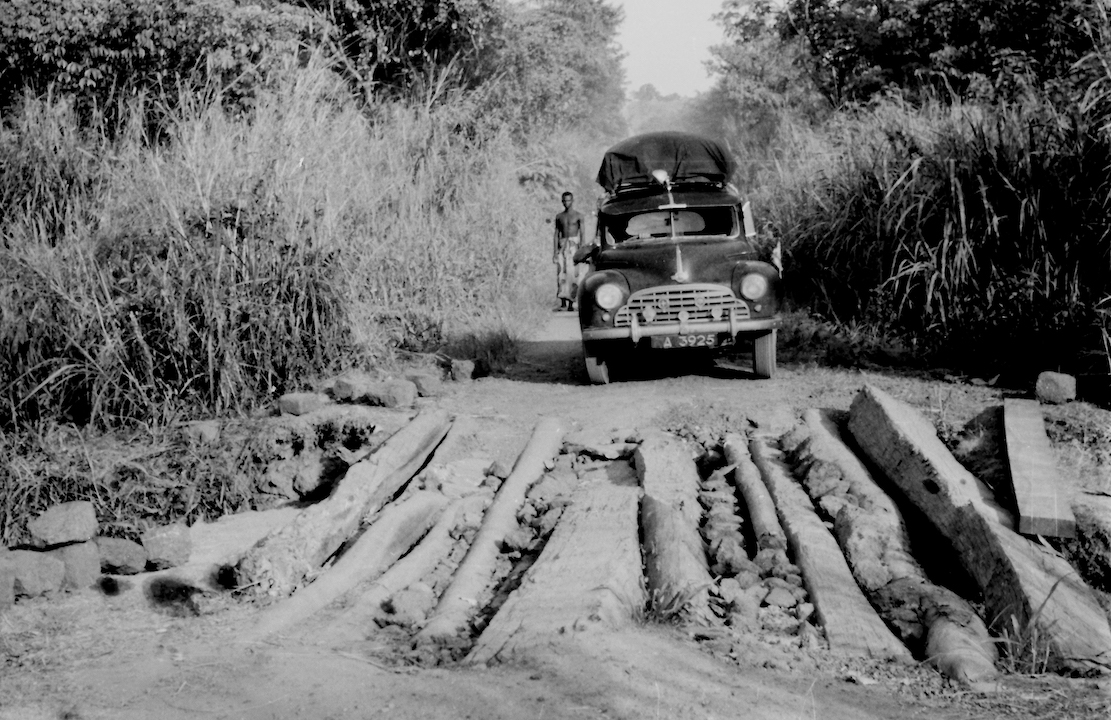
Log bridge in the jungle

In French West Africa [Niger] they ran out of drinking water. Thirst became such an acute problem they drew lots to see who’d try some murky ditch water. The idea was that if the one who drank got sick, the other might be able to continue. Knud was given the honour of the dirty water, filtered through a handkerchief soaked up with red wine to cover the bad taste, while Svend had to make do with a mouthful of wine every now and then. The days passed, and when they finally found fresh water, Svend was so dehydrated he was hallucinating. 

On the verge of giving up, they were under pressure to cross Nigeria before the rainy season broke. In Niger, the U-bolts holding one of the rear leaf springs snapped. According to the map, the nearest town was at least 60km away and the temperature was reaching 45°C in the shade. Now it was Knud’s turn to seek help; a truck gave him a lift to Dosso which in 1954 turned out to be just a junction. The next day he got another lift to Niamey, Niger’s capital, but it being the weekend, everything was closed. On Monday, he finally managed to get a workshop to fabricate two new U-bolts. 
Knud had wanted to wait until the next day, but realised Svend would have been impatient after waiting five days in the bush. The truck Knud returned on was the only vehicle Svend had seen in all that time, and he didn’t want to rot there any longer. While waiting, he’d crawled under the car for some respite from the heat, but the next morning found his body covered in rashes. Unfortunately, he’d shared his space under the car with a dozen rats. 

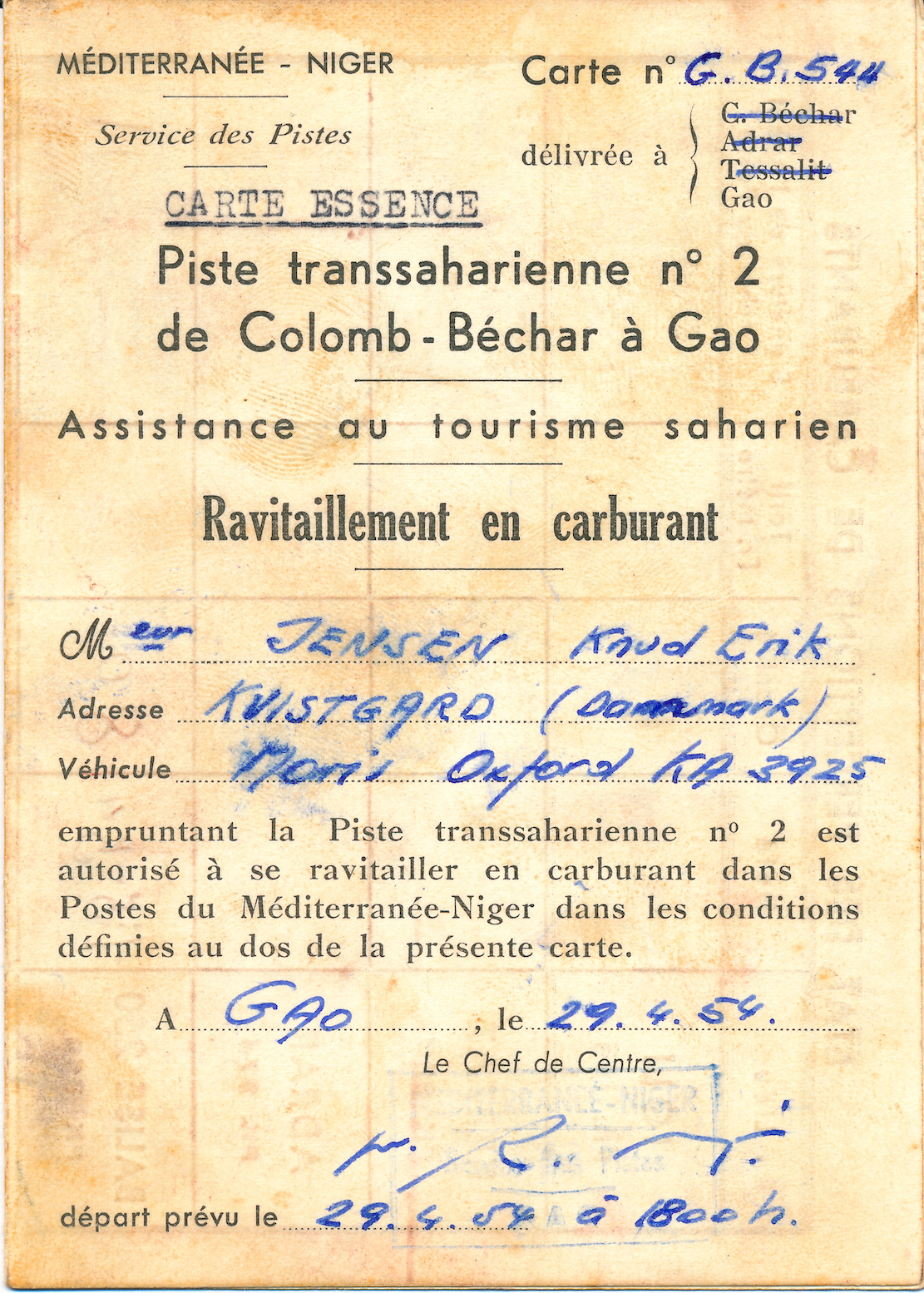
After 6000km and three weeks on the road, the two exhausted Danes reached Gao on the Niger river [present day Mali], the southern terminus of the 1800-km Tanezrouft piste across Sahara to Algeria [the route of the original crossing of the Sahara with
Citroëns in the early 1920s]. Here they met four Englishmen in a well-equipped 4WD, one of whom was a mechanic. They’d driven up from the Gold Coast (a former Danish colony, today Ghana) but had already blown four tyres. Although their original plan had also been to cross the Sahara, they’d lost their nerve and planned to sell the car and fly home. 

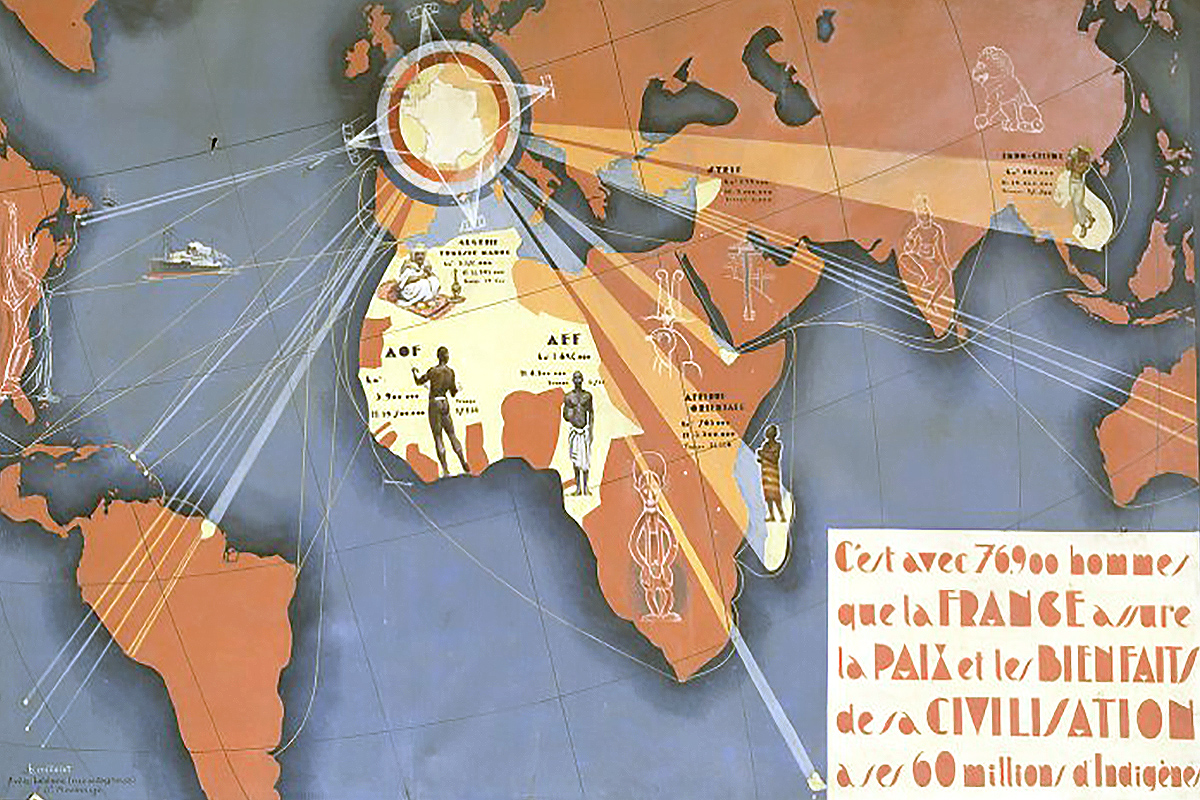
France shining it’s light upon their colonial world

This encounter made a sobering impression. Here they were stuck with an ailing ordinary family car with a broken rear spring, unstable steering and wheel bearings grinding with sand. Crossing the vast Sahara suddenly seemed like a daunting prospect. The only problem was the price they’d get for the clapped-out Austin wouldn’t even cover a single flight home. In silence they tried again to secure the broken spring by wrapping the handbrake cable around the broken leaves along with a pair of old trousers. At first glance, the repair seemed adequate.

Crossing the Sahara
With permission to cross the Sahara came a requirement that the police in Gao verified at least 60 litres of drinking water was carried. However, the police did not seem so bothered in how careless travellers might be, so most of the water reserve was replaced with petrol as fuel was expensive at the military checkpoints further north in the desert. These checkpoints were up to 400km apart and, according to the regulations, travellers had up to 36 hours to reach each one. If they didn’t show up, the military would launch a search at the drivers’ expense. However, one of the checkpoints explained this never really happened. Soldiers serving in the Foreign Legion had not signed up to be tourist guides.

Stuck in the sand

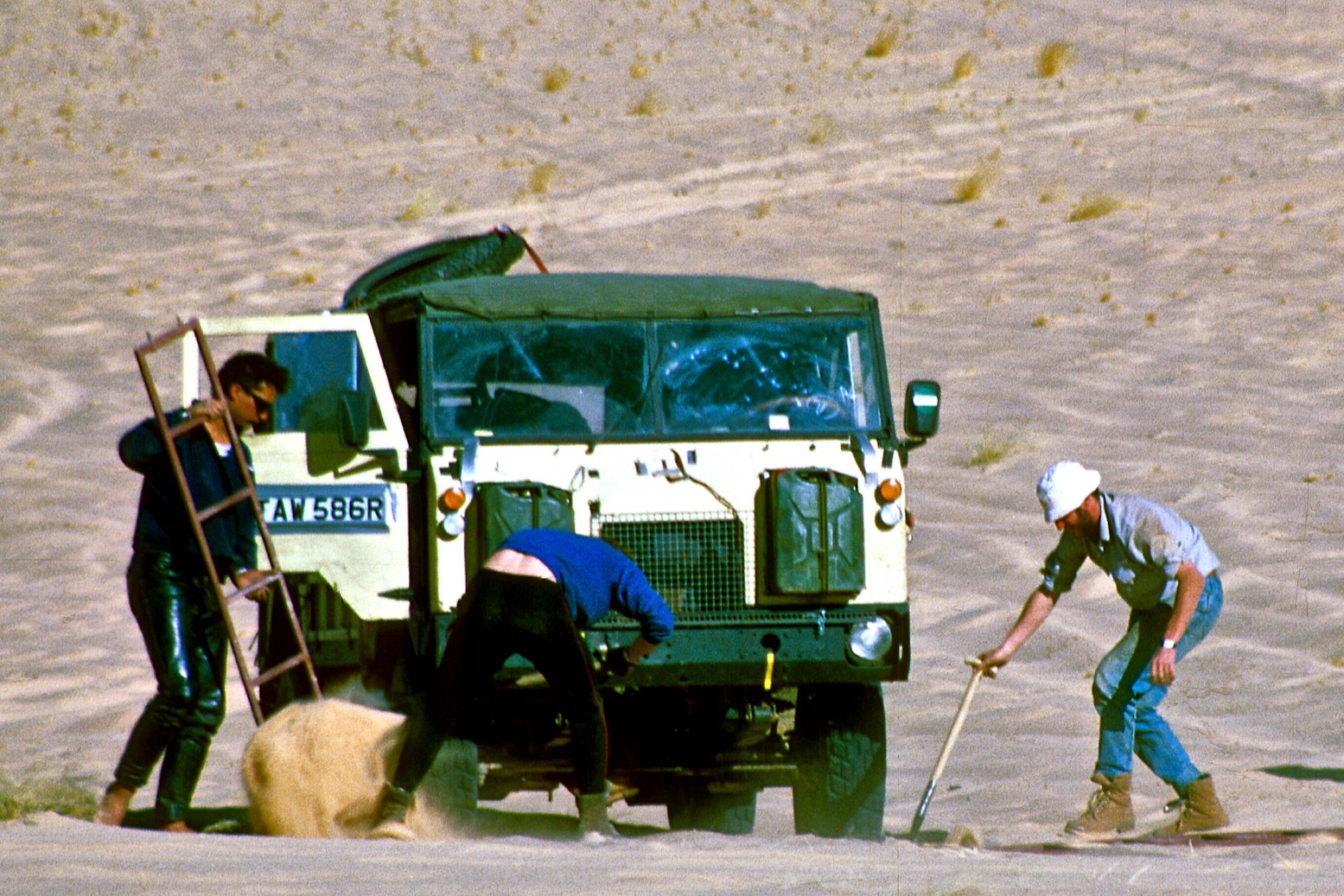
The track through the Sahara was marked with single oil barrels [‘bidon’] every 2.5km and two stacked barrels every 5km. The sand-blasted wrecks of vehicles from unsuccessful transits also helped mark the route. For the first few days the track was corrugated – not so easy with a broken rear spring. Later they entered areas of loose sand which they tried to avoid while keeping in sight of the bidons. It became a struggle to shovel their way free, and the camaraderie became strained. When they got badly stuck for the third time on May 1st, Svend threw away his shovel and refused to work – this being International Workers’ Day. Knud assured him it was hardly likely the Danish Carpenters’ Association would find out about his shameful betrayal of the proletariat. 

Border with Algeria near Bordj Moktar but still only halfway across the desert.

Despite these challenges, the journey through the harsh and beautiful landscape was a memorable experience. The great silence when they took a coffee break or ate beef straight from the can was indescribable. Then they’d sit in the sand with their feet in the ruts while the fiery red sun set, as it only does in Africa. When they got tired, they would burrow into the sand and look at the billions of stars overhead.

Crossing the Tropic of Cancer, north of Bidon V in Algeria.

Major repairs in the Sahara
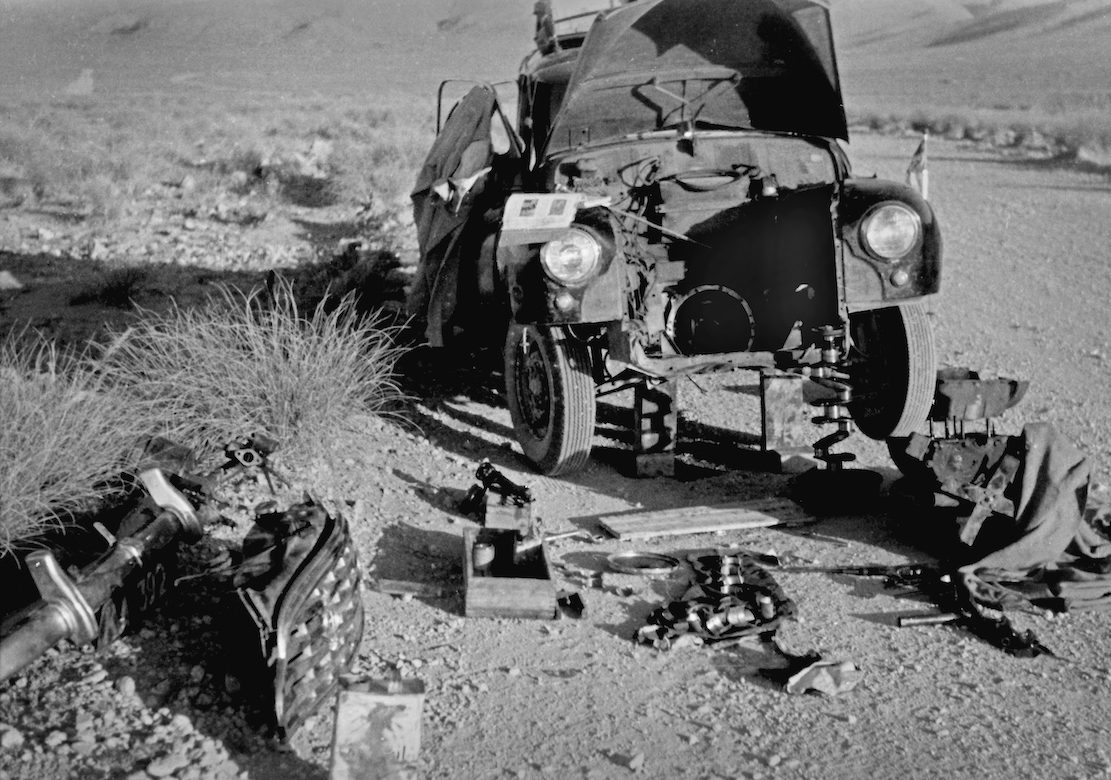
Every now and then the engine would cut-out due to vapour-lock in the fuel pump struggling in the immense heat. Cooling it with a wrapped wet cloth helped a little, but the engine was also losing power and knocking loudly until they could only run for 3km at a time. Now the spare parts they brought from Uganda became invaluable. The engine was removed and disassembled in the desert and a destroyed main bearing was was replaced with a lot of filing and hammering. It took hours, but when the car started on the first try, the proud smiles lasted the rest of the day. The broken spring still had to be re-tied constantly, but after seven days they finally reached Reggane with a hotel and a proper meal. 

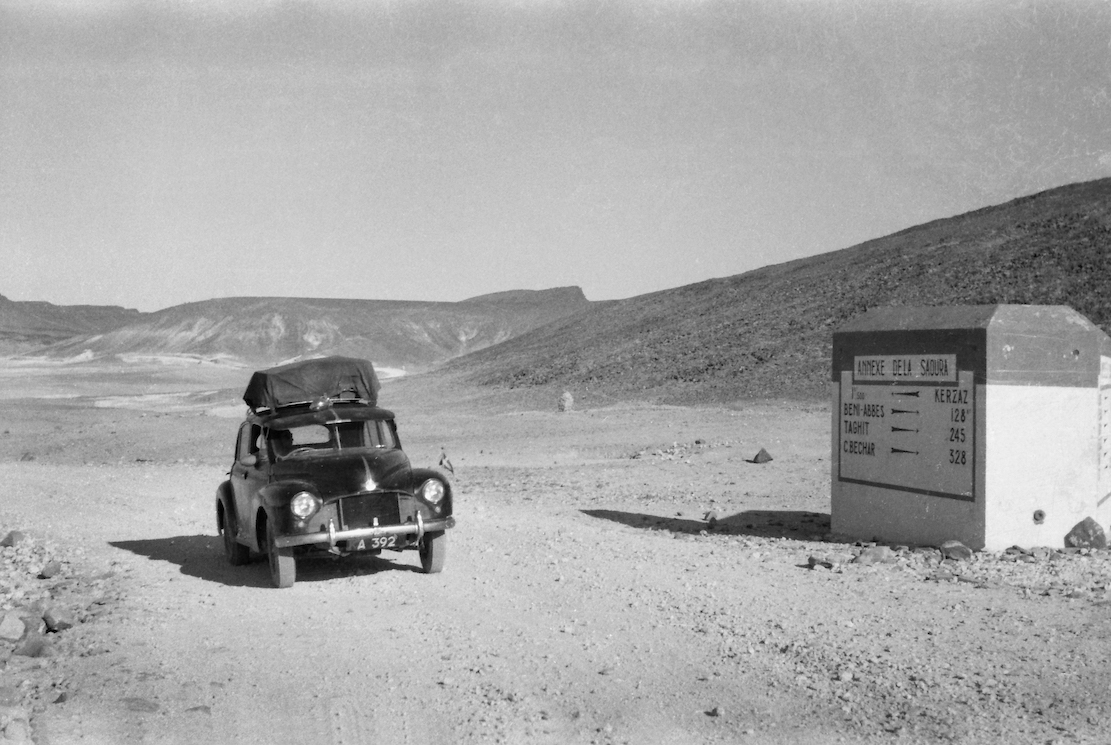
Finances were tight if they were to get home. In Nairobi they’d paid a deposit of £1000 for permission to cross the desert, which they could claim back at any French government office north of the Sahara. But in Colomb-Bechar they didn’t have pounds. A detour was taken to Oudja in Morocco, but the consulate was closed, and the following day there were violent anti-French riots. And when the consulate finally opened, they didn’t have any pounds either. In Tangier it was the same story, and the Danish consulate could not help. 

Near Kerzaz, heading for Colomb-Bechar and the Moroccan border

In the end, by exchanging their remaining African currencies, they were able to buy a ferry  ticket across the Straits of Gibraltar, then at least they were in Europe. In Malaga, Svend sent a telegram asking for money, and while they waited, they stayed in a small hotel in town. The money took three weeks to arrive, and by the time the hotel bill was settled, there was barely enough left to reach Denmark. In Madrid, they pawned binoculars, cameras and a tent to get a little further north. 

North of Meknes and the road to Tangier.

Late one evening in Germany they were stopped by the police on the Autobahn because both rear lights were out. They promised to fix the mess at the next fuel station, unable to admit that both headlight housings were rattling around in the trunk. To their great frustration, they only had enough fuel to reach the border in Kruså, but the Danish customs officers showed a rarely cheerful side. Despite the early hour they were fascinated to learn of the duos’ arduous adventure from Uganda. And when Knud and Svend explained they had to wait for money for fuel, the customs officers offered to lend them the cash so that they could drive home. 

The two adventurers never forgot their welcome to Denmark. In Hillerød they sat in silence for half an hour, looking across the lake towards Frederiksborg Castle. It was June 5, 1954 – two months and two days since they’d left Kampala, and a beautiful summer day. It was hard to believe the adventure had reached its final chapter. Twelve minutes later, they rolled up in front of Knud’s parents’ house in Kvistgård, where the mother came out onto the steps, clapped her hands together and exclaimed: “Well, you’re finally here – you must be very hungry!”

Trans Sahara Highway

See also
Algeria page
198219841985-61987-81989

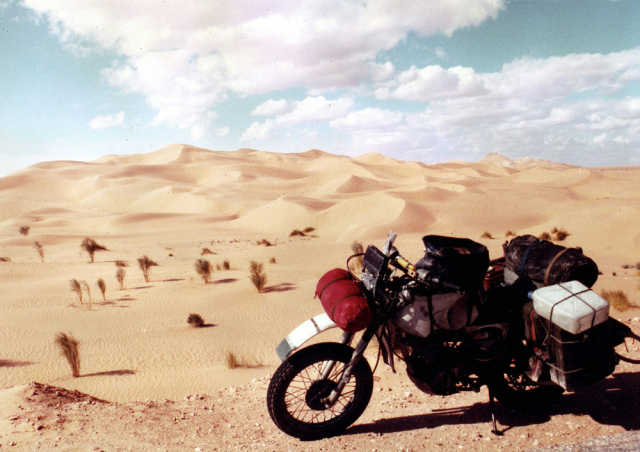
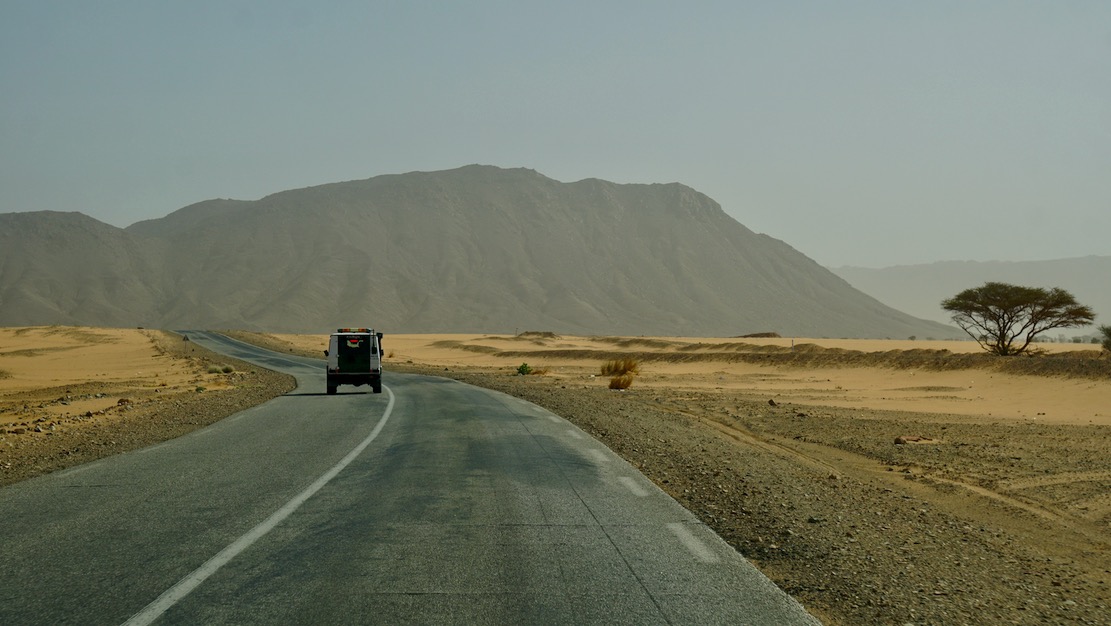
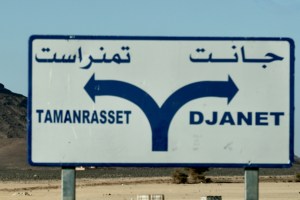
I flew to Algiers to try out a new agency, do a recce and indulge in a bit of a 1980s Desert Travels nostalgia tour (left; 1982). Among other things, I was curious to see if there really was a road all the way from Tam to Djanet.
Fog delayed our London flight by a day which meant we missed our twice weekly connection to In Salah. Me, Rob and JT were the only non-Algerians on the plane and on arrival found a VoA was not the quick payment and passport stamp I’d expected. Expect at least an hour’s wait – significant if catching an onward flight from the adjacent terminal.
Once through, buying black market money was straightforward. So was getting a local SIM (rates and prices here). Last minute, Fouad from Tadjemout Travel had organised a spacious people carrier to take us the 400km to Ghardaia, a run I first did in 1982 and last in 2006 in the MAN.

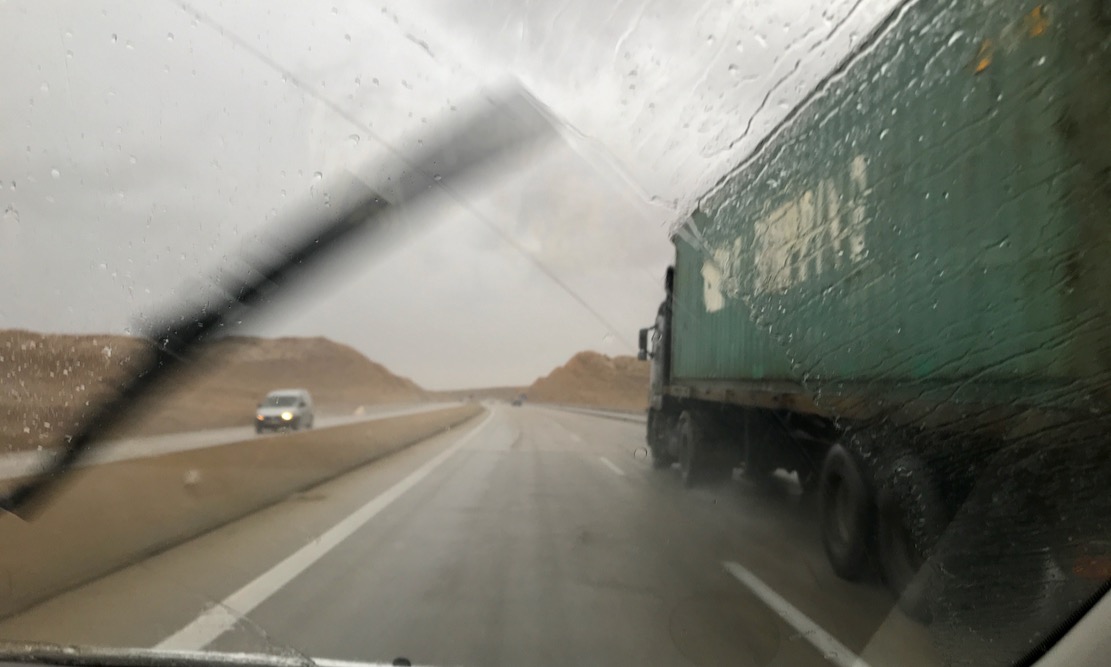
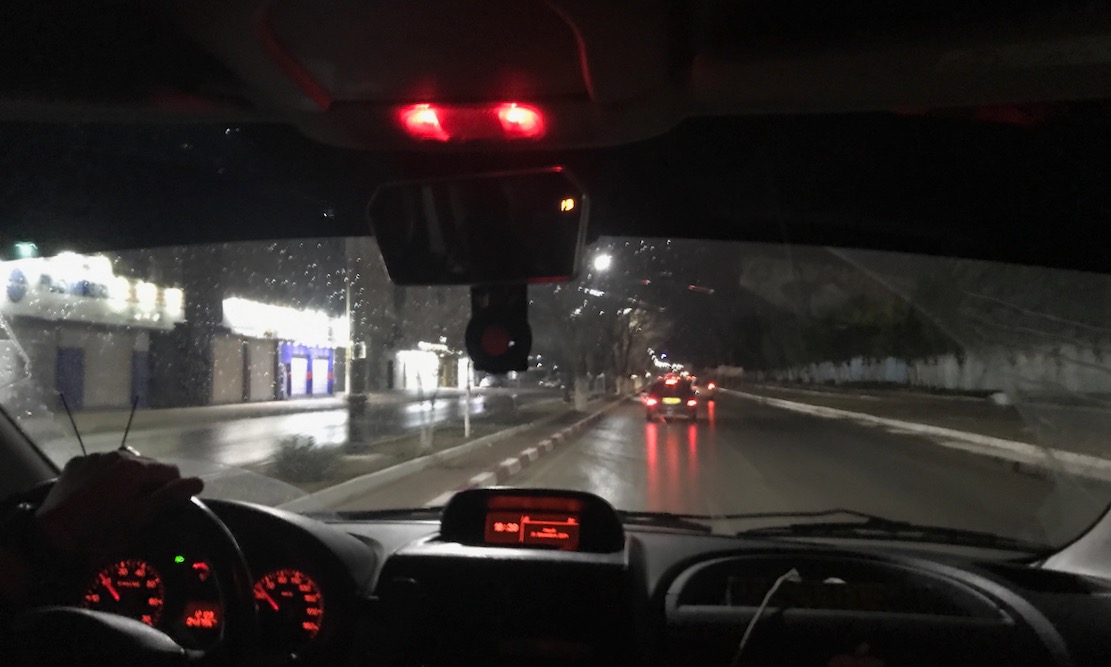
It took an hour to get clear of dreary, gridlocked Algiers until near Blida where a three-lane highway curved south and up into the Atlas, through a tunnel and onto the rainy high plains (above). We passed Medea, Djelfa and Ain Oussera – all places evoking deeply etched memories and miseries of my 1980s travels here.
After years in Morocco, I was shocked by the crumbiness of the roadside facilities and the endless checkpoints. This being New Year’s Eve, our driver explained the gendarmerie were doing the seasonal shake down for individuals transporting booze and other intoxicants. A couple of days later we watched the morning news in In Salah, showing cops revealing slabs of beer hidden under blankets in car boots.

It got dark and just before Laghouat one unusually arsey soldier wouldn’t let us pass (he may have been drunk), insisting there were no gendarmerie to escort us onward and we would have to spend the night in the local barracks. There was something dodgy about him, especially when suggested with a sly grin that we pay him 4000D (£30) to continue. In my experience as a tourist in Algeria, this sort of opportunistic bribery has never happened, and with a pointed finger I assertively spelled this out to matey.
‘Did that work?’ I asked Rob.
Another off-stage conflab with our driver and it seems it did. We moved on and arrived at the Caravanserail auberge in a corner of Ghardaia (below) around 11pm which, while an interesting compound, with the meagre breakfast was fairly pricey at 75,000DA each, even at the best black market rate.

Our Tadjemout Travels driver in a 105 Land Cruiser was slow to turn up next morning and after a tour around Ghardaia, we weren’t southbound on the TSH till noon. This is where the proper though as yet uninspiring desert starts: the turn off east for Ouargla for the road through the Grand Erg to Djanet, or straight down the TSH for El Menia, a few miles after the dunes which caught my eye back in 1982. This time they looked a bit flat. Maybe it had rained.

1982

Either I dozed off through El Menia (El Golea) or I didn’t recognise anything after what might be 40 years. Up ahead lay the Tademait plateau which was a rubble track shocker in ’82 and now was little better. About a dozen diversions took to the dirt just as decades ago, making for slow progress – expect 8 hours for this 400-km stage. This is Algeria’s Highway 1 and they’ve let it deteriorate to this state. There’s talk of extending the railway from Laghouat 1500-km down to Tam.
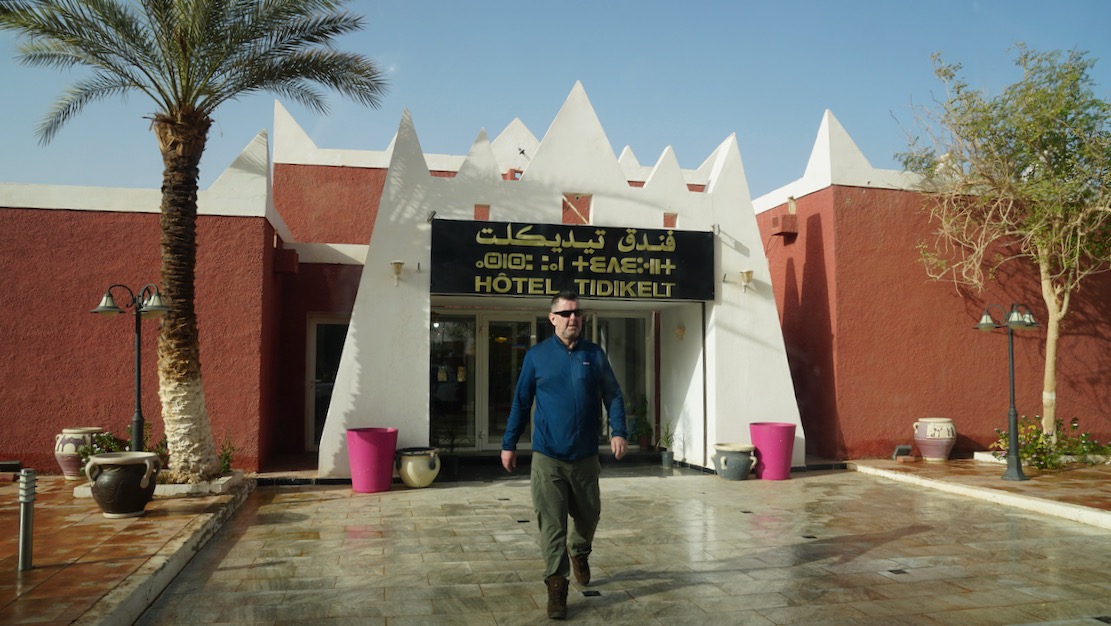
Night fell on the Tademait and the impressive decent to the desert plain passed unseen. In sight of In Salah there was a more serious checkpoint, right down to logging our mothers’ maiden names on a piece of scrap paper. Sometimes I wonder if it’s just the pedantry of the individual manning the barrier. He seemed agreeable enough, just doing his job. With a bit more banter – a key skill to hone at these CPs – we managed to avoid a pointless escort the few km into town. Around 10pm we arrived at the unusually modern Hotel Tidikelt (85,000DA; another basic breakfast) where Fouad from Tadjemout met us to sell more money at 20% better than the airport, plus had a warm meal left waiting in our rooms.

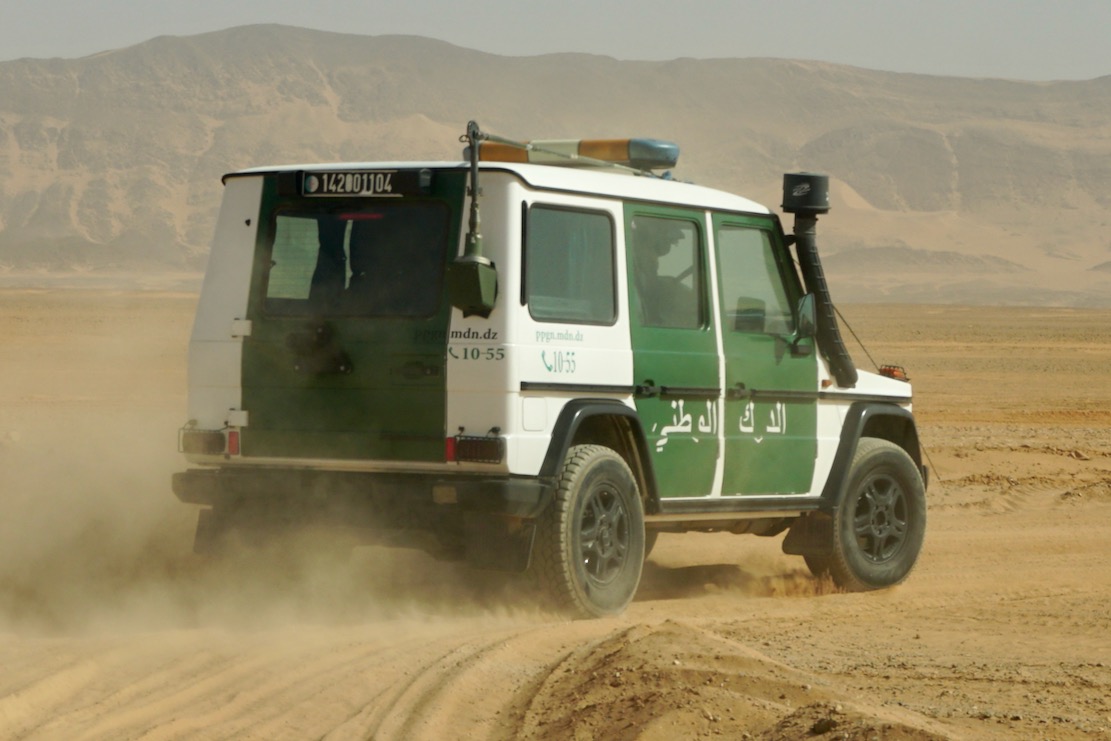
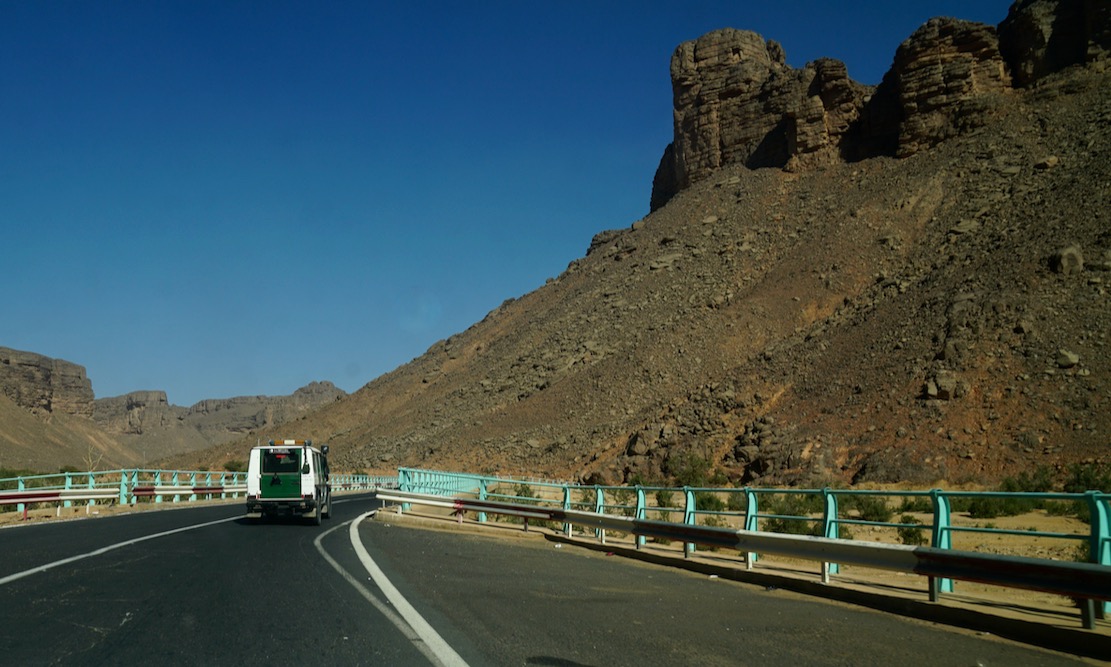
Next day we learned that the gendarmes had over-ruled the rules and imposed a two-car escort on our two cars for the 550-km to In Amguel. We where now in another 105 with Sidi Ali, with a rear diff that didn’t whine deafeningly, but whose electric windows didn’t work. Roll cages on both suggested they were ex-oil exploration cars. Fixed windows would prove to be an irritation for us, but most agency cars in Algeria are clapped-out bangers. Good 4x4s are restricted or hard and expensive to come by. But despite a few hesitations, our 105s got us round, covering about 3000km.

To make up for lost days I ditched the Old TSH track plan via Tadjemout spring where the Amguid Crater camel treks used to start, and decided to stick to the main TSH. But add the late start and escorts, it became clear we’d be on the 4th late-night drive in a row.
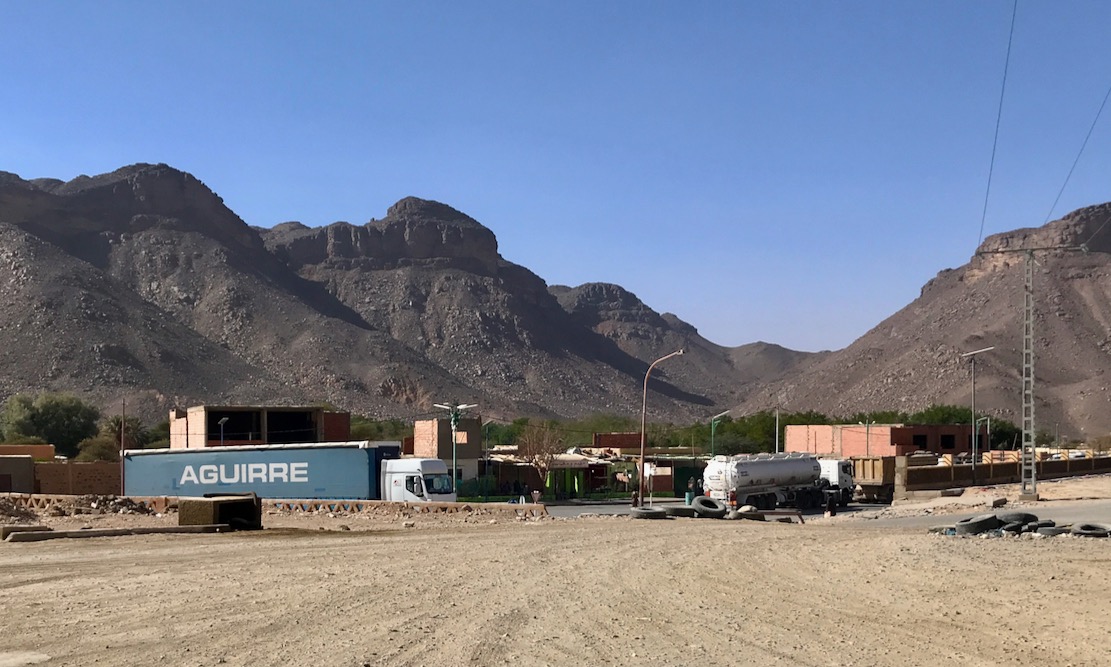
I rather hoped Berbada roadhouse might be a good place for an overnight for future trips, but after stopping there I think I’ll take the open desert. The truckstop is like something from a Mad Max movie with a rough cafe selling 20 types of long life biscuits and as many deodorants; a was of keping ‘clean’ when there’s not much water around.
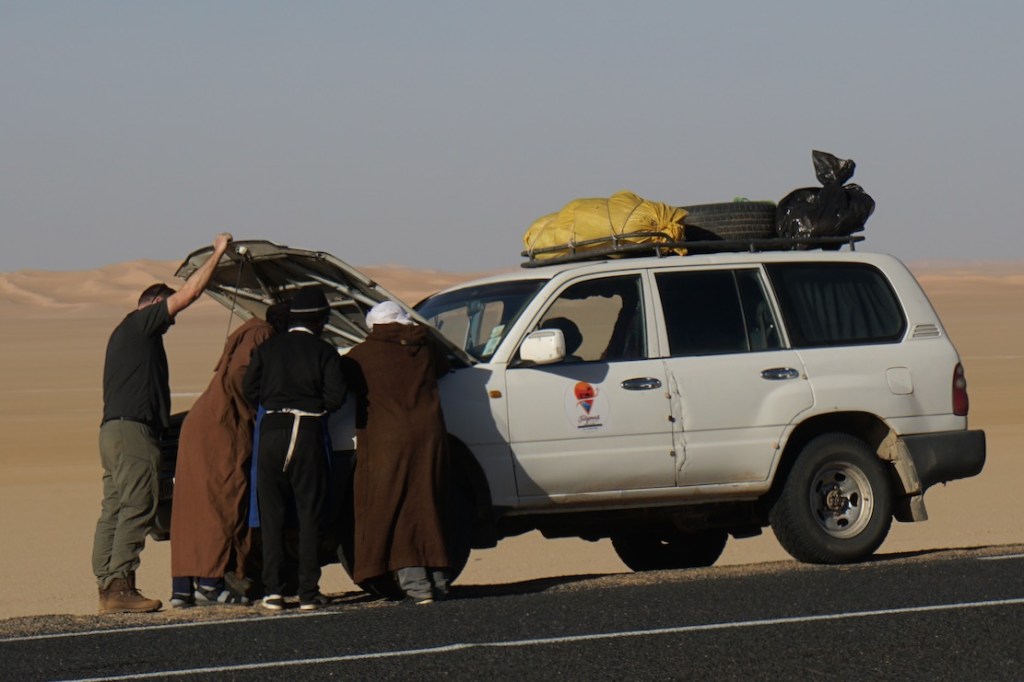
Our 105 wouldn’t turn over as if the battery was shagged, but a reverse jump start got it running. Didn’t know you could do that with a diesel. The battery was fine from then on but it didn’t bode well for the desert pistes and conked out inexplicably a few more times. We were picking up a sat phone in Arak, plus I’d borrowed an InReach2 sat messenger in case of trouble.

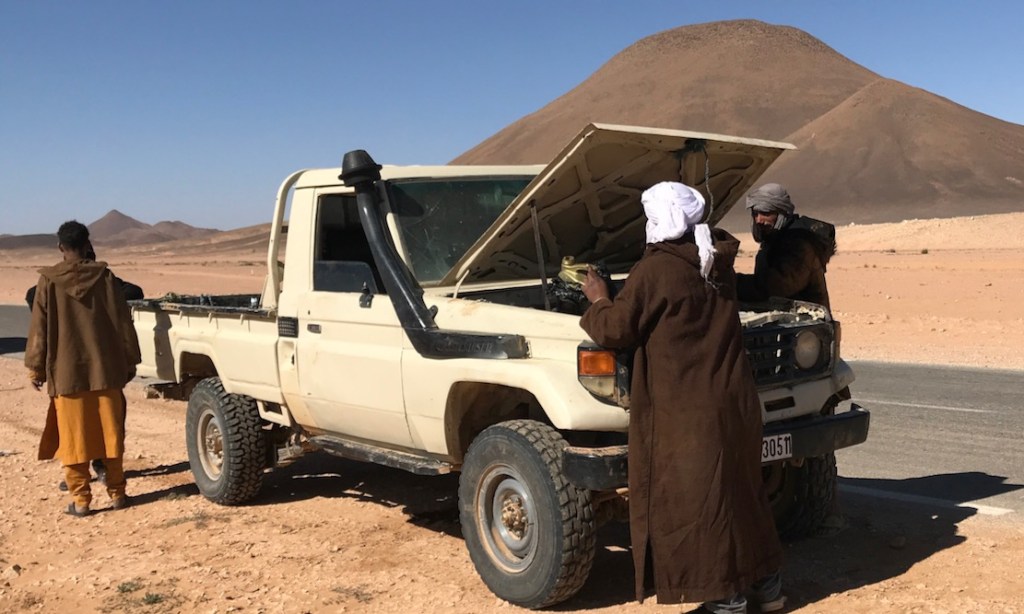
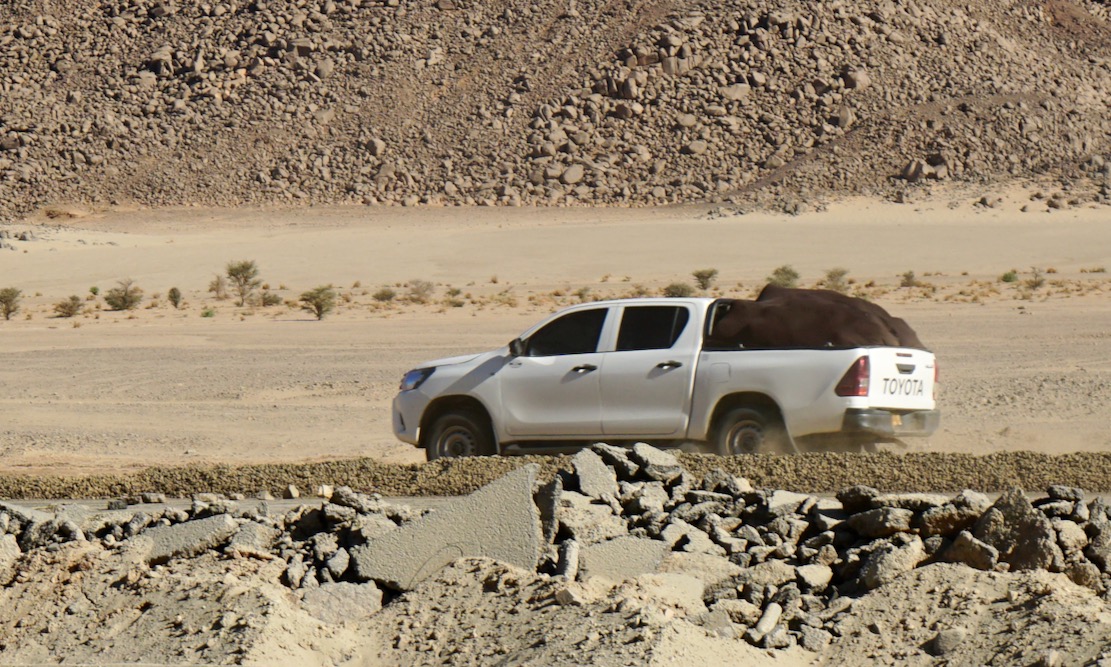
The hotel next door looked rough and might well be catering for the northbound migrants our driver pointed out on the TSH. The lucky ones were jammed 20-up in the back of crewcab Hiluxes (below), circumnavigating the more onerous checkpoints in towns. The rest were boldly walking along the highway with nothing more than a couple of water bottles swinging from their belts. Out here it’s 100s of kilometres between places. Clearly our gendarmerie escorts weren’t bothered, maybe because they know at some point, once some money had been made (and perhaps passed around), the migrants all get bused back to Point Zero on the Niger border, where some give up and some try again.

From Berbada truckstop we made our way south towards Arak in the Immidir ranges, taking occasional deviations onto the sands. After passing the huge pale dunes of the Erg Mehajabat, we entered the gorge then negotiated with the cops where we could eat our lunch. You can tell it’s a constant game with the locals to get their way or just get one over.

There was a gendarmerie change at Arak, luckily with minimal delay which is largely what can make these escorts irksome (apart from being chaperoned in the first place).
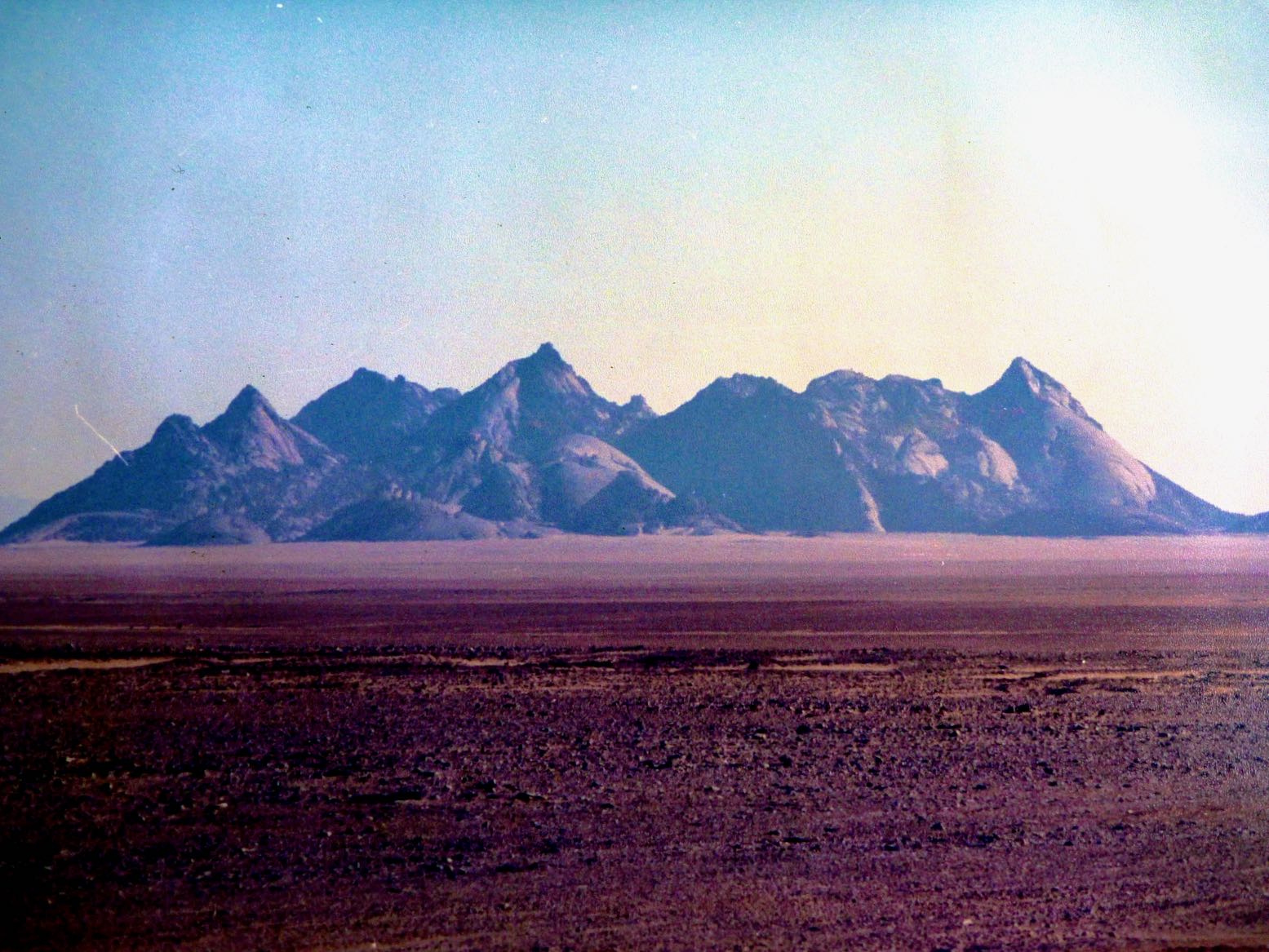
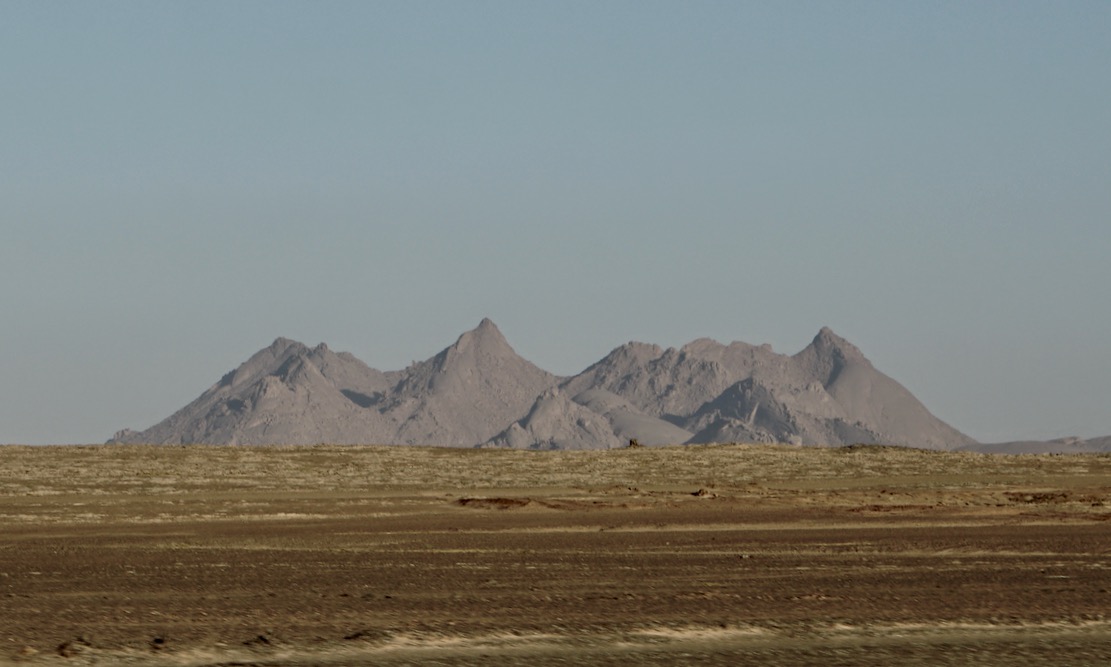
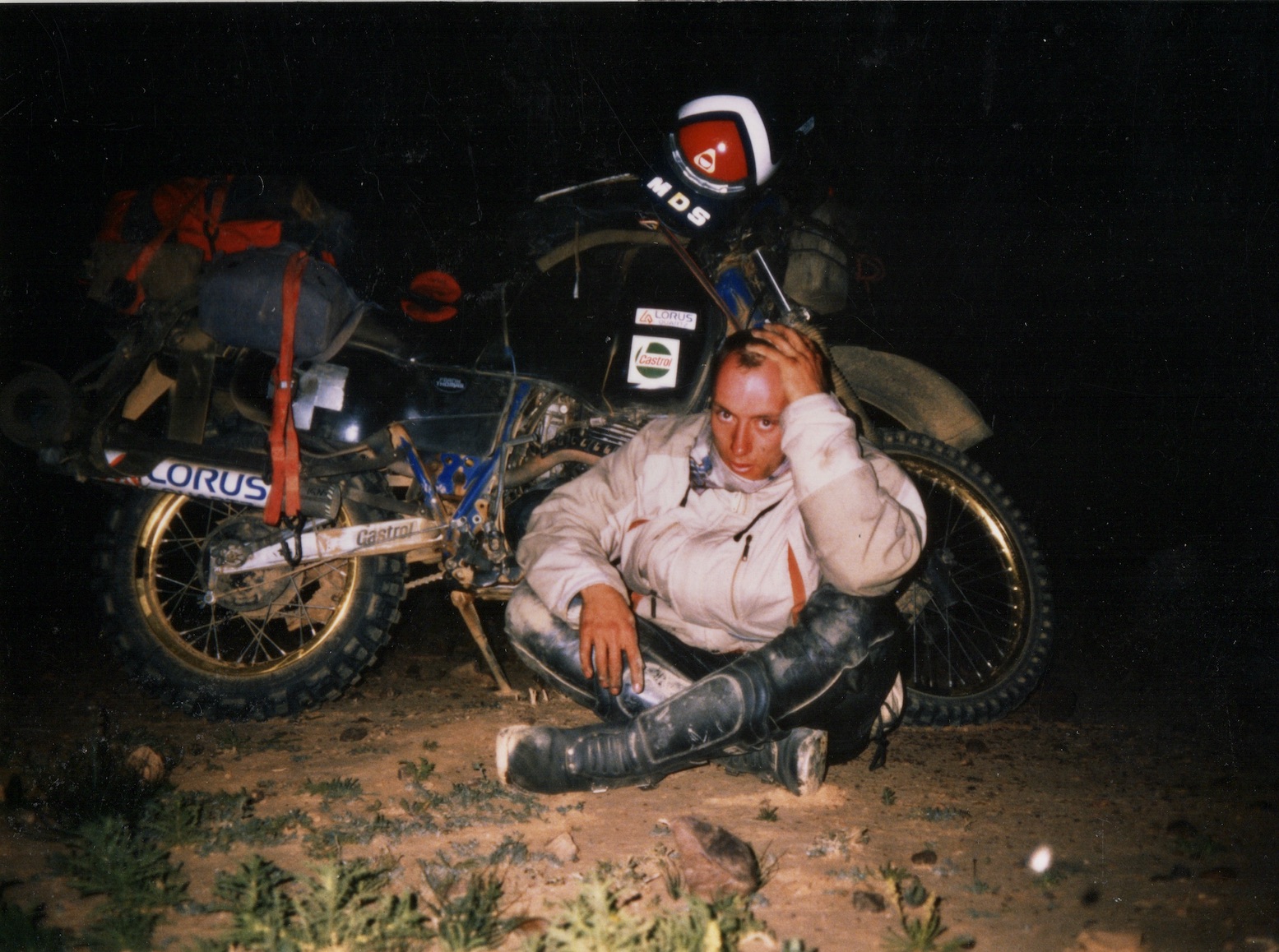
Once out of the Immidir and back in the open desert, I was on the look-out for the isolated massif of Sli Edrar which had captivated me in ’82, and which had been the lost goal of my ill-conceived ‘84 trip (left). It wasn’t till 2009 that we finally got to explore the massif which would be a landmark to aim for on the return leg of this recce.

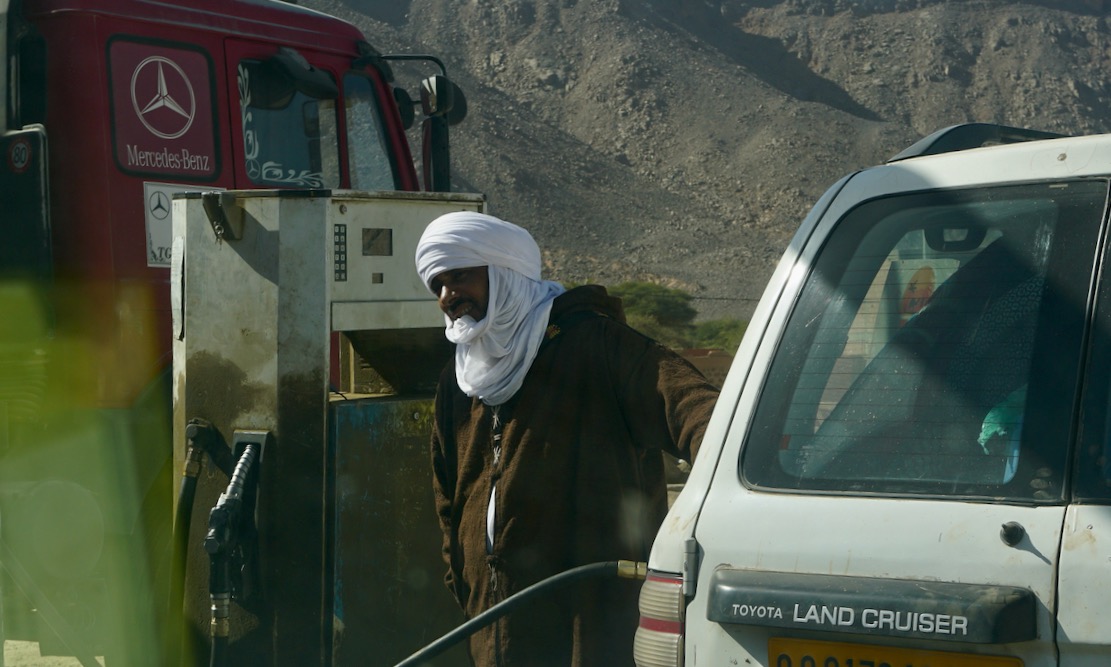
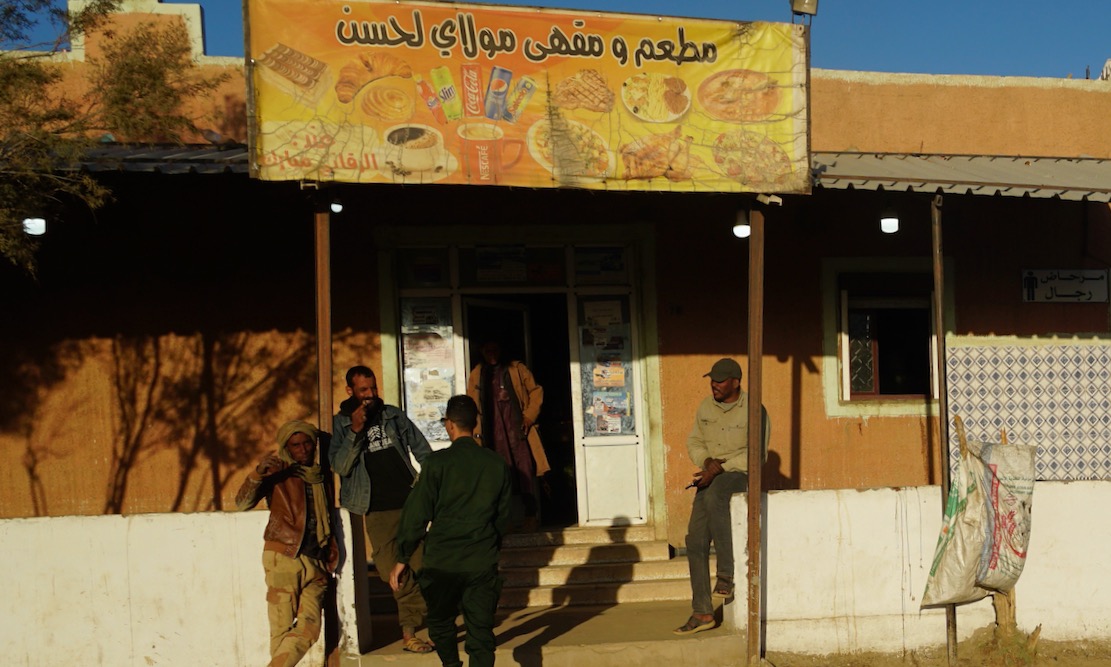
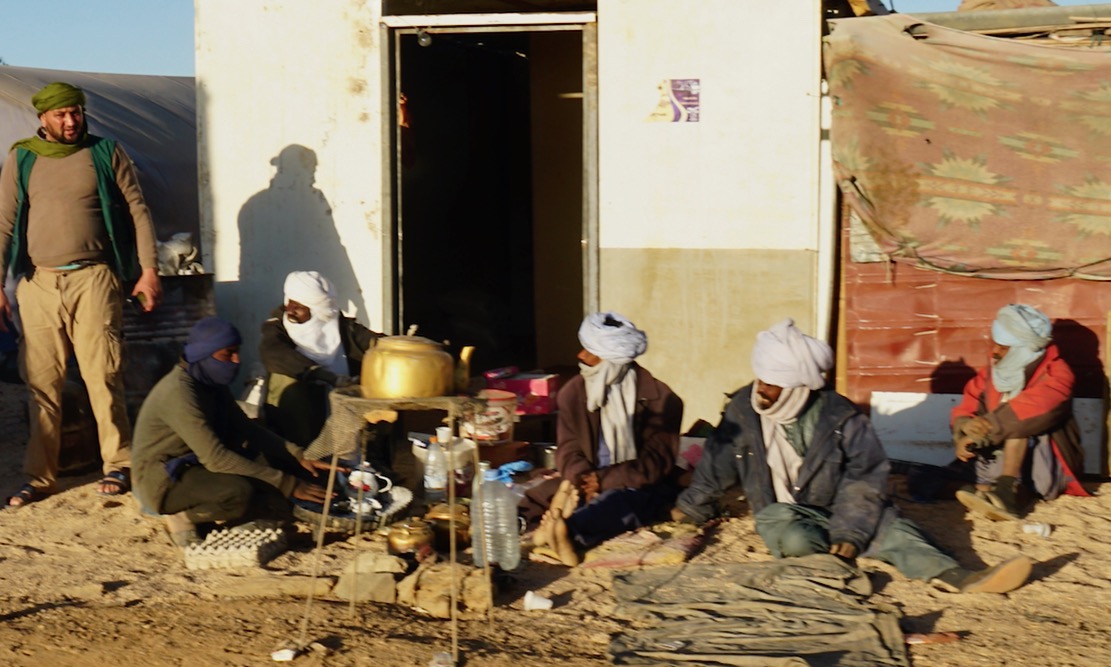
Just down the road was the roadhouse (no fuel) at Moulay Lahcene, another rough joint which would frighten the horses and is not exactly an Aire de Repos. Migrants milled about, Tuaregs kept to themselves (below right) and old bangers littered the compound.

South of Moulay is the turn-off northeast for the Amguid piste which we’d pick up in a few days time from the east, then the sun set as we passed In Ecker mountain which the French accidentally nuked in the early Sixties, irradiating the area for miles around.

‘How come he got more than me?’

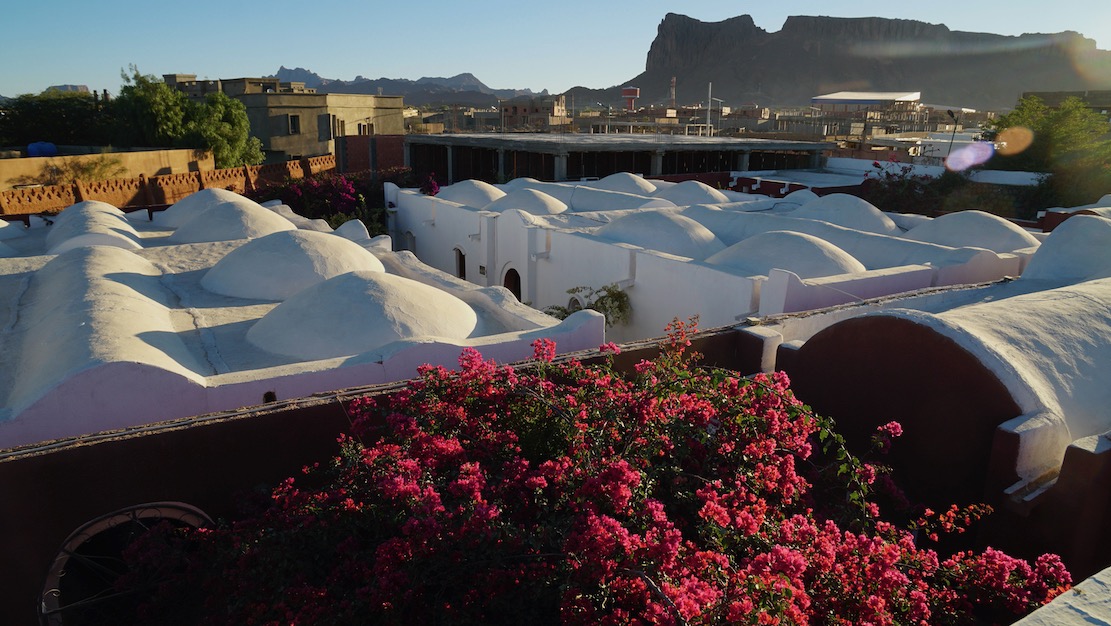
At In Amguel the gendarmes left us. The plan had been to turn east into the Hoggar for Hirafok and camp somewhere before looping the Tahifet road round to Tam. But by now it was too late to be camping and getting fed in the desert, so we carried on unescorted another 120 clicks to Tamanrasset where Sidi Ali sorted us out some lodgings at Camping Tuareg, a vast warren of non en-suite rooms under domed roofs and where our cook used the kitchen to bang out another late meal (above).
Next morning up on the roof I recognised the distinctive profile of Hardriane mountain and the volcanic plugs marking the way to Assekrem. A week or so later, a Spanish tourist in a local car with guides was kidnapped and taken towards Mali where his crew were released. It was the first such grab in Algeria in 10 years, carried out it’s said by locals responding to ISIS’ call to buy hostages for ransom. Very luckily for him, his abductors was intercepted by Tuareg separatists (not jihadists) before he was handed over, set free and returned to Algeria and home a few days later. Around the same time in Agadez, an old Austrian woman was not so lucky and nothing’s been heard of her since.

Released

Even if much of it was in the dark, this was my first full transit of the TSH I’d done in 40 years. But apart from 4G cropping up near settlements which themselves have sprawled with migrants and refugees from the Sahelian insurgencies, the TSH was little changed. I’d had a plan for a cushy road bike tour but the escorts and deviations and scant lodgings would make it no better than my previous off-road tours. Plus the kidnapping didn’t help inspire confidence.

It’s never over till it’s over, but I’m sure for a first timer rolling down the TSH to Tam, then east to Djanet before heading back up for either Tunisia or the Algerian Med ports, this full 5000km loop would still be a big adventure, just as it was for me in the 1980s. All the better too, if you can dodge the highway gendarmes – easier in the east side and on a moto, it seems.

Mauritania: The Railway Piste (440km)

See also:
Mauritania Page
Tindouf Piste to Algeria

On the rails 2006

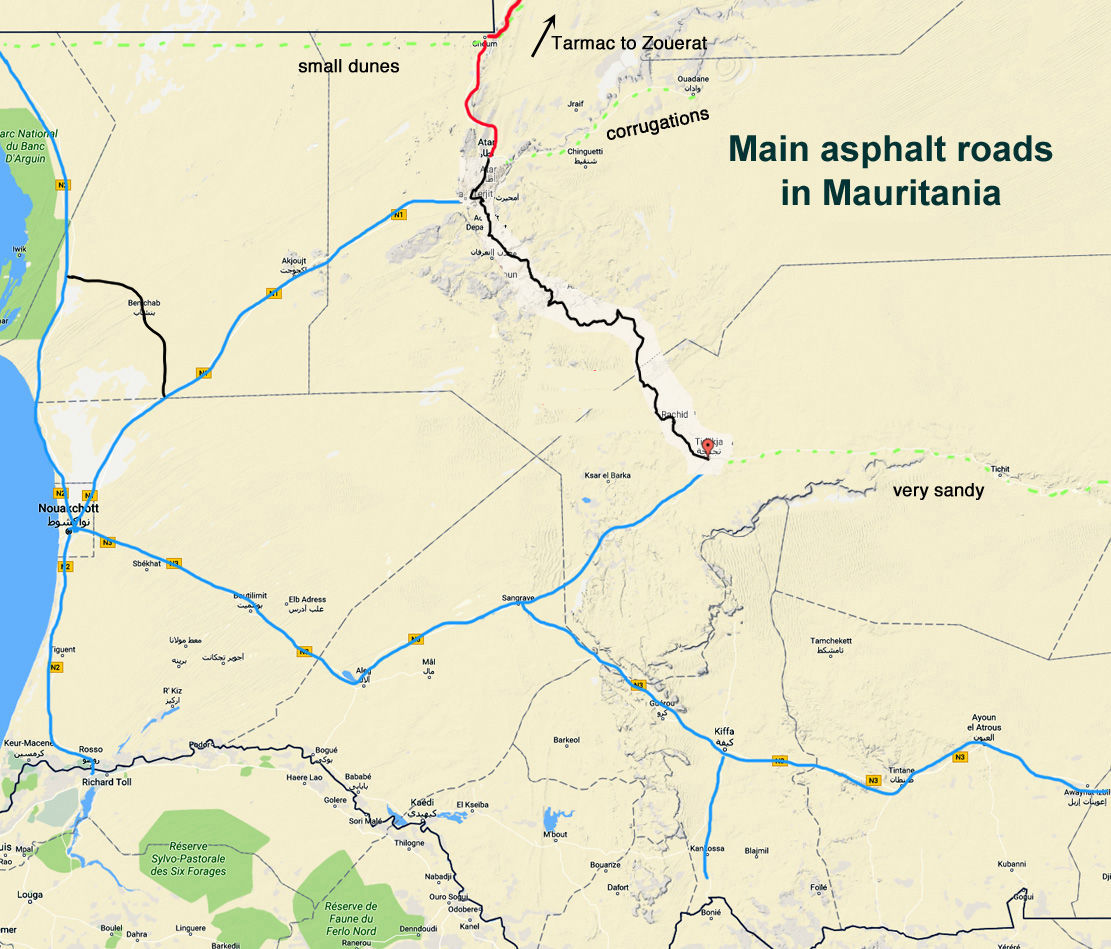
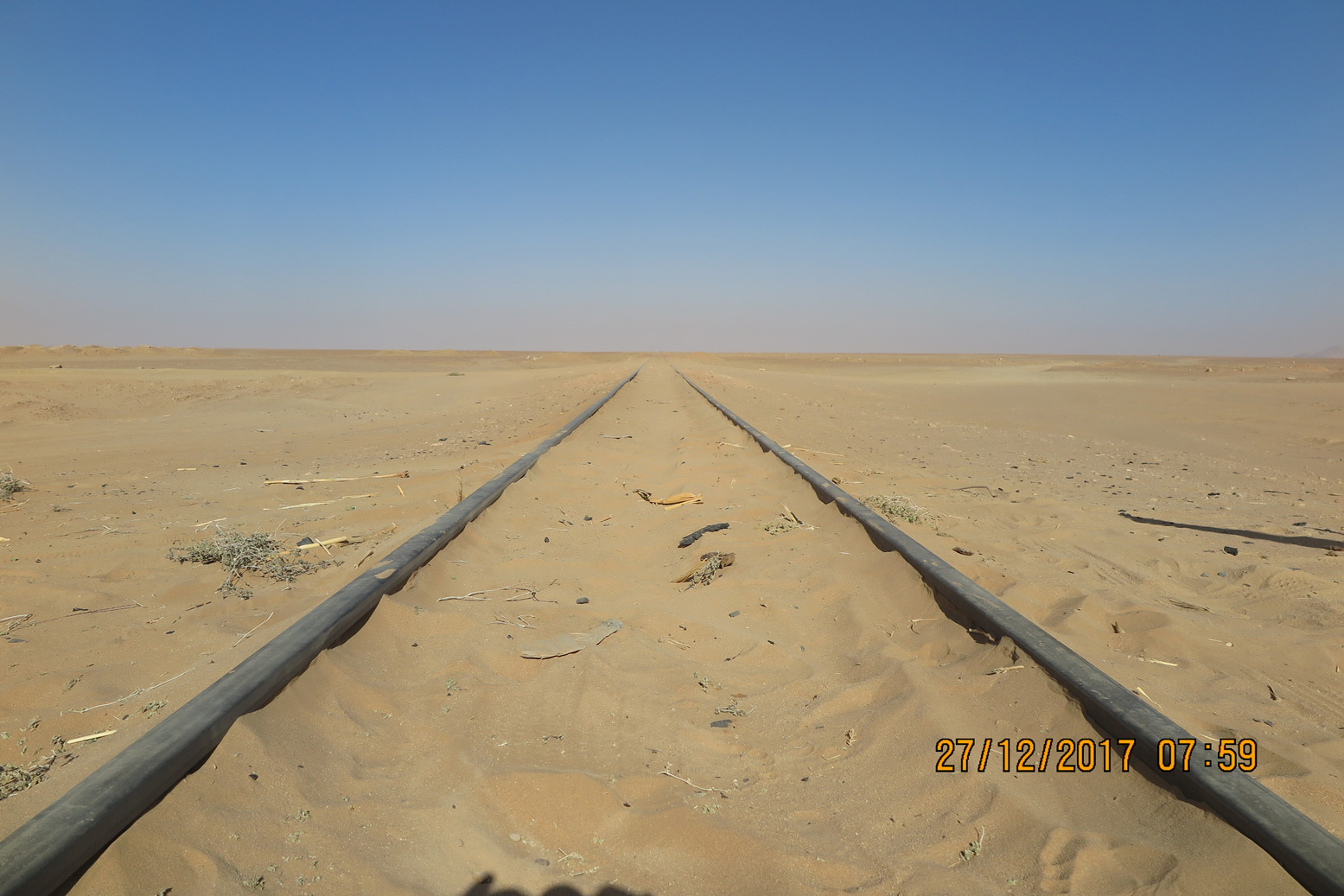
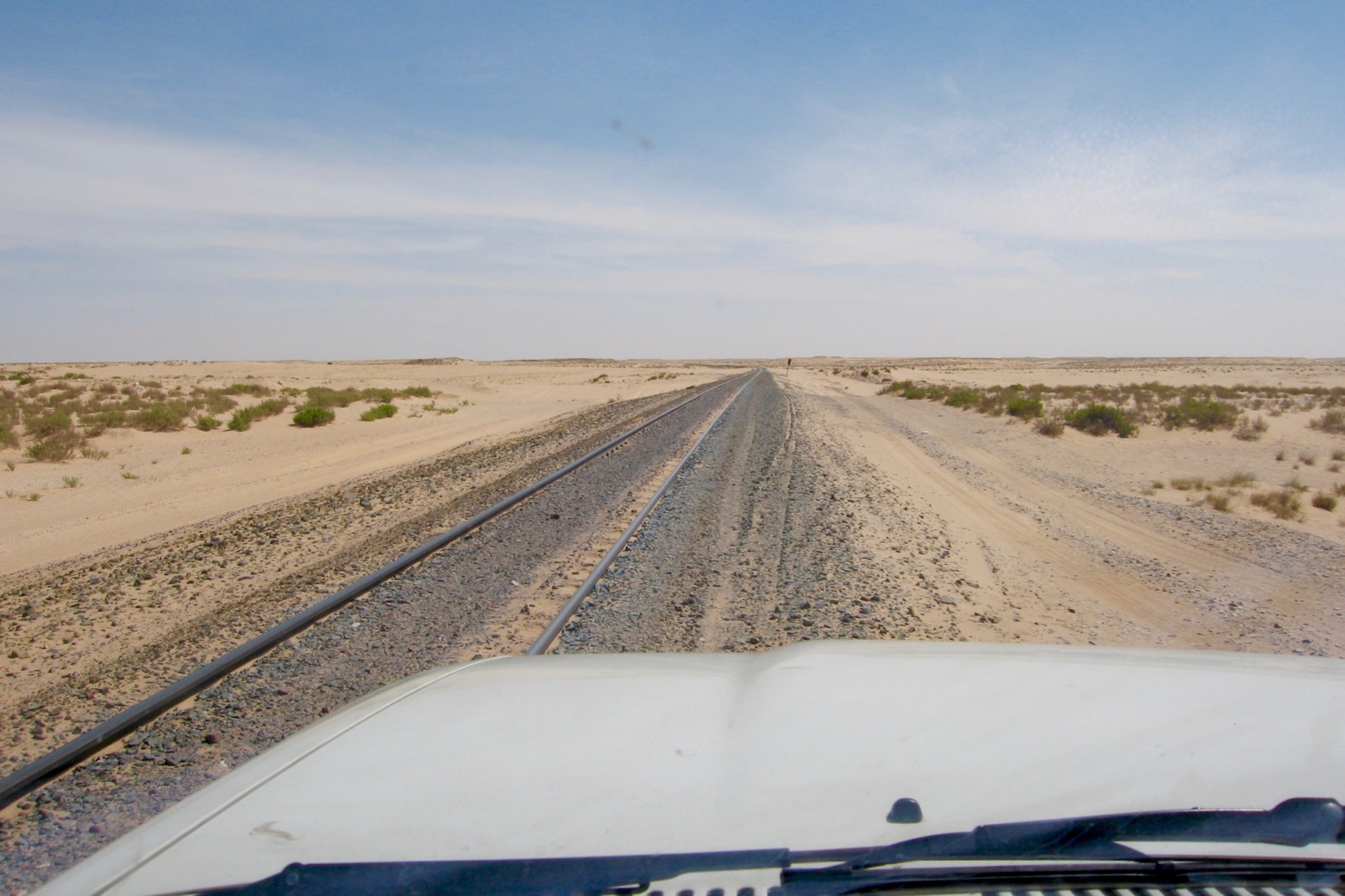
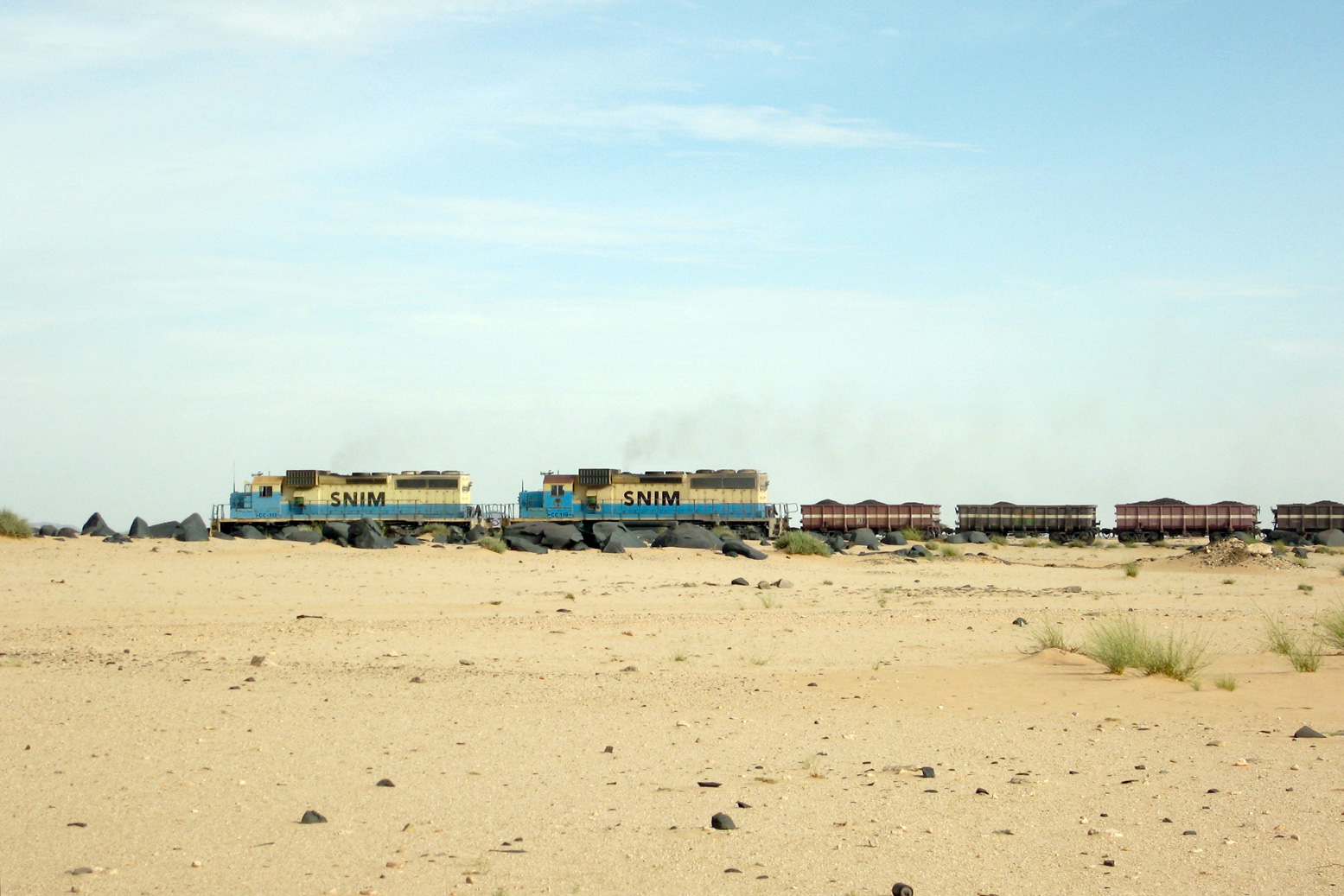
Nearly 20 years after I last drove it, Mauritania’s Railway Piste is becoming an Overlander’s Thing. If nothing else it’s a short cut (in distance only) from the coast to the interesting Adrar highlands east of Atar without having to schlep down twice the road distance via Nouakchott or now, Benichab (saving 200km).
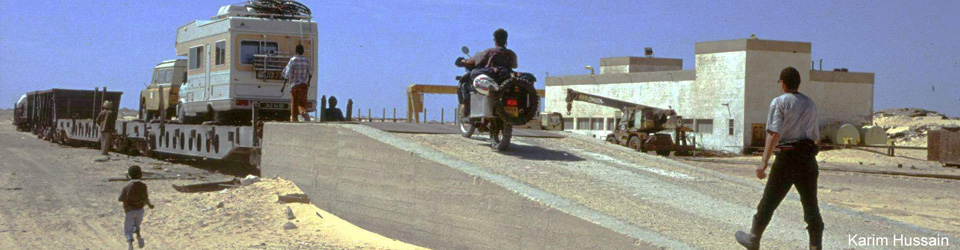
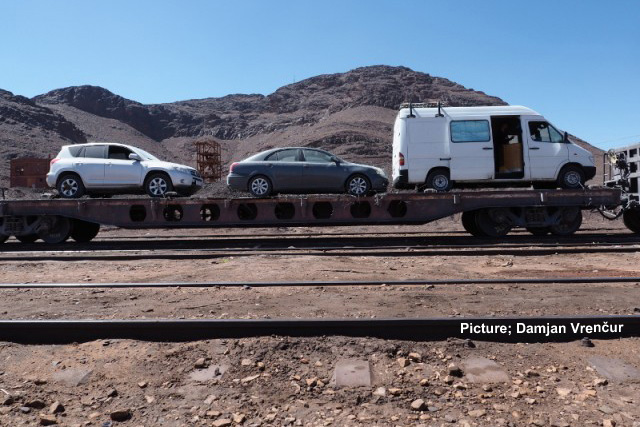
They say the ore train linking Nouadhibou port with the iron mines inland at Zouerat no longer offloads vehicles at Choum, where it can stop for just a few minutes westbound when full. Motorbikes might be quickly manhandled on and off. Otherwise you might load or offload a car at Zouerat (12–16hrs), even though asphalt now extends there from Choum. SNIM has no formal reservation system, booking website or even a station. There will be a yard at each end with a ramp.

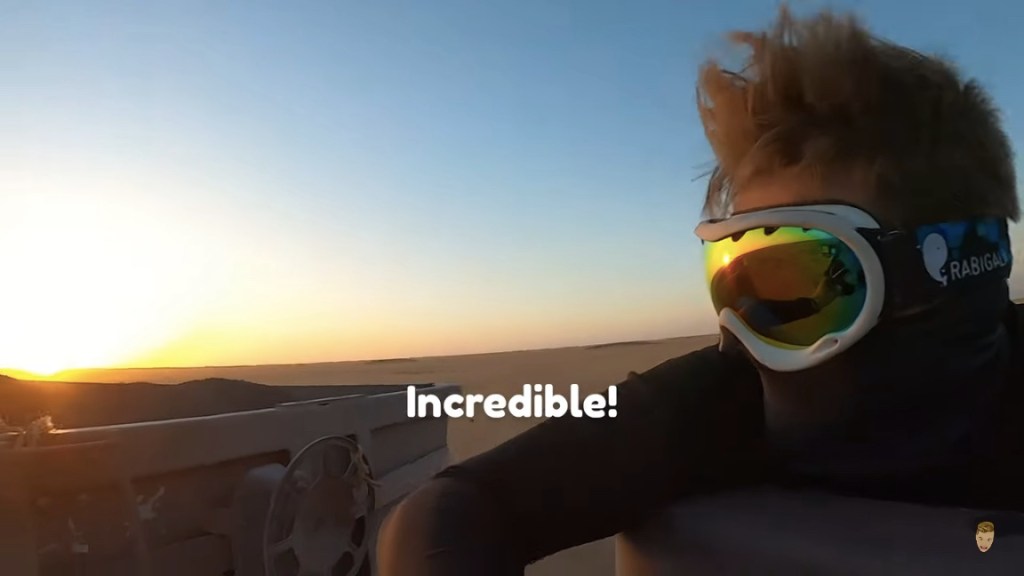
Coming up from Atar and riding the loaded ore train as a passenger between Choum and Nouadhibou has also becoming a youtuber’s rite of passage (below). You’ll find loads of self-agrandizing vids on social media. There’s even a backpackers’ guide to Mauritania as well as organised tours, some in rudimentary sleeper wagons, while the hardcore cower on the mineral wagons for free, choking on iron ore dust. Bring a Covid mask.

As for the piste, while navigation in either direction is straightforward with the rail track always to the north, it can still be hard work as you cross successive dune cordons in the east before you reach the road at Choum, 115km north of Atar.
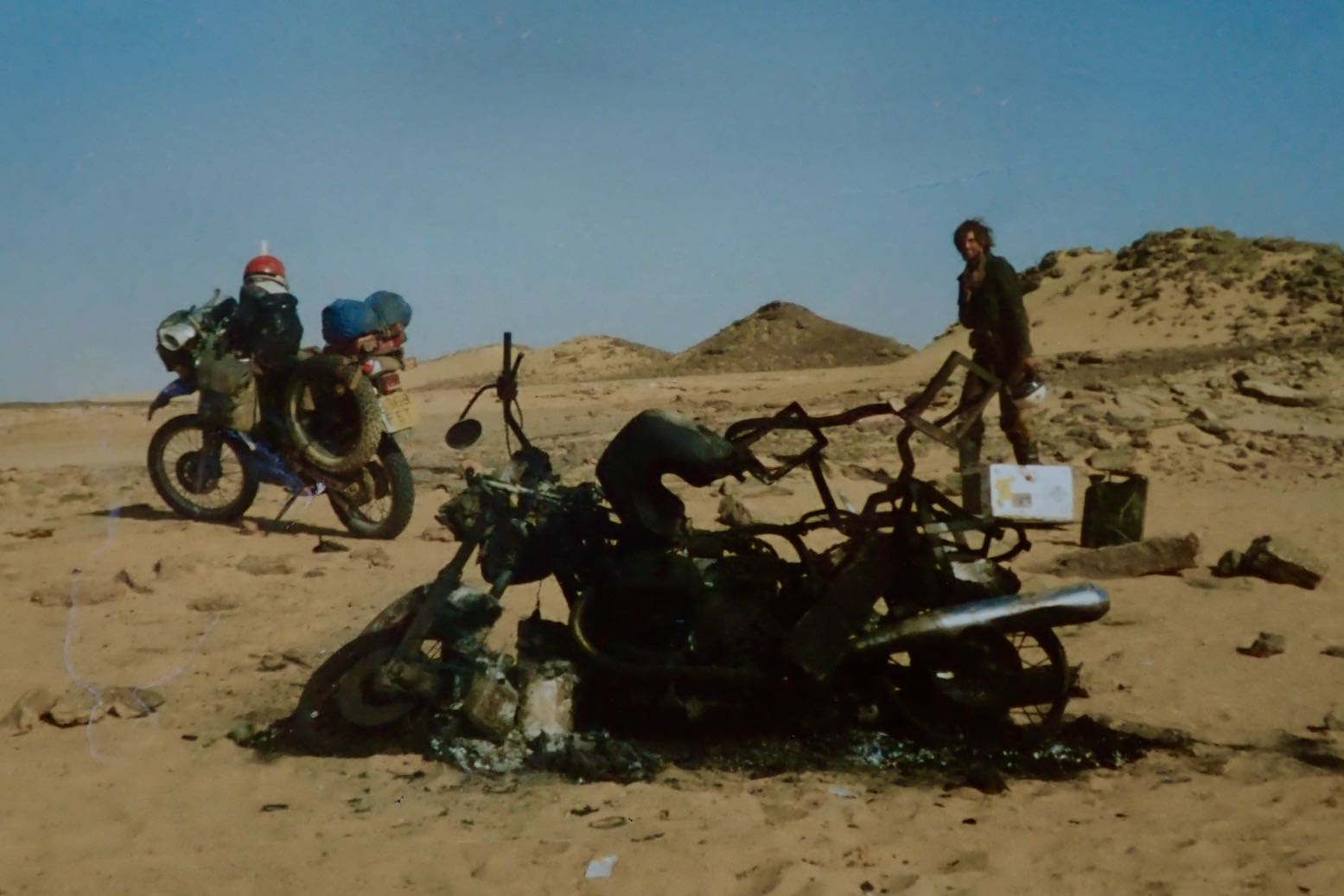
Alone on a moto this is quite a step if you’ve just cruised down the balmy Atlantic Highway through Morocco. It’s a lot hotter down here and riders have crashed or burned out and needed rescuing or escorting out. Even with the easy nav, think twice about tackling it alone on a heavy bike. You can buy drum fuel and water from the shantytowns alongside the track marked on the map above.
North of Ben Amira village (KM360), the granite monoliths of Ben Amira are well worth an excursion, though don’t stray too far north to the PFZ border. And don’t expect Choum to be any kind of Shangri-La, though there is fuel and an auberge here.
Some say the terrain get easier further south from the tracks, but there’s no way of dodging the long band of the Anezal dunes of the eastern half. They are mostly low, rolling sand mounds, not a full-on crested dunes, but the soft sand, occasional drop-offs, ruts and heat will work your engine hard. In whatever direction, bottom line is you just have to plough your way through, seeking out the easiest tracks or terrain.

Cooling off in late October on the way to Choum

The road from Djanet to Tamanrasset

Updated February 2025

South of Tazat, 1987
Ideles 2025

Recently traveller’s reports have revealed that these two southern Algeria towns will soon be joined with a ribbon of asphalt.
We were there in January 2025 at which point the gap was just 94km, a drop of about 25km from 18 months ago. At that creeping rate it’ll probably take a few more years to link up.
How the surface with survive the baking summers remains to be seen, but that’s been an issue since they finished Trans Sahara Highway from Algiers to Tam in the early 1980s. It’s said the TSH remained intact over its 2000-km distance for just one year before flash floods, poor engineering and overloaded trucks beat the bitumen back into rubble. In January 2025 we did the full TSH too; there’s probably 100km of diversions over sand and gravel.

Djanet to Tam
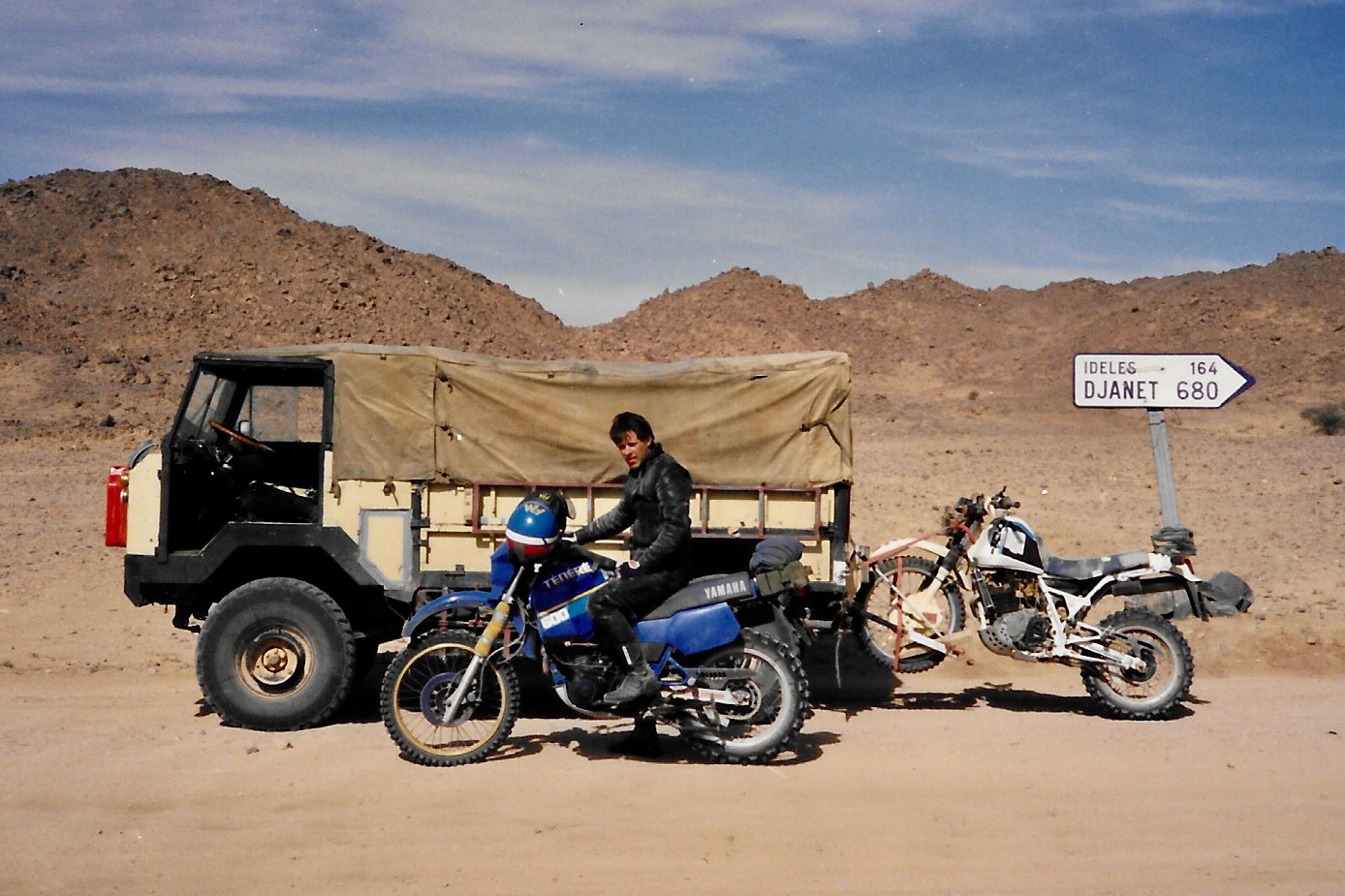
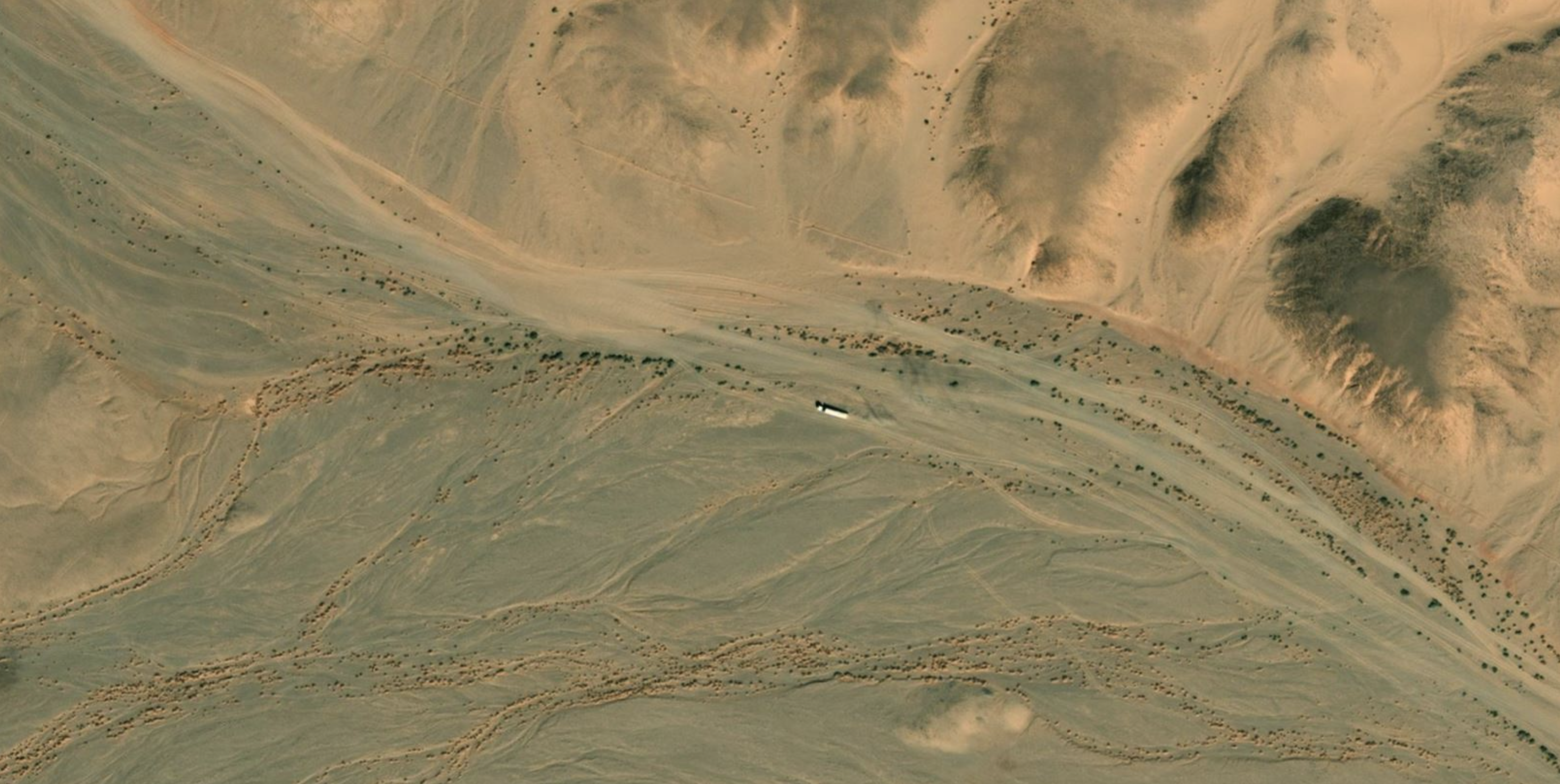
About 8km west of Serouenout checkpoint (270km from Djanet) the tarmac ends. After 24km there’s a short, 20-km section of tarmac, and then you’re back on the piste south of the new road’s alignment for about 70km. Once back on the road it’s about 71km to Ideles roundabout and 220km to Tam via the TSH, or about 270km along the scenic high route via Col Azrou and Tahifet.

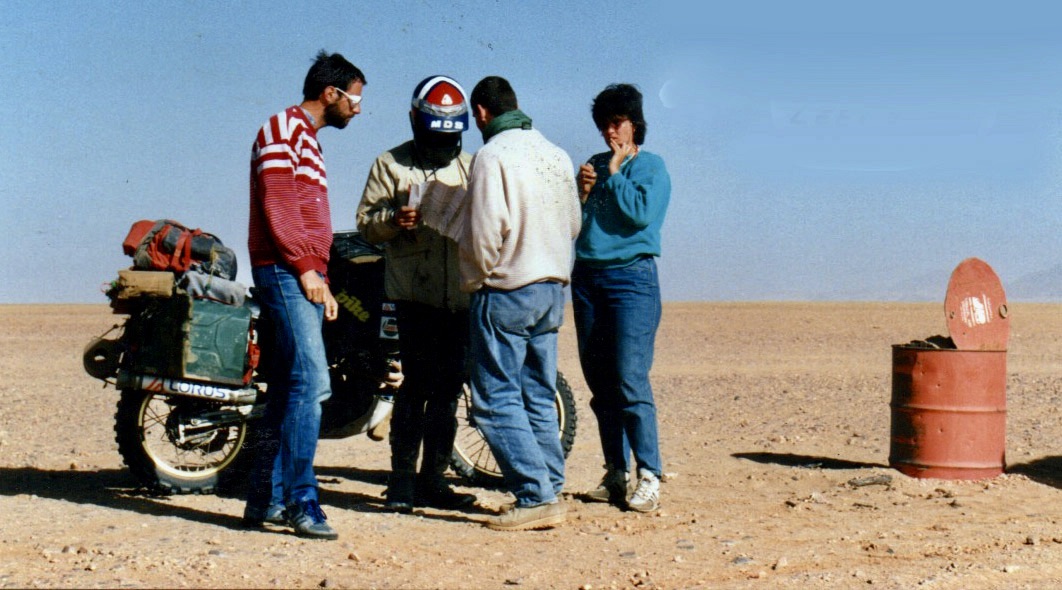
Puzzled near Borne; 1987

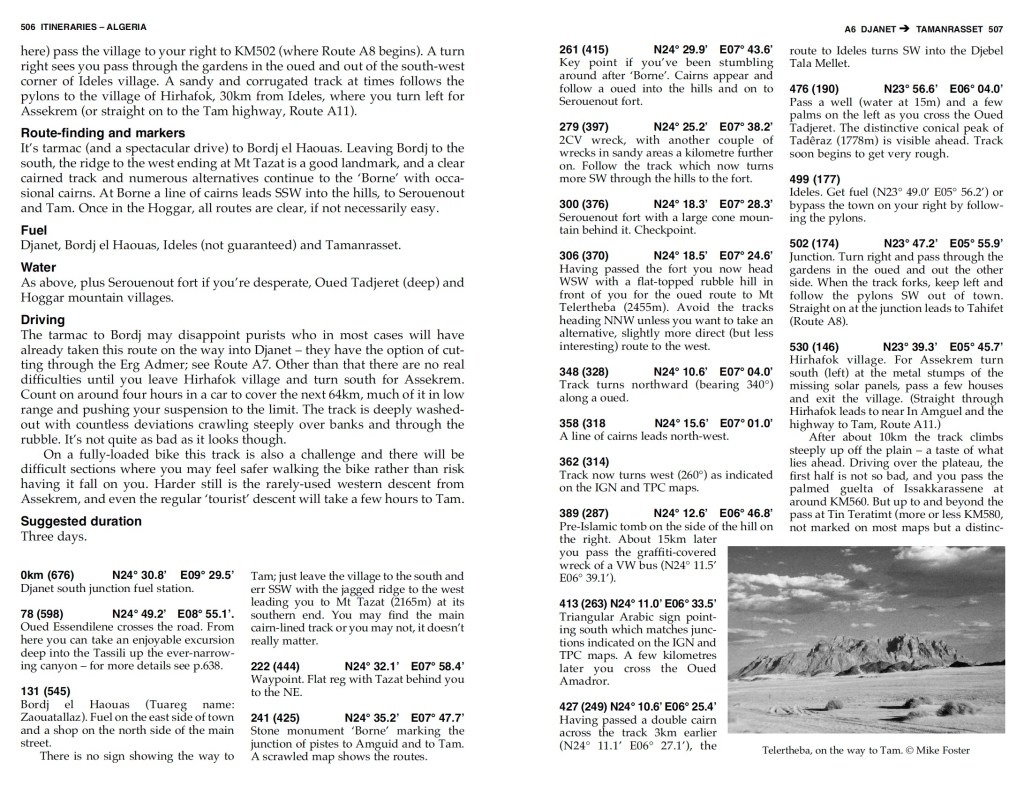
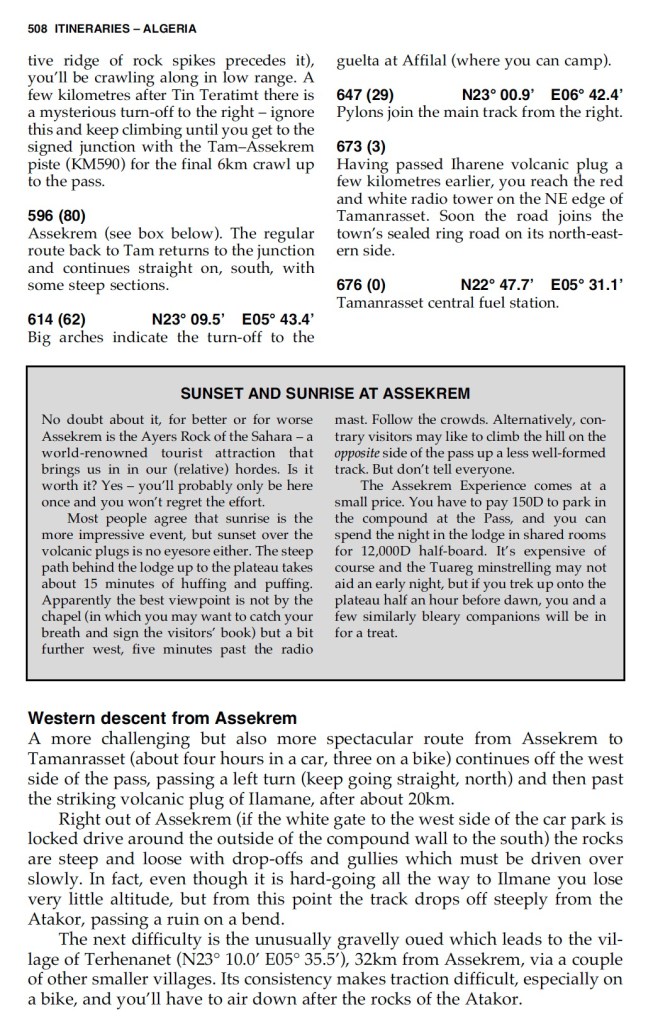
Route A6
In the good years (70s & 80s and 00s) the various tracks between Djanet and Tamanrasset and Hoggar mountains all combined to make classic multi-day adventures in southern Algeria.

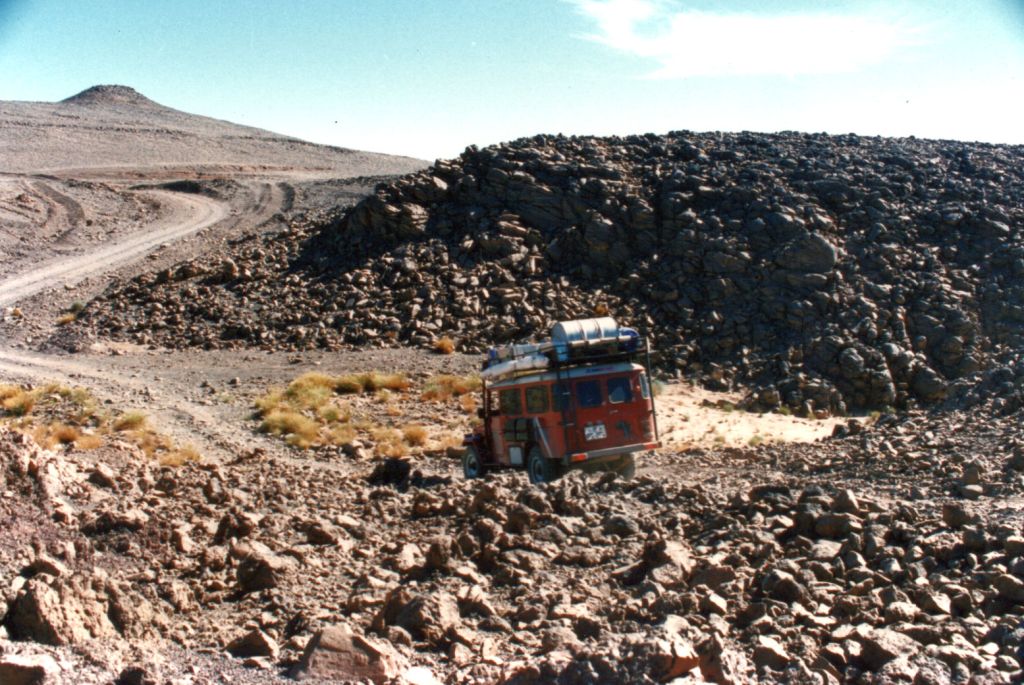
Heading west on Route A6, you traversed below the ramparts of the Tassili N’Ajjer plateau, long famed for its prehistoric rock art, then either turned southwest at Bordj el Haouas for Tazat mountain (below right), or used the same mountain as a landmark after crossing the dunes of the Erg Admer (below left),

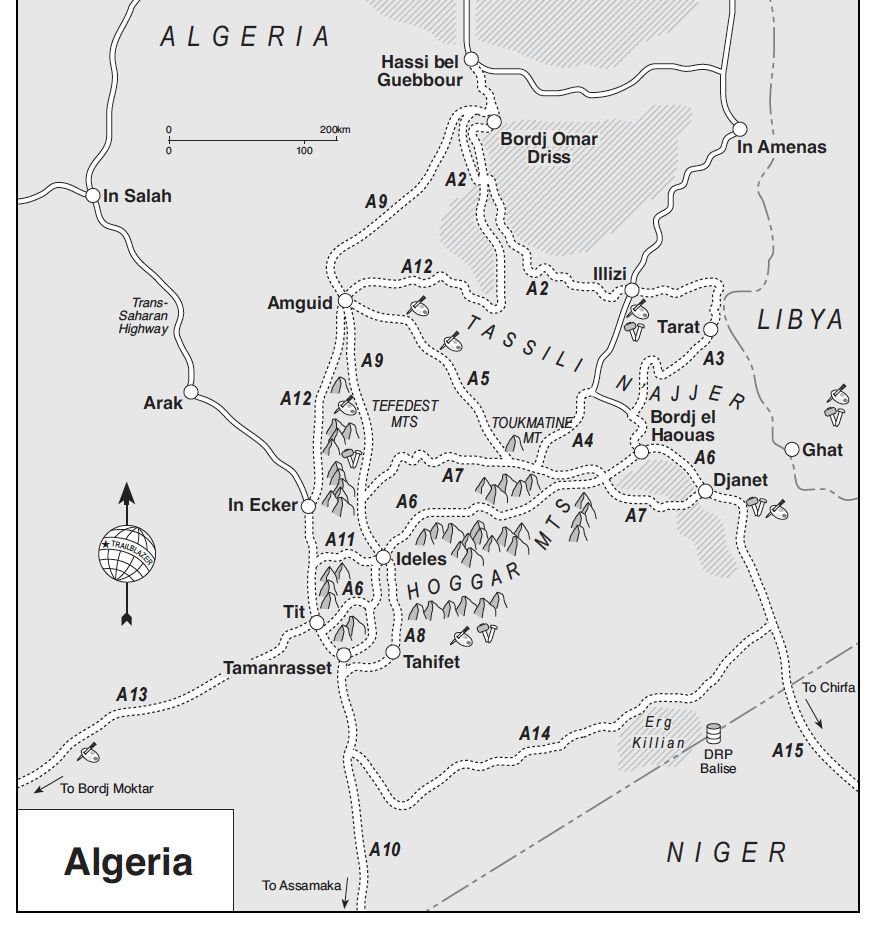
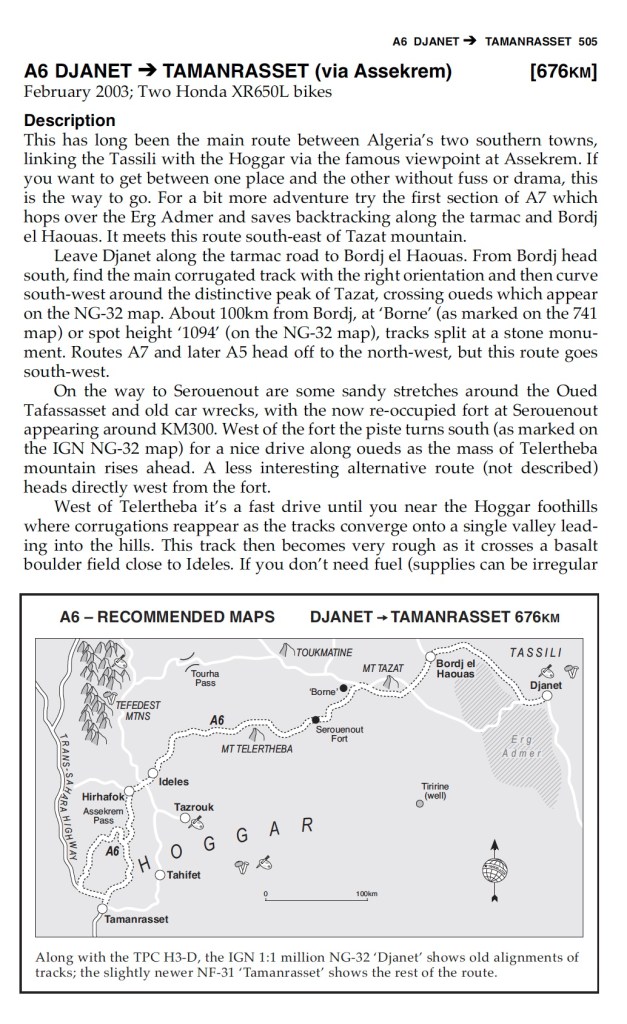
Passing isolated volcanic cones, plugs and other outliers, the basalt rubble of the once molten Hoggar lifted you up to Assekrem, a few hours from Tamanrasset and a refuel. The main route used by non-clandestine locals (A6 in my old Sahara Overland guidebook bottom of the page) was still nearly 700 kilometres or two desert nights for most. It was also on the limit of what an moto could manage.

Ajjer sands, 1987

When I first did it in 1987, the road from the north ended in Illizi, 400km from Djanet over the Fadnoun plateau. That all added up to over 1000km and one of the best all-dirt stages in southern Algeria (above), with just enough pre-GPS navigational challenges to keep you on your toes. It was rare to pass more than one or two other vehicles during the transit.

Fallen MAN, 2018

In the 80s the army were tasked with building a road over the Fadnoun’s switchback escarpments. Up to that point trucks supplying isolated Djanet had to take a huge, sandy detour to the west via Amguid, nearly doubling the road distance. Today the Fadnoun (below) is sealed and still a great drive, even if occasionally lorry drivers fall foul of the Fadnoun’s curves, as left.

Gara Ihadja n Kli, one of the Fandoun’s escarpments, 2018

Morocco is famed for sealing it’s southern desert pistes faster than we can keep up, but Algeria is catching up too, only over vastly greater distances. Despite minimal population, insurgents and migrant traffickers south of the border have accelerated development of sealed roads or defensive berms.

Caught on camera west of Serouenout (Bing Maps)

Even when they succeed in sealing this traverse, A6 Tam-Djanet will still remain one of the great routes in the Sahara, but there’s no need to follow th road. There is A7 to the north which we also partly did in 2025, A14 in the deep south I last did in 2007, and at least one more route via Tiririne, Tarabine which we did in 1989 and again in 2006 on the way back back from Mauritania on Sahara: The Empty Quarter.

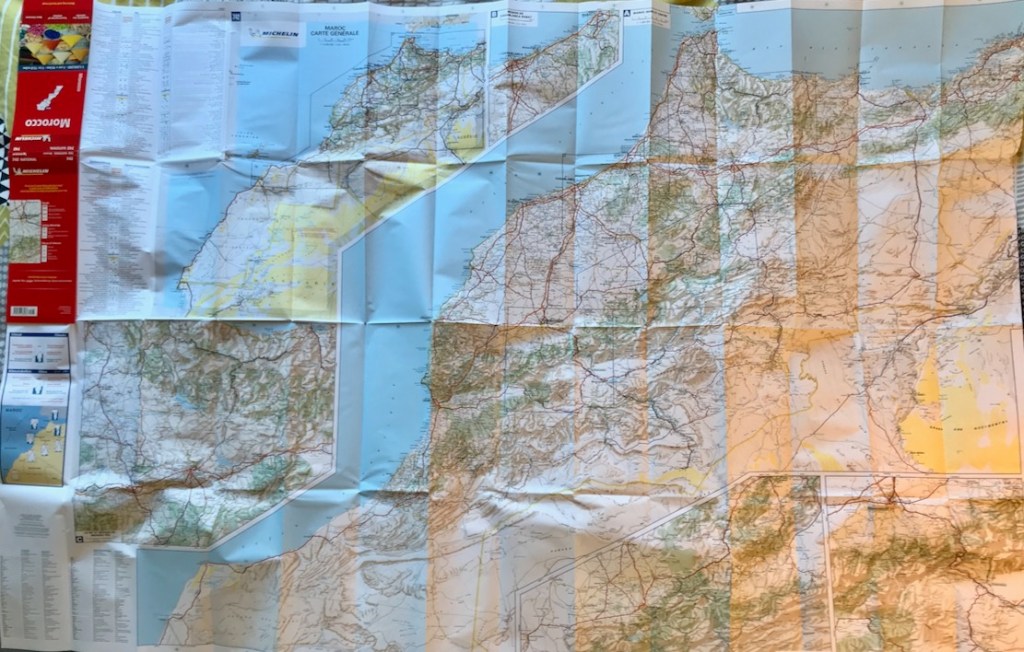
Michelin 742 Morocco (2024) map review

See also:
Morocco Maps
Reise Know-How 2023

In a line
Well after 14 editions the paper feels thicker but in the south much detail remains missing or well over a decade out of date.

Cheap
Big (1 x 1.5m)
Detailed key in many languages
Intuitive 1:1m scale
Doesn’t need batteries

So out of date in the south it’s not funny anymore

Big and 1.3 m wide, but years out of-date

Review
Michelin the best map for Morocco, right? Not for many years, I’m afraid, unless you’re following the main highways. The late 2024 edition’s paper feels thicker – an age-old complaint. You also get five sub-regions at 600k scale.
Plus points are the intuitive 1:1m scale, clear Michelin design and the fact that it goes right down to Laayoune which means you can view all of Morocco 4’s routes on one sheet – except that I’d guess less than half on them exist on this map. And at from £6.50 in the UK, it’s cheap.

But many easily navigable market roads and tracks mentioned in my M4 book or on the digital maps below are missing, and some roads and tracks either don’t exist or get misleading prominence. In places this data is nearly 20 years out of date so once you get far of road, it’s unusable.

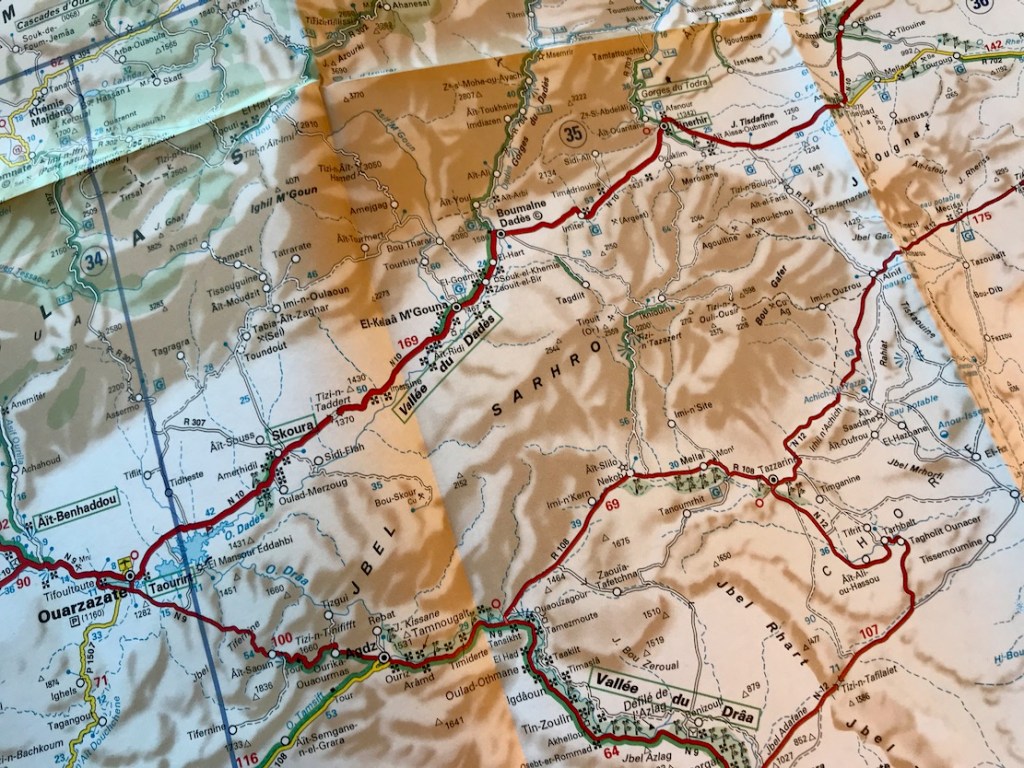
Jebel Saghro: nothing to see here – at least on the Mich 742

Look at a region like Jebel Saghro (above) about which complete piste guides have been published (and which in Morocco 4 get 32 pages and 11 routes). On the Mich map even the main roads is incomplete.

You’d think one day they’ll go all out and improve the 742, like RK-H did in 2019. That has not happened for years at Michelin. Perhaps the best thing to do with the latest Mich 742 is mark the many, many missing roads and pistes from other sources all on one big and inexpensive map to become a handy reference to what is possible and where. That’s what I’ll probable do with mine.

The Seven Passes of the Issil Plain

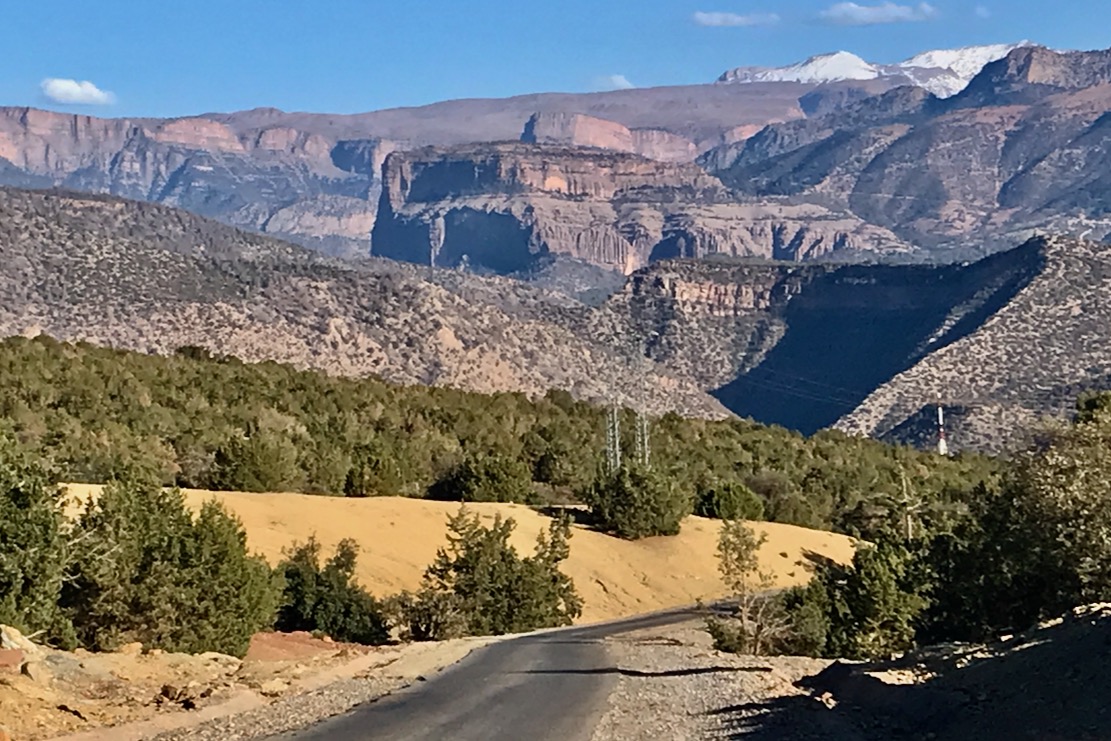
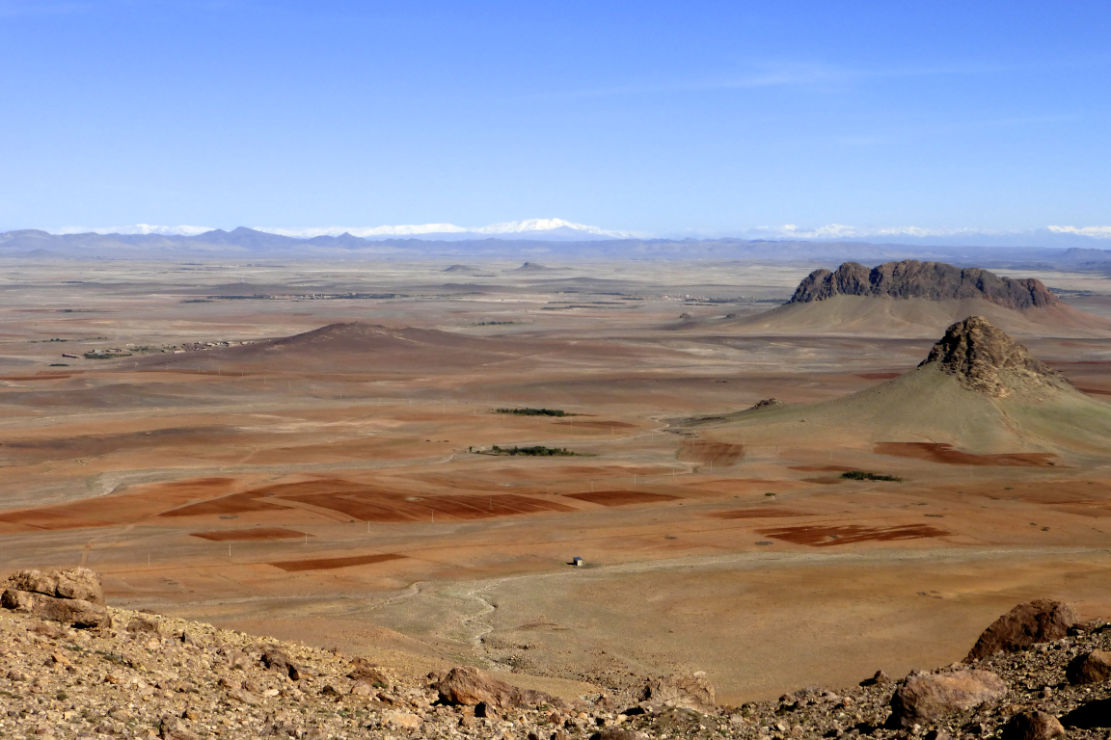
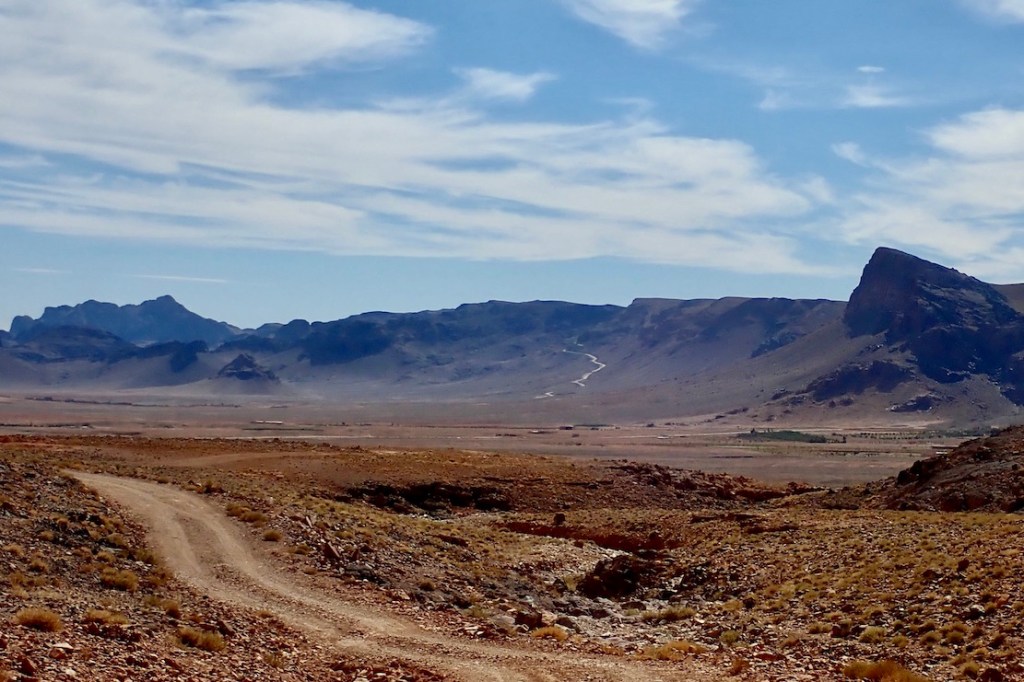
Looking north from the Haroun Pass across the ochre expanse of the Issil Plain to the snowy High Atlas
The issil Plain

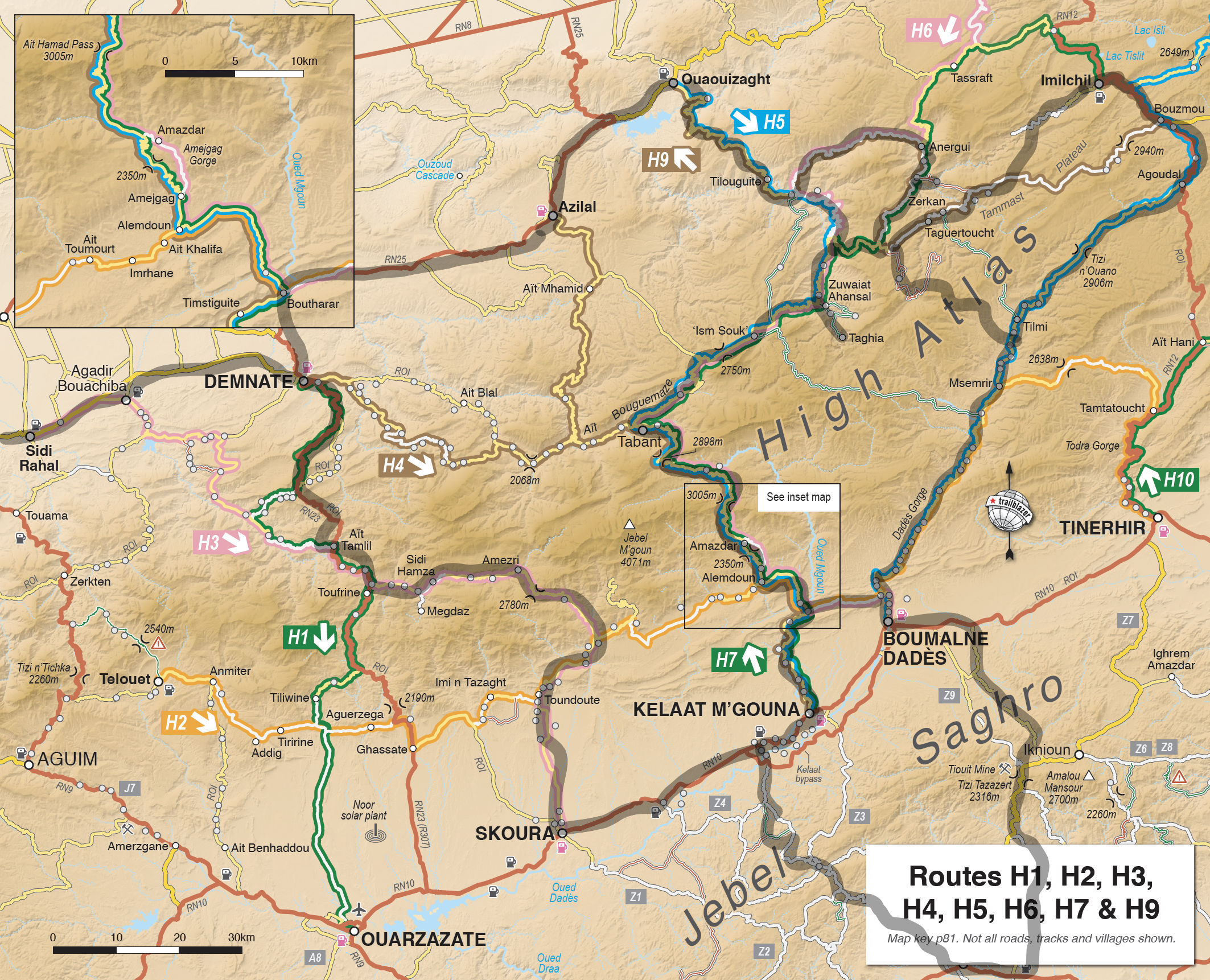
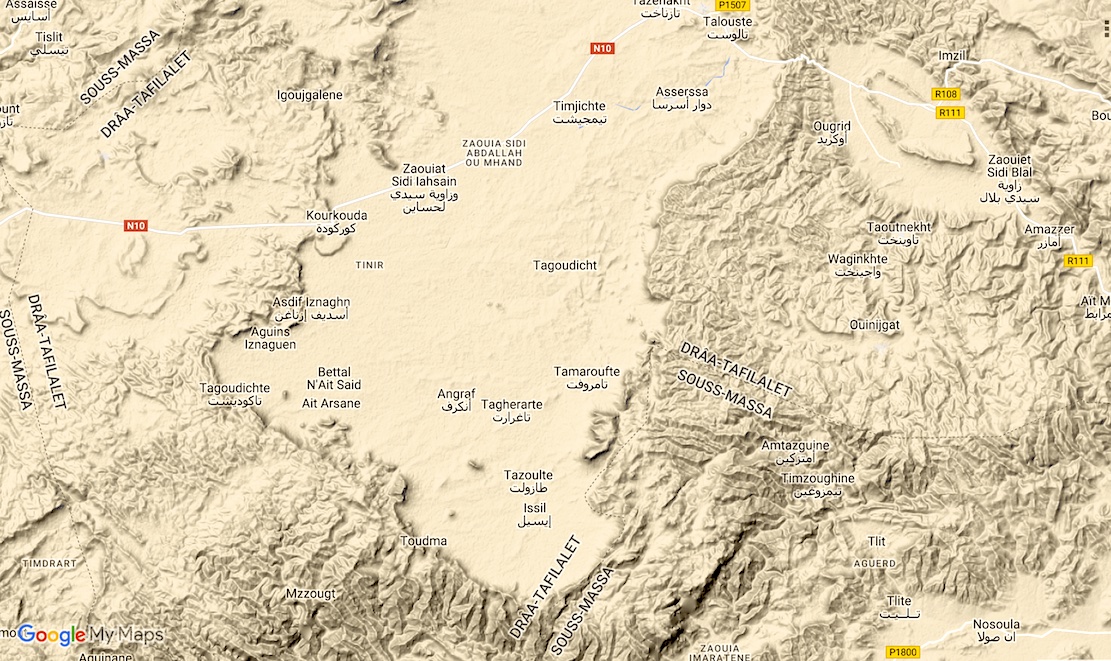
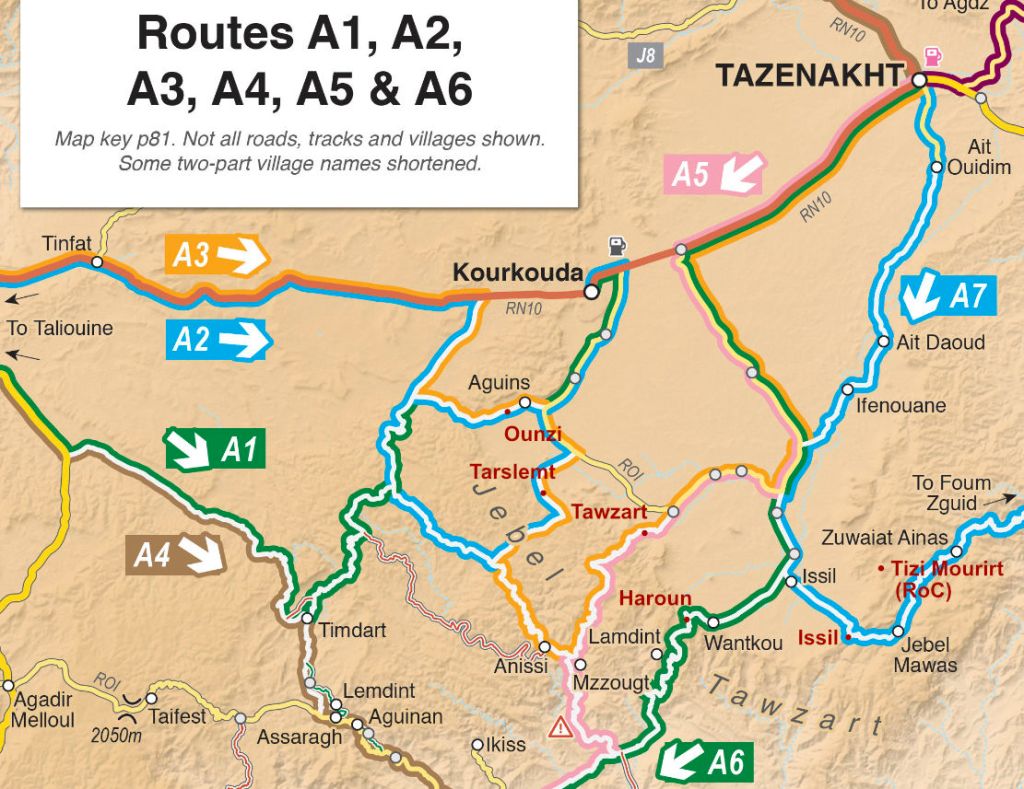
The new book out this week has a bunch of great routes in the A (Anti Atlas) region crossing the Issil Plain which lies between Tazenakht and Taliouine.
Both are good bases to kick off a traverse of the plain towards (or from) what I used to call Jebel Timouka but might more correctly be called Jebel Tawzart – an escarpment which rings the plain to the south.
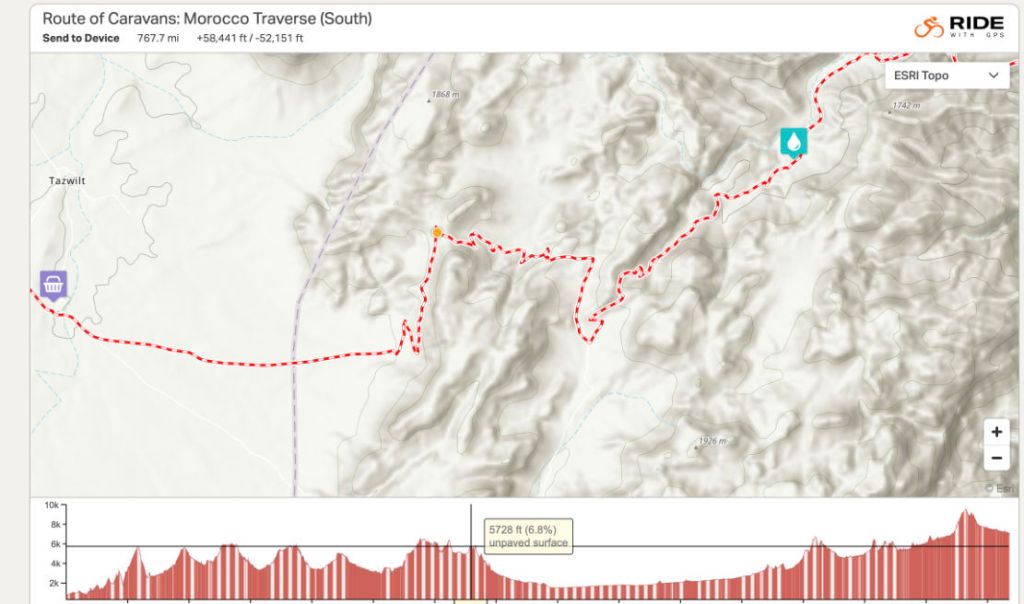
These routes cross six passes or Tizis labelled below. From the west Tizi Ounzi, Tizi Tarslemt, Tizi Tawzart, Tizi Haroun, the unnamed ‘Issil pass’ and the Tizi Mourirt which is not on any M4 route but is worth a look and is part of the RoC.

Tizi Ounzi
1750m (Routes A2, A3)
West of Aguins, the Ounzi is not so dramatic but is a fun way of accessing or leaving the plain on the west side. Coming down the Ounzi towards Aguins, you get a good view of the Tarslemt pass up ahead.

Tizi Tarslemt
1896m (Routes A2, A3)
The Tarslemt starts as a broad ramp rising up onto the jebel with great views over the plain before swinging through a few switchbacks to nearly 1900m and down the far side and the canyons beyond

Tizi Tawzart
1940m (Routes A3, A5)
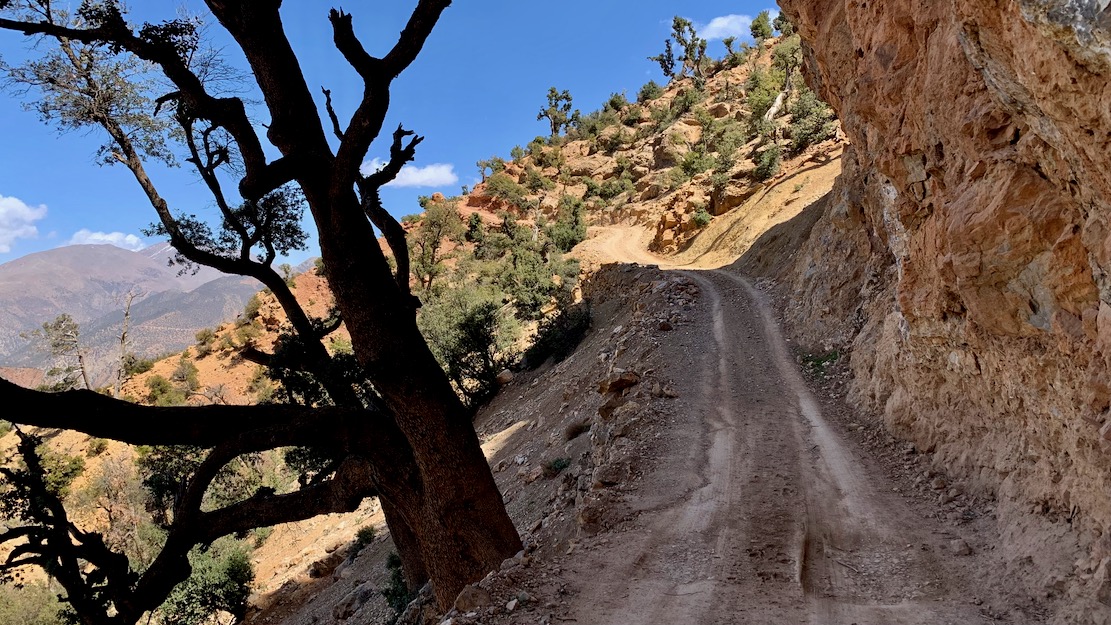
Tawzart takes a steep line up the jebel from Algouz and consequently got damaged by the recent rains: big bikes may struggle. And as you’ll read in the book, all vehicles may struggle trying to follow Route A5 right down the Anissi canyon. On A3, once you get to Anissi, the track gets more maintained to the west.

Tizi Haroun
1825m (Route A6)
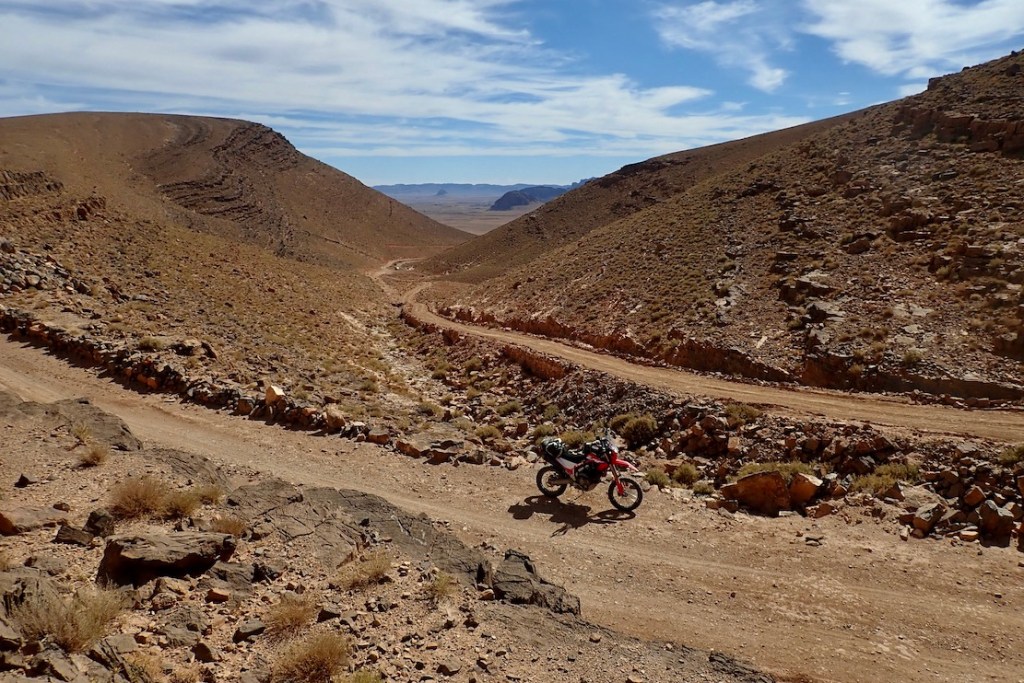
Well known from previous Morocco Overland editions, Haroun rises to give huge views over the Issil plain (top of the page), but after the pylon turn-off down to rock-bound Lemdint, the trail turns into an unmaintained ‘BLV’; in a car expect to be crawling for hours at walking pace. And that was before the big rains…

Issil Pass’
1825m (Route A7)
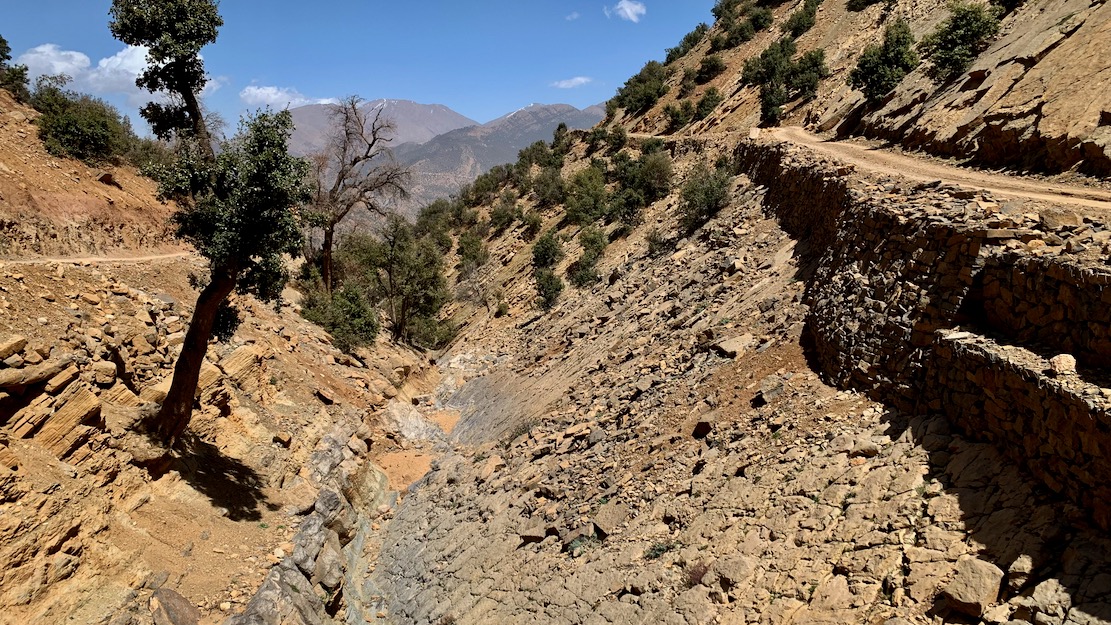
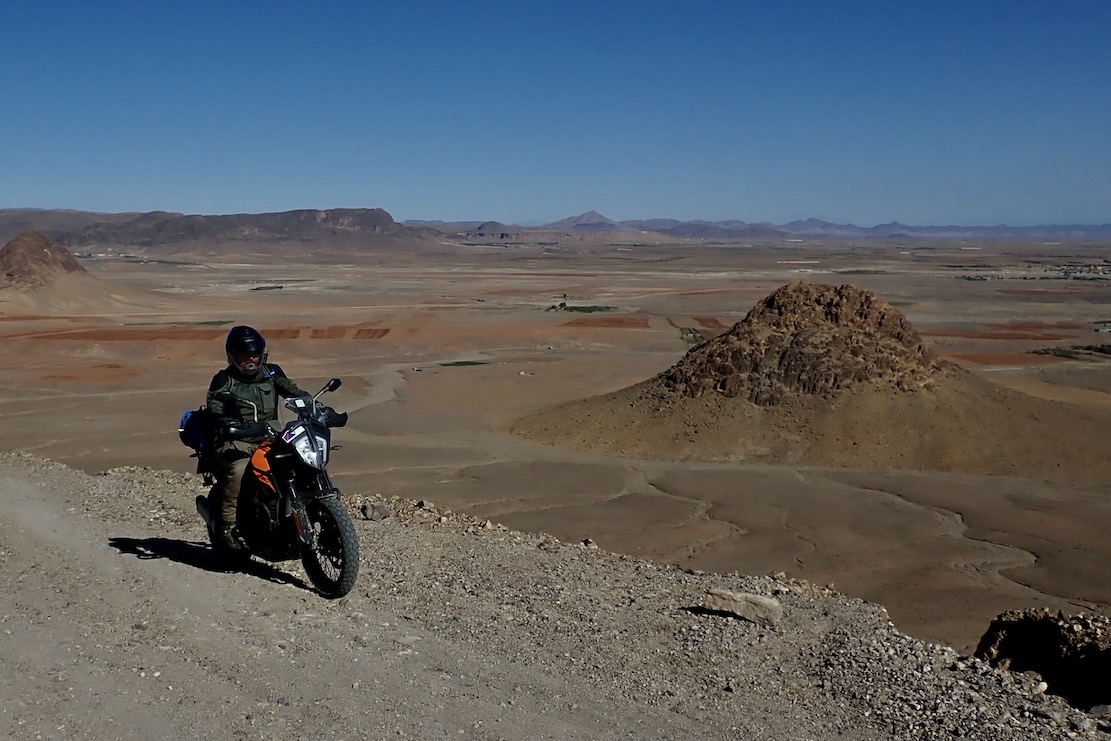
I’ve found no name for the ‘Issil pass’, as i call it, another old classic from previous editions, with a jaw-dropping reveal if heading northbound on A7 or the TMT. Riding it last week, the valley to Amtazguine is slowly getting asphalted, but the switchback climb between Mawas and Issil remains an easy and epic gravel track.

Cresting the Issil pass

Tizi Mourirt
1825m (RoC)
I’ve often thought there was something up here but never looked carefully enough. The Route of the Caravans pushbikers did and logged a route via Tizi Mourirt (Tizi n’Tlite), which comes down to A7 near Mawas village. One for next time.

RoC map

ⴰⵄⴻⴷⴷⵉ ⵡⵉⵙ 7
Local Amazigh legends speak of a lost pass somewhere in the Jebel Tawzart, an ancient trade route now known as the The 7th Pass or ⴰⵄⴻⴷⴷⵉ ⵡⵉⵙ7 which got smothered in some Atlantis-like cataclysm, just as a treasure-laden caravan was passing through. It’s thought to lie somewhere in the higher reaches of the Jebel’s rim between Mourirt and Tawzart.

Announcing the Trans Morocco Trail

transmoroccotrail.org

READ THE TMT FAQ

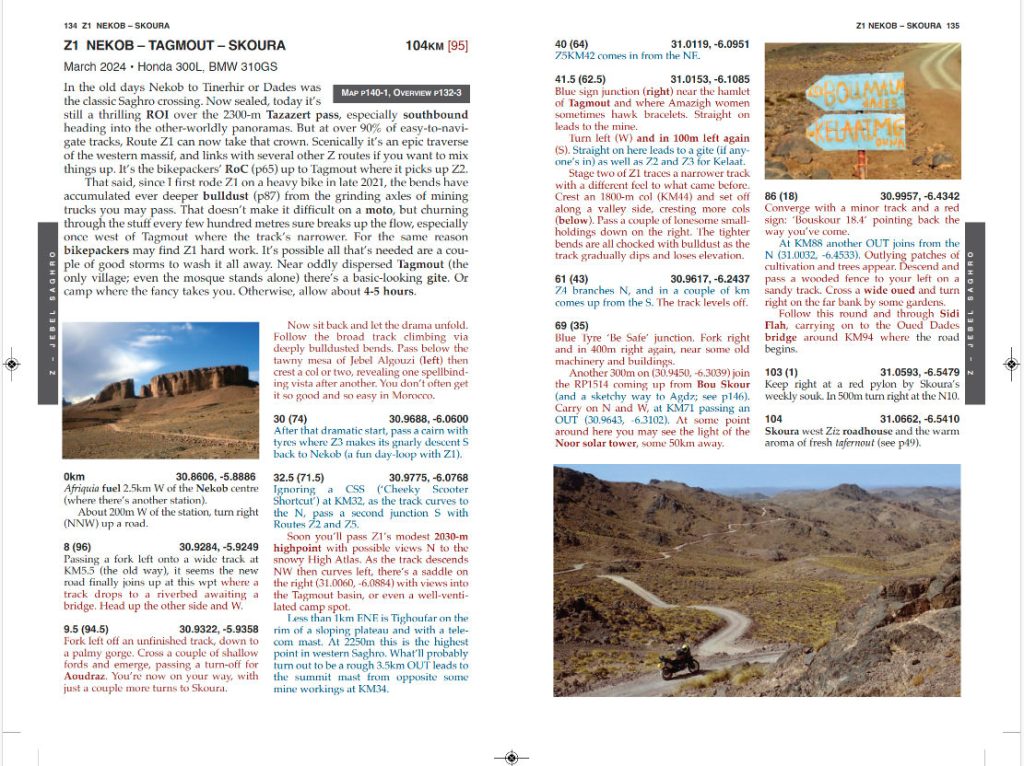
The idea of a Trans Morocco Trail is one I’ve had for ages. And after covering 1000s of km in 2023-4 in cars and on bikes updating my M4 book, plotting a brilliant, see-it-all TMT route was easy.
The TMT is the same deal as your TET, TAT etc: a .kml file of verified tracklogs and waypoints free to download off the regularly updated TMT master map above. After that it’s all up to you: do it all; do bits leaving your vehicle there or with rentals; plan it minutely for months on end, or just wing it.
Like the North Coast 500, it is nothing more than a network of long existent roads and village access tracks threaded together and given a catchy name starting with ‘Trans’. And like the book, the TMT is not a hardcore off-road challenge because there can be enough of them out there, as the September 2024 floods have shown. Tarmac stages may run for an hour or more, but these are all great mountain roads or deserted desert highways which are all part of the overland adventure.
Each stage has a summary on the TMT master map but some – like Stage S including Erg Chegaga perimeter piste – will be unsuited to unfit riders on tall, overloaded motos during a hot spell – which these days can run from April to October.
Road or trail there’s always an easier way round that’ll often be as good, or just a way to recover. No need to wear yourself out on the way to Cap Draa unless you want to. I estimate 14 days to cover K to Z comfortably.

You don’t need to buy my Morocco Overland 4 book to follow the TMT, but there’s another ~15,000km of routes in there, enough for several more TMTs, all with detailed descriptions which include long TMT stages. It could be handy as a tracklog is just a line across the landscape.

Part of Stage Q from the Morocco 4 book

Ed does the FB:https://www.facebook.com/groups/1023359279129625
I do Insta:https://www.instagram.com/transmoroccotrail/
Stickers sets (below) for sale here
There’s a dedicated TMT Forum on the HUBB alongside the best Morocco forum.

transmoroccotrail.org

Book review: Sahara, Souk & Atlas

Sahara, Souk & Atlas: Tales from the Land of the Amazigh
By Michael Thorogood

In a line
Dense history but otherwise disappointing and disingenuous,

What they say
Strapped to Africa’s northern shores, Morocco is a staggering land of harsh desert, high mountains and spellbound medinas. Sahara, Souk & Atlas: [Tales from the Land of the Amazigh] recounts two journeys across this land. From spontaneous beginnings, these journeys become a passage to the heart of North Africa’s indigenous people. They know themselves as the Amazigh, ‘free people.’ 
For millennia, the Amazigh were the dominant force across North Africa. They were a seemingly unconquerable people, but today they are fighting for cultural recognition in the lands where their ancestors lived. This book tells their remarkable story of rebellion and resistance.
From the souks of eccentric Marrakech, to the guilds of pious Fez, enclosed are tales that dig to the roots of Moroccan society. Brace for a gripping journey through a land of diversity, from the tribal High Atlas and lawless Rif, to campfire folklore beneath the stars with desert nomads, whose way of life is on the brink.

Travelling as I do, mostly through the Amazigh lands of southern Morocco and wanting to learn more, I was hooked by the title and cool cover. For less than a couple of quid it was worth an e-punt.
More commonly known as ‘Berbers’, a term coined by the Romans (Barbary Coast is a derivation), Amazigh is what they call themselves, meaning the free people. From Siwa to the Atlantic, the Amazigh are the indigenous inhabitants of North Africa before the Arab conquest of the Maghreb in the 8th century.
Had I noticed the telling ‘this is a work of creative non-fiction…’ disclaimer, or better still, just looked at the map, I’d have clocked how superficial the author’s Moroccan travels were. To be fair, Thorogood admits he was just 20 on his first visit, and maybe a year older on the next. Both were holidays undertaken with largely unmentioned backpacking chums.
An overnight camel trek round the back of Erg Chebbi seemed an odd start. Then the penny started dropping when the group visited the leather dyeing souk in Fez, another odd place to get under the skin of the modern Amazigh condition. By the time they were larking about on a home-built raft below Ouzoud Falls – the ‘Todra Gorge’ of Morocco’s few waterfalls – pennies were spilling over me like I’d hit triple gold on a slot machine. The ‘lawless Rif’ you ask? That was a day trip to Chefchaouen.
Amazigh consciousness or identity has prospered in the reign of the current King Mohamed VI, and one thing you learn is that their subjugation (banning of the Tamazigh language and so on) was introduced by his cruel and oppressive father Hassan I – part on an old Arab Alawite dynasty who established modern independent Morocco. Since Arab Spring protests of 2011 lead to limited reforms, we also learn that Amazigh identity has become more noticeable and the neo-Tifinagh alphabet more visible. You will also see the yaz (‘z’) figure of the ‘free man’ all over southern Morocco, both as furtive graffiti or bold banners, much like you see the Ⓐon a Hackney wall, ‘Oc’ in the Occitan lands of southwest France, and perhaps the fish symbol in the early Christian era. These Banksy-an icons suggest the mystique of an underground movement and underdog’s resistance to the established order. And just as with the Tuareg, some westerners are drawn to romanticise the ‘free people’.

Critically, the author was held back by barely speaking French (far less, Tamazigh) and so could only engage with the few English speakers at the tourist traps they visited. Here of course, like the tourists before them, they were spoon feed the practised Amazigh ‘of the desert born…’ schtick about the Ways of the Nomad.
These encounters added nothing other than travelogue padding (with laughably exaggerated episodes), compared to the much more detailed historical research of Amazigh dynasties from the Arab conquest onwards, which read like another book.
We read that the idea of a united Amazigh identity was always a far fetched notion, as medieval Amazigh clans and movements rose and fell: Almohadin ousted Almoravid and so on. Then a growing Arab population established its dominance from the 15th century and, like much of the Maghreb, Arabisation followed. By this time, after several centuries southern Spain’s Al Andalus had been reconquered by the Christians. All very wiki-interesting if a bit too dense for me, and possibly the subject for the author’s thesis he may have been writing at the time.
I suspect this book span off that thesis, the old idea of: heck, we had a great holiday in a foreign land, let’s make it into a book. I know it’s only blurb but claiming that ‘these journeys become a passage to the heart of North Africa’s indigenous people’ is sadly, preposterous. Sahara, Souk & Atlas is a long way from what the title claims: an anthropological study of a contemporary Moroccan underclass seeking to improve their prospects against the dominant Arab elite or Makhzen. It was not the book I was hoping to read.

Moroccan Sahara with Toyota Land Cruiser TXL 2

See also
Duster rental in Morocco
Prado TXL rental in Morocco 1

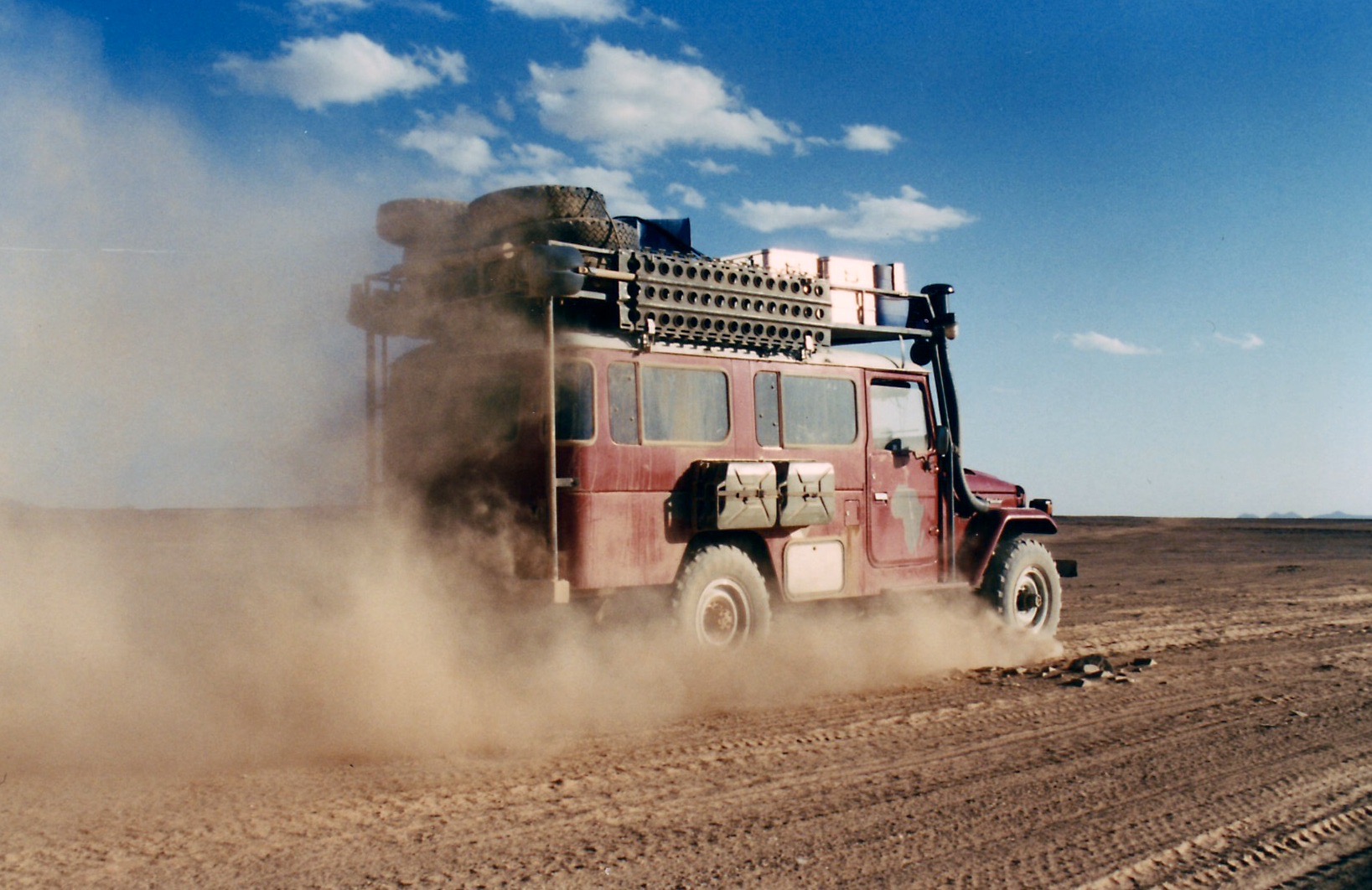
I rented a lifted, 2023 Land Cruiser Prado TX out of Marrakech for a week to recce and update the sandier desert routes between Foum Zguid and Erg Chebbi. I made the right decision: doing this area alone on the bike would be been too risky and tiring with the constant logging required. I couldn’t have covered the distances we did in the car.

The Toyota of course didn’t miss a beat. A TX is automatic but with a Sport (sequential) shift to keep it in one of the four gears; handy in tricky dunes and other technical sections.
About the size on an 80 series (ie: big), it returned 9-10kpl (compared to 15kpl in a lighter Duster). Still, I’m glad we went for the nuclear option. Though we hardly used low range, it was good to have it there, along with the TX’s reassuring reputation. Amazingly, we paired an iPhone with the display in seconds via Apple/AirPlay (not possible on the Duster), but could not plug in a USB stick to play mp3s, which the Duster easily allowed. It probably could have been done via the phone, too.

At one point we decided to do a Body Twist Test: getting two diagonal wheels airborne to verify clean door shutting. If a body twists under this static tension with two corners unloaded, doors will not close or open freely, even if the separate chassis is twisting a little (as it should). But even with all doors open, the TX passed with flying colours; not a mil of body deflection in the shut-lines. As you’d expect from a Land Cruiser.

And yet, despite the big rubber seal, the TX sucked in dust from the back door or somewhere. This was perhaps the biggest irritation, but is the same in any car with a flat-backed tailgate. I get less dusty on a motorbike. I recall we taped up the back vents in my HJ61, over 20 years ago, but with little success. At high speeds on dusty tracks, I suppose the low pressure across the rear of the car is too great.
Anyway, we covered all the routes I planned to do and even a little bit more, and overall the trip was a bit more comfortable in the Prado (partly due to the reduced ‘will-it/won’t-it’ stress). Our TX cost €110/day (down from €150 last year); Dusters are now €50/day from Medloc).
A few pics from out 1500-km recce.
Moroccan Sahara – Are we there yet?

To paraphrase the cop addressing Jack Nicholson’s character at the end of Chinatown
Forget it Jake, it’s the internet.’

Exactly where does the iconic and eminently Instagramable majesty of Sahara start in Morocco? Like Keyser Söze, is it even there at all?
Years ago I came across an internet forum argument on the now defunct LP Thorn Tree (I gave my 2ç then left them to it). There, a couple of know-alls lambasted the callow innocents daring to enquire where they could ‘see the Sahara in Morocco’ – in most cases referring to the famous Erg Chebbi dunes. ‘I told you: there is no Sahara in Morocco!’. All concerned have now migrated to TripAdvisor from where the quotes below were copied. It staggers me that some of these individuals can assert their unsubstantiated beliefs with such conviction, but such are the times. According to one of TA’s wise owls, ‘Erg Chebbi is not in Sahara, desert it is but not Sahara‘. So the Sahara is ringed by an unnamed desert that is not the Sahara?
… neither … Erg Chebbi/Erg Chigaga are the Sahara. For that you need to head to Western Sahara.
Ok, we know that but we want just see Sahara and ride camel
The limit of the Sahara is classified by the limit of the Date Palms
the Sahara,… lies 100 km or more to the south in Algeria.
Although not part of the Sahara , the dunes are pretty amazing.
It also corresponds to the 100mm isohyet in the north and the 150mm isohyet in the south. Long term average rainfall. A further definition is where the evaporation potential exceeds the presipitation [sic]. 
I don’t care what “Sahara” means. I am talking about the actual geographical boundaries of the area. And your definition of those boundaries is as incorrect and misleading as that of the ridiculous tour companies’ one.
Erg Chebbi is not in Sahara, desert it is but not Sahara. If you by reading see on website about Sahara tour, then it is only marketing to attract customers. But Sahara begin first in Algeria or you have to go to the South of Guelmim, to Western Sahara.
Here we go again with the “Erg (Chebbi/Chiggaga) is not the Sahara” brigade. What’s wrong with you? What’s a few hundred miles between friends? Jesus H. Christ.
May I just make one thing clear? You will not be travelling through the Sahara desert until you have gone south of La’ayoune. References to the Sahara in other places such as Erg Chebbi and so on are simply concoctions dreamt up by tour companies to fool their victims into thinking that they have been to the Sahara – they haven’t. To the east, the Sahara starts way over the other side of the border, deep into Algeria.
the Sahara if [sic] 100’s of kilometers away from the big dune areas over the border in Algeria and not in Morocco [continues] ... [Chebbi] is more spectacular than any of the places in the Moroccan Sahara that I have visited.

This way please.

This knotty problem of the Sahara’s precise extent may be unique to Morocco. You start with the very concept’s compelling mystique. It’s hard to think of other wilderness regions that conjure up such strong imagery and notions, maybe because it’s so close to Europe compared to other iconic wastelands.
Then you mix in the unceasing clash between gullible bucket listers wanting to definitively tick off the Sahara – and devious local tour ops who promise the earth and deliver a turd. One wily tour agency has even managed to insert themself as a ‘reference’ on Wiki’s ‘Sahara desert (ecoregion)’ page.
This seems to be the angled grinder which the naysayers above fixate on: if some Moroccan cat in an oversized cheche strolls up and says ‘Hello my friend. Come, we will drink tea with nomads and I will show you Sahara’, you can expect to be a little disappointed.

As with all geographical features (seas, mountains, etc), it’s tempting but futile to apply fixed boundaries to their precise extent, as if they were a country. Where exactly does the Southern Ocean become the Atlantic? Where does the Karakoram become the Himalaya, or the High Atlas become the Anti Atlas for that matter (along the N10 highway, of course!).

It’s only rain

It’s the same with hot deserts, commonly defined as arid regions with less than 100mm of average annual precipitation. Unlike a sea shore, there can be no finite edges identifying this change in rainfall; to imply otherwise would be absurd. In this way the NOAA map (above) is rather more nuanced, showing blurred transitions, not fixed isohyets (rainfall contours) between regions. Both the hard-edged yellow and red maps below could benefit from the same idea.

Chebbi-aye-yay

According to this ridiculous website, (sadly, the first that popped up on my Google) it appears to rain every other day in Merzouga/Erg Chebbi. (The ‘sea temperature’ there gets pretty balmy too – or maybe they mean ‘sand sea’).
This source for Merzouga looks rather more plausible: 65mm. Another estimates 53mm. yet another 172mm. This French Wiki gives 59mm. Let’s assume it’s not Kew Gardens down there and it comes in under a 100 mil most years.

Another map with a red zone straying over the Moroccan border. Can’t be right! Source
Archway into the desert, south of Guelmim (iirc)

Not all accept the level of aridity as a definition (‘I don’t care what “Sahara” means…‘), but they don’t cite any sources to explain their assertions about the Sahara’s boundaries. Instead, some of the TA dolts avow the Sahara lies ‘100km south of Erg Chebbi’ (ie: in Algeria). Others insist ‘200 miles’ from Chebbi. Final answer: ‘100’s of kilometers away’. Some even proclaim they magically entered the Sahara at Guelmim in western Morocco because ‘it is officially known as ‘The Gateway to the Sahara’’, surely a bald, tourist-oriented claim in a town famously thick with faux Tuaregs.

Leaving the clammy Tropics. Scorchio!

Others insist that, to be in the Sahara in Morocco, you must go ‘beyond Layounne’ (left), a fairly boring road trip, even for a dedicated bucketeer. What will they see on the way there? It may look like a desert, walk like a desert and quack like a desert, but it sure won’t be the Sahara!
No matter – give it a few decades because it’s said the climate in Morocco will see the Sahara creep over the berm and into Morocco.

You can see why some of your forum know-alls get cynical, myself included, even if I believe they’re dying on the wrong hill on this one. Lately, some canny marketing has designated an area of eroded wasteland ever so conveniently close to Marrakech’s gated resorts as ‘the Agafay Desert’ or ‘le petit Sahara’ which ‘extends over several hundred acres’.
There you can do all your favourite deserty things: sip tea in a tent, wear a cheche or ride camels, quads and 4x4s across a landscape where the barren rounded hillocks of dried mud resemble dunes. Insta heaven!

Some academics have sought to reclassify the liminal sweep in question as the ‘North Saharan steppe and woodlands‘. Aka: the edge of the Sahara where things gradually become less arid, like the Sahel in the south. But looking at the zone on the map below, ‘woodland’ is not a word which springs to mind. The band encompasses the vast Grand Erg Oriental spreading across Algeria (left) and southern Tunisia – about as Saharan an expanse anyone could wish for which would swallow up hundreds of Chebbis. The only woodland here is of the petrified fossil variety, west of Hassi bel Guebbour.

Selima

Me? Having travelled much of the Sahara over the last five decades, if you pushed me blindfolded out the back of a Hilux behind Erg Chebbi and removed the hood, I’d get up, smell the air, squint at the sun and guess I was in the Sahara. It may transpire to be the edge of the Sahara in boring old Marrokie, because vegetation and rainfall change in a very short distance (by Saharan standards) in the mountains to north.
But from Chebbi south and west along the Algerian border all the way to Tan Tan, it all resembles the Sahara I’ve seen – often dreary, sometimes epic, often barren, vegetated in patches, hyper arid elsewhere – all the way from Mauritania’s Adrar plateau to the Selima Sand Sheet (left) close to the Nile.

Camels? Dunes? Palms? What else could be be?

If anything, Erg Chebbi is just too darn Saharan for school and so has become one trampled terminus of Morocco’s Axis of Tourism, a quad-busting desert resort. I avoid the place. Over the years the pretty cluster of dunes at the end of the road has become choked with desert camps, kasbah-hotels, a few opportunist sharks and us tourists doing the dunes by various means.
In that sense it is very much not what I know of the real Sahara, but caught right, Chebbi can still be an amazing sight for a desert first timer. You’re on the very edge of the Sahara. Which side you’re on is up to you.