Category Archives: Camels

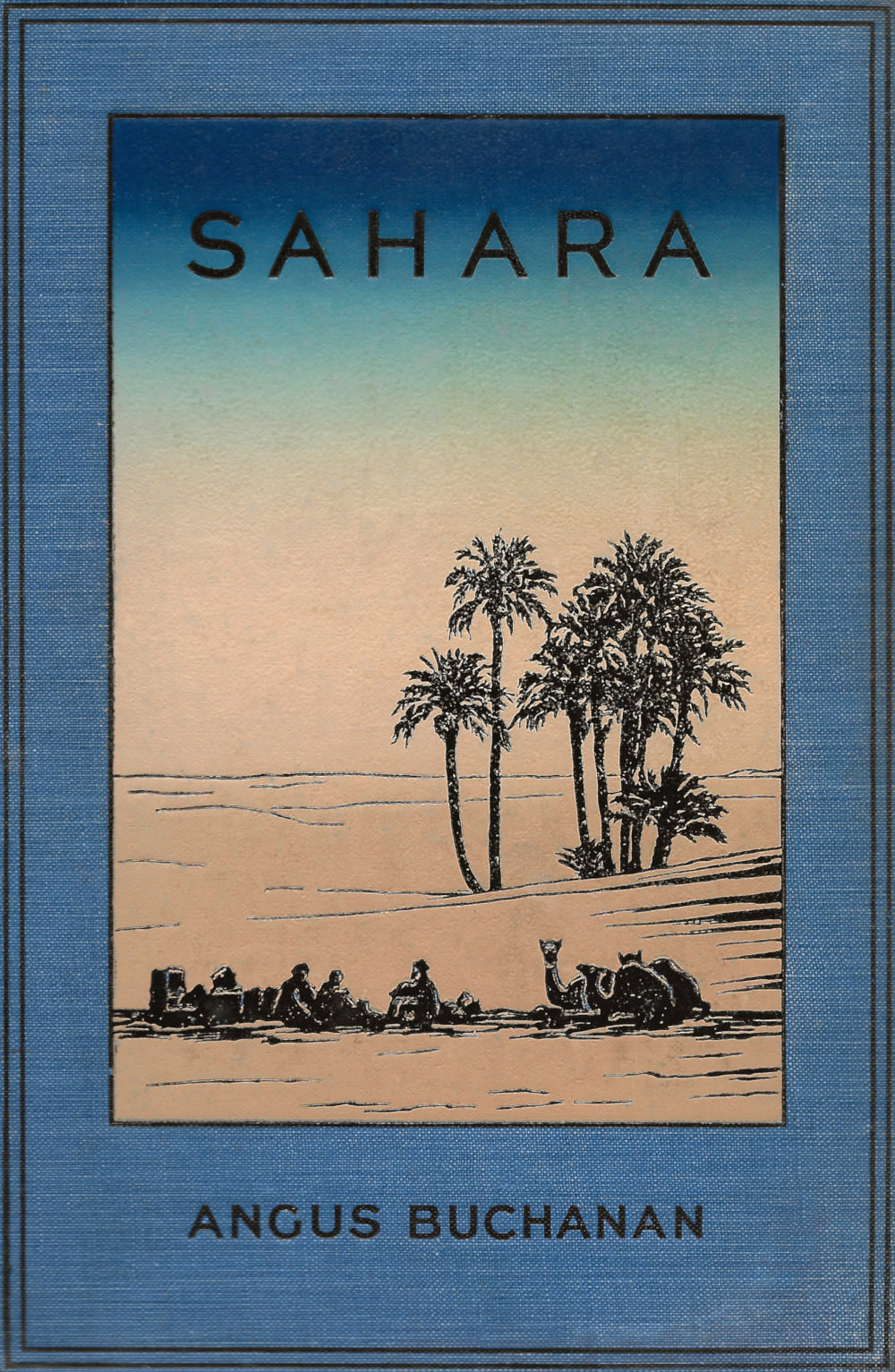
Book review: Sahara by Angus Buchanan (1926)

This book is free online as are other Sahara books
Year’s ago I owned a prized copy of Francis Rodd’s, The People of the Veil (now free online) documenting his travels and studies among the Aïr Tuareg in 1922-3. Not sure I ever actually read it cover to cover, but it remains one of the most detailed ethnographic studies of the Aïr- or southern Tuareg in English. Herni Duverier had written Les Touareg du Nord sixty years earlier while travelling in Algeria’s Hoggar and Ajjer regions. And a decade or more before that, the indefatigable Heinrich Barth had travelled south from Ghat, over the Tenere, down through the Aïr, all the way to Timbuktu then back the long way via Bilma, before dying in Berlin, aged just 44.

I’ve travelled twice through the Aïr (2001, 2006) and both times was struck by how much more ‘picture book’ the Tuareg of the Aïr were (below), compared to those in Algeria. Even if they were playing up for us tourists, it all helped fulfil one of the best Saharan circuits you could do at that time.
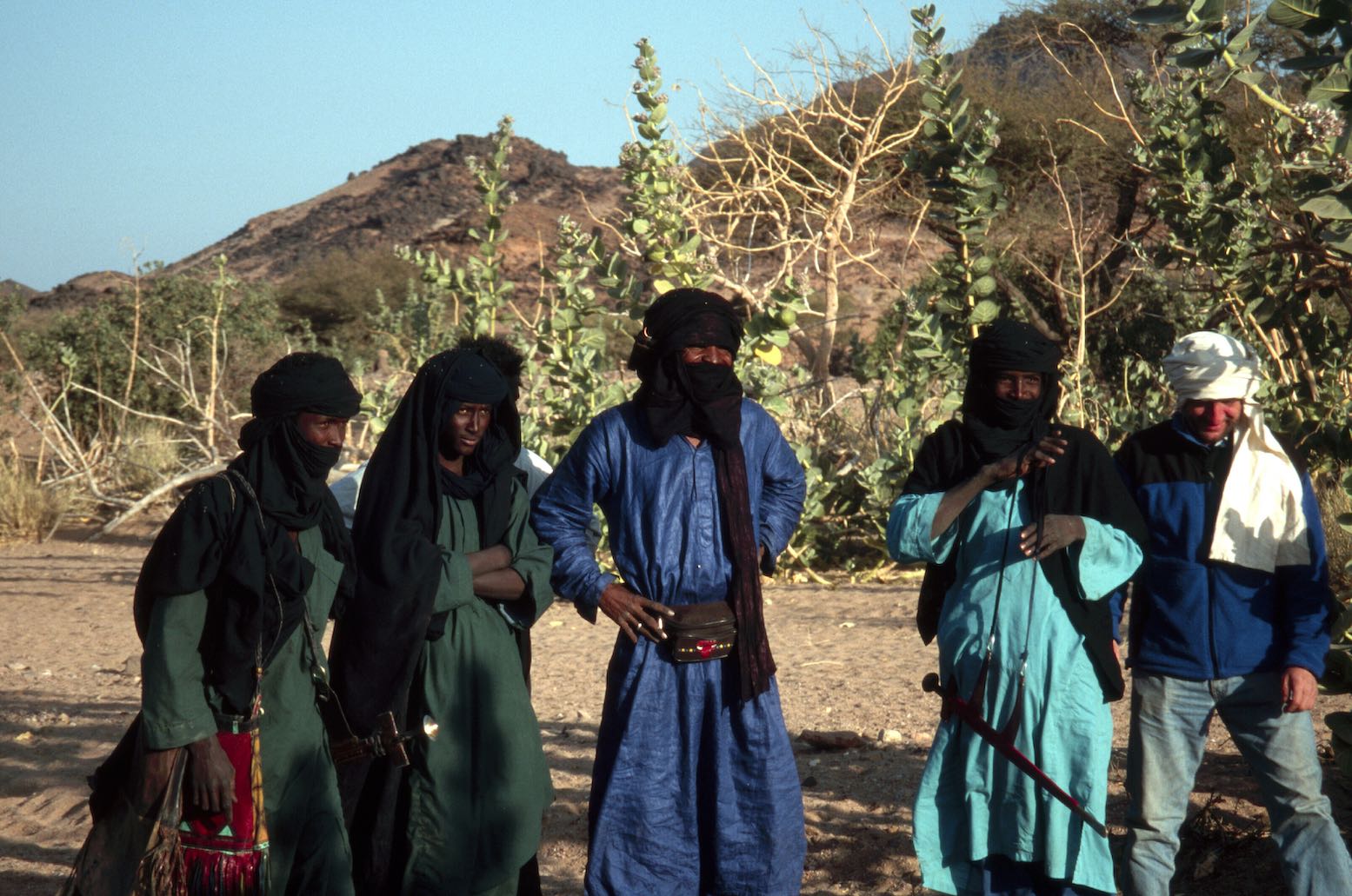
Tuareg swordsmen and women (who do not cover their faces)

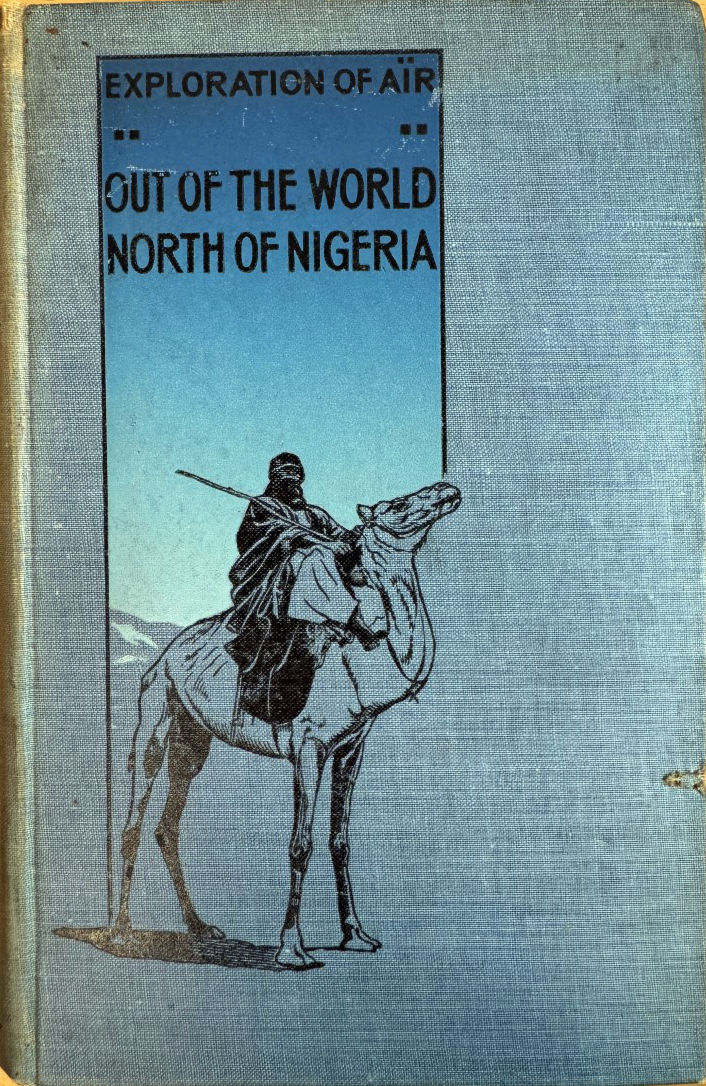
Born in Kirkwall, Orkney, aged 20 Angus Buchanan (1886-1954; bio) emigrated to Canada where he briefly ran a construction business before serving in the East Africa Campaign during WW1. By now with a keen interest in natural history, in 1919 he travelled by camel from Kano as far as Iferouane, later writing up Exploration of Aïr: Out of the World, North of Nigeria (right).
Rodd was a Mayfair-born aristocrat, colonial administrator, diplomat and banker, and invited himself on Buchanan’s second, 1922-3 expedition to the Aïr.
Again with the support of the British Museum and 2nd Baron Rothschild (a keen zoologist), Buchanan was tasked with amassing animal specimens.
Perhaps because he covered it all in Out of the World, Sahara is not a chronological travelogue, but covers diverse vignettes such as caravan life, camp fires, raiders and so on. One chapter is a rather cheesy first ‘person’ biography of Buchanan’s beloved camel, which promptly died soon after they parted ways, 14 months later, and to whom he dedicated the book.
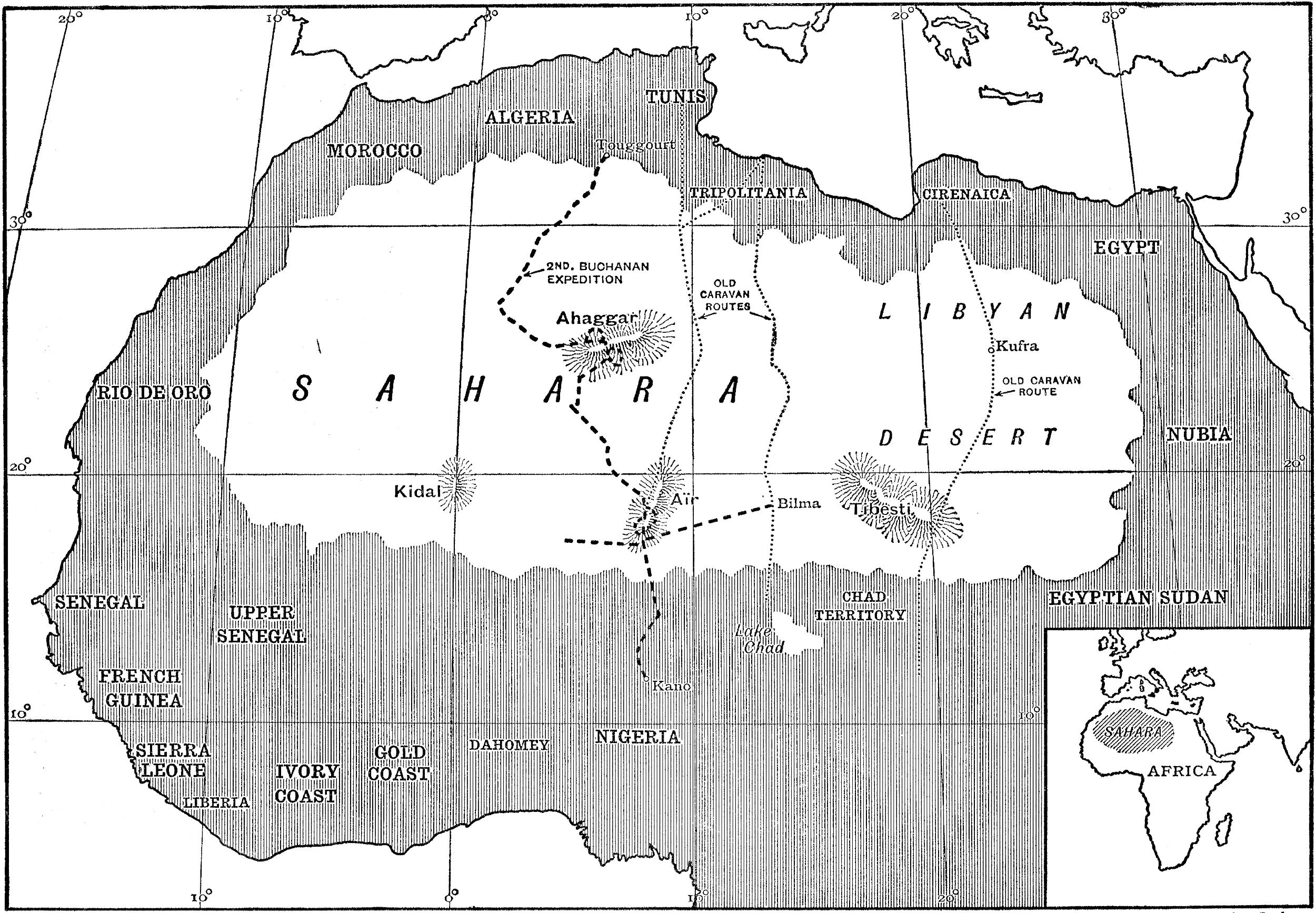
The only map in the book. Note the British habit of separating the [French] ‘Sahara’ from the [more British] ‘Libyan Desert’.
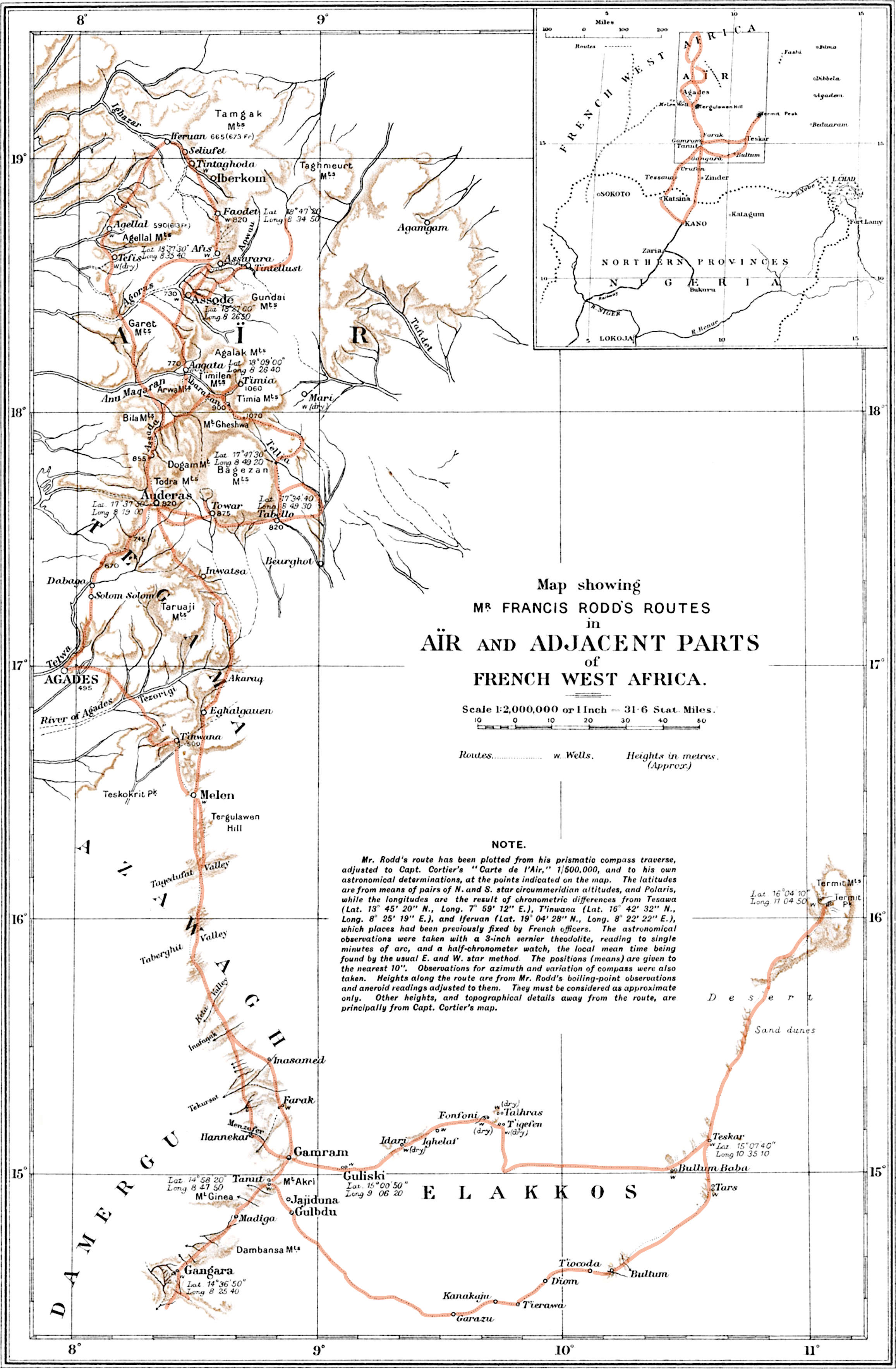
Rodd’s travels 1923 (route highlighted)

Rodd returned from the Aïr after nine months, while cameraman T. A. Glover completed the whole 3500-mile trek to northern Algeria with Buchanan. But beyond this brief credit up front: “My companions were: Francis Rodd… and the cinematographer… T. A. Glover” – these two pass entirely unmentioned in the text, bar at the very end for Glover. Rodd does not even get a picture.
They must have shared many experiences, and in Rodd’s book (his route, left) Buchanan is mentioned over two dozen times. Perhaps they went their separate ways once in the mountains? Or perhaps they did not get on, as so often happens in the Sahara.
Or, lacking a family crest, ancestral pile and Eton & Oxford education, could the class gulf have been too great for the self-made Buchanan? The rather tortuous paragraph below from the preface of his earlier book hints at an insecurity about his ‘uneducated’ status as a gallant explorer. But like the similarly ‘low-born’ René Caillié, their achievements in advancing our knowledge of the Sahara speak for themselves.

It might be said that the traveller [himself] was a rude man, for he was untutored in the deep studies of the scholar of many languages, as in a measure might be expected and understood of one whose occupation called him from day to day to don rough clothing and shoulder a rifle and march outside the frontiers of civilisation.
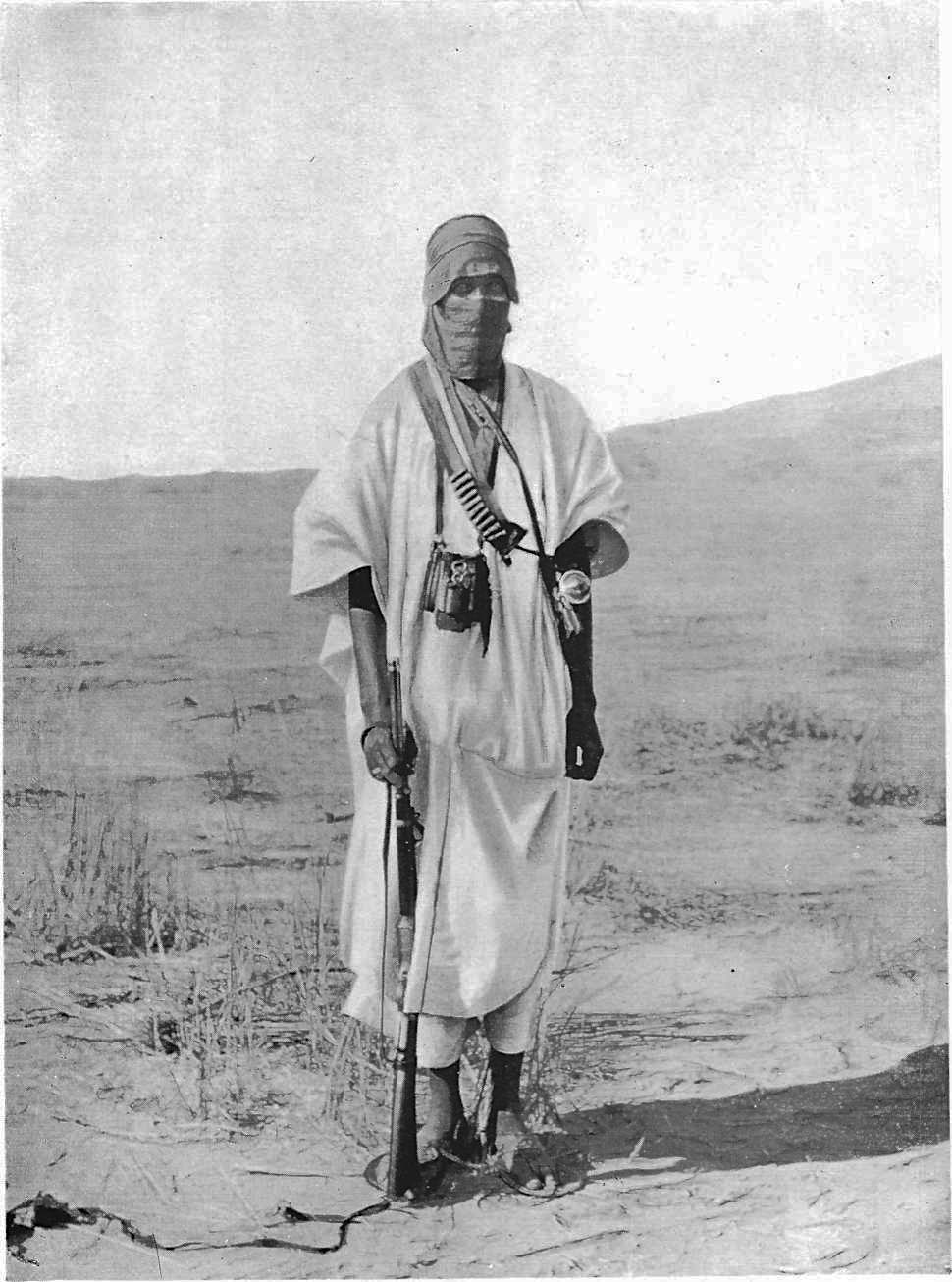
Elahu, ‘[Buchanan’s] head camel-man, and a ceaseless worker of exceptional ability. He is one of those very fine natives whom a white man may win and come to hold in esteem, conquered by sheer value of labour and fidelity.

In his earlier book, he described the Tuareg as ‘the strangest race I have ever come in contact with independent, haughty, daring, unscrupulous, and lazy in leisure, yet fit to rank among the finest travellers and camel-riders in the world.’
And in Sahara, the chapter titled The People of the Veil (like Rodd’s book), he elaborates on the aloof, mysterious and warlike nomads:
they who are pre-eminently a class unto themselves, and they who are responsible for much of the romance that has given to the Sahara a world-wide mystical fame.
He’s not the first to distinguish their noble demeanour from other desert dwellers, so aligning the Tuareg with what were considered the best ‘white man’s’ values. As you’d expect, some captions and observations show the casual racism of that era, implying the superior character of the ‘almost white‘ Tuareg to those around them – something you rarely see said of an Arab (unless you’re Wilfred Thesiger or T E Lawrence). Battier theories have aligned the chivalrous Tuareg with a lost tribe of Crusaders, often misattributed to the popular Tuareg cross.

An interesting episode describes joining the ‘Taralum’, better as known the great Tagalem or azalai salt caravan covering 800km from the Aïr foothills east through the dunes to Bilma oasis and back. Though Bilma had been a French outpost since 1906, it’s possible that Buchanan and Glover may have been the first Europeans to undertake, or at least record, the famous forced march leading many thousands of camels to bring back salt cones from the Bilma salt ponds (below).
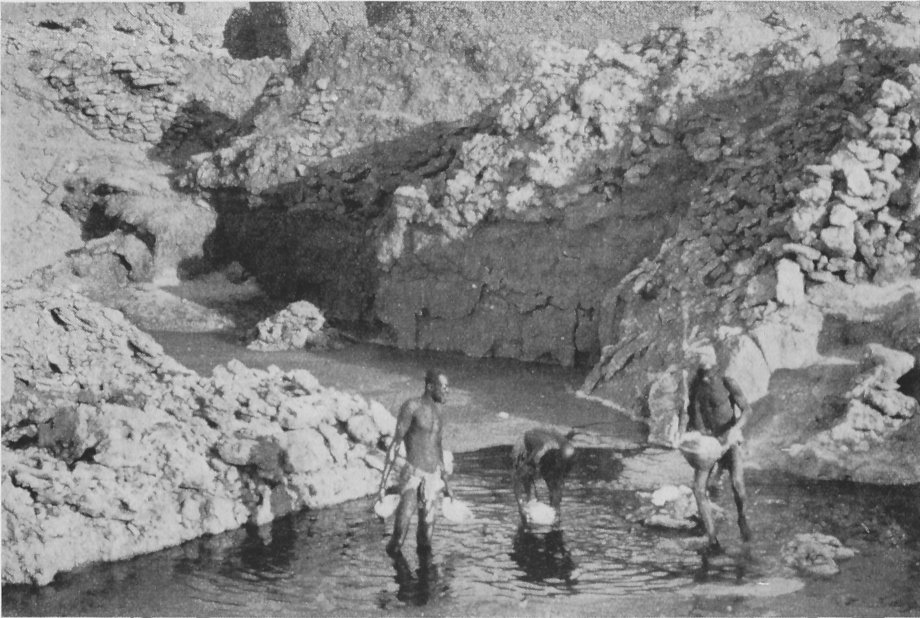
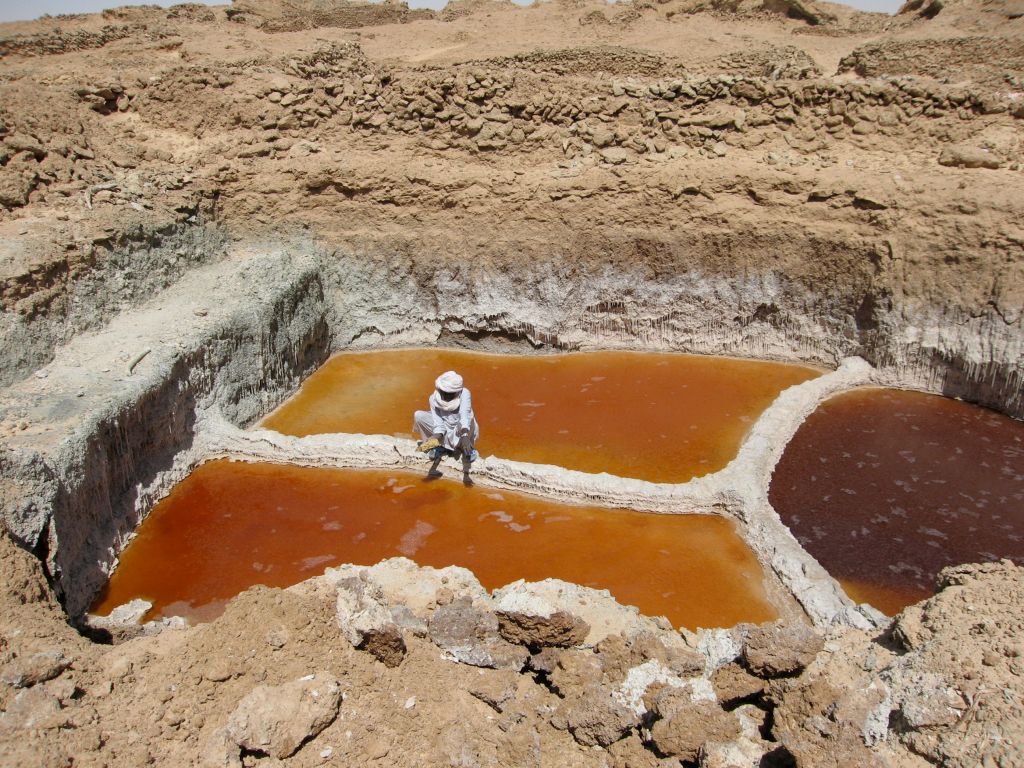
Along the way Buchanan manages to give a vivid description of the remote oasis of Fachi (‘A City of Shadows’) and its Beri-Beri (or Kanuri; ‘from Kano’) occupants, as well as the ancient origins and commerce of Bilma. These chapters read with a little more vitality, possibly because they cover new territory for Buchanan. A few years later he went on to write a novel, The City of Seven Palms whose title is based on Fachi.
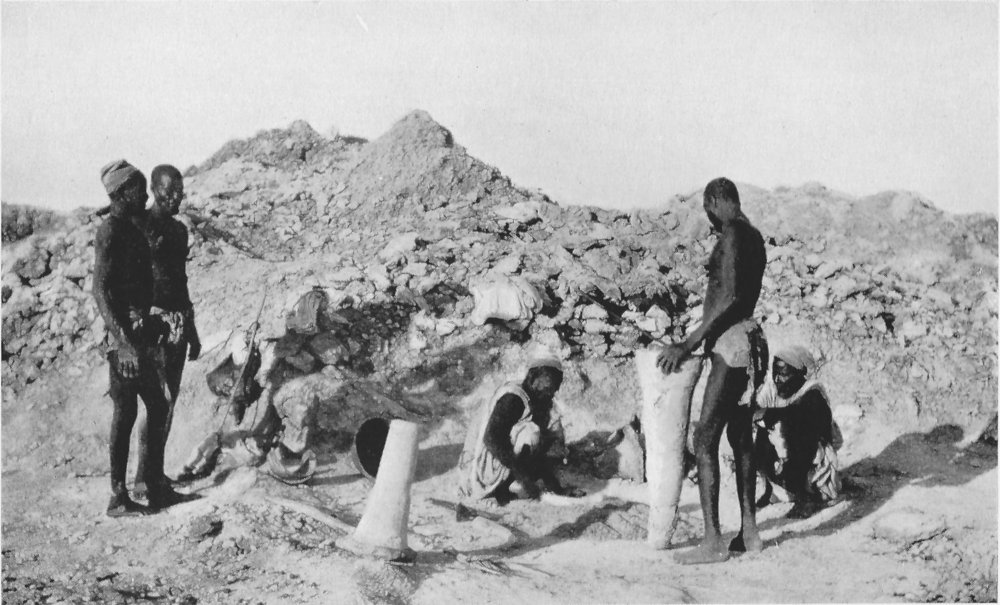
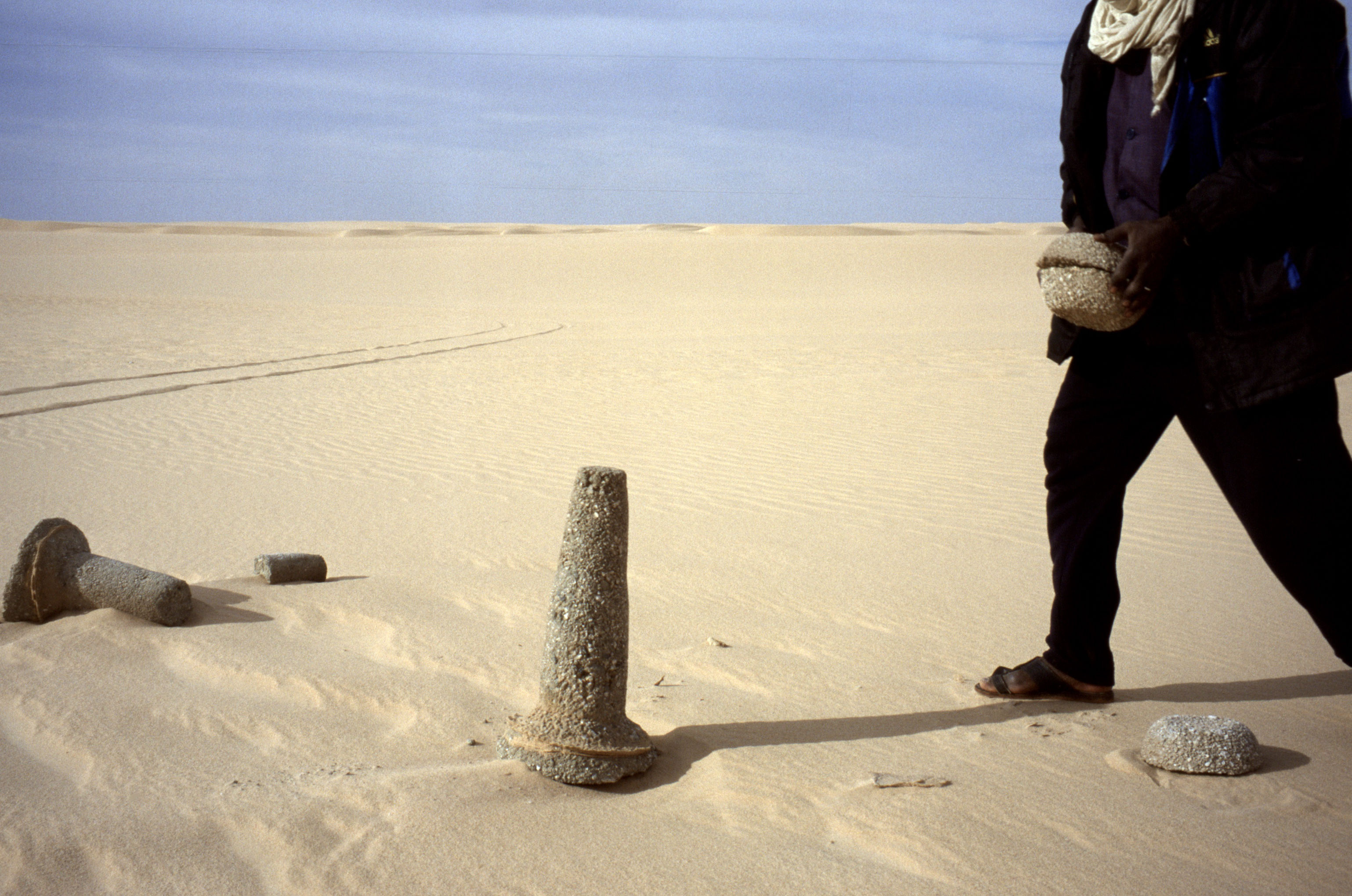
In the style of the era, Buchanan heavily romanticises his travels, the people he meets and the stories he hears. A chapter called The Hand of Doom recounts what sounds like a tragic Tuareg legend about a chief who doggedly pursues bandits who’d abducted his wife Kahena, ‘the belle of the tribe‘, only for them to die in the desert once reunited. It bears a resemblance with the novel, L’Atlantide, also from that era
The narration of this tale slips into a goofy, proto-Shakespearian prose, but fear of raiders was still a very real menace in the 1920s, whether ‘Arabs’ from Ghat, Tubu from the east, or just other Tuareg clans on the prowl. In fact right into the 2000s and the advent of jihadist ransom kidnappings, bandits would occasionally rob tourist groups and agency cars in the eastern Aïr, while other parts of the Sahara remained relatively safe.
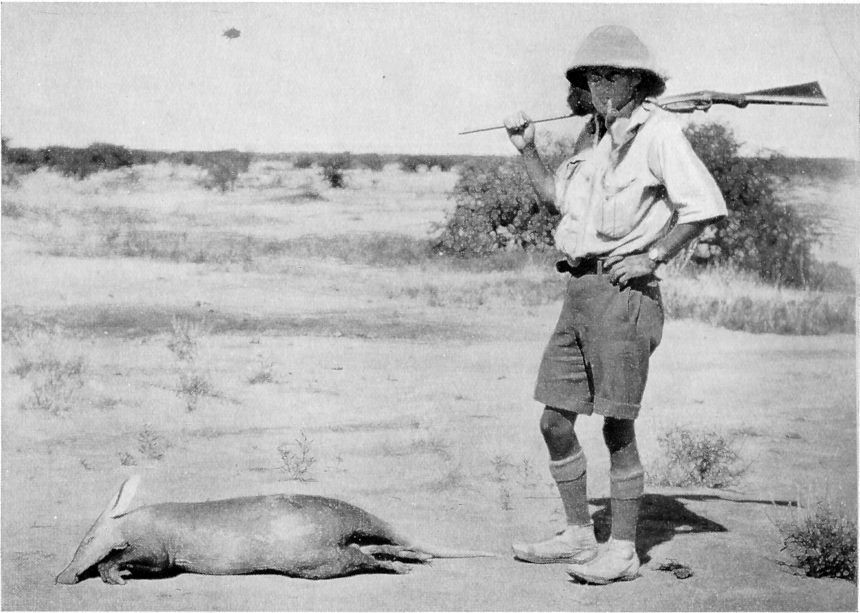
Dead aardvark

Sahara draws to a close with a listing for no less than 207 birds and 64 mammals, some unknown to western science. The expedition’s primary mission was to shoot and collect these animals for museums back in the UK, and Buchanan was bitterly disappointed that he missed the chance to shoot the last lion of the Aïr. It had been speared while harassing villagers near Timia. Meanwhile… Giraffe was seen only once, he adds, but on a number of occasions their fresh tracks were crossed. These were left unfollowed, as a specimen of the species was not wanted.
Along with many places names, another odd omission were pre-islamic tombs and prehistoric artefacts and rock art (below) which Buchanan must have come across, and Rodd records in his account. There’s no mention of either in his earlier book, either.

Anakom: spaceman with handbag

Though also not mentioned, research elsewhere reveals that the French had only a few years earlier forcibly cleared out the Aïr’s Tuareg clans, which was how many ended up in northern Nigeria. As a result, Buchanan frequently describes an impoverished land of rude dwellings and destitute, starving people. Indeed, the sand-surrounded oases were almost as appallingly barren as the desert around them, except for their groves of dates, which bore no fruit at that season of the year.
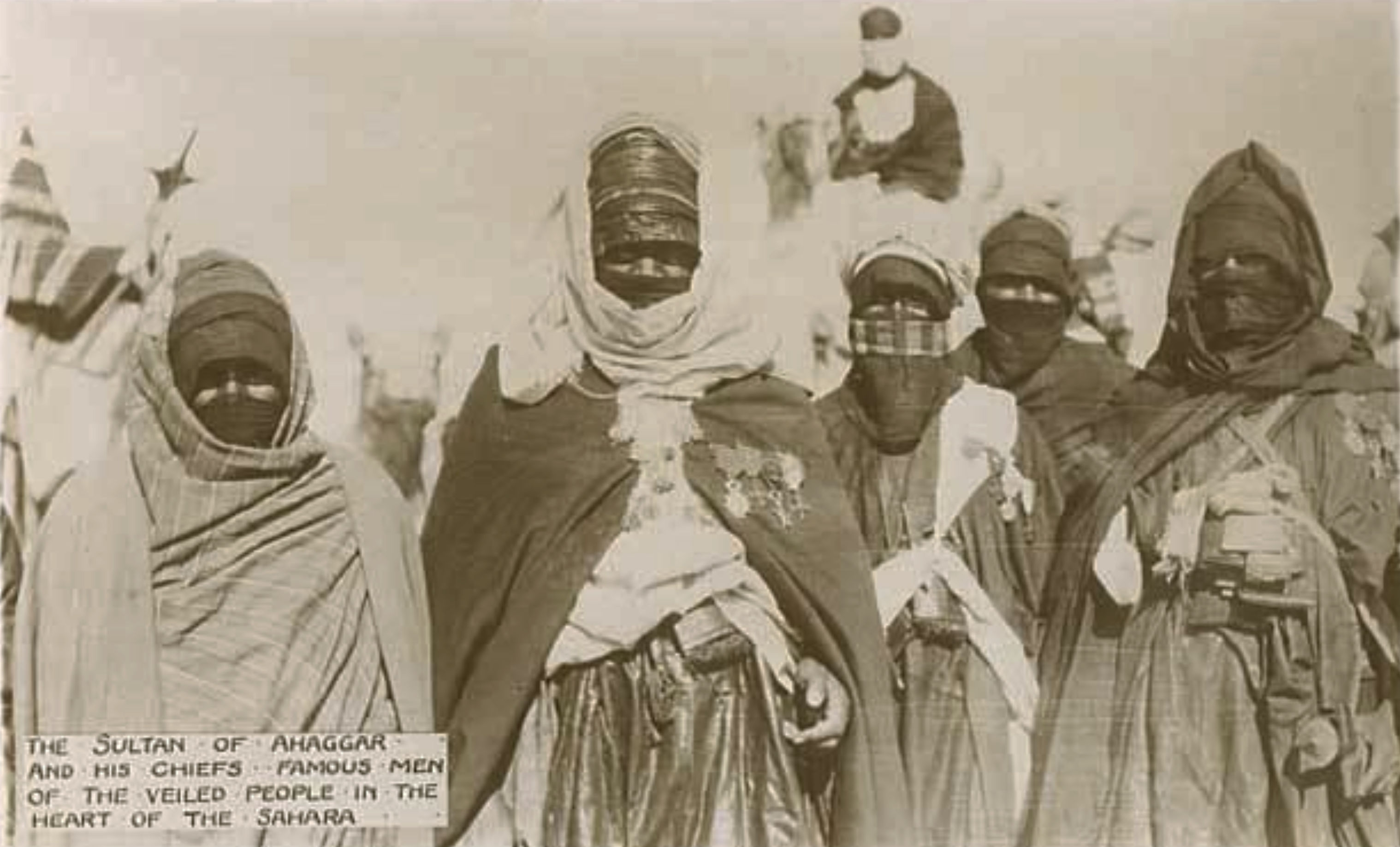
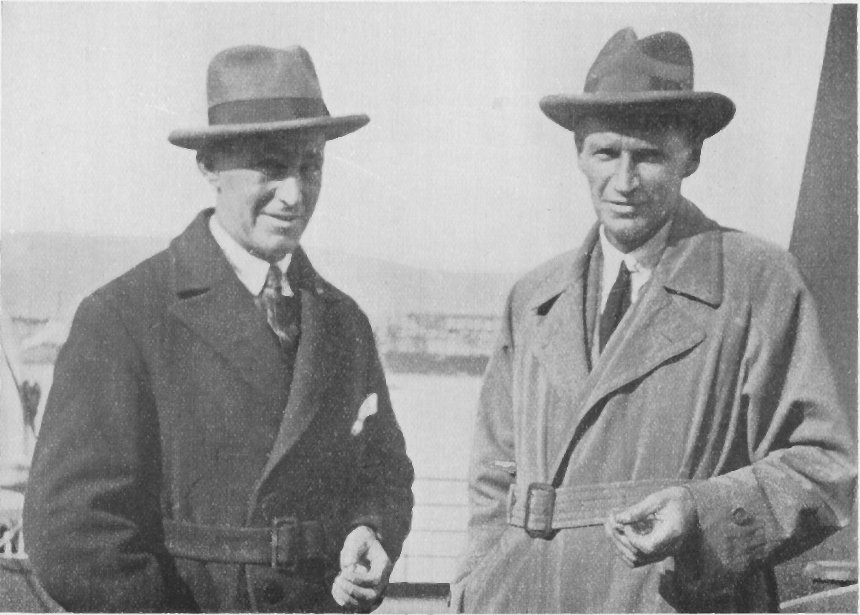
Another disappointment was that no description was given of the final crossing from the Air into the Hoggar and across Algeria. The striking image above was found somewhere online, and the basic map does indicate a couple of exploratory circuits in the Hoggar before swinging out west into Adrar Ahnet on the way to In Salah and Ouargla for the rail head at Touggourt (below). Here the camels were unburdened of their vast trove of specimens, and the two Brits (left) – presumably deeply exhausted after well over a year on the trail – continued with their loyal manservants Ali and Sakari to the UK. As mentioned, his steadfast camel soon died, as had most of the 35 camels who left Agadez, as well as two of the crew.
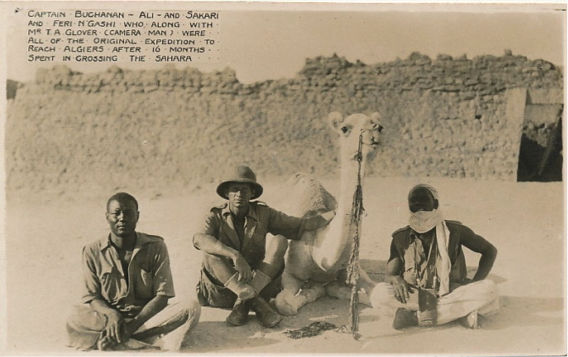
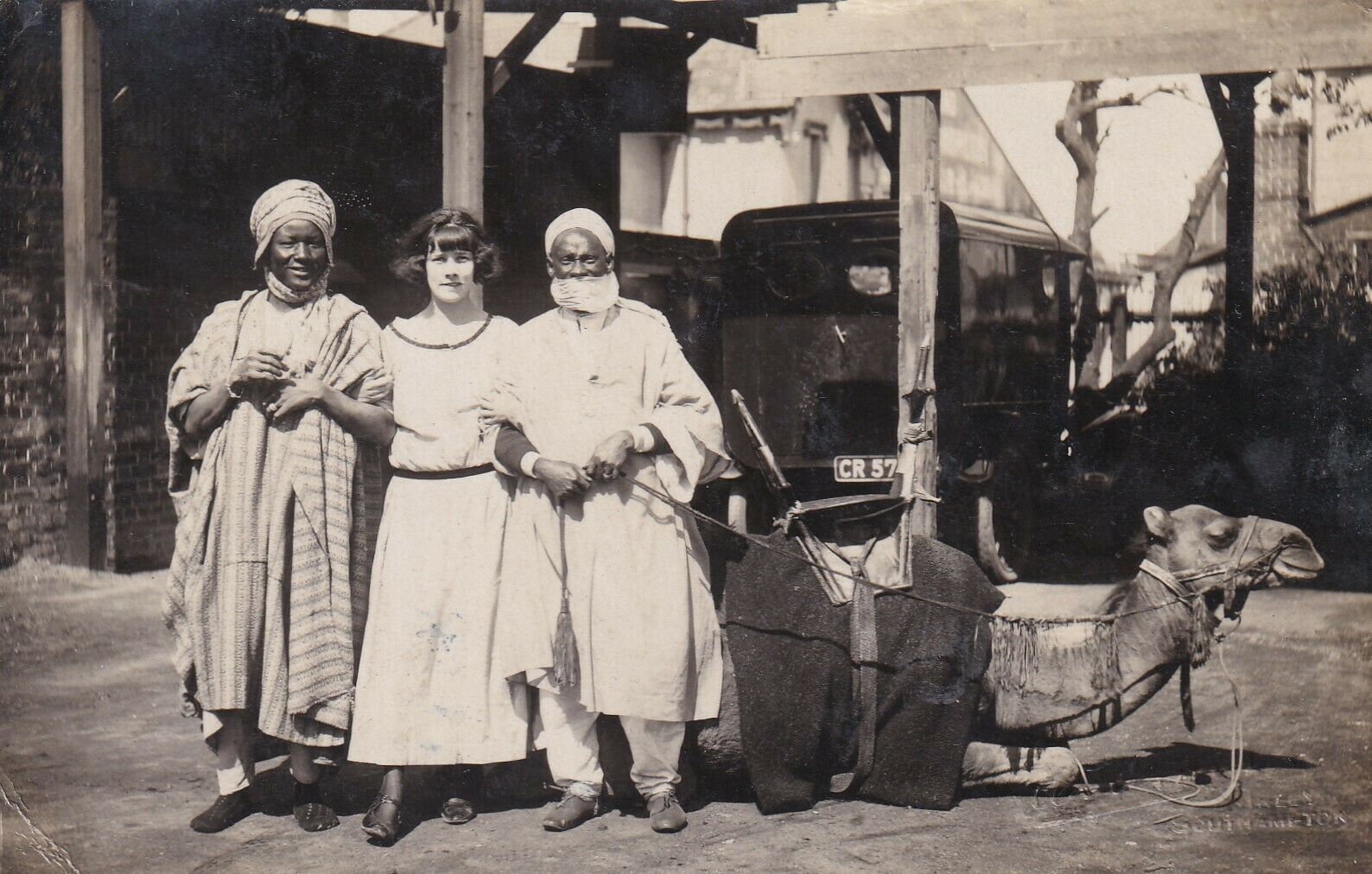
Back in England the press ran with the adventure and a film, ‘Crossing the Great Sahara‘, was soon produced. All four (and possibly some camels) went on to become part of a travelling roadshow in the UK and Europe. Left, a girl posses with Ali and Sakari and a camel at a screening of the film in Southampton.
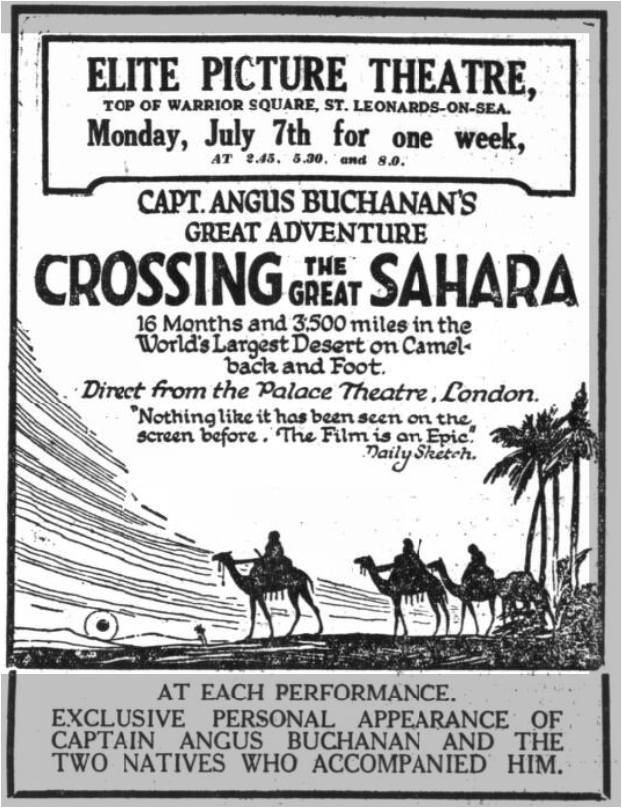
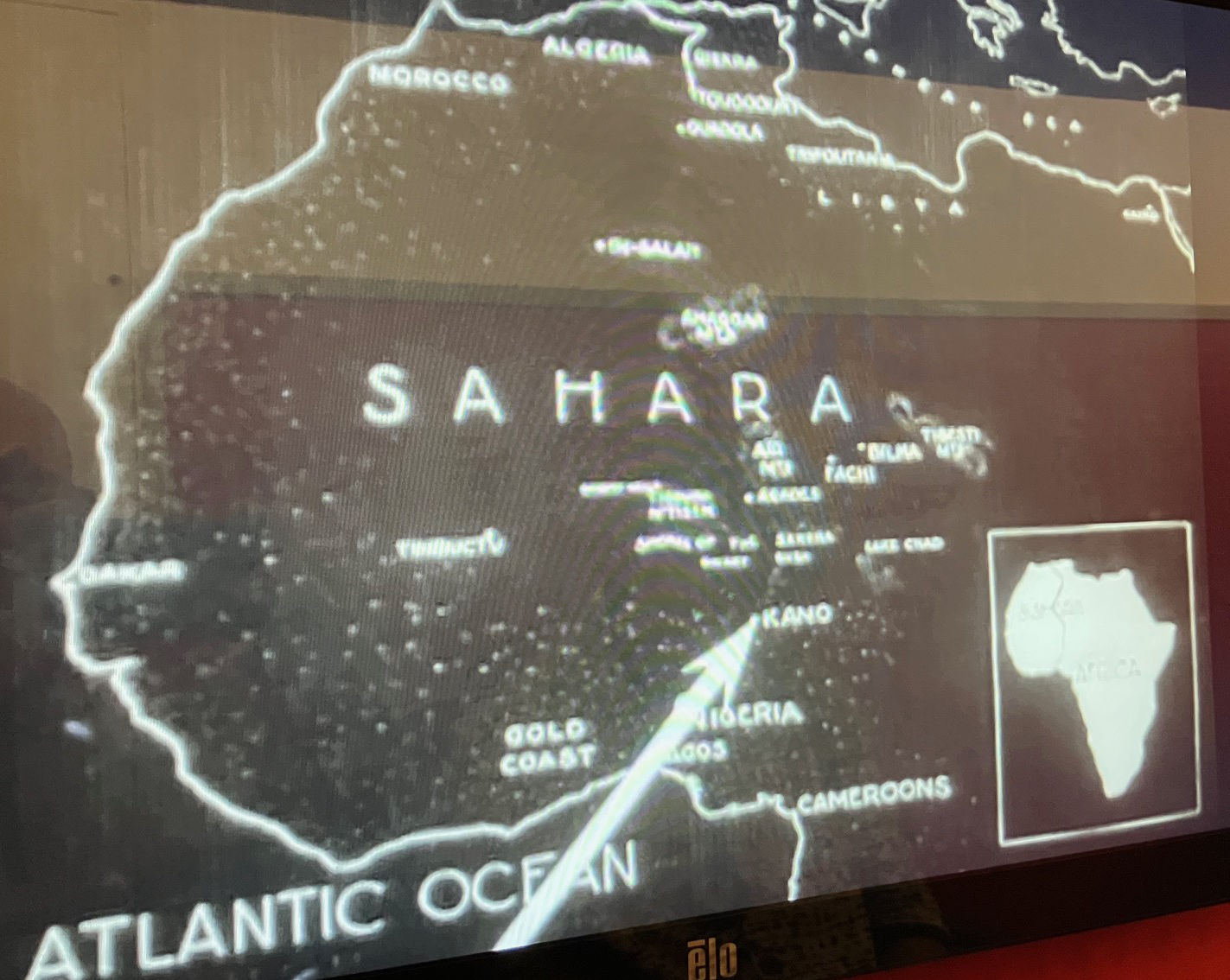
The film is archived at the BFI, but while not viewable online, you can easily walk into the BFI’s Mediatheque viewing library on London’s Southbank and search for it the database. It’s the oldest Sahara film listed, but unfortunately only the first couple of reels survived or got digitised. In 20 minutes all you see is the grand departure from Liverpool, some British dignitaries in Nigeria then various Hausa and Fulani bush folk performing for the camera. What there is is well shot; what a shame the rest is missing and we never get to see the Aïr. It must have been a huge effort to shoot it all. One interesting caption was an observation along the lines of ‘Was this where Blues originated?’, presumably in response to hearing African music. I know that connection was widely repeated once World Music came on the scene in the 1990s, but did not know it went that far back.
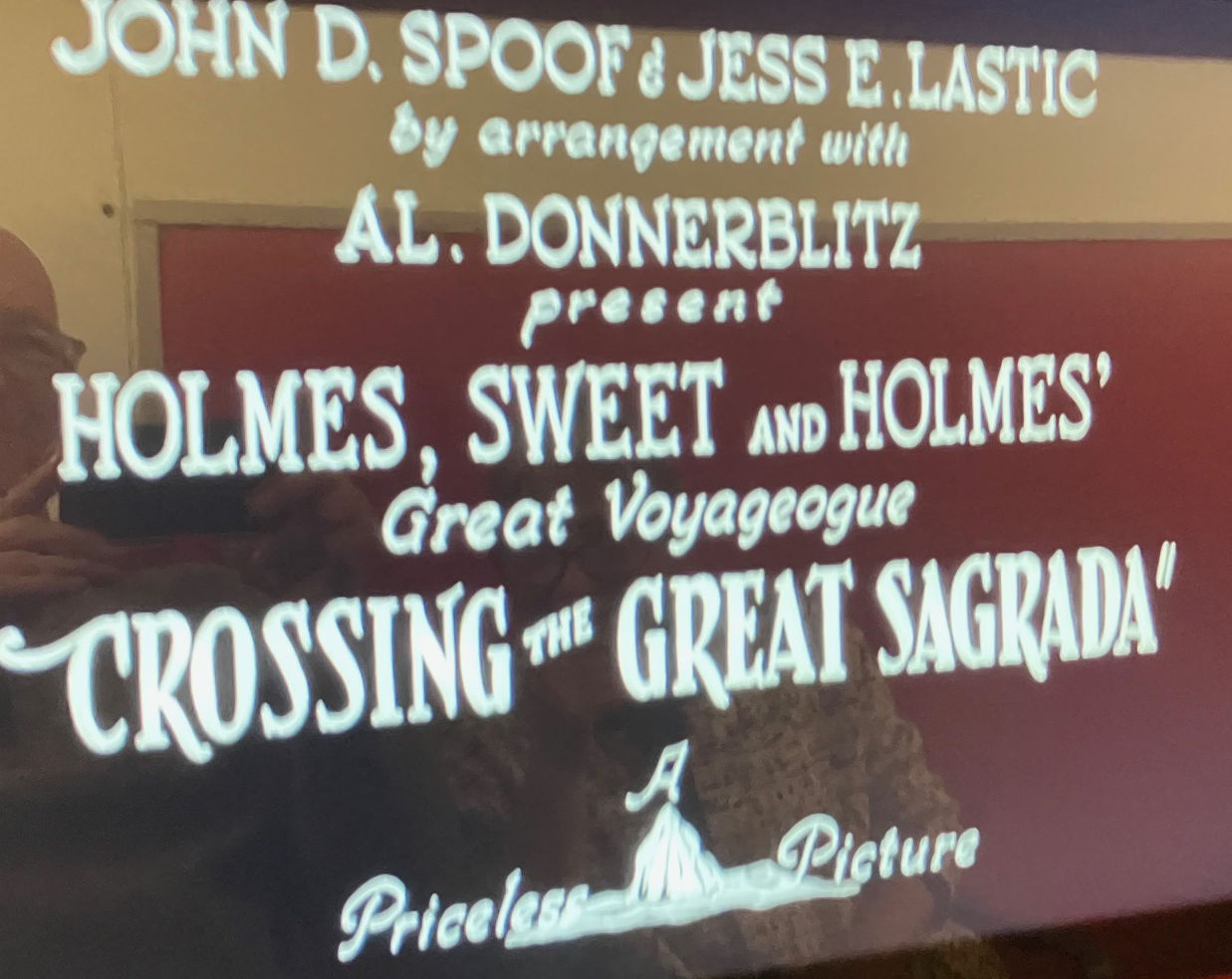
In fact, so popular was Crossing the Great Sahara that in the same year a spoof, Crossing the Great Sagrada, was also released, decades before Monty Python or ‘Ewan and Thingy‘ got in on the act. We watched that too at the Mediatheque. It’s a bit silly.

All in all, I ended up wondering if Buchanan’s account of his first foray of the Aïr may have been a better read, thrilled as he would have been by the novel experience, even though it ended with a debilitating fever.
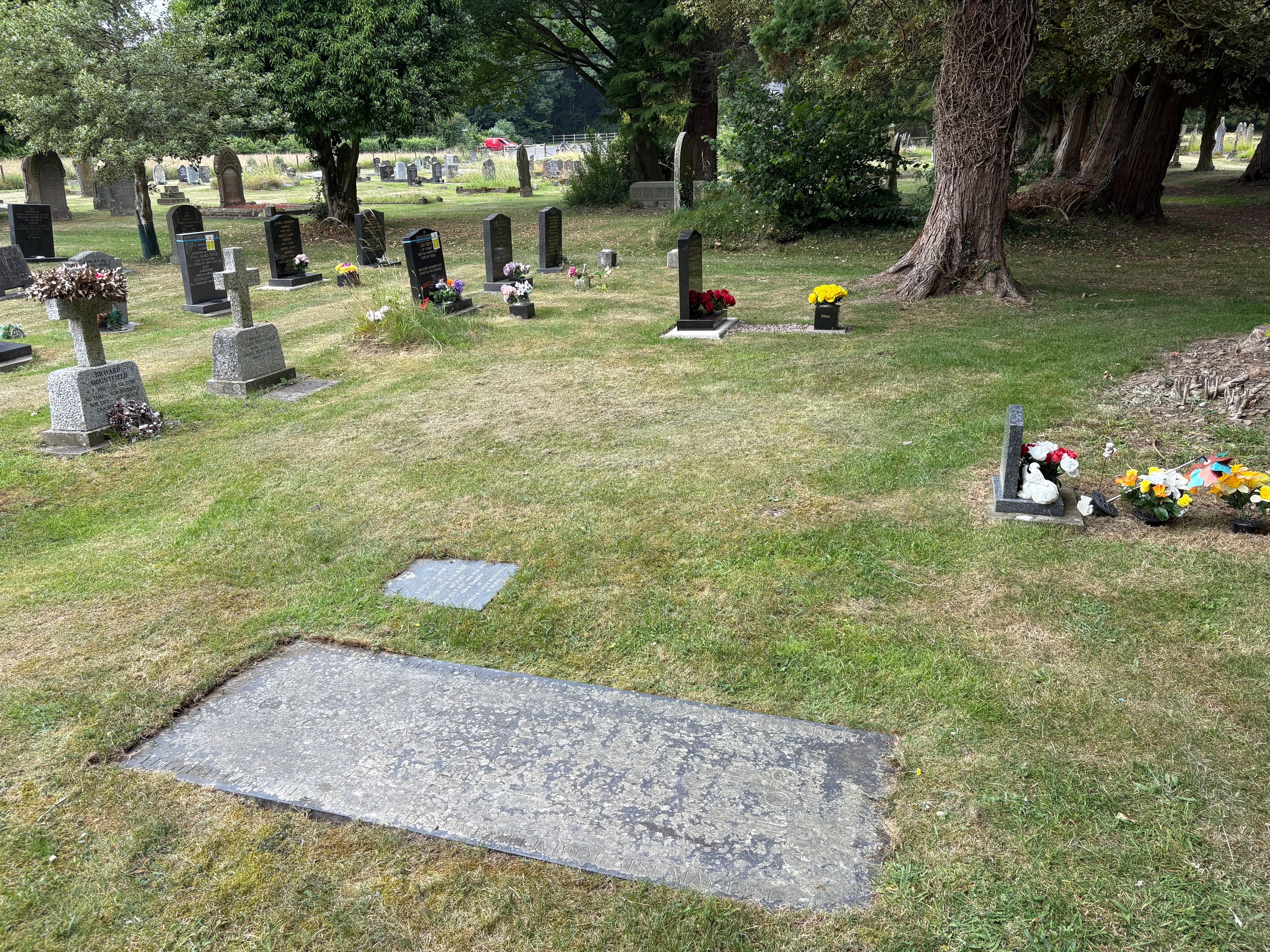
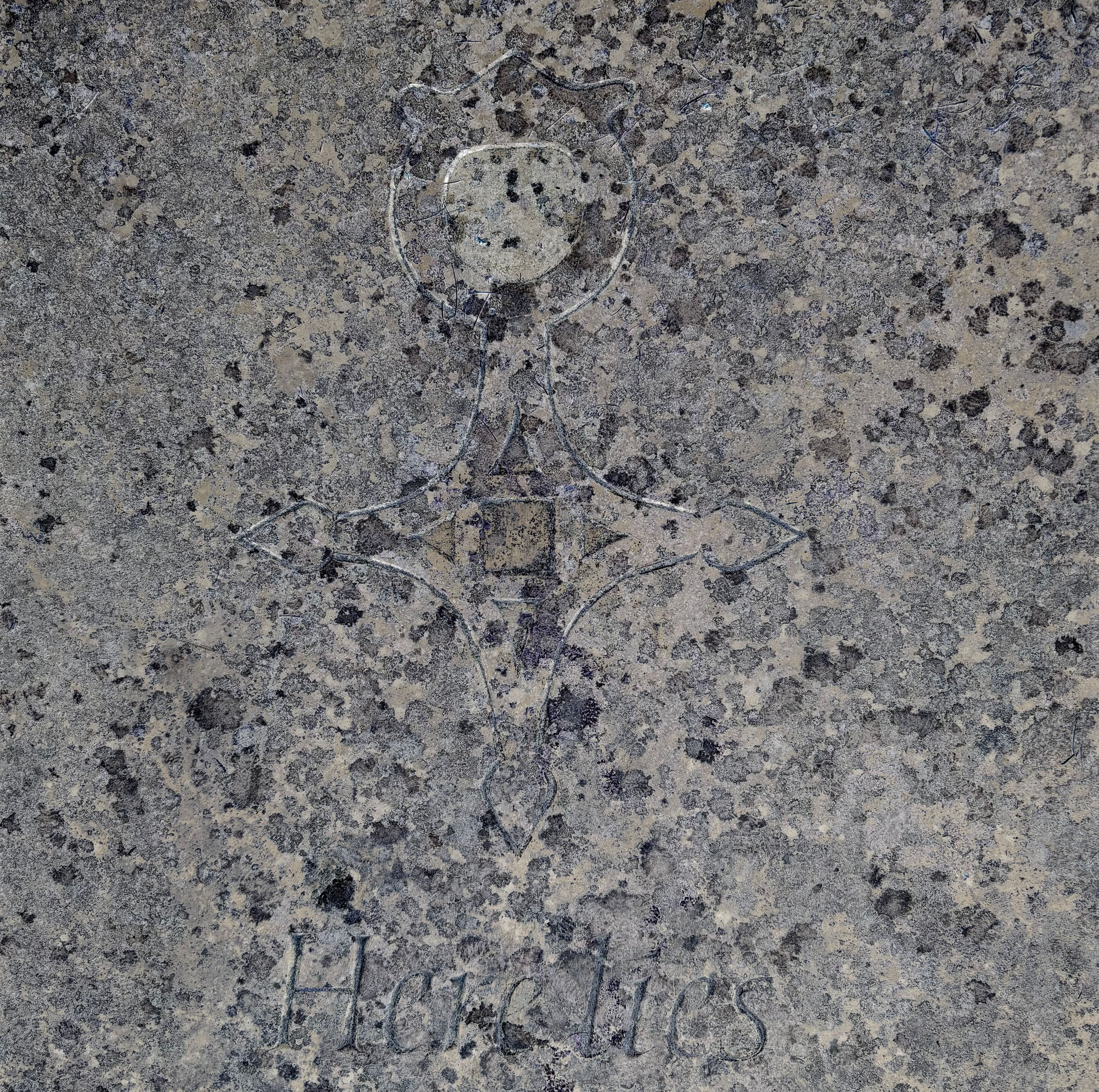
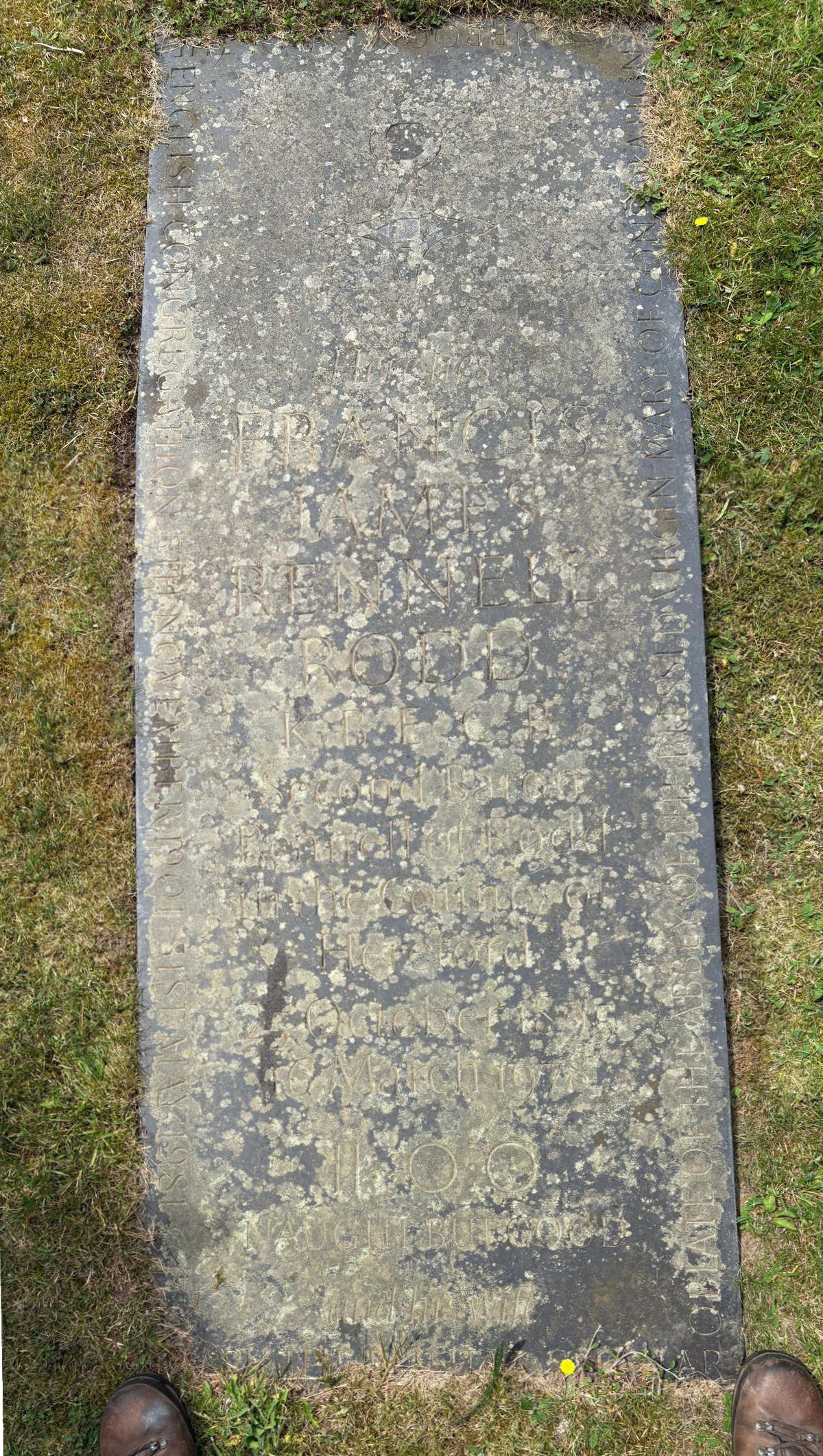
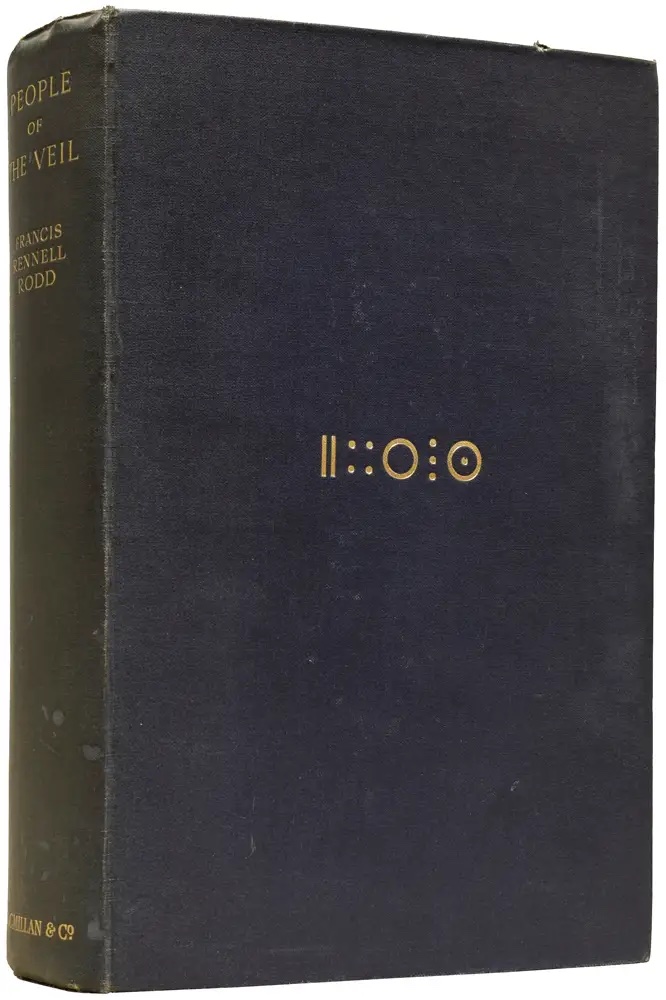
Rodd too was clearly deeply influenced by his shorter spell in the Aïr. His gravestone in Presteigne cemetery (above) features the Tuareg cross of Agadez, as well as the enigmatic Tifinar epigram embossed on the cover of his book (below) which Rodd translated as ‘Naught but Good’.
Moroccan Sahara – Are we there yet?

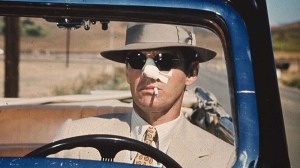
To paraphrase the cop addressing Jack Nicholson’s character at the end of Chinatown
Forget it Jake, it’s the internet.’

Exactly where does the iconic and eminently Instagramable majesty of Sahara start in Morocco? Like Keyser Söze, is it even there at all?
Years ago I came across an internet forum argument on the now defunct LP Thorn Tree (I gave my 2ç then left them to it). There, a couple of know-alls lambasted the callow innocents daring to enquire where they could ‘see the Sahara in Morocco’ – in most cases referring to the famous Erg Chebbi dunes. ‘I told you: there is no Sahara in Morocco!’. All concerned have now migrated to TripAdvisor from where the quotes below were copied. It staggers me that some of these individuals can assert their unsubstantiated beliefs with such conviction, but such are the times. According to one of TA’s wise owls, ‘Erg Chebbi is not in Sahara, desert it is but not Sahara‘. So the Sahara is ringed by an unnamed desert that is not the Sahara?
… neither … Erg Chebbi/Erg Chigaga are the Sahara. For that you need to head to Western Sahara.
Ok, we know that but we want just see Sahara and ride camel
The limit of the Sahara is classified by the limit of the Date Palms
the Sahara,… lies 100 km or more to the south in Algeria.
Although not part of the Sahara , the dunes are pretty amazing.
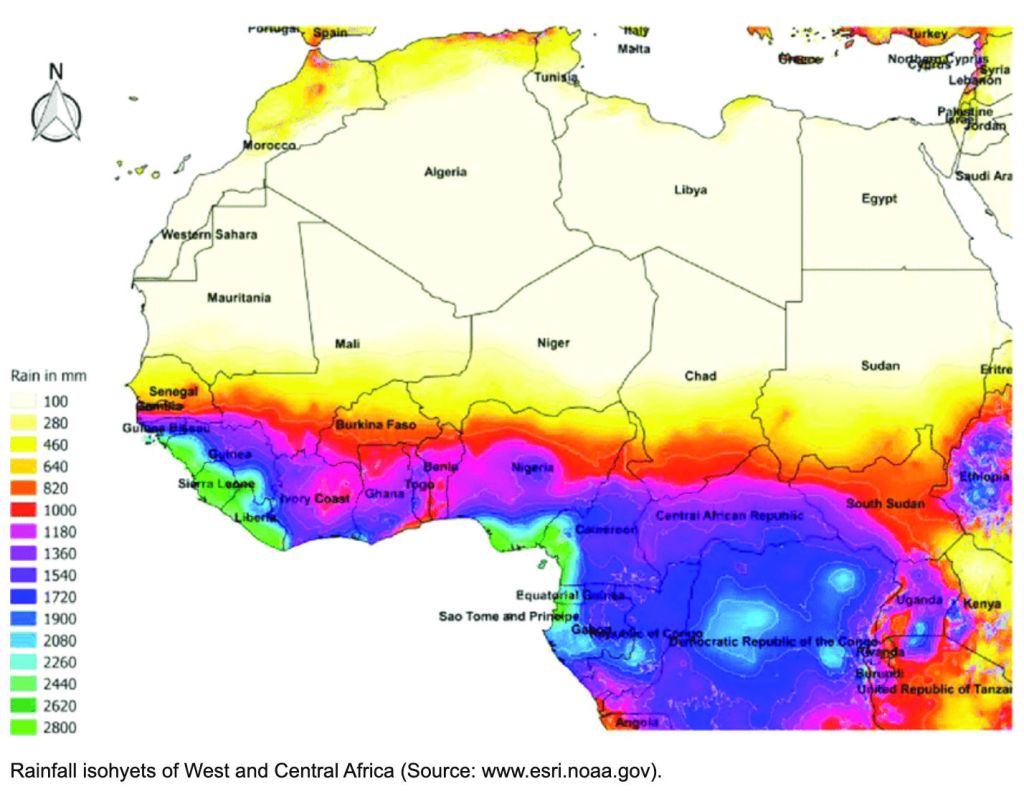
It also corresponds to the 100mm isohyet in the north and the 150mm isohyet in the south. Long term average rainfall. A further definition is where the evaporation potential exceeds the presipitation [sic]. 
I don’t care what “Sahara” means. I am talking about the actual geographical boundaries of the area. And your definition of those boundaries is as incorrect and misleading as that of the ridiculous tour companies’ one.
Erg Chebbi is not in Sahara, desert it is but not Sahara. If you by reading see on website about Sahara tour, then it is only marketing to attract customers. But Sahara begin first in Algeria or you have to go to the South of Guelmim, to Western Sahara.
Here we go again with the “Erg (Chebbi/Chiggaga) is not the Sahara” brigade. What’s wrong with you? What’s a few hundred miles between friends? Jesus H. Christ.
May I just make one thing clear? You will not be travelling through the Sahara desert until you have gone south of La’ayoune. References to the Sahara in other places such as Erg Chebbi and so on are simply concoctions dreamt up by tour companies to fool their victims into thinking that they have been to the Sahara – they haven’t. To the east, the Sahara starts way over the other side of the border, deep into Algeria.
the Sahara if [sic] 100’s of kilometers away from the big dune areas over the border in Algeria and not in Morocco [continues] ... [Chebbi] is more spectacular than any of the places in the Moroccan Sahara that I have visited.

This way please.

This knotty problem of the Sahara’s precise extent may be unique to Morocco. You start with the very concept’s compelling mystique. It’s hard to think of other wilderness regions that conjure up such strong imagery and notions, maybe because it’s so close to Europe compared to other iconic wastelands.
Then you mix in the unceasing clash between gullible bucket listers wanting to definitively tick off the Sahara – and devious local tour ops who promise the earth and deliver a turd. One wily tour agency has even managed to insert themself as a ‘reference’ on Wiki’s ‘Sahara desert (ecoregion)’ page.
This seems to be the angled grinder which the naysayers above fixate on: if some Moroccan cat in an oversized cheche strolls up and says ‘Hello my friend. Come, we will drink tea with nomads and I will show you Sahara’, you can expect to be a little disappointed.

As with all geographical features (seas, mountains, etc), it’s tempting but futile to apply fixed boundaries to their precise extent, as if they were a country. Where exactly does the Southern Ocean become the Atlantic? Where does the Karakoram become the Himalaya, or the High Atlas become the Anti Atlas for that matter (along the N10 highway, of course!).

It’s only rain

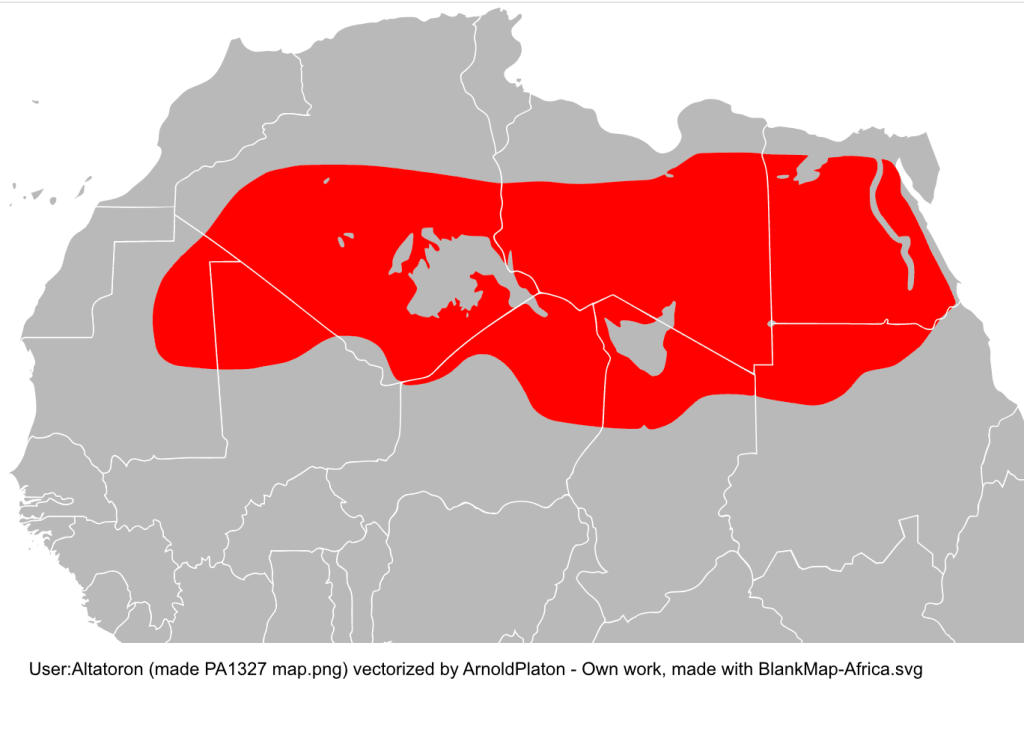
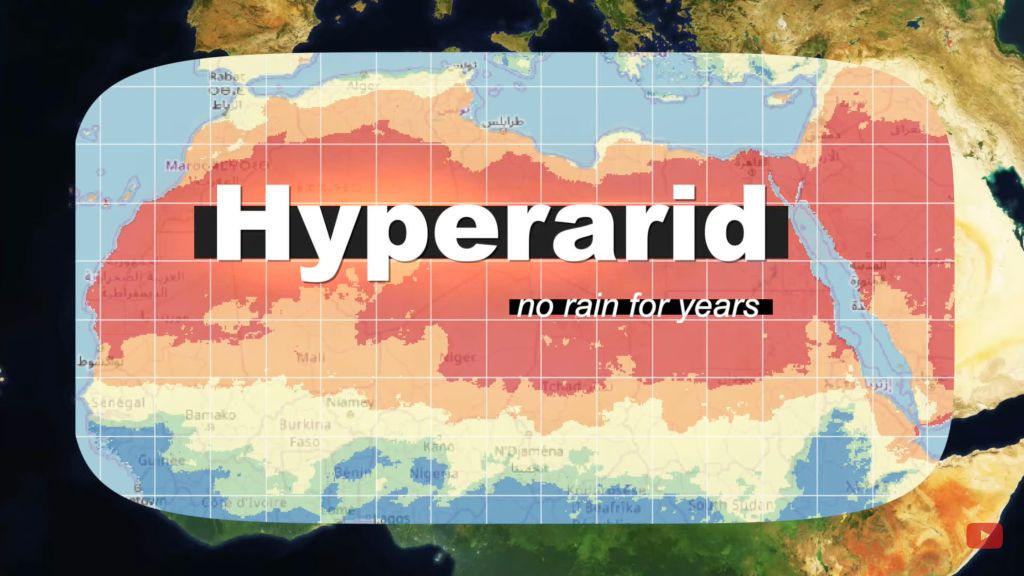
It’s the same with hot deserts, commonly defined as arid regions with less than 100mm of average annual precipitation. Unlike a sea shore, there can be no finite edges identifying this change in rainfall; to imply otherwise would be absurd. In this way the NOAA map (above) is rather more nuanced, showing blurred transitions, not fixed isohyets (rainfall contours) between regions. Both the hard-edged yellow and red maps below could benefit from the same idea.

Chebbi-aye-yay

According to this ridiculous website, (sadly, the first that popped up on my Google) it appears to rain every other day in Merzouga/Erg Chebbi. (The ‘sea temperature’ there gets pretty balmy too – or maybe they mean ‘sand sea’).
This source for Merzouga looks rather more plausible: 65mm. Another estimates 53mm. yet another 172mm. This French Wiki gives 59mm. Let’s assume it’s not Kew Gardens down there and it comes in under a 100 mil most years.

Another map with a red zone straying over the Moroccan border. Can’t be right! Source
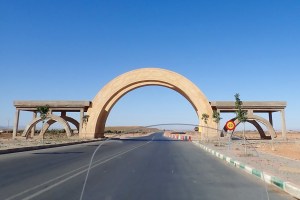
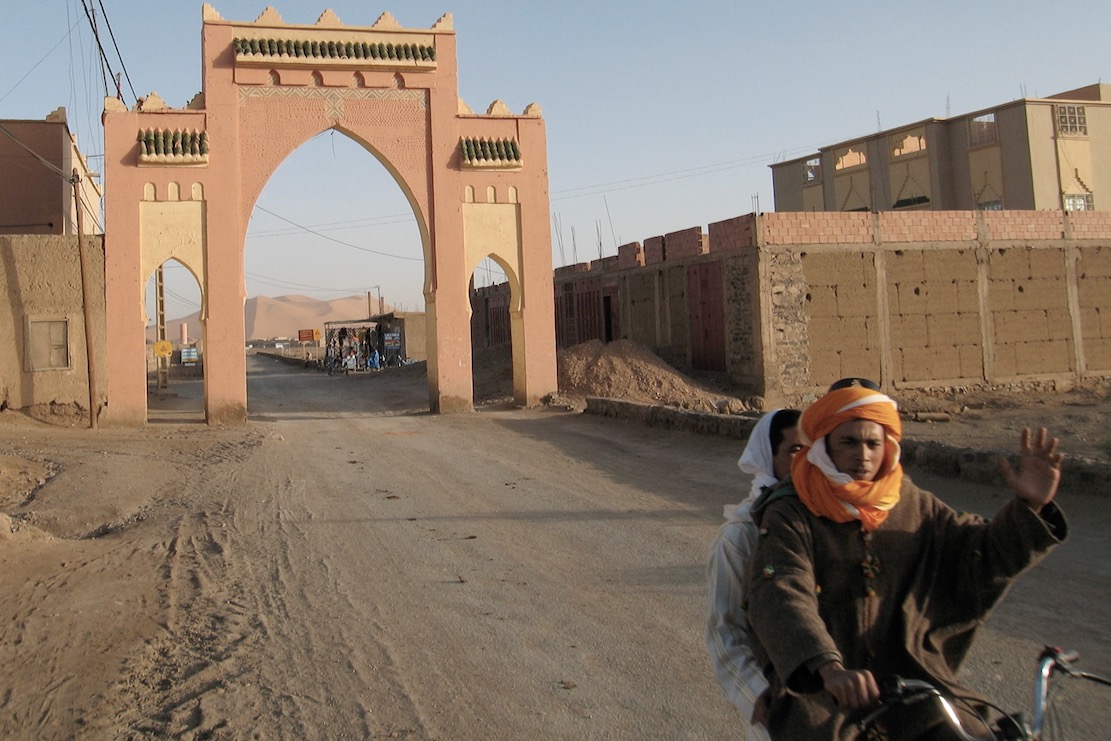
Archway into the desert, south of Guelmim (iirc)

Not all accept the level of aridity as a definition (‘I don’t care what “Sahara” means…‘), but they don’t cite any sources to explain their assertions about the Sahara’s boundaries. Instead, some of the TA dolts avow the Sahara lies ‘100km south of Erg Chebbi’ (ie: in Algeria). Others insist ‘200 miles’ from Chebbi. Final answer: ‘100’s of kilometers away’. Some even proclaim they magically entered the Sahara at Guelmim in western Morocco because ‘it is officially known as ‘The Gateway to the Sahara’’, surely a bald, tourist-oriented claim in a town famously thick with faux Tuaregs.
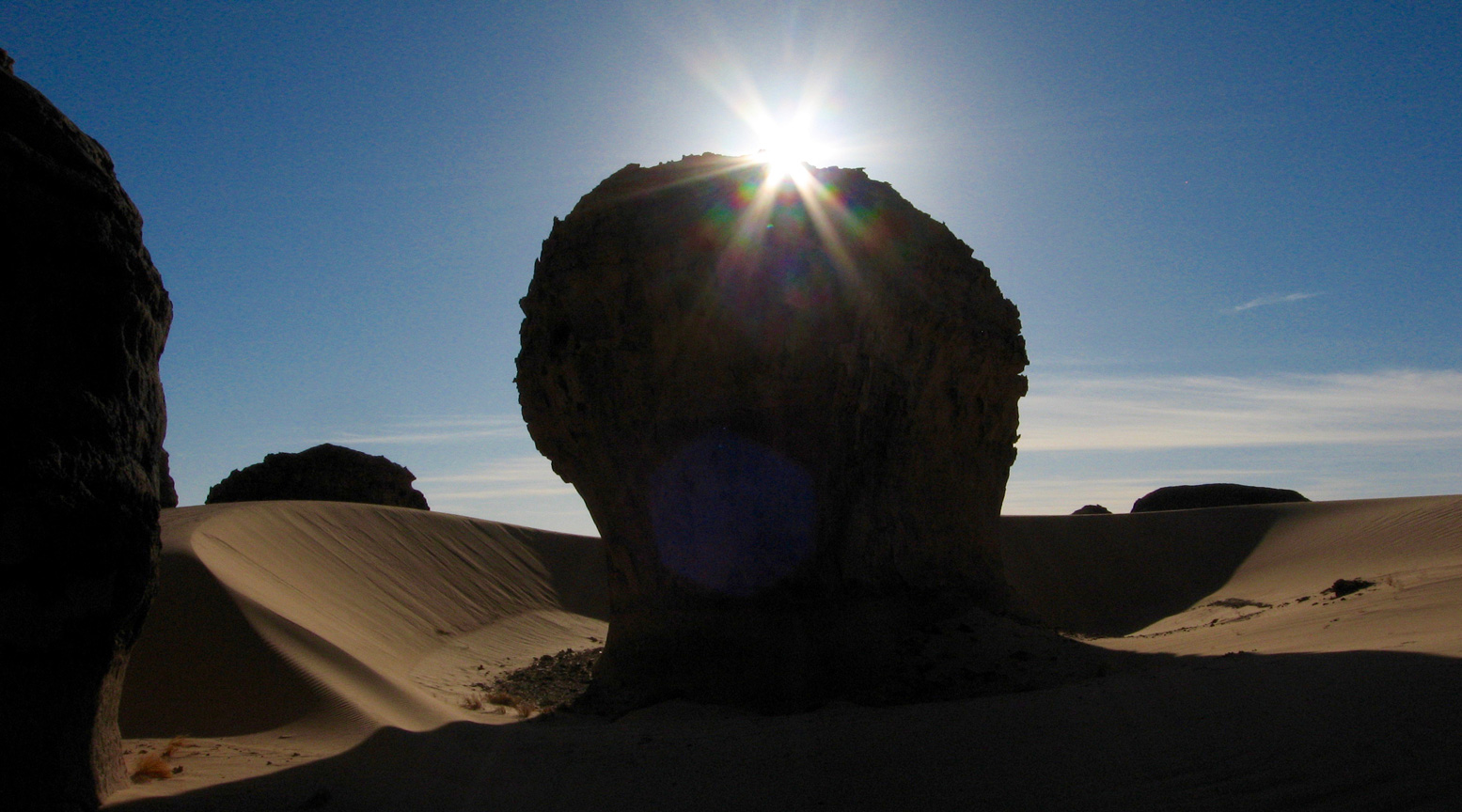
Leaving the clammy Tropics. Scorchio!

Others insist that, to be in the Sahara in Morocco, you must go ‘beyond Layounne’ (left), a fairly boring road trip, even for a dedicated bucketeer. What will they see on the way there? It may look like a desert, walk like a desert and quack like a desert, but it sure won’t be the Sahara!
No matter – give it a few decades because it’s said the climate in Morocco will see the Sahara creep over the berm and into Morocco.

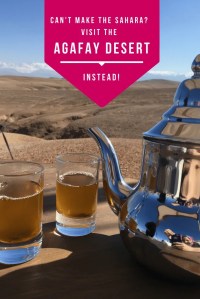
You can see why some of your forum know-alls get cynical, myself included, even if I believe they’re dying on the wrong hill on this one. Lately, some canny marketing has designated an area of eroded wasteland ever so conveniently close to Marrakech’s gated resorts as ‘the Agafay Desert’ or ‘le petit Sahara’ which ‘extends over several hundred acres’.
There you can do all your favourite deserty things: sip tea in a tent, wear a cheche or ride camels, quads and 4x4s across a landscape where the barren rounded hillocks of dried mud resemble dunes. Insta heaven!

Some academics have sought to reclassify the liminal sweep in question as the ‘North Saharan steppe and woodlands‘. Aka: the edge of the Sahara where things gradually become less arid, like the Sahel in the south. But looking at the zone on the map below, ‘woodland’ is not a word which springs to mind. The band encompasses the vast Grand Erg Oriental spreading across Algeria (left) and southern Tunisia – about as Saharan an expanse anyone could wish for which would swallow up hundreds of Chebbis. The only woodland here is of the petrified fossil variety, west of Hassi bel Guebbour.

Selima

Me? Having travelled much of the Sahara over the last five decades, if you pushed me blindfolded out the back of a Hilux behind Erg Chebbi and removed the hood, I’d get up, smell the air, squint at the sun and guess I was in the Sahara. It may transpire to be the edge of the Sahara in boring old Marrokie, because vegetation and rainfall change in a very short distance (by Saharan standards) in the mountains to north.
But from Chebbi south and west along the Algerian border all the way to Tan Tan, it all resembles the Sahara I’ve seen – often dreary, sometimes epic, often barren, vegetated in patches, hyper arid elsewhere – all the way from Mauritania’s Adrar plateau to the Selima Sand Sheet (left) close to the Nile.

Camels? Dunes? Palms? What else could be be?

If anything, Erg Chebbi is just too darn Saharan for school and so has become one trampled terminus of Morocco’s Axis of Tourism, a quad-busting desert resort. I avoid the place. Over the years the pretty cluster of dunes at the end of the road has become choked with desert camps, kasbah-hotels, a few opportunist sharks and us tourists doing the dunes by various means.
In that sense it is very much not what I know of the real Sahara, but caught right, Chebbi can still be an amazing sight for a desert first timer. You’re on the very edge of the Sahara. Which side you’re on is up to you.

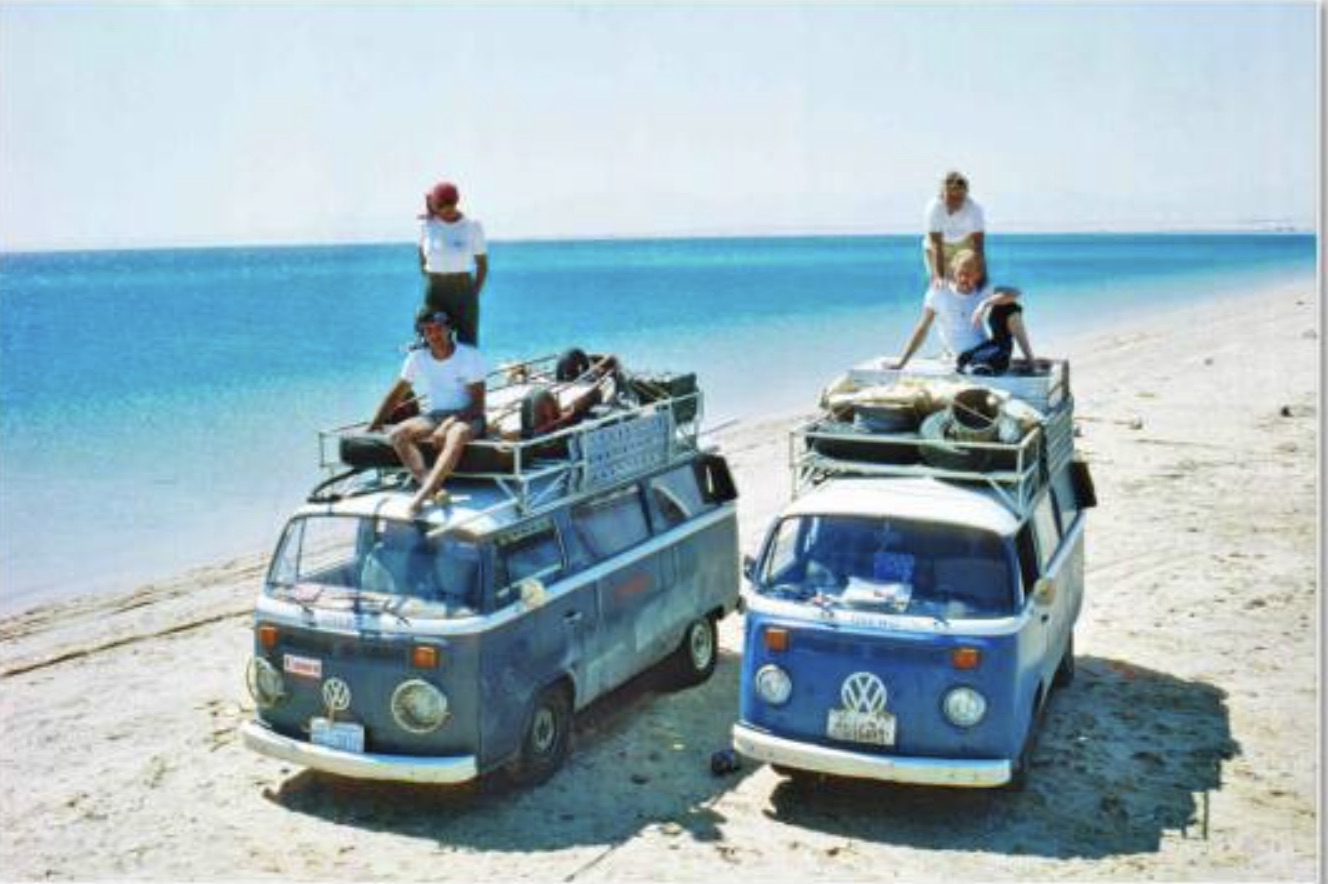
Sahara West–East with VW Vans, 1984 • Part 8/8

See also:
Sahara West-East Crossings
Astro Navigation in the Sahara

Reports by Peter Reif
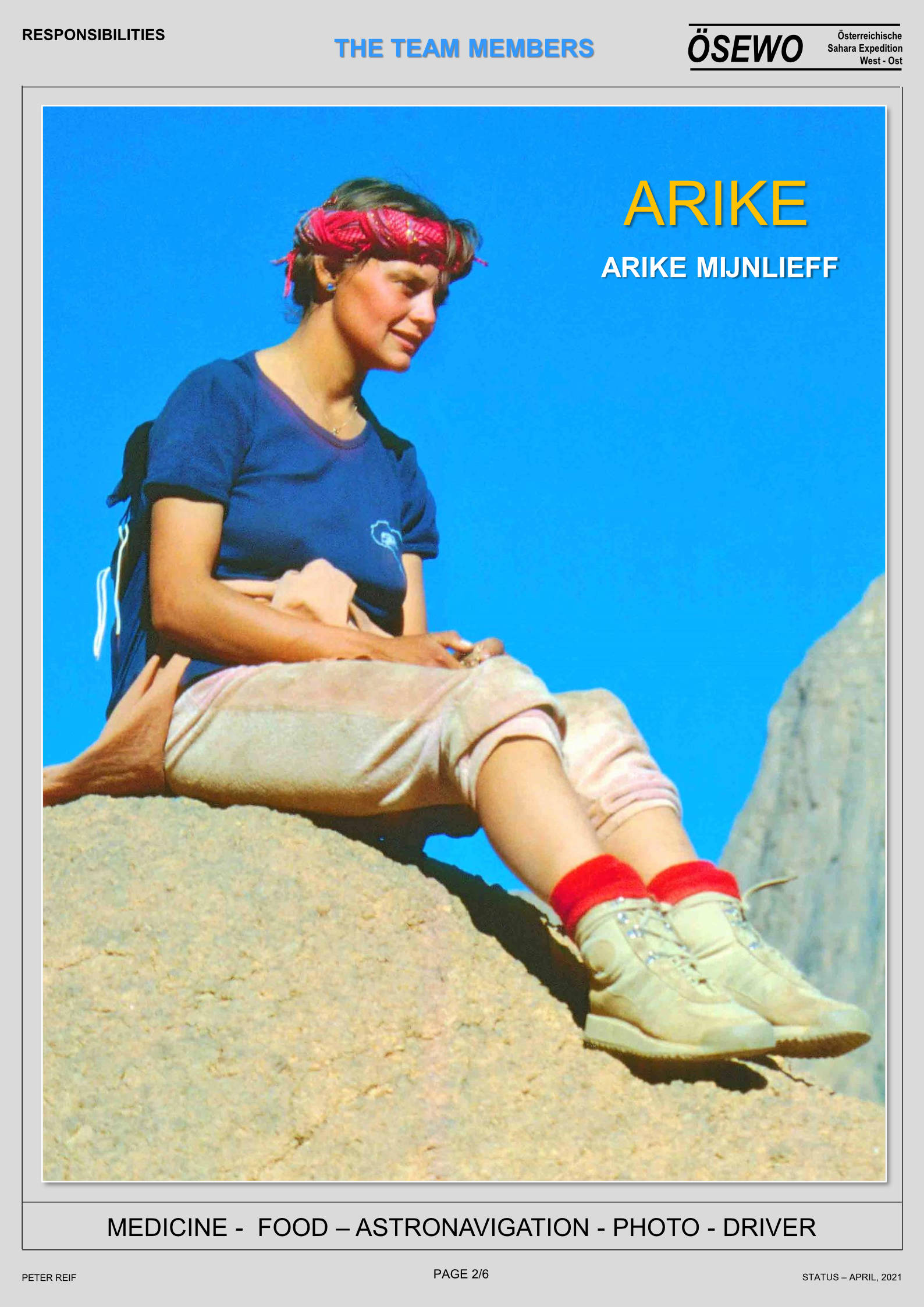
Photos by Peter Reif and Arike Mijnlieff

OSEWO Index Page

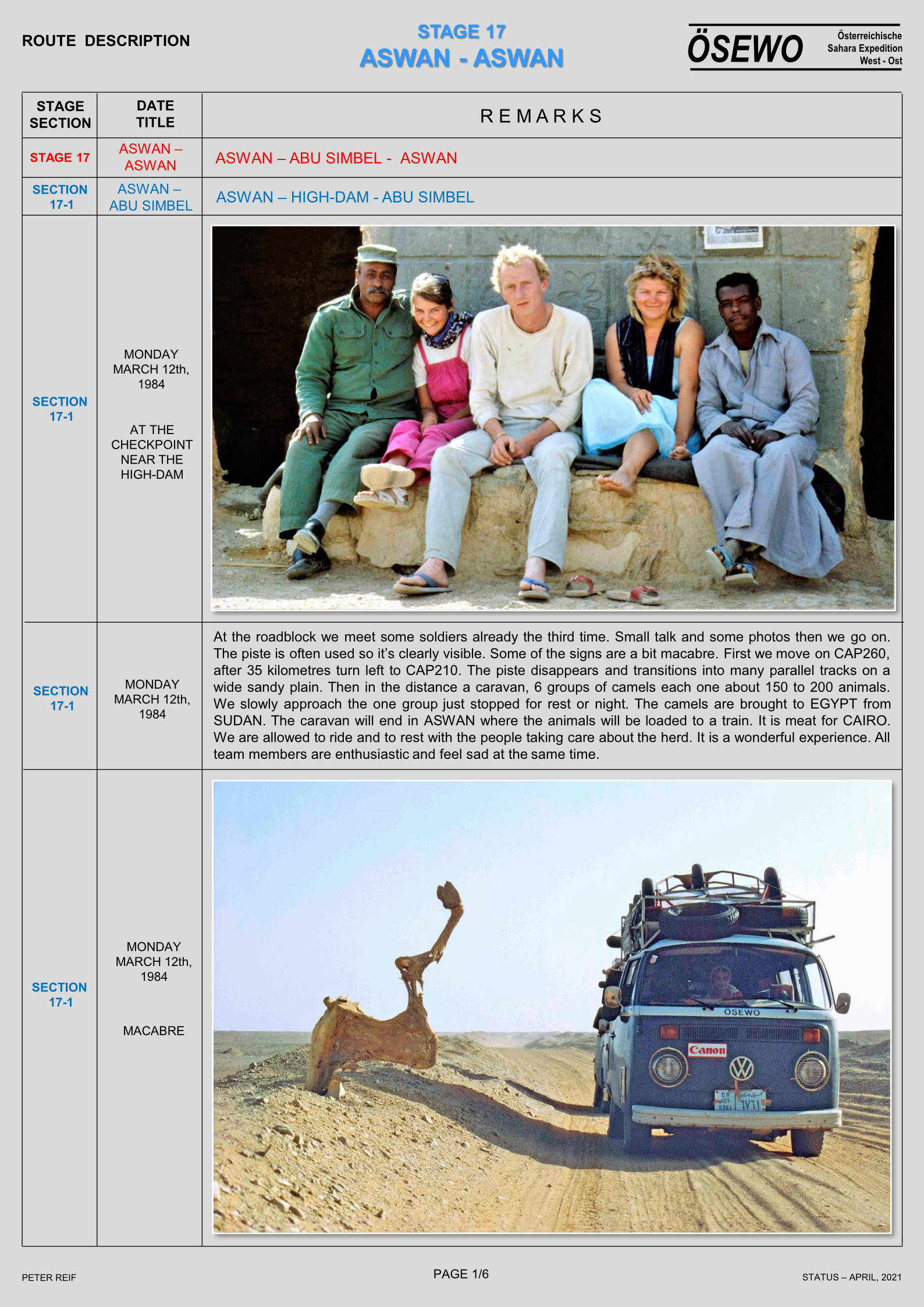
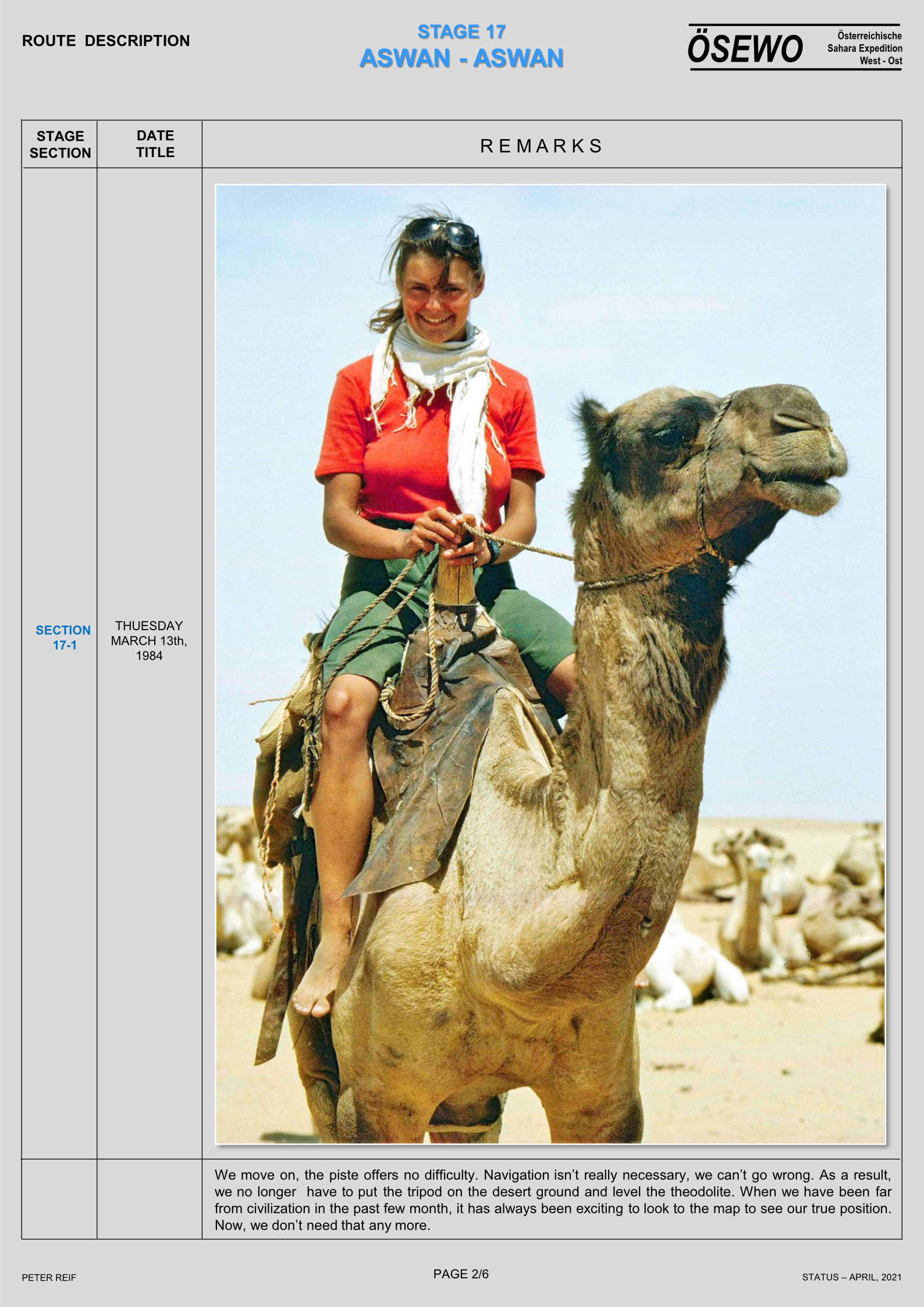
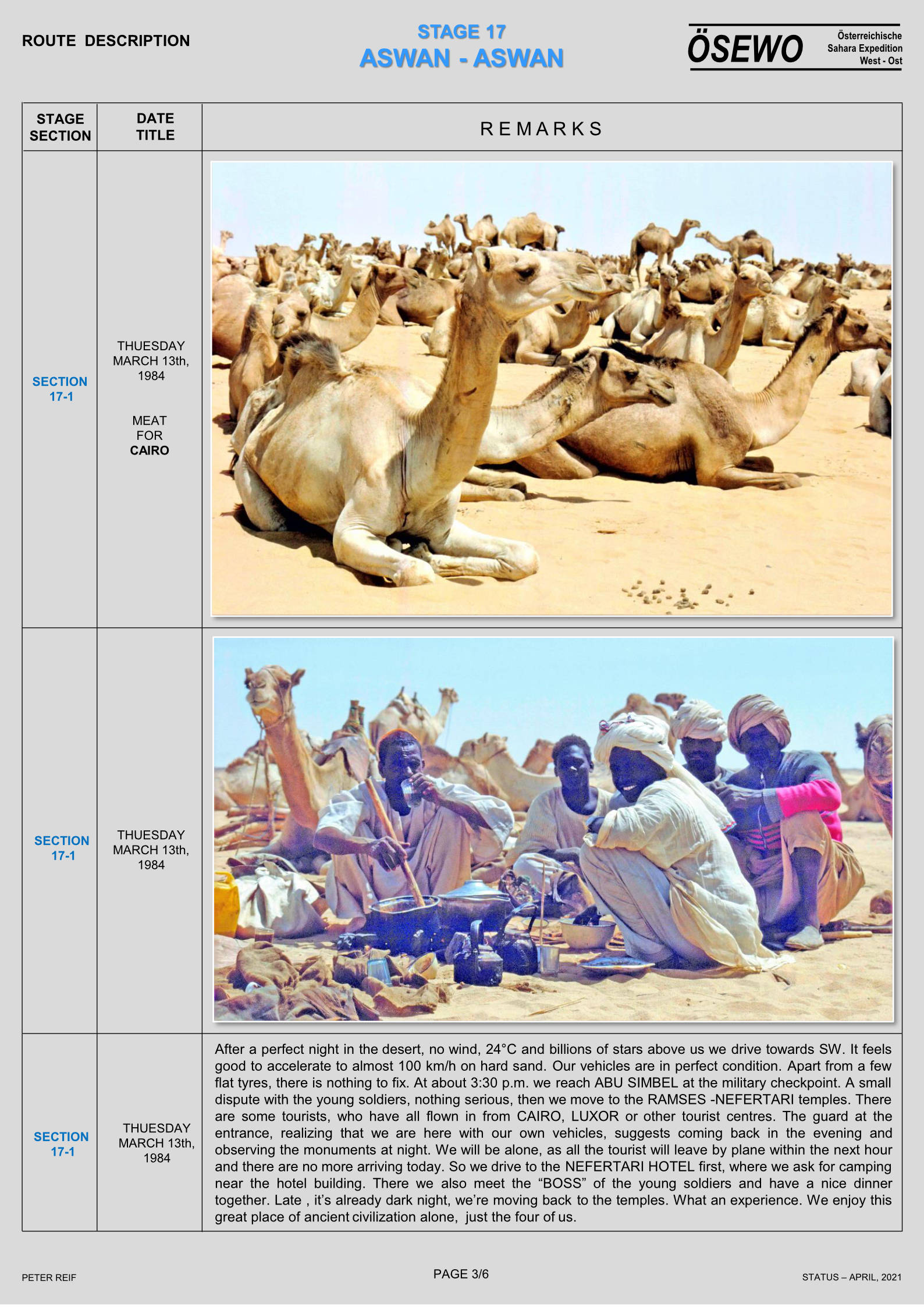
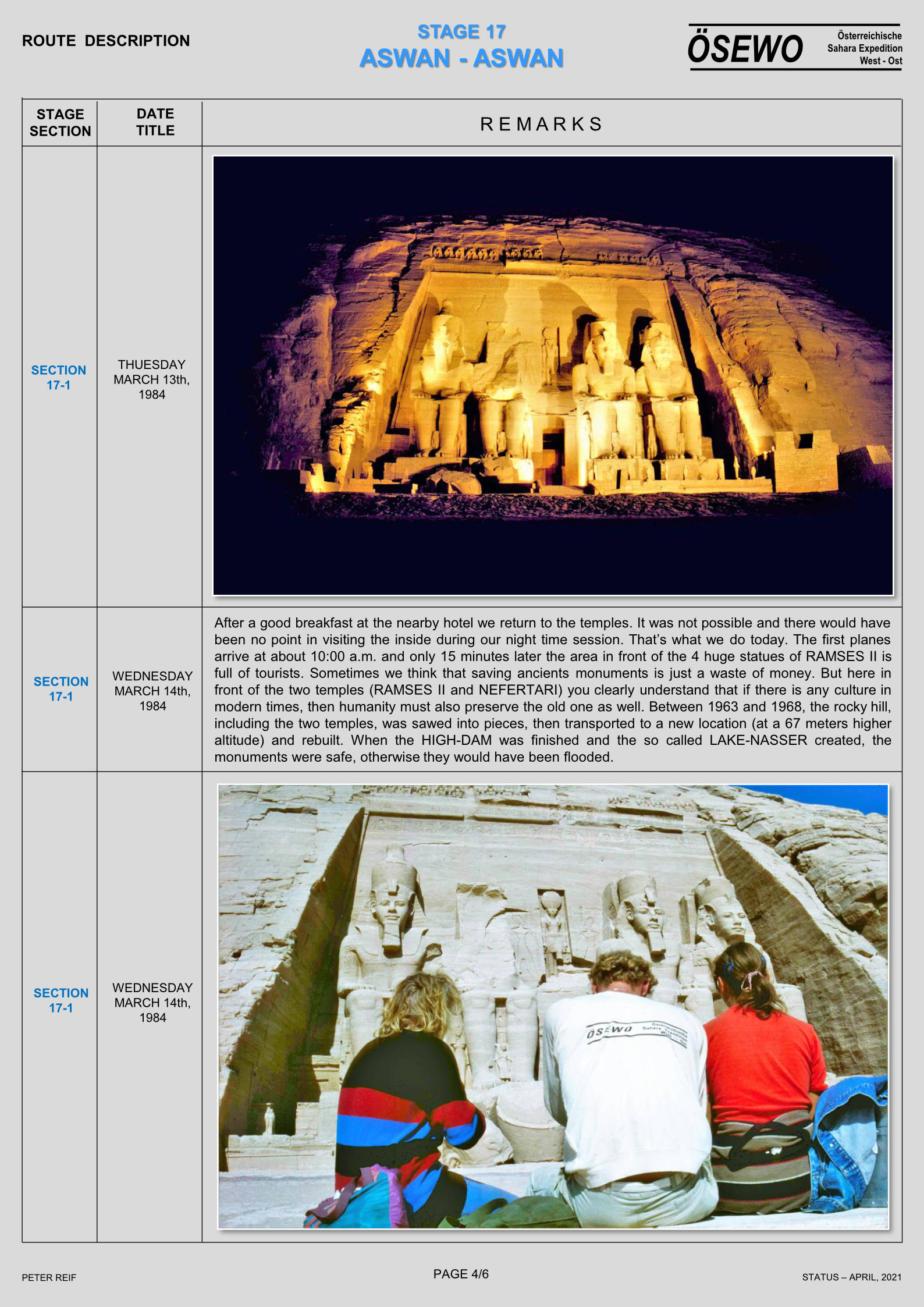
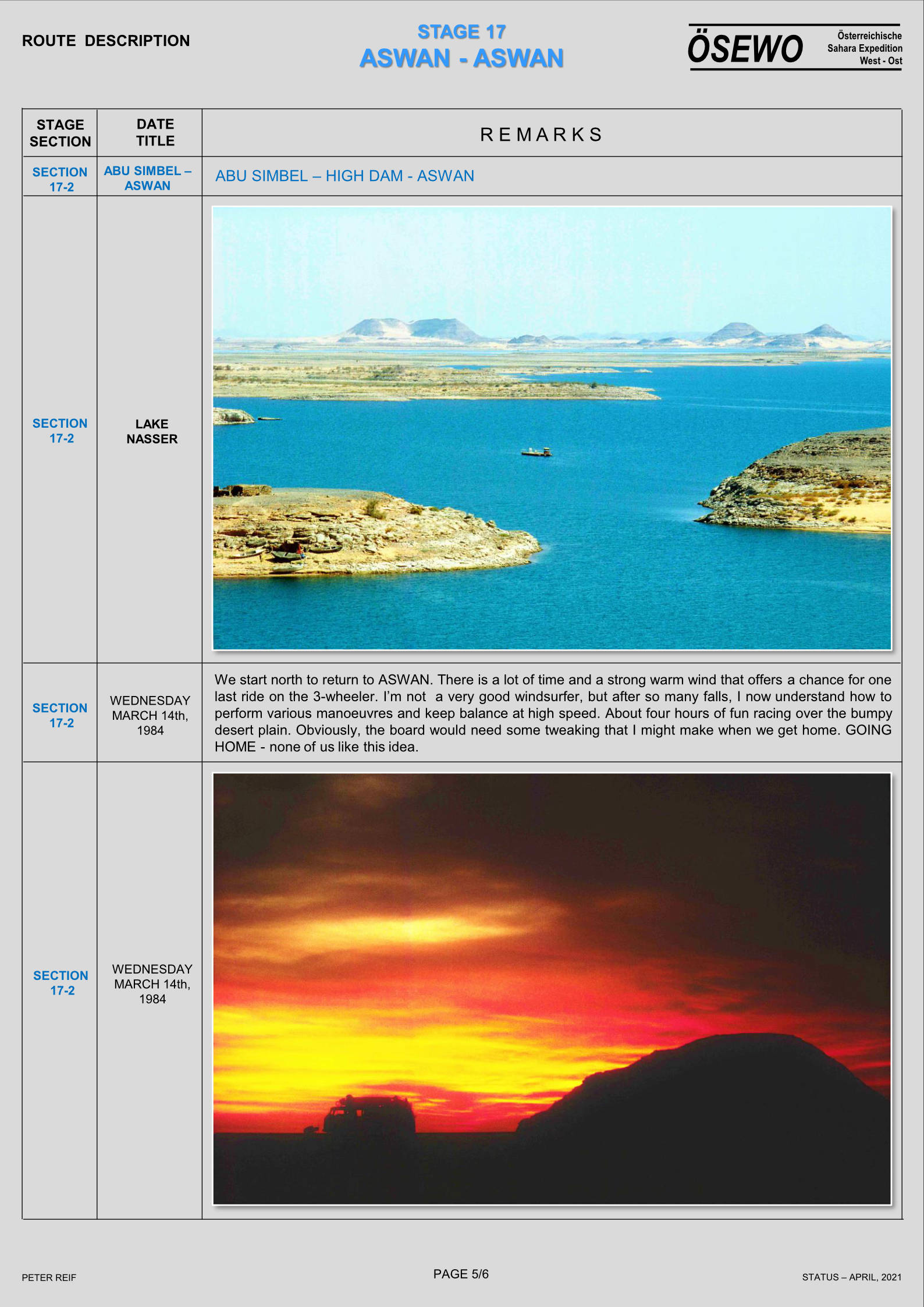
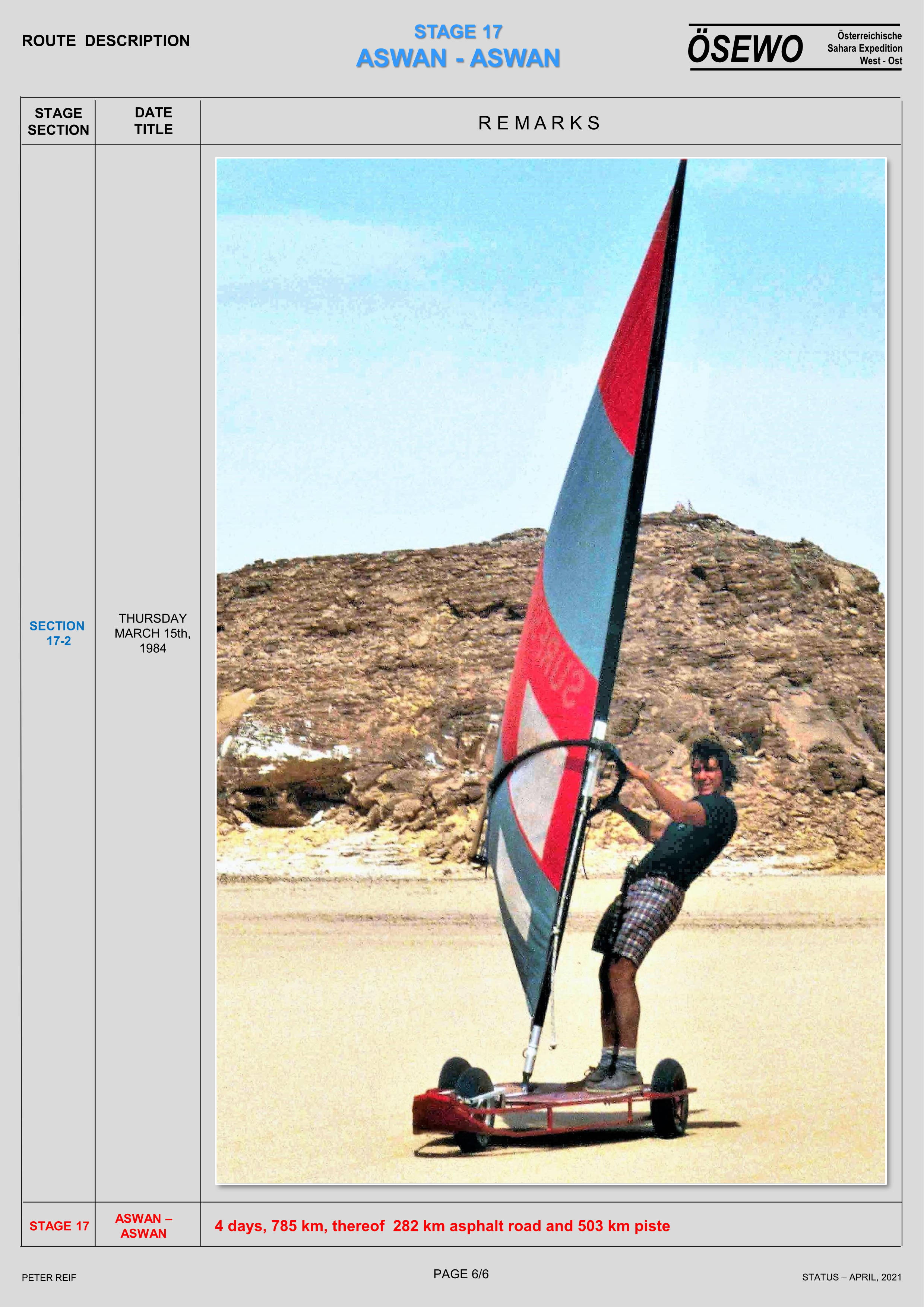
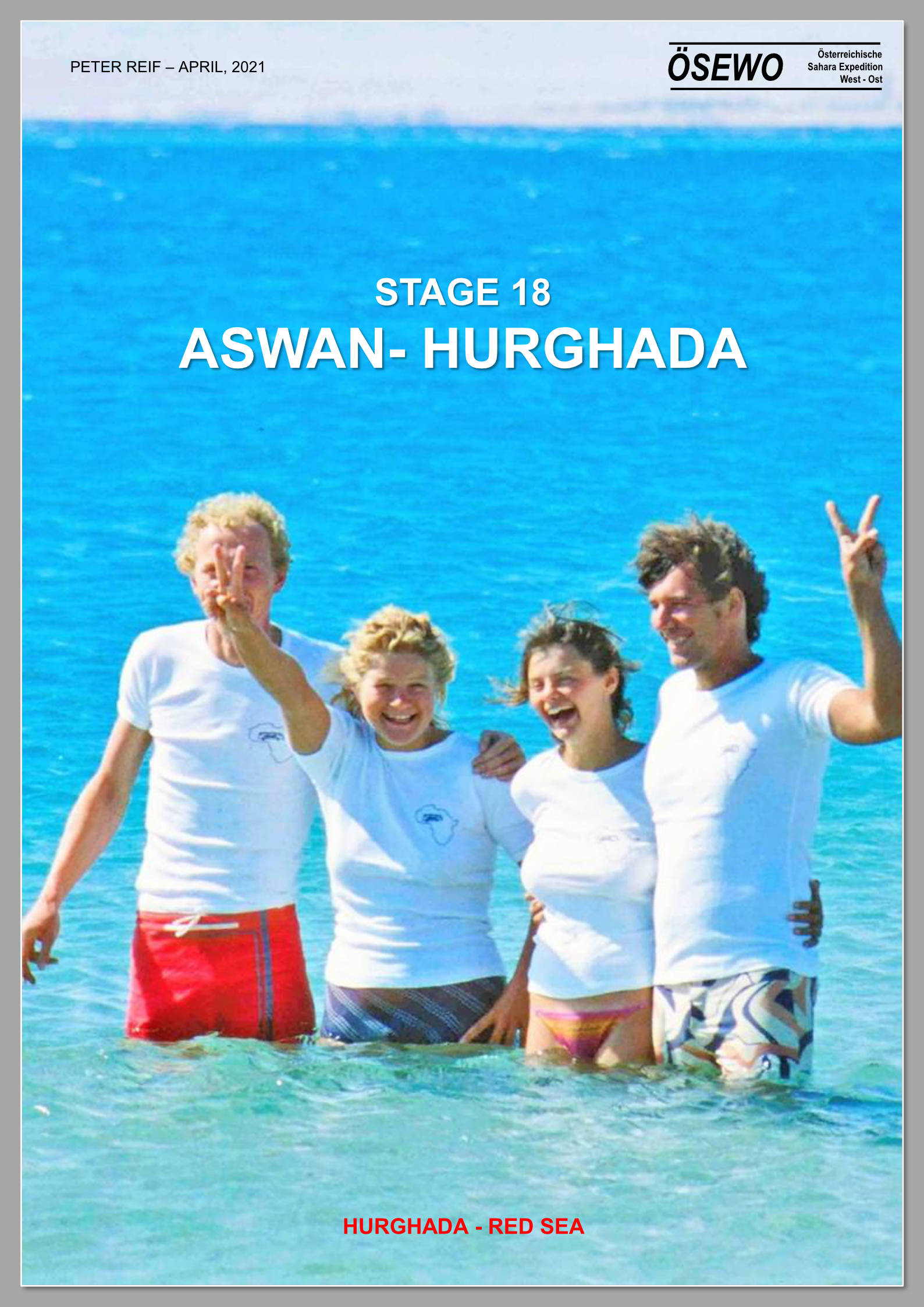
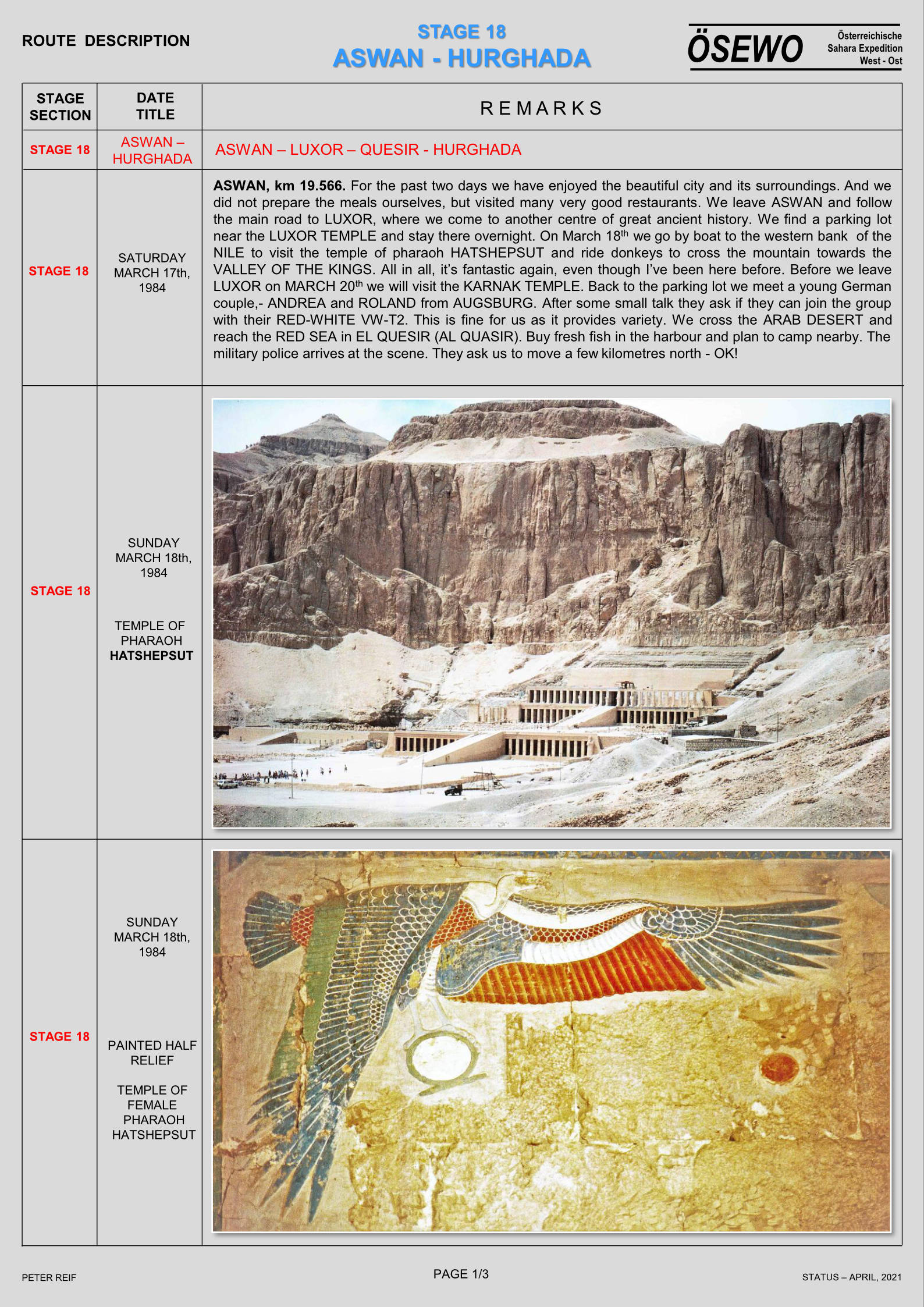
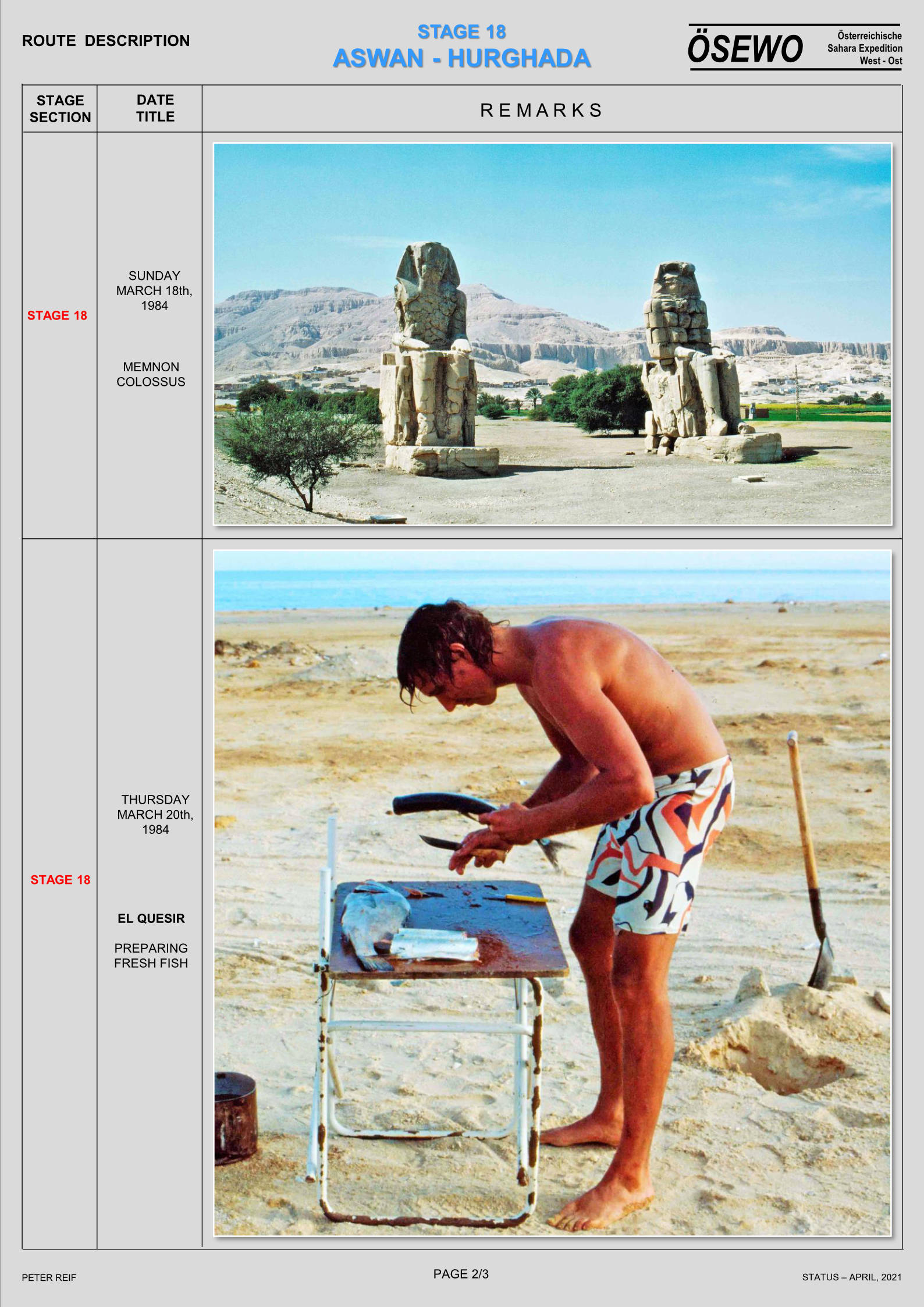
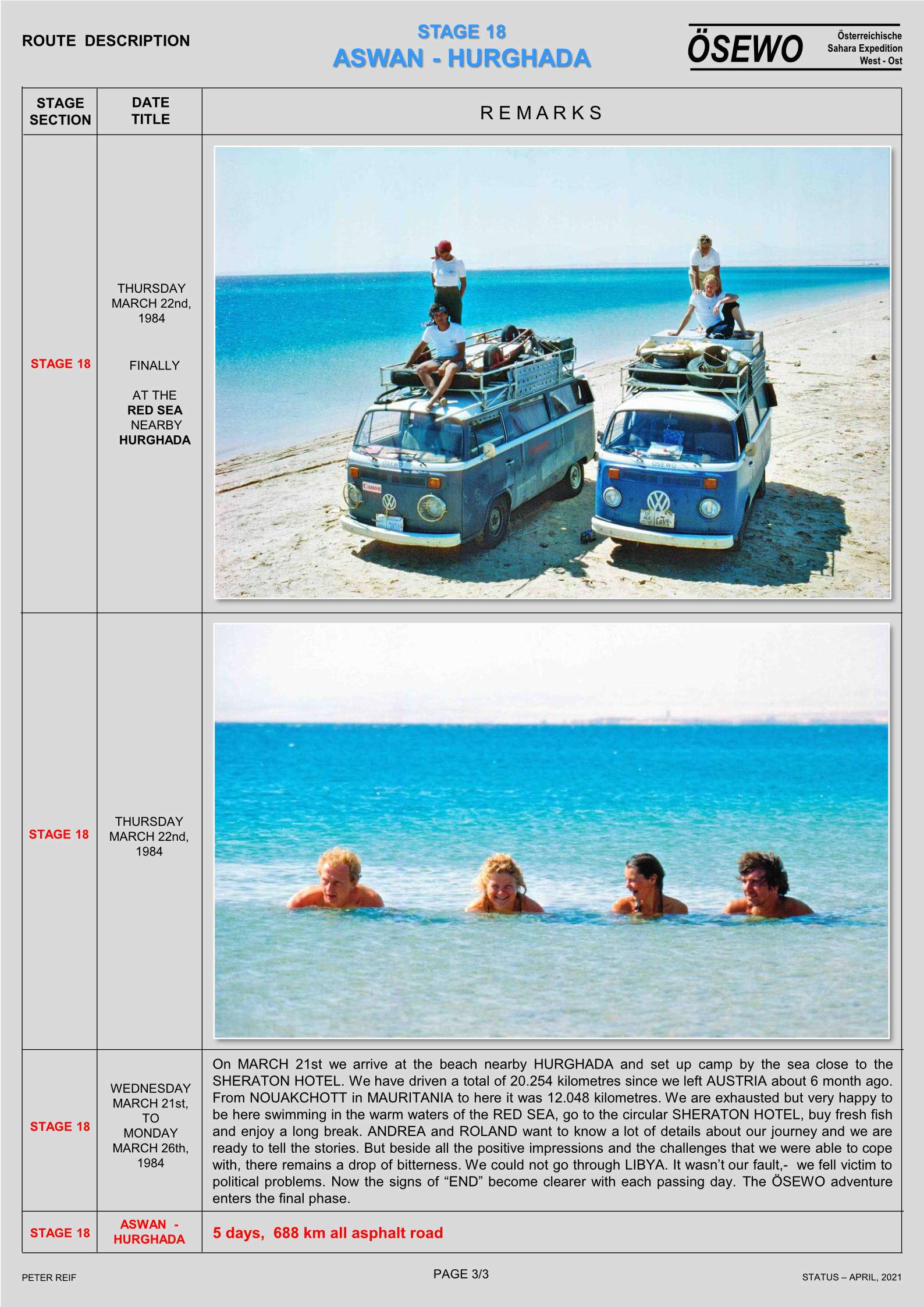
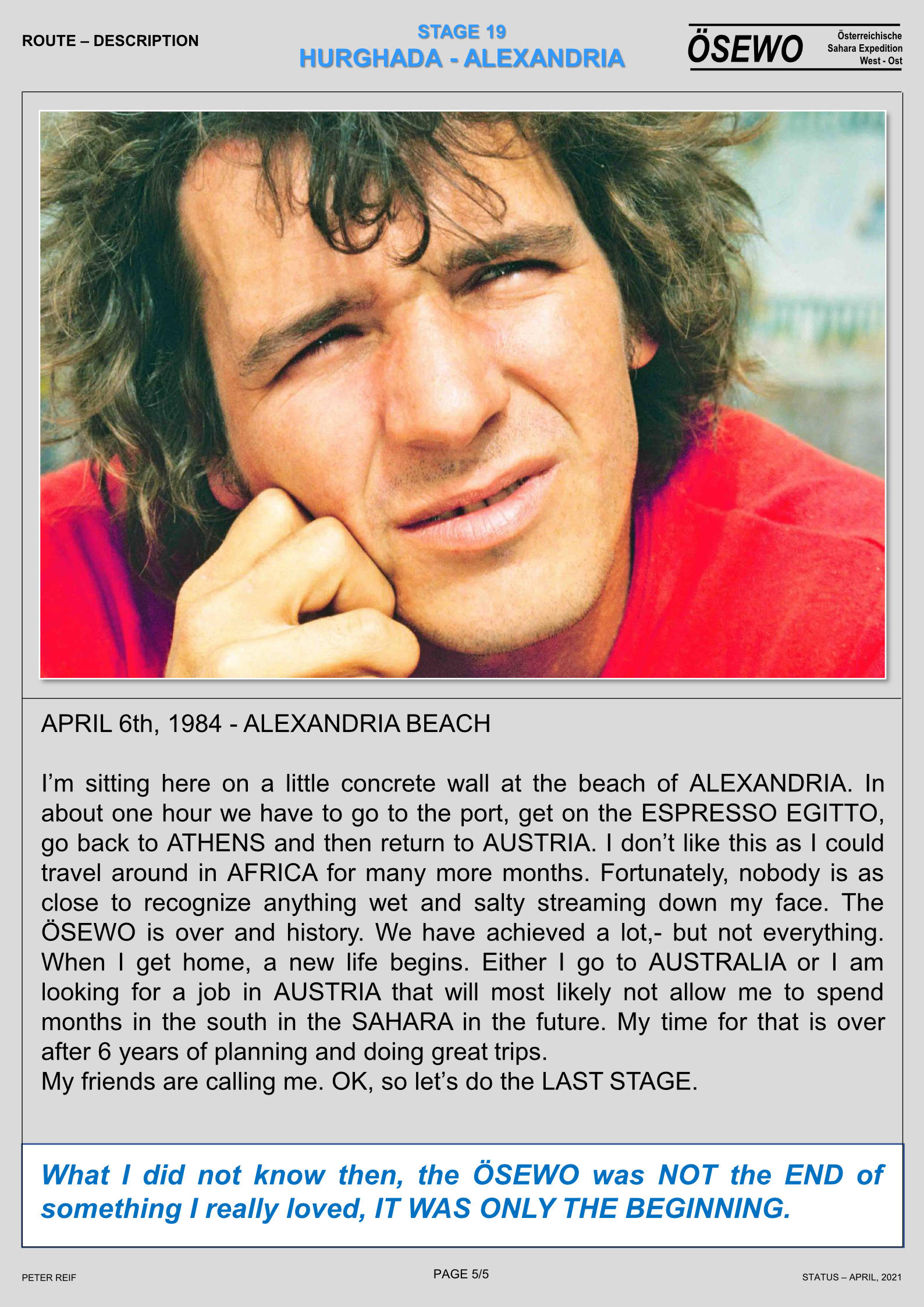
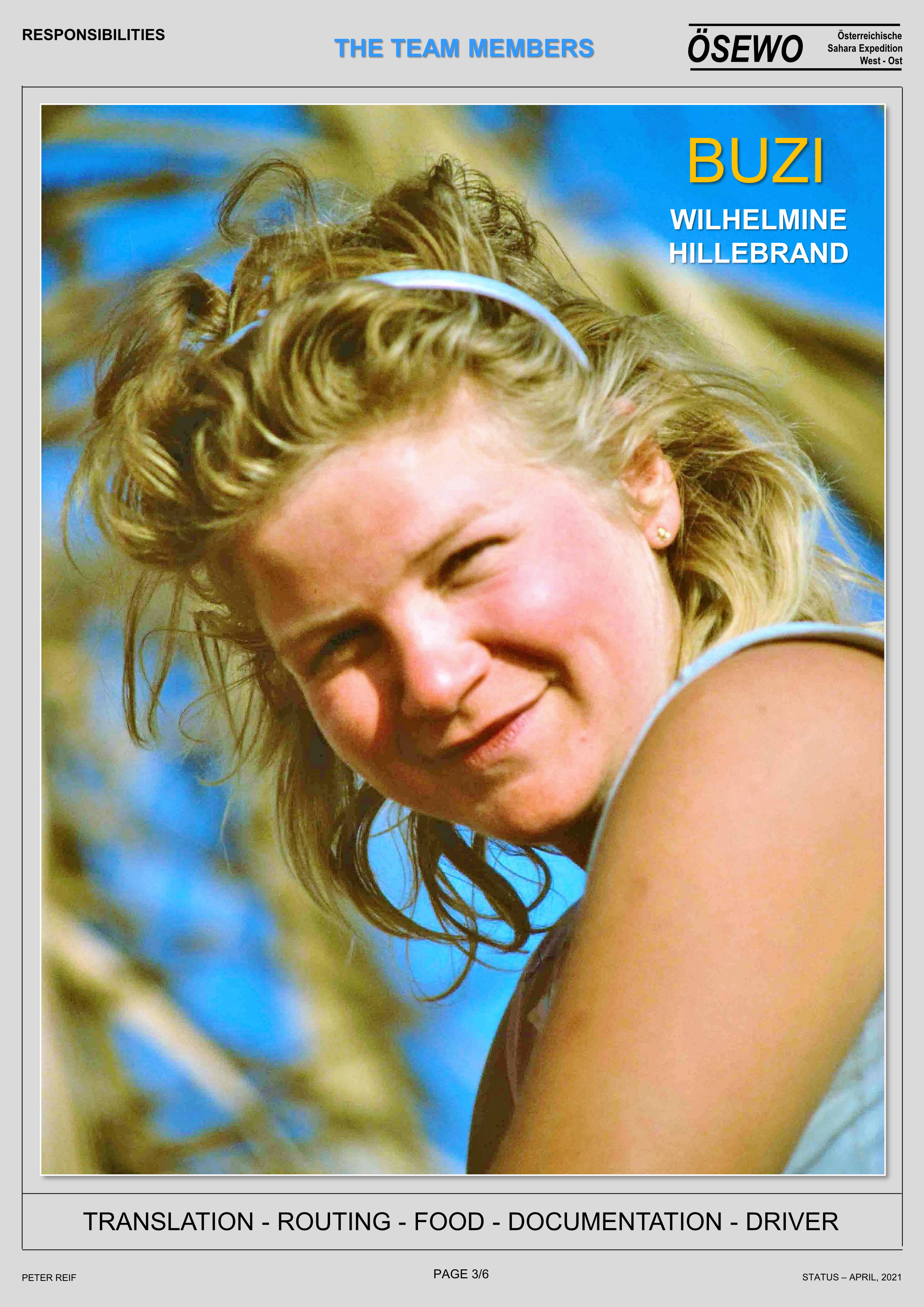
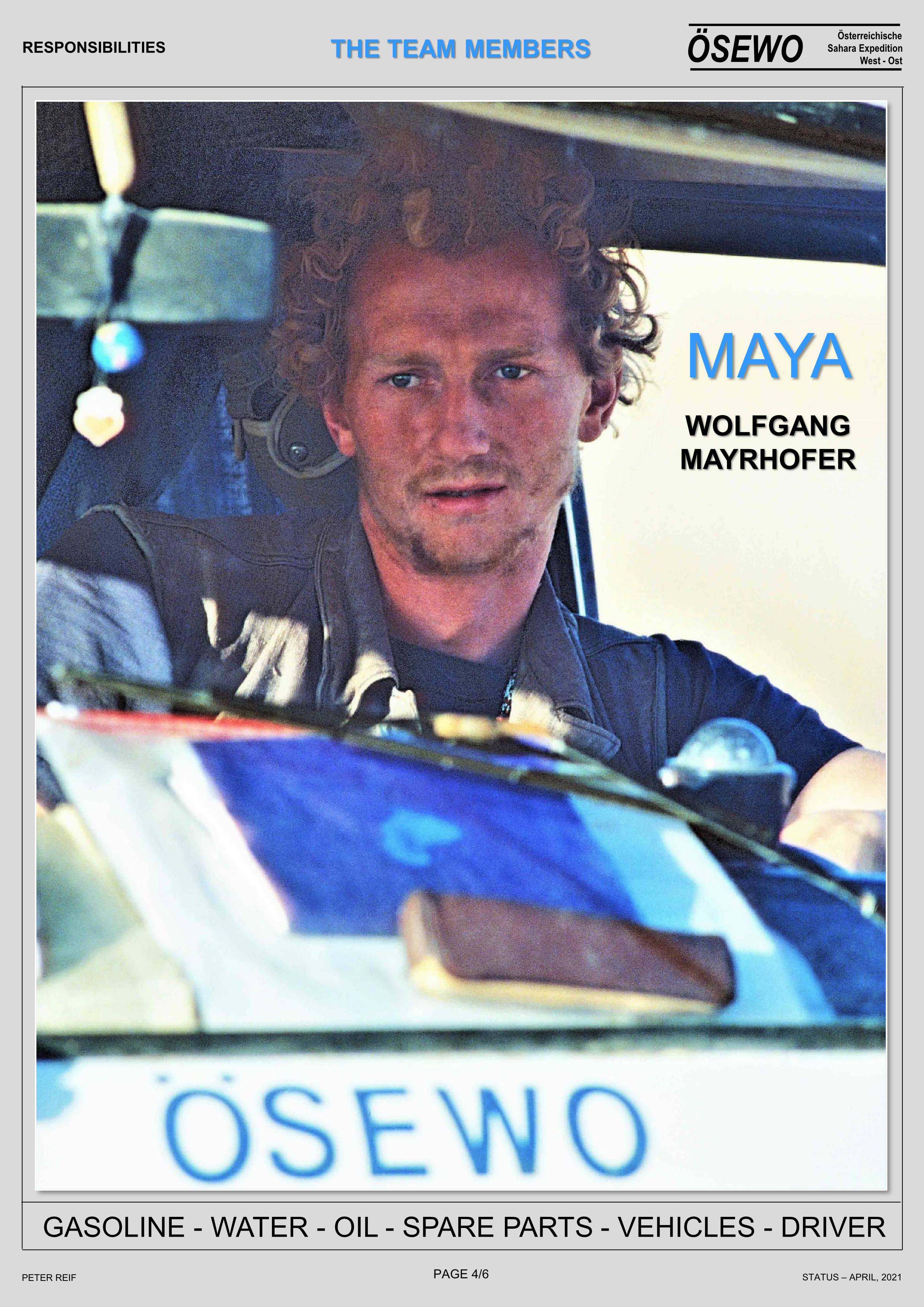
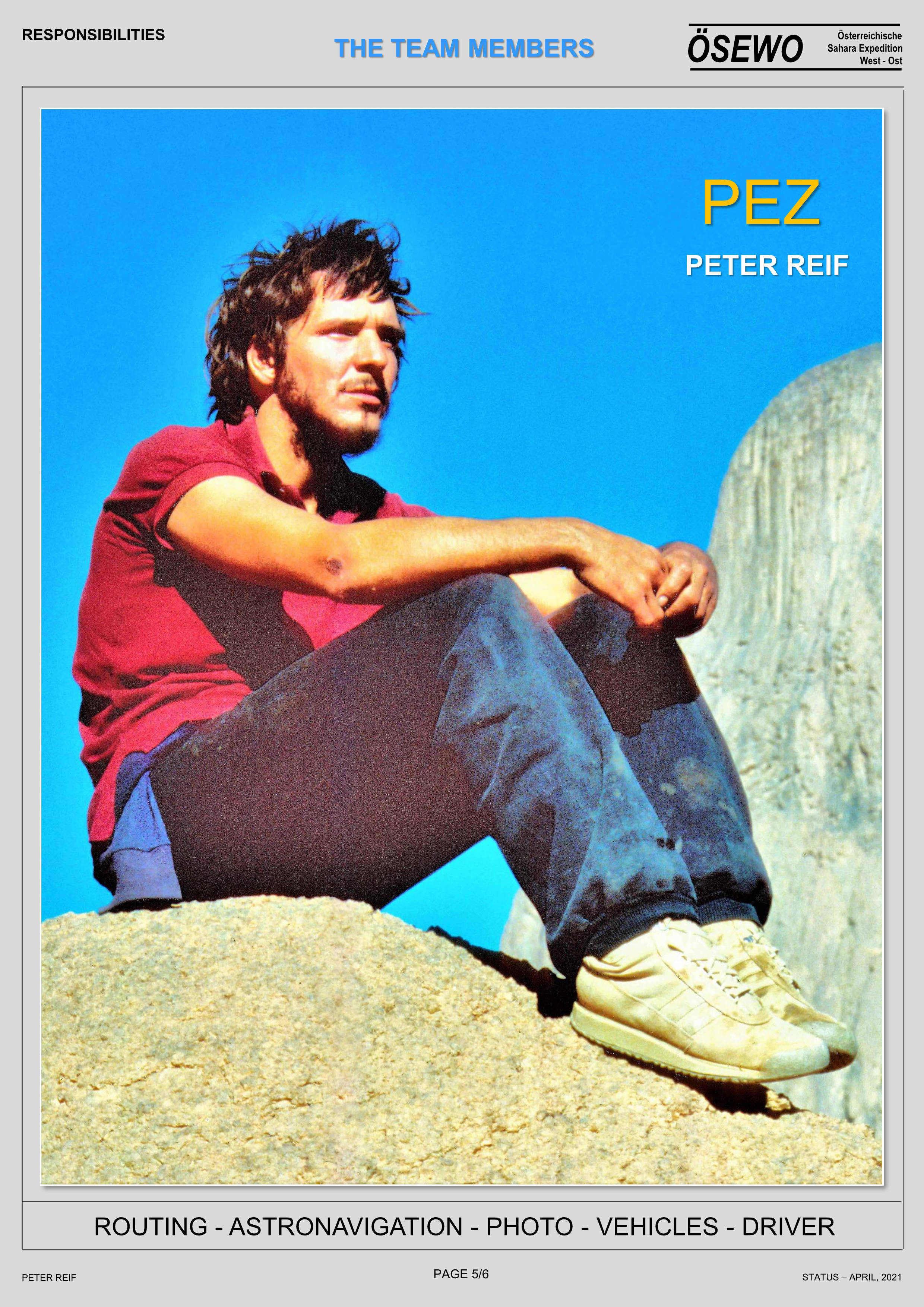
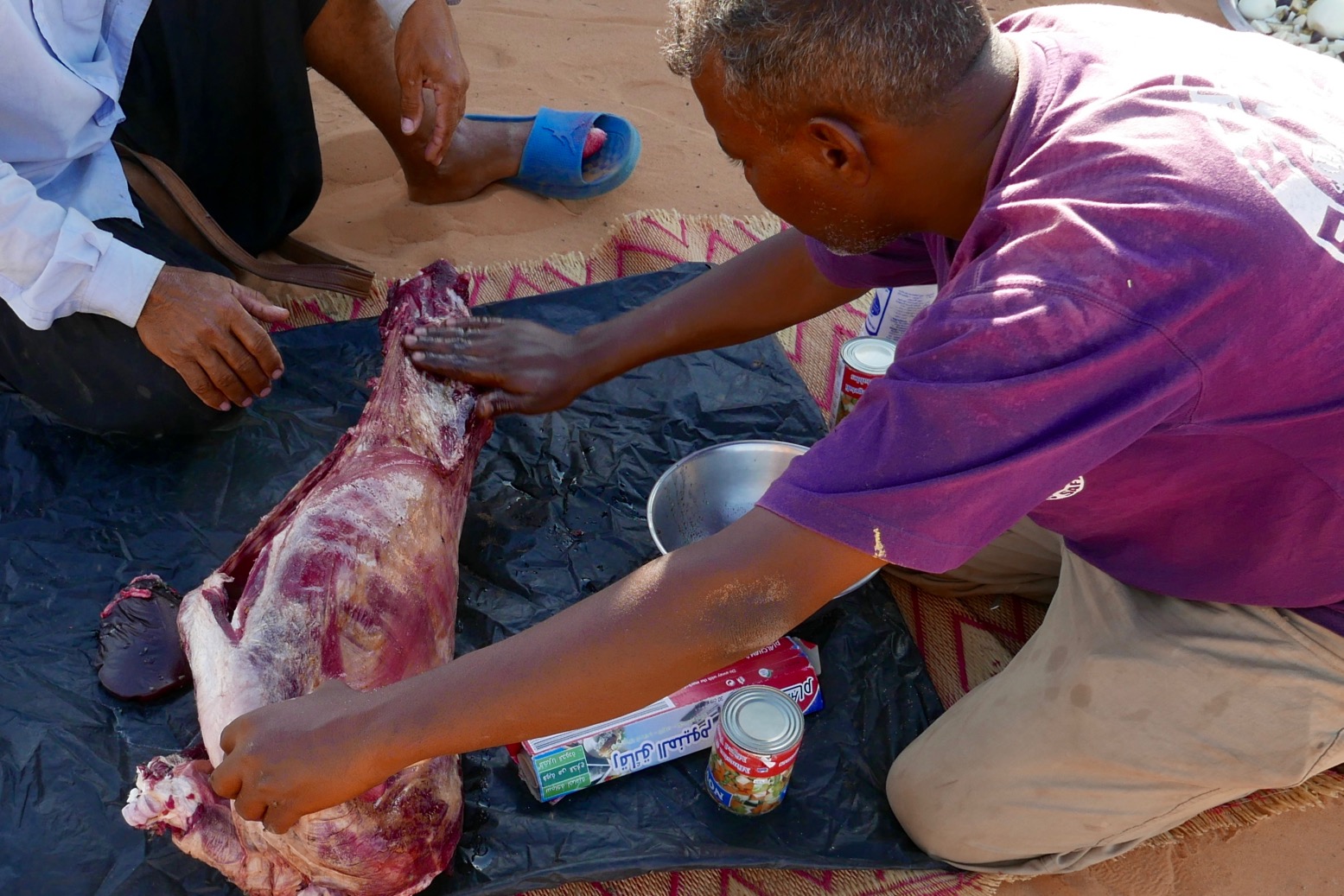
The final instalment of Peter Reif’s report and maps recalling ÖSEWO: an Atlantic-to-Red Sea crossing of the Sahara in 1983-4 with VW T2 Kombis. From Aswan the foursome visit the temple of Abu Simbel, passing Sudanese camel meat caravans on the way. Then, after six months and some 12,000km from the Atlantic, they cross the Nile and take a well-earned dip in the Red Sea.
For earlier parts, click the Index Page.

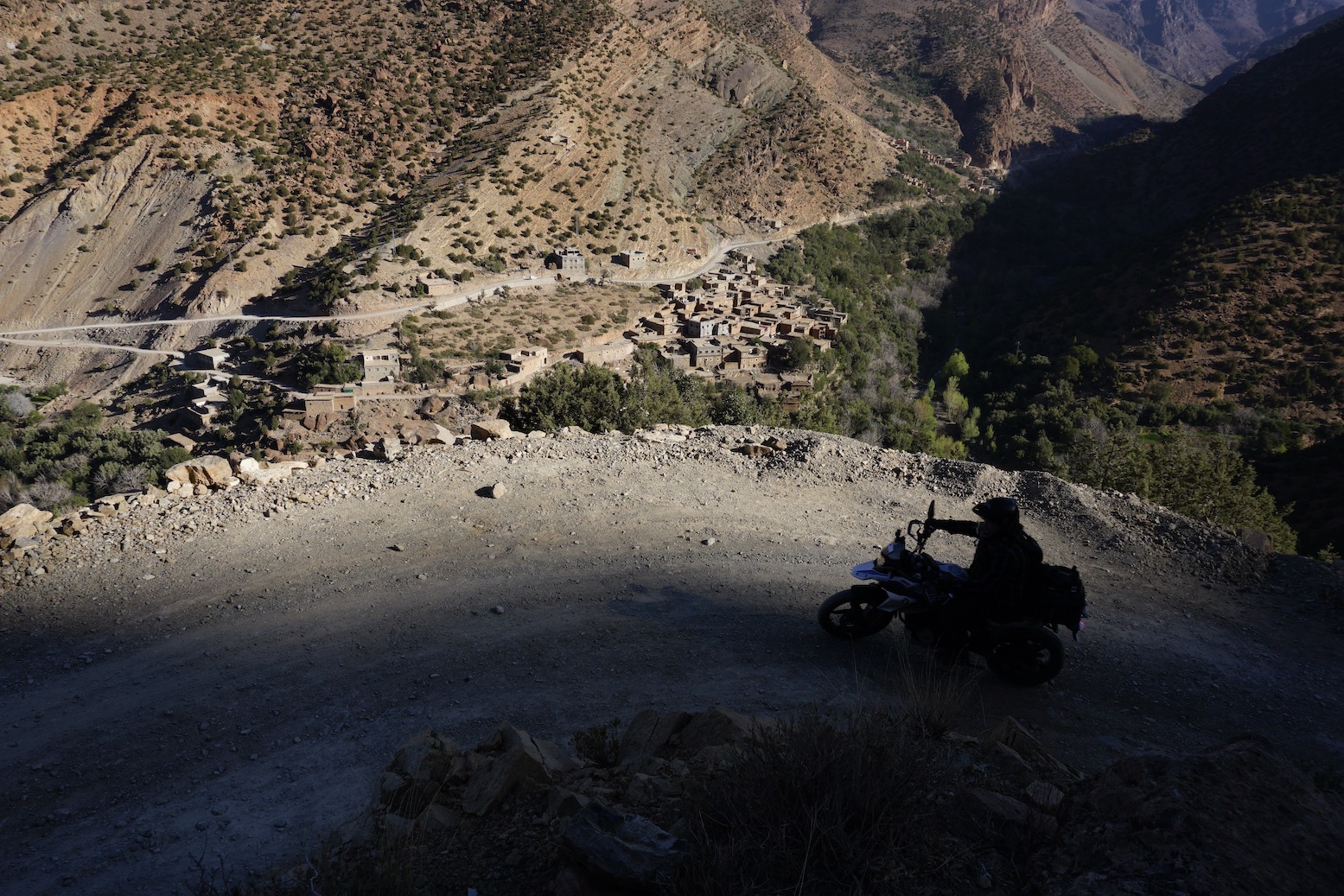
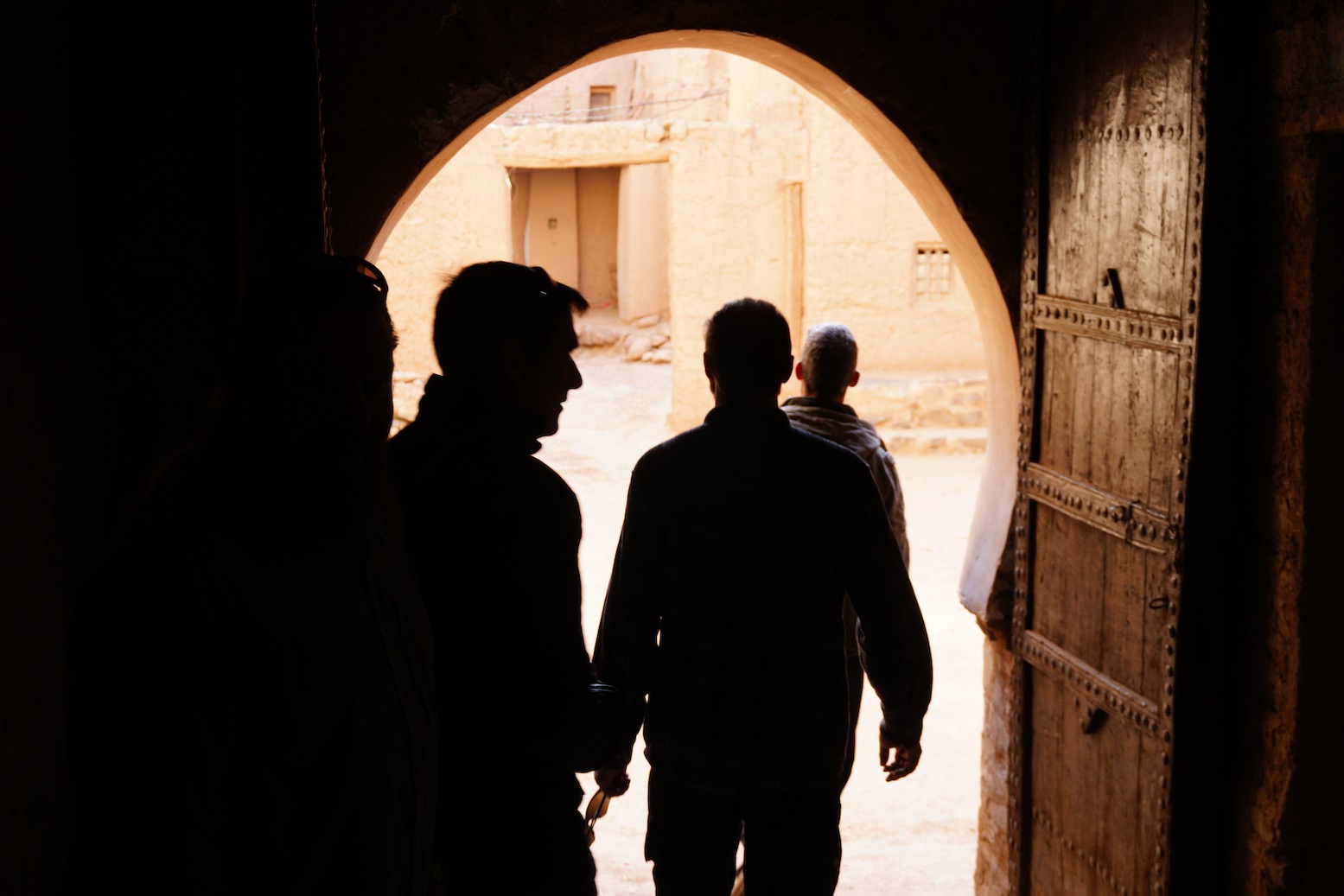
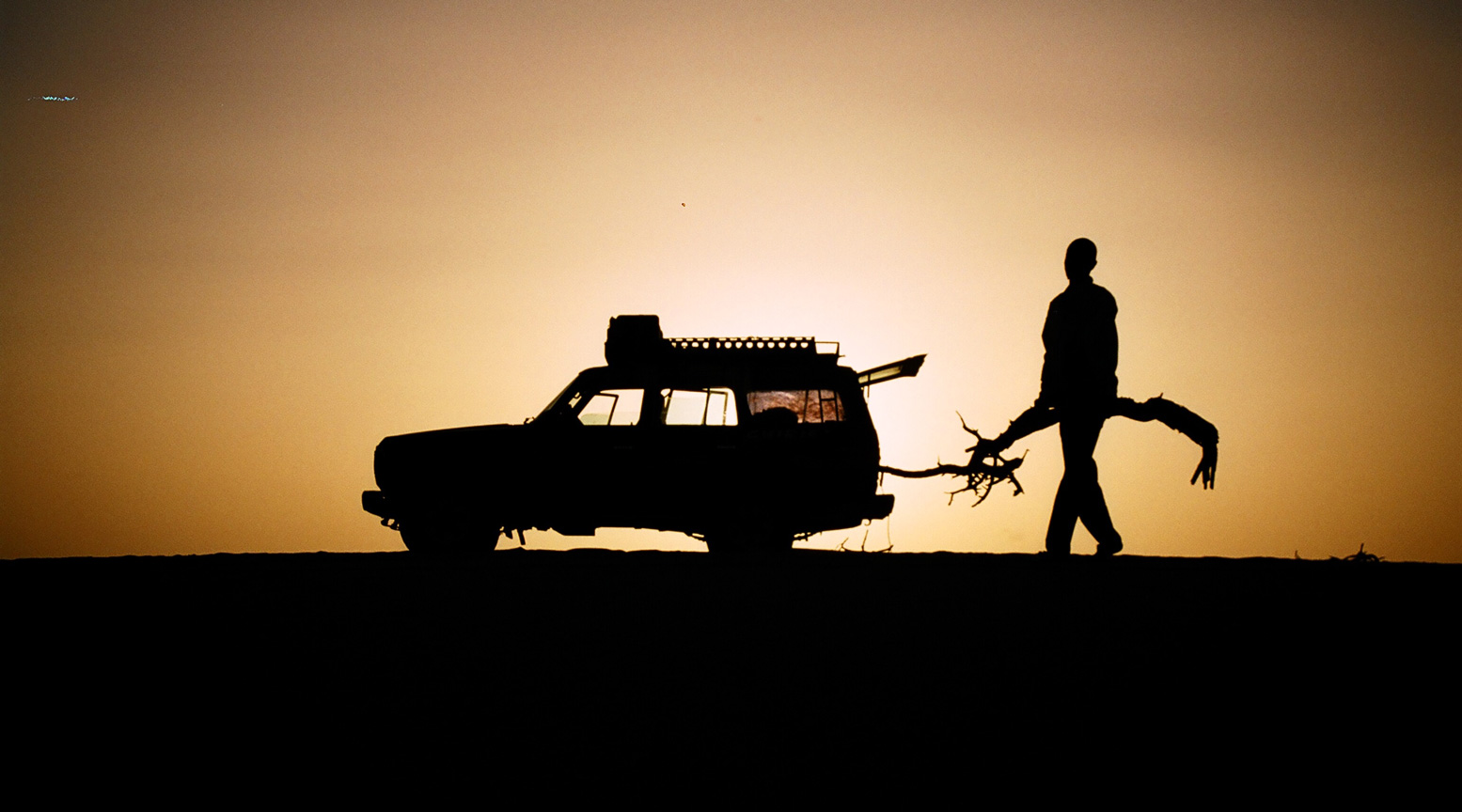
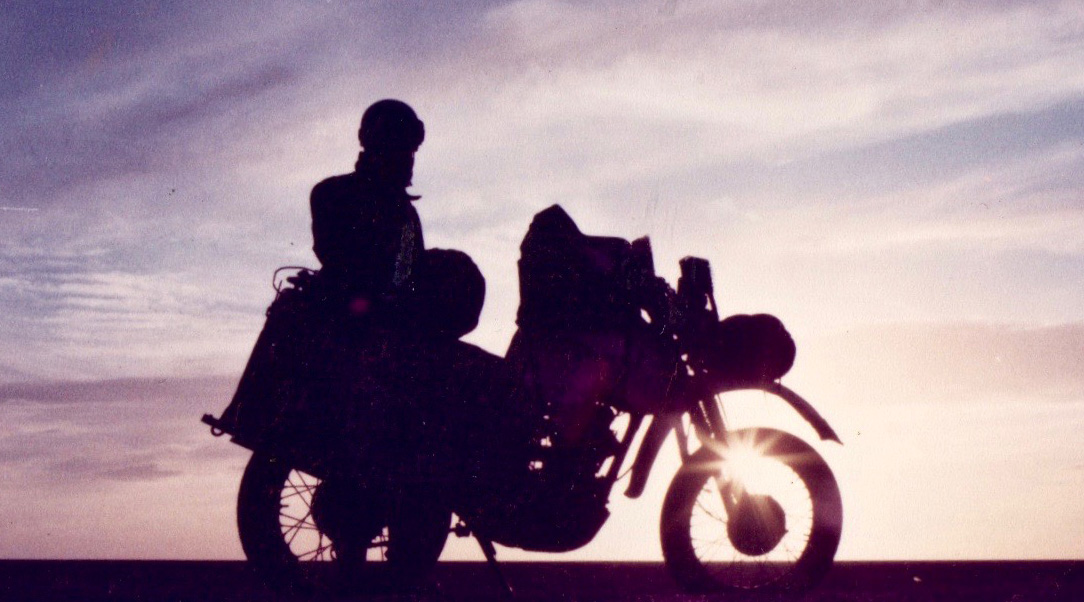
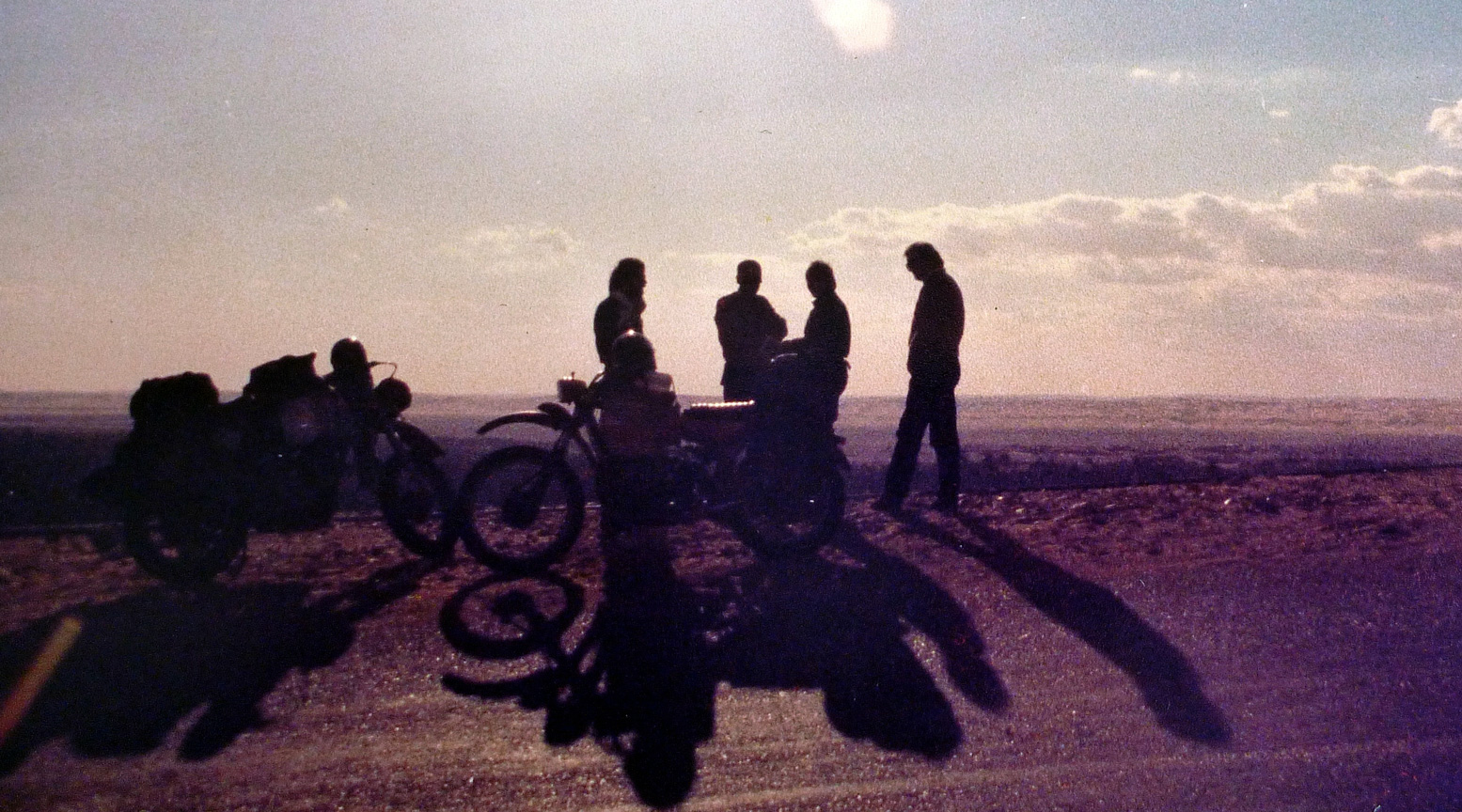
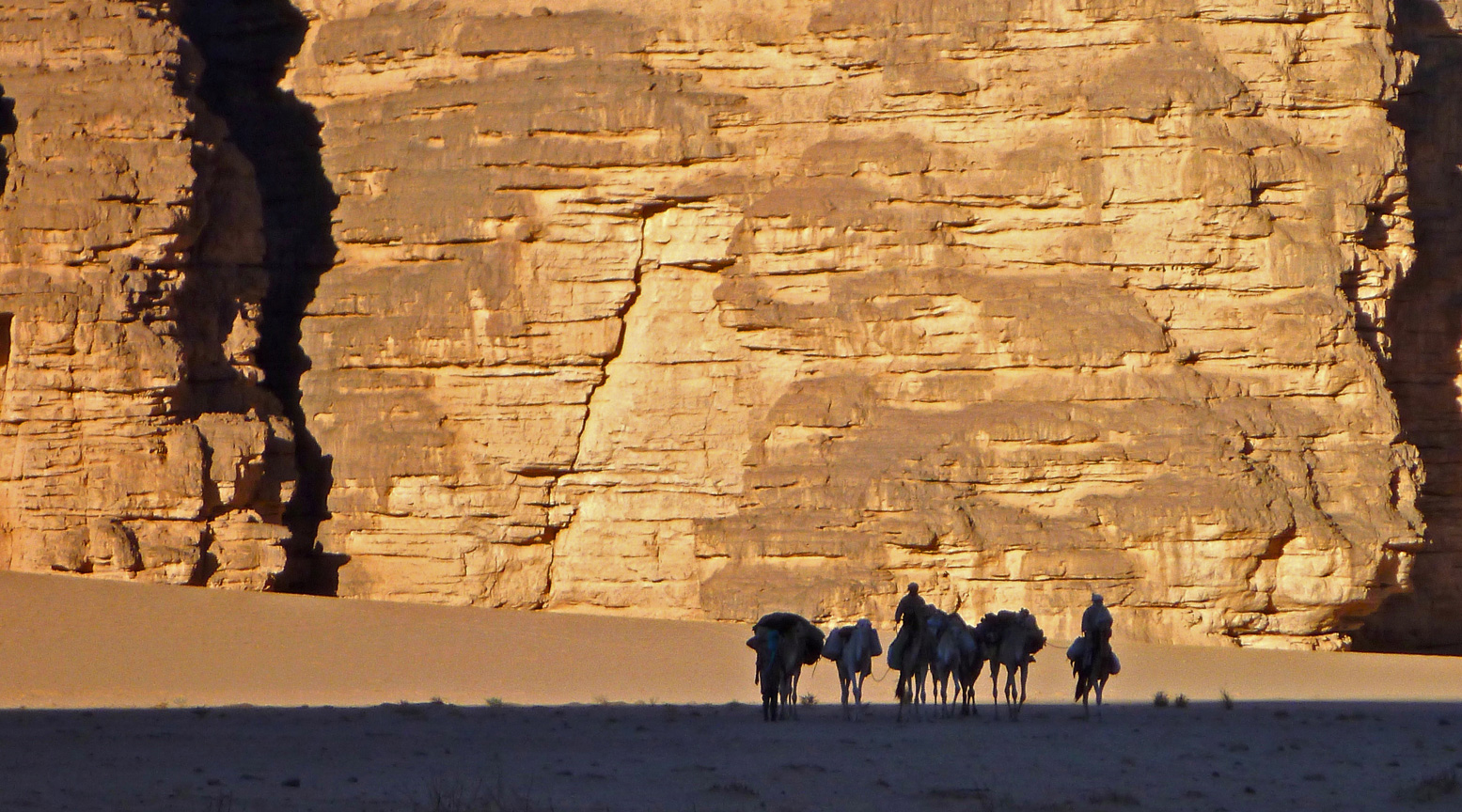
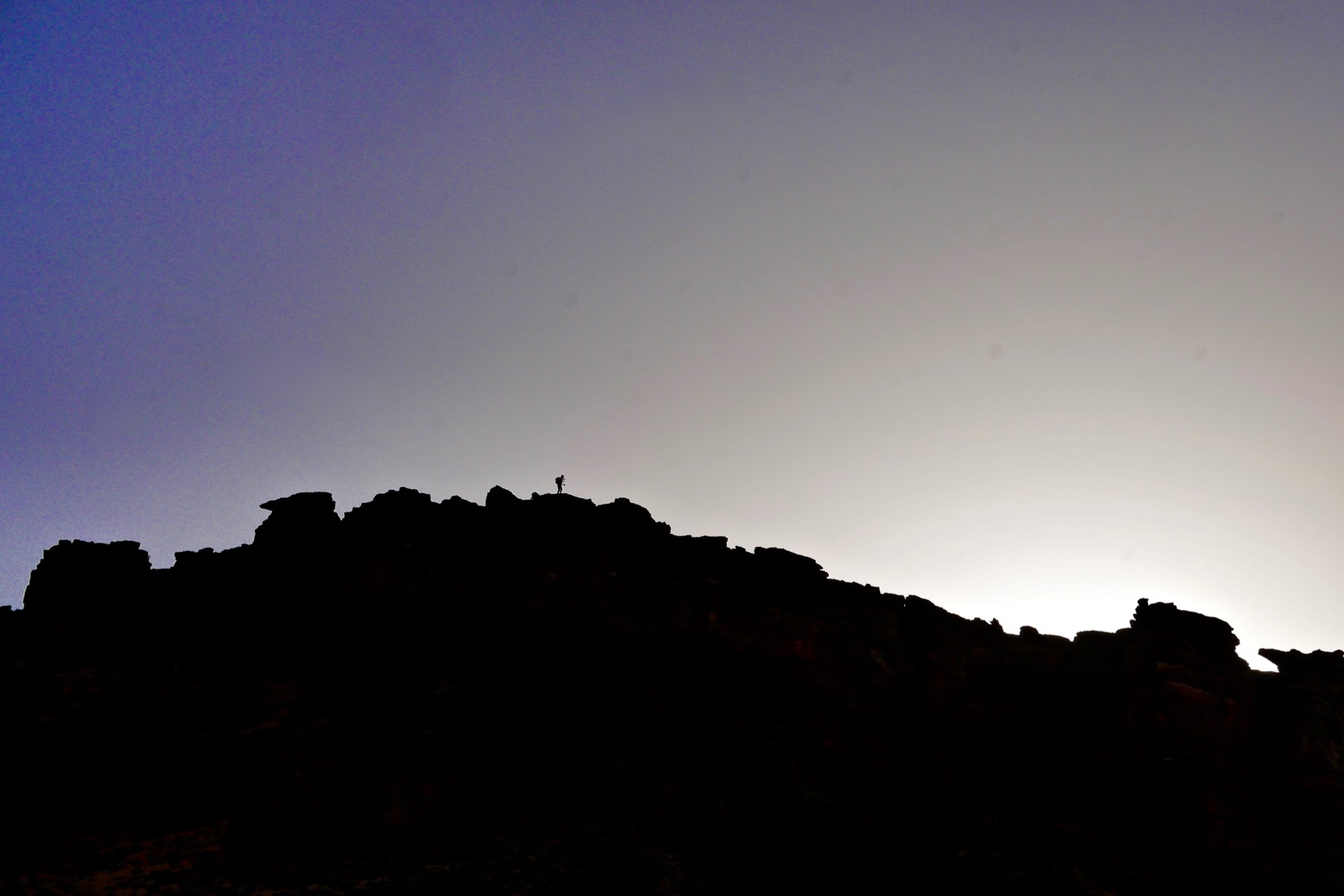
Sahara Silhouettes 3

More Sahara silhouettes here and here.

S is for more Sahara Silhouettes

Other silhouette galleries

Part of the occasional Sahara A to Z series

S is for Sahara Silhouettes

Other silhouette galleries

Part of the occasional Sahara A to Z series

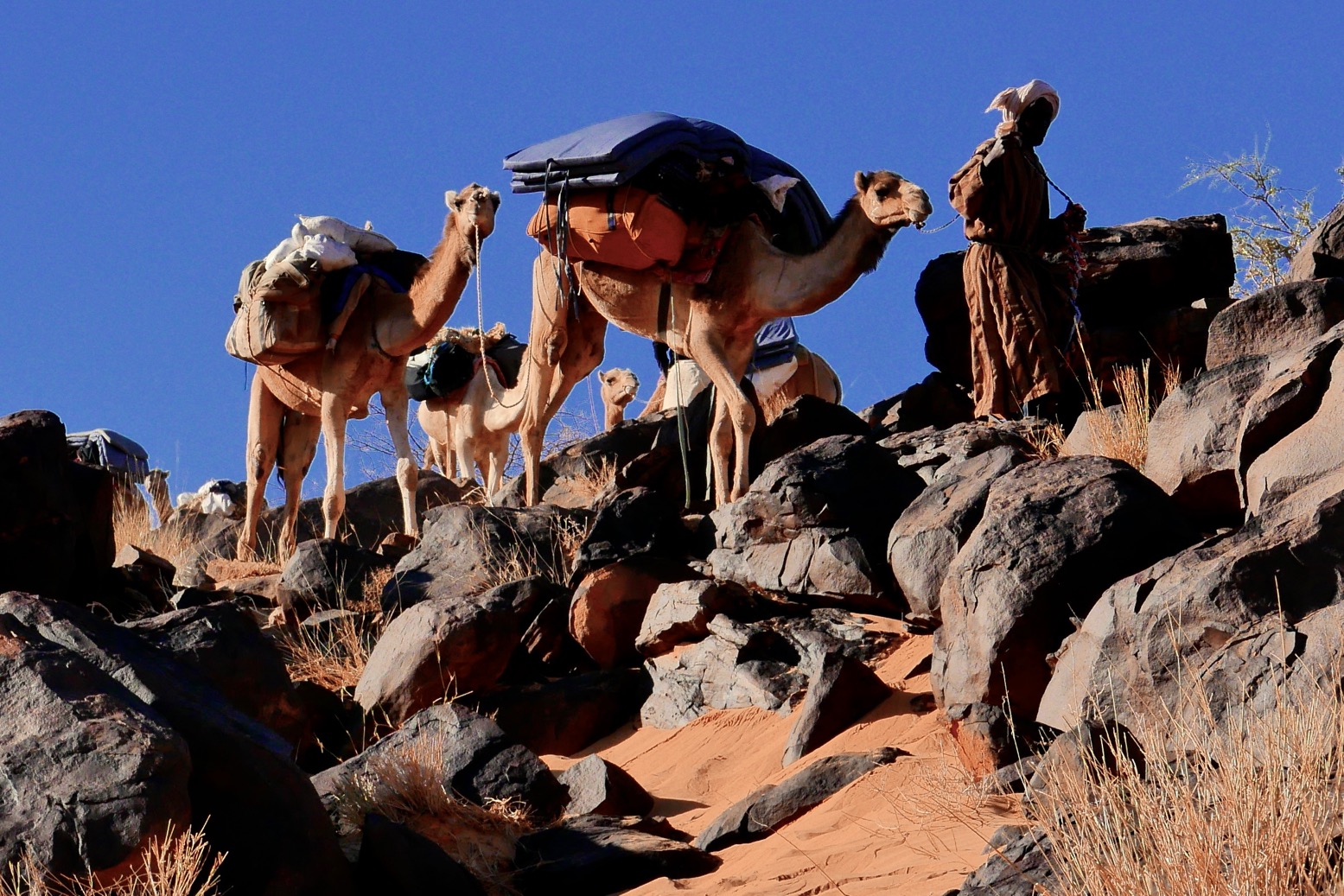
Fortnight’s camel trek in Mauritania

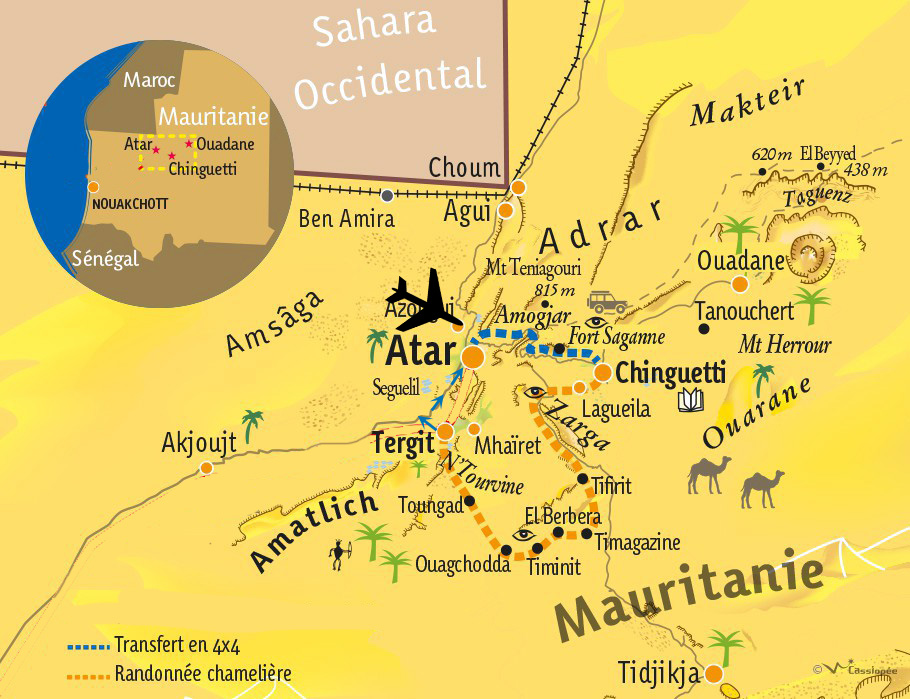
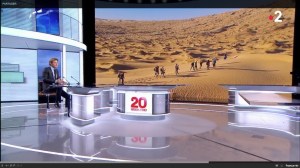
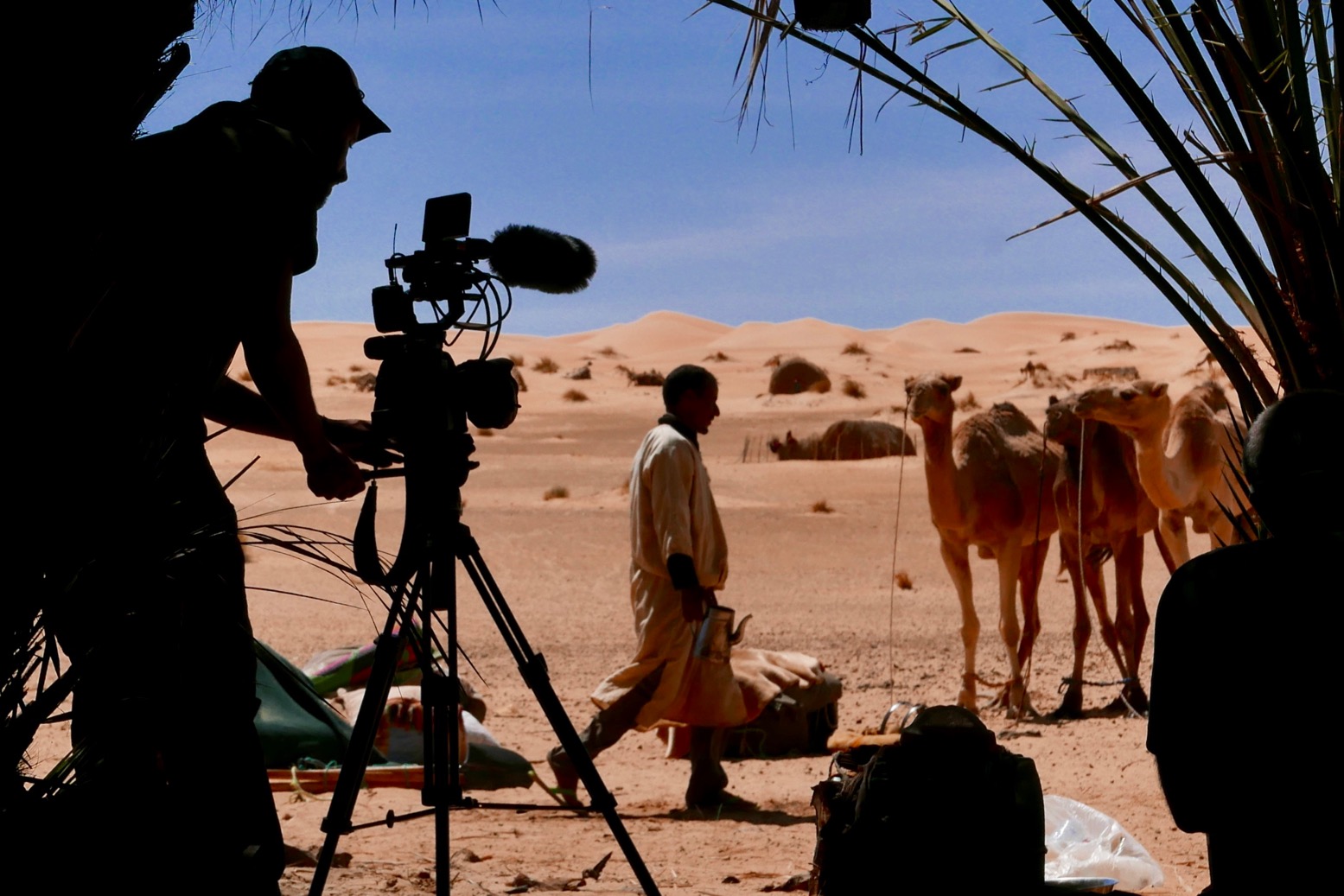
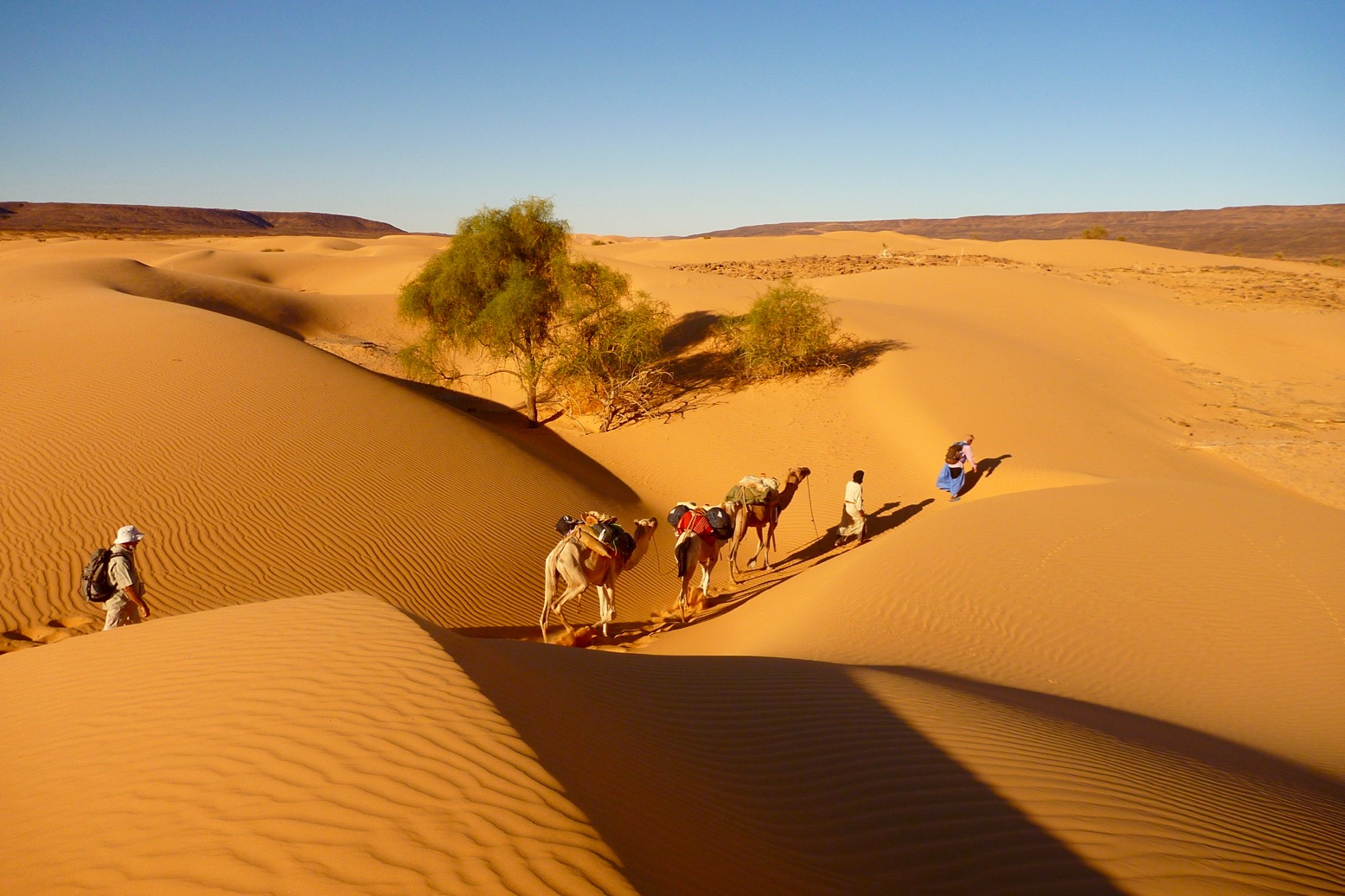
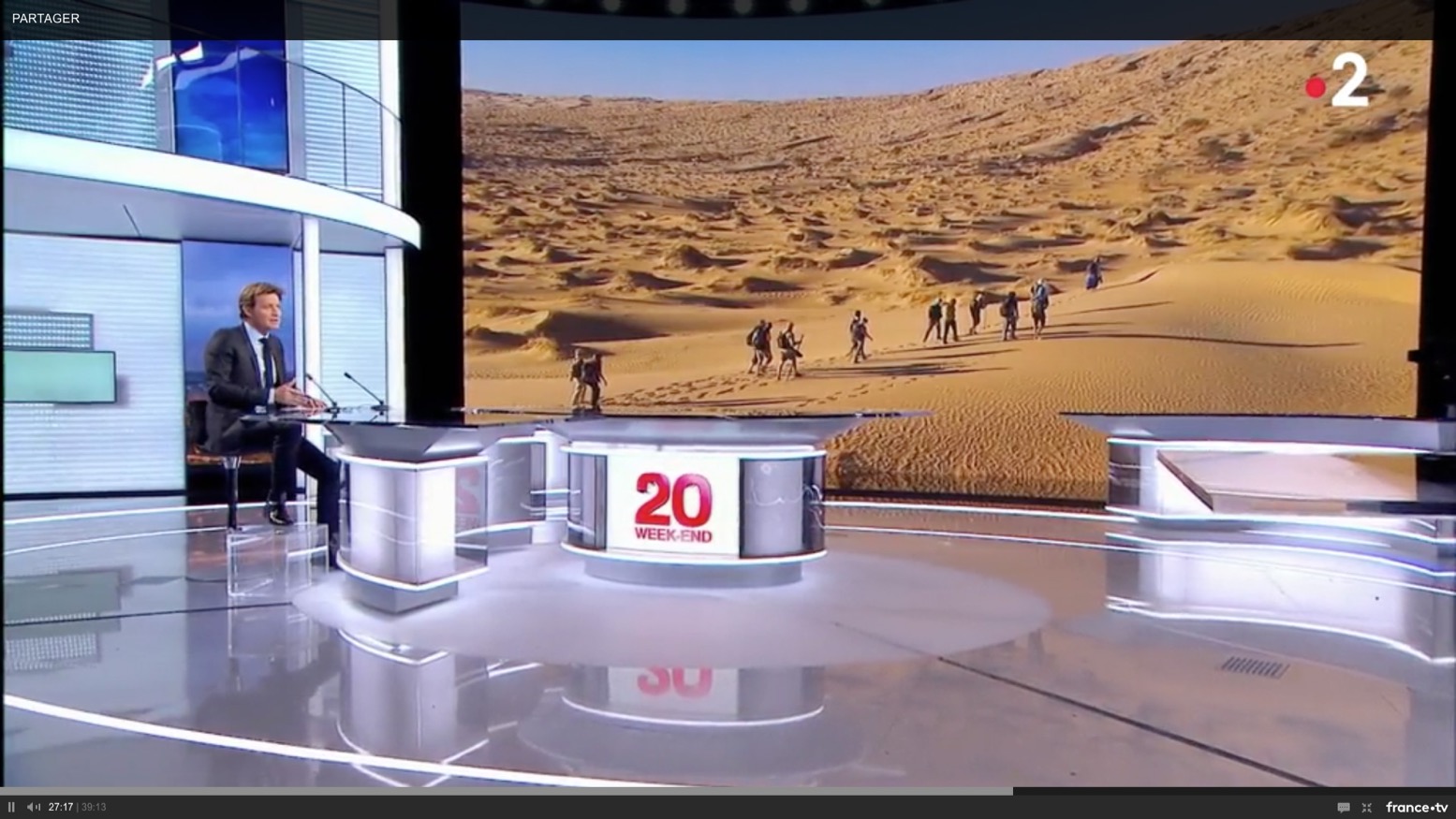
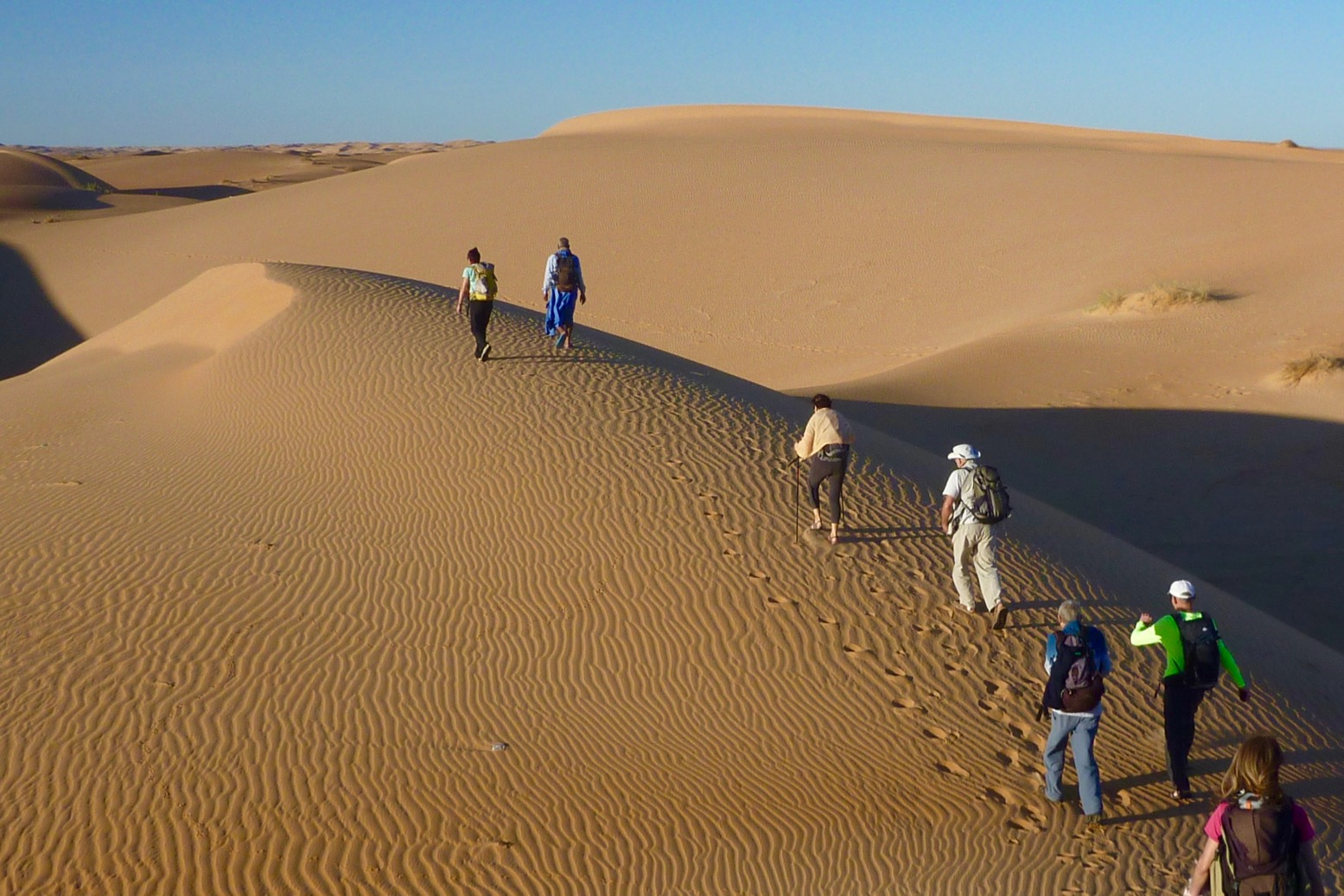
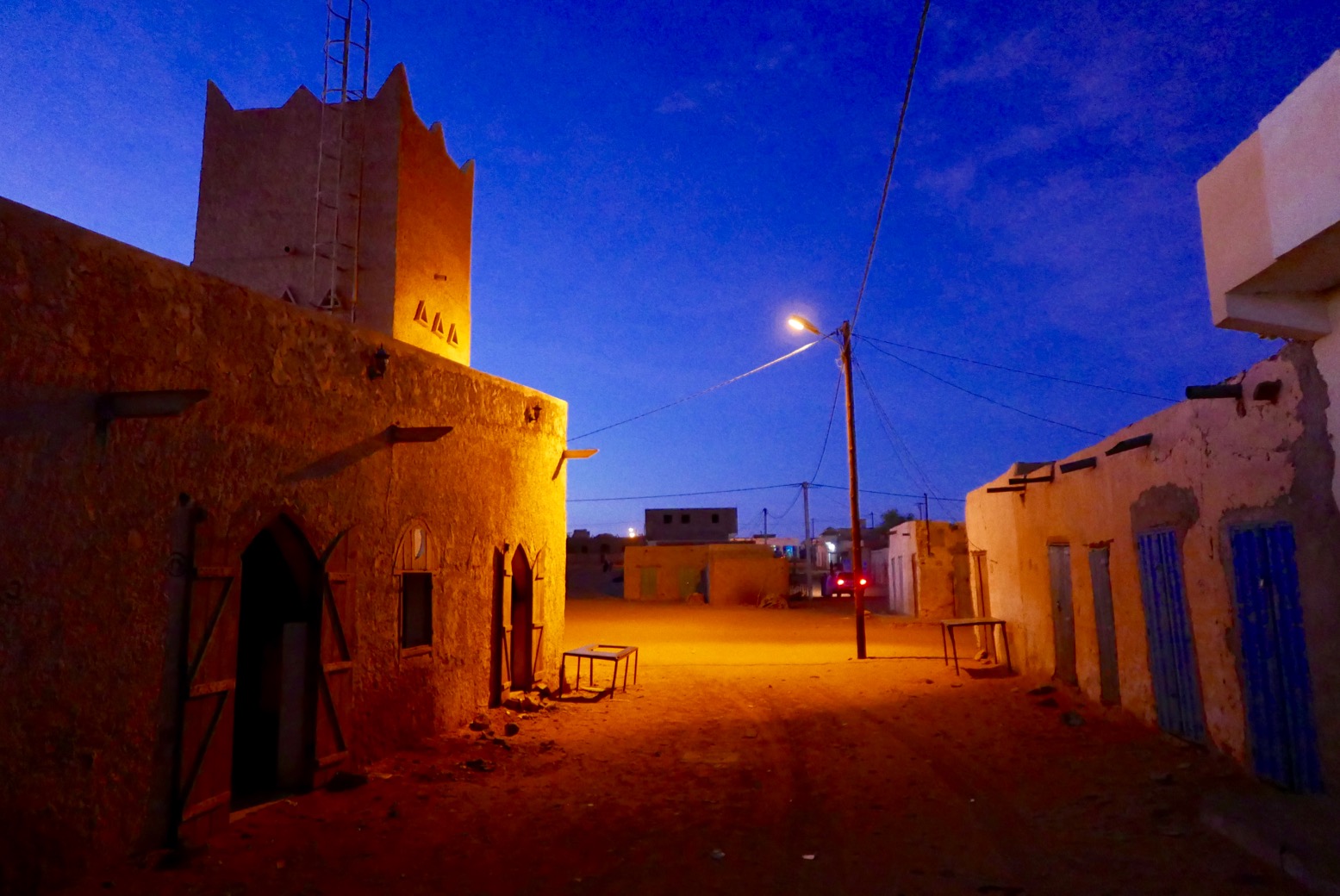
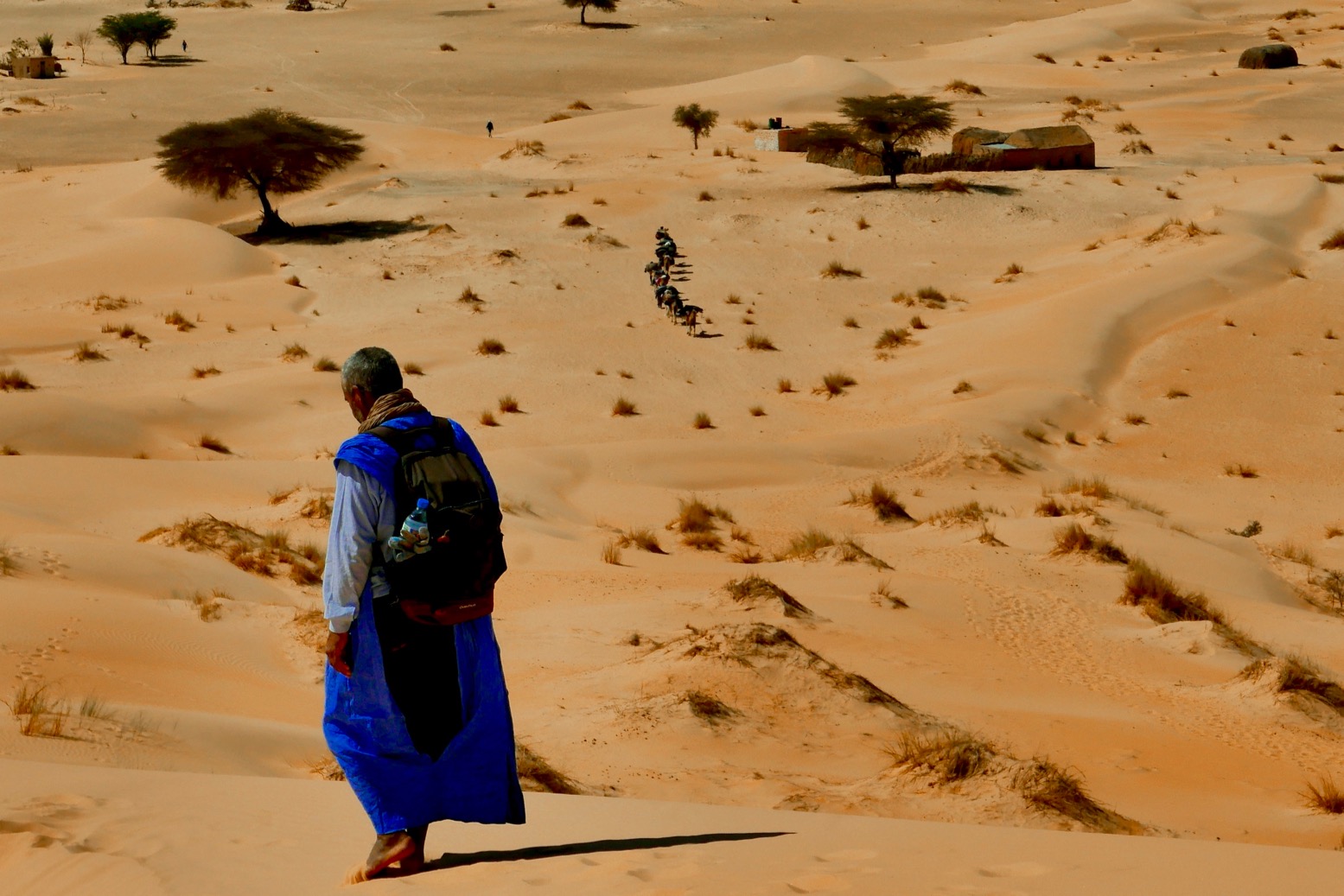
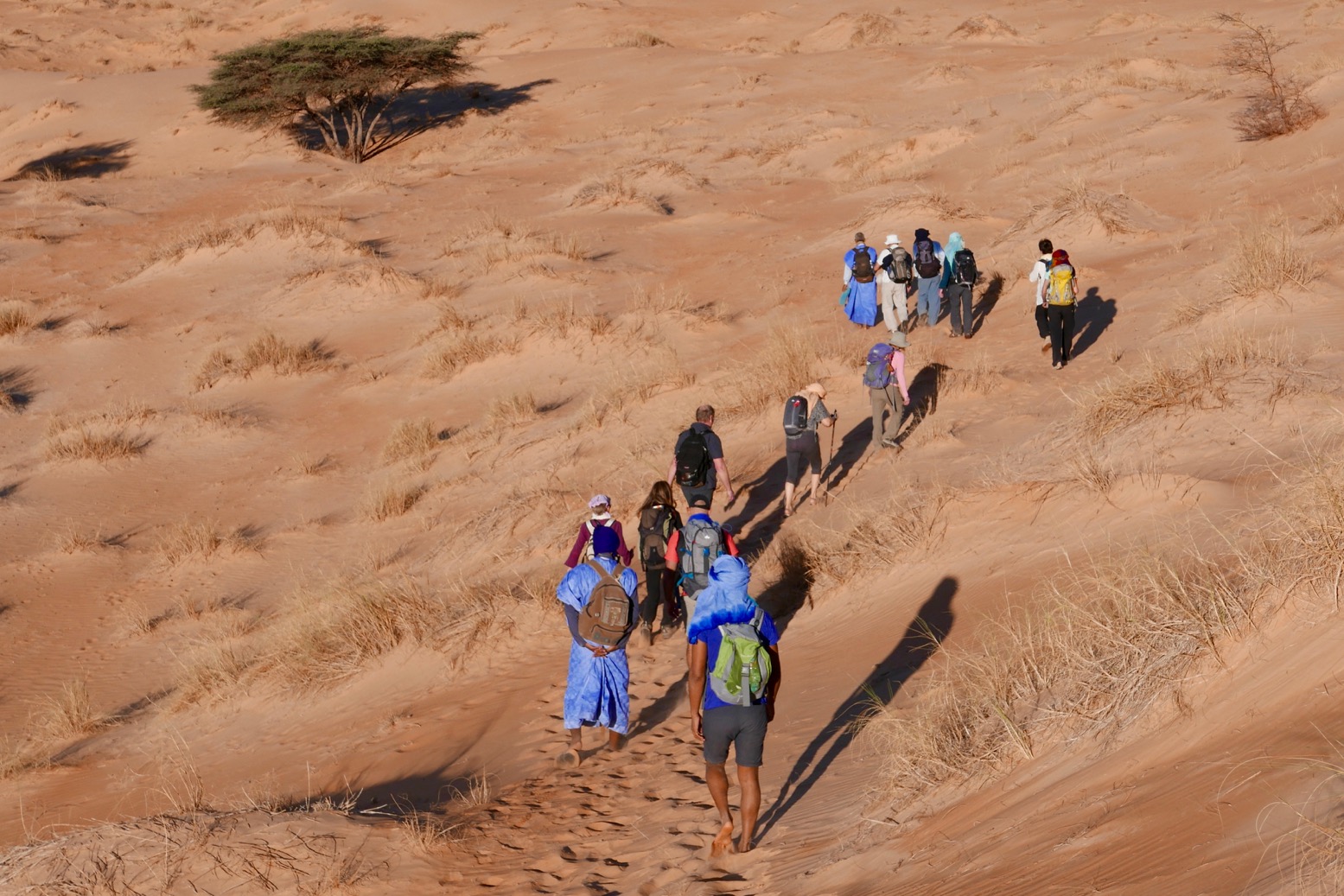
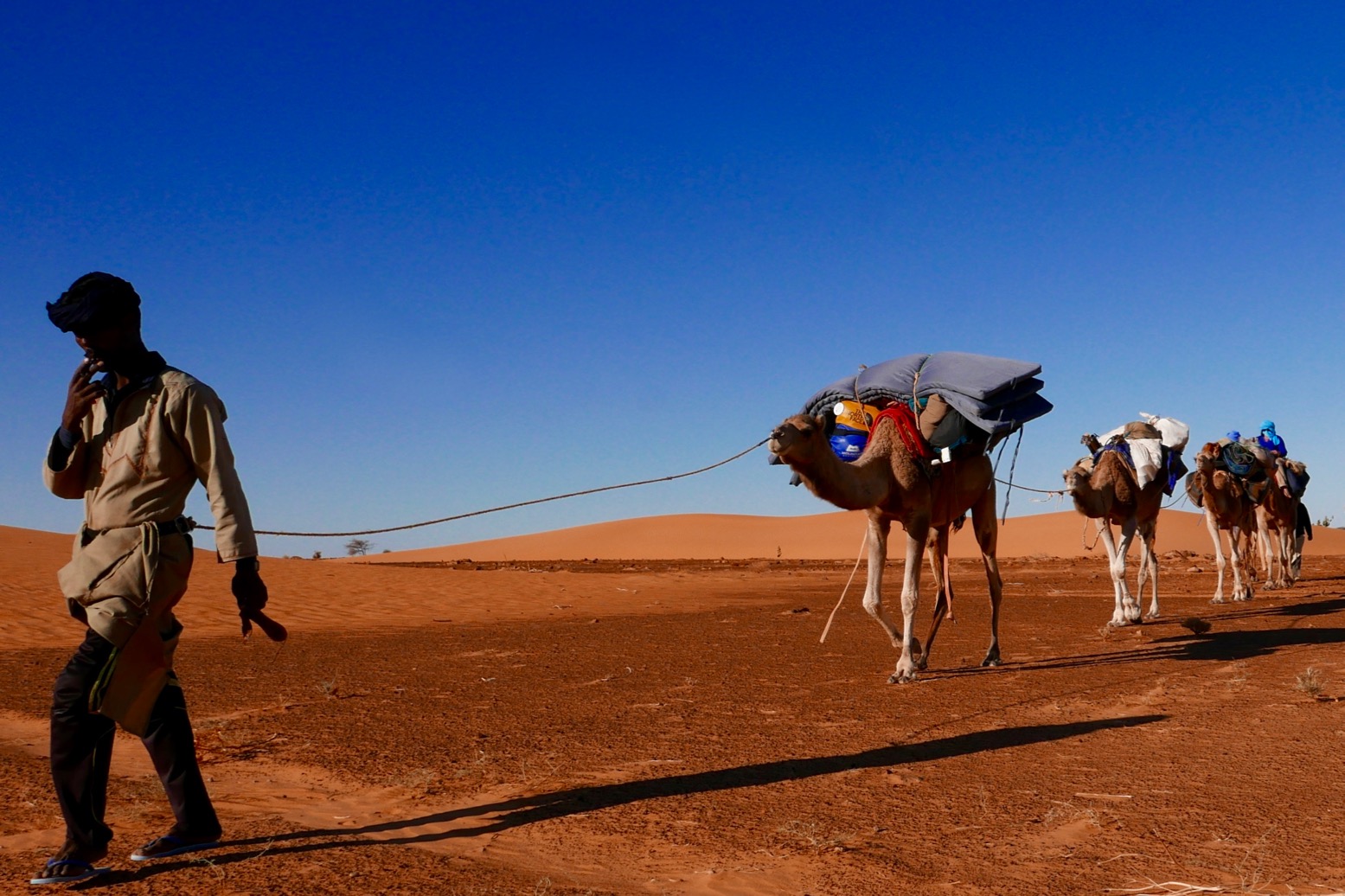
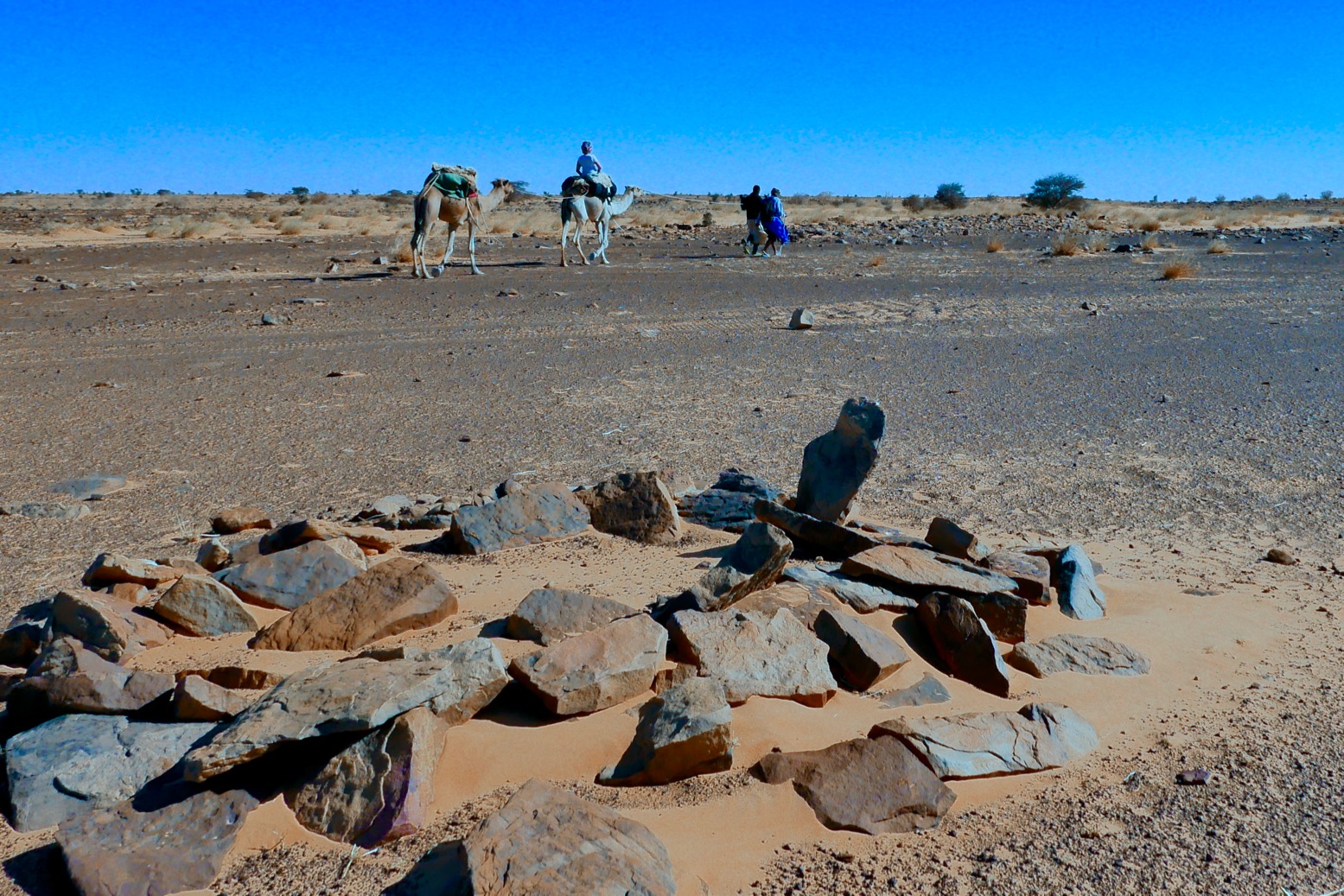
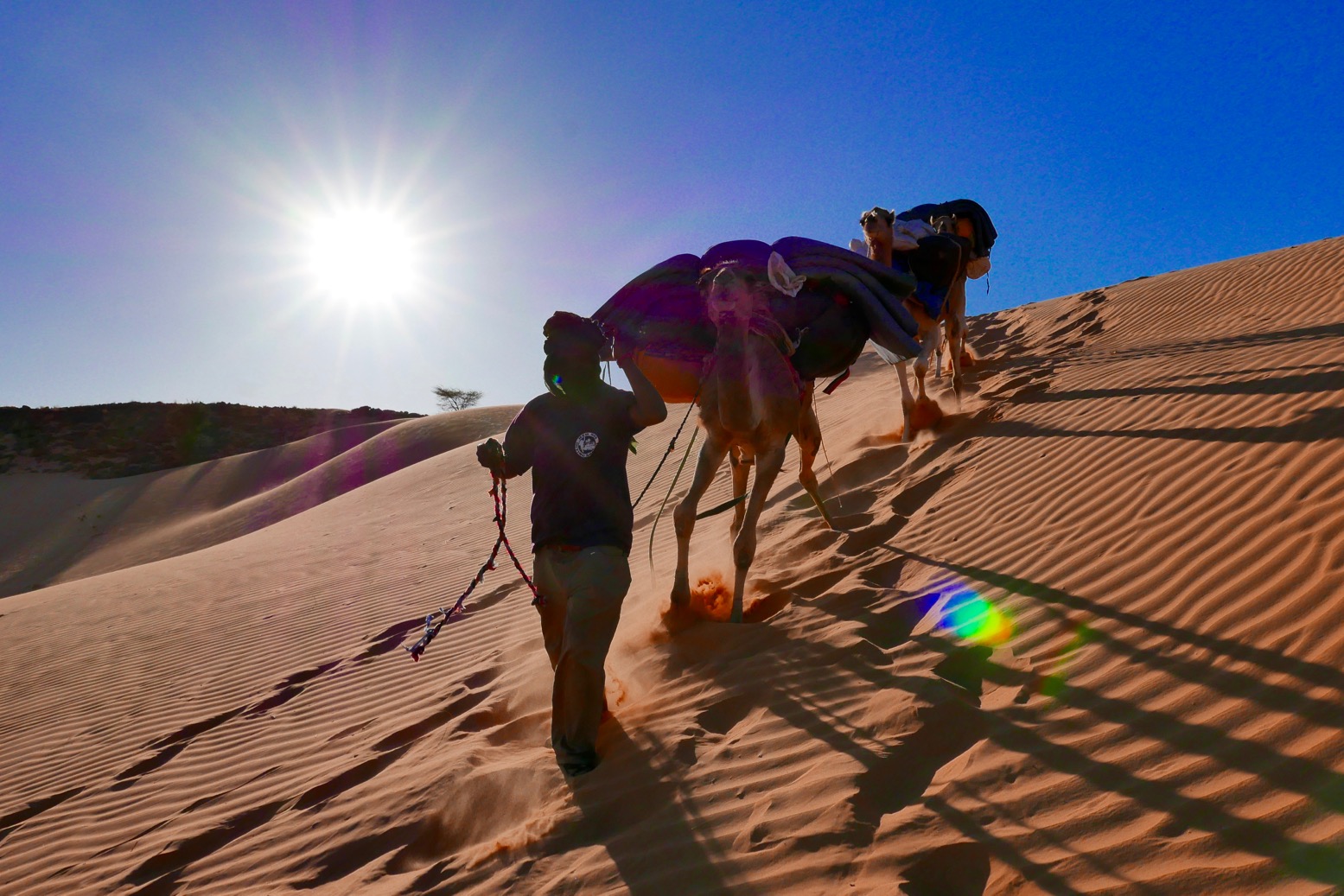
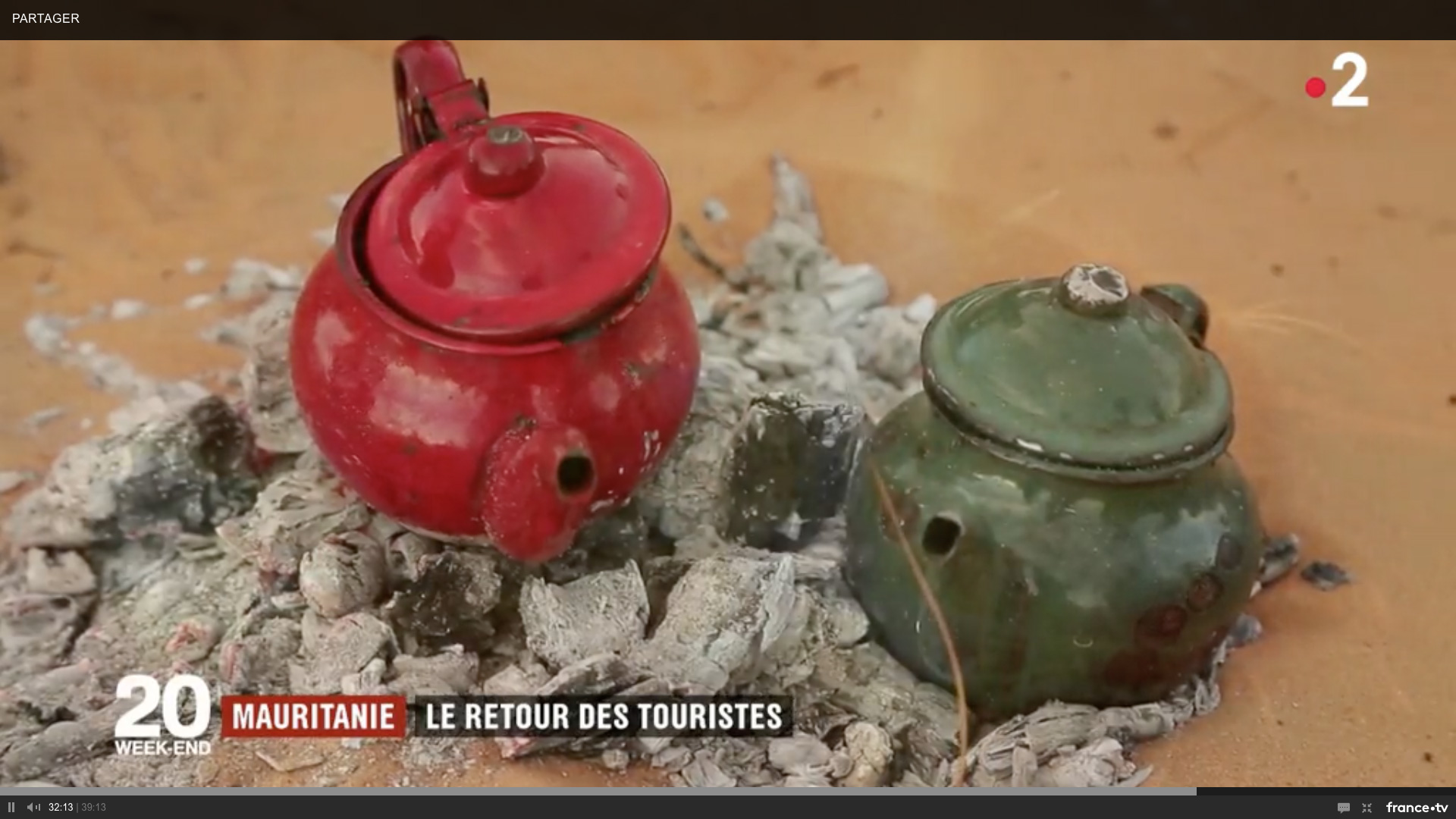
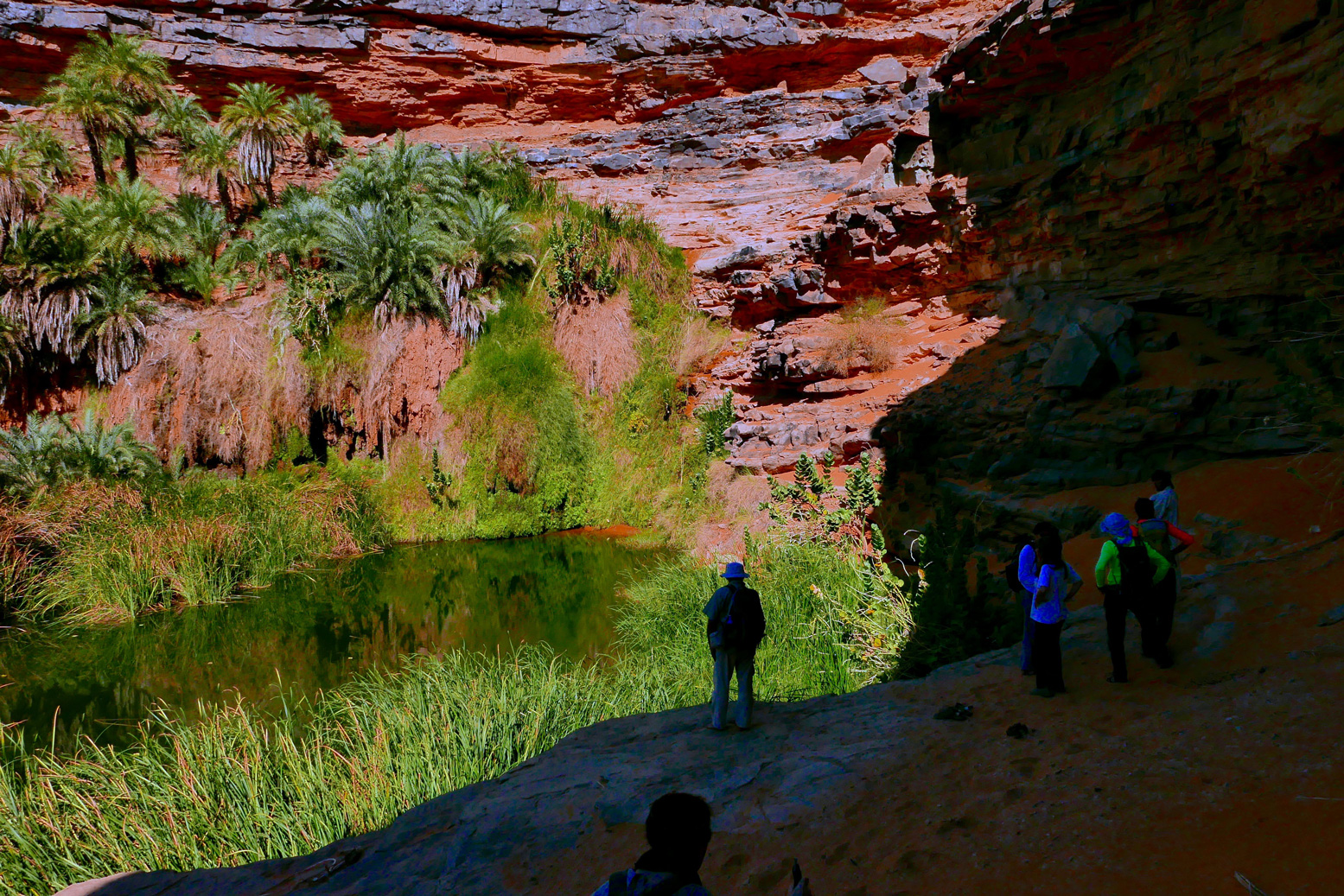
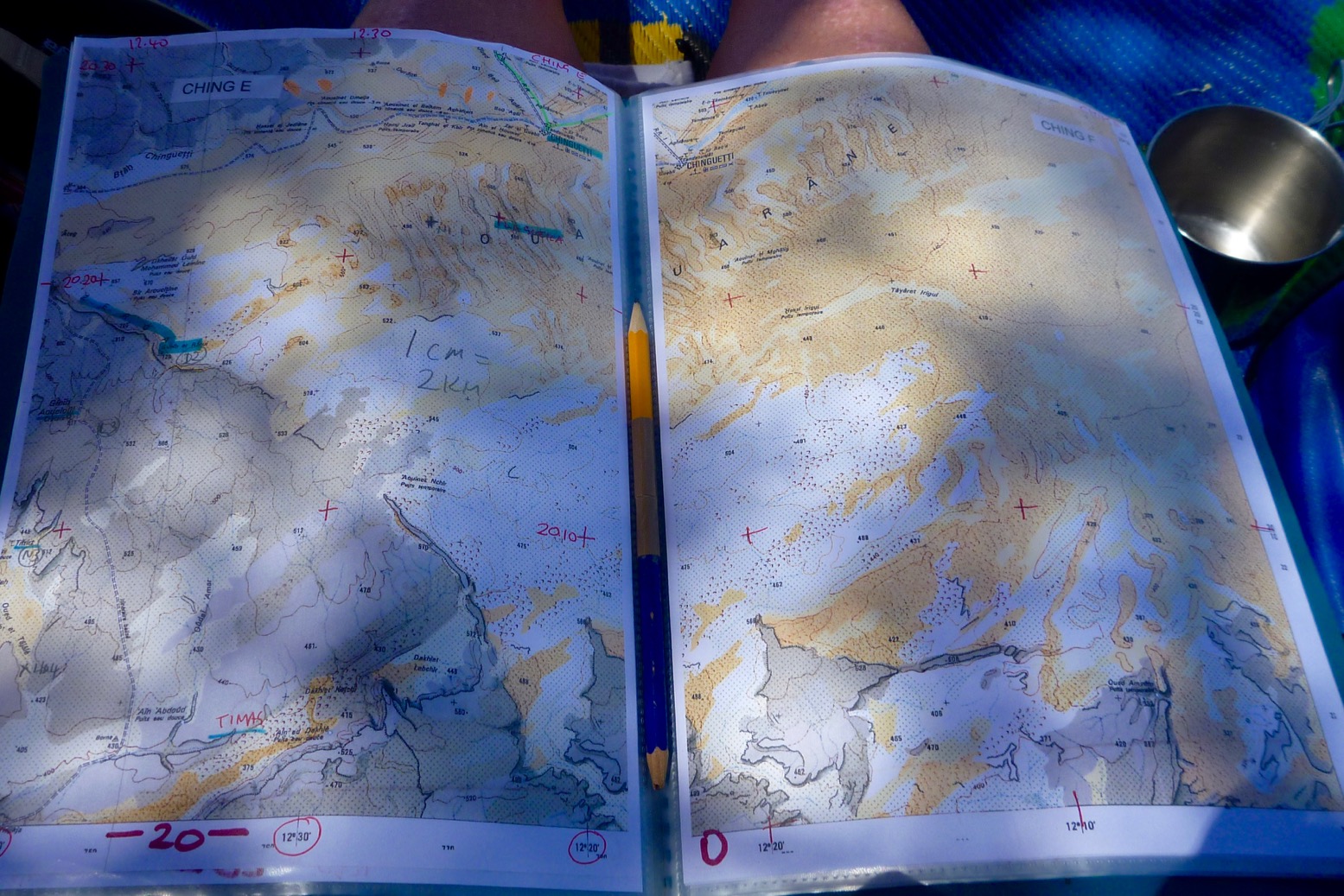
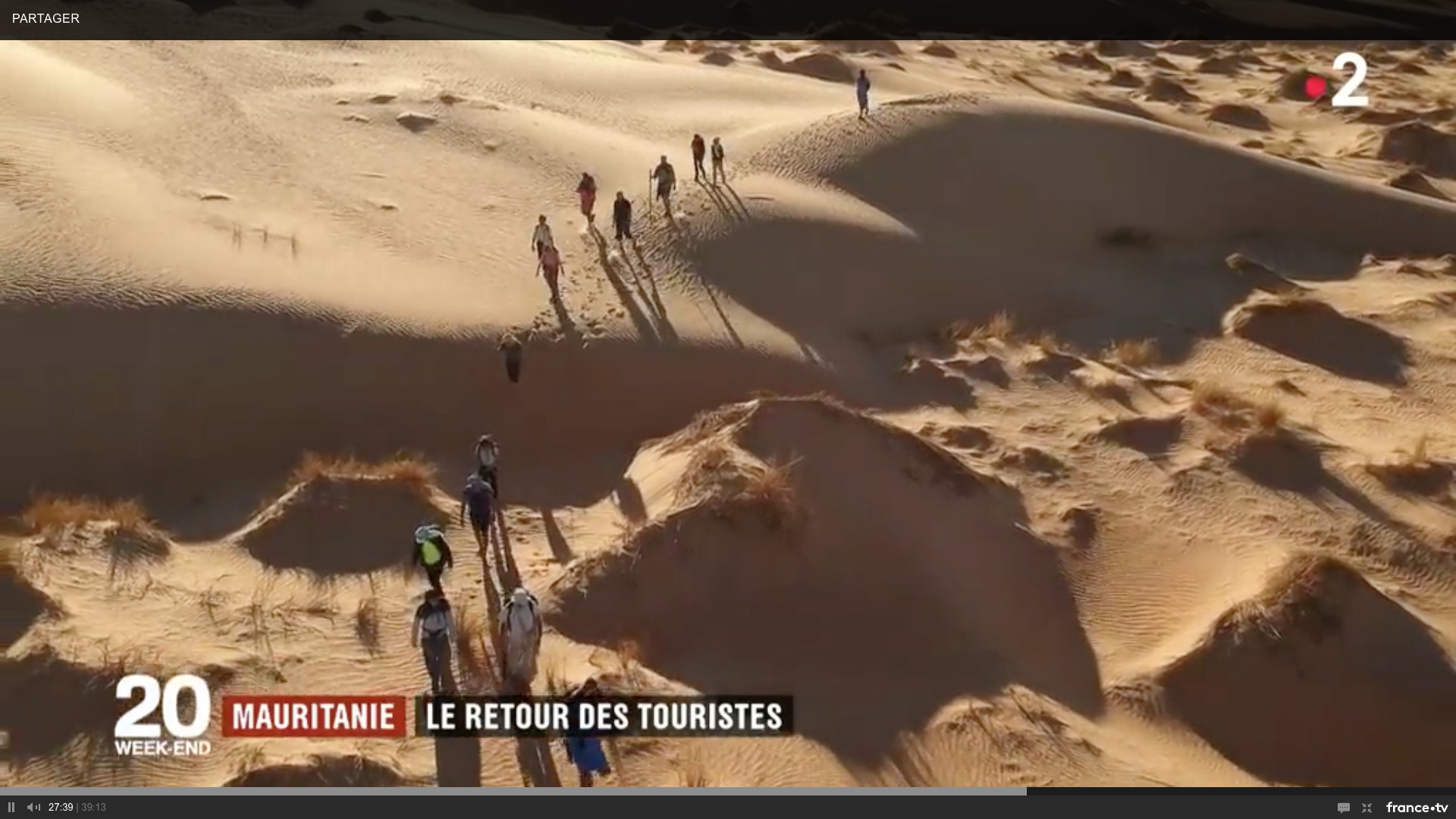
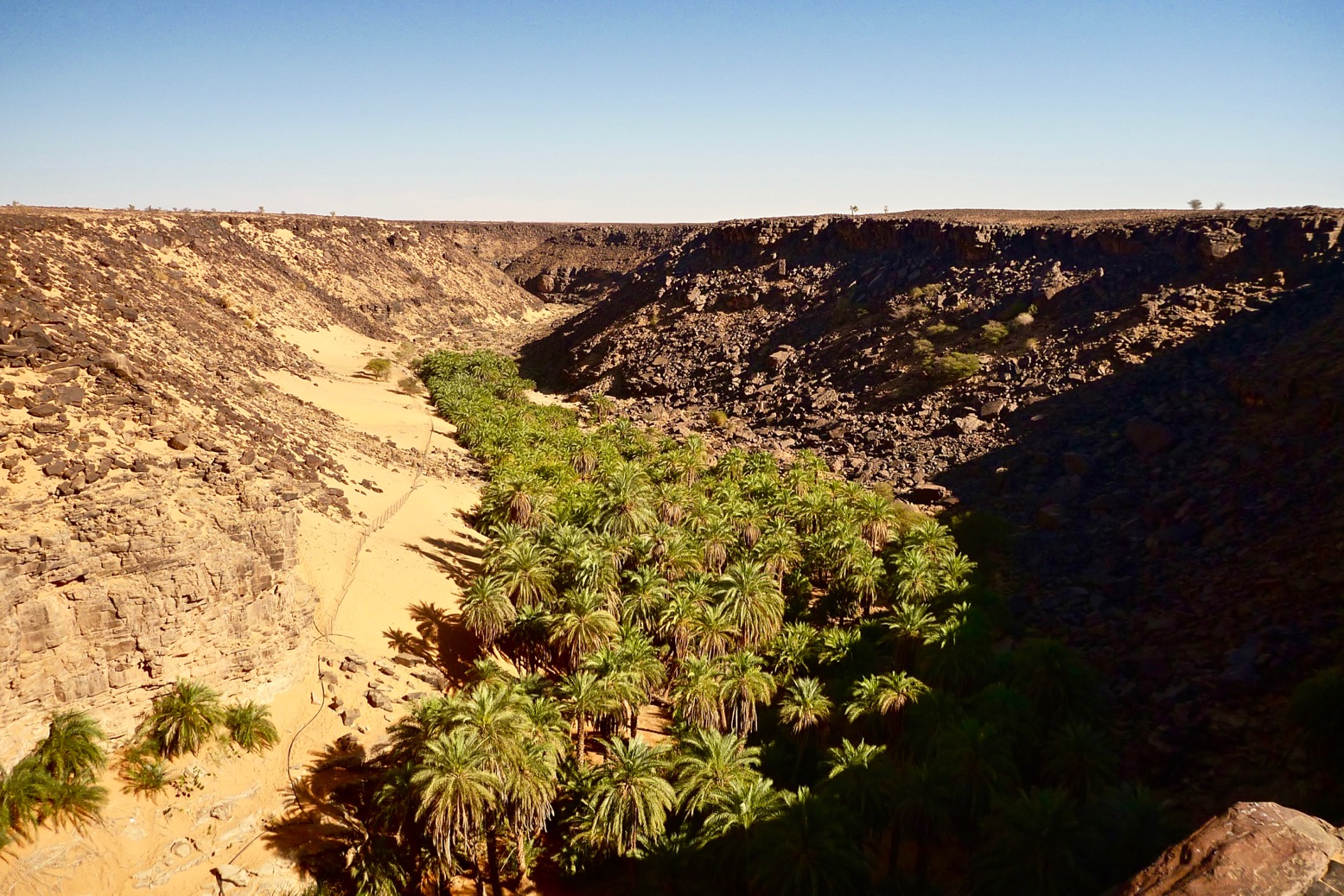
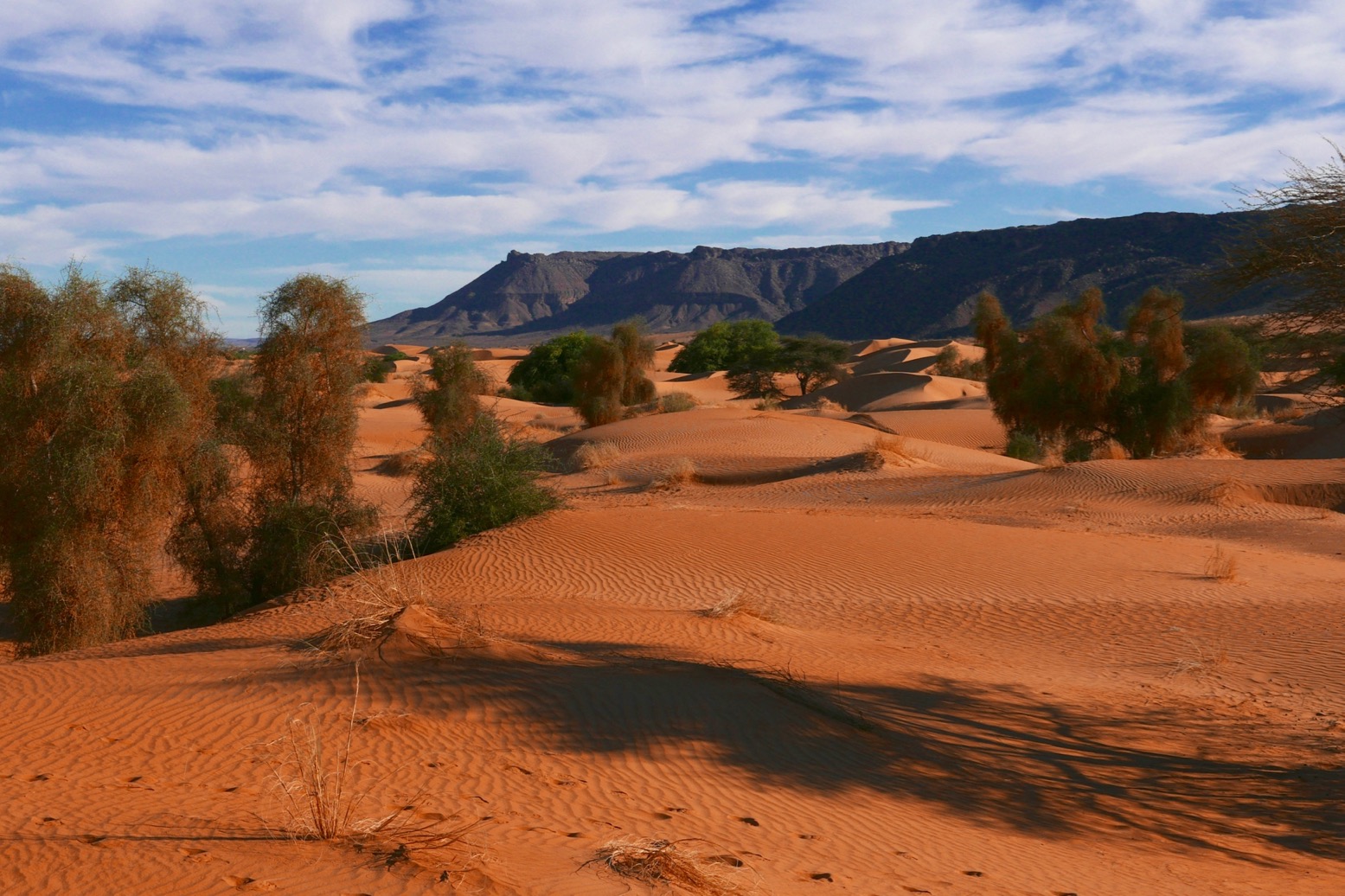
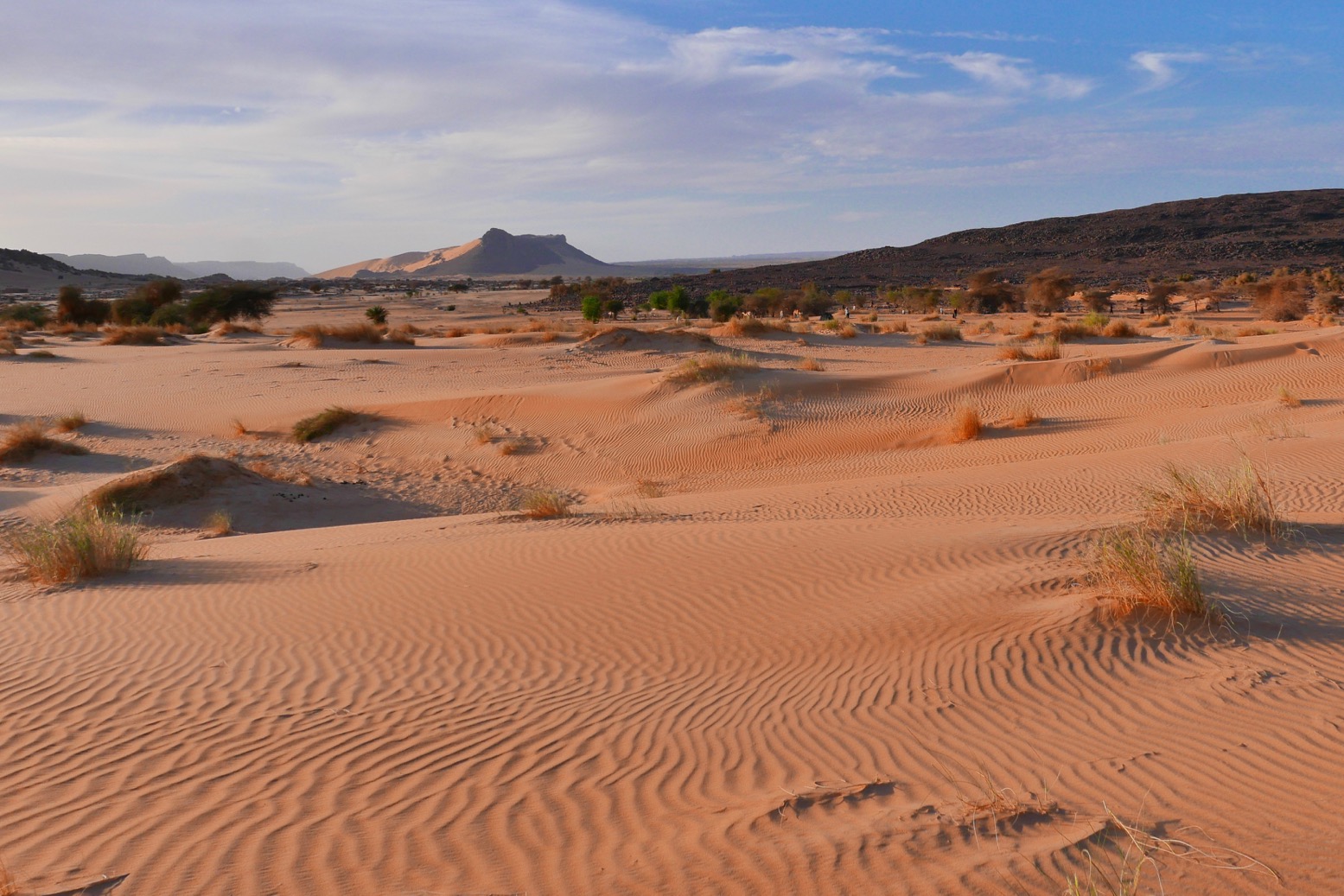
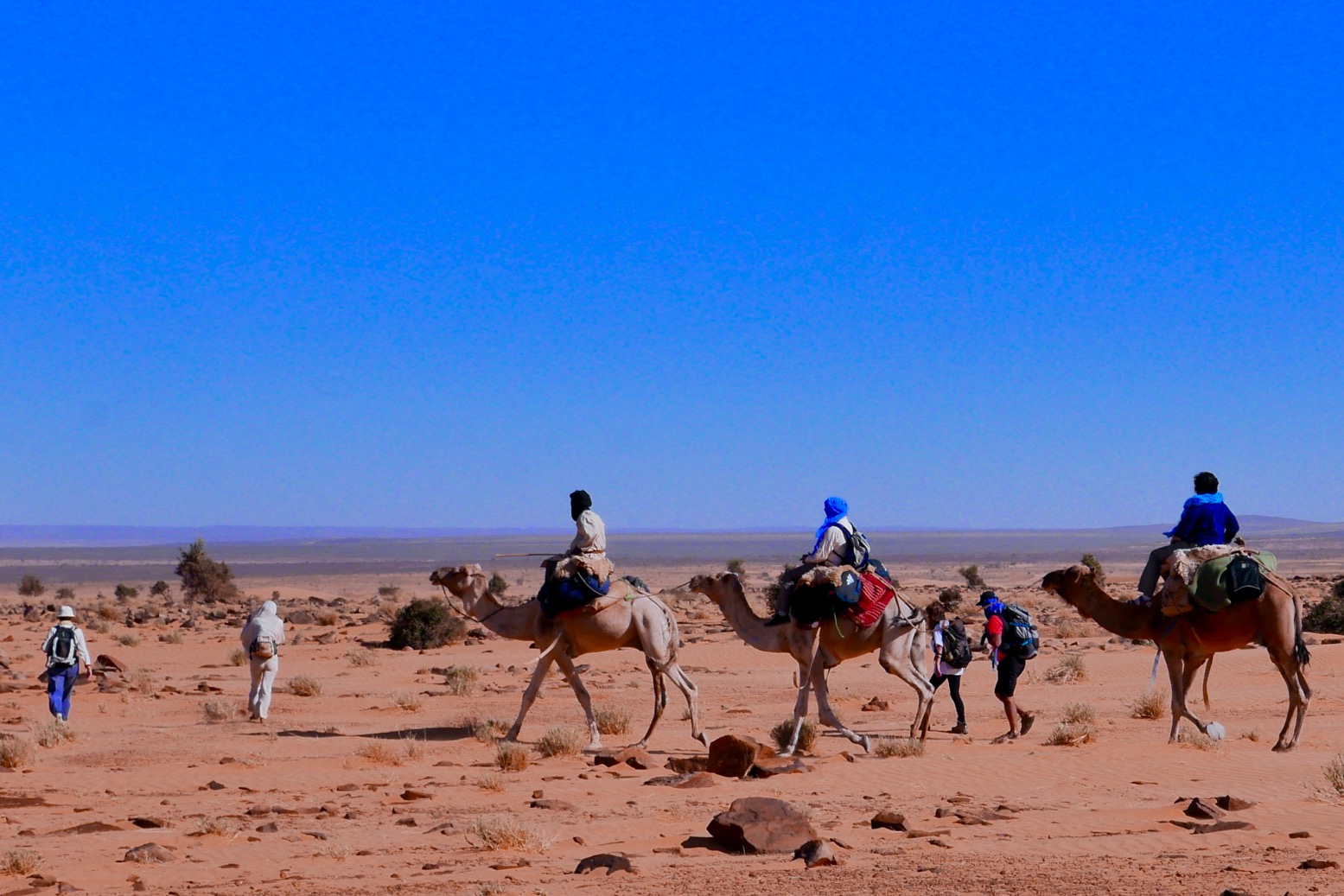
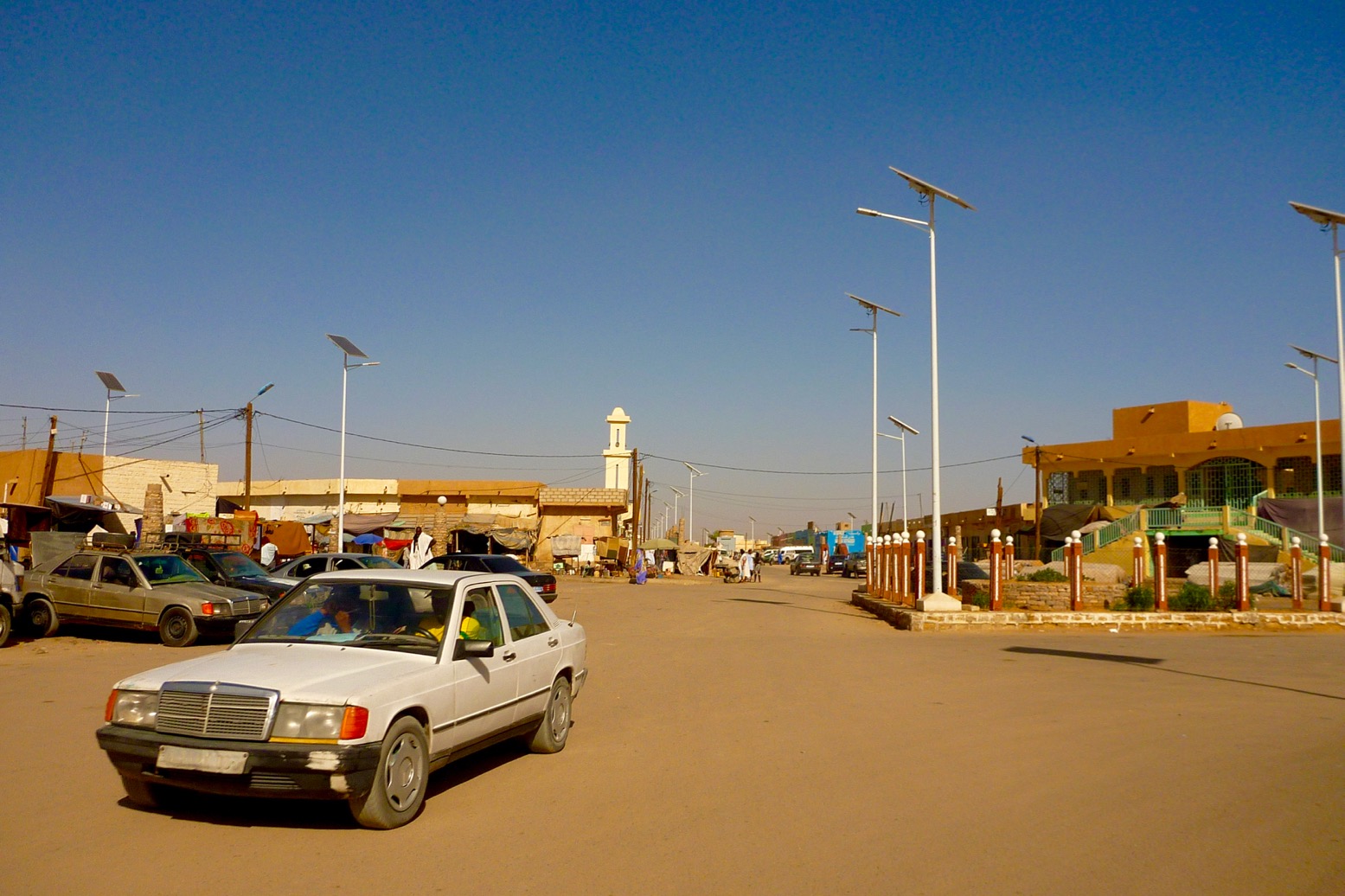
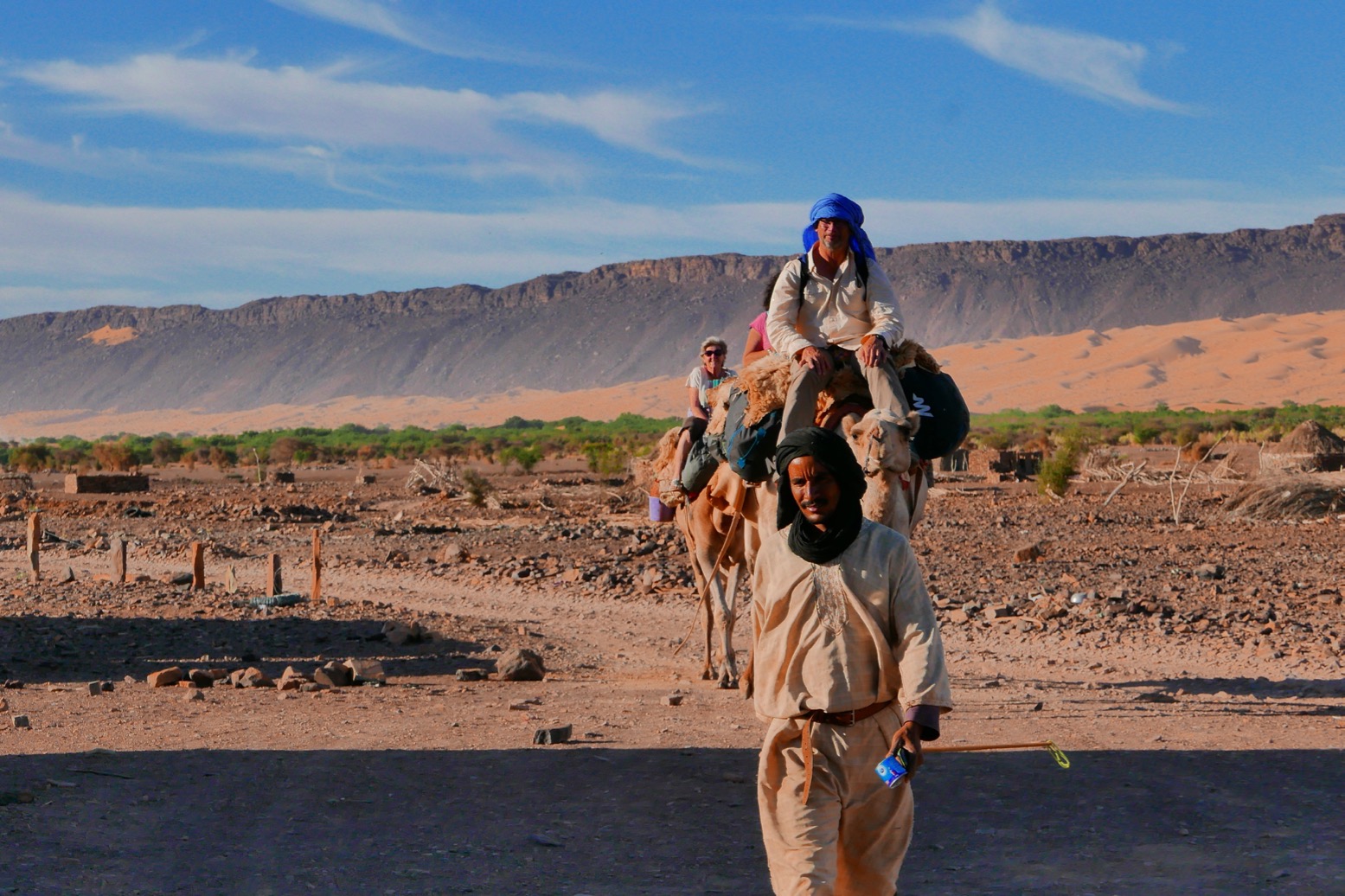
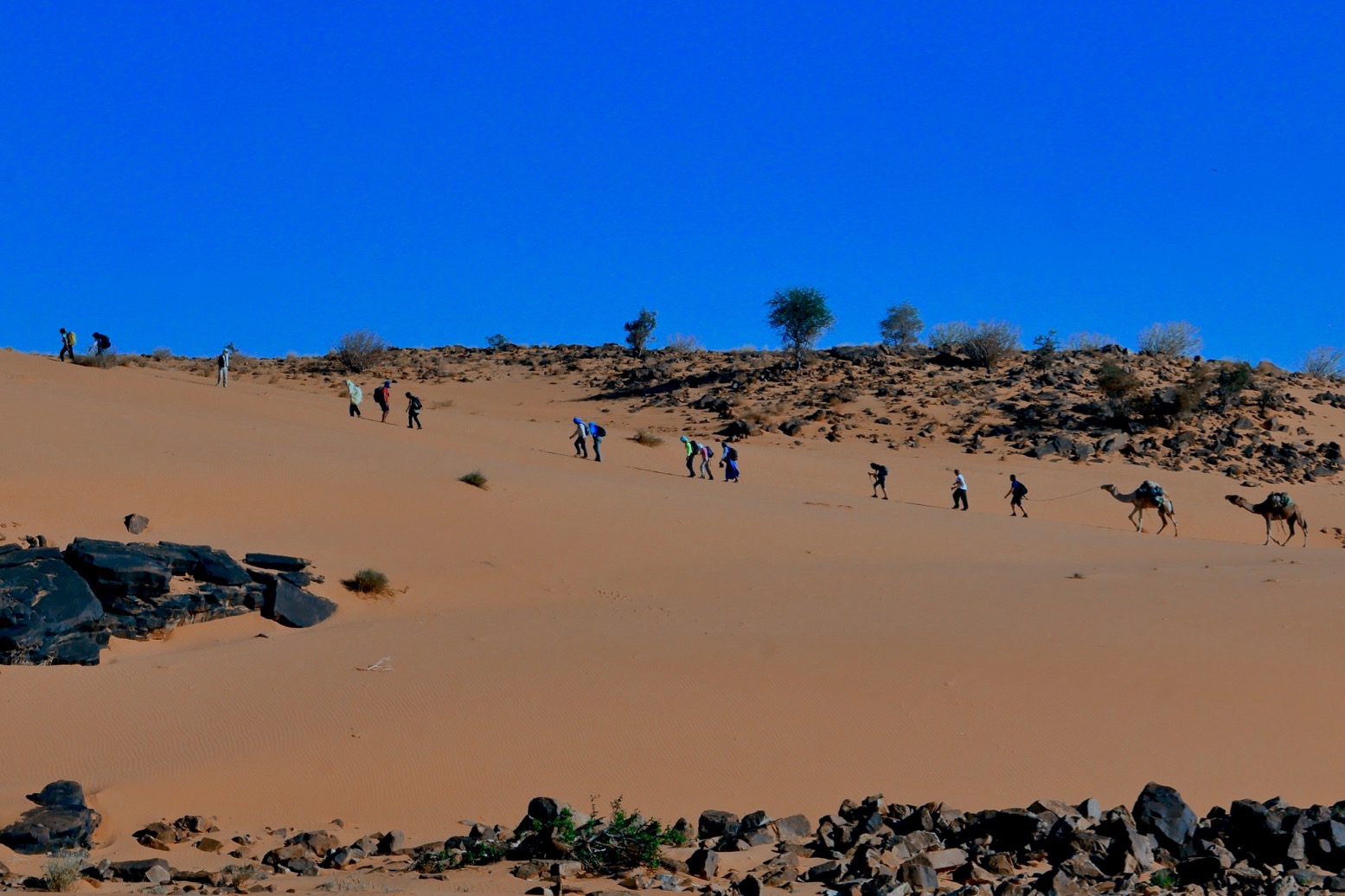
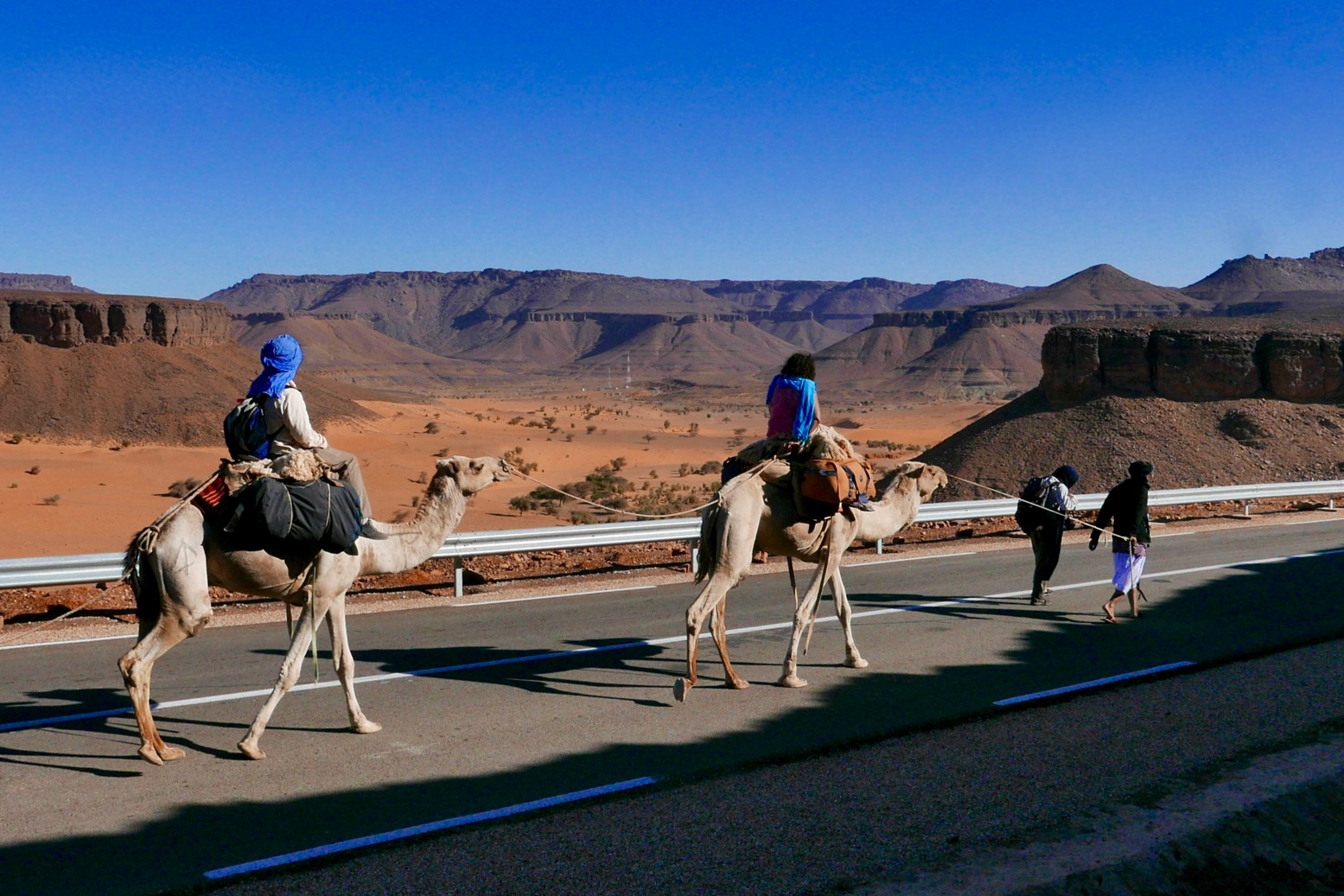
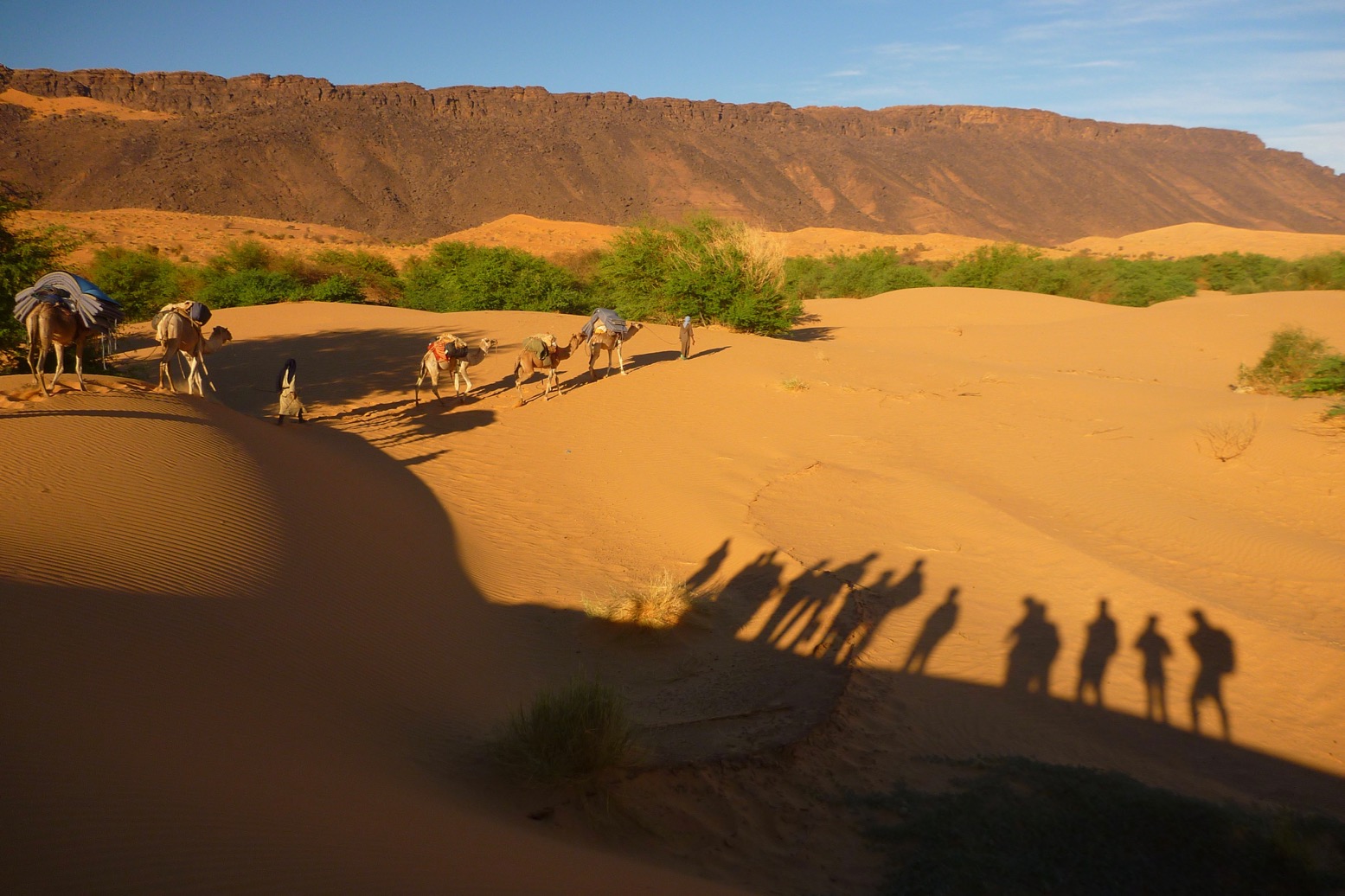
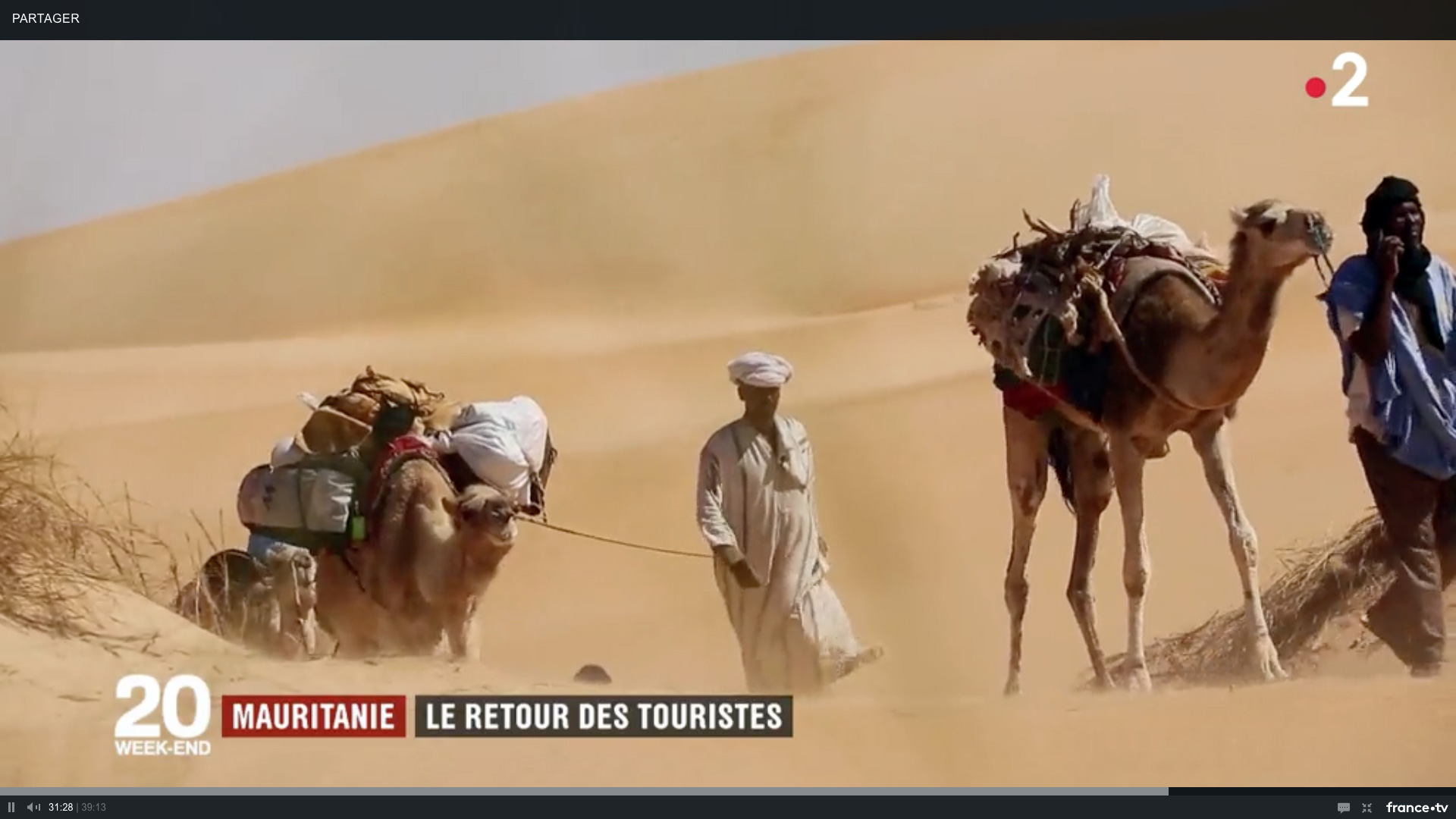
Just back from a two-week camel trek in Mauritania, walking with a mostly French group of 14 from Chinguetti (‘la Sorbonne du desert’) to Terjit (map, left), about 150km. For the first two days over the dunes we were accompanied by a crew filming a report for a French TV station on the return of tourism to Mauritania (see below).
Of course tourism never really stopped for independent travellers (compared to Algeria)  and despite the killings and kidnap
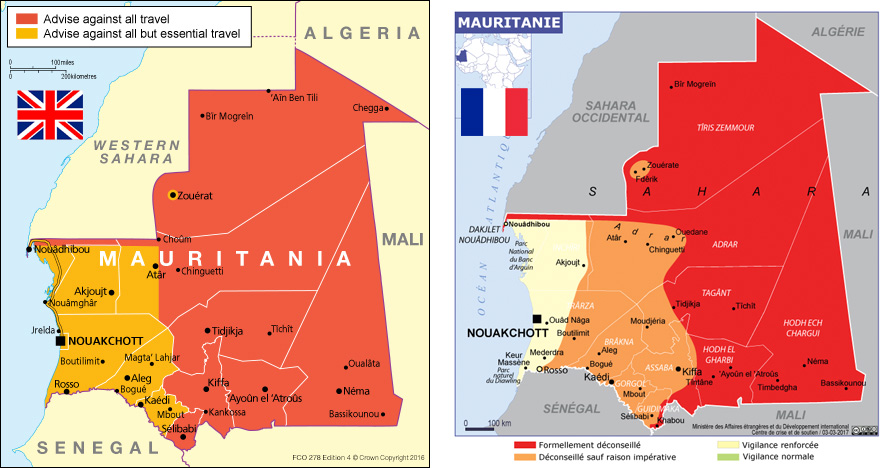
pings of a few years ago (including an entire French family in 2007, right). But the recent resumption of charter flights bringing much bigger groups from Paris directly to Atar (not via Nouakchott) was something for local tour operators to celebrate. It is probably the result of revised travel advice issued by the French Ministry of Foreign Affairs (left). You’ll see they critically (and imo, correctly) extend the ‘travel if you must’ orange zone further east compared to the British FCO. It makes all the difference for local tourism because in that orange zone most of what most people want to see in Mauritania is easily accessible. Our weekly plane chartered by Le Point (with seats sold on to other operators) was packed out.
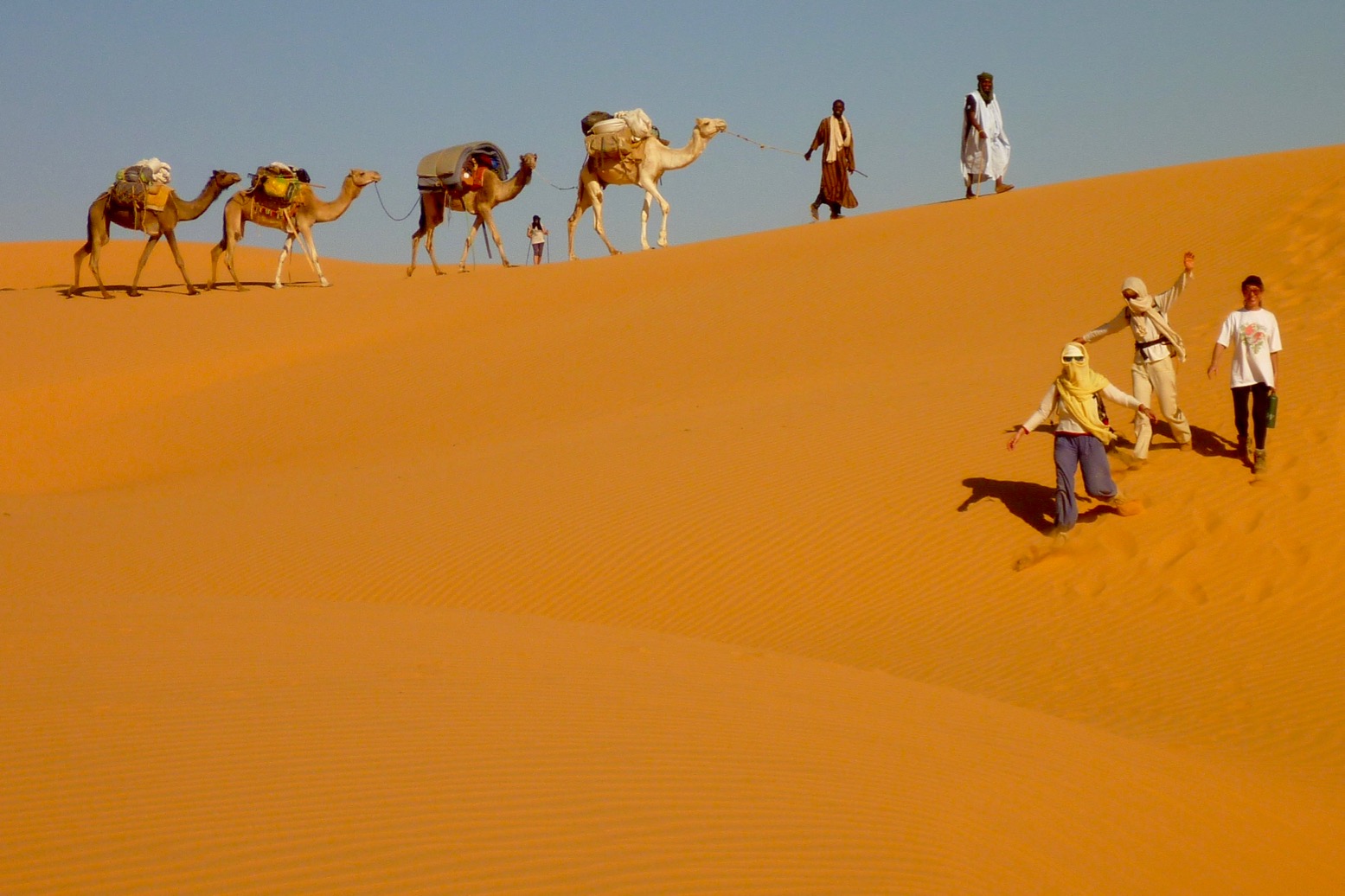
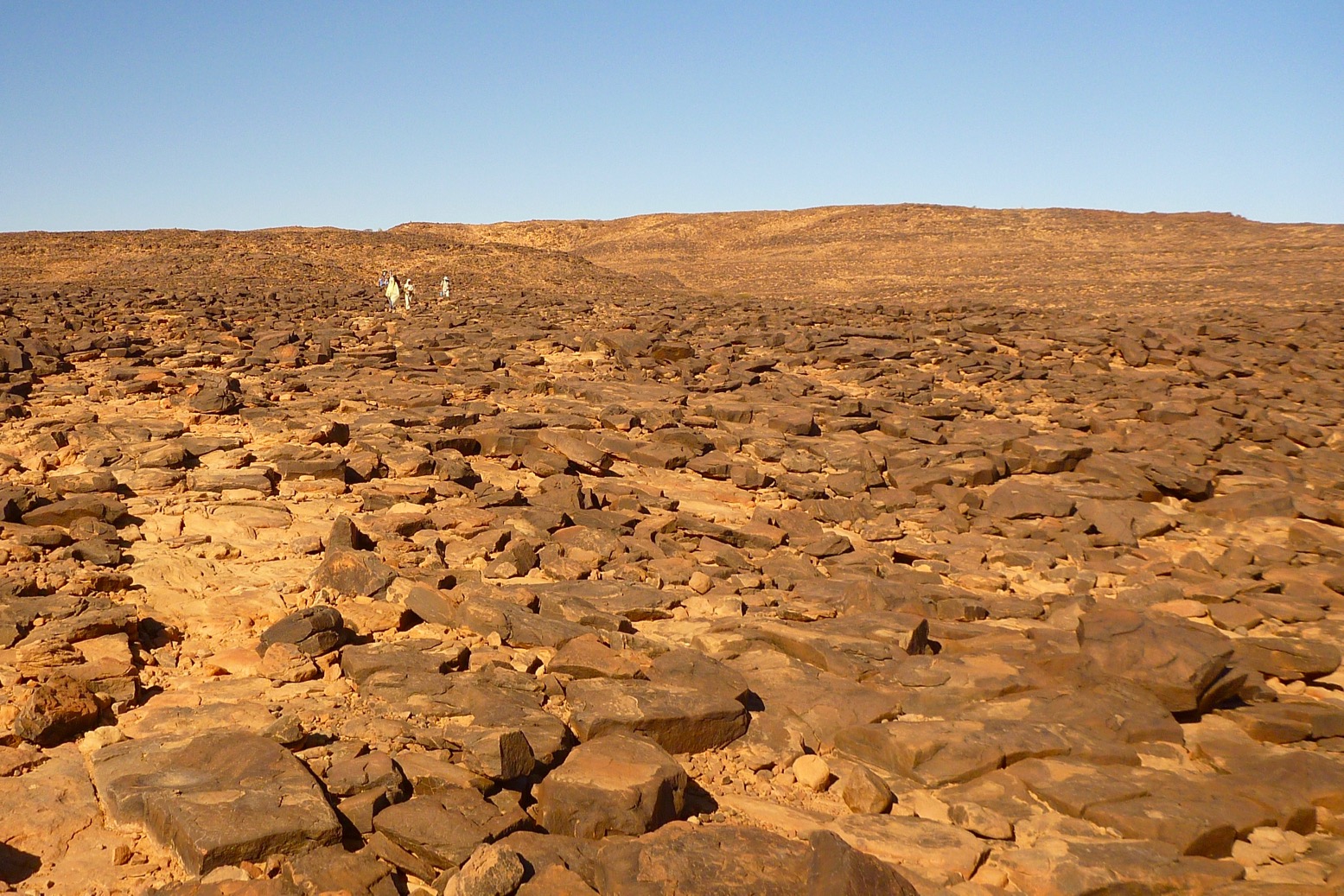
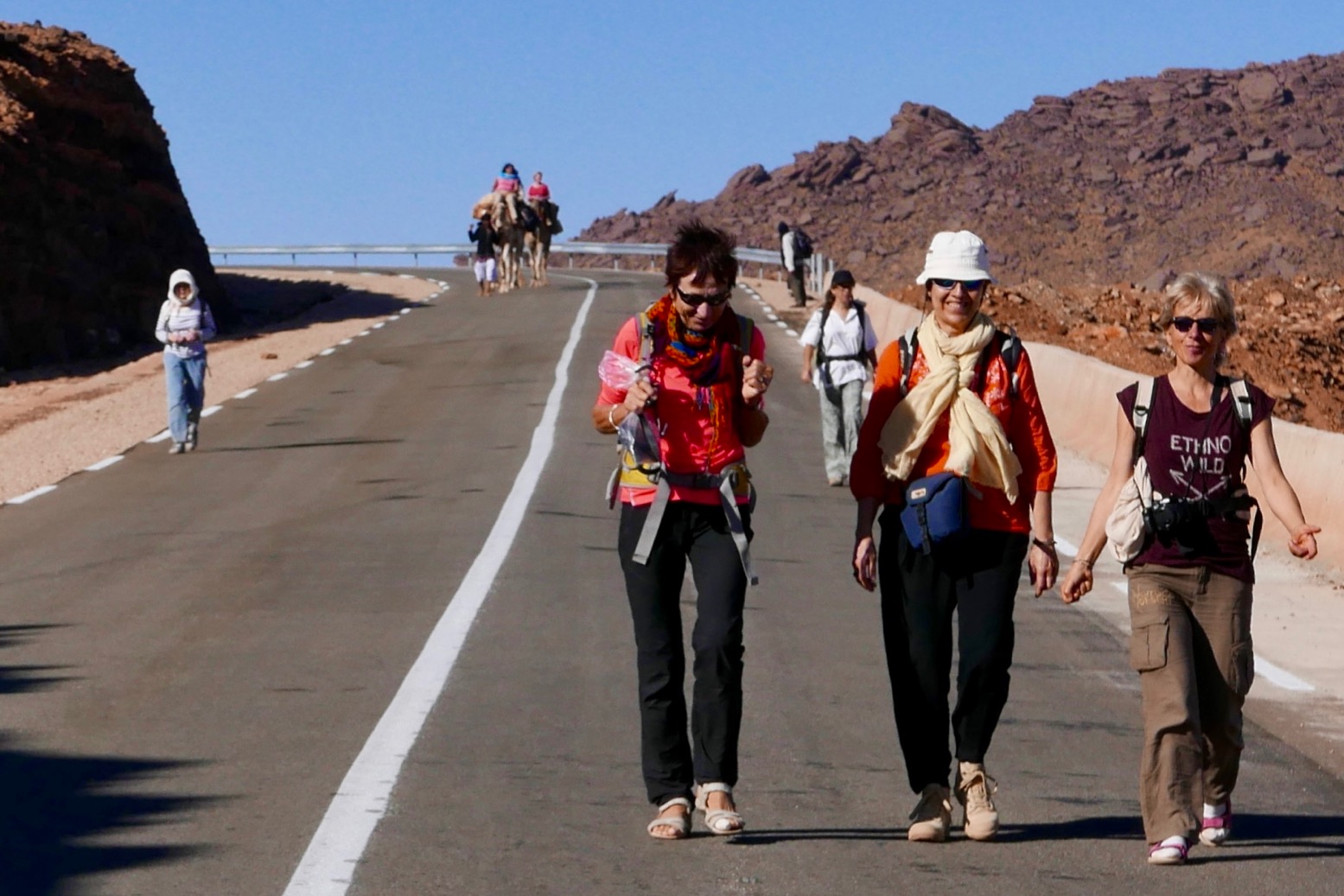
The Vallee Blanche is the longest trek Le Point offer, but in terms of landscape and pace, maybe not their best depending on your previous experience. Horror des horreurs, we even walked along a road for a bit. Our guide recommended the 8-day Amatlich Erg walk – fewer interminable rocky plateaux he said, but then that’s all part of the deal in the desert. Wherever you go, it’s a variety of sand, rock and passing landforms that’s the key to a satisfying experience. I got the feeling that by day 8 or 9 most were counting the days, partly because the 25km/day pace had dropped by over 50% (as planned) by which time the 6-hour lunch breaks were exceeding walking times.
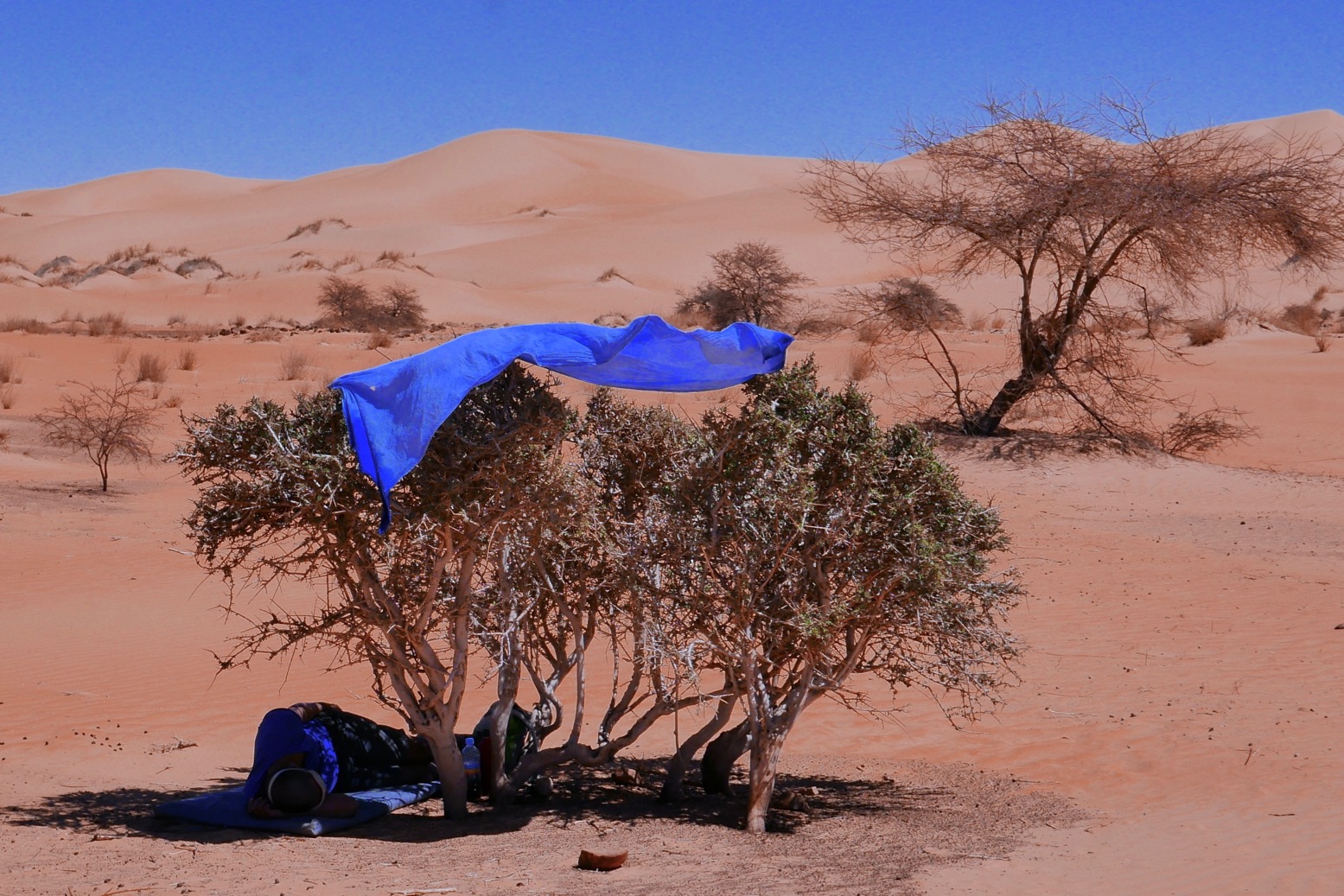
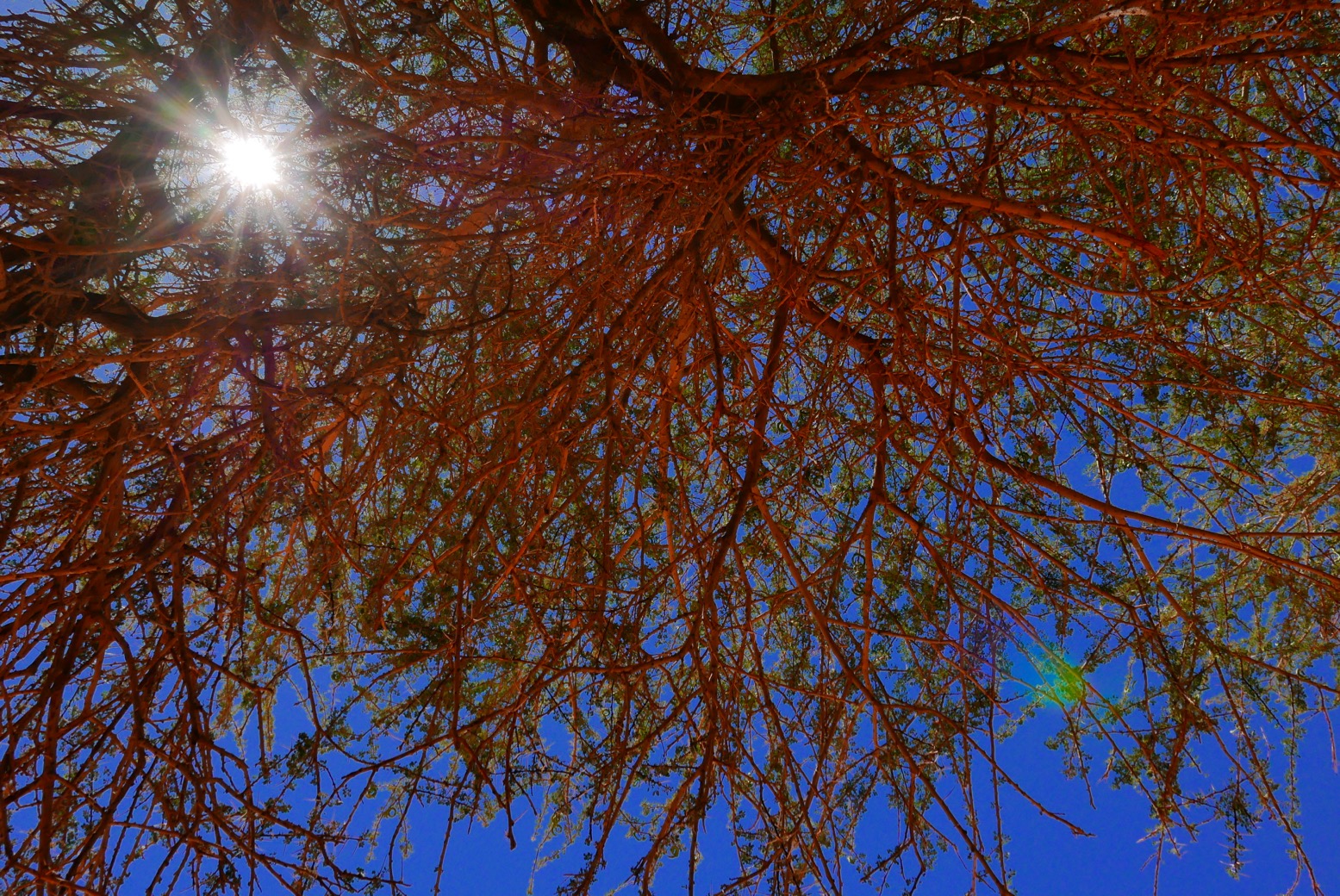
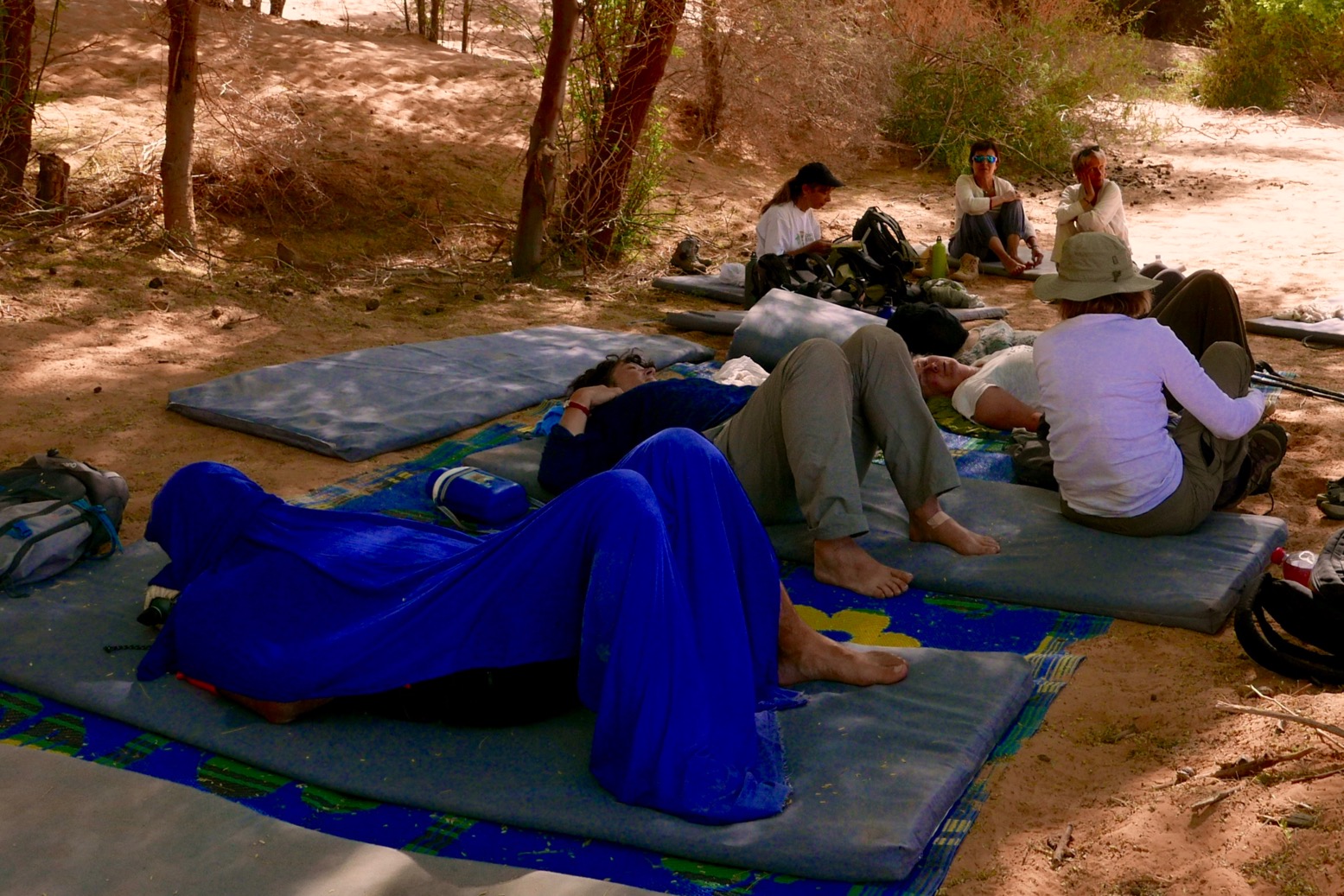
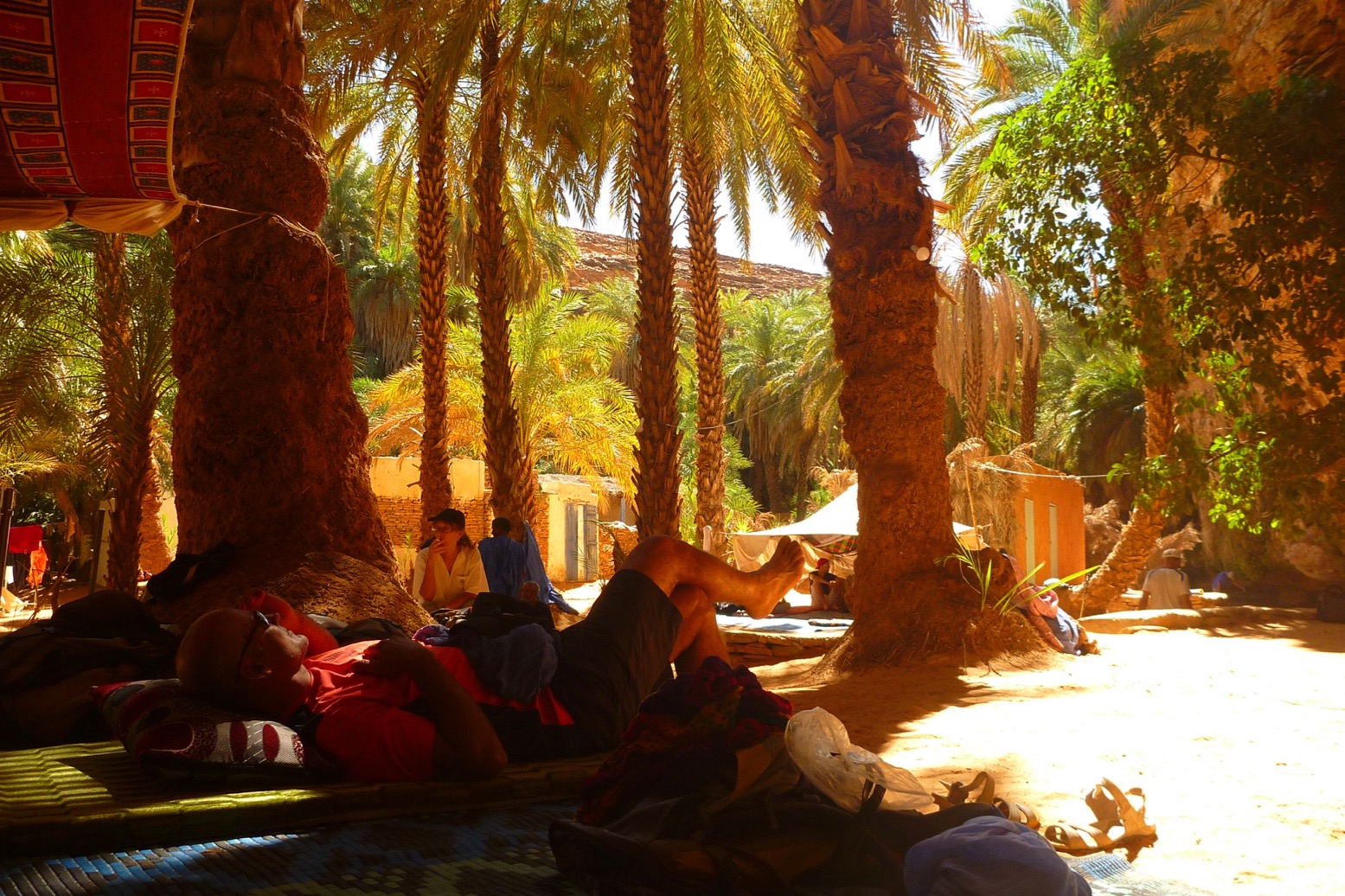
The fact it was unseasonably hot, with temperatures of over 40°C in the shade, may have tempered enthusiasm, but actually the morale and ambience of our group was very good; most had done previous tours with Le Point, including Chad which can be a tougher call. The Adrar at this time is usually in the low 30s – as it was on our very last day to Terjit, but most days it really was too hard to move or even stay awake for long, while lying under an acacia between noon and 3pm.
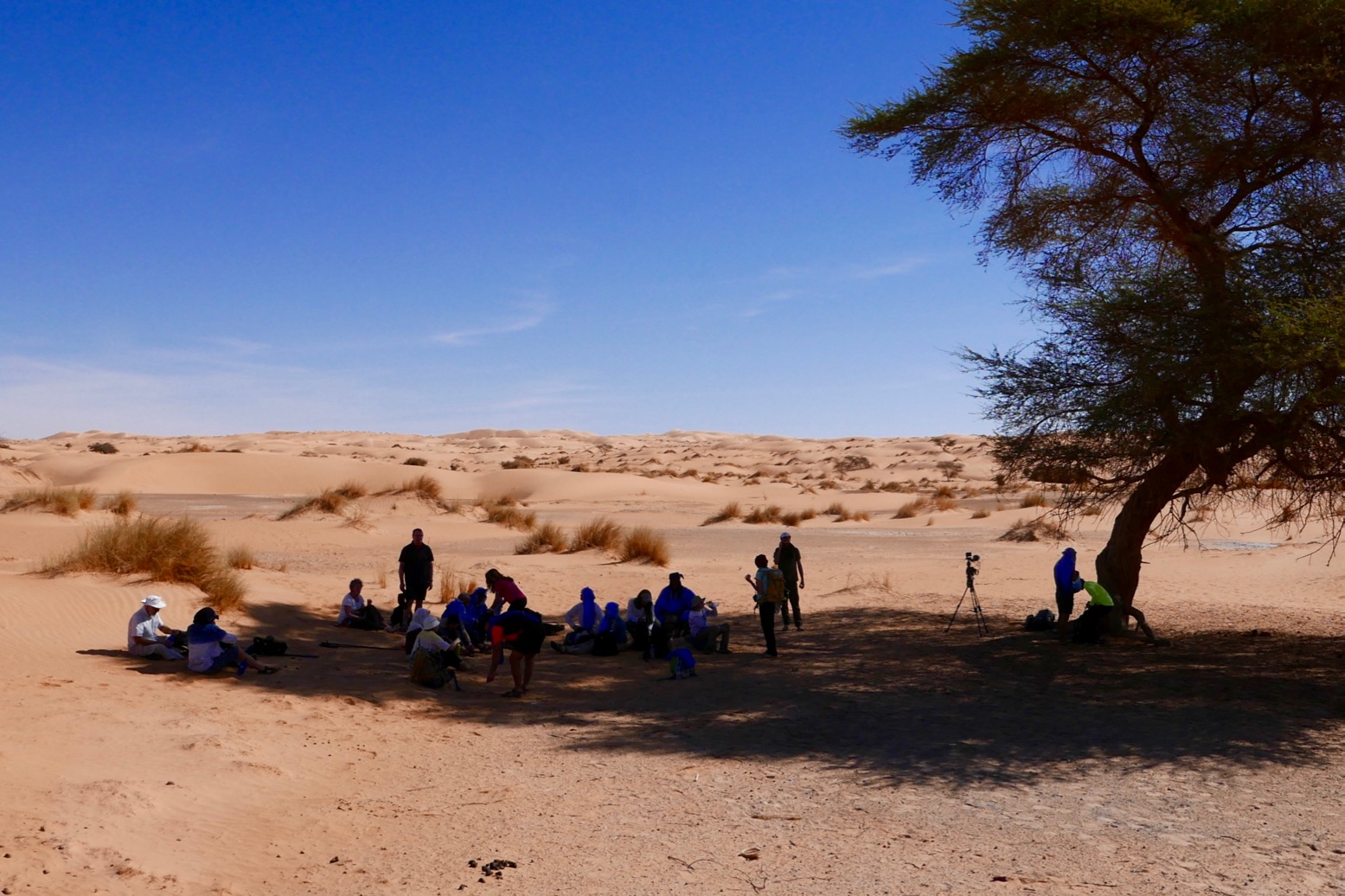
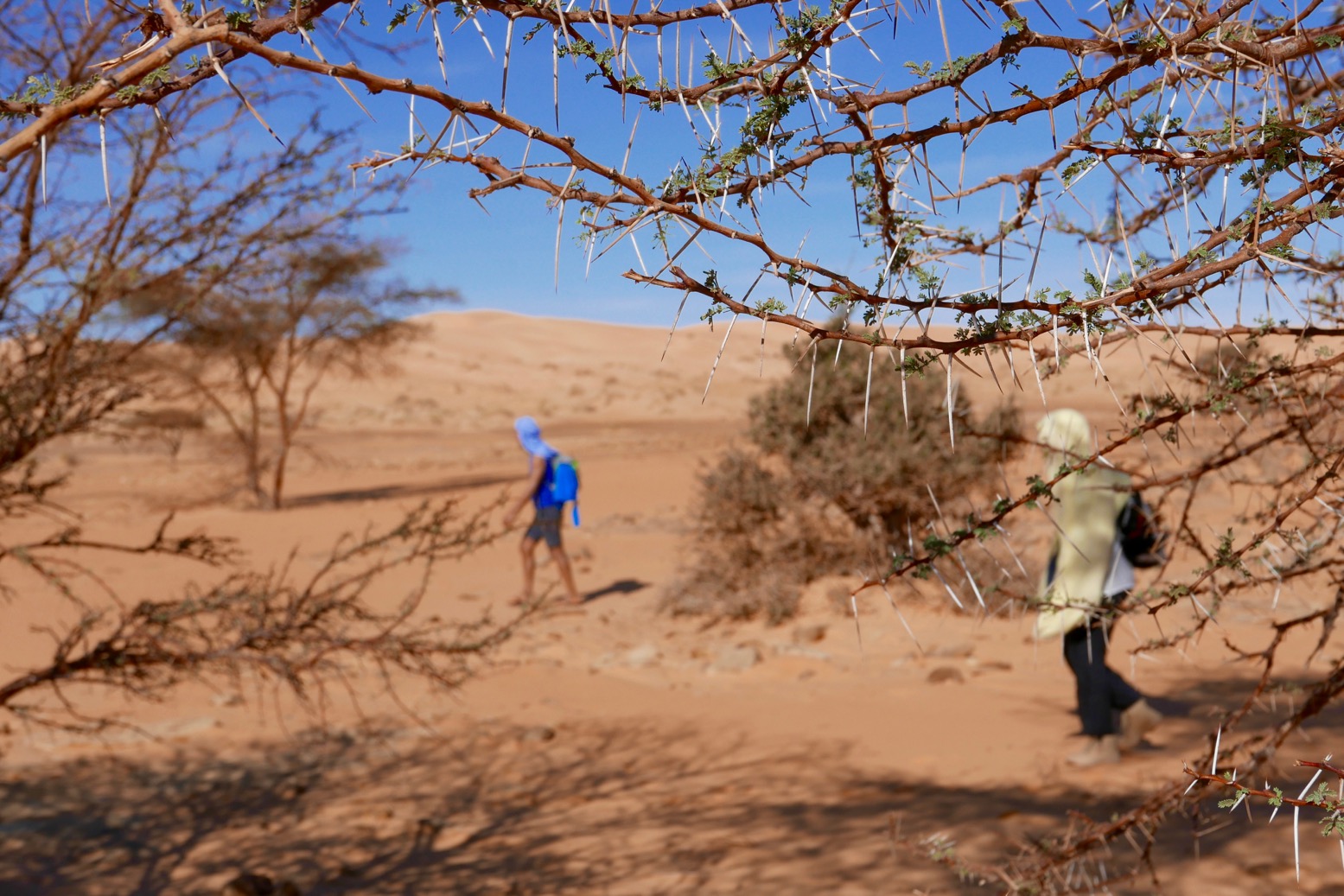
The plus side was that being on the trail before dawn was great fun, although I’m not sure what shape I’d have been in had we walked 25km/day for the full two weeks. So in fact the long siestas were the right thing to do. We’re not all huddled round that meagre shade tree on the left just because someone has cracked open their stash of Haribo Yellow Belly Jelly Snakes. We’re gagging to cool down a bit. Much depends on the terrain of course – is dodging trackless rubble worse than sinking into ankle-deep sand? They’re about the same once you add your daily endowment of aches, pains and cumulative fatigue.
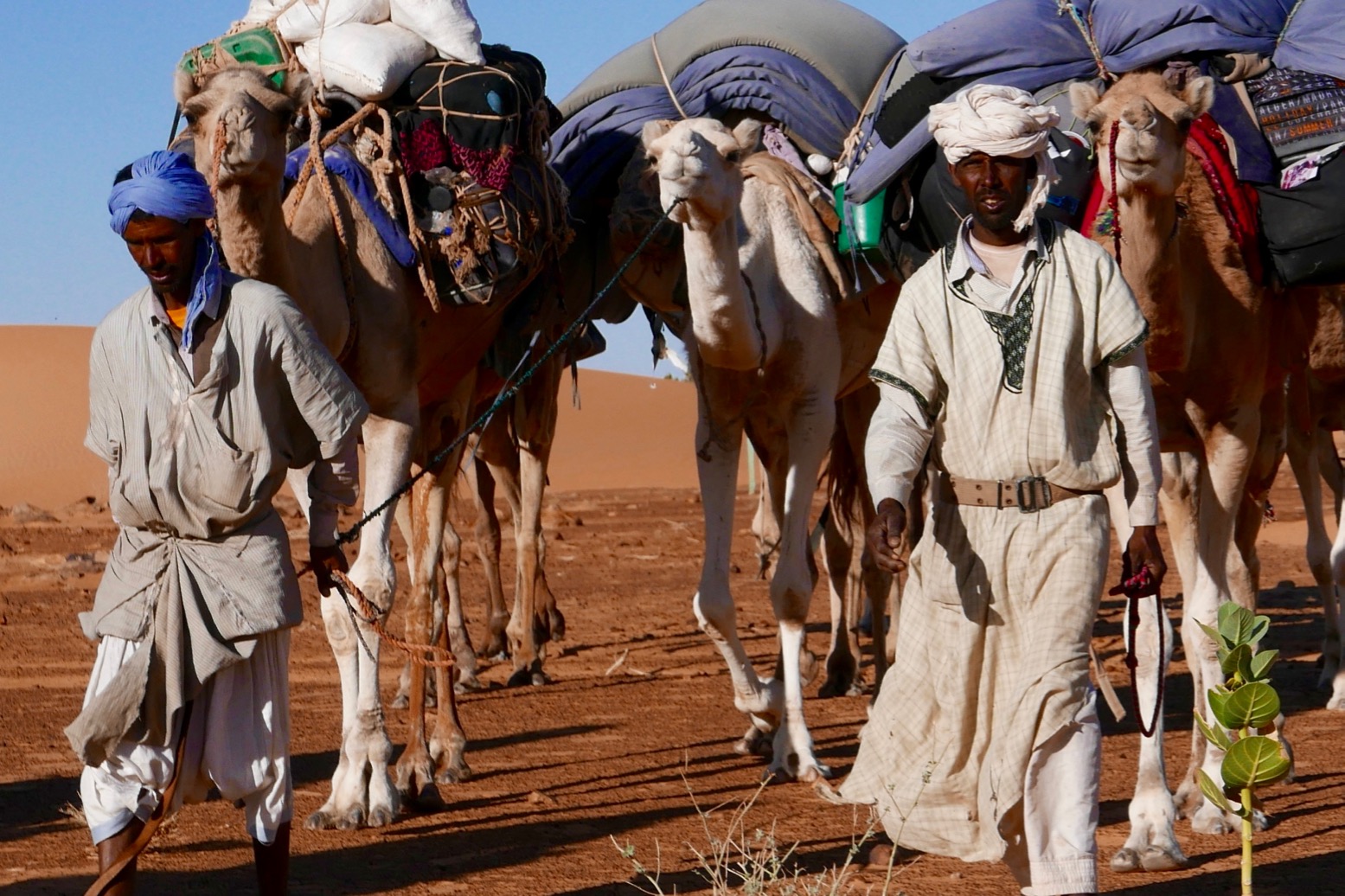
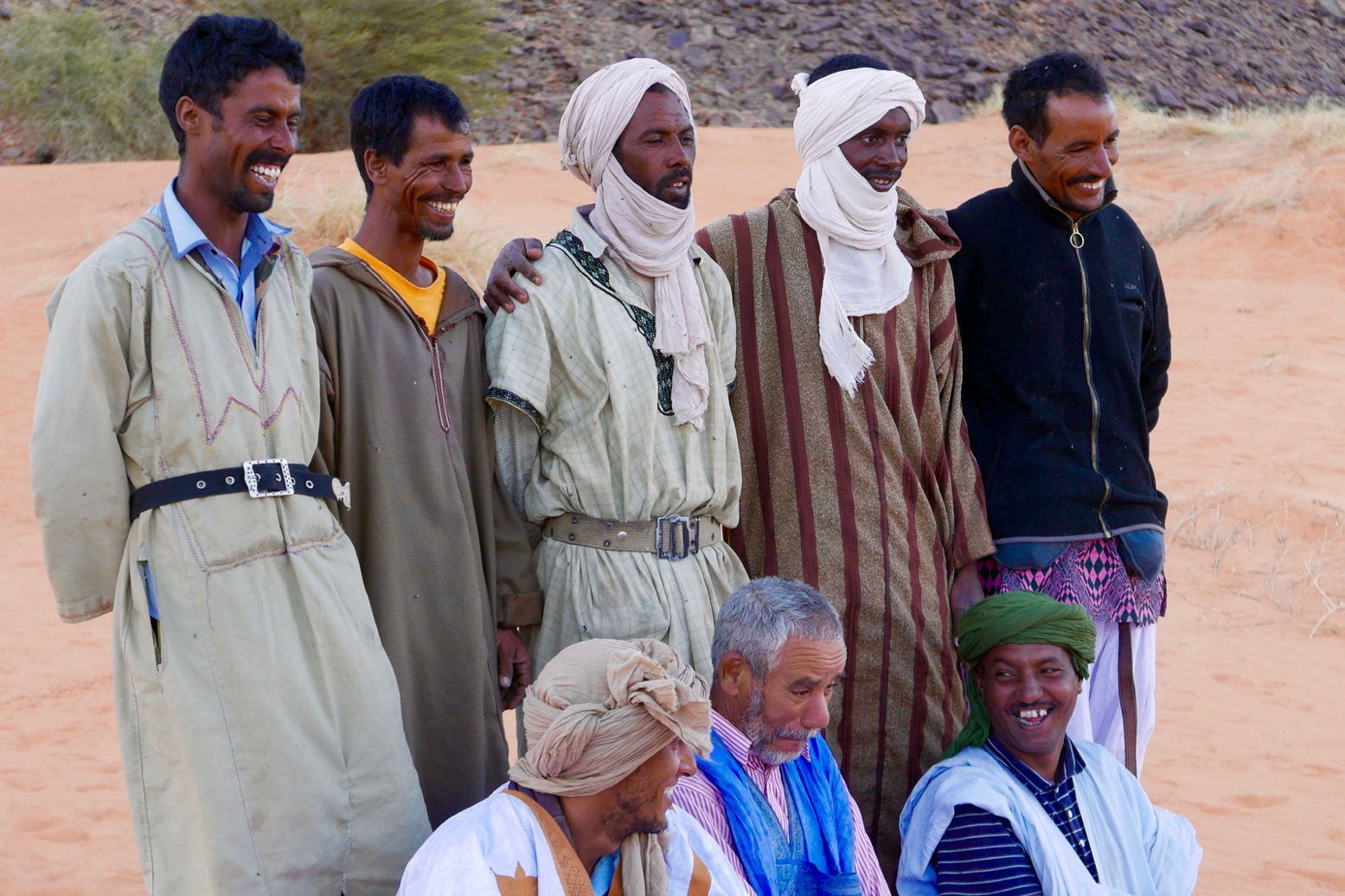
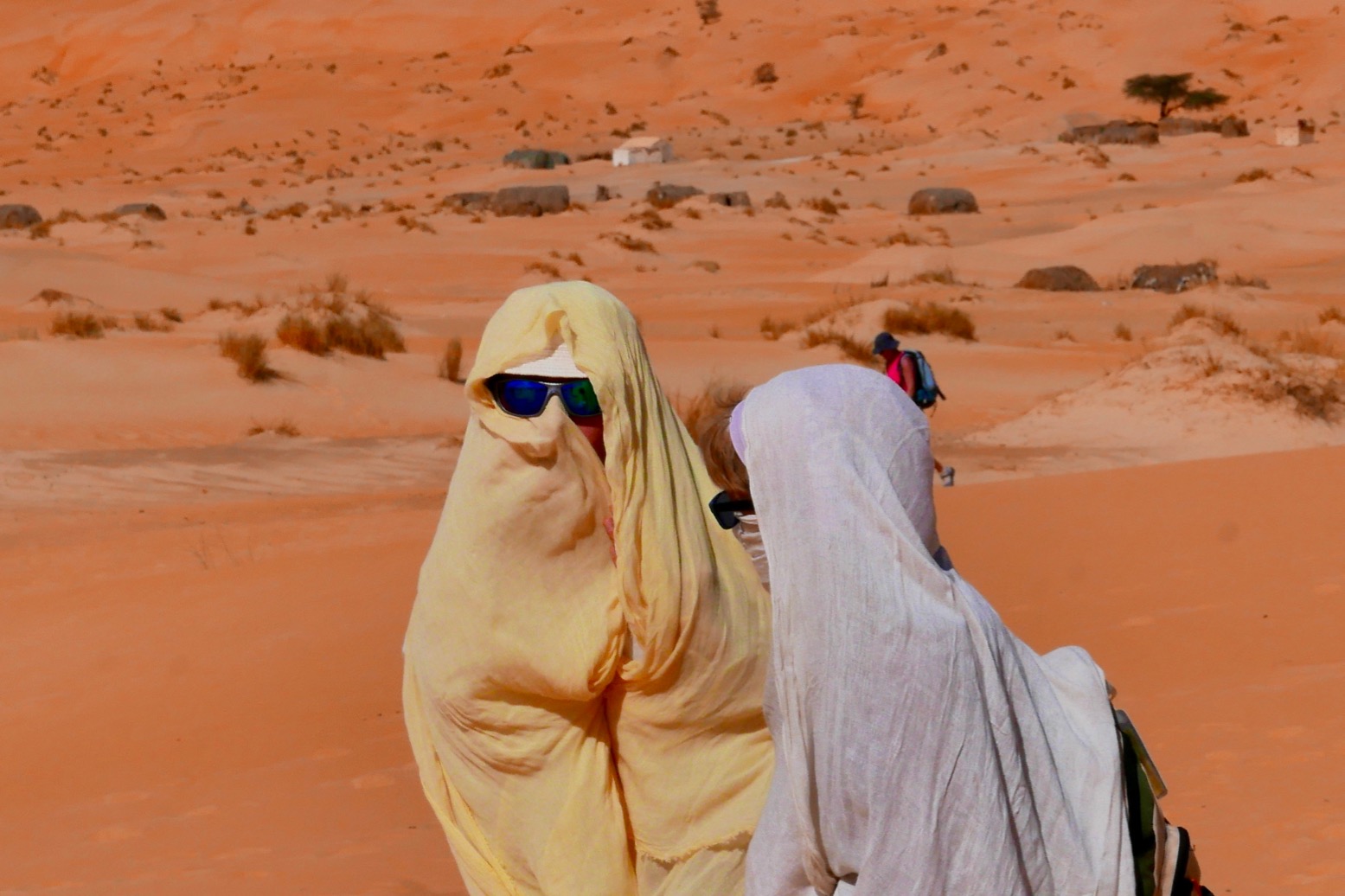
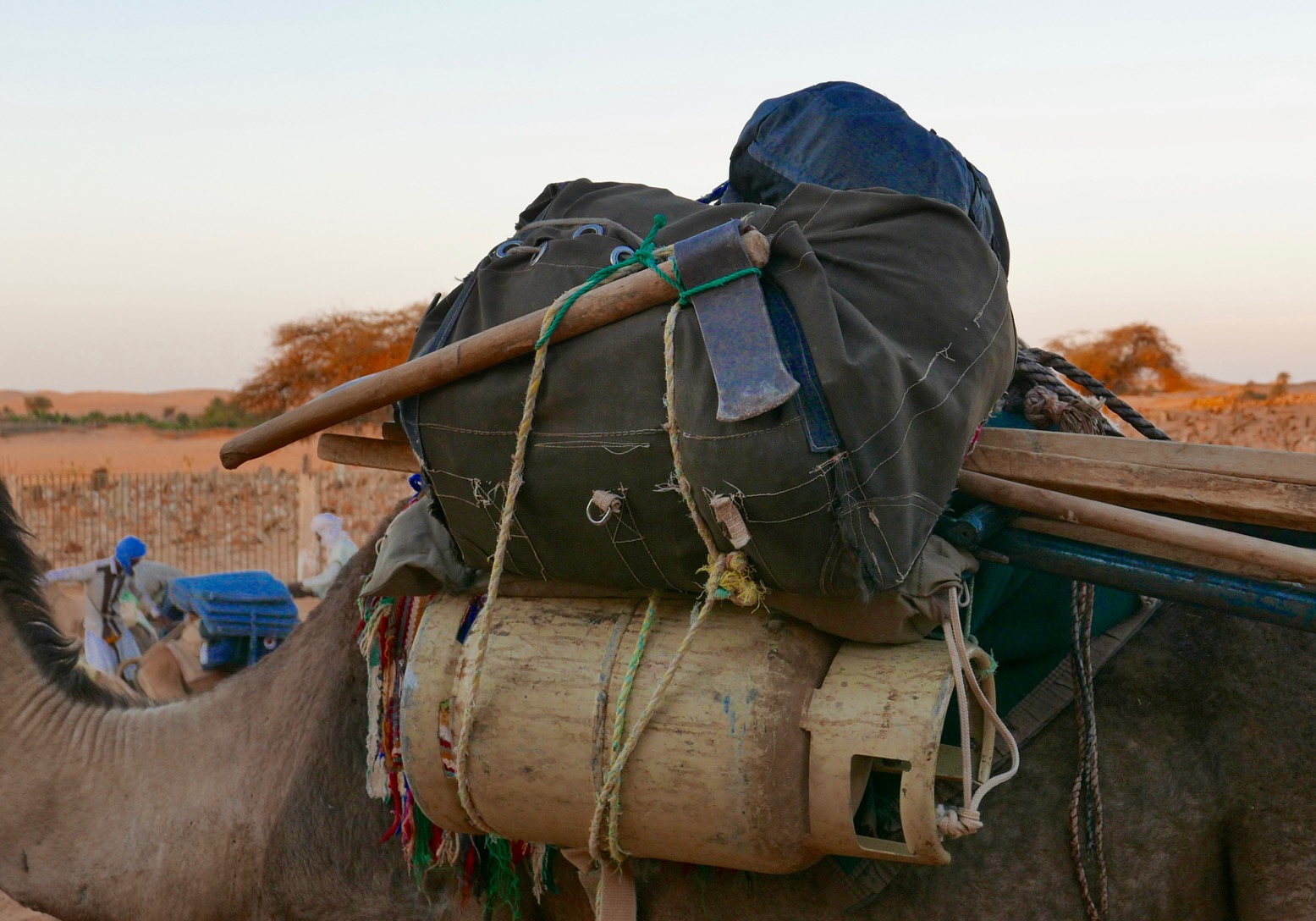
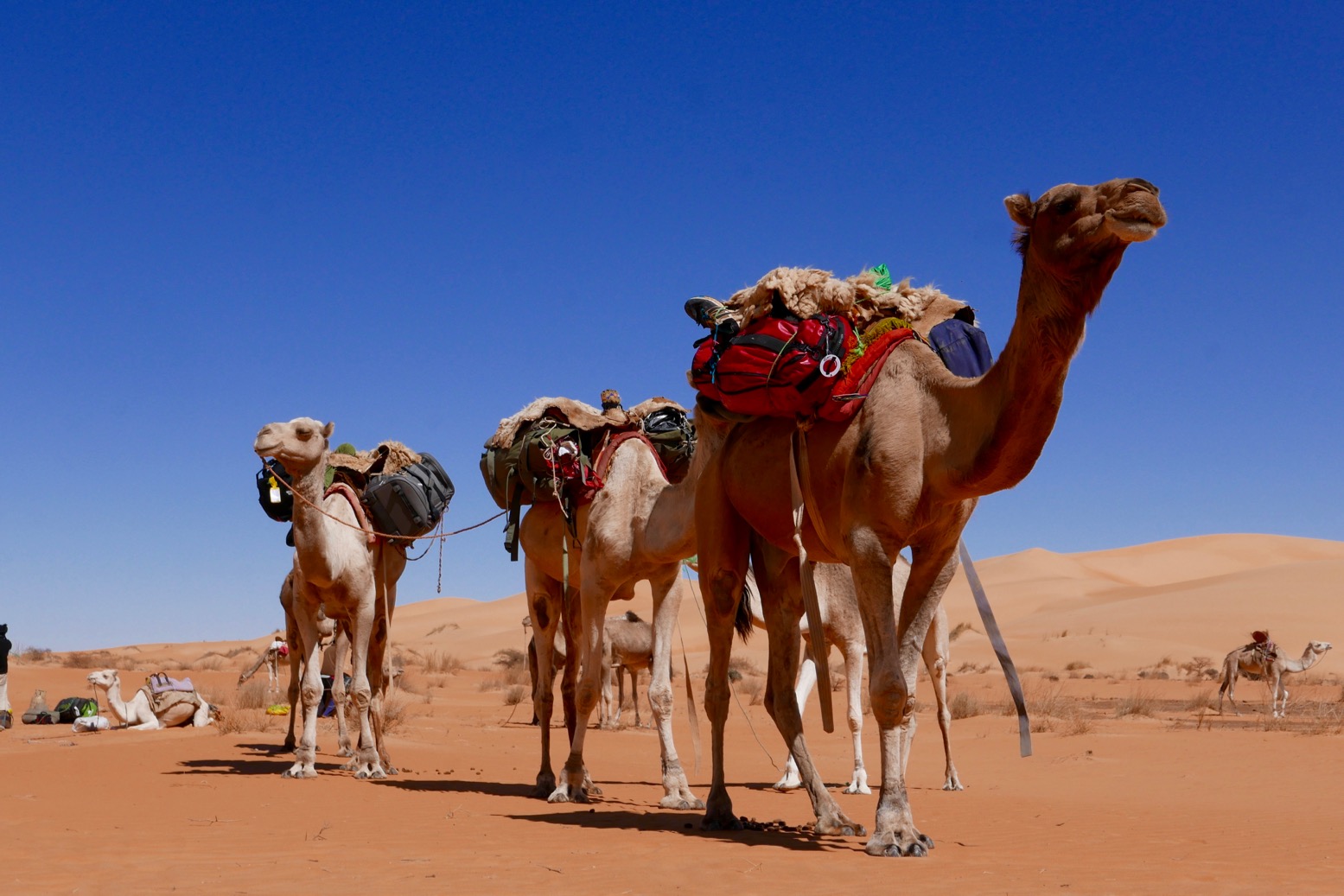
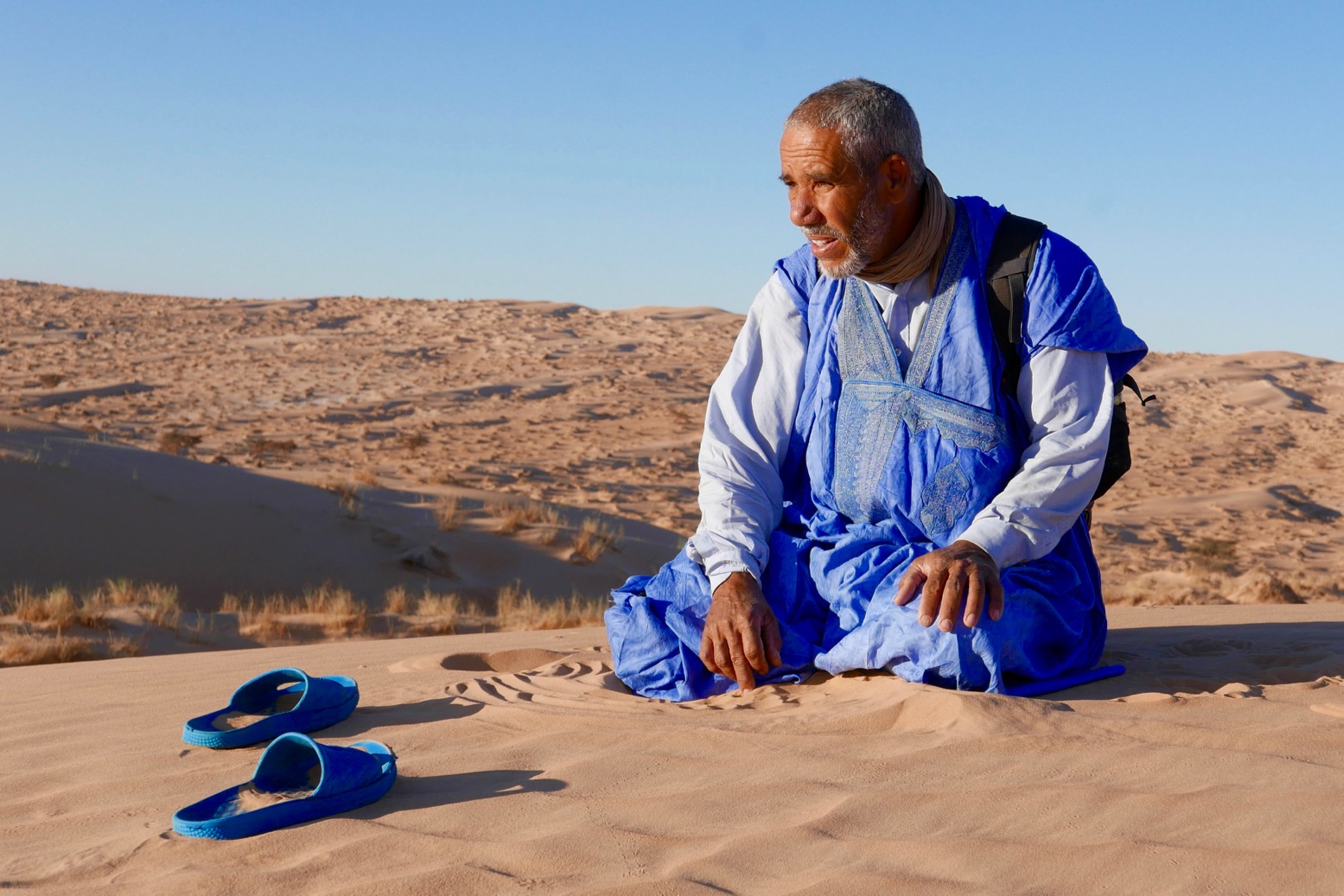
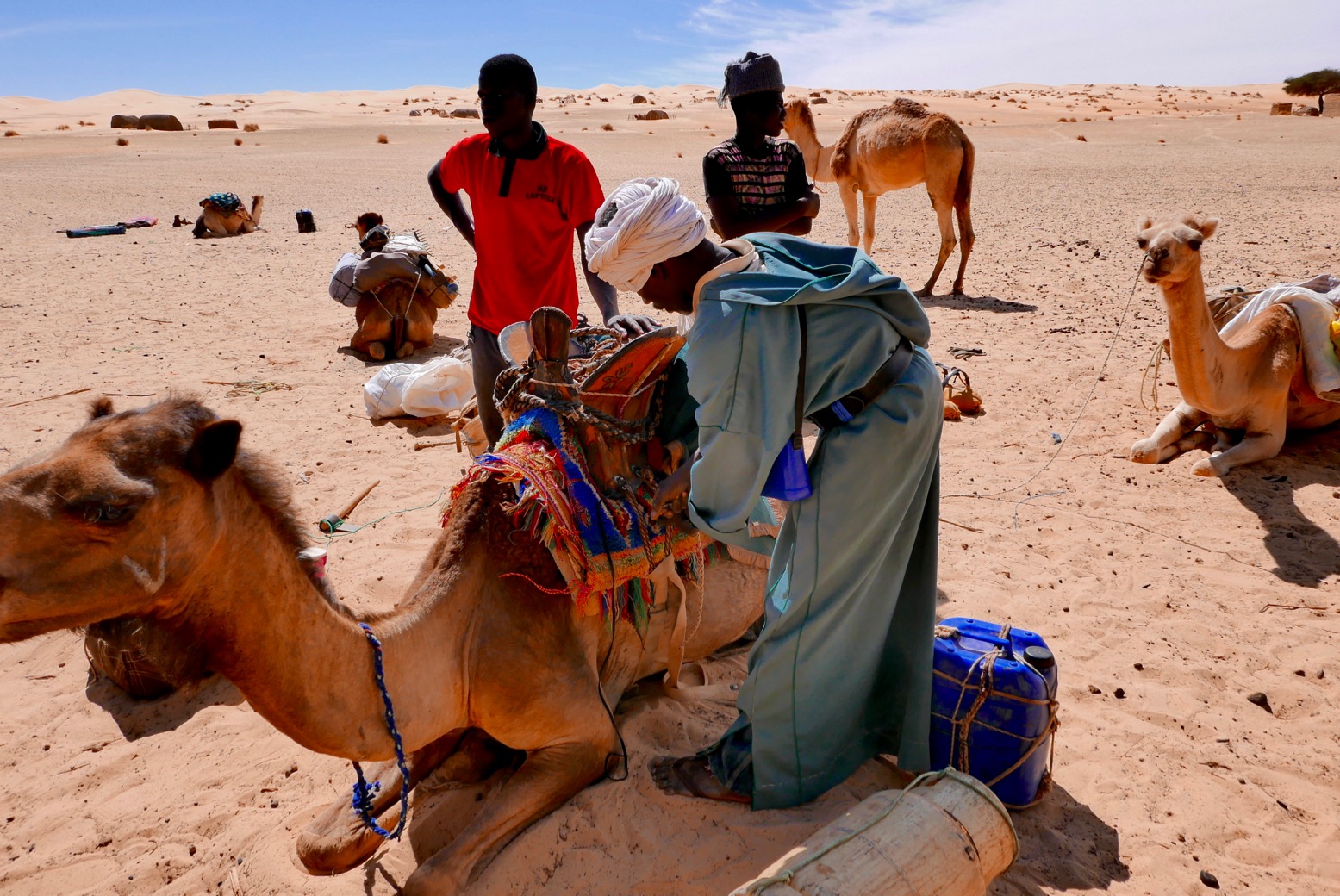
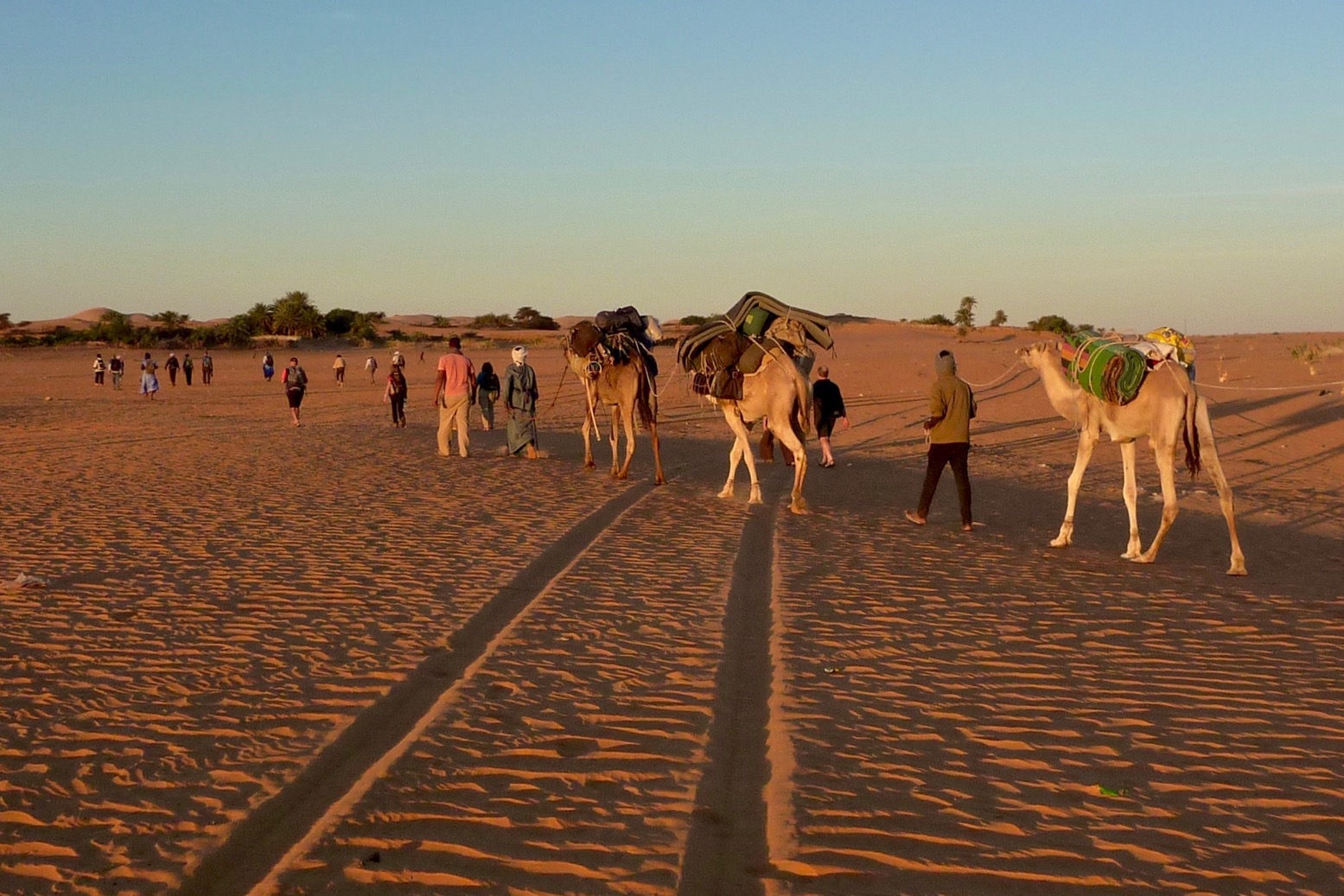
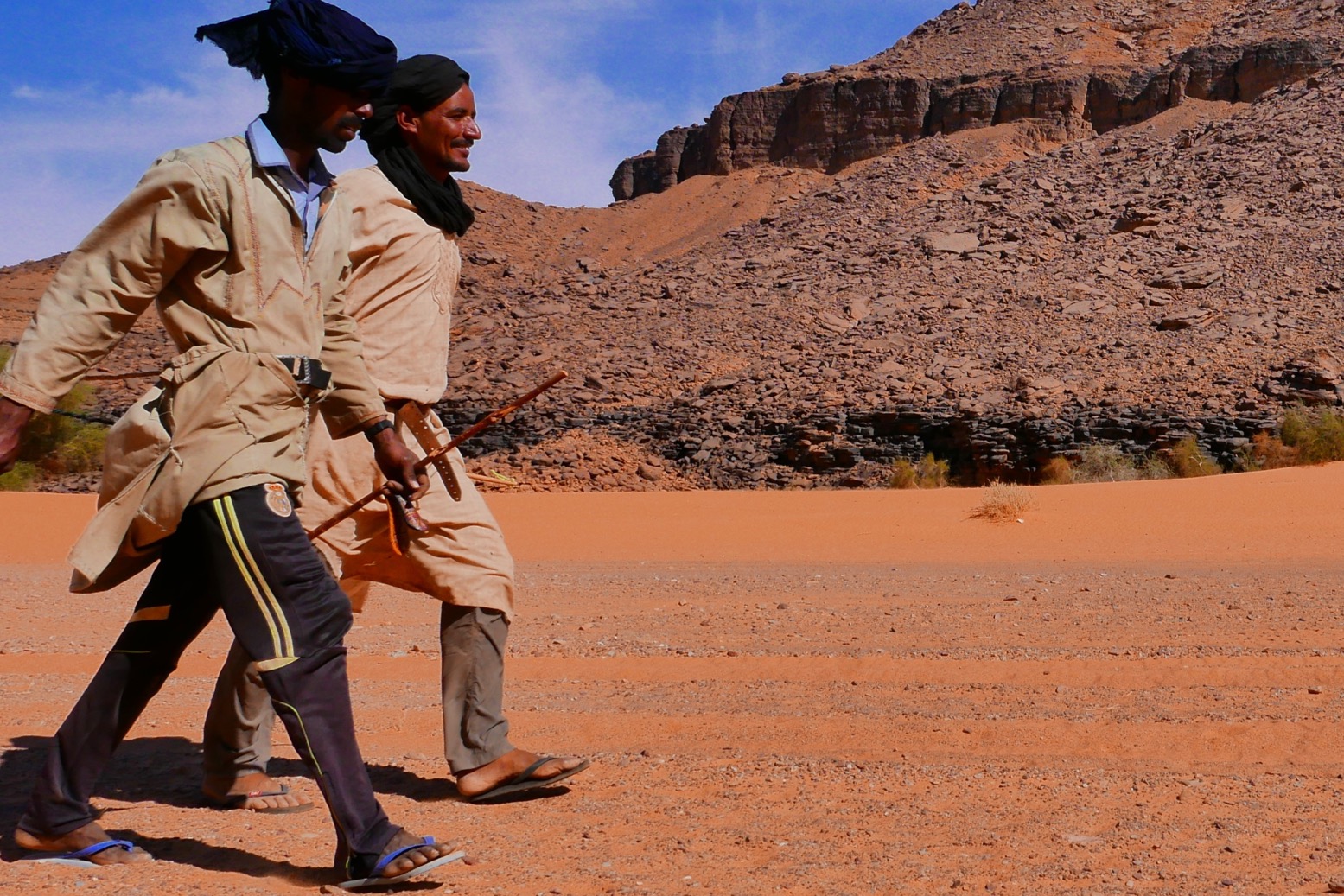
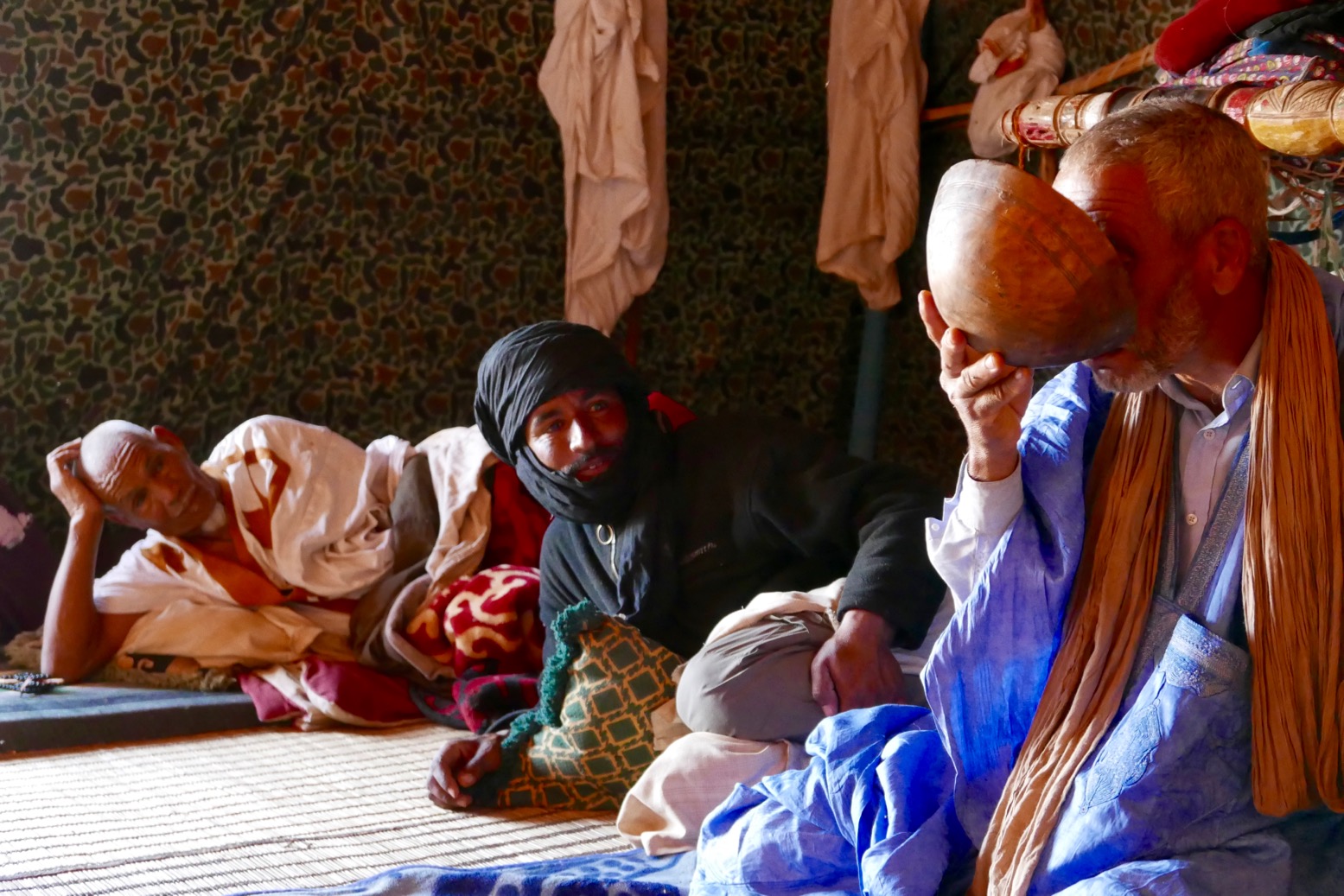
All this was eased by a hard-working crew (left) plus our guide Mohamed who, it must be said, was feeling the strain after a busy season tramping around the desert with us nasranis. (There was no French-domiciled accompagnateur, not a need for one; with a Brit group it might need to be different.) I was just relieved I had a fully charged Kindle to help pass the long hours inching along with the shade from 11am till 4 or 5pm. By then it wasn’t going to get hotter, or the remainder of the day’s walk was short enough to not matter so much. One night it felt like it didn’t drop below 30°C and after a week of this everything, even your toothpaste buried in your bag, is hot and stays hot. I’ve not been in such heat for so long since an early-80s moto trip to Algeria, mistakenly taken in September when it was hotter still. Oh, and Libya in April 1998 (right); also very hot. Both were quite shock and yet watching our Mauritanian camel crew stride along in their flip-flops from camp-to-camp without rests and after spending over an hour locating and laboriously loading over a dozen camels makes you wonder what you’re whining about. You got to take your cheche off to these guys.
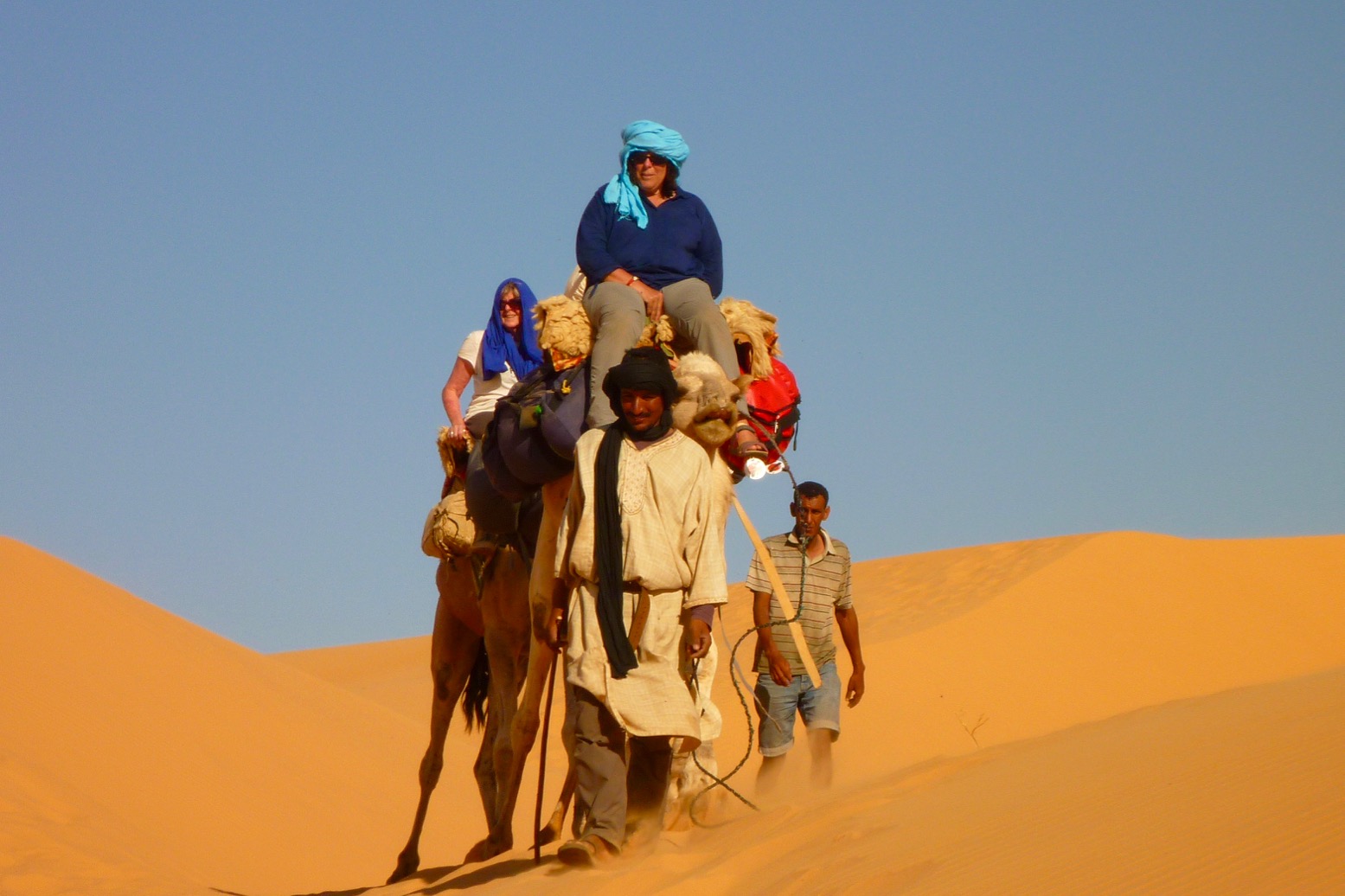
As it was, a couple in the group chose to ride when weary, and another couple had reserved camels to ride whenever possible. If you take this option, good saddle padding is essential, especially on the backbone. Me, I like to walk – some days more than others.
Sleeping out, I was a bit concerned that le chaleur might bring out the spiders and snakes everyone talks about in the desert. I heard later that the guides had indeed spotted a snake on night one, and again at Berbera guelta, but I never even saw any tracks. I suppose the good thing is that, besides being too big to eat, at night a reposing human is not much warmer than the surrounding desert and so not that alluring.
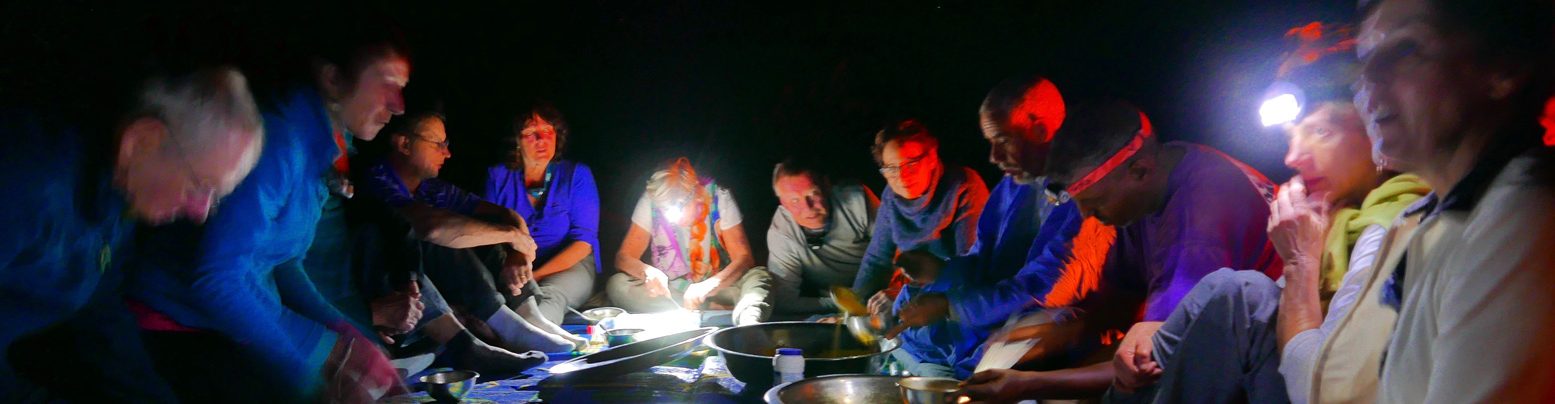
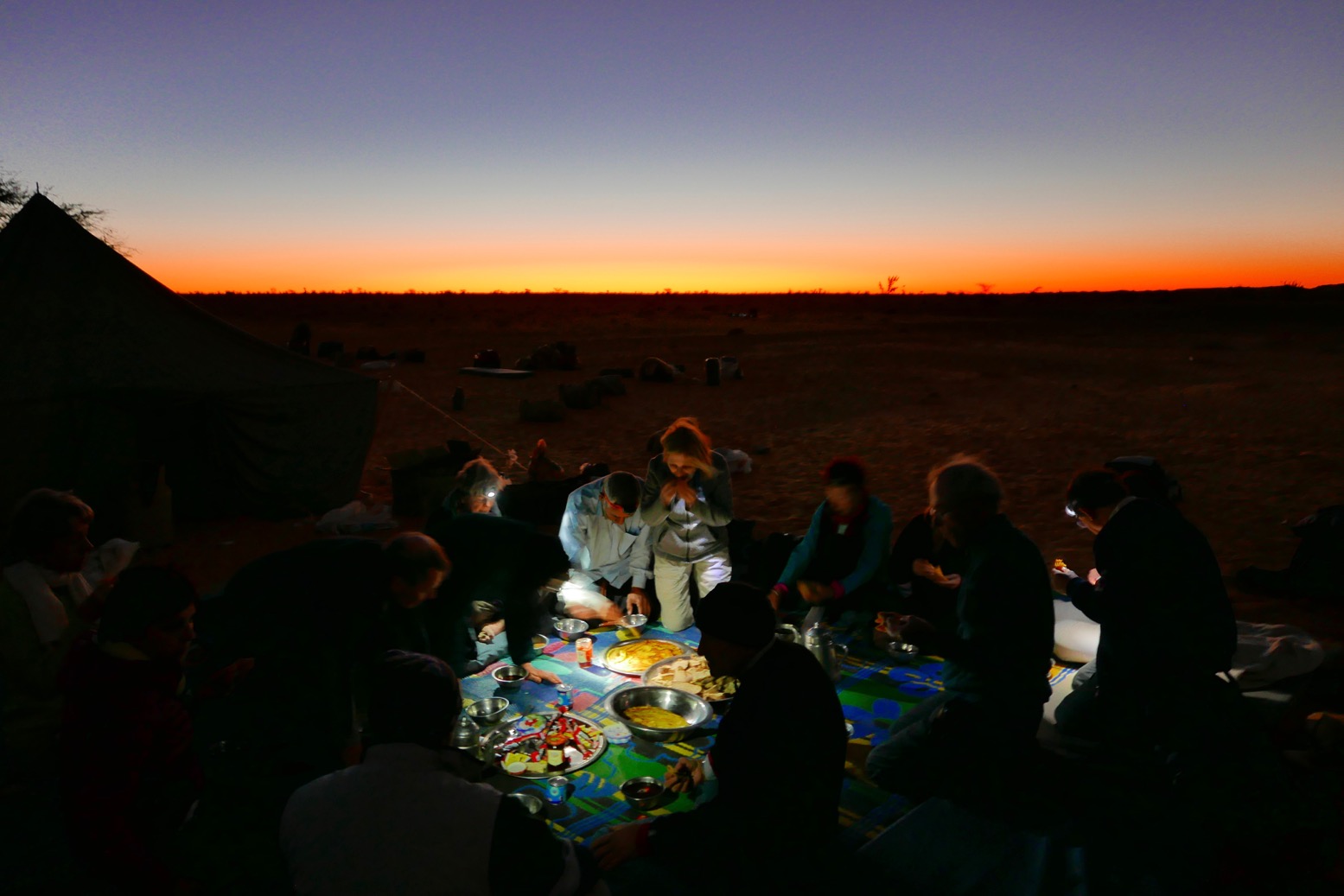
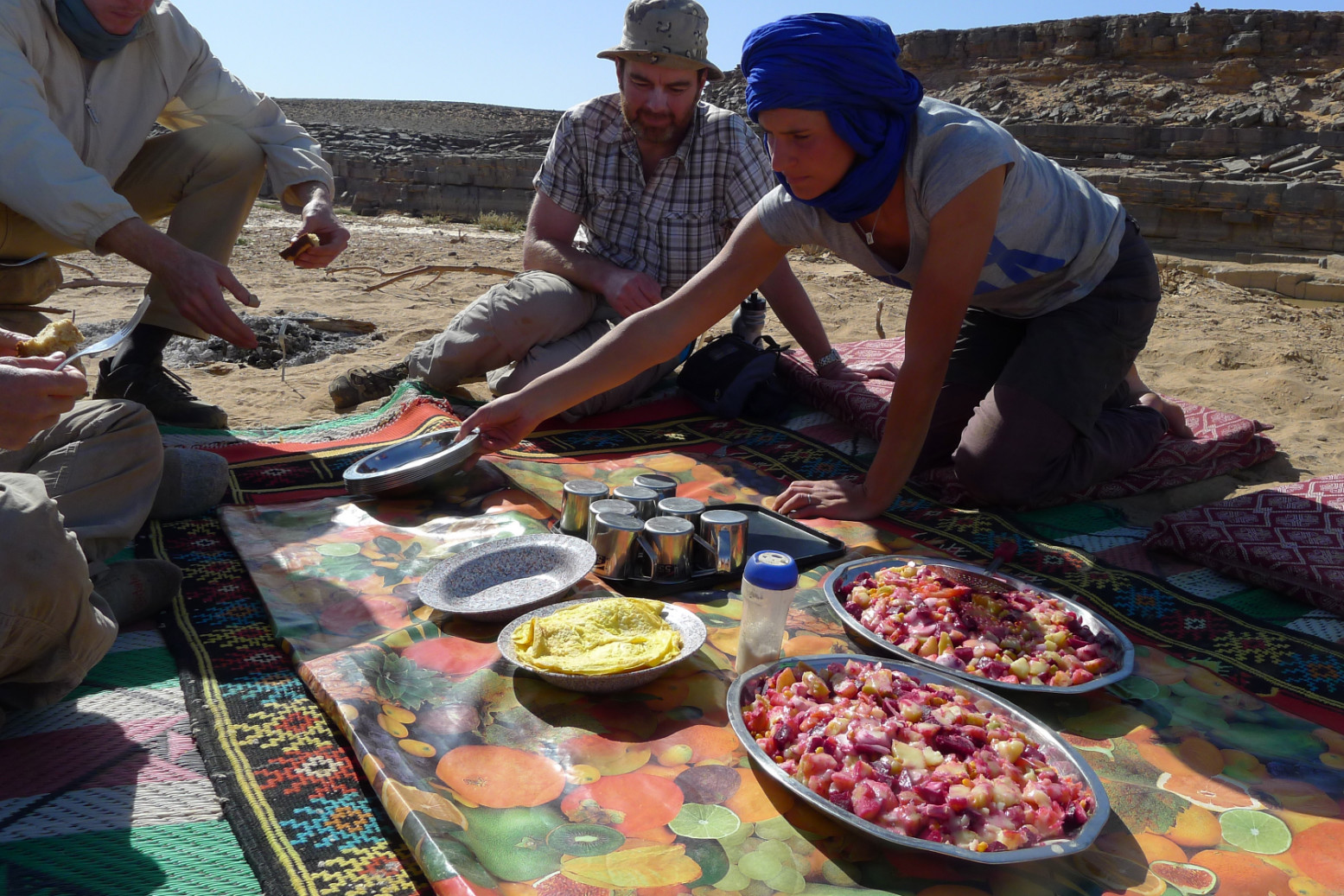
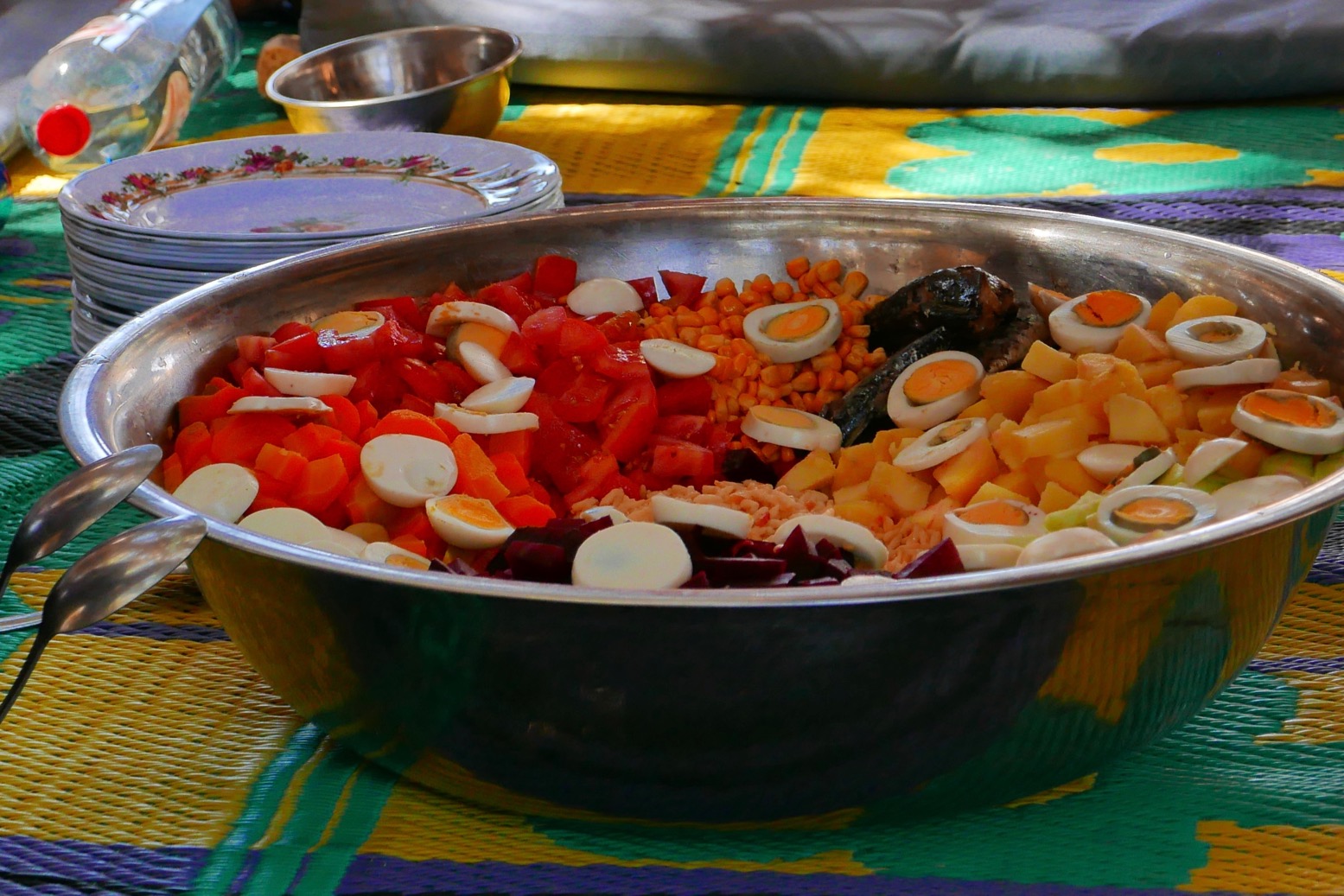
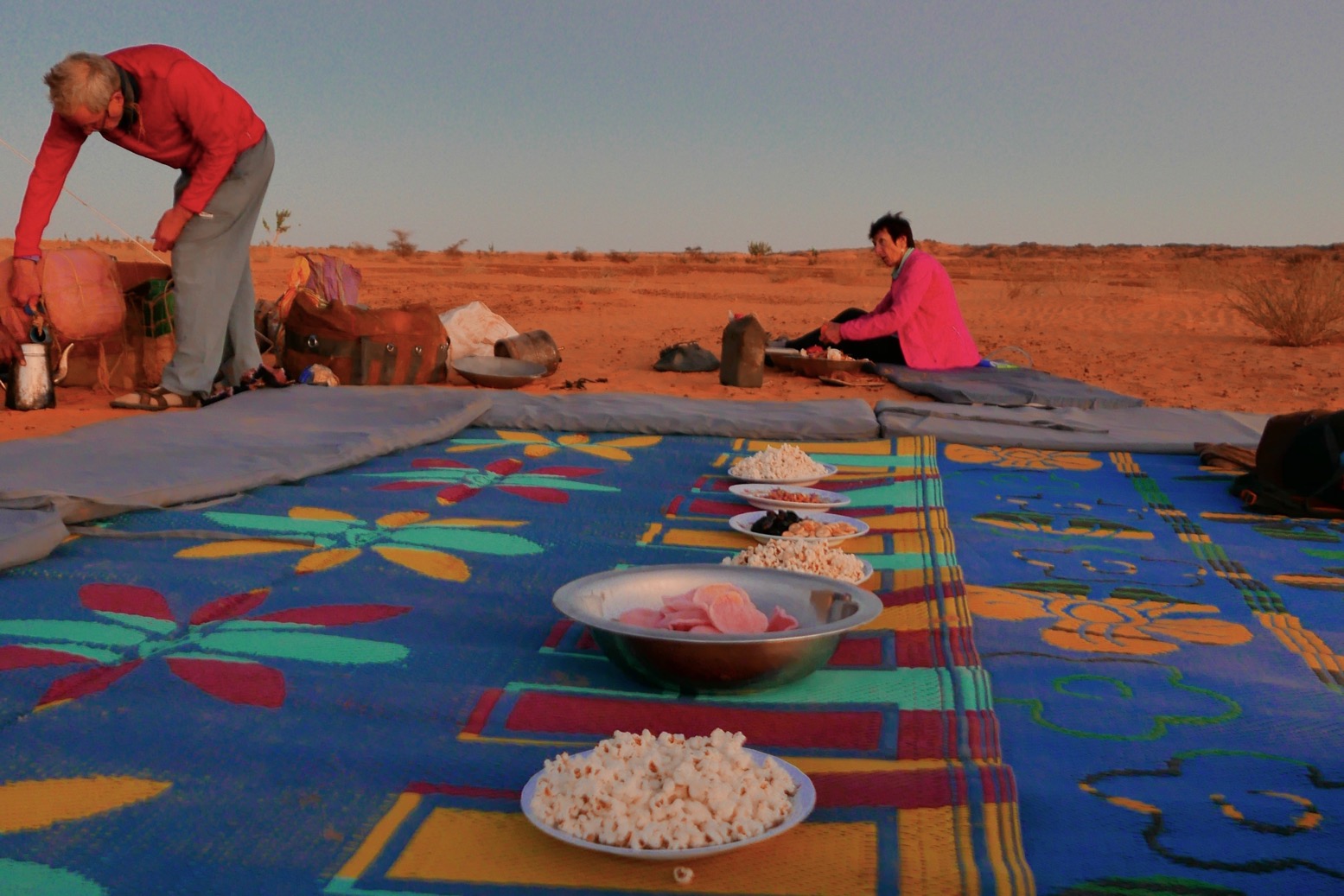
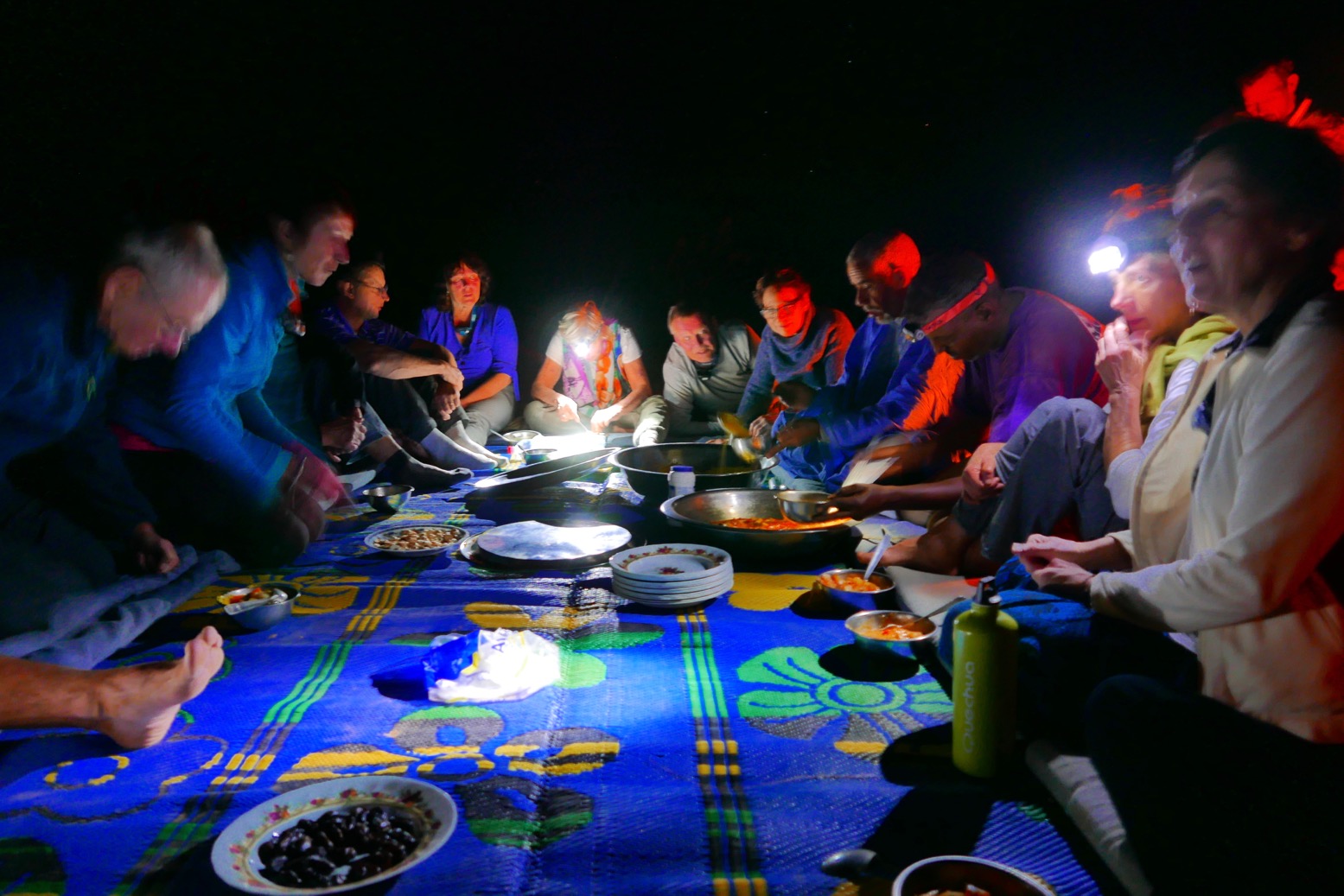
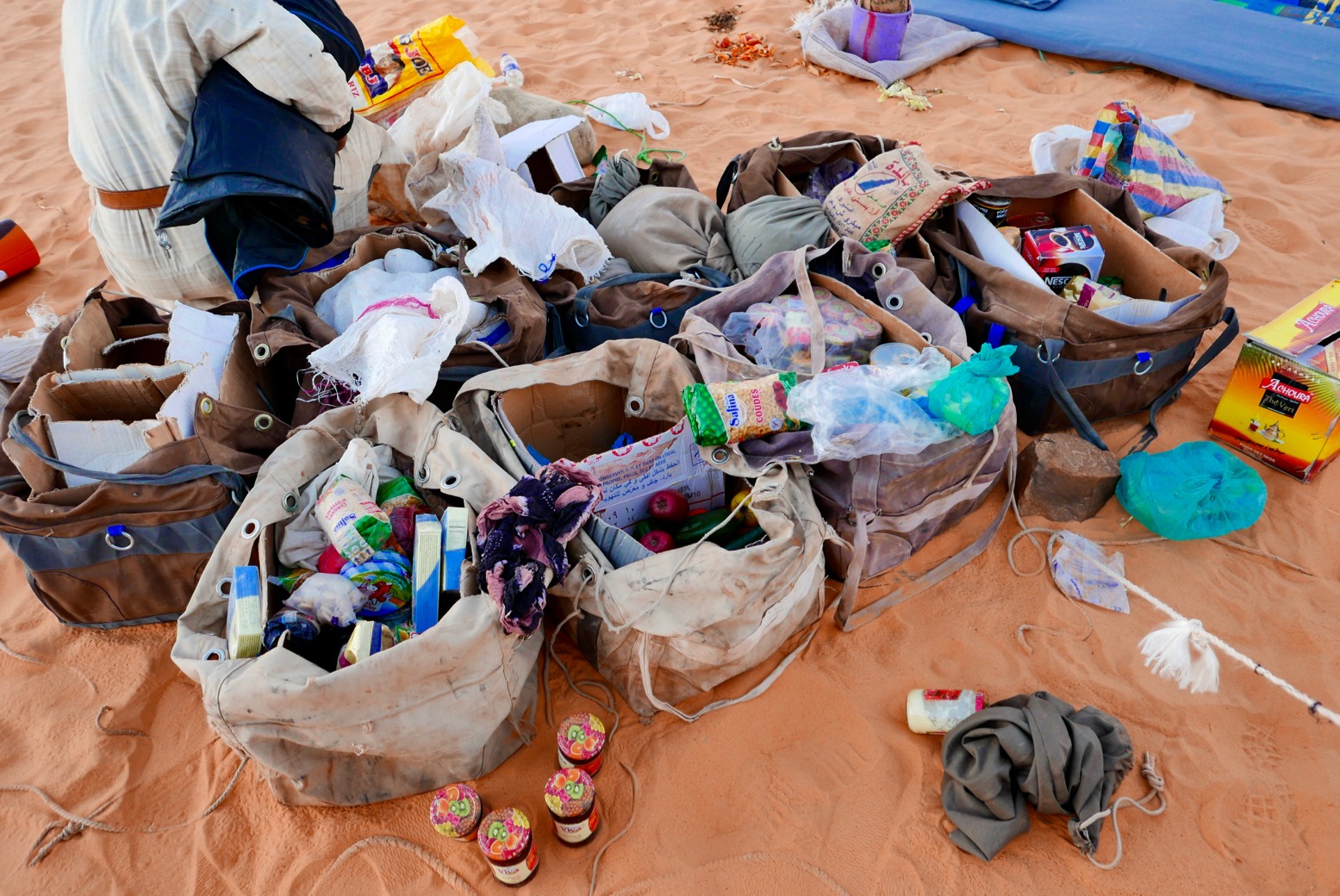
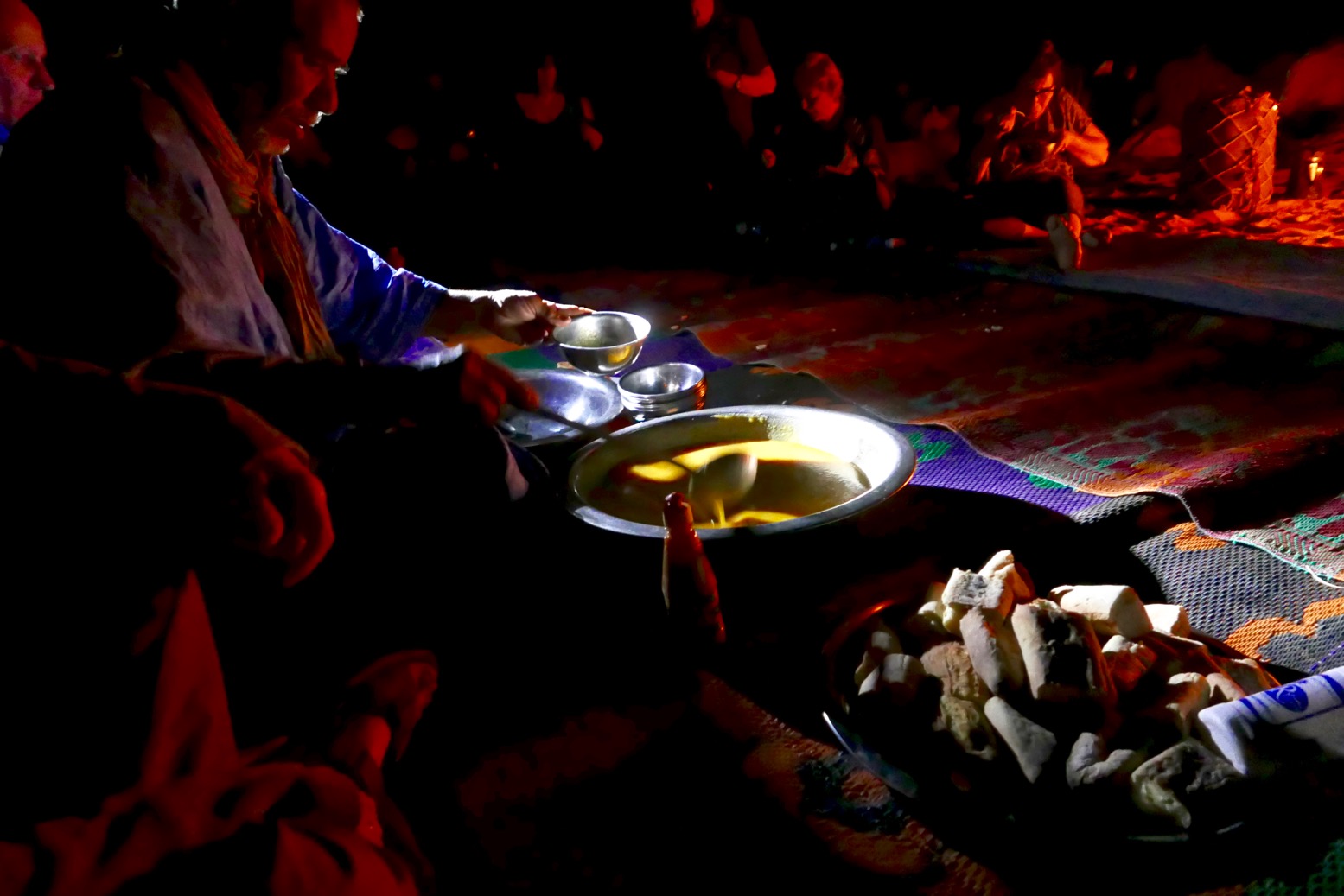
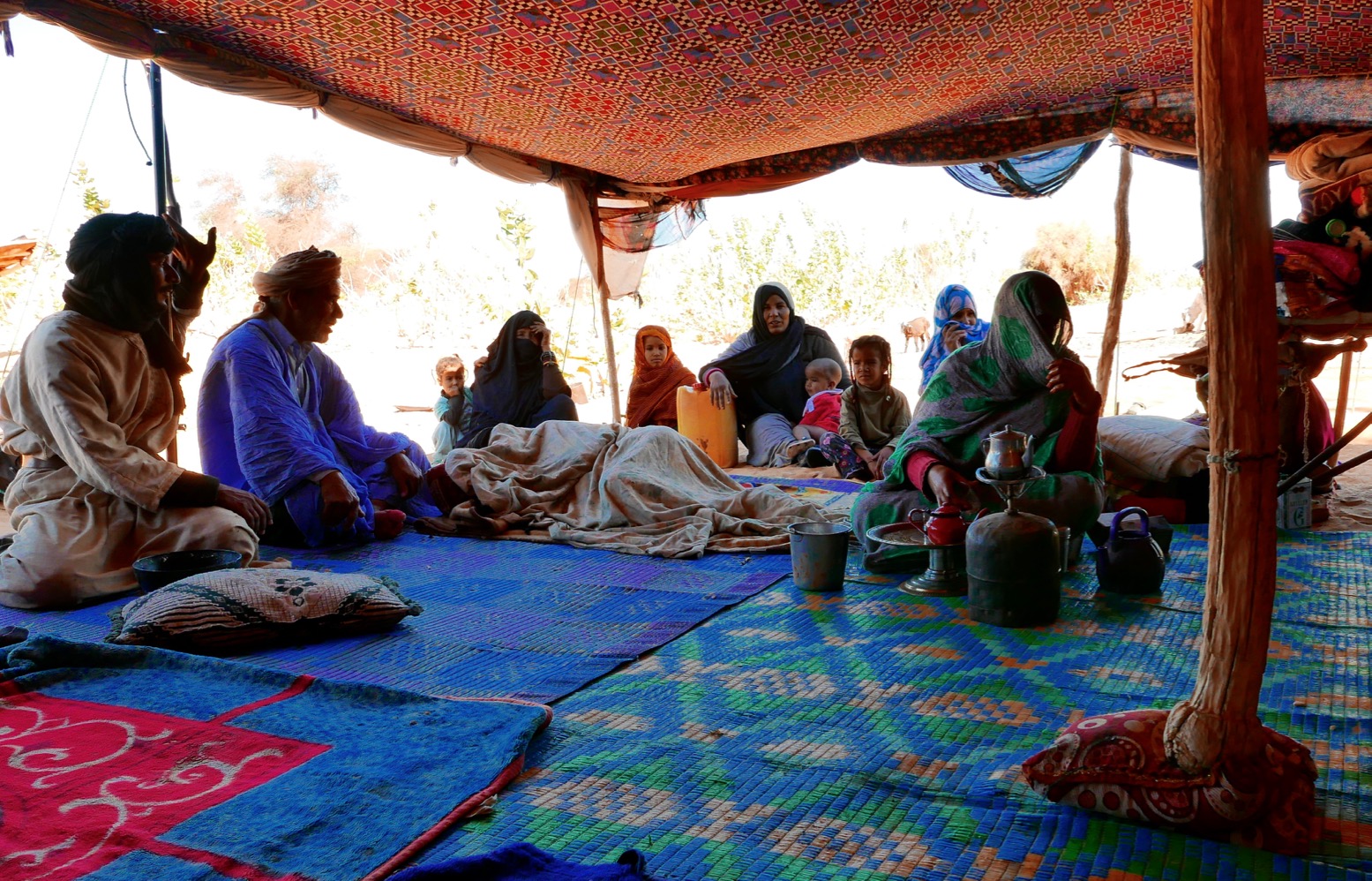
Compared to my Algeria camel trips (here and here) I have to say the service was as good if not better; it’s only a shame the fresh lunchtime salad couldn’t last beyond day one out of Chinguetti. After that it was cous cous/rice/pasta with tinned fish and hard veg at lunch, and the same but with veg stew in the evenings, plus soup and tinned fruit for afters. That said, we got two goats (right) which we didn’t have to buy, sandbread baked every night and pancakes every morning. And there was never a shortage of water, even for washing. After a while you do crave fresh fruit and veg as well as cool, clear water, but despite what you might call a ‘high-carb’ diet I managed to lose 4kg which I happened to have going spare. Heat kills the appetite which is why I’m currently dressed in three ski suits while doing Hot Yoga next to the radiator.
One thing that spoils the Mauritanian desert vibe for me is the endless ‘gift shops’ unrolled at many desert stops and every nomad camp. In this way Algeria feels more sauvage; on the Immidir treks we might come across a family  of feral goat nomads in 11 days and never ever see car tracks. But as I recall from the late-90s, wayside trinket markets were always the way in the Adrar, as it was in the Aïr of Niger. And anyway, not everyone may have as replete a collection of cheches, stone tools, teapots and other desert souvenirs like me. At one place I noticed a women selling an unusual fulgarite necklace among her collection of silver jewellery.
The large group size didn’t really bother me, perhaps because much of the chat went over my head, but probably because it was a good group and anyway – resting or on the move there is plenty of space, it’s not like being stuck in a bus. Plus you imagine people who choose to take a two-week walk in the desert in March aren’t going to be complainers. Having said that, you do wonder if Homo Sapiens’ mysterious Great Leap Forward; the so-called advent of behavioural modernity 40,000 years ago is attributable to the invention of the comfy chair. Or maybe that’s where it all went wrong.
cropped-cam2dins.jpgIt’s interesting to observe how the Frenchies (and the few Belges) are much more casual about desert walking than some Brits brought up on the exploits of tormented ex-public school masochists like Thesiger, Lawrence and maybe Michael Asher. Le Sahara to them is just a holiday destination like Vanuatu, not necessarily a place to pit yourself against the elements to within an inch of your life.

rim18 - 26

tik
Straight out of Atar into the desert.
Great value at €1200 + €55 airport visa
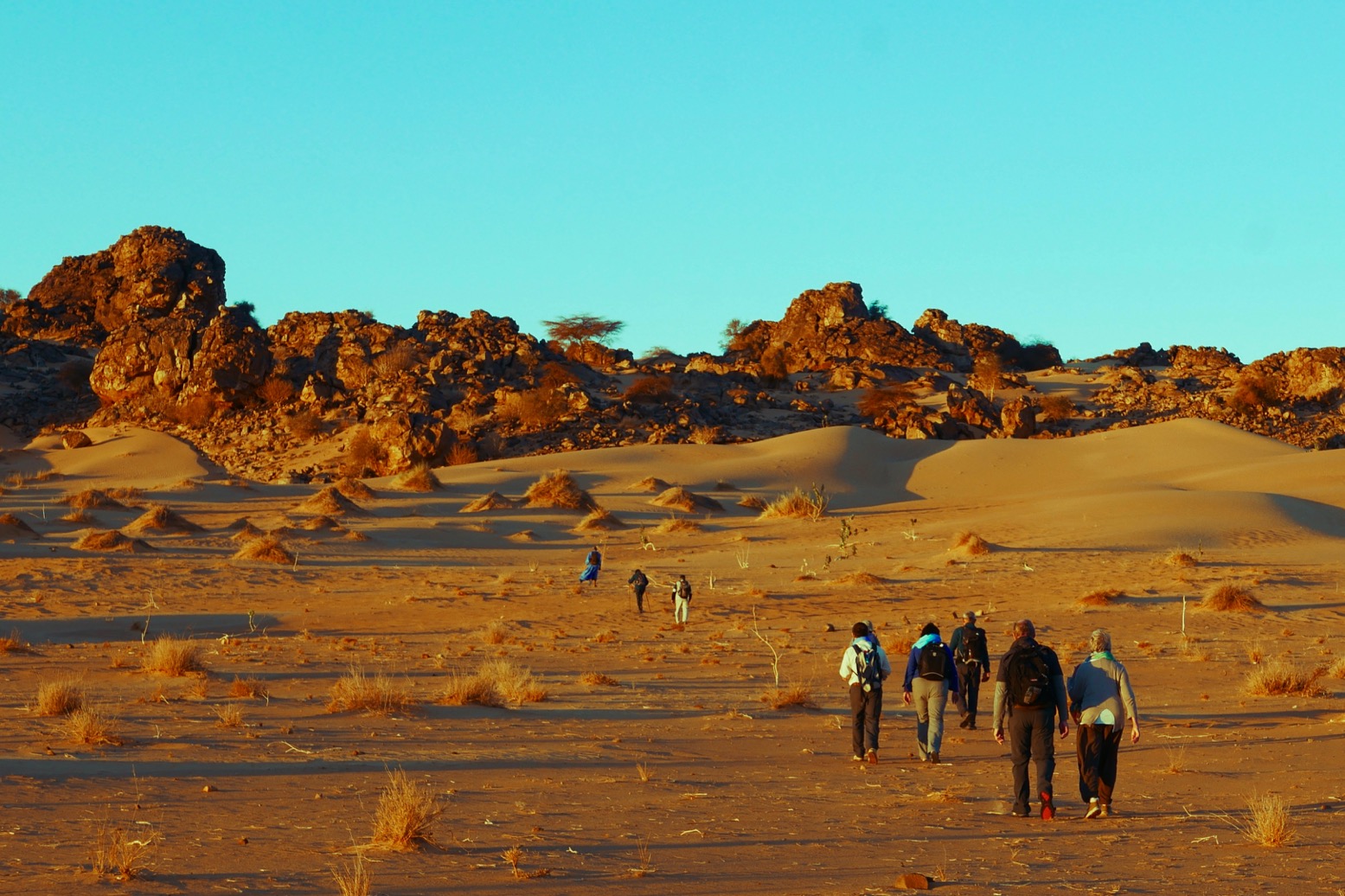
Pre-dawn starts. Feels like a proper desert trip
Sand-baked goat x 2, merci beaucoup
A shady acacia just when you need it
Great crew from Mauritanie Voyages
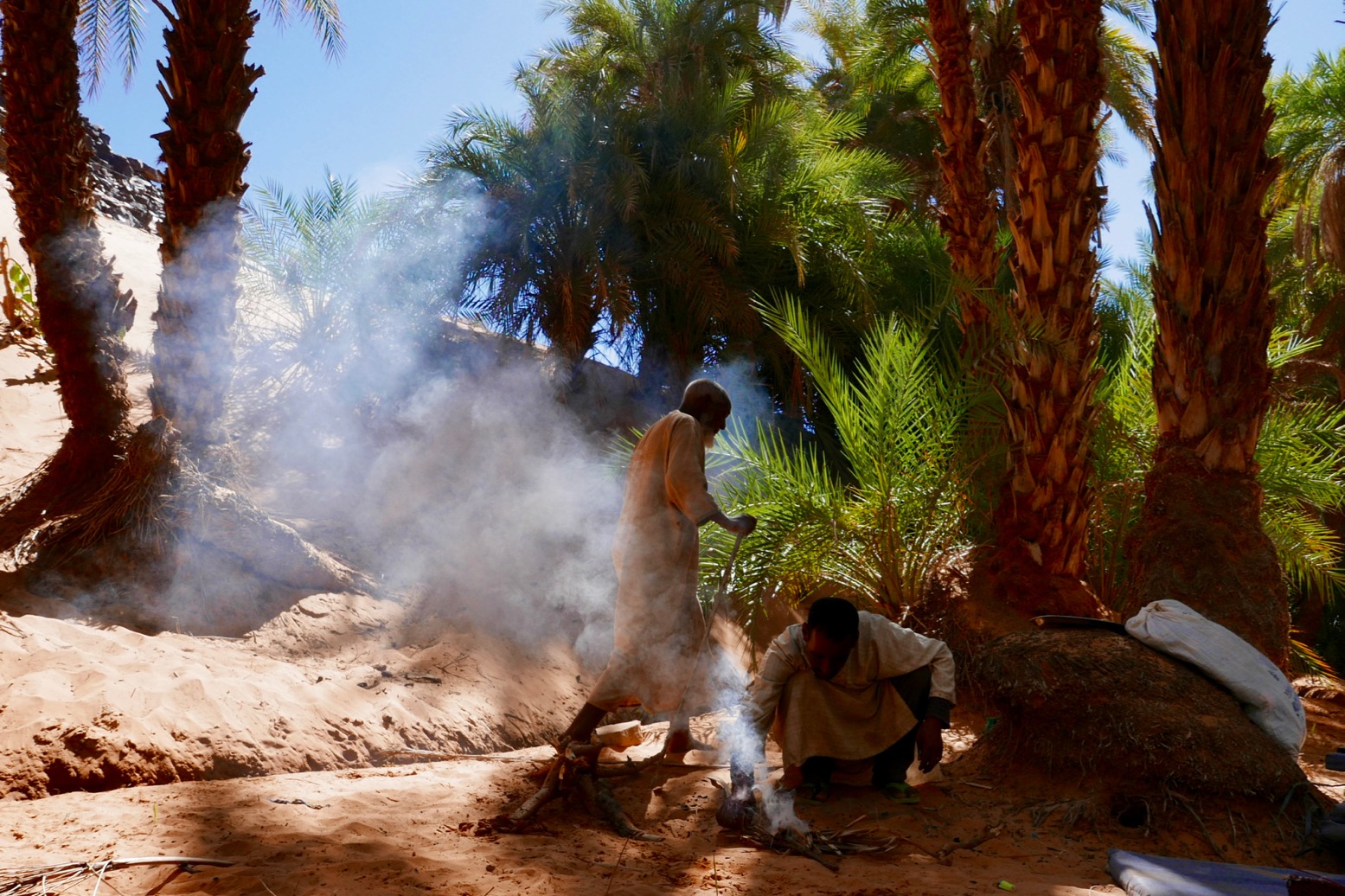
Wheat flour sandbread, not heavy tagela
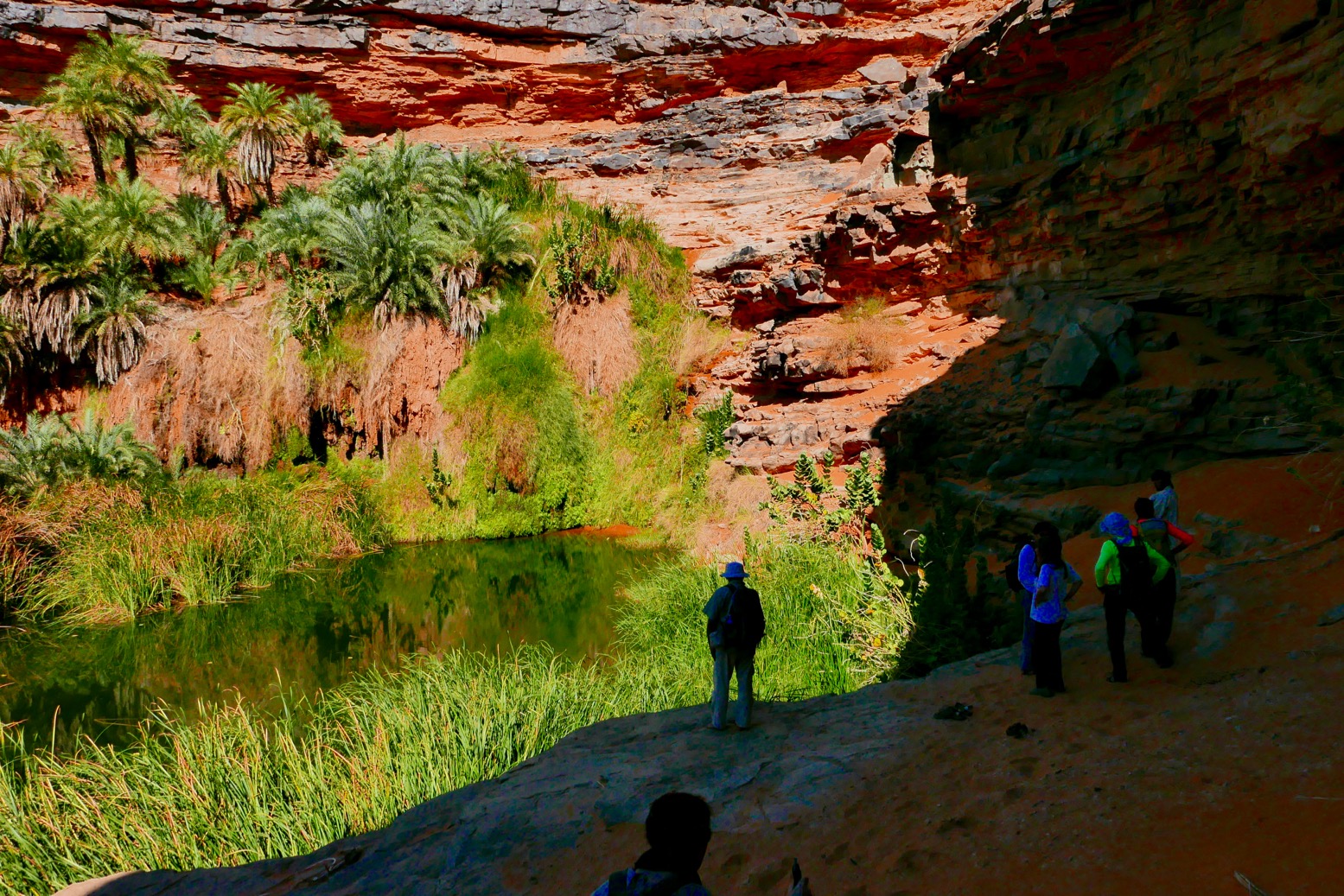
Afternoon at Berbera oasis
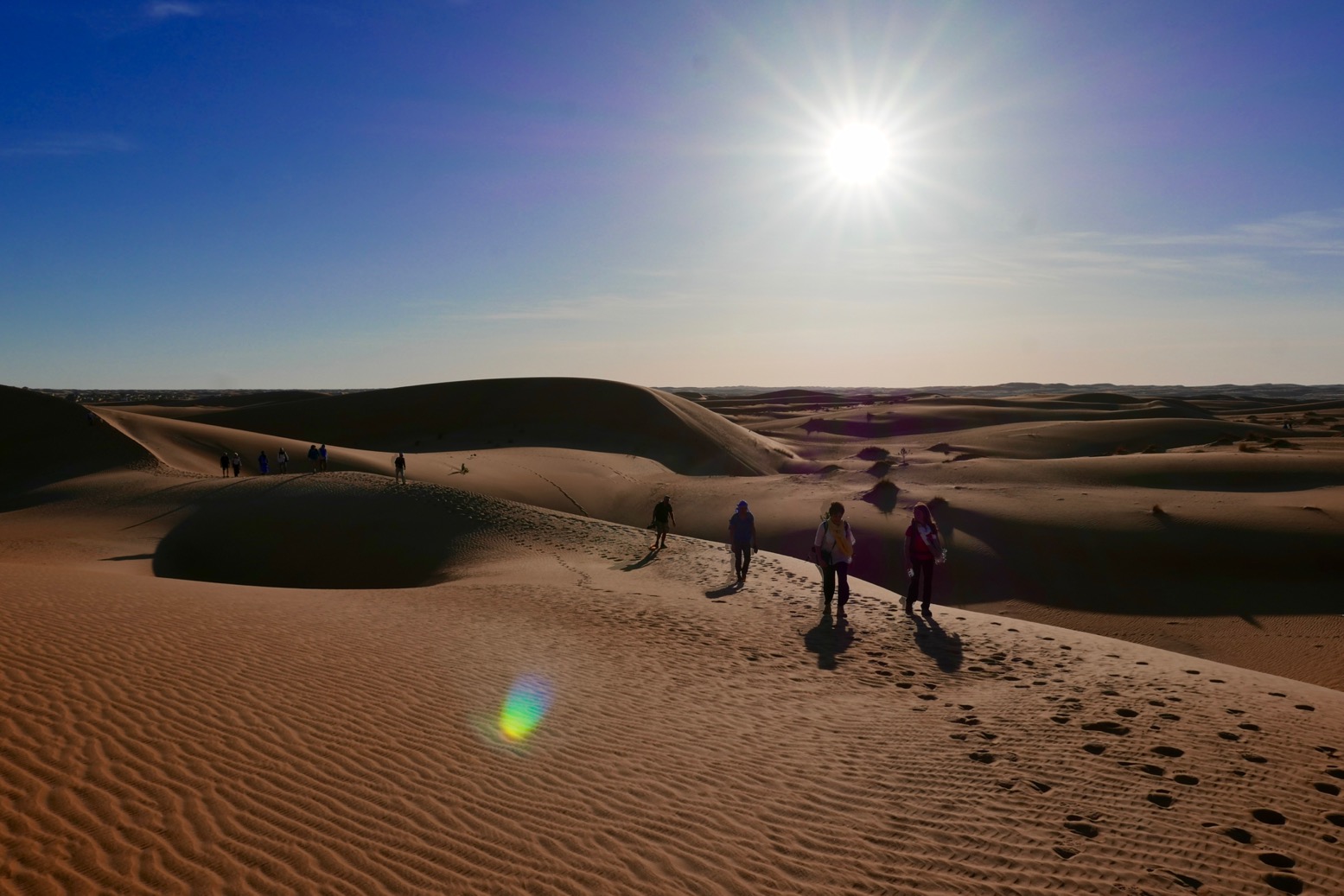
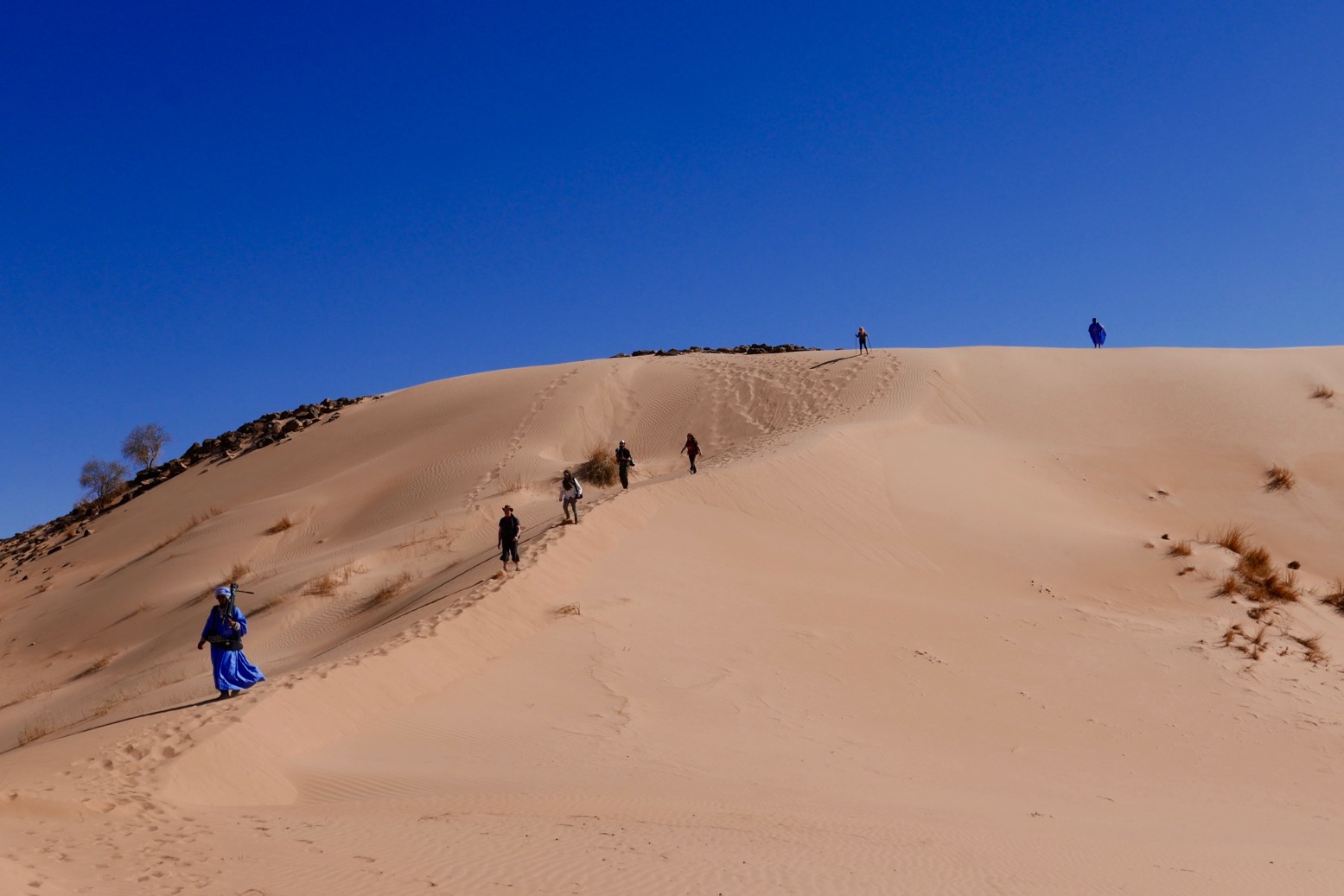
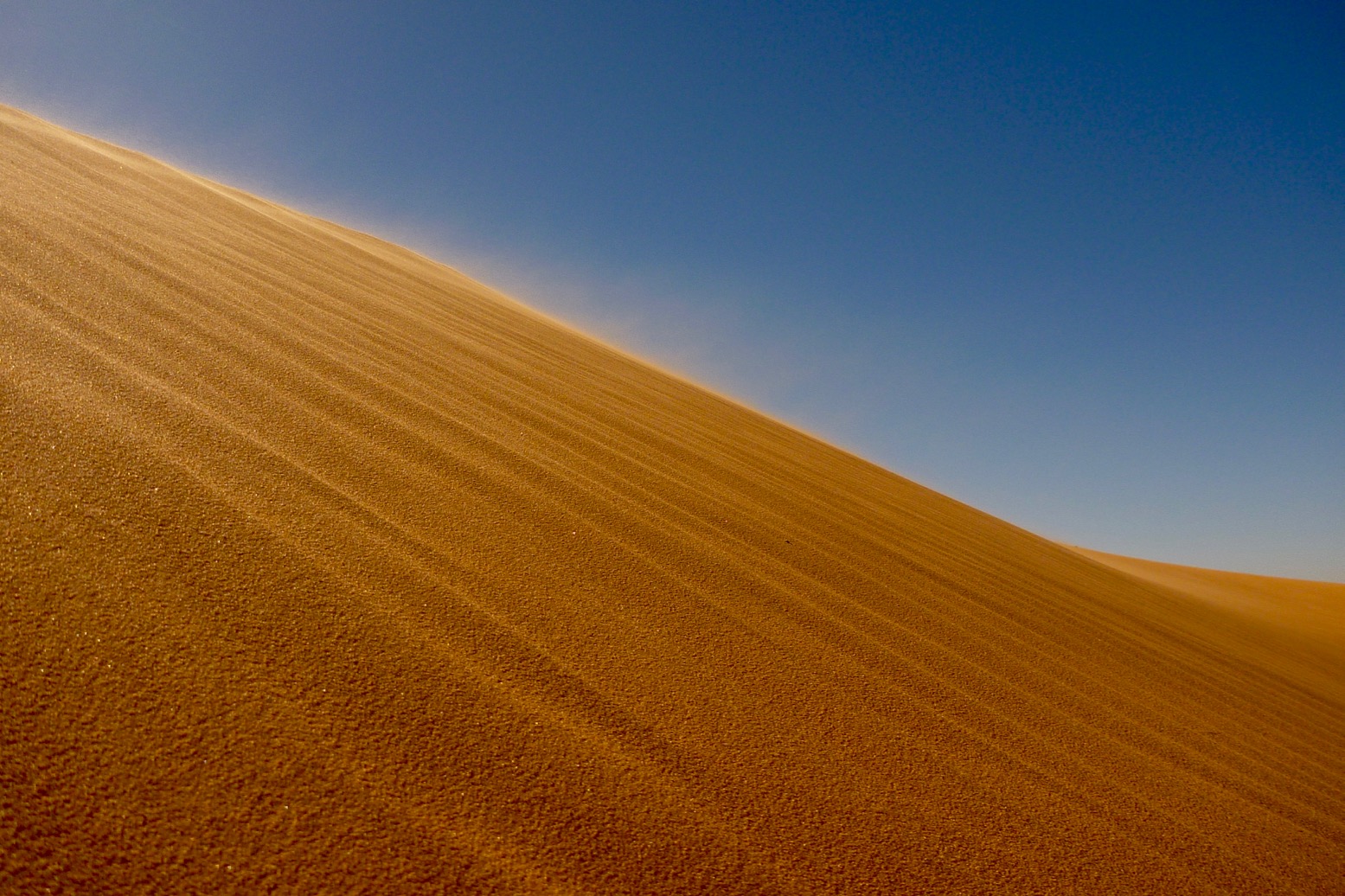
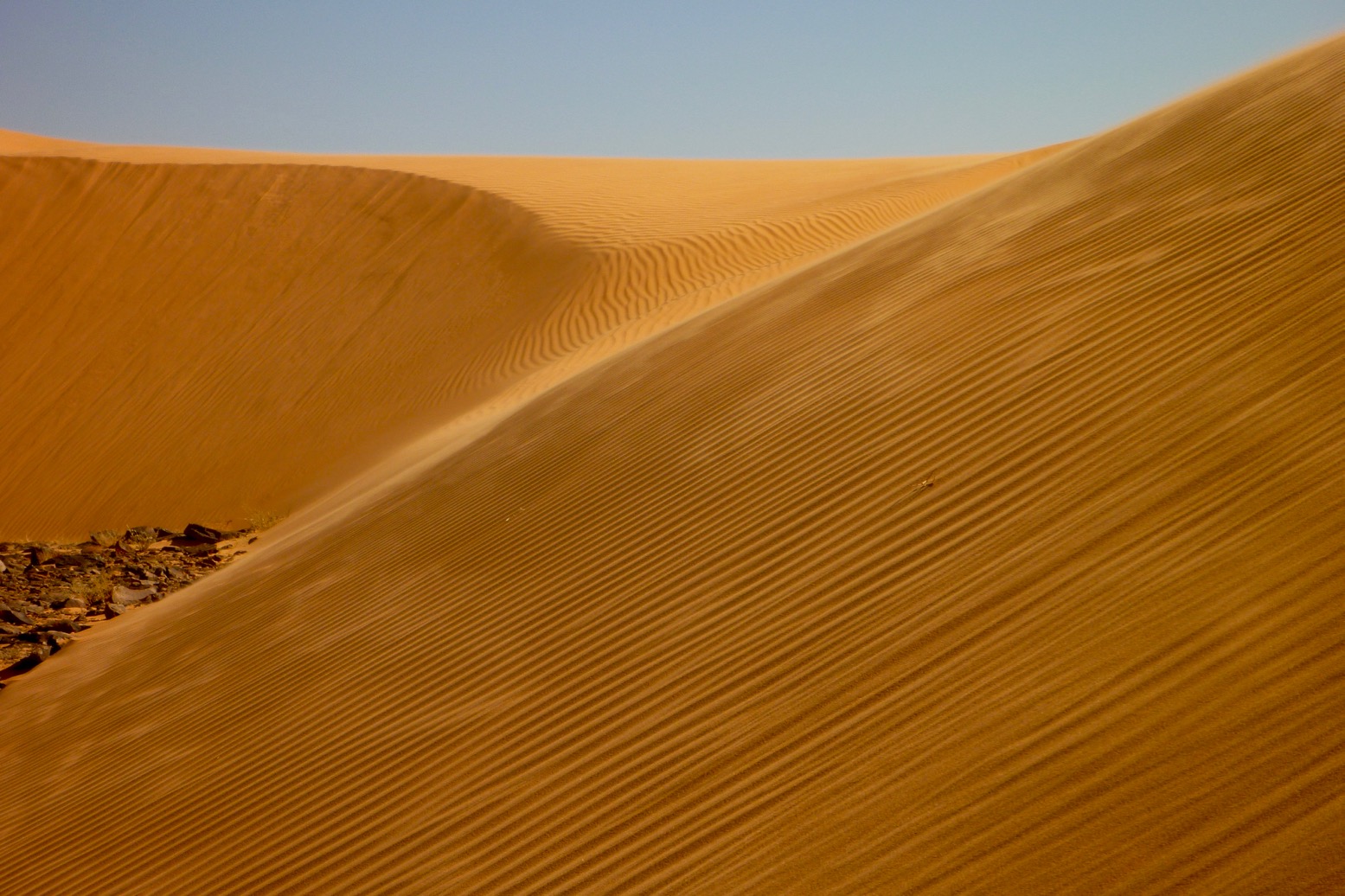
You’ll get plenty of dune walking in

luncharn

cros
Lack of prolonged remoteness (to be expected in the Adrar)
Flatish landscape out east
Trinket stalls every day
Pace slowed too much (but just as well)
Nescafe – in the end, undrinkable whatever you try
Missed fresh lunch salads and fruit, too
Oued Abiod; the better places were off it

You can watch the 4-minute French TV report here. We didn’t encounter the army patrols featured in the film – they were up north shot later (so to speak). But it reminds me how brilliant drones are for desert filming. Makes me want to do more walking in the Sahara, but maybe not in a springtime heatwave.

How to navigate by the stars

ahb
hasbey24map
hblo

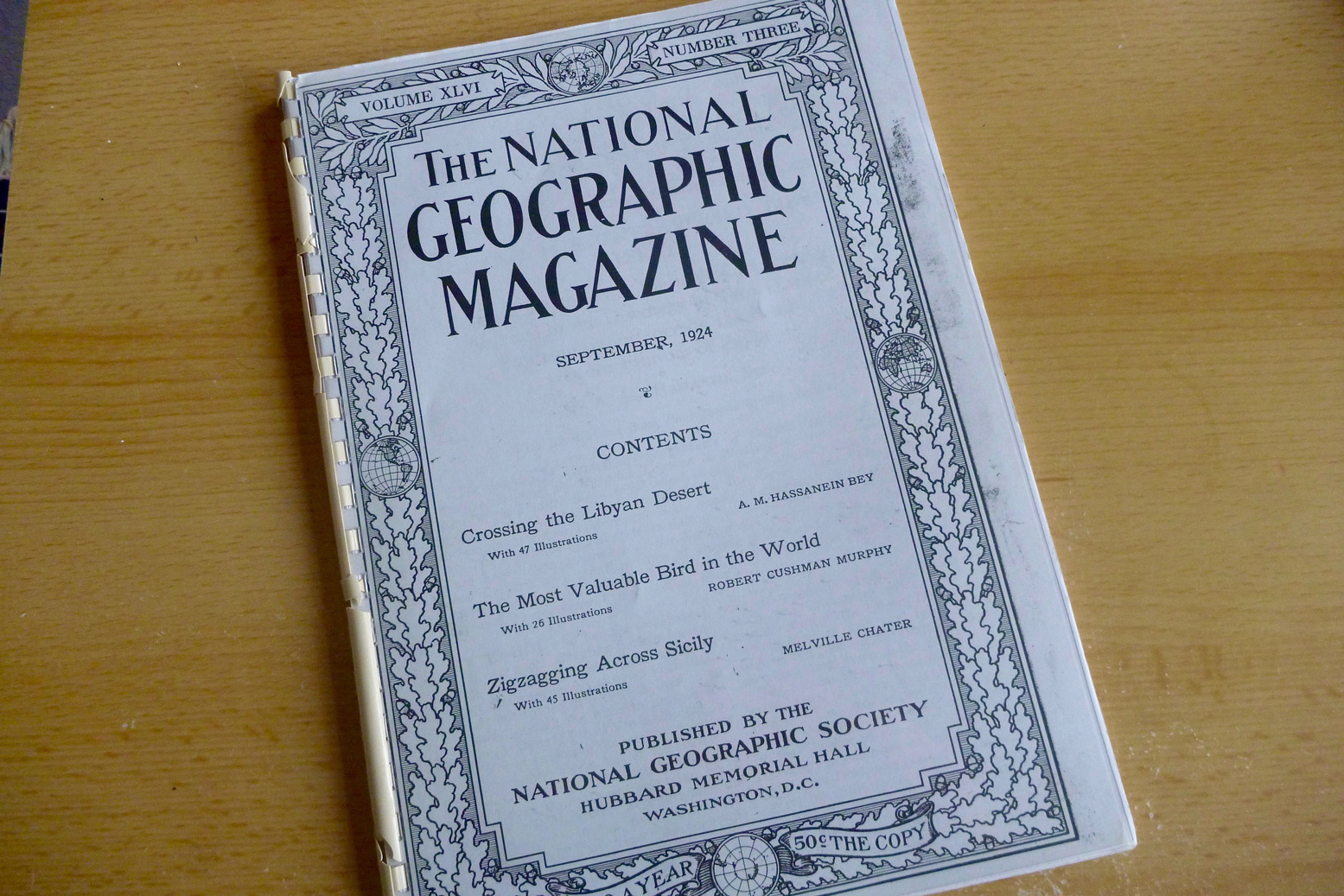
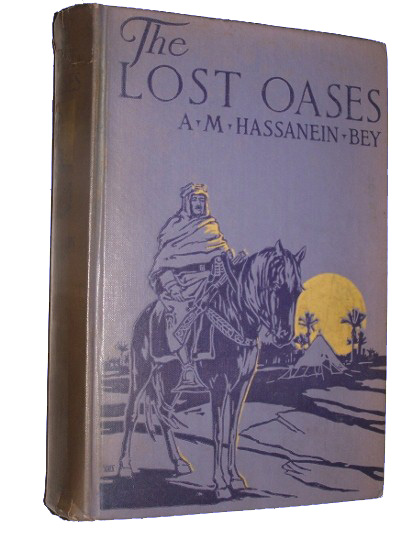
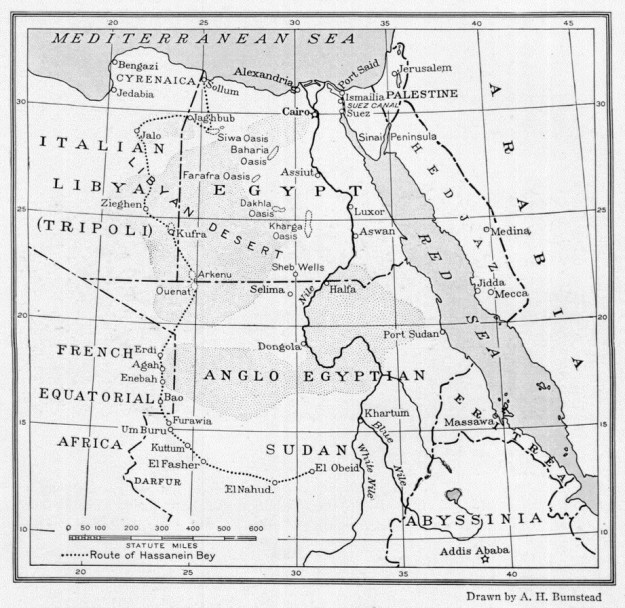
I recently read Ahmed Hassanein Bey’s 1924 National Geographic article about his six-month camel journey from Saloum on the Mediterranean coast to El Obied in the Sudan. (You can read an online version here). Two years earlier he’d travelled as far south as Kufra, then the centre of the xenophobic Senussi sect. And in 1925 he published The Lost Oases which the NG article summarises and which is still available in print at normal prices.

On that 2200-mile journey he located the ‘lost oases’ of Jebel Arkenu and Uweinat (see map). At Jebel Uweinat he speculated correctly that the rock art depictions of animals he saw there must pre-date the 2000-year-old camel era which were not present.

ahbju
northstar

At one point in the latter half of the trip when the caravan is forced to travel at night to avoid the intense heat, he interestingly describes how their guide navigated by the stars when there were no faint landmarks to aid orientation. It surprised me by being rather less intuitive than I thought.

The manner in which a Bedouin guide finds his way across the desert at night is a source of wonder to the uninitiated. In a region which provides no familiar landmarks he depends solely on the stars. As we were proceeding in a south-westerly direction during most of our night trekking the pole star was at the guide’s back. He will glance over his shoulder, face so that the pole star would be behind his right ear, then take a sight on the start of the south in that line. He would march for perhaps five minutes with his his eye riveted on this star, then turn and make a new observation of the pole star for of course the star to the south was constantly progressing westward. He would then select a new staff of guidance and continue. 

He goes on to explain that the technique floundered around dawn and dusk when the stars weren’t visible and at which point he took over with his compass.

star

S is for ‘Sahara’ ~ the mystique of the desert

Part of the Sahara A to Z series

The desert is ruthless
It strips you of your vanities
Your illusions
Gives you the opportunity to see yourself for who you really are


Character addressing Jesus figure in The Last Days in the Desert (2016)

sol-tazat

More than other wilderness environments, the desert is commonly seen as a place for spiritual rebirth or just some contemplation. Some speculate that it’s no coincidence the world’s great monotheistic religions originated in the desert. Or perhaps it was the other way round: the Fertile Crescent along with timely wheat mutations and climatic cycles spawned great civilisations from which monotheism evolved. Anyway, just being in the desert it’s commonly thought one can be purged, cleansed and reborn. When striped of familiar surroundings and associations, you commonly hear travellers professing an awareness of their insignificance in the great scheme of things. Whatever, it’s always been seen as a good place to get away from it all, including other people.

In the desert you can remember your name
Coz their ain’t no one for to give you no pain

sol-boa

Another one of those periodic ‘I want to cross the Sahara by camel’ posts popped up on the forum the other month. The OP ‘…thought to myself ‘I want to have a life changing experience’ and thought this would be just that adventure.’ Across the width of the Sahara from Atlantic to Red Sea. There followed some clarification, good advice and some scorn, and within a few days the thread blew itself out.
What is it about crossing the Sahara? Why do ordinary individuals get fixated on the idea of ‘crossing the Sahara’ at all costs? I know when I first went there the Sahara was something that was on the way to where I thought I was going, but so was France and the Mediterranean. I didn’t see crossing the Sahara as a life-affirming achievement or any sort of event – I was more looking forward to the simple challenge of some desert biking.
Perhaps the words ‘cross’ + ‘sahara’ add up to a compelling soundbite that anyone anywhere will get instantly, like ‘climbing Everest’ or ‘rowing the Atlantic’, but perceived as a whole lot easier.
I received a similar enquiry. A chap wanted to cross the Sahara with camels – it didn’t really matter where, it was the crossing that mattered. He suggested some catchy start and end points like Casablanca to Dakar without really thinking it through – padding alongside Morocco’s busy N1 highway with a troop of dromedaries strung out nose to tail. I made what I thought were some better suggestions that would give a real sense of travelling in the desert with camels while dodging the worst of the current political complications. I even sent him the camel chapter from the book (short version of this). I never heard back.

sol-rep1
impjor

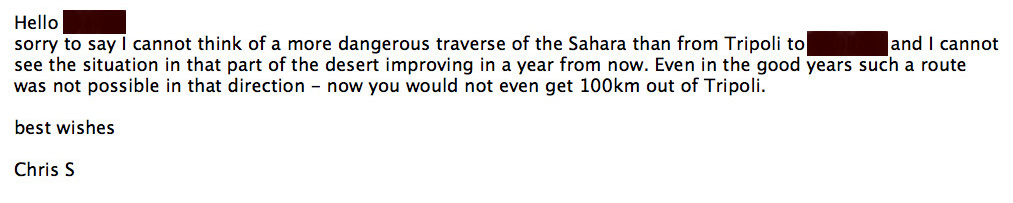
Above is my answer to another enquiry which boldly stated the intention to pull off a hare-brained scheme so I’d have no doubt of the total commitment. ‘Nothing is impossible!’ Never heard  from her again, either. Maybe I am too blunt but I keep these emails as evidence of ‘well, I did warn them’ should they ever crop up in the news.
It seems that people hungry for adventure lose something of their reason when it comes to crossing the you-know-what. They’re carried away by the concept which ignites the dream and set about with a steely determination to make it happen.
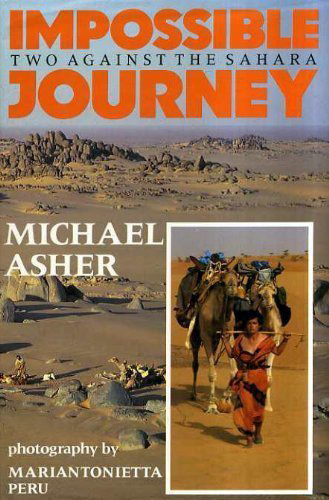
To my mind camel crossing the Sahara north to south and especially laterally requires a solid background of experience which is why I respect the achievement of Michael Asher and Mariantonietta Peru when they did it in the 80s and went on to write Impossible Journey. At least they had a good idea of what they were taking on. These days the journey is a whole lot more impossible.

There must be something about camel trekking across the Sahara that makes it sound relatively uncomplicated and easily done alone. You traverse the wilderness with the unspoken companionship of your caravan and maybe a nomad guide whose language you don’t speak: ‘horses with no names’ who won’t question insecurities or flakey motivation.

sol-cam

Aside from the practicalities or logistics of such a monumental task, what irks me is that very often there’s little curiosity about the environment or the cultures they’re passing through. The conquest trounces all, and the empty Sahara is just a backdrop for a monumental vanity project, as it was for Geoffrey Moorhouse back in the 70s and several others before or since.
As I was told recently by an individual who came close to death in his quest: It was a bad time and I made poor decisions. I desperately wanted it to be “me and the desert” and to have my own experience in solitude. I’m wiser now.

sol-xt

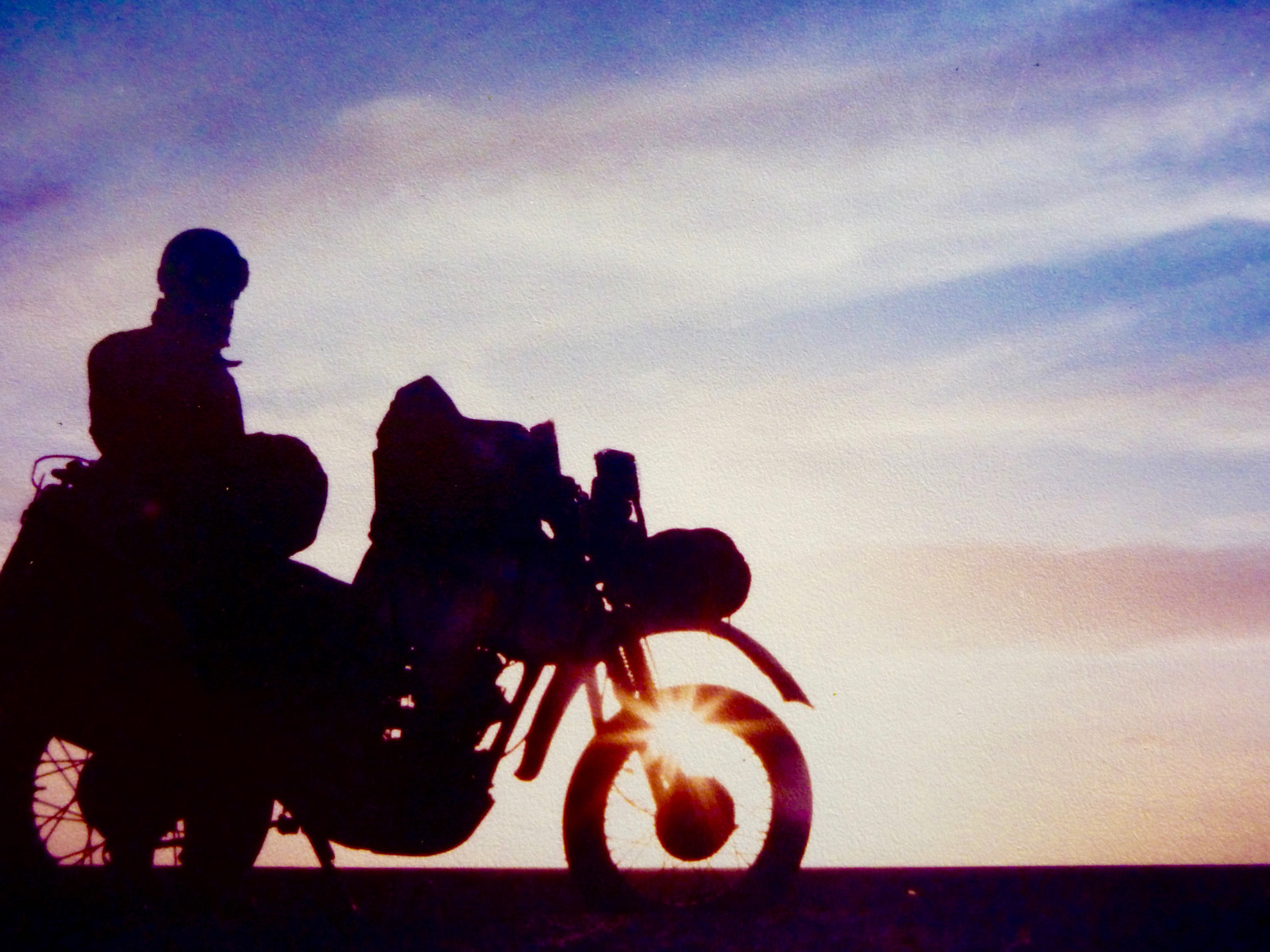
Once I get used to it and feel comfortable I like to be alone out there too, and in the desert that’s not hard to do. If anything it helps you re-evaluate human companionship which may be part of the catharsis some seek out there. But I find there’s no need to go to extremes to do this. One memorable desert camp is all that’s required to consolidate a feeling of well being. For me the image below sums it up nicely. Only a mile off the track to Djanet in 1988. For the moment the bike was running well and so was I. It was nice spot for the evening – comfortably alone. There have been many more nights like that out in the Sahara, with or without other people.

djanet88

Usually though I’ve found travelling alone with a vehicle tends to extinguish any mystical retrospection. On a bike you’re totally preoccupied with keeping upright, not getting lost  and all the rest – and in a car it’s the same plus the noise and the shaking. It is the evenings that are a blessed respite from the task, the heat and the wind and when the appeal of the desert is easily felt.
In a group, walking with camels and crew is a far more satisfying way to enjoy the desert day or night, most probably because there’s so very little to worry about. You don’t have to know any more than how to walk, sleep and eat. It’s the very simplicity of such desert travels that strikes the chord, even if this is a fantasy enabled by the hired crew of desert nomads. The actual practicalities of making it happen and sustaining camelling independently get quite complex as many accounts that I’ve read have shown. And now you have to account for the unglamorous and unromantic political overlay.

I suppose the hope is that when one gets to the Other Side one is reborn or cleansed or at the very least feels a sense of achievement which ought to trump all insecurities. But no account I’ve ever read has admitted to that. Or perhaps midway through the journey there is some sort of epiphany with a closure and acceptance and an understanding that life must go on, at which point the epic challenge may lose its purpose.

After nine days, I let the horse run free,
‘Coz the desert had turned to sea.

Me, I just like being in wild places including the desert. It doesn’t have to get complicated.

sol-edg