 Ever thought of buying an old Merc, driving it 2000 miles across the Sahara and selling it easily for a 400% profit? Chris Scott went along for the ride.
The phone rang. ‘Chris, it’s Andy. Wanna lift to Mauritania?’
‘When you going?’ I asked.
‘Now. I’m in Lyon.’
‘Er, how about I meet you in Malaga.’
‘OK.’
Andy was a 23-year-old engineering graduate trying to put off a career in designing aerodynamic egg cartons. Having fallen in with some wheeler-dealing grape pickers in France, he’d joined a bunch of them driving old heaps down to Mauritania to sell. With the right car; ideally a German-registered diesel Mercedes roadworthy test failure, one could pay for the trip and come out with a few hundred quid. On that trip Andy had indeed tripled his money but had got set-up by the buyer and summarily stiffed by the Mauritanian customs, handing over half the grand he’d made.
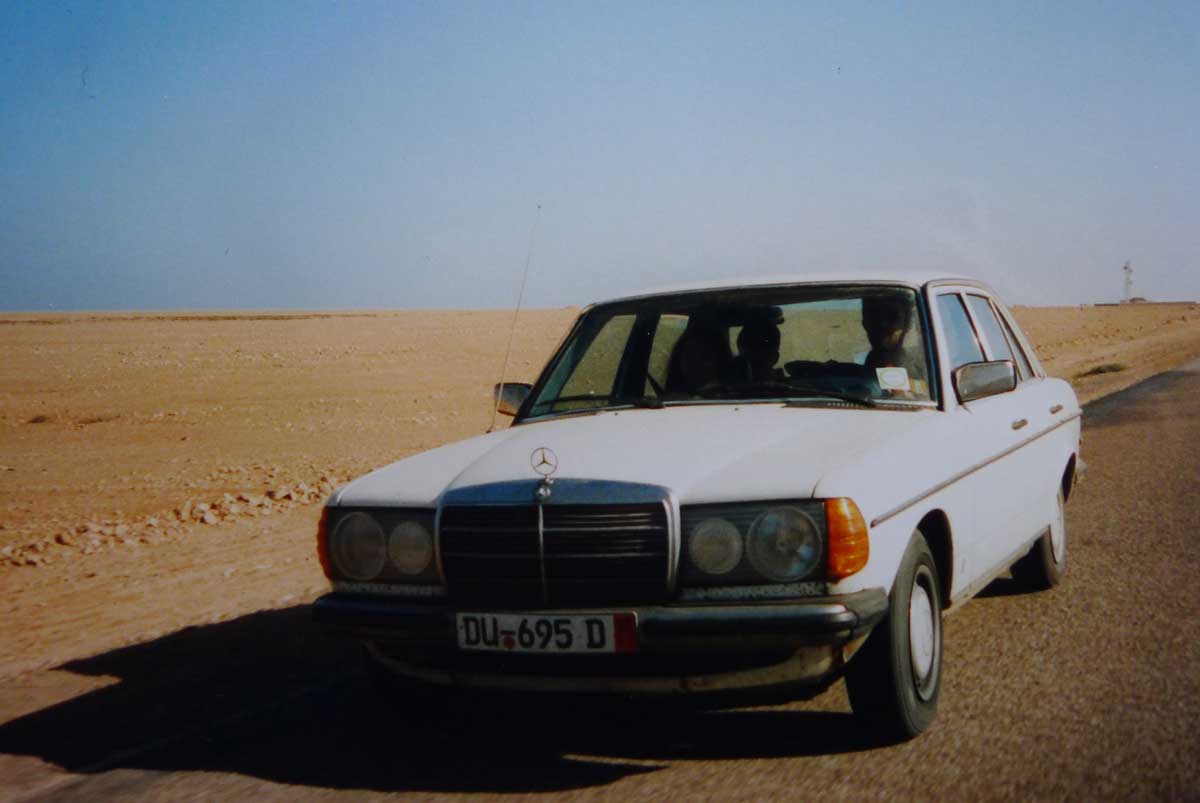
This time with some lucrative contraband, forged documents and three passengers along for the ride – myself and retired grapeurs Sandrine and Pascaline – he was ready to stiff back at the wily traders and corrupt Mauritanian officials with a vengeance. The plan was the same: drive £300-worth of ’82 Mercedes to Mauritania, flog it on the side and fly back for another.
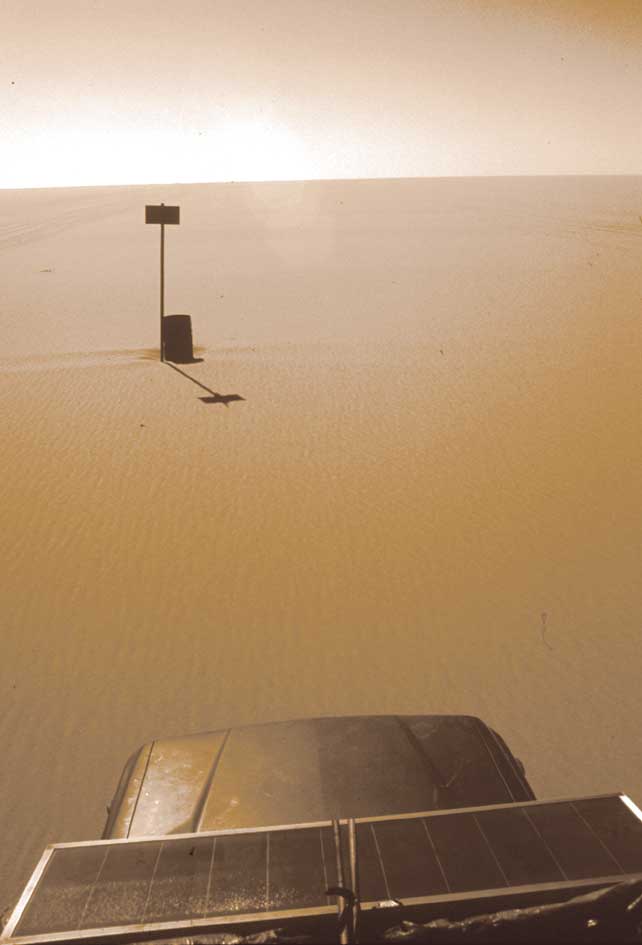
Flogging bangers in car-starved West Africa is nothing new. In the 1980s, ratty 504s and the like dragged themselves across Algeria to Niger and Togo. A good sale paid for a beach break and a flight home with a suntan. Trouble was, making a quick African buck still involved crossing 2000 miles of Sahara desert – no easy feat for a knackered and overloaded Morris Marina. Summer saw most disasters – foolhardy young European thinking they were in for a big adventure. Some got lost and disoriented in sandstorms or open desert and weren’t found for years.
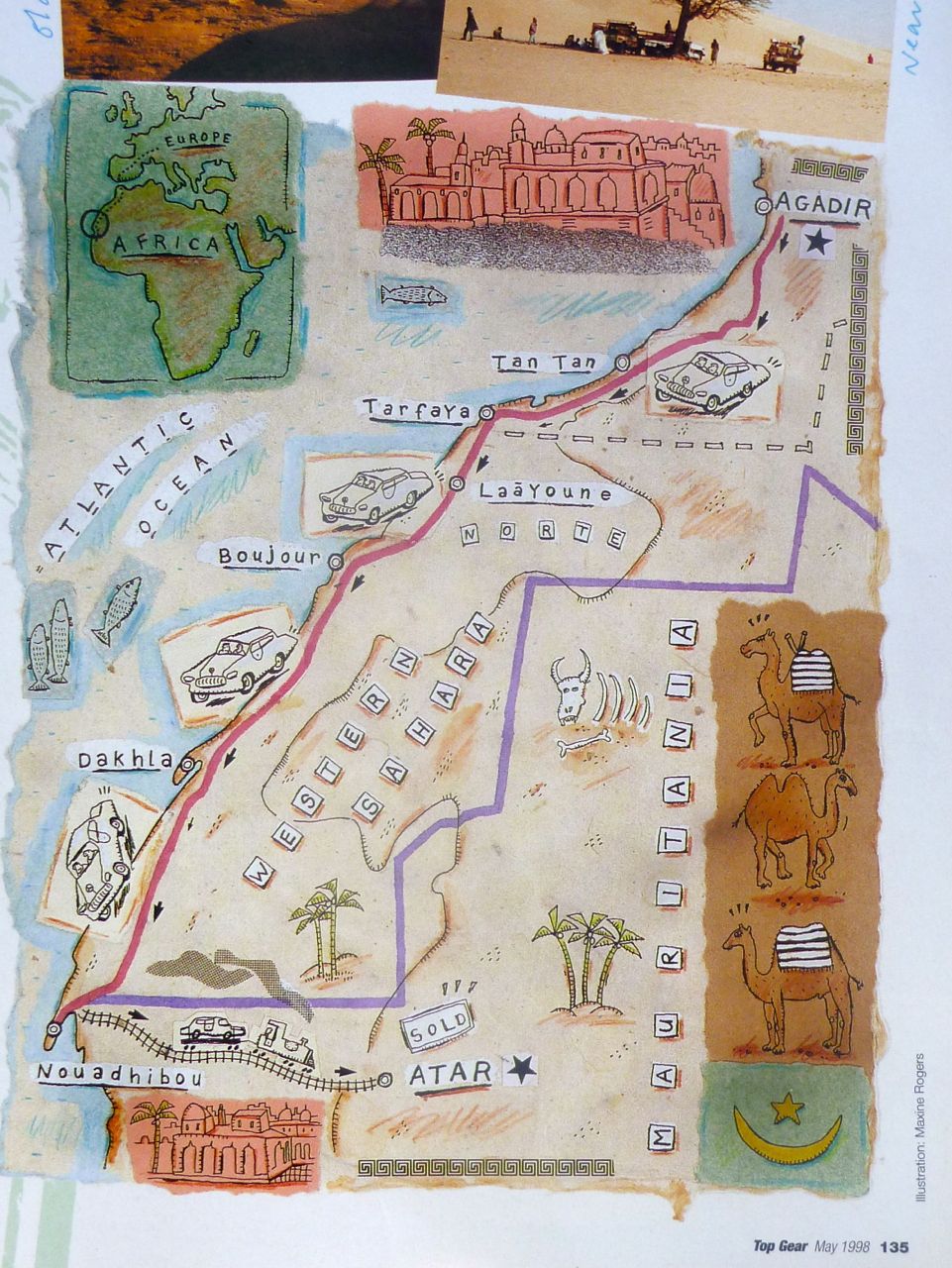
These days civil unrest makes Algeria about as desirable as Iraq and so the irrepressible river of trade has found a new course – down through the Western Sahara to Mauritania and Senegal, what I later dubbed the Atlantic Route. Distances are long but the tarmac’s good, the fuel’s cheap and the Moroccans are cool. All you have to do is get in and out of Mauritania without getting busted for smuggling, blown up by mines or ripped off – a ‘Winter Sun Special’ with attitude. Anyone can do it, but before you start tearing through Exchange & Mart remember it’s the combination of sub-roadworthy cars from Germany added to the blind-eyed desirability for Stuttgart’s three-pronged star that gets the biggest profits.
ON THE PULL
I met up with Andy at Malaga airport, mumbled greetings to Sandrine and Pascaline and had a quick appraisal of the car which on the surface looked a snip at £300; strict roadworthy tests prematurely age cars in Germany. Catching an Algeciras ferry in the nick of time we cruised through the Moroccan frontier controls despite a stash of duty-free whisky, car radios and mobile phones, plus a home-made Green Card. With a tank full of duty free fuel too, we headed into the Rif mountains, where roadside kids offered lumps of hash the size of cricket balls. Dazed by one of Pascaline’s baguette-sized rolls-ups, we drove through the hills into the night, finally lurching into the pound-a-night Hotel Marrakesh in Rabat.
Officially the land border with Morocco and Mauritania is closed so in Rabat I had to pull a little scam of my own. I bought a flight to Mauritania, used the ticket to apply for the ‘entry by air only’ and then cancelled the ticket. It’s something they don’t tell you about in the guide books, but the practise is widely accepted. The French girls didn’t need visas and Andy was borrowing a French mate’s passport to save money. With a few days growth and some cucumber in his cheeks the likeness was pretty good, and anyway these Europeans all look the same.
That done, we hit the road to Essaouira where we were meeting Sandrine’s brother, Christophe. As we drove I noticed Andy was adapting quickly to Moroccan driving techniques, a combination of screeching bend-swinging, impulsive stops or U-turns and lane-clogging coasting while he peeled an orange or fiddled with the wiring. All he had to do now was take up smoking, spitting and perfect his mid-conversation ‘crotch-lift’, and they’d give him a passport there and then.
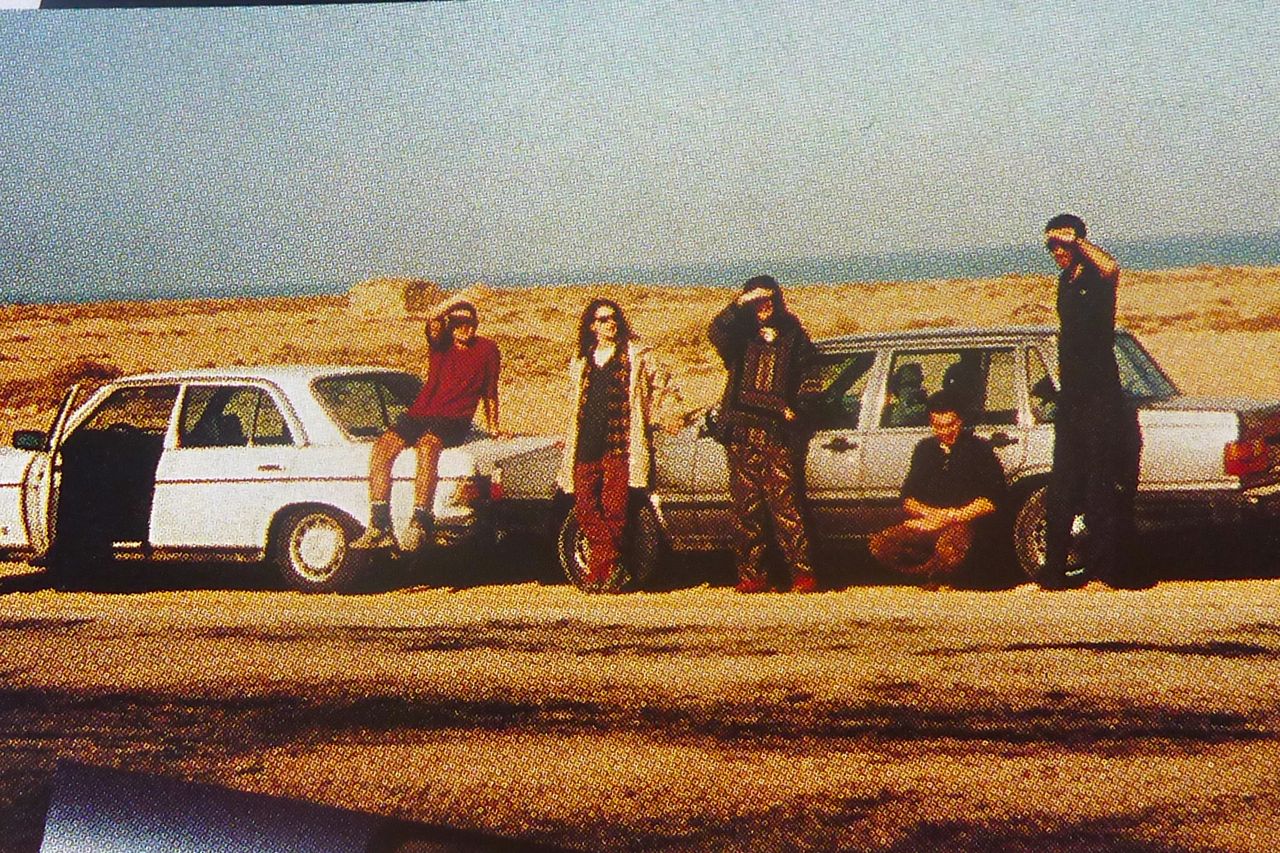
By mid-afternoon we were clinking mint teas with, Christophe, an affable guy who’d make friends with a brick before you could say ‘Come ON, willya!!’. Christophe had just sold his business for a packet but had also been dumped by his wife, so joining us to cross the Sahara and flog his seven-year-old 740 Volvo seemed like a good move. Like Andy’s Merc (before he readjusted it), the 740 had a healthy 300,000 on the dial, but looked and handled a whole lot better than the tired old Merc whose TUV failure read like a parts manual.
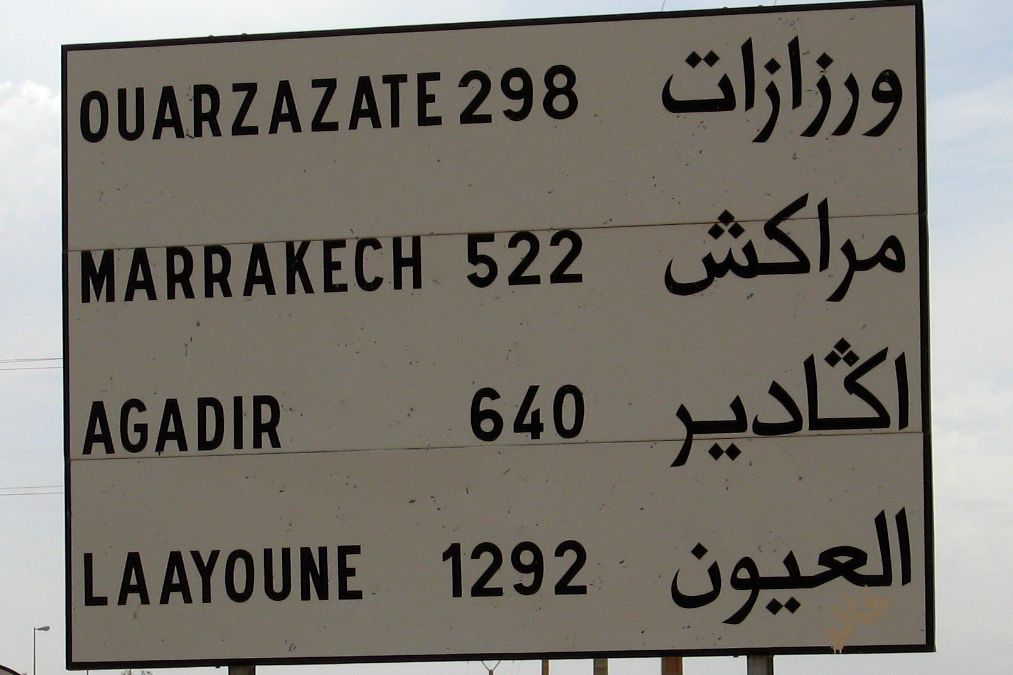
Morocco is not a heavy country – it’s one of the friendliest and most laid back I’ve visited – but it does have its fair share of police check points. Next day, chasing Christophe along a shoreside corniche, Andy gunned the three-litre Merc past a lorry and over a bridge at 120kph. Hitting a dip with a diff’-splitting scrape, we drove straight towards a gesticulating policeman.
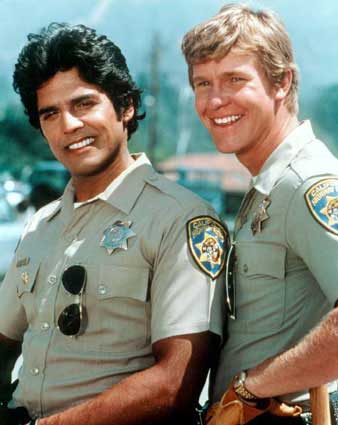
Although Andy had already joked, grovelled and argued his way out of a couple of pulls, this one looked serious. The officer had clearly modelled himself on bad-ass US movie-cops. He sauntered slowly towards the car, knowing he had us nailed, and demanded ‘Papers!’
‘Bonjour officer’ Andy launched in jovially, ‘How are you, salaam alaikum, la bas?’ (Arabic greetings).
‘Alaikum salaam’ answered the policeman slowly. ‘Do you normally drive like this in your country?’
‘Hey, it’s no problem officer, I had excellent visibility and there was plenty of…’
‘Passaport!’ he cut in. Andy handed over the document.
‘Driving licence! Registration!’ Andy complied, now chewing his lip. The guy flicked through the documents with a sneer. This was not the time for the cheekiness Andy had used earlier.
‘The fine for overtaking on a bridge is 400 dirhams’. About £25.
‘FOUR HUNDRED DIRHAMS!!!’ Andy exclaimed as if it was a mid-week double rollover.
‘But Monsieur, we don’t have such money, we’ve just filled up and we’re heading for the bank in Tamri.’
‘Then you must face the tribunal in Agadir. Overtaking on a bridge is in contravention of International Law. The fine is 400 dirhams.’
Now Andy saw a chink. If this guy was quoting ‘International Laws’ then he might as well proclaim the Fifth Amendment of Alpha Centauri.
‘But monsieur, in England there are no such laws. I was trying to keep up with my friend and the bank will close soon.’ Andy pleaded.
‘Were are you going?’
‘Oh, just down to Agadir to the camping – a short holiday, it’s all we can afford.’
We stared intently out of the windows as their confrontation cooled. Body language altered, tones mellowed and after a while we were sent on our way with a reprimand.
‘Zat was a close one.’ said Sandrine.
”International Law!’. Do me a favour!’
MINEFIELDS AND NO-MAN’S-LAND
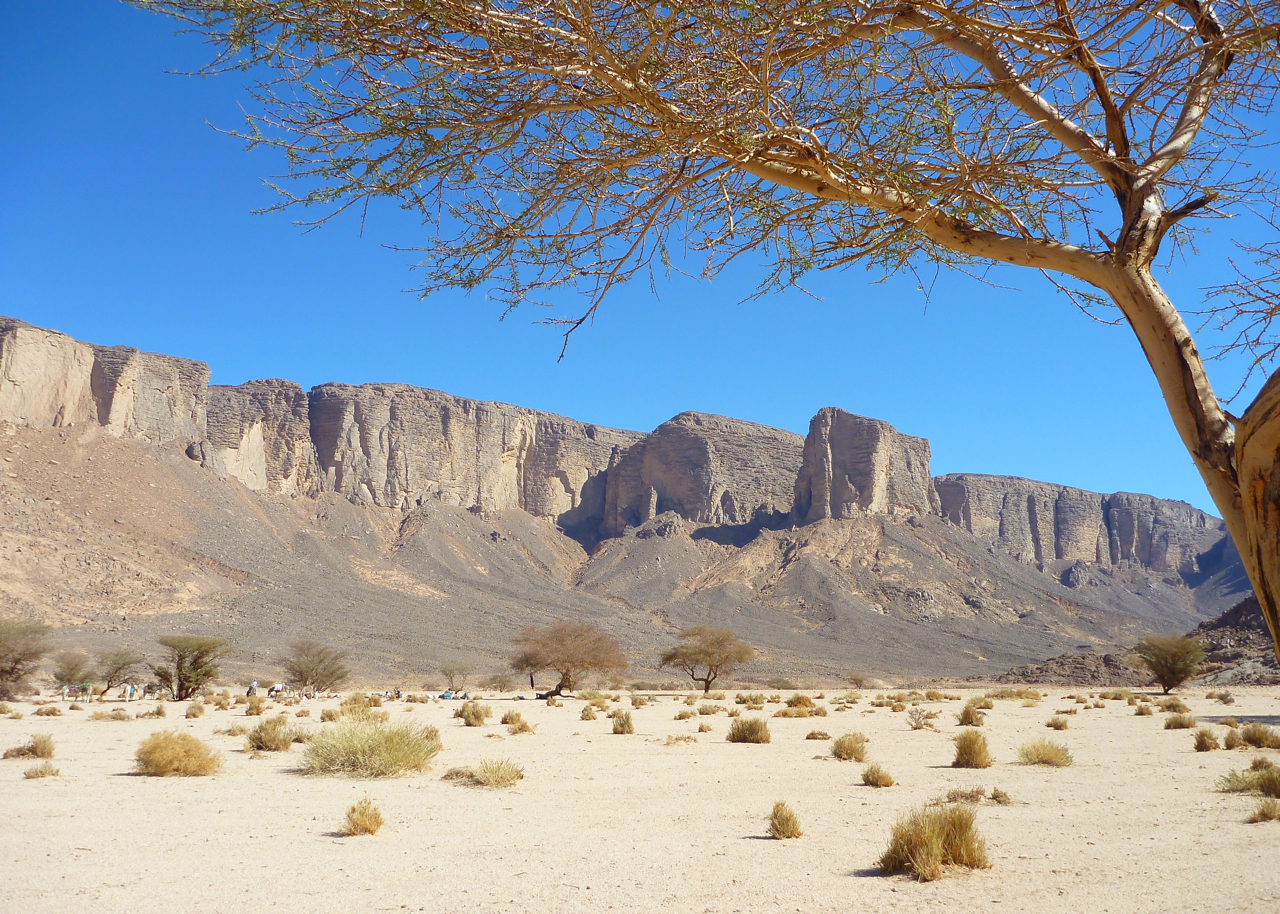
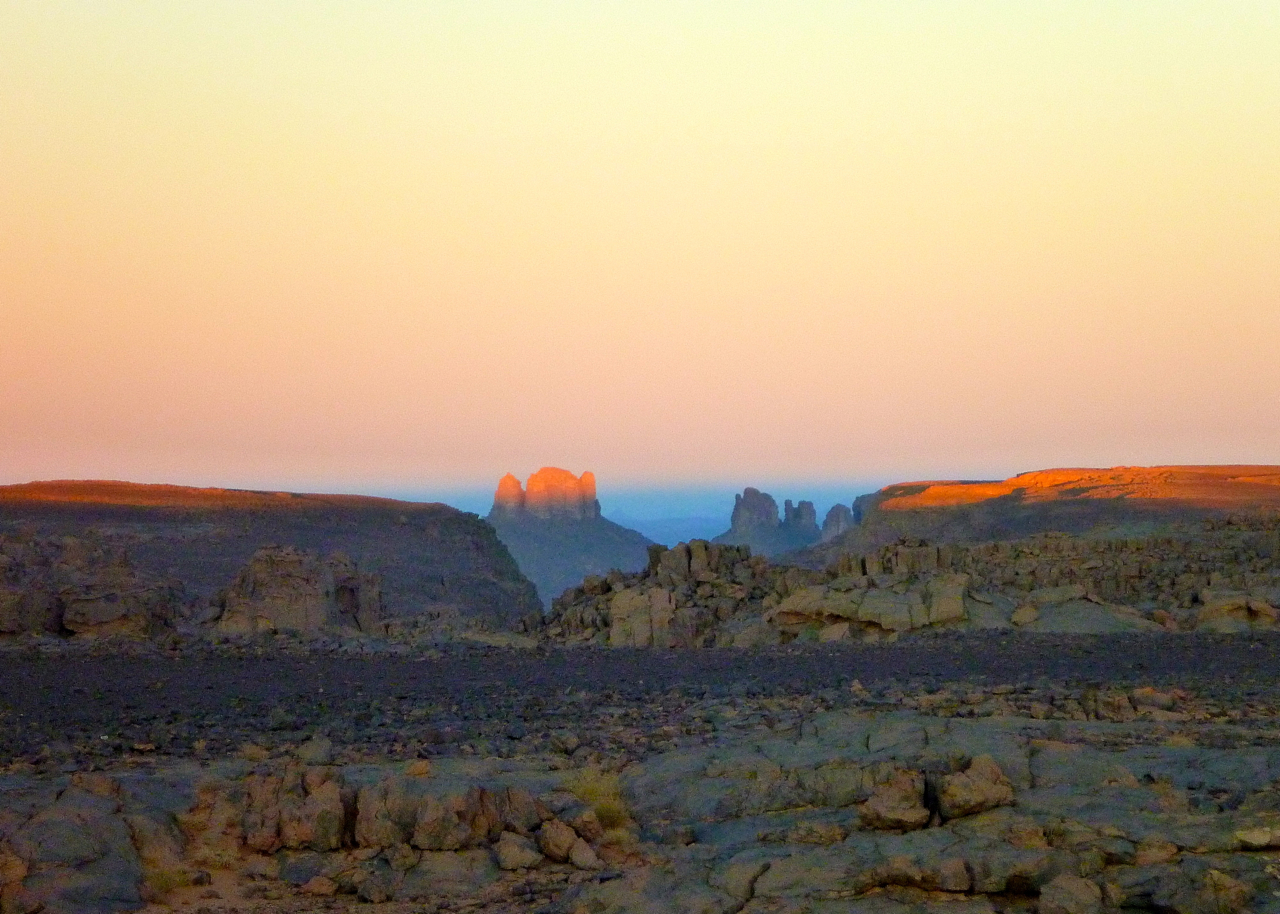
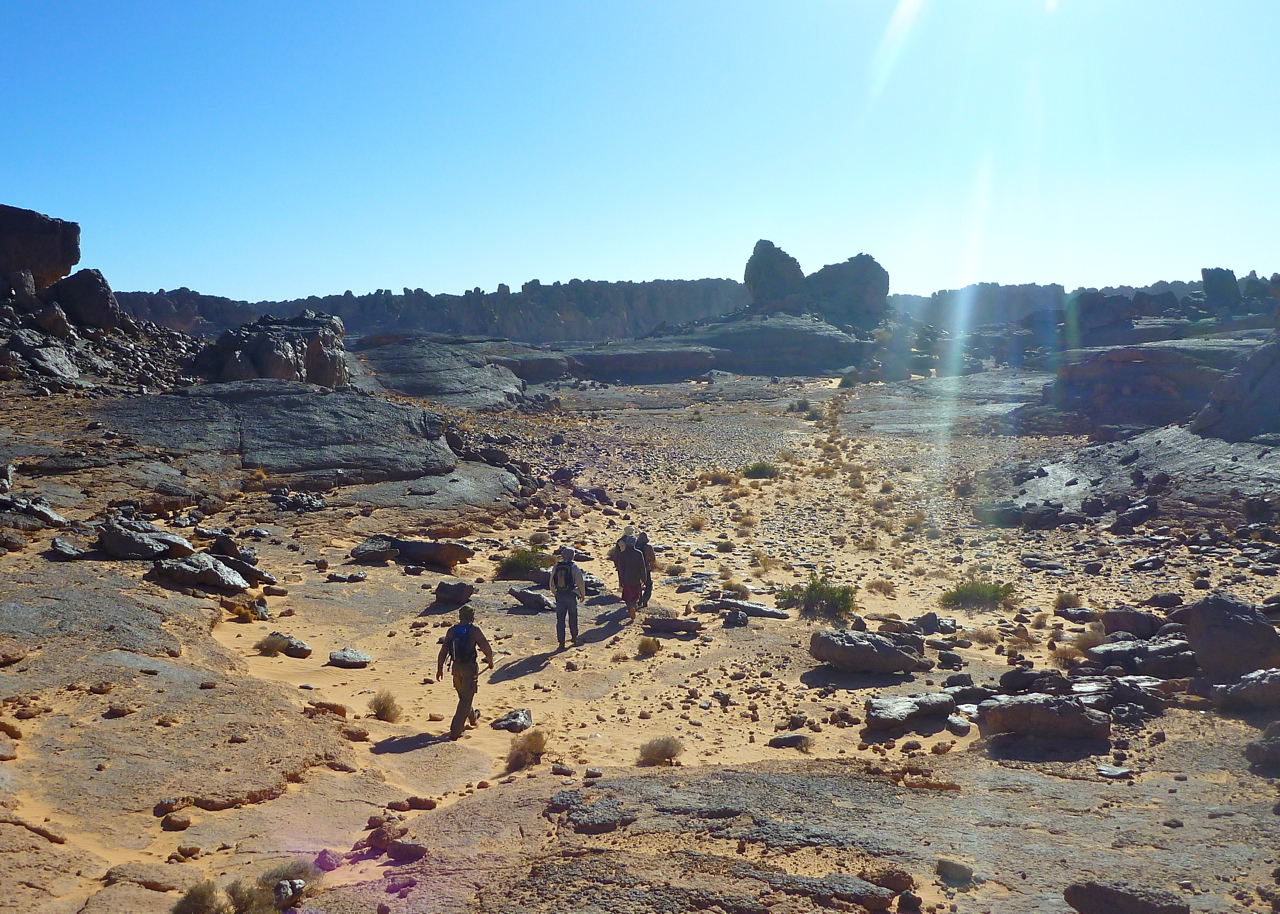
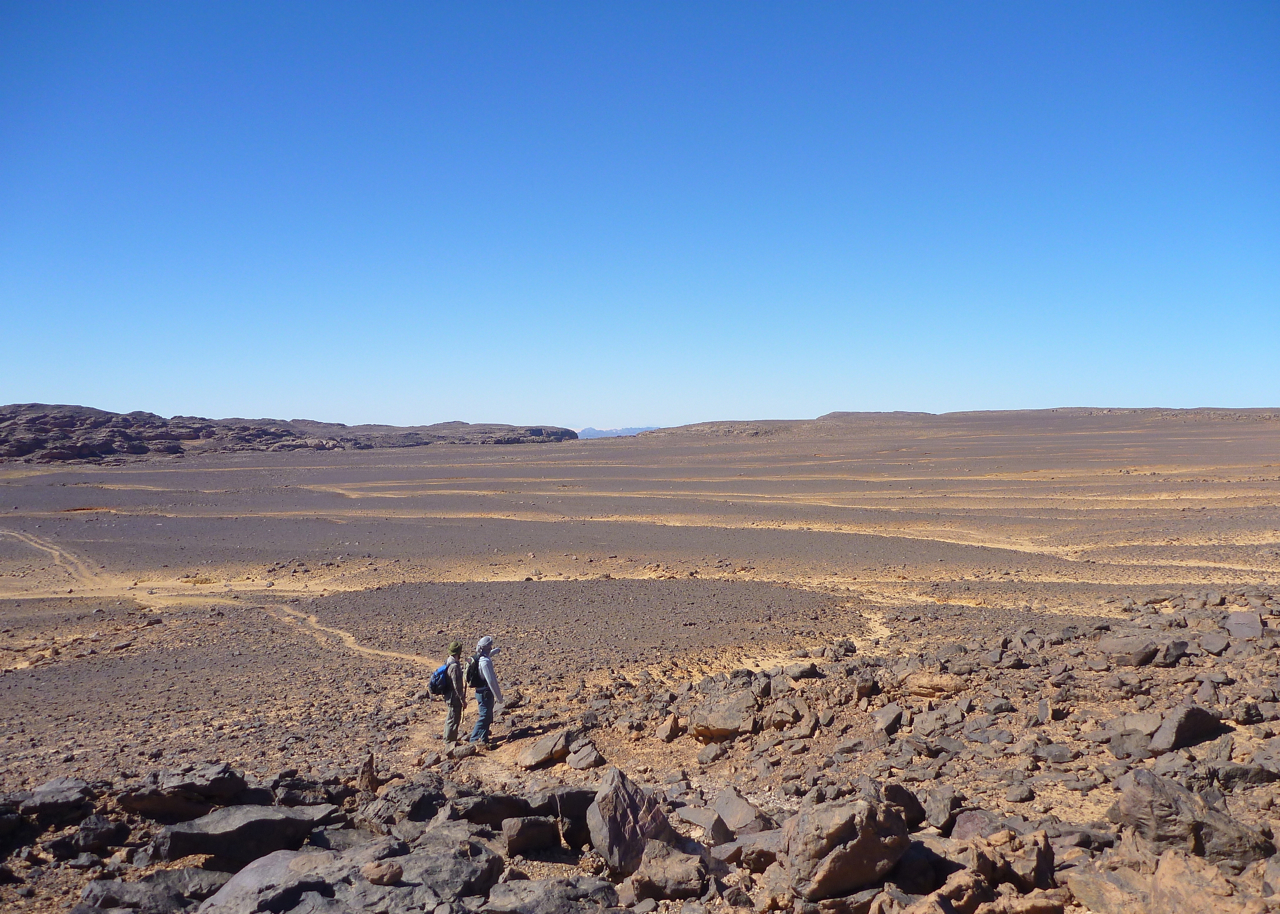
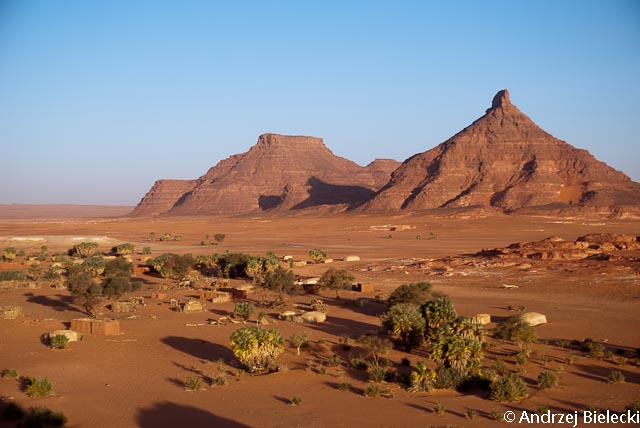
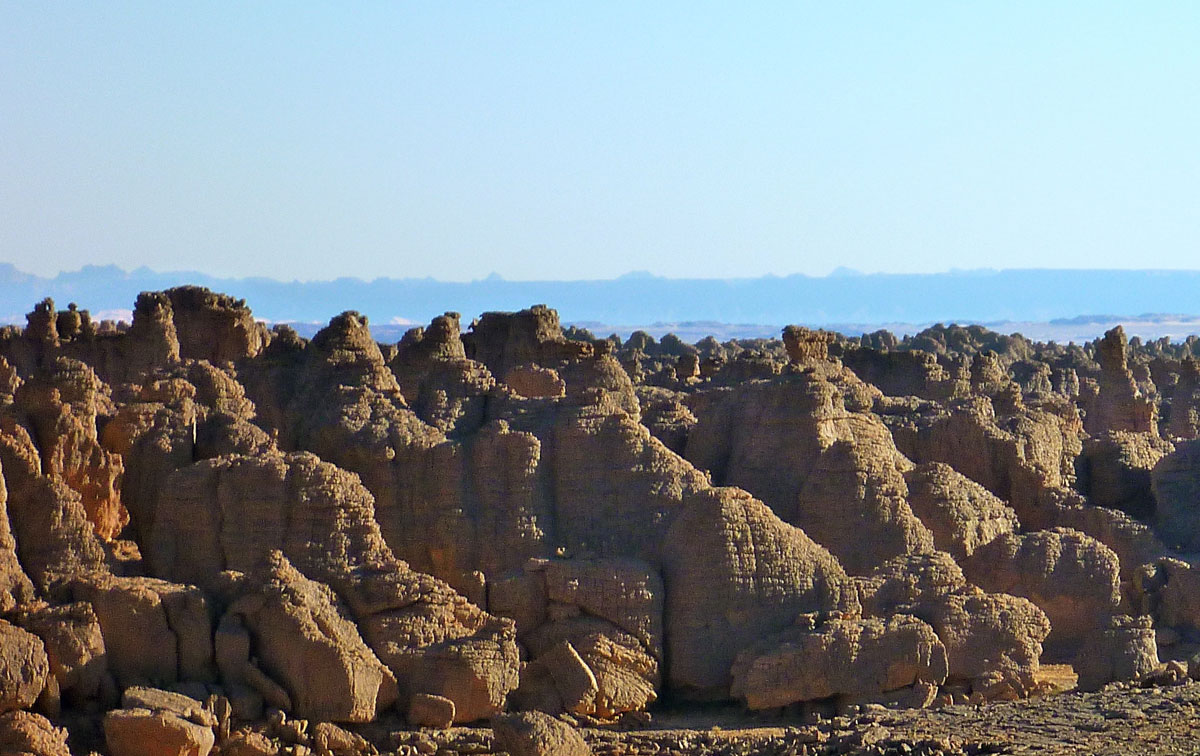
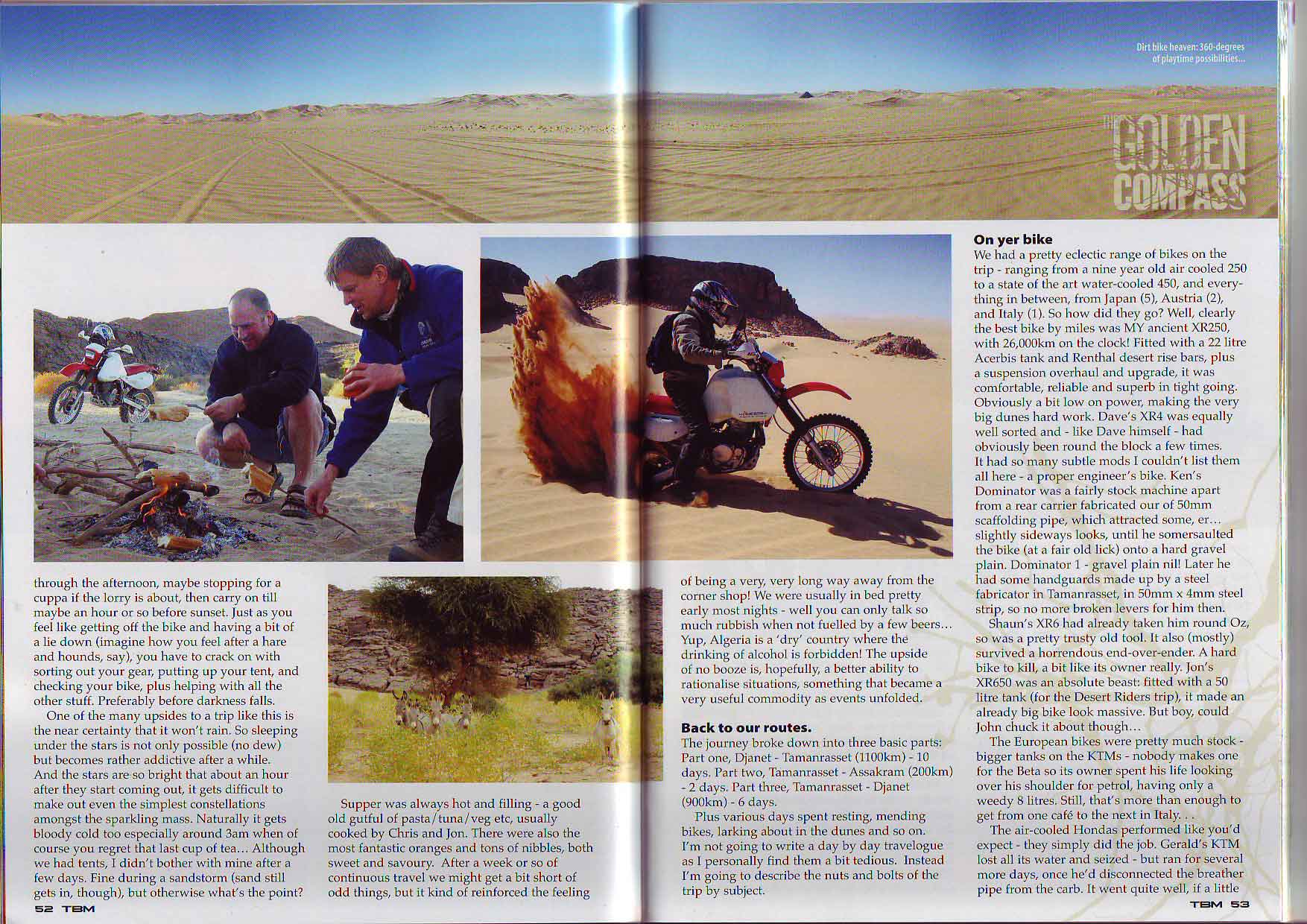
Next morning, we left the popular portion of Morocco to tackle the drab desert coast of the Western Sahara where plains of rubble and low escarpments drop into the Atlantic’s pounding surf. This is disputed territory between Saharawi nomads – united under the Polisario Front – and the expansionist Moroccan government greedy for the region’s minerals. An ageing British FCO’s travel warning put Western Sahara among the most dangerous countries in the world, which just proves they don’t get out much. The Polisario guerrilla war had been quiet for years while a UN referendum was set to solve (or re-ignite) the dispute by the end of the year. For the moment the Polisario sat and waited.
Besides, fuel was discounted to nearly half price to encourage Moroccan settlers and so help win any referendum so, with tanks brimming, we set off to cover the 900 kilometres to Dakhla in time to sign on for the military convoy to the border.
The twice-weekly convoy had been running for about five years, escorting southbound travellers the last 500km to the end of the road and the minefields of No Man’s Land. Officially it existed to offer protection from Polisario kidnappers, but now the one-way route was just an excuse for more form filling and stamp collecting in the expensive and soulless garrison town of Dakhla.
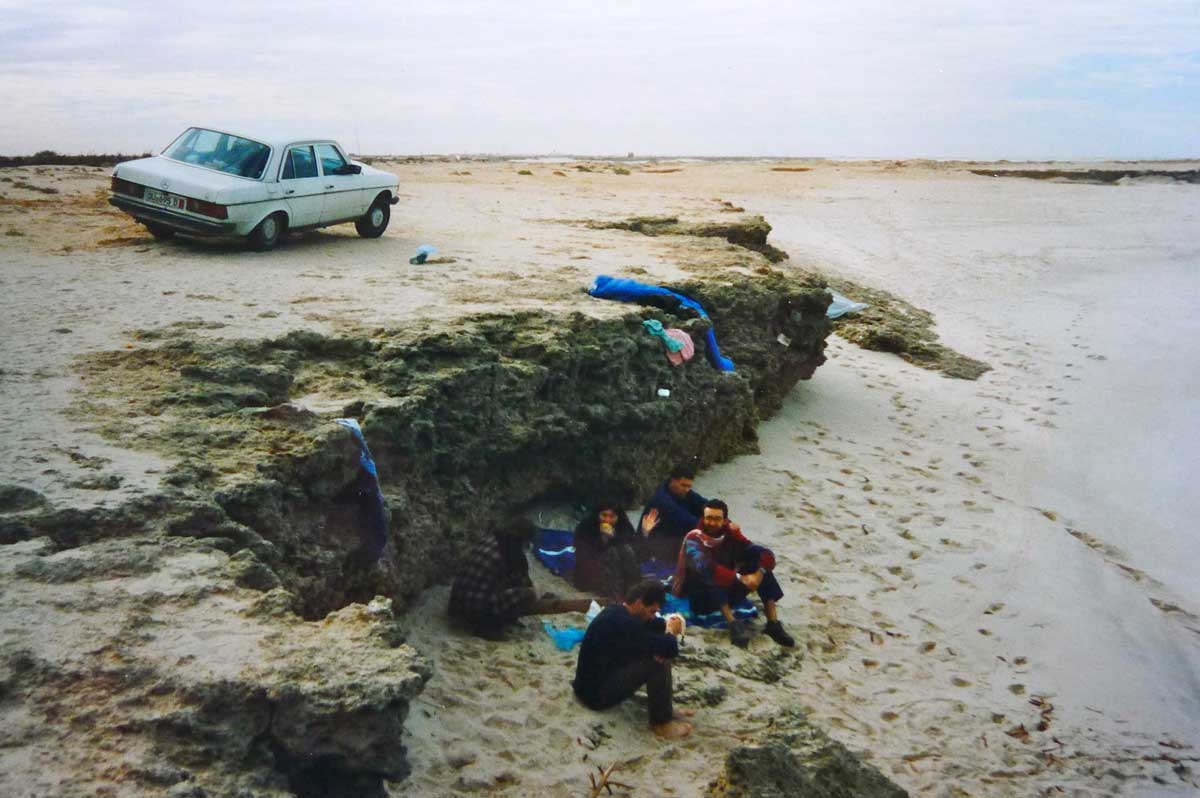
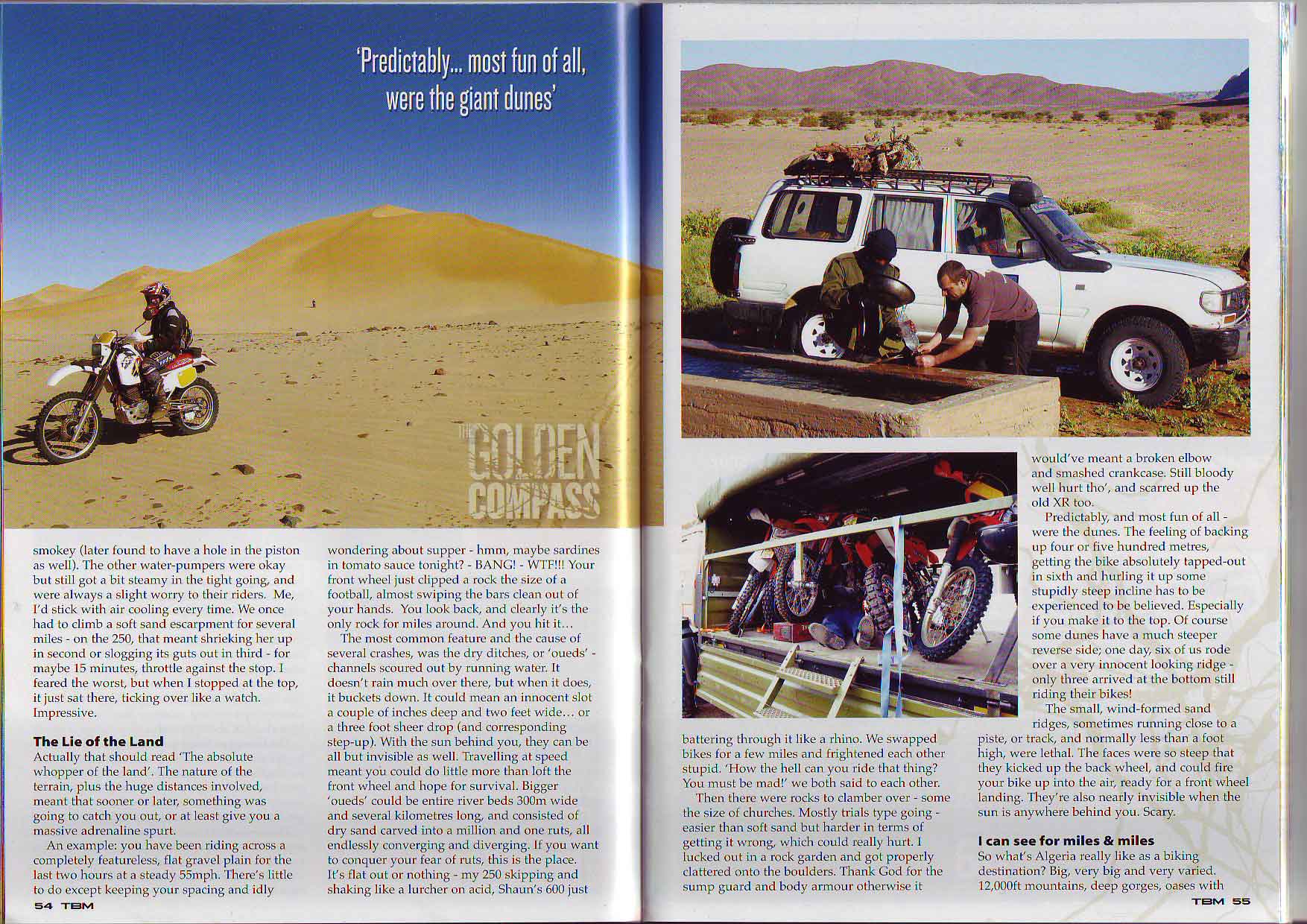
We camped by the beach and after a day spent acquiring this paperwork as well as the provisions for the journey (which could take anything from two to four days to Nouadhibou, the next supply point) we joined the convoy queue at the edge of town check point. In front of us was a mixture of European estates, 4WDs, ancient Saviem campervans plus the ubiquitous Mercedes vans and cars. People milled around, inspecting each other’s cars or snacking until a commotion from the guardhouse signified that we were off. Car by car the mile-long convoy gradually unwound itself and began to roll south across desiccated valleys, over sandy crests and past distant cliffs.
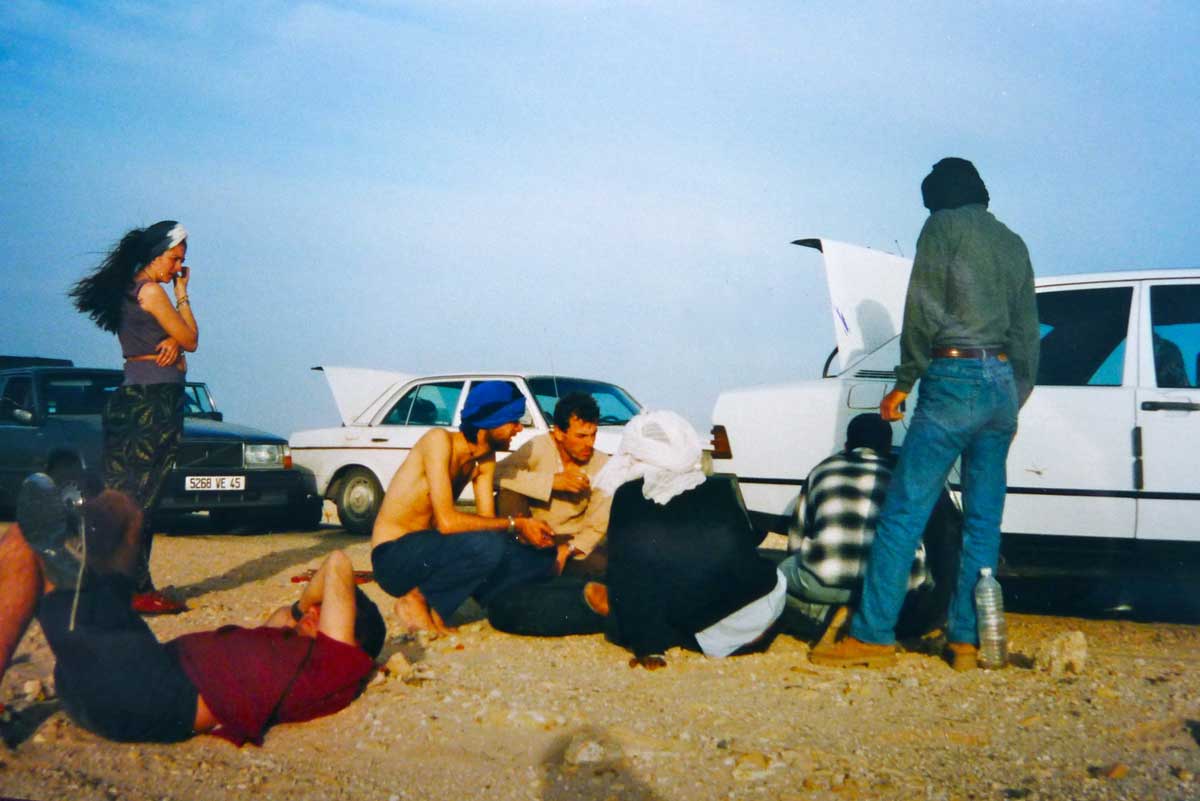
On the way down we assisted a decrepit van with a holed radiator and then stopped to help out a group of Mauritanians standing alongside a C180 up on its jack. Apart from its hand-painted number plate, the cool white Merc looked suspiciously roadworthy.
‘This looks in pretty good nick mate; what did it cost you?’ enquired Andy, as he rolled up his spare.
‘Oh you know, it wasn’t so expensive’, replied the veiled Moor fiddling with his tyre nuts.
‘Oh yes. Special offer was it?’ teased Andy.
‘Yes, my brother has a friend who has a garage. It was a good price.’ The wonder was that the stolen Italian car had managed to cross Europe at all…
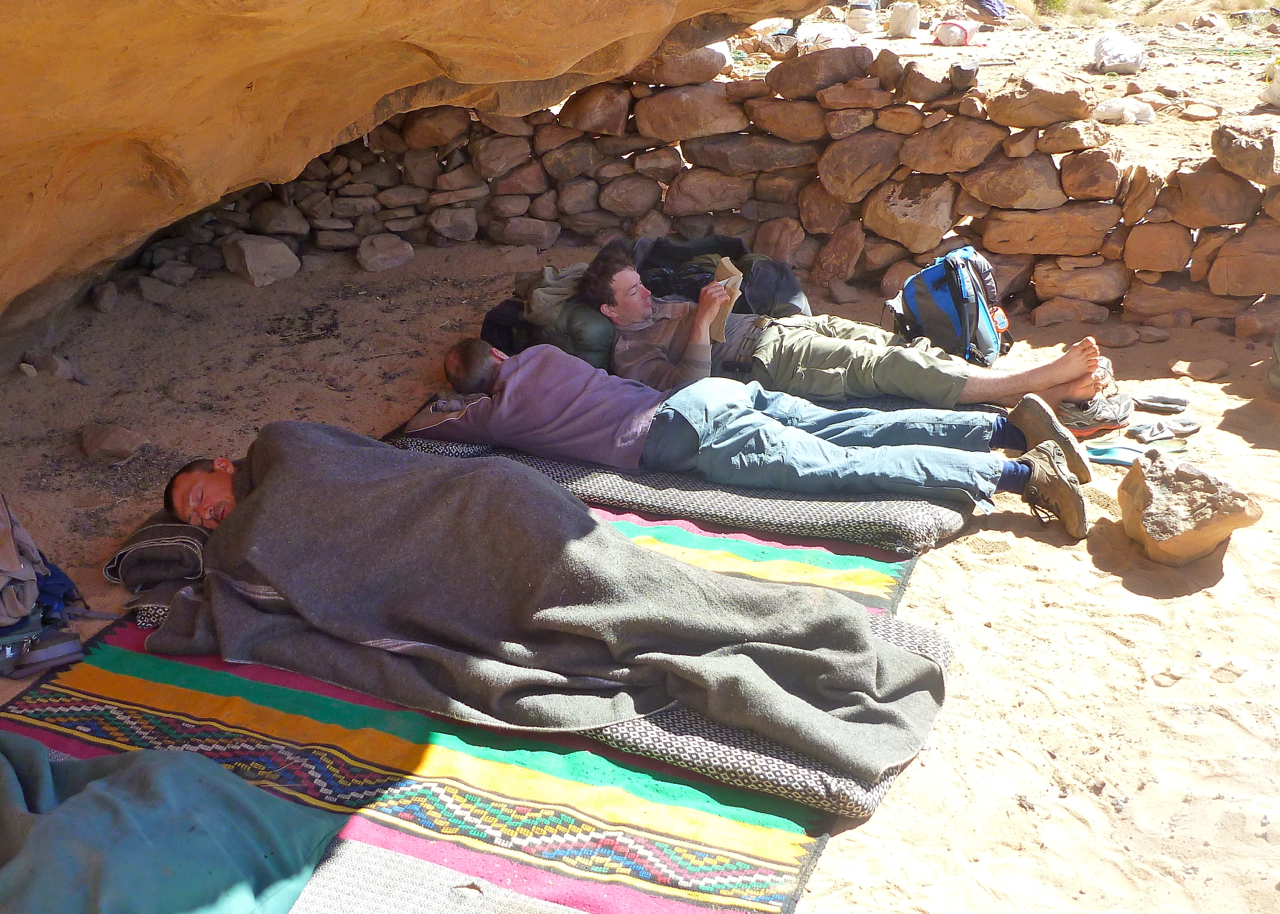
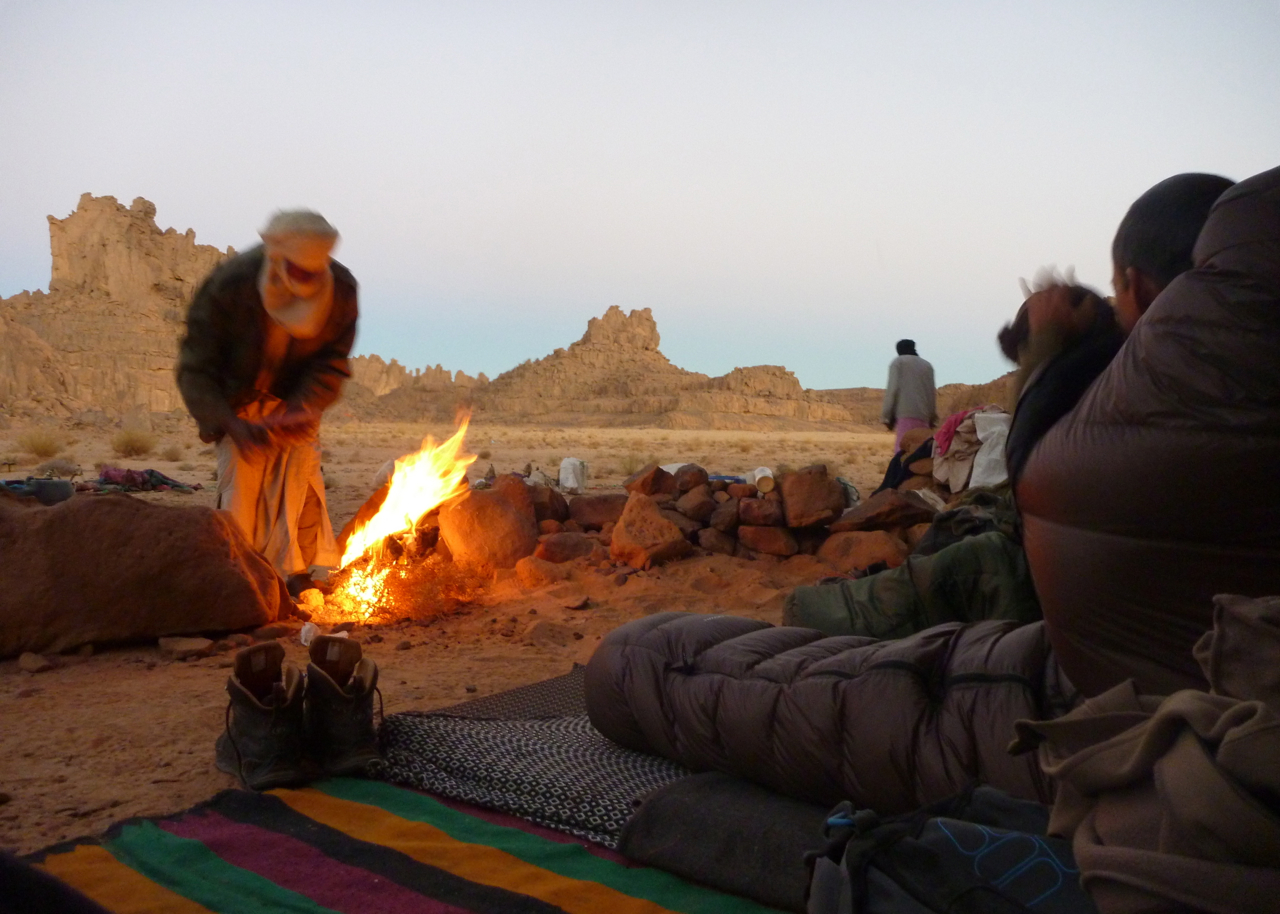
That night the whole convoy camped outside the fort marking the southernmost limit of Moroccan territory. The whole area was said to be surrounded by land mines, a fact which tended to temper one’s desire to wander too far when trying to have a secluded crap. Having checked in with the guard, we squeezed the Merc among the other cars, had a candlelit snack and eventually spread out our bags in the dirt and dozed off.
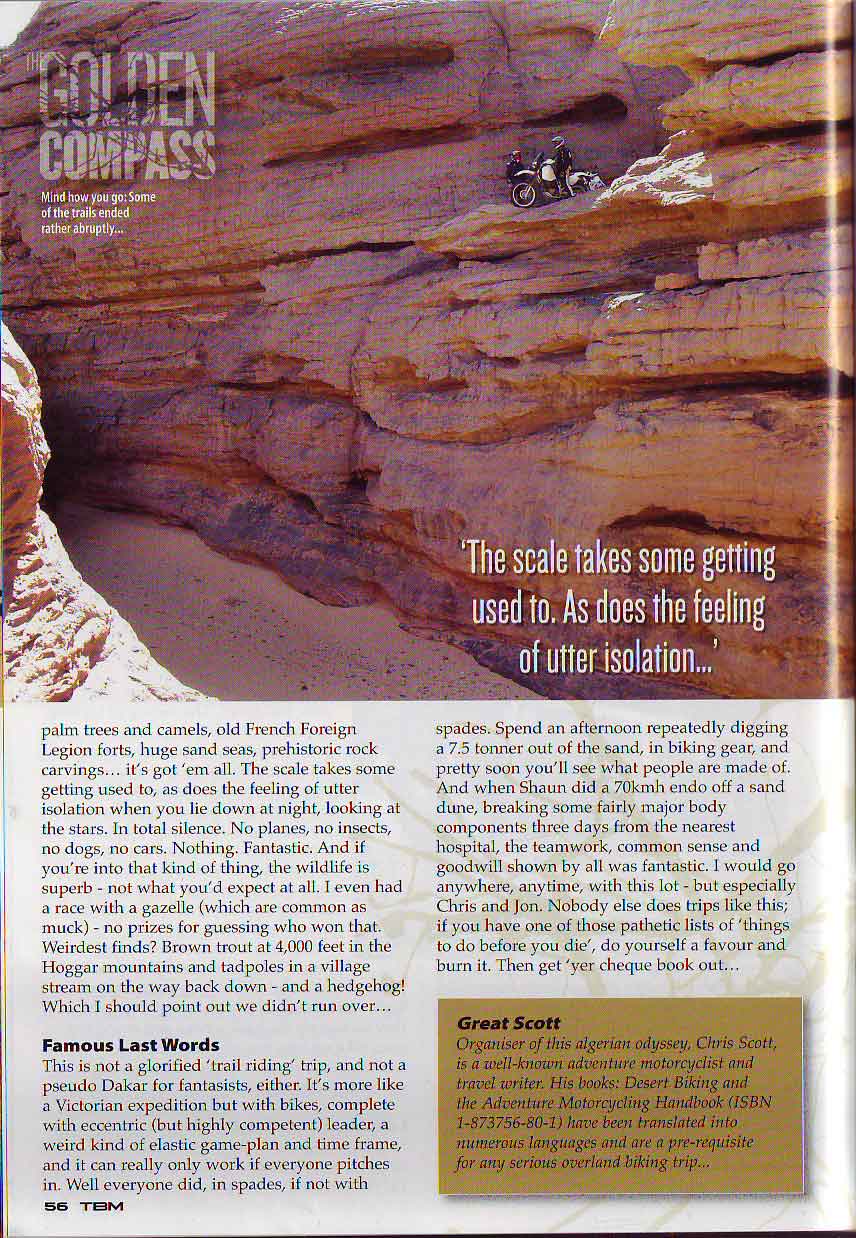
By 10.30 next morning the convoy was ready to cross No-Man’s-Land into Mauritania. This was the sharp end of the trip, sixty-odd kilometres of bare rock, soft sand, and check points that would keep us moving in stops and starts till 2am the following day. And then there were the mines, deadly relics from the Polisario wars which still wiped out the odd car that strayed or tried to sneak through illegally off piste. Half an hour and a couple of boggings from the fort, we reached some crumbling tarmac from the Spanish colonial era, close to the twisted remains of a blown up Land Rover just 30 metres from the road.
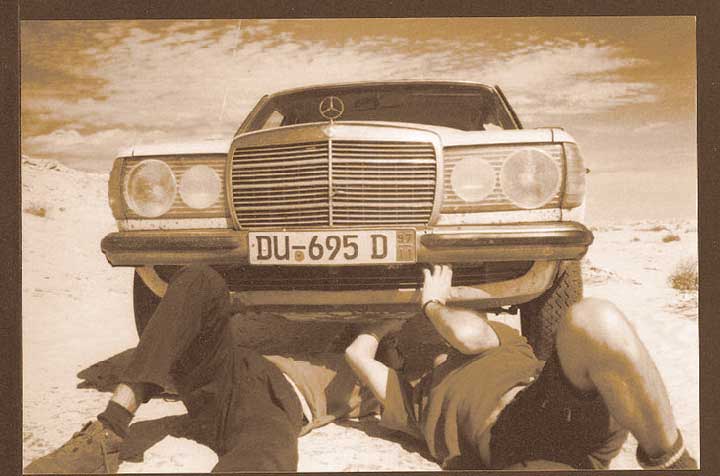
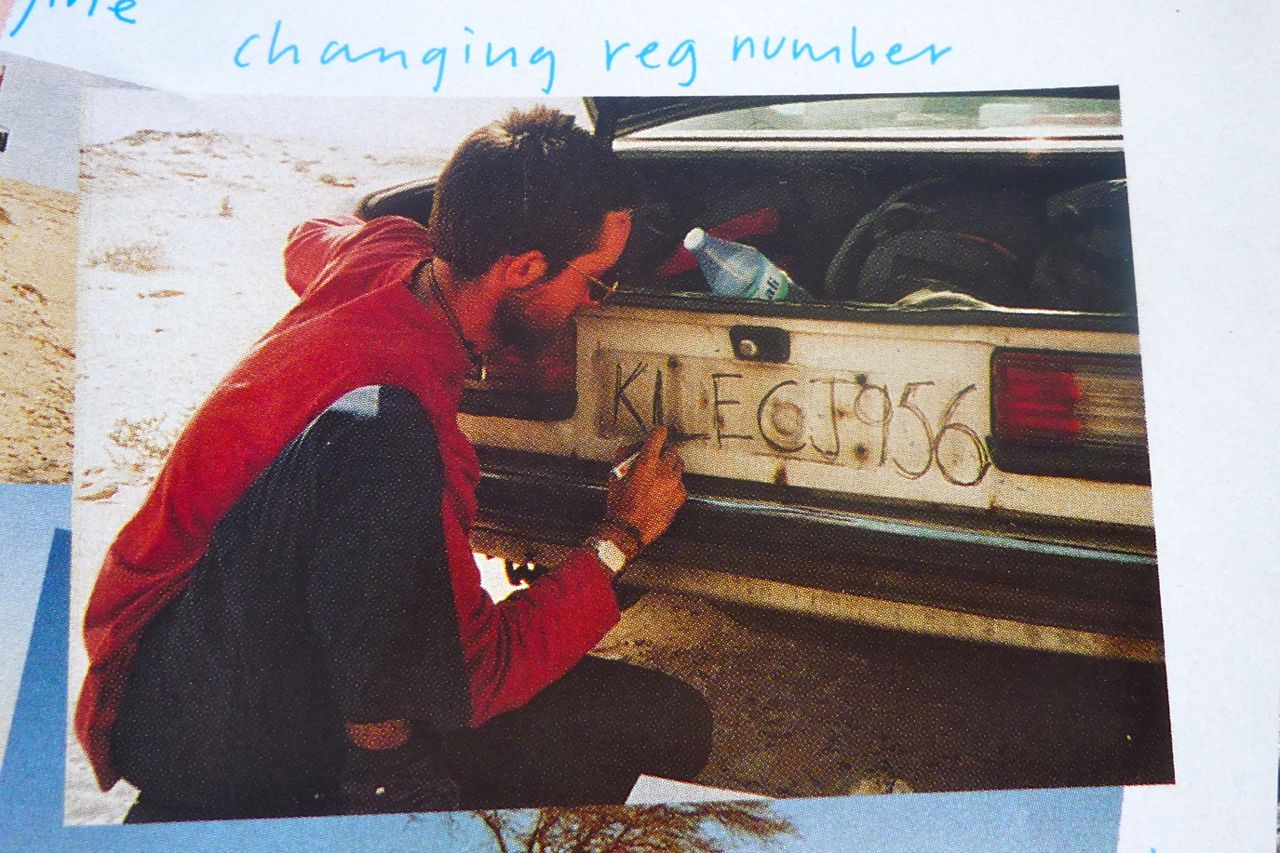
Up ahead a huge queue lead to the first Mauritanian check point where one car moved off every ten minutes. Having crossed the Tropic of Cancer yesterday, winter afternoons were now reaching a cozy 30 degrees, and as we settled in for the long wait a be-robed Moor came over to check out Andy’s Merc. This was more like it: selling a car in No-Man’s-Land before Customs stamped your passport ‘with vehicle’ was playing well ahead of the game. The guy kicked the tyres, wiggled the steering wheel and looked under the bonnet. He seemed keen but Andy knew better than to rush the deal which was left in the air. While thrilled by this early interest he hatched another ruse to nobble Mori Customs by switching the export plates with the original numbers shown on the registration document.
By 3pm we reached the immigration hut where a guy with a ruler, biro and an exercise book laboriously filled in everyone’s details and took their passports. Up ahead other convoy drivers helped the 2WDs through a tricky sand trap which had already totalled three Dutch Mercedes’ radiators, wrecked by ill-laid sand ladders and too much speed. With these removed, Christophe and Andy tentatively gunned their machines into the pit, got stuck and was heaved back onto the old tarmac and the next three-hour wait.
Mahfzoud, the Moorish car buyer materialised again and Andy laid on the charm, reiterating the superb qualities of his five-cylinder model. A bit of motortalk ensued and then Mahfzoud hopped in for the 50km drive to the main check point. Tiring of the old tarmac, Andy took to the desert floor, occasionally grounding with a thud that bothered the car’s potential buyer not at all. Negotiations advanced until they suddenly came to a head. Andy slammed on the brakes, blocking the track.
‘So you will pay 12,000 francs (£1200), yes?’
‘Of course. I have shown you the cash.’ said Mahfzoud.
‘And you want to buy the car now.’
‘I am ready. Give me the keys and I give you the money.’
Cars pulled up behind us, waited, and then worked their way round.
‘And you will drive us to Nouadhibou.’
‘No, no, I cannot do this.’
‘But how will we get there?’
‘Get a lift with your friend in the Volvo.’
Six people, even in a stately 740, would surely arouse suspicion. The authorities weren’t clueless about this import-tax dodging car trade – they just wanted a piece of the action. Once Mahfzoud got his hands on the car, he’d find his own way back to Nouadhibou, possibly tipping off Customs about Andy’s newly-acquired stash. Smelling a rat in this too-perfect scenario, he moved on.
At dusk we crossed the railway and arrived at the main check point and another crowd of stationary cars. Hustlers, touts and guides up from Nouadhibou pestered weary drivers insistently. Night fell, the stolen C180 slipped through the barrier with a nod and a wink, and a two-mile-long train rumbled past on its 500-mile journey to the iron ore mines inland.
Around 10pm, having ignored this stage in the passport-stamping procedure, we drove on through to the next checkpoint, waited two hours, moved on again and, finally, at about 1am, stumbled half-asleep into another hut where a guy courteously returned our passports.
We were in Nouadhibou at last, no picturesque desert oasis, but a lively port town looking forward to the end of Ramadan. Checking in at the police station next day, Andy had an amazing stroke of luck. Outside, an Algerian caught crossing the border illegally and stranded for a week flipped out and the policemen leapt up to sort him out in the approved manner. Left alone in the office for a few seconds, Andy reached over the counter, inked up a ‘no car’ entry stamp and whacked it into his real passport. Now he could leave the country with no evidence of having brought in the Merc. Perfect.
There was no road back then so I took a bush taxi along the beach route to Nouakchott; 22 people in and on a 70-series Toyota pickup. Andy and Christophe loaded the cars onto the empty ore train and headed inland towards the Adrar mountains. Within an hour of arriving at the town of Atar, Andy sold his Merc to the hotel owner for a juicy £1400. The guy was so delighted with his new purchase, he immediately invited all his guests to join him for a drive round town. How long even the hardy Merc would last there is anybody’s guess, but the gang piled into the Volvo, took a back road out of town to avoid the check point, and headed for Dakar.
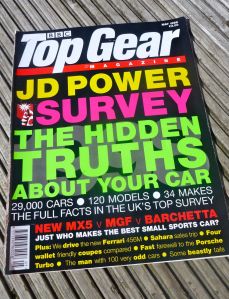
Originally published in Top Gear magazine, May 1998
Desert Dealers 2 – 2006