A passport (most visitors don’t need a visa and can stay for 90 days).
Your vehicle ownership document (‘V55’ in the UK)
Motor insurance covering Morocco, if you can get it. If you can’t (as with most Brits on motos) buy at the port, see below.
Driving License. Rarely asked for, except with rentals). Despite what some sources claim, no one in Morocco will ever ask for an International Driving Permit or even know what it is.
Immigration procedures On ferries heading directly to Moroccan ports (ie: Tangier Med or Nador) passport control is done on board the ferry. Don’t get off the boat without getting stamped – they check as you come off the ramp. Once aboard, on one of the decks look for a counter with a cop, a laptop and a queue. If you’re heading to the two Spanish enclaves (Ceuta, Melilla) you will effectively be landing in Spain and so must drive on a couple of kilometres to the actual land border with Morocco to do your stuff. Most find Tan Med easiest.
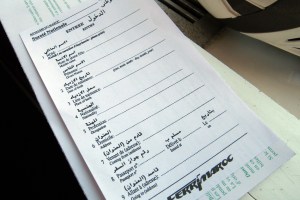
Immigration cards Fill out a white immigration card (right) often handed out when buying your ticket in Spain, or found at the ferry’s police or information counter, or handed out by enclave border helpers looking for a tip. The form is in French with English subtext. Under ‘going to’ write any big Moroccan city like Fez or Marrakech; for ‘coming from’ put the European port you’ve just arrived from (Algeciras, Almeria, etc). For an ‘address in Morocco’ any hotel or camping in any well-known town will do if you don’t actually have one.
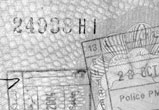
Your passport will be stamped with a date of entry and also a ‘CIN’ number (right; it may be scribbled by hand into your passport). This is an ID number that links you to a police database and you may be asked for it on other forms. It is often hard to find in your passport. If you have visited Morocco before on the same passport you do not need a new CIN; they do not expire so it helps to open the passport page with the CIN to save them looking and giving you another.
Once off the boat in Moroccan ports (e.g.: TanMed, beni Enzar/Nador) proceed to Customs (left) and hand over your vehicle ownership document and passport to a Customs guy. Wait by your vehicle. They return with your documents and a white, credit-card sized Temporary Vehicle Import Permit (TVIP) in as little as 5 minutes. They may also perform a cursory search. Don’t lose your TVIP card. You will need to show it when you leave Morocco to prove you left with your vehicle. Your TVIP will have an expiry date by which time you much leave Morocco, usually up to 6 months unless you’ve been in Morocco within the last year.
You may be lucky enough to have a ‘green card’ motor insurance extension for Third Party Only in Morocco. Otherwise, at TanMed, just beyond the Customs is a row of cabins (left). Change some money and buy local Third Party Only insurance (assurance frontiere) at the last cabin. There is no such thing as Fire or Theft or comprehensive cover for tourists.
Car or bike the fixed cost and time periods are: 600dh for 10 days 960dh for a month Big vans and motorhomes pay more
From Melilla (Sp) or Beni Enzar (Nador port, Mk), to buy insurance you need to head 12km to Nador if you need RMA Assurance Anashere (35.1796, -2.9269), behind the Hotel Ryad. They sell Assurance Frontiers (insurance for foreigners) at the usual rates. See updated map left; it’s pretty straightforward. The only problem is ferries arrive late at Beni Enzar (Mk) which means an overnight in Nador. The overnight ferry to Melilla coming in at dawn may be better because leaving Nador without insurance you’ll struggle to get it down the road. That’s it!
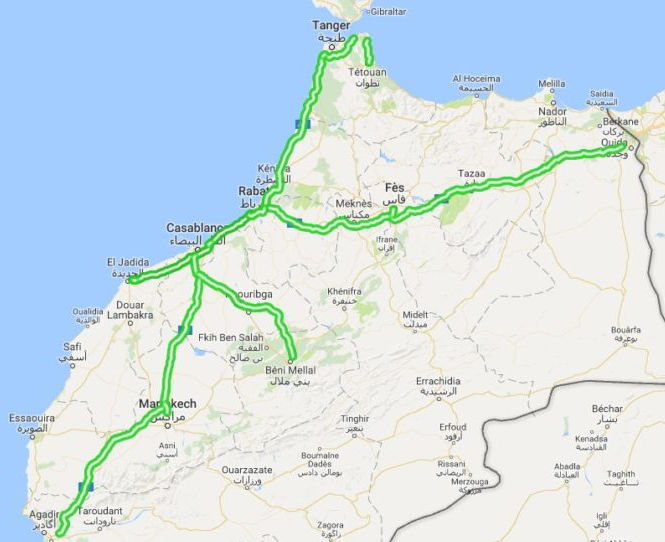
Want to get south quick? Use the toll autoroutes They’re not that cheap and motos pay the same as cars, so Tan-Med to Marrakech is about 200MAD (€20), but if you arrive early, can be done in a long day.
Atlantic Highway south of Tantan. Form for checkpoints Download this blank Word.doc template of a fiche or form (left) and fill out with your details. Hand them out to speed up passage through the many checkpoints in what people call Western Sahara (south of Tan Tan and Assa), particularly if heading down the Atlantic Route to Mauritania. There are 4 fiches to a page. For a transit of the Atlantic Route you’ll want at least 8 fiches to get to the RIM border. And maybe as many again in Mauritania. These forms can also be handed over instead of your passport at hotels in ‘mainland’ northern Morocco who ask to copy down your details. Up north checkpoints won’t require a fiche.
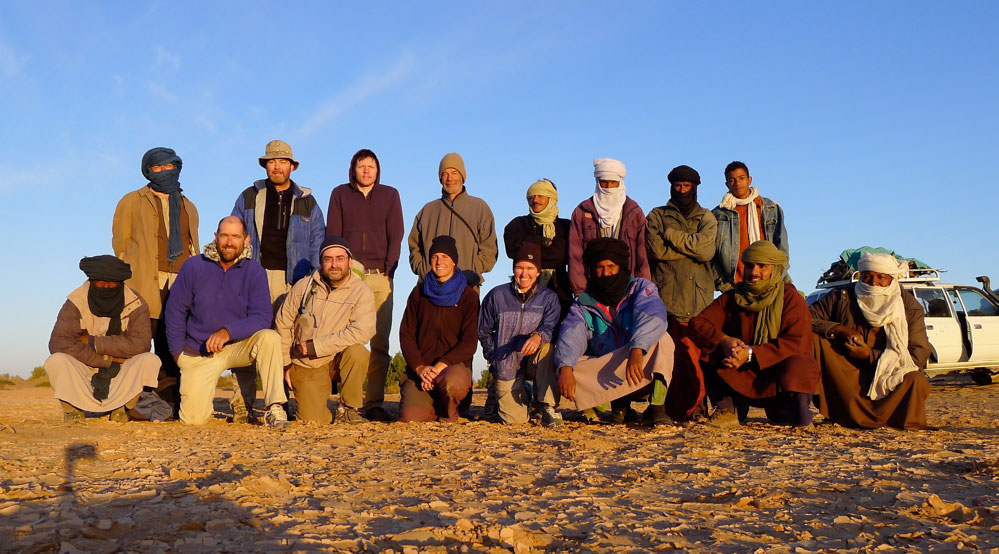
I was back in Tamanrasset, this time with a small group of camel trekkers. Year by year it gets more difficult to travel out here and a few weeks earlier Algeria cancelled all tourist visas to the desert– most probably due to weapons slipping out of Libya west towards Mali where some kind of rebellion has already broken out. As a result three missed out and only 7 got visas: 3 Americans: Diane and Steve from Tucson and Patrick from NYC, plus Rob from Bermuda, Hannah from Alderney, Rob from Bristol and Mike from Staffs who’d been on a 2006 Gilf trip I’d led for a tour agency. Right: Camel trekking ebook.
It’s nice to drive cars and ride bikes in the desert, but these days that can feel rather conspicuous as you come down from the north. With camels you slip into Tam on the midnight plane and 24 hours later are out in the sticks, largely unnoticed. Any anxieties I had about the ‘Grand Sud’ being closed and us getting stuck, or sent back from Tam came to nothing. And I knew once we were out bush all would be fine.
I’d originally planned a meaty 4-week trek from Tam to Djanet, but decided that left us exposed along the Niger border where an Italian woman had been grabbed a year ago. At the time she was one of 12 Europeans (as well as local police and others) in the hands of AQIM in north Mali. I’ve just started reading this book about the history behind these events and if nothing else, it underlines how dire it would to be dragged around the oueds of northern Mali for months at a time, suffering injuries and other ailments, with no shelter, terrible food and dirty water.
So, with Tam-Djanet a bit sketchy, the plan boiled down to repeating the reliable Amguid Crater trek I’d done a couple of times over the years for Simoon Travel, then drive back down to the Hoggar and spend a week walking up to Assekrem and back (report on that here). I was using a new agency, Ben Kada, now long gone but back then an established operator recommended by a friend of a friend. And so, along with all the other unknowns, I was hoping they were going to deliver, which in the end they did better than I’d expected. Last November a fake guide who’d infiltrated a well-known agency in Tam to set up a kidnap had been caught, so it’s hard not to be a little paranoid these days, even if the Algerian security services are on it.
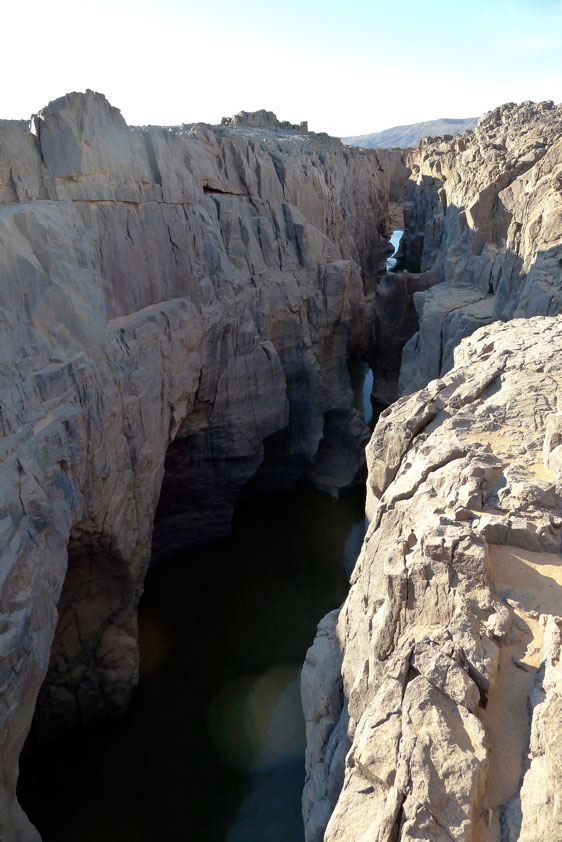
Next evening we arrived at the same camp south of Arak (left) which we’d used on the recce tour in 2007 with Simoon. The first day kicked off a stiff climb around midday which had been tough on the fully loaded camels, but this time our caravan managed fine. New Year’s Day followed, a spectacular amble through the box canyons of Tissadout, with lunch under a lone tree, a guelta swim and a rock art cave all ending at a great camp spot in the Adjror valley (home of Beetle guelta; these names established on the 2007 recce). Here we met the only other tourists in Algeria who were taking a two-weeker out of Arak. There followed a long haul to Igharghar valley, past the Haribo Tree, the Lunch Cave and the desert mosque, before diverting to a deep slot canyon and tombs which I’d missed on previous visits. Interestingly the deep cleft (above) is actually the river which breaks out through the gap in the ranges at Tadjemout, where we’ve started the tour on previous occasions. Once at camp I got rather lost in the dark while looking for firewood, returning to the camp from the opposite direction, but no one seemed to notice.
Next day I asked to Mohamed, our genial 72-year old guide, to visit the impressive three-tiered gueltas (rain-fed waterhole) we’d lunched at in 2007, but which had been skipped by subsequent guides. On the way there, Patrick lost us while engrossed in the manual of his new Nikon Tankbuster, but did the right thing by getting onto high ground and was back on our trail by the time Mohamed had backtracked to find him. The same had happened to me hereabouts a tour or two ago when I’d stopped off and ended up chasing half-burned toilet paper in the breeze. Now Patrick also knew that chilling feeling when you lose sight of the group, any trace of their tracks, and haven’t got a clue which way is up.
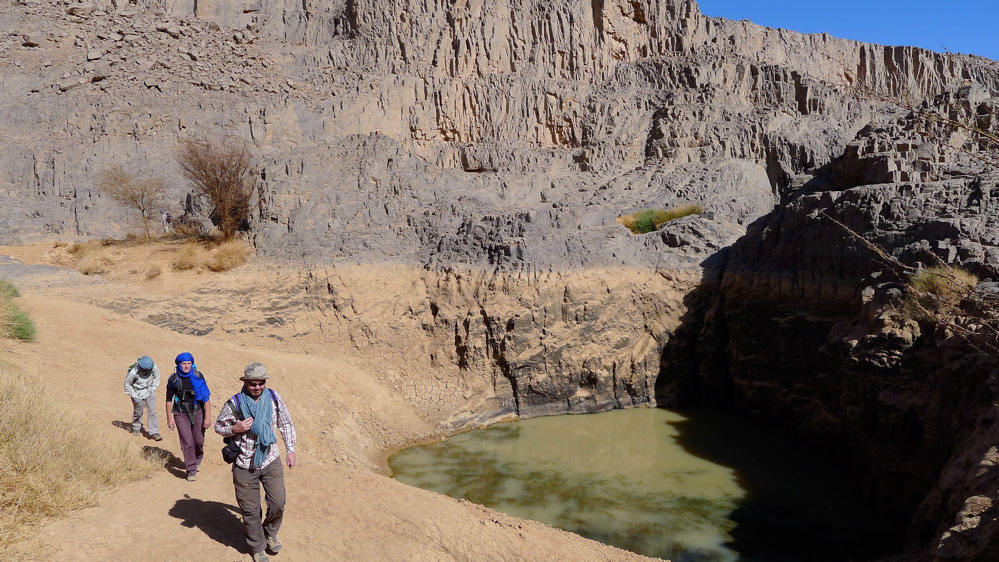
As it happens the many tiered gueltas of Tin Karabatine were very low on water – as were many other rock pools in the region this year, but we managed to launder and wash anyway, while Mohamed instructed us to follow the canyon’s right rim upstream for 30 minutes to meet him and Tayeb the cook with the lunch camel in the valley above. It seemed a bit of a leap of faith, but we passed the test and met up close to the ever-serendipitous acacia which crops up at these times. Later on Tayeb was similarly tested by Mohamed, with less success.
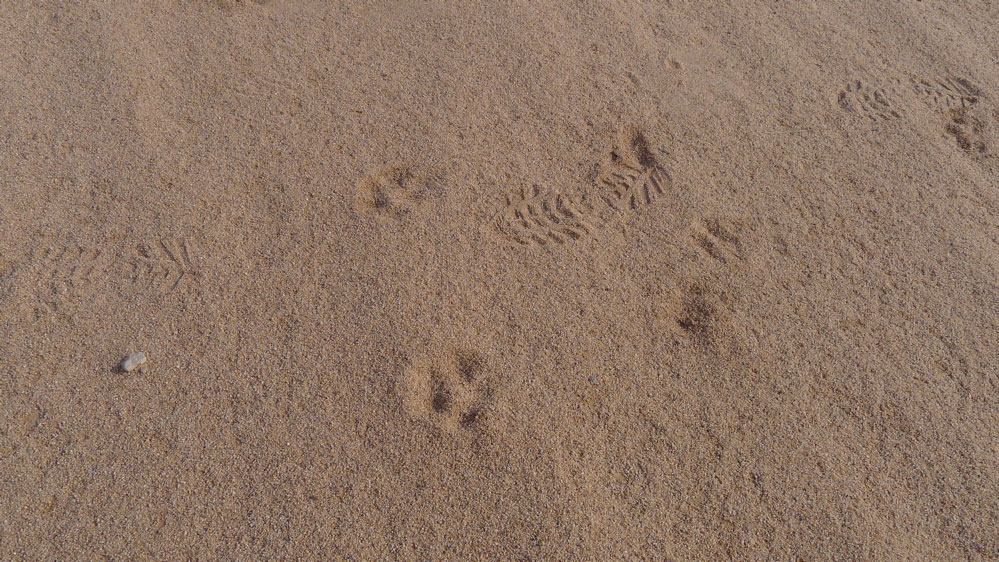
I knew well that the afternoon ahead was one of the nicest stages of the walk, made all the better by spotting a galloping mouflon (barbary sheep) as big as a donkey, as well as cheetah tracks (above), before we wound our way through the sandy outcrops down to woodless Camp IV. Next day was another long walk, 25km over to Tahaft; down into the big valley with a lazy lunch under a thorn-free tamarisk while the crew filled up from the soak. As on previous walks, we staggered in as the sun was setting behind us, but very soon Tayeb had the tea and biscuits laid out while we waited for dinner. Up till that day, as with all that followed, there was very little wind until maybe the late afternoon which kept things warm, though it dropped to near-freezing most nights, and sometimes below.
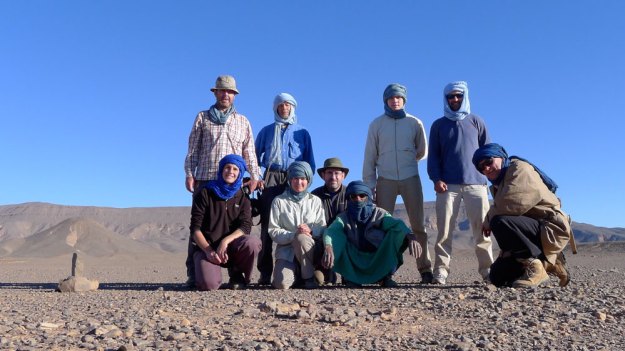
Even with a waypoint, I blundered around next morning to locate our discrete 100KM marker from 2007, until Diane spotted it and we lined up for the now traditional photo (left).
Us at 100 kilo cairn
Mohamed diverted soon after to chat up a couple of bedraggled goat nomads about pasture and water up ahead. He’d been here once in the last 25 years if I understood him correctly, but knew all the spots and was still showing me new places and routes, even on my fourth visit here. After a splash in the Tahaft slot-guelta and another lazy lunch, Mohamed led us on a great cross-country scramble down to the ‘lost oasis’ of Tin Djerane where birds twittered and jackal tracks set hard in the mud.
Abandoned In Djerane oasis
We heard their yelps on a few nights, but I’ve never actually seen one out in the desert. Along the camel trails you’ll regularly find stone slabs laid up into conical ‘goat holders’ to protect them from overnight jackals.
Huge keyhole tomb
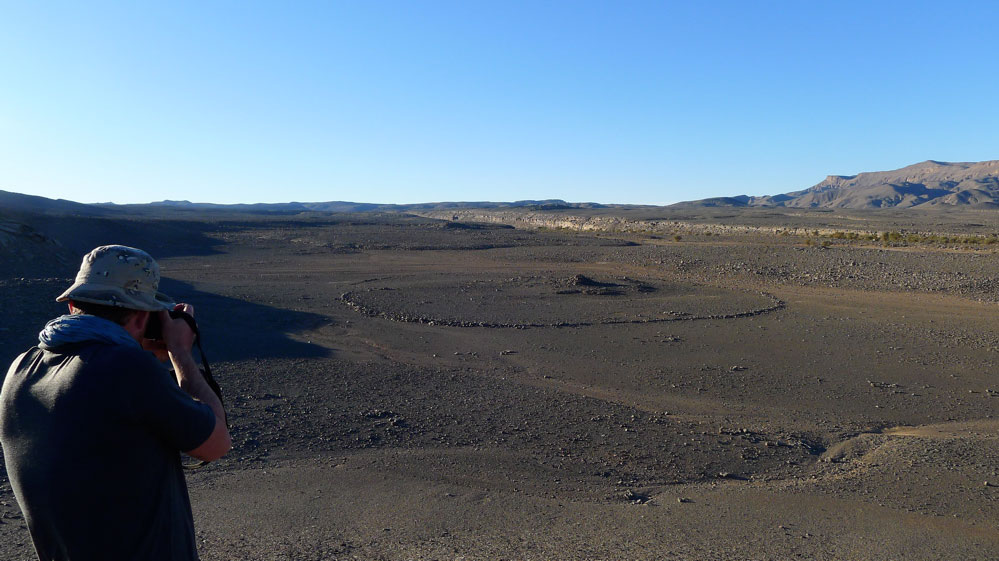
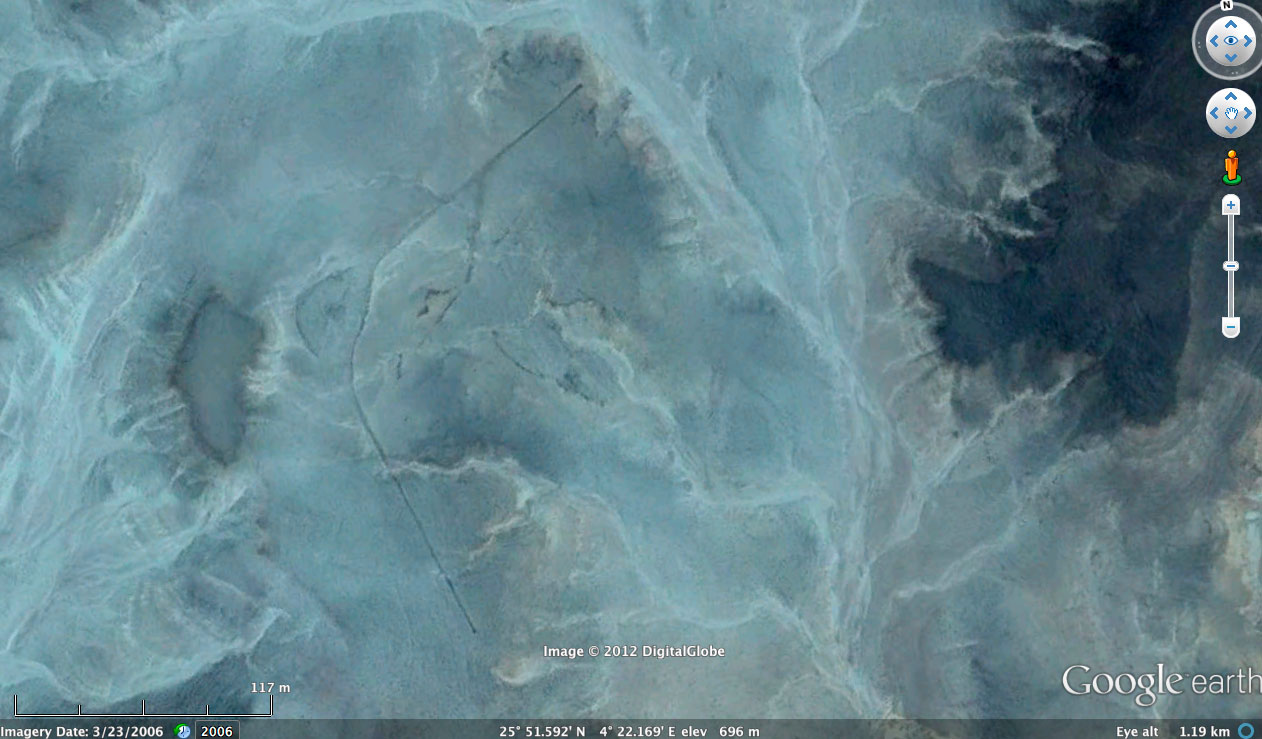
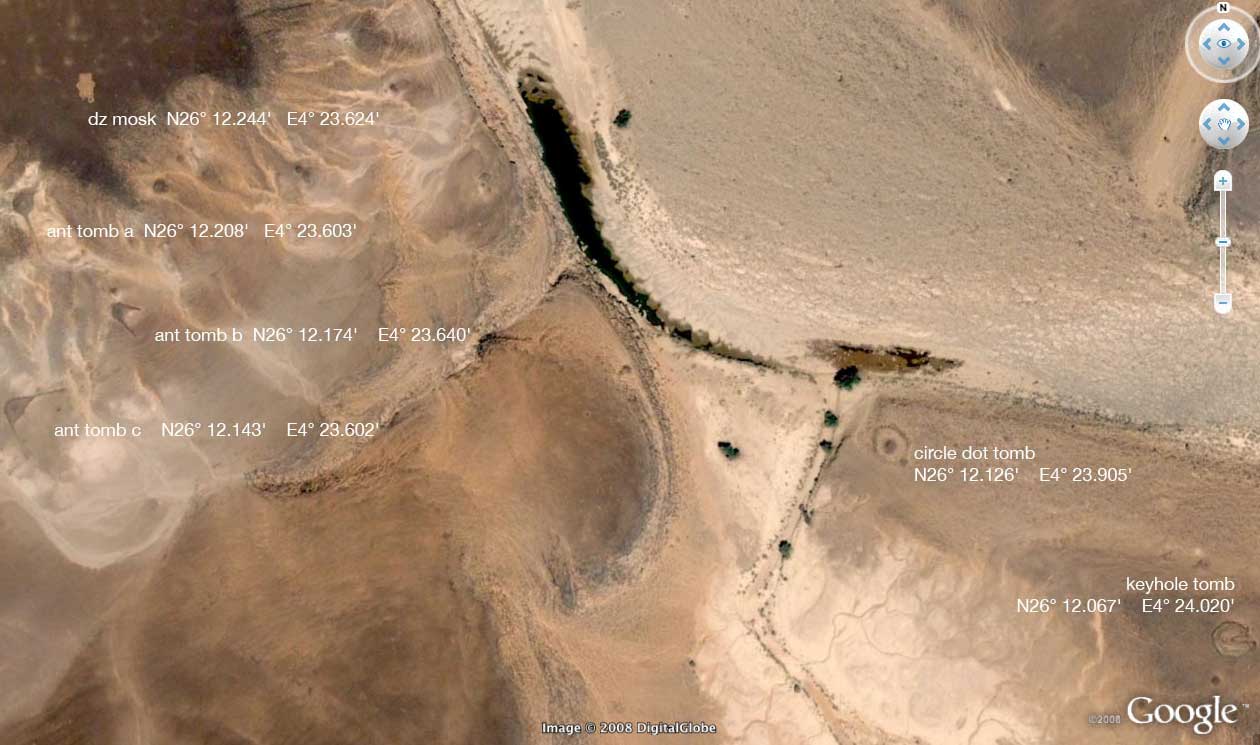
More sparkling gueltas and even flower-clad lawns led to Camel Branding Camp V along the south edge of the Tissadert escarpment. This place is surrounded by ancient tombs, many of which had been annotated on Google Earth by ‘Ken Grok’ before Google erased the layer. There’s a ‘keyhole tomb’ a couple of minutes from camp (above), another 700 metres away which we passed close by later, but the strikingly huge antenna tomb I led us to with the GPS (below) was so big it was hard to visualise at ground level.
Antenna tomb
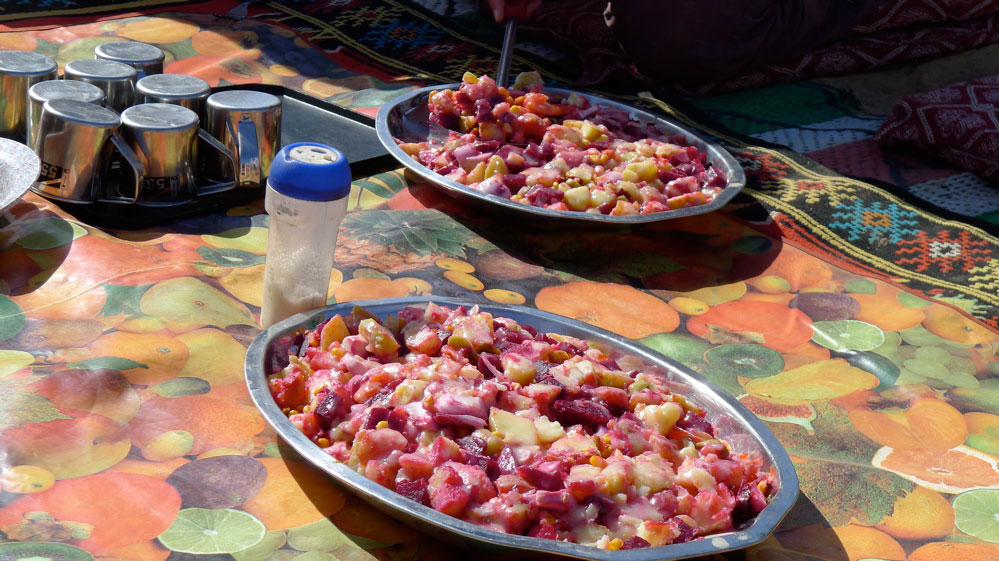
Following another swim at a big guelta, we failed to meet up with Tayeb and the lunch camel. Tayeb was from Tazrouk down in the Hoggar and this was his first visit to the Immidir which Mohamed and his aged crew, Halil and Ahmed, knew well. So it was a bit of a reach asking him to meet us up ahead in a creek he’d never seen. We zig-zagged around while Mohamed tried to pick up the trail and at one point I strolled right across another huge keyhole tomb. Eventually Mohamed found fresh tracks and around 3pm we spotted Tayeb sat patiently alongside an acacia-lined oued. Ravenous by now, he got an unfair bollocking while we tucked into the heaped platters of salad which Tayeb prepared for us daily.
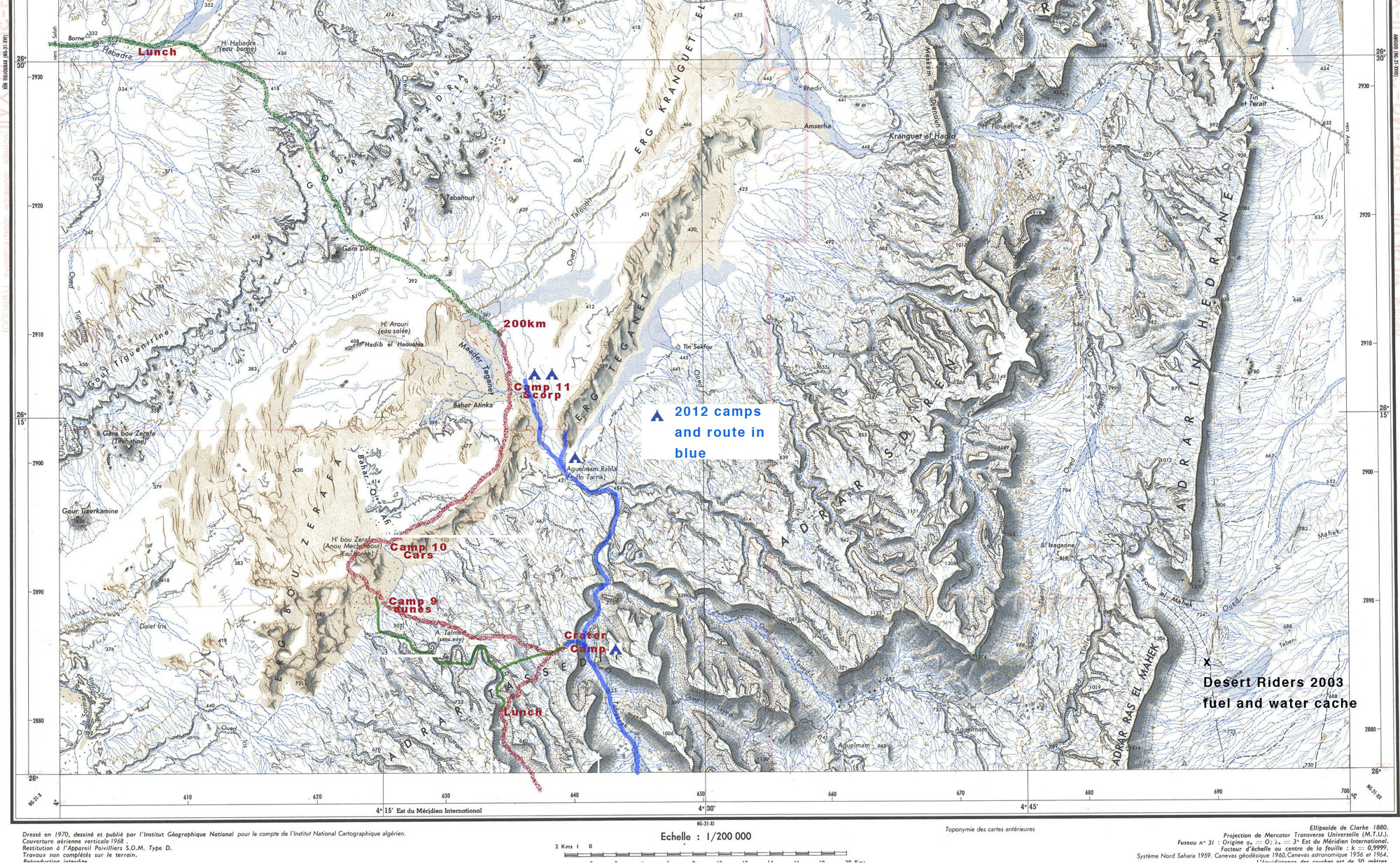
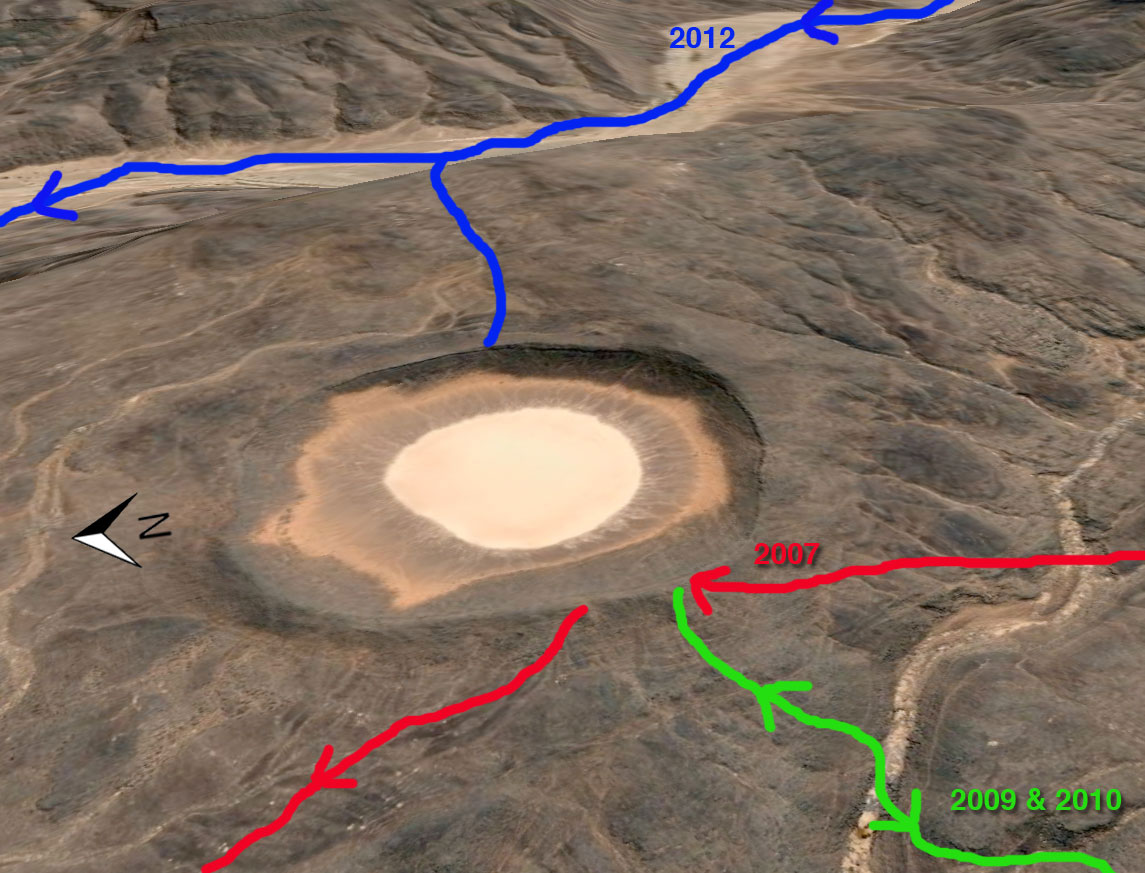
Mohamed had suggested that to get to the crater we take the next oued east after Tissadert, the Oued Taferekrak (according to the IGN map, below). Approaching the crater from this side was something I’d wanted to try for a while as the site lies just 500 metres from the canyon rim and ends up at the interesting Aguelman Rahla, surrounded by more pre-islamic tombs as well as dunes.
This also happened to be along the approach route to the crater we’d planned on Desert Riders back in 2003, going as far as leaving a fuel and water cache at Foum el Mahek gap to the east a year earlier (see map above). That trip did not end so well, but having now walked up it, I’m not so sure riding the lardy Honda XRLs would have been at all easy up here.
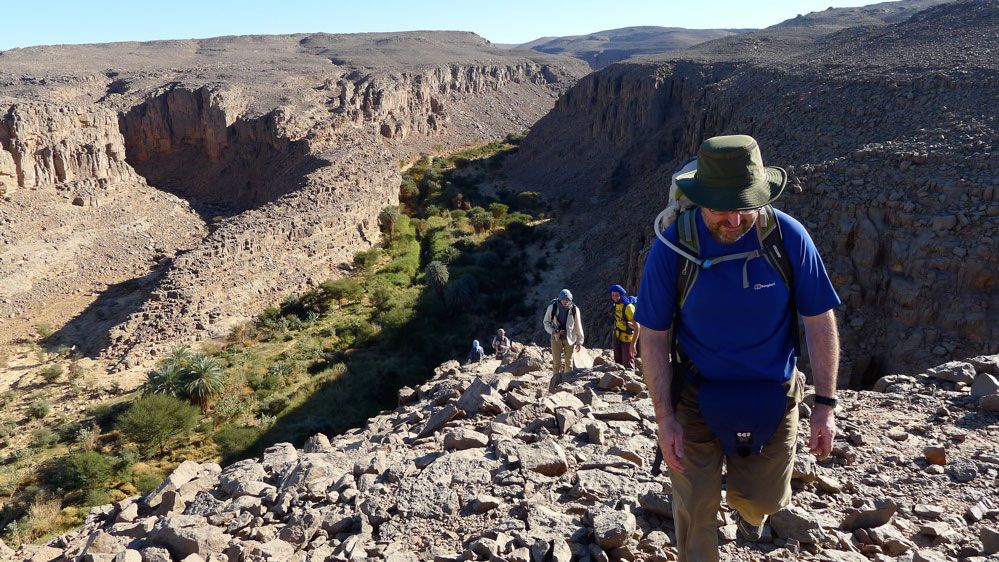
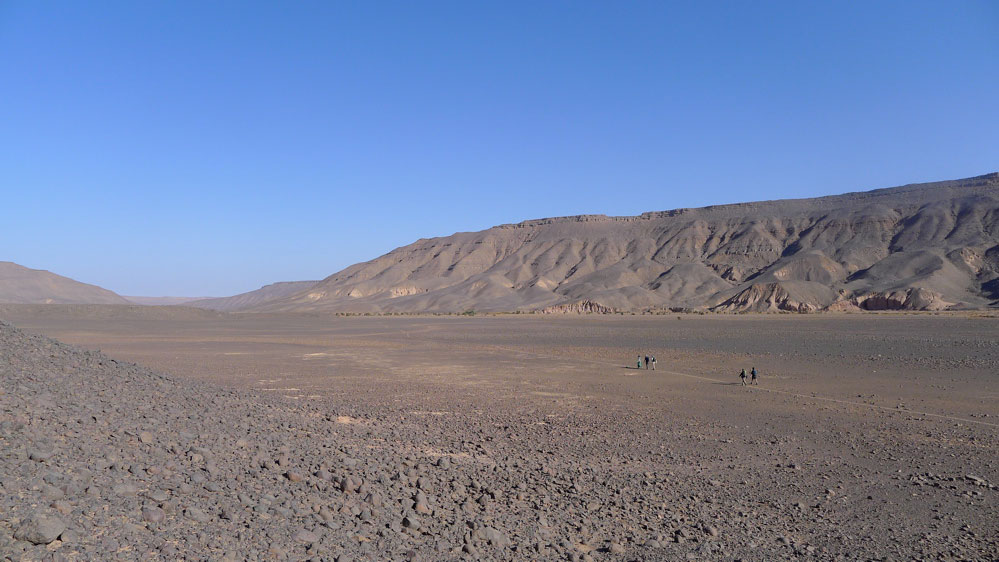
After a light overnight freeze, we set off up the wide canyon (above) and as expected, met some goat nomads who agreed to sell us an animal for a hefty €75. It had been the same price last year, but down in the Hoggar I was later quoted €50. Still, for a tenner each we ate well for three days and the crew got an unexpected treat too.
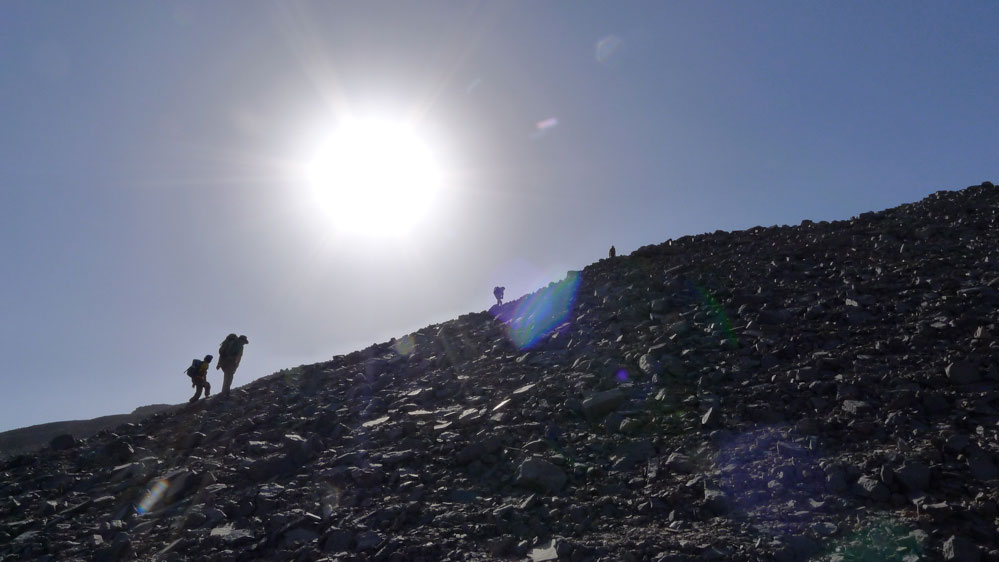
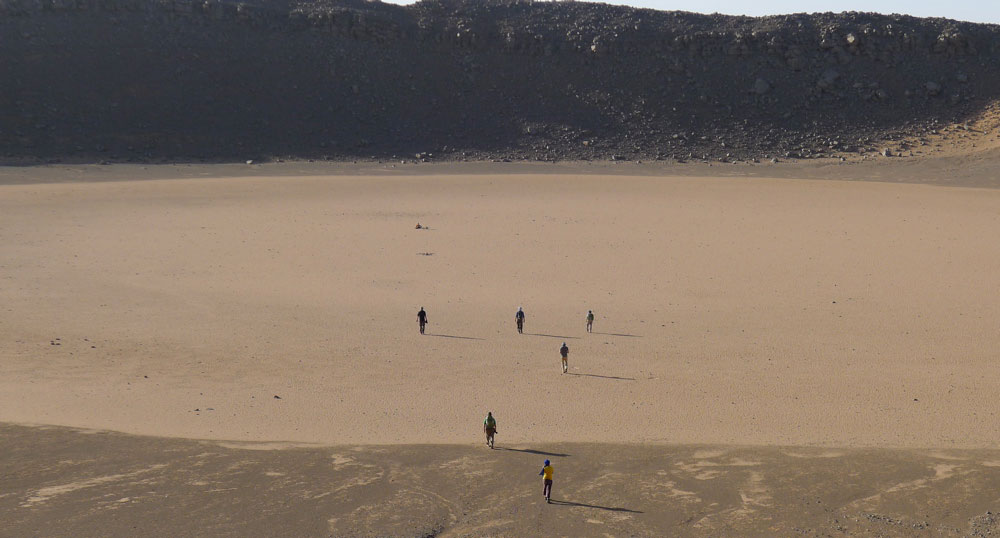
So, while the old men and Tayeb prepared to chop up the goat, we set off for the crater up the steep canyonside (above) with Salah, Mohamed’s 18-year-old son. After just an hour of huffing and puffing we looked down onto the crater (below), since sullied with stone-stencilled graffiti.
Some, including myself, thought it should be obliterated to return the crater to its natural form, but as some of it was clearly the work of Algerians from Ghardaia, others argued that, as foreigners, it was not our place to be meddling with locals wanting to lift their leg on the place. And at least the loose stones were not permanent. Maybe someone else will do the right thing.
The various ways we approach the crater over the years
A dust haze had drifted up the valley that day, reminding me of the near disaster (from a visibility PoV) we’d had on the Eclipse tour in Niger back in 2006. Undeterred, Salah leapt back down to the canyon floor like a rubber gazelle where sure enough, a fresh goat stew was bubbling on the coals.
Aguelmam Rahla
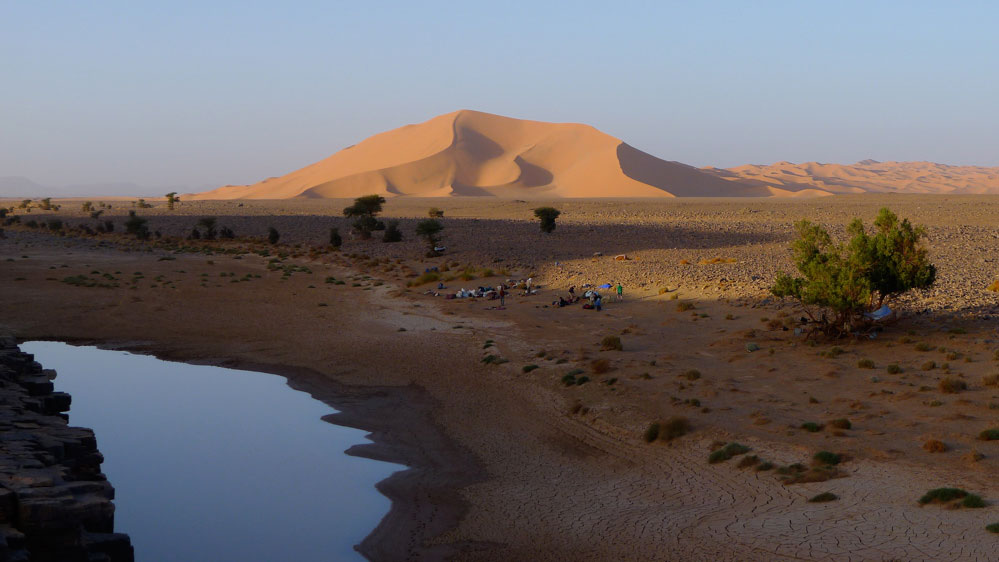
The following day we emerged from the Tafrakerk canyon at Aguelmam Rahla guelta (above) where we were in a little too much of a rush to wash off the dust of several days, much to the displeasure of Mohamed. He was quite right, we should have filled up and taken a bucket elsewhere, this waterhole is a key point for nomads topping off their goats prior to collection by Arab traders coming in from In Salah, two days drive northwest. A mile away, the terminal dune of the Erg Teganet (above) made a great backdrop to our camp as well as a challenge for some next morning, while I wandered around looking for the tombs I recalled seeing clearly on Google Earth a while back (below). More on tombs here.
After lunch we continued for half a day up the sandy Teganet oued in the direction of Bir Outene at around 200km. Here we had a day off waiting for the cars to arrive, as we’d saved a day taking the new route to the crater.
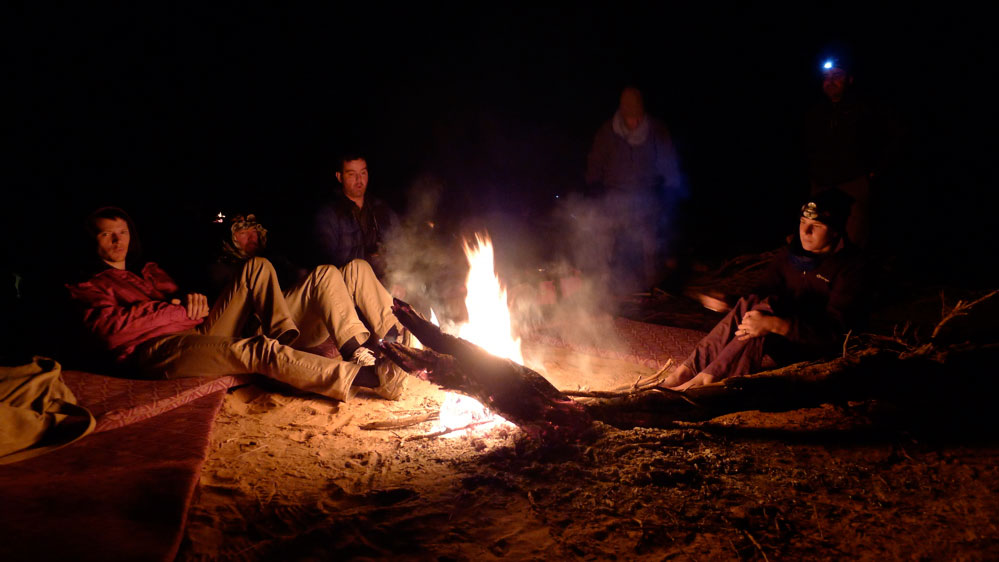
We sat around, moving with the shade while reading our books or Kindles until the late afternoon brought the distinctive hum of 4x4s churning up the river bed in low range. Too late to pack up now, one of the drivers had a guitar and later that evening around the fire we listened to him and Mohamed drumming on a plastic water can. Then, as the sands sucked in the cold we headed for our dispersed camps. It was an early start next morning for the long run to Mehajibat dunes and another day’s drive down the TSH to our Hoggar base camp. More about that here.
Since then, I’ve asked many times but am told the Immidir region is closed to tourism – as it the better known Tassili Hoggar region southeast of Tam. The only reason I can think is that Tamanrasset authorities would rather corral tourists around Assekrem, though that didn’t stop one getting kidnapped near there in 2025. The Immidir is inaccessible by car.
From the back: me, RobUK, Patrick, Steve, Sharif, Mohamed, Halil, Salah, Ahmed, Rob, Mike, Hannah, Diane, Tayeb, Loukmane, Said.
Immidir practicalities Tam-based Ben Kada agency had never run- or probably even heard of the crater route before, so I presume they took it upon themselves to track down Mohamed and his crew and ascertain that they could lay on the gear and knew the way. Ben Kada drivers dropped us off with the caravan and picked us up 11 days later, leaving it to the Arak guys to do the job.
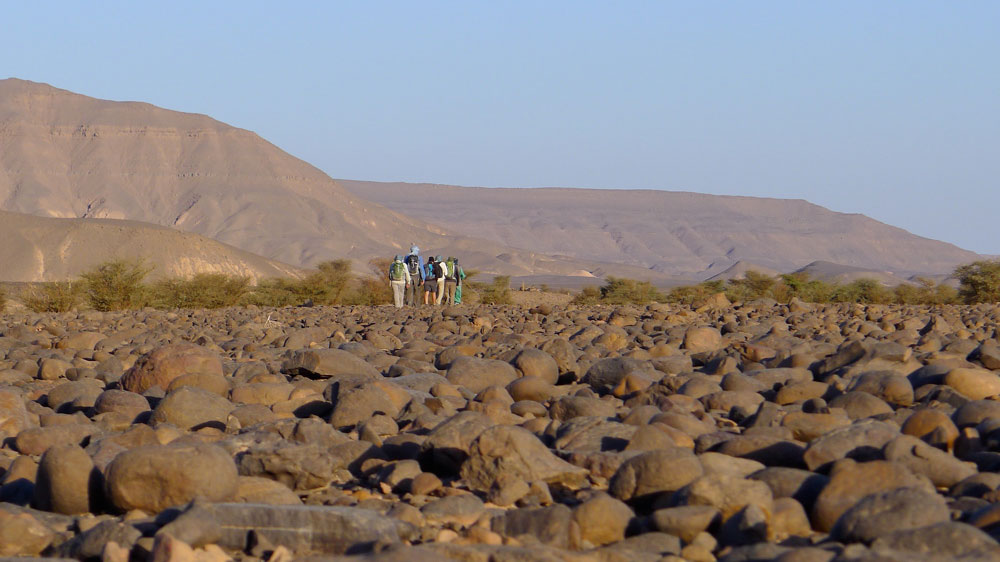
We breakfasted around 7.30am, just around dawn, and walked between 15 and 25km a day (10-15 miles), which was plenty given the terrain at times, although lunches were often 2 hours long. Most of the time we didn’t travel with the caravan and took detours which the camels did not follow. Sometimes we travelled with the kitchen camel and Tayeb the cook who prepared lunch, very often the best meal of the day. Breakfast was lean: tea or coffee, bread (baguettes or tagela ‘sand bread’), a solid block of marg, jam and Vache. As suggested beforehand, a couple BYO muesli or instant porridge. Once we had pancakes or French toast (eggy bread) or omelettes. Many carried day snacks, though I went without as I had some weight to shed but was pretty hungry at most meals. Hot drinks, peanuts and biscuits were laid out soon after we arrived at the camp – most welcome – and dinner was ready two hours later: soup followed by a muttony stew, sometimes with pasta or cous-cous or rice or bread, plus dates or oranges – and glasses of tea later. Most were asleep by 10pm.
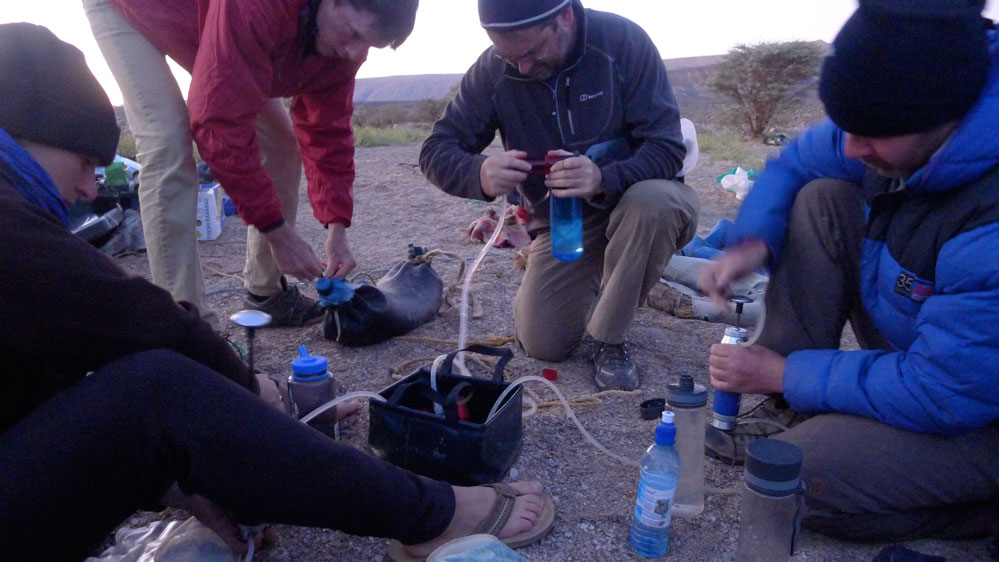
Once water was taken from gueltas we filtered it, though we all agreed it was more to get rid of unsightly sediment than microbes which might make us ill. We drunk enough untreated water from other sources and no one got ill. The sediment makes filters clog up within a litre or two so the uncleanable ‘squeeze bottle’ type got blocked early on, while the cleanable Katadyn and MSR ceramic core jobbies carried on working with regular cleaning.
Most of us had small blisters by the end and could do nothing about them except plaster them and keep them clean. No one’s walking was really affected; I had a really raw small toe but that recovered well enough on the two-day drive to Hoggar. I had a feeling my feet swelled up after a few days which may have led to this – thinner socks did the trick until they wore out. Interestingly Bermuda Rob did the whole walk in a $70 pair of Nikes. They survived, were very comfy and he had no blisters! There were no other injuries even though we worked out there had been no less than four million opportunities to miss a step and sprain an ankle
Most found it got cold around 6am: the mats supplied were pretty thin but once I remembered we had them, the extra blankets laid on were a great help with warmth (under or over).
The cook spotted one small, harmless snake on the trail which he killed without thought. Some were surprised by this, but desert dwellers have a different attitude to these and scorpions (none seen).
Carnet ATA: Pour le Sénégal seulement Visas Mauritaniens: Double entrée, demandés via Lyon visa service. Visas Sénégalais: Multi entrées, demandés au consulat de Lyon. Guides: La Mauritanie au GPS (Cyril Ribas et Sylvie Béallet) Le Routard 2013 pour le Sénégal et la Gambie (pas très fiable) Lonely Planet pour la Guinée Bissau.
Aurora fort
Plage Blanche
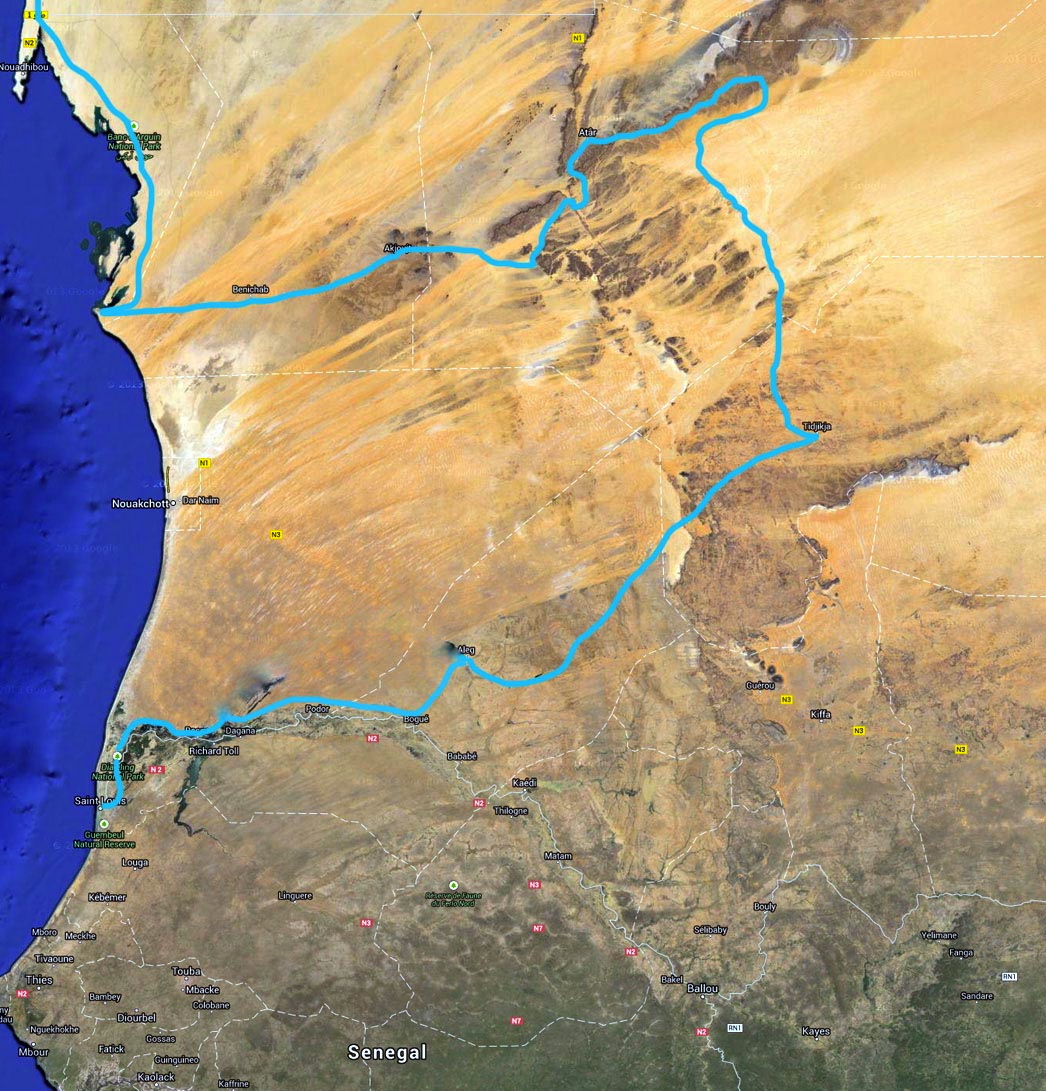
Le voyage 1. Ferry Sete – Tanger le 28/9/13 avec GNV.
3. 11/10: On retrouve nos amis à Dakhla.
4. 12/10: Frontière Mauritanienne: c’est le souk côté Marocain car il y a pas mal de monde et l’organisation des files d’attente laisse à désirer. On y passe au moins 4h! On retrouve notre guide Fadel, coté Mauritanien. Bivouac au début de l’ancienne piste vers le Banc d’Arguin (Pour les points, cf. bouquin Cyril Ribas).
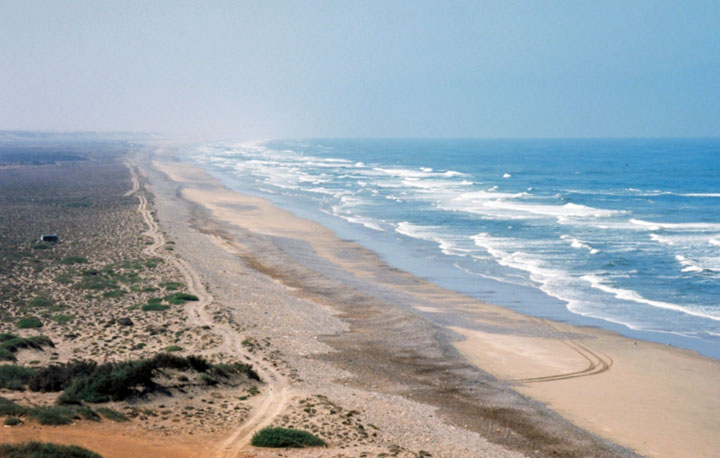
5. 13/10: Déjeuner à la plage d’Arkeist, baignade et bivouac.
6. 14/10: Traversée Banc d’Arguin –> Benichab. On quitte la piste de Nouamghar vers Tessot.
Croisement vers Tessot: N 19° 28.249 O 16° 18.330 (km 0)
Points sur la (belle) piste: N 19° 28.281 O 16° 17.244 N 19° 24.716 O 16° 04.127
On rejoint ensuite la route Nouakchott (vers le Sud, km 30)
Croisement de la piste pour Benichab (sur la gauche, juste après une station-service): N 18° 52.840 O 16° 09.736 (km 97)
Benichab
La piste suit une direction Est Nord Est jusqu’à Benichab.
Points sur la piste: N 18° 56.507 O 16° 05.012 (km 110) N 19° 00.305 O 16° 01.321 (km 120) N 19° 22.417 O 15° 34.351
Benichab: N 19° 28.130 O 15° 25.642 (km 212)
Benichab: A Benichab, il a fallu discuter ferme pour pouvoir bivouaquer plus loin sur la piste d’Akjoujt. Depuis qu’on a quitté le bord de mer, il fait très chaud (pointes à 46-48°C!)
7. 15/10: Akjout puis traversée pour bivouaquer au pied des dunes de l’Amatlich. Pour le parcours Akjoujt-El Abiod, on a utilisé les points du guide de Cyril Ribas car Fadel ne connaissait pas.
Akjoudt
Akjoujt: N 19 44.700 O 14 23.040
Croisement (sur la route d’Atar): N 19 54.897 O 14 05.388 Puit Tabrenkount: N 19 48.686 O 14 02.149 Entree Amatlich: N 19 42.926 O 13 42.535
8. 16/10: Traversée de l’erg le matin : C’est vrai que l’Amatlich c’est pas trop facile! Mais il y avait une bonne trace et le collègue qui était devant moi est un super pilote, donc derrière on voit bien les difficultés et plus facile à négocier: aucun plantage pour les 3 voitures mais il a fallu forcer sur le champignon!
Sortie Amatlich: N 19 45 445 O 13 46.241 Puits d’Amazmaz: N 19 41.241 O 13 25.965
d’Amazmaz: pas facile à trouver la piste pour y aller et en plus elle est pleine de caillasses mais une fois arrivée à la guelta c’est le pied: baignade et bivouac.
9. 17/10: En route vers la passe de Tifoujar, on traverse de jolis villages.
Hassi el Tisram N 19 47.243 O 13 25.248 El Meddah N 19 54.930 O 13 19.607 El Gleitat N 19 58.306 O 13 17.624 Passe de Tifoujar N 20 05.537 O 13 11.882
(La passe de Tifoujar, je ne connaissais pas, c’est splendide!), grande et belle descente vers l’oued El Abiod (toujours aussi beau malgré le temps gris et toujours aussi chaud), Oujeft et bivouac sur la piste de Terjit (avec, en plus de la chaleur, un sale vent).
Toungad: N 20 03.193 O 13 07.208 Oujeft: N 20 01.609 O 13 02.940
10. 18/10: Terjit, courses à Atar et bivouac près de la piste d’Ouadane.
11. 19/10: Ouadane, Déjeuner à l’auberge de Zeida (left): elle est très sympa et elle nous a cuisiné un super plat.
Départ par le désert pour Chinguetti et super bivouac en route après un très joli village.
12. 20/10: Chinguetti (left), visite et déjeuner sous 1 bosquet dans l’oued et départ pour 1 visite à la passe d’Amodjar (que l’un des équipages ne connaissait pas). Puis direction le mont Zarga pour récupérer la piste de Tidjika. Bivouac juste avant Zargas.
13. 21/10: Piste vers Tidjika (right), en suivant les points du bouquin de Cyril Ribas sauf quand la construction de la nouvelle route Atar-Tidjika nous a obligé à dévier (assez loin, d’ailleurs).
Joli bivouac à l’écart: Il faut noter que pour tous les bivouacs, Fadel nous a demandé de choisir un coin un peu éloigné de la piste ou de la trace principale pour des raisons de sécurité.
Pour tous les points de la piste Chinguetti-Tidjika, voir le bouquin de Ribas.
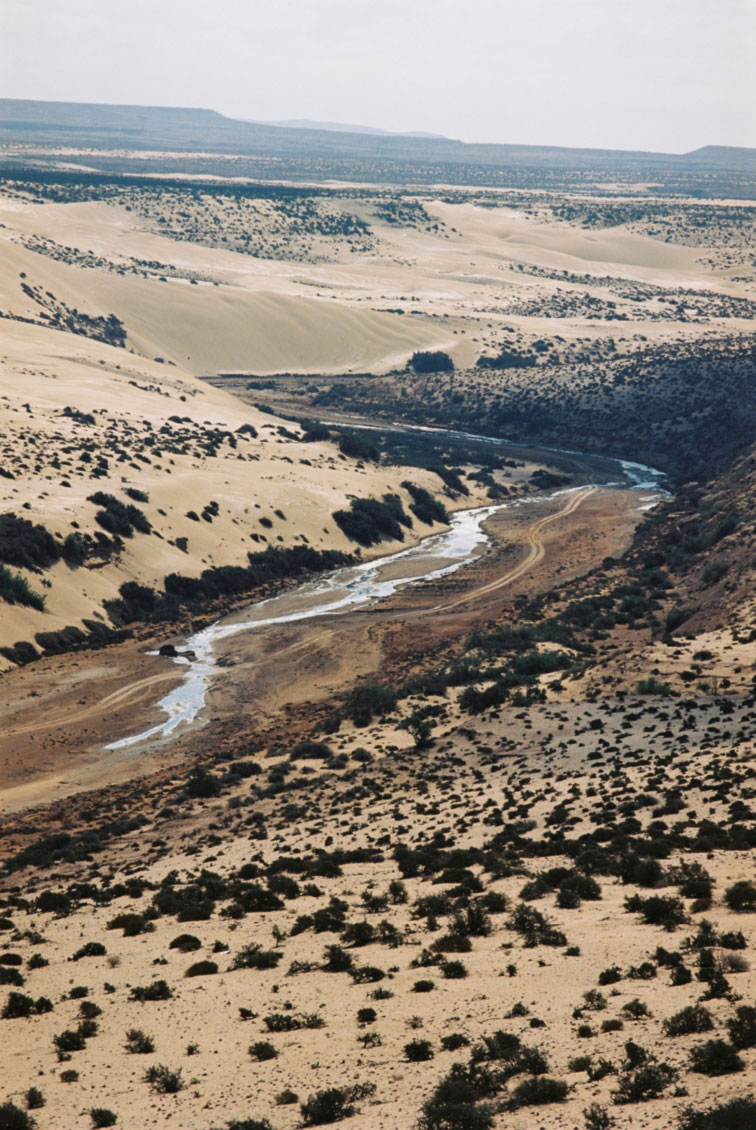
14. 22/10: Puis on a rejoint le magnifique Oued Rachid (right) pour le remonter.
Super bivouac non loin de l’oued.
15. 23/10: On continue à remonter l’oued, passage pas facile à trouver vers la fin car les pluies ont fait des dégâts. Et on découvre une guelta: avec une magnifique séance de troupeaux à l’abreuvoir.
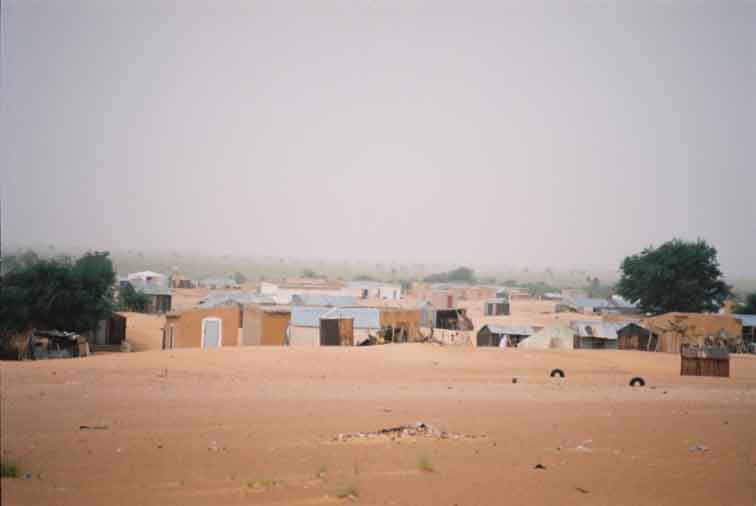
Arrivée à Rachid (left), quelques courses pour un super picnic à l’ombre (il fait toujours aussi chaud!) au bord de l’oued.
Puis Tidjika pour refaire les pleins et on récupère la piste vers Boumdeit.
16. 24/10: Passe de Néga (on toujours pas vu les singes!), Boumdeit et bivouac près de la piste vers Kiffa (le cram-cram commence à devenir envahissant et il fait toujours aussi chaud!).
17. 25/10 : Kiffa, puis route vers Aleg. Arret devant la stele à la mémoire des 4 Français et leur guide assassinés en Décembre 2007 (right).
Beaucoup de contrôles sur la oute à partir de Kiffa. Bivouac à l’écart de la route après Sangafara. Nous quittons notre guide Fadel à Aleg, cela a été un très bon compagnon de route et un bon guide. Fadel Habib: 00222 22 44 38 04.
18. 26/10: Route (c’est goudronné maintenant) vers Boghé, Rosso; bivouac avant Rosso.
19. 27/10: Piste vers Diama et passage de la frontière Senegalese sans problème. Nuit à Saint Louis.
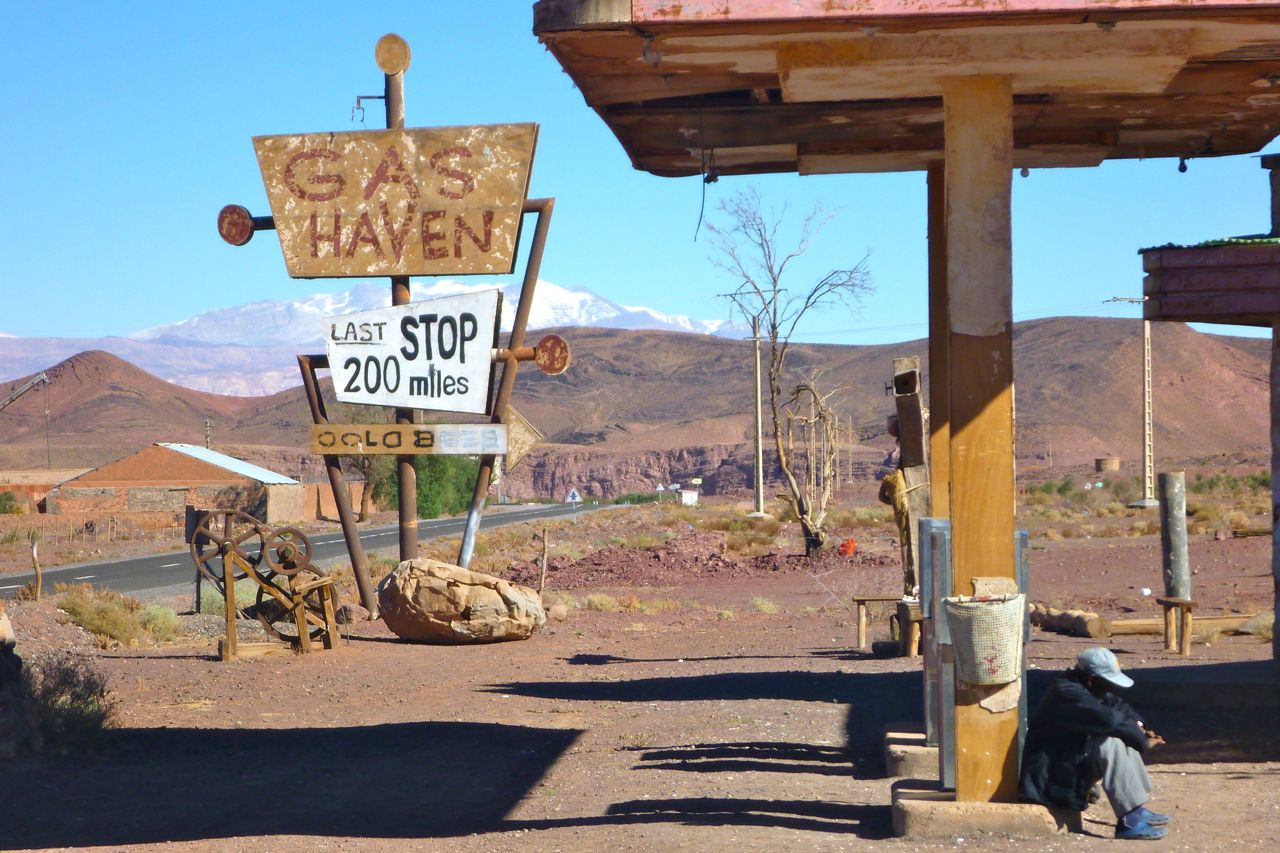
Parts One and Two here. As two of the group are actors and Americans, from Tazenacht we take an excursion north to Gas Haven, a surviving film set from a 2006 remake of Wes Craven’s 1970s mutant hillbilly slasher The Hills Have Eyes. If nothing else it’s a great ride north through the Tizi n Bachkoum pass, chasing Andy on the Sertao.
Southwest American roadhouse an hour out of Ouarzazate. Even that boulder by the sign is fibreglass and wire.
Being an actor, Patrick knows a lot about about working behind bars.
Outside, desiccated, severed limbs swing in the desert sun.
There’s even a Wall of Death, but not the fairground one where a bloke rides round and round until he gets dizzy.
Chubby-cheeked babies charred by a nuclear experiment that went tragically wrong. Or something like that.
Lunch in Agdz – pronounced like ‘Agadez’ in Niger.
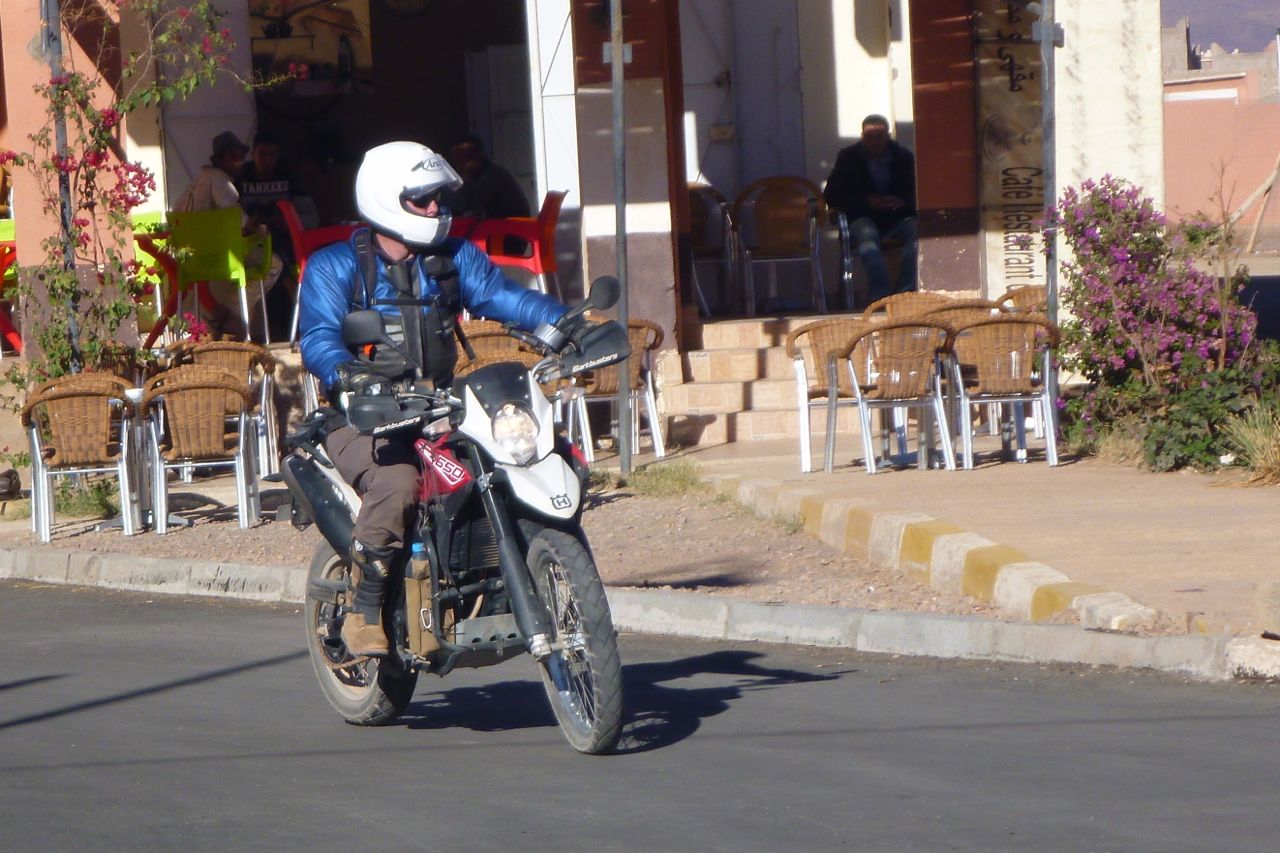
Rob takes a swing on the Husky.
Mustapha leads us to a viewpoint over Agdz palmerie with the Draa river in there somewhere. We’re riding up that hill tomorrow.
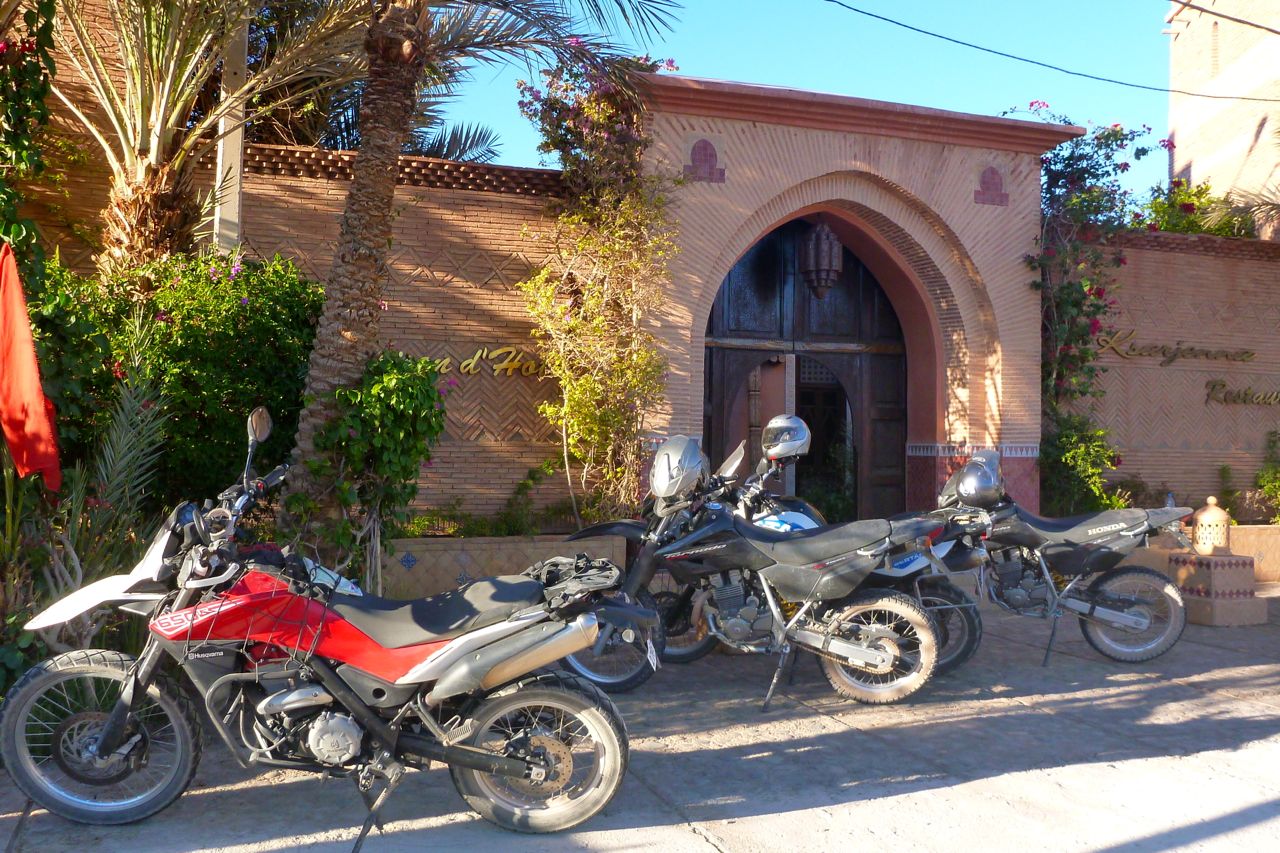
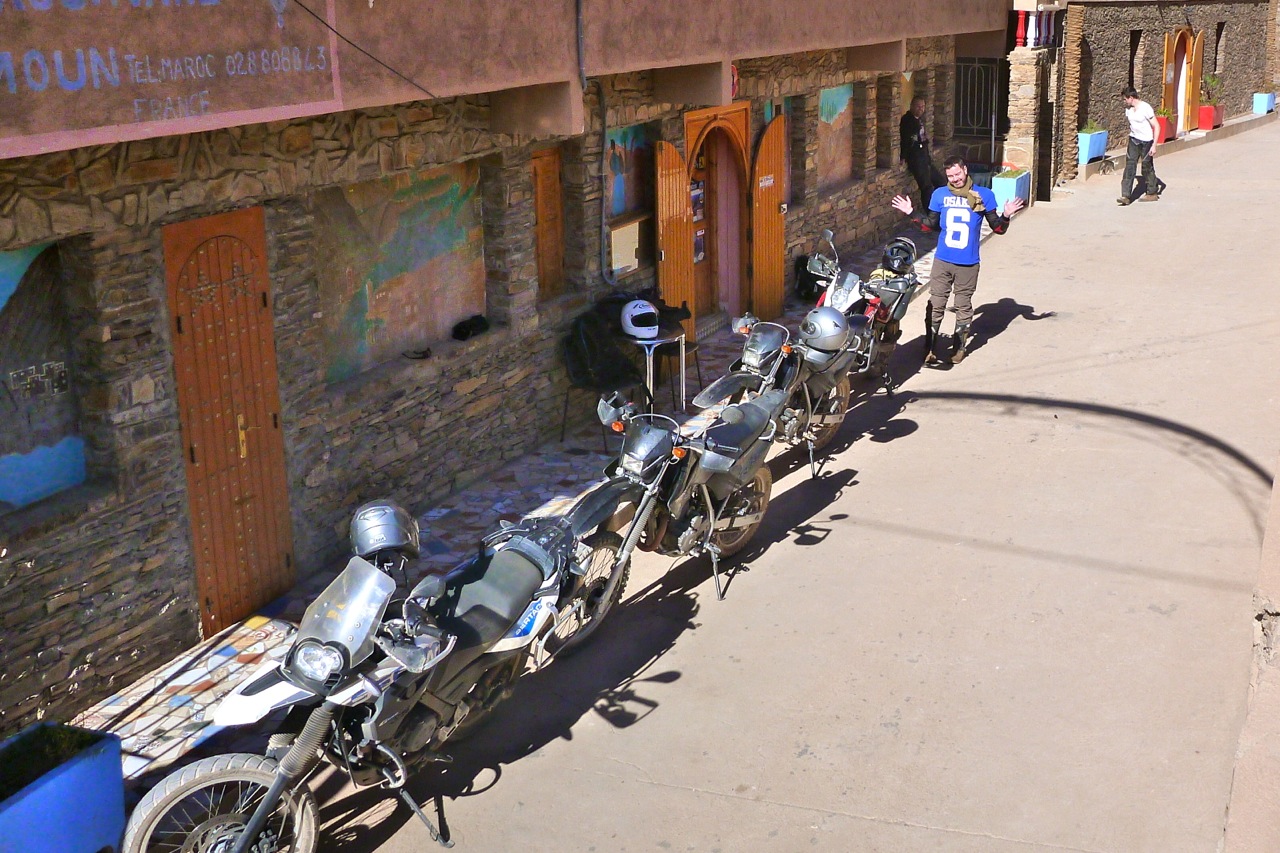
We arrive at the lovely Ksar Jenna on Nekob westside. We’re spending two nights here.
Night falls over Nekob.
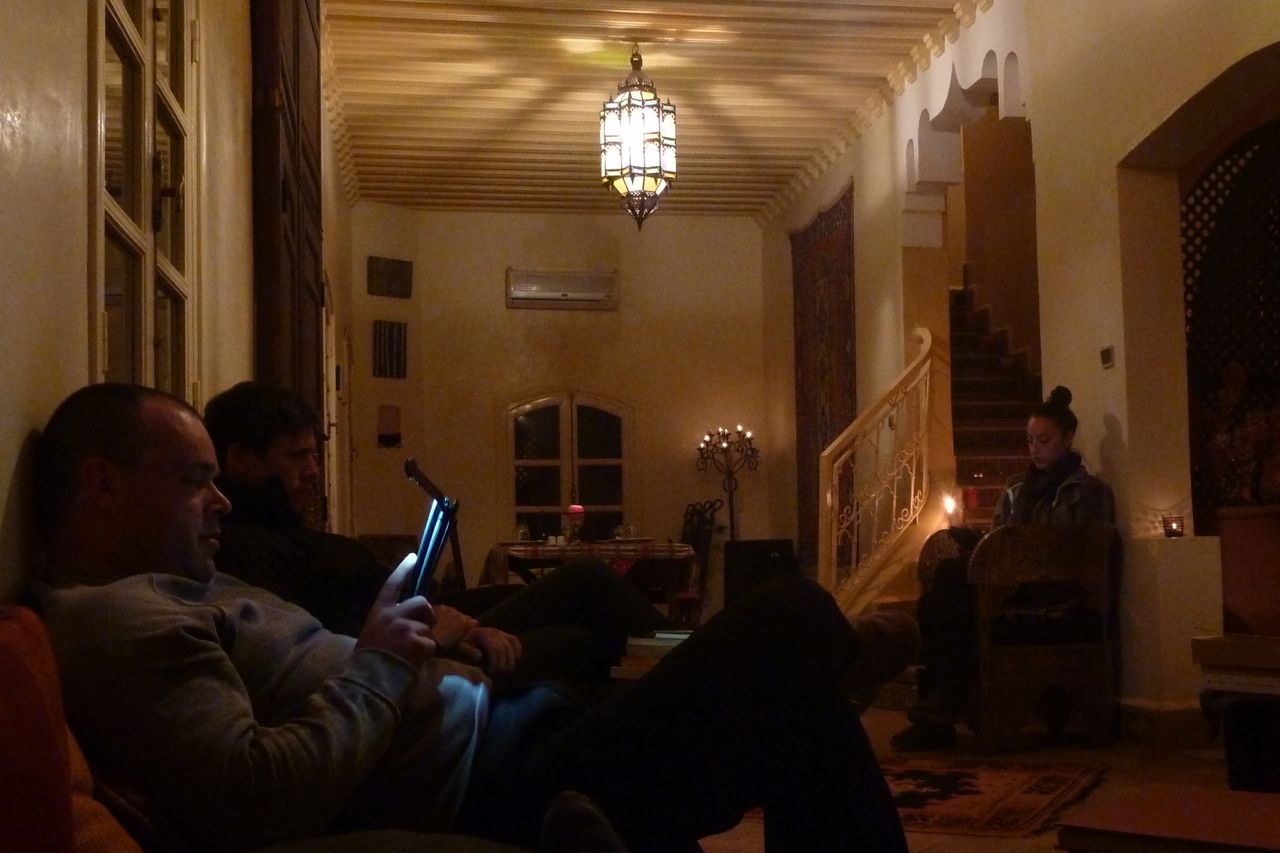
Inside, following another fine feast, the Kindles glow.
Next day Rob, Andy and I take a ride up MH14 ‘Sarhro West’ which I tried last year on the BMW 650 twin.
Patrick is doing his own thing today on the Sertao and Andy snatched his XR250 before I could.
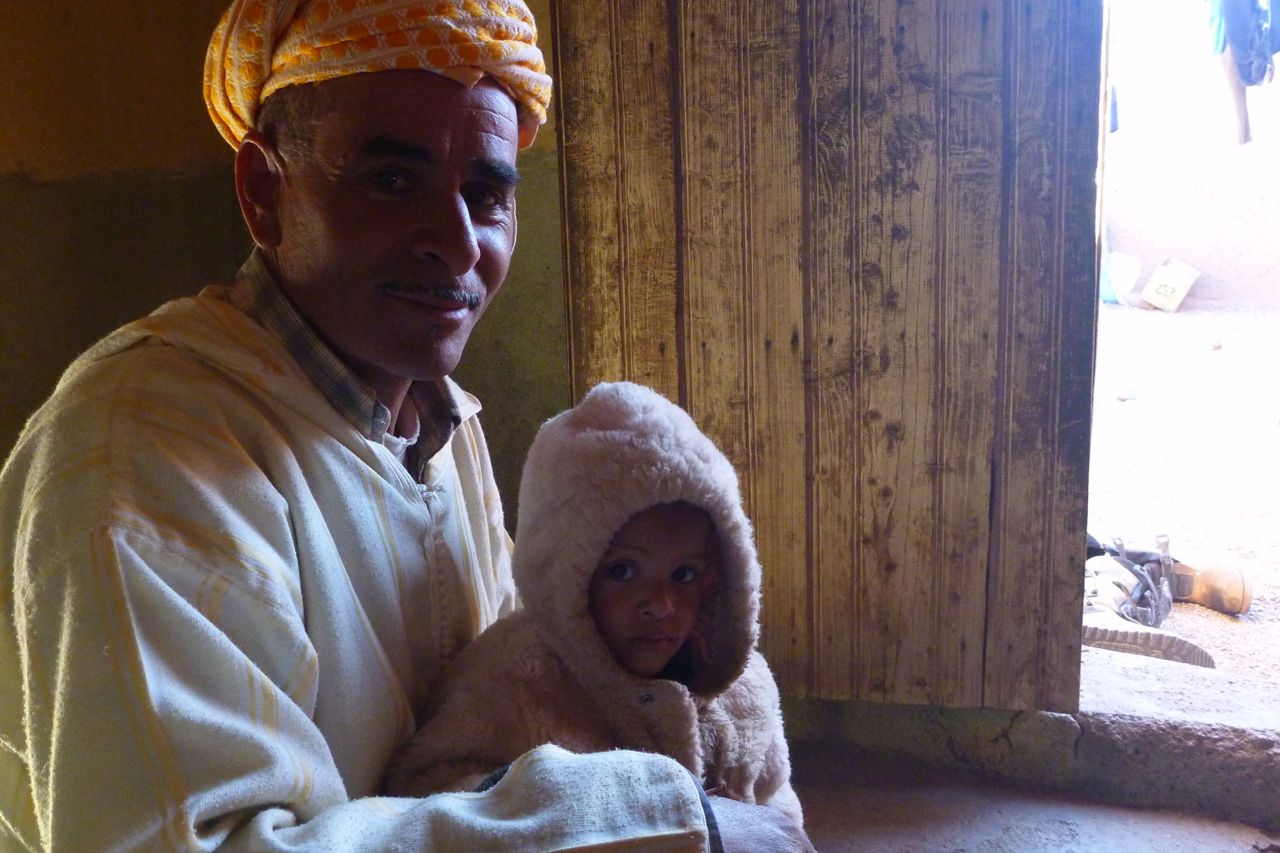
We stop for a tea and snack at the last dwelling up the valley. Hassan sits with young Ahmed in his woolly hoodie.
At the summit junction, KM46, I invoke the droite d’accompagnateur and depose Andy from the XR250.
Undaunted, Andy hurtles off into the afternoon sun on the TR650, following an untried Olaf track which descends to the N9/N12 near the Draa river.
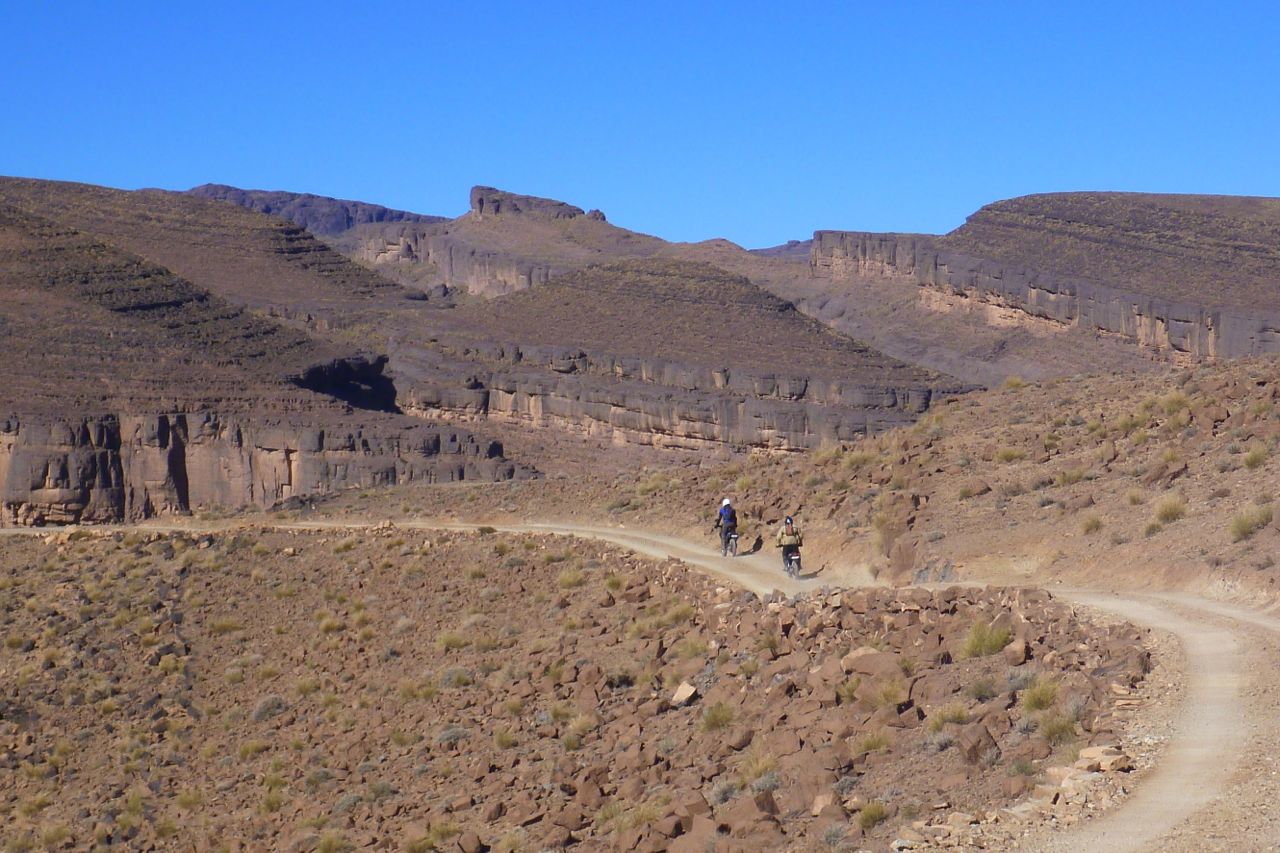
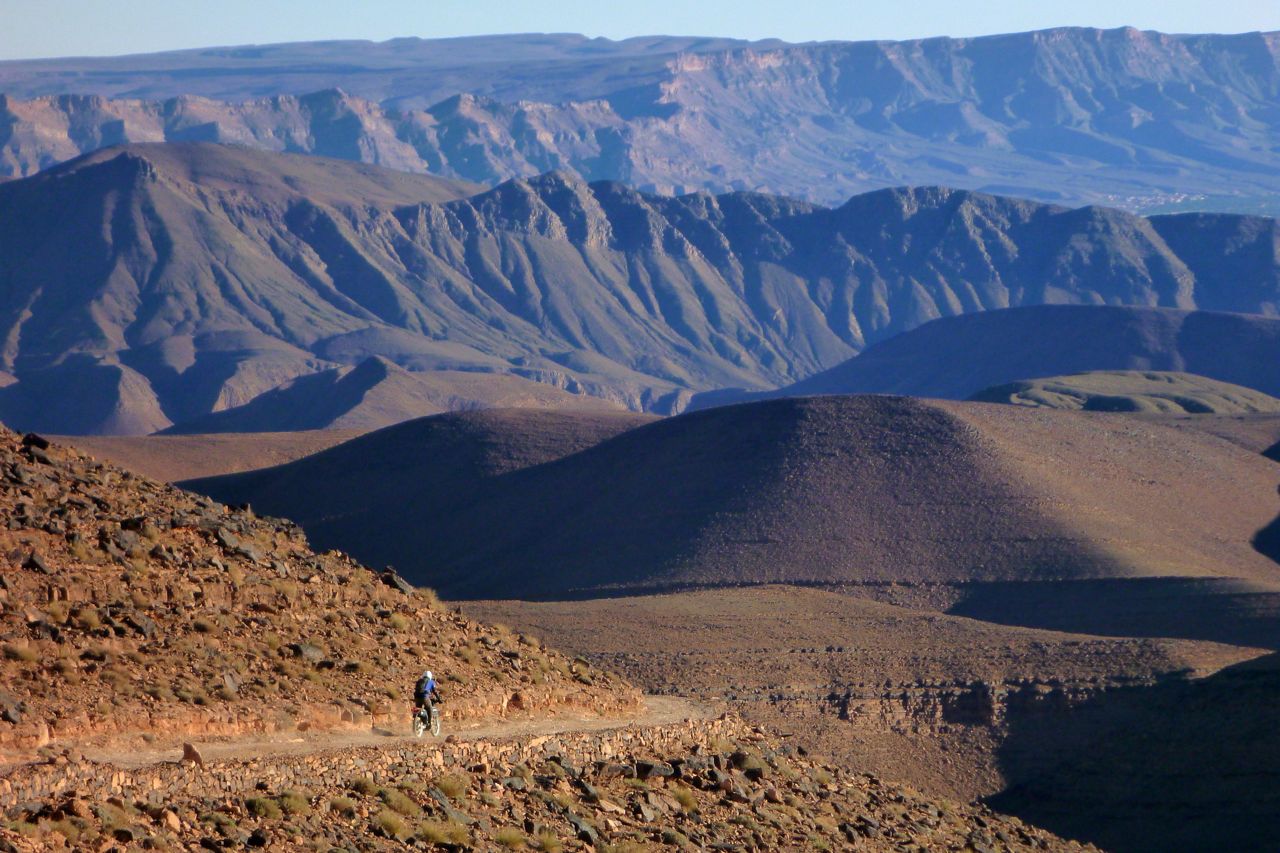
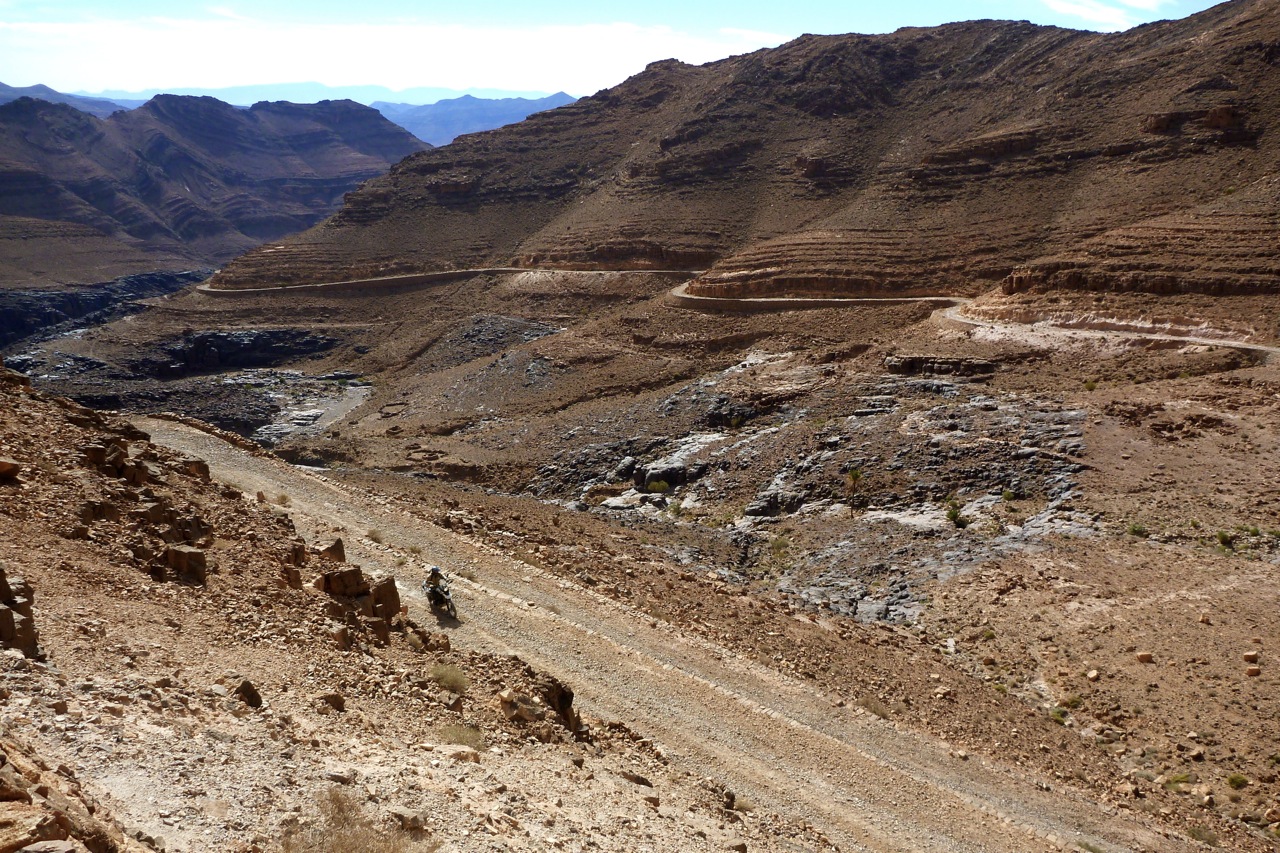
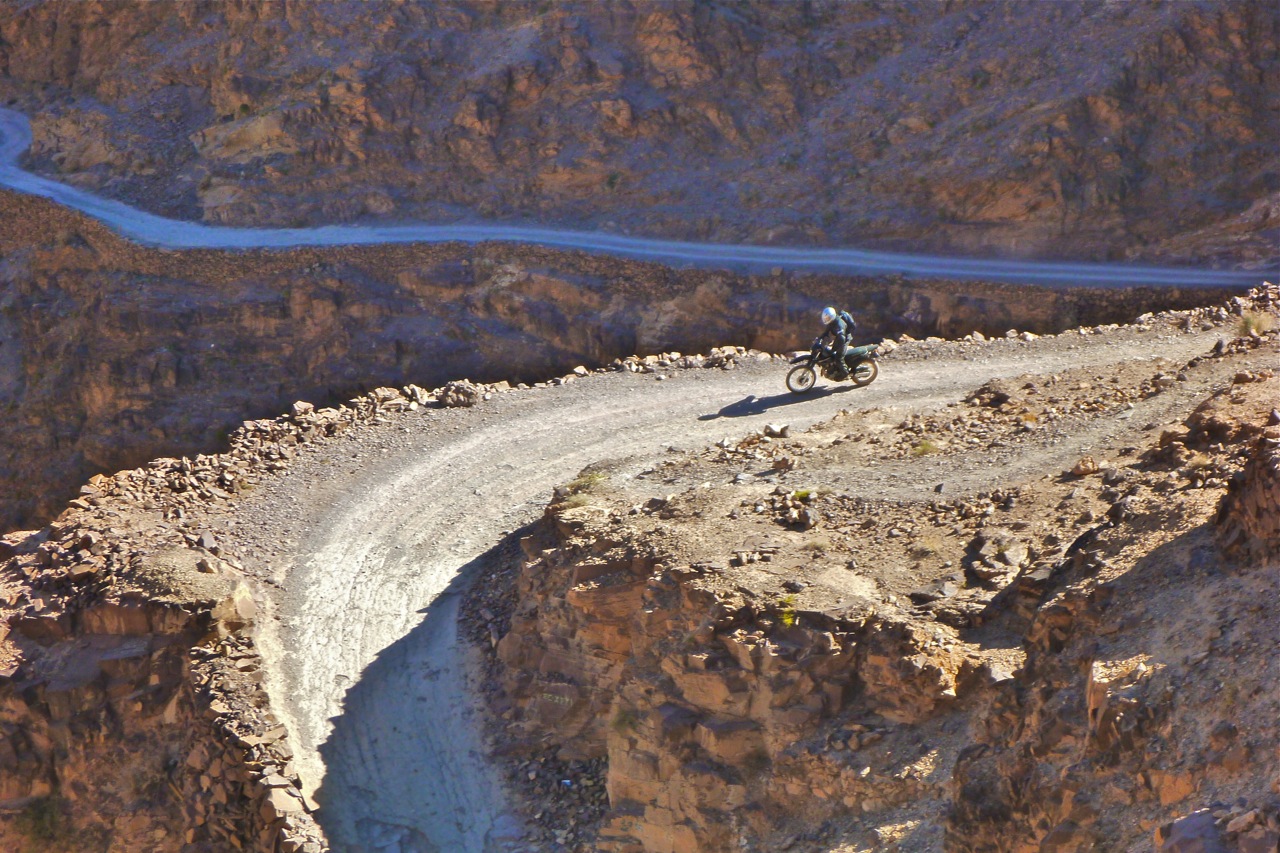
Once it drops off the plateau this piste proves to be as spectacular and exposed as I imagined. Morocco at its best.
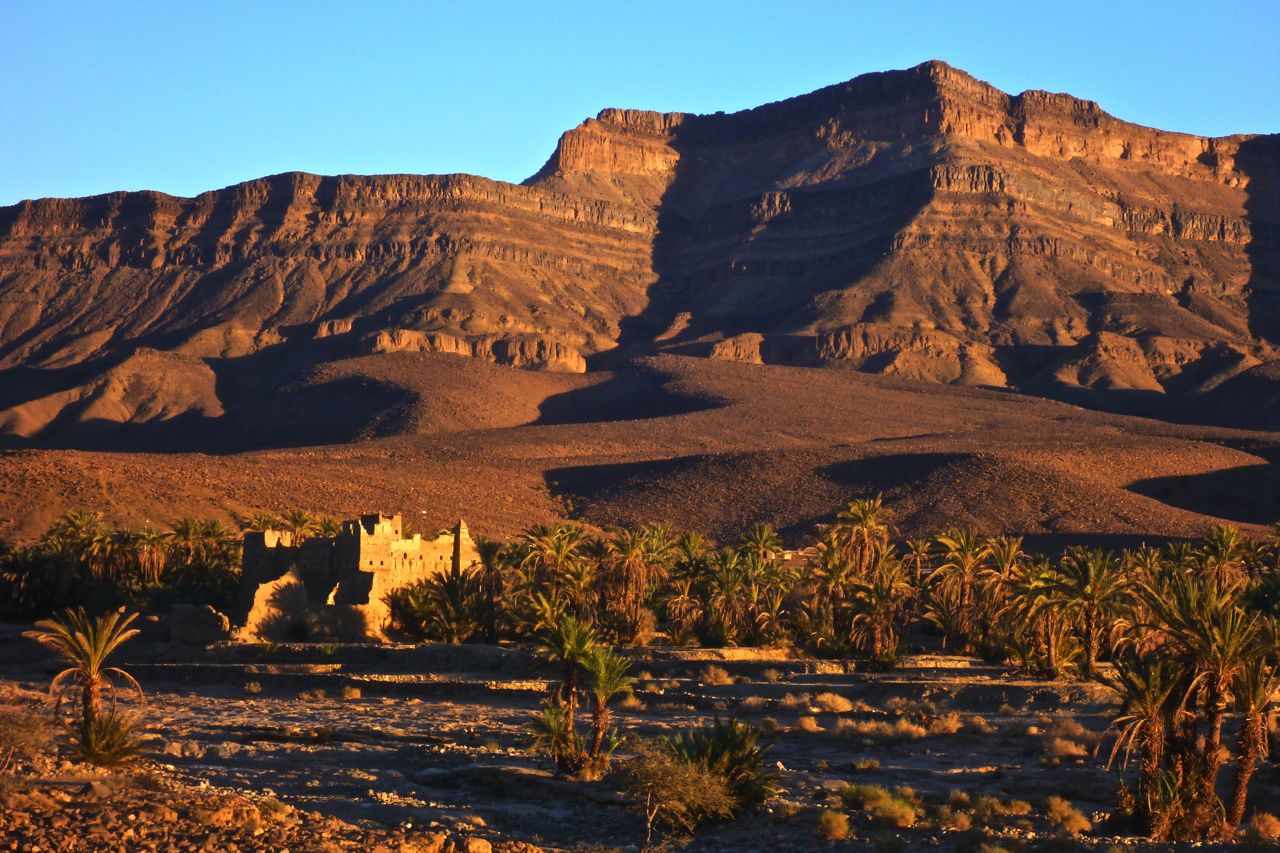
Back on the N12 road a short distance out of Nekob, another palm-ringed kasbah shimmers in the crepuscular glow.
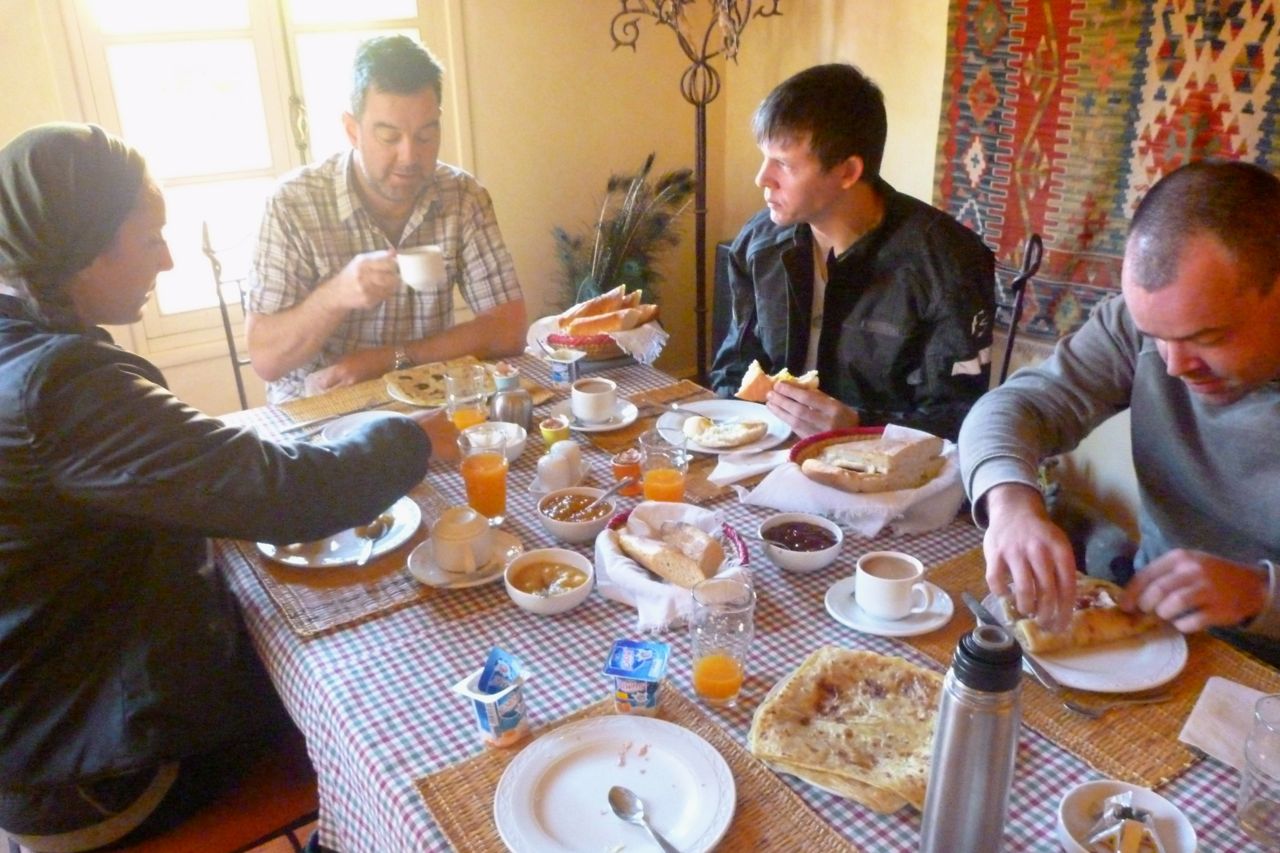
And another lavish breakfast at Ksar Jenna.
Today we’re moving on, off up the well-known 112-km piste over Jebel Sarhro to Tinerhir; MH4.
Just a week on a dirt bike and Patrick already has his arse-end aflame.
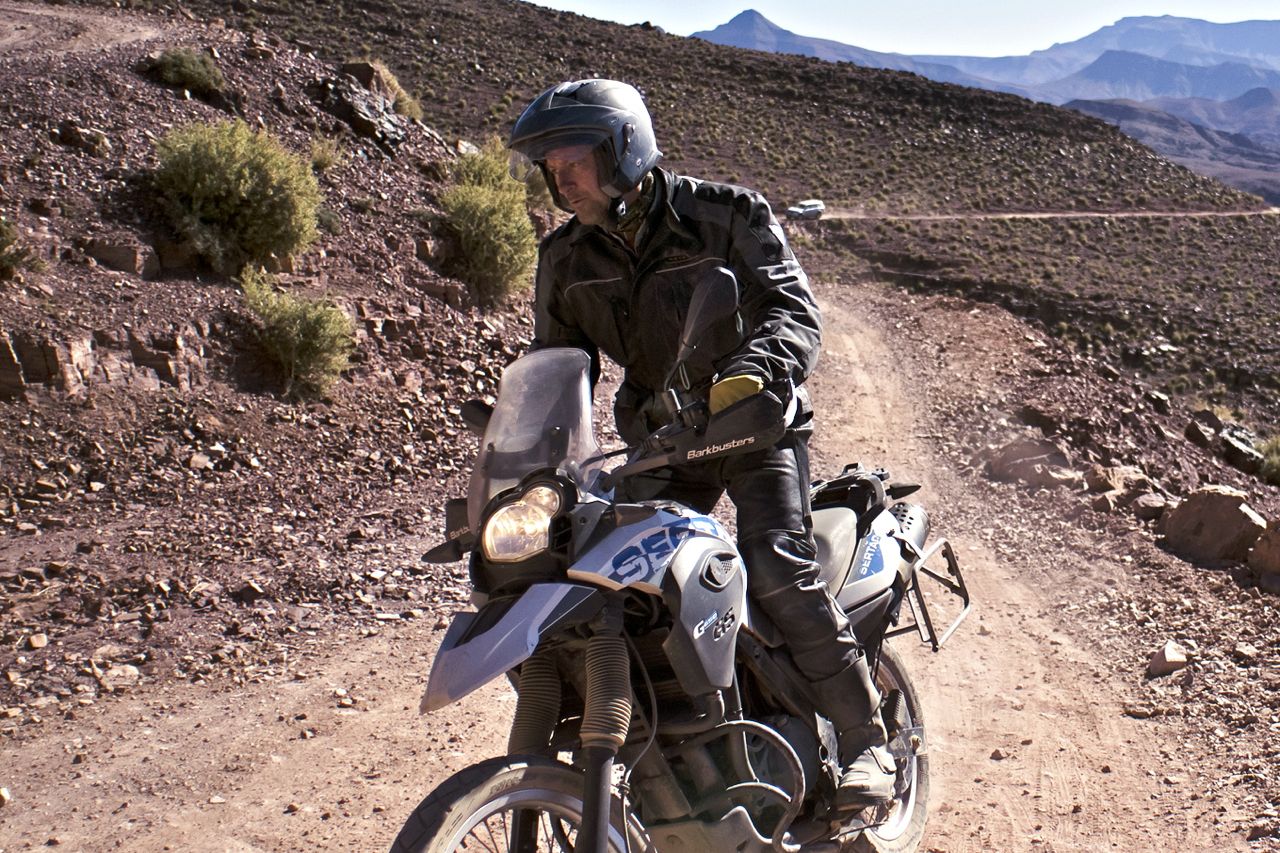
A rare shot of me on a motorcycle. I’m trying out the Sertao, but on the piste its characteristics are distinctly canine compared to the Terra. Nice engine but feels 20kg heavier.
This was all the ‘camping’ we could manage.
A coke stop near the pass.
Up past Iknioun the track becomes a wide and fast motorway and I blast along on the Husky in top gear for a while. But the classic piste (MH4) is now in the shadow of the amazing Sarhro West piste we did yesterday.
We haul 100km over to Chez Moha at Ait Youb hamlet in the High Atlas. A lovely spot all made of mayd and straw, but a bit chilly compared to what we’re used to.
Maybe better in the spring when I was here last time. Even then, we enjoy a fabulous cous-cous feast huddled by an electric heater.
Next day a cool morning but I enjoy a fantastic burn up down the Todra Gorge on the Husky, fix a quick nail puncture then we have a lavish grill in Tinerhir. A hundred miles down the road we check into the Vallee hotel in Ouarzazate southside. A little past it prime, but they have wifi and heating and beer and yet more great food.
Our room boasts some rather creepy psycho-erotic art. The longer you look at it, the more disturbing it gets. Or perhaps it’s just depicting the desecration of our Mother Earth. Either way, I do believe ‘Salah 07’ might be in dire need of some female company.
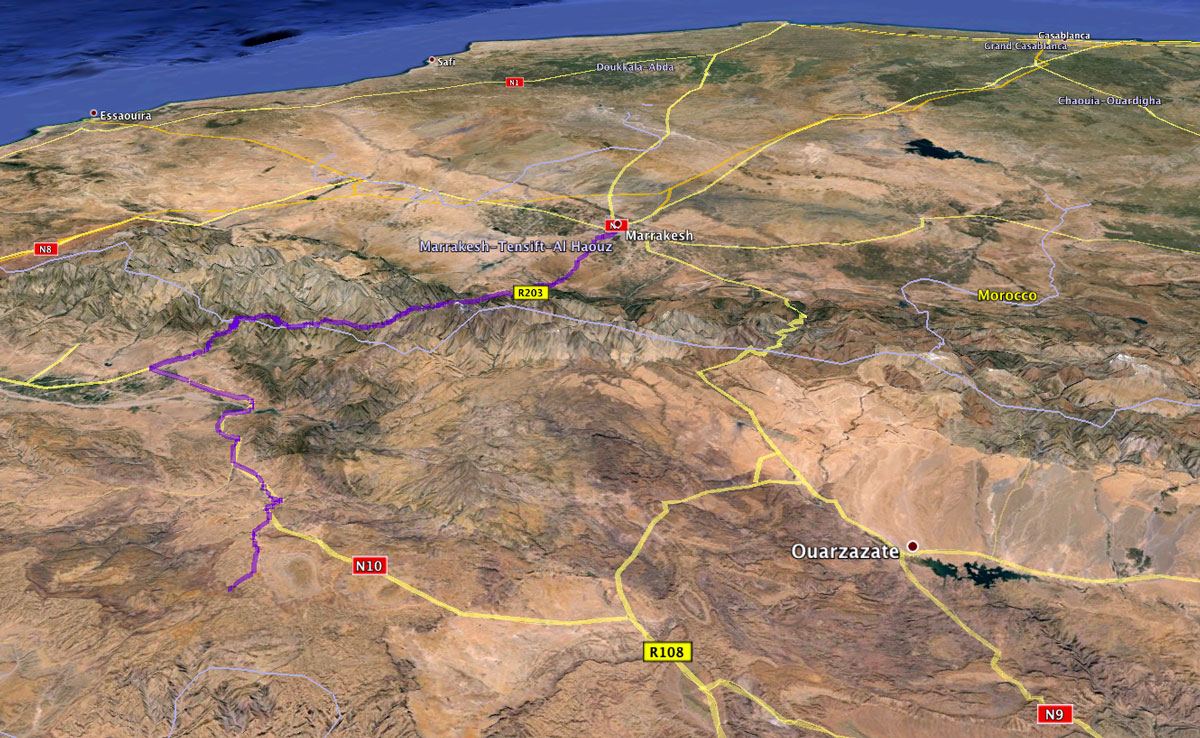
Next day, yet more brake warming, bend swinging action over the Tizi n Tichka pass back to Marrakech and a plane home.
So there we have it. A great group and a fab time buzzing around Morocco over 10 days enjoying a little bit of everything: cosy lodgings, amazing views, delicious fresh food, all linked by great blacktop and piste. I’ll offer something similar as a tour next November 2014 when the weather seems just right. Have a look at the Tours page around mid-December.
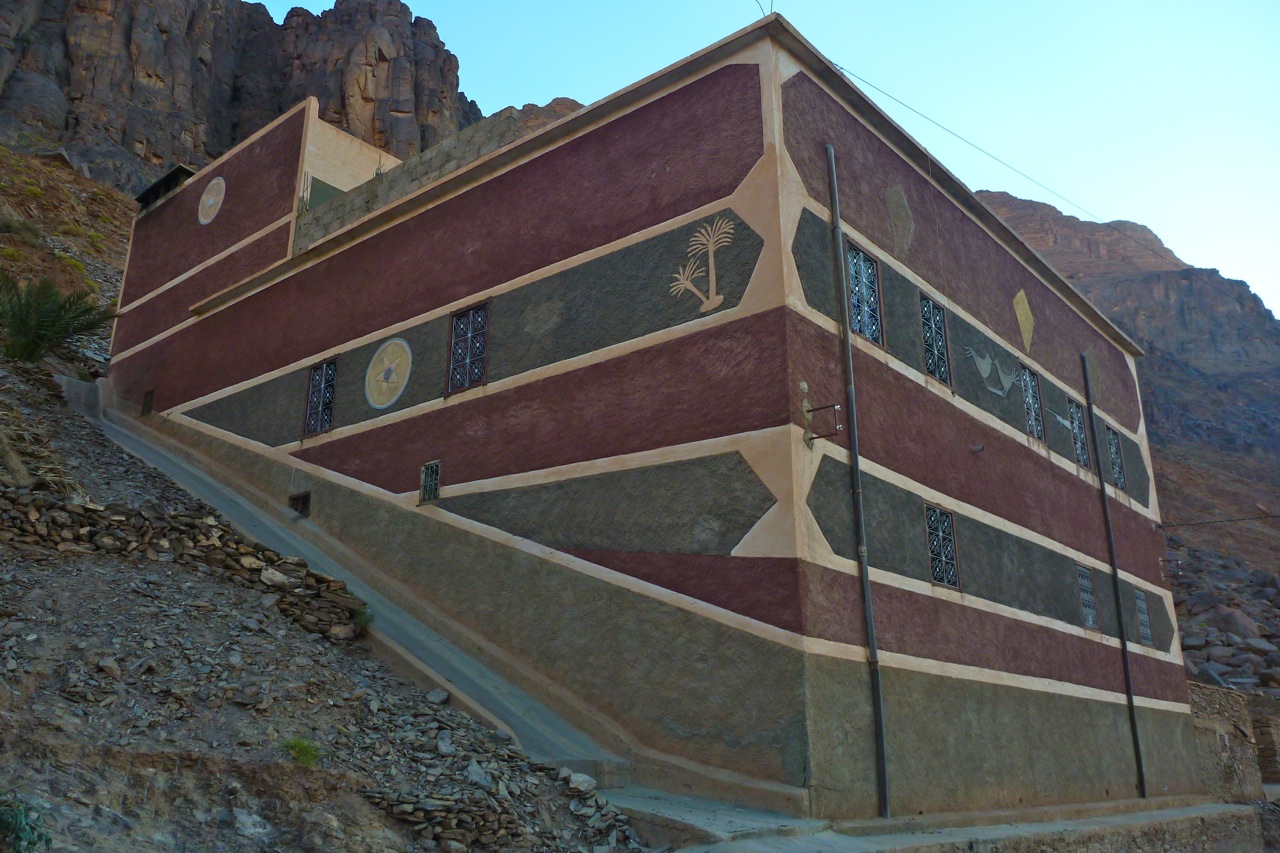
I go for a walk, passing unusual dwellings designed to slide downhill in the event of an earthquake.
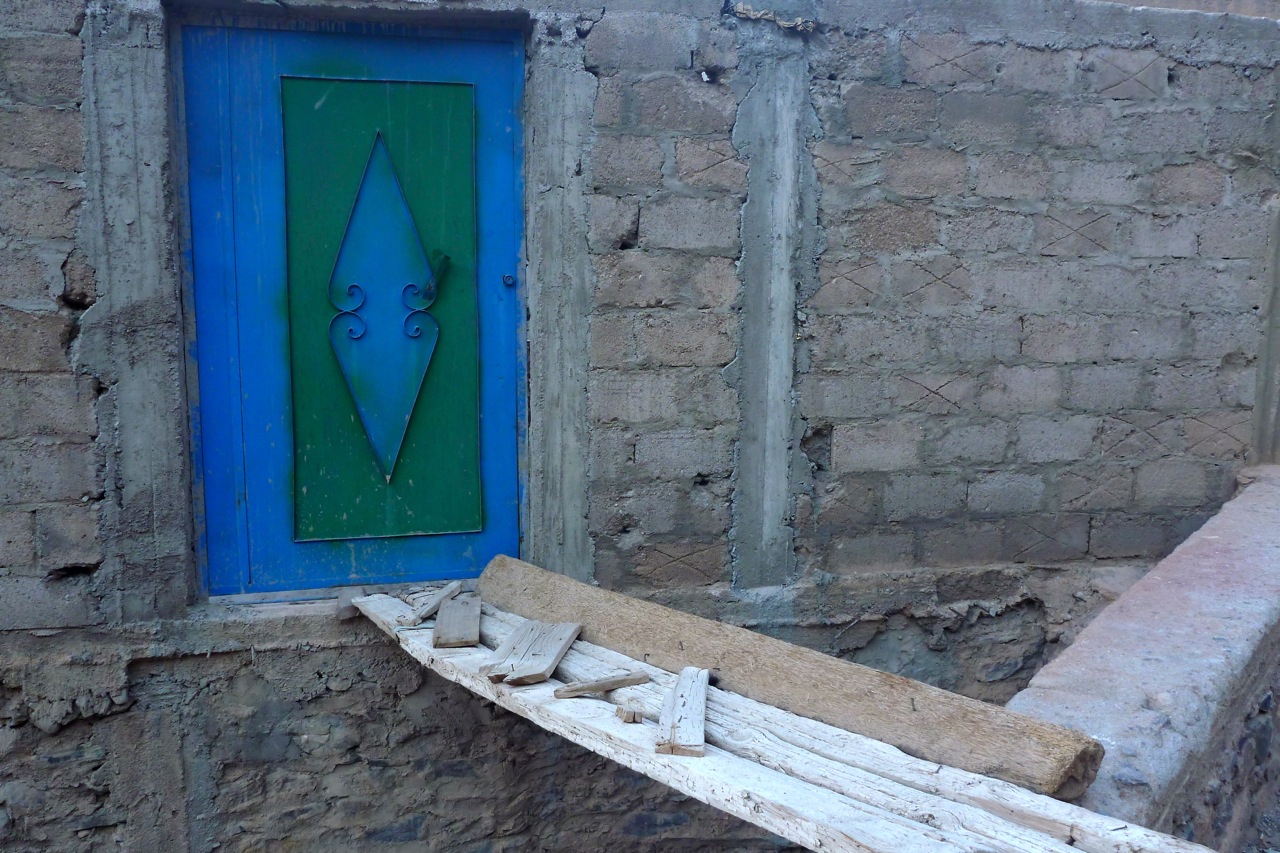
Not a place to stagger back to late one night, fumbling for your keys.
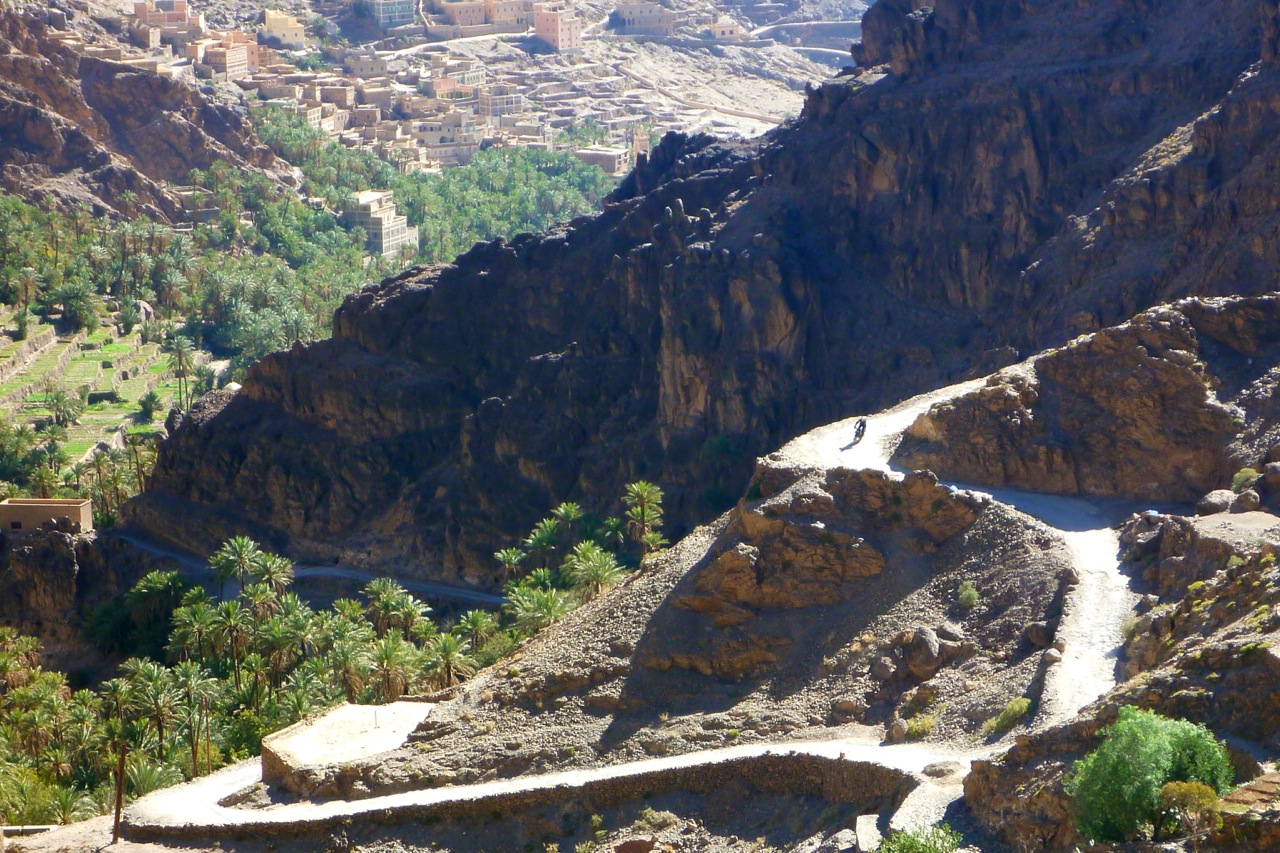
We go for a ride back up the cliff
.
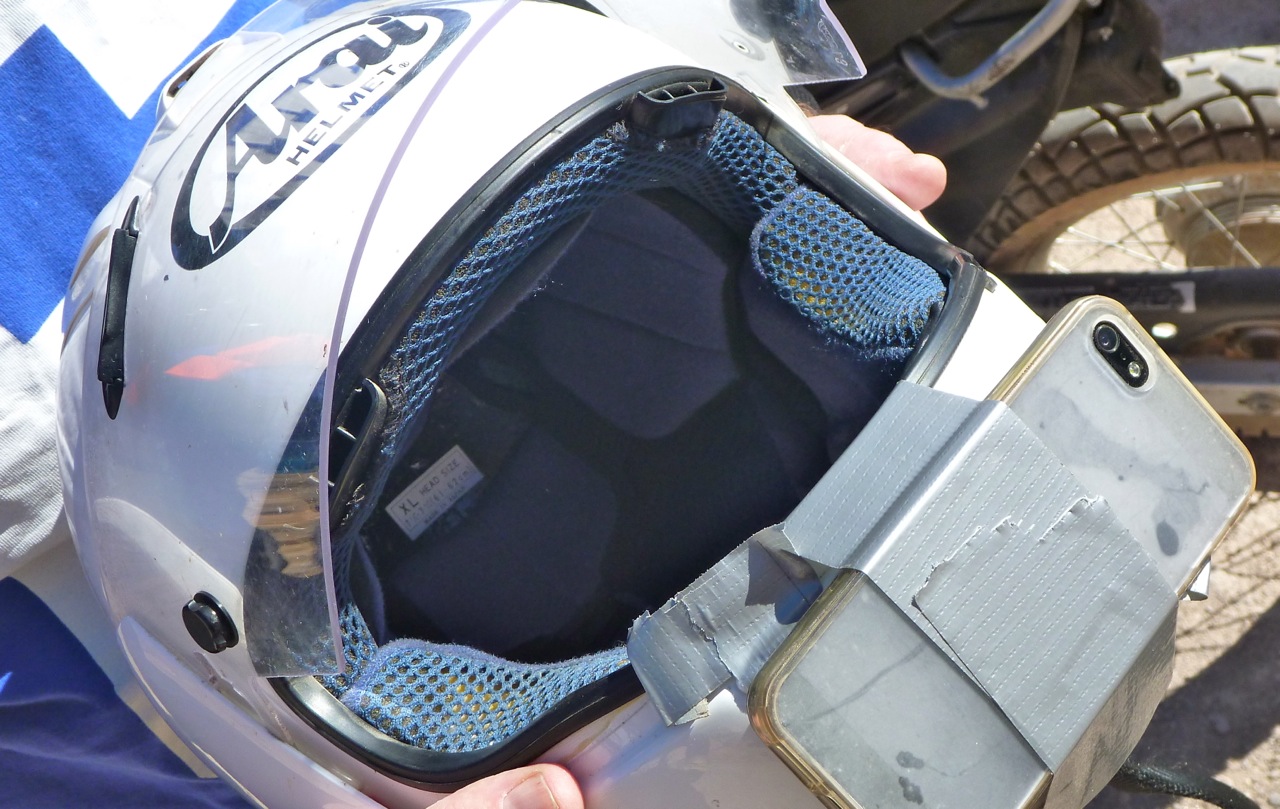
Rob tries out his new Touratech Arai-iPhone adapter mount, called a Digital Utility Camera Transom. You’d think they could come up with a snappier name.
Down below, a carefully tended mosaic of gardens lap up the autumn sun.
We take a walk over to the kasbah (fortified dwelling) at Assaragh
Then ride back down…
… to the auberge for lunch. It was built by a local who did well abroad, and chose to return something to his community. A common practise in Morocco.
After a siesta we head out to a curious ruined tsar (similar to a kasbah but more castle-like) which I passed last year.
We wind out way up into a maze of crumbling walls and collapsed palm-trunk beams.
But at the doorway it looks a bit dodgy to go further without a hardhat and full body armour.
Next day we’re back on the piste.
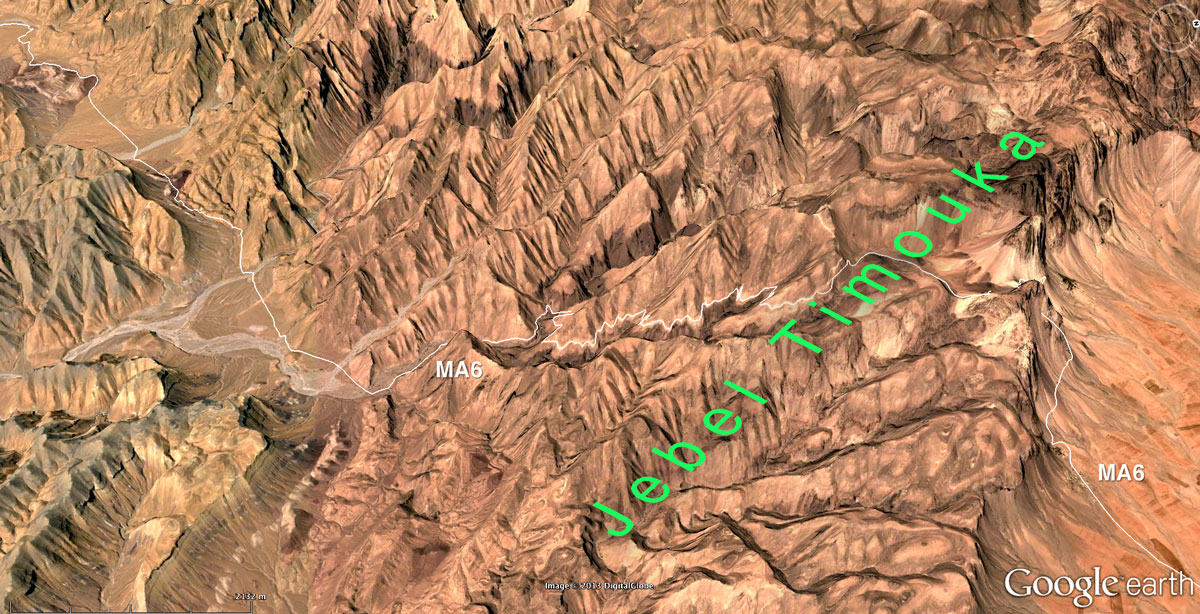
Heading up over Jebel Timouka, Route MA6 in my book.
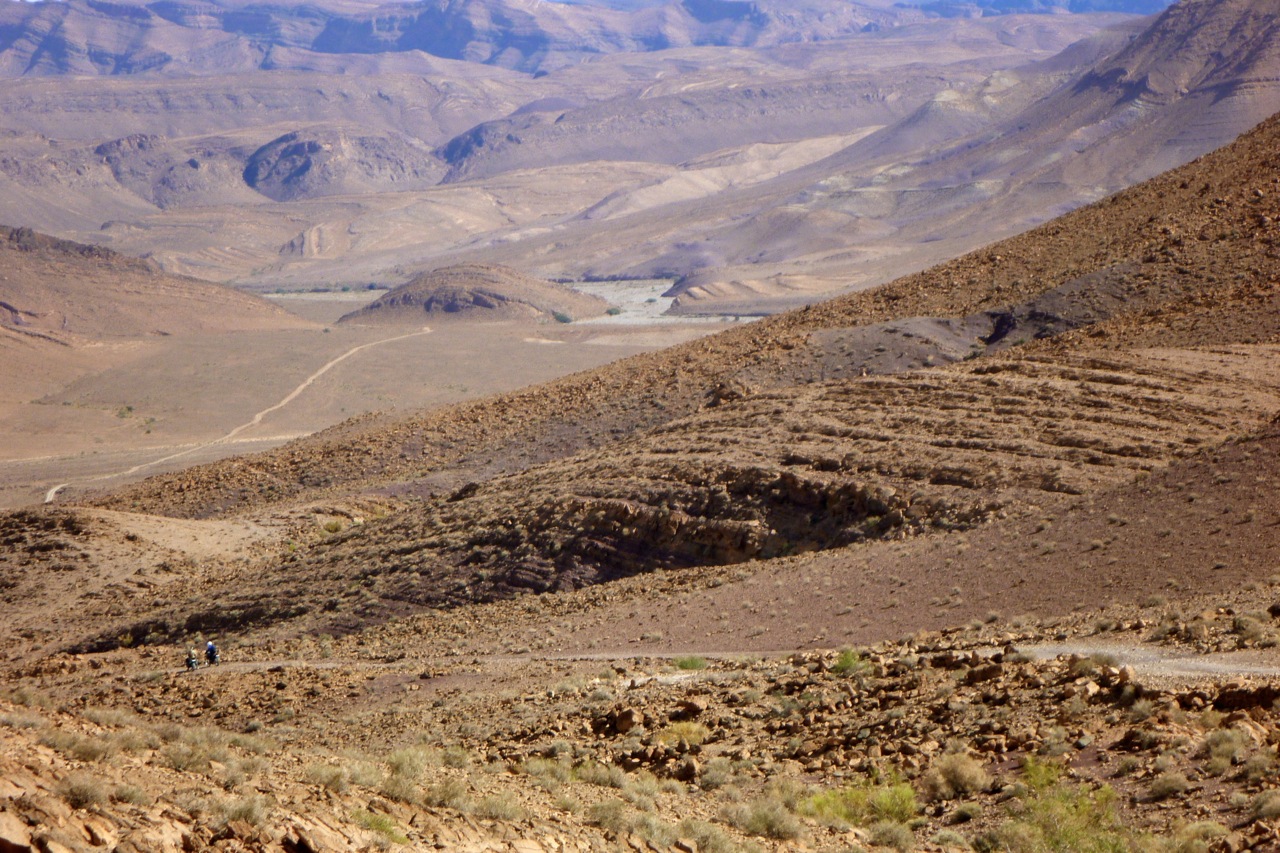
Into the ranges.
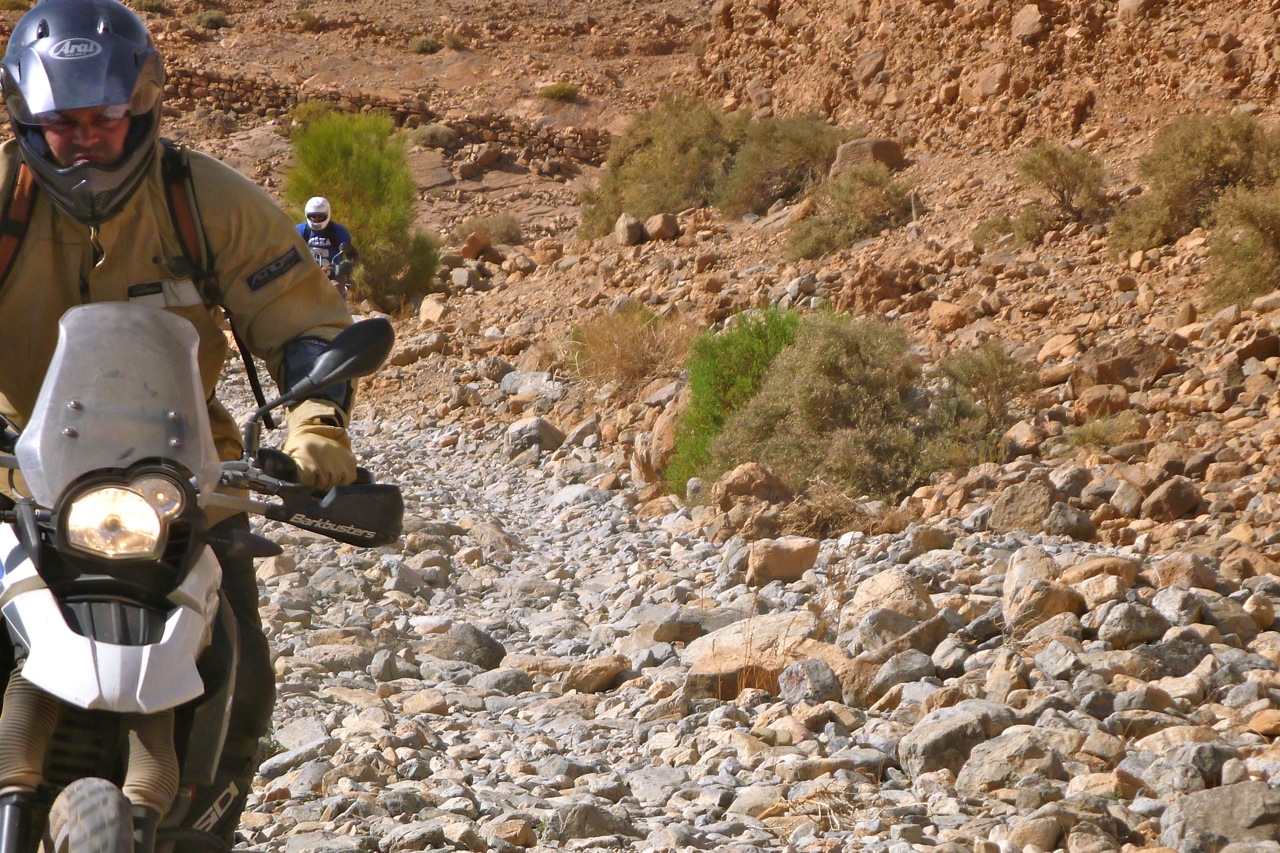
Some oueds (creeks) are hard work on the heavy 650s. So we stop to cool off and let Elisa and Mustapha catch up.
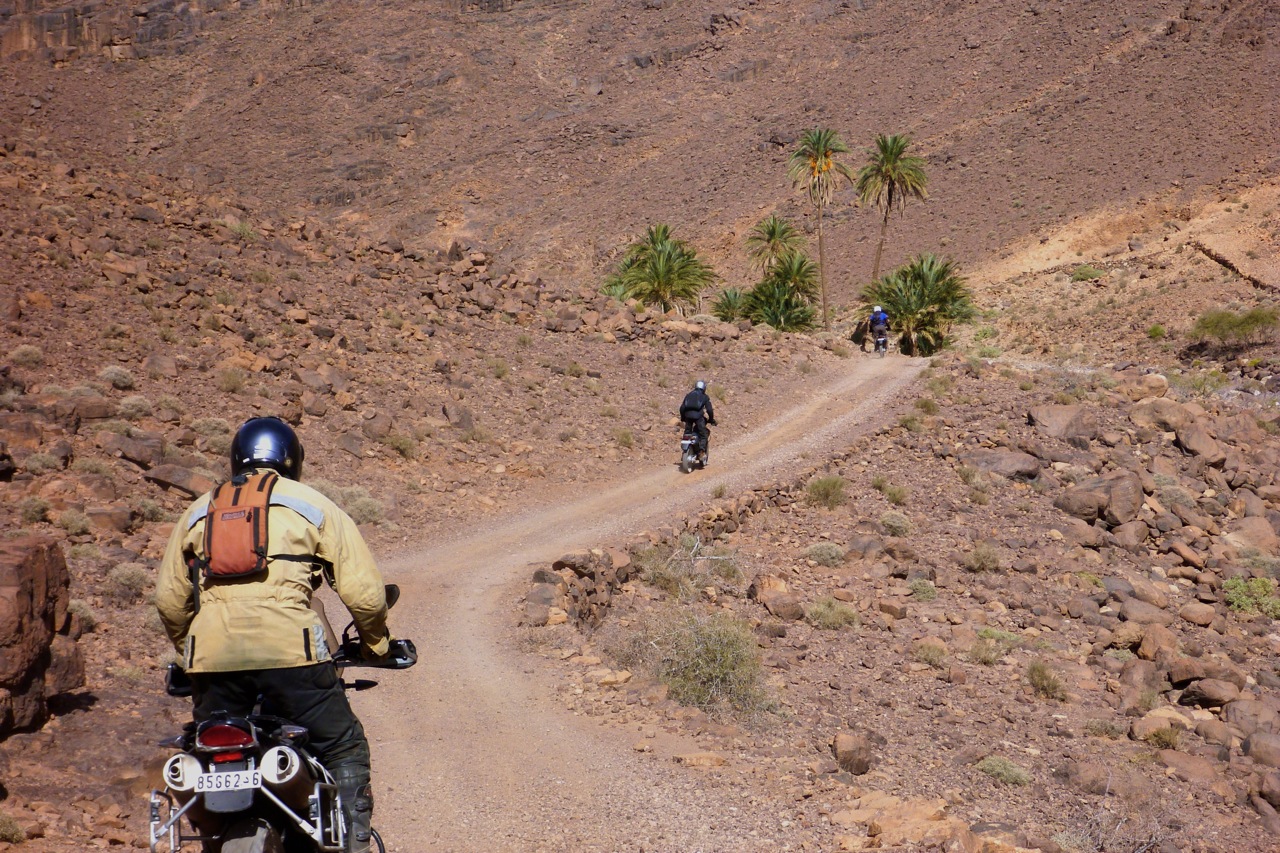
The climb begins.
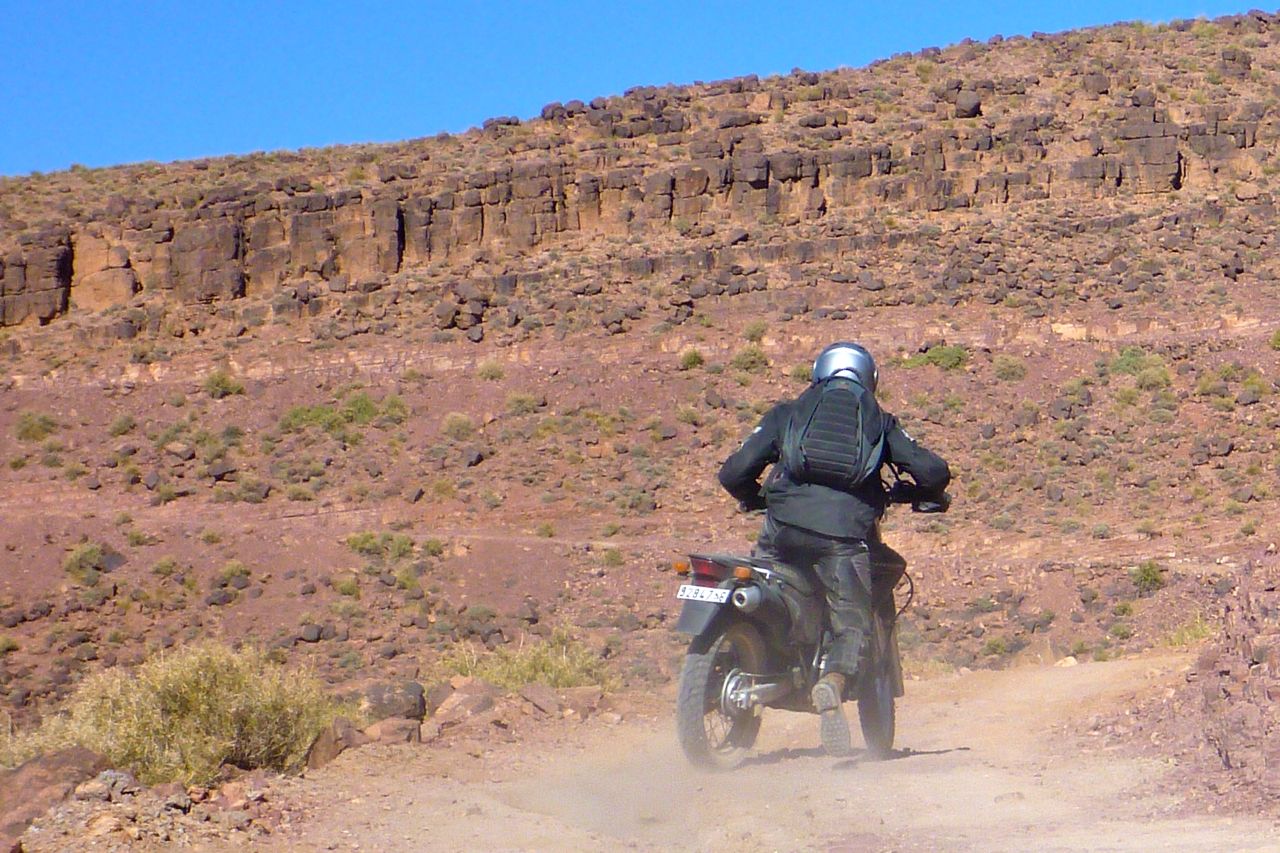
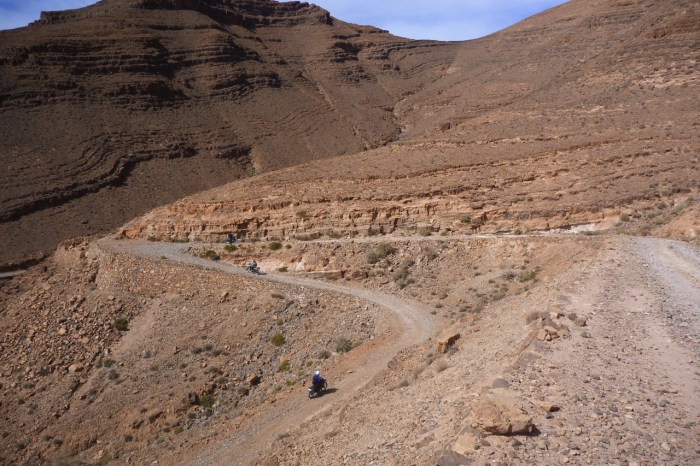
Deeper Steeper Higher I don’t know about the others, but the occasional landslide repairs with football-sized rocks are barely rideable on the Terra. The suspension shoves the weight back at you in all directions nd you can tell that point is coming where it’s easier to fall than fight it. When I came this way in 2008 I broke a spring on my pickup. I’m up ahead and eventually pull over weak-kneed, strip off and empty my 3-pint bottle. The others catch up and Elisa hands out power bars. Andy’s Sertao is even more of a dog than the Husky and Patrick got pinned negotiating a gnarly hairpin, but is nevertheless amazed at the beating the XR can take. Rob finds his XR a breeze up here.
We carry on to an amazing view back south towards Jebel Bani, now only 80 miles away
Thankfully the track eases up and we reach the equally amazing Timouka Pass overlooking the Issil plain. In the many tiny Berber villages below (the green clumps) women dye wool and work ancient looms to produce the fine carpets you’ll find in the souks of Marrakech and Tangier
We drop off the pass, race across the plain to the highway and ride into Tazenacht for a late lunch, babbling about our awesome morning’s ride. Freshly-chopped Moroccan salad (a bit like Mexican salsa), omelette, chips and bread + tea. That’ll be $3 Down the road, plenty of room at the Hotel Sahara.
Night falls over Tazenacht.
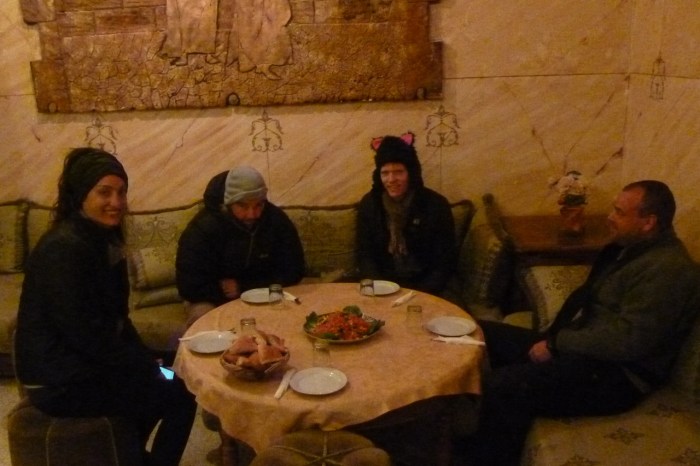
While inside the infidels, some in fancy dress, gathered for the feast and then retire to their chilly suites.
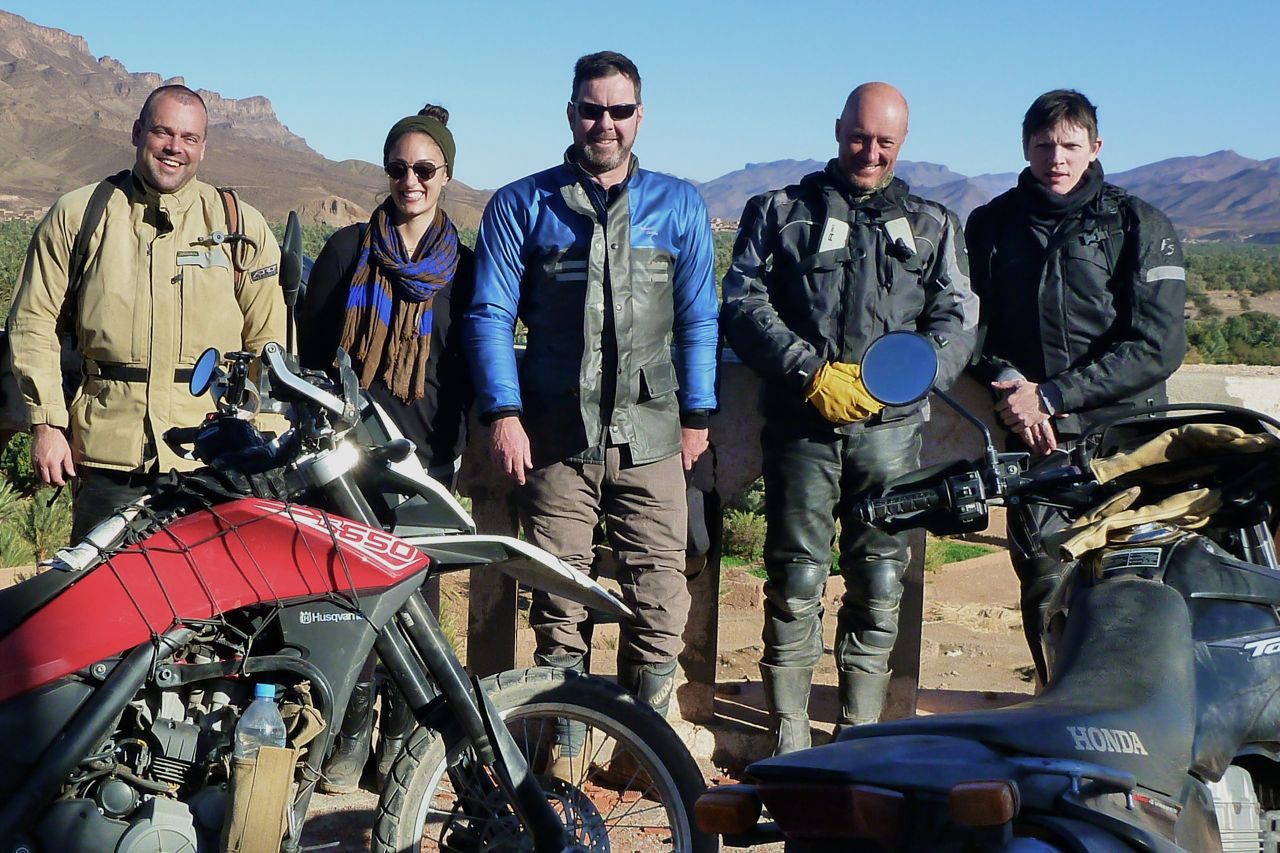
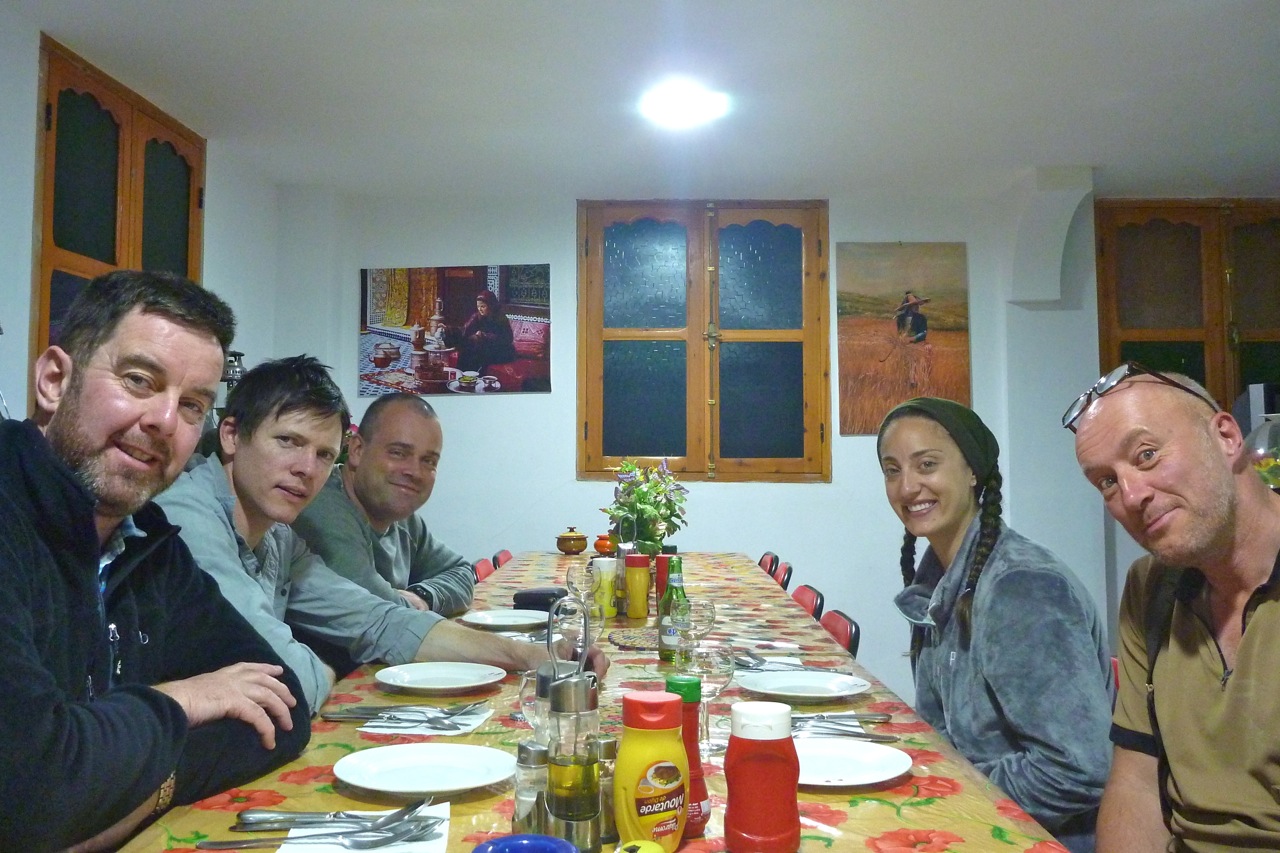
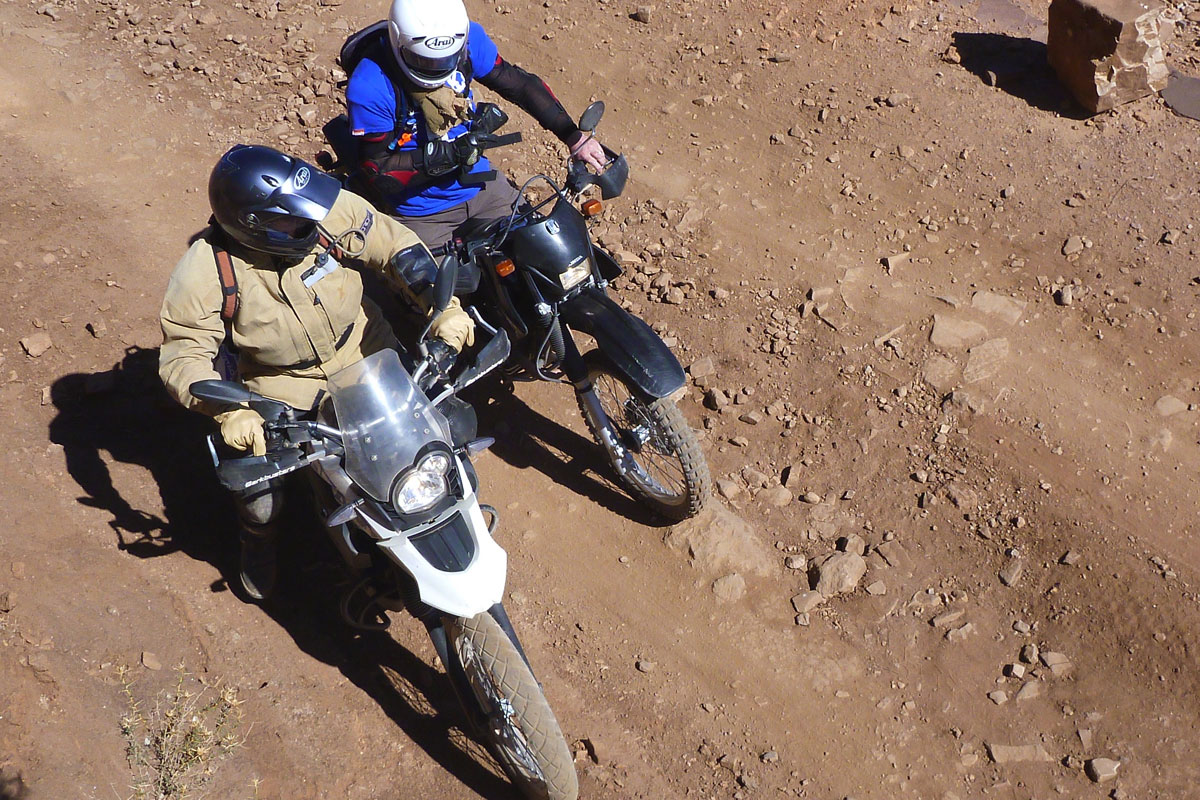
This is us: Rob UK, Patrick NYC, Andy (ex Desert Rider), Elisa NYC and me, having some sort of ministroke. Rob and Patrick were part of a group that trekked with me in Algeria last year. With another planned moto tour having fallen through, off-road newb Patrick asked me to put together a run through Morocco. OK I said if you can find some people to cover my costs. This he did and here we were.
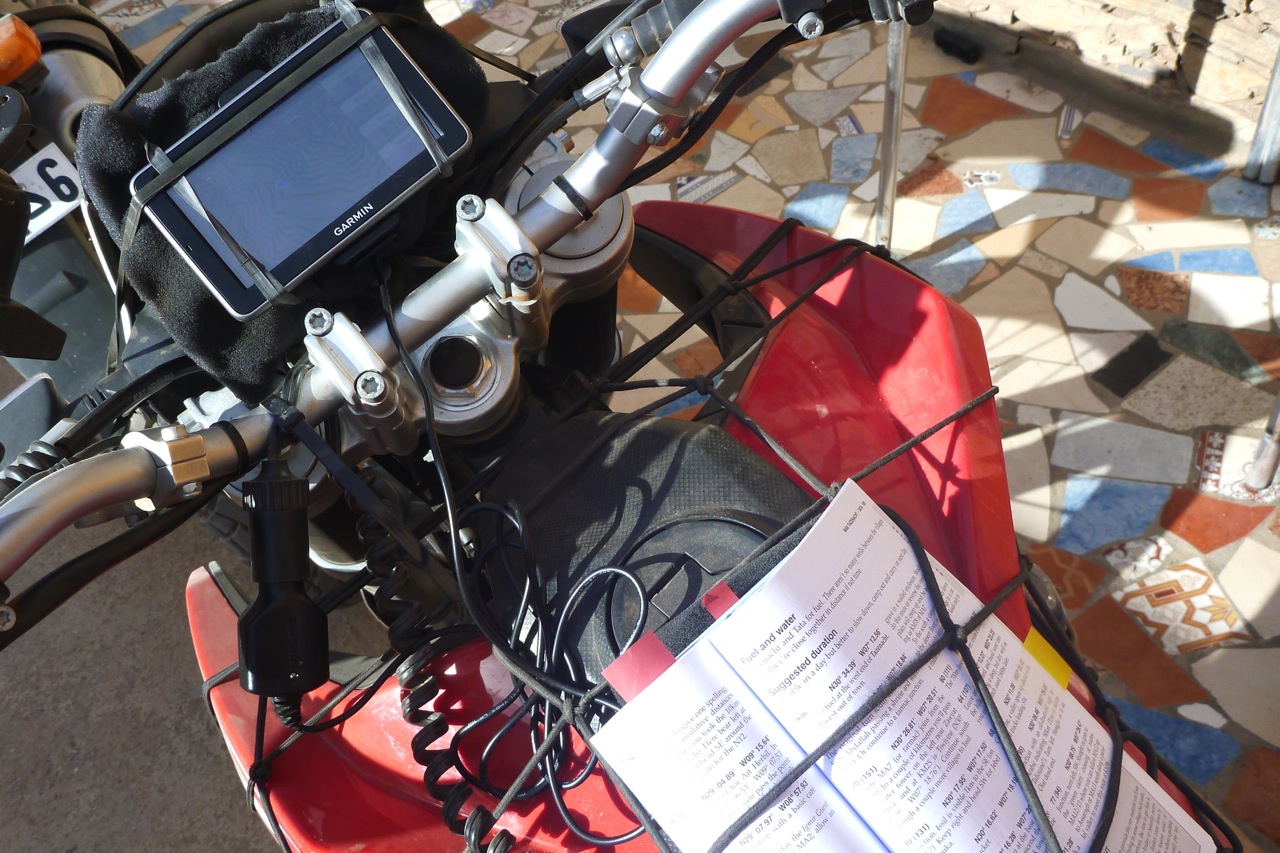
I strap a satnav over the dash, a water bottle holder to the crash bar and tuck my book under the tanknet.
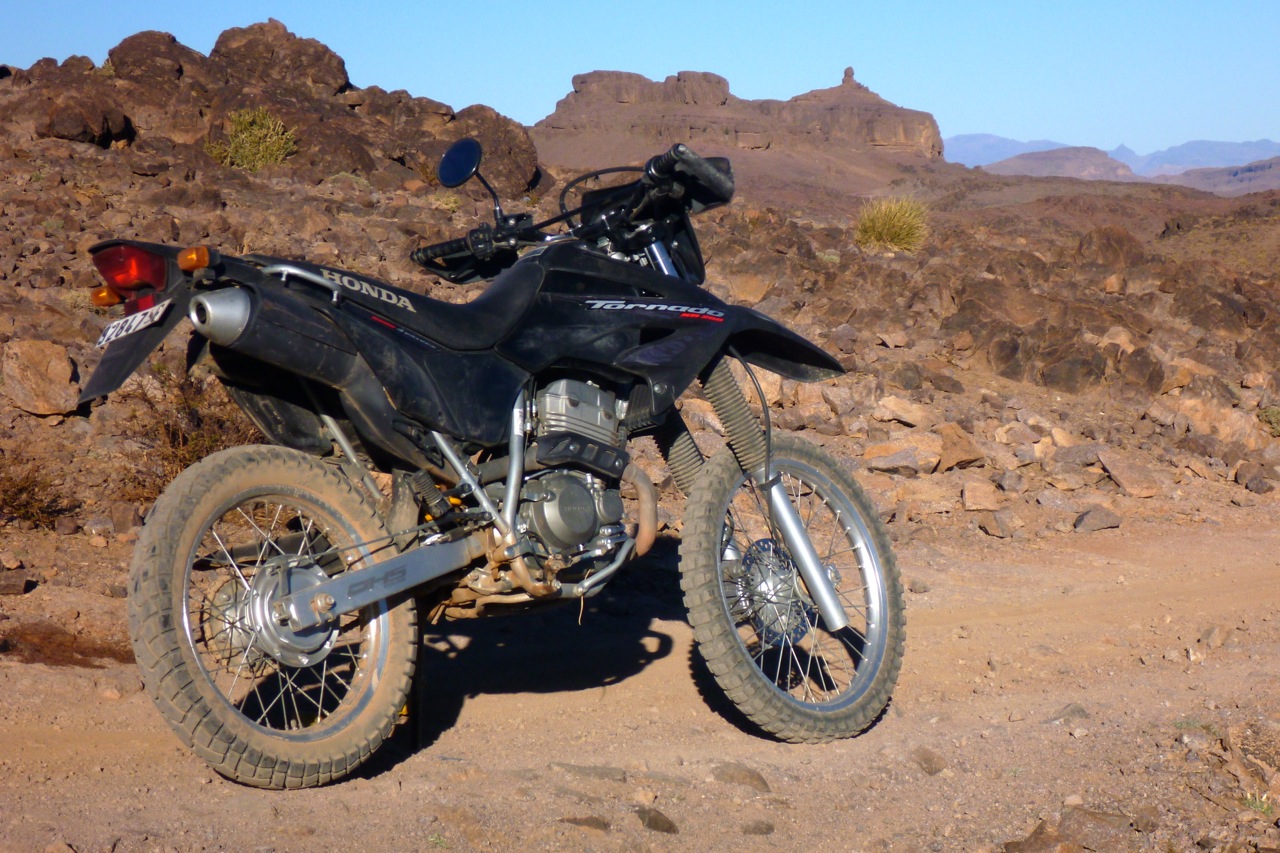
Other than Andy, I wasn’t sure of the others’ ability so recommend XR250 Tornados.
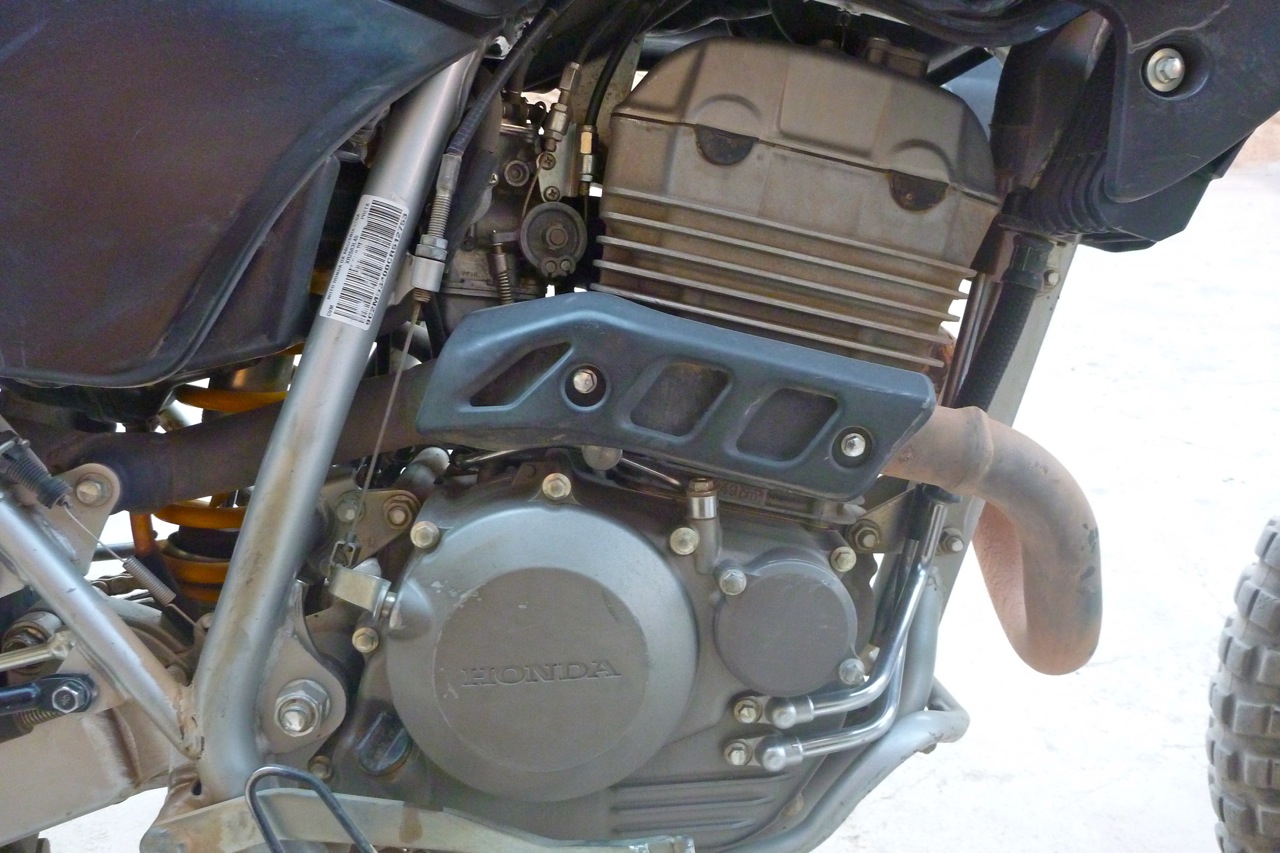
This is a great little machine: an air-cooled, four-valve, big oil cooler, 5 speed, electric start, carb-fed, drum rear dirt bike. It stacks up very well alongside the CRF250L I ran around the Southwest USA earlier this year; as economical, as good suspension, as pokey and it felt lighter, though there’s only some 6kg in it according to online stats.
Trouble is, it’s made in Brazil (and sold in Argentina) and AFAIK is only available in countries with I presume have slack emissions regs. None have ridden off road but Rob once ran a 996 so he’ll catch up and Patrick learned fast. Only Elisa found the learning curve of Morocco + piste a bit steep so switched to a jeep which actually served us all well as a baggage carrier.
Before we even leave the agency, Mustapha the driver dashes off with Elisa. His silver SUV soon disappears in a sea of silver SUVs. Rob gets the guy at the servo to bring him back.
The first day was scheduled as easy as we expected faffing around at the rental place. Just 100 clicks down the road to a lodge up in the High Atlas.
Notice the sagging front tyre on the Husky; a slow puncture which led to overheating and a faster puncture on the rough road into the Atlas. Next morning it’s flat as, and no tools under the seat. The Sertao’s wheel wrench fits but one Torx fitting is mashed and none of mine fit.
I nip down the road to chisel it off while the village vulcaniser irons on bits of rubber with blue goo, literally with an old electric clothes iron and a screw press. It looked impressive but also kind of crap. May work OK on a local moped but on the 650 the repair lasted 20 mins on the first piste a couple of days later.
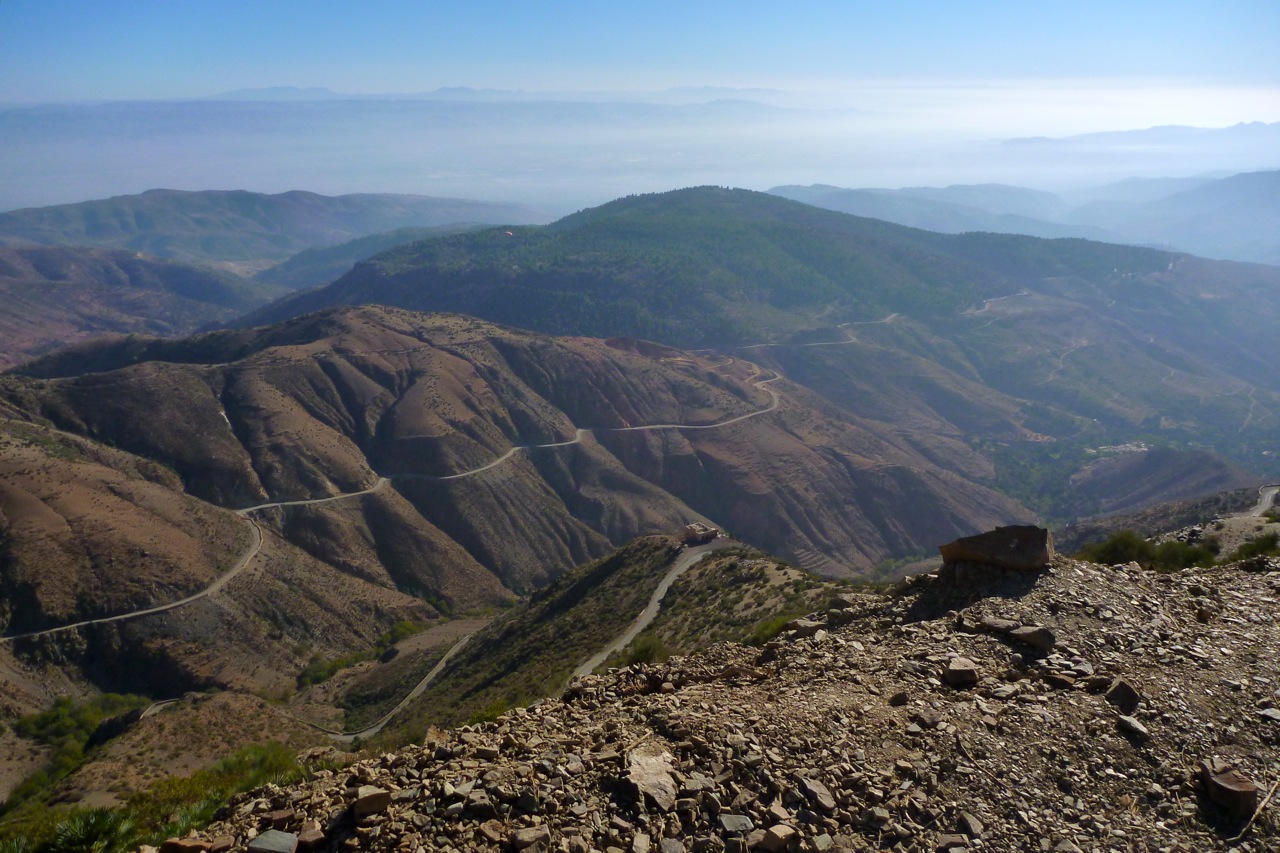
Anyway, on the crest of the High Atlas at Tizi n Test pass (6860’) we stop for lunch then enjoy a great ride down into the sunny southlands. Notice the ridge on the far horizon: that’s Jebel Bani about 130 miles away; the last of the Atlas mountain ranges. Beyond that, unbroken Sahara for a 1000 miles all the way to Timbuktu.
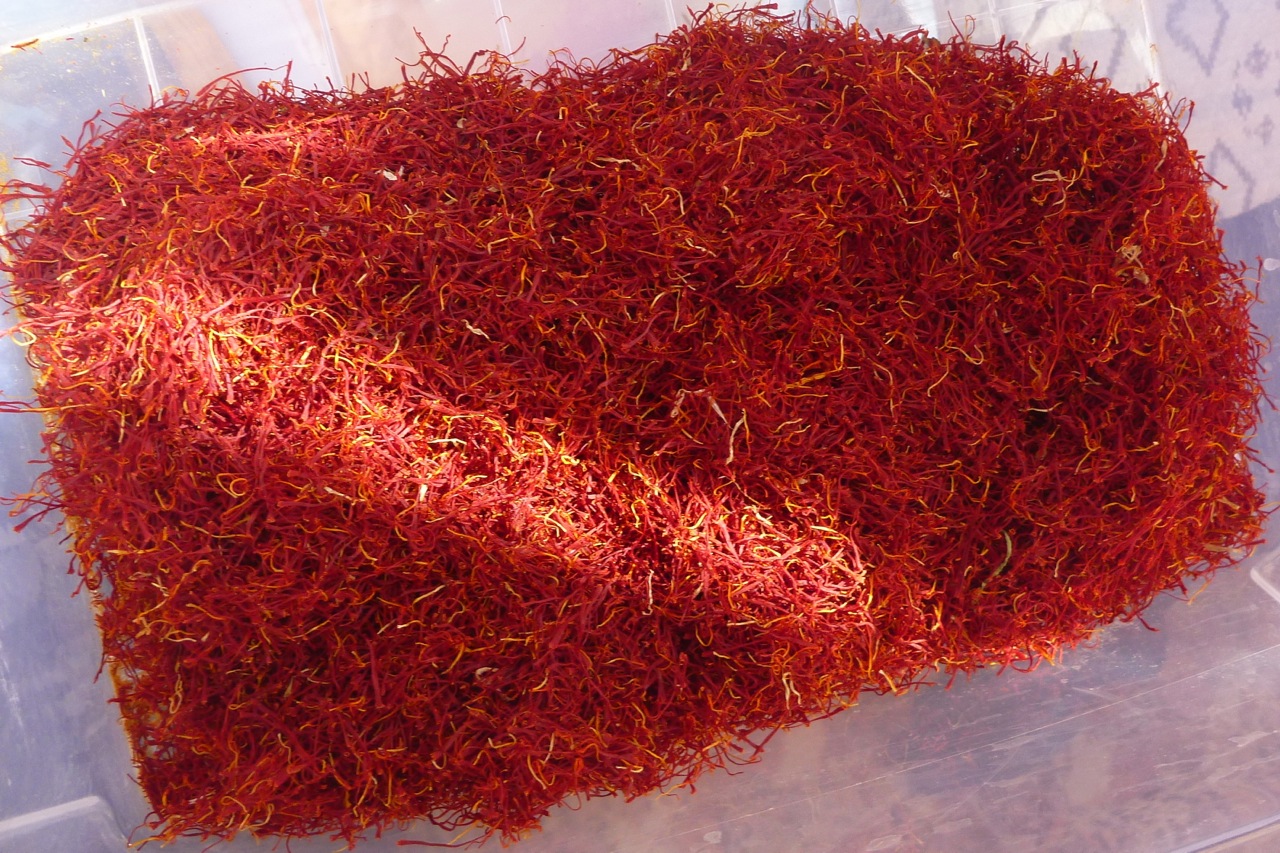
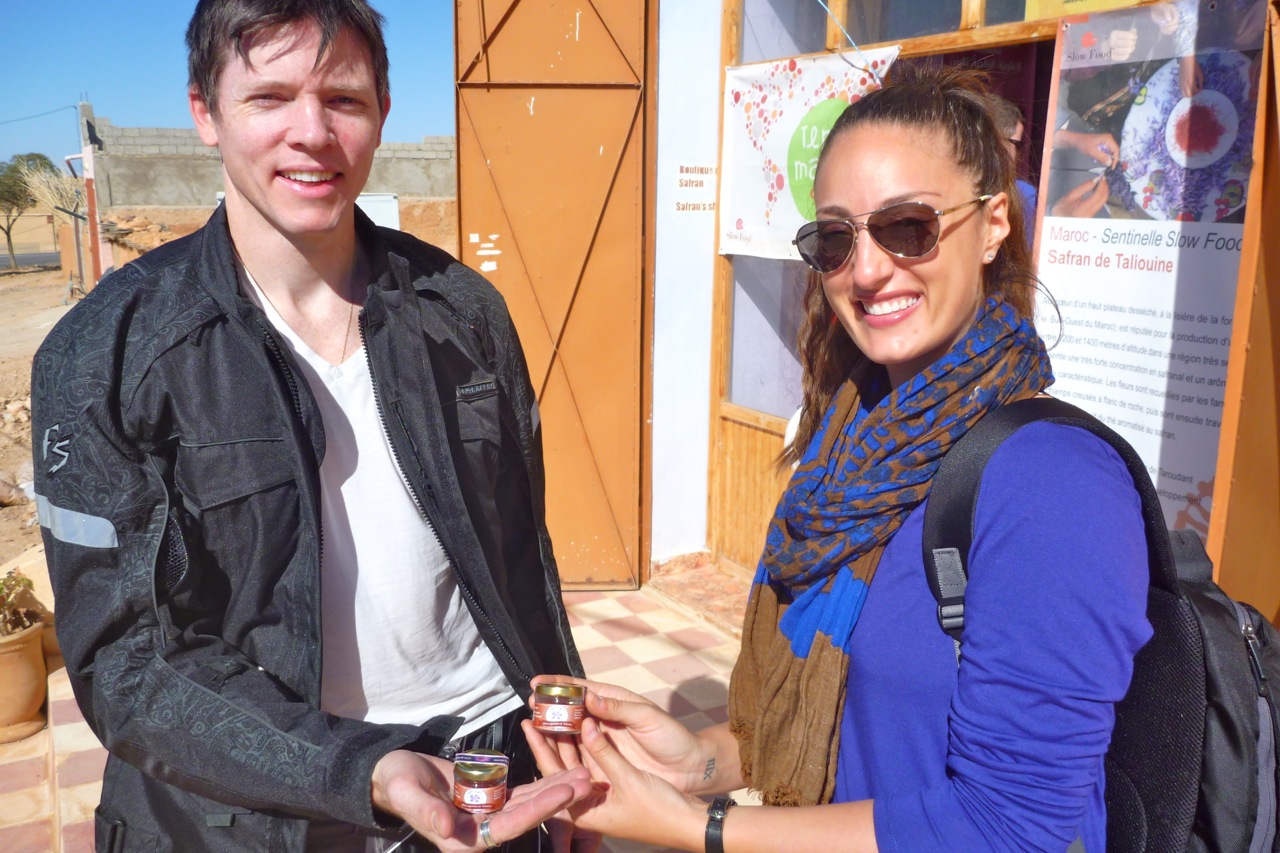
With half a day lost chiselling nuts and ironing rubber, we make an unplanned stop over in Taliouine, famous for its saffron which we’re assured is the best in the world and cures all maladies. I sprinkle some on my front tyre, also my front brake and efi which are playing up.
As expected, the Husky is the thirstiest bike by 20%, but also the most powerful and with the best soundtrack which = a whole lot of fun in the twisty blacktop canyons of the Anti Atlas. Let me tell you, all this ‘ad-venture motorcycling’ is a lost cause, carting your junk around like a mule and camping out bush like some vagrant. Hire a jeep, check into roadside lodges at half board and enjoy Bourgeois Motorcycling!
Patrick tries the Sertao and declares it’s the best motorcycle ever made. It’s certainly more comfy than the others, has a mellower engine than the TR and some days even used less fuel than the XRs. But when the dirt gets gnarly it’s a dog.
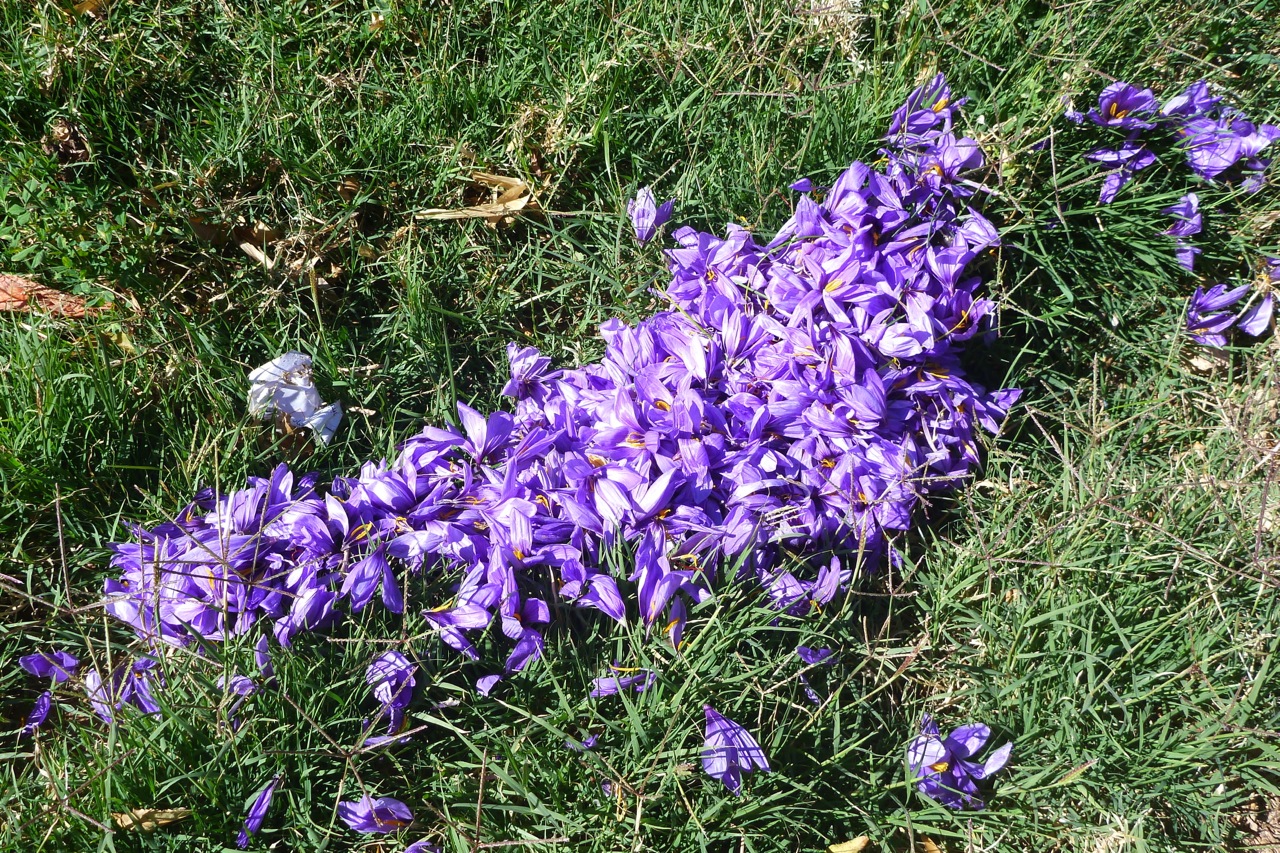
That’s several thousand dirhams worth of saffron right there.
Carefully picked from these crocuses, or is it crocii?
Patrick and Elisa pose with some $10 jars.
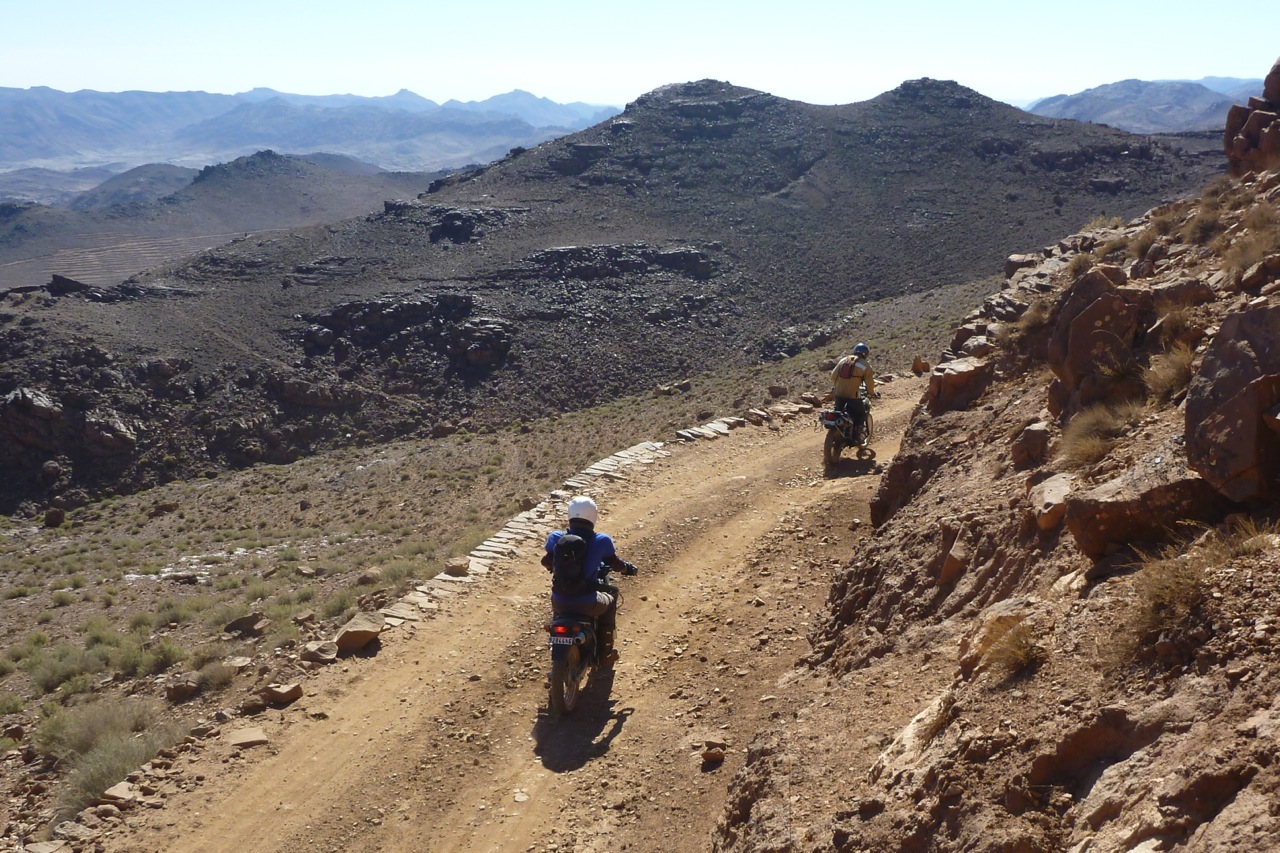
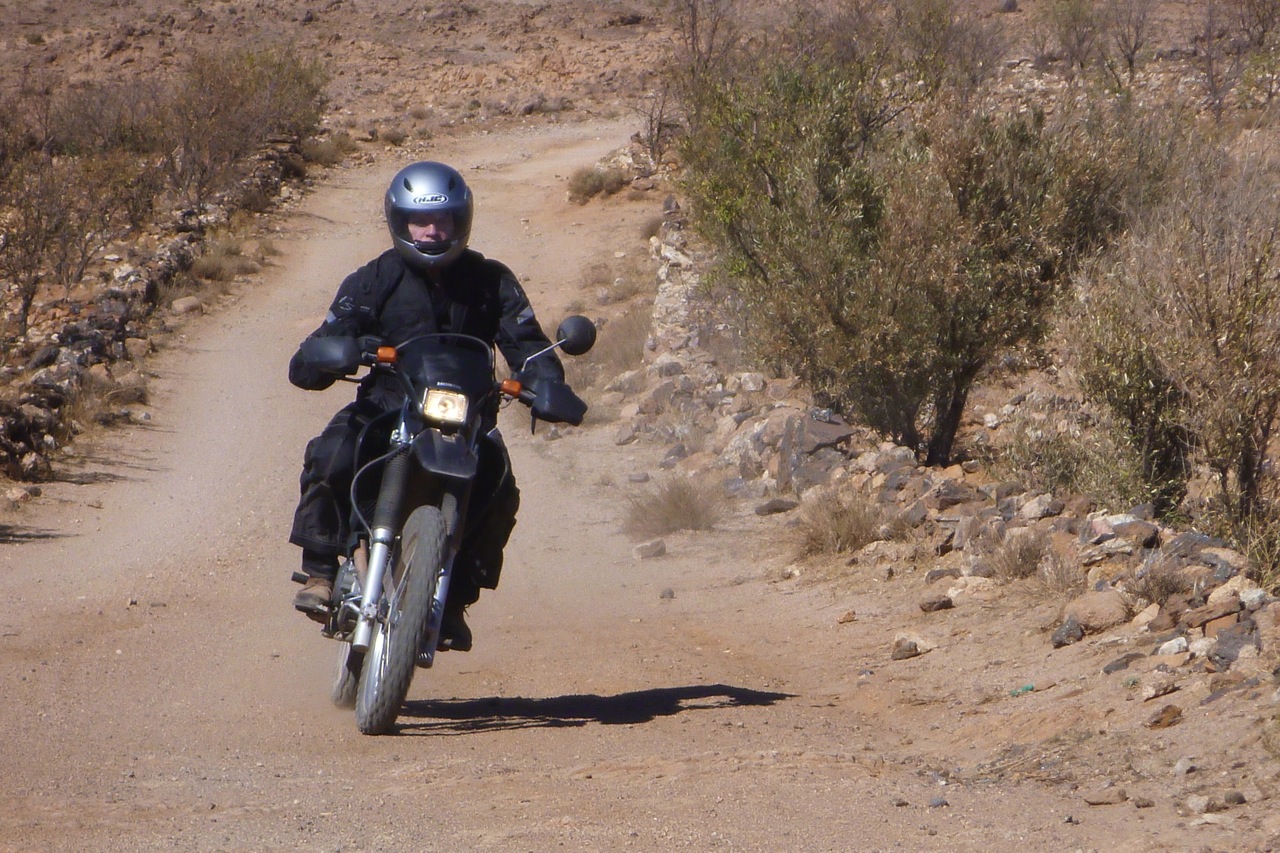
Two hundred clicks out of Marrakech we take to the piste into the Anti Atlas, the arid range south of the High Atlas which for me adds up to the best riding in Morocco. Soon the Husky front tube pops its corks so I slot our only new 21” in and hope for the best.
Dirtnewb Patrick is getting into the swing but next time I’m going to levy a surcharge for all black outfits.
Desert Rider Andy runs an 1190 + his old trans-Africa 640 back home so for him it’s all in a day’s work. That’s his 11-year old Darien Light that Aero made for us, still as good as new.
Into the valley.
Past hilltop Berber villages.
Up ahead a dramatic descent down a tufa waterfall. Andy sets off on the Husky and we follow.
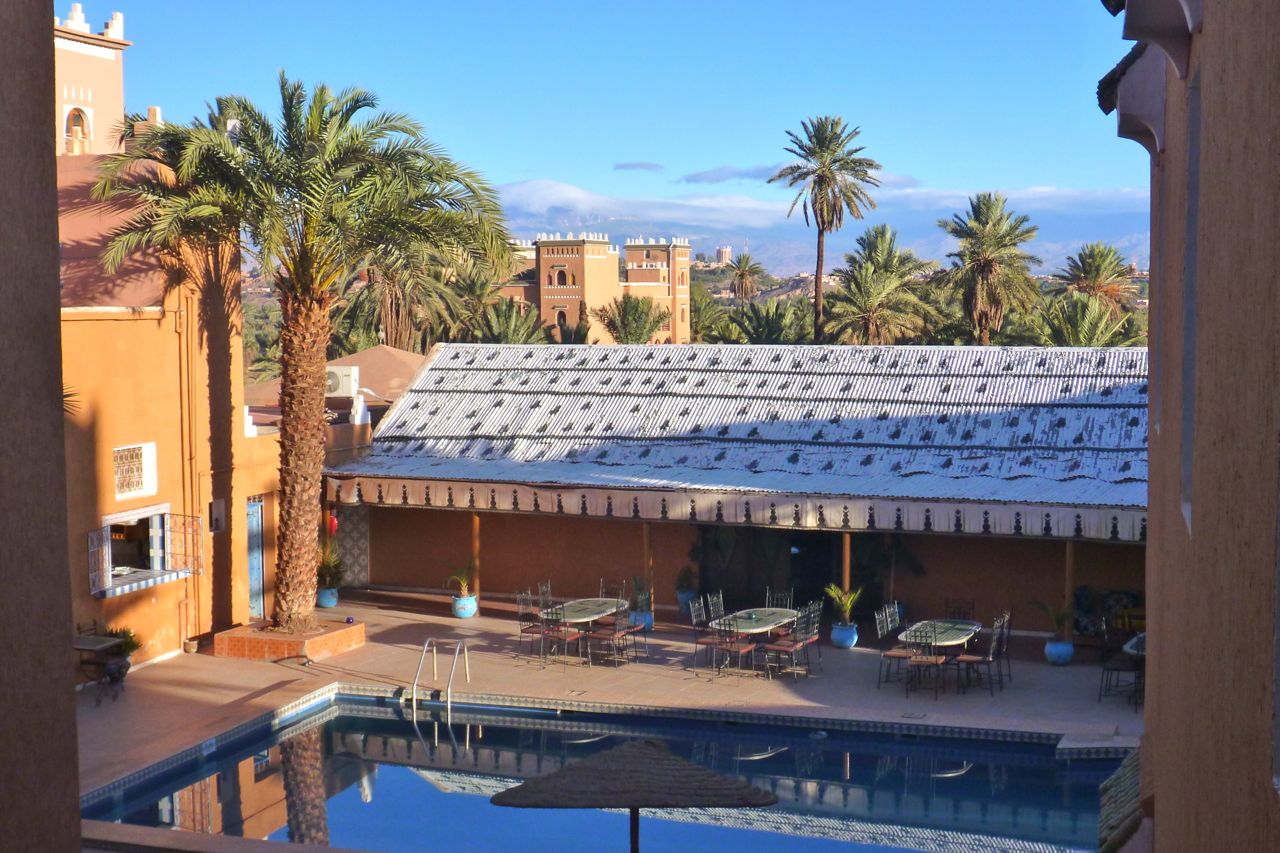
We ride through the palmerie and arrive at our lodge where we’ll spend two nights.
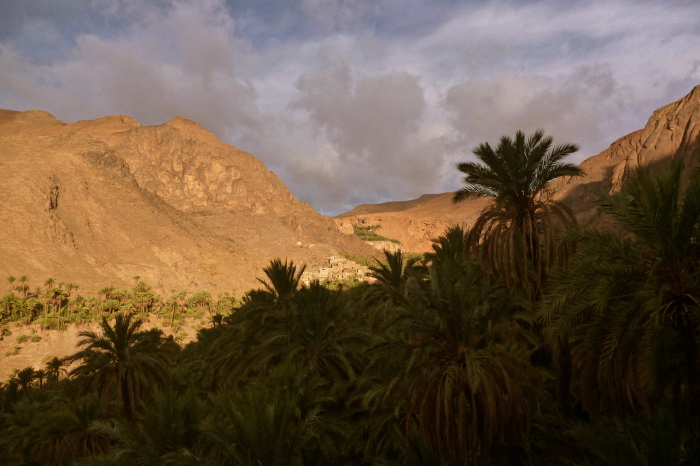
Night falls across the tranquil oasis. ‘Allaaaaahu Ak-bar’ rings from the minarets.
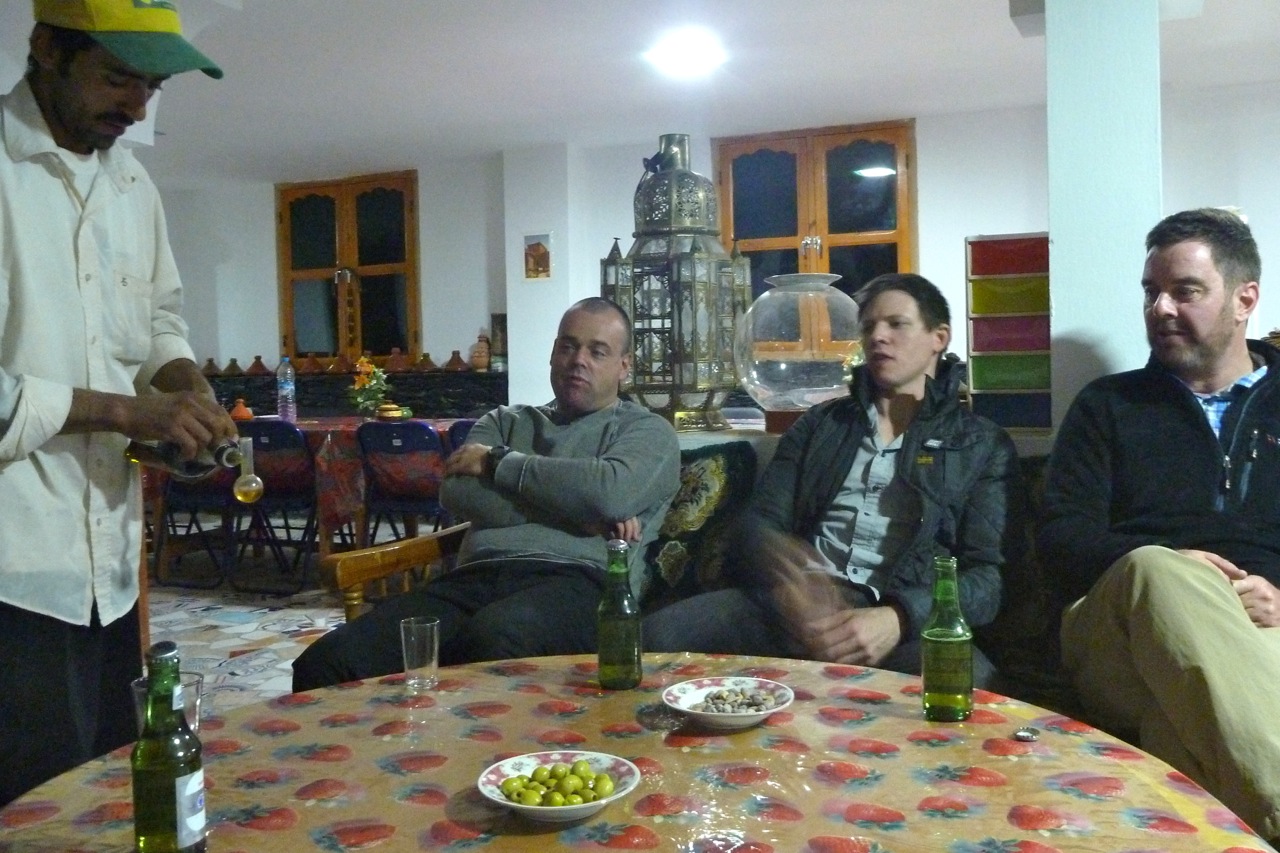
While inside the three infidels sit transfixed as the guy pours a shot of whisky.
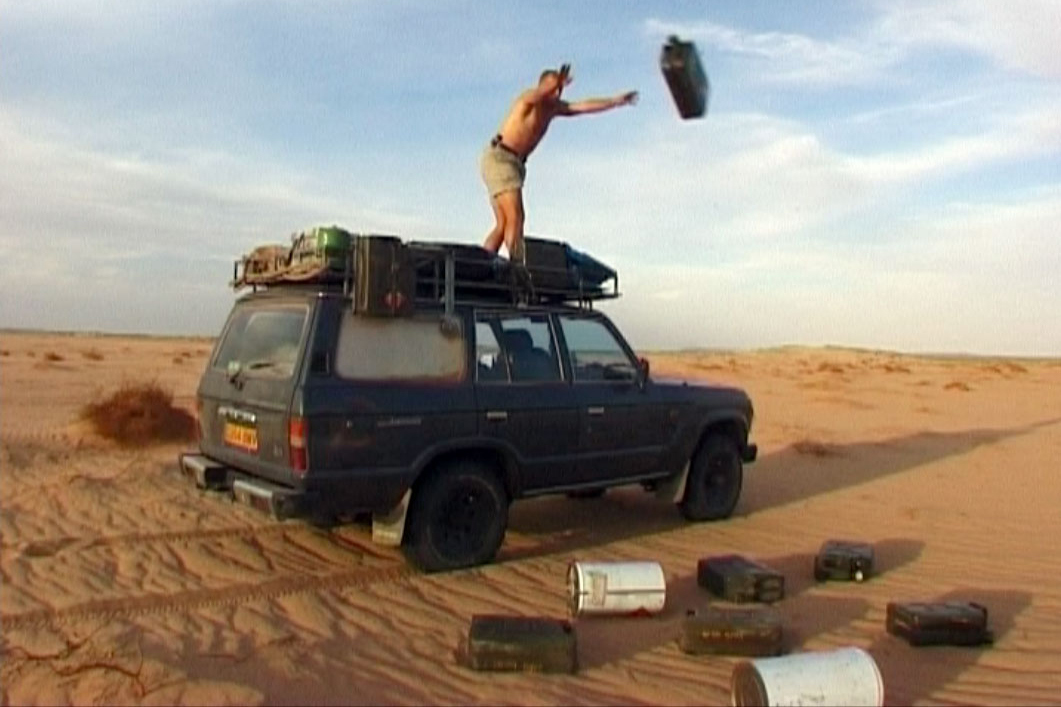
Just uploaded the 20-minute section from Desert Driving II dvd in which Toby Savage and I describe how we set up our vehicles for long-range desert travel.
This was shot in 2002; no doubt gadgets have moved on since then but the principles remain the same.
Before we met up to make the film I was travelling in the deep south of Algeria, burying fuel and food caches for Desert Riders which we did in early 2003.
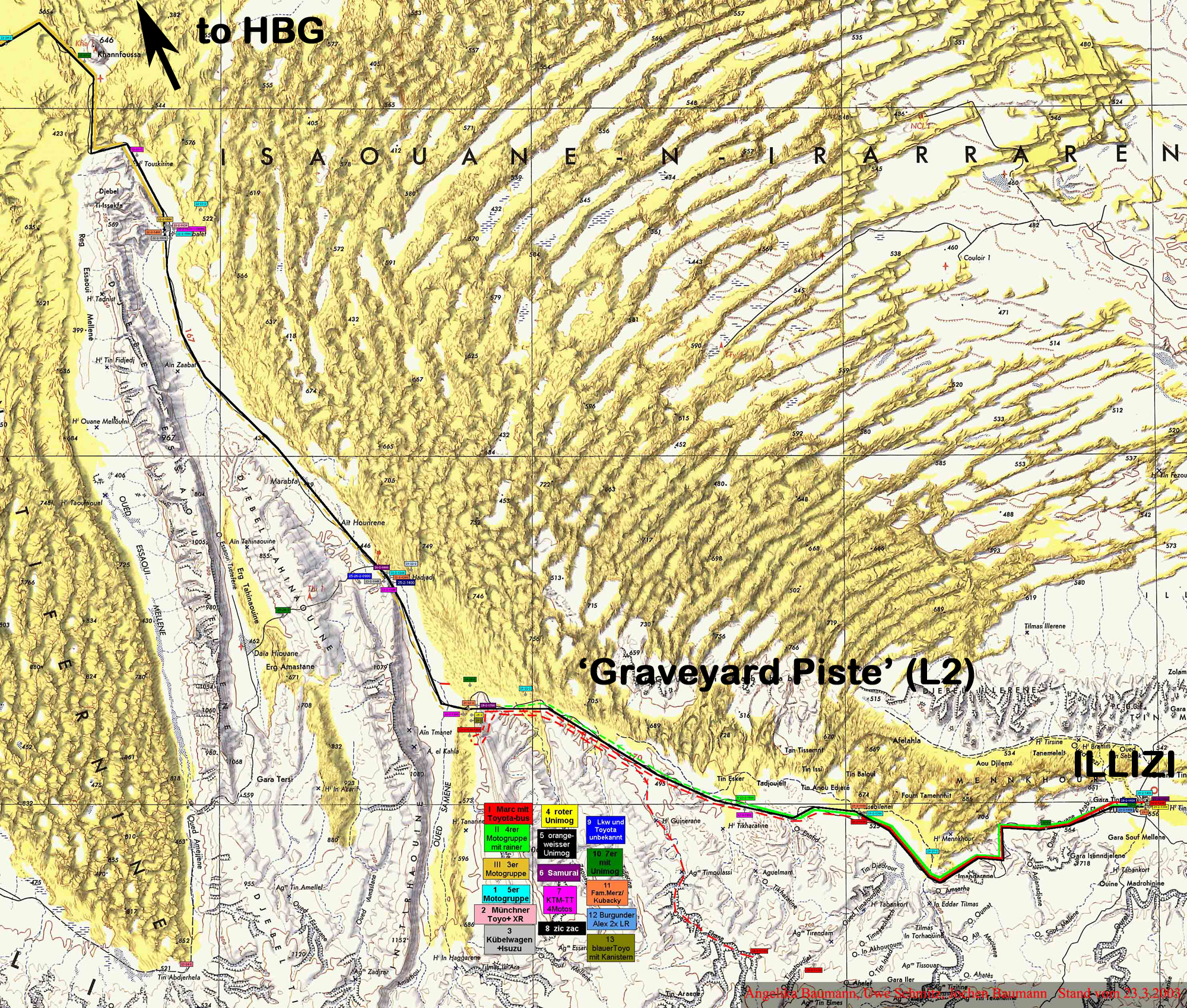
With that done, we filmed the whole thing from Illizi to HbG in about 3 days along the so-called ‘Graveyard Piste’ (A2 in the book). It runs some 470-km between Illizi and Hassi bel Guebbour and adds up to the perfect Saharan piste: pre-historic graves, dunes, gazelles, plateaux, old French fort, a couple of wells as well as nomad camps – Sahara in a nut shell.
Just as we were coming back from D Riders, it was along this popular piste a few months later that 32 tourists on motos and 4x4s (some of whom we’d met in Tam) were kidnapped, kicking off the current situation in the Sahara. The scourge continues (two more kidnapped today in Mali) and it left a lot of desert-ready fourbies all dressed up and nowhere to go.
Now, like most people, I shoot straight to youtube or vimeo (here’s a Sahara film from 2011), but back in the 00ies I produced a couple of dvds in the Sahara.
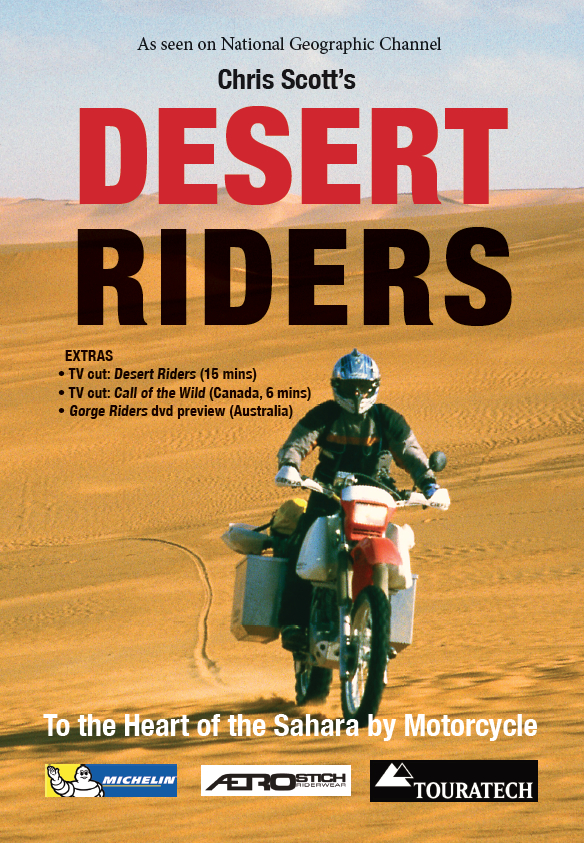
Desert Riders was the story behind our ambitious expedition across Algeria to the Lost Tree in the northern Tenere of Niger riding Honda XR650Ls. A shortened version was featured on National Geographic Channel You can watch the full film on youtube for free.
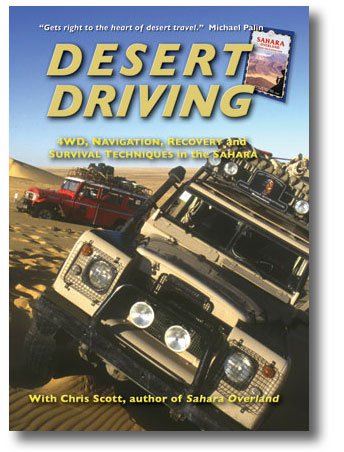
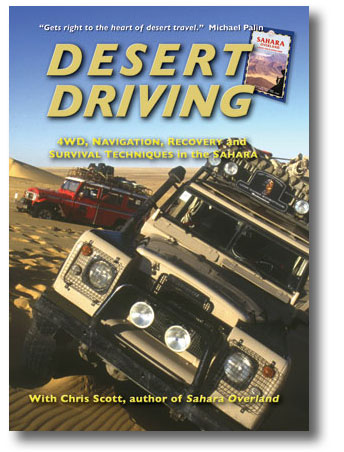
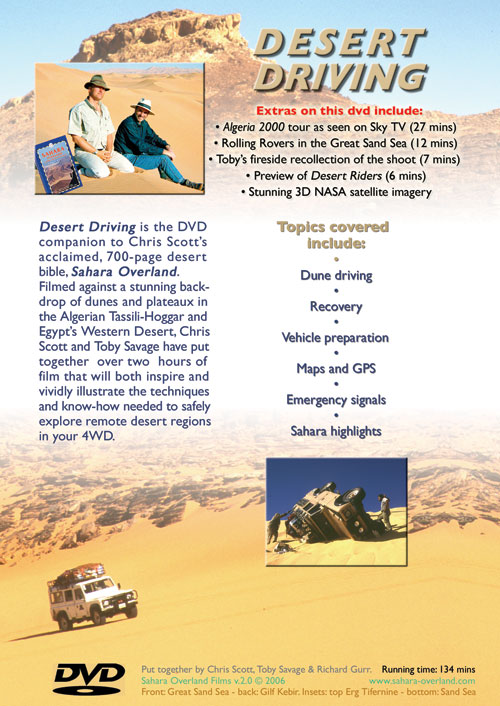
My other film was Desert Driving – an instructional ‘how-to’ dvd shot with Toby Savage and Richard Gurr in southeastern Algeria featuring my HJ61 Toyota and Toby’s Land Rover Carawagon. Desert Driving 2 (right) features additional material shot in the Tassili Hoggar, Egypt’s Gilf Kebir and Great Sand Sea.
The film covers the various means of vehicle preparation, the best maps and using GPS, dune driving, recovery by winch, air bag, high lift as well as various types of sand ladders. Toby and I actually tried all the stuff they tell you about in the books and magazines to see what works and what doesn’t. A preview below.
Format: PAL • Duration: 134 mins • £14.99 Want a copy post free? Email me
In February 1999 I visited Libya and Chad, travelling with a friend in two Mercedes 190 town cars. Everyone told us we’d never made it to Chad with this type of car but I’ve done this sort of thing before and knew the limits of 2WDs. In Libya we tried to drive to Lake Gabron in the Ubari erg (Route L3), but couldn’t reach it. The first day one of the cars flew too high when my friend gave it a bit too much power to get up the dune. Luckily only the radiator and the fan were crushed. The next day we tried again, but got stuck almost every kilometre, even with tyre pressures at 0.6 bar (8 psi). We were digging our cars out of the sand all day and in the end decided to turn back.
So we didn’t have much hope that we’d reach Ndjamena. Many Libyans said the tracks to Chad were even worse than the tracks to Gabron, but we decided to continue anyway. On February 22 we arrived in El Gatrun, the last Libyan town before the border with Chad. People there told us there’d been no Libyan vehicles going south for four months because the Chadians closed the border. The reason, nobody seemed to know. A guide was very expensive (1000 US!), so we decided to drive without one and use our GPS with the coordinates I got from Klaus Daerr’s website. We drove with an Italian Land Rover.
Everything went wonderfully well. After three days we arrived in Wour without hitting mines. Only the last ten kilometres were difficult for our cars due to the many rocks in the soft sand. We cracked the sump of one of the cars but repaired it with glue – I was surprised it worked and I was ready to leave the car in the desert. In Wour we had three punctures at the same time and so the Italians, who were in a hurry, carried on. In Wour everyone was very surprised to see two normal Mercedes coming from Libya. It had never happened before, they told us. But they assured us that driving from Wour to Ndjamena would really be impossible with these cars.
There were a lot of soldiers in Wour where we found out there is quite a heavy war going on in Tibesti. Aouzou was occupied and Bardai surrounded by rebels led by former defence minister Togoimi, a Tubu himself. We drove on to Zouar with a compulsory guide. He was about 17 years old but didn’t speak Arabic or French, only Tuburi. We paid him the fixed rate of 350FF. There were endless sandy wadis and we were digging out constantly but each time our guide just said travail (‘work’) – about the only French word he seemed to know – and then sat under a tree until we’d dug out the cars. When we asked him to help us, he did not react.
We entered Zouar from the south with a military escort. Entering from the west through the ZouarkÈ Valley seems impossible with normal cars. In Zouar we saw even more soldiers than in Wour. We stayed two days and had to camp with the soldiers. Because of the fighting, the situation was quite tense. Although the local commander said there were no problems, one of the soldiers said his convoy had been ambushed near Zouar a week earlier and a couple of soldiers had been killed. But we had to go on.
Zouar to Ndjamena We drove in three days to Faya. The road was not that difficult although we broke and repaired the sump of the other car and luckily met no rebels. We saw lots of unexploded ammunition and old tanks left behind by Libyans during their retreat from Chad. If more tourists visit the area, accidents will surely happen because sometimes you don’t see the shells in the sand until you drive over them.
Faya is a lovely oasis. From here we took a guide, Haliki Kodimi, 60 years old and a very lovely man to help us through the big dunes of the Erg Djourab. We had plenty of digging to do but three days later arrived without problems at Kouba Oulanga, halfway to Ndjamena. From there the piste to the capital was quite easy but dusty. All around people were very surprised to see two Mercedes coupes coming out of the desert. In Ndjamena nobody asked us for a carnet or insurance. We sold the cars in Ndjamena and flew back home.
It was a wonderful trip. Libya was especially nice with very kind people. Chad is a bit more ‘cadeau-country’, but very beautiful. I don’t think I would try the same route with a normal car again. It’s much more difficult than Algeria-Niger or Morocco-Mauritania. But if anyone wants to try it: we have proved you don’t need a four-wheel drive. Because we sold our cars for quite a good price (25,000FF each), the trip only cost us 4500FF a person. Both the Italians and another Swiss couple we met in Libya arrived in Ndjamena OK.