Category Archives: Sahara Book Reviews

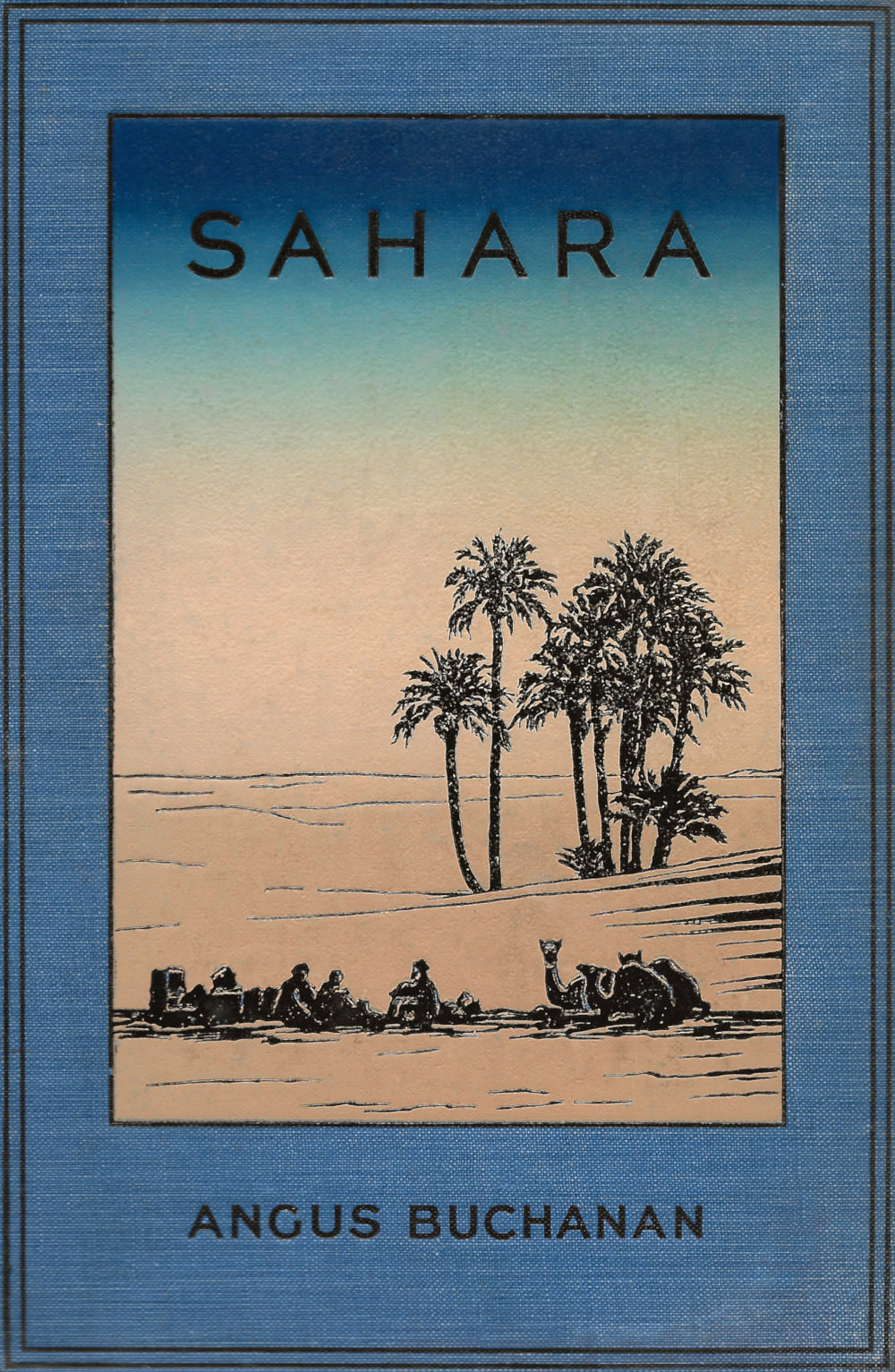
Book review: Sahara by Angus Buchanan (1926)

This book is free online as are other Sahara books

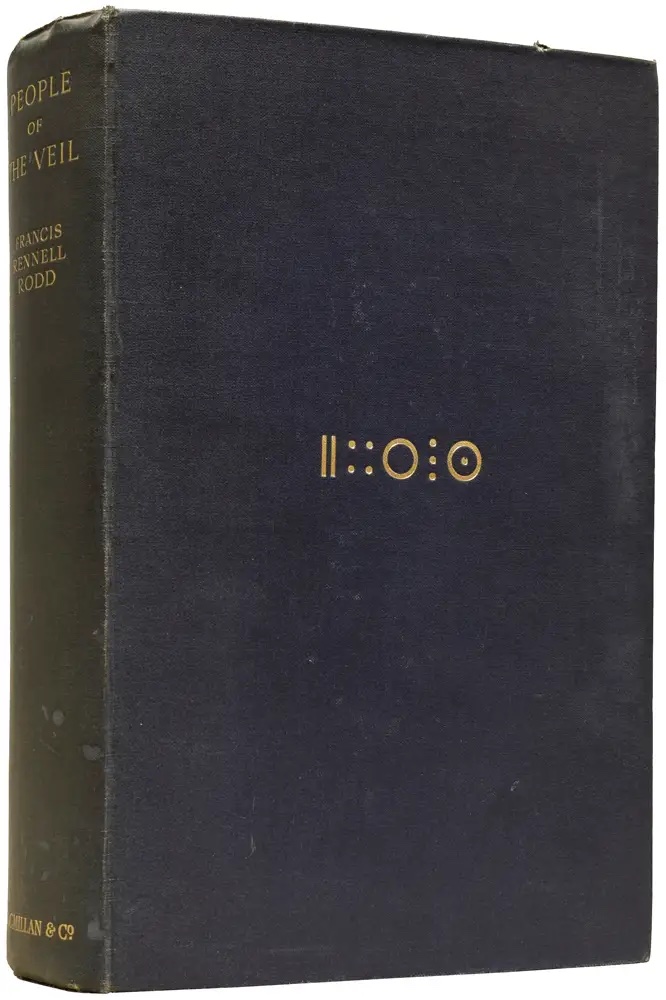
Year’s ago I owned a prized copy of Francis Rodd’s, The People of the Veil (now free online) documenting his travels and studies among the Aïr Tuareg in 1922-3. Not sure I ever actually read it cover to cover, but it remains one of the most detailed ethnographic studies of the Aïr- or southern Tuareg in English. Herni Duverier had written Les Touareg du Nord sixty years earlier while travelling in Algeria’s Hoggar and Ajjer regions. And a decade or more before that, the indefatigable Heinrich Barth had travelled south from Ghat, over the Tenere, down through the Aïr, all the way to Timbuktu then back the long way via Bilma, before dying in Berlin, aged just 44.

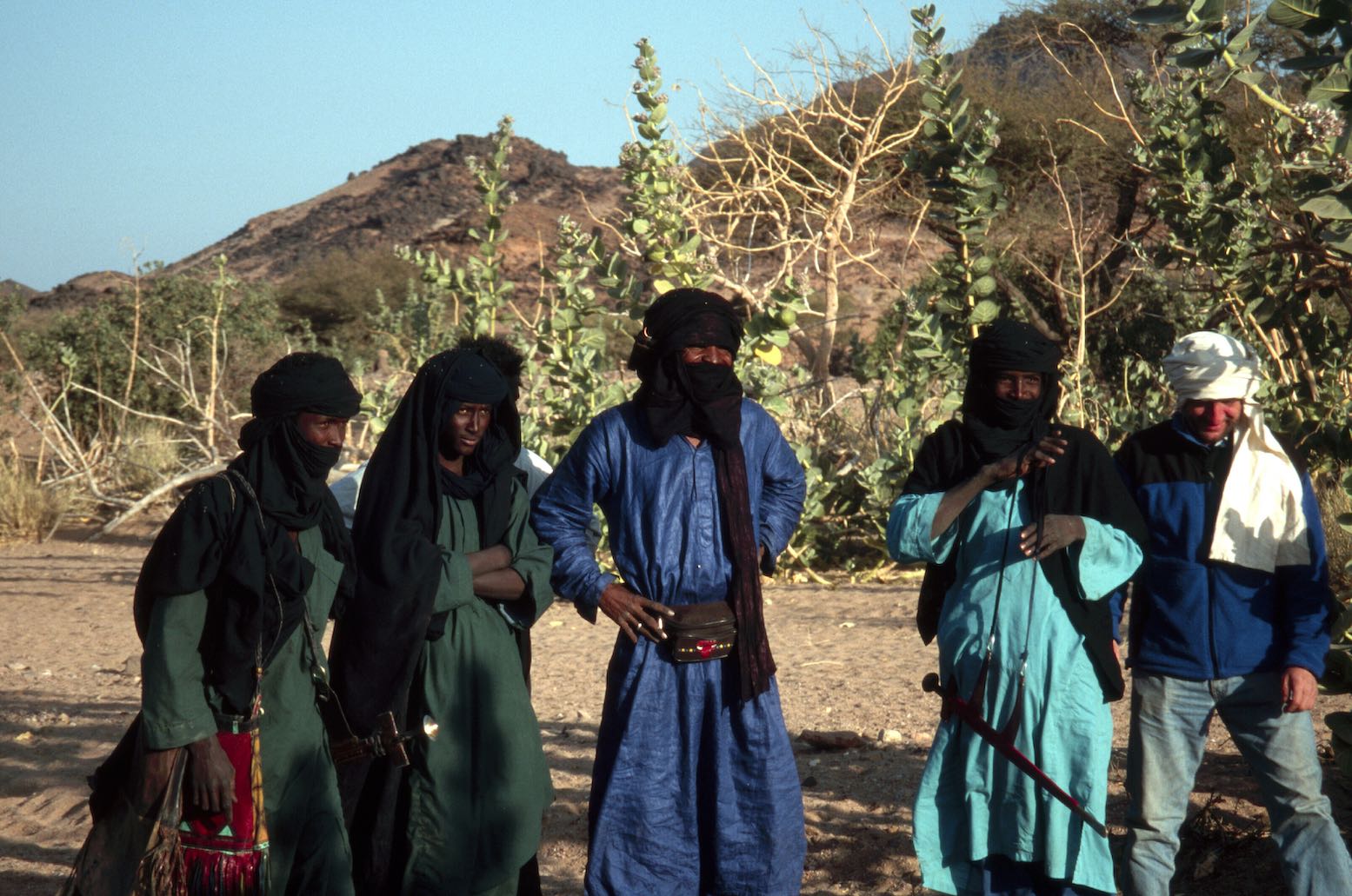
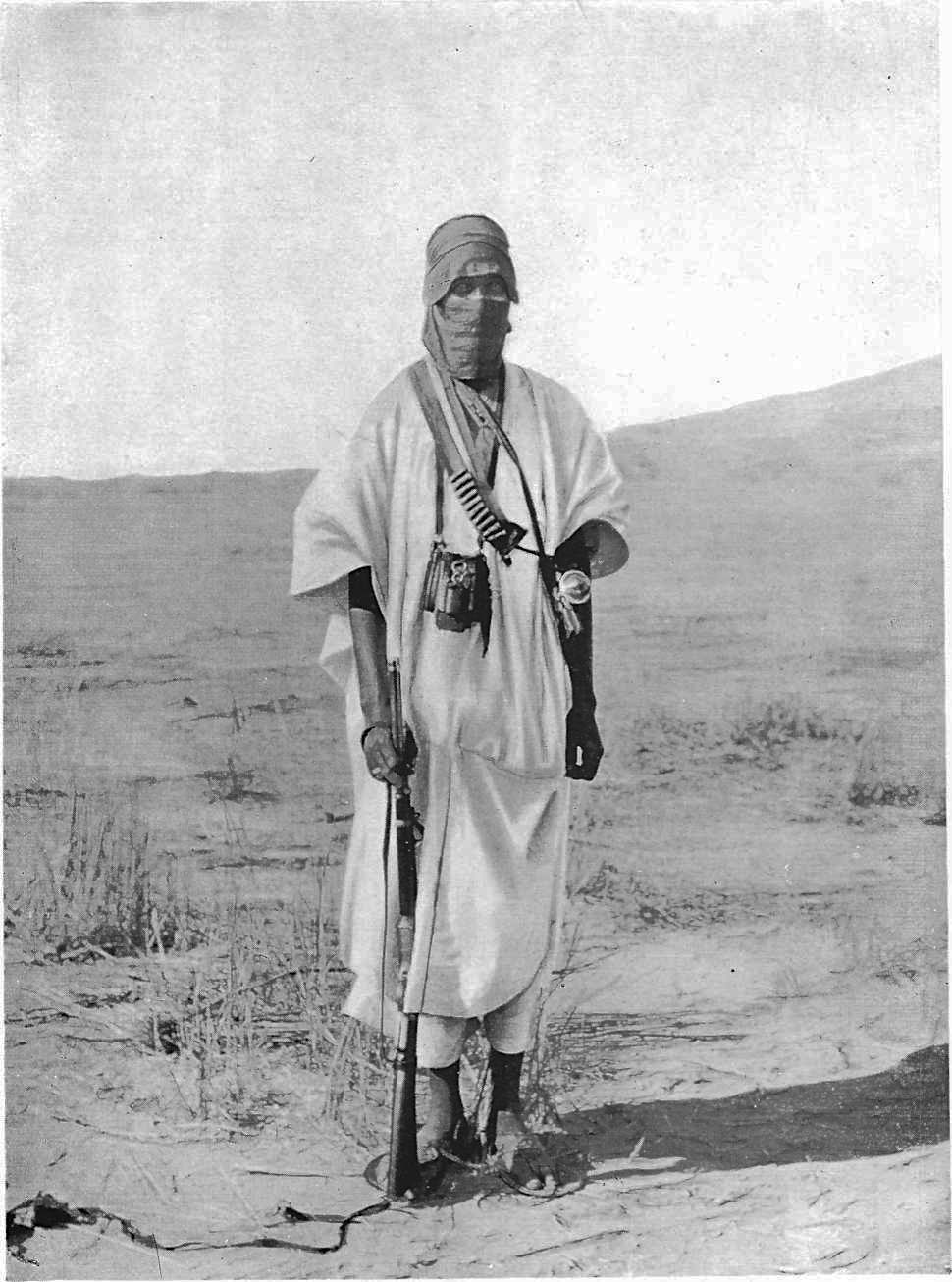
I’ve travelled twice through the Aïr (2001, 2006) and both times was struck by how much more ‘picture book’ the Tuareg of the Aïr were (below), compared to those in Algeria. Even if they were playing up for us tourists, it all helped fulfil one of the best Saharan circuits you could do at that time.

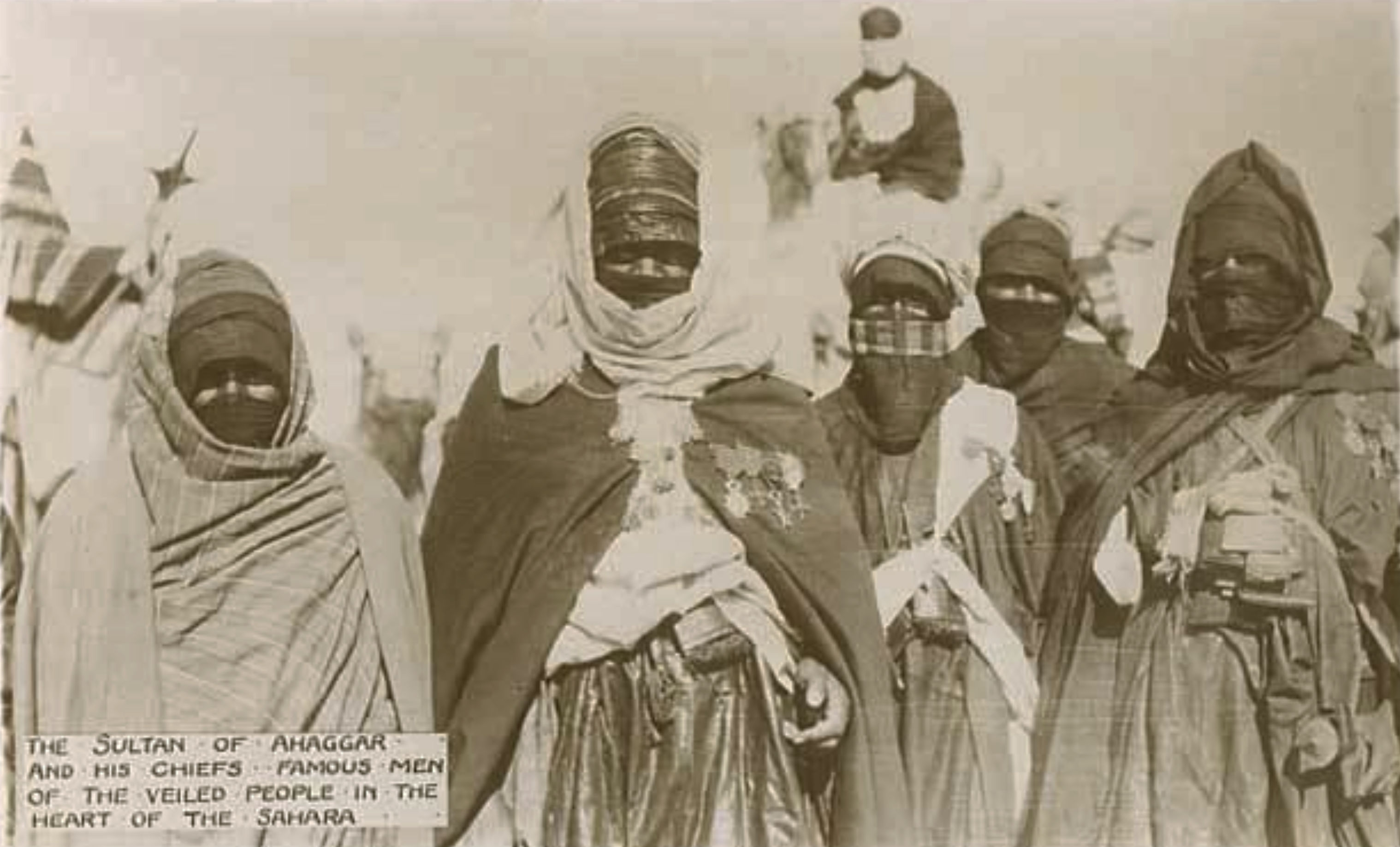
Tuareg swordsmen and women (who do not cover their faces)

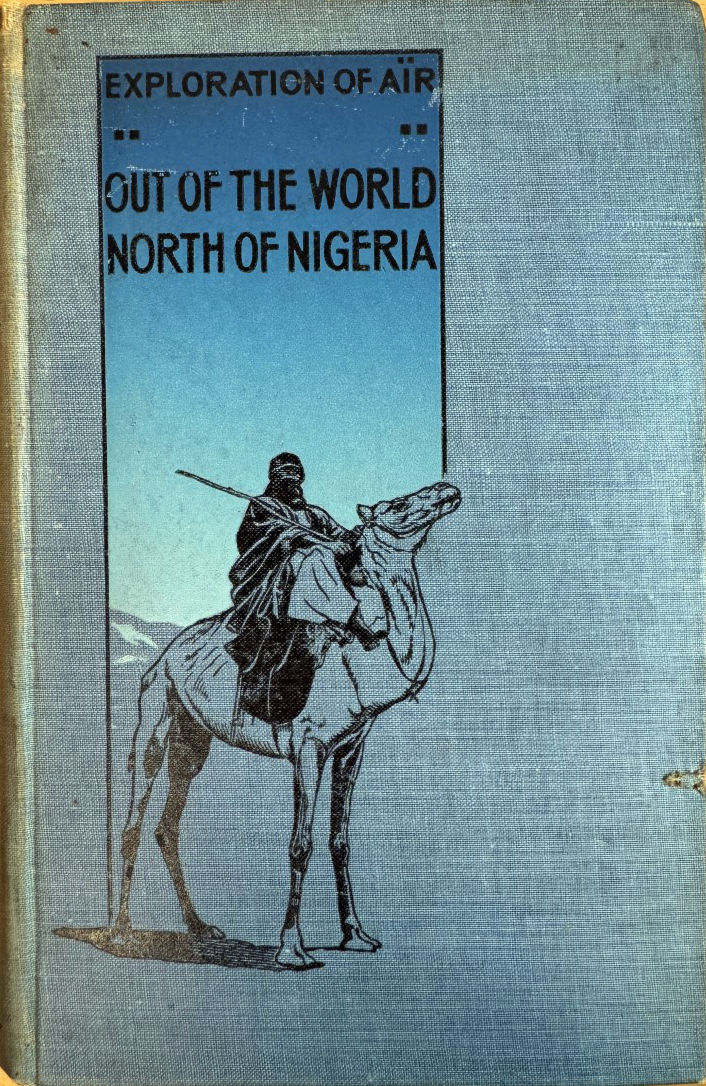
Born in Kirkwall, Orkney, aged 20 Angus Buchanan (1886-1954; bio) emigrated to Canada where he briefly ran a construction business before serving in the East Africa Campaign during WW1. By now with a keen interest in natural history, in 1919 he travelled by camel from Kano as far as Iferouane, later writing up Exploration of Aïr: Out of the World, North of Nigeria (right).
Rodd was a Mayfair-born aristocrat, colonial administrator, diplomat and banker, and invited himself on Buchanan’s second, 1922-3 expedition to the Aïr.
Again with the support of the British Museum and 2nd Baron Rothschild (a keen zoologist), Buchanan was tasked with amassing animal specimens.
Perhaps because he covered it all in Out of the World, Sahara is not a chronological travelogue, but covers diverse vignettes such as caravan life, camp fires, raiders and so on. One chapter is a rather cheesy first ‘person’ biography of Buchanan’s beloved camel, which promptly died soon after they parted ways, 14 months later, and to whom he dedicated the book.

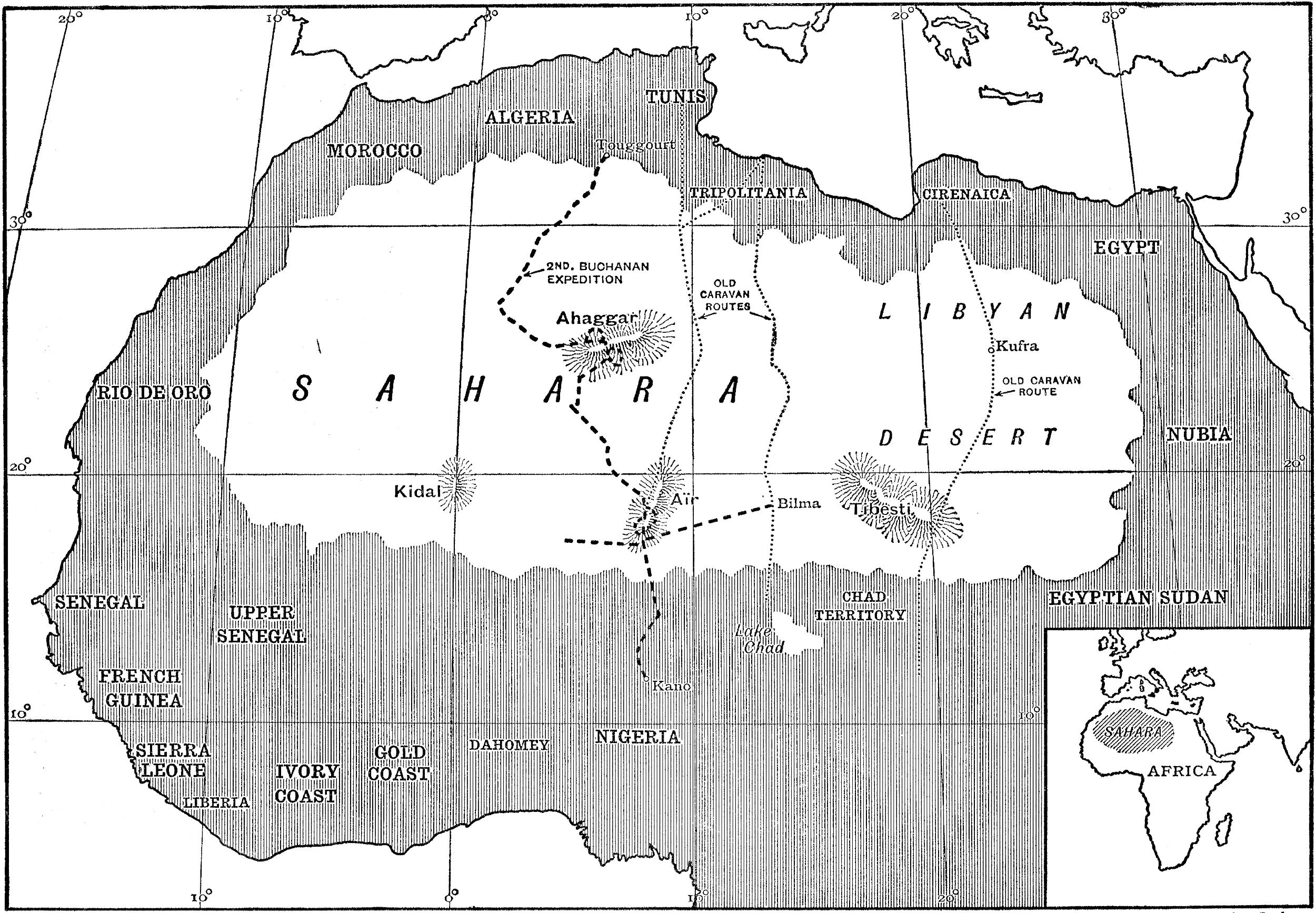
The only map in the book. Note the British habit of separating the [French] ‘Sahara’ from the [more British] ‘Libyan Desert’.
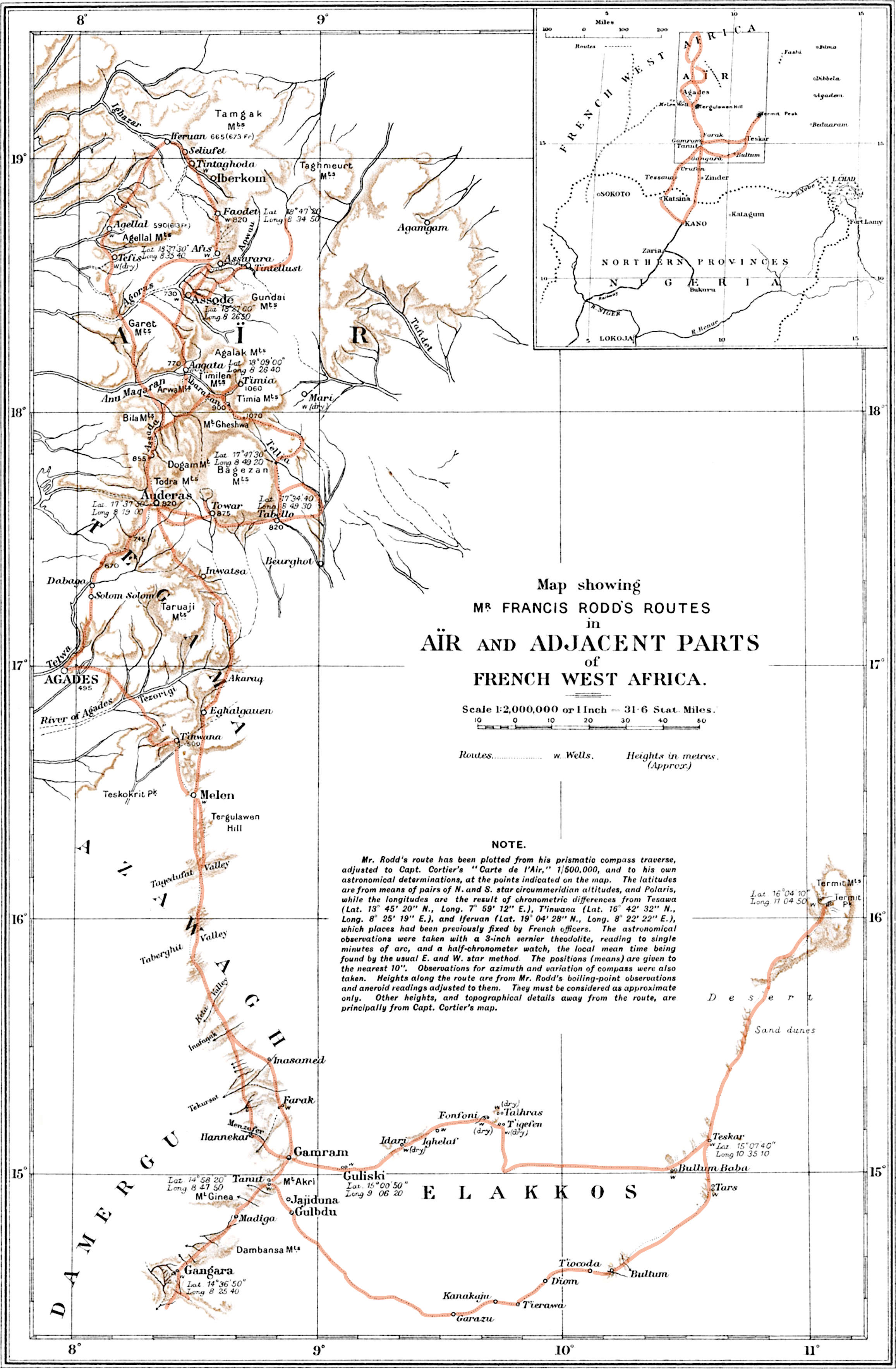
Rodd’s travels 1923 (route highlighted)

Rodd returned from the Aïr after nine months, while cameraman T. A. Glover completed the whole 3500-mile trek to northern Algeria with Buchanan. But beyond this brief credit up front: “My companions were: Francis Rodd… and the cinematographer… T. A. Glover” – these two pass entirely unmentioned in the text, bar at the very end for Glover. Rodd does not even get a picture.
They must have shared many experiences, and in Rodd’s book (his route, left) Buchanan is mentioned over two dozen times. Perhaps they went their separate ways once in the mountains? Or perhaps they did not get on, as so often happens in the Sahara.
Or, lacking a family crest, ancestral pile and Eton & Oxford education, could the class gulf have been too great for the self-made Buchanan? The rather tortuous paragraph below from the preface of his earlier book hints at an insecurity about his ‘uneducated’ status as a gallant explorer. But like the similarly ‘low-born’ René Caillié, their achievements in advancing our knowledge of the Sahara speak for themselves.

It might be said that the traveller [himself] was a rude man, for he was untutored in the deep studies of the scholar of many languages, as in a measure might be expected and understood of one whose occupation called him from day to day to don rough clothing and shoulder a rifle and march outside the frontiers of civilisation.

Elahu, ‘[Buchanan’s] head camel-man, and a ceaseless worker of exceptional ability. He is one of those very fine natives whom a white man may win and come to hold in esteem, conquered by sheer value of labour and fidelity.

In his earlier book, he described the Tuareg as ‘the strangest race I have ever come in contact with independent, haughty, daring, unscrupulous, and lazy in leisure, yet fit to rank among the finest travellers and camel-riders in the world.’
And in Sahara, the chapter titled The People of the Veil (like Rodd’s book), he elaborates on the aloof, mysterious and warlike nomads:
they who are pre-eminently a class unto themselves, and they who are responsible for much of the romance that has given to the Sahara a world-wide mystical fame.
He’s not the first to distinguish their noble demeanour from other desert dwellers, so aligning the Tuareg with what were considered the best ‘white man’s’ values. As you’d expect, some captions and observations show the casual racism of that era, implying the superior character of the ‘almost white‘ Tuareg to those around them – something you rarely see said of an Arab (unless you’re Wilfred Thesiger or T E Lawrence). Battier theories have aligned the chivalrous Tuareg with a lost tribe of Crusaders, often misattributed to the popular Tuareg cross.

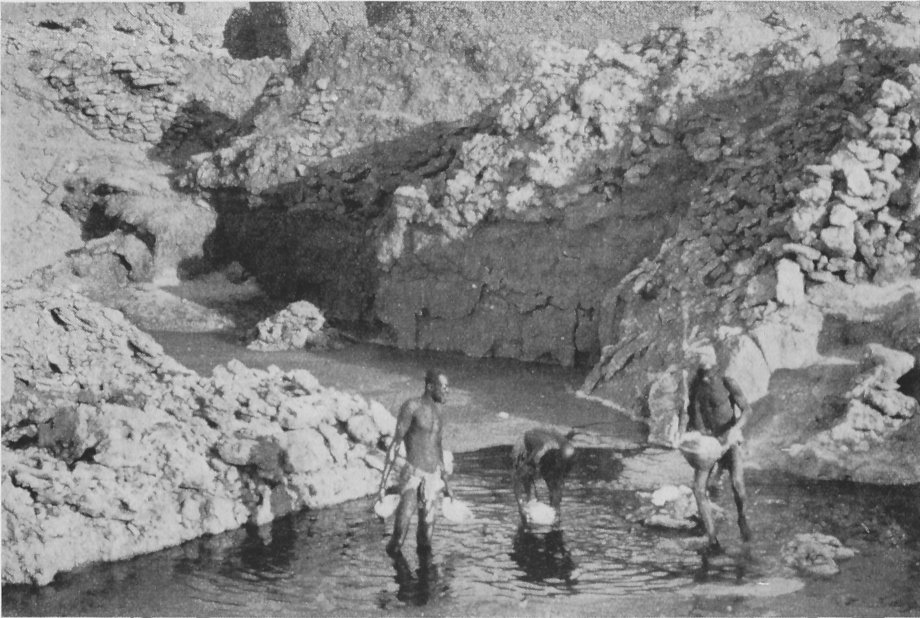
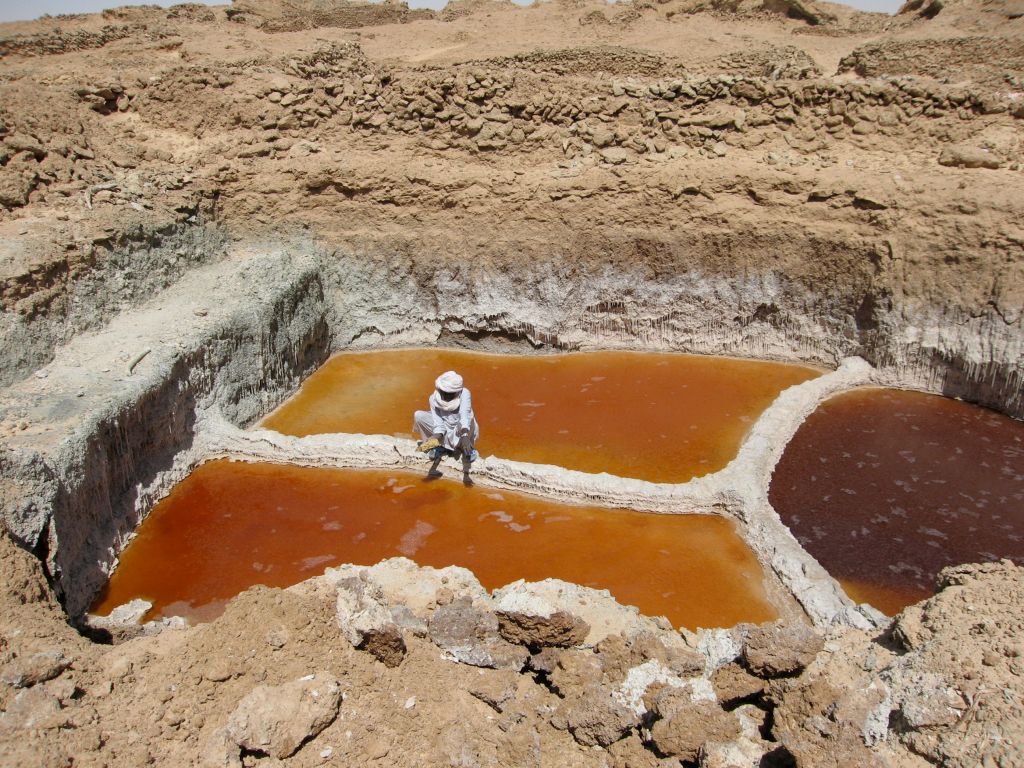
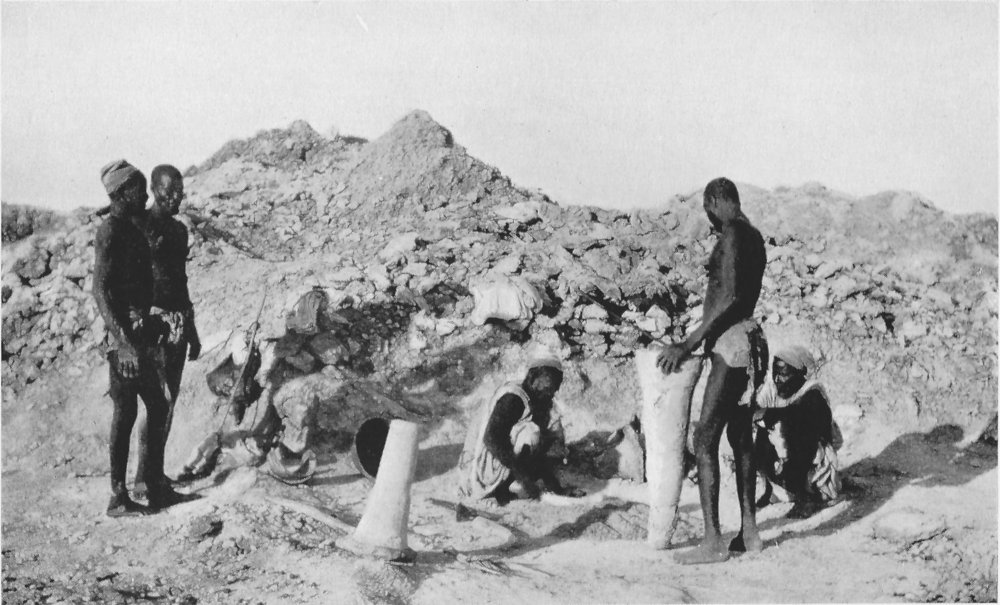
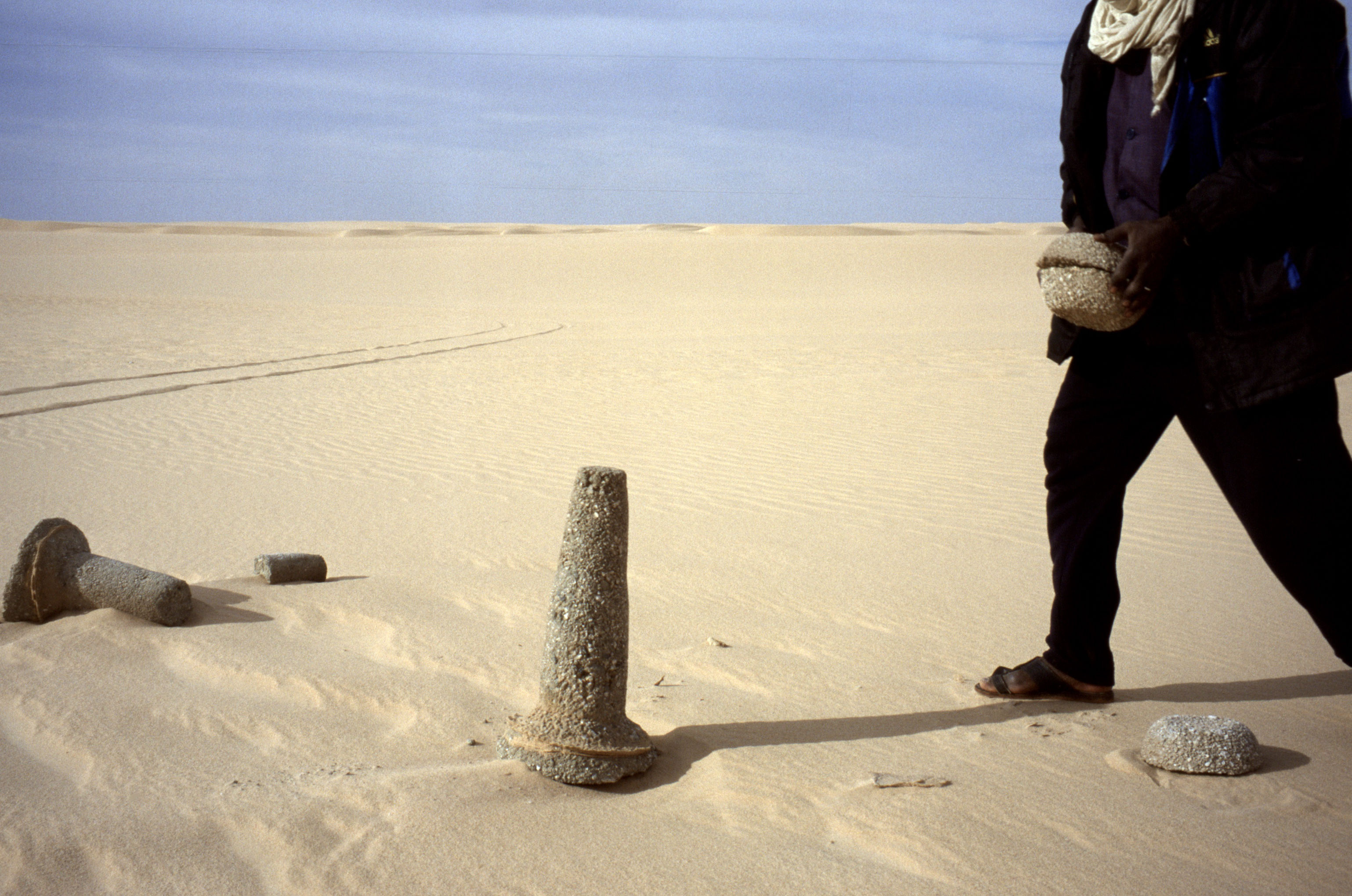
An interesting episode describes joining the ‘Taralum’, better as known the great Tagalem or azalai salt caravan covering 800km from the Aïr foothills east through the dunes to Bilma oasis and back. Though Bilma had been a French outpost since 1906, it’s possible that Buchanan and Glover may have been the first Europeans to undertake, or at least record, the famous forced march leading many thousands of camels to bring back salt cones from the Bilma salt ponds (below).

Along the way Buchanan manages to give a vivid description of the remote oasis of Fachi (‘A City of Shadows’) and its Beri-Beri (or Kanuri; ‘from Kano’) occupants, as well as the ancient origins and commerce of Bilma. These chapters read with a little more vitality, possibly because they cover new territory for Buchanan. A few years later he went on to write a novel, The City of Seven Palms whose title is based on Fachi.

In the style of the era, Buchanan heavily romanticises his travels, the people he meets and the stories he hears. A chapter called The Hand of Doom recounts what sounds like a tragic Tuareg legend about a chief who doggedly pursues bandits who’d abducted his wife Kahena, ‘the belle of the tribe‘, only for them to die in the desert once reunited. It bears a resemblance with the novel, L’Atlantide, also from that era
The narration of this tale slips into a goofy, proto-Shakespearian prose, but fear of raiders was still a very real menace in the 1920s, whether ‘Arabs’ from Ghat, Tubu from the east, or just other Tuareg clans on the prowl. In fact right into the 2000s and the advent of jihadist ransom kidnappings, bandits would occasionally rob tourist groups and agency cars in the eastern Aïr, while other parts of the Sahara remained relatively safe.

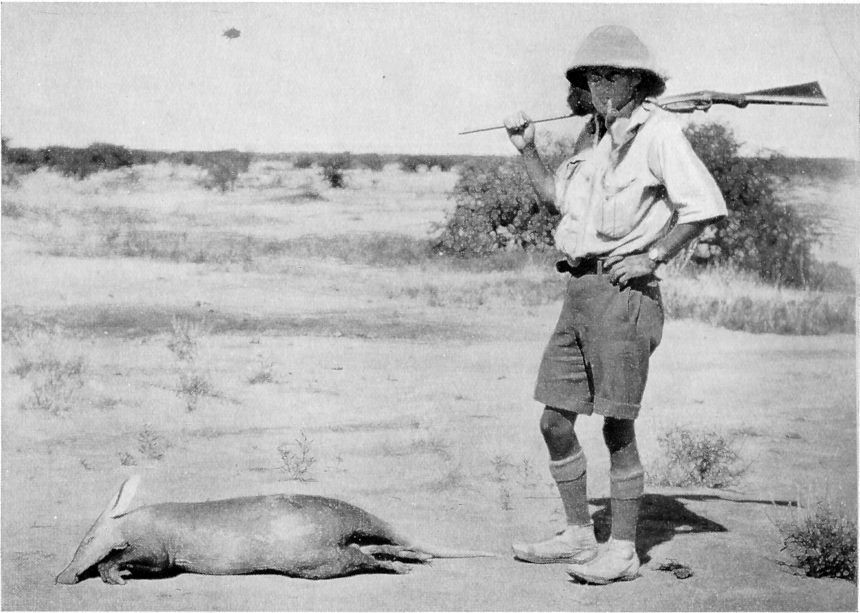
Dead aardvark

Sahara draws to a close with a listing for no less than 207 birds and 64 mammals, some unknown to western science. The expedition’s primary mission was to shoot and collect these animals for museums back in the UK, and Buchanan was bitterly disappointed that he missed the chance to shoot the last lion of the Aïr. It had been speared while harassing villagers near Timia. Meanwhile… Giraffe was seen only once, he adds, but on a number of occasions their fresh tracks were crossed. These were left unfollowed, as a specimen of the species was not wanted.
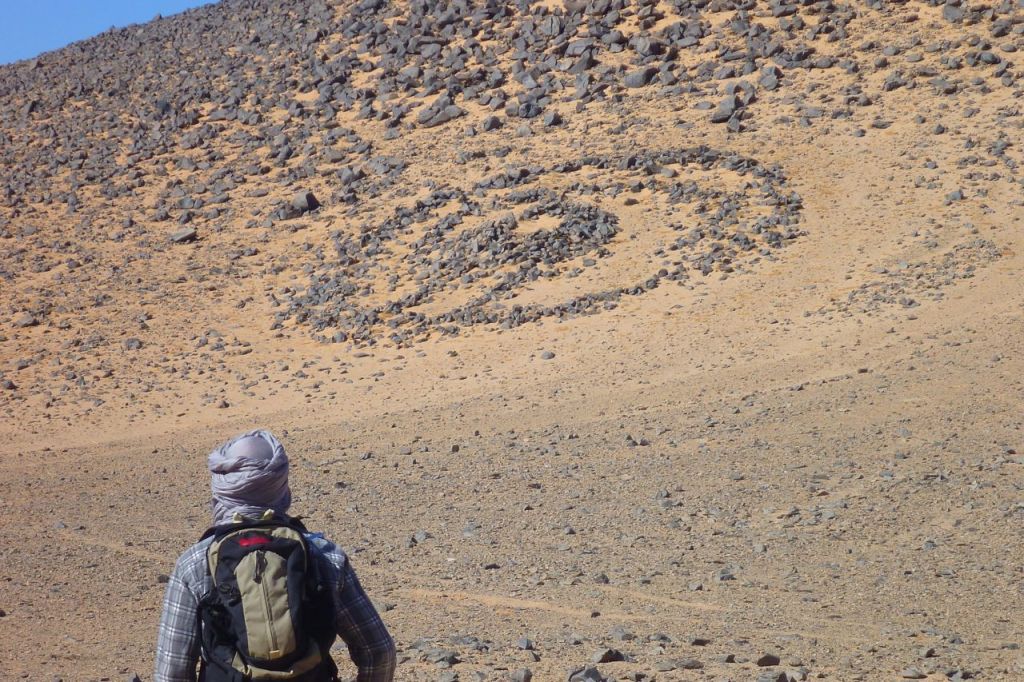
Along with many places names, another odd omission were pre-islamic tombs and prehistoric artefacts and rock art (below) which Buchanan must have come across, and Rodd records in his account. There’s no mention of either in his earlier book, either.

Anakom: spaceman with handbag

Though also not mentioned, research elsewhere reveals that the French had only a few years earlier forcibly cleared out the Aïr’s Tuareg clans, which was how many ended up in northern Nigeria. As a result, Buchanan frequently describes an impoverished land of rude dwellings and destitute, starving people. Indeed, the sand-surrounded oases were almost as appallingly barren as the desert around them, except for their groves of dates, which bore no fruit at that season of the year.

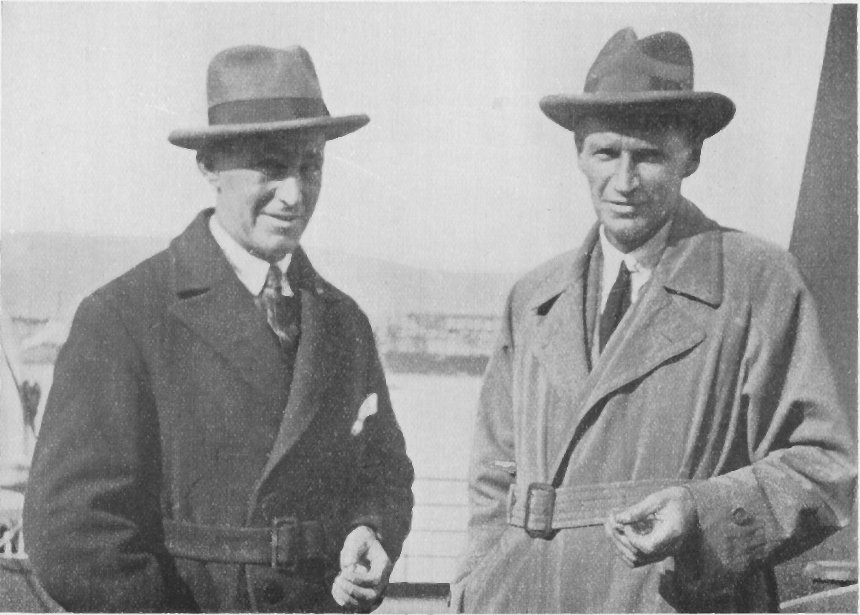
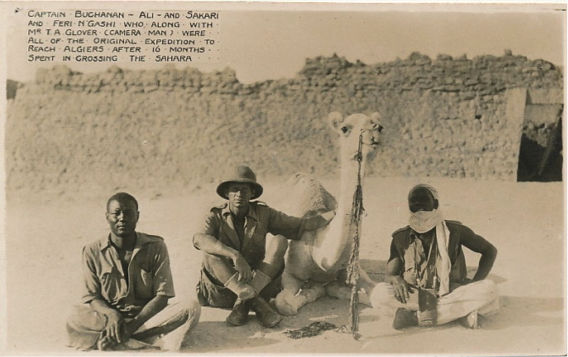
Another disappointment was that no description was given of the final crossing from the Air into the Hoggar and across Algeria. The striking image above was found somewhere online, and the basic map does indicate a couple of exploratory circuits in the Hoggar before swinging out west into Adrar Ahnet on the way to In Salah and Ouargla for the rail head at Touggourt (below). Here the camels were unburdened of their vast trove of specimens, and the two Brits (left) – presumably deeply exhausted after well over a year on the trail – continued with their loyal manservants Ali and Sakari to the UK. As mentioned, his steadfast camel soon died, as had most of the 35 camels who left Agadez, as well as two of the crew.

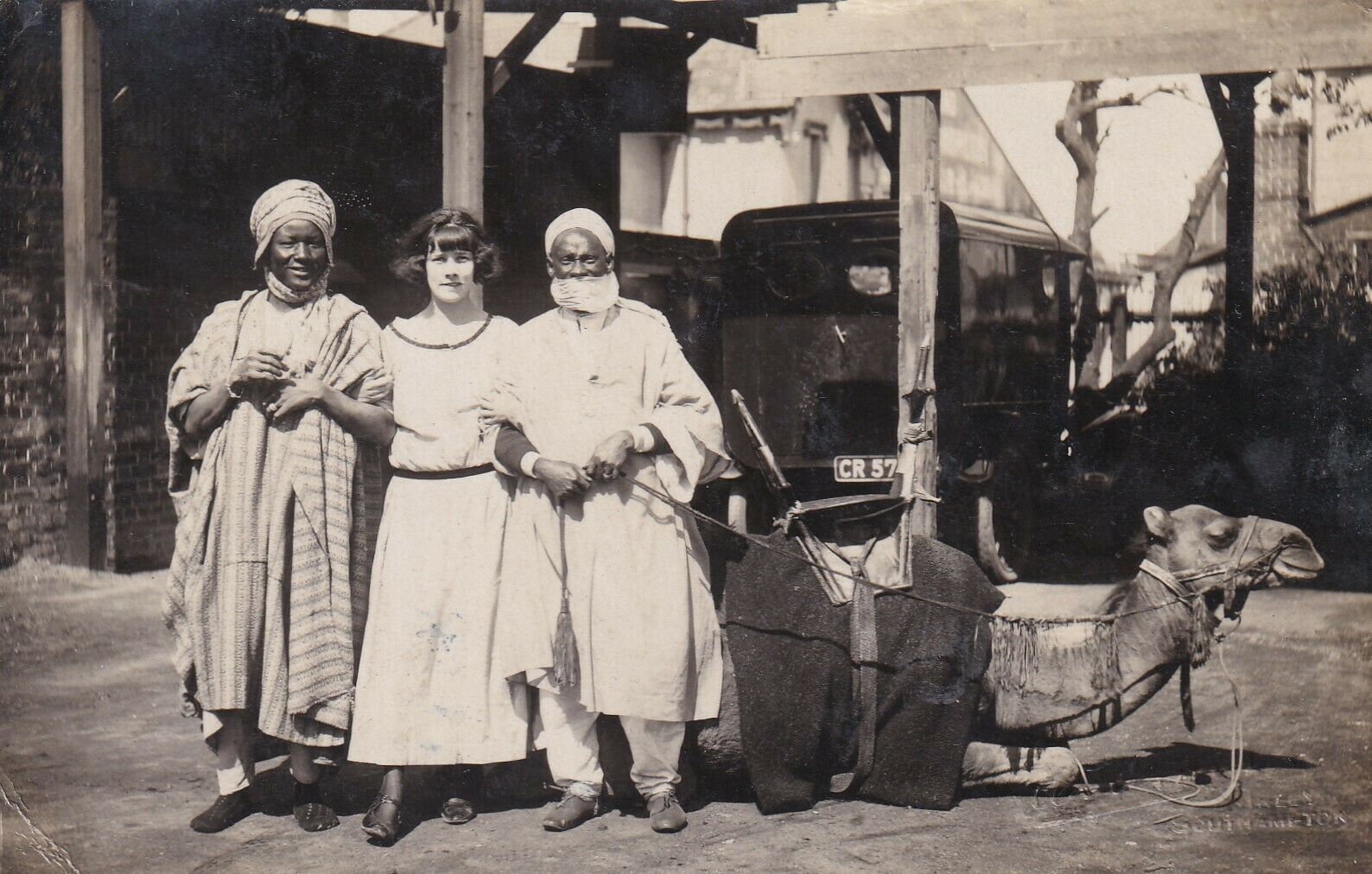
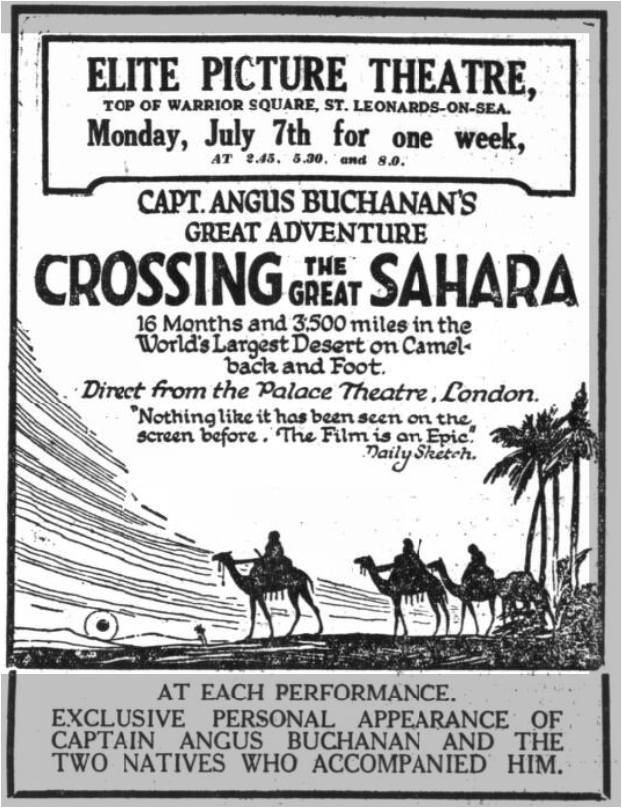
Back in England the press ran with the adventure and a film, ‘Crossing the Great Sahara‘, was soon produced. All four (and possibly some camels) went on to become part of a travelling roadshow in the UK and Europe. Left, a girl posses with Ali and Sakari and a camel at a screening of the film in Southampton.

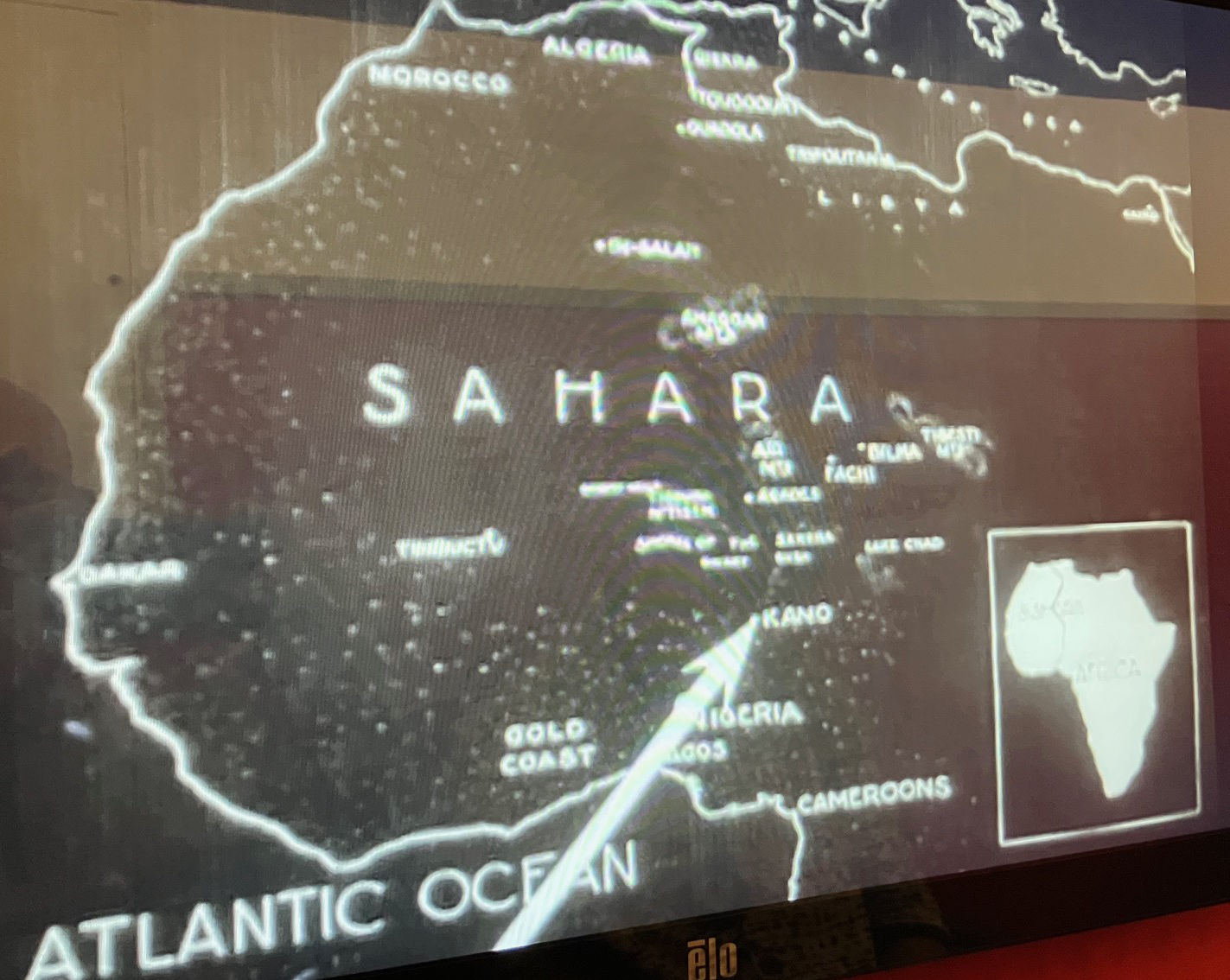
The film is archived at the BFI, but while not viewable online, you can easily walk into the BFI’s Mediatheque viewing library on London’s Southbank and search for it the database. It’s the oldest Sahara film listed, but unfortunately only the first couple of reels survived or got digitised. In 20 minutes all you see is the grand departure from Liverpool, some British dignitaries in Nigeria then various Hausa and Fulani bush folk performing for the camera. What there is is well shot; what a shame the rest is missing and we never get to see the Aïr. It must have been a huge effort to shoot it all. One interesting caption was an observation along the lines of ‘Was this where Blues originated?’, presumably in response to hearing African music. I know that connection was widely repeated once World Music came on the scene in the 1990s, but did not know it went that far back.

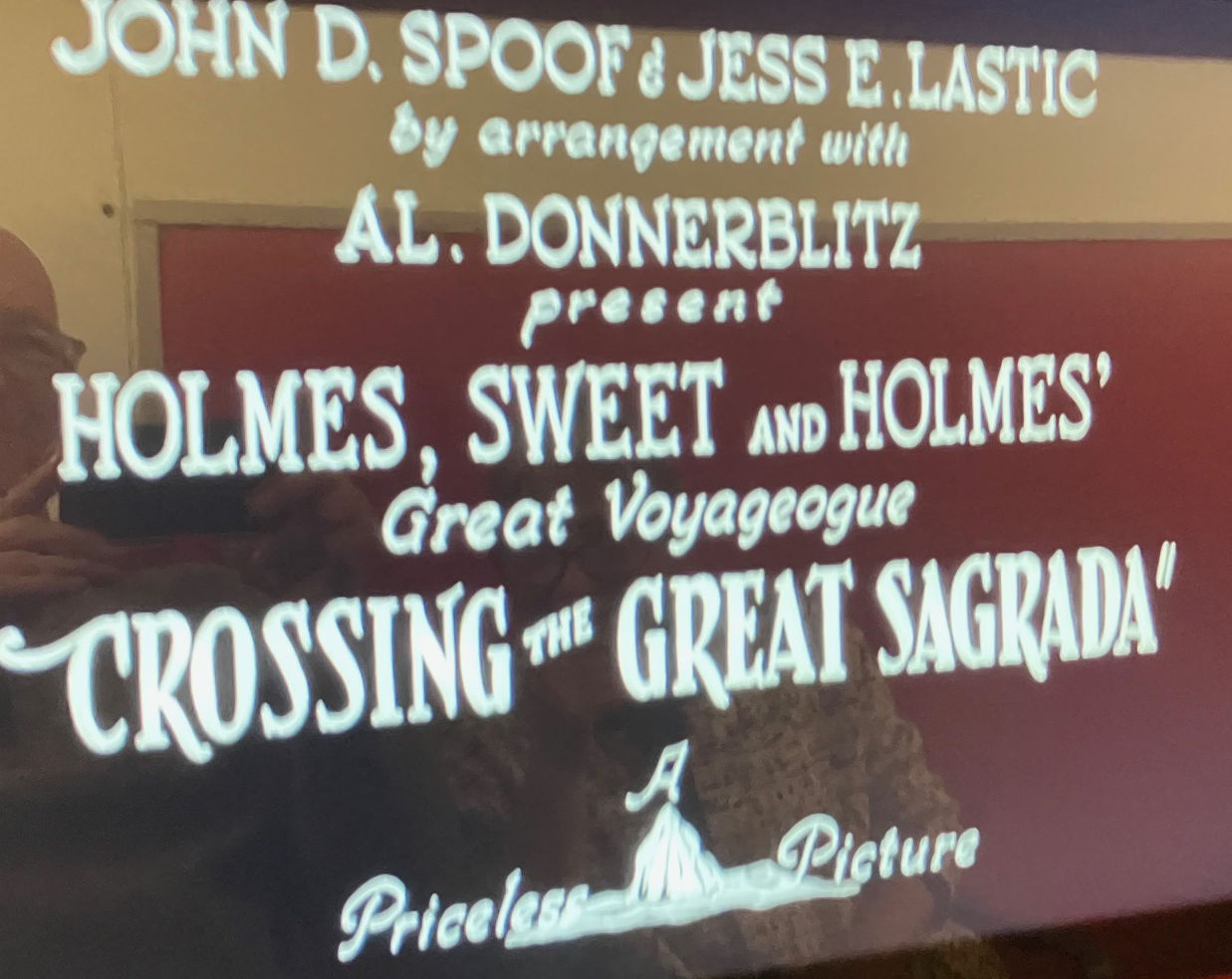
In fact, so popular was Crossing the Great Sahara that in the same year a spoof, Crossing the Great Sagrada, was also released, decades before Monty Python or ‘Ewan and Thingy‘ got in on the act. We watched that too at the Mediatheque. It’s a bit silly.

All in all, I ended up wondering if Buchanan’s account of his first foray of the Aïr may have been a better read, thrilled as he would have been by the novel experience, even though it ended with a debilitating fever.

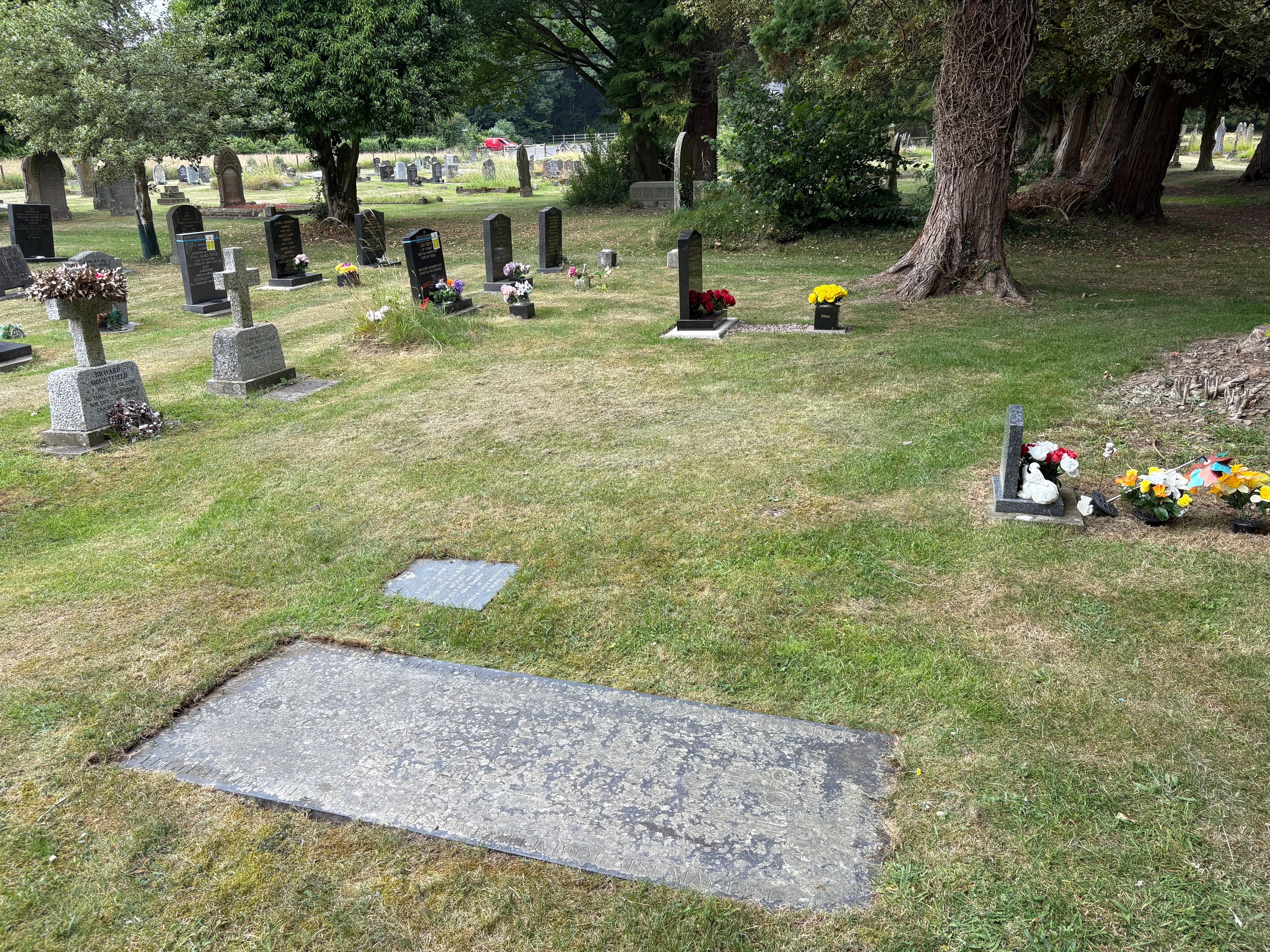
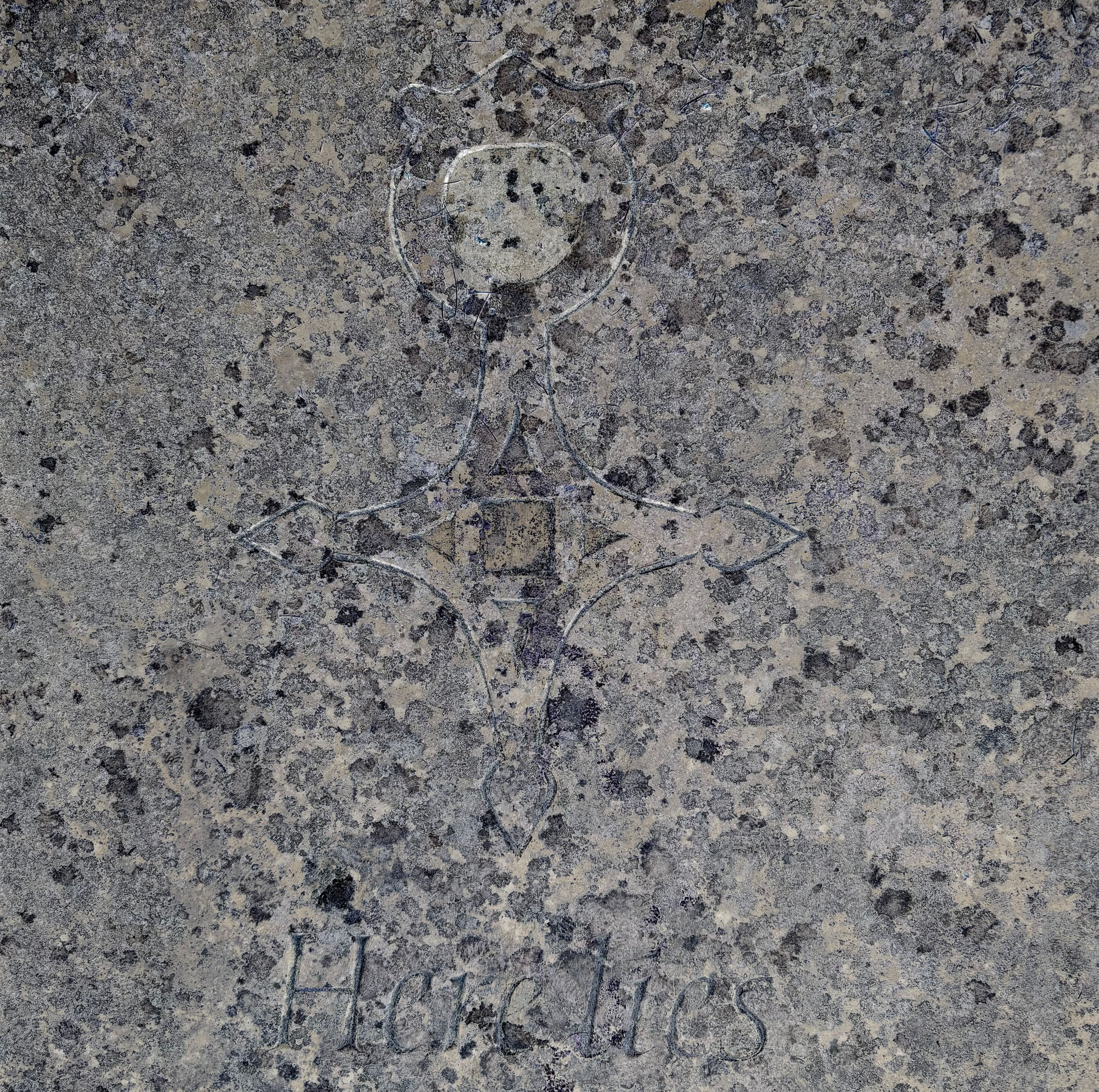
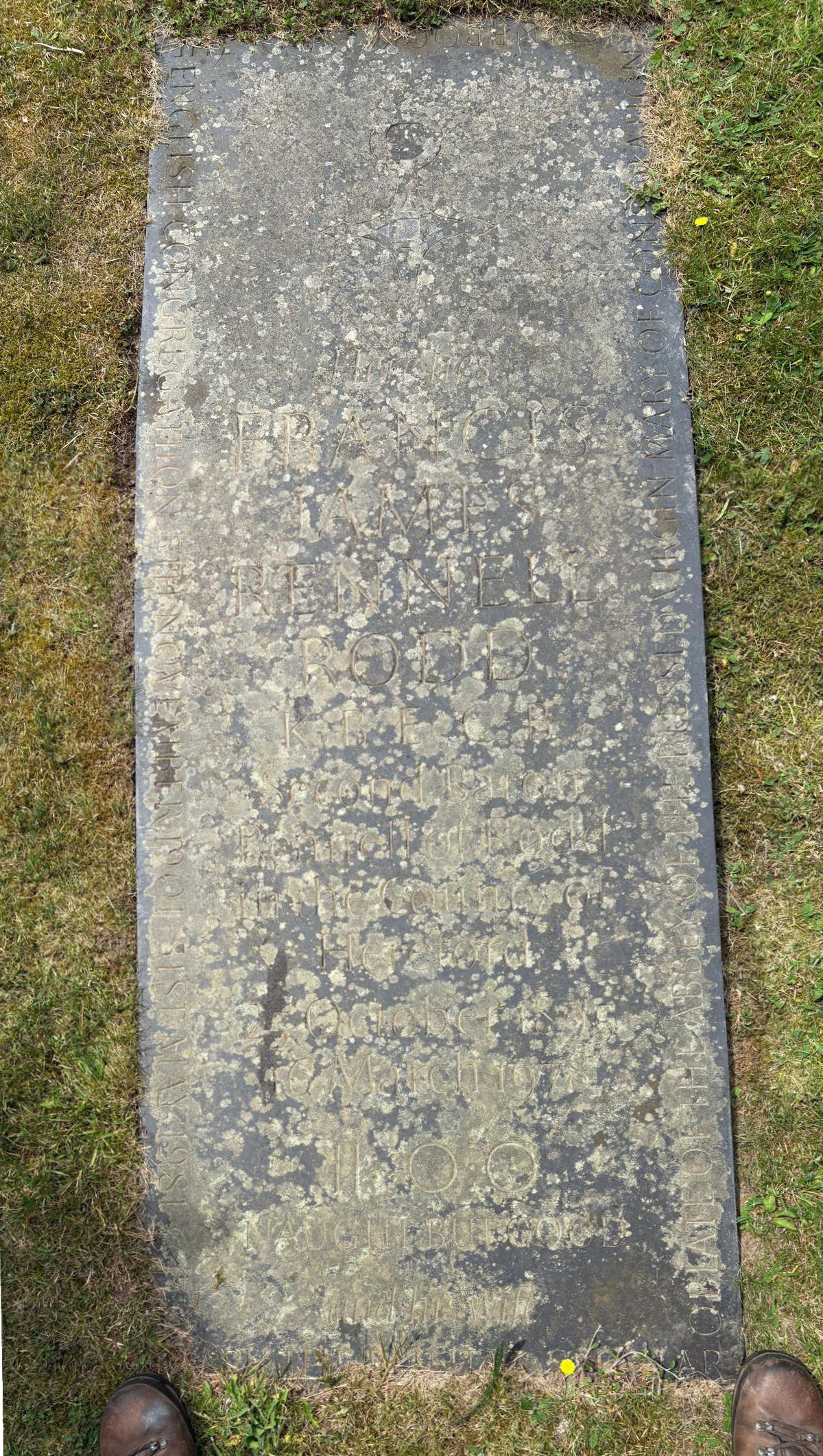
Rodd too was clearly deeply influenced by his shorter spell in the Aïr. His gravestone in Presteigne cemetery (above) features the Tuareg cross of Agadez, as well as the enigmatic Tifinar epigram embossed on the cover of his book (below) which Rodd translated as ‘Naught but Good’.

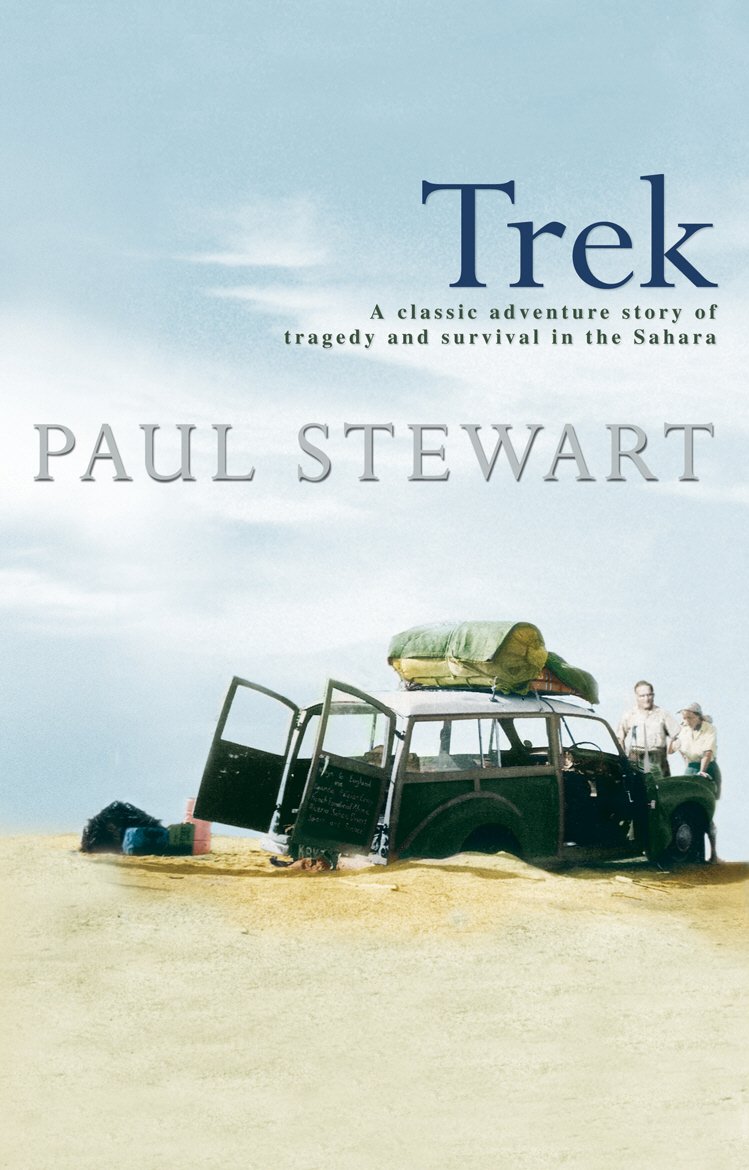
Book review: Trek by Paul Stewart (1991)

See also
Trans-Sahara from Uganda – 1954
Shell Guide to the Sahara (1955)
Trans Africa Routes (1963)

I was working at London’s Travellers’ Bookshop when Trek came out in 1991 and of course, I gobbled up the desert drama, painstakingly researched by Paul Stewart (better known for the Edge Chronicles young adult book series).
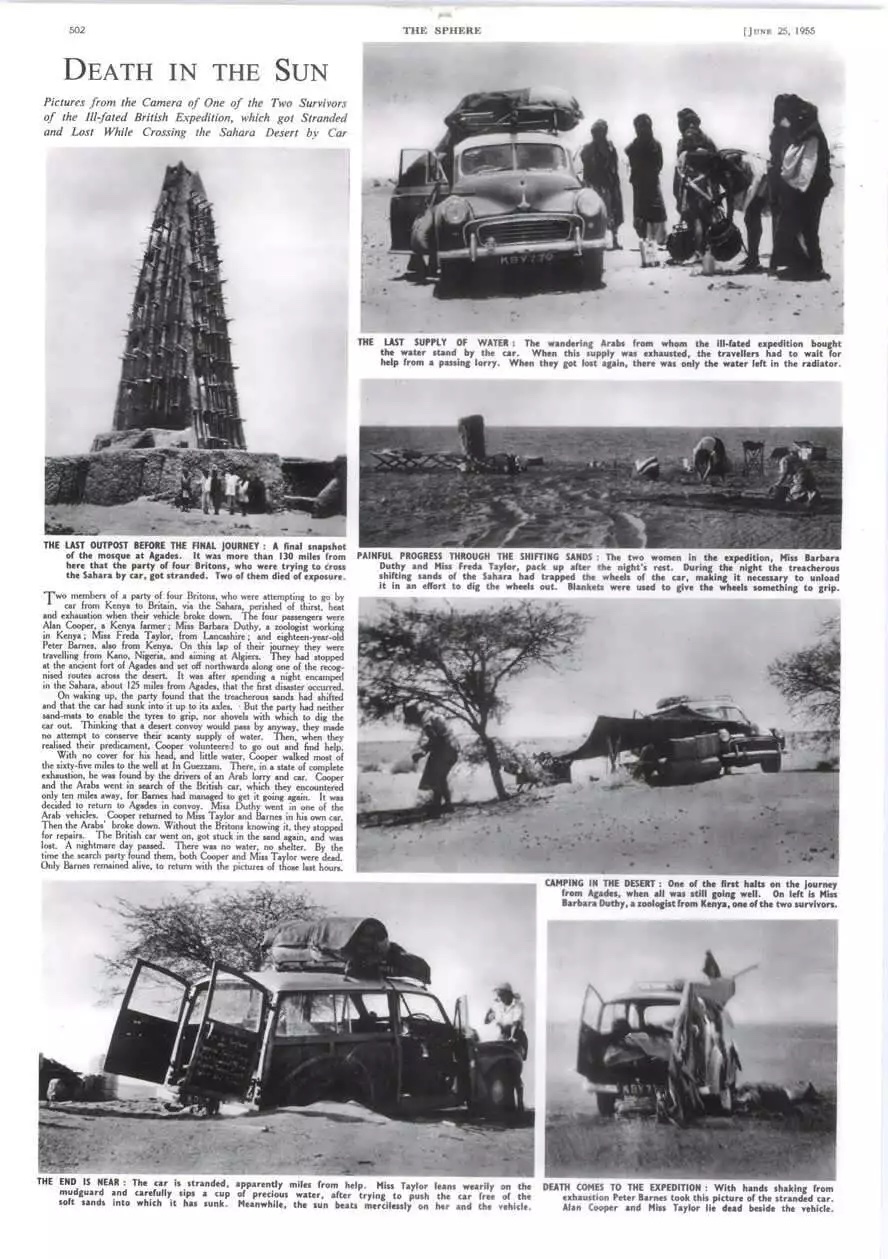
The book came about after Stewart had the story recounted one of the expedition’s survivor’s at her Kenyan guesthouse in the 1980s. He soon realised it was a headline on a June 1955 ‘day of your birth’ newspaper reprint he’d been gifted decades later. Stewart was born on the day the sensationalised events broke across the UK press (see bottom of the page).
Recently writing up the similar Danish story which took place a year earlier in 1954, I realised I’d never reviewed Trek, so recently blitzed through it recently. Only this time I had a slightly more knowledgeable eye, having evolved into a Sahara and overland know-all in the intervening decades.

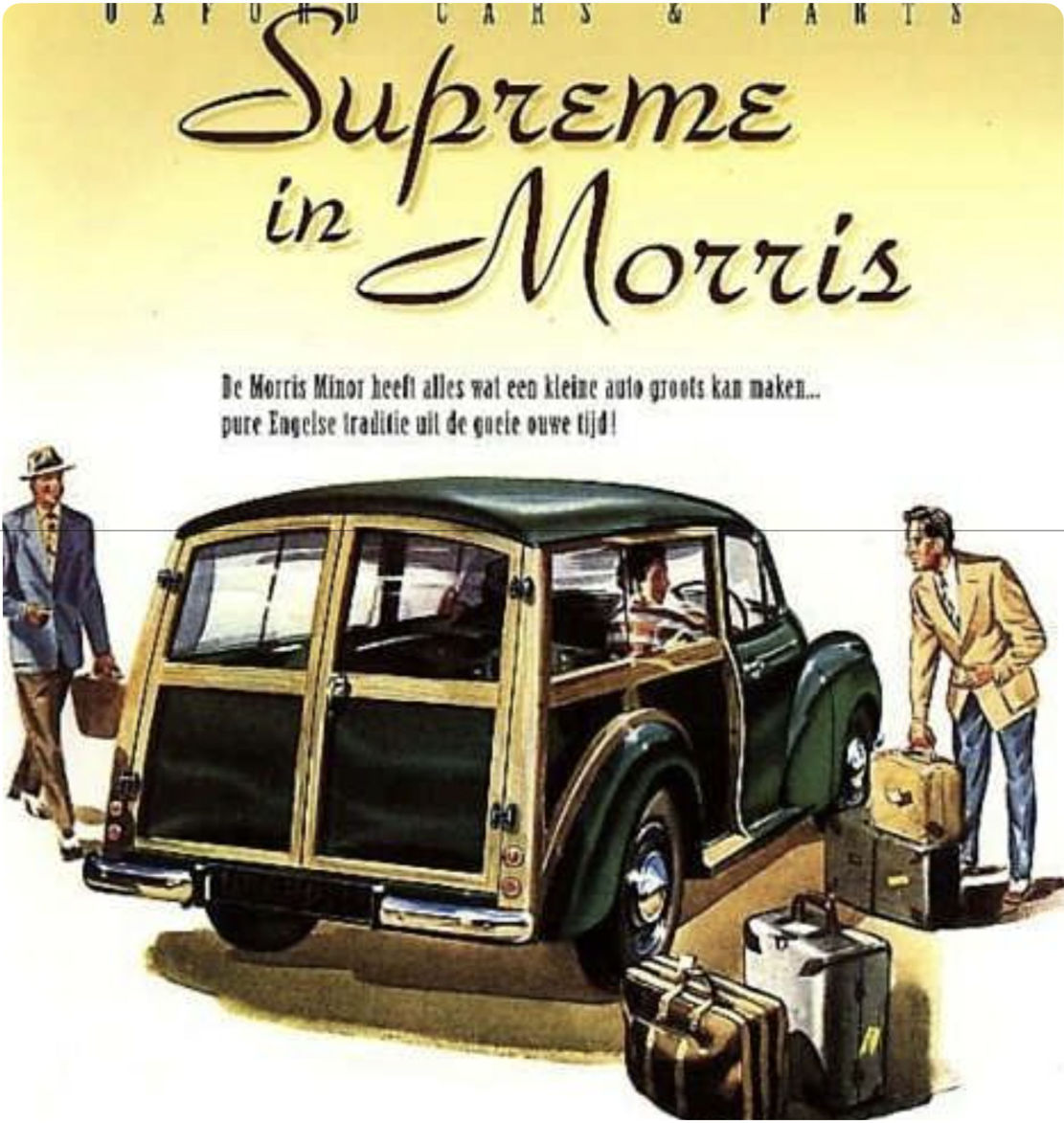
Morris Traveller, pitched as ‘the small car for big jobs’. Like trans Africa, perhaps?

Trek tells the story of an ex-pat foursome who, in April 1955, set off in a near-new Morris Traveller (like above) to drive from Kenya via the Congo and the Sahara back to the UK. They were led by Alan Cooper, a self-confident but irresponsible bon viveur who’d farmed, ran hotels or led safaris, all with little success (forthright bio from his old school). Perpetually short of money, he wanted to visit his ageing mother back in the UK and perhaps kick-off another business scheme. Back then driving overland was the cheapest option. To cover the trip’s costs he advertised places at £175 a seat in a local paper, but on the day delivered much less than promised: a single small, inadequately prepared car, far less any hired locals to undertake the chores.
The three passengers were 17-year-old Peter Barnes, despatched by his mother to man him up (and whose detailed diary was a gold mine for the author years later), a genteel spinster Freda Taylor who’d erased 17 years off her true age of 55, was captivated by the idea of the Sahara, and was caught in Cooper’s spell. Barbara Duthy was a more independent-minded woman, a scientist and pilot, who from the start challenged Cooper’s incompetence and cavalier practices. It was the ageing Barbara whom the author met in Kenya in the 1980s.

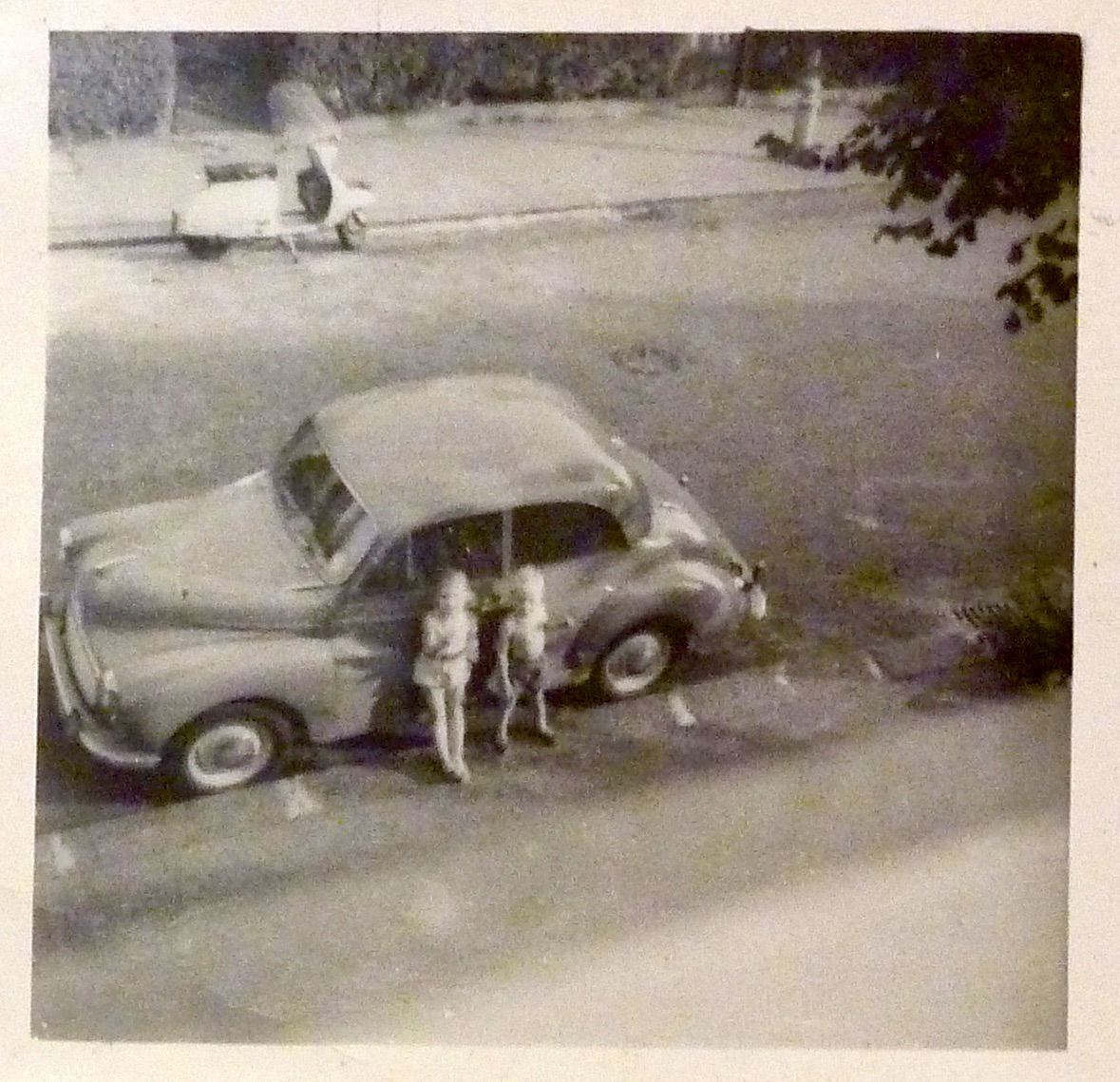
Our Moggie in the Sixties

To his credit, over 20 years earlier Alan Cooper had completed a similar African crossing in a two-seater Morris Minor, even getting this achievement featured in The Times as the smallest car to cross the Sahara to date.
The original Minor was more Model T Ford than the rounded post-war ‘Moggie’ we know and love. By 1961 that famous model became the first British car to sell a million, and was my parent’s first car (left).
On that first crossing the young Cooper had just one passenger via the Tanezrouft crossing from Gao to Colomb Bechar in March, the time of year when temperatures in the Sahara begin to escalate quickly.
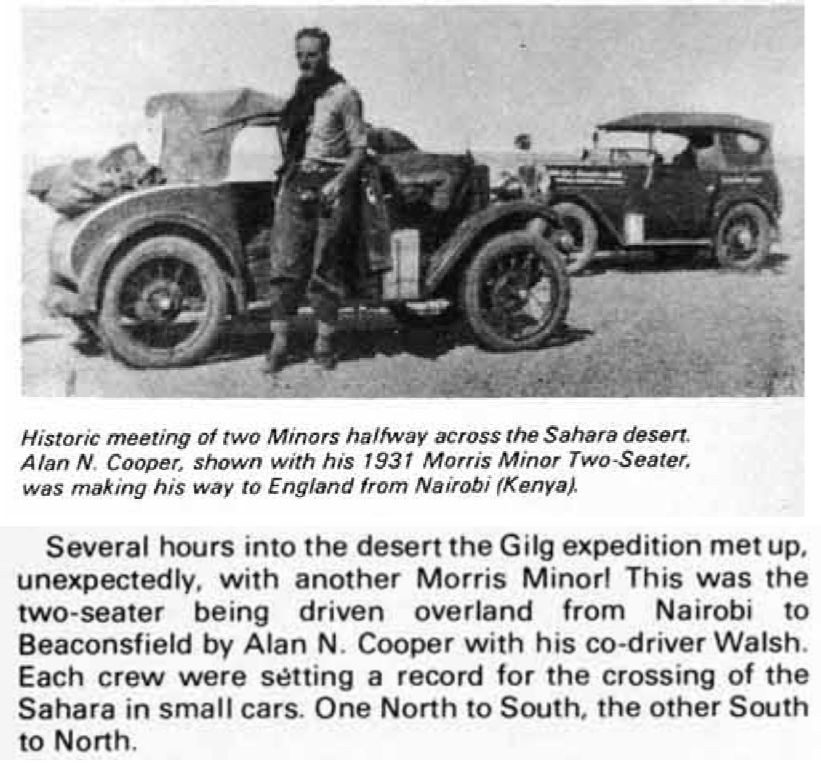
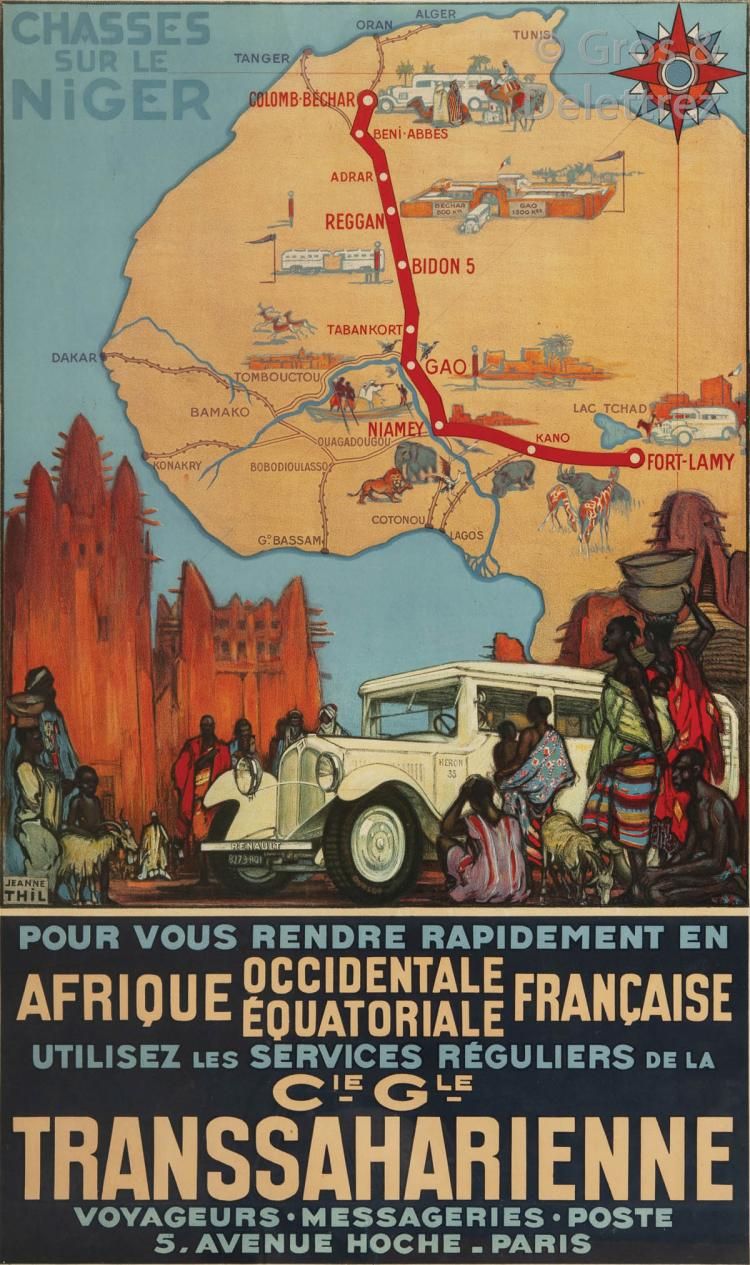
Near Reggane he ran into two other Brits and a desert guide in a bigger Morris car heading south for the Cape (pix below; 1978 documentary on YT). Both Morris crossings occurred barely a decade after Citroen half-tracks had been the very first ‘cars’ to cross the Sahara north to south, pioneering the long, bleak, waterless but flat Tanezrouft route to Mali and the Niger river. On the way they established the famous ‘Bidon’ staging posts which were to feature on future maps. In the 1930s I don’t think the Hoggar route between Agadez and Tamanrasset was yet regarded as motorable.

Meeting of Morrises in 1933. Source. 1970s doc

The ‘8hp’ question
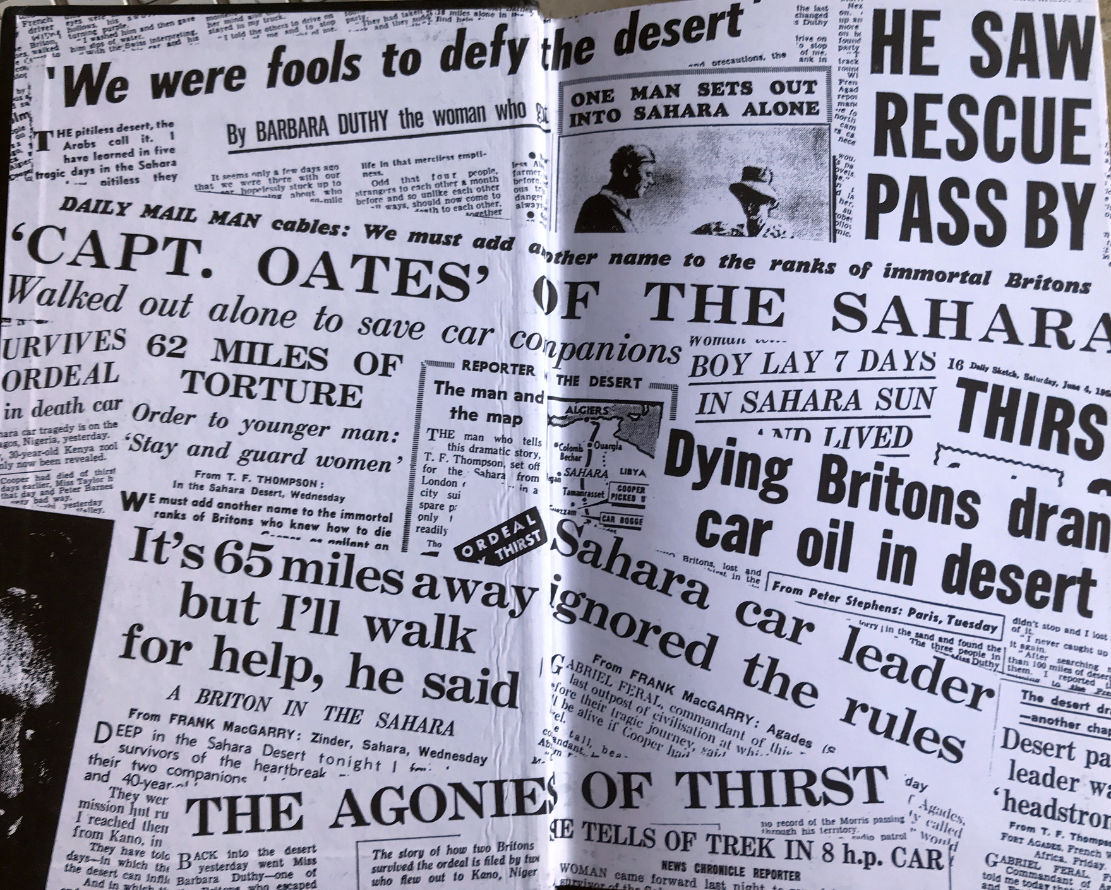
In Trek a highly unlikely ‘8hp’ gets attributed to Cooper’s 1950’s Traveller. It’s hard to think how, other than the author spotted it in a 1955 newspaper headline (below) and thought nothing of it. These days a suped-up moped could make 8hp, but throughout Trek ‘8hp’ gets much repeated to underline the Traveller’s crushing unsuitability for the task it had set itself.
Was there ever a mass-produced, post-war car that made just 8hp? Actually there was, (thank you internet): the ultra-basic 1949, 375cc 2CV put out 9hp, was much ridiculed at the time and soon became the butt of ‘does it come with a can opener’ jokes. As Frenchman Cyril Ribas has proved over many decades, a 2CV does actually make an effective desert car.
A bit more interneting soon reveals even Cooper’s 1931 side-valve Minor pushed out a healthy 19hp while weighing less than 600kg. His near-new, 800-cc, engined Traveller clocked in at 28hp. A two-litre Series 1 Landrover of the day made 55hp, so 28 was about right, and far from a puny 8hp.
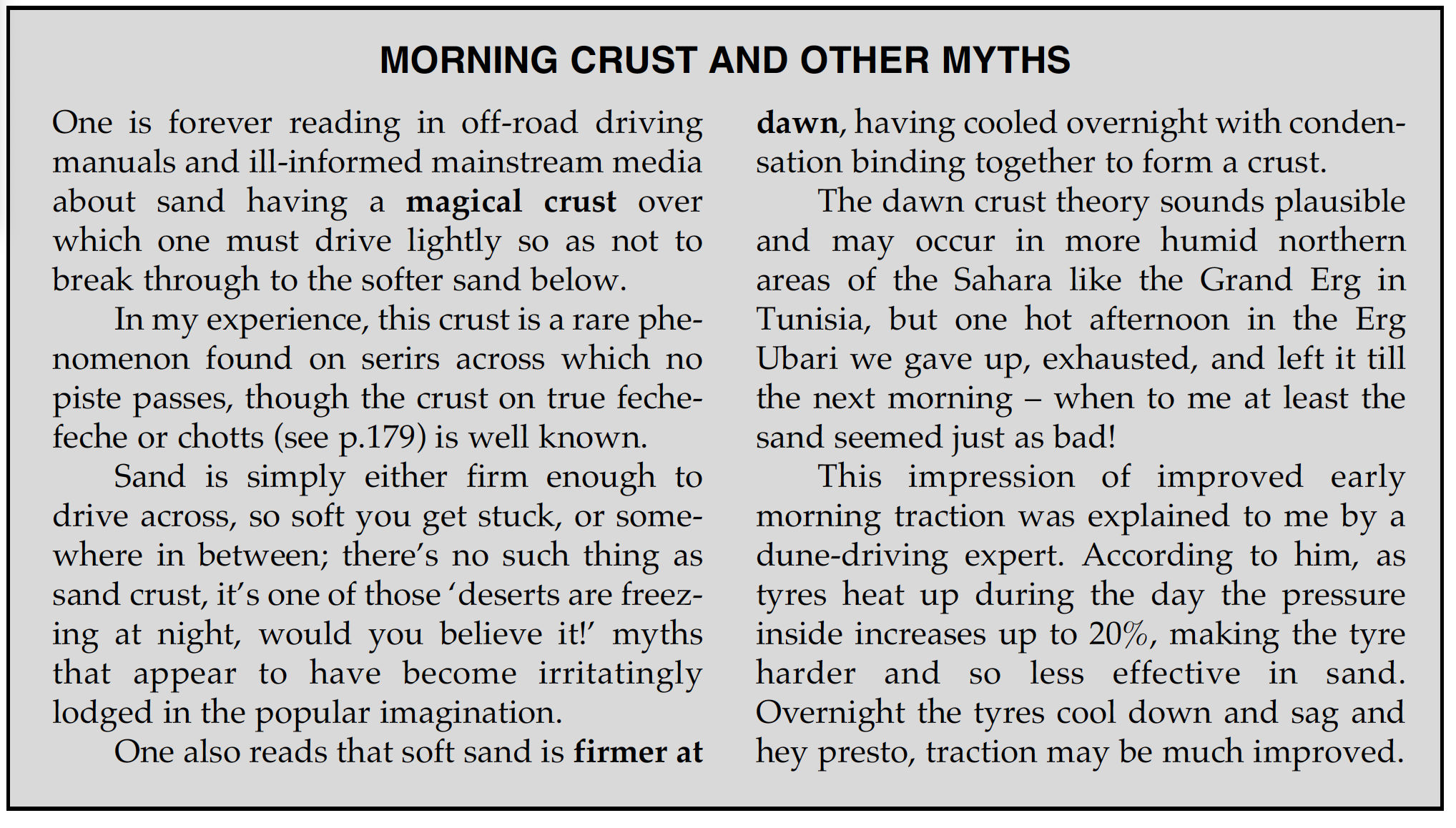
Oh M G, Paul Stewart does not get cars! Like most people, nor is he a desert driver. Irksomely, along with other tenuous suppositions and repeated myths (like wandering dunes making tracks unrecognisable within days) he goes on repeatedly about the perils of breaking through the thin ‘sand crust’ which formed each night under the star-lit desert. Don’t start me on sand crust (see below).

From Sahara Overland (1st edition, 2000)

I admit all this will go over most readers’ heads because they will find Trek an engaging read of how one person’s behaviour can lead to an all too predictable disaster. One thing the author does well is paint a vivid picture of colonial Africa at that time, and why so many Europeans chose to live there, enjoying a standard of living they’d never have back home. In the mid-Fifties that era of privilege was coming to an end as demands for independence spread across the continent – not least from Kenya’s Mau Mau insurgency. As you’d expect, Peter Barnes’ diary recorded little interaction with locals, either Africans or colonial administrators, so the author cooks up period dialogue to help jazz up the tale. Sometimes it passes unnoticed, at other times it jars. It’s a bit different from an author lightly embellishing their own memoirs or travelogue with their own voice.

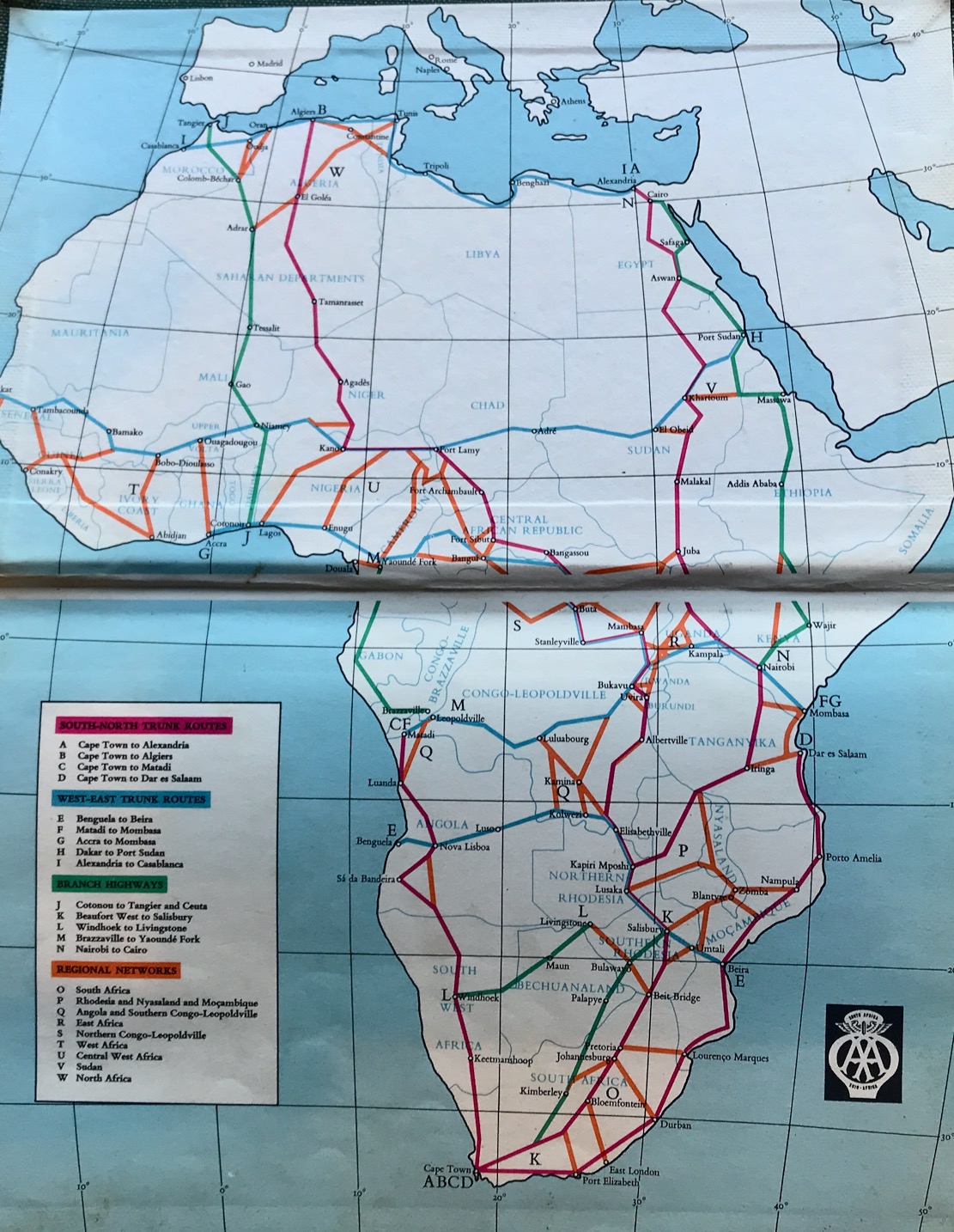
African highways from the final, 1963 AASA edition of the Trans-African Highways road book

The Travelling foursome left Nairobi in mid-April, almost exactly a year after the Danes and, in my opinion, an usually late departure if intent on tackling the Sahara a month later. Unlike the Danes, Cooper was far more casual if not outright reckless in his planning and preparation, sparing little room for vital provisions, spares and equipment to fill his paying seats. Under pressure to reach Agadez before French authorities suspended desert crossings from mid-May to November, the group averaged up to 200 miles a day across equatorial and Sahelian tracks. As a result, four weeks later, both passengers and car arrived at the desert’s southern edge, weary and exhausted.


Like the Danes’ near-new Morris Oxford, Cooper’s 6000-mile-old Traveller needed new big end bearings. Except in his case the cause was, bizarrely, not stopping after smashing the sump on a rock in Cameroon (the Danes carried a spare sump for this very reason). The Traveller’s oil drained away and inevitable engine damage occurred. Limping on to Kano in then British Nigeria, the wrong spares eventually got flown in so a proper repair was bodged to save more waiting. Heading north for Agadez, the engine was soon knocking again.

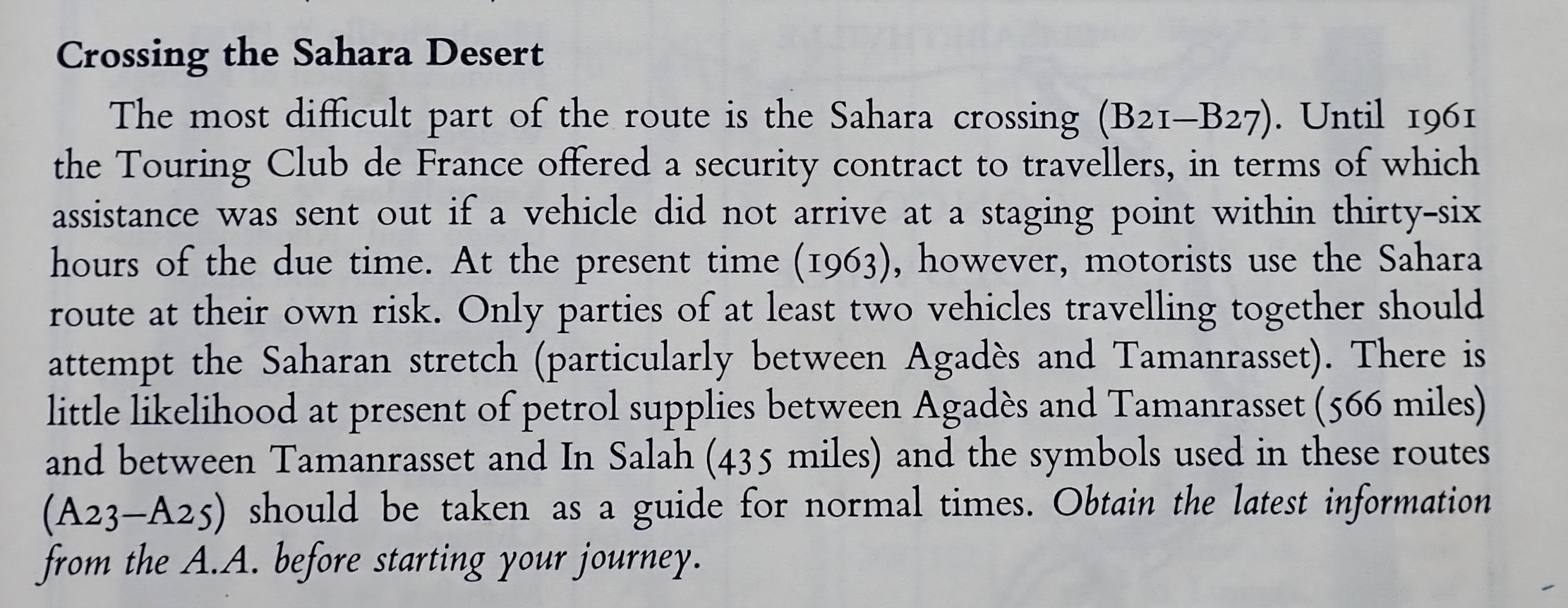
Trans Africa Routes 1963

The French requirement of a £1000 bond to cover a desert rescue described in the Danish article did seem unusually high. In Trek, a more plausible refundable £50 per person is mentioned to cover a search, should a vehicle be overdue at the next checkpoint. With new bearings fitted in Agadez, but just a week before the desert closed for months, Cooper tricked his group by claiming they’d been given the all-clear to leave but they had to go right now. In truth he knew he’d never have got official approval to cross the desert. Along with the imminent closure, it was this deceit which may have forced Cooper to push on into the desert, when turning back would have been wiser. Because of his actions, no official departure record was logged and so no rescue mission was launched until news of the lost Morris reached Agadez, a week so so later.

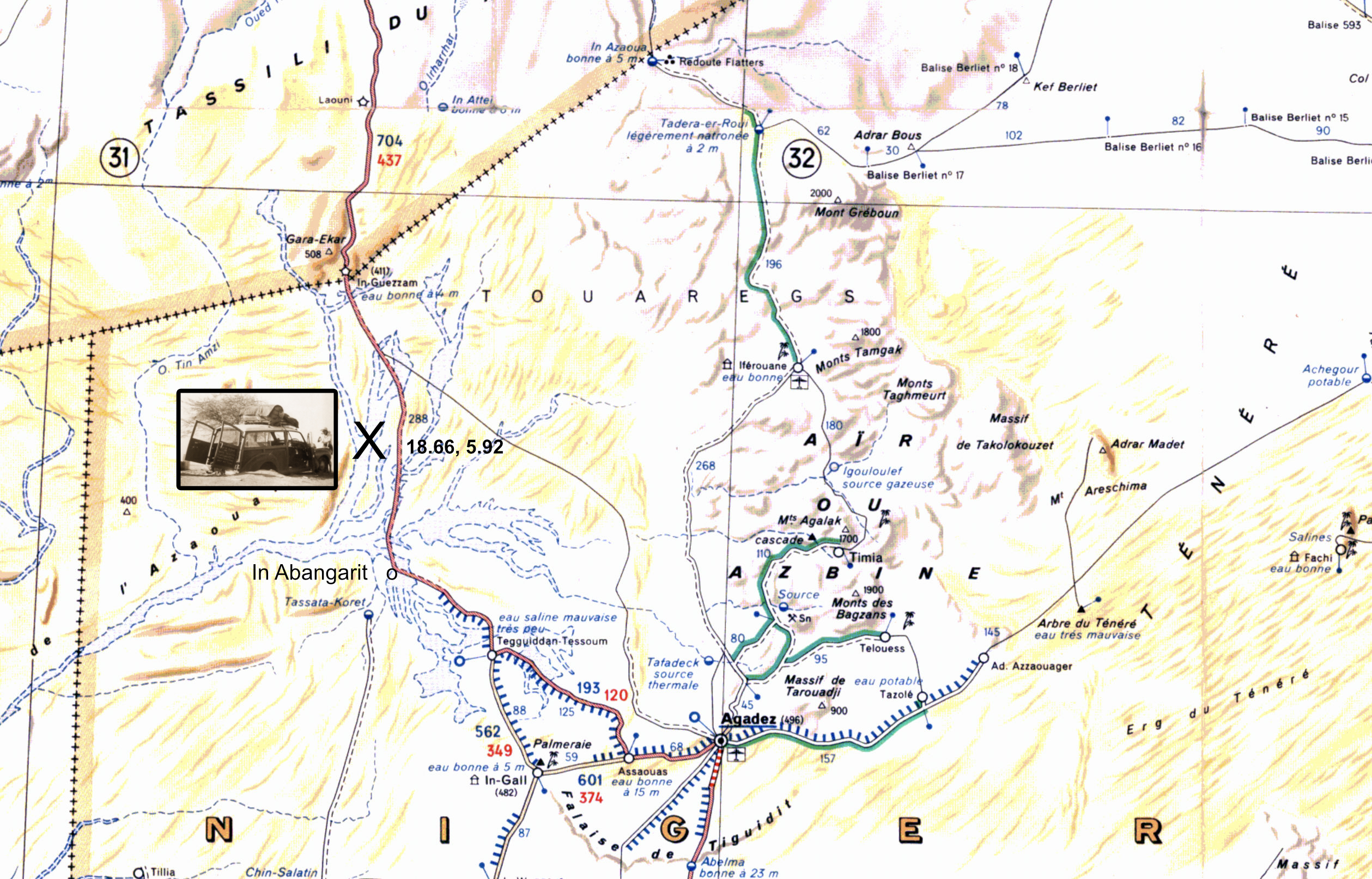
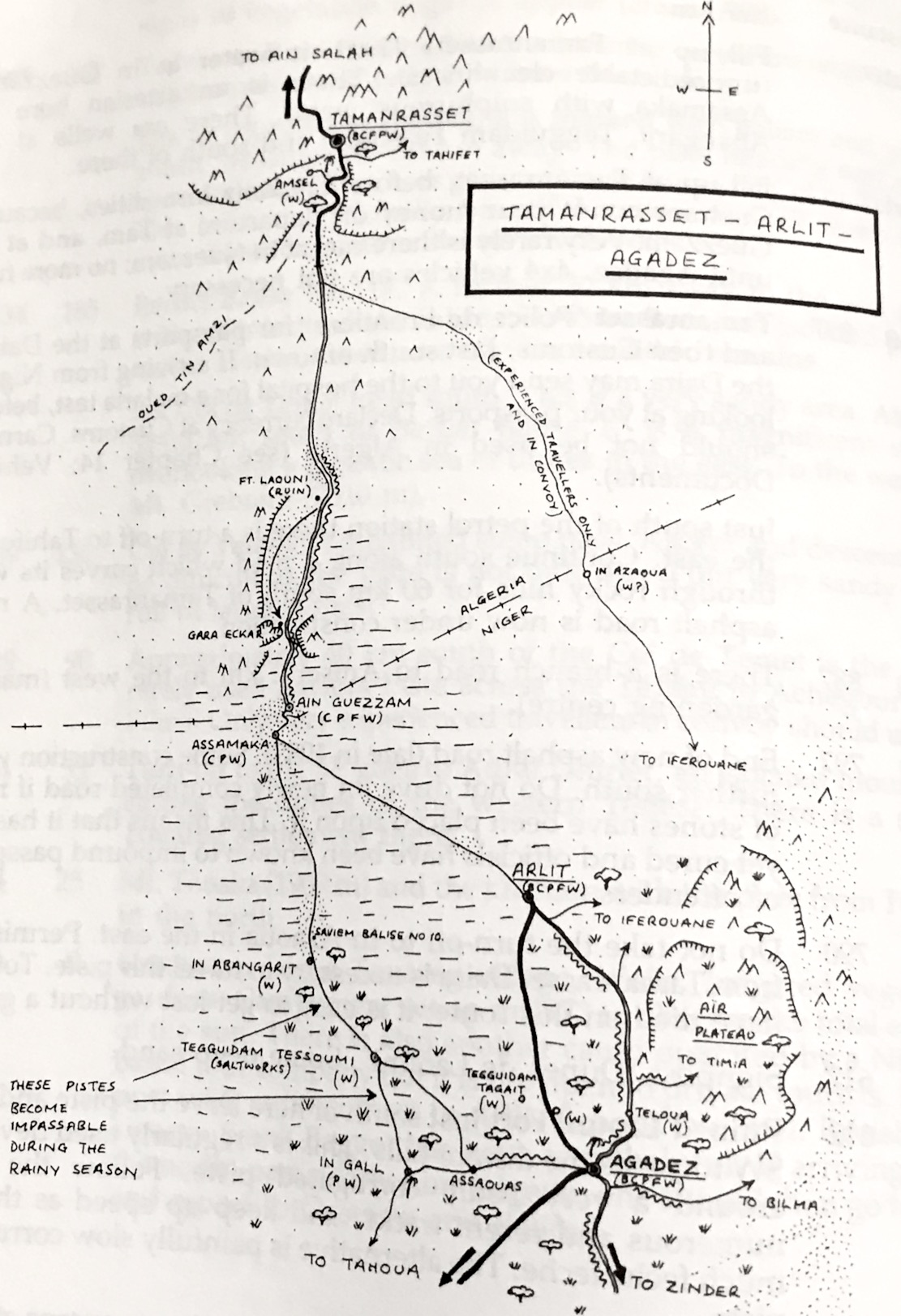
In Abangarit piste from Agadez via In Guezzam to Tamanrasset (900km). The current Arlit piste is not shown.

In the 1950s the piste from Agadez to Tamanrasset went west past the salines of Tegguidam Tessoum before turning north at In Abangarit well for In Guezzam on the Algerian border. This was long known as a sandy route, tougher but shorter than the original Tanezrouft across Mali and Algeria. When the uranium mine opened in Arlit, north of Agadez, in 1971, the primary crossing switched to that route over less sandy, or at least more travelled terrain.

In Abangarit piste, Sahara Handbook

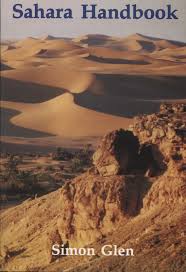
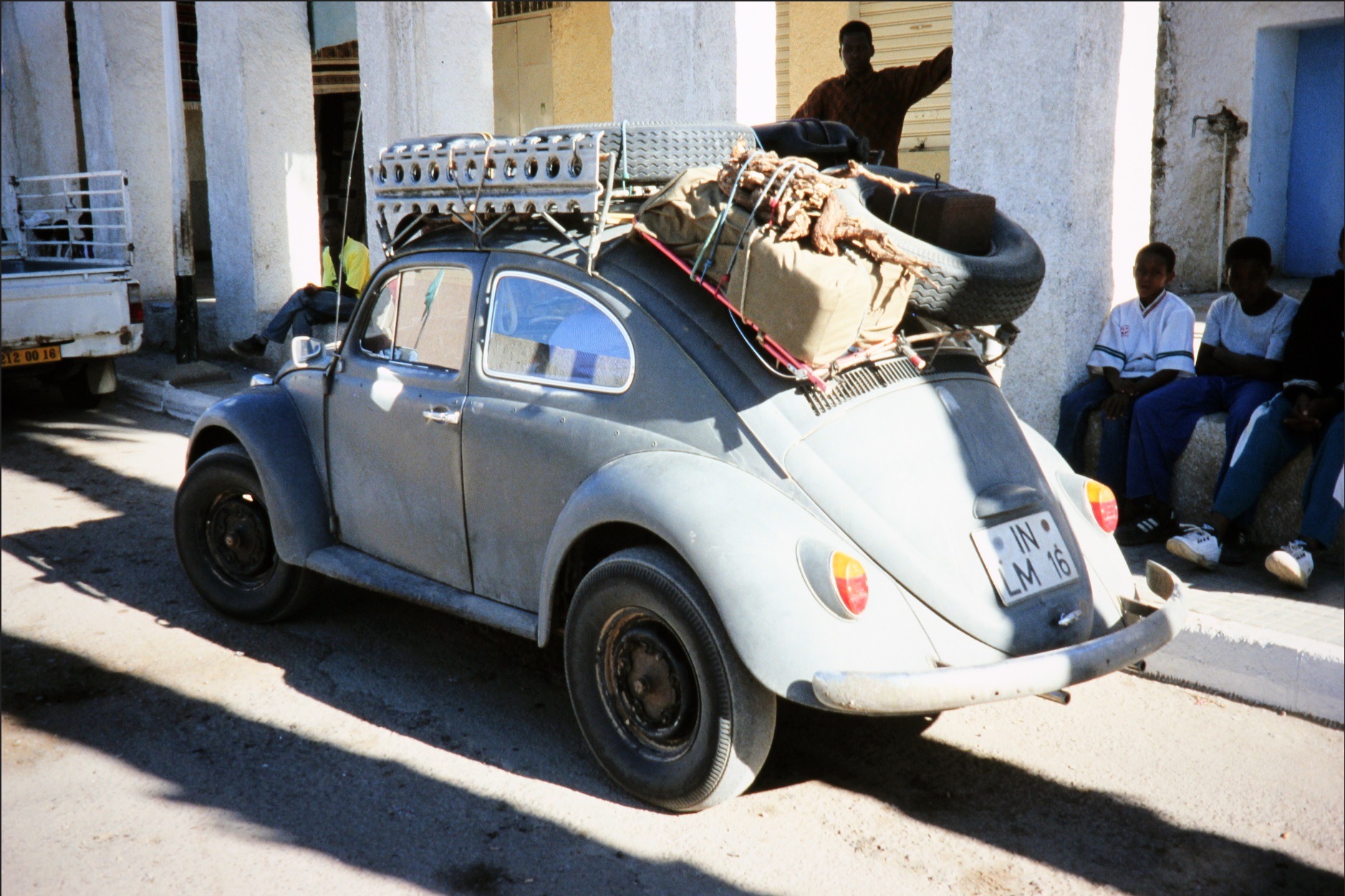
The 1990 edition of the Sahara Handbook (left) claimed ‘4×4 vehicles are not necessary’ on the In Abangarit piste (right). The Swiss Beetle (see below) proved that and the book’s original authors undertook most of their travels in a Kombi van. But the Handbook went on to advise, from Assamaka ‘… head south on a bearing of 170°. Keep speed up… Several big sandy patches and seas of bull dust, especially [110km] south of In Guezzam‘.
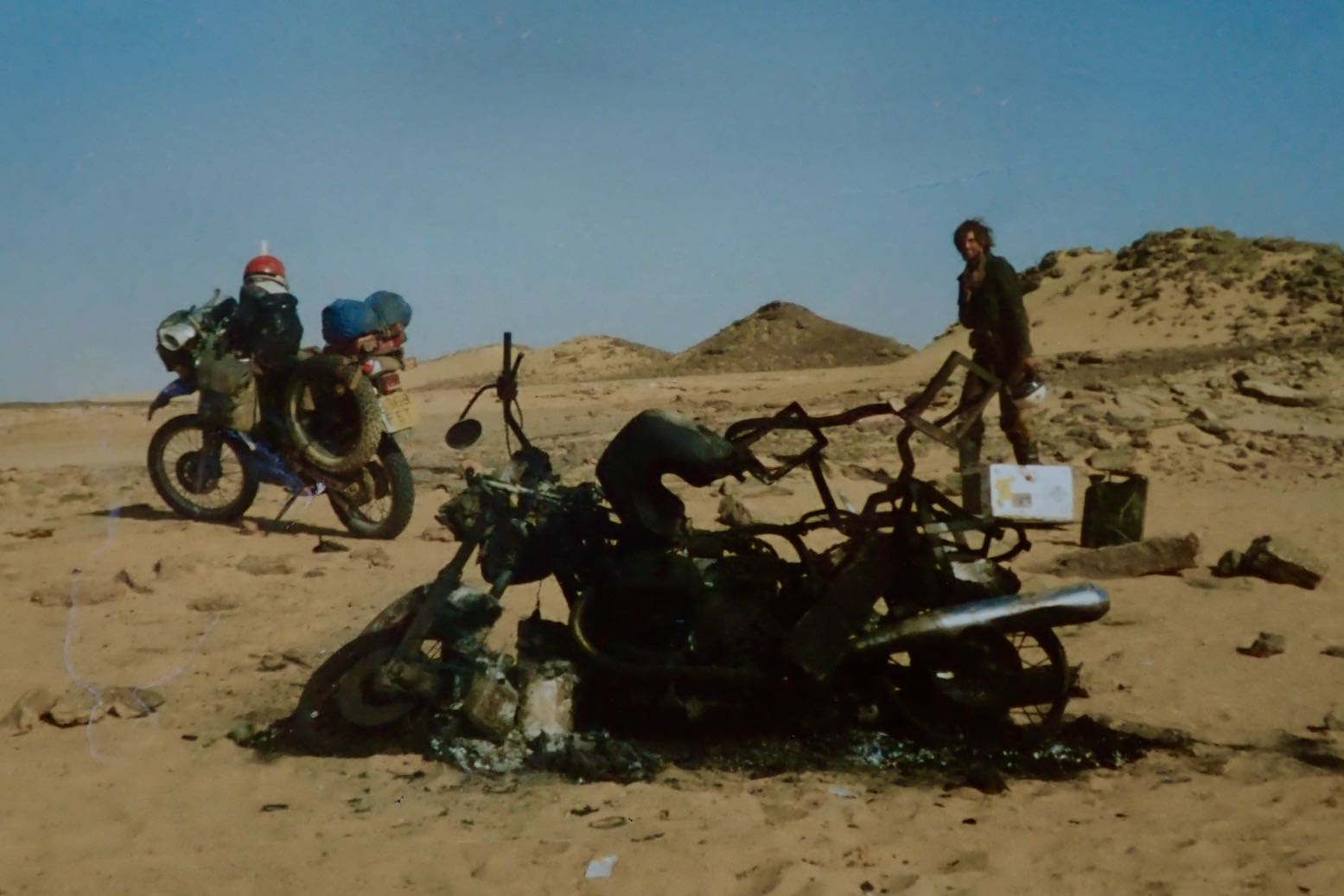
There was no Assamaka back in the 1950s, but by the 1980s the Handbook warned ‘Niger frontier officials [at Assamaka] have been known to force … travellers to go via Arlit… [to Agadez]. Subsequent landmarks given on the now little-used In Abangarit route description are spaced up to 100 or 150km apart, with balises as every 5km, too far to see one from the next. In 1986 on the the shorter Arlit piste I myself soon lost track of the balises, but that’s another story (below).

BMW BBQ
Like a 2CV or Renault 4, with the engine’s weight over the powered axle and good clearance, a VW Beetle made a surprisingly effective desert car. The VW Kombi vans even more so.

In the enervating, pre-monsoonal heat, the foursome did manage to stagger across the desert to within 50km of In Guezzam. But getting that far had entailed a lot of digging and pushing, decimating their inadequate water reserves. It was at this point the Traveller caught up with a lorry rescuing the nearly dead Cooper, who 50km earlier had set off north on foot from the then bogged car to get help. The other three got the car moving again and caught up.
Cooper was found delirious by the southbound Algerian driver in a resupply truck (a Citroen Type 32 perhaps) carrying masses of water and recovery gear, and accompanied by a Swiss couple in a VW Beetle. Much against Cooper’s demands, the group insisted on carrying on south to Agadez to get Cooper urgent medical attention. Once in Agadez, the lack of permission would have come to light and they’d all miss the desert crossing window for sure. A compromise was agreed: they’d backtrack together about 150km to the well at In Abangarit where the Traveller would wait to join the returning Citroen heading back to Tam. To reduce weight in the Morris, Barbara chose to ride in the truck – a decision which probably saved her life.
Peter ends up driving the Morris at the front of the convoy, while Freda tended to the semi-conscious Cooper in the back. But on losing sight of the following vehicles, at the still domineering Cooper’s insistence, fatally, they kept going. This rashness is hard to explain other than a bloody-minded craving to control events, no matter the risks. The Morris strayed off track, as is so easily done, got badly bogged again and, with all the water in the truck, first the severely dehydrated Cooper and the frail Freda died by the car. These deaths were almost certainly hastened by the colonial-era outfits shown in photographs: baggy shorts, short sleeves and frequently no headwear which all accelerate the body’s water transpiration in an effort to keep cool. It’s why Tuaregs are covered head to toe. With just hours to live, Peter was found a day or two later by a search party of Legionnaires sent from Agadez.

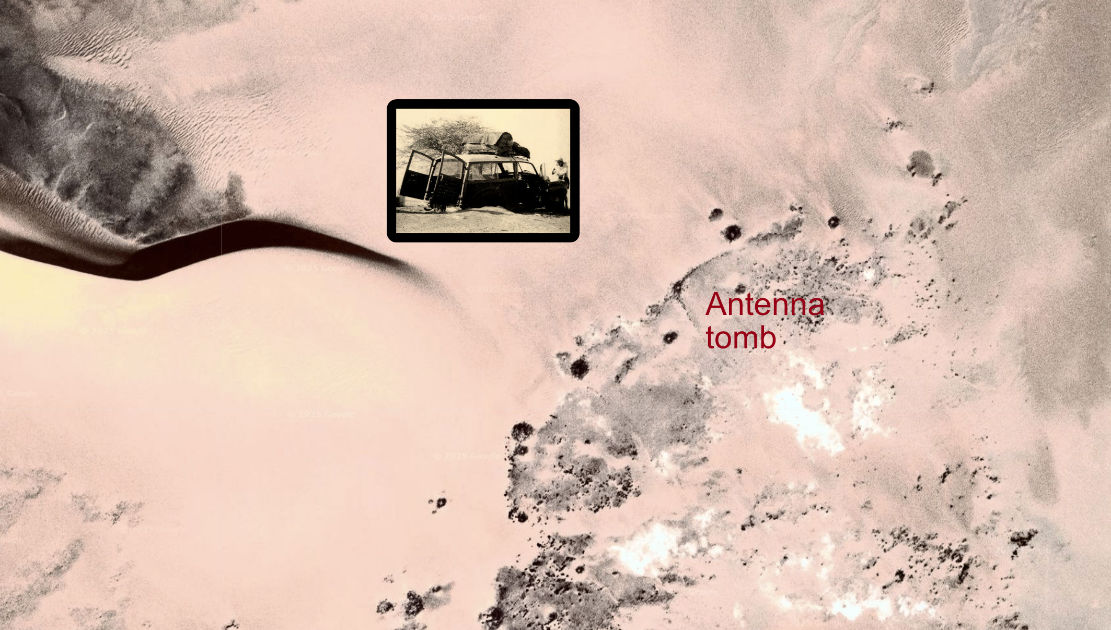
Burial location N18° 40′ E5° 55′

Cooper and Freya were buried by the Legionnaires at a waypoint given in the book as 5.55’N x 18.40’W. Even once corrected to N5° 55′ W18° 40′, this is way out in the Atlantic, some 600km off the coast of Guinea. I suppose in 1991 verifying a waypoint was less easy than now, but wasn’t anyone in production even curious? Jumble it about some more and you get N18° 40′ E5° 55′ which looks about right: a point among low dunes 10km west of the current piste and halfway between In Abangarit and In Guezzam (see map above). The book makes a lot of the doomed expedition’s ill omens; perhaps the final one is that the car came to rest just half a mile from from a cluster of pre-Islamic tombs, including a classic, east-facing antenna (above).

Hard to believe but UK tabloids were a lot more sensational back then. Note ‘SHE TELLS OF TREK IN 8 h.p CAR.’ mention.

Cracking yarns of abject overlanding folly like Trek have all helped entrench the Sahara’s mystique and notoriety, and the British papers of the Fifties had a field day: ‘drinking engine oil…’, ‘Oates of the Sahara…’ with some even inventing foul play to explain the deaths. You can buy Trek for a few pounds. What a great movie it would make.

‘… His heroic rescue bid will always be remembered by the two survivors…’

Michelin 742 Morocco (2024) map review

See also:
Morocco Maps
Reise Know-How 2023

In a line
Well after 14 editions the paper feels thicker but in the south much detail remains missing or well over a decade out of date.

Cheap
Big (1 x 1.5m)
Detailed key in many languages
Intuitive 1:1m scale
Doesn’t need batteries

So out of date in the south it’s not funny anymore

Big and 1.3 m wide, but years out of-date

Review
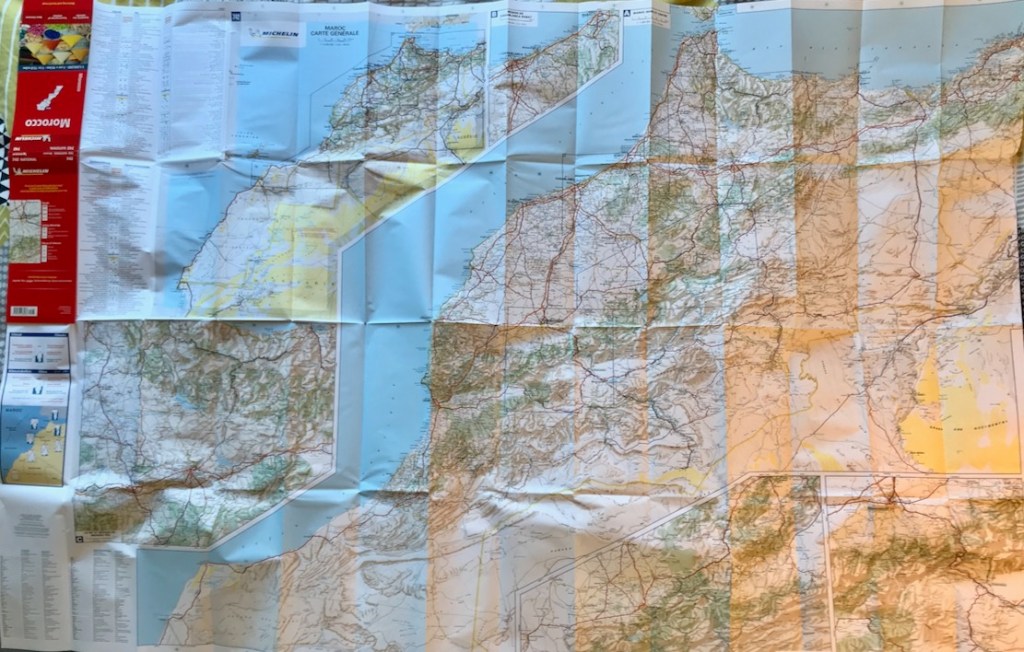
Michelin the best map for Morocco, right? Not for many years, I’m afraid, unless you’re following the main highways. The late 2024 edition’s paper feels thicker – an age-old complaint. You also get five sub-regions at 600k scale.
Plus points are the intuitive 1:1m scale, clear Michelin design and the fact that it goes right down to Laayoune which means you can view all of Morocco 4’s routes on one sheet – except that I’d guess less than half on them exist on this map. And at from £6.50 in the UK, it’s cheap.

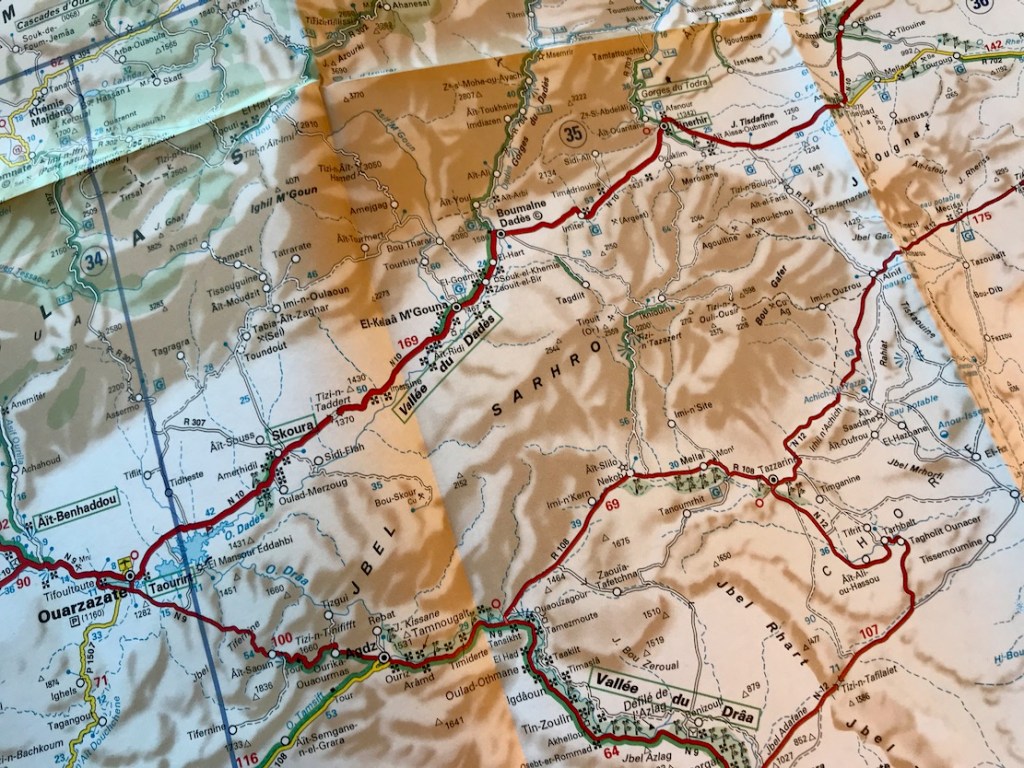
But many easily navigable market roads and tracks mentioned in my M4 book or on the digital maps below are missing, and some roads and tracks either don’t exist or get misleading prominence. In places this data is nearly 20 years out of date so once you get far of road, it’s unusable.

Jebel Saghro: nothing to see here – at least on the Mich 742

Look at a region like Jebel Saghro (above) about which complete piste guides have been published (and which in Morocco 4 get 32 pages and 11 routes). On the Mich map even the main roads is incomplete.

You’d think one day they’ll go all out and improve the 742, like RK-H did in 2019. That has not happened for years at Michelin. Perhaps the best thing to do with the latest Mich 742 is mark the many, many missing roads and pistes from other sources all on one big and inexpensive map to become a handy reference to what is possible and where. That’s what I’ll probable do with mine.

Book review: Sahara, Souk & Atlas

Sahara, Souk & Atlas: Tales from the Land of the Amazigh
By Michael Thorogood

In a line
Dense history but otherwise disappointing and disingenuous,

What they say
Strapped to Africa’s northern shores, Morocco is a staggering land of harsh desert, high mountains and spellbound medinas. Sahara, Souk & Atlas: [Tales from the Land of the Amazigh] recounts two journeys across this land. From spontaneous beginnings, these journeys become a passage to the heart of North Africa’s indigenous people. They know themselves as the Amazigh, ‘free people.’ 
For millennia, the Amazigh were the dominant force across North Africa. They were a seemingly unconquerable people, but today they are fighting for cultural recognition in the lands where their ancestors lived. This book tells their remarkable story of rebellion and resistance.
From the souks of eccentric Marrakech, to the guilds of pious Fez, enclosed are tales that dig to the roots of Moroccan society. Brace for a gripping journey through a land of diversity, from the tribal High Atlas and lawless Rif, to campfire folklore beneath the stars with desert nomads, whose way of life is on the brink.

Travelling as I do, mostly through the Amazigh lands of southern Morocco and wanting to learn more, I was hooked by the title and cool cover. For less than a couple of quid it was worth an e-punt.
More commonly known as ‘Berbers’, a term coined by the Romans (Barbary Coast is a derivation), Amazigh is what they call themselves, meaning the free people. From Siwa to the Atlantic, the Amazigh are the indigenous inhabitants of North Africa before the Arab conquest of the Maghreb in the 8th century.
Had I noticed the telling ‘this is a work of creative non-fiction…’ disclaimer, or better still, just looked at the map, I’d have clocked how superficial the author’s Moroccan travels were. To be fair, Thorogood admits he was just 20 on his first visit, and maybe a year older on the next. Both were holidays undertaken with largely unmentioned backpacking chums.
An overnight camel trek round the back of Erg Chebbi seemed an odd start. Then the penny started dropping when the group visited the leather dyeing souk in Fez, another odd place to get under the skin of the modern Amazigh condition. By the time they were larking about on a home-built raft below Ouzoud Falls – the ‘Todra Gorge’ of Morocco’s few waterfalls – pennies were spilling over me like I’d hit triple gold on a slot machine. The ‘lawless Rif’ you ask? That was a day trip to Chefchaouen.
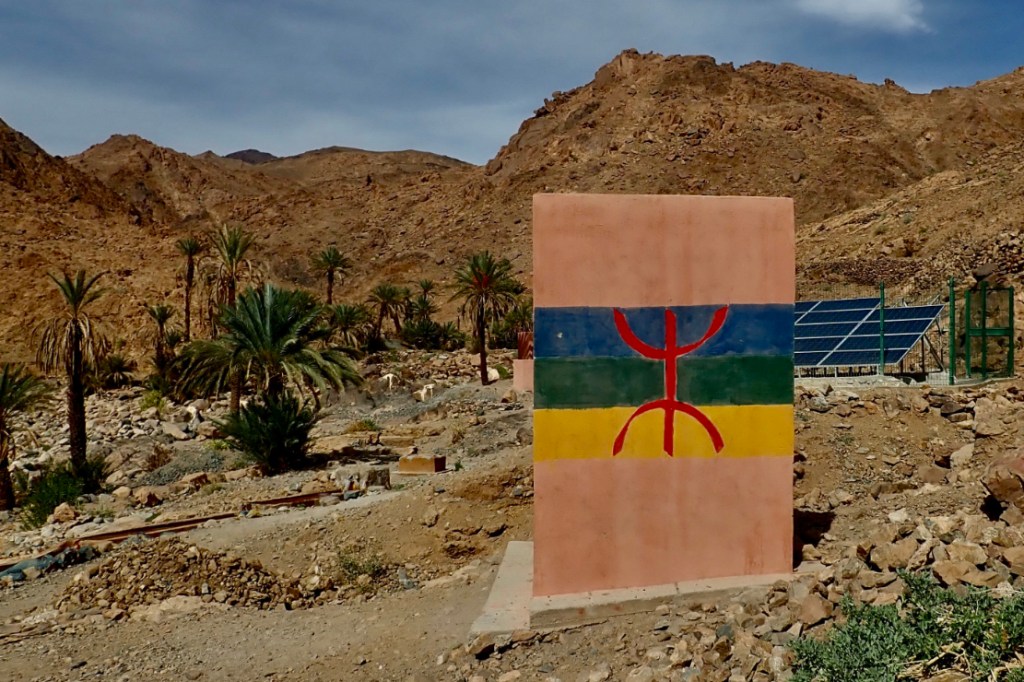
Amazigh consciousness or identity has prospered in the reign of the current King Mohamed VI, and one thing you learn is that their subjugation (banning of the Tamazigh language and so on) was introduced by his cruel and oppressive father Hassan I – part on an old Arab Alawite dynasty who established modern independent Morocco. Since Arab Spring protests of 2011 lead to limited reforms, we also learn that Amazigh identity has become more noticeable and the neo-Tifinagh alphabet more visible. You will also see the yaz (‘z’) figure of the ‘free man’ all over southern Morocco, both as furtive graffiti or bold banners, much like you see the â’¶on a Hackney wall, â€˜Oc’ in the Occitan lands of southwest France, and perhaps the fish symbol in the early Christian era. These Banksy-an icons suggest the mystique of an underground movement and underdog’s resistance to the established order. And just as with the Tuareg, some westerners are drawn to romanticise the ‘free people’.

Critically, the author was held back by barely speaking French (far less, Tamazigh) and so could only engage with the few English speakers at the tourist traps they visited. Here of course, like the tourists before them, they were spoon feed the practised Amazigh ‘of the desert born…’ schtick about the Ways of the Nomad.
These encounters added nothing other than travelogue padding (with laughably exaggerated episodes), compared to the much more detailed historical research of Amazigh dynasties from the Arab conquest onwards, which read like another book.
We read that the idea of a united Amazigh identity was always a far fetched notion, as medieval Amazigh clans and movements rose and fell: Almohadin ousted Almoravid and so on. Then a growing Arab population established its dominance from the 15th century and, like much of the Maghreb, Arabisation followed. By this time, after several centuries southern Spain’s Al Andalus had been reconquered by the Christians. All very wiki-interesting if a bit too dense for me, and possibly the subject for the author’s thesis he may have been writing at the time.
I suspect this book span off that thesis, the old idea of: heck, we had a great holiday in a foreign land, let’s make it into a book. I know it’s only blurb but claiming that ‘these journeys become a passage to the heart of North Africa’s indigenous people’ is sadly, preposterous. Sahara, Souk & Atlas is a long way from what the title claims: an anthropological study of a contemporary Moroccan underclass seeking to improve their prospects against the dominant Arab elite or Makhzen. It was not the book I was hoping to read.

Map review: Reise Know-How Morocco 1:1m (2023)

See also:
Morocco Maps
Time for my Tablet: Samsung Tab + Gaia GPS vs Garmin Montana
How to trace a tracklog
Michelin 742 Morocco (2024) map review
Map review: Reise Know-How Morocco 1:1m (2023)

In a line
If you have the previous edition, save your money – this time round they’ve made more changes to the cover than the actual map itself.

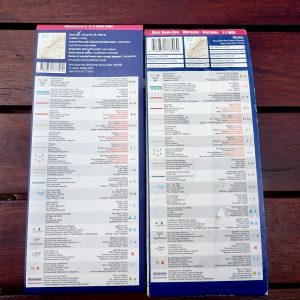
Note: in December 2022 a traveller had his RKH map confiscated at the Ceuta border because it showed ‘Western Sahara‘ – (like all other paper maps, afaik). Actually the back cover (see below right) always gave the impression it is all Moroccan territory, but inside they mark the ‘Moroccan Wall’ and the Polisario ‘Free Zone’, which is correct and more detail than most maps, but might also get up the Moroccans’ noses.

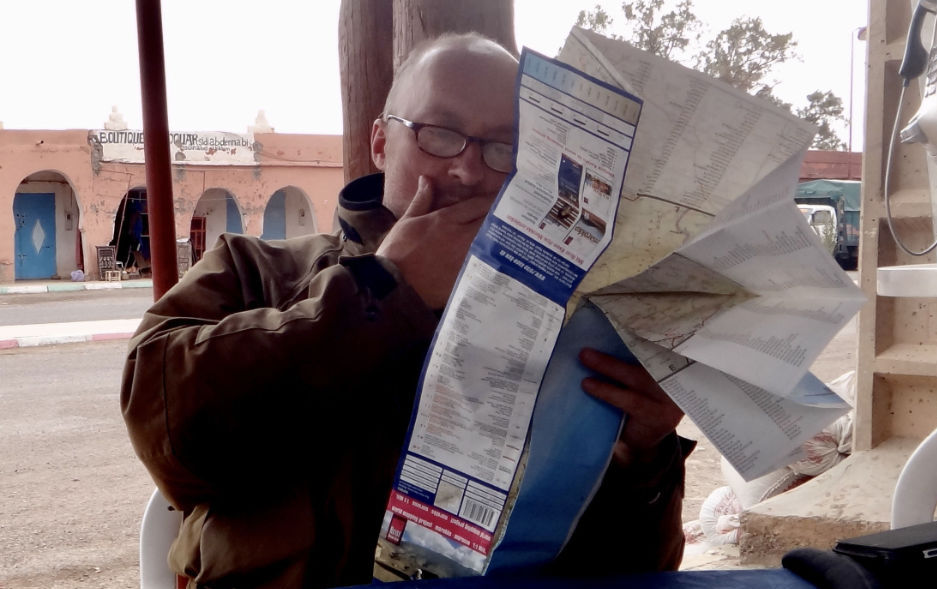
For the very latest mapping digital, OSM updated by users (used by Garmin and many others) is useful. But not everyone gets on with digital maps which are far from perfect of accurate, At the planning stage you can’t beat a paper map spread out before you. Out of habit I routinely carry a 2019 RKH out there, though almost never refer to it now as i know all the southern roads. I have much more success finding unknown pistes as well as verifying newly sealed roads from aerial imagery.
As you can read here, the German Morocco Reise Know-How (RK-H) is one of the least bad paper maps for Morocco. It’s double-sided, the plastic paper is tear-proof and compact at 70 x 100cm, and it has an intuitive 1:1m scale (1mm = 1km). They also show both old/new road numbers which changed in 2018, but unlike Europe, this information is of little use in Morocco (* see bottom of page).
In 2023 RK-H published the 13th edition of this map. The big question is, given the amount of road-building going on in Morocco, is it a properly updated edition like the previous one, or just a new cover with a few updates, as Michelin like to do? The answer is that in the south there appear to be virtually no changes to the actual mapping in the 2023 edition.

What they say
Reise Know-How maps are characterized by particularly stable plastic paper that can be written on like paper, even with a pencil. The cardboard cover is detachable so that the card can easily be slipped into any pocket. A protective cover is not required. The cartographic presentation focuses on the most important information for travelers and is particularly easy to read. Colored elevation layers are used instead of hillshading.

  • Contour lines with elevation information
  • Colored elevation layers
  • Classified road network with distance information
  • Sightseeing features
  • Detailed local index
  • GPS accurate
  • degrees of longitude and latitude
  • Legend in five languages ​​(German, English, French, Spanish, Russian)
  • Einklinker Western Sahara
  • Larger places also in Arabic script

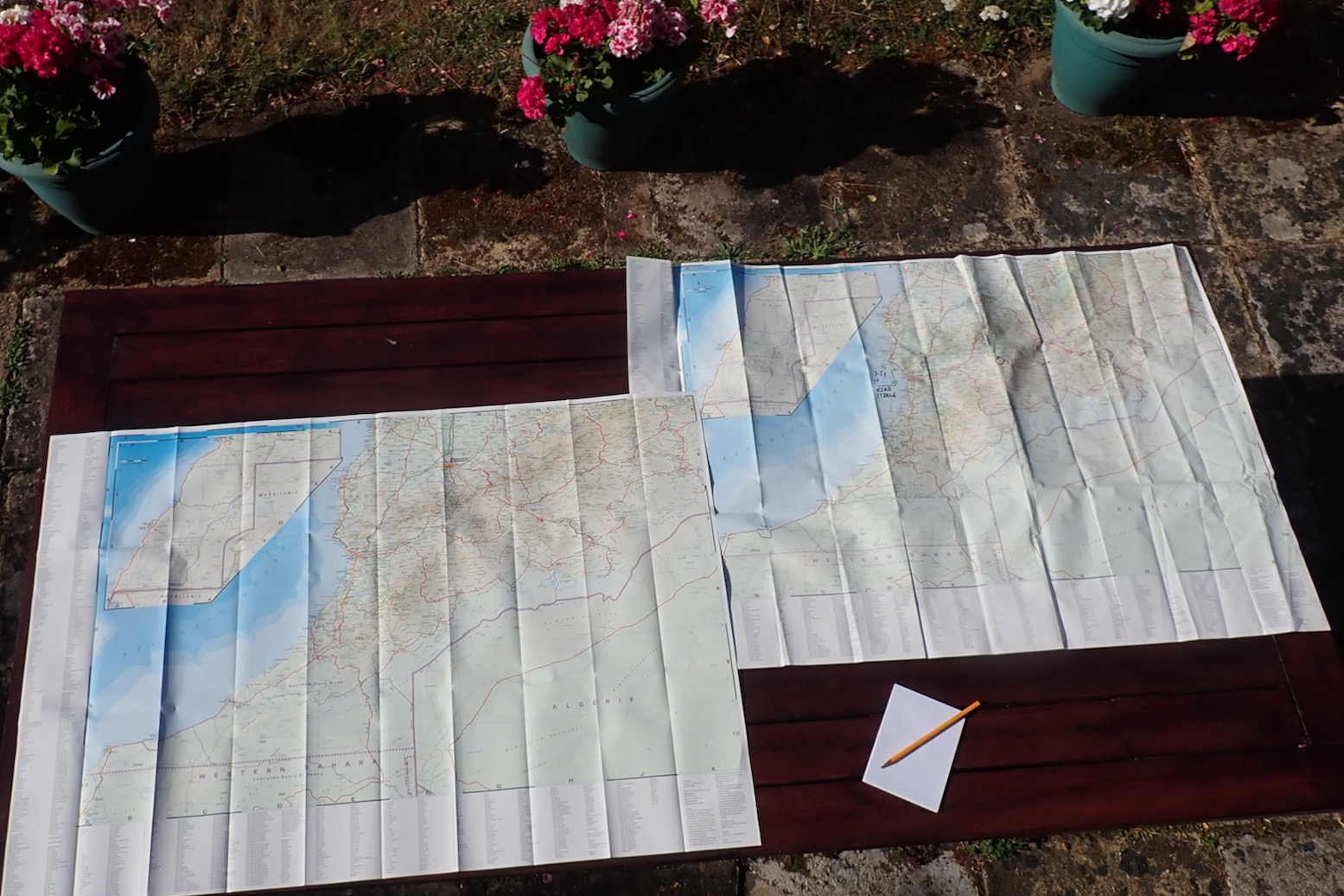
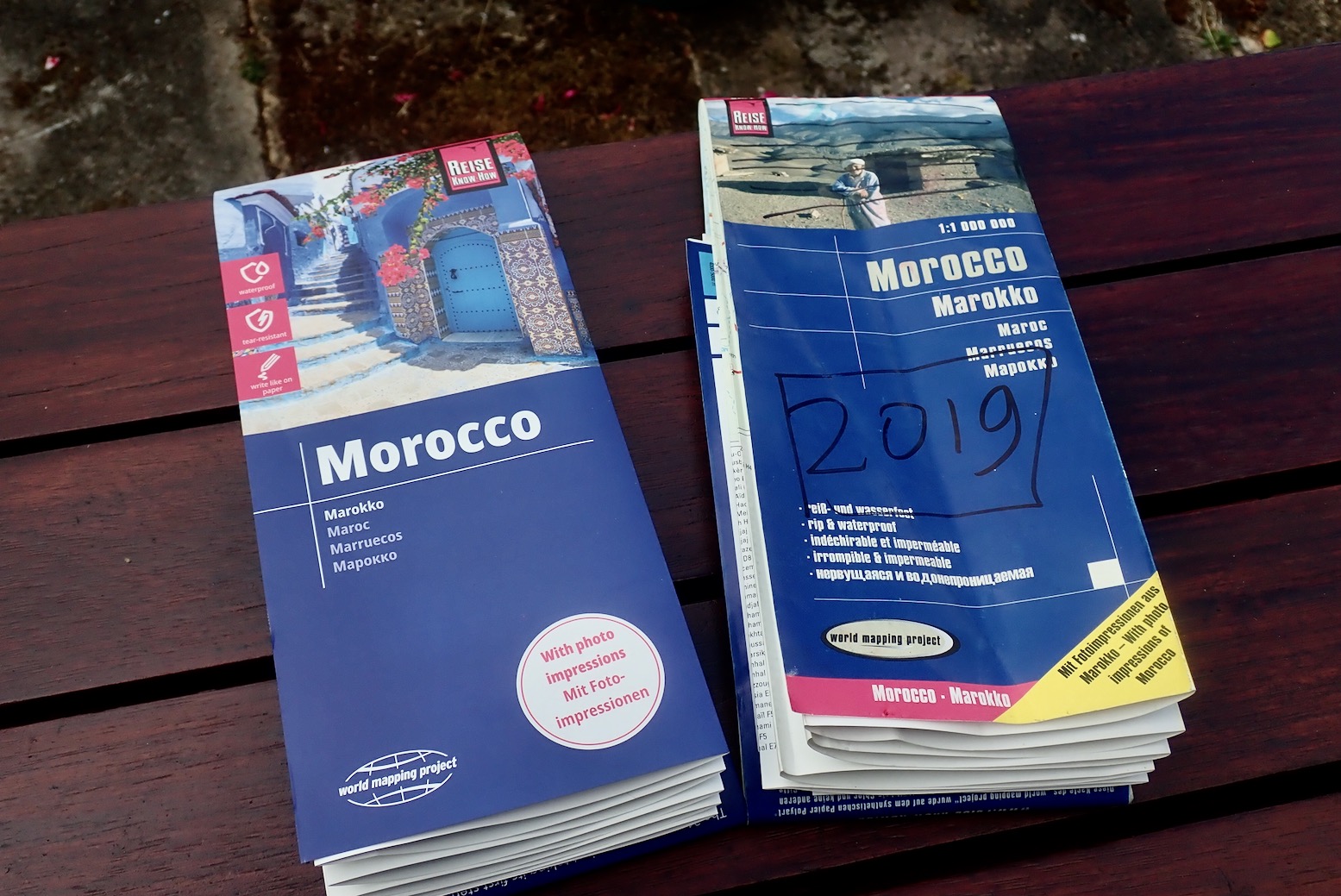
With the 2023 edition laid out alongside my crumpled 2019, what’s new? The cover; that’s about it, but it does include a redesign of the back cover too! Even the decorative pictures on the northern side of the map are unchanged. I may have missed some of course, but a few minutes scanning familiar roads and pistes in the south brought up precisely two changes, maybe three. Everything else appears identical.

2019 – 2023; spot the difference. The notepad is tellingly blank.

1. What was a yellow ‘Secondary Road’ for Route ME4 (Korima Pass in Morocco Overland 3) has now changed to ‘Track’ although it was actually a ‘Gravel Road’ imo. It suggests a user’s correction was actioned, but ironically it’s now sealed up to KM41 or beyond. I bet there are many more sealed roads let alone tracks on the nearby Rekkam plateau.
2. Another former road they’ve admitted was a piste all along is the R704 (Route MH1) High Atlas crossing from Dades Gorge to Agoudal. Again, the irony is that piste is about to be sealed too!
Thirdly, down in WS in the bottom left corner they switched ‘Laayoune’ with ‘El Aioun’ on the main panel in line with the inset; it was probably a typo.

In your dreams…

Elsewhere, right across the area I know well (not the north), pistes and even roads are still missing (Route MW6 to Labouriat) while many more pistes have become roads, in some cases over a decade ago, eg: Routes MW1/2/7 to Mseid; Route MH6 from Aguim as well as Routes MH7/8 south and west of Asakoun and Route MH4 Jebel Saro, etc, etc.
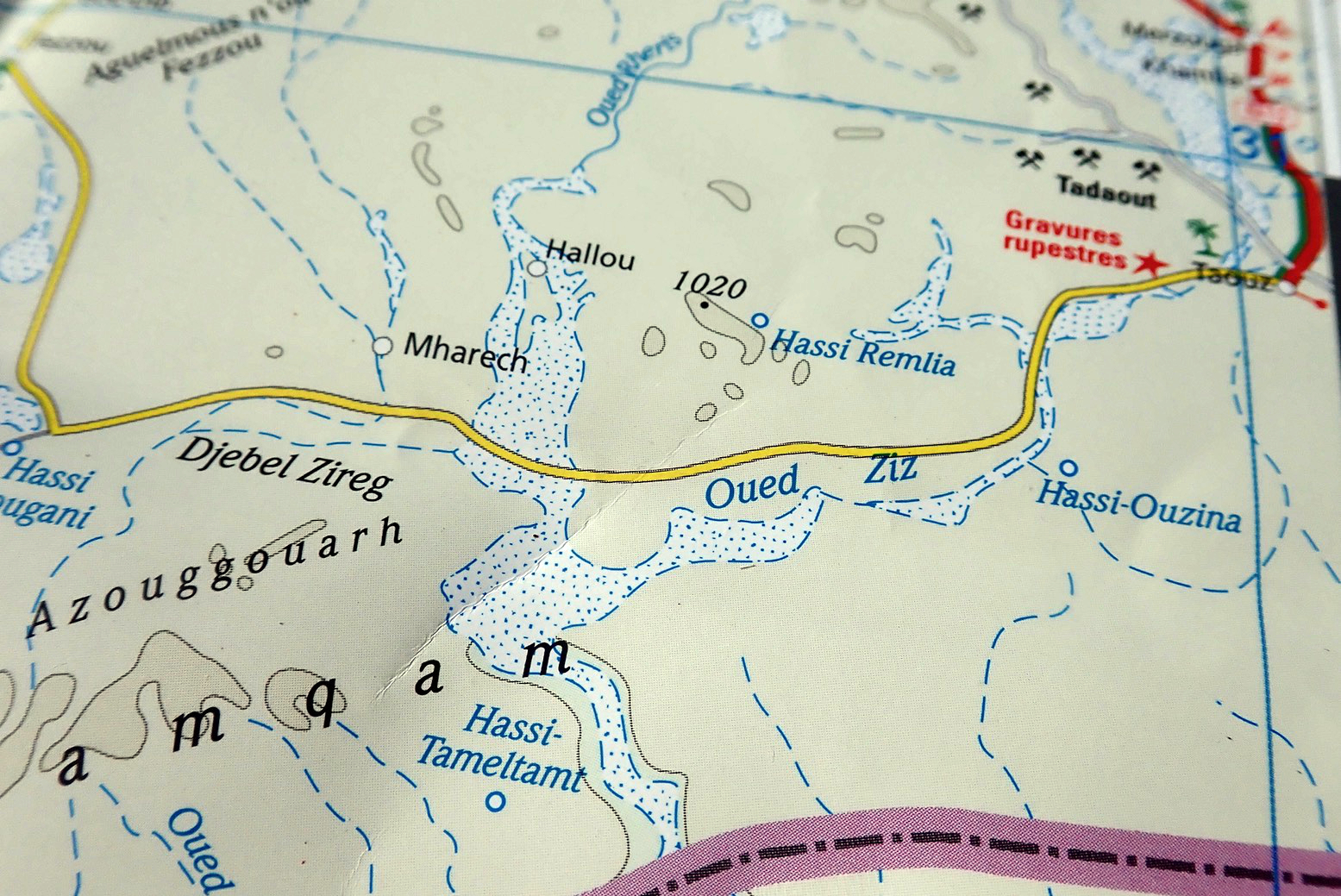
Old edition and new, Route MS6 (left) is shown as a secondary road all the way to the Sidi Ali Tafraoute (bafflingly shown as a well: ‘Hassi Fougani’ on the map). Imagine arriving at the notorious Rheris crossing in your campervan! But west of Sidi Ali they miss out the well-used track carrying on directly to Zagora just south of Oum Jrane. And I’ve just noticed in the WS panel on both editions they’ve shown the 1000-km Tindouf Route as sealed all the way (via the PFZ no less) to Zouerat, complete with bypass! No wonder Moroccan hats are confiscating this map at the border. You can understand them not keeping up with all the asphalting, but the practise of calling a piste a road is hard to fathom. Where do they get this information – QAnon?
These are just a few of the glaring errors that jumped out at me. There are loads more in the Anti Atlas, plus areas depicted as forest which are barren mountain hillsides and contour shading that jumps in 300- and then 600-metre stages. That means within one shade the elevation could change by nearly 2000 feet. Not a great map for push biking then.

To be fair the previous edition did appear to be a genuine update with tangible changes but this edition is near identical to its predecessor. And I know the Michelin equivalent follows the same practise of ‘cover updates’ and can be just as flawed, last time I looked. All the others maps for Morocco are even worse. Sadly, this appears to be the state of paper mapping in the early 21st century – the money no longer exists to update maps properly, nor even action users suggestions. Good thing then there is Morocco Overland with Updates & Corrections as well as the Horizons forum taking up the slack for the adventurous traveller. I gave the 2023 map away.

Got a 2019 edition? Save your money then.

* Are Moroccan road number even useful?
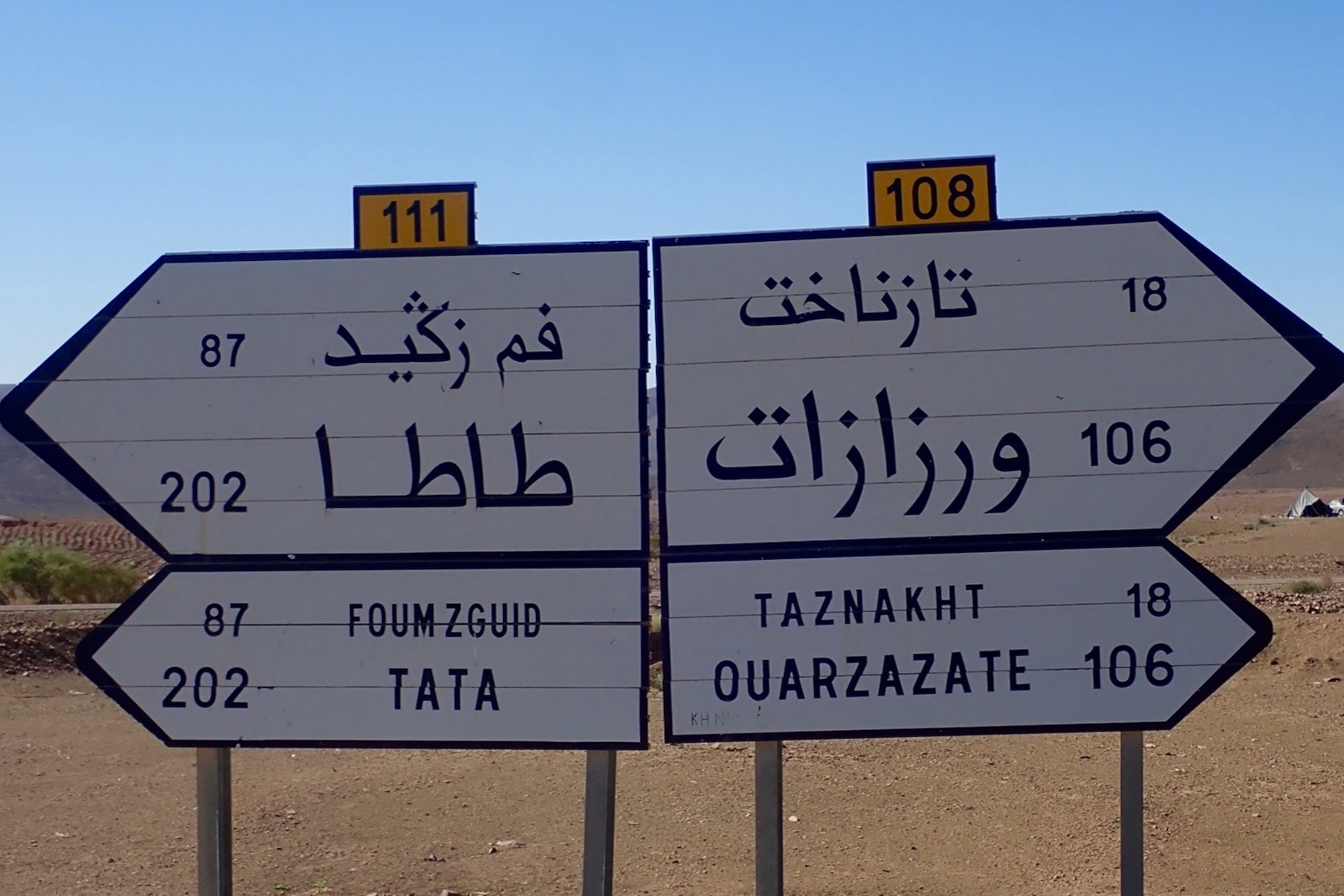
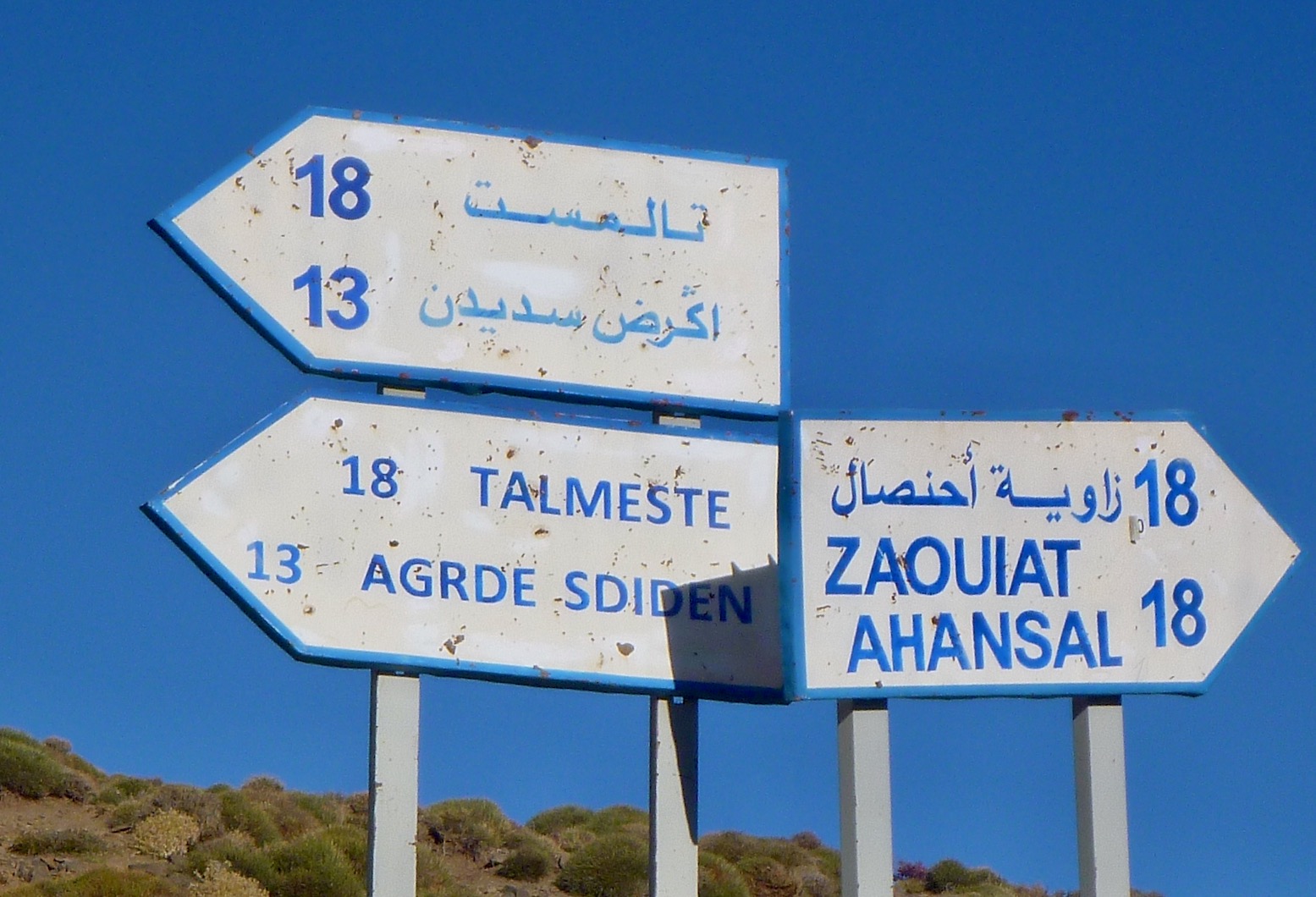
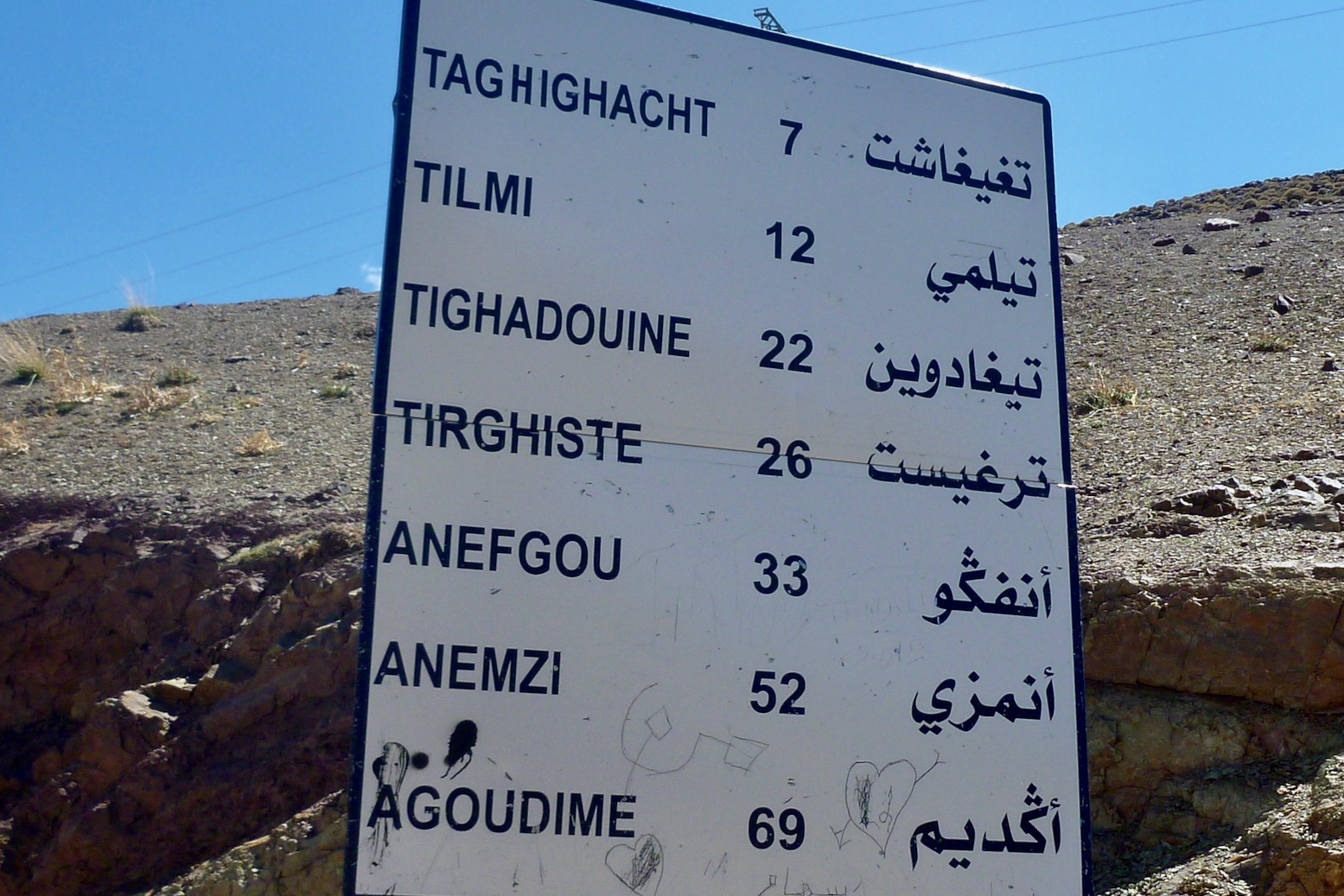
Unlike in the UK and Europe, in southern Morocco road numbers rarely appear on road signs, be they at junctions or showing distances. First photo is a positive example, below. So knowing – or wondering if – you’re on the R504 now called the RN4 will be near impossible to ascertain on the ground and therefor of little value. Of course a road sign saying ‘Foum Zguid 87 [km]’ will be what you want to know.
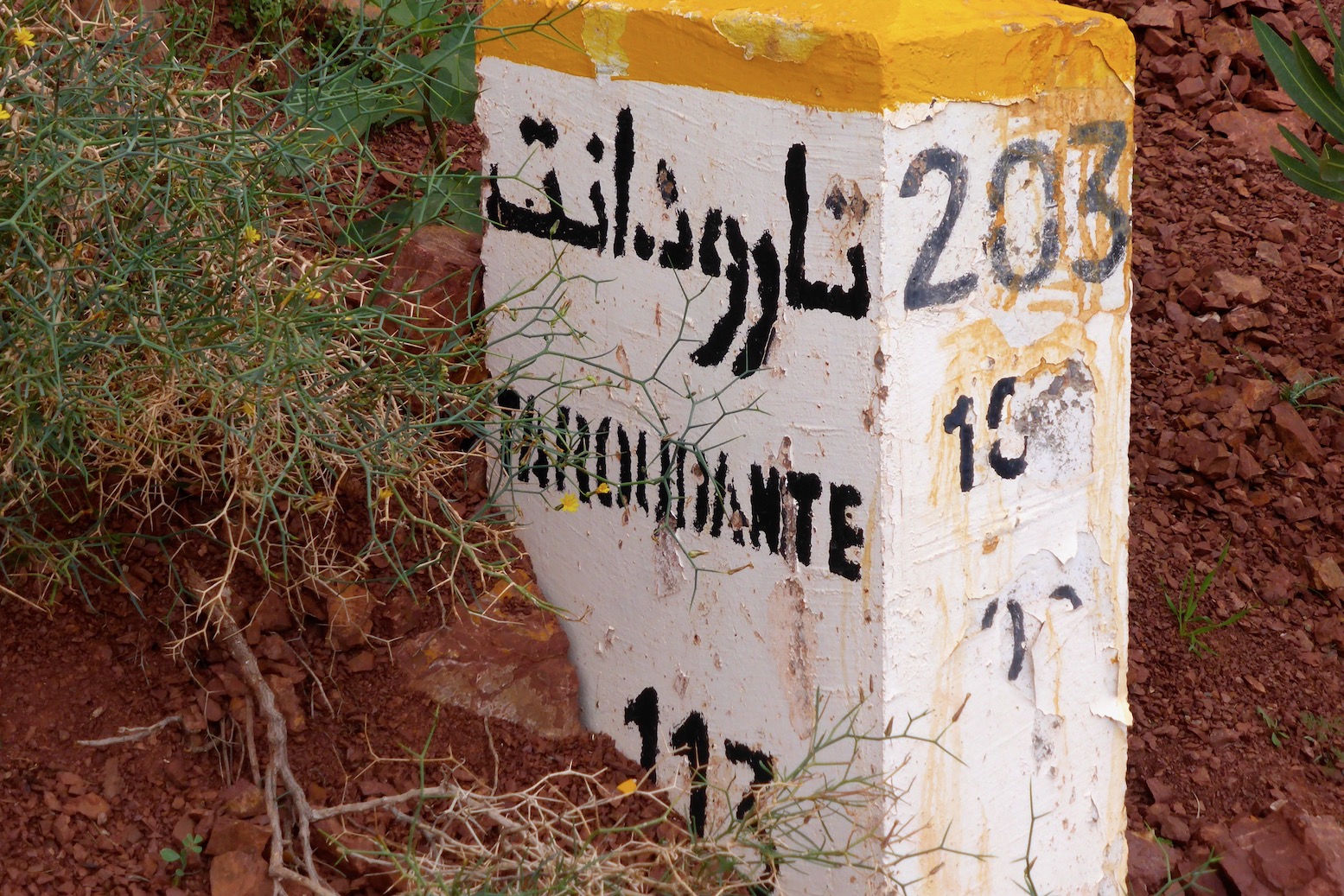
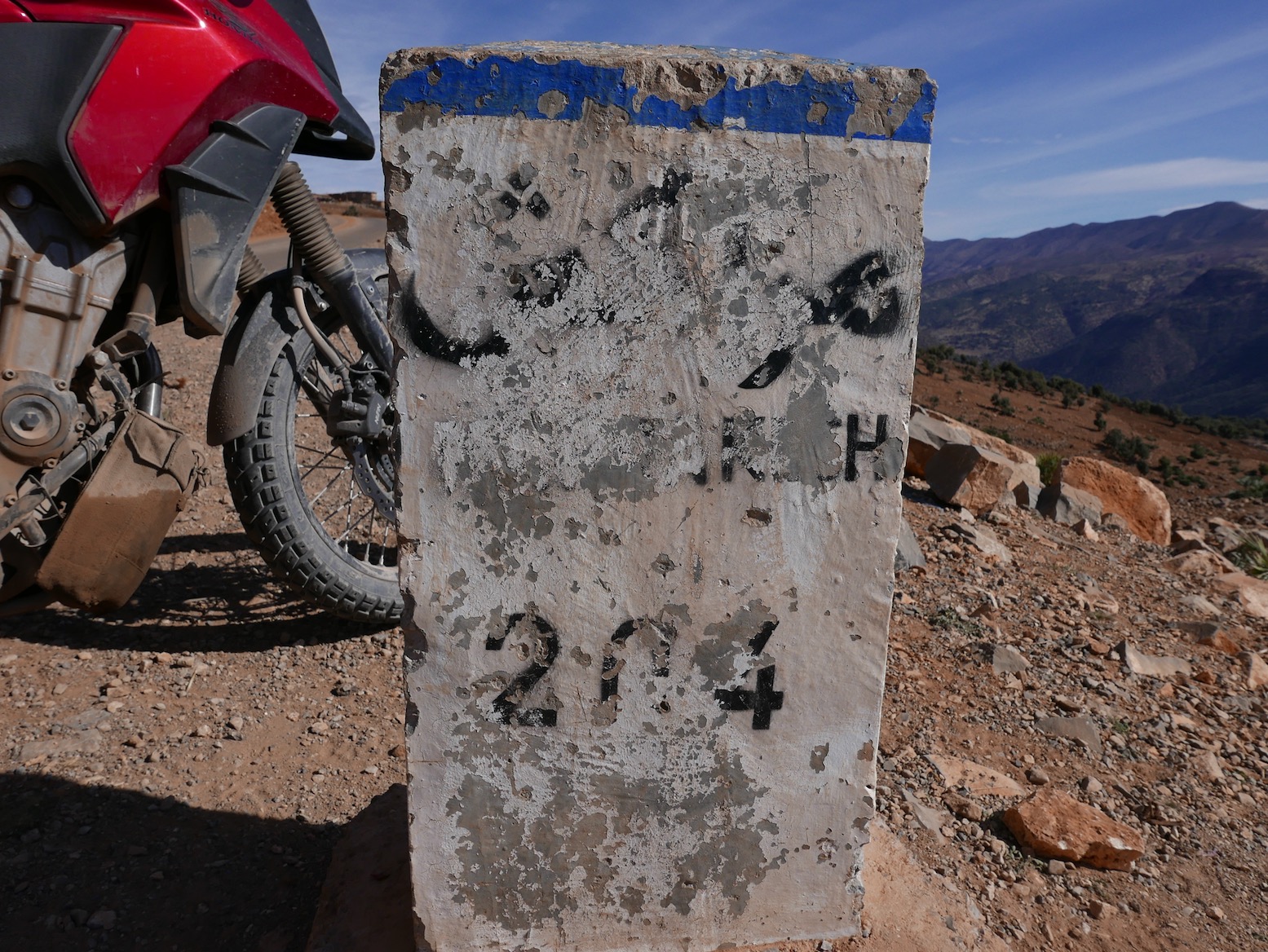
Infrequent and often weathered mileposts dating from the colonial era may show a road number. Example: the R203 Marrakech – Taroudant road via Tizi n Test, now called the RN7.
In most cases in the 2018 shake up, only the prefix changed so the ‘N10’ became the ‘RN10’ and so on, but elsewhere if there was a new number like the old N12 now called the RN17, I am fairly certain no one has since gone around Morocco updating mileposts and road signs.

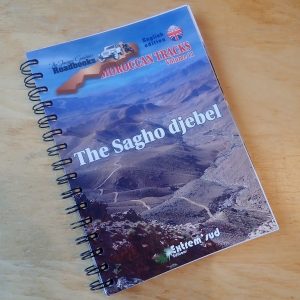
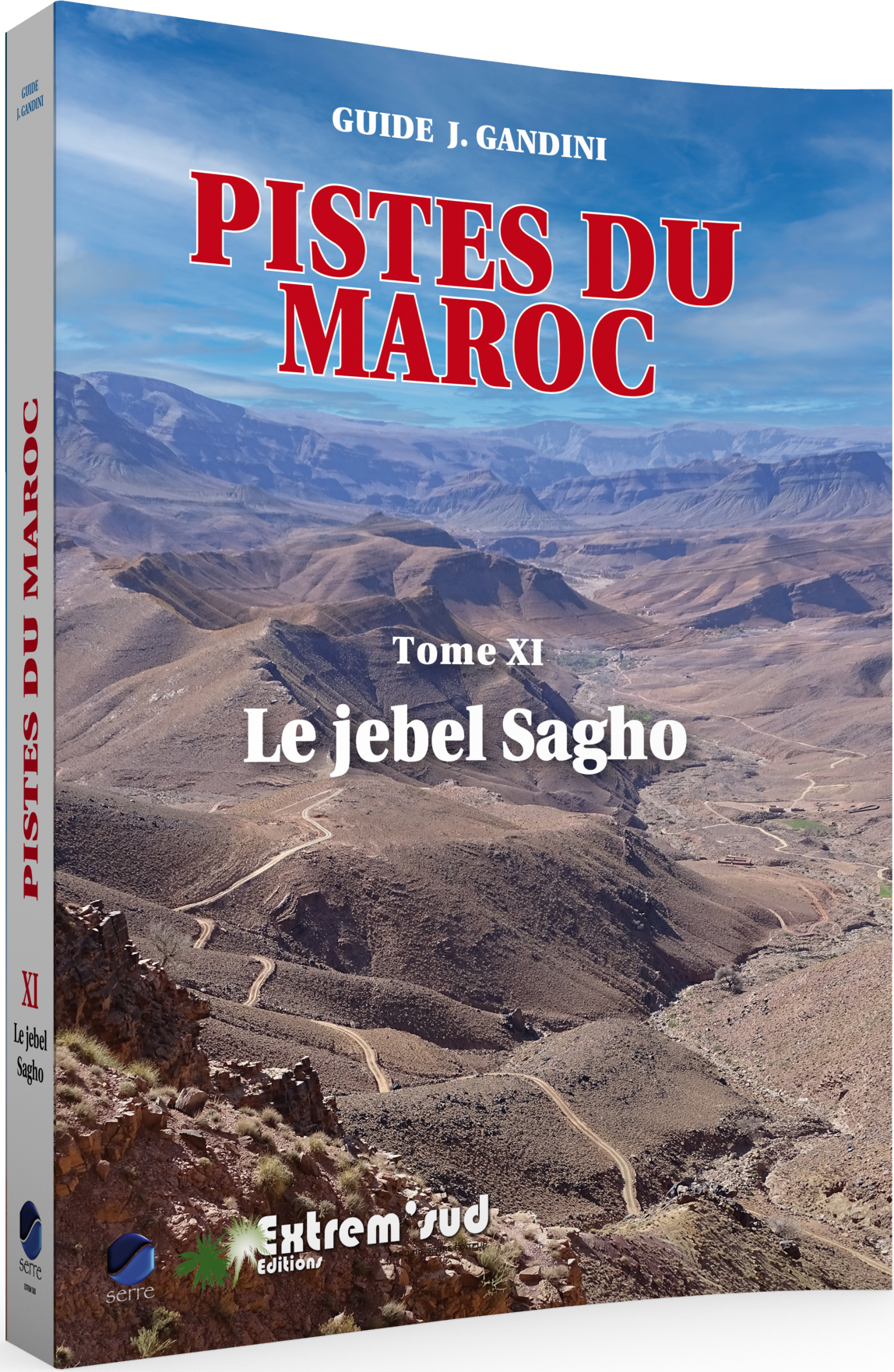
Book review: ‘The Sagho Djebel’ by J.Gandini

See also
How to trace off and save a .gpx track off Google Earth

In a line or two
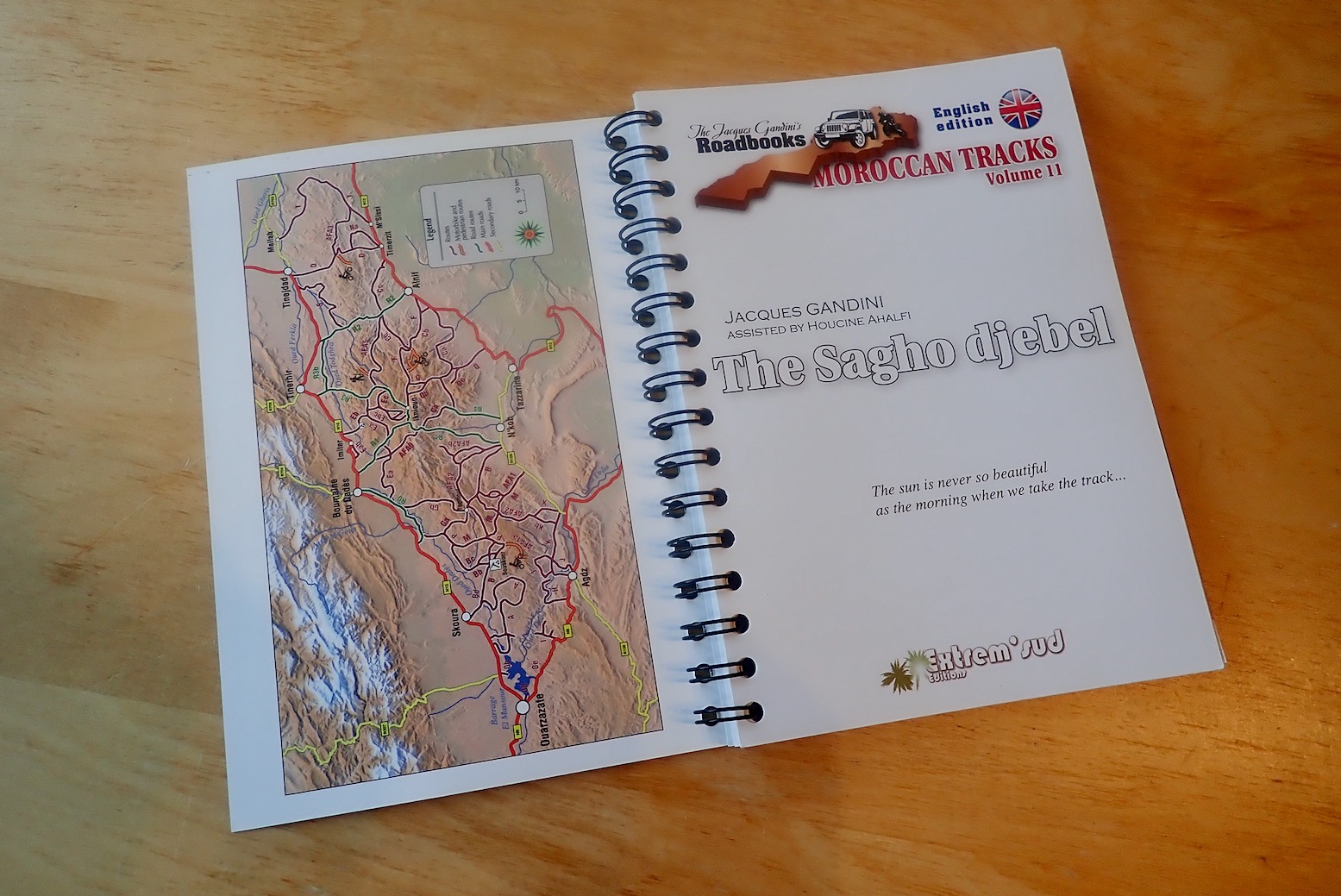
Packed with intriguing routes to amazing vistas, but unapologetically expensive and hard to visualise the potential from the single, one-page map unless you download the tracklogs (another €20).

  • Price and description
  • £43 on amazon today
  • Jaques Gandini with Houcine Ahalfi
  • 140 pages with loads of colour and one map.
  • Extrem’ Sud Editions; 2022
  • ISBN 9782864106746

What they say
The “Jacques Gandini [Jebel Sagho] Roadbook” [is a] lighter version[s] of the French ” Guides 4×4 J. Gandini” (without the historical or ethnographic boxes present in the French edition): all the itineraries, all the waypoints and their comments are included. Abundantly illustrated, they are printed on strong 170g/m2 paper and bound with a metal spiral for better handling on the trail. They are published in 4 languages: Spanish, English, German and Italian.

Jacques Gandini and Hoceine Ahalfi have explored in detail the Jebel Sagho, this magnificent wild region of southern Morocco, with its breathtaking landscapes, situated to the east of Warzazat and to the south of the Dades valley, and have put together 59 itineraries totalling 2,500 kilometres and 1,100 waypoints.

  • Thick, quality paper and spiral bound
  • There can’t be many routes left on Saghro!
  • The author is not without an SOH
  • Some historical and cultural background seeps in from the full-fat French edition
  • As with previous Gandinis, it’s an effort to engage with the book’s content, even in English
  • Design/format too dense and basic
  • Jam packed with pictures, but many are just space fillers
  • A guidebook with just one map!?
  • Expensive, even for a specialist guide
  • Scores of extraneous waypoints for every passing creek, etc
  • Probably better off downloading the tracklogs for €20 instead
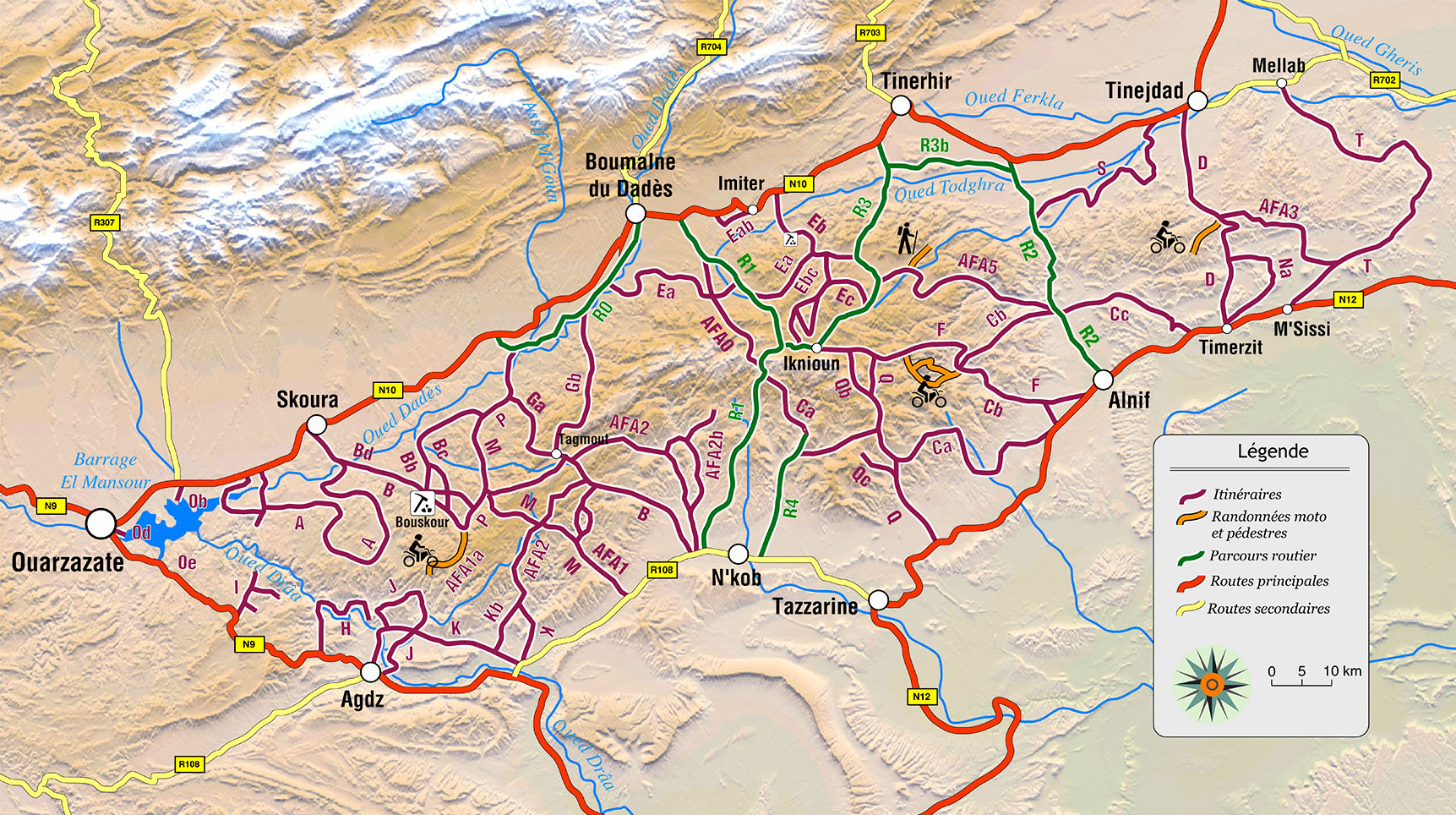
2500km, 1100 waypoints, 1 map

Review
I first came across Jacques Gandini’s Sahara guides 25 years ago when that was all that was available for Libya (apart from German). The books were loaded with well researched historical and cultural background but as practical piste guides for the early GPS era, I found them hard work. I may have bought one of his early Morocco books too, but was further put off.
Since that time I’ve written similar books like Sahara Overland (op) and Morocco Overland, and like to think I know what it takes to make a piste guide user-friendly for two- and four-wheelers. In the meantime the prolific JG has concentrated mostly on Morocco, producing 11 routes guides to various regions as well as other travel books and histories, assisted by his Berber-speaking local guide, Houcine Ahalfi. The books were all in French until this English edition for Jebel Sagho was released in 2022 (also in Spanish, Italian and German), alongside the new French version. A sign that more translations will follow?
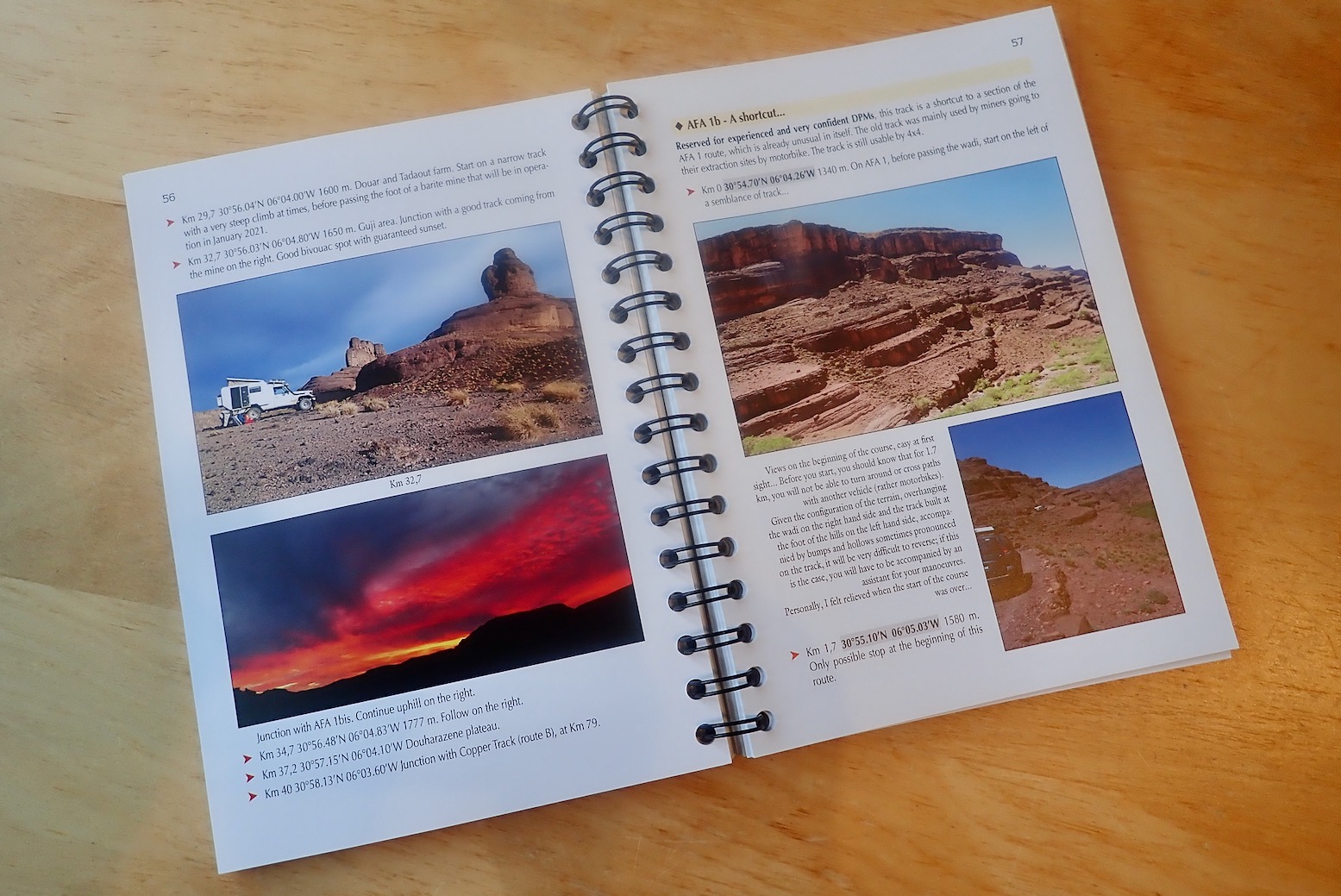
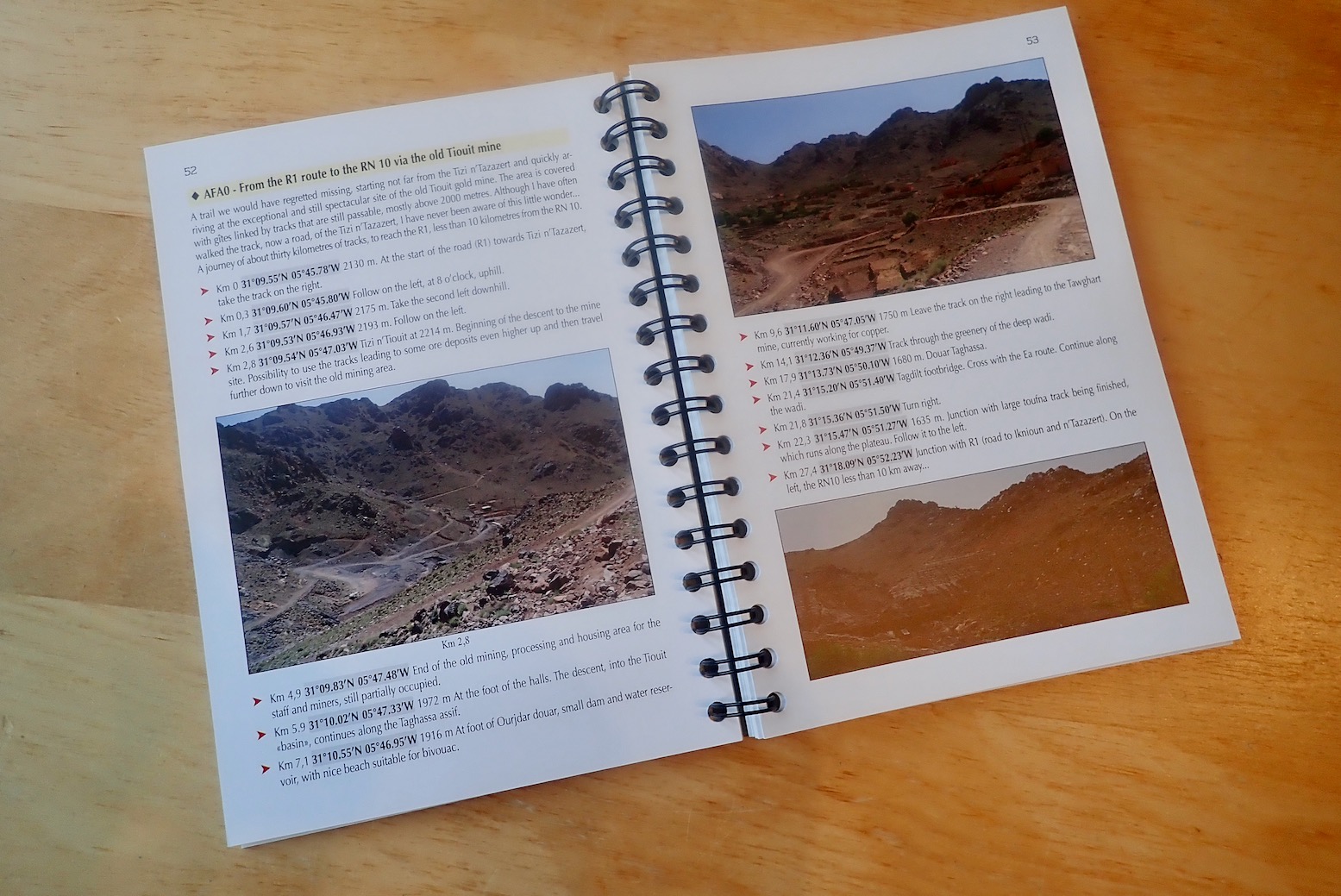
The blurb clearly states this is a ring-bound, stripped down ‘roadbook’ of the full French version which is well over twice as long. And they’re not exaggerating. You usually get one line intros for routes squeezed between masses and masses of photos. A few of these are amazing (not hard on Jebel S), some a bit so-what-y, as if filling space.
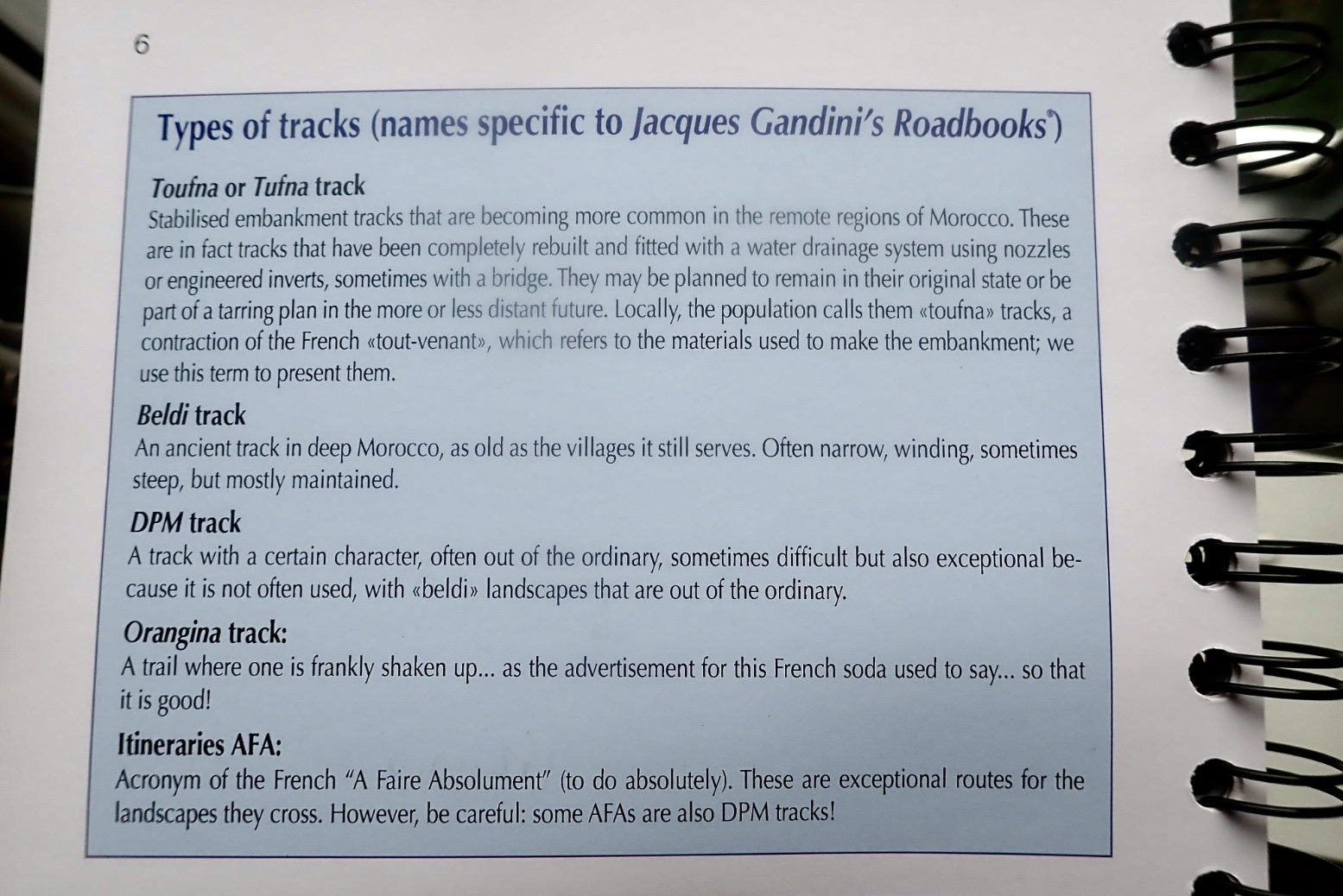
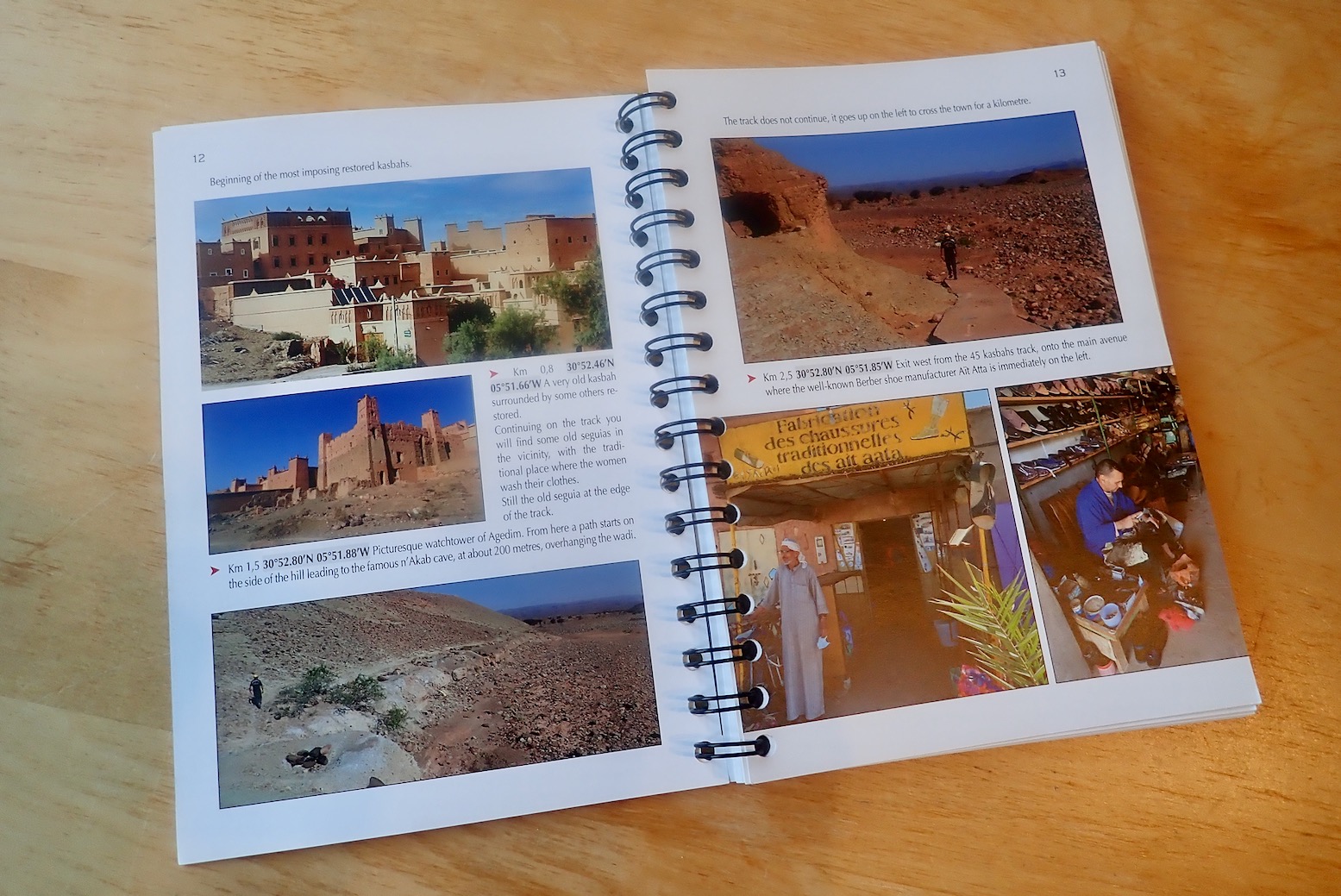
The pistes are categorised using Gandini’s scale, shown left. ‘Tufna’ are easy, well-maintained tracks like MZ1, ‘Beldi’ are ancient winding village routes, some possibly abandoned for regular use (though young locals on 125s can go anywhere); ‘DPM’ I think is meant to signify ‘Dedicated Piste Merchant’ or somesuch. ‘Orangina’ is a bone shaker and ‘AFA’ is Absolutely F-ing Amazing.
Most are listed from A to T but these refs are scattered all over the hard-to-read map (tip: don’t used dark red text on a brown background). In between are sub-routes Ba, Cd, etc, plus the aforementioned five AFAs. Confused yet?
Can’t see the route for the waypoints

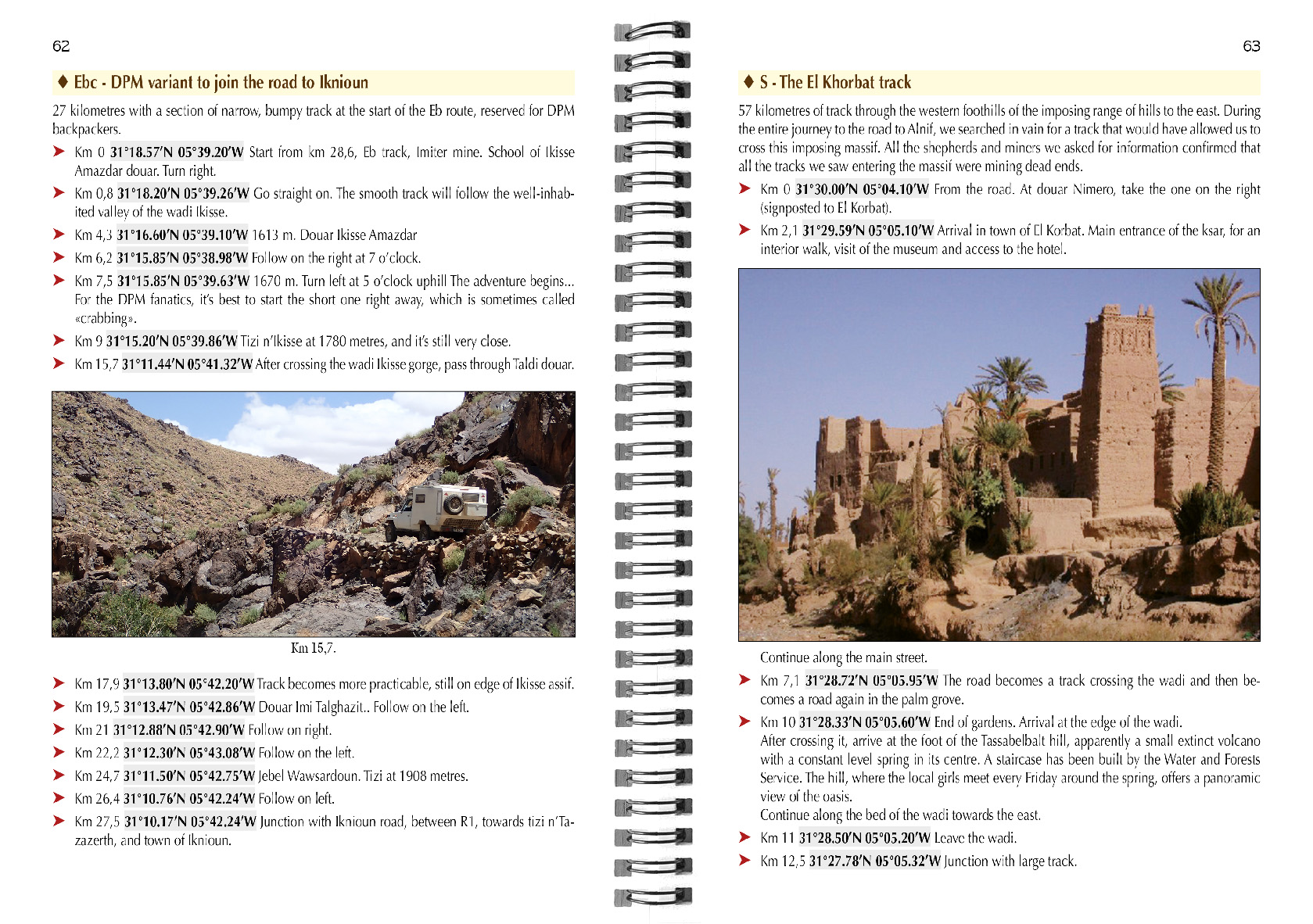
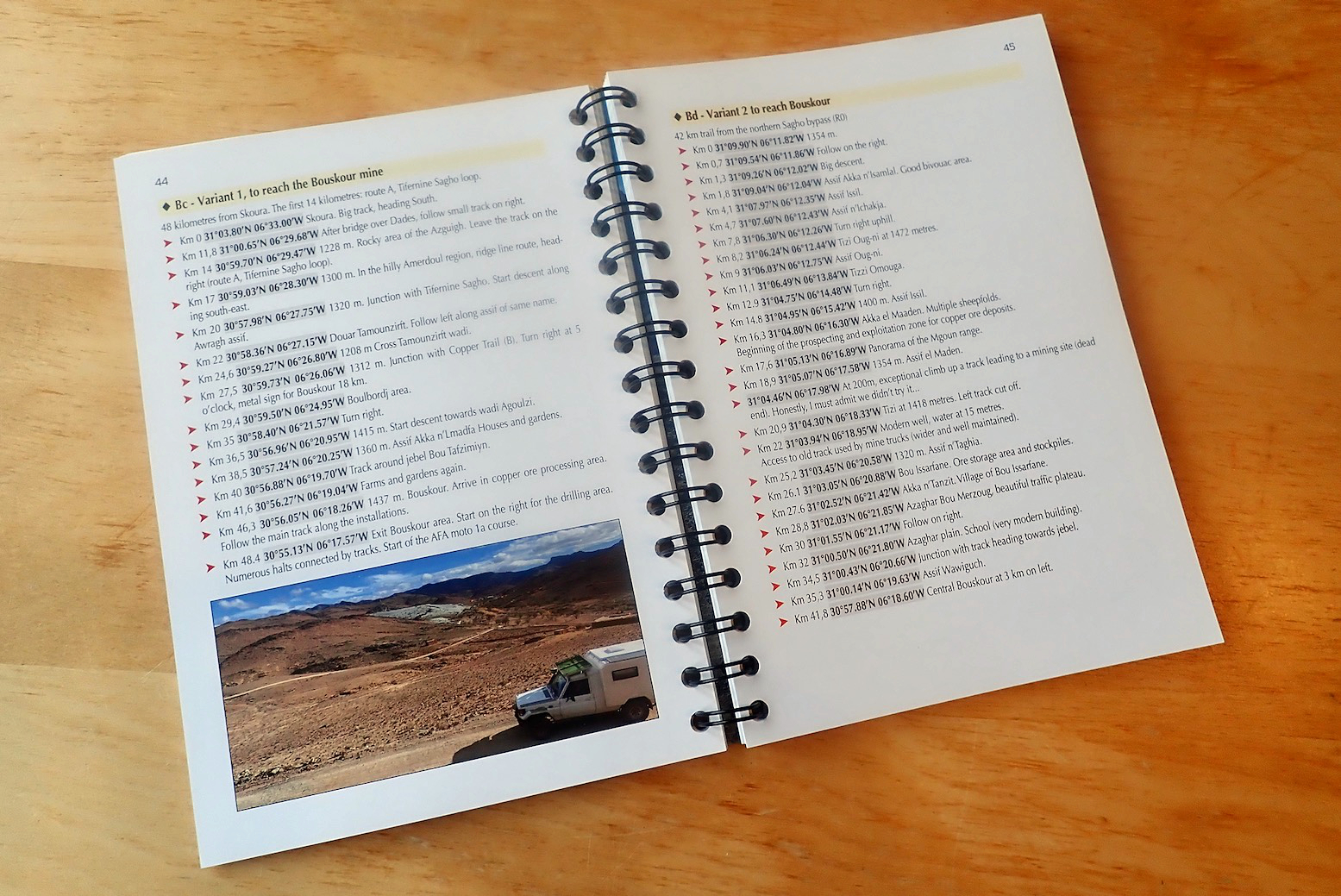
Page upon page is packed with distances, waypoints, short descriptions and photos. According to the blurb, with over 59 routes there is on average a waypoint every 2700 metres. Many of these waypoints seem to be unimportant names of passing creeks extracted from a local shepherd or off an old map. In the picture left, the right page has just six directional waypoints. I think this is too much distracting, unnecessary information. Perhaps Gandini is a writer who likes to throw in everything (a common flaw with many ‘under-edited’ self-published books): loads of waypoints, loads of photos. But loads of routes too. Also, I believe we’re now in the era of the less error-prone decimal degrees (DD) format: simply 00.0000, -00,0000, not N00° 00.00′, W00° 00.00′, let alone N00° 00″ 00′ W00° 00″ 00′. My next Morocco edition will use DD which I believe is the default in mobile phones.
You’d do well scrutinising the book or prefered routes with a highlighter and marking the waypoints that actually matter. In my Morocco book I decided ages ago that waypoints weren’t needed for every single passing feature which may be simply noted with a distance, especially when on a section of track you can’t get lost on. I have to add the condensed font is not to my taste either. For me, when on the piste and with the Orangina fit to burst, you have enough on your plate should the time come when you need to refer to your guidebook, and so legibility and ease of use are key.

It can’t be a mere oversight or issue of space that the book has just one overview map on the inside front cover (above and online), tightly packed in the 2500 kilometres of routes. I feel that in books like this, additional maps are an essential part of breaking down long lists of waypoints or tangled routes into something you can visualise. You get the feeling you’re being pushed into buying the tracklogs for another €20 (but of course not share them beyond your immediate family on pain of the guillotine). This is a current quandary over copyright with all publishers of similar content. As it is, a canny user of Google Maps could easily locate the pistes shown above and trace them off satellite imagery to make their own tracklogs.
Finding online ‘OSM’ maps maddeningly unreliable and inconsistent, that’s what I’ve been doing these last few weeks in search of new routes in southern Morocco. There are many places I’ve long wondered ‘Hmm, where might that go?’. The best answer is on a high resolution WYSIWYG aerial image; zoom in close enough and you’ll find a dense lattice of tracks leading to lonely homesteads and hamlets all over southern Morocco; just don’t expect these tracks to all be passable. That is the value of guidebooks; the routes have been systematically ‘curated’ for you.

Some anomalies I chanced upon: he calls my MH14 route ‘new’ which seems odd. Yes there are new mines up here but I was told of this piste way back in 2011, it’s a long-established Sagho route. I also note he draws 120km out of my MZ1 route, when my tracklogs record at around 102km. That’s quite a discrepancy on a route which must be identical.
Other than that, there’s masses of information based on years of experience, it’s just a shame Gandini hasn’t got better at laying it all out because it’s hard to easily take in what you actually need to know. Maybe, like any new guidebook, spending more time with it will make it easier to use.

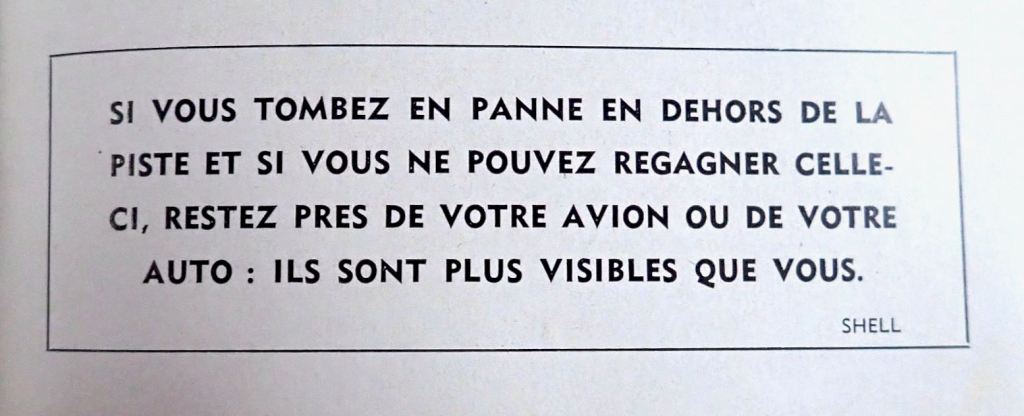
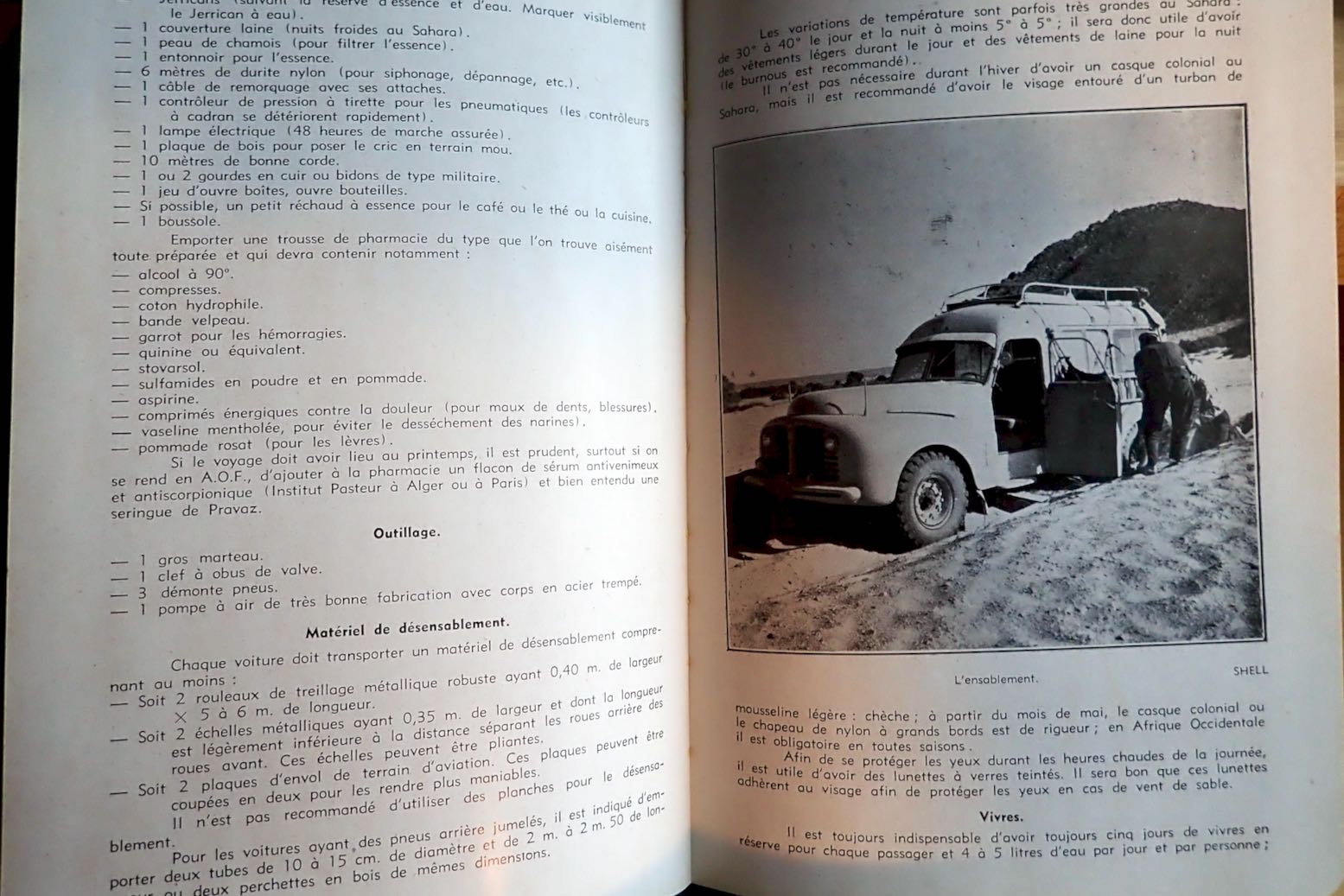
S is for Shell’s Guide to Sahara Motor Tourism, 1955

Part of the Sahara A to Z series

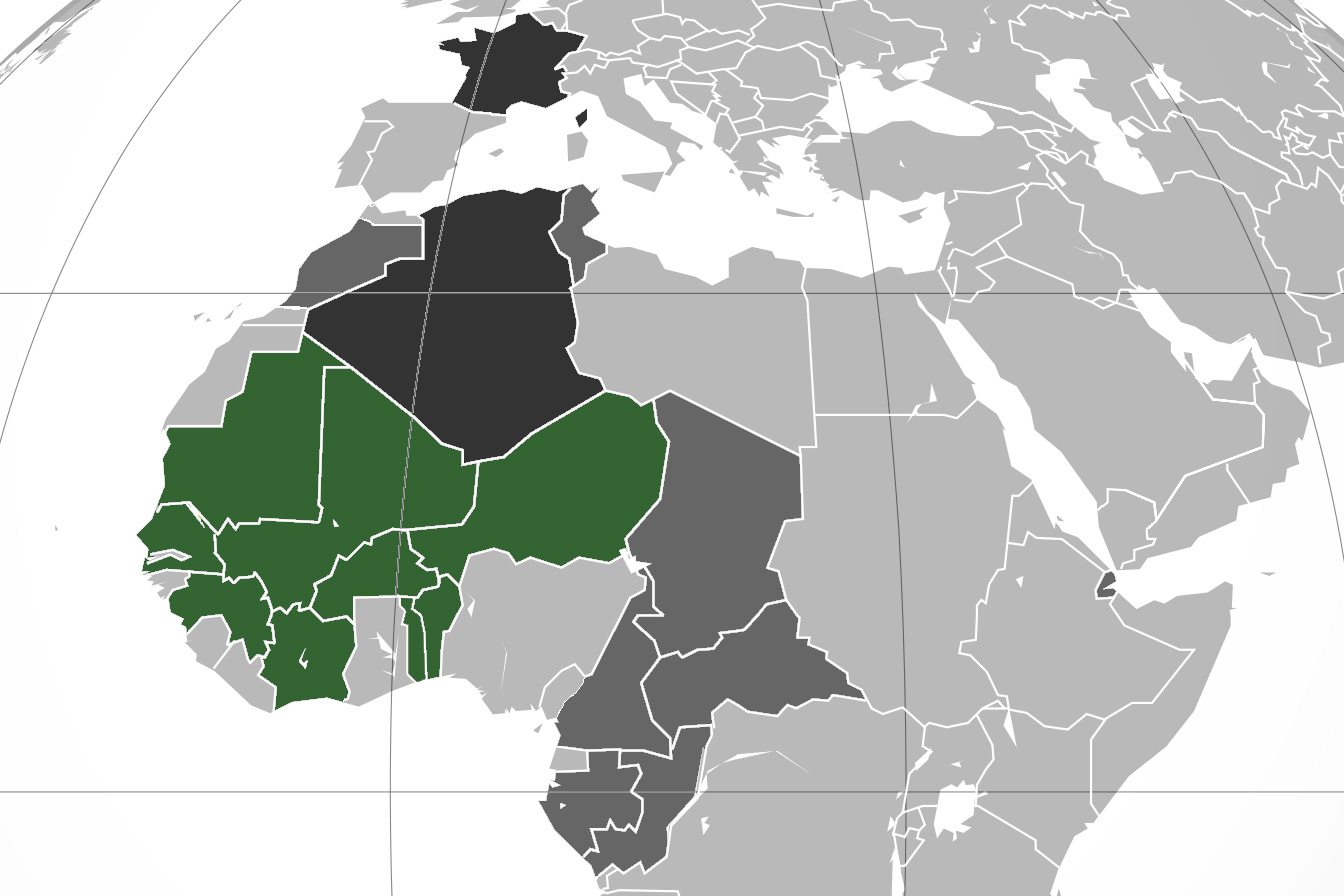
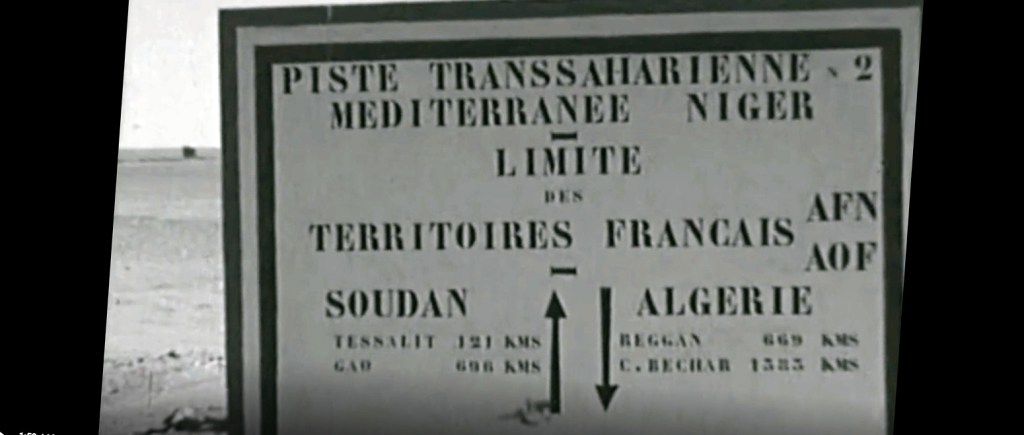
In the last decade of France’s colonial presence in North Africa, their part of Sahara was divided between three territories: Algeria, Tunisia and Morocco (‘AFN’), ‘AOF’ (French West Africa) from Mauritania to Niger, and ‘AEF’ or French Equatorial Africa which included present-day Chad.
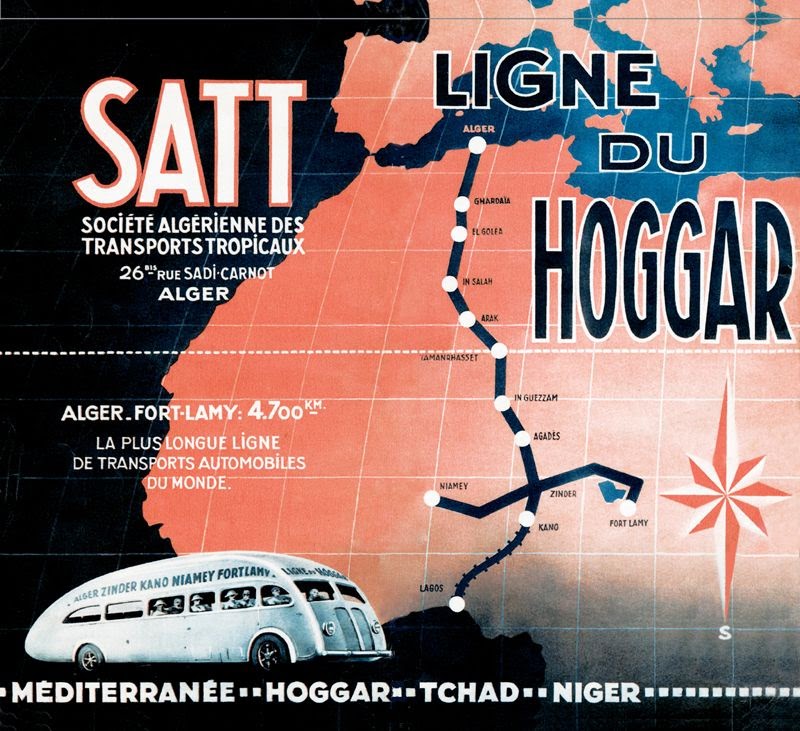
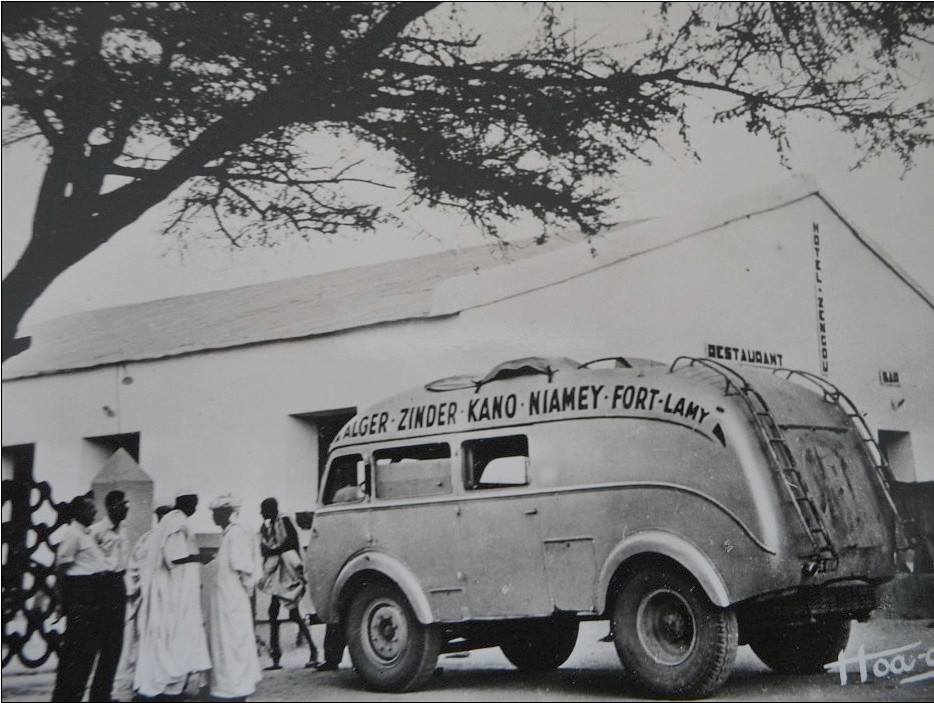
One could travel the pistes across the desert between the Mediterranean coast and the Sahel, and even scheduled bus services traversed these ‘Imperial Routes’ to the sub-Saharan capitals.

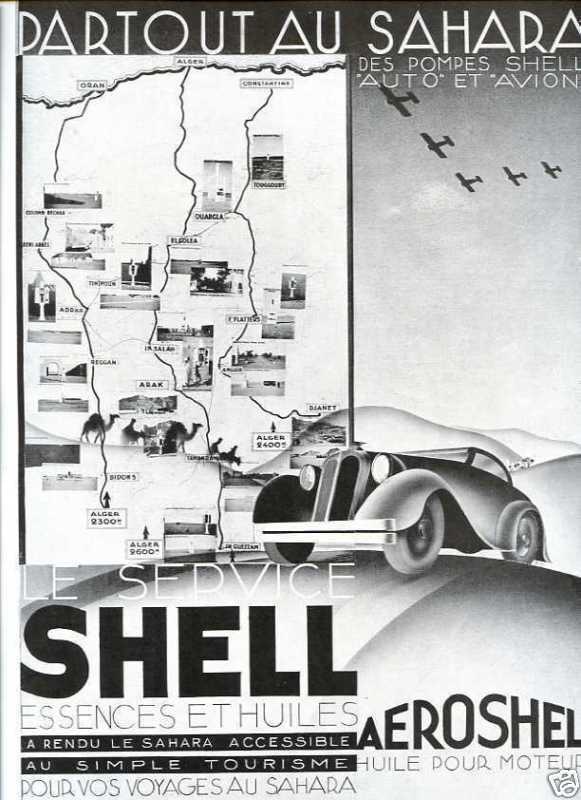
Pre-war editions were more aviation based

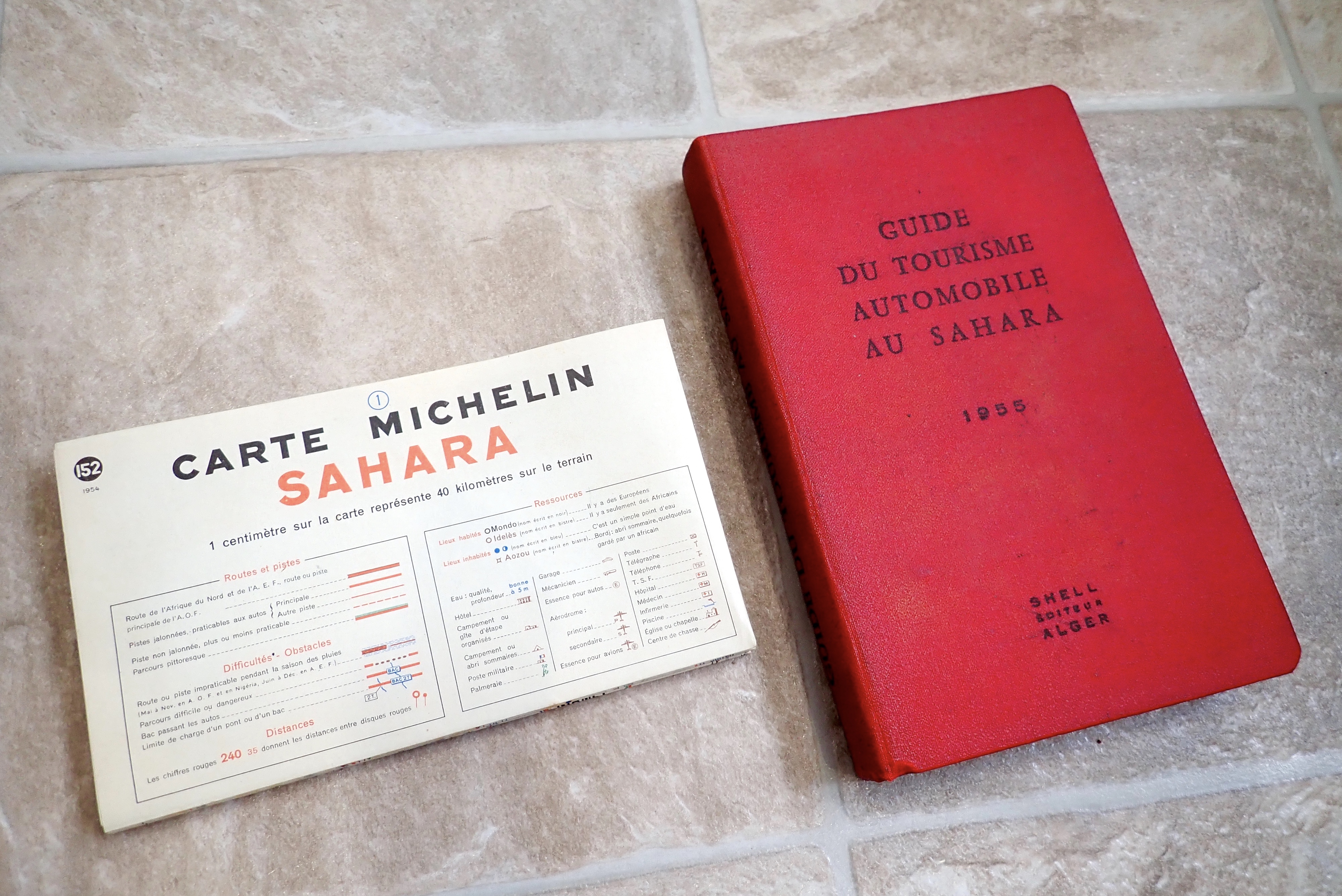
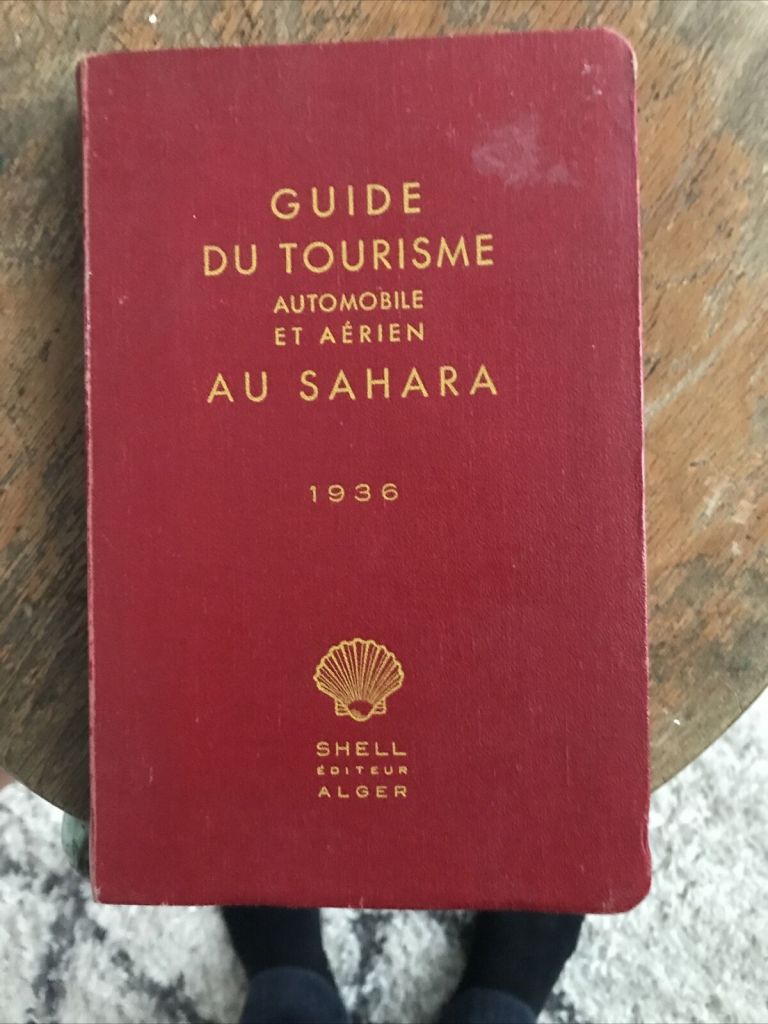
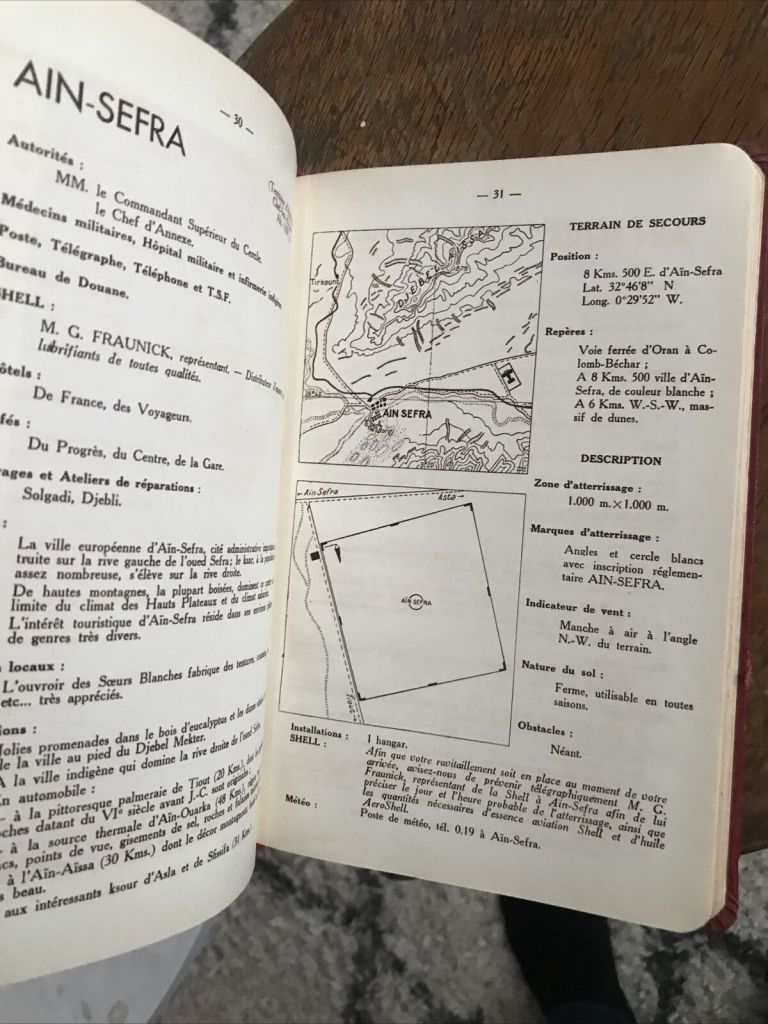
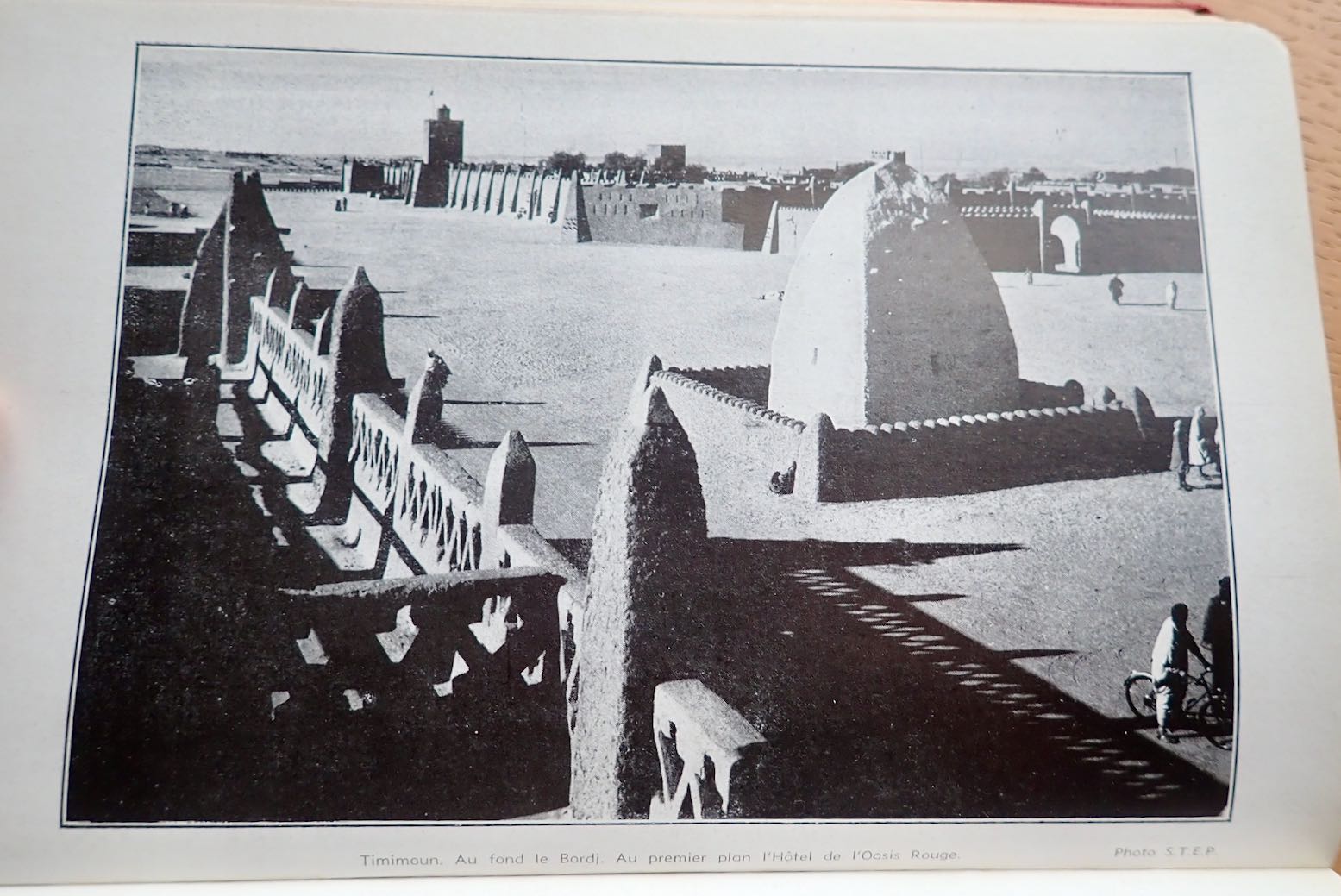
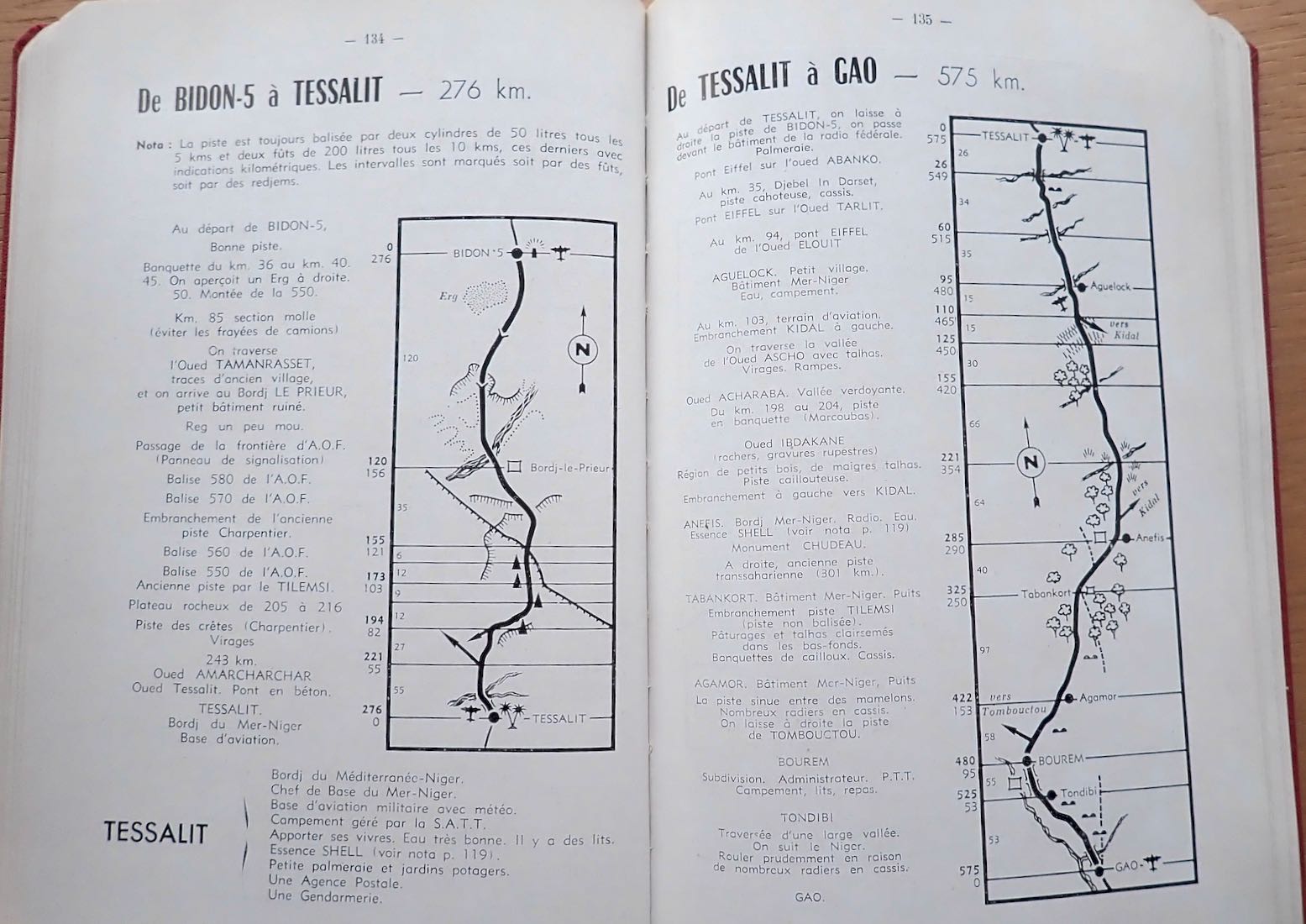
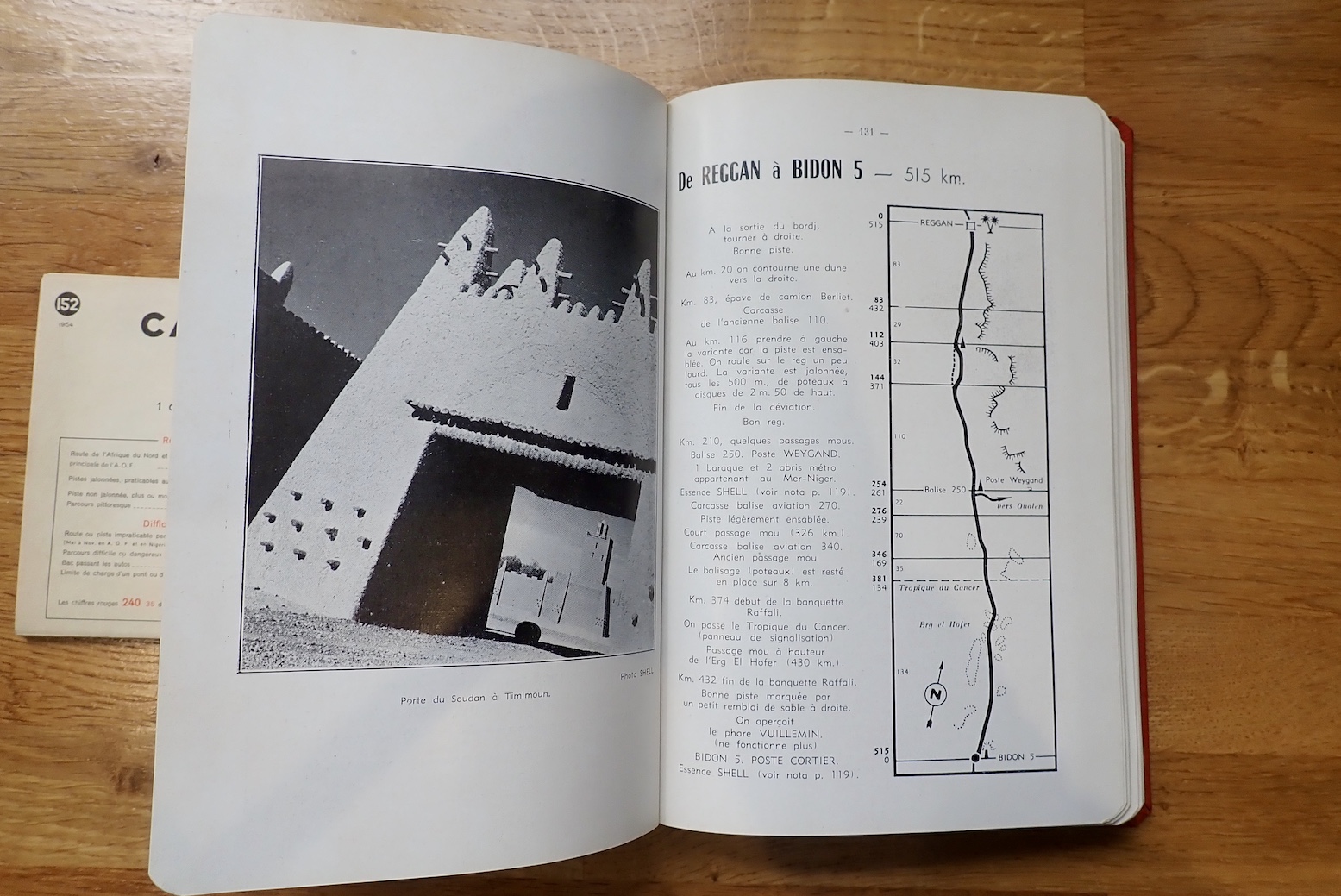
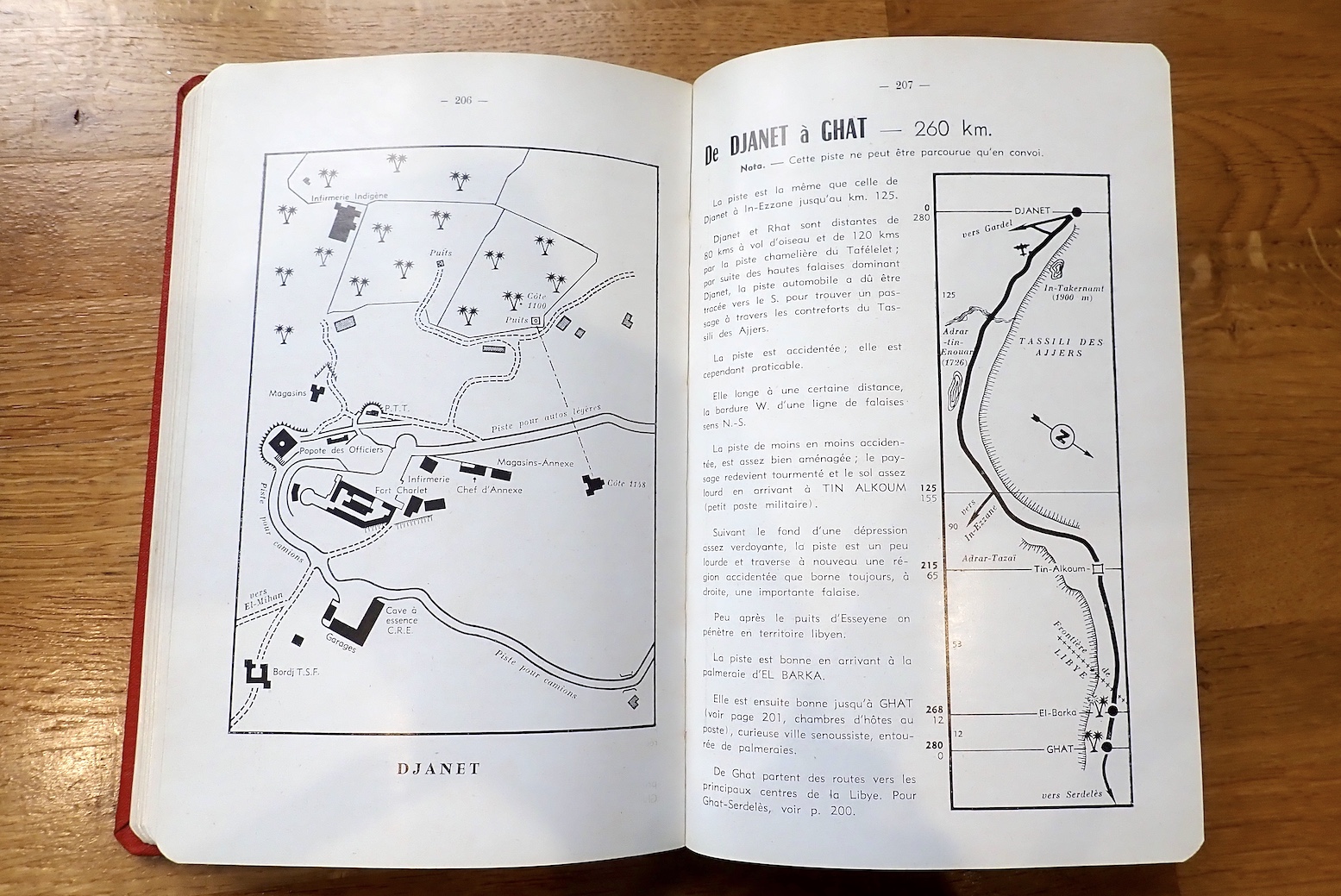
Just a couple of years before these colonies were dissolved and became the independent countries we know today, Shell released its fifth and final edition of the Guide du Tourisme Automobile au Sahara. The 345-page book is in French and there are still plenty around; mine cost me €25 from France, althpugh make sure you get the lovely map inside the back cover sleeve.
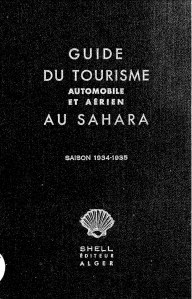
Originally published way back in 1934 (link to pdf) and just seven years after Shell started distributing fuel in Algeria, it must have been the first guidebook of its kind, preceding my own Sahara Overland by nearly seven decades.

The three pre-war editions (1934-5 pdf; 1936 below and 1938) were thinner books but also covered aerial tourism: fuel and landing strip information. Perhaps back then private planes were still seen as comparable or superior to with cars for getting to remote places. By the mid-50s commercial flying had taken off across the world, and flying around the desert was no longer a thing, unless you were very rich.

Even if it was nothing more than fully funded exercise in self-promotion, it’s still odd that an Anglo-Dutch oil company produced such a presumably prestigious project to showcase an important French colony, especially as it had the feel of an official handbook. In the 1930s Shell became well known for their illustrated guidebooks to Britain; perhaps publishing was not a thing that interested French oil companies like Total and Elf. Only Shell produced guidebooks, although road maps were widely branded by some of the oil companies of the era.

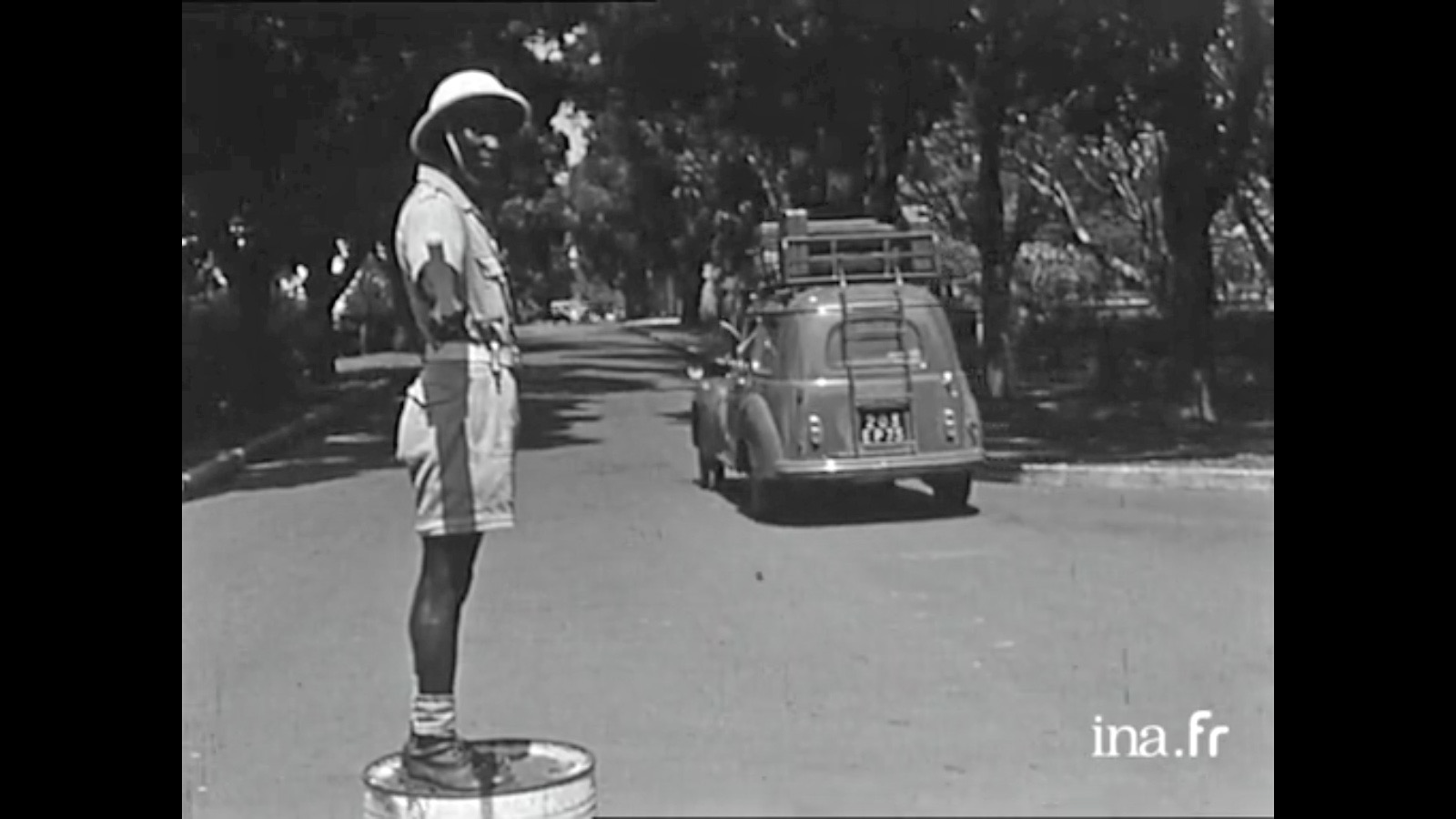
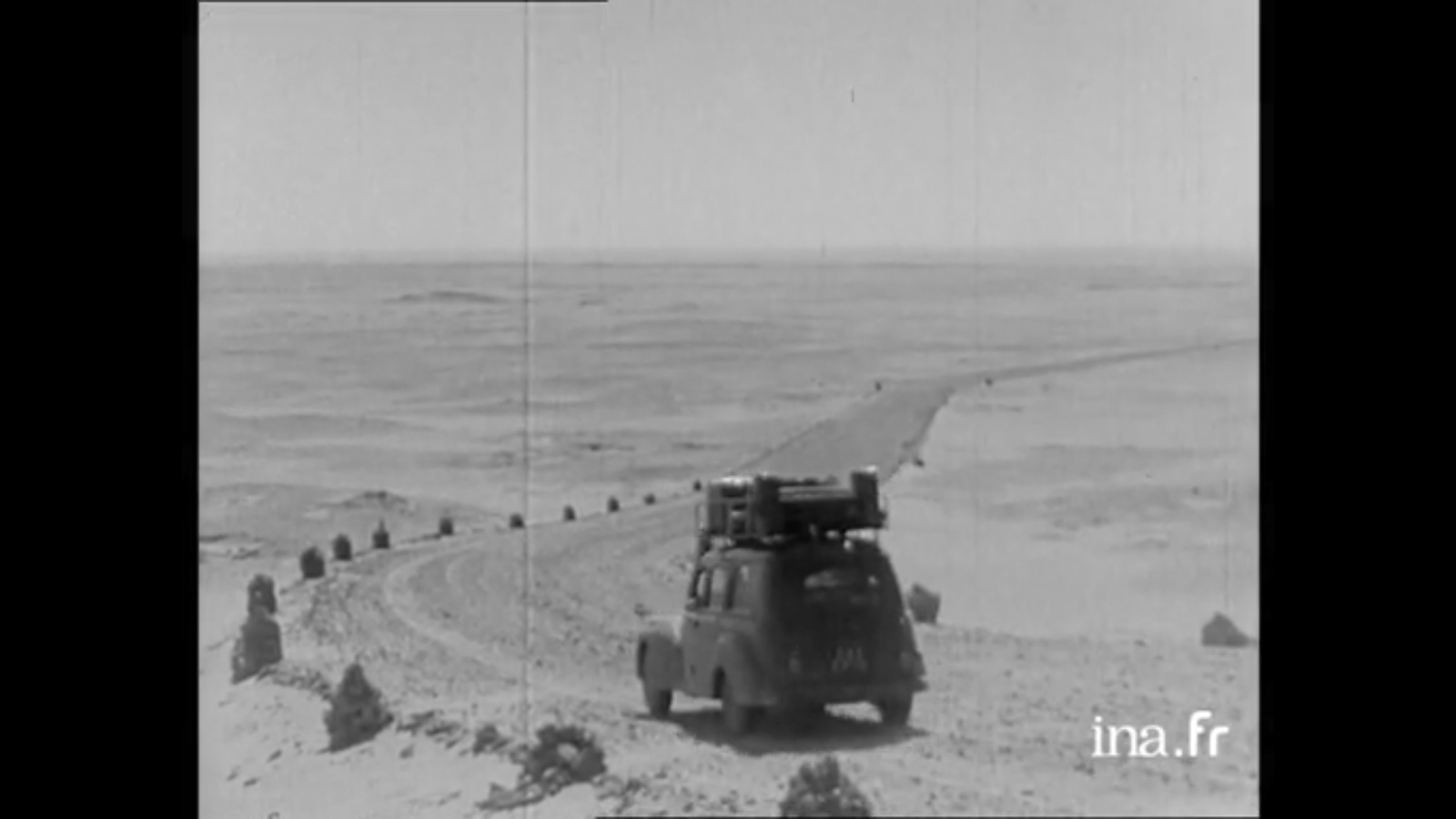
You can imagine the three French women (France Degand, Janine Delbert and Michèle Cancre d’Orgeix) had a copy of a Shell in the glovebox of their Peugeot 206 wagon before setting out their double crossing of the Sahara in 1956 (video below).

https://player.ina.fr/player/embed/CPF86641516/

The 1950s were the apogée of the colonial era when, even in the Belgian Congo, trains ran through the jungle on time and roads drivable by regular cars snaked over the equatorial escarpments.
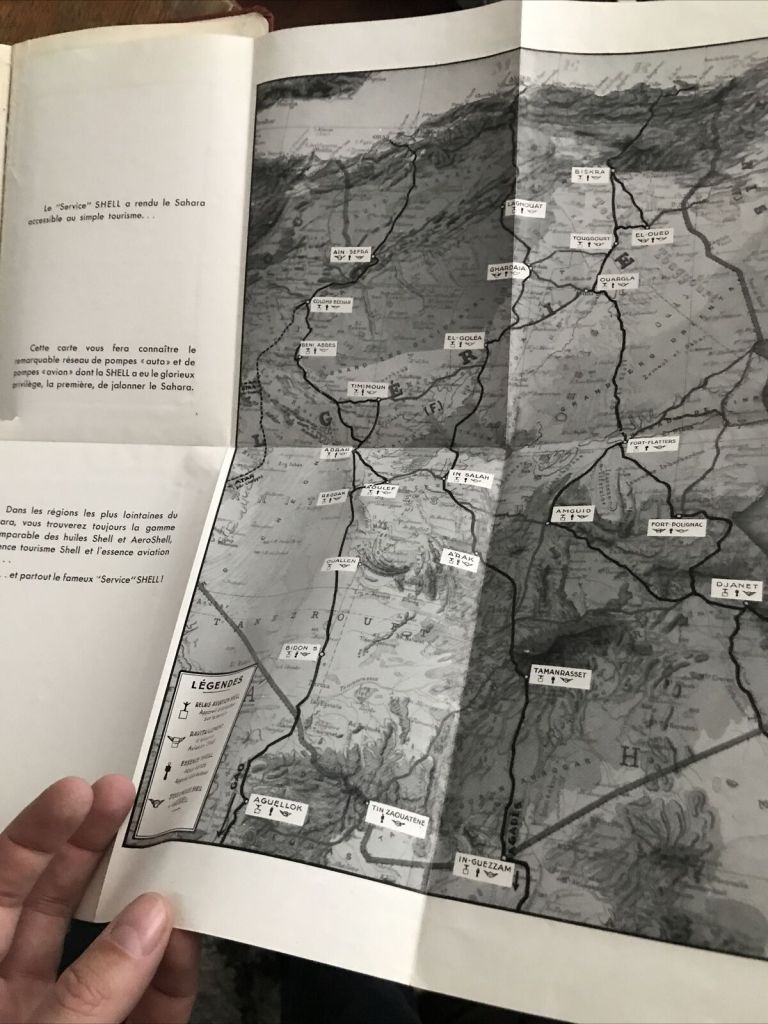
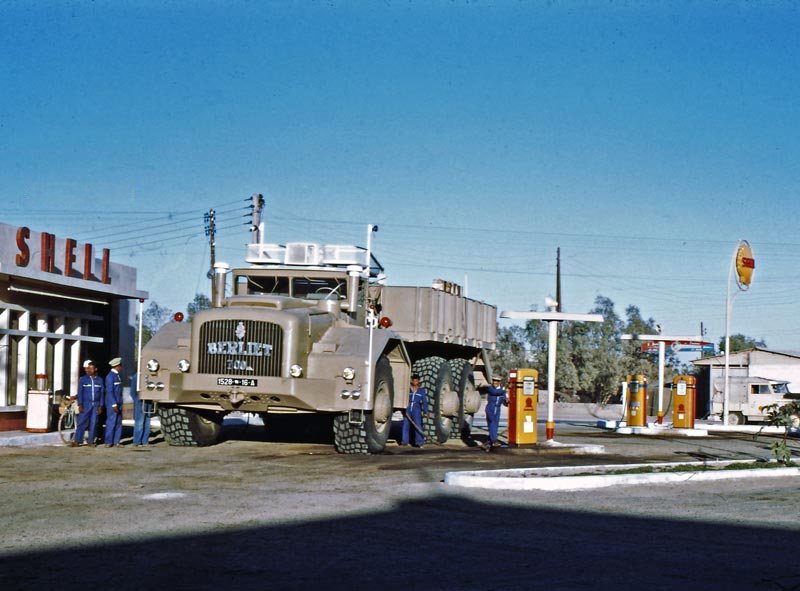
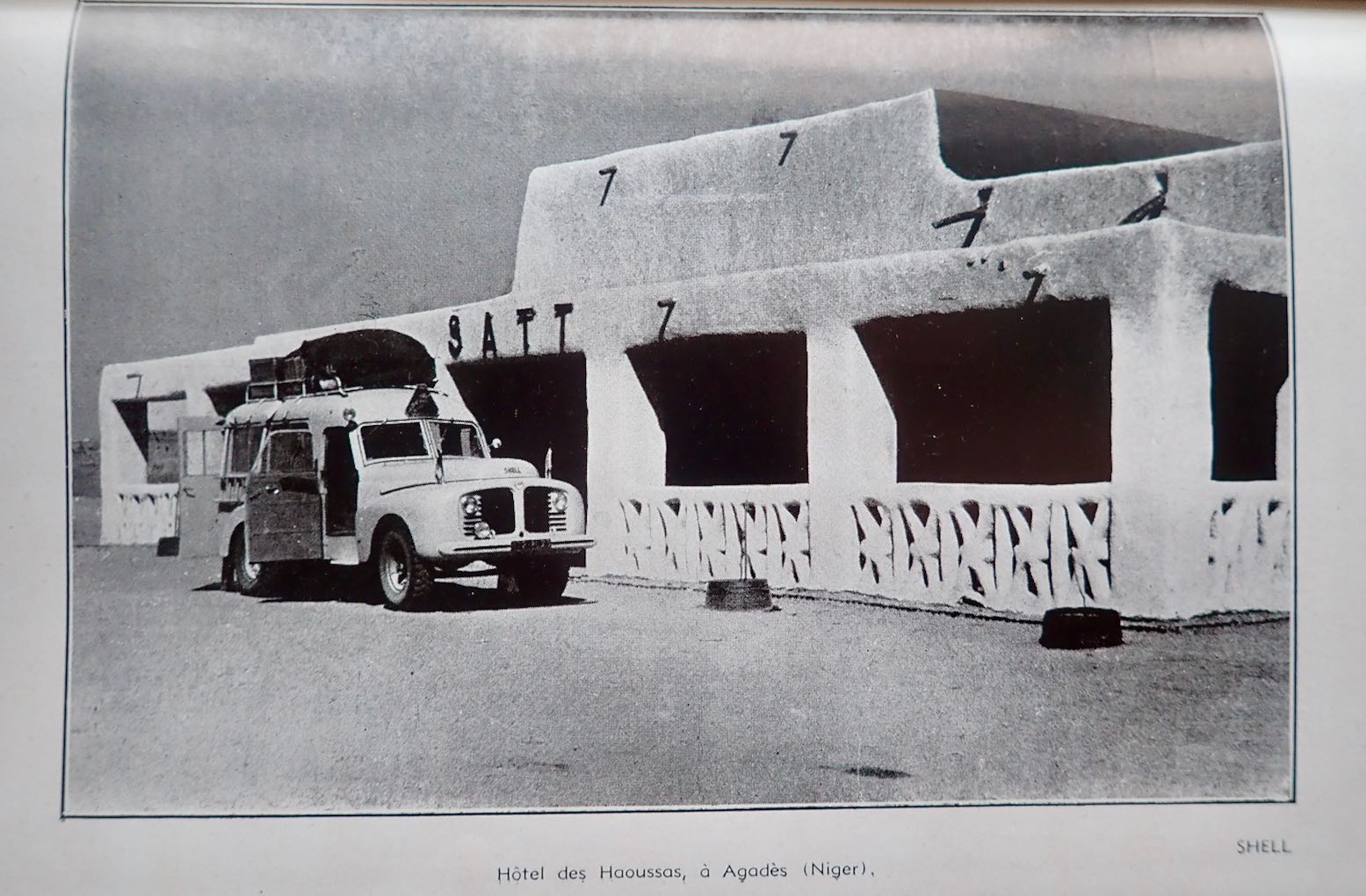
In the Sahara pistes were well maintained, regularly patrolled and for the most part, well marked too. The Sahara still had its rough edges and expansive voids, but had been effectively tamed by the colonial administration, including a desert-wide network of Shell stations: ‘In the Sahara, as in your garage‘ the guidebook boasts.
It was the vestiges of this investment in desert infrastructure which we inherited in the 1970s and 80s by which time the whole region had seen 15-20 years of independent rule. The Shell emblem was long gone, replaced by nationalised fuel companies distributing the commodity with had become integral with global progress and development.

The Guidebook

Until 1939… the book starts… conditions for the harmonious development of winter tourism were coming together in the Sahara. Excellent temperatures, admirable sites, distant horizons, interesting populations, verdant palmeries [and] distinctive architecture: behold the country.

It then goes on to introduce the Sahara, using a flowery style which I’ve seen in more recent French guides to the Sahara. The book doesn’t miss a chance to include an exposition of the magnificent French achievements in the Sahara since 1919.

A year after this edition was published, after decades of searching (during which time French explorer and geologist Conrad Killian mysteriously met his death) prospectors finally struck oil in Edjeleh near In Amenas, and a short time later in Hassi Messaoud. By the end of the next decade Algeria became a major oil producer in North Africa.

It’s interesting to see how the content of the guidebook conforms with a modern day equivalent: a geographical breakdown of the desert’s geology, relief and topography, river courses and wells; ethnicities add up to either Arab or Berber, with pre-colonial history leading to exploration, colonisation and pacification right up to the period of the automobile and the aeroplane.

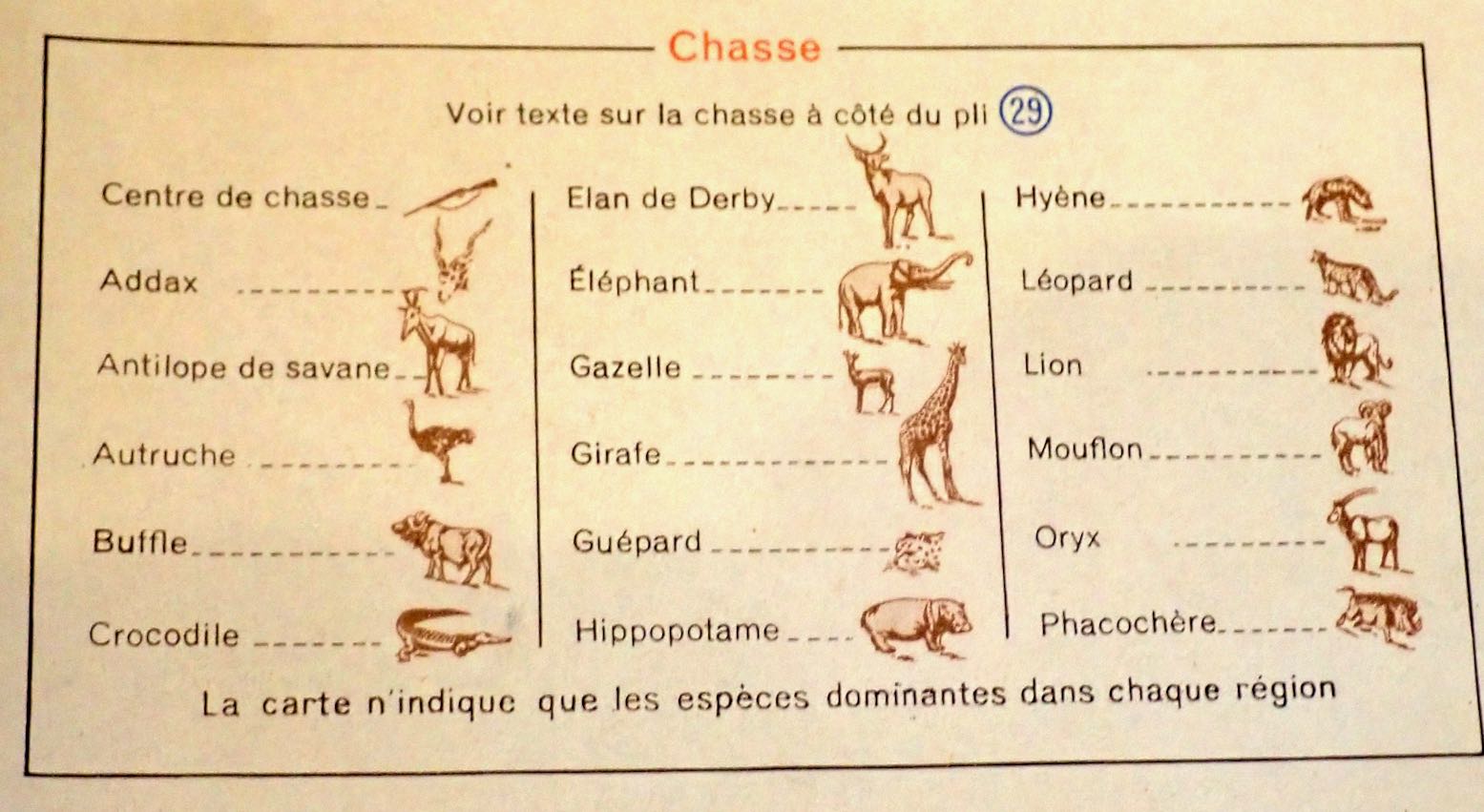
Short sections cover local artisans and the souvenirs they made, a bibliography, recreation and sports and not least hunting for hides, heads, horns and ivory. Happy days!


As for vehicle choice, the guide advised not to worry about using touring cars, by which I think then meant a regular RWD sedan or estate, like the Peugeot 206, above. Rightly it said the 4x4s of the time: Land Rover, Jeep, Willys and the near identical Delahaye V.L.R were significantly less comfortable.

It’s worth recalling that many regular cars of that era had bigger wheels and better ground clearance – garde du sol – ‘an important factor in vehicle choice‘… ‘Consider fitting bigger tyres, but not too much or you’ll stress the transmission and steering.’ ‘Power to weight is also a factor for tackling soft passages.’ …’avoid dual rear wheels…’ It’s interesting to see all these strategies were well known, even back then. It does however list a long and very heavy list of spare parts. Durability must be one thing that’s improved over the decades. In a way today’s SUVs have similar characteristics, but of course no one would consider taking one somewhere as outlandish as the Sahara, not least because 4x4s have improved to become much less utilitarian.

Code Saharien de la Route
In that time of French control a detailed list of safety protocols needed to be followed before before setting off along a piste. ‘Pour votre securite‘ as they used to say to us in Algeria where the system endured into the 1980s (but without any actual back-up or support; you were on your own). The Code was a check on whether you were equipped to tackle what lay ahead, followed by the requirement to check on on arrival. If you followed the rules and were overdue, they’d come and look for you. You also needed some sort of contract with a local recovery service in case of a breakdown. The last 40 pages of the book detail the full list of these requirements for each of the three territories.

The Itineraries

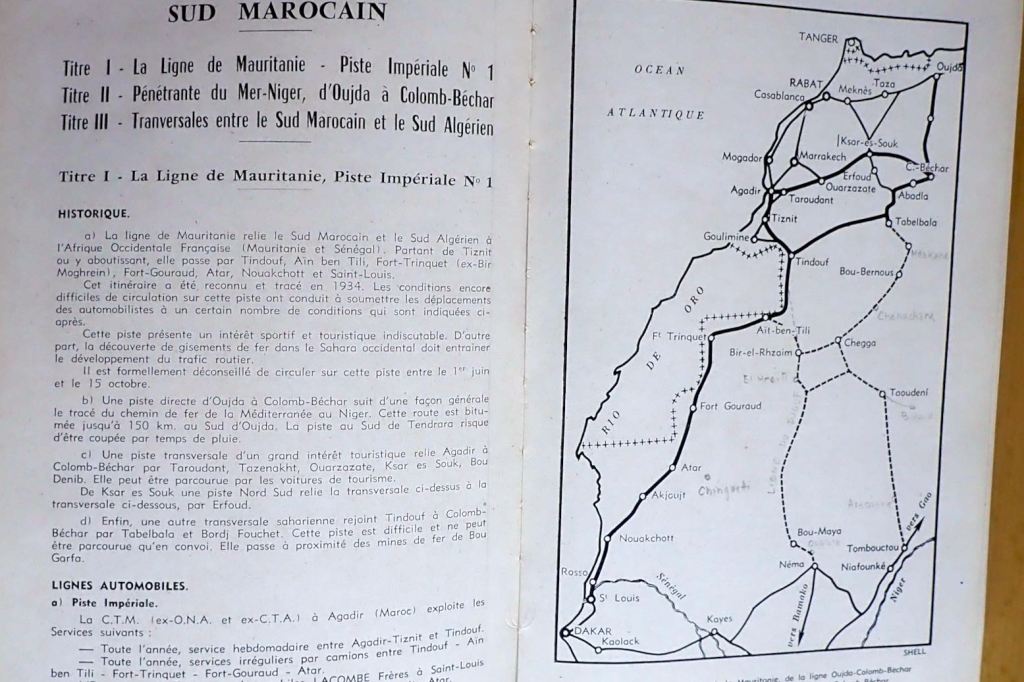
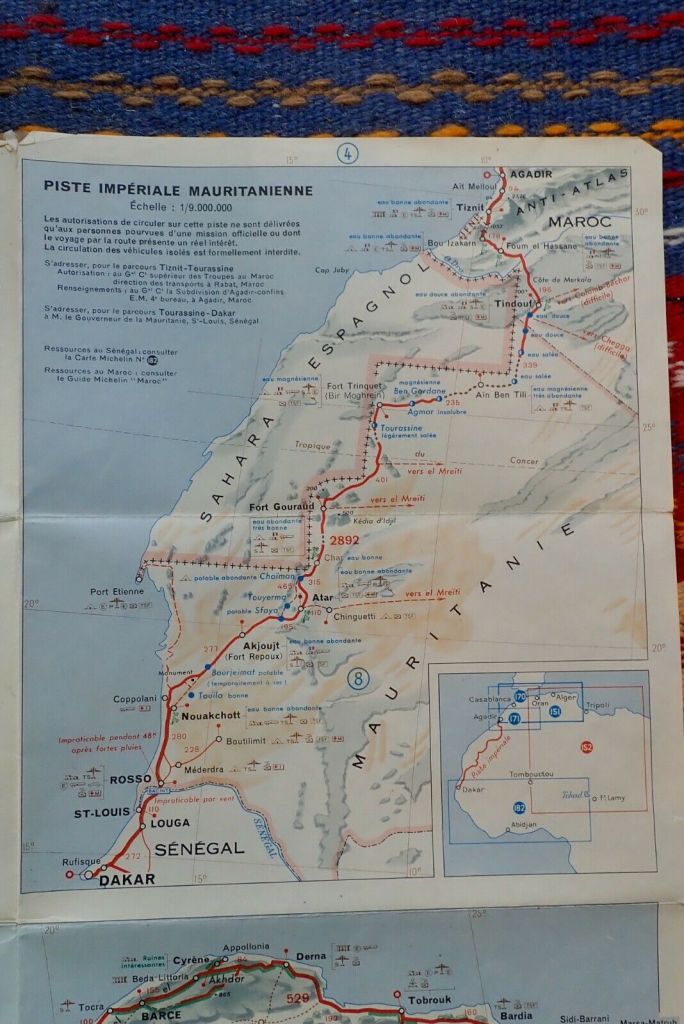
The route guide breaks down the Sahara into four sections: southern Morocco along tracks which are now mostly roads. Then came the grandly named Imperial Tracks, starting with N°1: the Mauritania Line (above) which was recently reopened by Algeria. Back then, this was the direct route through all-French territory from Tiznit in Morocco or Colomb Bechar in Algeria, to St Louis or Dakar which circumvented the Spanish Rio de Oro colony on the Atlantic coast. Closed between June and mid-October, this was also the ‘Forgotten Path‘ which David Newman followed in his Ford Corsair touring car in 1959, just as the territories were breaking up.

The route description for the 2550km from Tiznit to St Louis goes on for 15 pages including a few photos and plain maps. It left Moroccan territory south of today’s Foum el Hassan, a small town between Akka and Assa on what I call the Desert Highway in the Morocco guide. I noted a passing reference to ‘Merkala‘; an escarpment watchtower marking the border between Morocco and Algeria which still survives as the enigmatic ‘Tour de Merkala’ on the Michelin 741 map.
In Tindouf we learn that prior to the French establishing a garrison in 1934, the settlement, had been abandoned for three decades due to persistent raids by the nomadic Reguibat. The Berbers must have welcomed a bit of law and order.
From here the lonesome track led to Ait ben Tili on the Spanish Sahara (today’s PFZ) border, with balises (marker posts) every 5km, but plenty of tole ondulee: ‘corrugated iron’ or washboard/corrugations to you and me. Like today, there’s nothing much for the traveller at AbT. Back then wild game added up to gazelles and long-gone ostriches. Once you got to Fort Trinquet (Bir Mogrein) you could add moufflon and leopards to that list.

From here it was 405km south to Fort Gouraud (Fderik) and the piste was poorly marked, sandy and rutted. The old route ran for another 310km from Fort Gouraud via Char fort to Atar didn’t get any less sandy, and the iron ore railway was still another 8 years away. Maybe a touring car, even with good clearance, wasn’t such a good idea after all.

Imperial Track N°2 was the Tanezrouft Line from Colomb-Bechar to Gao on the Niger river. This was the route chosen by the first cars to cross the Sahara in the early 1920s. It’s interesting to see how quickly the commercial drive towards tourism follows what was once terra incognita. You could say we’re seeing the same today in space; something which would have been hard to imagine in the middle of the Apollo programme.
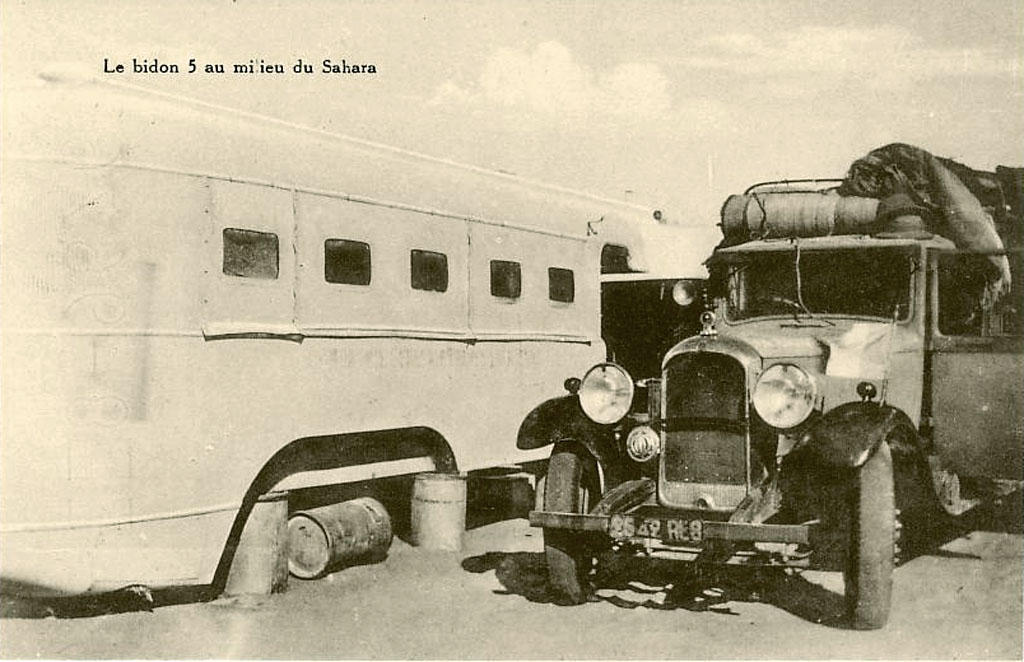
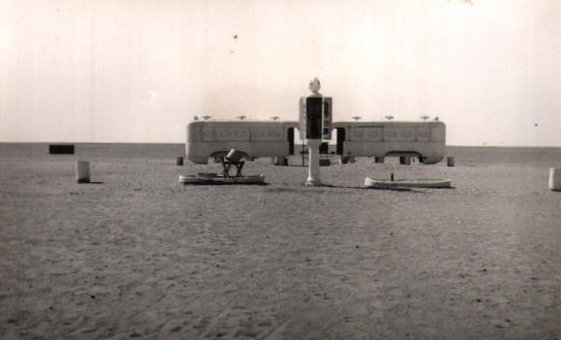
It was on this desolate route that Bidon V (‘Oil drum 5’, below) made a name for itself as a desolate travellers way-station between Reggane and Tessalit in present day Mali. At one point the lighthouse shone into the night, planes could land for a refuel and a couple of bus bodies where parked up on oil drums to provide lodgings for passengers the Mer-Niger bus route.

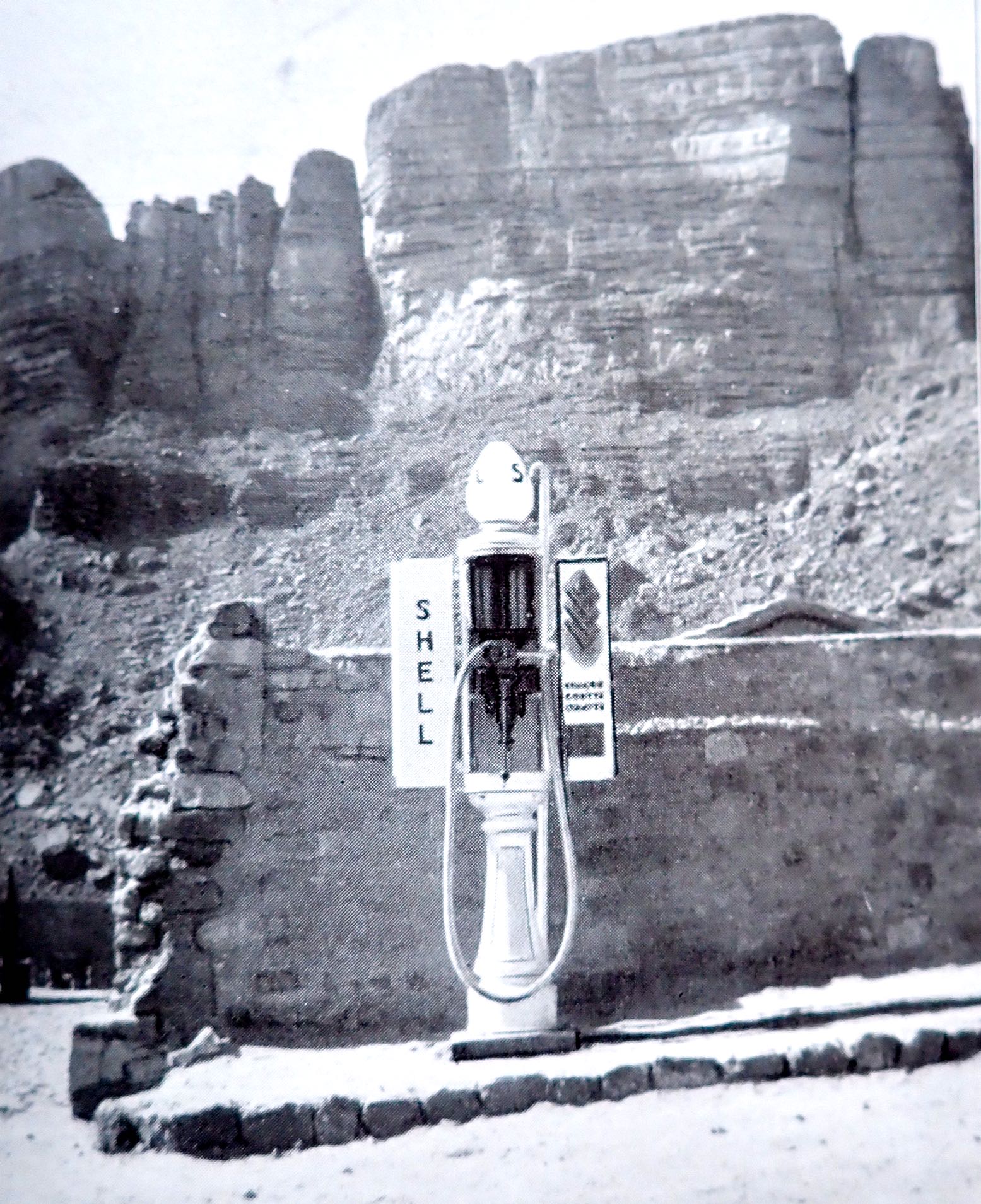
The book continues with other well known routes in the Algerian Sahara, though not exactly what we have today. Imperial Route 3; the Hoggar Line – today’s Trans Sahara Highway – ran further east between El Golea to In Salah, and again on to the Arak Gorge where a friendly Shell bowser (left) stood by at your service.

From Tamanrasset, excursions up to Assekrem along today’s route were already established (fold out map included), and the now paved track to the border via Laouni was the same, but once in AOF, the track went straight to Agadez via In Abangarit to the south. It was on this route that the drama vividly described in Trek, met its climax. There was no Arlit until uranium was discovered there about 15 years later. Zinder, close to the Nigerian border, was the end of that road.

The Ajjer and Tibesti Line was Imperial Route 4: from Biskra all the way to Fort Lamy (N’djemana) in Chad. From Djanet the route dropped down to Bilma, the long established administrative capital of the eastern Tenere, before you back-tracked north to Seguedine to head east for Zouar, Faya and even Fada before turning down to Abeche and Fort Lamy. This was the route which the lavishly equipped Berliet expeditions of 1960 sought to open up for trade, just as France’s overt control over the Sahara slipped away.

Back then getting to Djanet meant dodging the Fadnoun Plateau (Tassili N’Ajjer). From Fort Flatters (today’s Bordj Omar Driss) you headed out over the sands southwest to Amguid, then southeast along the base of the plateau. Right up to the 1980s this was truck route to Djanet until they sealed the winding road over the Fadnoun which to this day still catches some truckers out.

If you could get to Fort Polignac (Illizi), a car route did actually cross the Fadnoun. You left Polignac to the east then either pitted yourself against the very sandy Imirhou gorge (left) , or all the way to Tarat fort on the Libyan border, before turning south to join today’s route at Dider.
On bikes for Desert Riders in 2003 (the full movie is on YouTube), this was a tough but epic ride across the tumbled escarpments of the Tassili which took us two hard days. But the time we reached the final descent from the plateau at the Tin Taradjeli Pass, we couldn’t wait for the sands of the wide open Tenere.

From 1943 up to 1951 the French administered the Fezzan province of Libya and may have had had hopes of annexing it. But by the time this edition was published, growing calls for independence put an end to that idea. Meanwhile. the northern deserts of Chad remained as obscure and little visited as they are today.

The Map

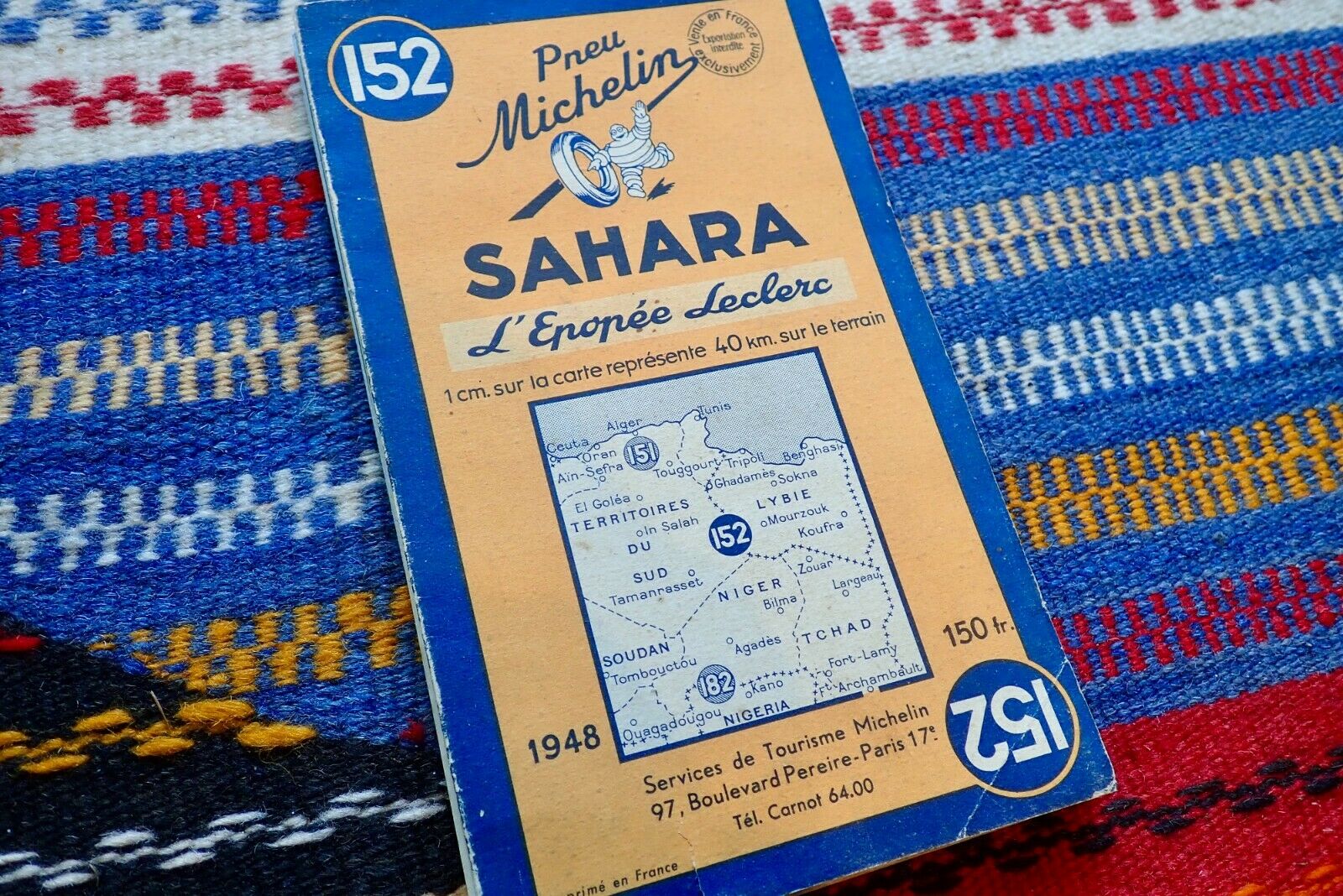
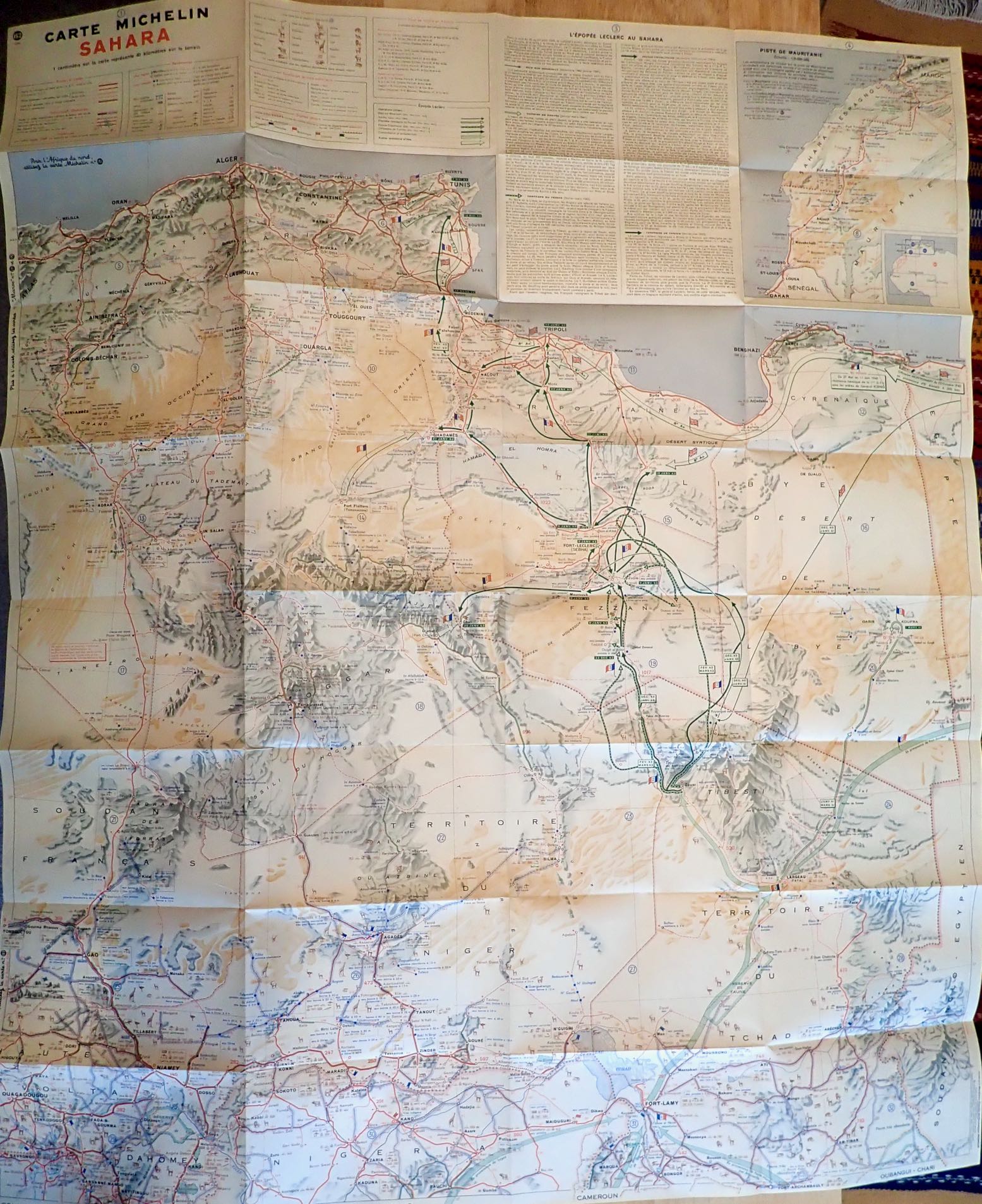
The Shell guide includes a 1:4m scale map folded into the back cover. It’s more or less Michelin’s 152 of 1948 which to some may alone be worth it the price of the guide.
It doesn’t have the full coverage of the 153 North & West Africa which came later, but shows the routes described, and much more. This detail has long made the Michelin map indispensable in the Sahara, even if it is a rather skimpy navigation aid to setting off along one of the Imperial routes.
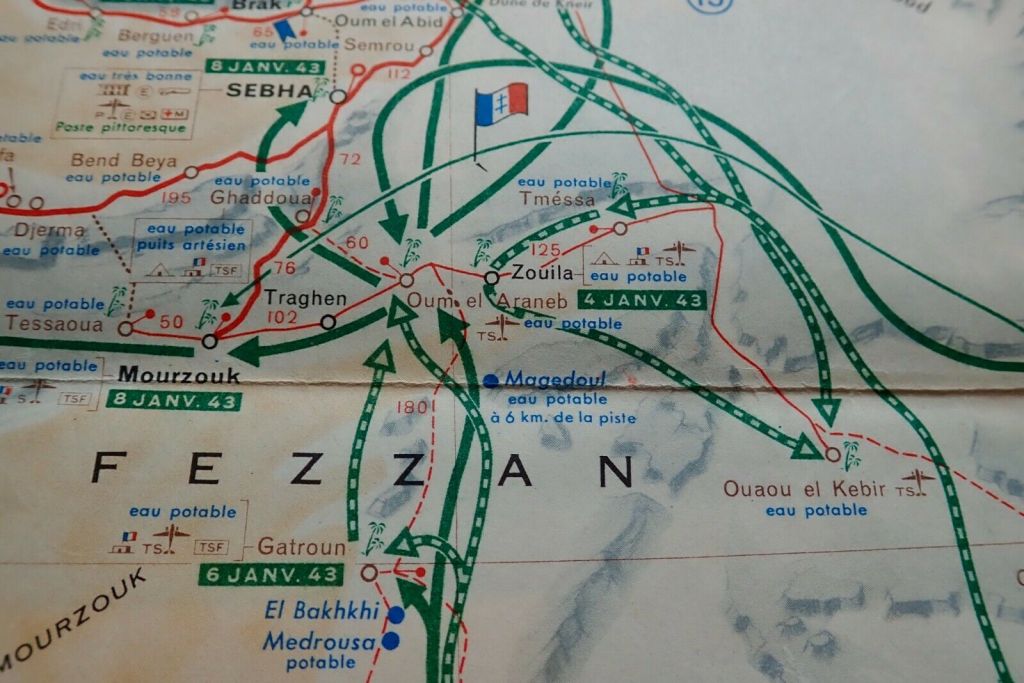
The Mauritanian Line gets a 1:9m inset (below left) while in Libya (never a French territory) the map proudly shows the routes of General Leclerc’s desert campaign during WW2 which ended in the famous raid on Murzuk in co-ordination with the Long Range Desert Group.

‘C’ is for Chocolaterie Aiguebelle: a vintage Map of the Sahara

Part of an occasional series: Sahara A to Z 

See also this
And this

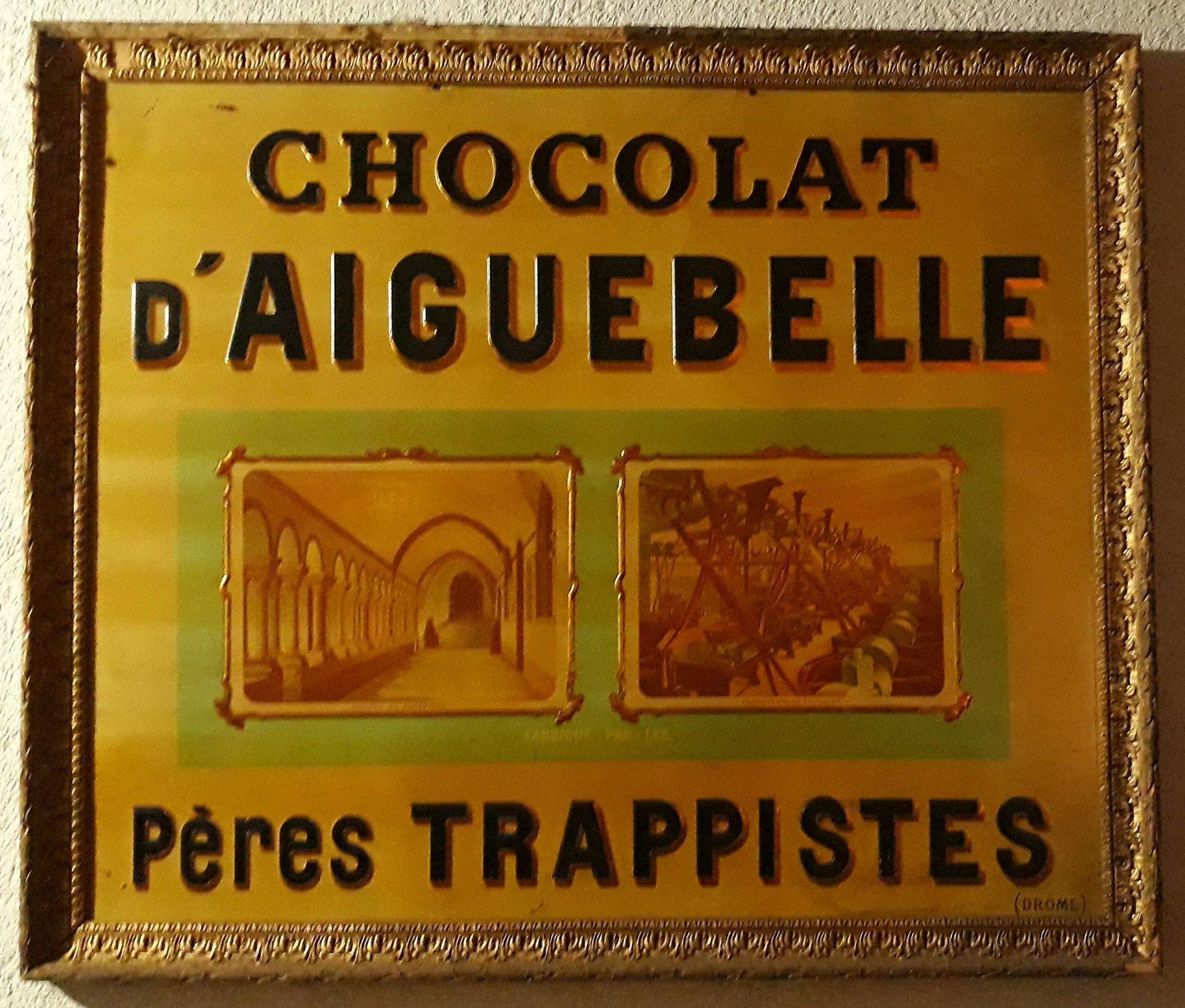
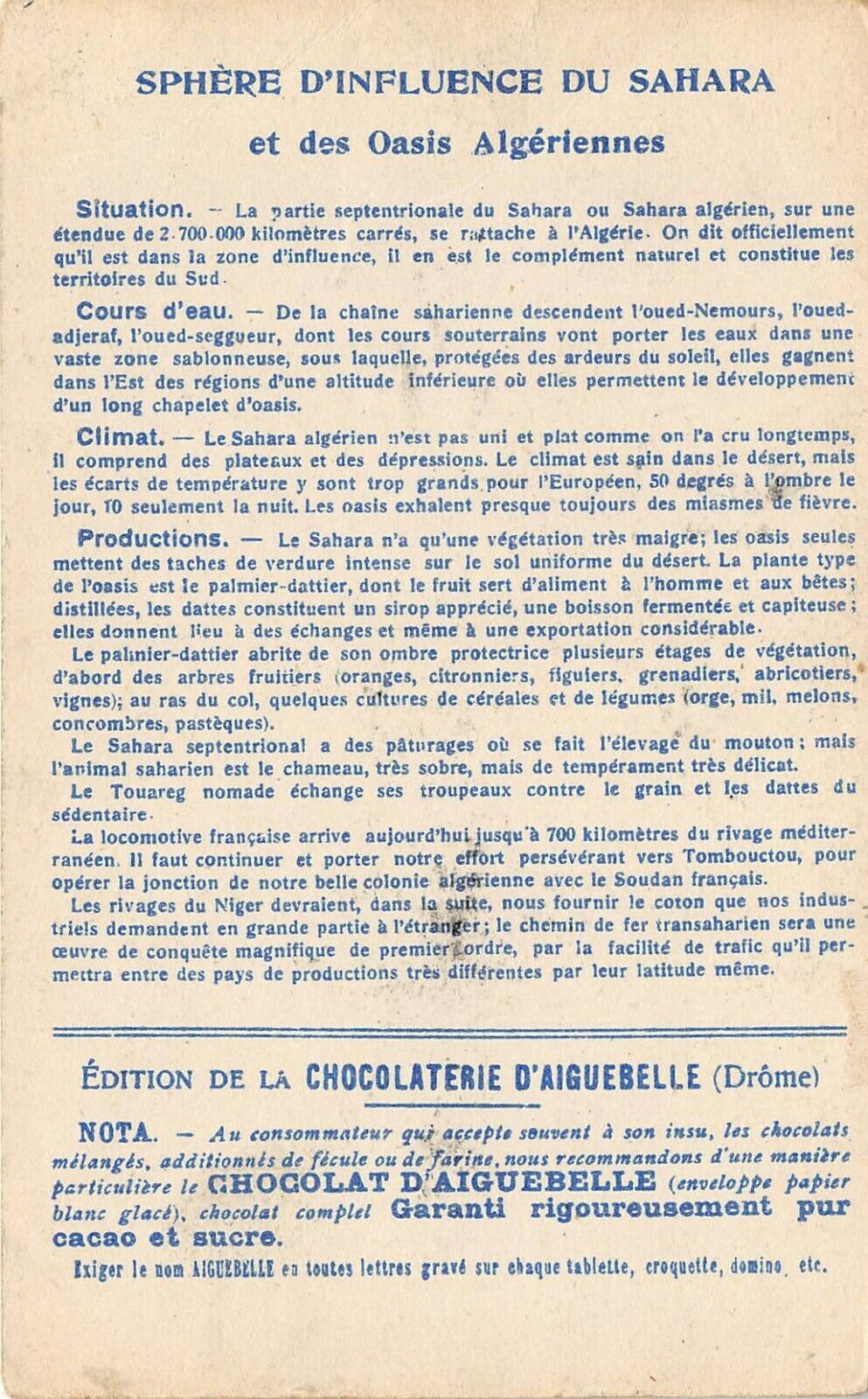
With the help of the internet I can affirm that the Chocolaterie Aiguebelle was founded by a medieval order of French Trappist monks in the mid 19th century to make a bit of money on the side.
As explained here, they also got into producing advertising cards to entertain, educate and inform.
It’s unclear whether these cards came with your chocolates or were distributed from hot air balloons. Probably the former, as that’s what drove me to collect inducements in the 60s and 70. You”l find loads of Chocolaterie Aiguebelle cards on ebay.

The operation shipped out to North Africa at some point where it’s still around today and which may explain the card below. Yes it’s another interesting map of the Sahara. No date is given but it looks like the state of colonial expansion in the late 19th century.

As always it’s interesting to see what is shown and what is not.
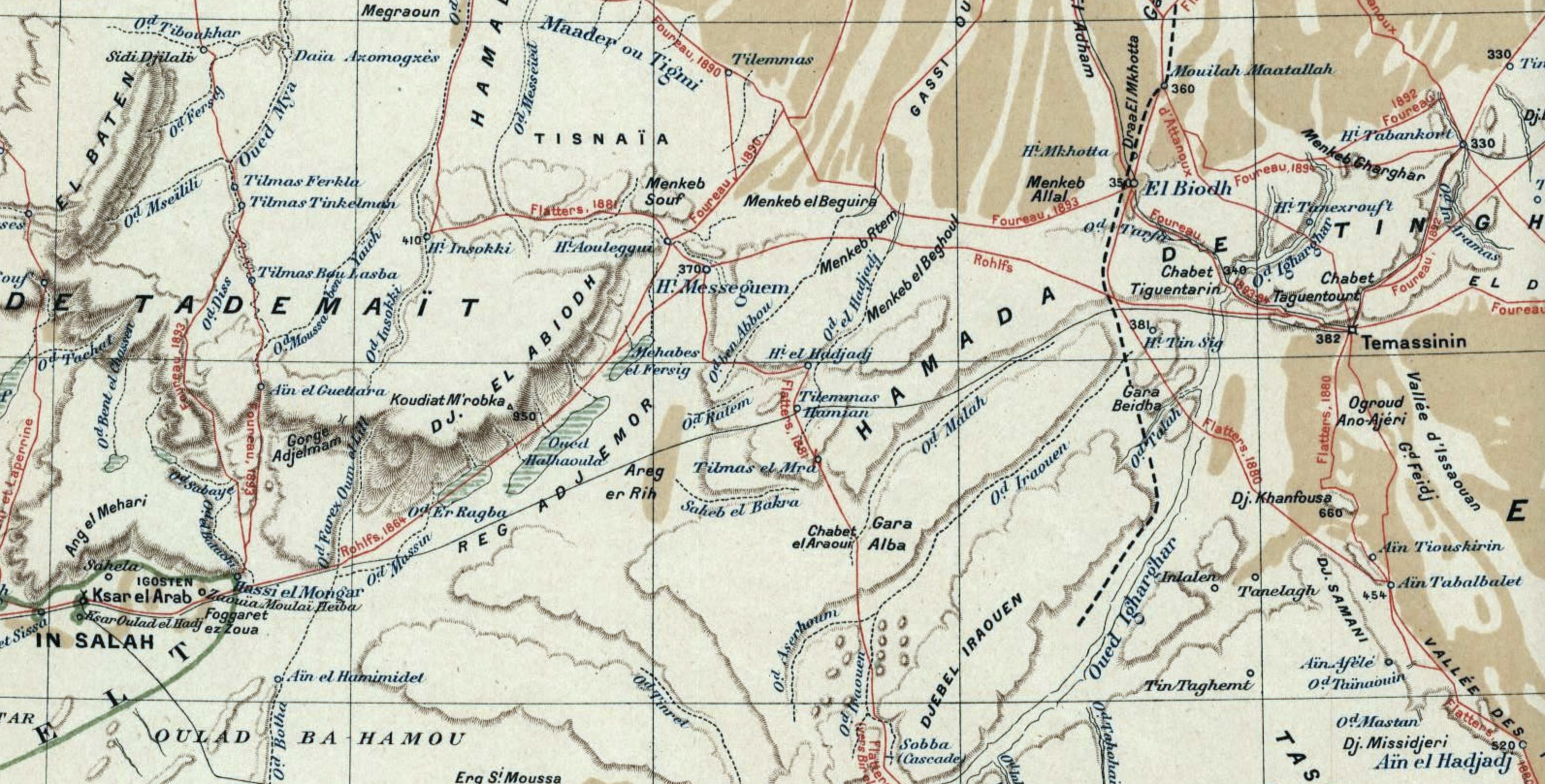
Ancient Timbuktu seems an odd omission (though it’s mentioned on the back as a worthwhile destination for the trans-Sahara railroad). Tamanrasset was just a village at this time so gets skipped and Timassin is Timassinin, later Fort Flatters under the French and today Bordj Omar Driss (BoD). Not far to the west, Messagem and El Biodh were nothing but wells on the caravan route from In Salah to Ghadames, but it seems if early European explorers were led through these places by their guides, then they acquired a cartographic life of their own. They’re all on the map below from 1898.
In the late 1980s we travelled this ‘forbidden’ piste from Fort Mirabel to below the westernmost ribbons of the Grand Erg, coming out at the checkpoint of Hassi bel Guebbour, just north of BoD. By the post war era these obscure wells had slipped off the maps and back into obscurity.

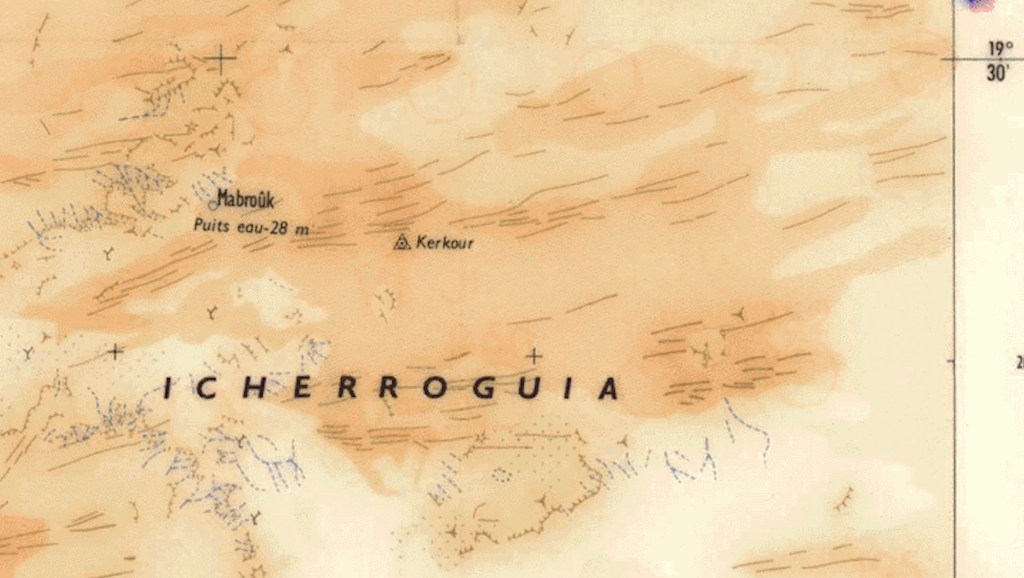
Interesting that remote In Ziza waterhole features, even though it’s not on any trade route, while Taoudenis was then still an important point on the 52 Days Road between Morocco and Timbuktu. East of there, it’s hard to think of today’s lonely well of Mabrouk being any sort of piste junction. Although the wiki waypoint matches the map below, today there aren’t any tell tale vehicle tracks, even though it’s not far from Timetrine where western hostages got shuffled around during their long captivities with AQIM.

On the Atlantic coast Tarfaia is there with more about it here. Never heard of Groha near or maybe Smara, not Djorf el Asfar near present day Bir Lehlou in the PF Zone.
Further east in present day Niger, the Oasis of Djebado is the old name for Djado looks as important as Bilma and the other Kaour oases, but not enough get a marker point. It’s hard to know what Yat might be other than Seguedine or a misplaced and misspelt Ghat, or Tao which appears on other old maps (maps often repeat their predecessors mistakes).Maybe it’s Dao Timni, today a military base in the middle of nowhere.

Palin ‘Sahara’ TV reminiscences (BBC)

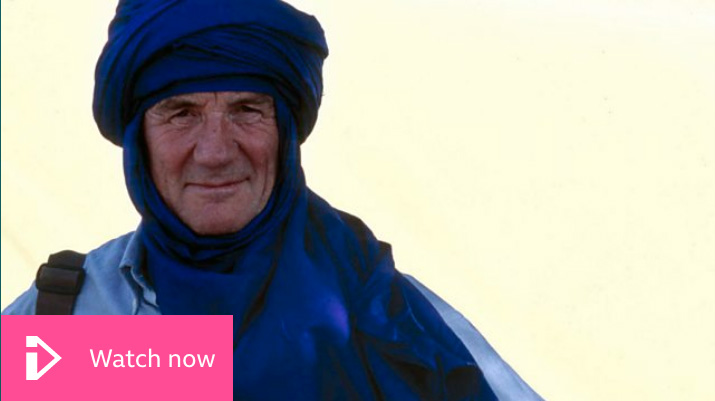
I recently watched Michael Palin looking back on his Sahara TV series of 2002. I think it was the last of his big travel shows for the BBC.

I remember thinking there was more ‘Sahara’ in the show’s title than the actual programmes, and watching what they chose to use in the recap, it looks again like he – along with most people – was more at home in cities like Fez, St Louis and Algiers, or places like Gibraltar than in the desert.

I must admit I never fell for the Palin ‘nicest-man-on-TV’ schtick, though I haven’t watched his other travel series. Palin was born in 1943 so it could be a generational thing with me: many encounters felt set-up and shallow. Perfect Sunday Night telly, then and now. I remember him bristling a bit when this necessary fakery came up as an audience question at a talk he gave in London to promote the Sahara show.
Similar TV travel presenters like Bruce Parry (what happened to him?) and even Simon Reeves were among some fawning luvvies wheeled on to shower accolades. Both of them come across as equally genial and far more intrepid, immersive and engaged in their similar TV travels. But all this is a bit like complaining about the Long Way… Ewan & Charlie motorbiking shows relying heavily on back-up vehicles. It’s a mainstream TV show, not Storyville. Get over it!

As for Sahara, I can’t help thinking he didn’t like the actual desert. Fair enough; not everyone does. During the Niger episode (as deep into the Sahara as he got, afaik: a night or two in the Tenere (and just after 9/11) he sits on a stool and sleeps in a tent rather than getting down with the Tuareg. Disingenuously or not, over a snack he assumes they’re mocking him while teaching him local words. I’ve commonly experienced this ribbing and take it as no more than that.
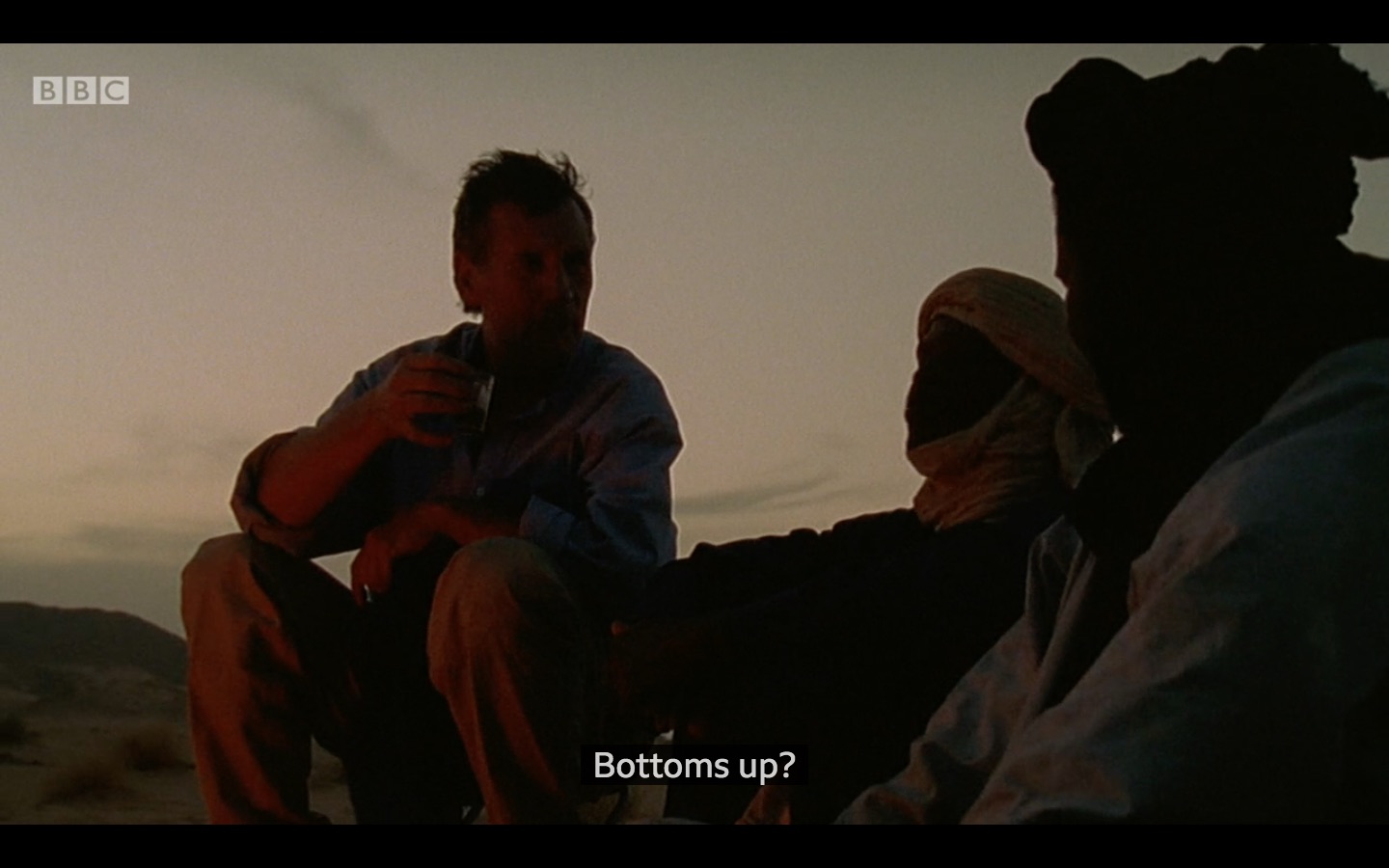
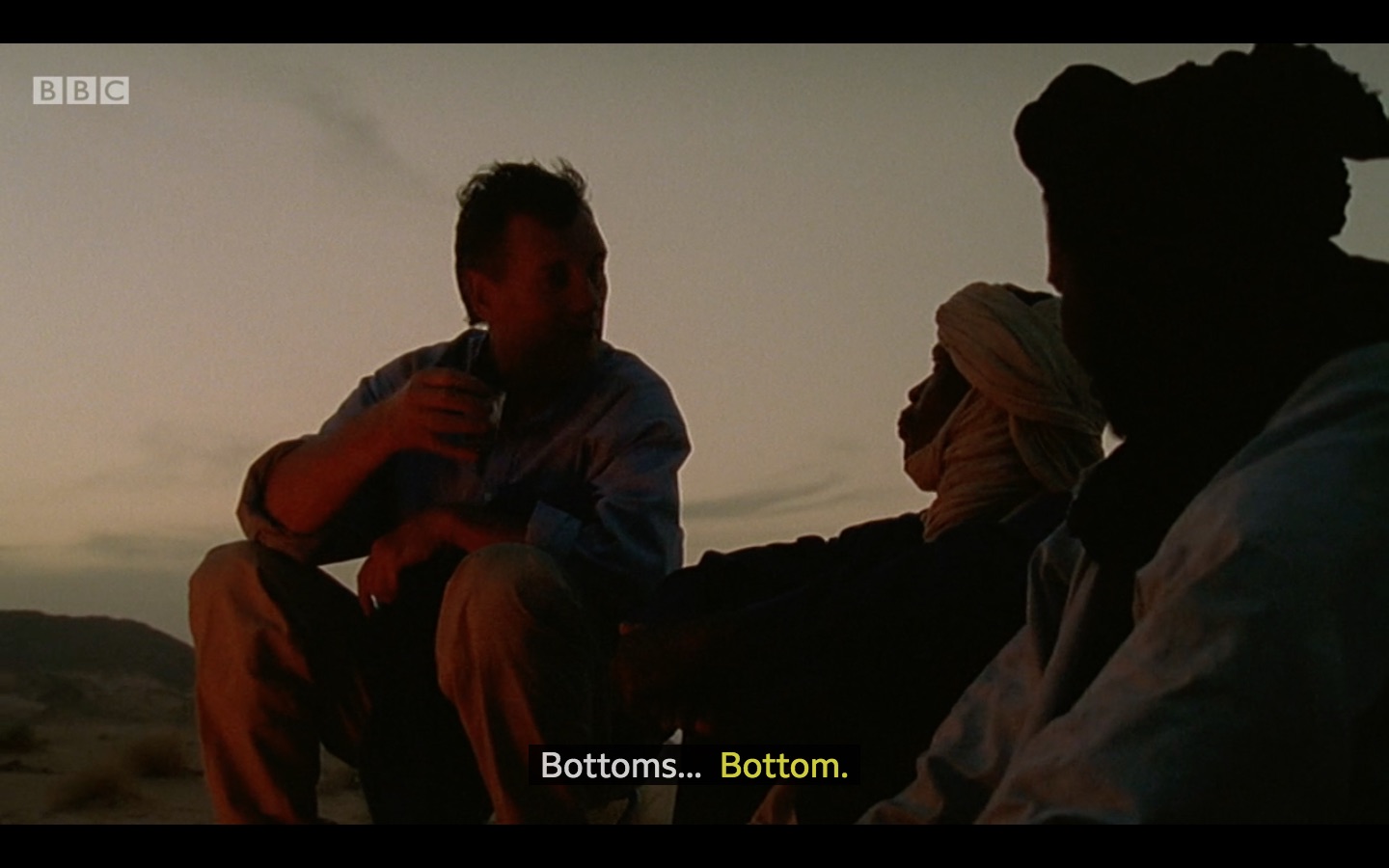
He gets his own back later by getting them to repeat ‘bottom’ – as in ‘Bottoms Up’ which all Brits say several times a day when having a cuppa.

‘Such a lovely scene…’ chirps Parry.
‘That’s what you get when you put the time in.’

Do me a favour, Bruce!

He observes that the locals in Agadez seemed barely moved by 9/11 (or were less exposed to saturation the news we had) and he resented this insensitivity. You get the feeling that like so many with a travel icons list to tick off, he was attracted by the romance of the Sahara: its mysterious veiled nomads and shimmering front-of-a-date-packet oases. Then he got there and found it hot and dusty, poor and dirty, with tiresomely chauvinistic guides, begging children, toilets from hell and altogether gradually exhausting when you have a film to shoot. To his credit, the online diary certainly doesn’t hold back as the book did (as I recall) and the TV show had to do, of course.

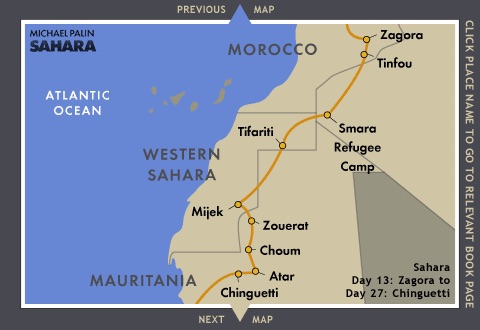
Oddly skipped in the show and the book is the fact that he travelled with Polisario escorts 1000-km overland from Tindouf down to Zouerat, partly along a route which has now re-opened. It was perhaps played down to appease the Moroccans, but also our man had a bad set of the runs which, as we all know, makes life miserable. Then he took the train to Choum and carried on to West Africa. Even with regular breaks back in the UK, by the time he got to Niger (‘in temperatures of up to 55°C…’ – a world record it would seem), he must have had enough.

l2

It’s a bare, dispiriting place.

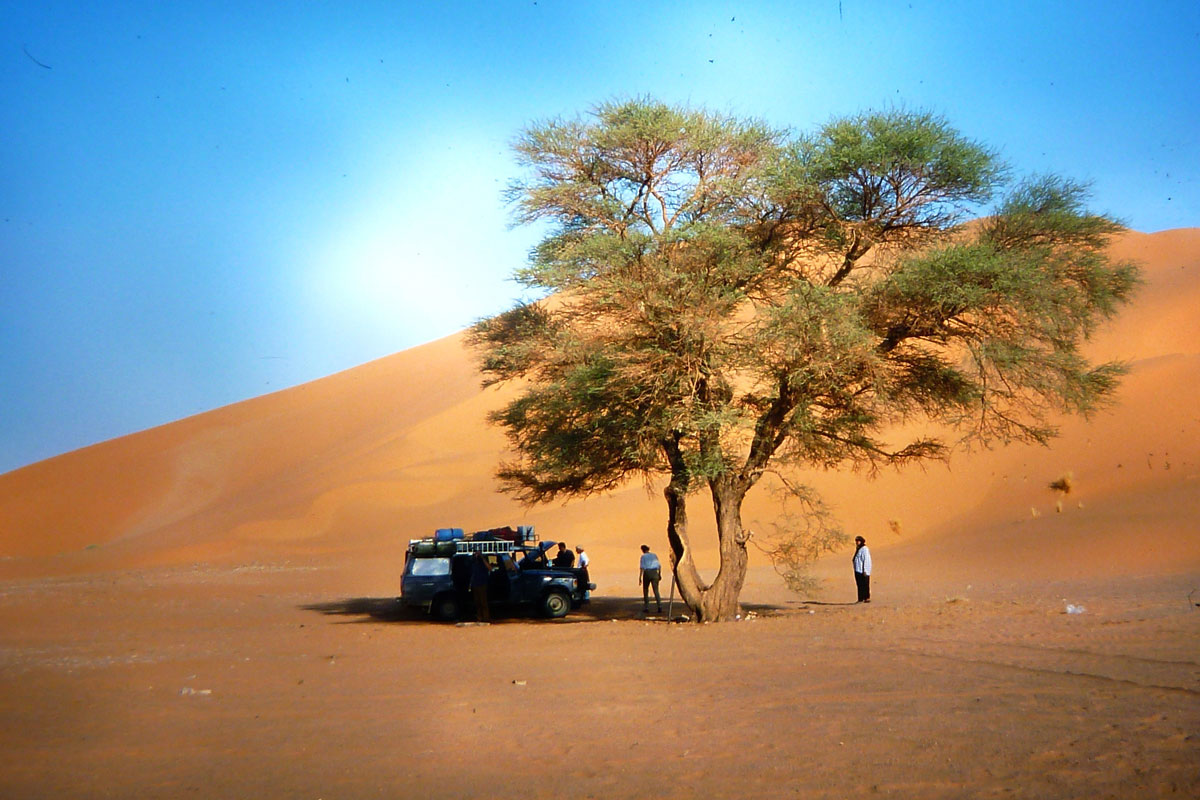
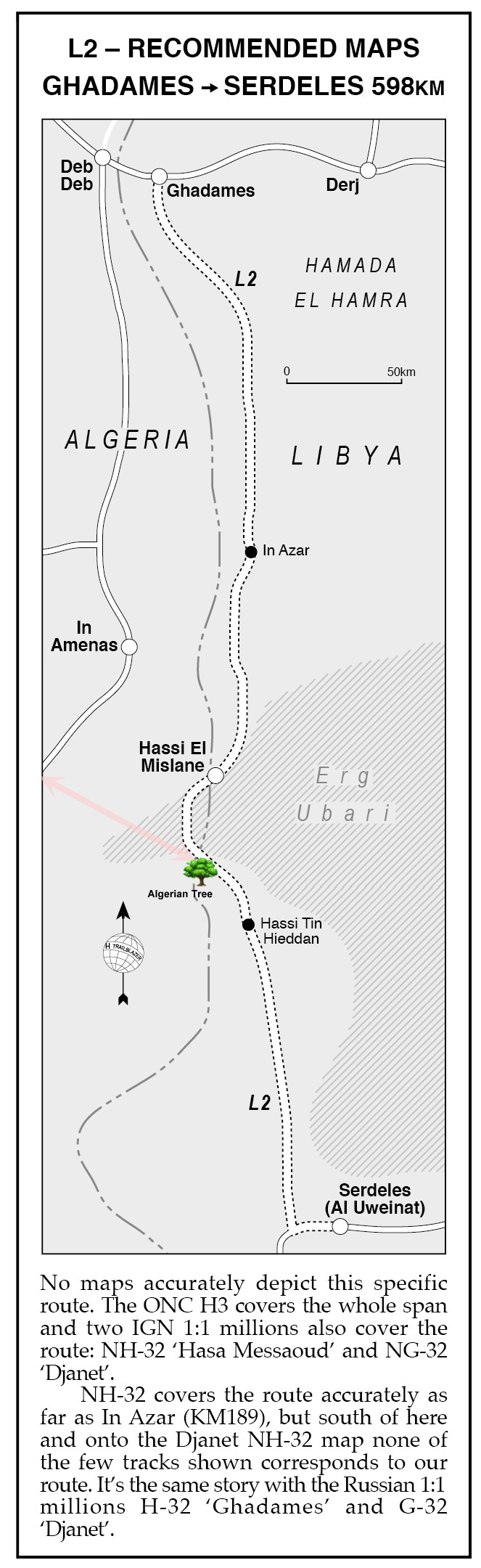
So it can be if you’re there in the wrong season with a busy agenda of encounters to record. As mentioned elsewhere, I was struck that the Algerian Tree on Route L2 from my old book (visible on Google sat and pictured above in 1998) epitomised the essence of the desert for Michael Palin.
He proclaimed:

‘… this spare, uncluttered, beautiful spot was one of my favourite places in the Sahara‘.

Well, he’s easily pleased, a!

I is for IGN: the making of Sahara Maps

Part of the Sahara A to Z series

See also:
Old Saharan Trade Routes Map
‘V’ is for Vintage Sahara Maps
Sahara – blanks on the map
Maps of the Sahara

Here a fascinating 1960s vintage film (45 mins; French) on the work it took IGN to produce their brilliant 1:200,000 scale Sahara maps from thousands of aerial photos, sonar readings and laborious ground surveys. Direct link to video.