Author Archives: Chris S

N is for: Not Riding to Taghia

Part of an Sahara A to Z series
alex-free-solo

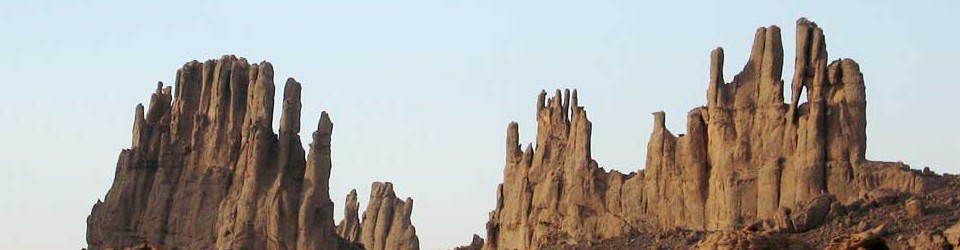
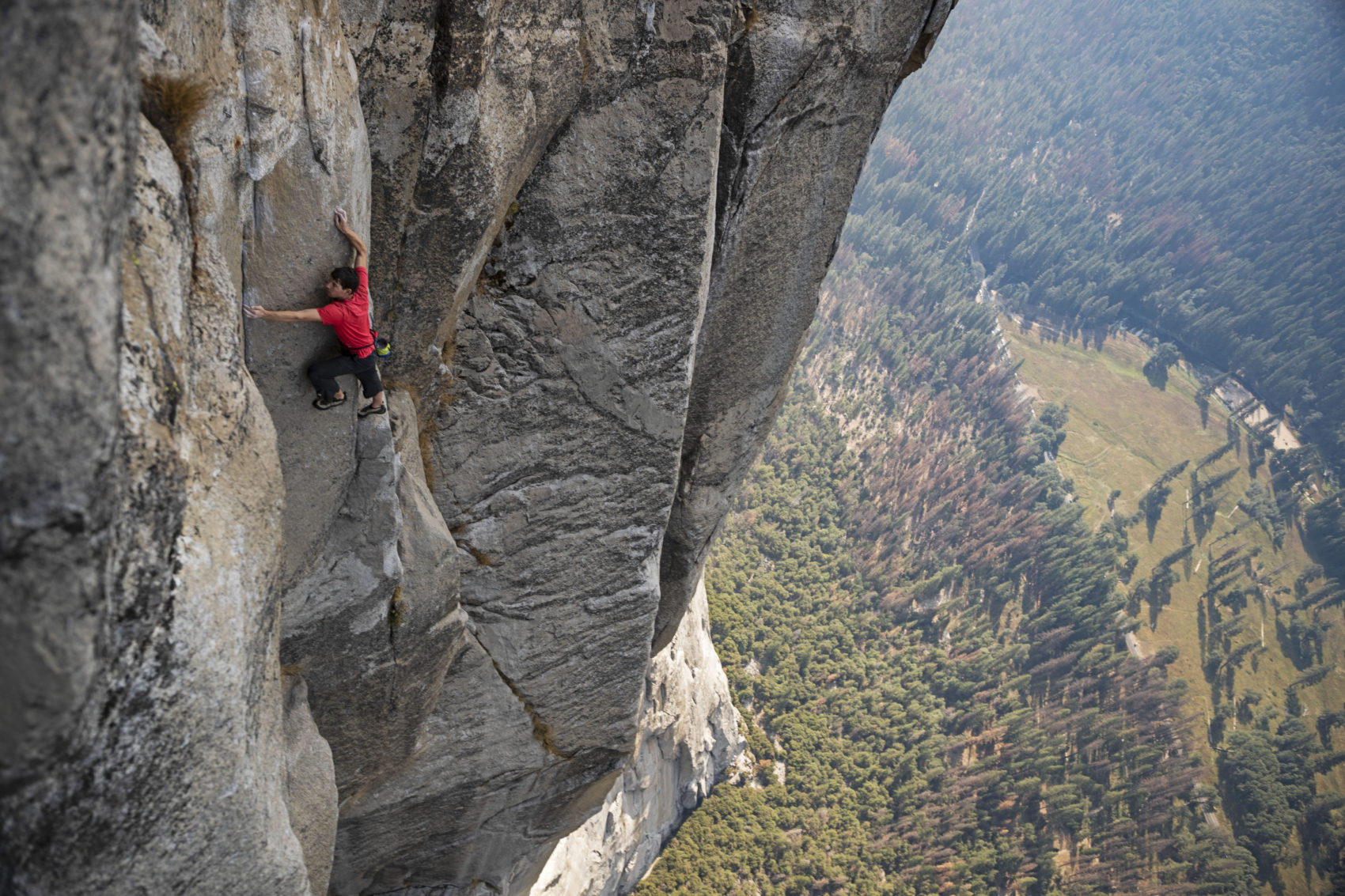
‘Free Solo’ is a documentary covering Alex Honnold’s mind-boggling, rope-free ascent of El Capitan in Yosemite, California in 2017 (left). If you’ve seen it you may recall that, among other places, Honnold practised on a hidden cirque of cliffs surrounding the scattered hamlet of Taghia, buried about as deep in Morocco’s High Atlas as you can get. A couple of rudimentary gites cater for visitors but, even among Moroccan know-alls, unless you’re a rock climber you’ll have never heard of Taghia. The only way in is a four-mile mule trek through a canyon from the valley head at the equally obscure outpost of Zuweiat Ahansal, an hour or two’s ride south of Rocher de Mastfrane, better known as the ’Cathedral’ (below).
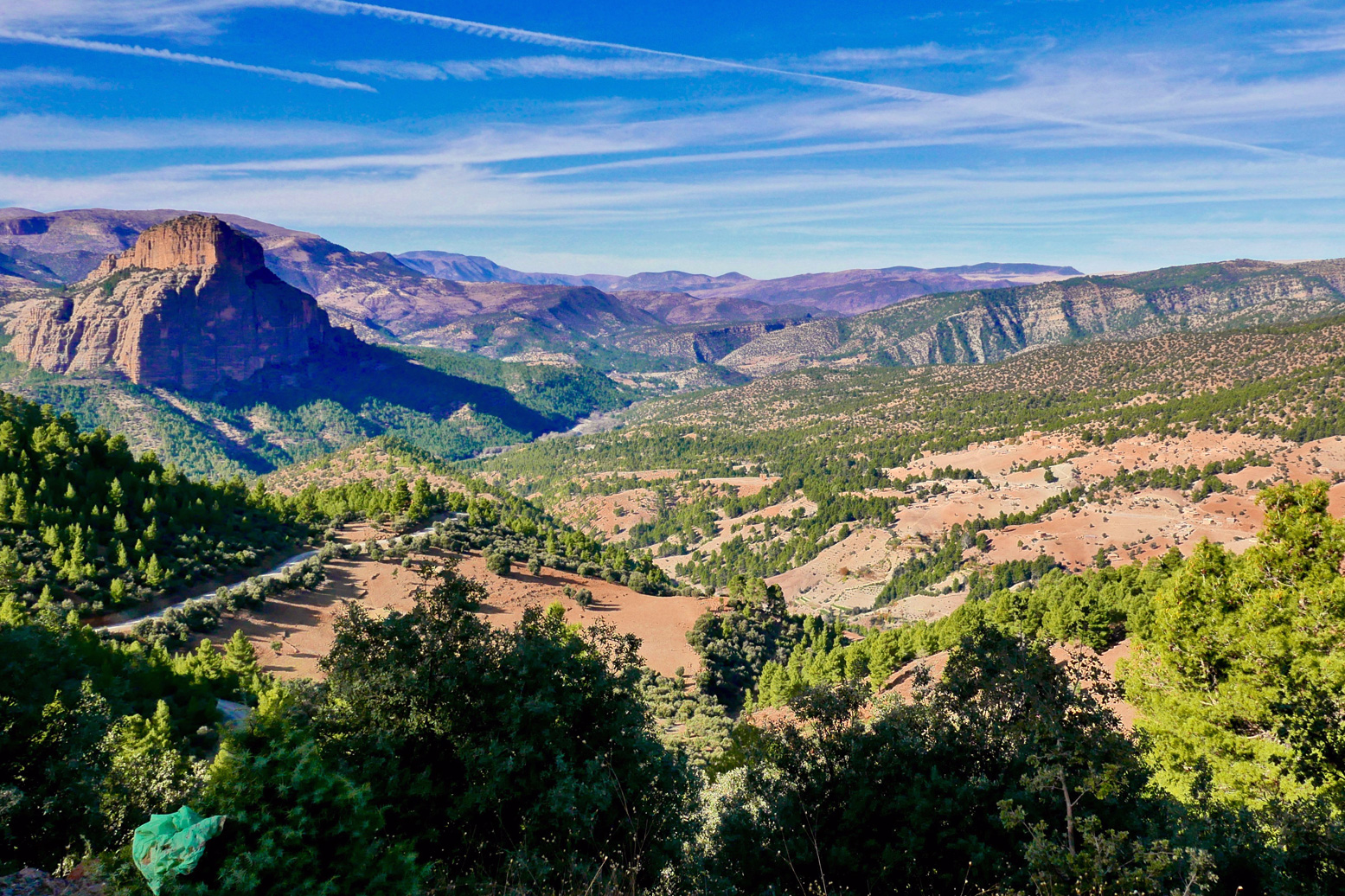
cathedral.jpg

I rocked up at Zuweiat one lunchtime just as a group of young American climbers were spilling out of a taxi, and continued over the bridge to the edge of the old town. I pulled over for a snack and, unsure of the way and not wanting to blunder on, asked a passing local whether it was possible to ride a bike to Taghia and if yes, which way?

‘Oh no’ said the old man. ‘You can only get there on foot.’

I finished my snack and thought it over. Back by the bridge, I sought a second opinion from some more worldly looking dudes hanging out outside the post office. They were eyeing up the new, North Face-clad arrivals and one spoke good English.

‘Yes, I saw you pass and was going to say, you can’t ride your moto to Taghia.’
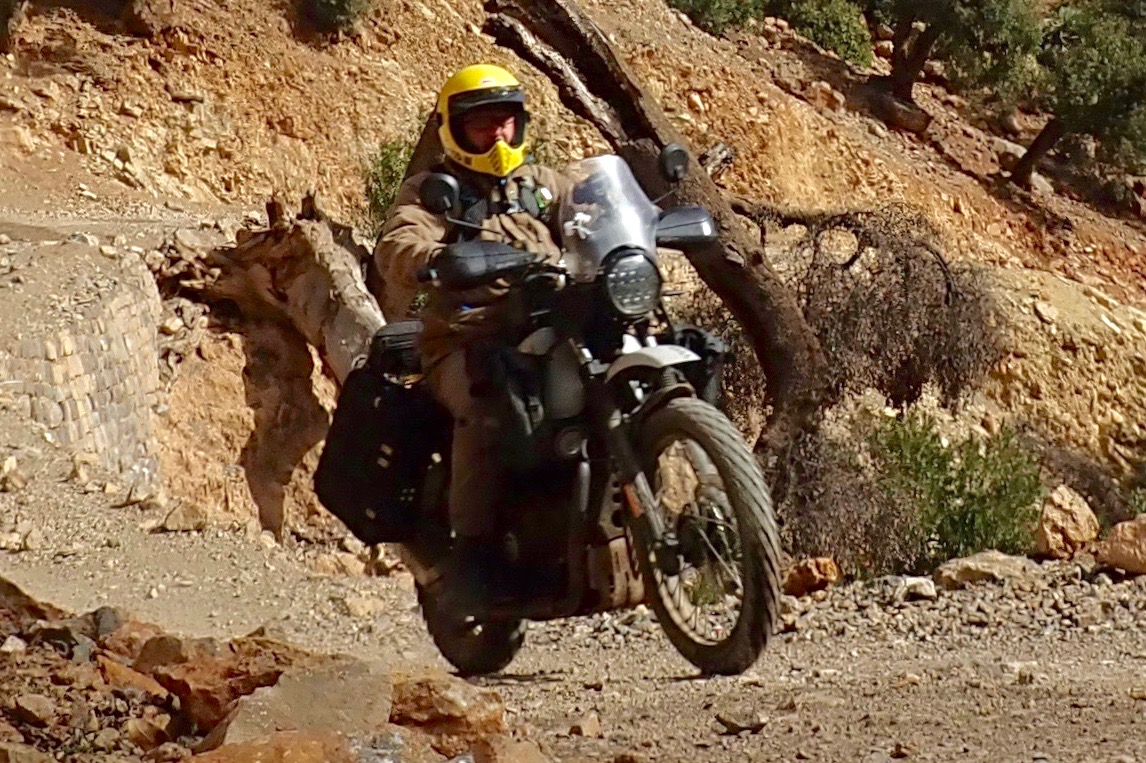
OLYMPUS DIGITAL CAMERA

It turned out he’d worked on the Honnold doc as well as other National Geographic features (below) and, reading his manner with my finely tuned bullshit detector (which they now hand out free at the border), it didn’t sound like the usual bragging. After that, he switched seamlessly into sales mode, offering lodgings and guides.

‘Maybe next time’, I said. I genuinely did hope to visit the mysterious valley, but the weather forecast was a bit shaky for the next couple of days. I wanted to get out of the mountains, not stuck in them.
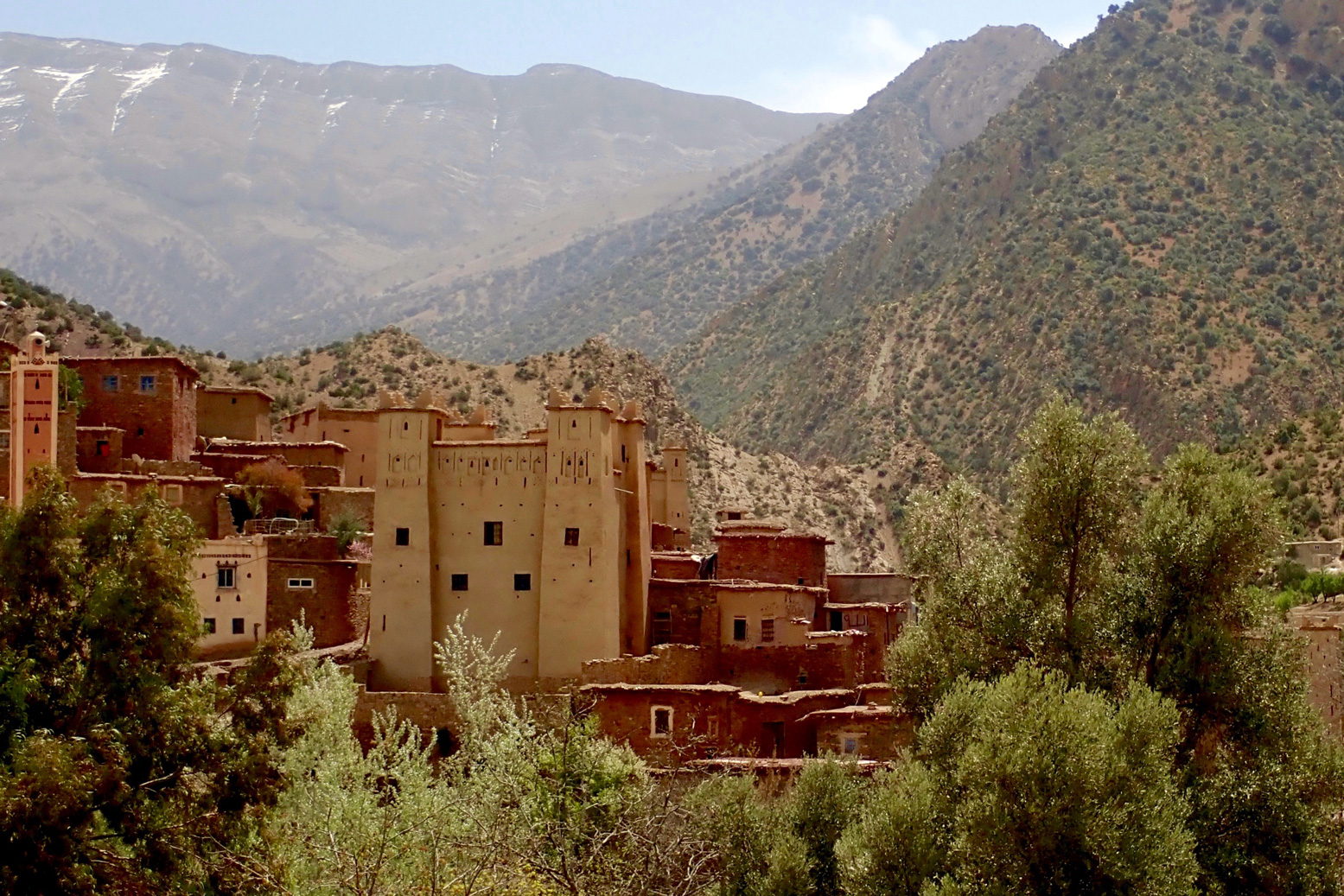
zuhana

A year or two earlier a bike-riding climber who’d visited Taghia suggested to me that a small bike (like my Himalayan) could probably reach the cirque following the riverside mule path.

While that may be true, I figured just because I could, did I have to – or even, should I? The local guide may merely have been protecting his mule-trekking services, but I like the idea of leaving some of the world’s wild corners unspoiled by the putter of mechanized transport. As I was about to be reminded, there’s plenty to see in Morocco on a bike or in a 4×4, but there are many places in the world which are best reached by less intrusive human-powered transportation. That’s what makes them special.

2024 and I heard they’d finished the track into Taghia. James and I were in the area recce-ing route for the M4 book. A few months later I wrote this in Adventure Rider magazine.


Add a few wraiths of mist plus some digitally enhanced pterodactyls, and the narrow chasm which leads into the Taghia gorge could pass for a scene from Game of Thrones. Burrowed deep in Morocco’s High Atlas, the isolated Berber hamlet beyond was only accessible by mule. So I was told in 2018 when I tried to reach Taghia on my Himalayan. Now they’ve carved a motorable track, so we rode down through the defile, crossed and recrossed a stream, and found ourselves in a small cirque or valley head surrounded by sheer, 3000-foot limestone terracotta crags. I’d not seen a place like this in Morocco. Alex Honnold came here to train in seclusion, prior to soloing Yosemite’s El Cap for the Free Solo movie. He did so by free climbing all three of Taghia’s hardest faces – 6000 feet of big wall soloing – in a single day. “It’s pretty freakin’ next level” he observes with characteristic humility in Before Free Solo, Edge of the Unknown’ (on YouTube).
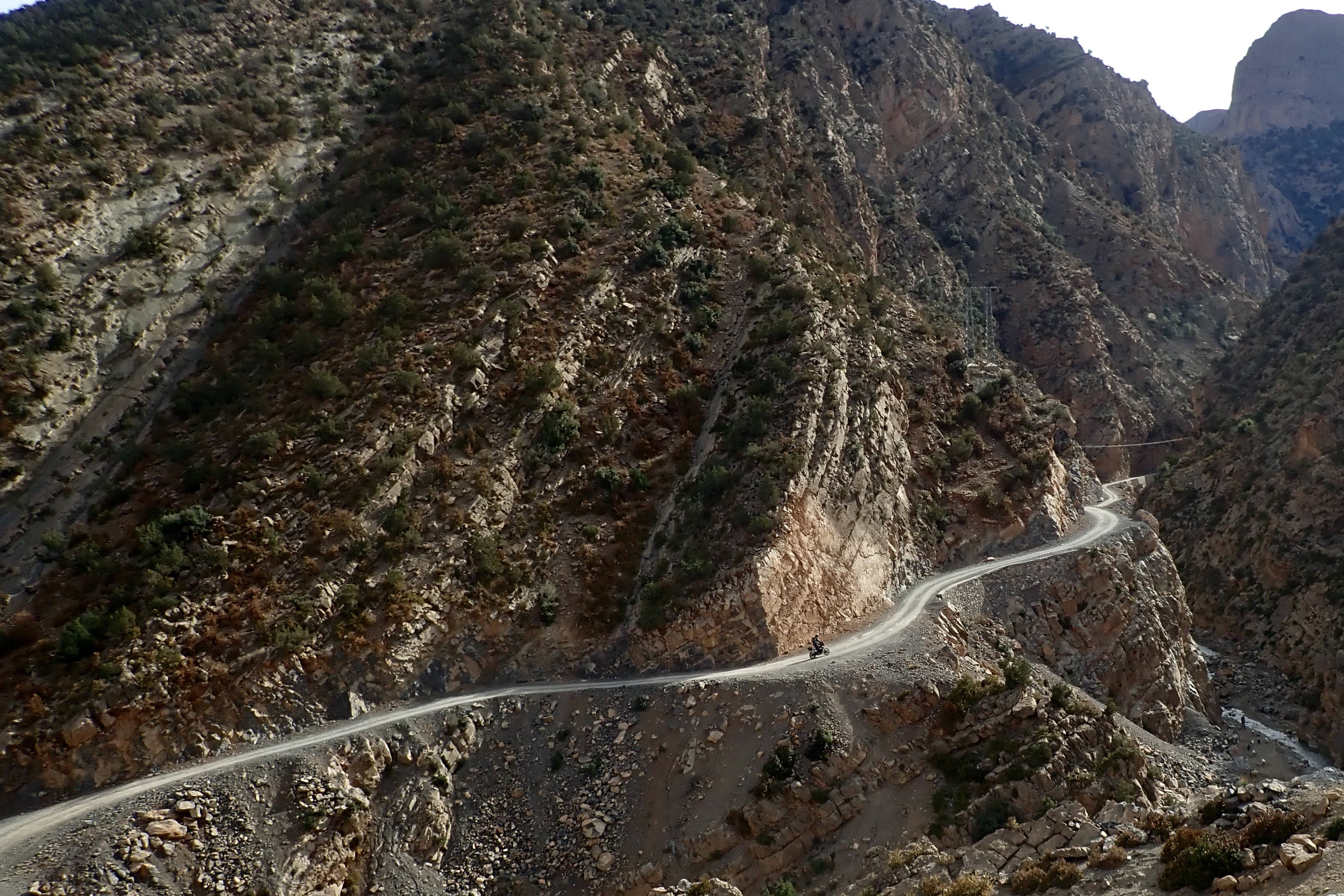
A Good Day in Morocco

Set off with a mission to join some dots for my spring tour in a couple of weeks.
Mission accomplished. Dots joined.
More about the bike here.

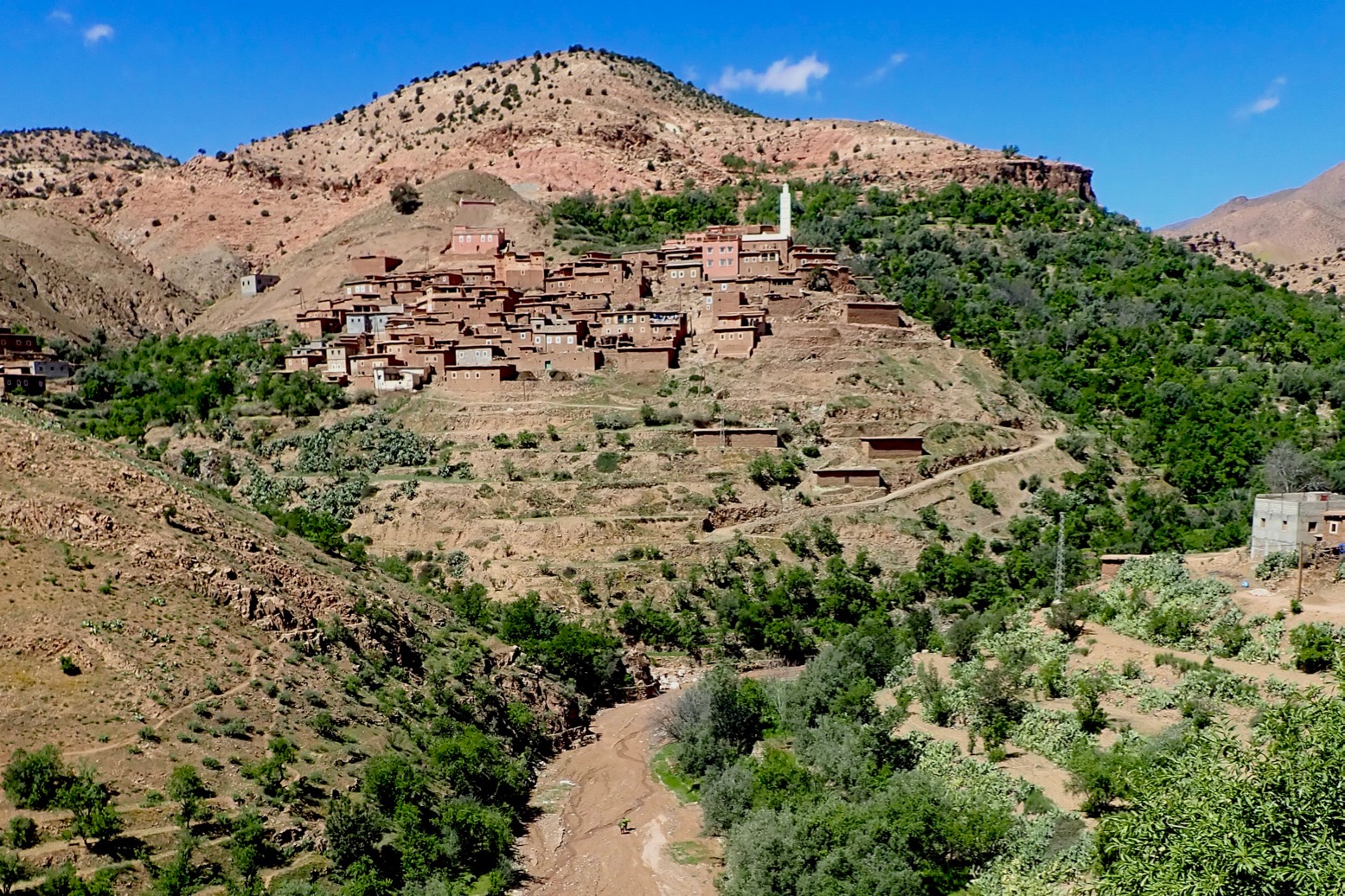
OLYMPUS DIGITAL CAMERAHigh Atlas village

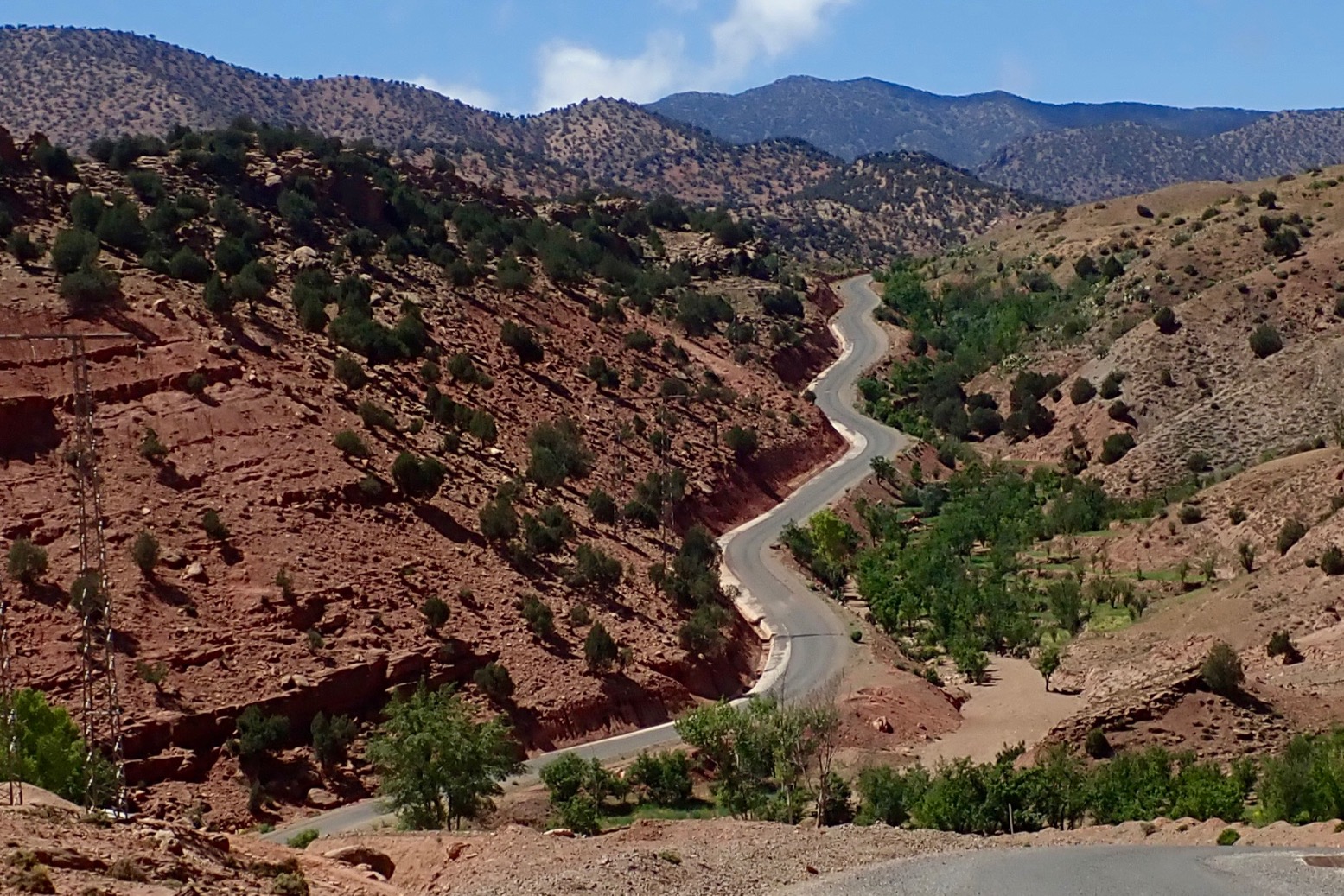
OLYMPUS DIGITAL CAMERAAnother new road from nowhere to nowhere much. I suppose it helps stir up the local gene pool.
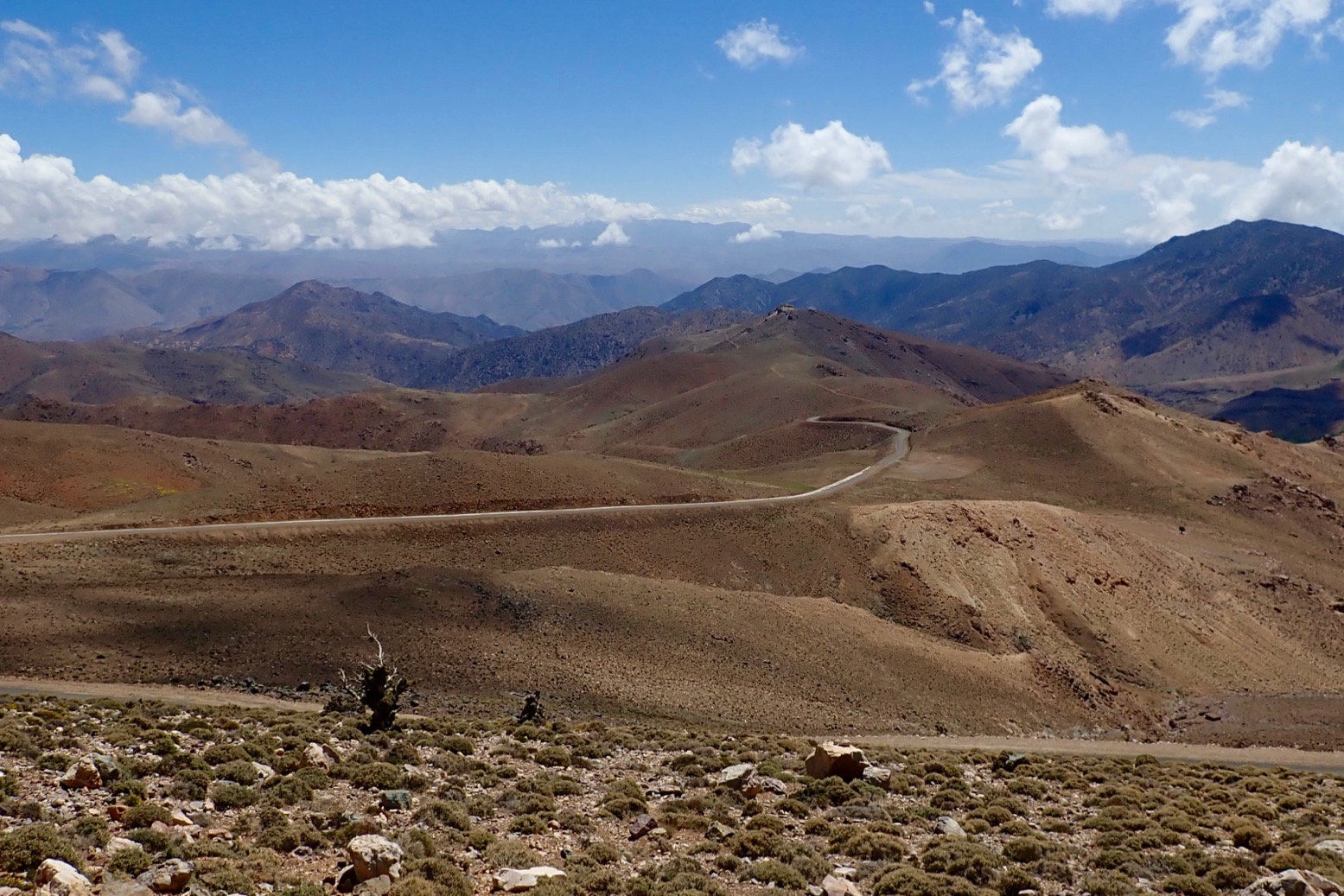
OLYMPUS DIGITAL CAMERAOne of these days I’m going to watch a youtube doc on how they build mountain roads.
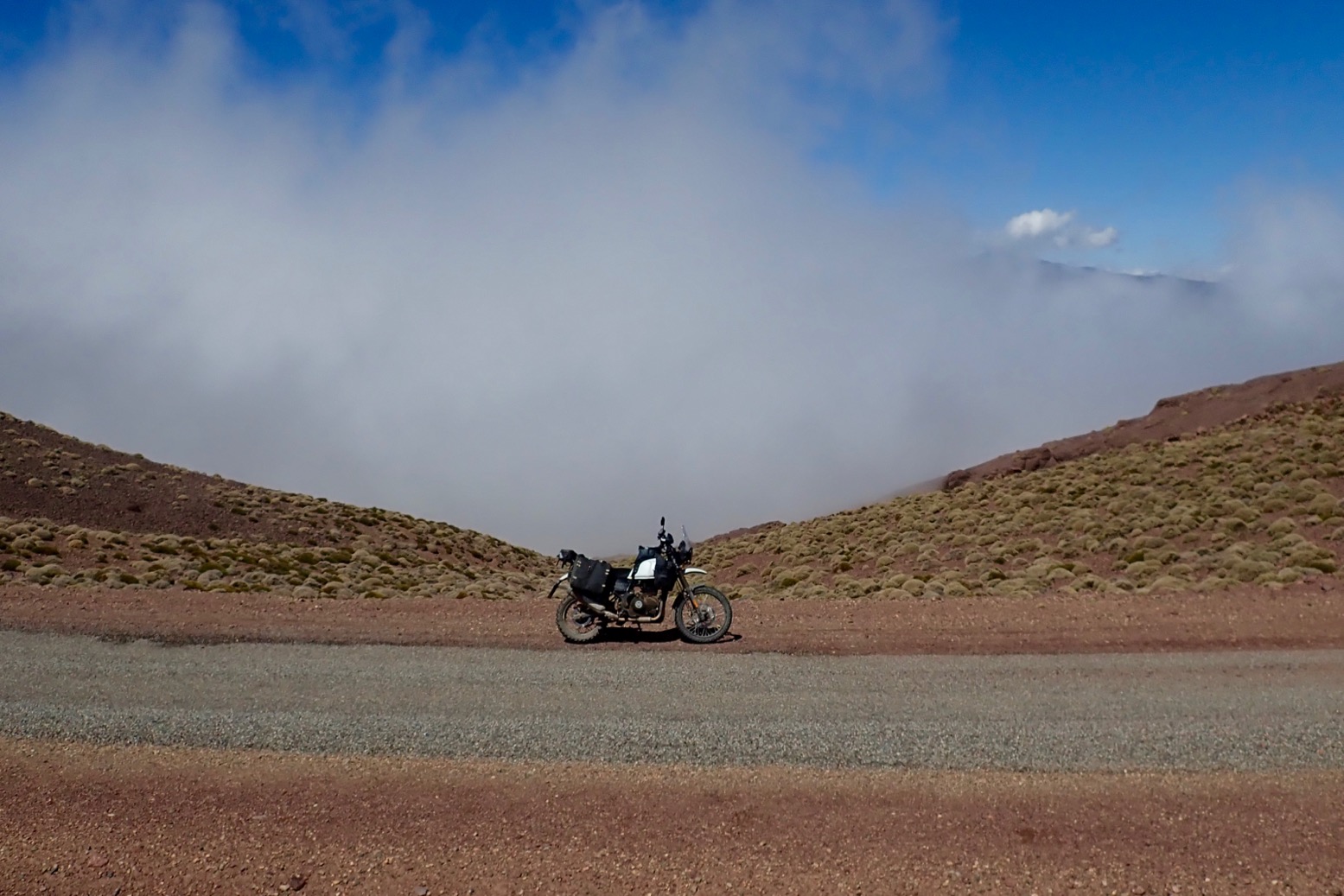
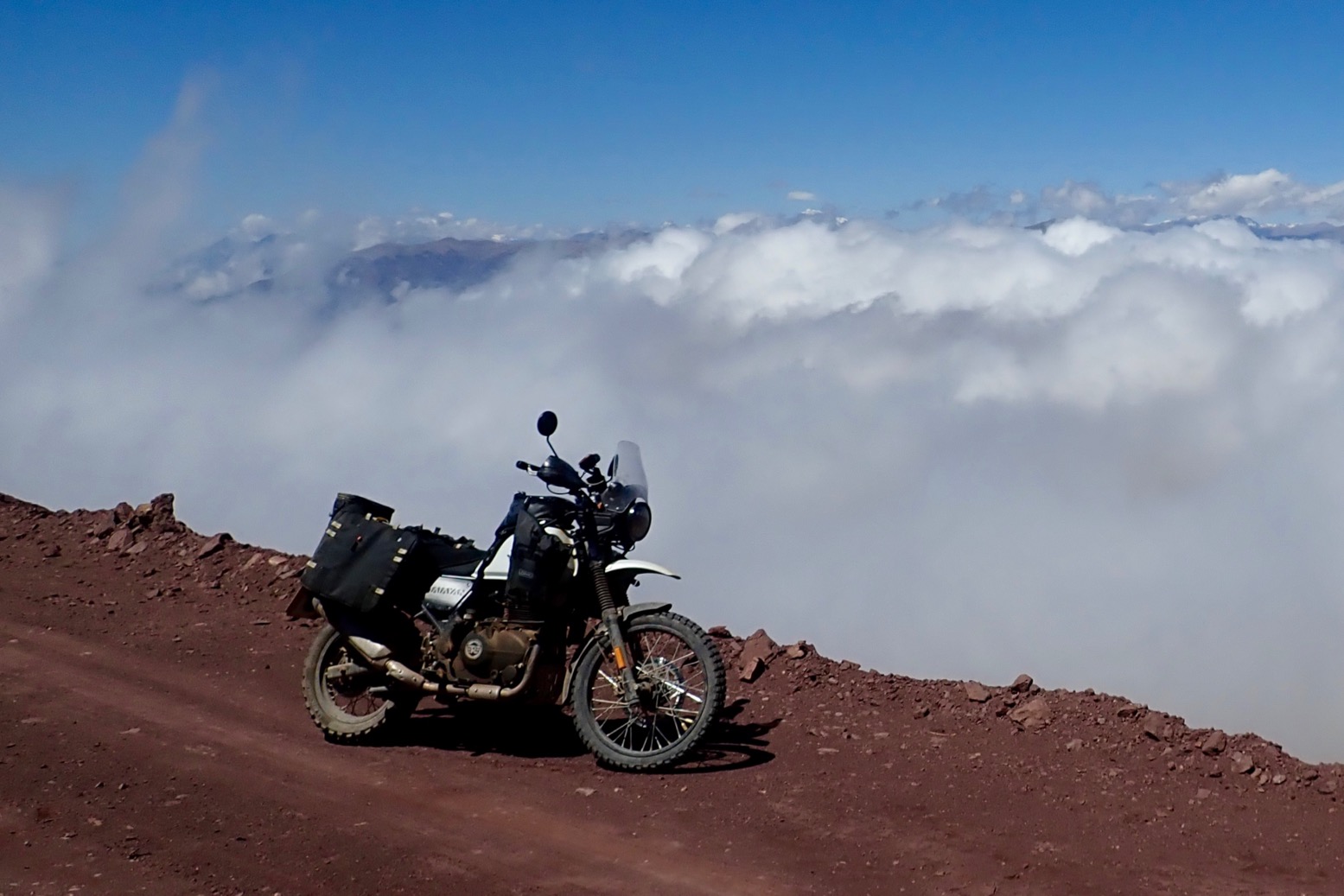
OLYMPUS DIGITAL CAMERA

OLYMPUS DIGITAL CAMERAAbove the clouds at 2500m or about 8300′ in old money.
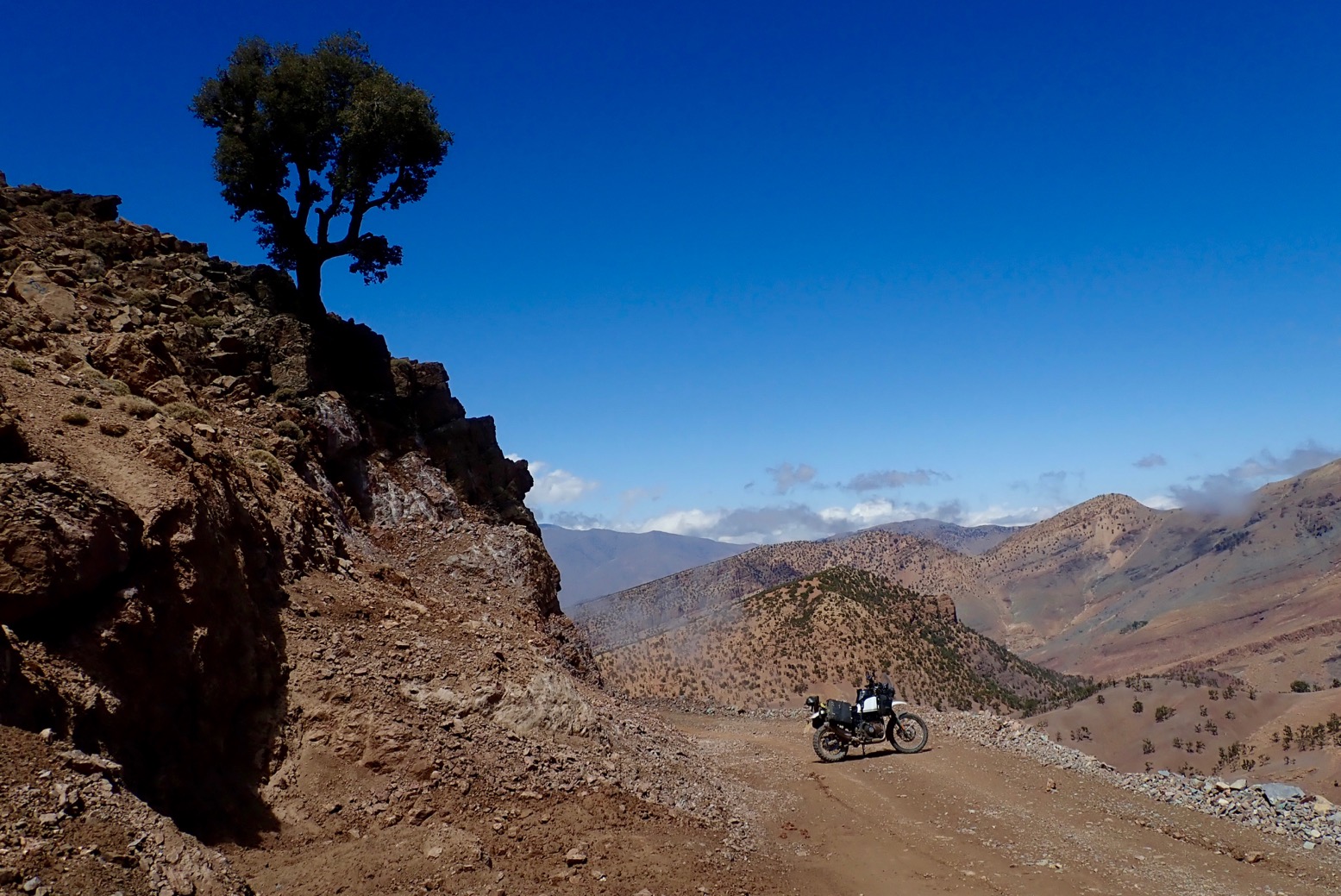
OLYMPUS DIGITAL CAMERAAn isolated juniper tree that’s managed to dodge the village wood burners.
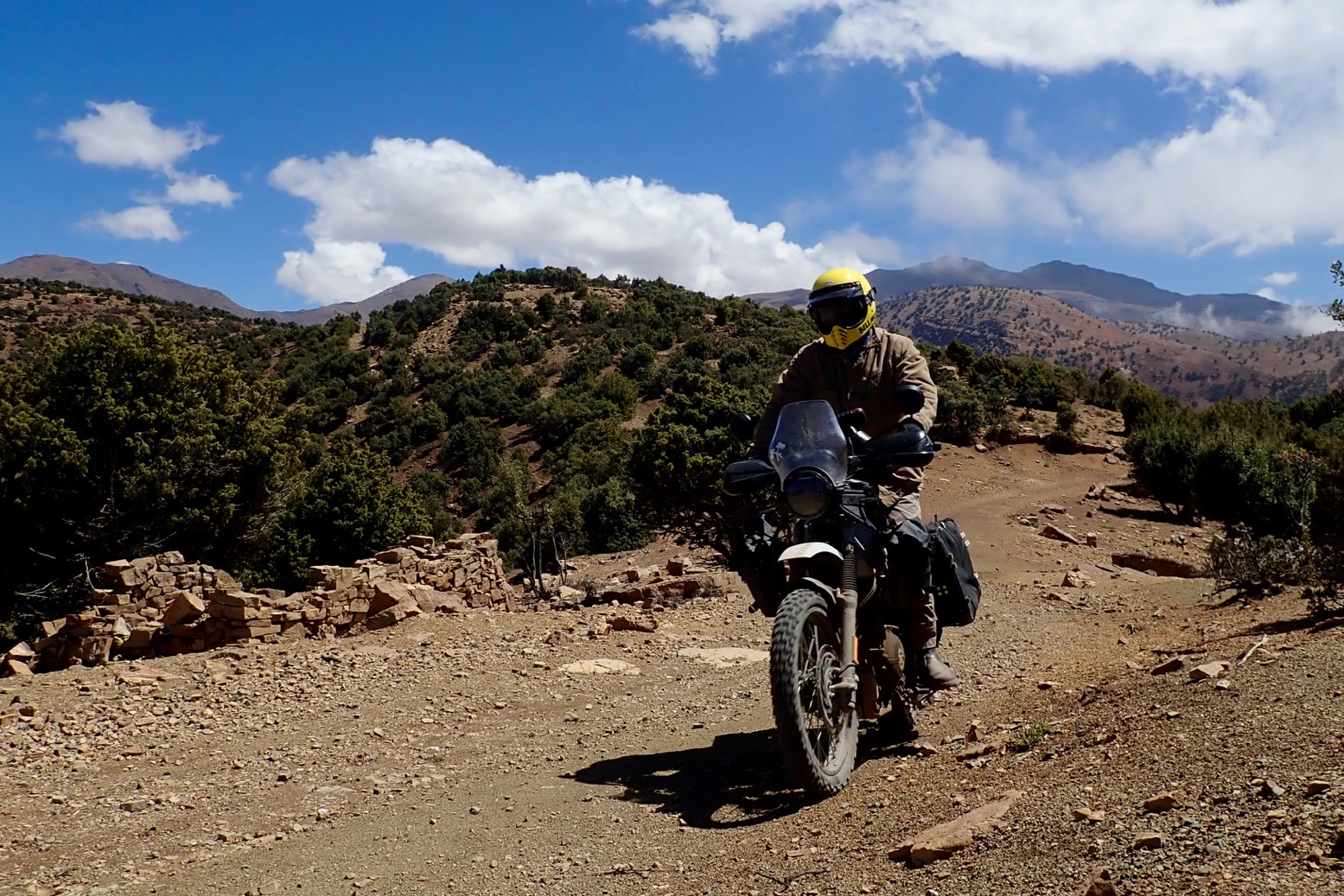
OLYMPUS DIGITAL CAMERAChecking the link route to Map Junction above Ijoukak.
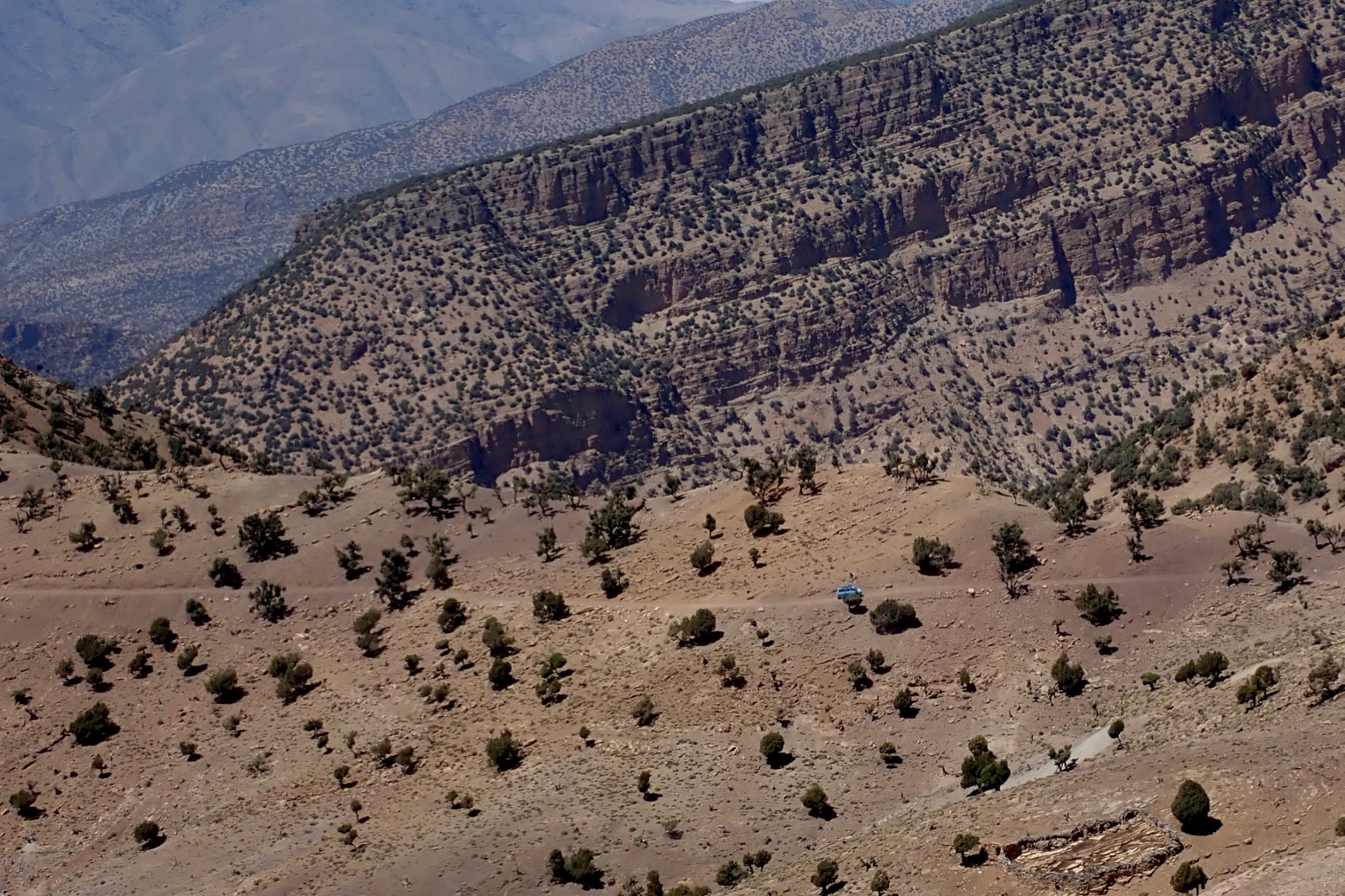
OLYMPUS DIGITAL CAMERA1970s Transit. One of the only vehicle’s I saw today once off the main roads. The other was a Trannie too.
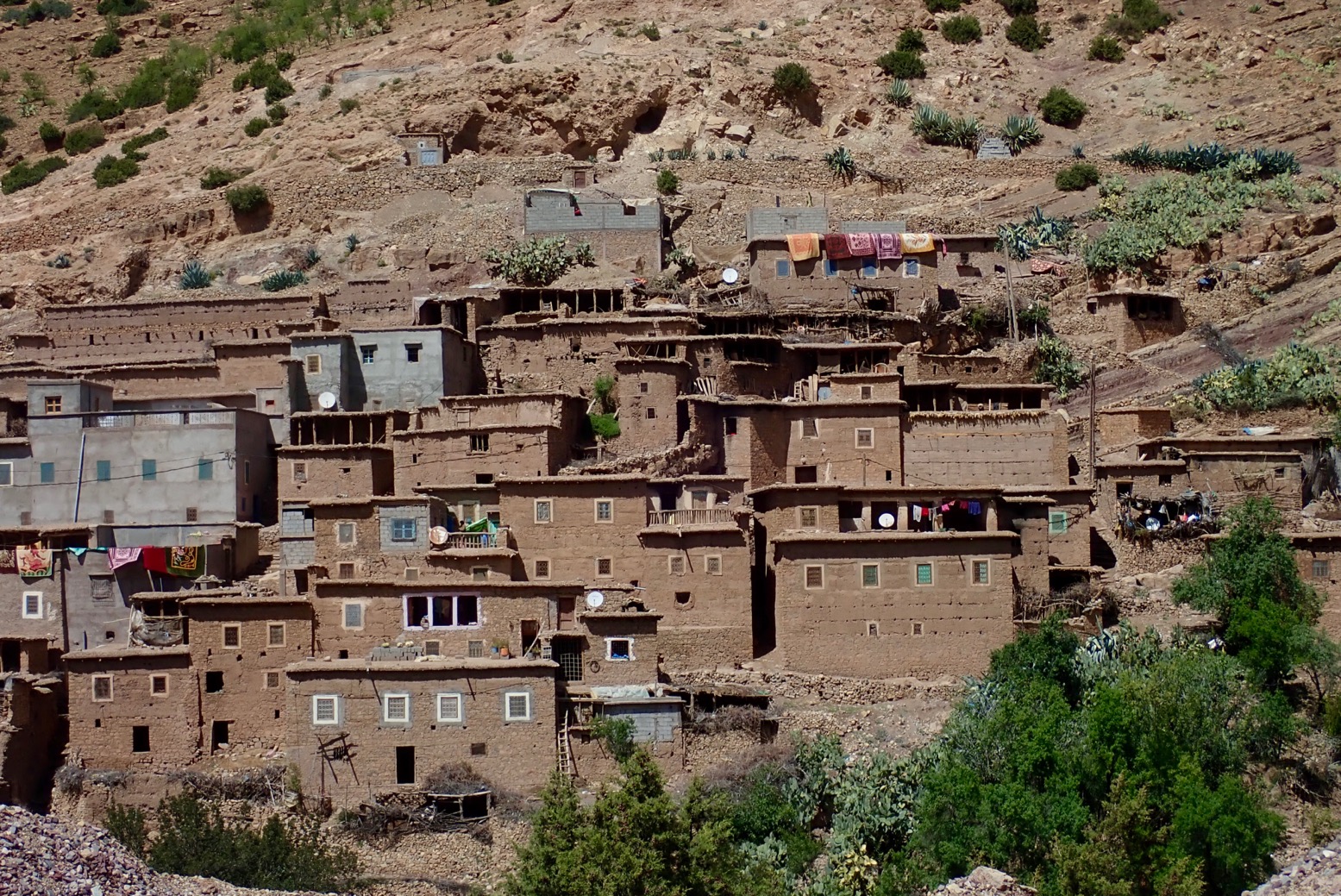
OLYMPUS DIGITAL CAMERAAnother photogenic village somewhere.

OLYMPUS DIGITAL CAMERA

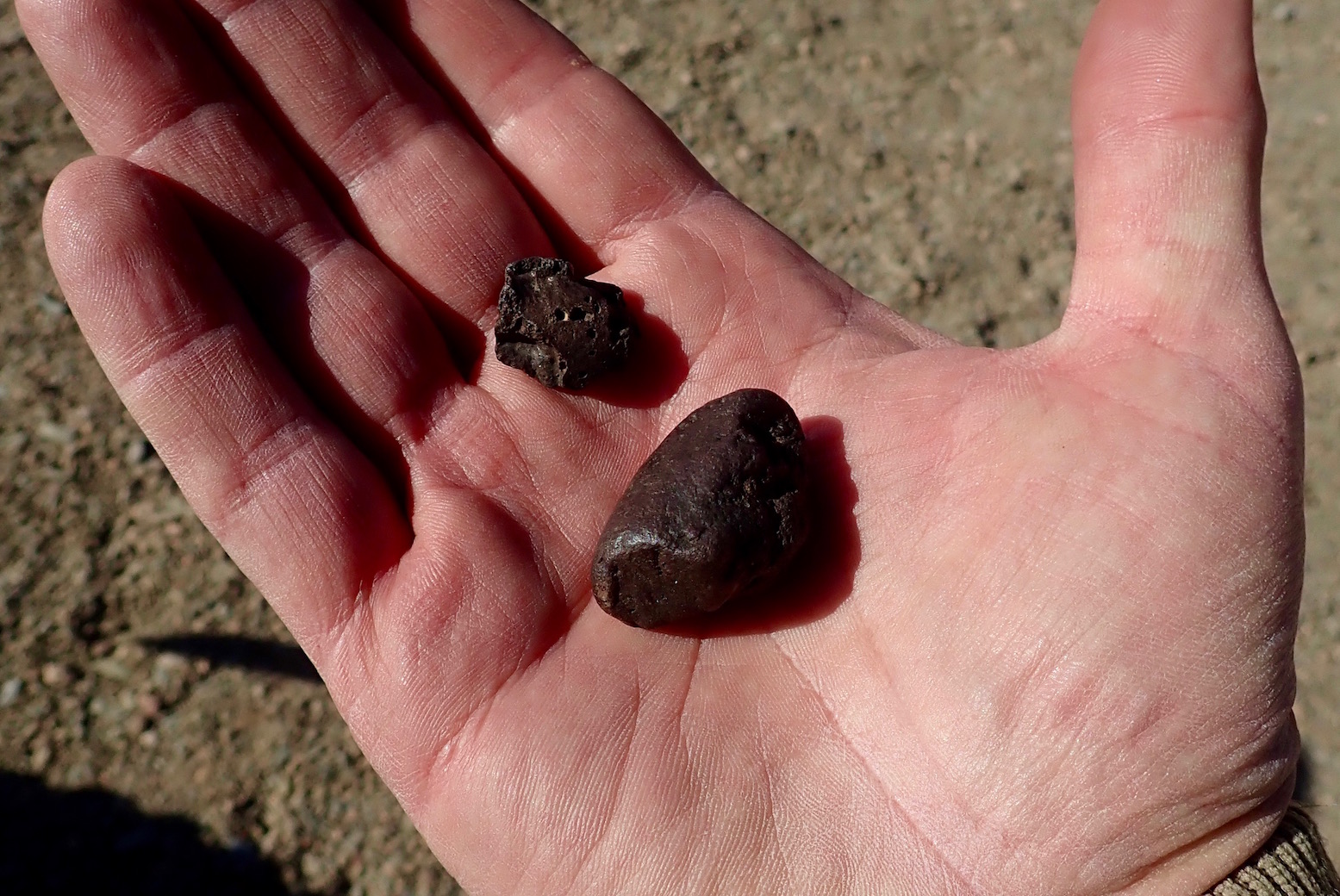
Resting outside a village north of Sidi Ouazik, a relocated Reguibat (Saharawi) ends up giving me some meteorites from the Hammada du Tindouf (St Expert mentioned these in WS).
Never knew Saharawi were relocated way up here – 45 families, he said.
I tell him I’m on my way to Reguibat country. About 5 days ride from here to #thedigtree

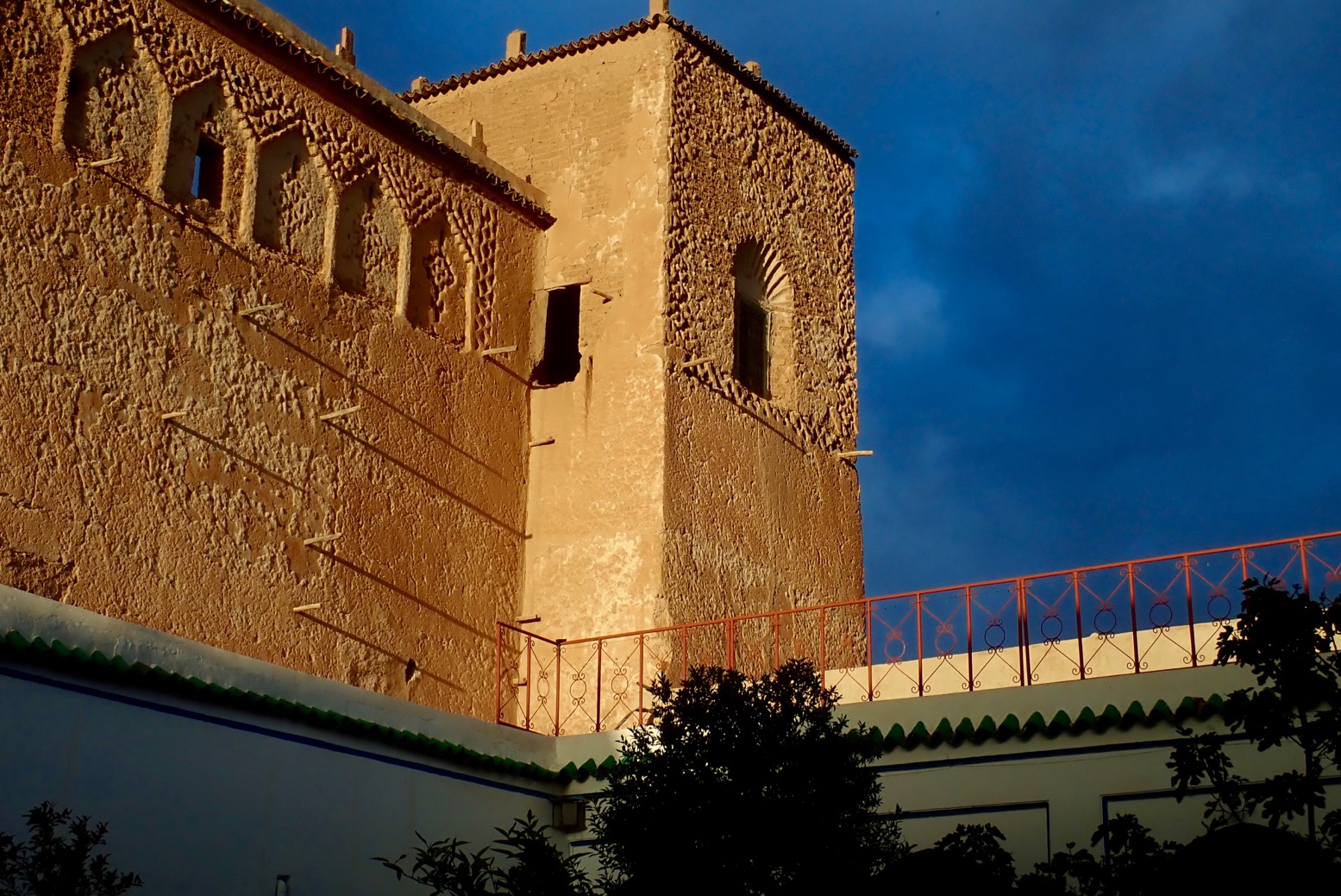
OLYMPUS DIGITAL CAMERASunset at the casbah.

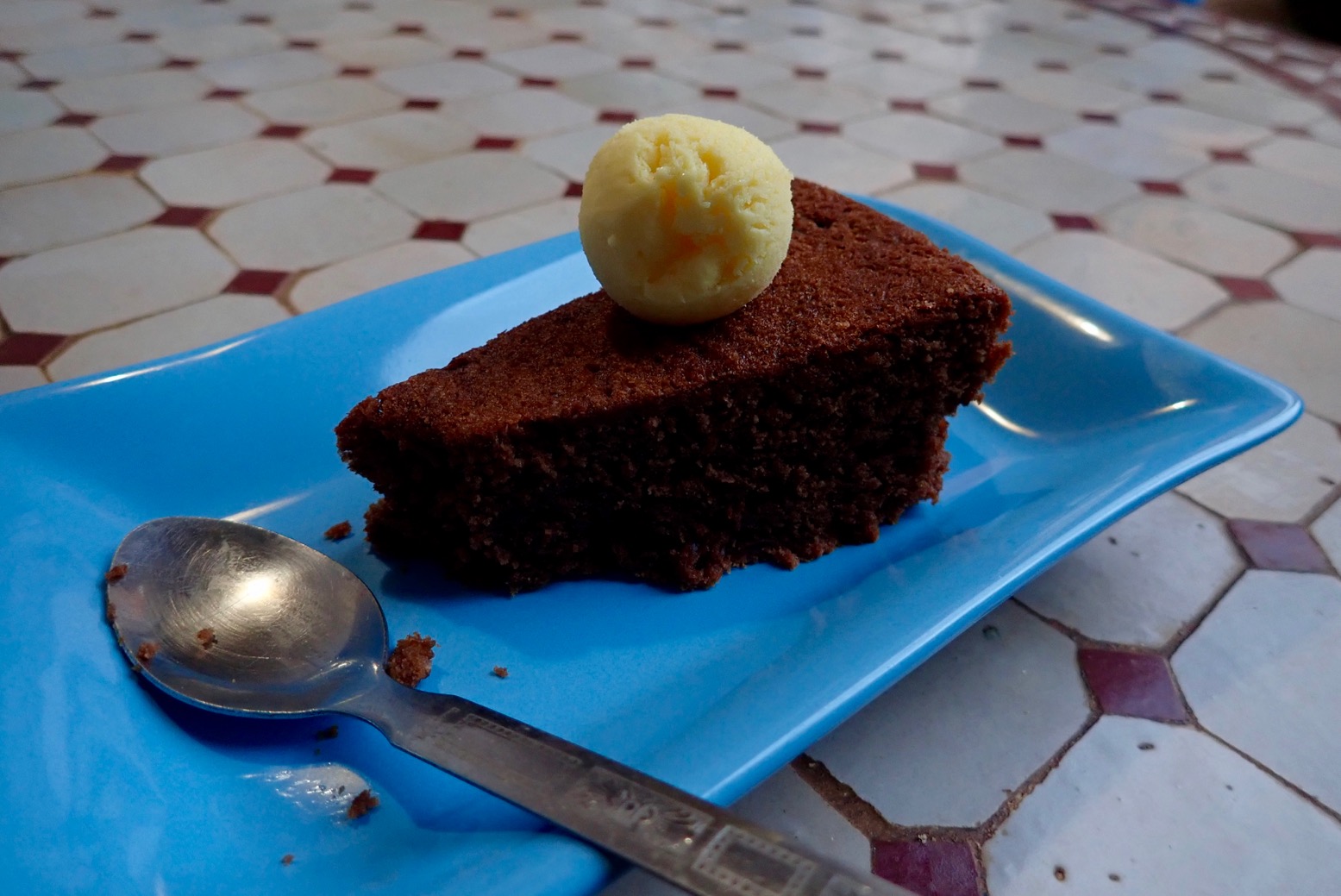
OLYMPUS DIGITAL CAMERAAlways room for a whaffer thin slice of cake.
How to be safe in Morocco

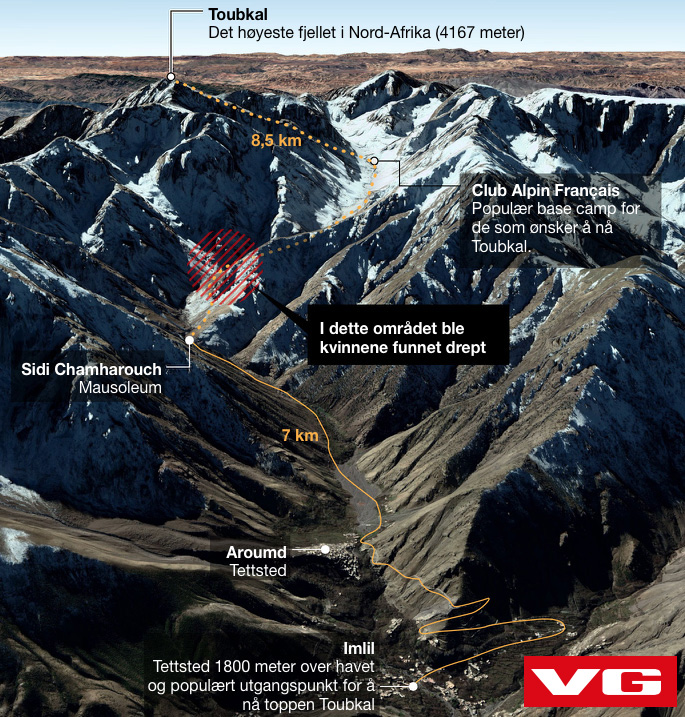
Like most people, I was shocked by the brutal murders of the two Scandinavian women camping in the High Atlas in December 2018. Sadly it was another attack attributed to young men seeking to show solidarity with violent Islamist causes.
One assumes the two women were stalked by the perpetrators from Marrakech, and so the attack might as well have happened anywhere once an opportunity presented itself.
Morocco has been largely free of the types of the attacks which became commonplace in western Europe at this time, and yet tourists who’ve long been targets elsewhere in North Africa and the Sahara, are thick on the ground in all the usual Moroccan places because they feel safe. The last reported terrorist attacks were a bomb targeting tourists in Marrakech in April 2011 and a bigger wave of bombings in Casablanca way back in 2003, mostly aimed at Jewish interests. Unlike the rest of the Sahara, to date no tourist has ever been kidnapped in Morocco.

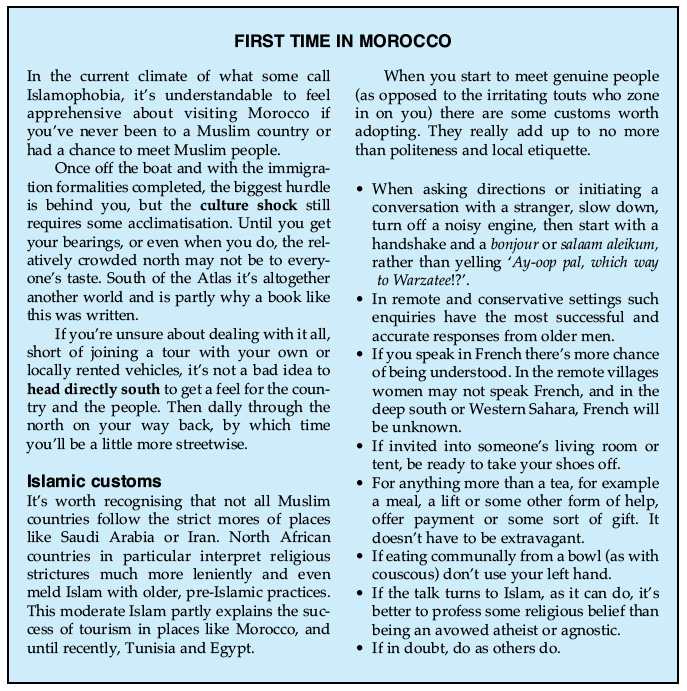
firstime

How to be safe in Morocco
As a tourist, maintaining your safety in Moroccan cities is no different to any other unfamiliar place. Hustlers are common in certain areas; traffic appears chaotic; pickpockets exist and cheap hotels can feel insecure. And out of the cities mountain roads may not all be velvet-smooth Alpine super highways. All these issues have long been far greater threats to visitors in Morocco than Islamist violence.
Being a Muslim country does give Morocco an edge to those unfamiliar with Islamic culture, particularly women, but the Islam practised here is a lot less severe than in Saudi or Iran, for example. Read the blue box, left, extracted from my Morocco guidebook. Also read the sensible guidelines given on the British FCO website, to give one example. They spell out all how to be aware of the most common risks.

toubka

In a crime sense, the popular hiking area below Mt Toubkal (left) where the women were murdered is not dangerous compared to a big Moroccan city. It is probably its popularity and proximity to Marrakech which make it an easy, adventurous destination.
Occasional unnerving but actually harmless encounters over the years have long led me to advise the following: when wild camping, do so unseen and completely out of sight if possible, and if not then camp close to or in a settlement. This way either everyone knows you’re there or no one does. I give similar advice in both my global overlanding books and would act like this anywhere in the world, just for peace of mind.
In Morocco many have found undisturbed wild camping can be quite hard to achieve. Even in the desert, travellers commonly report someone popping up out of nowhere, usually a curious nomad or villager, or sometimes police checking up on you. It should be understood that in North Africa and the Sahara, camping alone in the middle of nowhere away from other people is regarded by locals as suspicious or odd.
For us Euro-tourists camping has long been regarded as a money-saving adventure, but because hotels and auberges can be so numerous and inexpensive in southern Morocco (from <€5), I’ve long preferred the comfort and security they offer to all the clobber and faffing required with camping, especially if not travelling in a spacious car, or when travelling in the cool season when mountain nights get chilly and drag on for 12 hours. In a cozy auberge you get to meet local people or fellow travellers, eat well, rest properly and recharge your gadgets.

m17-P1210574

Another practise desert travellers like me have adopted since the deep Sahara became FUBAR’d, is not to share detailed travel plans with strangers or online, especially on publicly readable social media. I don’t do Facebook or Whatsapp, but by all means keep friends and family in a closed group appraised of your movements. In Morocco the reach of the mobile network is far greater than you’d expect, not least in remote rural areas where locals depends on it. A local SIM card costs from €2 which includes €2 of credit. You may need the vendor’s help in setting it up.

No one could have anticipated the appalling murders in the High Atlas any more than crossing a bridge in London, backpacking in New Zealand, visiting a market in Strasburg, attending a Baltic island retreat, or a school or place of worship in the US. Morocco remains one of the few countries in North Africa where tourism continues to thrive despite anxieties about ‘Muslim countries’. It helps sustain the local economy, particularly in rural areas where the true level of poverty is much greater than it looks. Don’t let this tragic event unsettle your plans to visit a wonderful country, any more than any of the other places listed above.

P1310022

Tichka–Marrakech: alternative roads

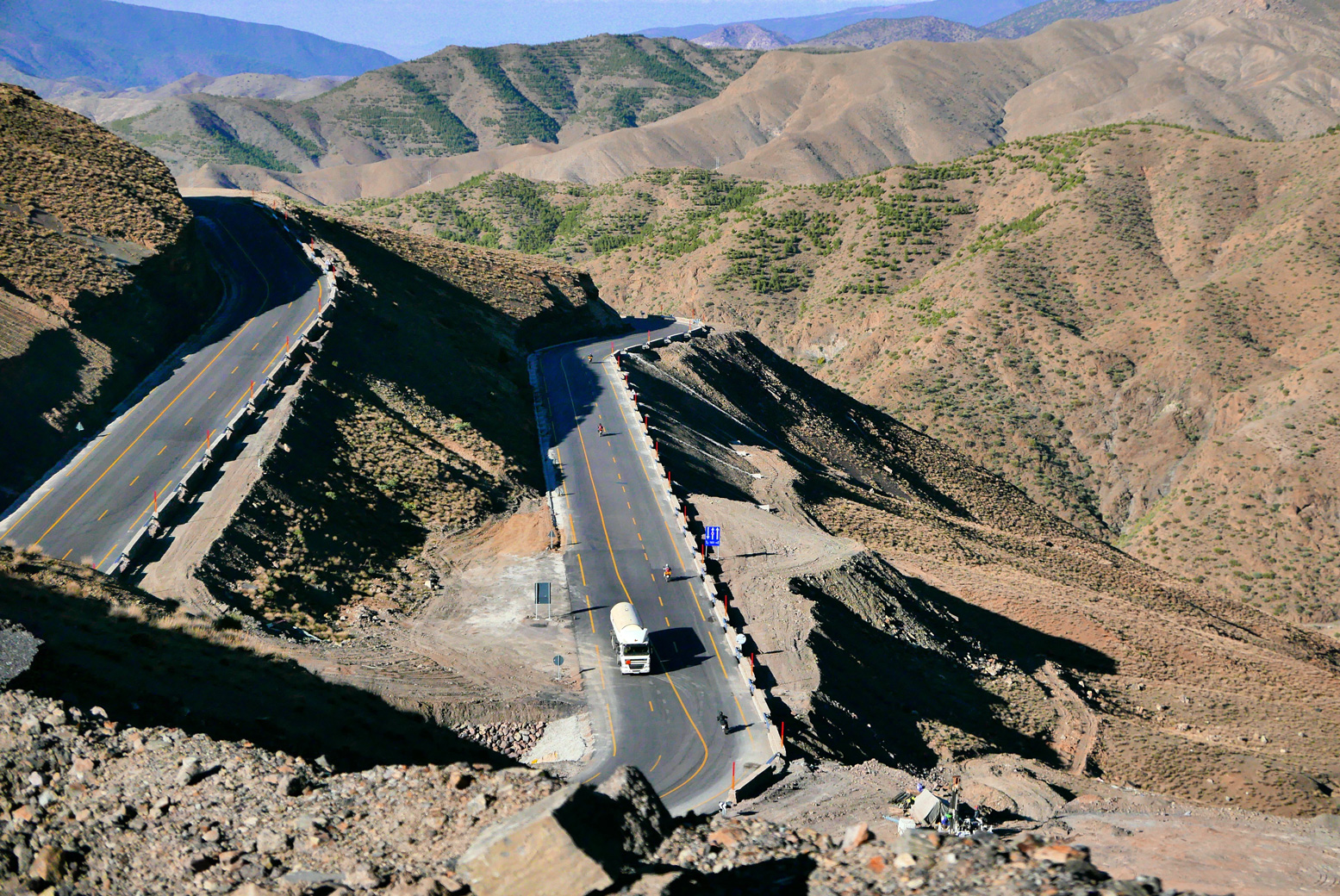
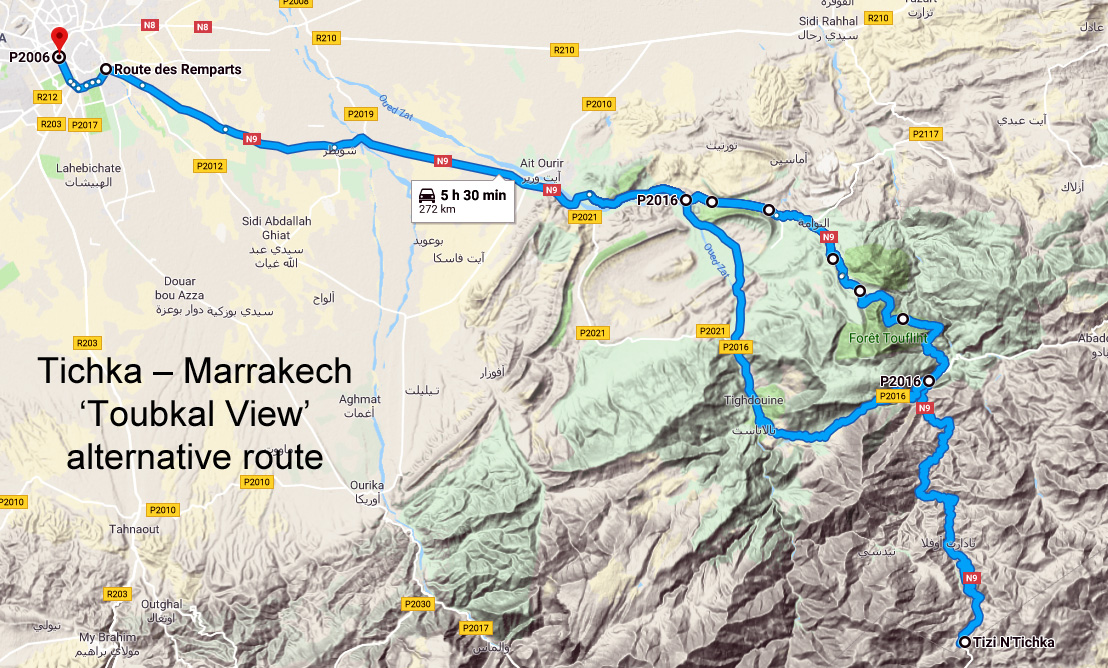
toubviewThe N9 is the main highway crossing the High Atlas between Marrakech and Ouarzazate, topping out about halfway at the 2260-m Tizi n Tichka pass where a superb range of clay souvenirs and vibrantly coloured ‘gems’ are permanently on display. Being the main road, traffic can be relatively heavy and slow, and the hundreds of bends make cycling a bit stressful and overtaking tricky in a vehicle, especially when climbing or away from the recently widened ‘race track’ which uncoils a few kilometres north of Tichka (below). But even on this recently improved section, landslides and subsidence are already taking their toll.
Short of the usual floods and storm damage, both the diversions outlined below are doable in a regular 2WD rental car, on big motorcycles as well as sturdy bicycles.

tichkawide
Telouet-route

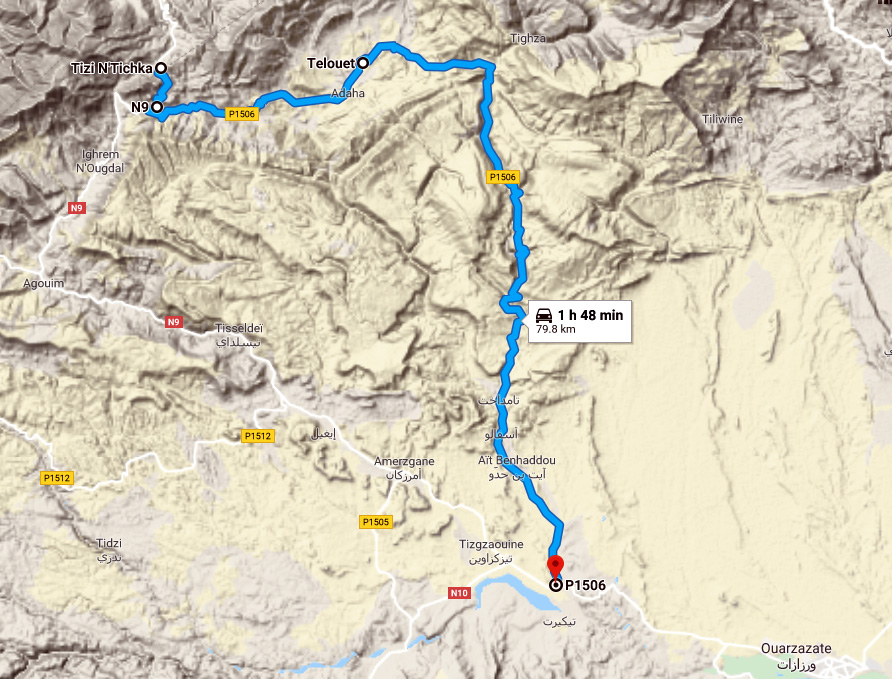
On the warmer, south side of Tichka, the alternative route (right) via Telouet was well known, even before it became largely sealed a few years ago. It starts just 4km south of the Tichka col, where the final roadworks on the P1506 are nearing completion on the 20km to Telouet with its famous Glaoui kasbah.
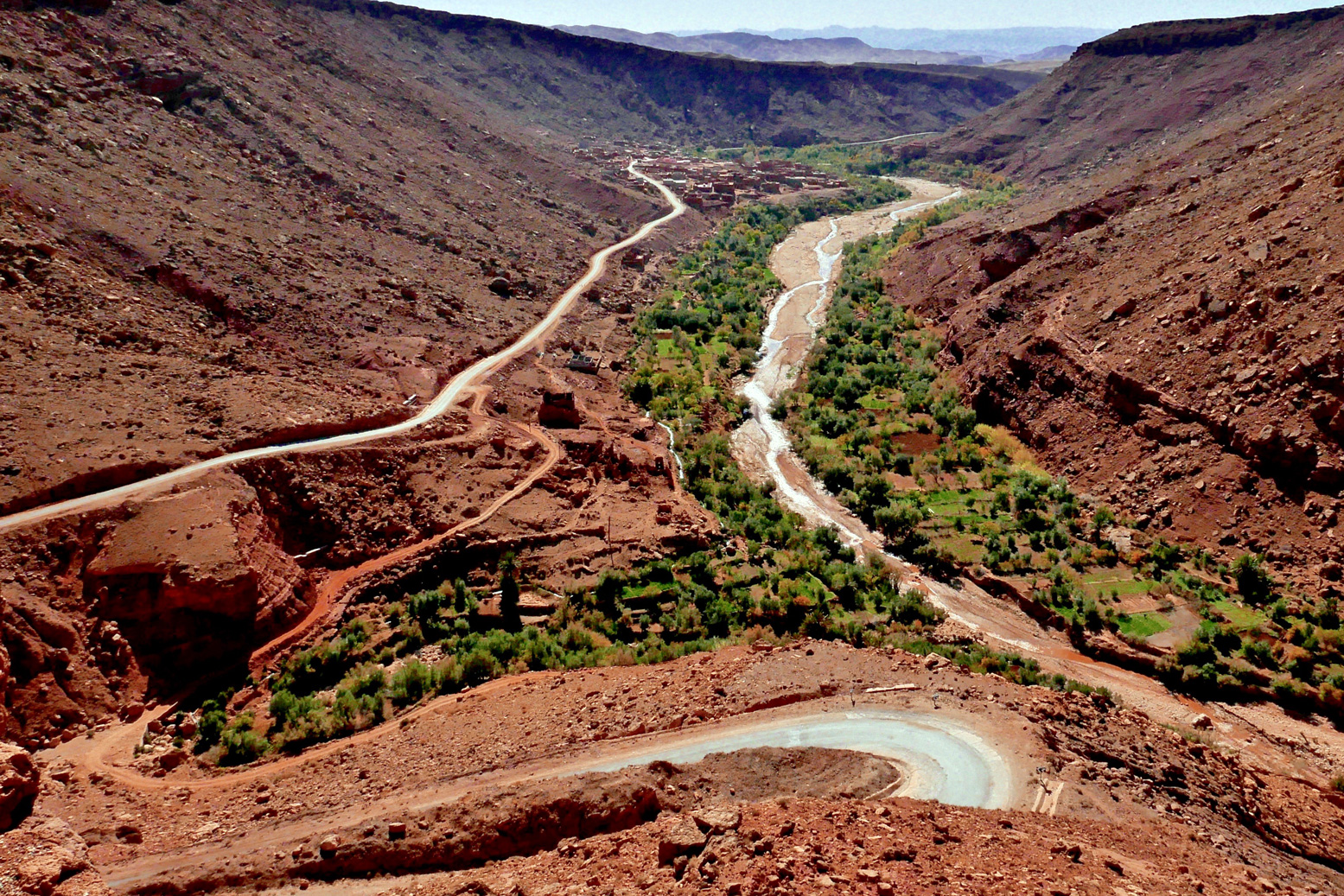
From here the P1506 soon drops off a plateau to follow a long, oasis-lined ravine (below) all the way down to the Aït Benhaddou tourist trap, rejoining the N9 10km later at Tazentout, 23km west of Ouarzazate.

aitbenvalley

N9-Toubkal

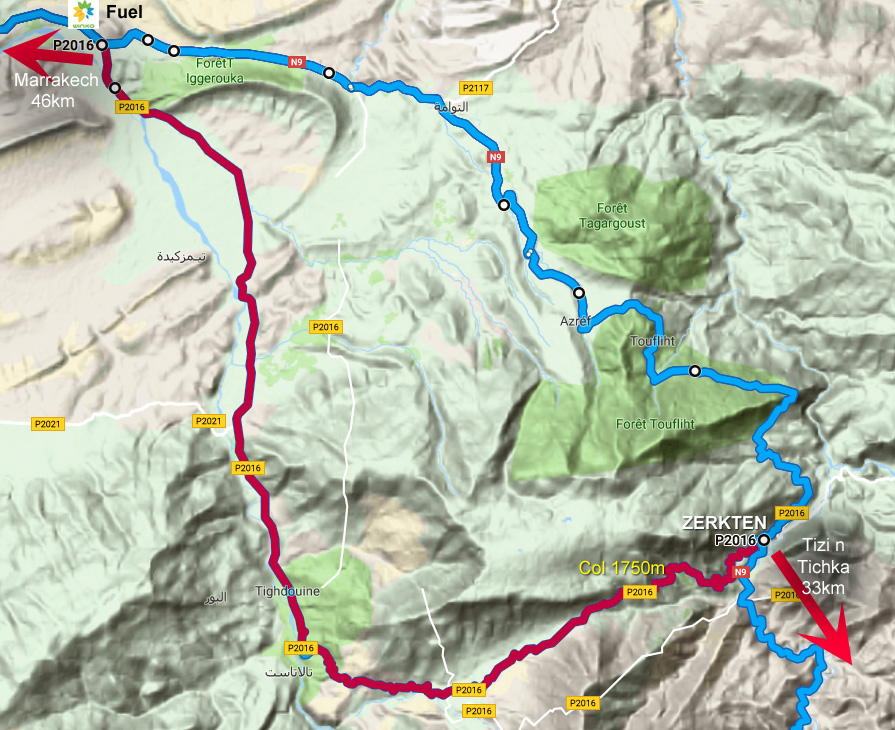
On the north side of Tichka, road widening disruption has currently spread down the valley over 17km north of Tadart, the first village below the col. But once you get to Zerkten village, signed and 33km below Tichka by a red and white telecom mast, there’s an easily missed side road to the west. See map above.
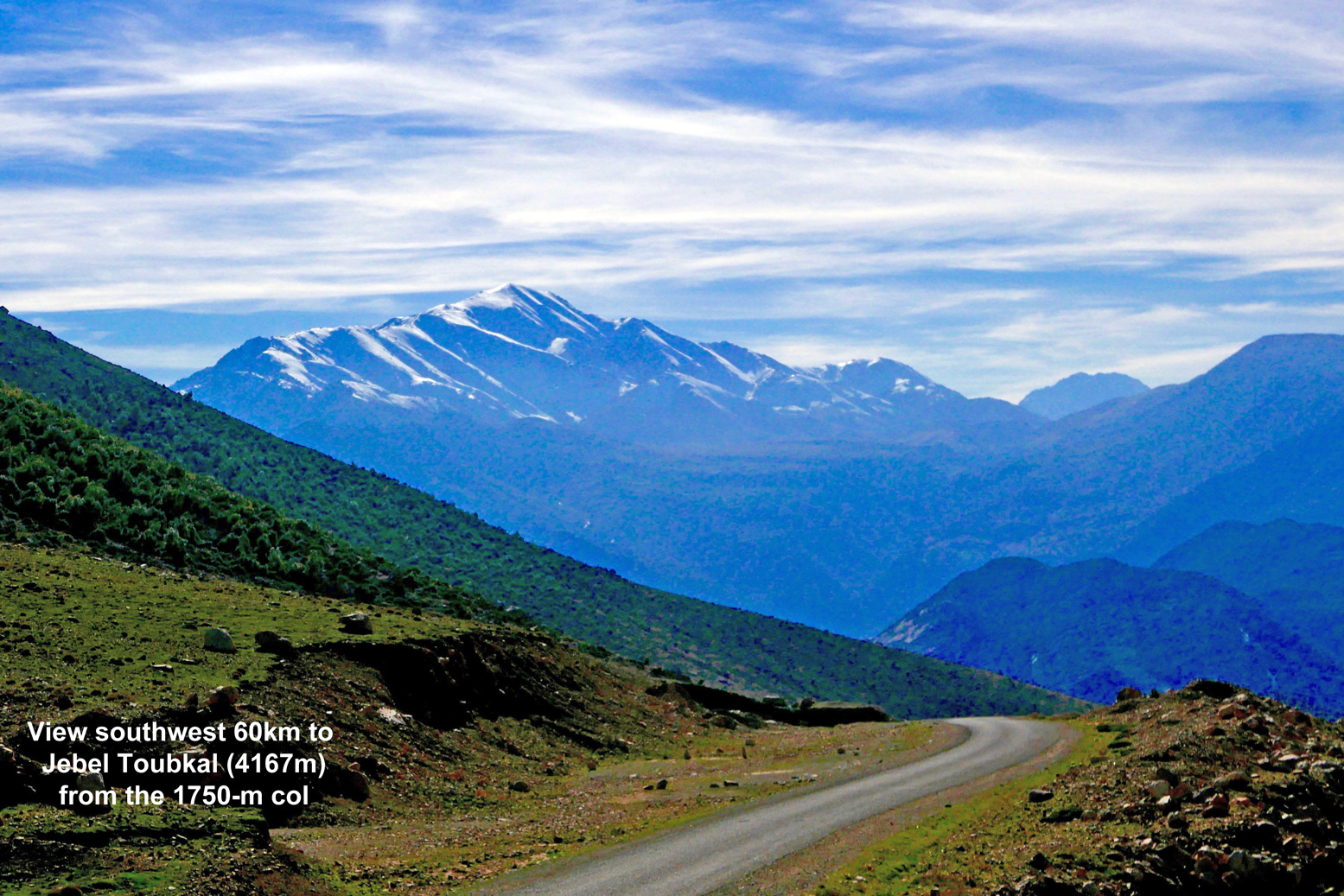
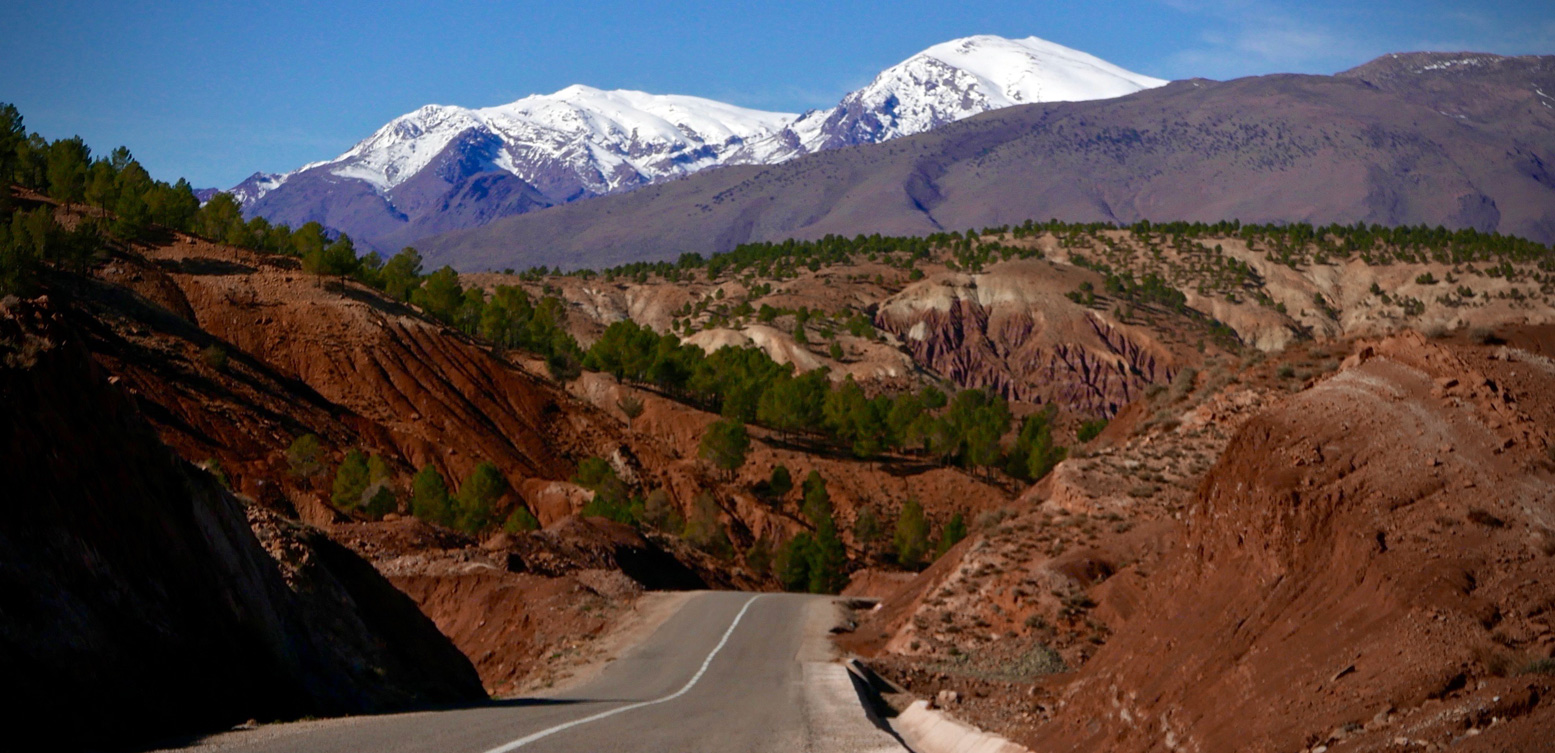
As pictured below, it leads steeply 6km up to a 1750-m col to an impressive view 60km  southwest to the 4167-m mass of Jebel Toubkal. It’s one of the few points on a sealed road that gives a full view of North Africa’s highest mountain (picture, top of page).

tichcolclimb
N9-Tichka-view
oliver

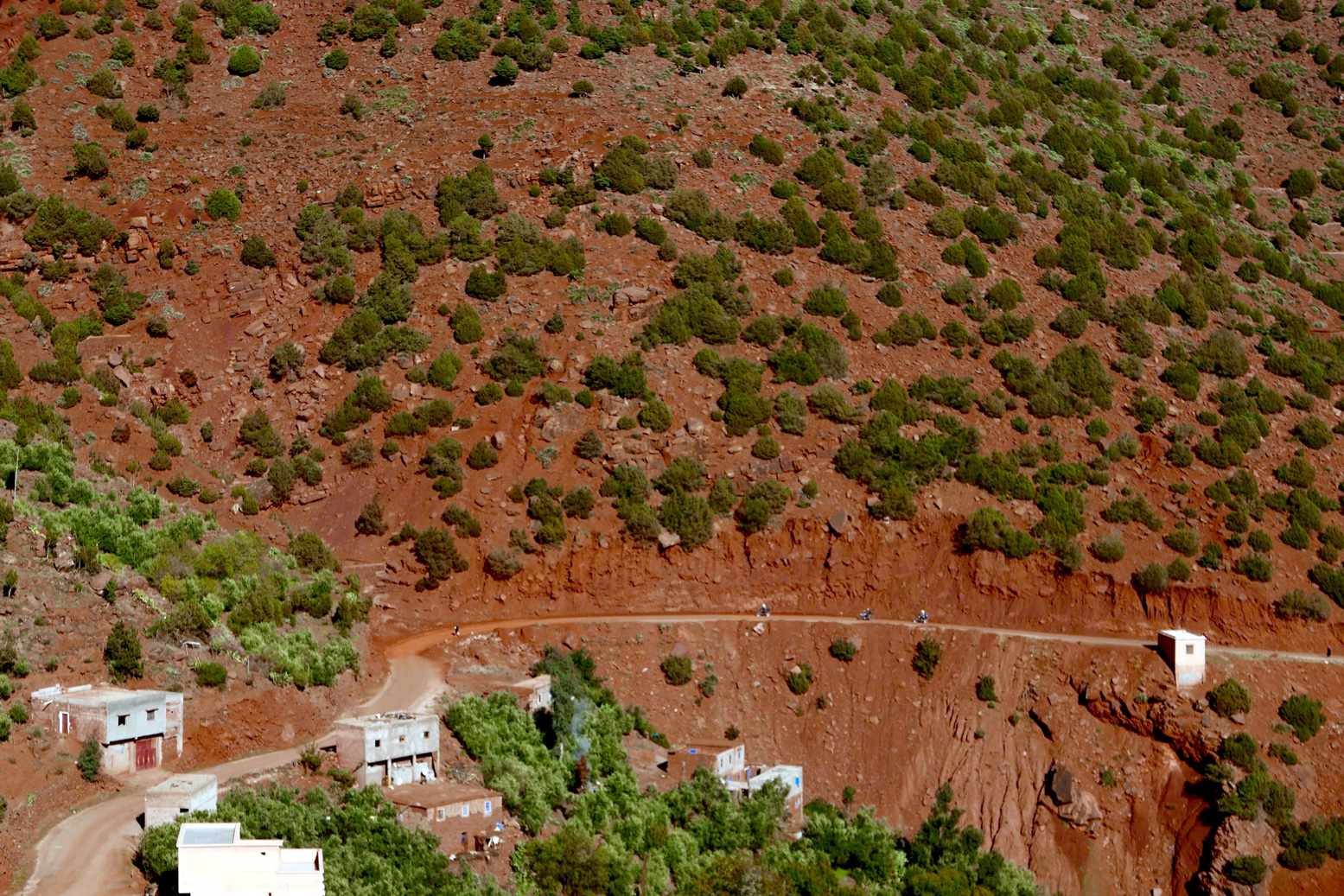
From here the road drops down through apple orchards recalling the Aït Boumengueze valley further east, below the Mgoun massif (MH18. MH19).

winxo

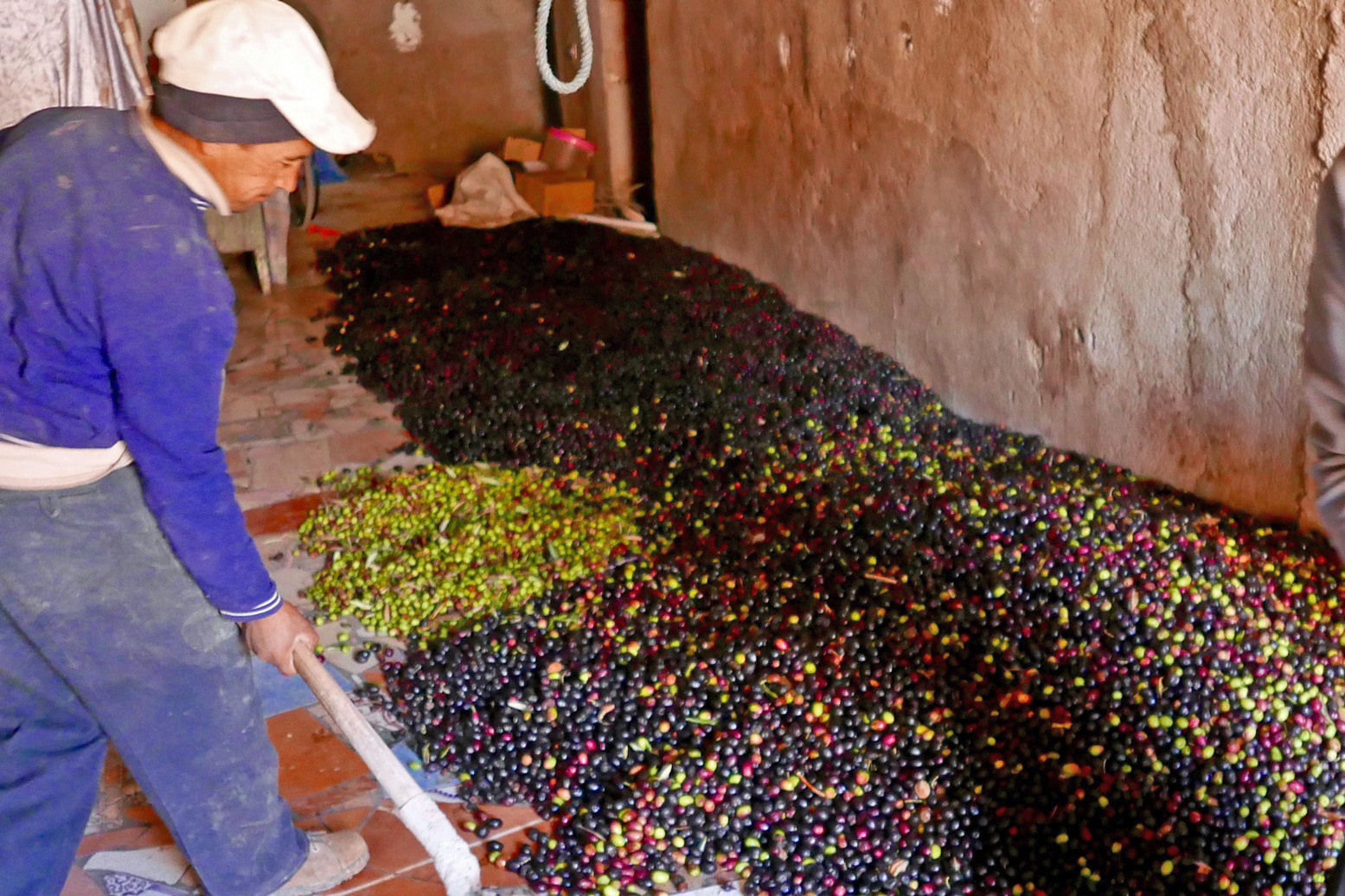
It levels out along the Oued Zat at the town of Tighoudine in the Oued Zat valley where, in late November, you’ll detect the strong aroma of olive oil being produced in roadside presses (right).
The side route rejoins the N9 after 35km, just before a green Winxo fuel station on the north side of the road, 46km from Marrakech.

highatlashighway

Tis the Spiral Tunnel of Tagountsa

Part of the Sahara A to Z series

spirtuna
spirmoha

High up on the side of a remote High Atlas valley is an engineering marvel – hewn through the cliff face a spiral tunnel manages to curl down through the rock and emerge underneath itself.
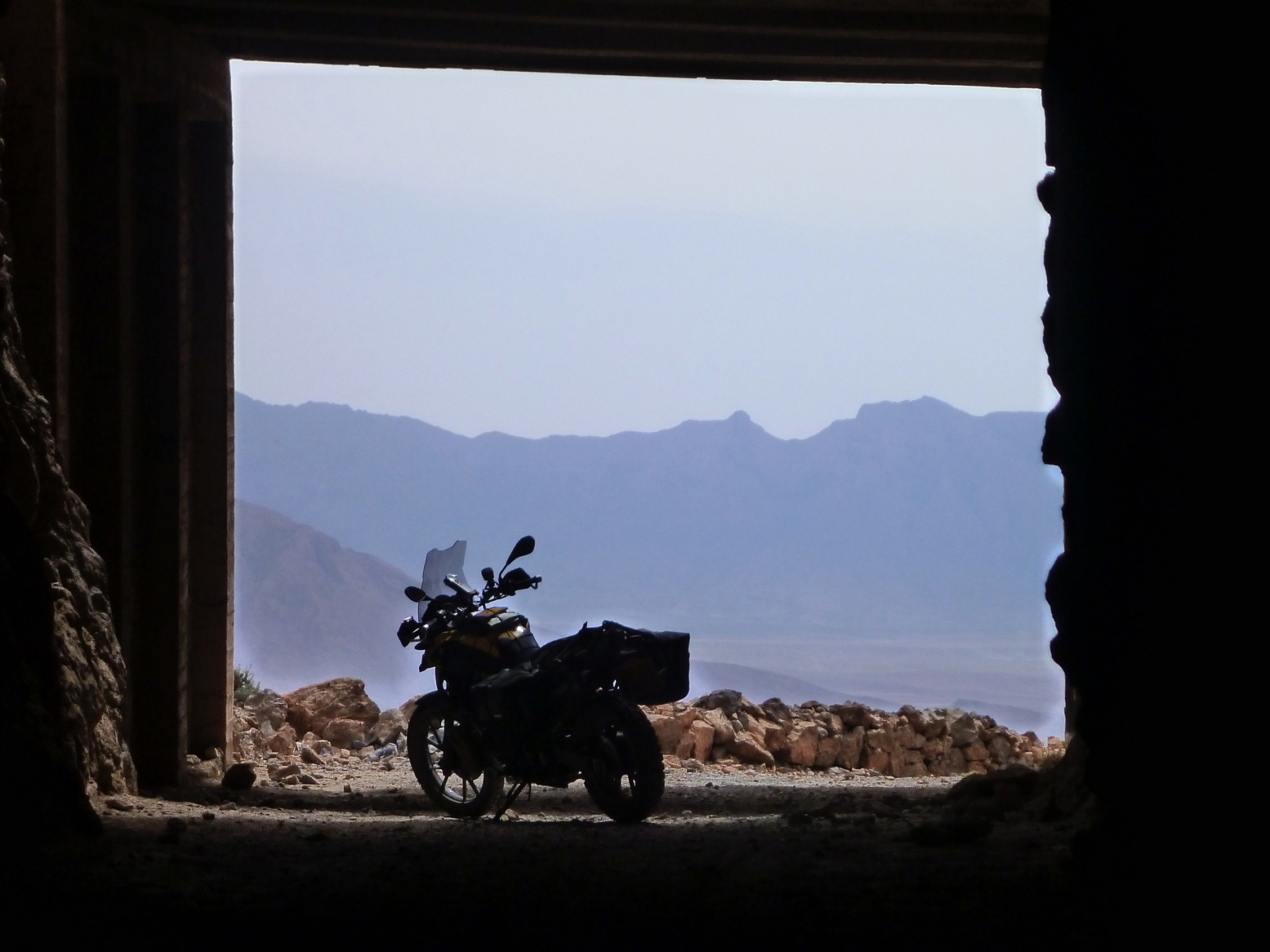
I was told about this curiosity in 2012 by the chap at the cozy Chez Moha auberge (right) in Aït Youb while researching the second edition of Morocco Overland. Riding a BMW F650GS, I followed his directions with the usual route-finding issues and then, beyond the last village, hacked up a stony disused track to the 2250-m (7340′) Tagountsa Pass. From the cliff edge I recall the timeless view stretching east up the Plain d’Amane valley towards Rich, pictured below and on p128 in the current book. A short distance later I spun through the tunnel and rolled down a series of switchbacks back to the valley floor and a tasty tajine back at the auberge.

tang

Spiral tunnels have been a long-established solution to constricted route building challenges across mountains. You could even say that your typical complex freeway intersection where the road winds back under itself to change direction tightly is the same thing in flyover form. But you must admit that hacking out any type of tunnel – let alone one where there’s no room to dig out a regular switchback – is an impressive task.

spirplak
yvrom

Not for the first time on this website, I’m able to benefit from research of Yves Rohmer (right) on his always fascinating collection of old Saharan curiosities at Saharayro, including the Tagountsa tunnel. Viewed on Google Earth, the big picture is more vividly rendered setting View > Historical Imagery back a few years.

spir
spirplan
spirtuna

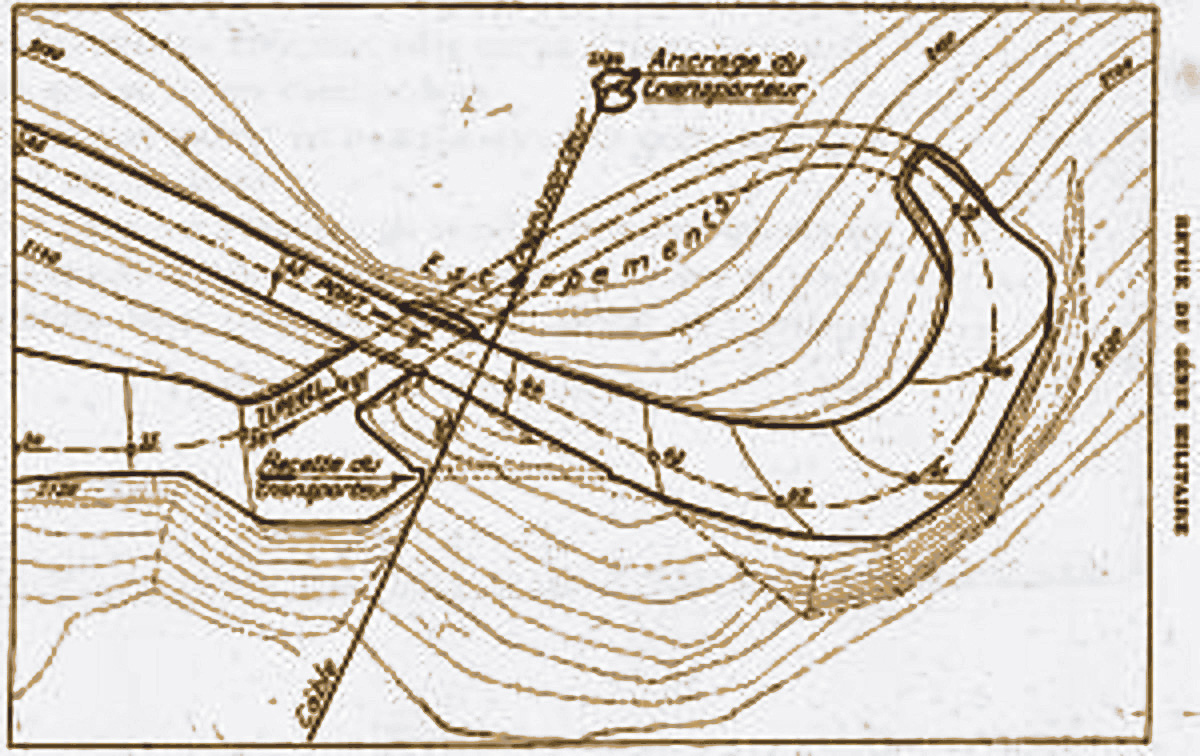
Even then it’s hard to visualise what’s happening until you look at the old plan, right. You can see the anticlockwise descent of the bore and just work out that it starts with a short separate concrete bridge over the lower mouth of the tunnel. The daylight streaming down the gap can be seen in the image repeated on the left (and as a slim shadow in the round inset, above)

spirimit
legion

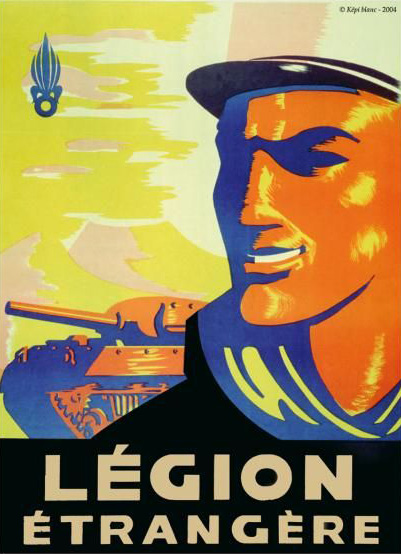
Built in 1933 over a period of just three months by some 3000 labourers from local and French regiments, few realise that at this time the French were still fighting to subdue renegade Berber tribes in the mountains of Morocco.
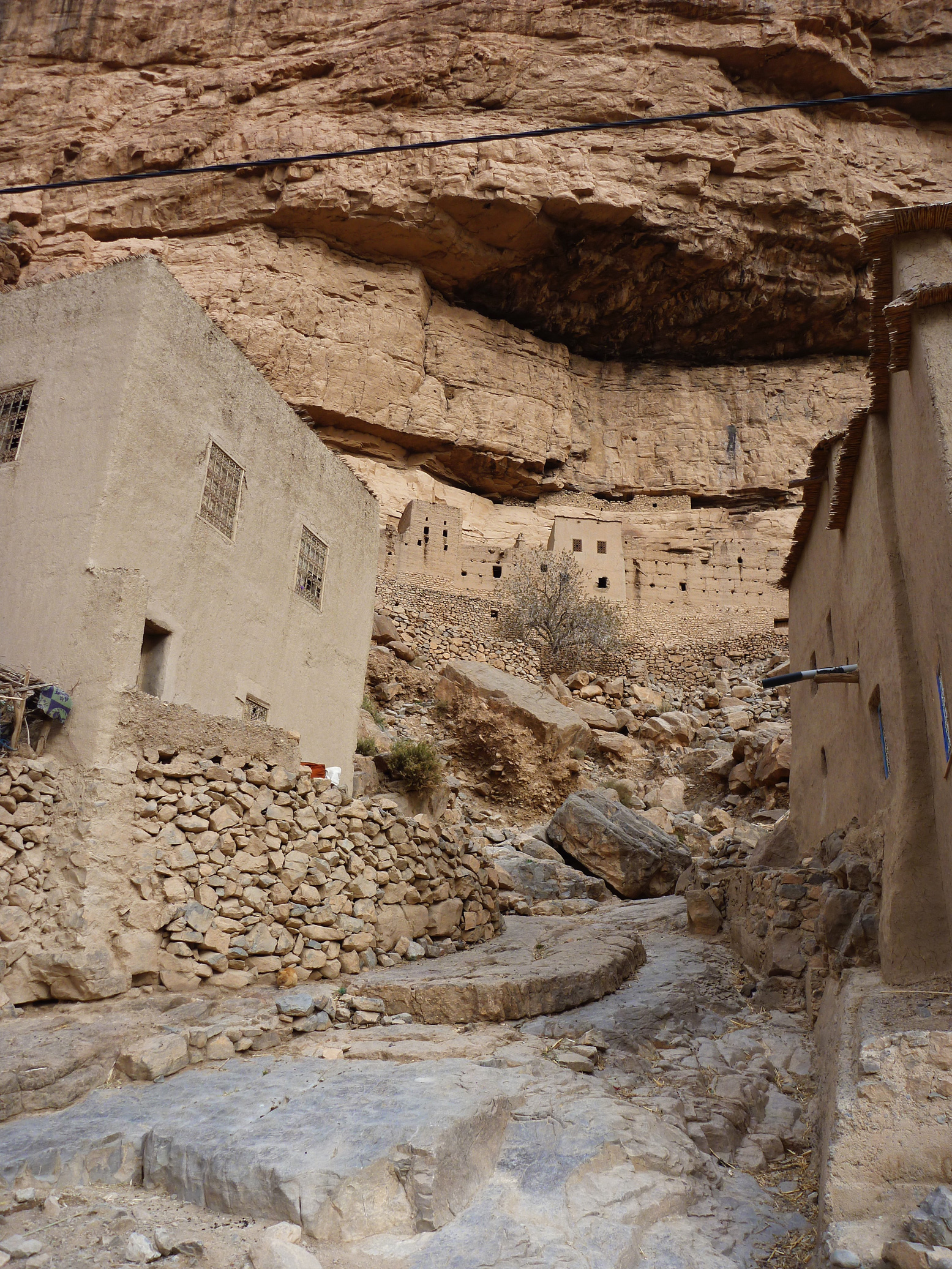
As you can see on Yves pages, the engineers, sapeurs and legionnaires passed their spare time commemorating their achievement by engraving regimental emblems in and around the structure. I was told the motivation for all this effort was to enable a secure, high transit of the valley, so avoiding protracted Berber ambushes at the narrow Imiter Gorge (left; ~KM70) with it’s Mesa Verde-like dwellings.
The same crew probably built the better known 62-metre Tunnel de Legionnaires five years earlier at Foum Zabel now on the main N13 highway north of Errachidia. A plaque there boldly states:
The mountain barred the way.
Nonetheless the order was given to pass…
The Legion executed it.”

spirtun

The Tagountsa tunnel the Legion helped build is at KM102 on Route MH13 in the book, though if you reverse the route it’s only a 10-km off-road drive off the Rich road just east of Amellago, turning north onto the dirt at KM113. Depending on storm damage, an ordinary car or a big bike should manage it, but note that you’ll be negotiating all those hairpins on the Google image above. From the west side (as Route MH13 describes the loop) it was a rougher and slightly more complicated ride on the BMW up to the pass.

spirdram

Perhaps because trains can’t negotiate hairpins or climb very steep grades, it seems that spiral or helicoidal tunnels have been a much more common feature on mountain railways than roads, particularly in the Rockies.

Norway’s Drammen Spiral (left), some 50km southwest of Oslo is a notable example, dug we’re told, as an alternative to disfiguring effects of open quarrying on the landscape back in the 1950s while at the same time producing a revenue-producing tourist attraction in the process.

Morocco Overland: Route J2, J3

Updated December 2025

Trans Atlas: J2

Talat n Yacoub (Ijoukak) > Ouneine basin > Ouaougdimt valley > Aoulouz • 88km
Last run October 2023 – CRF300L

Following the September 2023 earthquake, the steeper north slope of this track is almost immedaitely blocked and remains unused. To get to Ouneine take the bypass and cut back west via the road or the MH212 link route.

a310-7

Description
High Atlas crossing parallel to the nearby Tizi n’ ‘Test which peaks at the 2200-m Tizi n Oulaoune (30.940222, -8.125111), following a steep climb: some 500m in 8km after leaving the road SE of Ijoukak (right).
You may find the looser parts of this climb a struggle in a 2WD or on a heavy, wide bike, but this was not the case on 2022 in a 4×4. It’s probable that local 2WD vans only do it downhill (northbound) to Ijoukak. Track immediately blocked by post-earthquake debris (below; 6 months later) and remains abandoned.

In 2022 the track was rougher as it rolled down to the Ouneine basin and the P1735 whose extension eastwards to Igli on (J3) is now sealed. Keep right at the fork with an illegible sign. At the bottom just before it joins the road you have to detour south around the boundary fence of a new small mine,

Once in the basin carry on SW along the P1735, and at Sidi ali ou Brahim swing sharp left off the road, cross the stream and follow the Ouaougdimt valley 24km SE (not fully shown on most paper maps) to join the road coming down from Aguim on the N9 Marrakech–Ouarzazate road.
Or, if you’re in a rush or heading towards Taroudant, at Sidi ali ou Brahim carry on 23km south on the ever-bendy P1735 to Sidi Ouaziz (fuel) on the N10. Otherwise, it would be a shame to miss out on the scenic Ouaougdimt valley stage, as it rises onto a terrace high above the valley floor.

mhh20

Mapping
Parts of the route are just about legible on paper maps, least badly on the inset ‘High Atlas’ panel on the Michelin. But none show the full Ouaougdimt valley route. It’s all on Google and the OSM/Garmin digitals.

Off-Road
The climb up to the 2200-m Tizi n Oulaoune pass from KM11 starts a steeply but is now blocked. From the pass the gradient eases off with great views doiwn to the basin while you’ll find the Ouaougdimt valley stage no harder than anything you’ve just done. Carefully ridden, a big bike might manage the loose hairpins; so could a 2WD with low first and clearance, though as always, these mountain tracks require concentration. On an MTB it will be a slog if not a push up to the Tizi n Oulaoune, followed by a rough freewheeling reward to the basin and no more huge grades thereafter. Bikes might have more fun following J3 to the high P1735 road, turning left or right.

Route finding
Easy enough. We winged it just by studying Google satellite imagery beforehand, jotting down some distances between junctions. That’s now all listed below. Download the kml file.

Suggested duration
Half a day will do you.

Route Description
0km
 (88) Talat n Yacoub fuel station (village destroyed but still serving) on the N7 Tizi n Test road. Head north to Ijoukak village.

3 (85) Pass through Ijoukak, cross the bridge and turn immediately right up the side road now thronged with relief tents. Soon you’ll pass Houssain’s agreeable mountain lodge (repaired; reopened). Huge boulders have fallen on the road.

11 (77) At the fork before a village turn right, drop down over a bridge and carry on. Soon there’s a sign right: ‘Ouneine? 24km’. The 500m climb to the pass begins. (Ahead, MH21 continues). To reach Ouneine take the J2 bypass and take the road, or link track which comes in to Map Junction below.

19 (69) Tizi n Oulaoune 2200-m high point with views of Toubkal (4167m) 20km to the northeast. The track now eases off as it descends.

mh20km23
KM23 Map Junction
feb20 - 36

23 (65) Fork with sign (photo above: ‘Map Junction’). East at this fork is a rough track (MH212) which in 9km joins J2 to Igli. Keep right (south) to continue descending to the Ouneine basin visible to the west. At a small mine work your way round the fence to the south. to rejoin the track. Eventually, at a junction around KM35 you join the P1735 road which goes E towards Igli/Iguidi over a 2500-m terrace. This is a spectacular high mountain road (J2).
Meanwhile, the P1735 crosses the Ouneine (shops and cafes) basin SW and threads through a small pass back into the hills.

mh20ouaval

54 (34) Sidi ali ou Brahim. The tarmac carries on 23km to Sidi Ouaziz (fuel) on the R110/N10 but you turn sharp left here, drop down to the stream and up the other side. The track is initially a bit eroded and loose as it climbs to the first village, but that’s why they invented suspension. It then eases off as it rises above the valley on a terrace (right) with great views down to the villages below. You could be in the Cevennes or the Pyrenees, but you’re in the High Atlas. It could be worse.

78 (10) Join the tarmac (J4) by the reservoir. Turn right (west).

83 (5) Roundabout on the R110/N10.

88 Aoulouz fuel stations.

mh20desc

Trans Atlas: J3

Ijoukak > Igli/Iguidi > Askaoun > Taliouine • 170km
Last run: October 2023: CRF300L

At the ‘Ouneine’ turn-off for the blocked track up to Tizi n Oulaoune, carry on southeast on tarmac for a few km until it ends at a village (green mark on map above). Keep going along an easy piste rising up the valley and past a couple more villages all surrounded by relief tents in 2023. Just before one village keep right (downwards); sharp back left leads up to who knows where. Your route climbs to meet the end of the J2 link track close to the Ouneine-Igli tarmac.
Turn left then at the tarmac nearby it’s left up to over 2550m then a long wind down to Igli/Iguidi (hotel/cafe) on the Aquim-Aoulouz road J4.
From here carry on south then west down the valley and turn left at a sign to cross below the dam wall (long term roadworks) and wind your way up to up to Askaoun (KM120) then 45km down to Taliouine.
Total 170KM, fuel to fuel.
I did versions of this route three times in November 2022 with a lunch in Igli. A great ride with a dizzying number of bends in one day.

A few photos   A few more

Looking down on the new bypass from the high route

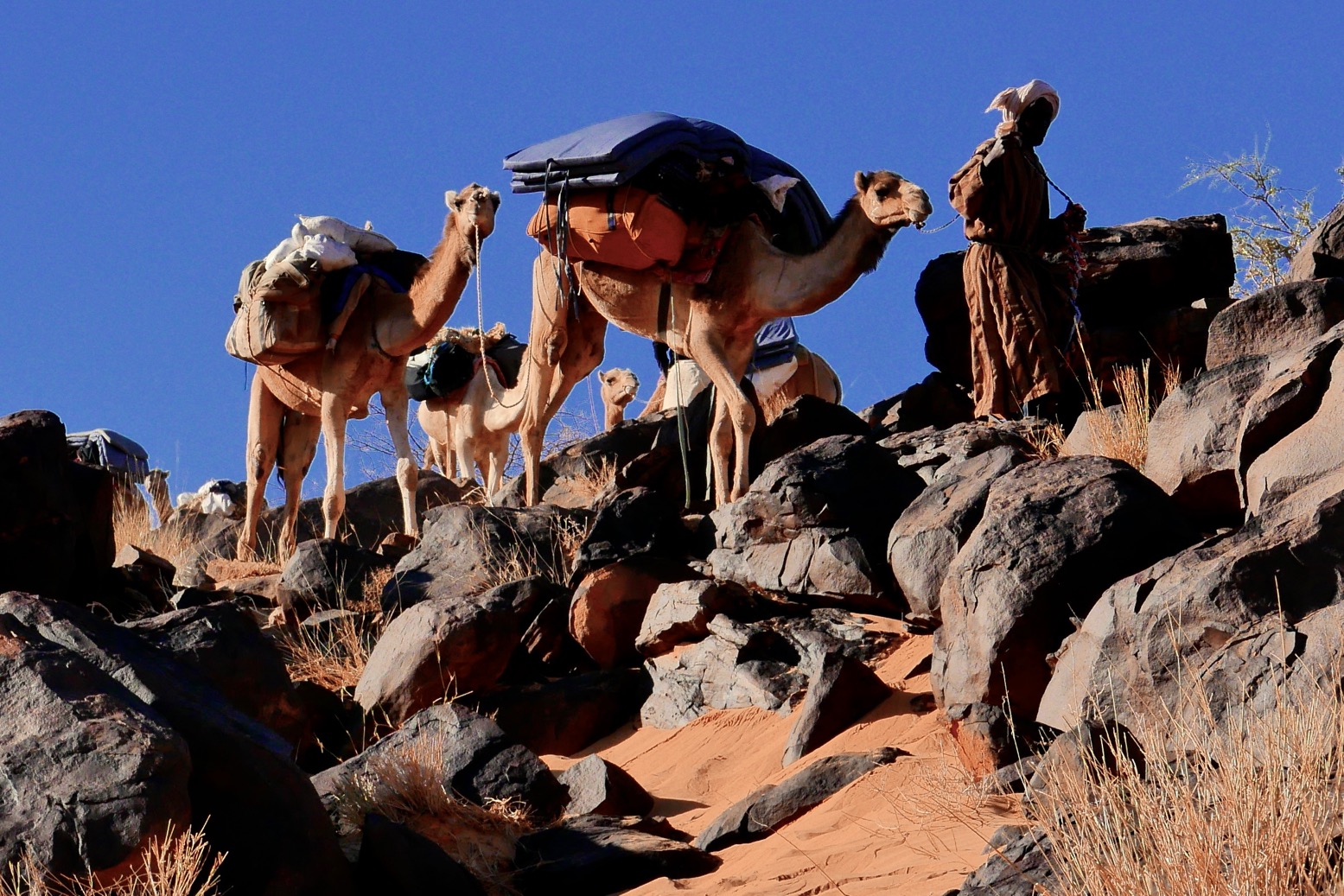
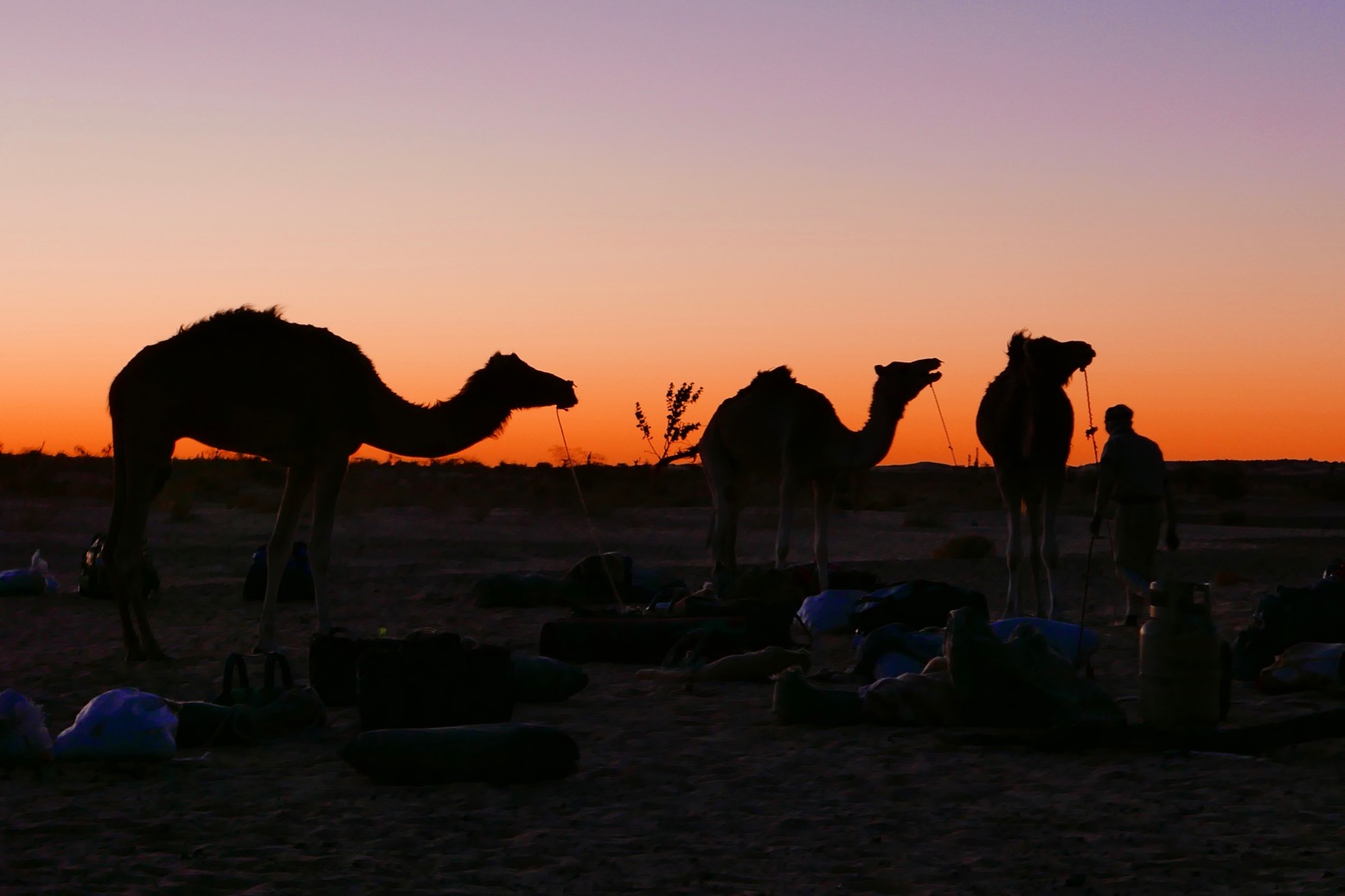
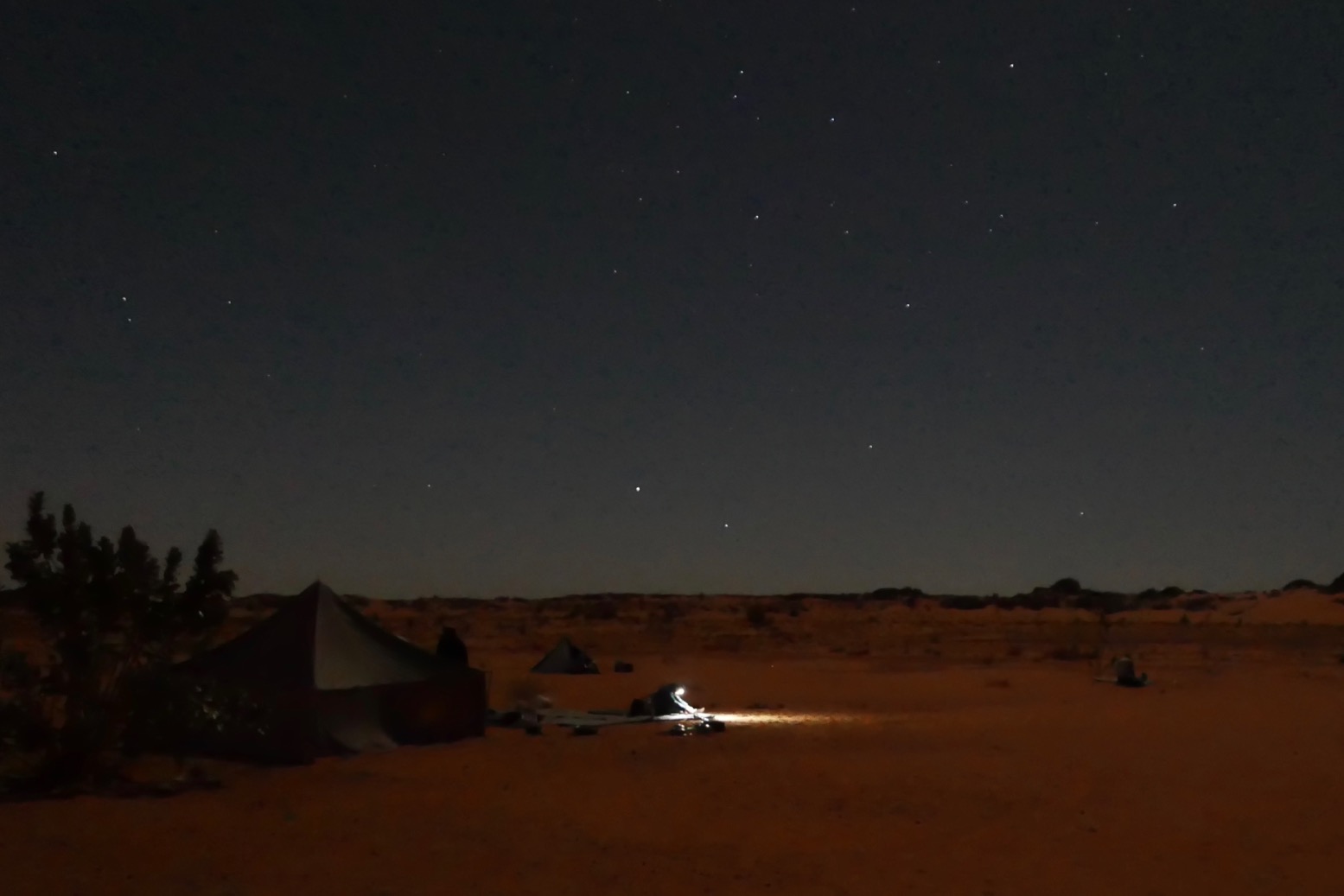
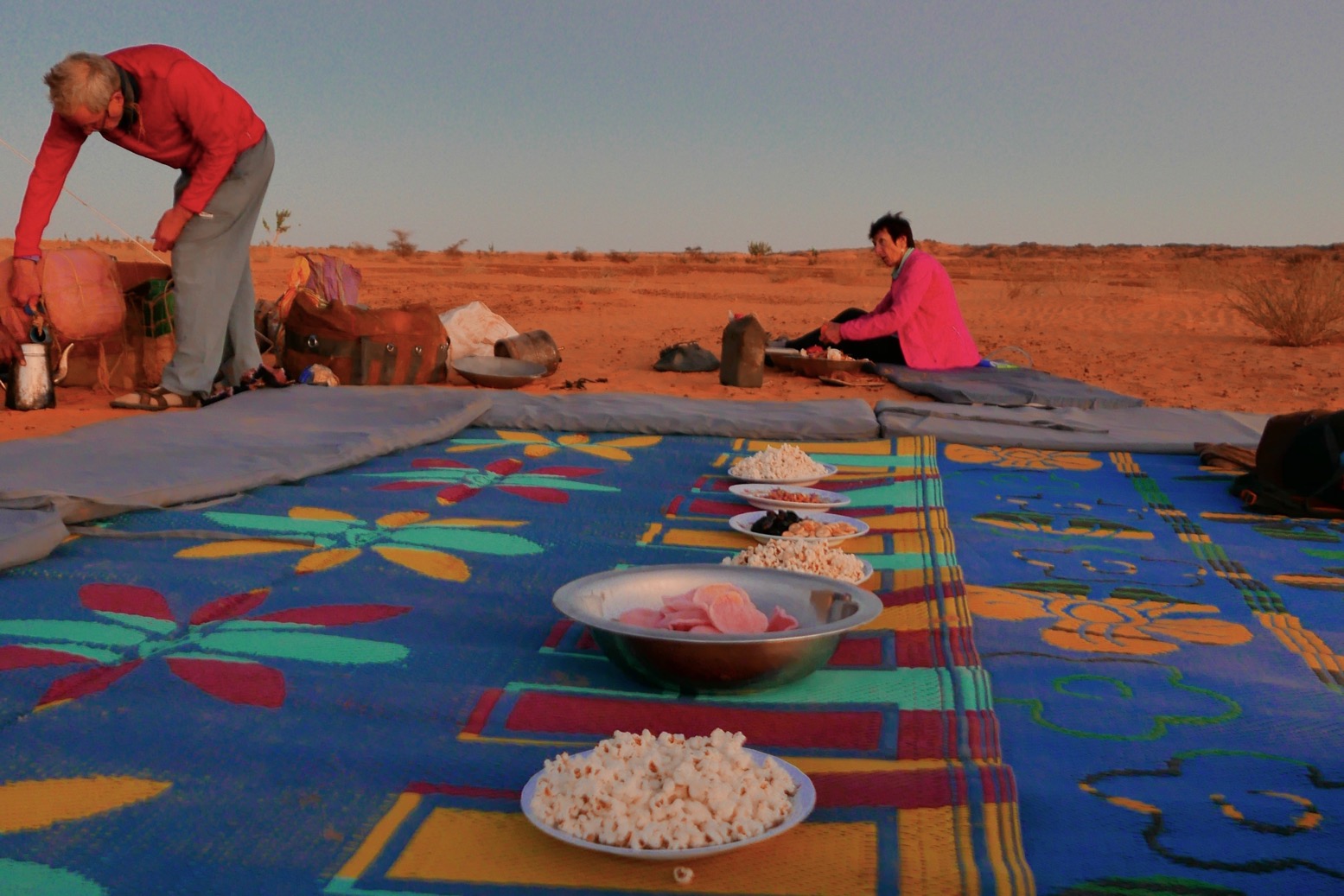
Fortnight’s camel trek in Mauritania

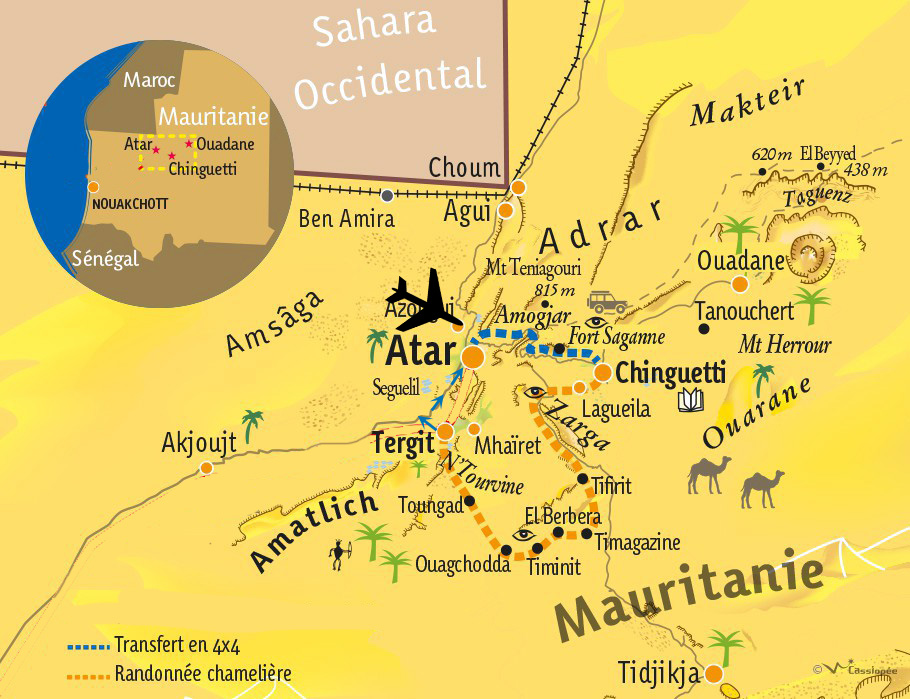
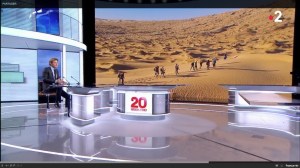
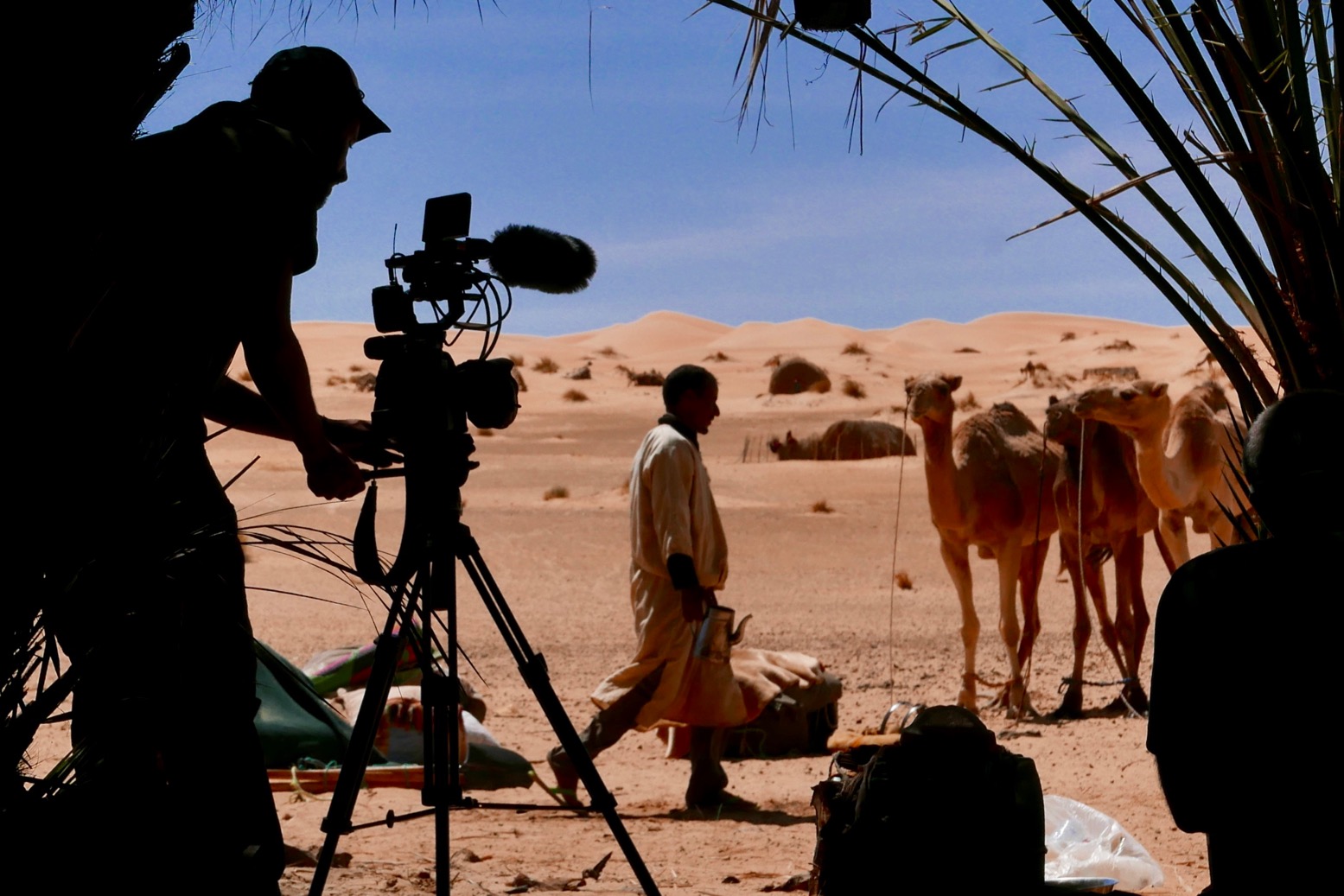
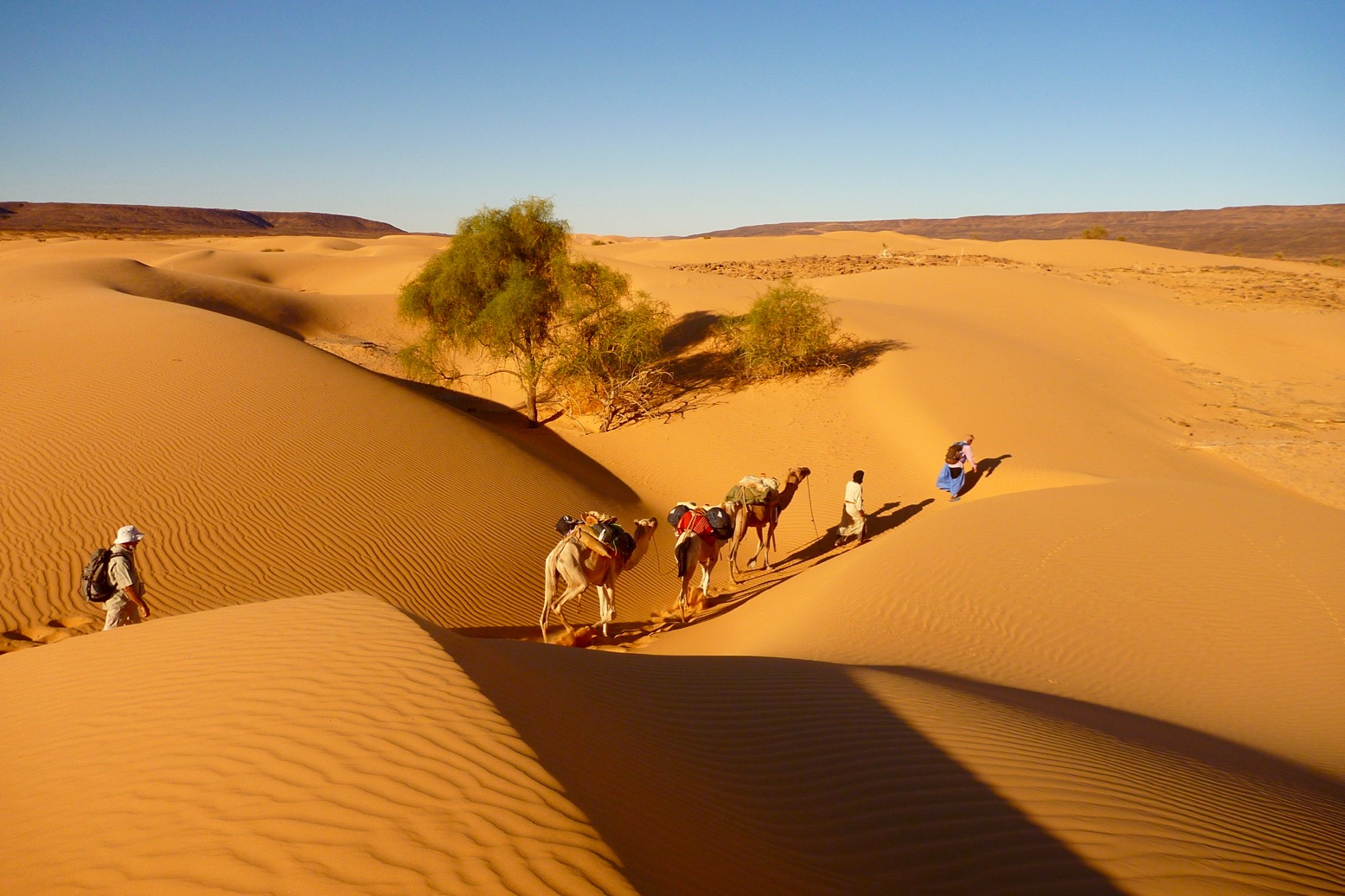
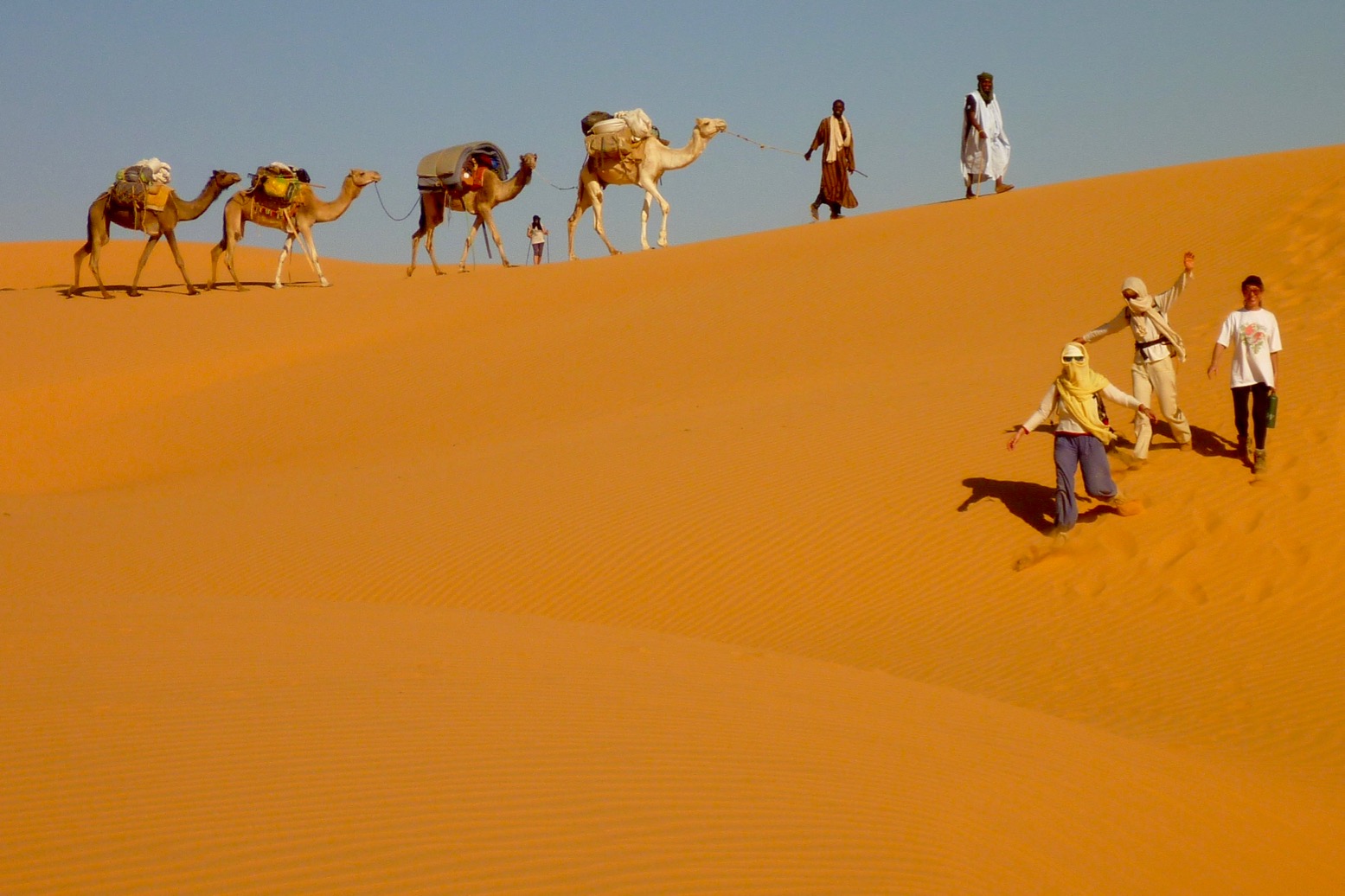
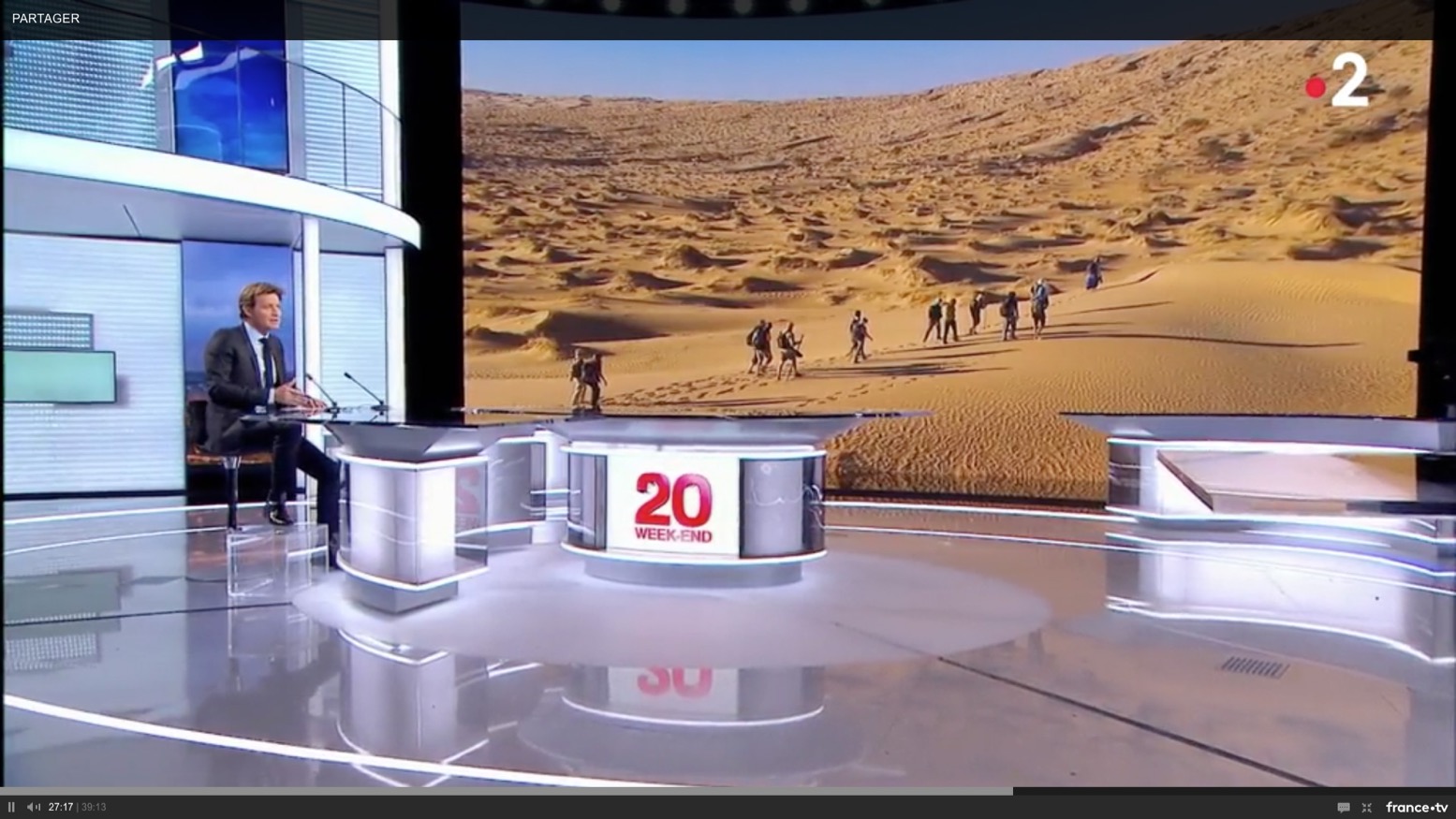
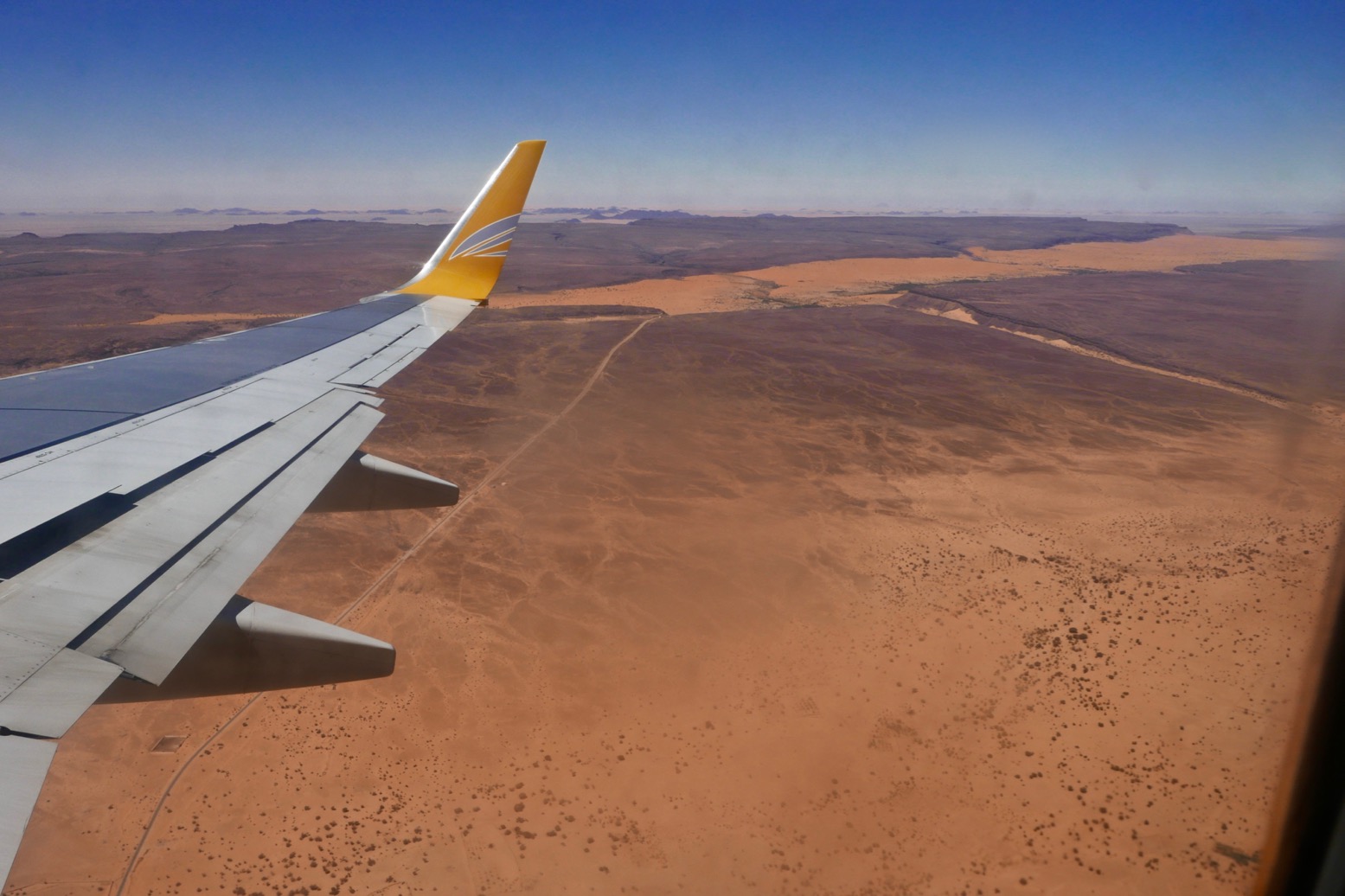
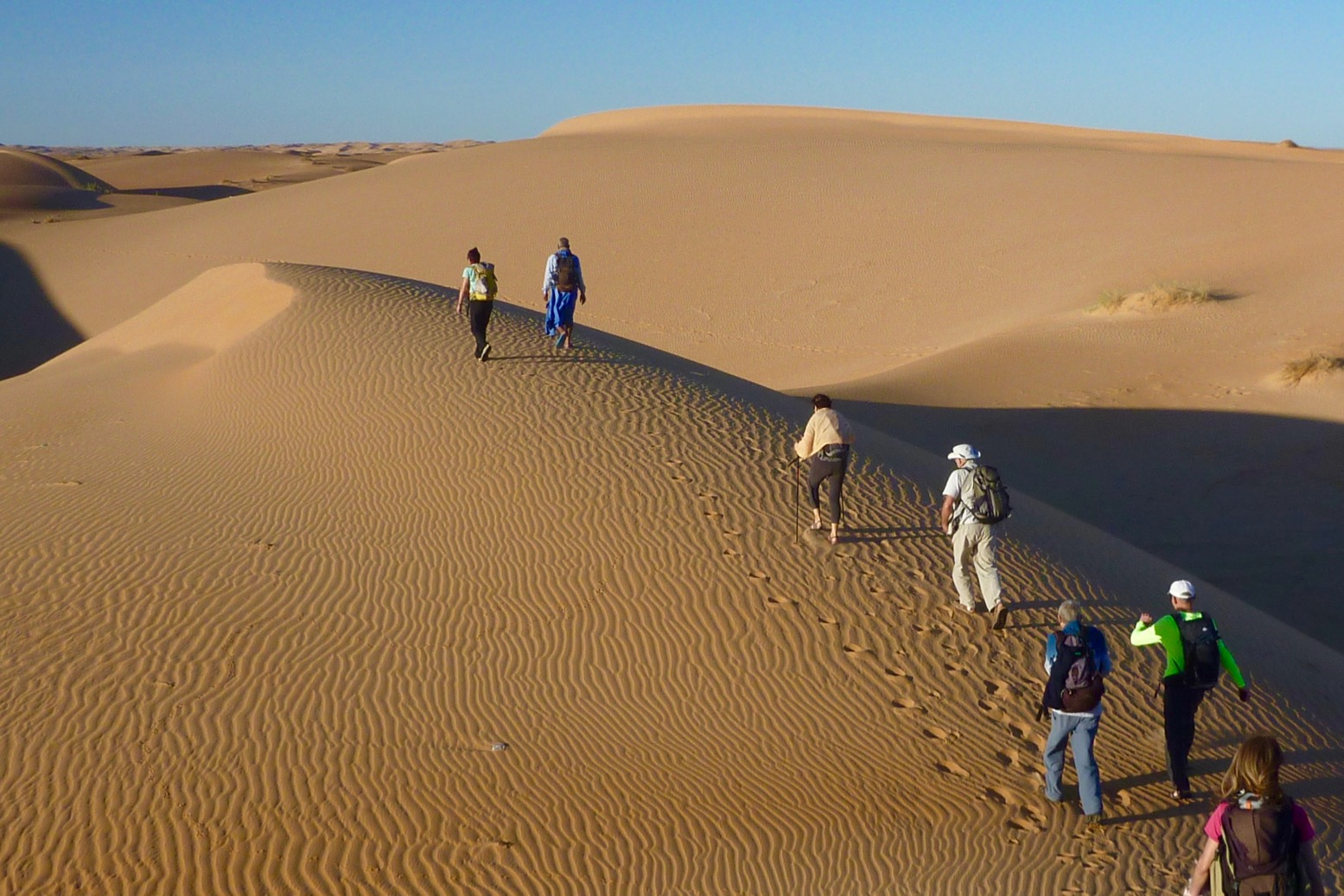
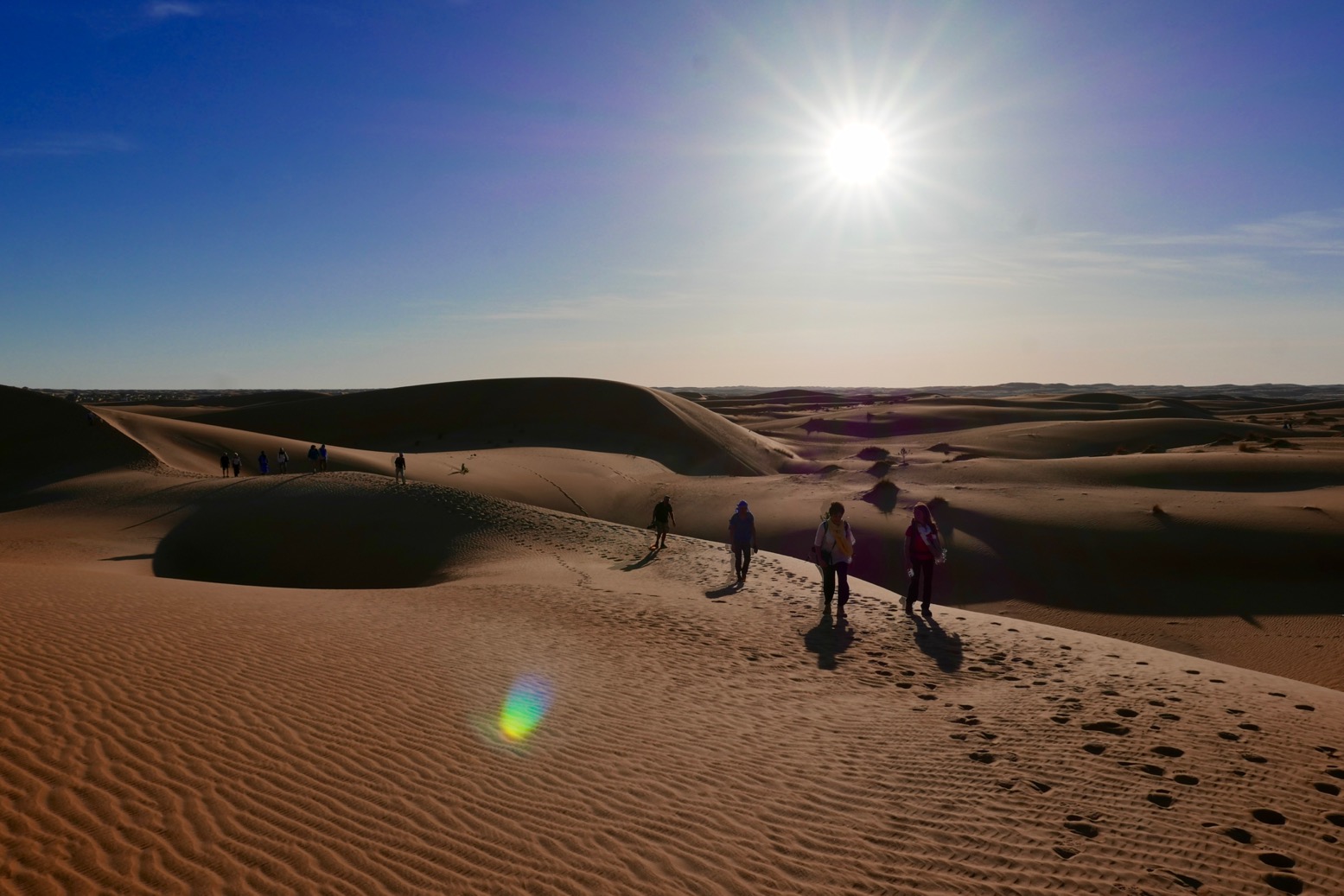
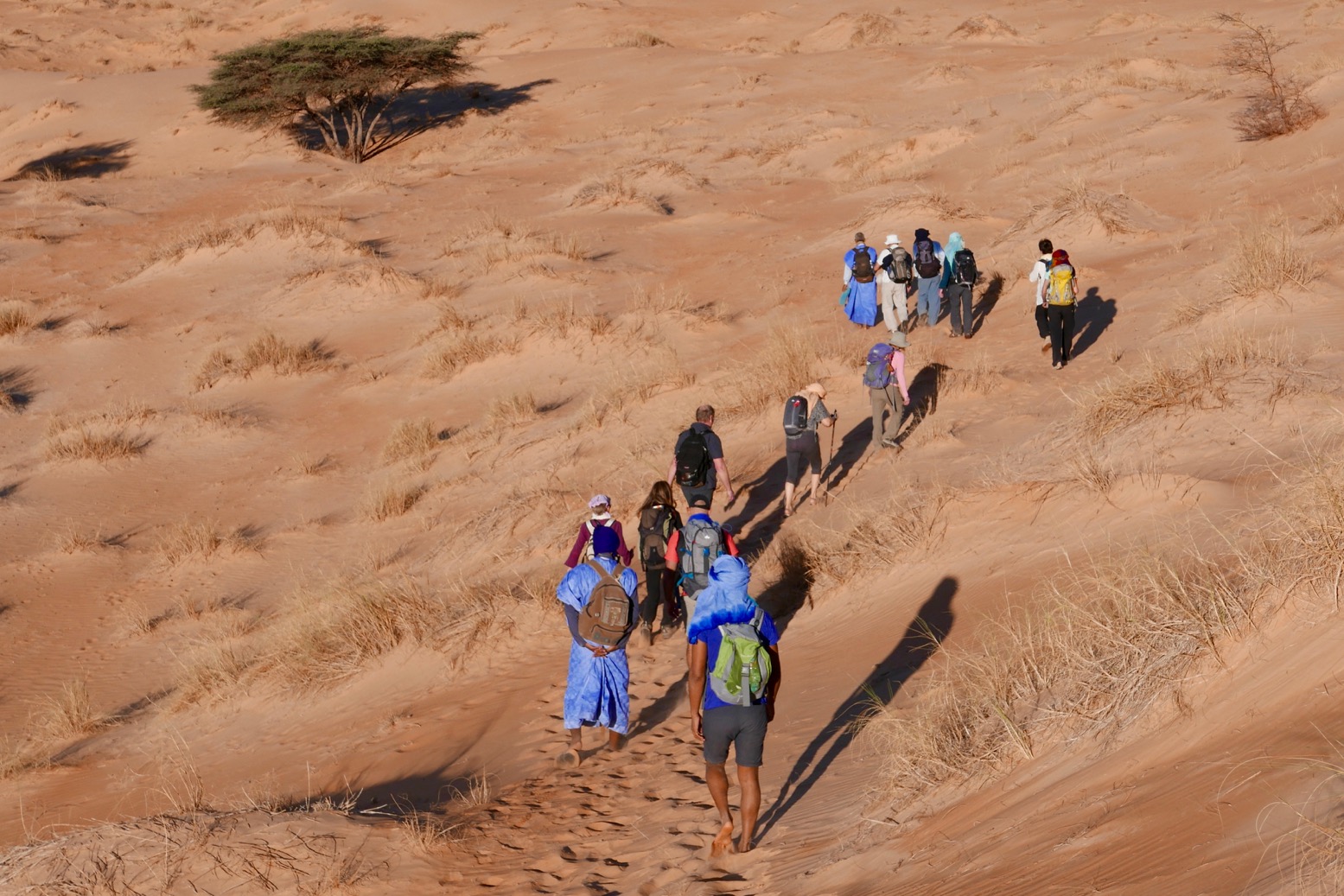
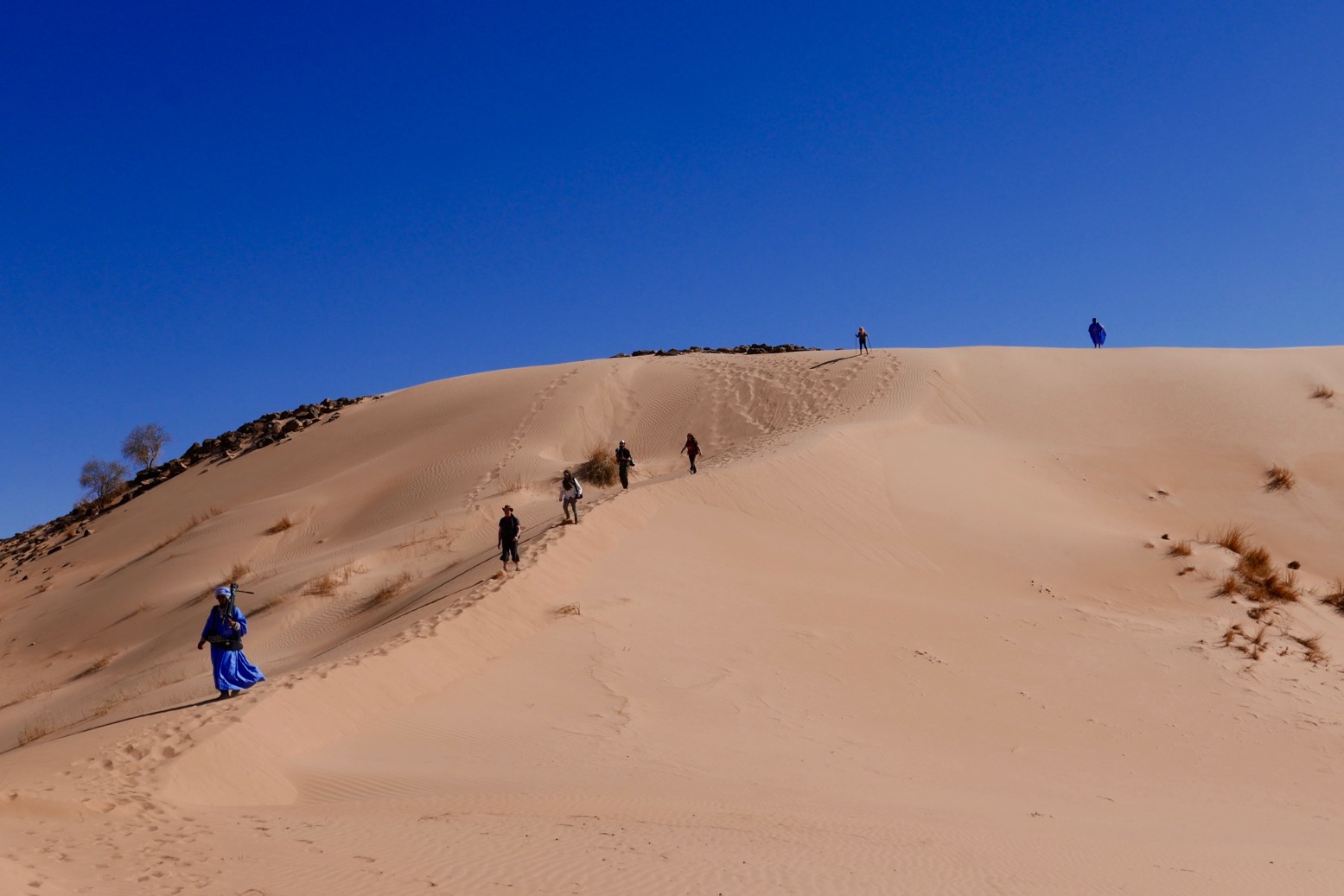
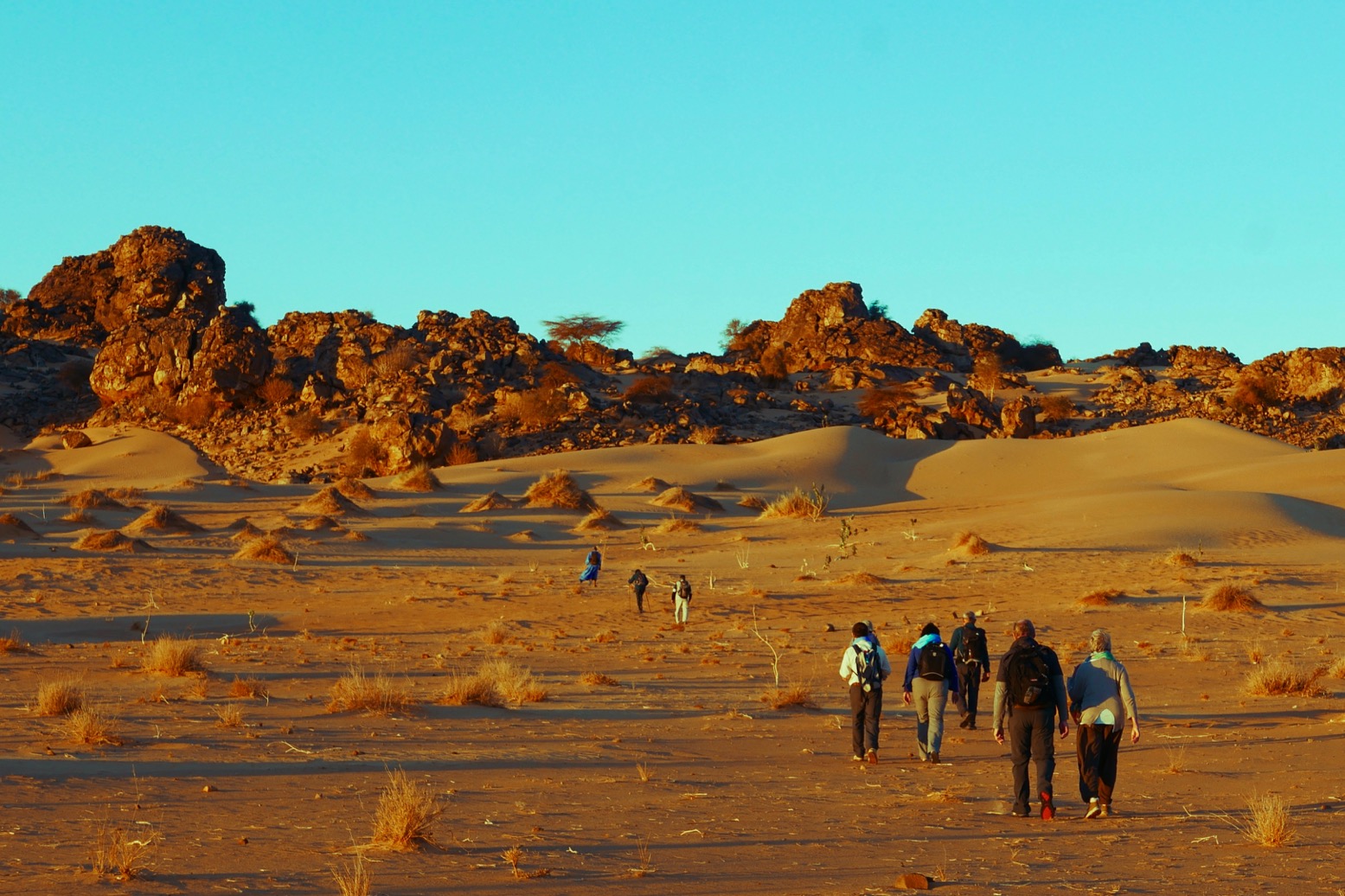
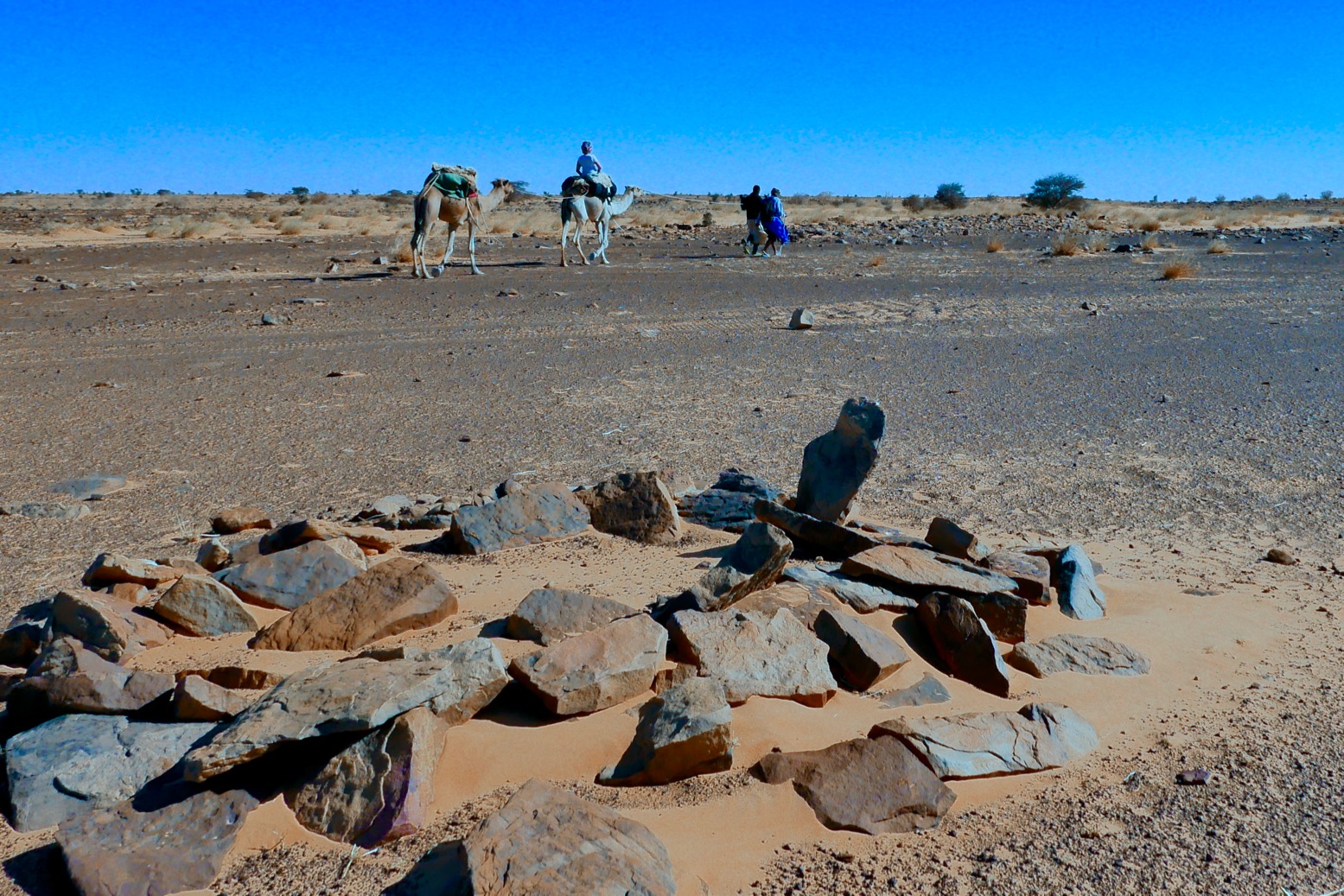
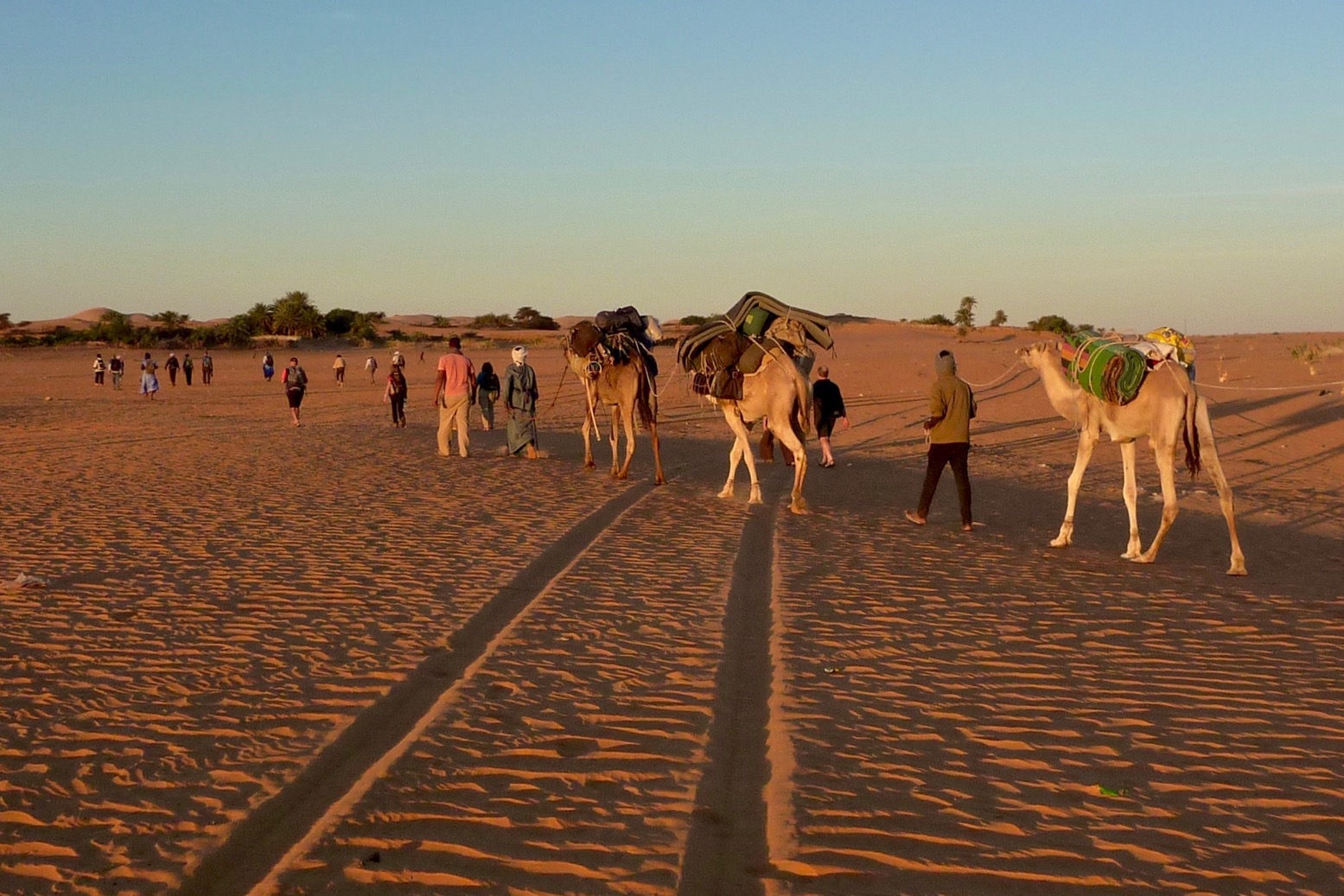
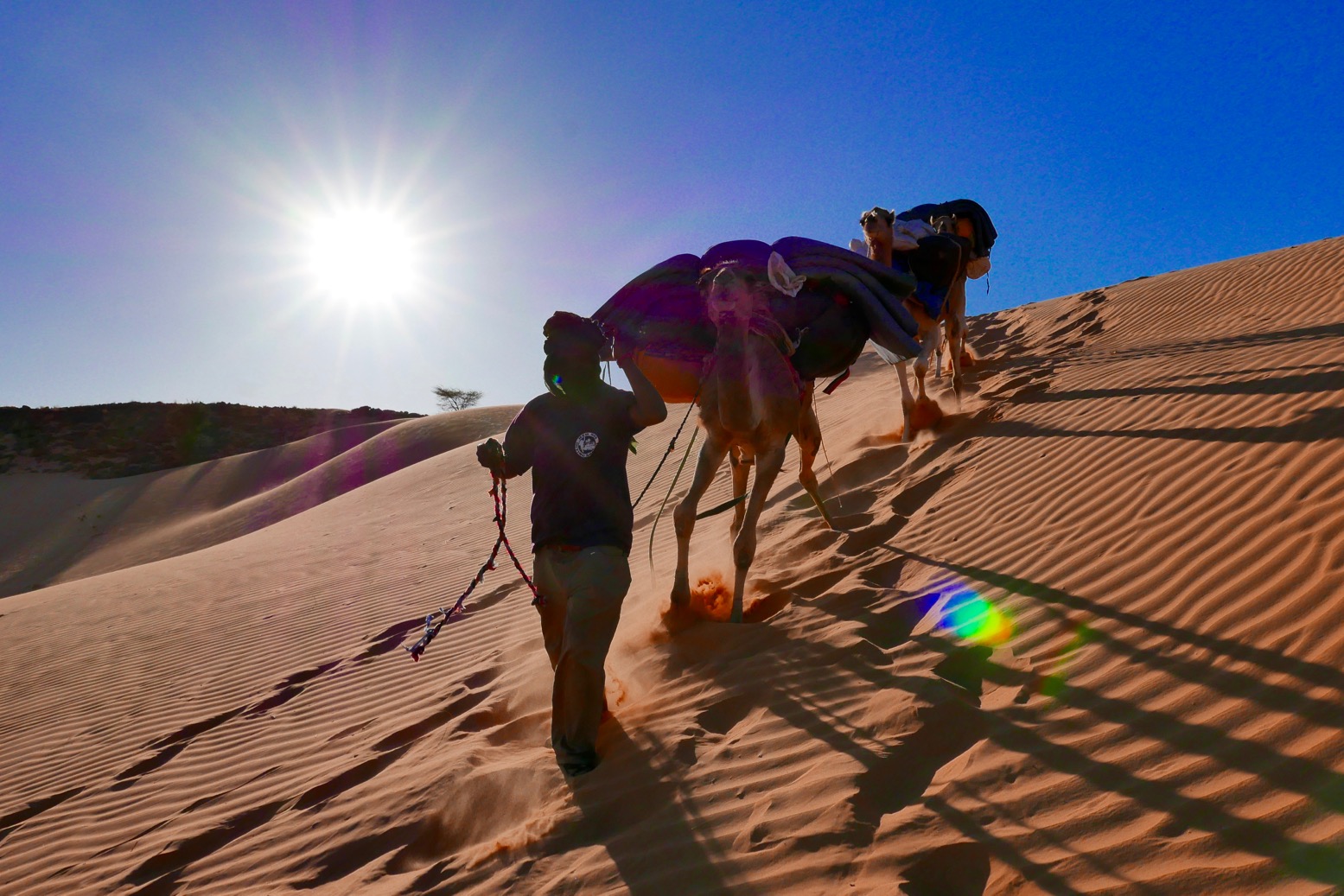
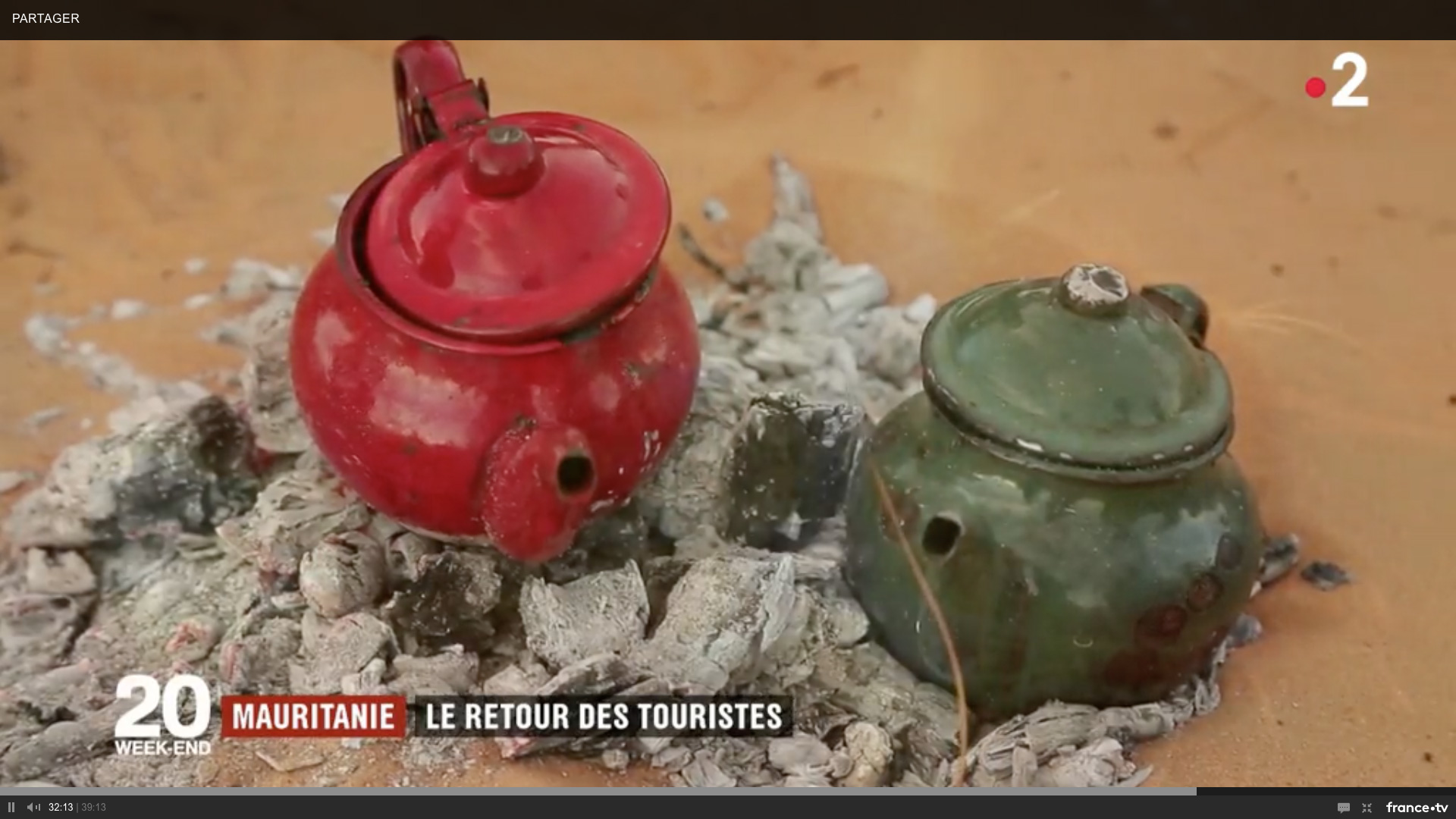
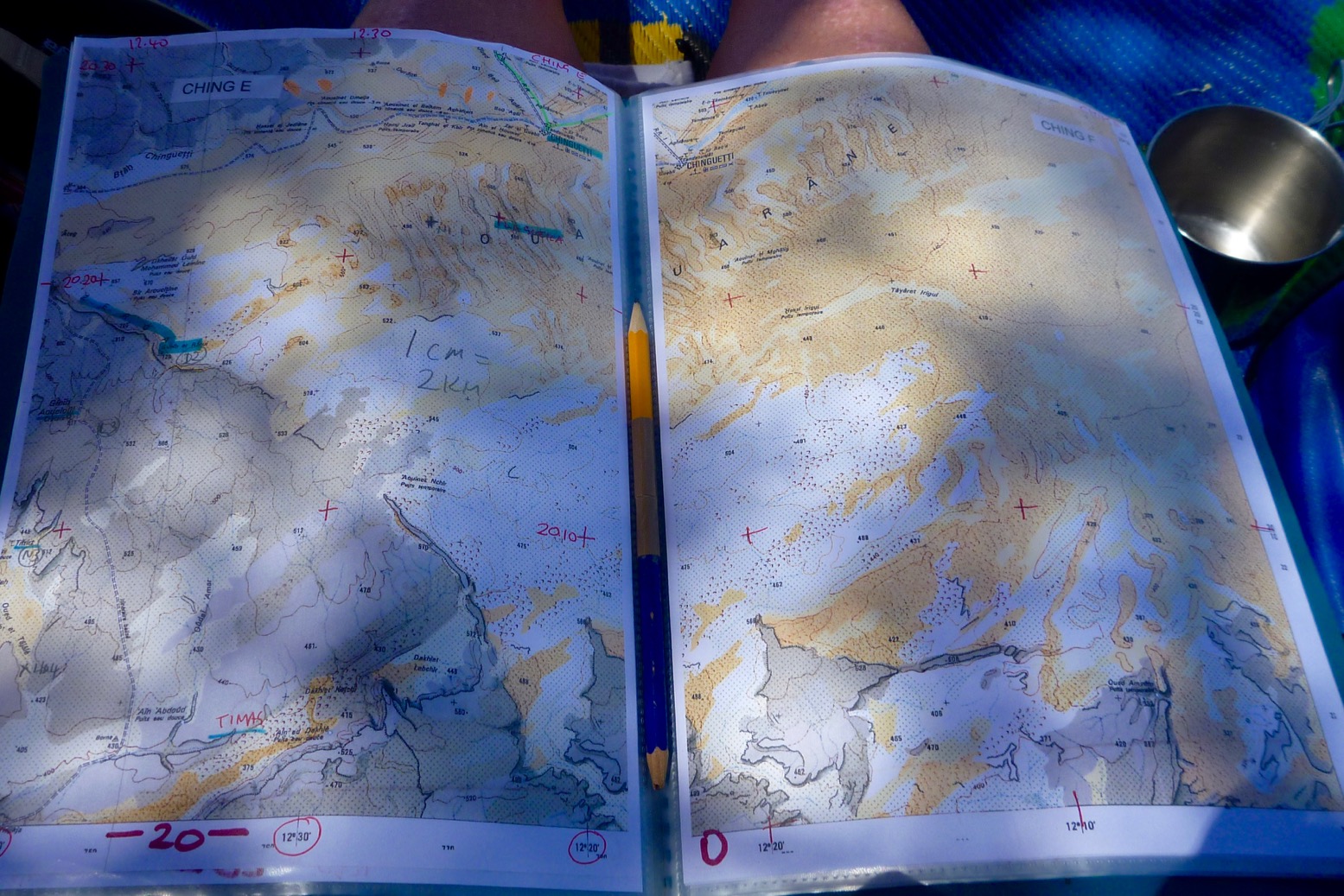
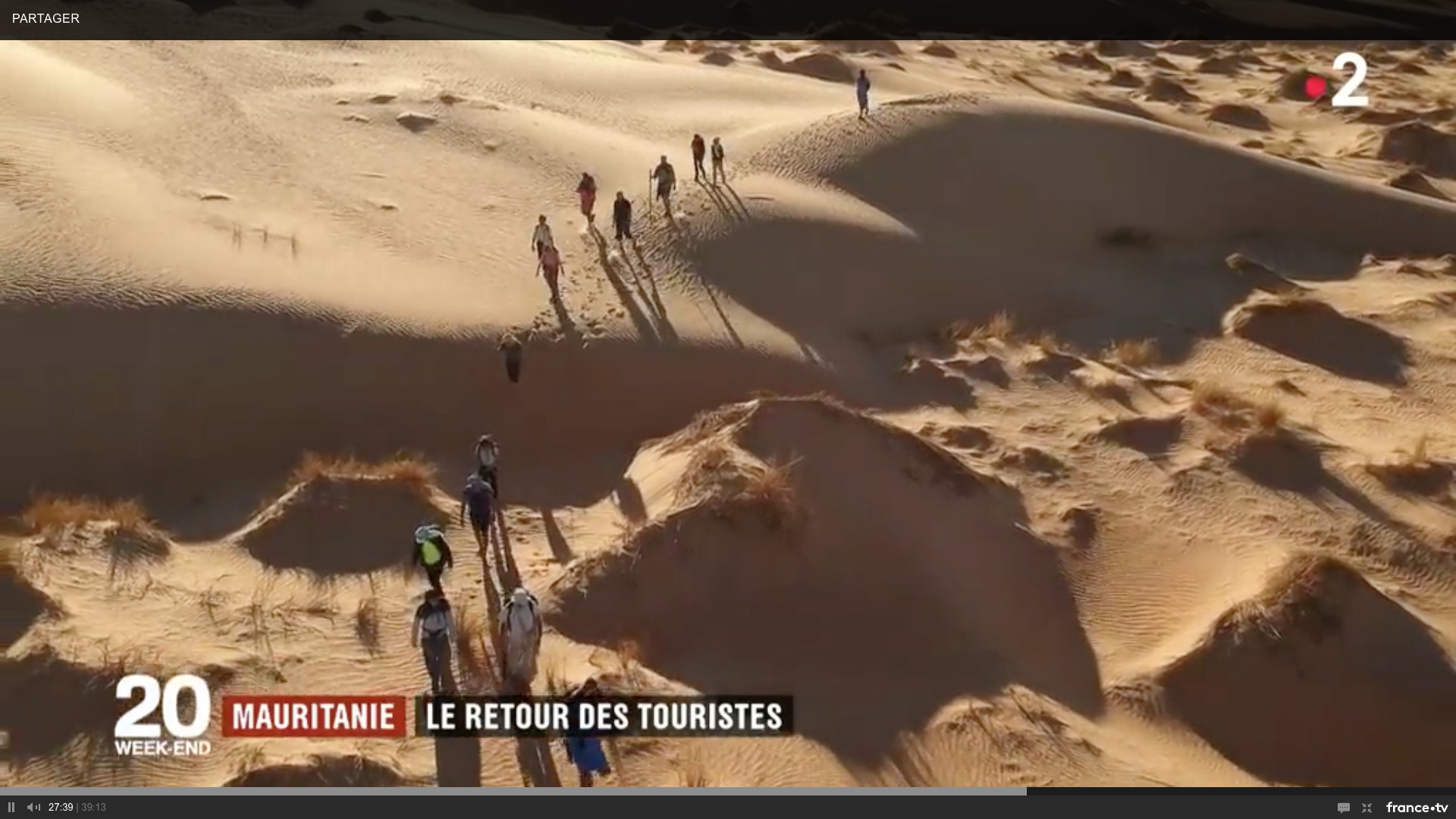
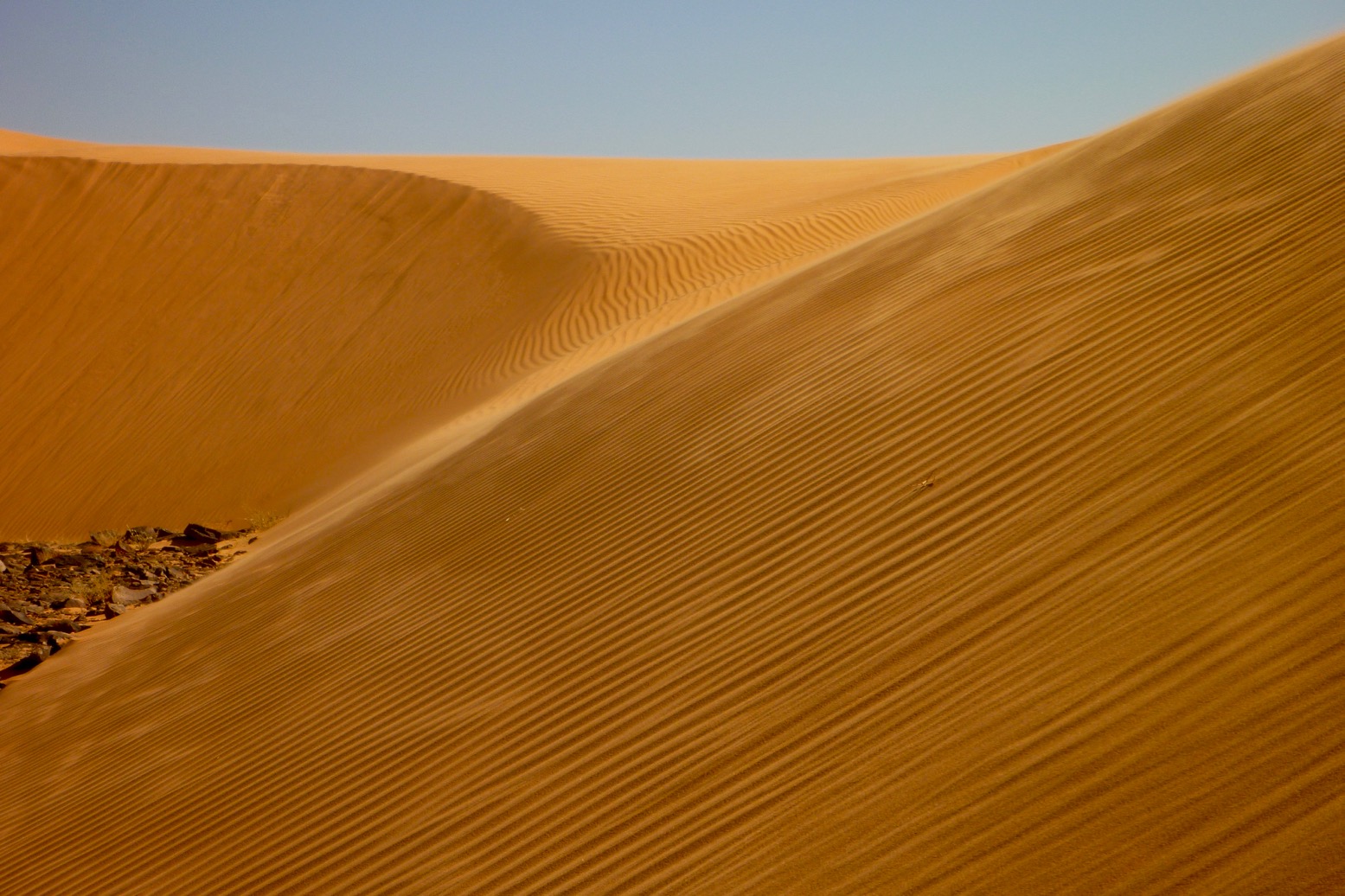
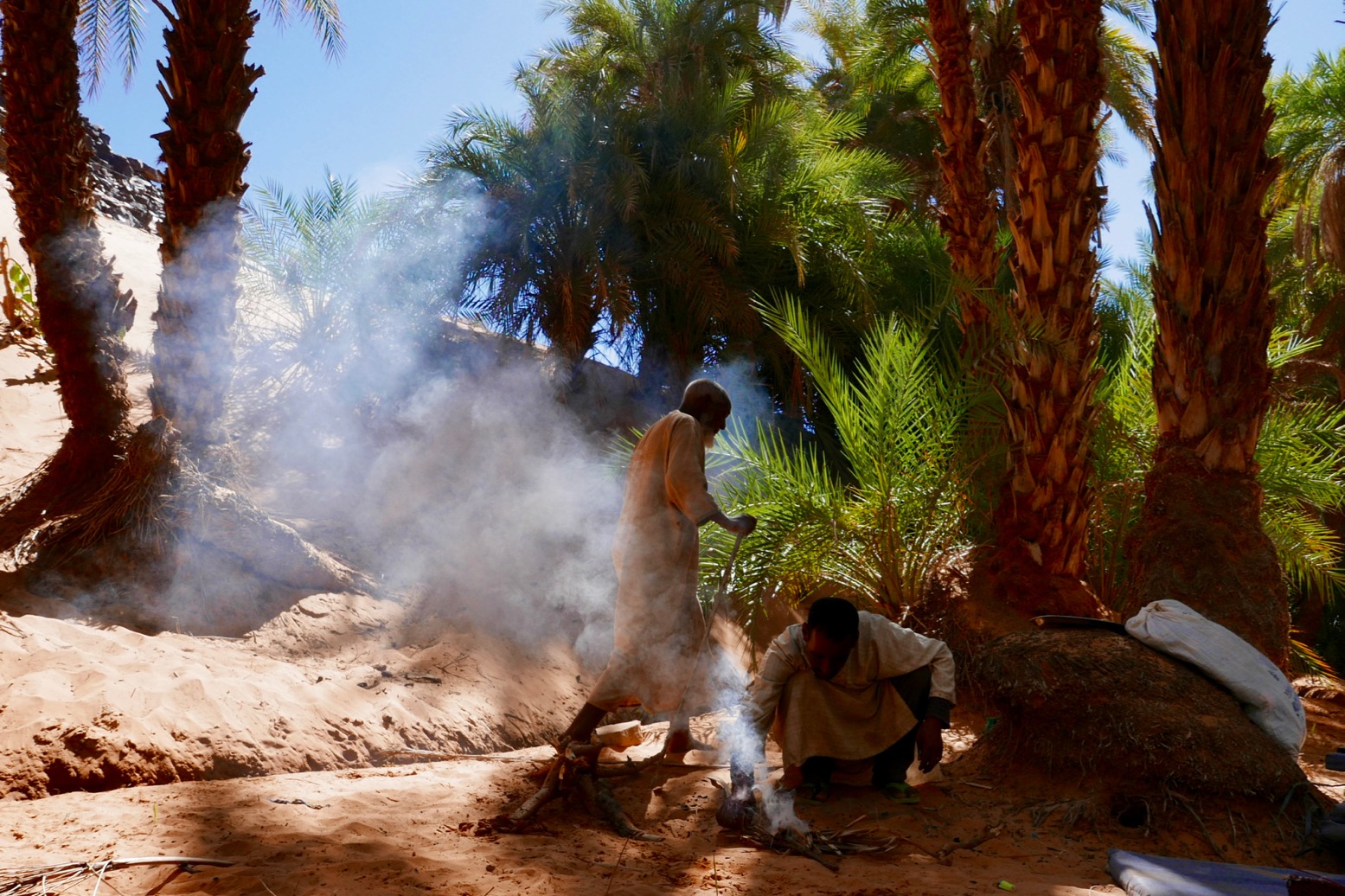
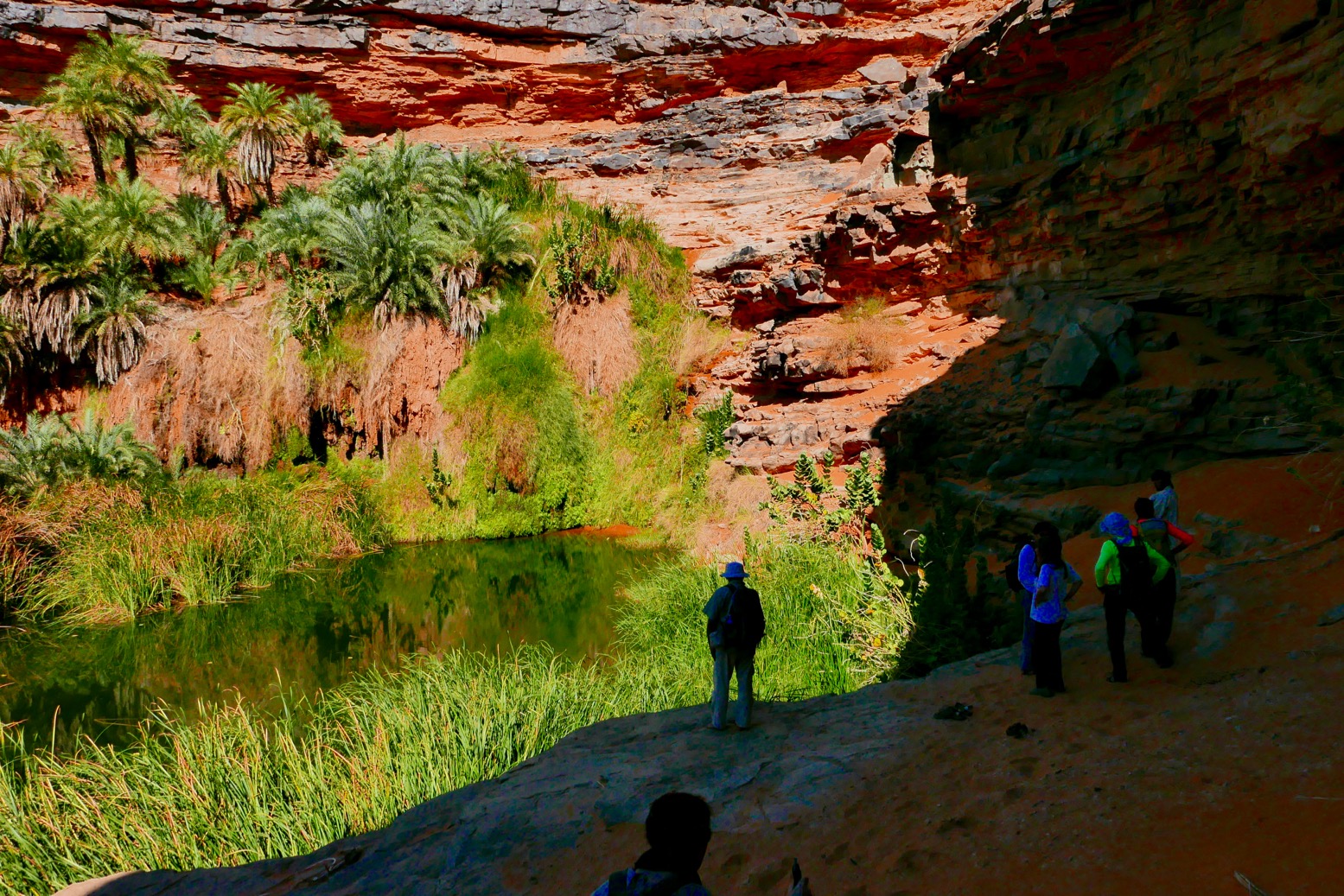
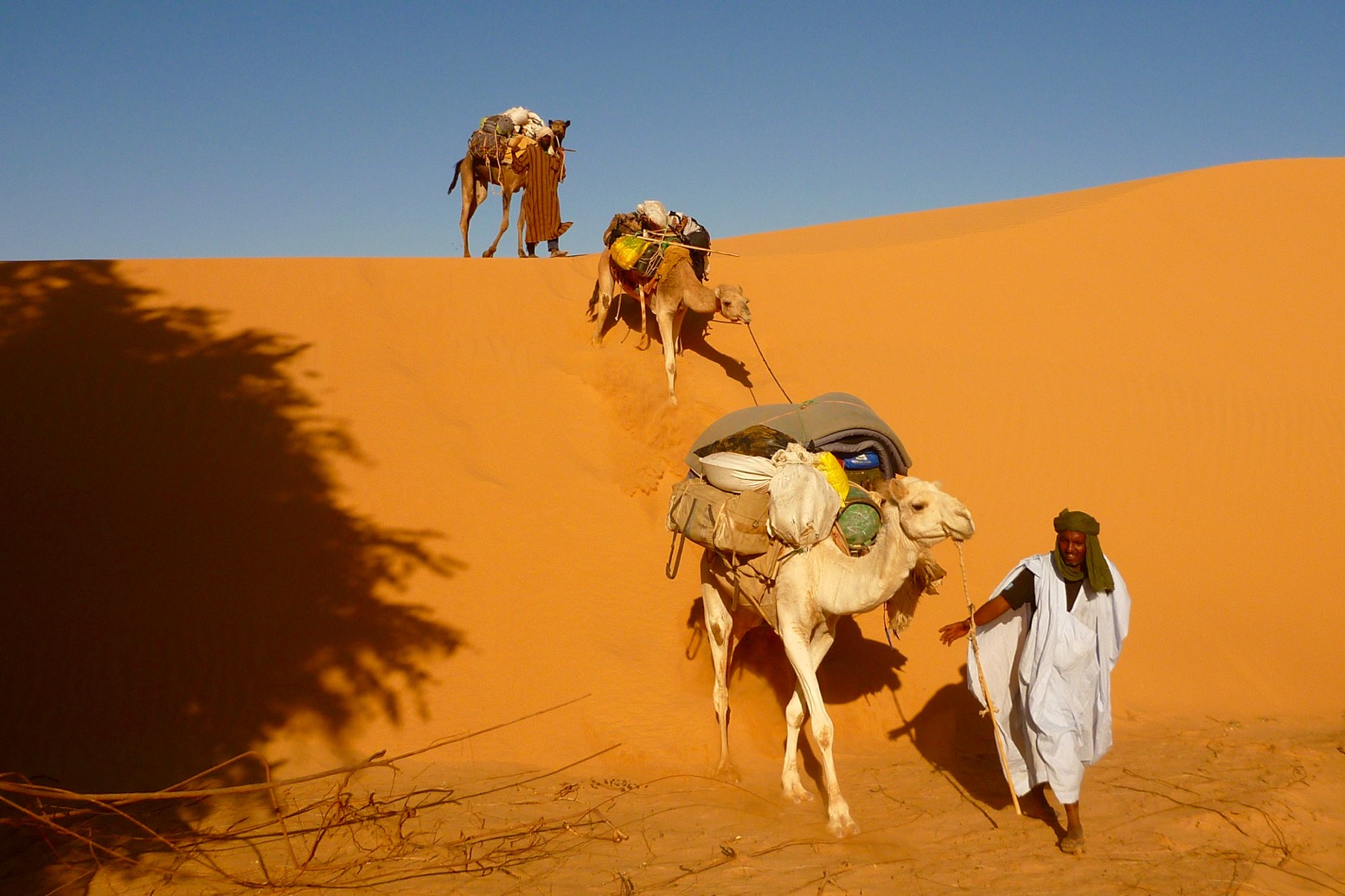
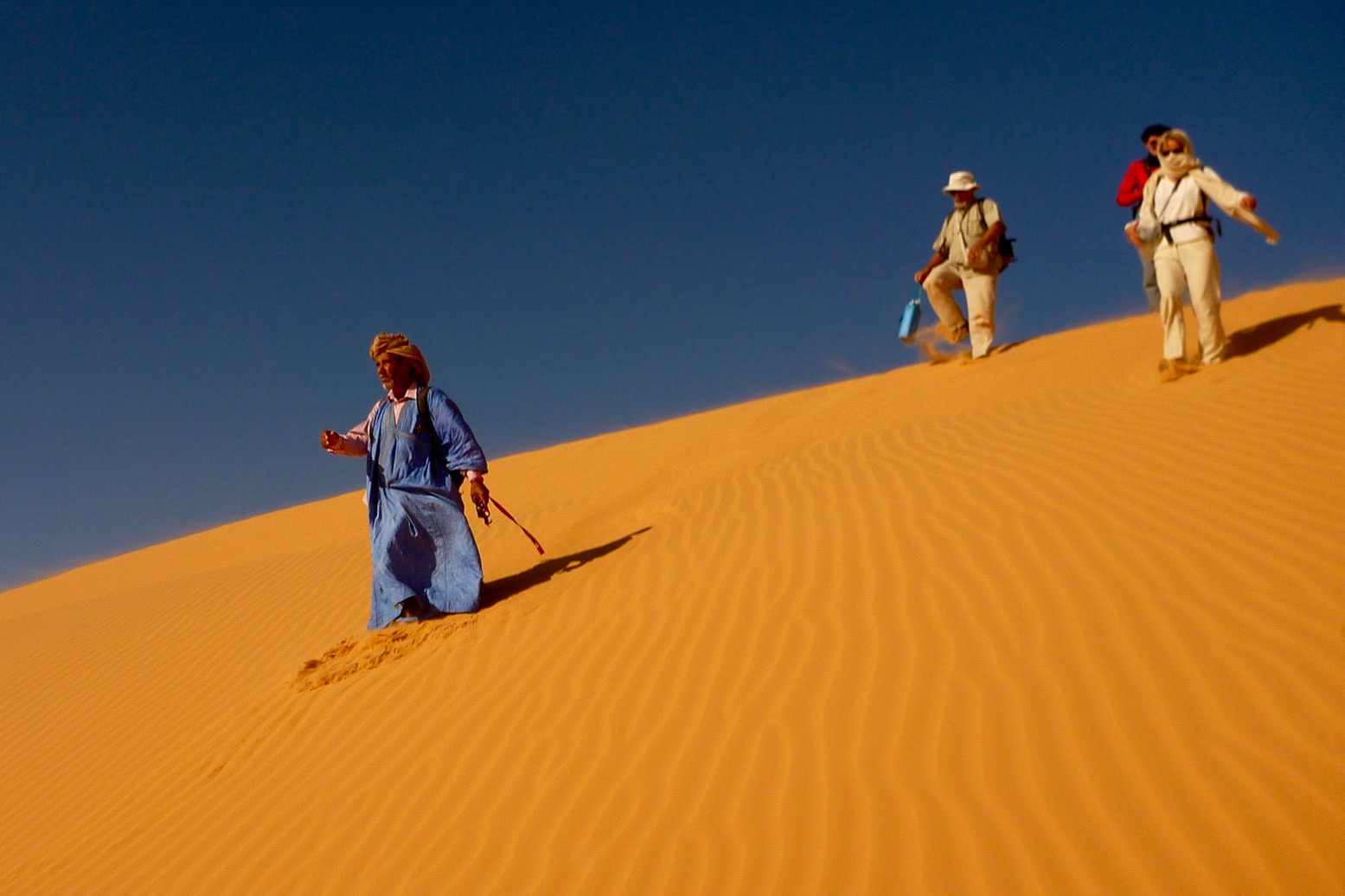
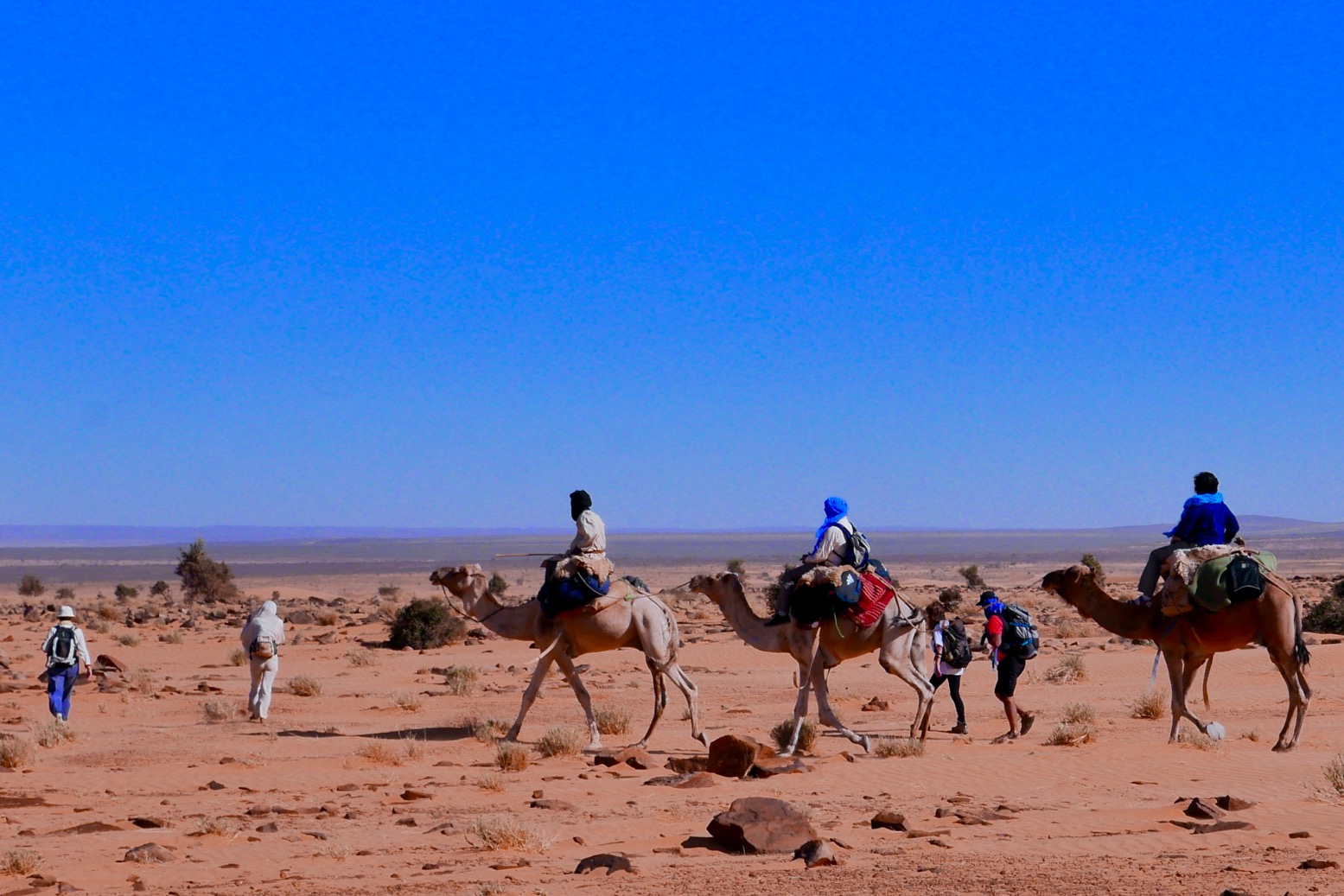
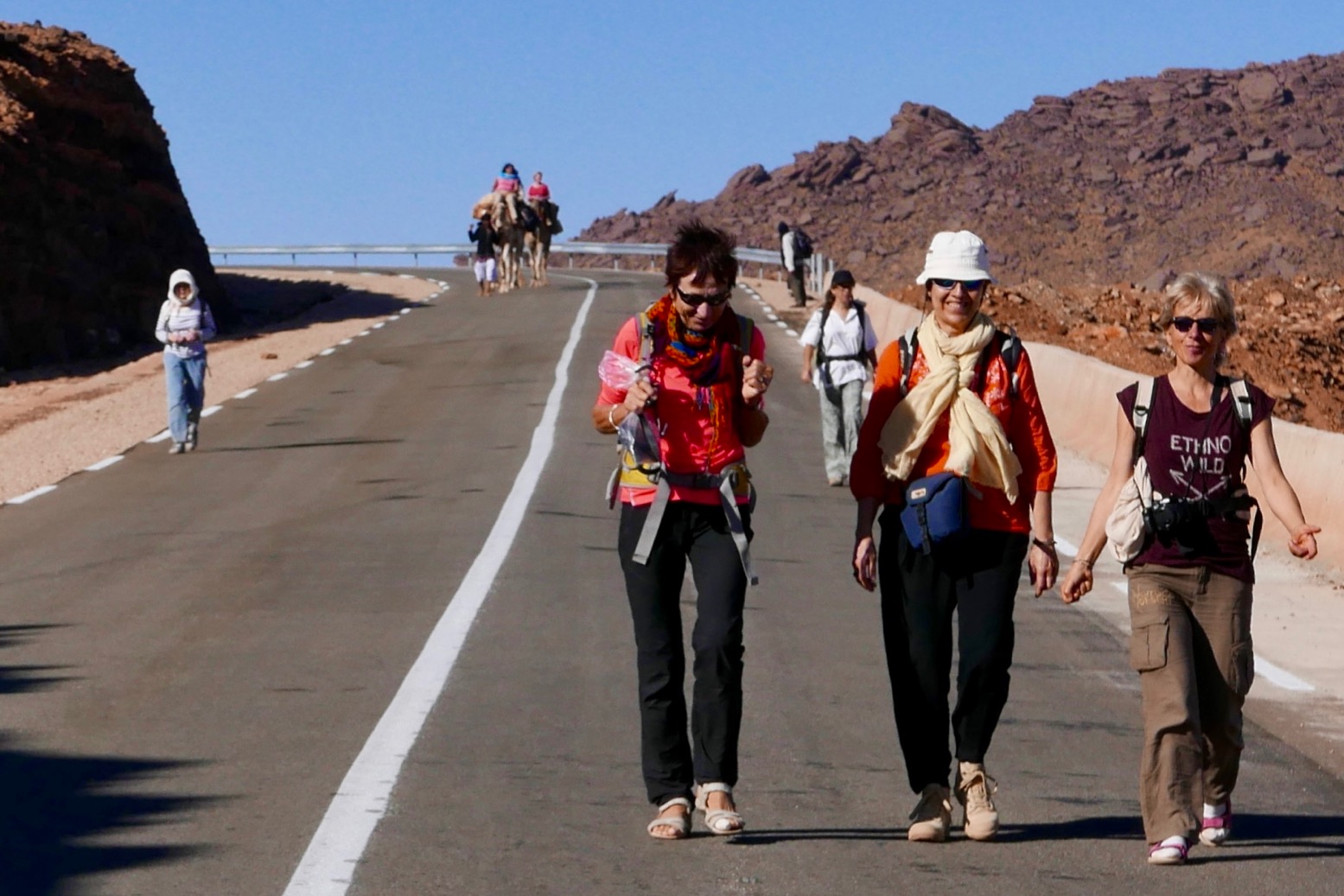
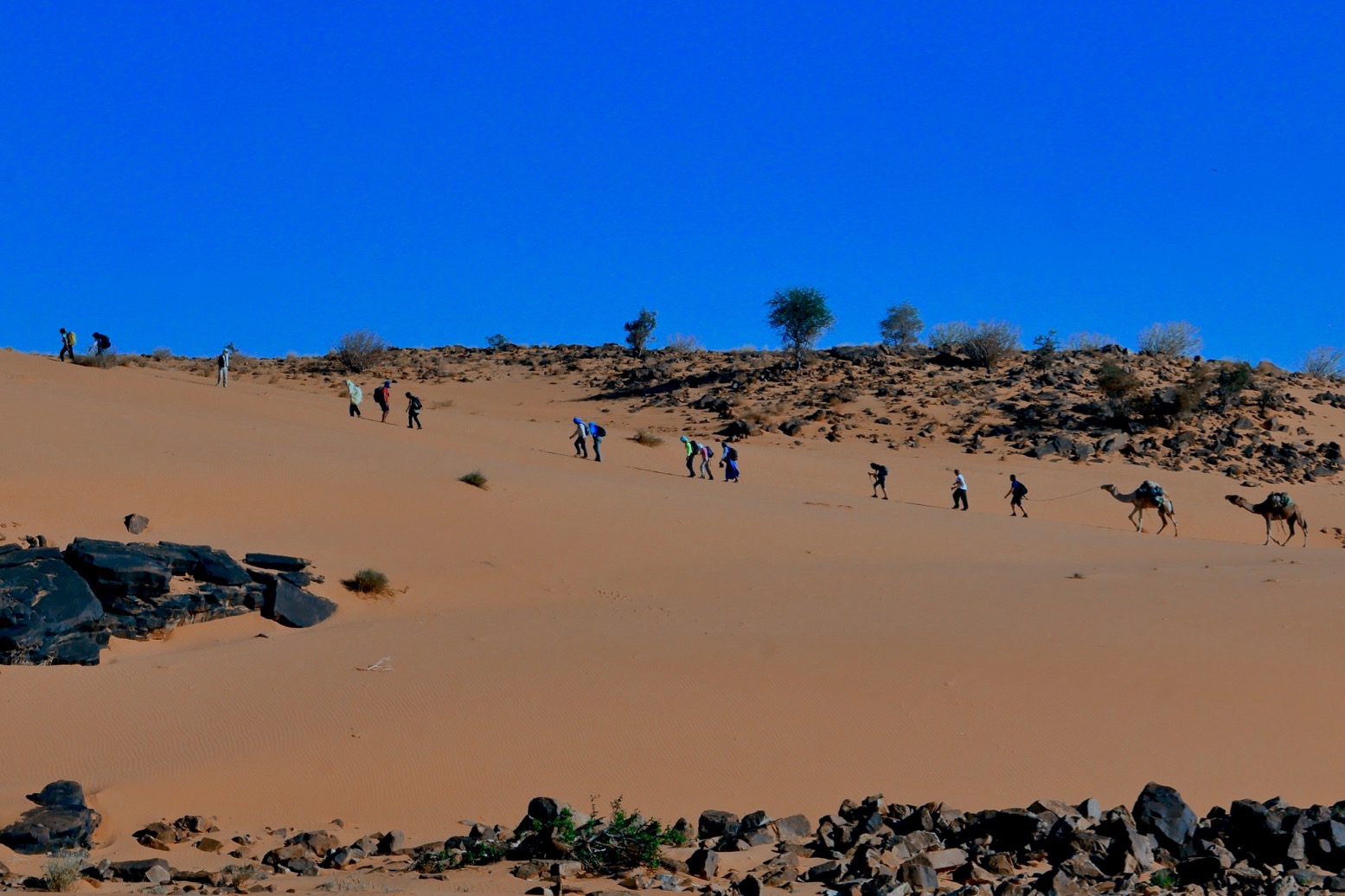
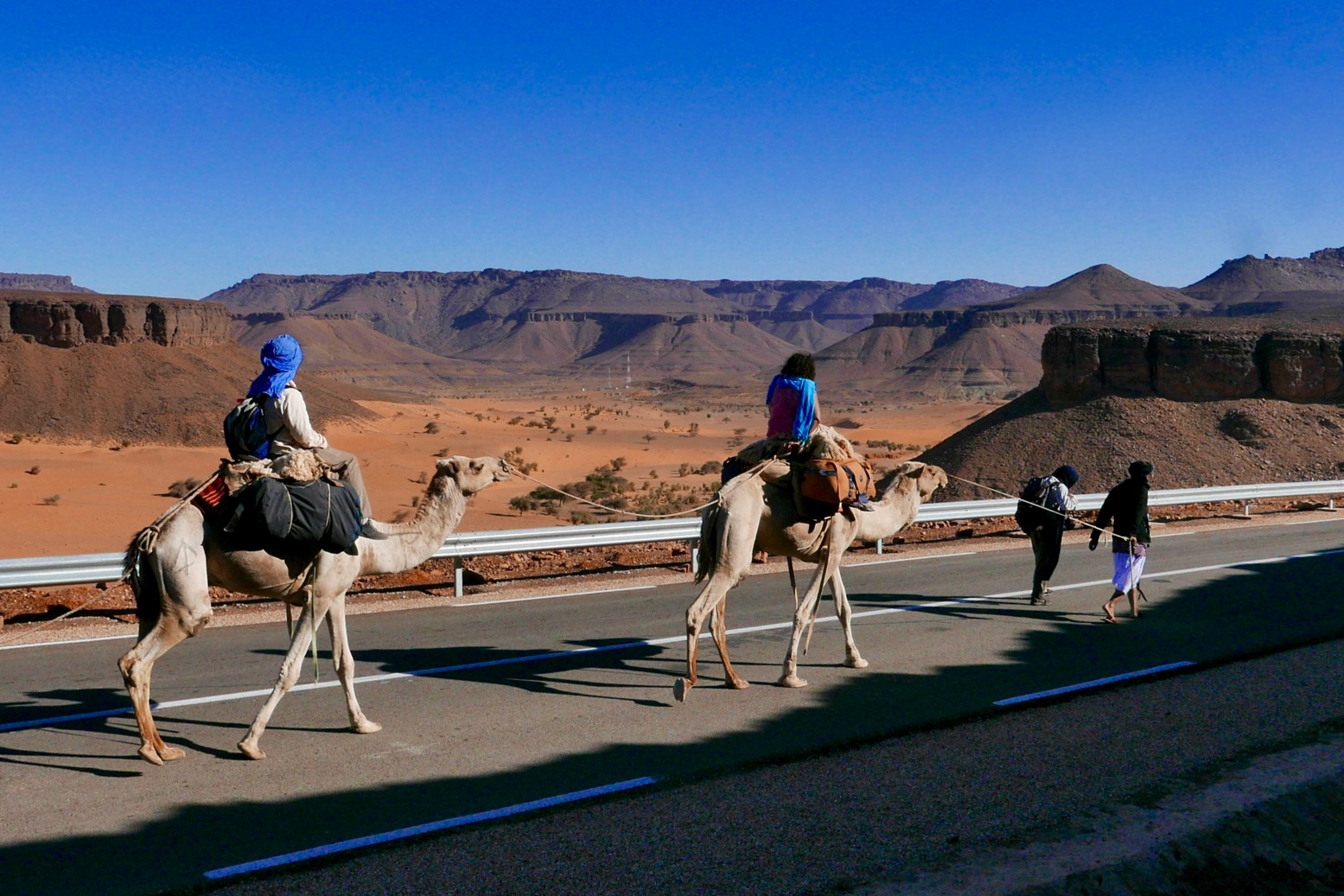
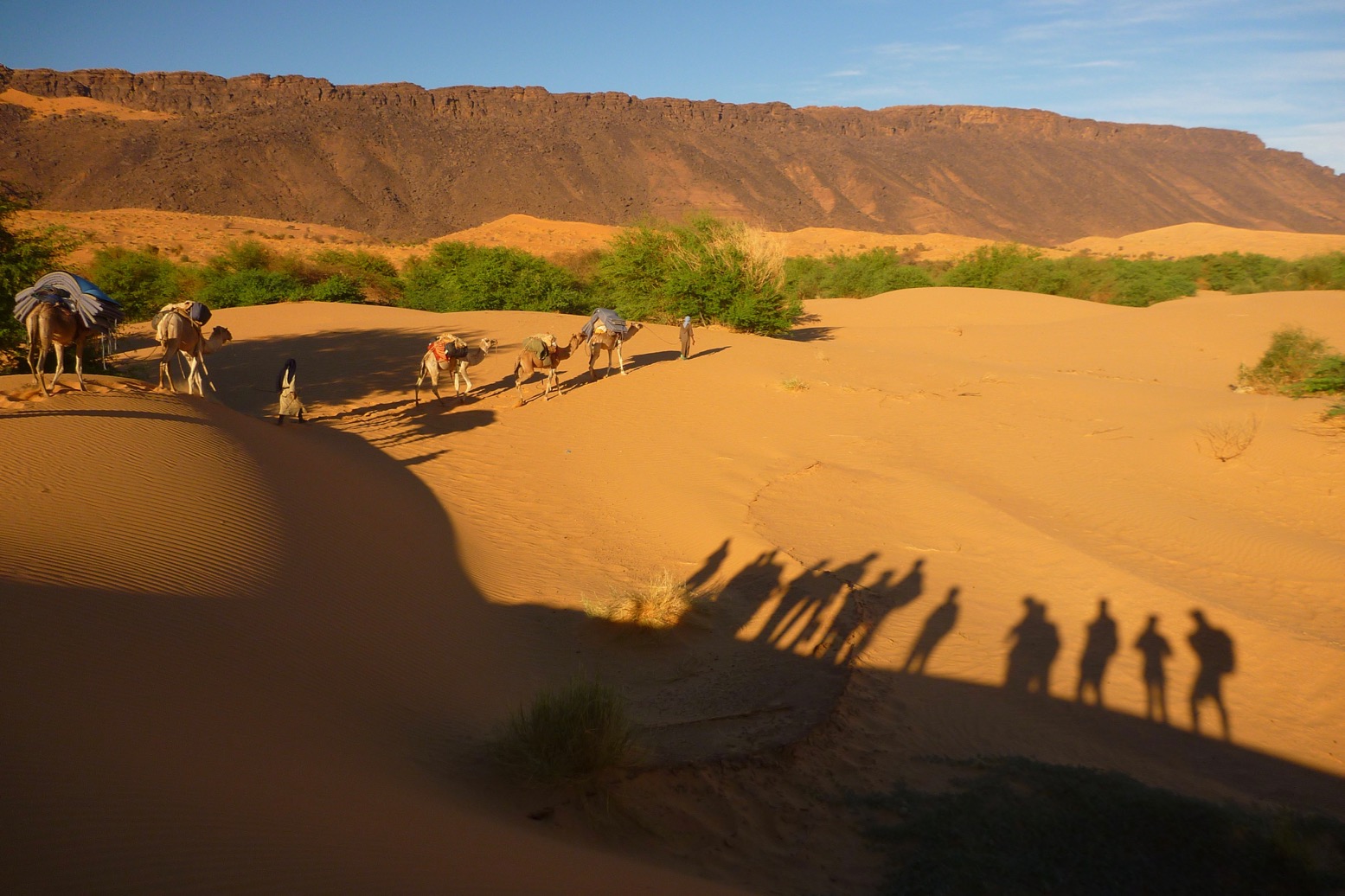
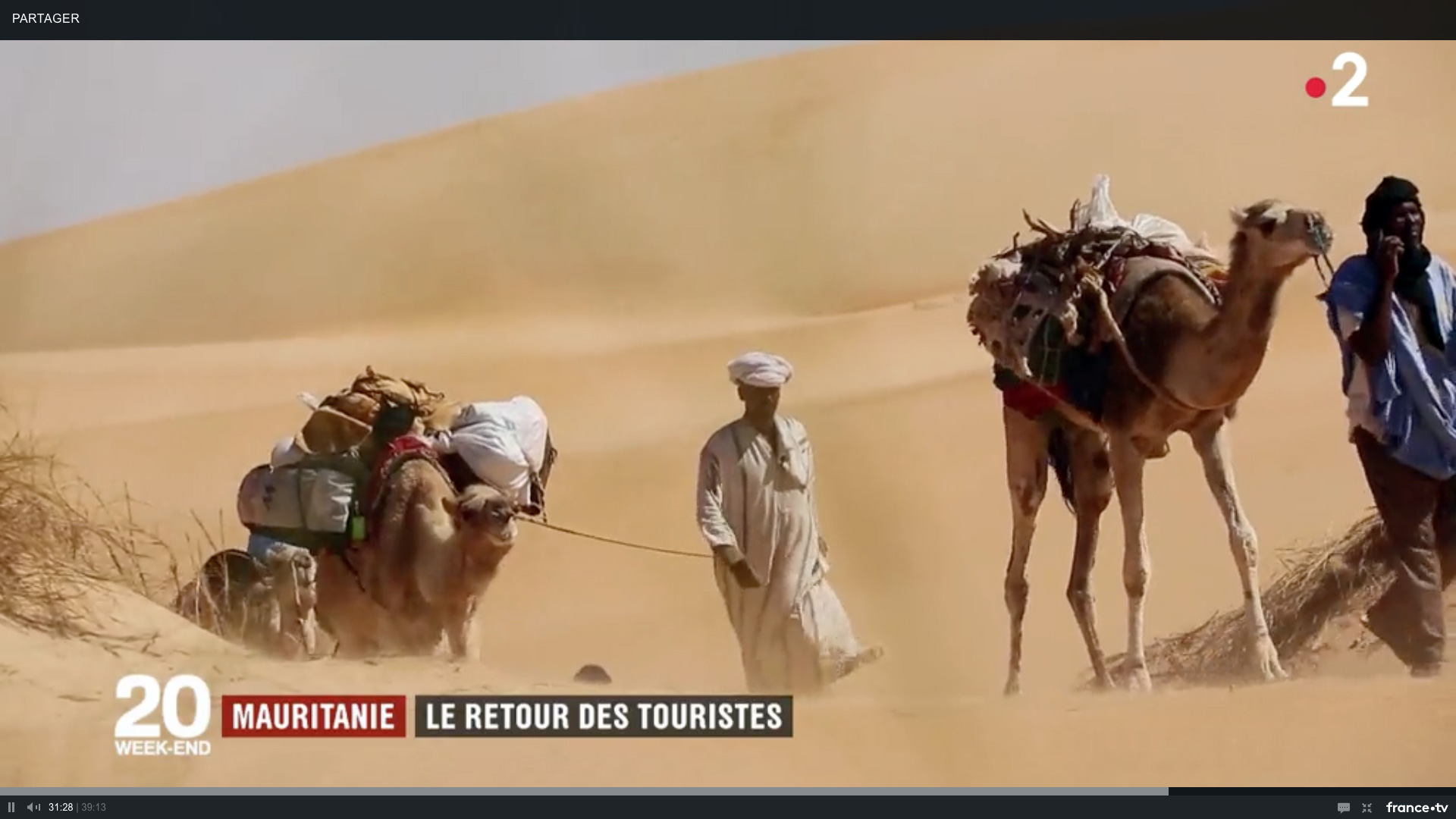
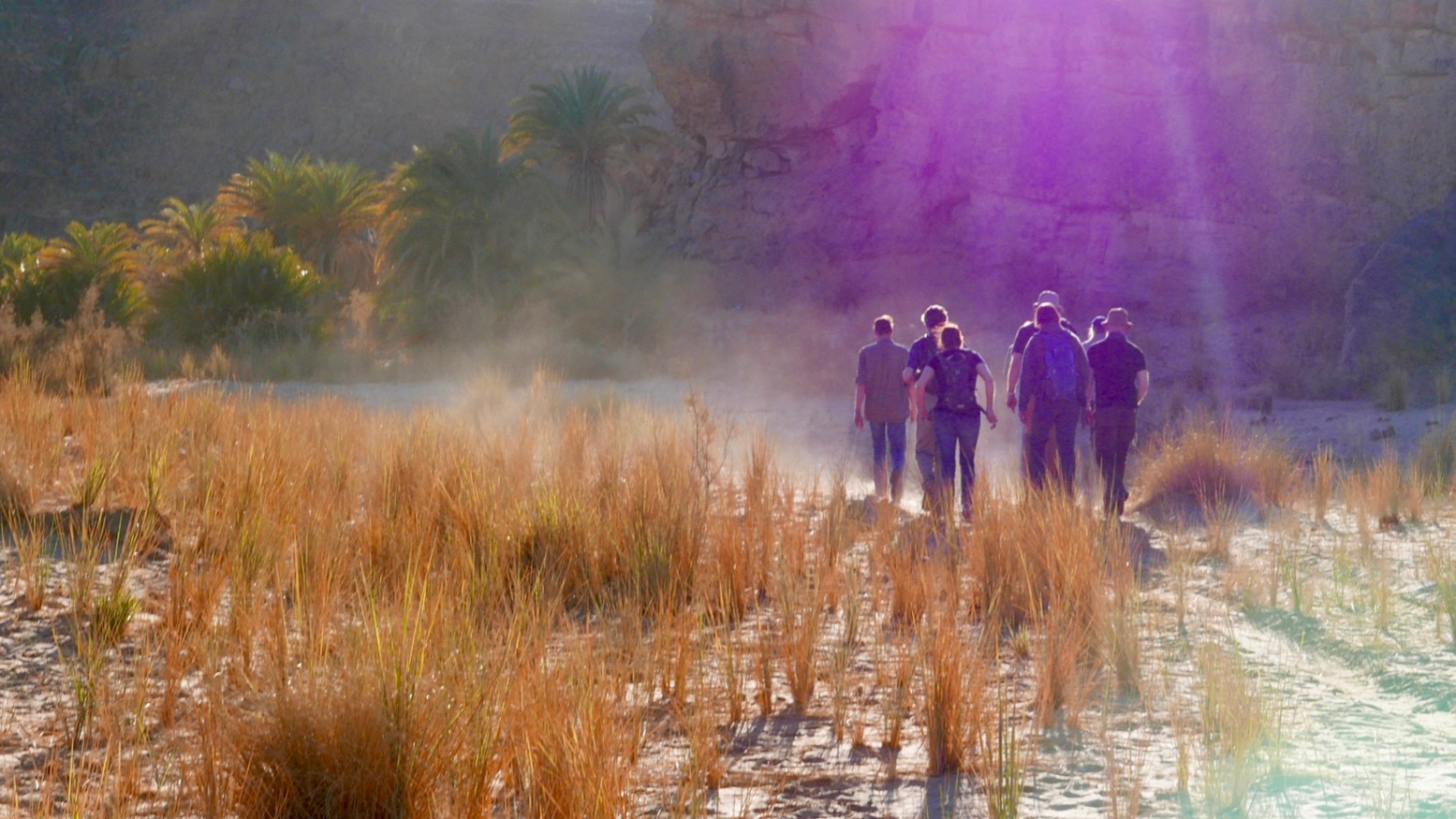
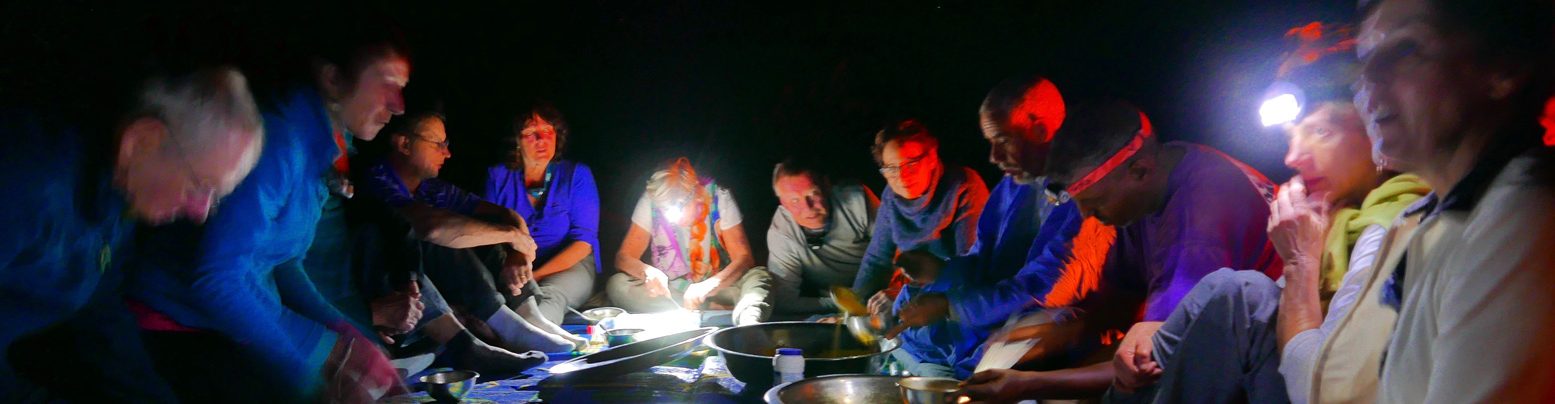
Just back from a two-week camel trek in Mauritania, walking with a mostly French group of 14 from Chinguetti (‘la Sorbonne du desert’) to Terjit (map, left), about 150km. For the first two days over the dunes we were accompanied by a crew filming a report for a French TV station on the return of tourism to Mauritania (see below).
Of course tourism never really stopped for independent travellers (compared to Algeria)  and despite the killings and kidnap
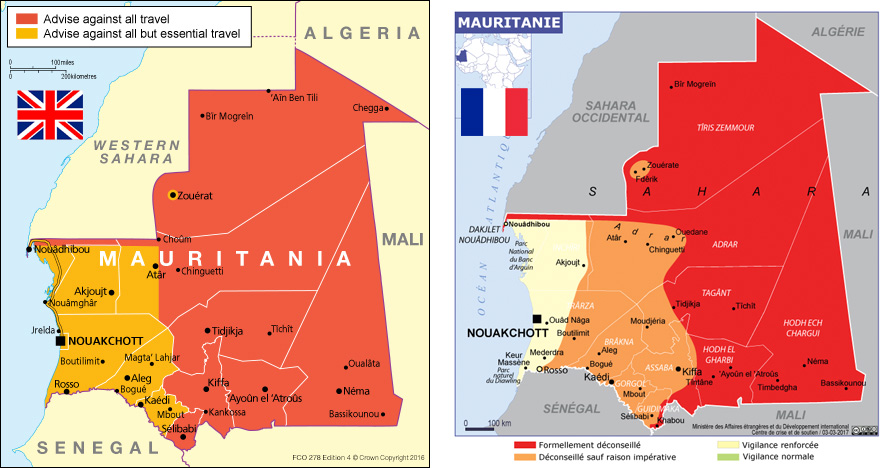
pings of a few years ago (including an entire French family in 2007, right). But the recent resumption of charter flights bringing much bigger groups from Paris directly to Atar (not via Nouakchott) was something for local tour operators to celebrate. It is probably the result of revised travel advice issued by the French Ministry of Foreign Affairs (left). You’ll see they critically (and imo, correctly) extend the ‘travel if you must’ orange zone further east compared to the British FCO. It makes all the difference for local tourism because in that orange zone most of what most people want to see in Mauritania is easily accessible. Our weekly plane chartered by Le Point (with seats sold on to other operators) was packed out.
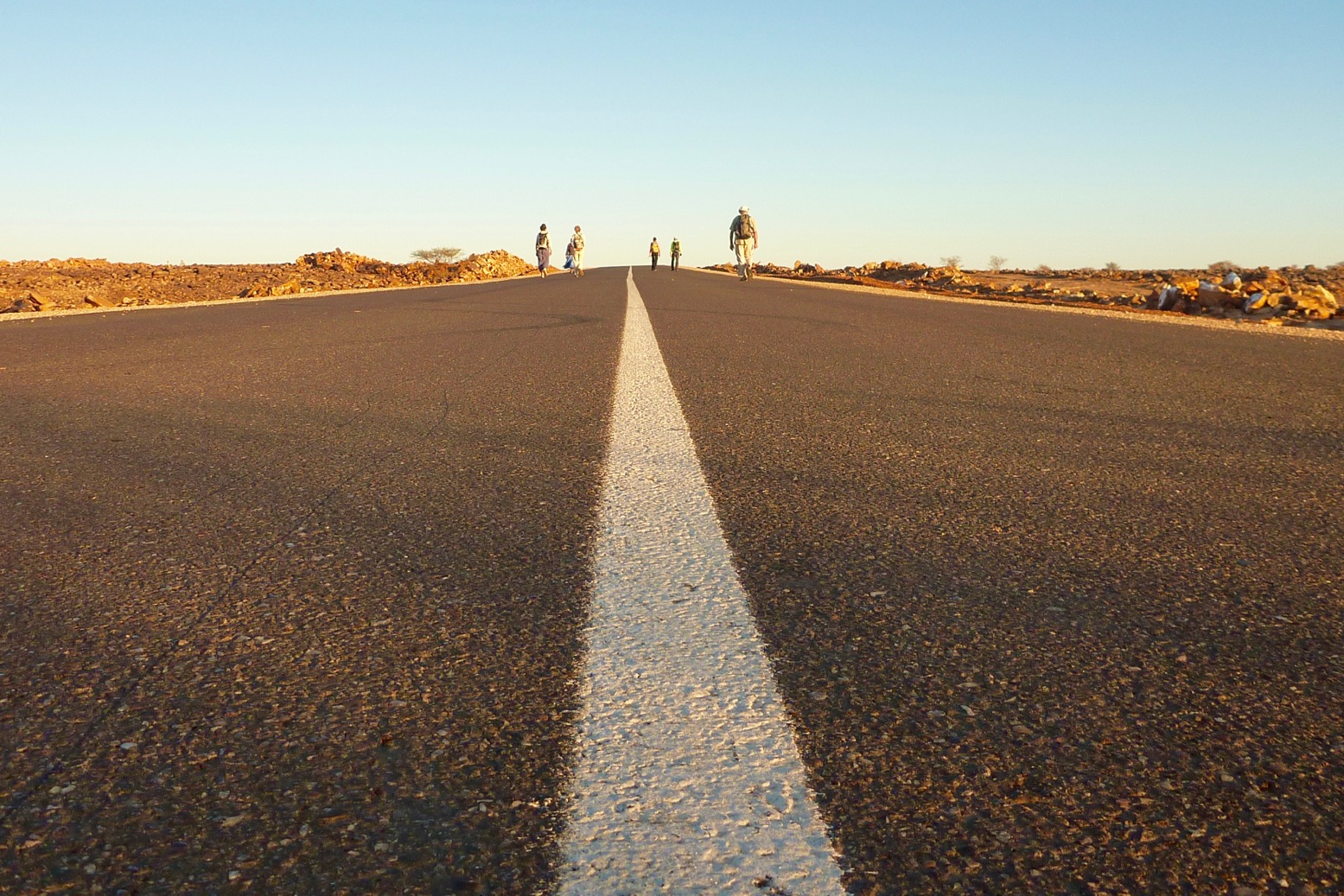
The Vallee Blanche is the longest trek Le Point offer, but in terms of landscape and pace, maybe not their best depending on your previous experience. Horror des horreurs, we even walked along a road for a bit. Our guide recommended the 8-day Amatlich Erg walk – fewer interminable rocky plateaux he said, but then that’s all part of the deal in the desert. Wherever you go, it’s a variety of sand, rock and passing landforms that’s the key to a satisfying experience. I got the feeling that by day 8 or 9 most were counting the days, partly because the 25km/day pace had dropped by over 50% (as planned) by which time the 6-hour lunch breaks were exceeding walking times.
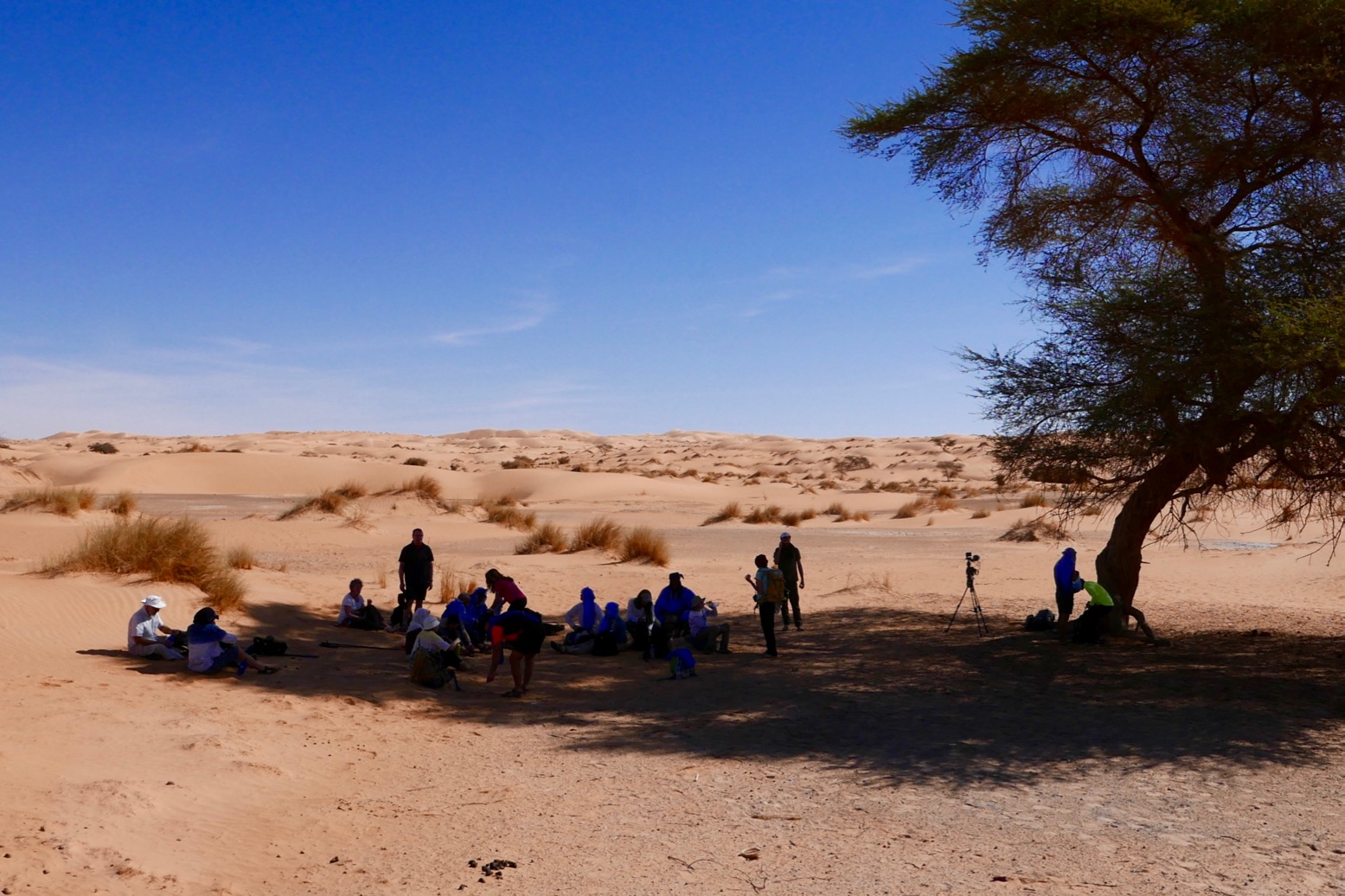
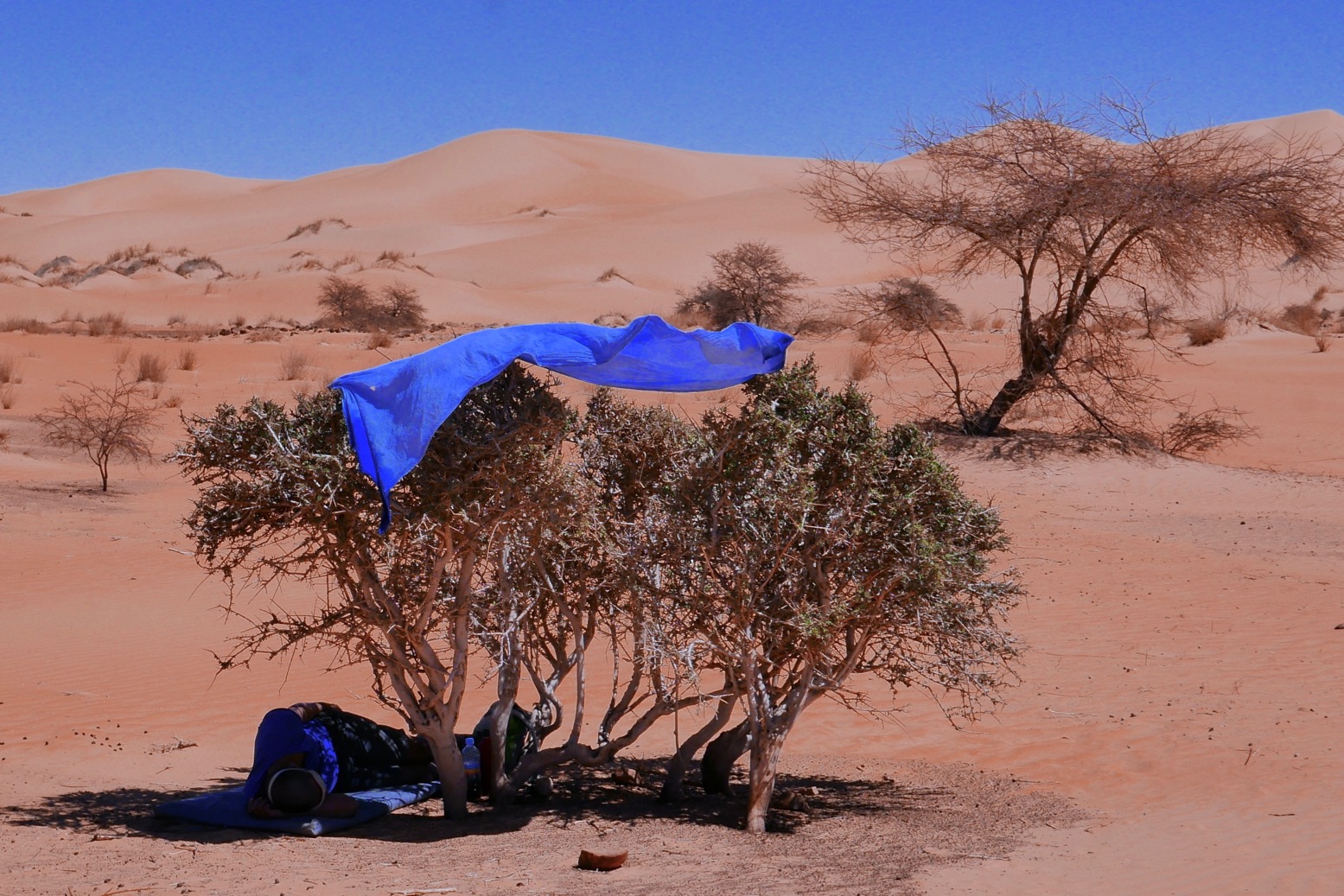
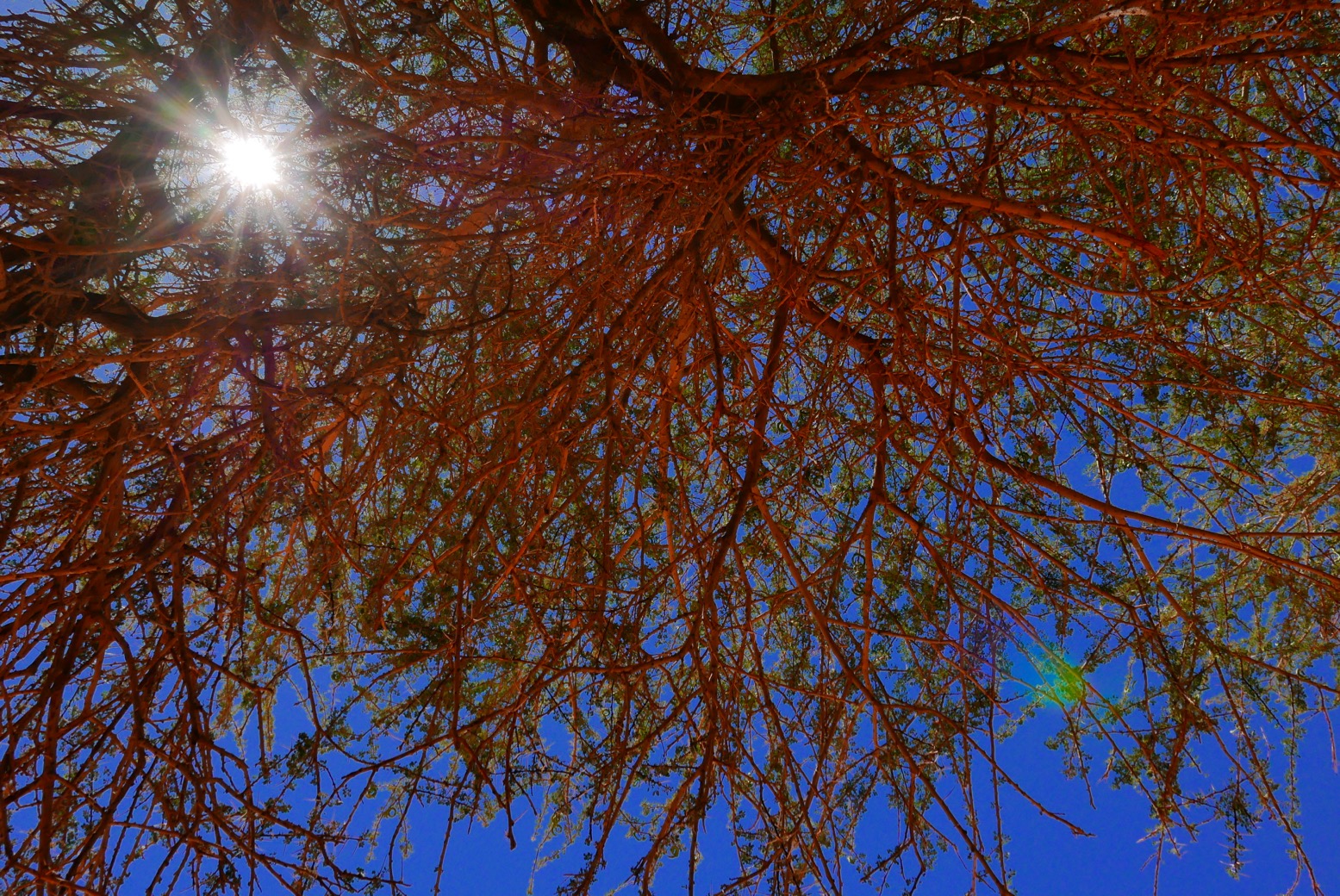
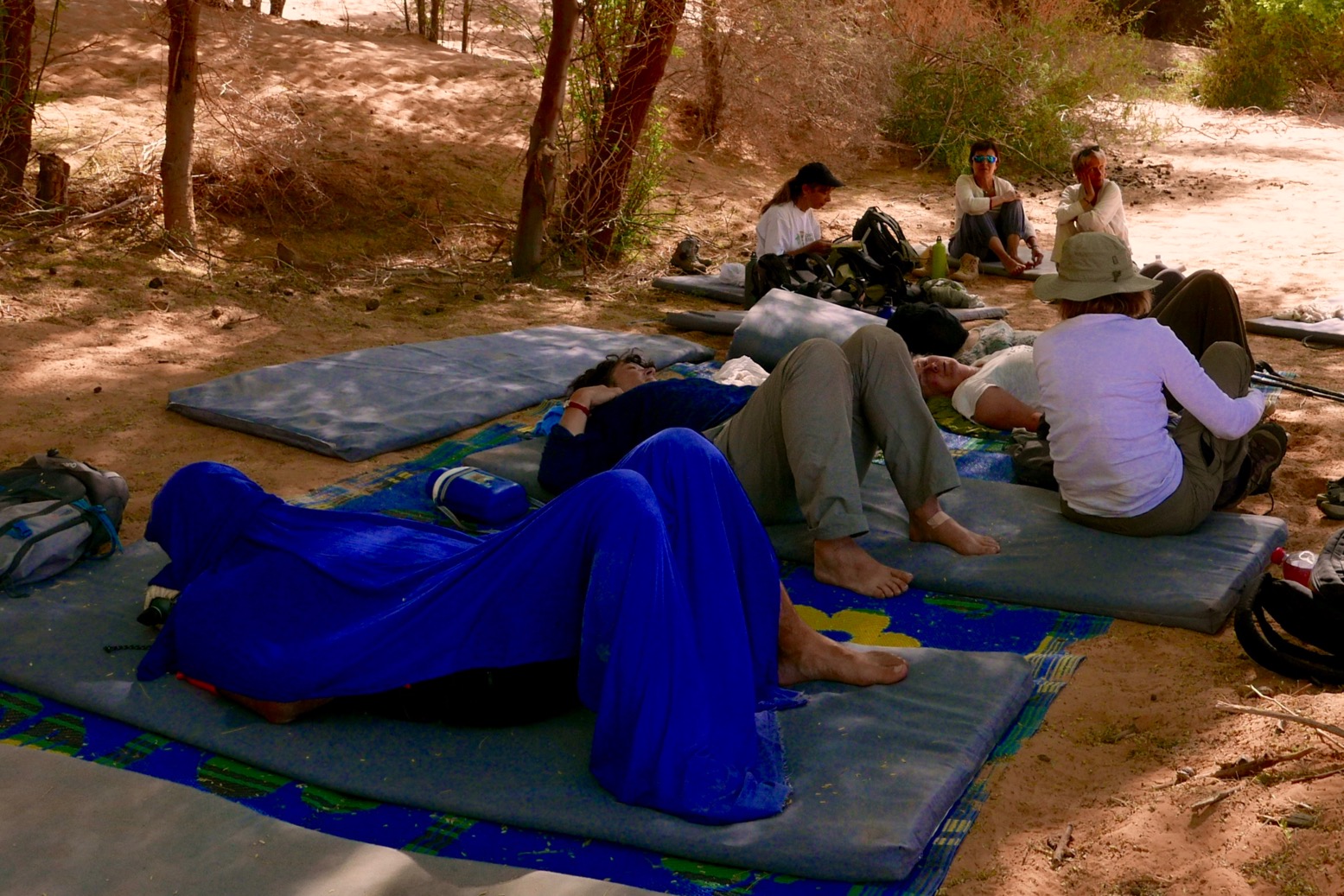
The fact it was unseasonably hot, with temperatures of over 40°C in the shade, may have tempered enthusiasm, but actually the morale and ambience of our group was very good; most had done previous tours with Le Point, including Chad which can be a tougher call. The Adrar at this time is usually in the low 30s – as it was on our very last day to Terjit, but most days it really was too hard to move or even stay awake for long, while lying under an acacia between noon and 3pm.
The plus side was that being on the trail before dawn was great fun, although I’m not sure what shape I’d have been in had we walked 25km/day for the full two weeks. So in fact the long siestas were the right thing to do. We’re not all huddled round that meagre shade tree on the left just because someone has cracked open their stash of Haribo Yellow Belly Jelly Snakes. We’re gagging to cool down a bit. Much depends on the terrain of course – is dodging trackless rubble worse than sinking into ankle-deep sand? They’re about the same once you add your daily endowment of aches, pains and cumulative fatigue.
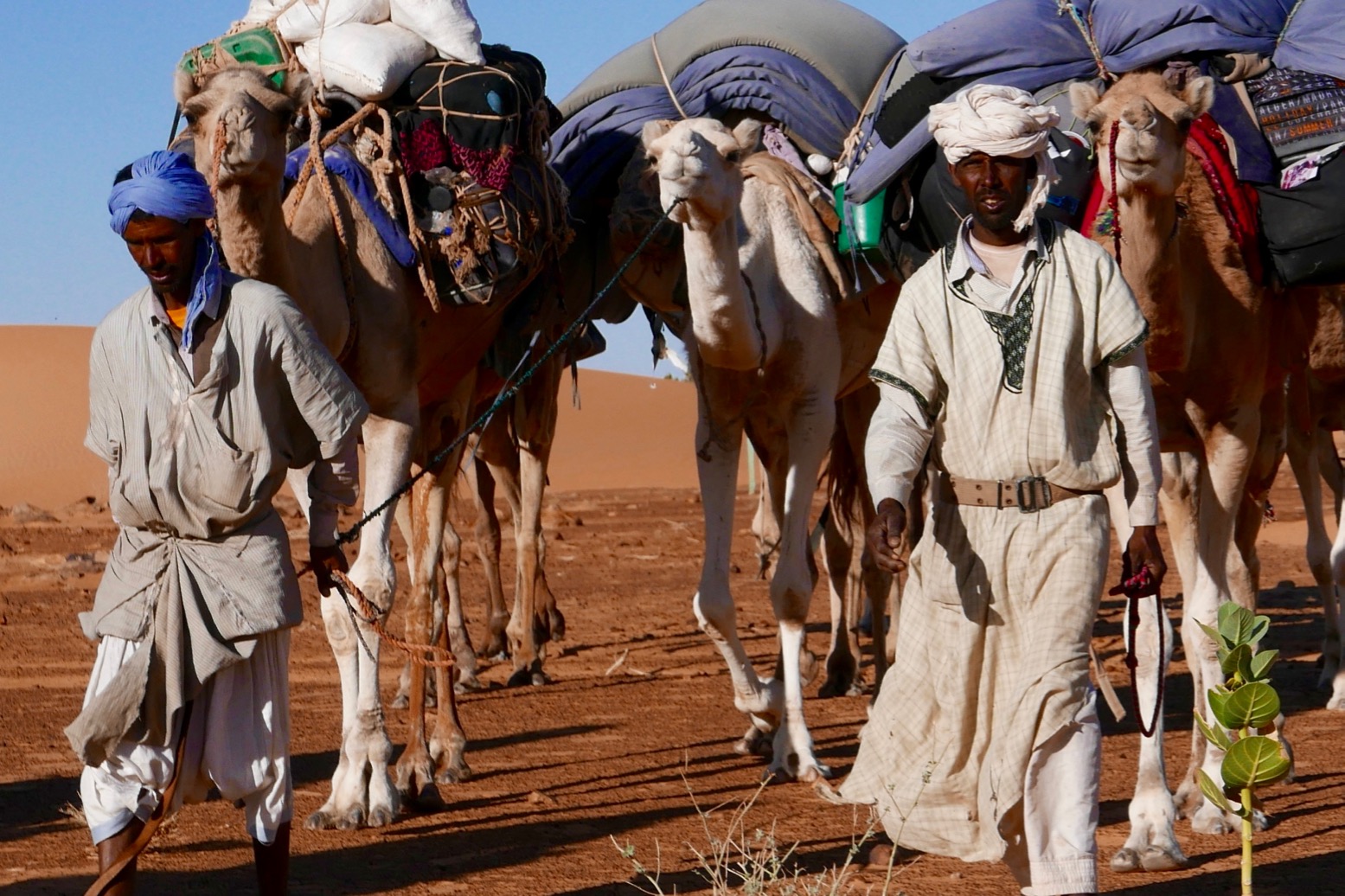
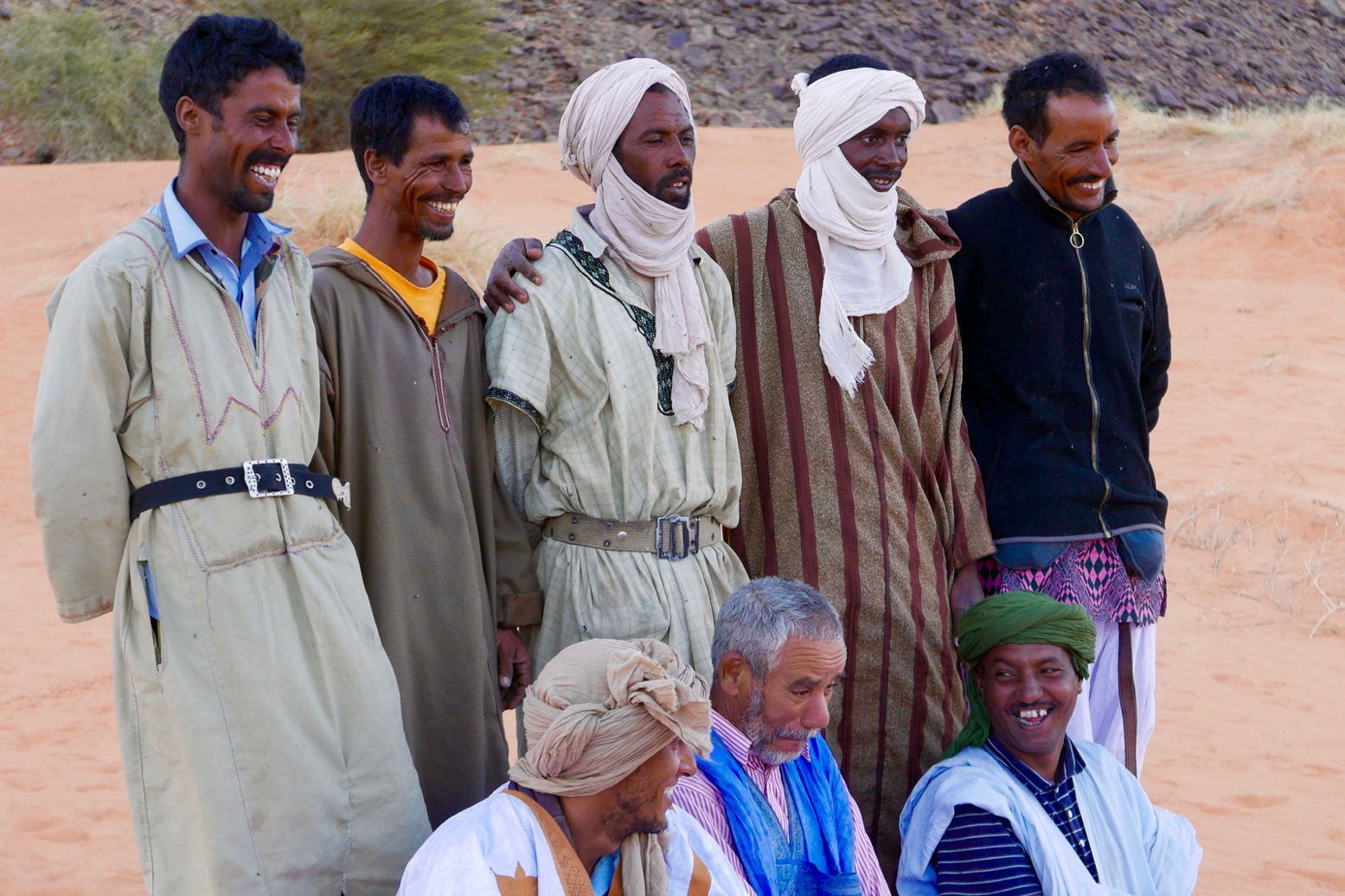
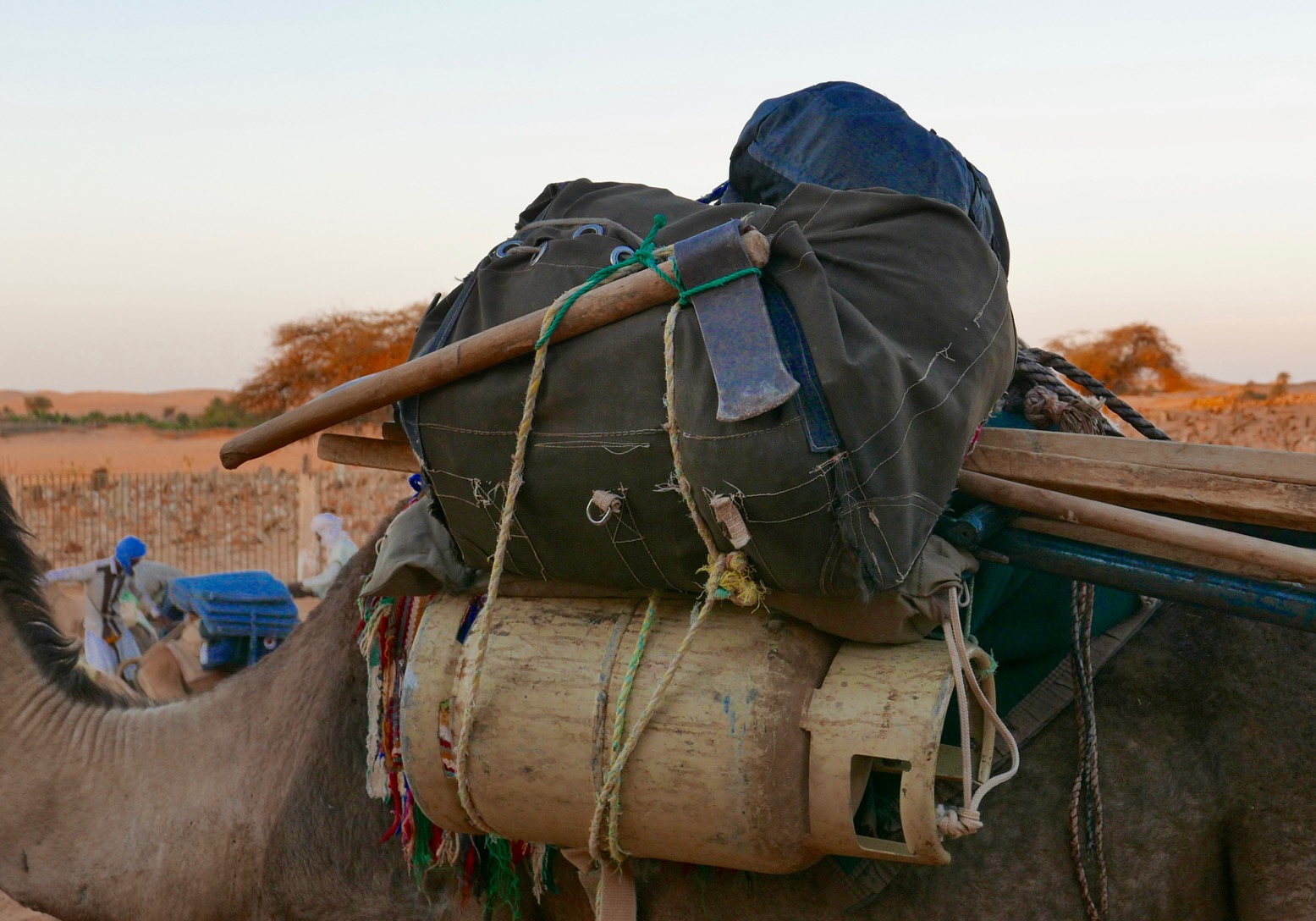
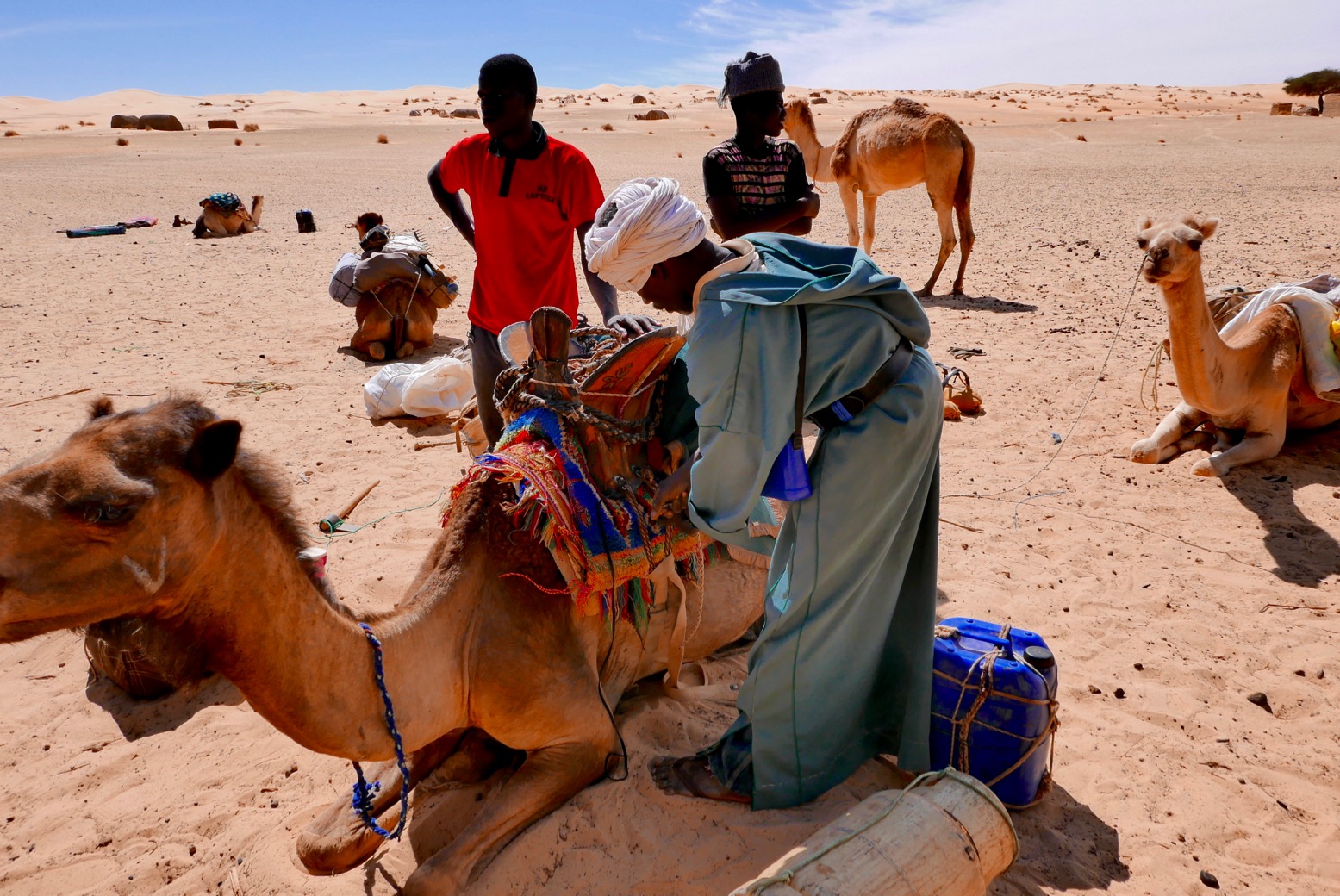
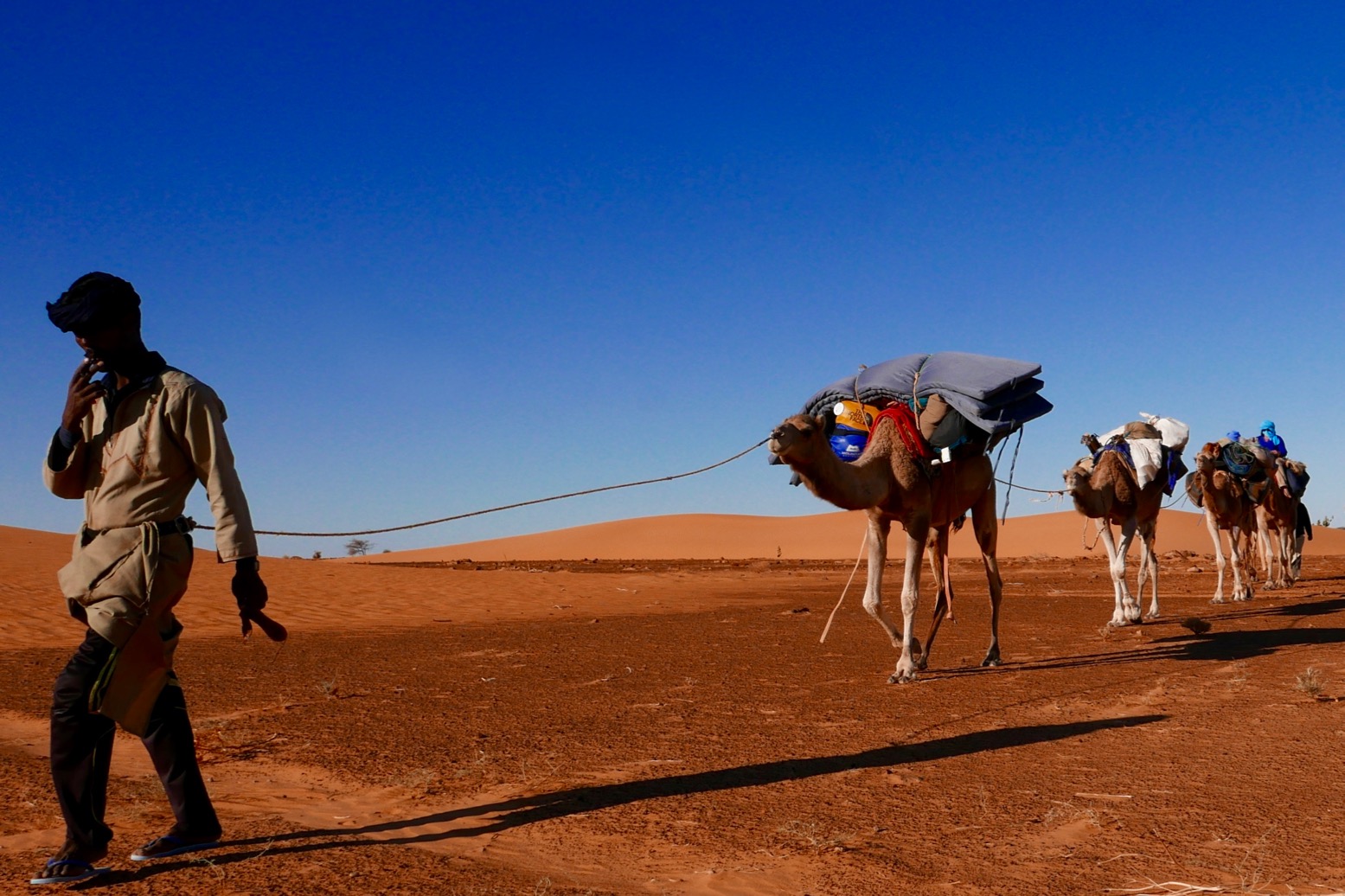
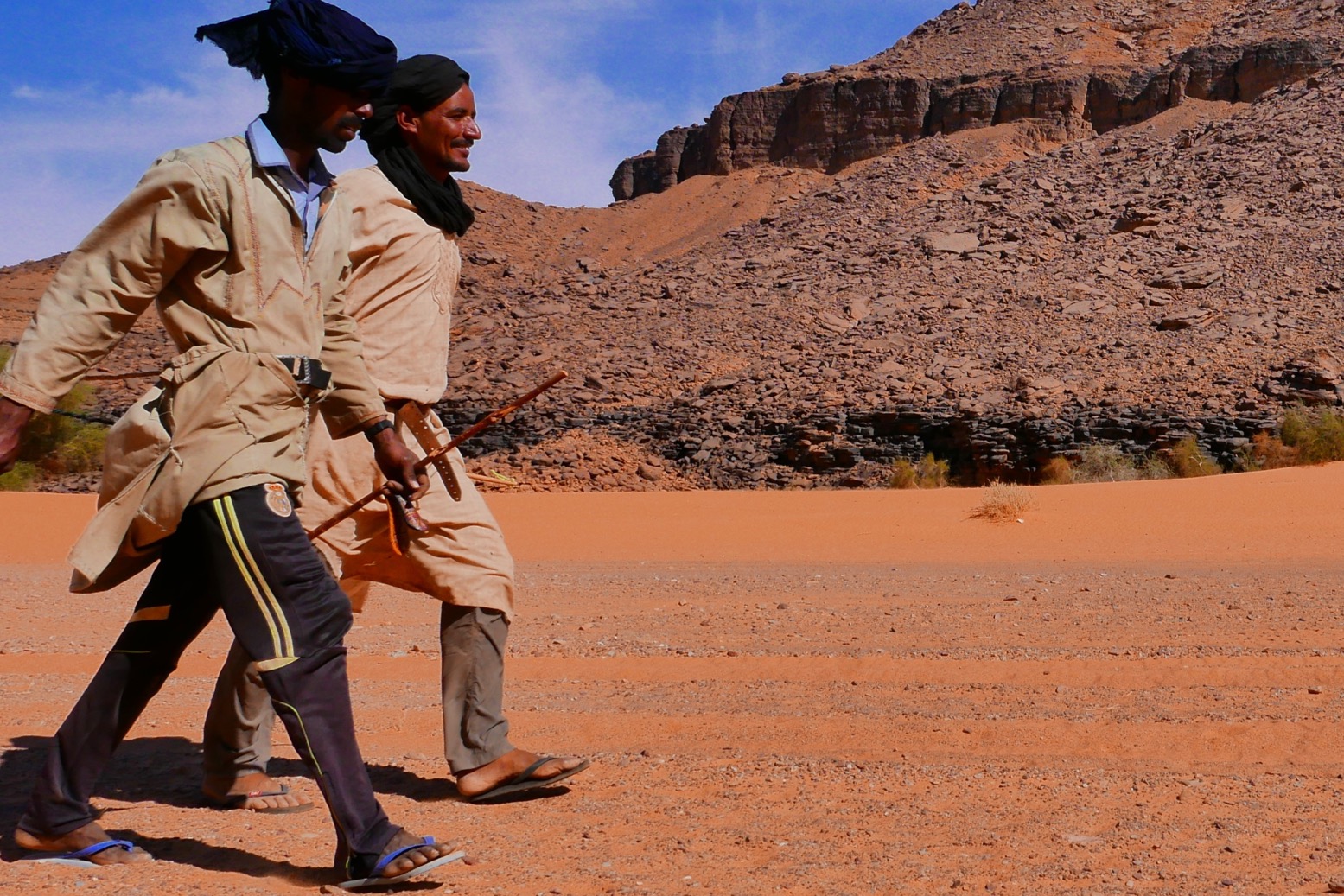
All this was eased by a hard-working crew (left) plus our guide Mohamed who, it must be said, was feeling the strain after a busy season tramping around the desert with us nasranis. (There was no French-domiciled accompagnateur, not a need for one; with a Brit group it might need to be different.) I was just relieved I had a fully charged Kindle to help pass the long hours inching along with the shade from 11am till 4 or 5pm. By then it wasn’t going to get hotter, or the remainder of the day’s walk was short enough to not matter so much. One night it felt like it didn’t drop below 30°C and after a week of this everything, even your toothpaste buried in your bag, is hot and stays hot. I’ve not been in such heat for so long since an early-80s moto trip to Algeria, mistakenly taken in September when it was hotter still. Oh, and Libya in April 1998 (right); also very hot. Both were quite shock and yet watching our Mauritanian camel crew stride along in their flip-flops from camp-to-camp without rests and after spending over an hour locating and laboriously loading over a dozen camels makes you wonder what you’re whining about. You got to take your cheche off to these guys.
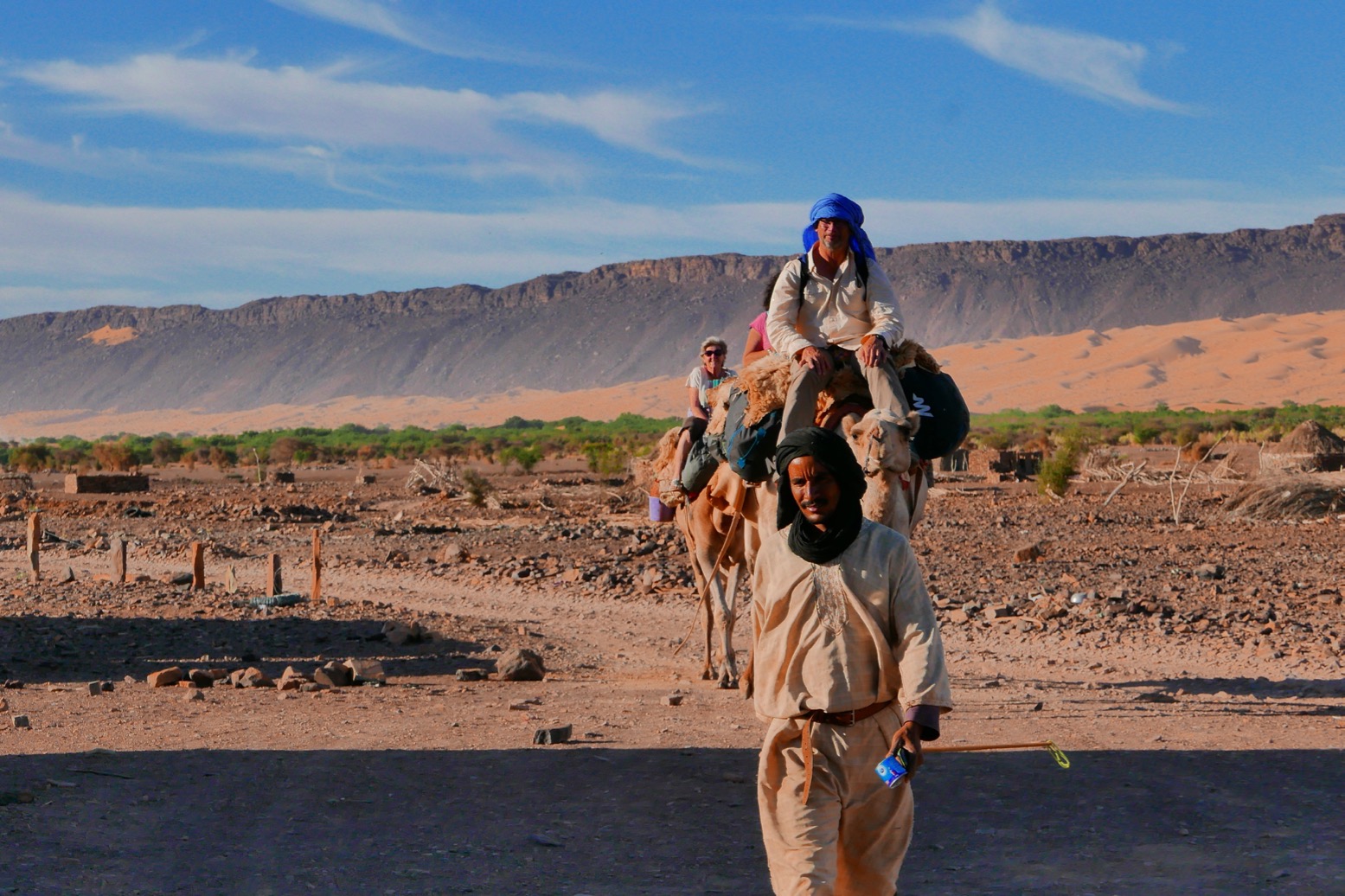
As it was, a couple in the group chose to ride when weary, and another couple had reserved camels to ride whenever possible. If you take this option, good saddle padding is essential, especially on the backbone. Me, I like to walk – some days more than others.
Sleeping out, I was a bit concerned that le chaleur might bring out the spiders and snakes everyone talks about in the desert. I heard later that the guides had indeed spotted a snake on night one, and again at Berbera guelta, but I never even saw any tracks. I suppose the good thing is that, besides being too big to eat, at night a reposing human is not much warmer than the surrounding desert and so not that alluring.
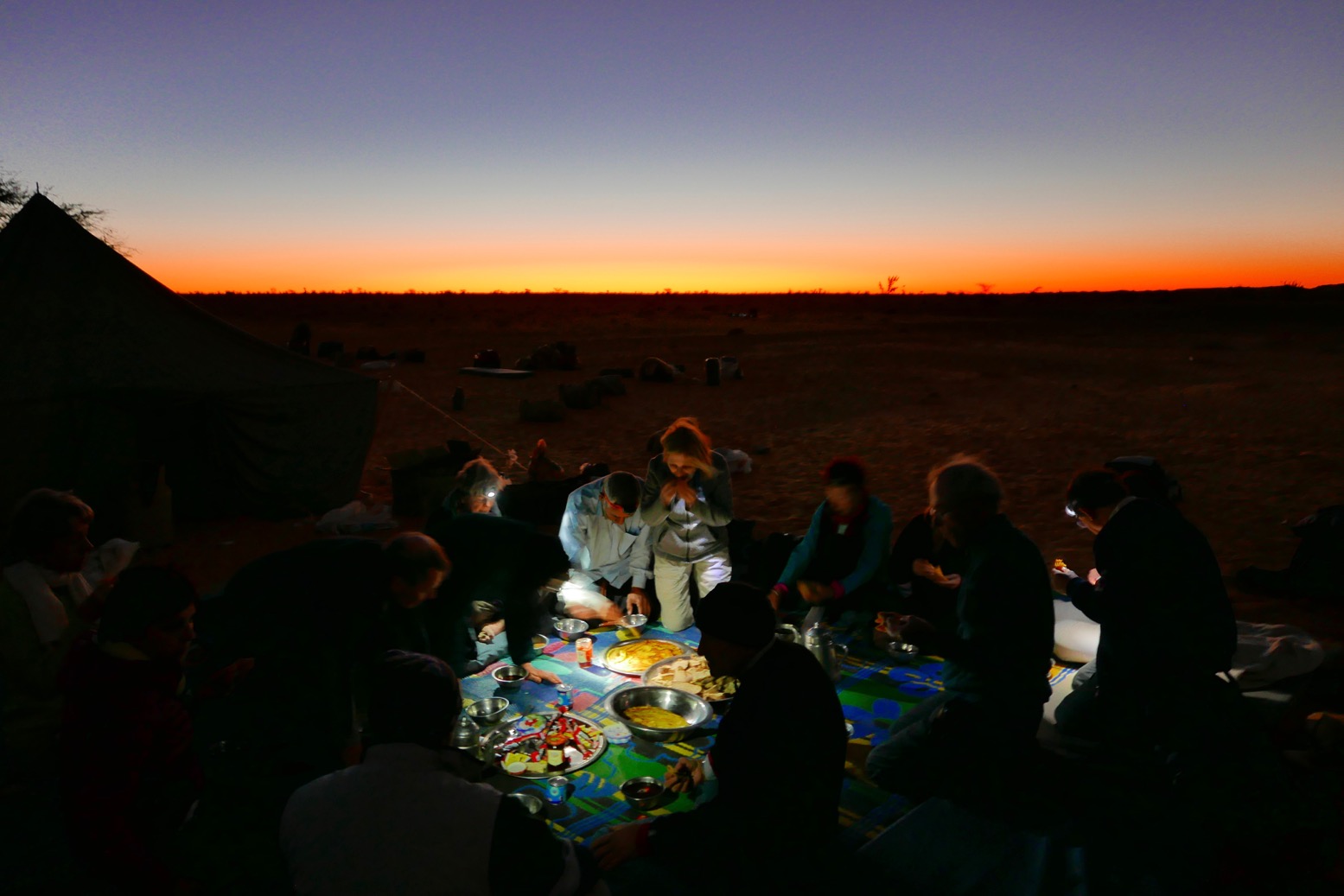
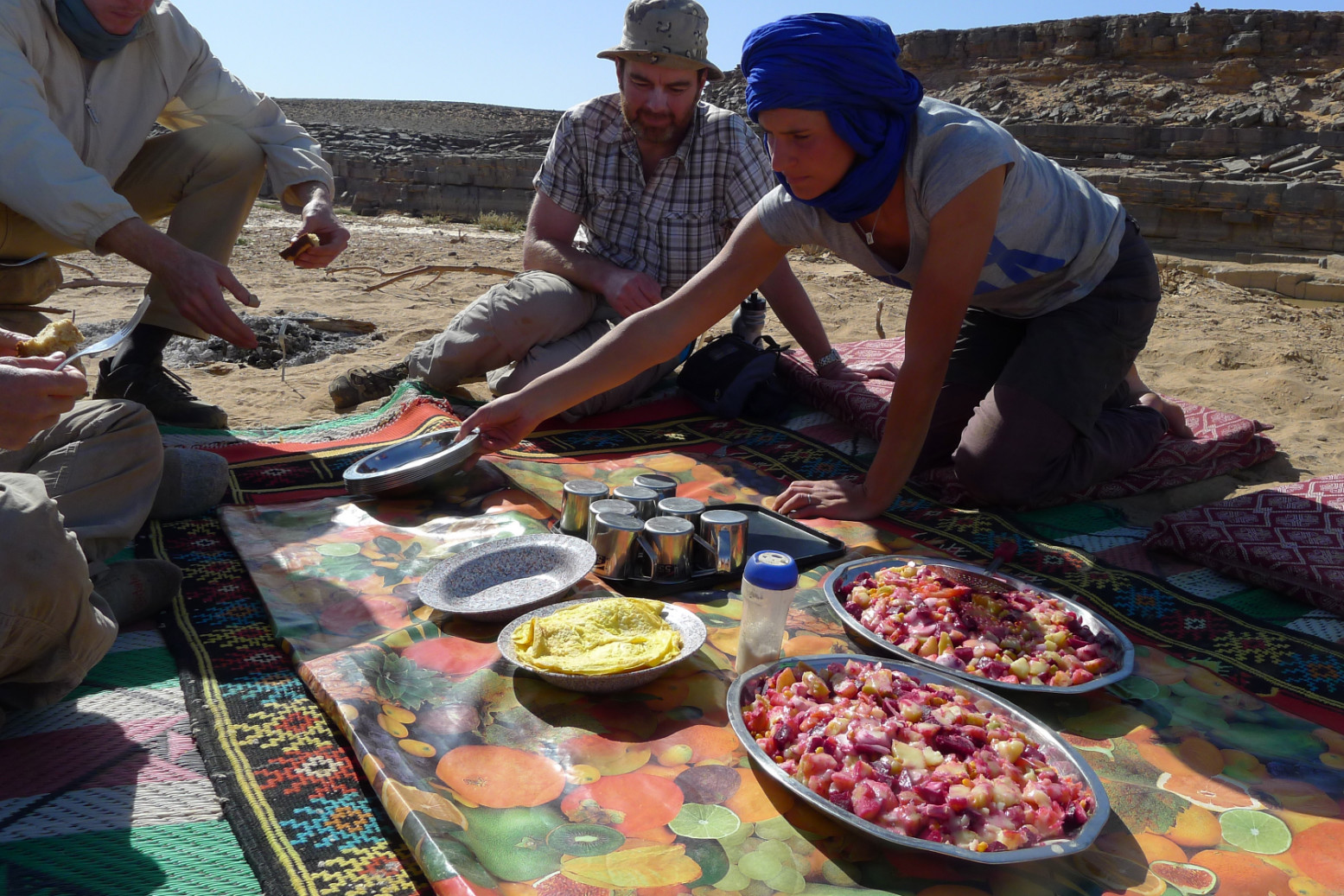
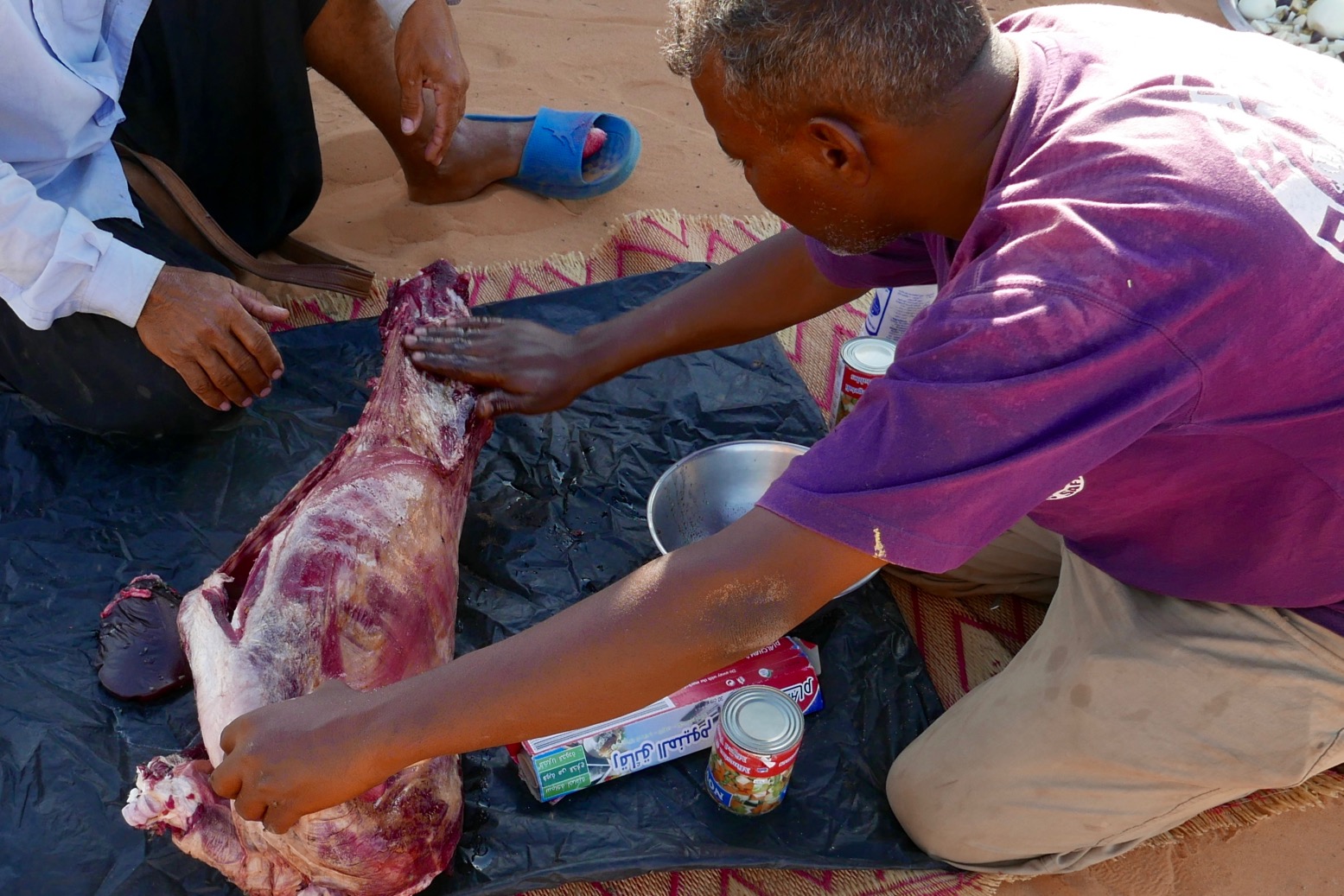
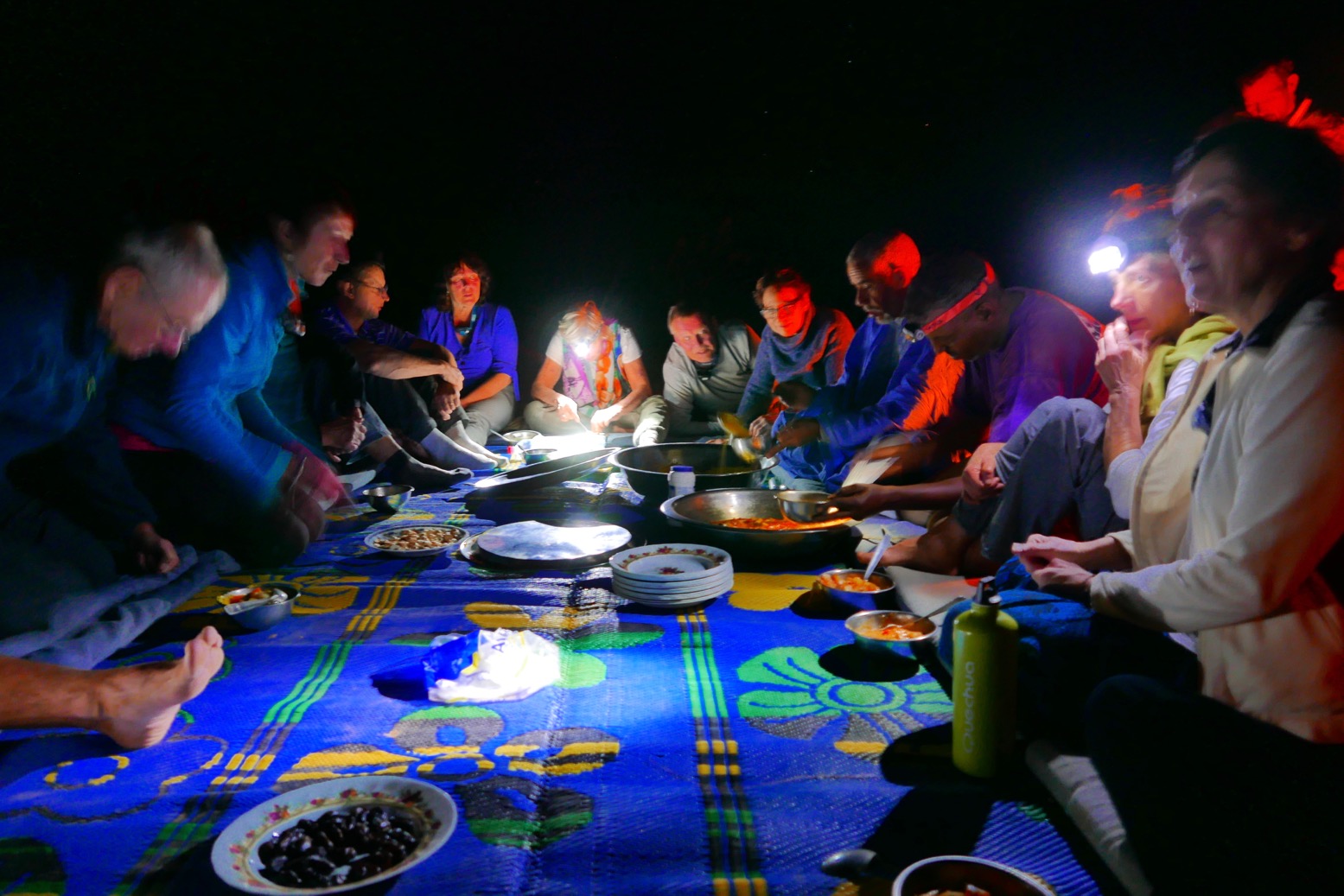
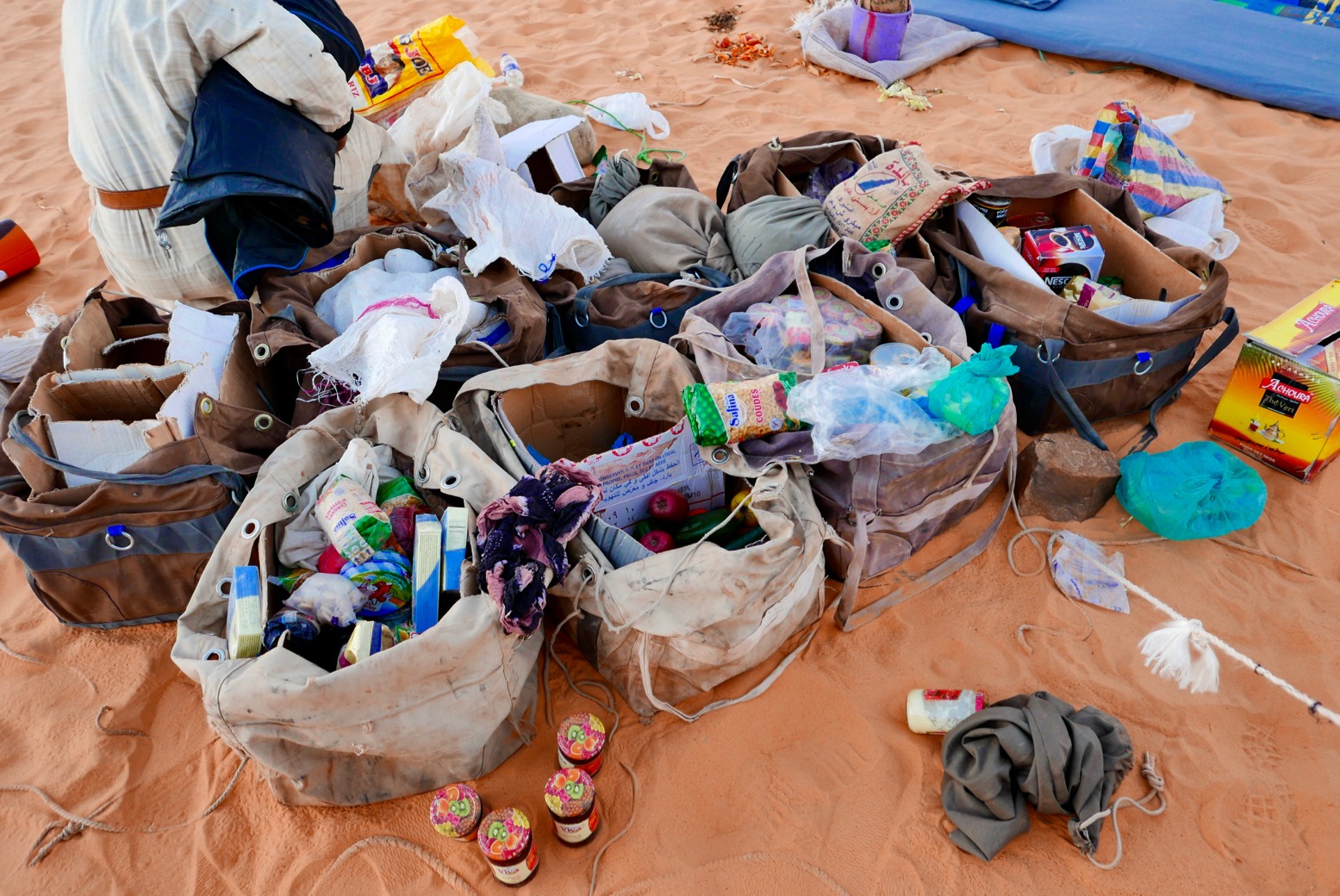
Compared to my Algeria camel trips (here and here) I have to say the service was as good if not better; it’s only a shame the fresh lunchtime salad couldn’t last beyond day one out of Chinguetti. After that it was cous cous/rice/pasta with tinned fish and hard veg at lunch, and the same but with veg stew in the evenings, plus soup and tinned fruit for afters. That said, we got two goats (right) which we didn’t have to buy, sandbread baked every night and pancakes every morning. And there was never a shortage of water, even for washing. After a while you do crave fresh fruit and veg as well as cool, clear water, but despite what you might call a ‘high-carb’ diet I managed to lose 4kg which I happened to have going spare. Heat kills the appetite which is why I’m currently dressed in three ski suits while doing Hot Yoga next to the radiator.
One thing that spoils the Mauritanian desert vibe for me is the endless ‘gift shops’ unrolled at many desert stops and every nomad camp. In this way Algeria feels more sauvage; on the Immidir treks we might come across a family  of feral goat nomads in 11 days and never ever see car tracks. But as I recall from the late-90s, wayside trinket markets were always the way in the Adrar, as it was in the Aïr of Niger. And anyway, not everyone may have as replete a collection of cheches, stone tools, teapots and other desert souvenirs like me. At one place I noticed a women selling an unusual fulgarite necklace among her collection of silver jewellery.
The large group size didn’t really bother me, perhaps because much of the chat went over my head, but probably because it was a good group and anyway – resting or on the move there is plenty of space, it’s not like being stuck in a bus. Plus you imagine people who choose to take a two-week walk in the desert in March aren’t going to be complainers. Having said that, you do wonder if Homo Sapiens’ mysterious Great Leap Forward; the so-called advent of behavioural modernity 40,000 years ago is attributable to the invention of the comfy chair. Or maybe that’s where it all went wrong.
cropped-cam2dins.jpgIt’s interesting to observe how the Frenchies (and the few Belges) are much more casual about desert walking than some Brits brought up on the exploits of tormented ex-public school masochists like Thesiger, Lawrence and maybe Michael Asher. Le Sahara to them is just a holiday destination like Vanuatu, not necessarily a place to pit yourself against the elements to within an inch of your life.

rim18 - 26

tik
Straight out of Atar into the desert.
Great value at €1200 + €55 airport visa
Pre-dawn starts. Feels like a proper desert trip
Sand-baked goat x 2, merci beaucoup
A shady acacia just when you need it
Great crew from Mauritanie Voyages
Wheat flour sandbread, not heavy tagela
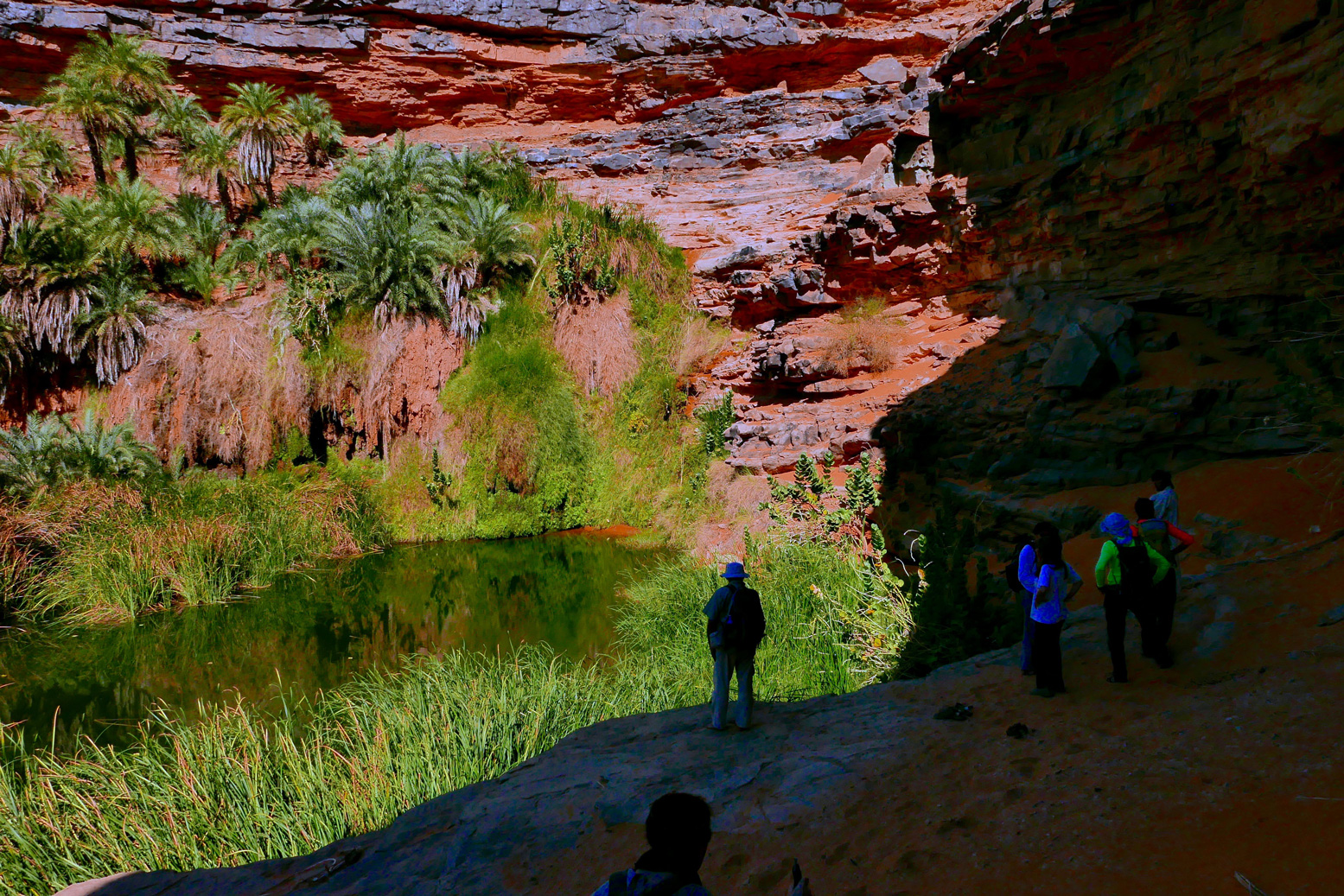
Afternoon at Berbera oasis
You’ll get plenty of dune walking in

luncharn

cros
Lack of prolonged remoteness (to be expected in the Adrar)
Flatish landscape out east
Trinket stalls every day
Pace slowed too much (but just as well)
Nescafe – in the end, undrinkable whatever you try
Missed fresh lunch salads and fruit, too
Oued Abiod; the better places were off it

You can watch the 4-minute French TV report here. We didn’t encounter the army patrols featured in the film – they were up north shot later (so to speak). But it reminds me how brilliant drones are for desert filming. Makes me want to do more walking in the Sahara, but maybe not in a springtime heatwave.

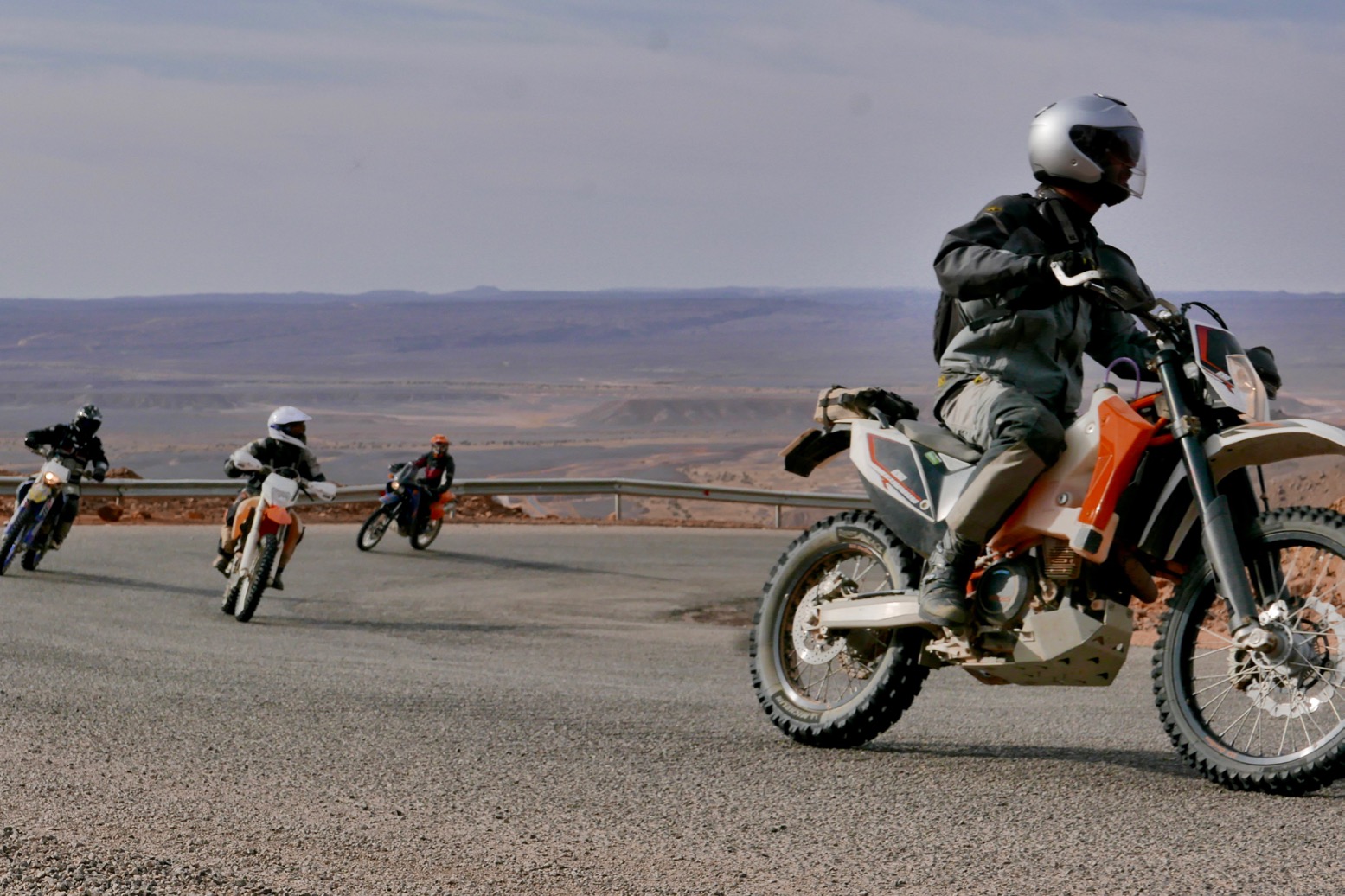
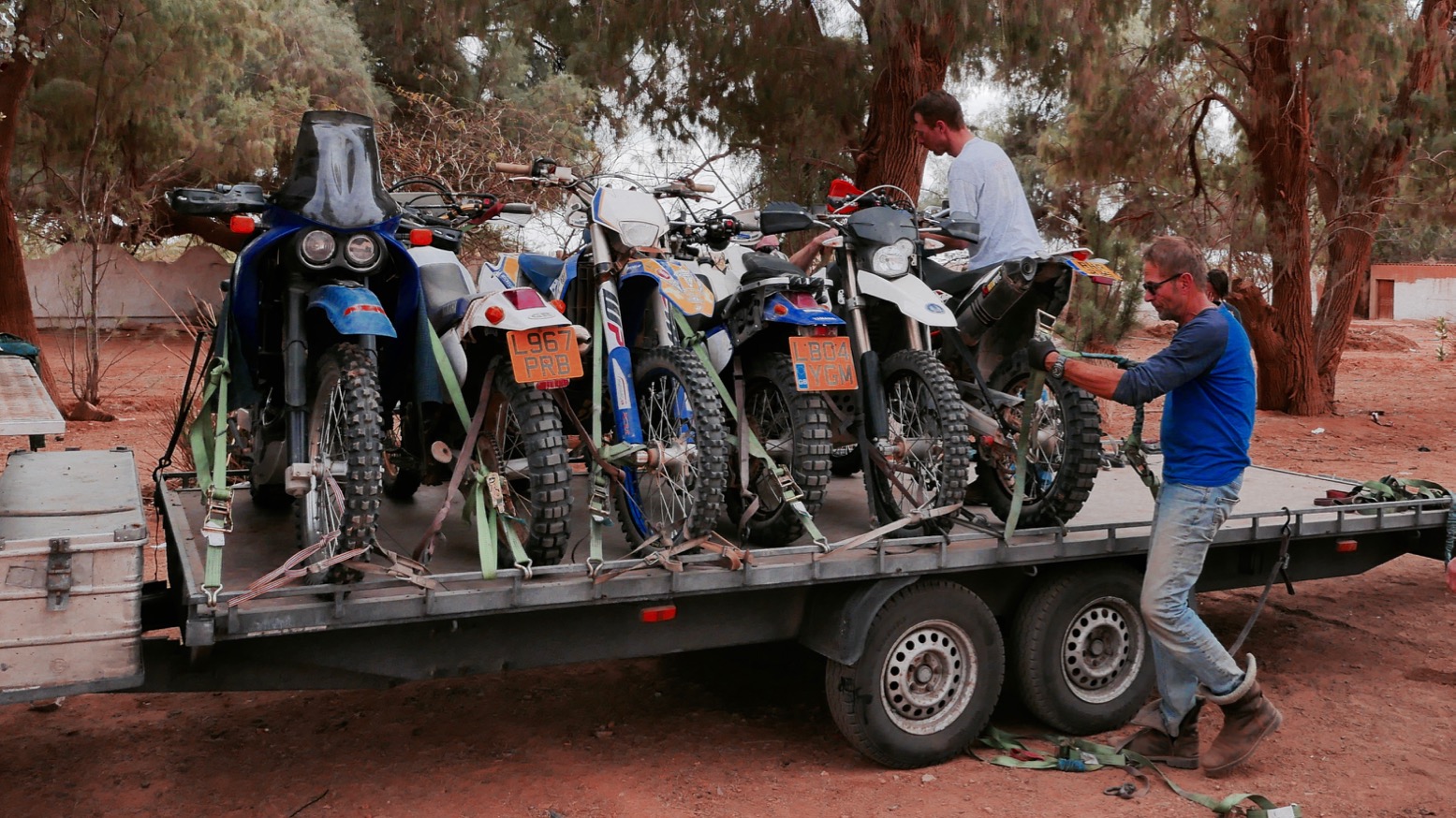
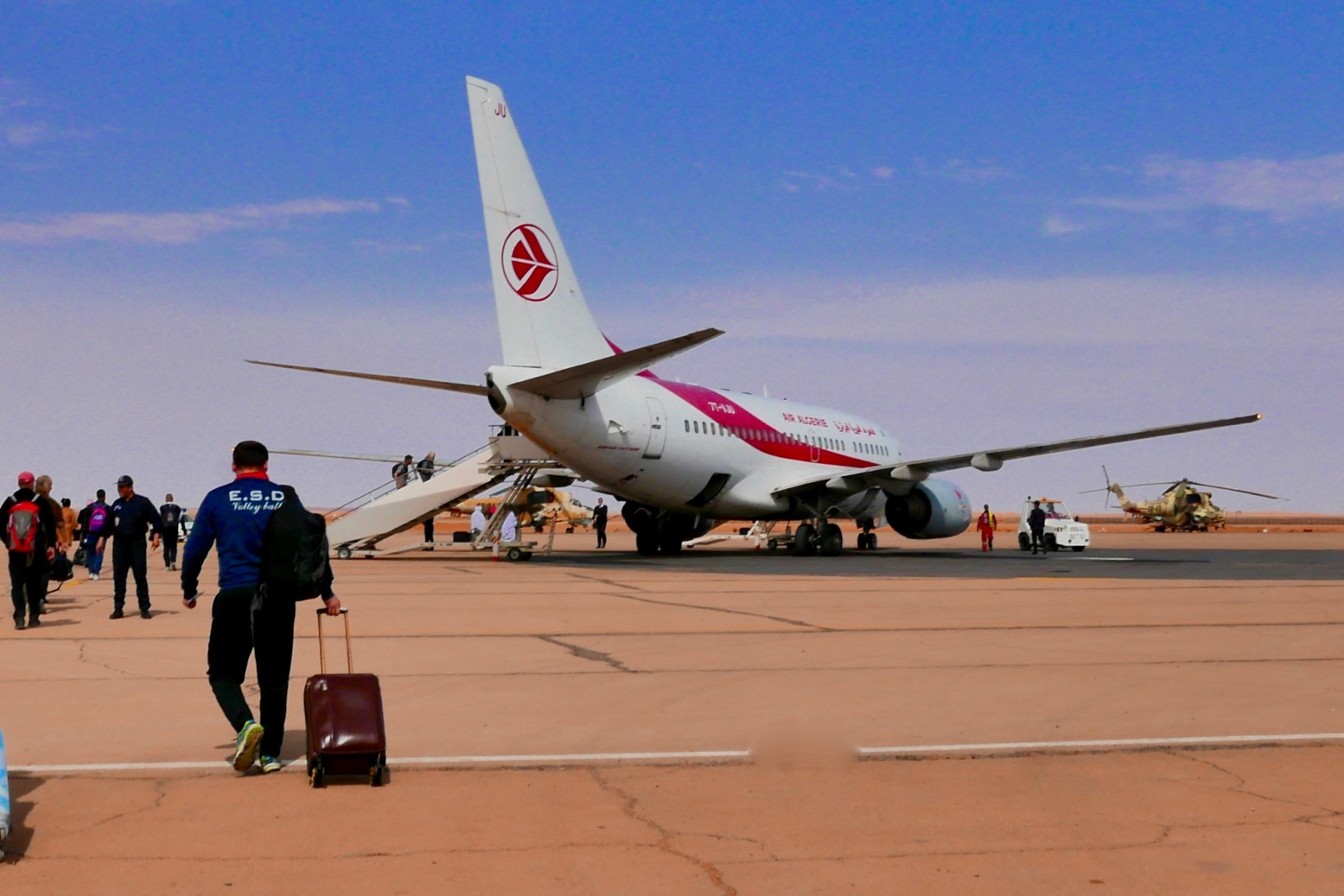
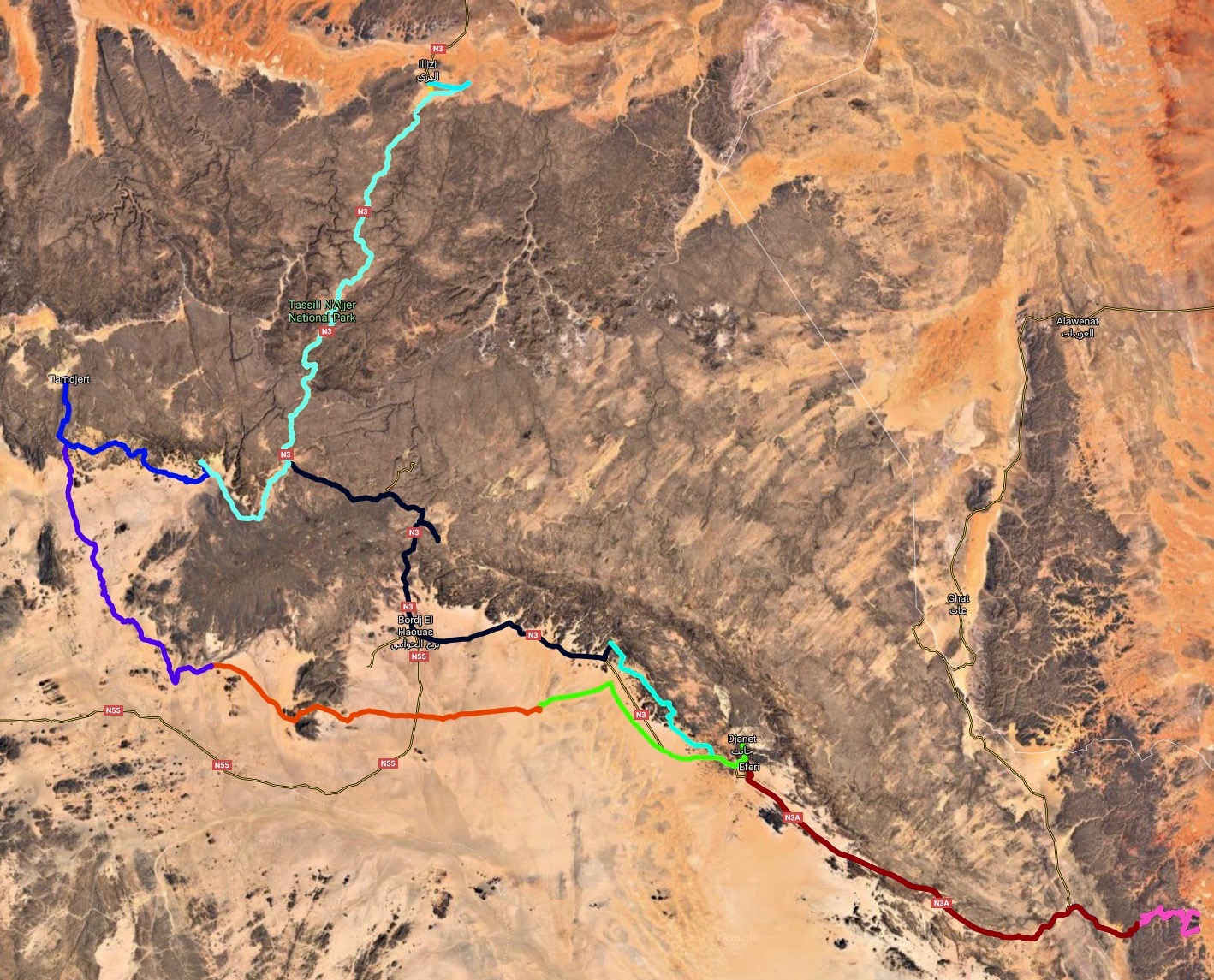
Tassili N’Ajjer Ride 2018

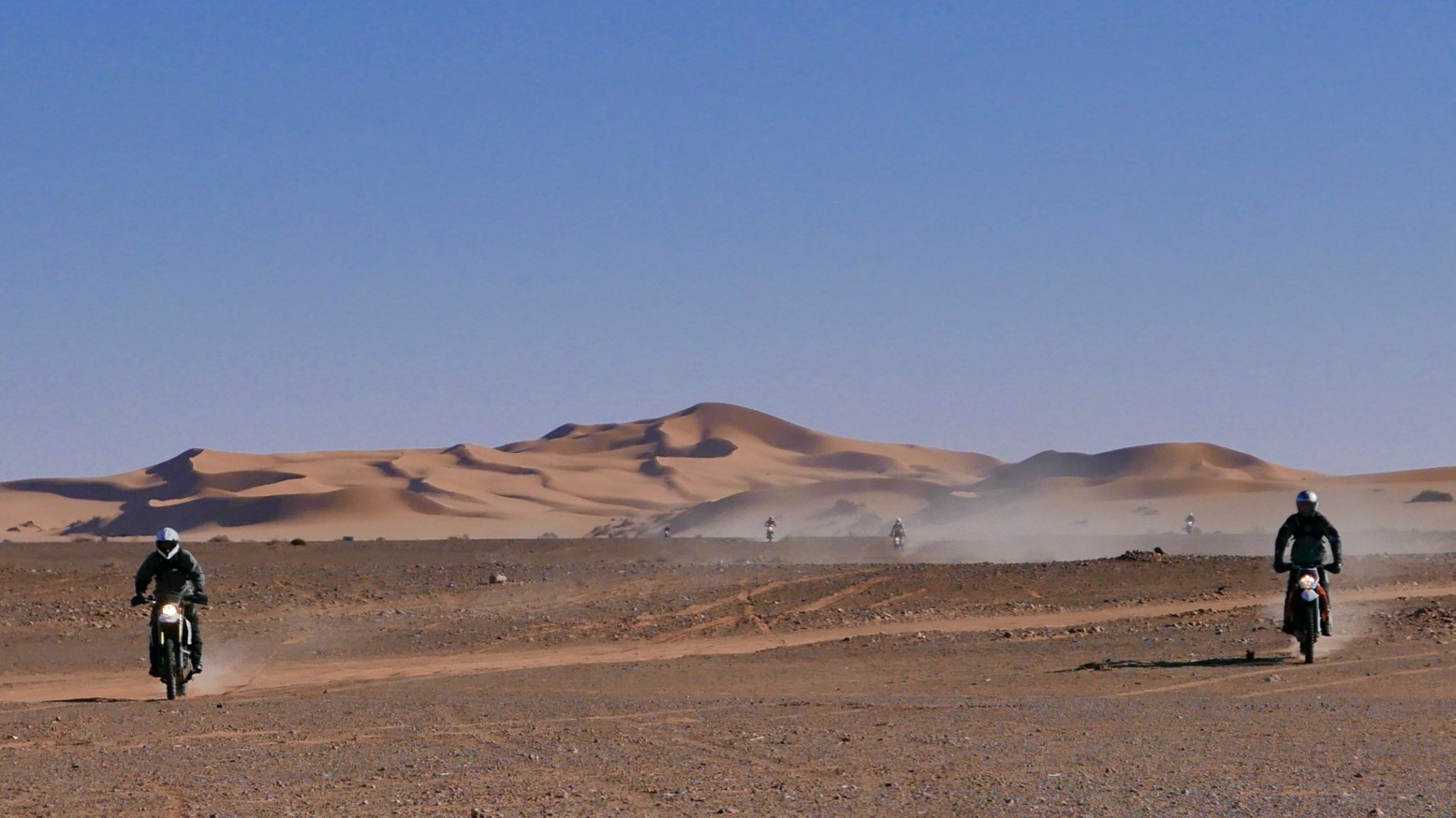
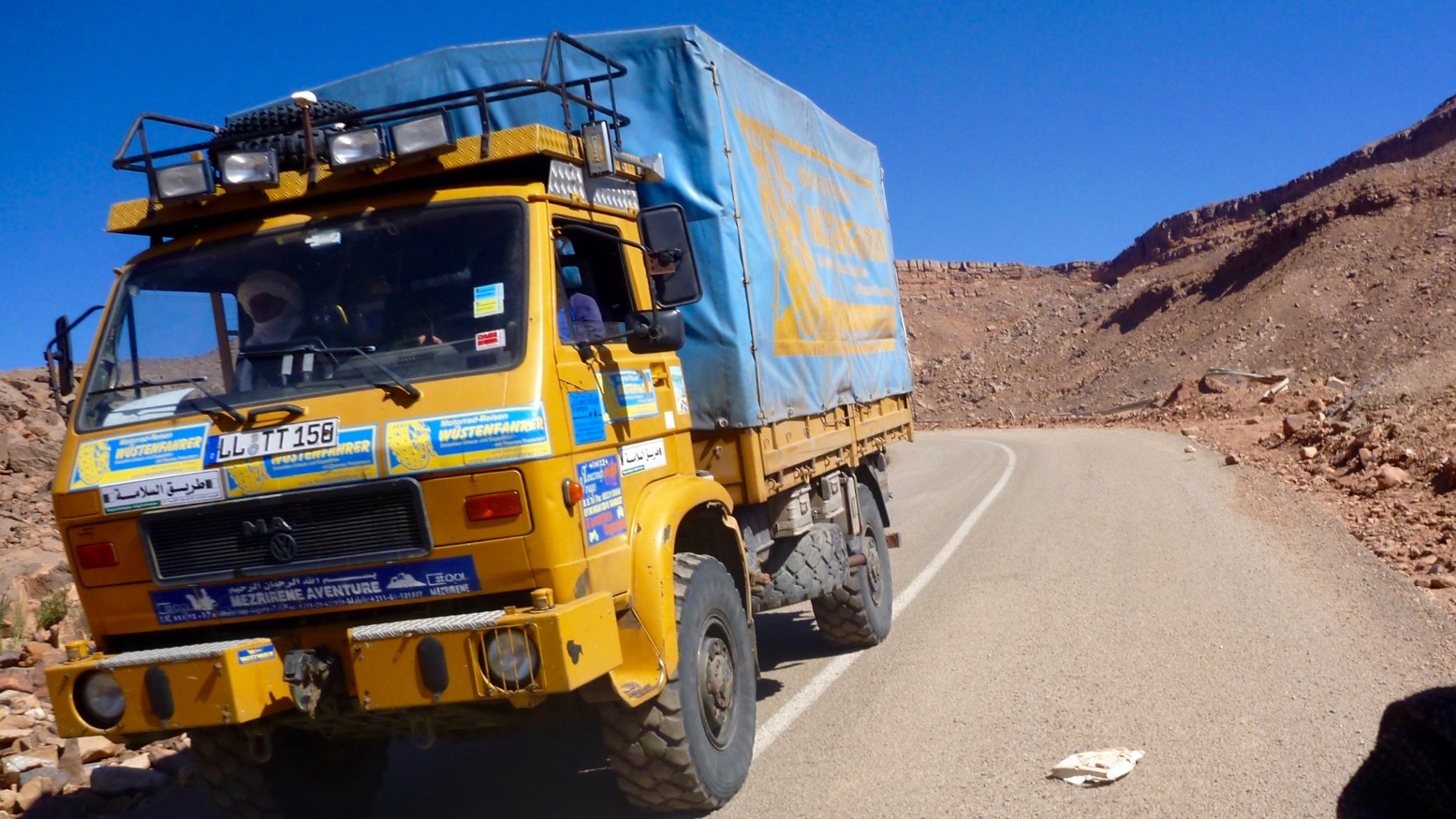
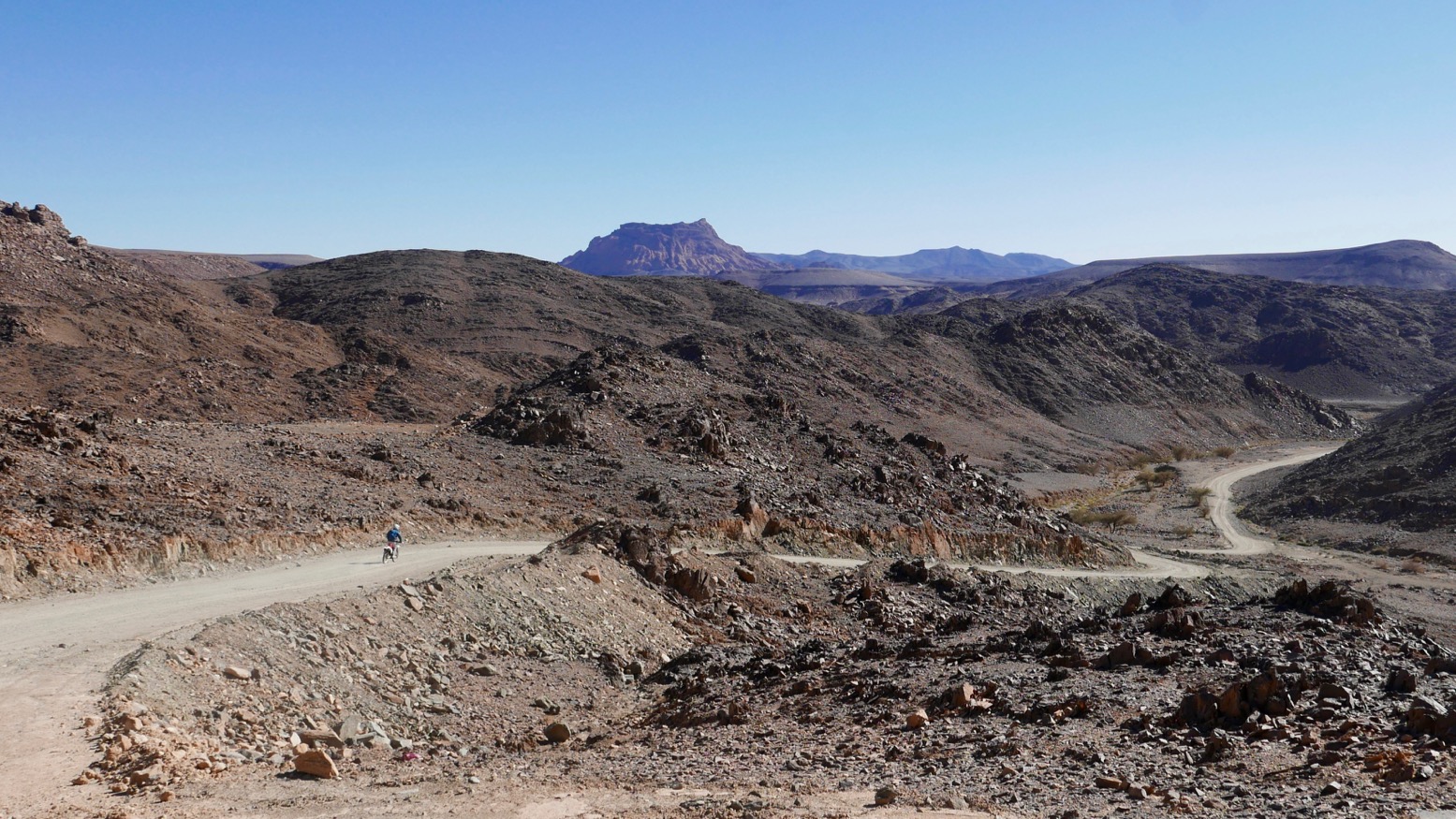
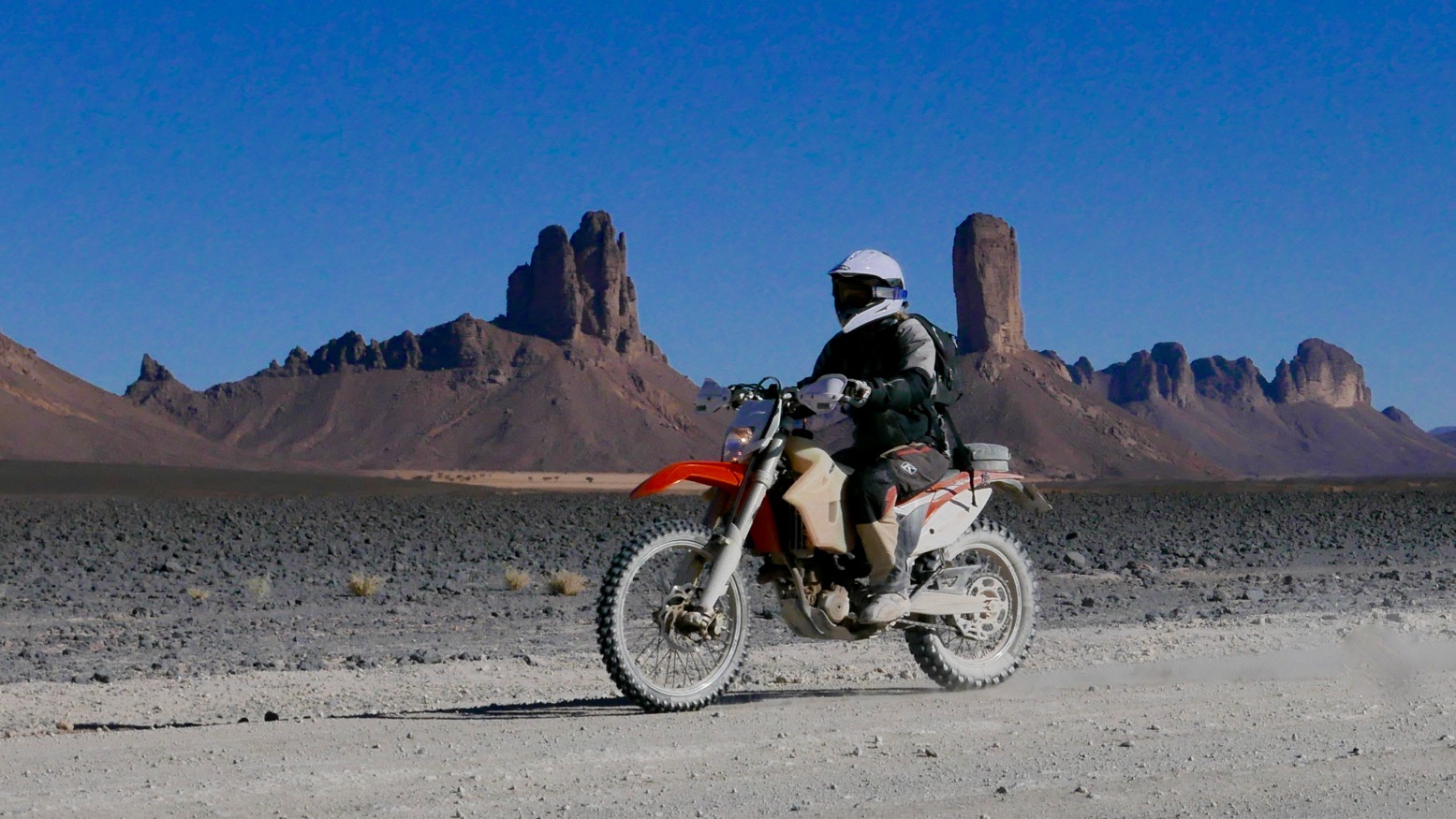
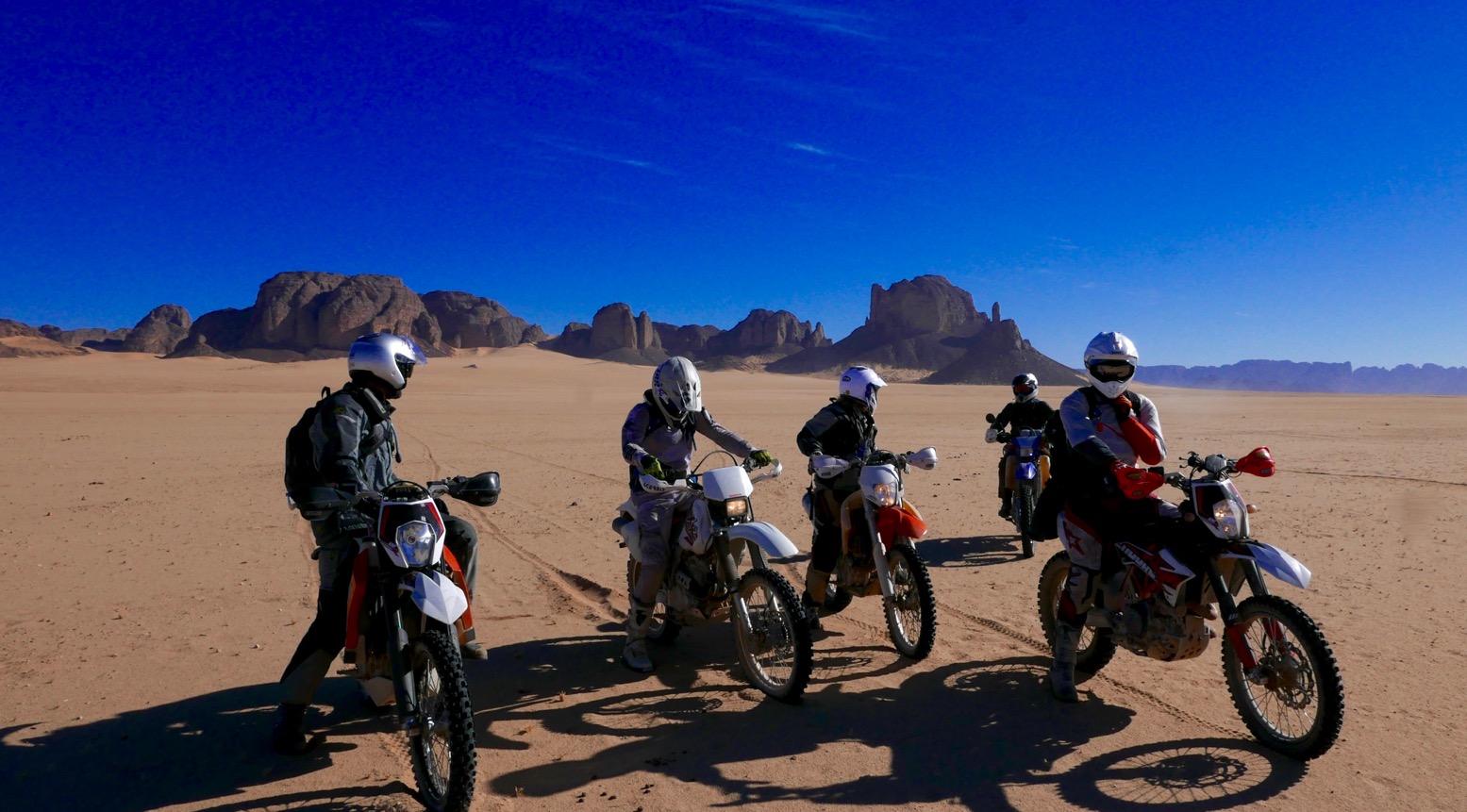
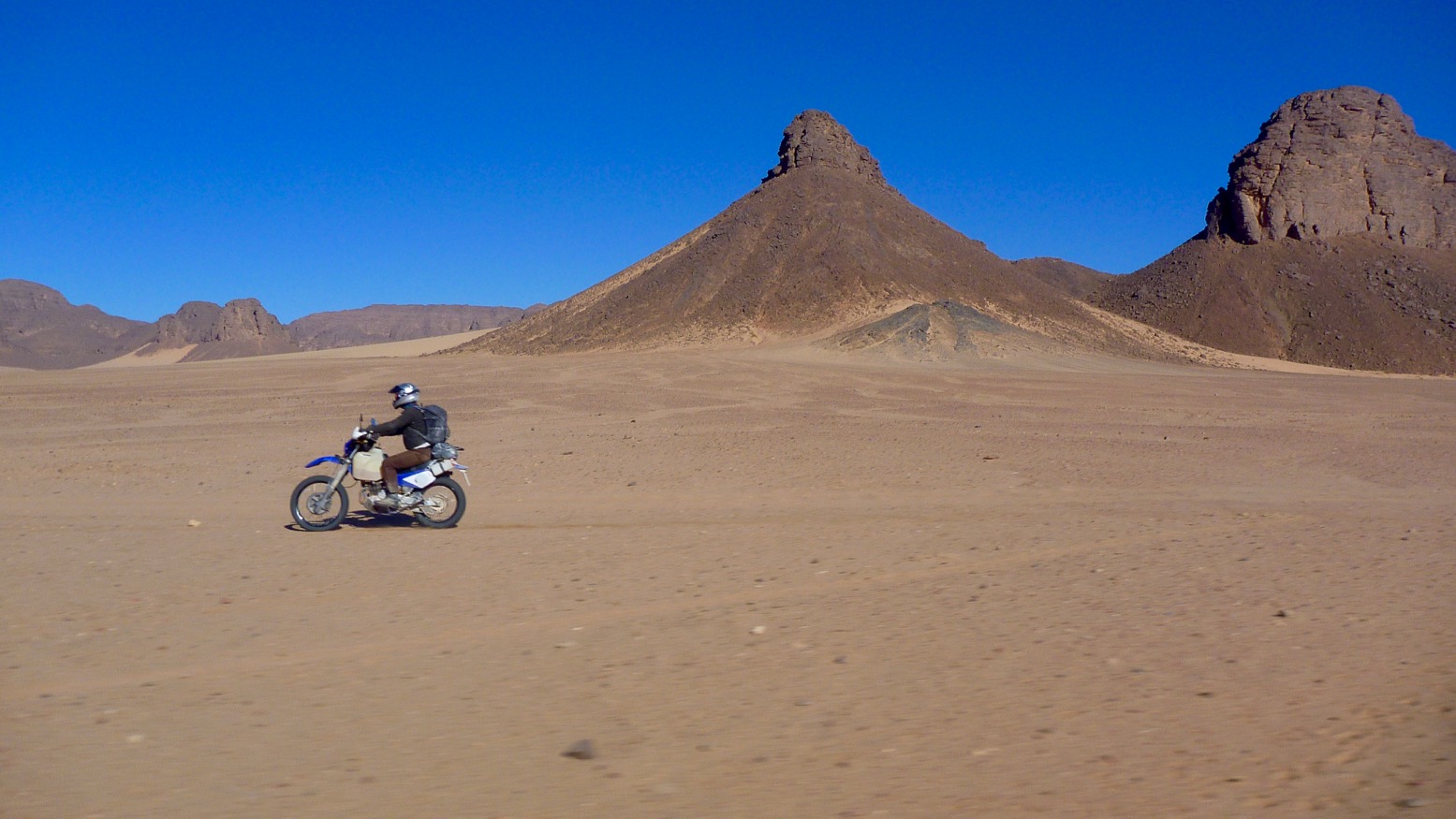
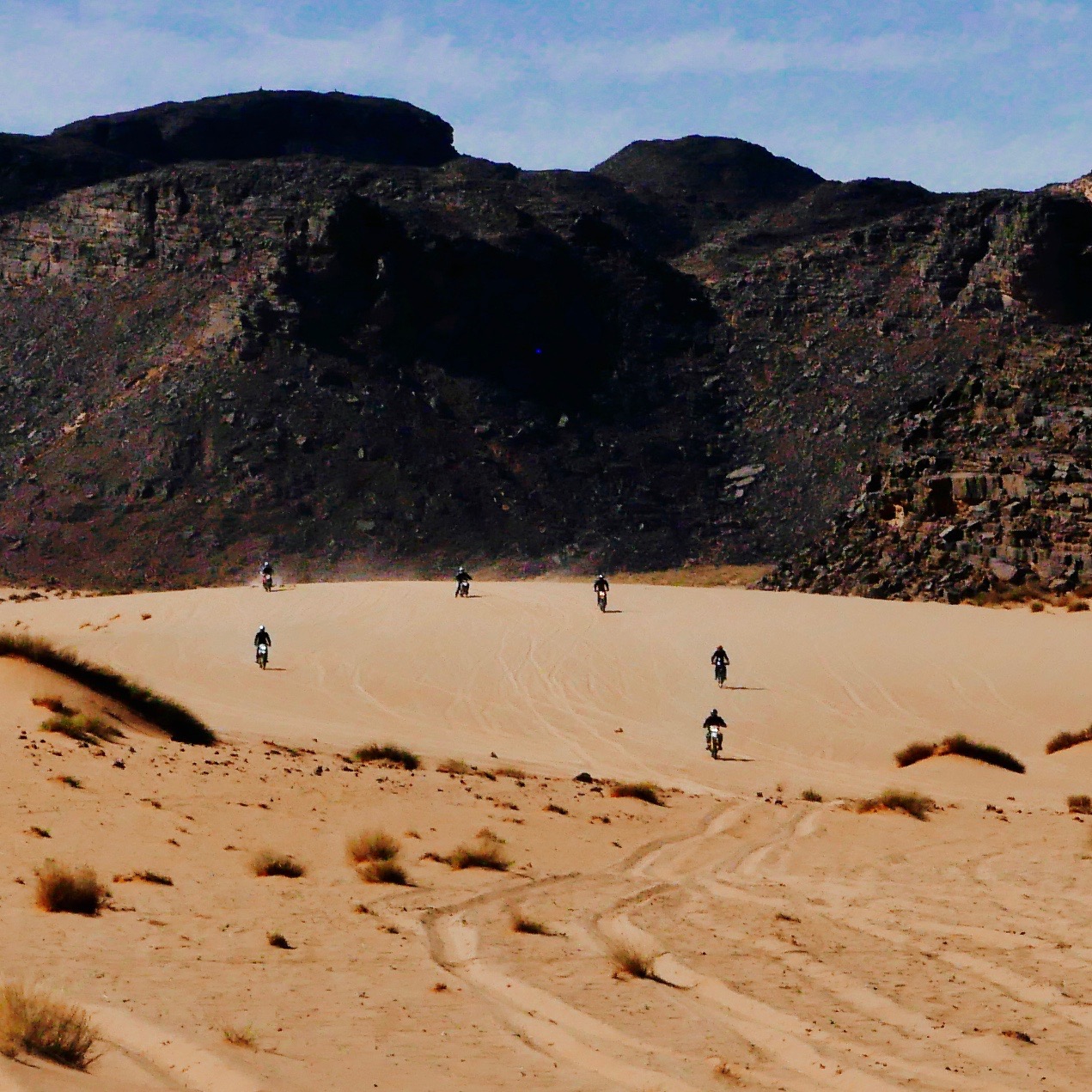
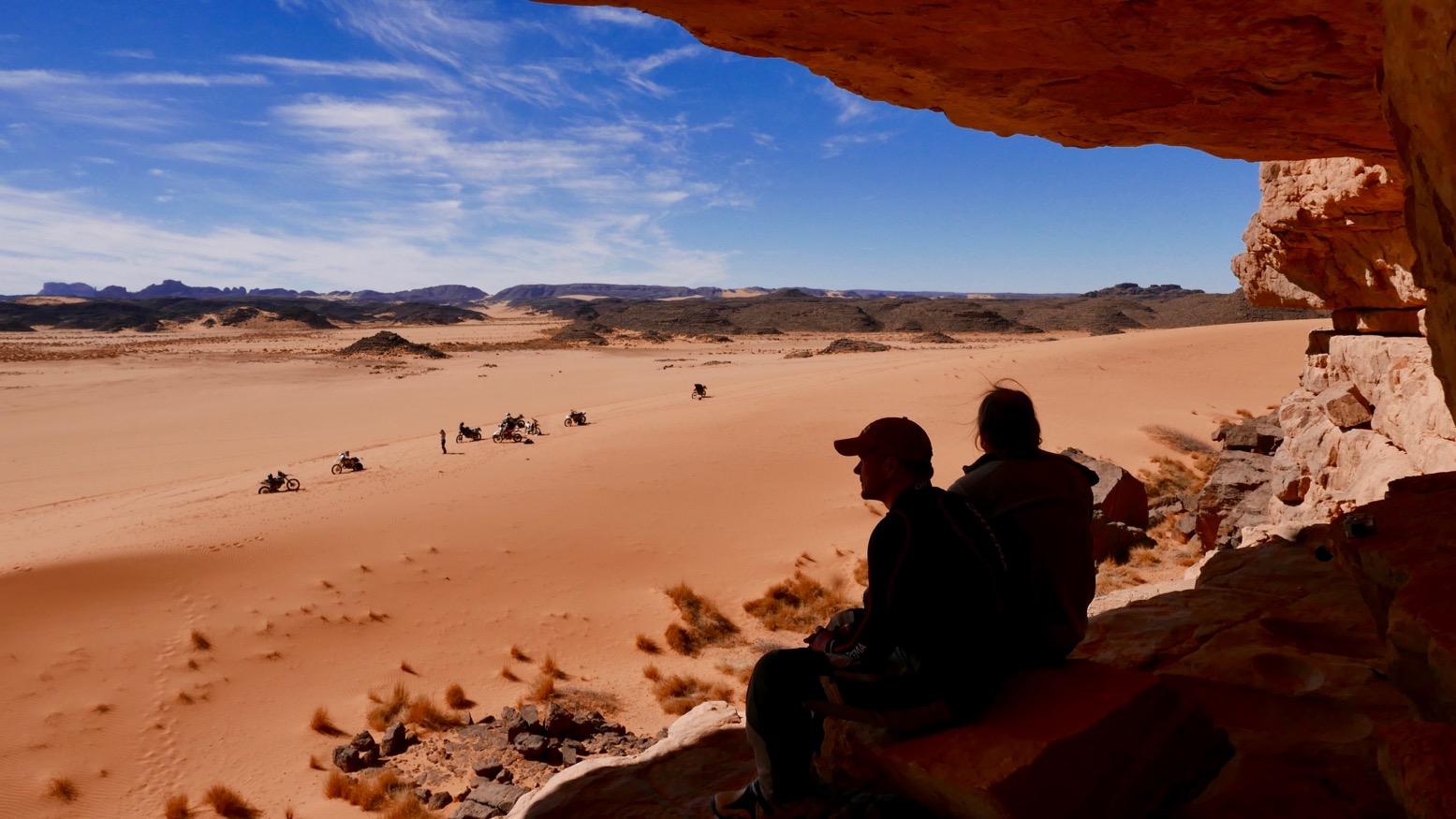
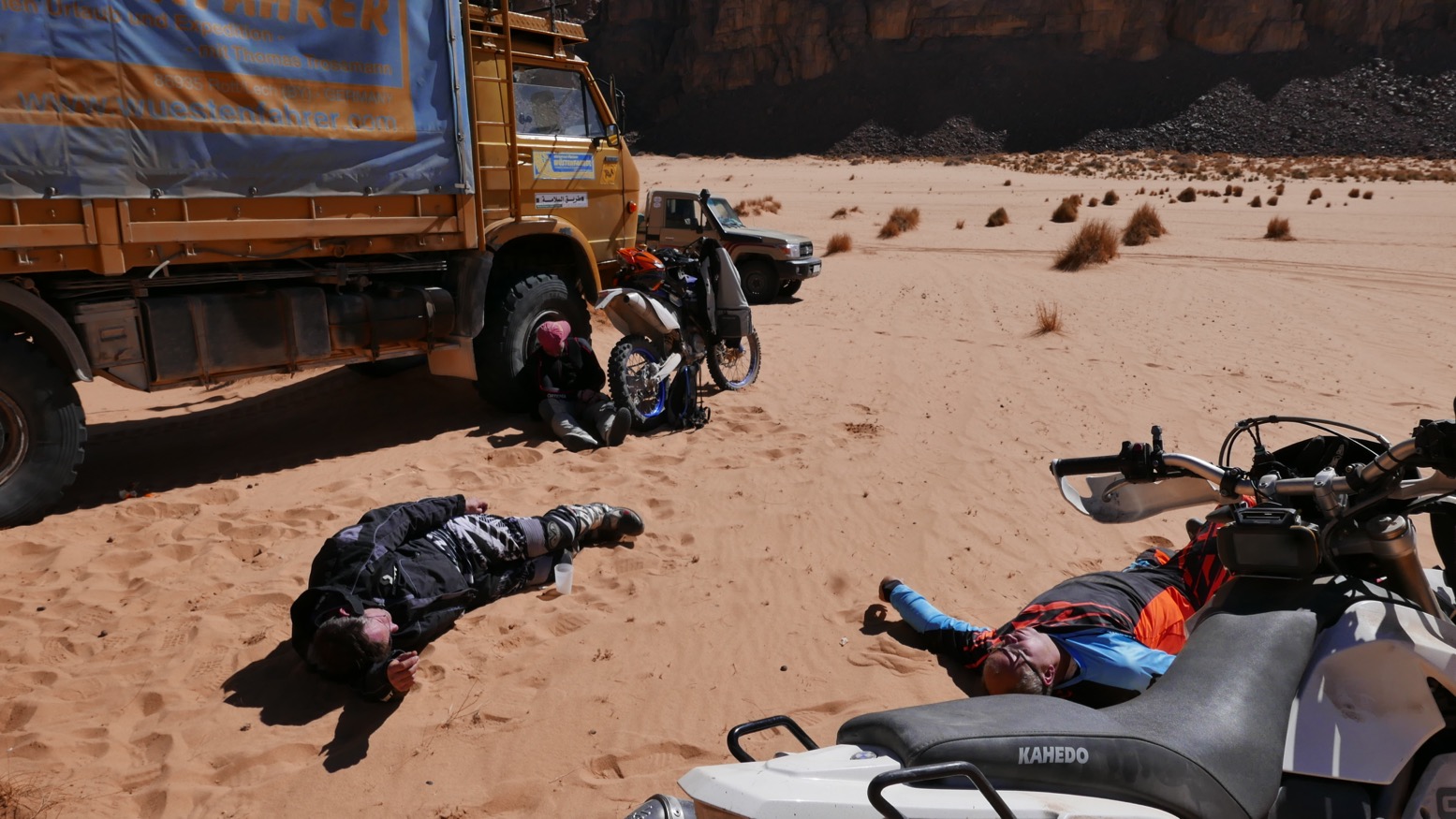
A few shots from our two-week fly in tour to southeastern Algeria with Wustenfahrer. For the full trip report, click here.
Video by Tony S.

J is for Jebel Hagar – Christmas in No Man’s Land

Part of an occasional Sahara A to Z series
Hang around long enough and you’ll get the full set

Climbing the highest mountain in Africa’s last unclaimed territory

More on Bir Tawil

birginGinge Fullen (right) is a Guinness-record holding mountaineer and adventurer who among other things, has climbed the highest peak in every African country. Bir Tawil has long been on his radar and the recent division of Sudan sees him planning to visit the Deriba caldera in Darfur in the near future.

Birmap
birtrig

In the northern Nubian desert between Egypt and Sudan lies Bir Tawil, an unoccupied 800-square mile quadrangle claimed by neither state. It’s a bureaucratically difficult and potentially dangerous place to reach but has been on my list for some time.

birrail

Terra Nullius is a Latin expression for ‘nobody’s land’; it was how Cook described Australia in 1770. Here in the Nubian Desert, it originates from a bizarre situation stemming from the simplest of borders: a straight line along the 22nd parallel drawn in 1899 when Britain formed Anglo-Egyptian Sudan following Kitchener’s campaigns in Sudan. In 1902 Britain sought to modify that boundary to reflect the actual use of the land by the region’s tribes. It counters a complaint commonly made these days about Foreign Office officials blithely marking maps with rulers and in part causing the current grief in the Middle East and Africa.

birpeaker

Bir Tawil lies below the 22nd parallel but the land was traditionally grazd by the Ababdu tribe from Aswan in Egypt. Similarly the adjacent Halaib Triangle, a much bigger area to the east and above the parallel was placed under British Sudanese control as its Beja inhabitants were culturally and ethnically closer to Sudan. Today Egypt resolutely claims the 1899 border including the Halaib Triangle, whilst Sudan sticks to the administrative border of 1902. As a result both claim the Halaib Triangle with its 130 miles of Red Sea shore, but neither are interested in the barren wastes of Bir Tawil.
Bir Tawil is not an easy place to reach, requiring permission from either government to visit; a two-day trip into the desert risking encounters with armed gangs or smugglers. I opted for Sudan as I wanted to get a feel for the country to which I plan to return to climb the highest peak in the troubled Darfur region. (In 2004, before Sudan divided to form South Sudan, I climbed Mount Kinyeti, then the highest point in that country).
In Khartoum I organised everything through Tour-Sudan agency. The owner Midhat Mahir was by far the most pro-active individual I contacted and as it turned out, the best connected. In Sudan government permits are required for everything from registering lodgings outside Khartoum to photography and even permission to buy a detailed map from the Surveyor’s Office. The Sudanese clearly like their paperwork as well as keeping track of you. I needed a dozen copies of my travel permit to hand out to checkpoints along the way.

birlookmap

The plan was a week’s trip leaving me two days in Bir Tawil to locate and climb the highest point. Midhat’s brother Moez would accompany me with two drivers on the 500-mile trek north of Khartoum, around half of it on tarmac the rest across the Nubian desert.
Forget snakes and scorpions or the possibility of breakdown and never being found, the road to Abu Hamed felt like the most dangerous part of this little adventure. Terrible driving and being forced off the road by unlit vehicles was the nearest brush with death I’ve had in a while.
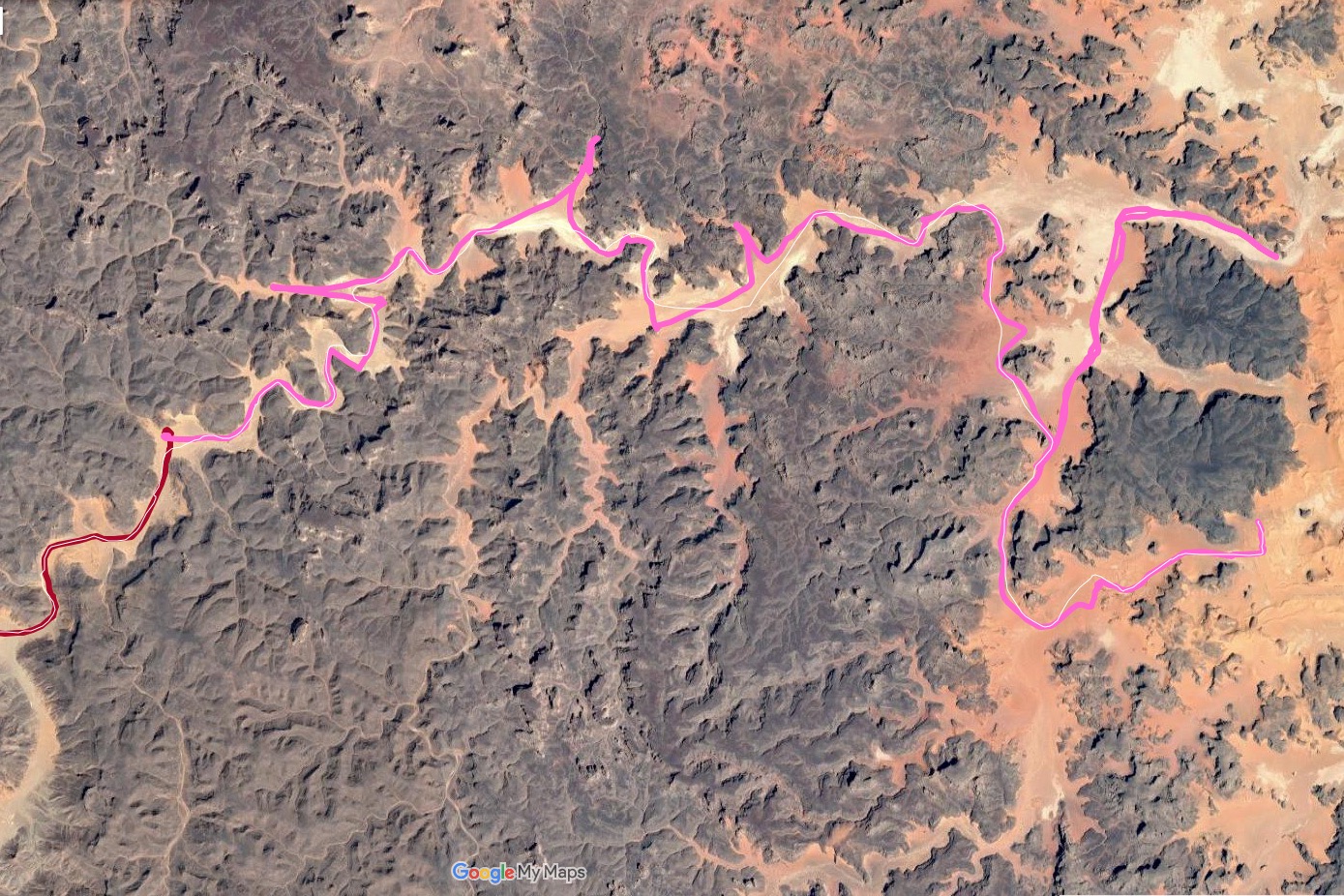
In Abu Hamed we filled up with fuel and water and a few miles north of town left the road and crossed over the railway lines for the last time. I input some coordinates from Grant, my go-to person when tackling unclimbed peaks in dodgy countries. You can’t beat the thrill of heading into a remote place with little available information.
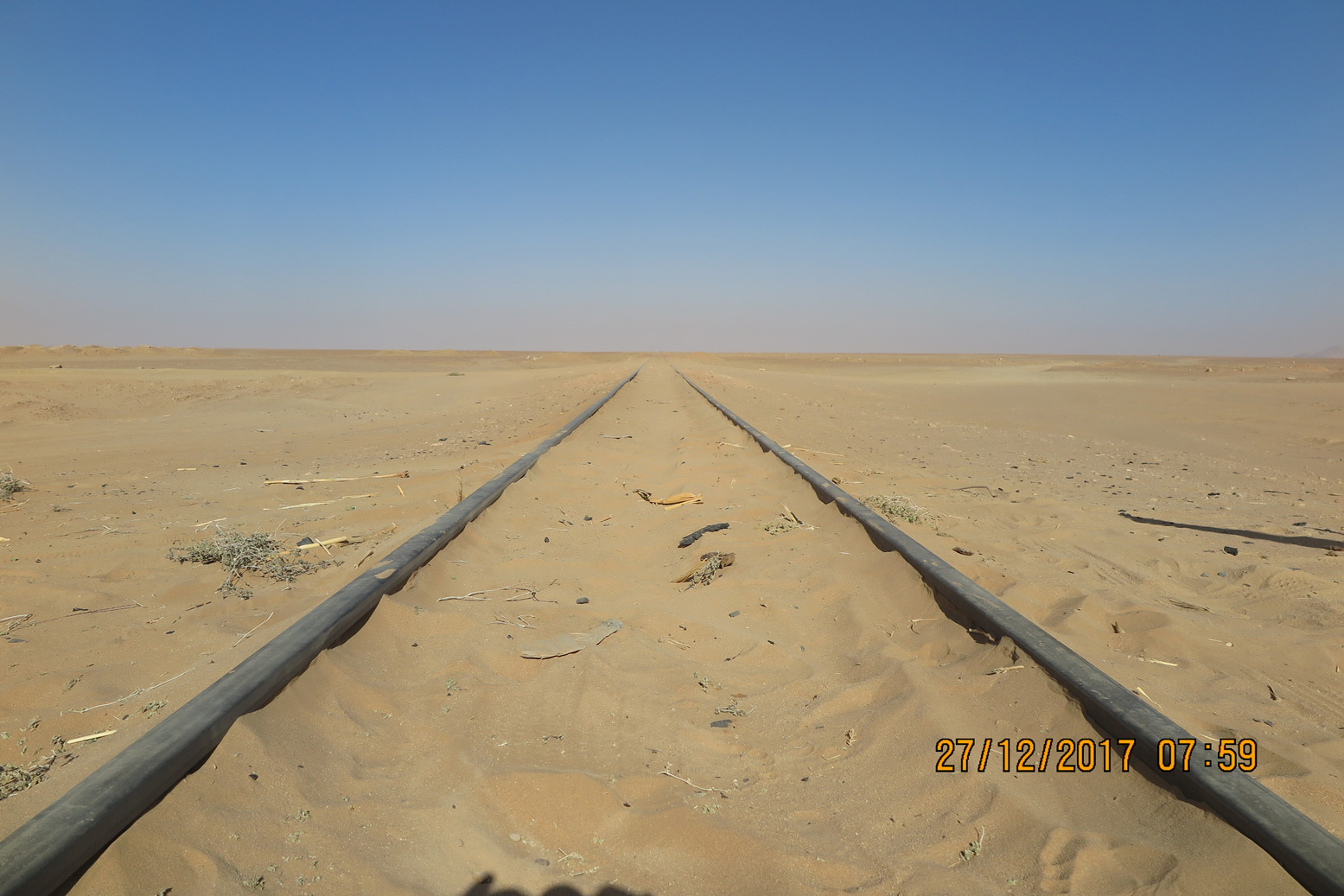
We headed north along flat desert towards the Wadi Gabgaba which would bring us to within 20 miles of our objective. Very soon we started to pass gold miners and for the next hundred miles found the desert had been turned upside down. A gold rush was underway and several thousand men were working hundreds of excavators while individuals were trying their luck with metal detectors. All unlicensed and unregulated, with tons of litter blew across the desert it looked very ugly indeed.
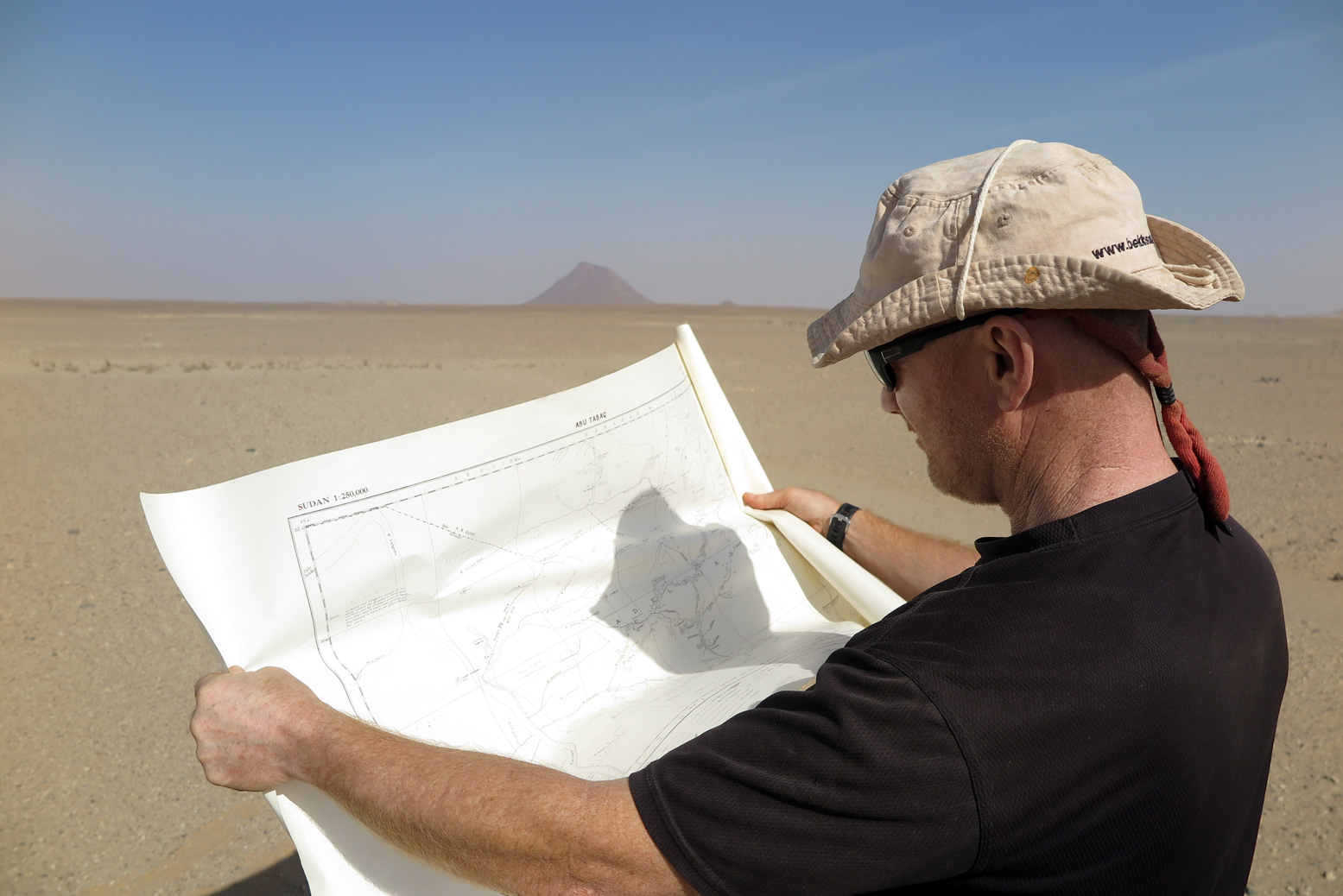
Hoping to keep a low profile, that night we camped well off the main route and away from the miners. In Khartoum I’d gotten hold of a colonial-era 1:25,000 map from the National Survey and the next morning we found ourselves on old routes marked as ‘fair going’ by surveyor W Jennings-Bramley back in 1925. By camel he might have covered 20 miles a day; we did the same distance in just an hour.
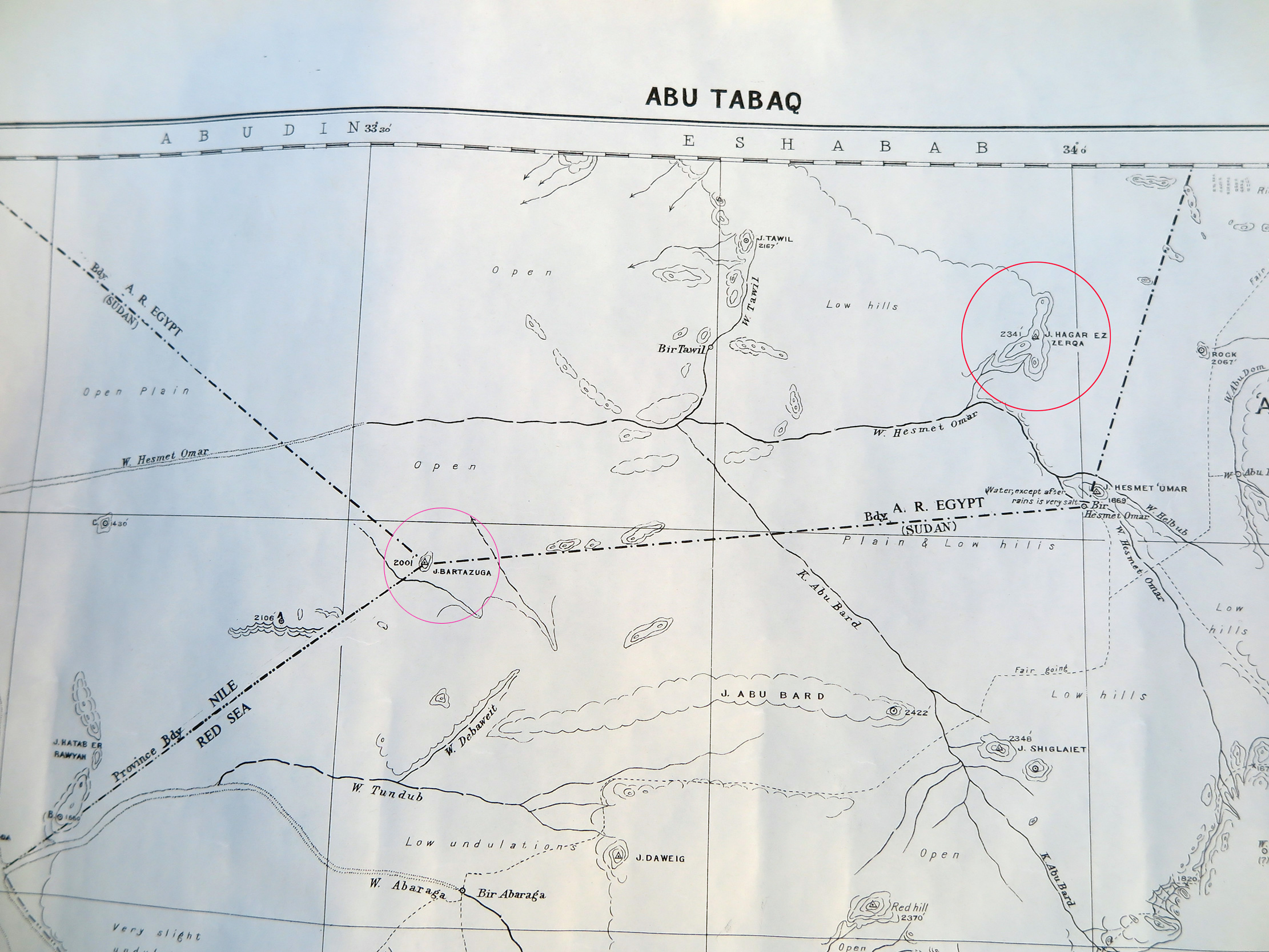
Our initial destination was the 609-metre peak of Jebel Bartazuga marking the southernmost corner of the Bir Tawil quadrangle. It came into view, very prominent in the otherwise flat desert. I thought we had left the last of the gold miners but I was wrong; a camp had set up here too on the very boundary of Bir Tawil.
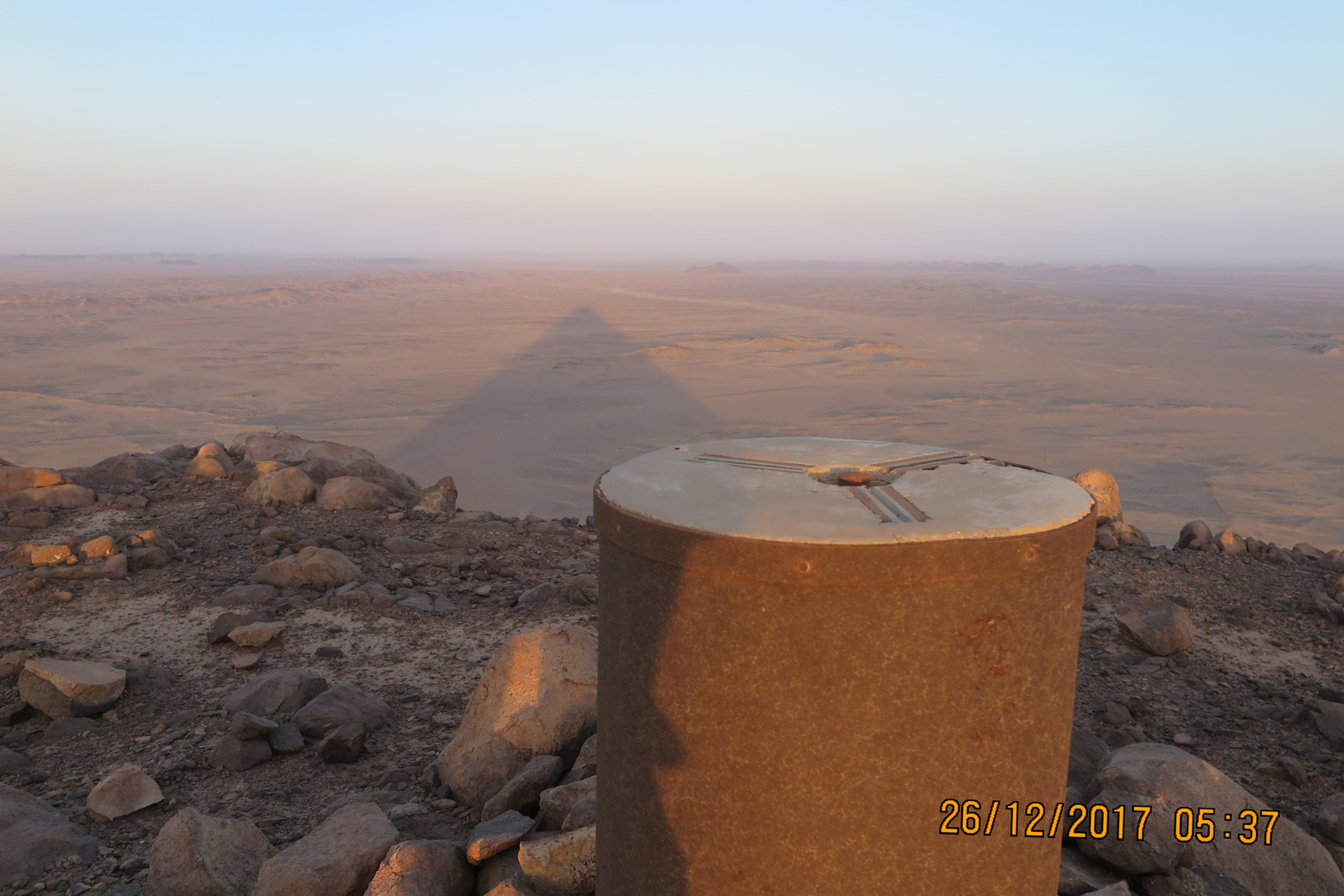
On my return leg I climbed Jebel Bartazuga, topped with an old trig point by the British to mark the boundary when they surveyed the area. Flags have also been placed here from others who’ve recently been laying claims to the territory, but they’ve all long since blown away.
Probably the first westerner here in recent times was former Guardian journalist Jack Shenker in 2011. American Jeremiah Heaton followed in 2014, claiming the area as the ‘Kingdom of North Sudan’, thus delivering on a promise to make his daughter a ‘princess’. He’s in dispute with a Russian called Dmitry Zhikharev who made similar claims, and in 2017 Indian adventurer Suyash Dixit planted a tree and put up yet another flag. There are other claimants including the ‘Kingdom of the State of Bir Tawil’ with its own national anthem and the ‘Empire of Bir Tawil’. I wasn’t interested in such claims but was of course intent on climbing Bir Tawil’s highest peak which I believed had yet to be done.

biroldmap
birMoez


Once over the border we headed towards the eastern end of the territory and Jebel Hagar el Zarqa. On the 1925 map it was shown as the highest point in the land at just 705m (2313’), but one man’s hill is another man’s mountain. It lay some 30 miles away and we headed straight for it; in reality zigzagging through a maze of sandy wadis. Just five miles away our target came in sight and, as I’ve said before on my travels in Africa, once I was so close it would take an army of natives riding a herd of wild elephants and throwing landmines to stop me. Given that we saw no one during our time in Bir Tawil, I felt confident. We weaved our way nearer and nearer and by mid-afternoon on Christmas Eve parked up at the base of the mountain.
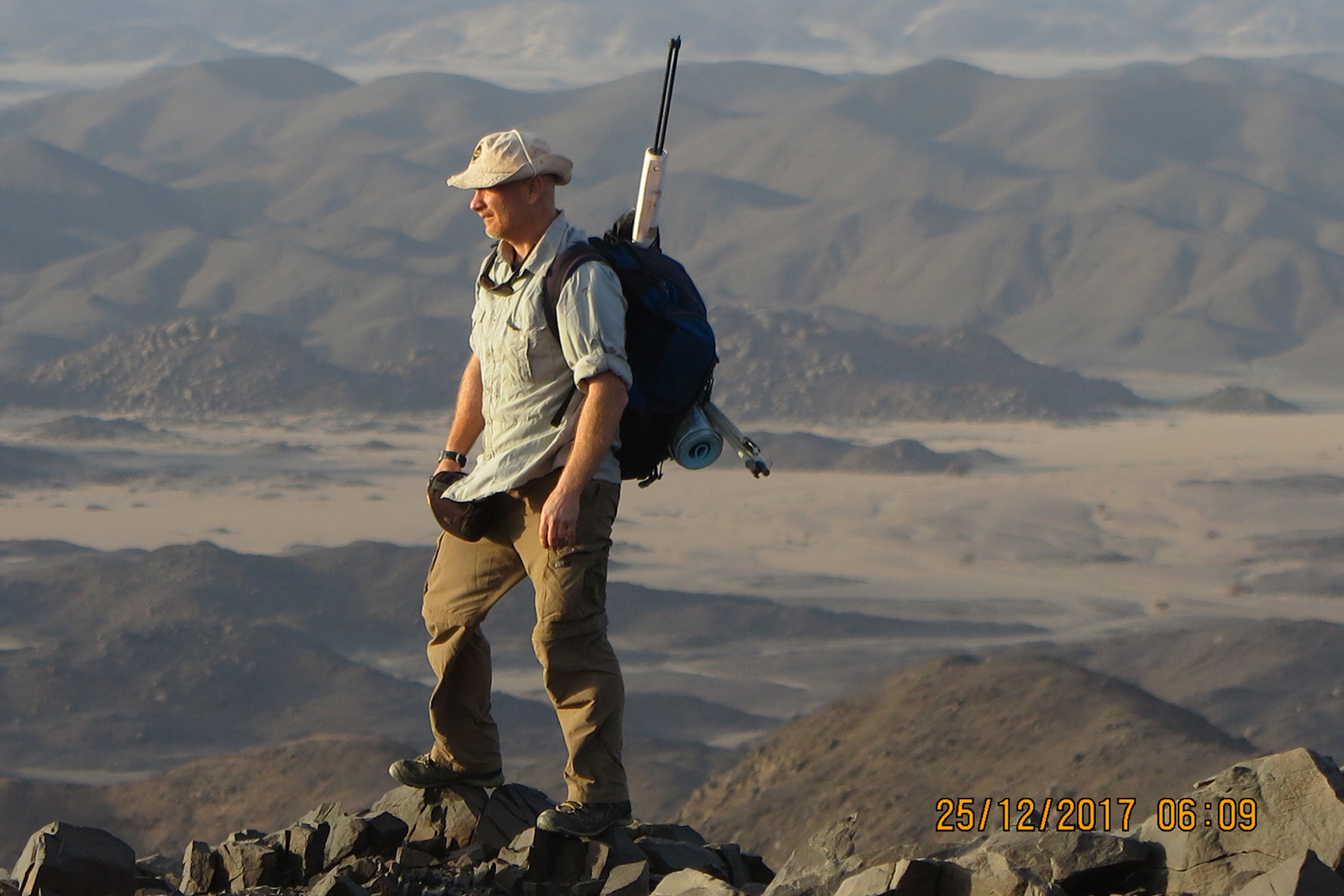
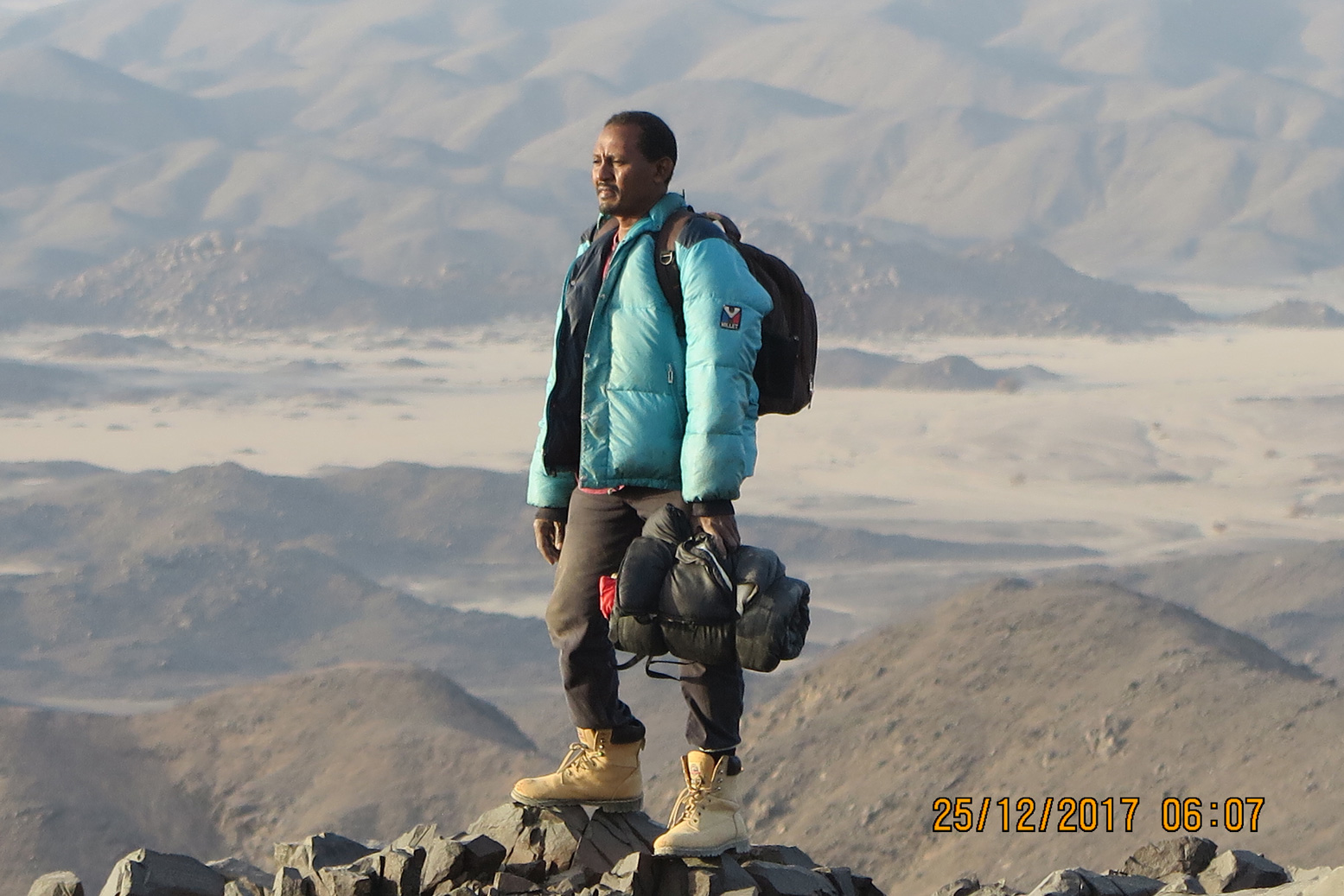
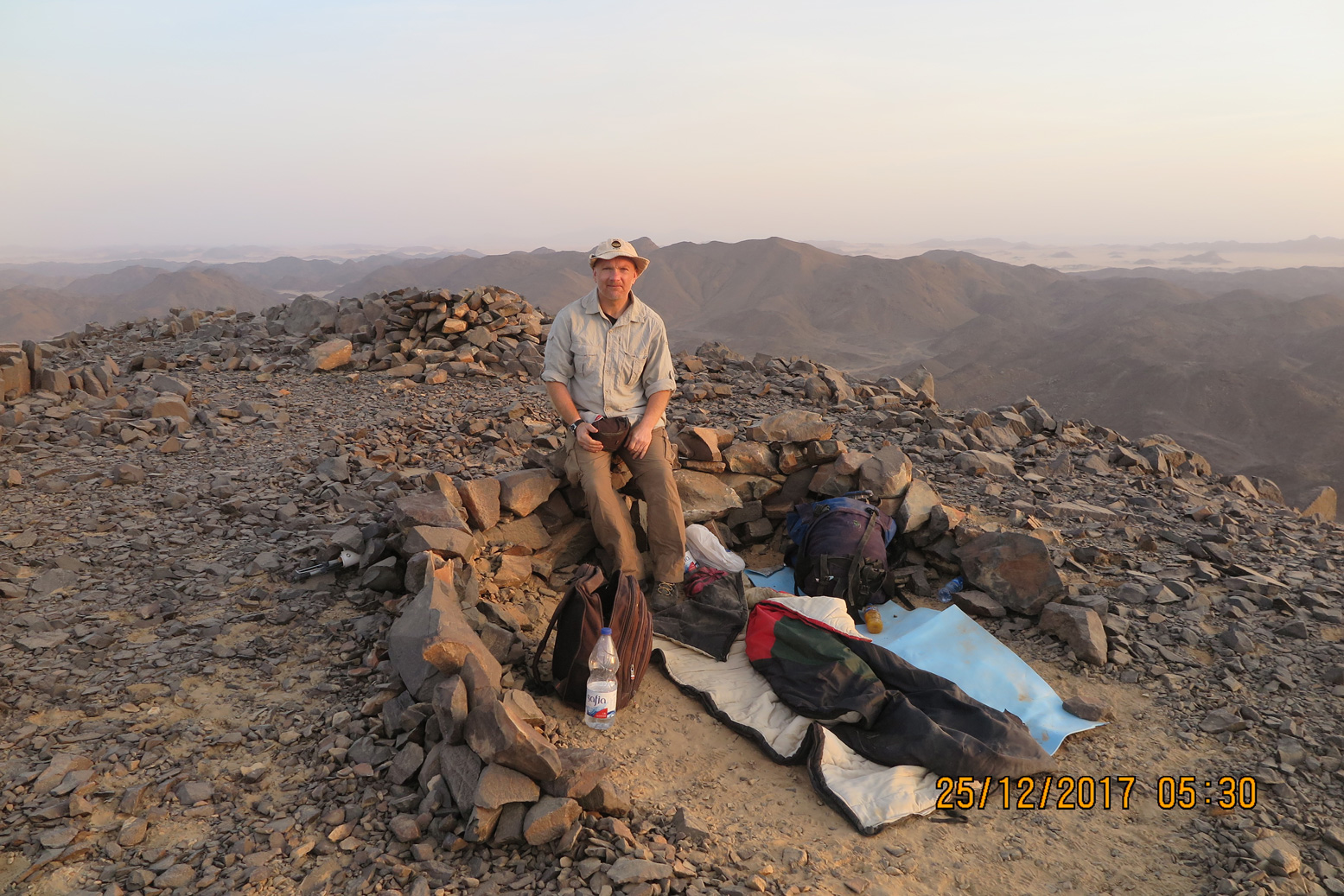
My aim was to sleep on summit but Moez my guide warned it might be chilly. It may the mid-winter but this is still the Sahara so I replied I’d probably survive but suggested he took his big down jacket. Around 4pm, as the sun’s heat diminished we set off, following the edge of a gully until we met a ridge about half way up. Here it was mostly scree but in less than an hour we were on the summit. With a new African peak ticked off, Moez and I shook hands.
Low hills surrounded us and Egypt’s actual border was just eight miles to the north. There was a cairn here so I was not the first, but probably the first in a very long time. Moez suggested we drop down a little out of the wind but he knew what my answer would be: we would build a windbreak right on the summit. We set about clearing an area for our wall and once done, even Moez seemed reassured. The wind did pick up later but our wall did its job.

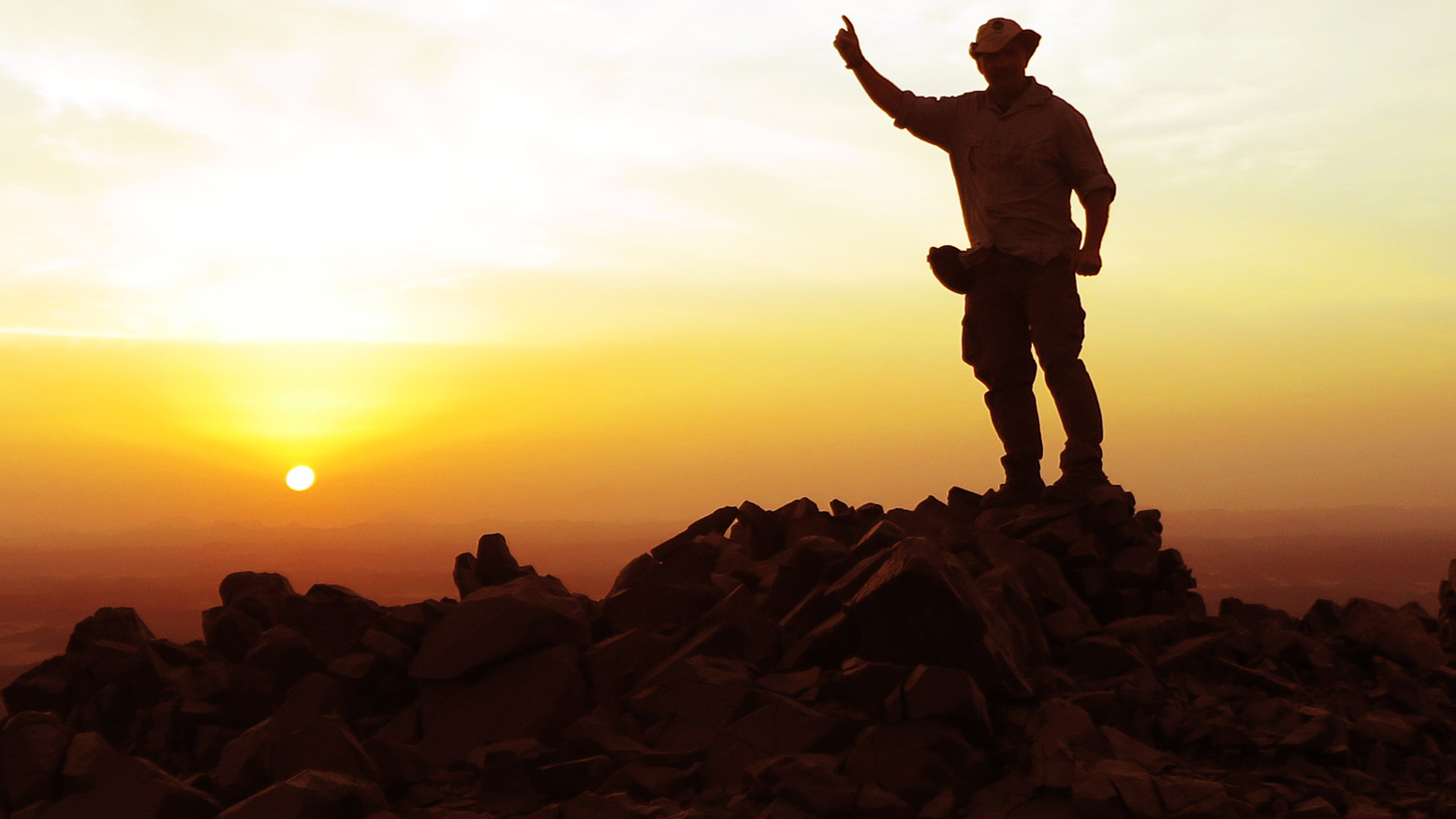
birset
birsumit


That night the stars were bright as they always are in the desert and some 100,000 light years away The Milky Way beamed over us like a highway to another world. I envied the future explorers and slept well in our starlit bedroom.
As often, the desert brings on reflective thoughts. I was now 50 years old; where had all the time gone? It’s scary that you’re over half way through your life and find yourself looking more to the past than the future. When you’re young the world is infinite and filled with mystery – immortality beckons. As years roll on the world remains thankfully mysterious but feels less big and the impression of immortality slips through your hands. Death was something that only happened to other people and time was unlimited so you don’t push yourself or do the things you promised you would. But once you grasp mortality good things can result – the ticking clock helps you focus on new challenges.
The sun rose around six and was all ours to see; our bivi on top of Jebel Hagar had served us well. After a few more photos we headed down for our Christmas breakfast of coffee, porridge and eggs. I spent the next two days exploring wadis I’m sure no one has seen in decades and hiking a few other peaks to make sure there was nothing higher. With my short visit to Bir Tawil coming to an end, we headed back to Jebel Bartazuga for our last desert night.
I enjoyed my time back in the Sahara; it reaffirmed my view that there’s still adventure to be had in this world, you just have to get out and find it. The greater the effort, the more worthwhile the journey.
A good friend of mine who died on Everest in 1997 certainly lived his life that way. Mal Duff was old enough to be wise yet far too young to die. His gravestone bears the following words from a poem by fellow Scot, James Graham and twenty years on, it feels a good time to remember his epitaph:

He either fears his fate too much,
Or his deserts are small,

That dares not put it to the touch 
To win or lose it all

Midhat Mahir
249 (0) 912253484
tour-sudan.com

F is for Flooding the Sahara

Part of the Sahara A to Z series

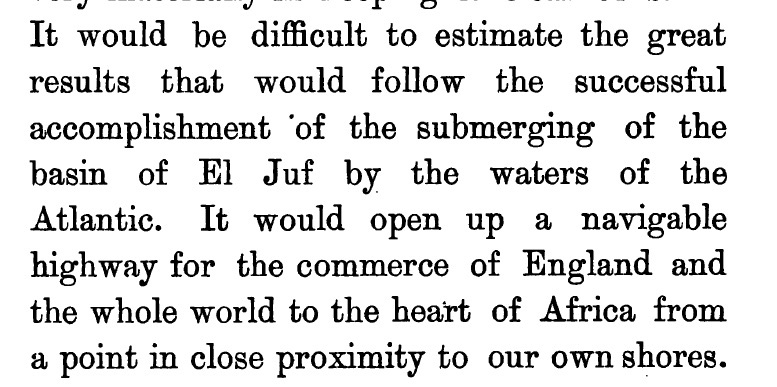
… I had reason to believe that there existed, in the Western Sahara, a vast depression which might be submerged by the waters of the Atlantic, thus opening a navigable way to [Timbuktu]…

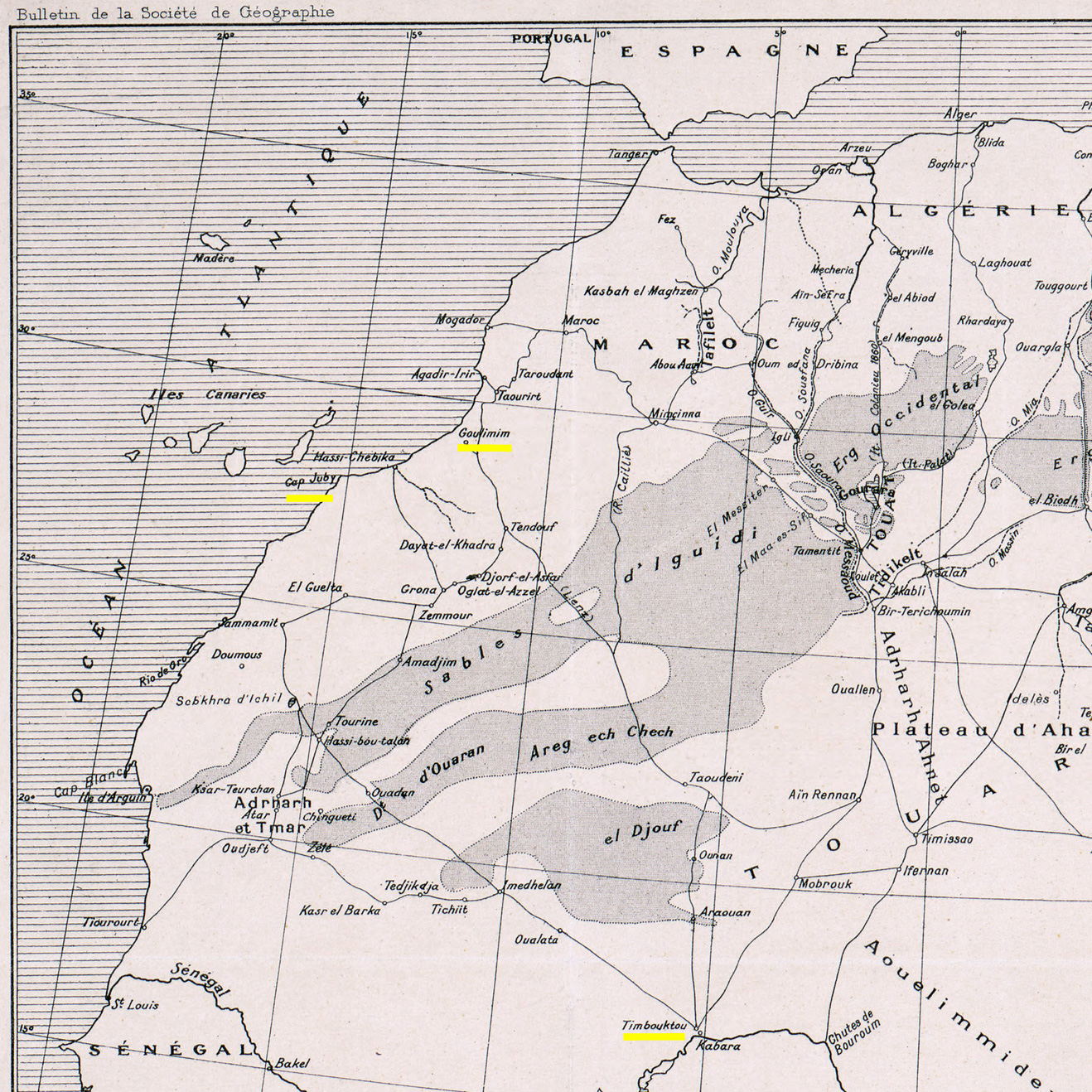
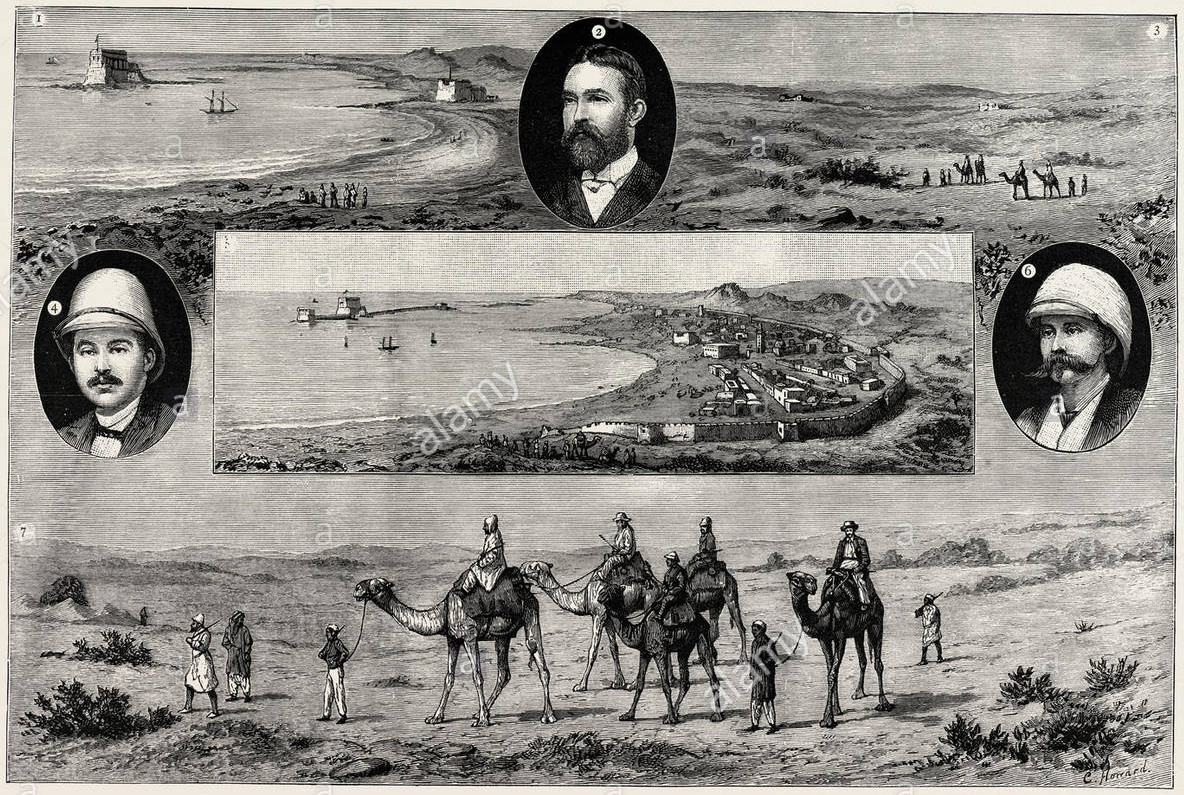
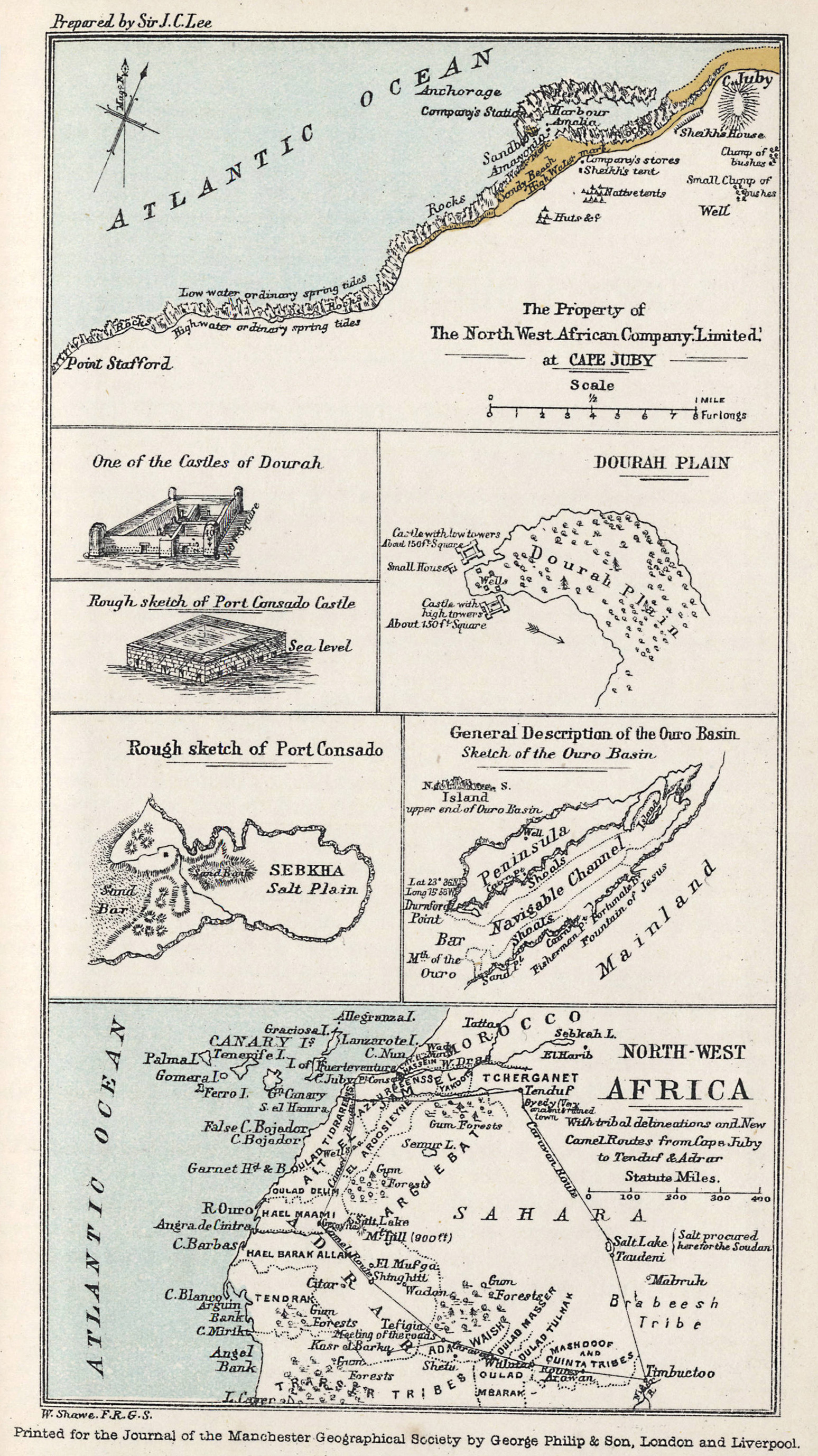
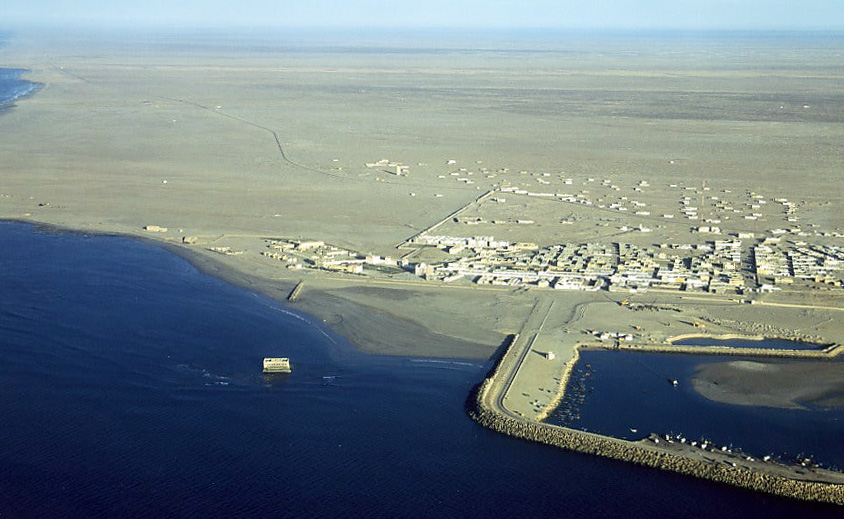
Visit Tarfaya on Cape Juby and just offshore you will see the curious Casa del Mar fort, beyond the St Exupery monument. Port Victoria or Mackenzie’s factory are other names for the trading post of the North West Africa Trading Company, established by Scotsman, Donald Mackenzie in 1882 during the ‘Scramble for Africa’.

floroute

Mackenzie’s venture hoped to capitalise on the recent westward swing of the trans-Saharan caravan trade emanating from Timbuktu, by intercepting caravans before they reached the terminus at Wadi Noun (near today’s Guelmin).
In fact, in a decade or more the NWAT Co barely covered its costs after compensation was finally agreed against an earlier raid and to abandon the post in favour of the Moroccan sultanate.

It reminds you that colonisation at the time wasn’t purely a state affair, where armies marched off to conquer distant lands and bring back the spoils. Ahead of them strode adventurer-entrepreneurs with funds raised from venture capitalists and who gambled everything on striking it rich. It was their reports, or better still, securing a government charter to supply a commodity or service, which preceded more cautious colonisation, very often spurred by other European rivals nosing around for an as yet unclaimed slice of the cake.
flodonmac

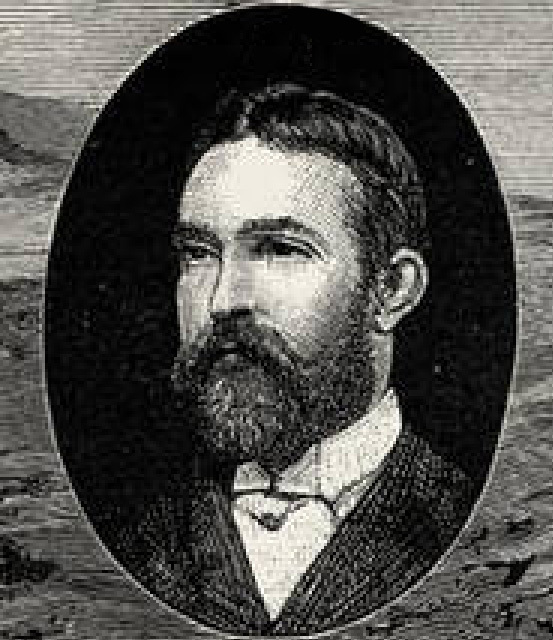
It’s hard to find out much about Donald Mackenzie, but in 1877, a few years before he set up the North West Africa Trading Company, he had a far more radical idea to capitalise on the trans-Saharan trade.
He proposed nothing less than flooding the interior of the Sahara from the Atlantic so that, with the addition of a few canals which had proved so successful in Britain prior to the age of rail, ships could sail directly to Timbuktu and the Niger river in a matter of days, avoiding the arduous overland journey of weeks. As a side benefit the flooding would ‘green’ the Sahara, enabling agriculture to thrive across the wind-blown sands.
floder
flodjouf

This was the era of grand engineering projects like the Suez Canal (completed 1869) and the Panama Canal (first serious attempt 1881). A canal to the trading heart of West Africa could be a similar commercial coup.
It’s hard to think what gave Mackenzie this idea, other than conflating lurid traders’ descriptions of El Djouf (left) with the small depressions or sebkhas found near Cape Juby. The biggest of these is the Sebkha Tah, some 55m below sea level and just 15km from the Atlantic, but still no bigger than Malta. For some reason he believed that the vast El Djouf (part of the million-square-kilometre Majabat al Koubra or ‘Empty Quarter’) was one huge depression which had been connected to the Atlantic via the Seguia el Hamra or some such, but had become cut off and dried out.

flomwamap
floNWACmap

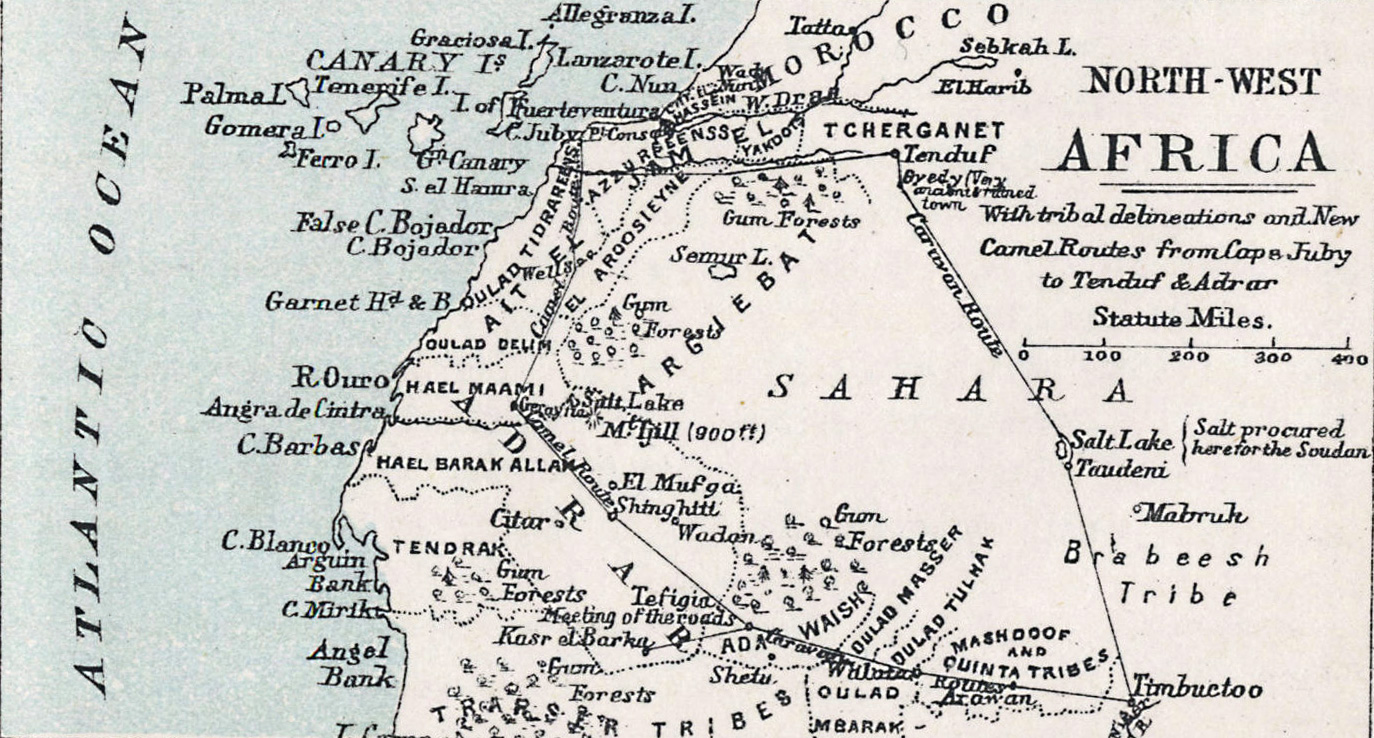
Mackenzie had never actually travelled in this area (other than a camel tour up to Port Consado (present day Khenifiss) and down to Layounne during the NWAT Co era (map above and right) but had read of other larger desert depressions in Tunisia and Egypt, similar to those near Cape Juby. All these basins held seasonally dry salt lakes which may have suggested that flooding was plausible. He believed an inland sea the size of Tunisia or Oklahoma would soon be formed, paving an inland seaway to Timbuktu.
Mackenzie diligently read up on all your great 19th-century Saharan explorers: Barth, Rohlfs, Caille, Duveyrier, Clapperton, and in 1877 published an exhaustive proposal [available online] to ‘The Presidents and Members of the Chambers of Commerce of Great Britain‘ stressing ‘the importance of holding commercial intercourse with the interior‘.
Vividly detailing at third hand the riches, economy, geography and ethnicities in this corner of Africa, he firmly believed his northern route reaching down into the African interior was the key, avoiding the disease-ridden equatorial jungles and pagan tribes further south in favour of the more sophisticated vestiges of the West African Islamic states. Under his proposal, land distances for the annual camel caravans from Timbuktu would be halved, with Cape Juby just nine sea days from Britain. De Lesseps himself, the force behind the Suez and original Panama canals, supported the idea of Saharan flooding, believing a side benefit would somehow improve the European climate while greening the desert for agriculture.

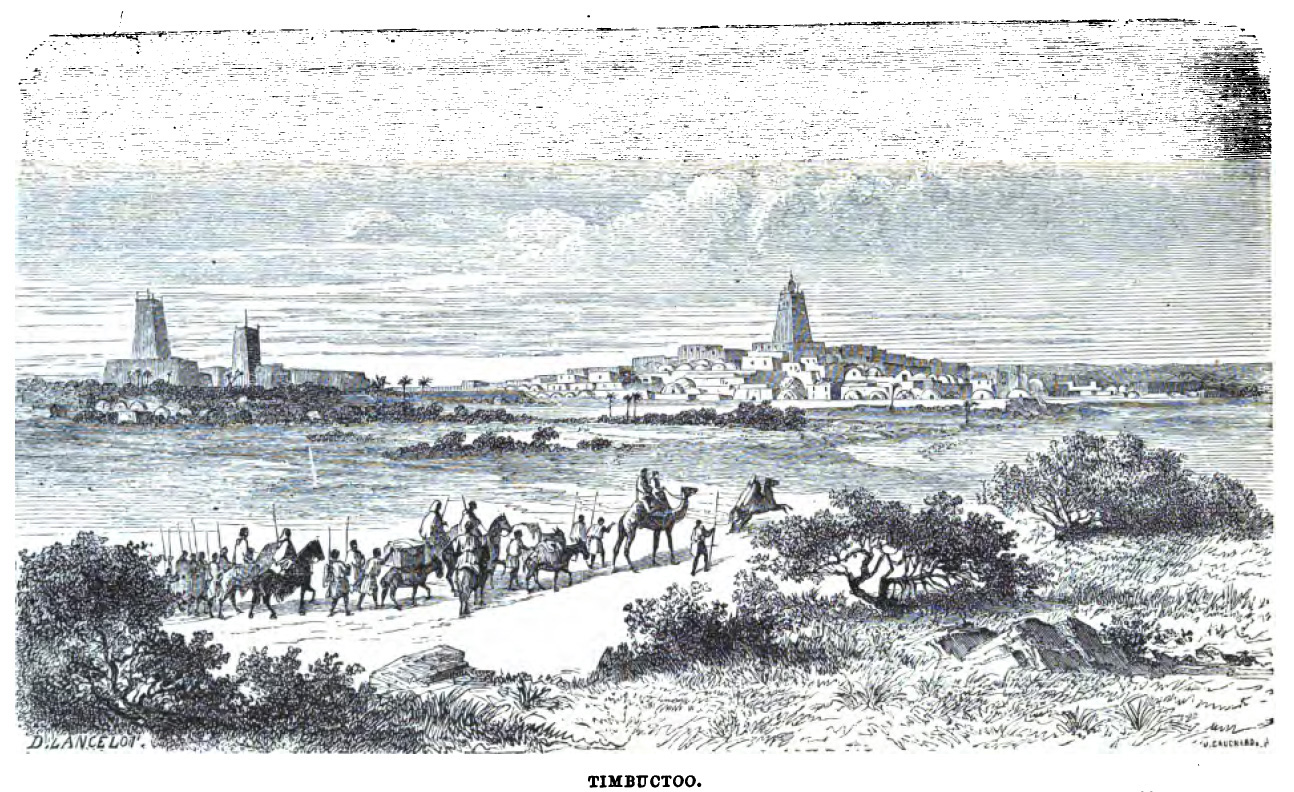
flotimboMackenzie also thought that trade and communications would help liberate the sub-Sahran population from the slave trade. And this wasn’t just a ploy to appeal to investors’ morals or religious beliefs – Mackenzie’s later work in East Africa long after the NWAT Company dissolved suggested he was always a genuine abolitionist.
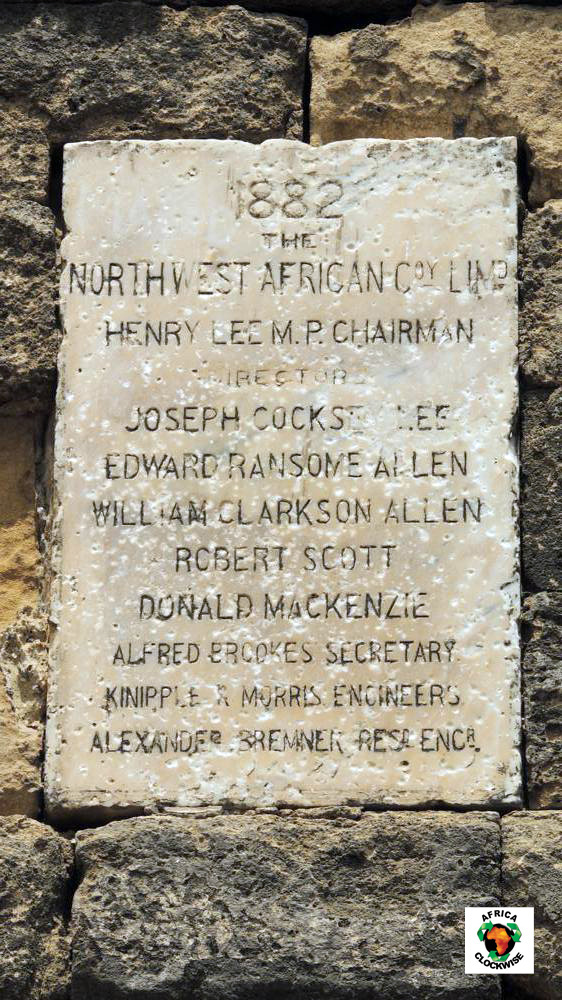
floAdcl-plak

According to his upbeat proposal (is there any other kind?) Mackenzie has it all worked out: do a recce to get the tribal chiefs on board at Cape Juby and Timbuktu, locate the channel in El Djouf and unplug that Atlantic cork.
I have no doubt of the ultimate achievement of this project, he wrote in the proposal’s introduction. But investors seemed less keen and, were it even possible, you’d think by creating a shallow, hyper-saline lake, the only thing that would grow would be salt crystals. The fact is the interior of the Sahara, including the dune-filed expanse of El Djouf spanning the Mali-Mauritania border, is a low plateau some 3-500 metres above sea level. Someone ought to tell Conde Nast Traveler.

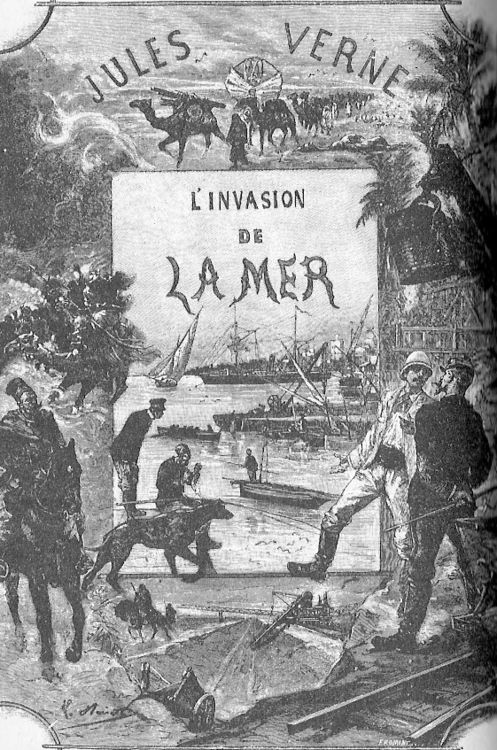
Mackenzie had slightly less difficulty finding investors for Port Victoria a few years later, and decade or three after that, Jules Verne fictionalised the idea of a flooded Sahara in his last published book, The Invasion of the Sea, set in Tunisia.

Present-day Tarfaya or Cape Juby, with Mackenzie’s fort visible offshore.