Tag Archives: high atlas

A Week in the High Atlas

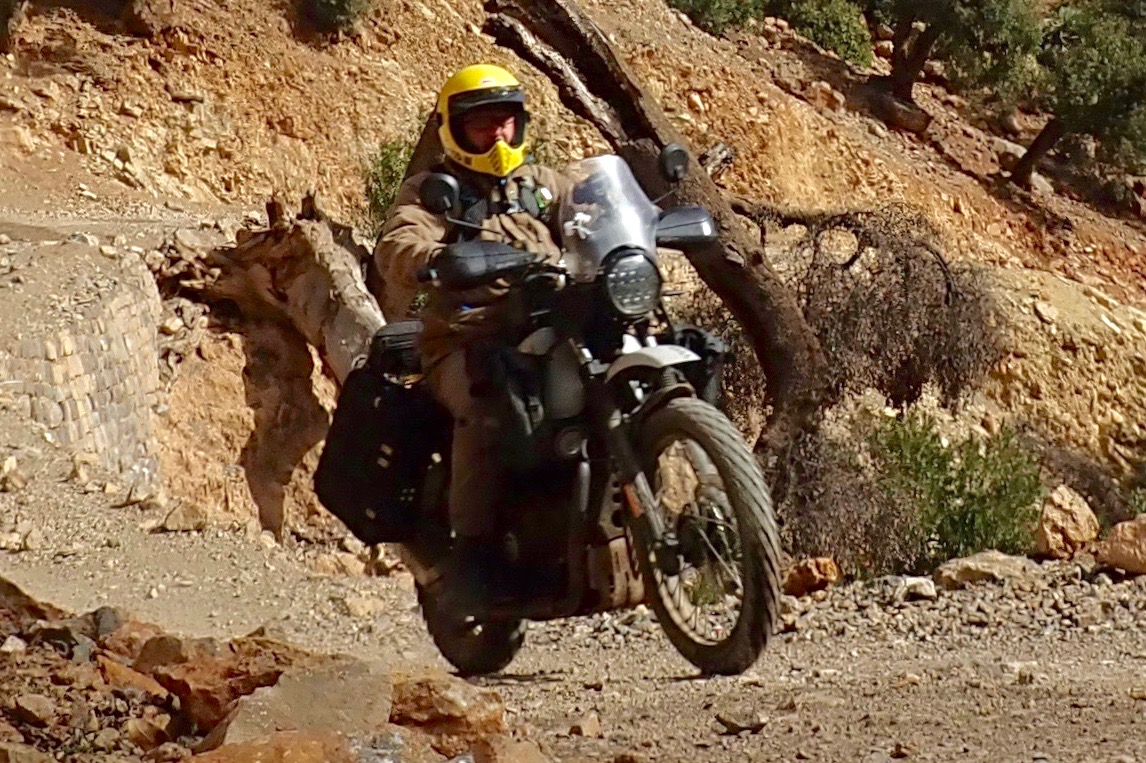
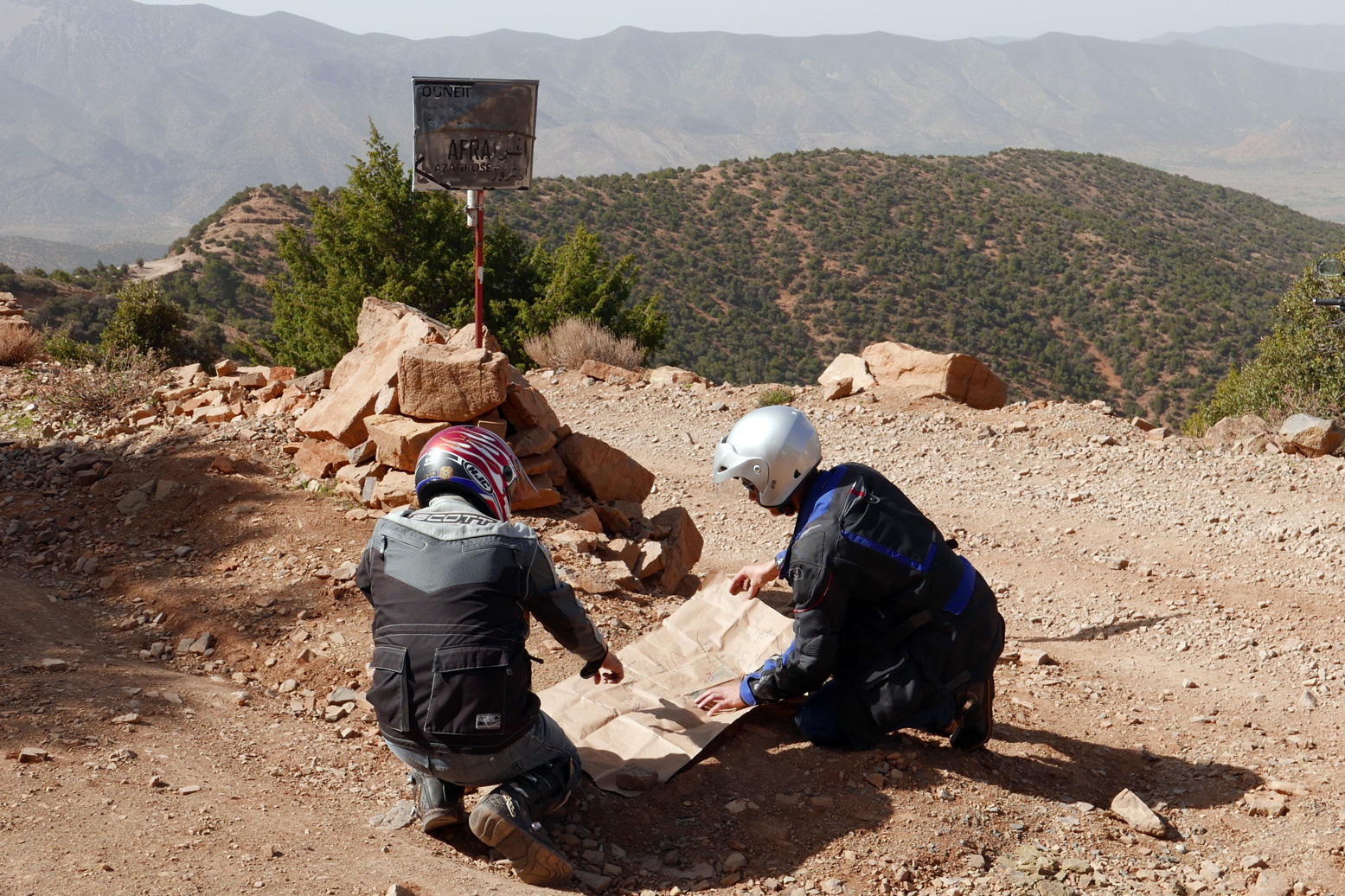
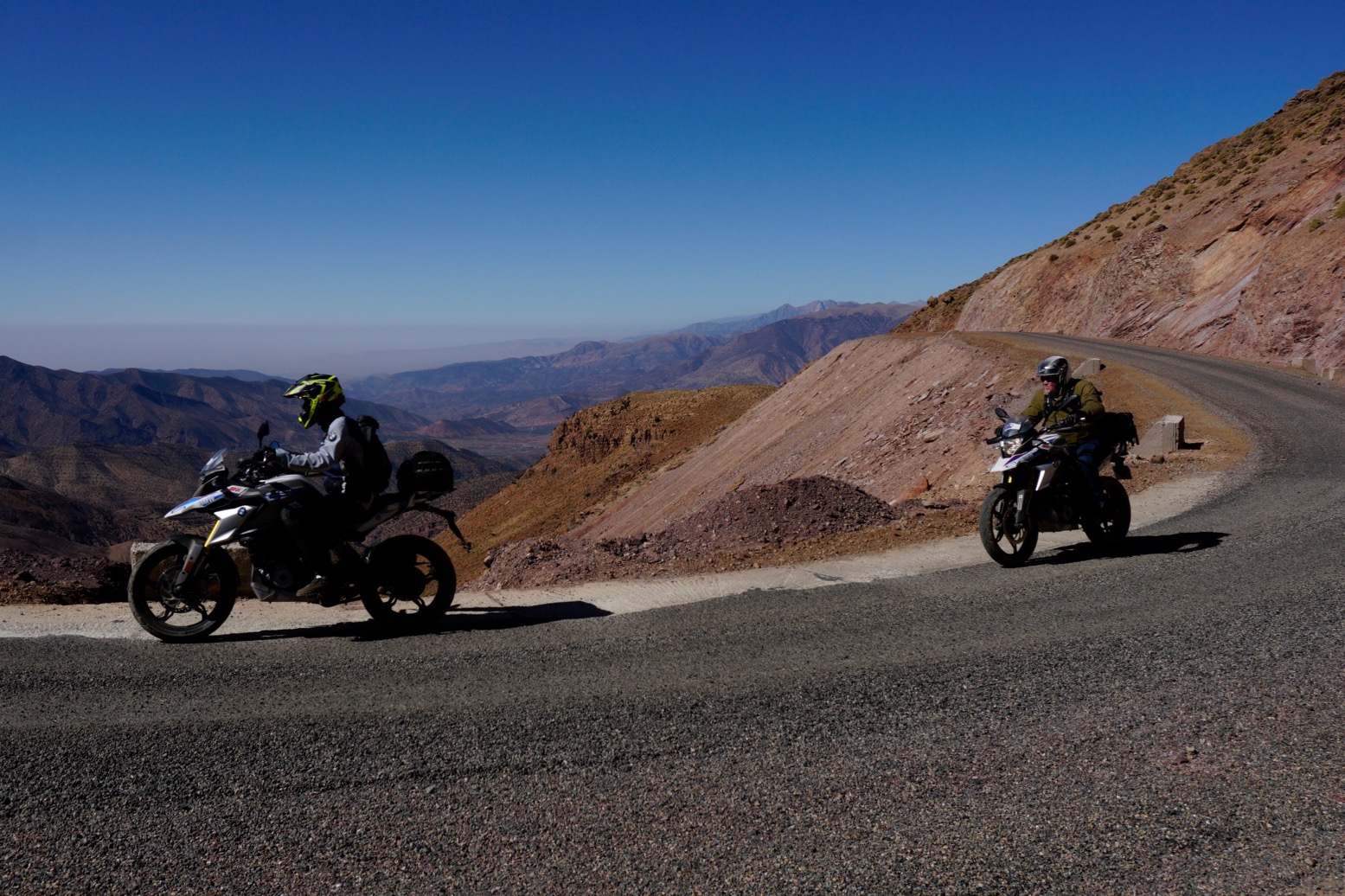
Curious about the Royal Enfield Himalayan 450, Desert Rider Jon and I rented a couple for eight days in the High Atlas. The bikes proved to be a bit of a disappointed (my review soon), but I was reminded what makes southern Morocco special: the hills and mountains, not the over-rated desert which many visitors seek to experience.
We were checking and adding to routes in my Morocco 4 guidebook as well as the Trans Morocco Trail. The last time Jon and I rode together was in 2003 out to the Tenere Desert on Desert Riders. Now that was proper desert. and here were proper mountains.
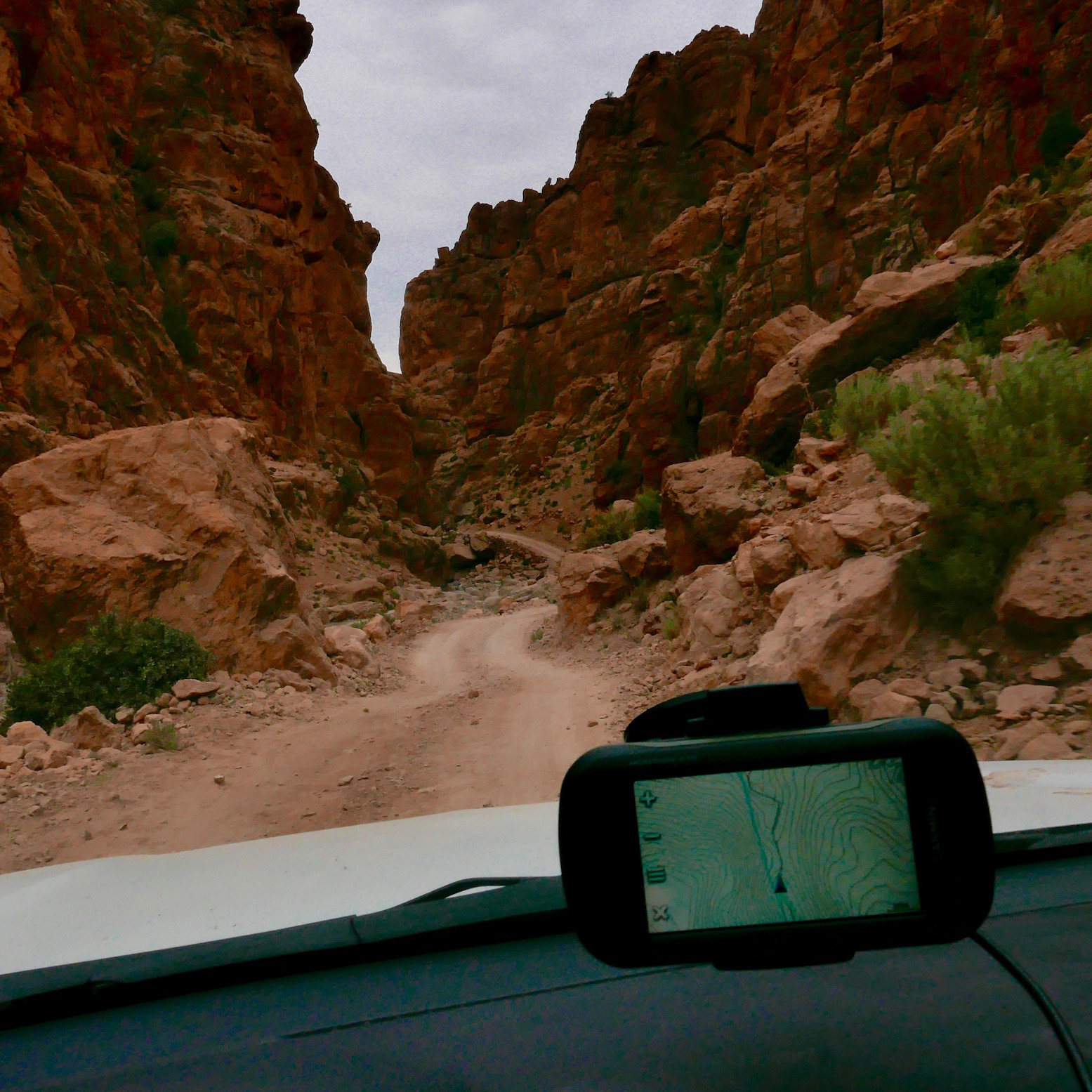
The night before we left Marrakech I’d failed to plan a good way out of the city, and now the Garmin was leading us straight into the souk on an updated OSM map I’d just installed, then routing more dumb detours off the main road to Demnate. I checked the Montana’s prefs; switching maps fixed things. We were on our way to Anergui, tucked in a remote High Atlas valley about 300km to the east.
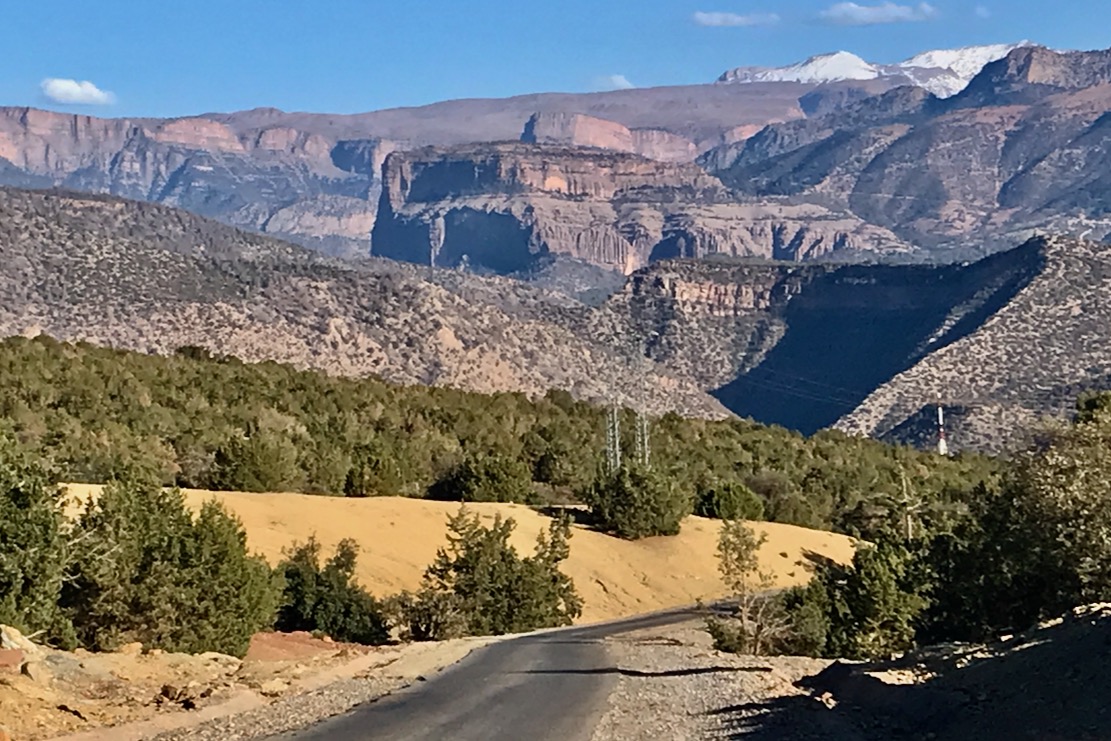
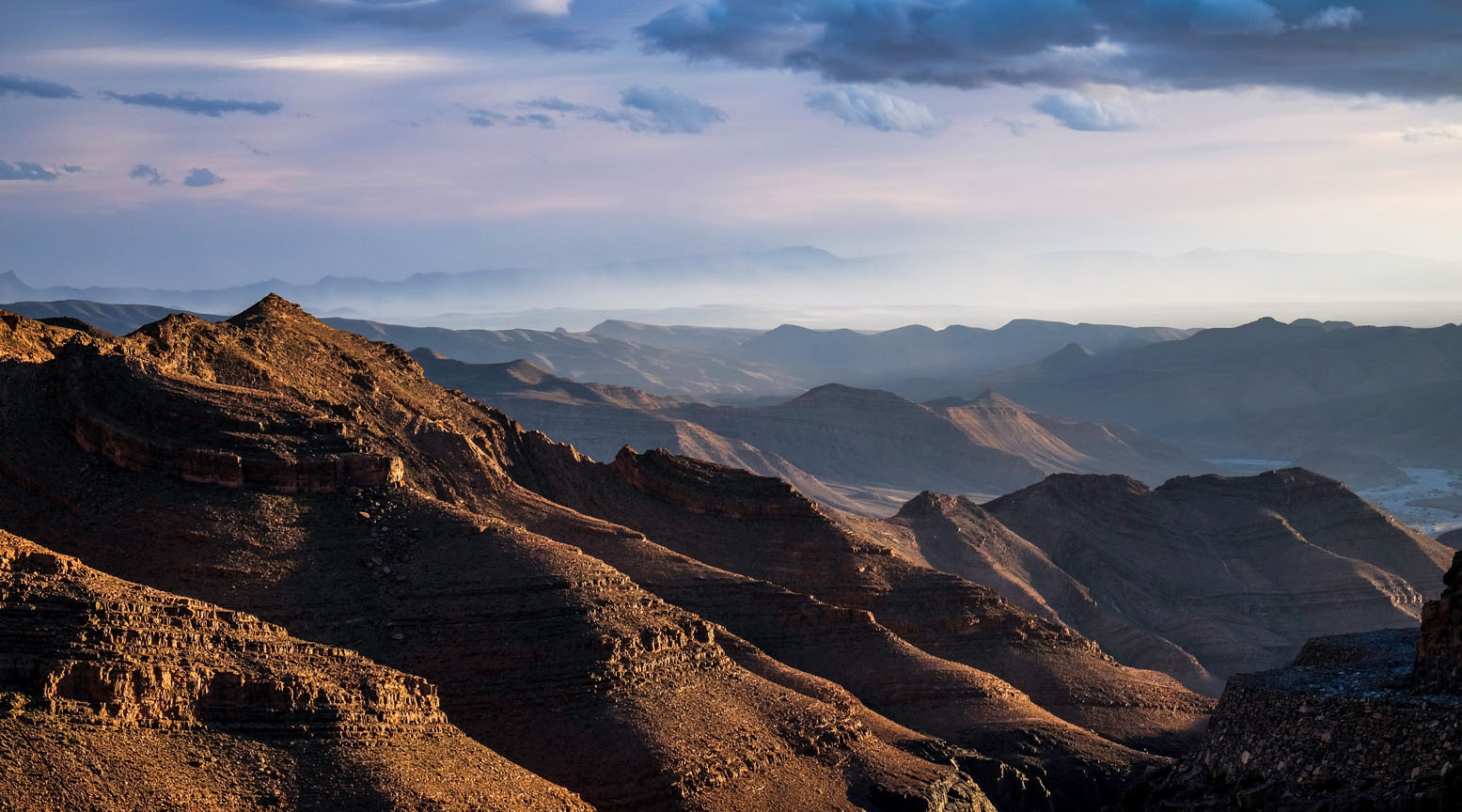
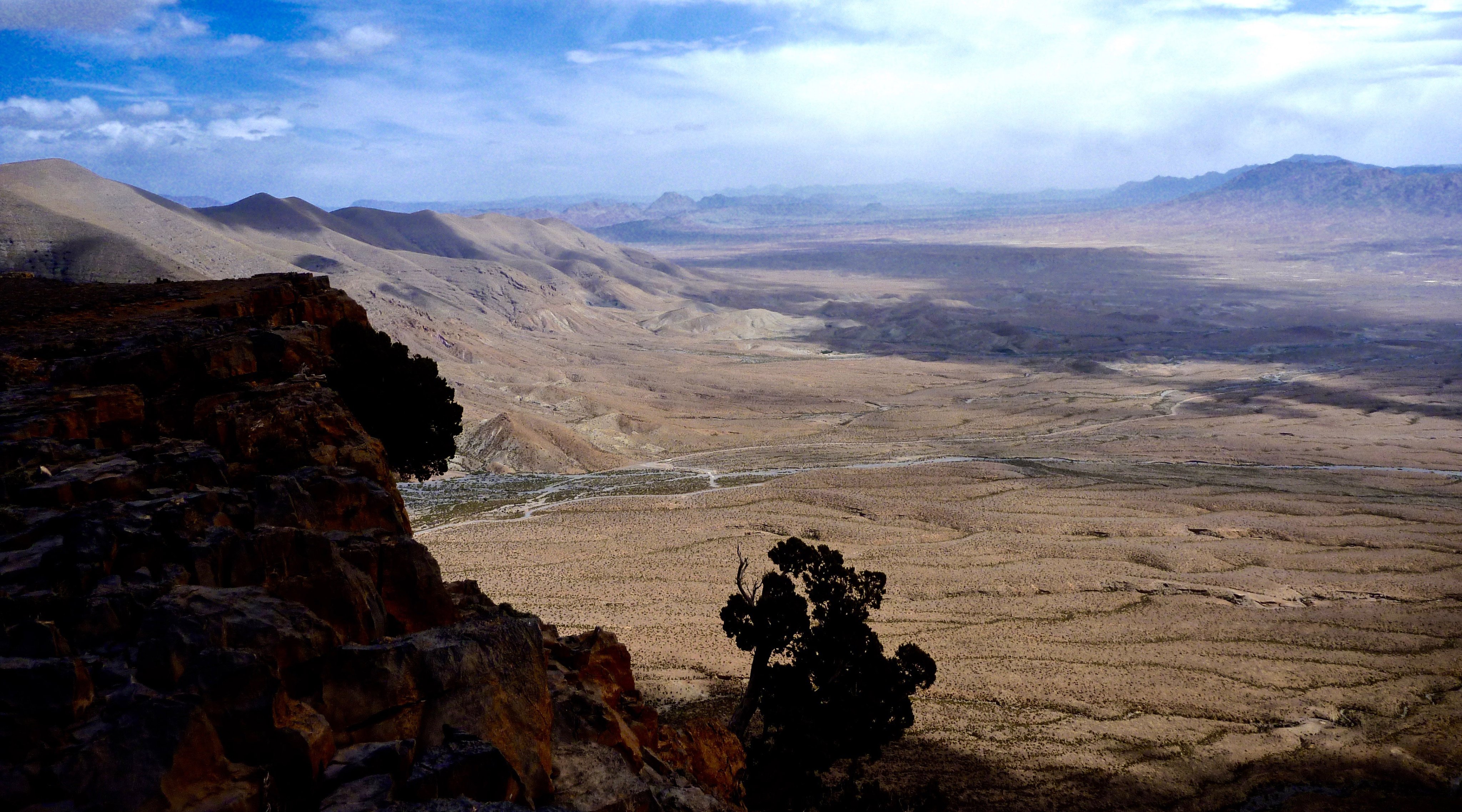
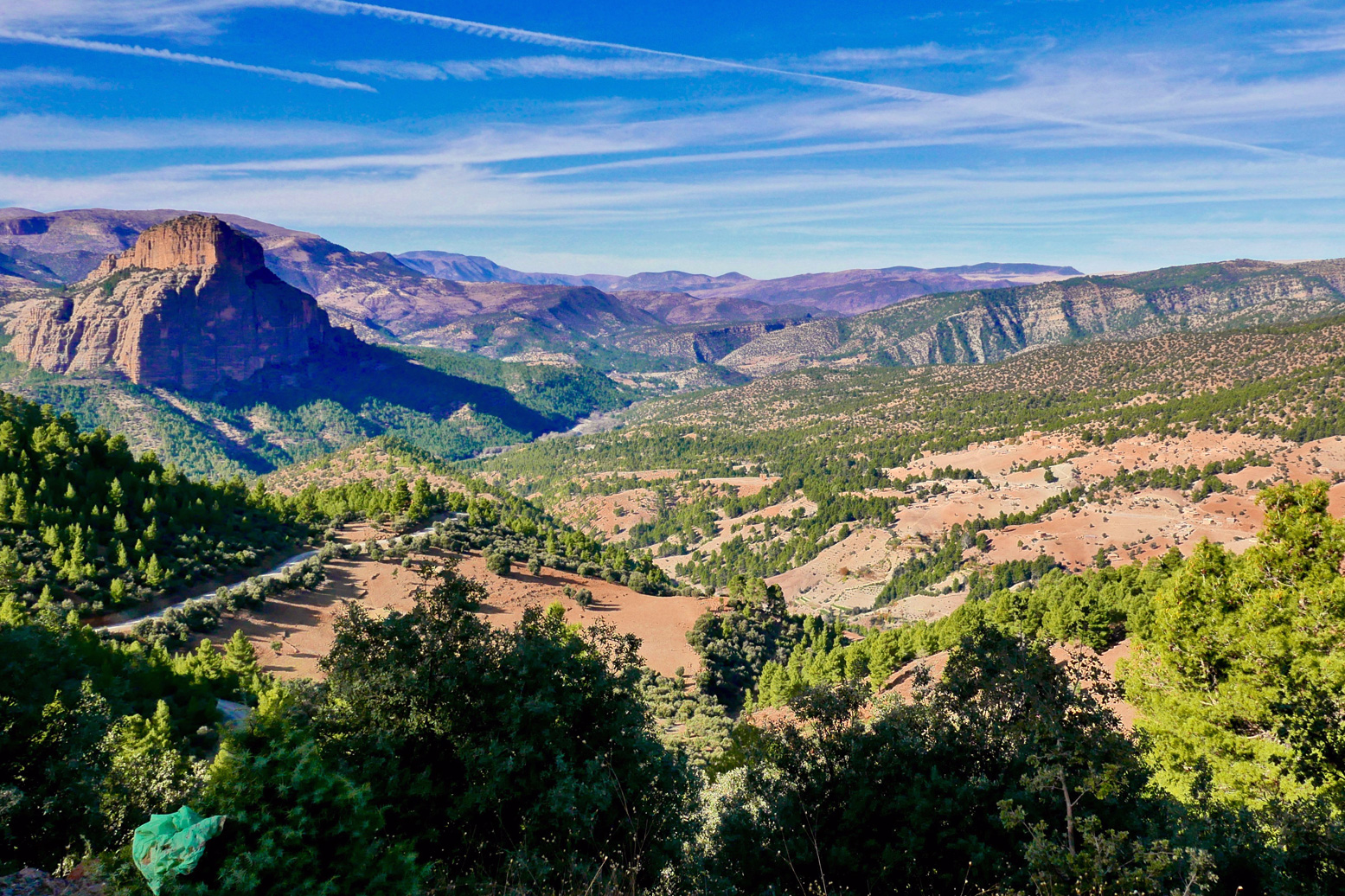
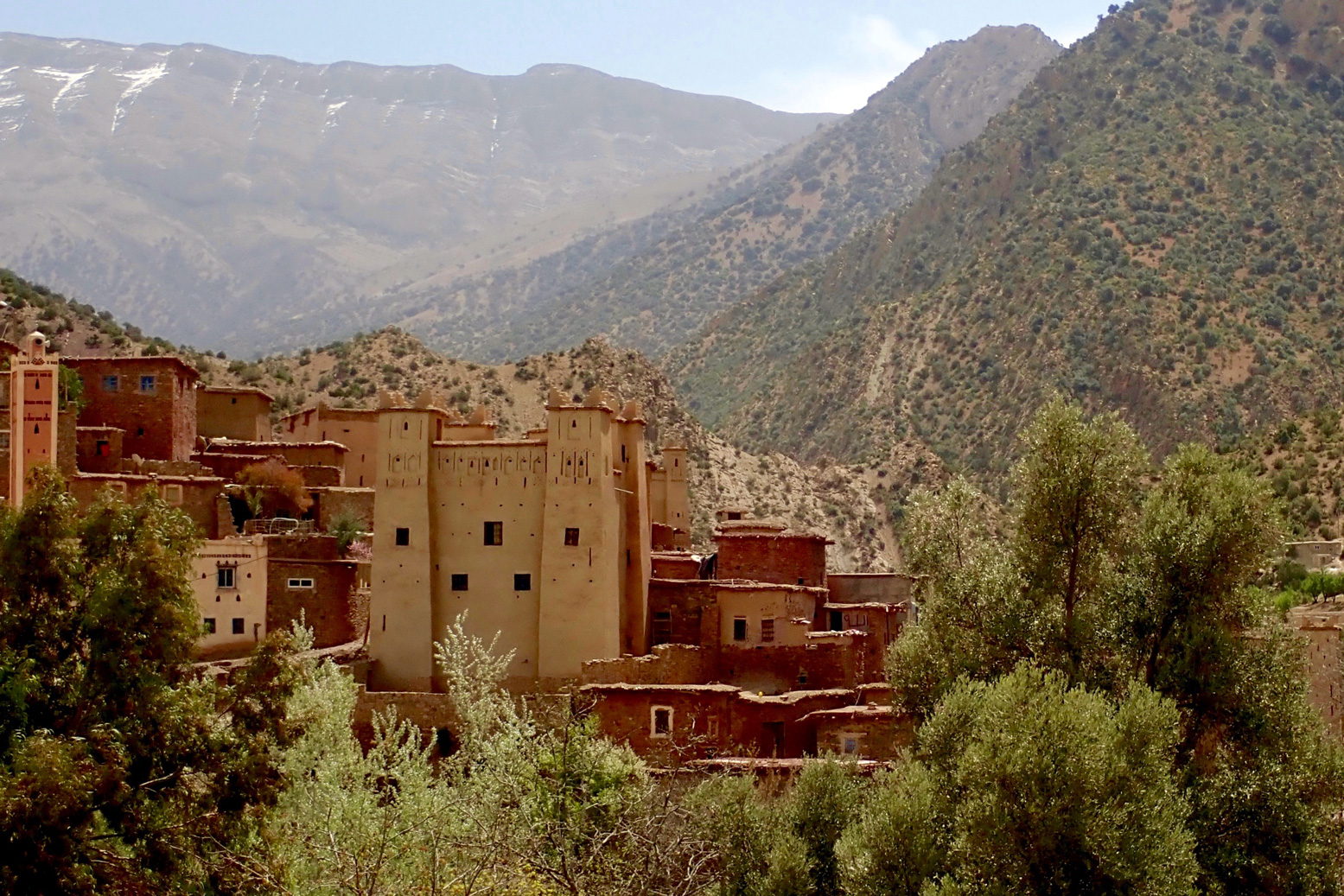
After a nous-nous in Azilal and the same for the bikes in Ouaouizaght, we passed behind the depleted reservoir and turned into the hills. Approaching Tilouguite, the last town, I was struck by the epic view (above) up the Imsfrane valley to the Cathedral crag and the Tammast plateau beyond. This would be where we’d be riding for the next few days.

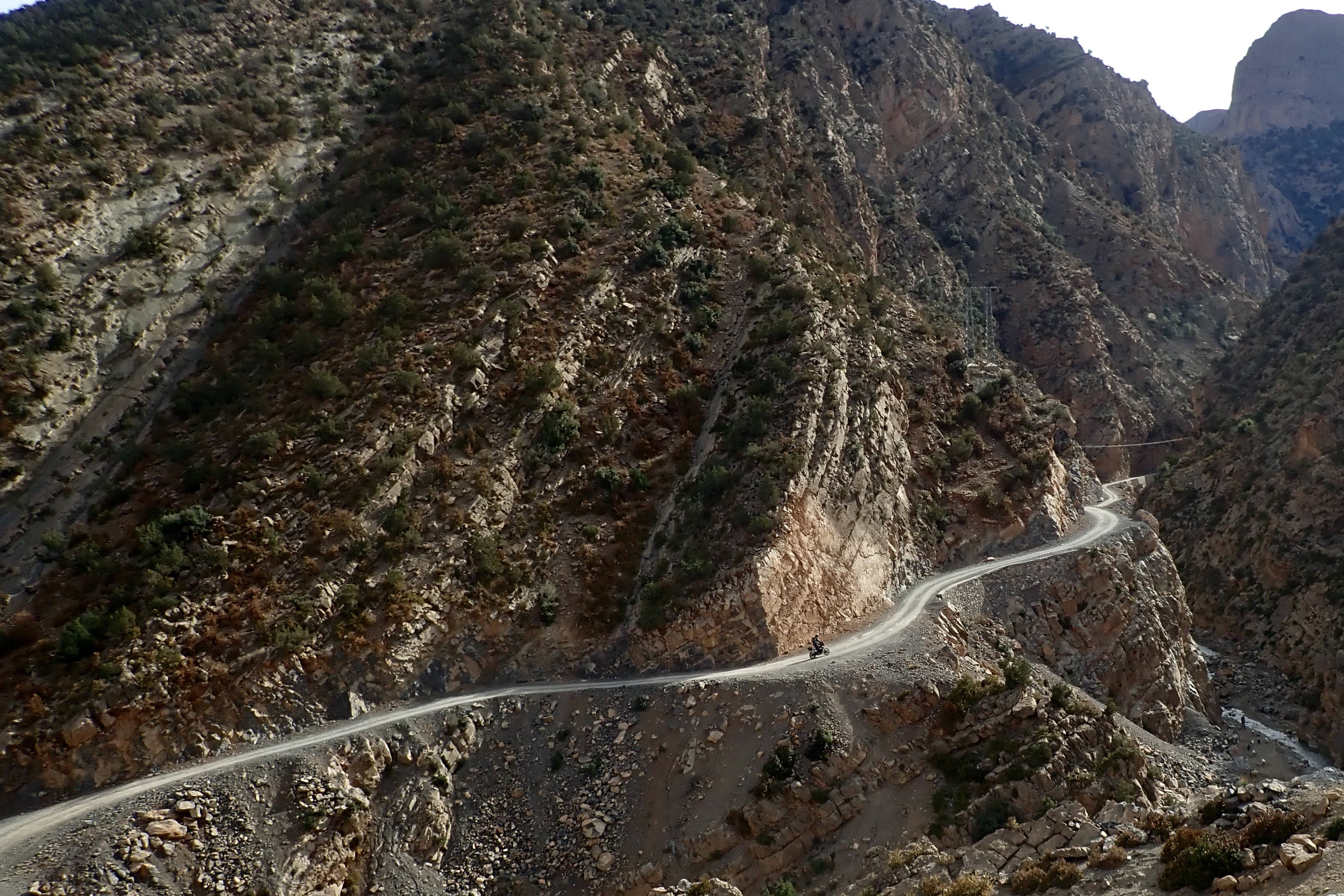
The road ends near the bridge in Imsfrane, and the last 40km into Anergui follow the stunning Assif Melloul gorge (above; video below) which comes out into the Anergui valley.

Ouaouizaght to Anergui via Assif Melloul gorge
Yam TTR 315. Nice

At the Assif Melloul auberge we met up with TTR Simon, as well as a couple of Germans who’d both just discovered the TMT. The day before Simon had caught up with them on Stage N which had just become accessible after months, but they’d struggled along the gully, 32km from Bou Azmou. Acknowledging similar feedback from others, we’ve since rerouted the start of Stage N along a new road out of Imilchil.

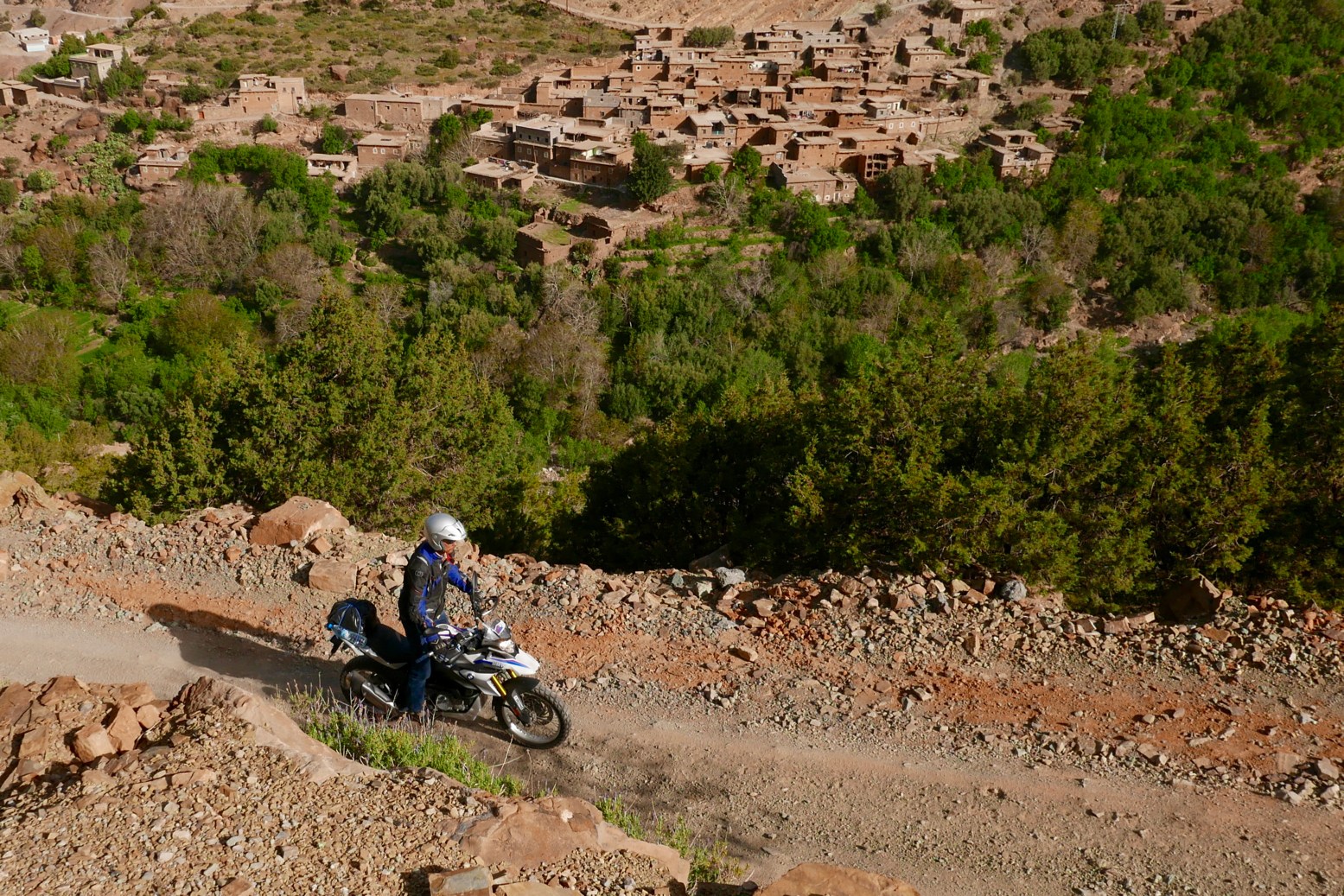
The following morning the three of us set off for a day trip to the Taghia cirque behind Zawaiat Ahansal, taking the newly repaired climb south out of Anegui which in early 2024 James and I had probably been the first to descend (left), just before it was completed. The bridge at the south end of Anergui was already semi-collapsed following the September 2024 rains, but the track up to the plateau was now in great shape.

Taghia

No yet bike fit, the short ride through the cleft into Taghia (above) was a bit rough, and by the time we popped back out, it was too late to be recce’ing new tracks, as planned, so we bombed back down to Imsfrane and back along the gorge to Anegui. On the way we met some French climbers heading for Taghia in a Duster rental with the same engine warning light we had a couple of years back. I assumed it was another loose turbo hose, but that looked fine which probably meant either a dodgy sensor or the turbo was on the way out. There might have been some life in it, but we advised them to turn back.

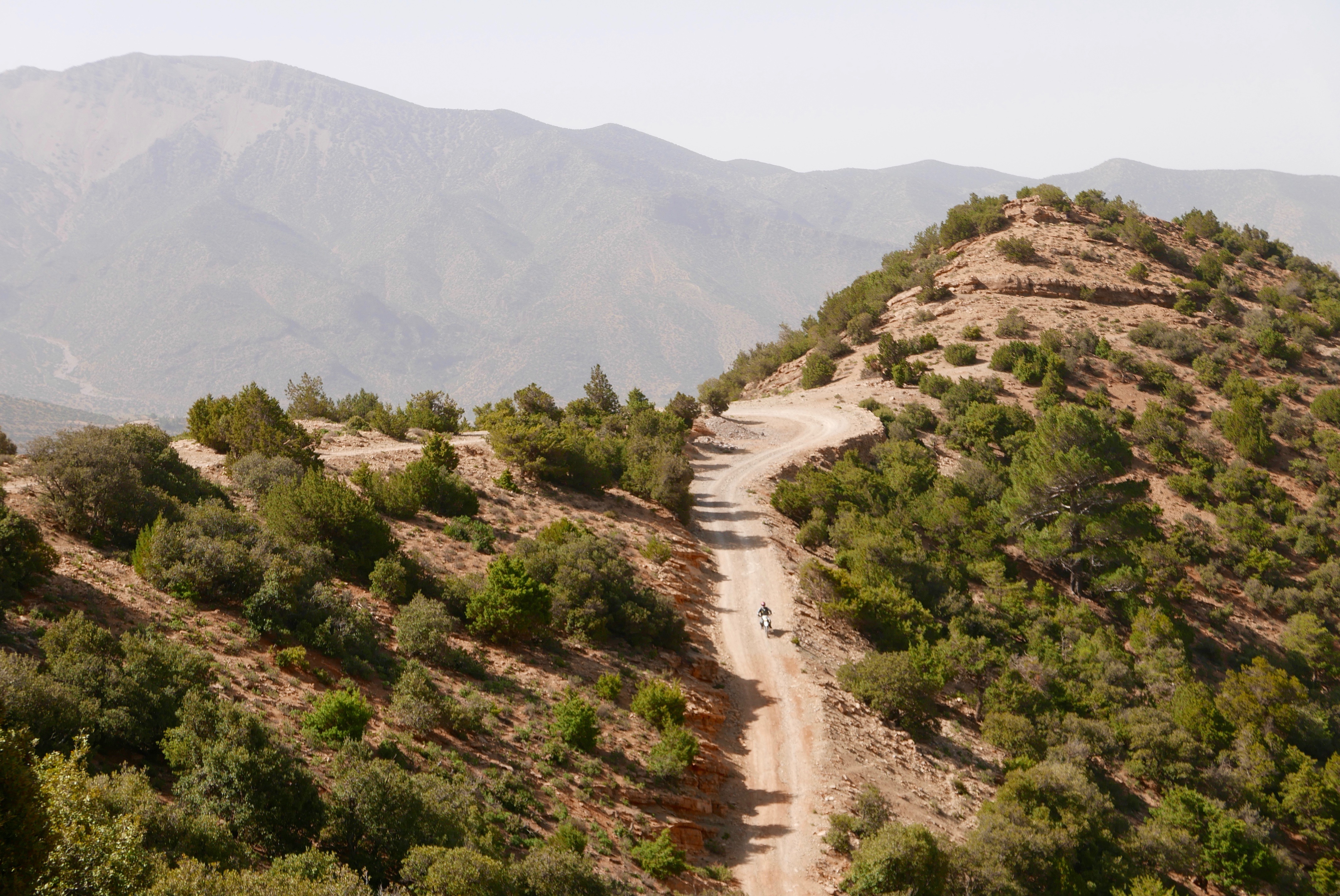
Next morning we took our third pass along the Melloul gorge, now lit by the rising sun, and in Imsfrane located the turn-off for the steep ‘Talmest VOR’ rising up behind the famous Catherdral crag to the snow line. I’d been wanting to do this one for years and the contours did not disappoint, with great views onto the back of the Cathedral and over watersheds to adjacent valleys.
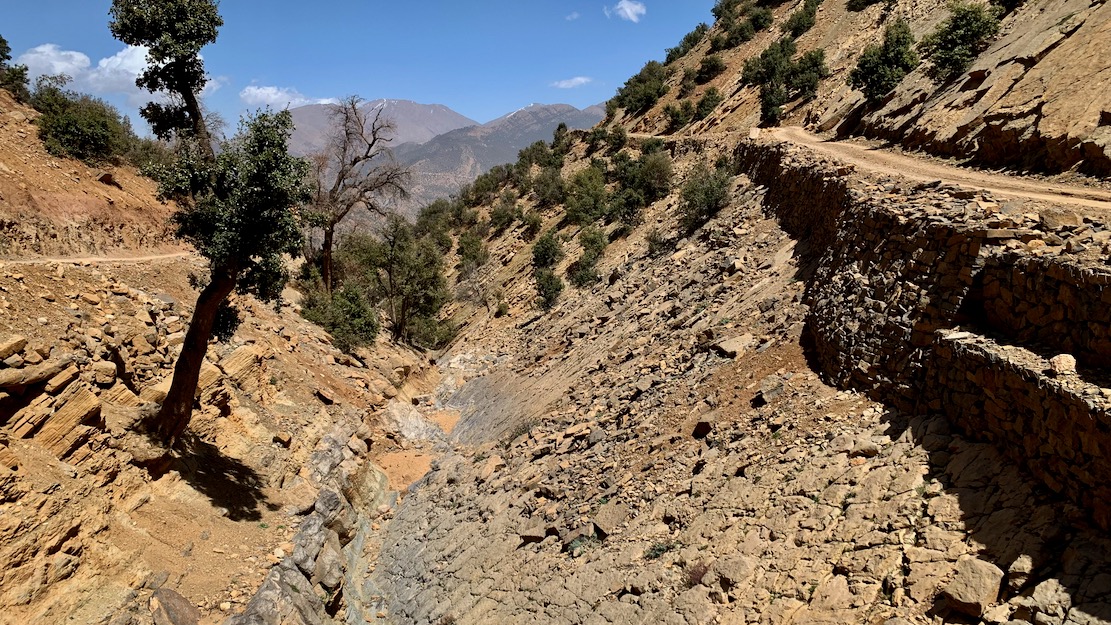
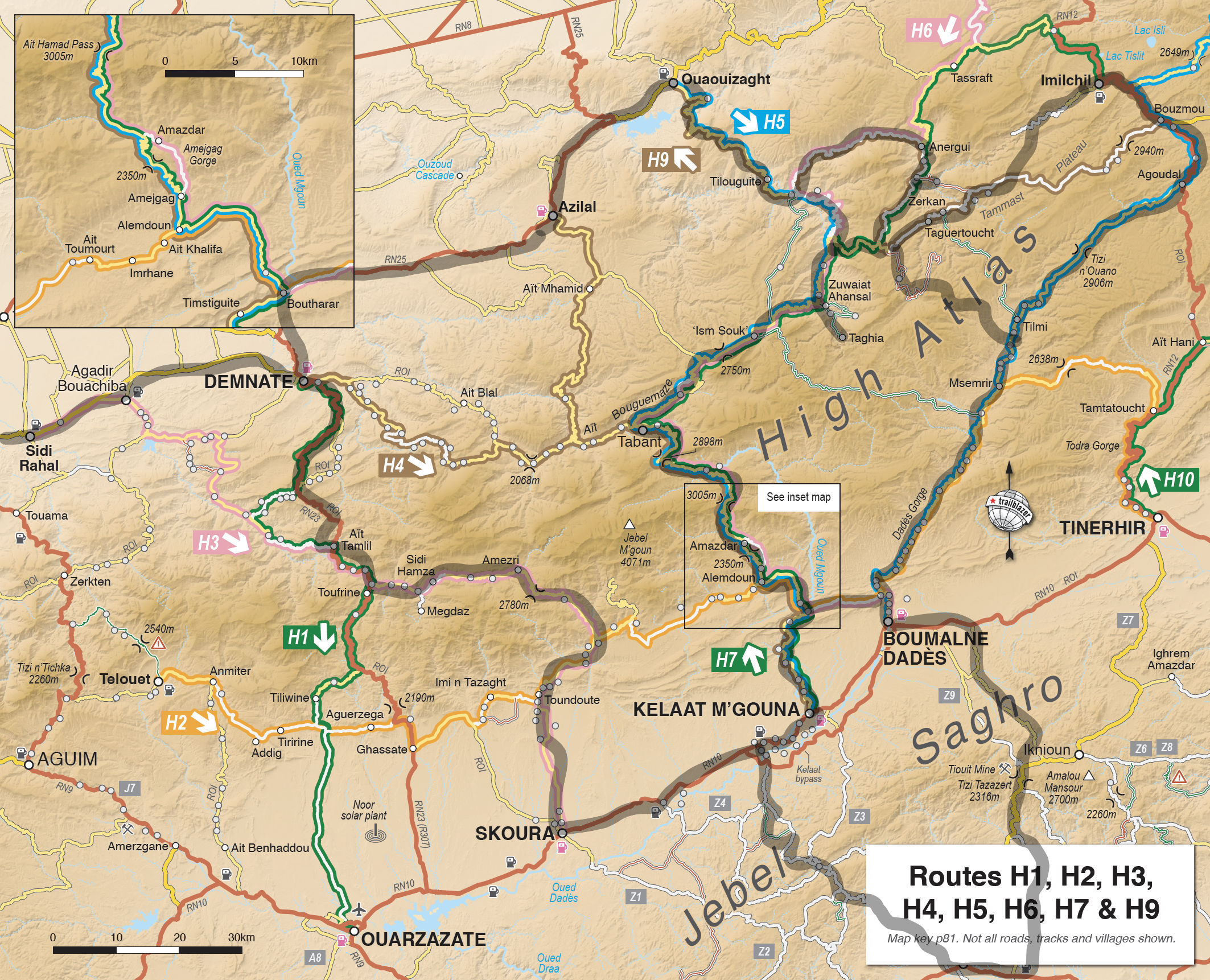
We were only a little miffed when tarmac set in about halfway, at Igherm n Talmest to the Ahansal high road. At Ism Souk I asked some old men about the long, high track over to the Dades valley, but they pointed to the nearby snowy slopes with a shake of their head. Little did I know in a few days we’d find another way over to Dades.
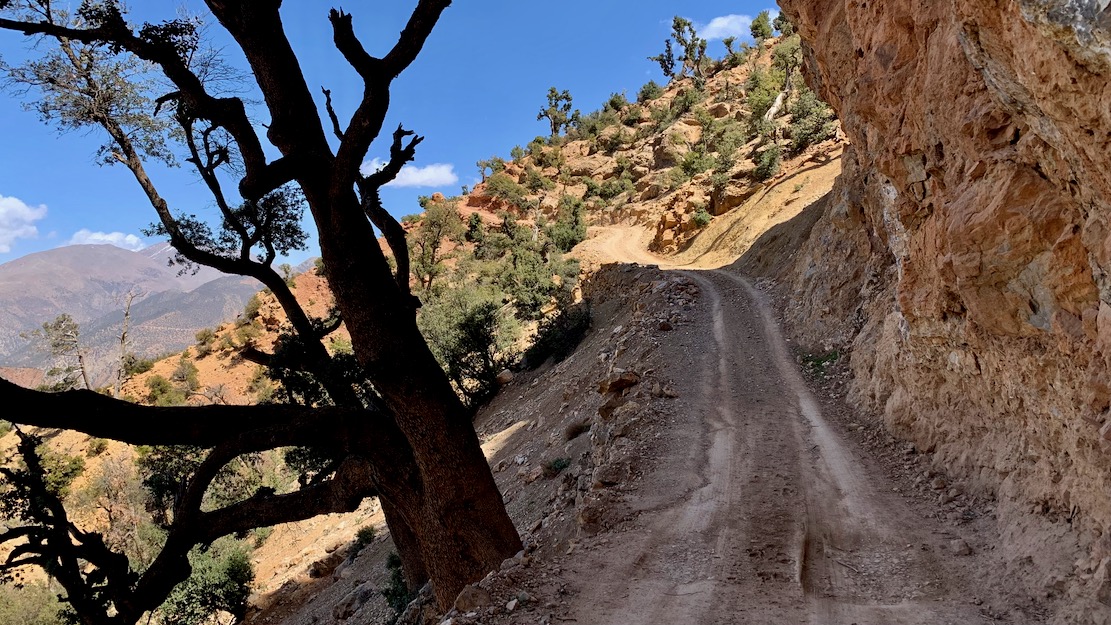
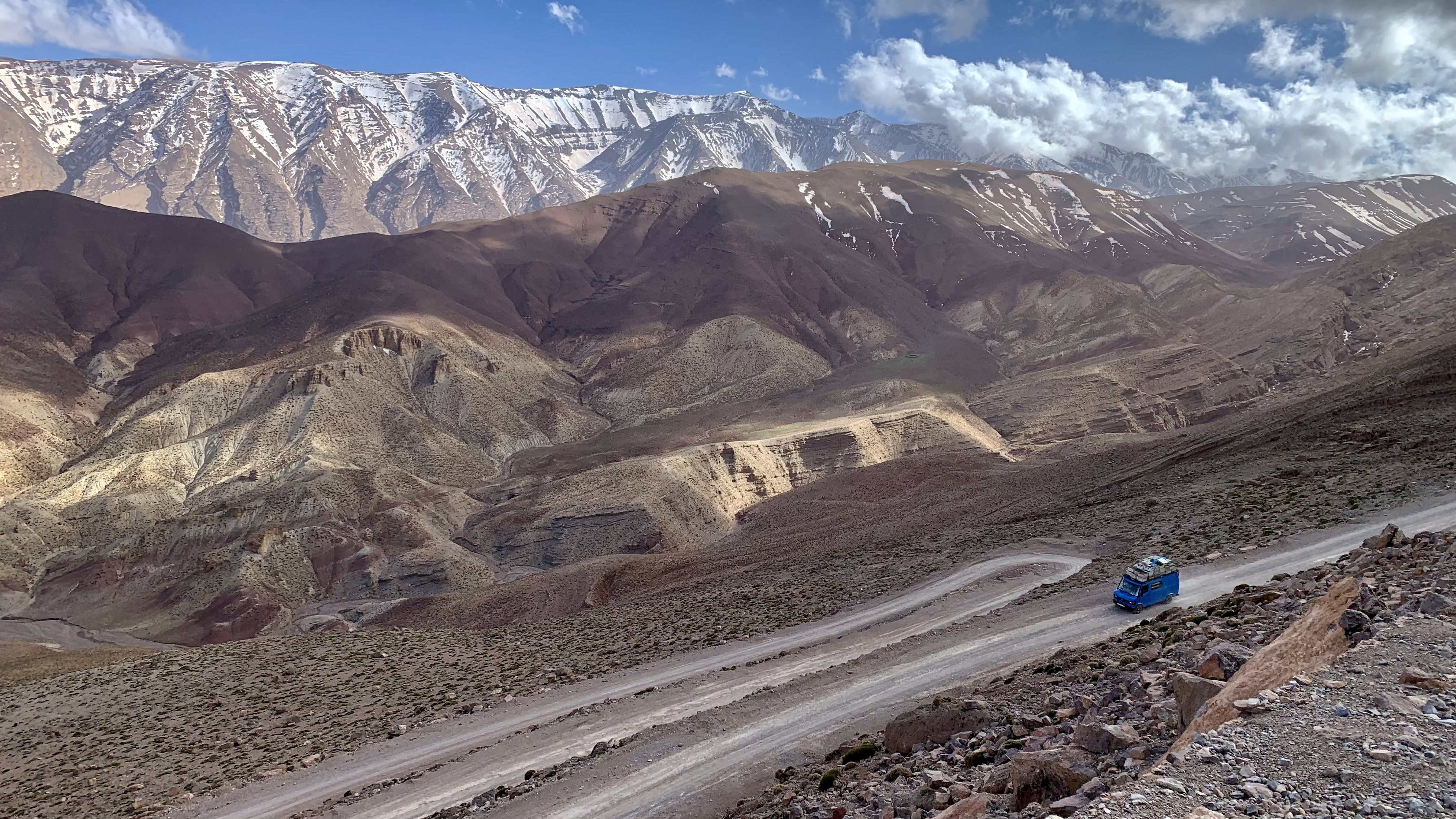
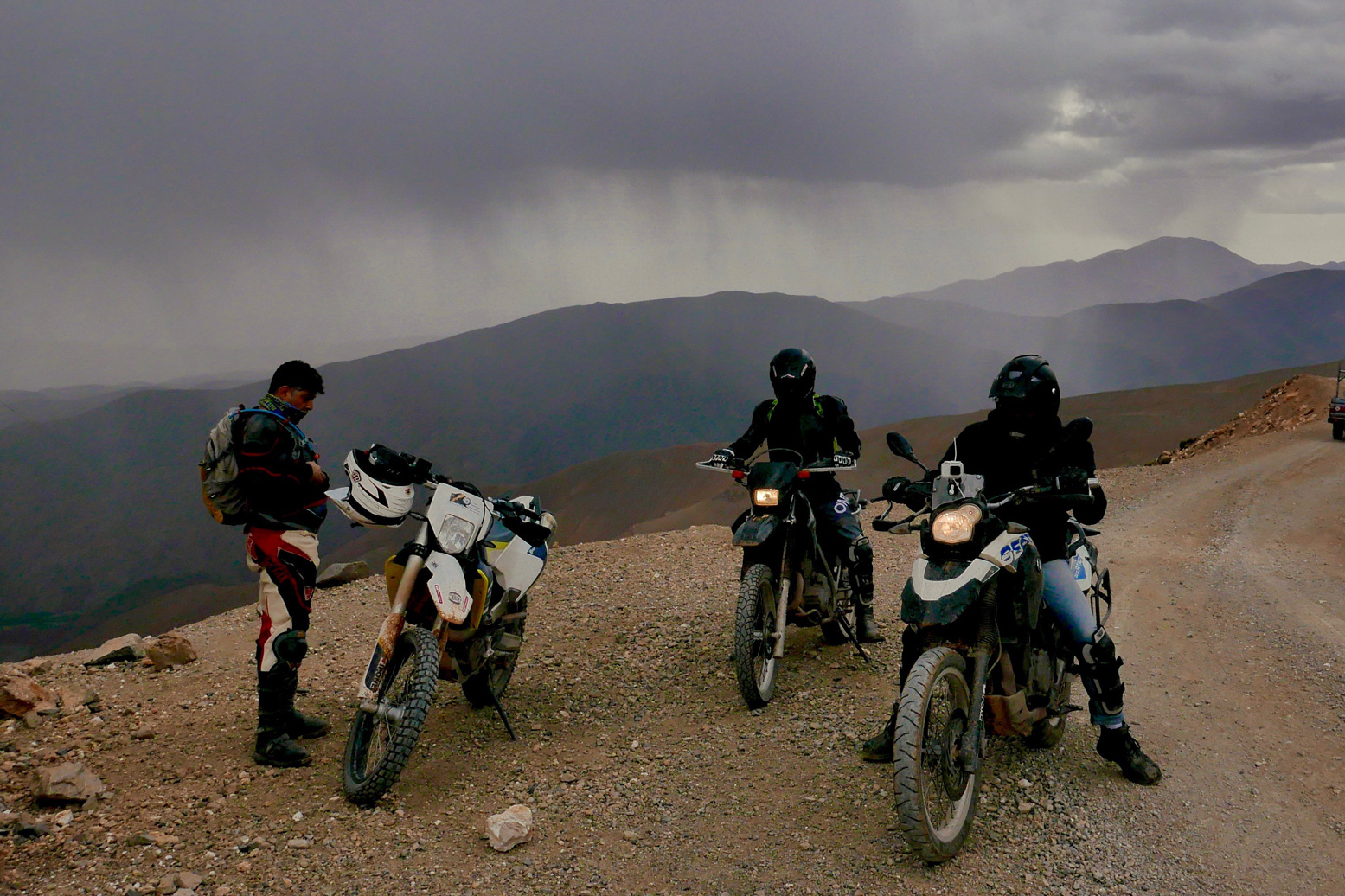
Near Tabant we bought a couple of litres of fuel for the bikes then carried on over the snowy High Atlas passes down to Kelaa.
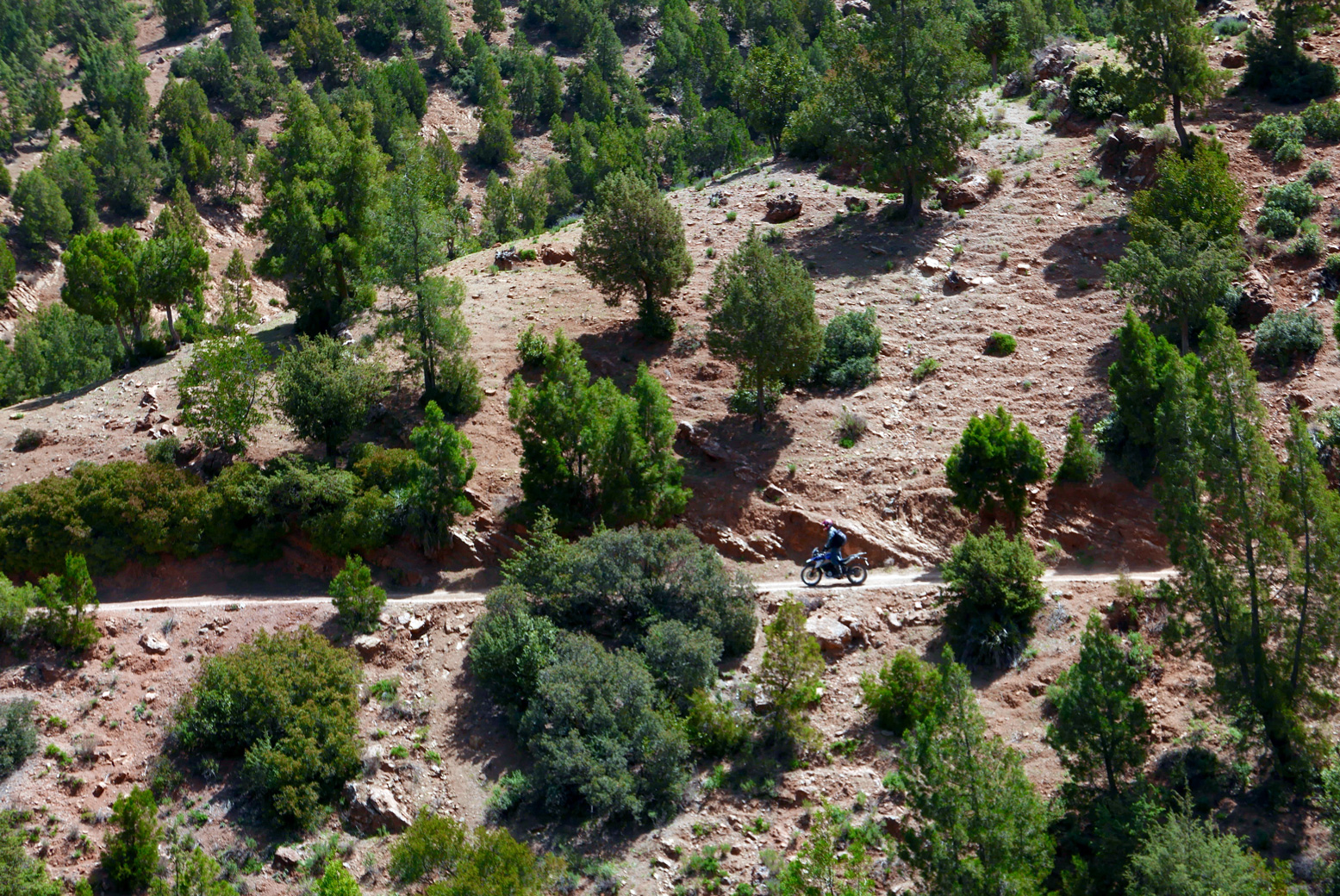
Near Alemdoun the other two missed the turning for the unsealed Amegag gorge route (above) which I followed, knowing we’d catch up. It’s a nice variation, but flood prone (hense the road over the pass). Within a couple of days it was washed out by rains again.
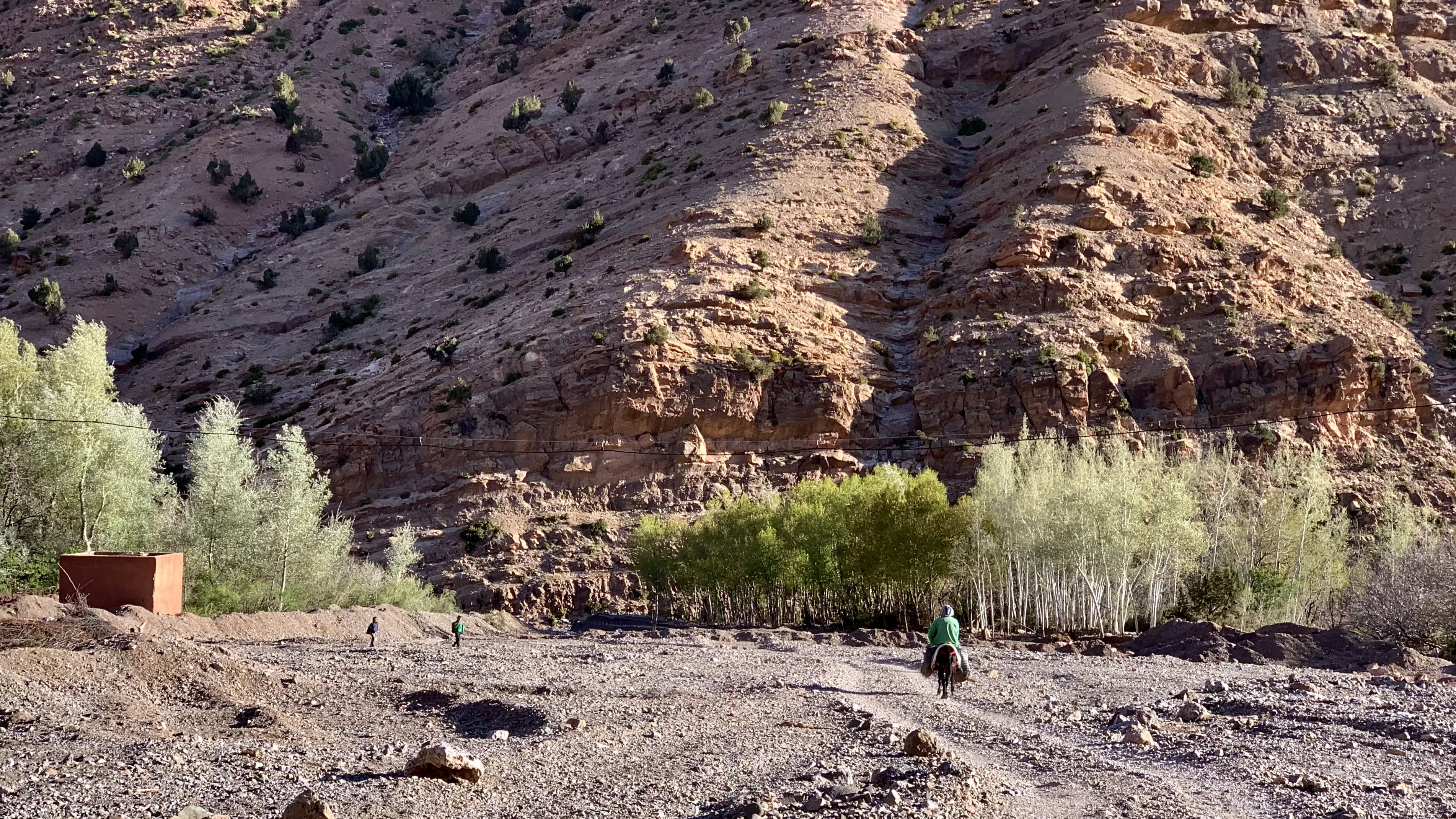
We’d taken a juiced-up version of Stage P on the Trans Morocco Trail but whichever way you do it, Anergui to Kelaa is one of the best mountain days you’ll get in Morocco.

After overnighting near Kelaa, Simon headed back to Marrakech, soon running into TMT co-founder Ed Gill nosing about on his even older Yamaha XT600, while, Jon and I set off over Jebel Saghro to Nekob, along Stage Q or Routes Z2 and Z1 in reverse.

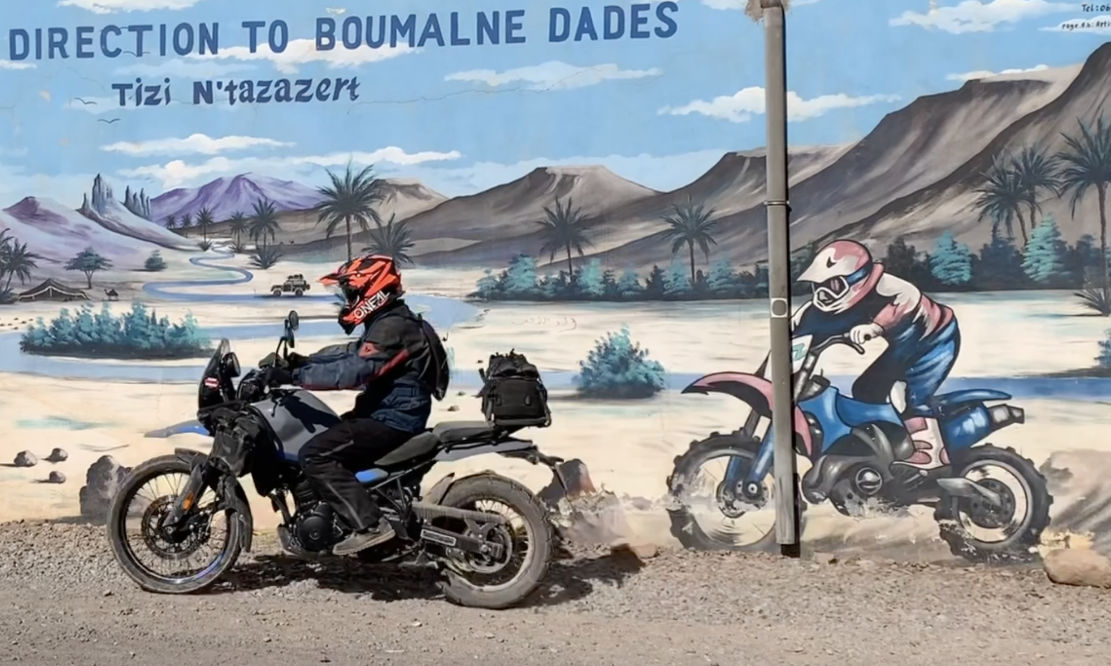
I’m convinced TMT Stage Q, southbound across Jebel Saghro, doesn’t do this mini massif justice, but anything else would pull the TMT even more off line. If people want them, better tracks are all there in the book or on the maps.
Arriving in Nekob, it was a lot warmer even if it’s still at 1000m asl. Down in the desert it would be baking. The morning’s track had given me another beating, leaving me with sore hands and a sore butt. After a nous-nous or two in town, we set of for our out-of-town auberge.

We swung back north to Imilchil next day, finding the Ouano pass finally sealed, making it the fifth sealed High Atlas crossing. After a long road ride, it sure felt nice not to have been pummelled by the trail.

Still, none of that stopped Jon and me having a brilliant last couple of days in the High Atlas. We recce’d a new road start to Stage N out of Imilchil which now joins up just west of the troublesome gully, then followed the rest of amazing Stage N back to H9KM85. Here we took a chance and turned south along an old road that lead deep into the hills and seemingly ended at a remote village which is a dead-end OUT in the book.
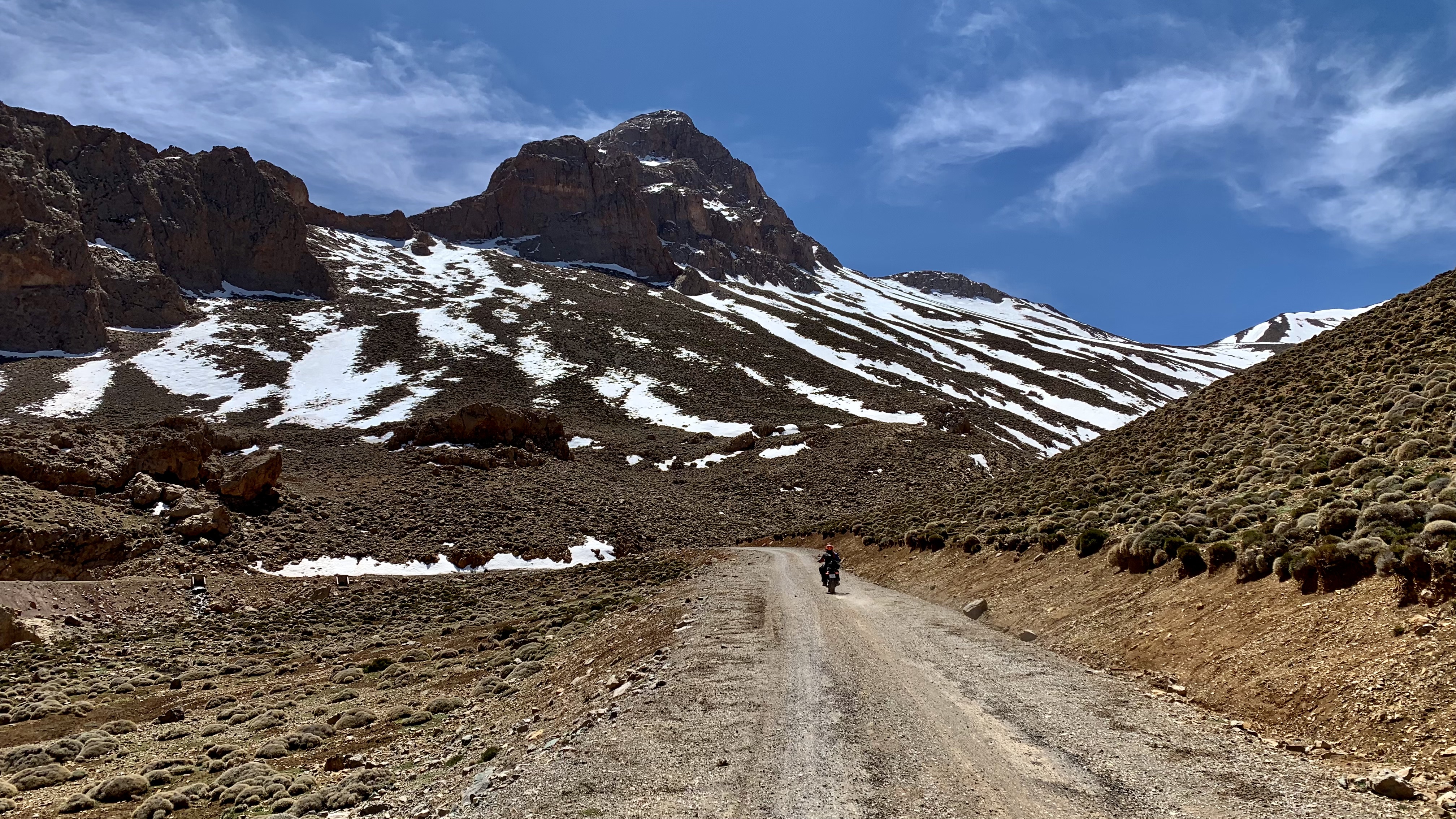
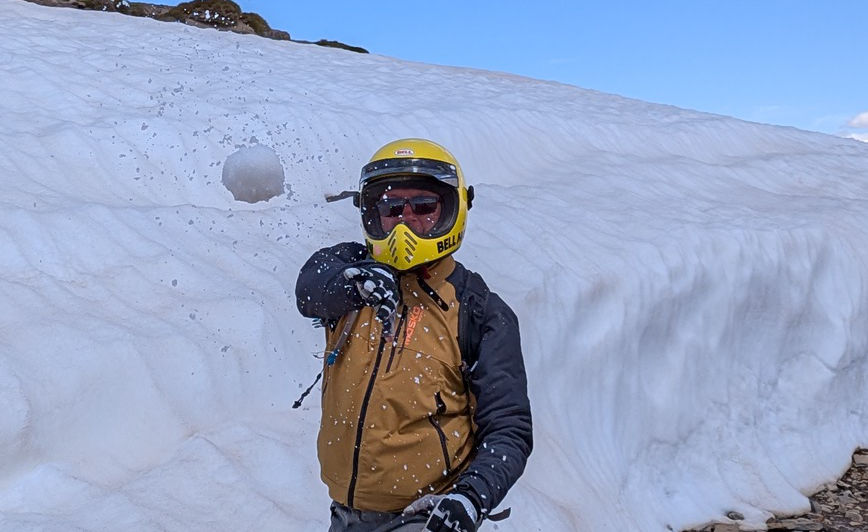
But soon after we set off, two travel bikes passed us, which suggested either they’d also just tried and failed to get anywhere, or they’d found a way over the watershed from the Dades valley. No map I had showed this trail and on satellite, tracks went all over and who knows what shape they’re in. In the end, with a couple of correct turns, we managed to span a little known 50-km off-road crossing of the High Atlas back to the Dades valley, peaking at over 3000m.
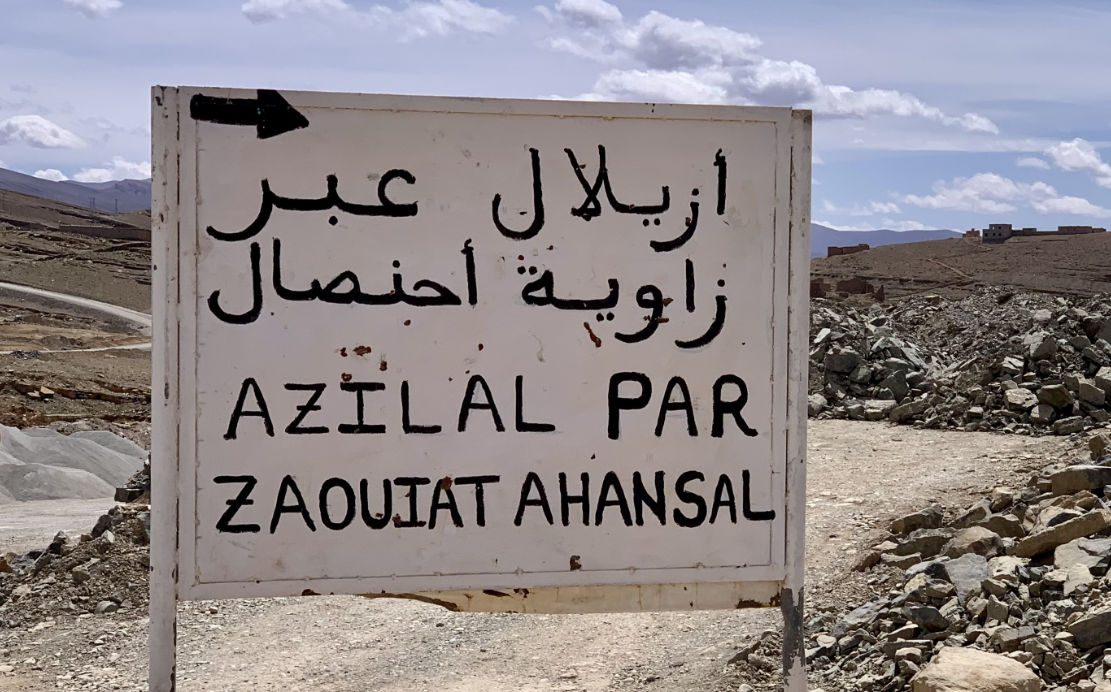
We rolled into the riverside Auberge Tissadrine, just below the Dades hairpins. For 500D HB, it’s money well spent in this gorge packed with lodgings. From here, next day we took the H2/H6 short cut to the Rose (Mgoun) valley but found it pretty roughed up, though popular with supported MTB-ers. Annoyingly, I misjudged one of the two mud holes we saw in 3000km and dumped the Him which added to the sourness of doing this track and cost me 80 quid for a bent crash bar ;-(
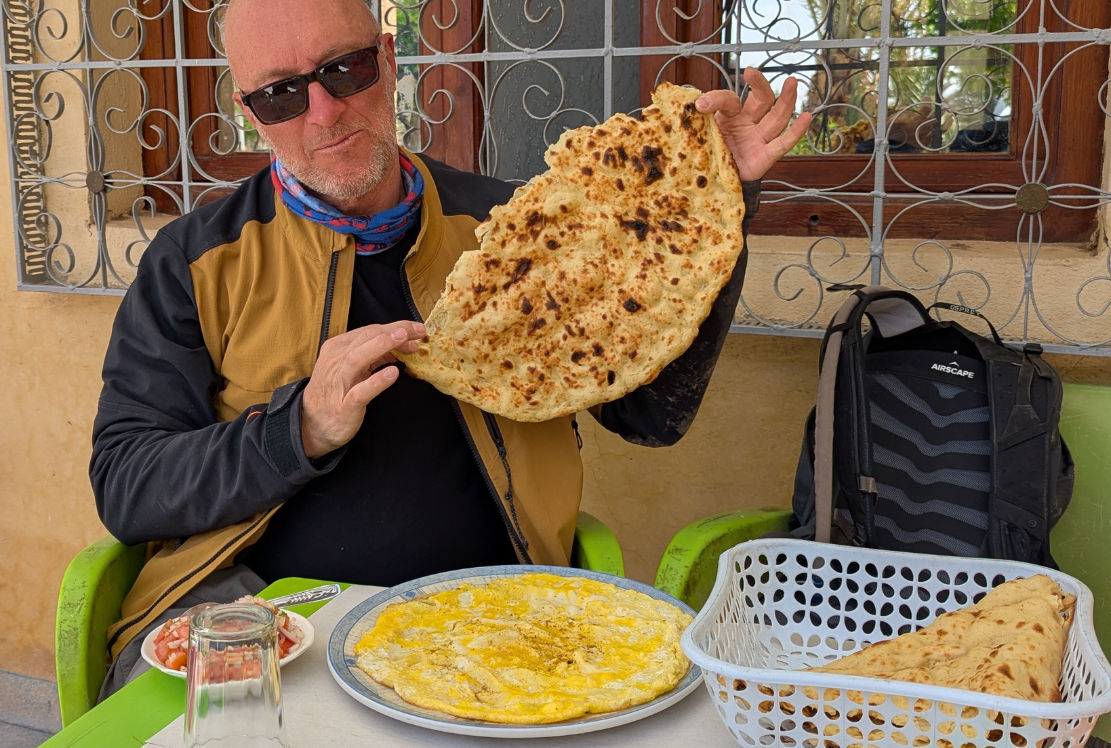
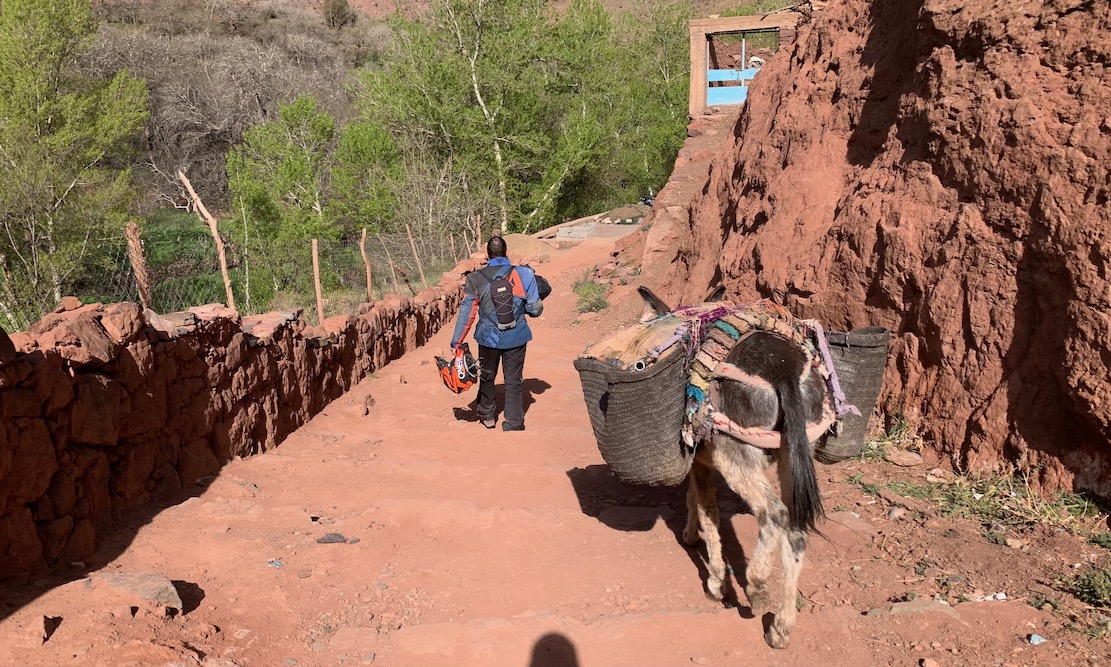
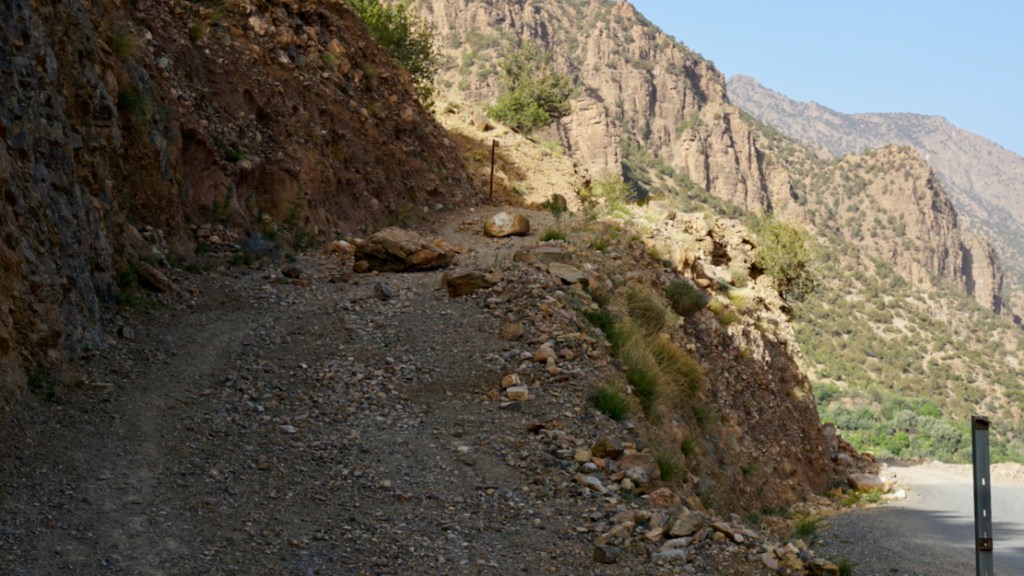
Near Skoura, we could not fail to pop into the Inov roadhouse for a tafernout flatbread and omelette. That done, we swung north towards Amezri, reversing Route H3 which I’d not done since 2019 on my old Himalayan 411. I had a feeling they’d since linked the road along the gorge to Ait Hamza (H3KM126). Turns out I was wrong: they’ve extended it a bit, but it still involves a short stretch of flood-prone riverbed, as well as some precipitous tracks carved out of the cliff or on top of landslides.

It was a great finale to our High Atlas adventure, topped off by a night at the gite in Megdaz, a few km from where the road resumes. You have to leave your vehicle at road’s end and walk a stony village path for 400m. The price on booking was only 10dh, plus 100dh ‘tax’, but they made it all back on the dinner and breakfast. Nice to visit a new place and lovely village viewed from the rooftop.
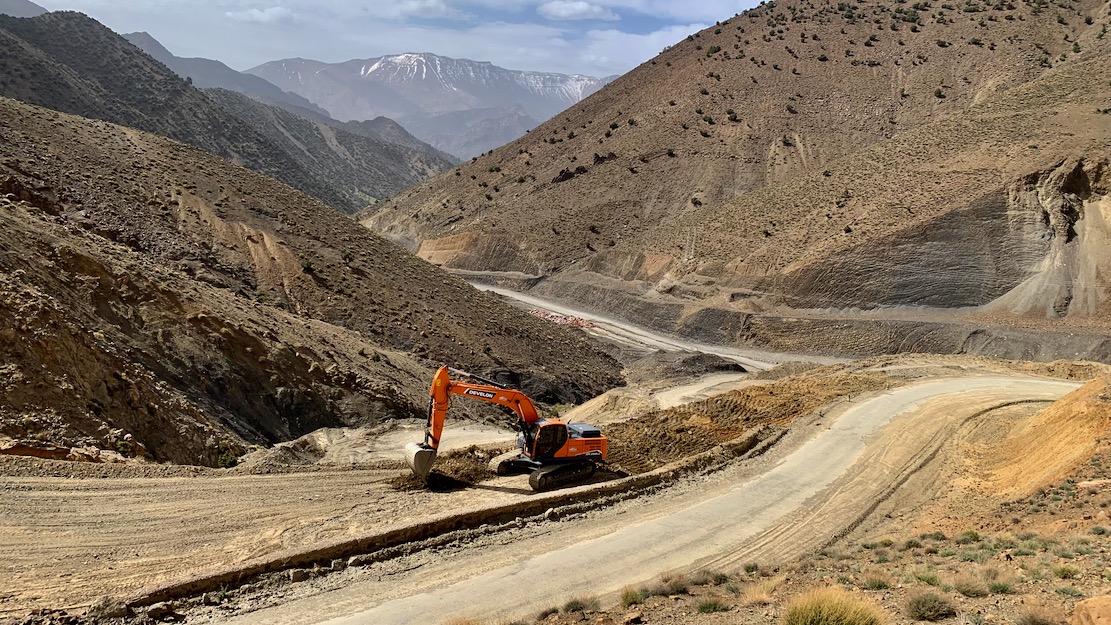
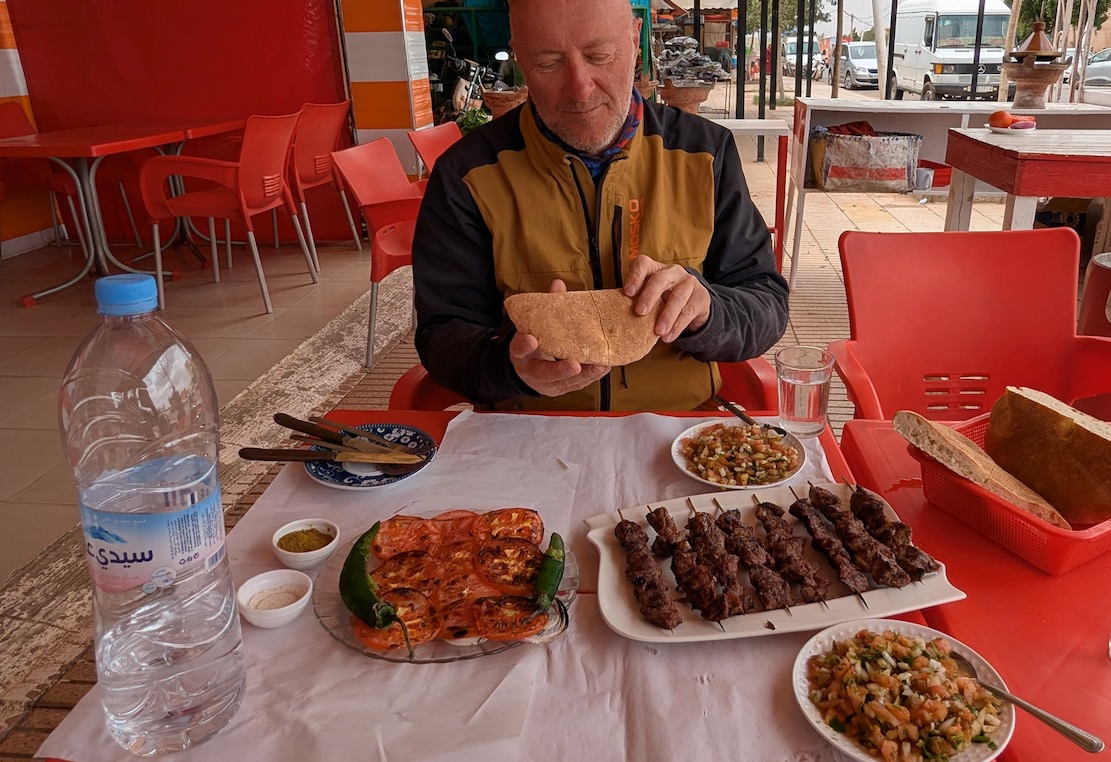
All that remained was a blast up the N23 Demnate road, still chocked with roadworks, followed by brochettes in Sidi Rahal middway through a windy ride to Marrakech. All around the skies were darkening, bringing rains which were about to mess things up in southern Morocco for a few days.
In just one week I felt like I’d seen loads, had updates for just about every H route in the book, and tried out a bike which I won’t be buying. I’m already planning more mountain exploring in November, but I’m gonna need a lighter bike.

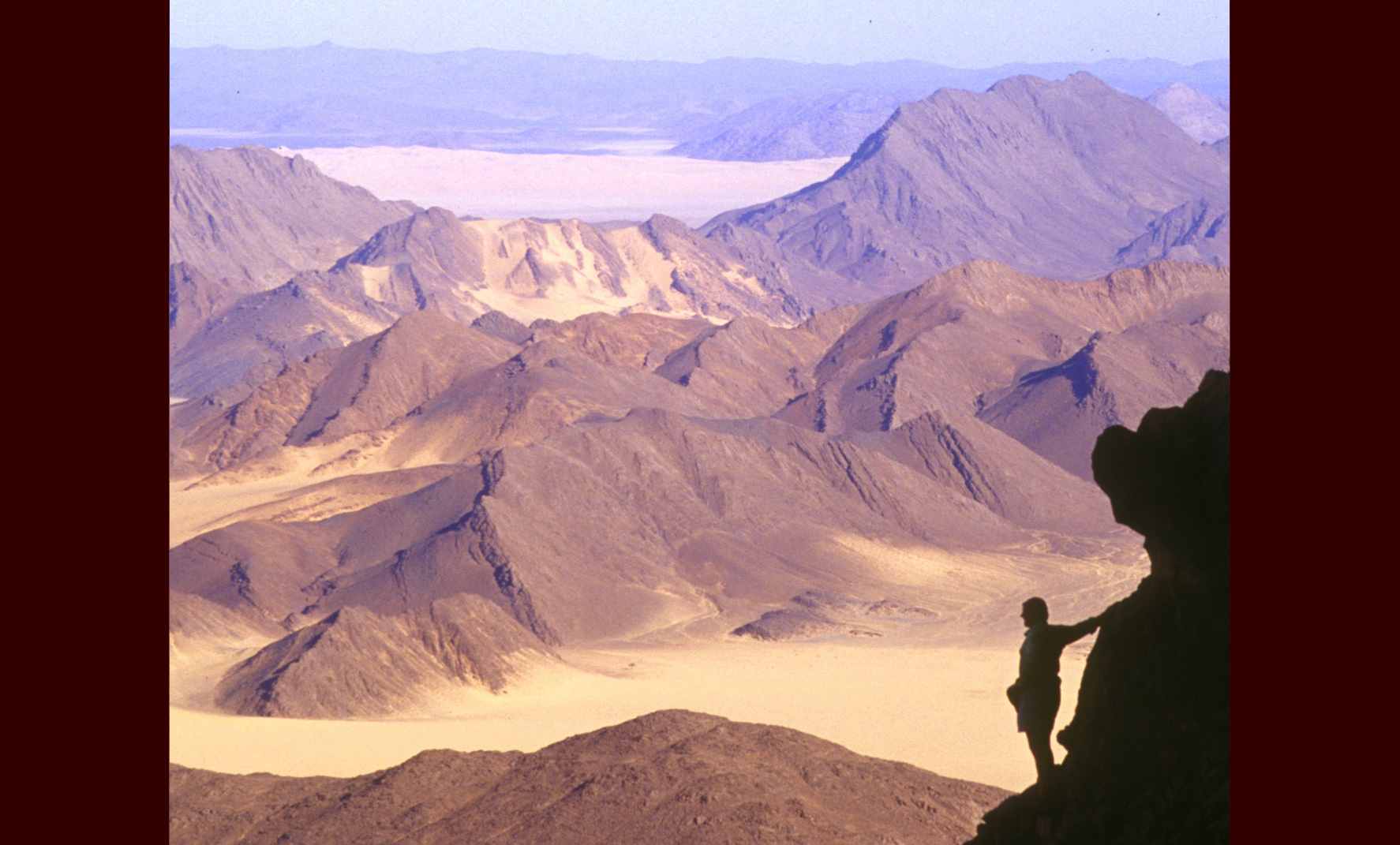
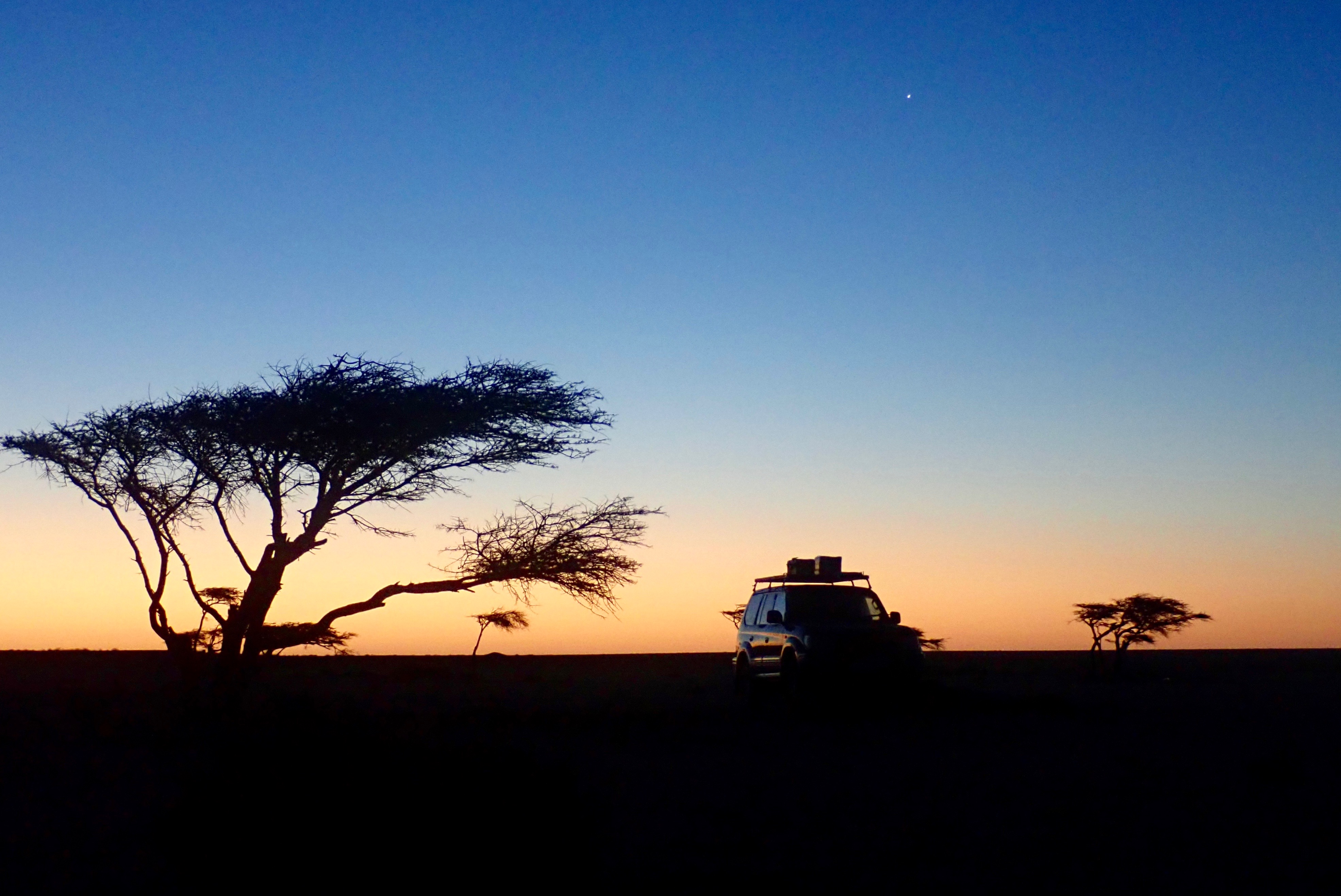
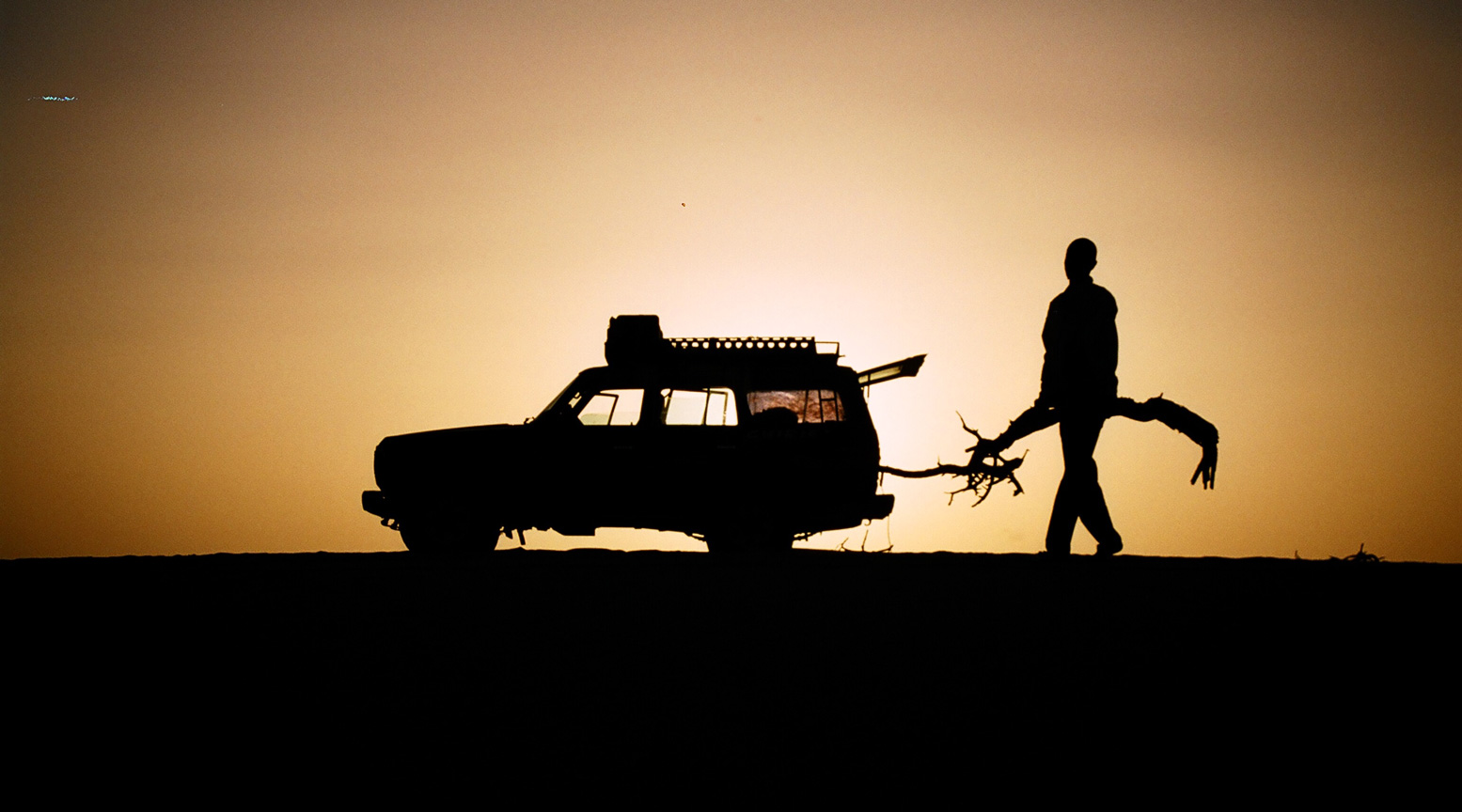
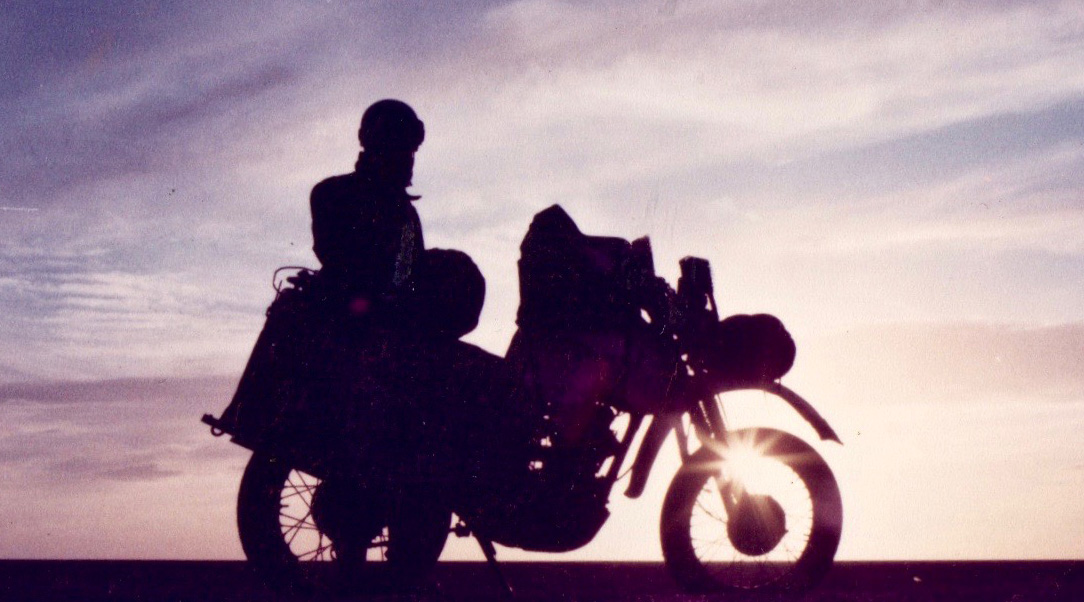
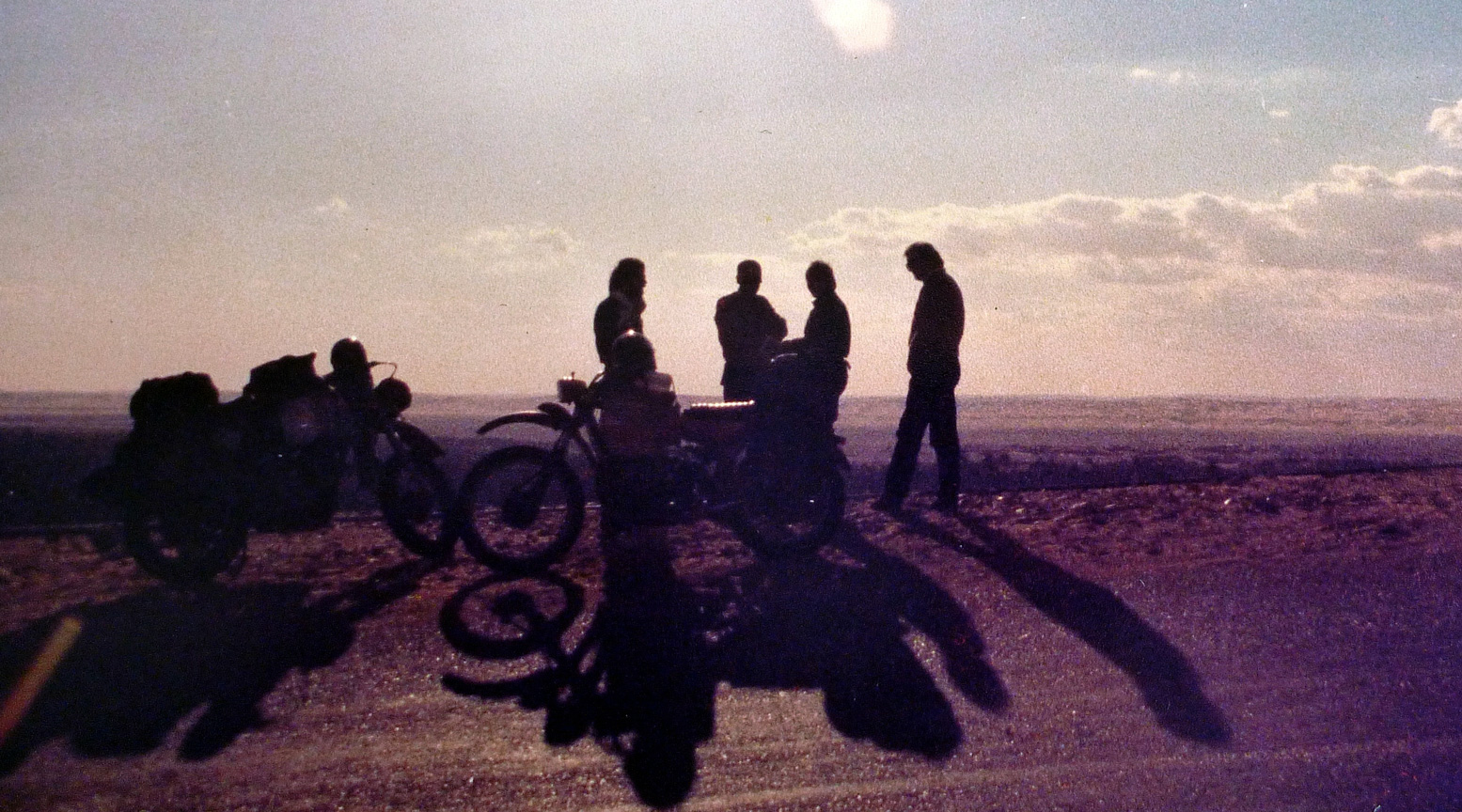
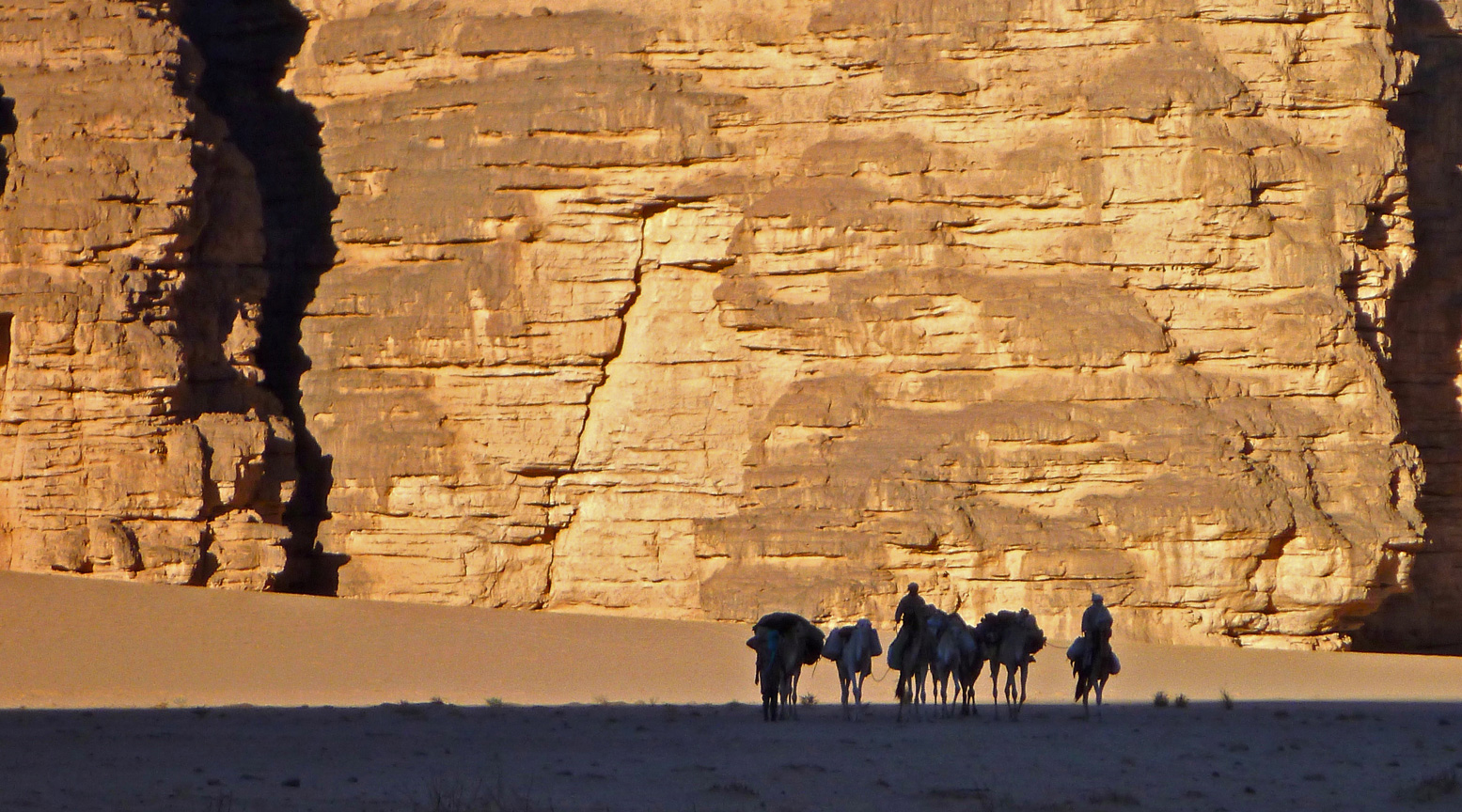
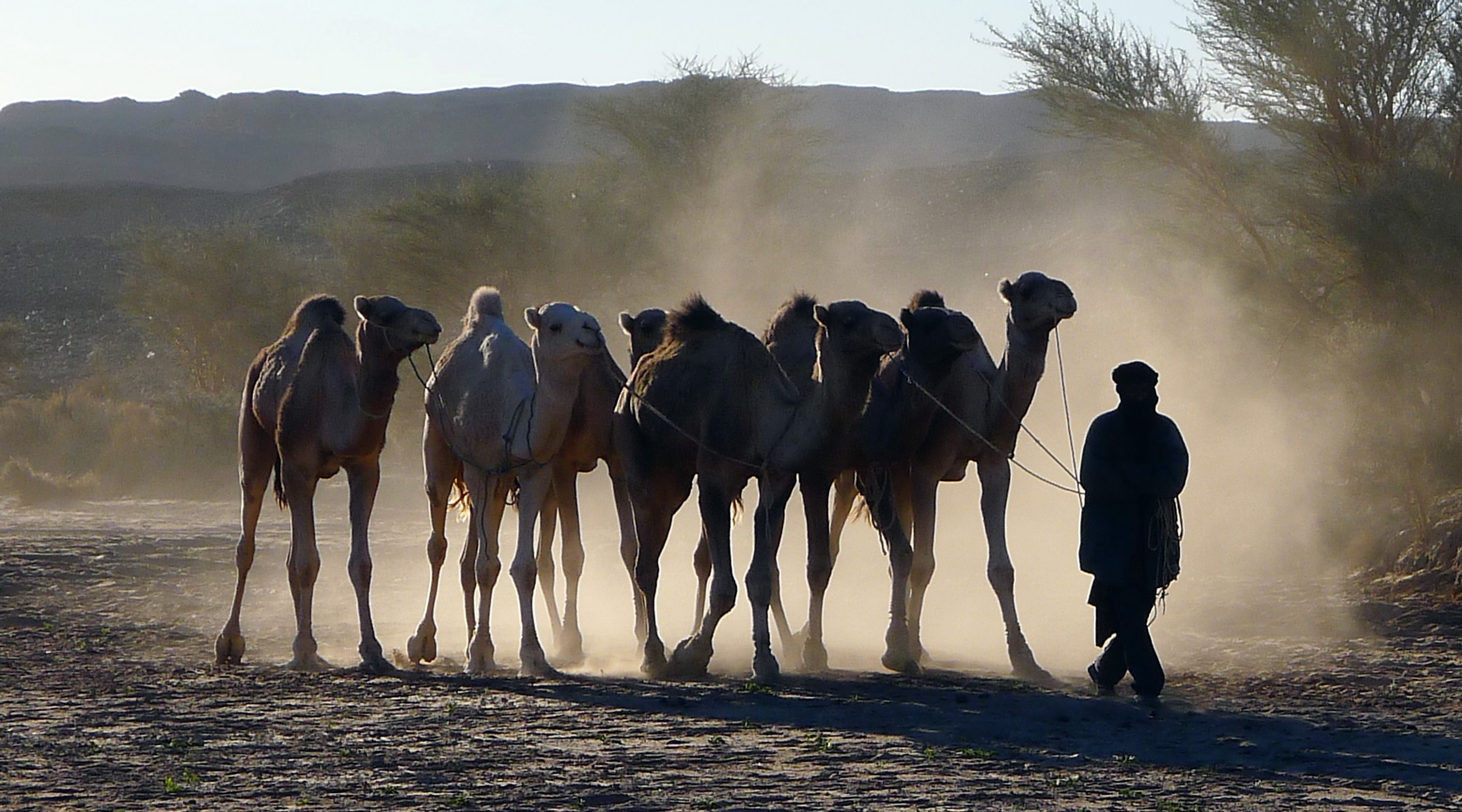
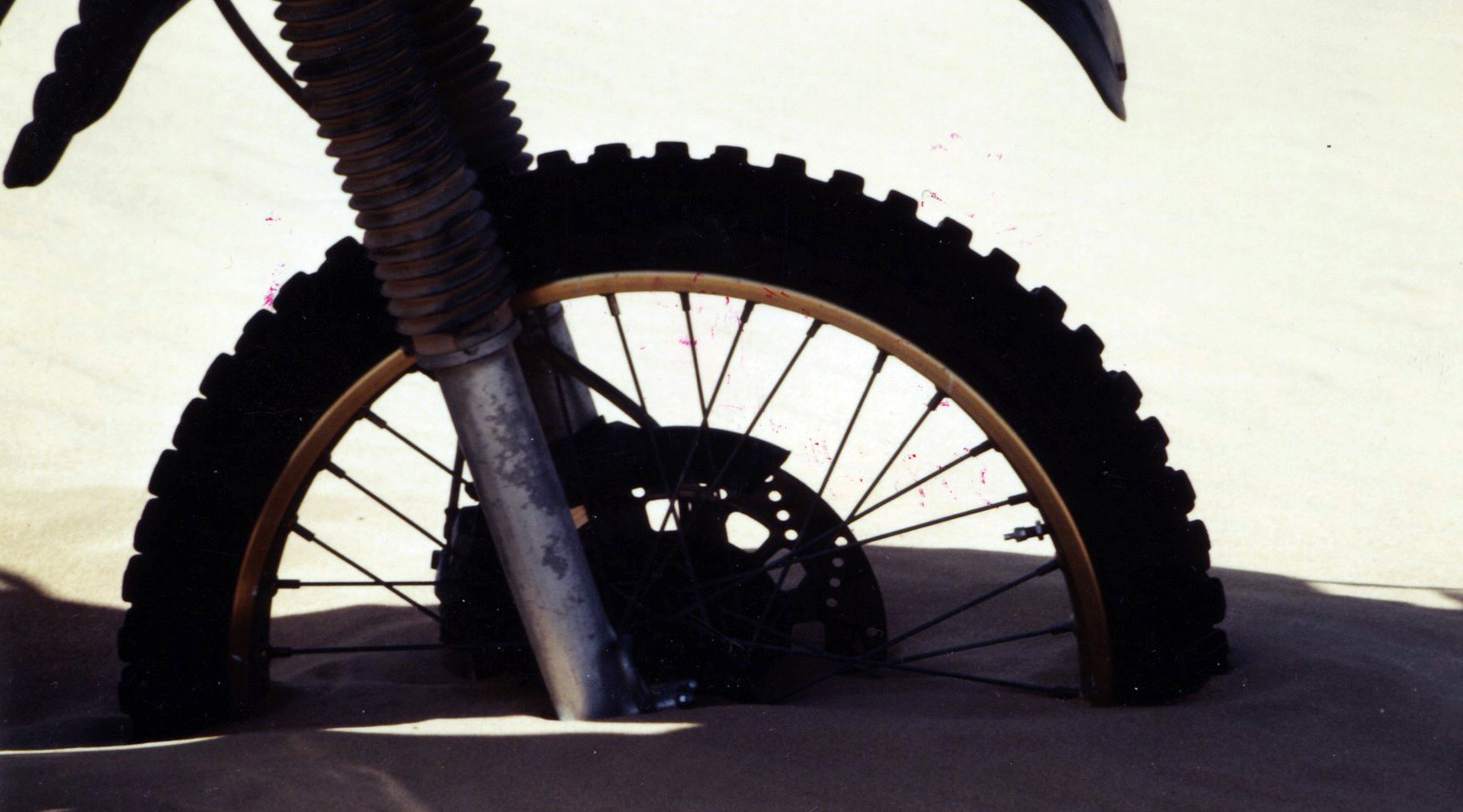
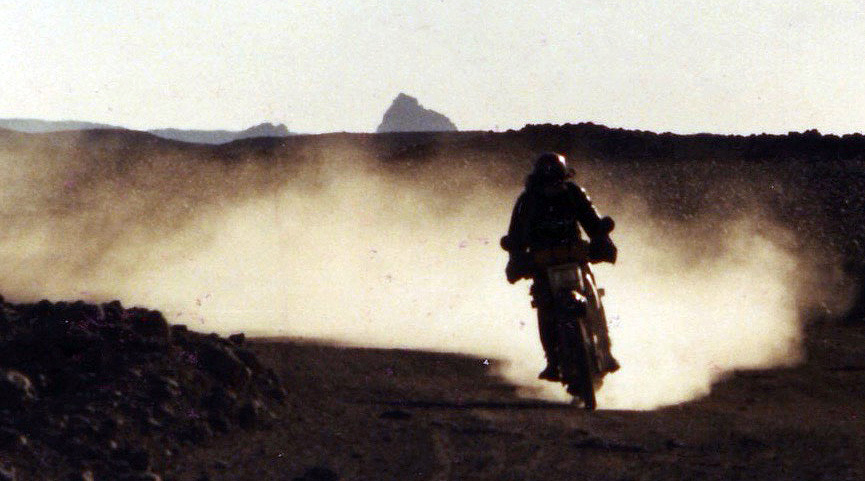
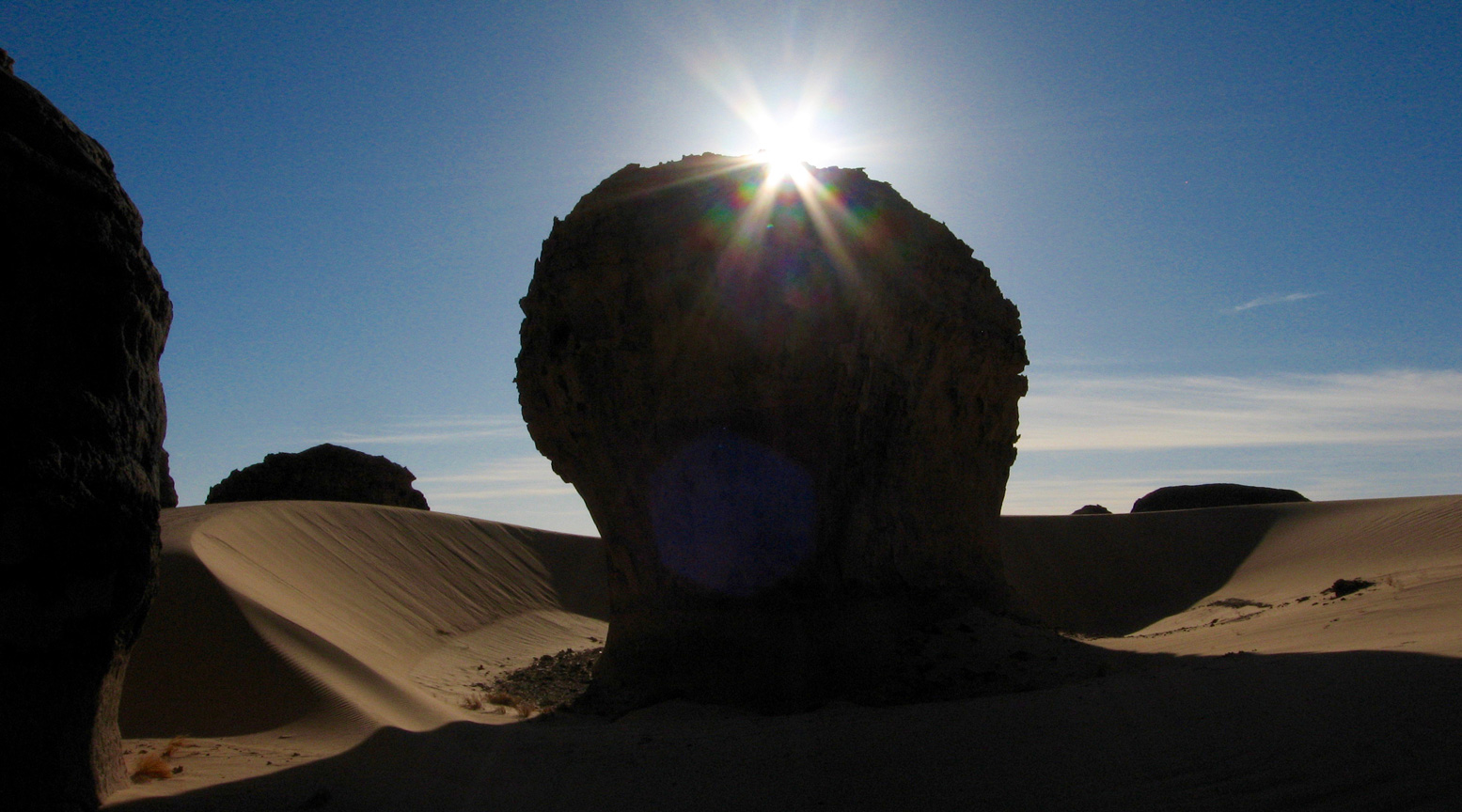
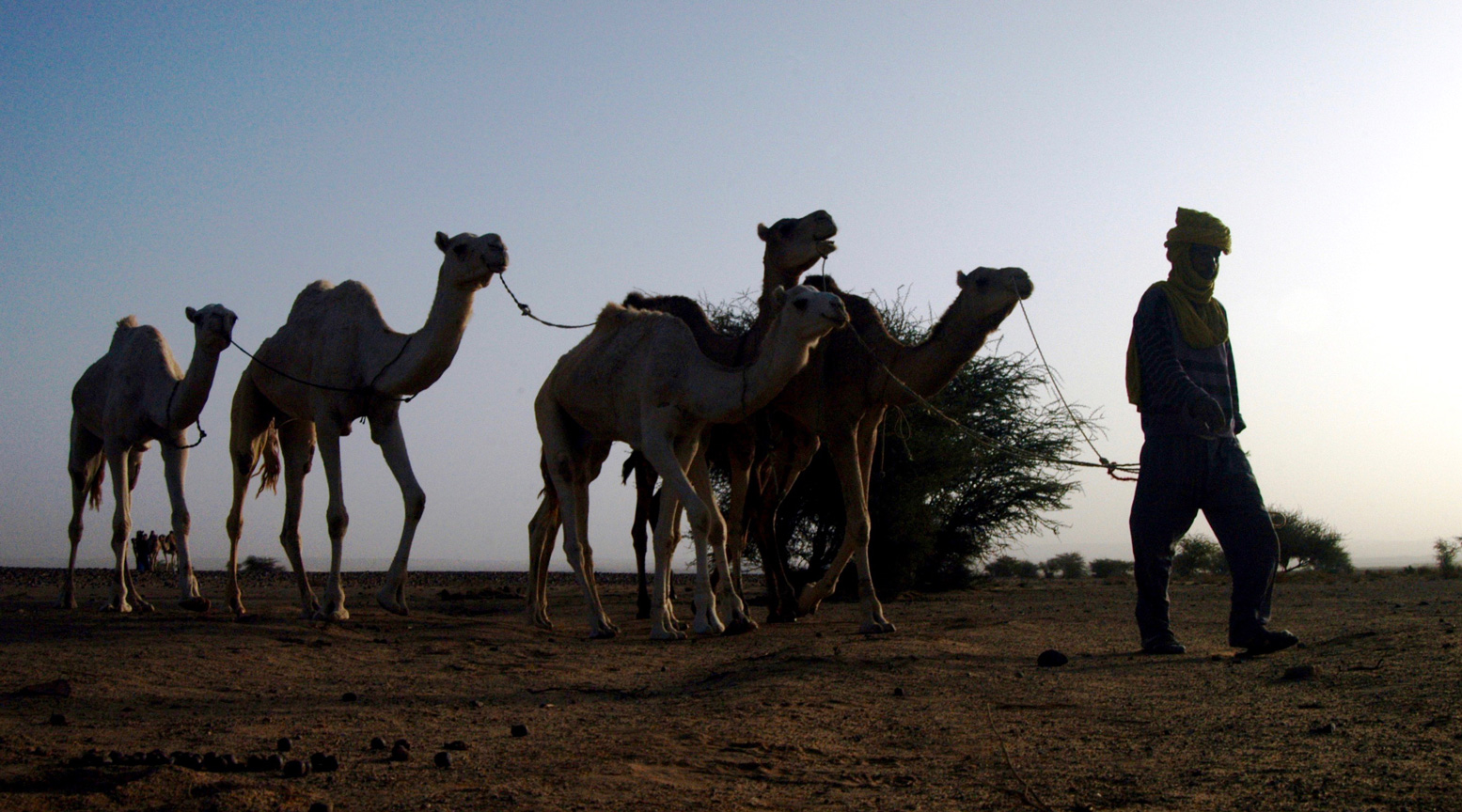
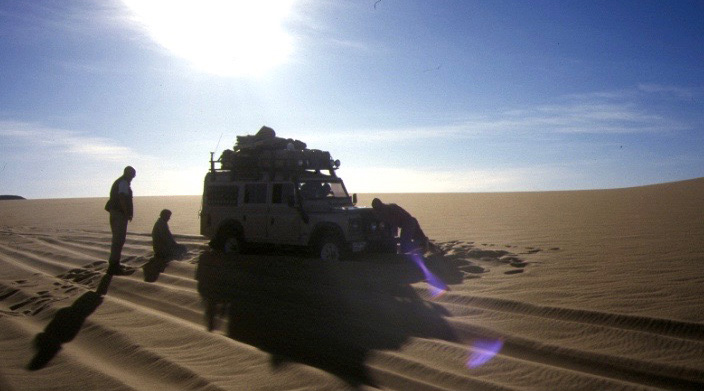
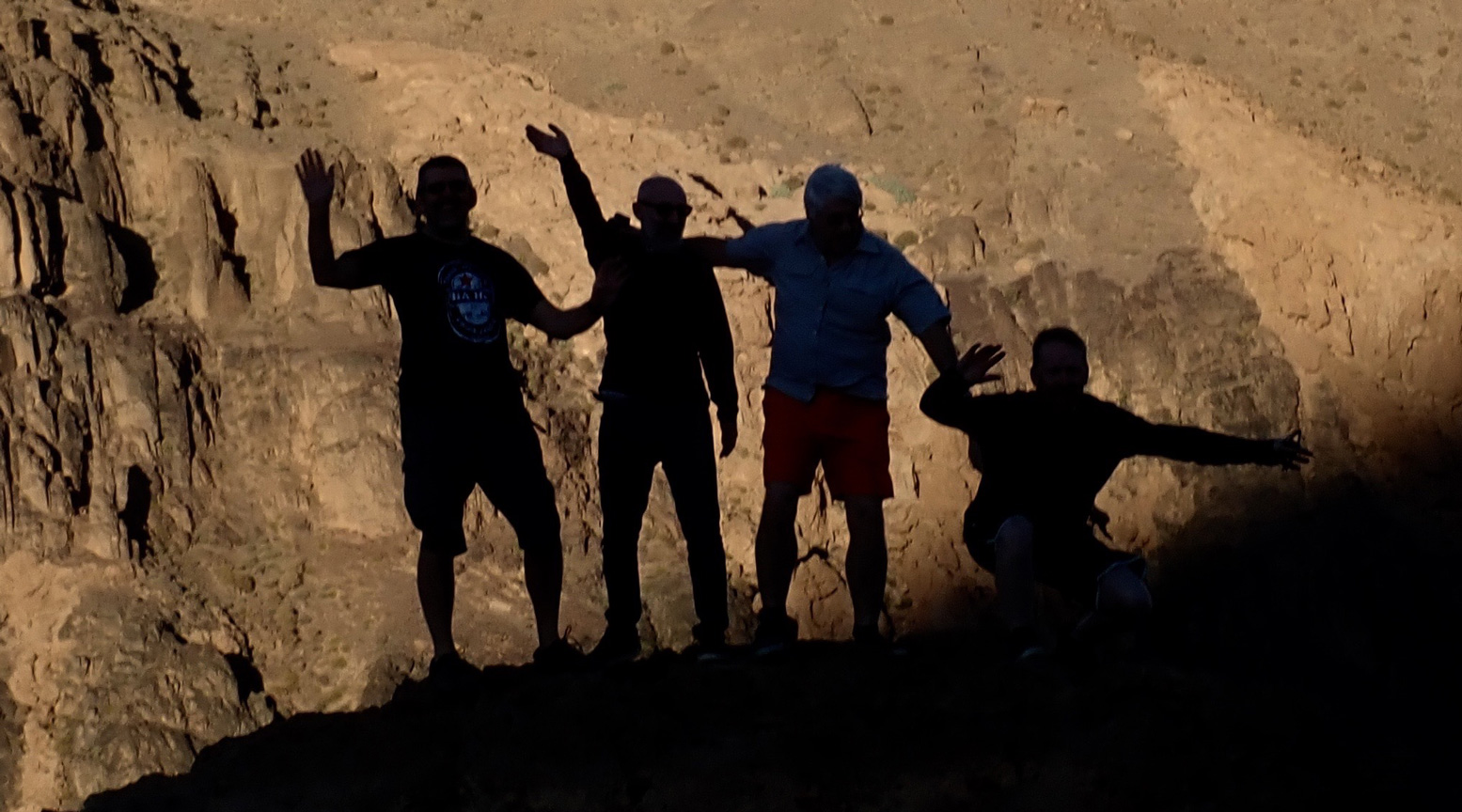
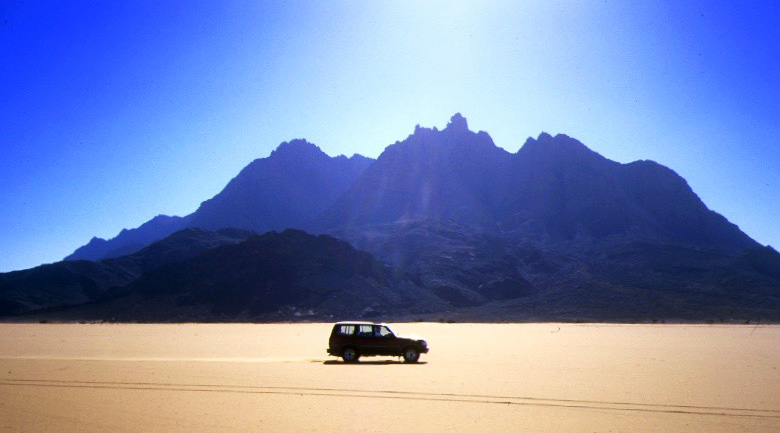
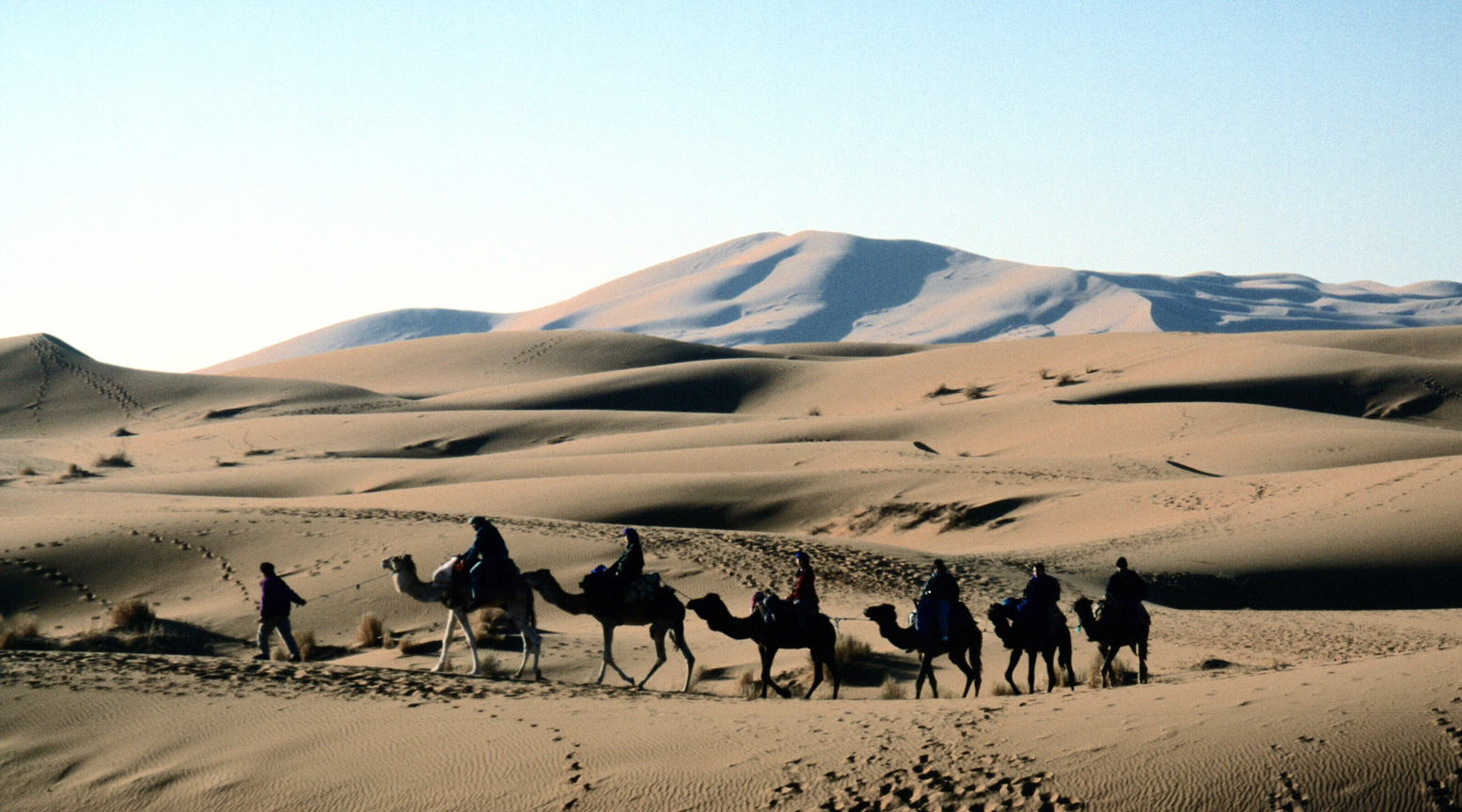
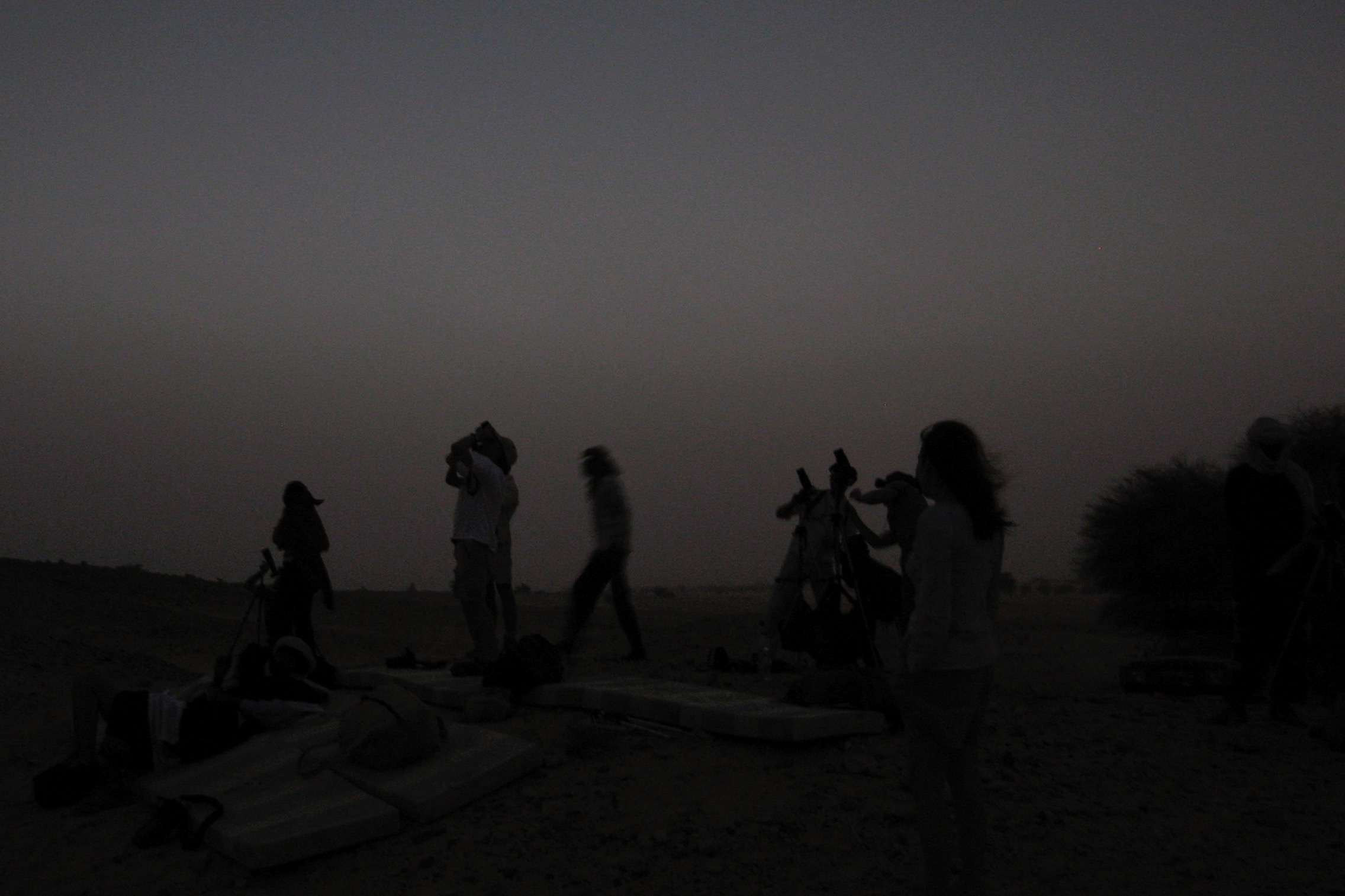
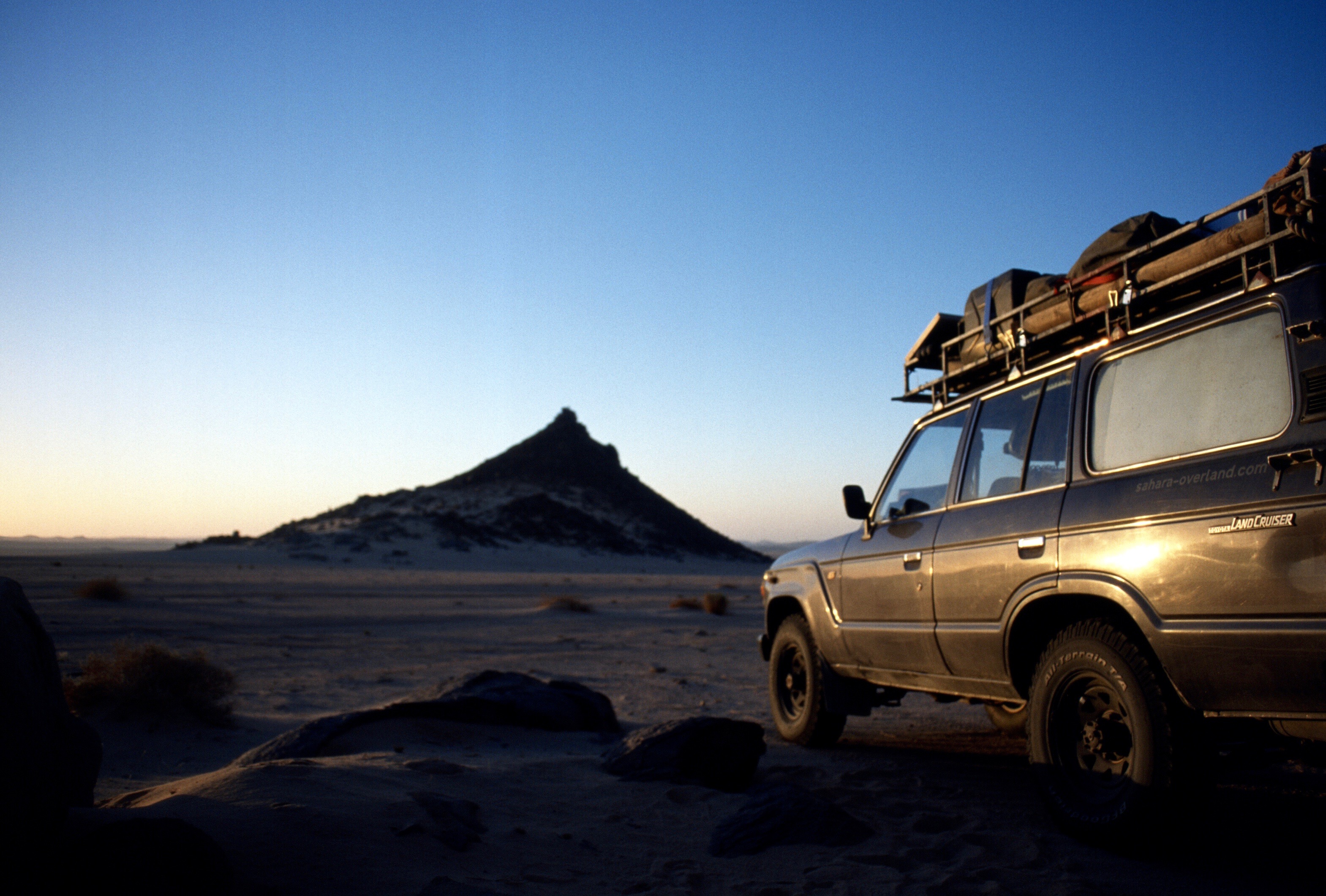
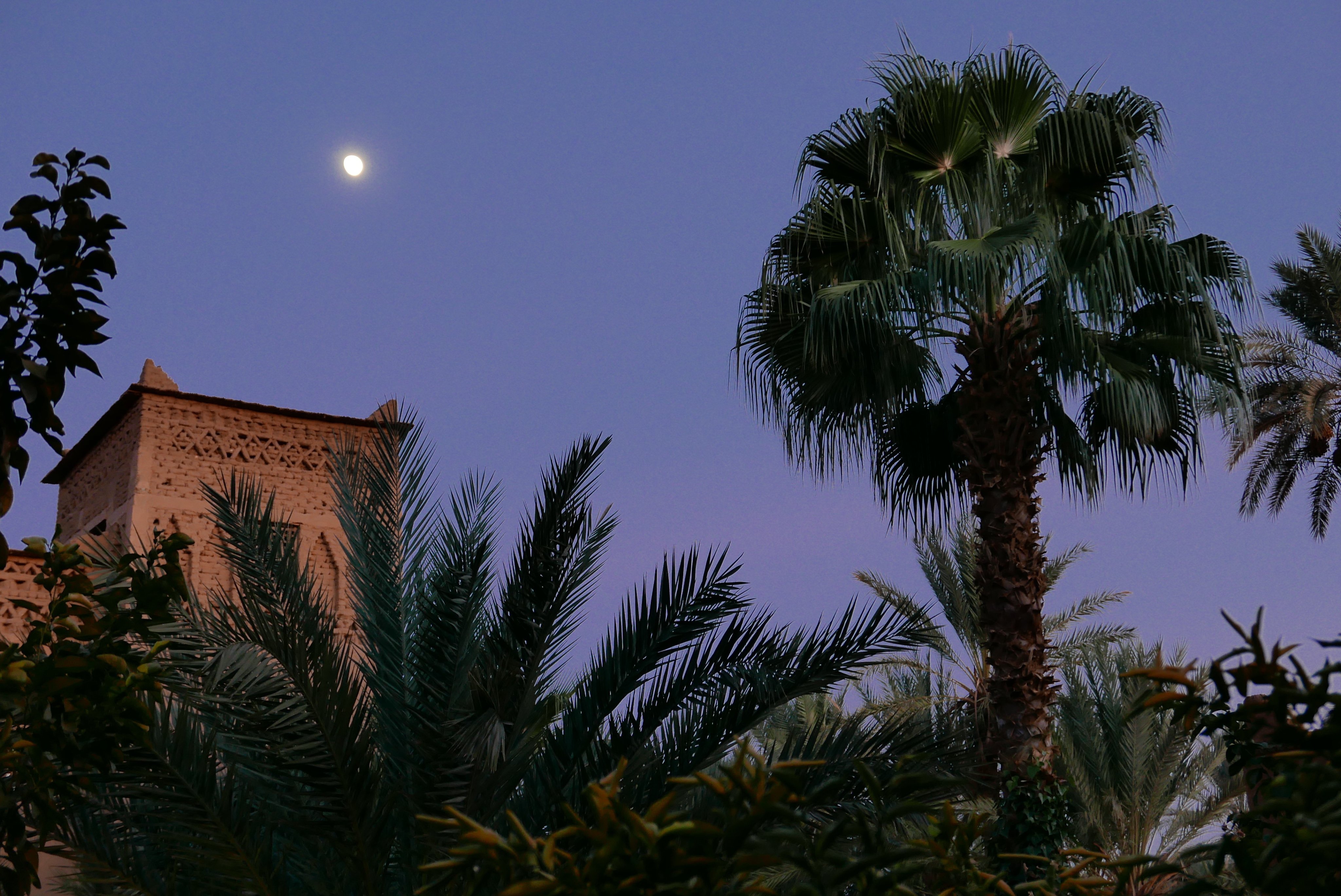
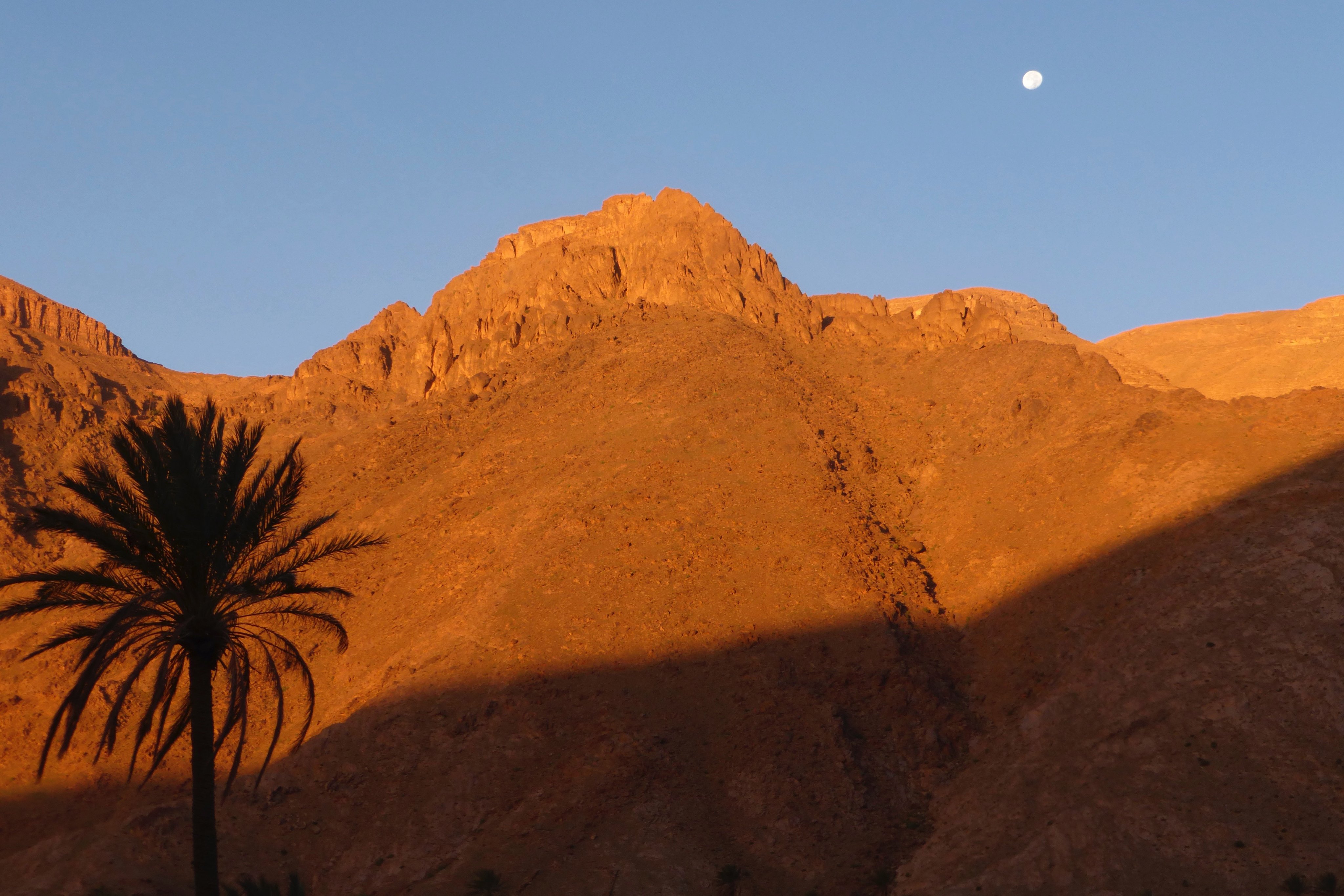
S is for Sahara Silhouettes

Other silhouette galleries

Part of the occasional Sahara A to Z series

N is for: Not Riding to Taghia

Part of an Sahara A to Z series
alex-free-solo

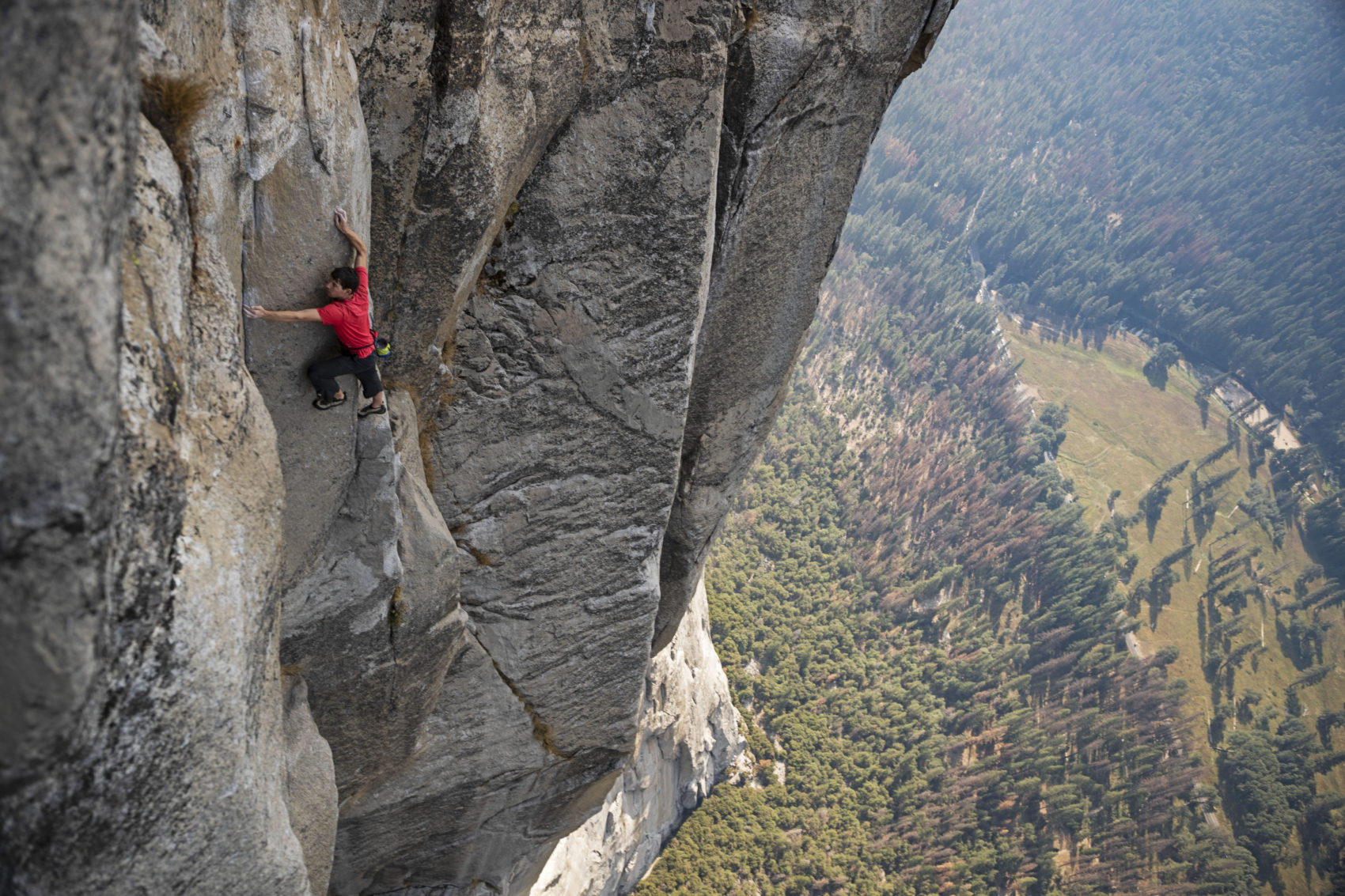
‘Free Solo’ is a documentary covering Alex Honnold’s mind-boggling, rope-free ascent of El Capitan in Yosemite, California in 2017 (left). If you’ve seen it you may recall that, among other places, Honnold practised on a hidden cirque of cliffs surrounding the scattered hamlet of Taghia, buried about as deep in Morocco’s High Atlas as you can get. A couple of rudimentary gites cater for visitors but, even among Moroccan know-alls, unless you’re a rock climber you’ll have never heard of Taghia. The only way in is a four-mile mule trek through a canyon from the valley head at the equally obscure outpost of Zuweiat Ahansal, an hour or two’s ride south of Rocher de Mastfrane, better known as the ’Cathedral’ (below).

cathedral.jpg

I rocked up at Zuweiat one lunchtime just as a group of young American climbers were spilling out of a taxi, and continued over the bridge to the edge of the old town. I pulled over for a snack and, unsure of the way and not wanting to blunder on, asked a passing local whether it was possible to ride a bike to Taghia and if yes, which way?

‘Oh no’ said the old man. ‘You can only get there on foot.’

I finished my snack and thought it over. Back by the bridge, I sought a second opinion from some more worldly looking dudes hanging out outside the post office. They were eyeing up the new, North Face-clad arrivals and one spoke good English.

‘Yes, I saw you pass and was going to say, you can’t ride your moto to Taghia.’

OLYMPUS DIGITAL CAMERA

It turned out he’d worked on the Honnold doc as well as other National Geographic features (below) and, reading his manner with my finely tuned bullshit detector (which they now hand out free at the border), it didn’t sound like the usual bragging. After that, he switched seamlessly into sales mode, offering lodgings and guides.

‘Maybe next time’, I said. I genuinely did hope to visit the mysterious valley, but the weather forecast was a bit shaky for the next couple of days. I wanted to get out of the mountains, not stuck in them.

zuhana

A year or two earlier a bike-riding climber who’d visited Taghia suggested to me that a small bike (like my Himalayan) could probably reach the cirque following the riverside mule path.

While that may be true, I figured just because I could, did I have to – or even, should I? The local guide may merely have been protecting his mule-trekking services, but I like the idea of leaving some of the world’s wild corners unspoiled by the putter of mechanized transport. As I was about to be reminded, there’s plenty to see in Morocco on a bike or in a 4×4, but there are many places in the world which are best reached by less intrusive human-powered transportation. That’s what makes them special.

2024 and I heard they’d finished the track into Taghia. James and I were in the area recce-ing route for the M4 book. A few months later I wrote this in Adventure Rider magazine.


Add a few wraiths of mist plus some digitally enhanced pterodactyls, and the narrow chasm which leads into the Taghia gorge could pass for a scene from Game of Thrones. Burrowed deep in Morocco’s High Atlas, the isolated Berber hamlet beyond was only accessible by mule. So I was told in 2018 when I tried to reach Taghia on my Himalayan. Now they’ve carved a motorable track, so we rode down through the defile, crossed and recrossed a stream, and found ourselves in a small cirque or valley head surrounded by sheer, 3000-foot limestone terracotta crags. I’d not seen a place like this in Morocco. Alex Honnold came here to train in seclusion, prior to soloing Yosemite’s El Cap for the Free Solo movie. He did so by free climbing all three of Taghia’s hardest faces – 6000 feet of big wall soloing – in a single day. “It’s pretty freakin’ next level” he observes with characteristic humility in Before Free Solo, Edge of the Unknown’ (on YouTube).

A Good Day in Morocco

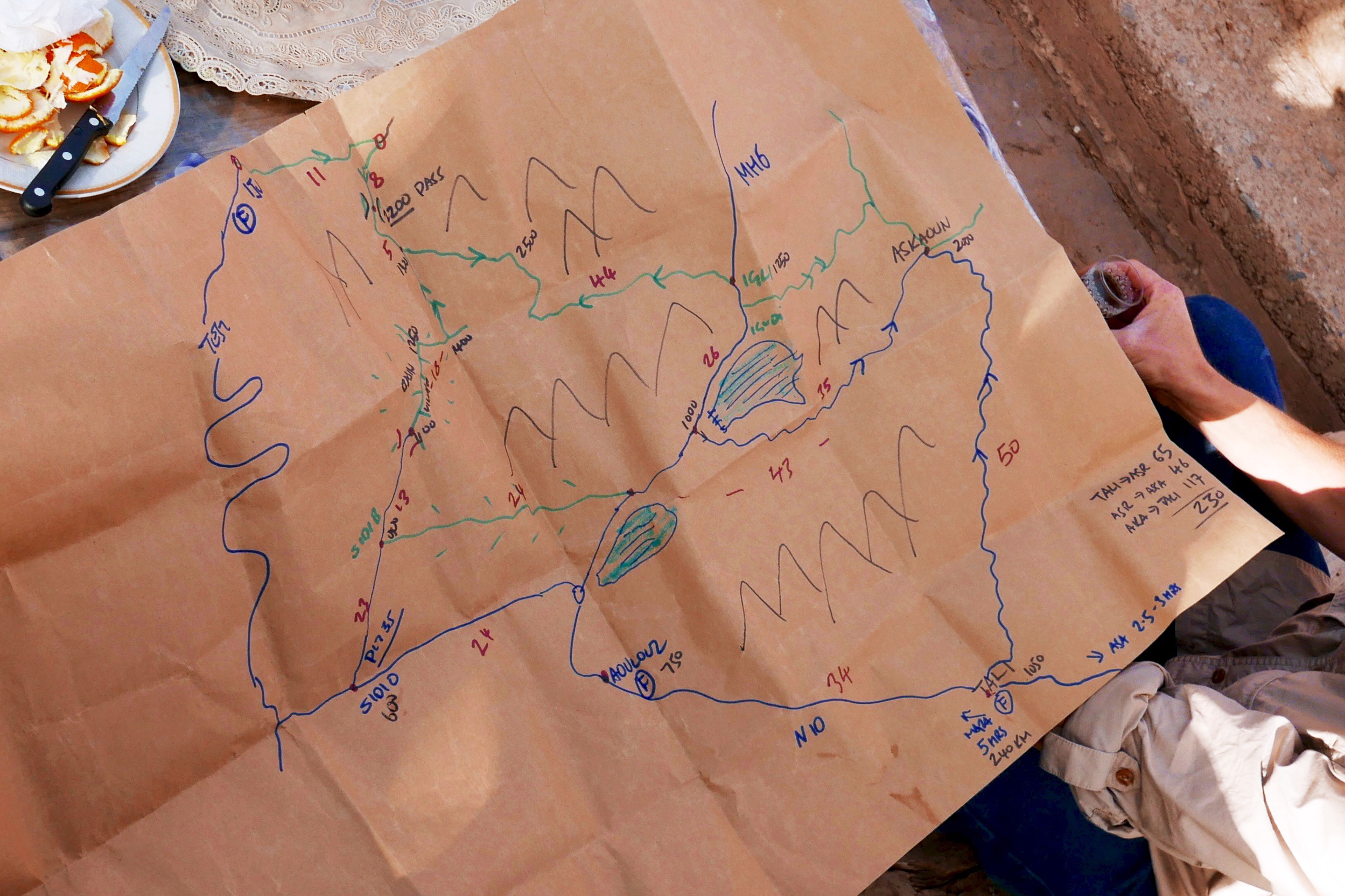
Set off with a mission to join some dots for my spring tour in a couple of weeks.
Mission accomplished. Dots joined.
More about the bike here.

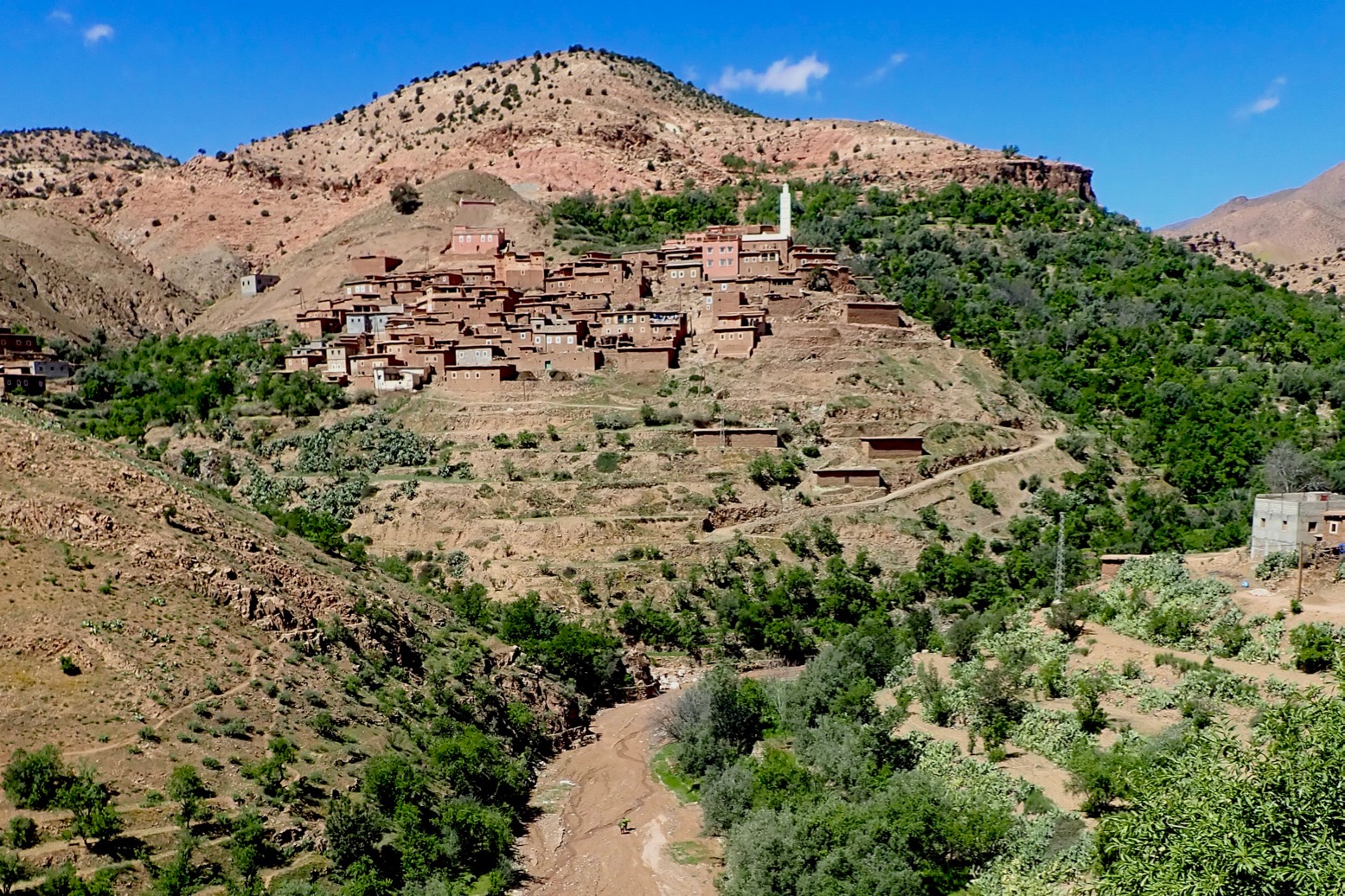
OLYMPUS DIGITAL CAMERAHigh Atlas village

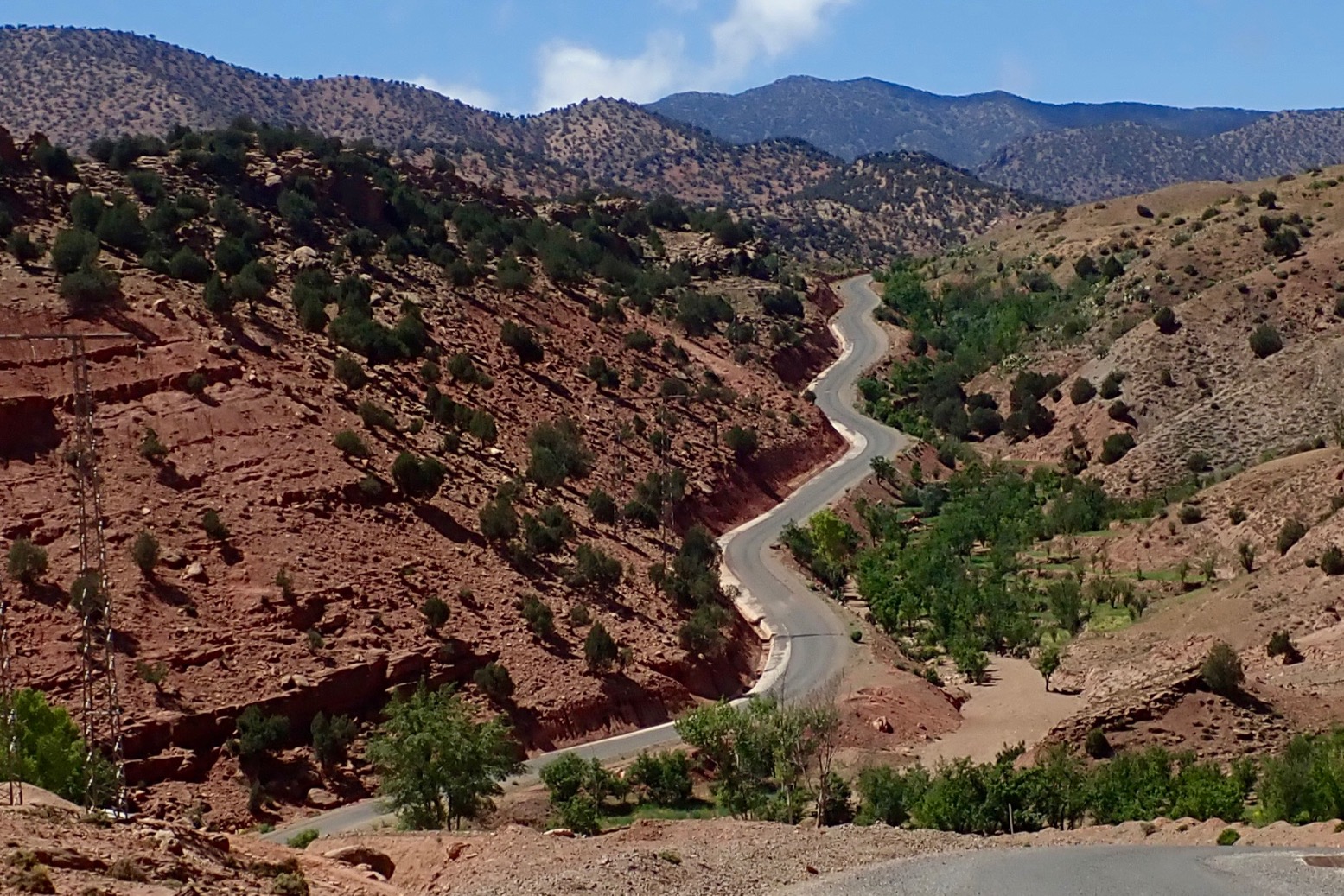
OLYMPUS DIGITAL CAMERAAnother new road from nowhere to nowhere much. I suppose it helps stir up the local gene pool.
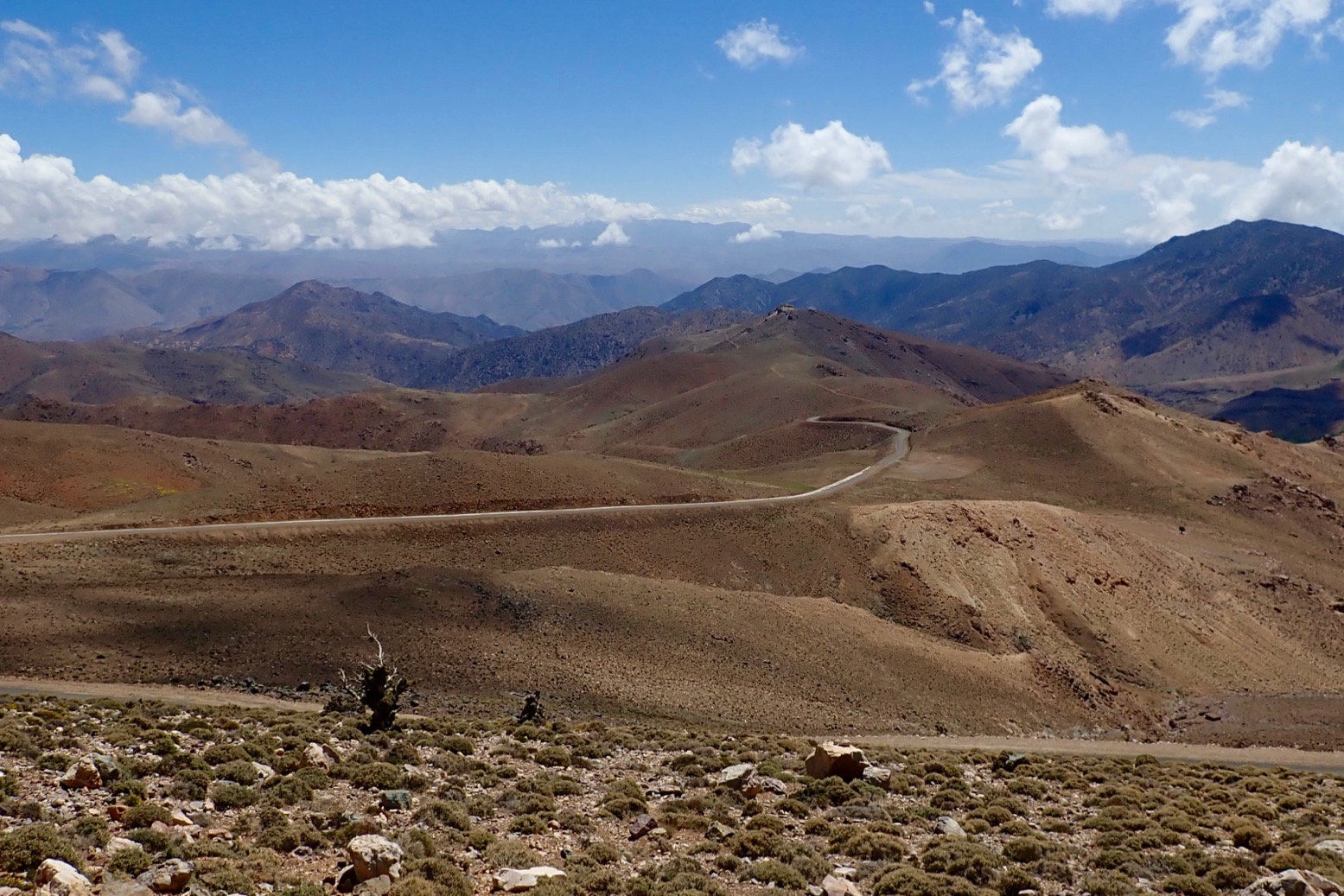
OLYMPUS DIGITAL CAMERAOne of these days I’m going to watch a youtube doc on how they build mountain roads.
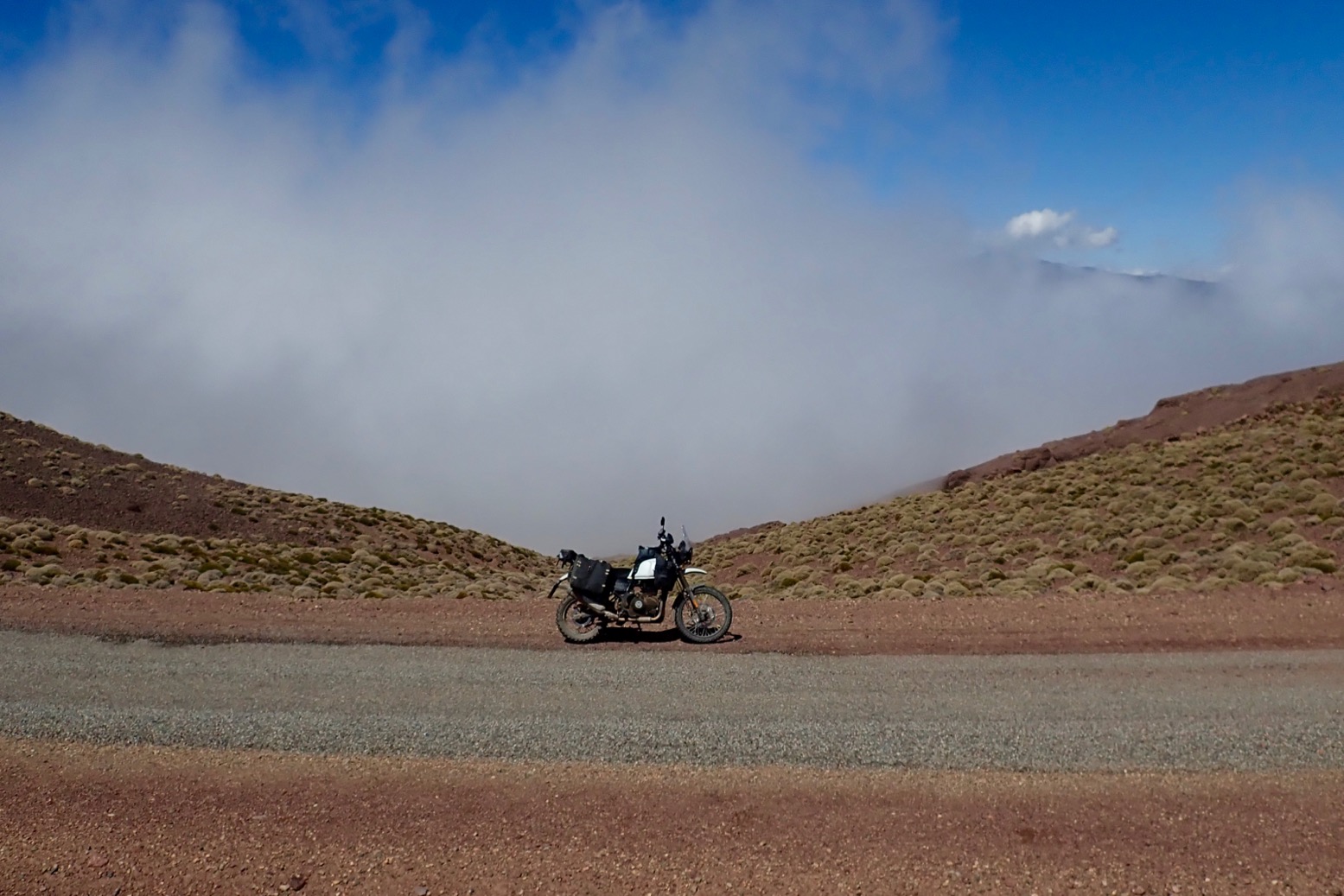
OLYMPUS DIGITAL CAMERA

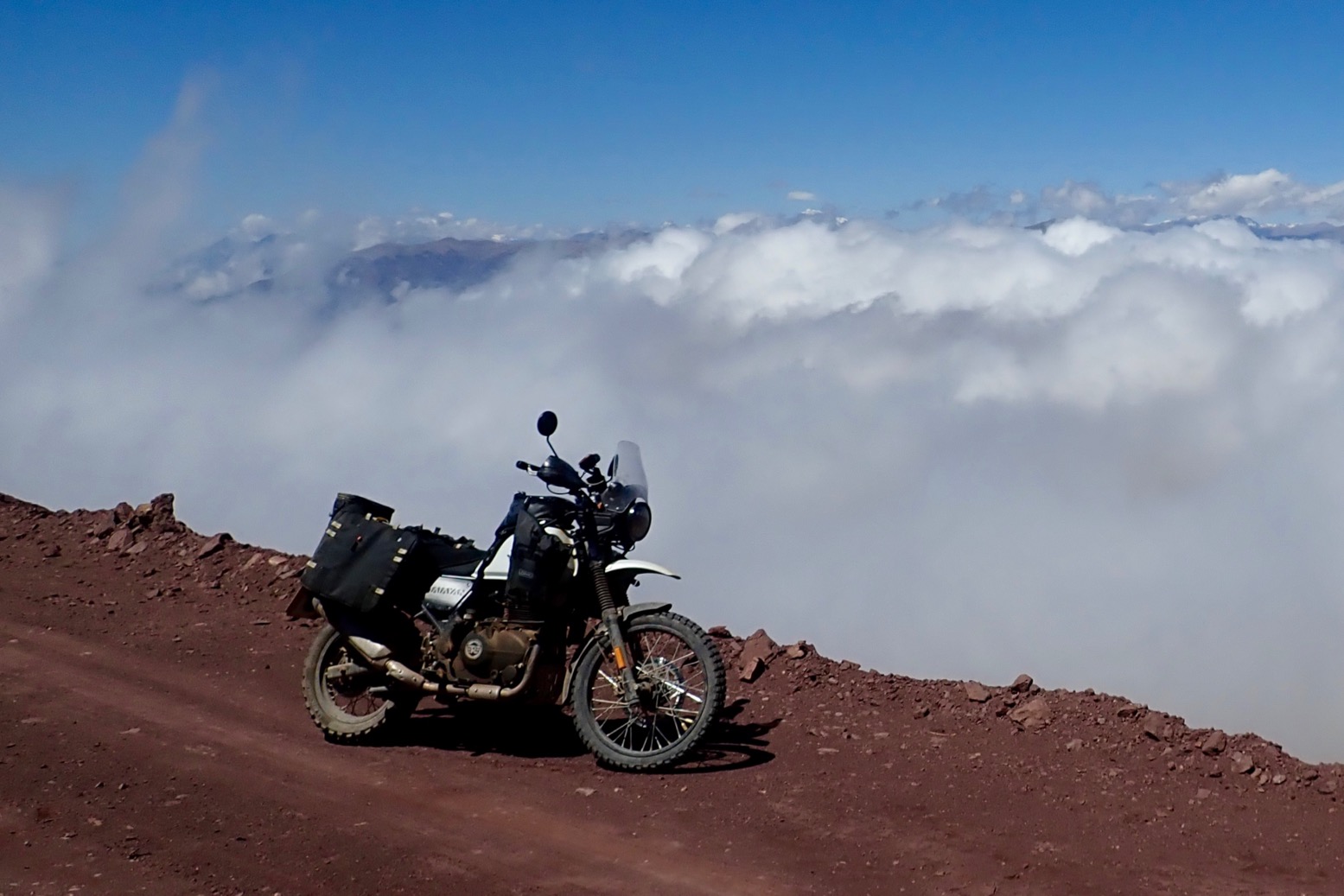
OLYMPUS DIGITAL CAMERAAbove the clouds at 2500m or about 8300′ in old money.
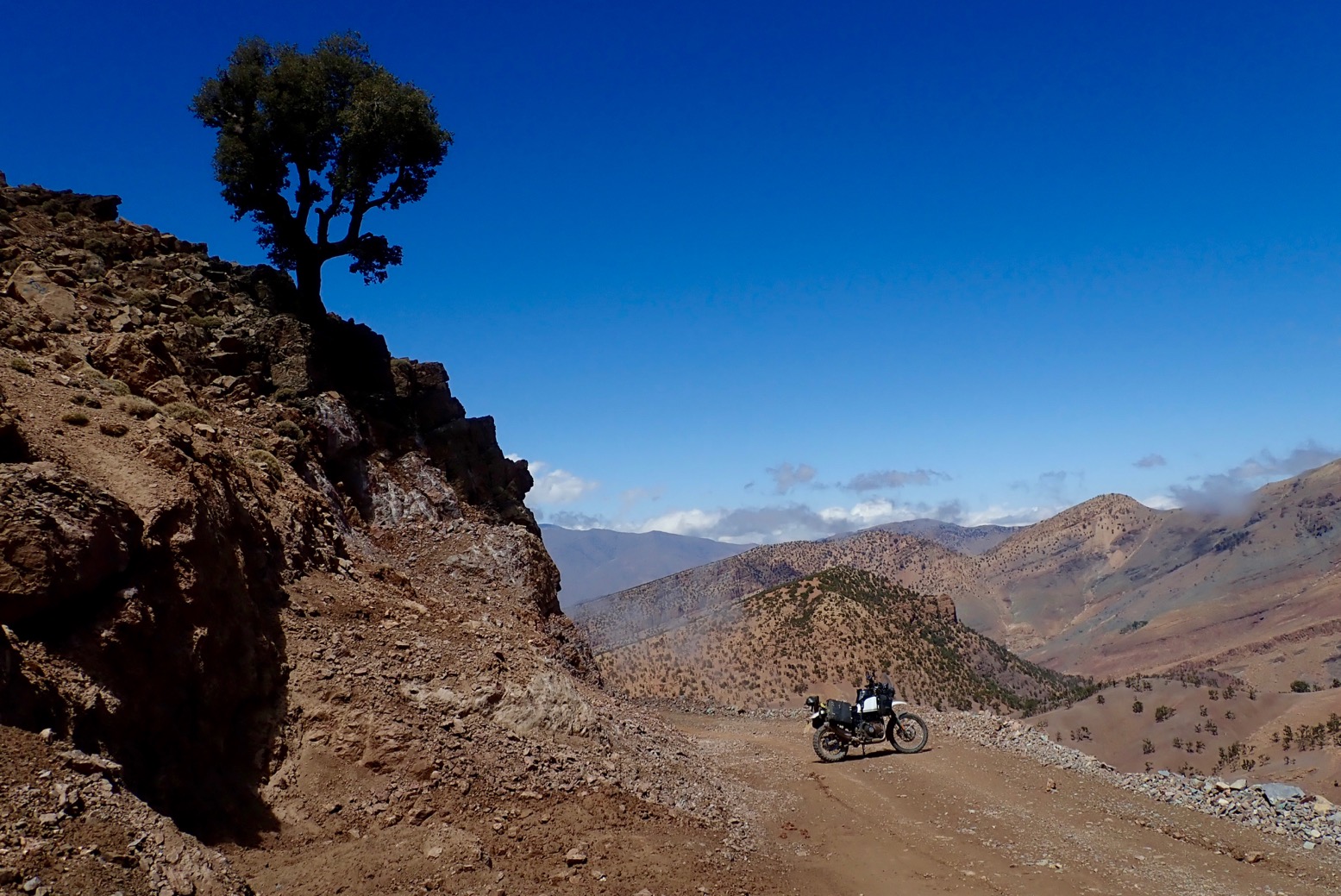
OLYMPUS DIGITAL CAMERAAn isolated juniper tree that’s managed to dodge the village wood burners.
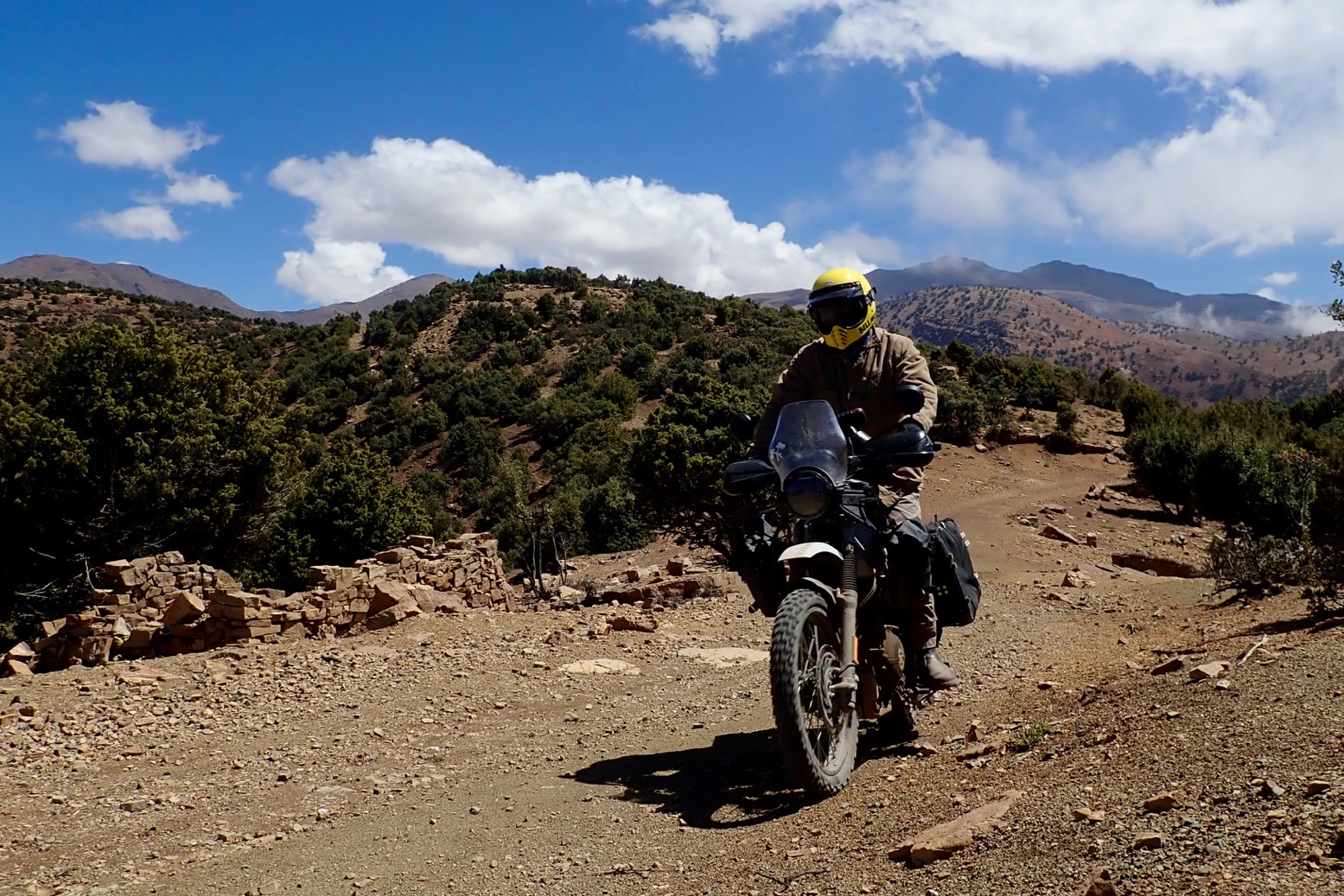
OLYMPUS DIGITAL CAMERAChecking the link route to Map Junction above Ijoukak.
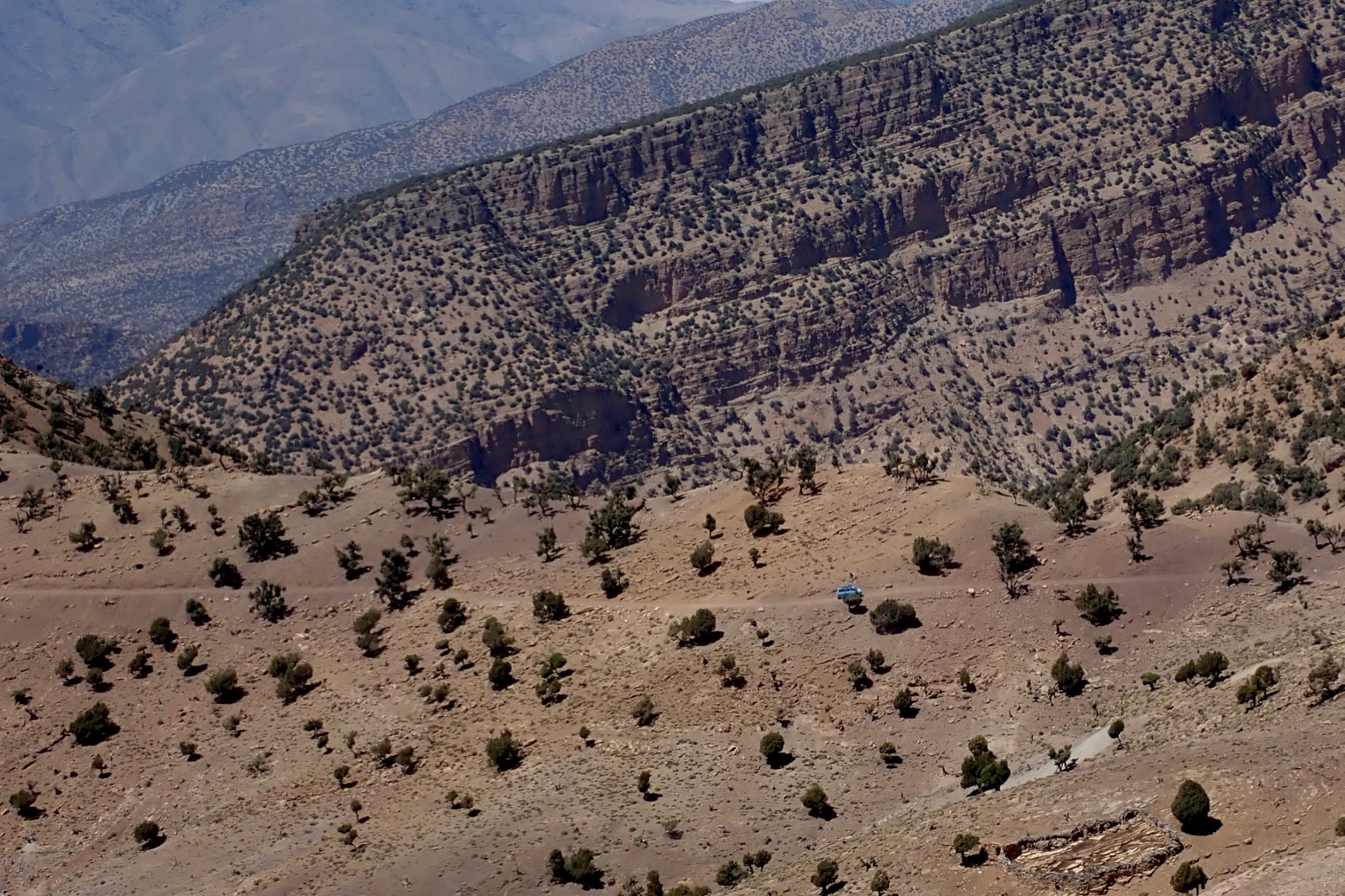
OLYMPUS DIGITAL CAMERA1970s Transit. One of the only vehicle’s I saw today once off the main roads. The other was a Trannie too.
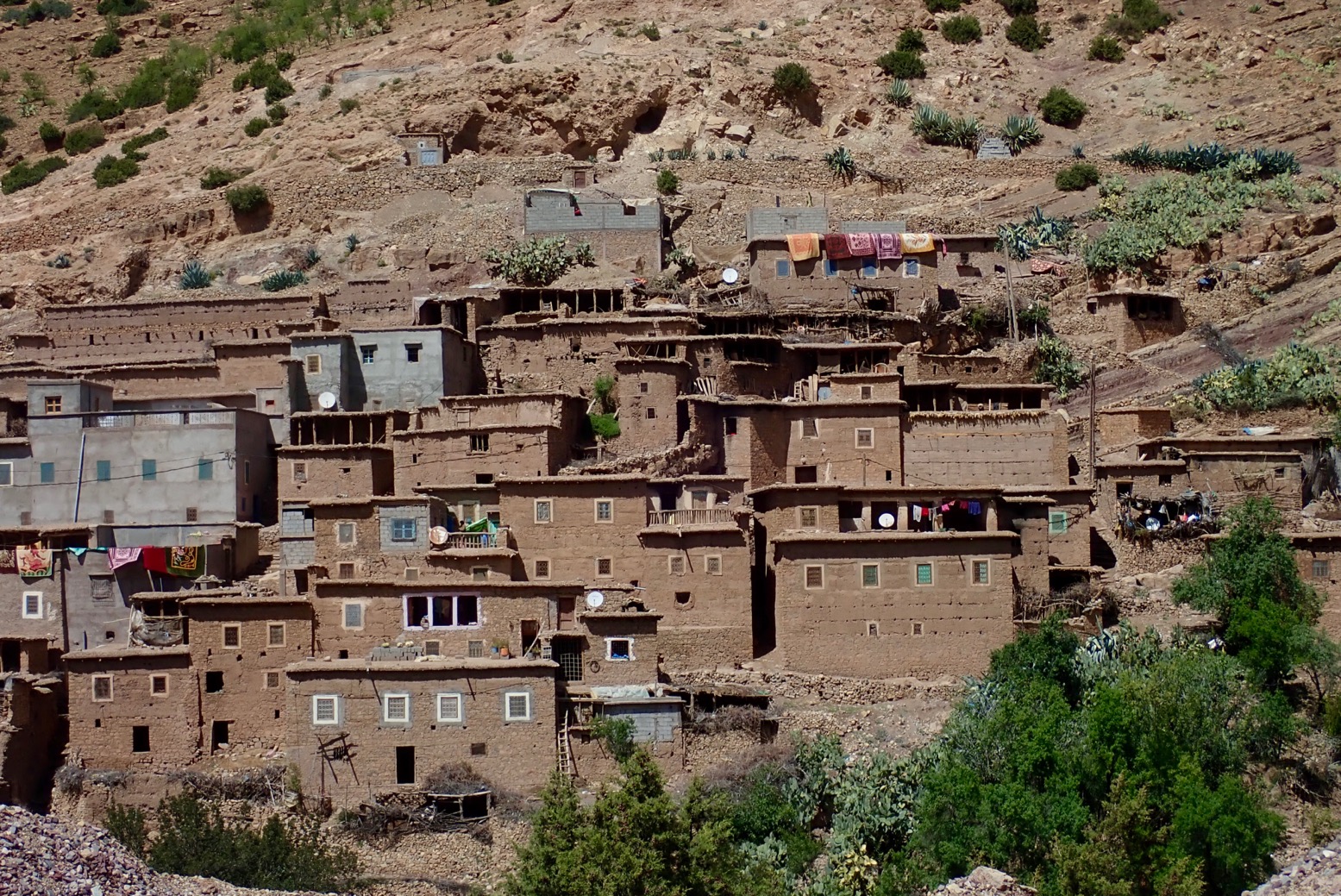
OLYMPUS DIGITAL CAMERAAnother photogenic village somewhere.

OLYMPUS DIGITAL CAMERA

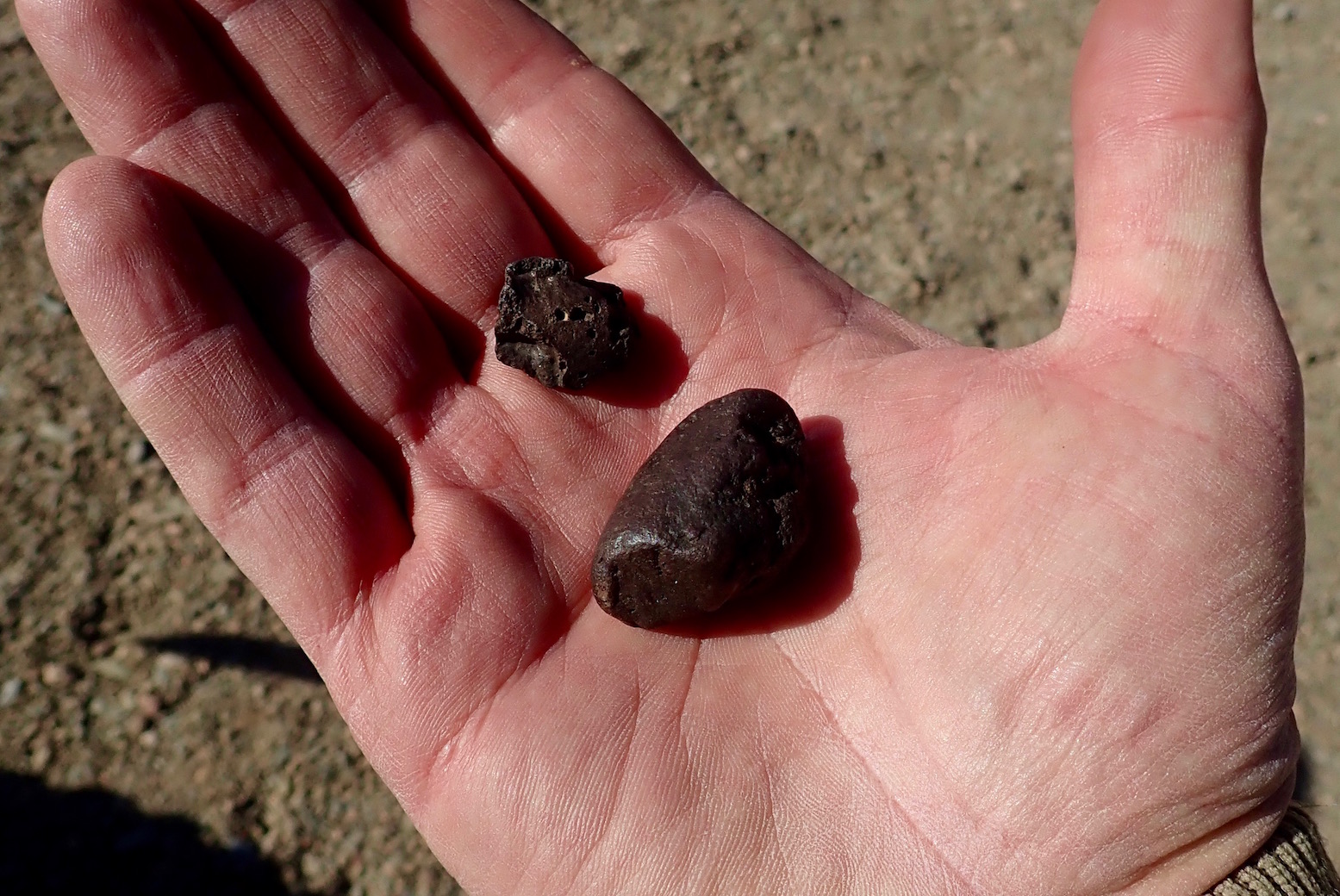
Resting outside a village north of Sidi Ouazik, a relocated Reguibat (Saharawi) ends up giving me some meteorites from the Hammada du Tindouf (St Expert mentioned these in WS).
Never knew Saharawi were relocated way up here – 45 families, he said.
I tell him I’m on my way to Reguibat country. About 5 days ride from here to #thedigtree

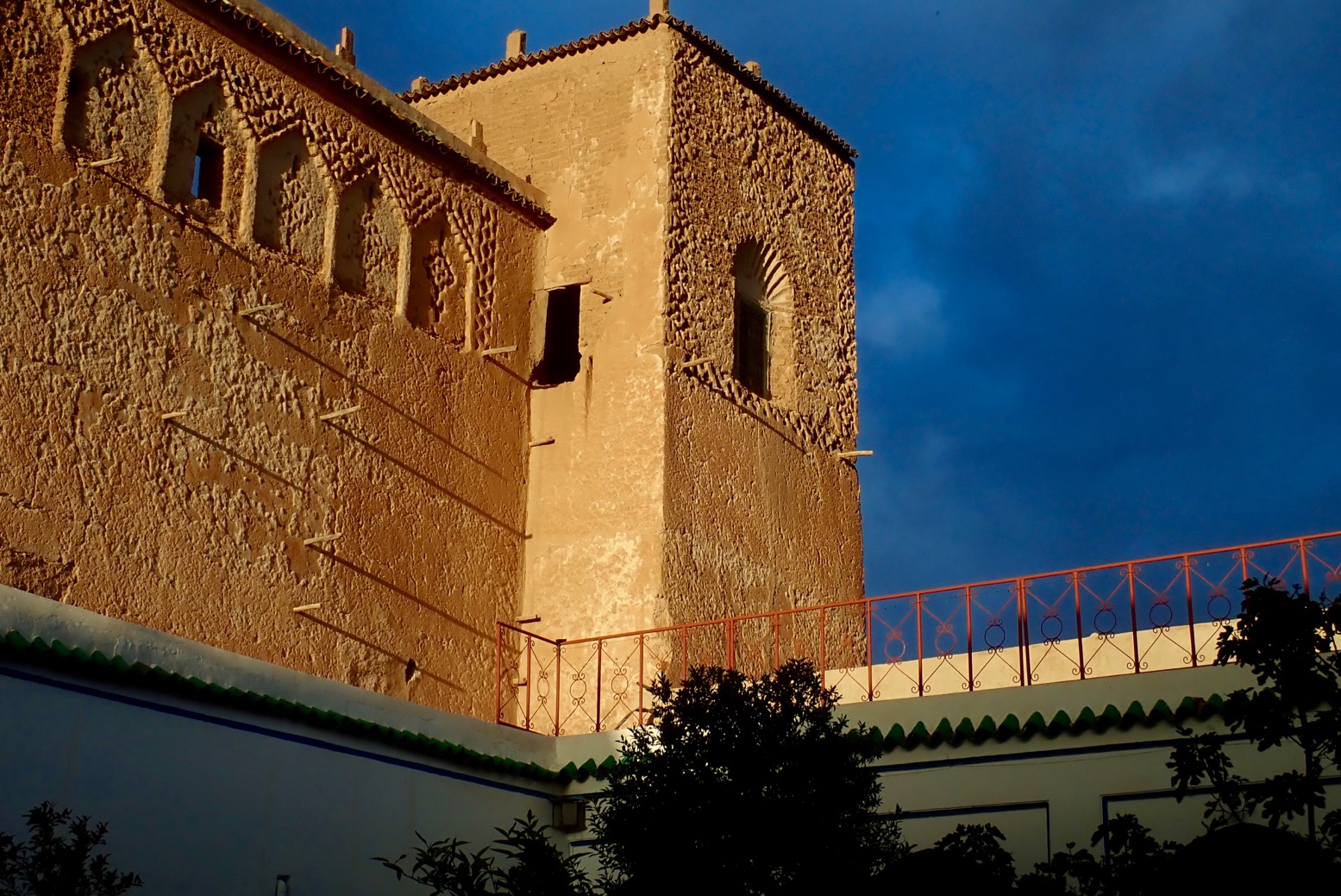
OLYMPUS DIGITAL CAMERASunset at the casbah.

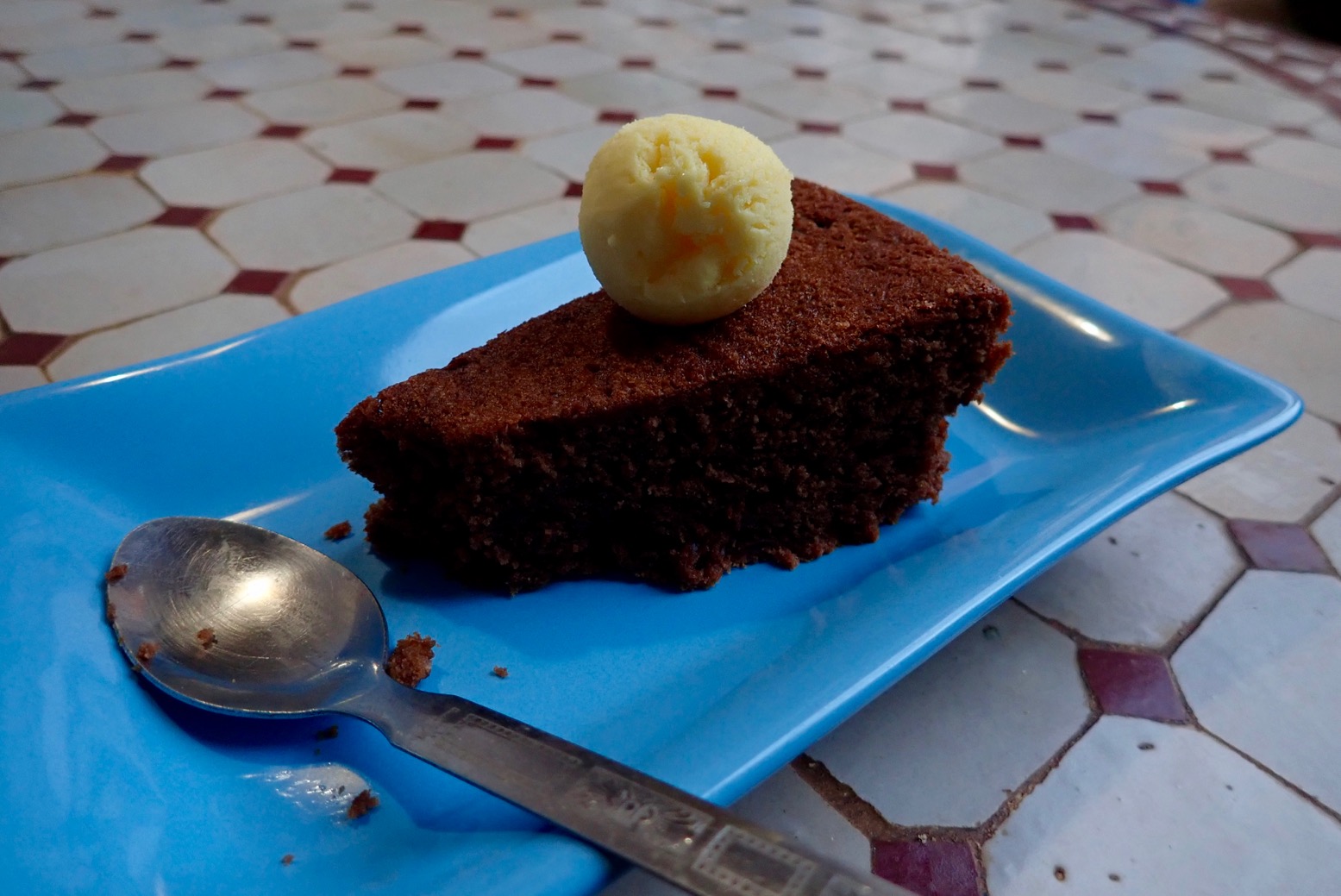
OLYMPUS DIGITAL CAMERAAlways room for a whaffer thin slice of cake.
Morocco Overland: Route J2, J3

Updated December 2025

Trans Atlas: J2

Talat n Yacoub (Ijoukak) > Ouneine basin > Ouaougdimt valley > Aoulouz • 88km
Last run October 2023 – CRF300L

Following the September 2023 earthquake, the steeper north slope of this track is almost immedaitely blocked and remains unused. To get to Ouneine take the bypass and cut back west via the road or the MH212 link route.

a310-7

Description
High Atlas crossing parallel to the nearby Tizi n’ ‘Test which peaks at the 2200-m Tizi n Oulaoune (30.940222, -8.125111), following a steep climb: some 500m in 8km after leaving the road SE of Ijoukak (right).
You may find the looser parts of this climb a struggle in a 2WD or on a heavy, wide bike, but this was not the case on 2022 in a 4×4. It’s probable that local 2WD vans only do it downhill (northbound) to Ijoukak. Track immediately blocked by post-earthquake debris (below; 6 months later) and remains abandoned.

In 2022 the track was rougher as it rolled down to the Ouneine basin and the P1735 whose extension eastwards to Igli on (J3) is now sealed. Keep right at the fork with an illegible sign. At the bottom just before it joins the road you have to detour south around the boundary fence of a new small mine,

Once in the basin carry on SW along the P1735, and at Sidi ali ou Brahim swing sharp left off the road, cross the stream and follow the Ouaougdimt valley 24km SE (not fully shown on most paper maps) to join the road coming down from Aguim on the N9 Marrakech–Ouarzazate road.
Or, if you’re in a rush or heading towards Taroudant, at Sidi ali ou Brahim carry on 23km south on the ever-bendy P1735 to Sidi Ouaziz (fuel) on the N10. Otherwise, it would be a shame to miss out on the scenic Ouaougdimt valley stage, as it rises onto a terrace high above the valley floor.

mhh20

Mapping
Parts of the route are just about legible on paper maps, least badly on the inset ‘High Atlas’ panel on the Michelin. But none show the full Ouaougdimt valley route. It’s all on Google and the OSM/Garmin digitals.

Off-Road
The climb up to the 2200-m Tizi n Oulaoune pass from KM11 starts a steeply but is now blocked. From the pass the gradient eases off with great views doiwn to the basin while you’ll find the Ouaougdimt valley stage no harder than anything you’ve just done. Carefully ridden, a big bike might manage the loose hairpins; so could a 2WD with low first and clearance, though as always, these mountain tracks require concentration. On an MTB it will be a slog if not a push up to the Tizi n Oulaoune, followed by a rough freewheeling reward to the basin and no more huge grades thereafter. Bikes might have more fun following J3 to the high P1735 road, turning left or right.

Route finding
Easy enough. We winged it just by studying Google satellite imagery beforehand, jotting down some distances between junctions. That’s now all listed below. Download the kml file.

Suggested duration
Half a day will do you.

Route Description
0km
 (88) Talat n Yacoub fuel station (village destroyed but still serving) on the N7 Tizi n Test road. Head north to Ijoukak village.

3 (85) Pass through Ijoukak, cross the bridge and turn immediately right up the side road now thronged with relief tents. Soon you’ll pass Houssain’s agreeable mountain lodge (repaired; reopened). Huge boulders have fallen on the road.

11 (77) At the fork before a village turn right, drop down over a bridge and carry on. Soon there’s a sign right: ‘Ouneine? 24km’. The 500m climb to the pass begins. (Ahead, MH21 continues). To reach Ouneine take the J2 bypass and take the road, or link track which comes in to Map Junction below.

19 (69) Tizi n Oulaoune 2200-m high point with views of Toubkal (4167m) 20km to the northeast. The track now eases off as it descends.

mh20km23
KM23 Map Junction
feb20 - 36

23 (65) Fork with sign (photo above: ‘Map Junction’). East at this fork is a rough track (MH212) which in 9km joins J2 to Igli. Keep right (south) to continue descending to the Ouneine basin visible to the west. At a small mine work your way round the fence to the south. to rejoin the track. Eventually, at a junction around KM35 you join the P1735 road which goes E towards Igli/Iguidi over a 2500-m terrace. This is a spectacular high mountain road (J2).
Meanwhile, the P1735 crosses the Ouneine (shops and cafes) basin SW and threads through a small pass back into the hills.

mh20ouaval

54 (34) Sidi ali ou Brahim. The tarmac carries on 23km to Sidi Ouaziz (fuel) on the R110/N10 but you turn sharp left here, drop down to the stream and up the other side. The track is initially a bit eroded and loose as it climbs to the first village, but that’s why they invented suspension. It then eases off as it rises above the valley on a terrace (right) with great views down to the villages below. You could be in the Cevennes or the Pyrenees, but you’re in the High Atlas. It could be worse.

78 (10) Join the tarmac (J4) by the reservoir. Turn right (west).

83 (5) Roundabout on the R110/N10.

88 Aoulouz fuel stations.

mh20desc

Trans Atlas: J3

Ijoukak > Igli/Iguidi > Askaoun > Taliouine • 170km
Last run: October 2023: CRF300L

At the ‘Ouneine’ turn-off for the blocked track up to Tizi n Oulaoune, carry on southeast on tarmac for a few km until it ends at a village (green mark on map above). Keep going along an easy piste rising up the valley and past a couple more villages all surrounded by relief tents in 2023. Just before one village keep right (downwards); sharp back left leads up to who knows where. Your route climbs to meet the end of the J2 link track close to the Ouneine-Igli tarmac.
Turn left then at the tarmac nearby it’s left up to over 2550m then a long wind down to Igli/Iguidi (hotel/cafe) on the Aquim-Aoulouz road J4.
From here carry on south then west down the valley and turn left at a sign to cross below the dam wall (long term roadworks) and wind your way up to up to Askaoun (KM120) then 45km down to Taliouine.
Total 170KM, fuel to fuel.
I did versions of this route three times in November 2022 with a lunch in Igli. A great ride with a dizzying number of bends in one day.

A few photos   A few more

Looking down on the new bypass from the high route

MH19 (HA6, HA7, HA9) a new High Atlas crossing

Updated January 2024
Now only 2 + 10km of piste remains, but plenty of gravel and broken tar

demdem
kelaa-aitbou1

In 2017 Moroccan road builders completed a new High Atlas crossing. I heard about it too late to describe fully in the 2017 edition, although it is mapped on page 110.

I got to ride the route on a 250 just as the book was published in October 2017, and again about a month later southbound in a 4×4. Now it’s a straightforward drive once you find the start points, doable without much of a description or GPS.
Northbound, all you need to know is:
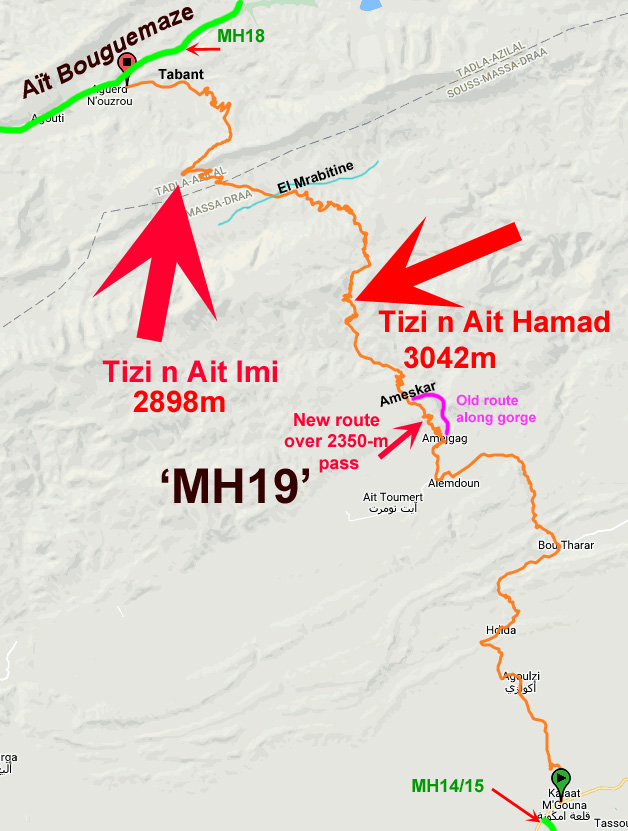
1. Pass through Alemdoun village and stay on the tarmac and first right over the first pass. Southbound, just east of Tabant turn right (south) over the ford for the easy 17-km climb to the Ait Imi pass.

Fuel
Aït Bouguemaze end, the nearest fuel is either Azilal, 79km to the north via MH17 – a fabulous drop from the pine forests. Or stay on MH18 west to Demnate; 83km – about 90 mins of near-constant bends. Also ‘Ouaoui‘ further north via the Cathedral cliff. You can also buy fuel by the litre from shops in Alemdoun and Tabant and other small towns.

mh199
mh19gg

One time at Amelgag we chose the gorge route (right) instead of the climb over the pass to Allemdoun, a great diversion (and the original route) which is still used by local Merc taxivans. Coming north, turn off right at the bend as you enter Amejgag village and wind your way north through the village to the gorge.

mh19tizihamad

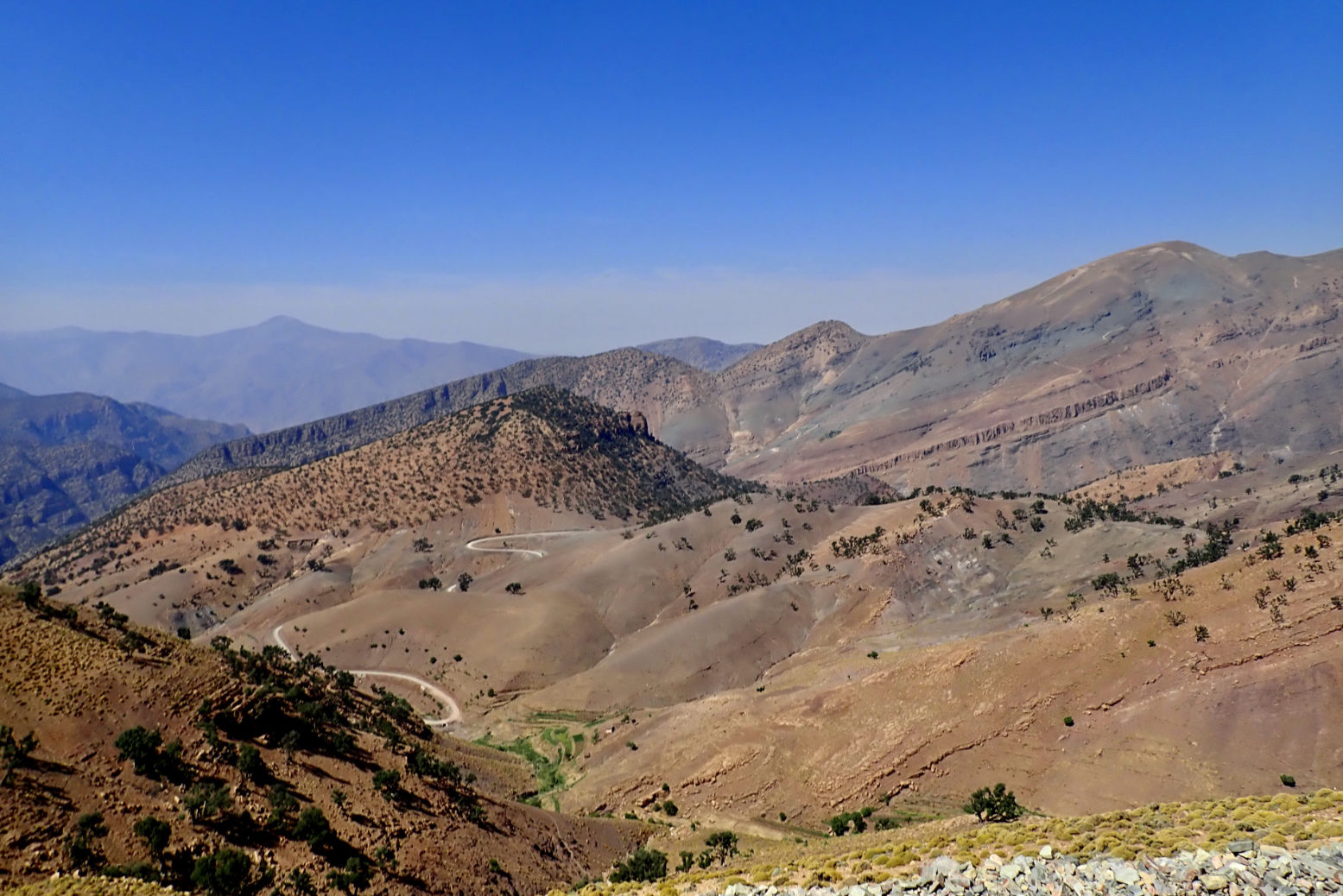
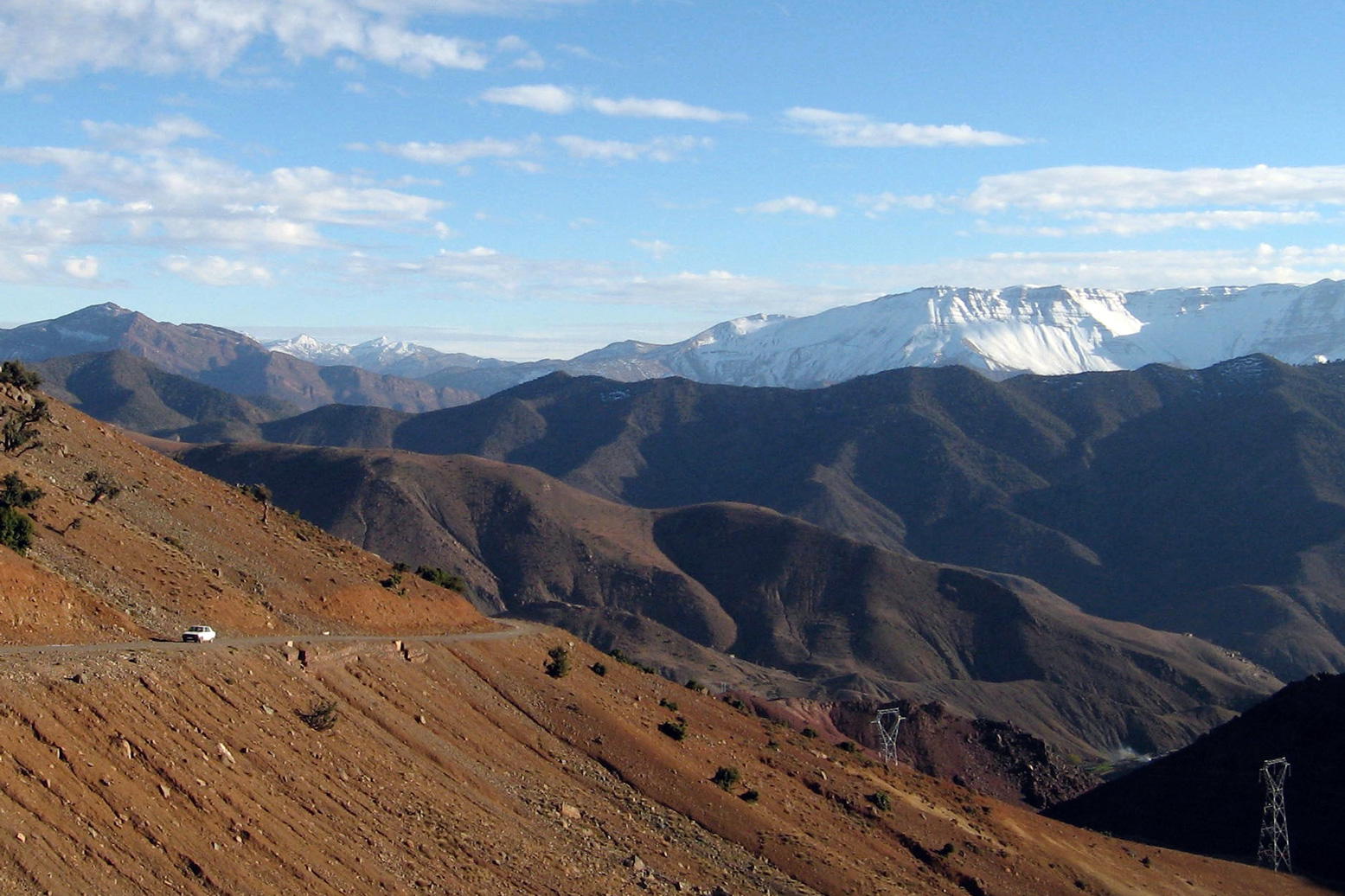
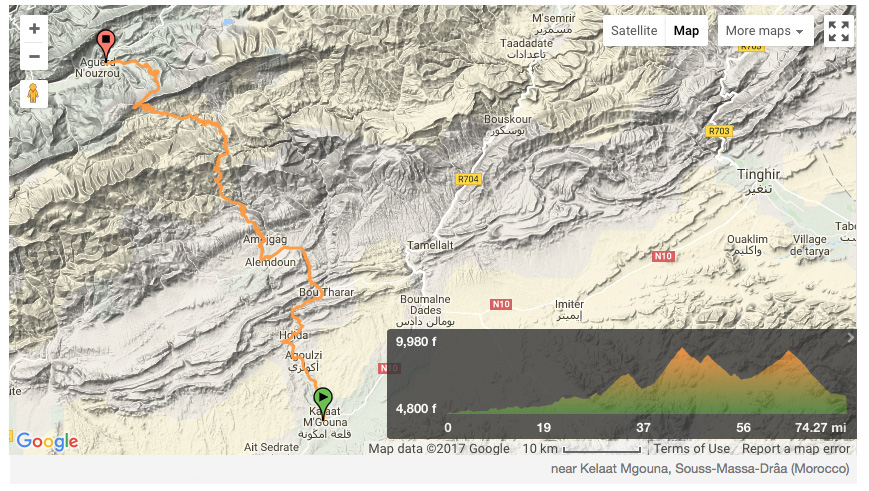
The sealed route takes you up over a 2350-m ‘Amejgag Pass‘ (KM50) before dropping down to Ameskar and joining the gorge route (KM56). Now the steep climb begins to the 3042-metre Tizi n’Ait Hamad (~KM65). From the top of this pass (left; telecom tower; bloke in a hut) Jebel Mgoun summit (4071m; second only to Toubkal) is a 16km walk to the west.

mh193 - 1

You descend from the Ait Hamad (above), climb an intermediate pass then descend into the valley of the Mgoun river, bypassing some remote villages around El Mrabitine.  Cross the Mgoun stream (KM83) and climb less steeply on dirt for 10km to the Tizi n’Aït Imi (2898m; ~KM98). At the top Aït Bouguemaze valley lies 20km below.
Busy Tabant village (KM117) has shops and basic bap cafes before you join MH18 (if heading west). As the whole area is popular with trekkers, there are several auberges hereabouts.