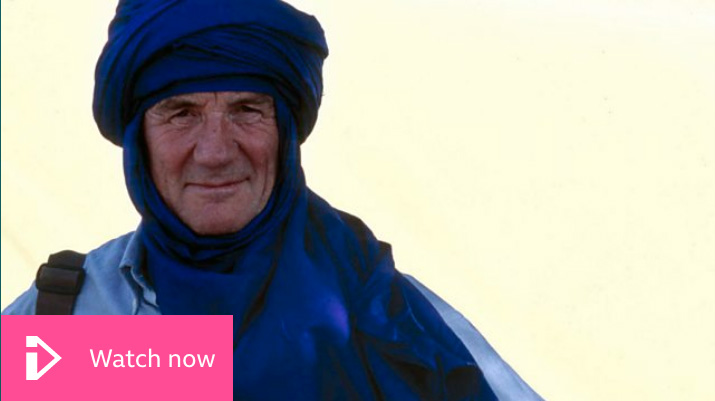
I recently watched Michael Palin looking back on his Sahara TV series of 2002. I think it was the last of his big travel shows for the BBC.
I remember thinking there was more ‘Sahara’ in the show’s title than the actual programmes, and watching what they chose to use in the recap, it looks again like he – along with most people – was more at home in cities like Fez, St Louis and Algiers, or places like Gibraltar than in the desert.
I must admit I never fell for the Palin ‘nicest-man-on-TV’ schtick, though I haven’t watched his other travel series. Palin was born in 1943 so it could be a generational thing with me: many encounters felt set-up and shallow. Perfect Sunday Night telly, then and now. I remember him bristling a bit when this necessary fakery came up as an audience question at a talk he gave in London to promote the Sahara show. Similar TV travel presenters like Bruce Parry (what happened to him?) and even Simon Reeves were among some fawning luvvies wheeled on to shower accolades. Both of them come across as equally genial and far more intrepid, immersive and engaged in their similar TV travels. But all this is a bit like complaining about the Long Way… Ewan & Charlie motorbiking shows relying heavily on back-up vehicles. It’s a mainstream TV show, not Storyville. Get over it!
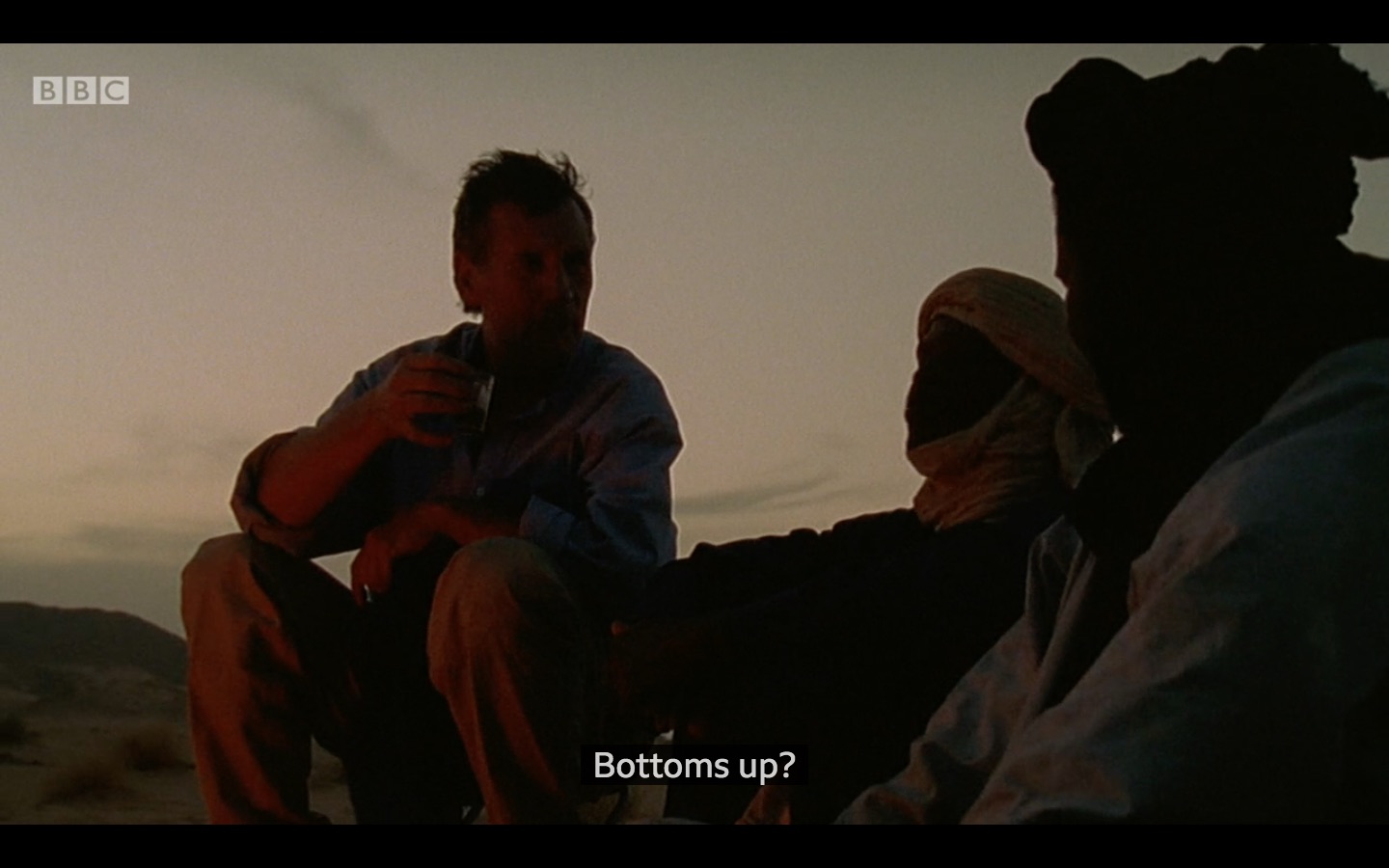
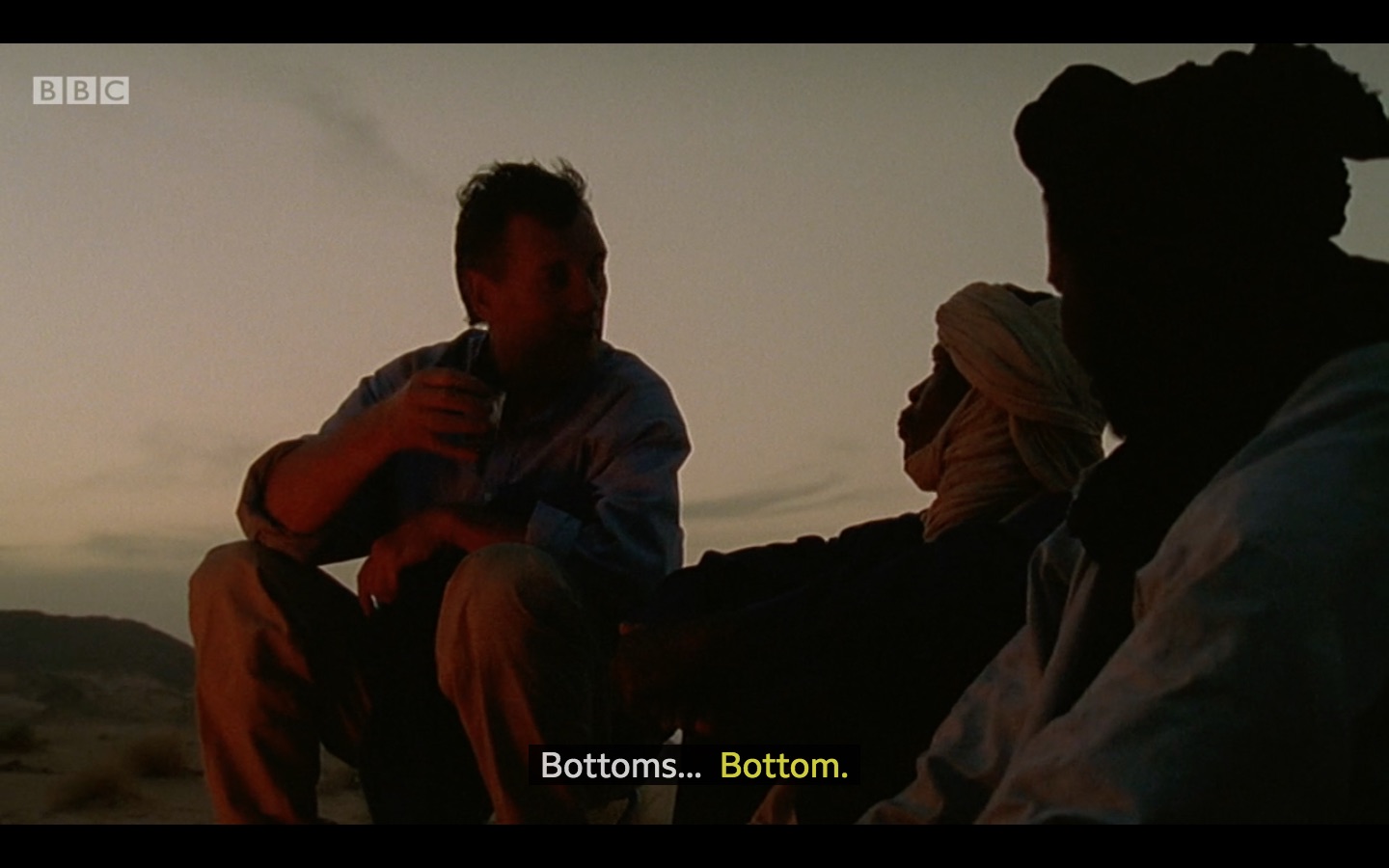
As for Sahara, I can’t help thinking he didn’t like the actual desert. Fair enough; not everyone does. During the Niger episode (as deep into the Sahara as he got, afaik: a night or two in the Tenere (and just after 9/11) he sits on a stool and sleeps in a tent rather than getting down with the Tuareg. Disingenuously or not, over a snack he assumes they’re mocking him while teaching him local words. I’ve commonly experienced this ribbing and take it as no more than that. He gets his own back later by getting them to repeat ‘bottom’ – as in ‘Bottoms Up’ which all Brits say several times a day when having a cuppa.
‘Such a lovely scene…’ chirps Parry. ‘That’s what you get when you put the time in.’ Do me a favour, Bruce!
He observes that the locals in Agadez seemed barely moved by 9/11 (or were less exposed to saturation the news we had) and he resented this insensitivity. You get the feeling that like so many with a travel icons list to tick off, he was attracted by the romance of the Sahara: its mysterious veiled nomads and shimmering front-of-a-date-packet oases. Then he got there and found it hot and dusty, poor and dirty, with tiresomely chauvinistic guides, begging children, toilets from hell and altogether gradually exhausting when you have a film to shoot. To his credit, the online diary certainly doesn’t hold back as the book did (as I recall) and the TV show had to do, of course.
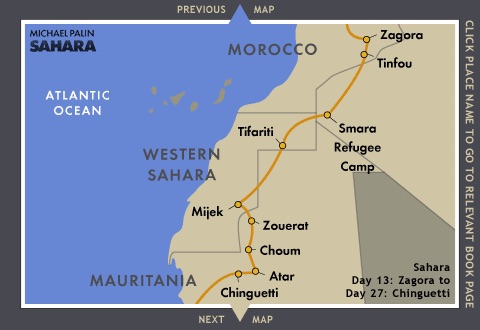
Oddly skipped in the show and the book is the fact that he travelled with Polisario escorts 1000-km overland from Tindouf down to Zouerat, partly along a route which has now re-opened. It was perhaps played down to appease the Moroccans, but also our man had a bad set of the runs which, as we all know, makes life miserable. Then he took the train to Choum and carried on to West Africa. Even with regular breaks back in the UK, by the time he got to Niger (‘in temperatures of up to 55°C…’ – a world record it would seem), he must have had enough.
‘It’s a bare, dispiriting place.‘
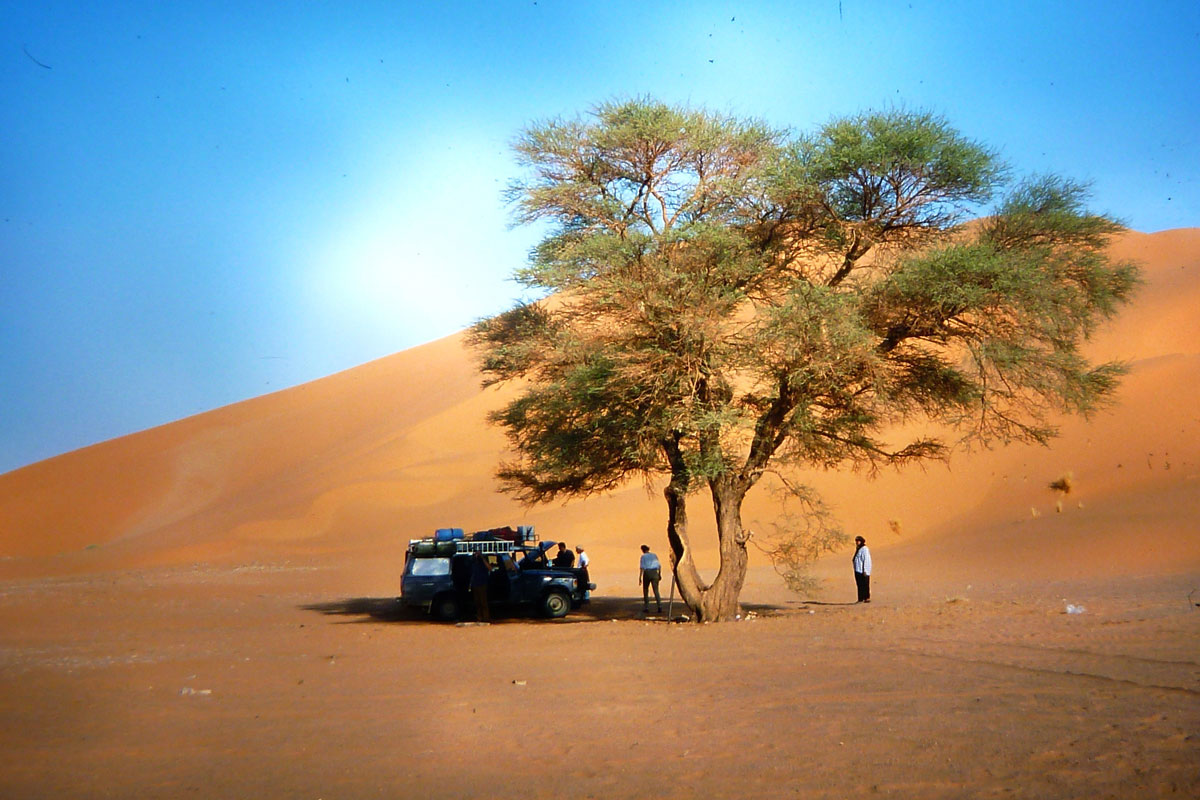
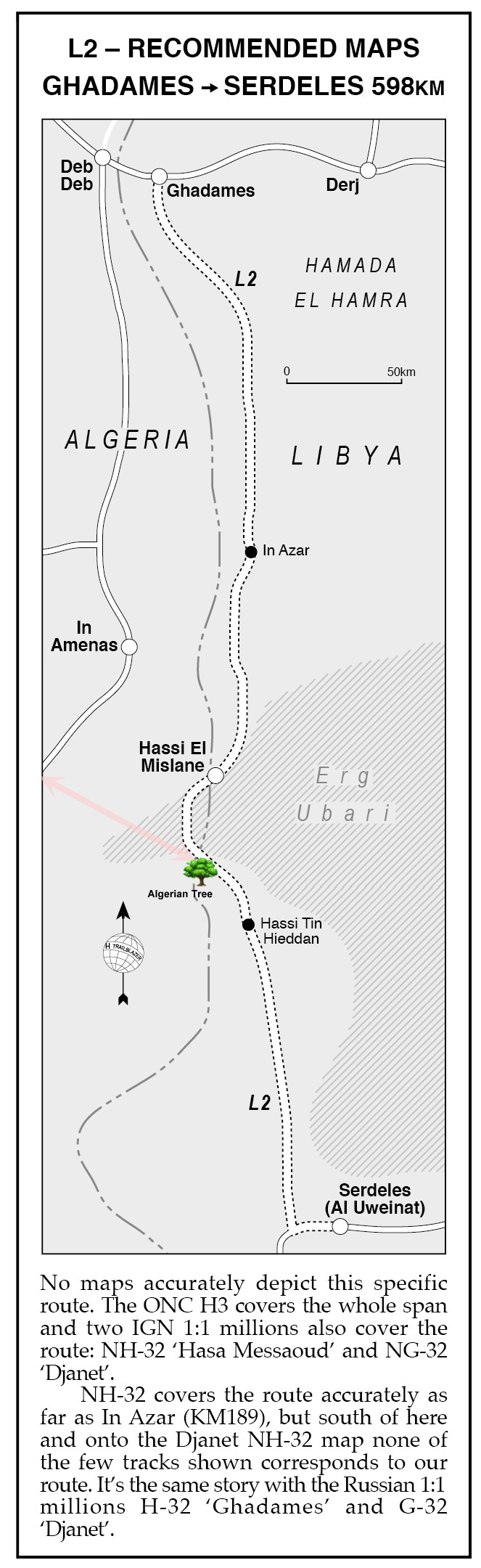
So it can be if you’re there in the wrong season with a busy agenda of encounters to record. As mentioned elsewhere, I was struck that the Algerian Tree on Route L2 from my old book (visible on Google sat and pictured above in 1998) epitomised the essence of the desert for Michael Palin. He proclaimed:
‘… this spare, uncluttered, beautiful spot was one of my favourite places in the Sahara‘.
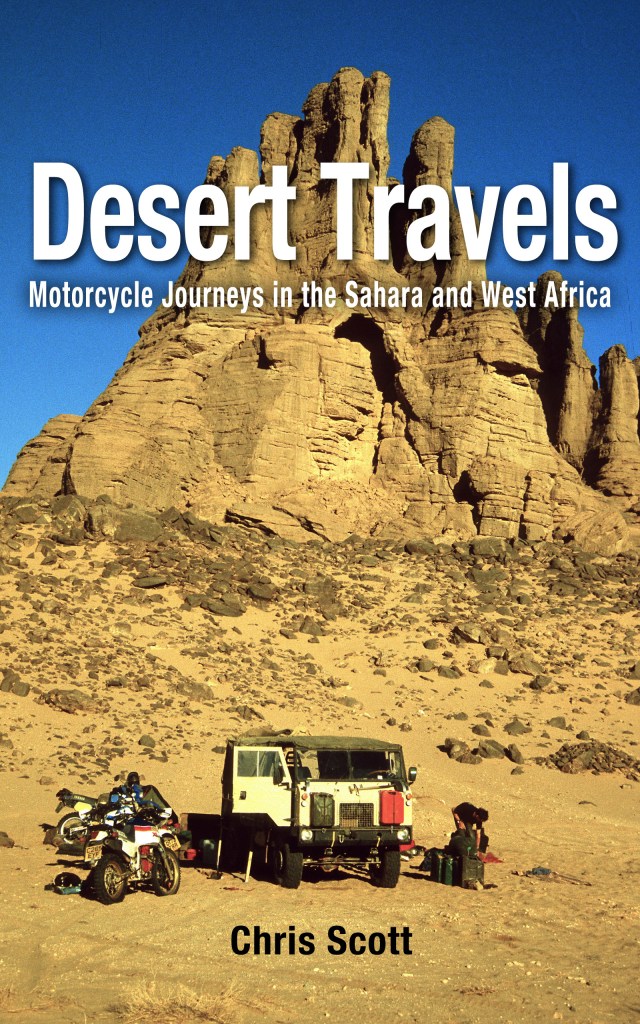
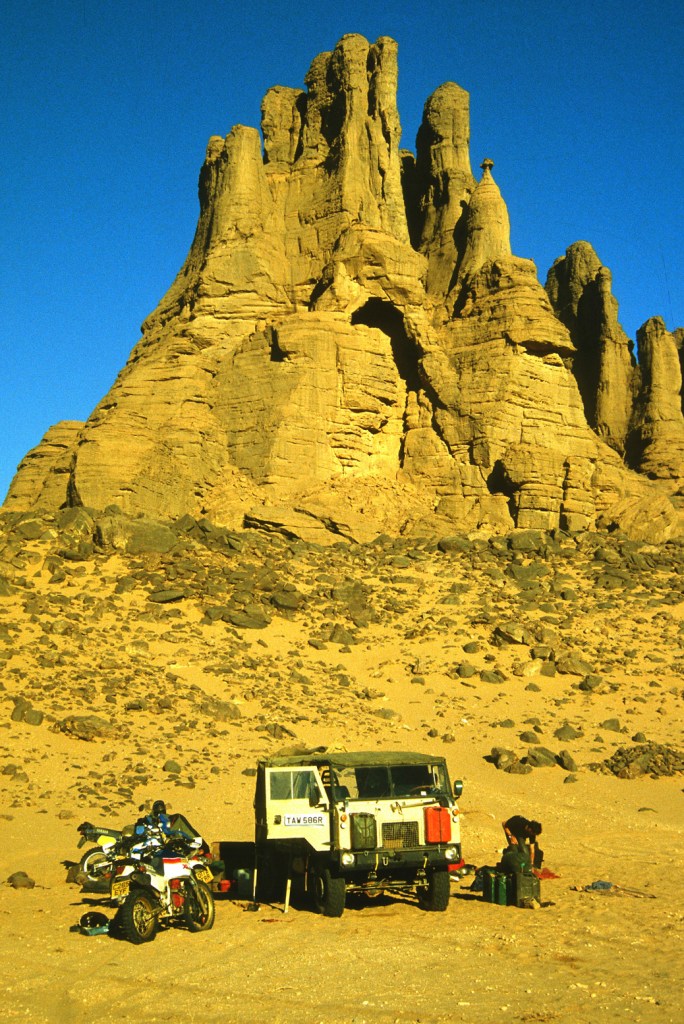
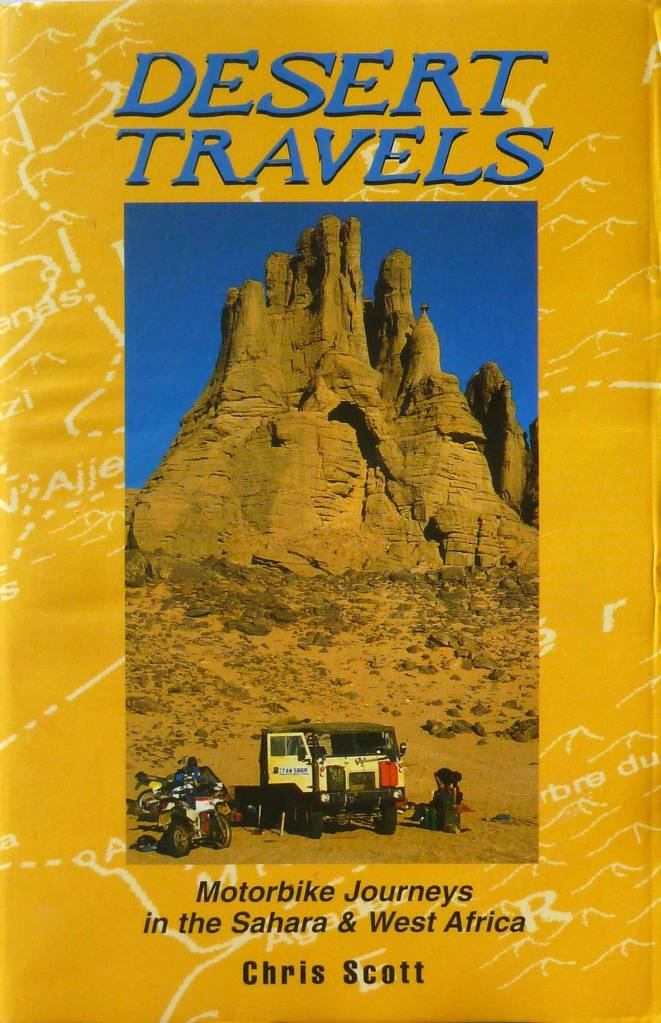
The original 1996 paperback edition of Desert Travels (and an earlier version of the ebook, left) featured us camped below a striking cathedral-like formation. I’d always wondered where that place was. The relevant chapter in the book is called The Cathedral, referring to the spires and church-like ‘portal’ of the pinnacle-capped outcrop. It was shot by Mike Spencer who had a proper camera and slide film.
This was before GPS and at the time I was too preoccupied keeping track of the bikes and my Landrover’s numerous issues to attempt to follow our progress on a map with dead reckoning. Our guide, Chadli, knew his stuff but was rather reticent – they teach them that in guide school. I knew the vague location within 50 square miles – the photo credit in the book says ‘near Tin Tarabine’ which is true enough, but that area, if not the whole Tassili-Hoggar southeast of Tam, is famed for unusual rock formations.
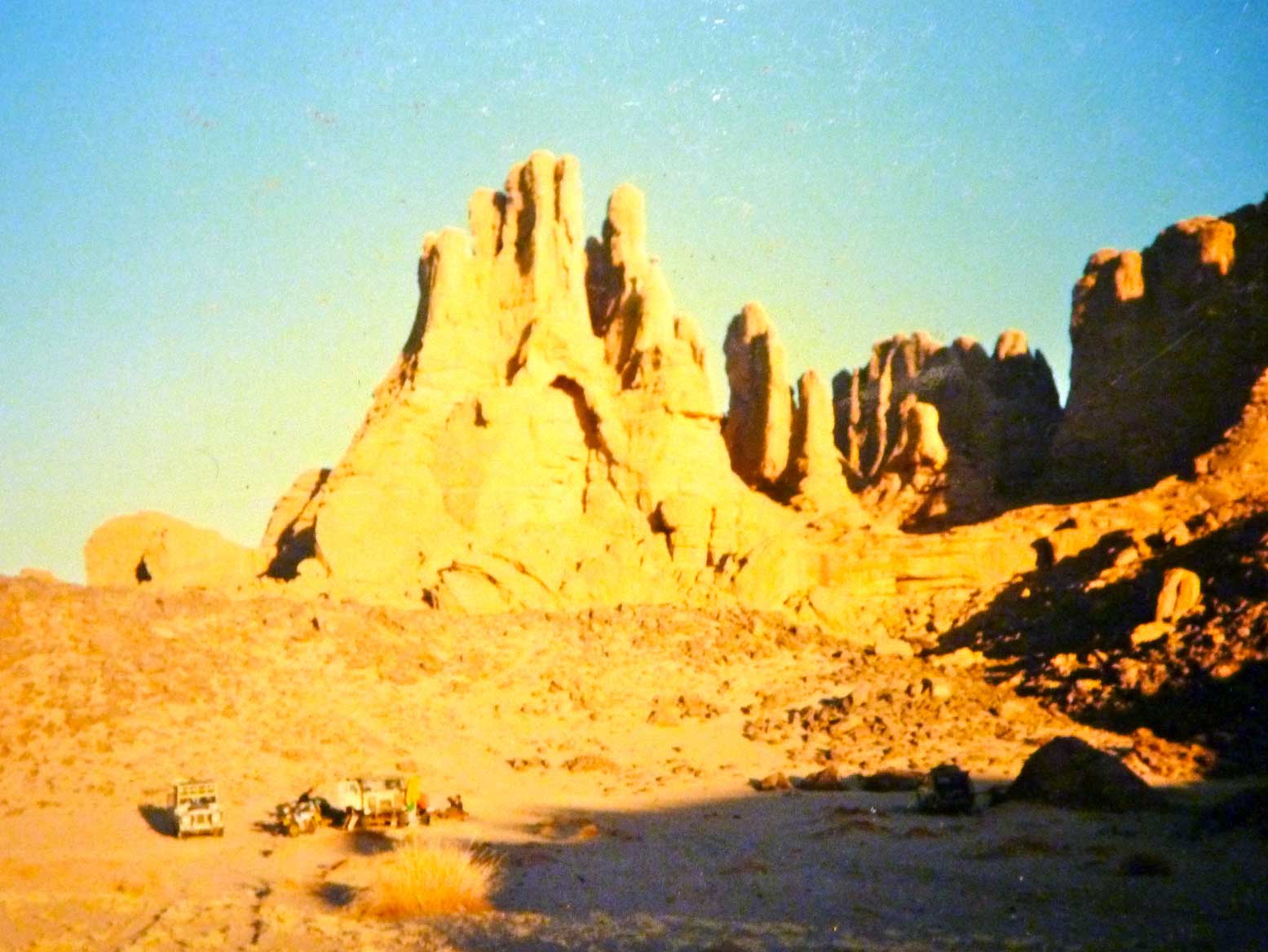
I had a rough idea the cathedral (above, with my crumby camera) was somewhere after Tadant canyon well and before Tin Tarabine oued. Then in 2006, coming towards the end of our epic traverse from Mauritania across Mali and Algeria towards the Libyan border (see: Sahara: The Empty Quarter) we passed through that area. I’d not been there since 1988, but coming at it from a different direction, it was all new to me.
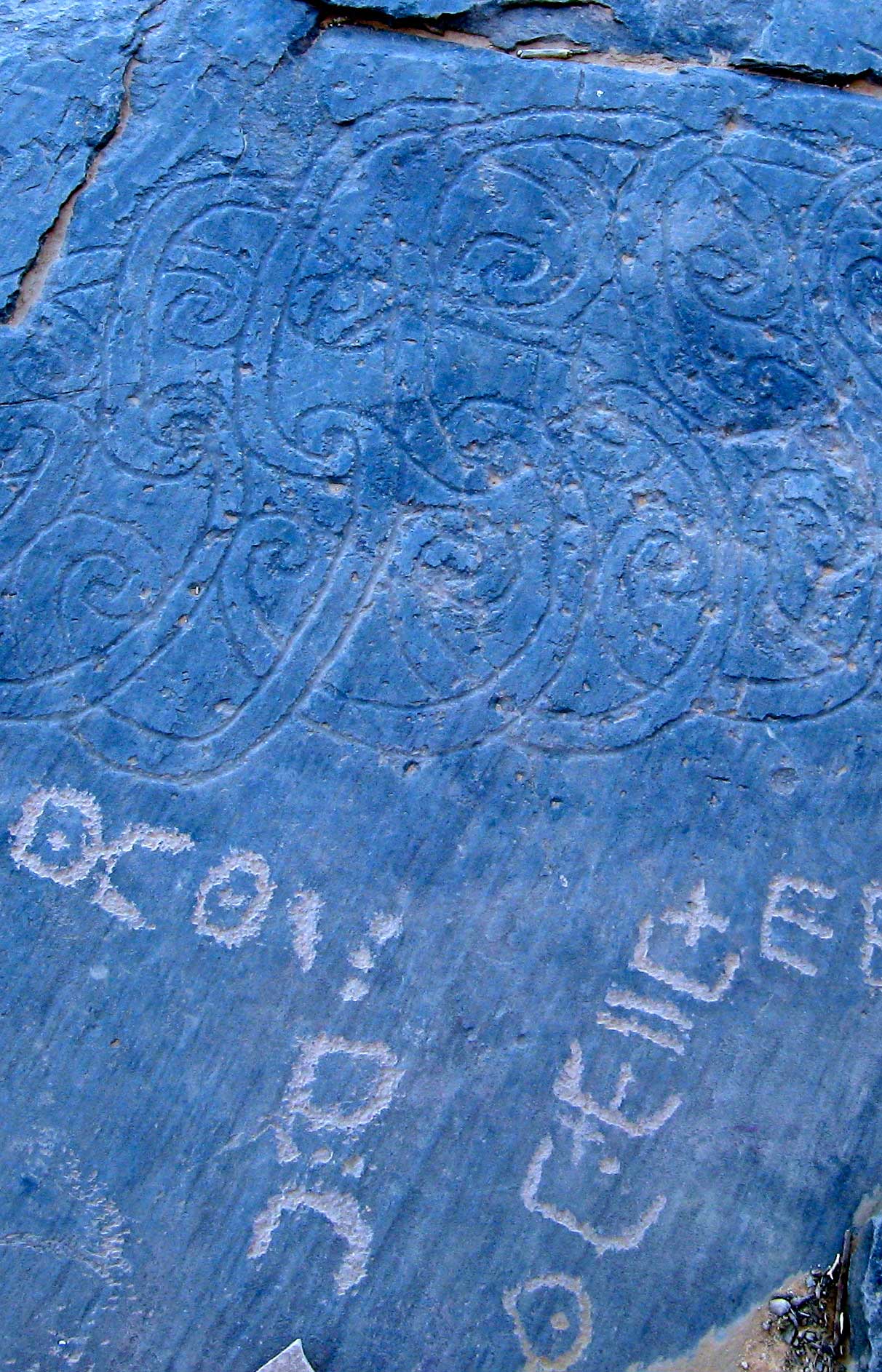
As we’d crawled steeply out of Tin Tarabine oued and away from the famous Youf Ehakit – an amazing area of eroded rocks and bizarre, neo-Celtic engravings (left) – our escort’s car needed the clutch repaired yet again.
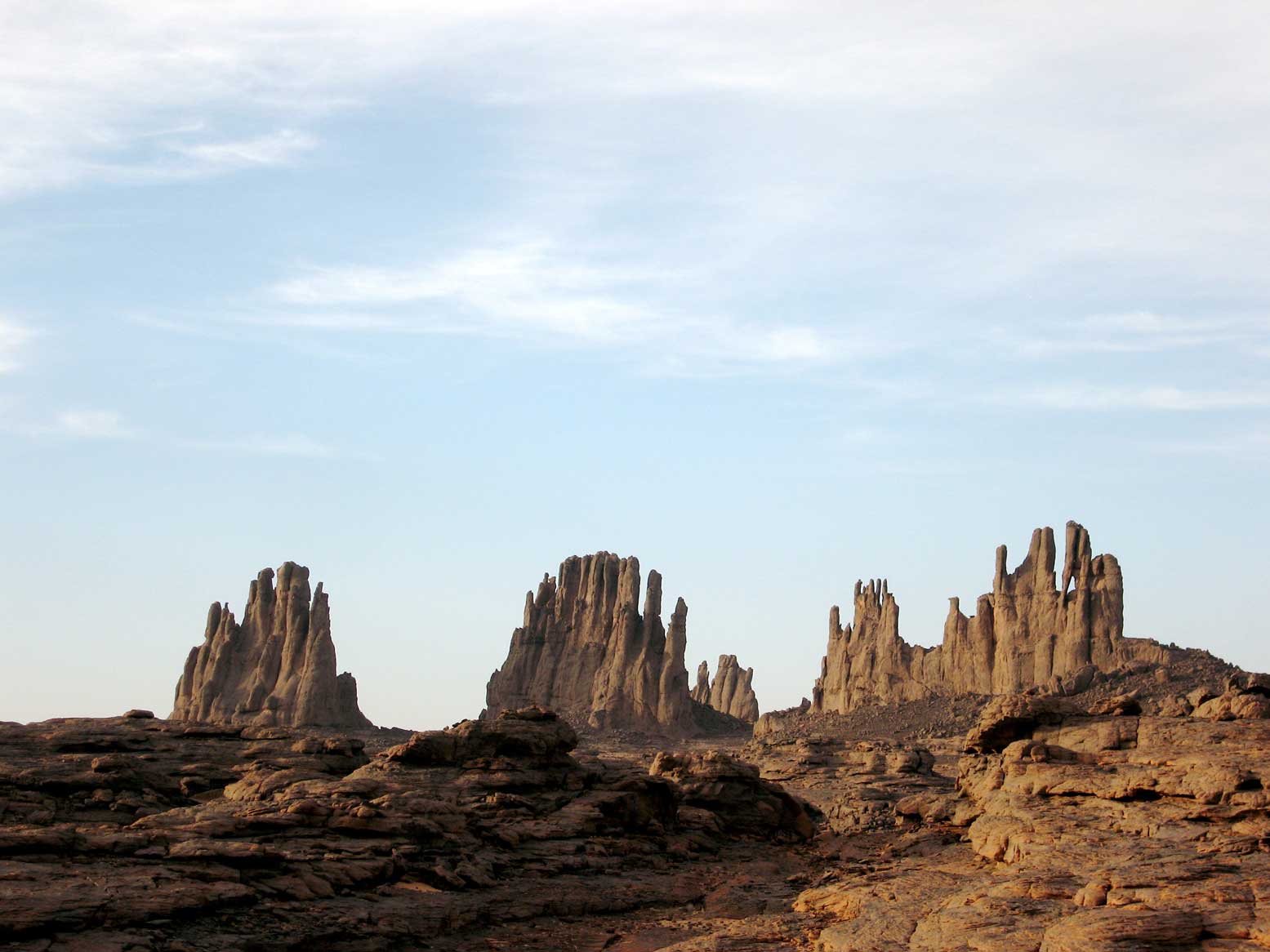
They pulled up onto a flat rock shelf to to a proper job this time, while I and the others dispersed for a wander. Climbing the outcrop up above the cars, I spotted some intriguing spire-like formations across a plateau a few kilometres to the north. Could I have stumbled on the location of the original DT cathedral cover after all these years?
I grabbed a water and the GPS and set off cross-country, passing pre-Islamic tombs (left), then dodging down into little canyons and over outcrops as the terrain became rougher. I didn’t have a copy of DT with me, but the huge, hand-like pinnacles in the far distance looked very familiar.
After about an hour and a half I was running out of daylight to get back, but got close enough to the weathered spires. I took a few hurried shots (above) and the following waypoint which I see now is actually just a kilometre from the formations. But when I got home and looked at the book’s cover closely, I realised they were similar but were not the Cathedral, even if I was looking at them from behind.
I forgot all about it for a few years then began to wonder again if the Cathedral could be tracked down now that we have masses of imagery of everything everywhere and any time. I scanned people’s Panoramio and Flicker albums as well as the embedded photos on Google Earth (often irritatingly misplaced, as we all know…). There were plenty of amazing rock formations in the Tassili-Hoggar vicinity, but no distinctive Cathedral.
In the end I knew the best people to ask were the Germans – der uber-Saharans. I may know the Sahara well, but in Germany there are hundreds more experienced and better travelled Saharans than me. In the good years they explored every corner of the desert, but most didn’t feel the need to write guidebooks about it afterwards.
I posted my question with a picture on Wuestenschiff, one of the main German Sahara forums. Within a couple of days I had a name for my location: the Cathedrals of Tin Eggoleh and the waypoint: N22°21’6.75″ E007°5’12.20″. About 50km to the northeast of the ‘false-sprires’ of 2006.
Mystery solved and somewhere good to aim for next time…
In 2000 I joined a two-week tour visiting the Egyptian part of the Libyan Desert, or the ‘Western Desert’. The trip was organised by Andras Zboray and his new FJ Expeditions. He’s since become an expert on this fascinating region and back then contributed the ‘Egypt’ section to my Sahara Overland book. Even though I’d only just come back from Libya researching the book, part of the appeal of Egypt was that this was then a very rarely visited corner of the Sahara. FJ had problems with permits to visit this ‘military’ or more correctly border area, but once there, we saw no one, let alone a well or a regular piste for the entire two weeks.
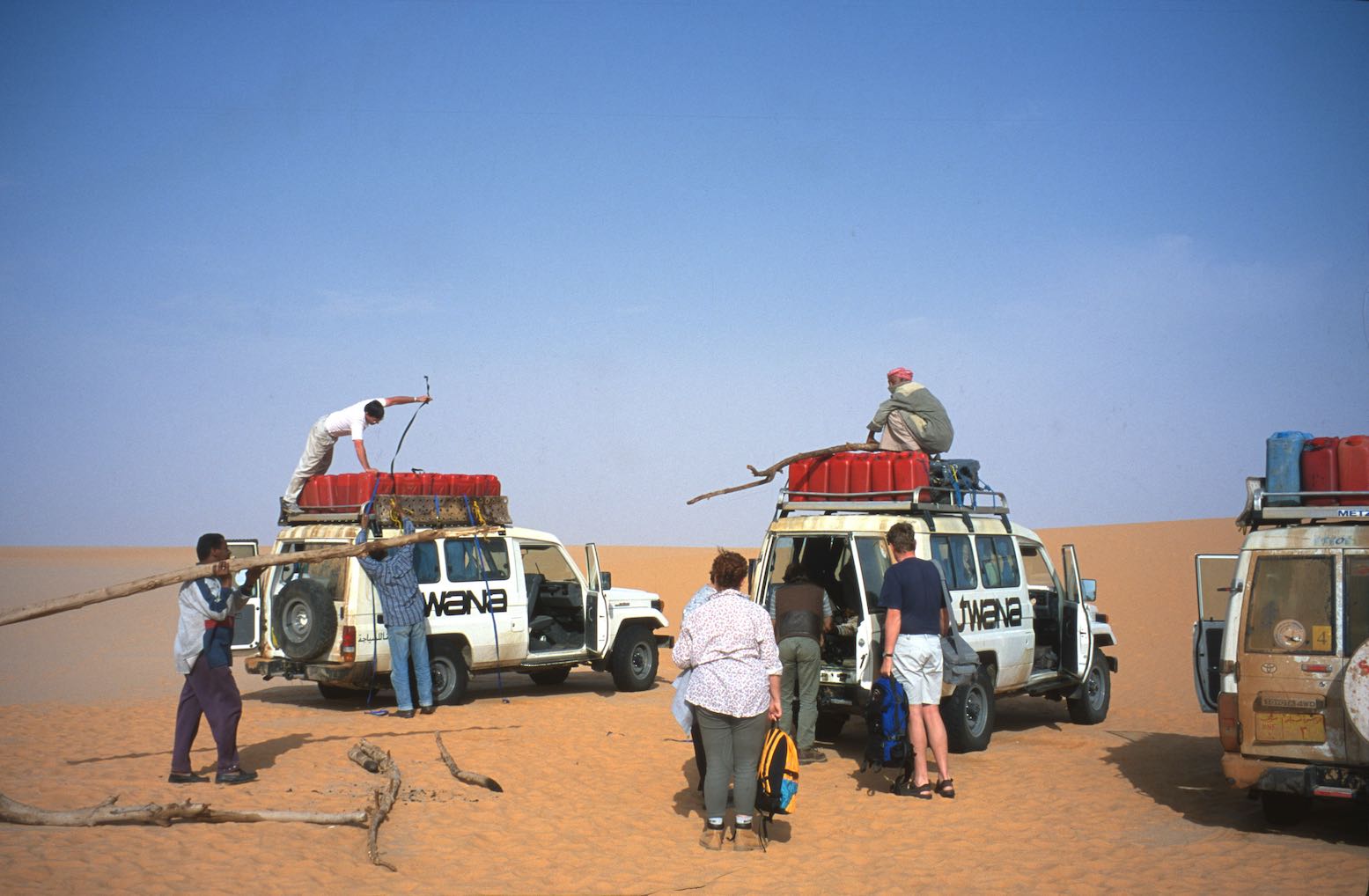
Our three locally hired Toyota Troop Carriers left Cairo sharing a ton of water and half a ton of food, along with fourteen (mostly German) passengers and three Egyptian drivers. Two days later we left Dakhla with another half-ton of fuel on each car’s roof. Amazingly the Toyota 75s handled this mind-bending payload without a whimper.
Shell tin
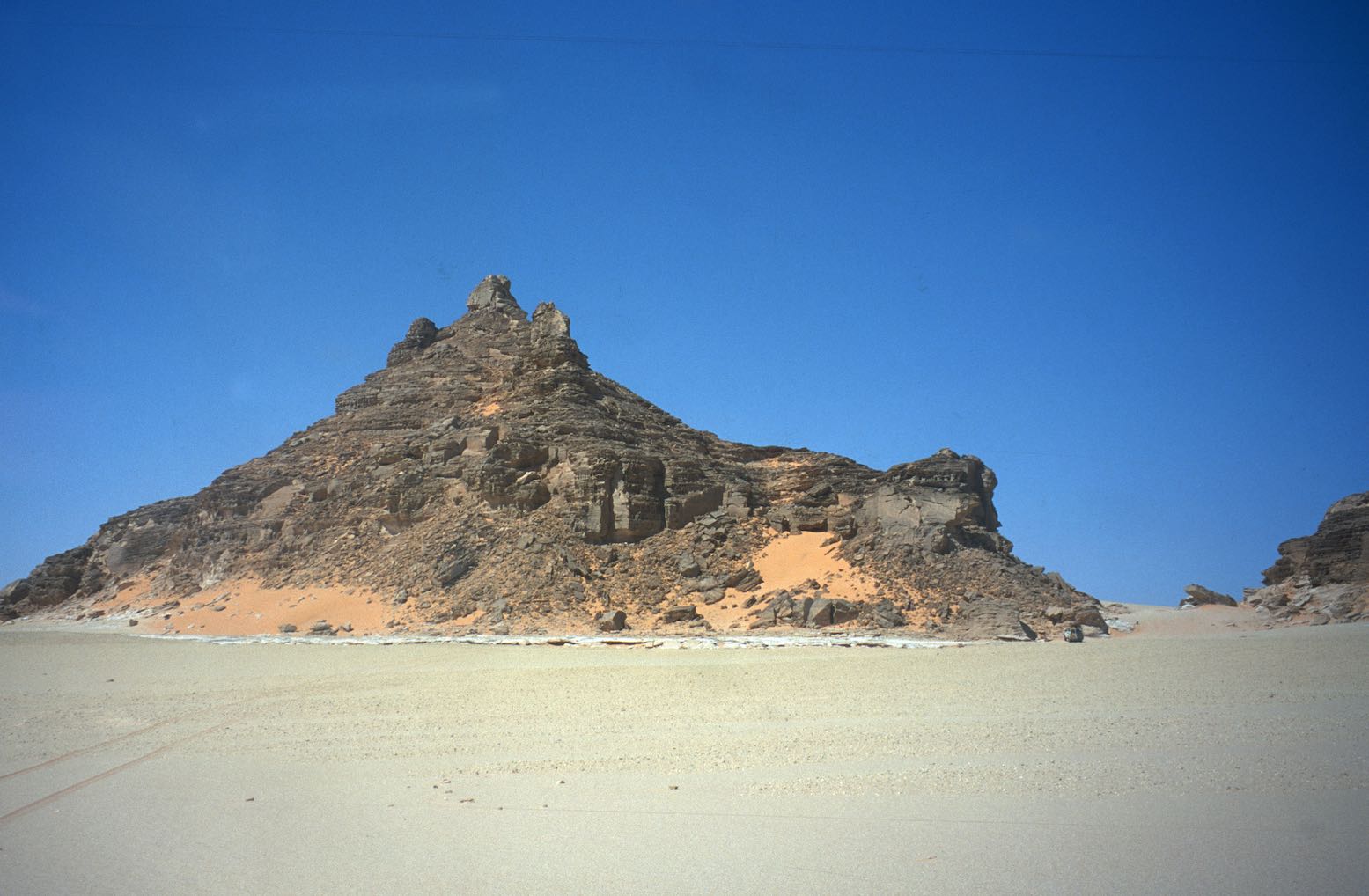
On reaching Bir Terfawi we left the tarmac and set off west across the Selima Sand Sheet, arriving at the isolated landmark of Jebel Kamil after a day and a half. This cone-shaped hill was a wartime fuel dump from the Sudan Defence Force convoys supplying Kufra from the Nile, and is still littered with Shell petrol tins. I was invited to drive one of the 75s, Andras having had not such good experiences with local drivers off road. I was told under no circumstances to use the air-con; there being some urban myth about revs rising dramatically as the pump kicks in. But the risk of an overburdened, 130-hp 70-series lurching uncontrollably off a dune lip seemed far fetched.
Shaw’s Cave
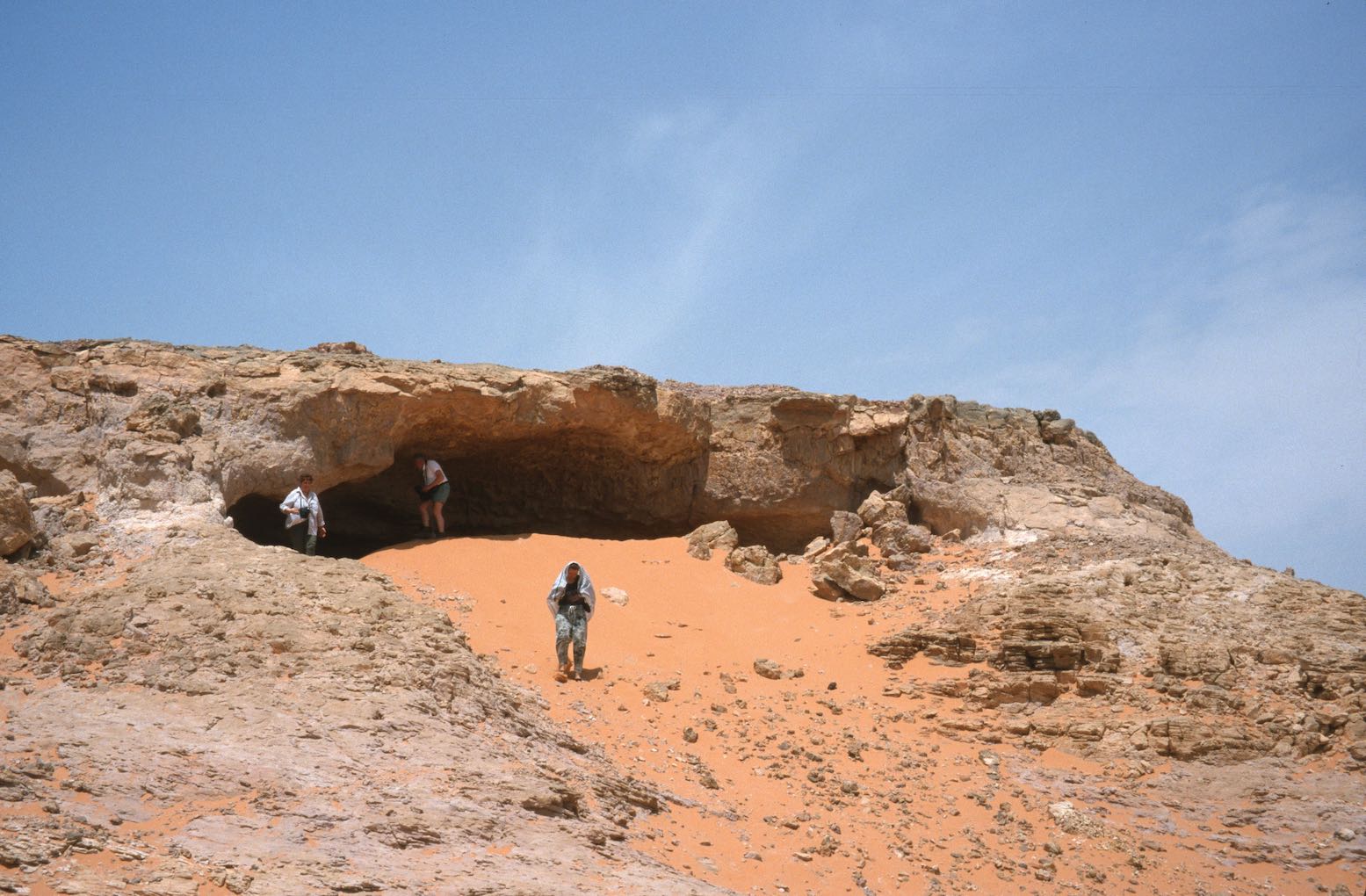
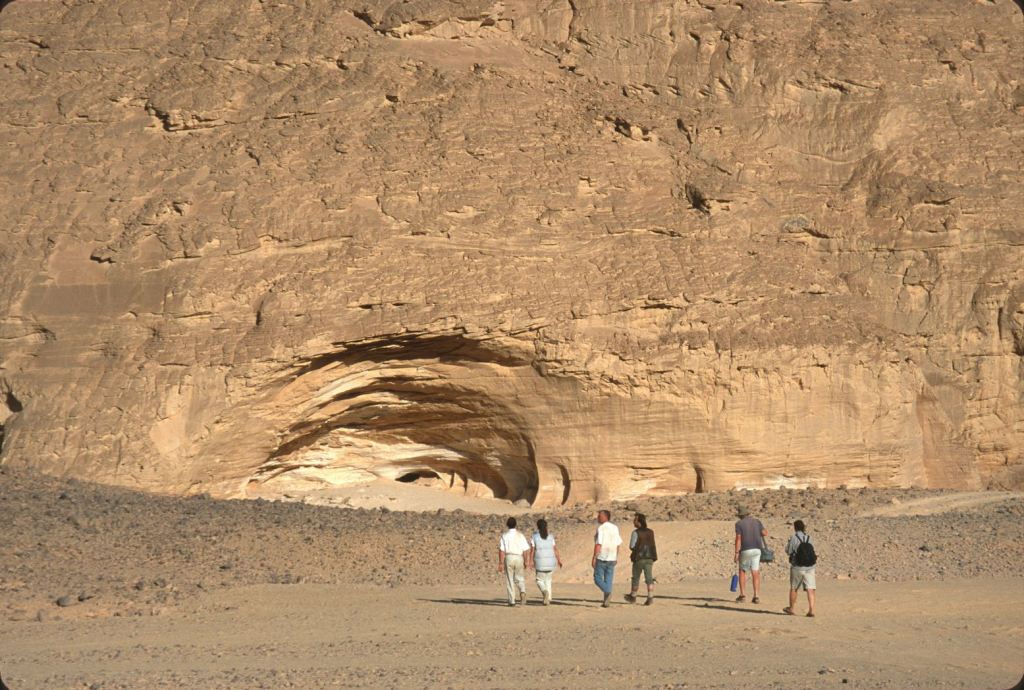
From Jebel Kamil we headed northwest on a GPS bearing to Eight Bells on the eastern edge of the Gilf Kebir from where Andras had a written description to a cave of paintings discovered by Shaw in the 1930s. We drove over a pass into the stunning Wadi Wassa and followed it west, crested another pass with little difficulty.
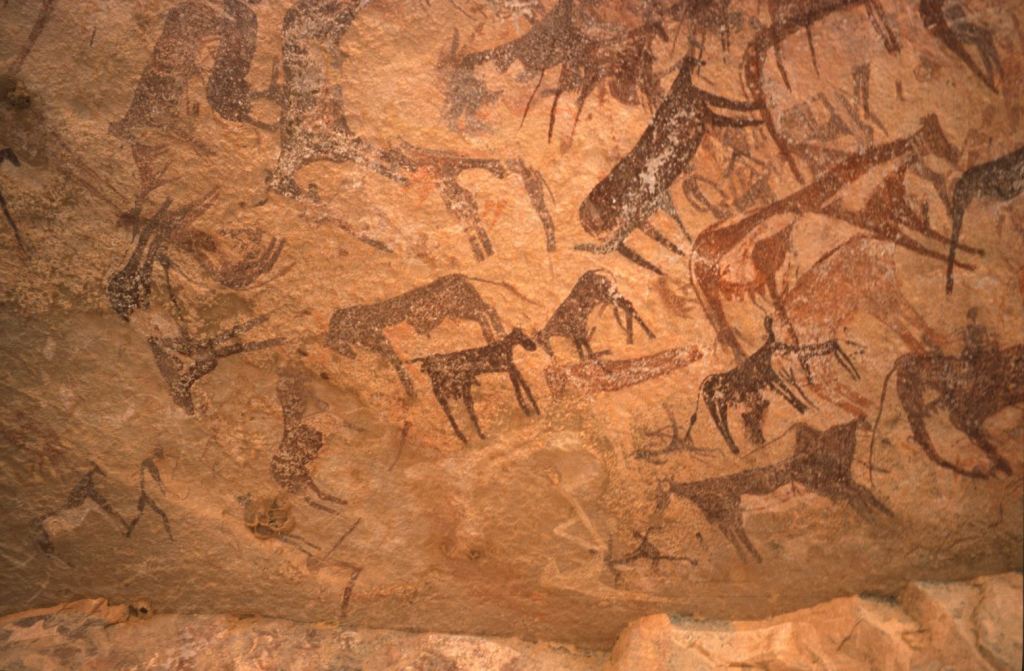
After locating the cave, we continued cross-country into a hot south wind over broken country to Karkur Talh, a clearly mined wadi which cuts into the 1934-metre-high massif of Jebel Uweinat. That evening, on a tip from Bagnold, Andras located some beautifully preserved Cattle Period paintings on the west side of the well-known cove. The quality was the best I’ve encountered (which isn’t much!) and showed similarities to the ‘Cave of the Swimmers’ or Wadi Sora style, we were to see a few days later.
The next day we continued further down Karkur Talh on foot, over the Sudanese border (passing a spoof CCTV camera, left) and, with the aid of Rhotert’s ‘The Rock Art of the Jebel Uweinat’ (Graz, 1978), soon found an rich trove of engravings and paintings spread along the walls of the wadis first discovered by Ahmed Hassanein in the 1920s and fully recorded by a Belgian expedition in the 1960s. It’s unlikely many other tourists have got this far since that time, and for all of us this wonderful day of discovery was the highlight of the trip.
Cows
Giraffes
Grinder
Waddan
We enjoyed it so much we came back into Sudan next day to find more rock art, including an amazing tableaux dubbed ‘Red Cow Cave’. We also spotted an amusing engraving possibly showing man’s failed attempt in giraffe domestication as mentioned in the Lutz’s book on the Libyan Messaks, as well as the foundations of Tubu dwellings who lived here up until the 1930s. A few very old waddan (mouflon, or Barbary sheep) horns were spotted, as well as a perfectly preserved cadaver tucked under an overhang. Tools were very rare, but right on top of our campsite back in Egypt, I found a milling stone, grinder and pottery.
Left Google (years later)’ right, in real life
From Karkur Talh we headed back north, overnighting at Clayton’s Craters where an afternoon was spent climbing or circumnavigating the barren craters. Out of the big wadis the Libyan Desert really is utterly bereft of vegetation to an extent you rarely see in the Sahara further west. I spotted more Stone Age tools, another milling stone and just as I’d hoped, a very worn biface or hand axe, the original multi-tool which may be tens of thousands of years old.
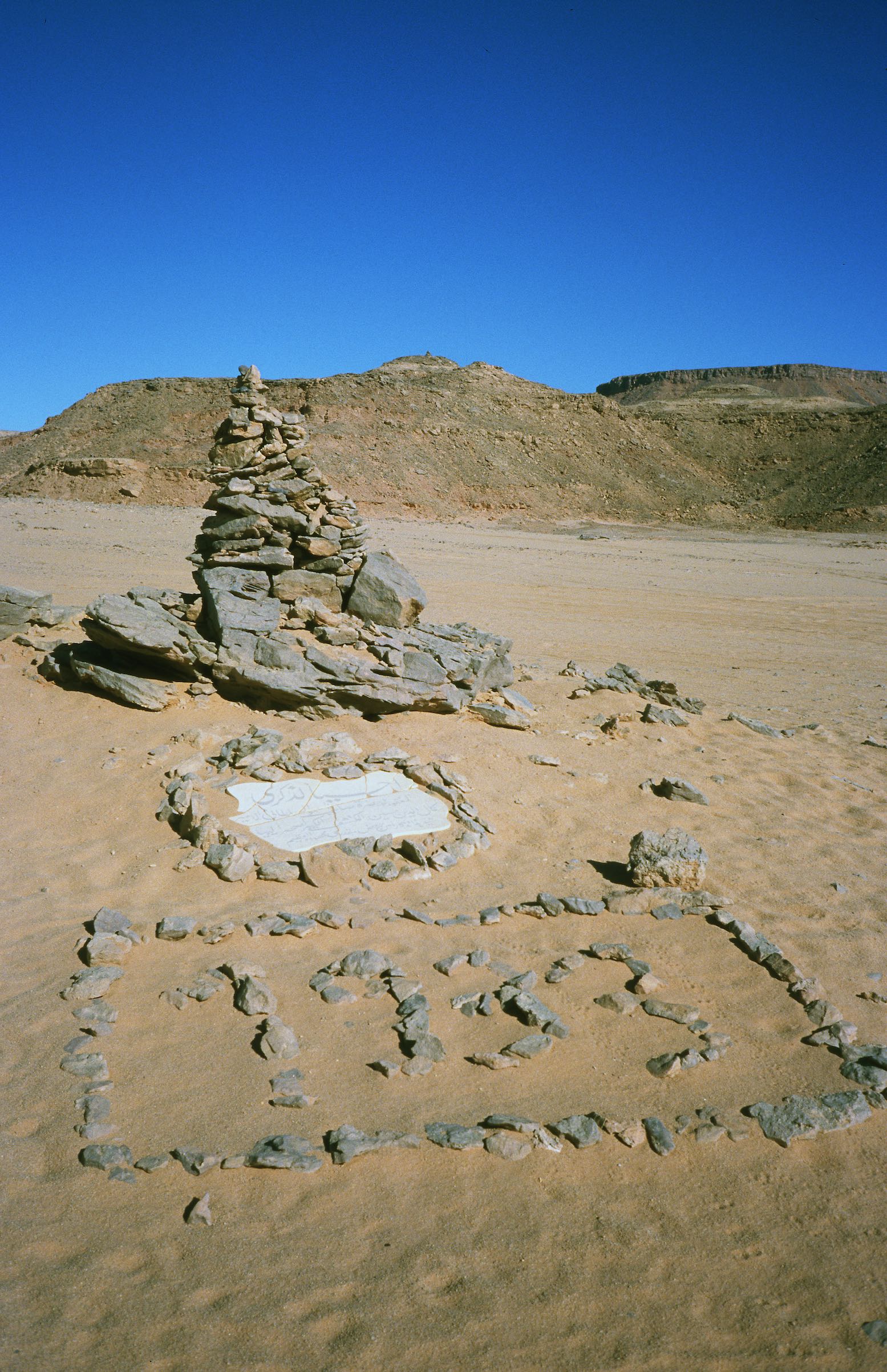
We moved north again, making the obligatory pilgrimage to the Kamal El Din monument (left) built by Almasy on the southern tip of the Gilf. Messages are still left in a bottle by passing travellers; a custom started by Rohlfs at the cairn of Regenfeld, further north. We now followed the southern edge of the Gilf to the northwest, past an old American SDF truck from the war and more Shell tins. We stopped at the Three Castles landmark where one of the group found one of Almasy’s water tins as accurately described in his ‘Unknown Sahara’ book. In case you don’t know Laszlo Almasy was the basis of the ‘English Patient’ character in that very fictional book and movie, and a contemporary of Bagnold, Shaw and Clayton. For me the famous Wadi Sora discovered by Almasy and romanticised in the movie was nothing special; the ‘cave’ has flaked badly but the swimming figures are still very distinctive.
Cave of
the Swimmers
We headed back east to the dreaded Aqaba Pass, an unmined five kilometre sand ramp providing access into the central rift of the Gilf. Foot on the floor in Low 2nd and rocking hard on the steering wheel, I just scraped through to the summit, much to my surprise. Werner, driving the other heavy car got himself mired near the top and we all made a meal of getting the ‘fuel mule’ to the summit. Along with the other-worldly panoramas surrounding Clayton’s Craters, the central Gilf north of the Pass was one of the most beautiful landscapes we encountered – we’d obviously hit it at the right time of day.
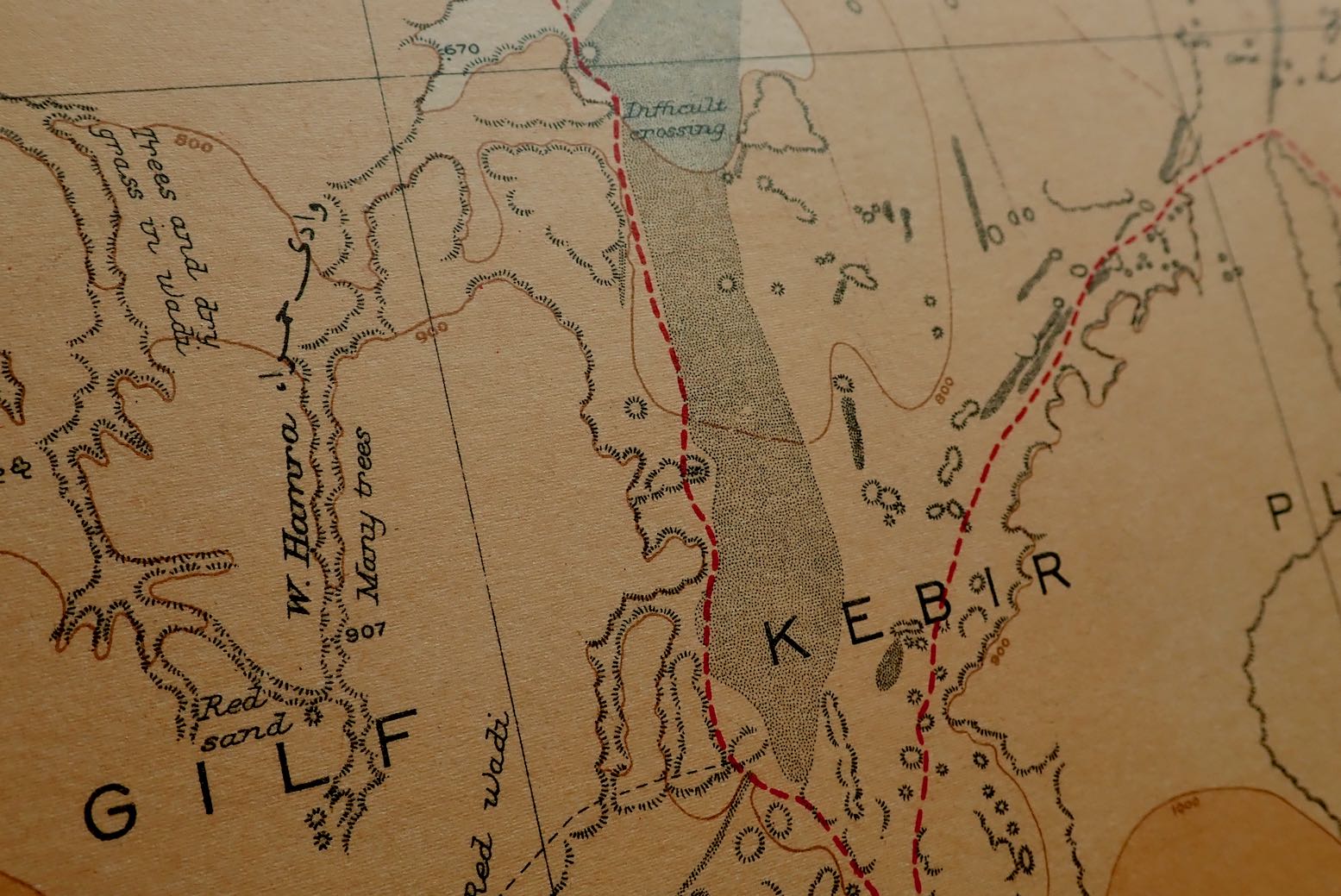
We camped in a valley bizarrely dammed by a perfectly dune of sand 200 feet high and now clearly visible online. We rose early next day to attempt to cross the cordon of dunes blocking access to the northwestern Gilf valleys, dryly annotated as ‘Difficult Crossing’ on the 1942 British Survey map, still one of the best for the area. They were first crossed in 1935 by WB Kennedy Shaw and his group using Model A Ford.
Using from NASA satellite imagery [this was all pre-Google Earth] and the British Survey map, Andras led us through the erg’s seven-kilometre width in six hours, notwithstanding a freak out by one of the Egyptians who, along with a wheel brace, grabbed the keys from two cars and yelled “We’re all going to die if we go there”. Discussing this with Reinhart Mazur on my return, he observed that most Egyptians are river dwellers very much not ‘of the desert born’, unlike the Tubu, Tuareg or Moors further west. Ahmed was eventually calmed but later, navigating the Sand Sea, this was to be a recurring problem. Exhausted after the digging and pushing of the crossing, we headed south deep into Wadi Hamra, then spent another very enjoyable day walking over the tool-scattered plateau to the adjacent Wadi Abdel Malik, spotted by Almasy and others from a biplane in the early 1930s and named after the last Tubu grazer who lived there. Almazy also believed this to be a most likely location of the ‘lost oasis’ of Zerzura, used by Tubu raiders who set off to attack Dakhla oasis.
The Lost Oasis of Zerzura?
Our next destination was the Silica Glass Field located in a 100km circle around N25° 18′ E25° 32′, among the parallel dune lines of the Great Sand Sea. We all spent a satisfying few hours picking out pieces of this clear green glass, ranging from the size of a penny to a grapefruit. I also found some Palaeolithic nick-nacks and on a dune crest one of the others found several pencil-thin tubes of fulgarite: sand grains vitrified by lightening.
For me, our fossiking was overshadowed by the long dune lines running north-south alongside the pebbly flats. An inspection on foot confirmed that these were not simple ‘up and down’ barchans but a complex, weaving band of crests and troughs a few hundred metres wide and clearly beyond the ability of the still heavy Land Cruisers. The original plan to drive up to Siwa had been abandoned, but a no less ambitious decision was taken to try and cross the dunes to the northeast up to Ammonite Hill and on to the well at Ain Dalla, near Farafra, just as Bagnold, Shaw and there chums used to do in the 1930s with stripped-down 2WD Fords.
In Werner’s and my opinion, such a task is best left to lighter vehicles and, lacking a decent compressor, proper tyre deflation was not allowed, leading to inevitable boggings. I‘d let mine down at Shaw’s Difficult Crossing a few days earlier, but even then, every eastbound cordon was hard won, with the aid of hand held radios, foot recces and passengers strung out as markers to guide the white-knuckle driving around the soft spots. After an exhausting day, more arguments and attempted sabotage of the tyre valves by the nervous Egyptians, the idea was dropped and we headed back south towards the northern banks of the Gilf to pick up the track to Abu Ballas. All of us were very relived to be out of the dunes.
Abu Ballas
‘Pottery Hill’
Apart from the food, for me the trip was a great experience. It was the first time I’d driven entirely off piste which I found surprising easy. I was merely following a lead car of course, but the almost complete lack of wadis in the hyper arid Libyan Desert makes cross country travel using GPS and maps or satellite imagery straightforward. Day walks away from the car where also a novelty to me. Near pistes I’d always been nervous about leaving the ‘mother ship’, be it car or bike. But here there was no one for hundreds of kilometres in any direction and there’s no doubt that the desert is best appreciated at walking pace. Interestingly Werner and I both recognised that even though we were as a far out as we’d ever been in the Sahara (certainly for me), we didn’t feel the remoteness. The fact that the organisation was Andras’ responsibility reduced the impression of deep wilderness experienced when you do it independently, at of course, some cost to your nerves. In this instance we were both happy that someone else – and better still, someone else’s car – where carrying that heavy loads.
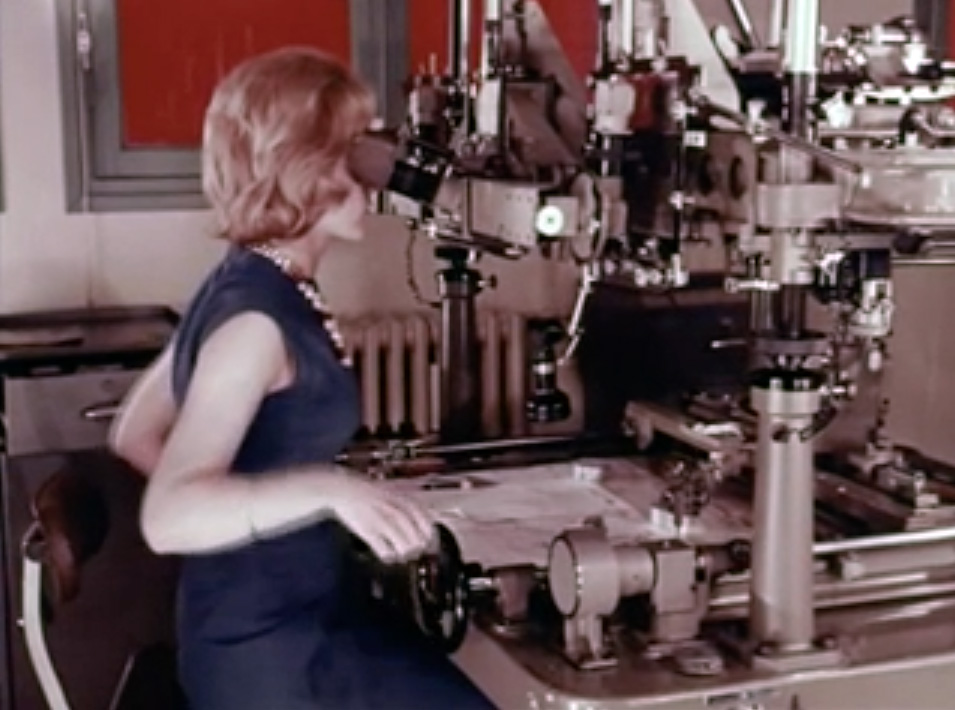
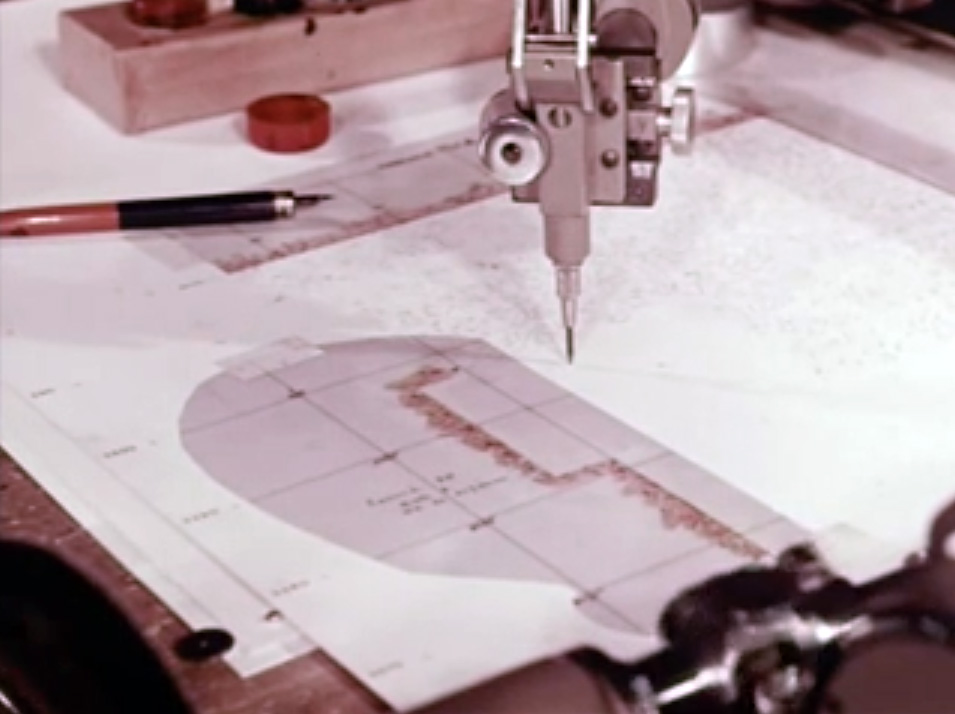
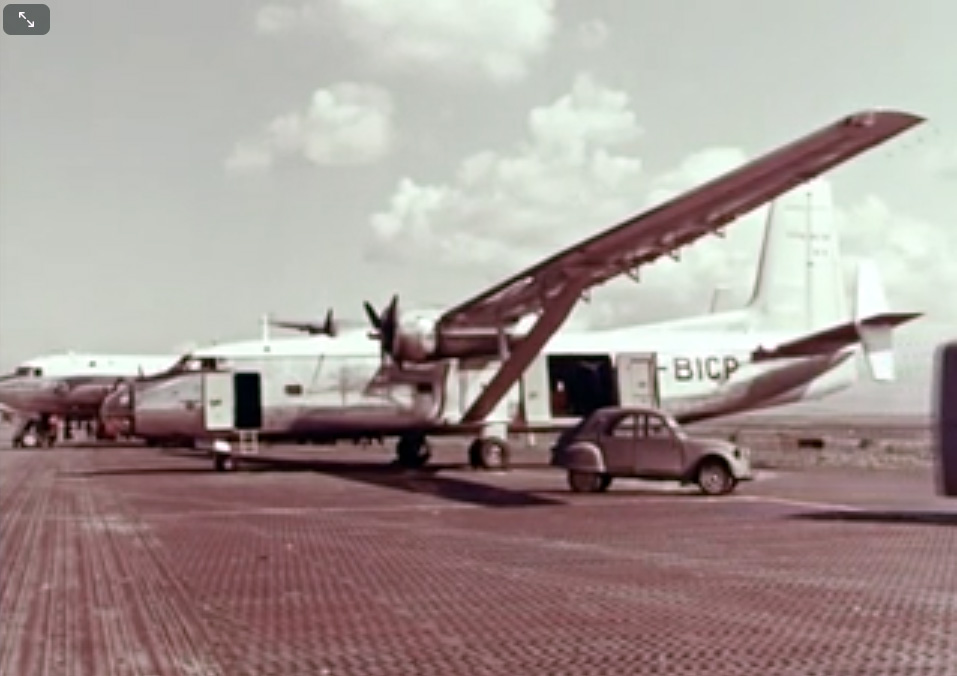
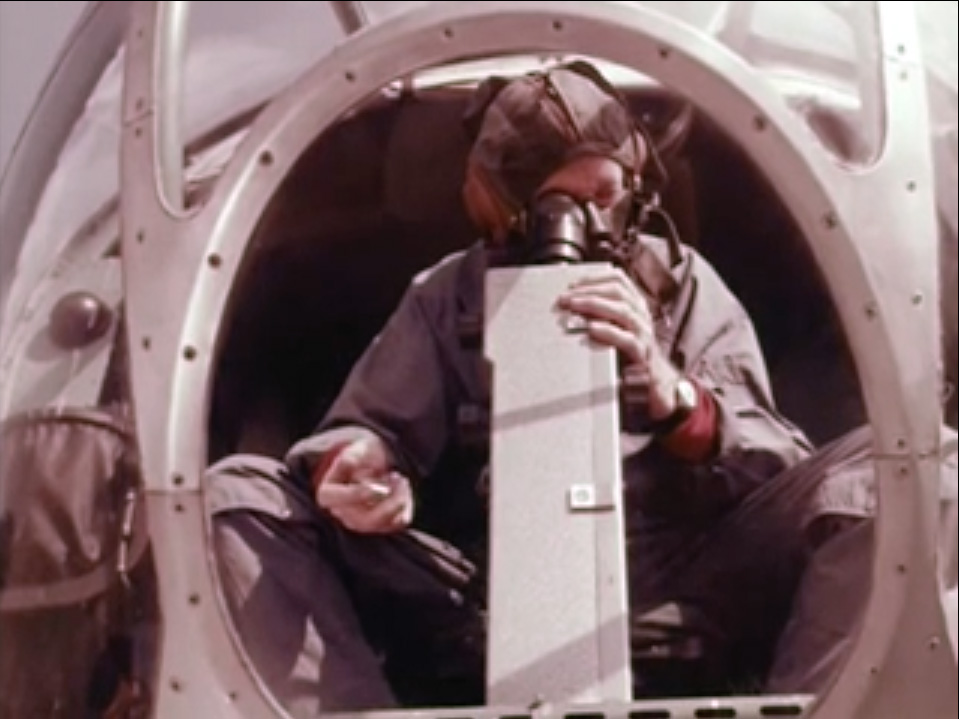
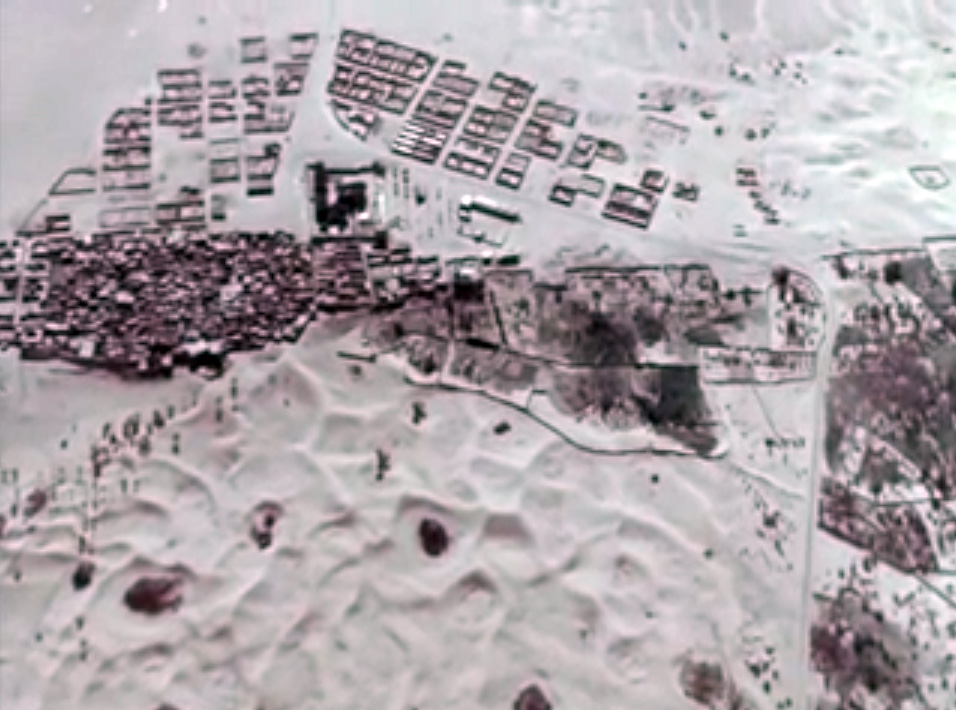
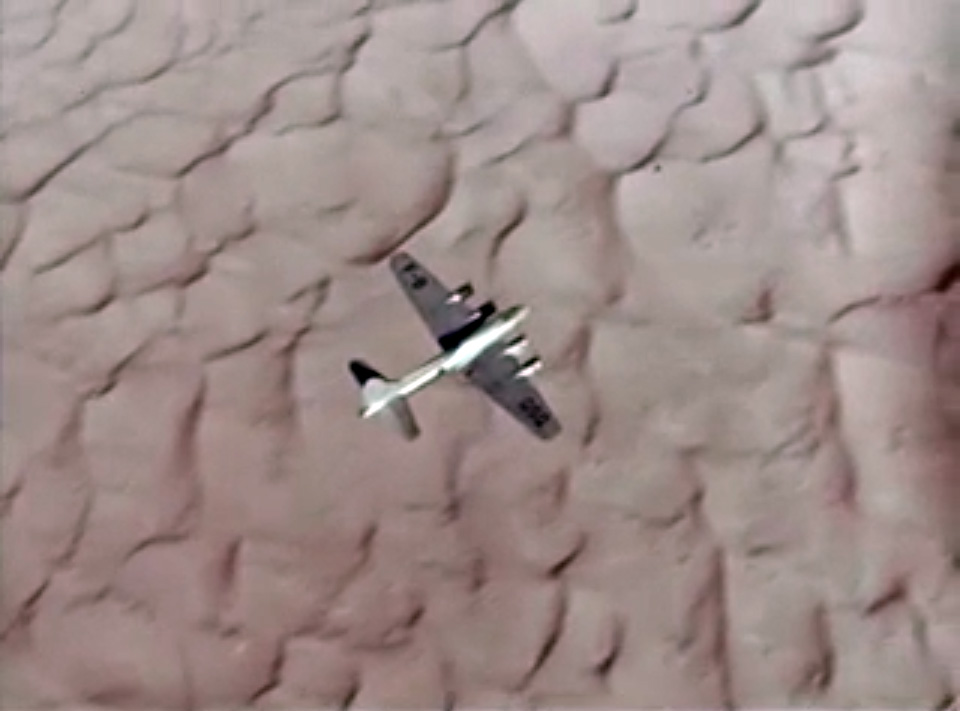
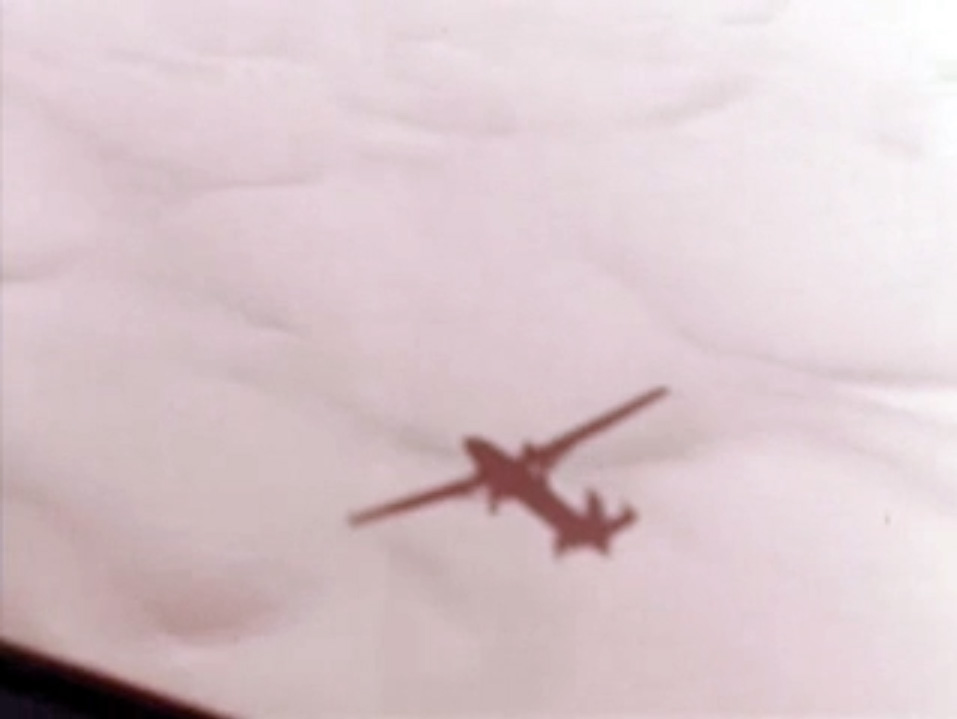
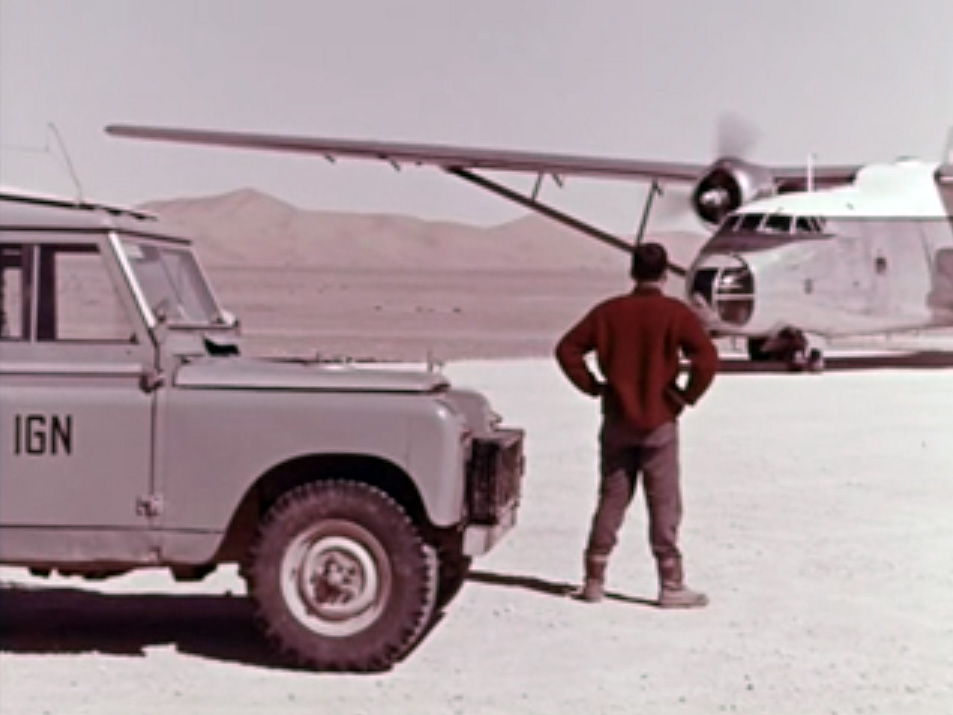
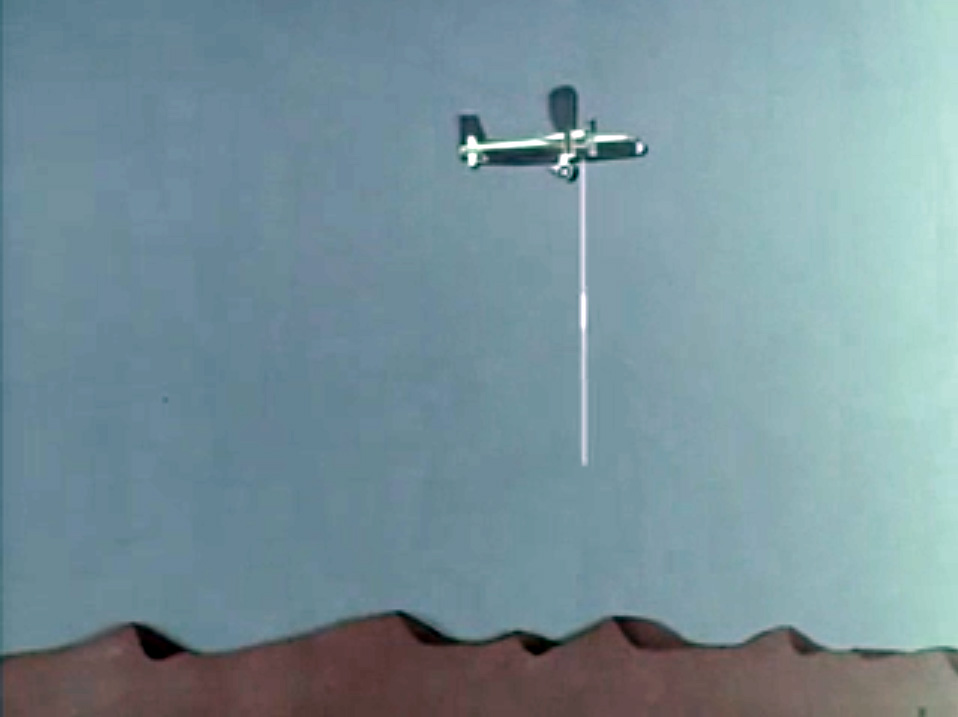
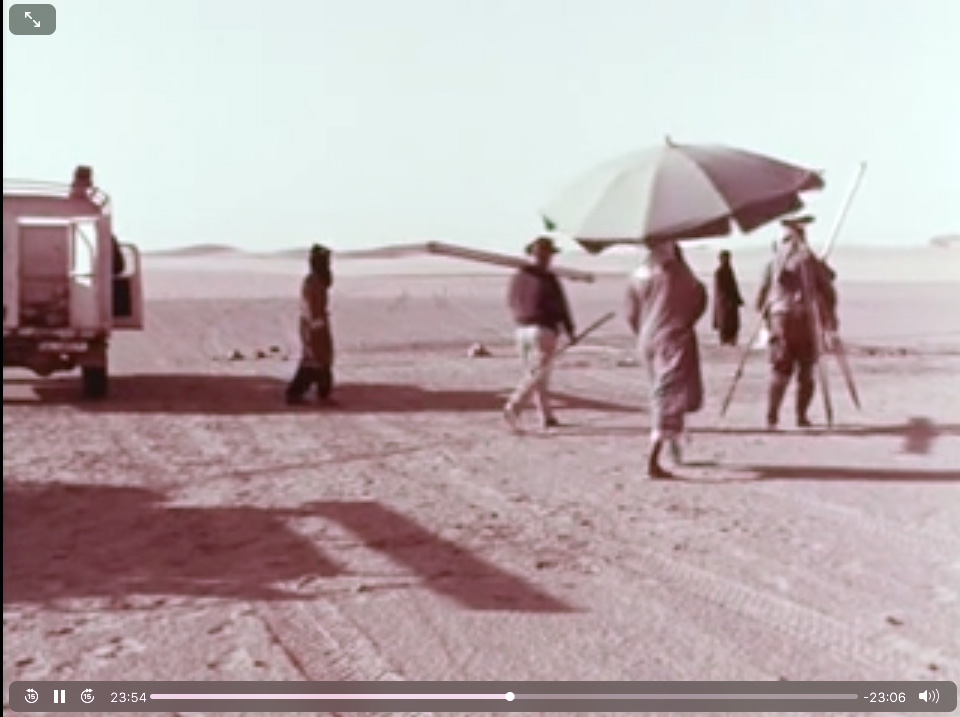
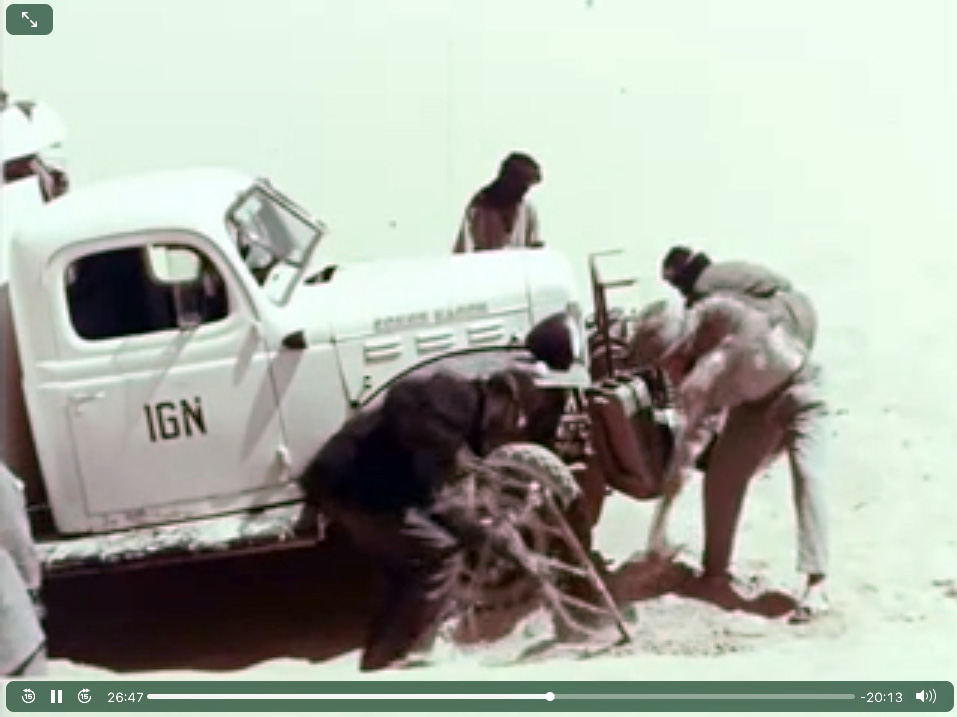
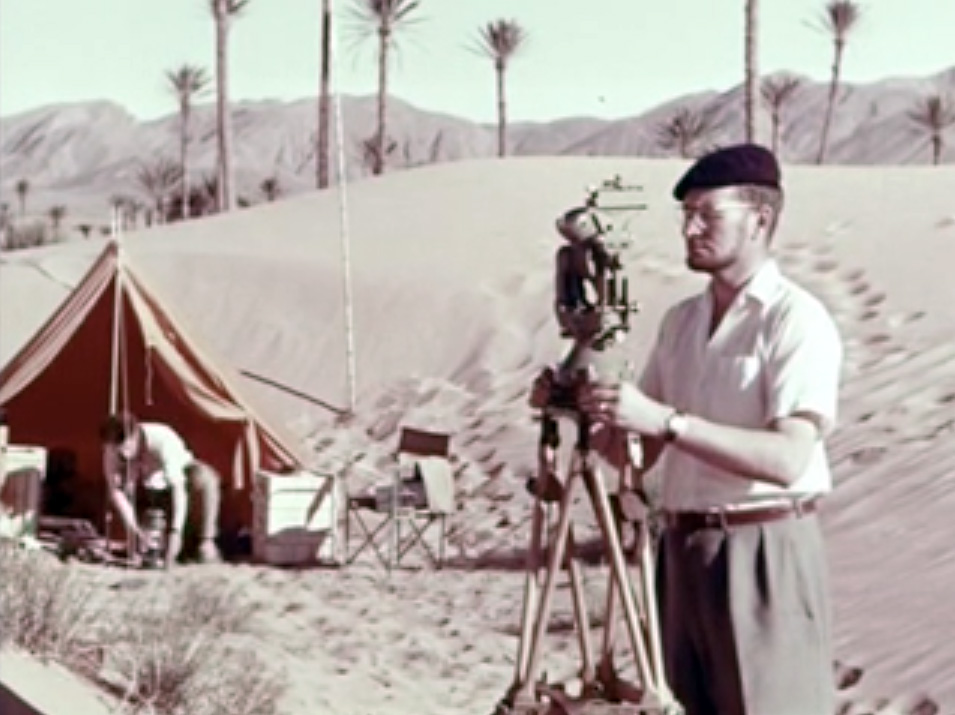
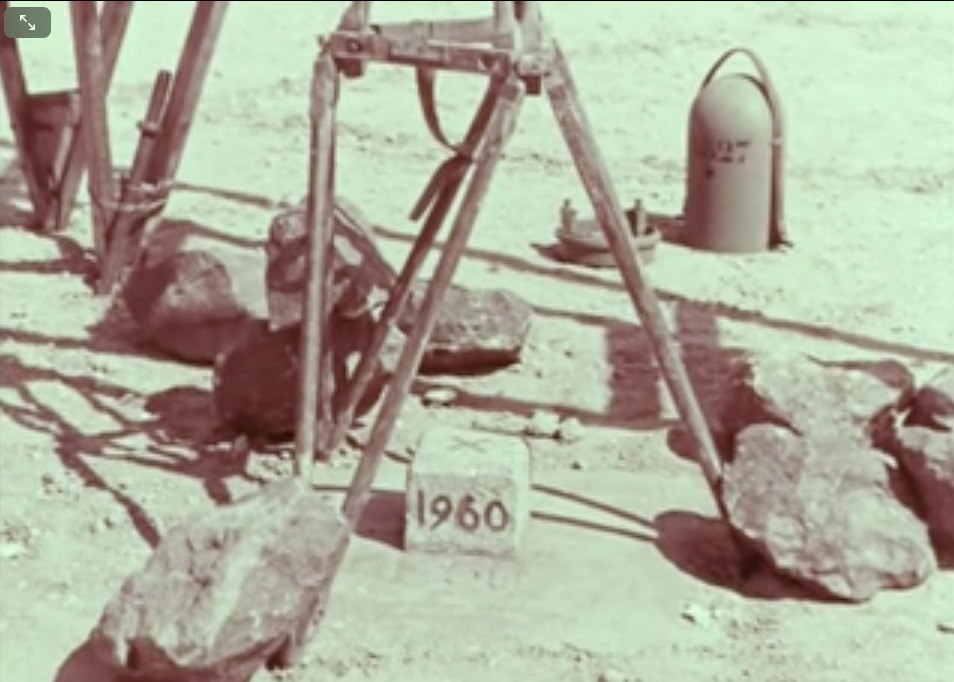
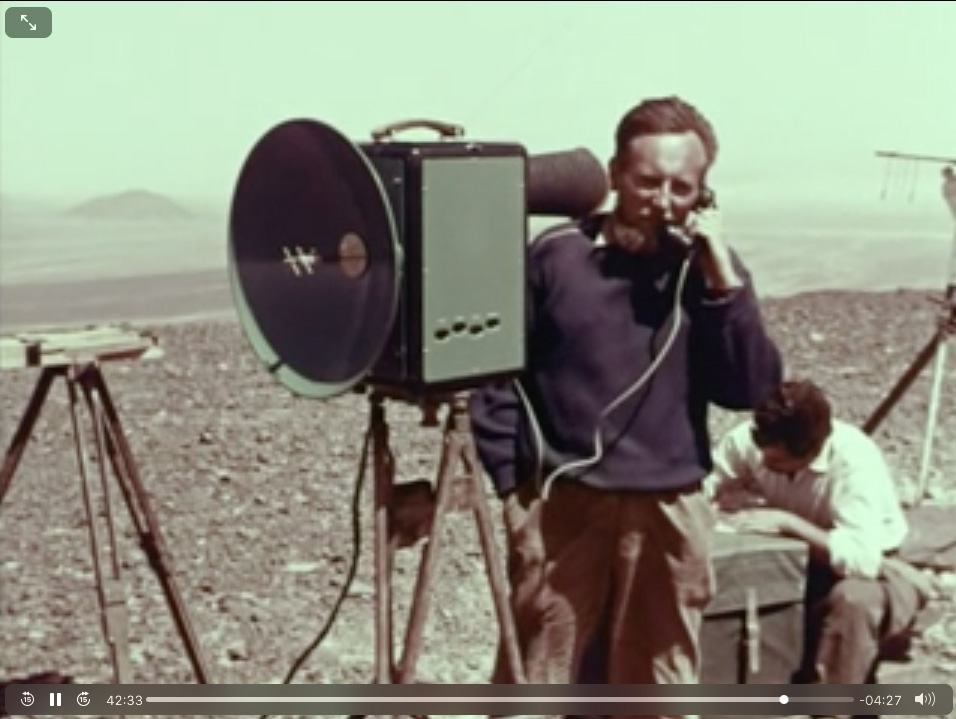
Here a fascinating 1960s vintage film (45 mins; French) on the work it took IGN to produce their brilliant 1:200,000 scale Sahara maps from thousands of aerial photos, sonar readings and laborious ground surveys. Direct link to video.
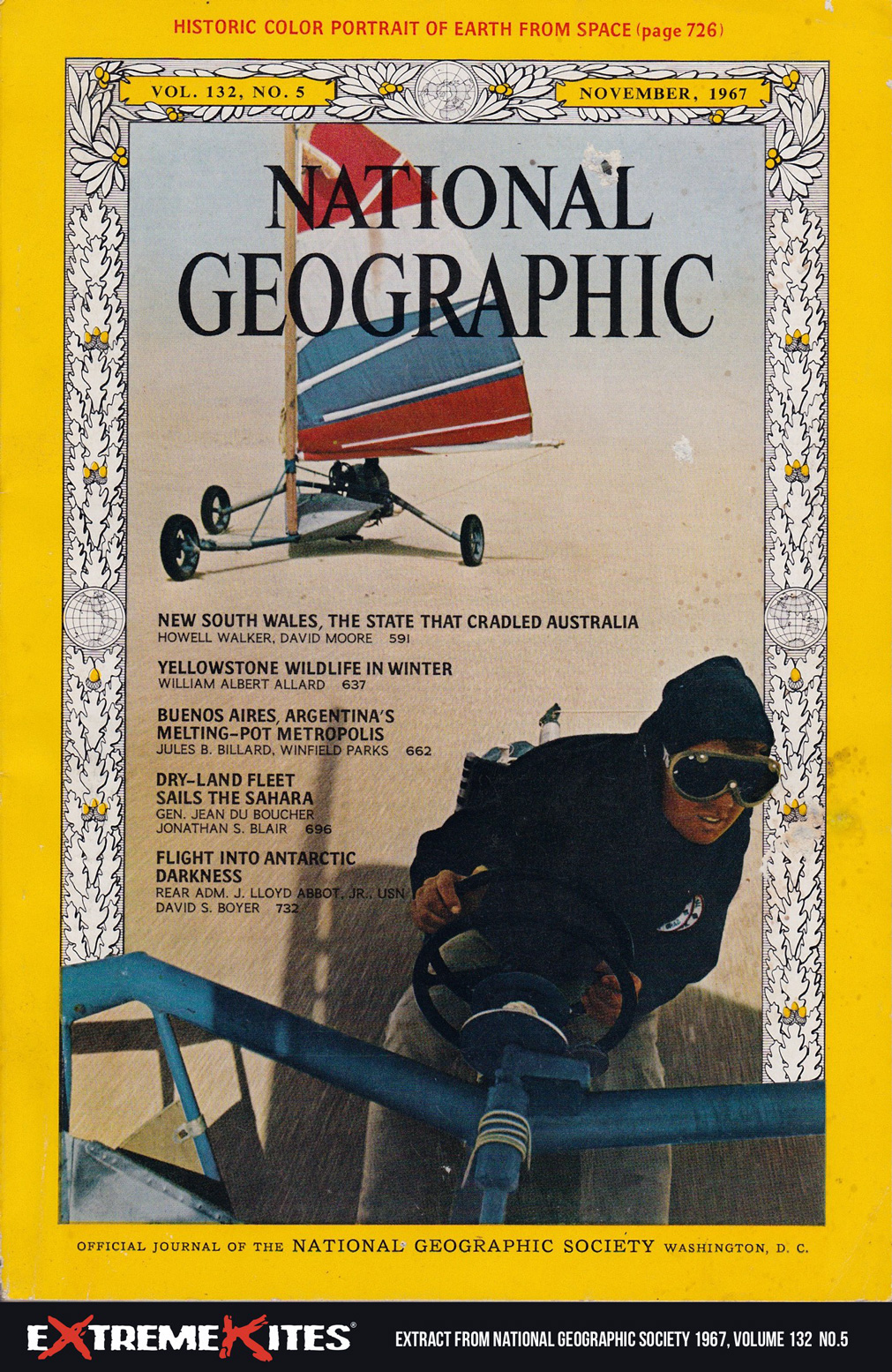
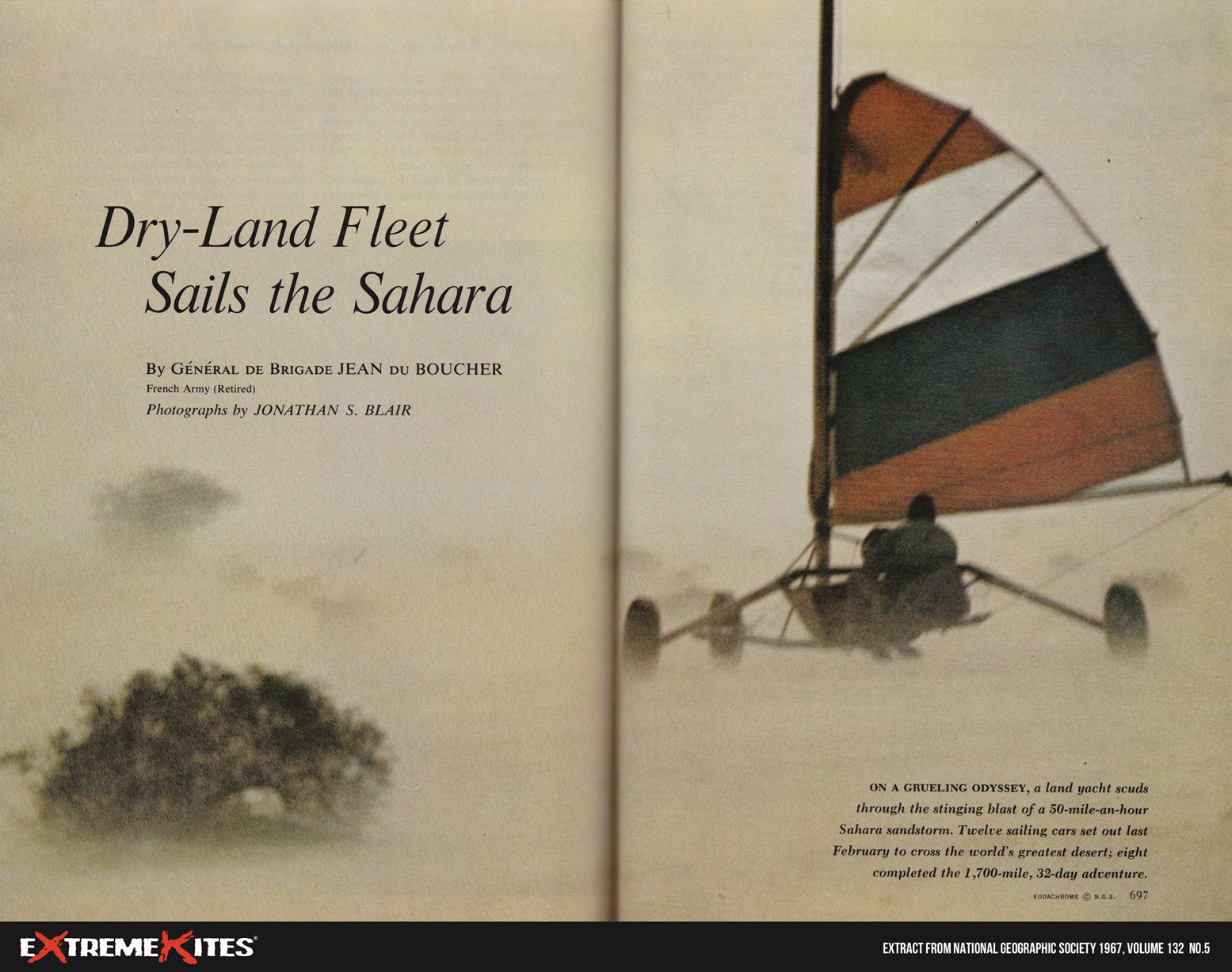
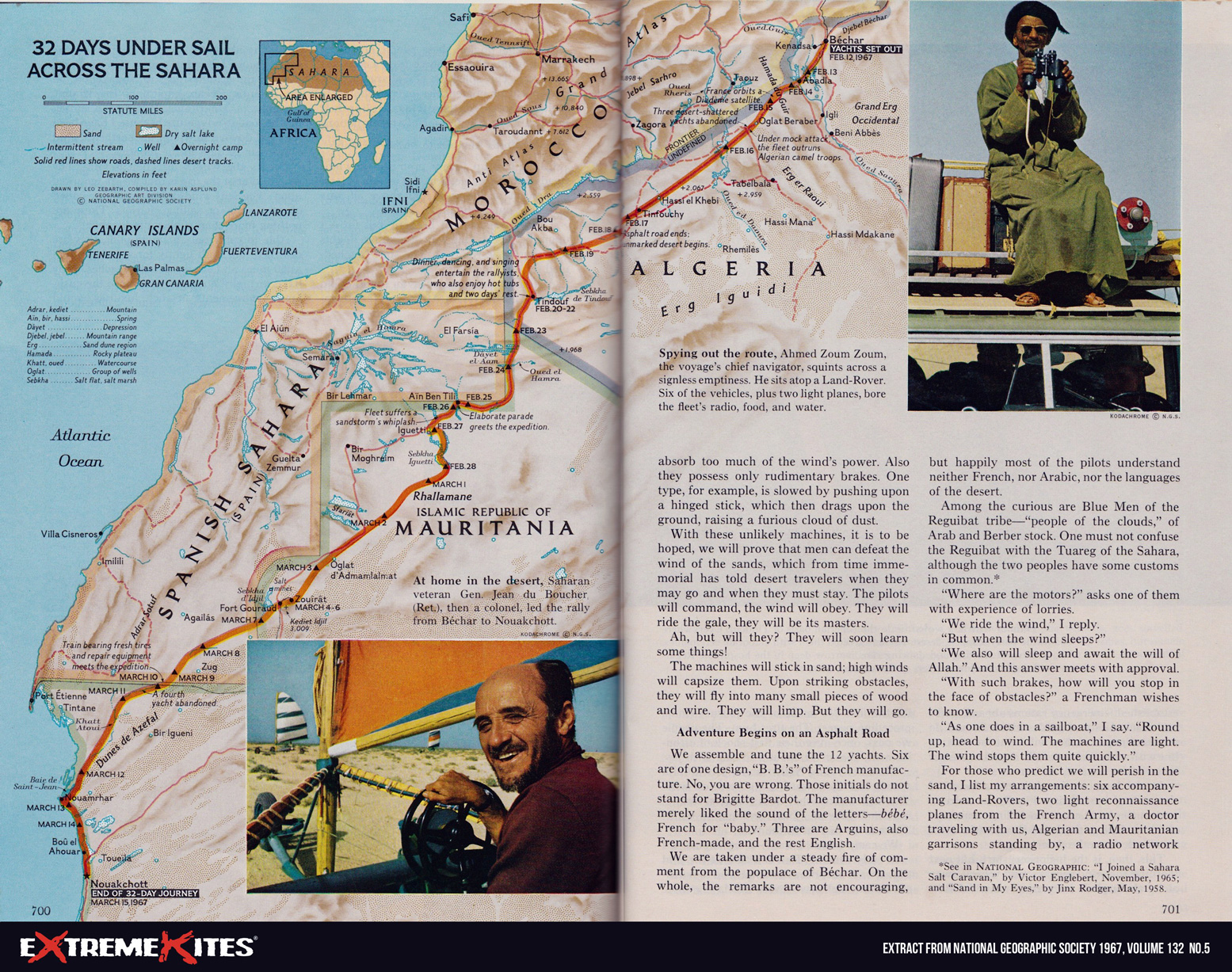
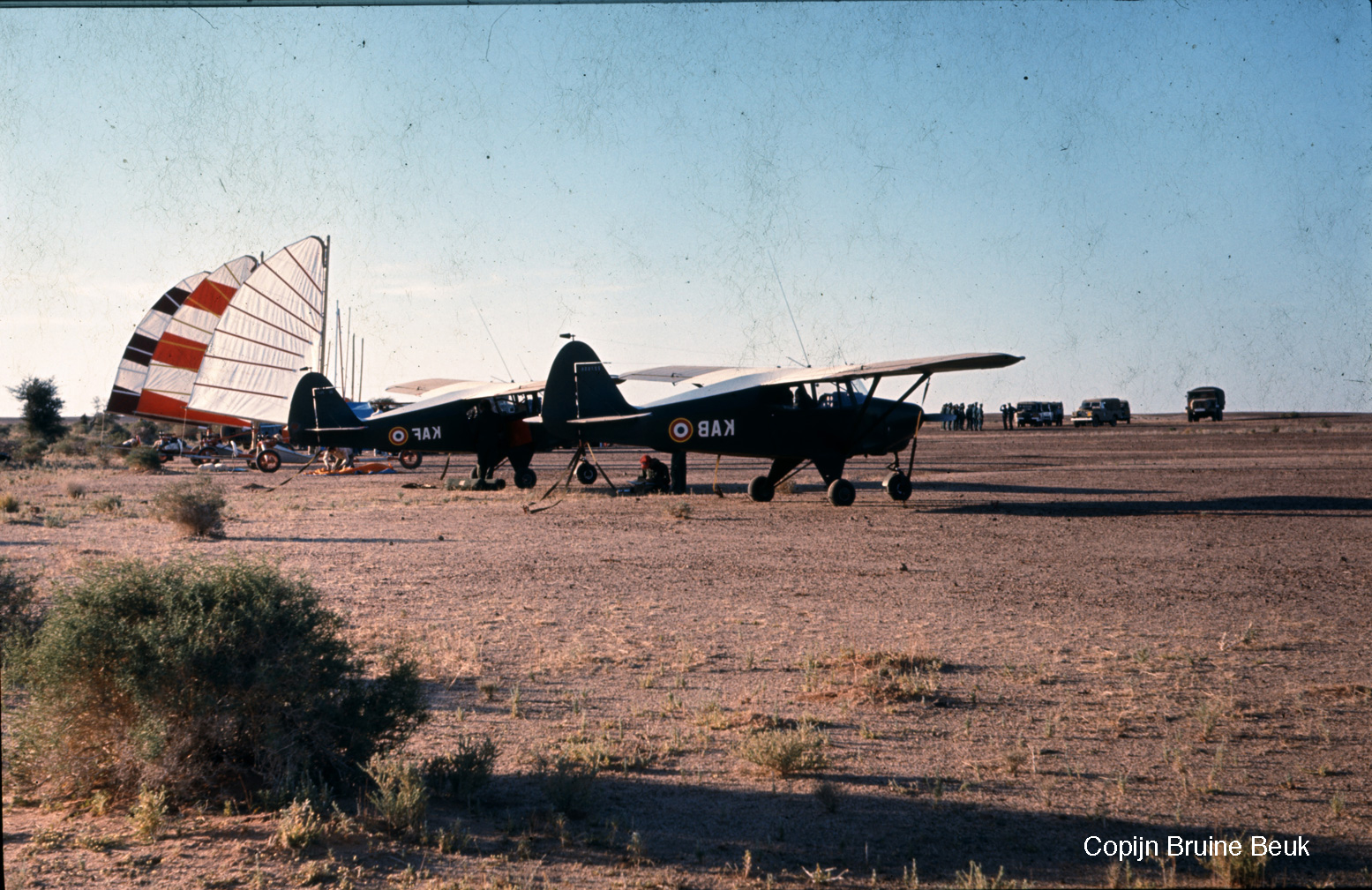
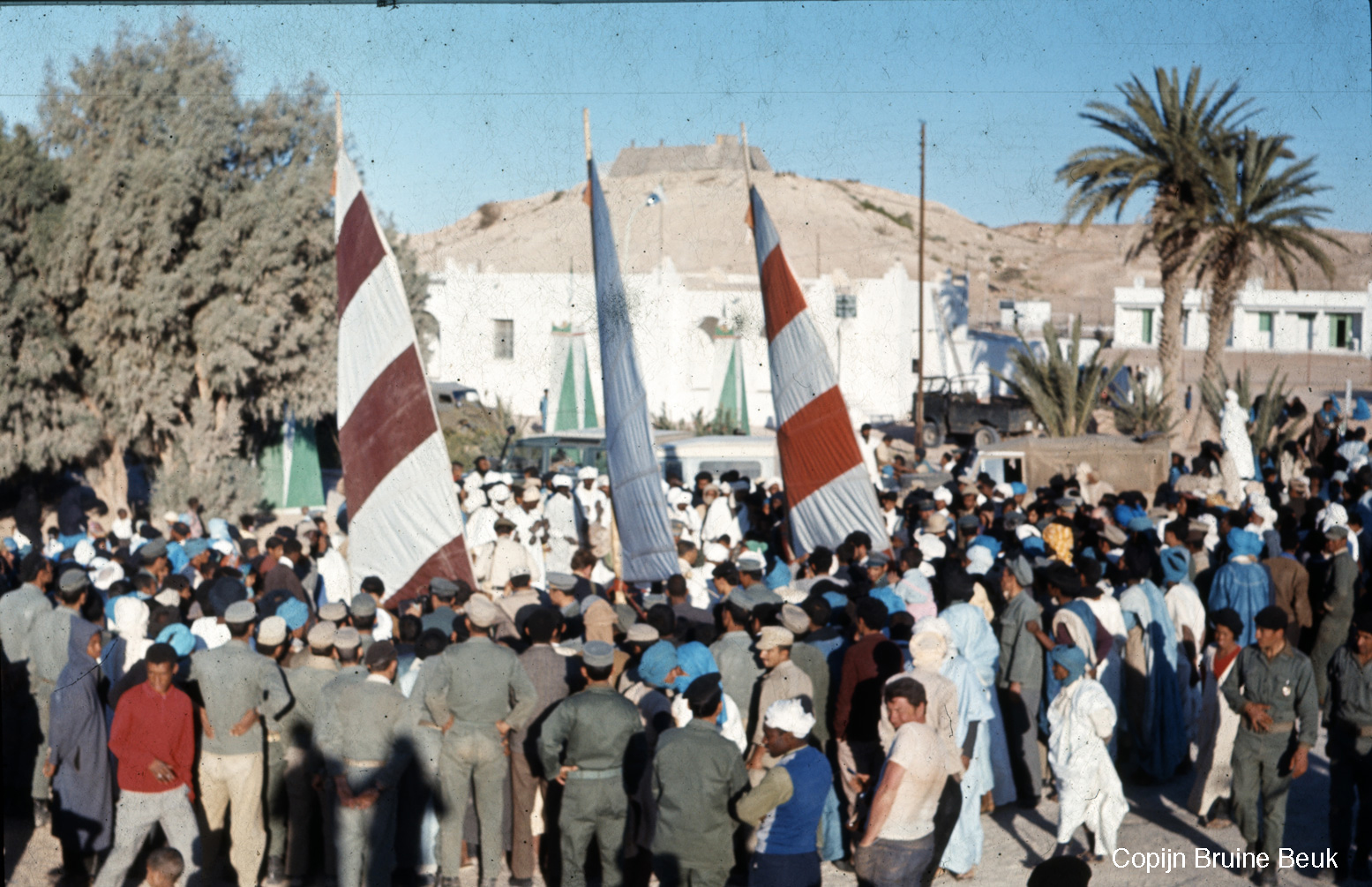
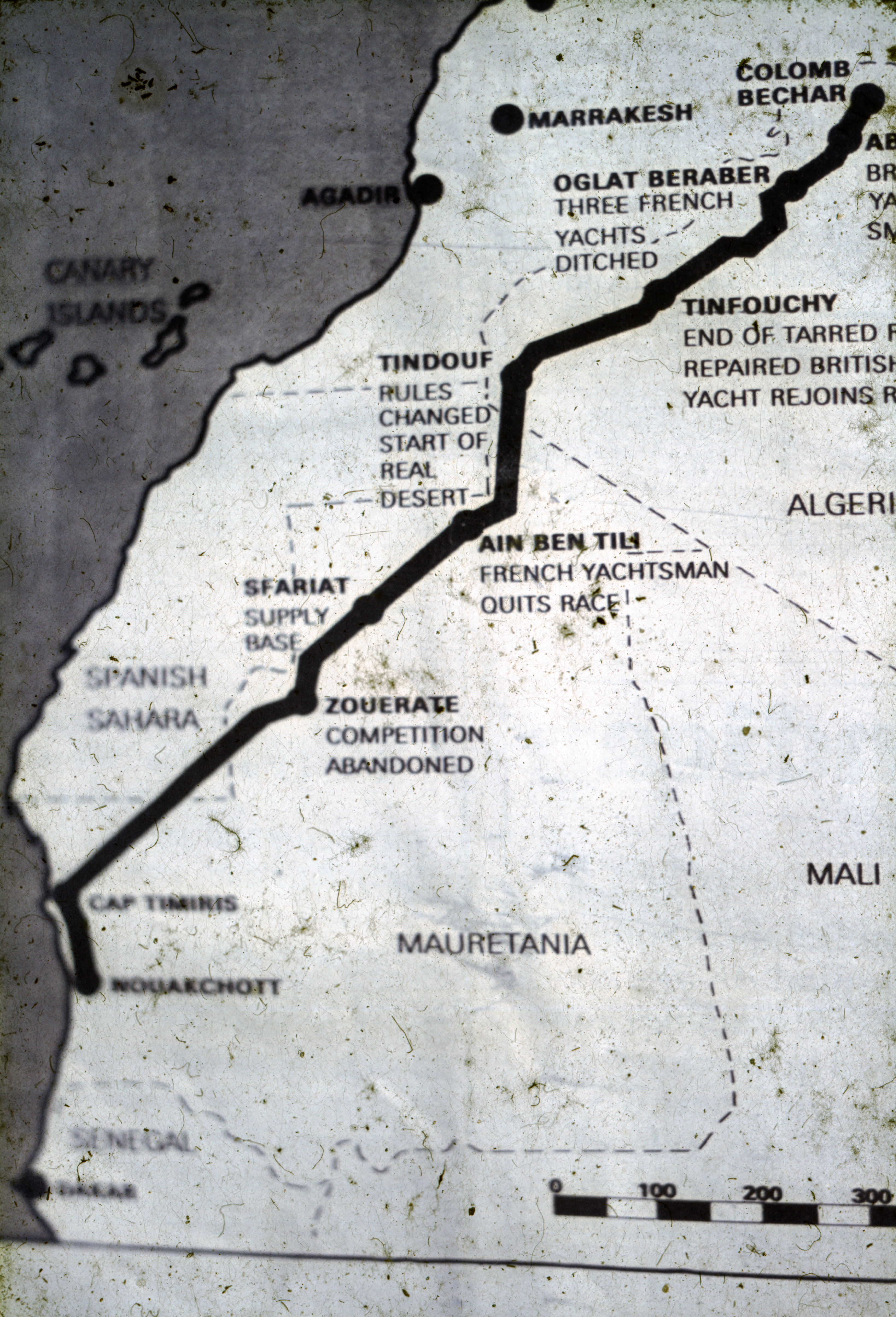
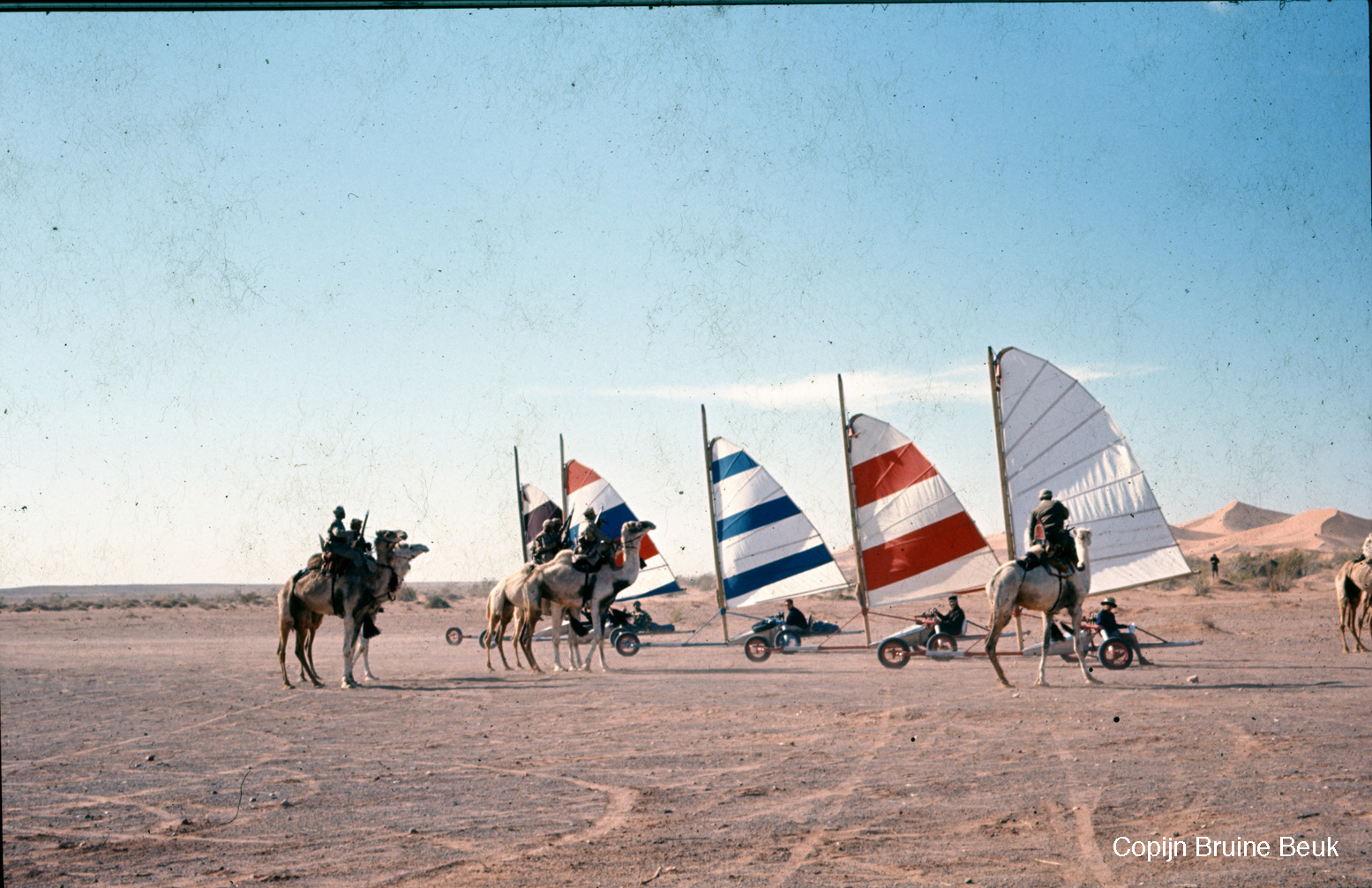
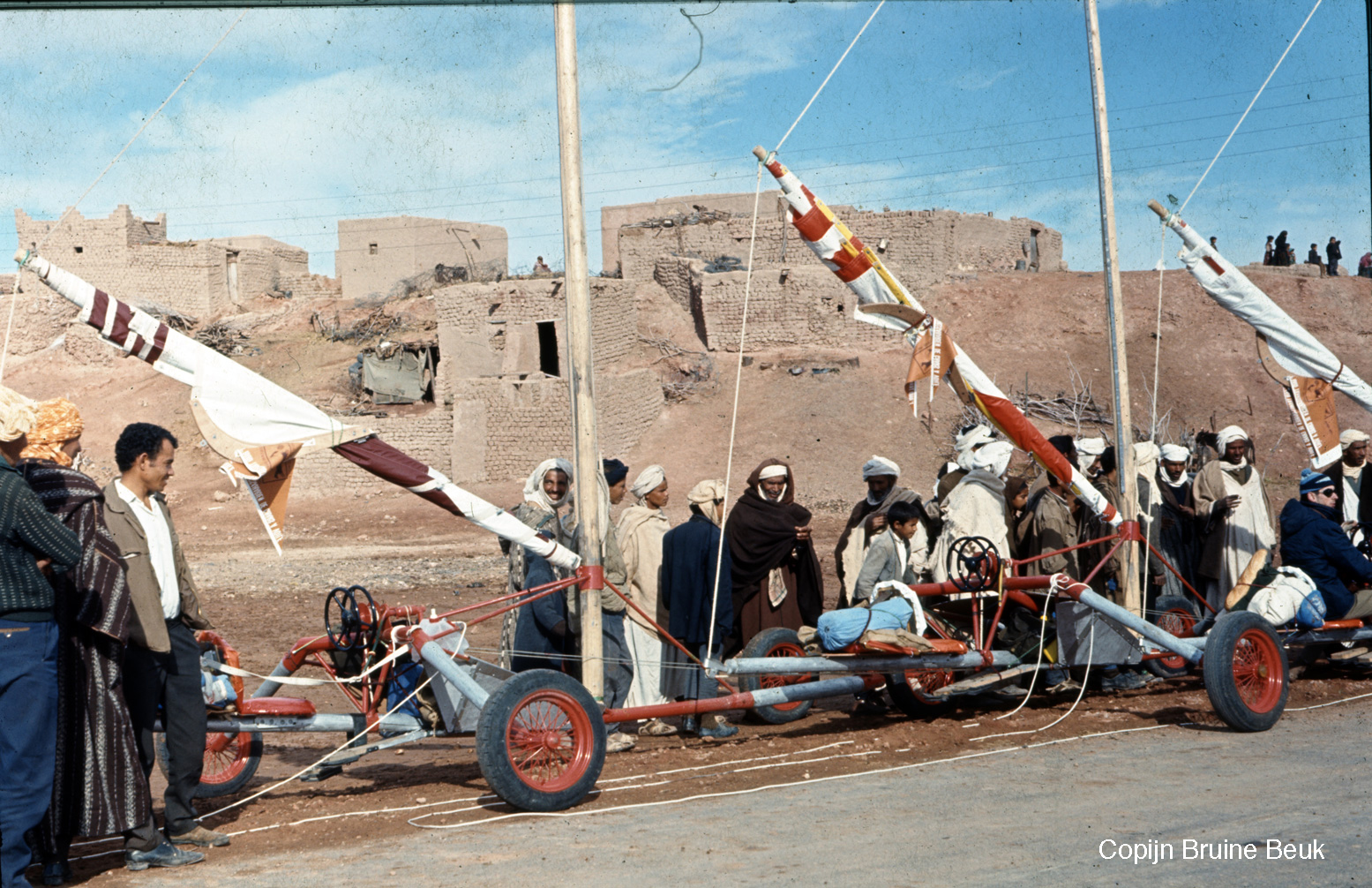
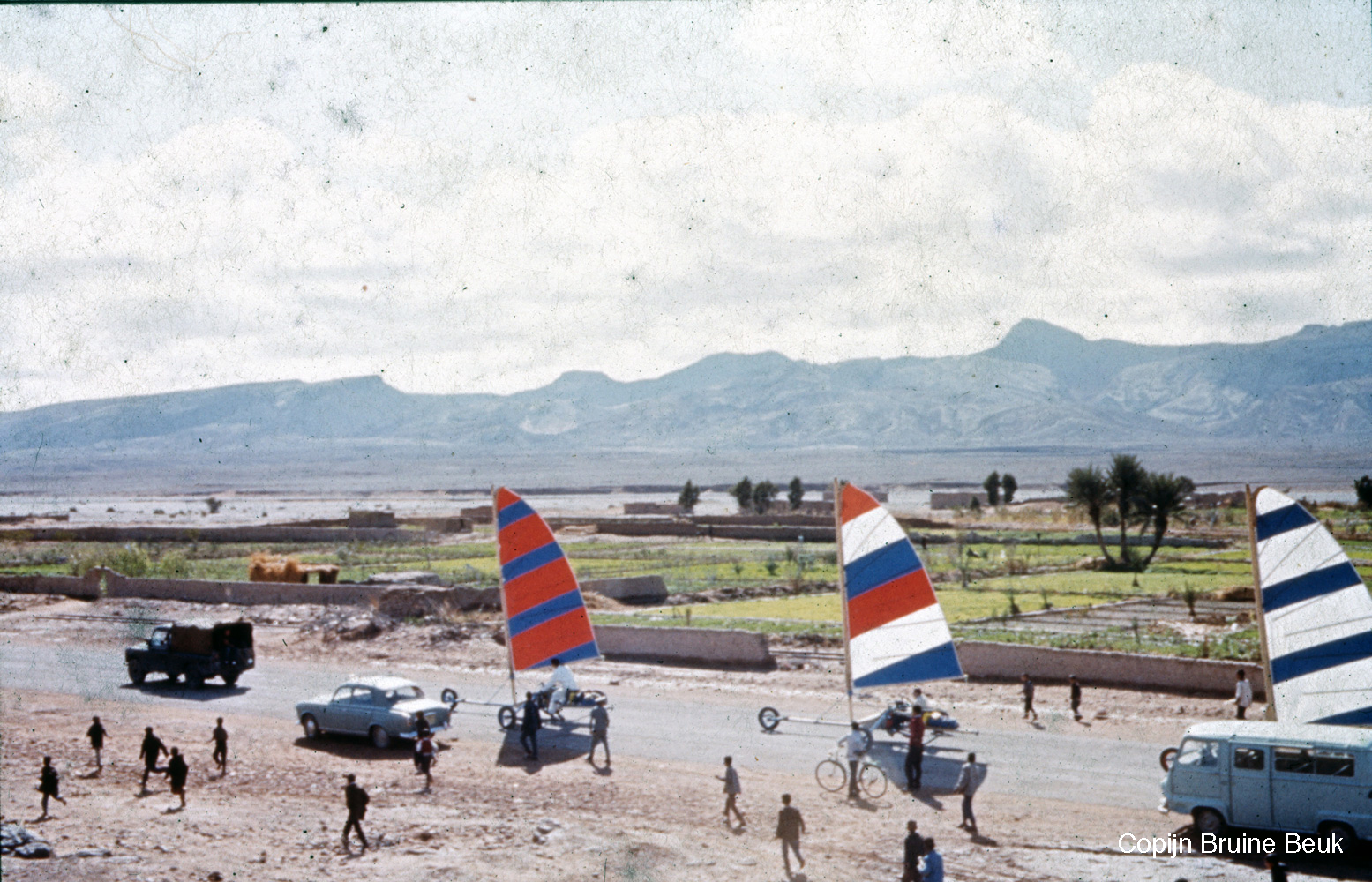
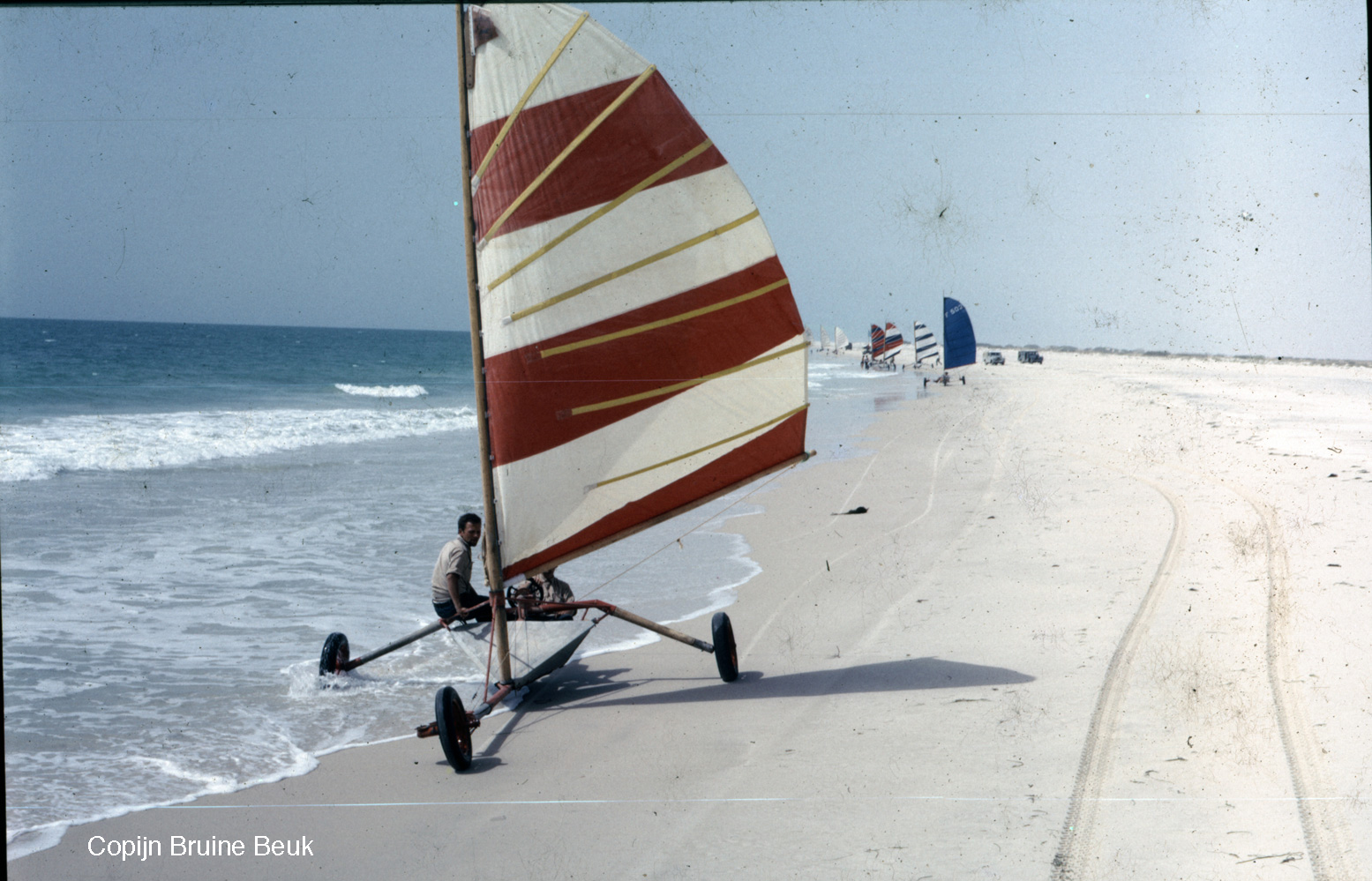
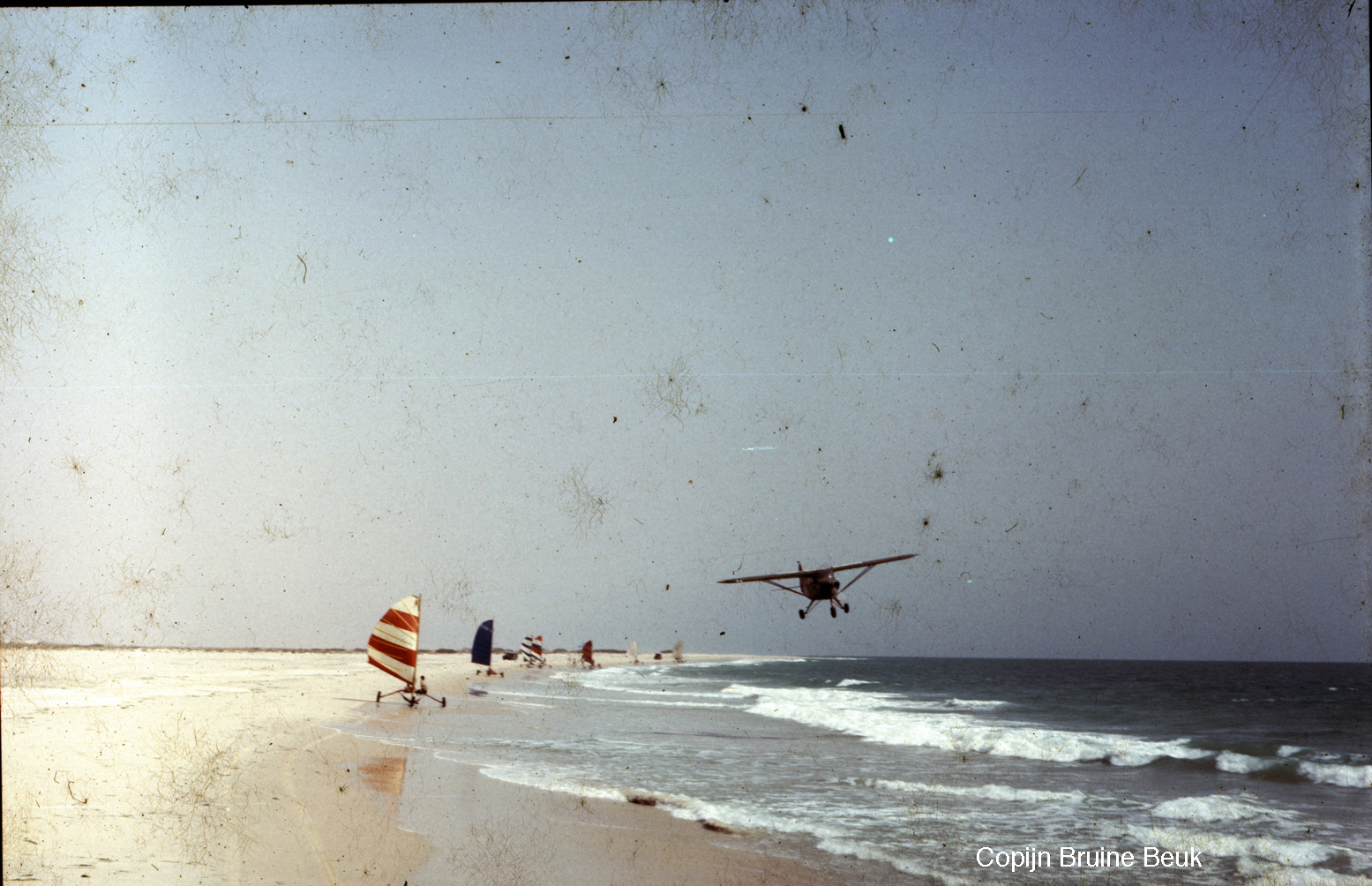
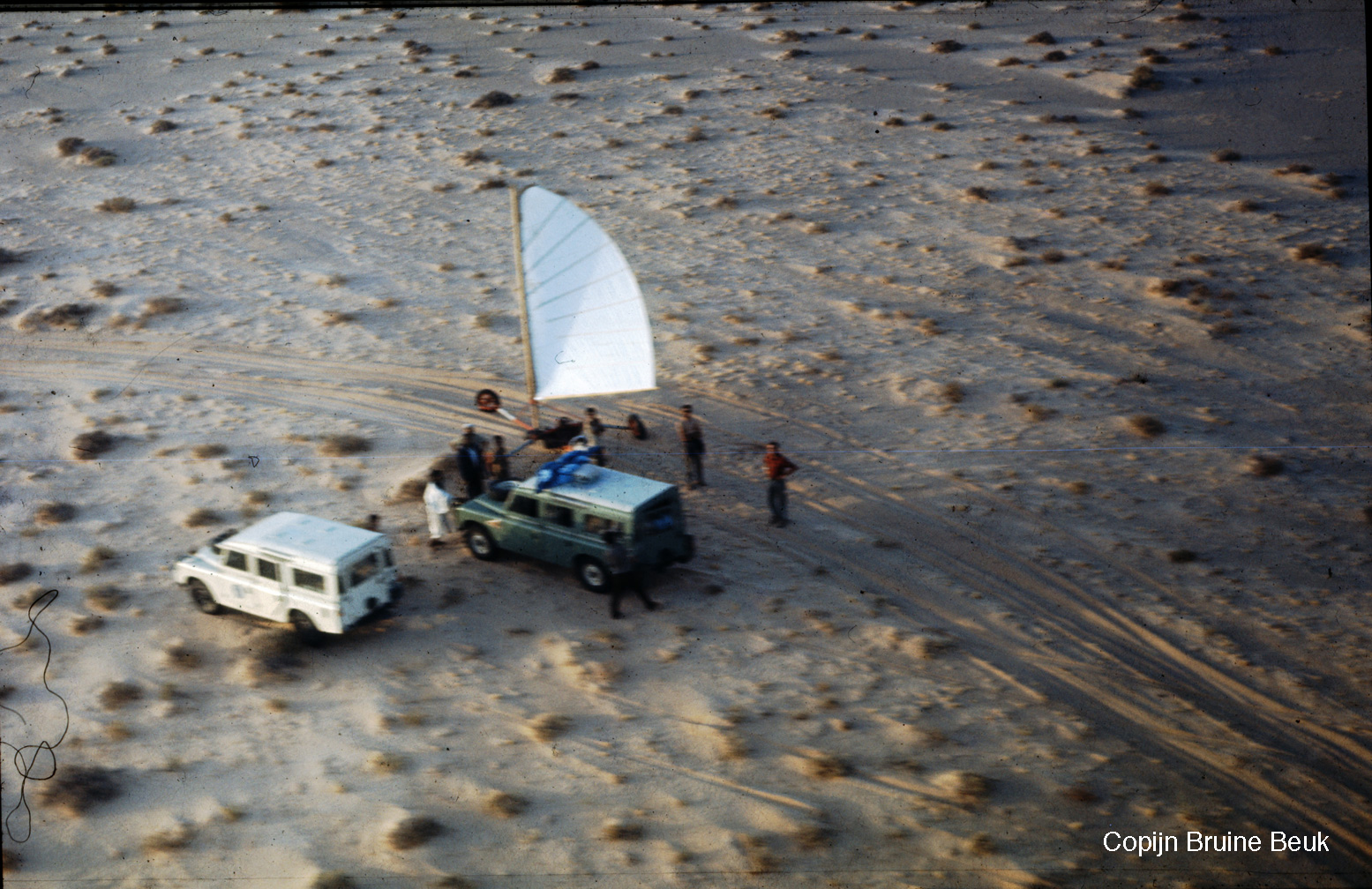
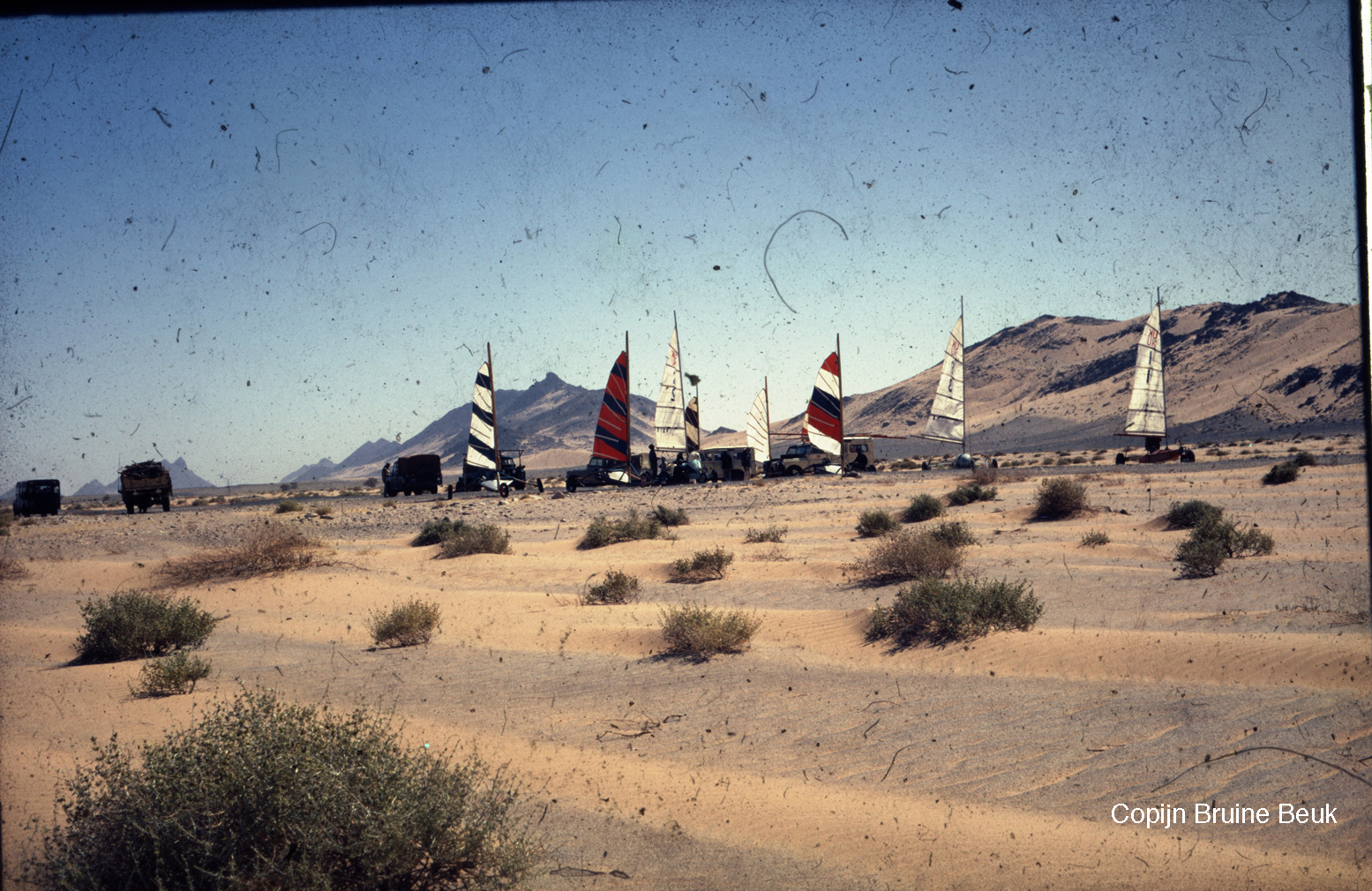
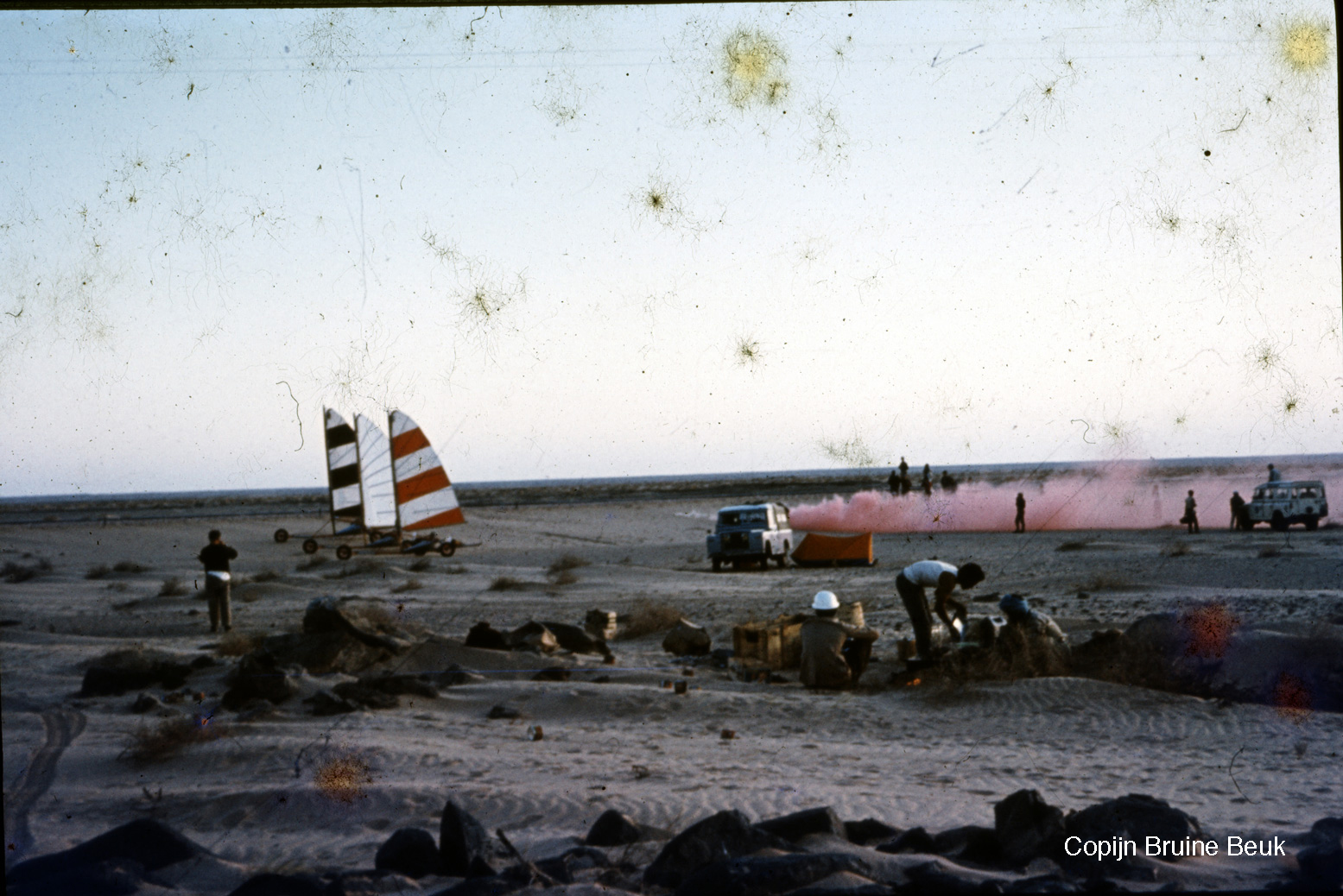
Organised by French ex-army Saharienne, Jean de Boucher, in February 1967 twelve land yachts with pilots from half-a-dozen countries set off on a 2500-km rally from Colomb Bechar (then linked by rail from Oujda on the Mediterranean) to Nouakchott on the Atlantic coast, at times following today’s recently reopened Tindouf Route via Algeria. It seems the race element of the rally was abandoned after some 2000km in Zouerat following several DNFs, but some carried on down the coast, cutting across what was then Spanish Sahara (‘PFZ’), on to the beach at Nouamghar and down the beach to Nouakchott. At this time most of Mauritania’s population still lived in the desert as nomads. The rally was supported by a couple Land-Rovers, small planes and surviving French military garrisons with which General de Boucher presumably had good connections.
The adventure featured in the November 1967 issue of National Geographic magazine (left, right, below). A couple of images are used here; read the full 30-page article scanned on the Extreme Kites website. There are more reminiscences here by American competitor, Larry P featured on the magazine’s cover.
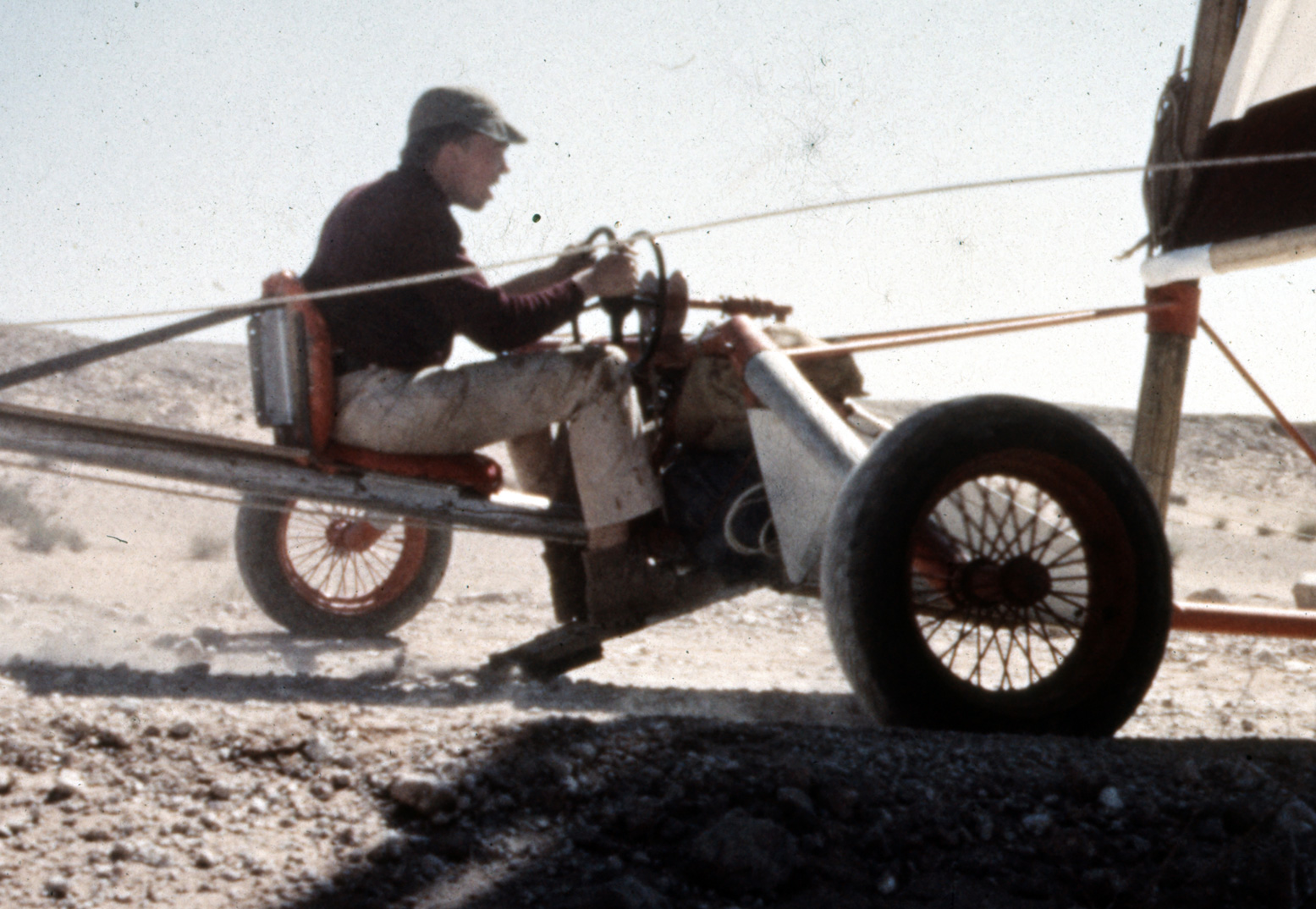
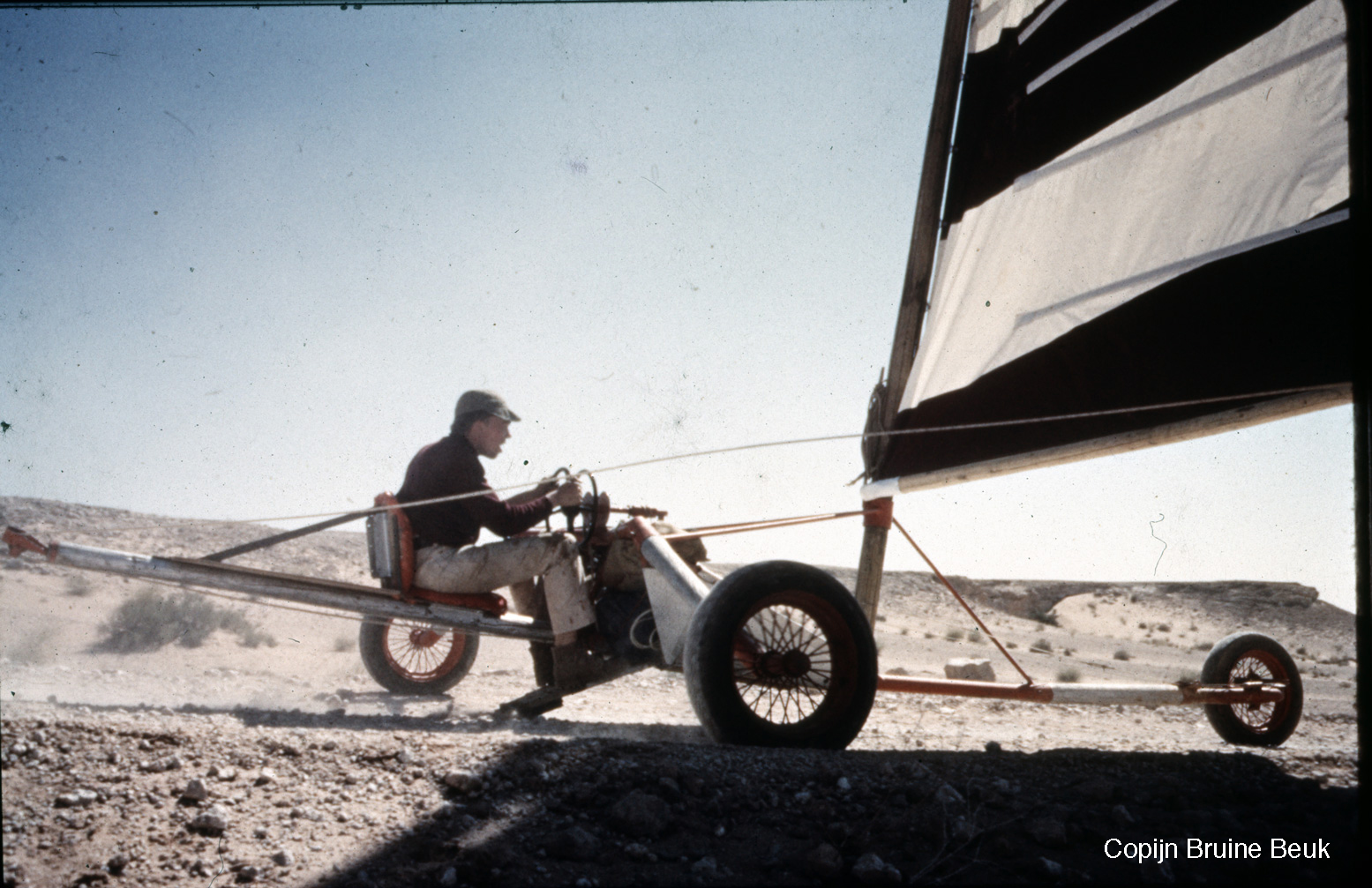
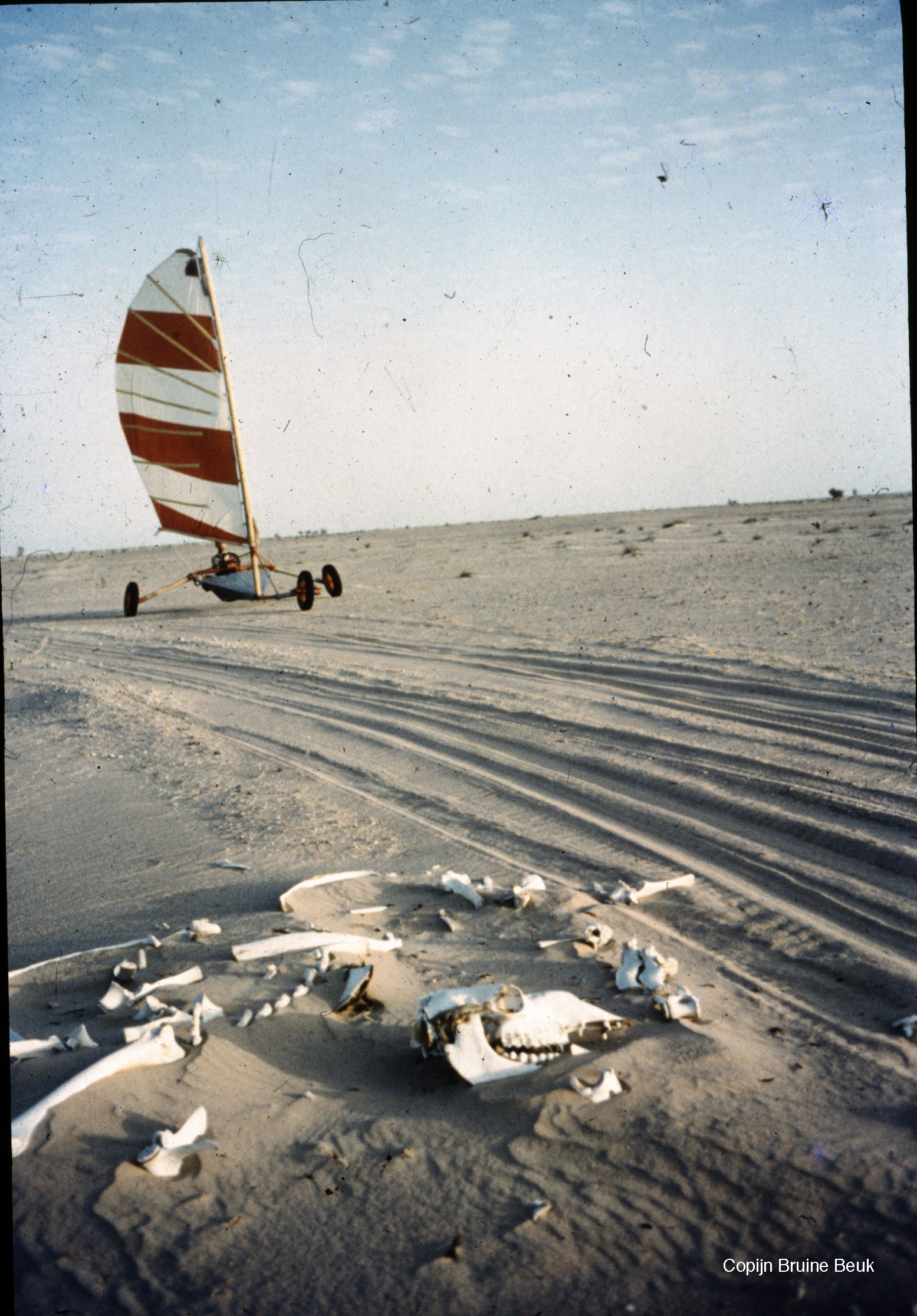
Thanks to Dutch participant, Copijn Bruine Beuk for turning me on to this little-known story and sharing his own pictures of the event (below). Besides hundreds of punctures, as the article recalls, early on Copijn had a close shave with an overhead electricity wire – luckily it wasn’t live. The same happened to a few others who ended up with snapped masts. Once it gets going, a land yacht can hit 60mph or more, but back then brakes added up to little more than a hinged footboard you pressed into the dirt (left), like pressing your feet on the ground to slow an out-of-control pushbike. So you can see why half the field DNF’d. Other hazards included side gusts blowing a land yacht over – February-March were chosen as the time of the strongest northeasterlies. Note also the twin steering wheels: one to steer the front wheel and the other to adjust the sail’s trim: pressing on the footbrake for all your worth, that’s quite a lot to think about when hurtling towards a steep oued bank or into a small dune field. Makes desert biking look positively benign!
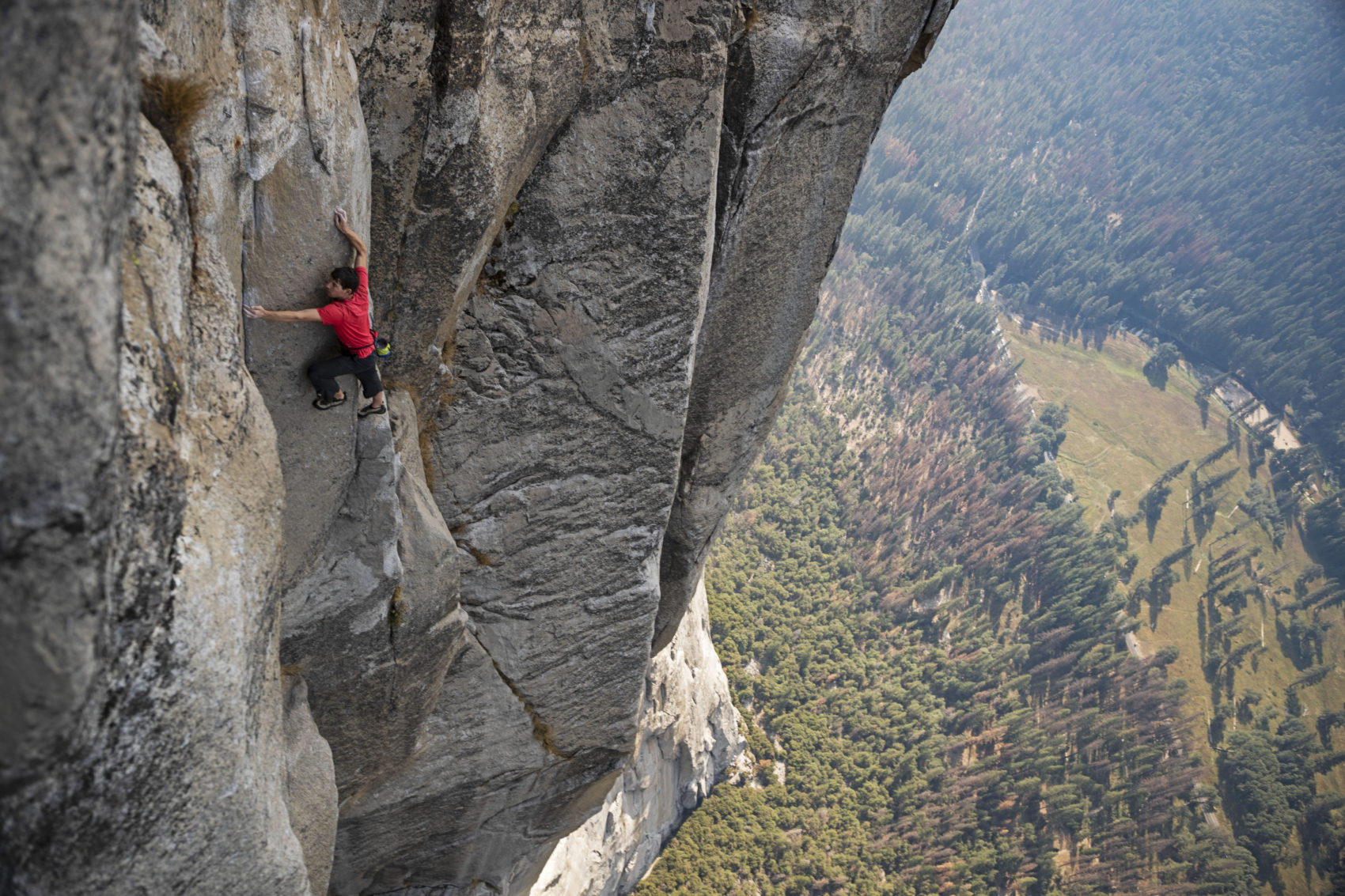
‘Free Solo’ is a documentary covering Alex Honnold’s mind-boggling, rope-free ascent of El Capitan in Yosemite, California in 2017 (left). If you’ve seen it you may recall that, among other places, Honnold practised on a hidden cirque of cliffs surrounding the scattered hamlet of Taghia, buried about as deep in Morocco’s High Atlas as you can get. A couple of rudimentary gites cater for visitors but, even among Moroccan know-alls, unless you’re a rock climber you’ll have never heard of Taghia. The only way in is a four-mile mule trek through a canyon from the valley head at the equally obscure outpost of Zuweiat Ahansal, an hour or two’s ride south of Rocher de Mastfrane, better known as the ’Cathedral’ (below).
I rocked up at Zuweiat one lunchtime just as a group of young American climbers were spilling out of a taxi, and continued over the bridge to the edge of the old town. I pulled over for a snack and, unsure of the way and not wanting to blunder on, asked a passing local whether it was possible to ride a bike to Taghia and if yes, which way?
‘Oh no’ said the old man. ‘You can only get there on foot.’
I finished my snack and thought it over. Back by the bridge, I sought a second opinion from some more worldly looking dudes hanging out outside the post office. They were eyeing up the new, North Face-clad arrivals and one spoke good English.
‘Yes, I saw you pass and was going to say, you can’t ride your moto to Taghia.’
It turned out he’d worked on the Honnold doc as well as other National Geographic features (below) and, reading his manner with my finely tuned bullshit detector (which they now hand out free at the border), it didn’t sound like the usual bragging. After that, he switched seamlessly into sales mode, offering lodgings and guides.
‘Maybe next time’, I said. I genuinely did hope to visit the mysterious valley, but the weather forecast was a bit shaky for the next couple of days. I wanted to get out of the mountains, not stuck in them.
A year or two earlier a bike-riding climber who’d visited Taghia suggested to me that a small bike (like my Himalayan) could probably reach the cirque following the riverside mule path.
While that may be true, I figured just because I could, did I have to – or even, should I? The local guide may merely have been protecting his mule-trekking services, but I like the idea of leaving some of the world’s wild corners unspoiled by the putter of mechanized transport. As I was about to be reminded, there’s plenty to see in Morocco on a bike or in a 4×4, but there are many places in the world which are best reached by less intrusive human-powered transportation. That’s what makes them special.
2024 and I heard they’d finished the track into Taghia. James and I were in the area recce-ing route for the M4 book. A few months later I wrote this in Adventure Rider magazine.
Add a few wraiths of mist plus some digitally enhanced pterodactyls, and the narrow chasm which leads into the Taghia gorge could pass for a scene from Game of Thrones. Burrowed deep in Morocco’s High Atlas, the isolated Berber hamlet beyond was only accessible by mule. So I was told in 2018 when I tried to reach Taghia on my Himalayan. Now they’ve carved a motorable track, so we rode down through the defile, crossed and recrossed a stream, and found ourselves in a small cirque or valley head surrounded by sheer, 3000-foot limestone terracotta crags. I’d not seen a place like this in Morocco. Alex Honnold came here to train in seclusion, prior to soloing Yosemite’s El Cap for the Free Solo movie. He did so by free climbing all three of Taghia’s hardest faces – 6000 feet of big wall soloing – in a single day. “It’s pretty freakin’ next level” he observes with characteristic humility in Before Free Solo, Edge of the Unknown’ (on YouTube).
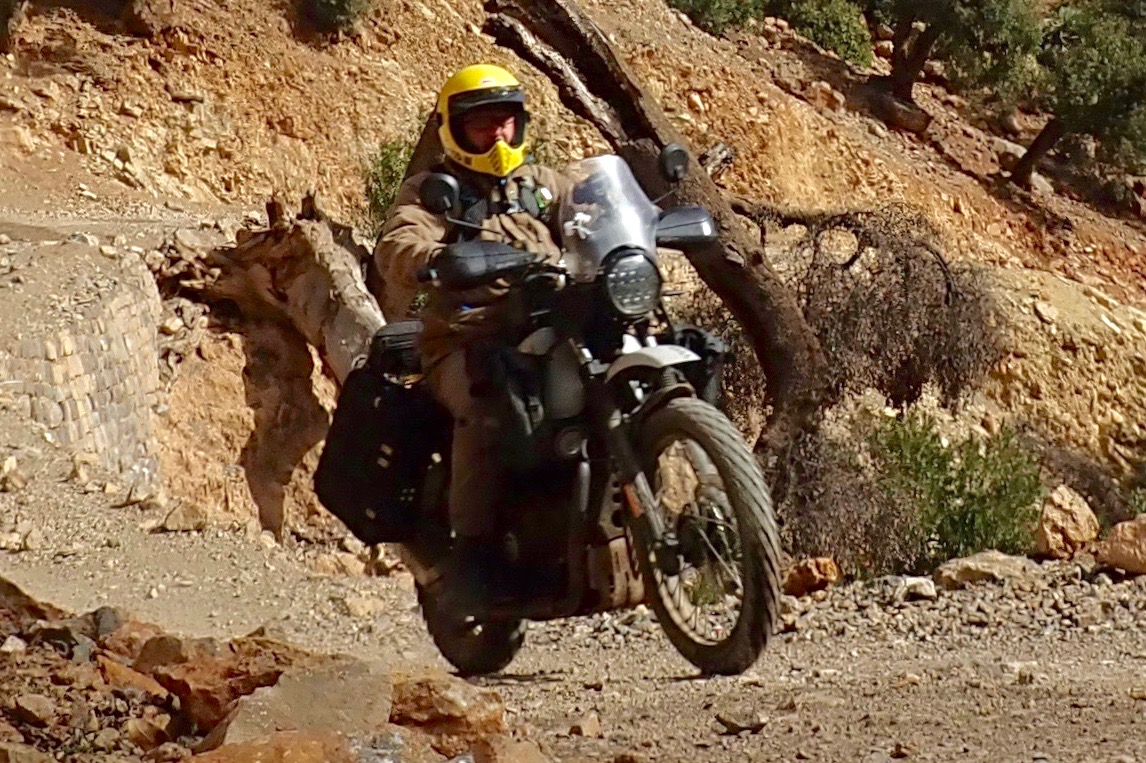
Set off with a mission to join some dots for my spring tour in a couple of weeks. Mission accomplished. Dots joined. More about the bike here.
High Atlas village
Another new road from nowhere to nowhere much. I suppose it helps stir up the local gene pool.
One of these days I’m going to watch a youtube doc on how they build mountain roads.
Above the clouds at 2500m or about 8300′ in old money.
An isolated juniper tree that’s managed to dodge the village wood burners.
Checking the link route to Map Junction above Ijoukak.
1970s Transit. One of the only vehicle’s I saw today once off the main roads. The other was a Trannie too.
Another photogenic village somewhere.
Resting outside a village north of Sidi Ouazik, a relocated Reguibat (Saharawi) ends up giving me some meteorites from the Hammada du Tindouf (St Expert mentioned these in WS). Never knew Saharawi were relocated way up here – 45 families, he said. I tell him I’m on my way to Reguibat country. About 5 days ride from here to #thedigtree
Ginge Fullen (right) is a Guinness-record holding mountaineer and adventurer who among other things, has climbed the highest peak in every African country. Bir Tawil has long been on his radar and the recent division of Sudan sees him planning to visit the Deriba caldera in Darfur in the near future.
In the northern Nubian desert between Egypt and Sudan lies Bir Tawil, an unoccupied 800-square mile quadrangle claimed by neither state. It’s a bureaucratically difficult and potentially dangerous place to reach but has been on my list for some time.
Terra Nullius is a Latin expression for ‘nobody’s land’; it was how Cook described Australia in 1770. Here in the Nubian Desert, it originates from a bizarre situation stemming from the simplest of borders: a straight line along the 22nd parallel drawn in 1899 when Britain formed Anglo-Egyptian Sudan following Kitchener’s campaigns in Sudan. In 1902 Britain sought to modify that boundary to reflect the actual use of the land by the region’s tribes. It counters a complaint commonly made these days about Foreign Office officials blithely marking maps with rulers and in part causing the current grief in the Middle East and Africa.
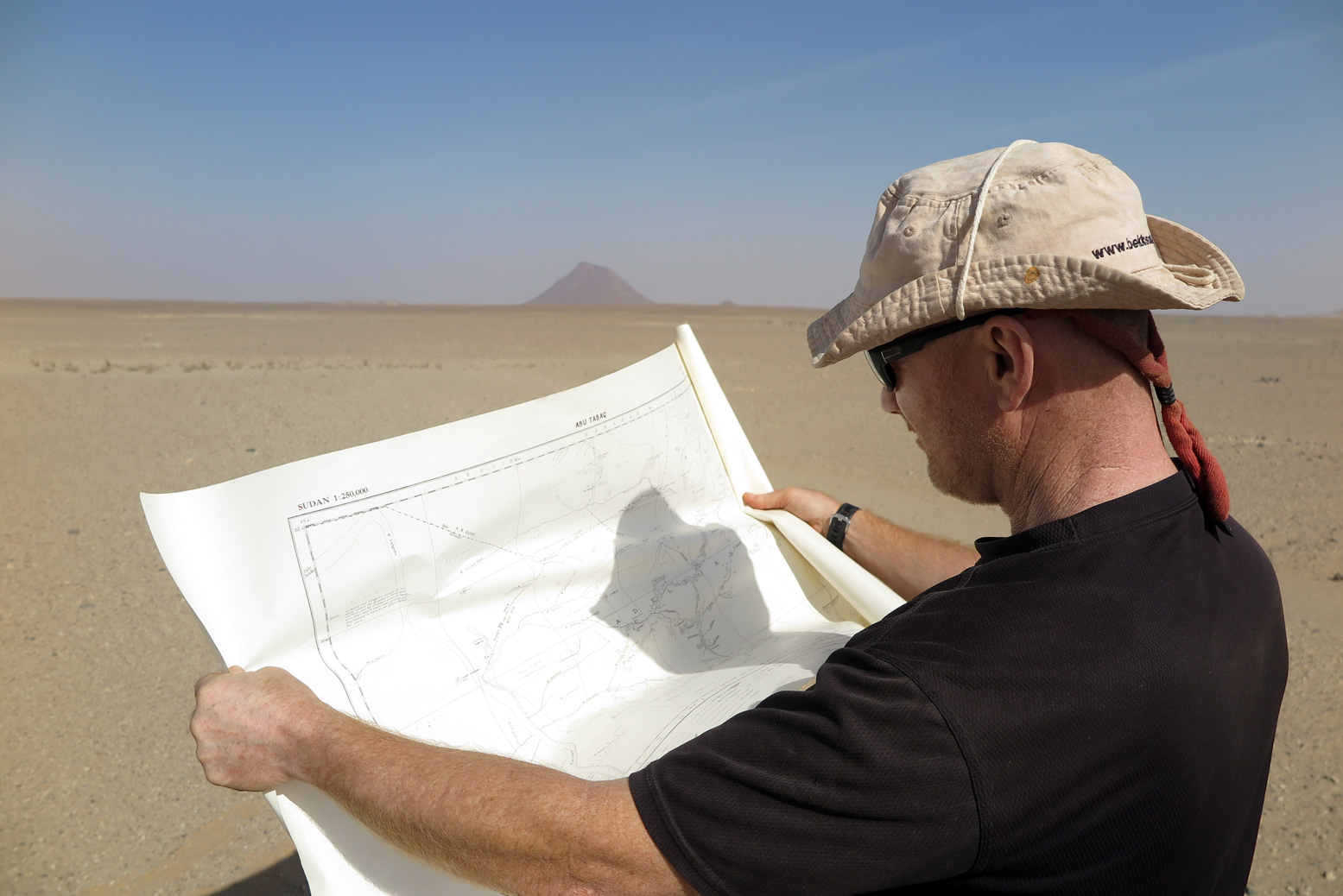
Bir Tawil lies below the 22nd parallel but the land was traditionally grazd by the Ababdu tribe from Aswan in Egypt. Similarly the adjacent Halaib Triangle, a much bigger area to the east and above the parallel was placed under British Sudanese control as its Beja inhabitants were culturally and ethnically closer to Sudan. Today Egypt resolutely claims the 1899 border including the Halaib Triangle, whilst Sudan sticks to the administrative border of 1902. As a result both claim the Halaib Triangle with its 130 miles of Red Sea shore, but neither are interested in the barren wastes of Bir Tawil. Bir Tawil is not an easy place to reach, requiring permission from either government to visit; a two-day trip into the desert risking encounters with armed gangs or smugglers. I opted for Sudan as I wanted to get a feel for the country to which I plan to return to climb the highest peak in the troubled Darfur region. (In 2004, before Sudan divided to form South Sudan, I climbed Mount Kinyeti, then the highest point in that country). In Khartoum I organised everything through Tour-Sudan agency. The owner Midhat Mahir was by far the most pro-active individual I contacted and as it turned out, the best connected. In Sudan government permits are required for everything from registering lodgings outside Khartoum to photography and even permission to buy a detailed map from the Surveyor’s Office. The Sudanese clearly like their paperwork as well as keeping track of you. I needed a dozen copies of my travel permit to hand out to checkpoints along the way.
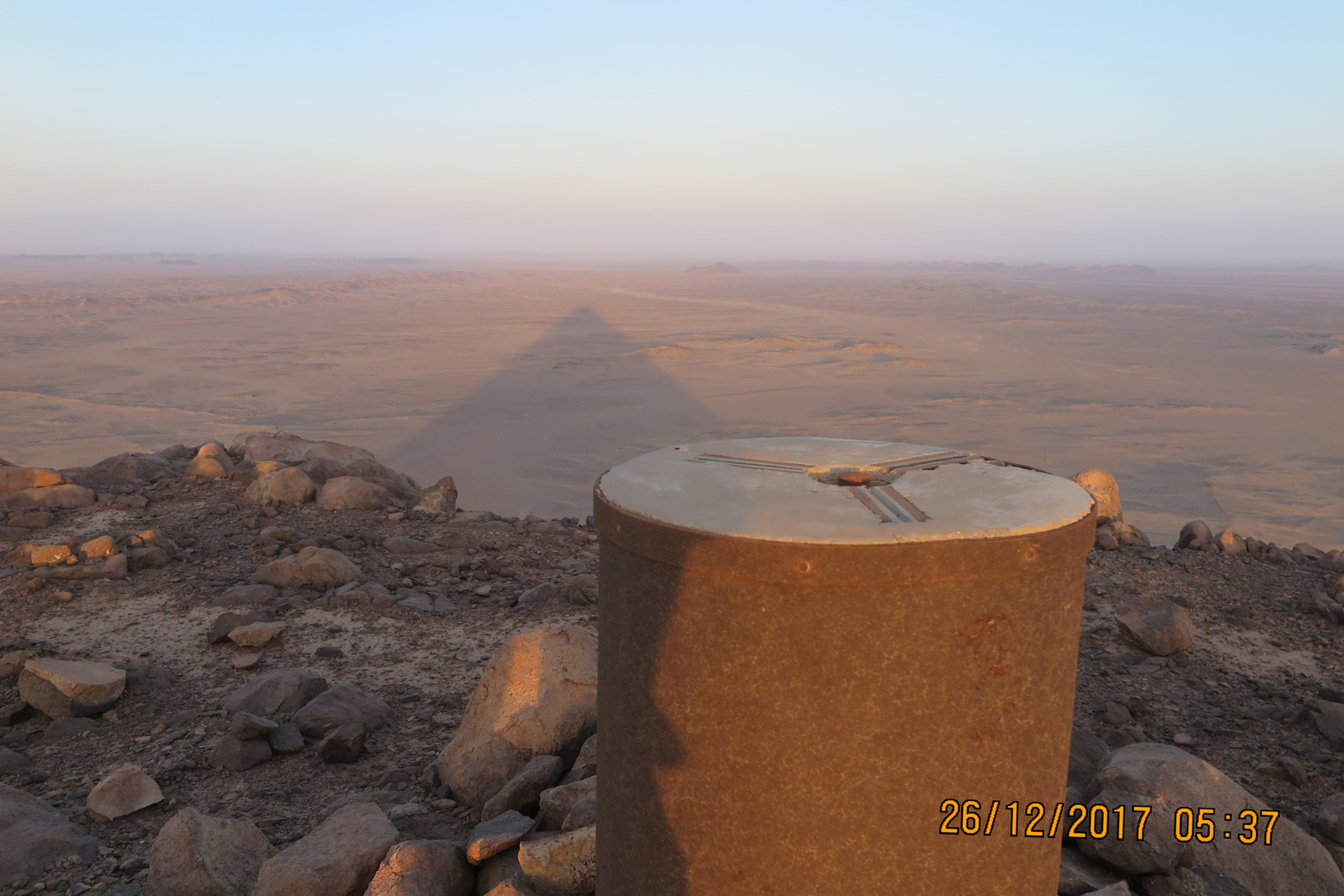
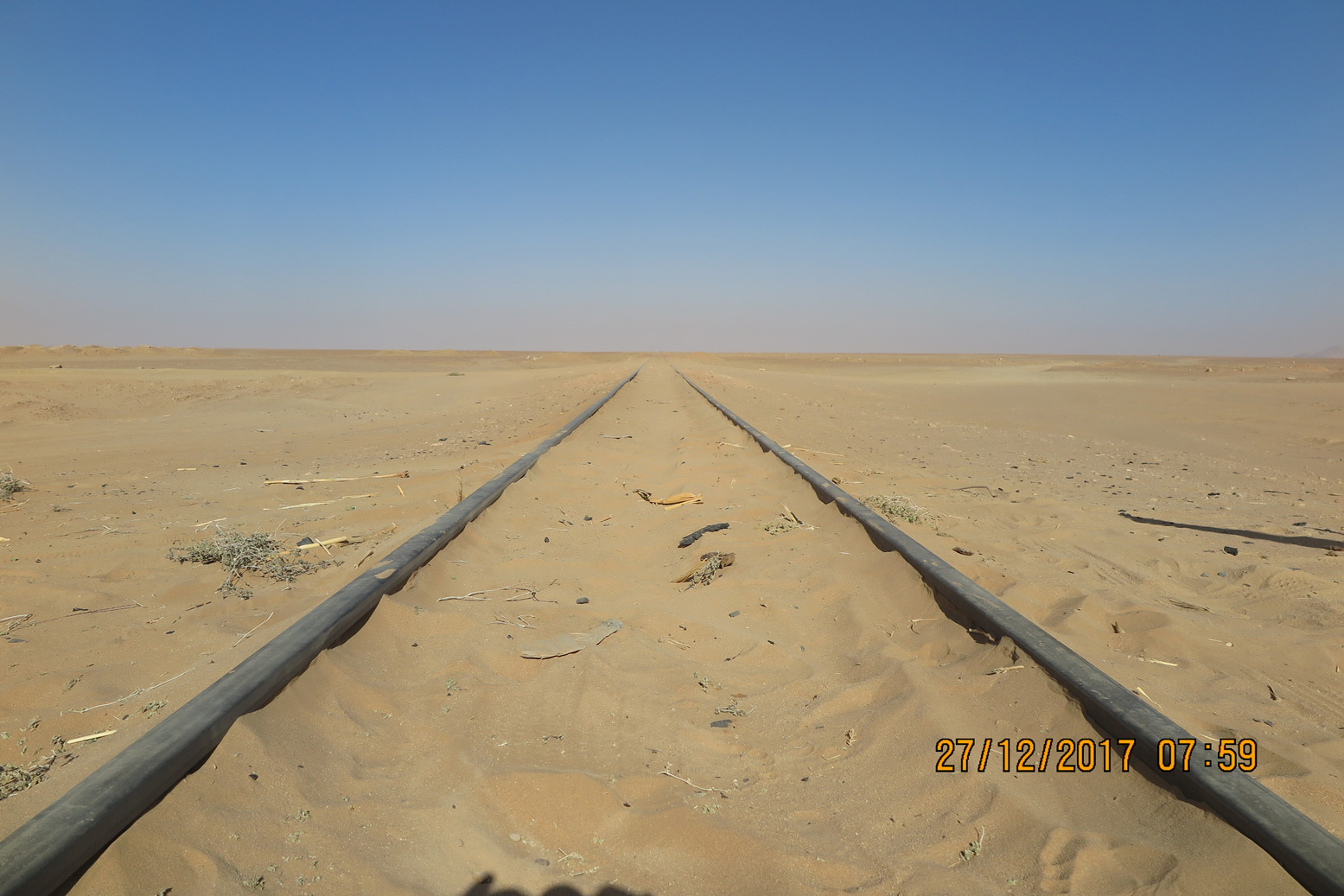
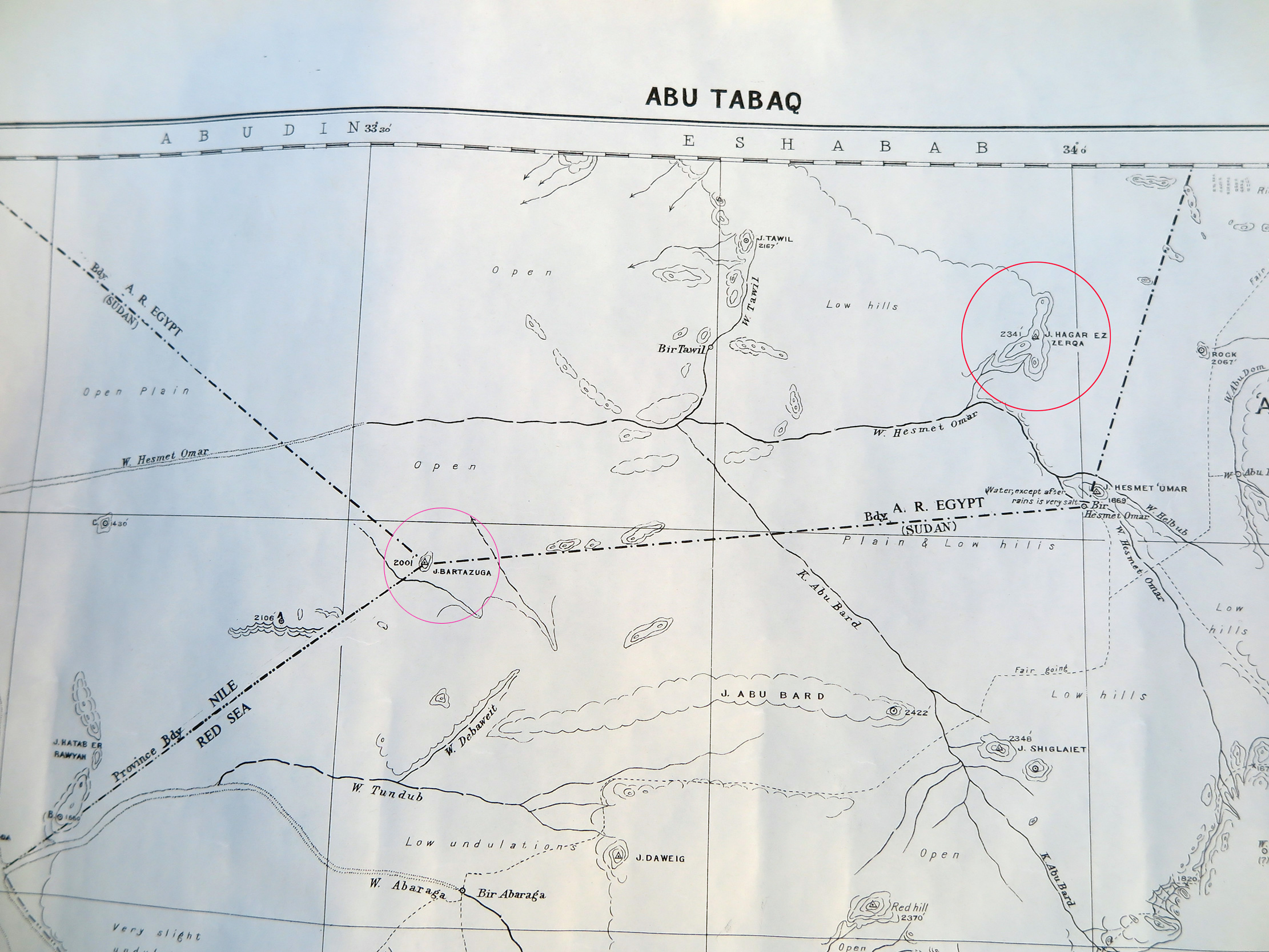
The plan was a week’s trip leaving me two days in Bir Tawil to locate and climb the highest point. Midhat’s brother Moez would accompany me with two drivers on the 500-mile trek north of Khartoum, around half of it on tarmac the rest across the Nubian desert. Forget snakes and scorpions or the possibility of breakdown and never being found, the road to Abu Hamed felt like the most dangerous part of this little adventure. Terrible driving and being forced off the road by unlit vehicles was the nearest brush with death I’ve had in a while. In Abu Hamed we filled up with fuel and water and a few miles north of town left the road and crossed over the railway lines for the last time. I input some coordinates from Grant, my go-to person when tackling unclimbed peaks in dodgy countries. You can’t beat the thrill of heading into a remote place with little available information. We headed north along flat desert towards the Wadi Gabgaba which would bring us to within 20 miles of our objective. Very soon we started to pass gold miners and for the next hundred miles found the desert had been turned upside down. A gold rush was underway and several thousand men were working hundreds of excavators while individuals were trying their luck with metal detectors. All unlicensed and unregulated, with tons of litter blew across the desert it looked very ugly indeed. Hoping to keep a low profile, that night we camped well off the main route and away from the miners. In Khartoum I’d gotten hold of a colonial-era 1:25,000 map from the National Survey and the next morning we found ourselves on old routes marked as ‘fair going’ by surveyor W Jennings-Bramley back in 1925. By camel he might have covered 20 miles a day; we did the same distance in just an hour. Our initial destination was the 609-metre peak of Jebel Bartazuga marking the southernmost corner of the Bir Tawil quadrangle. It came into view, very prominent in the otherwise flat desert. I thought we had left the last of the gold miners but I was wrong; a camp had set up here too on the very boundary of Bir Tawil. On my return leg I climbed Jebel Bartazuga, topped with an old trig point by the British to mark the boundary when they surveyed the area. Flags have also been placed here from others who’ve recently been laying claims to the territory, but they’ve all long since blown away. Probably the first westerner here in recent times was former Guardian journalist Jack Shenker in 2011. American Jeremiah Heaton followed in 2014, claiming the area as the ‘Kingdom of North Sudan’, thus delivering on a promise to make his daughter a ‘princess’. He’s in dispute with a Russian called Dmitry Zhikharev who made similar claims, and in 2017 Indian adventurer Suyash Dixit planted a tree and put up yet another flag. There are other claimants including the ‘Kingdom of the State of Bir Tawil’ with its own national anthem and the ‘Empire of Bir Tawil’. I wasn’t interested in such claims but was of course intent on climbing Bir Tawil’s highest peak which I believed had yet to be done.
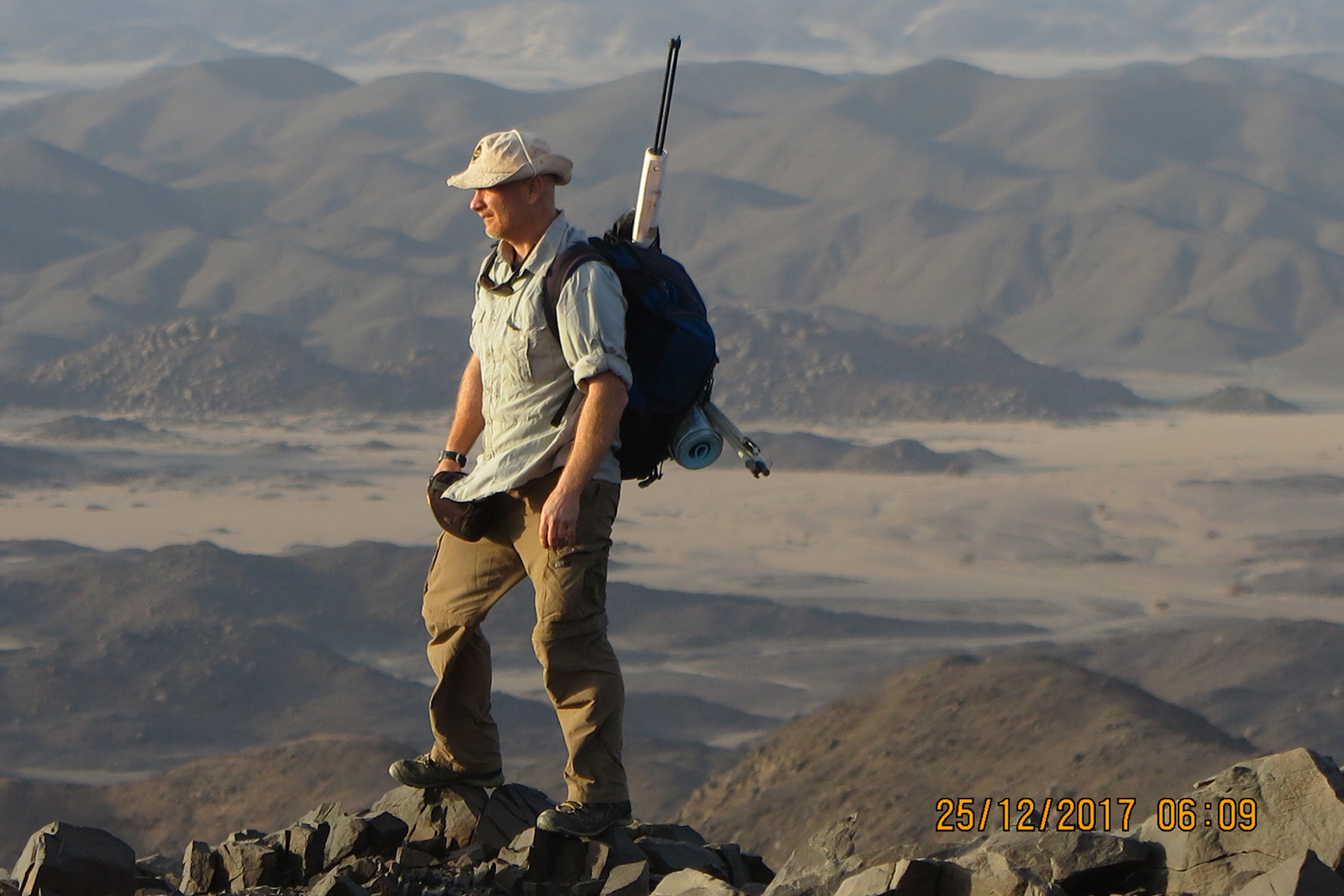
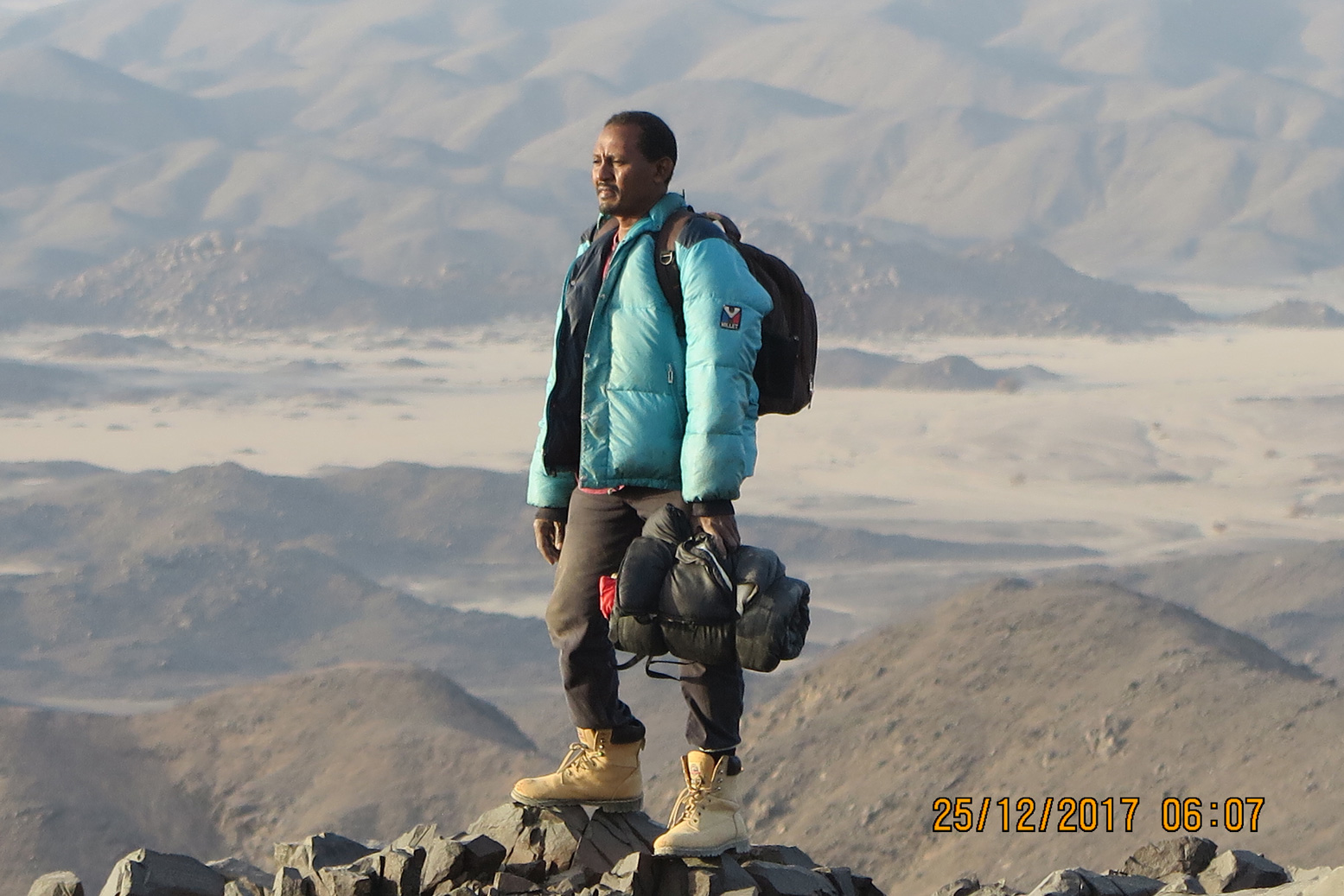
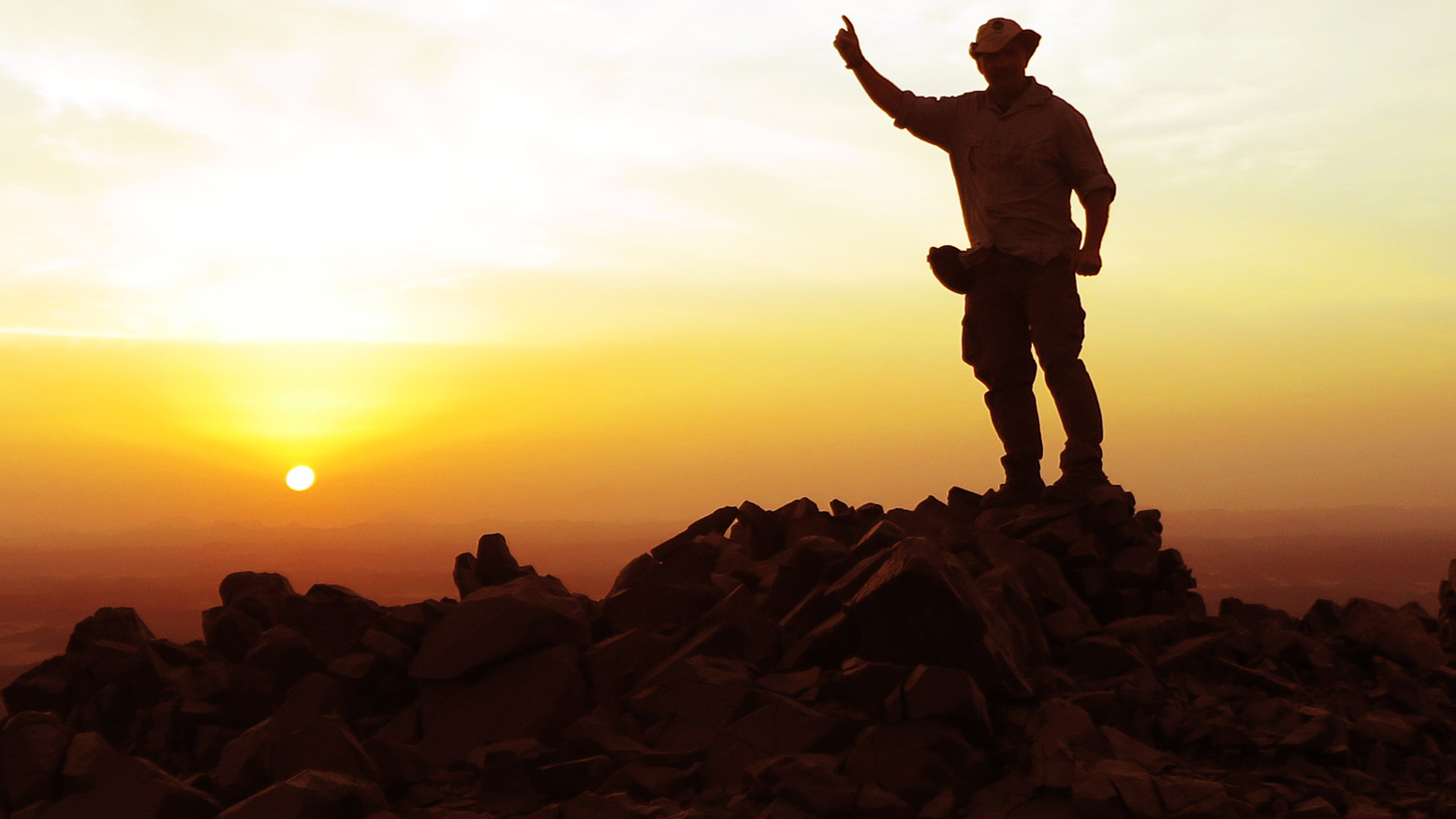
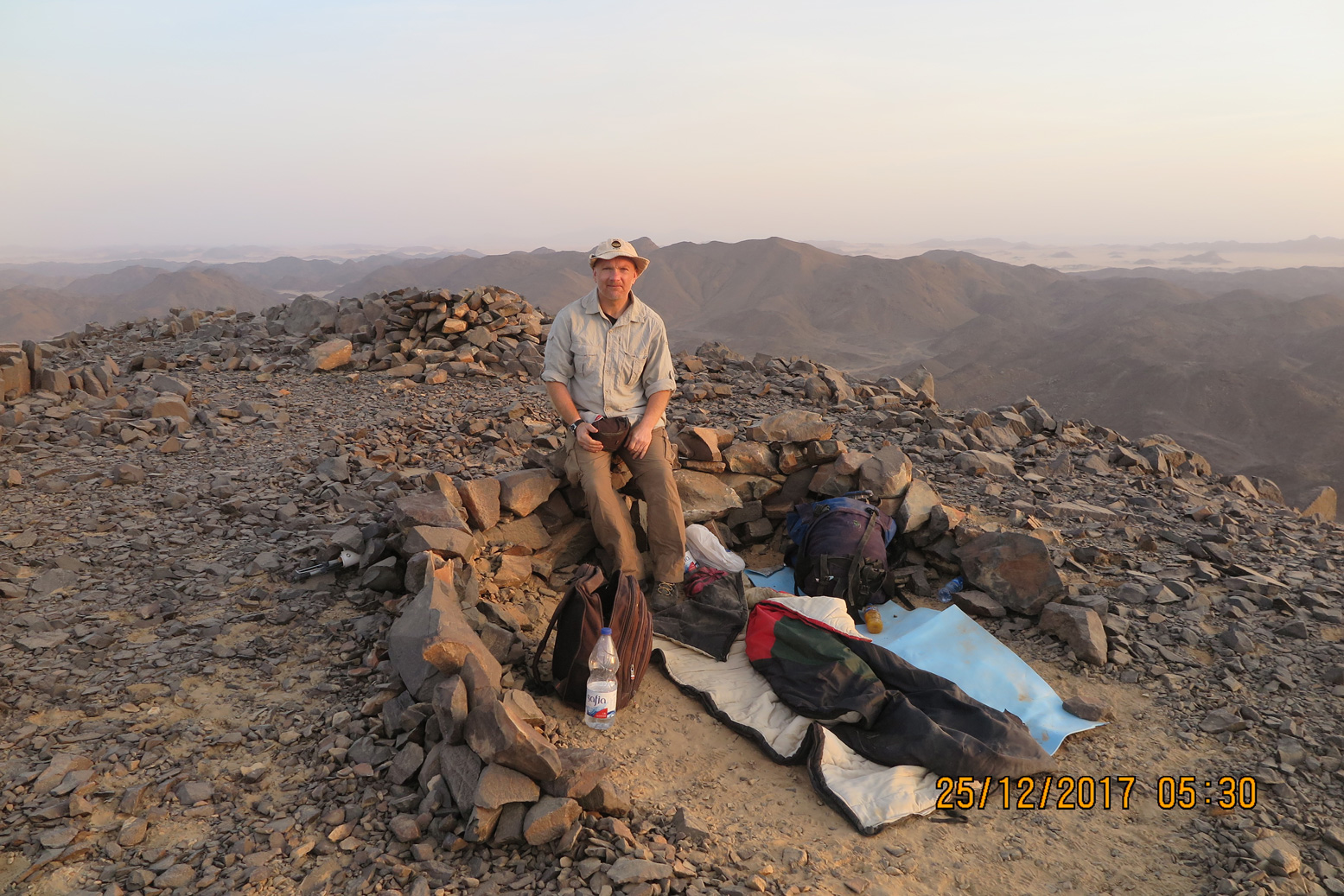
Once over the border we headed towards the eastern end of the territory and Jebel Hagar el Zarqa. On the 1925 map it was shown as the highest point in the land at just 705m (2313’), but one man’s hill is another man’s mountain. It lay some 30 miles away and we headed straight for it; in reality zigzagging through a maze of sandy wadis. Just five miles away our target came in sight and, as I’ve said before on my travels in Africa, once I was so close it would take an army of natives riding a herd of wild elephants and throwing landmines to stop me. Given that we saw no one during our time in Bir Tawil, I felt confident. We weaved our way nearer and nearer and by mid-afternoon on Christmas Eve parked up at the base of the mountain. My aim was to sleep on summit but Moez my guide warned it might be chilly. It may the mid-winter but this is still the Sahara so I replied I’d probably survive but suggested he took his big down jacket. Around 4pm, as the sun’s heat diminished we set off, following the edge of a gully until we met a ridge about half way up. Here it was mostly scree but in less than an hour we were on the summit. With a new African peak ticked off, Moez and I shook hands. Low hills surrounded us and Egypt’s actual border was just eight miles to the north. There was a cairn here so I was not the first, but probably the first in a very long time. Moez suggested we drop down a little out of the wind but he knew what my answer would be: we would build a windbreak right on the summit. We set about clearing an area for our wall and once done, even Moez seemed reassured. The wind did pick up later but our wall did its job.
That night the stars were bright as they always are in the desert and some 100,000 light years away The Milky Way beamed over us like a highway to another world. I envied the future explorers and slept well in our starlit bedroom. As often, the desert brings on reflective thoughts. I was now 50 years old; where had all the time gone? It’s scary that you’re over half way through your life and find yourself looking more to the past than the future. When you’re young the world is infinite and filled with mystery – immortality beckons. As years roll on the world remains thankfully mysterious but feels less big and the impression of immortality slips through your hands. Death was something that only happened to other people and time was unlimited so you don’t push yourself or do the things you promised you would. But once you grasp mortality good things can result – the ticking clock helps you focus on new challenges. The sun rose around six and was all ours to see; our bivi on top of Jebel Hagar had served us well. After a few more photos we headed down for our Christmas breakfast of coffee, porridge and eggs. I spent the next two days exploring wadis I’m sure no one has seen in decades and hiking a few other peaks to make sure there was nothing higher. With my short visit to Bir Tawil coming to an end, we headed back to Jebel Bartazuga for our last desert night. I enjoyed my time back in the Sahara; it reaffirmed my view that there’s still adventure to be had in this world, you just have to get out and find it. The greater the effort, the more worthwhile the journey. A good friend of mine who died on Everest in 1997 certainly lived his life that way. Mal Duff was old enough to be wise yet far too young to die. His gravestone bears the following words from a poem by fellow Scot, James Graham and twenty years on, it feels a good time to remember his epitaph:
He either fears his fate too much, Or his deserts are small, That dares not put it to the touch To win or lose it all
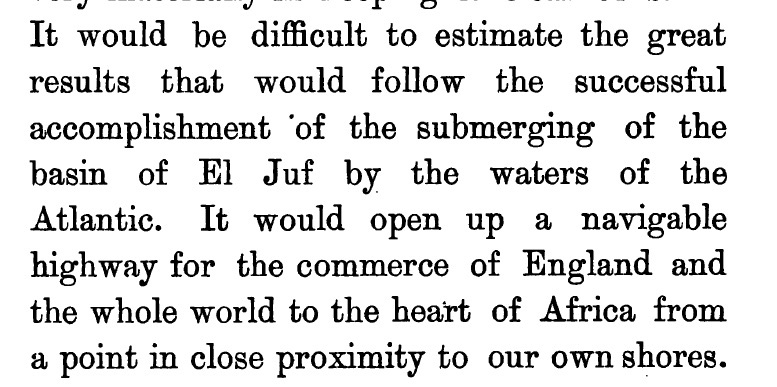
… I had reason to believe that there existed, in the Western Sahara, a vast depression which might be submerged by the waters of the Atlantic, thus opening a navigable way to [Timbuktu]…
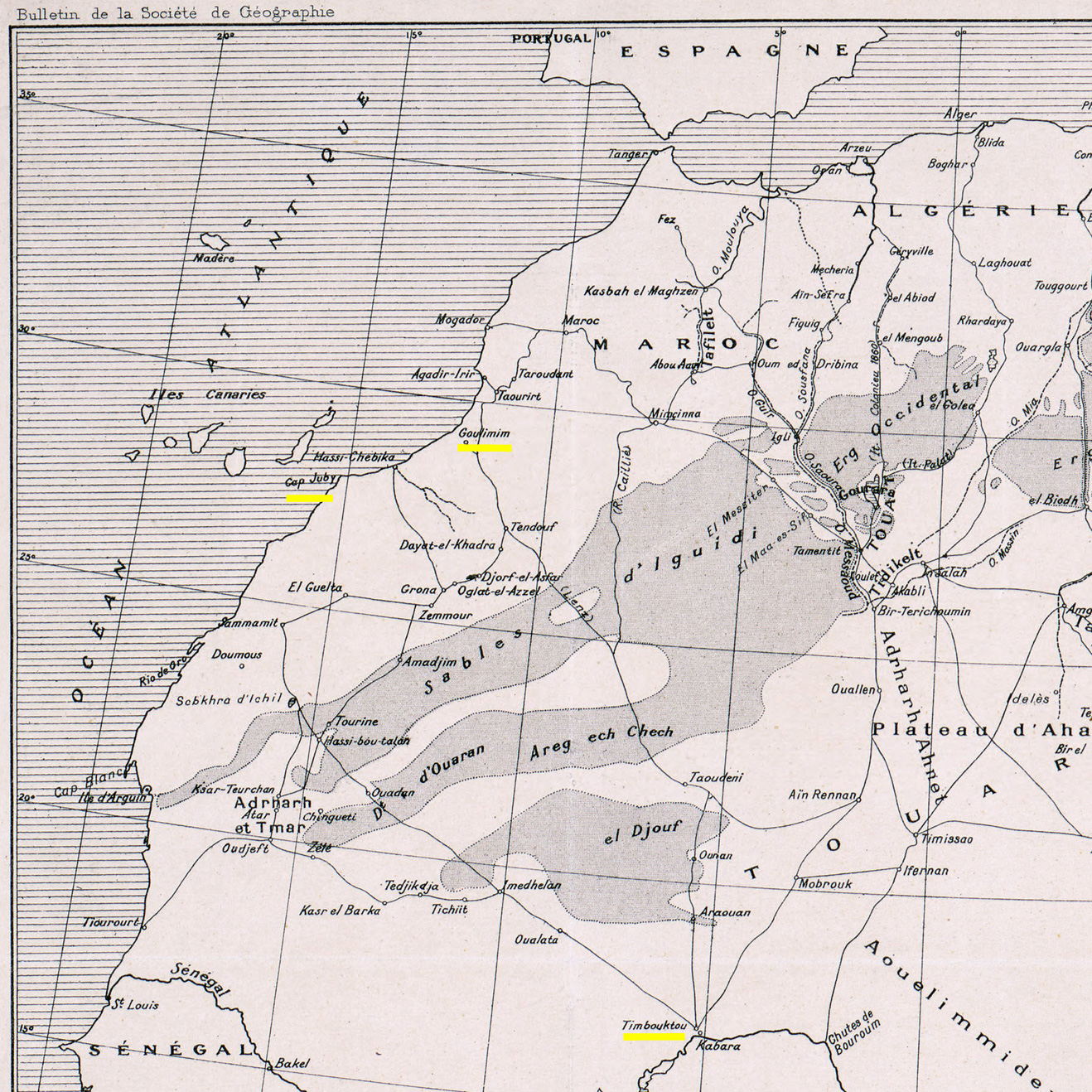
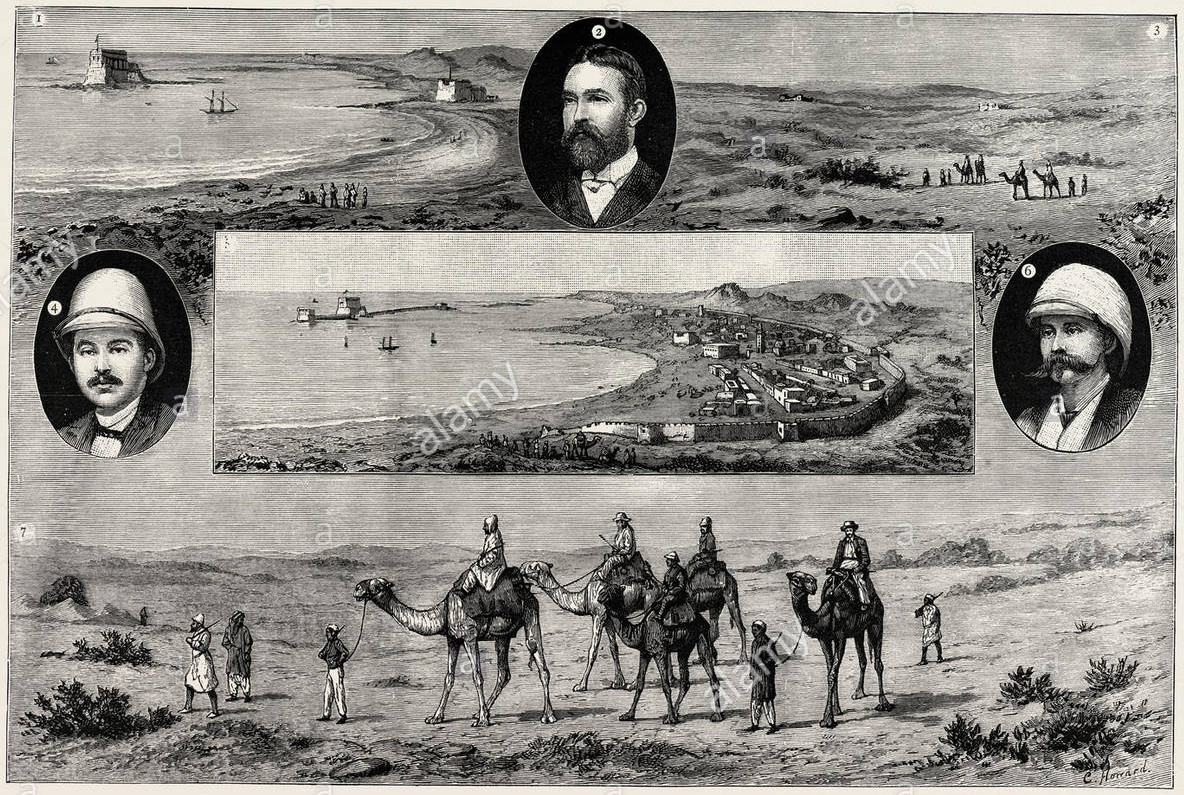
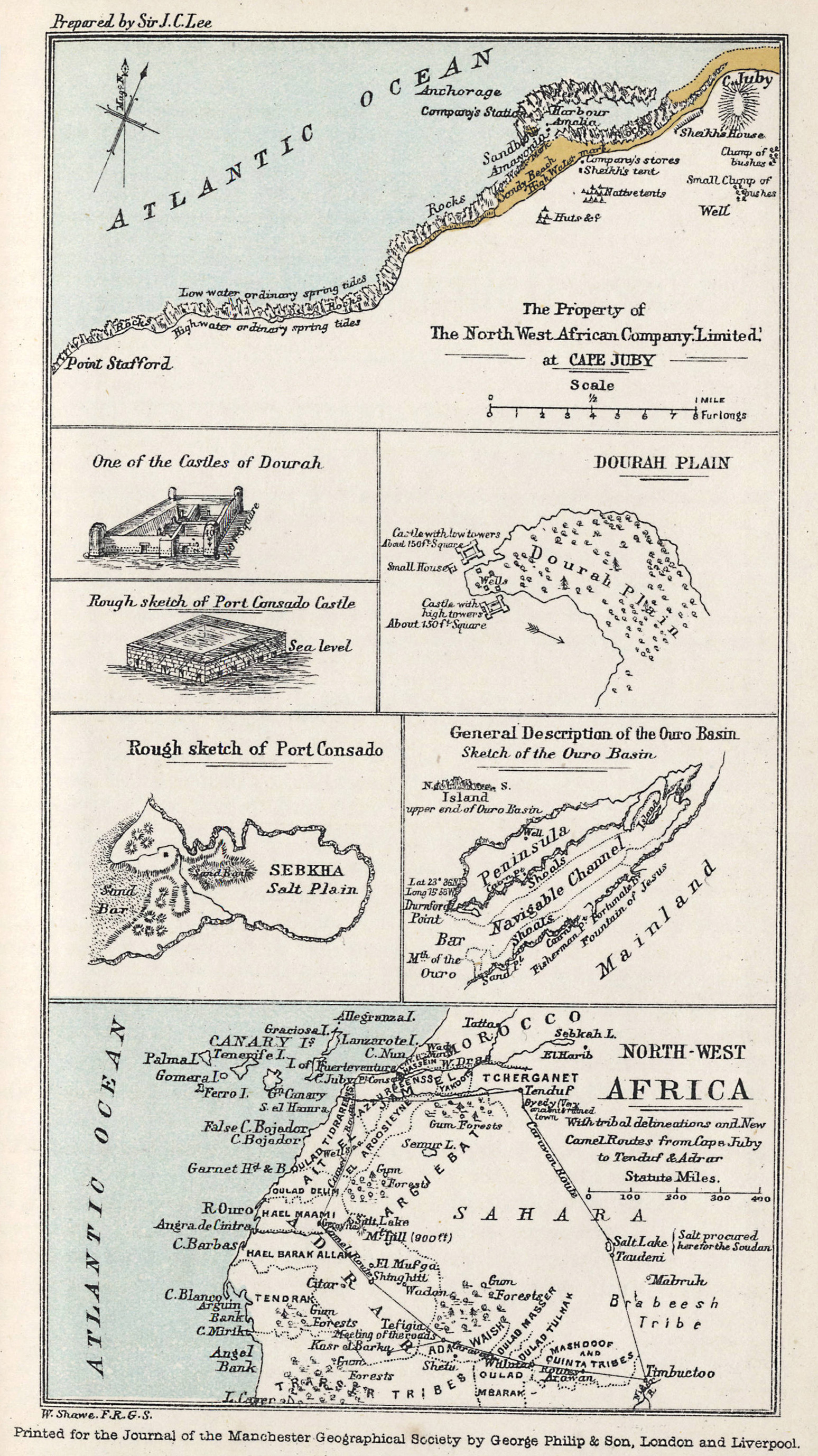
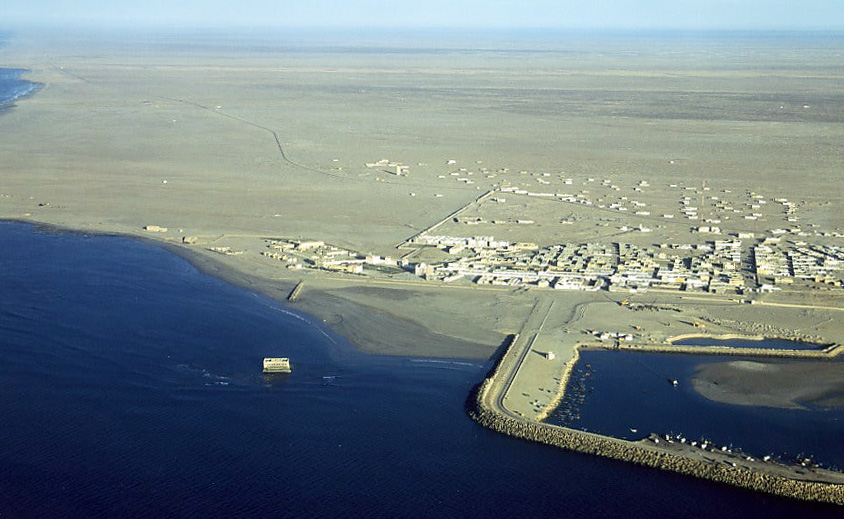
Visit Tarfaya on Cape Juby and just offshore you will see the curious Casa del Mar fort, beyond the St Exupery monument. Port Victoria or Mackenzie’s factory are other names for the trading post of the North West Africa Trading Company, established by Scotsman, Donald Mackenzie in 1882 during the ‘Scramble for Africa’.
Mackenzie’s venture hoped to capitalise on the recent westward swing of the trans-Saharan caravan trade emanating from Timbuktu, by intercepting caravans before they reached the terminus at Wadi Noun (near today’s Guelmin). In fact, in a decade or more the NWAT Co barely covered its costs after compensation was finally agreed against an earlier raid and to abandon the post in favour of the Moroccan sultanate.
It reminds you that colonisation at the time wasn’t purely a state affair, where armies marched off to conquer distant lands and bring back the spoils. Ahead of them strode adventurer-entrepreneurs with funds raised from venture capitalists and who gambled everything on striking it rich. It was their reports, or better still, securing a government charter to supply a commodity or service, which preceded more cautious colonisation, very often spurred by other European rivals nosing around for an as yet unclaimed slice of the cake.
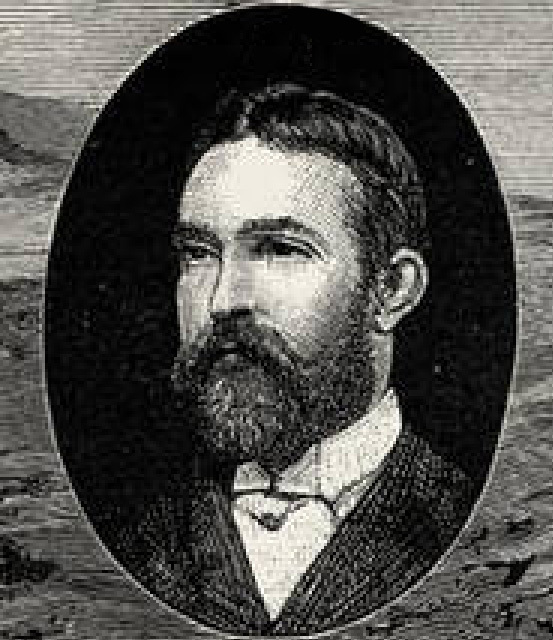
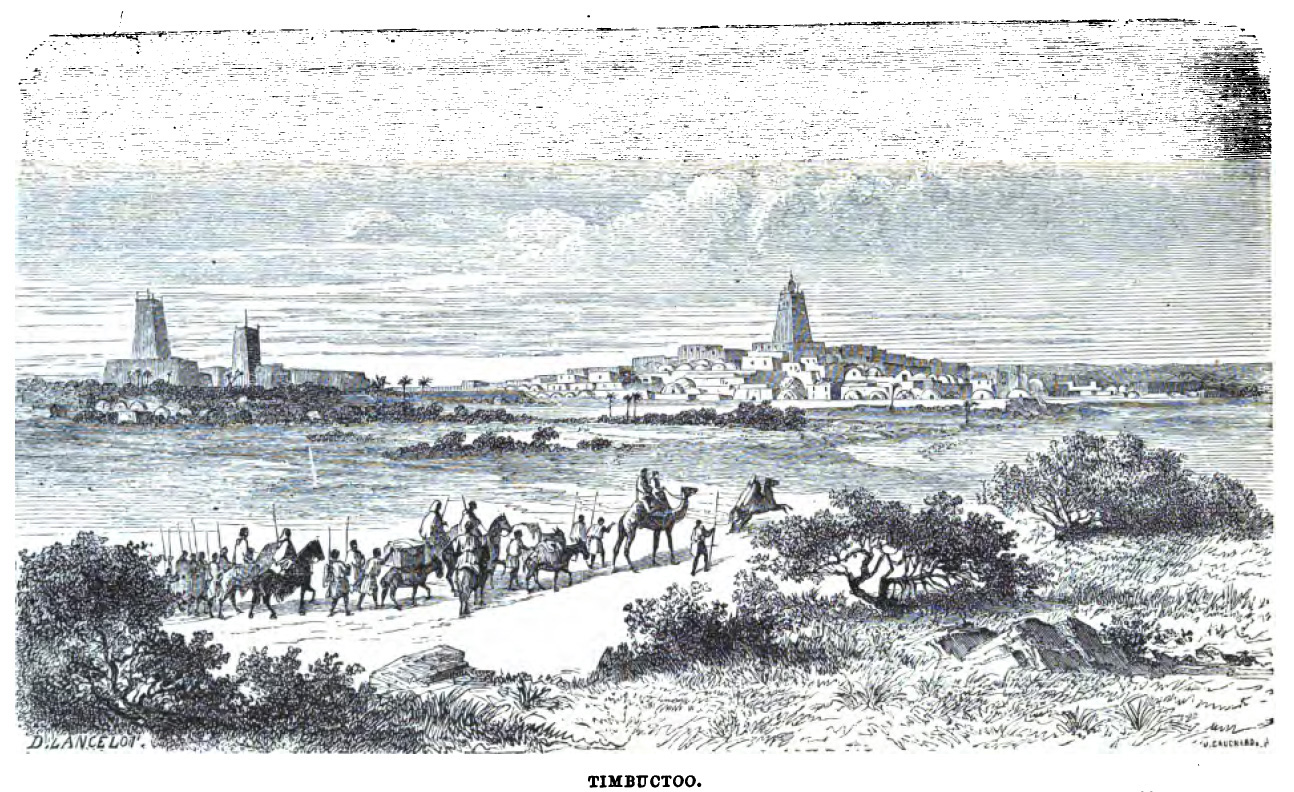
It’s hard to find out much about Donald Mackenzie, but in 1877, a few years before he set up the North West Africa Trading Company, he had a far more radical idea to capitalise on the trans-Saharan trade. He proposed nothing less than flooding the interior of the Sahara from the Atlantic so that, with the addition of a few canals which had proved so successful in Britain prior to the age of rail, ships could sail directly to Timbuktu and the Niger river in a matter of days, avoiding the arduous overland journey of weeks. As a side benefit the flooding would ‘green’ the Sahara, enabling agriculture to thrive across the wind-blown sands.
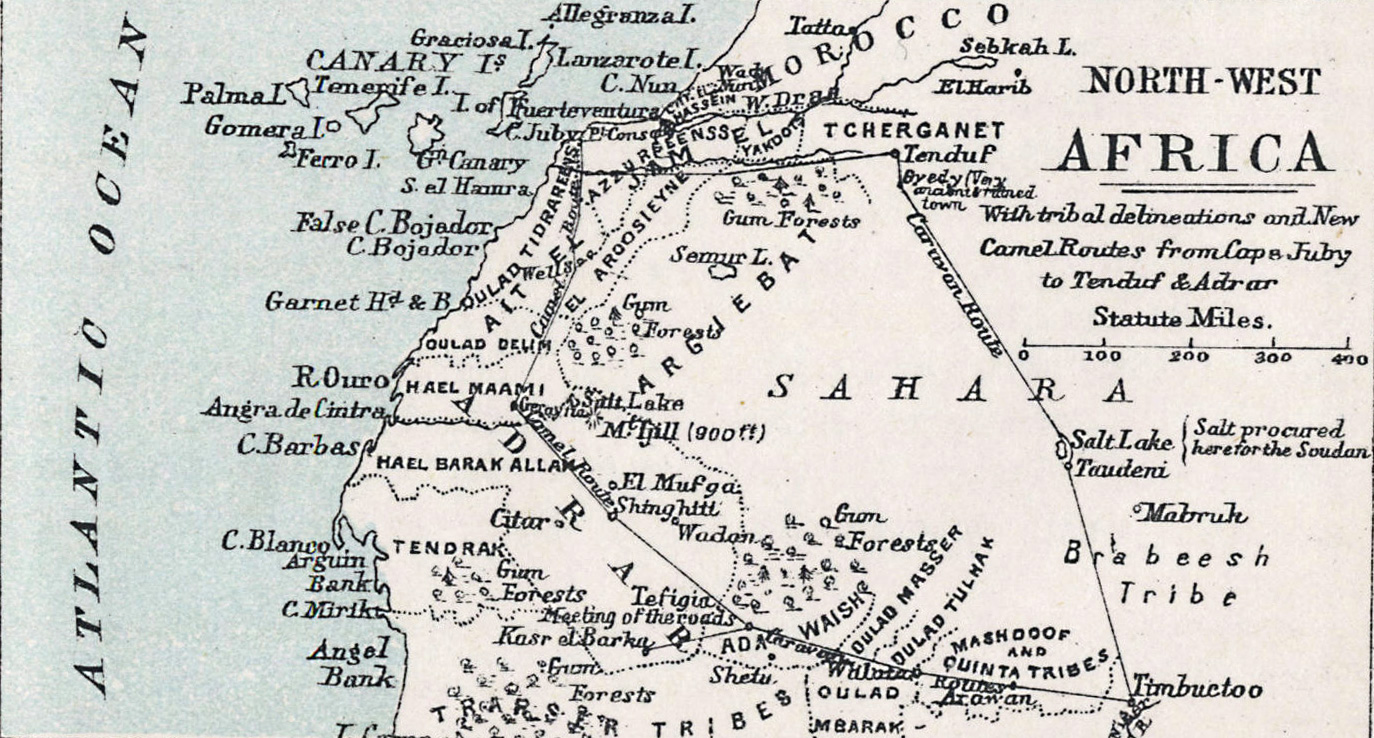
This was the era of grand engineering projects like the Suez Canal (completed 1869) and the Panama Canal (first serious attempt 1881). A canal to the trading heart of West Africa could be a similar commercial coup. It’s hard to think what gave Mackenzie this idea, other than conflating lurid traders’ descriptions of El Djouf (left) with the small depressions or sebkhas found near Cape Juby. The biggest of these is the Sebkha Tah, some 55m below sea level and just 15km from the Atlantic, but still no bigger than Malta. For some reason he believed that the vast El Djouf (part of the million-square-kilometre Majabat al Koubra or ‘Empty Quarter’) was one huge depression which had been connected to the Atlantic via the Seguia el Hamra or some such, but had become cut off and dried out.
Mackenzie had never actually travelled in this area (other than a camel tour up to Port Consado (present day Khenifiss) and down to Layounne during the NWAT Co era (map above and right) but had read of other larger desert depressions in Tunisia and Egypt, similar to those near Cape Juby. All these basins held seasonally dry salt lakes which may have suggested that flooding was plausible. He believed an inland sea the size of Tunisia or Oklahoma would soon be formed, paving an inland seaway to Timbuktu.
Mackenzie diligently read up on all your great 19th-century Saharan explorers: Barth, Rohlfs, Caille, Duveyrier, Clapperton, and in 1877 published an exhaustive proposal [available online] to ‘The Presidents and Members of the Chambers of Commerce of Great Britain‘ stressing ‘the importance of holding commercial intercourse with the interior‘. Vividly detailing at third hand the riches, economy, geography and ethnicities in this corner of Africa, he firmly believed his northern route reaching down into the African interior was the key, avoiding the disease-ridden equatorial jungles and pagan tribes further south in favour of the more sophisticated vestiges of the West African Islamic states. Under his proposal, land distances for the annual camel caravans from Timbuktu would be halved, with Cape Juby just nine sea days from Britain. De Lesseps himself, the force behind the Suez and original Panama canals, supported the idea of Saharan flooding, believing a side benefit would somehow improve the European climate while greening the desert for agriculture.
Mackenzie also thought that trade and communications would help liberate the sub-Sahran population from the slave trade. And this wasn’t just a ploy to appeal to investors’ morals or religious beliefs – Mackenzie’s later work in East Africa long after the NWAT Company dissolved suggested he was always a genuine abolitionist.
According to his upbeat proposal (is there any other kind?) Mackenzie has it all worked out: do a recce to get the tribal chiefs on board at Cape Juby and Timbuktu, locate the channel in El Djouf and unplug that Atlantic cork. I have no doubt of the ultimate achievement of this project, he wrote in the proposal’s introduction. But investors seemed less keen and, were it even possible, you’d think by creating a shallow, hyper-saline lake, the only thing that would grow would be salt crystals. The fact is the interior of the Sahara, including the dune-filed expanse of El Djouf spanning the Mali-Mauritania border, is a low plateau some 3-500 metres above sea level. Someone ought to tell Conde Nast Traveler.
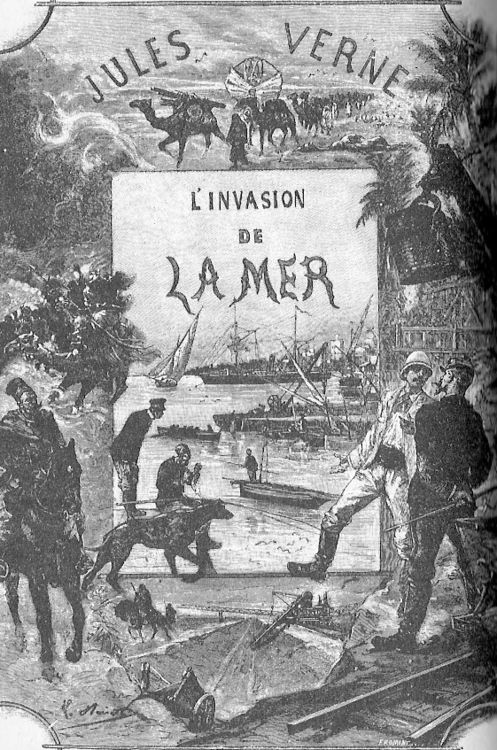
Mackenzie had slightly less difficulty finding investors for Port Victoria a few years later, and decade or three after that, Jules Verne fictionalised the idea of a flooded Sahara in his last published book, The Invasion of the Sea, set in Tunisia.
Present-day Tarfaya or Cape Juby, with Mackenzie’s fort visible offshore.









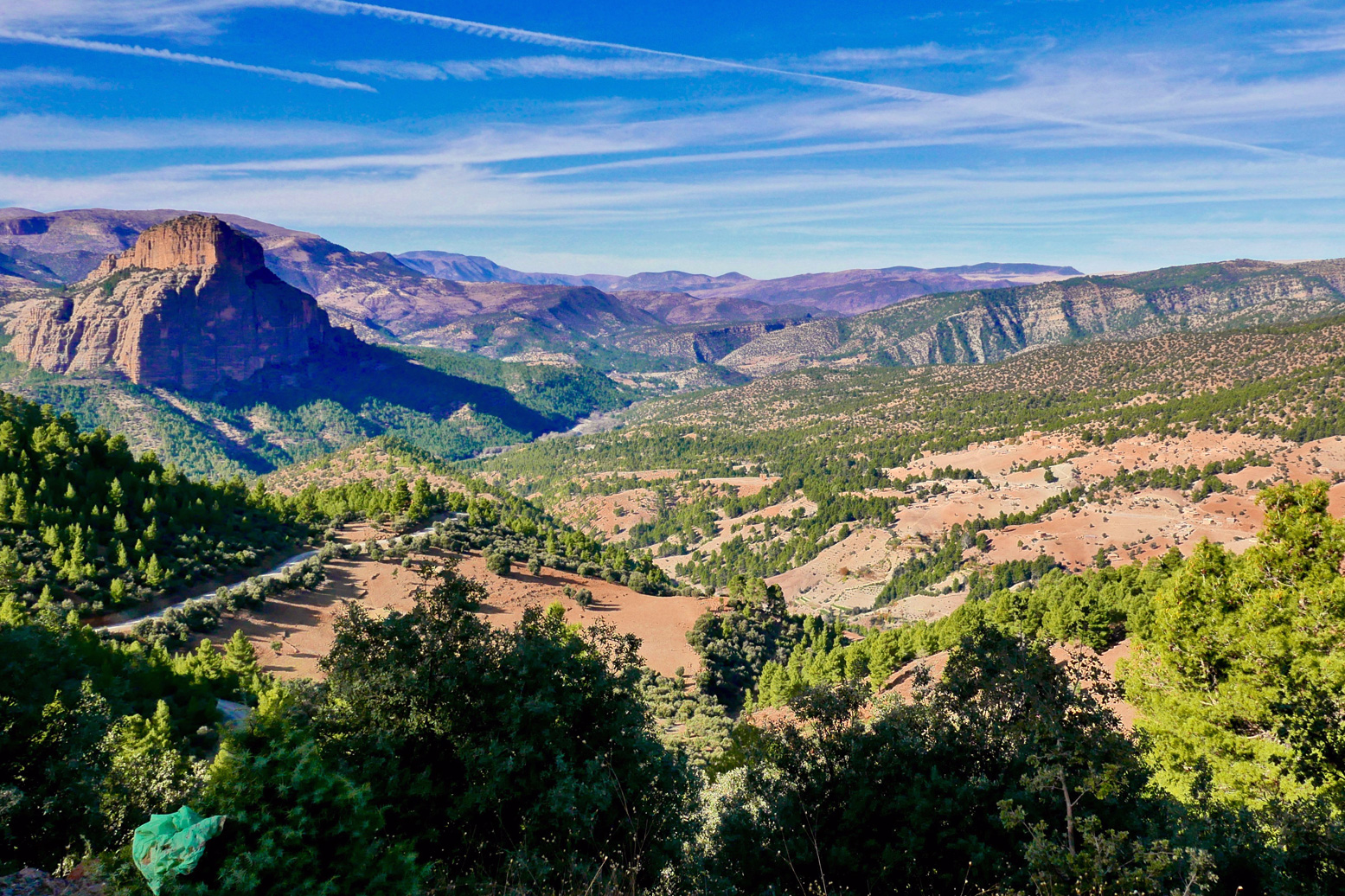
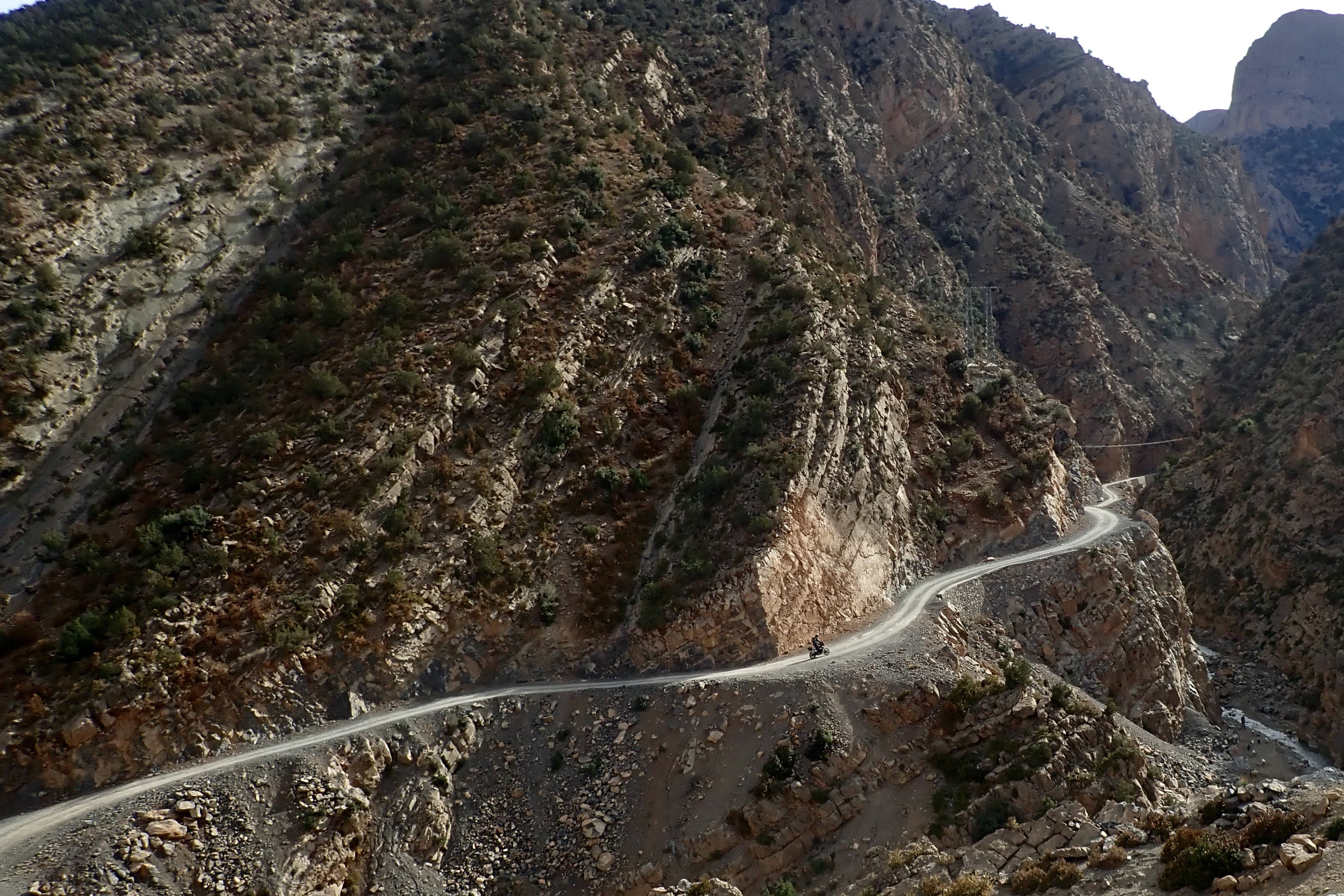
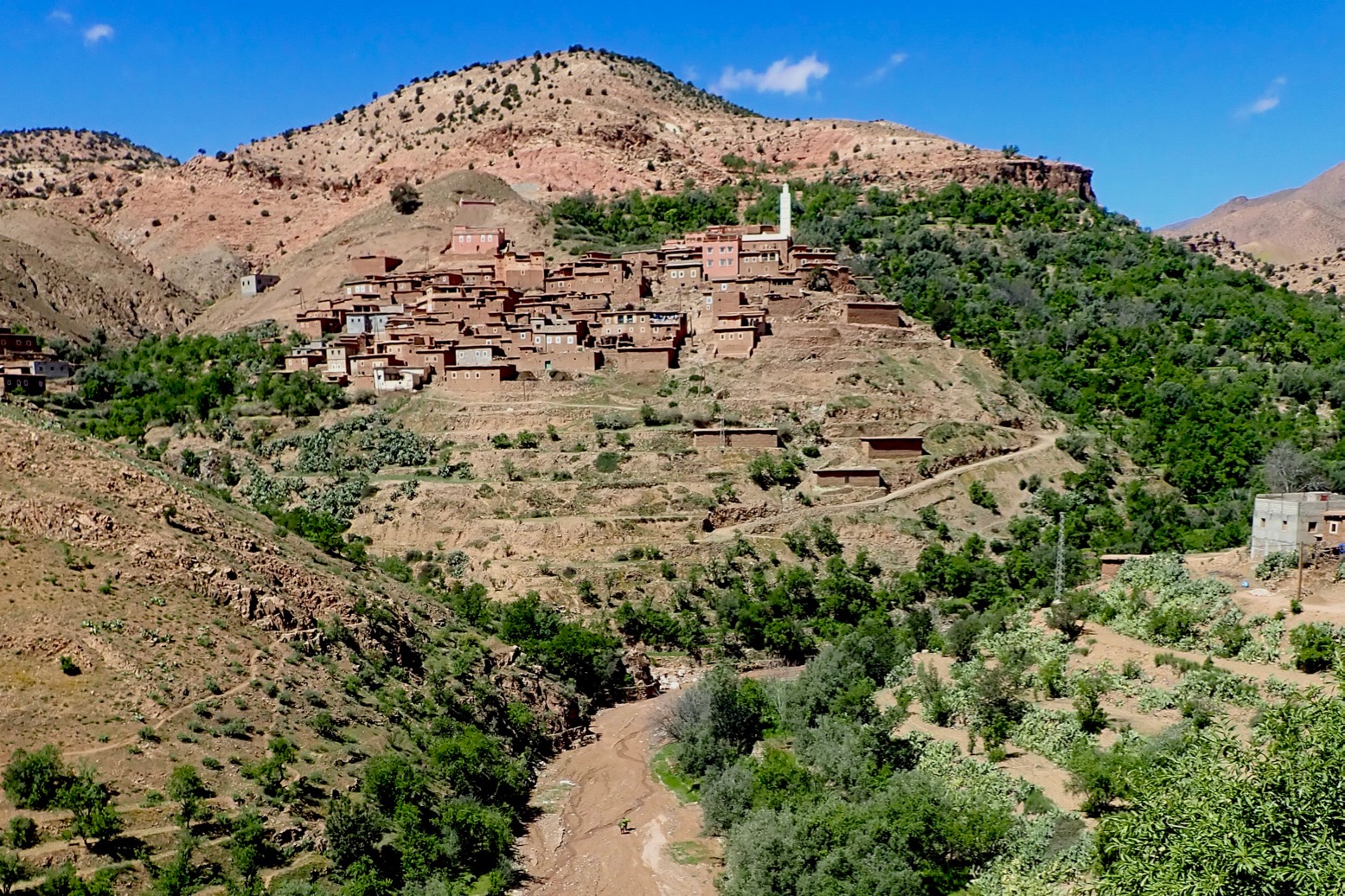 High Atlas village
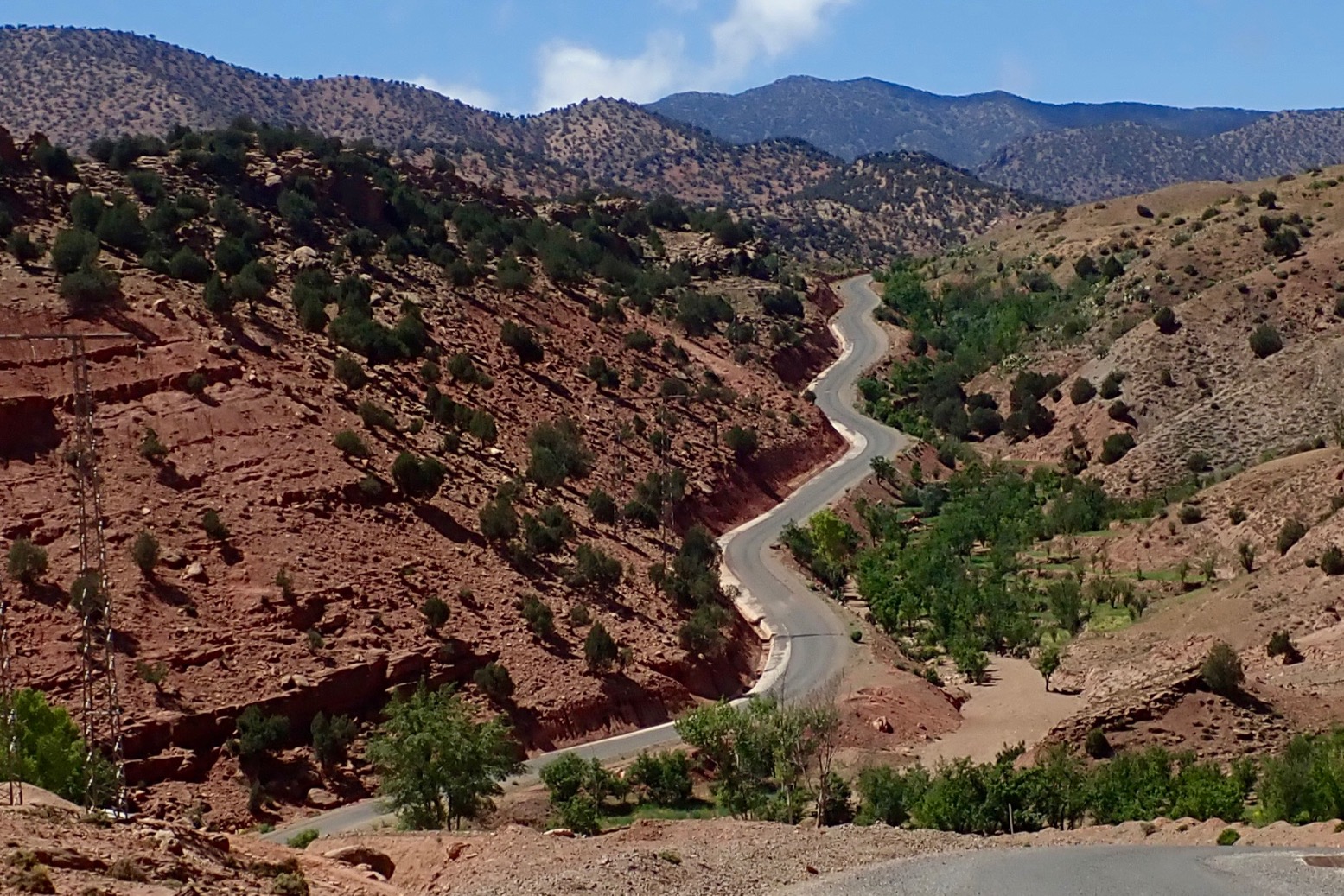 Another new road from nowhere to nowhere much. I suppose it helps stir up the local gene pool.
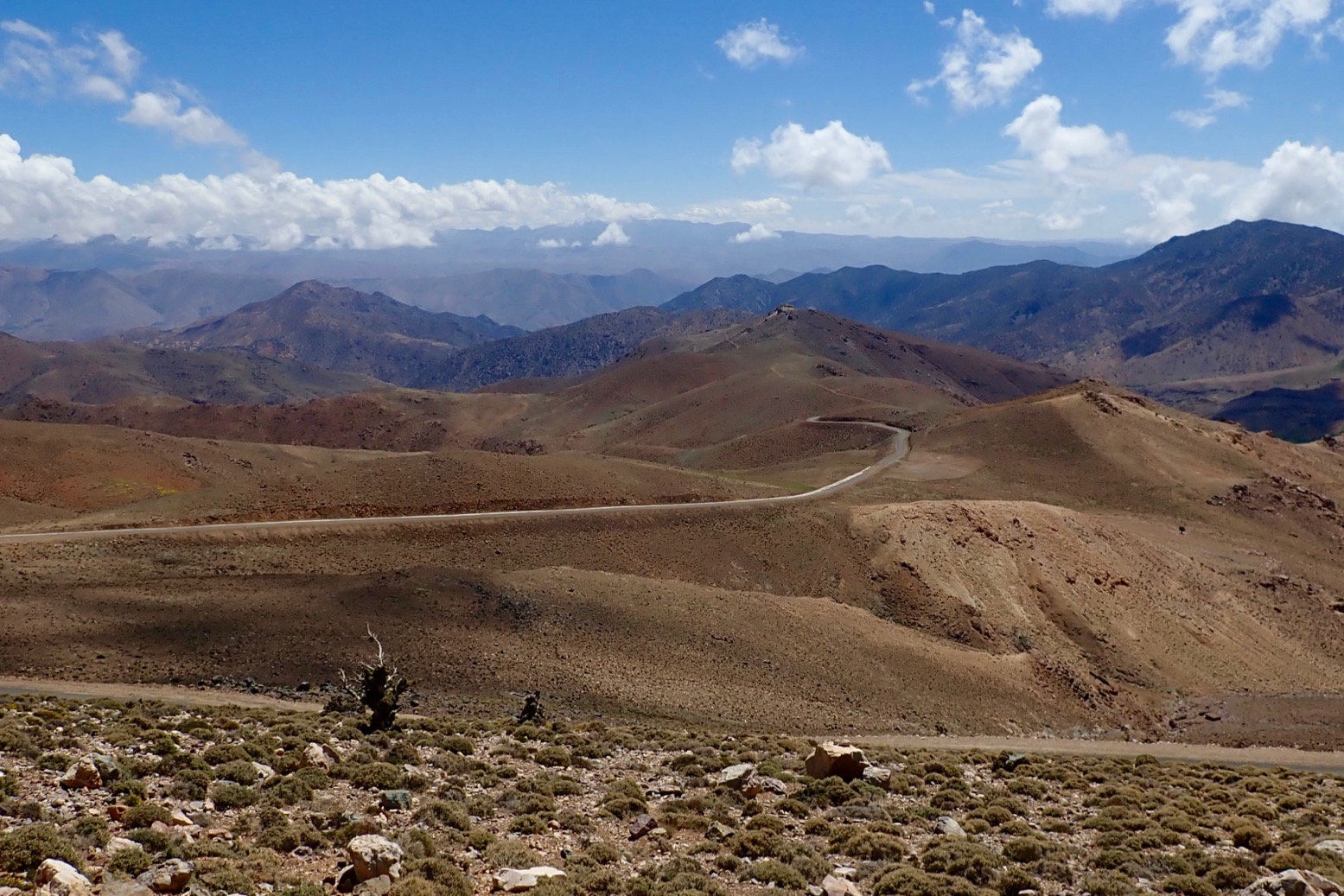 One of these days I’m going to watch a youtube doc on how they build mountain roads.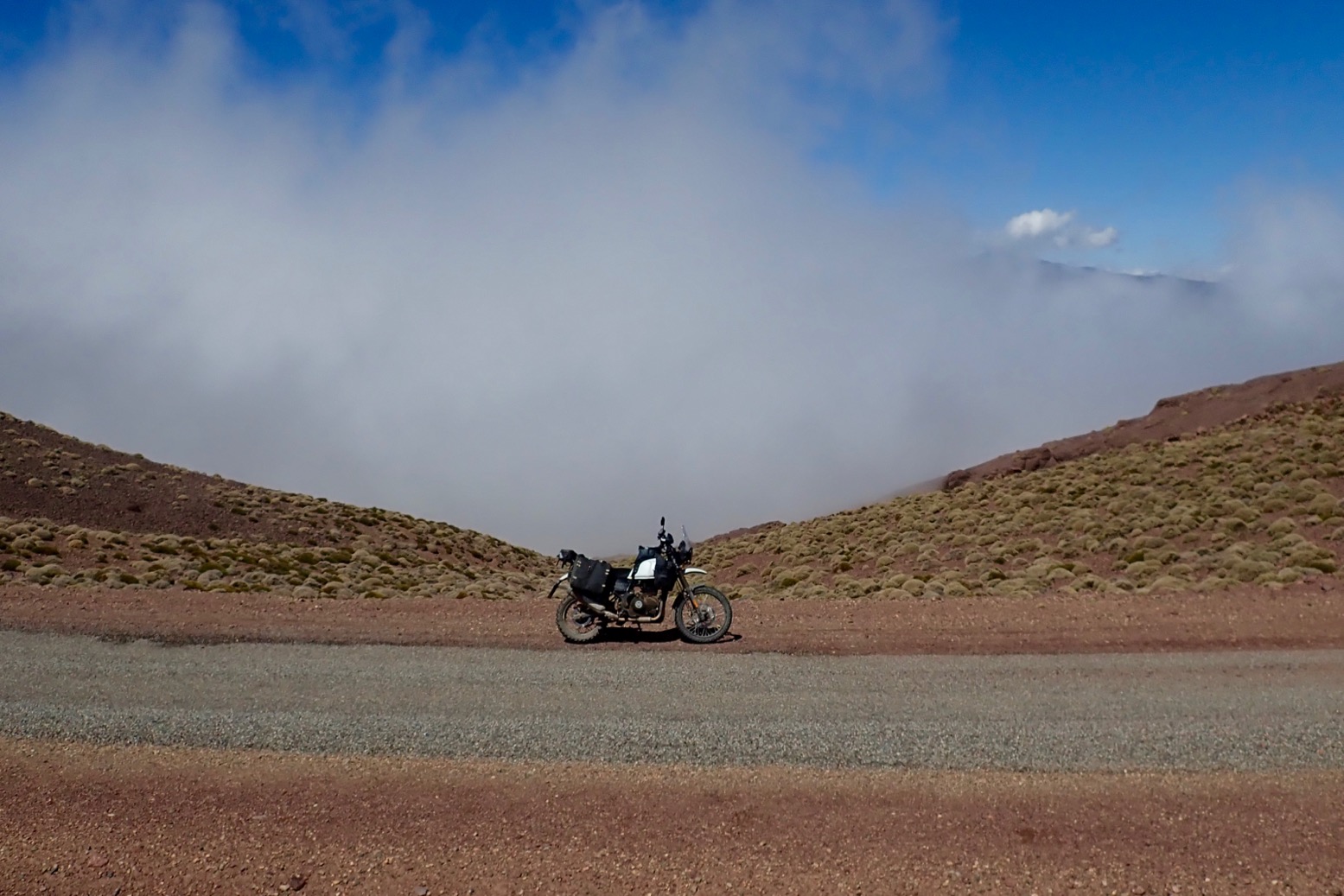
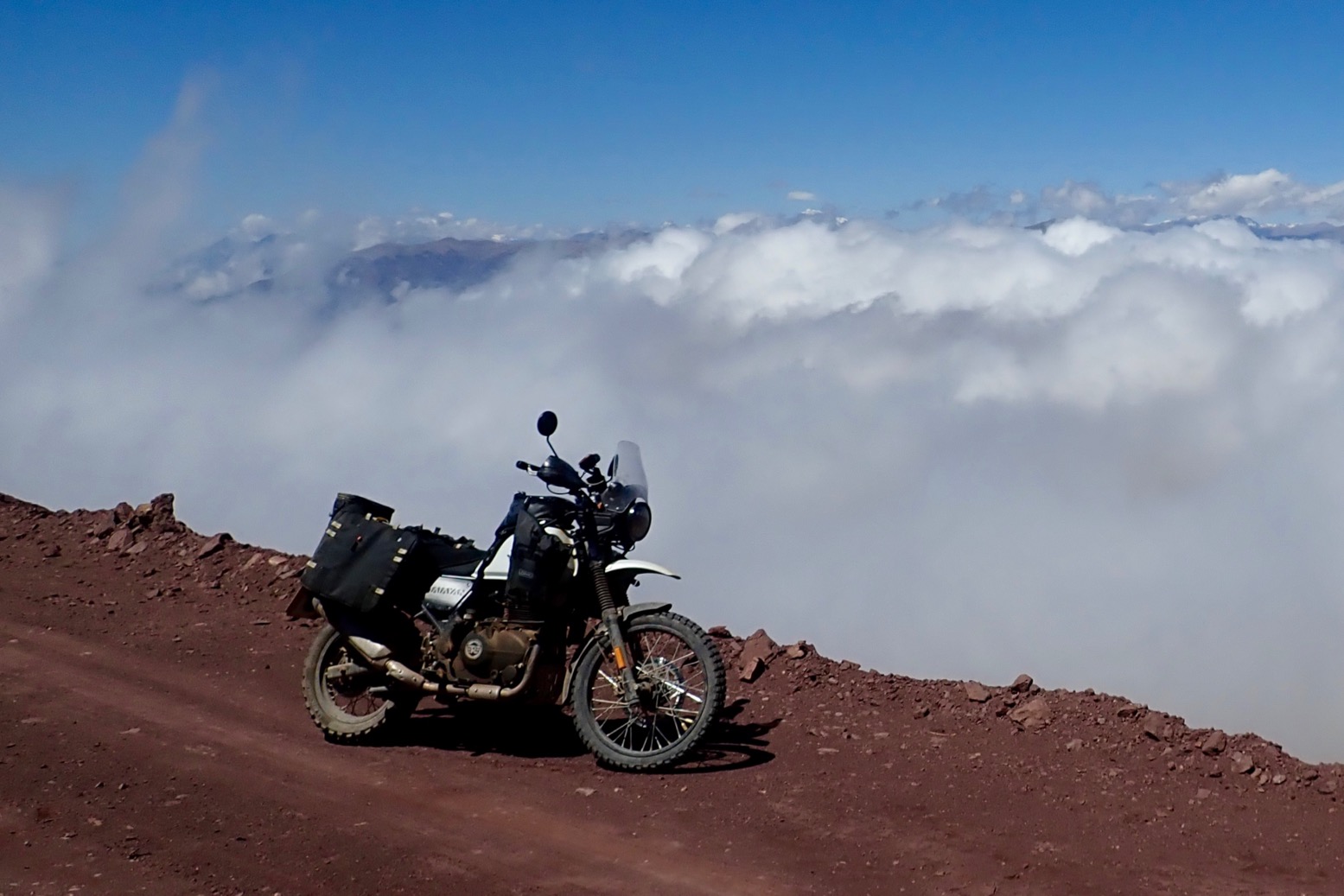 Above the clouds at 2500m or about 8300′ in old money.
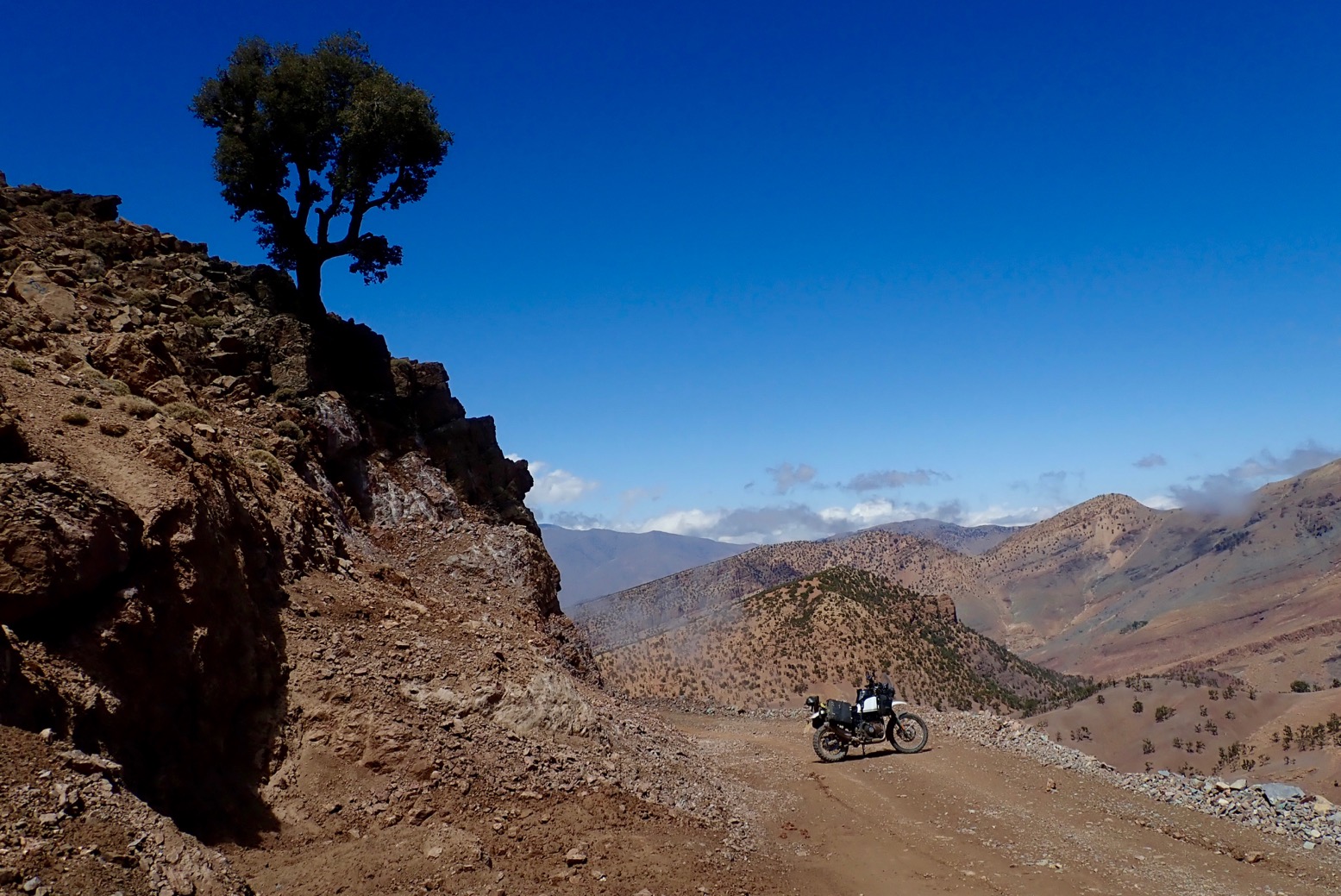 An isolated juniper tree that’s managed to dodge the village wood burners.
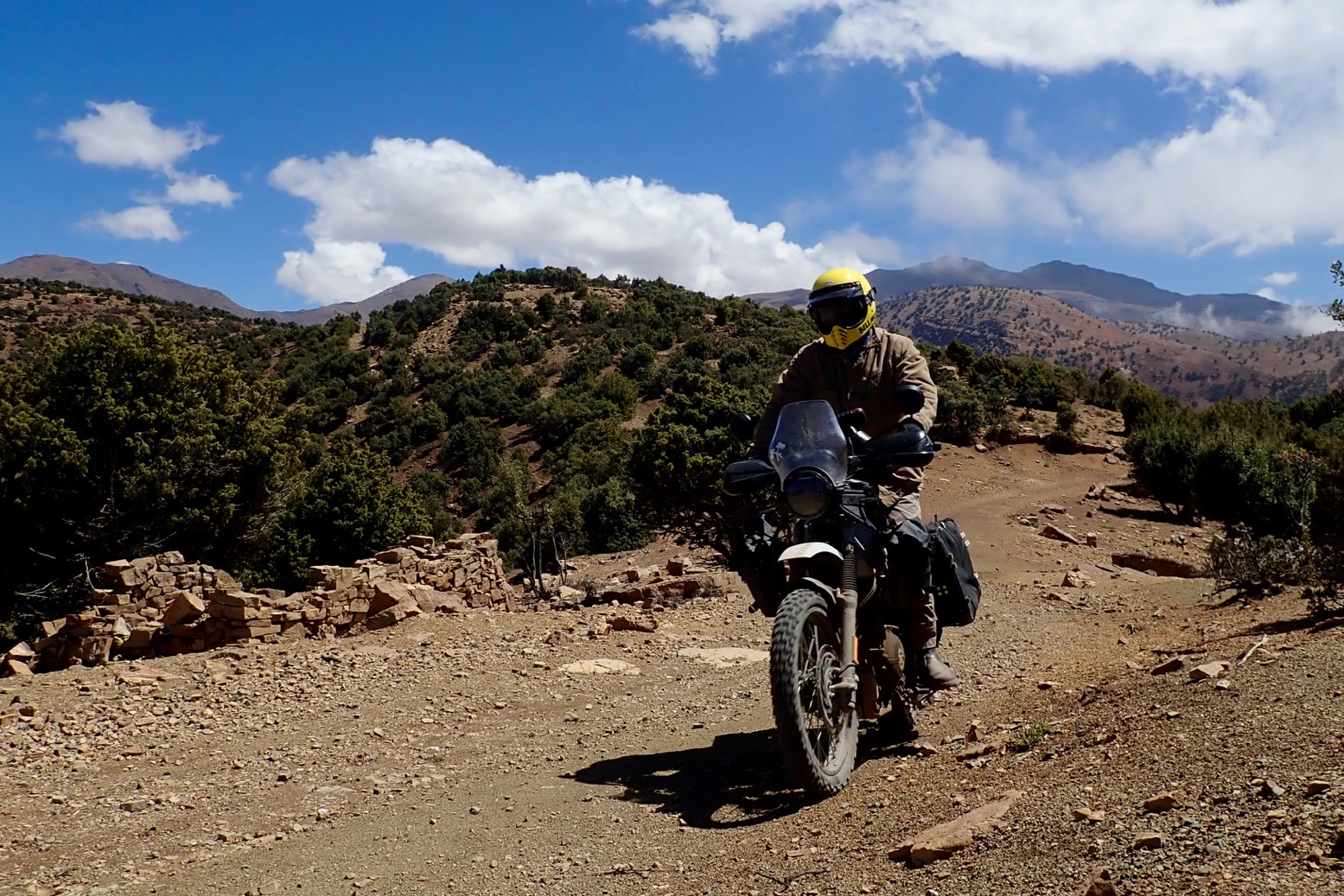 Checking the link route to Map Junction above Ijoukak.
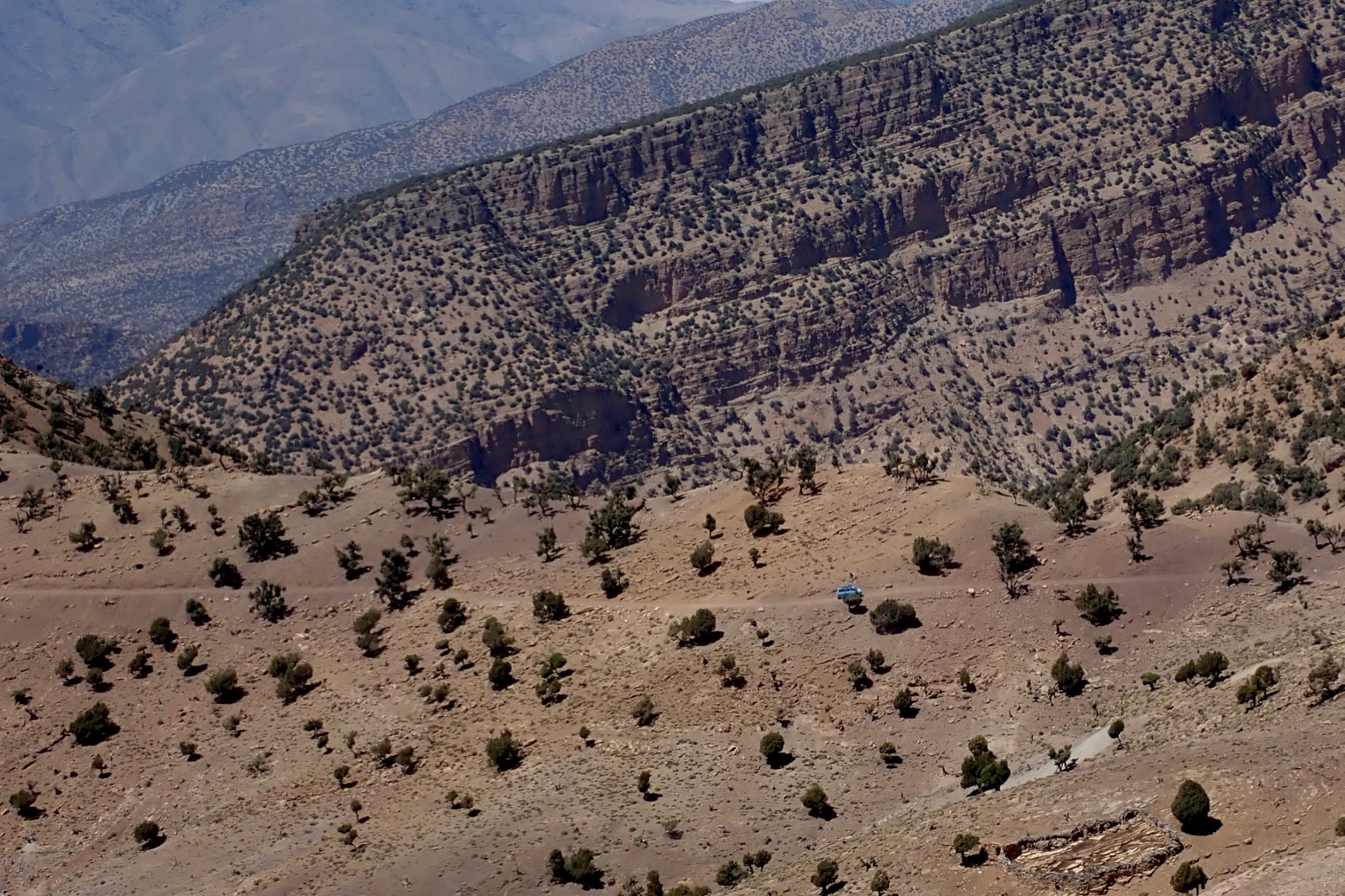 1970s Transit. One of the only vehicle’s I saw today once off the main roads. The other was a Trannie too.
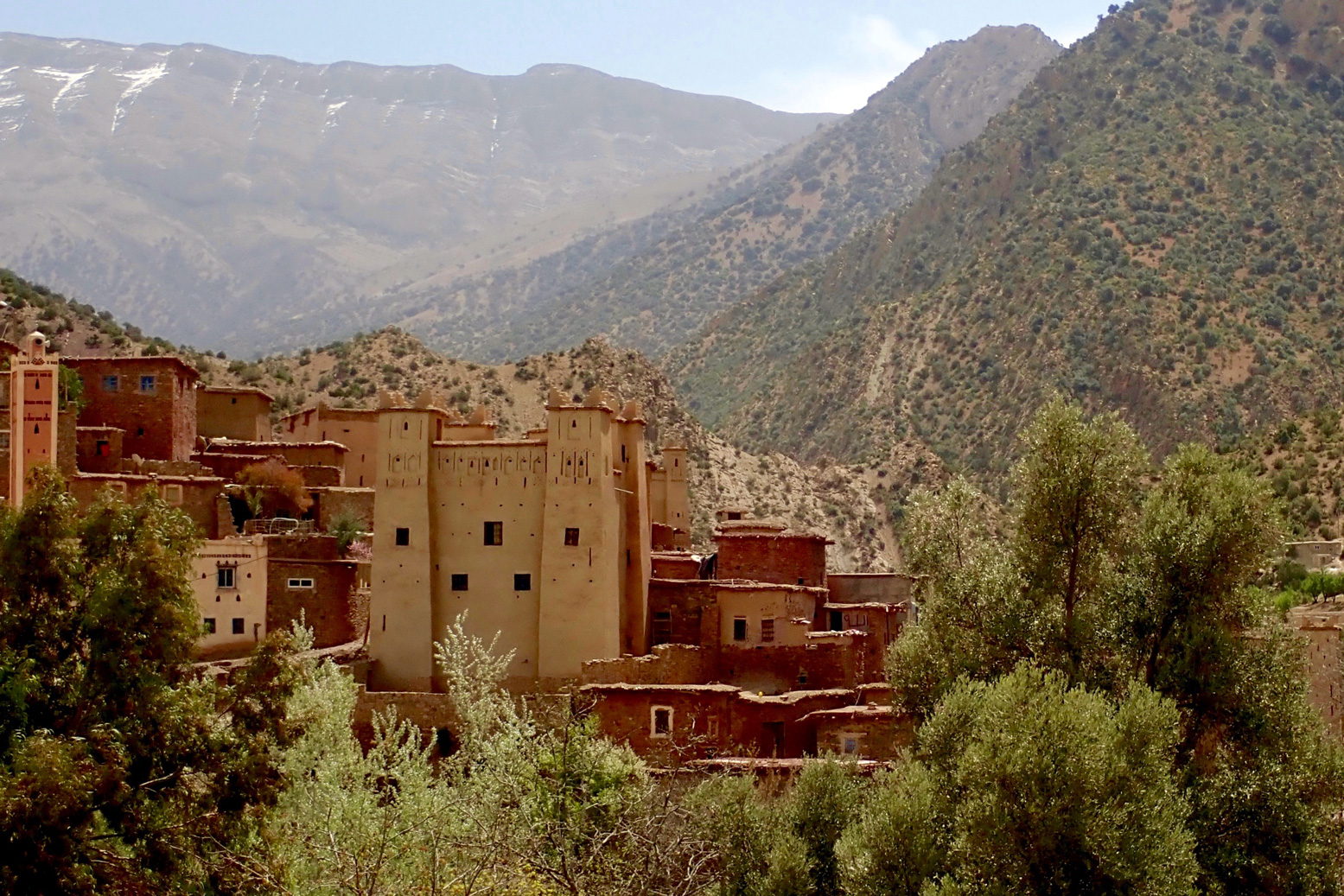
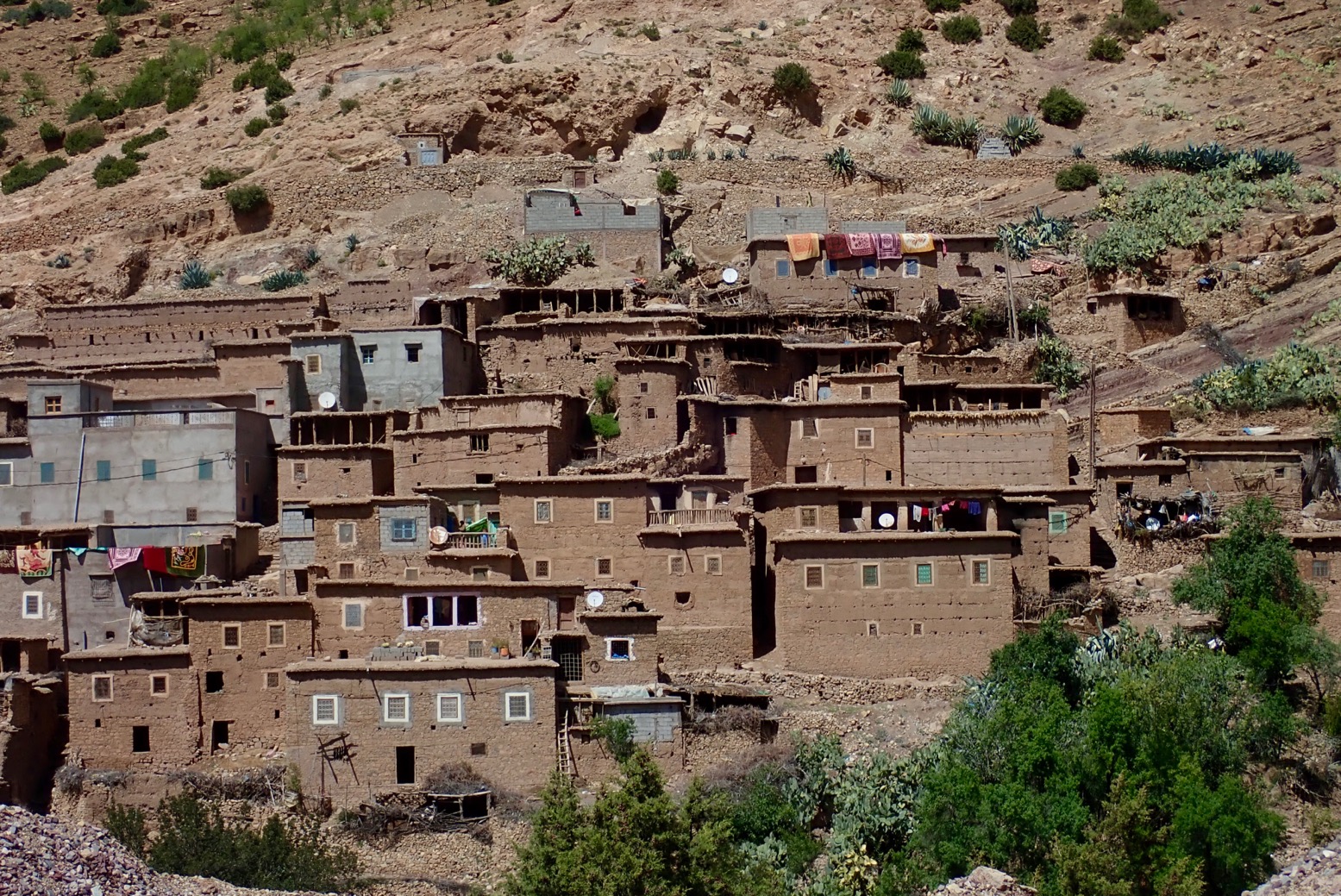 Another photogenic village somewhere.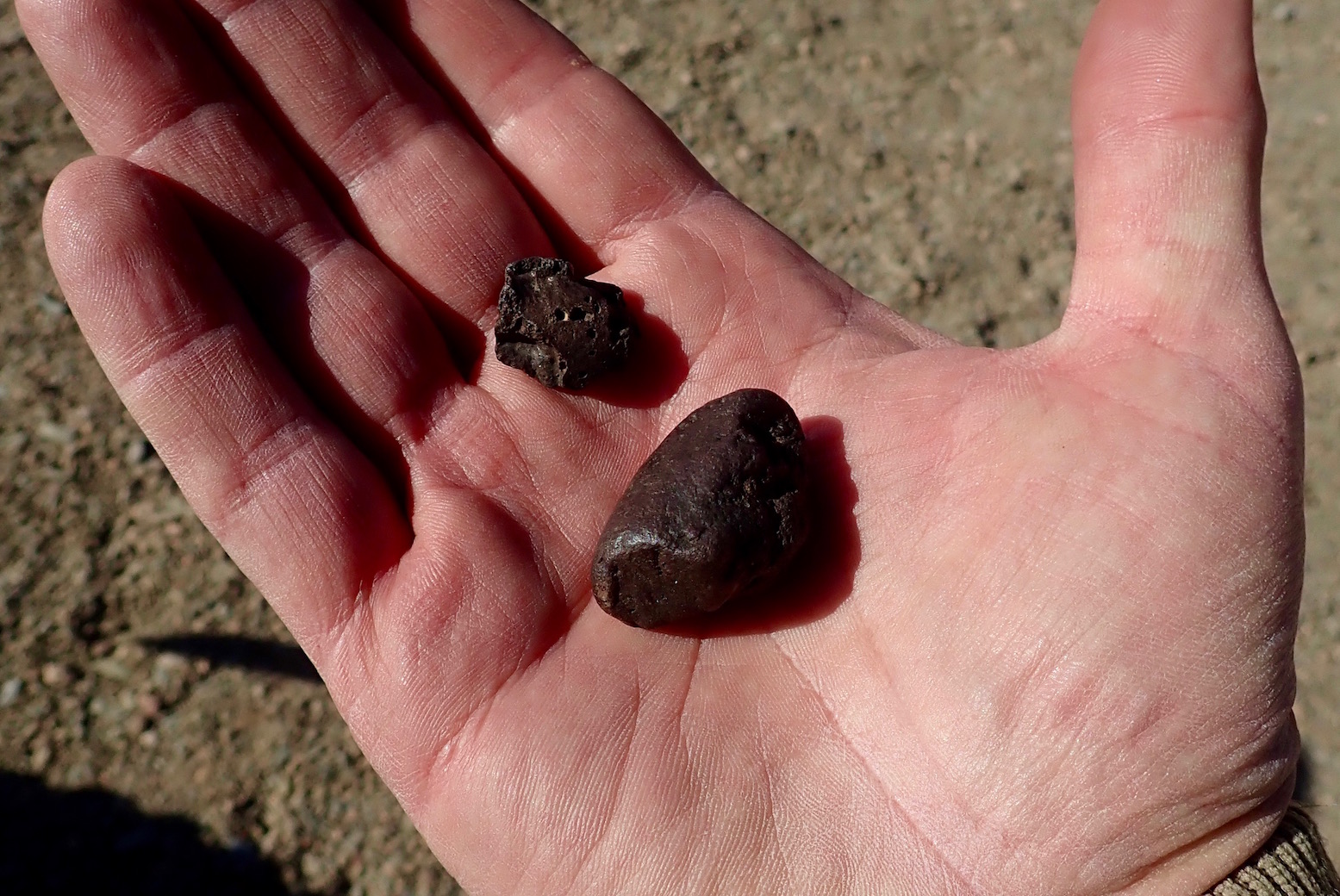
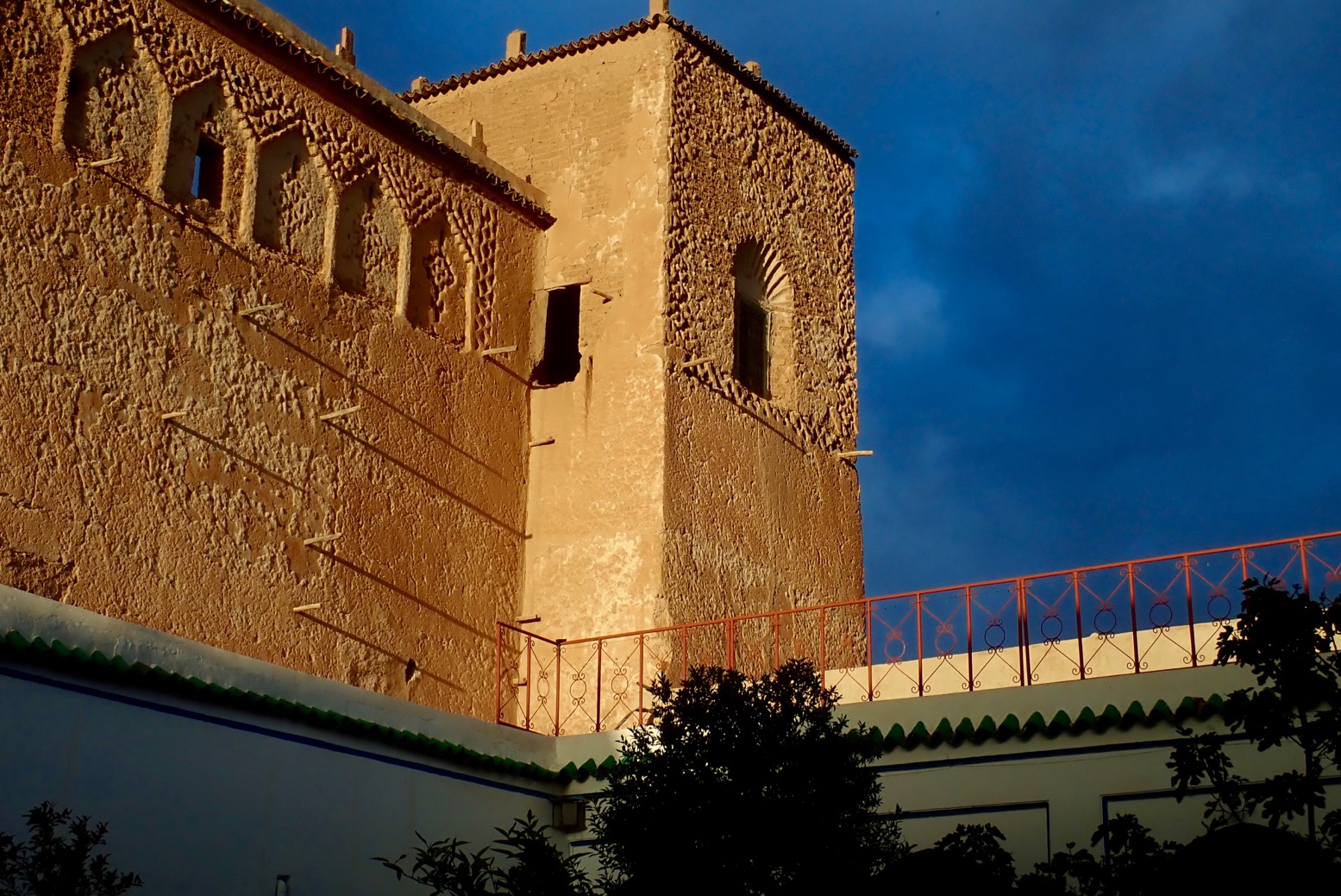 Sunset at the casbah.
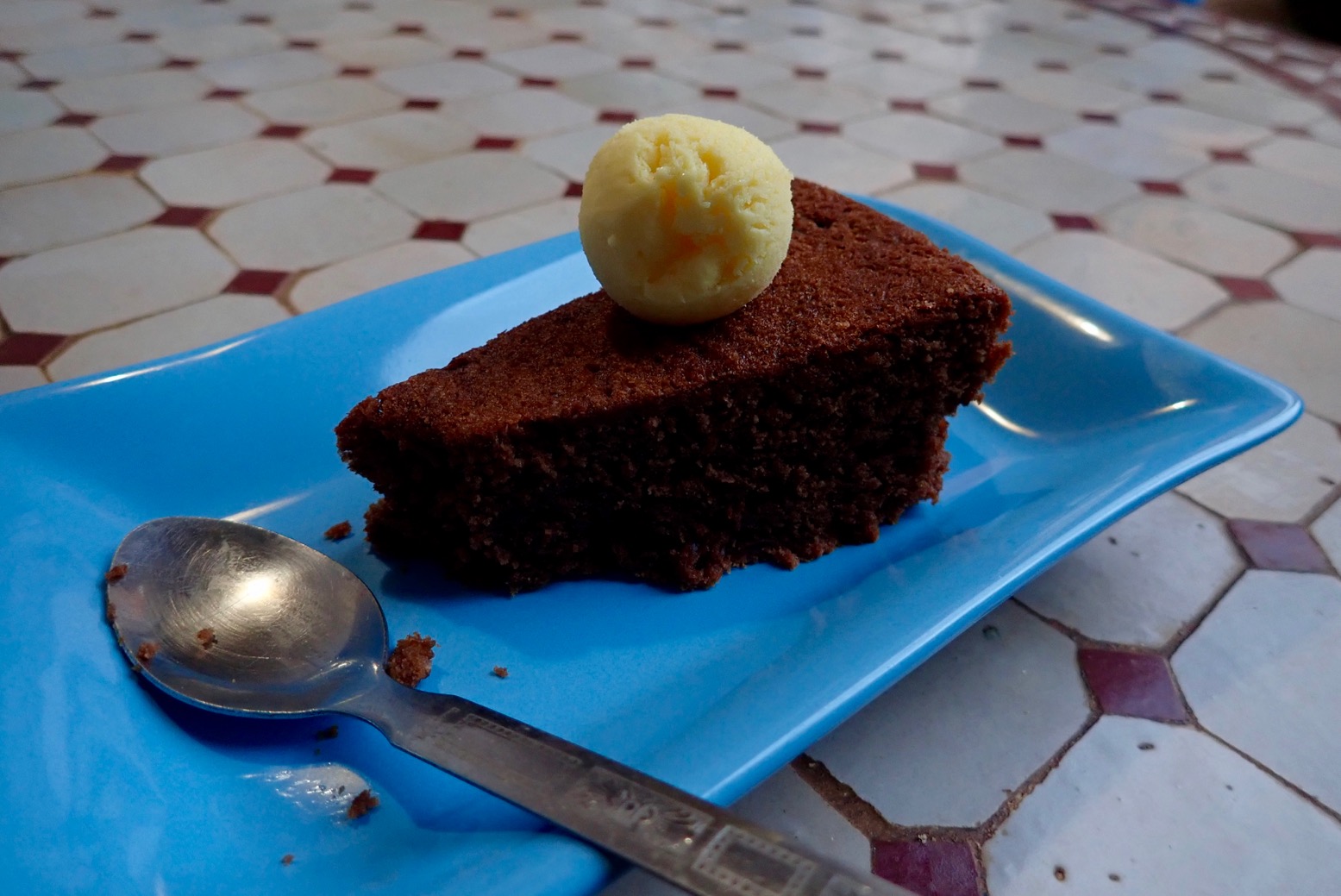 Always room for a whaffer thin slice of cake.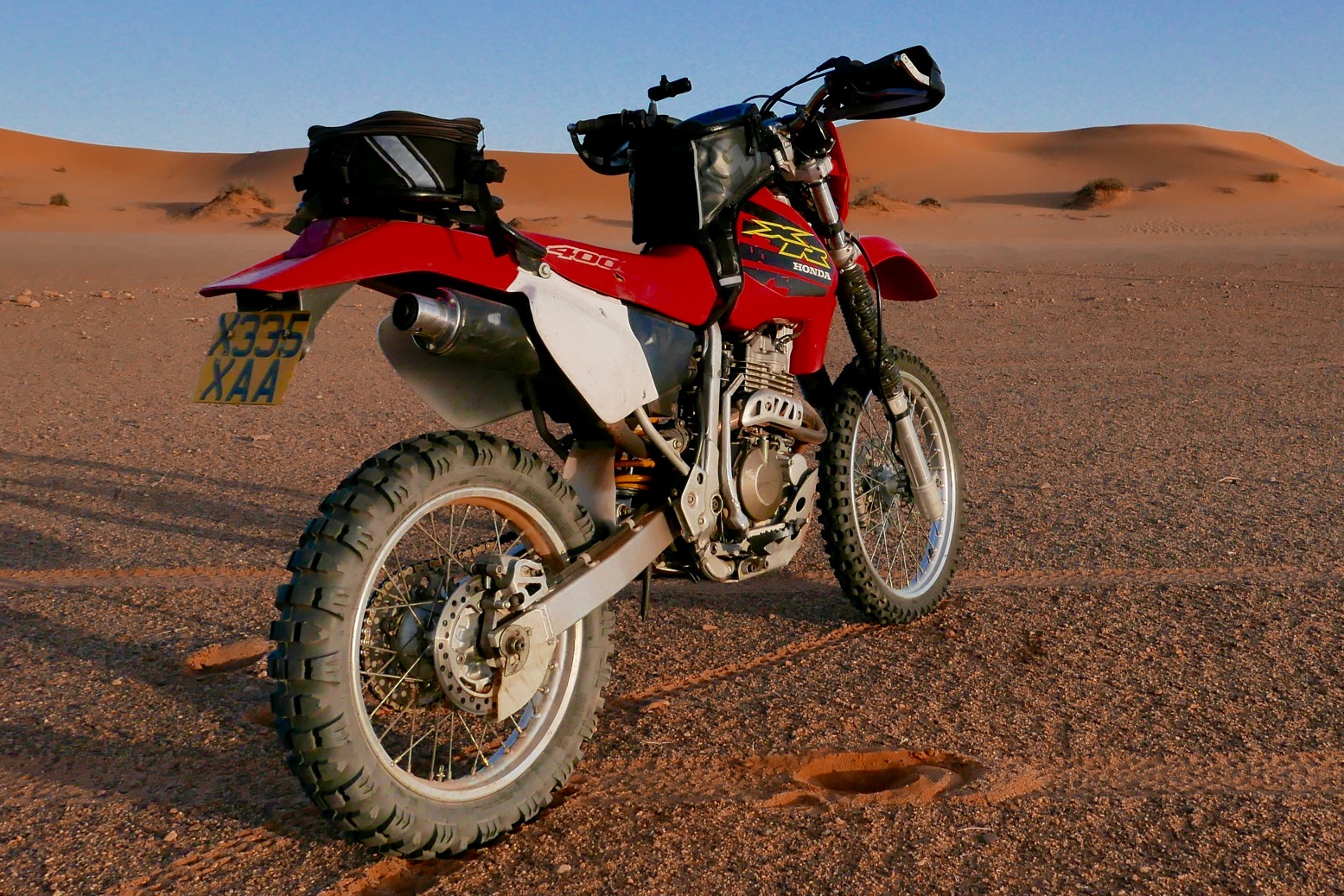


































 Mackenzie also thought that trade and communications would help liberate the sub-Sahran population from the slave trade. And this wasn’t just a ploy to appeal to investors’ morals or religious beliefs – Mackenzie’s later work in East Africa long after the NWAT Company dissolved suggested he was always a genuine abolitionist.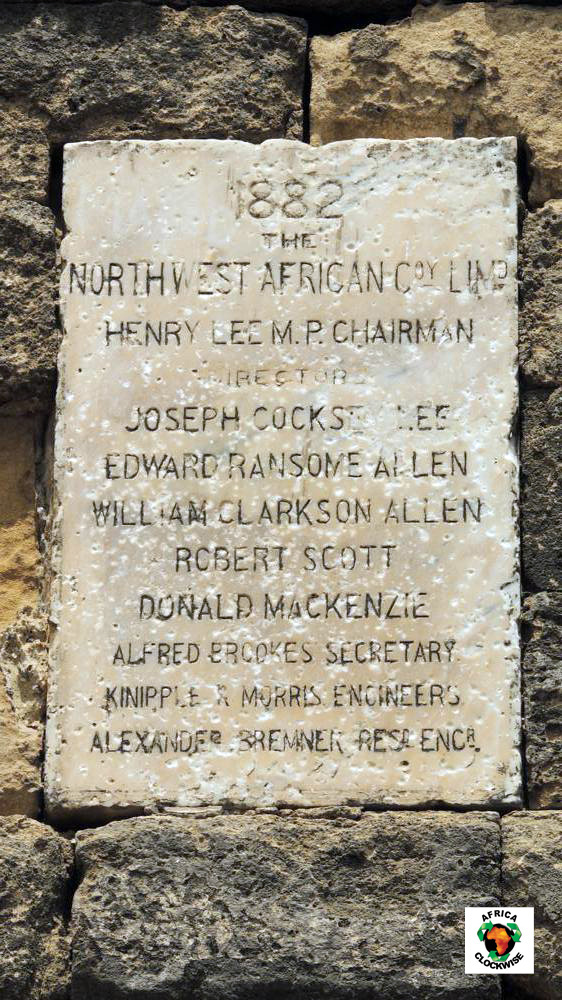
 Sahara Overland