Author Archives: Chris S

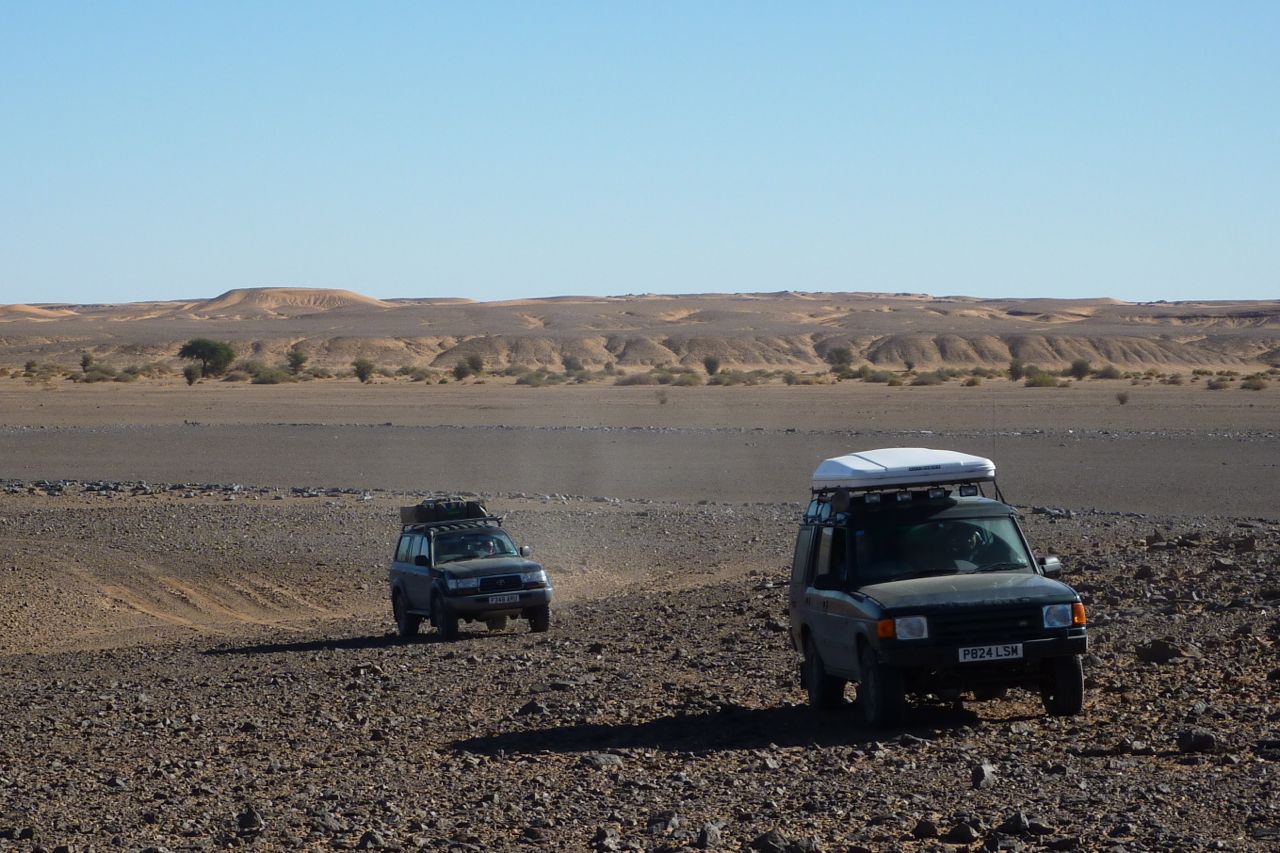
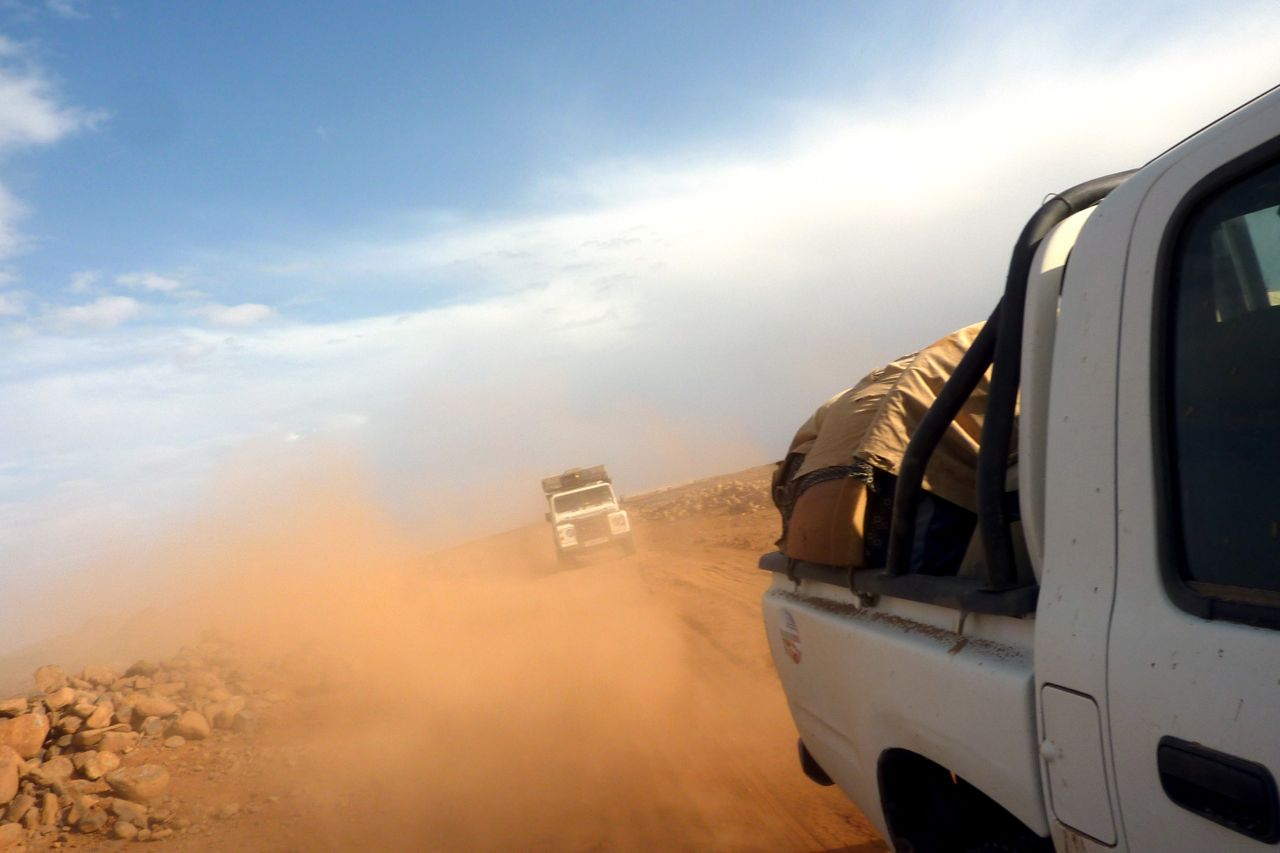
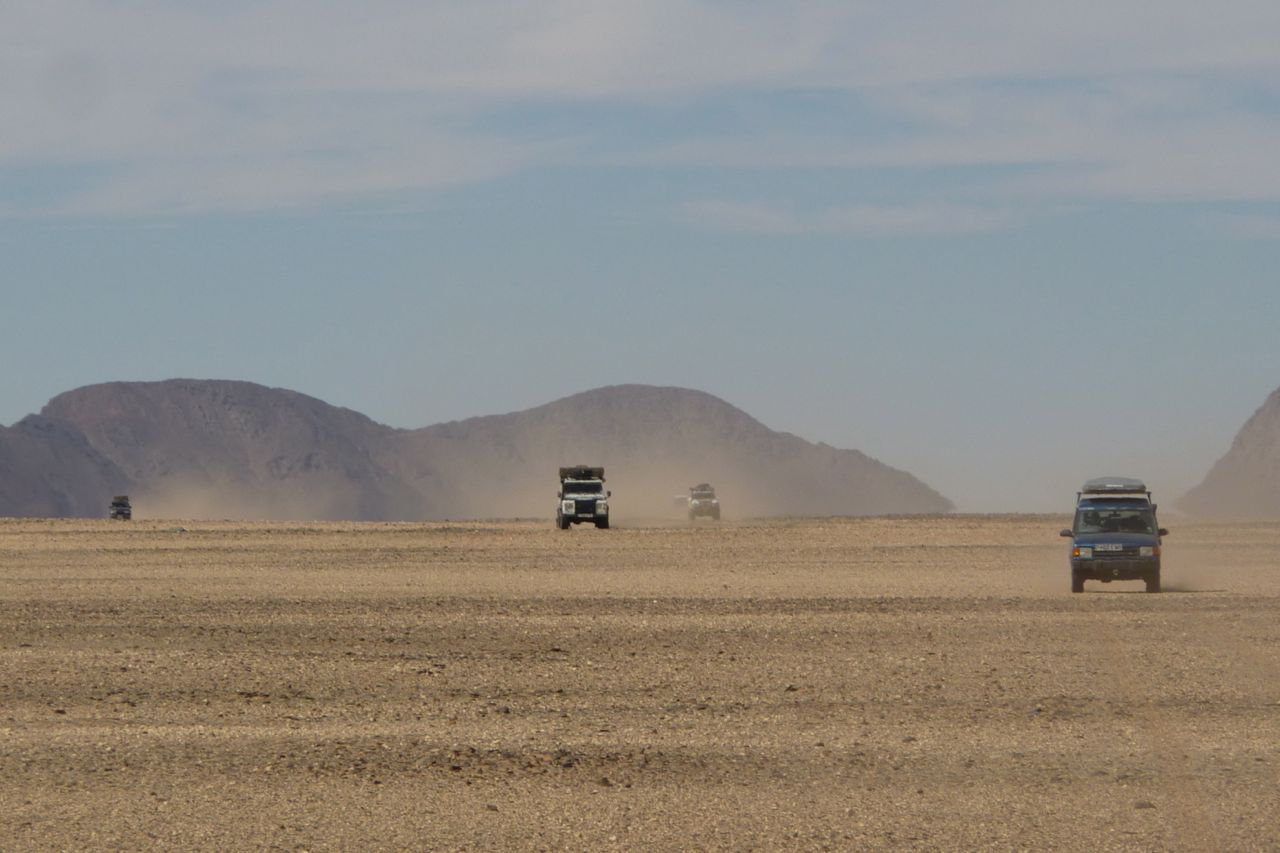
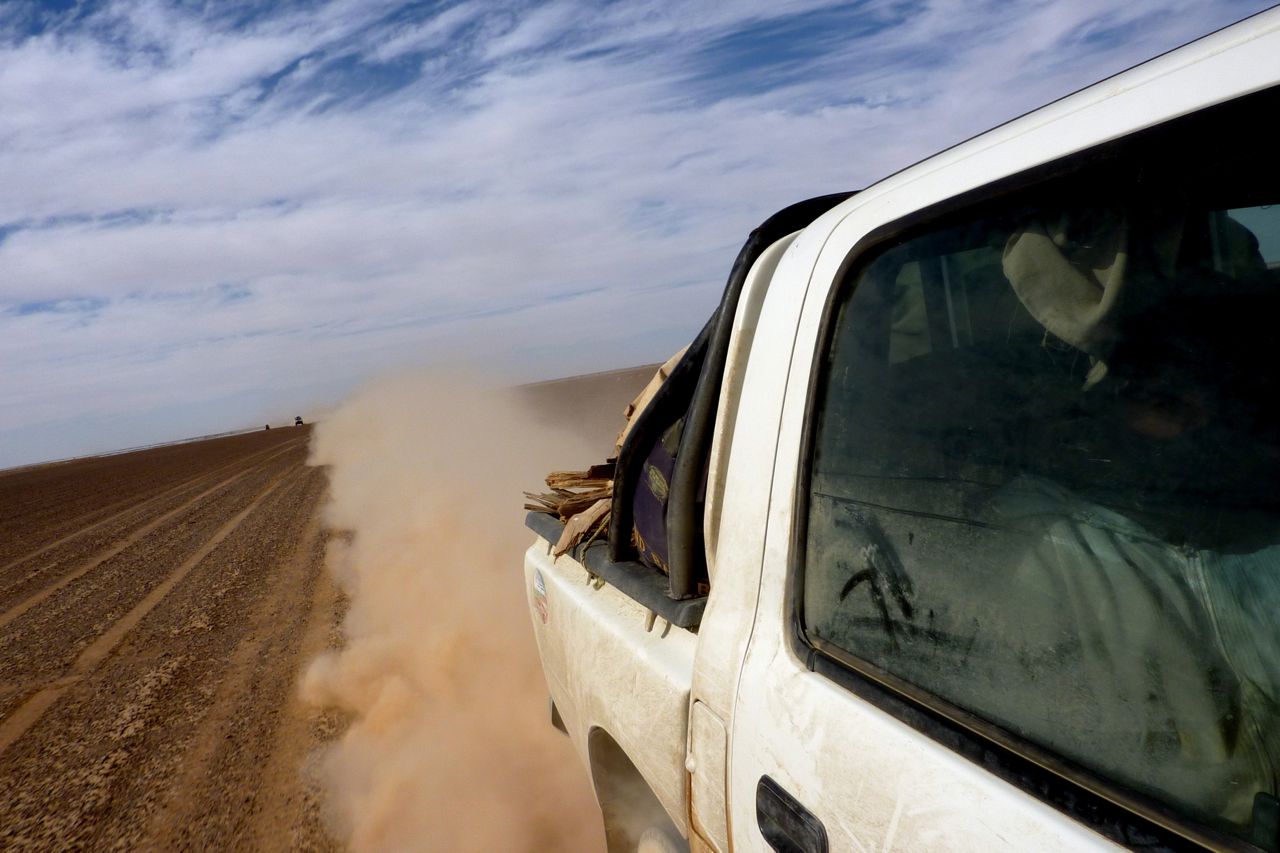
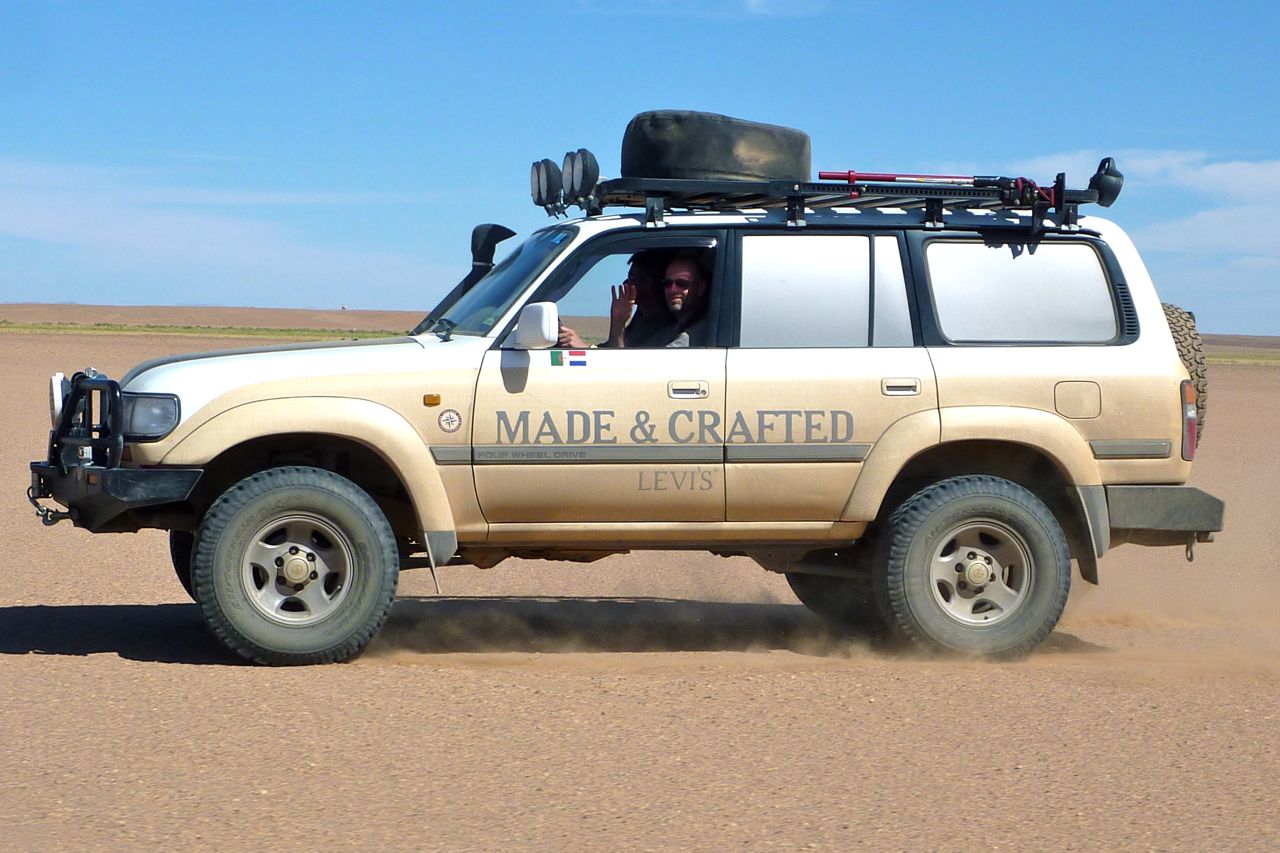
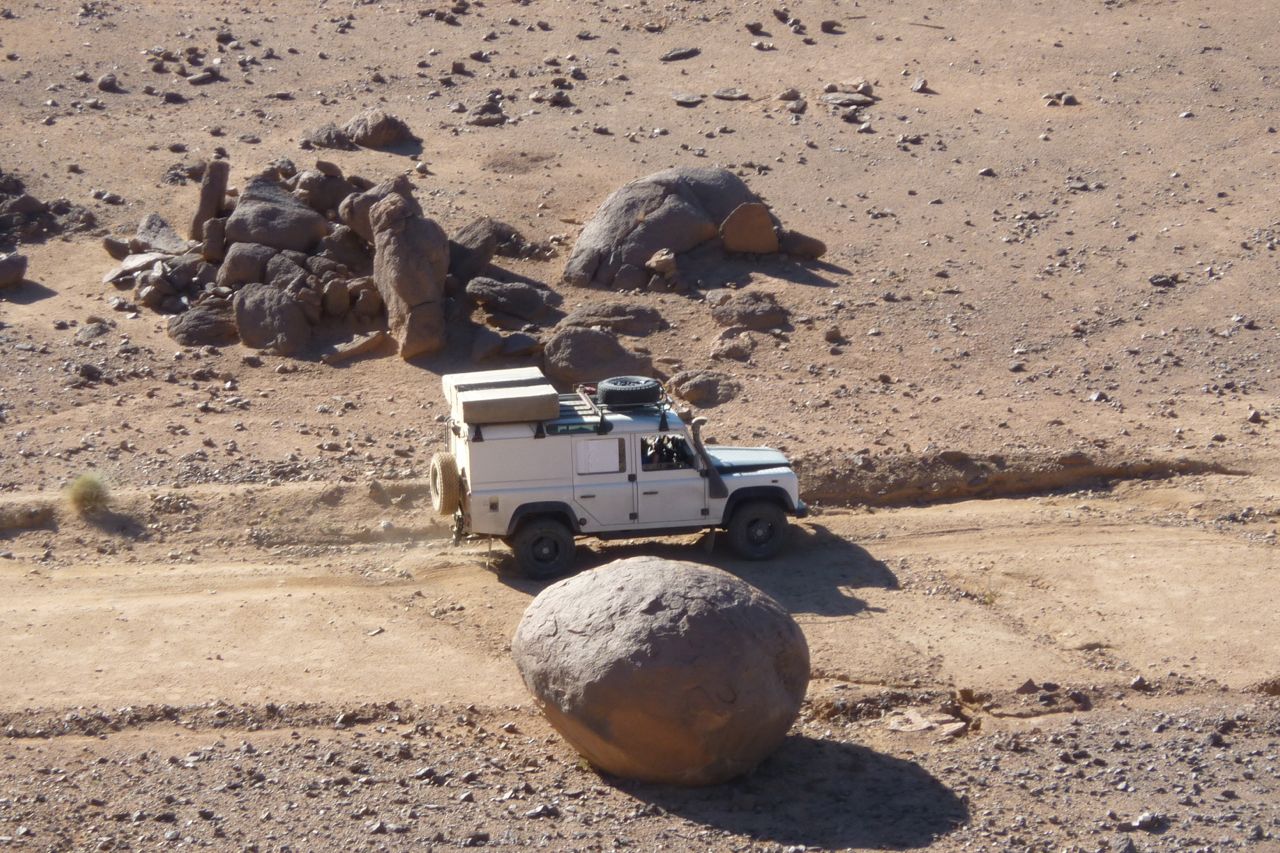
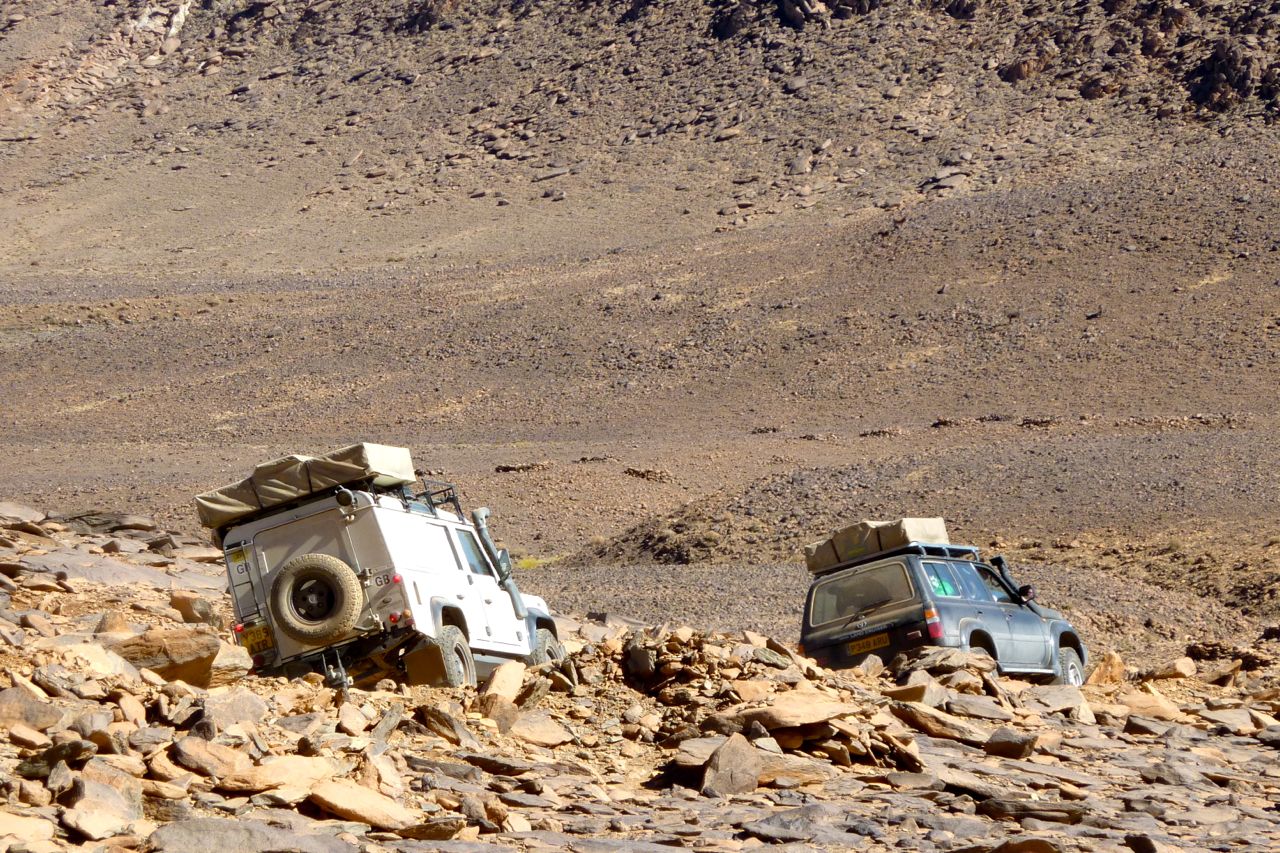
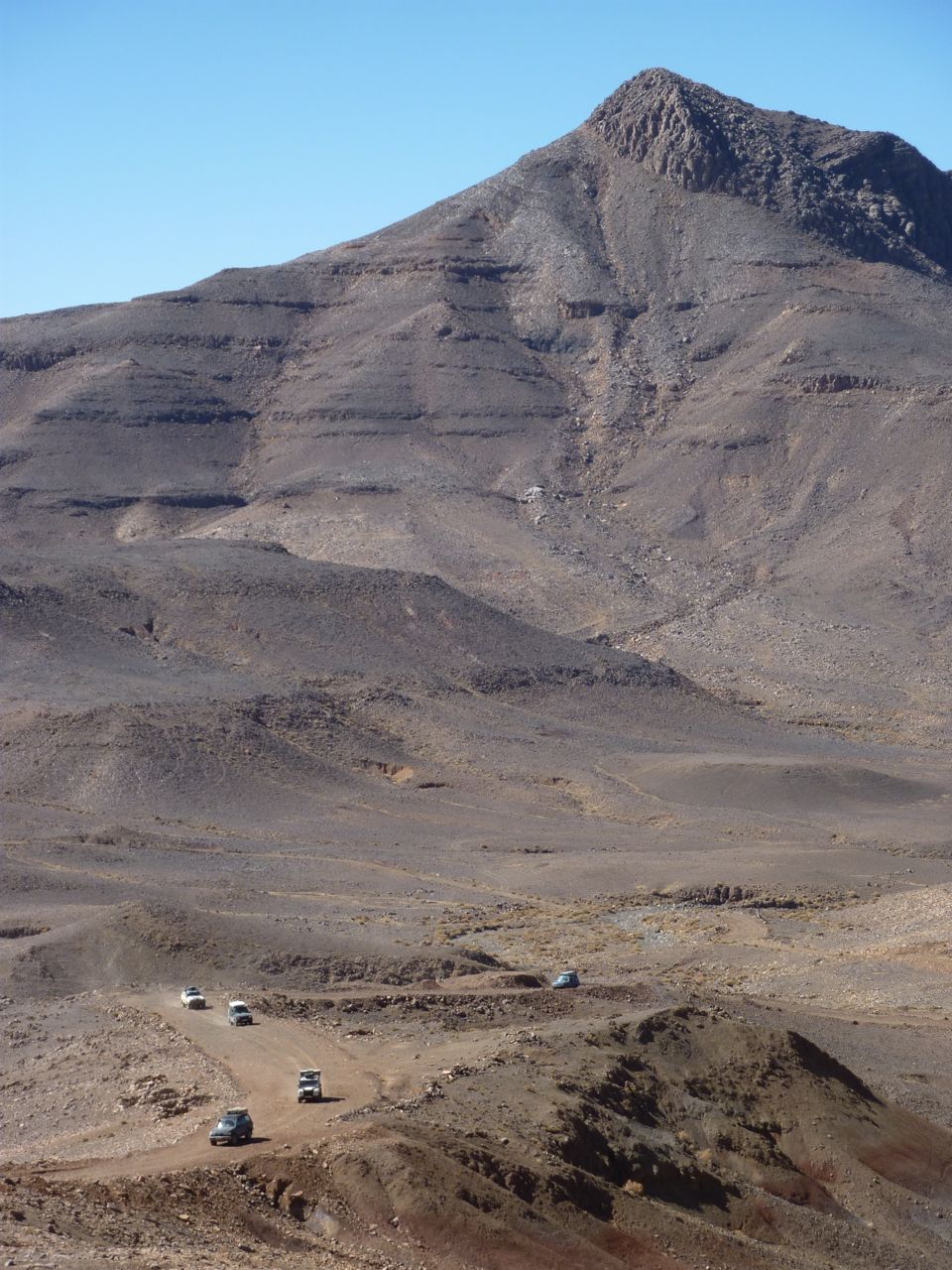
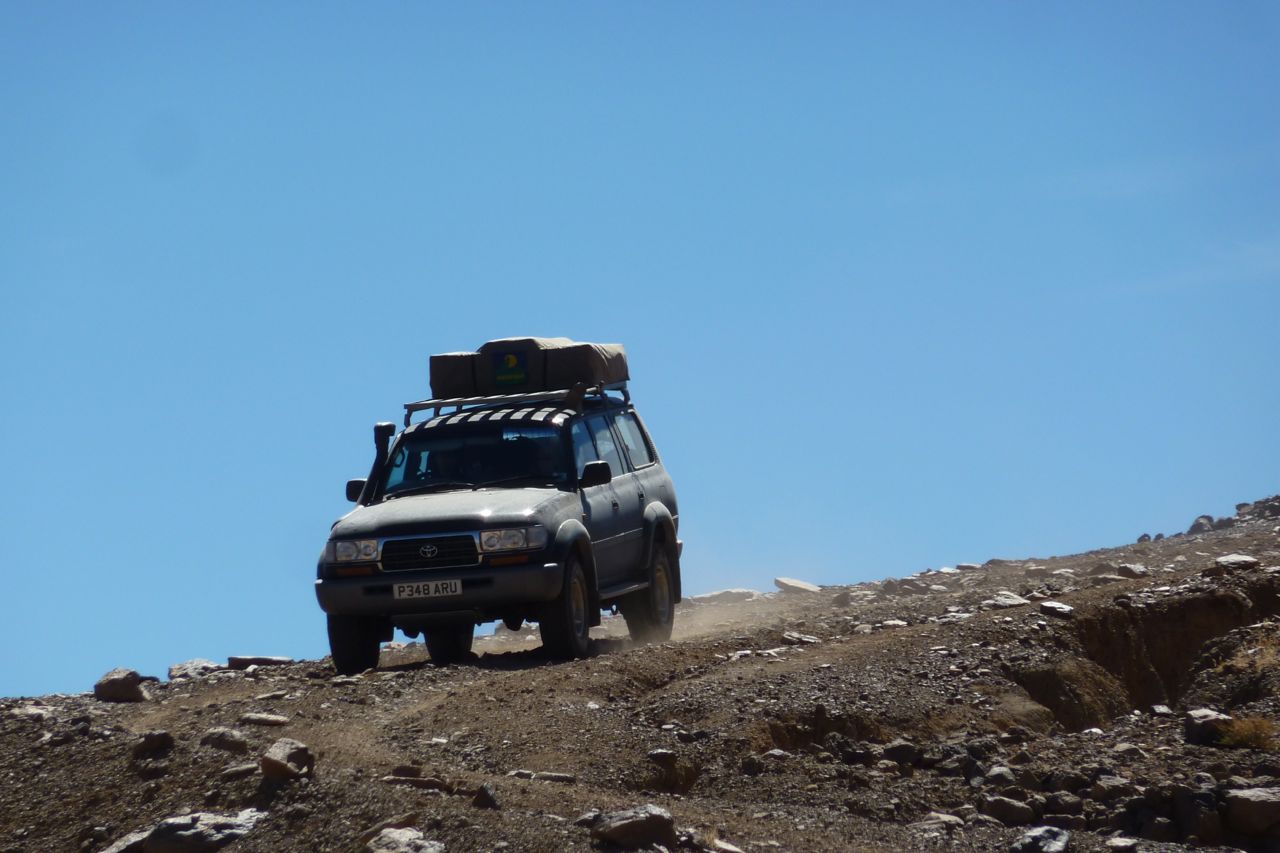
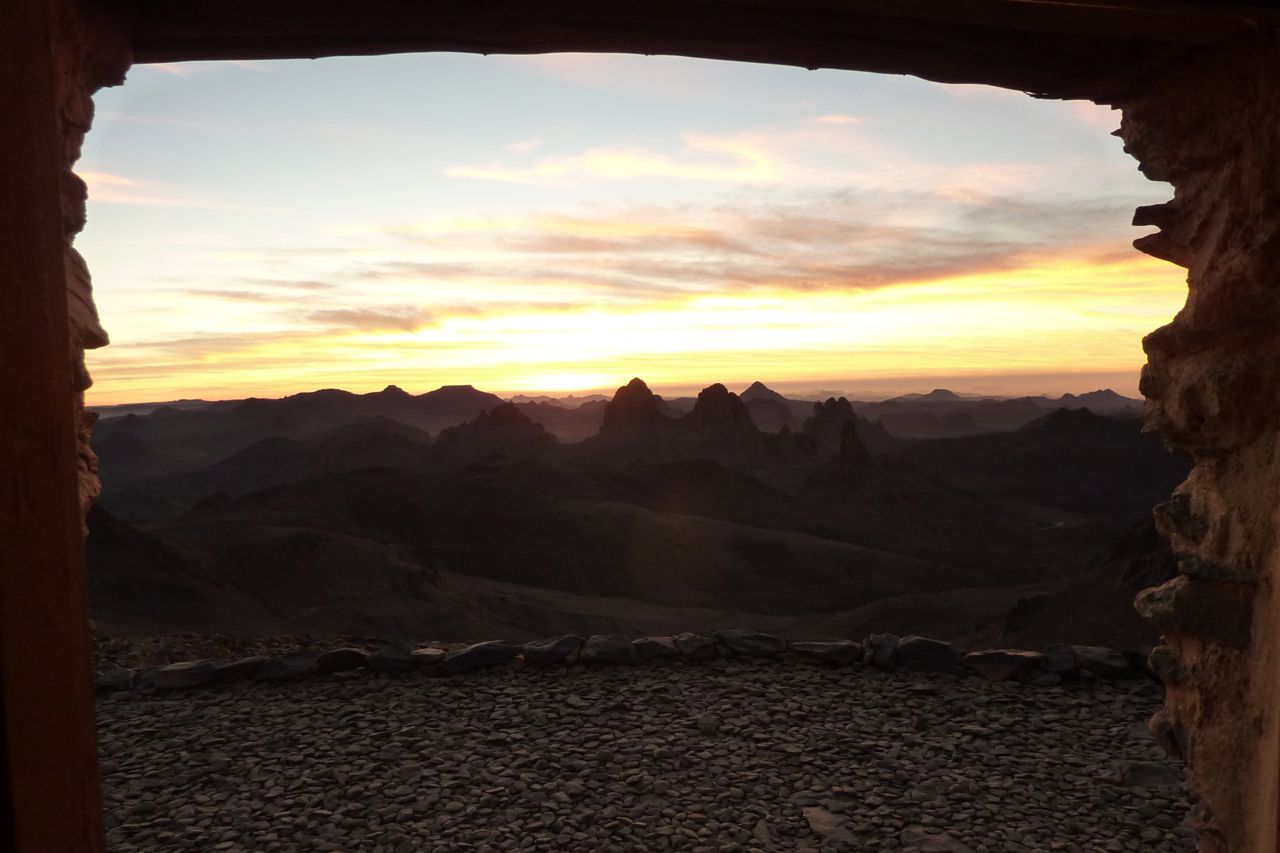
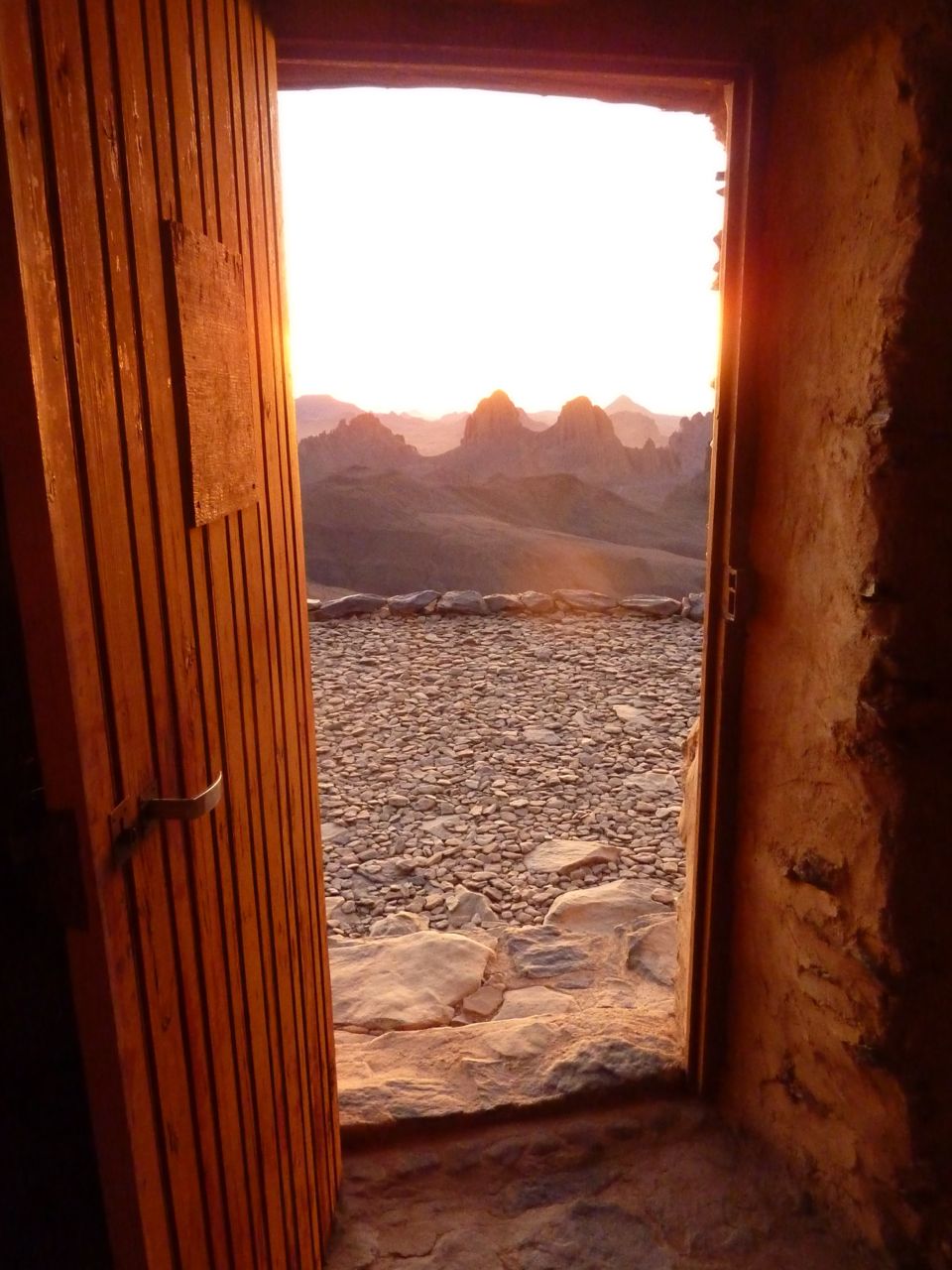
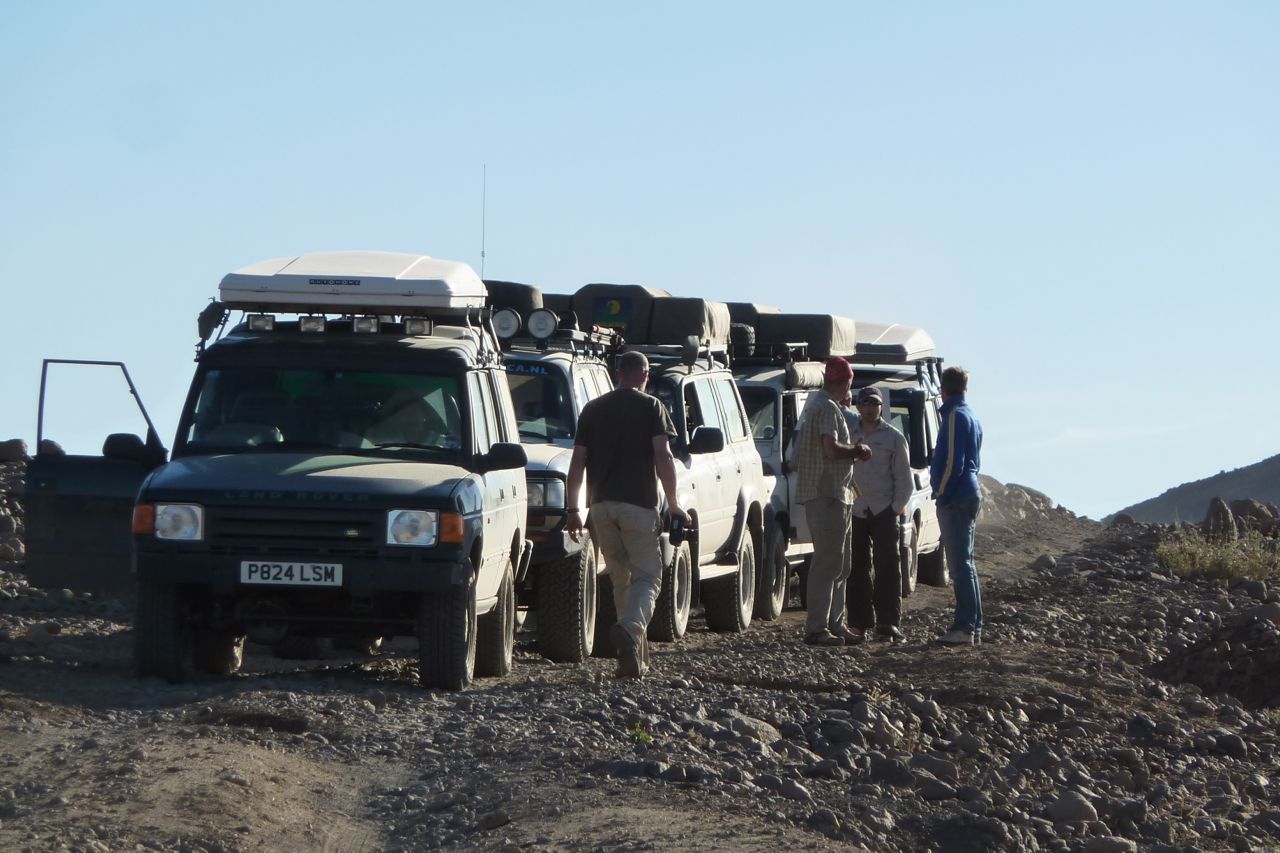
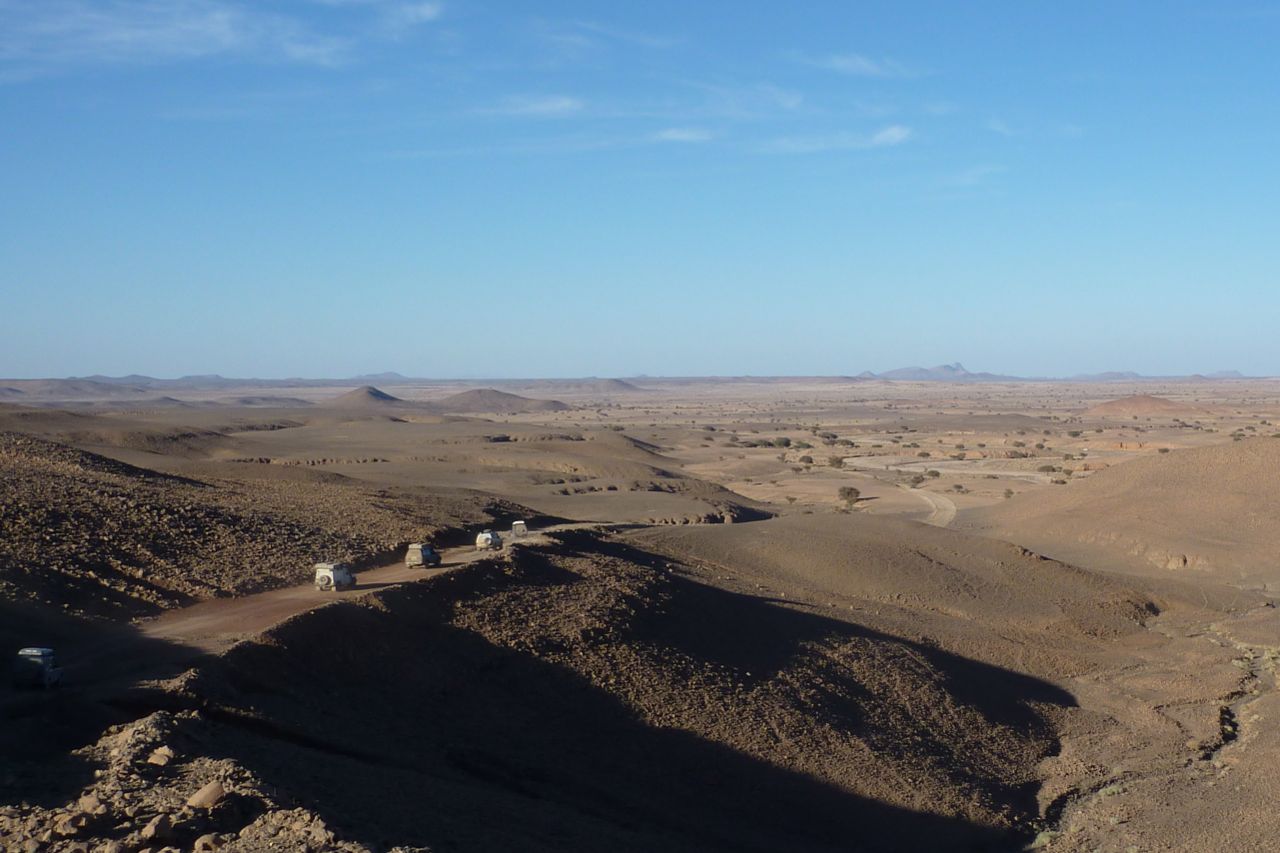
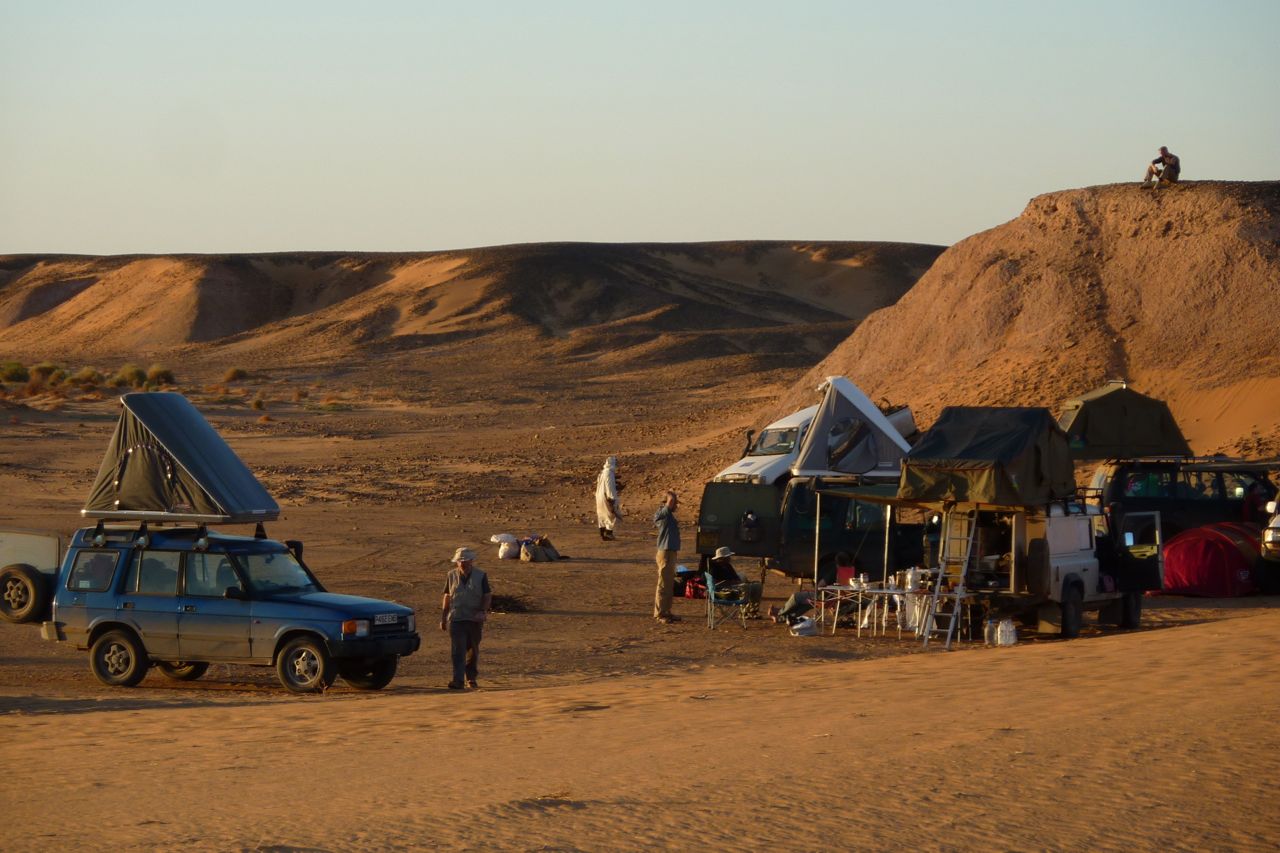
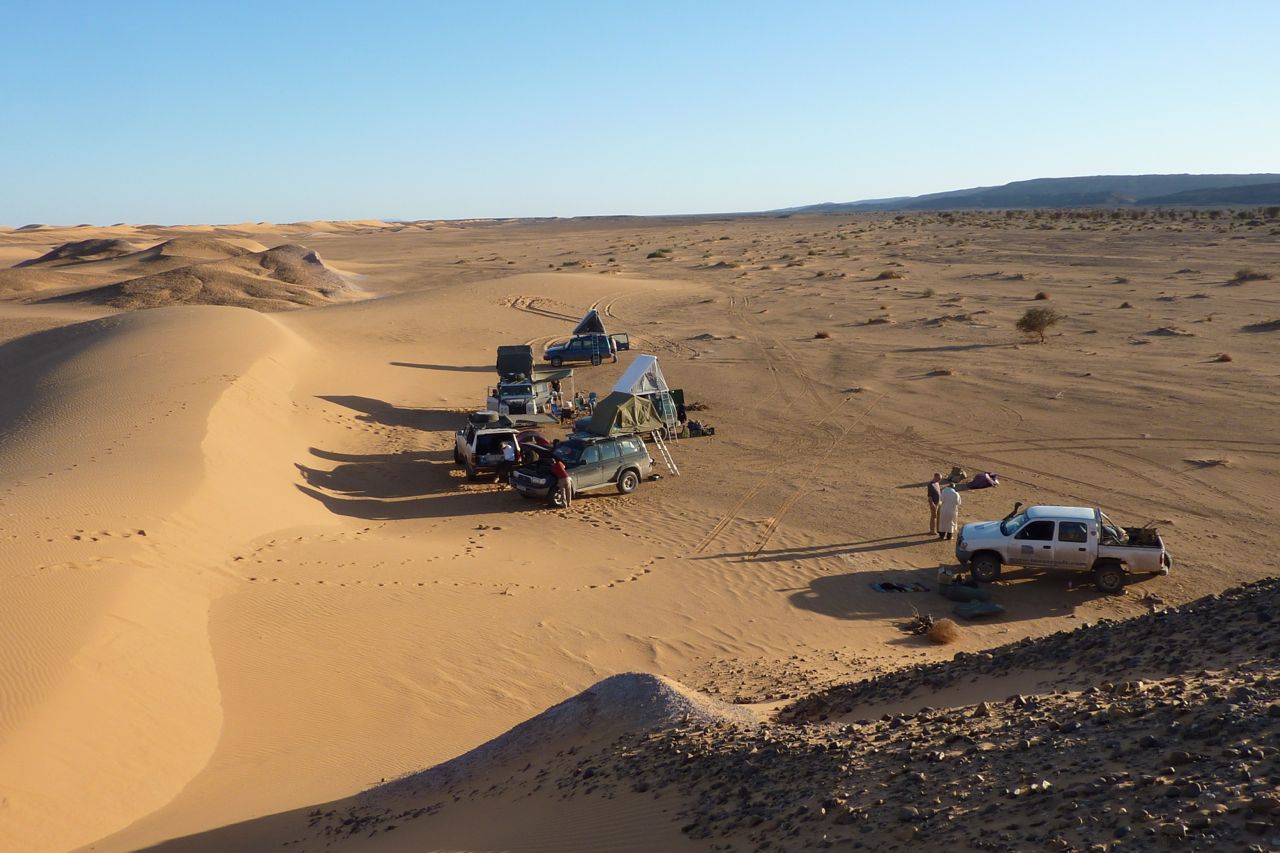
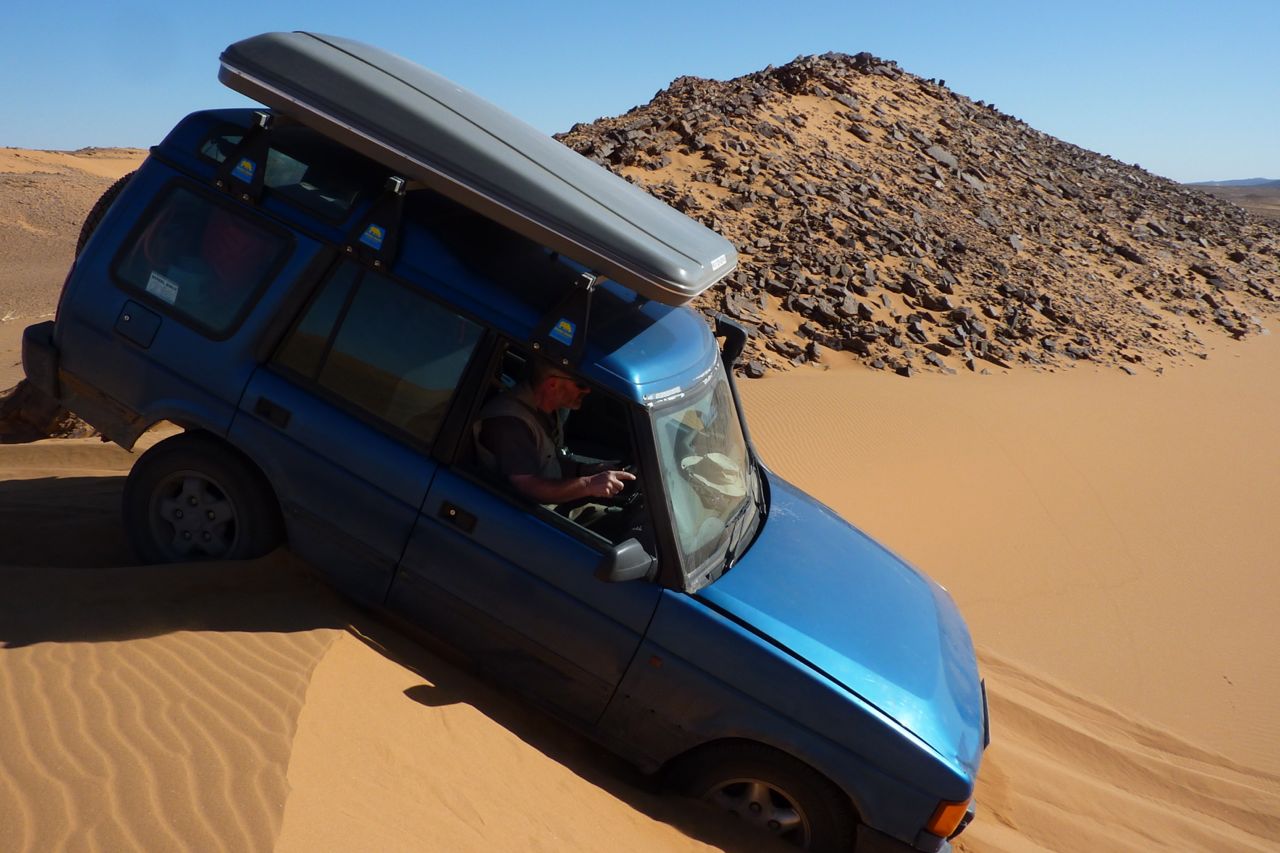
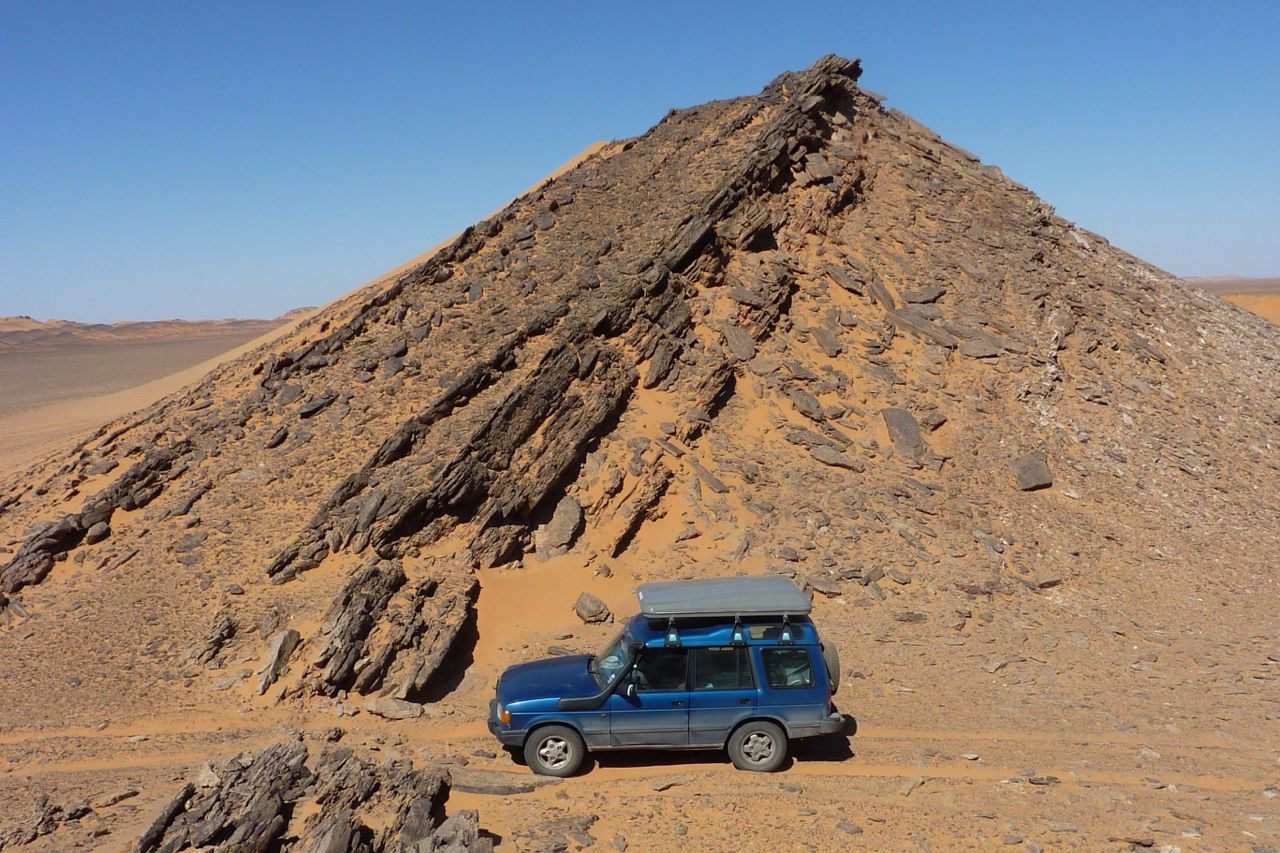
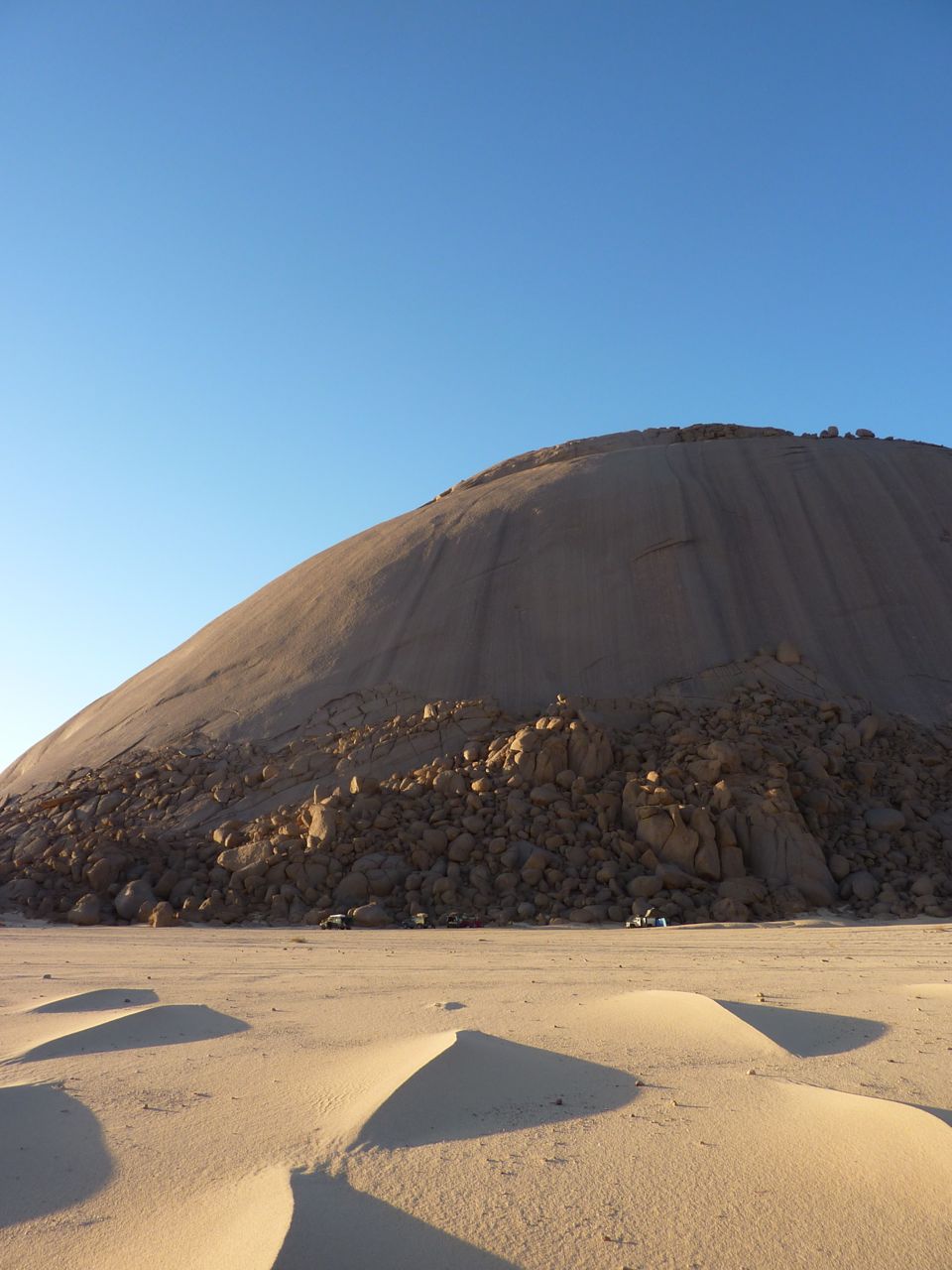
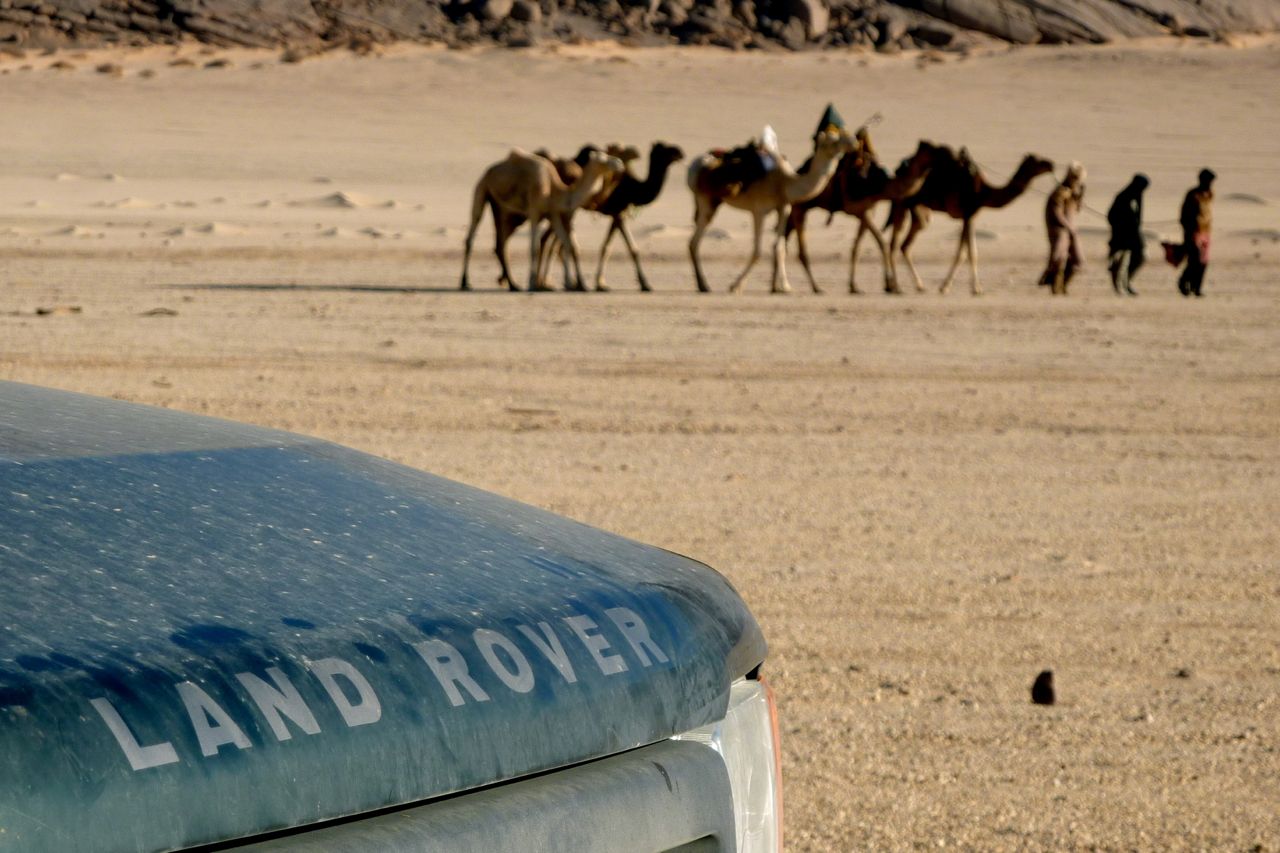
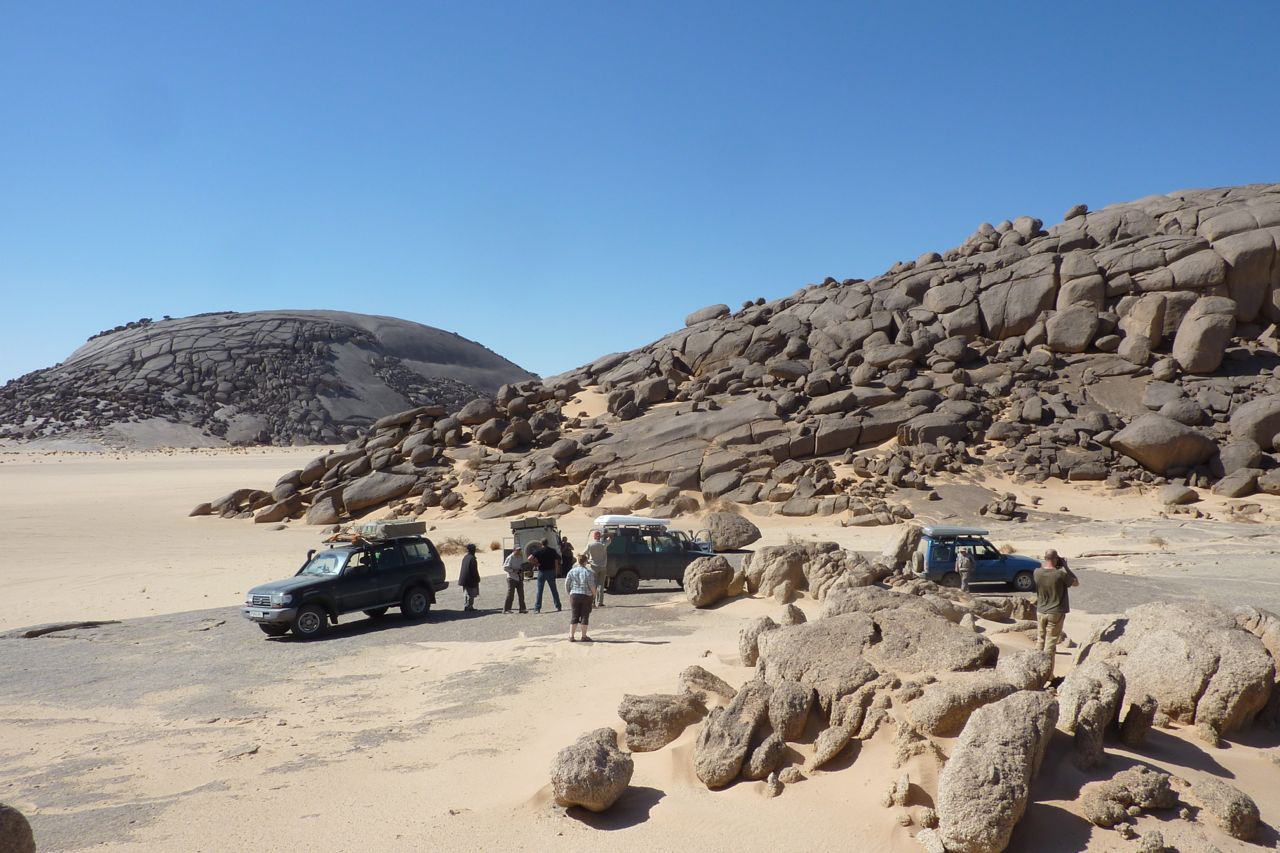
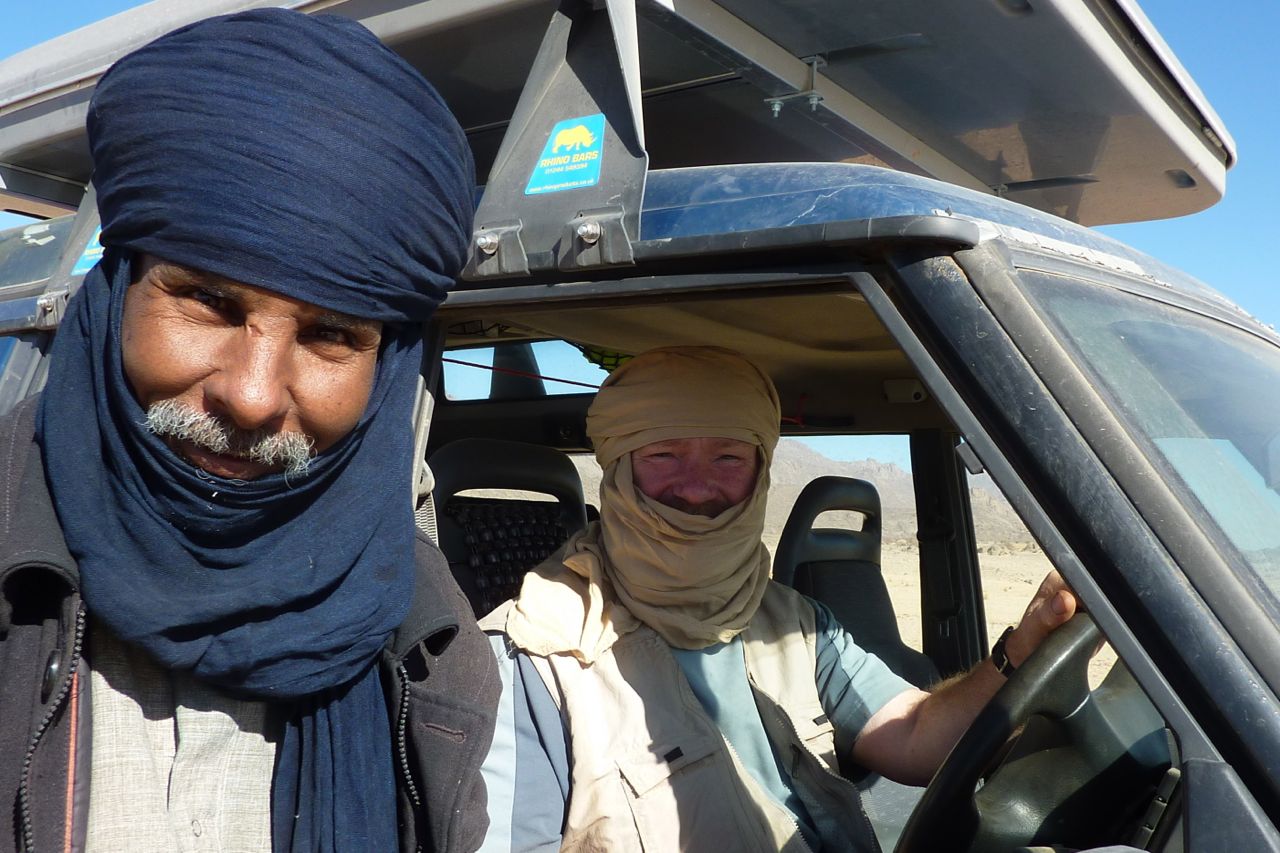
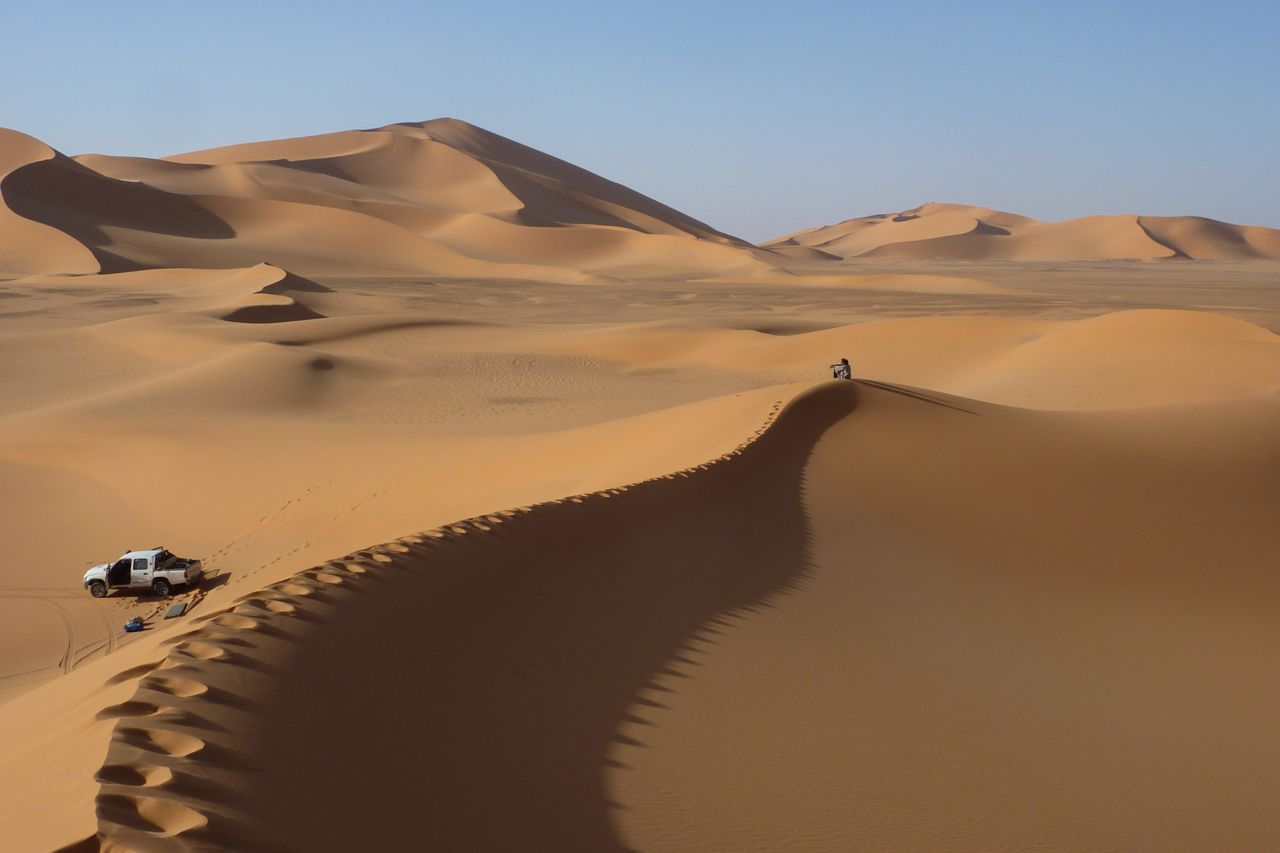
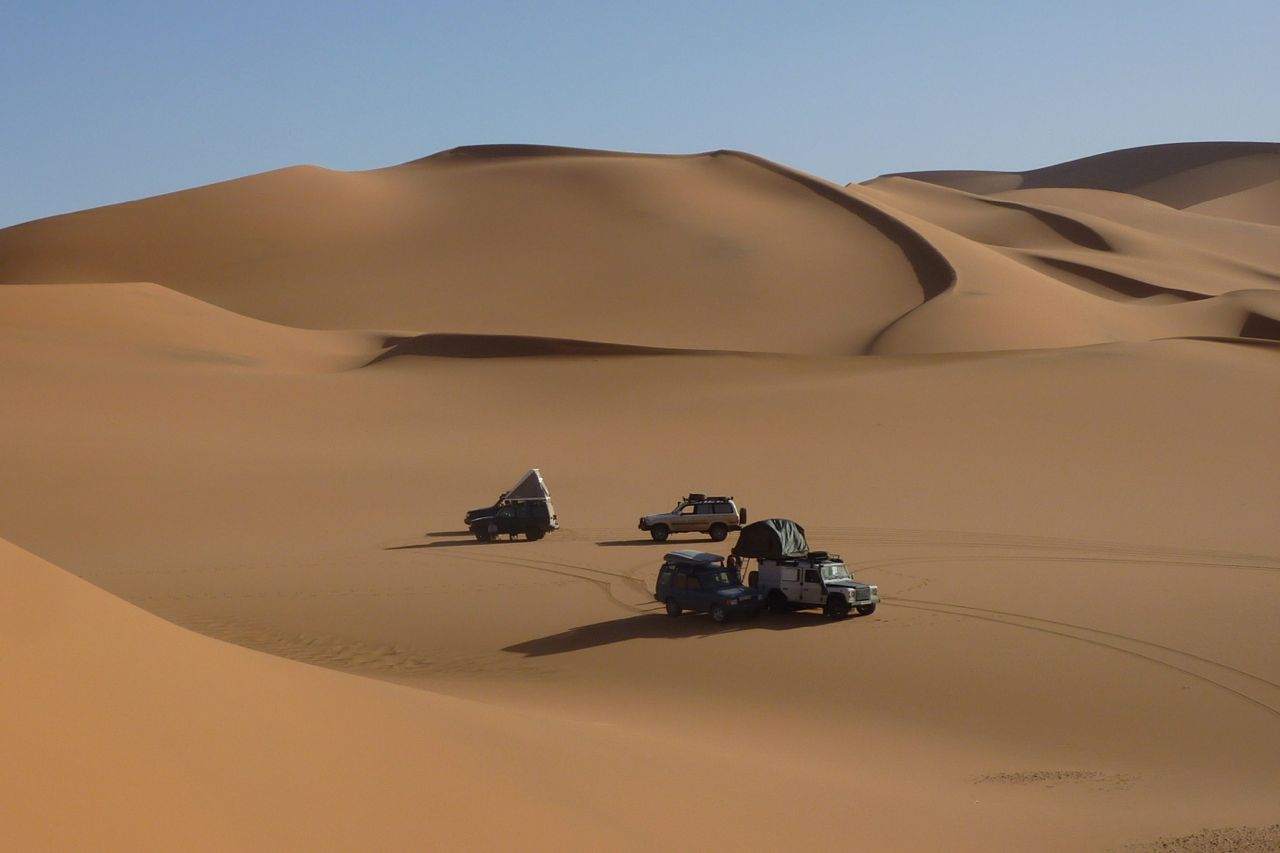
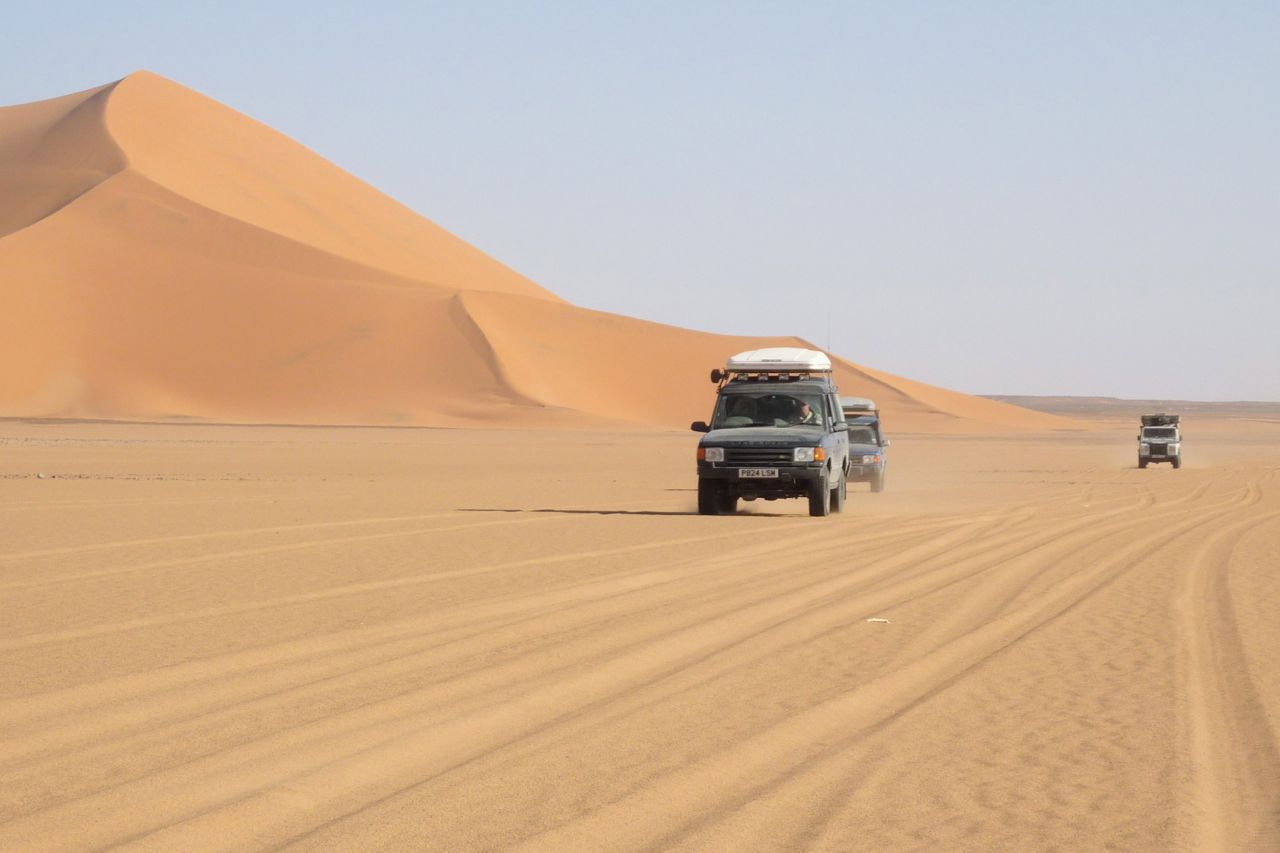
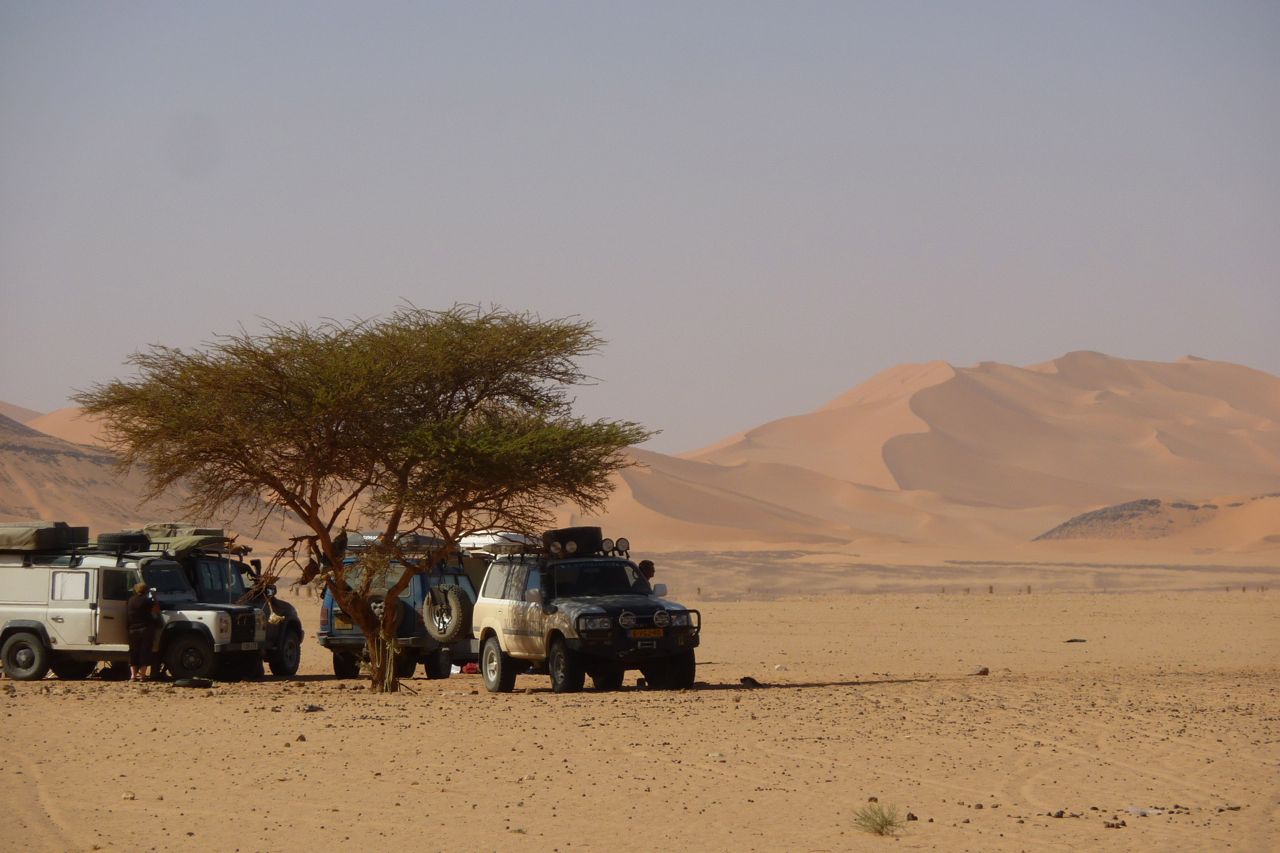
Old Land Rover ~ Algerian Sahara – 2008

2a

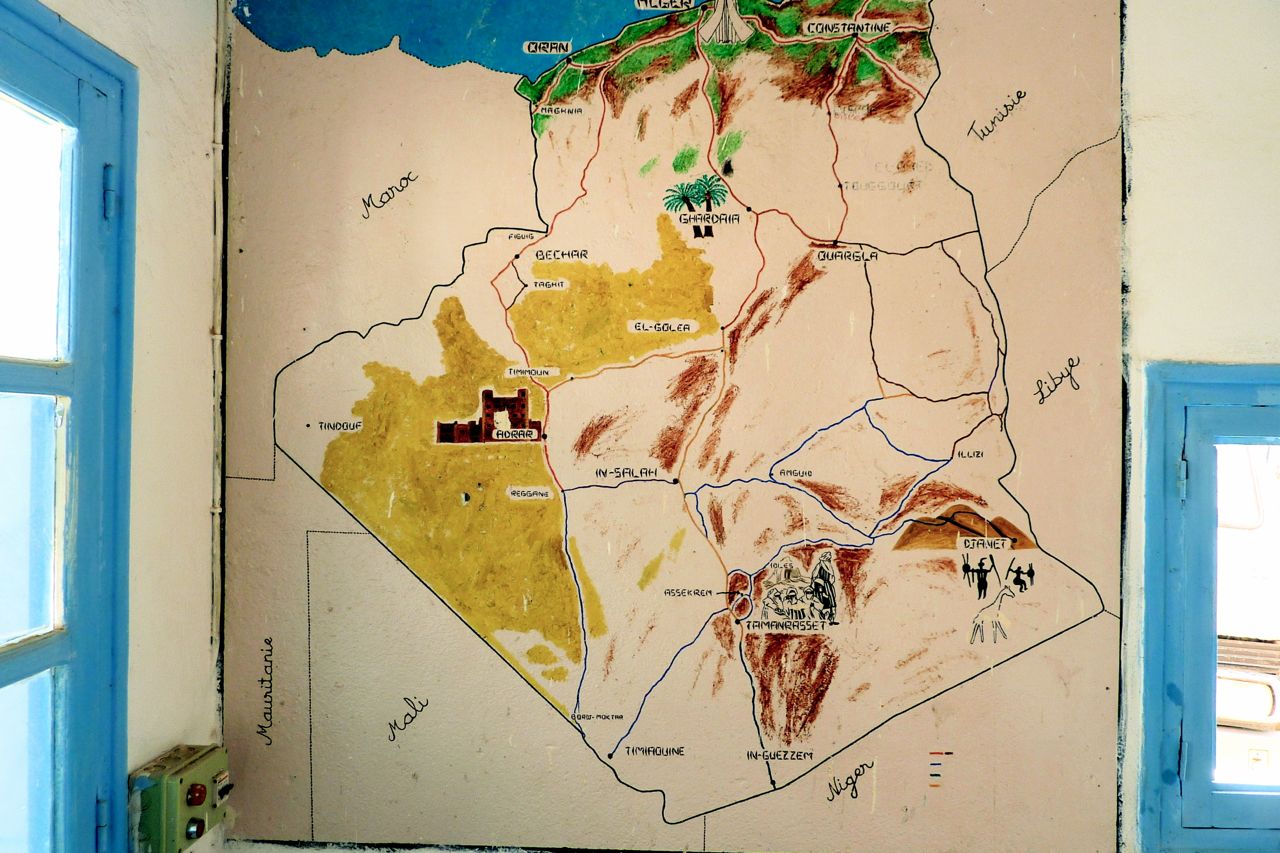
Oxford, Portsmouth, Le Havre, Marseille, Tunis, Taleb Larbi, El Oued, Hassi Massoud, Illizi, Djanet, Mt Tiska, Erg D’Admer, Oued Sersouf, Mt Tazat, Amadror, Garet El Djenoun, Tefedest East, Tam, Ain Salah, Ghardaia, Taleb Larbi, Tunis, Marseille, Oxford.

Land Rover Series 2A 1970 109 Petrol 2.25 • December 2007 – January 2008

Richard Washington

The last time I was in Algeria was in late 2002 on a round trip of the south in the fuel-dump stage of the Desert Riders trip. The kidnappings in March 2003 in the Algerian Sahara led to a bit of a wait-and-see approach for me but provided the opening for desert trips to the Gilf (2003/4), Chad (2005) and Morocco (2005/6). The combination of time-elapsed-since-kidnappings and a relative disappointment (I was warned) with Morocco’s desert (though not the country), resulted in a return to Algeria. To be fair, the decision was more than helped along by our extended Australian family’s curiosity with the Sahara and their idea that we all get together there in the winter of 2007/8. Happily we did, making it my 6th visit to Algeria. The desert there is better than ever.

Our Route and Our Group
We followed the usual route down to Djanet in the south-east via the sealed roads from the Tunisian-Algerian border at Taleb Larbi, taking about 4 days from the Tunisian border. There’s more on this part of the trip, including the state of the road, status of the check points and so on later in this S-File. We spent a good two weeks knocking around the Djanet region, including both day and overnight trips. Djanet is a great setting for this sort of thing – the landscape within 100 km is astonishingly varied. We went up the Tassili escarpment on an overnight walk with donkeys, out to Mount Tiska a couple of times – including a brief visit to the great northern Tenere plain, several nights in the canyons west of Djanet (Sersouf), a day in the Erg D’Admer as well as a few evening braais (South African for bbq) in scenic spots around Djanet. During this time we either camped out in the desert or stayed in the Hotel Tenere – a break from the usual Hotel Zeriba. Actually we did spend a couple of nights there. The Zeribas are all but gone and the nights pretty noisy (dogs go from 11-2, chickens from 2-5, and then the Mosque wakes up the truck drivers). But Zeribas is still a nice location in the heart of town. Hotel Tenere was a pleasant surprise. Working out at about 10 euros per person for a 4 person bungalow, we enjoyed the peace and quiet, awesome views on the breakfast balcony, and freedom to cook up our suppers in the quiet hotel gardens. The place had always been a ghost town when I passed by on previous trips. It was this time too, apart from the nights when aircraft landed in Djanet – then it was fully booked for a few hours (the flights arrive after midnight).

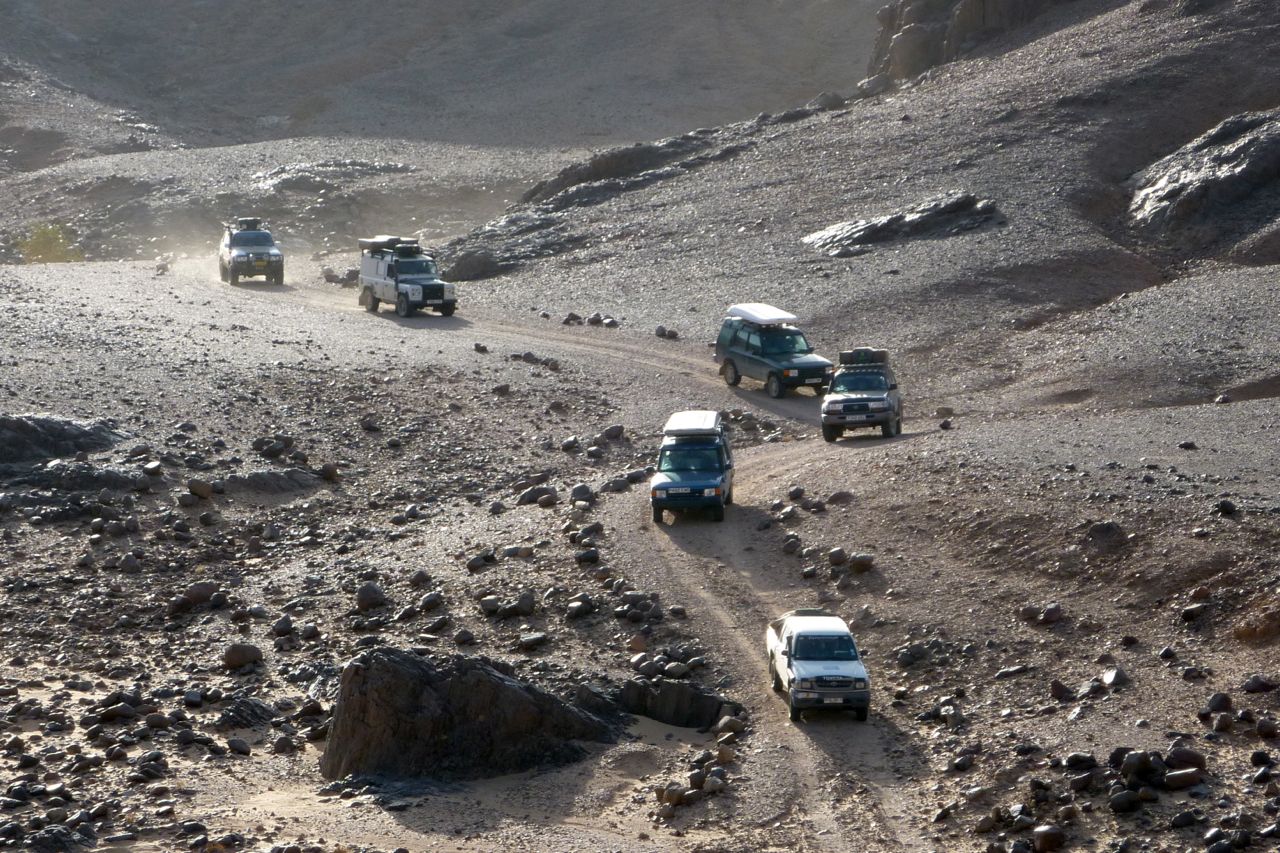
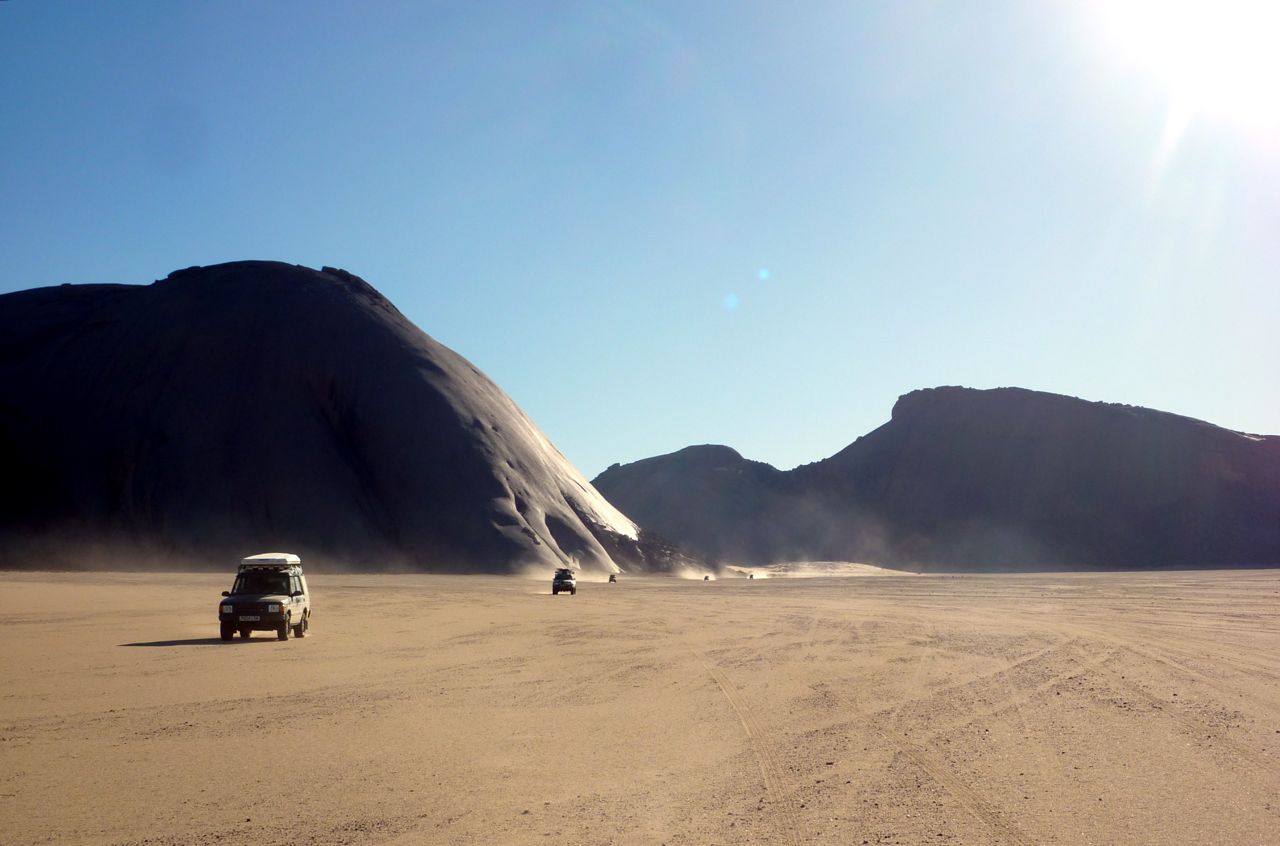
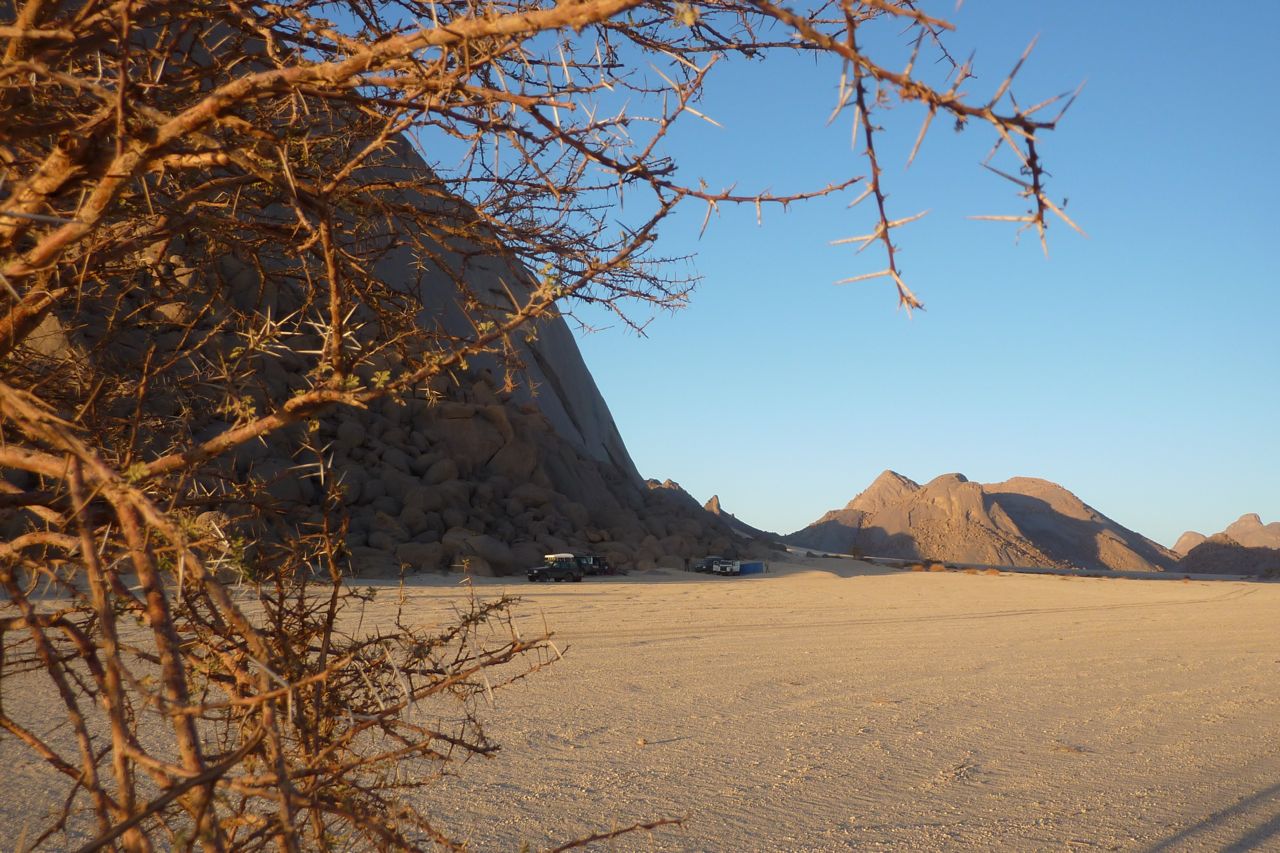
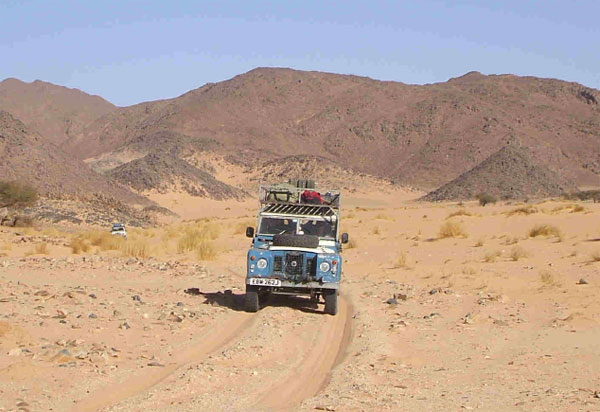
Our Djanet to Tam route took in the pass just north of Mount Tazat  on A7 in Sahara Overland, two nights at a beautiful spot just west of Tazat, a day driving up the old truck piste from Djanet (A7 in Sahara Overland) and on to the centre of the Amadror plain (a striking camp in the middle of nowhere), on through to the Tefedest East valley, a couple of days on a detour north to Garet El Djenoun from where we headed south to Hirafok back along the Tefedest east and then west across the corrugated piste to the sealed road to Tam. It was a purposefully slow drive, taking a full 7 nights to do what many parties would want to cover in three days. But this part of the Algeria trip was the highlight of the holiday and, increasingly, the pace at which I enjoy moving through the desert. On the days when we did drive we got going at 10am and finished by 2 or 3pm –  some days a lot earlier.

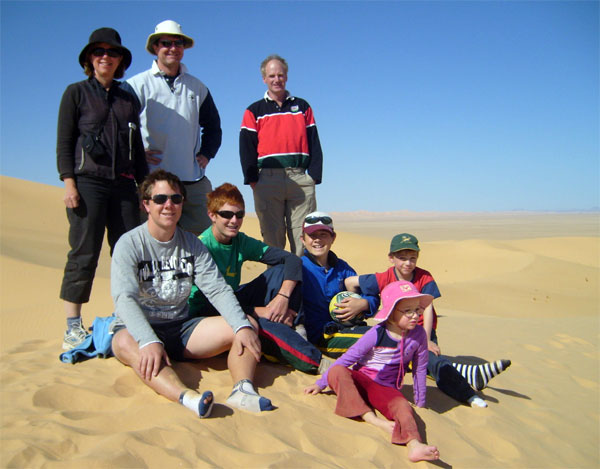
For the leg from Marseille to Djanet I was joined by Spook. Meg, our two children, Josh (7) and Kate (4) flew into Djanet via Paris and Algiers, along with Meg’s sister (Clare), her husband (Mike) and their children James (about to start uni), Nic (16) and Rob (12). The age range coupled with it being Clare and Mike’s family’s first desert trip made me wonder how we’d fair, especially for things like the Tassili escarpment walk.
fam

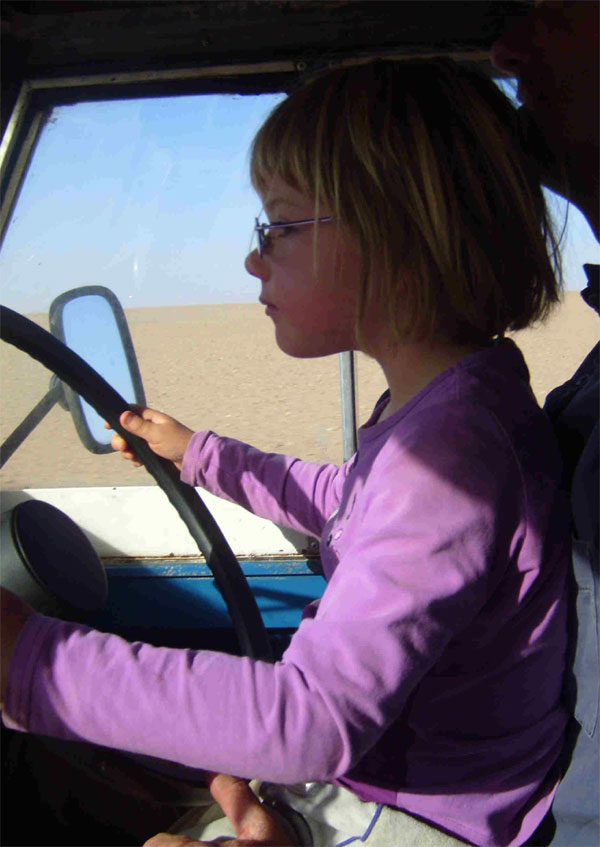
Kate and Josh are probably amongst the younger tourists to have made it up the Tassili escarpment. Josh made sure he walked up and down while Kate took advantage of Meg’s fitness with long piggy back rides. Kids this young tend to focus on the very small scale. This became obvious to us when looking through the extremely detailed diary that Josh kept during the trip. He seldom commented on the grand views or the expanse of the desert but wrote a lot about our camp sites, cooking on the fire, the Algerians who were with us and so on.  Josh was absorbed for hours looking for bones, old pottery, fossils and unusual rocks around the camps and, towards the end, went off with Kate on longer walks up surrounding hills. Having a camera also kept him busy. We also took a rugby ball and cricket bat which kept us all entertained for hours. Kate was perhaps less interested in the desert itself. For her, having the company of an extended family for 24 hours a day was a great treat. One indulgence we took with us was a portable DVD player. Kate watched the Sound of Music often enough to learn the words to most of the songs. There is no doubt that this helped us through some of the longer driving days. The children slept some nights in a tent, some nights under the stars and many nights on the mattress in the back of the Land Rover. This provided them with a cosy and familiar setting which was marginally warmer and certainly less windy than outside. There was never any hint in the time we were there that the children were not having a great time. Without exception, the Algerians were simply great with the kids, and Mike and Clare as uncle and aunt, were very helpful and attentive which no doubt helped.
kt

A question the people I work with always ask when they hear I am heading for Algeria goes along the lines of “so what do you do all day when you’re in the desert?” I think there is a general concern that you’ll be bored out of your mind. Funnily enough, we were all too busy in Algeria for the question to arise. The desert just seems to soak up your time in a nicely passive kind of way.

Roads, Borders and Ferries
The sealed roads through Tunisia were excellent, better than I remember them on previous trips when there was a lot of construction going on either side of Gafsa, The good roads allowed us to reach the Algerian border from the port in Tunis on the same day.

We arrived at Taleb Larbi (Algerian border) at about 10:30 pm having docked in Tunis shortly after noon. That night we slept near the Algerian immigrations building having exited through the Tunisian border. Unusually, the Tunisians kept us waiting about an hour before stamping our exits. They checked and re-checked our papers while heading off to the Land Rover a few times without doing very much when they got there. It wasn’t ever clear what the problem was though we speculated that arriving in Tunis port and then checking out of Tunisia a few hours later had scared the horses a bit – especially when we’d asked for a 12 day stay – as you do in case the Land Rover wrapped itself round a camel on the way passed Gafsa.

Processing through the port in Tunis wasn’t too bad – taking just under 2 hours, slower than it might have been because Spook needed to get a visa for his S African passport. It continues to amaze me though, that there is no readily apparent system for dealing with immigrations and customs in Tunis port. The ensuing madness of cars, converging lanes and hooting makes it seem like its all happening for the first time. That said, getting on to the Ferry in France was little different. First we were sensibly shuffled into two lines, one for Algiers and one for Tunis. A little later on the lines converged from 10 to 1 as we went through immigration but not before the cars were put through an S-bend carefully calculated to be too tight for most 4X4s. Its not easy reversing in an S-bend with 5 lanes converging to one. Getting off the ferry from Tunis in Marseille on the way back had its own surprises too. Lanes of cars were dealt with in order by immigration officials in booths – a sensible approach given that cars at least stay in order that way. A key problem at the Tunis end is that drivers are processed away from their cars. Needless to say, people from the back of the car queue can be dealt with before those whose cars are ahead of them in the queue – so lines of cars tend to become a jam of angry drivers who can’t move in any direction because many of the drivers are still on foot in the queues. It was good to see that the French had this part of the production line sorted out. But French customs instead had something in the pipeline for us. They were stopping cars in the lanes and searching through them so that the entire queue of cars had to wait until the cars in front had been cleared. We watched in amazement as a panel van was unloaded in front of us and every bag and hiding place in the van thoroughly searched. After that we were waived through in a second. But why not pull these cars out of the queue first – and then dismantle them? That would save everyone a couple of hours and there was plenty of room to do so.

Algerian sealed roads are a mixed bag. The Taleb Larbi to Djanet and Tam to Taleb Larbi (trans-Sahara highway) sealed roads seemed to be in a much worse state than in any of my previous visits to Algeria. In particular, the road at the south end of the Fadnoun plateau (between Illizi and Djanet to within about 50km of Djanet) is badly broken up and cost us a good tyre and tube, even with slow and careful driving. I was also surprised at the condition of the road south of Hassi Massoud to Hassi Bel Gebour. This stretch takes a lot of oil traffic now and is a pretty poor state. With the oil price having trebled since I was last in Algeria and with the industry making heavy use of these roads, one wonders where the cash is going.

Likewise, the sealed road between Tam and Ain Salah, apart from a new section 100 km north of Tam, is full of deep pot holes. It is particularly bad around Arak where the problem of the river and the road sharing the same valley still hasn’t been sorted out. It looks like they are having a serious go now though, with some complicated elevated sections under construction. But then they were busy with this in 2002.

Our drive north took us from Ain Salah to Ghardaia and from there on to El Oued and Taleb Larbi. At Dahaj (from Tanezrouft’s) recommendation, we took the road 40km north of Ghardaia before turning east through a string of pretty Berber towns via Guerrara on a smooth, quiet and very scenic alternative to the Ouargla route through from the Trans Saharan Highway to El Oued and Taleb Larbi. This route is not only more interesting but cuts out that demoralising southward dogleg west of Ouargla on the way to El Oued. There were also no military checkpoints between Ghardaia and Toggourt.

Its still all Toyota, Toyota in Algeria. The shops in Djanet and Tam seem to have more spares than ever. Fuel queues  in Tam were back – or never went away. Luckily we had the range to get north to Arak on Djanet fuel otherwise it would have been about 2 hours or more of waiting for us.

A marked change from 2002 is the amount of traffic on the roads at night. We slept about 3km off the road about 15 km south of Hassi Massoud but could hear the trucks on the road throughout the night. I remember the traffic pretty much stopping at sunset on these stretches before. We also drove at night, leaving Ain Salah at midnight (for reasons that I will explain later) and arriving in Ghardaia at about 9am. This all seemed OK with the checkpoints along the way and we passed traffic throughout the night.

SNCF are running a new ferry on the Marseille to Tunis line – the Danielle Casanova. She’s not exactly new, having served on some other route for a few decades – probably the run out to Corsica. But she’s bigger, most likely faster and quite a bit grander than the Liberte which used to ply the crossing to Tunis. A ‘new’ line is also running from Portsmouth to Le Havre (LD Lines) with fewer crossings per day (just one) compared with P&O.

Tanezrouft Voyages
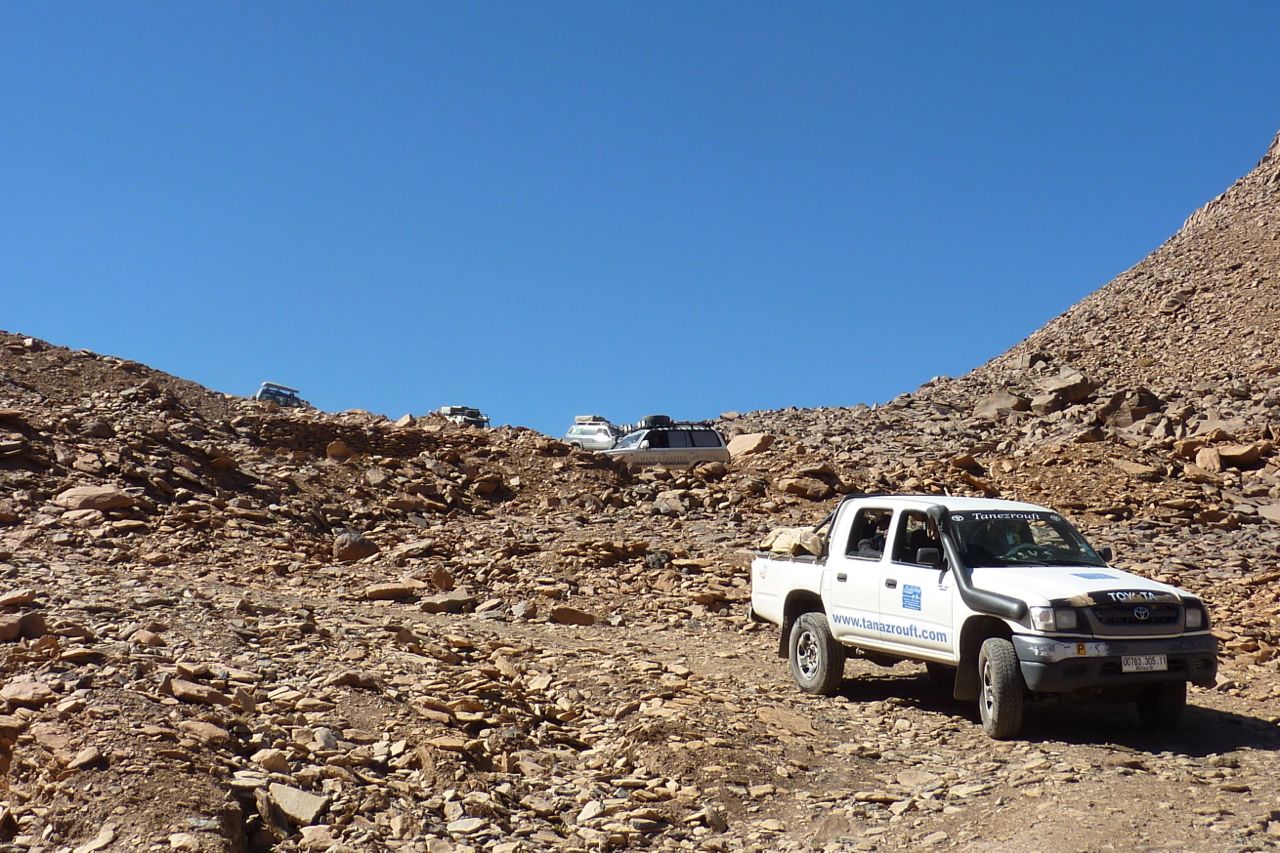
The invitations, permits, two Toyotas (for the Djanet to Tam leg), drivers and guides necessary for an Algerian trip these days were all arranged by Tanezrouft Voyages. Our itinerary was complicated. It included two arrival dates for our party, one in our own car, three departure dates and several unique groups of names for the various legs (two arriving in Taleb Larbi, one leaving in Djanet, 8 arriving in Djanet, 7 leaving in Tam, 2 leaving in Taleb Larbi!). The paper work was taken care of by Yves at Tanezrouft and any changes, including a few that we had to make late in the day, were resolved very promptly. The Tanezrouft drivers (Dahaj and Moktar) were the best you get for these kinds of trips. Their outlook and temperament are very well suited to desert driving and desert trips. They obviously enjoyed being in the desert, were ever patient and unhurried, good with the kids, and sensitive to us wanting to drive slowly and take ages over the piste from Djanet to Tam. They were not once late.  Srouffi, the guide provided by Tanezrouft, stayed with us from Taleb Larbi to Tam. Srouffi is a lovely man who knows the pistes extremely well. He went the extra mile in looking after us in the camps, especially around the fire on cold nights. He is quite a character. Overall it would be a priority for us to work with Tanezrouft on our next visit to Algeria.

Cars
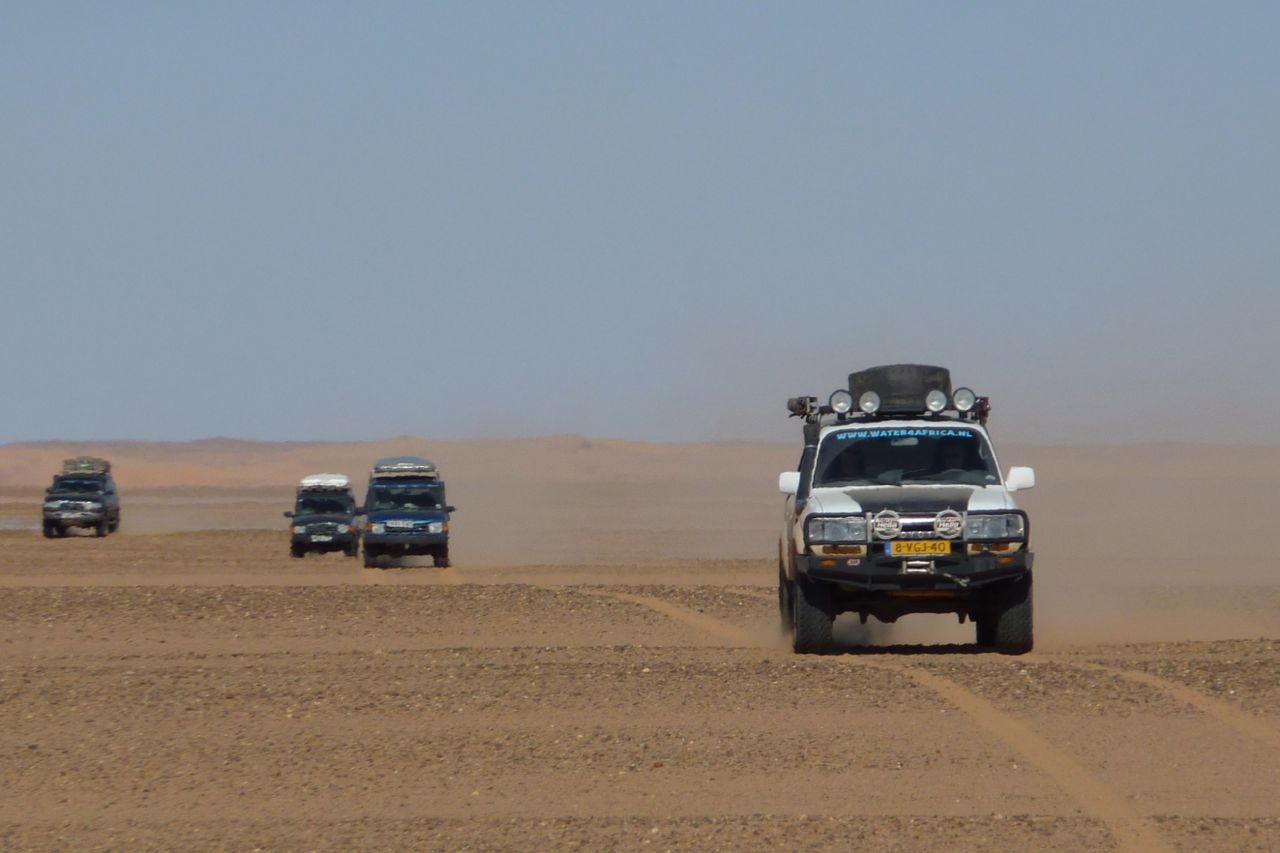
We took my old 1970 Series 2A 109 Land Rover (petrol 2.25L) from the UK but also had two Toyotas from Tanezrouft for the Djanet to Tam leg. The Toyotas were a pair of Landcruisers, a GX 80 series with 400 000+ km on the odo and an 80 VX with about 250 000 miles.

The VX did the job in a comfortable VX kind of way. It does sit like a frog when loaded though. The extremely cold weather led to an oil leak near the front pulley which was active for a few days but went away once the weather eventually warmed.

The Land Rover went fine, covering the 10 000 km return trip without any majors.
Only the routine manifold gasket job half way through the trip in Tam caused us to get the big box of tools out. I say routine because this bug crops up every 4 000 km or so – the back exhaust outlet burns through on the manifold gasket and it starts to sound like a Merlin engine after that. Anyone who knows what could be the cause, do let me know. I’ve changed the inlet and exhaust manifold itself (not just the gasket) twice now and three different people have been involved in doing the job. Anyway, its easy enough to do and gave us a bit of street cred at camping Dassine in Tam when our sleeves were rolled up.
tazat

We had two punctures on the Land Rover – the first on the Fadnoun plateau which ruined the tyre too. The second in the middle of the Amadror which we fixed that night. Like many others I have thought long and hard about the number of spares to take. For the last three Saharan trips in the Land Rover I have settled on one made up spare and one additional tyre with no rim (plus a few tubes). The reasoning is that its easy enough to fix punctures (providing one has some levers, patches and so on) but its very unlikely that a rim will become impossible to repair – especially steel rims. I carried 2 made up spares on over 70 000 km of piste on previous trips in the Land Rover, but never needed them.

The Land Rover had a couple of interesting and unique tricks too. One was a potent smell of petrol which was beginning to strip the last of the blue paint work off the doors it was so strong. The issue had started in Morocco on an earlier trip and I thought I had it sorted after changing the back tank (which was obviously leaking) and adding some additional seals to the fuel caps (the Land Rover has 3 on-board fuel tanks). Everything smelt like roses when I did the test drives round Oxford in the summer, but by Hassi Massoud it was clear that Spook’s eyes were starting to water in the passenger seat. We by-passed the complicated fuel delivery set up (involving tank switch and independent fuel pumps and filters) with new fuel line all the way from the rear fuel pump to the carb – and still it stank! We finally diagnosed the problem in Sersouf canyon near Djanet where we noticed that the stink was a lot stronger with a closed throttle than an open throttle – a bit counter intuitive really. It turned out that the new replacement Weber carb had some kind of an ill-fitting adapter collar where the air filter pipe joins it. When hot enough, the adapter collar becomes loose, allowing the entire air filter pipe to detach along with the collar from the carb top. Removing the collar made for the simple fix. It probably never got warm enough round Oxford in the summer for the problem to develop. So we’d spent all our efforts looking for leaks in the fuel line when the problem actually lay in the air feed. There’s something new on every trip and, as they say, its never over in a rover.

The Land Rover also developed a leak in the exhaust pipe just short of the silencer box. This was sorted out in Tam by the first set of fixers on the right hand side on the way in to Tam from camping Dassine. They are worth a mention because they took the pipe and silencer box apart, welded in a replacement piece of pipe (found on the roof of a house nearby) and welded it all up again over the course of 2 hours, asking only 8 euros for the job. There is nowhere I know of near Oxford that will do anything other than throw away as many sections of exhaust pipe as they can and bolt on new parts while some gum- chewing youngster with spots and a bolt through his eye rubs runs up an outrageous bill. No one welds exhausts where I live anymore. So hats off to the guys in Tam. That’s where I’m going next time the exhaust develops a leak and I find myself in the UK.

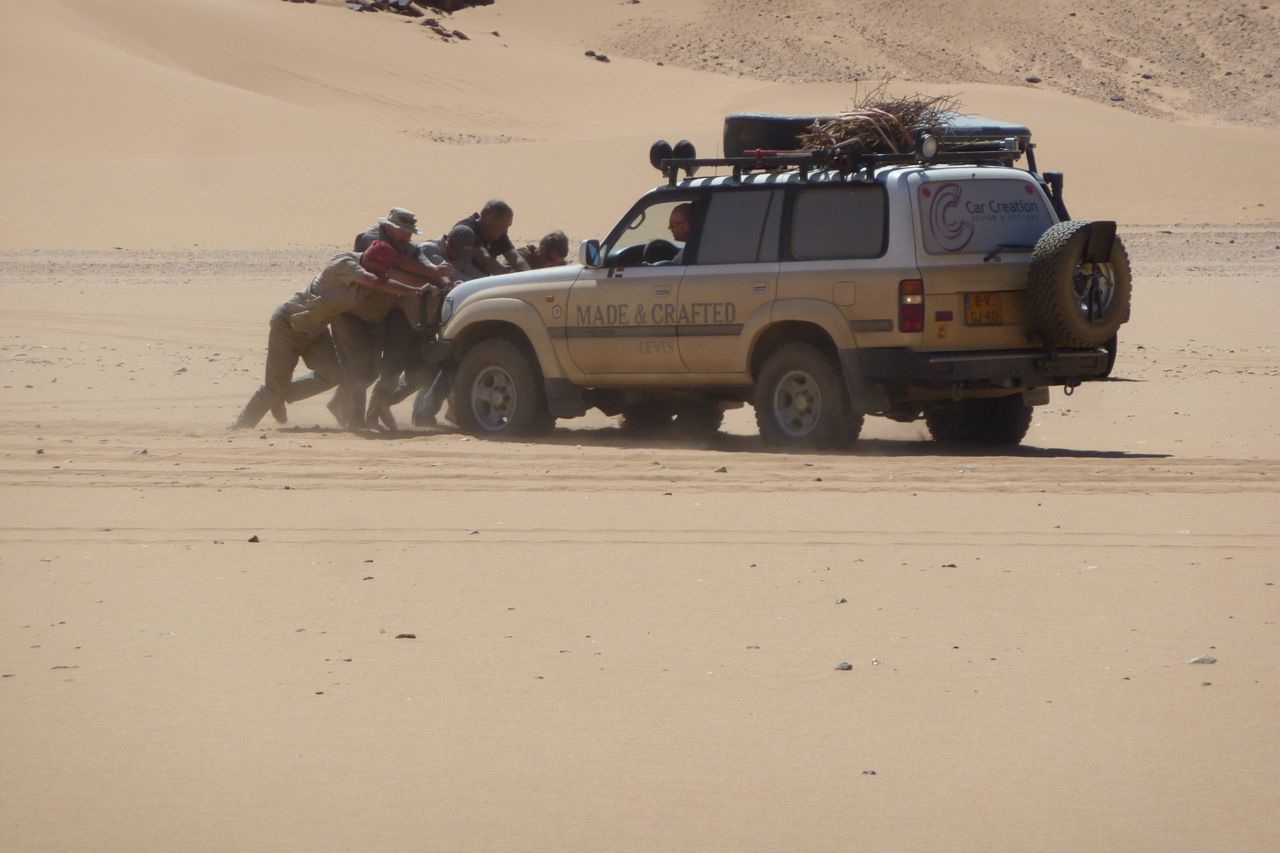
While the Land Rover threw up minor niggles to keep us entertained on the long sections, the GX had a more spectacular episode coded up in its DNA and ready to be unleashed at 426,515 km. About 100 km out from Djanet the GX transfer box shaft opted for its very last rotation. The car stopped so suddenly in front of us that we nearly absorbed the Toyota’s spare tyre in our front grill – it was all we could do to miss it. The box was terminal – actually Moktar had been struggling to find both first and second gear ever since the aging GX had arrived in Djanet. I was a bit surprised that it was the transfer box that finally finished it off. After we had disconnected the front and back props – which hilariously involved Srouffi – not much of a mechanic on a good day – as chief conductor and interpreter using all the 11 French words the team had by then worked up in common, the VX towed its work-horse counterpart to Djanet on a very short 4m strap I’d dug out of the Land Rover. With a delay of a week likely to replace the box (which eventually came via Tam from Ouargla), Dehaj set about finding a replacement car. This is where Isak from Djanet (not his real name) with a newer GX belonging to his brother, stepped in to help and Moktar, sadly, vanished from the scene for a couple of weeks. I have to say that Dahaj and Moktar alike did nothing but reassure us that everything would be fine and that our schedule would be unaffected – more than I would be capable of if my transfer box had just jammed solid such a long way from home. The substitution of cars and drivers led to a bit of an unusual situation because Isak was not in the employ of Tanezrouft, other than in an ad hoc sub-contract kind of way –as far as we could tell that was- and the car belonged to someone in his family. So when, during the rest of the trip, the day’s driving was done, he felt as though he was free to do what he liked with is families car. Which, in fairness, he was. At least until an event on the Amadror plain changed things a little.

Isak had been on a number of ‘drives’ on his own to go and ‘fetch firewood’ since he joined us in Djanet. He normally came back to camp with firewood although it had never been necessary to fetch any as we’d always camped next to trees where firewood was plentiful– as you so often do on these trips. We knew it wasn’t the real reason he went off, but it never resulted in anything more than a topic of curiosity amongst us. We arrived in the Amadror plain campsite at about 4pm – one of our longer drives. Within 5 minutes of getting there, Isak went off to find firewood. Anyone who has crossed the Amadror plain knows that there just isn’t any. We hadn’t seen a tree in about 100 km and the landscape is flat, empty and stark. When he wasn’t back 3 and a bit hours later, Srouffi began to worry in as much as Srouffi ever worried about things. Also James and Nic were without some of their kit as they’d been travelling with Isak that day and he’d left so smartly that it hadn’t occurred to them to remove everything from the GX. Now that it was dark, Srouffi walked a few 100 meters from the camp and waved a dying-yellow head torch about a bit, hoping that if Isak was lost, the head torch would draw him home. I also switched on my Thuraya sat phone, having swapped numbers with Isak before setting off on the trip.  Round about this time we spotted a number of vehicles, about 10 km away moving towards our camp. It was then that I decided to SMS our GPS position to third parties as we really weren’t sure what was going on. It turned out that Isak hadn’t been able to find our campsite in the darkness – he only found it when I switched on the headlights of the VX. Looking back, the cars we’d seen must have been on the piste from Illizi to Tam which crosses the Amadror (its not one I’d known about before). Over the days we got to know Isak better and he turned out to be a likeable guy that Josh and Kate, the youngsters in the group, were especially fond of. He didn’t come across as anything like the usual piste driver with his smart clothes, shades and leather Thuraya case.  But he did help us out of a spot in Djanet at a moments notice and for that we were grateful.

Taking a car down to southern Algeria from the UK is, when you add up the costs of a guide from the border, the ferries and the fuel through Europe, only marginally less expensive than spending 130 euros a day on a local vehicle. Given the wear and tear to your own vehicle, it probably works out to be a lot more expensive. But a number of things make it attractive to drive down. First, one can take a lot of things with you that are nice to have. We took camping chairs, a table, tents for nights when the wind was strong, food that you can’t get in the south (including coffee, tea, savoury biscuits, packet soup), Christmas presents for the kids, balls to mess about with, medical kit, water containers for the piste, a cooking stove, GPS, satellite phones, books for the children to read. All these things helped to smooth out the bumps but would have been difficult to include in the 20kg baggage allowance. Also, as mentioned earlier, the Land Rover was a home away from home for the youngsters. They really enjoyed sleeping in the back.

Algerian Security Situation
It was the Algerian consulate in Canberra who rang Clare up in Sydney and asked her if she knew what she was doing taking her children to Algeria. The London office was a bit more detached but a bomb killing nearly 70 people at the UNHCR in Algiers did manage to get on the news just before the party of 8 flew through the capital on the way to Djanet. Sleepy Djanet had its own share of action a few weeks before when a group of insurgents in 3 Toyotas fired RPGs at an Algerian military plane before fleeing on foot into the hills. All of this is good news when you are about to head off because the effort needed by the insurgents to mount such complicated raids normally means that the ensuing months will be much quieter while they regroup – and the security situation heightened. To be honest it didn’t seem to be round Djanet. The night Meg and the others flew in to Djanet, we took our 3 cars and cooked supper on a fire in the desert just 5 km from the airport fence. We might well have been the return party eyeing out the Mi-17s that sit on Djanet runway. No one seemed to be very bothered and we stayed there from sunset till the plane landed at about 3am.

Compared with 2002 there are certainly more barrages (military road blocks) on the sealed roads, although our passage through them was faster than before owing to the paper work (names, passport numbers, date of birth etc of all in the party) Tanezrouft dished out at every stop.

Our time in Tam coincided with the President’s visit and sharp shooters on street corners and roof tops. We’d thought we’d escaped the fuss in Tam but rolling in to Ain Salah we noticed the familiar flags and hurried look on the painters tarting up the town. Our afternoon in Ain Salah on the way north was meant to be followed by an early exit the next morning but later that night rumours spread around town that the road either way out of Ain Salah was closed for 24 hours. This made me think for the first time about my own timing (having been carefully aware of everyone else’s flight dates) and it soon occurred to me that my 30 day visa was to expire in 24 hours time. A trip to the Police (guys with the blue cars) with Dahaj confirmed the road closure as well as the fact that they weren’t willing to give us a letter explaining that the road had closed and that we’d been delayed by the official Presidential visit. Whilst on the phone to Yves that night from Dahaj’s family’s house, Yves recounted the story of a party of tourist who had overstayed their visa and ended up in court. So we visited the Gendarmerie (the guys with the green cars) who explained that the road was closed but would open 100 km from Ain Salah (the big checkpoint on the way up the Tademait plateau) at 5am. This sounded unlikely given that a hit and run/bomb planter was designed to be delayed by the road closure until the president had safely left town, but it was enough of an opening for us and Dahaj kindly agreed that we could leave town at midnight on the Monday/Tuesday change over. I felt bad because he’d been away from his family and home town for weeks and here we were snatching him away a few hours later. That night was a real stinker with a blistering northerly gale, dust storms and temperatures near freezing. But we were waived through the check point 100 km from Ain Salah and all others that night too. In the end I drove from Arak (250 km north of Tam) to Nefta in Tunisia in one go. A 37 hour stretch at the wheel of the old Land Rover was enough for reality to parse through my head in strange, interrupted packets of information rather than the normal steady stream we know. It was like the jangly world had adopted a 1-3-4-2 firing order on a point gap that was way too big. Tunisian immigration were unusual helpful that night. Just as well.

Weather
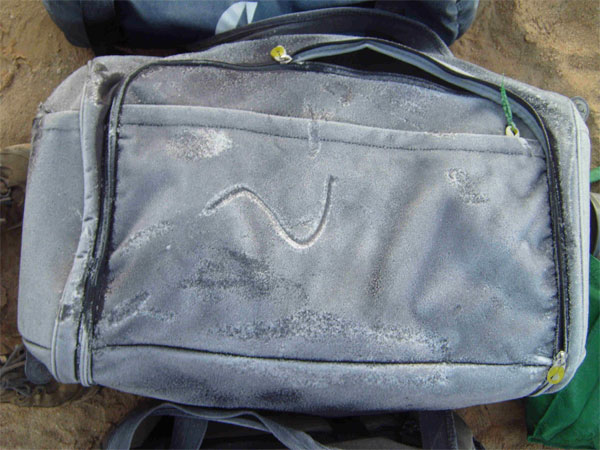
Mid-winter in southern Algeria normally brings warm, cloud free days and cold to cool nights. We had some of those. But almost all the nights in the south were below freezing and many nights much more windy than average. Several of the days were very dusty too. A cold, northerly wind tended to spin up the dust.
frost

On Guides
I have already commented on how pleasant Dahaj, Moktar, Isak (once we got to know him) and Srouffi were in the desert. And just how helpful Tanezrouft were. So these comments go beyond Tanezrouft to the general case of guides in the desert and come, in part, from the fact that I’ve been to the Algerian desert several times on my own trips without guides, sometimes into uncharted territory well off piste.

There certainly are times when having a guide adds to ones enjoyment of the desert substantially. An example is the pass west through mount Tazat which we’d done once on our own by accident a few years before. I had the GPS points for the route as well as those in ‘Sahara Overland’ (part of A7). But that afternoon we were in the mood to hand over to Srouffi and set sail for the pass knowing that he’d find the smoothest way through – which he did. Yet other times I was up for a bit of my own exploring and that becomes difficult to do because the guide loses the mojo for a while and doesn’t like not being in charge or understand what we are trying to do. It is genuinely difficult to explain an intended route to someone who doesn’t do maps, route descriptions or a GPS. Exploring is a very real part of the enjoyment of a trip like this and I keenly felt the loss of what is an important component for me. Perhaps its possible to strike a deal with a tour company in the beginning where one pays for a guide that is happy enough to take a back seat (literally and figuratively) for the trip. On the other hand maybe Saharan guides are just part of the irreversible shift towards the taming of the desert and removal of the isolation that draws one to the desert in the first place. The trips I’ve done where the desert was the closest companion for us all was when we went off-piste in one vehicle with no satellite phone or GPS. The days of heading off without a GPS or sat phone are over now but there may be a way round the personality of the guide.
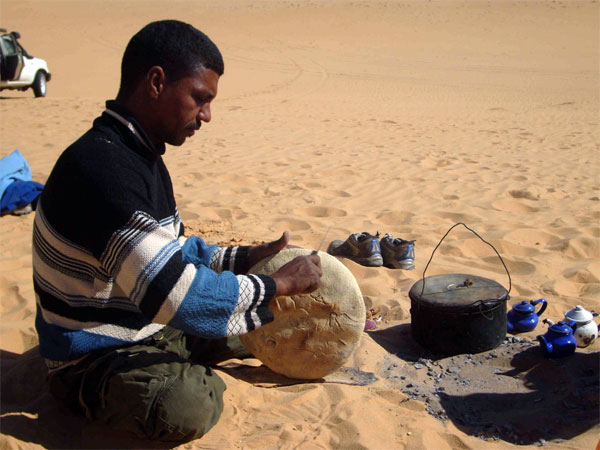
daha

Best campsites: Mount Tazat (couldn’t leave – stayed two days), Mnt Tiska (always a favourite of mine)
Worst days: Figuring out Isak’s antics on the Amadror
Best days: Climbing mount Tiska with Spook and just about all the days with family.
Wish I’d brought: a blanket – those seriously cold nights would have been better with a blanket both round the fire and over a frozen sleeping bag.
Didn’t need: used just about everything bar a fairly long list of spares (water pump, alternator, carb, distributor, fuel pump….)
Cheapest supper: Chicken and chips for 9 in Tam: 24 euros.
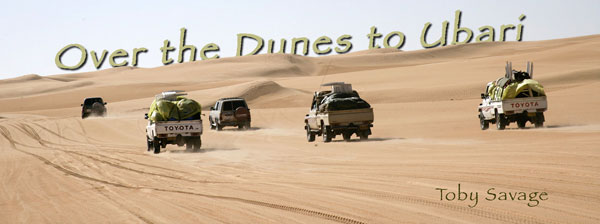
Ubari Sand Sea – Libya 2008

tob1

3 80 Land Cruisers
3 Land Cruisers 75 Pickups
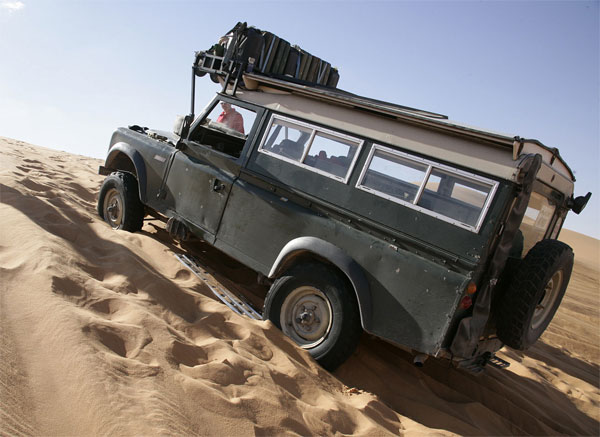
Land Rover Carawagon 200 Tdi.

January 2008

A group of us had completed Derj to Idri just after Christmas ‘07. It certainly shook the turkey down and a few weeks without alcohol did us all the world of good. Idri to Germa, our final destination, had two possibilities. A long trudge east on blacktop, then round in a big loop south and west again would be the sensible way, but our desert driving was as good as it was going to get and we were running light having used most of our fuel and supplies. In the book Over the Dunes to Ubari (p.553) is described thus: ‘Many travellers find the final dunes at the southern edge the hardest to cross.’

Easy to see why. The dunes are big and run NE to SW and we wanted to go directly south. Picking our way out of Idri through remarkably lush greenery our guides took a rather convoluted route, but we emerged into a big inter dune corridor on the southern edge of town. From here it looked pretty easy. Cruise along at 50 mph on a wide inter dune corridor for what seems like eternity, the dunes offering no menace in the distance. Confidence boosted by a simple hop over some low dunes and into the next corridor. Easy. We bumped into an Franco/Italian mixed group in Tojos and a 130 Crew Cab Landy, which looked heavy. Swapped tales and departed with a wave and a ‘see you in Germa’.

tob3

After than fateful meeting things got a little harder. The Tojos had to take several runs at a dune crossing. Their 4.2 engines had plenty of power, but the sand was soft and cut up into deep ruts, made worse by them digging themselves in. By my turn a combination of ruts on the summit and giving away 2 litres to the Tojos had me beached near the top. Three attempts still couldn’t get me over and for the first time ever in the dunes, I used the winch to haul me over, anchored to a Tojo on the other side. Thankfully the winch made light work of it and we carried on. Same again at the next crossing. The guides were taking the dunes at an angle to reduce the steepness. Seemed at odds with how I like to drive. I prefer straight up and straight down again. Reduces the risk of rolling. It seemed to work for them, but they had the power advantage. I tried, but just stuck near the top at a jaunty angle. Winched again.

tob2

Next big crossing it was sweet revenge. One of the Cruisers stuck and I had to winch him back out of a hole. Made even sweeter by the driver being genuine Toureg and an accomplished driver. We stopped at a well and had a long lunch break expecting the Franco/Italian convoy to catch us up, but we never saw them again and suspect they were defeated by the first major dune crossing. I don’t remember any of them having a winch so getting the 130 over could have defeated them.

After lunch it was easier and faster. We made the big descent into the Wadi El Agile well before dark and meandered through the outskirts of town, scattering chickens and waving at locals to complete our 100 mile dune bash in time for tea.

Toby Savage

The Empty Crater – 2009

tecbanner

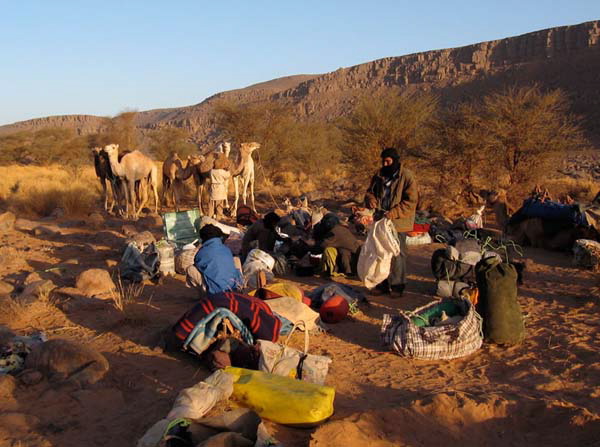
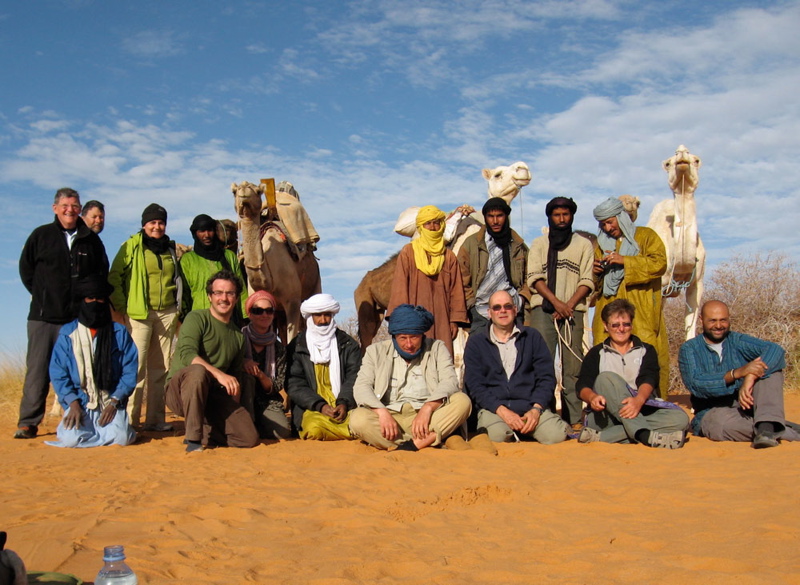
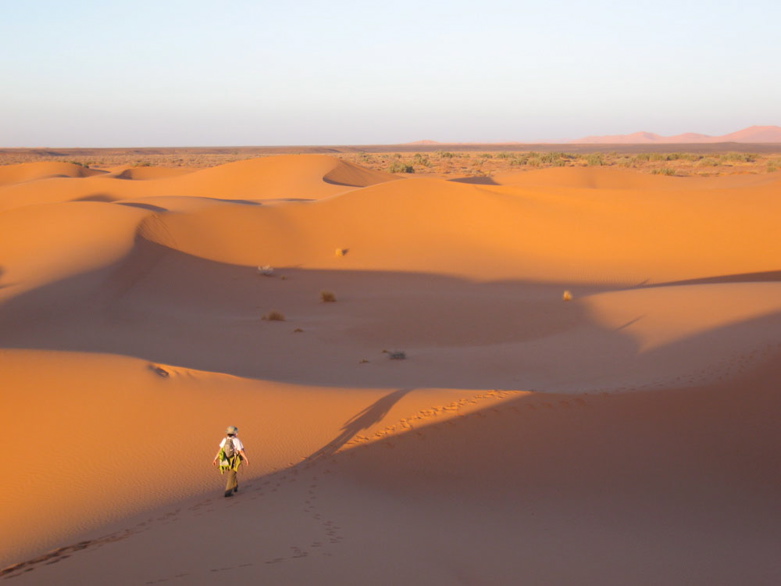
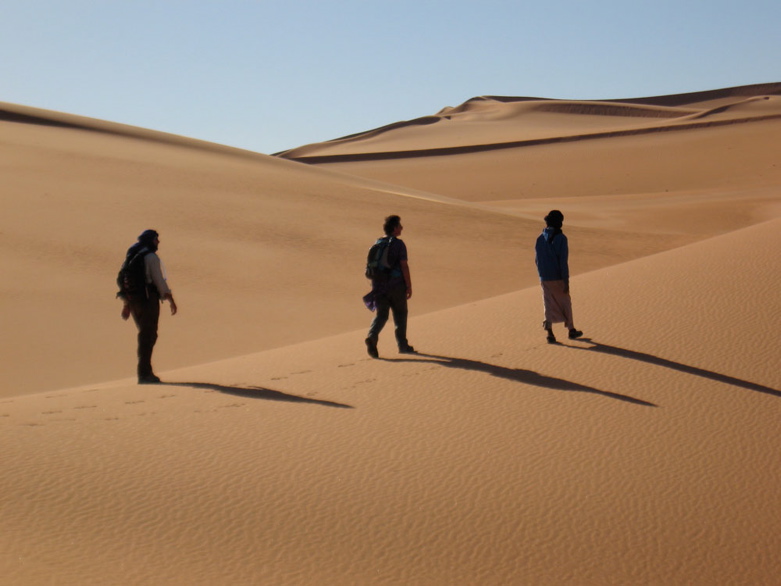
A few shots from our 2009 camel trek across the Immidir plateau in Algeria.

See also our 2007 trek and 2010 video

Sahara Camel Trek ~ Amguid Crater 2010

cTWO5

It takes about 11 days to cover the rough 180-kilometres to the Amguid crater in southern Algeria. The Immidir plateau is inaccessible to cars so the camel caravan carries all our gear and food and the crew draw water from natural waterholes or ‘gueltas’ ever other day. These guetas as well as daily grazing for the camels are key to staging the trek.
Our route follows canyons, dry valleys and escarpments as well as old camel and game trails where present. Along the way we pass several pre-Islamic tombs and often come across Neolithic artifacts, as well as tracks of gazelles, jackals and even a leopard.
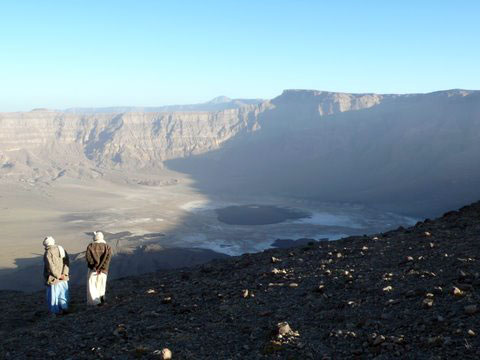
The crater is thought to be 100,000 years old and is about half a kilometre wide. It’s filled with rain-washed sand over the millennia and is the only level part of the whole walk!
A day later we rendezvous with the cars on the far side of the Bou Zerafa dune field, about 700km north of Tamanrasset.

Tibesti 2010 ~ Return to Chad

Tibesti and Ennedi – 2010

Gerbert van der Aa

t-routebig

Visiting Tibesti has not really been an option these last few years; an ongoing civil war made it too risky. But around the beginning of 2010 I received signs that things were settling down, which was confirmed when I read a report of a visit to Emi Koussi by Italian tour operator and Chad specialist, Spazi d’Avventura. I decided to contact Jorge, a Portuguese guy that used to live in Chad, with the question of whether he knew a good guide. He directed me to Tchad Evasion, the main operator in Chad, but when I contacted them they said a travel permit for Tibesti would be difficult. They could could only guarantee a permit for Ennedi.

I contacted Jorge again, and asked if he knew some other people that could help me. He gave me the name of an American expat in Ndjamena, who has been studying the Tubu language since 1993. The American turned out to be a great guy. The situation in Tibesti was not really stable, he said, but if we contacted the right people a touristic visit should be possible. He said he knew a Tubu colonel in the Chadian army who could be our guide. After some discussions the colonel agreed. We would pay him 150 euros a day, all local taxes and permissions included.

Together with Ab, a Dutch friend we has been travelling all over the Sahara, I decided to look for other people to come along. We wanted six people in total. I would drive my Toyota HJ61 along the Atlantic from Holland to Ndjamena, Ab would ship his Nissan Patrol to Cameroon. We would all meet in Ndjamena. From there we planned to travel north to Mao, Zouar, Bardai, Faya, Ounianga, Fada and Guelta Archei in the Ennedi, then via Abeche to return to Ndjamena. We thought the 4000 kilometers would take us about 30 days.

Once in Chad it turned out the colonel was busy with his work, which made him decide to send two of his cousins. One of them turned out to be a really nice guy, the other one wasn’t. The colonel gave our guides a Thuraya sat phone so they could call him if necessary. Before we left Ndjamena we visited the governor of Tibesti, who happened to be in town. Like the colonel he assured us our safety would be guaranteed. He hoped many more tourists would come to Tibesti in the near future, so that the local population would have a new source of income.

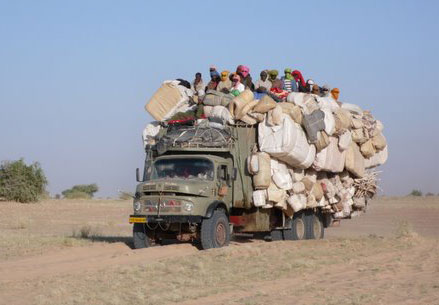
The first couple of days of the trip were not easy. The truck tracks north of Mao were often too deep for our cars, so progress was slow. But we enjoyed the many camels along the route and the famously overloaded trucks coming down from Libya. Unfortunately the engine of the Nissan got very hot, which caused us to stop frequently. After five days we finally arrived in Zouarké, a police checkpoint about 30 kilometers west of Zouar. The cousins of the colonel were received warmly by the police officers, also we in turn were treated very well.

The next day we visited Zouar, where we spent the night. From there we went back to Zouarké and continued to the Trou Natron, an volcano crater about one kilometre deep. The road was awful, with many big rocks, but the barren landscape was amazing. The 90 kilometres took us about six hours. From Trou we continued to Bardai, a beautiful oasis surrounded by strange-shaped rocks. The market was full of Libyan goods. We spent the night in the garden of a building that until 1999 was used by the French military who still have close connections with Chad.

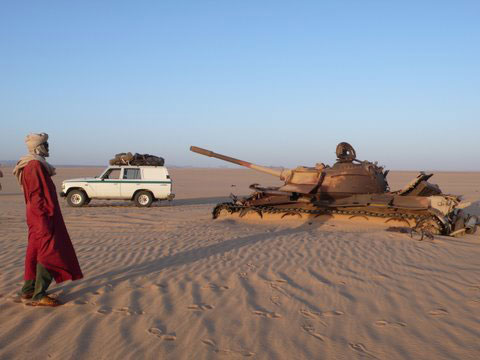
We could not continue east to Yebbi Bou as planned, because Tubu rebels are causing problems there. In 2007 they kidnapped an American missionary, who was only liberated after nine months. So we drove back to Zouarké, and continued from there southeast to Faya. The Nissan, that was doing well in the mountains, started overheating again in the soft sand. To cool down the engine we drove a lot at night. At one point we passed one of the many Soviet tanks abandoned following the Libyan war with Chad during the 1980s when the Chadian Toyotas proved far more mobile in the desert.

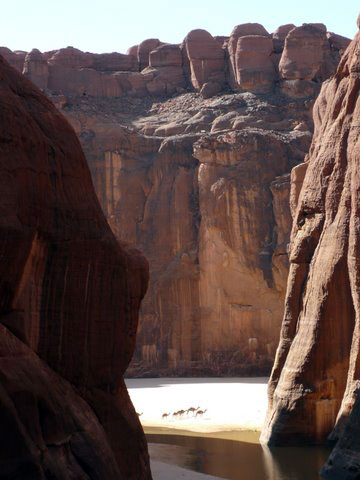
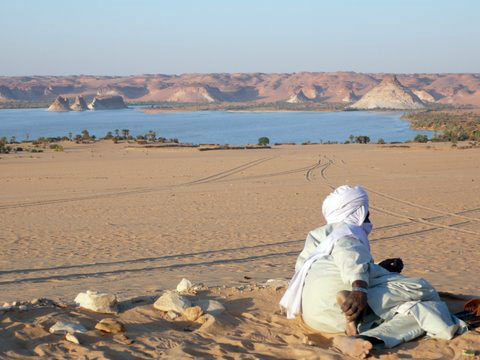
In Faya we took two days rest and decided to sell the Nissan, after we found out we could hire a car with driver for about 100 euros a day. We continued to Ounianga, Fada and the famous Guelta Archei where we met other tourists for the first time during our trip. All my travel companions spotted the crocodiles in the guelta, I missed them because I was not patient enough. When visiting some natural arches in Ennedi we also met a French television team, making a documentary on the touristic potential of Chad. From the guelta it took us four days to drive back to Ndjamena.

More photos

Algeria Ahnet 2011 4WD

alg2011hdr

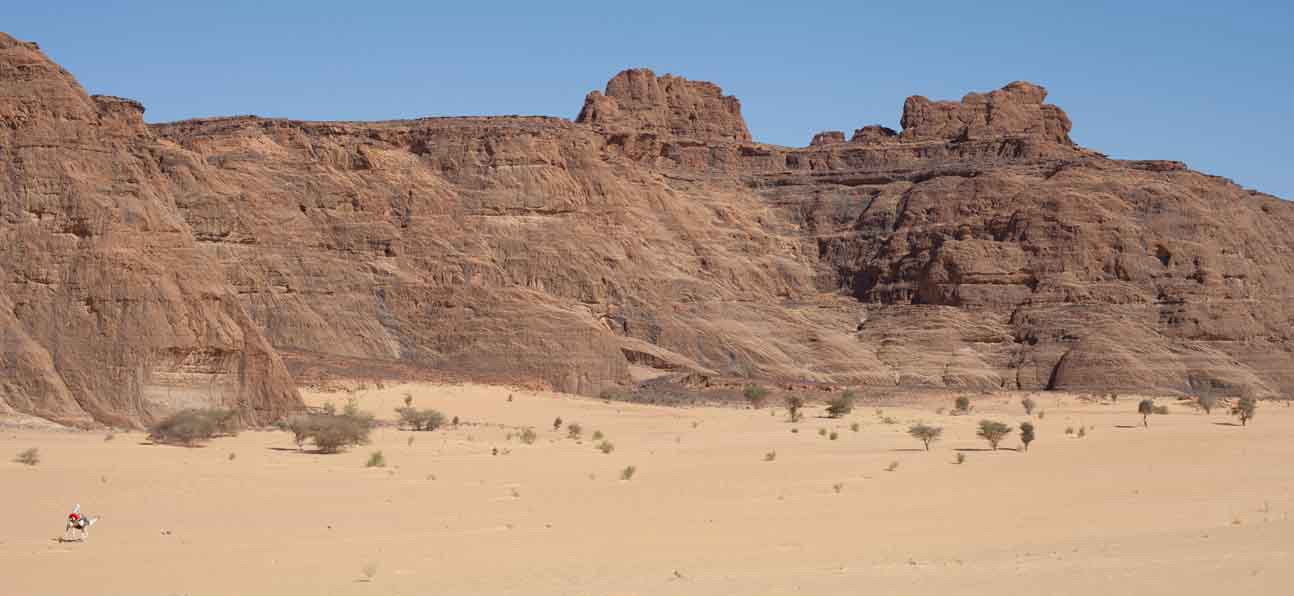
It’s only the middle-west side of Algeria that is widely open to unrestricted off-highway driving at the moment. Just as well as it coincided with my interest in that area, having done most of the canyon-bound routes in the Tassili N’Ajjer. Great though the Tassili is, the more open Ahnet and western Tefedest also have their attractions, primarily the granite monoliths and the surrounding glare of the white sands shed by those rounded outcrops. You can pretty much point your car in any direction and drive to that place across a trackless, sugary sand sheet.

My group was composed of 7 Scottish off-roaders who’d done a self-organised trip in Libya as well as the usual Morocco. The fifth car was a Dutch guy and mate who were going to come on a similar tour I’d pulled a year earlier in what was probably an over-reaction to security worries at that time. Now, things aren’t looking so good in southern Algeria while the Maghreb goes through political upheavals.

4x4x4

A different last-minute panic this time: big changes in obtaining Algerian visas in London (full details here). Luckily the guy there recognised me from previous years so I got our visas in days rather than weeks and the passports got delivered to the Brit contingent as they headed for the Eurotunnel while I lay in a bed with an ear infection, throwing up, dizzy and unable to walk straight. A week later it had mostly cleared and I caught to group up in Adrar, four days in, flying in over the Grand Erg – you would not want to drive in there. On this trip I was sitting in the agency escort’s Hilux. There’s an 8-minute movie above, a gallery at the bottom of the page and a write up in the July 2011 issue of 4×4 magazine.

Click to enlarge and see the route

ORAN FERRY

I wanted to try the Oran crossing as an alternative to petty shake downs in Tunis, slow processing in Algiers and high prices on both routes. Of course you pay more in fuel to get down to Alicante, but my route in Algeria was down the west side through Taghit, Timimoun and Adrar; so it seemed worthwhile.The El Djazair II ferry works out around £700 for 2 people in an en suite first class cabin with dinner and breakfast included, and driving a <2.3-metre high 4×4. The ferry is comparable with any sub-Carthage ferry serving Tunis or Algiers. It leaves Alicante 7pm 2-3 times a week and returns from Oran at 6pm. Of course you can count on it leaving from 2 to 5 hours late, but on both stages it arrived on time about 7am.
Oran is about the size of Ceuta and once there, it’s a police form per person and one for the car, a TVIP, customs declaration, money exchange (10eu = 1 dinar official) and insurance – 3000d for a month. All listed here. On the way back they asked about diesel but those with up to 4 jerries got away with it. Either play dumb or say it’s only 60L, no big deal. In Alicante a token bag per car was put through a scanner but there was no jerry grief. In both directions we were the only 4×4 tourists on a half-full boat of Algerians.

NORTH ALGERIA
Calais to Alicante is 1000 miles; it’s the same distance from Oran to In Salah before you can get on the piste. The Tanezrouft agency car was 2 hours late arriving in Oran and without me there to reassure the police and so on, the group speculated that this delay may have given the police the idea that they needed an escort. Then again, there had been rioting in Oran a few weeks earlier and perhaps as a result of the whole North African situation, the group ended up with escorts all the way to Adrar where I caught up with them. And on that day the news of the Italian woman’s kidnapping hit the local papers which made things worse.
On the way down the group stayed in Saida (rough hotel) then late to Taghit camping, short village tour next morning then slow gendarmerie green & white (G&W) escort to Beni Abbes (overpriced hotel), then Timimoun camping, then very slow escort to Ardar where they met me for lunch, by now all thoroughly fed up with Algeria.
We carried on to Aoulef where we met Mohamed and our desert guide but were then told we had to go on to In Salah, another 160km, to get permission from the brigade to go into the desert. It was arriving in In Salah in the dark or camp by the Aoulef police station in the cold wind. Luckily Mohamed had a mate with an auberge for the night (see below).
I had heard that there were G&W escorts around Adrar with slow and frequent change overs, but to get led down 1000 miles from Oran for 5 days and told where to stay was not in the plan and was not helped by me not being there to at least try and manipulate things in our favour. Unfortunately the group never got over it.

Coming back, the plan was always TSH from In Salah up to Ghardaia (8+hr), town tour then off to Laghouat and back roads via Aflou to Tiaret overnight (6hr) for Oran next day (5hr). Plenty of checkpoints (CPs), and up north, plus more traffic and speed humps at each village make it slow, but it took 2.5 days with only a few awkward CPs requiring a stack of fiches.
My advice: use Oran port if you like, but stay clear of the Bechar-Adrar axis. Instead, take our return route from Oran via Tiaret to the TSH at Laghouat.

Driving through north Algeria is pretty grim or just agriculturally dull. Don’t kid yourself that the appeal of this country is anything other than the desert in the deep south, far from half-built towns swamped in their own rubbish.

ACCOMMODATION (that I used)
Algiers airport
Ibis hotel, £80 booked online from Expedia (same rate posted in reception). Free unmarked shuttle van for the 10-min drive to/form the airport. Room like anything in Europe for £50. Breakfast an extra 900d! The Mercure rates next door (same shuttle) are nearly double.

Aoulef. Unmarked auberge north end of town  26°58.568′ 1°05.159′
Walled compound, dorms, OK ablutions, 200d per car and about 200d? per person. Tidy enough.

Tamanrasset
Camping Dassine southeast end of town over the newly bridged oued. My usual place since 1982 and still a good spot. Plain, two-bed cabins are 1000d a night with nice breakfast next day in the salle. Car RTT camping 500d. Hot showers get hit and miss, sit down toilets and all clean enough. Good grocer 10 mins walk to town opposite a cheap cafe. Town itself is 25 mins walk. Traffic and parking is getting worse in central Tam.

Assekrem
Dorms at the auberge 600d pp. Toilets pretty good. No food to spare do we DIY’d. Tea and bikkies served at dawn from the monks up top.

In Salah
Camping Palmerie. The same place it was in the 80s but with 30 years of added neglect; a semi-derelict scrap heap for 300d pp or 1000d for a 2-child bedded a/c cell. Smelly toilets, junk all around, but the auberge in town is always full I’m told and the Hotel Tidikelt on the highway is 6-7000ds.
IS itself is not exactly Palm Springs; the only reason you’d stay here is that it’s hundreds of kms to anywhere else, the desert around is pretty exposed and Tanezrouft agency are based here, change drivers and may offer a free dinner.

Ghardaia
Hotel Atlantide in the town centre. 32°29.215′  3°40.678′. A lovely old tiled joint from 1800ds or a bit more for en suites, all with TVs and heating. Small breakfast room plus plenty of restos on the street below. Secure garage parking 10 mins walk away for 100d a night (32°29.473′   3°40.907‘).
Good unmarked resto leaving Ghardaia to the north at 32°31.501′  3°40.237′ by a roundabout.

Tiaret
Hotel Bouazza (35°21.284′ 1°20.252′). Five storey, south end of town, can’t miss it. Single occupancy en suite with TV and wi-fi from 2020d. Resto dinner for 900d, breakfast buffet included and secure parking round the back. Probably the best value place we stayed in – almost normal but still with plumbing issues. Allow 4-5 hours for the 220km to Oran port.

OTHER PRICES
Diesel still 13.7d, petrol 22-25d. A one-way flight to Adrar with an overnight in Algiers cost about £320 booked a week before with Trailfinders. At the airport btw, I was not asked for my escort as I’ve been done before, and walked straight through. Exchange was 100 dinar to a euro, or 113d to a pound.

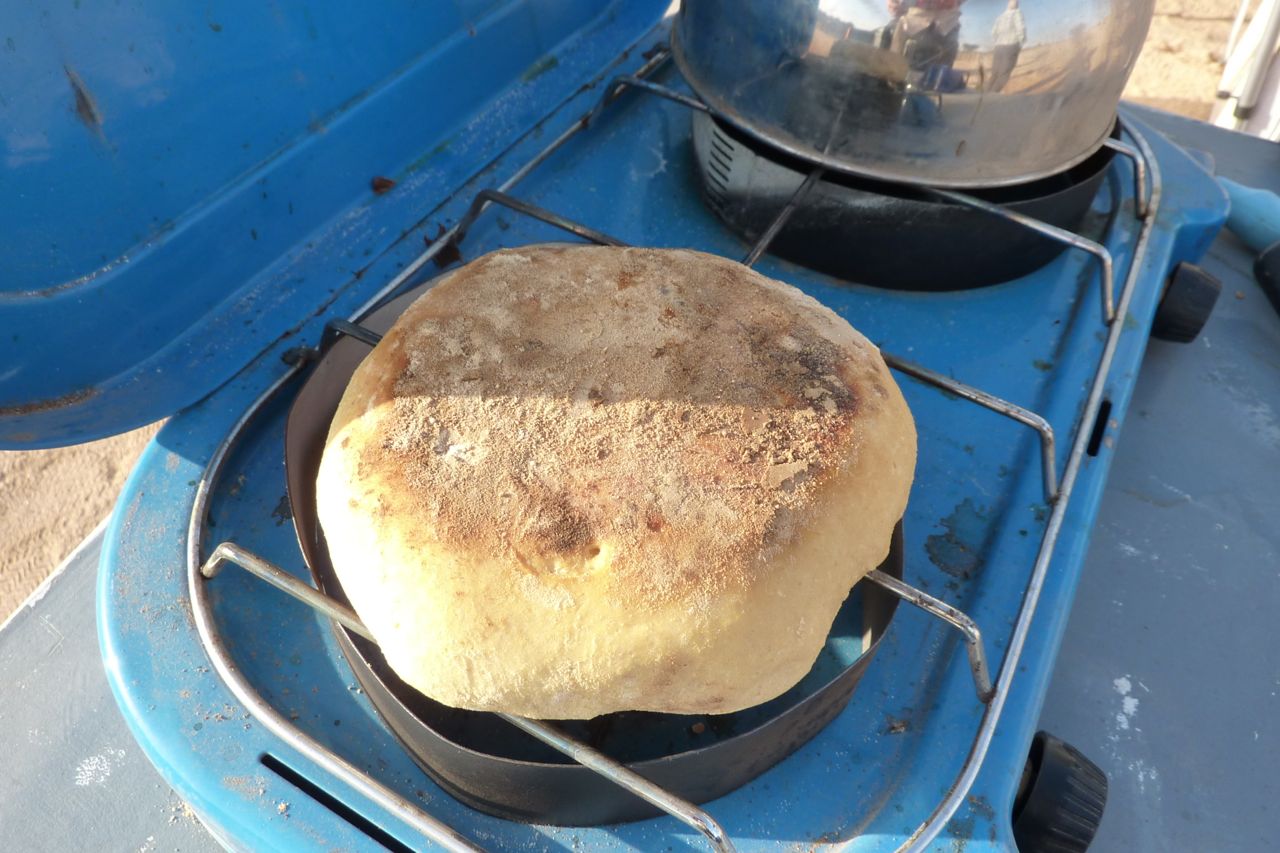
Despite the talk of riots over ‘food prices’ up north, they seemed much the same down south as a year or three ago. In Tam imported things can cost more than in Europe. Up north not so bad. Lots of fresh fruit and veg in In Salah market (oranges 70d a kilo), bread 10d (great bakery in In Salah with more than the usual baguettes). Interestingly with desert bread, sealed in a bag it just goes dry but never moulds like bread back home which ironically is full of ‘preservatives’. Desert bread can last for up to 5 days sealed in a roll top dry bag.

Meals: omelette frites with loubia (chick peas in sauce) plus drinks was <200d pp, roadside in Outoul. Chicken and chips 400d in a ‘workers’ café in Tam – all with bread. Same price for an evening meal in Tam with drinks and salad – and meat stew or chops with pasta or rice or potatoes in Ghardaia. Salad in Ghardaia 150d.
The Brits in my group were very enterprising with cooking and bought frozen chickens and meat to make great stews. We even had bruscetta one night with dry bread – as well as dry bread soaked in eggs (250d for a tray of 30) and fried for breakfast – a trick I picked up on the camel tours. A young goat bought from desert nomads was 3000d and lasted the guides a few days.
Internet. From In Salah south don’t bother. In Ghardaia it was 50d an hour of which at least 15 mins was waiting.

WEATHER
We had it all. The group had snow over the Atlas, then we had windy nights, days up to 30° and nights down to -2°, an all-day dust storm from In Ziza with viz down to 20m. There was a 10-minute dawn shower in Tam which did not quite clean the cars, and a howling gale up at Assekrem as well as pristine clear blue wind-free days. On the way back there was usual dust haze near Laghouat, more rain over the Atlas and a lot of wind in general. The guides said March and April were the worst months for winds.

WILDLIFE
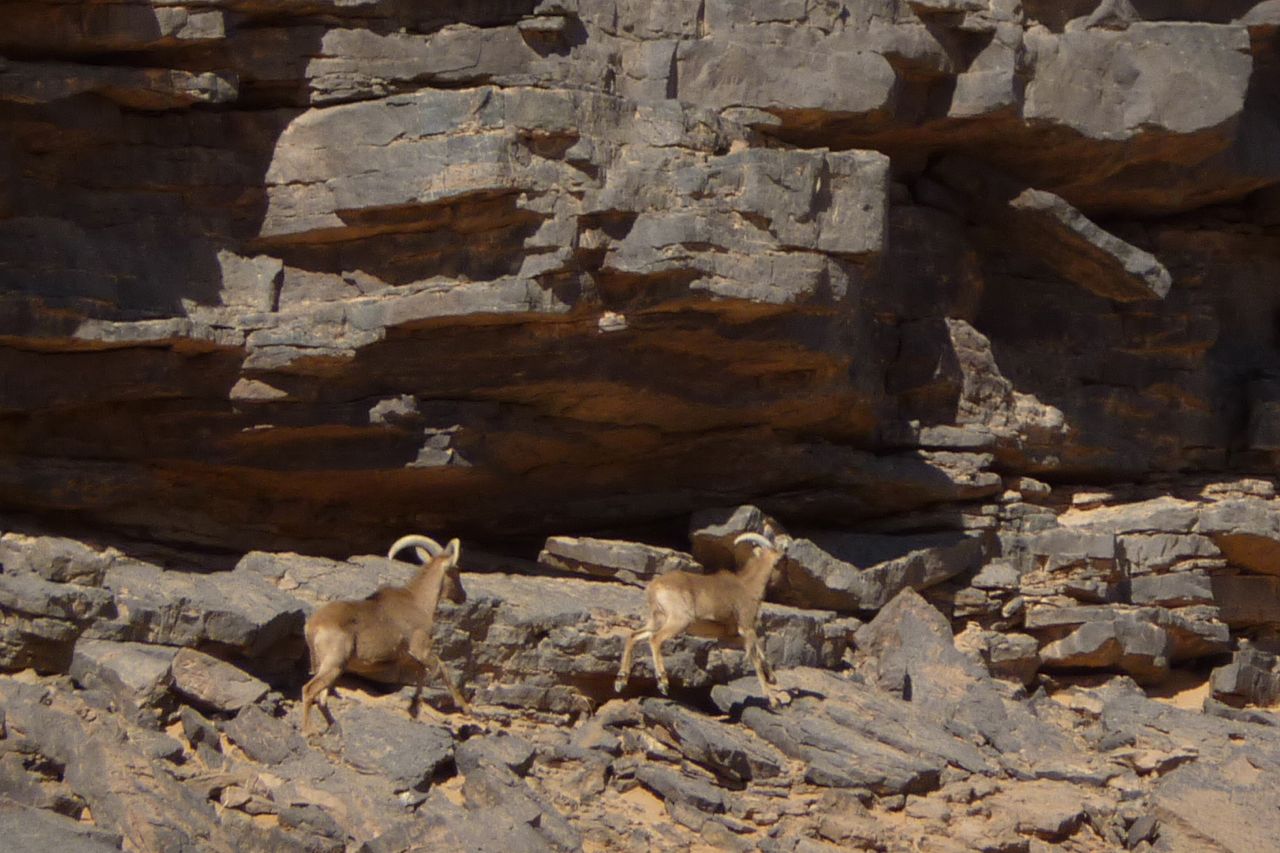
We spotted gazelles on at least three occasions up to four at a time. Then driving up one canyon in the Ahnet we came close on four mouflons. Two managed to dash vertically up the cliff side and the other two along it, giving me a chance to shoot some pics.
We also saw a few small lizards here and there, on another occasion one of the group came across a small snake and one night by a dry well was pierced by the howl of jackals.
The feral donkeys are still there in the Hoggar. There is a running joke in south Algeria right now that the Chinese pipeline builders are eating them all. lls mangez tout, tout! The drivers joked that they’d offer to fix up the Hirafok-Assekrem track for free just to get to the donkeys.

SECURITY & ESCORT EVASION
Recent events across North Africa including Algeria did not seem to make the police jumpy down south, but the announcement of the Italian kidnapping did not help us, especially as we were probably one of very few self-drive tourist groups in the country. I arrived on that day and most of the group seemed to appreciate it was a single event on the far side of a very big country. Our planned route through the Ahnet and western Tefedest was as good as it could be in terms of safety while following an unobvious itinerary. I had visions of sleeping with a SPOT and Thuraya in hand, but though kidnapping worries were soon forgotten, getting bogged down with more escorts and being told to stick to the highway would have ruined the tour.
In Aoulef we could not head into the Ahnet until we got permission from the brigade in In Salah. Another 2-hour escorted drive next morning, but at least IS was Tanezrouft agency’s home town with presumably good relations with the G&Ws and the Ahnet was their home turf. Eventually permission was granted without any conditions. G&W tourist escorts off road are unknown – these guys are not set up for desert camping and are more a highway and frontier patrol while police cover the towns and the army does the rest.
A week later, once back in mobile range at Abalessa I got a text that the kidnappers were after a group (of Italians) not a single person so we decided to spend only one night in Tam and walk- not drive around. As it was, arriving at lunchtime and leaving same time next day for Assekrem was enough to catch up on chores. Anyway, a grab in Tam would be pretty hard to pull off, packed as it is with various barracks and compounds and with choppers stationed at the airport. Doing the same south of Djanet – 10 times smaller than Tam – gives a fast run to the unmanned Niger border in 2 hours.
The same goes for the run up and down from Assekrem – predictable sure, but a hard place to set up an ambush unnoticed. And beyond the Hoggar we were making it up day by day and often off piste, so even if we’d been spotted we’d be hard to find.

Checking in with the brigade was required in either Ideles or In Amguel on the TSH. I chose In Amguel to save having the group wait for the guide to do Ideles. In retrospect maybe not a good decision as at least in Ideles we were far from the TSH and so could not be told to stay on it (though they may have asked where we were going which would have been awkward – I had an off piste stage in the western Tefedest lined up).

In In Amguel the driver was formally instructed to stay on the TSH all the way to In Salah (via Arak) but had his own ideas about that, and after a fill up and a staggered dash up the highway, he found a gap in the water pipeline (which limits entry points to the west) and we headed back into Ahnet for another great week, avoiding Arak. There were no consequences of doing this once we got to In Salah, so it seems the G&W brigades are not in serial contact with each other up the road; it’s just a commander playing it safe.


Back on the highway north of In Salah some police or G&W CPs let us though, some asked a few questions, some called someone for confirmation that we could proceed and some sour-faced jobsworths asked where was out escort. All wanted a copy of our fiche. The good thing was we were leaving the ‘dangerous desert’ so got away with it right the way into Oran which showed no signs of any post riot tension.

With fewer and fewer tourists heading to Algeria, the biggest restriction on self drivers is not so much the risk of kidnapping. As things stand now the danger areas are well known. It’s the possibility of escorts limiting you to highways, as well as further regional closures which could ruin your holiday. With a 1000-km range, a maze of routes can be followed in the relatively secure Ahnet for up to a week. and out here there is no one. Until AQIM start coming up deep from Mali, you’re safe from a chance grab and safe from the G&Ws too. My original route had us going down to Tim Missao and even Tin Rerhoh, but was pulled back months ago. Just as well, the piste to Bordj Moktar from Tam has recently proven to be no longer safe.

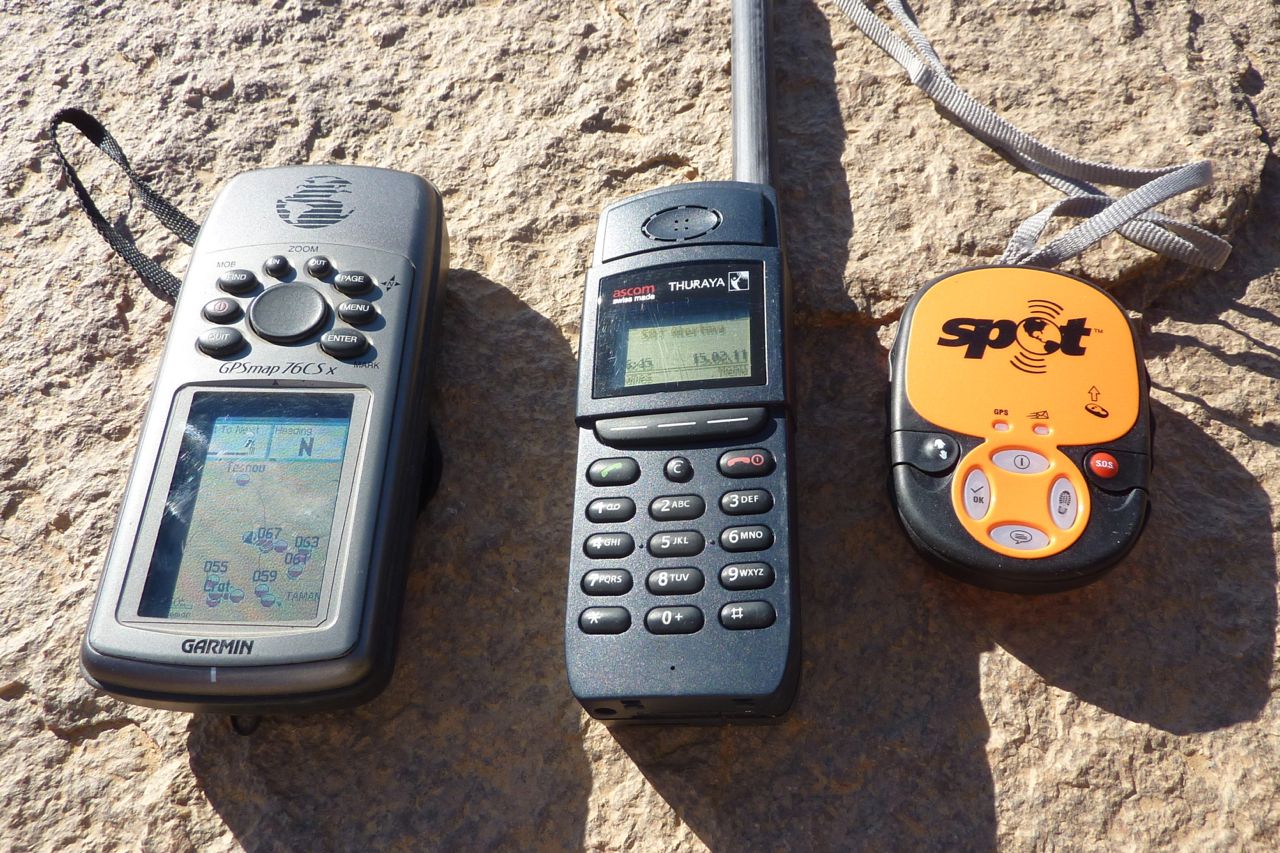
To reassure the group’s people back home I used aSpot Tracker on this trip, sending in locations twice daily which appeared on a password-protected Google Map as well as alerting selected contacts by email and SMS. Short version: it was unreliable in sending an SMS even when a location appeared on the map and it became inconsistent in even logging locations on the online map. If you need to reliably record a daily position with someone back home, just call them on a sat phone or mobile where possible, with a waypoint read off a GPS. With a Thuraya you can get a lat/long on the phone and forward it as an SMS. Of course this means work for someone at home to spread the word. The good thing with a SPOT is it’s easy to use and is automated – but it can’t be relied on. I go on more about it in this interesting discussion on GPS tracking devices.

ROUTE
See the big map up top for the off-highway stage. Basically we took a 1000-km run out of in Salah to Abalessa as far at 2°W and via in Ziza canyon, making it up with the help of the guide day by day and more or less as fuel and water required.
From Tam we went up to Assekrem (track missing on the big map) – piste in the usual condition – and down to Hirafok – piste in as good condition as it gets, with clearly defined deviations around the many wash outs. Hirafok to the TSH looks like it may be getting sealed as far as Ideles.
North of In Amguel we went back into Ahnet via, Tesnou, Assouf Melloul and the back of Erg Mehajebat. All great but undemanding off roading through some fantastic landscapes.

We only saw one other tourist car – a Swiss couple in Tam with a Santana who I’d met before in Algeria – and also travelling with Tanezrouft.

  • VEHICLES (oldest first, all vehicles had high mileages)
  • Early TLC 80 on big tyres and heavy bumpers, no RTT
  • Discovery 1 manual (since sold for £400). Most economical with Colombus RTT
  • Discovery 1 auto, Jap import, with Colombus RTT
  • Late 24v TLC 80 with canvas RTT
  • Suped-up Land Rover Td5 110 with canvas RTT
  • Hilux 2.8D aspirated (2005). The agency car which I rode in.

No serious vehicle problems – a split PAS hose on the old 80 at Assekrem took a couple of hours to fix, mostly due to difficult access.
At Abalessa it was calculated that after some 950km the manual Discovery was the most economical at 7.8kpl/22.5mpg and the old TLC was worst at 5.2kpl/15mpg (pretty bad but as the driver expected). The other three were within 5 litres of each other at around 6.9kpl/20mpg. The Hilux was not measured but may have been more economical still, doing the trip on the tank plus 40 litres (100L in total? = 9.5kpl/27mpg).

Chad ~ Ennedi by Camel 2011

Alistair Bestow

I travelled by camel on a 28-day journey with one camel and a guide departing and returning to Fada. The trip started on 8th December 2011, and finished on 4 January 2012. The journey was excellent, the guide very good (although he could not speak any French or English, and I could not speak Goorani).

[see also Sahara Trekking ebook]

abab
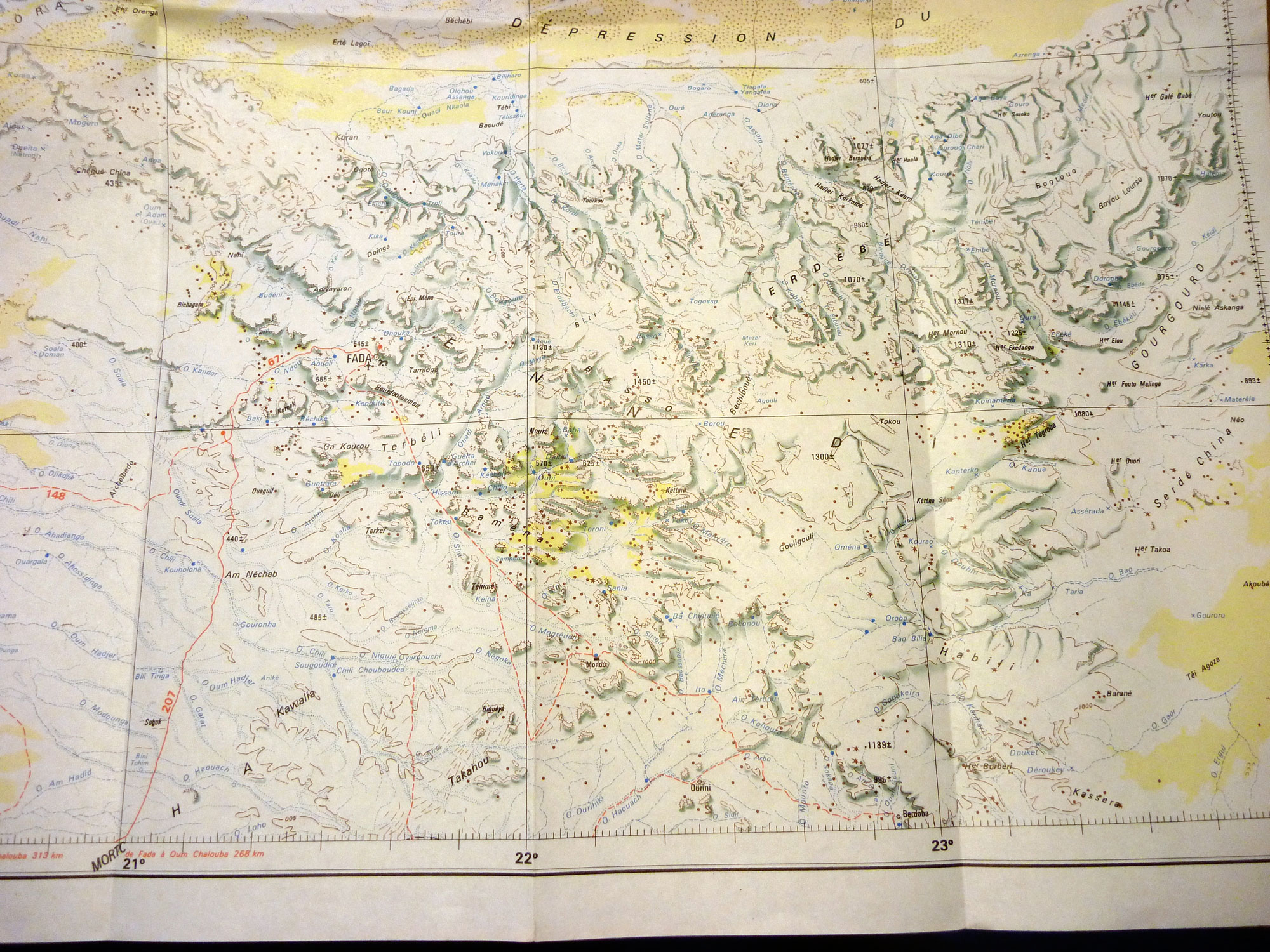
largeau

The trip covered several of the Ennedi highlights, including Guelta Archei (3 nights), Puit de Tokou (2 nights), Guelta Bachekele (noted as ‘Ba Chekele’ on the 1974 IGN 1:1m NE34 Largeau’ sheet – top left, click to enlarge), 4 nights, Monou, Rocks of Terkei (2 nights), Guelta Deli, Baki and then returning to Fada. We travelled about 5-6 hours a day but spent several days at some sites. The weather was excellent, with only 2-3 days of quite strong wind. Food for the trip was basic, based on variations of spaghetti, rice, sardines, dried tomatoes, onions and tinned peas.

The trip was easier to organise than I had expected. I arrived in Fada on one day, discussed my reasons for coming to Fada with the Police, and they produced a guide for me. I suspect a relative of one of the Police. I organised a written contract, outlining a rough itinerary, stating the price, start and finish dates on my second day in Fada, and started the trip the third day. I was conscious for my own security that the Police should be aware of my travel plans, and the identity of my guide; this was all done before I departed.

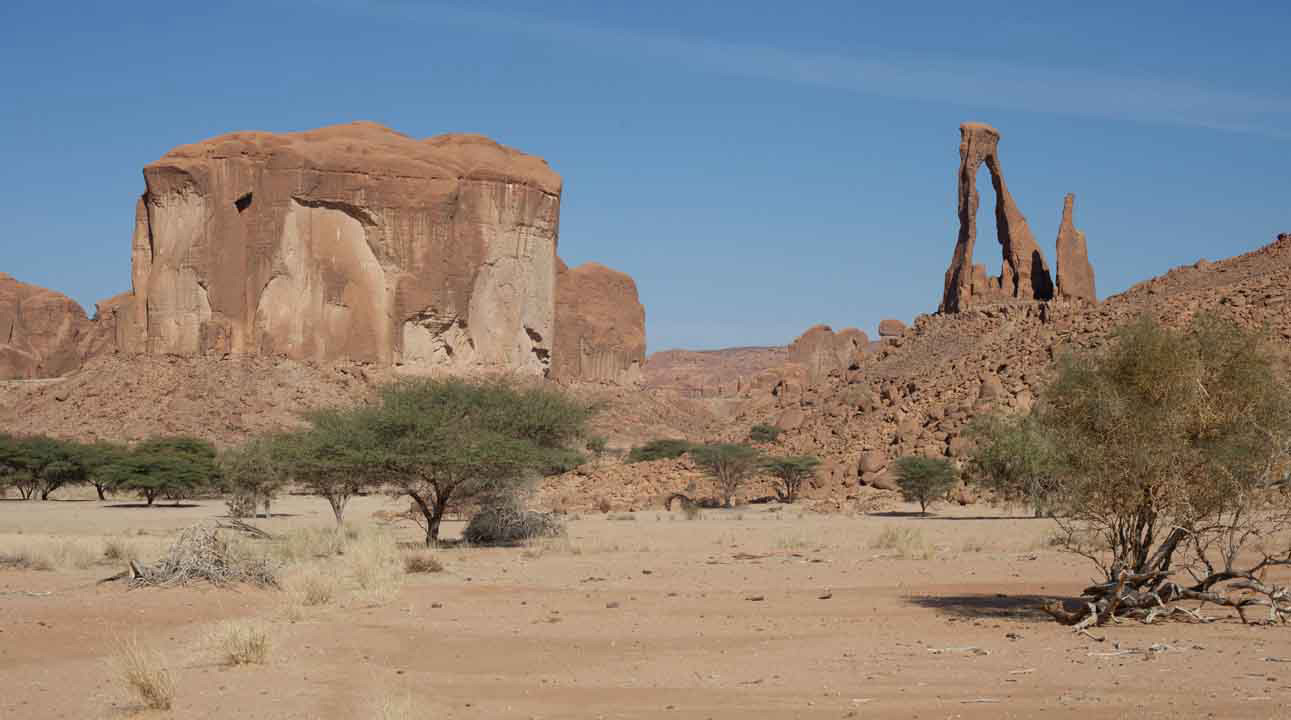
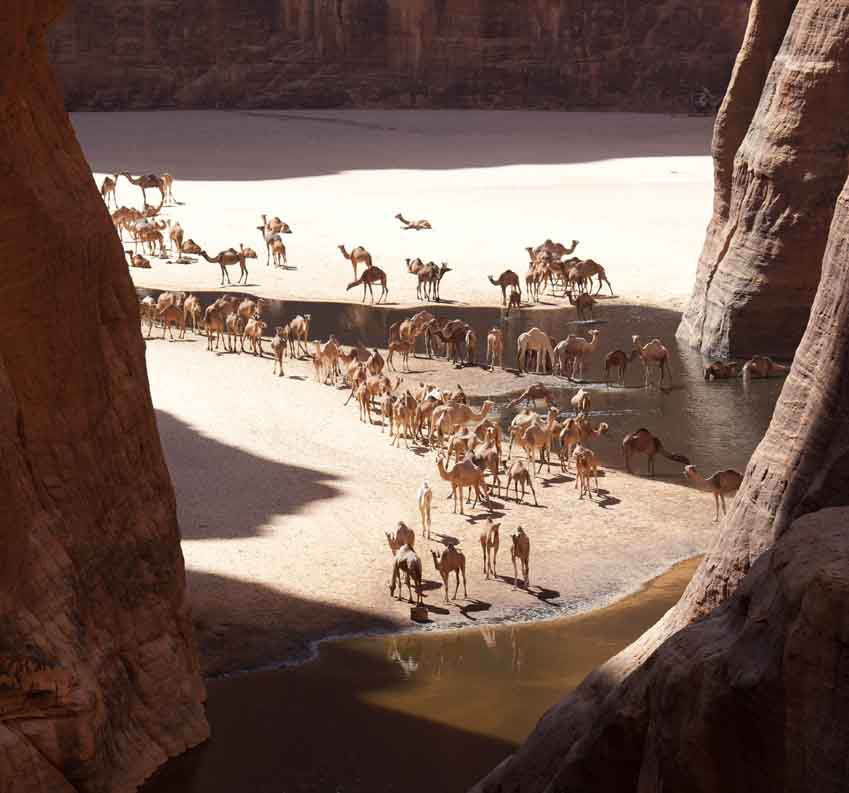
The region is quite spectacular, with huge vistas of the desert with great rocks worn into all sorts of shapes, along with cliffs, arches, overhangs, ‘organ pipe’ stands of rock, and it was also enriching to see and meet the people who make their lives in this harsh environment. There were rock paintings to be found in caves – it was good to be able to have time to ‘discover’ my own as well as those known to the guide. There were many camels, all looking in very fine condition as well as goats and sheep. There was some wildlife to be seen – Dorcas Gazelle, crocodile (Guelta Archei -I had most success seeing the crocodiles early in the morning before the camels arrived), Hyrax, Fennec Fox, Jackal and Barbary Sheep (mouflon) at Guelta Deli. I am sure they were Barbary Sheep, but I need to do some research when I return home. Owls often called from the cliffs at night. I had a great time, and we returned on the 4th January to Fada, as agreed.

abbachin

Practicalities
I obtained a 3 month visa from Brussels, and travelled to Ndjamena on Air France from Paris. You need to report to Immigration Office in Ndjamena upon arrival. You need an Autorisation de Circuler (A. de C.) before leaving Ndjamena. This takes a minimum of three days. Day 1 visit the Tourism Office near the airport to explain your itinerary to the official. When discussing the itinerary, make it clear that you expect to finish the trip by a particular date – probably the date on which you plan to leave Chad. They then prepare the A. de C., and you collect it the next working day. You then take it to the Office of Public Security 300 metres down the road for official stamping, and return there the next working day to collect the A. de C. It is advisable to take several copies of the A. de C., as it can save time when you report to the Police/Public Securite in towns along the way. Then you can go. (Hence it is best to start this process on a Monday, Tuesday or Wednesday – not on a Thursday or Friday, as you will have to sit out the weekend for the next working day.)

I took with me the inadequate very short chapter on Chad from Lonely Planet, as well as the very informative ‘Petit Fute Guide to Tchad 2011-2012’ 3rd Edition (2010). This 240 page guide has lots of information about things to see and do in Chad, as well as accommodation and GPS waypoints, but assumes that you have your own vehicle, so is not very good for getting about using local transport.

abcroc

I travelled by bus from Ndjamena to Abeche (last internet). I then found a 4WD going north to Biltine, where I stopped overnight at the Restaurant Al Afia. (There is no accommodation in Biltine). I found other transport going to Kalait further north. (It is not marked on all maps, but is located a little further north than Oum Chalouba). There I stayed with the driver of the 4WD, as again there is no accommodation there. Transport to and from Fada is not available every day. I was lucky, and got a ride on an ancient Toyota Land Cruiser the next day. I arrived in Fada the following day. There is no accommodation in Fada, and was given the OK to stay in a Police cell at the Commissariat. Neither is there a restaurant in Fada so note that eating options here are limited. Cell telephone service is available in Fada and Faya.

abarchei

To leave Fada, I had to wait for three days before I found an empty supply truck returning to Kalait. I then travelled from Kalait to Faya on top of an ageing Mercedes truck with 40 others, and stayed in Faya for 4 nights. Again, there is no accommodation in Faya – the only Auberge mentioned in guide books – the Emi Koussi – has closed. I stayed with a family near the Place de Marche for 4 nights. The people of Chad were very helpful and accommodating. To return to Ndjamena, I went by 4WD which took 2 days, although can take longer. I had thought about visiting Tibesti, but decided to see Ennedi ‘properly’, and to see Tibesti on another trip. This is as well, because when in Faya 10-13th January it was very windy and very cold, making sightseeing very unpleasant to say the least.

The Camel Trip
Costs. I paid CFA 10,000 or €15 per day (CFA655 = €1) for the camel, another CFA 10,000 per day for the guide, a lump sum of CFA150,000 (€235) for the basic food (sugar, spaghetti, sardines, tea, onions), and I spent another CFA 50,000 (€75) on ‘extra’ food, including tinned peas, biscuits, several kilos of dried milk, dried tomatoes and some extra sardines. (The options are very limited in Fada). The sting in the costs was the Tourist Tax levied at both Guelta Archei AND Guelta Bachekele. It is charged ‘per group’ – so if you are a ‘group’ of one then you have the honour of paying the whole fee. The tax is CFA50,000 (€75) per group at Guelta Archei, and I paid CFA40,000 (€63) at Bachekele, although the Police advised that it was CFA50,000.

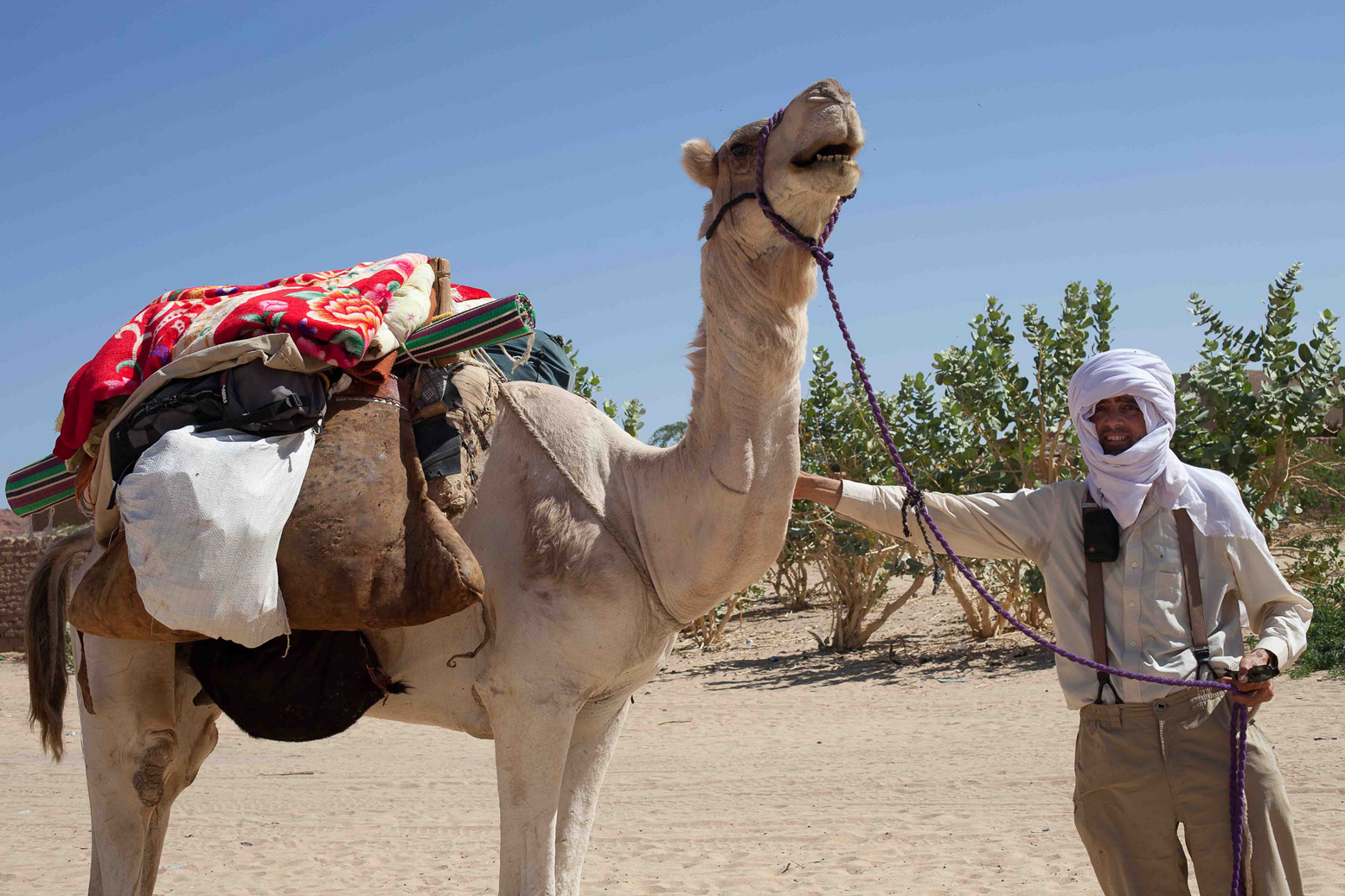
We had one large camel, which I was free to ride, on a shared basis with the guide. Mostly I preferred to walk, because although a great baggage camel, it needed work to make sure it kept walking at a reasonable rate in the correct direction. You are also freer to take photographs while walking. Take a warm sleeping bag, as some nights were quite cold – say around 5-8 degrees C. My guide Karli Kallia – known by the Police as a camel guide, was excellent.

More pictures

abfada

Desert Travelling – Geographical magazine 2001

Readers of Wilfred Thesiger’s Arabia journeys may recall the value his Bedu companions placed on their camels. Although they were at times driven to death (and thereupon eagerly eaten), the camels’ well-being came before that of their bearers, for without camels they were doomed. Steadily hauling loads across vast distances, desert nomadism could reach beyond the systematic walkabouts from waterhole to waterhole. “Ships of the desert” is an apt proverb, for who could cross an ocean without a ship.
While caravans traversing the deserts of North Africa and Asia conjure up a romantic image, the advent of motor vehicles has relegated camels to touristic excursions, a ‘back to my roots’ status symbol in some Saharan countries or merely just meat. The hardship which Thesiger and Asher tasted is a thing of the past and most nomads, ever pragmatic, don’t regret it. For outsiders the idea of camel travel is undoubtedly rewarding, but successfully buying and managing some beasts takes experience.
For most of us then, an all-terrain vehicle adapted for payload and long range fits the bill. 4WD sales flourish as emblems of macho ‘go-anywhere’ chic, but the best models make ideal transportation for a desert adventure, as well as day-to-day runabouts.
Desirable qualities include: payload and space – choose LWB models with heavy-duty suspension capable of carrying up to 500kg without sagging; robustness – not all 4WD-badged vehicles are fit for the desert; mechanical simplicity no longer sells new cars but it’s what most drivers and bush mechanics can fix; ground clearance is much more useful than all-wheel drive (which explains the efficacy of certain 2WDs in deserts; performance – power to get you over dunes with 400 litres of fuel and water, plus the economy to make that fuel last. Turbo diesels are superior in this respect and the norm for working 4WDs. Finally, consider parts availability and interchangeability. A GM Humvee may turn heads down the Kings Road but you won’t find it’s unusual 17″ tyres or much else GM in the Sahara. Here, as in most other remote areas, Toyotas and Land Rovers rule the roost and there’s a good chance of finding spares or know-how if you need it.
All-terrain trail bikes are closer to the dromedary experience and can reach places 4WDs cannot. For the desert a four-stroke single of around 600cc offers the best power and economy-to-weight ratio; a critical factor when riding off road with a 50kg payload. So too are knobbly tyres – anything else is unstable on sand and gravel. Note that models (and so parts) over 125cc are rare outside the developed world so choose simple and reliable Japanese or European examples.
The limitations of two-wheeled freedom is range (typically around 600km/3-4 days in winter, about 30% of a 4WD) – and the riding skill needed to keep a loaded machine upright in soft sand. However, an agile unloaded enduro bike can make a useful addition to a conventional expedition, saving hours by reconnoitring the best route through difficult terrain or nipping into town on an errand.
Thorough and appropriate vehicle preparation is at the core of a trouble-free trip. A car doesn’t need winches, bull bars or banks of spotlights (there’s nothing to winch off, nothing to crash into except each other and night driving should be avoided at all costs). Focus on fundamental things like the condition of the radiator, hoses, belts and transmission as well as suspension and tyres.
Securing your payload while maintaining day-to-day accessibility is an art. On both cars and bikes mount heavy items like fuel and water low and between the axles. Avoid overloaded roof racks which reduce stability and fuel economy – most desert returnees barely use them. A fully-loaded test drive incorporating an overnight camp will highlight the effectiveness or otherwise of your set-up while giving you a chance to revise it. Start packing gradually a couple of weeks before departure, ahead of the inevitable nerves when mistakes can be made. Calculate fuel needs at 5kpl (15mpg) for a turbo diesel or 15kpl for a bike. This covers occasional dune crossings and so includes a healthy reserve. In winter, water capacity should be 10 litres per person per day – leaving you plenty for emergencies or the ability to pass on impure sources. For various reasons, (quadrupled water consumption being just one) summertime desert travel should be left to scorpions and snakes (which, incidentally, you’ll never encounter in winter).
Long before your vehicle is adapted or even purchased, information about your region must be sourced and may decide your route or even destination. A realistic itinerary and schedule (not a publicity-seeking stunt – even for charity) is as vital as a sound vehicle. I was recently asked to advise a group intent on crossing Mauritania in summer in a double-decker bus! (a prank, I assumed) and another wanting to follow the Saharan Tropic of Cancer (just look at the map…).
I’m no stranger to over-ambitious planning but vague, outdated or inaccurate information, often from official sources, is prolific. One magazine recently discouraged travel through Western Sahara (now essentially Morocco) – a region that’s hosted the main trans-Sahara route for the last decade! So we can be grateful to actual travellers and the Internet which, for all it’s junk, can tell it like it is.
Desert navigation adds up to more than owning a GPS. Without good maps (or a local guide) you’re helpless. For much of the planet the best maps (1:1 million scale is ideal) were meticulously compiled at the end of the colonial era. The Cold War which followed bought about an unprecedented programme of satellite mapping. Neither of these feats are ever likely to be repeated but now stunning satellite imagery is available free on the Web (try http://images.jsc.nasa.gov).
With maps, satellite data and, of course, a GPS to confirm your position and orientation, the desert is yours. In most cases routes follow a recognised track, but in areas of mineral exploration these can get confusing. A good navigator always has a finger on the map and never makes assumptions.
Desert driving is technically simple. Tracks are mostly well formed and level, natural obstacles are avoided, with visibility and weather usually perfect. About 200 kms per day is an average maximum in the Sahara. Dunes are another matter, demanding an incompatible blend of momentum and caution. At times crests must be laboriously recce’d on foot to prevent disastrous tumbles. GPS is of minimal use as passable routes change but reducing tyre pressures to 30% transforms your vehicle’s traction. In my experience a powerful compressor to control pressures is far more useful than sand ladders. Short range radios are also a boon, but may need to be discretely used and stashed.
Much of the exhilaration of desert travel derives from confidence inspiring navigation, traversing challenging terrain and the satisfaction of self sufficiency. The cost of all this adventuring is the price you pay when things go wrong (or indeed just worrying about it). The stories we occasionally read in the Sunday papers about tourists ‘burned alive’ in the Sahara or the Outback are usually holidaymakers in a rented hatchback who bite off more than they can chew, not those engaged in thoughtfully-planned adventures. Then again, earlier this year three experienced Dutch travellers were robbed and murdered in northern Mali along a smuggler’s route long avoided by tourists.
A typical survival scenario develops from a combination of bad luck and poor decisions, planning and preparation (as with the Dutch). Mishaps can happen to us all but avoiding hasty judgements &endash; understandable when in a mild panic) &endash; may your life. On my first Sahara trip I broke down halfway across. Having repaired my cracked fuel tank I decided to turn back. Things didn’t get any easier from that point but knowing when to turn back has enabled another two decades of fabulous desert travel (plus the bits in between!).
Like GPS, satellite telephones make it sound easy, but without a contingency plan in place who are you going to call? The deserts of developing countries have no rescue service. You’re on your own, but with reserve water and other vehicles the danger is minimised.
An absolute meltdown scenario might be wrecking a vehicle in the dunes while lost, alone and off-route. Without a mobile vehicle you’re in the hands of the gods so, as in the Flight of the Phoenix movie, or a Bedu thrashing an exhausted camel, do whatever it takes. If rescue seems possible have a fuel-soaked tyre or seat ready to ignite – or a head lamp and battery at night. Signal only when signals might be noticed, not on the off chance or at distant aircraft. Conserve energy and water by lying in the shade, but don’t underestimate your ingenuity in a crisis – a strength few of us know we possess. Walking out, unless you’re certain of reaching an attainable destination, is a last resort during which most people perish.
An arid wilderness is unforgiving and the crux of desert survival will not be found in an SAS manual, but stems from an appropriate vehicle, season and destination.

Originally published in Geographical magazine, January 2001


Libya – Niger – Algeria (2002)

Charles Megaw and Jo Butler

Crossing the Sahara desert had long been an ambition of ours. In autumn 2001 we bought a Toyota HJ60 and arranged to take some time off work to do the trip. We wanted to cross the desert north to south, tarmac to tarmac, but didn’t want to do too much backtracking. We settled on attempting to head south through Tunisia and Libya to Agadez in Niger, returning north through Tamanrasset and the Hoggar to Tunis. This route had the advantages of enabling us to fully explore Libya, a country only just opening up to tourism, cross the remote Ténéré and make a return crossing via one of the classic trans-Saharan routes, itself only recently considered safe after the Algerian civil war and Tuareg rebellion. On January 10th 2002 we left home.
Our first challenge was to replace a Michelin XS tyre which blew out on the French autoroute. We found one in Lyon at a considerable discount to what we had paid for new ones in the UK – we should have bought them all in France which would have saved us money and reduced the risks involved in driving on sand tyres on wet winter roads through Europe.
The CTN Ferry, the Carthage, to Tunis was much less eventful and we rolled off at 4pm and spent the first night in Hammamet, 60 kms southeast of Tunis. Hammamet seems a good stopping point for people heading south. We got good value accommodation at the Résidence Hammamet (22 TD a double ~£11), had a large beer at the bar overlooking the Medina followed by a splash-out meal at Les Trois Moutons, reputably rated one of Tunisia’s top dozen restaurants.
We then spent an enjoyable few days meandering down the east of Tunisia visiting the Roman ruins at El Jem, the Berber towns of Matmata, Chenini and Tataouine, the fort at Ksar Ghilane and the island of Jerba.
Leaving Tunisia was reasonably straightforward although customs made us sit around for half an hour for no apparent reason before letting us leave. All the local cars heading to Libya were being pushed to conserve the last drops of fuel before they reached cheap Libyan supplies.

Libya
Getting Libyan visas had been a rather tortuous and expensive affair. We hooked up with two other travellers, met through the Sahara-overland forum, and got Jamal Fteis of Arkno Tours to send an invitation for the four of us to the Libyan Embassy in London (US$100 per visa). Having got template stamps for an Arabic translation of our passports at the Passport Office, we got Hamed Kalifa to do the translations and manage the process through the Libyan Embassy (£130 per person for an Express Service). We got the visas back within five days, and given one of these was New Year’s day, we were pretty happy.
We also used Arkno to help us get into Libya at the Raj Adjar border (US$270 – ostensibly 120 for the guide and 150 for the cost of paperwork). Nabil, our guide was excellent. He met us just after we left Tunisan customs and we waited while he did all the paperwork for us. This is all in Arabic and given the border officials weren’t especially welcoming and spoke very little English or French we were glad of his help. We got Libyan number plates, a carnet de passage with insurance, a permit which we assume is similar to a permit de conduire in Tunisia and a copy of the Arkno Tours invitation as well as stamps in our passport. Having paid Jamal in advance we had no money to pay and therefore did not change any money at the border. Customs was straightforward – no currency declaration and we were asked only to open the car doors and confirm that we weren’t carrying alcohol. The whole process took a bit over an hour.
We then followed Nabil to Zuara (60km towards Tripoli), had a coffee with him, changed some money and said our farewells. The currency black market in Libya seems to have dried up. We had ignored the swarms of money changers waving wads of Libyan dinars in Ben Guerdane on the Tunisian side of the border offering 1.3 for a dollar. We got 1.45 with the money changer in Zuara. In Tripoli the money changers in the Medina wouldn’t go above 1.5 so we changed at the bank in the al Kabir hotel for 1.53.
Despite what we had heard, we were surprised by how easy it was to get around Libya on our own. We were waved through most checkpoints and when asked to stop, it was only for the routine name, profession, father’s name etc. The only bureaucratic pain we encountered was the need to re-register with the police within five days. We ended up doing it on our own in Tripoli because we weren’t staying long enough at our hotel (the Qasr Libya) for them to do it for us. We followed the Footprint guide recommendation and got a taxi to the passport office (the Jawazat) – it would be impossible to find on your own. It was quite a palaver given the language difficulties but we eventually worked it out. You need to get two copies of two forms from a hut at the front gate (1 LD), have the forms filled in by a translator who sits under a tree outside the main building (2 LD) and then have your passports stamped in the office up the stairs round the side of the large building (5 LD). You can also get the registration done in Ghadames if you are going straight there and probably in most other major towns which may be more straightforward.
We had stopped at the Roman ruins of Sabratha on the way to Tripoli and were keen to continue on along the coast to Leptis Magna before heading back to Ghadames. Both sets of ruins are really remarkable and definitely worth the detour however keen you are to get into the dunes.
On the way to Ghadames we explored the ksour in the Berber villages of Yefren, Kabao and Nalut. Nalut’s ksar is a particularly fine example and has had some restoration work done recently. The Nalut Hotel, overlooking the ksar, is currently closed for renovations but should be a great place when it’s finished. We tried to get the Café Nassen el Jebel to put us up but although they were very friendly, they weren’t keen. We therefore had no option but to stay at Funduq Nasim (10 LD pp), which was disgusting. In retrospect, we should have driven on and camped.
After exploring Ghadames, we crossed the Hamada al Hamra from Derj to Idri. Apart from straying onto a newer more southerly piste soon after leaving the tarmac which required a bit of slow cross-country to get back to the old piste, navigation was straightforward. Traffic was light and we didn’t see another vehicle the first day and only a couple of local cars on the second. The army at the remote Uweinat Whin checkpoint were particularly friendly, especially as we were able to lend them a 12mm spanner which enabled them to get one of their Land Cruisers going again!
After a night in Sebha, we went on to the Dawada lakes in the Erg Ubari. We should probably have taken a guide here as this was our first real session in the dunes. Our first day was pretty eventful with 3 hours of digging and we strayed into the wrong gassi while trying to get to Gabraoun al Jadid and ended up driving directly to Um al Ma. The upside was a night at Um al Ma lake, a magical place. We returned the following morning and got the right gassi and made it to Gabraoun without further problem. The tracks to the northern side of Um al Ma from Gabraoun had been covered over by the wind but we found the route after a walk and held our breath down the steep descents to the lake. When we finally got back to the Africa Tours campsite that night, we were exhausted but exhilarated at what had been a remarkable introduction to dune driving.
The following day we went on to see the prehistoric rock art at the Wadi Mathendous. We asked the caretaker of the Germa museum about permits for the site and he sold us two tickets for 6 LD. The police at the Km 128 checkpoint didn’t recognise these and wanted us to have a permit from the Germa police but they let us through anyway. We shared the Wadi with a pair of howling jackals that night.
We motored on to Ghat for a tour of the Jebel Akakus. The road to Ghat is very fast with the exception of the last 50 km which is broken up. The Akakus was the only place we used a guide in Libya. It is compulsory and would be very difficult to do solo given the numerous control posts in the mountains.
We did a three day circuit with a guide from Awiss tours, based at Mohammed’s campsite in Ghat. Awiss Tours are a family of Tuareg who clearly know the area well and entertained us royally. Camel tours appear to be their specialty. The landscape was stunning and we think we saw most of the highlights but four days would have been more comfortable. Our only gripe was that our guide, Cheick, the youngest brother, wouldn’t stop talking and he became very irritating.
We really enjoyed Libya. The desert scenery was fantastic. We felt perfectly safe driving on our own, camping where and when we wanted. The people were exceptionally friendly and despite the difficulty of getting visas and getting across the border, we didn’t feel the bureaucracy too stifling. The downsides are soulless hotels, a lack of vibrancy in the towns and difficulty in communicating in languages other than Arabic.

Al Gatrun to Agadez – the Marlboro Piste
Throughout our time in Libya we had been trying to gather information on the safety of the border areas and routes south. It was difficult to get reliable information and we received a whole range of advice on the security of the Marlboro piste. We also had the option of crossing the border to Djanet in Algeria or, allegedly, even going directly to Agadez across the Northern Ténéré from Ghat. However, we resolved to stick to our plan and returned to Sebha before heading south to Murzuk.
Turning off the main Murzuk-Timsah road, we knew we were heading into frontier territory. The tarmac roads in Libya are generally in good condition but this section is appalling and after a few kilometres we took to the sand to save our suspension – the eastern side of the road was easiest to drive on. It took us nearly 3 hours to get the 150 kms from the junction to Al Gatrun.
We arrived in Al Gatrun to find there was no fuel there or further south in Tajarhi and no prospect of any arriving in the near future. Although we could have got a few jerries from truck drivers in the town, we decided to do a return trip the following day to Zuweila to get the additional 150 litres we required – another day on the road from hell.
In Al Gatrun, we were soon directed to Mohammed Tager who lives in the old Italian fort on top of the hill in the centre of town. Mohammed has done a good job keeping the place in good repair and caters for the few tourists visiting the town. He put us up in the fort and charged us 17 LD per night (5 LD per person and 7 LD for the car).
Mohammed also helped us with the exit formalities which were as convoluted as the entrance. We managed to negotiate three different sets of police, customs and immigration in about three hours. The Tourist police required two photocopies of our passport and visas (Libyan and Nigerienne) which we were able to do in town. We didn’t get our 50 LD deposit for the car number plates back from customs despite our protestations. We were even forced to sign forms to say we had received the money!
Whilst in Al Gatrun we received a formal warning from the Tourist Police that we could have problems as a single vehicle, hardening our resolve to find a travelling companion. With very few tourists in Libya as a whole, let alone Al Gatrun, it quickly became apparent that going with a big Mercedes 6×6 truck was our only option. These huge trucks usually leave in the early evening as it takes them a whole day to unload, have their cargo inspected by customs, and reload. We introduced ourselves to the driver of one and he was very happy for us to join them as if it was the most natural thing in the world for two tourists in a TLC to want to travel with his truck.
We rolled out of town at 4pm but didn’t get more than 10km before stopping. We waited until nightfall and then the lorry was repacked with further cargo loaded on, beyond the view of customs. Packing continued through the night and we eventually headed off the following morning to Tajarhi. The going was painfully slow. We averaged 30 kph as the Mercedes groaned under the weight of its load and the 75 returning immigrant workers perched precariously on the roof.
The sand fields beyond Tajarhi were a graveyard for trucks. We passed four that had been broken down for days. The occupants of our truck enjoyed throwing cigarettes and dates to the stricken passengers and watching the ensuing scramble. We had to choose between driving in the firm truck tracks with the risk of bottoming out or making our own tracks in the sand and getting stuck. We used both methods and got through needing only two quick recoveries. Once through the sand fields we kept driving along a rockier piste before stopping at midnight for the night.
We continued our slow progress the following day on a much more westerly route than the piste shown on the IGN map.
By lunchtime we reached a Libyan military base with a temporary airstrip (N22° 47.8 E14° 01.3). Customs officers were in evidence and serious negotiations were required to prevent the Mercedes being unloaded for a further inspection.
By early evening we reached a further Libyan army checkpoint right on the border (N22° 39.2 E14° 05.4) where we were warned of local bandit activity and were advised to stop for the night. We pulled up just off the piste within sight of the army base and were joined by a further Mercedes – other trucks however continued past us during the night.
We finally reached Madama by lunchtime the following day and formally entered Niger a full three days after leaving Libya.
In Madama, a convoy of five empty cigarette lorries and two military Toyota pickups had just left for Seguedine. We were keen to join this faster group and tried to get through the formalities as quickly as possible. Customs charged us 20,000 CFA for a laisser passer – with no exchange facilities, they let us pay US$30. The police gave us an arrival stamp and we ended up giving them US$10 in lieu of a random demand for 10,000 CFA so we could get away and catch up with the convoy which we did after a frantic 12km dash.
The terrain here was much easier and the lorries charged south at high speed quickly losing the army escort after one of the Toyotas got a puncture. We regrouped at the Mabrous well and then it was the turn of the Toyotas to tear off, leaving us behind when we stopped to make repairs to one of the lorries. We were left wondering whether there was any logic to the escort at all. After a lengthy stop to fix an ailing lorry transmission, we kept going through the night to arrive at the Dao Timmi military base at 2am. The piste between Mabrous and Dao Timmi is rough and heavily rutted with lots of risks of bottoming out. The lorries were pushing on in terrain that was much easier for them. We narrowly escaped being shunted from behind by a brakeless lorry several times.
We descended to the picturesque oasis at Seguedine, with small fort and saline, around lunchtime on the fifth day. There we were forced to employ a local Tubbu guide, Laouel Barka, in line with the current stipulation that all tourists should be accompanied by a guide when traveling in the Ténéré (15,000 CFA per day). Although initially exasperated by this demand, given we already had an escort and only wanted to continue for a further half day to Dirkou with the same convoy, we decided to use it as an opportunity to explore Djado and we waved goodbye to the trucks.
The local army chief, Lieutenant Ahmoudou Bossi, who had tried to help us reach a compromise with Laouel, invited us to spend the night in his compound and arranged for us to do a day trip to Djado without obtaining the requisite “feuille” in Dirkou. The following day we set out with Laouel to Chirfa, Djado, Djaba and Orida. The hassle factor seemed high in Chirfa and we were glad of having a local guide. Even though Djado is the most famous sight, we thought it definitely worth the extra effort to make it to Djaba and Orida and were disappointed we could not spend more time here. The army say that this area is now free of rebel activity and the Tubu checkpoint before Orida has gone – they wanted to make sure we weren’t going up to the plateau though. We bought two jerries of diesel in Chirfa on the way back (US$26 in lieu of 17,000 CFA), continued on to Seguedine for another night with the Lieutenant, and on to Dirkou with Laouel.
In Dirkou, we got a “feuille” to cover the rest of the journey to Agadez for 20,000 CFA – the price seems absolutely random. We stayed at Jerome the fuel seller’s compound. Jerome died in late 2001 and the place is now run by his son, Sergeant Boubacar Mohamed. We paid 65,000 CFA for a meal, a place to sleep and 200 litres of diesel. We thought this was generous as our friendly Libyan trucks had by now turned up in town and were willing to sell us a drum of diesel for 45,000 CFA. We also took the opportunity to grab a beer at Mariama’s Bar, our first for weeks.
Laouel, who had turned out to be somewhat mercurial, decided he did not want to continue to Agadez and we were also happy to be rid of an unstable character. Sergeant Boubacar arranged a new guide for us and we visited Bilma and then continued to Agadez via Achegour and the Arbre (50,000 CFA for the guide for however long it took). We were taken on a route that followed the balises between Kafra and Achegour. The sand was pretty soft and the going was slow at high revs and high fuel consumption. 50km after the Achegour well we came across a broken-down truck with 70 people who had run out of water. In exchange for some diesel we did a return trip to the well and brought them 250 litres of water. After spending the night with the truck, we continued on to the surreal Arbre de Ténéré. The section between the dunes just southeast of Adrar Madet and the vegetation-covered dunes close to the Arbre was very fast on hard flat sand.
We spent the final night at the small Tuareg settlement at Barghot. We had bought a gazelle during the day so feasted on gazelle stew, a great change from tuna pasta. Arriving in Agadez, it had taken us ten days to cover the 2200 kilometres from Al Gatrun with remarkable traveling companions and fantastic scenery. We were tired but triumphant.

Agadez to Tunis
We celebrated our successful desert crossing by booking into the Pension Tellit. This Italian-owned small hotel with only five rooms overlooking the Grande Mosque is beautiful and was a great escape from the stresses of travel – we paid 30,000 CFA per night for Room 4. The linked Restaurant Pillier is also excellent and equally expensive.
We used our time in Agadez to rest up and prepare for the next leg. We were able to refill a Camping Gaz 907 cylinder in the market but the internet has yet to come to town – the tour agencies are supposedly trying to organise the establishment of a connection.
We were aware of recent robberies, including the armed carjacking of a TLC from an Italian woman in the centre of Agadez in January, and felt nervous about security. There were unsavoury characters hanging around both the Hotel d’Aïr and Pension Tellit wanting to “buy” our car. The hotel organise a couple of policeman to sit outside to keep husslers away from their guests so they are also clearly concerned. We stored the car in the hotel’s secure compound on the outskirts of town. We also used the well-established French-run Dunes Voyages to get us a Tuareg guide for a two-and-a-half day trip in the Aïr through Timia and Iferouane, ending in Arlit (70,000 CFA including feuille) and left discretely early one morning.
We were a little disappointed with the Aïr mountains. The driving was hard over slow rocky terrain – it took 8 hours to do the 235km to Timia. The mountains and irrigated gardens were beautiful however and maybe we were just tired. We were told of continued bandit activity in parts of the Aïr, but our guide, Issaka, was excellent and we felt fine – maybe we just got lucky though.
We arrived in Arlit on the morning of the third day and didn’t stop. Entering town, we were hassled by a policemen because we hadn’t bought any insurance but the police in the centre were more friendly and let it pass given we were on our way out. We were now on our own again. The piste to the Assamaka border post was fast and easy to follow and we breezed through the exit formalities. There was one money changer selling Algerian dinar and euros.
The border area here is annoyingly off the edge of the Agadez and Tamanrasset IGN maps and with no waypoint we just headed north following tracks. We ended up missing the border post and drove straight into In Guezzam unchallenged. With the help of a local we tracked back the 10 or so kms and found the checkpoint (N19° 28.9 E05° 47.5).
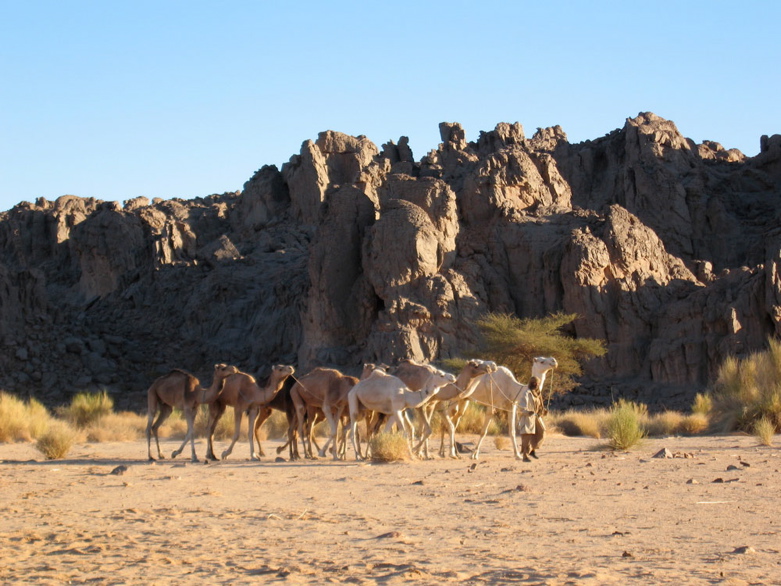
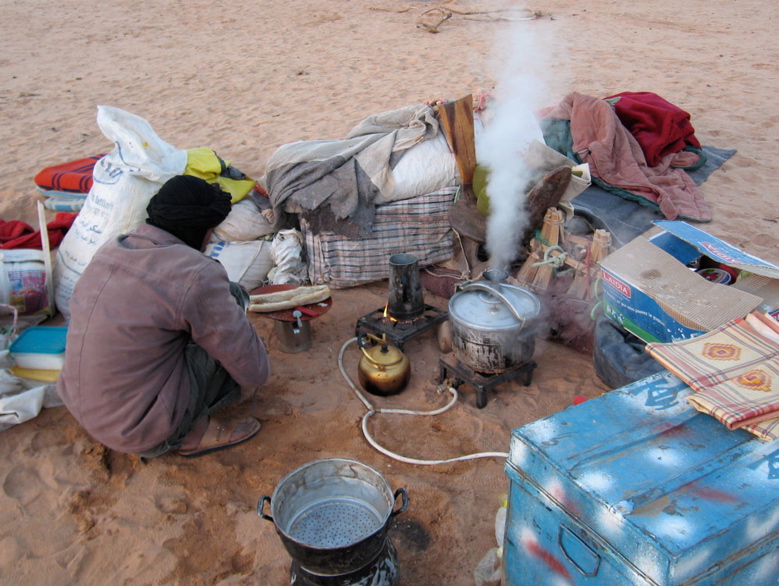
Entering Algeria was easy with very friendly officials. We got the usual stamps, certificate and did a currency declaration. Customs asked us about cigarettes and “red” (whisky), but only wanted to check the chassis tied up with the number on our Vehicle Registration Certificate and didn’t do a full search. We were told to buy insurance in Tamanrasset which we subsequently did at CIAR near the Tourist Office (2,112 Algerian Dinar for 10 days). There was no fuel at In Guezzam but we could have got some at the police station if we needed it – this time we were prepared and had enough to get us to Tam.
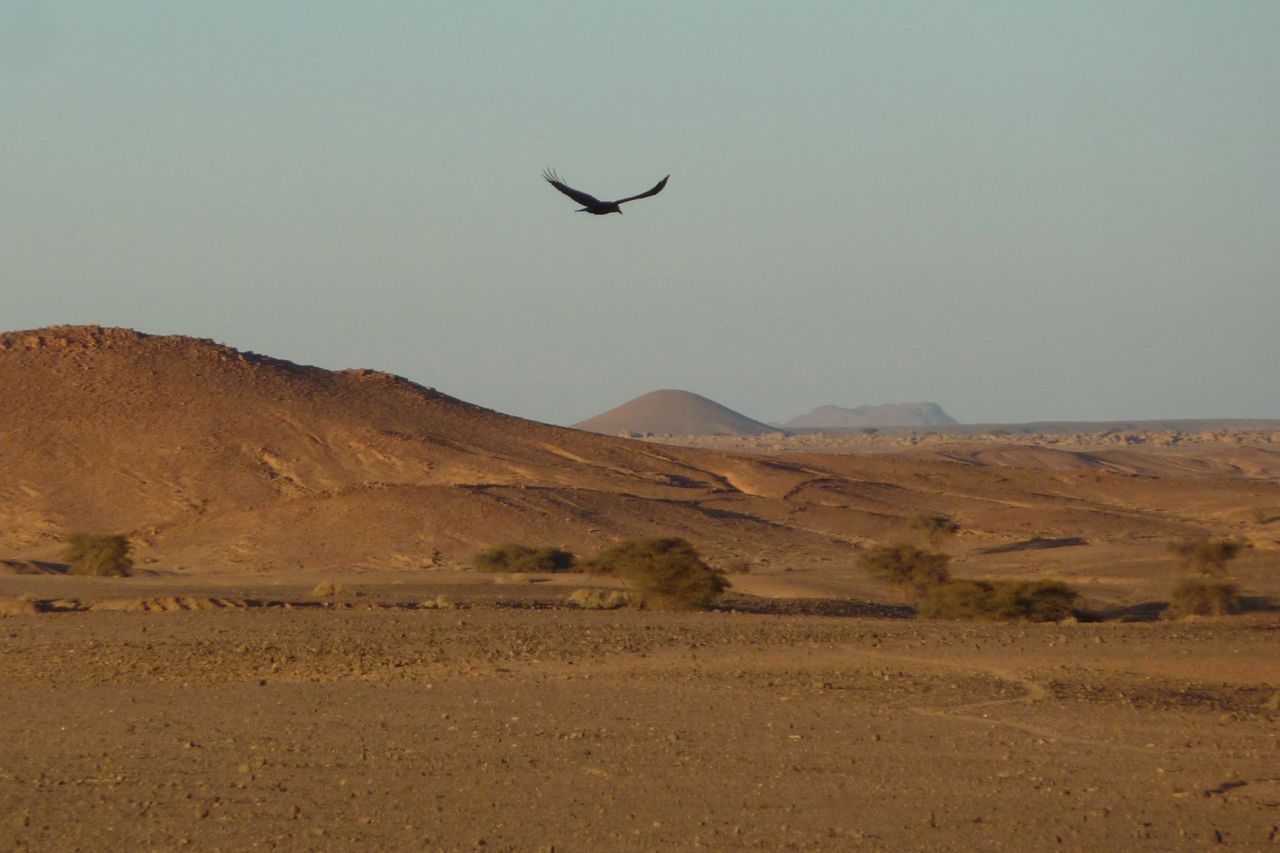
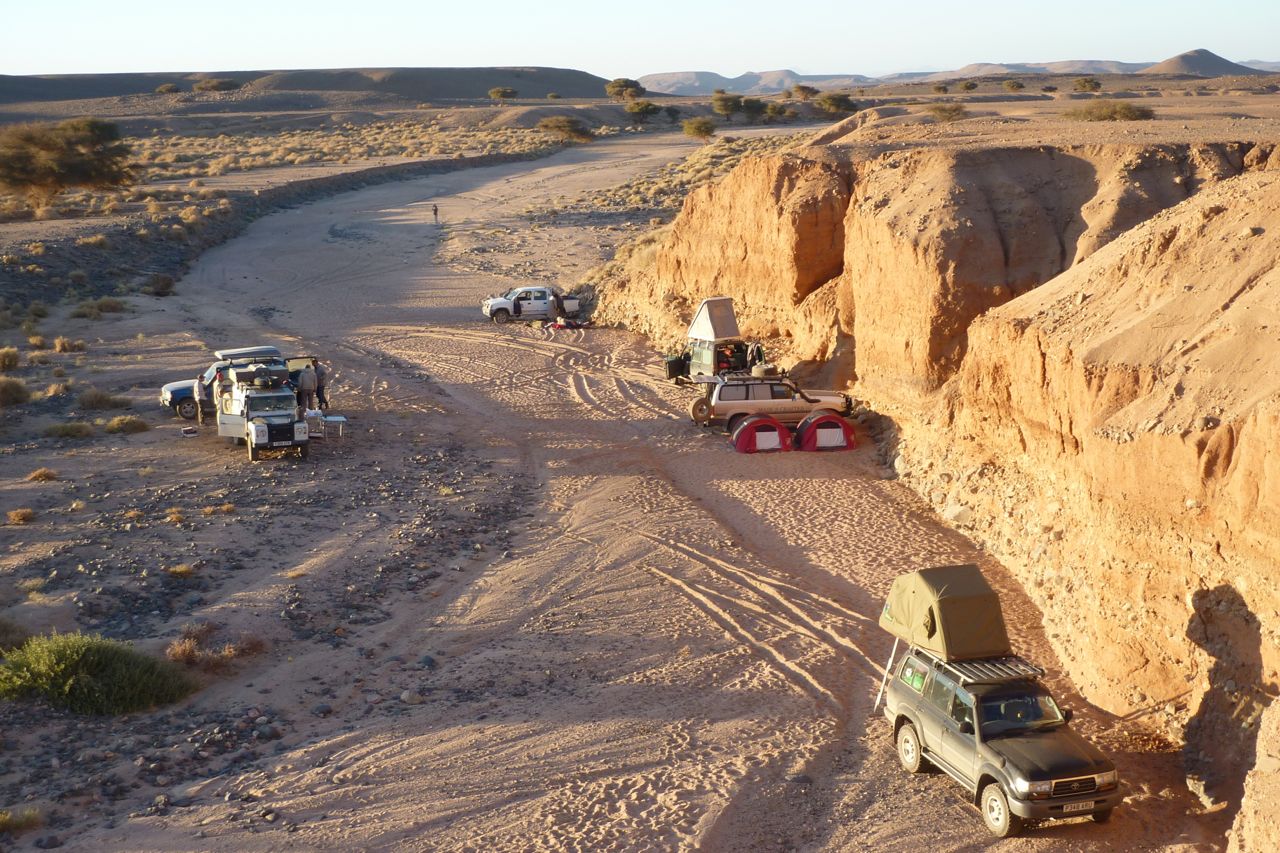
There is lots of evidence of roadbuilding between In Guezzam and Tam with three different companies working on different sections. We didn’t find any ready to drive on and used the piste until 40 kms before Tam. We found route finding and driving very easy and we did Arlit to Tam in under two days including a night on the piste in Algeria.
In Tamanrasset we stayed at the Gite Saharienne run by the Bahedis. We had used their agency, Agence Tarahist, to get a certificate d’herbegement faxed to the Algerian Consultate in London so they would issue our visas. We had tried just a straight faxed reservation from a hotel but the Consulate wanted a certificate. Agence Tarahist charged us 330 CHF (205 Euros) for the invitations and a night’s dinner, bed and breakfast at the their lodge. This seems expensive in retrospect, but at the time, we were quite happy to pay for Agence Tarahist’s efficiency when we needed it. The lodge is also a great retreat and the food exceptional.
There were long queues for diesel in town but we were ushered to the front, afterwards leaving to do the Assekrem circuit, up by the Afîlal guelta and down via Ilâmane. Sunset and sunrise at Assekrem was fantastic and we had to adjust to being part of a group of tourists for the first time on the trip. The way down was very slow on an atrocious track but it was just about manageable (5 hrs). One of our side bars broke off but we put it down to 3,500 km of piste.
After a four hour delay waiting for diesel in Tam, we set off the next day on the easterly piste via Temékerest to Ideles. We got only a little beyond the Temékerest “waterfalls” before our exhaust began to give us major trouble, presumably another casualty of the return from Assekrem. Makeshift repairs the following morning didn’t last so we returned to Tam to get a new section brazed on.
When we finally got going, we found the piste to Djanet very enjoyable. We passed through Ideles (diesel available, no petrol) and we spent a stunning evening by a small dune bank under Telertheba mountain. We made Djanet the following day via the Erg Admer. Driving in the erg was pretty easy but we were glad of 1.2 bar to get up the first ascent. We stayed in the Hotel Zeriba in Djanet (1,200 AD for double with breakfast). The place was full of tourists which seemed to reflect lack of alternatives rather than the quality of the accommodation.
Short of time we got the Zeriba to organise a one day walk on the Tassili Plateau to Jabbaren, supposedly the second most important site of prehistoric rock art (5,700 AD for the two of us with a guide). The walk was beautiful and if you are time-constrained, there is a lot of art in a small area. One day was manageable – we left at 0600 and were back by 1730, tired but certainly not shattered. We didn’t want to spend another night at the Zeriba so camped in the dunes just outside Djanet.
We then headed north via Illizi and the piste to HBG. Driving out of Illizi, we found it hard to locate the piste and found ourselves too close to the dunes which ended up in difficult terrain. We tracked back and once we found the piste the route was obvious all the way. We found the driving slow on day one but enjoyed the opportunity to spend more time in the dunes.
We sped through the Gassi Touil and after a night in Hassi-Messaoud went on to the Tunisian border. Stone-throwing kids were well in evidence all the way from Touggourt to the border. We avoided damage through a combination of speed and screaming at kids about to hurl rocks. The police are well aware but don’t seem to want to do anything about it.
Leaving Algeria was slow with incompetent immigration and customs officers but we made it through in an hour and were back to the comparative civility of Tunisia. We mosied back to Tunis and reflected on our travels at Restaurant Dar el-Jeld in the medina, a fittingly grand place to end what was a remarkable and unique journey.

Traveller Magazine, Autumn 2003

trav

We parked the motorbikes and trudged up to the crst of the sand dune. Sure enough, down in the depression below, a jerrycan handle poked out above the windblown sand. Below the surface lay more fuel, some vital water and a barrel of food.

We excavated the cache and gorged ourselves like fools, relieved to have reached the Erg Killian, a sand sea close to Algeria’s border with Niger. This was the sharp end of our illicit excursion into Niger, destination Arbre Perdu, an isolated landmark in the featureless Ténéré Desert.

With the fuel cache (buried months earlier during a 4WD recce) we could now continue our 1500-kilometre round trip to the Tree and back. We had no visas for Niger, but as expected saw no one for five days.

I’d cooked up the radical Desert Riders Project with a couple of friends, to motorbike off-piste in the heart of the Sahara. At one stage we’d managed just four kilometres in a day before collapsing in an exhausted heap, but out here on the wild borderlands of Algeria the riding was exhilarating and serene.

It seemed like a good time to explore the remote reaches of Algeria, the perfect Saharan country. Desert tourism was returning to its late-Eighties heyday and, while the troubles in the north had barely touched the desert, it was only a matter of time.

In late February, just a week after we’d got back from Desert Riders, four bikers we’d met in Tamanrasset were reported missing in the ravines of the Tassili N’Ajjer plateau on a route we’d travelled ourselves just weeks before. In the following weeks party after party disappeared inexplicably, 32 desert tourists abducted, it transpired, by a little-known Islamic group.

After two months in captivity, half were rescued in an army raid after a camel they’d shot for food was tracked by a nomad they’d stole it from, who contacted the police. Of the remaining fifteen hostages there are still only rumours of Libyan mediators and huge ransoms*.

And so for desert travellers, Algeria slips into the shadows once more. Countries open up gradually, then close for years in a matter of days. But, as the Tuareg observe, “the desert endures”.

Chris Scott first visited the Sahara aged 21. Twenty years and as many trips later he’s written the Adventure Motorcycling Handbook and Sahara Overland while organising tours, filming, or simply exploring. His books and dvds, including Desert Riders, are available from sahara-overland.com.

* All but one of the remaining hostages were released in late August after this was written. Michaela Spritzer died of heatstroke in June.