EGYPT, CIVILISATION IN THE SANDS Pauline and Phillipe de Flers (Konemann, 2000, (o/p)
Thankfully not another ‘pharaohs and fellucas’ job. The first half covers the Western Oases (Siwa, Farafra, Dakhla, etc), the second the Sand Sea, Gilf and Uweinat: the history, rock art, inter-war explorers, geology, etc, all with great photos and interesting boxed asides. This sort of book would normally be 30-40 quid, but at Stanfords was remaindered at £9.99. I should have bought them all. Scarce on the web.
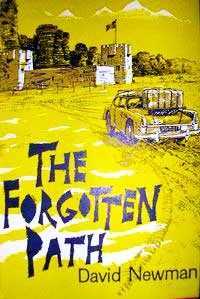
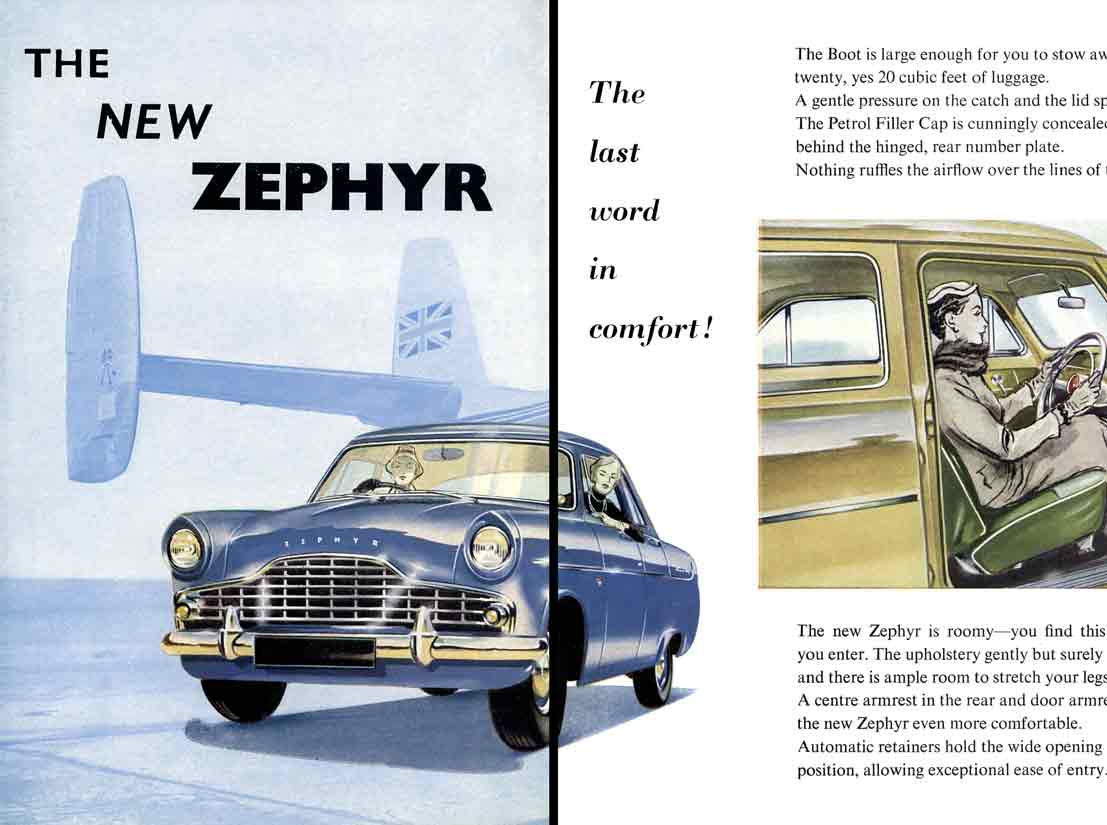
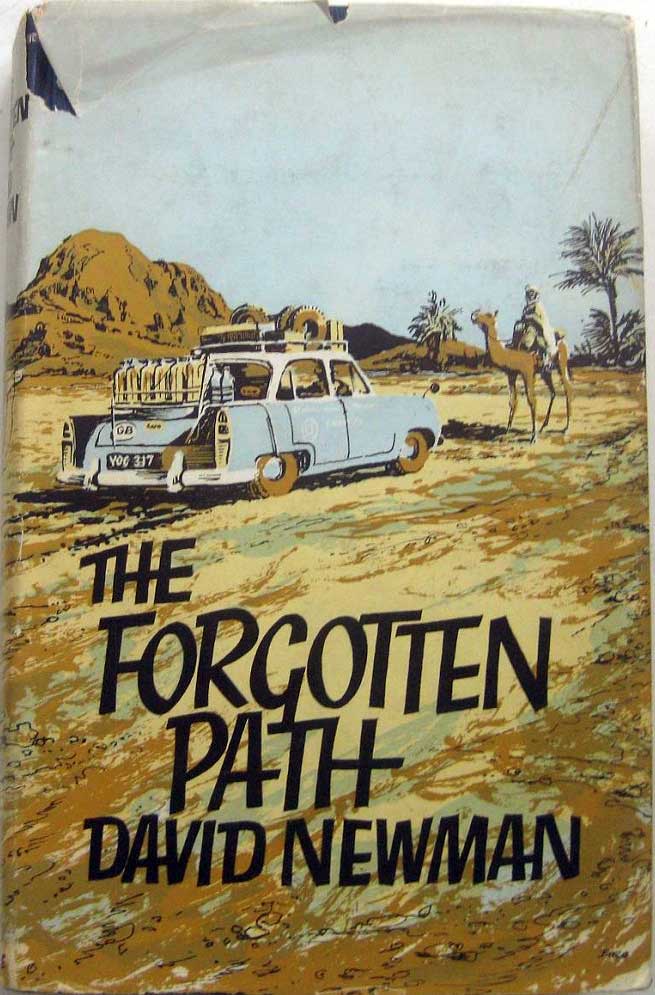
This book is a cracker. In 1959, with the French Sahara convulsed by wars of independence, Newman, an engineer who’d failed to launch “a product two years ahead of its time” jacks it all in to visit a friend in Nigeria. But unlike his friend, Newman decides to drive all the way across the desert – “the sort of adventure that had my nerve endings tingling”. And to make matters harder he chooses to do it in his new Ford Zephyr. “In a saloon car it’s impossible” his Nigerian friend urges him, having struggled to reach Nigeria from Dakar in a Landrover. “I’ll see you in six weeks” was Newman’s firm reply. Trouble was, he’d spent £3000 preparing the car, was running out on the HP, and was skint.
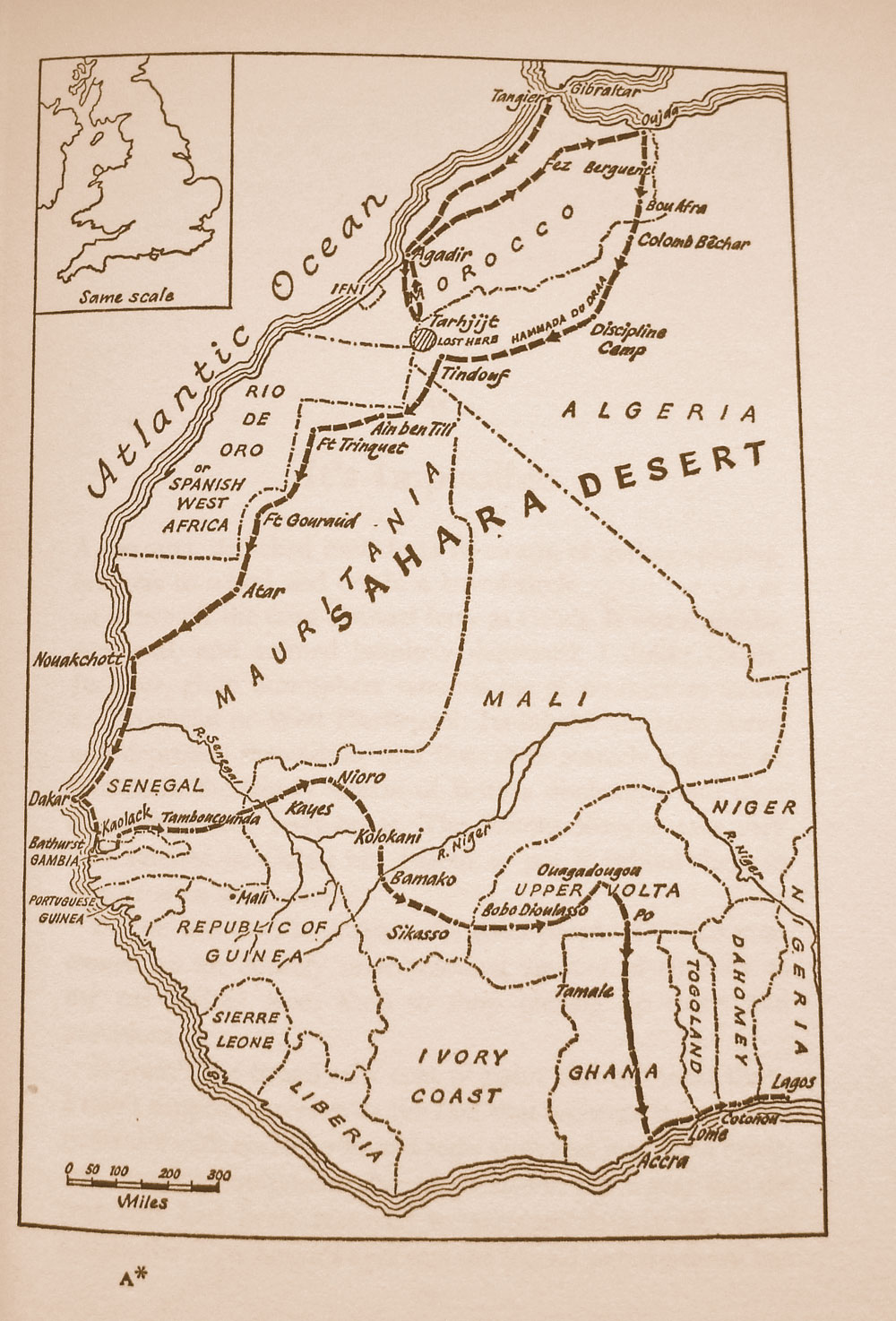
The romance sours and he’s turned back at the border near Foum el Hassan by the Moroccans where the FLN (sheltering in newly independent Morocco) and the French (clinging on to Algeria) were still battling it out. Infuriated by this reversal and convinced that his sheer determination and self-importance will win the day, he tries to bully people into overruling the decision but eventually has to storm off to Oujda on the opposite side of the country. Here again he’s repelled and so decides to charge illegally into Algeria.
“To hell with them. It was impossible was it? I’d show them whether it was!”
And so he and his Swiss hitcher muddle overnight through machine-gun fire into French/Algerian territory. He gets interrogated in Bechar, loses his suspicious companion and eventually gets permission to go west to Tindouf, alone. But it’s August so he has a hard time of it; gets repeatedly stuck, gets lost, gets desperate and at times flips out. He shoots his soup can with his ’45 and chases gazelles to exhaustion through the night – but then fondles them lovingly. Arriving at Tindouf (then a military base) he’s treated as a hero, given much free hospitality, admiration and a guide to Bir Mogrein (“my big worry – that he would smell – was completely unfounded“). Then the poor old Zephyr begins to break up: first the drive shaft, then the clutch, he gets one shipped up from Dakar but the rally-spec engine blows up too. He flies to Dakar expecting the embassy or the Ford agents to bail him out, but merely gets repatriated ‘on bail’. Back home, he borrows some money from his mother, flies back out with a new companion and engine bits to then stagger down to Dakar, on the way exhausting his welcome with the French who now see him as an irresponsible scrounger.
His bad reputation rolls ahead of him like a bow wave and in the Gambia he’s been forced to stay in natives’ lodgings. The climate turns on them and at one point he threatens to shoot a ferryman who – of all things – requests payment to barge him across the Faleme river into Mali. Penniless and with his companion now struck down with fever, they lurch from village to lorry, scrounging fuel, tow starts and food. After Bamako it’s relatively plain sailing to Nigeria (another engine in Ghana), but his friend has long since left. With his car a wreck, the book ends with Newman boasting that he’ll return north via the Hoggar route in summer. It’s impossible, after all! If he did, there is no record of a book about it, The Forgotten Path was published five years later when he was 35. Even allowing for the era, Newman puts himself across like some arrogant, entitled pillock thinking the world owed him and his ‘impossible’ undertaking, making even Geoffrey ‘Fearful Void’ Moorhouse look reasonable. Time and again he boils over when friends, strangers, hotel staff or – for pity’s sake! – embassy refuse to bail him out, and yet he obviously started the trip nearly broke with plans of ‘selling film rights’ while bouncing cheques like a Haarlem Globetrotter. It’s this breathtaking arrogance and the lively ‘what-on-earth-could-happen-next’ pace that drives you through this short book. One admires adventurousness of course, but in his own words Newman comes across as deeply obnoxious and who deserved everything he got. Available online for a couple of quid.
FROM LIBYAN SANDS TO CHAD Nigel Heseltine, 1960 (o/p)
Of the same era but less petulant than Newman, the author sets off on what turns out to be a vexatious journey across the Sahara through Libya to Lake Chad via the Tubu lands of the Tibesti and Ennedi. What makes this book so unusual in the era of unreviewably lame Travel Book Club adventures, is that the author is no fluffy travel writer, but a well-read if rather stroppy Theroux-esque character who does not spare those who irritate him.
His Jeep blows its gearbox south of El Gatrun and he is forced to travel on in a lorry and the chirppy M. Gautier in his Landrover. Having studied his Nachitgal and other material, the author explores the rarely seen Tibesti, Ounianga and the Ennedi and the customs of the wily Tubu. It’s a credit to the author’s detailed research that it was used to fill the huge gaps in that Saharan turkey, Sahara, The Life of a Great Desert (see other reviews). From Libyan Sands… is about the best book available in English on the little known Sahara of Chad.
Starting in Chad, a former BBC journalist alluding to a mid-life crisis, travels on and off for two years, tracing the bands of desert which ring the globe around each hemisphere. Leaving N’Djamena at the height of summer, he struggles up to Bardai in the company of war-grizzled Tubu, and then through the Air to Iferouane with similarly combat-fatigued Tuaregs, returning to Agadez to stagger around with a camel for a few days. Timbuktu is reached aboard a pinasse from Mopti, and in Mauritania he claims to climb Guelb er Richat with his newly wed wife, though it reads like they never got out of St Louis. The Guelb account is either invented or exaggerated for literary effect (the reality as some of us may know, is rather disappointing). Other deserts in southern Africa, Chile, Mexico and southwest America. Australia, China, India and the Middle East see the book finish up in Israel. What must have sounded like a cracking proposal to a publisher largely fails to satisfy desert lovers. Over a third of the book covers Chad and Niger, and in the Air one learns much about the disastrous failure of the Tuareg rebellion. However Timbuktu is reached but not described by a single word, while an extraordinary country like Mauritania spans just three paragraphs! (OK, it was his honeymoon but it would have been better deleted). Confessing to disapproval with materialist Western ways, the sanitised New World deserts are briefly, dutifully and at times scornfully described, and yet there is no doubt these places are as beautiful and alluring as the “quintessential” Sahara.
One gets the impression that, after burning himself out in Chad and Niger, the author loses enthusiasm and energy for the whole idea and, with a brief recovery in China and the Indian subcontinent, just does what it takes to complete his ambitious assignment. The result is another white middle-class romantic’s travelogue, cataloguing the familiar range of encounters with locals, sun-fried ex-pats and fellow travellers we know so well. Roll on the ‘Glasgow School’ of British travel writing!
Most of his visits are at the height of summer. The reasons for this timing are not fully explained, but one suspects a “narcissistic masochism” was at play, along with a belief that the full power (if not appreciation) of a desert must be experienced at its most extreme. What bollocks. I look forward to Ranulph Fiennes’ next book about walking to the South Pole in winter! We also get the familiar plea for the futures of beleaguered nomadic tribal peoples – but as Michael Asher puts it in conversation with the author, this is “a rich man telling poor people they are better off poor”.
But one thing Michael Buckley has a good crack at (improving greatly on Geoff Nicholson’s limp ‘Day Trips in the Desert’ which came before) is unravelling the desert’s paradoxical fascination on our skewed western imaginations, the “instinctive discomfort and fear alongside exhilaration, aesthetic ecstasy and awe.” Here, over a couple of pages, he succeeds in getting to the heart of the matter.
In the end any travelogue relies greatly on the reader’s empathy with the narrator, but also on their diligence, at best offering an expansion of the reader’s understanding of an exotic or familiar environment. After a promising start the ambitious concept of ‘Grains of Sand’ quickly slips through the fingers.
THE HUNT FOR ZERZURA; THE LOST OASIS AND THE DESERT WAR Saul Kelly, 2003
This is the background behind the English Patient fiction: the international bunch of adventurers who opened up the exploration of the Libyan Desert between the wars and then went on to become adversaries in WWII (what a great film that would make!). In case you’re wondering, Zerzura is a lost oasis of ancient legend mentioned in the Arabian Nights and Herodotus, and retold to British explorer Wilkinson in the late 1800s, describing a Shangri-La in the wastes between the outlying oases of the Western Desert and the oases of Kufra. What emerges was that behind the noble search for Zerzura was a need for strategic intelligence from the little known Libyan Desert. By the early 1930s Mussolini had pharaonic aspirations in Brit-controlled Egypt and with every trip, the blanks on the maps were filled in and handed over.
Of all the characters, Laszlo Almasy’s background and motivations are most intriguing. Even in the book’s latter re-telling of daring WWII LRDG escapades, there is still a hint that Almasy was hedging his bets as the fortunes of the Axis powers declined. We read that Almasy’s own Operation Kondor – delivering a pair of agents to Asyut on the Nile all the way from Cyrennecia via the Gilf – failed to help Rommel’s advance, though through no fault of his own. But a decade or more earlier, it’s still hard to tell whether Almasy’s urge to explore the Libyan Desert in Egypt and Sudan was purely strategic as hinted, or just a love of adventure inherited from his explorer-father. The competitiveness and envies absent from Almasy’s own account in ‘Unknown Sahara’ are to his credit, because the Brits didn’t take to him at all.
For the record, Zerzura was pinned down to the near-barren Wadi Abd el Malik in the western Gilf. As late as the 19th century, following rain in the Gilf’s highlands, Tubu cowherds from Kufra pastured their beasts for a few weeks here. Today, increased aridity see only a few trees and some vegetation survive, but its position between Dakhla, Abu Ballas and Kufra does support the legend of a former watering hole used by camel-borne raiders attacking the Nile from Kufra. Much like the legend of Timbuktu, that got embellished into a city of splendour and riches.
‘Zerzura’ will only appeal to those who’ve travelled in the Libyan Desert and have an interest in the protagonists. It doesn’t read like the author’s been there which is a shame. Despite the racy blurb, it reads as a well-researched, fact-heavy and scholarly version of recent and Saharan history.
Incident at Jebel Sherif In search of the First Clash of the Special Forces, 1941 Kuno Gross (2009)
History gets written by the winners, they say and so there are many books and online sources extolling the legendary exploits of the Long Range Desert Group (LRDG), especially their daring raid on Murzuk and the subsequent clash at Jebel Sherif, 150km southwest of Kufra. This new book describes the events from the Axis point of view.
It includes a detailed description of the development of the special forces on the Italian side (very interesting with rare information given) as well as the Allied/Commonwealth side (lots of background information on the LRDG) as well as the Free French forces who came up from Chad for the Murzuk raid. There is a full description of the raid and a reconstruction of the clash at Jebel Sherif with many photos and eyewitness reports. The detailed trip description of the author to Jebel Sherif completes the full story. While associated information about the German exploration “DORA” (1942) is also included. The author lives in Libya and therefore could evaluate different details perfectly on two visits to Jebel Sherif.
This book is a comprehensive collection of all associated information to one of the most important historical incidents of the Special Forces in WWII and so is recommended to enthusiasts of the Libyan Desert and the North African campaign. Check out the website for more details and images from the book
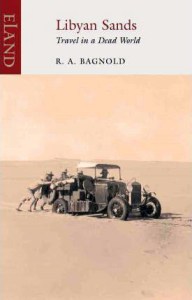
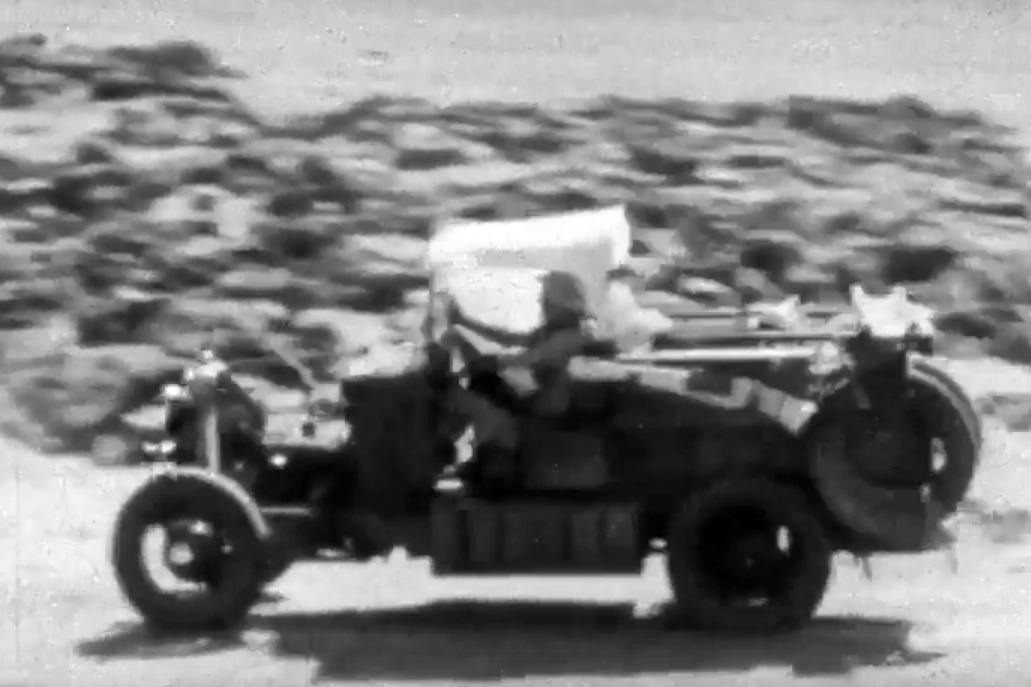
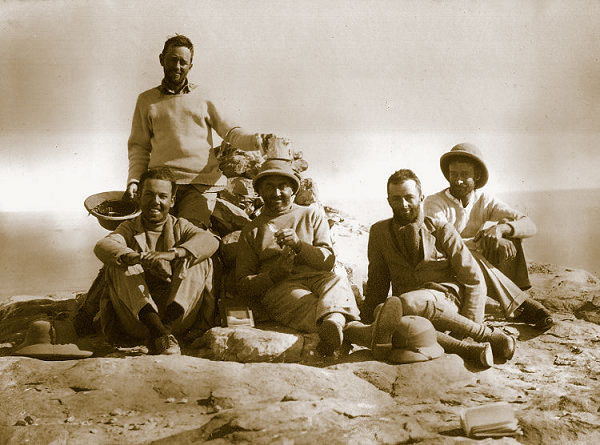
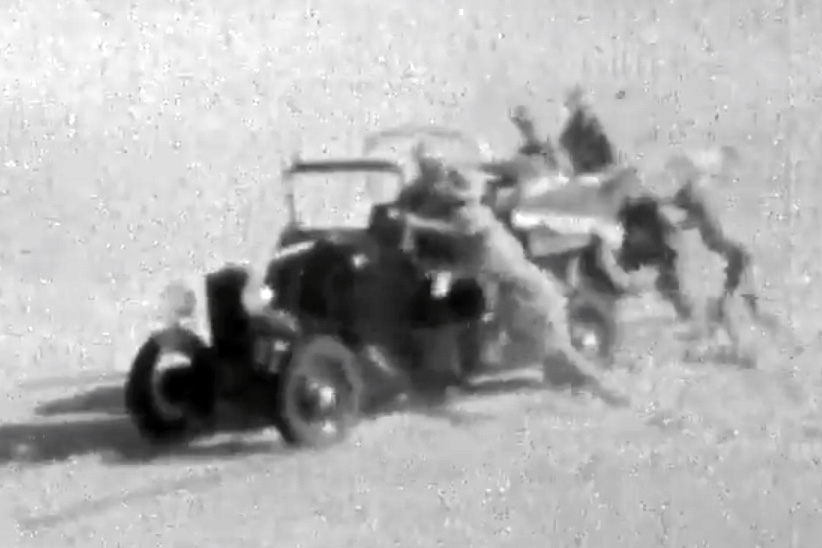
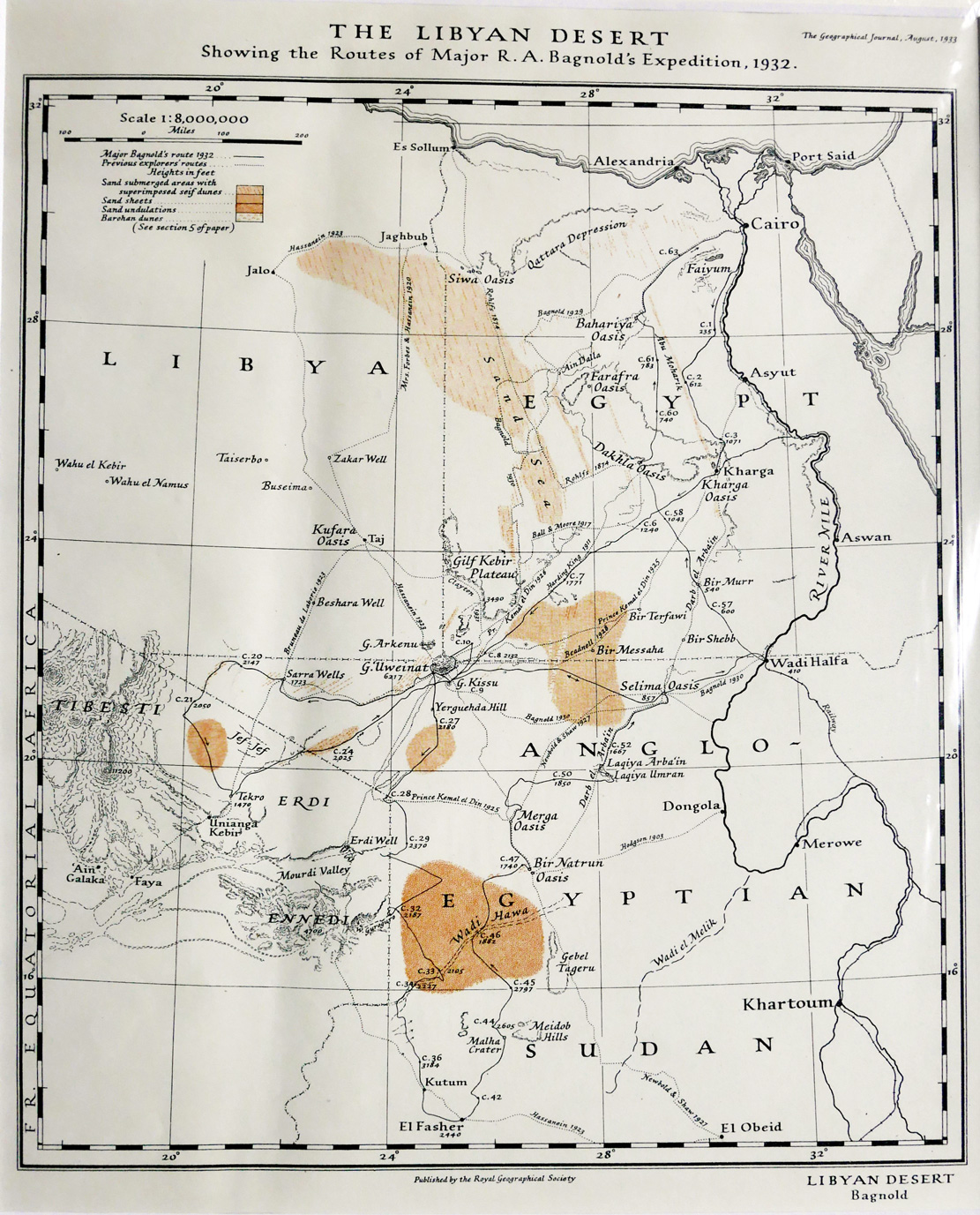
Ralph Bagnold really was quite an exceptional guy and Libyan Sands must be the best Saharan yarn written by a Brit (although he did not consider it the Sahara – see Warm Deserts, below). It describes his motor-car adventures and explorations in the Libyan Desert while stationed in Egypt in the 1920s and early 30s. Using Model T Fords loaded down at times with 150 gallons of fuel, Ralph and his chums spent every spare moment of leave exploring the Libyan Desert of Egypt and northern Sudan. His enthusiasm for (often literally) pushing the spindly, steaming Fords across uncharted ergs helped develop today’s desert driving techniques such as sand ladders and low tyre pressures.
What is striking is that his passionate attraction for the desert is most contemporary, while his energy and curiosity led, among other things, to The Physics of Blown Sand, the definitive account of sand formations and features – for geology graduates only. Bagnold comes across in the much-admired mould of the self-effacing Brit hero, never complaining or boasting while enacting extraordinary feats of exploration. The book includes his potted history of the exploration of the Libyan Desert up to that time, as well as a prescient spin on the enduring Zerzura legend. An underrated classic.
In the late 80s Sand, Wind, And War: Memoirs Of A Desert Explorer was published in the US just as the author died. It’s hard to find online at a normal price though libraries will have it. You get the feeling it would be as great a read as Libyan Sands.
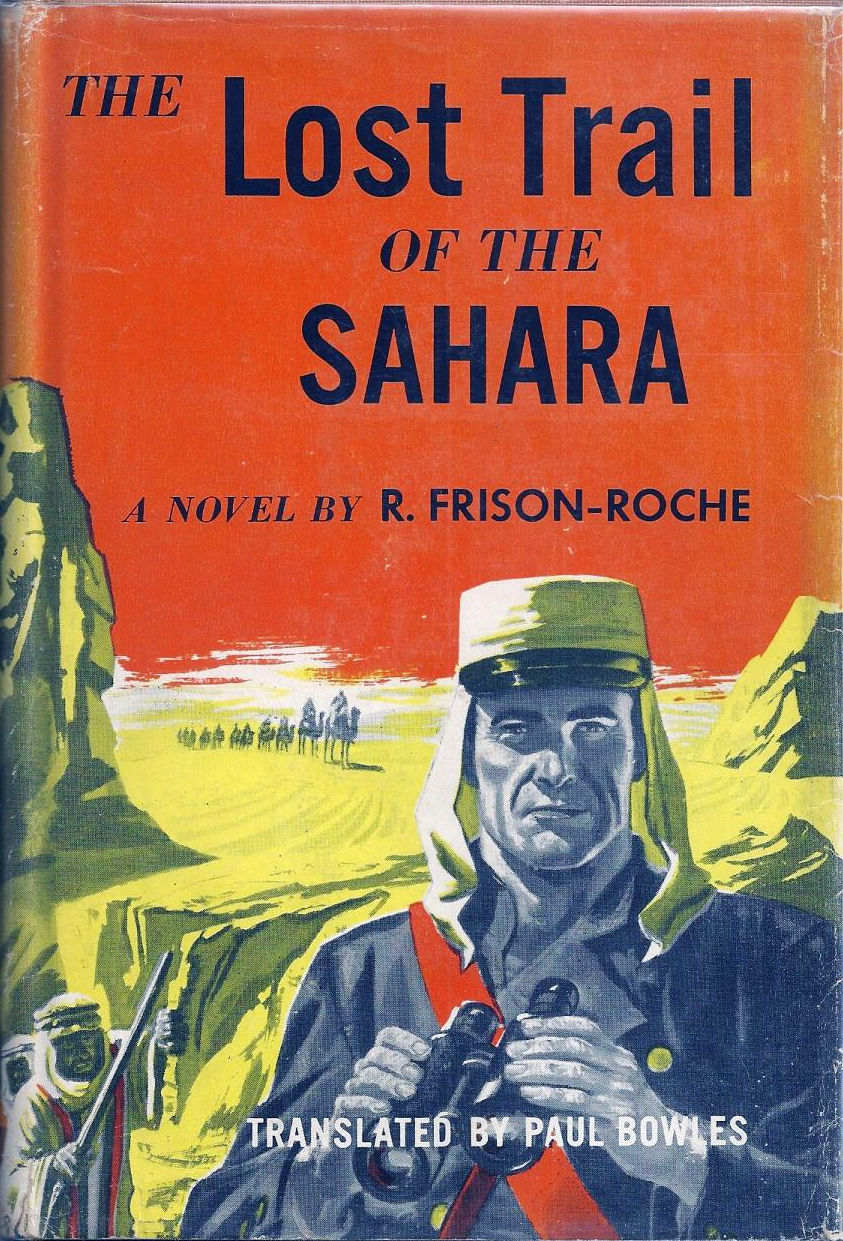
THE LOST TRAIL OF THE SAHARA R Frison Roche, 1956 (o/p)
Translated by none other than Paul Bowles (see Sheltering Sky), Lost Trail is a fictional Saharan adventure by an explorer and mountain guide Frison Roche, who travelled extensively in the desert before the war. In the 1930s he led an expedition to make the first ascent of Garet El Djenoun in the Tefedest.
It tells the tale of Beaufort, a rookie soldier sent out into the Saharan summer on a long and dangerous mission to track down a renegade Tuareg, Akou, accused of murder. Beaufort is accompanied by a scientist Lignac to provide a cover story for the mission, and the band of conscripts and local guides, both Tuareg and Chaamba, who make up the caravan which reaches out from the Hoggar into the then unknown northern Tenere.
Misfortunes, both random and sinister befall the caravan, as suspicions grow that the wily Tuareg know more than they admit about the location of Akou. Predations weigh down the convoy which eventually is singlehandedly ambushed by Akou and his wicked accessory, Tmara. But, providence wins the day, the baddies are vanquished, some of the goodies are sacrificed, though the book ends rather ambiguously with the remainder of the caravan trudging ever deeper into the Tenere to see what they might find. A rather lame subplot about Lignac, slowly uncovering a lost Phoenician trade route across the Tenere (akin to the real Garamantean chariot route) gives the book its title.
Frison’s yarn has an authenticity, written by a Saharan of the desert born, a fact which, like Asher’s Sandstorm, always makes such books especially satisfying to those few who know the region. What is particularly interesting, especially for a Frenchman, is the light he casts on the Tuaregs and their long-time enemies, the Chaambi Arabs of the north. The former come across as sly and untrustworthy while the Arabs are painted in more rosey hues, possessing the traditional virtues one associates with nomads. One does wonder if Frison’s fiction was coloured by real life experiences.
Byron Khun the What? I’d never heard of this guy in the annals of Saharan exploration, and a suspicion with some exaggerated and surely fabricated descriptions got me to search through my library and on the web. Turns out he was an American with a Polish title who dedicated his early life to the exploration of ‘mysteries of the ancient world’, following an life-changing encounter with Shackleton as a youth. Prorok’s African expeditions in the 1920s and early 30s (notably ancient Carthage) became the subject of several books which Narrative Press also publish, as well as a series of popular lecture tours, films and articles back home.
Mysterious is clearly written for a market hungry for more ancient treasures following Howard Carter’s sensational discovery of Tutankamun’s tomb in 1922. It starts off by reminding us how deadly the Sahara is in any number of ways, followed by an over-the-top description of the cave-dwellers of Matmata where the hyperbole starts to froth.
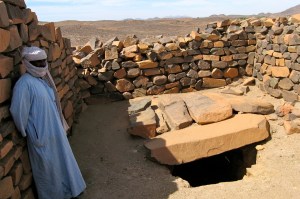
Tin Hinan tomb
He then sets off south for the Hoggar, no mean feat in 1925 but nevertheless embellishing the landscape and events to Victorian literary levels. By chance he learns of the location of Queen Tin Hinan’s tomb (left) – the legendary ancestral mother figure of the Tuareg (that’s Tuareg, not ‘Taureg’, as is irritatingly repeated in the no less lurid back cover blurb). What follows can only be described as the looting of an ancient and deeply significant burial site, rather than an archaeological excavation, for Prorok’s motivation errs distinctly towards gold, emeralds and glory in the Carteresque mold. (Interestingly Narrative have published a parallel account of the excavation by one Alonzo Pond, which the blurb says differs greatly from Prorok).
With Tin Hinan crated up, we’re then treated to more impressions of the gruelling desert and a fruitless rummage around Siwa whose natives appear even more degraded than Matmatan troglodytes. Several near disasters, ambushes and discoveries occur in between. Note they are always ‘near disasters…’. A deadly and very rare lizard that attacks him one night but luckily is blasted to mincemeat by a shotgun: sadly no remains for the esteemed taxidermy dept. They go off to find a legendary ‘Temple of Doom’ out in the sands, can’t find it but “we know it’s there”. But what you can’t take away is that Prorok was out there and doing it and in 1926 was indeed the first to ransack Tin Hinan’s tomb at Abalessa, even if his partner Maurice Reygasse may have been the more archaeological of the two (Reygasse went on to work with EF Gautier in the 1930s).
Strange then that Prorok (unlike his contemporary, Richard Halliburton) seems so little known despite his abundant energy for exploration, publicity and self-promotion. According to Lonely Planet: Algeria our man was no less than “…one of the most intrepid Saharan travellers of the 20th century”. He may have been more toff (in name at least) with a romantic imagination than a trained archaeologist, but his knowledge of the great European Saharan explorers’ is more than skin deep. The odd mistake is acceptable and some lurid theories are of their time, while the embellishment of adventurous exploits is nothing new of course. The mystery here is as much Prorok as the enigmatic Sahara.
People of the Veil ~ Being an Account of the Habits, Organisation and History of the Wandering Tuareg Tribes which inhabit the Mountains of Air or Asben in the Central Sahara Francis Lord Rennel of Rodd, 1926, o/p
The titled Rodd was the son of a diplomat who appeared to take a gap year in 1922 to study the Tuareg of the Aïr and the Damergu region around Tanout. He came up from then British Nigeria with Angus Buchanan and another guy and travelled in the region (with a visit to Termit) for nine months, possibly motivated by an ancestor who’d travelled in the region in the nineteenth century. Like so many people, he became enamoured with the Aïr Tuareg, but what we get here is a thorough anthropological treatise in the Kel Tagelmoust, as the Tuareg call themselves (‘Tuareg’ is a derogatory Arabic description for ‘Godless’). Their customs, architecture, origins as well as the landscape around them are all detailed intimately with only occasional descriptions and insights into Rodd’s travels. The many accompanying plates ar rather drab and a small map is included.
This book would only appeal to those looking for rare English-language anthropological detail on the Tuareg (Jeremy Keenan’s republished book on the Ahaggar Tuareg is another source) or those with a close interest in exploring the Aïr mountains.




 Sahara Overland