
As we all know, there are a lot of moto vlogging know-alls out there whose sketchy credentials don’t necessarily affect their channel’s popularity.
But in a well produced 9-minute vid on sand riding, this guy below gets it and keeps to the point. He won me over when he advised: ‘if you see a patch of sand on the road, avoid it if you can’; ‘hop off and push when you must’ and ‘you can get away with less airing down on knobbly tyres’ [because traction is innately better].
That said, I don’t know what GS12 tyres runs normally, but I was surprised he recommended two bar (29psi) on the sands. Even just 5psi less would make a big difference, but perhaps that bike’s huge weight has something to do with it. I bet there’s at least another 9 minutes of bogged-down outtakes ;-)
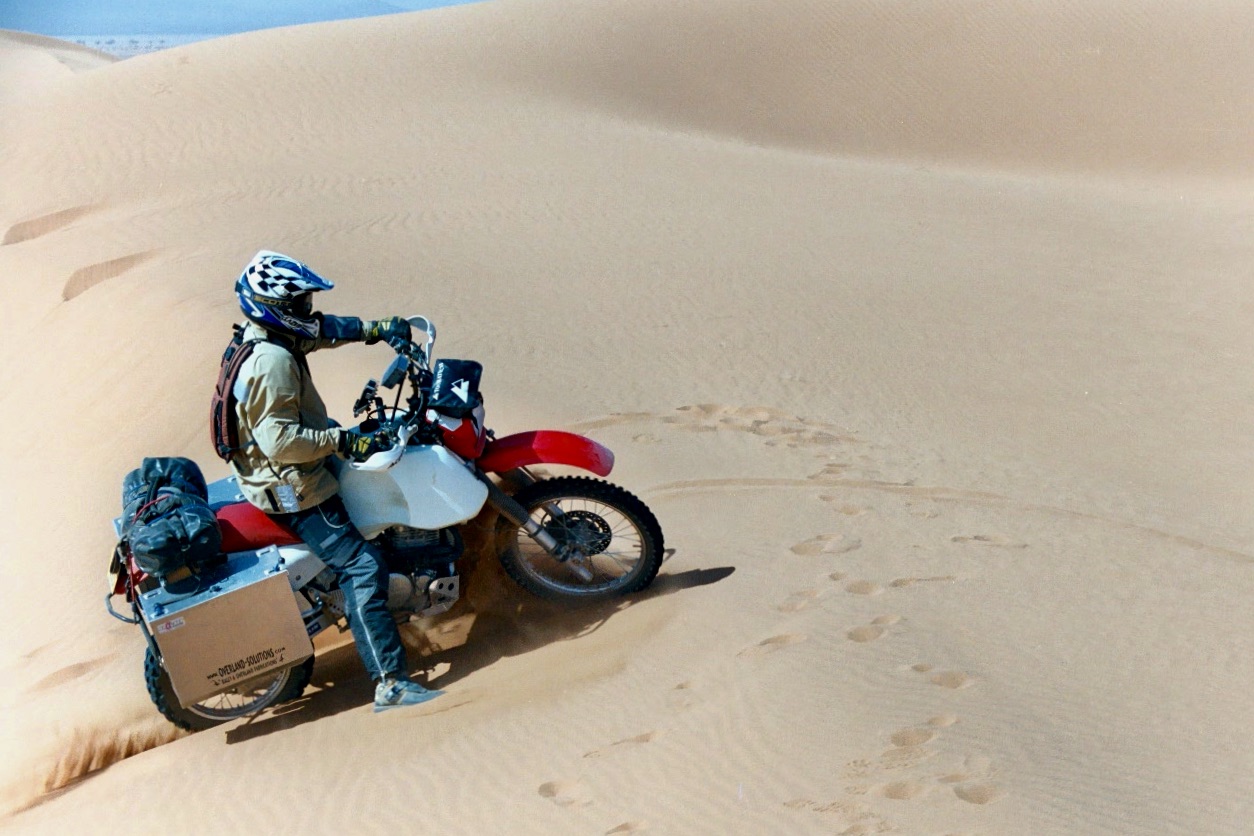
The film’s setting in a low-risk play area of small dunes drops the ante somewhat, but that’s probably where most curious big-bike riders would start – and very soon get it out of their system. Engaged in a long-distance travel adventure, like our 2003 Desert Riders trip across Algeria and into the Tenere Desert (below), I would add.
- Avoid big dunes, where possible – it’s not a game
- Keep out of sandy car ruts, where possible [rarely so, that’s why they form]
- If you can’t, air down to 1.5 bar and deploy all the tips the video mentions
- Air back up, asap (carry a good tyre pump)
- Metal side cases? What were we thinking?! Go soft off road
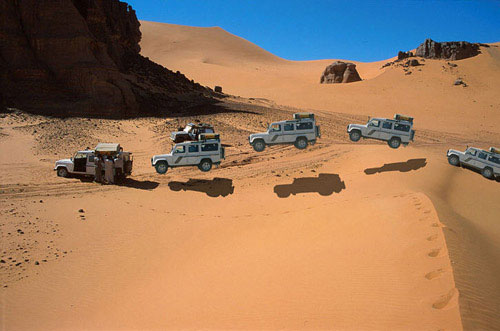
Overlanding in the desert, once you add the need to keep tabs on navigation, water, fuel and energy levels, your fellow riders, and even visa durations, it all becomes quite a challenge. Which is why, without support, you don’t want to add avoidable technical difficulties when it comes to terrain. Bike or 4×4, in my experience dunes are where all the accidents happen. That’s how Desert Riders ended for me ;-)
Discover more from Sahara Overland
Subscribe to get the latest posts sent to your email.
 Sahara Overland