Updated January 2025
1. What am I paying for exactly?
All food (including bottled water), own room lodgings and fuel in Morocco for seven days and six nights, plus guiding and support for whatever problems may occur.
2. What is NOT included?
• Return flight to Marrakech
• Cost of getting to and from the airport to our hotel (20-40 mins).
• Cost of rental bike, including insurance
• Costs of bike damage, should any occur
• Alcoholic beverages where available
• Travel insurance
3. So what will the tour cost me in total?
The tour price plus return flight (Easyjet from £60, plus baggage), 6 days bike rental (KTM390 Adv: 6000dh for six days) and travel insurance (from £26). So call that £1600.
4. When exactly should I arrive and when should I book my return flight?
See the banner below for the optimal times. Some riders choose to arrive a day or two earlier, or stay on after the tour ends to have a look around Marrakech.

5. Is there a support vehicle?
No, just me on a bike. I’ve considered a 4×4 backup but it slows things down, plus hiring a driver would dramatically increase the tour cost. Also, riding around without back-up adds authenticity to the adventure that you don’t get by being followed by a van.
For more remote off-road tours I’ve used 4x4s, but the relaxed pace of our Moroccan ride has yet to end with serious breakdowns or injuries. It can happen, in which case the itinerary may have to change a bit and, if needed, a replacement bike gets delivered overnight.
6. Do I need travel insurance?
Yes. And it needs to cover you for riding a rented >125cc motorcycle on Moroccan roads regularly used by locals, some unsealed (gravel tracks). Recently riders used:
Covered2Go
carolenash.com/other-insurance/travel-insurance
lv.com/travel-insurance
Post Office (expensive)
Mapfre (Spain)
A quote from navigatortravelinsurance.co.uk/motorcycle-travel-insurance came in at £28 for 10 days – about as cheap as it gets.
Note: travel insurance is in case you hurt yourself or for other setbacks while travelling. It is not the same as the basic Third Party Moroccan motor insurance which is included in your bike rental. On collecting the bike you will receive Moroccan motor insurance documentation with your keys.
7. Is Morocco safe?
Some people mistakenly regard all ‘Arabic’ or Muslim countries as one sketchy expanse of lawlessness or political instability, but Morocco is a long way from Iraq, Afghanistan or even Libya. Factor in the volume of tourism and Morocco is exceedingly safe. And by avoiding the popular tourist spots, for us it’s even less hassle.
8. Is this tour for me?
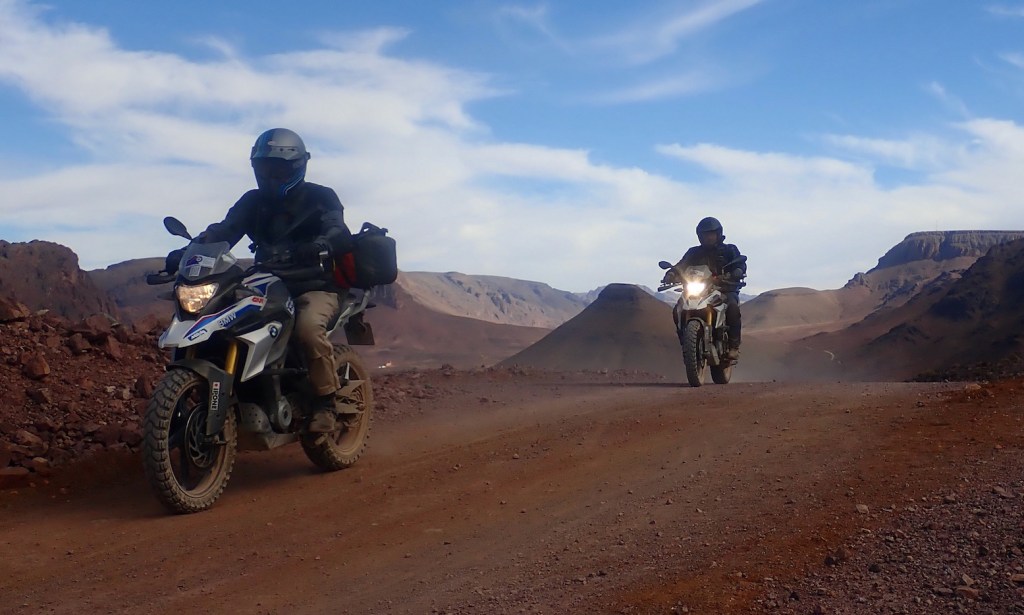
It is if you have several years experience in riding motorcycles, including riding abroad; you’re not looking for an off-roading challenge but are fit enough to ride six days on the trot, and are interested in more than just bombing around on motorbikes followed by some beers.
9. Are there any restrictions?
Yes: you must have at least five years motorcycle riding experience and be under 66 years old or convince me that you are otherwise fit, healthy and experienced.

10. What sort of motorcycles are available?
The Marrakech motorcycle rental agency I have worked with for over a decade now like to be known as BM Attitude. They rent several machines up to 1250GS, and the tracks we follow have probably been done on all those bikes, as well as locals on mopeds.
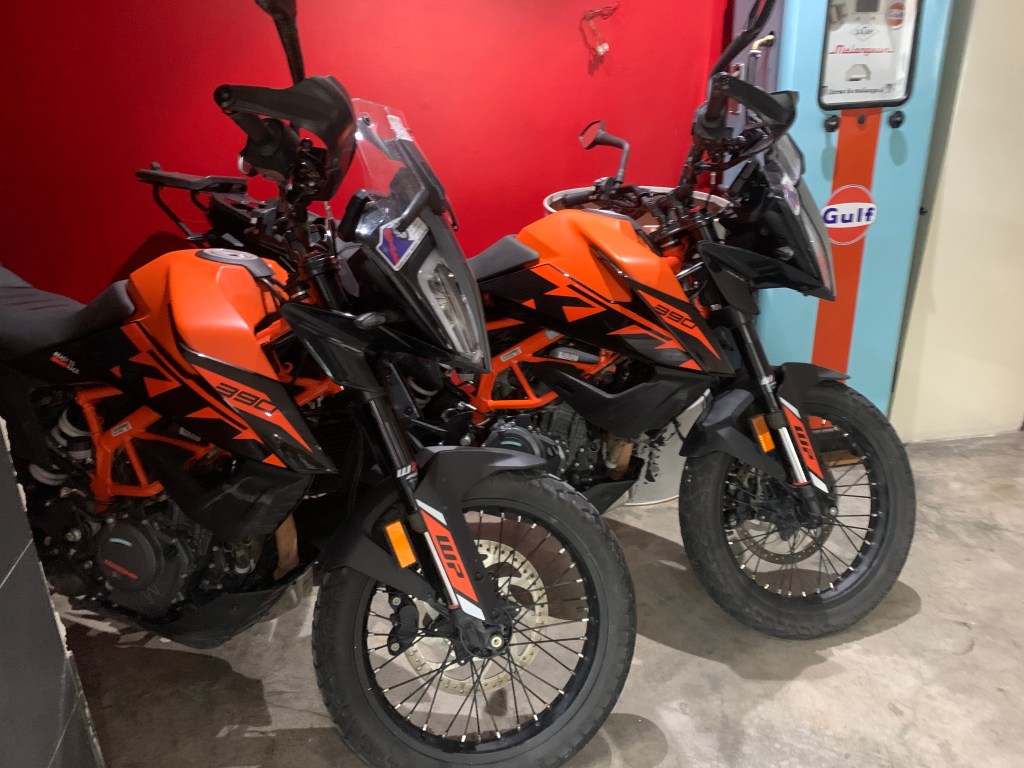
I’ve not ridden one yet but the new in 2024 KTM 390 Adventure (above) ought to be well-suited for my tours. Unfortunately, they come with tubed rims which will make for much more laborious puncture repairs.
11. How do I organise the bike rental?
I reserve 390s for the dates given. If you want a bigger machine, let me know soon – there are fewer available. If you want a lowered bike there is one old BMW 310GS set aside and a lowered 390. These bikes are insured for road riding, but not for any damage that may occur. You pay for the bike with a credit card and also submit a credit card deposit for 15,000dh. This gets cancelled in front of you when the bike is returned in good shape.
12. What sort of tyres and other equipment do these bikes have?
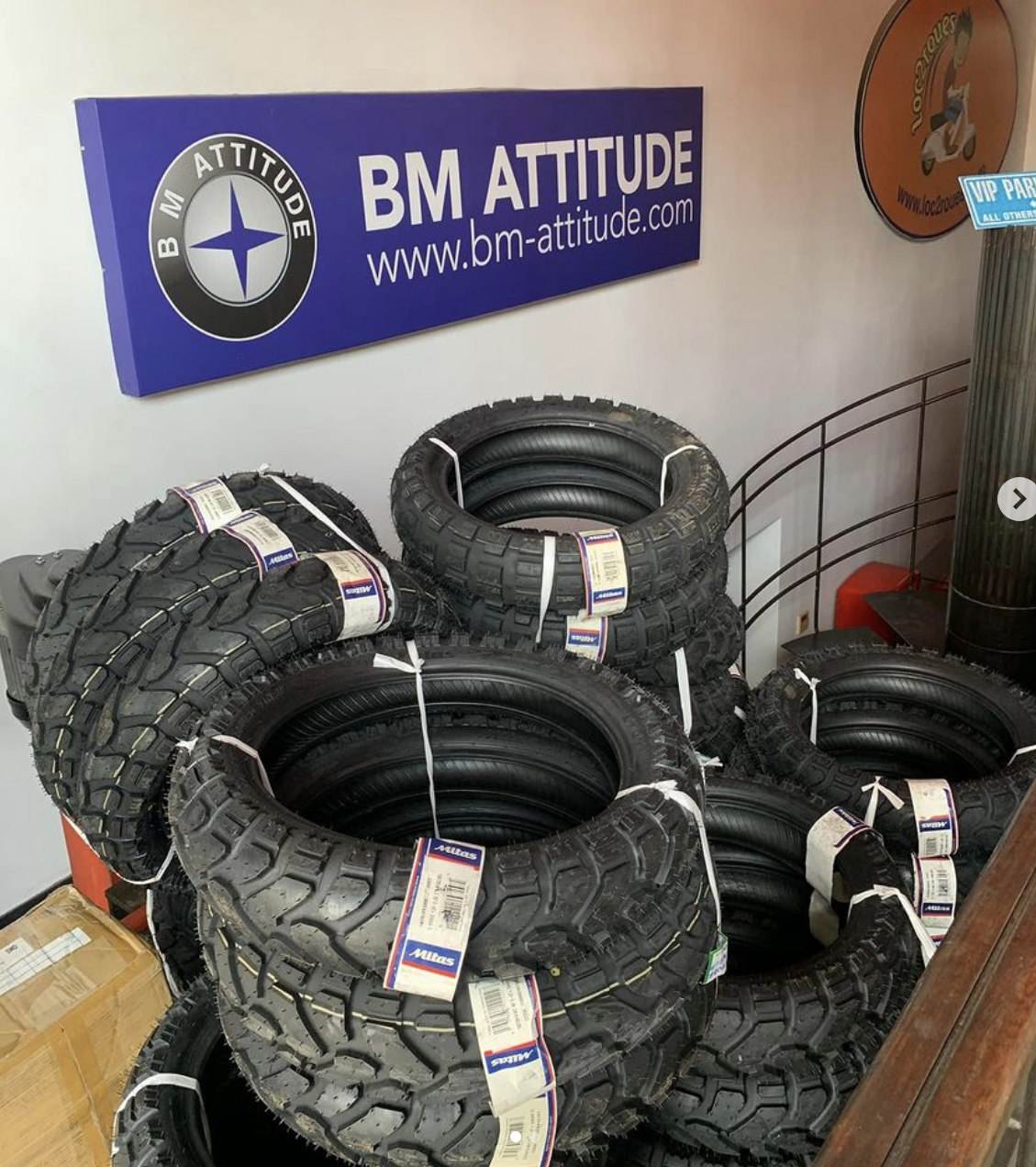
Usually the tyres are all-road (trail), like Mitas E-07. As long as it stays dry (rain is rare) and you ride appropriately, they’re fine for what we do because 390s don’t have to power to break traction. Some of the bigger bikes have what I call ‘road tyres’ (Anakee, Tourance, TKC 80 etc) which are less suited to my current route. the new 390s may have engine- and handlebar guards, tail racks and some may have bar risers.
13. What happens if I scratch or damage a bike?
Most falls are at walking speeds which might scratch the plastics and crash bars but ought not cause any chargeable damage. However, the agency might get strict again with the new 390s. In 2020 a rider ended up paying 400 and 800dh (£35 and £70) for a broken mirror and scratched pipe. In 2022 another paid €150 for some bent handlebars and broken tank plastic.
14. Is the tour suitable for pillions?
No.
15. What is the riding like?
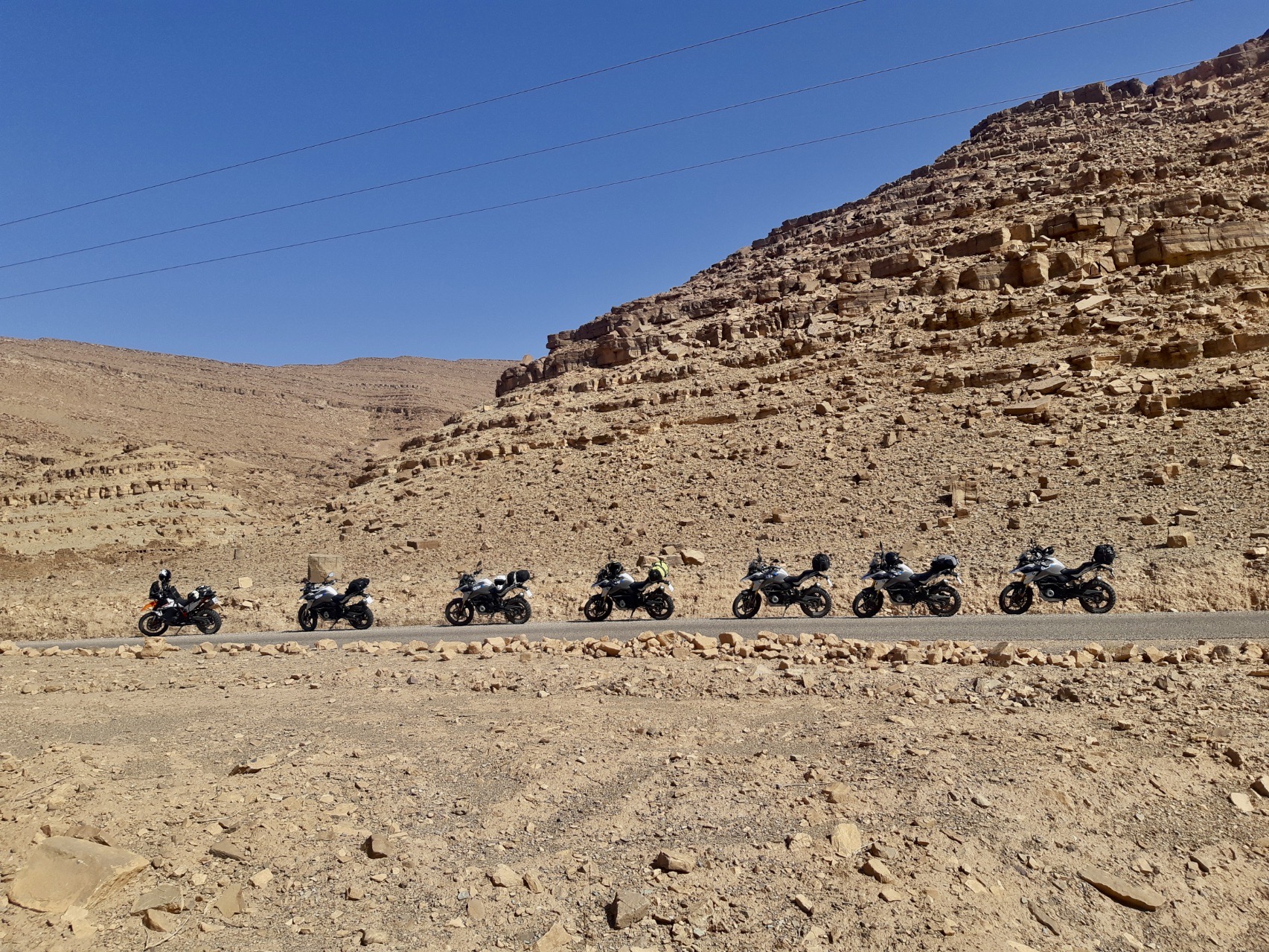
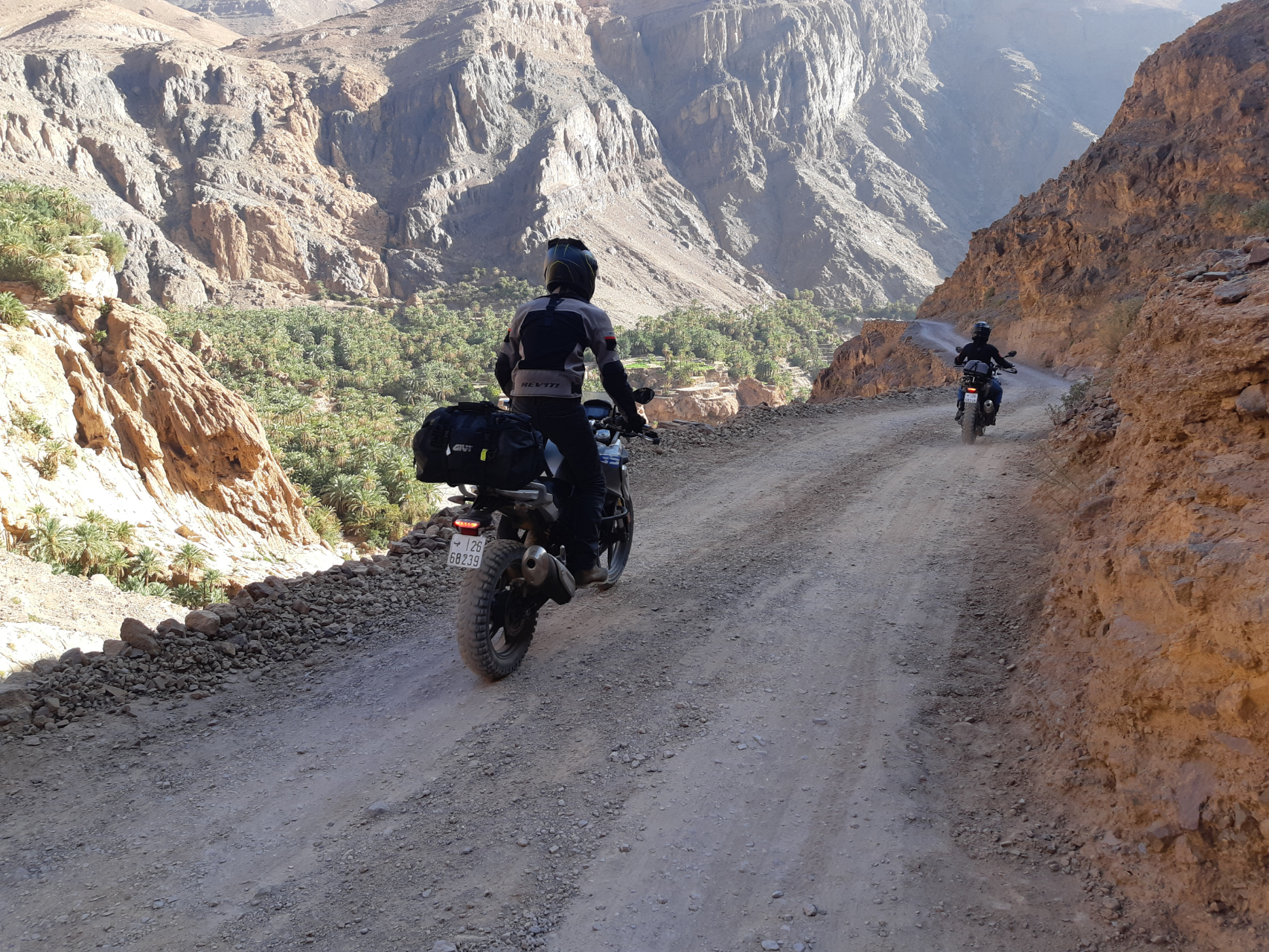
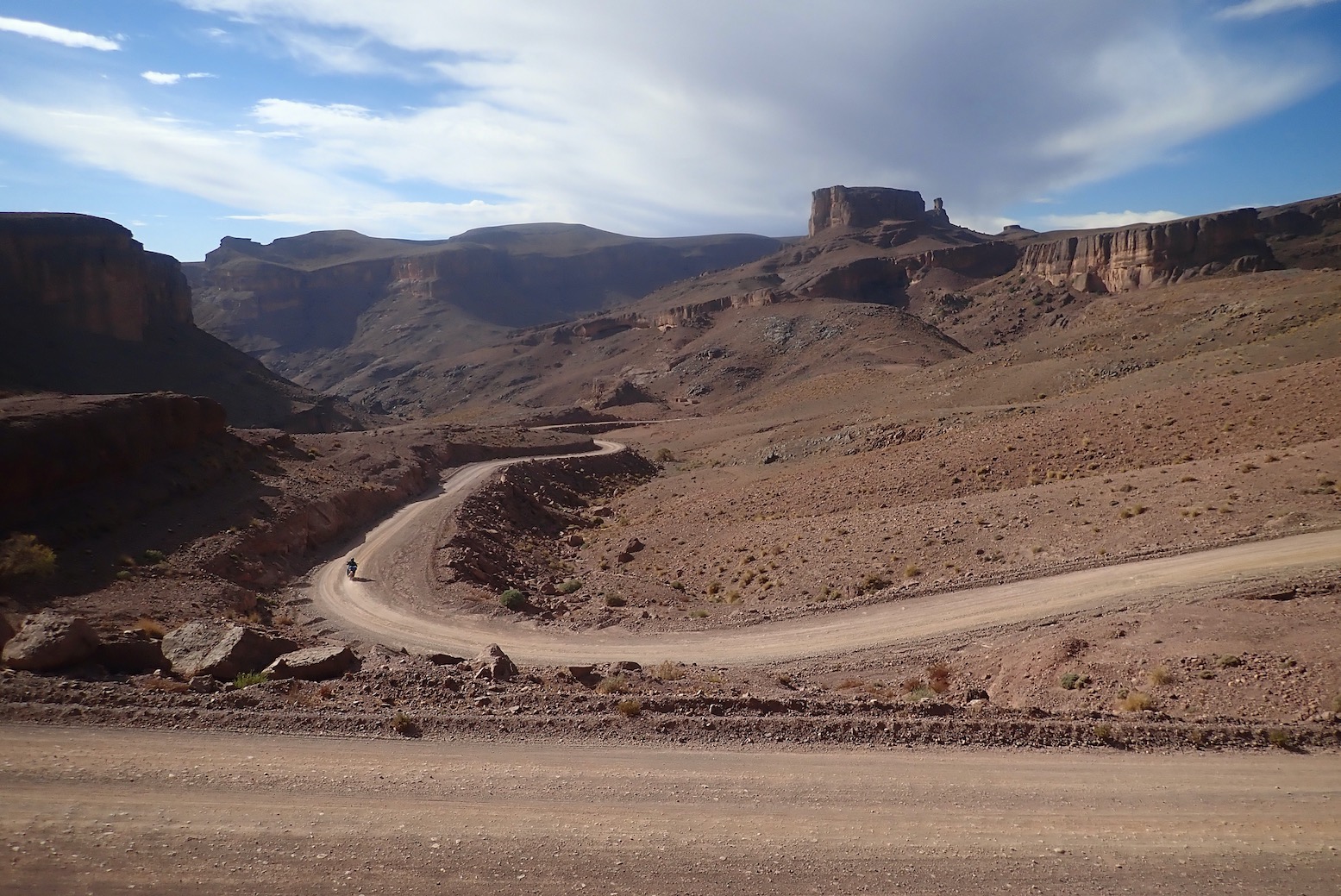
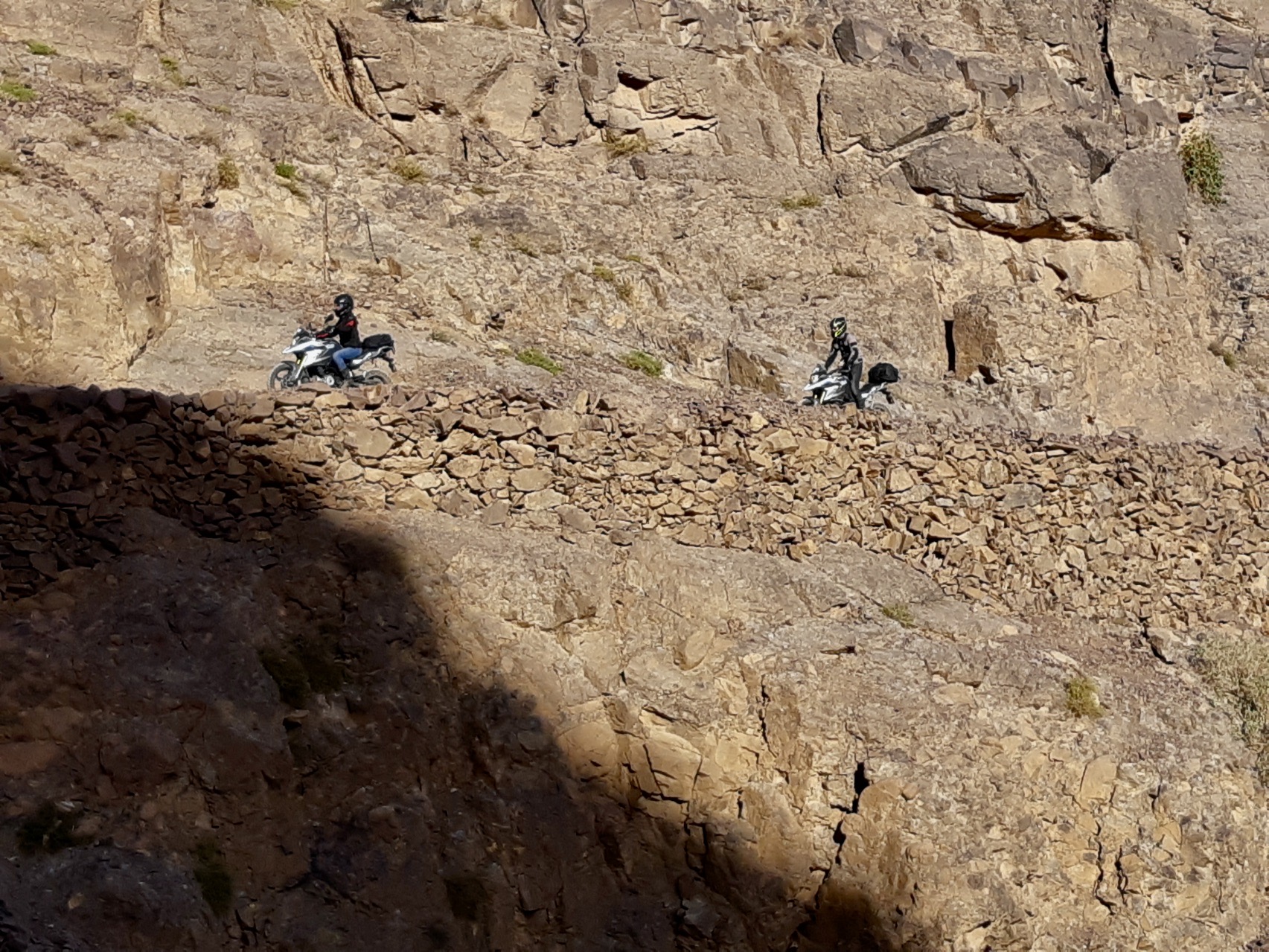
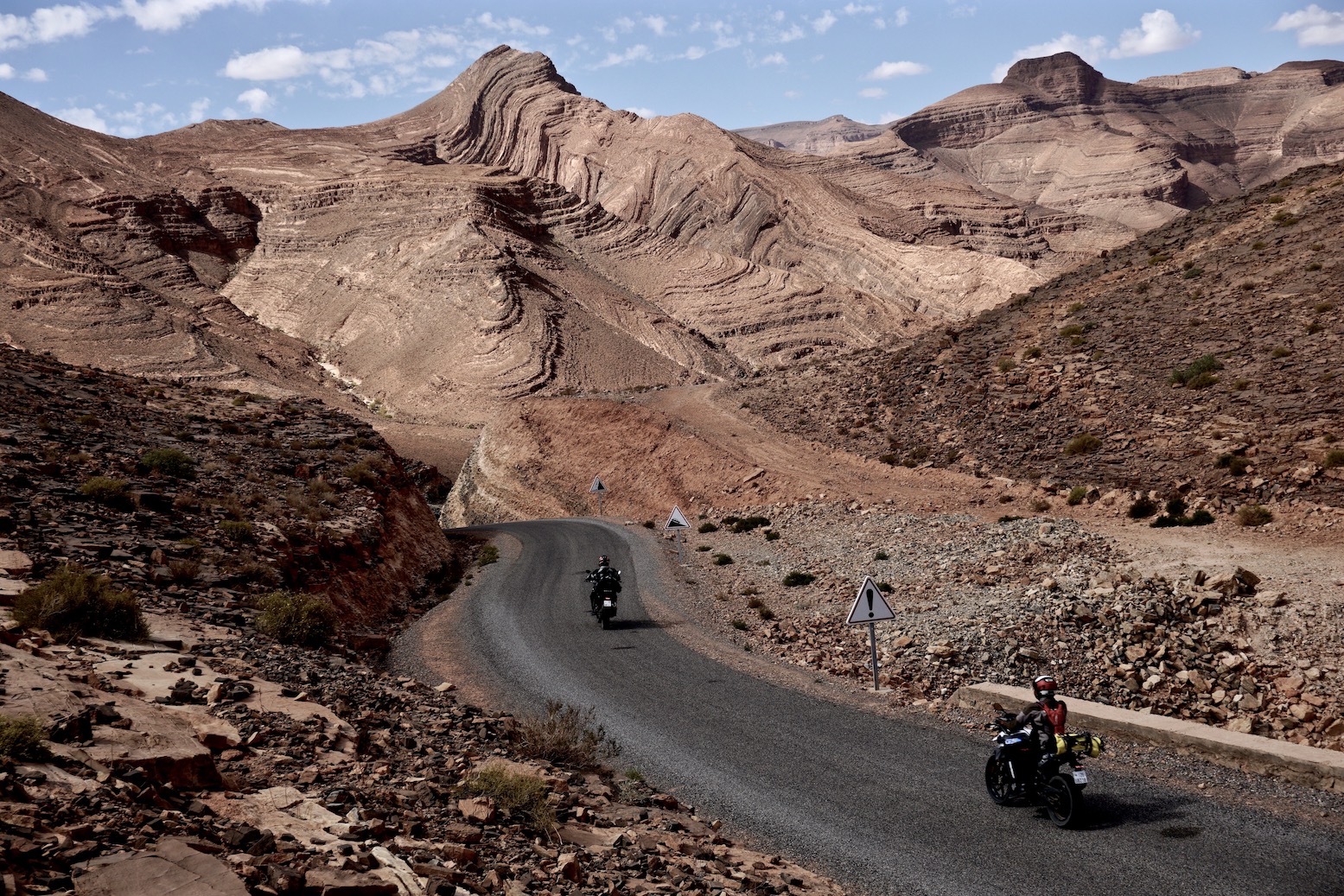
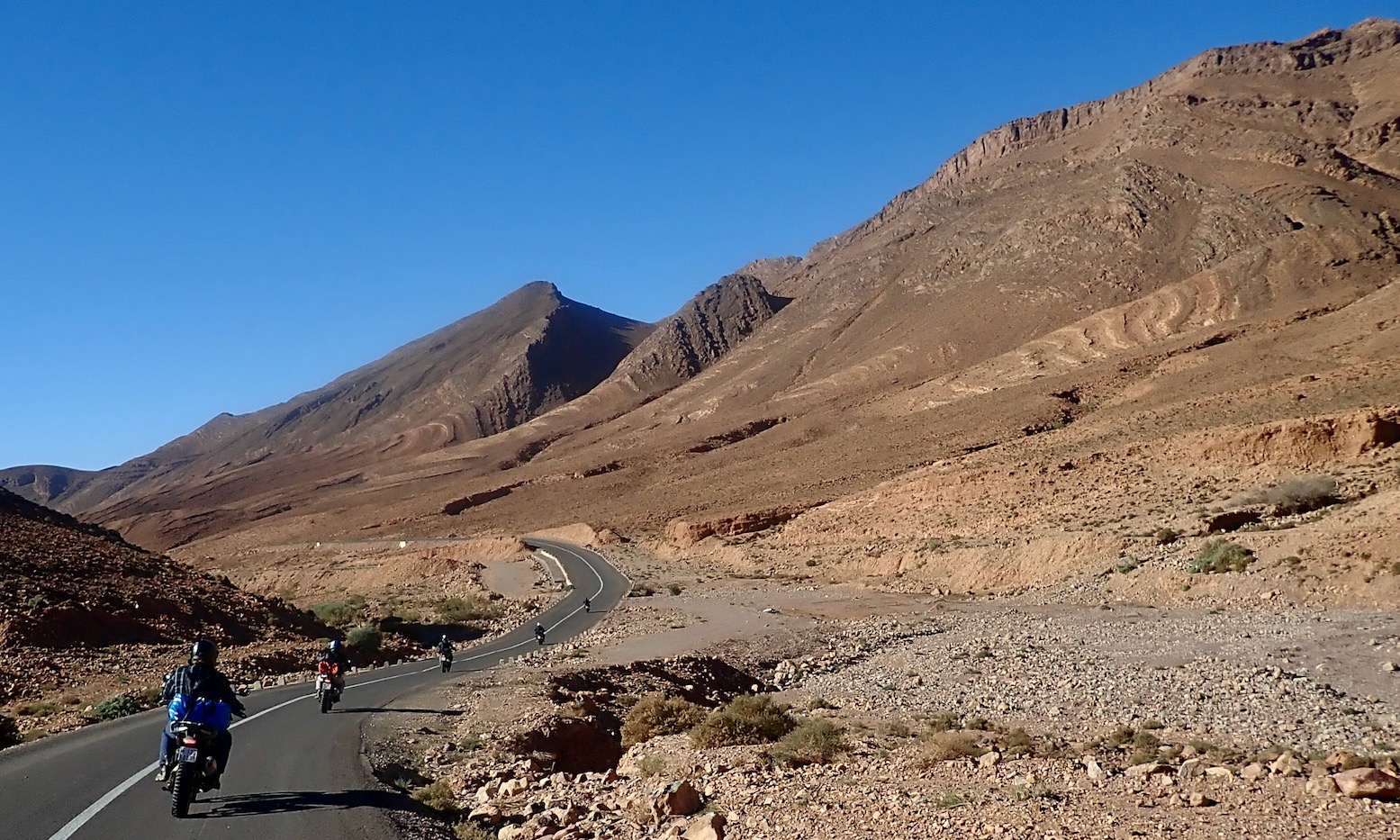
Getting clear of Marrakech (and getting back in) is the biggest stress, so keep close or get left behind. If leading, I always stop at junctions for the group to catch up. After that we’re on backroads, including exposed switchback mountain roads and tracks where you must anticipate and then react to what may be around the next blind corner: loose gravel; mud; big drops; a stream; landslides; a taxi overtaking a bus, zombie goats on roller-skates – it’s all happened!
The stony pistes can get briefly gnarly, but we rest often and it’s only a couple of hours at a time. If that sounds lame, you may not think so by the end of the week. The last day back to Marrakech has no planned off-roading, but even normal backroads are washed-out, potholed, strewn with gravel and are constantly being repaired after flash floods. You need to ride alert but that’s second nature to most bikers.
16. What are local driving standards like?
I find the south much calmer than the north of Morocco; traffic is light and drivers are less aggressive. Nevertheless, this is Africa so you must be ready for unpredictable manoeuvres, wandering pedestrians and animals, contrary signalling and potholed and gravel-strewn roads.
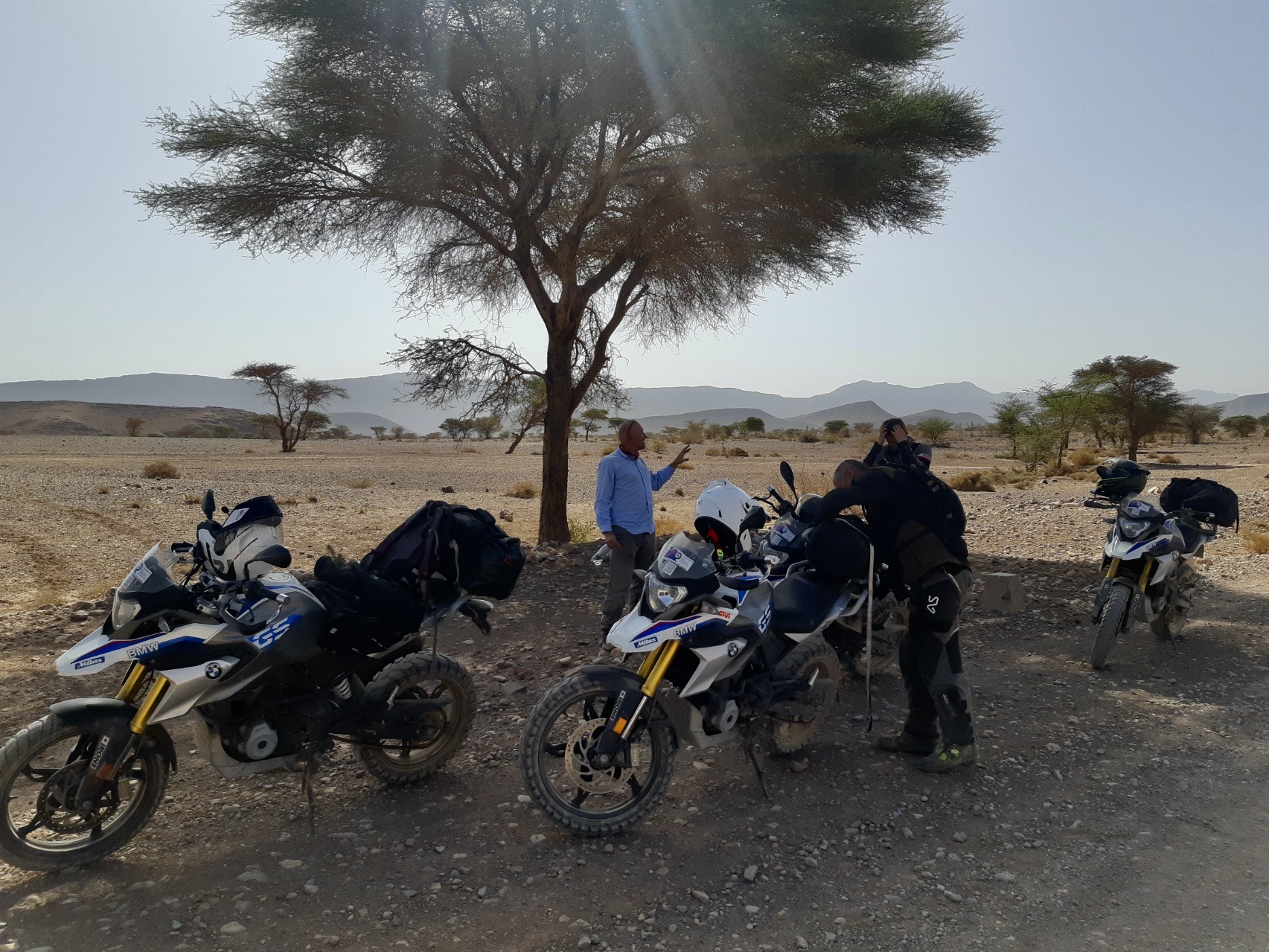
The best thing to do is ride at a speed that complements the local traffic, you and your bike’s abilities, road conditions as well as an understanding of the scant availability of medical support. When overtaking on mountain roads, be sure you have sufficient speed, power, space and visibility to complete the manoeuvre safely.
17. Do I need to be experienced off-road?
Not really, but several years of road biking will stand you in good stead – you need to know how to handle a bike competently on the road. In most cases, off-road mountain bikers as well as skiers and surfers are quick to deploy the fluid balance, weight adjustment and forward anticipation required.
All previous tours have included riders with no or negligible off-roading experience or who’ve barely ridden in years. Some ride more slowly and cautiously, but nearly all managed fine because the trails, the pace and the bikes make it all achievable. Recently, one rider found the off roading on the morning of Day 2 a bit much, damaged the bike and lost confidence. As an alternative to going back to Marrakech and home, they were able to shoot ahead to the Day-5 hotel and we all joined up later. Another experienced rider found the pace way too fast and went back after Day 2.
So you do need a bike licence and at least 5 years and 20,000 miles of riding experience – primarily to be confident in traffic and on exposed mountains roads and tracks.

It will also stand you in good stead if you’ve done your own multi-day rides abroad so you’re familiar with what- and how little you need to pack.
Some new-to-dirt riders also like to take weekend, off-road training courses back home before the tour. In the UK these are usually on very light dirt bikes or huge adventure bikes in muddy conditions (left). Riding wise, that’s more technical than Morocco and I’m not certain these courses add much actual value for what they cost. Whether you do so or not, by the end of your tour you ought to be much more confident about handling a motorcycle on dry and loose surfaces.
18. Do we ride every day?
From the morning we pick up the bikes, yes – so that’s six days.
19. What will a typical day be like?
We’ll get up, eat breakfast, gear up, check water and ride off around 9.30am, stopping here or there for coffee, photos, fuel, repairs or rests. We pull in for a light lunch somewhere, then carry on as before, ideally getting to our lodgings with plenty of daylight to spare. We will then repose or otherwise occupy ourselves until the evening meal, after which we are again free to do as we wish.
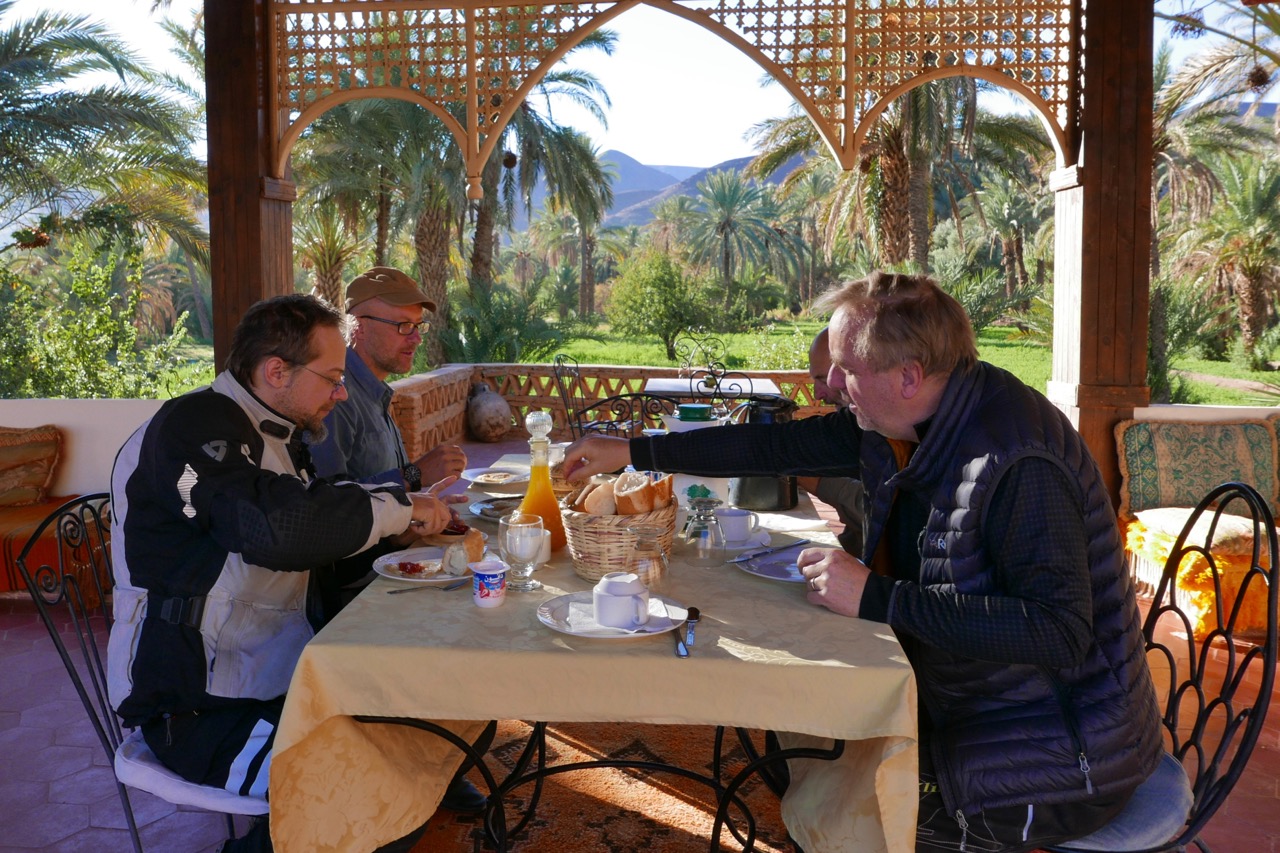
Note that the schedule can go to pieces for any number of reasons (usually punctures/breakdowns, bad weather or unusually slow groups), requiring longer days, short cuts, quick-stop lunches in roadside cafes, or unscheduled stopovers.
20. What will the weather be like?
November in Marrakech can be hot and sweaty or rainy, but once over the Atlas the desert climate and greater elevation means days are usually sunny and warm. One November we spent three days flood-bound in a hotel and another November became much chillier than normal (but was still above freezing in the mornings). The November of 2023 was much hotter than normal; well over 30°C in Marrakech end of the month.
By February greenery is returning to the landscape but with a small chance of rain. In March 2024 we had extremely high winds and a bit of rain plus near-freezing conditions coming over the 2200-m Tichka pass, but only for an hour.
For all tours, it best to be ready for rain although this hardly ever happens.
21. Will we ride in sand dunes?
No. Until you’ve tried it, dune bashing looks like fun on the right machine, but in my experience – car or bike – most accidents occur in dunes. Morocco has only two dune areas and we pass far from them.
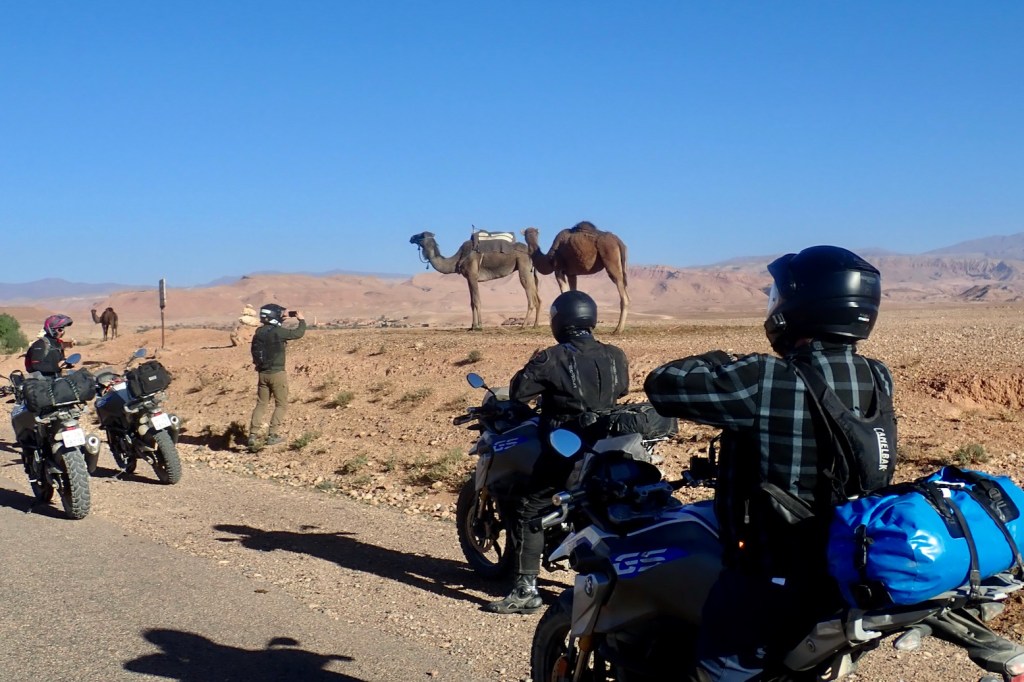
22. Will we see camels?
Probably.
23. I’m not from the UK. Is that a problem?
No, as long as you hold a full motorcycle licence and fit the other criteria.

24. What gear do I need to bring?
You must bring basic riding gear: helmet, gloves, boots, as well as a light daypack, ideally with a water bladder (CamelBak, etc) for the warmer days. The bladder means you’re able to drink easily on the move. This is important if it’s on the warm side.
Once you’re signed up, our friends at Kriega might offer discounts on their gear, including something like the R15 pack and hydrator (right). Your main baggage goes on the back of the bike. By far the best way of quickly securing your bag to the bike is with a pair of ROK straps. You can leave other stuff at the rental agency.
You don’t need bike tools, puncture repair kits, compressors and so on; I carry all these. A fuller list of gear is supplied as the tour fills up.
25. What should I wear?
Some young riders have turned up in jeans, a leather blousson, hiking boots or DMs and a sombrero. Others rock up in full MX armour, MX boots, MX lids and MX goggles over a brightly-colour MX jersey. Wear whatever you feel comfortable in and are happy to crash in. A full face road helmet is fine.
The important things are foot-and-ankle protection without necessarily resorting to full-on MX boots, a functional jacket with vents and pockets, thin, comfy gloves and a helmet with good visibility. That’s what I wear. The road riding gear you already own will probably do you, but that has not stopped people shopping for a new look!
Elbow, shoulder and knee armour may feel reassuring but won’t prevent broken bones or bruised limbs. High Atlas mornings may be chilly, desert afternoons get warm. Rain will be wet.
26. What’s the accommodation like?
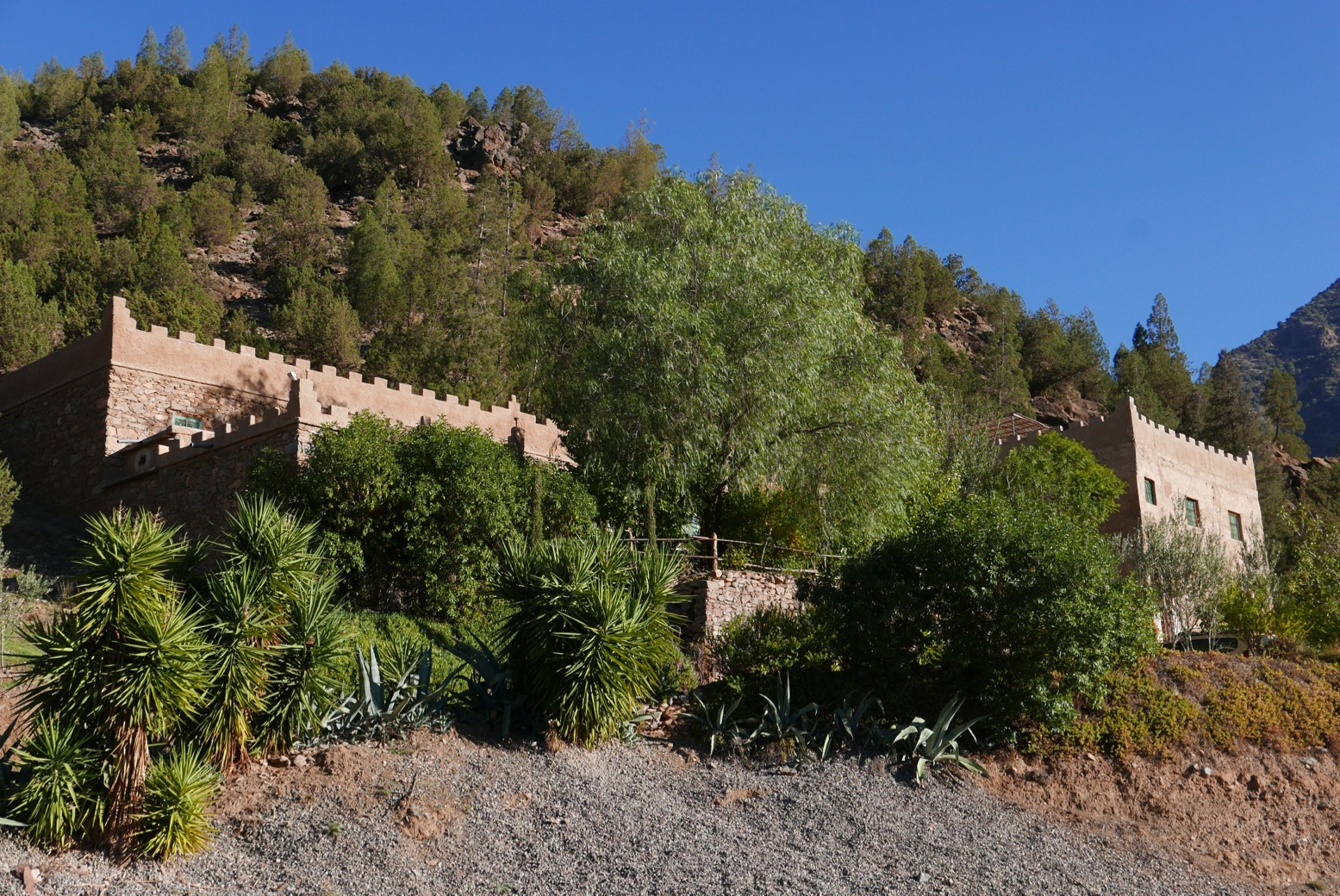
A mixture of mountain lodges, ambient desert homestays and kasbah-hotels. The Marrakech rendezvous hotel on the first night is a regular tourist joint. After that, things can get a bit rustic as we’re far from the tourist enclaves, but almost all have en-suite rooms.
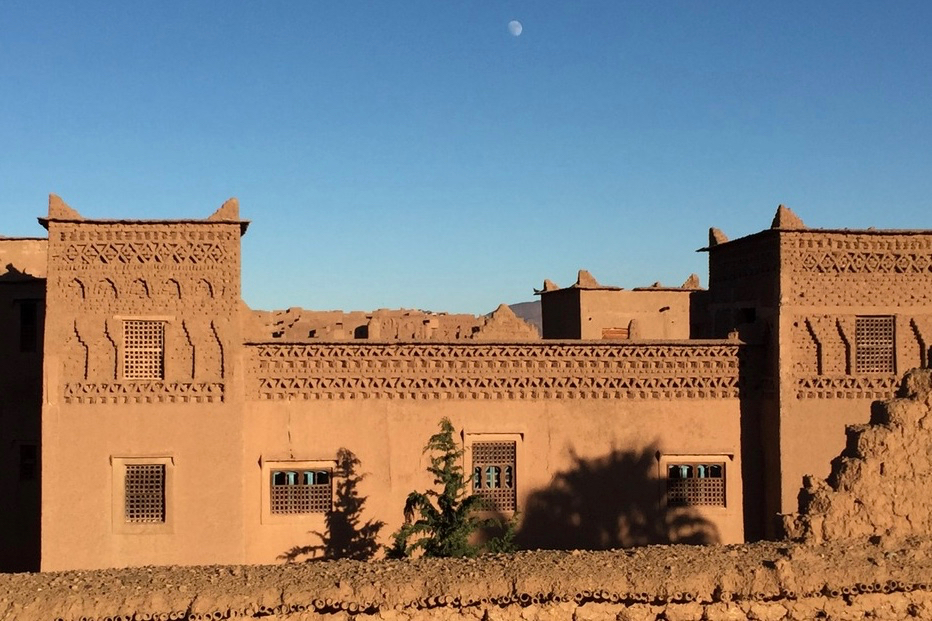
The hot water may be sketchy, the plumbing ropey, the shower pressure disappointing, the toilet/seat insecure, the towels unfluffy and threadbare and there may be no soap. Bring soap. Please be aware this is southern Morocco away from the tourist tramlines, not Palm Springs or even a luxurious Marrakech riad.
South of the Atlas Morocco is much more ‘African’, which works both ways. It feels wilder but is also much poorer, people are more conservative and it is less well served by amenities you may consider commonplace. If you’re not prepared for some discomfort or inconvenience, this tour may not meet your expectations.
27. Is the water OK?
Tap water is fine. That’s what I drink, but most take the bottled water which I supply free.

28. What is the food like?
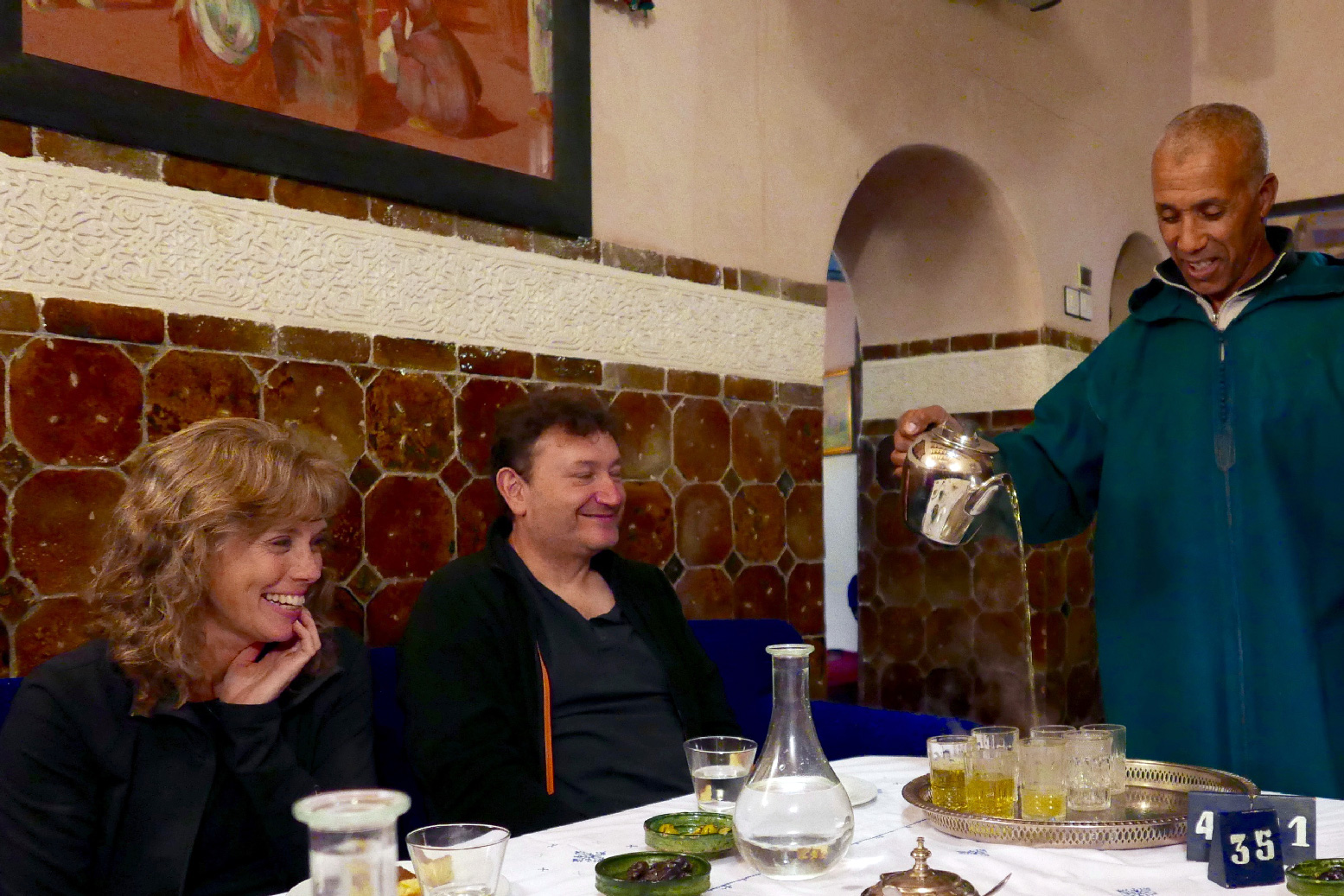
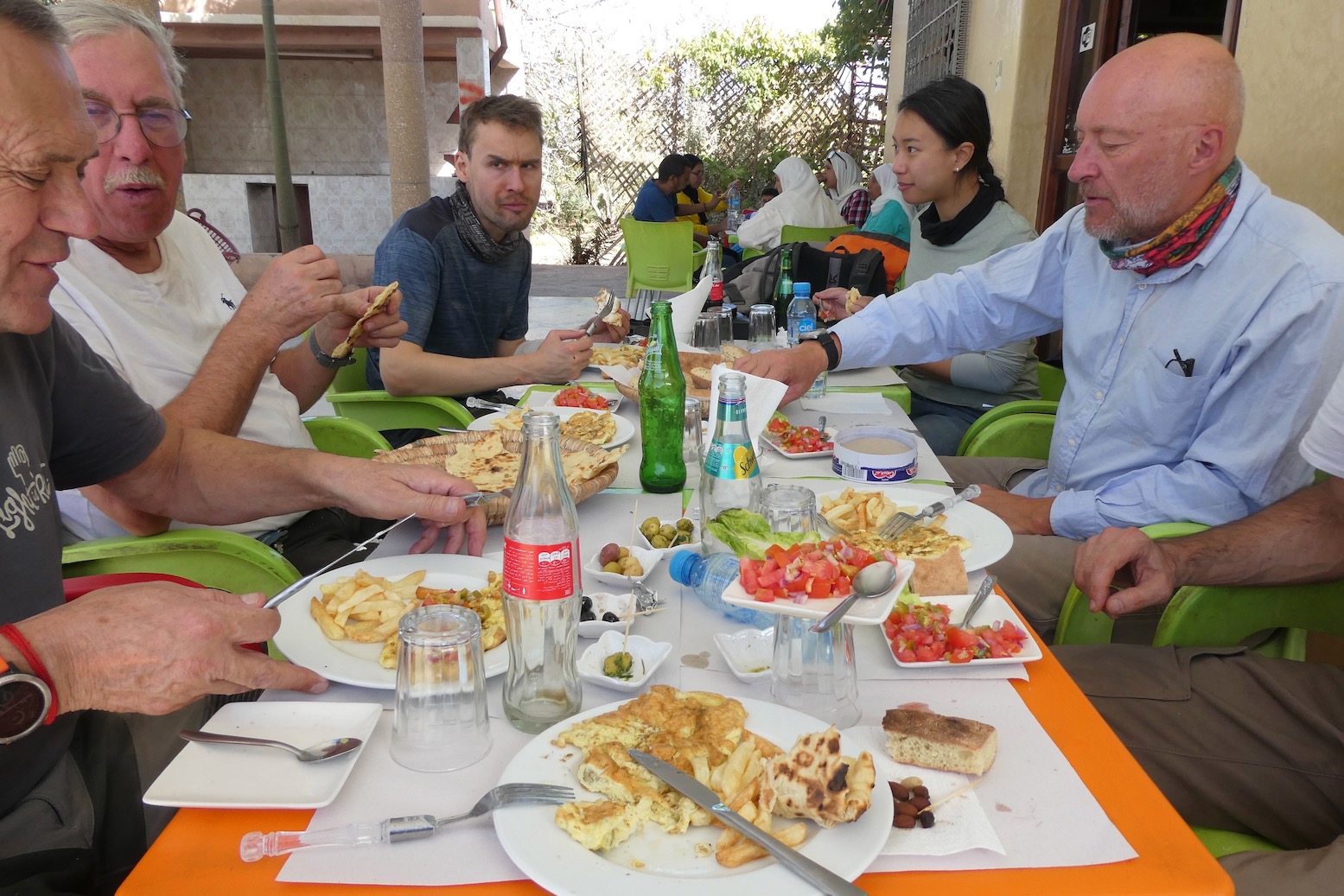
It can vary from lavish to basic, but is always wholesome and freshly prepared. Breakfast is tea and coffee with bread and pancakes with sweet spreads and they may do an omelette.
Lunch tends to be light, otherwise we wait for ages. In the one-horse towns we stop at it’s usually an omelette + salad with bread and tea.
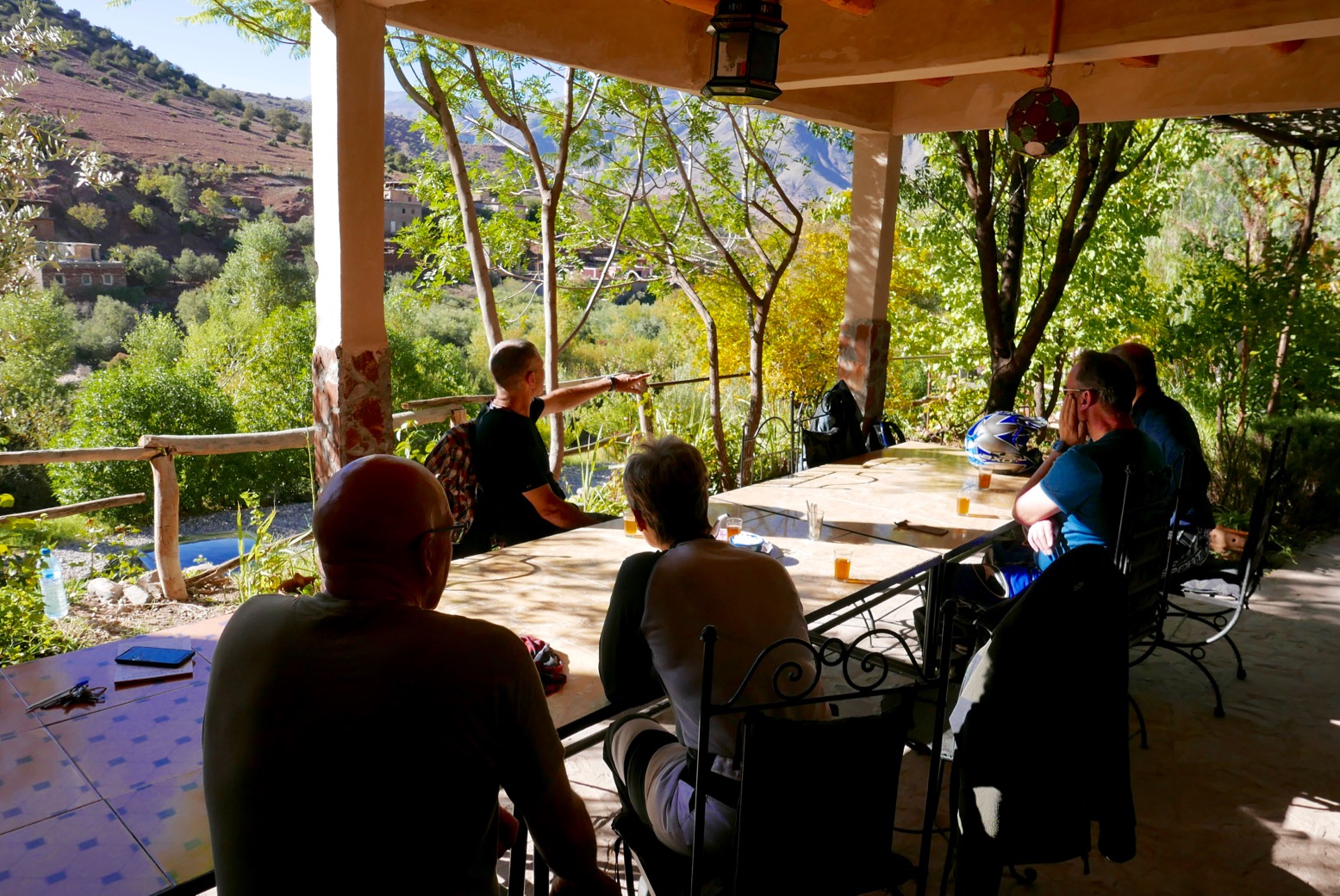
When we get to our lodgings they lay on more tea with nibbles on the terrace and dinner is usually a tajine (stew) with a soup or salad, plus fruit for afters and more tea or coffee.
There should be no need to bring supplementary snacks from home. I buy nuts and cheese triangles and chocolate for the group from village stores.

29. I am a vegetarian or have other dietary requirements. Is that problem?
No. Breakfast and lunch are meat-free and vegetable tajines can be as tasty as the meat ones, plus the places we stay are used to preparing them. However, vegetables often taste like they’ve been cooked in chicken juices and it’s hard to explain this is not vegetarian, so be prepared to adapt or make your needs clear.
If you’re gluten intolerant you need to take special care to avoid getting ill. There is a lot of bread on this tour. Bring your own special bread.
30. Am I likely to get the runs?
No, but you might experience some moderate loosening of your intestinal evacuations. Morocco is not like Egypt or India in this regard. In my experience eruptive stomach disorders can occur in more touristy restaurants where food isn’t prepared freshly or is re-used. We don’t visit these places and even then, it’s not usually bad enough to affect your riding for more than a few days, so just keep drinking, riding and taking the blockers – plus keep a toilet roll handy. I carry pharmaceutical rehydration sachets as well as Imodium-like ‘blockers’ which are also easily bought from local pharmacies.
31. How about alcohol?
Once out of Marrakech, it’s not available at most of the lodgings we use so it’s best not to count on getting any anywhere.
32. What happens if I damage my bike or it packs up?
If your bike dies on you or gets smashed up, the rental agency will come out with a replacement. You may have to pay for the damage.
33. Or if I hurt myself or otherwise can’t ride?
Arrangements will be made for the recovery of you and your bike, as well as hospitalisation if necessary. This is where your travel insurance is essential. The pace and nature of these tours is such that this has not happened yet and hopefully never will.
34. What happens to our tour in the event of such a delay?
It’s happened elsewhere and the entire group became involved in the recovery and accepted it as part of the experience.
35. Can I leave the tour at any time?
Riders very occasionally leave early when they realise it’s not for them, but you’re on your own and it will be your responsibility to return the bike to Marrakech when your rental period is up. Sorry, there are no refunds if you leave the tour early.
36. Do I need any inoculations?
No.
37. Will my mobile work?
In more places than you think. You can buy a local SIM card for as little as 30dh which includes 30dh of credit, as well as data SIM cards to use the local 4G network. Most find about 5GB (additional 50dh or £4) will last a week. Some inadvertently leave their home smartphones on ‘data’ and got notified of a £100 bill before even leaving Marrakech. Sort your settings out.
38. Is there lightning-fast wi-fi at the lodgings?
It has got better, and in most places we stay or stop at there is some sort of wi-fi, but south of the Atlas it can be hit and miss or slow, especially if we all try and use it at once or try it in our rooms. If it’s important to you, rely on your phone’s 4G which is much more reliable and works all over.
39. What routes from your Morocco Overland guidebook do we follow?
I tend to mix it up in the High Atlas, Sahara, Anti Atlas and Jebel Saghro regions.
40. What is our route?
I don’t have fixed itineraries, plus I like to make it up as each tour develops, depending on the ability and preferences of the group, as well as the weather. We head south out of Marrakech follow an 1100-km anti-clockwise loop and return over the Atlas via Ouarzazate six days later.
41. Is it worth me buying your Morocco 4 book?
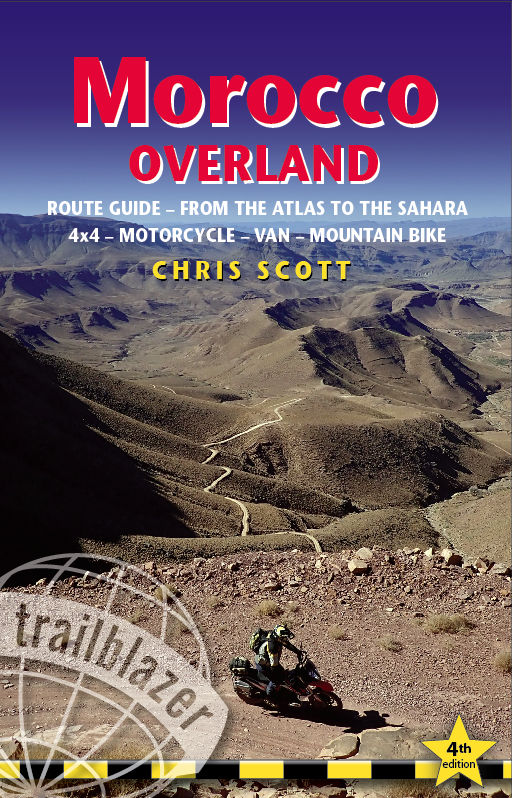
It’s not necessary as you’ll be doing it the easy way with a guide, but you might learn a thing or two about Morocco and the riding conditions. New edition out January 2025.
42. Do I need a GPS and a map
Also not needed, but some like to keep track of their location.
43. Is ‘sahara-overland.com’ a registered tour company?
No, it’s just the name of my website. The booking form includes a disclaimer that you’re undertaking this tour at your own risk.
44. What guarantee do I have that you will not just run off with my money?
None, but with my prominence on the web and in travel publishing this would be a short-sighted move.
45. When will I know if the tour is confirmed?
When there are at least three bookings. The booking status is here.
46. If I have to cancel late in the day can I get my deposit back?
Yes, as long as it’s before the balance has been paid. See the booking form for levels of refund once the balance has been paid. I tend to leave deposit requests late.
47. My question is not addressed here?
All the info that I can think of is on these web pages which get updated from time to time. Please email me with other questions.
 Sahara Overland