THE SEARCH FOR THE TASSILI FRESCOES Henri Lhote, 1959 (o/p)
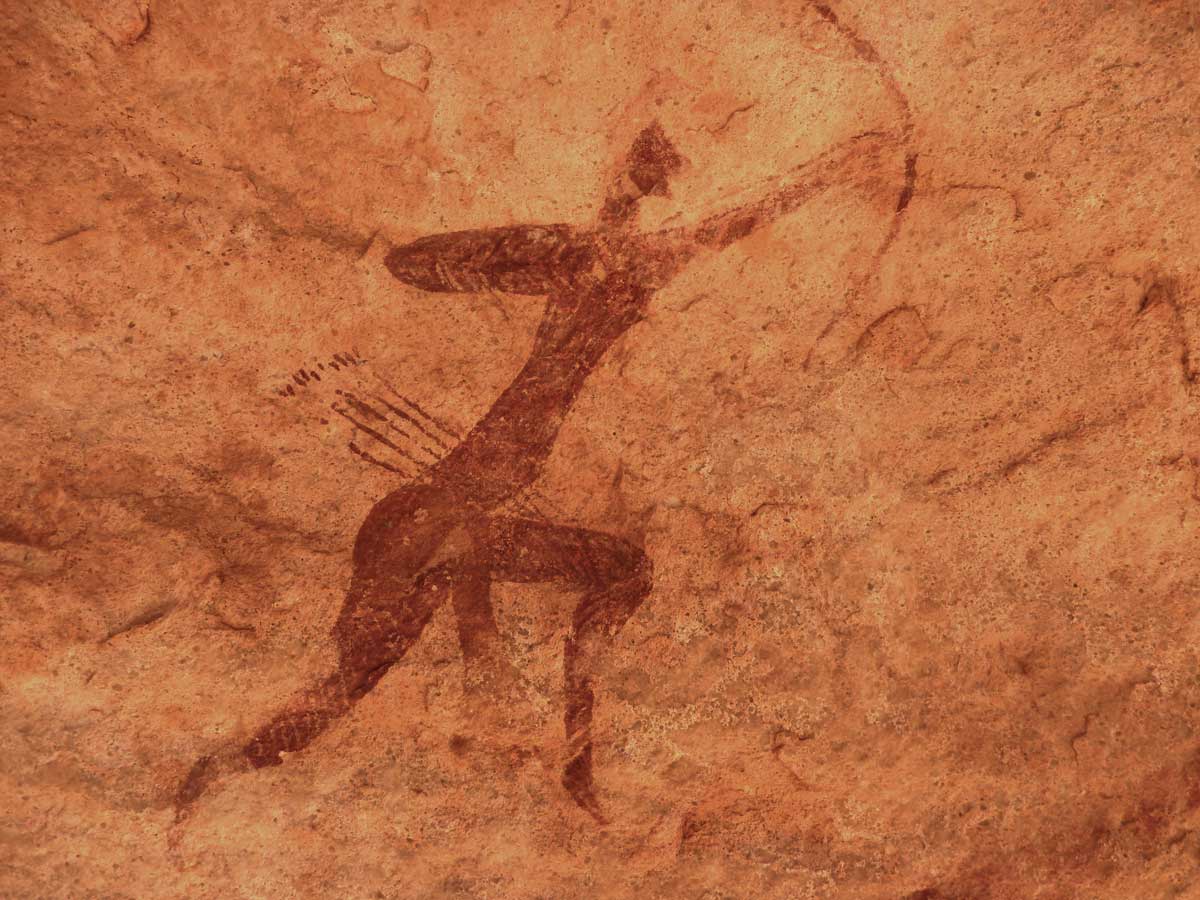
There are several picture books describing or including the rock art of the Tassili. The best known though not best admired is this one: The Search for the Tassili Frescoes published (in English) in 1959 and easily available used on the web. It was he who led an expedition to record the art for posterity as the colony of Algeria was slipping out of France’s hands. Unfortunately Lhote and those in his service adopted the practise of wetting the rock art to produce more vivid photographs – something which has accelerated fading in a few decades after surviving millennia on the plateau.
In this case he may not have known any better, though a little-known Swiss expedition recorded many of the Tassili’s sites in the late 1940s; doing a much more thorough job than the well-publicised Lhote missions. But Lhote was also accused of turning a blind eye and indeed including fakes (painted as a joke) among his recorded discoveries. The slinky quartet known as ‘The Bird Headed Goddesses of Jabbaren’ are known to be one such fake, supposedly included (but excised from later editions and indeed Jabbaren itself) to help attribute the style to ancient Egyptian influences. If anything it was probably the other way round.
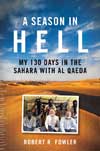
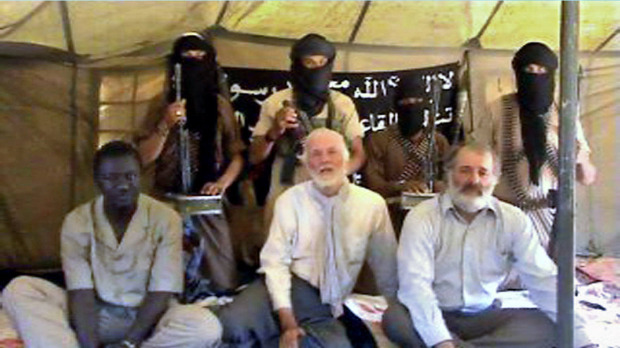
Robert Fowler’s account of his four-month captivity in northern Mali with Louis Guay in 2009 doesn’t so much leap off the page as grab you by the ears and haul you in. I read it over a weekend because here at last is a lucid, thoughtful and detailed description of an experience about which many wonder: ‘how would I cope?’. And before the first page is turned Fowler answers that question: ‘better than you’d assume’.
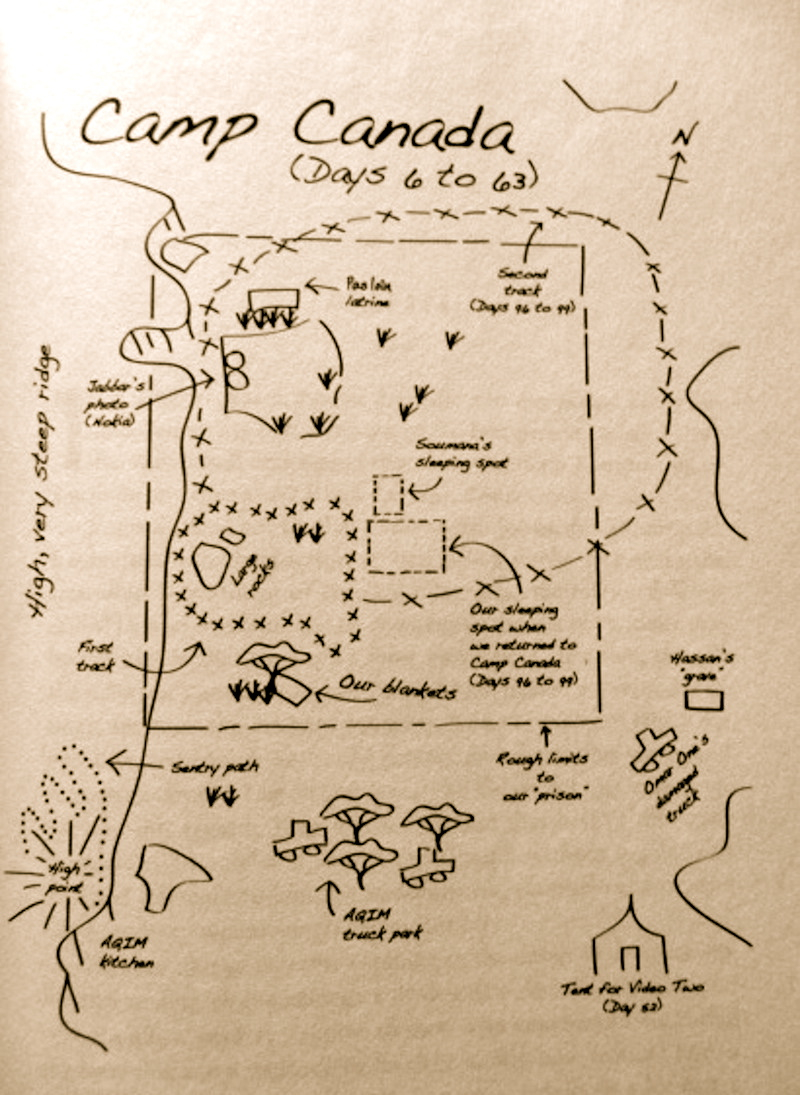
Thankfully, a lazy Day 1, Day 2… diary format is avoided. Instead, events or themes are covered over the pair’s months ‘en brousse’, while fending off the malice, provocations and mind games of their captors, as well as navigating their own inevitable mood swings. Some like to dismiss AQIM and similar groups as mere criminals enriching themselves from smuggling and kidnapping. If that’s the case then Fowler’s abductors, led by Moktar bel Moktar (‘MBM’, who went on to organise the deadly gas plant raid in Algeria in 2013) put up a convincing performance refuting that. Not one of the ragged jihadists failed to try and convert the two diplomats to Islam while at ‘Camp Canada’, and vigorous religious debates dominated the gang’s conversations, rather than which Rolex they’ll buy with their share of the loot.
Throughout this episode both Fowler and Guay were put to the test, but astutely deployed their hard-won diplomatic nous to help lessen their misery, as well as using other methods to maintain morale. One topic I thought oddly absent was any obsessive discussion over food. Some emotionally sensitive subjects were proscribed, but you’d think the harmless pleasure in food fantasies would be fun.
After months of uncertain negotiations, unexpected gifts, hurried relocations as well as calls home, somewhere in the desert the two Canadians are finally handed over to shady mediators. With them are two desperately emaciated European women, kidnapped by more brutal rivals who are deeply unsatisfied with the settlement. In a tense denouement the two AQIM leaders face each other down but MBM prevails. The jeeps speed south and diplomatically staged photo calls, long-overdue ablutions and happy family reunions ensue. The book ends with a warning that action must be taken against the scourge then oppressing northern Mali (in January 2013 the French led Operation Serval invaded the area). There’s also an unapologetic swipe at the way the RCMP handled Fowler and Guay’s abduction.
For some the elephant in the room is the matter of ransom payment – denied by the Canadian government. Fowler was kept in the dark but elucidates in appropriately equivocal terms: ‘… there tends also to be a difference between what governments do and what they say, and this seems to me quite reasonable… Many countries adopt what are more or less pragmatic approaches while others proclaim immutable doctrine, but I know for certain that everybody has blinked at one time or another…’ Wikileaks since revealed that €700,000 was paid and AQIM prisoners released, thus prolonging the scourge. The conduit for the cash was the then convenient treasury of Ghadafi’s Libya, in return for unspecified concessions.
Some speculate about publicity bans put on former Saharan hostages (nearly 100 in the last decade) by their governments; perhaps a condition for covering the usually denied ransoms. If that was the case with Robert Fowler, he ignored it. ‘A Season in Hell’ illuminates their desert captivity in vivid detail, including as far as they could gather, the motivations of the people who abducted them. It might even be read as a manual on how to cope with such an experience. However you choose to take it, it’s highly recommend.
Possibly of pensionable age but with experience with Bactrian camels as well as living in Africa and speaking Hausa, John Hare sets off to traverse the great trade route from former Borno Kanem (northern Nigeria) to Tripoli. With him are his chums: an even older Kenyan farmer, a Chinese academic and the relatively young Johnny to do the chores, plus Tubu and Tuareg cameleers and two dozen camels.
The organisation and permission for this trip goes unerringly smoothly – even the intractable Libyans are up for it and so the guides and camels turn up on time and the crew sets off reversing the camel prints of Hanns Vischer’s 1906 trek (the author’s inspiration), if not Denham, Clapperton and Oudney’s 1822 expedition. So far so good. But what should have been a stirring account of a historic trans Sahara trek plods along without enough engagement. Interminable quotes from Denham and Vischer fill the gaps, but there is barely a conversation recorded between the protagonists (a Brit upper lip was stiffly maintained, perhaps) while the local guides come across as the customary grumps.
Anticipated highlights like the Bilma Erg slip by in a couple of paragraphs while the dreary Hamada el Hamra is built up to epic proportions. One fails to get an impression of what the undoubtedly arduous three-month trek along a little-known Saharan axis was really like, even on a practical level. It all comes across as too easy and repetitive – perhaps it was, although it’s interesting to learn about the history of this trade route and why it became depopulated. It’s on this level that the book has something to offer, rather than using camels as a mode of travel in the Sahara.
This astonishing yarn expands on the gruelling tale of the 1815 wreck and enslavement of the crew of the American brig Commerce mentioned in Spanish Sahara reviewed elsewhere. The ordeal the crew suffered at the hands of the barbaric Western Saharan tribes (described collectively but not so accurately as ‘Saharawi’) is truly horrendous. At that time (and indeed right up to the St Exupery era), ransoming of foreigners to European trading posts at Essaouira or St Louis was the norm, but the Commerce had the misfortune to run around Cap Boujdour midway between the two.
Pounced upon and subsequently sold on and on to other nomads for a blanket or other chattels, the miseries of the beaten, stripped and starved crew as they tramp around the desert of present day southern Western Sahara and northern Mauritania are based chiefly on the Commerce‘s Captain Riley’s own account. This book gained wide popularity following his eventual rescue and even influenced Lincoln’s anti-slavery attitudes. For weeks at a time the best drink they could manage was cupping their hands behind a urinating camel and most lost half their body weight. Some lost their minds.
You do have a feeling the author, more familiar with maritime than desert matters, embellishes a little too heartily at times, but it all helps to drive the narrative along with barely a dull moment. This is a survival story on par with Shackleton’s amazing escape from Antarctica, and right up to the very end their continued depredations leave you guessing as to the final outcome.
John Mercer visited this tightly controlled colony as power was slipping from Spain’s hands and the region’s Saharawi people faced recolonisation led primarily by Morocco, that resulted in the protracted Polisario conflict which endures today with the territory divided by the berm. All that was about to kick off as the book ends, and up to that point Mercer gives a very through account of this seeming Saharan No Man’s Land starting with geology, natural history and prehistory. The Berber history of the Almoravids who conquered most of Spain leads to the feeble (or unproductive) Portuguese and Spanish incursions of the late Middle Ages on which Spain based its colonial claim in the late nineteenth century. We also read about the activities of early traders like the Scot, Mackenzie, whose fortress-like trading counter still lies off Cape Juby an adventurer-entrepreneur who tried to buy into the rich trans-Saharan caravan trade before it got to Moroccan markets. Or the depredations suffered by Alexander Scott and James Riley, shipwrecked in the early nineteenth century, but who at least lived to tell the tale (see: Skeletons on the Sahara review).
We also get what must be the best English-language account of the tribes of that region closely related to today’s Moors; the well-known Arabised Reguibat, the Delim and other lesser clans who, when not raiding each other, preyed on shipwrecks, their victims and early explorers. Their complex allegiances, culture, customs and daily life is especially detailed, as in an account of the manoeuvres behind the French colonisation of the region. Resources was what they were after: the world’s largest source of phosphate at Bou Craa, the iron ore at Zouerate and the rich offshore fisheries.
It may be 30 years old, but its hard to think of a more thoroughly researched account (in English) that opens up the Western Sahara and its neighbouring regions – you’ll find it used on the web from around a tenner.
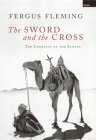
A double biography of two extraordinary characters who helped shape France’s colonial fortunes in North Africa. This is the story of General Henri Lapperine, the dashing Commander of the Oasis whose camel corps rode sleek racing méharis with the general at their head. Alongside walked his guide and interpreter – a sunburnt scarecrow of a man reciting prayers as they went – Charles, Pere de Foucauld.
Fleming’s style is well researched and enthralling. He admits that there is not a lot of material on Lapperine, who wrote little down and seems to have been little appreciated in his lifetime. Foucauld, an obsessive letter writer and list maker, left a large legacy and has been the subject of many works – mostly in French and usually lionising his saintly attributes.
In order to tell the tale, Fleming first describes the situation in the French African colonies of Algeria and the Soudan to the south during the 19th Century. The grandiose plan is to link the two – eventually by rail – via the Sahara, the conquest of which becomes a matter of national honour. The descriptions of the large expeditions sent to achieve this aim are horrifying – they end in unmitigated disasters, each one greater than the previous. The flamboyant characters involved are described – with a repetitive postscript ‘…they too were murdered’.
Into the desert enter two seemingly different men – bound by a desire to see the Sahara and its population as French – in Foucauld’s case, Godly and French. The main protagonist is Charles de Foucauld, an aristocrat turned hermit. Starting out as an overweight and not very good cavalry officer with a taste for women and the easy life, he is sent to Algeria. Here he discovers not only a love of the desert but also forms the idea of creating a religious order – not just an average order, but one whose regime of self denial makes Trappism seem luxurious. Living on a diet of barley and dates, spending twelve hours a day in prayer he founds an order that had a membership of one during his lifetime (unsurprisingly) and converted a single elderly blind woman. He never loses touch with his acquaintances from military days – they provide protection for him and he in turn supplies them with maps and information regarding the ‘ground feeling’ of the desert tribes.
Lapperine sees the folly of the mass marches and forms a camel corps, whose swiftness in smaller numbers and less need for supply chains enable them to subdue the Tuareg. A ‘soldiers’ soldier’ he was a hard taskmaster admired by his troops (when one of his natives was questioned about his loyalty to France he replied that his loyalty was not to France – but to Lapperine). He needed information from the Hoggar (a little light spying) and who better than his old friend Foucauld. When offered the chance to set up a hermitage in the remote outpost of Tamanrasset, Pere de Foucauld relishes the prospect of tending to the locals (and supplying Lapperine with reports).
By 1910 with the Tuat and Hoggar under the control of the French and with Foucauld alternating between Tamanrasset and his even more remote hermitage at Assekrem, Laperinne sets out on a series of tours. Although successful these are seen by his superiors as meddling in the affairs of the Ottoman Empire (which at the time was nominally in charge of the Tripolitania to the east of Algeria). Lapperine is recalled to France as war clouds gather leaving Foucauld behind. In an obscure footnote to the international situation Senoussi raiders roam the Sahara attacking the remaining French at the behest of the crumbling Ottoman Empire. Caught up in the intrigue, Foucauld is assassinated on December 1st 1916.
Upon hearing the news Lapperine requests immediate transfer back to Algeria to avenge his friend. Three years later as he lays dying, lost in the desert following an aircrash, General Lapperine’s utters his final words: ‘People think they know the desert, people think I know it. Nobody really knows it’.
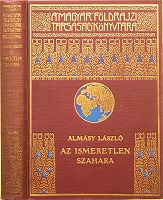
The Unknown Sahara Laszlo Almasy. Translation by Andras Zboray
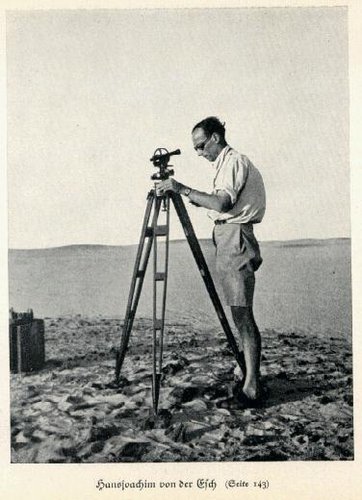
The eastern Sahara’s Libyan Desert (covering Egypt, Libya, Sudan), was one of the last corners of the desert to be explored and still remains wild and barely visited. In the late 1920 and early 30s – the Hungarian Almasy (a contemporary of Bagnold and Clayton and fictionalised as the ‘English Patient’) criss-crossed this region in then newfangled motorcars which enabled systematic exploration of this hyper-arid quarter.
The book tells the stories of his many feats in the region: the first drive to Kufra from the west, the clarification of the Zarzura legend, the discovery of countless rock art sites including the famous Cave of the Swimmers, were some of his achievements.
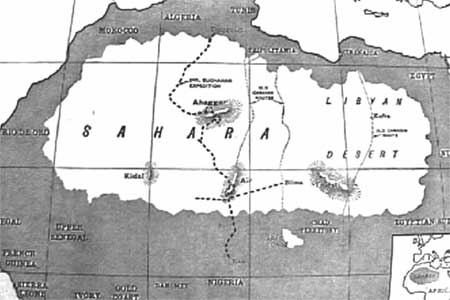
Almasy’s energy and courage is inspiring. To be bombing around the most desolate corner of the Sahara in tinny Fords (2WD of course), dropping fuel and water here and there is quite a feat. You’ll also pick up some interesting Sahara lore that is not found elsewhere, in English at least. The book could use a sketch map to point out his wanderings. Even with three maps on the go I found it hard to work out where he was – especially around the Gilf.
That said, ‘Unknown Sahara’ is a desert classic finally available in English. Like Bagnold’s Libyan Sands (reviewed elsewhere), it reveals the very earliest days of Saharan motoring. Highly recommended.
DESERT EXPLORER – A BIOGRAPHY OF COLONEL P.A. CLAYTON Patrick Clayton (son), Zerzura Press
P.A. Clayton was one of the key figures in opening up the Libyan Desert in the early thirties. The book is a biography of the father by a son, who lived the first ten years of his life in Egypt, accompanying his father on several of his surveying expeditions deep into the desert, and the documented milestones in the explorer’s life are intermingled with details based on the author’s personal memories. It’s a pity, that the most significant of Clayton’s expeditions, those seeking the mythical Zarzura oasis in 1932 and 1933 are only described by quoting already published sources, revealing no new information. The son’s view is understandably biased, sometimes resulting in deviance from facts known from other sources, but never disturbingly so. Overall, the book is an excellent combination of already published information and personal experience, supplemented by previously unpublished photographs.
CONQUEST OF THE SAHARA Douglas Porch (2005 edition by Farrar Straus Giroux)
An intriguing and readable account of France’s attempts to colonise the Sahara during the ‘Scramble for Africa’ in the latter half of the nineteenth century. Full of historical detail, it vividly describes the vainglorious expeditions, large and small, which staggered across the desert, often poorly led and suffering greatly for personal prestige and their country’s honour. The extraordinary shambles of the doomed Flatters expeditions has to be read to be believed. This description refers to the original 1986 edition.
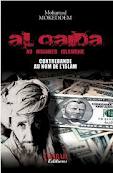
Al Qaida de Maghreb Islamique; Contrabande au nom de l’Islam Mohamed Mokeddem (Casbah, 2010)
I picked this up in Algiers airport for 1200D (€12), having seen it mentioned on the forum. It’s in French and I surprised myself with how much I understood; perhaps have being familiar with the subject helped. But I dare say I missed many of the books nuances so what follows is a bit vague.
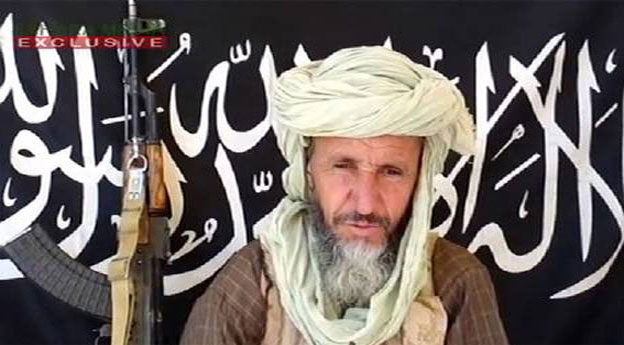
It kicks off with an account of the origins of the notorious and now dead Abou Zeid, real name Mohamed Ghader (pictured on the cover), as an impoverished member of the Arabic Ghader clan living near Deb Deb, close to the Libyan border. Here he sets himself up as a successful smuggler of low value goods from Libya while getting married and divorced a few times. He’s painted as a rather withdrawn and even sociopathic figure who gets caught, goes to prison, gets radicalised and proceeds to rise up the ranks as the GSPC relocate to north Mali around the turn of the millennium. The book them jumps around chronologically, referring to recent kidnappings of the Spanish and Austrians (all listed here) as well as brief profiles of hostage negotiators and intermediaries like the influential Ould Limam Chafi from Burkina and Malian Tuareg warlords Iyaf Ag Ghali and the late Ibrahim Bahanga (the former of who is on the march again in 2012). It covers the establishment of the GSPC’s rearward base in northern Mali and gives an account of the 2003 event when 32 tourists were grabbed in the Tassili N’Ajjer in southeast Algeria.
There’s a little new information here and an odd lack of place names and other details such the enigmatic escape route to Mali and, a few months later, the subsequent flight of the gang to Chad with the ransom money where they were caught by Tubu rebels after a lethal exchange with the Chadian army. Court testimonies of a few captured kidnappers follow. Then it seems accounts of later abductions are repeated, seemingly lifted from the Ennahar website which the author ran. The origins of AQIM’s links with Al Qaida are also detailed.
Overall it comes across as a bit of a hastily completed book – not helped by the fact that a chunk of pages in my copy (with the original ‘dollar bills’ cover) are misplaced. I can’t say I learned that much new of interest, apart from the origins of Mohamed Ghader. A bit more research and detail in that vein may have been made a better read.




 Sahara Overland