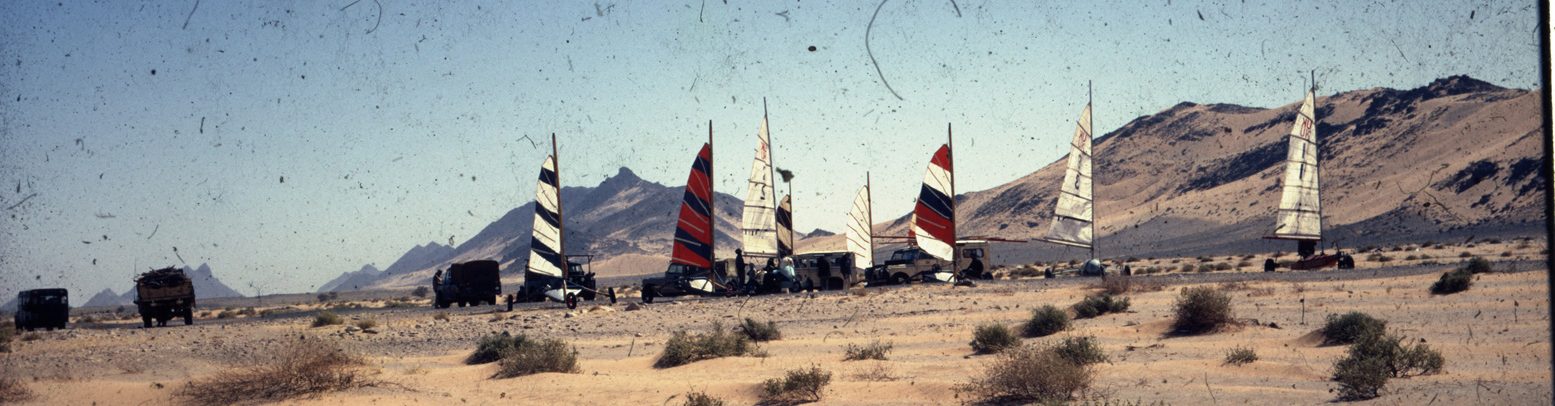
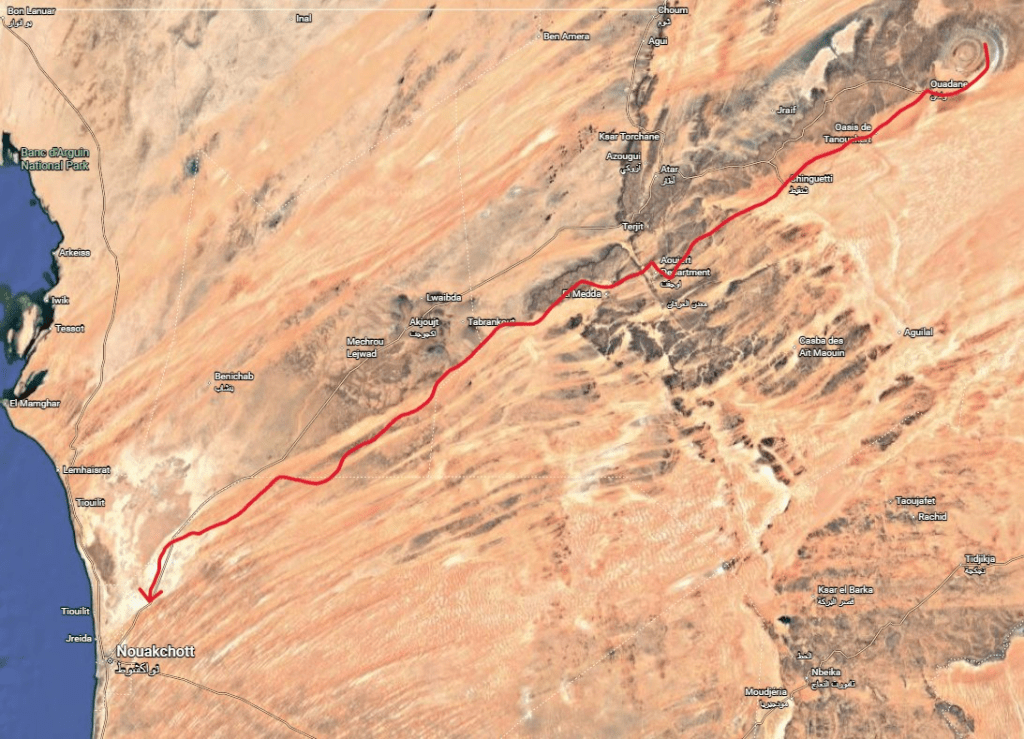
Exped 233; a 700-km walk from the Eye of the Sahara to Nouakchott
by Simon Cope
December 2025-January 2026
The Richat Structure, often called the ‘Eye of Africa’ is a prominent circular geological feature at the northwestern edge of the Taoudeni Basin, on the Adrar Plateau of the Sahara. The structure gained international attention in the 1960s when astronauts spotted it from space during early space missions.
The name of the expedition (233 degrees) refers to the bearing we followed for much of the latter half of the route as we made a direct line to Nouakchott. The estimated distance was around 700km. The actual distance walked was 679km due to short-cuts being taken wherever possible.
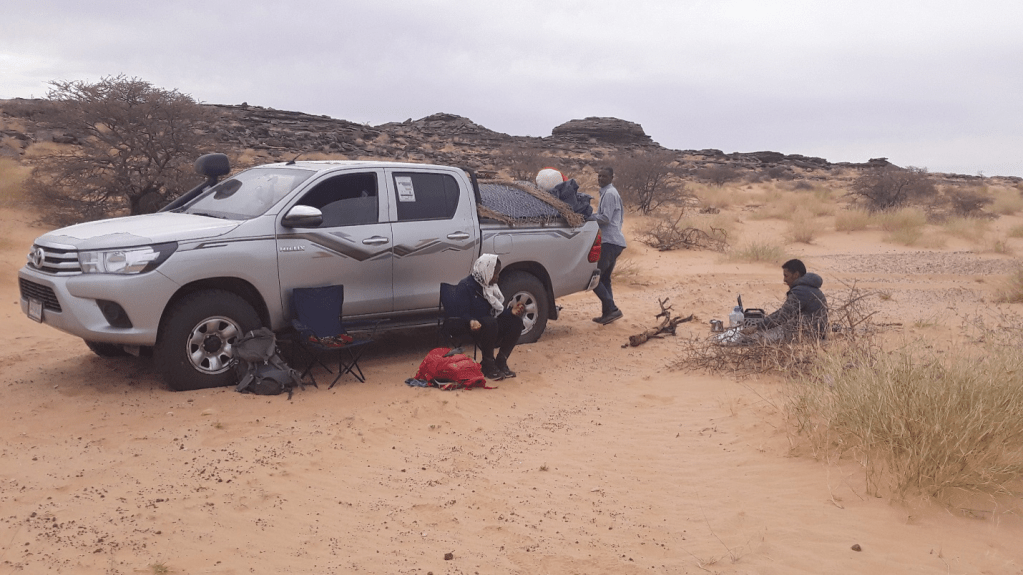
Expedition members
Husband and wife team: Fatuma Babirye and Simon Cope, FRGS
We started walking from the Richat Structure on 17 December. We arrived on the outskirts of Nouakchott on 1 January 2026. The last day was notable due to thunderstorms (!) in the area. In order to avoid camping in the rain (which would be miserable since our camping kit was not designed for heavy rain) we walked 47km on 1 January to finish the walk ahead of schedule.
Dangers and difficulties
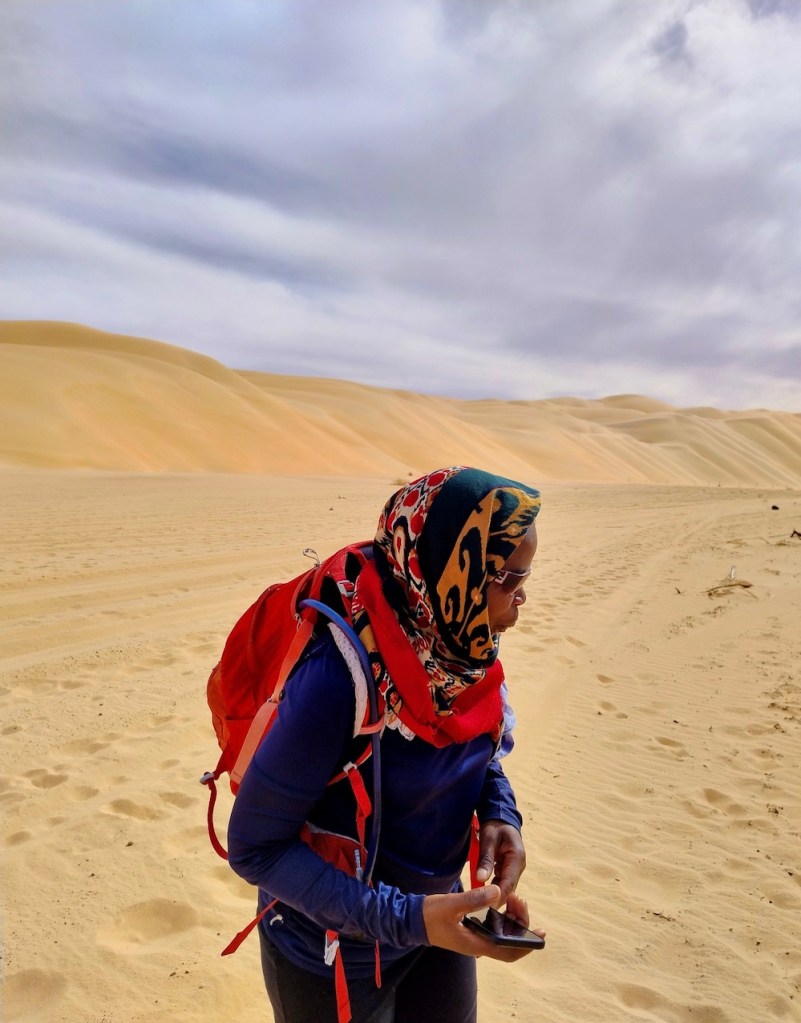
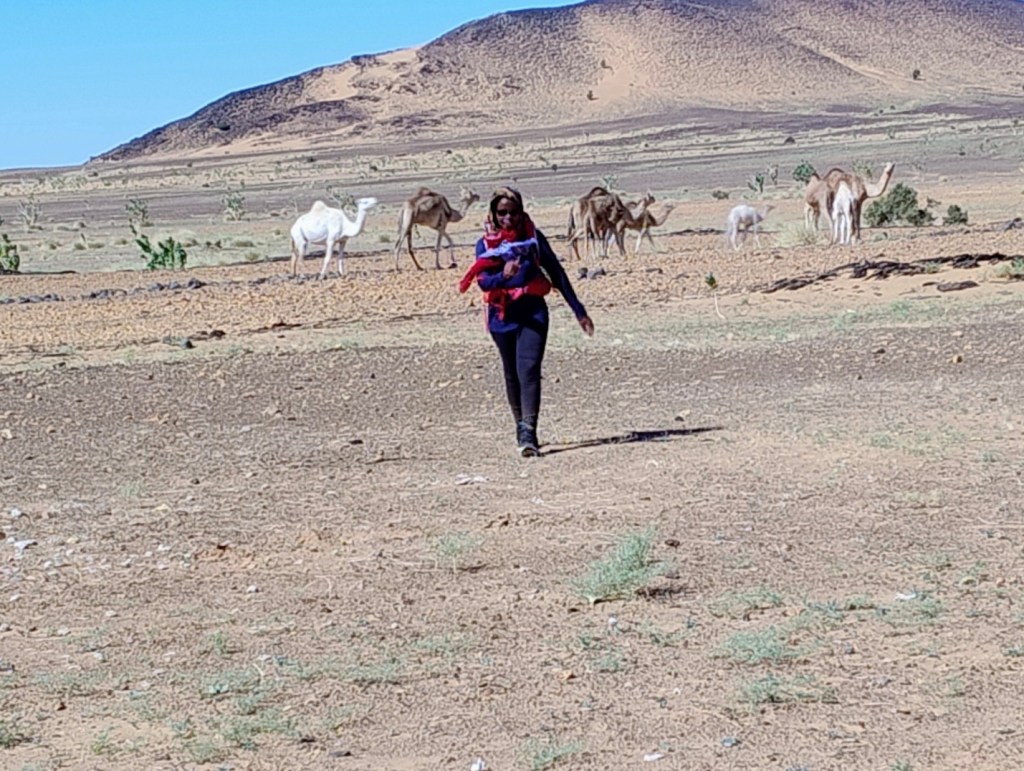
The main challenge was being able to sustain walking 35-40km per day. This necessitated considerable walking in the afternoon into the sun at its most intense. Although the air temperature was rarely above 29C, the desert sun was strong. In addition, there was no breeze since we were walking in the direction of the prevailing wind. We therefore found many afternoons to be unpleasant.
Navigation was not a significant problem since the support vehicle was normally ahead of us at prominent locations (track junctions, crests of dunes/hills) to guide us.
There were times when we had no support vehicle for navigation, such as first thing in the morning since they were dismantling the camp or collecting supplies. On these occasions navigation was by compass bearing (often a bearing of 233 degrees) and was relatively straightforward. Fortunately, we did not encounter any sandstorms.
The need for local support
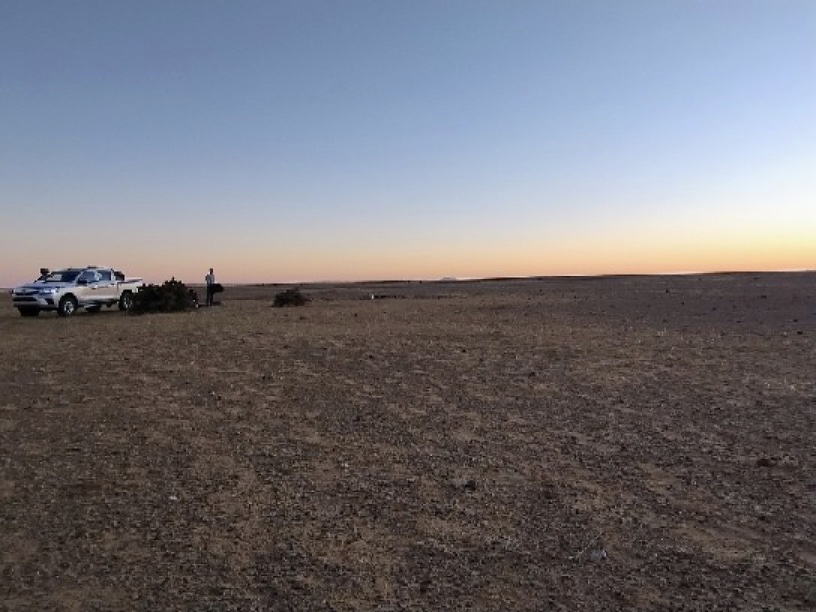
A local tour company, “Tour in Mauritania” was contracted to provide vehicle support, food and water and camping equipment. We considered using camel support instead of vehicle support for a more “authentic” experience. However, camels would be restricted to 20-25 km per day and would need regular food breaks. Having a vehicle instead would give us more flexibility as well as the ability to cover longer daily distances.
Terrain
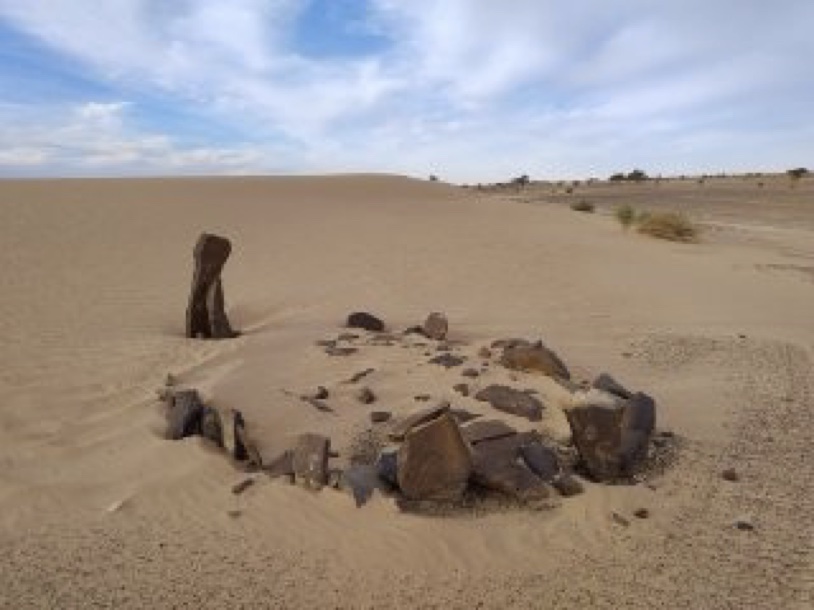
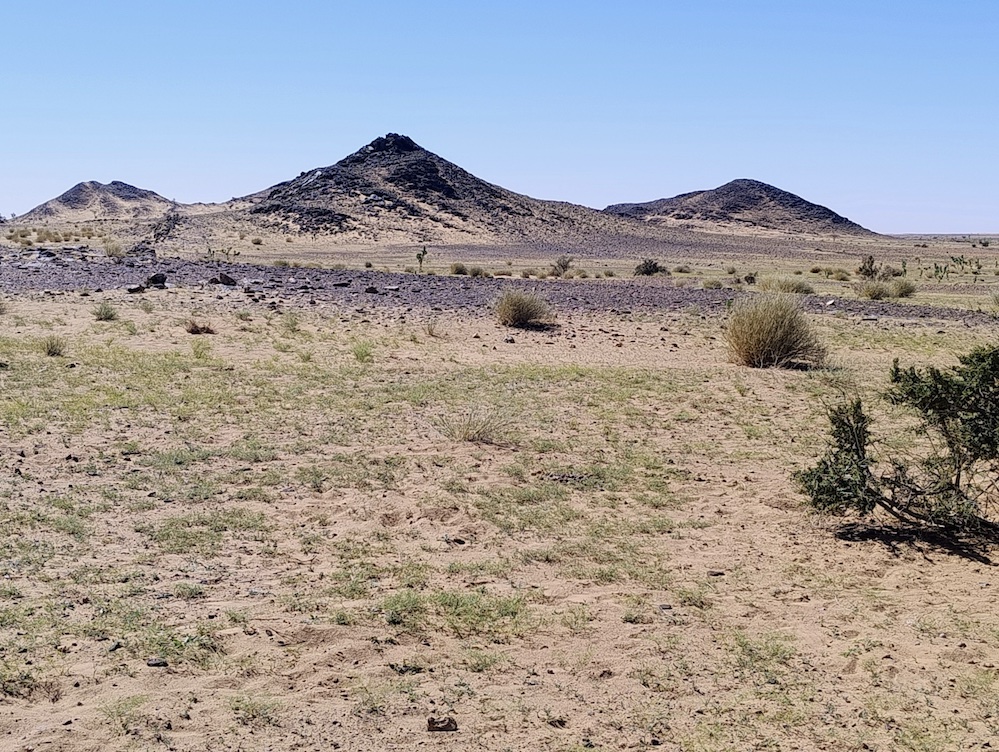
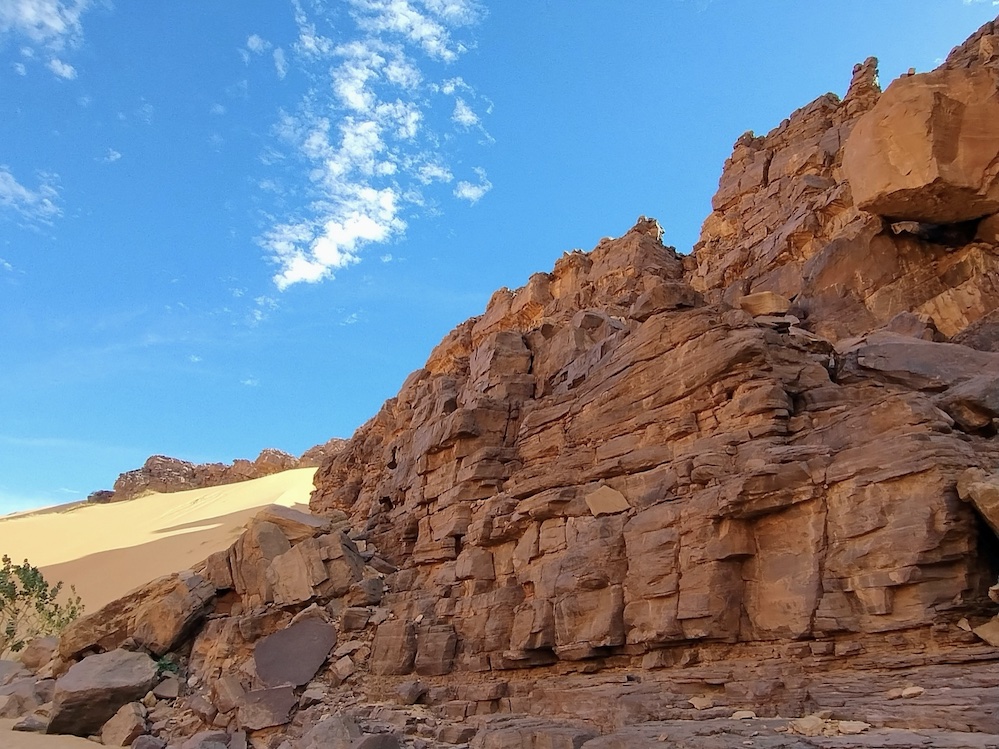
Minimal elevation gain/loss. The start of the trip near the Richat structure was around 550m whereas Nouakchott was at sea level. The second half of the trip was almost completely flat. The first third of the trip had some areas of deep sand, which considerably reduced our daily distances. Wherever possible we would seek firmer ground such as tracks and trails. Once on the coastal plain, we were able to travel cross-country relatively easily since the terrain was much firmer.
Observations
Lessons learned.
– The trip was planned to travel in a Southeasterly direction to keep the prevailing wind behind us and to traverse deep sandy areas during the first part of the expedition when we were fresher. On reflection, the expedition would have been more enjoyable if done in reverse since we would have the sun to our rear in the afternoon when it was at its most intense. We would be travelling into the prevailing wind and there would have more deep sand towards the end of the trip, however on balance it would have been more pleasant.
– Ensure that the support team understands the nature of the expedition and the calorific and nutritional requirements of walking 35-40km per day in a desert environment. There were a few occasions where food supplies were running a little low.
– Kit we did not bring but would be useful on future trips:
Neck gaiters
Additional Oral Rehydration Salts
Windproof umbrellas
Conclusion
– Many thanks for Hadrami Bouh, owner of Tour in Mauritania, for vehicle and logistic support and to Imane Kaa who provided accommodation and hospitality in Nouakchott and was able to accommodate our earlier than anticipated arrival.
– Would we do it again? Yes, but a different route. We heard from Hadrami about a previous expedition from Chinguetti to Timbuktu (an estimated distance of 1,200 km) many years ago. This route follows historic caravan trade routes and the pilgrimage route to Mecca. We would love to do this, however, the security situation in eastern Mauritania and northern Mali means this is extremely unlikely to happen in our lifetimes.
Discover more from Sahara Overland
Subscribe to get the latest posts sent to your email.
 Sahara Overland
Thank you for this truly inspiring and useful post!
Happy walks,
Max
LikeLiked by 2 people
What an exhilarating journey under very difficult conditions ! Thank you for sharing.
LikeLiked by 2 people