Category Archives: Sahara Book Reviews

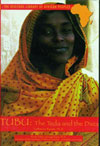
Book review: Tubu: The Teda and the Daza ~ Catherine Baroin

tubuju

Tubu: The Teda and the Daza
Catherine Baroin, 1997

At only 64 pages and with large print, this short book is classified as ‘history – juvenile literature’ and takes half an hour to read. Being produced in the US, I thought the publisher might have some evangelical missionary agenda, like the Joshua Project. In fact Rosen is a publisher of under-12 educational material and this title is part of their Heritage Library of African Studies, from Akamba to Zulu.

As for the book, you feel that the content is rather superficial and fragmentary and may well have been shortened or edited into its current slim form. The author has written longer books on the same subject in French, but then so have many others in that language. Not surprisingly, many of the customs described bear close resemblance to the better studied Moors or Tuareg with whom the Tubu share many characteristics.

What one would wish to know is what makes them different other than their fierce reputation. If anything, the wiki-like details presented on the Joshua page are more gritty and pertinent because the fact remains the Tubu, who are said to have adopted Islam less than a couple of centuries ago, remain the least known of the Saharan tribes.

Book review: The Western Desert of Egypt ~ Cassandra Vivien

cass

The Western Desert of Egypt, An Explorer’s Handbook
Cassandra Vivien,  2000

A niche publication covering the Western Oases (Bahariya, Dakhla etc), the northern coast, Siwa, the Darb el Arbain region and of course the Gilf. It was originally published in the early 1990s as Islands of the Blest; A Guide to the Oases and Western Desert of Egypt which we’re told became an ‘overnight bestseller’.

Sorry to have to say this, but the first thing that strikes you while flicking through this book is a waffle-bound, juvenile, credulous writing style; a complete absence of editing hampered by a muddled hierarchy of headings which have little relation to the ramblings that sometimes follow.

The book starts with the ‘The Natural World’ but includes a patchy, Sahara-wide history using ancient labels like ‘Bilad al-Sudan’ as if contemporary – an example of the author’s limited understanding of her subject. The author parrots the Bagnoldian declamation that the Libyan Desert and the Sahara are separate natural features because, in her words, “the Fezzan is a fertile plateau corridor that separates the Libyan Desert from the Sahara”. Me, I still think it’s a political designation about as valid as the Urals dividing Asia and Europe (as discussed in my Great Warm Deserts of the World review). We do however get a good summary of geological epochs, events and evolution pertaining to the region.

There is a good double-page map covering the book’s region on the prelim pages, and a couple of good ones elsewhere, but the half-pager on p2 is a mixture of ancient, colonial and contemporary place names. It adds up to another of this book’s many grating, literary, stylistic and graphic inconsistencies; you’d think better of the AUC Press.

The Western Oases section looks thorough, this is really where the book is best and was once knowledgeable, though you can be confident that the 100-odd pages which the latest Rough Guide devotes to the area will be more useful.

As for the Gilf (“the top of the Gilf is like the top of the world”); rather tellingly the author admits earlier that her tour guide in that region, the late Samir Lama “guards his secrets from the prying eyes of writers like me”. So be prepared to accept nothing more than historical accounts retold day-by-day, along with heartfelt observations that Lama could not censor: “Wadi Hamra is red. Red sand dunes are so beautiful. Red drifts of sand cascading down the side of a black mountain are so beautiful”. This is as much as we learn about Wadi Hamra. We learn next to nothing about Jebel Uweinat (apparently the highest point in Egypt) or the riches of Karkur Talh, although we are informed that Aqaba Pass was first ascended by “Ford 2×2 cars”.

The trivial errors, remorseless piffle and batty analogies go on and on and remind me of that other flu-ridden turkey, Sahara, the Life of the Great Desert. A Sahara-based historical novel I’ve just started reading starts in the acknowledgements with the following endearing admission: ‘As a reader I never knew the importance of a book’s editor. As a writer I have learned the truth of it’. Amen to that. While well-intentioned and enthusiastic, Cassandra Vivian seems to have spent too much time in libraries digging up archania but missed seeing the sand for the dunes, and was then let down by her publishers. Watch the binding too; open it too fast and it will explode in your face.

A newer edition was released in 2009 with 60 extra pages. The above review refers to the 2000 edition.

Book review: Wind, Sand and Stars ~ Antoine de Saint Exupery

exup

WIND, SAND AND STARS
Antoine de Saint Exupery

An existential adventure classic based on the author’s semi-autobiographical escapades in the early days of commercial aviation. This included flying mail across the dreaded Terres des Hommes (the Western Sahara) where you saved the last bullet for yourself. It features the almost obligatory near-death experience after crashing in the Libyan Desert. Along with Thesiger and possibly Monod (as yet untranslated in English), Exupery remains one of the few writers who adequately describes the enigma of the desert’s appeal. Heroic and philosophically poetic Man’s Stuff: Hemingway with propellers and one of the best you’ll read to capture the spirit of the desert.

To be reviewed one of these years: The Citadel – St Ex’s posthumous oeuvre.

Book review: The Unknown Sahara ~ Laszlo Almasy

ISZcover

The Unknown Sahara
Laszlo Almasy. Translation by Andras Zboray

The eastern Sahara’s Libyan Desert (covering Egypt, Libya, Sudan), was one of the last corners of the desert to be explored and still remains wild and barely visited. In the late 1920 and early 30s – the Hungarian Almasy (a contemporary of Bagnold and Clayton and fictionalised as the ‘English Patient’) criss-crossed this region in then newfangled motorcars which enabled systematic exploration of this hyper-arid quarter.

saharalibdz

The book tells the stories of his many feats in the region: the first drive to Kufra from the west, the clarification of the Zarzura legend, the discovery of countless rock art sites including the famous Cave of the Swimmers, were some of his achievements.

alams

Almasy’s energy and courage is inspiring. To be bombing around the most desolate corner of the Sahara in tinny Fords (2WD of course), dropping fuel and water here and there is quite a feat. You’ll also pick up some interesting Sahara lore that is not found elsewhere, in English at least. The book could use a sketch map to point out his wanderings. Even with three maps on the go I found it hard to work out where he was – especially around the Gilf.

That said, ‘Unknown Sahara’ is a desert classic finally available in English. Like Bagnold’s Libyan Sands (reviewed elsewhere), it reveals the very earliest days of Saharan motoring. Highly recommended.

Book review: Desert Explorer ~ Patrick Clayton

clay

DESERT EXPLORER – A BIOGRAPHY OF COLONEL P.A. CLAYTON
Patrick Clayton (son), Zerzura Press

P.A. Clayton was one of the key figures in opening up the Libyan Desert in the early thirties. The book is a biography of the father by a son, who lived the first ten years of his life in Egypt, accompanying his father on several of his surveying expeditions deep into the desert, and the documented milestones in the explorer’s life are intermingled with details based on the author’s personal memories. It’s a pity, that the most significant of Clayton’s expeditions, those seeking the mythical Zarzura oasis in 1932 and 1933 are only described by quoting already published sources, revealing no new information. The son’s view is understandably biased, sometimes resulting in deviance from facts known from other sources, but never disturbingly so. Overall, the book is an excellent combination of already published information and personal experience, supplemented by previously unpublished photographs.

Andras Zboray

Book review: Conquest of the Sahara ~ Douglas Porch

conquest

CONQUEST OF THE SAHARA
Douglas Porch (2005 edition by Farrar Straus Giroux)

An intriguing and readable account of France’s attempts to colonise the Sahara during the ‘Scramble for Africa’ in the latter half of the nineteenth century. Full of historical detail, it vividly describes the vainglorious expeditions, large and small, which staggered across the desert, often poorly led and suffering greatly for personal prestige and their country’s honour. The extraordinary shambles of the doomed Flatters expeditions has to be read to be believed. This description refers to the original 1986 edition.

Book review: Call of the Desert ~ Philippe Bourseiller

callof

CALL OF THE DESERT
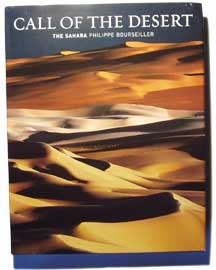
Philippe Bourseiller, 2004 (28 x 36cm, 444pp)

Call of the Desert is a stonker. At around 4kg it is heavy enough to stun a full-grown horse and is packed with glossy, full-page portraits, close-ups and wide-angle vistas from the Atlantic to the Nile. All the mainstream Saharan shots all here in one book: the culture and landscapes of the Moors, some lovely Moroccan kasbahs, the Niger delta as well as Ounianga and the Ennedi and Meroe in Sudan – though not, noticeably the rich imagery of the Gilf and Uweinat – so falling short of being the absolutely ultimate Saharan picture book.

And the writing isn’t bad either. Rather than let the author do the talking which often results in flowery eulogies attempting to parallel the images, they’ve shipped in some experts who – being French (the longest-established source of Saharan scholarship) or Saharan – know better than most what they’re talking about. So you get surprisingly good accounts of the geology, pastoral society and one of the best accounts of human occupation, from the 7 million year old proto-human bones found in Chad (predating those of the Rift Valley) right up to the historic period.

It has to be said, the shop copy at Stanfords London (£30) had split its spine – the book may be too heavy for its binding – even the box it was posted to me in had split open. Amazon.co.uk pictured a different cover on its website but what you get is the book as left. They are going there from just £18 (presumably from the US where it is $31 new) which makes this the best Sahara picture book bargain since Civilisation in the Sands went for a fiver.

tenner-call

Also available: CALL OF THE DESERT – THE SAHARA (2005, 75pp). Extracted from the above collection (as many travel photographers do), this is a sort of school text book on the Sahara covering various themes and places like Ghadames, sand, nomads and camels, salt, ruins and even the Chad war with drawings and maps and of course great pictures.

Book review: The Bleeding of the Stone ~ Ibrahim Al-Koni,

bleedstone

THE BLEEDING OF THE STONE
Ibrahim Al-Koni, 2003

The Libyan Tuareg author, Ibrahim Al-Koni, tells the tale of Asouf, a solitary goatherd who is the guardian of Wadi Mathendous. The similarly reclusive mouflon (barbary sheep or waddan, right) feature heavily and symbolically. His father died trying to hunt a mouflon, and Asouf once escaped from the Italian occupiers by changing into a mouflon and heading for the hills. One day aggressive modern hunters (one of them telling named Cain) come to Wadi Mat’, and insist he leads them to any remaining mouflon in the Messak.
One presumes there is some kind of allegory being played out here. Cain is a voracious meat-eater. Asouf is a veggie. One is the incomer ravaging the desert, the other lives very humbly, at one with the environment. Nice though it is to read something in English by an indigenous writer of the Sahara, and even a Tuareg, the themes were not that subtly evoked and I spent more time picturing the well-known Fezzanese settings than acquiring any deeper meaning other than: nomads – good; modern man – bad. But don’t take my word for it – readers with better tuned sensitivities may get the message.

Book review: Desert Divers ~ Sven Lindqvist

desertdivers

DESERT DIVERS
Sven Lindqvist (Granta, 2000)

As a young boy Sven is captivated by a rare Swedish travelogue describing the well diggers of Touggourt in Algeria. Later on he becomes influenced by the writings of André Gide and other literary types who also spent time in North Africa. And so it seems a rather lame deal is struck with his publisher: go to North Africa, retrace the travels of some of these writers and cook up a polemical Sahara travelogue on the way.

As a selective literary colonial history of North Africa the book is OK. After skimming over St Exupery (which proves the author does not get the desert) he finds himself to Smara in the midst of the Polisario war while following Michel Vieuchange who arrived after much hardship and increasing self-delusion in 1930, disguised as a woman. The quest for Smara matched Timbuktu or Mecca at that time and Vieuchange spent just three hours there before dying on the way back to Europe. Lindqvist seems no more impressed with the place after a less strenuous journey, tellingly quoting Vieuchange “Decisions are made in ParisThey are carried out in the Sahara” Perhaps this was his conclusion on the Desert Divers project?

The Western Sahara may not be the most inspiring destination and to the author it’s as ugly and wretched as the romantic motives of the nineteenth-century intellectuals he catalogues. To underline their vanity he details the mind-boggling cruelty and atrocities committed by the French across northern Algeria which occurred right under the noses of the wandering writers like Gide. The curious fantasist Pierre Loti is ticked off and a couple of chapters of this short book seem to paraphrase Andre Gide’s The Immoralist. Why? Probably because the author liked him and the subject matter. We also get a graveside visit followed by the received text on the self-destructive life of Isabelle Eberhardt. Adopting local male dress and having turned native and Moslem with a fanatical compulsion, she at least gets off lightly in the author’s critique, being aware and rightly hostile to the vicious colonial enterprise around her.

But as a wilderness the Sahara really never gets a look in. His travels in Algeria get no further south than El Golea (another dump, in his opinion). Worse still, some chapters are separated by interminable short dream or magical realist sequences – surely the naffest literary device of all – while important questions like “How many muscles are there in a life?” are pondered over with thankful brevity. Meanwhile the autobiographer in him can’t resist recounting a lame childhood anecdote about how he was once lowered into a well to retrieve a ball. He didn’t nearly drown but he could have done and it was dead scary.

As a description of the Sahara this book barely bothers to scrape the surface. As a selective study of Saharan writers it’s lightweight and self-indulgent.

I wanted to be Saint-Ex, the flyer who does not abandon a friend in distress in the desert. I became Vieuchange, the desert wanderer who lies his way into continuing his journey, because he ‘had wanted it in Paris’.

Book review: Algeria ~ Lonely Planet (2007)

The second edition was published in December 2025. Reviewed shortly

algeriaLP

ALGERIA
Lonely Planet, 2007 304pp

At a time when LP could afford to produce loss-making guides to destinations few other publishers would touch, along with the new LP Afghanistan comes Algeria, the first English-language guide to that country for decades, if not ever (LP’s long out of print North Africa Shoestring from the 1980s covered Algeria but was always a bit lame).

It’s a slim book and the guide section is only about 100 pages but the Sahara fills about half of that and there’s plenty more on the practicalities of desert travel in the front and back sections. I’m not expert, but in the populated north the little-visited riches from the Roman era match those of Tunisia and Libya and get a good account. This will probably be the most genuinely useful section of this book that will help open up that area (security issues in the northeast notwithstanding).

As is fashionable, 4x4s get a jab on p.71 for creating too much dust which kills coral and so on, but you wonder how much dust Saharan tourists as passengers or drivers actually contribute compared to travelling or working locals? It’s a bit like the current debate on flying and is probably based on Andrew Goudie’s dust-raking ‘Toyotarization’ article that hit the broadsheets a couple of years ago. The LP has a point though, travelling at a slower pace is much more rewarding as long as you strike upon a good area. So it would have been nice to see more than a couple of paragraphs on the practicalities of choosing and undertaking a trek with camel support. That’s what an LP-er will be after down south which is divided mainly between Tam and Djanet. They don’t say much about travelling on the ground between the two which, following any number of routes, would the ultimate A to B tour of the south (as opposed to a loop).

Oddly, the fairly obscure Tassili d’Immidir gets a mention, but the more accessible and better known Tefedest does not. Maybe the author flew into In Salah and had to dig up a hinterland counterpart to Tam’s Hoggar and Djanet’s Tassili N’Ajjer. The problem is the three towns/regions don’t seem to hook up into a homogenous entity: the Algerian Sahara. The book proposes what you can see out of each town rather than linking the three, perhaps because that’s the form with fly-in tours; the main way most will experience southern Algeria under the current restrictions.

Independent-travellers will be frustrated or put off, by these restrictions; fly-in Saharan tourists get what they’re given (in Algeria, as good as it gets) so the book won’t get much of a practical work out. Braver individuals can try and hire a driver/guide – it’s a good idea in the less-safe Roman north I reckon. This is where the guide pays off and for the background information alone, it’s worth buying to learn more about Algeria the country as opposed to the Algerian Sahara.